20 Mistakes First-Time Sports Bettors Make and How to Avoid Them (2026)
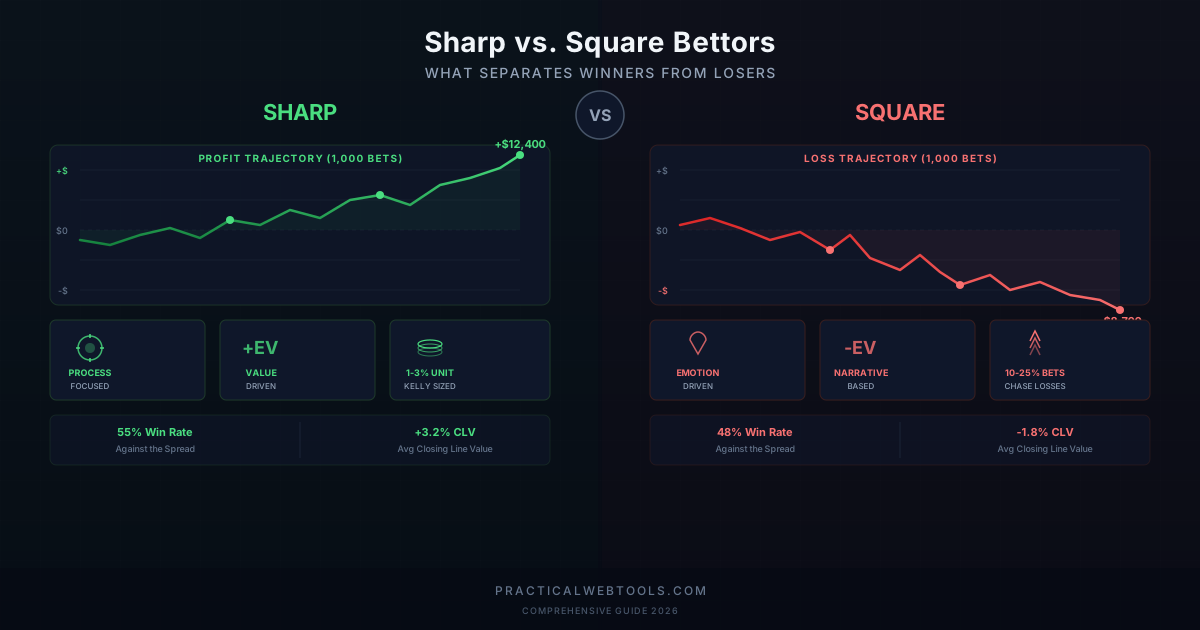
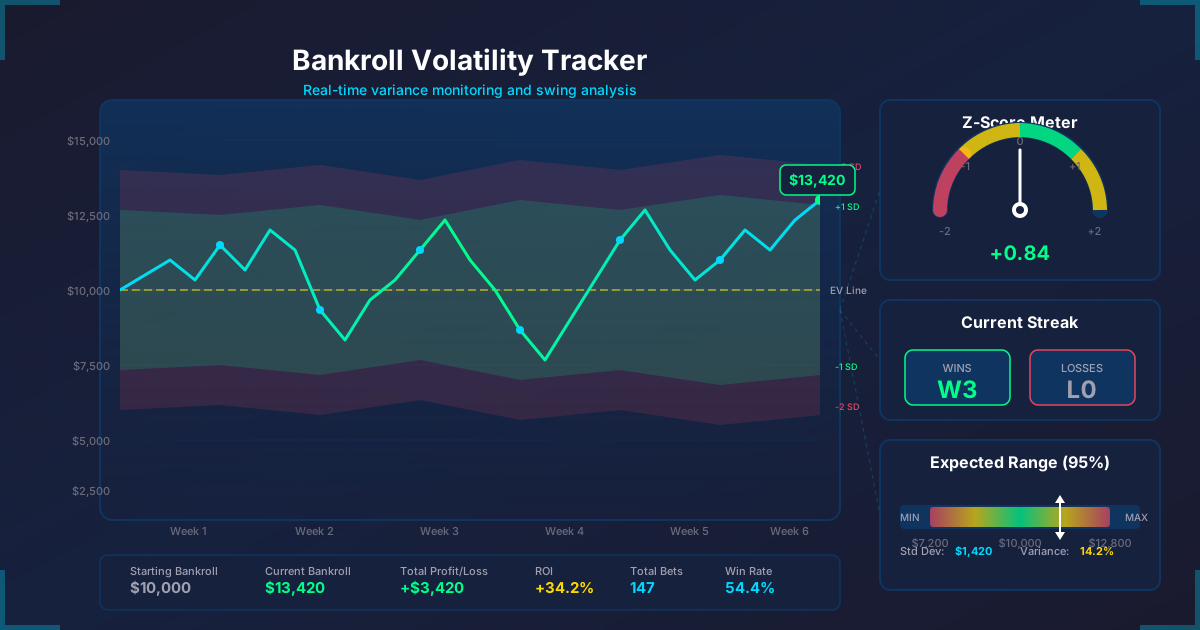
Roughly 97% of sports bettors lose money over the long run. That is not a scare tactic. It is a number sourced from sportsbook revenue data and industry research. In 2023 alone, Americans wagered approximately $119.84 billion on sports and sportsbooks kept $10.9 billion of it. That $10.9 billion came directly out of bettors' pockets, and most of it came from people making the same preventable mistakes over and over again.
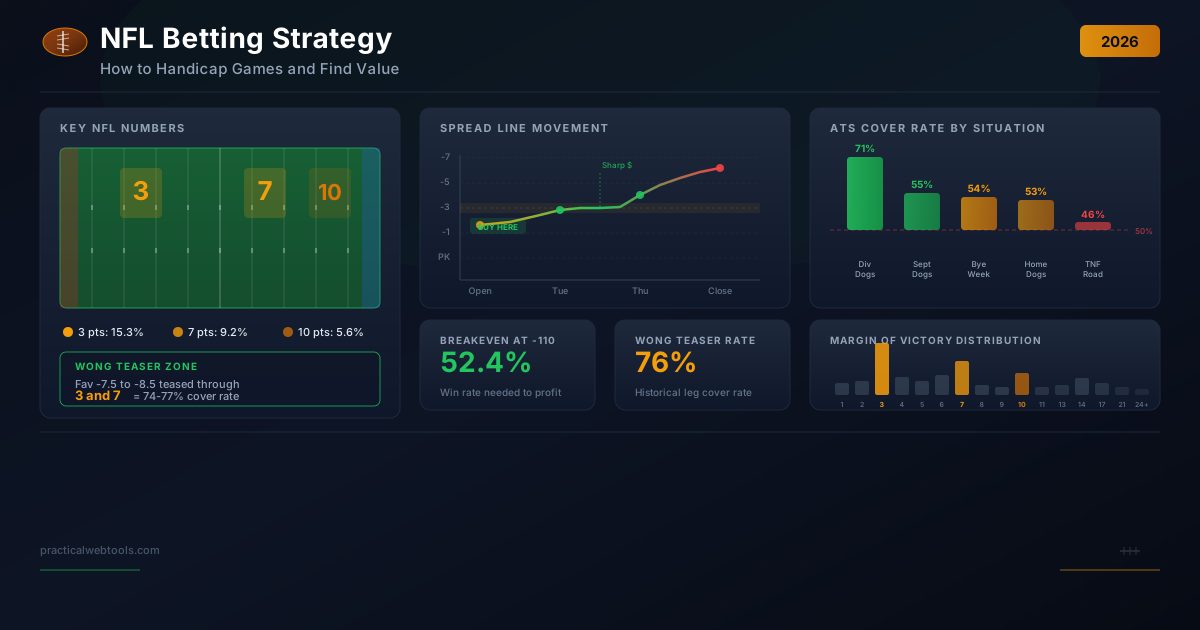
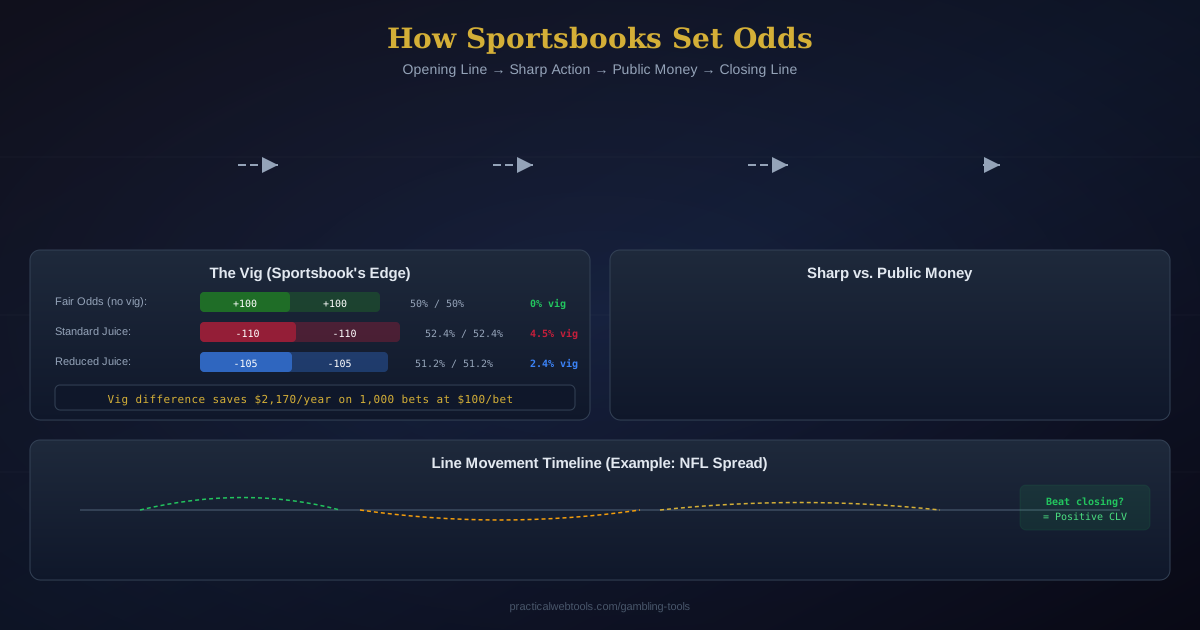
The average recreational sports bettor loses around $1,200 per year. Some lose far more. The sportsbook's built-in edge (the vig) means you need to win 52.4% of standard -110 bets just to break even. Most beginners do not even know that number exists, let alone how to beat it.
Here is the uncomfortable truth: the sportsbooks are not getting lucky. They are profiting because first-time bettors consistently make predictable errors with their money, their strategy, and their emotions. This guide covers every single one of those errors, shows you the math behind why each one costs you money, and gives you the exact fix.
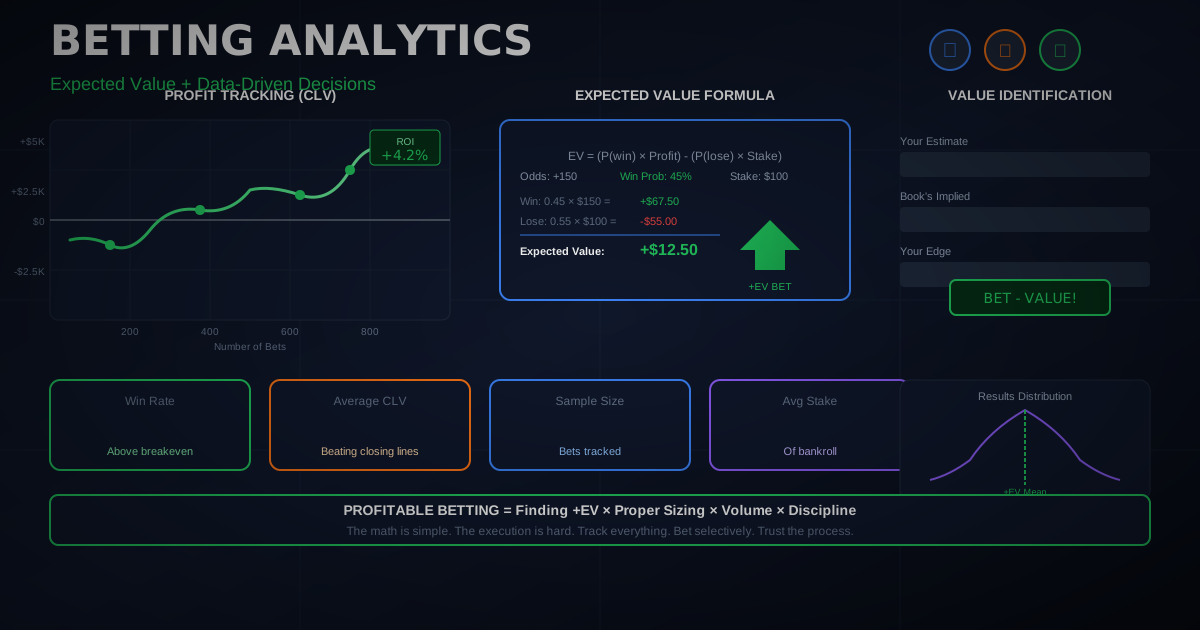
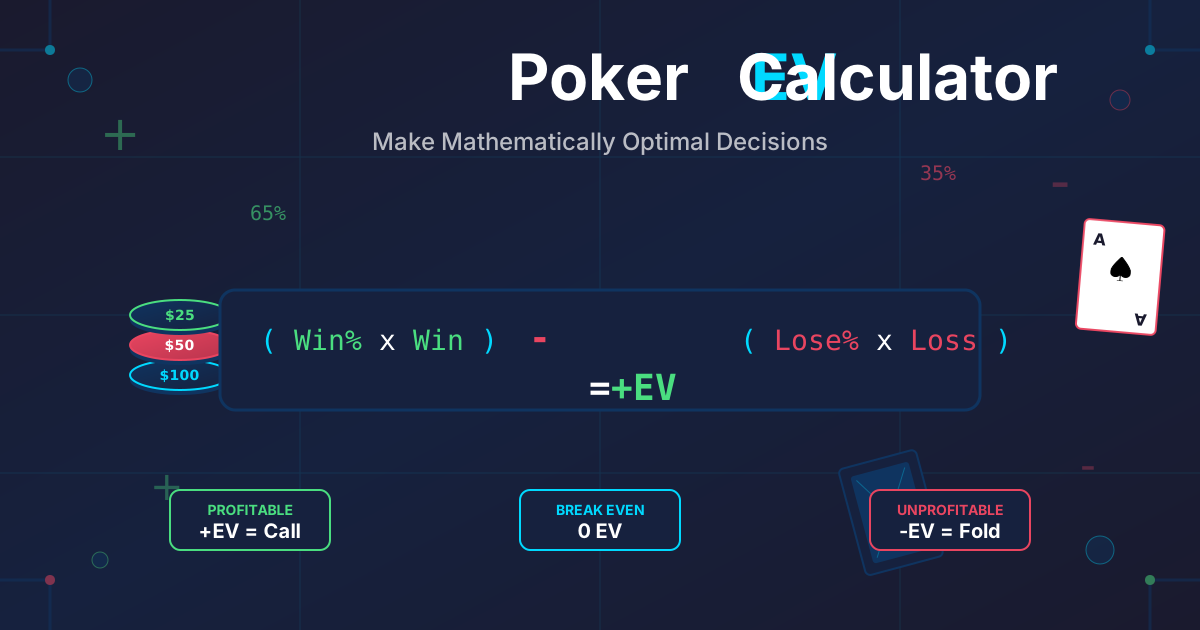
Stop guessing and start calculating. Use our free Expected Value Calculator to find out whether your bets are actually profitable before you place them.
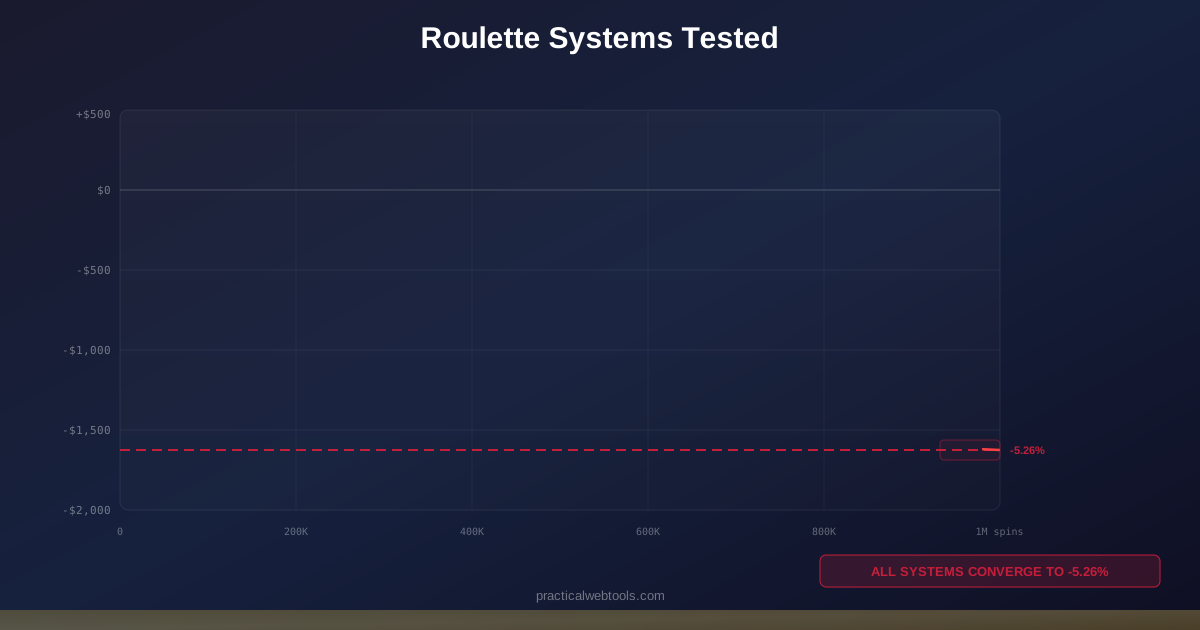
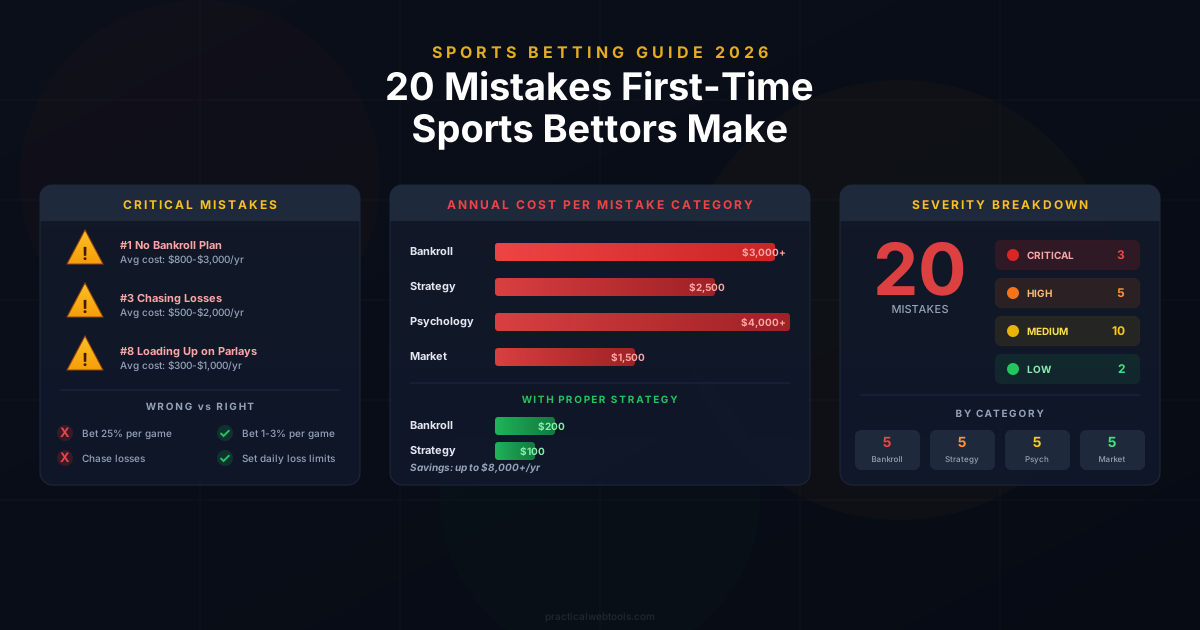
How Much These Mistakes Actually Cost You
Before we walk through each mistake, here is a snapshot of how much damage these errors inflict on a typical bettor placing $100 bets, 200 times per year.
| Mistake Category | Avg. Annual Cost | How Many Bettors Make It | Fix Difficulty |
|---|---|---|---|
| Bankroll Mistakes (#1-5) | $800 - $3,000+ | 80-90% of beginners | Easy to Moderate |
| Strategy Mistakes (#6-10) | $500 - $2,500 | 70-85% of beginners | Moderate |
| Psychological Mistakes (#11-15) | $600 - $4,000+ | 75-90% of beginners | Hard |
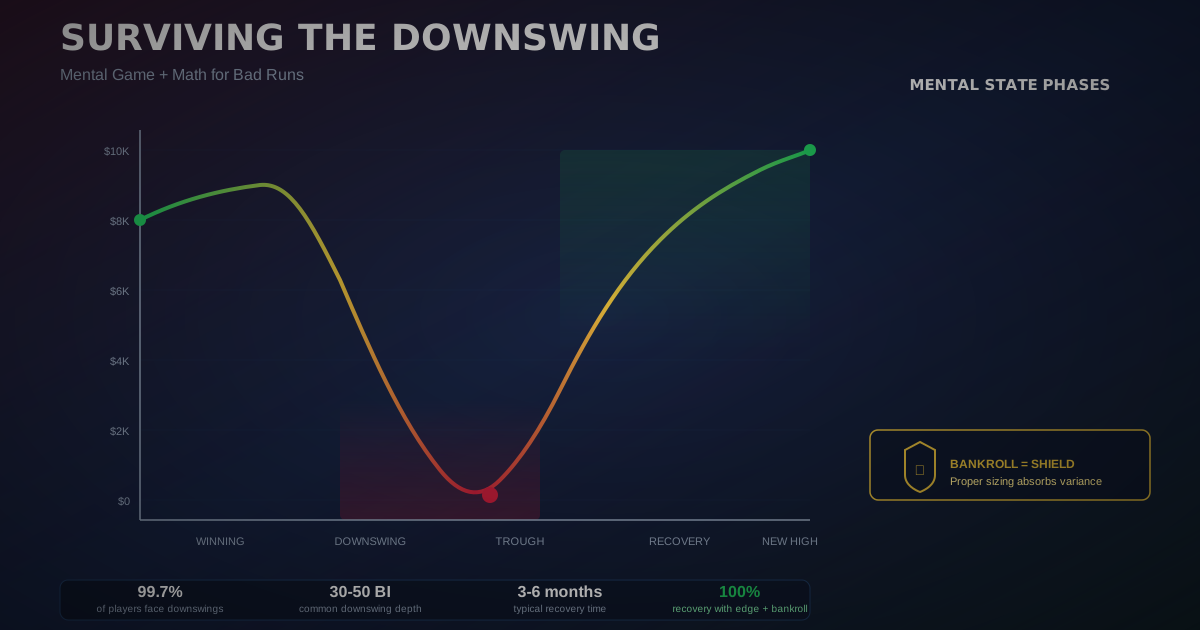
| Market Mistakes (#16-20) | $300 - $1,500 | 60-80% of beginners | Moderate to Hard |
| Severity Rating | What It Means |
|---|---|
| LOW | Costs you a few percentage points of ROI per year |
| MEDIUM | Can cost $200-$800 annually at typical bet volumes |
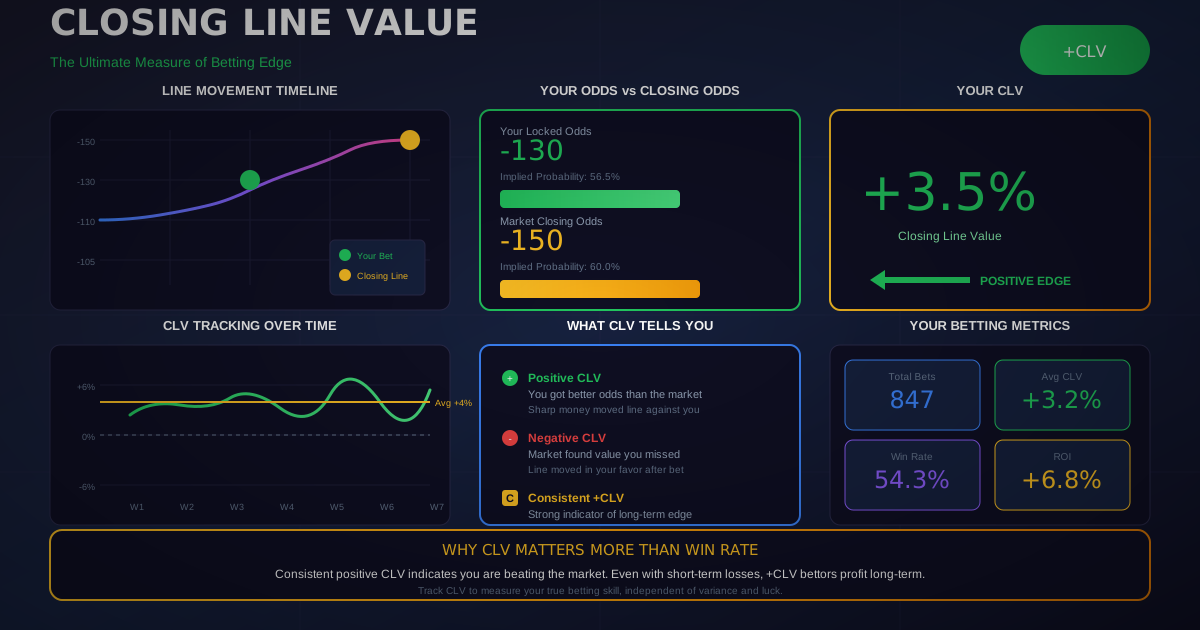
| HIGH | Can cost $1,000+ per year or blow up your bankroll entirely |
| CRITICAL | Can wipe out your entire bankroll in days |
Part 1: Bankroll Mistakes (The Fastest Way to Go Broke)
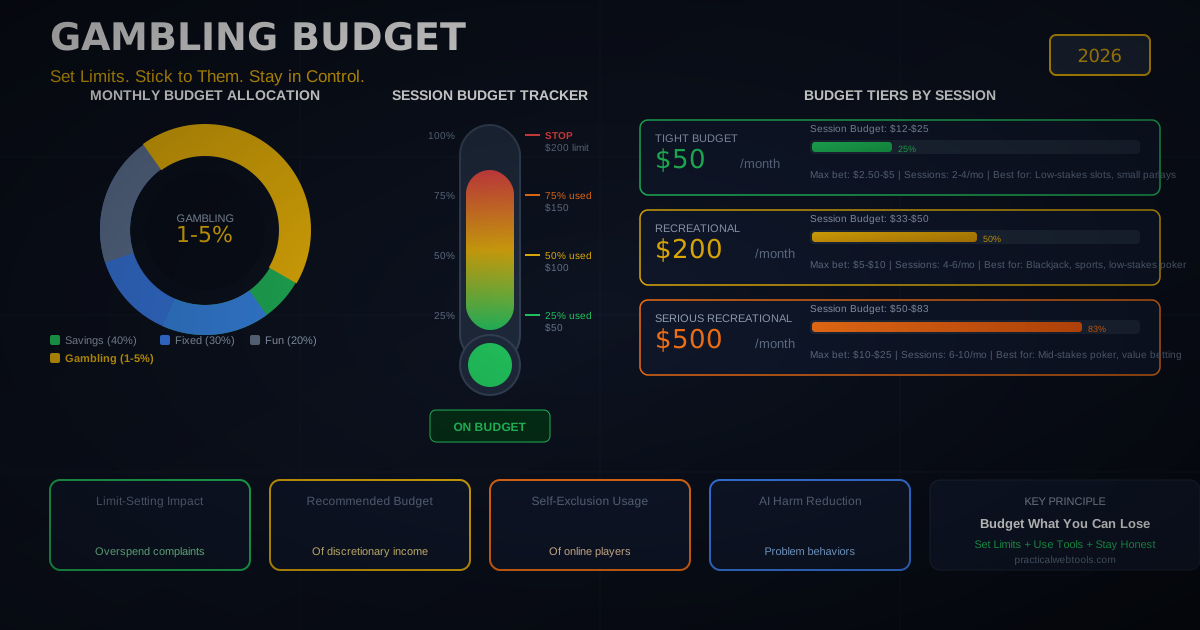
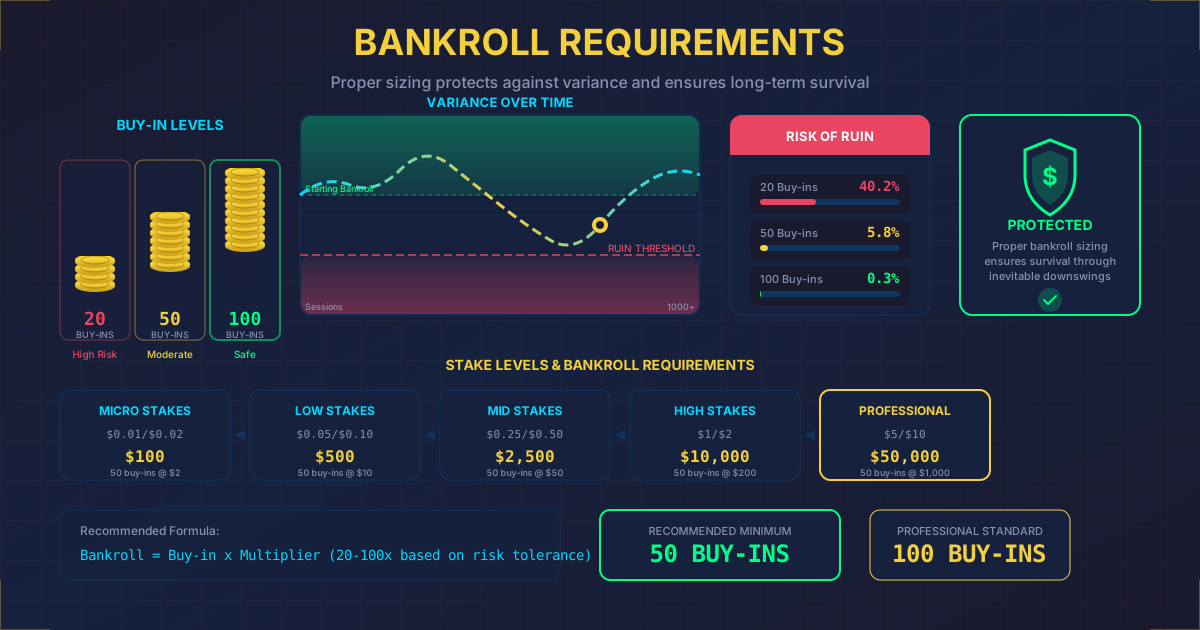
These are the mistakes that destroy your bankroll before you ever have a chance to learn the game. Even if you are a sharp handicapper, poor money management will bury you.
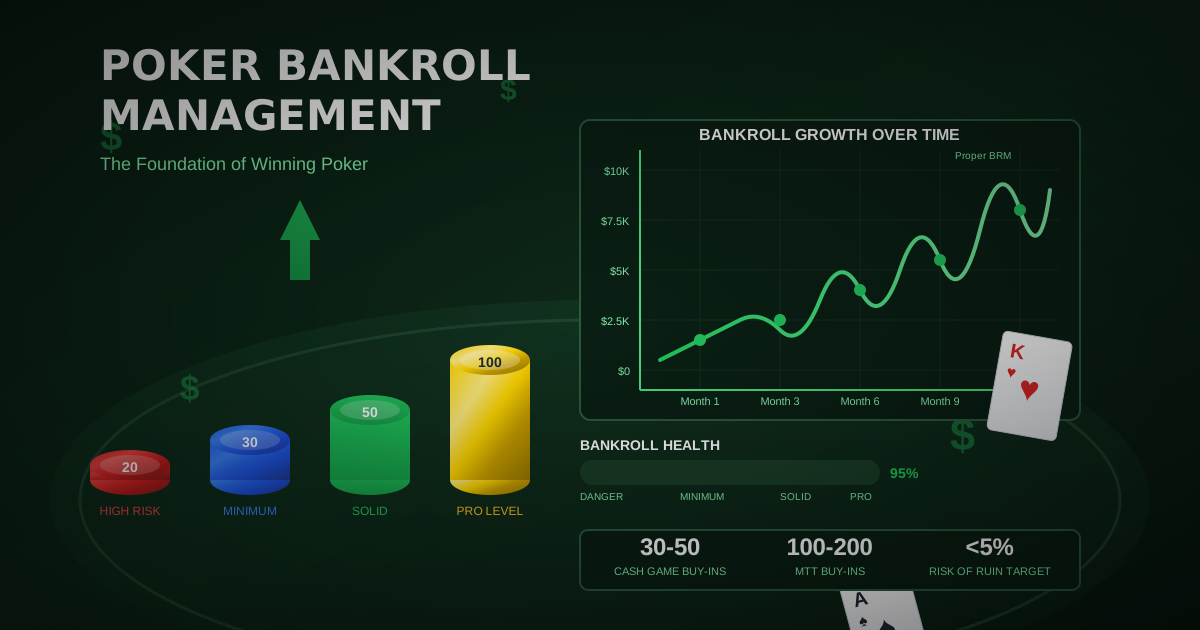
Mistake #1: Having No Bankroll Management Plan
The mistake: You deposit money into a sportsbook with no plan for how much to bet per game, no defined bankroll, and no stop-loss threshold. You just bet whatever "feels right."
Why it happens: Most first-time bettors treat sports betting like entertainment, not like a financial activity that demands a budget. Nobody opens a brokerage account and puts their entire savings into a single stock on day one. But people do exactly that with sports betting every weekend.
The math showing how it costs you:
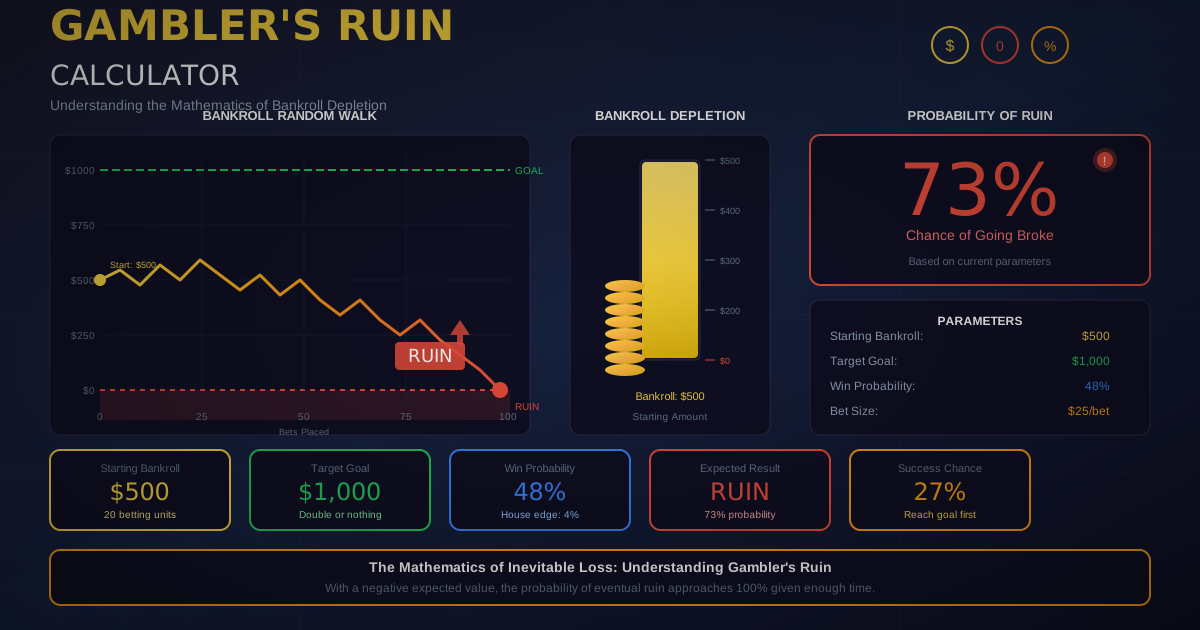
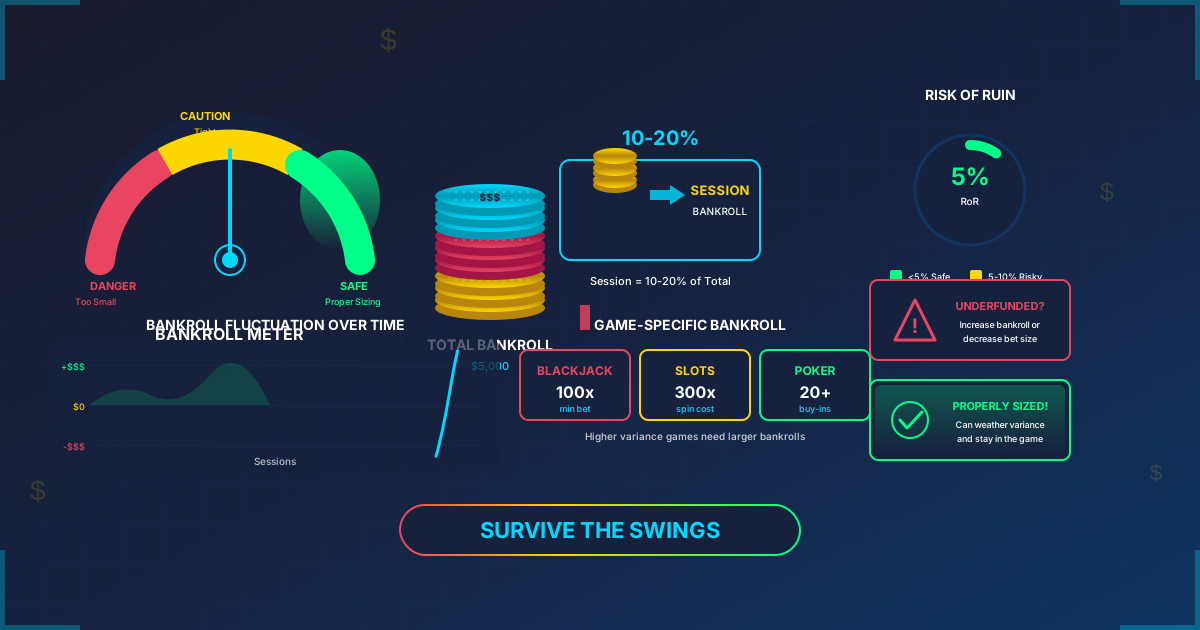
Say you deposit $500 and bet $100-$200 per game with no system. A standard three-game losing streak (which happens regularly -- a 48% win rate means roughly 1 in 8 sequences of three bets will all lose) wipes out 60-100% of your bankroll. You are done before you even learn anything.
Compare that to a bettor who risks 2% per bet ($10 on a $500 bankroll). That same three-game losing streak costs $30. The bankroll survives. You stay in the game.
How to fix it:
- Define a dedicated bankroll -- money you can afford to lose entirely
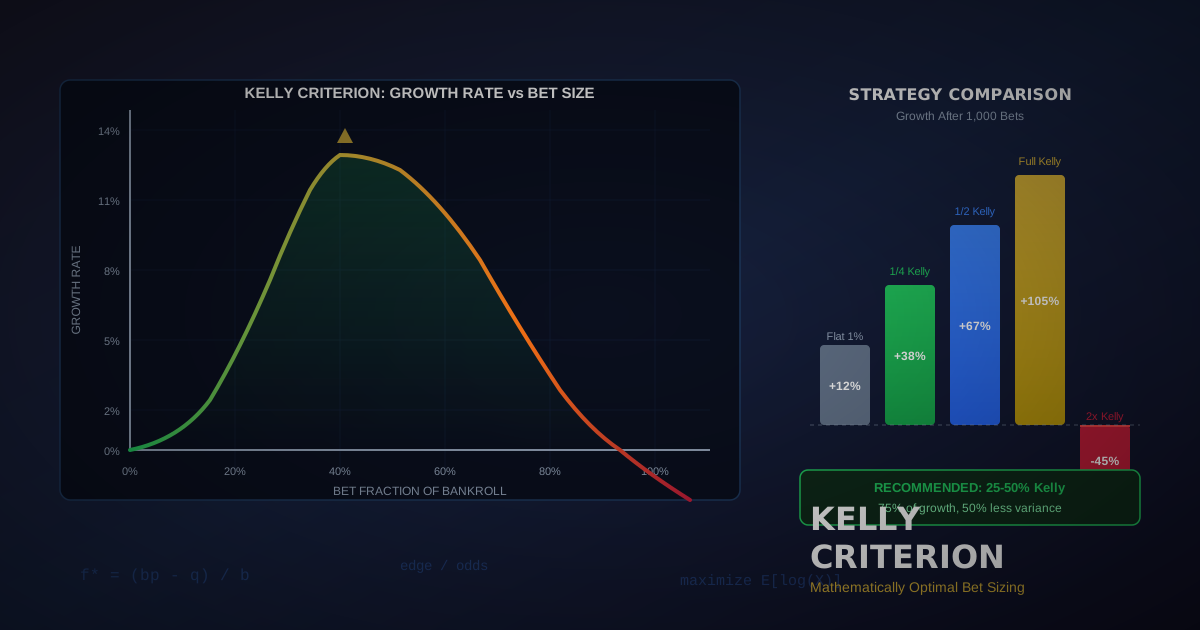
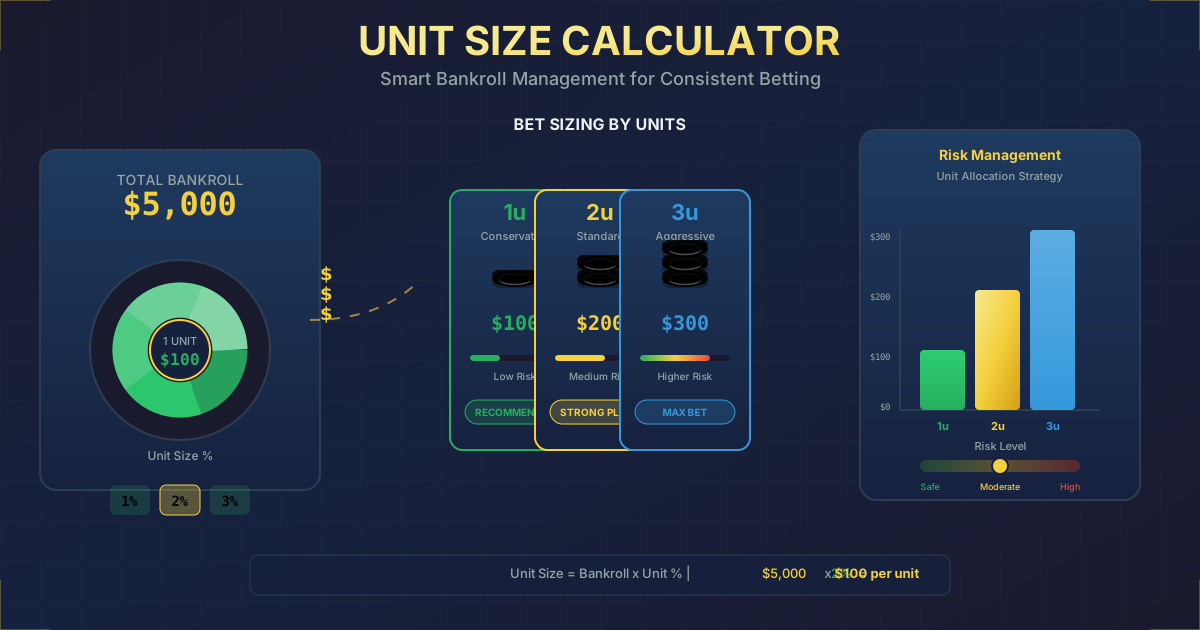
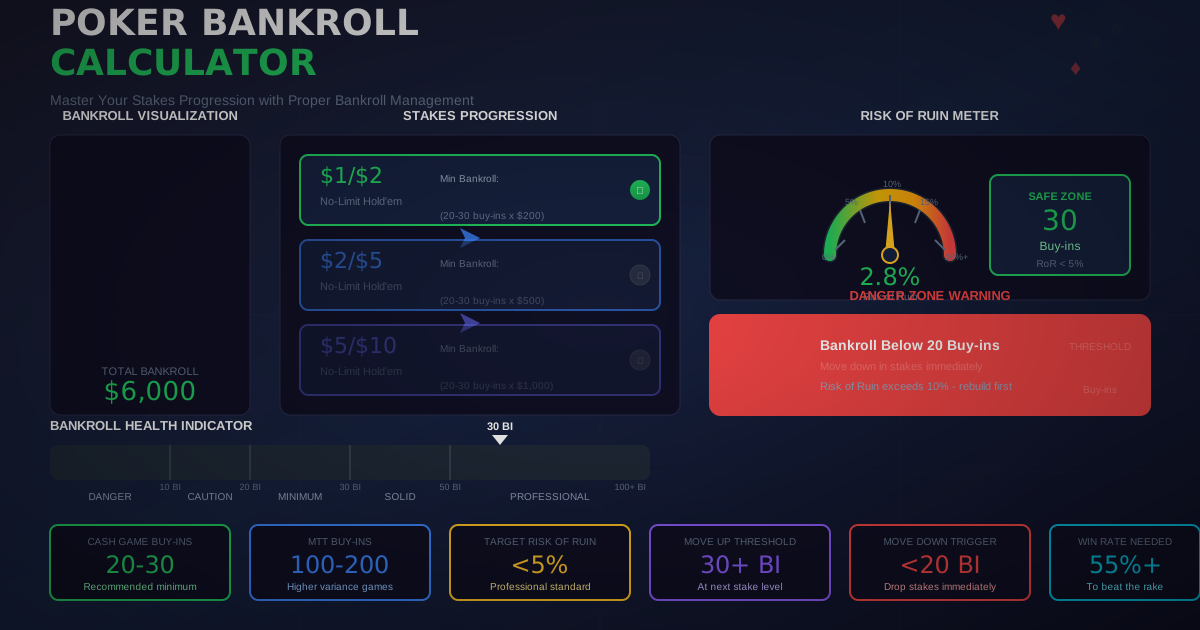
- Risk 1-3% of your bankroll per bet (never more than 5%)
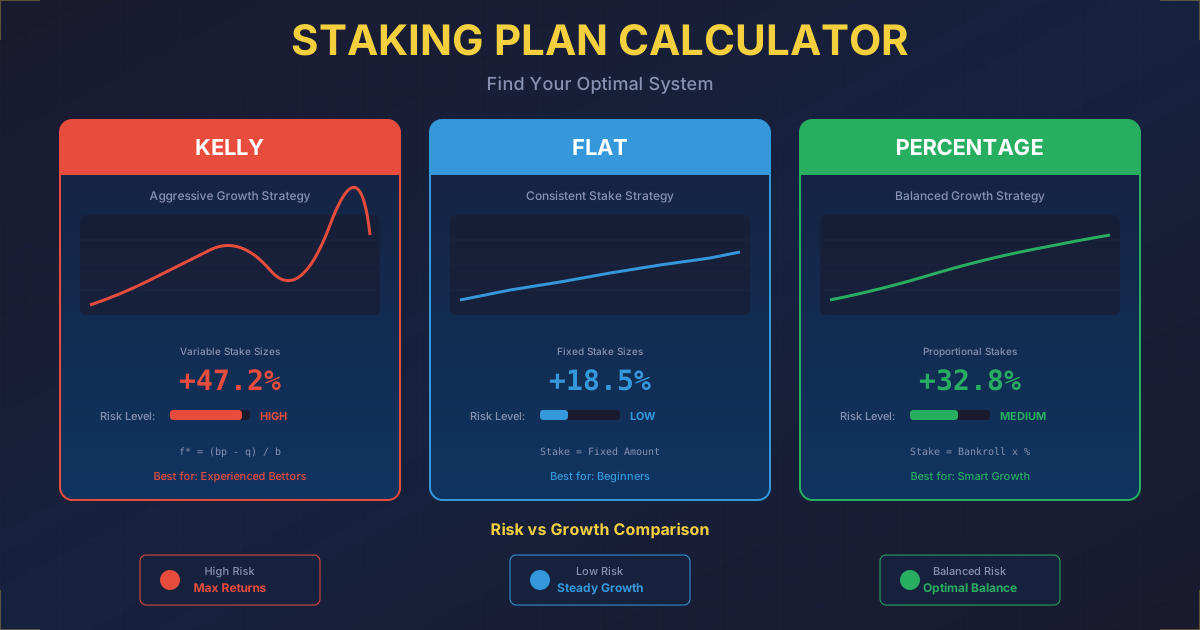
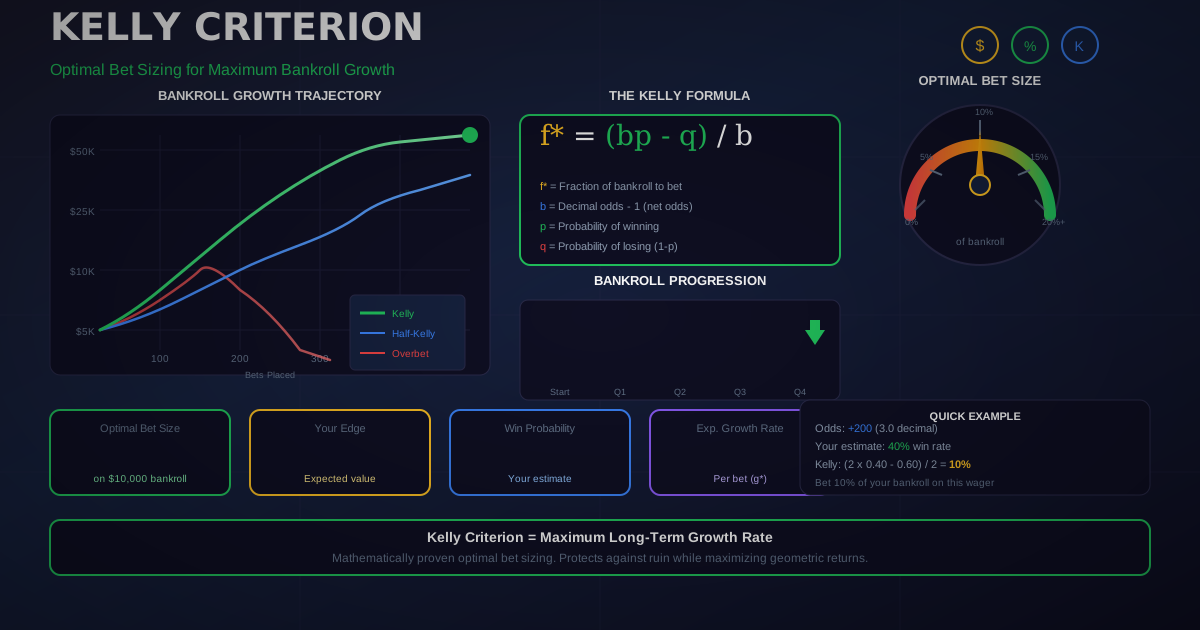
- Use our Kelly Criterion Calculator to size bets based on your actual edge
- Recalculate your unit size weekly as your bankroll changes
Severity: CRITICAL
Mistake #2: Betting Too Large a Percentage Per Game
The mistake: You risk 10%, 20%, or even 50% of your bankroll on a single game because you are "really confident."
Why it happens: Overconfidence. New bettors dramatically overestimate how often their "locks" actually win. Even the best professional sports bettors in the world hit at 55-60% on point spreads. Nobody wins 80% of their bets.
The math showing how it costs you:
| Bet Size (% of Bankroll) | Games to Go Broke (3-game losing streak) | Survival After 50 Bets (52% win rate) |
|---|---|---|
| 2% | Would need 50 consecutive losses | 98%+ |
| 5% | Would need 20 consecutive losses | 92% |
| 10% | 10 consecutive losses | 67% |
| 25% | 4 consecutive losses | 18% |
| 50% | 2 consecutive losses | Under 5% |
At 25% per bet, a four-game losing streak -- something that happens multiple times per season for even sharp bettors -- eliminates you completely.
How to fix it:
- Cap yourself at 1-3% per bet
- Use the Kelly Criterion Calculator to calculate mathematically optimal bet sizes
- If you think a bet is "a lock," it still gets the same unit size -- discipline is the point
Severity: CRITICAL
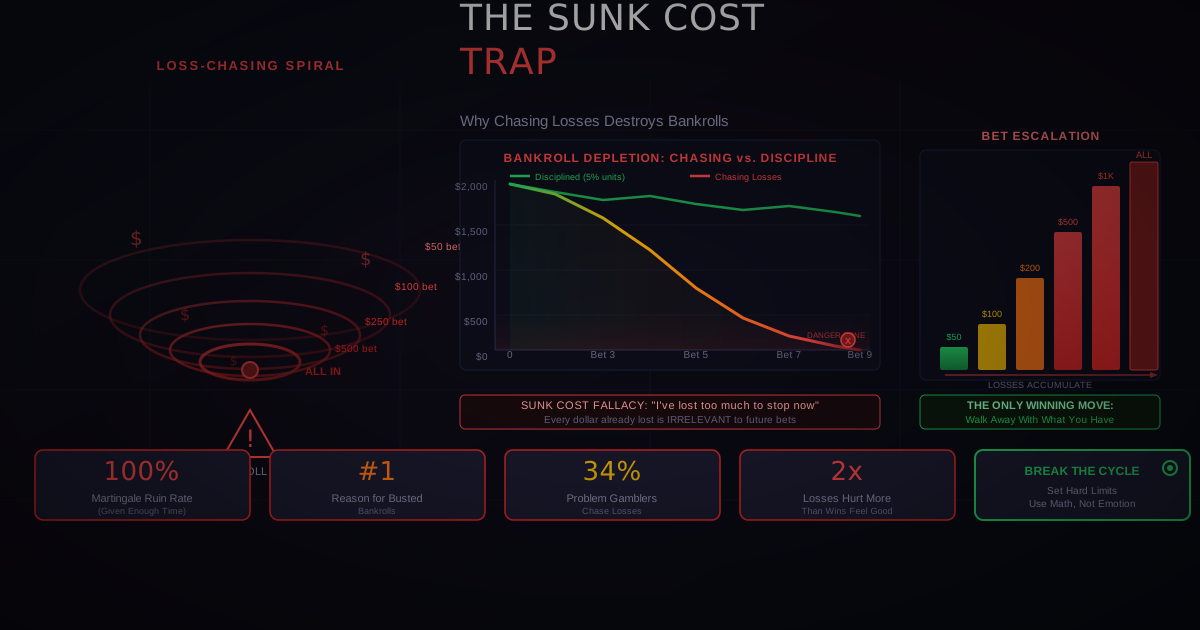
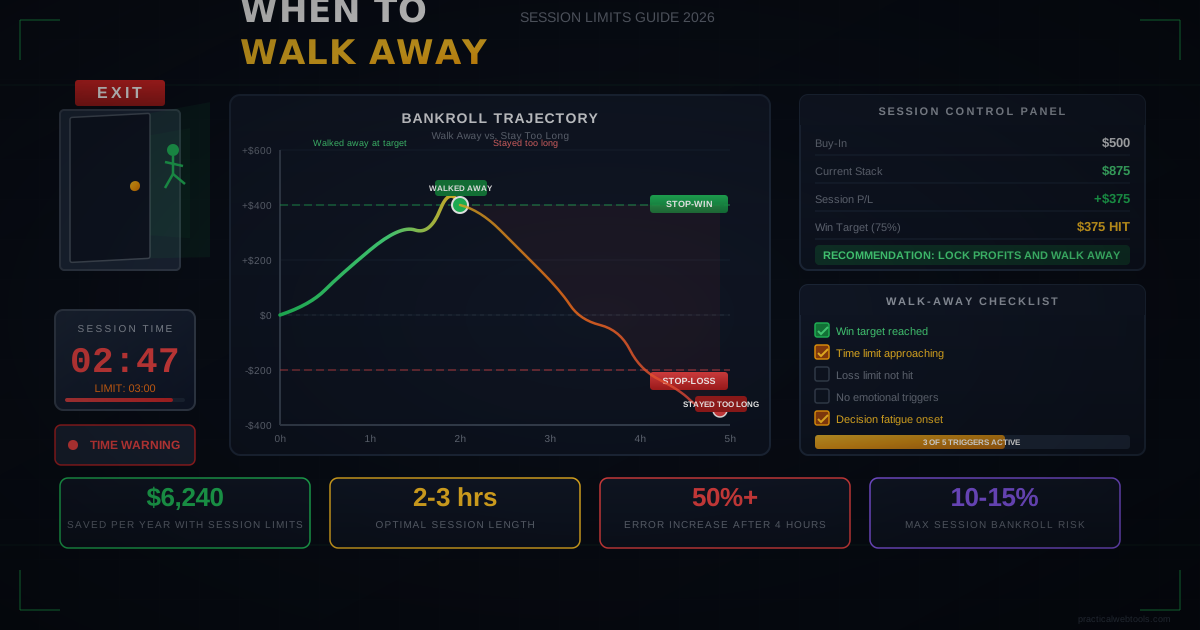
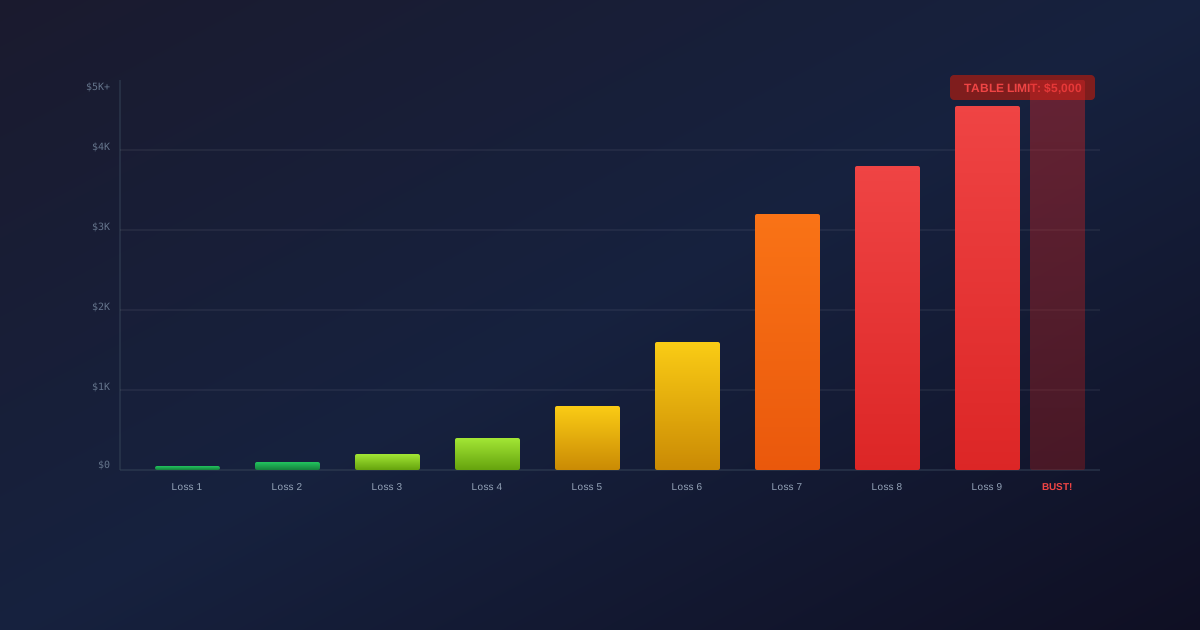
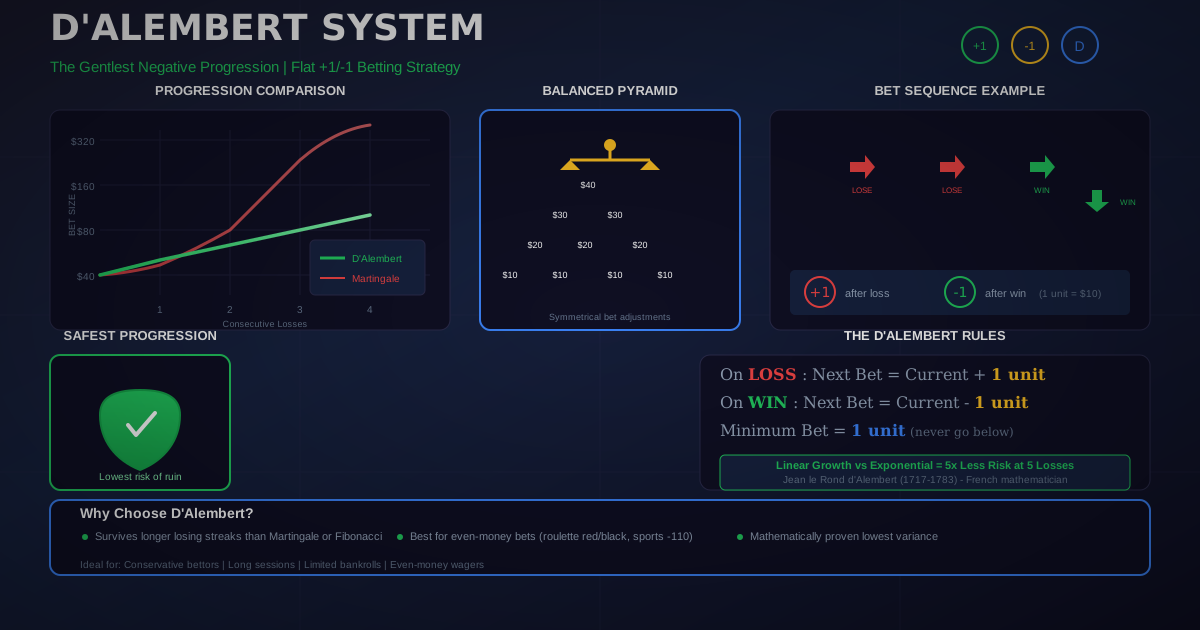
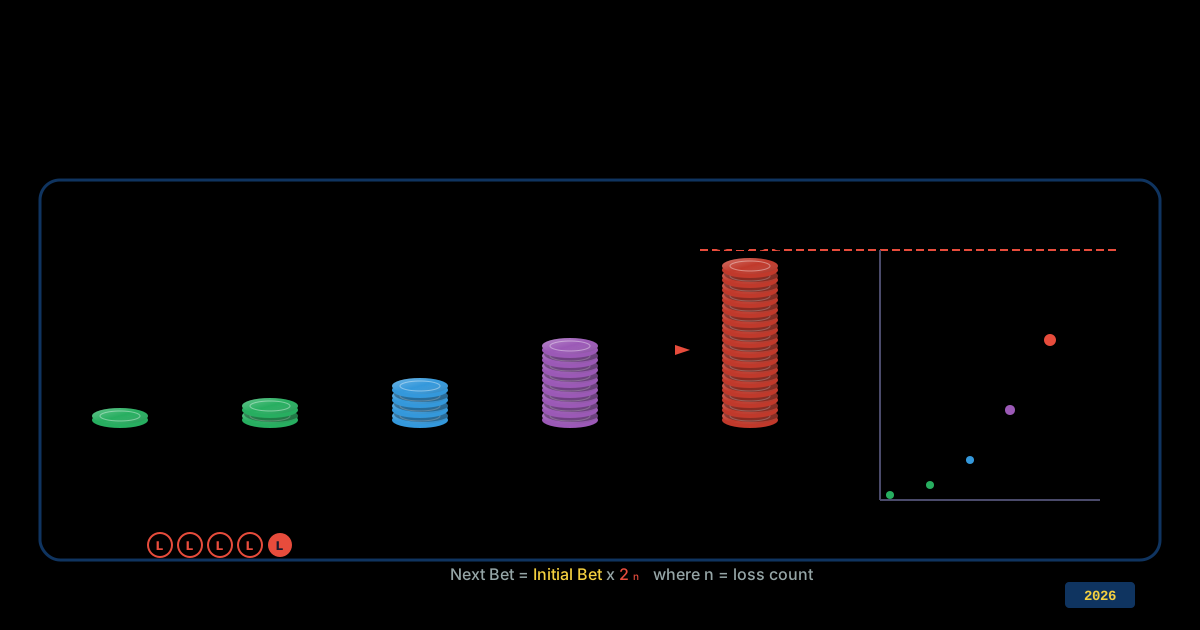
Mistake #3: Chasing Losses
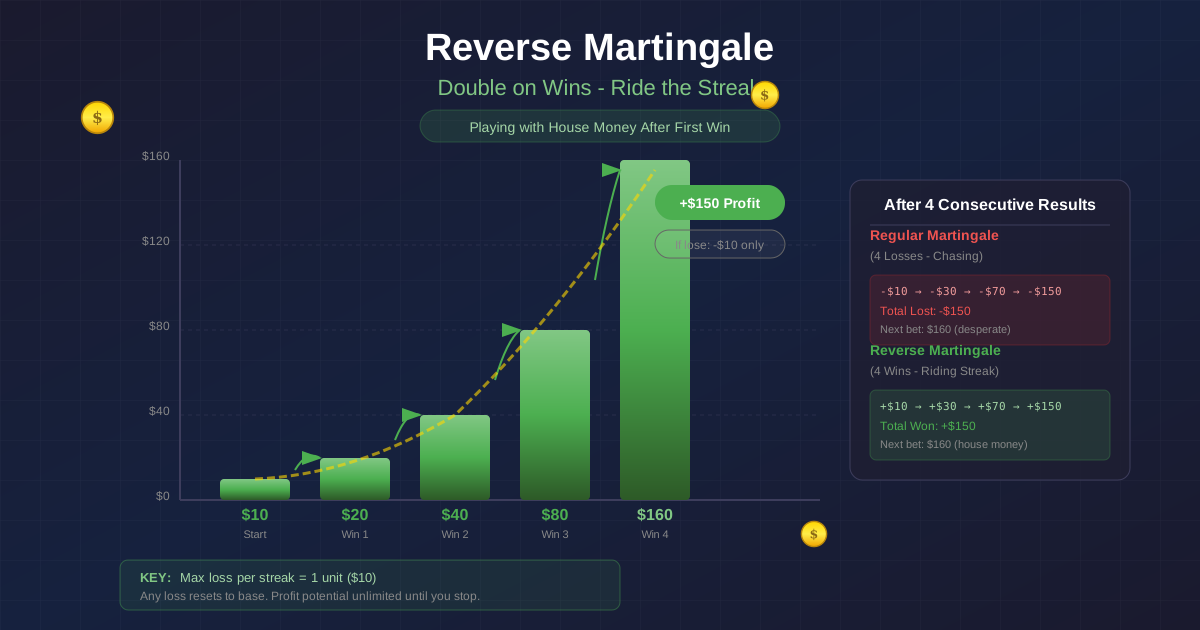
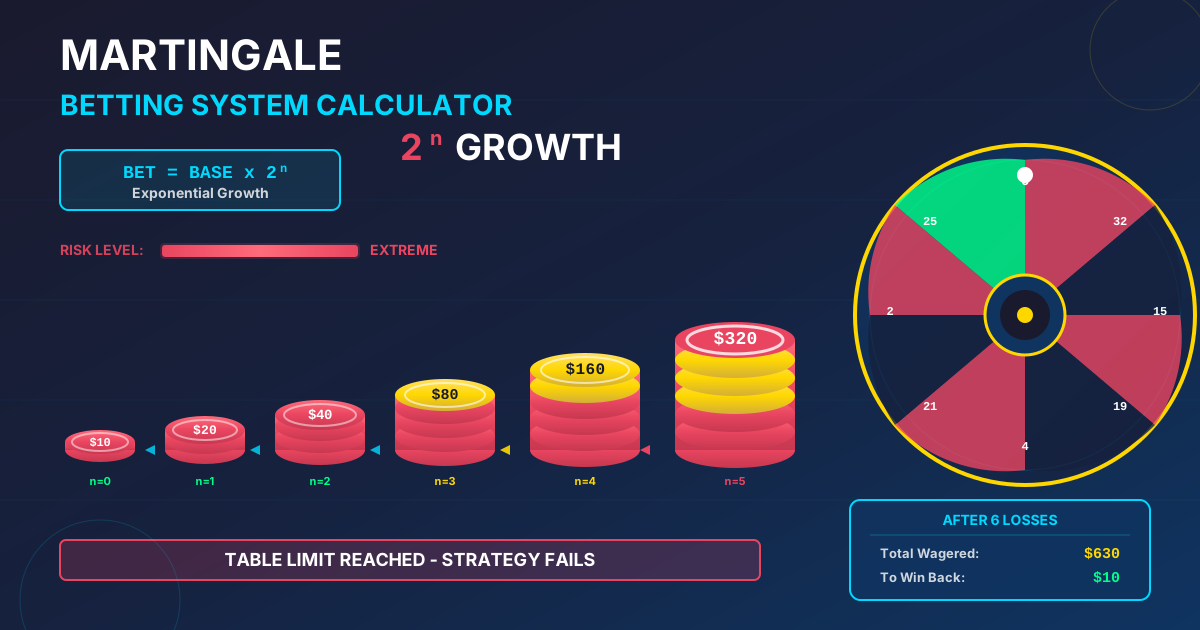
The mistake: You lose $200 on the early games and decide to double or triple your bet on the night game to "get back to even."
Why it happens: Loss aversion. Behavioral economics research shows humans feel losses roughly twice as intensely as equivalent gains. After a losing afternoon, the emotional drive to "get even" overrides rational thinking. Sportsbooks know this, which is why they offer so many late-night betting options.
The math showing how it costs you:
Starting bankroll: $1,000. You lose three $100 bets in the afternoon (down $300). Instead of accepting the loss, you bet $300 on the Sunday Night Football game to get back to even.
- If you win (roughly 48% of the time at -110): You recover to $972.70 (still slightly down because of the vig)
- If you lose (roughly 52% of the time): You are now down $600 -- 60% of your bankroll gone in one day
Expected value of the chase bet: 0.48 x $272.70 - 0.52 x $300 = $130.90 - $156.00 = -$25.10
The chase bet has negative expected value AND dramatically increases your variance. It is a mathematically terrible decision every single time.
How to fix it:
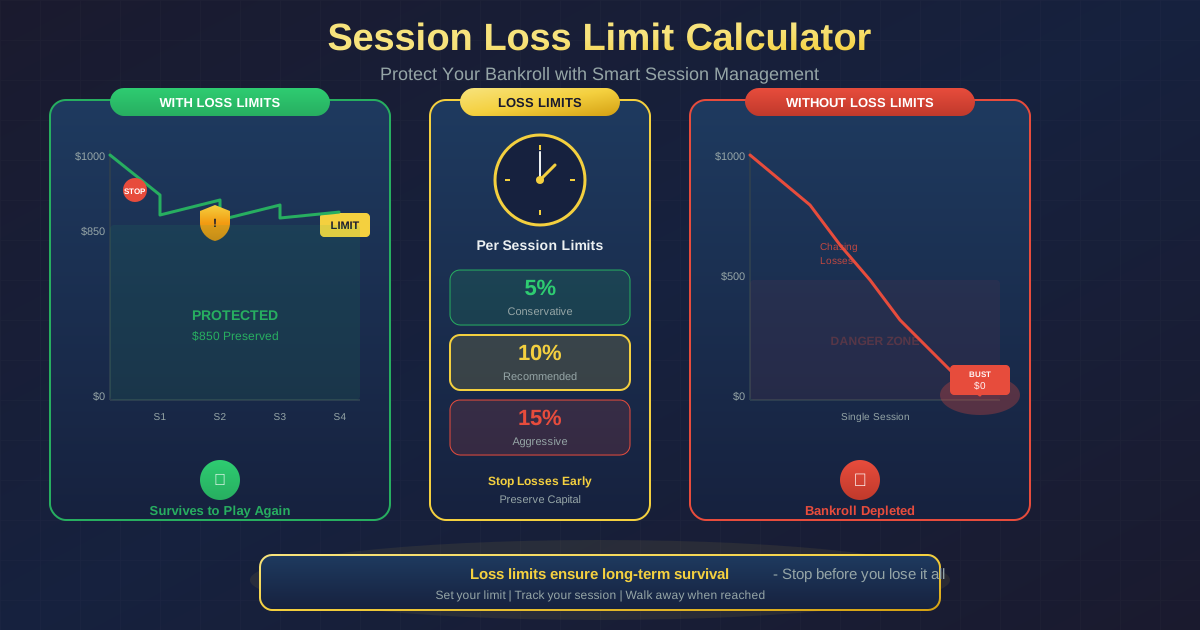
- Set a daily loss limit (e.g., 5% of bankroll) and stop when you hit it
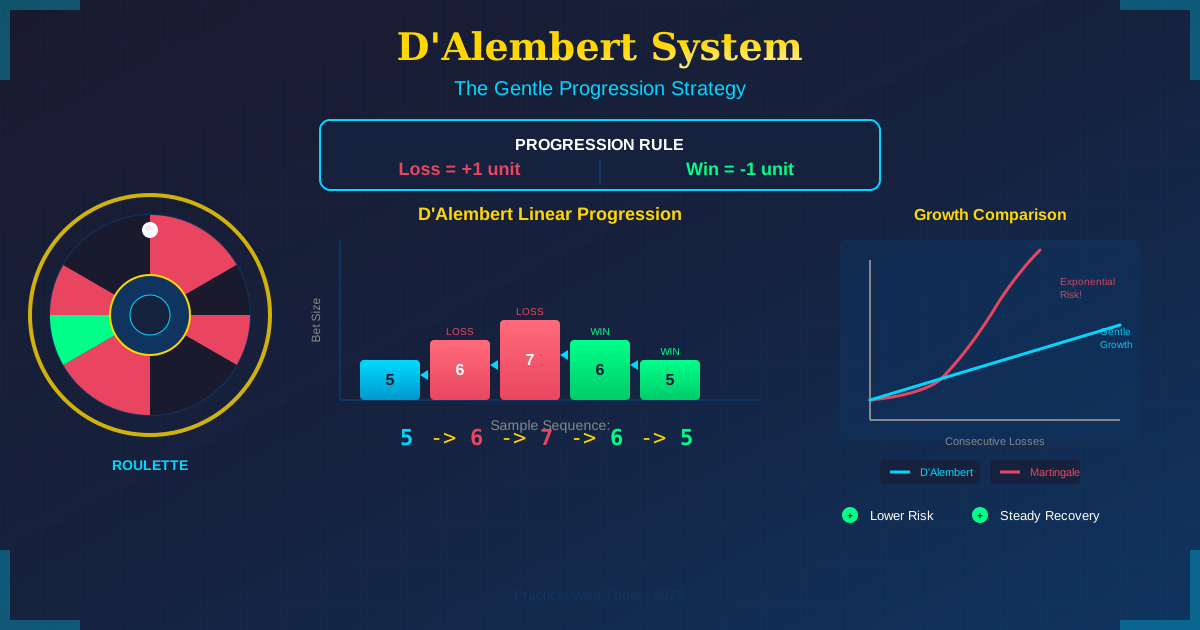
- Never increase bet size after a loss
- Walk away. The games will still be there tomorrow
Severity: CRITICAL
Mistake #4: Not Separating Betting Money from Living Money
The mistake: You bet with money from your checking account, dipping into rent money, grocery money, or emergency funds when a "can't-miss" opportunity comes along.
Why it happens: The line between entertainment spending and essential expenses gets blurry when betting feels easy and accessible from your phone. Mobile sportsbook apps are specifically designed to make depositing frictionless.
The math showing how it costs you:
This one is not about ROI -- it is about financial ruin. If you are betting with money you cannot afford to lose, a normal losing streak becomes a life crisis. The average recreational bettor loses roughly $100 per month. If that $100 was supposed to pay for electricity, you now have a compounding problem: financial stress leads to desperate betting, which leads to bigger losses.
How to fix it:
- Open a separate account or e-wallet specifically for betting
- Fund it with a fixed monthly amount you genuinely do not need
- When the bankroll hits zero, you are done until next month -- no exceptions
Severity: HIGH
Mistake #5: Ignoring the Vig Entirely
The mistake: You think betting is 50/50 and that picking winners slightly more often than not is enough to profit. You have never calculated what the vig actually costs you.
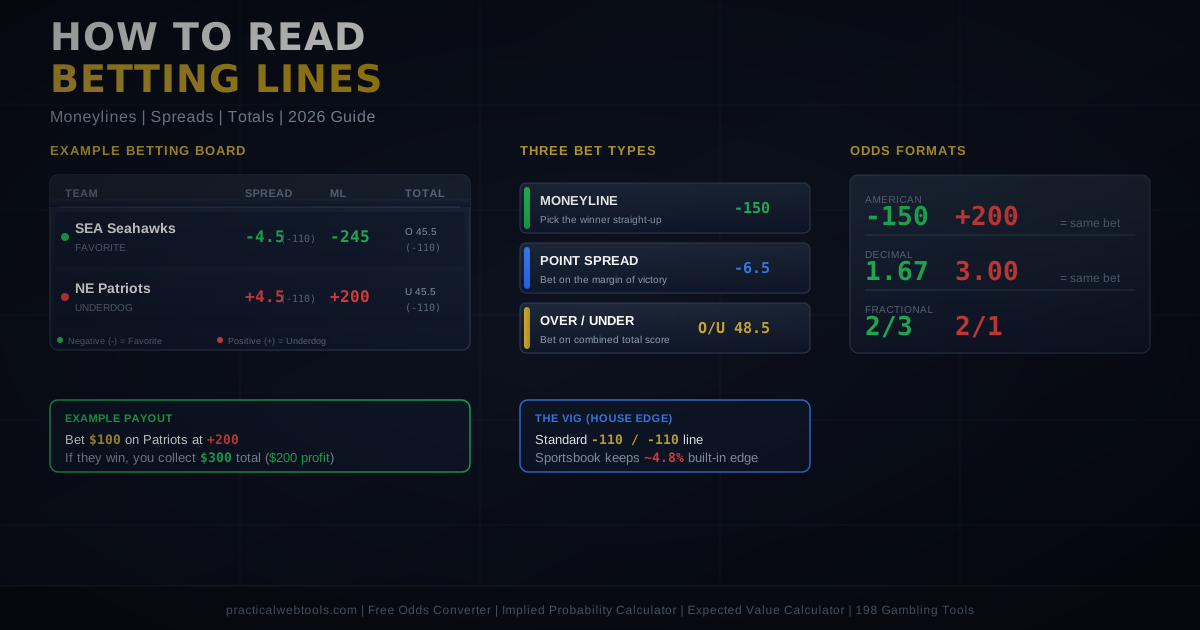
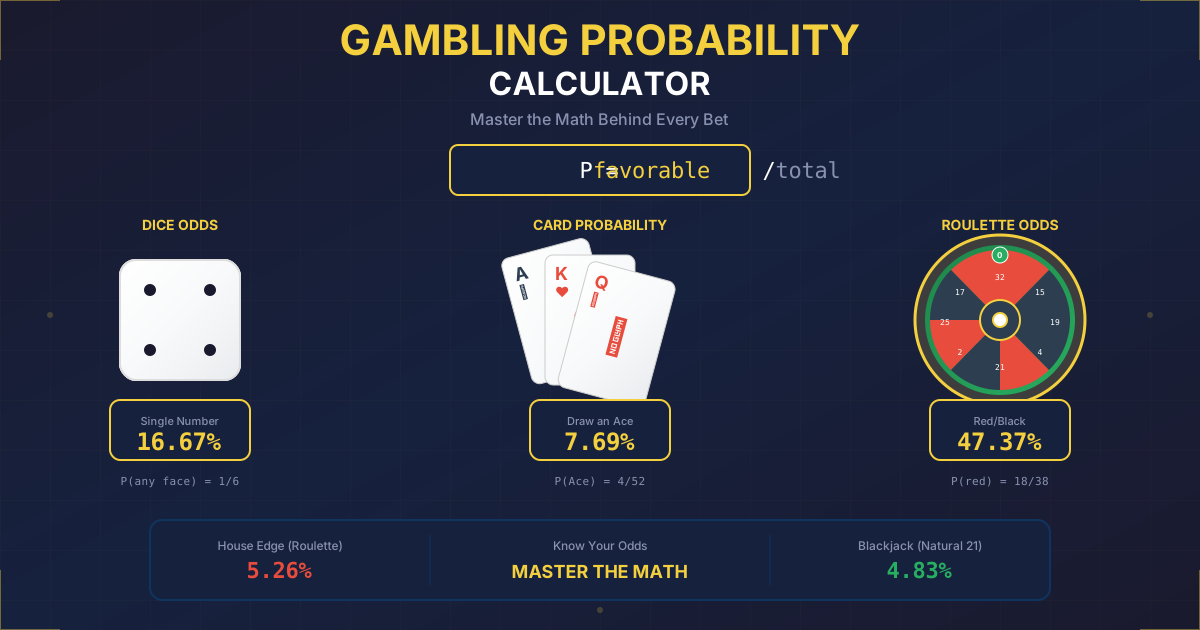
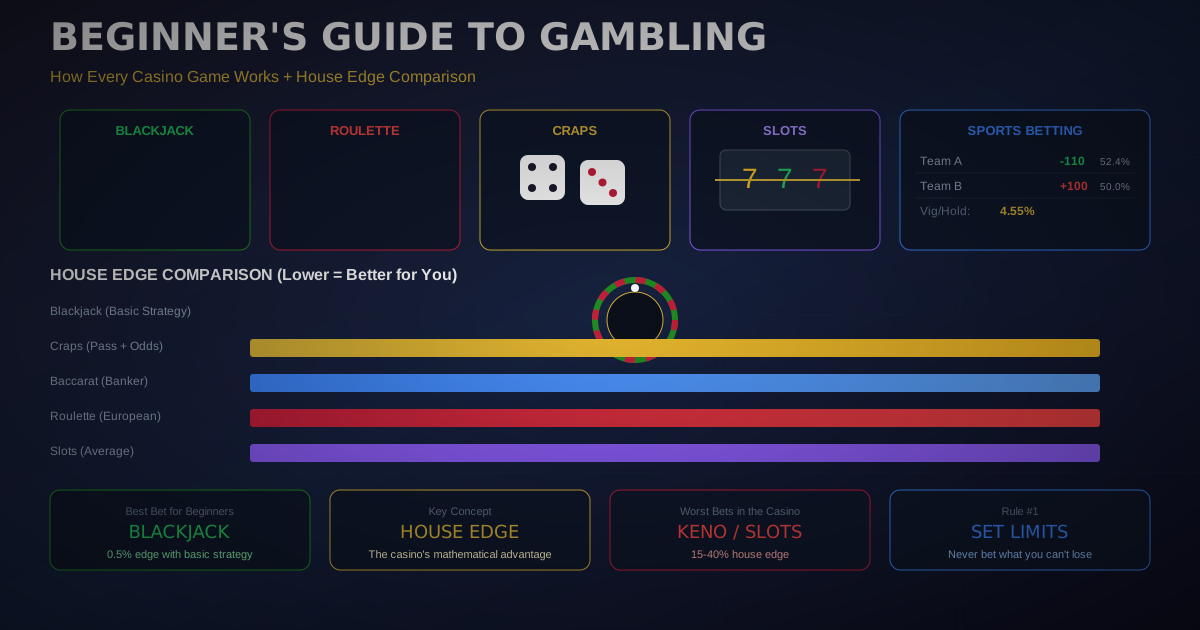
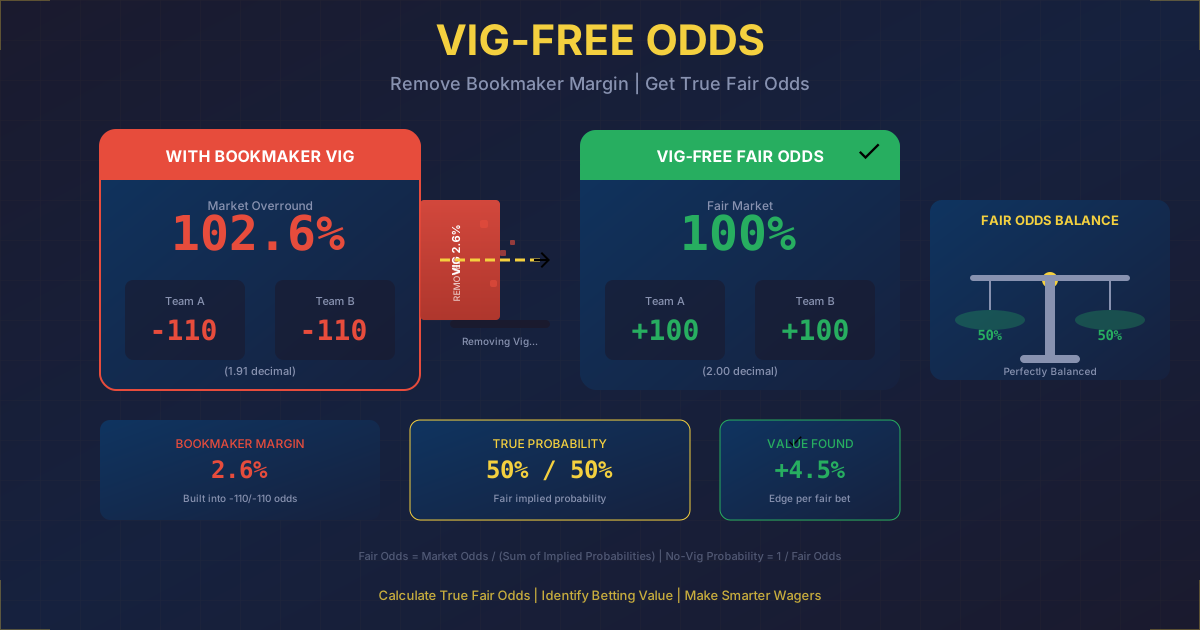
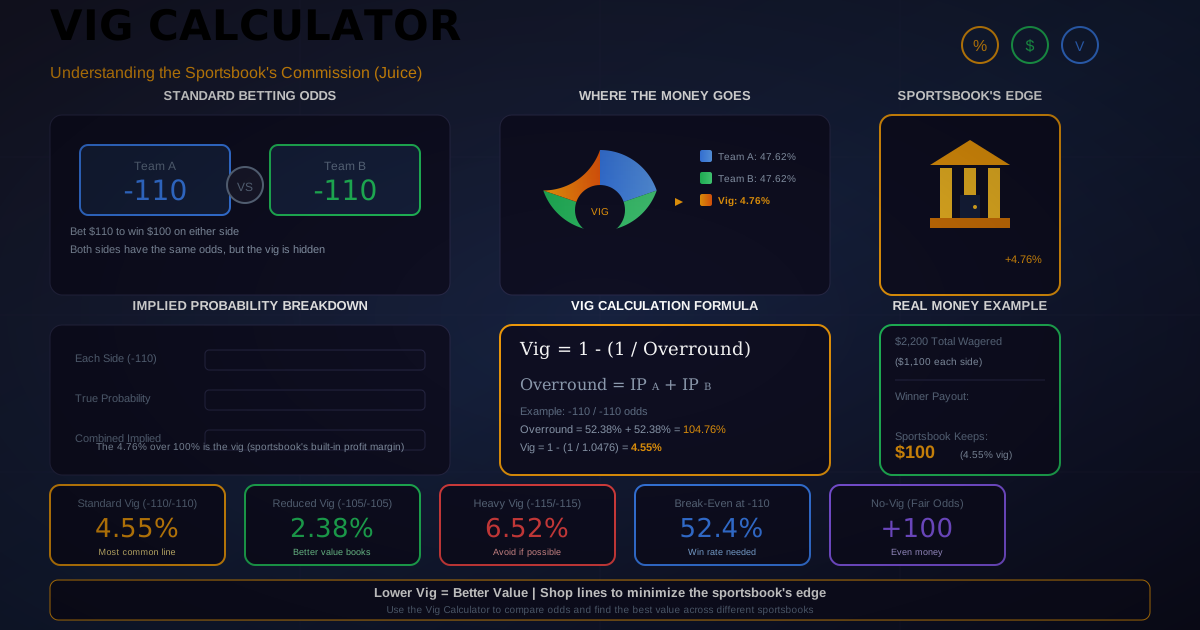
Why it happens: Sportsbooks present -110/-110 lines in a way that makes the vig invisible. Most beginners do not realize that -110 odds mean you are paying $110 to win $100, giving the sportsbook a 4.76% edge on every single bet.
The math showing how it costs you:
Check the vig on any line instantly with our Hold/Vig Calculator.
| Win Rate | Profit/Loss per 100 $110 Bets at -110 |
|---|---|
| 50.0% | -$500 |
| 51.0% | -$280 |
| 52.0% | -$60 |
| 52.4% | $0 (breakeven) |
| 53.0% | +$160 |
| 55.0% | +$600 |
At a 50% win rate, you lose $500 per 100 bets. That is entirely because of the vig. Even at 51% -- which feels like you are "winning" -- you are still losing $280 per 100 bets.
How to fix it:
- Understand that 52.4% is your breakeven point at -110
- Always check the vig before placing a bet using our Hold/Vig Calculator
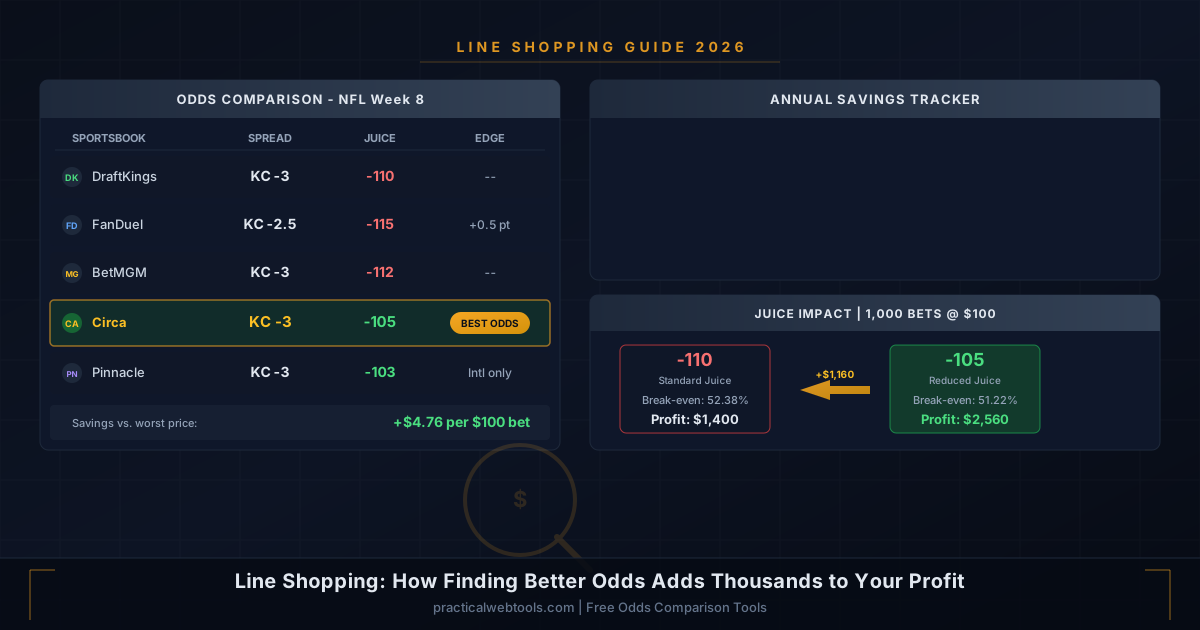
- Seek out reduced juice sportsbooks offering -105 lines where breakeven drops to 51.2%
- The vig difference between -110 and -105 saves you roughly $250 per 100 bets
Severity: HIGH
Part 2: Strategy Mistakes (Betting Without an Edge)
You can manage your bankroll perfectly and still lose if your actual bet selection process is flawed. These mistakes ensure you are playing a negative expected value game.
Mistake #6: Betting on Your Favorite Team
The mistake: You bet on your team every single game because you "know them best" and you want them to win, so you might as well profit from it.
Why it happens: Emotional attachment. When you are a fan, you overestimate your team's chances because you want them to win. This cognitive bias is called "motivated reasoning," and sportsbooks exploit it ruthlessly. Fan-heavy teams like the Cowboys, Yankees, and Lakers consistently have inflated lines because books know public money will pour in regardless.
The math showing how it costs you:
Research from multiple sportsbook data sets shows that heavily bet public favorites cover the spread roughly 48% of the time. If you bet $110 on your team in all 17 NFL regular season games at -110:
- Total wagered: $1,870
- At 48% win rate (8 wins, 9 losses): 8 x $100 - 9 x $110 = $800 - $990 = -$190
- At the break-even 52.4%: You would need approximately 9 wins -- but public teams average closer to 8
That $190 loss is the annual tax you pay for loyalty.
How to fix it:
- Either never bet on your own team, or analyze them with the same cold objectivity you apply to other games
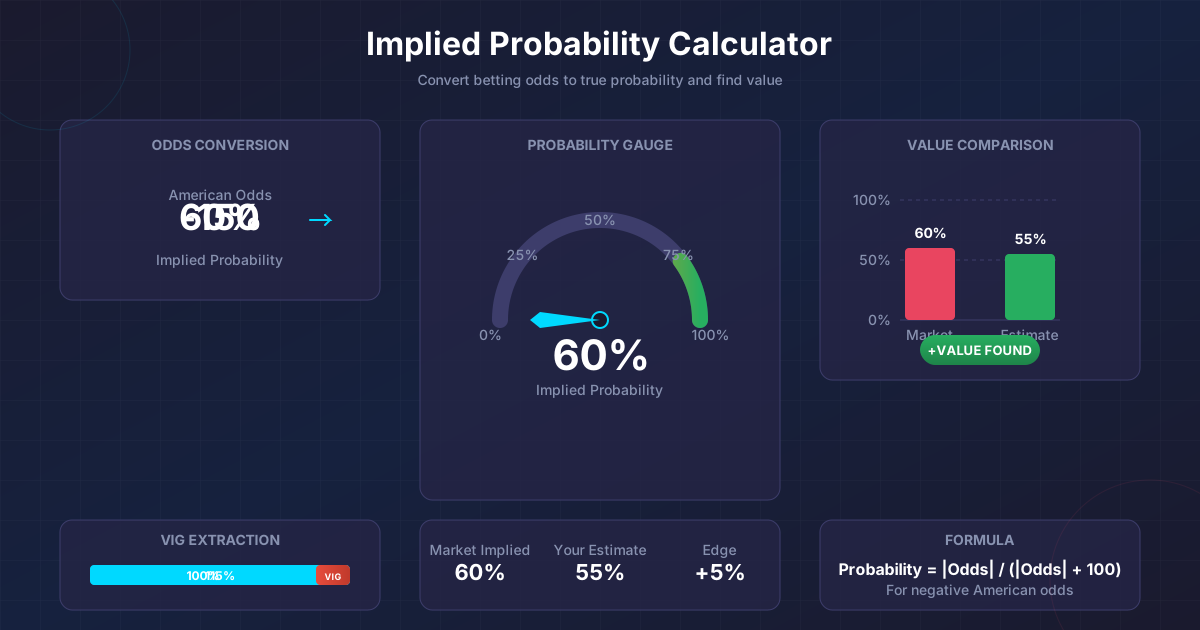
- Use our Implied Probability Calculator to see what the line is actually saying about your team's chances
- If you cannot be objective, exclude your team from your betting card entirely
Severity: MEDIUM
Mistake #7: Only Betting Favorites
The mistake: You assume the favorite always wins and only bet chalk (favorites), never underdogs.
Why it happens: It feels safer. Betting on the team "expected" to win gives beginners a false sense of security. The problem is that the odds are adjusted to reflect that expectation, and the vig makes favorites especially expensive.
The math showing how it costs you:
A -200 favorite needs to win 66.7% of the time for you to break even. If they actually win 64% of the time:
- Per 100 bets at $200 to win $100: 64 wins ($6,400) - 36 losses ($7,200) = -$800
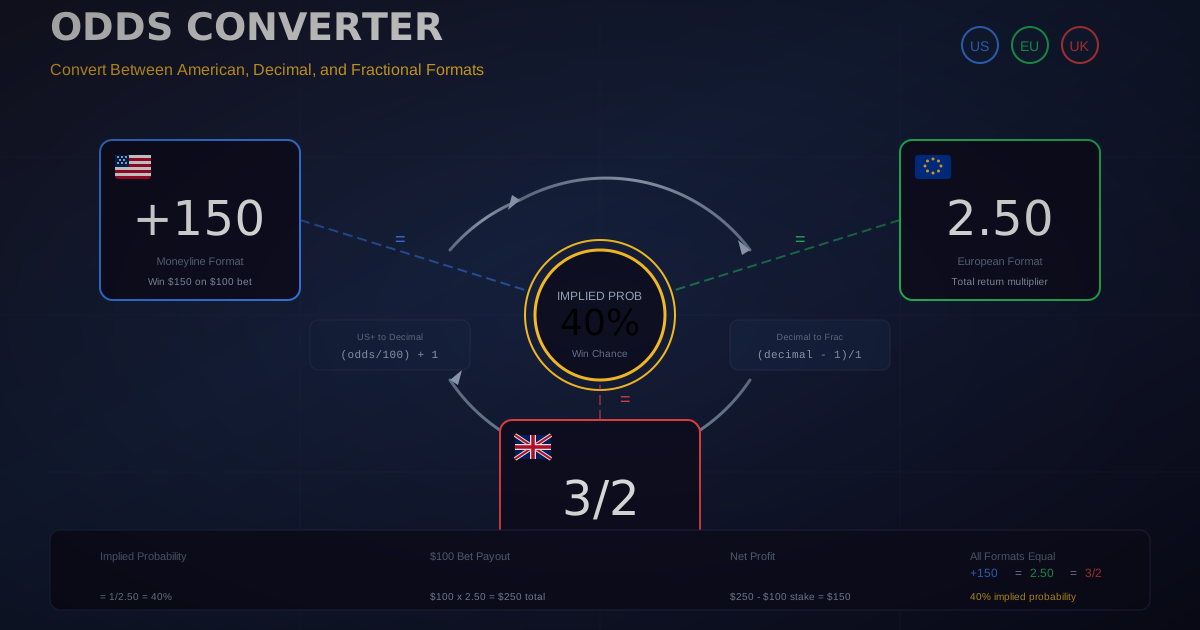
Convert any odds format and see the true breakeven rate with our Odds Converter.
Meanwhile, a +200 underdog only needs to win 33.3% to break even. If they actually win 36% of the time:
- Per 100 bets at $100 to win $200: 36 wins ($7,200) - 64 losses ($6,400) = +$800
The value in sports betting often lives with underdogs, not favorites. Blindly betting favorites is handing money to the sportsbook.
How to fix it:
- Focus on value, not win probability -- a team can be likely to lose and still be a great bet at the right price
- Use the Expected Value Calculator to evaluate every bet, favorite or underdog
- Track your results by favorite/underdog to see where your actual edge is
Severity: MEDIUM
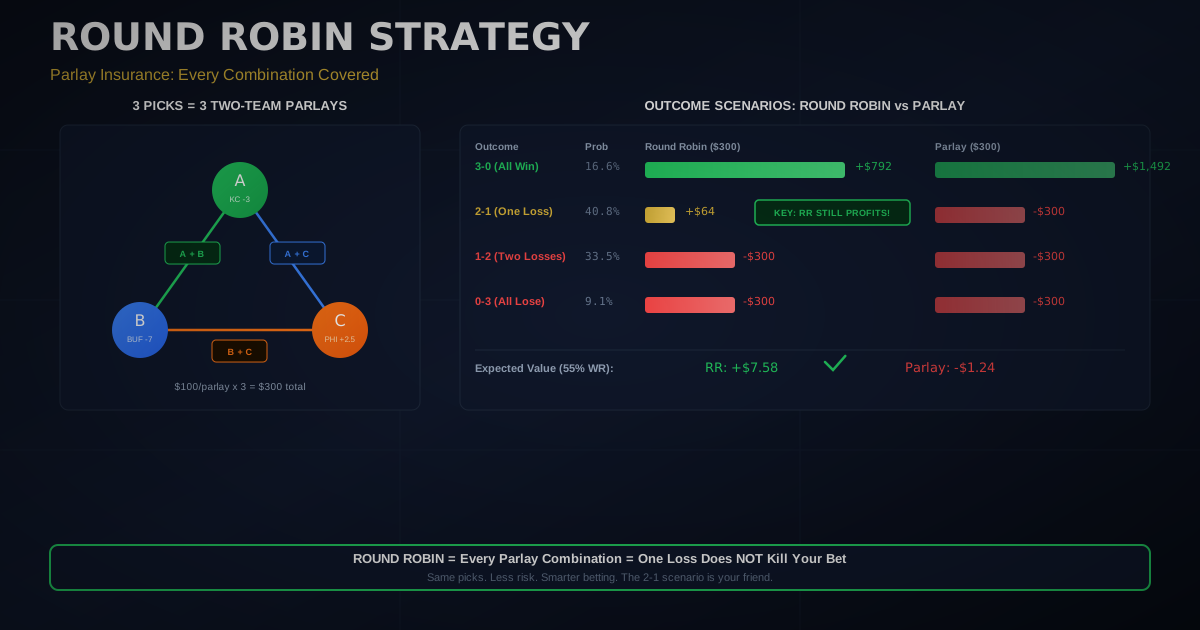
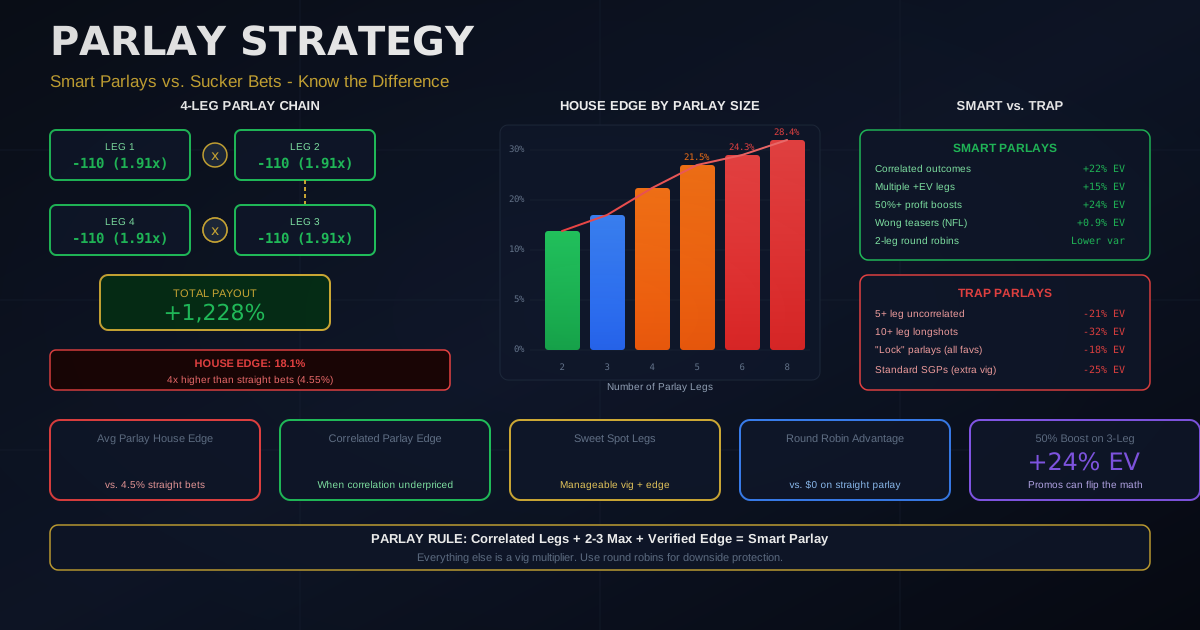
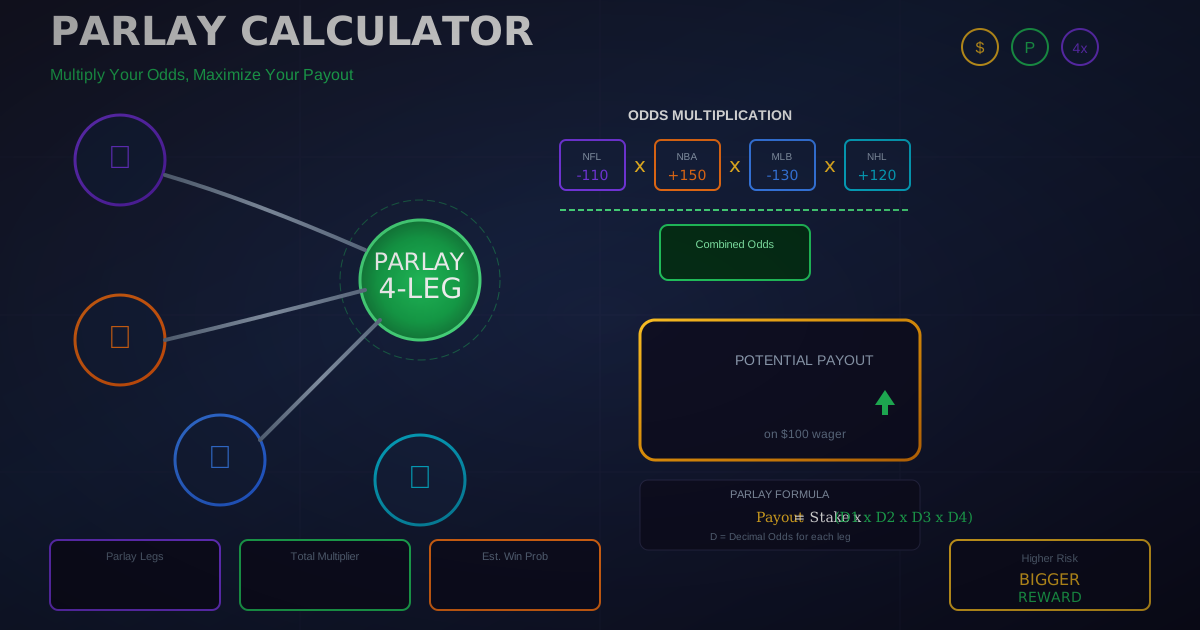
Mistake #8: Loading Up on Parlays
The mistake: You bet mostly parlays because the potential payouts are huge. A $10 bet could pay $500, so why not?
Why it happens: Parlays trigger the same psychological reward pathways as lottery tickets. The potential for a massive payout on a tiny investment is irresistible. Sportsbooks aggressively promote parlays because they are their most profitable product by far.
The math showing how it costs you:
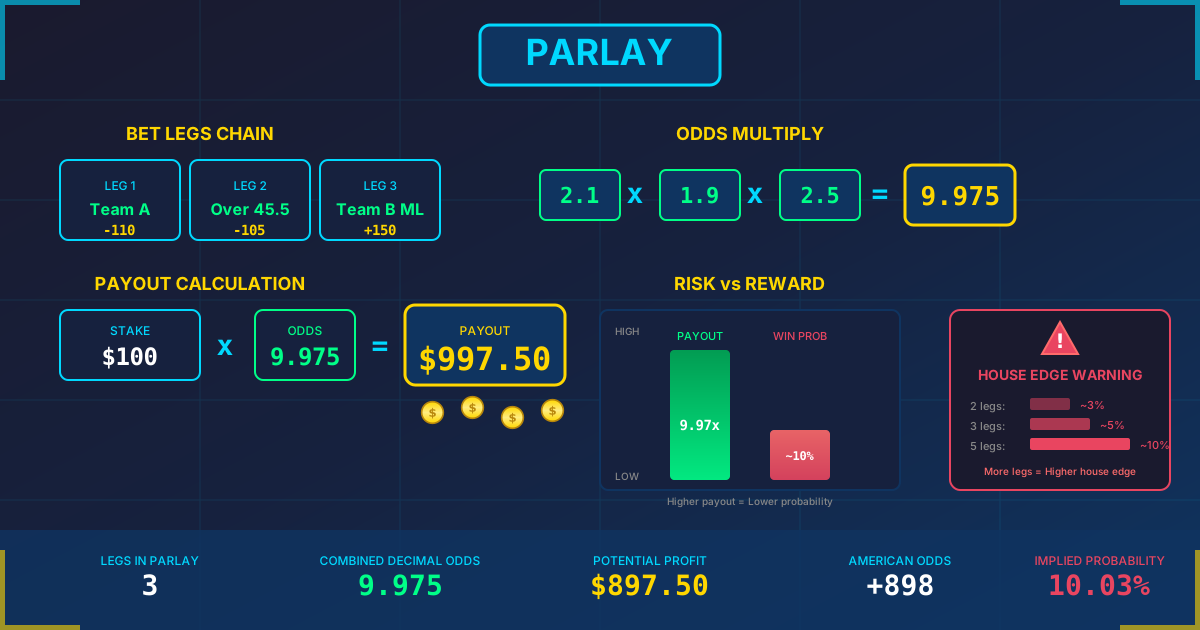
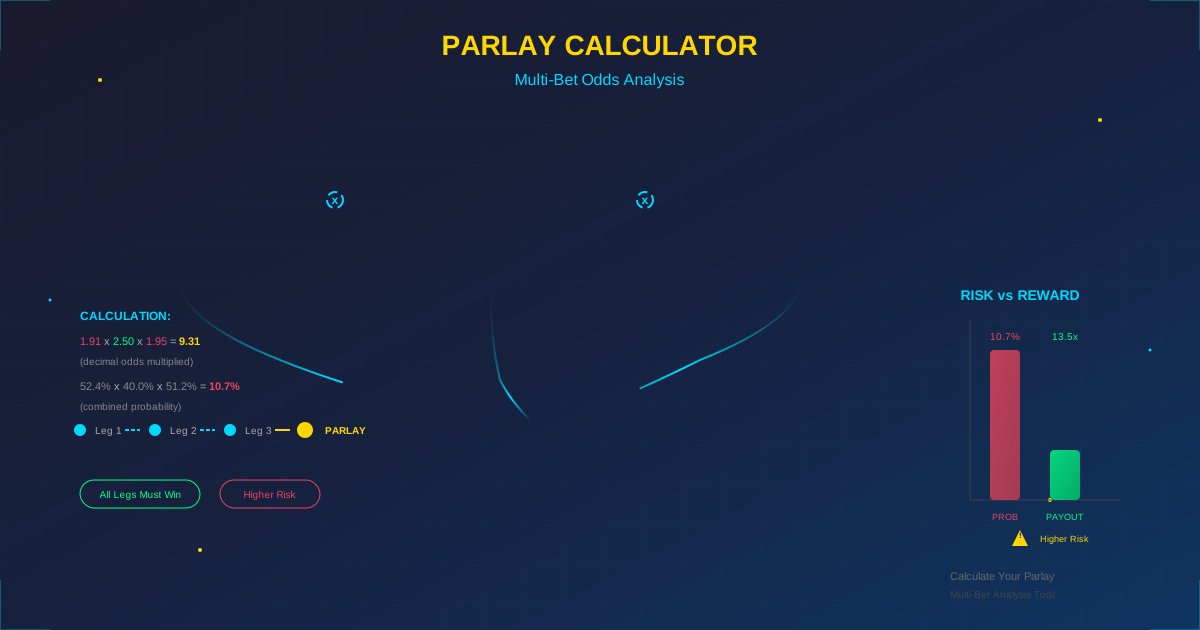
Calculate parlay odds and payouts with our Parlay Calculator.
| Parlay Type | True Odds of Winning (50% per leg) | Typical Payout | Sportsbook Edge |
|---|---|---|---|
| 2-team | 25.0% | +260 (should be +300) | 10.0% |
| 3-team | 12.5% | +600 (should be +700) | 12.5% |
| 4-team | 6.25% | +1100 (should be +1500) | 18.8% |
| 6-team | 1.56% | +4000 (should be +6300) | 30.5% |
| 10-team | 0.098% | +70000 (should be +102300) | 40%+ |
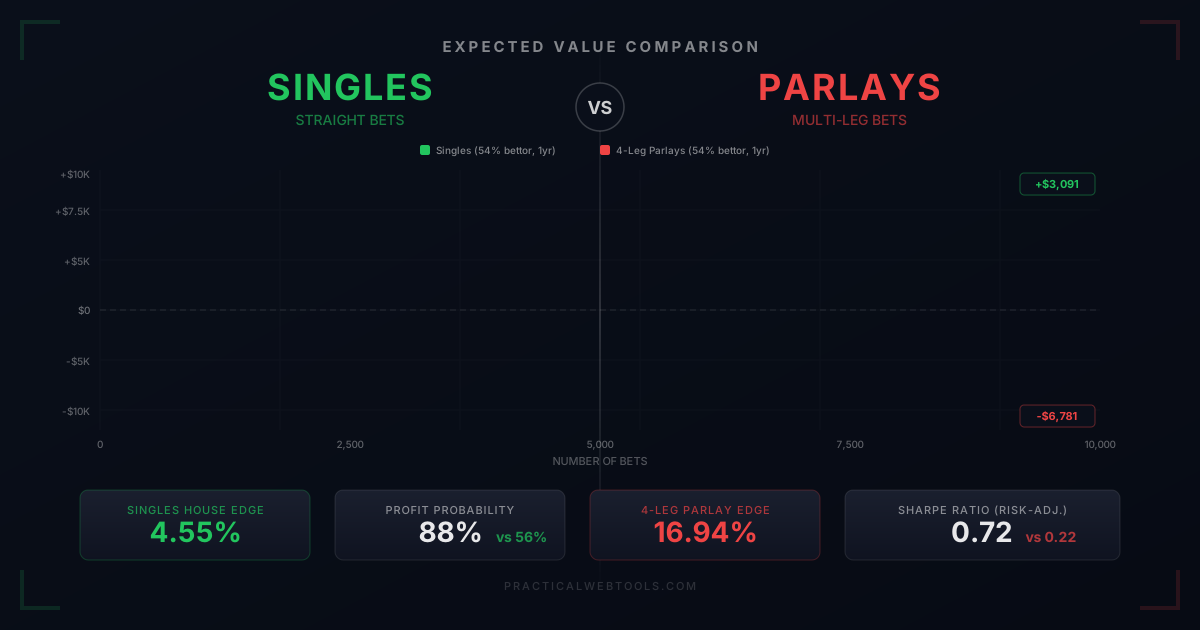
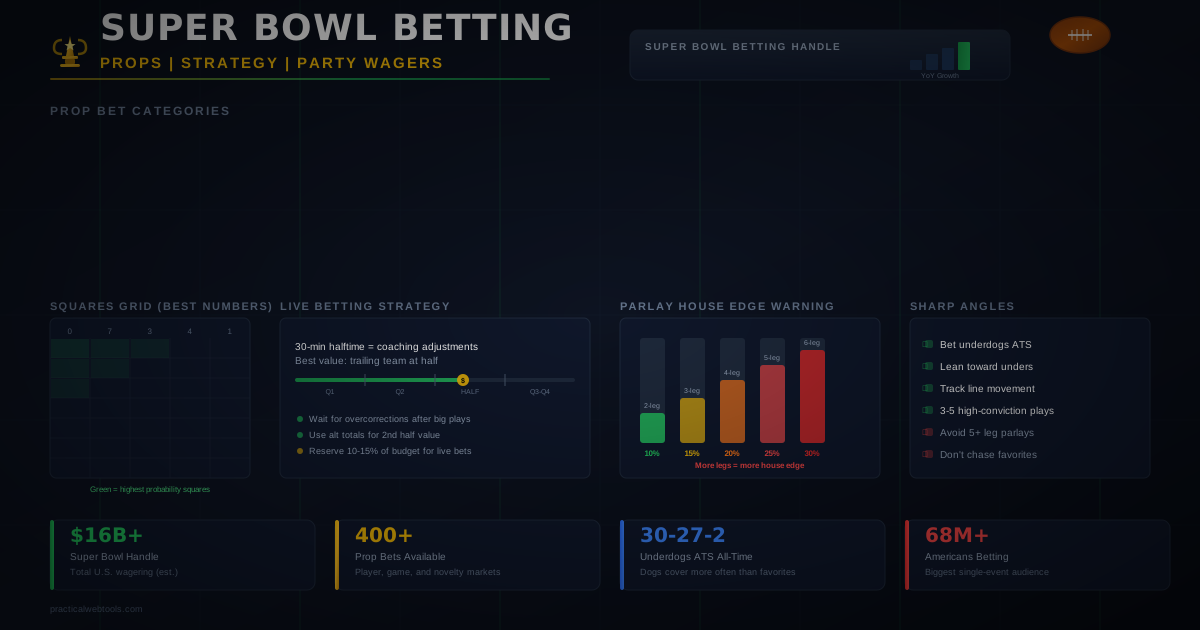
The sportsbook edge on a 4-team parlay is roughly 19%. On a 10-team parlay, it exceeds 40%. Compare that to the 4.76% edge on a straight bet. You are literally paying 4-8 times more in vig for the privilege of a bigger potential payout.
Real-world example: A bettor placing ten $10 four-team parlays per week spends $100/week, $5,200/year. At the sportsbook's 19% edge, the expected loss is $988 per year -- almost $1,000 gone just from choosing parlays over straight bets.
How to fix it:
- Make straight bets your primary wagering method
- If you play parlays, limit them to 2-3 legs maximum where the vig penalty is smallest
- Never allocate more than 5-10% of your weekly betting budget to parlays
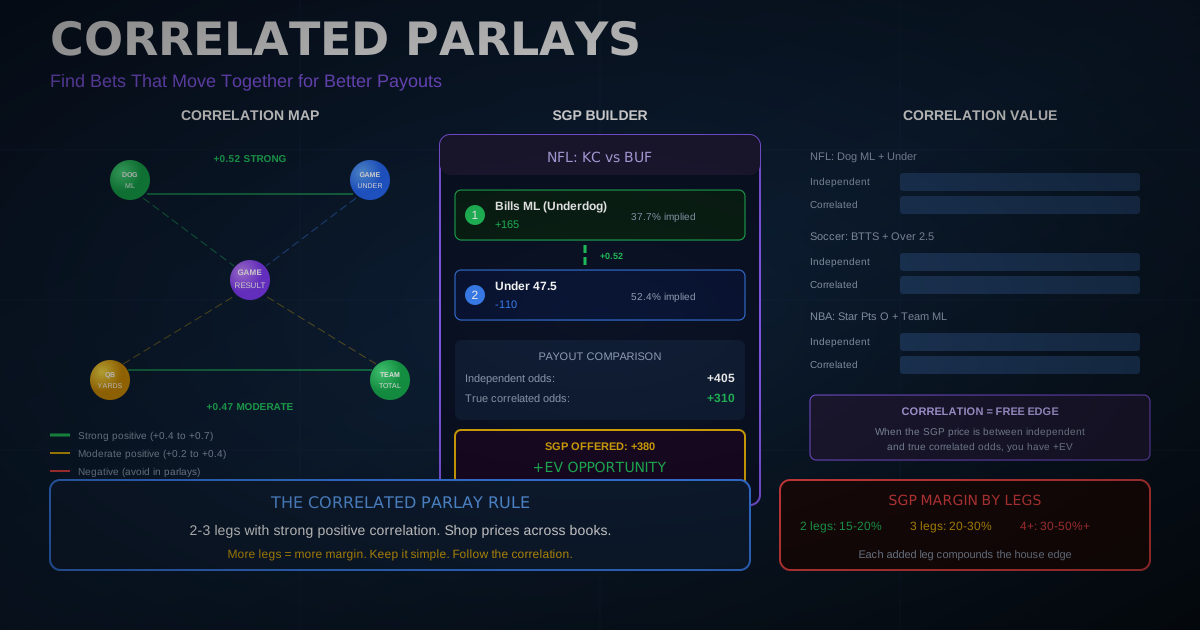
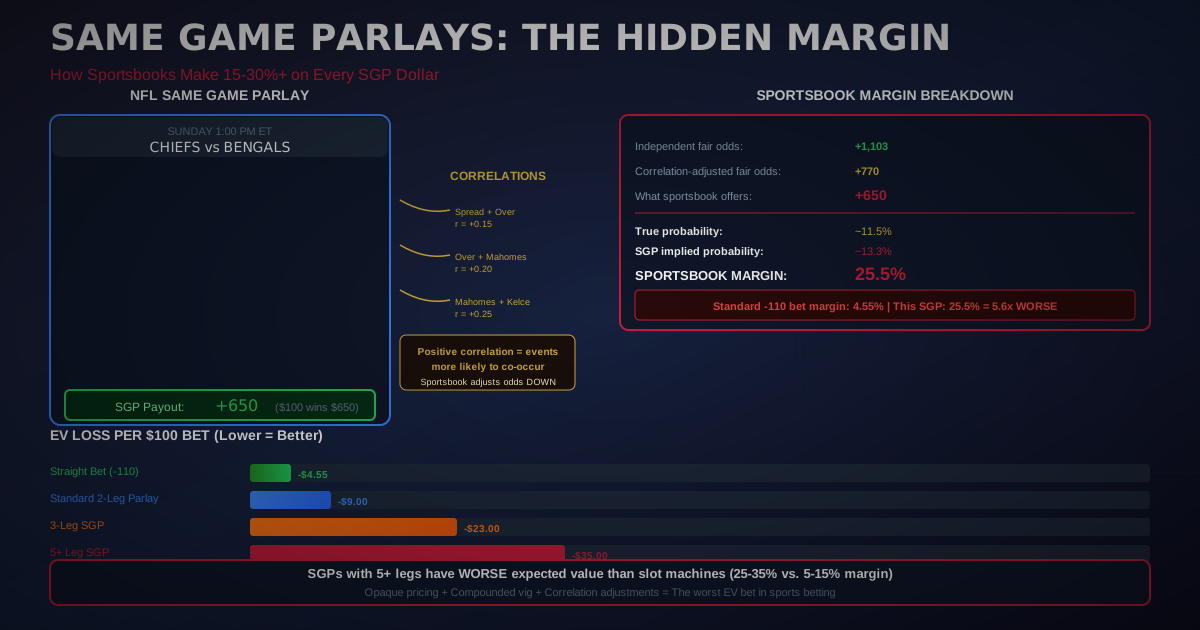
- Correlated parlays (same-game parlays with logically connected outcomes) can offer better value than random multi-game parlays, but the math is still against you
Severity: HIGH
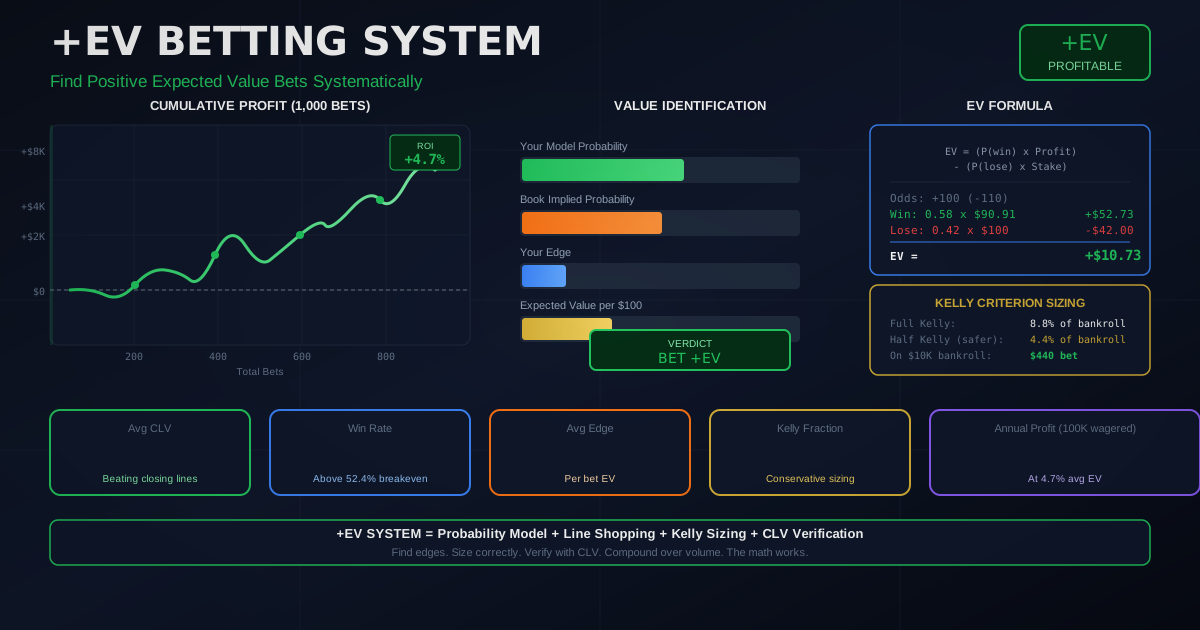
Mistake #9: Ignoring Expected Value
The mistake: You pick bets based on who you think will win without ever calculating whether the odds make the bet profitable.
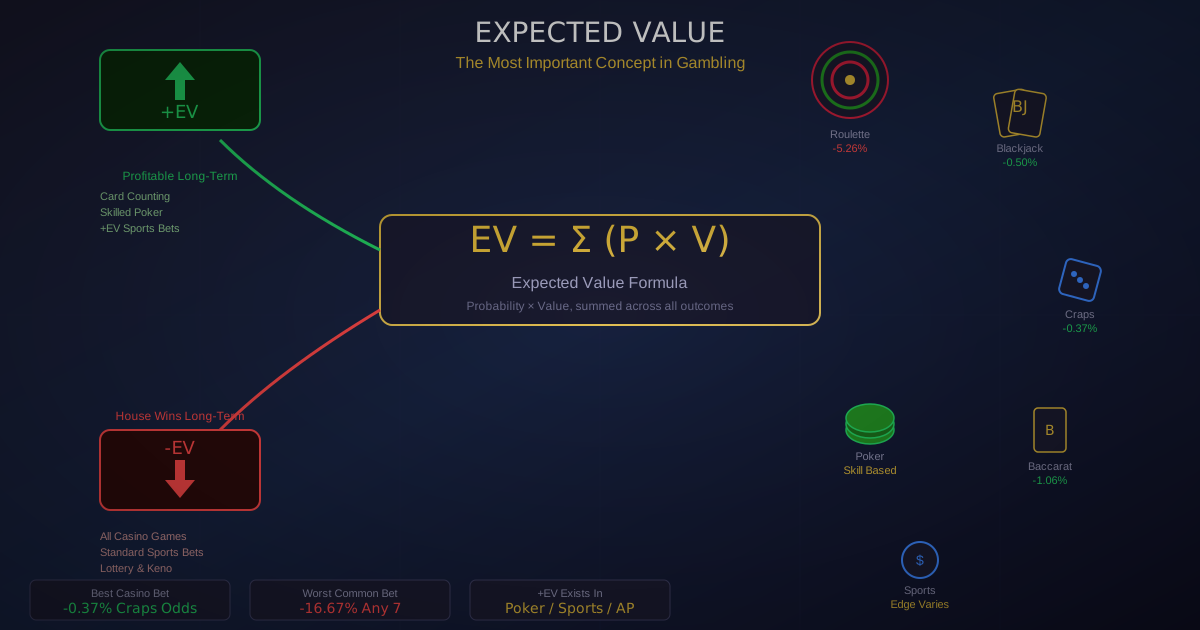
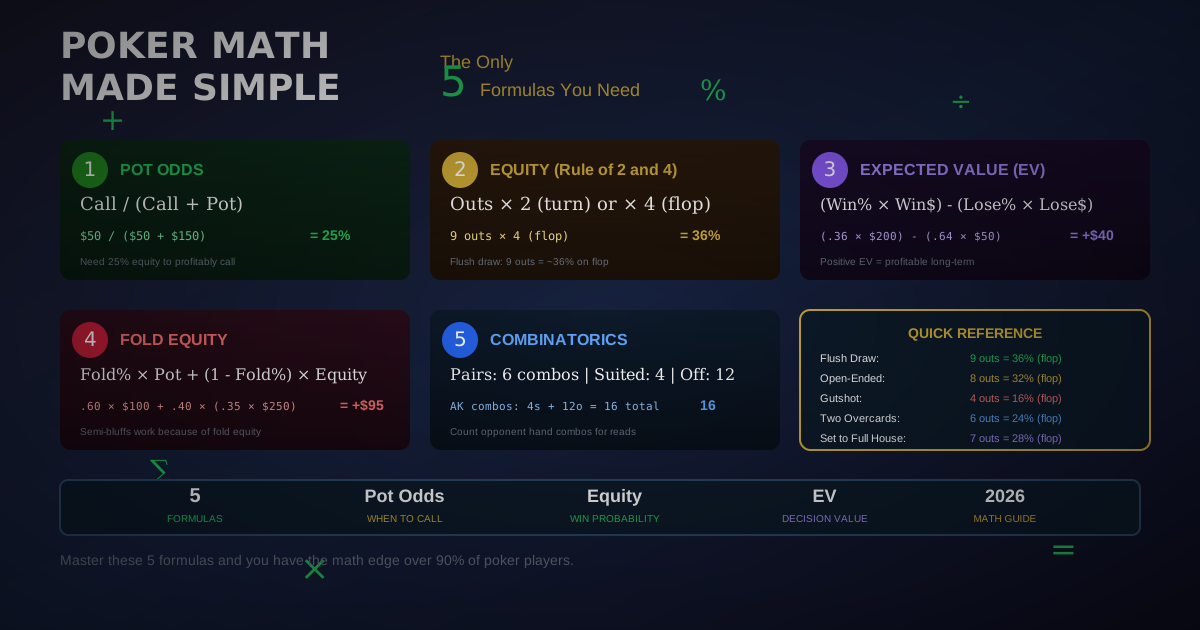
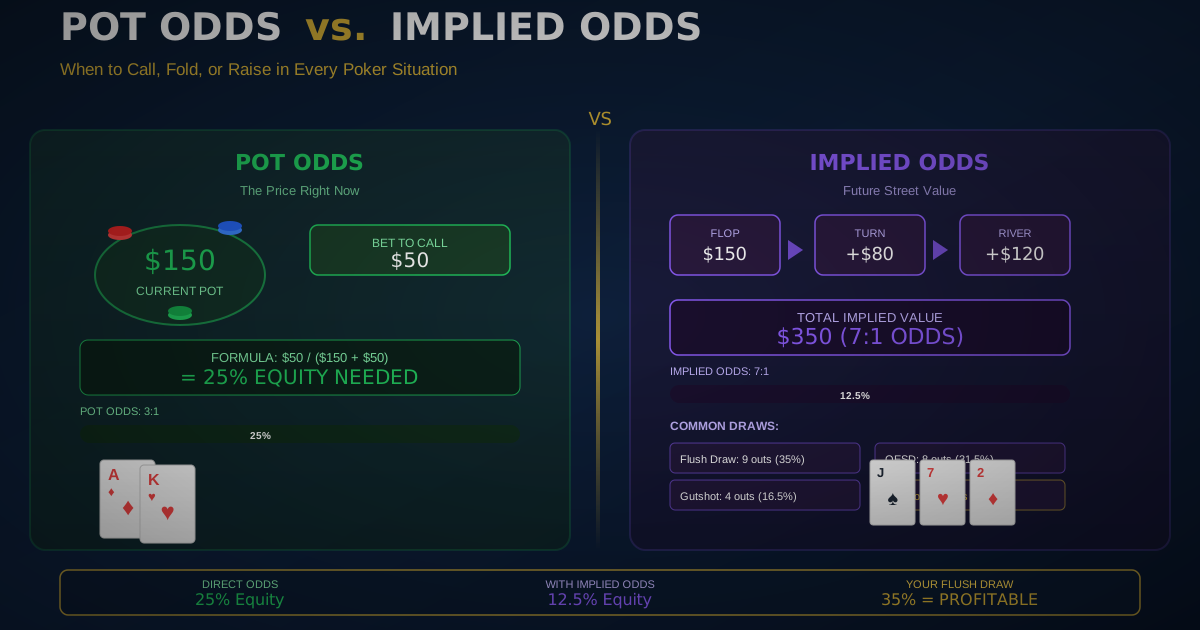
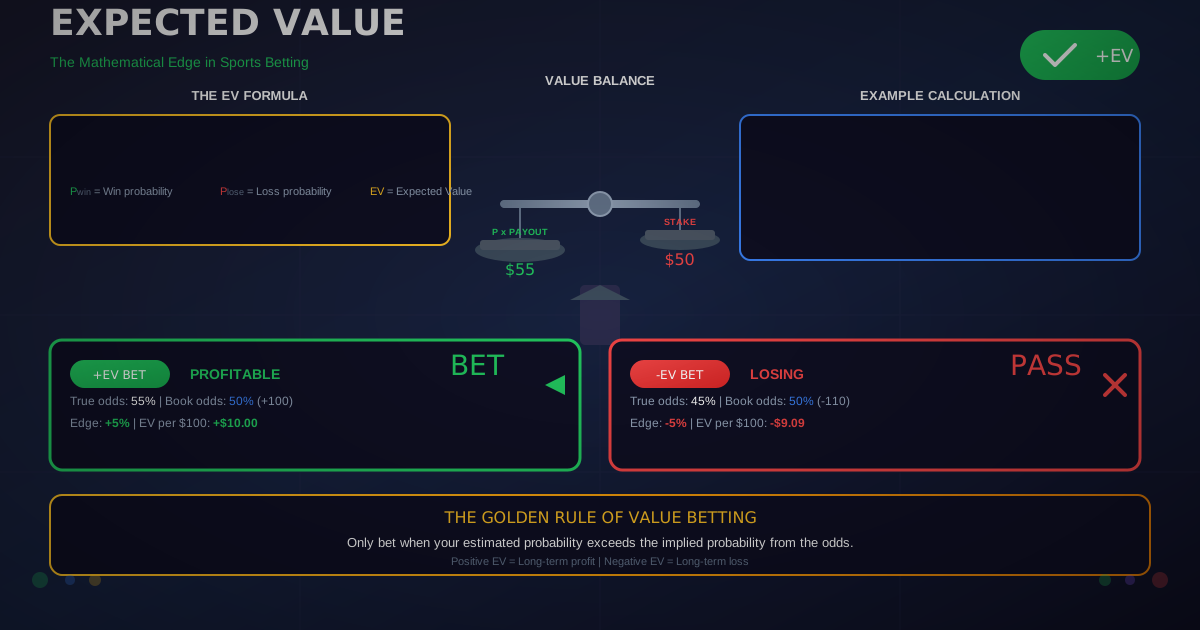
Why it happens: Most beginners think sports betting is about prediction. It is not. It is about price. You can correctly predict that the Chiefs will beat the Jaguars 70% of the time, but if the odds imply an 80% chance, you are still making a losing bet. This concept is counterintuitive for most new bettors.
The math showing how it costs you:
| Your Win Probability | Line (Implied Probability) | Expected Value per $100 | Verdict |
|---|---|---|---|
| 60% | -150 (60%) | $0.00 | Breakeven -- no edge |
| 60% | -200 (66.7%) | -$10.00 | Losing bet despite being right often |
| 60% | -120 (54.5%) | +$8.30 | Profitable -- positive EV |
| 40% | +200 (33.3%) | +$13.30 | Profitable despite losing most bets |
The fourth row is the critical insight: you can lose 60% of these bets and still profit because the payout more than compensates for the losses.
How to fix it:
- Before every bet, calculate your expected value using our Expected Value Calculator
- Only place bets where your estimated probability exceeds the implied probability by a meaningful margin (2%+)
- Think in terms of "price" rather than "picks"
Severity: HIGH
Mistake #10: Not Shopping for the Best Lines
The mistake: You use one sportsbook for everything and never compare lines across different books.
Why it happens: Convenience. It is easier to open one app and bet than to check three or four. Many bettors do not realize that odds vary significantly between sportsbooks for the same game.
The math showing how it costs you:
Game: Bills at Dolphins. You want the Bills.
| Sportsbook | Line | Your Payout on $110 Bet |
|---|---|---|
| Book A | Bills -3 (-110) | $100 |
| Book B | Bills -2.5 (-110) | $100 |
| Book C | Bills -3 (-105) | $104.76 |
| Book D | Bills -2.5 (-105) | $104.76 |
Book D gives you a half-point better spread AND reduced juice. Over a season of 200 bets, consistently getting -105 instead of -110 saves you:
- At -110: Need 52.4% to break even
- At -105: Need 51.2% to break even
- Difference: 1.2 percentage points -- worth roughly $240 per 100 bets at $110/bet
How to fix it:
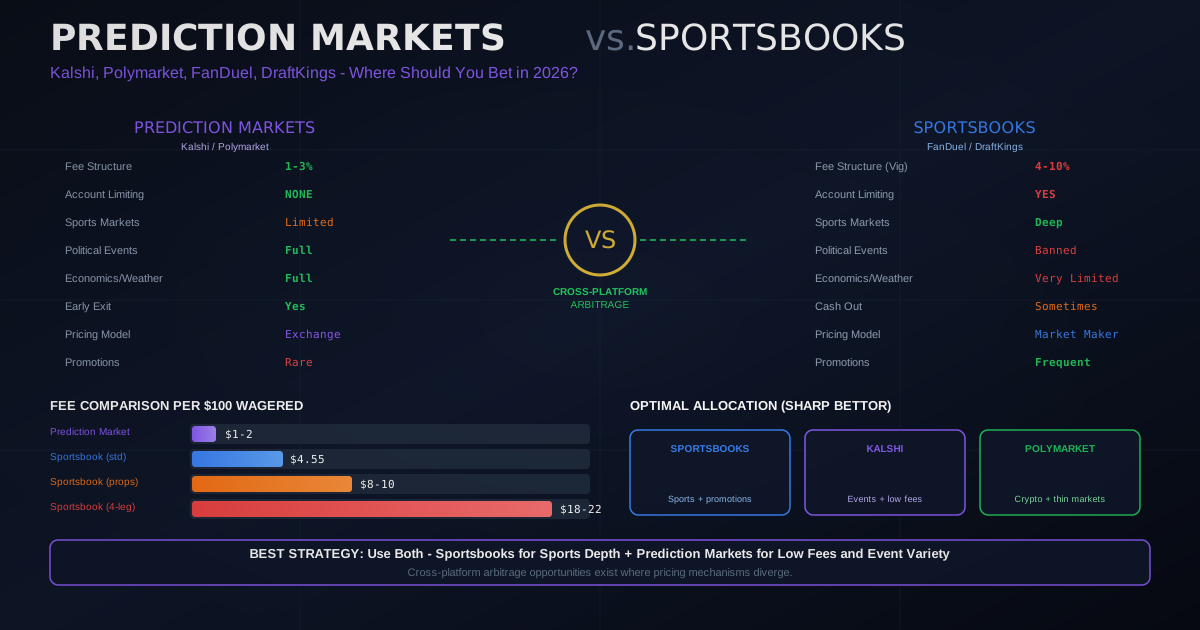
- Have accounts at 3-5 sportsbooks minimum
- Always compare lines before placing a bet (takes 60 seconds)
- Use our Odds Converter to compare different odds formats across books
- Prioritize reduced-juice books for the bets you place most frequently
Severity: HIGH
Part 3: Psychological Mistakes (Your Brain is Working Against You)
Even sharp bettors battle their own psychology. These mental traps are the hardest to fix because they feel rational in the moment.
Mistake #11: Betting Under the Influence
The mistake: You place bets after drinking, using substances, or while extremely tired or emotional.
Why it happens: Sports and drinking go together culturally. You are at a bar, the game is on, your phone is in your pocket, and placing a bet takes 30 seconds. Alcohol lowers inhibitions and impairs judgment -- the exact two things you need working properly to make good bets.
The math showing how it costs you:
Studies on decision-making under the influence of alcohol show a 15-30% decline in analytical reasoning ability. If your sober win rate is 53% (marginally profitable), a 15% impairment to your decision-making process could easily drop you to 50% or below -- flipping you from profitable to losing.
At $100/bet over 50 impaired bets per year:
- Sober (53% win rate): +$60
- Impaired (49% win rate): -$280
- Difference: $340 per year lost to impaired betting
How to fix it:
- Set a personal rule: no betting after more than one drink
- Use the "pre-commit" strategy: make all your bets before game day when you are sober and thinking clearly
- Most sportsbooks allow you to lock in bets hours or days before the game
Severity: MEDIUM
Mistake #12: Recency Bias and Overreacting to Small Samples
The mistake: A team wins three games in a row and you decide they are "hot" and bet on them. Or you lose five bets in a row and abandon your strategy, concluding it "does not work."
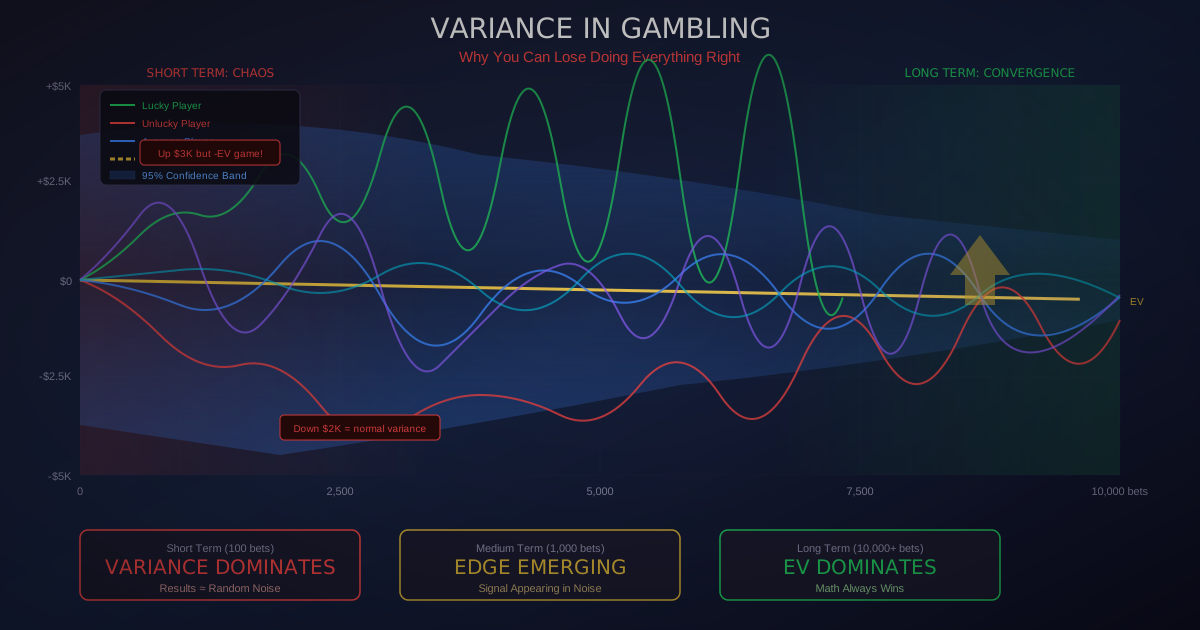
Why it happens: Humans are pattern-recognition machines. We see streaks and assign meaning to them, even when they are statistically expected. A coin that flips heads five times in a row is not "hot" -- it is just experiencing normal variance.
The math showing how it costs you:
At a 52% win rate, the probability of specific streak outcomes over 20 bets:
| Streak | Probability It Happens |
|---|---|
| 3 consecutive losses | 88% (almost guaranteed) |
| 5 consecutive losses | 41% |
| 7 consecutive losses | 12% |
| 3 consecutive wins | 90% |
| 5 consecutive wins | 44% |
A five-game losing streak happens to winning bettors 41% of the time across any 20-bet sample. If you abandon your strategy every time this occurs, you will never stick with anything long enough to see results.
How to fix it:
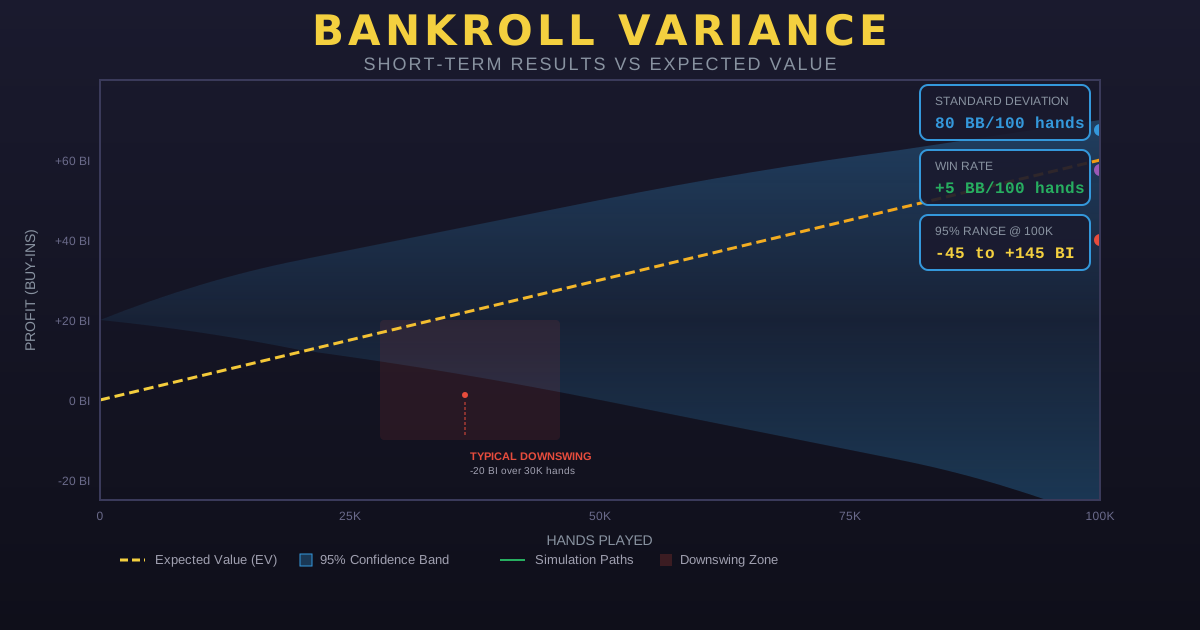
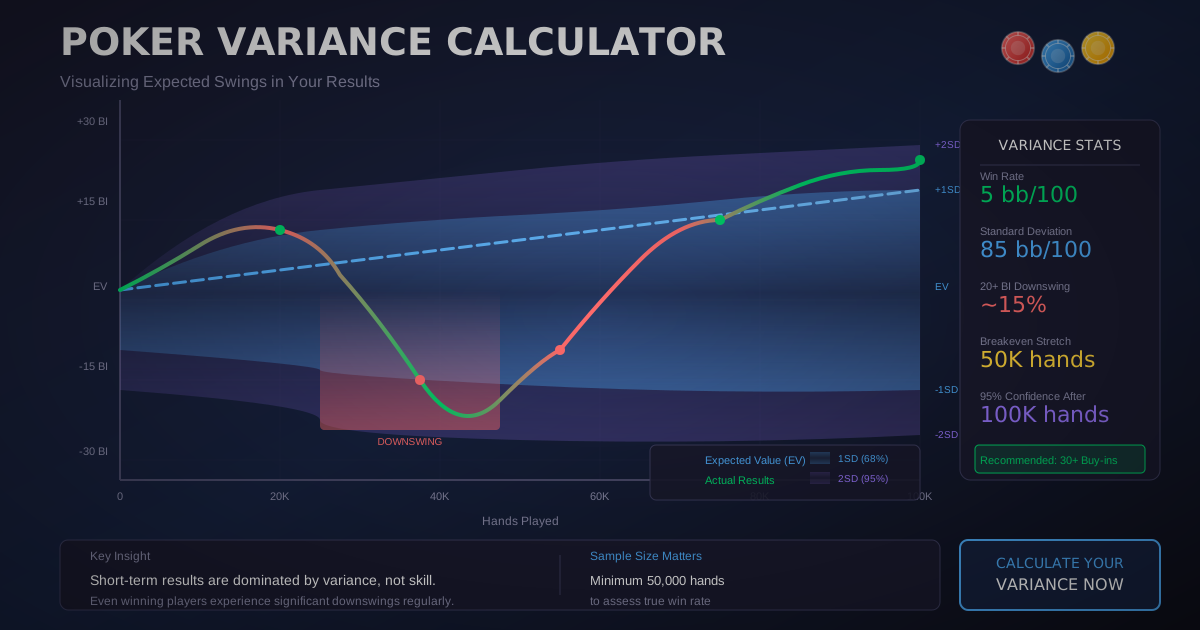
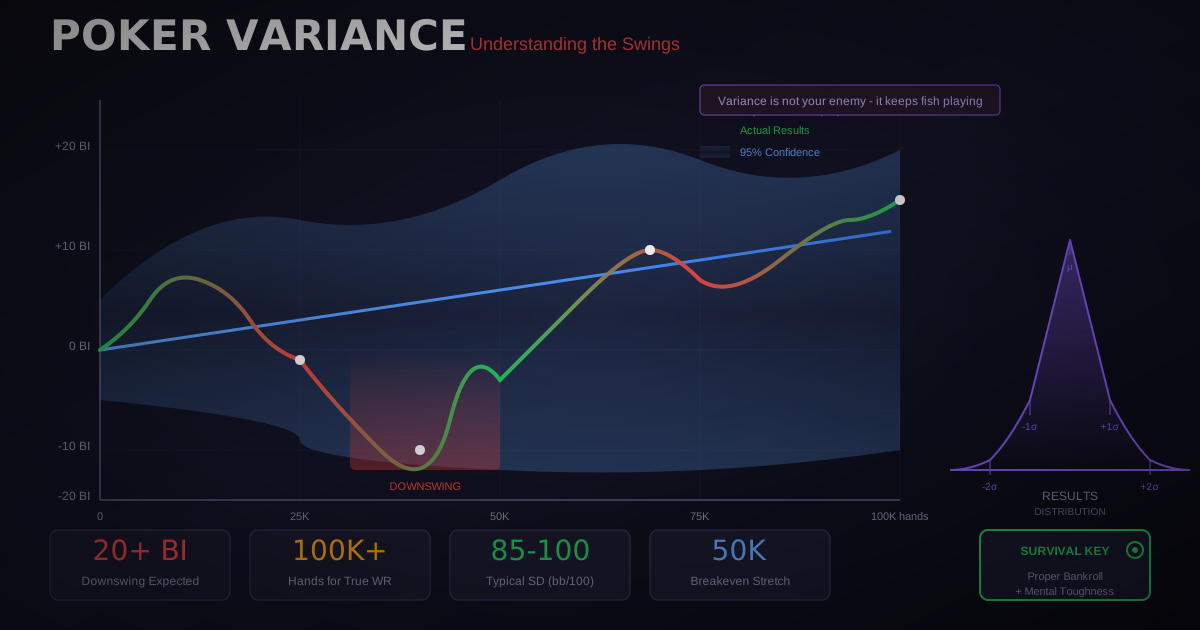
- Track bets over a minimum of 200-500 bets before evaluating your strategy
- Understand that a 52% win rate means you will have frequent losing streaks -- they are mathematically inevitable
- Focus on process, not short-term results
Severity: MEDIUM
Mistake #13: The Gambler's Fallacy
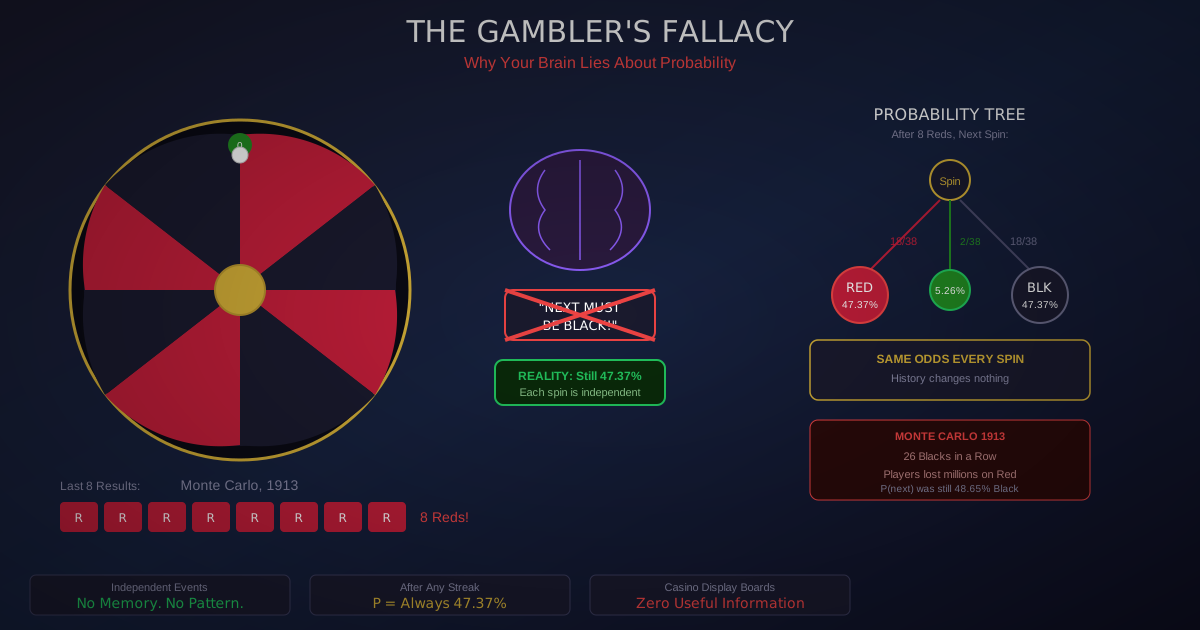
The mistake: You believe that because you have lost several bets in a row, you are "due" for a win -- so you increase your bet size on the next wager.
Why it happens: The gambler's fallacy is one of the most deeply ingrained cognitive biases. Your brain insists that random events must "even out" in the short term. They do not. Each bet is independent.
The math showing how it costs you:
After four consecutive losses at -110, you are down $440. You believe you are "due" and bet $220 (double your normal unit) on the next game.
- Probability of winning the next bet: still ~48% (same as any other bet)
- If you win: You recover $200, bringing total losses to $240
- If you lose: You are now down $660 -- 50% more than if you had stuck to your normal unit
The expected value of the doubled bet: 0.48 x $200 - 0.52 x $220 = $96 - $114.40 = -$18.40
Compare to the normal $110 bet EV: 0.48 x $100 - 0.52 x $110 = $48 - $57.20 = -$9.20
You have doubled your expected loss for zero statistical advantage.
How to fix it:
- Accept that each bet is independent -- previous results have zero bearing on the next outcome
- Keep bet sizing constant regardless of recent results
- Use the Kelly Criterion Calculator to base sizing on edge, not emotion
Severity: HIGH
Mistake #14: Confirmation Bias in Research
The mistake: You decide you want to bet on a team, then selectively seek out statistics and opinions that support your decision while ignoring contradicting evidence.
Why it happens: Once you form an initial opinion, your brain actively filters information to confirm it. If you "feel" the Eagles are going to win, you will notice their strong rushing stats and overlook their terrible secondary. This is not a character flaw -- it is how human brains are wired.
The math showing how it costs you:
Confirmation bias effectively reduces the accuracy of your handicapping by an estimated 3-8 percentage points according to behavioral finance research. If your unbiased analysis would yield a 54% win rate but confirmation bias drops you to 50%:
- 200 bets at $110, 54% win rate: +$680
- 200 bets at $110, 50% win rate: -$1,000
- Cost of confirmation bias: $1,680 per year
How to fix it:
- Before placing a bet, actively list three reasons the other side could win
- Use hard data: check the Implied Probability Calculator to see what the market thinks -- if the market disagrees with you by a large margin, examine why
- Consider finding a betting partner who challenges your picks
Severity: MEDIUM
Mistake #15: Letting One Big Win Distort Your Strategy
The mistake: You hit a 6-team parlay for $2,000 and decide your parlay strategy is working. You start betting more parlays and bigger amounts.
Why it happens: One big win creates an intense emotional memory that overrides months of accumulated losses. This is called "peak-end bias" -- you remember the best moment and the most recent moment, not the overall journey. The sportsbooks promote big parlay winners on social media for exactly this reason.
The math showing how it costs you:
Say you bet $20 on 6-team parlays every week for a year. That is $1,040 total wagered. The probability of winning a 6-leg parlay is roughly 1.56% per attempt (at 50% per leg). Over 52 weeks, the expected number of wins is 0.81 -- meaning you will probably win zero or one time.
- Expected return at 40x payout: 52 x $20 x 0.0156 x 40 = $648
- Total wagered: $1,040
- Expected annual loss: -$392
You hit one parlay for $800 and think you are up. But you actually spent $1,040 to get that $800 back, plus you are down $240 from the other 51 losing weeks. The big win masked the overall loss.
How to fix it:
- Track ALL bets in a spreadsheet, including every losing parlay ticket
- Calculate your actual ROI across all wager types, not just remembered wins
- One win is not a strategy validation -- 500+ bets is
Severity: MEDIUM
Part 4: Market Mistakes (Misunderstanding How Lines Work)
These mistakes come from not understanding how the sports betting market actually operates. The market is smarter than you think, and ignoring that reality costs real money.
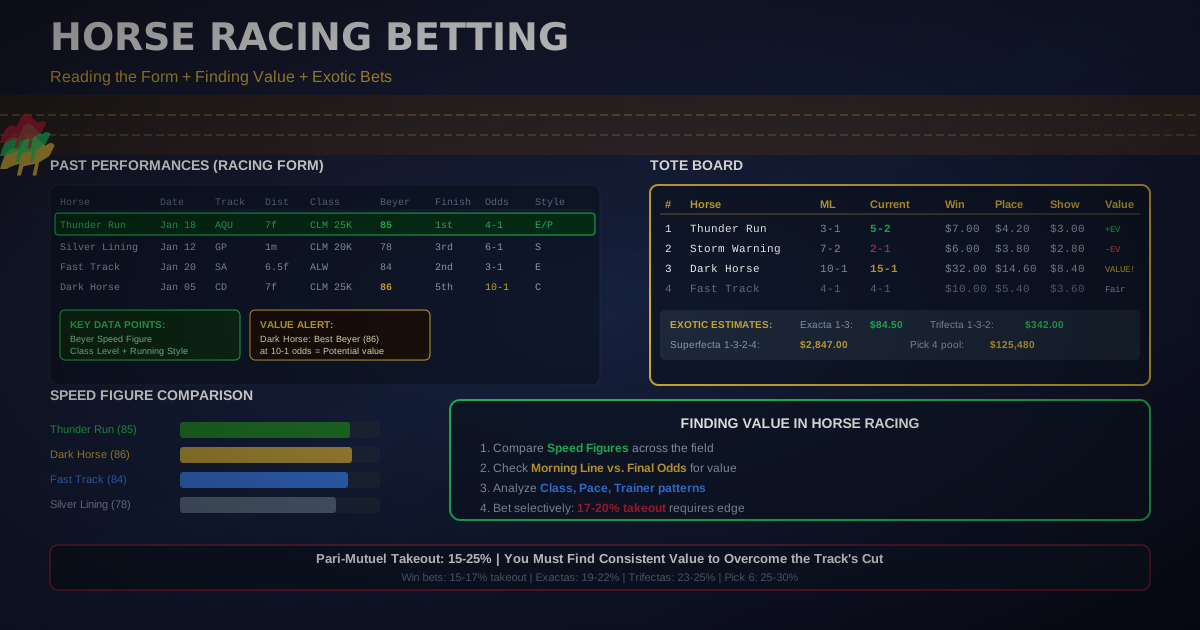
Mistake #16: Betting the Wrong Sport or League
The mistake: You bet exclusively on the NFL or major leagues because they are the most popular, ignoring smaller leagues and niche sports where the market is less efficient.
Why it happens: You bet what you watch. NFL, NBA, and major college sports get the most television coverage, so they attract the most betting action. But more action means sharper lines, which means less opportunity for recreational bettors to find edges.
The math showing how it costs you:
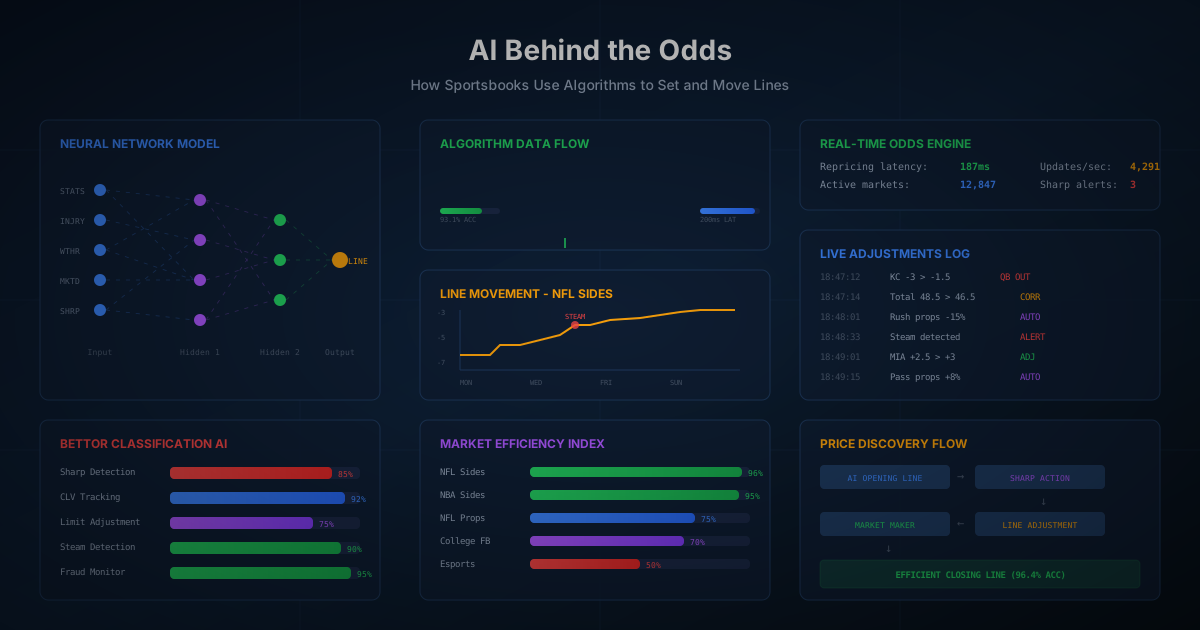
Sportsbooks deploy their sharpest line-setters and most sophisticated models on marquee games. NFL lines are typically efficient within 0.5-1 percentage point of true probability by game time. Meanwhile, secondary markets -- women's basketball, lower-division European soccer, esports, tennis -- can be off by 3-5 percentage points because fewer sharp bettors are hammering those lines.
| Market | Typical Line Efficiency | Your Edge Opportunity |
|---|---|---|
| NFL Sides | Very High (0.5-1% margin for error) | Minimal |
| NFL Totals | High (1-2% margin) | Small |
| NBA Sides | High (1-2% margin) | Small |
| College Football | Moderate (2-3% margin) | Moderate |
| WNBA | Lower (3-5% margin) | Significant |
| Minor European Soccer | Lower (3-5% margin) | Significant |
| Niche Sports (darts, cycling, etc.) | Lowest (5%+ margin) | High |
How to fix it:
- Specialize in one or two sports/leagues and learn them deeply
- Consider less popular markets where your research gives you a real edge
- Do not spread yourself thin across 10 sports -- depth beats breadth
Severity: LOW
Mistake #17: Ignoring Line Movement and Timing
The mistake: You place all your bets five minutes before kickoff without paying attention to how the line has moved since it opened.
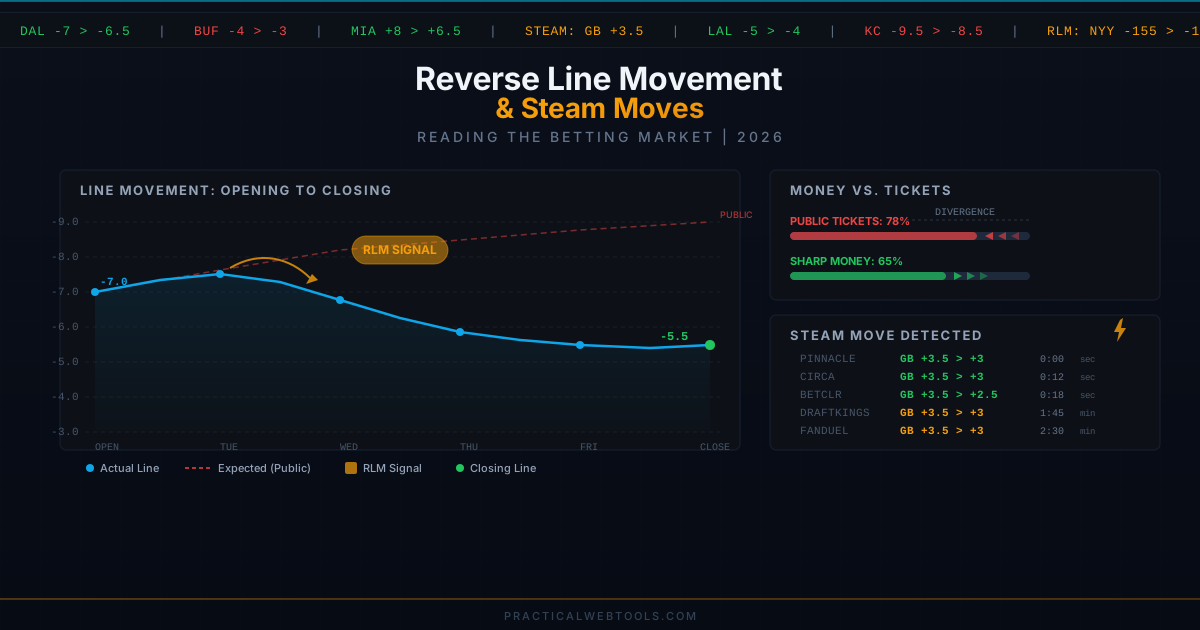
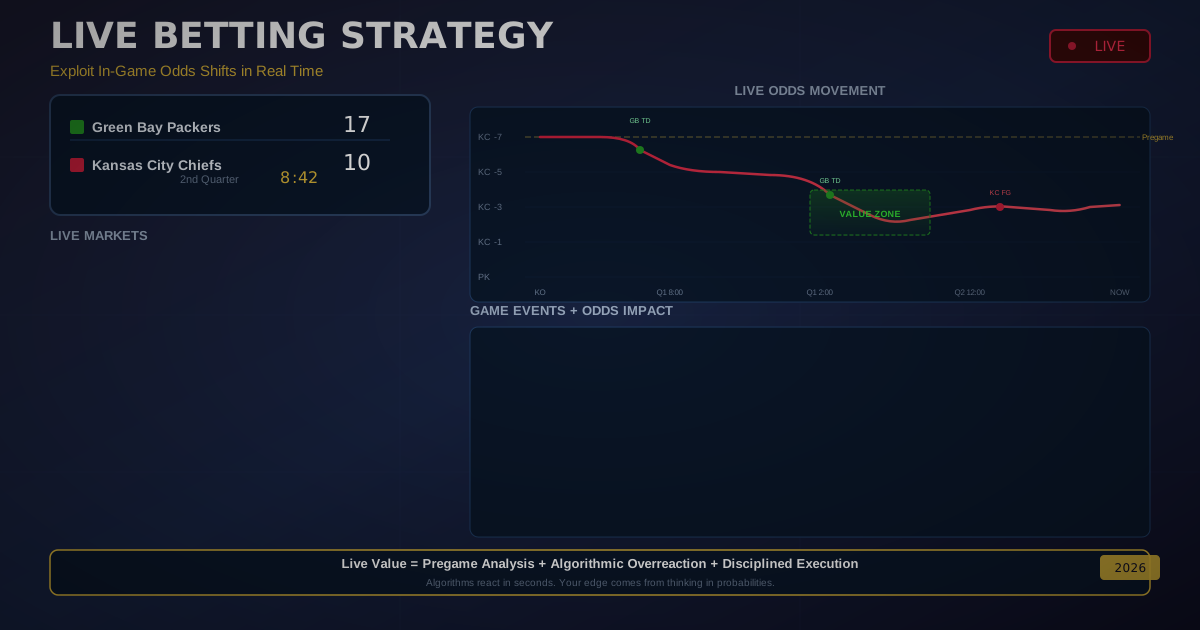
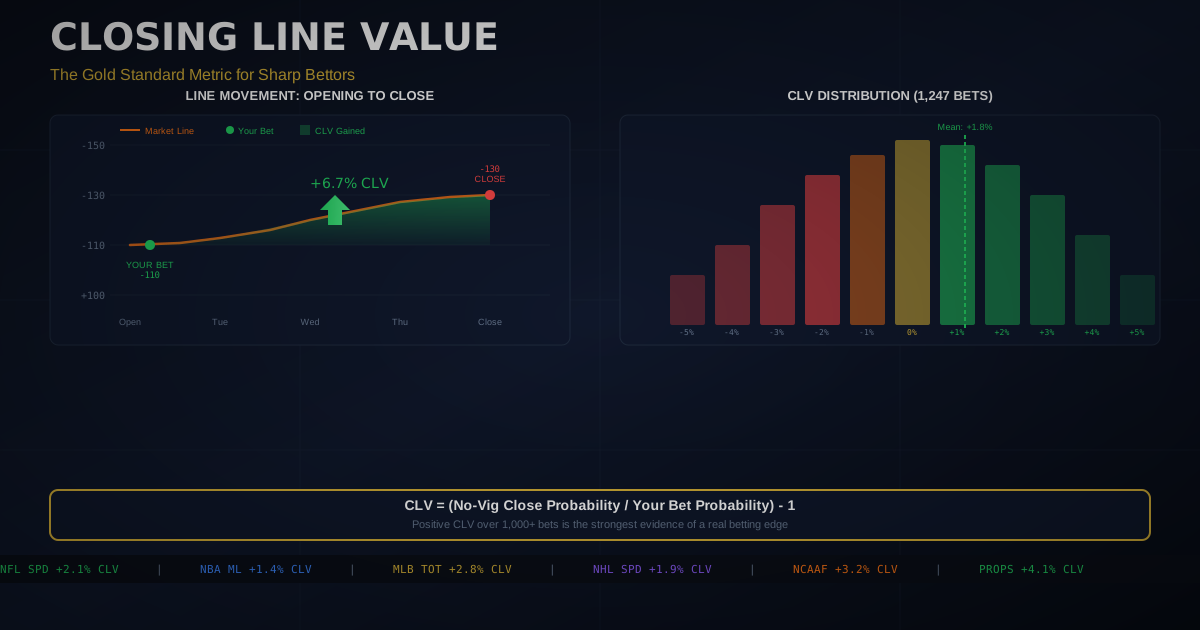
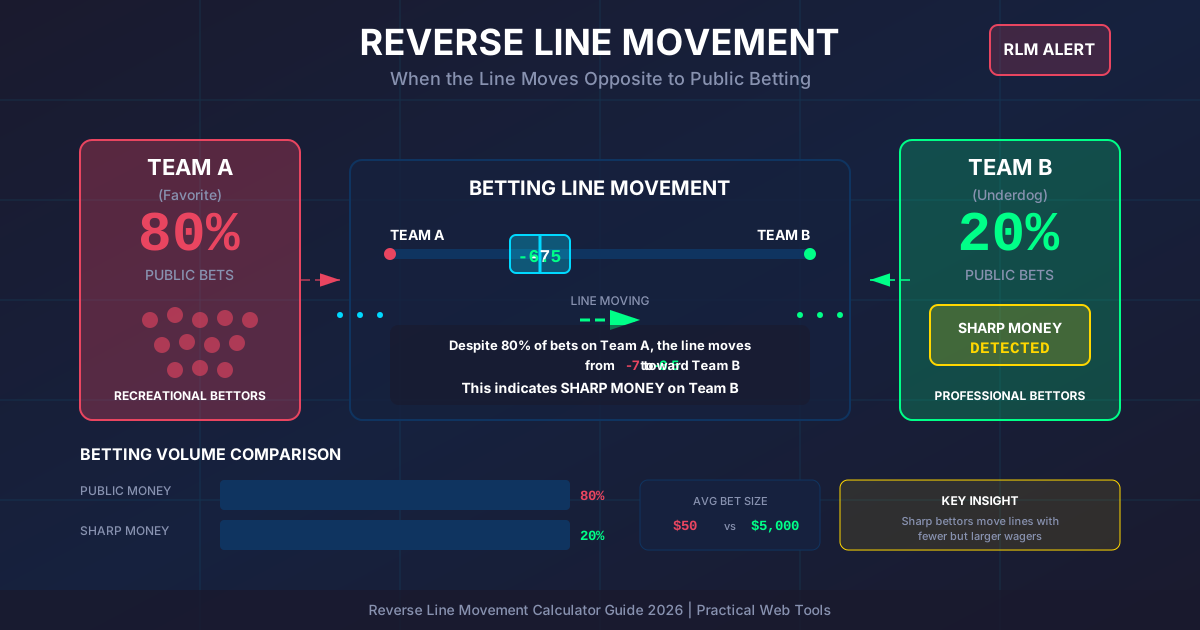
Why it happens: Most beginners do not know that lines move, or why they move. A line that opened at -3 and moved to -5 tells you that sharp money hammered the favorite. If you are betting the favorite at -5, you are getting a worse number than the sharps got. You are buying at the top.
The math showing how it costs you:
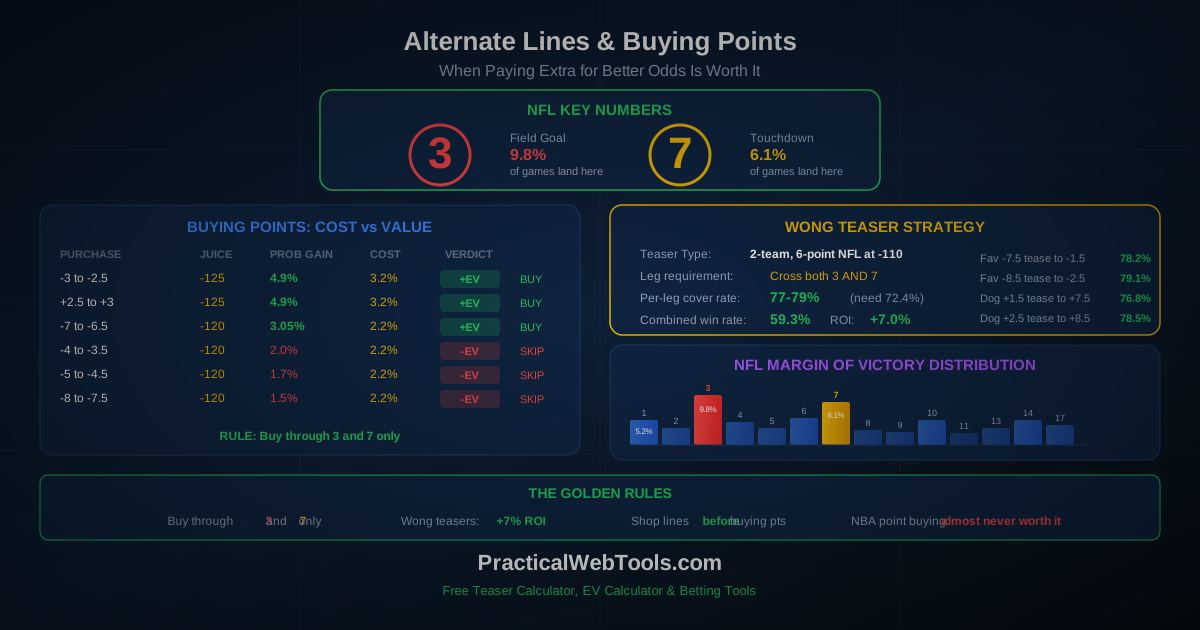
Getting the wrong side of a 2-point line move in the NFL is devastating. NFL games are decided by 3 or fewer points roughly 25% of the time. A 2-point difference in your spread flips the outcome of those games.
- Bet at -3 (the opening line): You push on a 3-point win
- Bet at -5 (the closing line): You lose on a 3 or 4-point win
If you make this timing error on 50 NFL bets per season, and 12-13 of those games land in the 2-point window, you are flipping roughly 6-7 wins into losses. At $110/bet, that is $660-$770 in unnecessary losses per season.
How to fix it:
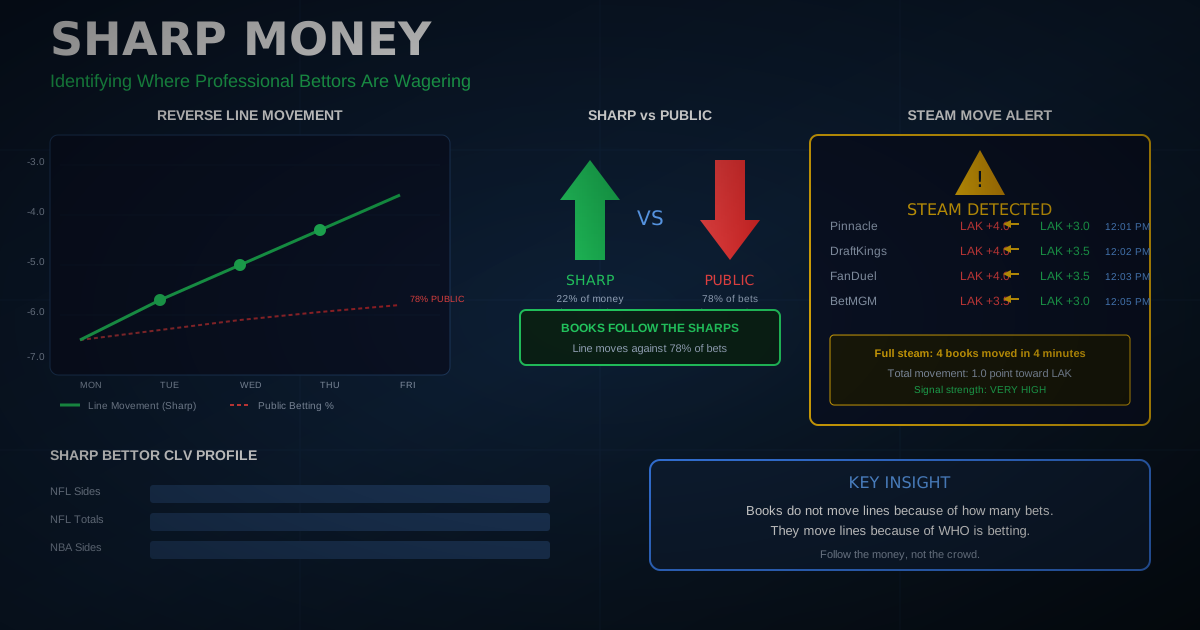
- Learn to read line movement -- sharps typically bet early in the week, and the line moves toward the sharp side
- For NFL, the best numbers are often available Tuesday-Wednesday
- Use our Implied Probability Calculator to assess whether the current line still offers value after movement
Severity: MEDIUM
Mistake #18: Falling for "Locks" and Tout Services
The mistake: You pay for picks from a tout (tipster) service because they claim an 80% win rate and their social media is full of winning ticket screenshots.
Why it happens: When you are losing, the promise of someone who has "figured it out" is incredibly tempting. Tout services use survivorship bias and selective posting to create an illusion of expertise. They show winning tickets and hide losing ones. They create dozens of accounts and promote whichever one happens to be on a hot streak.
The math showing how it costs you:
A typical tout service costs $50-300 per month. Let us say you pay $100/month ($1,200/year) for a service claiming 60% winners.
Reality check: If they actually won 60% at -110, they would make far more money betting for themselves than selling picks for $100/month. The incentive structure tells you everything.
Most legitimate handicapping studies show even paid services average 50-52% against the spread. At 51%:
- 200 bets at $110, 51% win rate: -$560
- Plus $1,200 in subscription fees
- Total annual cost: $1,760
Compared to just betting on your own at 50%: -$1,000. The tout service cost you an extra $760 while making you feel like you had an edge.
How to fix it:
- Be skeptical of anyone selling picks -- if it worked, they would bet it themselves
- If you use a service, demand verified, third-party-tracked records over 1,000+ bets
- Invest the subscription money in learning to handicap yourself using tools like our Expected Value Calculator
Severity: MEDIUM
Mistake #19: Misunderstanding Odds Formats
The mistake: You do not fully understand what -110, +150, or 1.91 decimal odds actually mean in terms of probability and payout, leading to mispriced assessments of value.
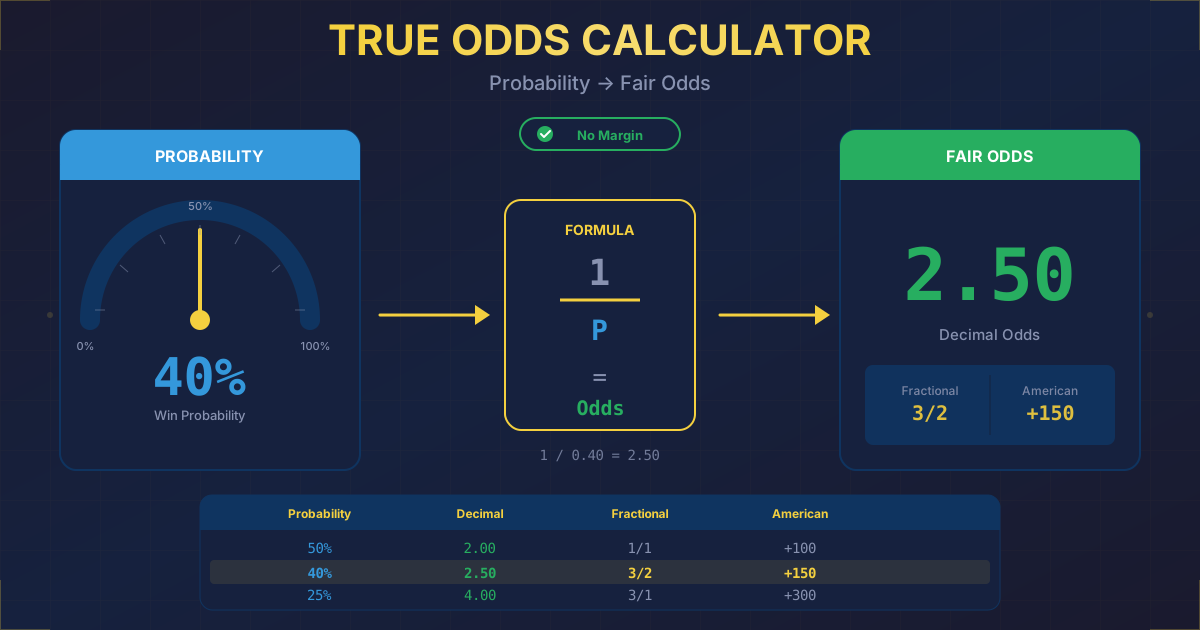
Why it happens: American odds are not intuitive. Negative numbers represent how much you must risk to win $100. Positive numbers represent how much you win on a $100 bet. Decimal odds show total return including your stake. Fractional odds work differently still. Many bettors casually place bets without truly understanding what the number means.
The math showing how it costs you:
Convert between any odds format instantly with our Odds Converter.
Common misunderstandings and their cost:
| Misunderstanding | Actual Impact |
|---|---|
| Thinking -150 means "likely to win" without calculating breakeven | You need 60% win rate, not "probably" |
| Not realizing +300 only requires 25% wins to profit | You pass on profitable underdog bets |
| Confusing decimal 1.91 with "almost even money" | 1.91 is -110, requiring 52.4% to break even |
| Thinking a parlay of -200 legs is "safe" | Each -200 leg is 66.7%; four of them: only 19.8% combined |
How to fix it:
- Learn all three major odds formats and how to convert between them
- Use our Odds Converter until the conversions become second nature
- Always convert odds to implied probability with our Implied Probability Calculator before assessing whether a bet has value
Severity: LOW
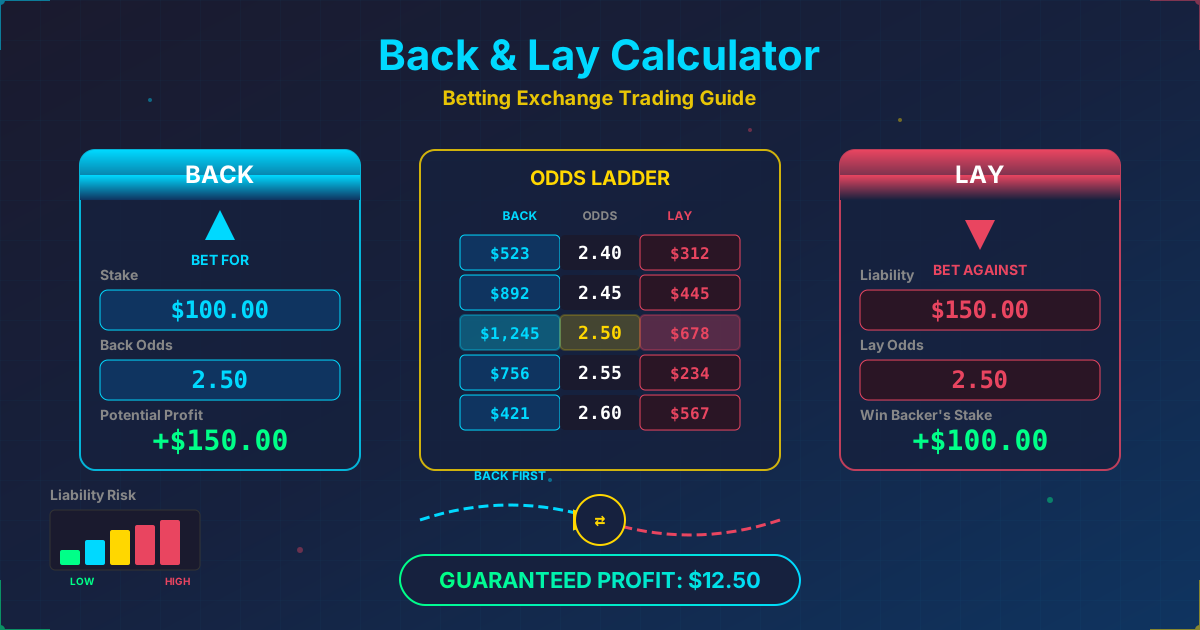
Mistake #20: Never Hedging When You Should
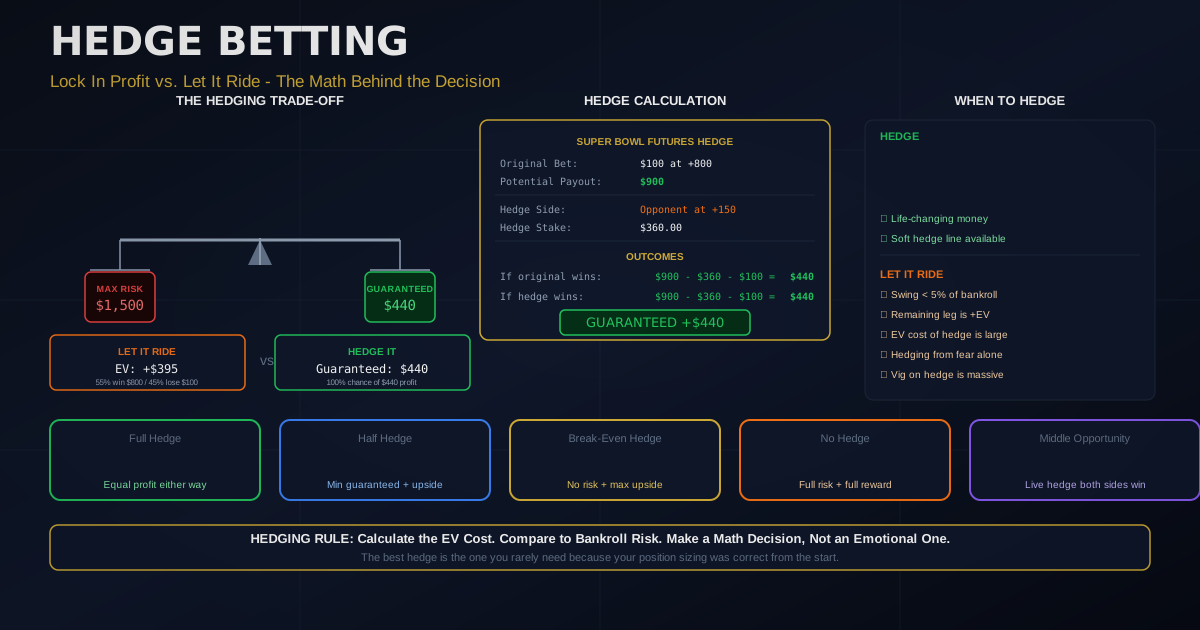
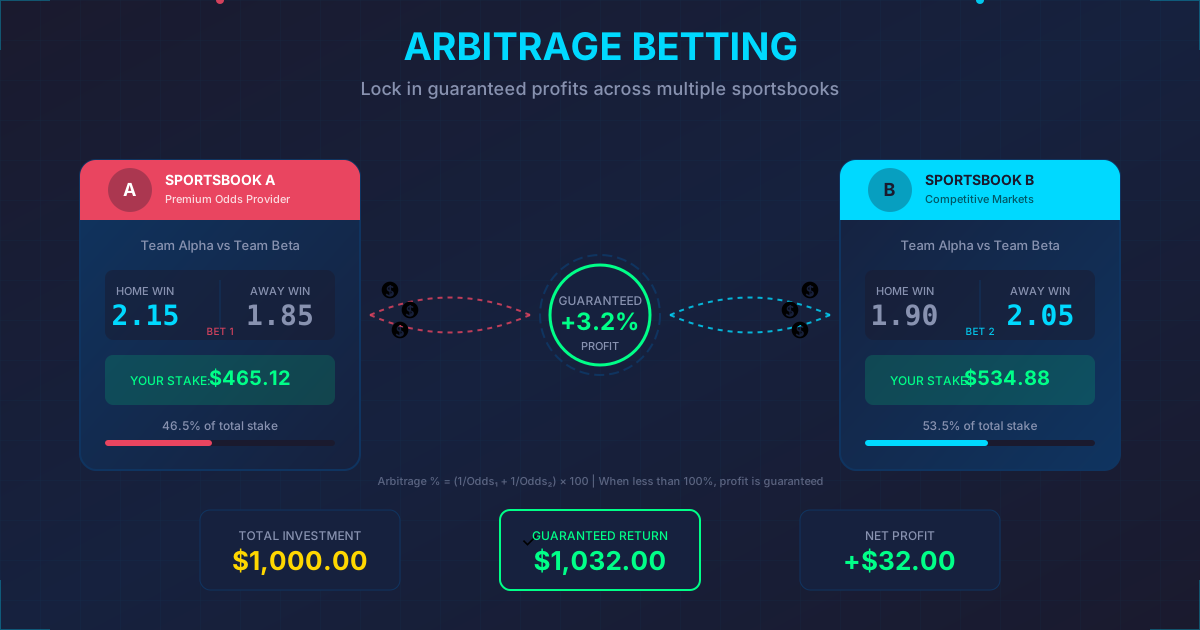
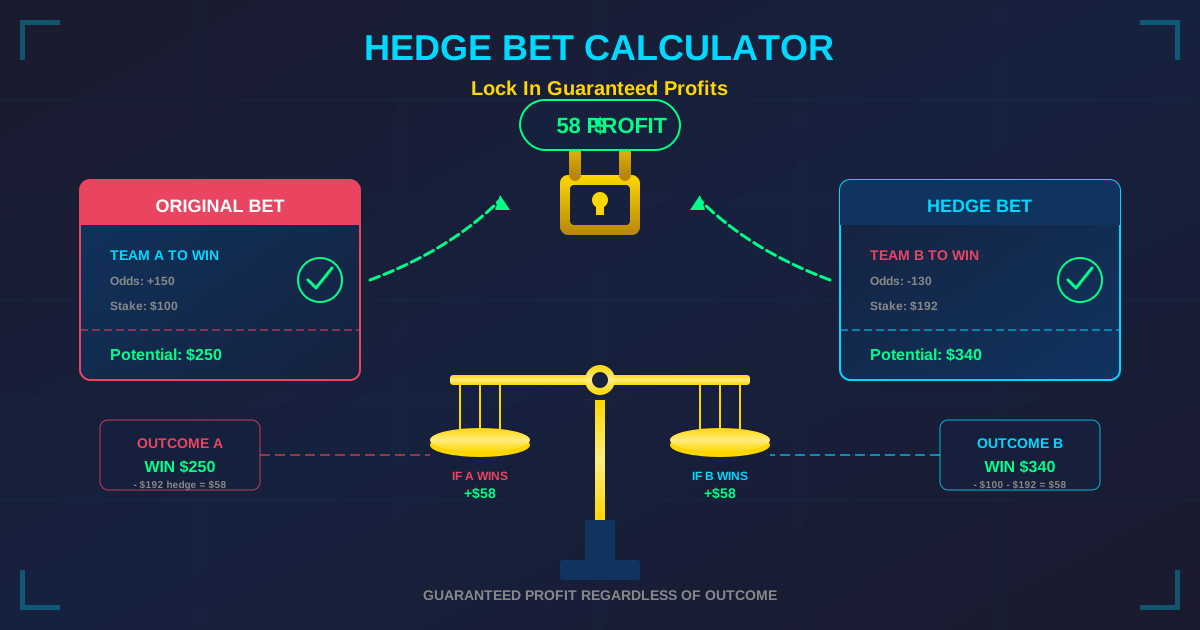
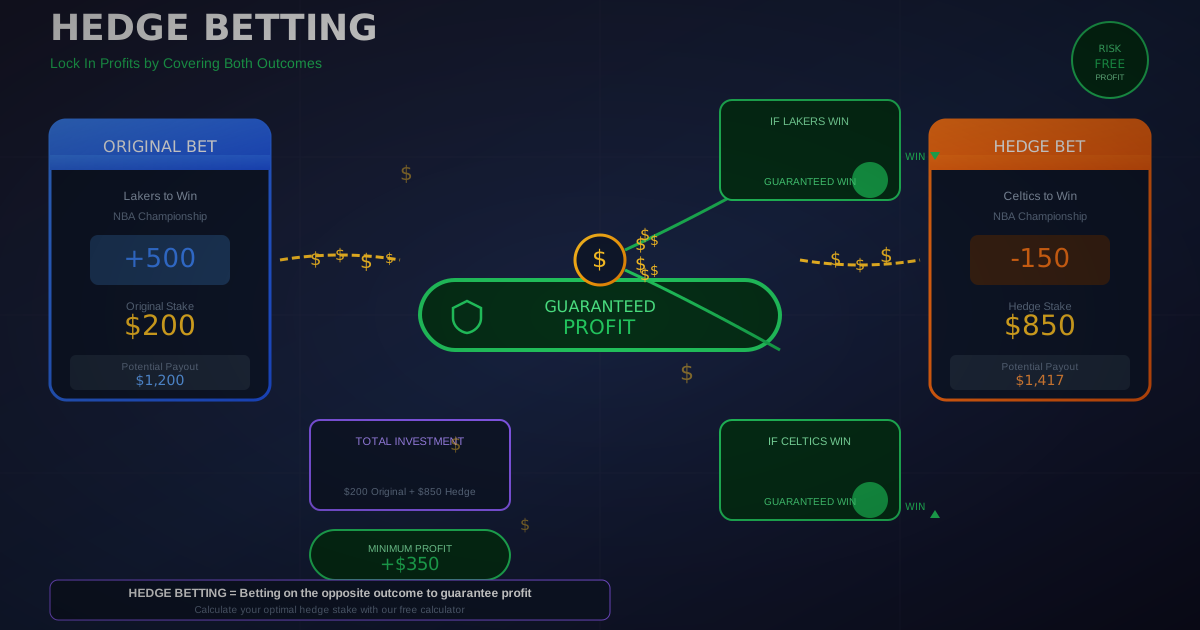
The mistake: You have a futures bet or multi-leg parlay that is one leg away from a massive payout, and you ride it instead of locking in guaranteed profit through hedging.
Why it happens: Greed and hope. If your $50 bet is one game away from paying $3,000, hedging to lock in $1,500 feels like "losing" $1,500. But not hedging means there is a 40-55% chance you walk away with nothing.
The math showing how it costs you:
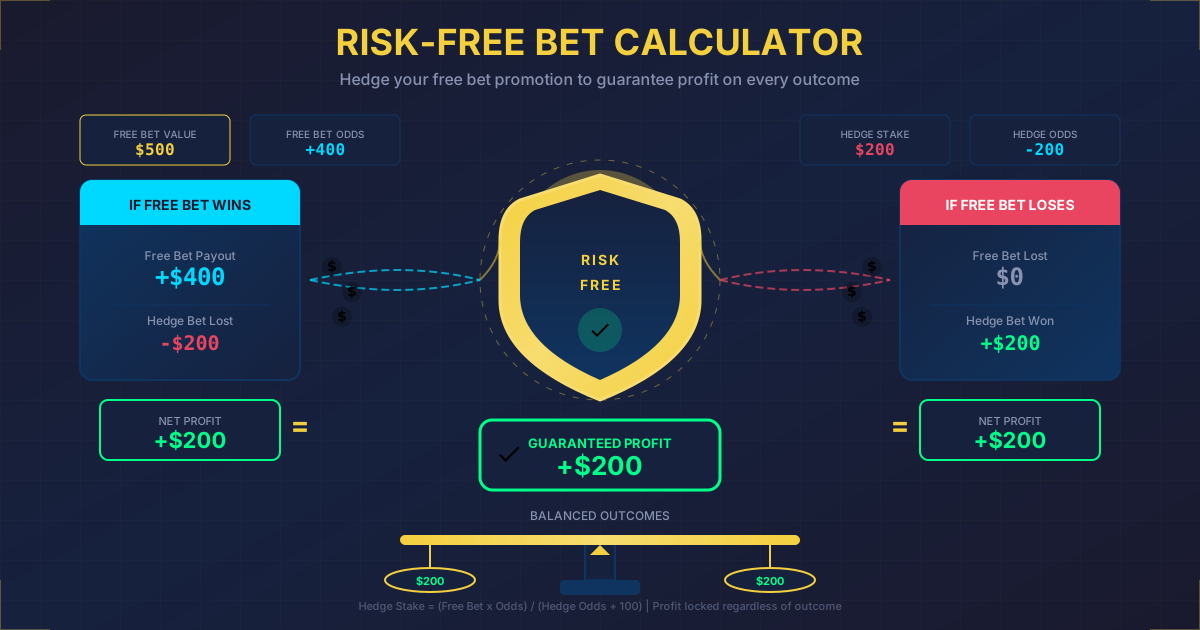
Calculate your hedge with our Hedge Calculator.
Scenario: You bet $50 on a 4-team parlay. Three legs have won. The final leg is the Chiefs -3 (-110). If the Chiefs cover, you win $3,000.
| Strategy | If Chiefs Cover | If Chiefs Don't Cover | Expected Value |
|---|---|---|---|
| No hedge | +$3,000 | $0 | 0.52 x $3,000 = $1,560 |
| Hedge $1,400 on opponent at +3 (+100) | +$1,600 | +$1,400 | $1,496 guaranteed |
Without hedging: Expected value is $1,560, but with massive variance (you either get $3,000 or $0).
With hedging: You lock in approximately $1,400-$1,600 no matter what happens. Your expected value drops only slightly, but your risk drops to zero.
For a recreational bettor, locking in $1,400+ guaranteed is almost always the right call. You can reinvest that locked-in profit and grow your bankroll steadily.
How to fix it:
- Always calculate hedge opportunities when you have a live futures bet or parlay nearing completion
- Use our Hedge Calculator to find the exact amounts
- A general rule: if the guaranteed hedge profit exceeds your normal weekly betting budget, take the hedge
Severity: MEDIUM
The Right Way vs. The Wrong Way: A Side-by-Side Comparison
| Area | What Losers Do | What Winners Do |
|---|---|---|
| Bankroll | Bet random amounts from their checking account | Dedicated bankroll, 1-3% per bet, Kelly Criterion sizing |
| Research | Gut feelings, hot takes, TV narratives | Data-driven analysis, model-based probability estimates |
| Bet selection | Favorites, parlays, "locks" from Twitter | Positive EV only, calculated edge before every bet |
| Odds | Use one sportsbook, accept whatever line they see | Shop 3-5 books, time their bets for best numbers |
| Vig | Do not know what vig is | Seek reduced juice, calculate true cost of every bet |
| Losses | Chase losses, double down, get emotional | Accept variance, stick to the system, walk away |
| Tracking | Never track bets | Log every bet with odds, stake, result, and calculated EV |
| Psychology | Bet impaired, chase, overreact to streaks | Pre-commit strategy, daily loss limits, emotional discipline |
| Market knowledge | Bet popular sports only | Specialize in less efficient markets for bigger edges |
| Time horizon | Evaluate after 10-20 bets | Evaluate after 500+ bets minimum |
Your Beginner Bettor Checklist: Fix the Biggest Leaks First
Not all mistakes are created equal. Here is a prioritized list of what to fix first, ranked by cost savings.
| Priority | Mistake to Fix | Estimated Annual Savings | Tool to Help |
|---|---|---|---|
| 1 | Set up proper bankroll management (#1, #2) | $800 - $3,000+ | Kelly Criterion Calculator |
| 2 | Stop chasing losses (#3, #13) | $500 - $2,000 | Daily loss limit (discipline) |
| 3 | Learn expected value and use it (#9) | $500 - $1,500 | Expected Value Calculator |
| 4 | Shop for the best lines (#10) | $200 - $500 | Odds Converter |
| 5 | Reduce parlay betting (#8) | $300 - $1,000 | Parlay Calculator |
| 6 | Understand and minimize the vig (#5) | $200 - $500 | Hold/Vig Calculator |
| 7 | Hedge when appropriate (#20) | $200 - $1,000+ | Hedge Calculator |
| 8 | Stop paying for picks (#18) | $600 - $1,500 | Self-education |
Frequently Asked Questions
What percentage of sports bettors actually make money?
Only about 3-5% of sports bettors are profitable over the long term. The majority of bettors -- roughly 95-97% -- lose money over the course of a year. Sportsbooks maintain a mathematical edge through the vig (typically 4.76% at standard -110 odds), meaning you need to win at least 52.4% of your bets on point spreads just to break even. Professional bettors, who make up less than 1% of active accounts, typically win at rates of 53-58% -- a narrow but meaningful edge when compounded over thousands of bets.
How much does the average sports bettor lose per year?
The average recreational sports bettor loses approximately $1,000-$1,500 per year, though this varies enormously based on bet volume and size. Americans who bet on sports spend an average of $3,284 annually on gambling, with sportsbooks keeping roughly 7.7% of all money wagered. A bettor placing $110 bets at standard -110 juice and winning 50% of the time loses $500 per 100 bets -- entirely due to the vig. Higher-volume bettors or those making the mistakes outlined in this guide can lose significantly more.
Is it possible to make money sports betting as a beginner?
It is technically possible but statistically unlikely in your first year. Most beginners need 6-12 months of disciplined, data-driven betting to develop an edge. The key is treating your first year as a learning period with small bet sizes (1-2% of bankroll). Focus on one sport, learn to calculate expected value with tools like our Expected Value Calculator, track every bet, and study line movement. You will lose money during this learning phase. The goal is to lose as little as possible while building the skills that might eventually make you profitable.
What is the single most important thing a new bettor should learn?
Expected value. Everything else in sports betting flows from understanding EV. If you cannot calculate whether a bet is positive or negative expected value, you are gambling blindly. Once you understand EV, bankroll management, line shopping, and emotional discipline all become logical extensions of the same core principle: only risk money when the math is on your side. Start with our Expected Value Calculator and do not place a bet until you understand what it tells you.
Are parlays always a bad bet?
Not always, but they are almost always worse than straight bets from a mathematical standpoint. The sportsbook edge on parlays increases dramatically with each leg: from roughly 10% on a 2-leg parlay to 40%+ on a 10-leg parlay, compared to 4.76% on a standard straight bet. The exception is correlated parlays, where the outcomes of your legs are logically connected (e.g., a team winning AND the game going over if the team has a high-powered offense). However, sportsbooks have become much better at identifying and limiting correlated parlay opportunities.
How many bets do I need to make before I know if my strategy is working?
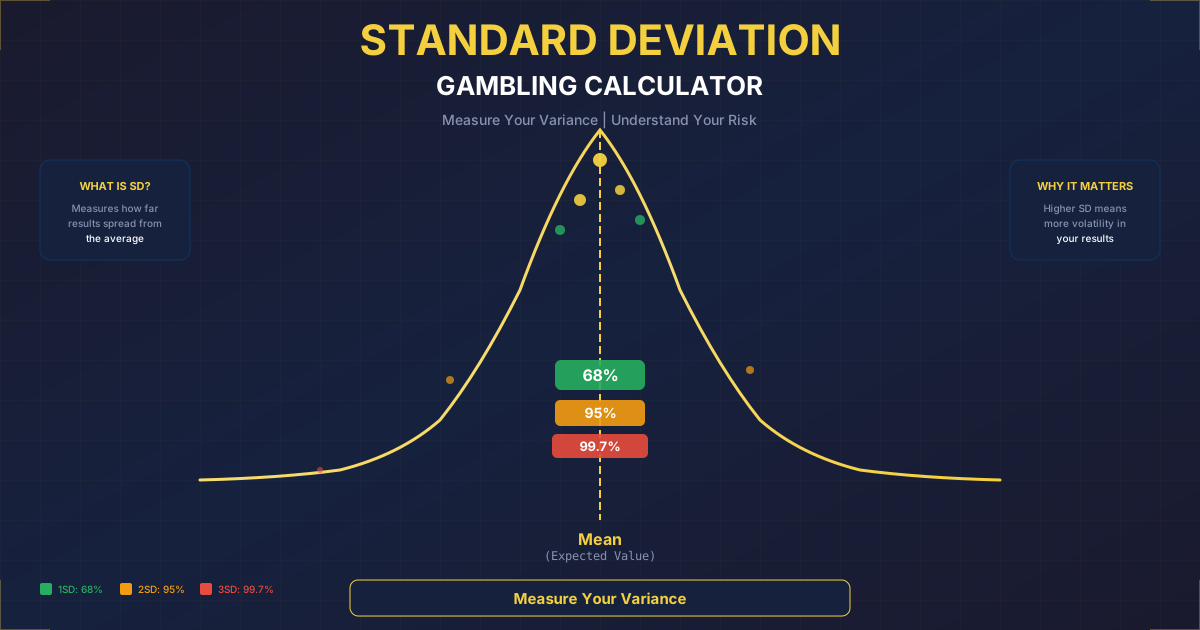
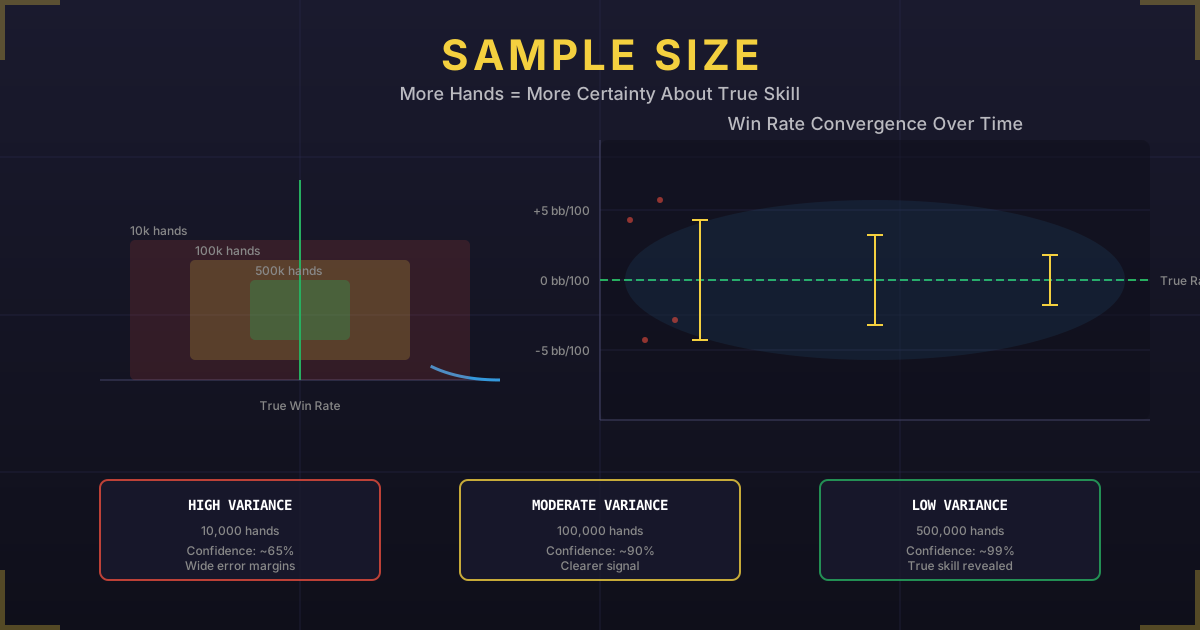
At least 500 bets, and ideally 1,000+. At 200 bets, the standard deviation is so high that a 54% true win-rate bettor could easily appear to have a 48-60% record purely due to variance. At 500 bets, the noise narrows significantly. At 1,000+ bets, you can have reasonable confidence in your measured win rate. This is why tracking every bet is non-negotiable. If you are evaluating your strategy after 20 or even 50 bets, you are looking at noise, not signal.
Should I ever bet on my favorite team?
You can, but only if you can be genuinely objective about their chances. Research consistently shows that bettors overestimate the probability of their favorite team winning by 5-10 percentage points. If you bet your team's line at -150 (implied 60%) but their real probability is 55%, you are making a losing bet every time. The safest approach is to analyze your team with the same tools and cold logic you apply to any other game. Use our Implied Probability Calculator to gut-check your assessment against the market.
What is the fastest way to improve as a sports bettor?
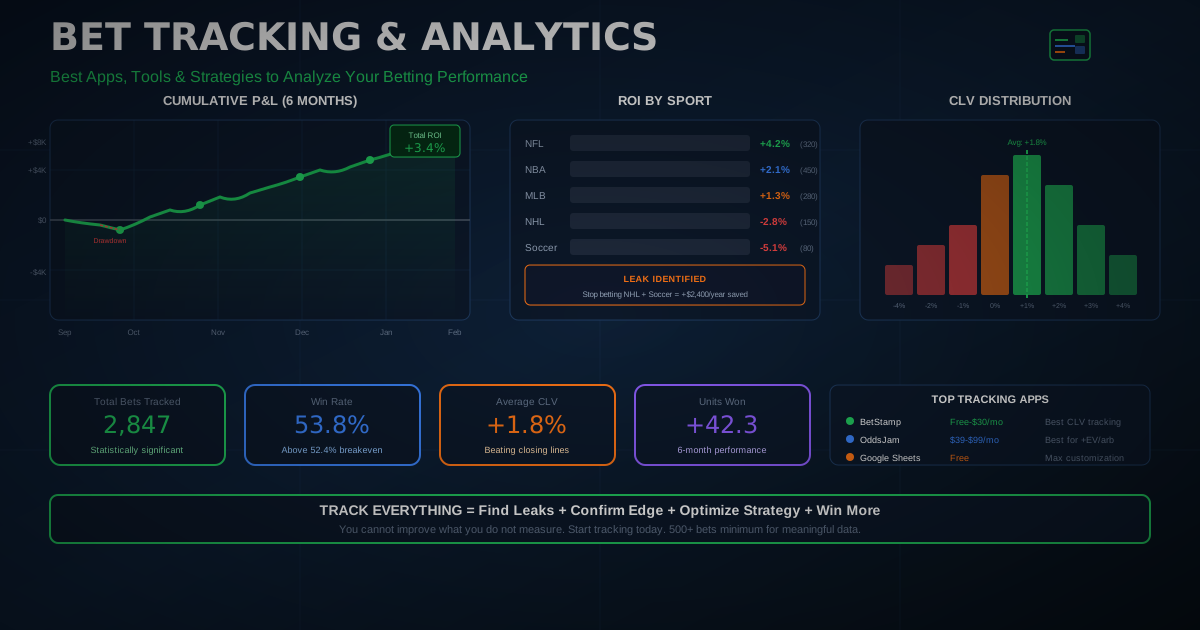
Track every single bet in a spreadsheet with the date, sport, bet type, odds, your estimated probability, stake, and result. After 200+ bets, analyze where you are actually finding edges and where you are bleeding money. Most bettors discover that 80% of their losses come from 2-3 specific bet types or mistakes. Eliminate those leaks, double down on what works, and use calculators like the Expected Value Calculator, Kelly Criterion Calculator, and Hold/Vig Calculator to make every decision mathematical rather than emotional.
Tools to Stop Making These Mistakes
Every mistake in this guide has a mathematical solution. Here are the free tools that address each category:
Bankroll and Bet Sizing:
- Kelly Criterion Calculator -- Calculate mathematically optimal bet sizes based on your edge
- Expected Value Calculator -- Determine if a bet is worth placing before you risk money
Odds and Value Assessment:
- Odds Converter -- Convert between American, decimal, and fractional odds instantly
- Implied Probability Calculator -- See the true probability behind any betting line
- Hold/Vig Calculator -- Calculate how much the sportsbook is charging you on every bet
Multi-Bet and Parlay Analysis:
- Parlay Calculator -- Calculate parlay odds and true payout vs. fair payout
- Hedge Calculator -- Lock in guaranteed profit when your parlay or futures bet is live
Conclusion
The 20 mistakes in this guide are not rare edge cases. They are the default behavior of nearly every first-time sports bettor. That is exactly why 97% of bettors lose. The sportsbooks are not evil -- they just built a system that profits from predictable human behavior: poor bankroll management, emotional decision-making, and mathematical ignorance.
The good news: every single one of these mistakes is fixable. You do not need to be a math genius or a professional handicapper. You need a dedicated bankroll, disciplined bet sizing, basic expected value analysis, and the willingness to let the math overrule your gut.
Start with the highest-priority fixes from the checklist above. Set up a proper bankroll. Learn what expected value means. Stop chasing losses. Shop for lines. Cut back on parlays. Do those five things and you will already be ahead of 80% of bettors.
The remaining 20% -- the bettors who are actually profitable -- are not smarter than you. They are more disciplined. They use tools instead of feelings. And they understand that in sports betting, the math always wins in the end.
Start building your edge today with our free Expected Value Calculator, Odds Converter, and Kelly Criterion Calculator.
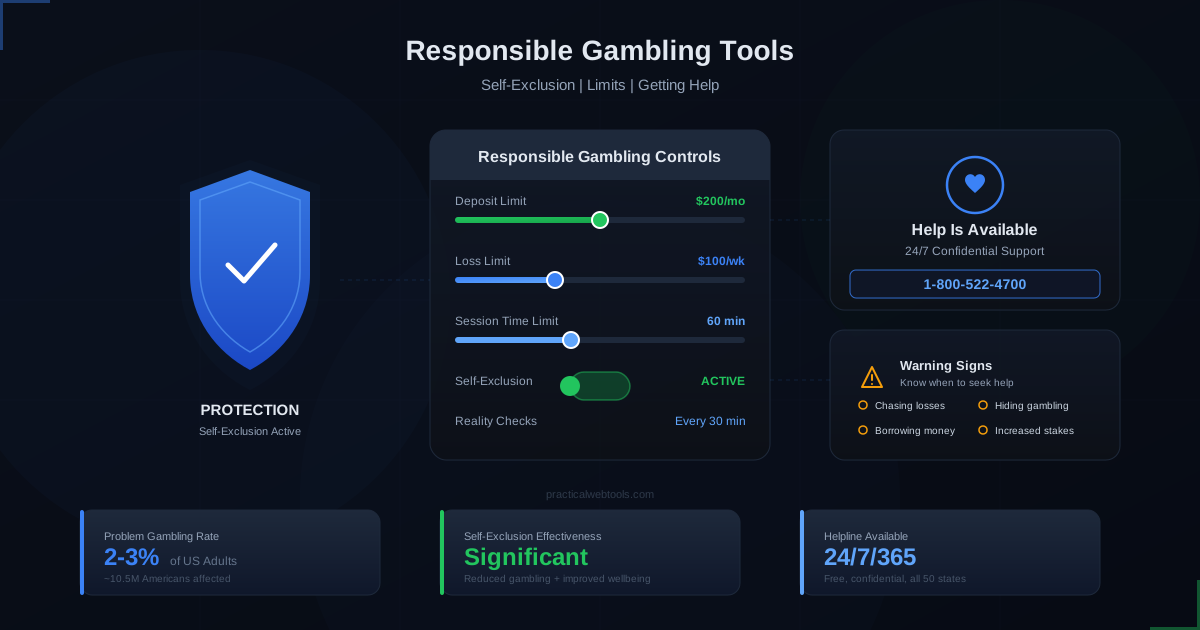
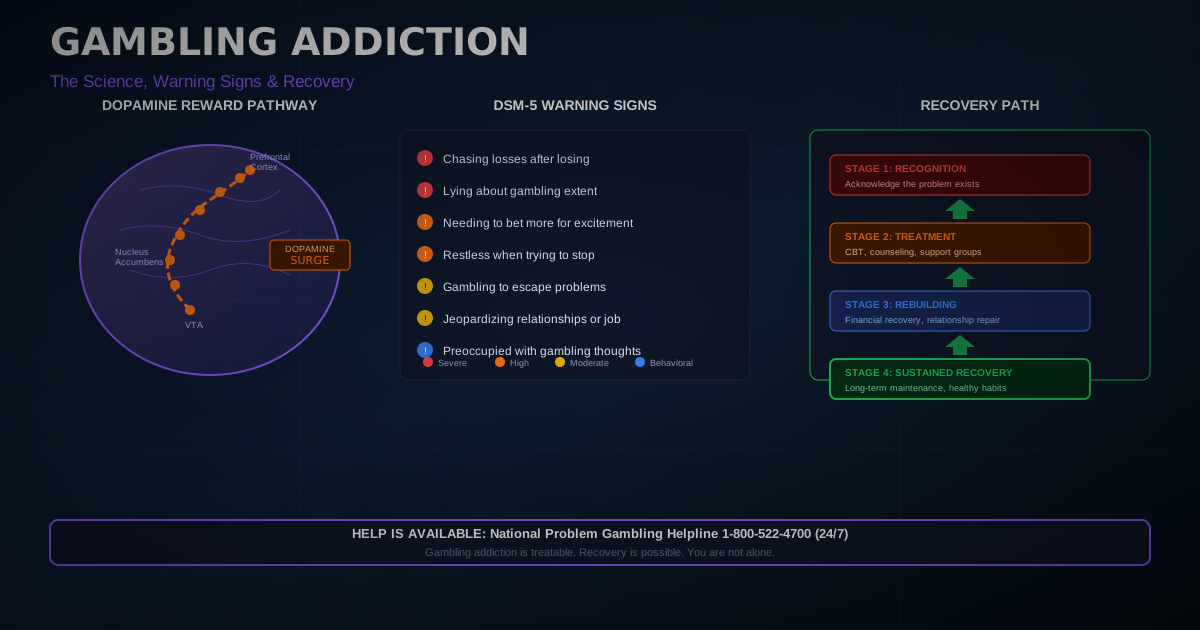
Gambling involves risk. This content is for educational and informational purposes only. Always gamble responsibly, set limits you can afford, and seek help if gambling becomes a problem. Visit the National Council on Problem Gambling or call 1-800-522-4700 for support.