Responsible Gambling Tools: Self-Exclusion, Limits, and Getting Help (2026)
Responsible Gambling Tools: Self-Exclusion, Limits, and Getting Help (2026)
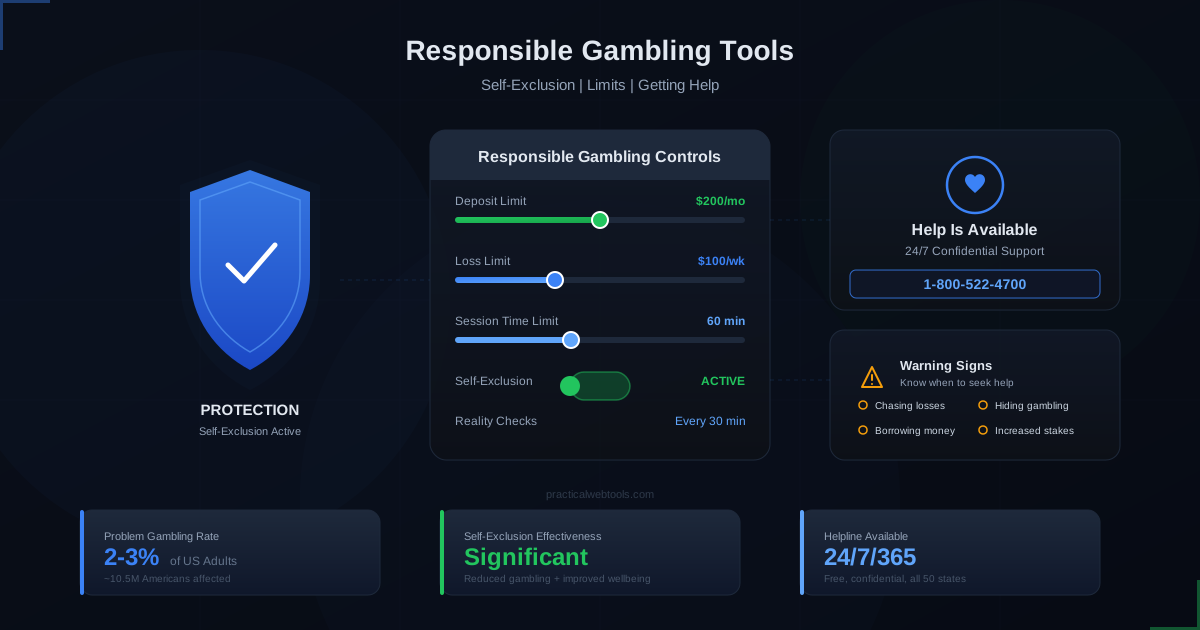
Problem gambling is more common than most people realize. According to current research, approximately 2.5 million adults in the United States meet the criteria for severe gambling disorder in any given year, with an additional 5 to 8 million experiencing mild to moderate gambling problems. That means up to 10.5 million Americans are affected, and the true number is likely higher because many people never seek help or even recognize the signs.
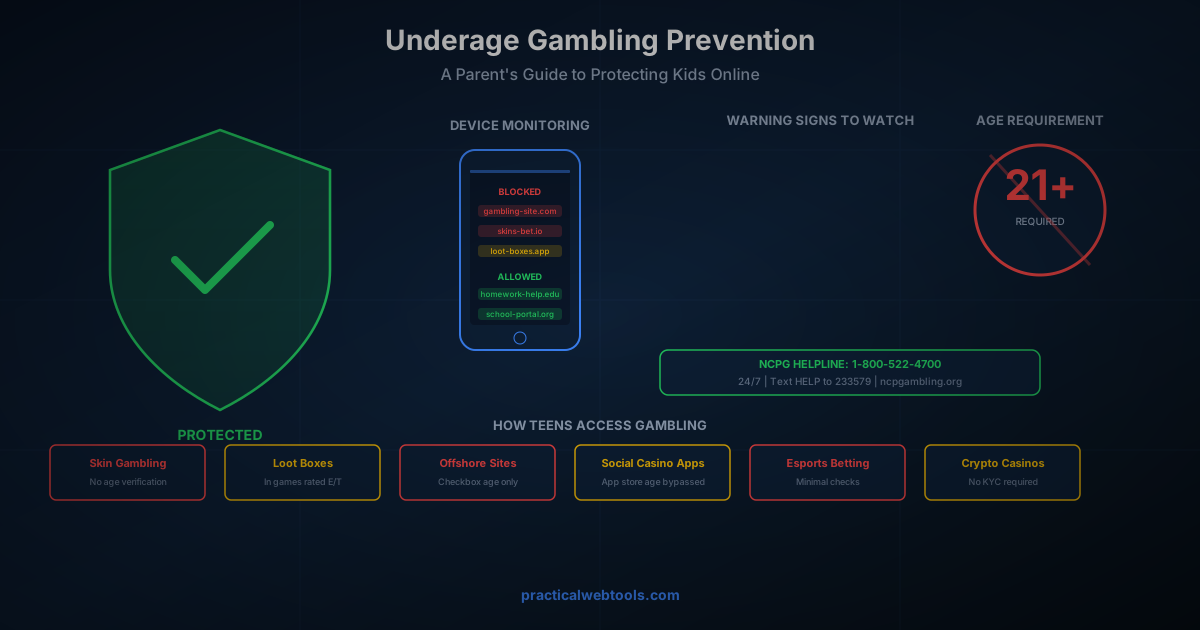
If you or someone you know is struggling with gambling, help is available right now:
- National Problem Gambling Helpline: 1-800-522-4700 (also 1-800-MY-RESET)
- Text: 800-522-4700
- Chat: ncpgambling.org/chat
- Available 24/7/365, free and confidential
This guide is not about judgment. It is about providing you with the knowledge and tools you need to stay in control, recognize when control is slipping, and know exactly where to turn for help. Whether you gamble recreationally and want to keep it that way, or you suspect your gambling has become a problem, this article covers every responsible gambling tool available to you in 2026.
Why Responsible Gambling Matters More Than Ever
The expansion of legalized sports betting across the United States has been dramatic. As of early 2026, over 38 states plus the District of Columbia have legalized some form of sports betting, and mobile betting apps make it possible to place a wager from almost anywhere at any time. This unprecedented access has brought the issue of responsible gambling into sharp focus.
Research published in The Lancet Public Health through a systematic review and meta-analysis found that problematic gambling prevalence rates globally range between 1.2% and 6.0% of the adult population, with online gambling formats showing the highest rates of problematic behavior. Young adults aged 18 to 24 are particularly vulnerable, with problem gambling rates around 7.1% in that demographic, nearly double the overall adult rate.
The financial, emotional, and relational consequences of problem gambling are severe. Studies show that people with gambling disorder are significantly more likely to experience depression, anxiety, substance abuse, relationship breakdown, financial ruin, and in the most tragic cases, suicidal ideation. The average debt accumulated by someone with a gambling problem in the United States exceeds $55,000.
But here is the important point: effective tools exist to help you stay in control, and they work. Self-exclusion programs, deposit limits, time limits, and other responsible gambling features have been shown to reduce gambling intensity and improve outcomes when used consistently. The key is knowing what is available and how to use it.
How to Recognize Warning Signs of Problem Gambling
Before diving into the tools themselves, it is critical to understand when those tools become necessary. Problem gambling does not happen overnight. It develops gradually, and the warning signs can be subtle at first.
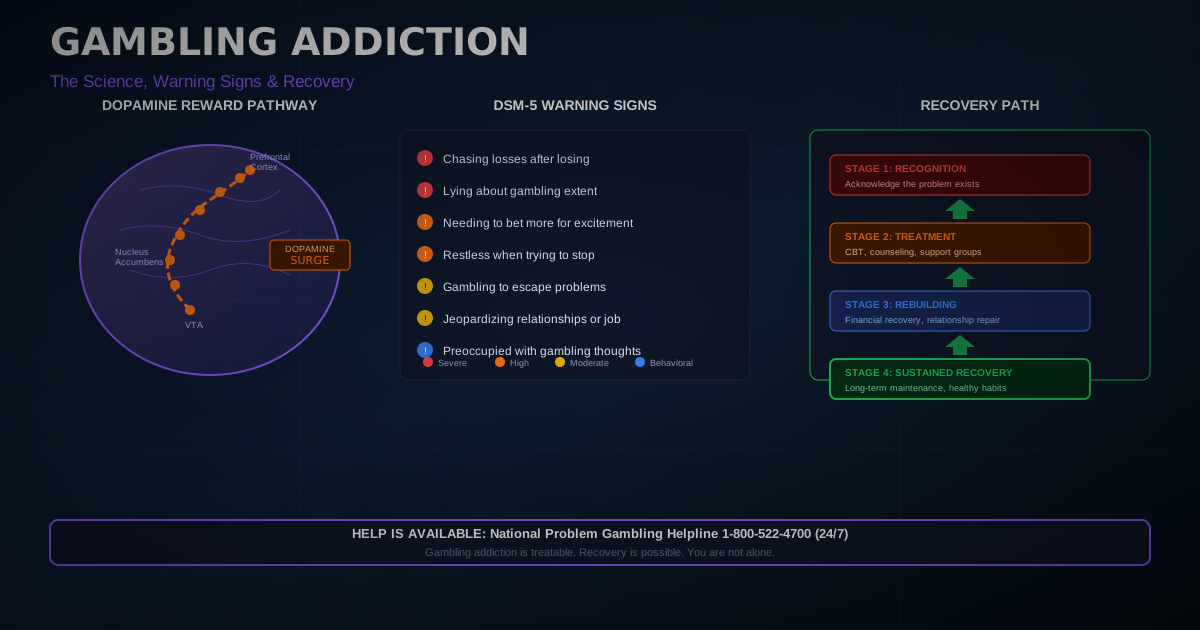
The Warning Signs Checklist
Use this checklist honestly. If you check several of these boxes, it does not mean you are a bad person. It means you may benefit from the tools and resources described in this guide.
| Warning Sign | Description | Severity Indicator |
|---|---|---|
| Chasing losses | Returning to gamble specifically to win back money you lost | High |
| Increasing bet sizes | Needing to bet more to feel the same excitement | High |
| Preoccupation | Spending significant time thinking about gambling when not gambling | Medium-High |
| Lying about gambling | Hiding the extent of your gambling from family or friends | High |
| Borrowing to gamble | Taking loans, using credit cards, or borrowing from others to fund gambling | Critical |
| Neglecting responsibilities | Missing work, family events, or obligations due to gambling | High |
| Failed attempts to stop | Repeatedly trying to cut back or quit without success | High |
| Gambling to escape | Using gambling to cope with stress, depression, or anxiety | Medium-High |
| Restlessness when not gambling | Feeling irritable or anxious when trying to cut back | Medium |
| Jeopardizing relationships | Gambling despite knowing it is damaging important relationships | Critical |
The DSM-5 Diagnostic Criteria
The Diagnostic and Statistical Manual of Mental Disorders (DSM-5) classifies gambling disorder based on the presence of four or more of these criteria within a 12-month period:
- Tolerance - Needing to gamble with increasing amounts to achieve the desired excitement
- Withdrawal - Restlessness or irritability when attempting to cut down or stop
- Loss of control - Repeated unsuccessful efforts to control, cut back, or stop gambling
- Preoccupation - Frequently preoccupied with gambling (reliving experiences, planning next sessions, thinking about how to get money to gamble)
- Escape - Often gambling when feeling distressed
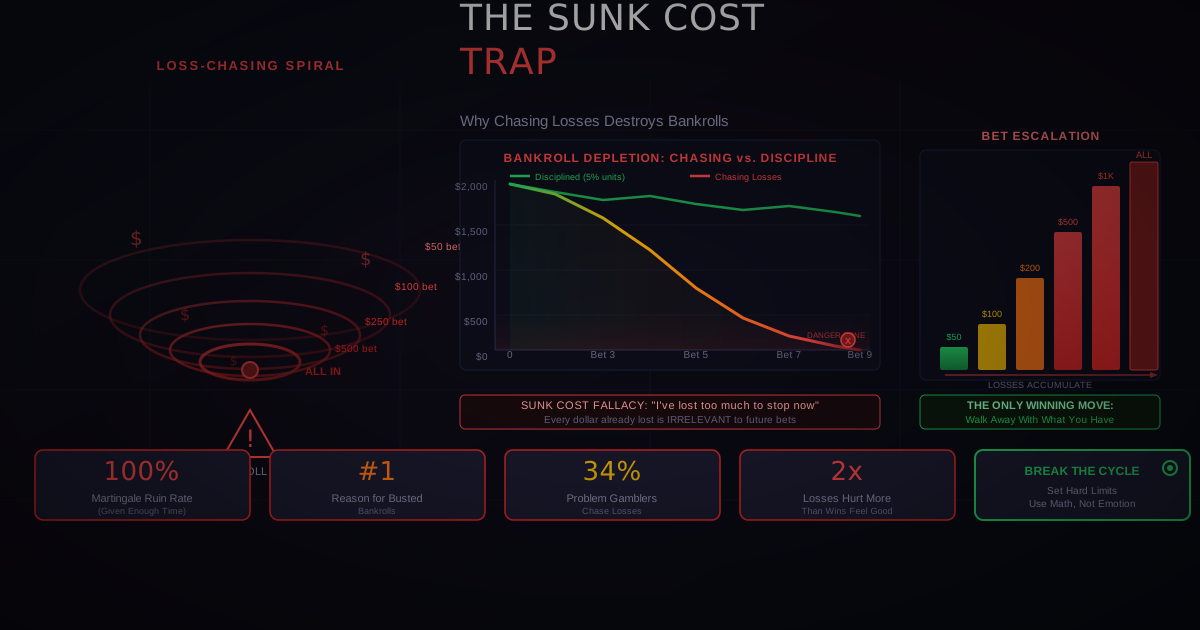
- Chasing - After losing money, often returning to get even
- Deception - Lying to conceal the extent of gambling involvement
- Jeopardizing relationships - Risking or losing significant relationships, jobs, or opportunities
- Bailout - Relying on others to provide money to relieve desperate financial situations caused by gambling
Severity scale:
- 4-5 criteria = Mild gambling disorder
- 6-7 criteria = Moderate gambling disorder
- 8-9 criteria = Severe gambling disorder
If any of these criteria apply to you, the tools and resources below can help. If several apply, please consider reaching out to the National Problem Gambling Helpline at 1-800-522-4700 for a confidential conversation.
Self-Exclusion Programs Explained
Self-exclusion is the most comprehensive responsible gambling tool available. When you self-exclude, you voluntarily ban yourself from gambling at specific venues, platforms, or across an entire state's gambling ecosystem for a set period of time.
How Self-Exclusion Works
- You initiate the process by registering with a state gaming commission, an individual casino, or an online platform
- Your identity is verified and added to a self-exclusion registry
- Operators are required to block your access to gambling, remove you from marketing lists, and deny you entry or account access
- The exclusion lasts for a fixed period (typically 1 year, 5 years, or lifetime depending on the jurisdiction)
- Violations have consequences - if you attempt to gamble while self-excluded, winnings may be confiscated and donated to problem gambling programs
Does Self-Exclusion Actually Work?
Research shows that self-exclusion is effective, though not perfect. A systematic review published in the Journal of Gambling Studies found that participants who self-excluded reported significant decreases in gambling frequency, money spent, and overall urge to gamble. They also reported improved psychological wellbeing and better overall functioning.
A randomized controlled trial comparing online and in-person self-exclusion programs found that participants in both groups gambled less, spent less money, and reported decreased need for formal treatment after enrolling.
However, self-exclusion has limitations. It is under-utilized, with studies showing that only 0.6% to 17% of problem gamblers use self-exclusion programs. Enforcement can be inconsistent, particularly at land-based venues where identification relies on staff recognition. And self-exclusion alone does not address the underlying psychological factors driving problematic gambling, which is why it works best as part of a broader recovery strategy that includes counseling and support.
Self-Exclusion Programs by State
All 38 U.S. jurisdictions with commercial casinos, sports betting, or internet gaming require operators to offer self-exclusion programs. Here is an overview of programs across major gambling states:
| State | Program Name | Duration Options | Covers Online | Centralized Registry | How to Enroll |
|---|---|---|---|---|---|
| New Jersey | Casino Self-Exclusion | 1 yr, 5 yr, Lifetime | Yes | Yes | NJ Division of Gaming Enforcement |
| Pennsylvania | Self-Exclusion Program | 1 yr, 5 yr, Lifetime | Yes | Yes | PA Gaming Control Board |
| New York | Voluntary Self-Exclusion | 1 yr, 5 yr, Lifetime | Yes | Yes | NY Gaming Commission |
| Michigan | Responsible Gaming Database | 1 yr, 5 yr, Lifetime | Yes | Yes | MI Gaming Control Board |
| Colorado | Self-Exclusion List | 5 yr minimum | Yes | Yes | CO Division of Gaming |
| Illinois | Self-Exclusion Program | 5 yr, Lifetime | Yes | Yes | IL Gaming Board |
| Arizona | Self-Exclusion Program | Variable | Yes | Yes | AZ Dept. of Gaming |
| Massachusetts | Voluntary Self-Exclusion | 1 yr, 3 yr, 5 yr, Lifetime | Yes | Yes | MA Gaming Commission |
| Ohio | Voluntary Exclusion | 1 yr, 5 yr, Lifetime | Yes | Yes | OH Casino Control Commission |
| Indiana | Voluntary Exclusion | 1 yr, 5 yr, Lifetime | Yes | Yes | IN Gaming Commission |
| Virginia | Self-Exclusion Program | 2 yr, 5 yr, Lifetime | Yes | Yes | VA Lottery Board |
| Maryland | Voluntary Exclusion | 2 yr, Lifetime | Yes | Yes | MD Lottery and Gaming |
| Iowa | Self-Exclusion Program | 5 yr, Lifetime | Yes | Yes | IA Racing and Gaming Commission |
| Connecticut | Self-Exclusion Program | 1 yr, 5 yr, Lifetime | Yes | Yes | CT Dept. of Consumer Protection |
| Tennessee | Self-Exclusion | 1 yr, 3 yr, 5 yr, Lifetime | Online only | Yes | TN Education Lottery |
Important note: A National Voluntary Self-Exclusion Programme (NVSEP) is being developed for the United States and is expected to launch in 2026, initially covering New England states before expanding nationwide. Additionally, Ontario, Canada launched a centralized self-exclusion system in 2026 that allows players to opt out of all licensed gambling apps at once, a model that U.S. states may follow.
How to Self-Exclude From Major Sportsbooks
If you need to self-exclude immediately, here is how to do it on the most popular platforms:
DraftKings:
- Go to Settings, then Responsible Gaming
- Select Self-Exclusion
- Choose your exclusion period
- You can also contact support at 1-833-359-5437
FanDuel:
- Navigate to Account Settings, then Responsible Gaming
- Choose Self-Exclusion
- Select your time period
- Contact support at 1-646-854-3289 for assistance
BetMGM:
- Go to your account menu, then Safer Gambling
- Select Self-Exclude
- Choose duration and confirm
- Contact support at 1-833-564-6789
Caesars Sportsbook:
- Go to Settings, then Responsible Gaming
- Select Self-Exclusion option
- Choose your time frame and confirm
For state-level exclusion that covers all operators in your state simultaneously, contact your state's gaming commission directly. This is generally more effective than excluding from individual platforms one at a time.
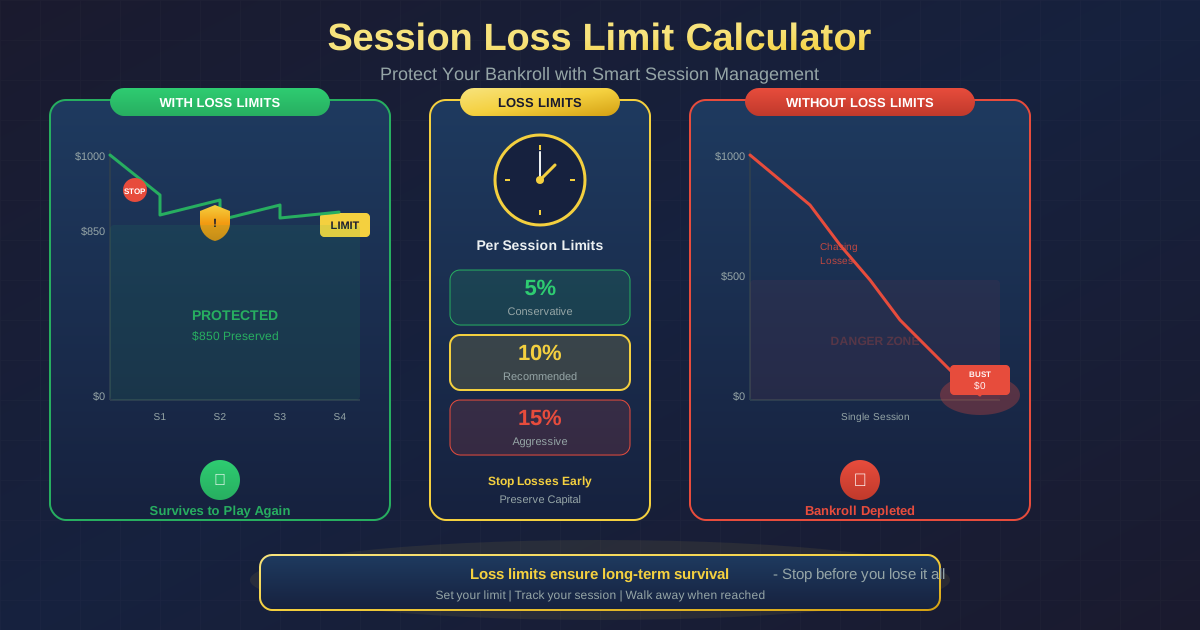
Deposit Limits, Loss Limits, and Wagering Limits
If self-exclusion feels like too big a step, or if you want to maintain gambling as a form of entertainment while keeping it under control, financial limits are your most important tool.
Types of Financial Limits
| Limit Type | What It Does | Who Should Use It | Effectiveness |
|---|---|---|---|
| Deposit Limit | Caps how much money you can add to your account in a day, week, or month | Everyone who gambles online | High - prevents impulsive reloading |
| Loss Limit | Stops you from losing more than a set amount in a given period | Anyone concerned about overspending | High - direct protection against chasing |
| Wagering Limit | Caps the total amount you can bet regardless of wins or losses | Those who bet frequently | Medium-High - controls total action |
| Session Limit | Restricts how long you can gamble in a single session | Those who lose track of time | Medium - works with time limits |
| Bet Size Limit | Caps the maximum amount of any individual wager | Those prone to impulsive large bets | Medium - prevents single catastrophic bets |
How Effective Are Deposit Limits?
Research on deposit limit effectiveness tells a nuanced story. A study published in the journal Addictive Behaviors found that among the most gambling-intense players (top 10%), those who voluntarily set deposit limits gambled significantly less money a year later compared to those who had not set limits. This suggests that deposit limits are most effective for the people who need them most.
However, uptake remains a challenge. Studies using account-based tracking data report that only about 1.3% of online gamblers voluntarily set a deposit limit during a three-month period, and only 8% during a six-month period. This is why many researchers and regulators advocate for mandatory limit-setting at account creation, a approach that has shown stronger results in countries like Norway.
A 2025 comparative policy review of European approaches to limit-setting found that 27 out of the studied countries have some form of limit-setting regulation, with 18 requiring deposit limits, 15 requiring loss limits, and 14 requiring wagering limits. The evidence suggests that mandatory systems are more effective than voluntary ones.
Responsible Gambling Features by Major Sportsbook
| Feature | DraftKings | FanDuel | BetMGM | Caesars | ESPN BET |
|---|---|---|---|---|---|
| Deposit Limits | Daily, Weekly, Monthly | Daily, Weekly, Monthly | Daily, Weekly, Monthly | Daily, Weekly, Monthly | Daily, Weekly, Monthly |
| Loss Limits | Yes | Yes | Yes | Yes | Yes |
| Wagering Limits | Yes | Yes | Yes | Yes | Yes |
| Session Time Limits | Yes | Yes | Yes | Yes | Yes |
| Reality Checks | Yes | Yes | Yes | Yes | Yes |
| Cooling-Off Period | Yes (72hr to 5yr) | Yes (72hr to 1yr) | Yes (72hr to 5yr) | Yes | Yes |
| Self-Exclusion | Yes (1yr to permanent) | Yes (1yr to permanent) | Yes (1yr to permanent) | Yes | Yes |
| Betting History Access | Full history | Full history | Full history | Full history | Full history |
| Helpline Information | In-app | In-app | In-app | In-app | In-app |
How to Set Effective Limits: A Practical Approach
Setting limits is only useful if the limits are realistic and meaningful. Here is a practical framework:
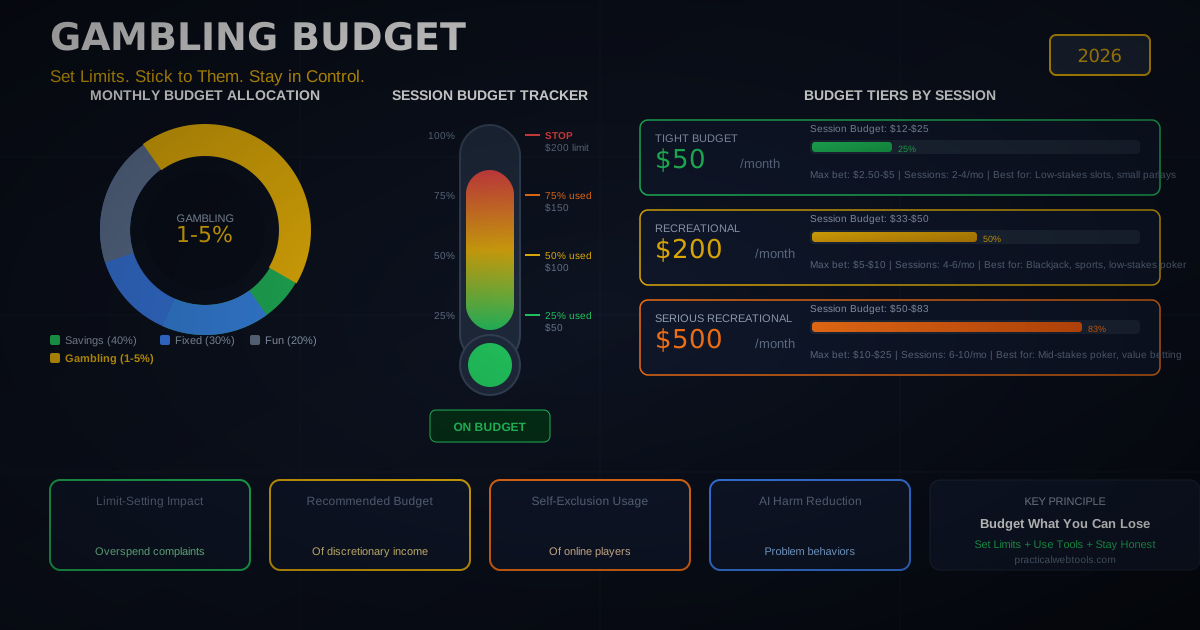
Step 1: Calculate your entertainment budget. Determine how much discretionary income you have after all bills, savings, and essential expenses are covered. Gambling funds should come only from this discretionary pool and never from money you need for anything else.
Step 2: Set a monthly loss limit. A common guideline is that your monthly gambling budget should be an amount you can lose entirely without any negative impact on your life. If losing $200 in a month would not affect your ability to pay bills or cause you stress, that is a reasonable limit. If that amount causes you anxiety, lower it.
Step 3: Set a deposit limit below your loss limit. This adds a friction layer. If your monthly loss limit is $200, consider setting a weekly deposit limit of $50. This prevents you from depositing the entire month's budget in a single impulsive session.
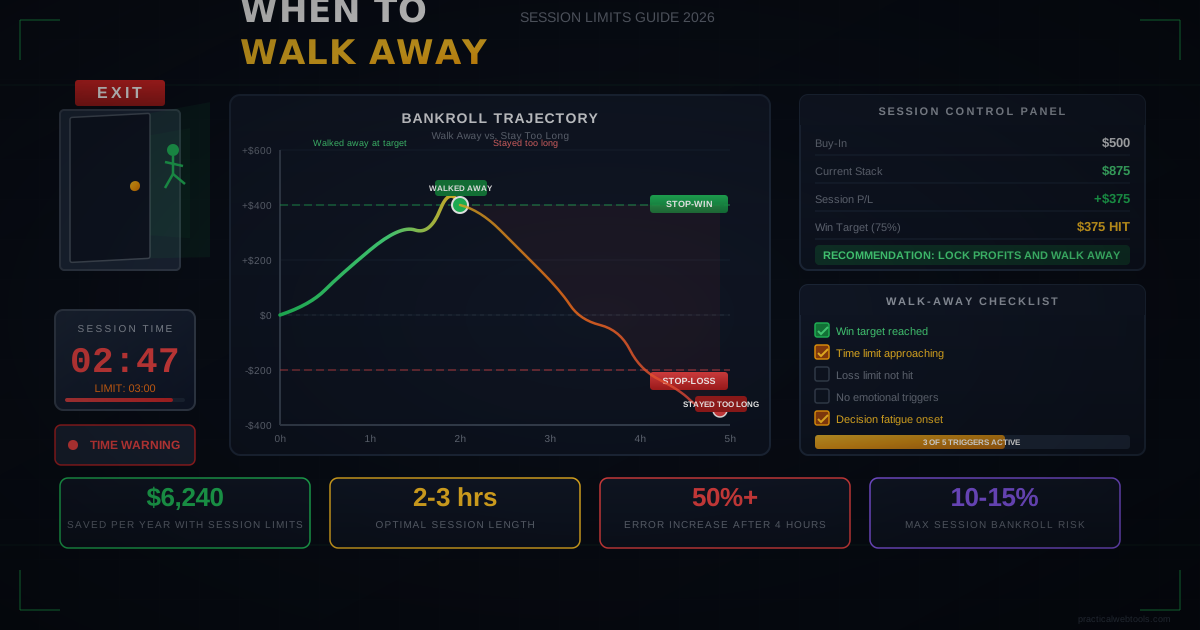
Step 4: Set a session time limit. Research consistently shows that the longer a gambling session lasts, the more likely a person is to chase losses and make irrational decisions. A 60-minute session limit with a mandatory 30-minute break between sessions is a reasonable starting point.
Step 5: Review your limits monthly. Use your platform's betting history feature to review your actual gambling patterns. If you are consistently hitting your limits, that may be a sign that your gambling is becoming less recreational and more compulsive.
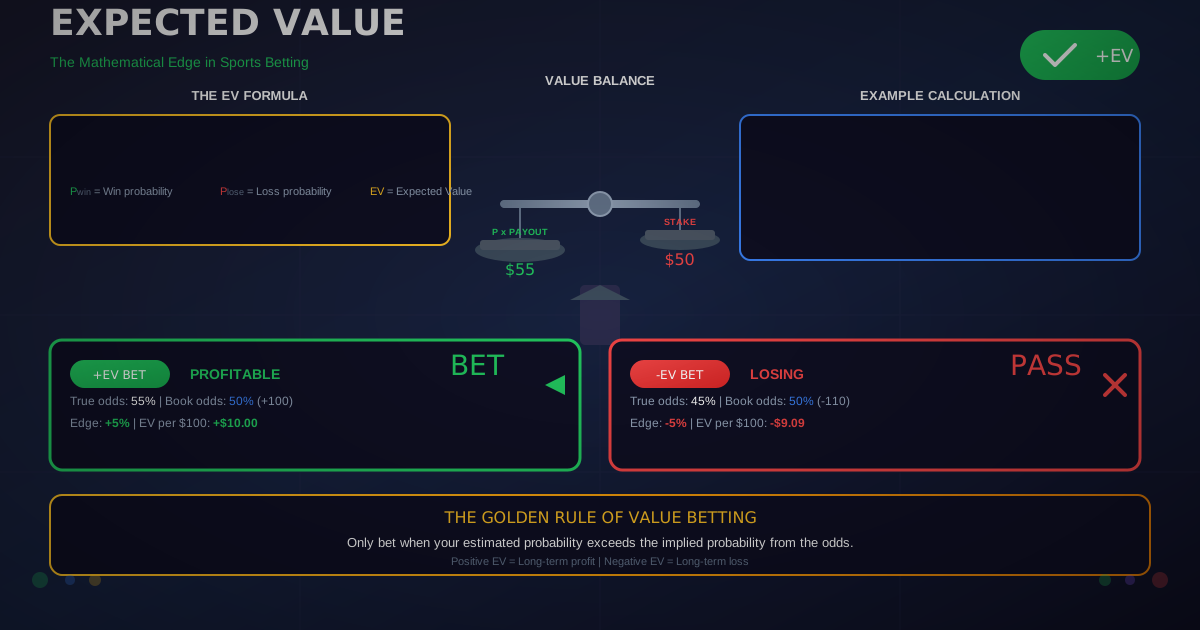
Our Expected Value Calculator can help you understand the mathematical reality of any bet you are considering. When you see the true expected value, it becomes easier to make rational decisions about whether a bet is worth making at all.
Cooling-Off Periods and Account Closure
Cooling-off periods occupy the middle ground between financial limits and full self-exclusion. They provide a temporary break from gambling without the long-term commitment of self-exclusion.
How Cooling-Off Periods Work
A cooling-off period temporarily suspends your gambling account for a set duration. During this time:
- You cannot place any bets
- You cannot deposit funds
- You can typically still withdraw existing funds
- You will not receive promotional emails or notifications
- The account reactivates automatically when the period ends
Most platforms offer cooling-off periods ranging from 24 hours to 6 months. Some offer periods up to one year.
When to Use a Cooling-Off Period
Cooling-off periods are appropriate in several situations:
Scenario 1: After a big loss. Mark lost $500 in a single evening on live sports betting, an amount well above his usual $50 per week budget. He recognized the urge to immediately deposit more to chase the loss. Instead, he activated a 72-hour cooling-off period, giving himself time to process the loss and regain perspective.
Scenario 2: During a stressful life event. Sarah has been gambling recreationally for years without problems. But during a difficult divorce, she noticed she was gambling more frequently and for higher stakes as an escape mechanism. She activated a 30-day cooling-off period and used that time to arrange a session with a counselor.
Scenario 3: When limits keep getting hit. James set a $200 monthly deposit limit but found himself hitting it within the first week of every month, then feeling frustrated that he could not deposit more. The repeated limit-hitting was itself a warning sign. He activated a cooling-off period and used the time to honestly assess his gambling behavior.
Full Account Closure
If you decide that you need to stop gambling entirely, account closure is a more definitive step than a cooling-off period. When you close your gambling account:
- All remaining balances are returned to you
- Your account is permanently deactivated
- You are removed from all marketing communications
- Reopening the account typically requires a waiting period and explicit request
Account closure differs from self-exclusion in that it does not necessarily place you on a registry that other operators can check. If you close your DraftKings account, FanDuel will not automatically know about it. For comprehensive protection, state-level self-exclusion is more effective.
Time Limits and Reality Checks
Time-based controls address a fundamental aspect of problematic gambling: losing track of time while gambling.
How Reality Checks Work
A reality check is a notification that appears at regular intervals during a gambling session, typically showing:
- How long you have been playing
- How much you have deposited during the session
- Your net win or loss for the session
- A prompt to continue, take a break, or end the session
Research shows that reality checks are most effective when they interrupt the gambling flow and require active acknowledgment rather than being passively displayed. The best implementations require you to click a button to continue gambling, introducing a moment of conscious decision-making.
Setting Up Time-Based Controls
Session time limits automatically end your gambling session after a set period (for example, 60 or 90 minutes). After the session ends, you must wait for a mandatory break period before you can start a new session.
Daily time limits cap your total gambling time across all sessions in a 24-hour period. If you set a 2-hour daily limit and gamble for 90 minutes in the morning, you will only have 30 minutes available later in the day.
Login time display shows how long you have been logged into a gambling platform, keeping the passage of time visible at all times.
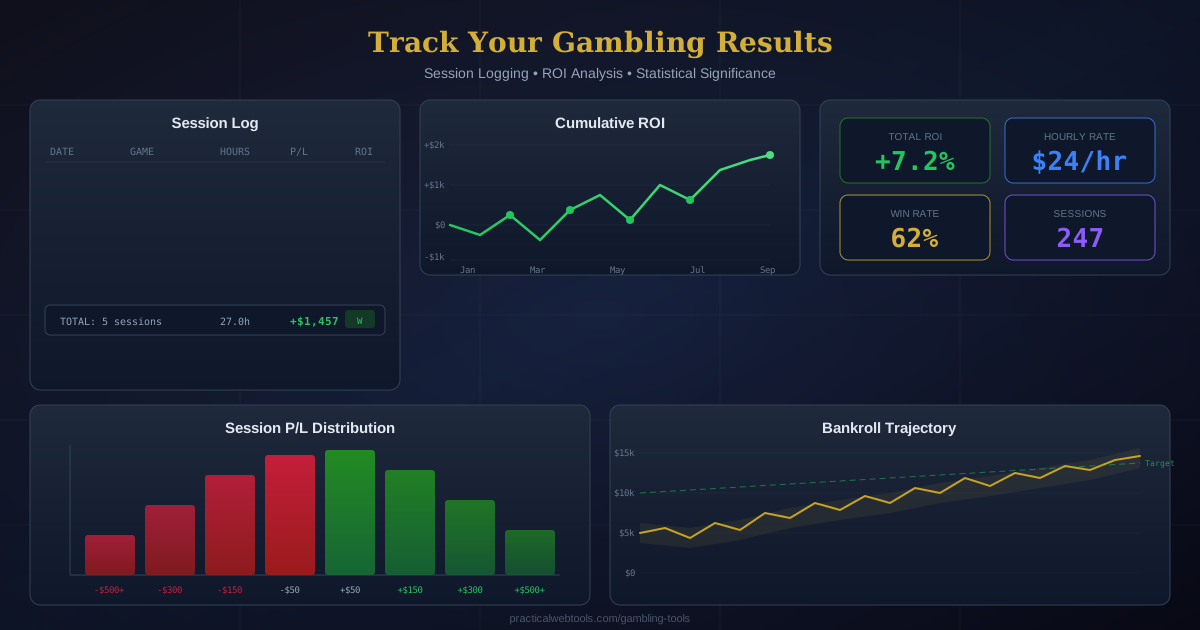
Tools like our Poker Session Tracker can help you monitor time spent gambling and correlate it with outcomes, making patterns visible that might otherwise go unnoticed.
Using Analytical Tools for Responsible Gambling
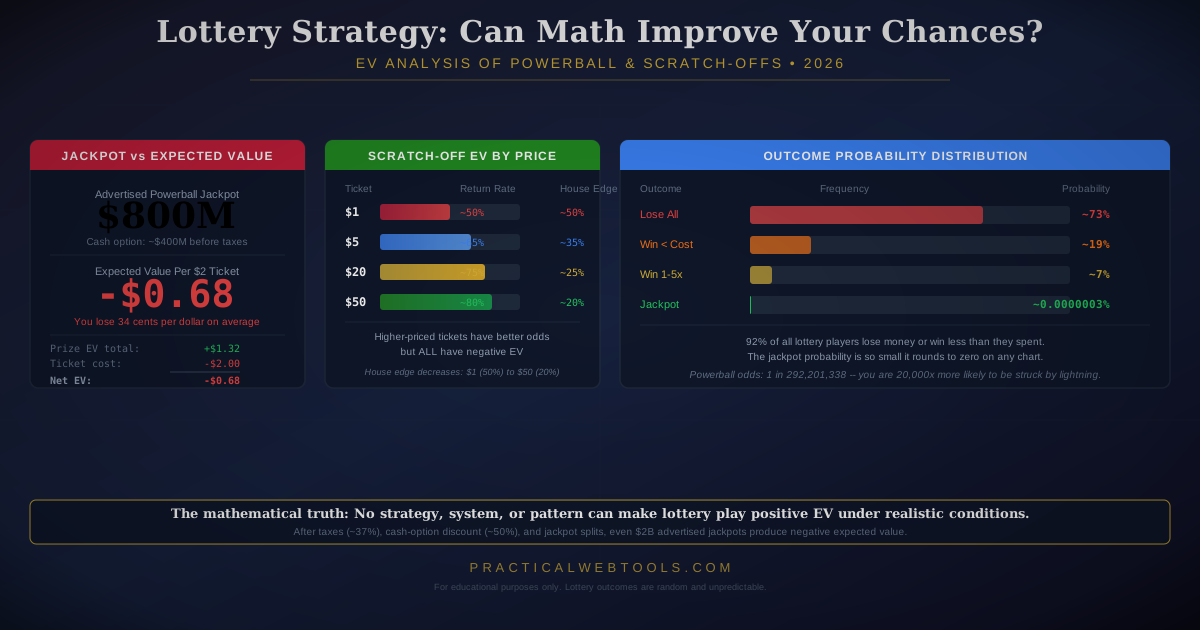
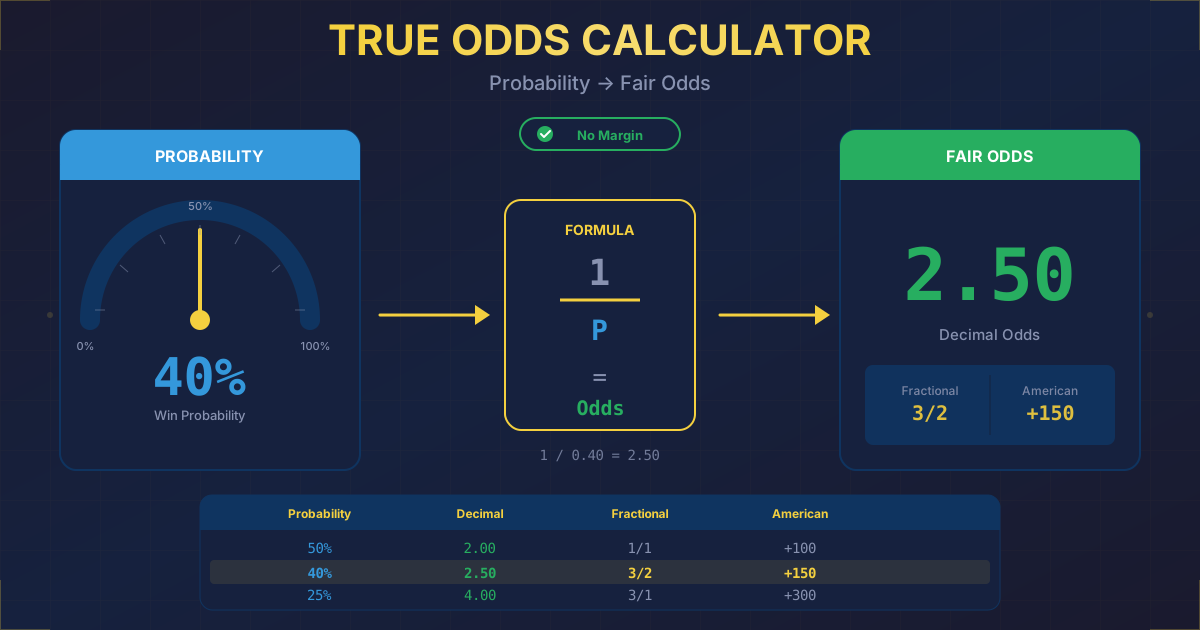
One of the most effective ways to gamble responsibly is to understand the mathematics behind gambling. When you understand expected value, variance, and risk of ruin, you are less likely to harbor unrealistic expectations about winning.
Understanding the Math Keeps You Grounded
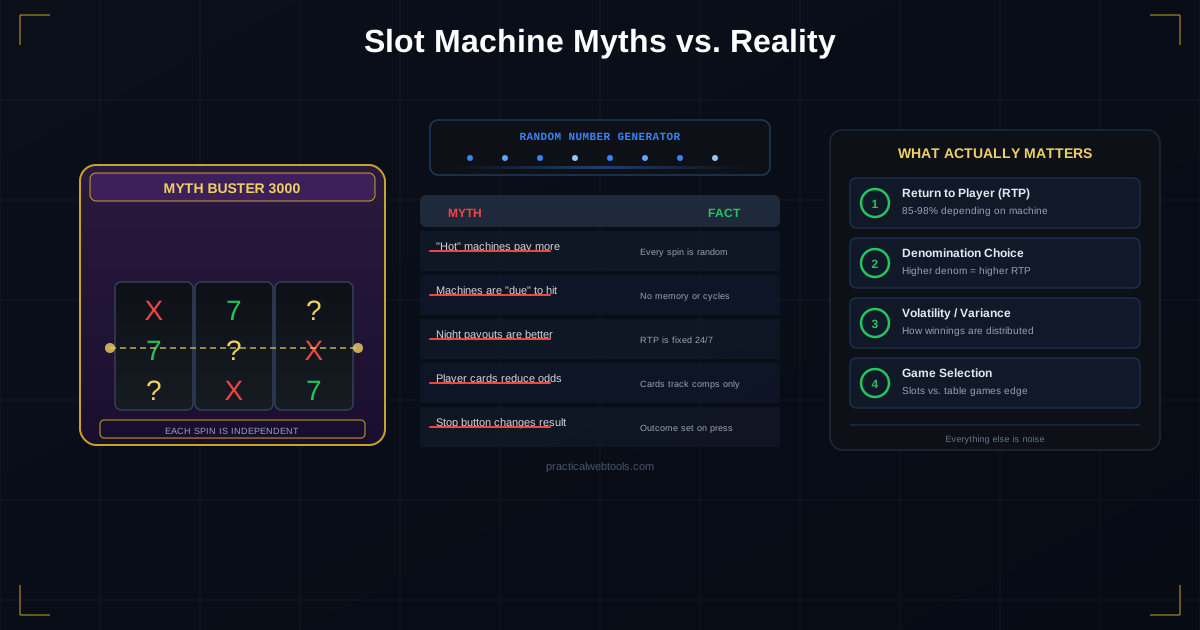
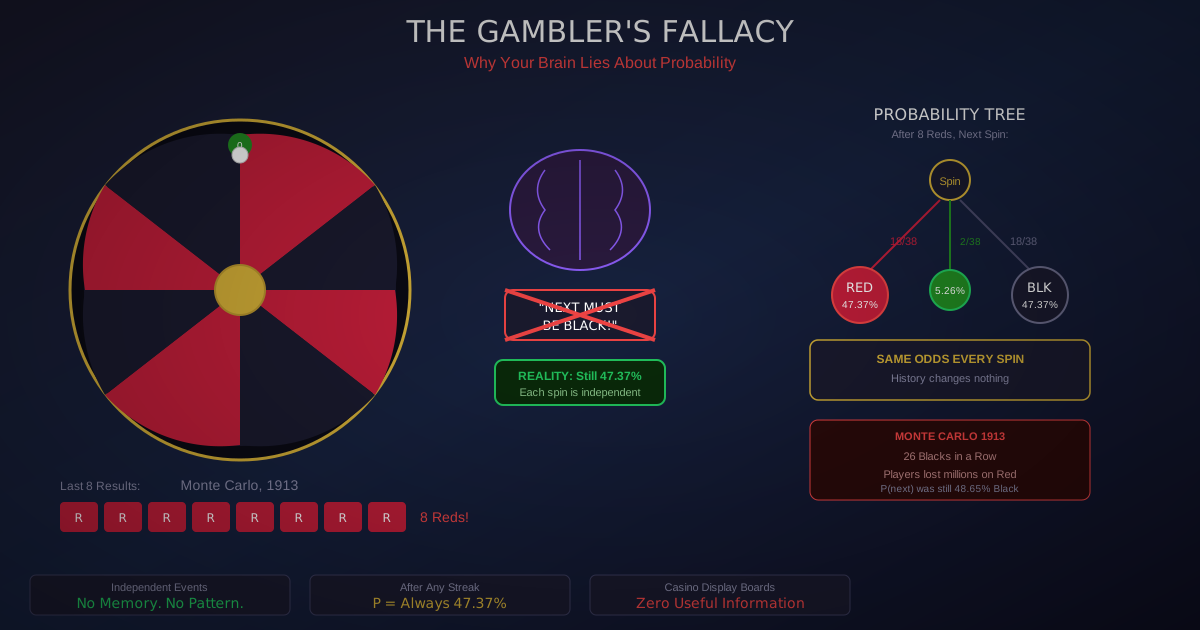
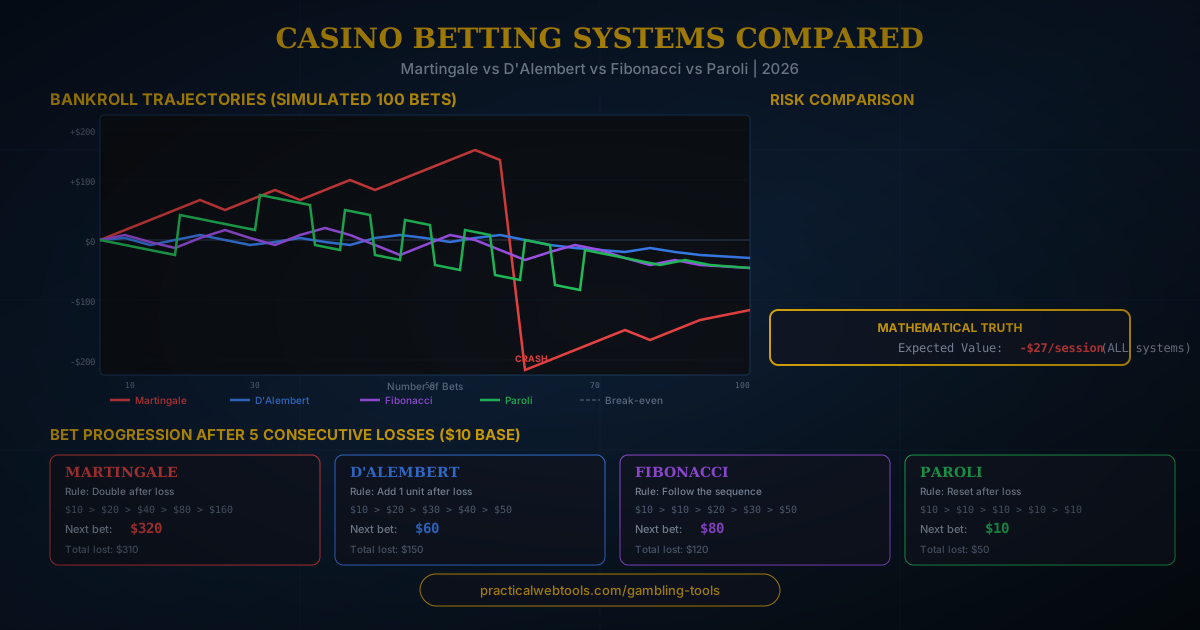
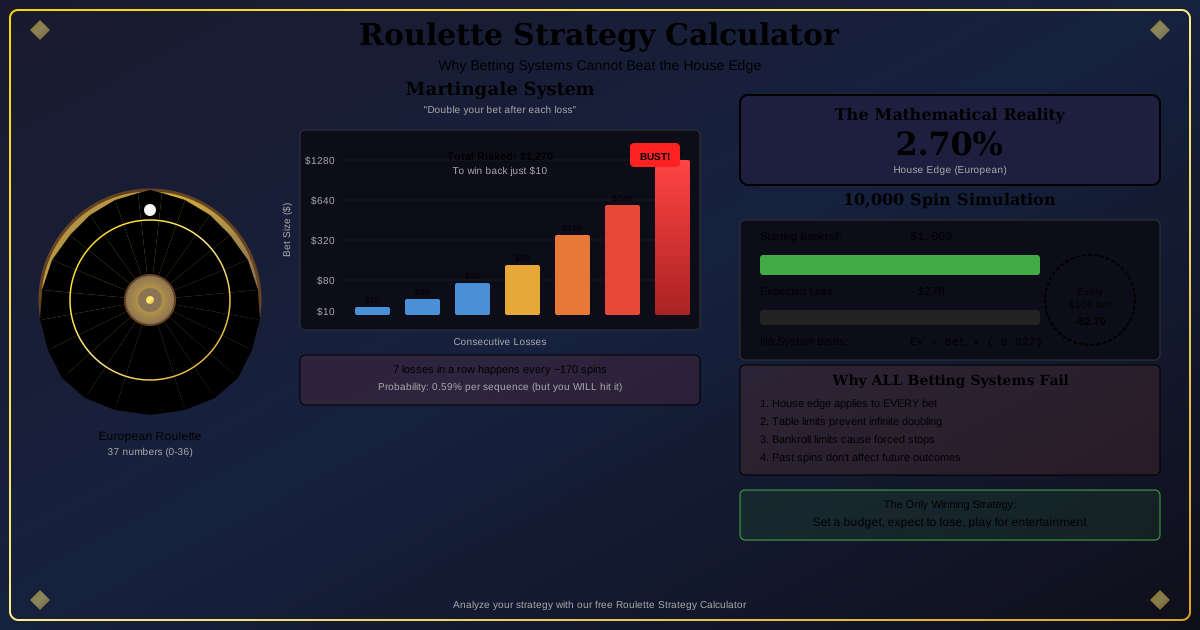
Many gambling problems are fueled by cognitive distortions: the belief that you are "due" for a win, that a hot streak will continue, or that a particular system can beat the house edge. Understanding the mathematics of gambling does not make gambling profitable, but it does strip away these dangerous illusions.
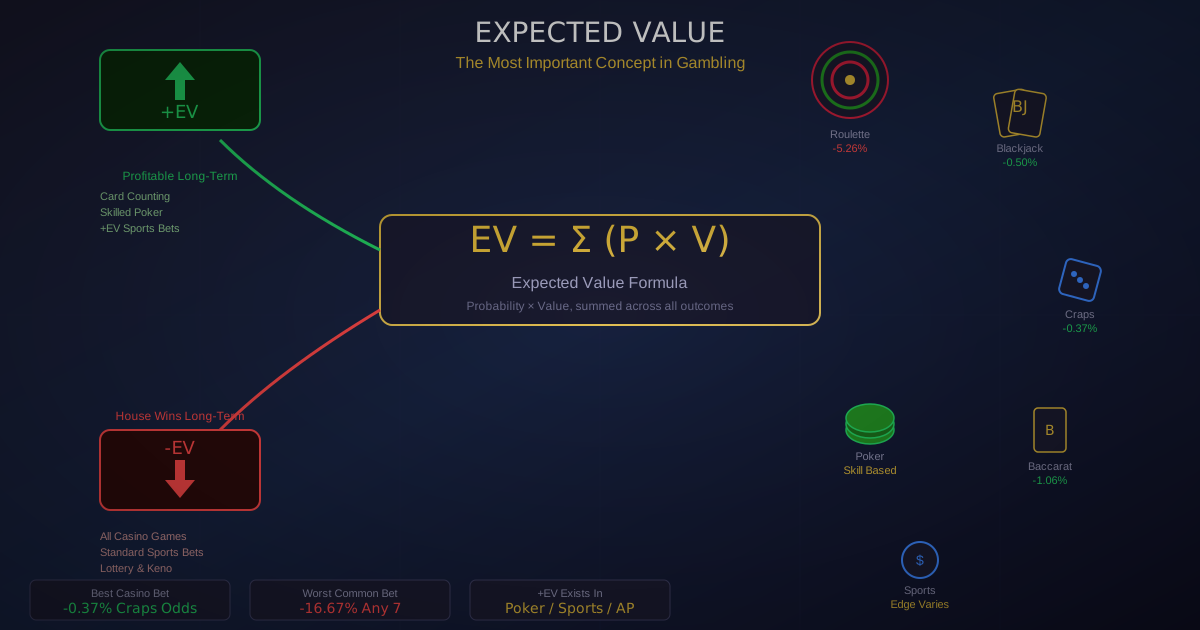
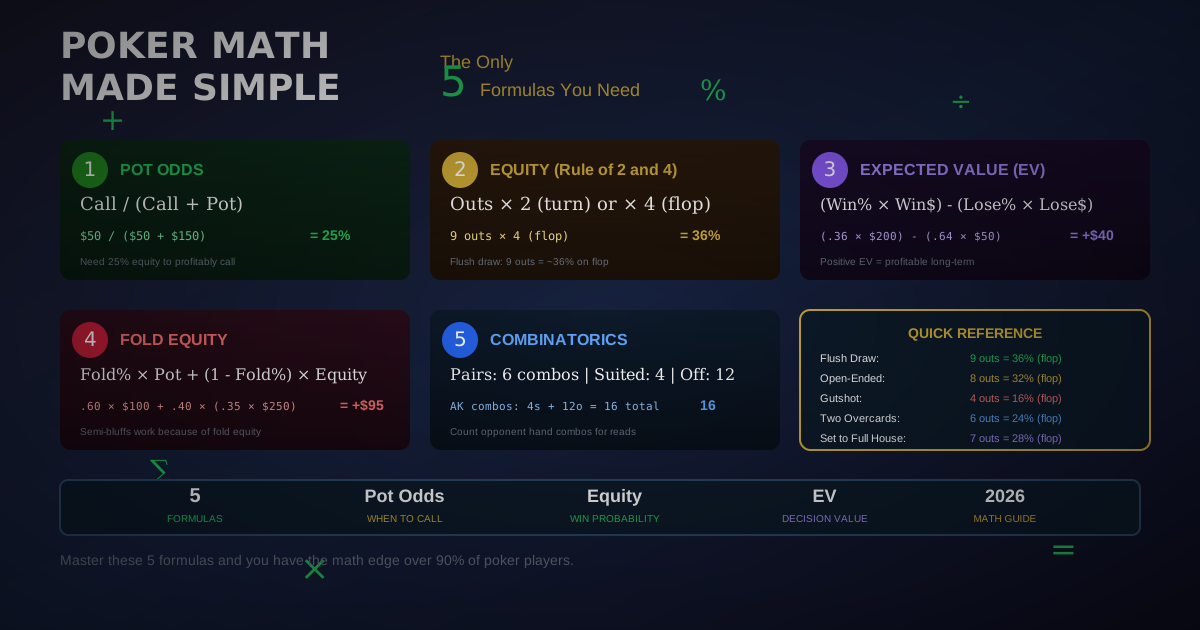
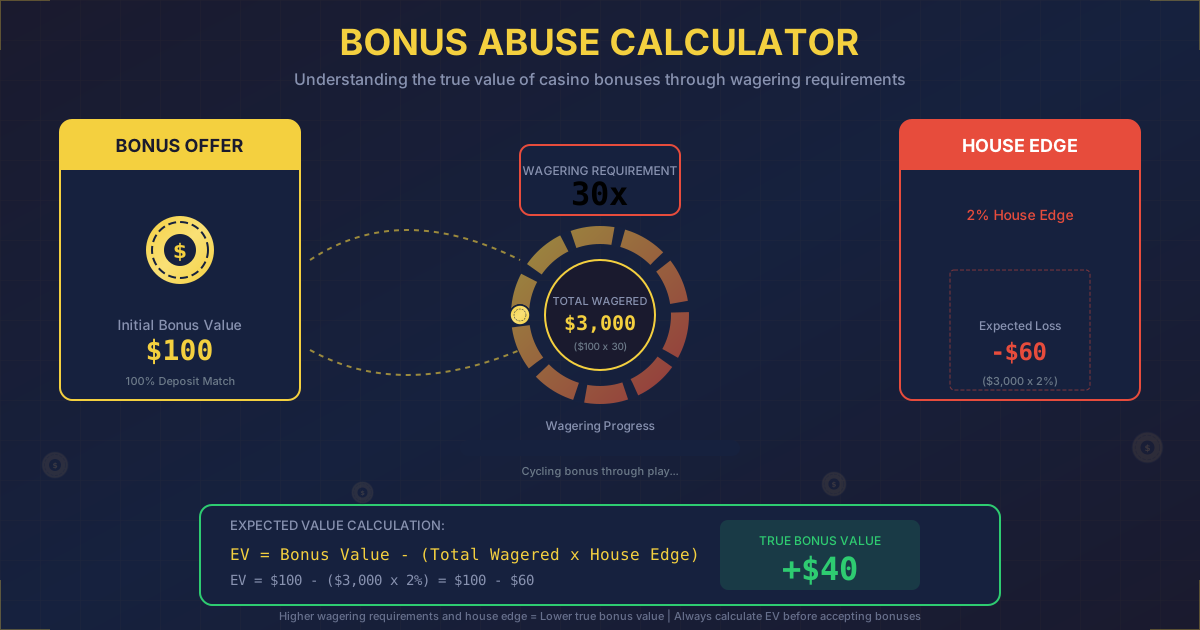
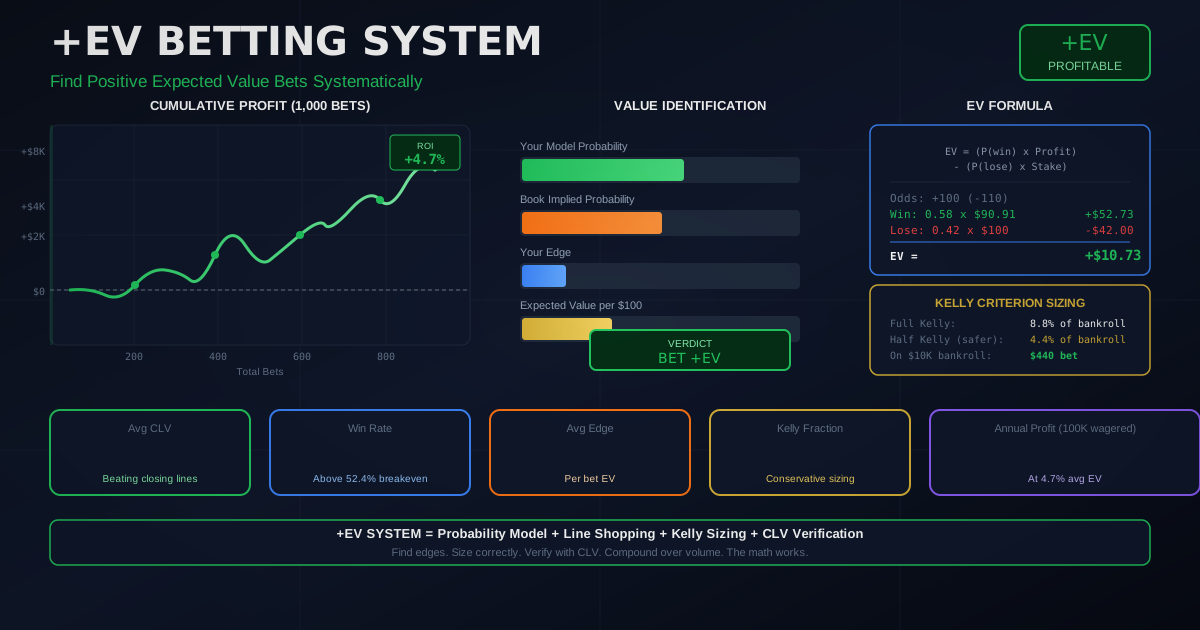
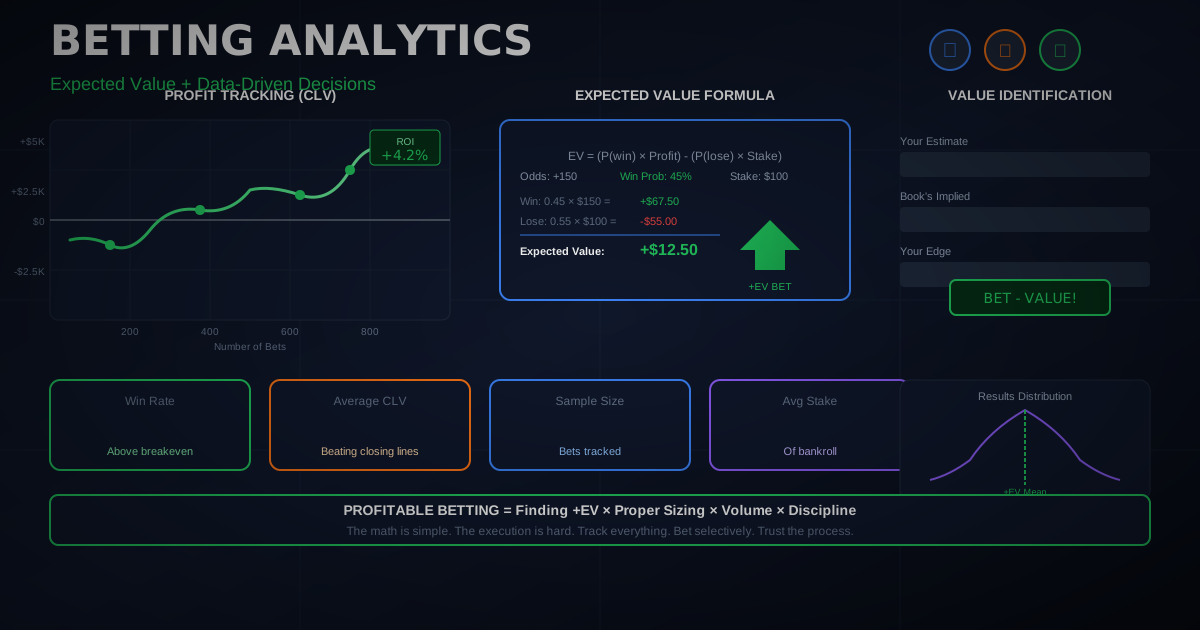
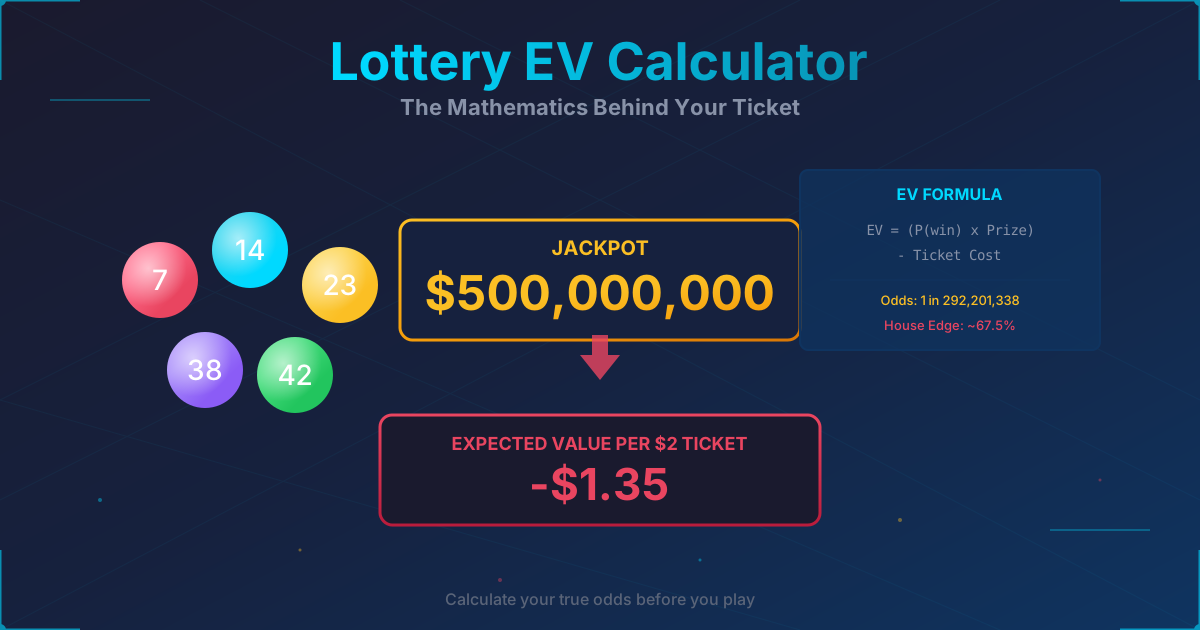
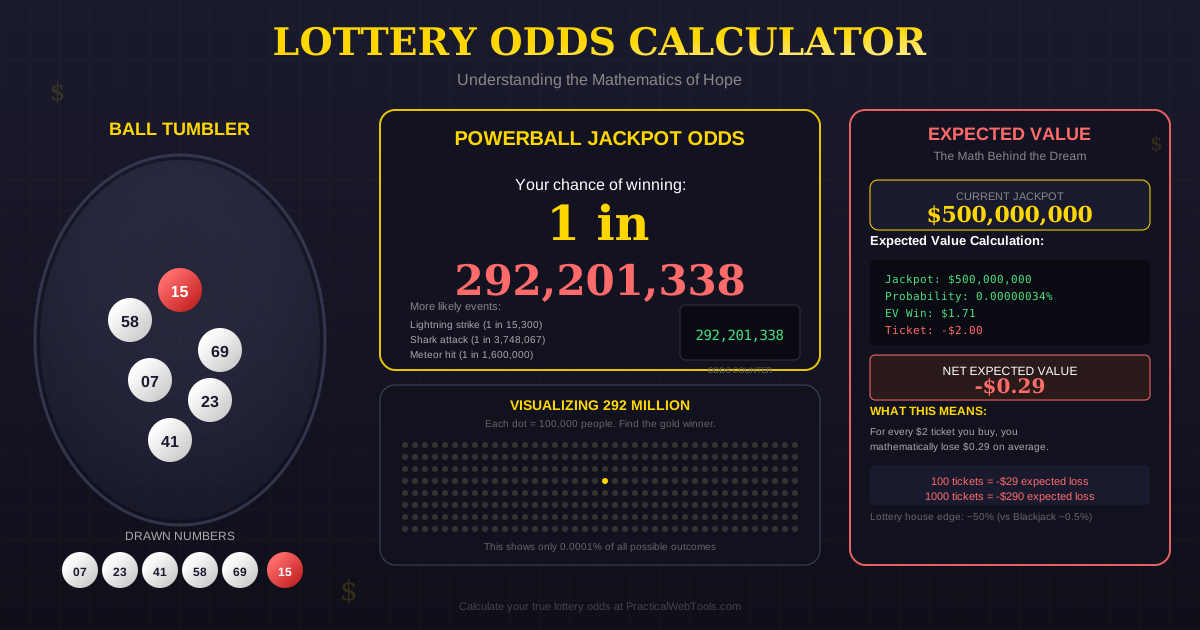
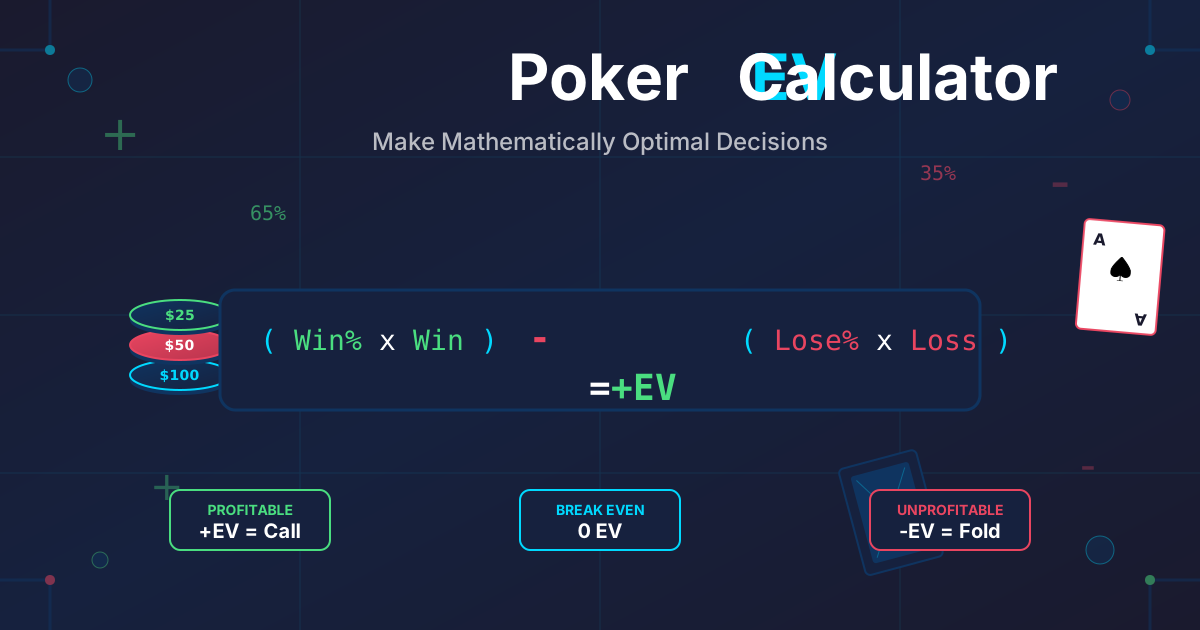
Expected Value: Every bet has a mathematically expected outcome over the long run. Our Expected Value Calculator shows you exactly what any bet is worth in terms of expected return. For most casino games and sports bets, expected value is negative, meaning you are mathematically expected to lose money over time. Understanding this is not discouraging. It is empowering. It frames gambling as entertainment with a cost, not as a viable income source.
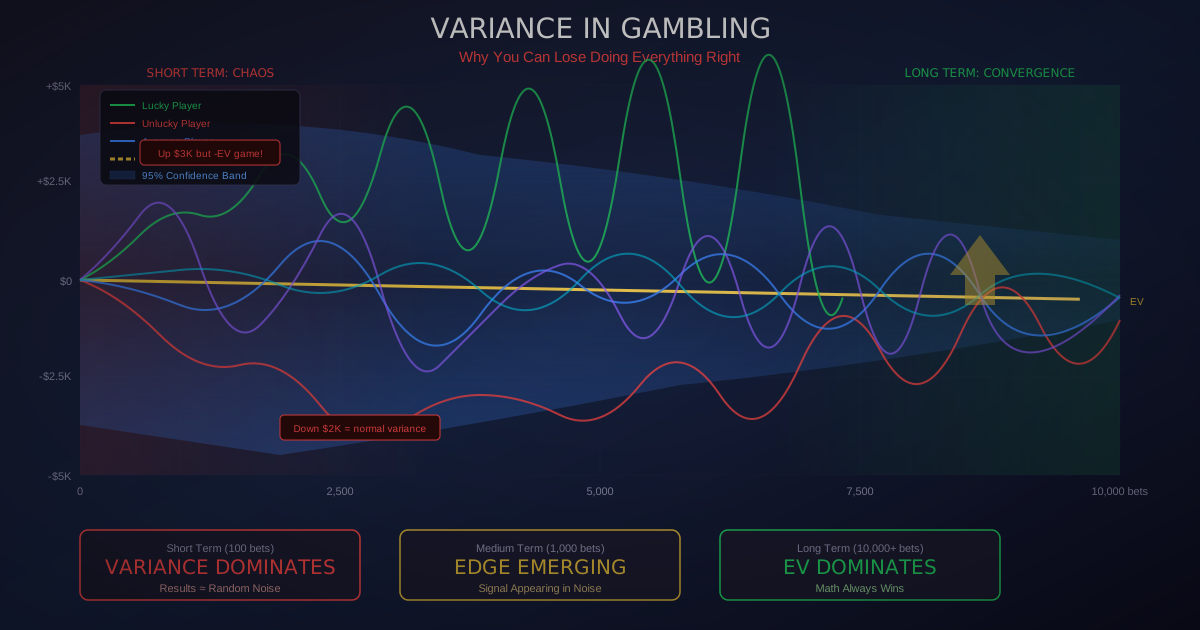
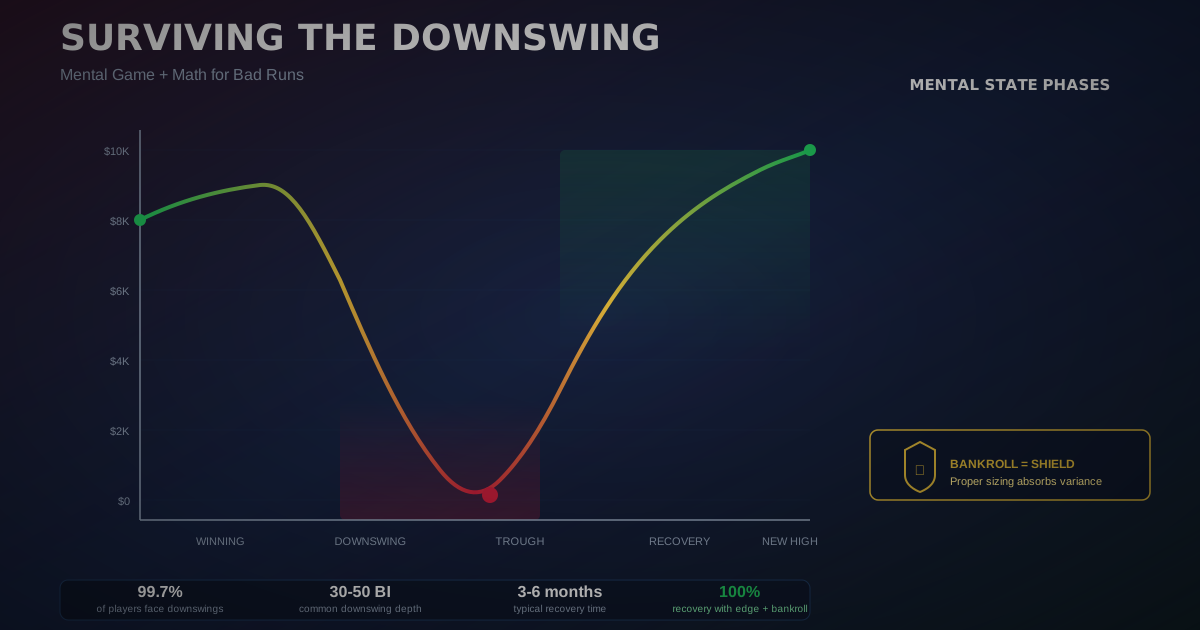
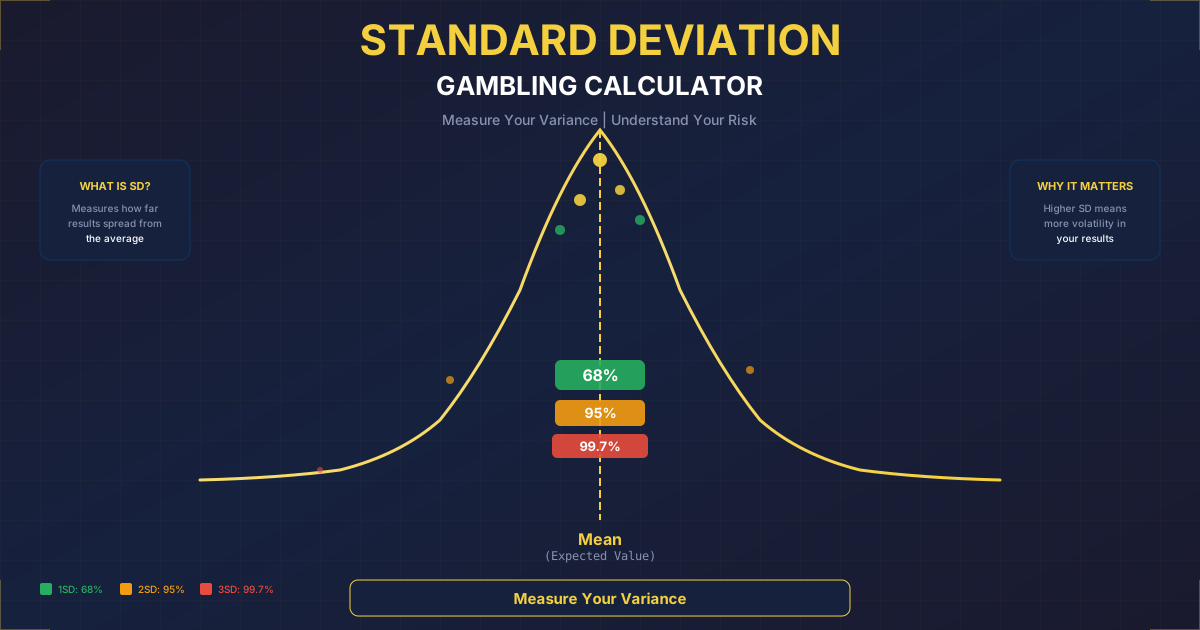
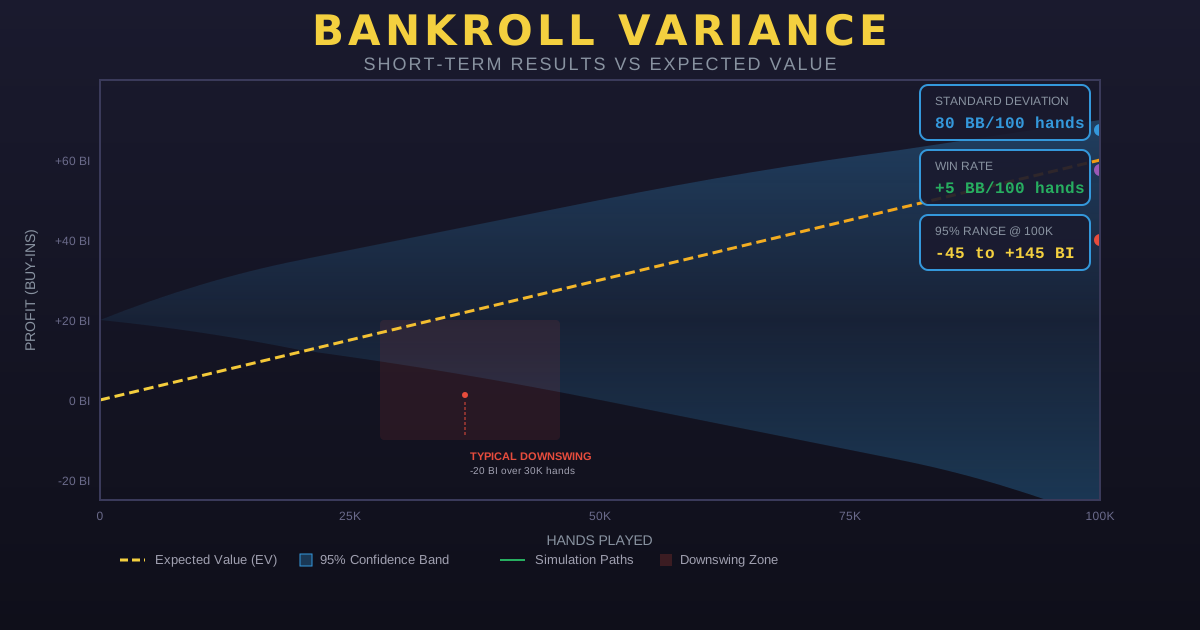
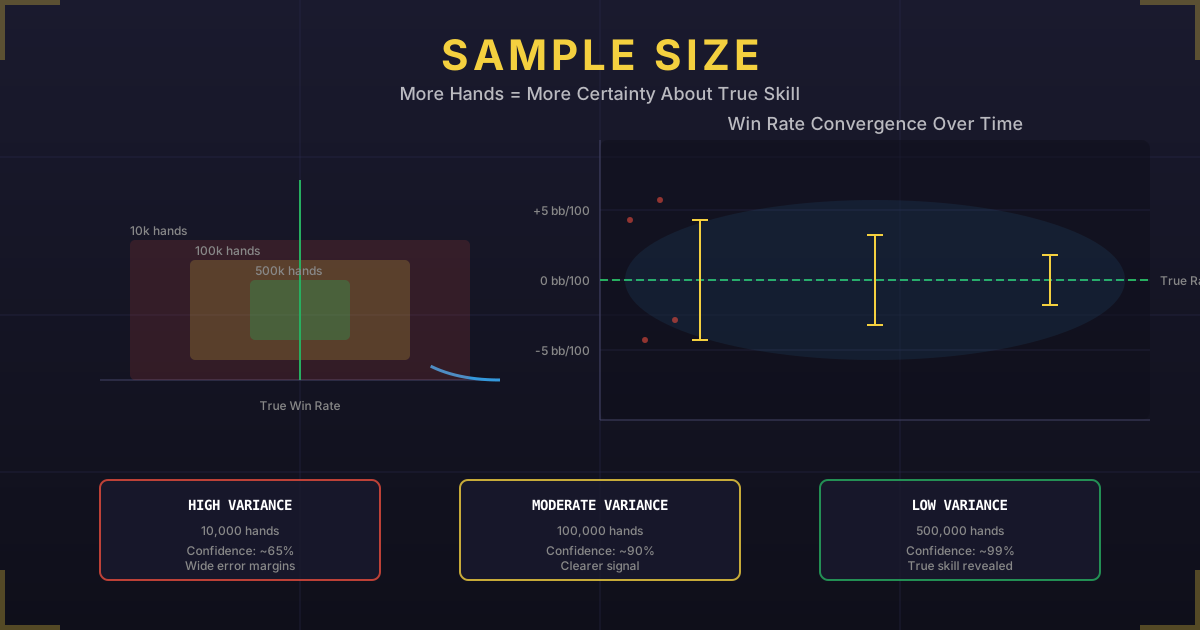
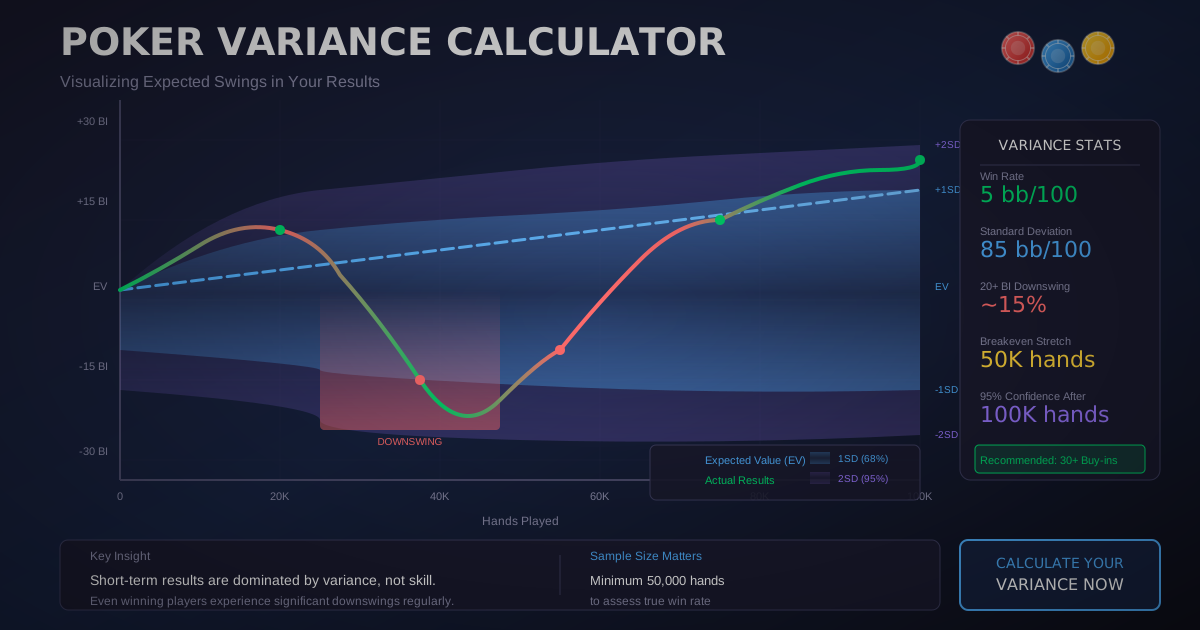
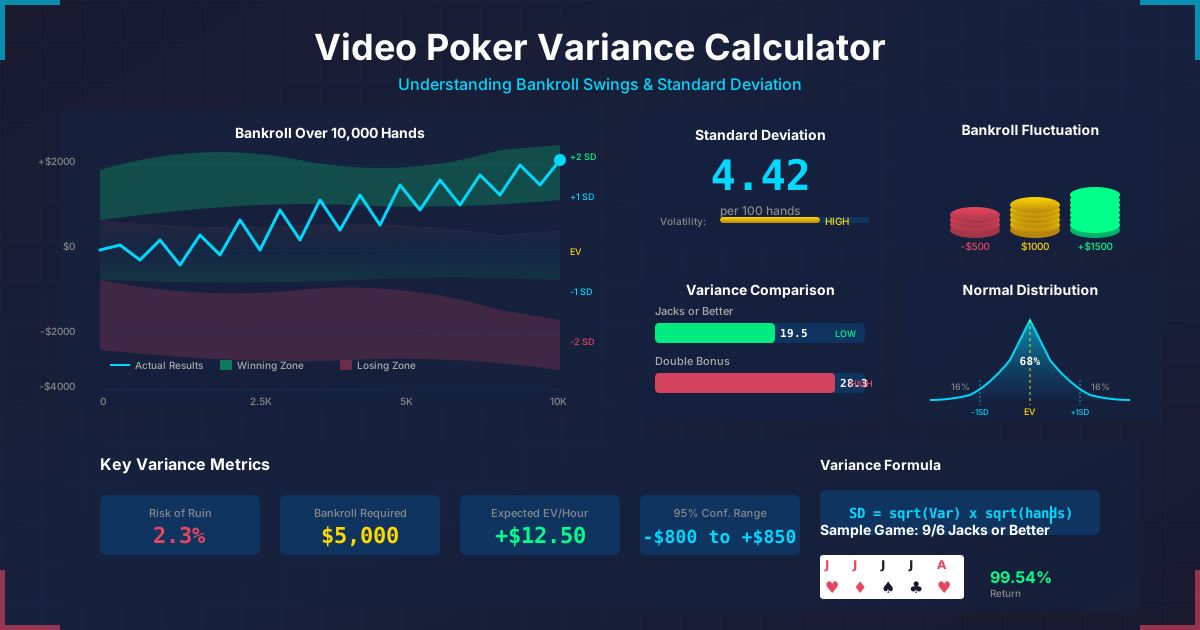
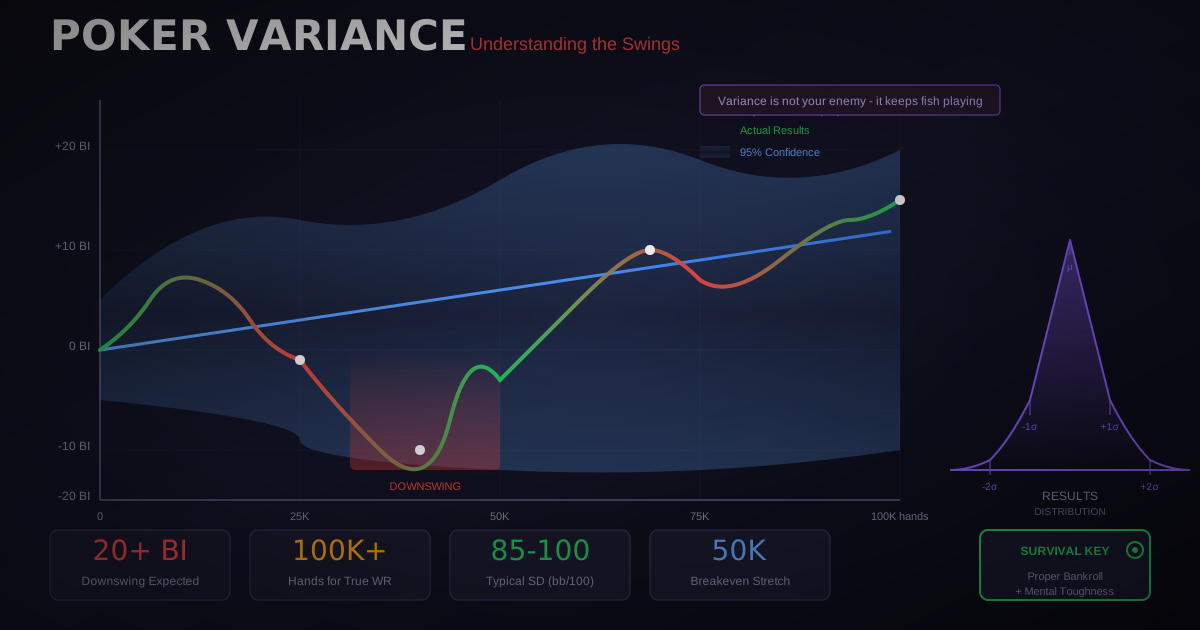
Variance and Downswings: Even when the odds are against you, short-term results can vary wildly. The Poker Variance Calculator illustrates how dramatic swings can be, even for skilled players. Understanding variance prevents you from overreacting to short-term results, both the wins that make you feel invincible and the losses that make you want to chase.
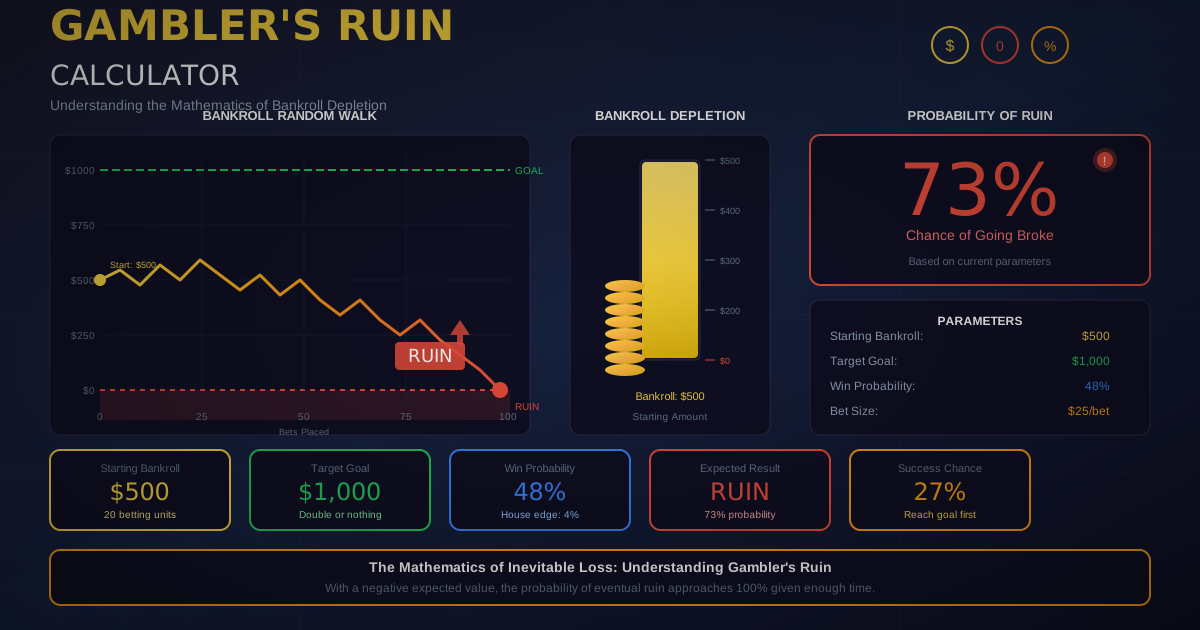
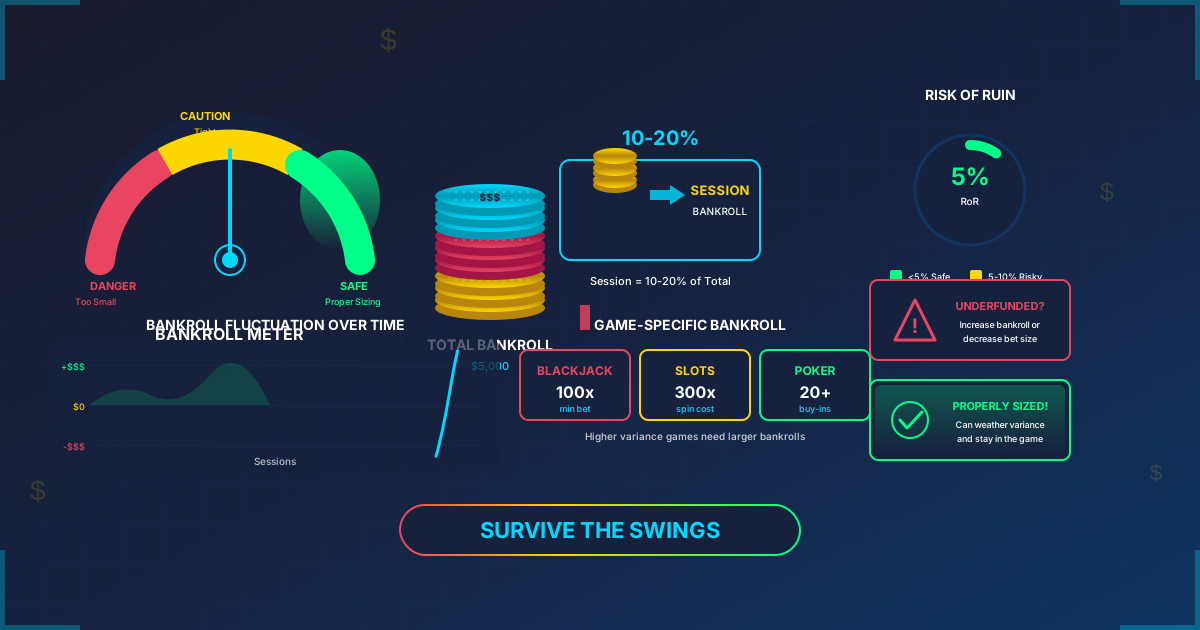
Risk of Ruin: This is the probability that you will lose your entire bankroll. The Poker Risk of Ruin Calculator demonstrates that even with a positive edge, inadequate bankroll management can lead to ruin. For recreational gamblers without a mathematical edge, the risk of ruin on any given bankroll is essentially 100% given enough time.
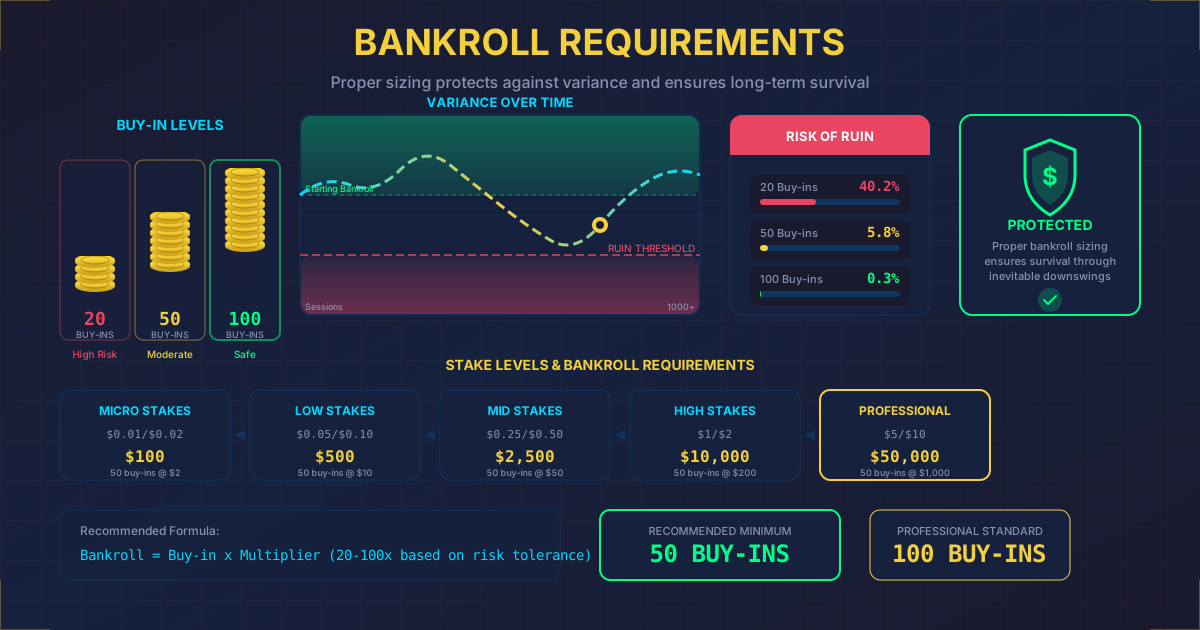
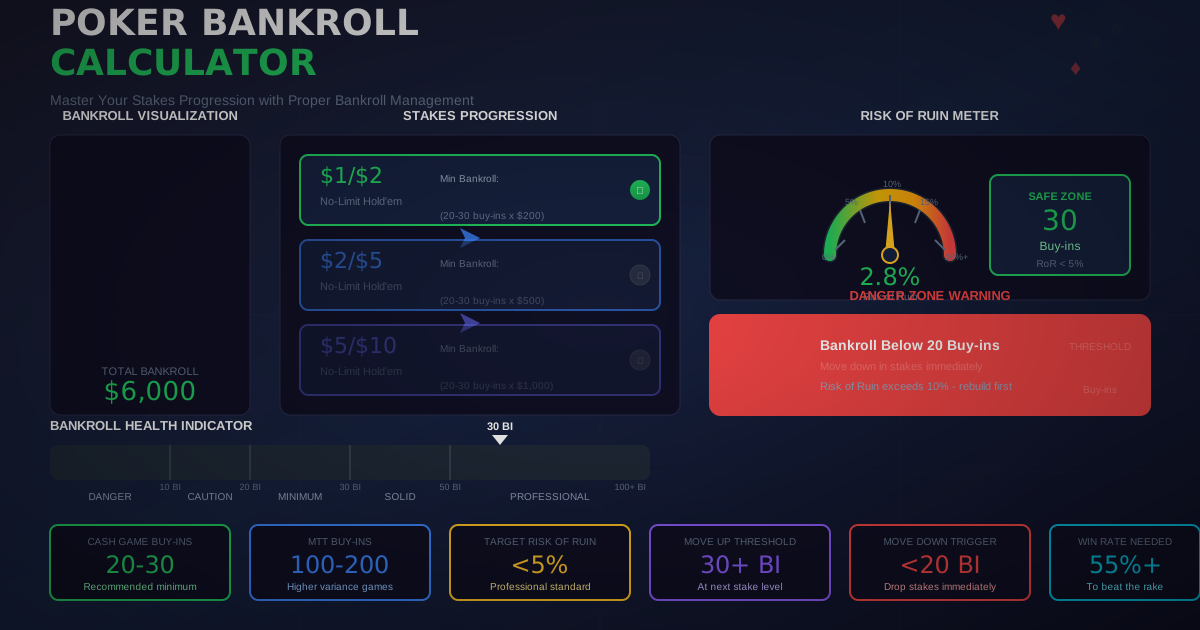
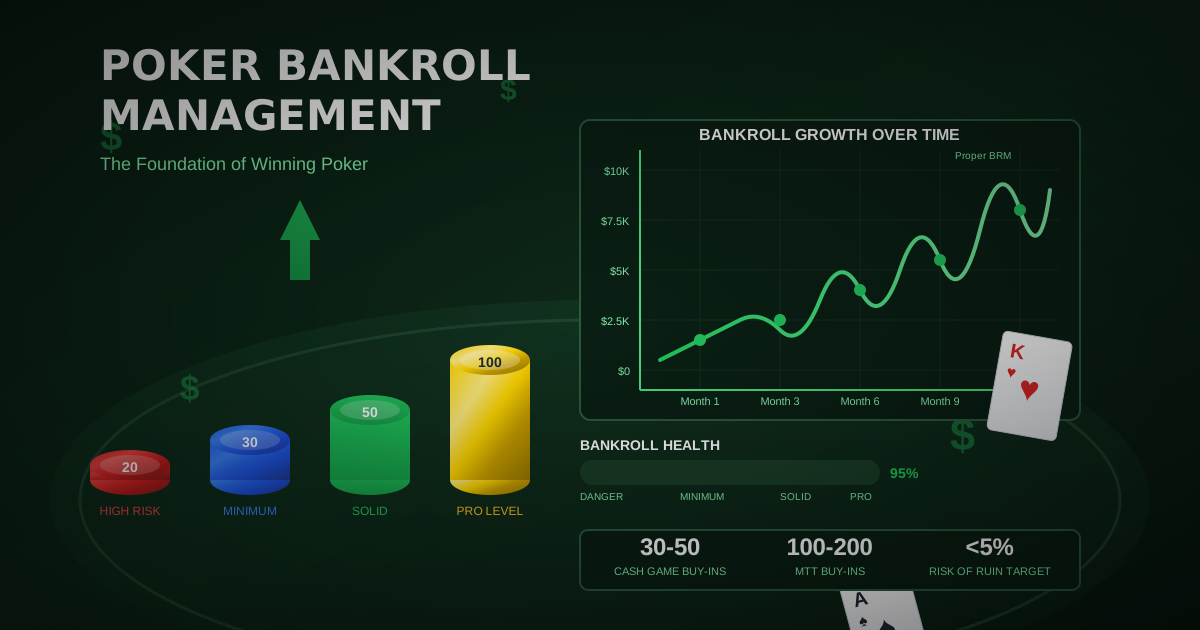
Bankroll Requirements: The Poker Bankroll Requirements Calculator helps you understand how much you need to withstand natural variance. While designed for poker players, the principles apply to any form of gambling: never risk money you cannot afford to lose, and always ensure your bankroll can withstand expected variance.
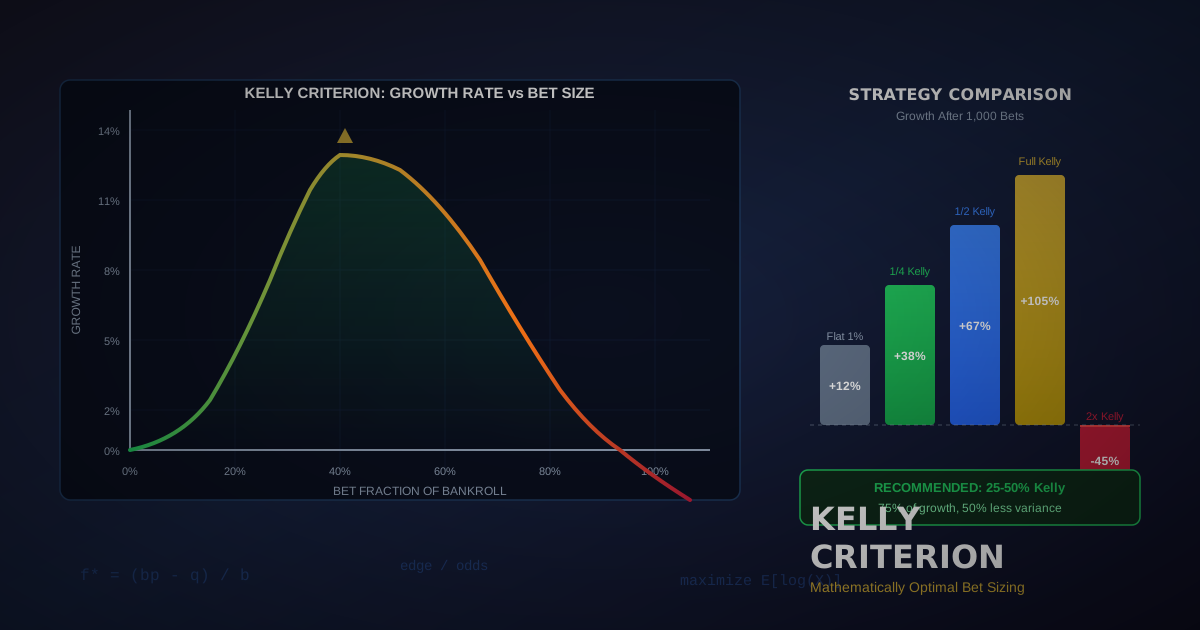
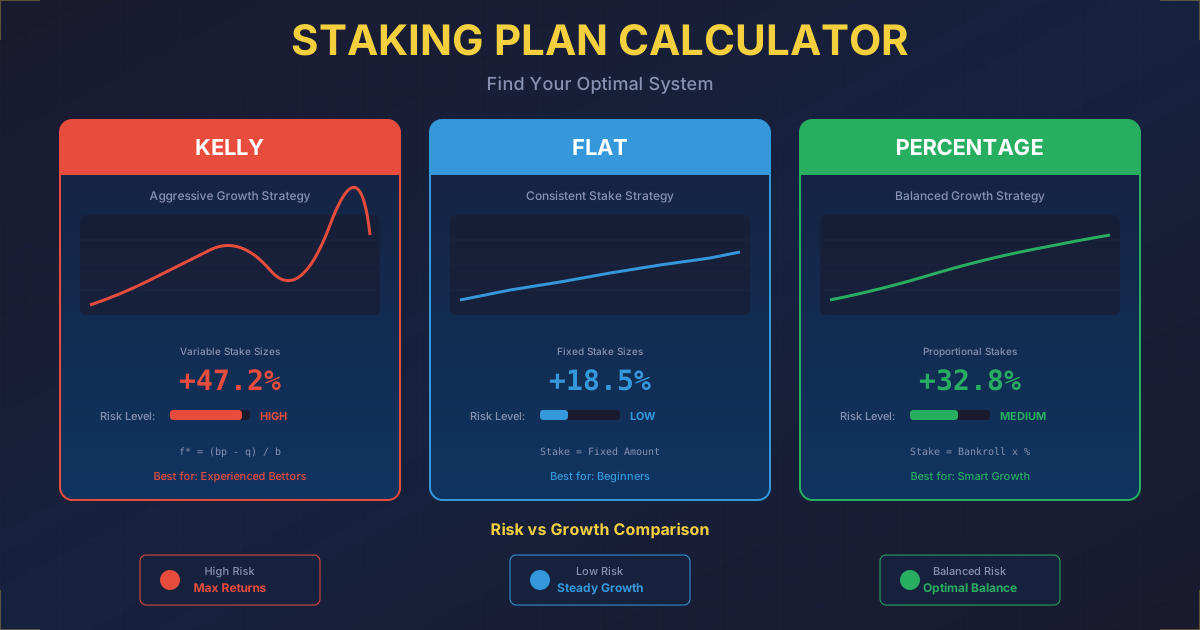
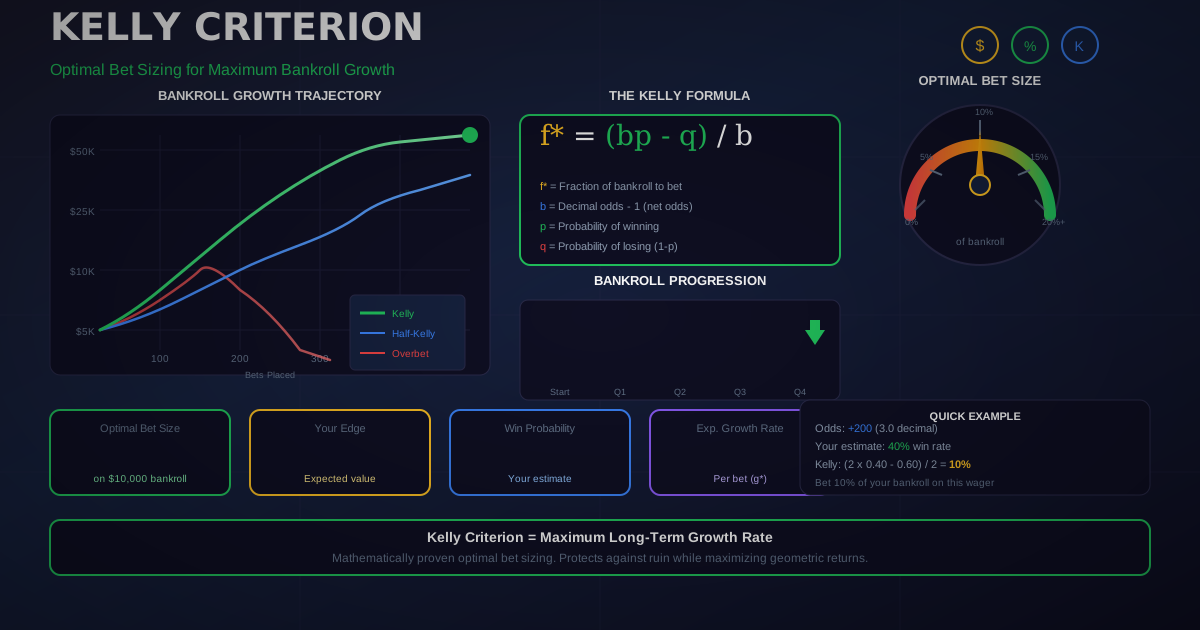
Kelly Criterion: The Kelly Criterion Calculator calculates optimal bet sizing based on your edge and bankroll. For bets where you have no edge (which includes most casino games), Kelly Criterion recommends betting nothing. This mathematical reality check can be a powerful tool for responsible gambling.
Downswing Probability: The Poker Downswing Probability Calculator shows you how likely you are to experience losing streaks of various lengths. Understanding that losing streaks are not just possible but mathematically inevitable helps prevent the emotional spiral that leads to chasing losses.
Practical Example: Using Math to Stay Responsible
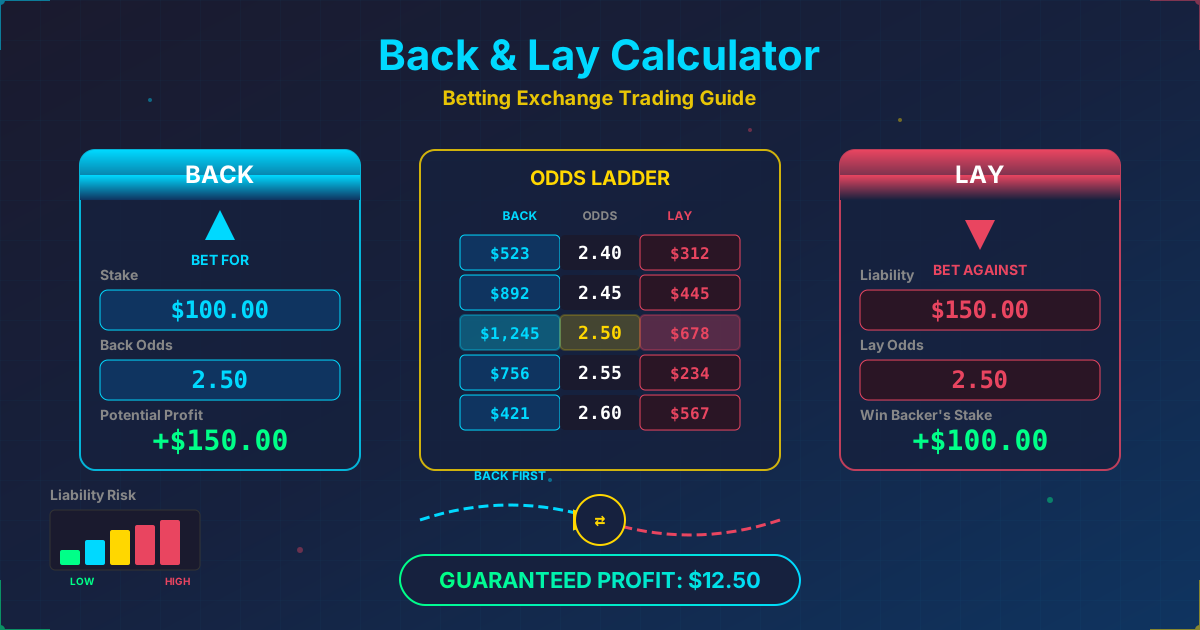
Consider a recreational sports bettor who wagers $25 per game on NFL spreads. At a typical -110 line, the implied probability is 52.4%, meaning they need to win more than 52.4% of bets to break even. Most recreational bettors win around 48-50% of the time.
Using the Expected Value Calculator, this bettor can see that at a 50% win rate with -110 odds, their expected value is -$1.14 per bet. Over a 17-game NFL regular season, betting one game per week, their expected loss is about $19.38. That is the cost of entertainment, comparable to a movie ticket each week.
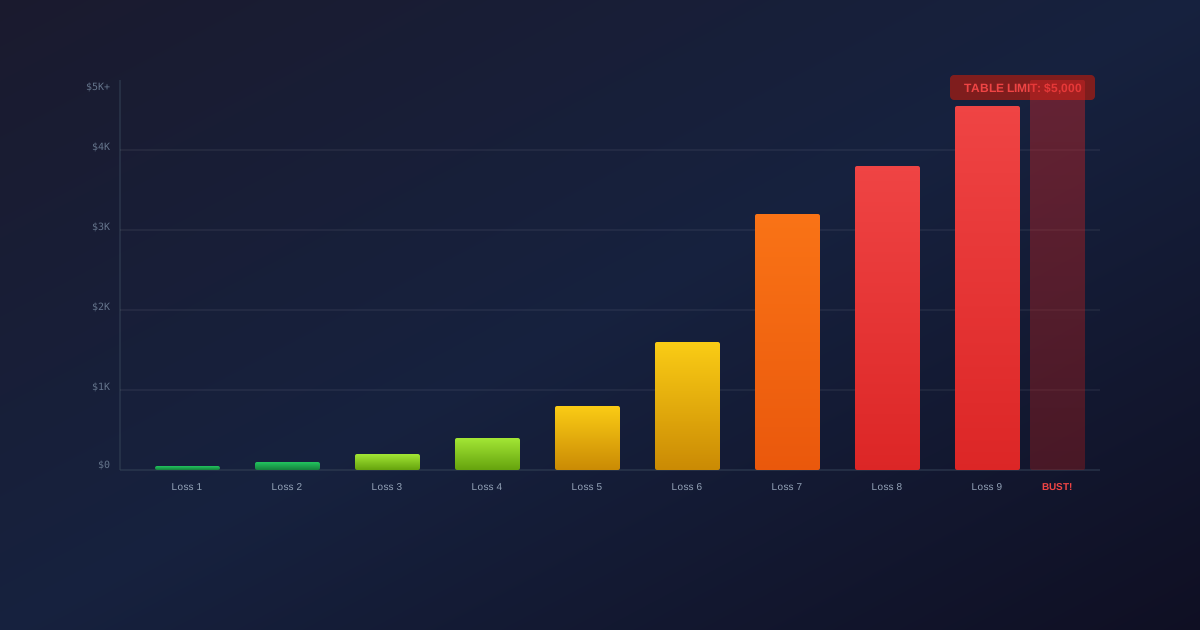
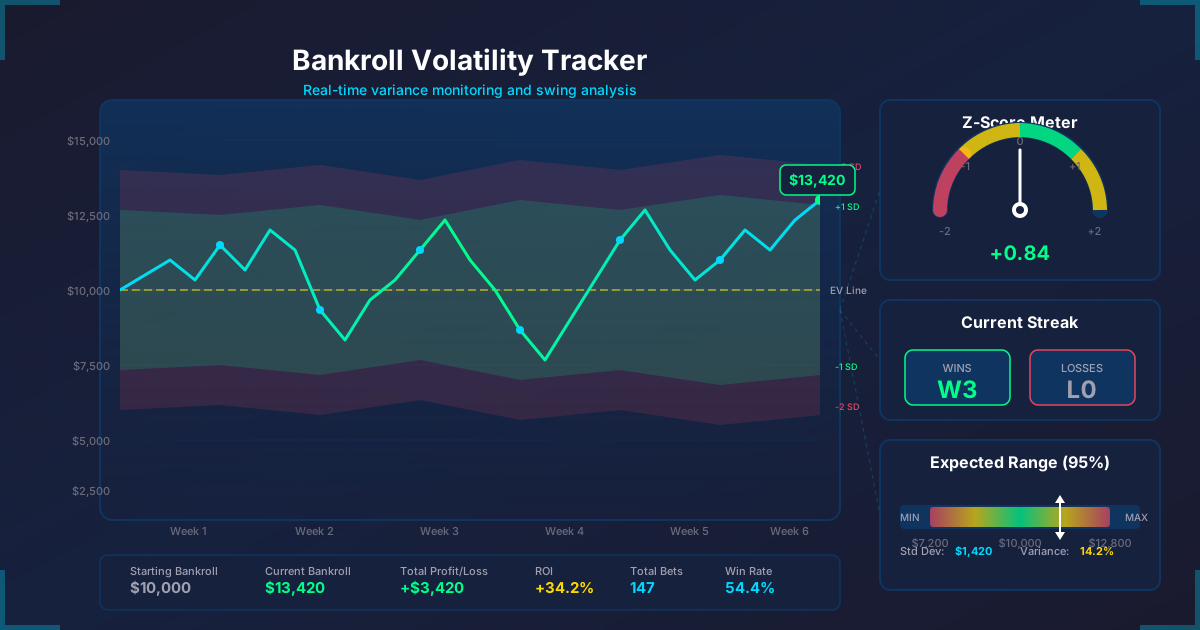
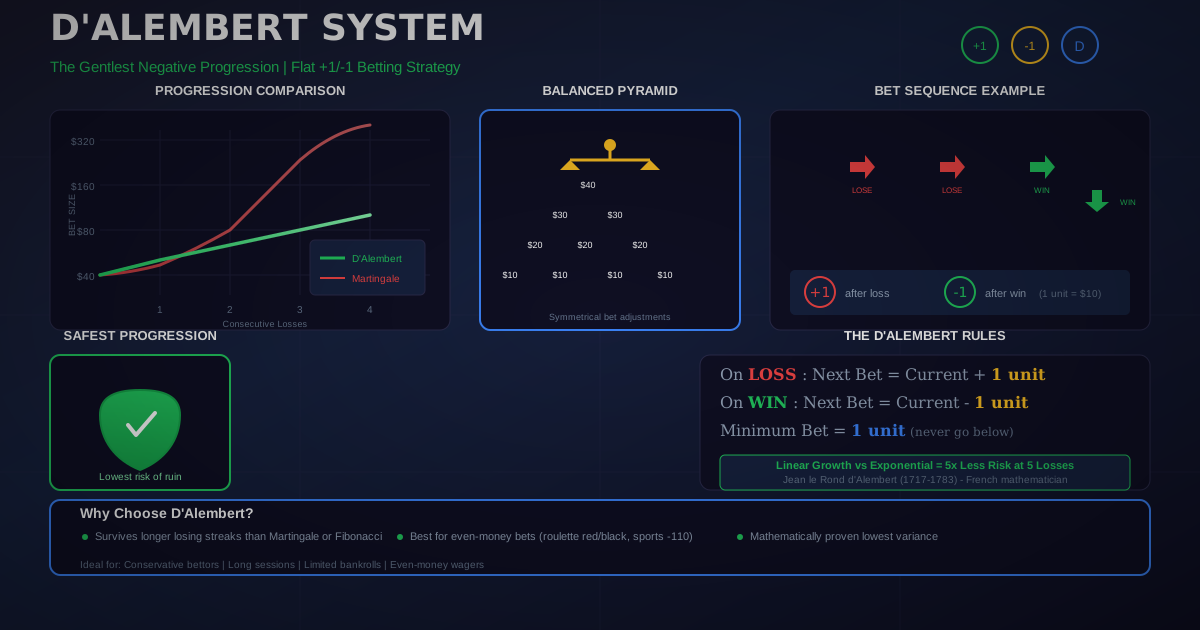
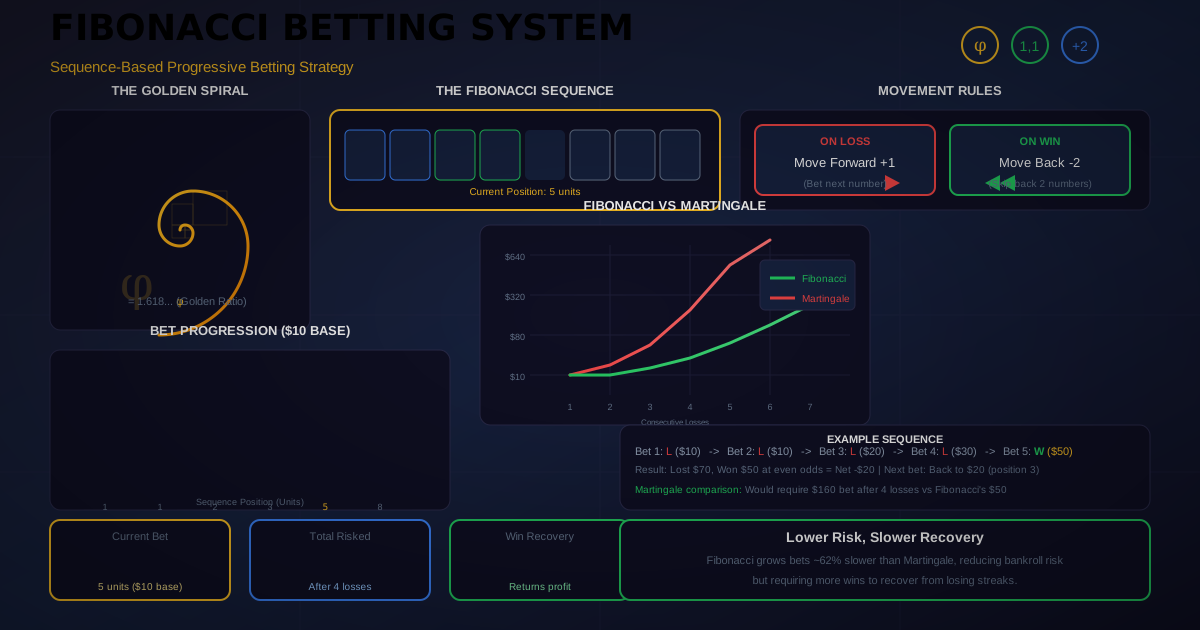
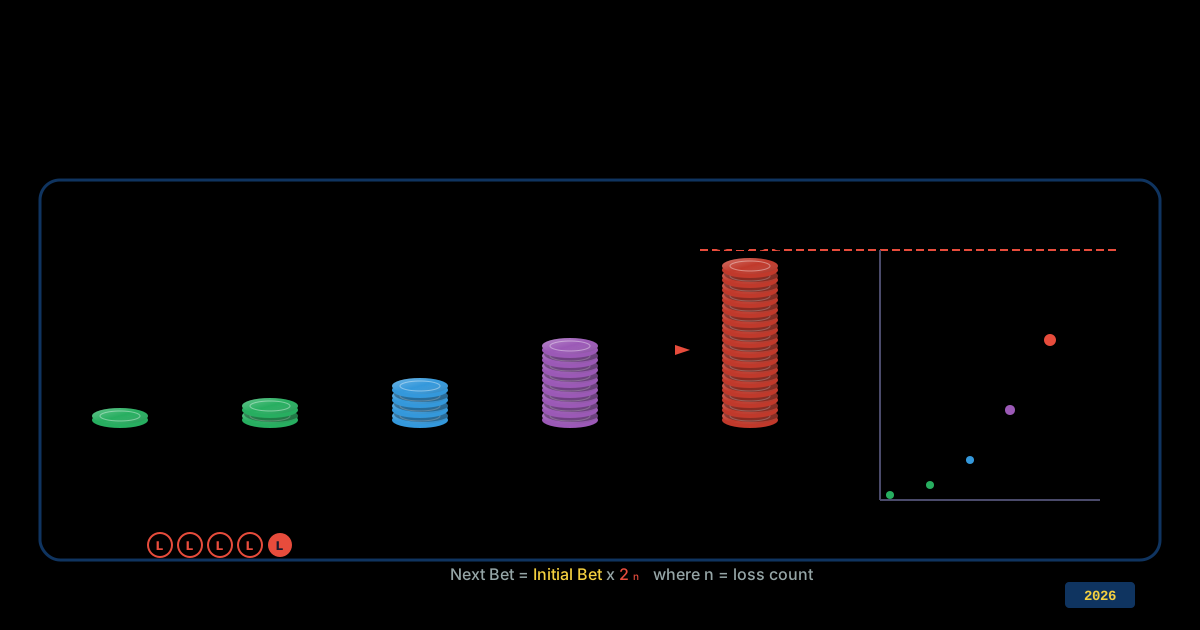
The problem arises when this bettor loses five games in a row (which has about a 3% chance each week, or happens roughly once per season). The temptation to double bet sizes to recover is powerful. But the Poker Variance Calculator and Bankroll Volatility Tracker demonstrate mathematically that such losing streaks are normal, not a sign that something needs to be "fixed" by betting more.
Resources for Getting Help
If you or someone you know needs help with problem gambling, these organizations provide free, confidential support.
National Resources
| Organization | Contact | Services | Availability |
|---|---|---|---|
| National Problem Gambling Helpline | 1-800-522-4700 (also 1-800-MY-RESET) | Crisis counseling, referrals, information | 24/7/365 |
| NCPG Text Line | Text 800-522-4700 | Text-based support | 24/7/365 |
| NCPG Chat | ncpgambling.org/chat | Online chat support | 24/7/365 |
| Gamblers Anonymous | gamblersanonymous.org | 12-step recovery meetings | Meeting schedules vary |
| National Alliance on Mental Illness (NAMI) | 1-800-950-NAMI (6264) | Mental health support, referrals | M-F 10am-10pm ET |
| SAMHSA National Helpline | 1-800-662-4357 | Substance abuse and mental health referrals | 24/7/365 |
| 988 Suicide and Crisis Lifeline | Call or text 988 | Crisis support for anyone in distress | 24/7/365 |
| Crisis Text Line | Text HOME to 741741 | Text-based crisis support | 24/7/365 |
What to Expect When You Call the Helpline
Many people hesitate to call because they do not know what to expect. Here is what happens:
- You call 1-800-522-4700. The call is free and confidential. Your name is not recorded unless you choose to provide it.
- A trained counselor answers. They will not judge you. They have heard stories similar to yours thousands of times.
- You describe your situation. Share as much or as little as you are comfortable with.
- The counselor provides guidance. This may include immediate coping strategies, information about self-exclusion programs in your state, referrals to local treatment providers, or information about support groups.
- You decide next steps. There is no obligation. The counselor is there to help you explore your options, not to pressure you into anything.
The National Council on Problem Gambling reports that the helpline network covers all 50 states and U.S. territories. In 2025, the NCPG adopted 1-800-MY-RESET as a new, easier-to-remember number that routes to the same helpline network. Both numbers will remain active.
Gamblers Anonymous
Gamblers Anonymous (GA) follows a 12-step recovery model similar to Alcoholics Anonymous. Meetings are free, anonymous, and available in most major cities and increasingly online.
How GA works:
- Meetings are typically 60-90 minutes
- You can attend as many meetings as you like
- You are never required to share or speak
- The only requirement for membership is a desire to stop gambling
- Many people attend both in-person and online meetings
GA also offers Gam-Anon, a companion program for the family members and loved ones of people with gambling problems. If someone you care about has a gambling problem, Gam-Anon can provide you with support and guidance.
Professional Treatment Options
Problem gambling is a treatable condition. Professional treatment options include:
Cognitive Behavioral Therapy (CBT): The most evidence-based treatment for gambling disorder. CBT helps identify and change the thought patterns that drive problematic gambling, such as the belief that you can control random outcomes or that a big win is just around the corner.
Motivational Interviewing: A counseling approach that helps you explore your own reasons for wanting to change, strengthening your internal motivation rather than relying on external pressure.
Financial Counseling: Addresses the practical consequences of problem gambling, helping you develop a plan to manage debt, rebuild credit, and establish healthy financial habits.
Medication: While no medication is specifically FDA-approved for gambling disorder, some medications used for other conditions (such as naltrexone and certain antidepressants) have shown promise in reducing gambling urges in clinical trials.
Inpatient Treatment: For severe cases, residential treatment programs provide an immersive, structured environment for recovery. Programs typically last 30 to 90 days and combine multiple therapeutic approaches.
How to Help Someone Else With a Gambling Problem
If you are reading this because you are concerned about someone else's gambling, you are already taking an important step. Helping someone with a gambling problem is challenging, but your support can make a meaningful difference.
Recognizing the Signs in Someone Else
| Observable Sign | What It May Indicate | How to Approach It |
|---|---|---|
| Sudden financial problems | Gambling losses exceeding their means | Express concern without accusation |
| Secretive behavior | Hiding gambling activity | Share your observations, not assumptions |
| Mood swings | Emotional highs and lows tied to gambling outcomes | Ask open-ended questions about how they are feeling |
| Withdrawal from activities | Prioritizing gambling over other interests | Invite them to non-gambling activities |
| Borrowing money frequently | Chasing losses or funding ongoing gambling | Set boundaries while expressing care |
| Lying or evasiveness | Shame and denial about gambling extent | Create a safe, non-judgmental space for honesty |
| Missing valuables | Selling possessions to fund gambling | Document what you observe, approach gently |
| Increased stress or anxiety | Financial pressure from gambling losses | Offer emotional support, suggest professional help |
Do's and Don'ts
Do:
- Express your concern calmly and with specific examples
- Listen without interrupting or judging
- Learn about problem gambling so you can understand what they are going through
- Set boundaries about your own finances (do not lend money for gambling)
- Suggest professional resources like the helpline (1-800-522-4700) or Gamblers Anonymous
- Take care of your own mental health; consider Gam-Anon for support
- Be patient; recovery is a process, not an event
Do not:
- Lecture, threaten, or issue ultimatums (unless safety is at risk)
- Enable gambling by covering debts or making excuses
- Take over their finances without their consent
- Expect them to stop immediately; gambling disorder is a clinical condition
- Blame yourself for their behavior
- Give up after the first conversation; it may take multiple attempts
A Scenario: Having the Conversation
Your friend Alex has been canceling plans more frequently. He seems distracted and mentions being "a little short on cash" multiple times despite having a good job. You have noticed him checking his phone constantly, and when you glanced over his shoulder once, you saw a sports betting app.
A productive approach:
"Alex, I care about you and I have noticed some things that concern me. You have been canceling plans, you mentioned money being tight a few times, and you seem stressed. I am not trying to judge you or tell you what to do. I just want you to know that if something is going on, I am here to listen. And if gambling has become an issue, there are people who can help and it is nothing to be ashamed of."
This approach is:
- Specific (references observable behavior)
- Non-judgmental (no accusations)
- Supportive (offers presence, not solutions)
- Informative (mentions help is available)
- Respectful (does not demand action)
Responsible Gambling for Specific Activities
Sports Betting
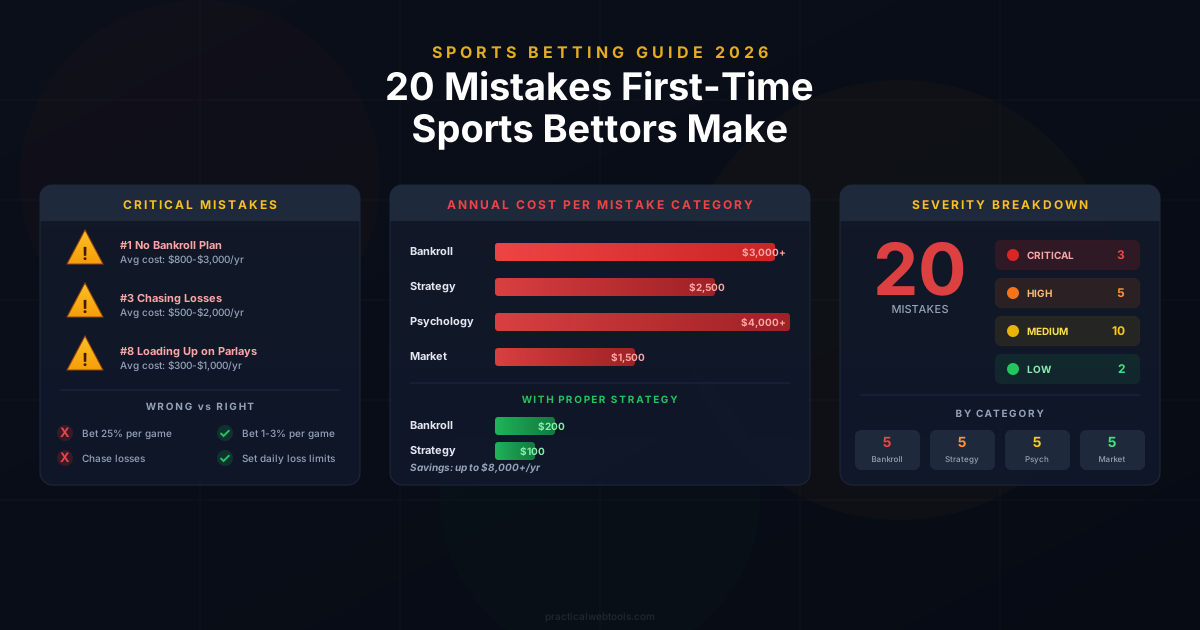
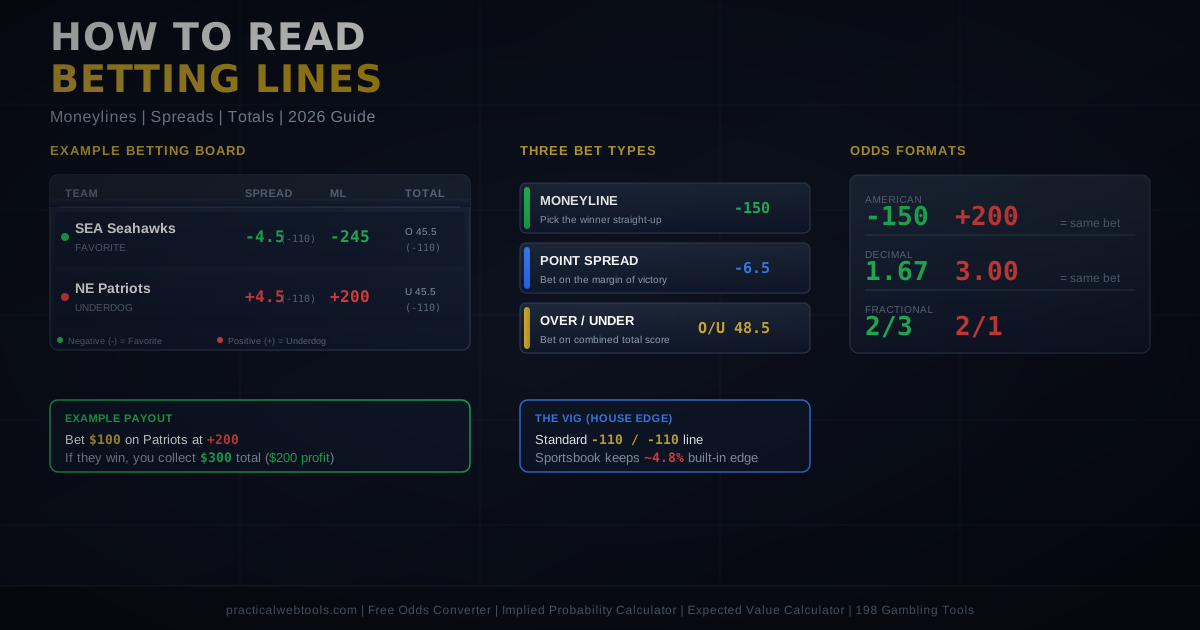
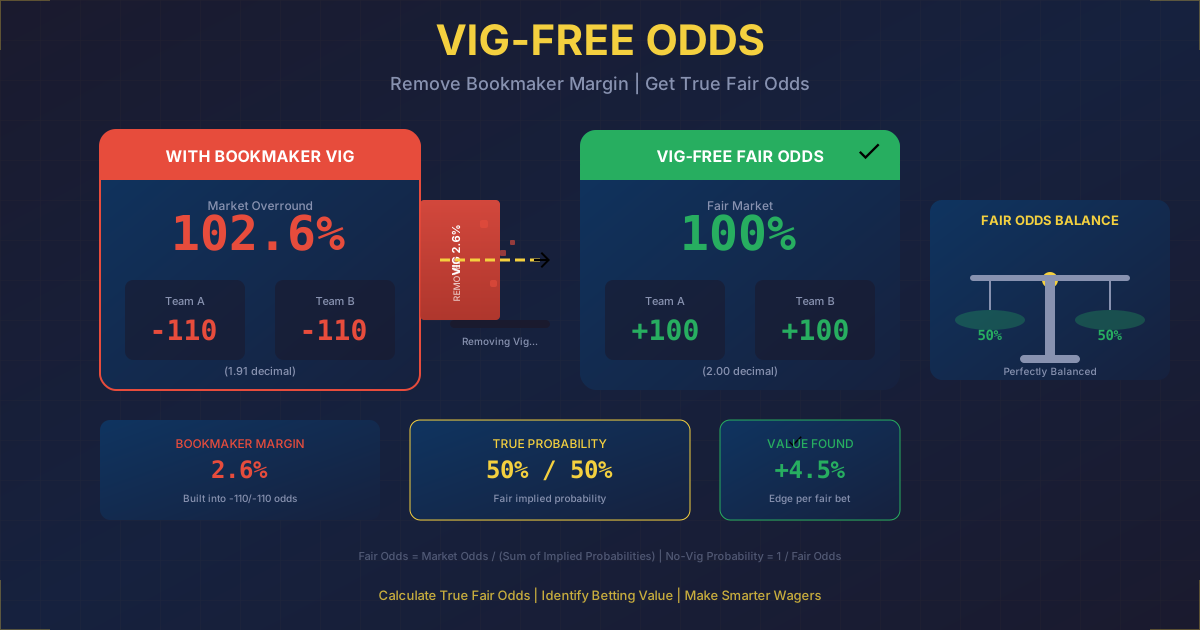
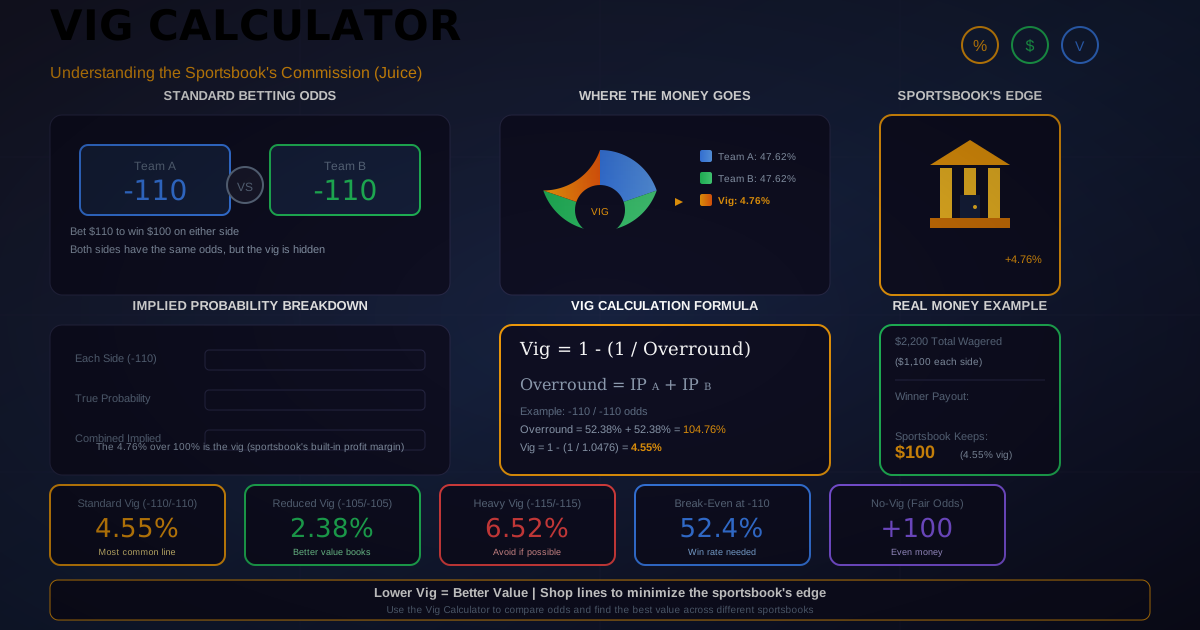
Sports betting carries unique risks because of the perceived element of skill. Many sports bettors believe their knowledge gives them an edge, which can lead to overconfidence and larger bets. The reality is that sportsbooks employ teams of analysts and algorithms to set lines, and the vig (typically -110 on each side) ensures the house profits regardless of outcomes.
Responsible sports betting practices:
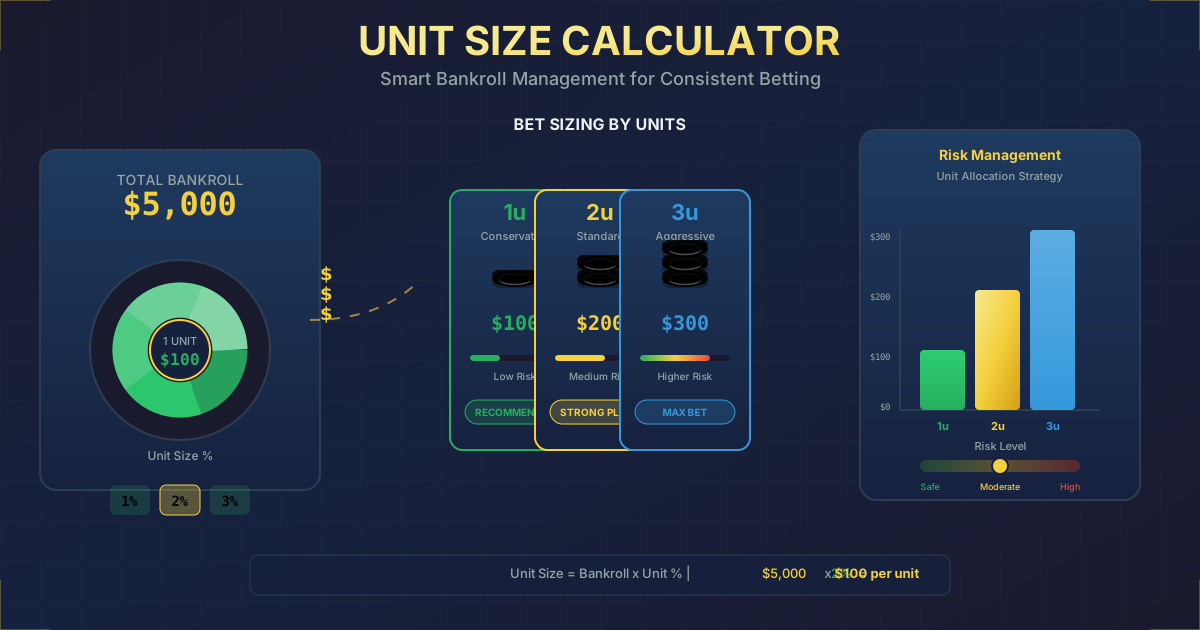
- Set a flat unit size (1-2% of your bankroll) and stick to it
- Never chase a loss with a larger bet on the next game
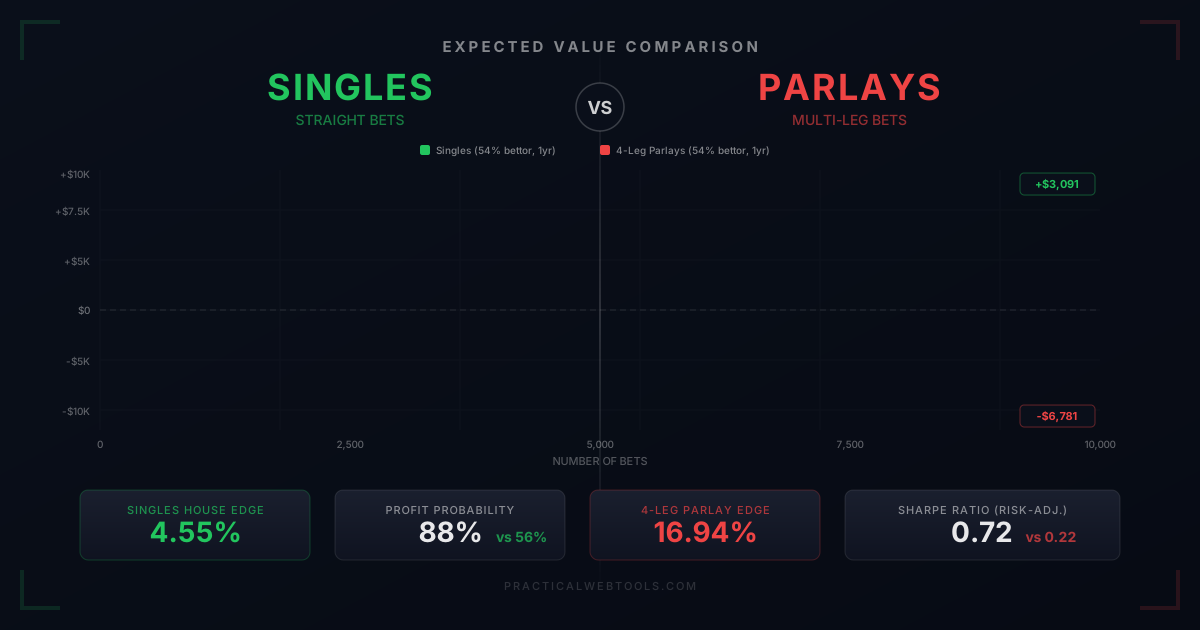
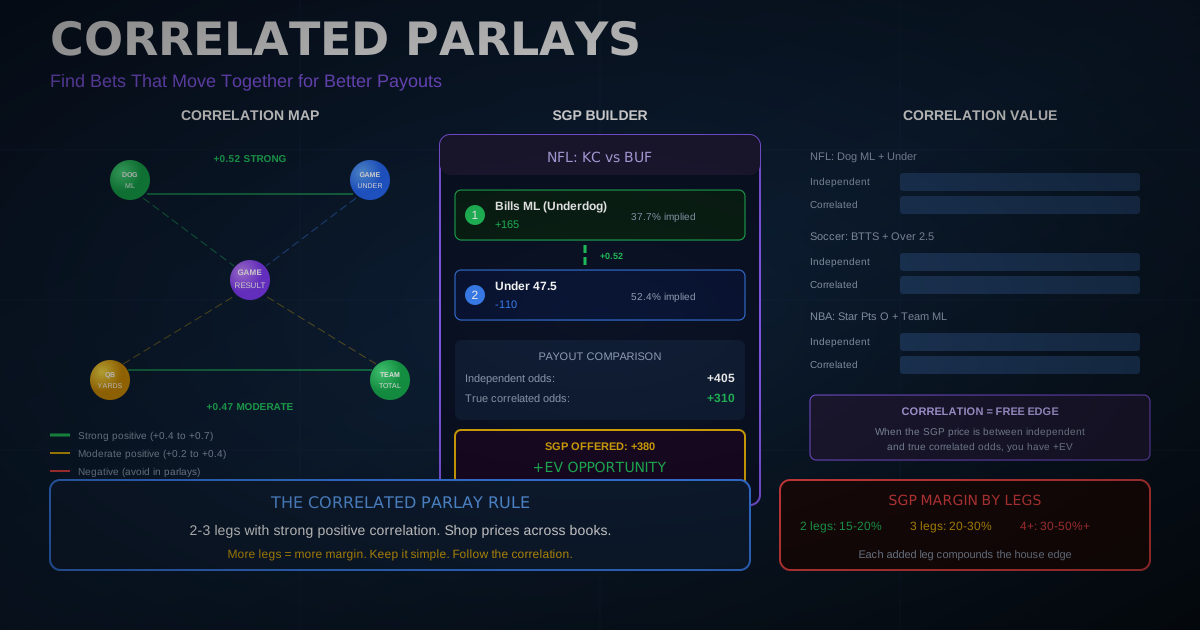
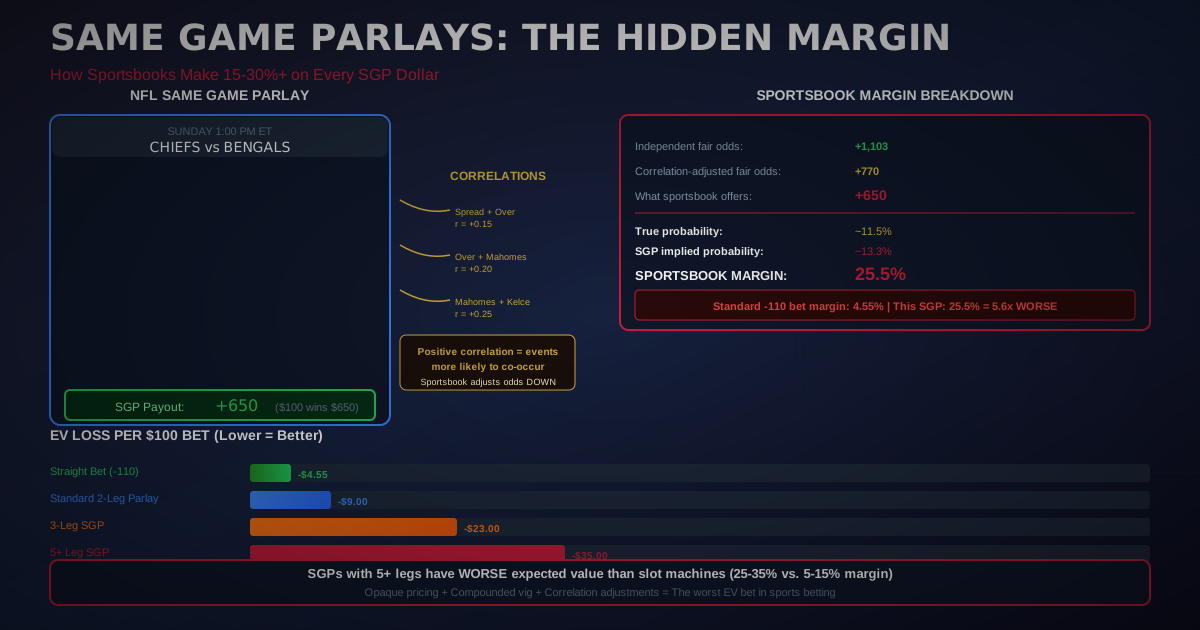
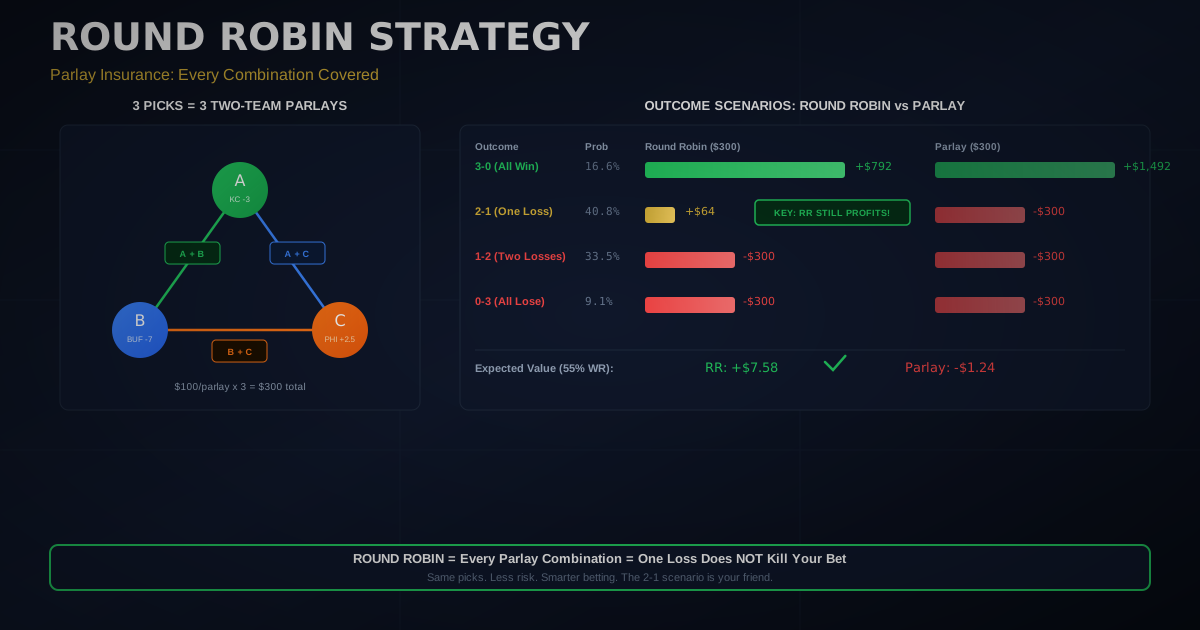
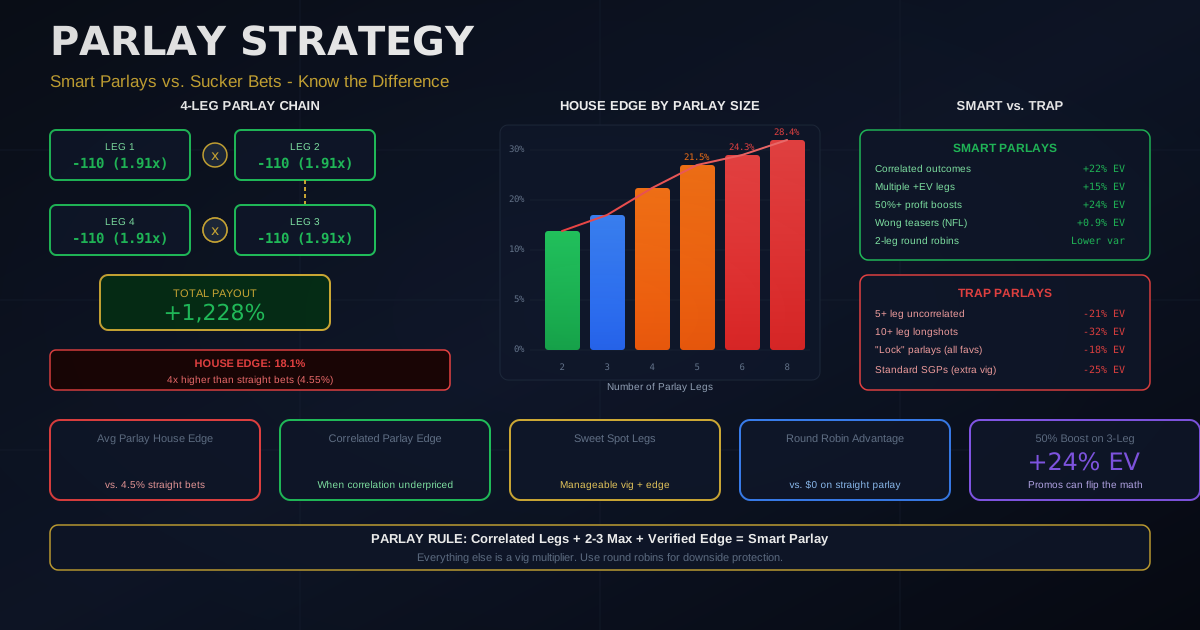
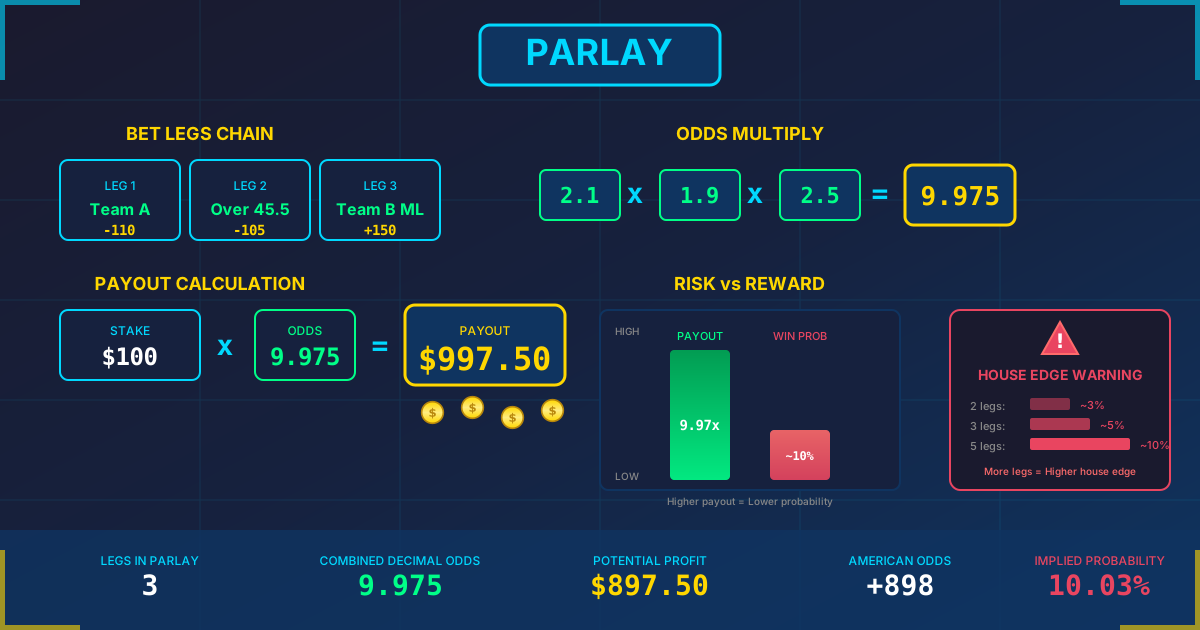
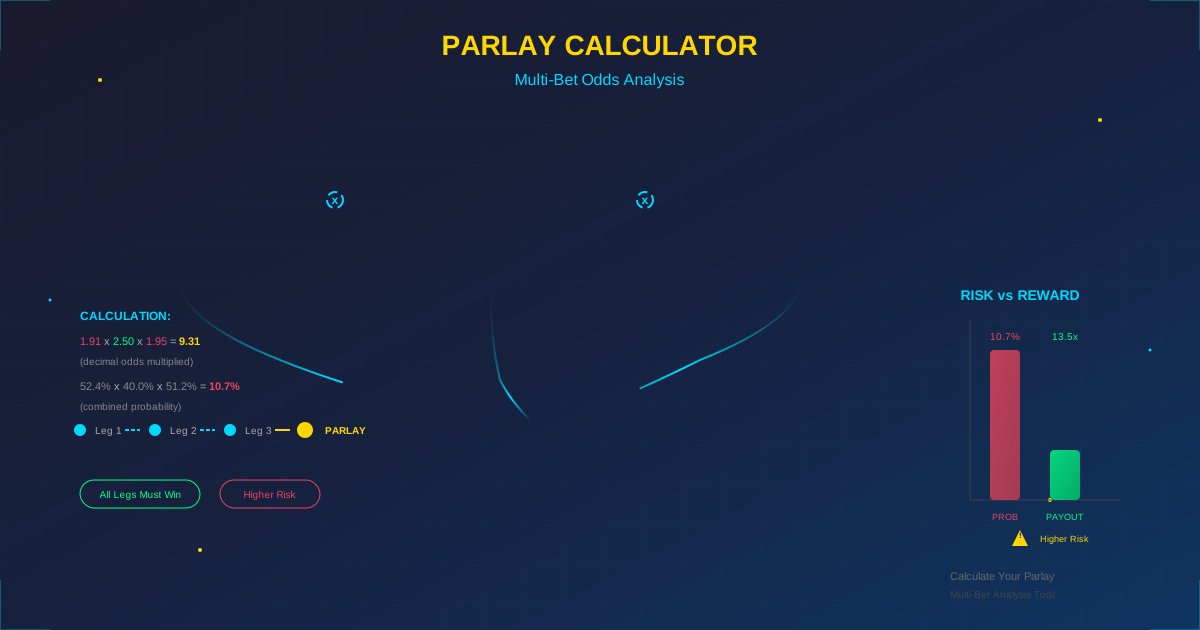
- Avoid parlays as your primary betting strategy; they carry significantly higher house edges
- Track all bets using a spreadsheet or our Poker Session Tracker (which works for any type of gambling tracking)
- Take a break during emotional events (your team losing, financial stress)
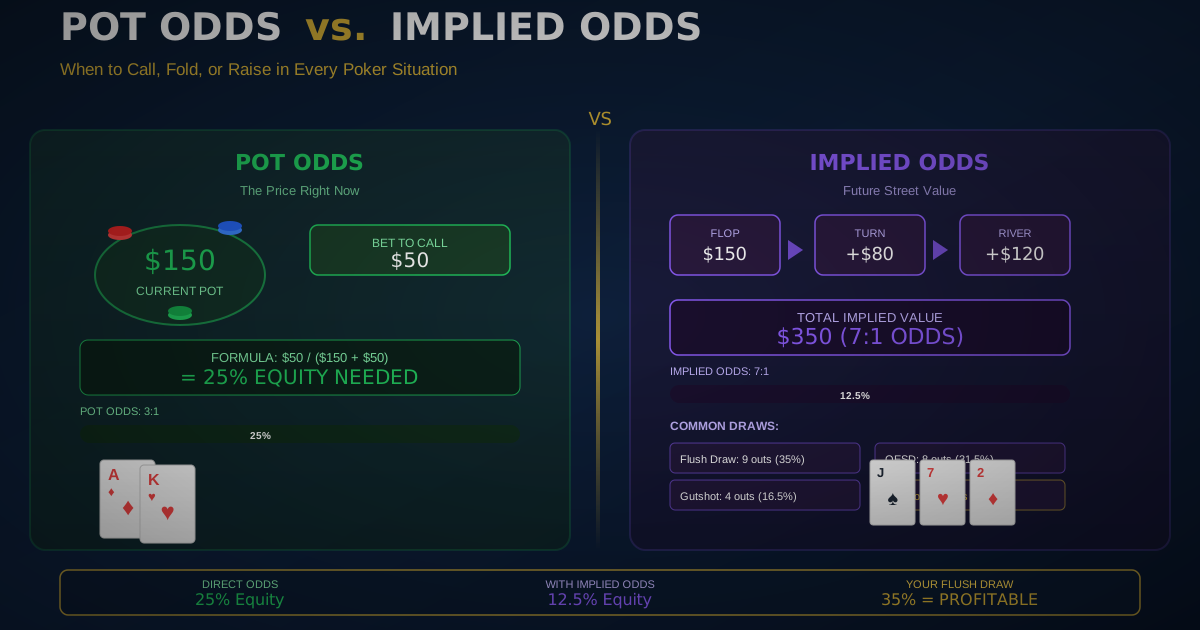
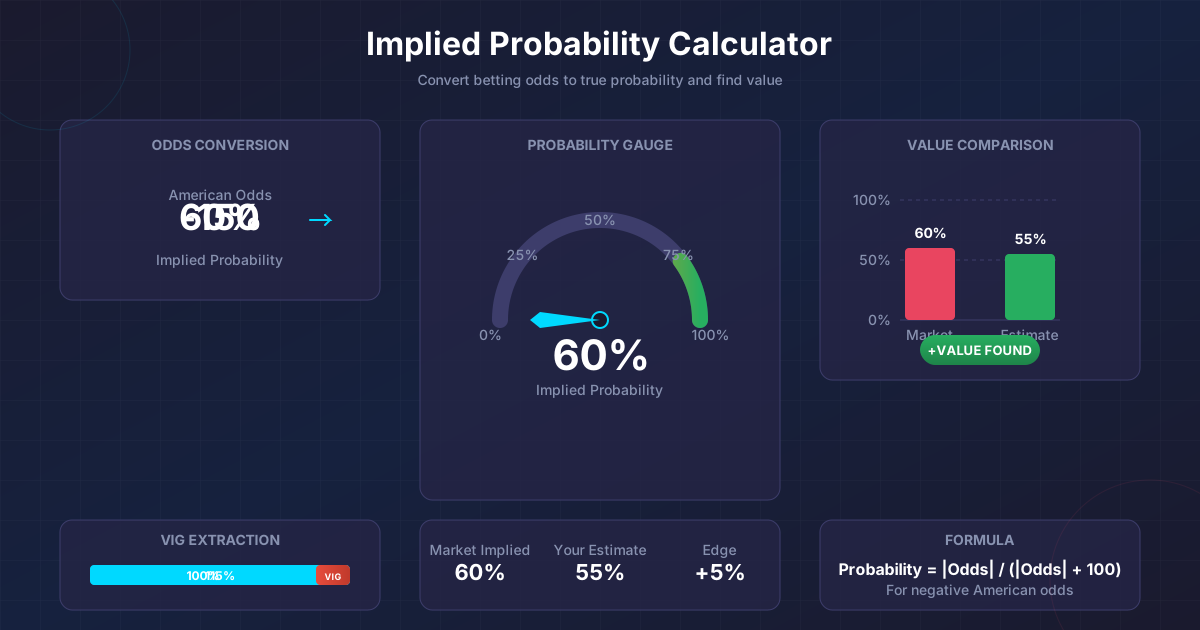
- Use our Implied Probability Calculator to understand what the odds are really telling you
Casino Games
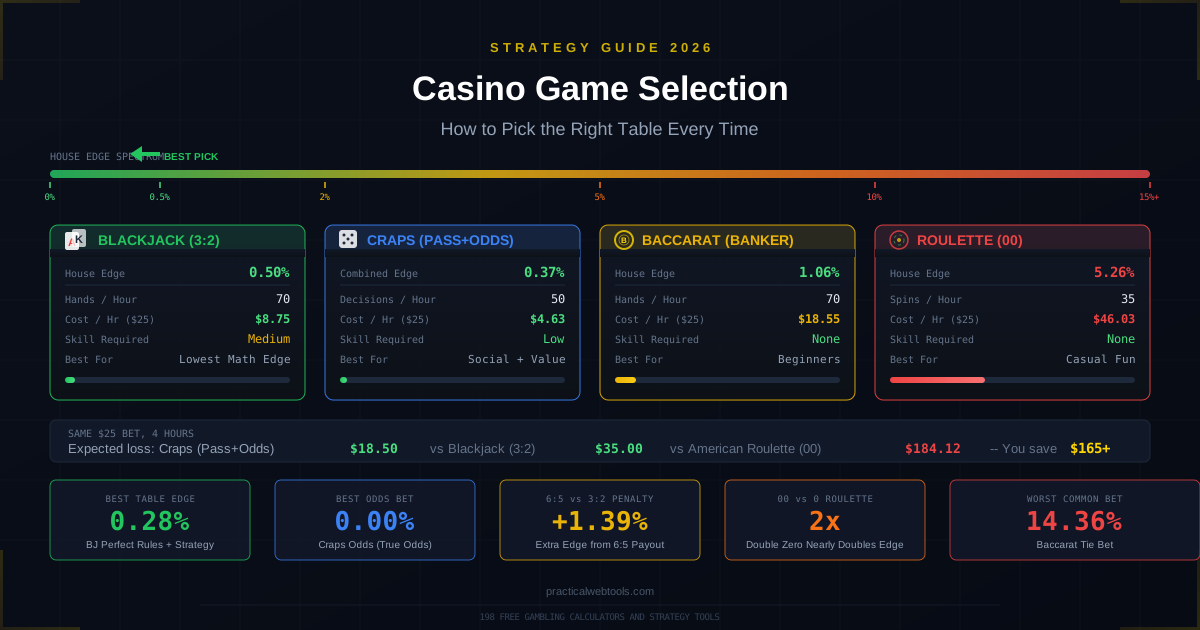
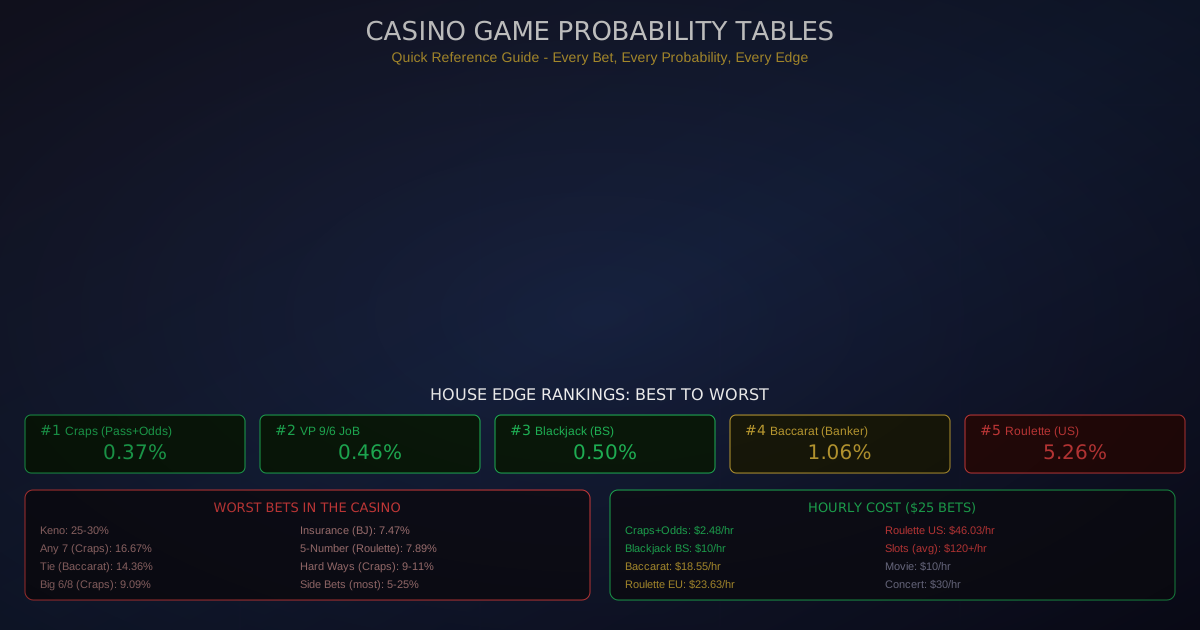
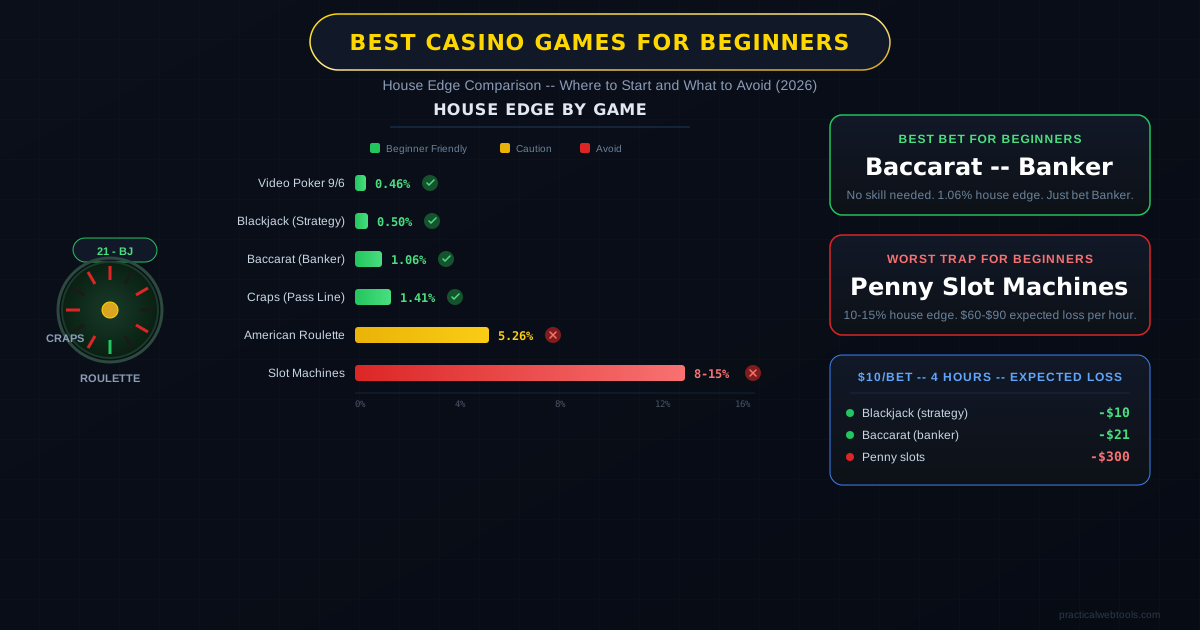
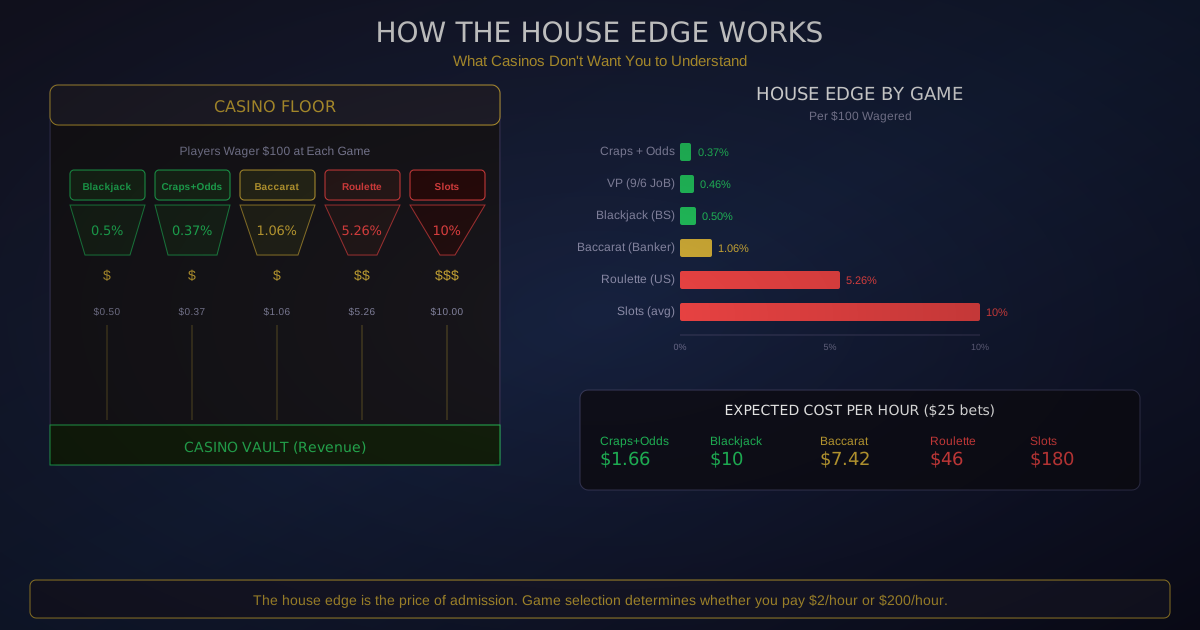
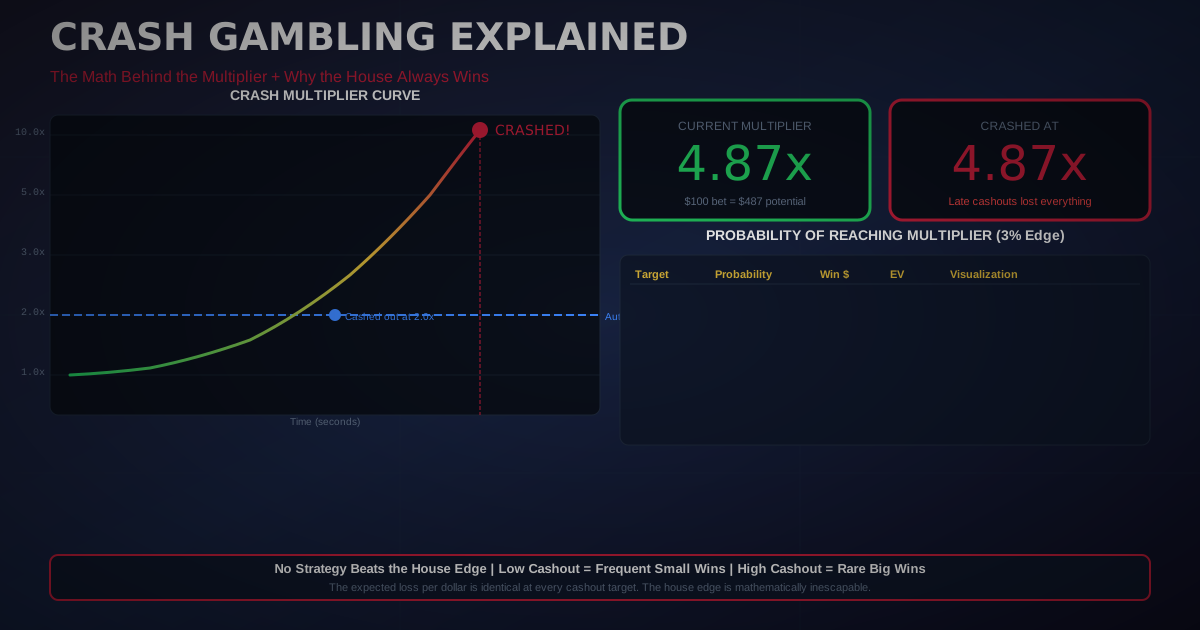
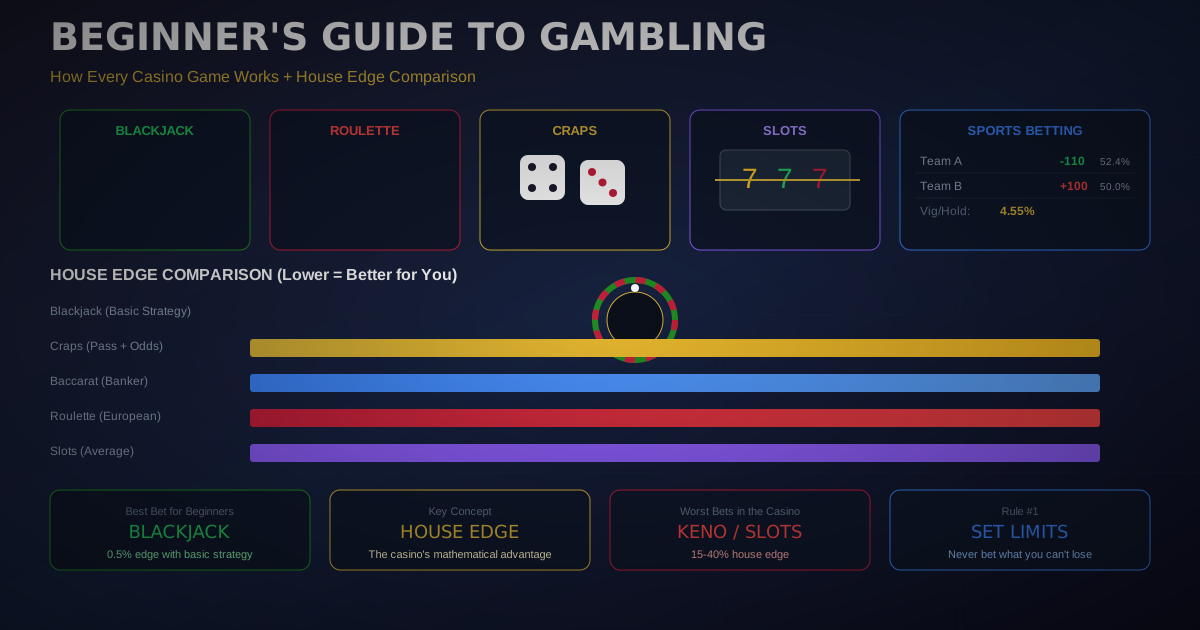
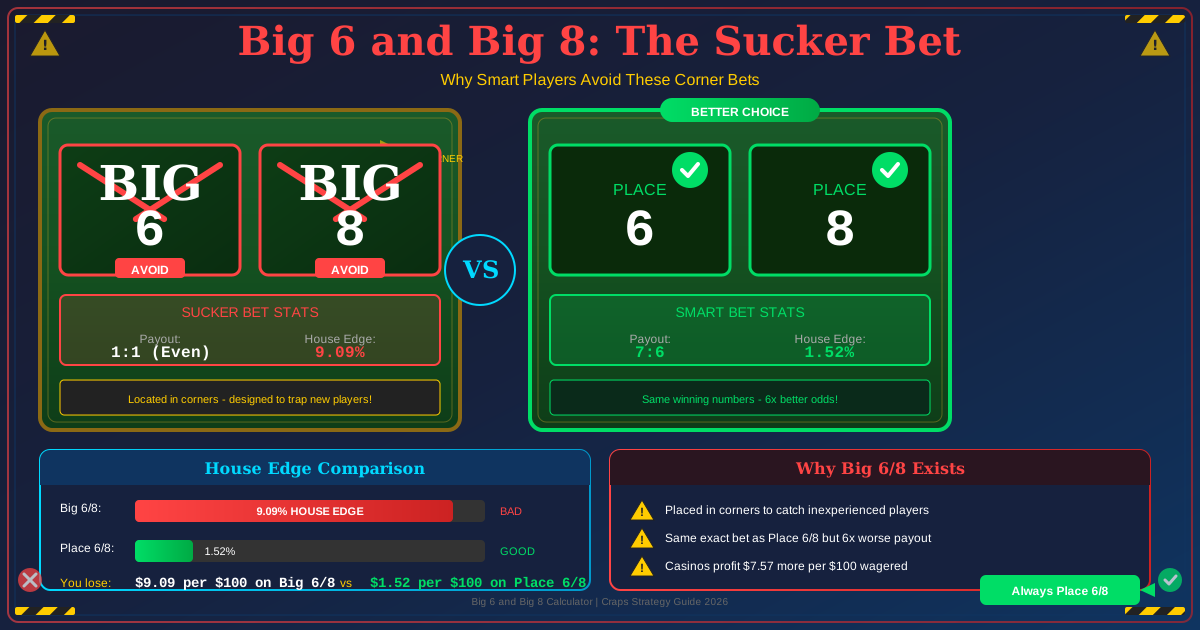
All casino games have a built-in house edge, meaning the mathematical expectation is that you will lose over time. This is not a flaw; it is the business model. Responsible casino gambling means accepting this reality and treating losses as the cost of entertainment.
Use our tools to understand the math:
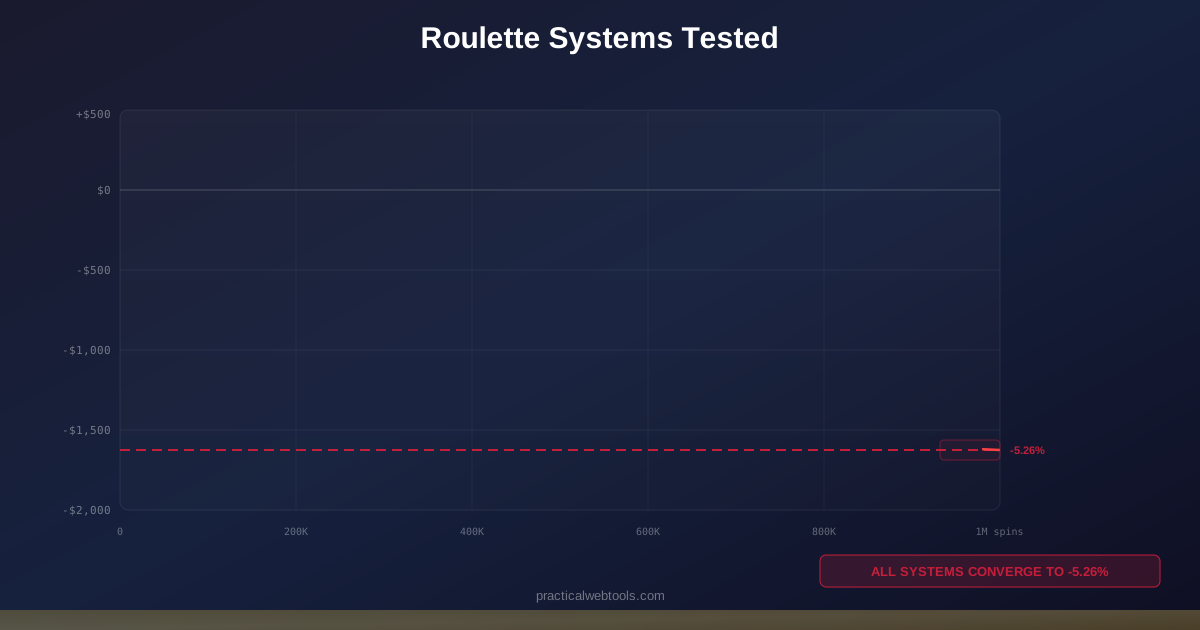
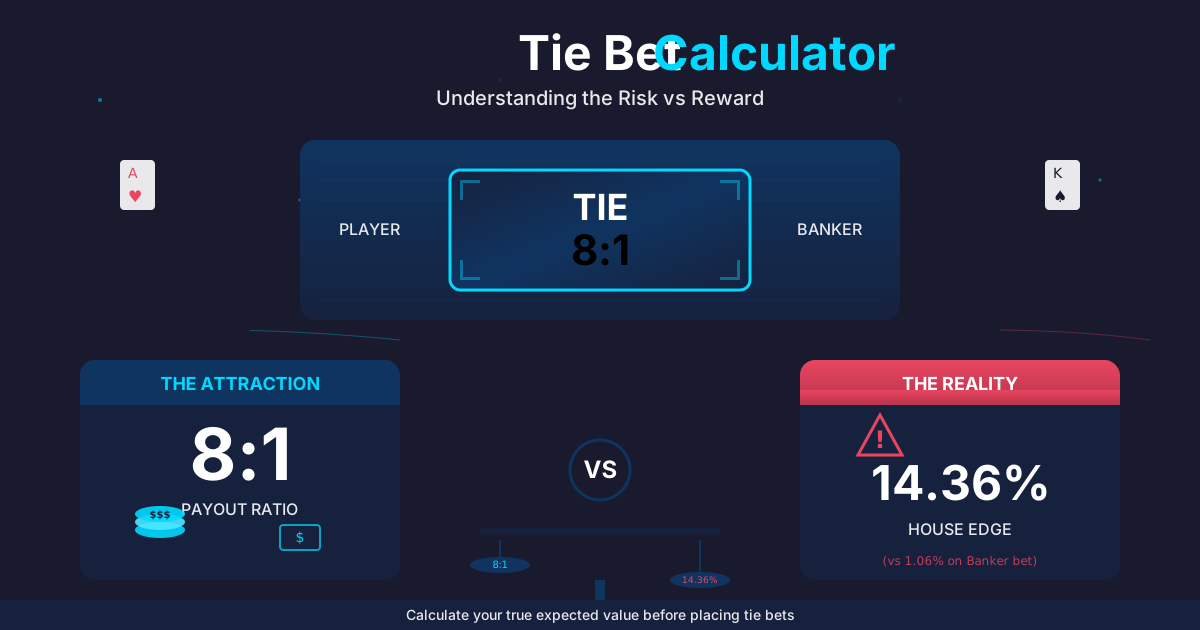
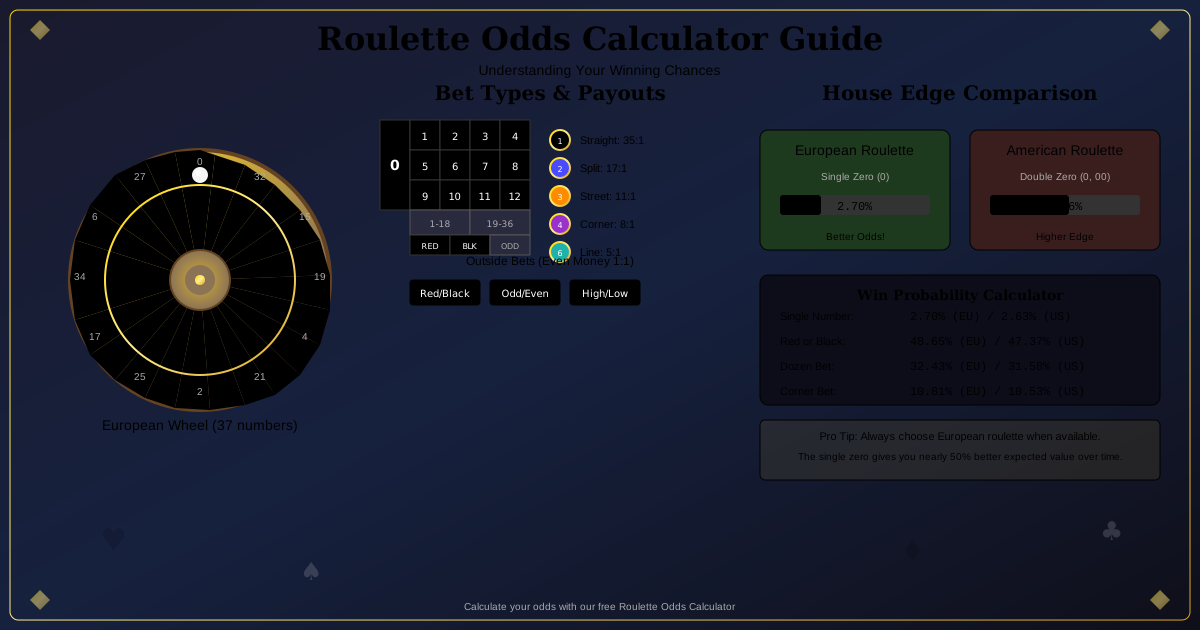
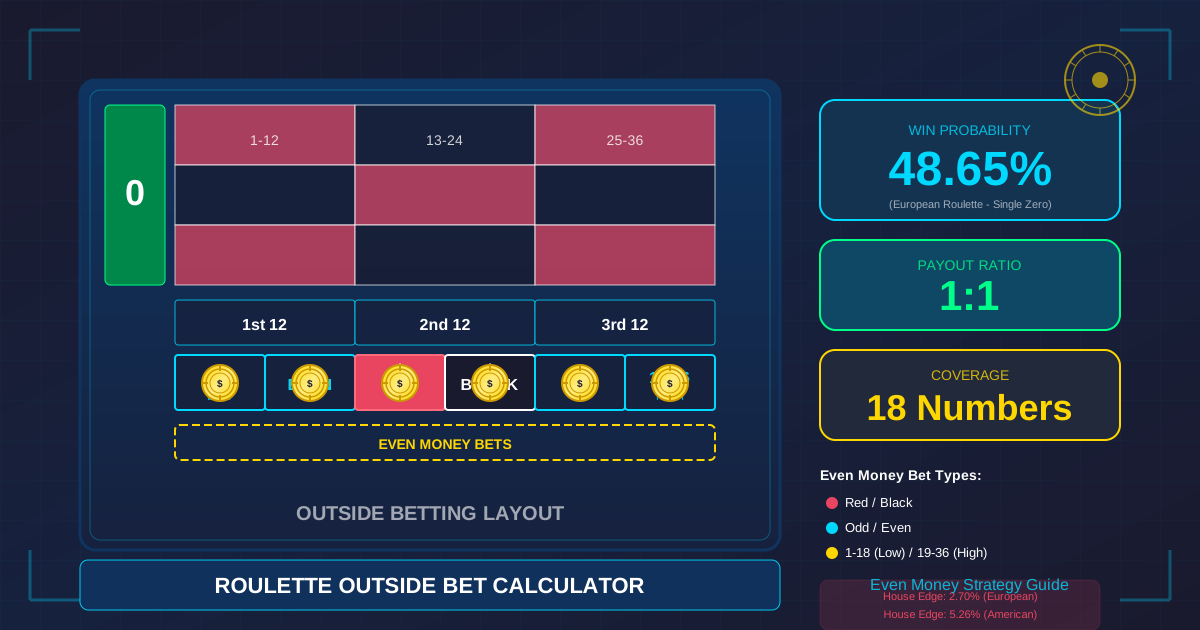
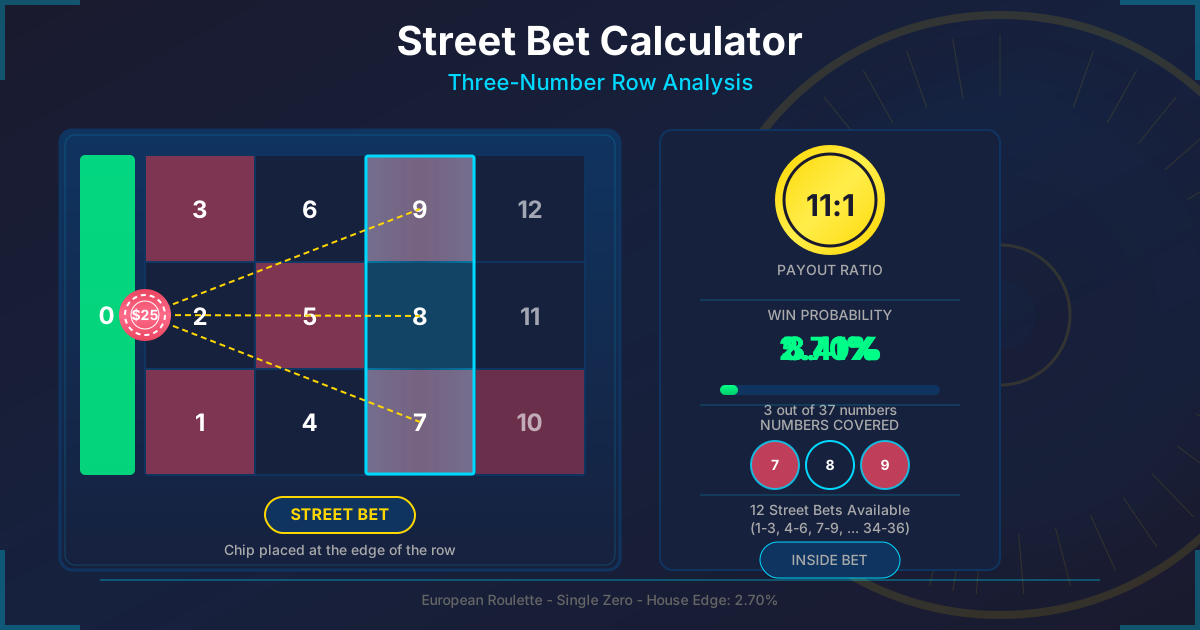
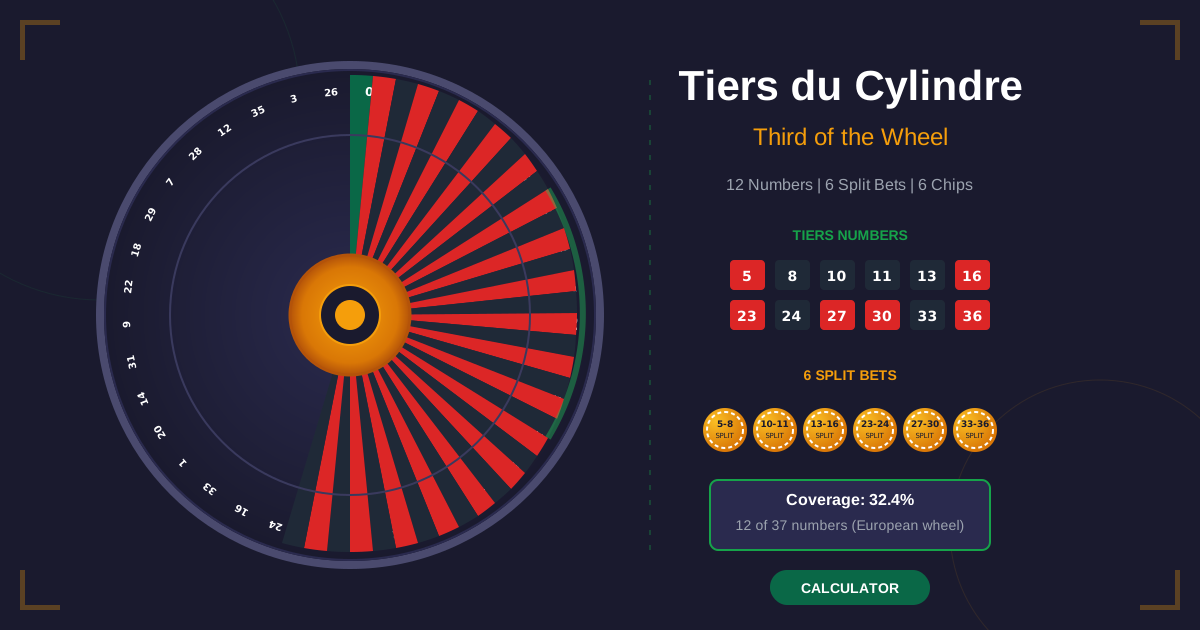
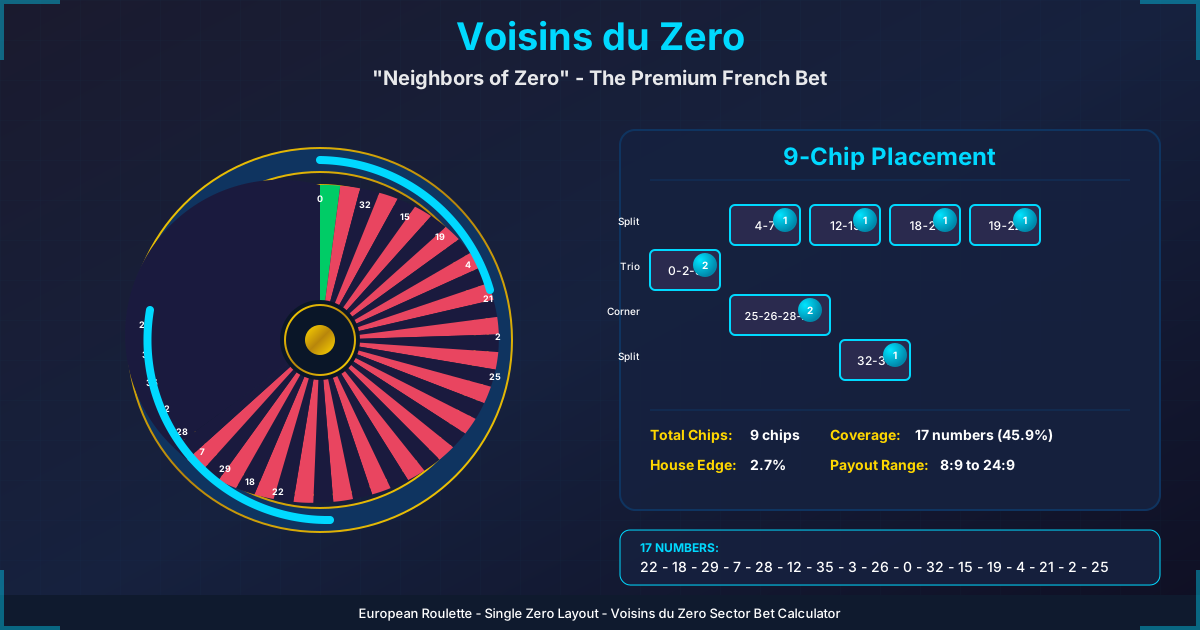
- Roulette House Edge Calculator shows the exact mathematical advantage the casino holds
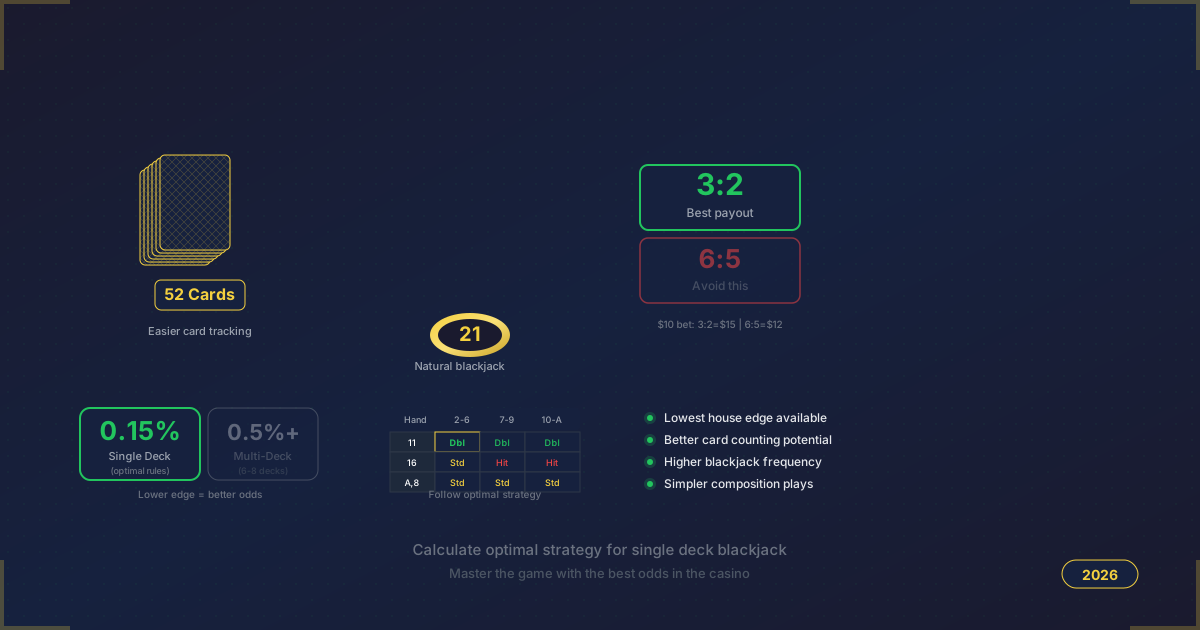
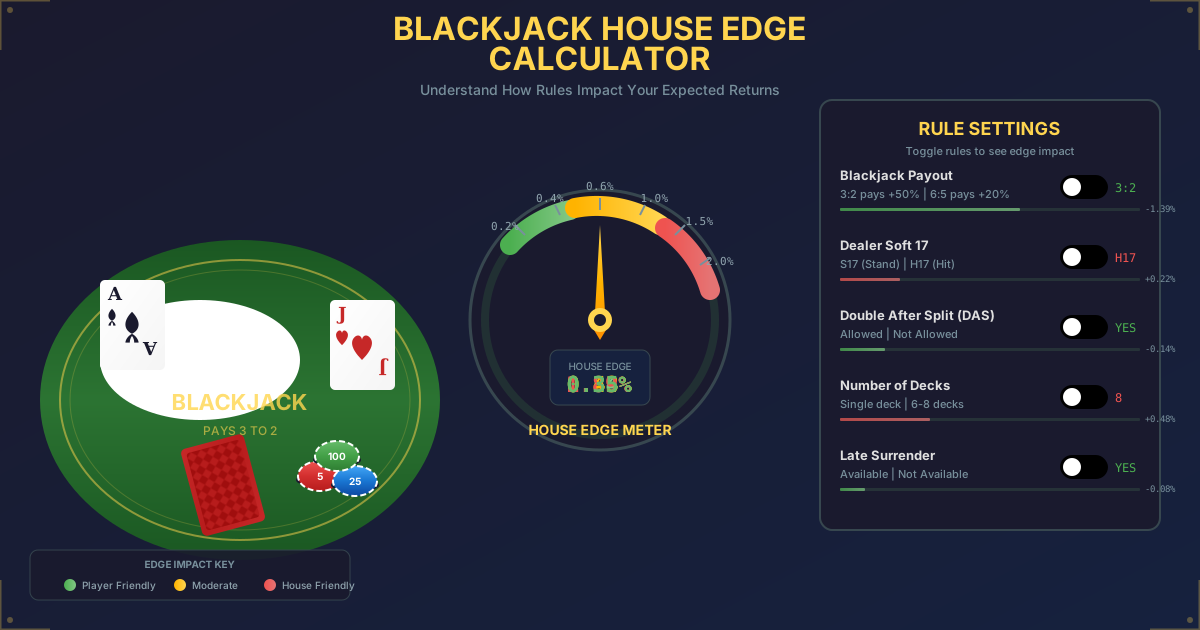
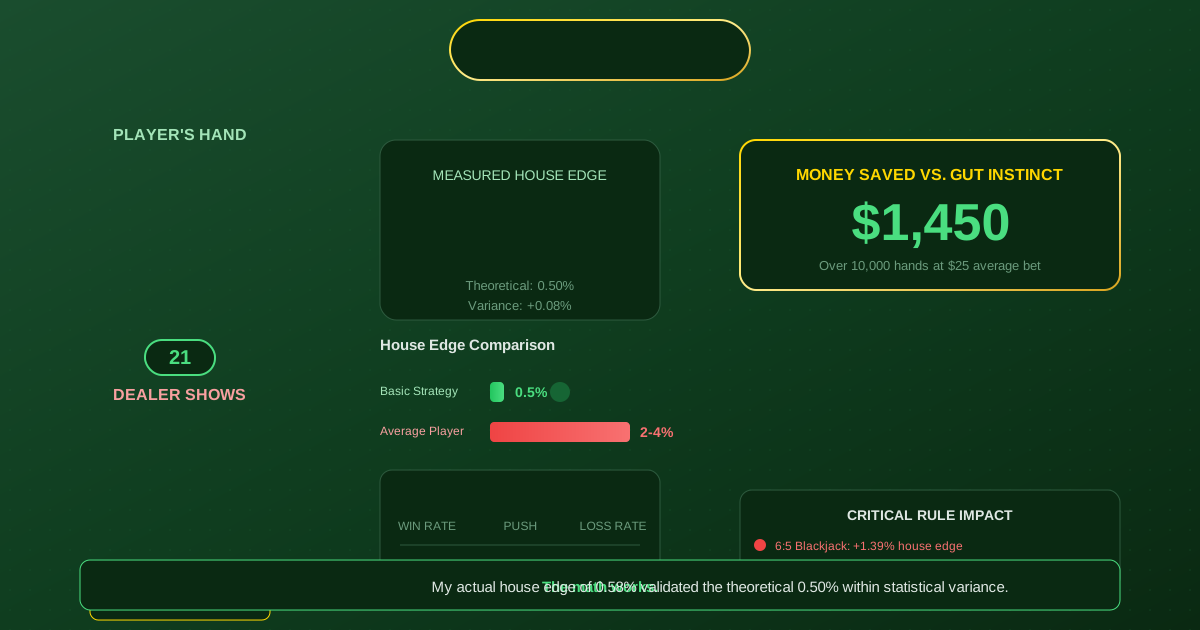
- Blackjack House Edge Calculator demonstrates how rules variations affect your expected losses
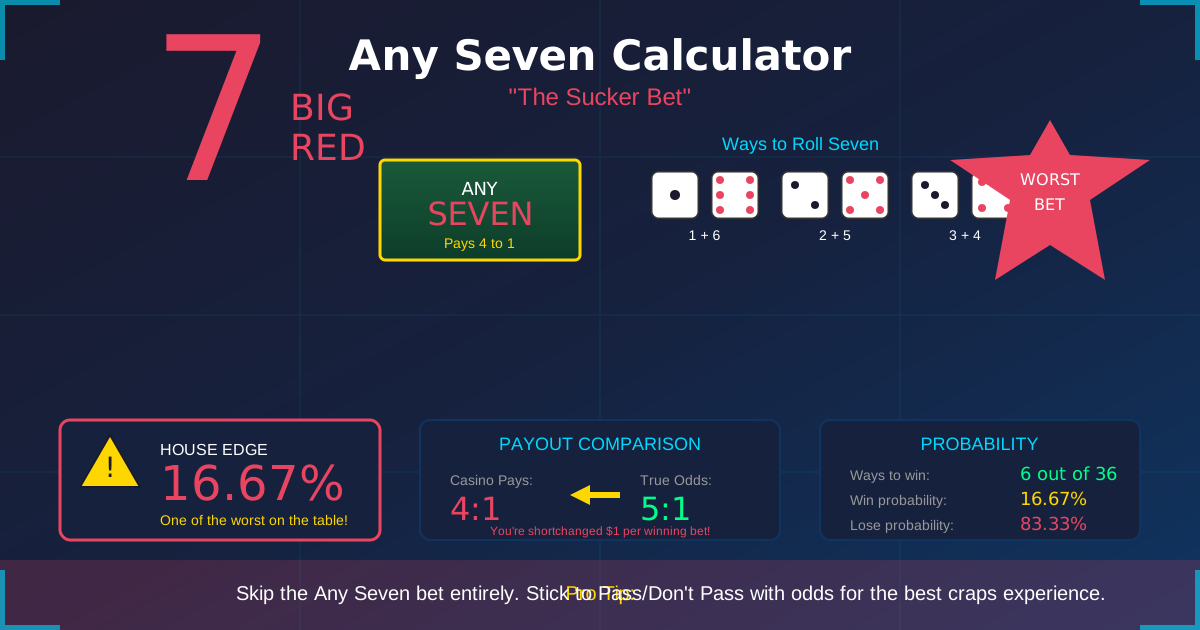
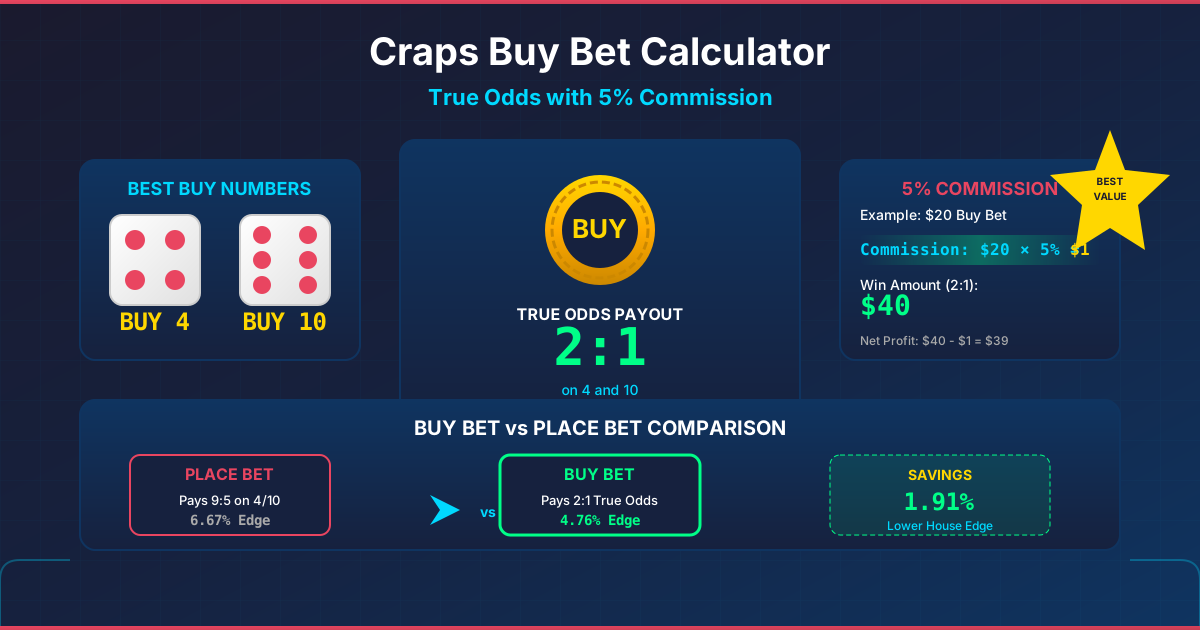
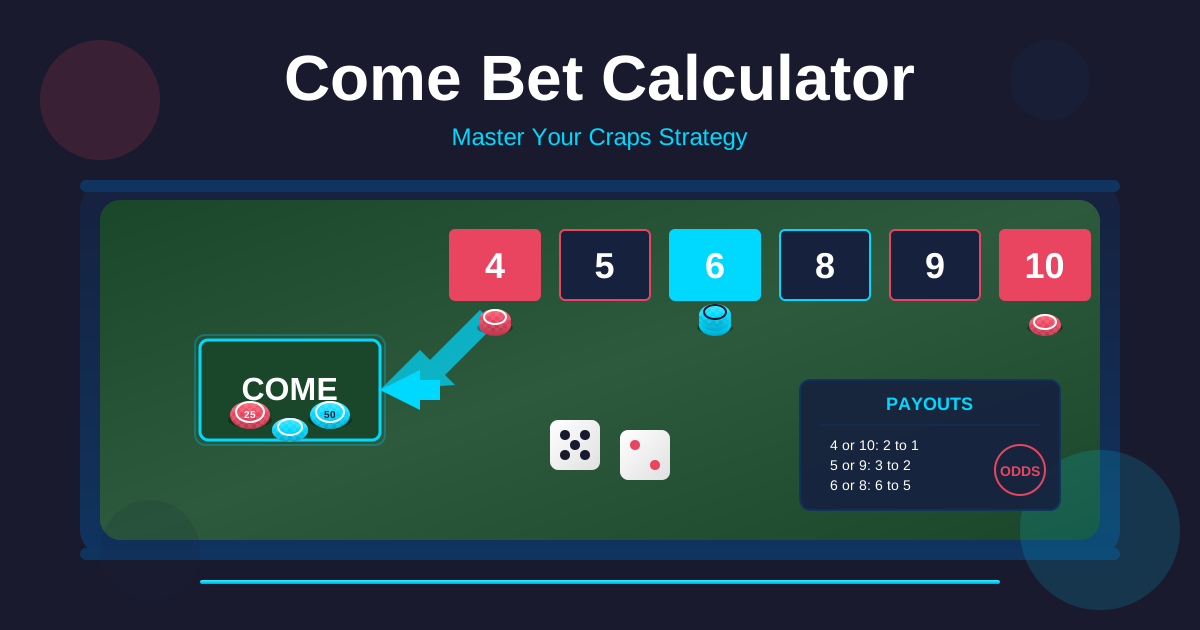
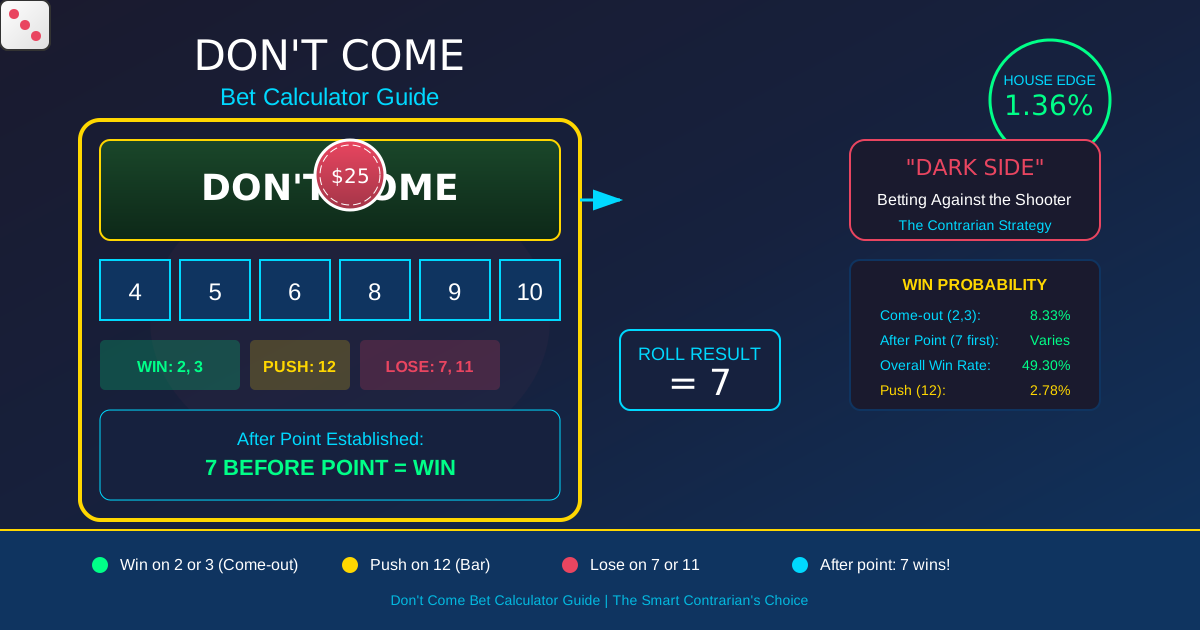
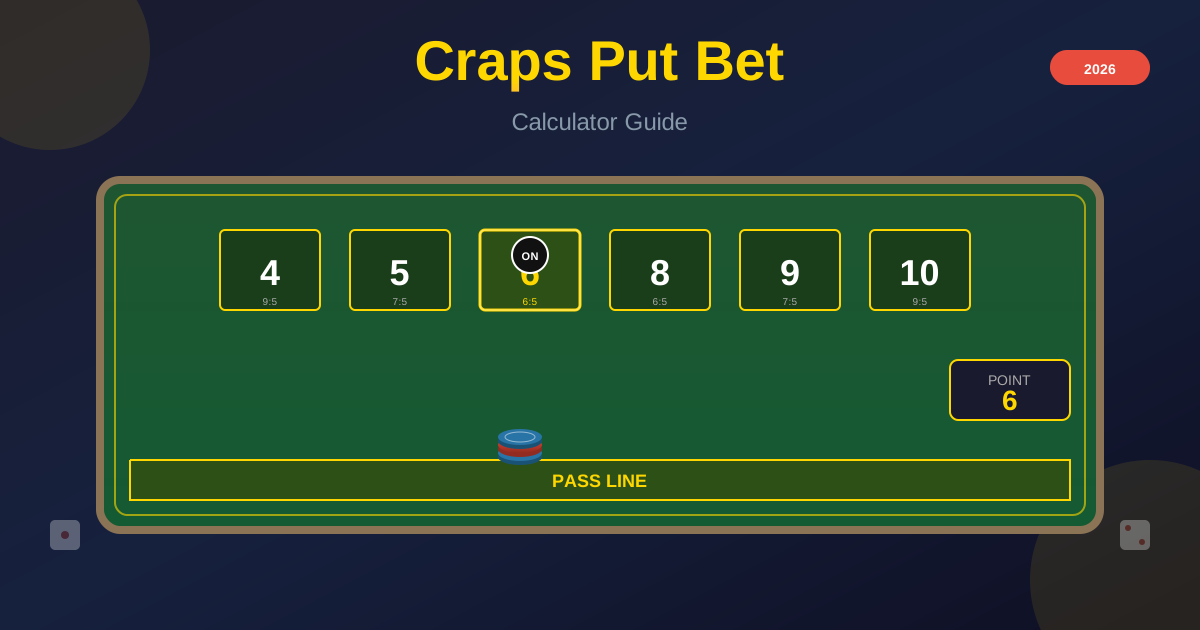
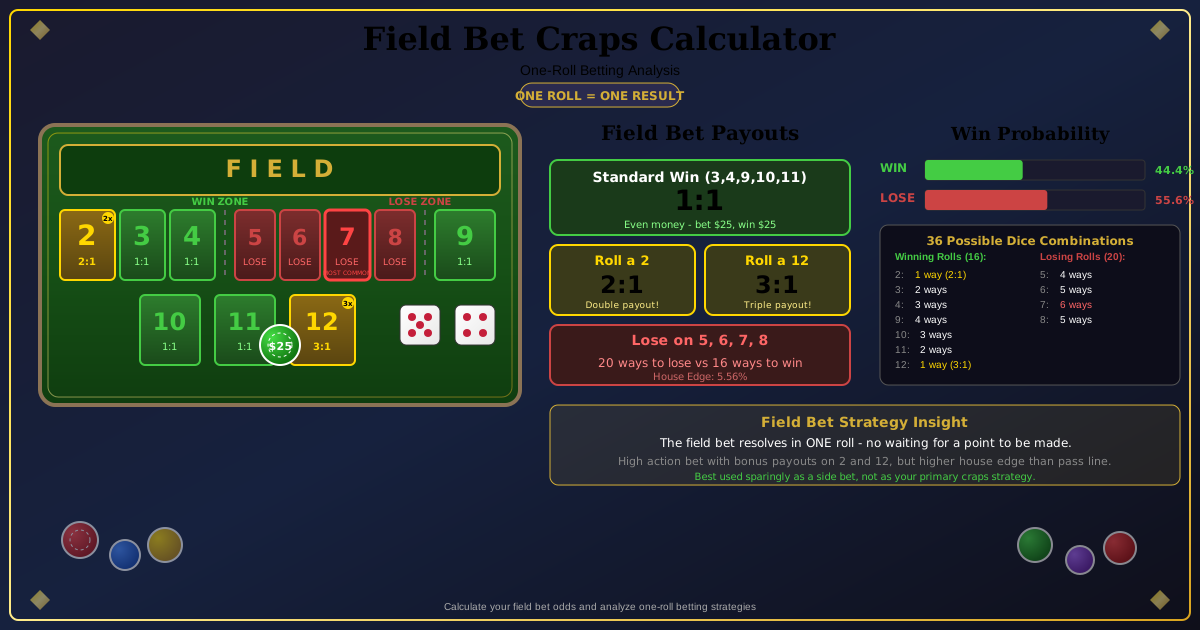
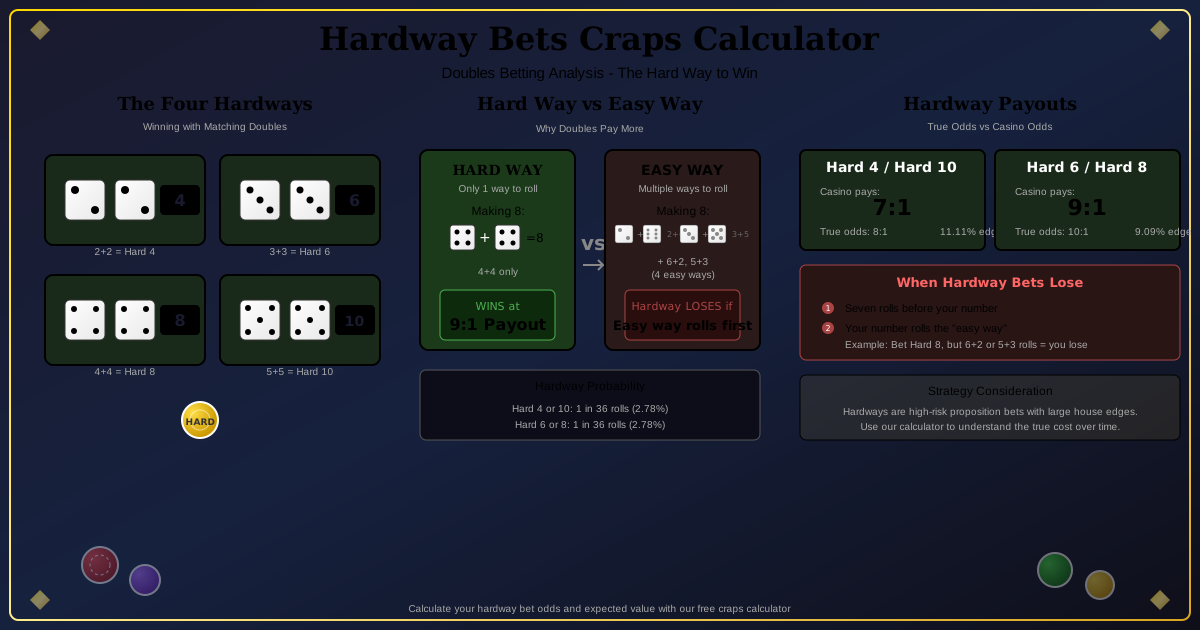
- Craps Expected Loss Calculator calculates your expected cost per hour at the craps table
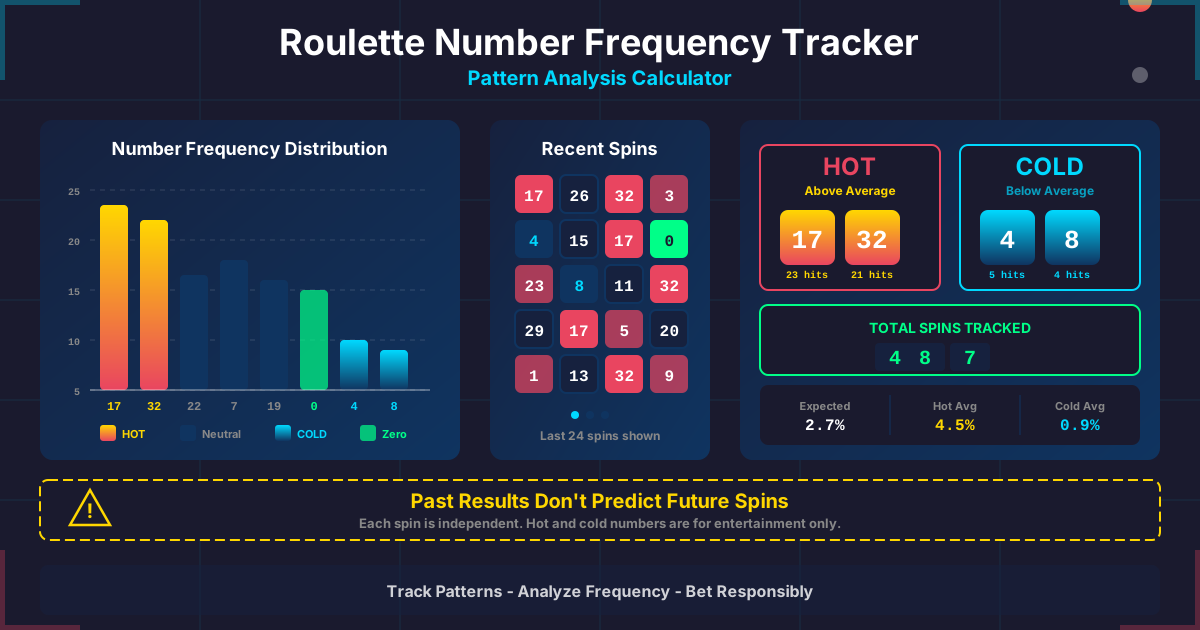
- Roulette Session Loss Calculator models what losing streaks look like in practice
Poker
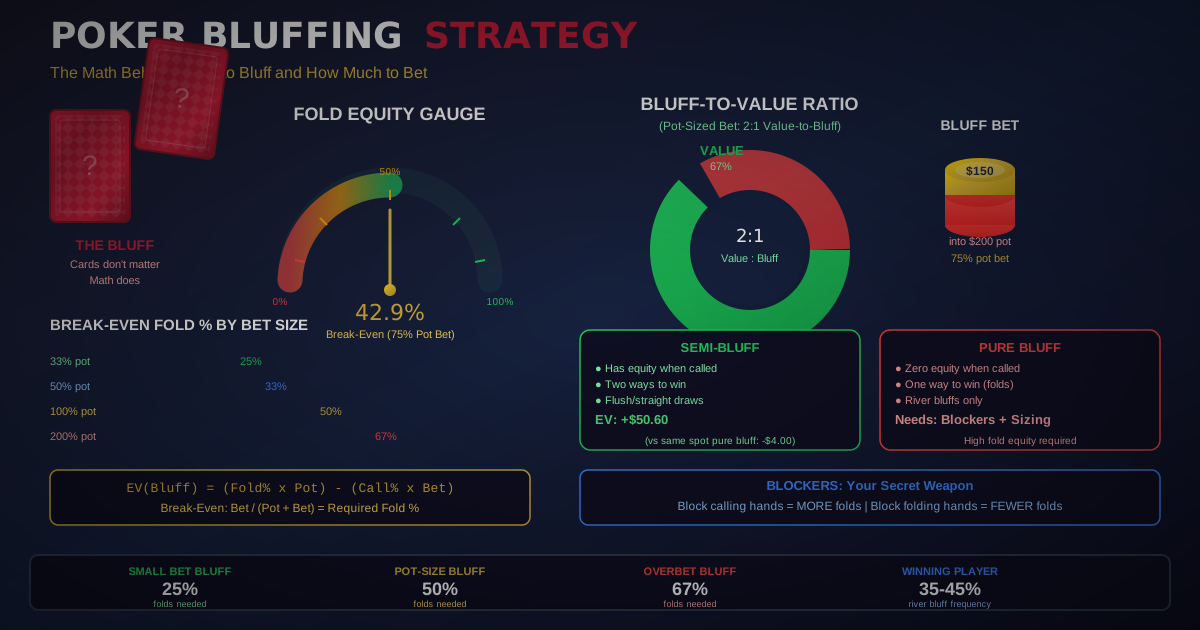
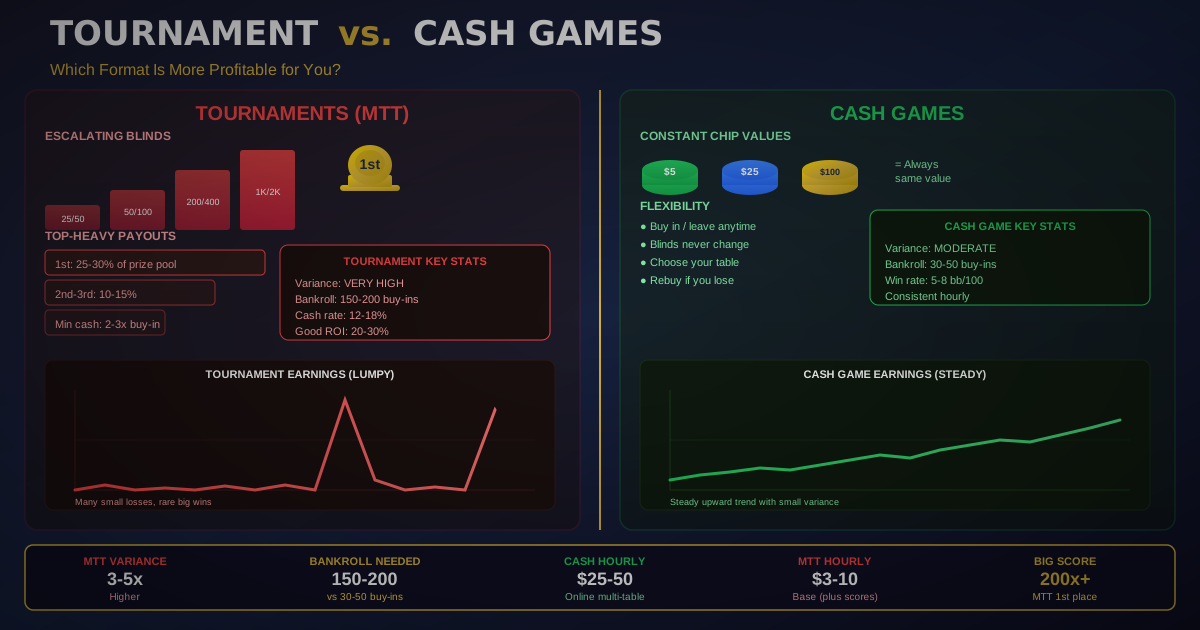
Poker is different from other forms of gambling because skilled players can maintain a long-term edge. However, the variance in poker is extreme, and even winning players experience extended losing periods. Problem gambling among poker players often manifests as playing at stakes too high for their bankroll, chasing losses by moving up in stakes, or spending excessive time at the table.
Responsible poker practices:
- Follow strict bankroll management guidelines using the Poker Bankroll Requirements Calculator
- Monitor your Poker Variance to understand whether your results fall within expected ranges
- Track hourly rates and session results with the Poker Session Tracker
- Take regular breaks and set session time limits
- Never play at stakes where losing causes financial stress
Frequently Asked Questions
What is self-exclusion, and how long does it last?
Self-exclusion is a voluntary program where you ban yourself from gambling at specific venues, online platforms, or across your entire state's gambling ecosystem. Duration varies by jurisdiction but typically ranges from 1 year to lifetime. Most states offer options of 1 year, 5 years, and lifetime exclusion. Once enrolled, the exclusion cannot be reversed before the minimum period ends. State-level programs cover all licensed operators, which is more comprehensive than excluding from individual platforms.
Can I undo a self-exclusion if I change my mind?
Not before the minimum exclusion period has elapsed. This is intentional and is one of the program's strengths. It prevents you from making impulsive decisions to resume gambling during moments of craving. After the minimum period ends, most states require you to submit a written request and wait an additional cooling-off period (typically 30 to 90 days) before reinstatement. Some states require completion of a responsible gambling education course before reinstatement.
Do deposit limits actually prevent problem gambling?
Research shows that deposit limits reduce gambling intensity, particularly among the most at-risk gamblers. A study found that the top 10% most gambling-intense players who set deposit limits gambled significantly less money one year later compared to those who did not set limits. However, voluntary deposit limits have low adoption rates (around 1-8% of gamblers set them), which is why many jurisdictions are moving toward mandatory limit-setting at account creation.
What is the difference between a cooling-off period and self-exclusion?
A cooling-off period is a temporary account suspension, typically lasting from 24 hours to 6 months, that automatically expires. Self-exclusion is a longer-term commitment (1 year to lifetime) that typically requires a formal process to reverse. Cooling-off periods are easier to initiate and are appropriate for short-term breaks. Self-exclusion is a more serious intervention for those who need extended or permanent separation from gambling.
Is problem gambling really a clinical disorder?
Yes. Gambling disorder is recognized in the DSM-5 (Diagnostic and Statistical Manual of Mental Disorders, Fifth Edition) as a behavioral addiction. It shares neurological similarities with substance use disorders, including changes in brain reward pathways and dopamine systems. It is a treatable medical condition, not a moral failing or weakness of character.
Will my self-exclusion status be shared with my employer or family?
No. Self-exclusion registries are confidential. Your information is shared only with gambling operators for the purpose of enforcing the exclusion. Employers, family members, and other third parties do not have access to self-exclusion registries. Your enrollment is between you and the gaming commission or operator.
What should I do if I gamble while self-excluded?
First, do not panic. A relapse does not mean the program has failed or that you are unable to recover. Contact the National Problem Gambling Helpline (1-800-522-4700) to speak with a counselor. If you won money while self-excluded, be aware that many jurisdictions require winnings to be confiscated and donated to problem gambling programs. If you gambled at a venue that failed to enforce your exclusion, you may want to report this to your state gaming commission, as operators are legally required to prevent self-excluded individuals from gambling.
Are there responsible gambling tools for daily fantasy sports (DFS)?
Yes. Major DFS platforms including DraftKings and FanDuel offer deposit limits, entry limits, and self-exclusion options for their DFS products. Since DFS involves real money and many of the same psychological dynamics as traditional gambling, the same responsible gambling principles apply. Our DFS Bankroll Calculator and DFS ROI Calculator can help you approach DFS with realistic expectations.
Tools for Responsible Gambling on Practical Web Tools
We believe that understanding the mathematics behind gambling is one of the most effective responsible gambling tools available. These calculators help you make informed, rational decisions:
- Expected Value Calculator - Understand the true mathematical expectation of any bet
- Kelly Criterion Calculator - Calculate optimal bet sizing based on your edge (or lack thereof)
- Poker Variance Calculator - Visualize how variance affects results over time
- Poker Risk of Ruin Calculator - Calculate the probability of losing your entire bankroll
- Poker Bankroll Requirements Calculator - Determine the minimum bankroll for your chosen stakes
- Poker Downswing Probability Calculator - Understand how likely losing streaks are
- Bankroll Volatility Tracker - Monitor how your bankroll fluctuates over time
- Implied Probability Calculator - Convert odds to real probabilities
- Roulette House Edge Calculator - See the exact mathematical edge the casino holds
- Blackjack House Edge Calculator - Understand how rules affect your expected loss
- Poker Session Tracker - Track time and money spent gambling
Conclusion
Gambling can be a form of entertainment, but it carries real risks that deserve serious attention. The tools described in this guide exist because the gambling industry, regulators, and public health organizations all recognize that some people will develop problems, and that providing effective tools for prevention and intervention saves lives.
If you are gambling responsibly and want to keep it that way, set limits now, before you need them. It is far easier to maintain control than to regain it.
If you are concerned about your gambling, take it seriously. The fact that you are reading this article is meaningful. Recognizing a potential problem is the hardest and most important step.
If you are in crisis, call 1-800-522-4700 right now. A trained counselor is available 24 hours a day, 7 days a week, 365 days a year. The call is free, confidential, and could be the most important call you ever make.
You are not alone. Help is available. Recovery is possible.
Gambling involves risk. This content is for educational and informational purposes only. Always gamble responsibly, set limits you can afford, and seek help if gambling becomes a problem. Visit the National Council on Problem Gambling or call 1-800-522-4700 for support.