Slot Tournament Strategy: How to Compete and Win at Casino Slot Events (2026)
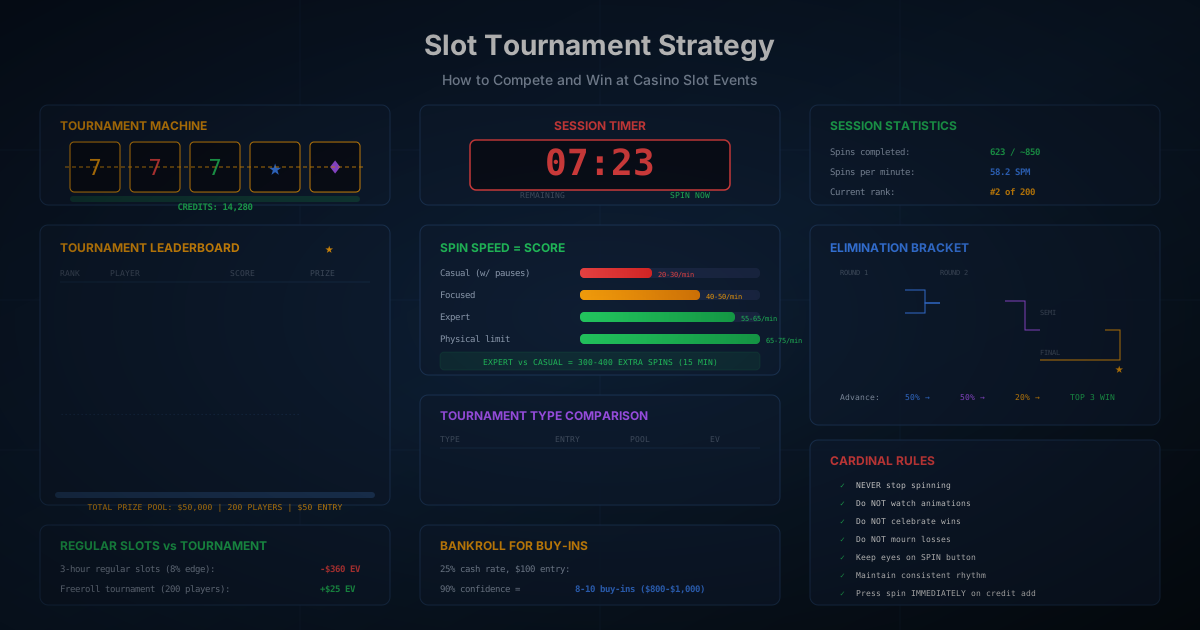
She pressed the spin button 847 times in 15 minutes. That is roughly one press every 1.06 seconds, sustained for the entire session without a single pause for celebration, frustration, or distraction. When the buzzer sounded, her credit total read 14,280 -- good enough for second place in a field of 200 and a $7,500 prize. Her total investment: a $50 buy-in. The player who finished last in the same tournament? They paid the same $50 entry fee and walked away with nothing. The difference between them was not luck -- it was strategy.
Slot tournaments are one of the best-kept secrets in casino gambling. While regular slot play grinds away at your bankroll through the house edge on every single spin, slot tournaments flip the equation entirely. You pay a fixed entry fee, compete against other players for a finite period, and the prizes are funded by the entry fees (or by the casino as a promotional tool). The result is a gambling format where the expected value for participants can be significantly better than standard slot play -- and in the case of freeroll tournaments, better than almost any other bet in the casino.
Yet most gamblers walk past tournament sign-up sheets without a second glance. They do not understand how tournaments work, what the strategy is, or why the math can actually favor the player in ways that regular slot play never can.
This guide changes that. We will explain every aspect of slot tournaments: how they work, the different formats, the precise strategy that maximizes your score, how casinos select and configure tournament machines, online versus in-person dynamics, bankroll considerations, and where to find the best tournaments at major casinos in 2026.
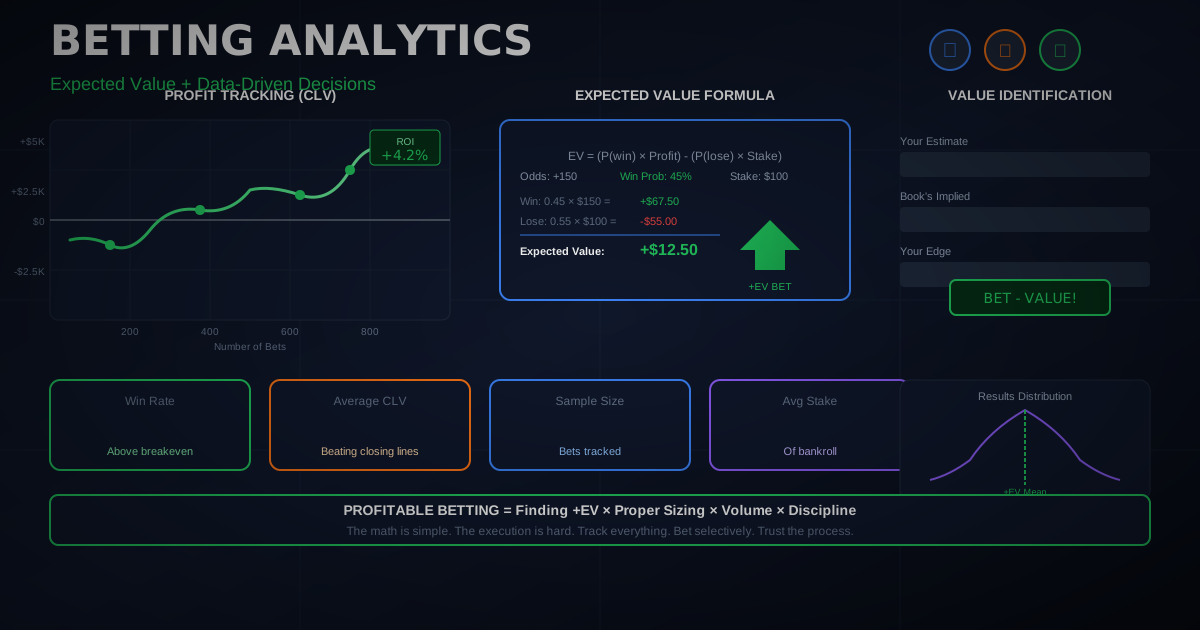
Before entering any gambling event, understand expected value fundamentals with our free Expected Value Calculator.
How Do Slot Tournaments Work?
Slot tournaments are timed competitions where players compete to accumulate the highest credit total on designated slot machines within a set time period. Players pay an entry fee (or enter for free in freeroll tournaments), receive an equal number of starting credits, and spin as fast as possible to maximize their score.
The Basic Structure
Every slot tournament follows this general format:
- Registration: Players sign up and pay the entry fee (if applicable). They receive an assigned time slot and machine number.
- Session start: At the designated time, all tournament players in that session sit at their assigned machines and wait for the signal to begin.
- Play period: When the signal sounds, players spin for the duration of the session (typically 5 to 20 minutes). The machines are set to tournament mode -- no real money is at risk during play.
- Score recording: When time expires, the machines lock and each player's final credit total is recorded.
- Ranking: Scores from all sessions (if the tournament spans multiple rounds) are compiled into a leaderboard.
- Prizes awarded: Players finishing at or above the prize threshold receive their payout according to the published prize structure.
Tournament Machine Configuration
Casino slot tournament machines operate differently from regular slot machines:
| Feature | Regular Slot Machine | Tournament Slot Machine |
|---|---|---|
| Credits | Funded by player deposits | Pre-loaded tournament credits (no cash value) |
| Bet amount | Player chooses bet size | Fixed at maximum bet (automatic) |
| Payout | Real money credits to player balance | Tournament points only |
| Spin speed | Player-controlled | Player-controlled (but max speed is strategic) |
| Bonus rounds | Triggered normally | May or may not be included (depends on tournament format) |
| Cash-out | Player can stop at any time | Not available -- play entire session |
| House edge | Active (2-15% depending on machine) | Irrelevant -- credits have no cash value |
Key Concept: Credits Have No Cash Value
This is the fundamental insight that makes slot tournaments different from regular play. In a standard slot session, every losing spin costs you real money. In a tournament, the credits are meaningless except as a scoring mechanism. You cannot cash them out. They only matter relative to other players' scores.
This means:
- There is no reason to conserve credits. You should bet the maximum on every spin.
- Losing spins cost you nothing. Only your final total matters.
- Speed is everything. More spins mean more chances to accumulate credits. The player who spins the most generally has the best chance of finishing with the highest score.
Calculate the true expected value of any slot machine based on its RTP with our Expected Value Calculator.
What Are the Different Types of Slot Tournaments?
Slot tournaments come in several formats, each with different entry requirements, prize structures, and strategic implications.
Free Entry (Freeroll) Tournaments
Freeroll tournaments require no entry fee. The casino funds the prize pool as a promotional or loyalty incentive.
| Feature | Details |
|---|---|
| Entry fee | Free |
| Eligibility | Often requires players club membership, minimum play history, or invitation |
| Prize pool | $500 to $100,000+ (casino-funded) |
| Expected value | Positive for all players (no cost, real prizes) |
| Competition level | Moderate -- attracts casual players drawn by free entry |
| Frequency | Daily to monthly at most major casinos |
| Best for | Everyone -- free expected value |
Buy-In Tournaments
Buy-in tournaments require a cash entry fee. The prize pool is funded primarily or entirely by player entry fees.
| Feature | Details |
|---|---|
| Entry fee | $20 to $5,000+ (varies widely) |
| Eligibility | Open to anyone willing to pay |
| Prize pool | Usually 80-100% of total entry fees (casino may add money or keep a percentage) |
| Expected value | Depends on prize pool return and player count |
| Competition level | Higher -- buy-in attracts more committed players |
| Frequency | Weekly to monthly at major casinos |
| Best for | Players seeking larger prizes and more serious competition |
Invitational / VIP Tournaments
Invitational tournaments are extended to selected players based on their play history, loyalty tier, or VIP status.
| Feature | Details |
|---|---|
| Entry fee | Often free or heavily subsidized for invitees |
| Eligibility | Invitation only -- based on play volume, average bet, or loyalty tier |
| Prize pool | $25,000 to $1,000,000+ (casino-funded, major promotional events) |
| Expected value | Very high (free or low-cost entry, massive prizes) |
| Competition level | Variable -- some VIPs are serious gamblers, others are casual high-spenders |
| Frequency | Quarterly to annually at major casino brands |
| Best for | High-volume players who qualify through loyalty play |
| Added benefits | Often include complimentary hotel, dining, entertainment, and travel |
Sit-and-Go Tournaments
Sit-and-go tournaments start as soon as a minimum number of players register. They run continuously throughout the day.
| Feature | Details |
|---|---|
| Entry fee | $5 to $100 |
| Players | 6 to 20 per round |
| Duration | 3 to 10 minutes per round |
| Prize pool | Small -- top 1-3 places paid |
| Expected value | Varies by structure |
| Competition level | Low to moderate |
| Frequency | Continuous at casinos that offer them |
| Best for | Quick entertainment, practicing tournament strategy |
Elimination (Multi-Round) Tournaments
Elimination tournaments feature multiple rounds, with the top scorers from each round advancing to the next.
| Feature | Details |
|---|---|
| Entry fee | $50 to $1,000+ |
| Format | 2-4 rounds, top scorers from each round advance |
| Duration | Several hours to a full day |
| Prize pool | Large -- concentrated among finalists |
| Expected value | Higher for skilled (fast) players who advance |
| Competition level | High -- multi-round format rewards consistency |
| Best for | Experienced tournament players |
See how tournament entry fees compare to expected returns with our Expected Value Calculator.
What Is the Core Strategy for Winning Slot Tournaments?
The core strategy for slot tournaments can be summarized in one sentence: press the spin button as fast as humanly possible for the entire duration of the session, without stopping for any reason. But executing this simple concept well requires understanding the nuances.
The Speed Imperative
In a slot tournament, you have a fixed amount of time. The number of spins you complete directly correlates with your expected score. Here is why:
- Each spin has a positive expected value (tournament credits added to your total on winning spins, no credits lost on losing spins because you are playing with house money).
- More spins = more total expected credits.
- The variance of your final score decreases relative to the mean as you add more spins (law of large numbers), but in a tournament, you actually want some high-variance outcomes -- big wins that push your total above the competition.
- The difference between a player who completes 400 spins and one who completes 500 spins in the same time window is enormous. That is 25% more opportunities to hit a bonus round or a big multiplier.
Spin Speed Benchmarks
| Skill Level | Spins Per Minute | Spins in 10-Minute Session | Spins in 15-Minute Session |
|---|---|---|---|
| Casual (pausing to watch animations) | 20-30 | 200-300 | 300-450 |
| Focused (minimal pausing) | 40-50 | 400-500 | 600-750 |
| Expert (maximum speed, no pauses) | 55-65 | 550-650 | 825-975 |
| Physical limit (one-button machines) | 65-75 | 650-750 | 975-1,125 |
The difference between casual and expert speed is approximately 300-400 additional spins in a 15-minute session. That is a massive edge.
The Cardinal Rules of Slot Tournament Strategy
| Rule | Why It Matters |
|---|---|
| Never stop spinning | Every second you pause is a spin you lose forever |
| Do not watch the animations | Let winning animations play while you immediately press spin again |
| Do not celebrate wins | Celebrating wastes time. The big win is already counted. Keep spinning. |
| Do not mourn losses | Losing spins cost nothing. They are irrelevant. Keep spinning. |
| Use one hand, consistent rhythm | Find a rhythm and maintain it for the entire session |
| Press spin immediately when credits from a win are added | Do not wait for the animation to complete |
| Keep your eyes on the spin button | Not on the reels. The reels are a distraction. |
| Breathe and stay relaxed | Tension and anxiety slow you down. Stay mechanically focused. |
The Bonus Round Dilemma
Some tournament slot machines include bonus rounds (free spins, pick-a-prize features, wheel spins). These present a strategic consideration:
- If the bonus round plays automatically: Keep pressing spin. The bonus will resolve itself.
- If the bonus round requires player input (pick a box, press stop): Complete it as fast as possible. Speed matters here too.
- If you can choose to skip the bonus: This is game-dependent. In most cases, bonuses add significant credits, so play them. But if the bonus animation takes 30 seconds and only adds modest credits, skipping (if the option exists) and continuing to spin may be better.
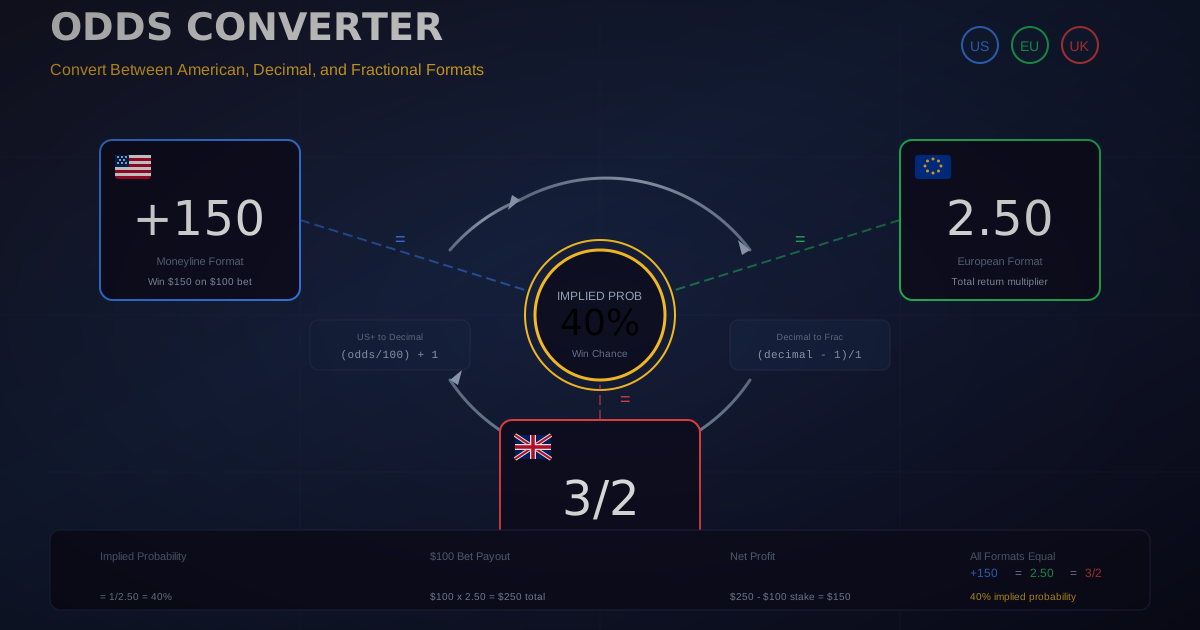
Use our Odds Converter to convert between odds formats when evaluating tournament overlay.
How Do Prize Pool Structures Work in Slot Tournaments?
Understanding the prize structure is critical for evaluating whether a tournament is worth entering. The prize pool distribution determines your expected return and the variance of your outcome.
Typical Prize Structures
Top-Heavy Structure (most common at buy-in tournaments):
| Place | Prize (Example: 200 Players, $100 Buy-In, $20,000 Pool) | % of Pool |
|---|---|---|
| 1st | $5,000 | 25% |
| 2nd | $3,000 | 15% |
| 3rd | $2,000 | 10% |
| 4th-5th | $1,000 each | 10% |
| 6th-10th | $500 each | 12.5% |
| 11th-20th | $250 each | 12.5% |
| 21st-40th | $100 each (entry fee refund) | 10% |
| 41st-200th | $0 | 0% |
In this structure, 40 out of 200 players (20%) receive a prize, but the top 3 take 50% of the total pool.
Flat Structure (more common at freeroll and promotional tournaments):
| Place | Prize (Example: 100 Players, Free Entry, $10,000 Pool) |
|---|---|
| 1st | $2,000 |
| 2nd | $1,500 |
| 3rd | $1,000 |
| 4th-10th | $500 each |
| 11th-25th | $100 each |
| 26th-50th | $20 free play each |
| 51st-100th | $0 |
Evaluating Tournament Value: The Overlay Concept
A tournament has positive overlay when the total prize pool exceeds the total entry fees collected. This can happen when:
- The casino adds money to the prize pool (guaranteed prize pools)
- The tournament does not fill to capacity
- The casino funds the entire prize pool (freeroll)
| Scenario | Total Entry Fees | Total Prize Pool | Overlay | Player EV |
|---|---|---|---|---|
| No overlay (casino keeps rake) | $20,000 | $16,000 | -$4,000 (20% rake) | Negative |
| Break-even | $20,000 | $20,000 | $0 | Zero (before skill) |
| Positive overlay (casino adds money) | $20,000 | $25,000 | +$5,000 | Positive |
| Freeroll | $0 | $10,000 | +$10,000 | Very positive |
How to Calculate Your Expected Value
For a buy-in tournament:
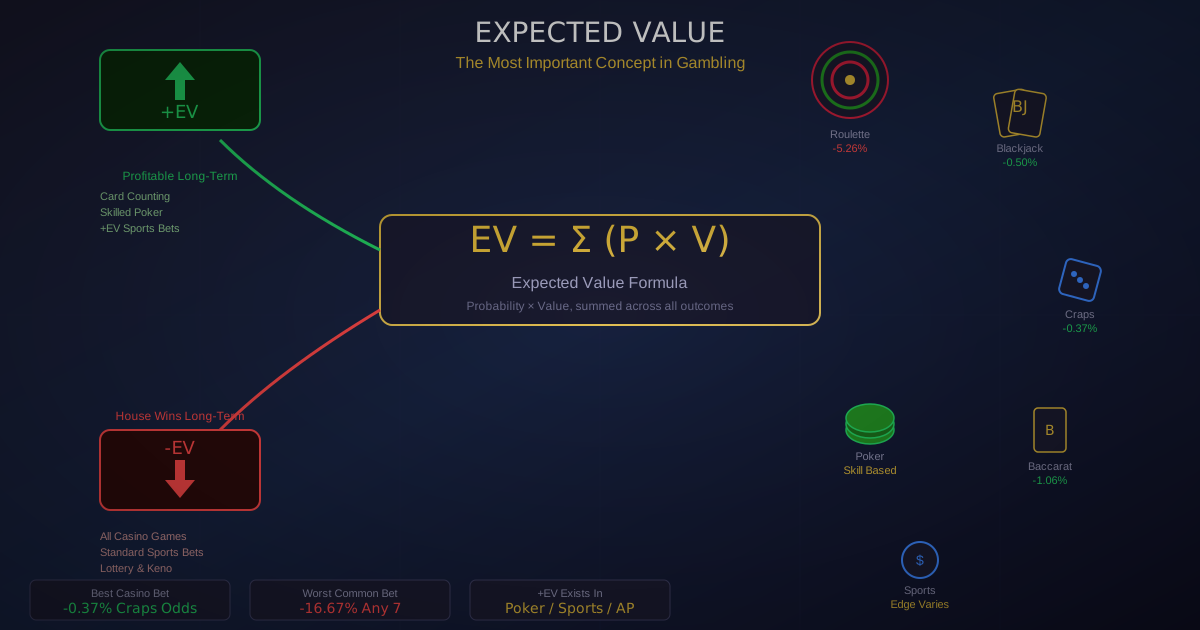
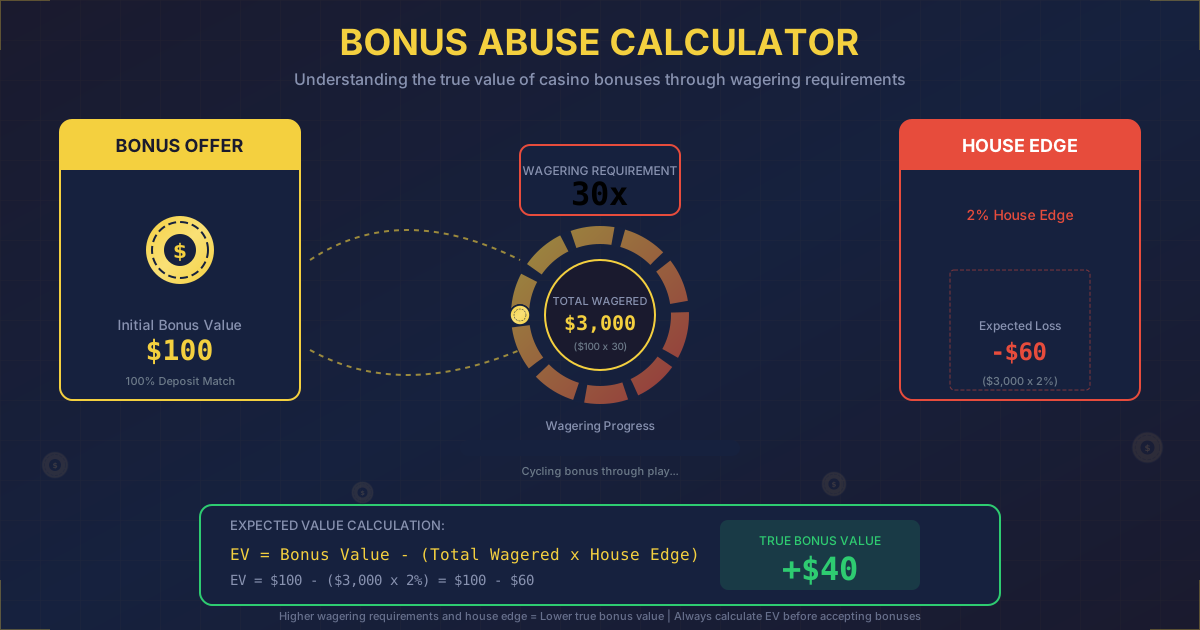
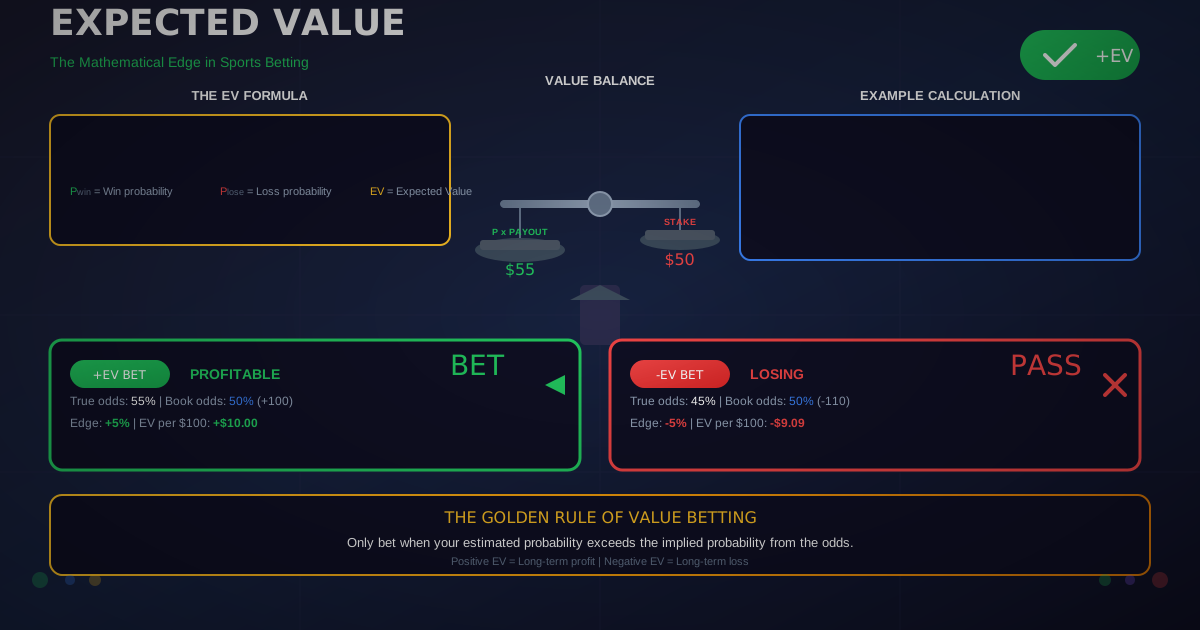
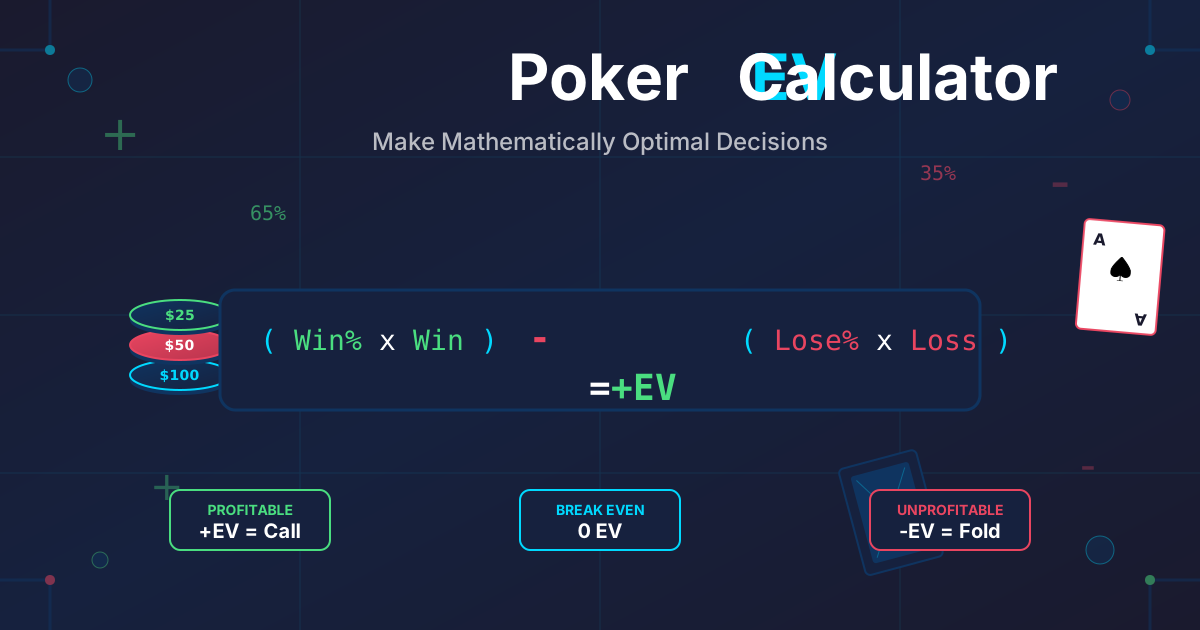
EV = (Your Win Probability x Prize Amount) - Entry Fee
If you believe your speed gives you a top-20% finish probability in a tournament where 20% of the field gets paid, and the average prize for those positions is $500 on a $100 entry:
EV = (0.20 x $500) - $100 = $100 - $100 = $0 (break-even)
But if your speed is significantly above average, your probability of a top-20% finish might be 35%:
EV = (0.35 x $500) - $100 = $175 - $100 = +$75
For freerolls, the entry fee is zero, so any win probability produces positive expected value.
Run the exact numbers on any tournament structure with our Expected Value Calculator.
Why Do Slot Tournaments Have Better Expected Value Than Regular Slots?
This is the most important insight in this guide. Slot tournaments can offer dramatically better expected value than regular slot play, and understanding why is crucial.
Regular Slot Play vs. Tournament Play
| Factor | Regular Slot Play | Tournament Play |
|---|---|---|
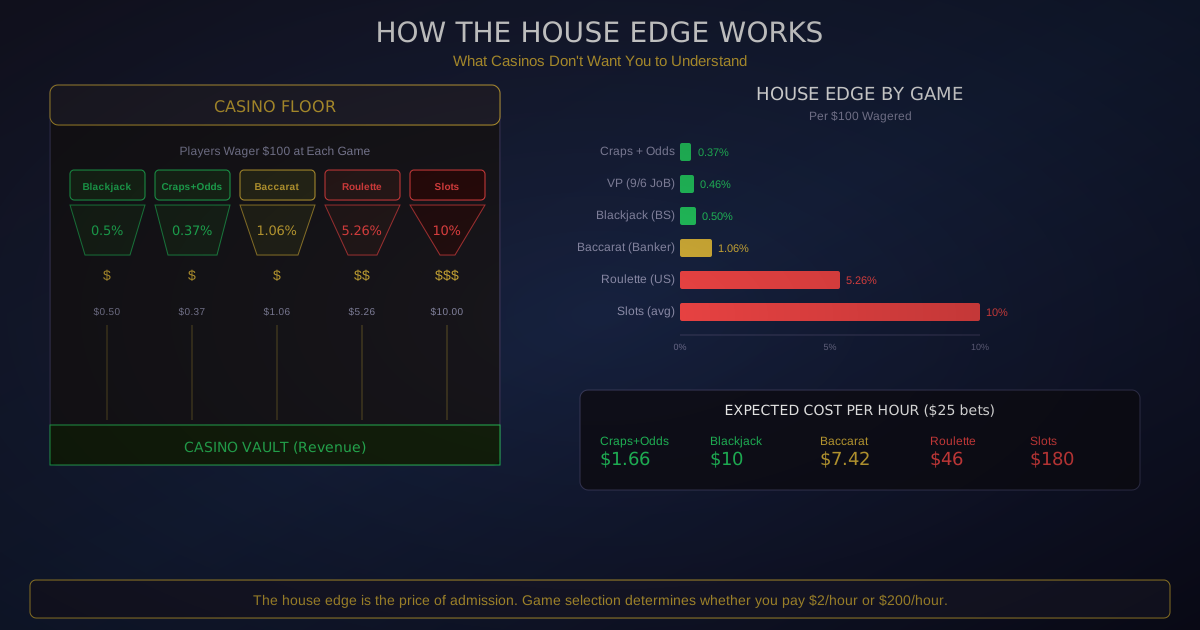
| House edge | 2-15% per spin (varies by machine) | 0% per spin (credits have no cash value) |
| Cost per session | Variable (total wager x house edge) | Fixed (entry fee only) |
| Maximum loss | Unlimited (up to total bankroll) | Capped at entry fee |
| Prize potential | Proportional to bet size | Proportional to tournament pool |
| Expected return | Negative (house edge guarantees long-term loss) | Can be positive (especially freerolls) |
| Skill factor | Minimal (except game selection and bankroll management) | Moderate (speed, focus, stamina) |
The Mathematical Case
Consider a typical 3-hour slot session versus a slot tournament:
Regular slots (3 hours at a penny slot, $3/spin, 500 spins/hour):
- Total wagered: 1,500 spins x $3 = $4,500
- Expected loss at 8% house edge: $4,500 x 0.08 = $360
- Expected return: -$360
Slot tournament (buy-in: $100, 200 players, $20,000 prize pool returned to players):
- Maximum possible loss: $100 (the entry fee)
- Expected return (if all players are equal): $20,000 / 200 = $100 (break-even)
- Expected return (if you are faster than average -- top 30% speed): Positive, because speed gives you a higher probability of finishing in the money
Freeroll tournament (free entry, 200 players, $5,000 prize pool):
- Maximum possible loss: $0
- Expected return (if all players are equal): $5,000 / 200 = $25
- Expected return (if you are faster than average): Higher than $25
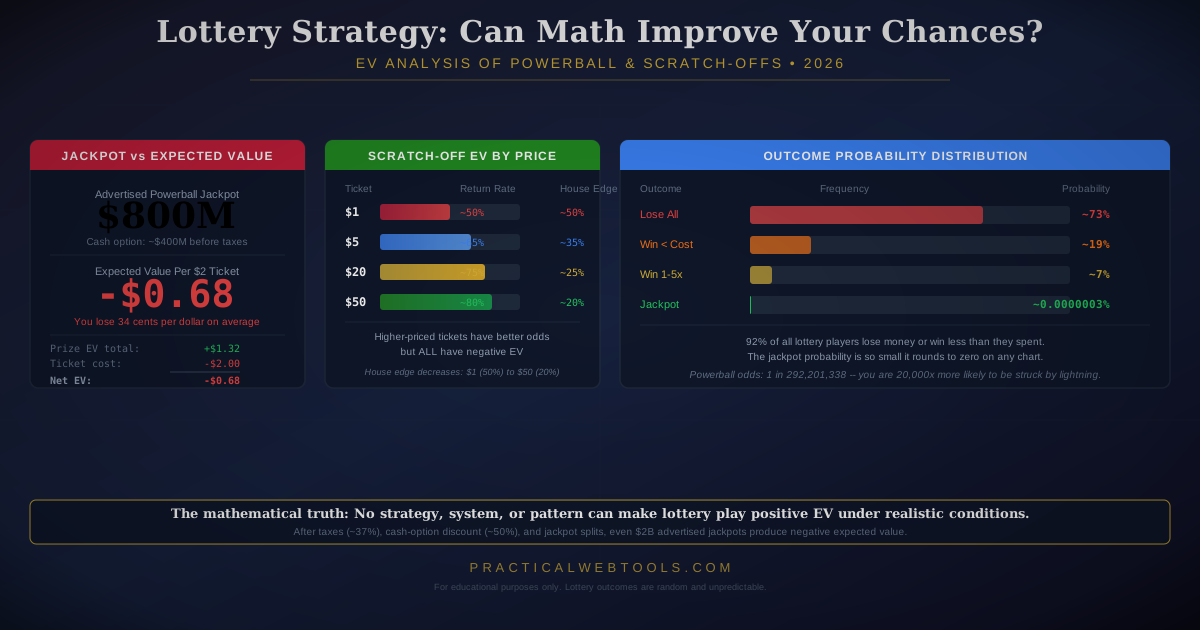
The contrast is stark. Regular slot play has a guaranteed negative expected value. Freeroll tournaments have a guaranteed positive expected value. And even buy-in tournaments can be positive EV if the casino adds overlay to the prize pool.
Why Casinos Offer Positive EV Tournaments
If tournaments are better for players, why do casinos offer them? Several reasons:
- Player acquisition: Tournaments attract players to the property. Those players eat at restaurants, stay at hotels, and play regular slots and table games.
- Loyalty program engagement: Tournament invitations reward loyalty, encouraging more regular play throughout the year.
- Marketing budget: Tournament prize pools are often funded from the casino's marketing budget, not the gaming floor revenue.
- Social experience: Tournaments create excitement and a social atmosphere that enhances the overall casino experience.
- Redeposit potential: Players who win tournament prizes often reinvest some or all of their winnings into regular casino play.
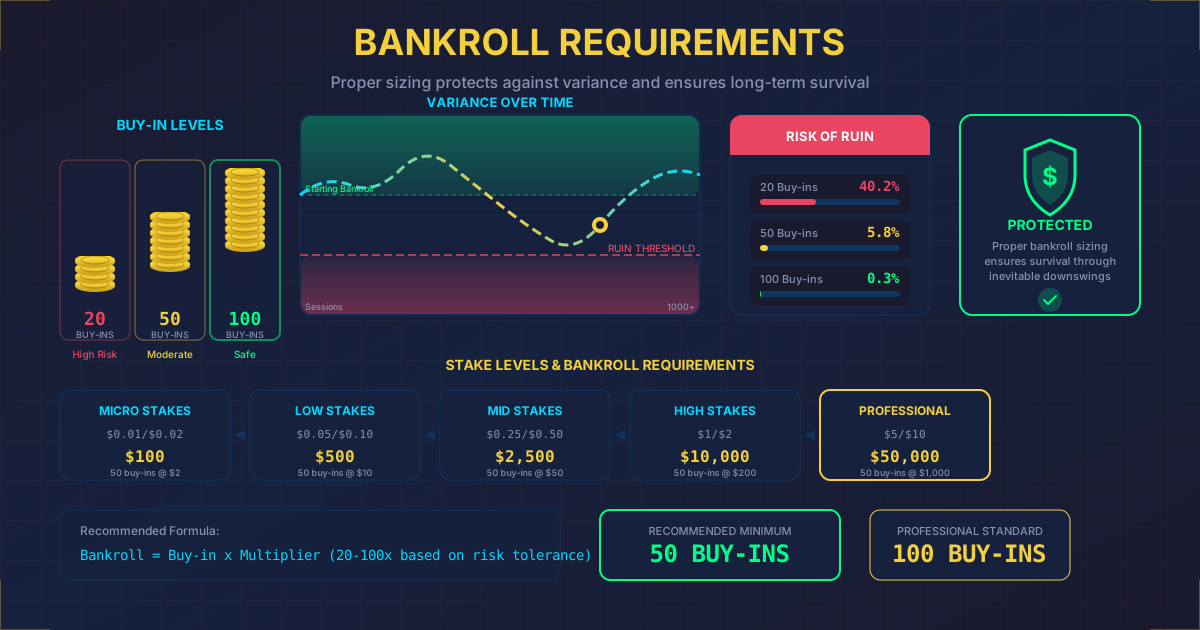
Calculate your bankroll needs for tournament play with our Poker Bankroll Requirements Calculator -- the same variance principles apply.
How Do Casinos Select and Configure Tournament Machines?
The machines used in slot tournaments are specifically configured for the tournament format. Understanding how they work helps you set expectations and avoid frustration.
Machine Selection
Casinos typically use dedicated tournament machines that are physically separated from the regular slot floor. These machines feature:
- Simplified display: Clean, easy-to-read credit counter and spin button.
- Faster animation speed: Tournament machines may have reduced animation times to allow faster play.
- Standardized configuration: Every machine in the tournament is configured identically, ensuring fair competition.
- No cashout mechanism: Tournament credits cannot be converted to cash.
Payout Configuration
| Setting | Regular Machine | Tournament Machine |
|---|---|---|
| RTP (Return to Player) | 85-98% (set by casino within regulatory limits) | 100-120% (higher RTP creates more exciting scores) |
| Hit frequency | 25-35% (varies by game) | Often higher -- more frequent small wins to keep players engaged |
| Maximum win per spin | Varies (can be very large for progressives) | Capped relative to starting credits |
| Bonus frequency | Standard | May be increased for tournament excitement |
| Volatility | Low to high (player chooses game) | Standardized -- same for all tournament participants |
Why RTP Does Not Matter in Tournaments
In regular slot play, RTP is critical because it determines your expected loss. In tournaments, RTP only affects the distribution of scores across participants -- it does not change any individual player's expected tournament result relative to entry fee. Whether the tournament machine has an 80% RTP or a 120% RTP, the prize pool is the same. The RTP just determines whether scores tend to cluster around 8,000 credits or 12,000 credits, but the competitive ranking (which determines who wins) is unaffected.
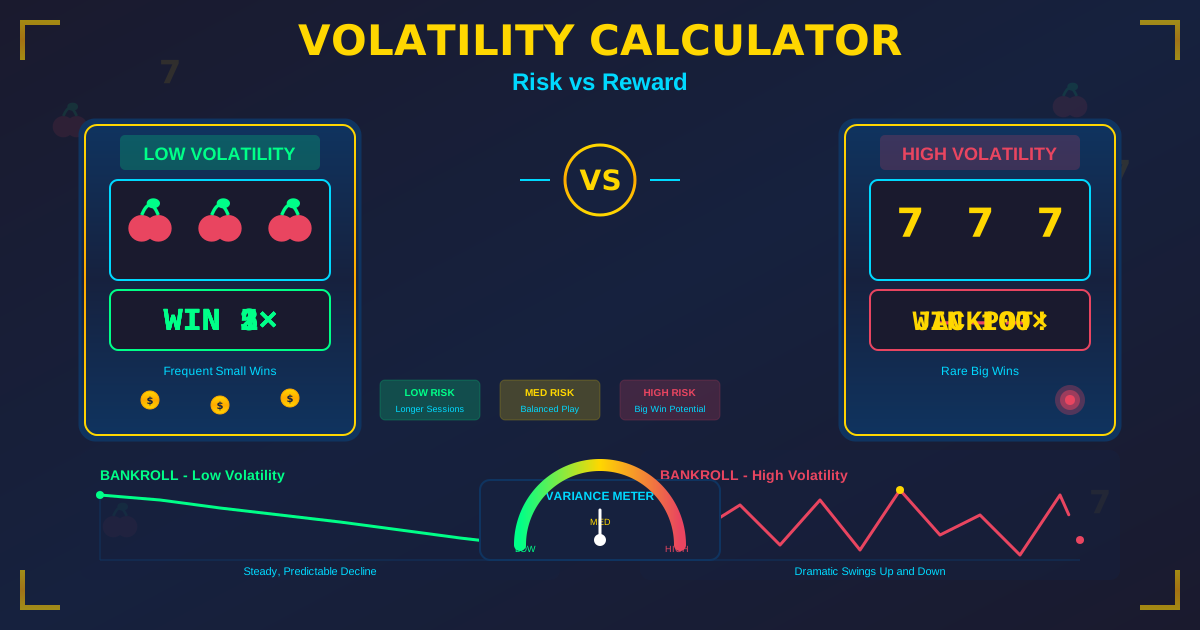
What does matter is volatility. A high-volatility tournament machine produces a wider range of final scores, meaning luck plays a larger role. A low-volatility machine produces tighter score clustering, giving fast players a more consistent advantage.
Analyze video poker pay tables for the best expected value with our Video Poker EV Calculator.
How Do Online Slot Tournaments Compare to In-Person Events?
Online slot tournaments have grown dramatically in 2026, with major regulated platforms offering daily and weekly competitions. The dynamics differ significantly from in-person events.
Key Differences
| Feature | In-Person Tournament | Online Tournament |
|---|---|---|
| Physical presence | Required -- must be at the casino | Play from anywhere |
| Machine assignment | Random assignment, all machines identical | All players use the same virtual game |
| Speed advantage | Significant -- physical button pressing speed matters | Moderate -- click/tap speed matters, but latency and auto-spin features reduce the gap |
| Auto-spin | Not available on physical machines | Often available -- can auto-spin at maximum speed |
| Session monitoring | Supervised by casino staff | System-monitored |
| Social atmosphere | High -- tournament floor is exciting | Low -- playing alone at home |
| Travel costs | Hotel, flight, meals (partially or fully comped for VIPs) | None |
| Entry fee range | $20-$5,000+ | $1-$500 (generally lower) |
| Prize pools | $1,000-$1,000,000+ | $100-$100,000+ |
| Freeroll availability | Common at loyalty program level | Very common -- daily freerolls at many platforms |
| Leaderboard format | Session-based (play your session, wait for results) | Often time-window based (play anytime within a 24-hour or 1-week window) |
Online Tournament Strategy Adjustments
When playing online:
- If auto-spin is available and allowed in the tournament, use it. Auto-spin at maximum speed will always be faster than manual clicking.
- If auto-spin is not allowed, practice clicking speed. Consider using a mouse rather than a trackpad for more precise, rapid clicking.
- Internet connection matters. Each spin requires a server round-trip. A high-latency connection adds milliseconds per spin, which compounds over hundreds of spins.
- Time-window tournaments require strategic timing. In a tournament where you can play your session anytime within a 24-hour window, choose a time when you are alert and undistracted.
- Multi-session online tournaments allow you to play multiple sessions and submit your best score. This reduces variance and rewards consistency.
Online Platform Comparison (2026)
| Platform | Tournament Frequency | Typical Entry Fee | Typical Prize Pool | Freeroll Availability |
|---|---|---|---|---|
| Major regulated US casinos (DraftKings, FanDuel, BetMGM Casino) | Daily | $1-$100 | $500-$50,000 | Daily |
| European regulated platforms | Daily to weekly | $5-$200 | $1,000-$100,000 | Weekly |
| Crypto casino platforms | Continuous | $0-$500 (crypto) | $1,000-$500,000 (crypto) | Common |
| Social casino apps | Continuous | Free (virtual currency) | Prizes (gift cards, entries) | Always free |
Understand the house edge on various roulette bets with our Roulette House Edge Calculator.
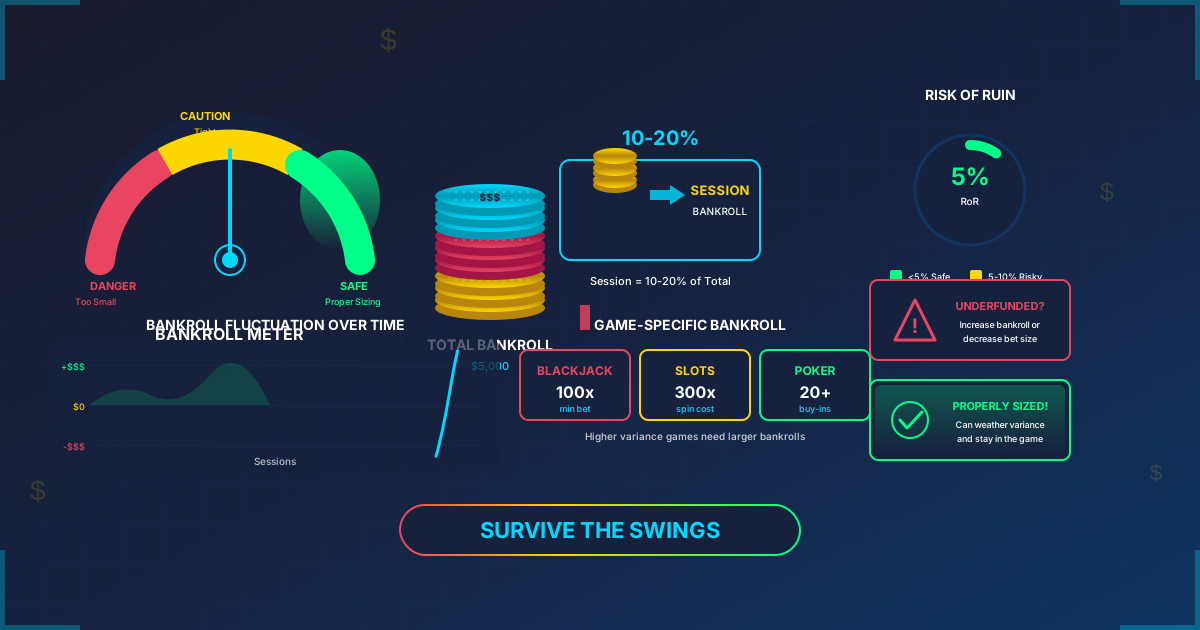
What Bankroll Strategy Should You Use for Slot Tournaments?
Bankroll management for slot tournaments differs fundamentally from regular gambling bankroll management because your maximum risk per event is capped at the entry fee.
Buy-In Tournament Bankroll Planning
The key bankroll question for buy-in tournaments is: how many tournaments can you enter before you expect to cash?
If you are a skilled (fast) tournament player with a 25% probability of cashing in any given tournament:
| Number of Tournaments | Probability of Cashing at Least Once | Bankroll Needed (at $100/entry) |
|---|---|---|
| 1 | 25% | $100 |
| 3 | 58% | $300 |
| 5 | 76% | $500 |
| 8 | 90% | $800 |
| 10 | 94% | $1,000 |
| 15 | 99% | $1,500 |
To be confident (90%+) of cashing at least once, you need a bankroll sufficient for approximately 8-10 buy-ins.
Tournament Bankroll vs. Regular Bankroll
| Aspect | Regular Slots Bankroll | Tournament Bankroll |
|---|---|---|
| Risk per session | Variable (total wager x house edge) | Fixed (entry fee) |
| Maximum loss per session | Entire bankroll (if no stop-loss) | Entry fee |
| Expected value | Negative | Neutral to positive |
| Variance | High (depends on game volatility) | Moderate (many spins per session) |
| Bankroll requirement | 50-100x average session buy-in | 8-15x tournament entry fee |
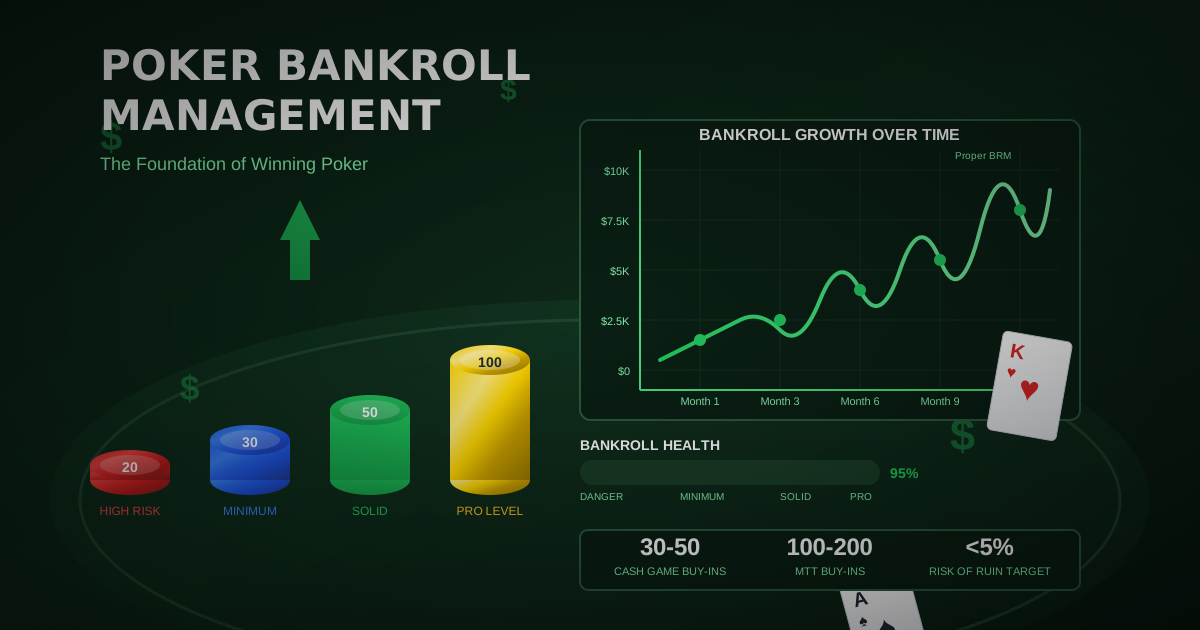
| Risk of ruin | Real concern | Lower (capped losses, positive or neutral EV) |
Freeroll Bankroll Strategy
For freeroll tournaments, the bankroll strategy is simple: there is none. You are risking nothing, so there is no bankroll to manage. Enter every freeroll tournament you qualify for, no exceptions. Even if the prizes are small, the positive expected value makes every free entry worth your time.
The only cost of freerolls is your time and the opportunity cost of not doing something else. If the prize pool is $500 for 200 players, your expected return is $2.50 per tournament. If a tournament session takes 15 minutes, you are effectively being paid $10 per hour to play -- which is better than the negative hourly rate of regular slot play.
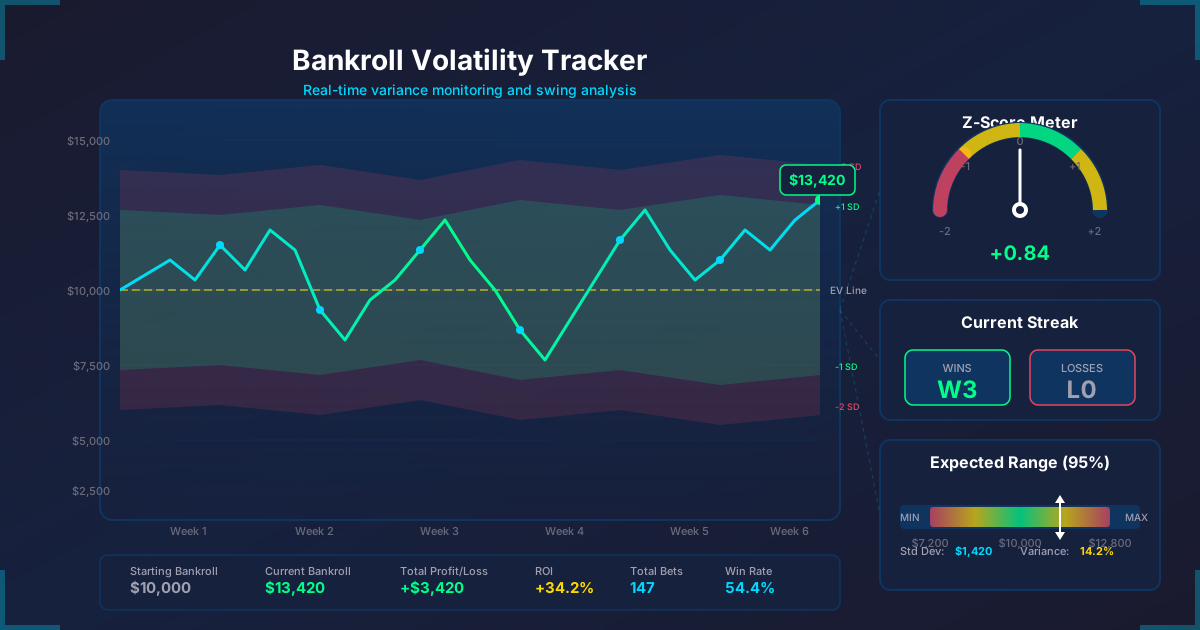
Track your tournament bankroll and overall gambling performance with our Bankroll Volatility Tracker.
Where Can You Find the Best Slot Tournaments at Major Casinos?
Tournament availability varies by casino, region, and time of year. Here is a guide to finding quality tournaments in 2026.
Las Vegas Tournament Landscape
| Casino / Resort Group | Tournament Type | Typical Frequency | Entry Fee Range | Prize Pool Range | Notable Features |
|---|---|---|---|---|---|
| MGM Resorts (Bellagio, MGM Grand, Aria) | Invitational + buy-in | Weekly freerolls, quarterly VIP events | Free to $500 | $5,000 to $250,000 | VIP invitational events with travel packages |
| Caesars Entertainment (Caesars Palace, Harrah's, Flamingo) | All types | Daily freerolls, monthly buy-ins | Free to $300 | $1,000 to $100,000 | Large loyalty program drives tournament access |
| Wynn / Encore | Invitational | Quarterly | Free (VIP) | $100,000+ | Exclusive to high-tier loyalty members |
| Station Casinos (locals) | Buy-in + freeroll | Daily | Free to $50 | $500 to $10,000 | Excellent value for Las Vegas residents |
| Boyd Gaming (locals) | Freeroll + buy-in | Daily | Free to $30 | $500 to $5,000 | Accessible entry-level tournaments |
Regional Casino Tournaments (US)
| Region | Casino Examples | Tournament Frequency | Typical Value |
|---|---|---|---|
| Atlantic City | Borgata, Hard Rock, Ocean | Weekly | $1,000-$50,000 prize pools |
| Connecticut | Foxwoods, Mohegan Sun | Weekly to monthly | $5,000-$100,000 prize pools |
| Gulf Coast | Beau Rivage, Boomtown | Monthly | $2,500-$25,000 prize pools |
| Midwest | Horseshoe (IN), FireKeepers (MI) | Monthly | $1,000-$25,000 prize pools |
| West Coast | Pechanga, Morongo, San Manuel | Weekly to monthly | $2,500-$50,000 prize pools |
How to Find Tournaments
- Join the players club at every casino you visit. Tournament invitations are primarily distributed through loyalty programs.
- Check casino websites for published tournament schedules. Most major casinos post monthly or quarterly schedules.
- Follow casino social media accounts. Flash freerolls and last-minute tournament additions are often announced on social channels.
- Ask the players club desk directly. Staff can tell you about upcoming tournaments, qualification criteria, and how to earn invitations.
- Sign up for casino email lists. Tournament promotions are heavily marketed via email.
- Use tournament aggregator websites that compile tournament schedules across multiple properties.
Use our Kelly Criterion Calculator to determine optimal tournament entry sizing relative to your gambling bankroll.
What Physical and Mental Preparation Helps in Slot Tournaments?
This might seem unusual for a gambling guide, but physical and mental preparation genuinely affects your performance in slot tournaments. The events are physically demanding (repetitive button pressing for 10-20 minutes at maximum speed) and mentally challenging (maintaining focus under time pressure in a noisy, stimulating environment).
Physical Preparation
| Factor | Recommendation | Why It Matters |
|---|---|---|
| Hand/finger warmup | Stretch and flex your pressing finger/hand for 2-3 minutes before the session | Cold, stiff fingers press slower |
| Hydration | Drink water in the hour before the tournament | Dehydration impairs fine motor control |
| Caffeine | Moderate caffeine (100-200mg) 30-60 minutes before | Improves reaction time and alertness (but too much causes jitteriness) |
| Sleep | Get a full night's sleep before a major tournament | Fatigue slows reaction time and reduces focus |
| Comfortable seating position | Adjust your chair height and angle before the session starts | Poor posture causes faster fatigue in hand and arm |
| Pressing technique | Use the pad of your index finger, not your fingertip; minimize travel distance | More efficient muscle engagement, sustainable speed |
Mental Preparation
| Factor | Recommendation | Why It Matters |
|---|---|---|
| Accept the outcome in advance | Decide before the session that you will accept any result | Eliminates anxiety that slows you down |
| Visualize constant spinning | Mentally rehearse pressing the button at maximum speed for the full duration | Creates a mental template for execution |
| Ignore the scoreboard | If a real-time leaderboard is displayed, do not look at it during play | Checking the leaderboard costs spins and creates emotional reactions |
| Ignore your neighbors | Do not watch other players' machines or react to their results | Every second of attention diverted is a lost spin |
| Set a rhythm | Find a mental cadence (like a metronome) and lock into it | Consistent rhythm is faster than burst-and-pause |
The Mental Game of the Final Minutes
The last 2-3 minutes of a tournament session are where many players falter. Fatigue sets in, and the temptation to check your score (or your neighbor's score) becomes stronger. Champions maintain their pace through the final buzzer.
If you feel yourself slowing down:
- Take a single deep breath without pausing your pressing rhythm
- Refocus your eyes on the spin button
- Tell yourself "Keep going, every spin counts"
- Do not look at the clock -- the buzzer will tell you when time is up
Analyze the house edge on any video poker variant with our Video Poker Pay Table Analyzer.
How Do Progressive and Accumulator Tournament Formats Work?
Beyond standard timed sessions, some casinos offer creative tournament formats that add strategic depth.
Progressive Accumulator Tournaments
In this format, players compete over multiple sessions (sometimes over several days), and their scores from each session accumulate. The player with the highest total across all sessions wins.
Strategic implications:
- Consistency across sessions matters more than a single explosive performance.
- Players who maintain high speed across all sessions have a significant advantage over those who peak and crash.
- Rest between sessions is important -- use breaks to stretch, hydrate, and mentally reset.
Elimination Bracket Tournaments
Similar to a sports playoff:
| Round | Players Remaining | Advancement |
|---|---|---|
| Round 1 (multiple heats) | All entrants (e.g., 200) | Top 50% advance (100) |
| Round 2 | 100 | Top 50% advance (50) |
| Semifinal | 50 | Top 20% advance (10) |
| Final | 10 | Top 3 win prizes |
Strategic implications:
- You do not need to win every round -- you just need to advance.
- In early rounds, a solid but not spectacular performance is sufficient.
- Save your peak performance energy for the final rounds.
- The elimination format rewards players who can perform consistently under increasing pressure.
Team Tournaments
Some casinos offer team-format slot tournaments where groups of 2-4 players compete together, and their combined scores determine the team ranking.
Strategic implications:
- Team selection matters -- choose teammates who are physically fast and mentally focused.
- Encourage each other but do not distract each other during play.
- The weakest player on the team drags down the entire score.
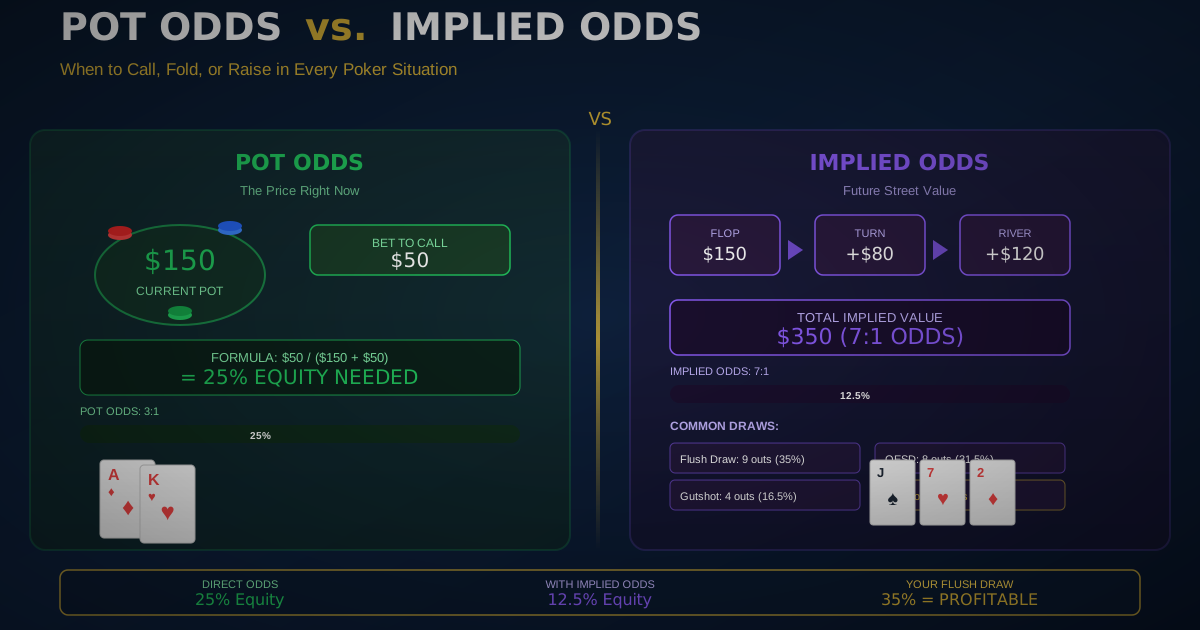
Calculate your expected equity in any competitive gambling scenario with our Poker Equity Calculator.
What Common Mistakes Do Slot Tournament Players Make?
Avoiding common mistakes is often more valuable than learning advanced techniques. Here are the errors that cost tournament players the most.
The Biggest Mistakes
| Mistake | Why It Is Costly | How to Avoid It |
|---|---|---|
| Pausing to celebrate wins | Every second pausing is a lost spin. A 3-second celebration 20 times = 60 seconds = 50+ lost spins. | Train yourself to feel nothing during the session. Celebrate after the buzzer. |
| Watching the reel animations | Reel animations are designed to be entertaining, not informative. Watching them slows you down. | Keep your eyes on the spin button. |
| Checking the leaderboard mid-session | Looking away from your machine costs spins and creates emotional reactions (excitement or despair) that further slow you. | Ignore the leaderboard until the session ends. |
| Starting slow and building speed | The first minute is just as valuable as the last. Every spin from second one counts. | Start at maximum speed from the first buzz. |
| Using two fingers or alternating hands | Switching fingers or hands creates micro-pauses that compound. | Use one finger and maintain a consistent technique. |
| Taking a "rest" mid-session | Even a 5-second pause to flex your hand costs 4-5 spins. | If your hand cramps, switch hands briefly without stopping. |
| Not pressing firmly enough | Light or hesitant presses may not register, requiring a re-press and wasting time. | Press firmly and deliberately. Hear/feel the button click. |
| Waiting for the previous spin to fully resolve | Many tournament machines allow you to queue the next spin before the current one finishes. | Press spin as soon as the button is active -- do not wait for the reels to stop. |
| Arriving late or unprepared | Late arrivals miss the opening seconds. Unprepared players waste time adjusting their seat or asking questions. | Arrive early, ask all questions before the session, and be ready when the buzzer sounds. |
| Playing conservative because "I'm doing well" | There is no conservative strategy in a slot tournament. The optimal play is always maximum speed. | Maintain maximum speed regardless of your current score. |
The Most Costly Mistake: Not Entering Freerolls
The single most expensive mistake slot players make is not entering free tournaments they qualify for. Every freeroll you skip is positive expected value you leave on the table. If your casino's loyalty program qualifies you for a weekly freeroll with a $2,000 prize pool and 100 players, you are giving up $20 of expected value per week -- over $1,000 per year -- for 15 minutes of your time each week.
See how consistent tournament entry compounds over time with our Bankroll Volatility Tracker.
Frequently Asked Questions
Are slot tournaments rigged so the casino always profits? Slot tournaments are not rigged in the traditional sense. Every player has an equal chance on identically configured machines, and the outcome is determined by random number generation plus player speed. The casino profits from tournaments indirectly: through the rake (if any) on buy-in tournaments, through increased foot traffic and ancillary spending (dining, hotel, regular gaming), and through the promotional value of the event. Freeroll tournaments are explicitly positive EV for players -- the casino absorbs the cost as a marketing expense.
Can I practice for slot tournaments at home? Yes. While you cannot replicate the exact tournament machine, you can practice the core skill: pressing a button at maximum speed for sustained periods. Use a free online slot game and practice spinning as fast as possible for 10-15 minutes without pausing. Focus on maintaining a consistent rhythm, not on the game results. Some players practice with a physical button or clicker to build finger endurance.
How are ties broken in slot tournaments? Tie-breaking rules vary by casino. Common approaches include: splitting the prize equally among tied players, awarding the prize to the player who finished their session first, using a tiebreaker spin or session, or using a random draw. Check the tournament rules before entering so you know the policy.
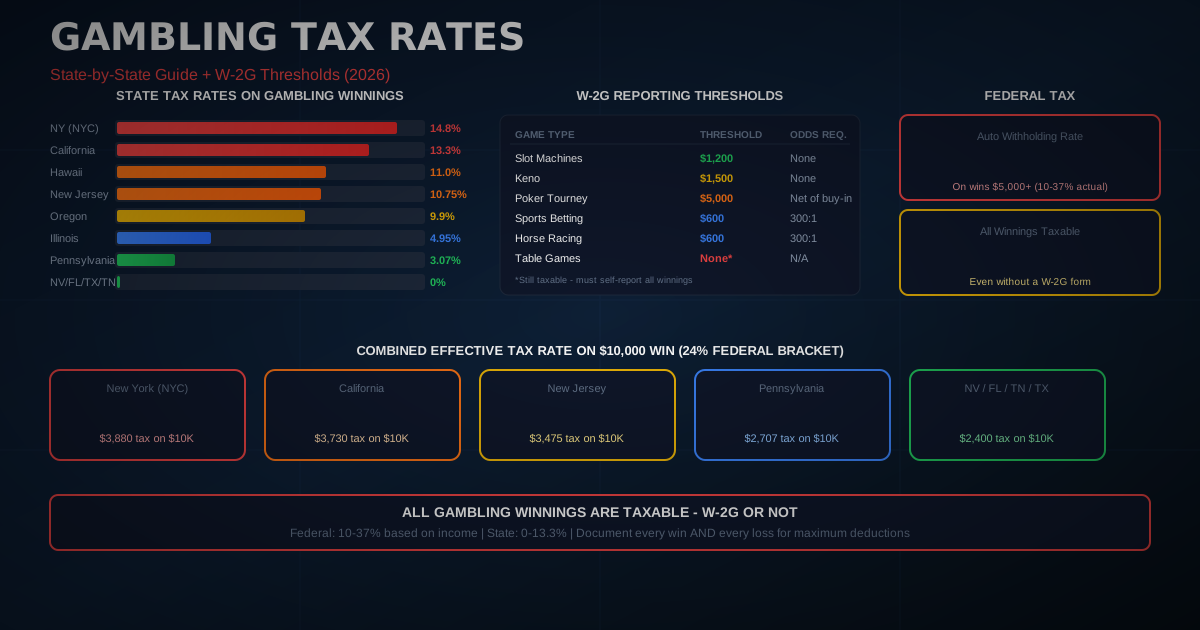
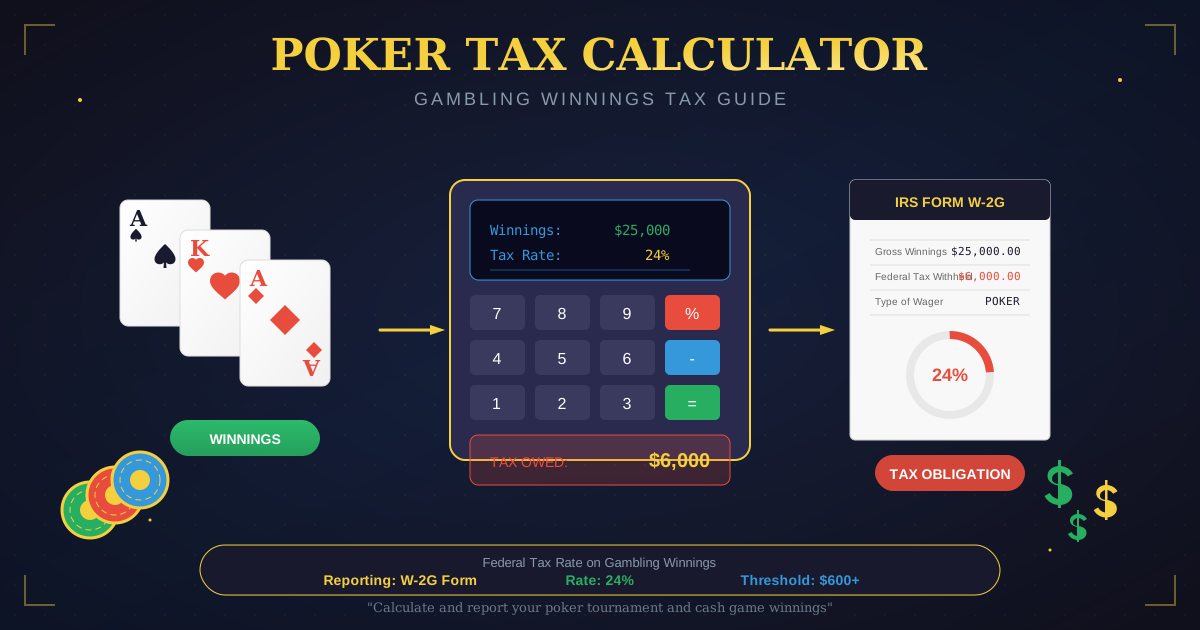
Do slot tournaments have taxes on winnings? In the United States, slot tournament winnings are taxable income. If your net winnings (prize minus entry fee) exceed $600, the casino will issue a W-2G form and may withhold federal taxes (typically 24%). You should keep records of all tournament entry fees as they may be deductible against gambling winnings. Consult a tax professional for advice specific to your situation.
What is the best time of year for slot tournaments? Major casino tournament activity peaks during holiday weekends (Memorial Day, Fourth of July, Labor Day, New Year's), the NFL season (September through February), and during destination-specific events (CES in Las Vegas, etc.). VIP invitational tournaments are often held in shoulder seasons (spring and fall) when casinos want to drive traffic during slower periods. Online tournaments run year-round with consistent availability.
Can using auto-spin in online tournaments be considered cheating? No, using auto-spin features is not cheating as long as the tournament rules allow it. Most online tournaments either allow auto-spin for all players (leveling the playing field) or disable it for the tournament format. If auto-spin is available and not prohibited, it is a standard tool that all players can use. Check the specific tournament rules before relying on auto-spin.
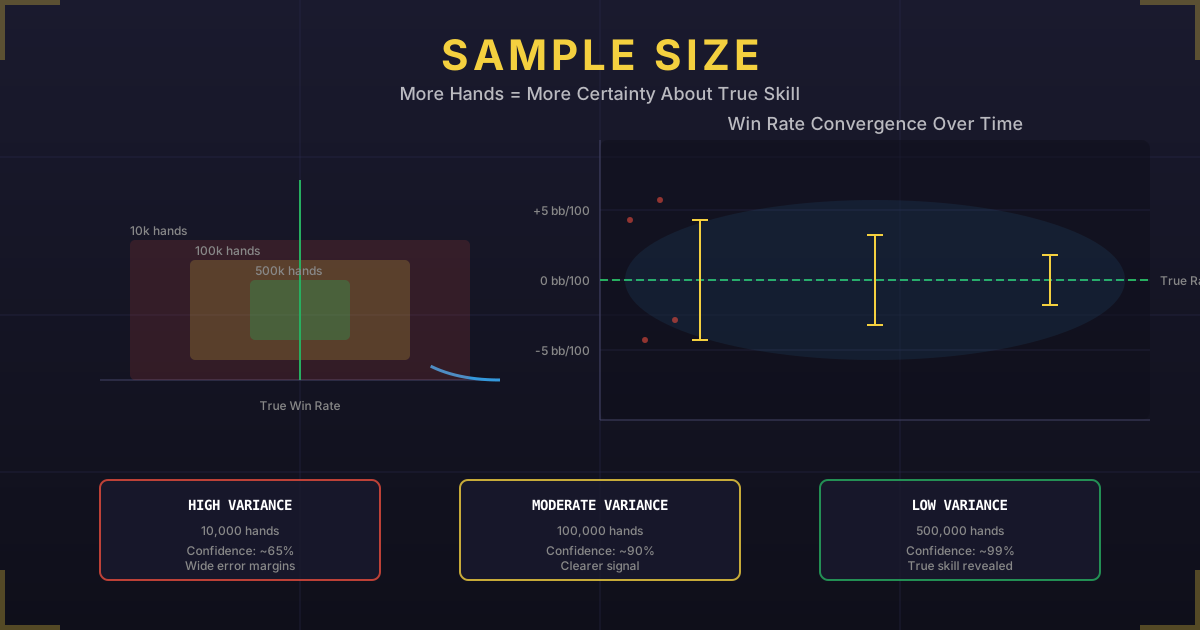
How important is luck versus skill in slot tournaments? Both matter, but their relative importance depends on the tournament format. In short sessions (5 minutes or less), luck dominates because the small number of spins creates high variance. In longer sessions (15-20 minutes) and especially in multi-session or elimination formats, speed skill becomes increasingly important because the larger sample size allows speed differences to manifest in scores. A player who spins 20% faster than the field has a significant, quantifiable advantage over a large sample of spins.
Should I enter every slot tournament available or be selective? Enter every freeroll you qualify for without exception. For buy-in tournaments, be selective: evaluate the prize pool relative to the entry fees (look for overlay), consider the number of entrants, and assess whether your speed gives you an edge. A $100 buy-in tournament with a $15,000 guaranteed prize pool and only 100 entrants ($150 EV per player before skill) is far better than a $100 buy-in with no guarantee and 300 entrants.
Related Gambling Tools
Improve your overall gambling strategy with these free tools:
- Expected Value Calculator -- Calculate the EV of any bet or tournament entry
- Odds Converter -- Convert between American, decimal, and fractional odds
- Implied Probability Calculator -- See the true probability behind any odds
- Kelly Criterion Calculator -- Optimal bankroll allocation for tournament entries
- Bankroll Volatility Tracker -- Track your tournament and overall bankroll performance
- Hold/Vig Calculator -- Understand sportsbook margins
- Video Poker EV Calculator -- Find the best video poker pay tables
- Video Poker Pay Table Analyzer -- Evaluate any video poker variant
- Roulette House Edge Calculator -- Compare roulette variant edges
- Blackjack House Edge Calculator -- See how rules affect the house edge
- Poker Equity Calculator -- Calculate hand equity in poker
- Poker Bankroll Requirements -- Determine bankroll needs for any format
Conclusion
Slot tournaments represent one of the most overlooked opportunities in casino gambling. While regular slot play grinds your bankroll down through an inescapable house edge, tournaments offer a fixed-cost format where the math can actually work in your favor -- especially in freeroll events where the expected value is unambiguously positive.
The strategy is deceptively simple: spin as fast as possible, never stop, never celebrate, never mourn, and maintain that pace from the first buzz to the final buzzer. Executing that strategy consistently, session after session, is what separates tournament winners from everyone else.
Whether you are a recreational player looking for a fun competition format, a slot enthusiast seeking better value for your entertainment dollar, or a strategic gambler hunting for positive expected value opportunities, slot tournaments deserve a place in your gambling repertoire.
Sign up for your casino's players club. Enter every freeroll you qualify for. Practice your speed. And when that buzzer sounds, press the button like your payout depends on it -- because it does.
Explore our complete suite of Gambling Tools to analyze every aspect of casino gaming and make smarter decisions at every opportunity.
Gambling involves risk and should be approached as entertainment, not as a source of income. Always bet within your means, set strict bankroll limits, and never chase losses. If you or someone you know has a gambling problem, contact the National Council on Problem Gambling at 1-800-522-4700 or visit ncpgambling.org. Must be 21+ to gamble in most US jurisdictions. Please play responsibly.