Player Prop Betting Strategy: How to Find Value in Player Markets (2026)
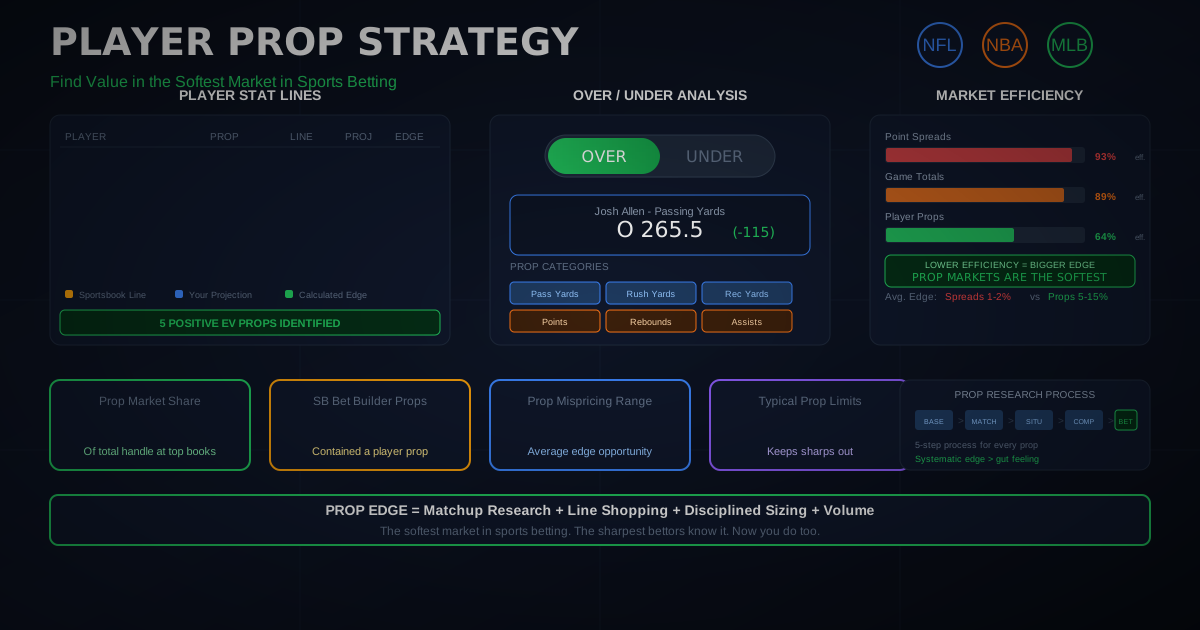
Player props are the softest market in sports betting, and it is not even close. While point spreads and totals attract billions in sharp money that hammers lines into near-perfect efficiency, player prop markets sit wide open with mispriced lines, lazy modeling, and limits so low that sportsbooks barely bother to fix them. The average prop bettor treats these markets like lottery tickets. The smart prop bettor treats them like a gold mine.
Here is the reality: sportsbooks dedicate the majority of their risk management resources to game lines. A $50,000 bet on a spread gets immediate attention from a team of traders. A $300 bet on a wide receiver's receiving yards? The algorithm sets the number, and nobody looks at it again until kickoff. That asymmetry is where your edge lives.
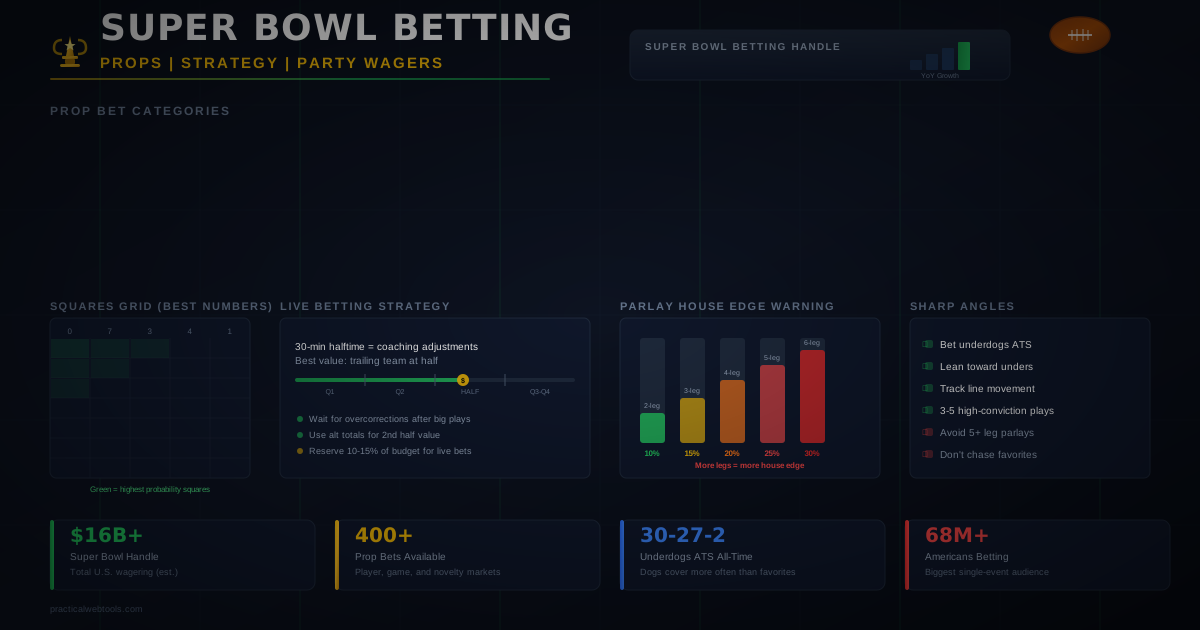
In 2025, 88% of all pre-match Bet Builder bets at the Super Bowl contained at least one prop bet. Player props now represent more than 50% of total handle at some major sportsbooks. The market is massive, growing fast, and still riddled with inefficiencies for bettors who do the work. This guide will show you exactly how to find those inefficiencies across the NFL, NBA, and MLB, and turn them into consistent, measurable profit.
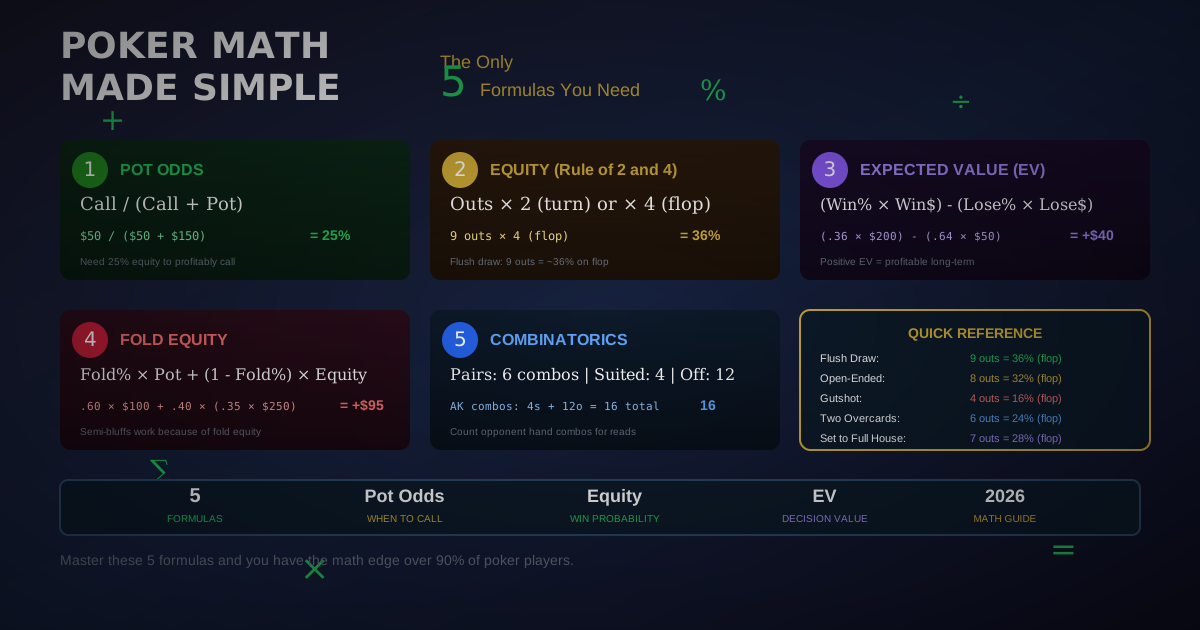
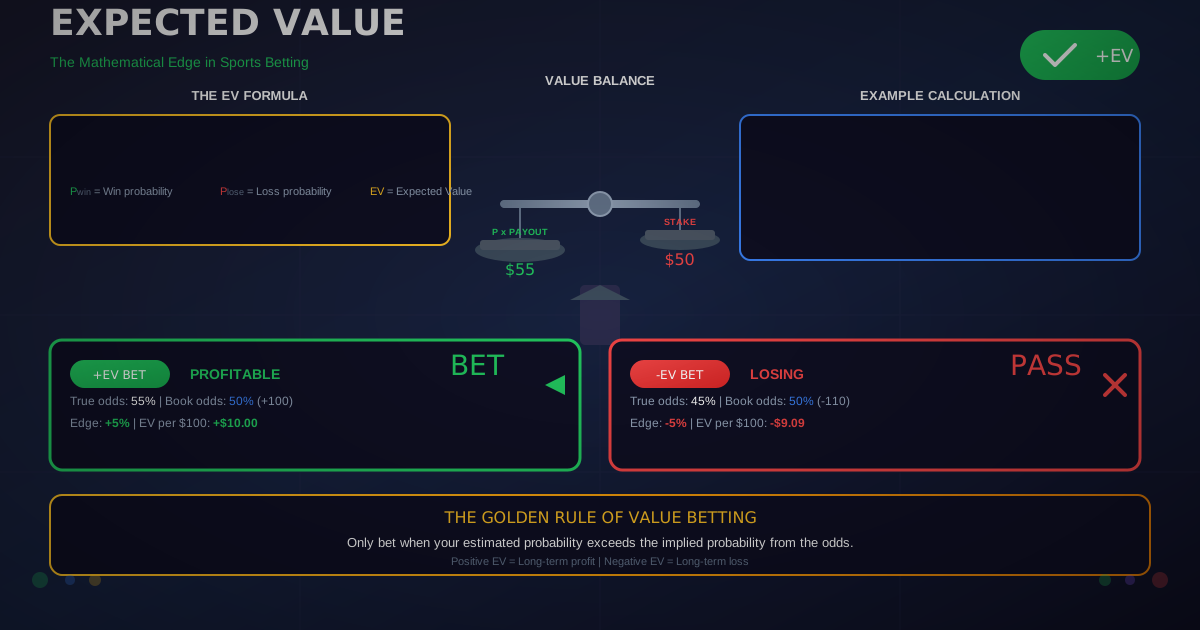
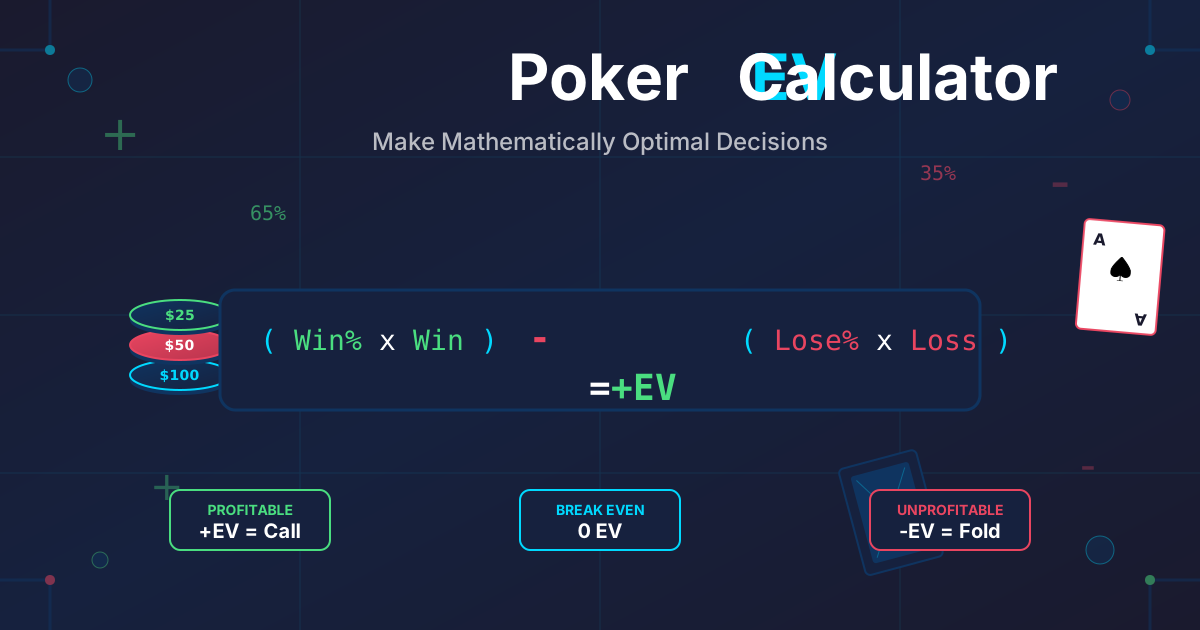
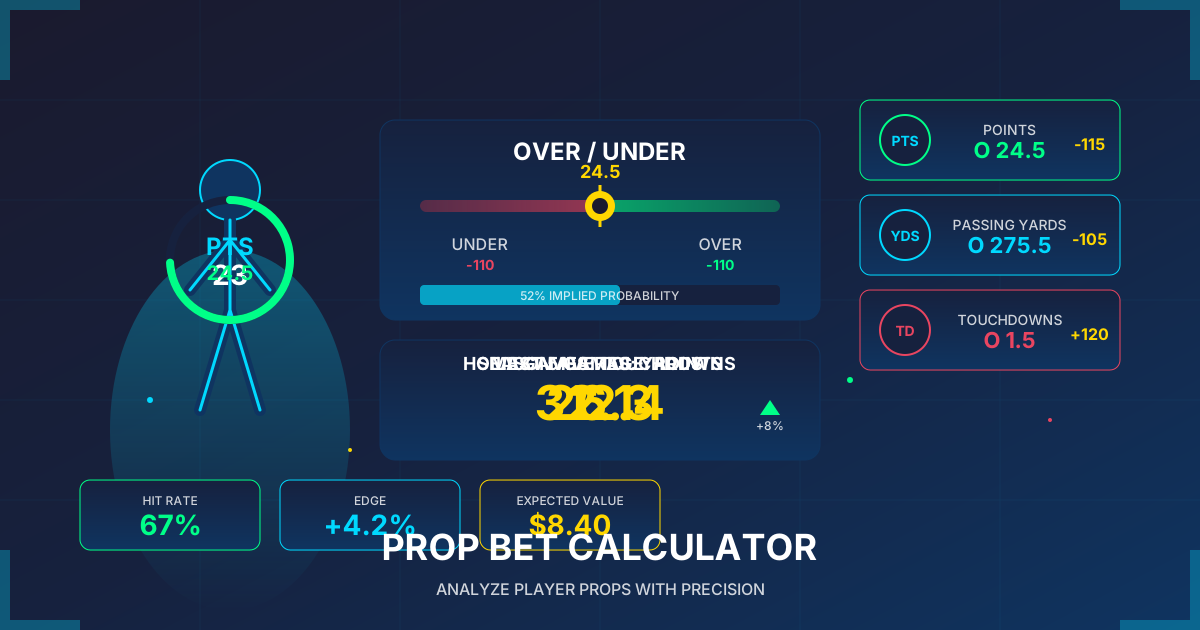
Calculate the expected value of any player prop with our free Expected Value Calculator.
Why Player Prop Markets Are Inefficient
Player prop markets are structurally different from game lines, and those structural differences create persistent edges for informed bettors. Understanding why props are soft is the first step to exploiting them.
Lower Limits Mean Less Sharp Attention
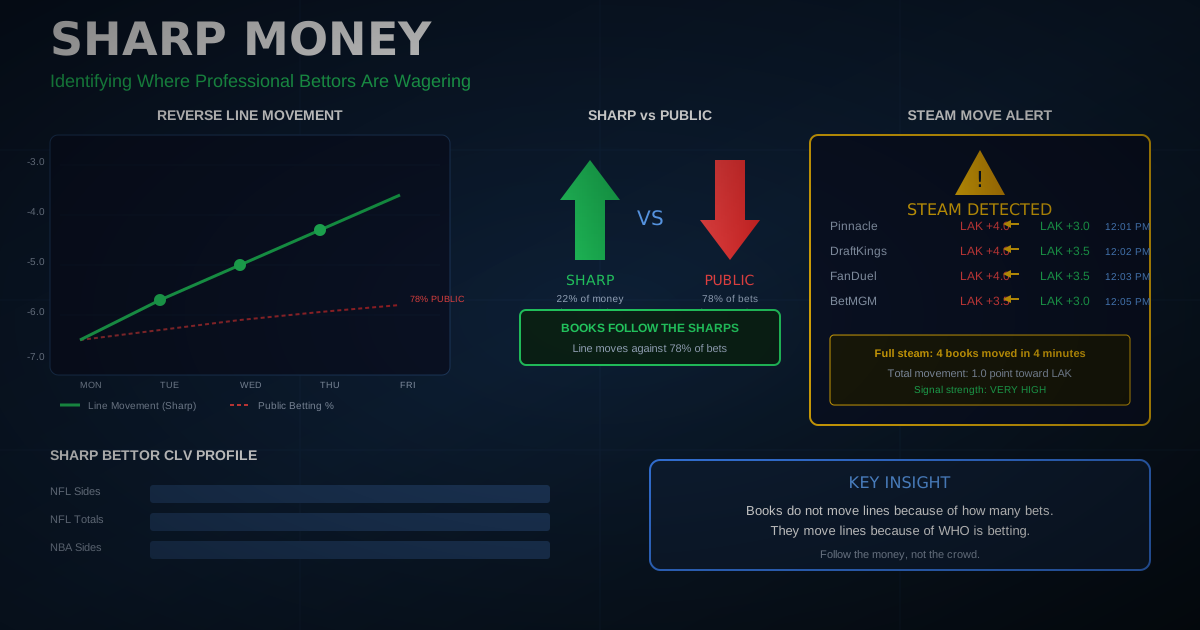
Sportsbooks typically cap prop bets between $100 and $500. Professional bettors moving six and seven figures annually cannot deploy meaningful capital into individual prop markets. As a result, the sharp money that forces spreads and totals toward true value never arrives in prop markets at the same volume.
When a sharp bettor hammers a spread with $20,000, the book moves the line. When a recreational bettor places $200 on a rushing prop, the book logs it and moves on. This means props can stay mispriced for hours or even days.
Algorithm-Set Lines With Minimal Oversight
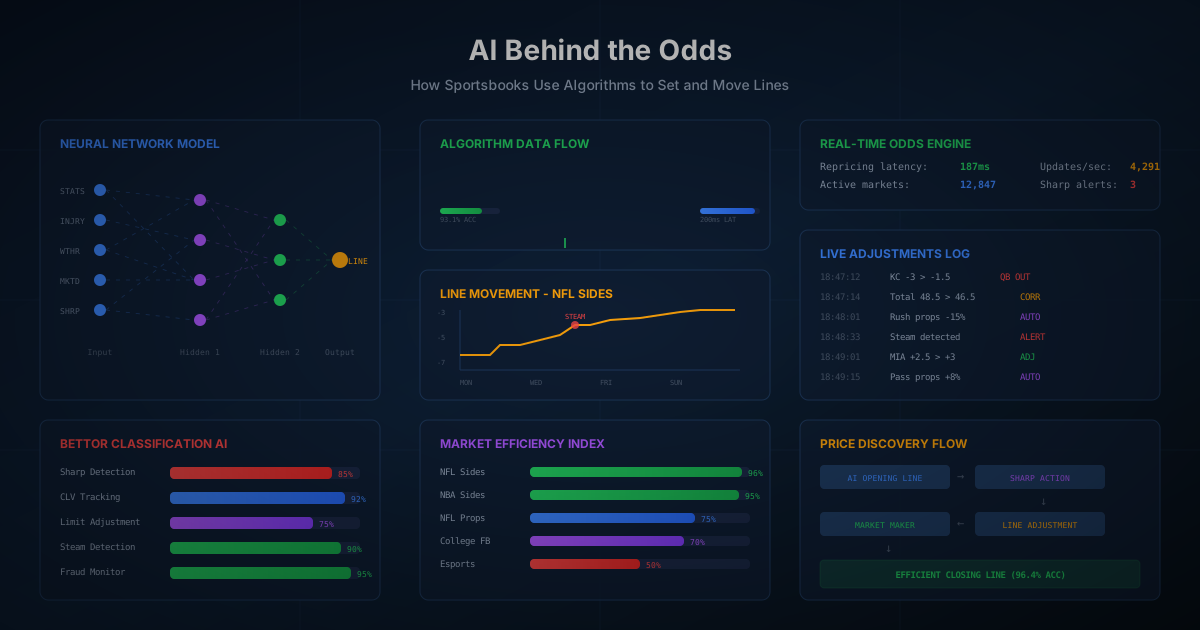
Most sportsbooks use automated models to generate prop lines. These models are reasonable but far from perfect. They struggle with:
- Recent usage changes that have not hit the box score yet (a receiver running more routes after a teammate's injury)
- Matchup-specific adjustments (a corner who shadows versus zone coverage)
- Game script implications (how a 10-point spread affects a running back's second-half workload)
- Weather effects on specific stat categories (wind suppressing deep passing but not short completions)
A human who researches these factors can consistently identify where the algorithm is wrong.
The Vig Is Higher, But So Is the Edge
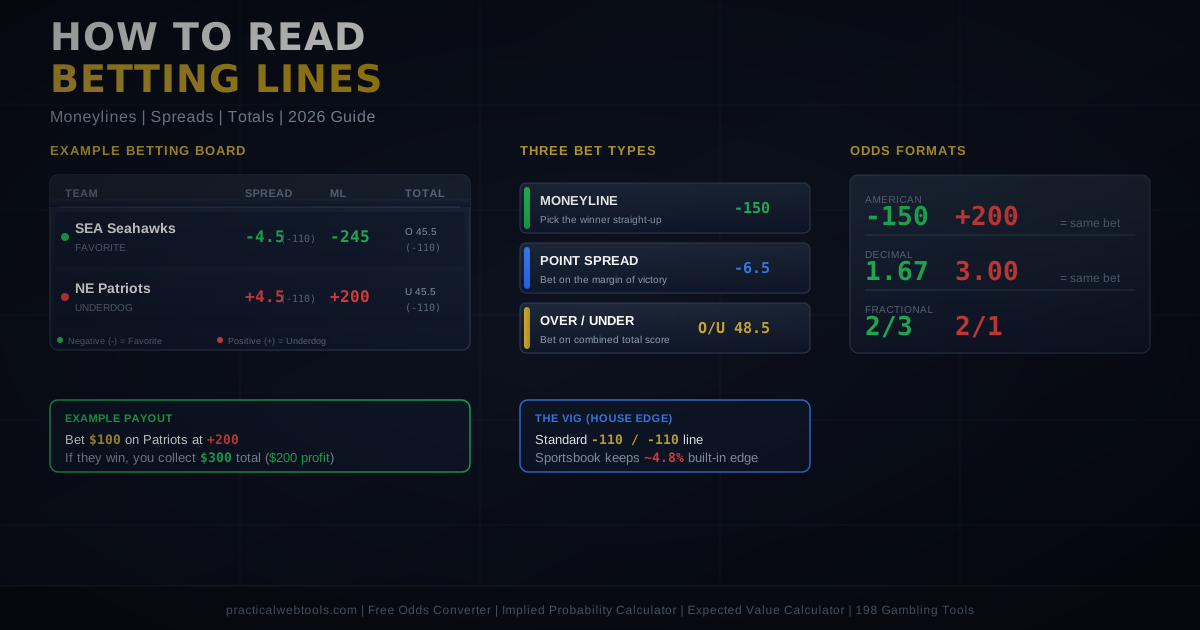
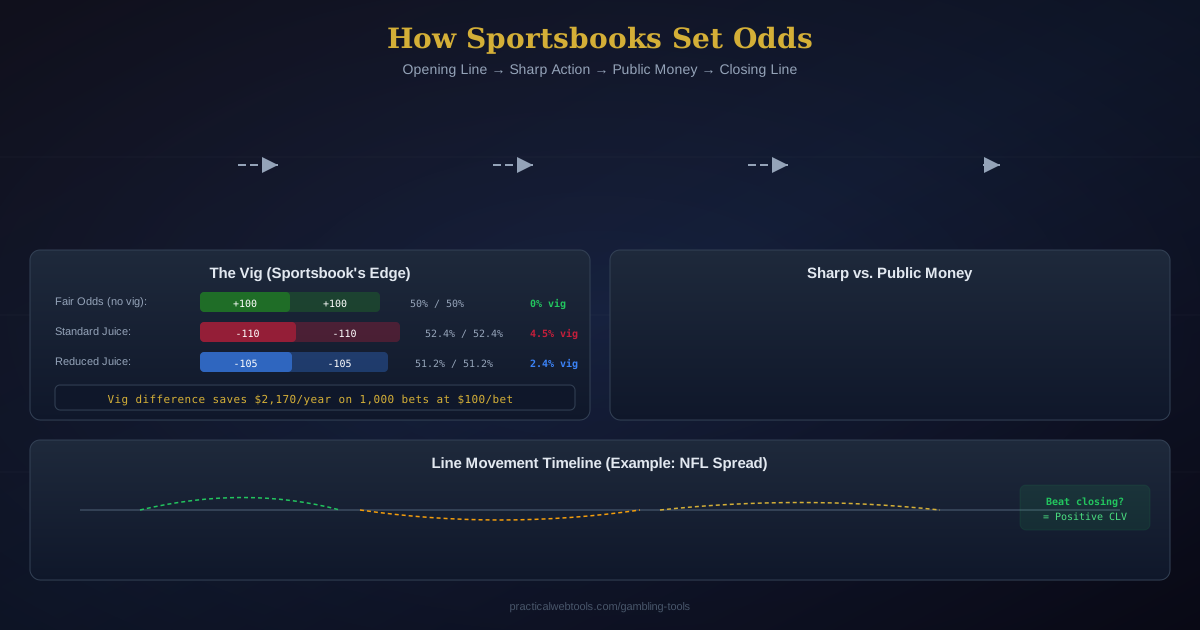
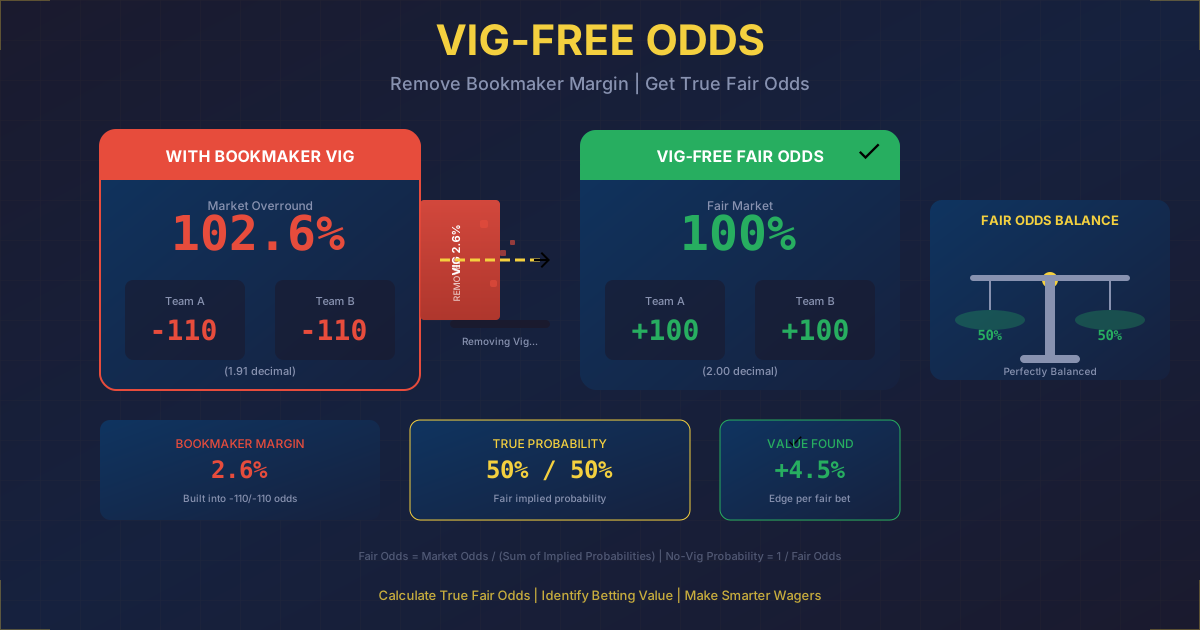
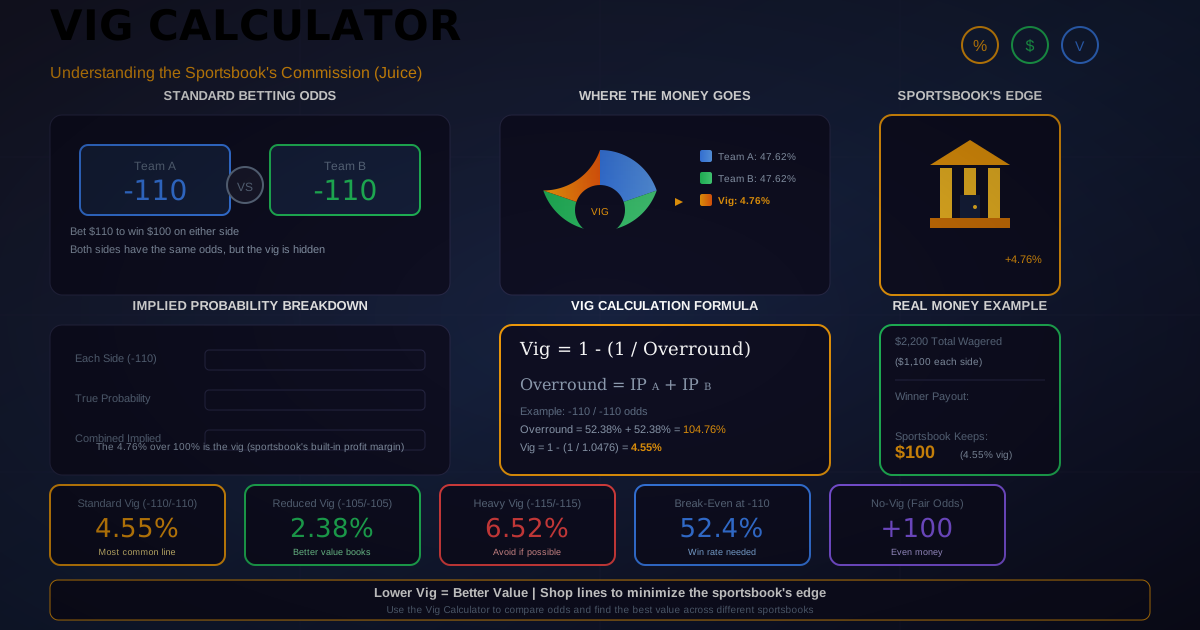
Standard spread bets typically carry -110 juice on both sides (a 4.76% hold). Player props often carry -115, -120, or worse juice, meaning the sportsbook takes a larger cut.
This scares away some bettors, but it should not scare you. The key insight is that while the vig is higher, the mispricing is often far larger than the extra juice. A spread might be mispriced by 1-2%. A player prop can easily be mispriced by 5-15%.
| Market Type | Typical Hold (Vig) | Typical Mispricing | Net Edge Opportunity |
|---|---|---|---|
| Point Spreads | 4.5-5% | 1-3% | Small, requires volume |
| Game Totals | 4.5-5% | 1-3% | Small, requires volume |
| Moneylines | 3-6% | 2-4% | Moderate |
| Player Props (Main) | 5-8% | 3-10% | Large, accessible |
| Player Props (Alt Lines) | 8-15% | 5-20% | Very large, selective |
| Same-Game Parlays | 15-30% | Variable | High vig, be cautious |
Check the hold on any line with our Hold/Vig Calculator.
Line Shopping Creates Massive Discrepancies
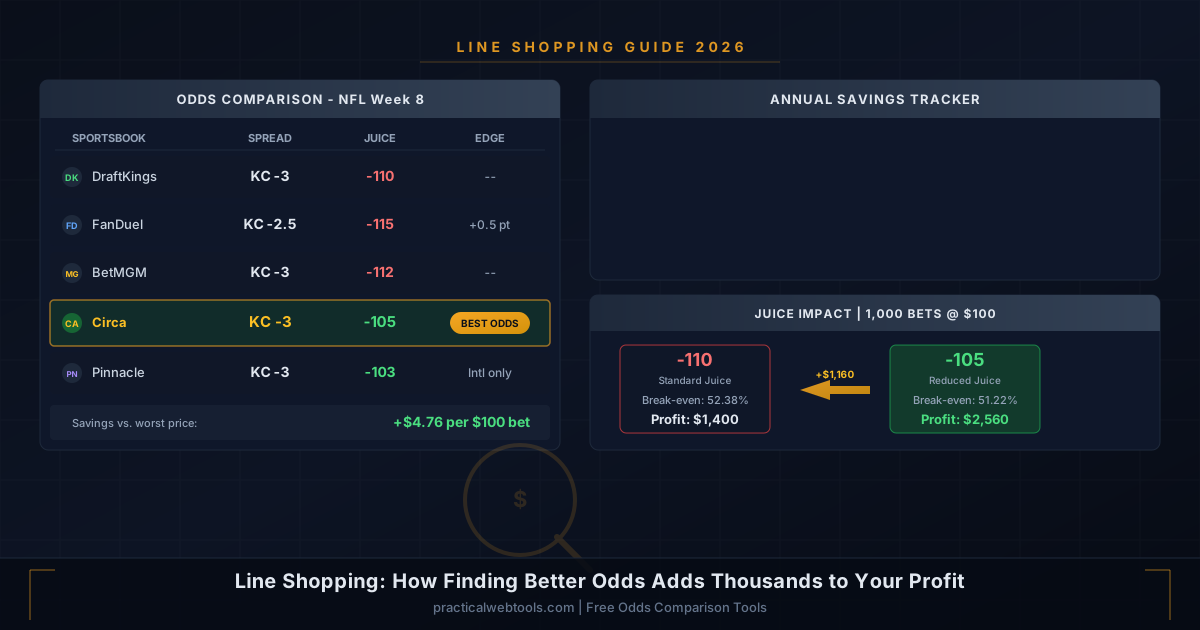
Because props receive less attention, different sportsbooks frequently disagree on player lines by a full point or more. You might see Patrick Mahomes' passing yards set at 274.5 at one book and 281.5 at another. That 7-yard gap represents real value that does not exist in spread markets where books are within a half-point of each other.
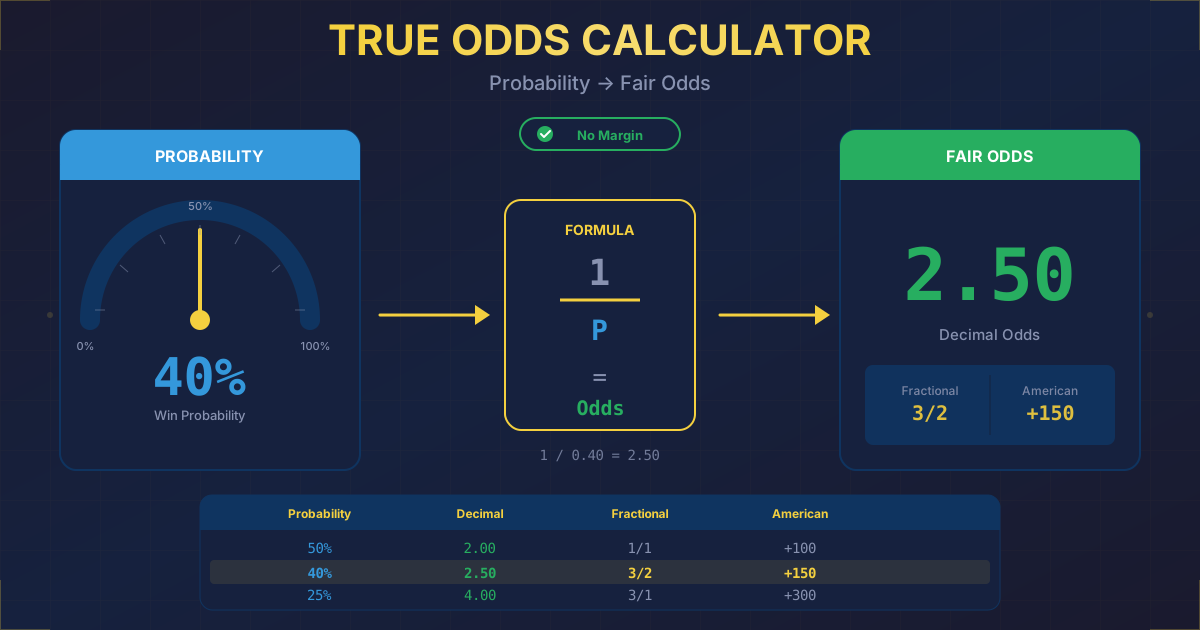
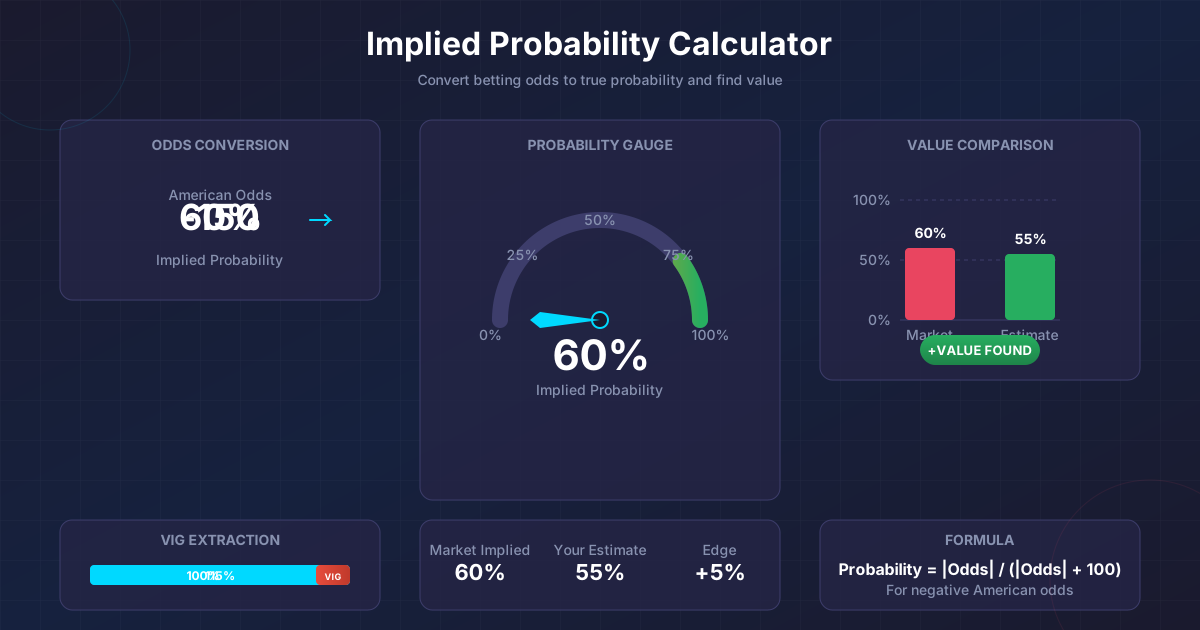
Always convert odds to implied probability before comparing. Use our Implied Probability Calculator.
NFL Player Prop Strategy
The NFL is the single most popular sport for prop betting, and its weekly schedule gives you a full week to research each game. This research window is your biggest structural advantage.
Passing Props (Quarterback Yards, Touchdowns, Completions)
Quarterback props are the most heavily bet player props, which means they are also the most efficient of the prop markets. You will find edges here, but they require deeper analysis.
Key Research Factors for QB Props:
| Metric | Why It Matters | Where to Find Edge |
|---|---|---|
| Pass attempts per game | Volume drives yards | Projected game script (trailing teams pass more) |
| Yards per attempt | Efficiency metric | Matchup vs. specific coverage schemes |
| Red zone opportunities | Drives TD props | Opponent red zone defense efficiency |
| Pressure rate allowed by OL | Suppresses all passing stats | Specific DL vs. OL matchup quality |
| Indoor vs. outdoor | Weather eliminates variance | Wind and precipitation data for outdoor games |
| Pace of play | More plays = more opportunities | Neutral pace comparison (not influenced by game score) |
Real-World Example: Josh Allen Over 265.5 Passing Yards (-115)
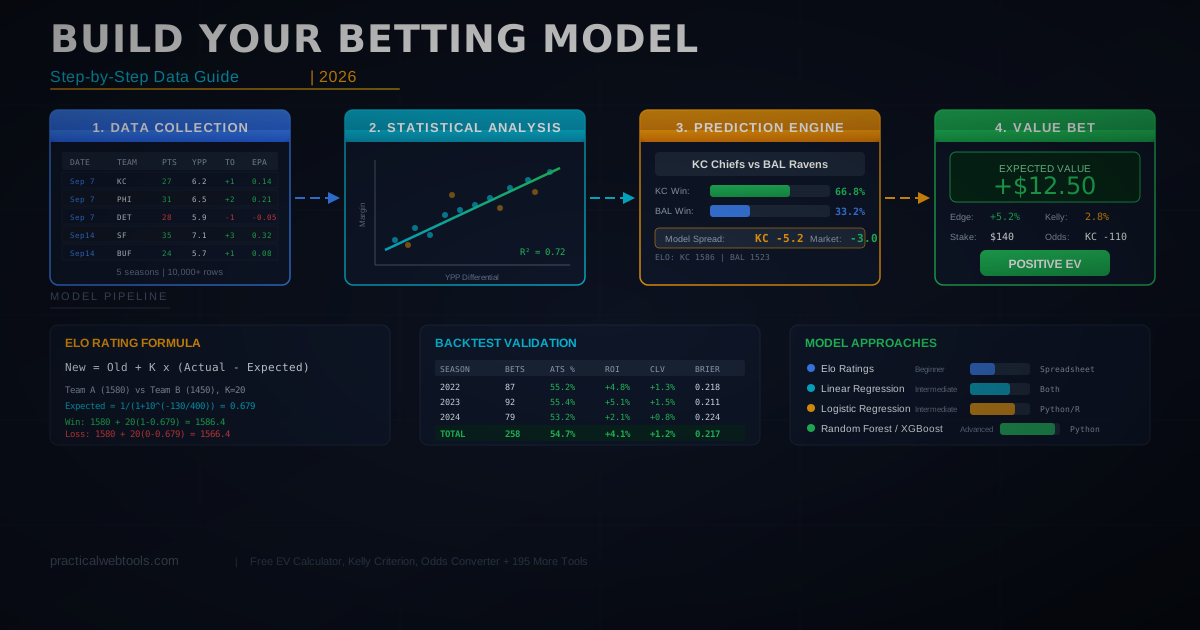
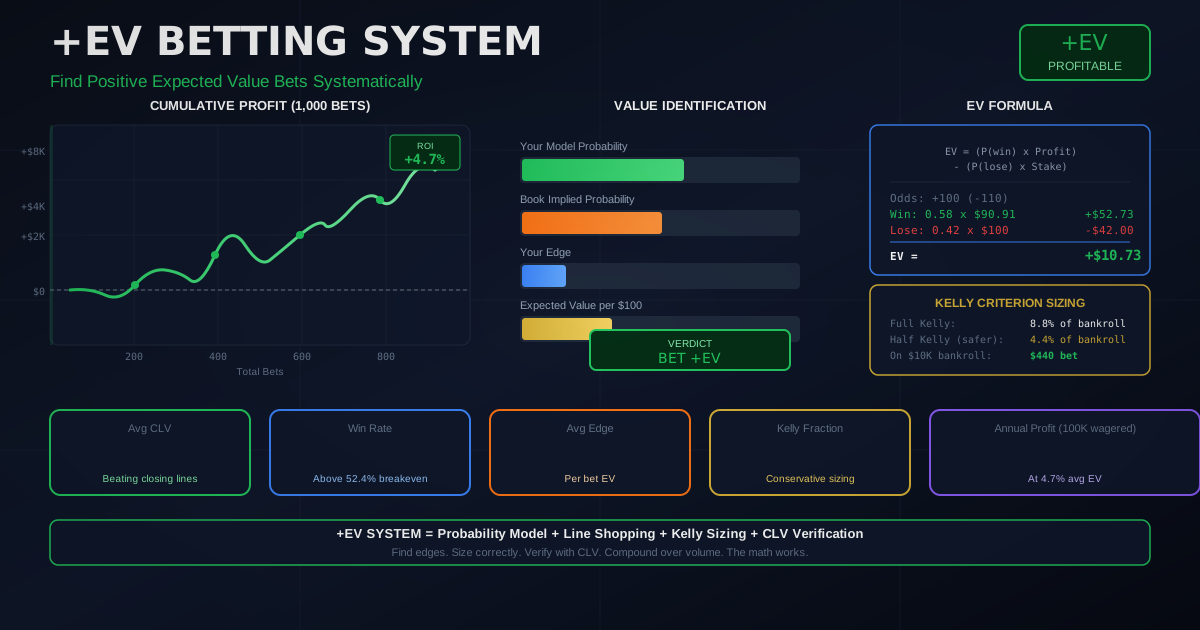
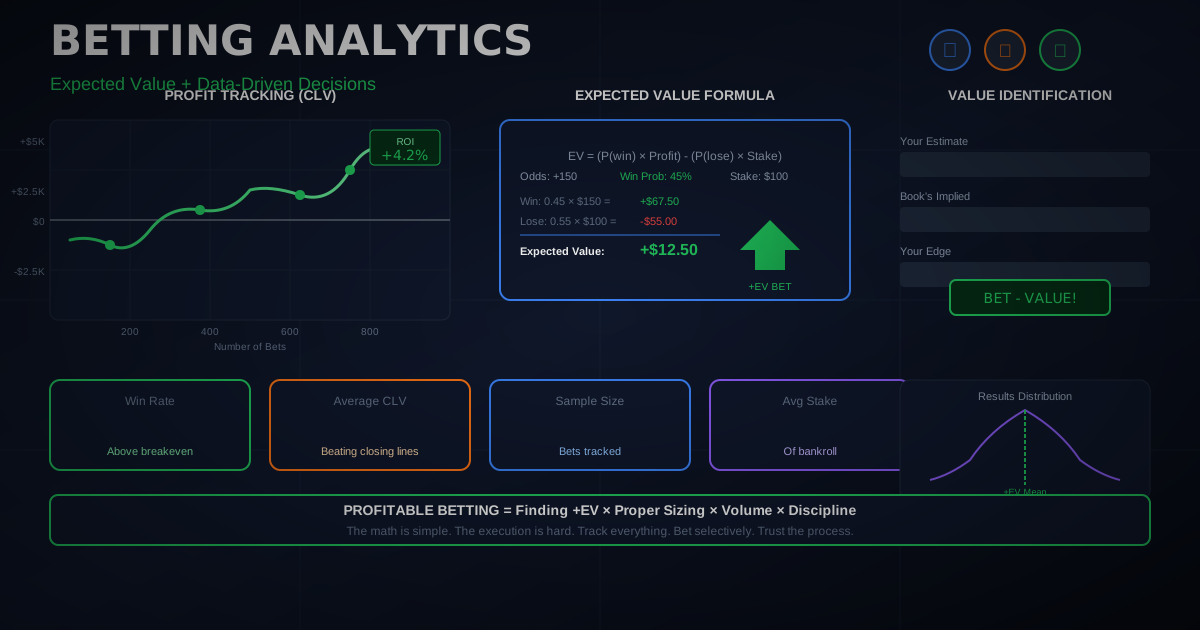
You research the matchup and find: the opposing defense ranks 28th in passing yards allowed per game (258), Allen has averaged 285 yards per game in his last 6 home starts, the game has a total of 51.5 (suggesting a high-scoring affair), and the opposing offense is strong enough to prevent Buffalo from running out the clock. Your projection: 282 yards. The implied probability at -115 is 53.5%, but your model says 58%. That is a +4.5% edge, which more than covers the extra vig.
You bet $150 on the over.
Rushing Props (Running Back Yards, Attempts, Touchdowns)
Rushing props are where game script analysis becomes critical. Running backs are the most game-script-dependent position in football, and sportsbook algorithms consistently underprice this factor.
The Game Script Formula:
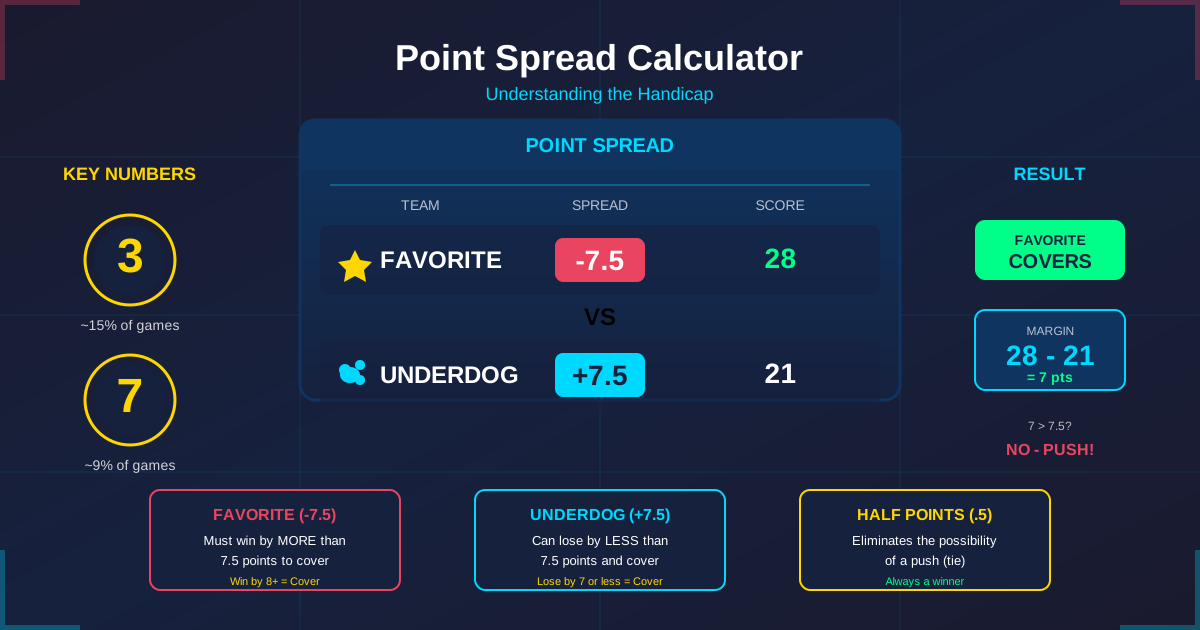
- Heavy favorites (spread -7 or more): Their RBs get 15-25% more carries than season average in the second half
- Heavy underdogs (spread +7 or more): Their RBs see 15-30% fewer carries as the team abandons the run
- Close games (spread within 3): Rushing volume stays near season average
Key Research Factors for RB Rushing Props:
- Carries per game and red zone carries
- Yards before contact (offensive line quality)
- Stacked box percentage faced
- Opponent rushing yards allowed per attempt
- Weather conditions (rain and snow boost rushing game share)
- Injury status of offensive linemen
Real-World Example: Derrick Henry Over 84.5 Rushing Yards (-110)
Baltimore is a 6.5-point favorite at home. Henry has averaged 92 rushing yards per game this season. The opponent allows 4.6 yards per carry (26th in the NFL). Your projection: 96 yards. At -110, you need Henry to clear this line 52.4% of the time. Your model says 59%. The edge is +6.6%.
You bet $200 on the over.
Receiving Props (Yards, Receptions, Touchdowns)
Receiving props are often the softest NFL player prop market because they depend on multiple variables that algorithms handle poorly: target share, route participation rate, coverage assignment, and game script.
Key Research Factors for WR/TE Receiving Props:
| Factor | What to Look For | Edge Source |
|---|---|---|
| Target share | % of team targets | Recent trend vs. season average |
| Route participation | % of snaps running routes | Increasing role after injury to teammate |
| Coverage matchup | CB assignment, zone vs. man | Specific corner's yards allowed per coverage snap |
| Air yards share | Deep threat vs. short game | Matchup against safety help tendencies |
| Red zone targets | TD opportunity | Opponent red zone target distribution allowed |
Real-World Example: Ja'Marr Chase Over 78.5 Receiving Yards (-120)
Chase has seen a 31% target share over the past 4 weeks (up from 26% season average) after Tee Higgins went on IR. The opponent plays man coverage 65% of the time and their CB1 has allowed 2.1 yards per coverage snap (league average is 1.4). Your projection: 91 yards. At -120, implied probability is 54.5%. Your model says 61%.
You bet $175 on the over.
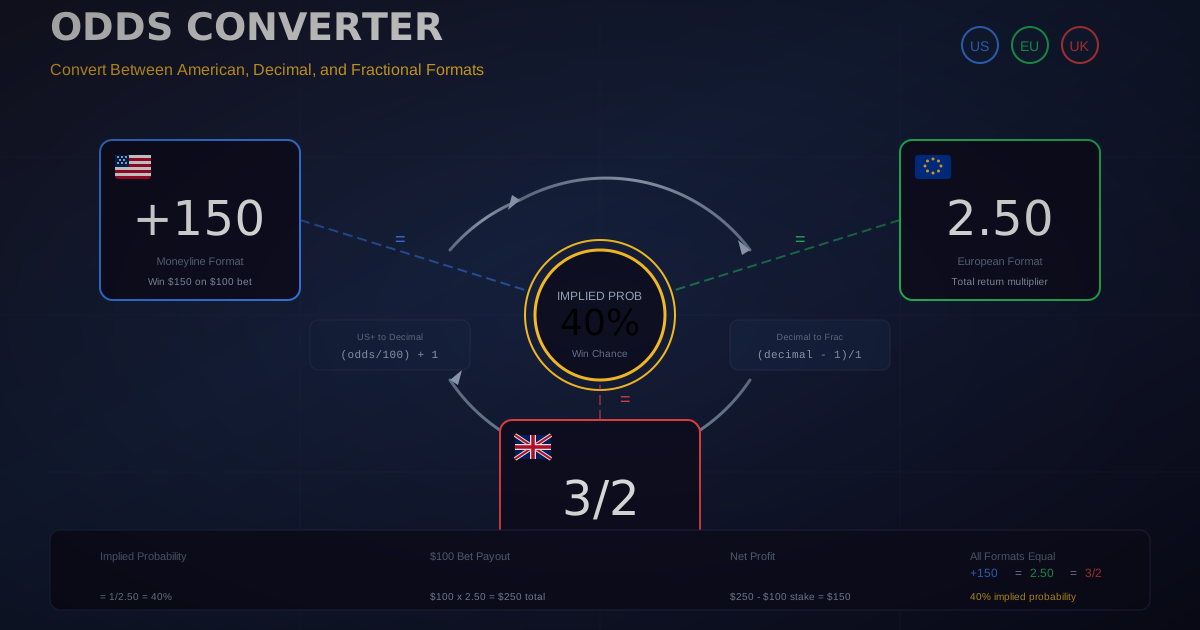
Convert any odds format to compare books with our Odds Converter.
NBA Player Prop Strategy
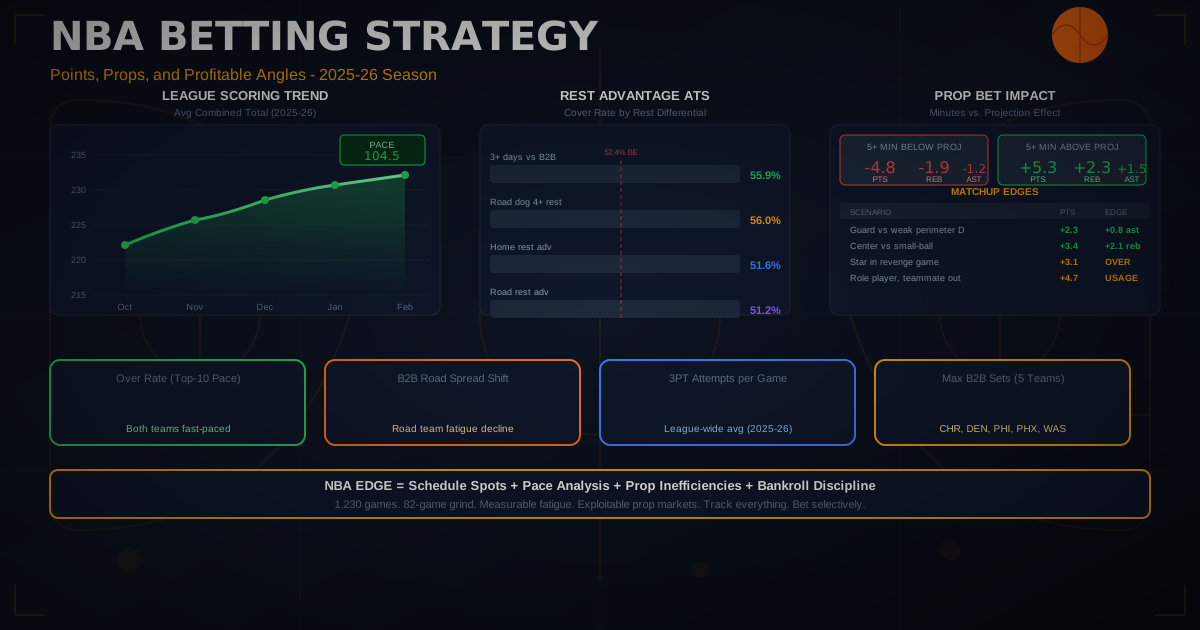
The NBA offers prop betting opportunities almost every night during the season, with 1,230 regular season games providing massive volume. The key difference from NFL props: smaller sample sizes per game but much larger season-long datasets.
Points Props
Points are the most liquid NBA prop market. Finding edges requires looking beyond simple scoring averages.
Key Research Factors for NBA Points Props:
| Metric | Why It Matters | How to Use It |
|---|---|---|
| Usage rate | Shot attempts + FTA per possession | Higher usage = higher ceiling |
| Minutes projection | Must be on the court to score | Rest patterns, blowout risk |
| Pace matchup | Possessions per game | Fast pace = more scoring opportunities |
| Defensive rating vs. position | How the opponent guards this position | Specific defender matchup data |
| Home/away splits | Some players have significant splits | Consistent home-court advantage |
| Back-to-back status | Fatigue suppresses scoring | Especially for players 30+ years old |
Real-World Example: Jayson Tatum Over 27.5 Points (-115)
The Celtics play a top-5 pace team tonight. Tatum has averaged 31.2 points against top-10 pace teams this season versus 26.8 overall. His usage rate climbs to 33% in these matchups. The opponent ranks 22nd in points allowed to small forwards. Your projection: 30.1 points. At -115, you need 53.5% hit rate. Your model says 60%.
You bet $125 on the over.
Rebounds Props
Rebounds are one of the most predictable NBA stat categories because they correlate strongly with minutes, position, and opponent shooting percentage (more missed shots means more rebounds).
Key Factors:
- Opponent field goal percentage (worse shooting = more rebounds available)
- Pace (more possessions = more rebound opportunities)
- Teammate rebound competition (when a fellow big man is out, rebounds concentrate)
- Home vs. away (home teams grab more offensive rebounds on average)
Assists Props
Assist props are game-script dependent. Blowouts reduce minutes for starters, killing assist totals. Close games keep stars on the floor and running the offense.
Key Factors:
- Projected game closeness (spread within 5 is ideal)
- Teammate shooting percentages (assists require made baskets)
- Pace and opponent defensive scheme
- Secondary playmaker availability (if the backup point guard is out, the star handles more)
MLB Player Prop Strategy
Baseball offers some of the most exploitable prop markets because the sport is uniquely driven by individual matchups that data can quantify precisely.
Pitcher Strikeout Props
Strikeout props are the crown jewel of MLB prop betting. Strikeouts are one of the most predictable statistics in baseball, driven by pitcher skill and opponent tendencies.
Key Research Factors for Strikeout Props:
| Factor | Metric to Track | Edge Source |
|---|---|---|
| Pitcher K rate | K/9, K% | Consistent performers are reliable |
| Opponent K rate | Team K%, L/R splits | High-K teams face high-K pitchers = inflated line potential |
| Pitch count projection | Expected innings pitched | Shorter outings cap strikeout totals |
| Umpire tendencies | Called strike rate | Generous umpires expand the zone |
| Weather | Temperature, humidity | Warm air helps breaking ball movement |
| Rest days | Days between starts | Extra rest often means sharper stuff |
Real-World Example: Corbin Burns Over 6.5 Strikeouts (-125)
Burns faces a team that strikes out 26.1% of the time (4th highest in MLB). His season K rate is 28.3%. He is pitching at home where his K rate jumps to 30.1%. He had 5 days rest instead of the normal 4. Your projection: 7.4 strikeouts. At -125, you need a 55.6% hit rate. Your model says 63%.
You bet $150 on the over.
Hits and Total Bases Props
Hitter props require drilling into platoon splits and recent form more than any other prop market.
Key Research Factors:
- Batter vs. pitcher handedness splits: A left-handed hitter facing a right-handed pitcher with a .320 wOBA against righties versus .240 against lefties is a completely different bet depending on the pitching matchup
- Ballpark factors: Coors Field (park factor 1.39) versus Oracle Park (park factor 0.83) creates massive disparities in hit and total bases expectations
- Recent form (last 14 days): Hitters go through hot and cold streaks. A hitter batting .340 over his last 50 plate appearances is meaningfully different from one batting .210
- Weather conditions: Wind blowing out at 15+ mph at Wrigley Field adds roughly 0.3 total bases to projections. Cold weather (below 50F) suppresses offense significantly
Ballpark Factor Impact on Total Bases Props:
| Ballpark | Park Factor | Impact on Total Bases |
|---|---|---|
| Coors Field | 1.39 | +25-35% above neutral |
| Great American Ball Park | 1.14 | +10-15% above neutral |
| Yankee Stadium | 1.08 | +5-10% above neutral |
| Dodger Stadium | 0.98 | Roughly neutral |
| Oracle Park | 0.83 | -10-15% below neutral |
| Tropicana Field | 0.88 | -8-12% below neutral |
The Player Prop Research Process
Winning at player props is not about hunches or gut feelings. It is about a repeatable research process that you execute before every bet. Here is the framework that profitable prop bettors follow.
Step 1: Establish a Baseline Projection
Start with the player's season-long per-game averages for the stat category. This is your starting point, not your final answer.
Example: A quarterback averages 267.3 passing yards per game this season. That is your baseline.
Step 2: Apply Matchup Adjustments
Adjust the baseline up or down based on the specific opponent's defensive performance in that stat category.
Formula: Baseline x (Opponent Factor / League Average Factor) = Matchup-Adjusted Projection
Example: The opponent allows 245 passing yards per game. The league average is 228. Matchup factor = 245 / 228 = 1.075. Adjusted projection: 267.3 x 1.075 = 287.3 yards.
Step 3: Apply Situational Adjustments
Layer in game script, weather, home/away, rest, and any other contextual factors.
Checklist:
- Game spread and total (game script)
- Indoor vs. outdoor, weather forecast
- Home vs. away performance
- Days of rest and schedule spot
- Key injuries (own team and opponent)
- Recent trend (last 3-5 games) versus season average
Step 4: Compare to the Line
Take your final projection and compare it to the sportsbook line. Calculate implied probability of each side and determine if an edge exists.
Decision Framework:
| Your Edge (Projection vs. Line) | Action |
|---|---|
| Less than 2% | No bet (edge too small to overcome vig) |
| 2-4% | Small bet (1% of bankroll) |
| 4-7% | Standard bet (1.5-2% of bankroll) |
| 7-10% | Strong bet (2-3% of bankroll) |
| 10%+ | Max bet (3-4% of bankroll, verify projection) |
Step 5: Line Shop
Check at least 3-5 sportsbooks for the best line. A half-point difference on a rushing prop or a full strikeout on a K prop can swing a marginal bet into a strong one.
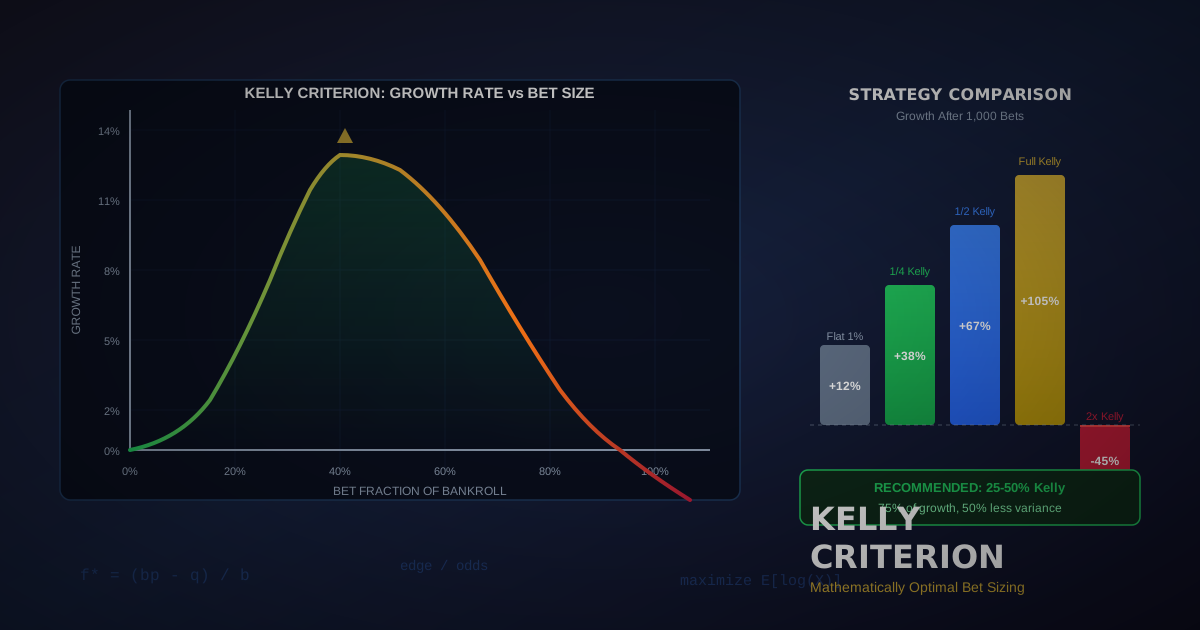
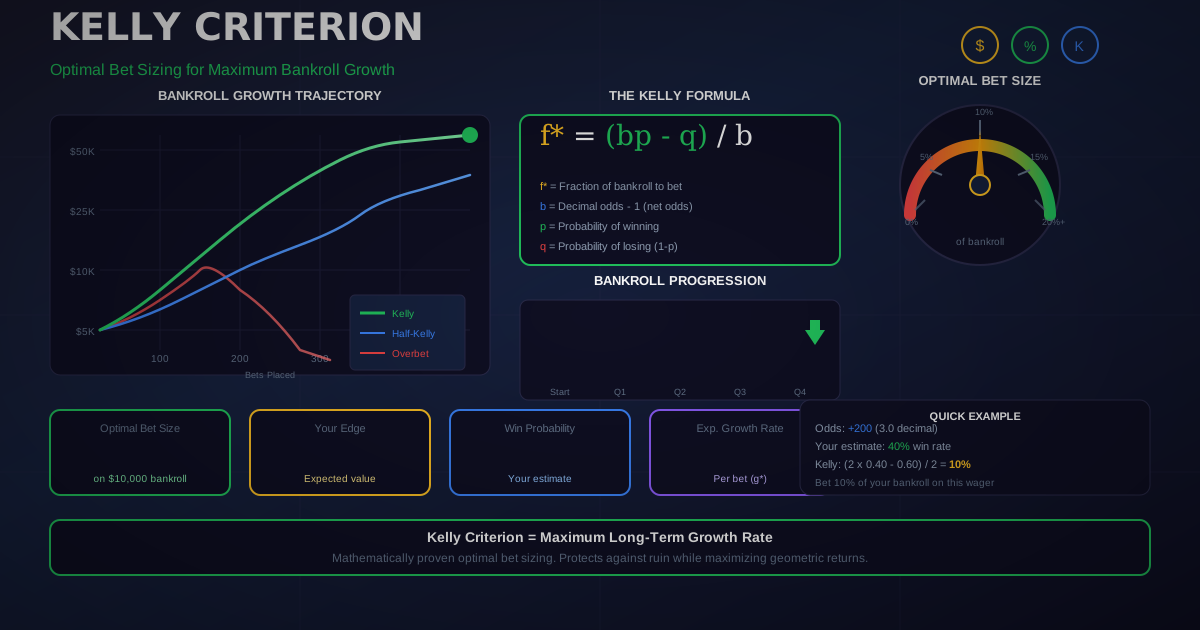
Calculate the optimal bet size for your edge with our Kelly Criterion Calculator.
Correlation Strategy and Same-Game Parlays
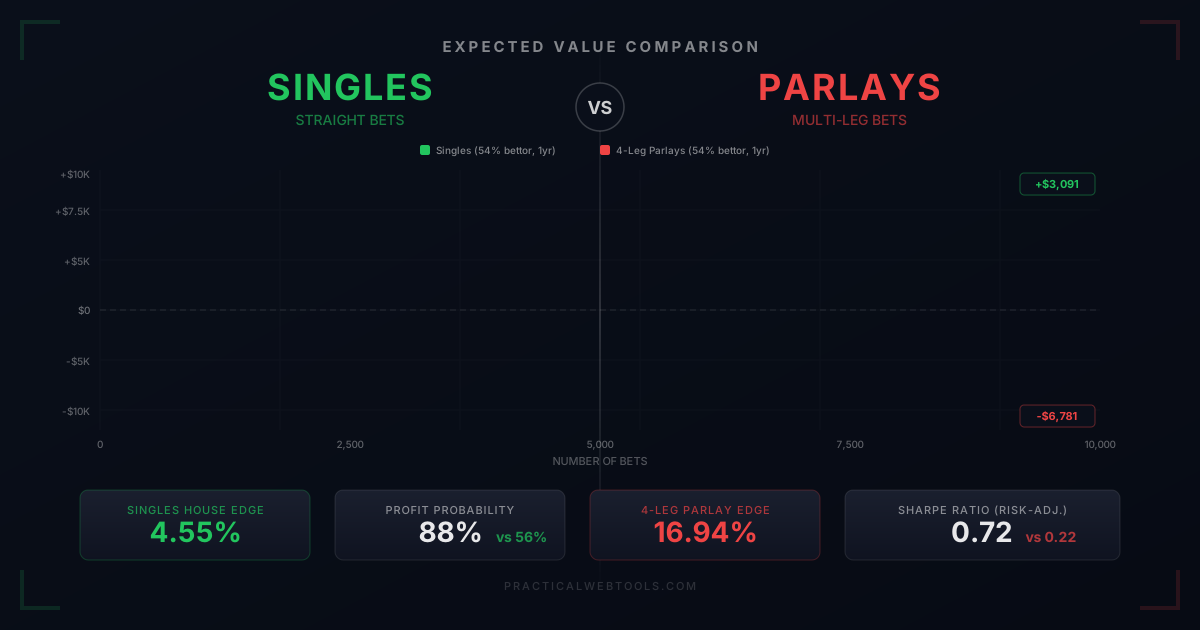
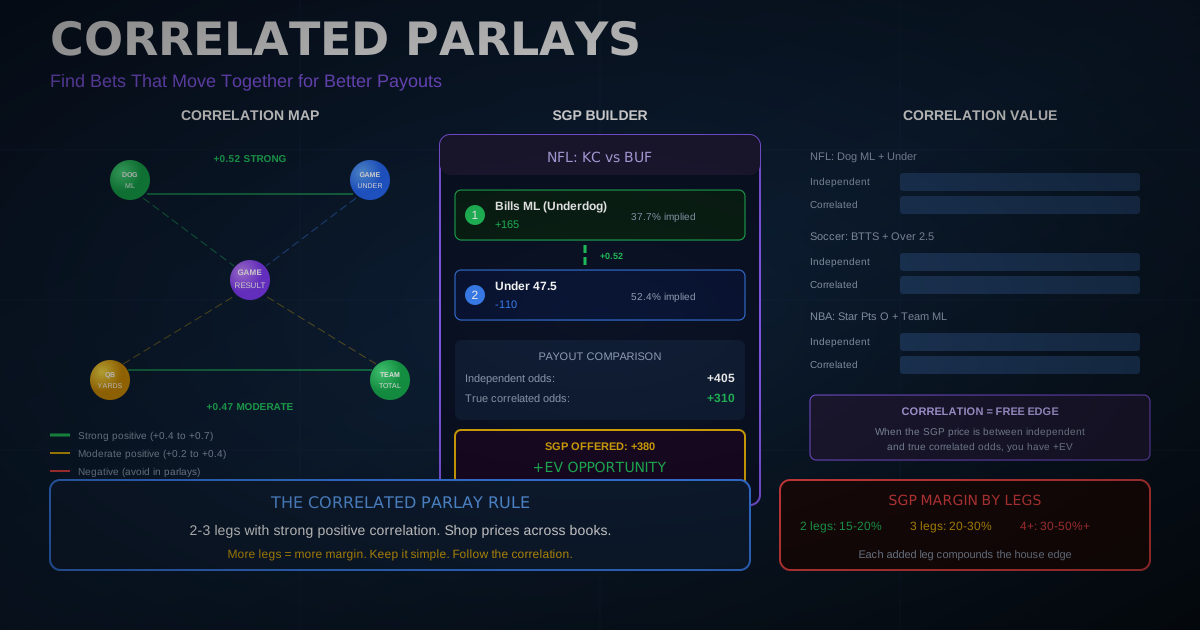
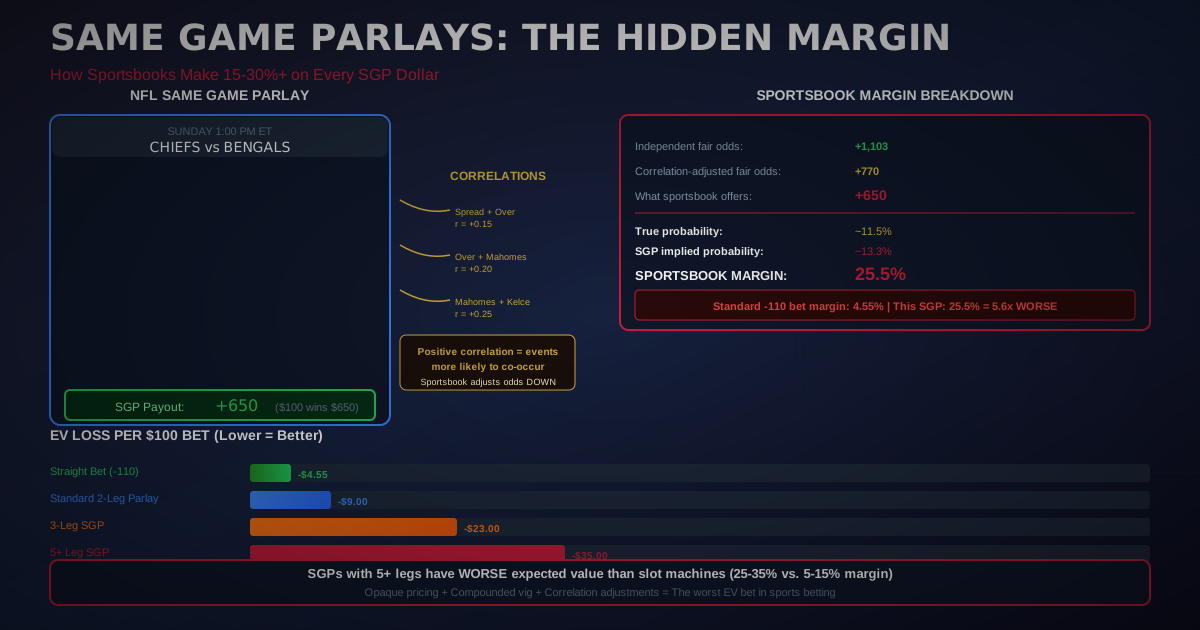
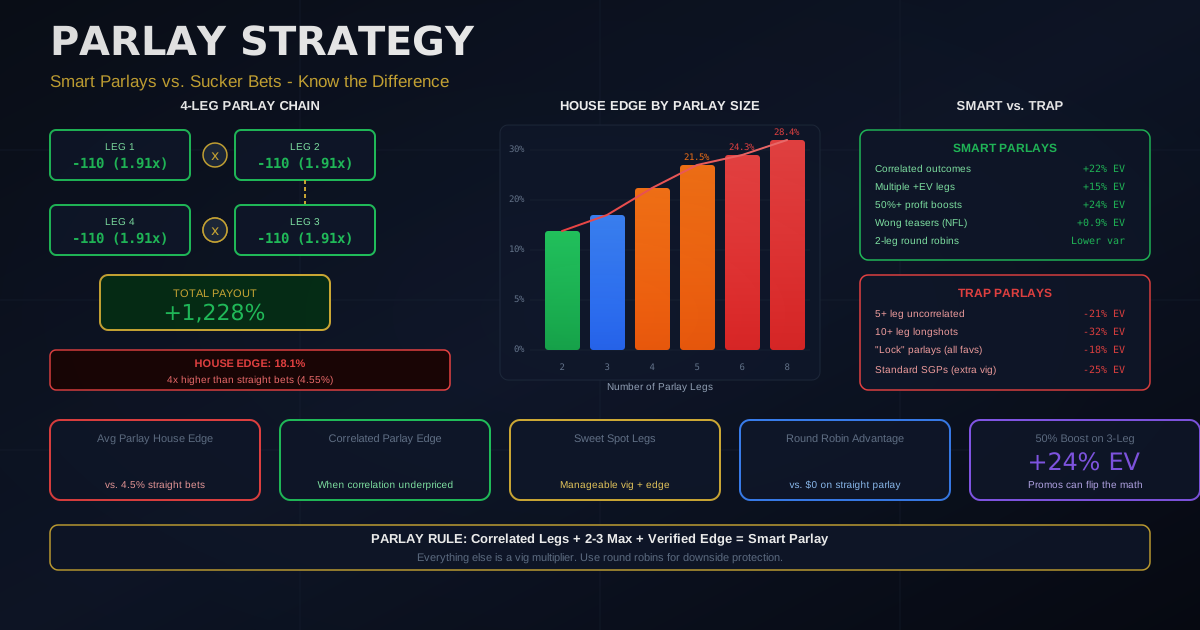
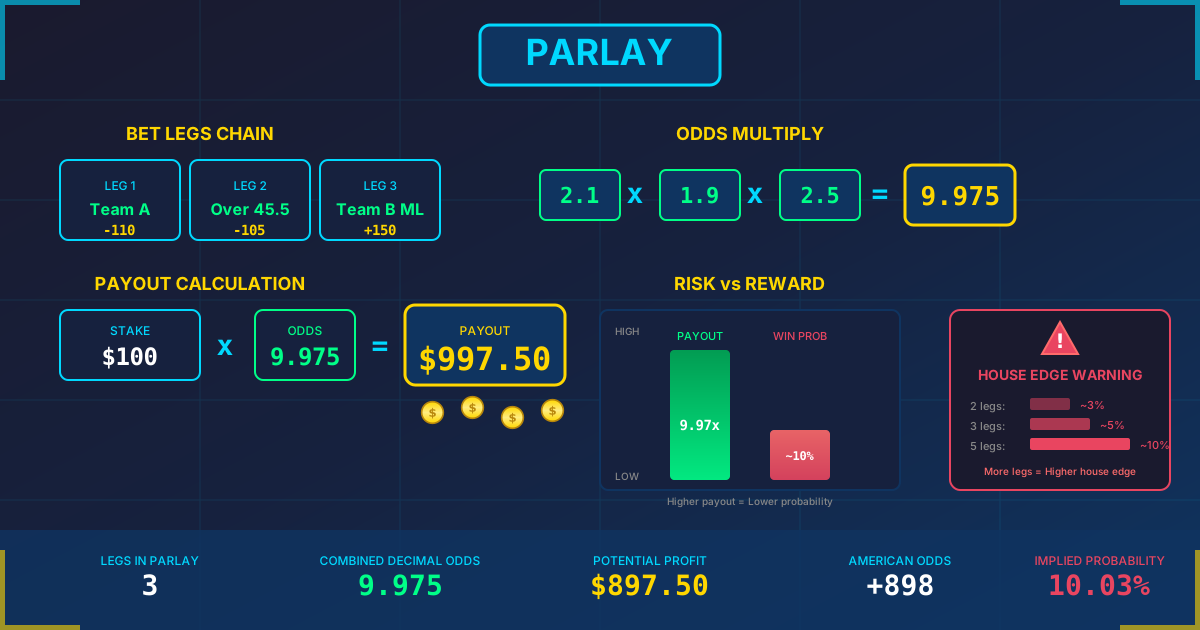
Same-game parlays (SGPs) combine multiple bets from the same game. Sportsbooks love SGPs because the house edge is 3-5 times higher than single bets. But correlation-aware bettors can find spots where the book underprices the connection between outcomes.
Understanding Prop Correlation
Correlation means two outcomes are more likely to happen together than independently. Sportsbooks adjust SGP pricing for obvious correlations, but they consistently underprice subtle ones.
Strong Positive Correlations (Outcomes Move Together):
| Leg 1 | Leg 2 | Why They Correlate |
|---|---|---|
| QB Over Passing Yards | WR1 Over Receiving Yards | QB yards flow through receivers |
| Game Over Total | QB Over Passing TDs | High-scoring games mean more touchdowns |
| Team -7 Favorite | Favorite RB Over Rushing Yards | Leading teams run more in the second half |
| NBA Over Total | Star Player Over Points | High-scoring games boost individual scoring |
Negative Correlations (Outcomes Move Against Each Other):
| Leg 1 | Leg 2 | Why They Conflict |
|---|---|---|
| QB Over Passing Yards | Team Wins by 14+ | Blowouts lead to running clock |
| RB Over Rushing Yards | Team Loses by 10+ | Losing teams abandon the run |
| Pitcher Over Strikeouts | Team Wins by 8+ | Pitcher gets pulled early in blowout win |
Building Profitable SGPs
The key to profitable SGPs is building a coherent game narrative where all legs point in the same direction.
Example SGP Narrative: "Close, High-Scoring NFL Game"
- Game Over 48.5 total points
- QB1 Over 265.5 passing yards
- WR1 (same team as QB1) Over 72.5 receiving yards
- Game within 7 points (if available)
All four legs reinforce the same story: a competitive, pass-heavy game. The correlation between these outcomes means the "true" probability of all four hitting together is higher than the independent probability the sportsbook uses to price it.
Important Warning: Despite correlation advantages, the house edge on SGPs remains significantly higher than single bets. Use SGPs selectively, not as your primary betting strategy.
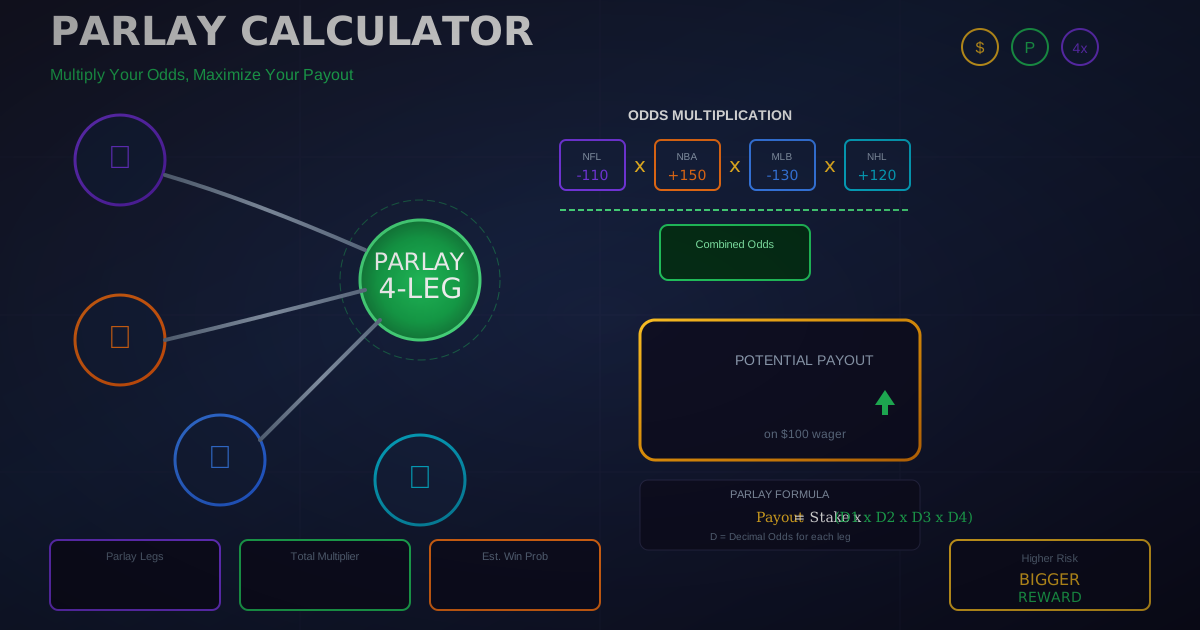
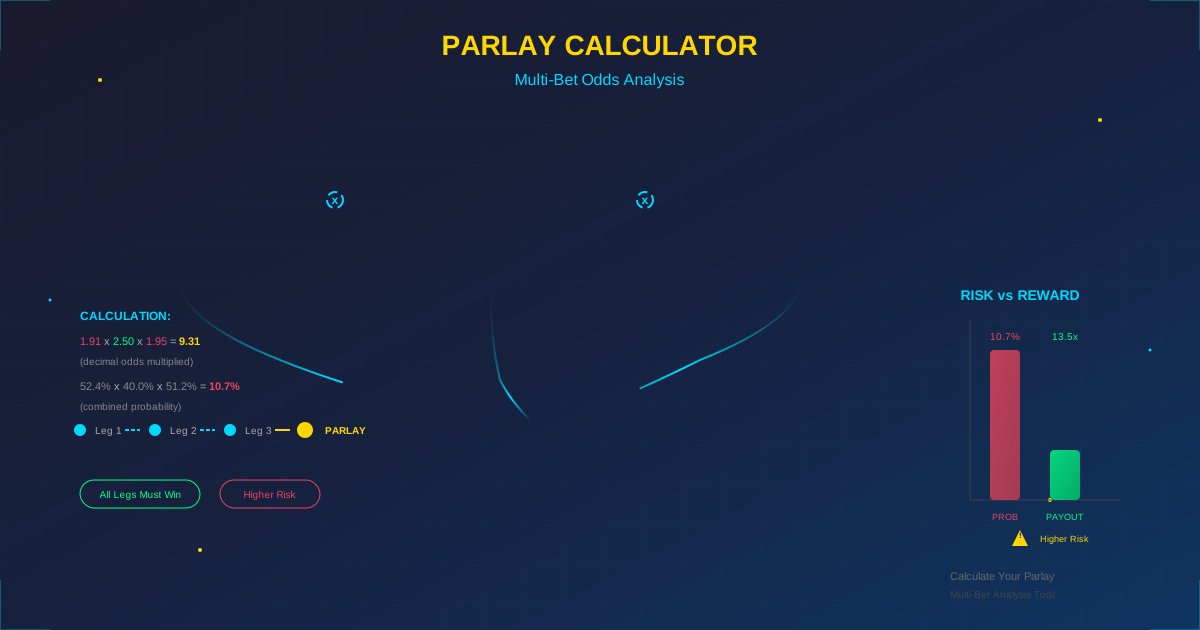
Calculate parlay payouts with our Parlay Calculator.
Alt Lines: Where the Biggest Edges Hide
Alternate lines are adjusted versions of the standard prop line, offering different numbers at different odds. For example, if the standard line is a quarterback Over 265.5 yards at -110, the alt lines might include Over 245.5 at -200, Over 285.5 at +130, and Over 305.5 at +250.
Why Alt Lines Are Less Efficient
Alt lines receive even less attention than standard props. The sportsbook algorithm stretches its model to generate dozens of alt lines, and the further you get from the primary number, the more likely the algorithm misprices it.
Finding Value in Alt Lines
Strategy 1: The "True Line" Discount
When your projection significantly exceeds the standard line, the alt line closer to your projection often offers better value than the standard.
Example: Your projection for a running back is 95 rushing yards. The standard line is 72.5 yards Over -115. The alt line is Over 84.5 yards at +115.
- Standard bet: Over 72.5 at -115 (very likely to hit, but the odds reflect that)
- Alt bet: Over 84.5 at +115 (still below your projection, with plus-money odds)
The alt line offers a higher expected value because the odds overcompensate for the extra 12 yards.
Strategy 2: The "Protection" Under
When you like an under but the standard line feels too close to the player's average, take an alt under at a higher number with reduced juice.
Example: Your projection for a quarterback is 235 passing yards. The standard line is Over/Under 252.5. The alt Under 272.5 at -165 gives you 37 yards of cushion with a high hit rate that still overcomes the heavier juice.
Calculate expected value on alt lines with our Expected Value Calculator.
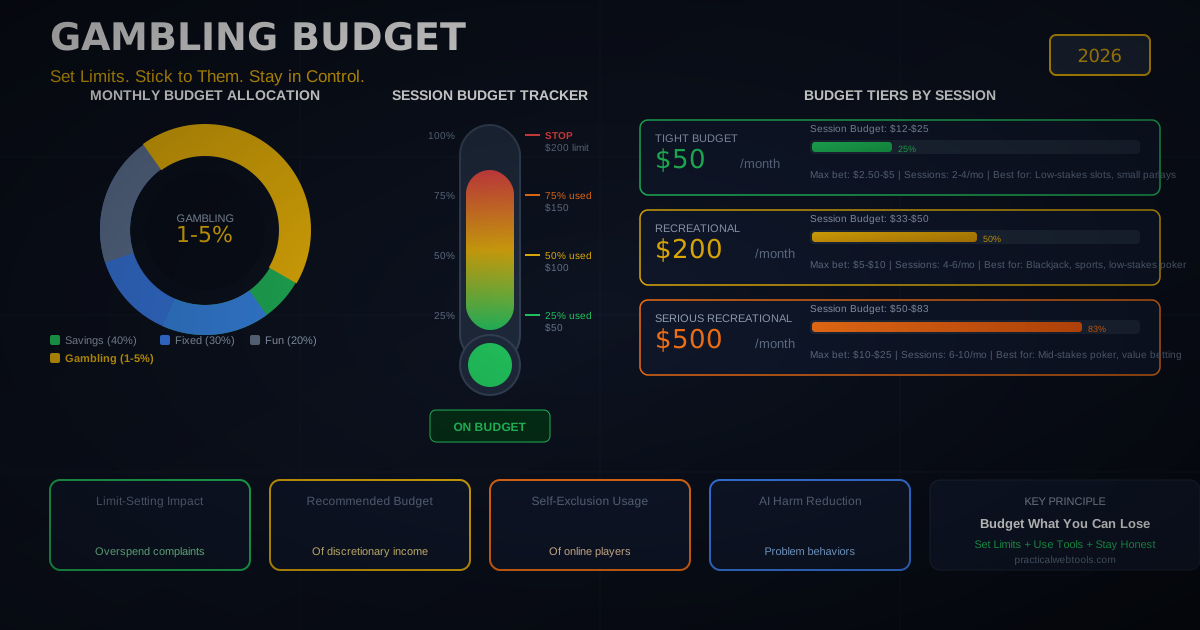
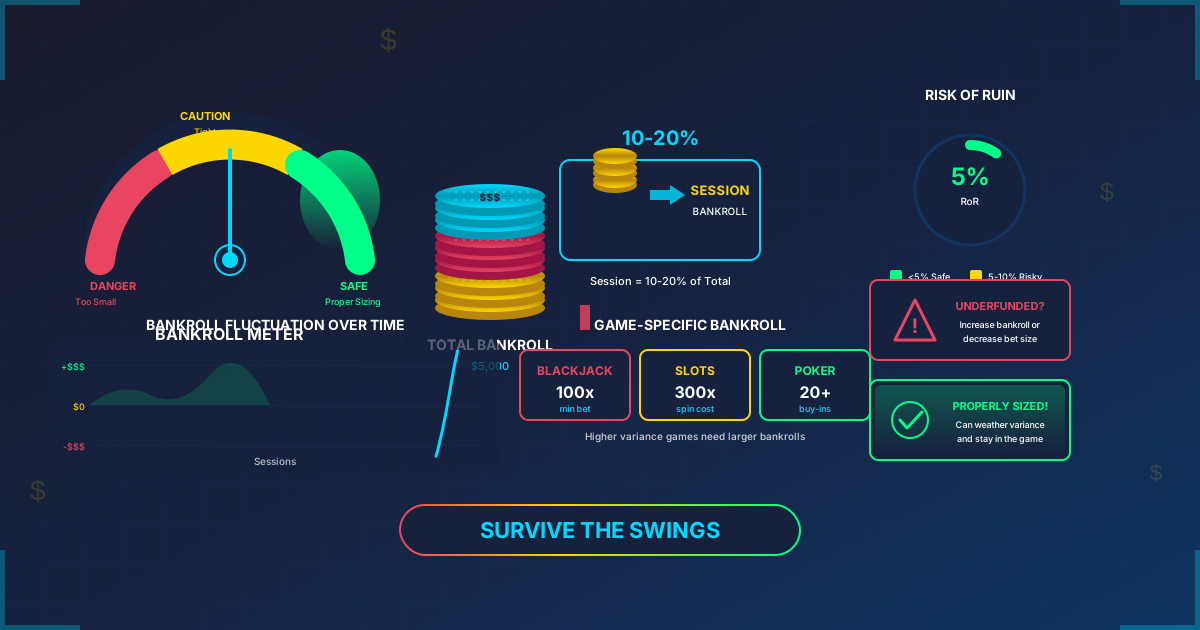
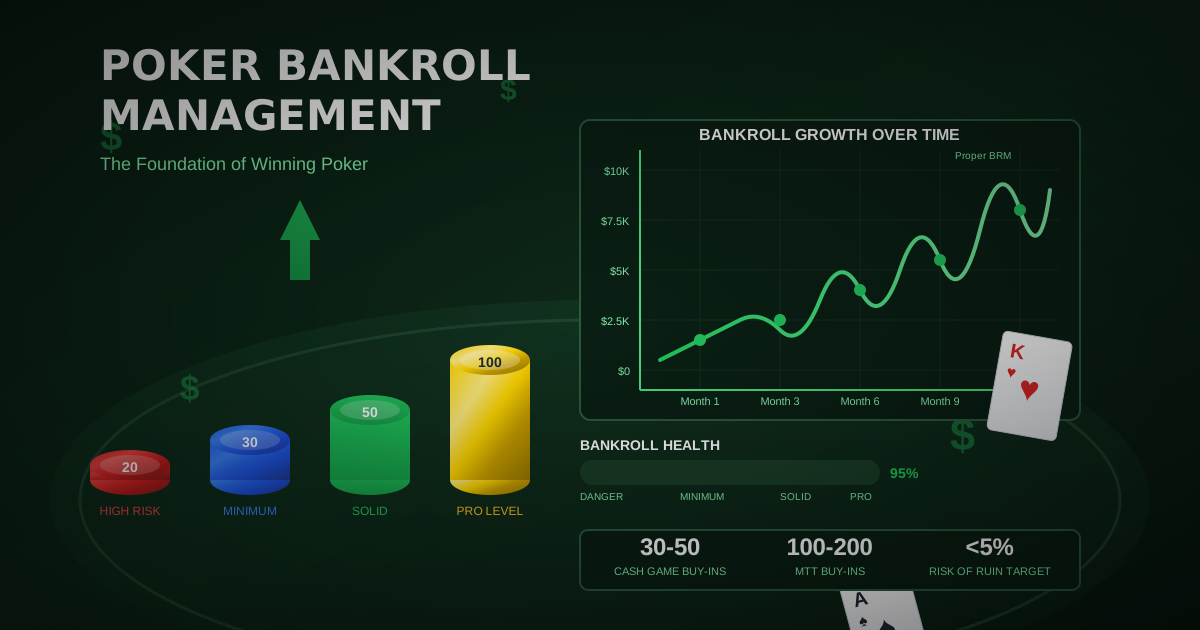
Player Prop Bankroll Management
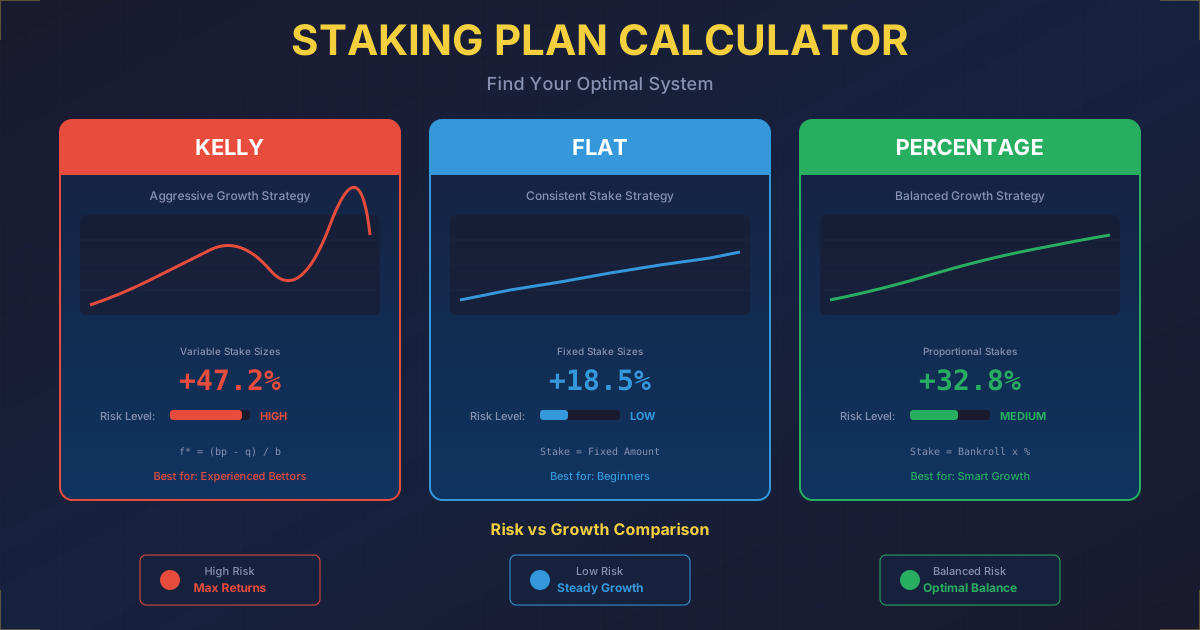
Props are high-volume, lower-variance bets compared to parlays and futures, but proper bankroll management is still essential.
Recommended Bankroll Structure for Props
| Component | Guideline |
|---|---|
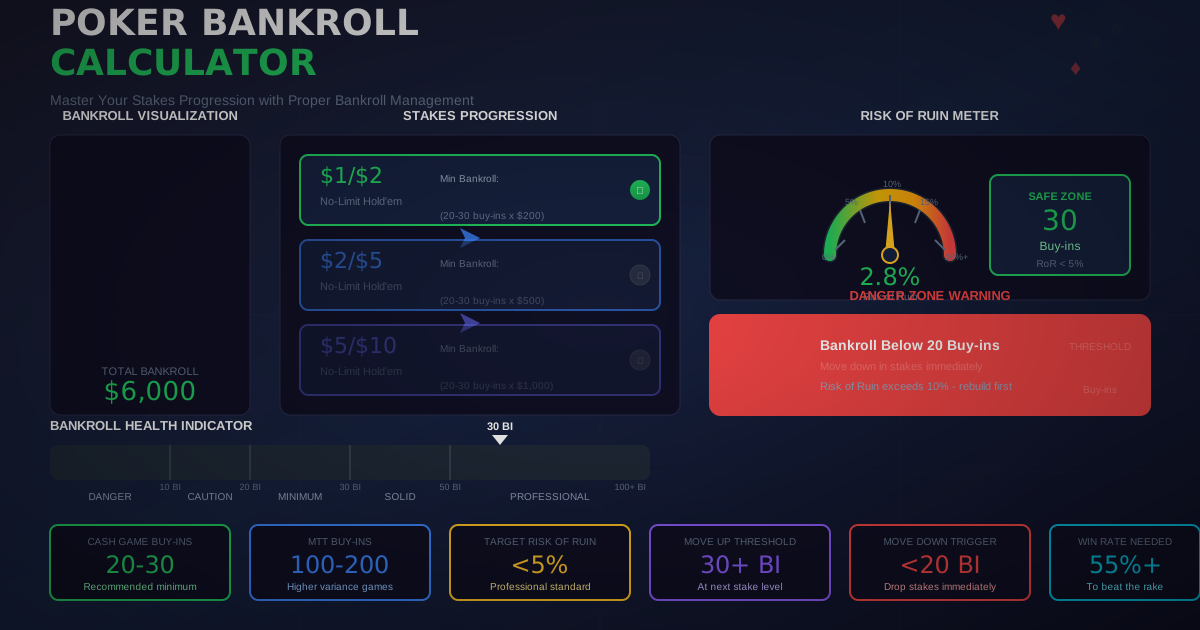
| Total prop bankroll | 20-30% of overall betting bankroll |
| Standard bet size | 1-2% of prop bankroll |
| Maximum bet size | 3-4% of prop bankroll |
| Minimum bankroll for prop betting | 50 units ($2,500 if betting $50/prop) |
| Daily exposure cap | 8-12% of prop bankroll |
| Weekly exposure cap | 25-35% of prop bankroll |
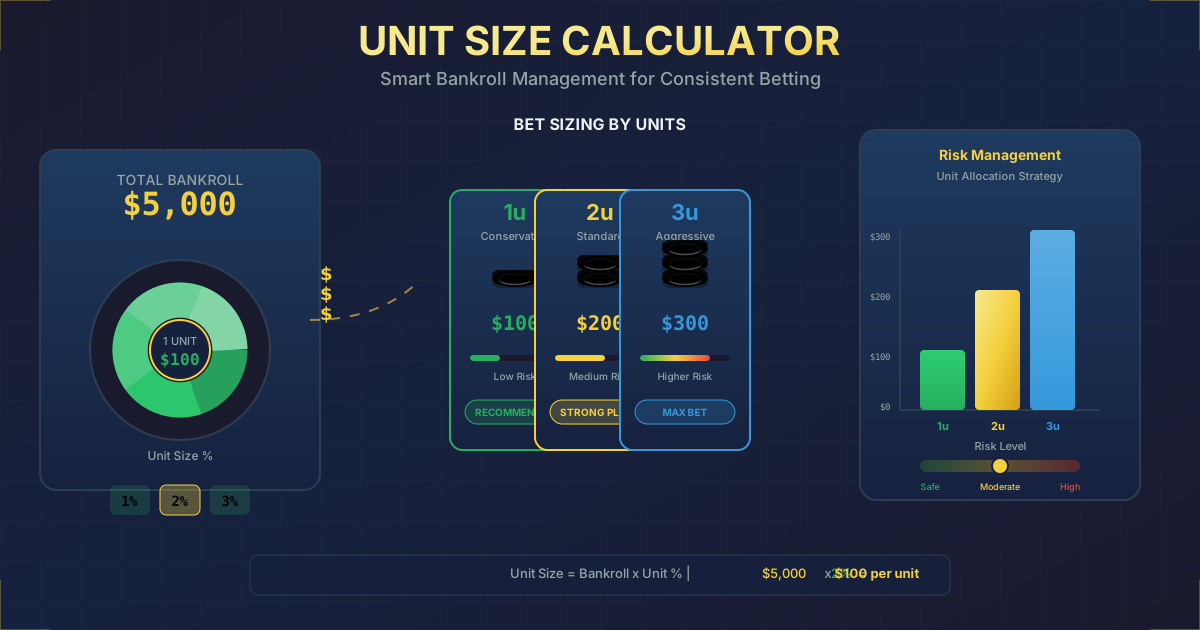
Why Unit Sizing Matters for Props
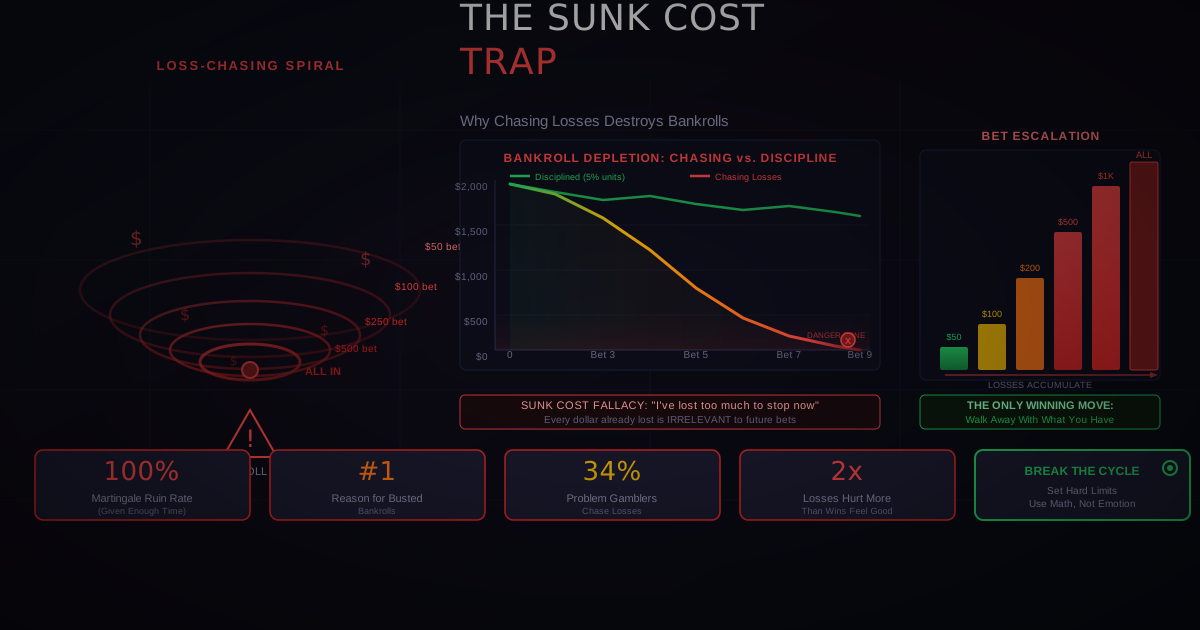
Because you will typically bet 3-8 props per day during peak season, the cumulative exposure adds up quickly. Keeping individual bets at 1-2% of bankroll ensures that a bad night (which will happen regularly) does not damage your bankroll significantly.
Example Bankroll Plan:
- Total sports betting bankroll: $5,000
- Prop betting allocation: $1,500 (30%)
- Standard prop bet: $15-$30 (1-2%)
- Strong edge prop bet: $45-$60 (3-4%)
- Daily cap: $120-$180 (8-12%)
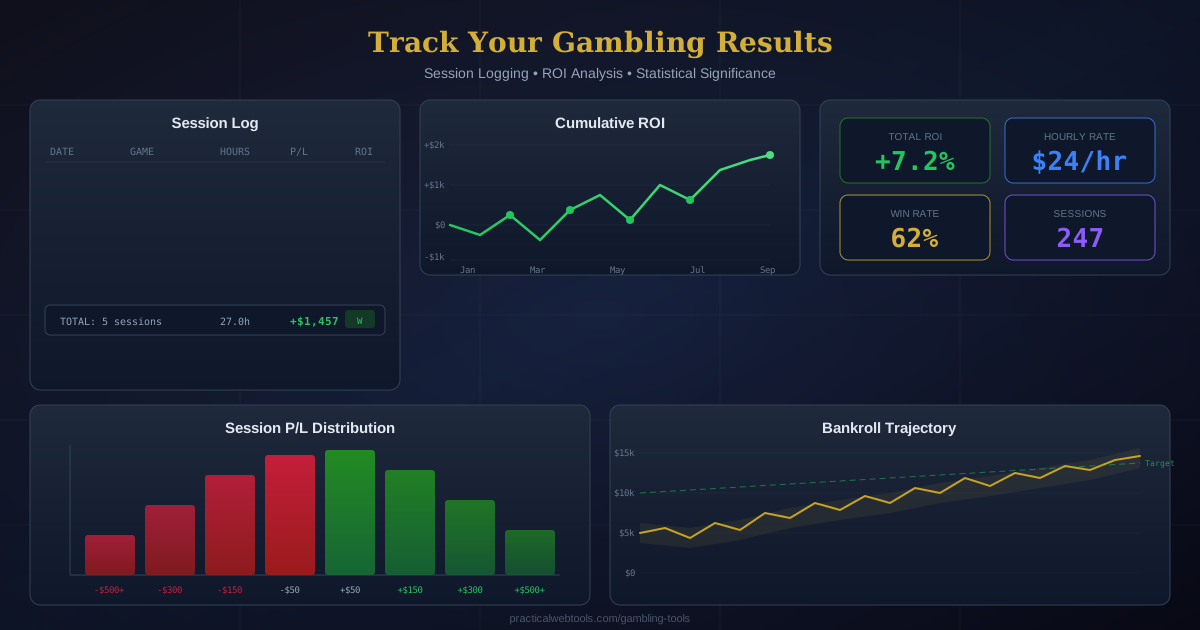
Tracking Your Prop Bets
Track every prop bet with these fields:
- Date and sport
- Player name and stat category
- Line and odds (book used)
- Your projection and calculated edge
- Bet size and reasoning
- Result (actual stat, win/loss, profit/loss)
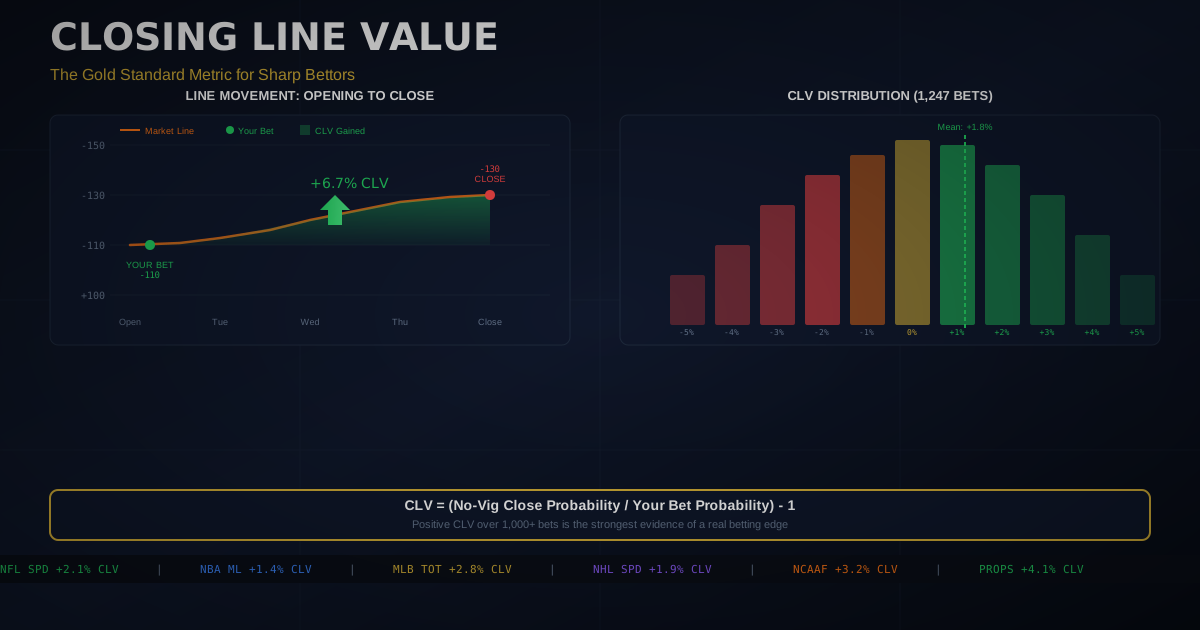
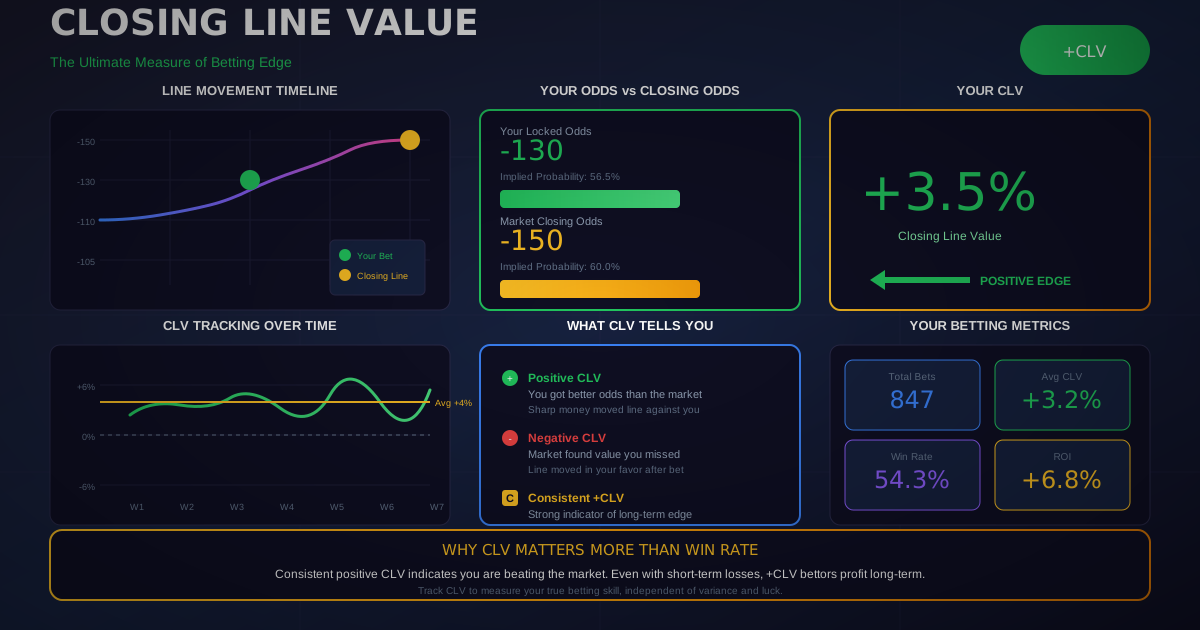
- Closing line (did the line move toward your side?)
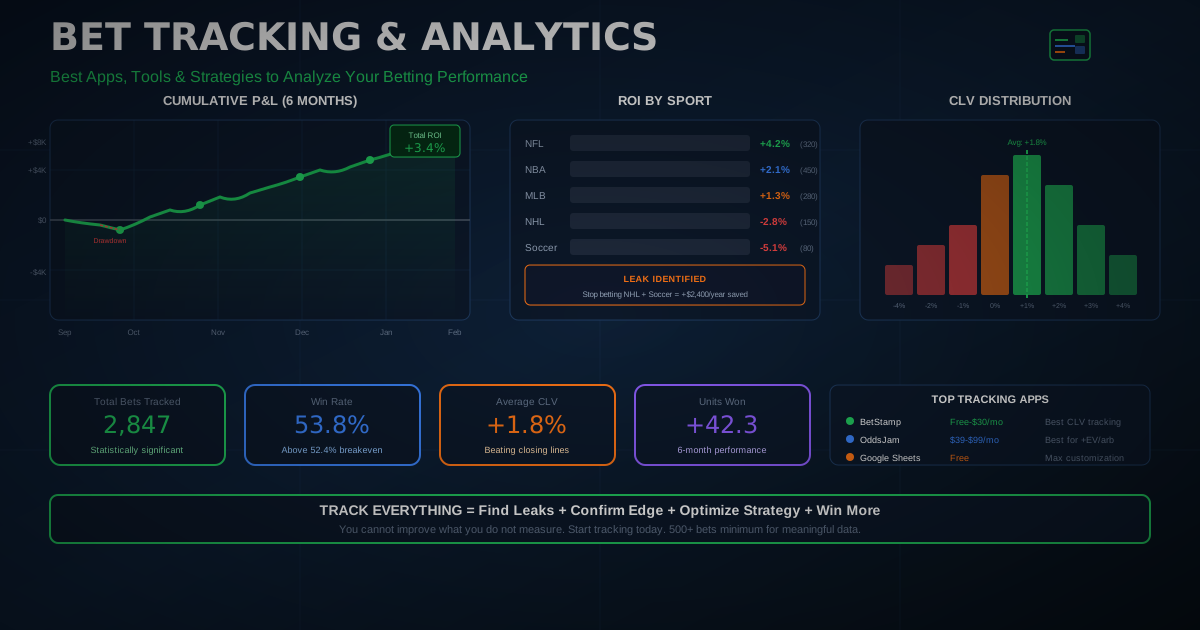
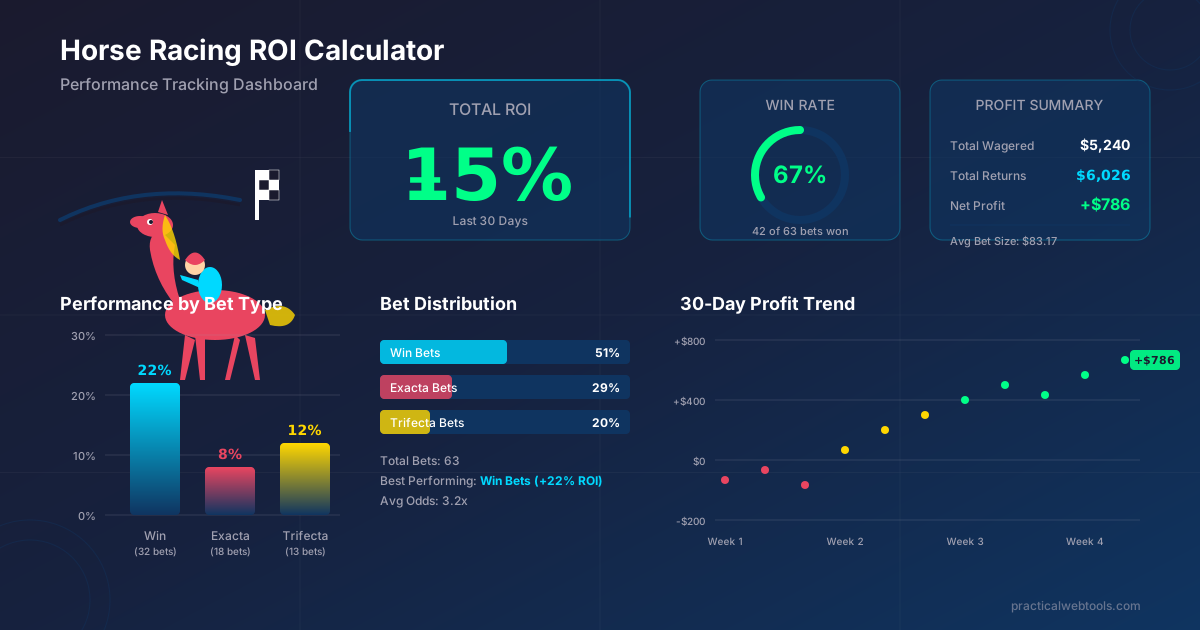
After 200+ tracked bets, you can identify which sport, stat category, and edge threshold produces the best results, and allocate more of your bankroll accordingly.
Size your bets mathematically with our Kelly Criterion Calculator.
Common Player Prop Betting Mistakes
Mistake 1: Betting Season Averages Without Adjustments
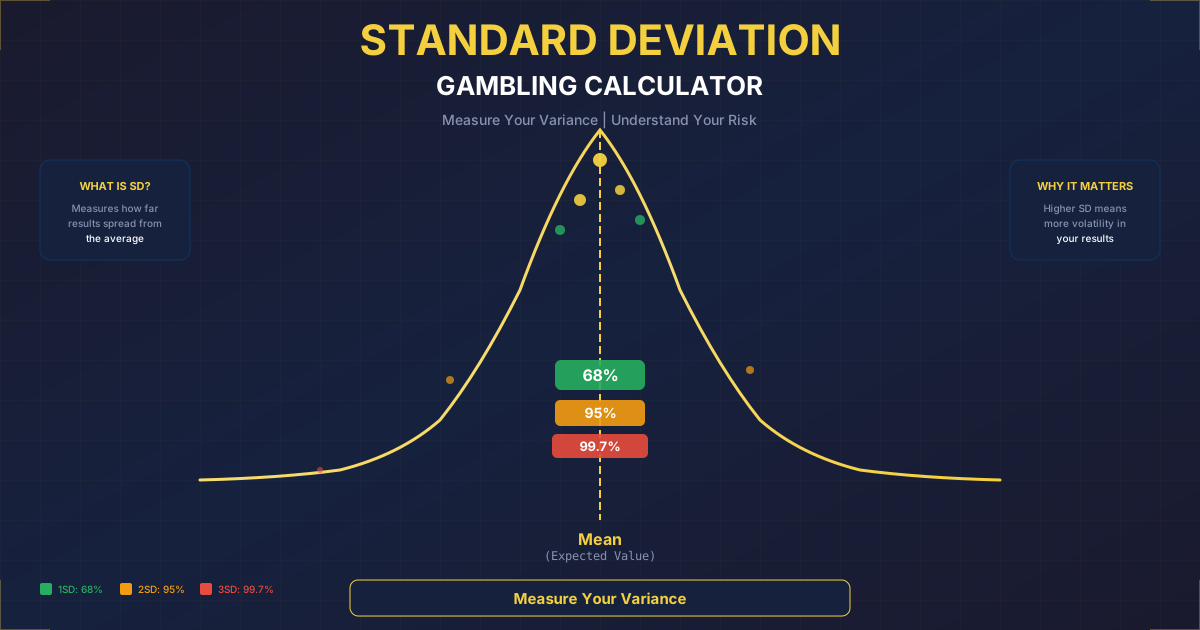
A player averaging 22 points per game does not have a 50/50 chance of going over 22. The distribution is skewed, and the matchup matters enormously. Always project the specific game, not the season average.
The Fix: Build a matchup-adjusted projection for every prop bet. Your projection should differ from the season average more often than not.
Mistake 2: Ignoring Minutes and Snap Counts
The single most important factor in most prop bets is playing time. A basketball player who plays 36 minutes will score more than one who plays 28 minutes. A wide receiver who runs routes on 95% of snaps will get more targets than one running routes on 75%.
The Fix: Always project minutes or snap count before projecting the stat. If there is blowout risk that could reduce minutes, lower your projection.
Mistake 3: Falling for Recency Bias
A running back who rushed for 150 yards last week gets heavy action on the over this week, pushing the line up. But last week's performance against a bottom-5 run defense does not predict this week's performance against a top-5 run defense.
The Fix: Weight recent performance appropriately (15-25% of your projection) but keep the majority of your analysis on season-long data and the specific matchup.
Mistake 4: Not Line Shopping
The difference between -115 and -105 on the same prop is the difference between needing a 53.5% hit rate and a 51.2% hit rate. Over hundreds of bets, this gap compounds into thousands of dollars.
The Fix: Maintain active accounts at a minimum of 4-5 sportsbooks. Check every line at every book before placing any prop bet.
Mistake 5: Betting Too Many Props Per Day
Volume is good, but over-betting is dangerous. If you bet 15 props today because "they all look good," your research quality has declined. Focus on the 3-5 highest-edge opportunities.
The Fix: Set a daily maximum (5-8 props) and only bet when your calculated edge exceeds your minimum threshold (typically 3-4% after vig).
Mistake 6: Ignoring Correlation in Multi-Prop Days
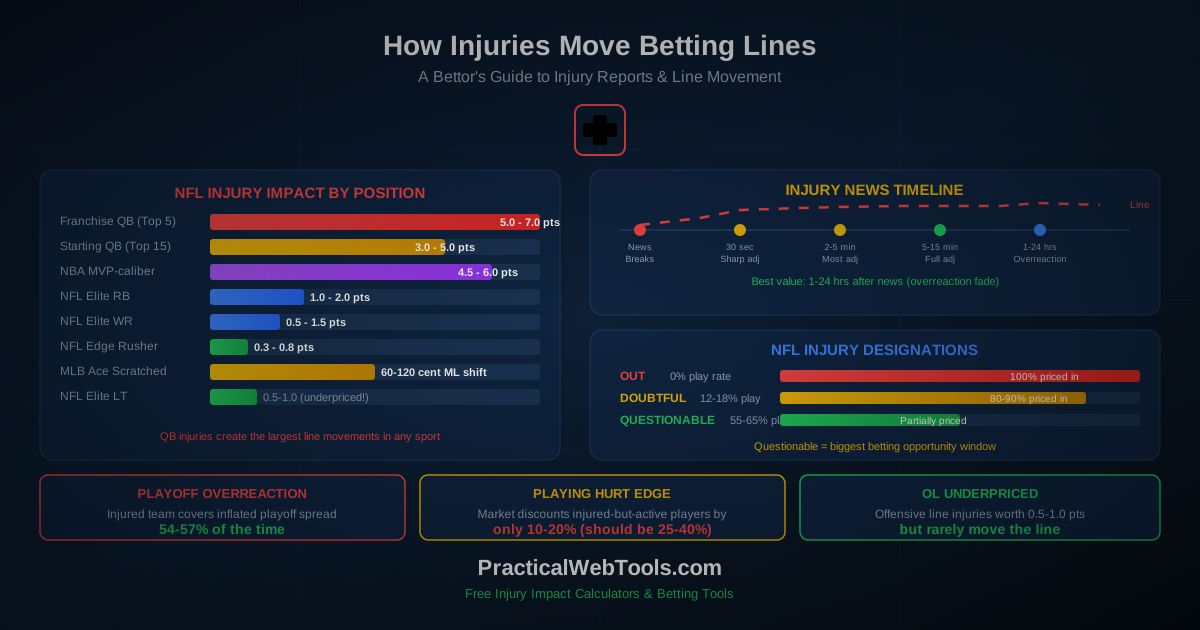
If you bet the over on a quarterback's passing yards AND the over on his top receiver's receiving yards AND the over on the game total, you have three highly correlated bets. If the game is low-scoring, all three lose together. Your "diversified" 3-bet day was actually one concentrated bet on a high-scoring game.
The Fix: Track the correlation between your daily bets. Ensure your portfolio of props represents genuinely independent outcomes across different games and stat categories.
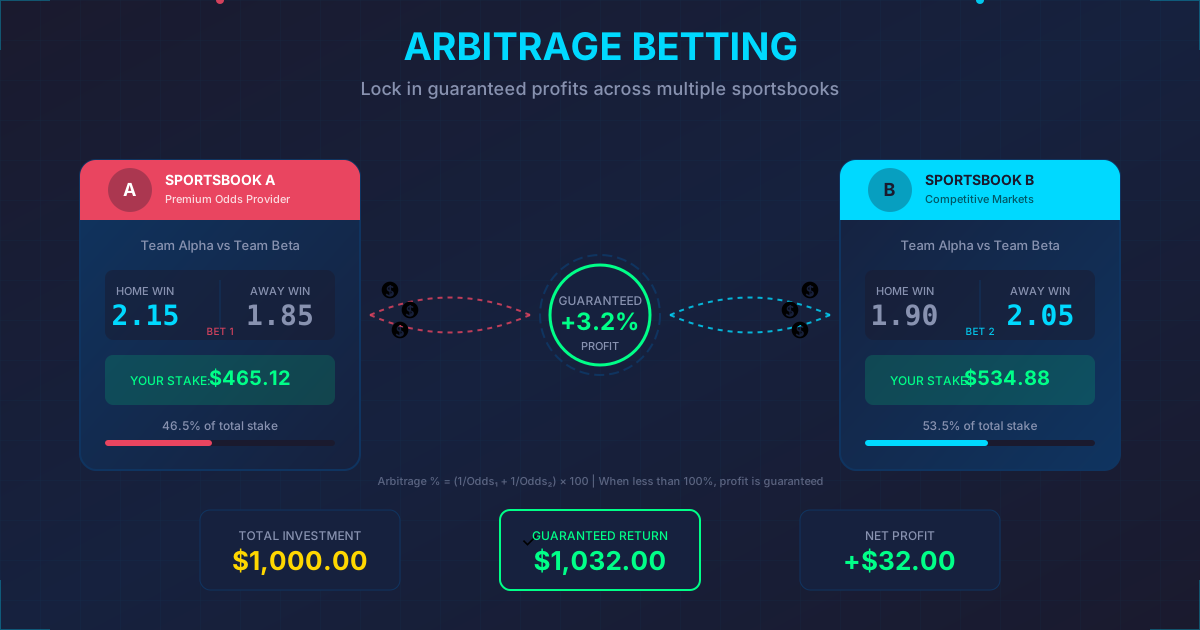
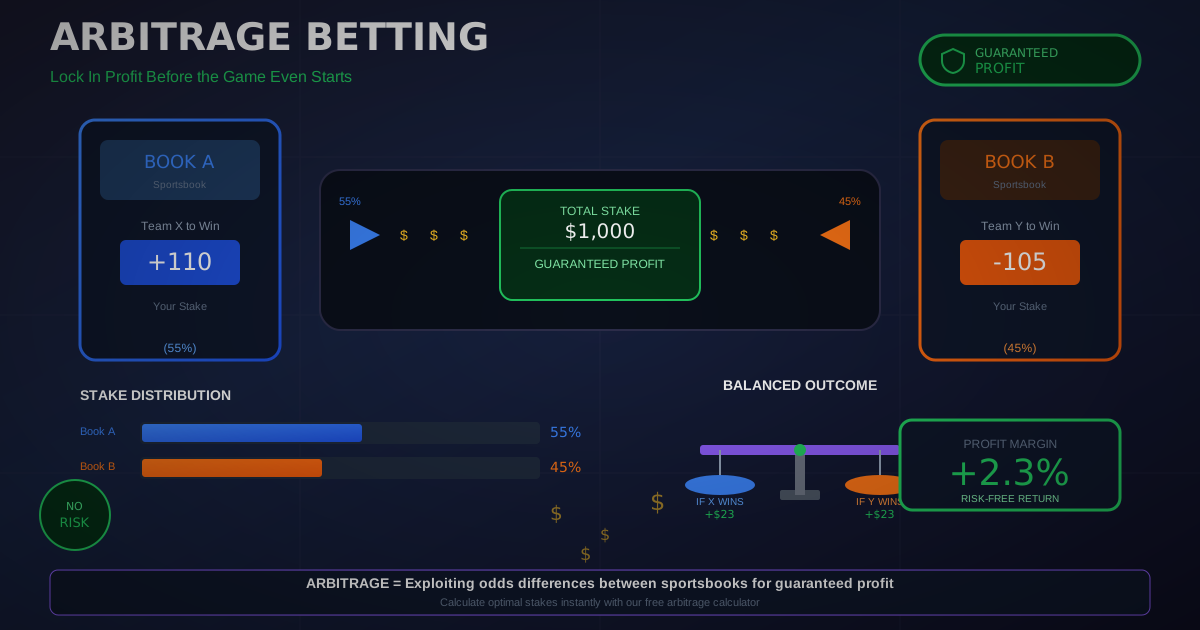
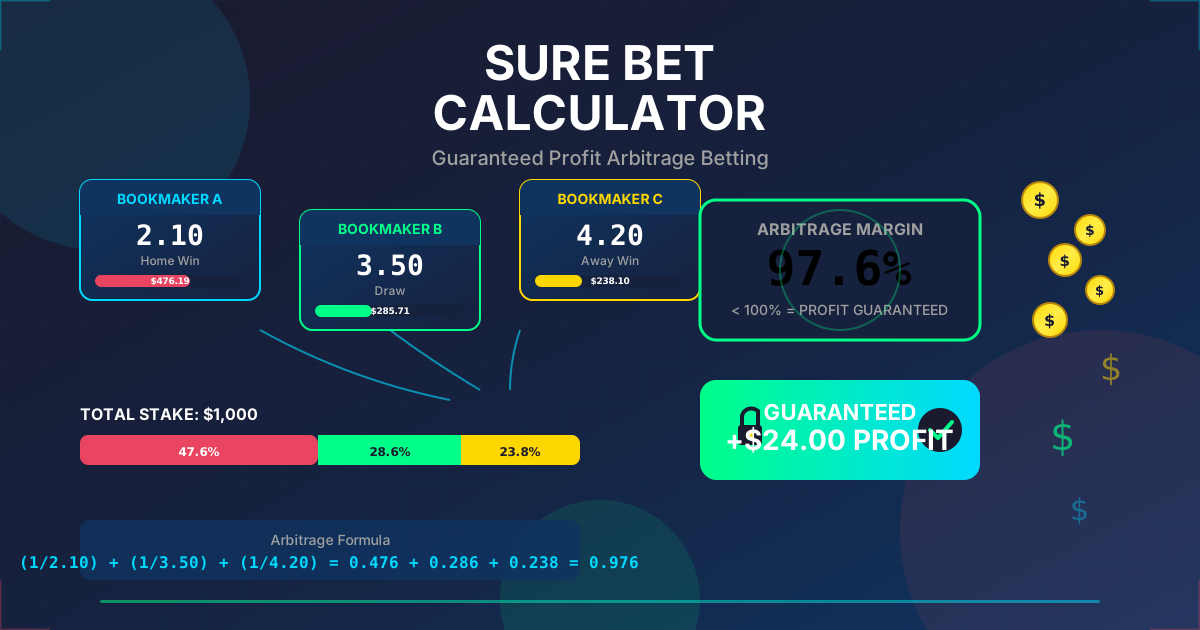
Find arbitrage opportunities across books with our Arbitrage Calculator.
Frequently Asked Questions
What are the best sports for player prop betting? The NFL offers the most inefficient prop markets because the weekly schedule gives you more research time and sportsbooks have fewer data points to work with (17 games versus 82 or 162). The NBA offers the highest volume of betting opportunities. MLB pitcher strikeout props are among the most predictable props in all of sports. Start with the sport you know best, then expand as your process matures.
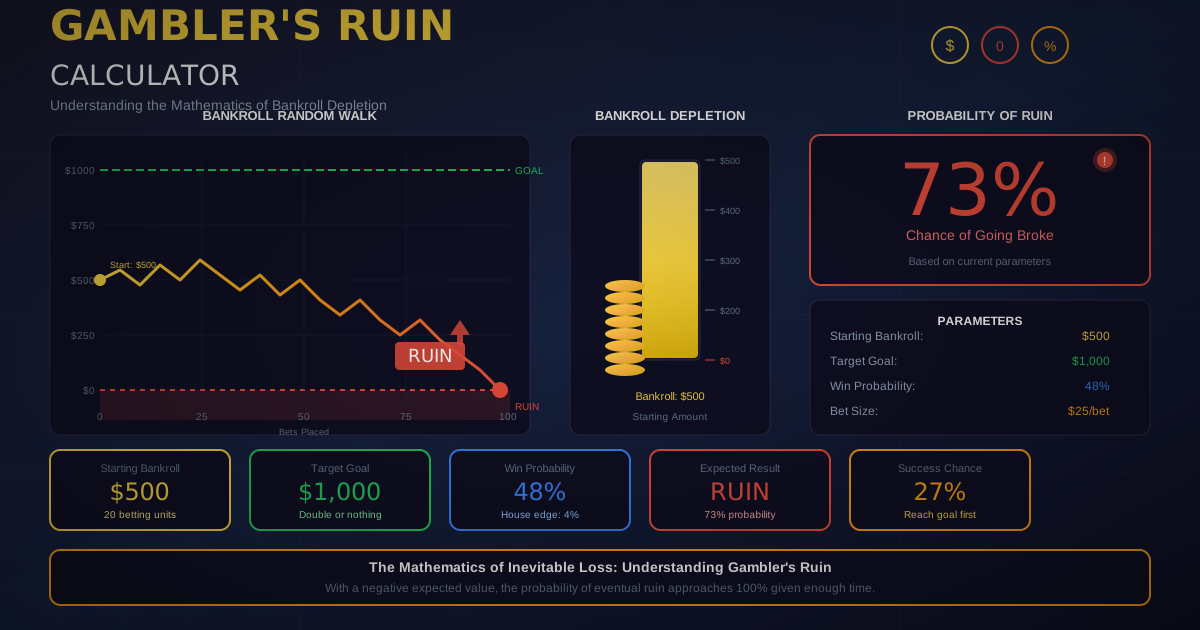
How much money do I need to start betting player props? A minimum of 50 betting units is recommended to withstand normal variance. If your standard bet is $25, you need $1,250. If your standard bet is $50, you need $2,500. Starting with too little bankroll means a normal losing streak can wipe you out before your edge has time to materialize. Use our Kelly Criterion Calculator to size bets appropriately for your bankroll.
What win rate do I need to be profitable betting props? It depends on the average odds you are betting. At standard -110 juice, you need to win 52.4% of your bets to break even. At -115, you need 53.5%. At -120, you need 54.5%. Profitable prop bettors typically sustain 54-58% win rates at average odds around -112. Use our Implied Probability Calculator to determine the breakeven win rate for any odds.
Should I bet overs or unders on player props? Neither side has an inherent advantage. The public tends to bet overs because rooting for "more" is more exciting, which can push over lines slightly higher than they should be. Some professional prop bettors report that unders hit at a slightly higher rate because of this public bias. Bet whichever side your research identifies as having a positive expected value.
How do I handle player props when there is a late scratch or injury? Most sportsbooks void prop bets if the player does not participate in the game. However, if a player enters the game and leaves early due to injury, the bet typically stands. This creates risk on overs. Check each sportsbook's specific rules for prop bet settlement, as they vary. Some books require a minimum number of minutes played, while others do not.
Are same-game parlays with player props profitable? Same-game parlays carry a house edge 3-5 times higher than single bets, making them generally unprofitable. However, when you identify strong positive correlations that the sportsbook underprices, you can find selective value. The key word is selective. If you are building SGPs every game day, you are almost certainly losing money. Use our Parlay Calculator to check the true payout versus expected value.
What is the biggest mistake new prop bettors make? Betting based on name recognition and narrative rather than data. "Patrick Mahomes will throw for 300 yards because he is Patrick Mahomes" is not analysis. A proper prop bet starts with a matchup-adjusted projection, compares it to the sportsbook line, calculates the expected value, and only bets when the edge exceeds the vig. Use our Expected Value Calculator to verify every bet has positive expected value before placing it.
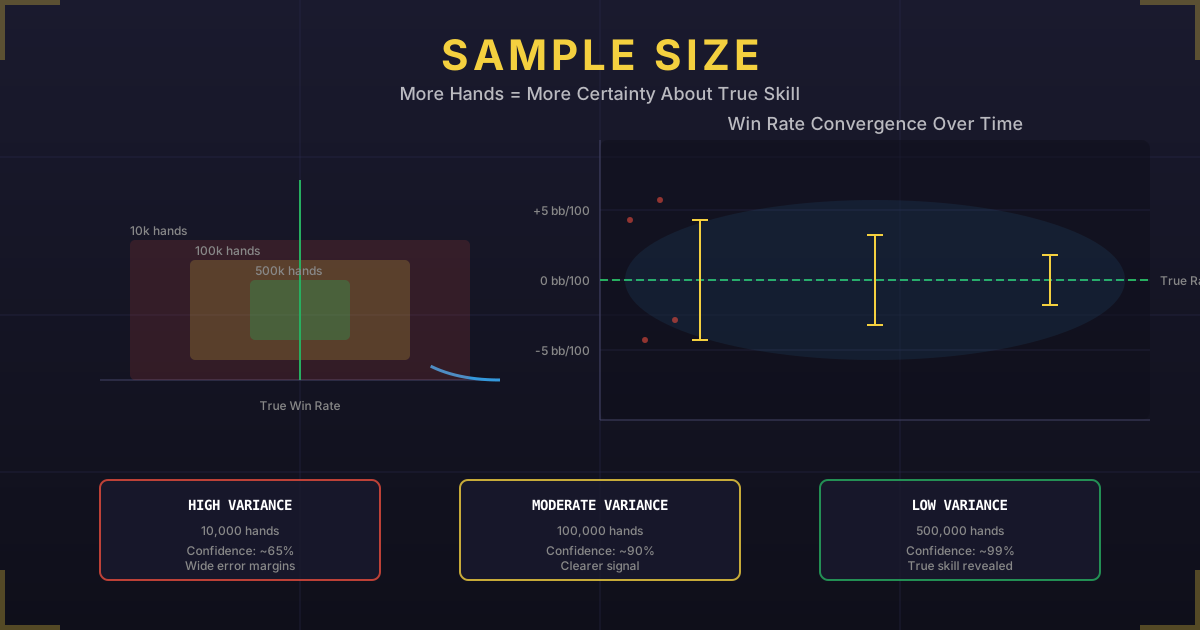
How long does it take to know if my prop betting strategy is working? You need a minimum of 200-300 tracked bets to draw statistically meaningful conclusions about your edge. At 5 props per day during a full season, that takes roughly 6-10 weeks. Track your closing line value alongside your win/loss record. If you are consistently beating the closing line, your process is working even if short-term results are negative due to variance.
Your Player Prop Betting Toolkit
Build your prop betting operation with these free tools:
Research and Analysis
- Expected Value Calculator: Calculate EV for any prop bet to verify positive expectation
- Implied Probability Calculator: Convert any odds to true probability for quick comparison
- Odds Converter: Translate between American, decimal, and fractional odds across books
- Hold/Vig Calculator: Measure the sportsbook's built-in edge on any prop line
Bankroll and Bet Sizing
- Kelly Criterion Calculator: Calculate mathematically optimal bet size based on your edge
- Parlay Calculator: Check SGP payouts and compare to independent single bets
Advanced Tools
- Arbitrage Calculator: Find and size opportunities where different books disagree on prop lines
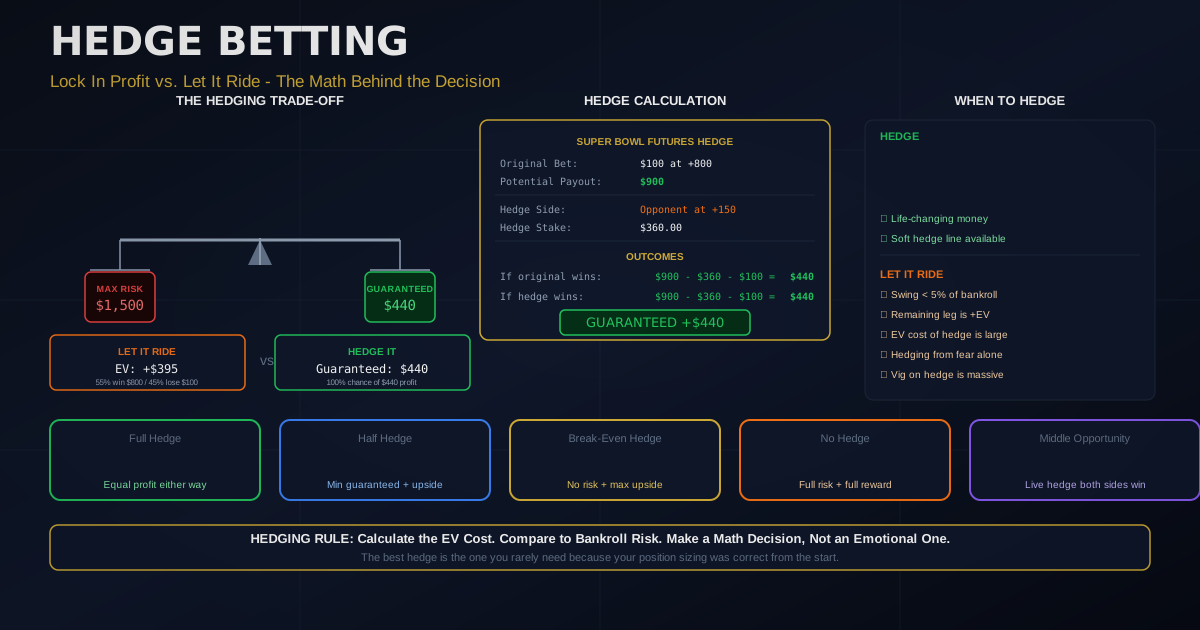
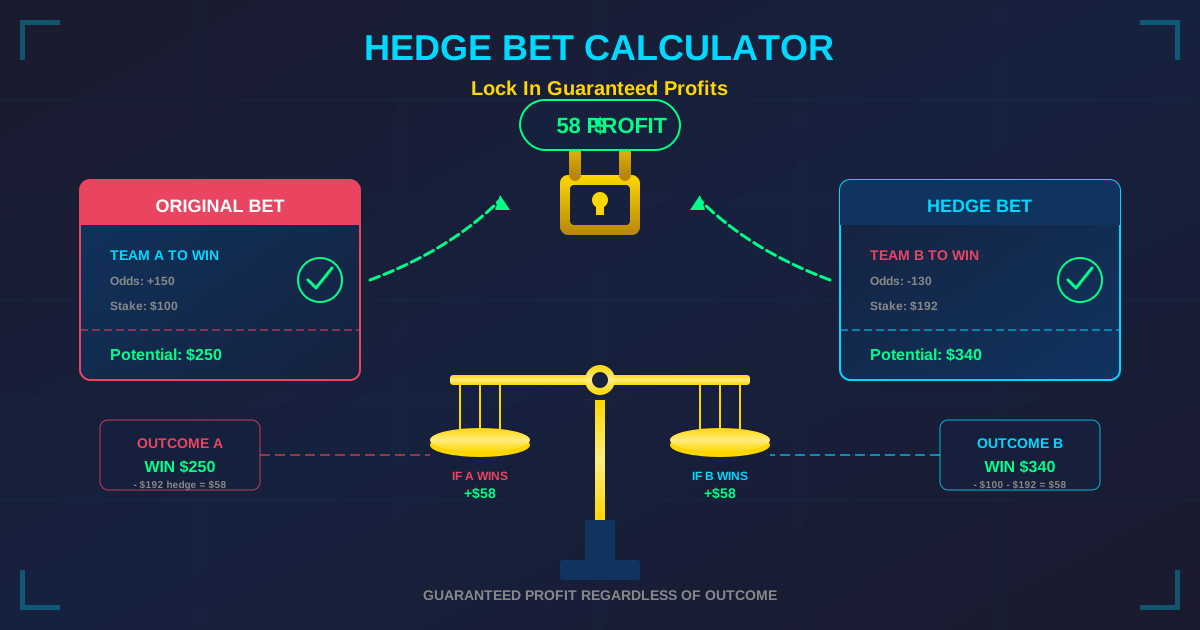
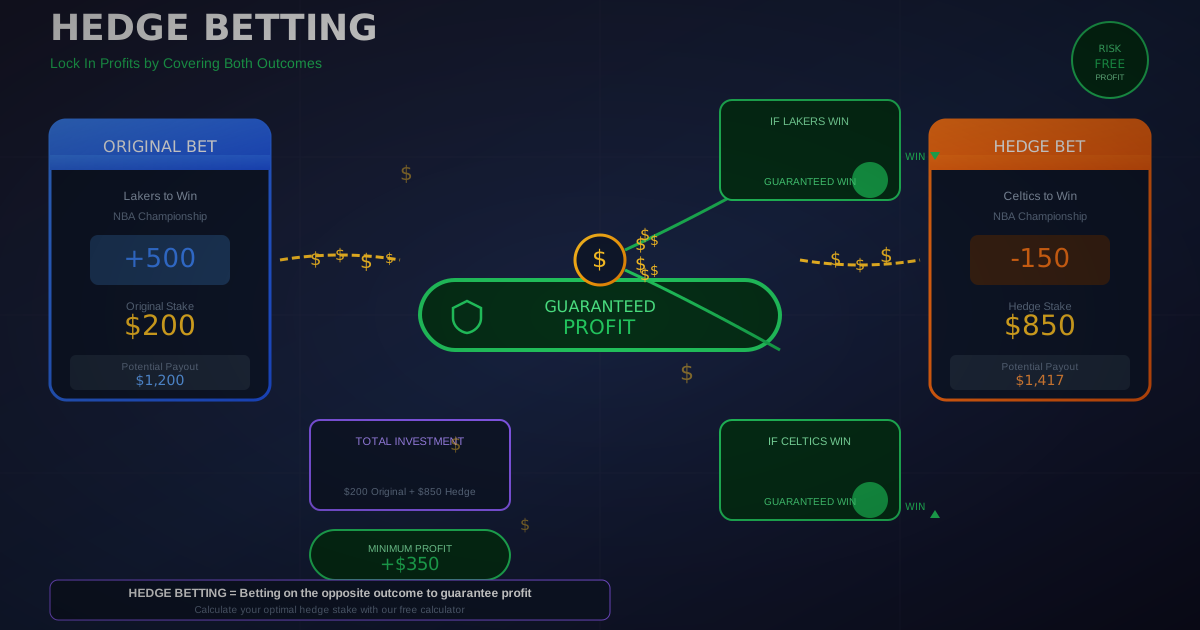
- Hedge Calculator: Lock in profit when a prop bet is winning in-game
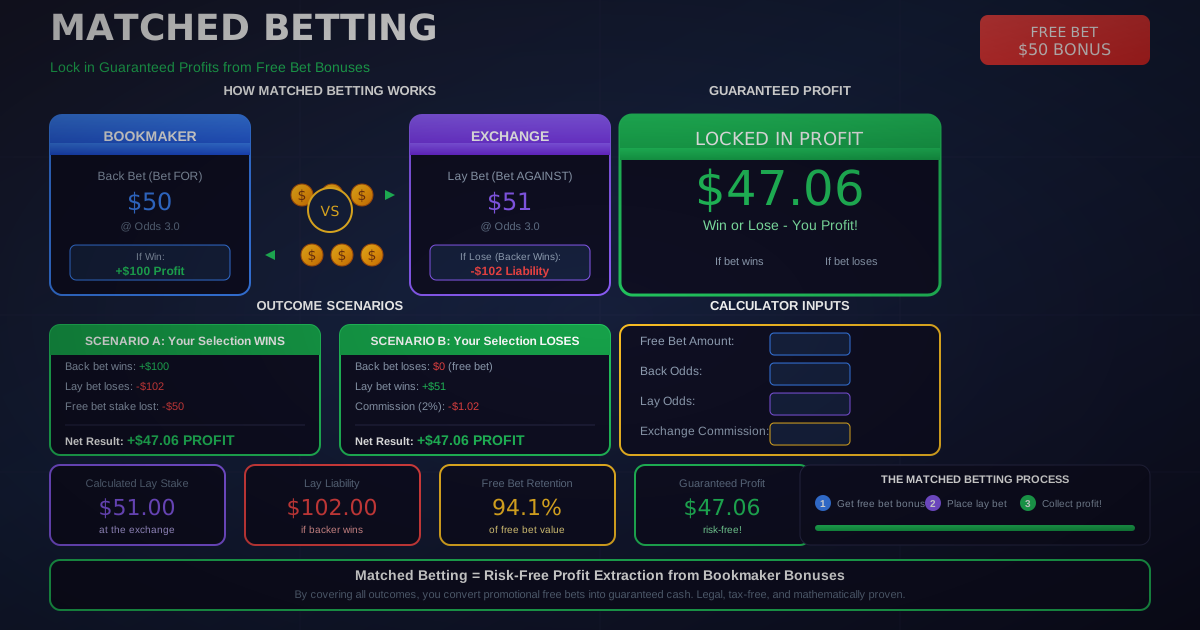
- Matched Betting Calculator: Maximize value from sportsbook prop bet promotions
Conclusion: The Prop Betting Edge Is Real, But It Requires Work
Player prop markets remain the most exploitable segment of sports betting in 2026. The structural advantages are clear: lower limits keep sharps out, algorithms set lines with minimal human oversight, and the sheer number of available props means sportsbooks cannot give each line the attention it deserves.
But exploiting these advantages requires discipline and process. You need to build matchup-adjusted projections, not bet season averages. You need to line shop across multiple books, not settle for the first number you see. You need to track every bet and measure your edge over hundreds of opportunities, not judge your strategy by last Tuesday's results.
The difference between the bettor who treats props like scratch-off tickets and the bettor who treats them like a systematic edge is the difference between entertainment and profit. The information in this guide gives you the framework. The execution is up to you.
Start building your prop betting edge today. Calculate expected value with our Expected Value Calculator, size your bets with the Kelly Criterion Calculator, and convert odds across books with our Odds Converter.
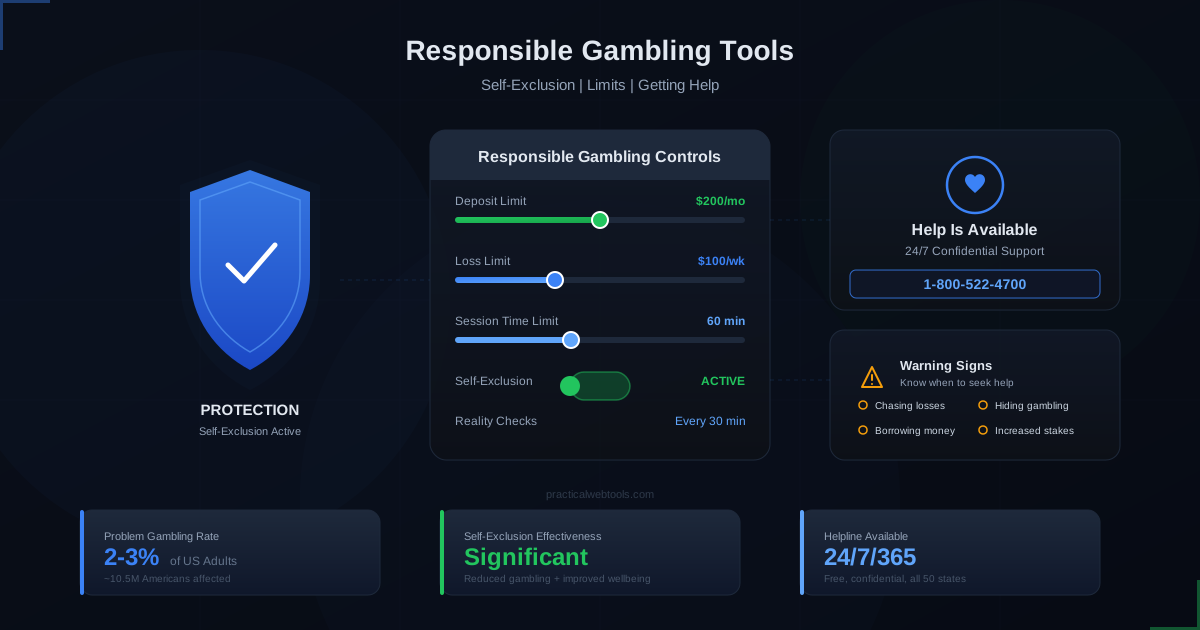
Gambling involves risk. This content is for educational and informational purposes only. Always gamble responsibly, set limits you can afford, and seek help if gambling becomes a problem. Visit the National Council on Problem Gambling or call 1-800-522-4700 for support.