Progressive Jackpot Slots: How They Work, When to Play, and Your Real Odds (2026)
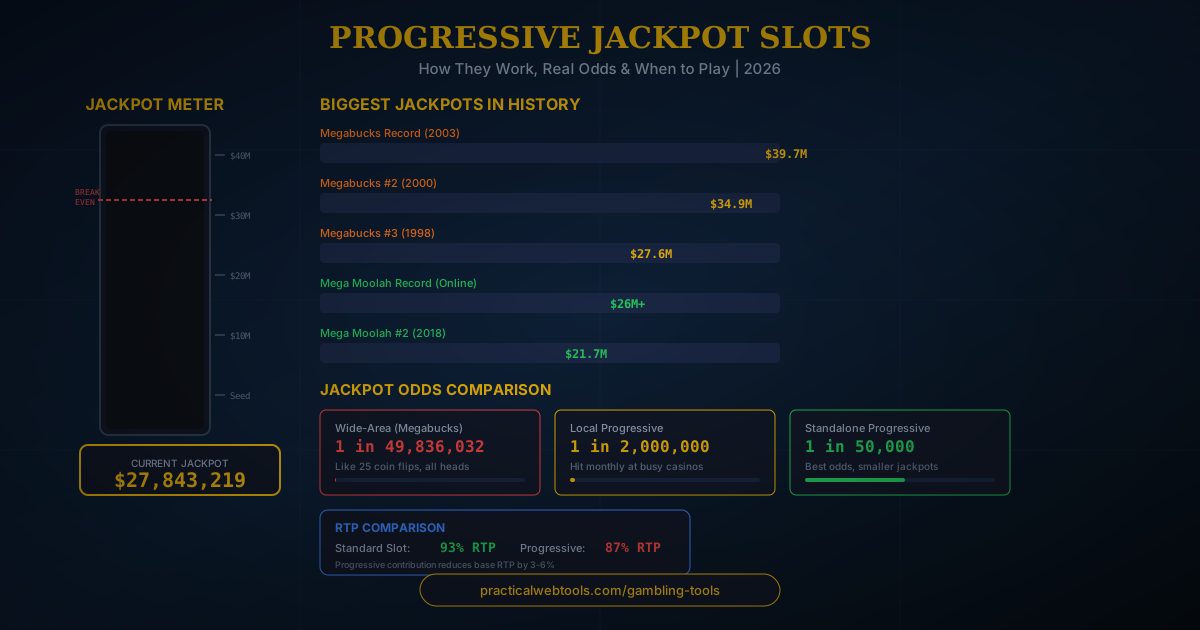
The odds of hitting the Megabucks progressive jackpot are approximately 1 in 49,836,032 -- roughly the same as flipping a coin and getting heads 25 times in a row. Yet this has not stopped players from winning over $1 billion from this single machine network since its debut. The allure of life-changing money from a single spin is arguably the most powerful draw in all of casino gambling.
Progressive jackpot slots are fundamentally different from every other casino game. Unlike blackjack, roulette, or standard slots where the payout structure is fixed, progressive jackpots grow with every bet placed until someone hits the winning combination. This creates a dynamic where the expected value of each spin changes constantly -- and in rare circumstances, the mathematics can actually favor the player.
This guide explains exactly how progressive jackpots work, what your real odds are, when (if ever) it makes mathematical sense to play them, and how to approach these games with clear-eyed understanding of both the dream and the reality.
Calculate the expected value of any gambling proposition with our free Expected Value Calculator.
How Do Progressive Jackpot Slots Actually Work?
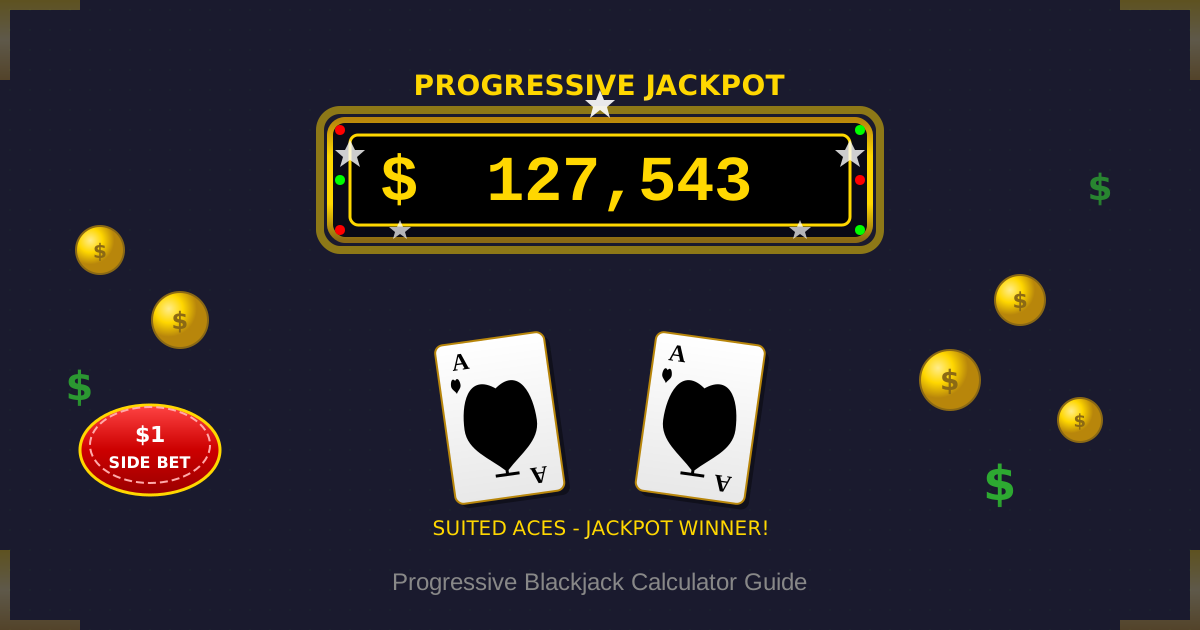
Progressive jackpot slots work by diverting a percentage of every bet placed into a growing jackpot pool. Each spin contributes a small amount to the jackpot, which continues to accumulate until a player hits the winning combination. After the jackpot is won, it resets to a predetermined "seed" amount and begins growing again.
The Progressive Jackpot Mechanism
Every progressive slot has three key components:
- Seed Amount: The starting jackpot after a reset (funded by the casino or manufacturer)
- Contribution Rate: The percentage of each bet that feeds the jackpot (typically 1-5% of each wager)
- Base Game RTP: The return-to-player percentage of the underlying slot game (excluding the progressive jackpot)
Example Breakdown:
| Component | Typical Value | On a $3 Bet |
|---|---|---|
| Base game RTP | 85-90% | $2.55-$2.70 returned (on average) |
| Progressive contribution | 1-5% | $0.03-$0.15 added to jackpot |
| Casino margin | 5-14% | $0.15-$0.42 casino profit |
| Total RTP + contribution | 86-95% | $2.58-$2.85 |
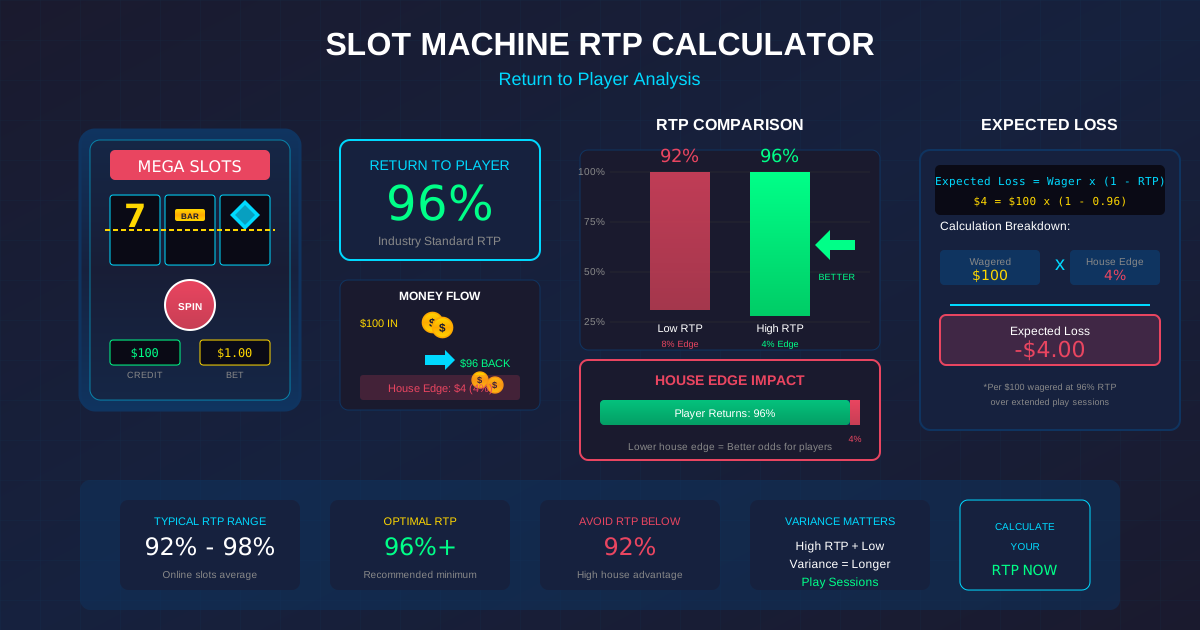
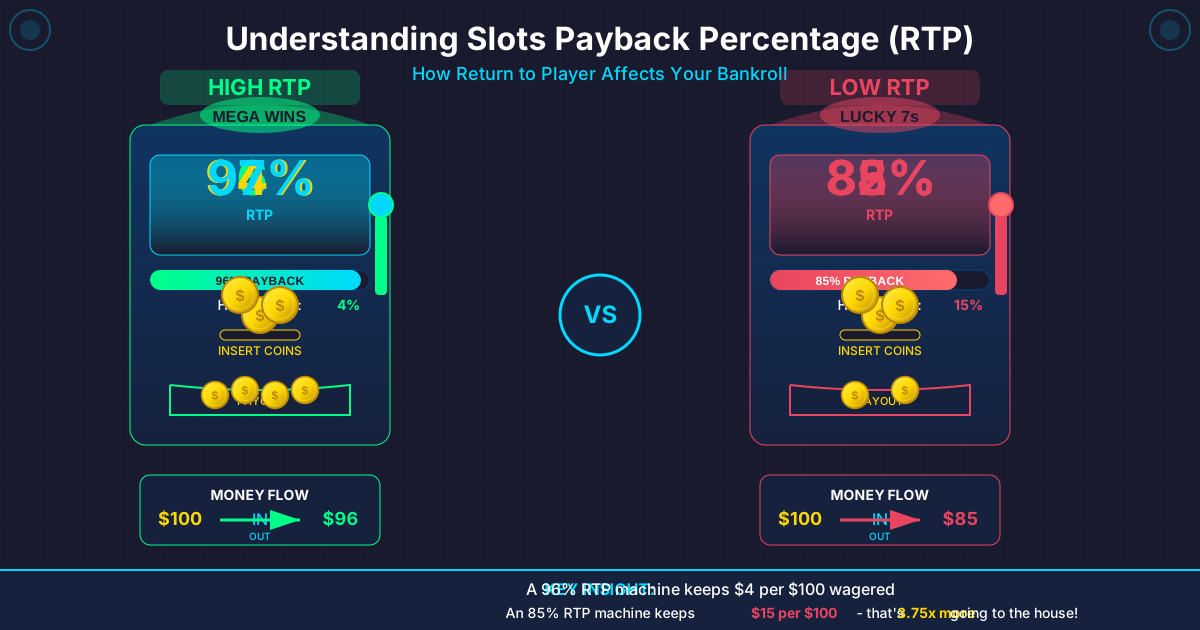
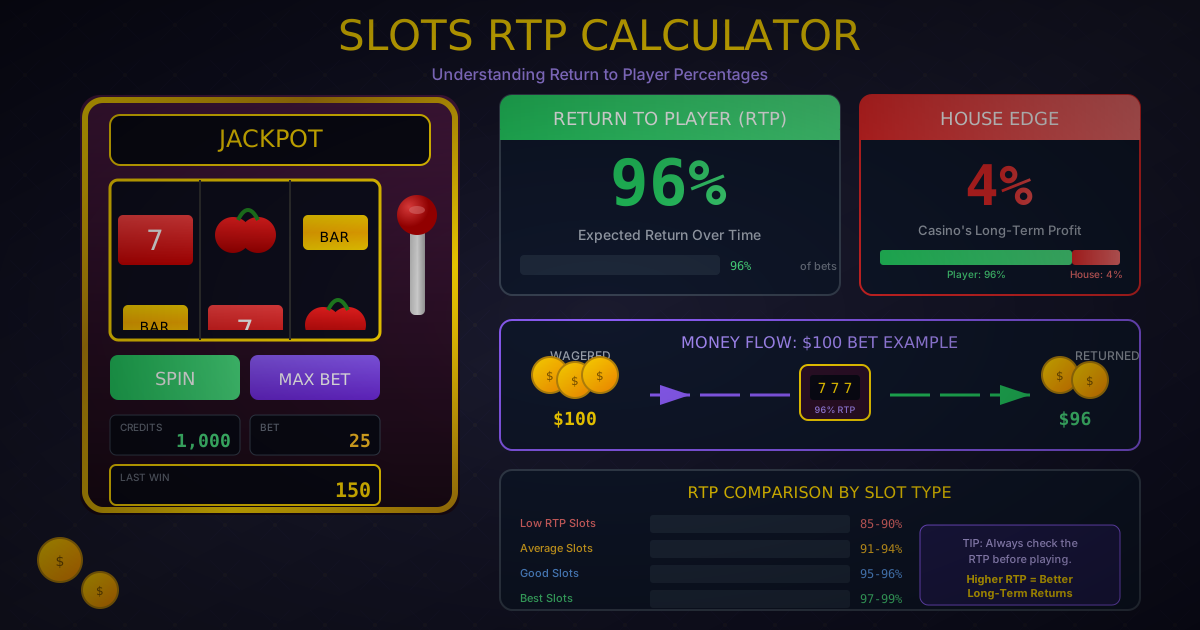
The critical insight: the progressive contribution comes out of the player's potential return. A standard slot machine with a 92% RTP might drop to 88% RTP when the progressive contribution is factored in, because that 4% is going to the jackpot pool rather than back to the player as regular wins.
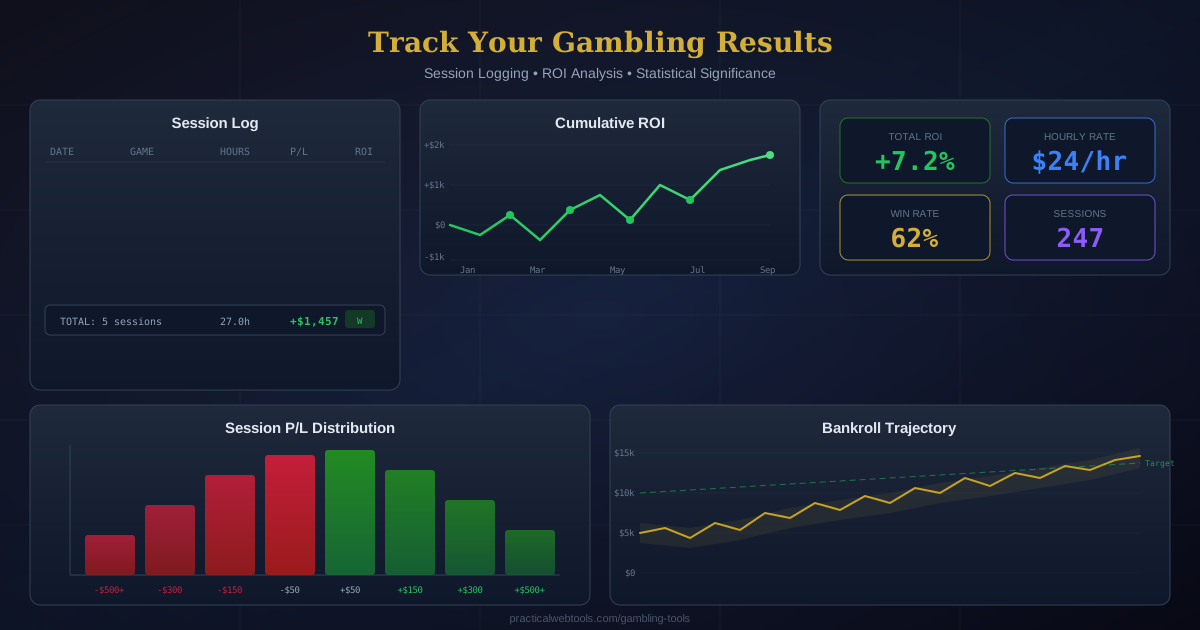
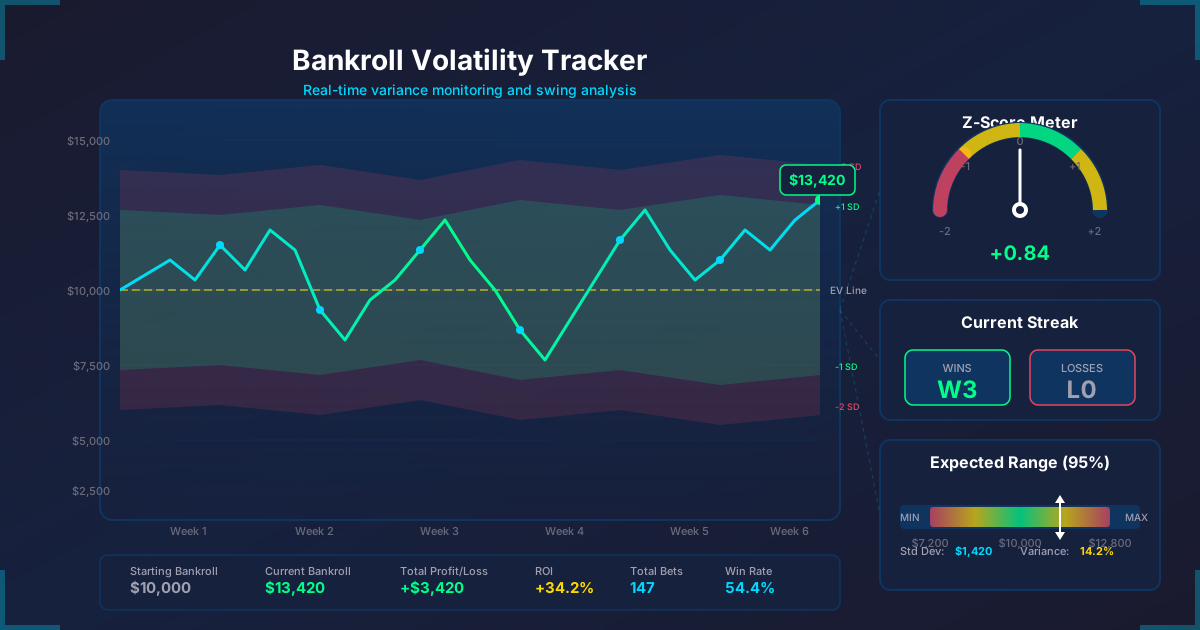
Track your slot session bankroll with our Bankroll Volatility Tracker.
Types of Progressive Jackpots
There are three distinct types of progressive jackpot systems, each with dramatically different odds, jackpot sizes, and player implications.
| Type | How It Works | Typical Jackpot Range | Odds of Hitting | Example |
|---|---|---|---|---|
| Standalone Progressive | Single machine feeds its own jackpot | $1,000-$50,000 | 1 in 50,000-500,000 | Individual machine progressives |
| Local/Linked Progressive | Group of machines in one casino feed a shared jackpot | $10,000-$500,000 | 1 in 500,000-5,000,000 | Casino-specific linked games |
| Wide-Area Progressive (WAP) | Machines across multiple casinos feed one mega-jackpot | $1,000,000-$40,000,000+ | 1 in 10,000,000-50,000,000+ | Megabucks, Wheel of Fortune |
Standalone Progressives
Standalone progressives are self-contained within a single machine. The jackpot meter only grows from bets placed on that specific machine. These offer the best odds of hitting (relatively speaking) but the smallest jackpots.
When they make sense: If you enjoy slots and want the progressive experience without astronomical odds, standalone progressives offer the most frequent jackpot hits.
Local/Linked Progressives
Local progressives link multiple machines within a single casino (or a casino operator's network). The pooled contribution from all linked machines grows the jackpot faster and larger than a standalone.
When they make sense: A good middle ground between reasonable odds and meaningful jackpot size. Local progressives at busy casinos can grow quickly.
Wide-Area Progressives (WAP)
Wide-area progressives link machines across multiple casinos, sometimes spanning entire states or countries. These produce the headline-grabbing mega-jackpots but have the worst odds.
When they make sense: Pure entertainment value. The expected value is almost always negative, but the potential payout is life-changing. This is the lottery ticket of the casino world.
Understand the implied probability of any bet with our Implied Probability Calculator.
What Are the Biggest Progressive Jackpot Wins in History?
Progressive jackpots have produced some of the largest gambling wins ever recorded, with payouts reaching into the tens of millions of dollars.
Largest Land-Based Progressive Jackpot Wins
| Rank | Amount | Game | Casino | Date | Bet Size |
|---|---|---|---|---|---|
| 1 | $39,710,826 | Megabucks | Excalibur, Las Vegas | March 21, 2003 | $100 (max bet) |
| 2 | $34,955,489 | Megabucks | Desert Inn, Las Vegas | January 26, 2000 | $100 (max bet) |
| 3 | $27,580,879 | Megabucks | Palace Station, Las Vegas | November 15, 1998 | $100 (max bet) |
| 4 | $22,621,229 | Megabucks | Bally's, Las Vegas | January 21, 2001 | $100 (max bet) |
| 5 | $21,346,952 | Megabucks | Cannery Casino, Las Vegas | November 12, 2005 | $100 (max bet) |
Largest Online Progressive Jackpot Wins
| Rank | Amount | Game | Platform | Date |
|---|---|---|---|---|
| 1 | EUR 23,600,000+ ($26M+) | Mega Moolah | Various | 2021 (Grand Mondial via mobile) |
| 2 | EUR 19,430,723 ($21.7M) | Mega Moolah | Grand Mondial | Sept 28, 2018 |
| 3 | EUR 17,879,645 ($19.9M) | Mega Moolah | Betway | Oct 6, 2015 |
| 4 | GBP 13,213,838 ($17.2M) | Mega Moolah | Betway | Oct 6, 2015 |
| 5 | EUR 11,735,710 ($13.2M) | Mega Moolah | Zodiac Casino | April 2019 |
What Megabucks Winners Teach Us
Several patterns emerge from major jackpot wins:
- All Megabucks winners bet max: The $100 max bet is required to qualify for the progressive jackpot on Megabucks. Betting less than max makes you ineligible for the top prize.
- Time of day is irrelevant: Major jackpots have been hit at all hours, on weekdays and weekends, in crowded and empty casinos.
- Frequency is random: The Megabucks jackpot has gone months without hitting, then hit twice in rapid succession. Each spin is independent.
- Tax impact is massive: The $39.7M Megabucks winner received about $21M after federal and state taxes on the lump sum option (or 25 annual payments of $1.59M before taxes).
Calculate the expected value of jackpot play with our Expected Value Calculator.
What Are Your Real Odds of Hitting a Progressive Jackpot?
The odds of hitting a progressive jackpot vary enormously by the type of progressive and the specific game. Understanding these odds is essential for making informed decisions about your play.
Progressive Jackpot Odds Comparison
| Progressive Type | Typical Odds | Equivalent Comparison |
|---|---|---|
| Standalone ($5,000 jackpot) | 1 in 50,000-250,000 | Finding a specific grain of sand in a handful |
| Local ($50,000-$500,000) | 1 in 500,000-5,000,000 | Being struck by lightning in your lifetime |
| Wide-area ($1M-$10M) | 1 in 10,000,000-50,000,000 | Winning a modest state lottery |
| Megabucks ($10M+) | 1 in 49,836,032 | Flipping 25 heads in a row |
| Mega Moolah (online) | 1 in ~50,000,000 (estimated) | Similar to Megabucks |
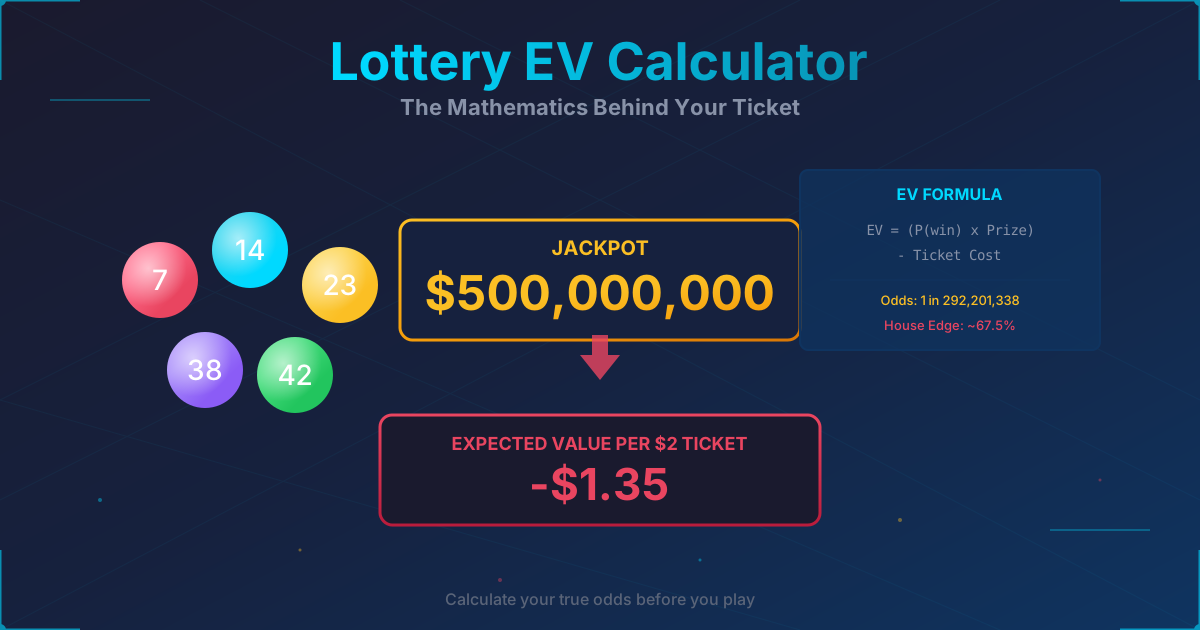
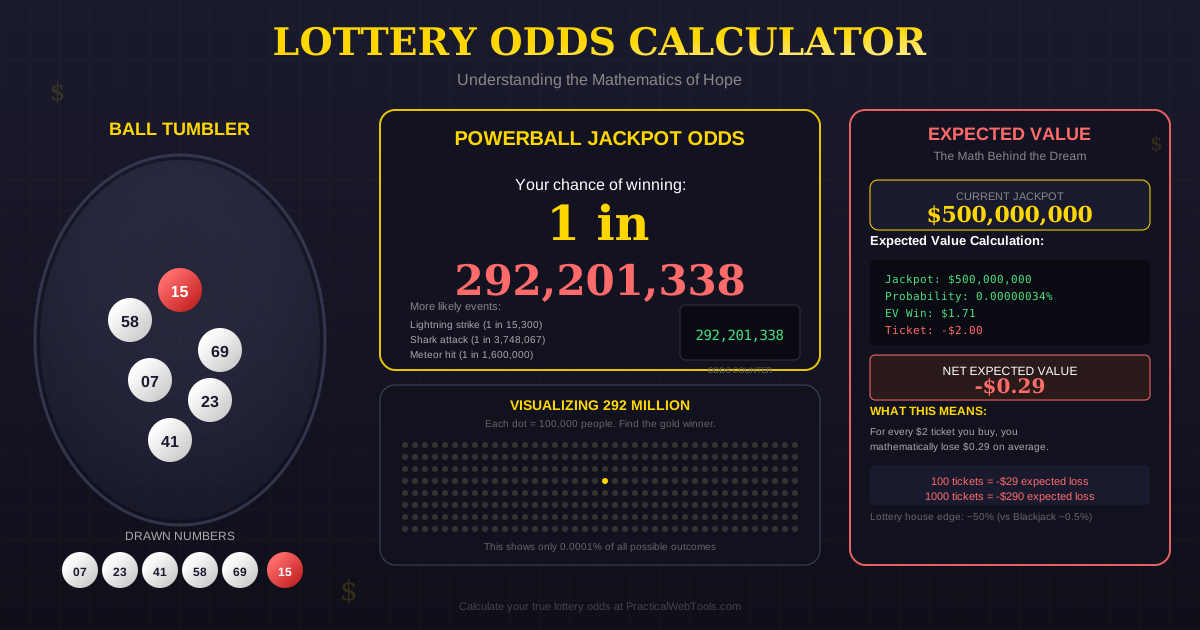
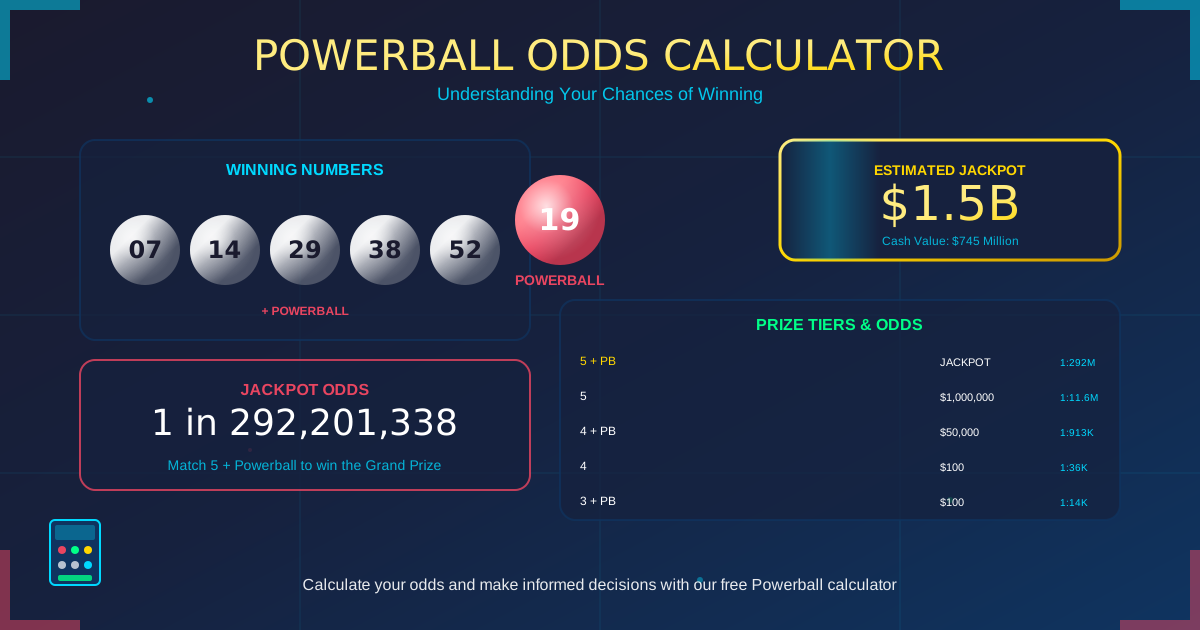
| Powerball lottery | 1 in 292,201,338 | Much worse than any progressive |
How Odds Are Determined
Progressive jackpot odds are determined by the number of possible reel combinations and the specific combination required to trigger the jackpot. For a 5-reel slot with 64 stops per reel (common in modern games):
Total combinations = 64^5 = 1,073,741,824 (over 1 billion possible outcomes)
If only one combination triggers the jackpot, the odds are 1 in ~1.07 billion. In practice, the odds are somewhat better because:
- Many progressives use virtual reel mapping (not all stops are equally weighted)
- Some games have multiple paths to the jackpot (bonus game triggers)
- Modern games use random number generators (RNGs) that can assign different probabilities
Odds vs. Expected Value
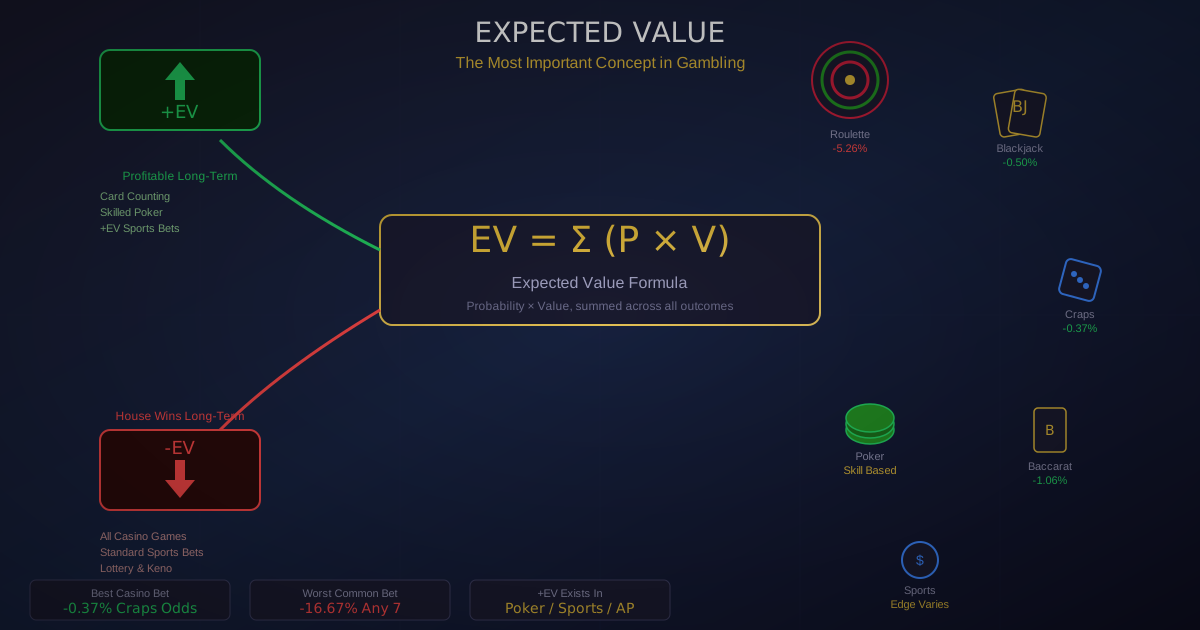
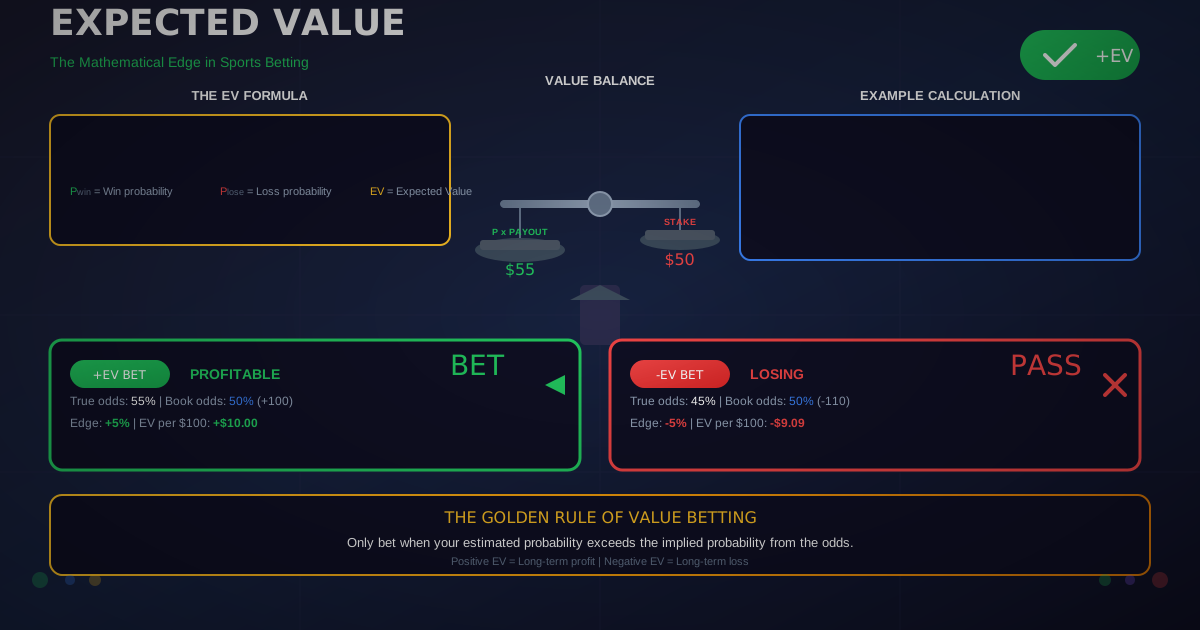
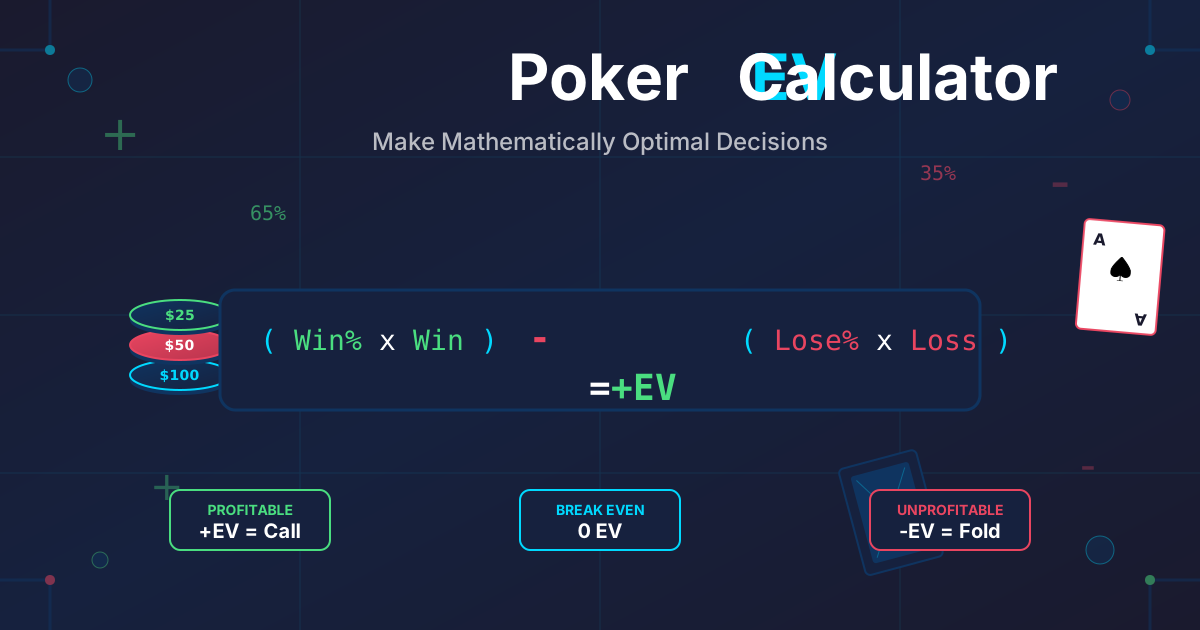
Raw odds do not tell the whole story. What matters is the expected value -- the odds multiplied by the payout minus the cost of play.
EV Calculation for Megabucks:
| Variable | Value |
|---|---|
| Jackpot amount | $15,000,000 (example) |
| Odds of hitting | 1 in 49,836,032 |
| Bet required | $3 per spin (max bet) |
| Expected jackpot return per spin | $15,000,000 / 49,836,032 = $0.30 |
| Cost per spin | $3.00 |
| Base game return per spin (est. 85%) | $2.55 |
| Total expected return | $2.55 + $0.30 = $2.85 |
| Expected loss per spin | $3.00 - $2.85 = -$0.15 (-5%) |
At a $15M jackpot, Megabucks has roughly a -5% expected value. The jackpot contribution improves the EV compared to the base game, but it is still negative.
Run your own EV calculations with our Expected Value Calculator.
When Does a Progressive Jackpot Become Positive Expected Value?
This is the question that mathematically-minded gamblers always ask: is there a jackpot level at which playing the progressive becomes +EV?
The Break-Even Jackpot Calculation
For a progressive to be +EV, the jackpot must be large enough that the expected jackpot return plus the base game return exceeds the cost of play.
Break-Even Formula: Jackpot Break-Even = (Cost per Spin - Base Game Return) x Odds of Hitting
Megabucks Example:
- Cost per spin: $3.00
- Base game return: $2.55 (estimated 85% RTP)
- Shortfall per spin: $0.45
- Odds: 49,836,032
Break-even jackpot = $0.45 x 49,836,032 = $22,426,214
When the Megabucks jackpot exceeds approximately $22.4 million, the game becomes theoretically +EV. Note that this has happened -- the record $39.7M jackpot was well above the break-even point.
Break-Even Estimates for Major Progressives
| Progressive Game | Estimated Odds | Est. Base RTP | Est. Break-Even Jackpot | Typical Reset (Seed) |
|---|---|---|---|---|
| Megabucks | 1 in 49,836,032 | 85% | ~$22.4M | $10,000,000 |
| Mega Moolah | 1 in ~50,000,000 | 88% | ~$6.0M | $1,000,000 |
| Wheel of Fortune | 1 in ~8,000,000 | 87% | ~$3.1M | $200,000 |
| Major Millions | 1 in ~5,000,000 | 89% | ~$2.8M | $250,000 |
| Jackpot King (local) | 1 in ~2,000,000 | 90% | ~$600,000 | $100,000 |
Why +EV Does Not Mean Profitable
Even when a progressive is technically +EV, it does not mean you should rush to play it. Several practical realities intervene:
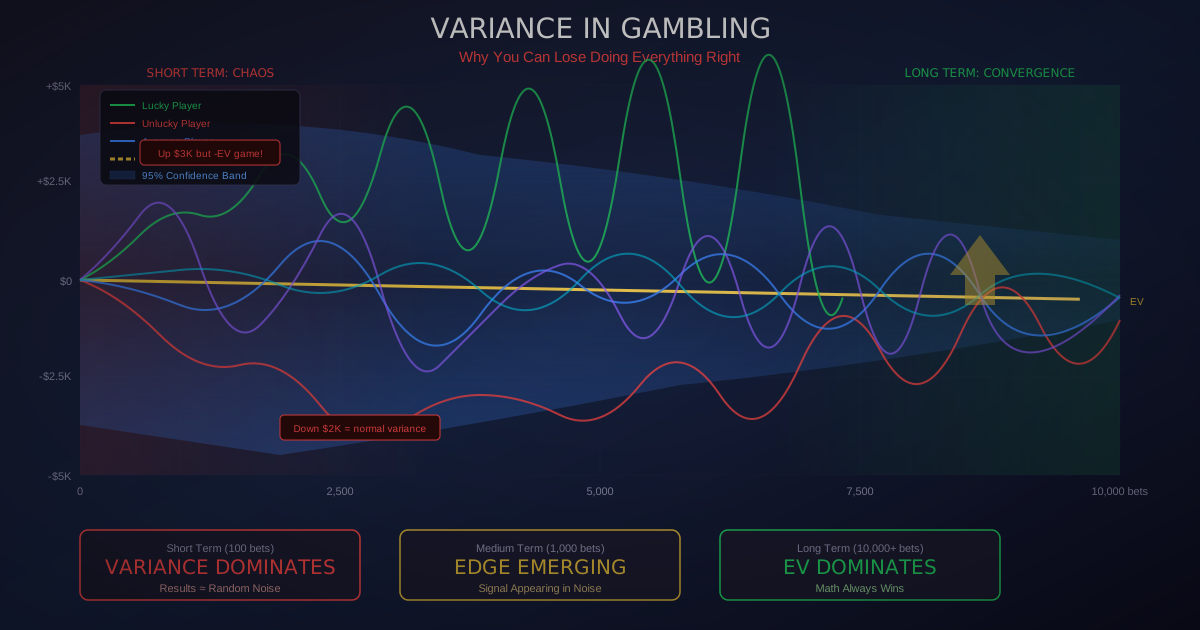
- Variance is astronomical: You would need to play tens of millions of spins to realize the theoretical EV. At 10 spins per minute, that is 8+ years of continuous play.
- Bankroll requirements are impossible: To have a 50% chance of hitting a 1-in-50M jackpot, you would need approximately 35 million spins ($105 million at $3/spin).
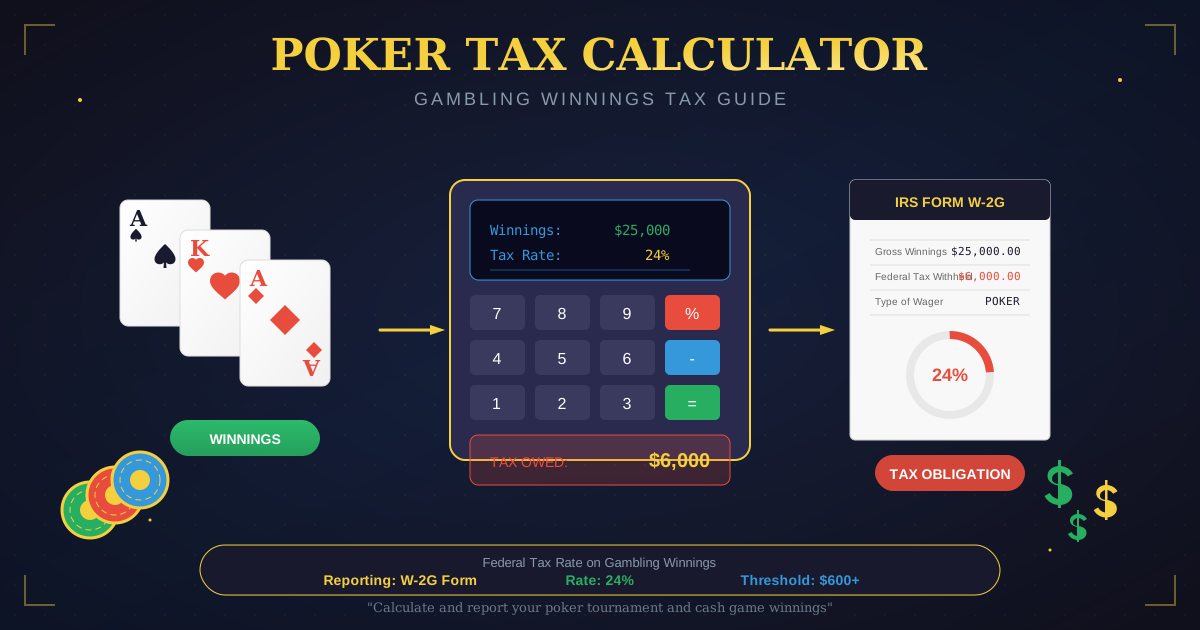
- Tax erosion: Large jackpots are subject to 24-37% federal tax plus state tax, reducing the after-tax EV below break-even.
- Lump sum discount: Megabucks pays in 25 annual installments. The lump sum option (when available) is roughly 60% of the advertised jackpot.
- Other players are also playing: During +EV periods, increased play means the jackpot could be split (for games with multiple winner potential) or hit quickly by someone else.
Analyze your bankroll risk with our Bankroll Volatility Tracker.
What Are Must-Hit-By Progressive Jackpots?
Must-hit-by progressives are a special category where the jackpot is guaranteed to pay before reaching a specified amount. These create a genuine strategic opportunity that does not exist with standard progressives.
How Must-Hit-By Progressives Work
| Feature | Standard Progressive | Must-Hit-By Progressive |
|---|---|---|
| Jackpot trigger | Random (any spin) | Must hit before ceiling amount |
| Ceiling amount | No ceiling (grows indefinitely) | Published maximum (e.g., "must hit by $500") |
| Strategy opportunity | None (pure luck) | Yes (play when jackpot is near ceiling) |
| Typical jackpot range | $1,000-$40,000,000 | $50-$5,000 (usually smaller) |
| Player edge potential | Only at extreme jackpot levels | Yes, when jackpot approaches ceiling |
The Must-Hit-By Strategy
When a must-hit-by progressive approaches its ceiling, the probability of hitting on each spin increases dramatically. If the jackpot must hit by $500 and is currently at $490, the RNG is constrained to trigger within a very narrow range.
Example Analysis:
| Must-Hit-By Ceiling | Current Jackpot | Remaining Range | Approximate Odds | EV Impact |
|---|---|---|---|---|
| $500 | $200 | $300 range | Low probability per spin | Negative EV |
| $500 | $400 | $100 range | Moderate probability | Near break-even |
| $500 | $475 | $25 range | High probability | Potentially +EV |
| $500 | $495 | $5 range | Very high probability | Likely +EV |
Finding Must-Hit-By Opportunities
- Walk the slot floor: Look for must-hit-by progressives with meters close to their ceiling
- Note the contribution rate: Estimate how many spins remain before the ceiling is reached
- Calculate break-even: Compare the jackpot value to the cost of spins needed
- Monitor multiple machines: Check back periodically to catch machines near their ceiling
- Be patient: The best opportunities require waiting for the right moment
This is one of the few legitimate slot strategies that has mathematical validity. Some advantage slot players exclusively seek out must-hit-by progressives near their ceiling.
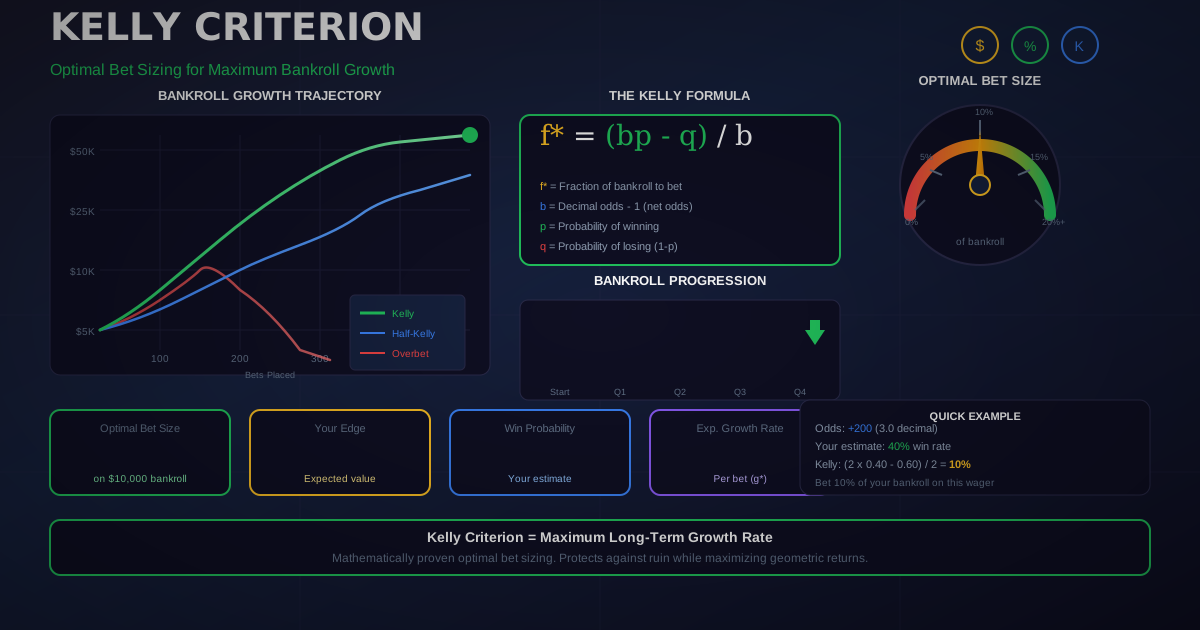
Calculate the optimal bet size for must-hit-by play with our Kelly Criterion Calculator.
How Does the Progressive Contribution Affect RTP?
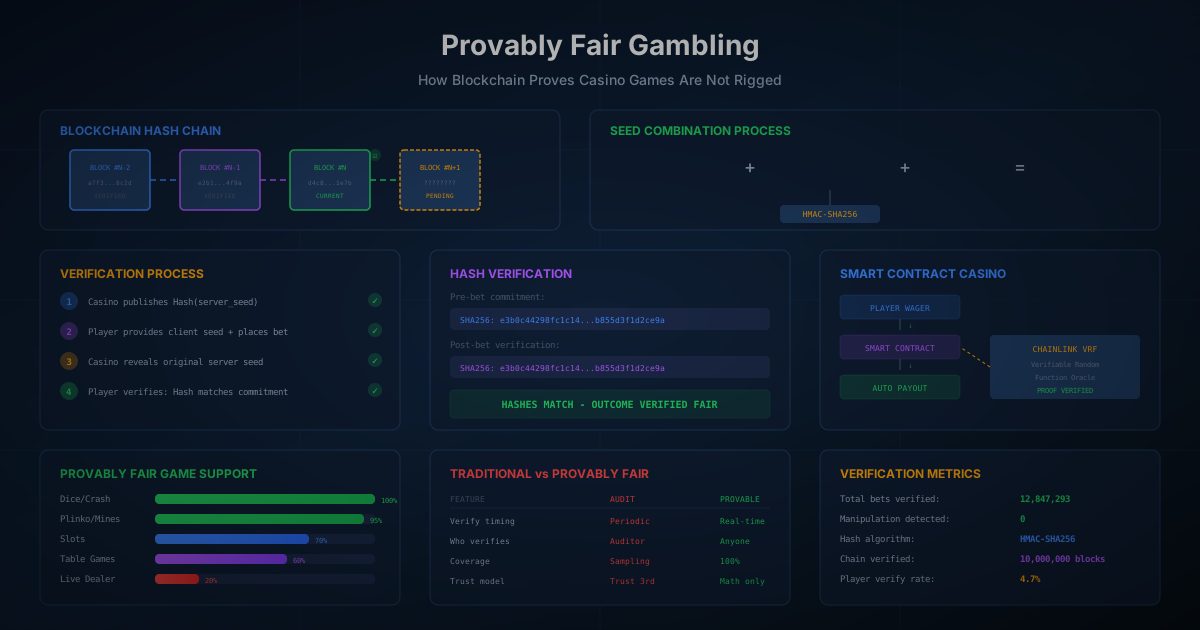
The progressive jackpot contribution directly reduces the base game's return to player (RTP). Understanding this trade-off is essential for evaluating whether progressive slots are worth playing.
RTP Comparison: Progressive vs. Standard Slots
| Slot Type | Typical RTP (Total) | Base Game RTP | Progressive Contribution | Effective RTP Without Jackpot |
|---|---|---|---|---|
| Standard slot (no progressive) | 90-96% | 90-96% | 0% | 90-96% |
| Standalone progressive | 88-93% | 87-91% | 1-2% | 87-91% |
| Local progressive | 85-91% | 83-88% | 2-3% | 83-88% |
| Wide-area progressive (WAP) | 83-89% | 80-86% | 3-5% | 80-86% |
| Megabucks | ~85% | ~83% | ~2% | ~83% |
| Mega Moolah | ~88% | ~85% | ~3% | ~85% |
The RTP Trade-Off Explained
When you play a progressive slot, you are effectively paying a premium (the progressive contribution) for a lottery-ticket-style chance at the jackpot. This is not inherently bad or good -- it depends on what you value.
If you value expected return per spin: Standard slots are superior. A 95% RTP standard slot returns $0.95 per $1 wagered on average, while an 88% RTP progressive returns only $0.88.
If you value maximum possible win: Progressives are the only way to win millions from a single spin. No standard slot offers $10M+ payouts.
Cost Comparison Over 500 Spins at $3/Spin ($1,500 Total Wagered):
| Metric | Standard Slot (93% RTP) | Progressive Slot (87% RTP) |
|---|---|---|
| Expected return | $1,395 | $1,305 |
| Expected loss | $105 | $195 |
| Additional cost for progressive | N/A | $90 |
| Jackpot potential | $1,000-$25,000 | $100,000-$40,000,000 |
| Cost per "lottery ticket" (per spin) | N/A | $0.18 |
Framed this way, each progressive spin costs you about $0.18 extra for a chance at a massive jackpot. Whether that is worth it is a personal decision, not a mathematical one.
Evaluate video poker returns versus progressive slots with our Video Poker EV Calculator.
What Is the Difference Between Online and Land-Based Progressives?
Online and land-based progressive slots operate on the same principle but differ in several important ways that affect player experience and outcomes.
Online vs. Land-Based Progressive Comparison
| Feature | Online Progressives | Land-Based Progressives |
|---|---|---|
| Base Game RTP | 88-96% (generally higher) | 83-93% (generally lower) |
| Progressive Contribution | 1-5% | 1-5% |
| Network Size | Potentially millions of players globally | Hundreds to thousands of machines |
| Jackpot Growth Speed | Fast (massive player pool) | Slower (limited machines) |
| Minimum Bet for Jackpot | Often any bet qualifies (scaled probability) | Often max bet required |
| Verification | RNG certified by testing agencies | Physical reel mechanism or RNG |
| Payout Method | Electronic transfer, often faster | Check or annuity (large jackpots) |
| Tax Reporting | Varies by jurisdiction | Automatic W-2G at threshold |
| Game Variety | Hundreds of progressive titles | Dozens at each casino |
| Play Speed | 3-5 seconds per spin | 5-8 seconds per spin |
Major Online Progressive Networks
| Network/Game | Developer | Connected Casinos | Typical Jackpot Range | Record Payout |
|---|---|---|---|---|
| Mega Moolah | Microgaming | 100+ | $2M-$20M+ | EUR 23.6M+ |
| Mega Fortune | NetEnt | 100+ | $1M-$15M | EUR 17.8M |
| Age of the Gods | Playtech | 50+ | $500K-$5M | $2.4M+ |
| Divine Fortune | NetEnt | 100+ | $50K-$500K | $500K+ |
| Jackpot King | Blueprint | 50+ | $500K-$5M | $5M+ |
Online Progressive Advantages
- Higher base RTP: Online casinos have lower overhead, so they can offer higher RTPs (often 3-5% better than land-based)
- Scalable bet eligibility: Many online progressives let you qualify for the jackpot at any bet size (with scaled probability), eliminating the "max bet required" restriction
- Faster jackpot growth: Global player pools feed jackpots faster
- Multiple jackpot tiers: Most online progressives offer mini, minor, major, and mega jackpot tiers
- Mobile accessibility: Play from anywhere, monitor jackpot levels remotely
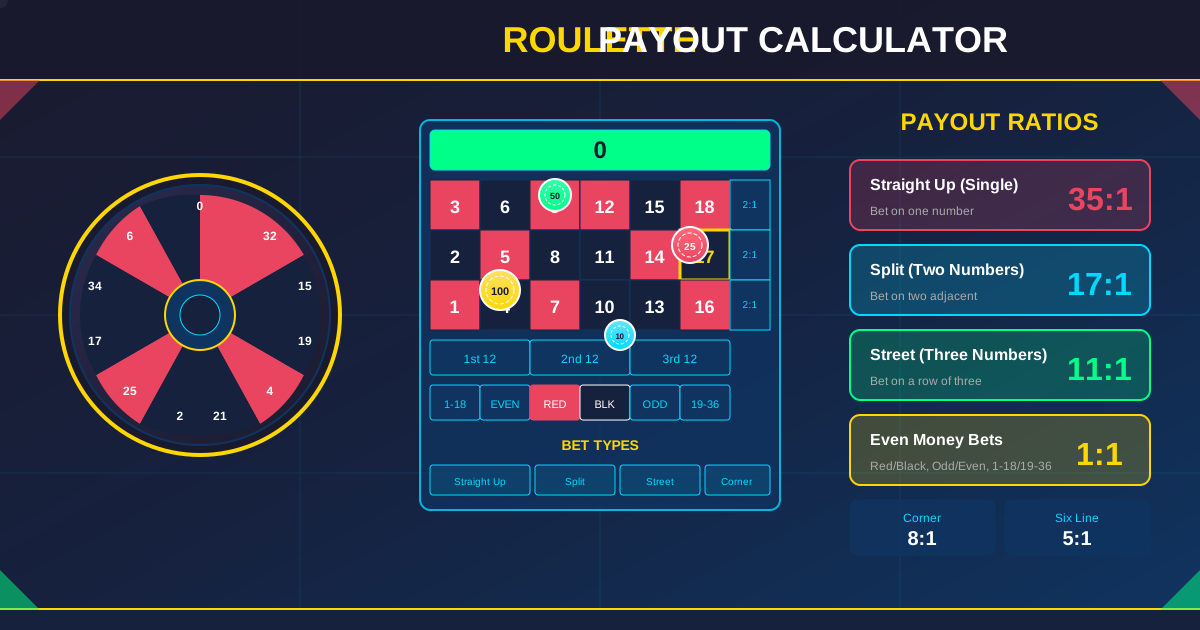
Compare the payout structures of different games with our Roulette Payout Calculator.
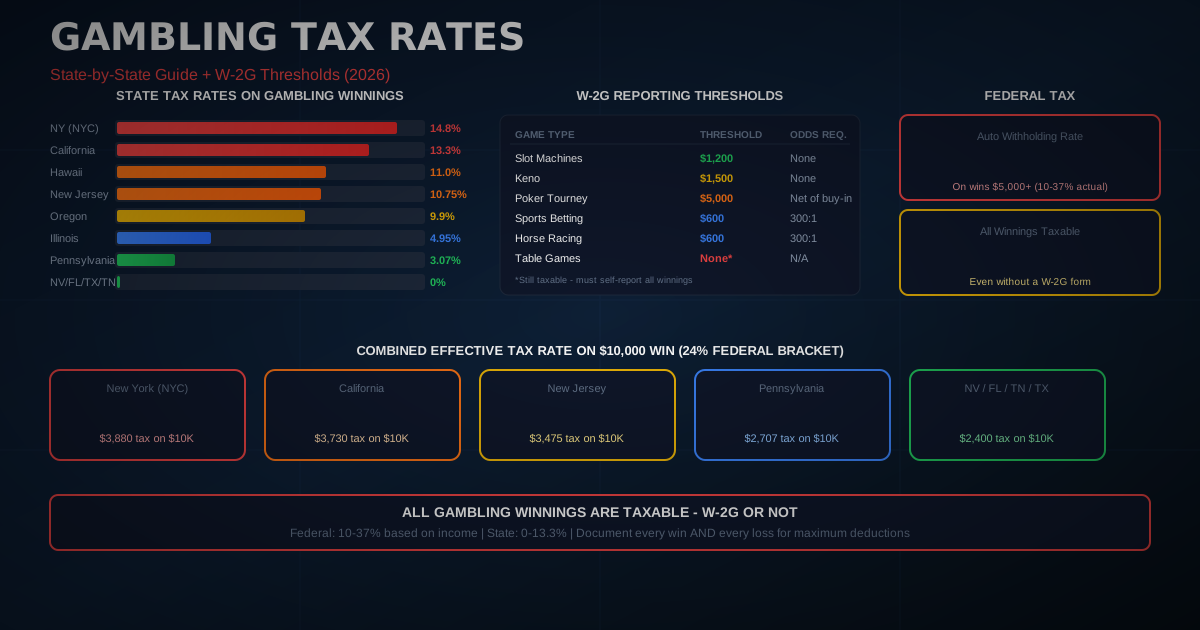
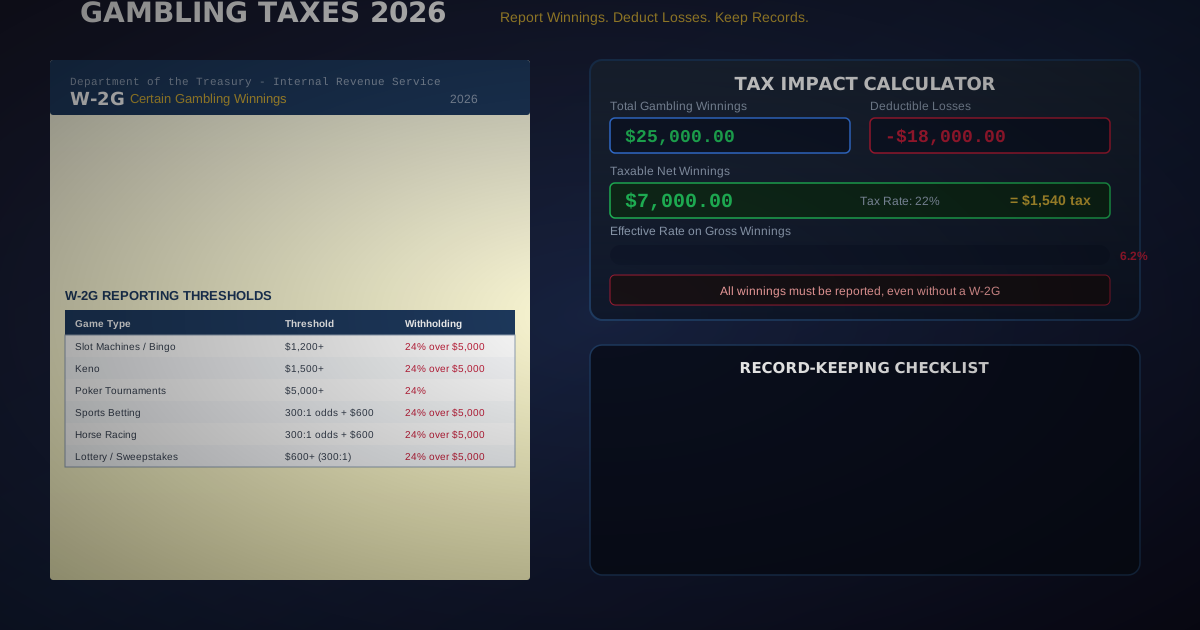
How Do Taxes Work on Progressive Jackpot Wins?
Large progressive jackpot wins trigger significant tax obligations. Understanding the tax impact is crucial for evaluating the true expected value of jackpot play.
US Tax Treatment of Jackpot Wins
| Jackpot Amount | Federal Tax Rate | Approximate Tax | Net After Federal Tax |
|---|---|---|---|
| $1,200-$5,000 | Reported (W-2G), taxed at your rate | $120-$1,850 | $1,080-$3,150 |
| $5,000-$25,000 | 24% withholding | $1,200-$6,000 | $3,800-$19,000 |
| $25,000-$500,000 | 24% withholding (may owe more) | $6,000-$185,000 | $19,000-$315,000 |
| $500,000-$5,000,000 | 24% withheld, 32-37% owed | $120,000-$1,850,000 | $380,000-$3,150,000 |
| $5,000,000-$40,000,000 | 37% federal + state | $1,850,000-$14,800,000 | $3,150,000-$25,200,000 |
Lump Sum vs. Annuity
Megabucks and some other large progressives offer the choice between a lump sum payment (roughly 60% of the advertised jackpot) and an annuity (annual payments over 20-25 years totaling the full advertised amount).
| Payment Option | $20M Jackpot | $20M Jackpot After Tax (est.) |
|---|---|---|
| Annuity (25 years) | $800,000/year for 25 years | ~$520,000/year after tax |
| Lump Sum | ~$12,000,000 (60%) | ~$7,800,000 after tax |
Impact on Break-Even Calculations
Taxes significantly affect the break-even jackpot threshold. Using the Megabucks example:
| Calculation | Pre-Tax | After-Tax (37% + 5% state) |
|---|---|---|
| Break-even jackpot | $22.4M | $22.4M / 0.58 = ~$38.6M |
| Seed amount ($10M) | -$12.4M EV deficit | -$28.6M EV deficit |
| Record jackpot ($39.7M) | +$17.3M above break-even | +$1.1M above break-even |
After taxes, the break-even jackpot for Megabucks is approximately $38.6M -- very close to the all-time record. In practical terms, Megabucks is almost never +EV on an after-tax basis.
Model your expected session outcomes with our Roulette Session Loss Calculator.
What Strategies Can You Apply to Progressive Slot Play?
While no strategy can overcome the inherent house edge on progressive slots, several approaches can optimize your experience and minimize unnecessary losses.
Strategy 1: Always Bet Max (When Required)
Many progressive slots require a maximum bet to qualify for the top jackpot. Playing below max bet on these games is the worst possible strategy -- you pay the progressive contribution (reduced RTP) without being eligible for the jackpot that justifies that cost.
| Betting Approach | RTP Impact | Jackpot Eligible | Verdict |
|---|---|---|---|
| Max bet on progressive | 87% (including jackpot contribution) | Yes | Correct approach |
| Below max on progressive | 85% (contribution without jackpot eligibility) | No | Worst of both worlds |
| Max bet on standard slot | 93% | N/A (no progressive) | Best pure RTP |
Strategy 2: Target Progressives With Scalable Jackpot Eligibility
Prefer progressive slots where any bet qualifies for the jackpot (with scaled probability). These games do not punish smaller bets.
Strategy 3: Monitor Jackpot Levels
Some dedicated slot players track progressive jackpot levels and only play when jackpots exceed certain thresholds:
| Jackpot Level Relative to Seed | Strategic Assessment |
|---|---|
| At or near seed amount | Worst time to play (lowest additional EV from jackpot) |
| 1.5-2x seed amount | Below average (jackpot growing but odds unchanged) |
| 2-3x seed amount | Average (jackpot contribution adding meaningful EV) |
| 3-5x seed amount | Above average (jackpot approaching positive territory) |
| Near break-even point | Best time to play (if you can identify it) |
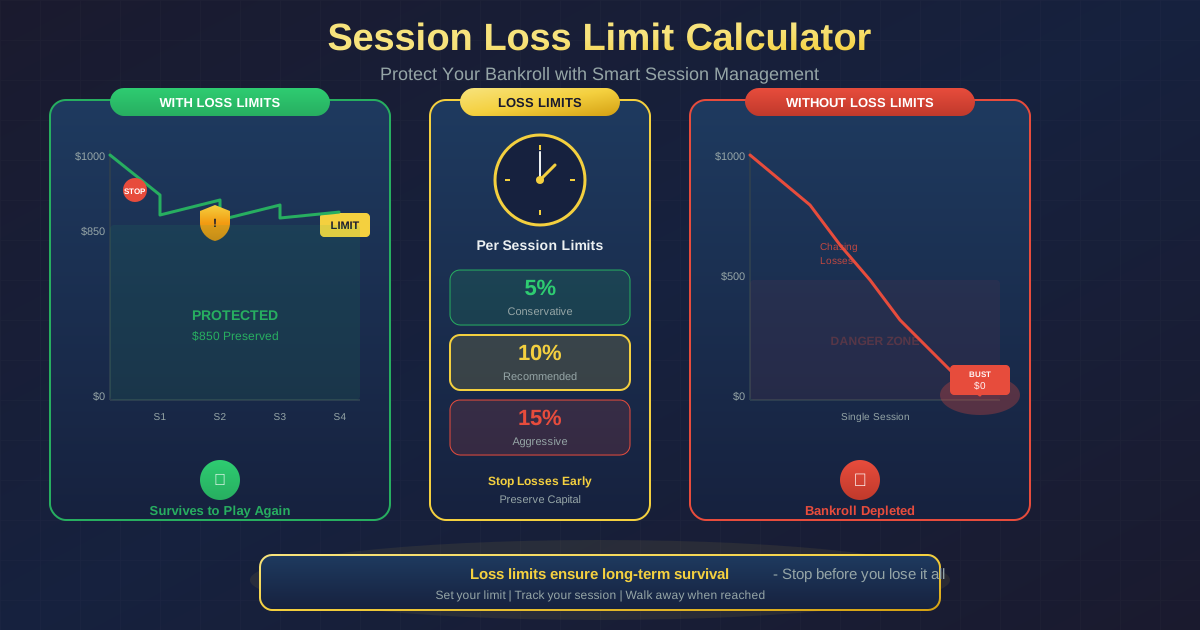
Strategy 4: Set Session Limits Based on Expected Loss
| Bankroll | Spins at $3/Spin | Expected Loss (87% RTP) | Time (10 spins/min) |
|---|---|---|---|
| $100 | ~33 spins | $13 expected loss | ~3 minutes |
| $300 | ~100 spins | $39 expected loss | ~10 minutes |
| $500 | ~167 spins | $65 expected loss | ~17 minutes |
| $1,000 | ~333 spins | $130 expected loss | ~33 minutes |
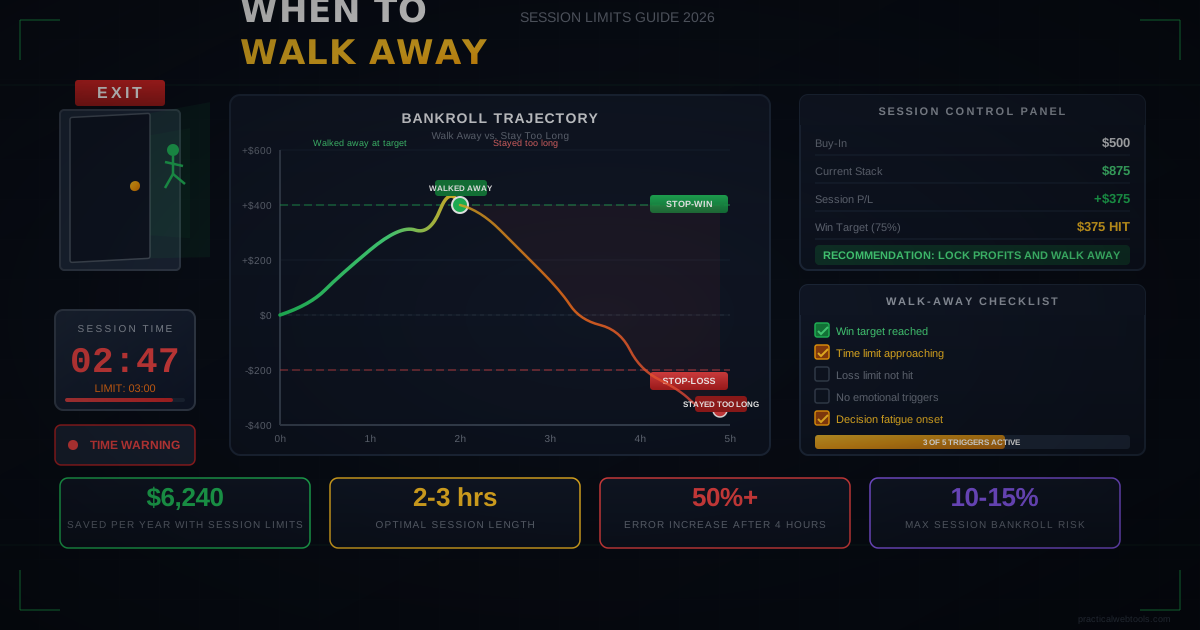
Progressive slots eat through bankrolls faster than most games due to the lower base RTP. Set firm session limits and walk away when you hit them.
Strategy 5: Play Progressives for Entertainment, Standard Slots for Value
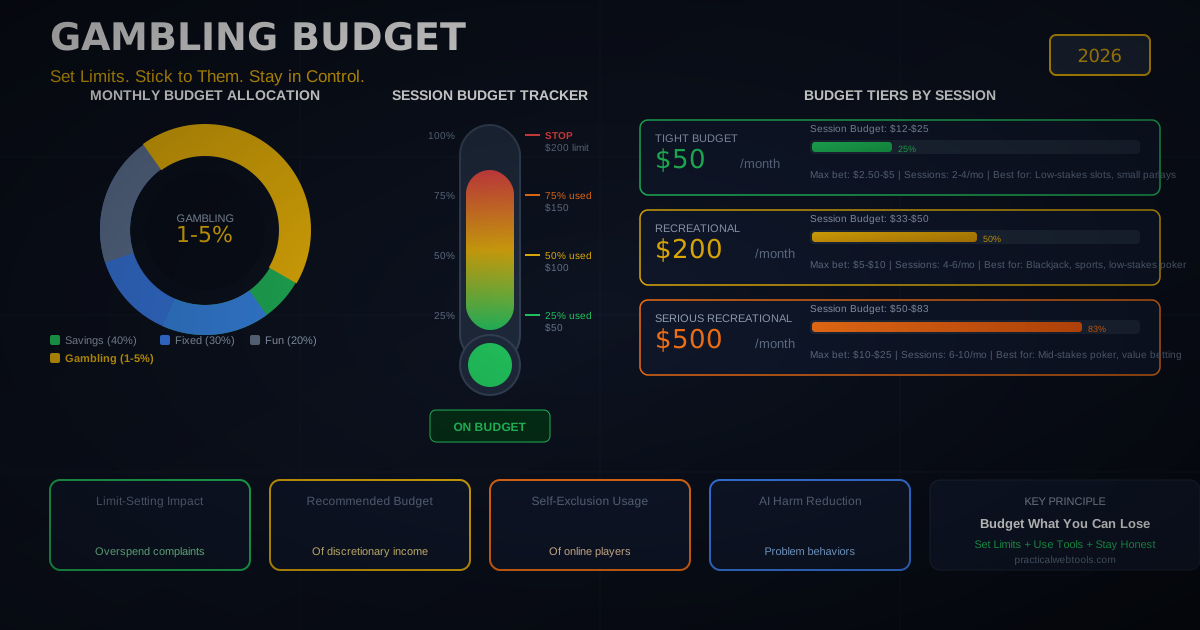
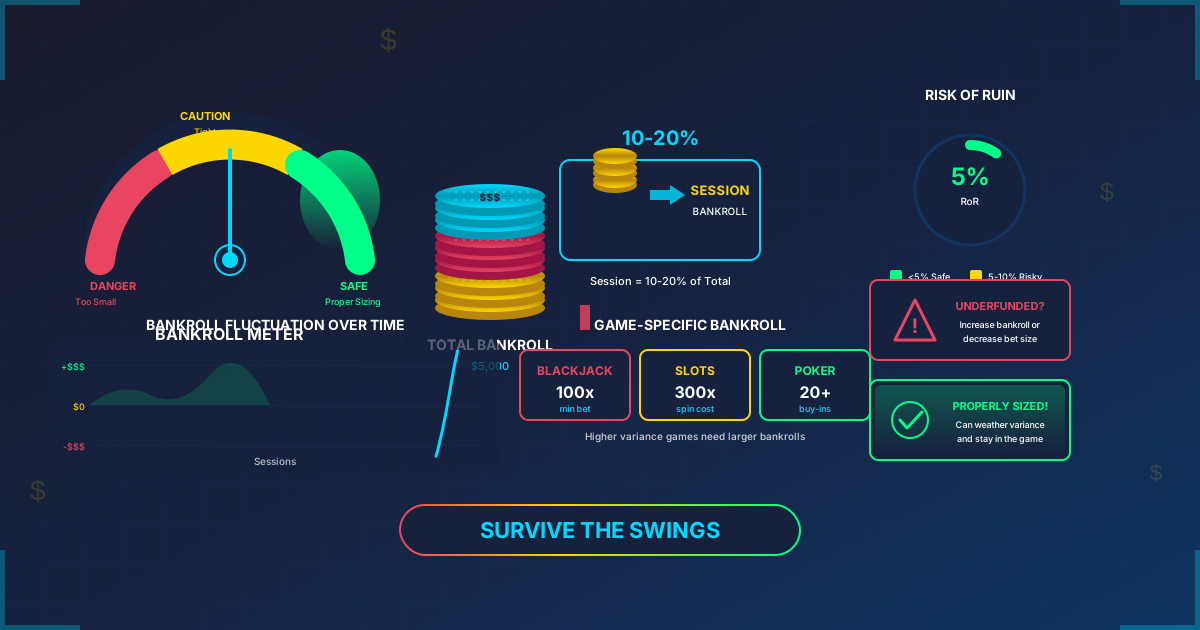
The optimal approach for most players: allocate a small portion of your gambling budget (10-20%) to progressive play for the jackpot excitement, and play higher-RTP standard slots or table games with the remainder.
Optimize your overall gambling budget with our Kelly Criterion Calculator.
How Have Progressive Jackpots Evolved in 2026?
The progressive jackpot landscape has changed significantly in recent years, driven by technology advances and regulatory changes.
Key Trends in 2026
| Trend | Description | Player Impact |
|---|---|---|
| Multi-tier progressives | Games with 4+ jackpot levels (mini/minor/major/mega) | More frequent small wins supplement rare mega jackpots |
| Cross-platform progressives | Same jackpot feeds from mobile, desktop, and land-based play | Faster jackpot growth, more convenient play |
| Community jackpots | All players in a game session share in a jackpot trigger | Smaller individual payouts but higher hit frequency |
| Skill-based bonus triggers | Jackpot bonus rounds with player input | Perception of control (actual odds unchanged) |
| Cryptocurrency jackpots | BTC/ETH-denominated progressive jackpots | Volatility of crypto adds another variable |
| Must-hit-by proliferation | More casinos offering guaranteed-hit progressives | More strategic opportunities for savvy players |
The Multi-Tier Revolution
Modern progressive slots typically offer multiple jackpot tiers rather than a single all-or-nothing jackpot:
| Tier | Typical Amount | Approximate Odds | Hit Frequency |
|---|---|---|---|
| Mini | $10-$100 | 1 in 500-2,000 | Every few hundred spins |
| Minor | $100-$1,000 | 1 in 5,000-20,000 | Every few thousand spins |
| Major | $1,000-$50,000 | 1 in 50,000-500,000 | Weekly to monthly |
| Mega/Grand | $50,000-$10,000,000+ | 1 in 1,000,000-50,000,000 | Rarely (months to years) |
This structure provides more frequent "wins" that sustain player engagement while still offering the aspirational mega-jackpot.
Compare different slot RTP figures with our Roulette EV Calculator (which demonstrates EV concepts applicable to any game).
What Common Myths About Progressive Slots Are Wrong?
Progressive slots attract more myths and misconceptions than almost any other casino game. Separating fact from fiction is essential for making informed decisions.
Myth vs. Reality
| Myth | Reality |
|---|---|
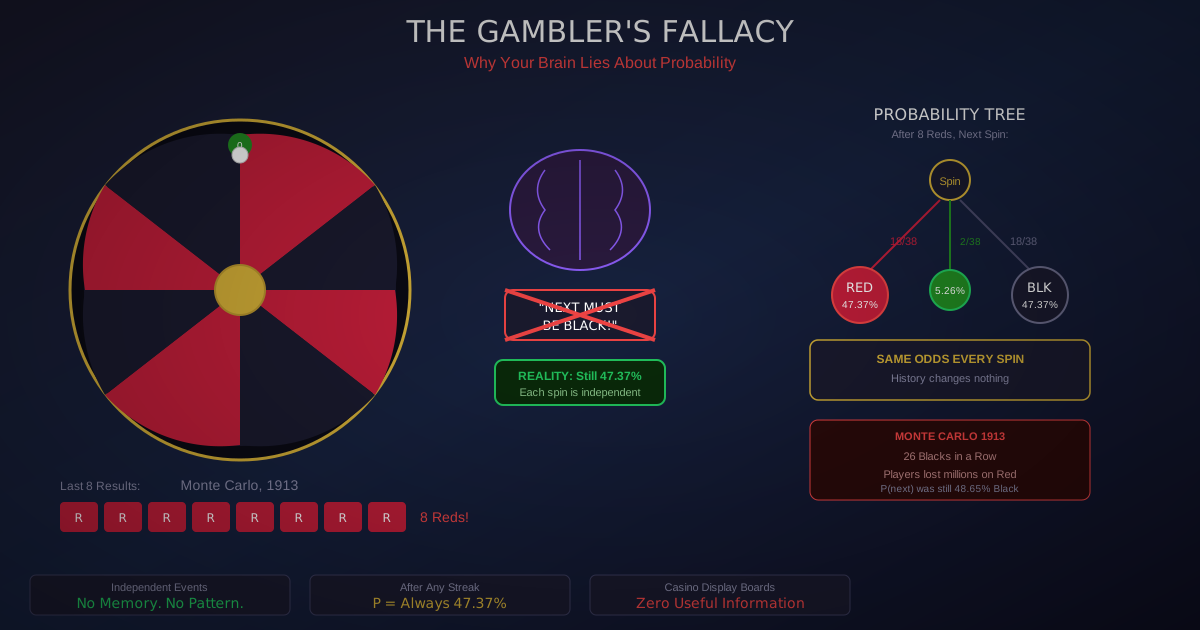
| "A machine is due to hit after a long dry spell" | Each spin is independent. The RNG has no memory of previous results. A machine that has not hit in 100,000 spins has the same odds on the next spin as one that hit yesterday. |
| "Playing faster increases your chances" | Speed only increases your total money wagered. The probability per spin is identical regardless of pace. Playing faster just means you lose more per hour. |
| "The casino can control when the jackpot hits" | Jackpots are triggered by certified RNGs. Casinos cannot manipulate when a jackpot pays. Gaming commissions audit and test these systems. |
| "You should only play when the jackpot is large" | Partially true for EV, but the odds per spin do not change based on jackpot size. A large jackpot improves EV but does not improve probability. |
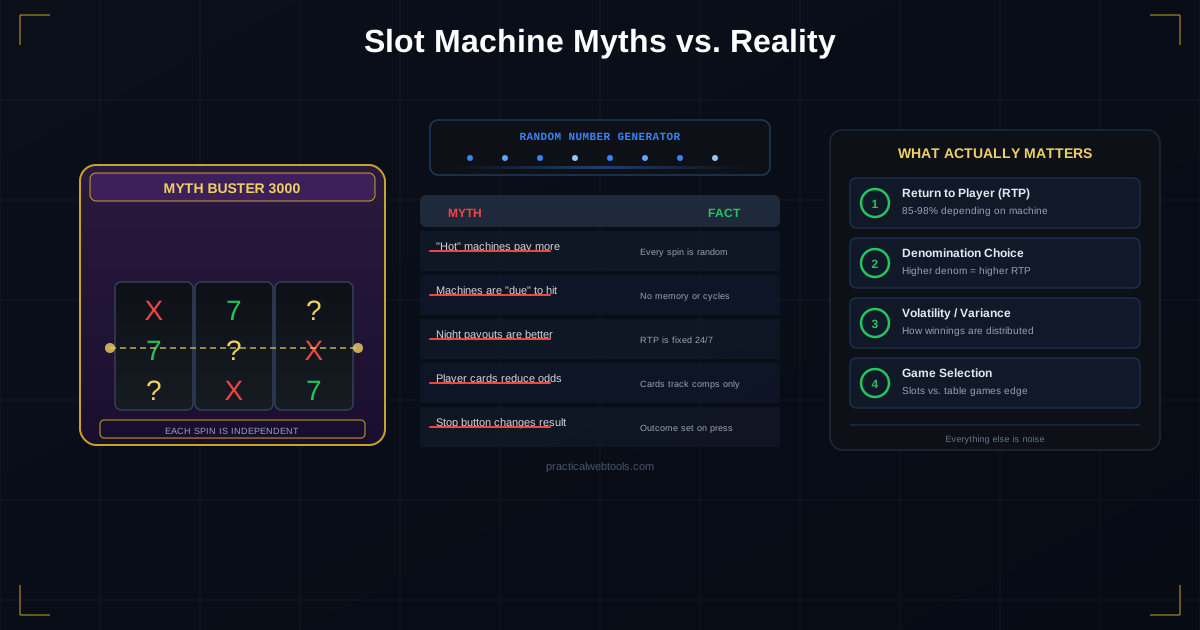
| "Hot machines near the entrance are programmed looser" | Machine placement and payout percentages are not correlated. This is an enduring but thoroughly debunked myth. |
| "Using a player's card reduces your chances" | Player's cards have zero effect on game outcomes. The RNG operates independently of the loyalty system. Always use your card. |
| "Someone else hit MY jackpot" | The exact microsecond timing of the RNG means even one second difference in pressing the button produces a completely different result. No one "takes" your jackpot. |
| "You should play at specific times of day" | The RNG does not know what time it is. Jackpots are equally likely at 3 AM Tuesday as 8 PM Saturday. |
Understand probability fundamentals with our Roulette Probability Calculator.
How Do Progressive Jackpot Pools and Contribution Rates Actually Work Behind the Scenes?
Understanding the mechanics behind the progressive jackpot pool reveals why these games are structured the way they are and how casinos balance profitability with jackpot appeal.
The Three Participants in Every Progressive Dollar
When you wager $3 on a progressive slot, that money is divided among three stakeholders:
| Recipient | Typical Share | On a $3 Bet | Purpose |
|---|---|---|---|
| Player (base game returns) | 83-88% | $2.49-$2.64 | Regular wins, bonus features, free spins |
| Casino/operator profit | 8-12% | $0.24-$0.36 | Casino's margin on the game |
| Progressive jackpot pool | 1-5% | $0.03-$0.15 | Feeds the growing jackpot meter |
Contribution Rate Variations by Game
Not all progressive slots contribute at the same rate. Higher contribution rates mean faster jackpot growth but lower base game RTP.
| Game Category | Typical Contribution Rate | Jackpot Growth Speed | Base Game RTP |
|---|---|---|---|
| Standalone (small jackpot) | 1-2% | Slow | 89-92% |
| Local linked | 2-3% | Moderate | 86-89% |
| Wide-area network | 3-5% | Fast | 82-87% |
| Online mega progressive | 2-4% | Very fast (global player pool) | 85-90% |
| Must-hit-by | 1-3% | Moderate (capped) | 88-91% |
Seed Funding: Who Pays the Starting Jackpot?
When a progressive jackpot resets, the seed amount must come from somewhere. The source depends on the type of progressive:
- Standalone: The casino funds the seed from its general gaming revenue
- Local linked: The casino or casino group funds the seed
- Wide-area (manufacturer-operated): The slot manufacturer (IGT, Aristocrat, etc.) funds the seed, typically from the progressive contribution rate over time
- Online: The game developer funds the seed, often absorbing the cost as a marketing expense
The seed amount significantly affects the game's long-term RTP. A $10 million Megabucks seed is funded by past progressive contributions from all players across the network -- essentially, previous players who did not hit the jackpot partially fund the seed for future jackpots.
How Jackpot Meters Display Growth
The jackpot meter you see on the machine display updates in real time as players across the network make bets. The visual speed of the meter depends on:
- Number of machines in the network: More machines = faster meter movement
- Time of day: Peak hours show faster growth than off-peak
- Average bet size: Higher denomination machines contribute more per spin
- Contribution rate: Higher contribution rates drive faster visual movement
At busy times, the Megabucks meter can increase by $1,000-$5,000 per minute across its network of linked machines.
Evaluate different game RTP figures with our Video Poker EV Calculator.
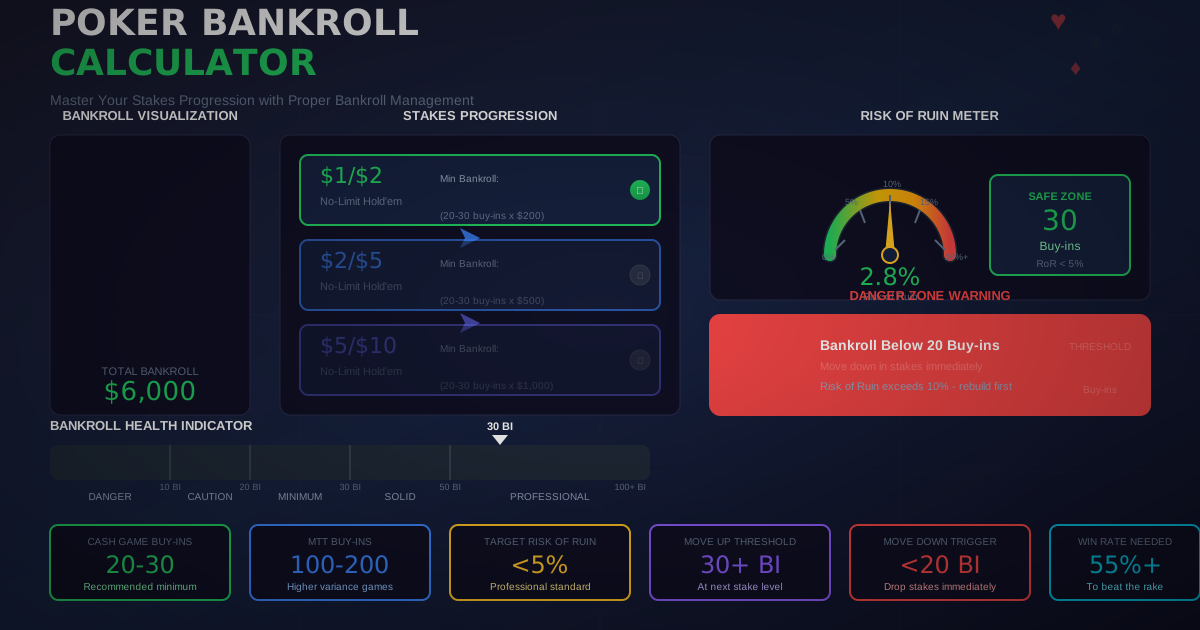
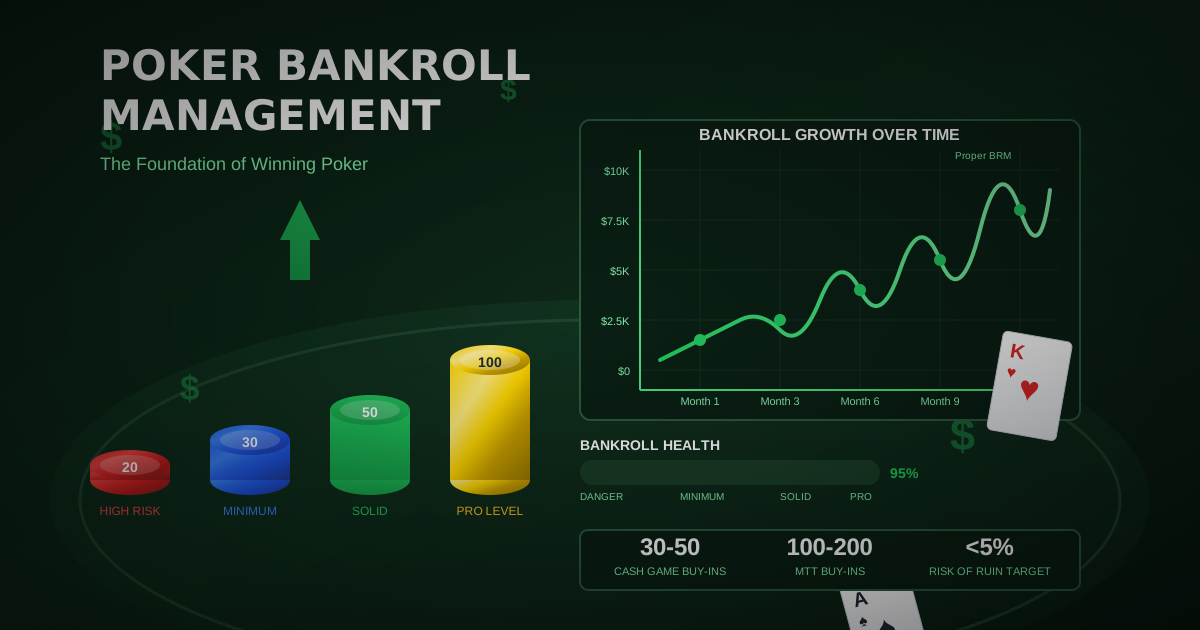
How Should You Manage Your Bankroll for Progressive Play?
Progressive slots demand a specific bankroll management approach due to their high volatility and reduced base game RTP.
Bankroll Guidelines for Progressive Slots
| Player Type | Session Bankroll | Max Spins | Expected Session Loss | Probability of Losing Entire Bankroll |
|---|---|---|---|---|
| Casual ($3/spin) | $100-$200 | 33-67 | $13-$26 | 15-30% |
| Regular ($3/spin) | $300-$500 | 100-167 | $39-$65 | 10-20% |
| Serious ($3/spin) | $500-$1,000 | 167-333 | $65-$130 | 5-15% |
| High roller ($9/spin) | $1,000-$3,000 | 111-333 | $130-$390 | 10-20% |
Bankroll Allocation Strategy
| Total Gambling Budget | Progressive Allocation (10-20%) | Standard Slots/Table Games (80-90%) |
|---|---|---|
| $500 | $50-$100 on progressives | $400-$450 on better-RTP games |
| $1,000 | $100-$200 on progressives | $800-$900 on better-RTP games |
| $2,000 | $200-$400 on progressives | $1,600-$1,800 on better-RTP games |
| $5,000 | $500-$1,000 on progressives | $4,000-$4,500 on better-RTP games |
This approach gives you the progressive jackpot excitement while protecting the majority of your bankroll with better-returning games.
Model your bankroll sustainability with our Bankroll Volatility Tracker.
Frequently Asked Questions About Progressive Jackpot Slots
Do you have to bet max to win the progressive jackpot? It depends on the game. Many land-based progressives (including Megabucks) require a maximum bet to qualify for the top jackpot. Most modern online progressives allow any bet to trigger the jackpot, but with scaled probability -- a max bet has a proportionally higher chance than a minimum bet. Always check the game rules before playing.
What happens after someone wins the progressive jackpot? The jackpot resets to its seed amount (the minimum starting jackpot funded by the casino or game manufacturer). The seed is typically 5-25% of the average jackpot at the time of winning. The meter immediately begins climbing again from the seed as new bets are placed.
Can you predict when a progressive jackpot will hit? No, with one exception. Standard progressives are purely random -- each spin has the same probability of hitting regardless of jackpot size or time elapsed. The exception is must-hit-by progressives, where you know the jackpot will pay before reaching the published ceiling, making it somewhat predictable as it approaches that ceiling.
Is Mega Moolah rigged? No. Mega Moolah is developed by Microgaming and audited by independent testing agencies (eCOGRA and others). Its RNG is certified fair. The game's low base RTP (88.12%) is publicly disclosed, and jackpot triggers are random. The "rigged" perception often comes from long dry spells between hits, which are normal given the odds.
Should I play penny progressives or dollar progressives? Dollar progressives typically have better base RTPs than penny progressives (91-94% vs. 85-90%). However, penny progressives with multi-line play can generate significant coin-in at a lower per-spin cost. The key is matching your bet size to your bankroll rather than your denomination to perceived odds.
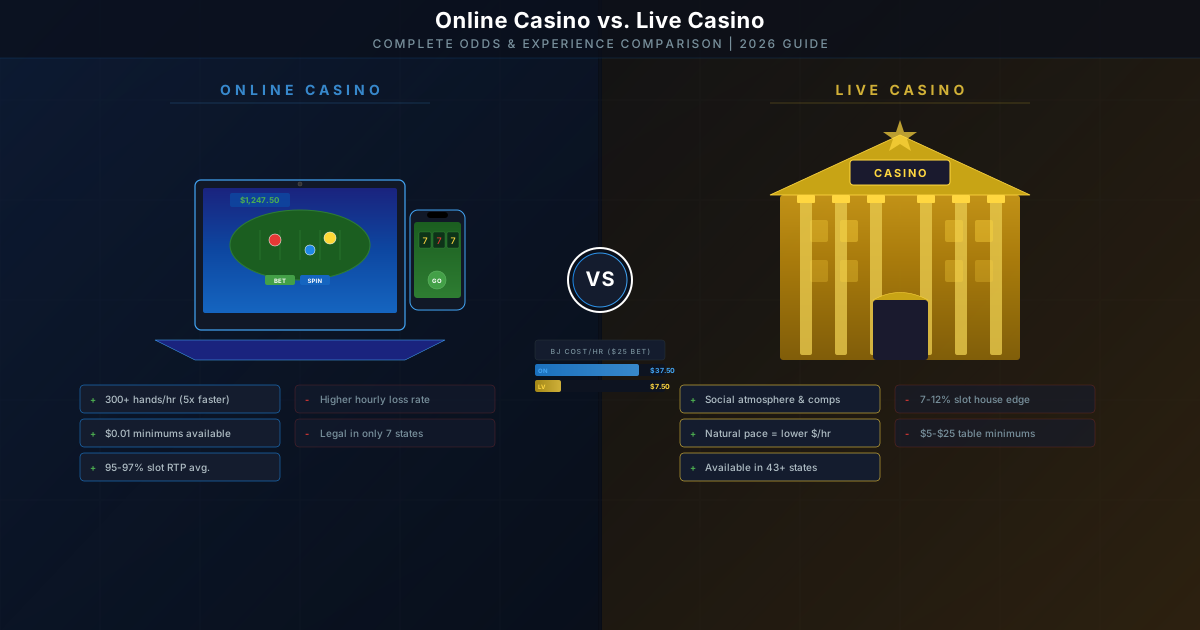
Do online or land-based progressives have better odds? Online progressives generally have higher base RTPs (3-5% better than land-based equivalents). However, online jackpots are often shared across a larger player pool, meaning more competition for the jackpot. The odds per spin are determined by the game's RNG and are similar in either format.
What is the smartest progressive slot to play? Must-hit-by progressives near their ceiling offer the only mathematically sound progressive strategy. Among standard progressives, games with the highest base RTP and the lowest progressive contribution rate offer the best overall returns. Standalone progressives offer the most favorable odds of hitting, though for smaller amounts.
Can card counting or any skill improve your progressive slot odds? No. Slot machines use random number generators that produce outcomes independently of all previous results. Unlike blackjack, there is no decision-making that affects the outcome. The only "skill" in progressive play is bankroll management and game selection.
Related Gambling Tools
Make informed decisions about any gambling game with these free calculators:
- Expected Value Calculator -- Calculate the EV of any bet or game
- Bankroll Volatility Tracker -- Track your bankroll across sessions
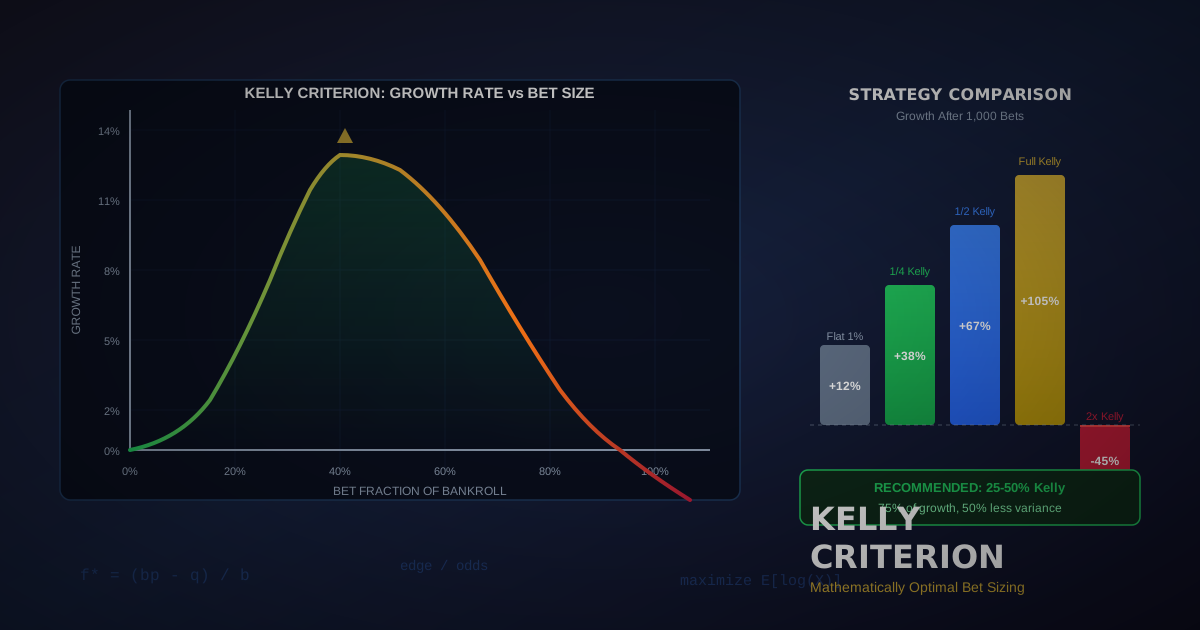
- Kelly Criterion Calculator -- Determine optimal bet sizing
- Implied Probability Calculator -- Convert odds to probability
- Odds Converter -- Convert between odds formats
- Roulette House Edge Calculator -- Compare roulette variants
- Blackjack House Edge Calculator -- Evaluate blackjack rules
- Baccarat House Edge Calculator -- Compare baccarat bets
- Video Poker EV Calculator -- Analyze video poker returns
- Video Poker Pay Table Analyzer -- Compare VP pay tables
- Roulette Probability Calculator -- Calculate outcome probabilities
- Roulette Session Loss Calculator -- Estimate expected session losses
Final Thoughts: Eyes Wide Open
Progressive jackpot slots offer something no other casino game can: the possibility of winning millions from a single, low-cost spin. That potential is real -- hundreds of people have become millionaires from progressive slots, and someone will be next.
But the mathematics are equally real. The overwhelming majority of progressive slot players will lose money, and the reduced base RTP means they will lose more per spin than they would on standard slots. The progressive contribution is essentially a voluntary lottery tax added to an already house-favored game.
The wisest approach is to play progressives with full awareness of the odds, with a dedicated and limited bankroll, and with the understanding that you are paying a premium for the dream. If you hit the jackpot, it will be life-changing. If you do not -- which is the overwhelmingly likely outcome -- you should not have wagered more than you could comfortably afford to lose.
Start with realistic expectations using our free Expected Value Calculator.
How Do Progressive Slots Compare to Other Lottery-Style Gambling?
Progressive slots occupy a unique space between traditional casino games and lottery-style gambling. Understanding where they fit helps set realistic expectations.
Progressive Slots vs. Other High-Jackpot Games
| Game | Typical Jackpot | Odds of Top Prize | Cost Per Play | House Edge | Speed of Play |
|---|---|---|---|---|---|
| Megabucks Progressive | $10M-$40M | 1 in 49.8M | $3/spin | ~15% | 10 spins/min |
| Mega Moolah (Online) | $2M-$26M | ~1 in 50M | $0.25-$6.25/spin | ~12% | 5-8 spins/min |
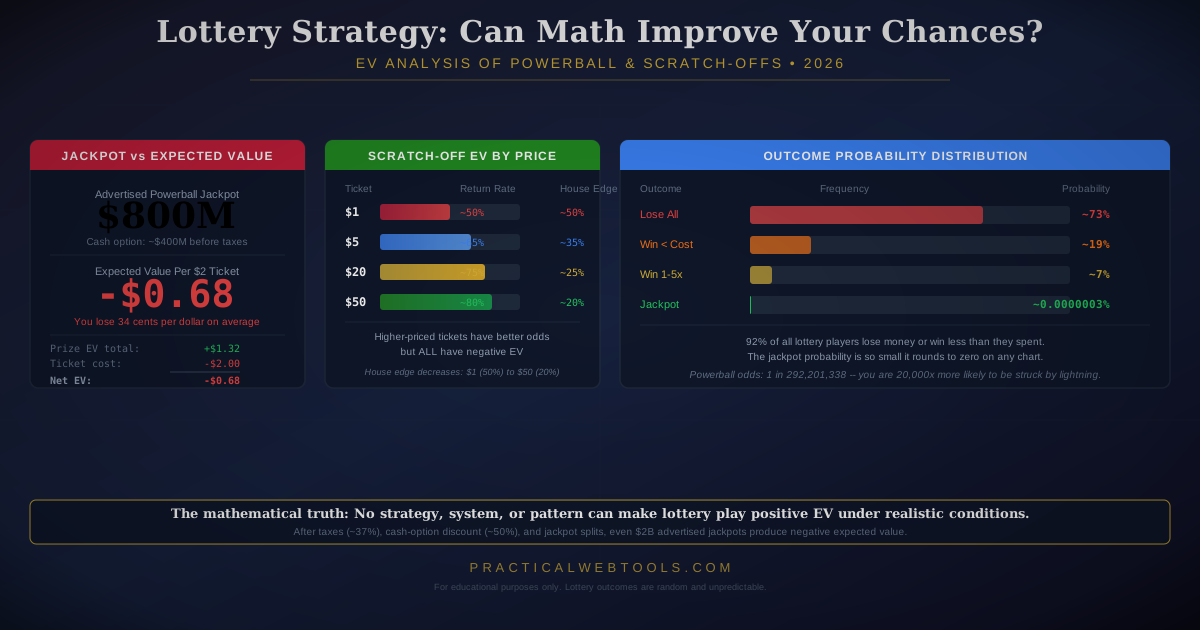
| State Powerball Lottery | $20M-$2B+ | 1 in 292M | $2/ticket | ~50% | 2 draws/week |
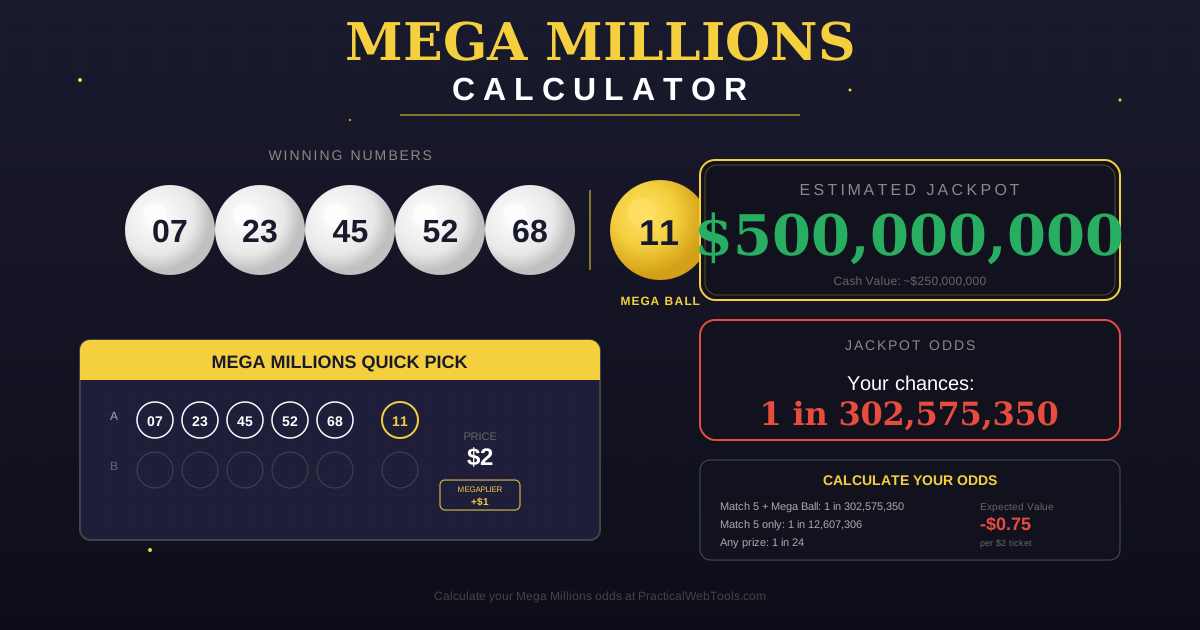
| Mega Millions Lottery | $20M-$1.5B+ | 1 in 302M | $2/ticket | ~50% | 2 draws/week |
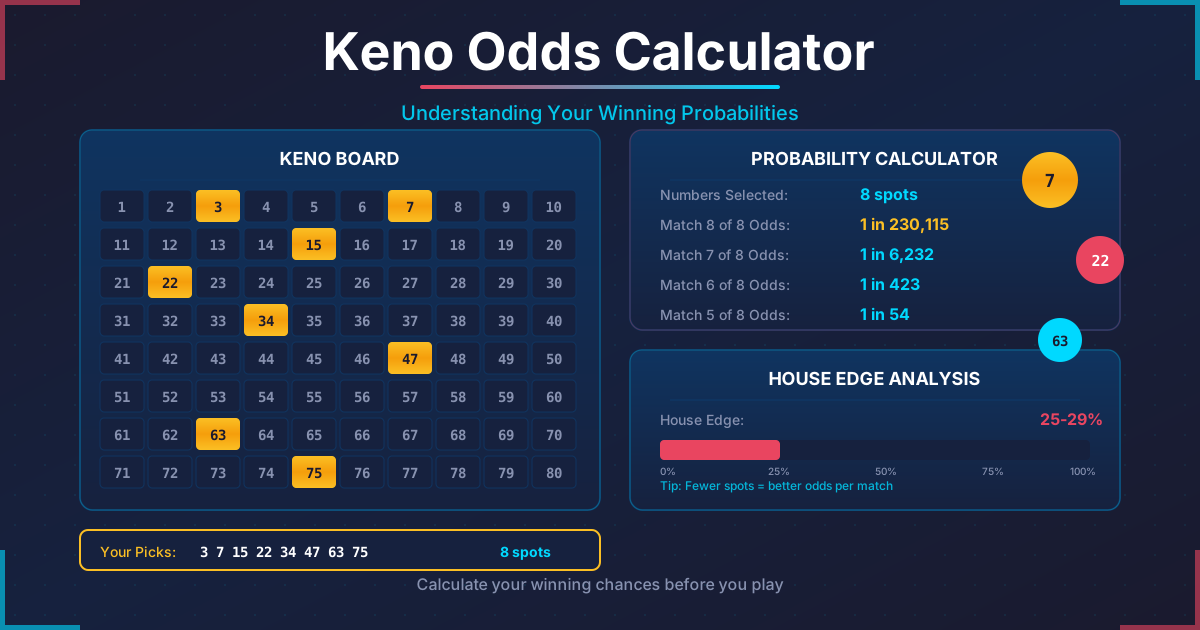
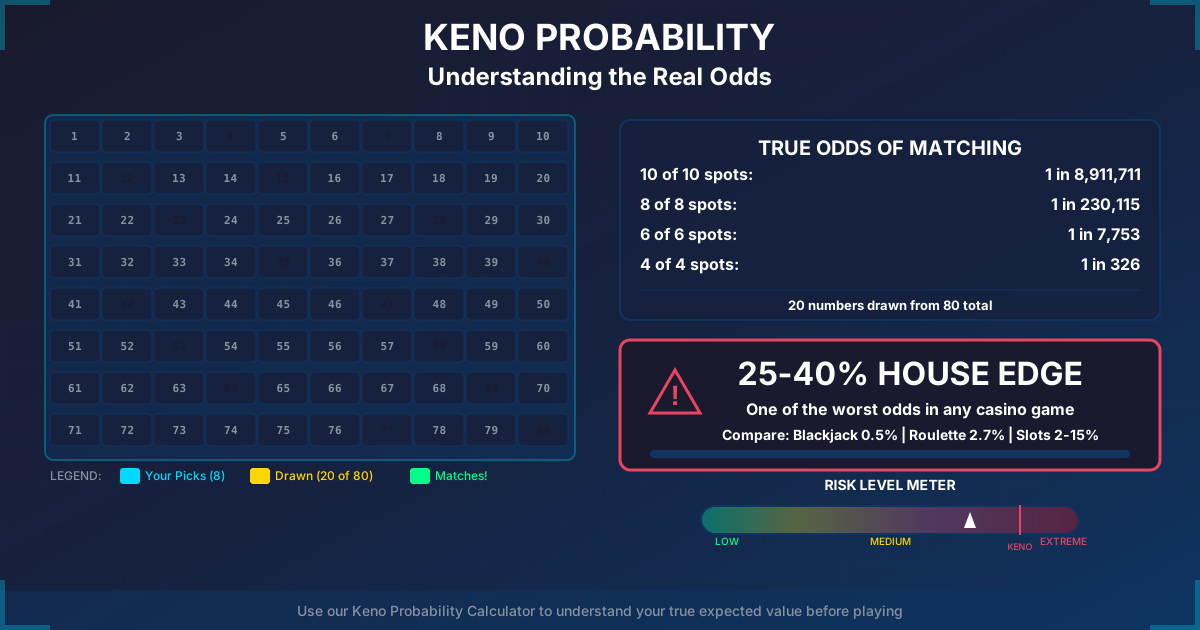
| Keno (casino) | $100K-$1M | 1 in 8.9M (10 spot) | $1-$5/game | 25-30% | 5 min/game |
| Scratch-off ($30 ticket) | $1M-$5M | 1 in 2-4M | $30/ticket | 30-40% | Instant |
Progressive slots offer significantly better odds than state lotteries (1 in 50M vs 1 in 300M) with a much lower house edge (12-15% vs 50%). However, the cost per play is higher and the pace is much faster, meaning you spend more money per hour chasing the jackpot.
The Entertainment Value Calculation
One useful way to frame progressive slot play: compare the cost to other entertainment options.
| Entertainment | Cost Per Hour | Jackpot Potential | Social Element |
|---|---|---|---|
| Progressive slots ($3/spin, 10/min) | $23.40 expected loss/hr | $10M-$40M | Low |
| Standard slots ($1/spin, 10/min) | $4.20 expected loss/hr | $1K-$25K | Low |
| Movie theater | $7-$15/hr | None | Medium |
| Live sporting event | $25-$100/hr | None (unless betting) | High |
| Golf (public course) | $15-$25/hr | None | Medium |
| State lottery ($2/ticket, 2x/week) | $0.57/day ($208/yr) | $20M-$2B | Low |
At $23.40 per hour in expected losses, progressive slots are expensive entertainment. But they offer something no other entertainment provides: the non-zero probability of winning tens of millions of dollars from a single moment. Whether that possibility justifies the cost is entirely personal.
Calculate entertainment cost versus expected value with our Roulette EV Calculator.
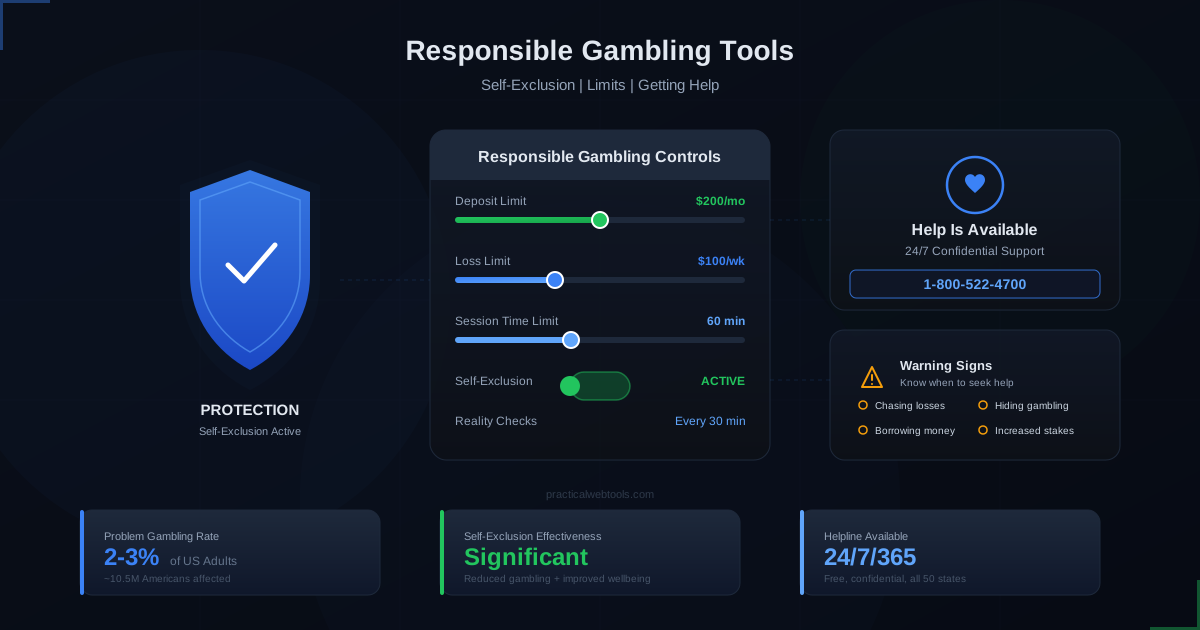
Gambling involves risk and should be approached as entertainment, not as a source of income. Always bet within your means, set strict bankroll limits, and never chase losses. If you or someone you know has a gambling problem, contact the National Council on Problem Gambling at 1-800-522-4700 or visit ncpgambling.org. Must be 21+ to gamble in most US jurisdictions. Please play responsibly.