Best Bet Tracking Apps and Tools: How to Analyze Your Betting Performance (2026)
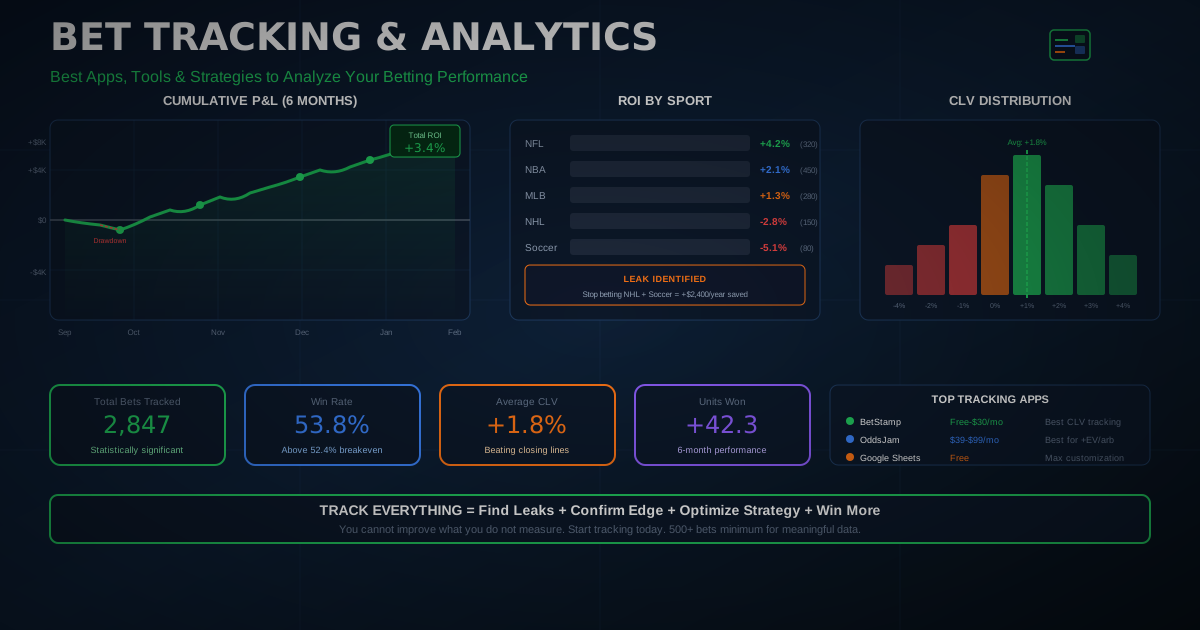
Most sports bettors dramatically overestimate their win rate, with studies suggesting the average recreational bettor believes they win 55-60% of their bets when the actual number is closer to 47-49%. Without accurate tracking, you are betting blind. You cannot calculate your true ROI, identify which sports or bet types are profitable, determine whether your process is working, or even prove to yourself whether you are a winning or losing bettor.
Bet tracking is not optional for serious sports bettors. It is the foundation of every profitable betting operation. Professional bettors track every single wager with the same rigor that a hedge fund tracks every trade. The data tells you where your edge is, where your leaks are, and whether you should be increasing your volume or changing your approach entirely.
The good news: there are excellent bet tracking tools available in 2026, from free spreadsheet templates to sophisticated apps with automatic line tracking and CLV calculation. The bad news: most bettors never use them. This guide reviews the best tracking options, explains what to track, and shows you how to analyze your data to become a better bettor.
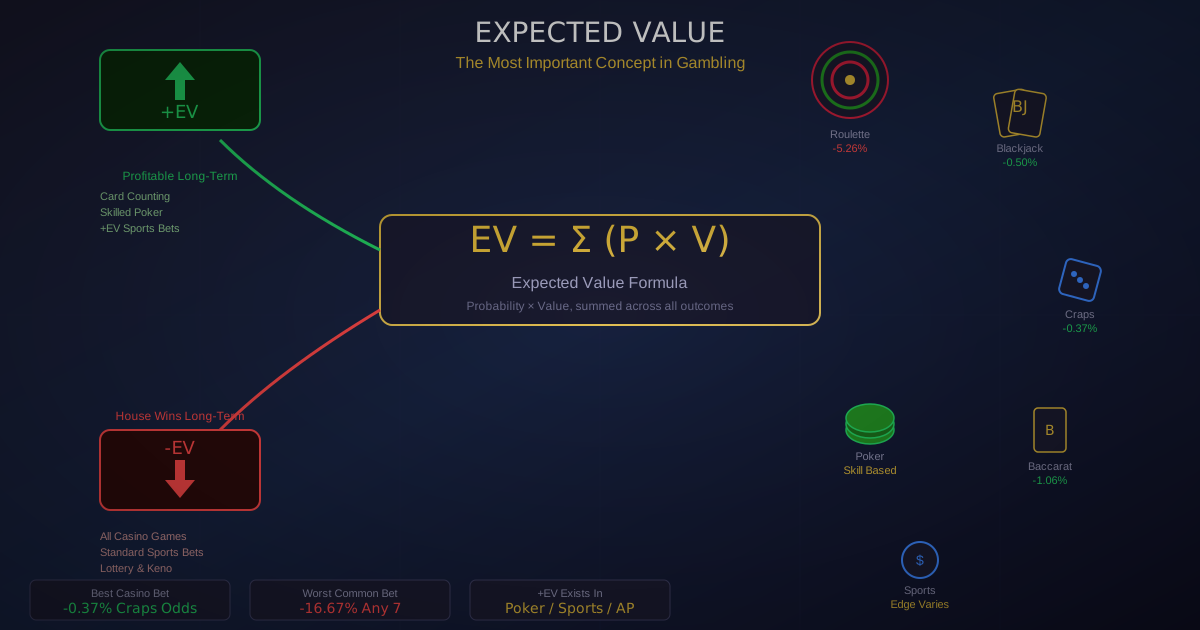
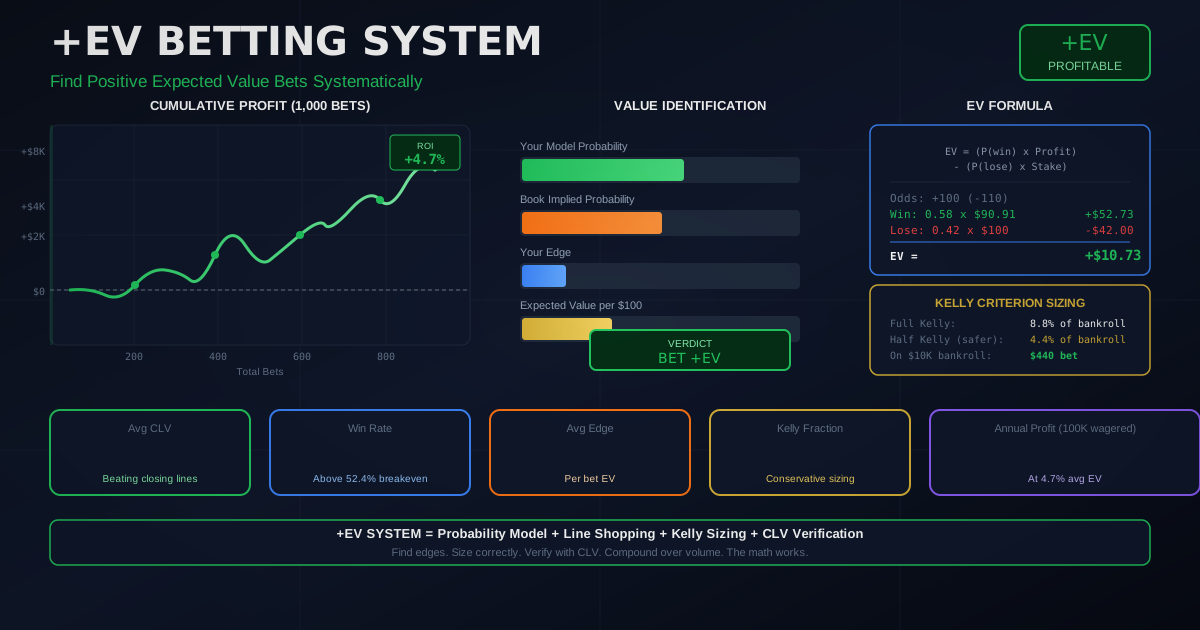
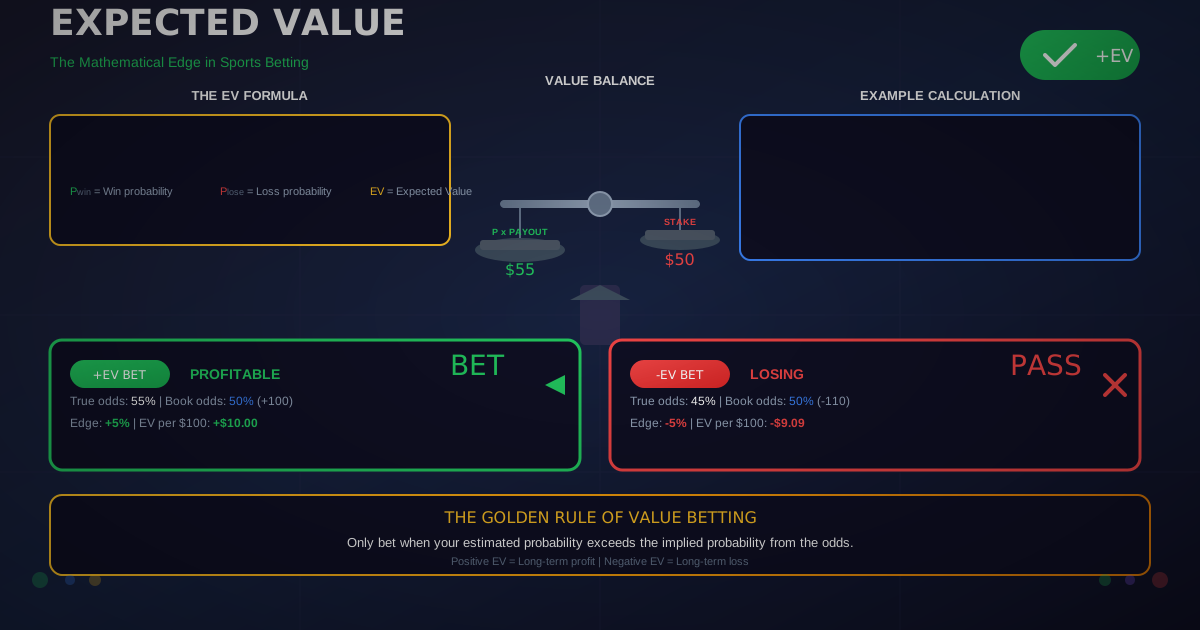
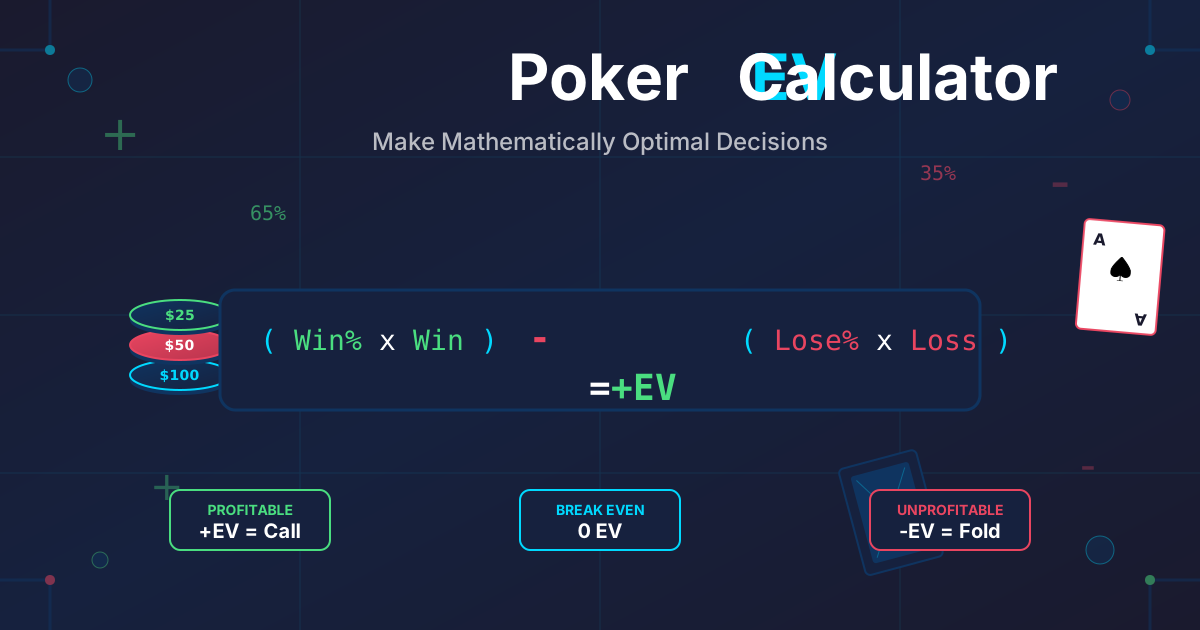
Start tracking your expected value on every bet with our free Expected Value Calculator.
Why Does Bet Tracking Matter?
Bet tracking matters because human memory is unreliable, cognitive biases distort our perception of results, and without data, you cannot make informed decisions about your betting strategy. Tracking transforms betting from gambling into a measurable, improvable process.
The Psychology of Why Bettors Don't Track
| Cognitive Bias | Effect on Bettors | How Tracking Fixes It |
|---|---|---|
| Selective memory | Remember big wins, forget regular losses | Data shows complete picture |
| Confirmation bias | Seek information confirming winning ability | Numbers do not lie |
| Dunning-Kruger effect | Overestimate skill in complex domains | Track record reveals true ability |
| Anchoring | Fixate on best/worst results rather than averages | Metrics show averages over time |
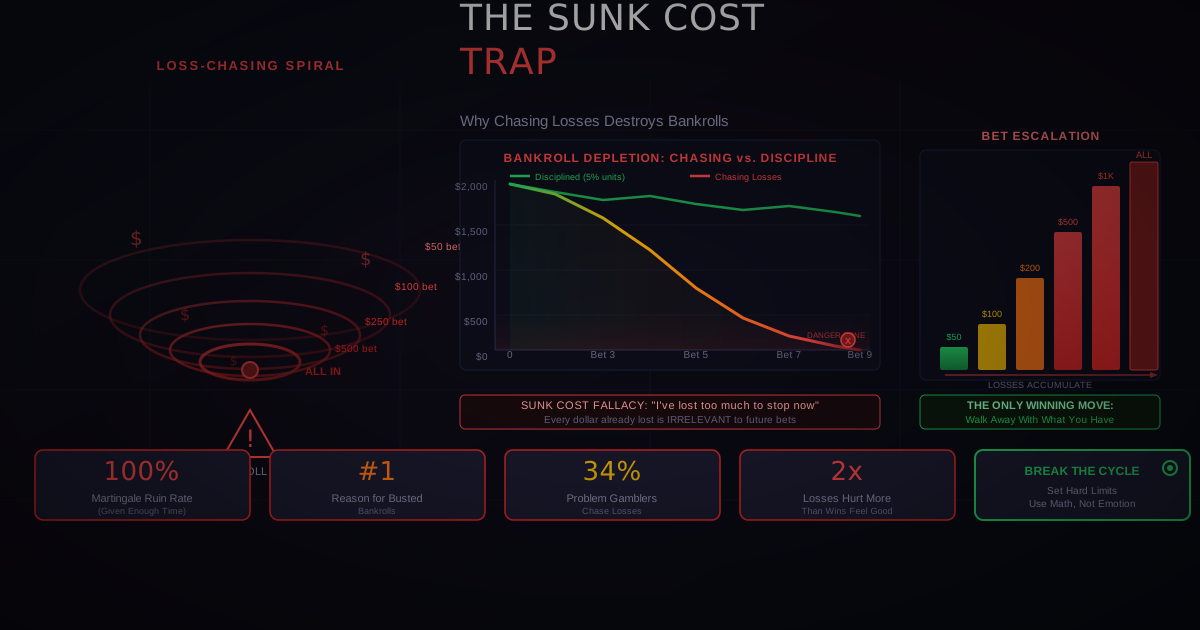
| Sunk cost fallacy | Continue losing strategies to justify past bets | Data reveals when to change course |
| Optimism bias | Believe future results will be better than evidence suggests | Trend lines show actual trajectory |
What Tracking Reveals
A properly maintained bet tracking system tells you:
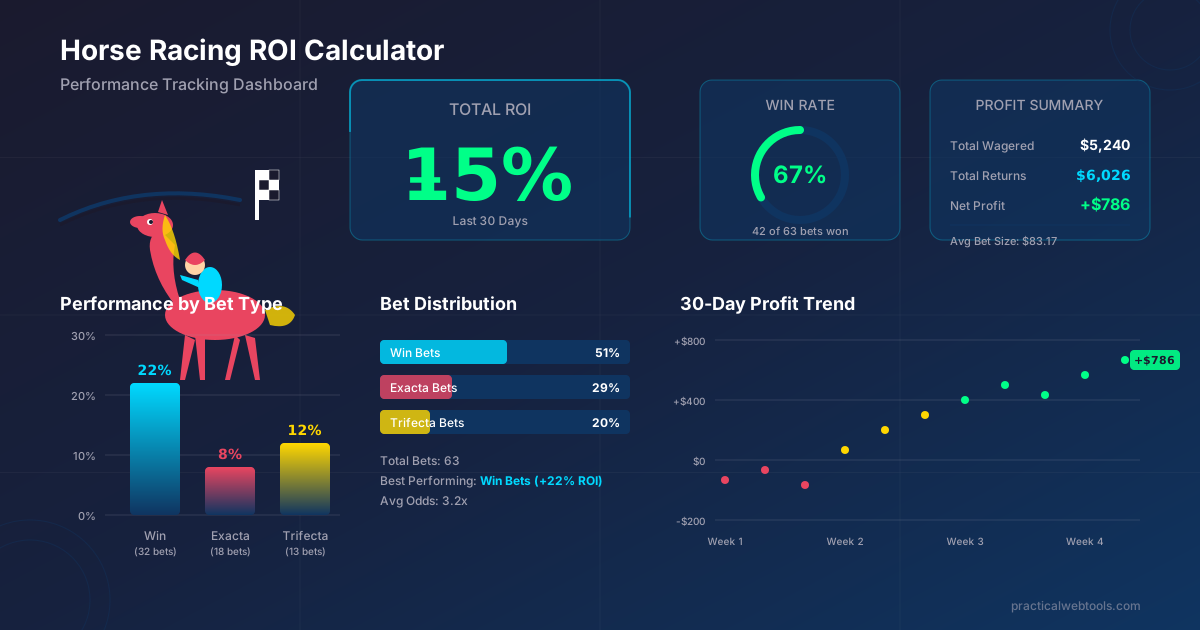
- Your actual ROI (are you winning or losing money overall?)
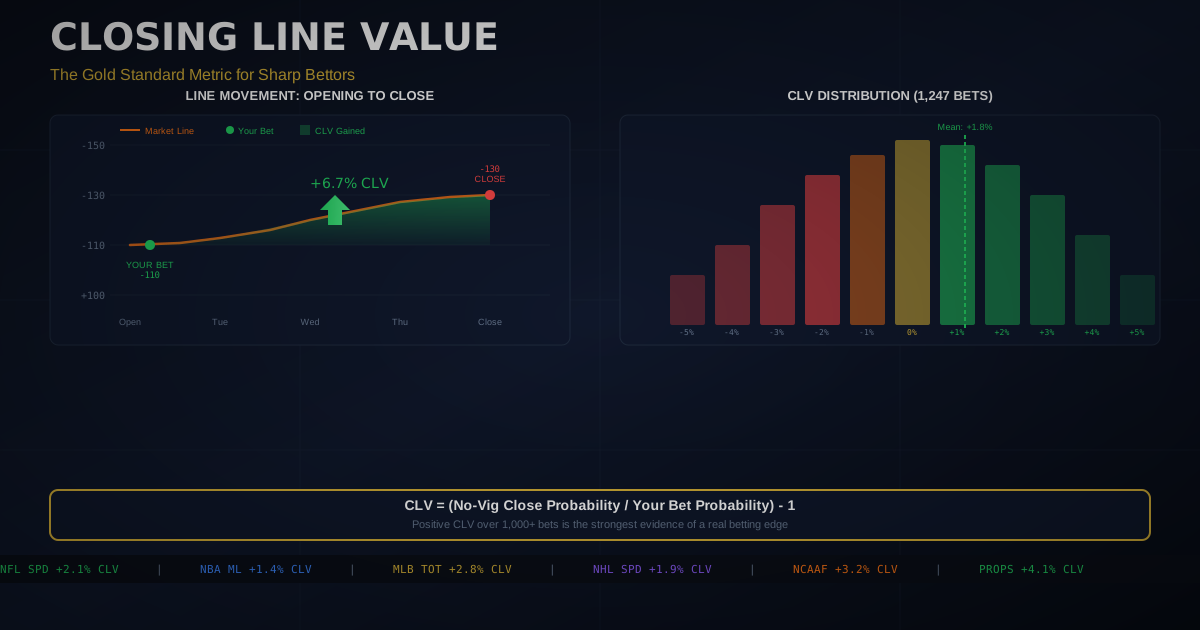
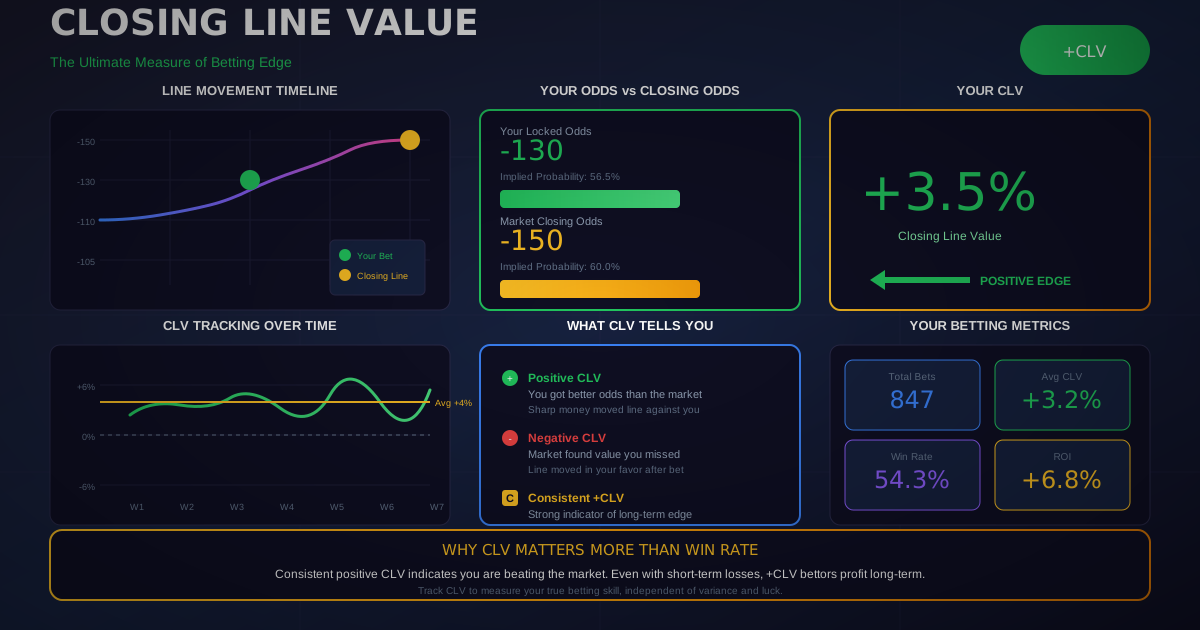
- Your CLV (is your process sound, even during losing streaks?)
- Your best and worst sports (where do you have edge and where are you losing?)
- Your best and worst bet types (spreads vs. totals vs. props vs. moneylines)
- Your optimal bet sizing (are you betting too much or too little relative to your edge?)
- Seasonal patterns (do you perform better during certain parts of the season?)
- Sportsbook performance (which books give you the best odds consistently?)
- Sample size adequacy (do you have enough bets to draw statistical conclusions?)
The Minimum Sample Size Problem
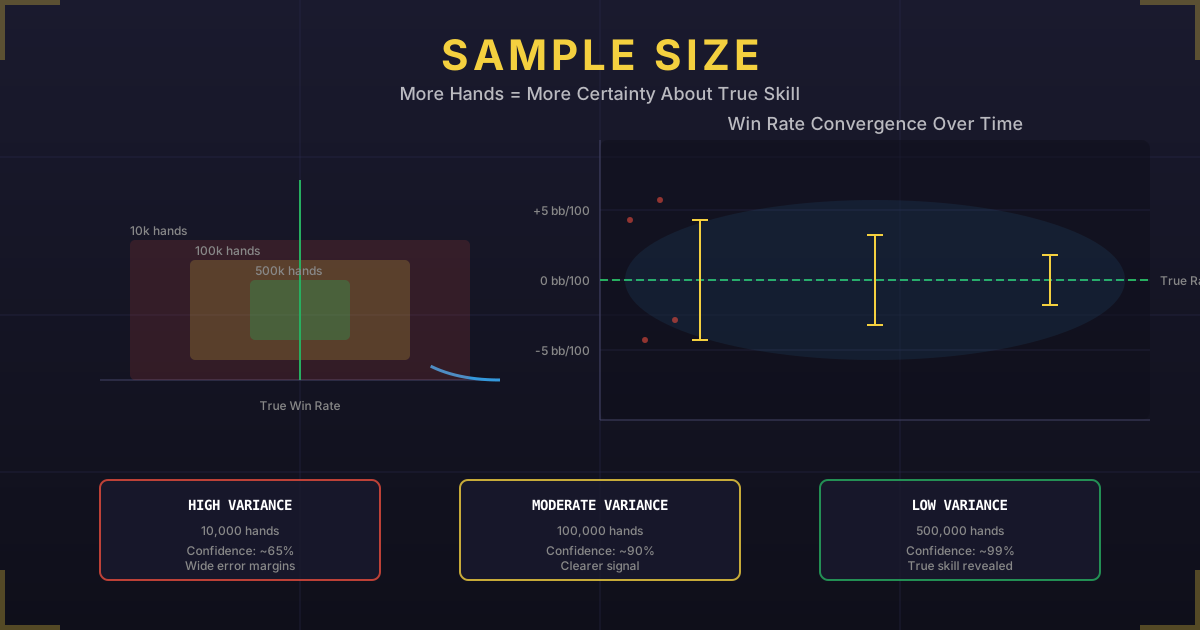
One of the most important things tracking reveals is whether your sample is large enough to be meaningful:
| Sample Size | What It Can Tell You | Statistical Confidence |
|---|---|---|
| 50 bets | Almost nothing; too small for any conclusion | Very low |
| 100 bets | General direction, but huge margin of error | Low |
| 250 bets | Moderate indication of ability | Moderate-Low |
| 500 bets | Good starting point for analysis | Moderate |
| 1,000 bets | Reliable ROI estimate (within ~3% margin) | Good |
| 2,500 bets | Strong statistical significance | Very Good |
| 5,000+ bets | High confidence in all metrics | Excellent |
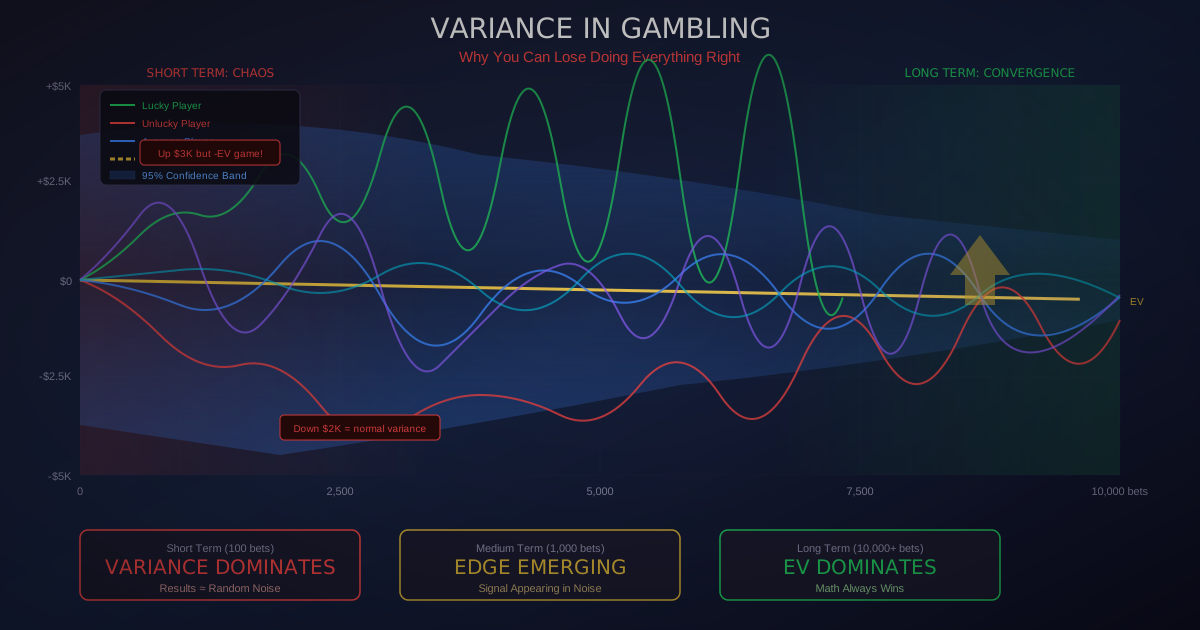
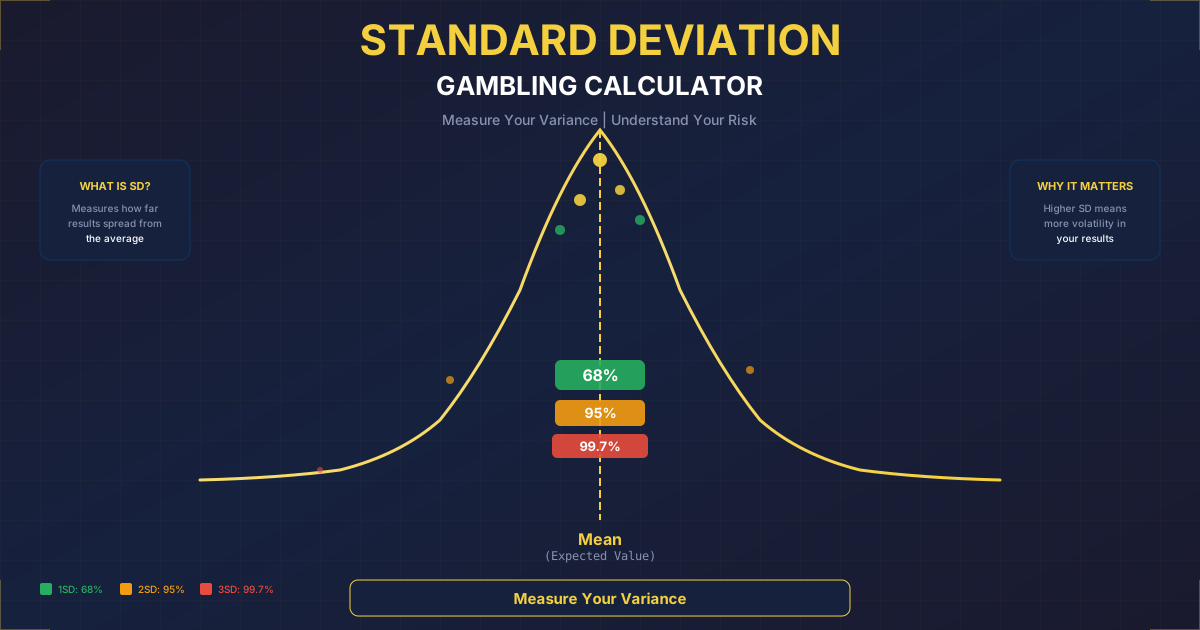
A bettor who has won 55% of 100 bets might have a true win rate anywhere from 45% to 65%. At 1,000 bets, the confidence interval narrows dramatically. This is why professionals emphasize volume, and why short-term results are nearly meaningless.
Calculate the expected value of any bet before placing it with our Expected Value Calculator.
What Should You Track for Every Bet?
Every bet you place should be recorded with enough detail to enable meaningful analysis. The more data you capture, the more insights you can extract.
Essential Fields (Must Track)
| Field | Description | Example | Why It Matters |
|---|---|---|---|
| Date | When the bet was placed | 2026-02-08 | Timing analysis, tax records |
| Sport | Sport or league | NFL, NBA, EPL | Identify strongest sports |
| Event | Specific game or match | Chiefs vs. Bills | Context for analysis |
| Bet Type | Category of wager | Spread, ML, Total, Prop | Identify best bet types |
| Selection | Your specific pick | Chiefs -3.5 | Track specific patterns |
| Odds | Odds at time of bet | -110, 1.91, 10/11 | Calculate EV and ROI |
| Stake | Amount wagered | $200 | Track bankroll allocation |
| Result | Win, Loss, Push, Void | Win | Calculate win rate |
| Profit/Loss | Net return including stake | +$181.82 | Track absolute performance |
| Sportsbook | Which book was used | FanDuel, DraftKings | Compare book performance |
Advanced Fields (Should Track)
| Field | Description | Example | Why It Matters |
|---|---|---|---|
| Closing Odds | Final odds before event | -125 | Calculate CLV |
| CLV | Closing Line Value | +3.2% | Best predictor of long-term success |
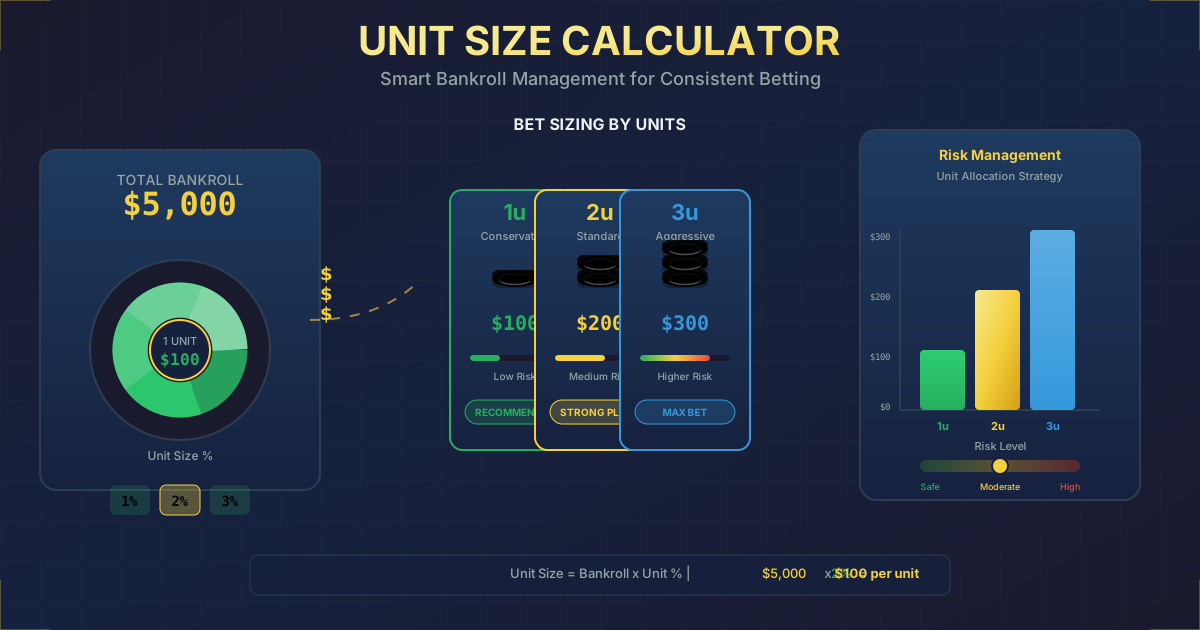
| Unit Size | Bet as % of bankroll | 1.5 units | Normalized performance tracking |
| Model Probability | Your estimated true probability | 57% | Validate your model over time |
| Bet Source | How you found the bet | Model, steam, screen | Identify best bet-finding methods |
| Confidence Level | Your conviction (1-5 scale) | 4/5 | Correlate confidence with results |
| Category | Sub-type of bet | First half spread, player prop | Granular analysis |
| Notes | Reasoning for the bet | Strong wind, backup QB | Qualitative review |
Example Tracking Entry
Date: 2026-02-08
Sport: NFL
Event: Chiefs vs. Bills (AFC Championship)
Bet Type: Spread
Selection: Chiefs -2.5
Odds at Bet: -108
Closing Odds: -120
Stake: $500 (2.5 units)
Sportsbook: FanDuel
Model Probability: 56%
Confidence: 4/5
Result: Win
Profit: +$462.96
CLV: +2.8%
Notes: Model edge on Chiefs OL matchup, weather favors run game
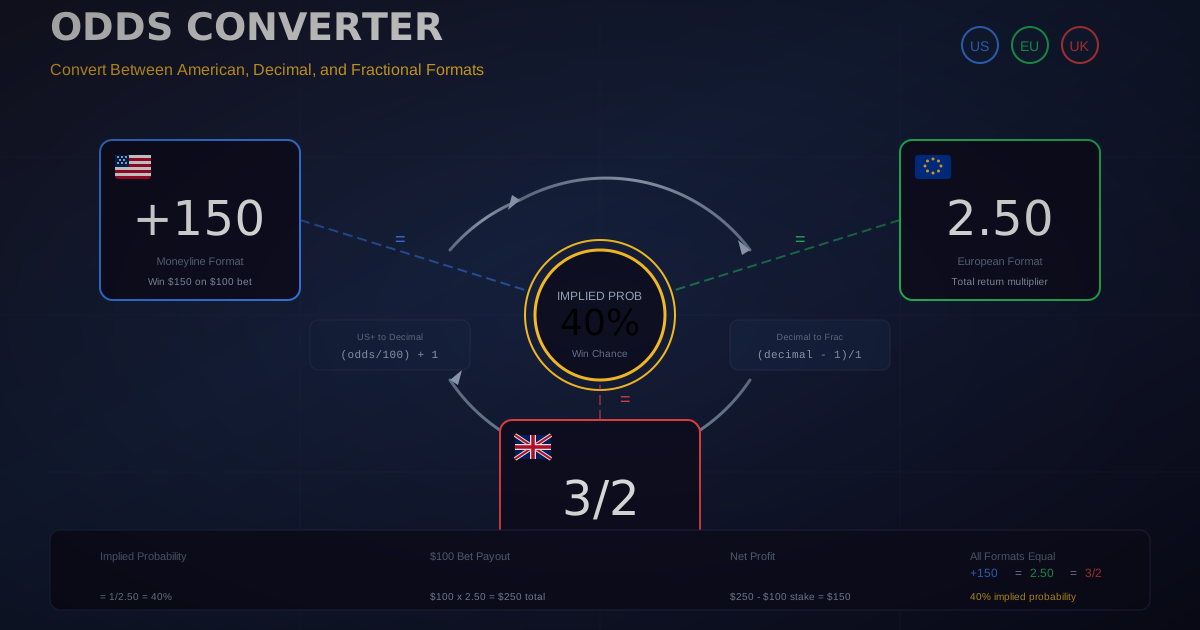
Convert between odds formats for consistent tracking with our Odds Converter.
What Are the Best Bet Tracking Apps in 2026?
The bet tracking app market has matured significantly, with options ranging from free basic trackers to comprehensive analytics platforms used by professional bettors.
Top Bet Tracking Apps Compared
| App | Price | Best For | Auto-Tracking | CLV Tracking | Analytics Depth |
|---|---|---|---|---|---|
| BetStamp | Free / $10-$30/mo | Serious bettors | Yes | Yes | Excellent |
| Action Network | Free / $10/mo | Casual-Serious | Partial | Limited | Good |
| SharpSide | Free / $15/mo | Sharp bettors | Yes | Yes | Excellent |
| Pikkit | Free | Casual bettors | Yes (limited) | No | Basic |
| Betstamp Pro | $30/mo | Professional bettors | Yes | Yes | Professional |
| OddsJam | $39-$99/mo | +EV and arb bettors | Yes | Yes | Excellent |
| Google Sheets | Free | DIY enthusiasts | No (manual) | Manual | Unlimited (custom) |
| Ace Per Head | $99+/mo | Professional syndicates | Yes | Yes | Enterprise |
App-by-App Review
BetStamp The best all-around bet tracking app in 2026 for most bettors. BetStamp's key strength is automatic CLV tracking. It records the odds at which you bet, tracks the closing line, and calculates your CLV automatically. The free tier is functional; the paid tier adds detailed analytics, odds comparison, and advanced filtering.
| Feature | Free Tier | Pro Tier ($10-30/mo) |
|---|---|---|
| Bet logging | Unlimited | Unlimited |
| CLV tracking | Basic | Advanced with charts |
| Odds comparison | Limited | Full access |
| Analytics dashboard | Basic stats | Advanced filters, charts |
| Export data | CSV | CSV + API access |
| Historical odds | No | Yes |
Action Network The most popular sports betting app overall, with millions of users. Action Network is strong for tracking basic bet results and following consensus picks. It integrates with some sportsbooks for automatic bet import. The analytics are good but not as deep as BetStamp or SharpSide for serious analytical work.
SharpSide Built specifically for sharp bettors who care about CLV and advanced metrics. SharpSide's analytics go deeper than most competitors, with tools for analyzing your performance by sport, league, bet type, day of week, time of bet, and closing line. The interface is less polished than Action Network but the data is superior.
OddsJam The best option for +EV bettors and arbitrage bettors. OddsJam scans dozens of sportsbooks in real-time to find positive expected value bets and arbitrage opportunities. The tracking component integrates with their screening tools, so you can track every +EV bet you place and measure your actual results against the expected results.
Calculate the expected value of any bet OddsJam finds with our Expected Value Calculator.
Feature Comparison Matrix
| Feature | BetStamp | Action Network | SharpSide | OddsJam | Google Sheets |
|---|---|---|---|---|---|
| Automatic bet import | Yes (some books) | Yes (some books) | Yes | Yes | No |
| Manual bet entry | Yes | Yes | Yes | Yes | Yes |
| CLV tracking | Yes | Limited | Yes | Yes | Manual |
| ROI by sport | Yes | Yes | Yes | Yes | Custom formula |
| ROI by bet type | Yes | Yes | Yes | Yes | Custom formula |
| Odds comparison | Yes | Yes | No | Yes (core feature) | No |
| Charts/graphs | Yes | Basic | Yes | Yes | Custom |
| Data export | Yes | Yes | Yes | Yes | Native |
| Mobile app | iOS/Android | iOS/Android | iOS/Android | iOS/Android | Sheets app |
| Community features | Yes | Yes | Limited | Yes | No |
| Price | Free-$30/mo | Free-$10/mo | Free-$15/mo | $39-$99/mo | Free |
How Do You Build a Custom Google Sheets Betting Tracker?
For bettors who want maximum control over their data, a custom Google Sheets tracker is the best option. It costs nothing, is infinitely customizable, and your data is always yours.
Basic Tracker Structure
Sheet 1: Bet Log (Main Data Entry)
| Column | Header | Format | Notes |
|---|---|---|---|
| A | Date | Date (YYYY-MM-DD) | When bet was placed |
| B | Sport | Text | NFL, NBA, MLB, etc. |
| C | Event | Text | Team A vs Team B |
| D | Bet Type | Dropdown | Spread, ML, Total, Prop, Parlay |
| E | Selection | Text | Your specific pick |
| F | Odds (American) | Number | -110, +150, etc. |
| G | Odds (Decimal) | Formula | =IF(F2>0, F2/100+1, -100/F2+1) |
| H | Implied Probability | Formula | =IF(F2>0, 100/(F2+100), ABS(F2)/(ABS(F2)+100)) |
| I | Stake ($) | Currency | Amount wagered |
| J | Stake (Units) | Formula | =I2/[bankroll cell]*100 |
| K | Result | Dropdown | Win, Loss, Push, Void |
| L | Profit/Loss | Formula | =IF(K2="Win",I2*(G2-1),IF(K2="Loss",-I2,0)) |
| M | Running Total | Formula | =SUM($L$2:L2) |
| N | Closing Odds (American) | Number | Final odds before event |
| O | CLV (%) | Formula | =(H2-IF(N2>0,100/(N2+100),ABS(N2)/(ABS(N2)+100)))*100 |
| P | Sportsbook | Dropdown | DraftKings, FanDuel, etc. |
| Q | Notes | Text | Reasoning, model output |
Sheet 2: Dashboard (Auto-Calculated Metrics)
| Metric | Formula | Description |
|---|---|---|
| Total Bets | =COUNTA(Log!A2:A) | Count of all bets |
| Win Rate | =COUNTIF(Log!K:K,"Win")/COUNTA(Log!K2:K) | Percentage of wins |
| Total Wagered | =SUM(Log!I:I) | Sum of all stakes |
| Total Profit | =SUM(Log!L:L) | Sum of all P&L |
| ROI | =Total Profit/Total Wagered*100 | Overall return on investment |
| Average CLV | =AVERAGE(Log!O:O) | Average closing line value |
| Units Won | =Total Profit/[unit size] | Normalized profit |
| Longest Win Streak | Custom formula or script | Maximum consecutive wins |
| Longest Loss Streak | Custom formula or script | Maximum consecutive losses |
| Max Drawdown | Custom formula | Largest peak-to-trough decline |
Advanced Tracker Features
Pivot Table Analysis: Create pivot tables to slice your data by:
- Sport (which sports are profitable?)
- Bet Type (spreads vs. totals vs. props?)
- Sportsbook (which books give the best odds?)
- Day of Week (do you bet better on certain days?)
- Month (seasonal patterns?)
- Confidence Level (do higher-confidence bets perform better?)
Charts to Build:
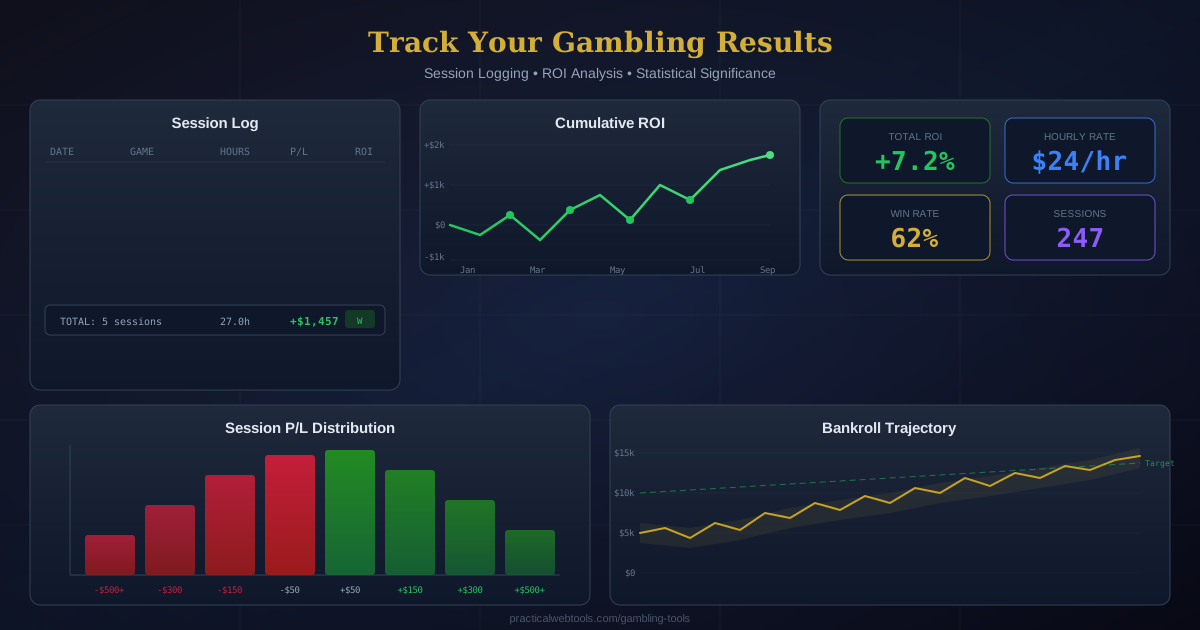
- Cumulative P&L line chart - Your equity curve over time
- ROI by sport bar chart - Visual comparison of sport profitability
- CLV distribution histogram - Are you consistently beating the close?
- Monthly P&L bar chart - Track seasonal performance
- Bet sizing scatter plot - Stake size vs. result to check for emotional betting
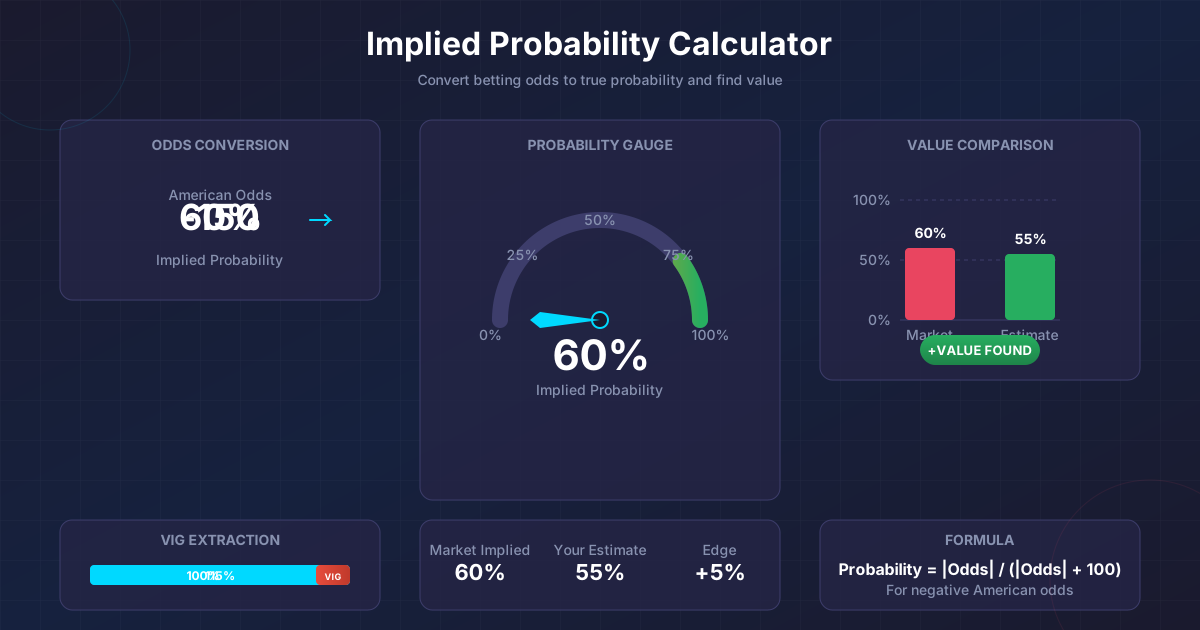
Calculate implied probability for your spreadsheet with our Implied Probability Calculator.
What Key Metrics Should You Monitor?
Tracking data is only valuable if you analyze it correctly. These are the key metrics every bettor should monitor and what they tell you.
Primary Metrics
| Metric | Formula | Good Range | What It Means |
|---|---|---|---|
| ROI | (Profit / Total Wagered) x 100 | +1% to +5% (sustainable) | Your overall return per dollar wagered |
| CLV (Average) | Avg(Your Implied Prob - Closing Implied Prob) | +1% to +3% | Whether your process finds value |
| Win Rate | Wins / Total Decided Bets | 52-56% (at -110) | Raw win percentage |
| Units Won | Total Profit / Unit Size | +10 to +50 units/year | Normalized profit regardless of stake changes |
| Yield | (Profit / Total Wagered) x 100 | Same as ROI | Alternative term for ROI |
Secondary Metrics
| Metric | What It Tells You | Action If Poor |
|---|---|---|
| ROI by Sport | Where you have edge | Stop betting unprofitable sports |
| ROI by Bet Type | Which wager types work | Focus on profitable bet types |
| ROI by Sportsbook | Which books offer best odds | Prioritize best-odds books |
| Max Drawdown | Worst losing period | Ensure bankroll can handle it |
| Sharpe Ratio | Risk-adjusted performance | Higher is better; below 0.5 is concerning |
| Avg Stake as % of Bankroll | Bet sizing discipline | Should be 1-3% consistently |
| Time to Bet (before closing) | When you bet relative to close | Earlier generally means more CLV |
| Streak Length | Maximum win/loss streaks | Helps set expectations for variance |
How to Interpret Your Metrics
Scenario 1: Positive ROI, Negative CLV
- You are winning, but your process may not be finding value
- Current profits may be due to variance/luck rather than skill
- High risk of future losses when luck normalizes
- Action: Investigate whether your "edge" is sustainable
Scenario 2: Negative ROI, Positive CLV
- Your process IS finding value, but results have not caught up yet
- This is expected variance for a winning bettor with insufficient sample
- Action: Continue betting the same way; results will likely improve with more bets
Scenario 3: Positive ROI, Positive CLV
- The ideal scenario: your process is working AND results confirm it
- You are likely a winning bettor
- Action: Maintain strategy, consider increasing volume
Scenario 4: Negative ROI, Negative CLV
- You are losing and your process is not finding value
- Likely a losing bettor
- Action: Fundamental strategy change needed or reduce/stop betting
Track your closing line value with our CLV Tracker.
How Do You Analyze Your Betting Data to Find Leaks?
A "leak" is a systematic pattern of losing bets that drags down your overall profitability. Finding and fixing leaks is one of the most valuable uses of bet tracking data.
Common Leaks and How to Identify Them
| Leak | How to Identify | Typical Impact | Fix |
|---|---|---|---|
| Betting too many sports | Negative ROI in 2+ sports | -5 to -15 units/year | Focus on 1-2 profitable sports |
| Overvaluing favorites | Low ROI on short-odds bets | -3 to -10 units/year | Track ROI by odds range |
| Chasing steam | Negative CLV on "follow the money" bets | -5 to -20 units/year | Develop your own model |
| Live betting leaks | Negative ROI on in-play bets | -5 to -15 units/year | Reduce or eliminate live bets |
| Tilt betting | Large stakes after losses | -10 to -30 units/year | Track stake sizes post-loss |
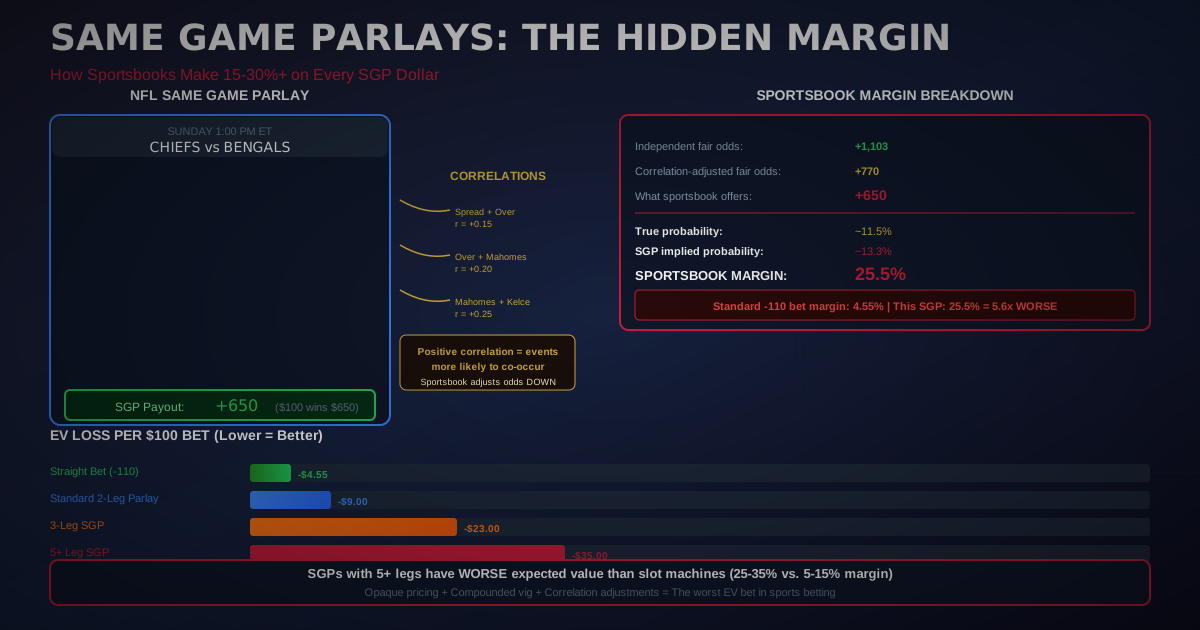
| Parlay addiction | Negative ROI on parlays | -5 to -20 units/year | Track parlay ROI separately |
| Late-line betting | Negative CLV on late-placed bets | -3 to -10 units/year | Bet earlier in the week |
The Analysis Process
Step 1: Filter by Category Break your bets down by every trackable category and calculate ROI for each:
| Category | Bets | ROI | CLV | Verdict |
|---|---|---|---|---|
| NFL Spreads | 250 | +3.2% | +2.1% | Profitable, keep |
| NFL Totals | 180 | -1.5% | -0.3% | Slight leak, review |
| NBA Spreads | 200 | +1.8% | +1.5% | Profitable, keep |
| NBA Player Props | 150 | +5.1% | +3.2% | Strong edge, increase volume |
| MLB Moneylines | 120 | -4.2% | -2.1% | Major leak, consider stopping |
| Soccer | 80 | -6.5% | -3.8% | Significant leak, stop |
Step 2: Quantify the Impact Calculate how much each leak costs you annually:
| Leak | Average Stake | Bets/Year | ROI | Annual Cost |
|---|---|---|---|---|
| MLB Moneylines | $200 | 120 | -4.2% | -$1,008 |
| Soccer | $150 | 80 | -6.5% | -$780 |
| NFL Totals | $250 | 180 | -1.5% | -$675 |
| Total Leak Cost | -$2,463 |
By eliminating these leaks, you add $2,463 to your annual profit without placing a single additional bet.
Step 3: Implement Changes
- Stop betting categories with negative CLV and negative ROI over 200+ bets
- Reduce stake sizes in borderline categories
- Redirect volume to your most profitable categories
- Set monthly check-ins to verify improvements
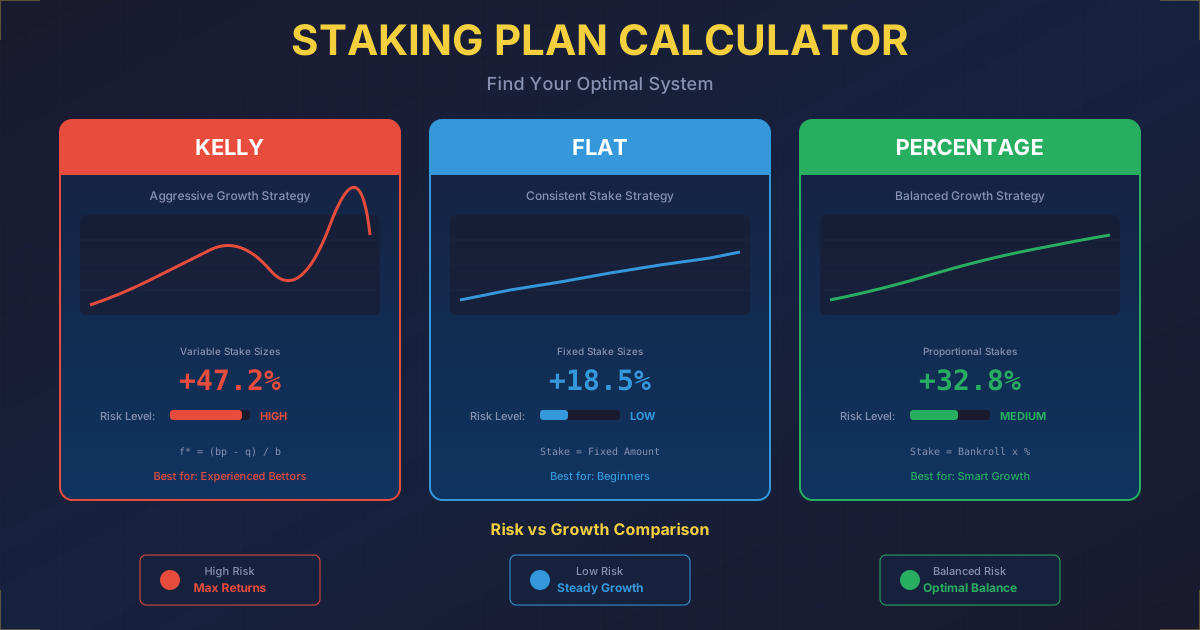
Calculate the Kelly Criterion to optimize your bet sizing in profitable categories with our Kelly Criterion Calculator.
How Do You Track Closing Line Value Effectively?
CLV tracking is the most valuable analytical tool for serious bettors, but it requires capturing closing odds for every bet you place.
Methods for Capturing Closing Odds
| Method | Accuracy | Effort | Cost |
|---|---|---|---|
| BetStamp auto-tracking | High | Very Low | Free-$30/mo |
| OddsJam historical odds | Very High | Low | $39-$99/mo |
| Manual recording | Varies | Very High | Free |
| Odds API (for developers) | Very High | Moderate (setup) | $50-$200/mo |
| SharpSide | High | Very Low | Free-$15/mo |
What Constitutes Good CLV?
| Average CLV | Interpretation | Expected Long-Term ROI |
|---|---|---|
| -3% or worse | Consistently getting bad odds | Significant long-term loser |
| -1% to -3% | Below market efficiency | Likely long-term loser |
| -1% to +1% | Around break-even | Near break-even (minus vig) |
| +1% to +2% | Beating the market slightly | Small but real edge |
| +2% to +3% | Consistently beating closing lines | Strong edge, likely very profitable |
| +3% or better | Significantly beating the market | Elite level, sportsbooks will limit you |
CLV Tracking Example
Over 100 bets on NFL spreads:
| Week | Bets | Avg Opening Odds | Avg Closing Odds | Avg CLV | Win Rate | P&L |
|---|---|---|---|---|---|---|
| 1-4 | 20 | -110 | -115 | +1.8% | 60% | +$800 |
| 5-8 | 25 | -108 | -114 | +2.2% | 48% | -$500 |
| 9-12 | 30 | -110 | -118 | +2.8% | 52% | +$200 |
| 13-17 | 25 | -109 | -116 | +2.4% | 56% | +$700 |
| Total | 100 | -109.3 | -115.8 | +2.3% | 54% | +$1,200 |
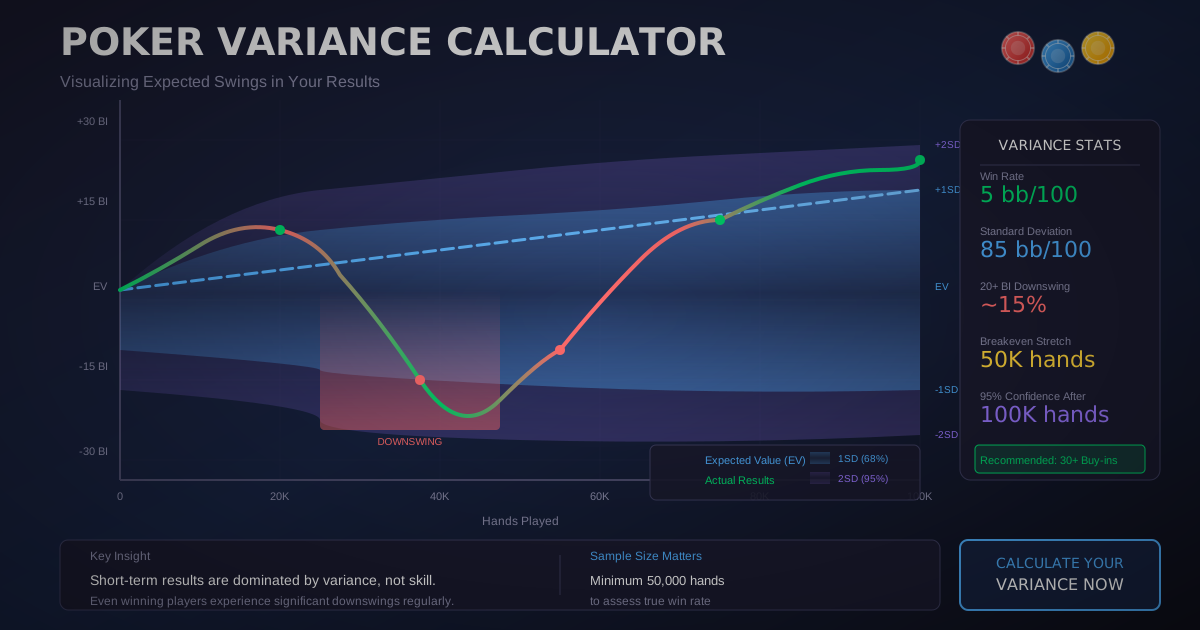
Notice weeks 5-8: the win rate was 48% (a losing record), but CLV was +2.2%. This bettor was finding value but hit a variance downswing. The positive CLV correctly predicted that long-term results would be profitable, which was confirmed over the full 100-bet sample.
Track your CLV automatically with our CLV Tracker.
How Do You Track Parlays, Teasers, and Exotic Bets?
Multi-leg bets like parlays and teasers require additional tracking considerations because they have multiple components that contribute to the overall result.
Tracking Parlays
For each parlay, track:
| Field | What to Record | Why It Matters |
|---|---|---|
| Number of legs | 2-leg, 3-leg, etc. | Correlate leg count with ROI |
| Individual leg details | Each selection, odds, and result | Identify which legs cost you |
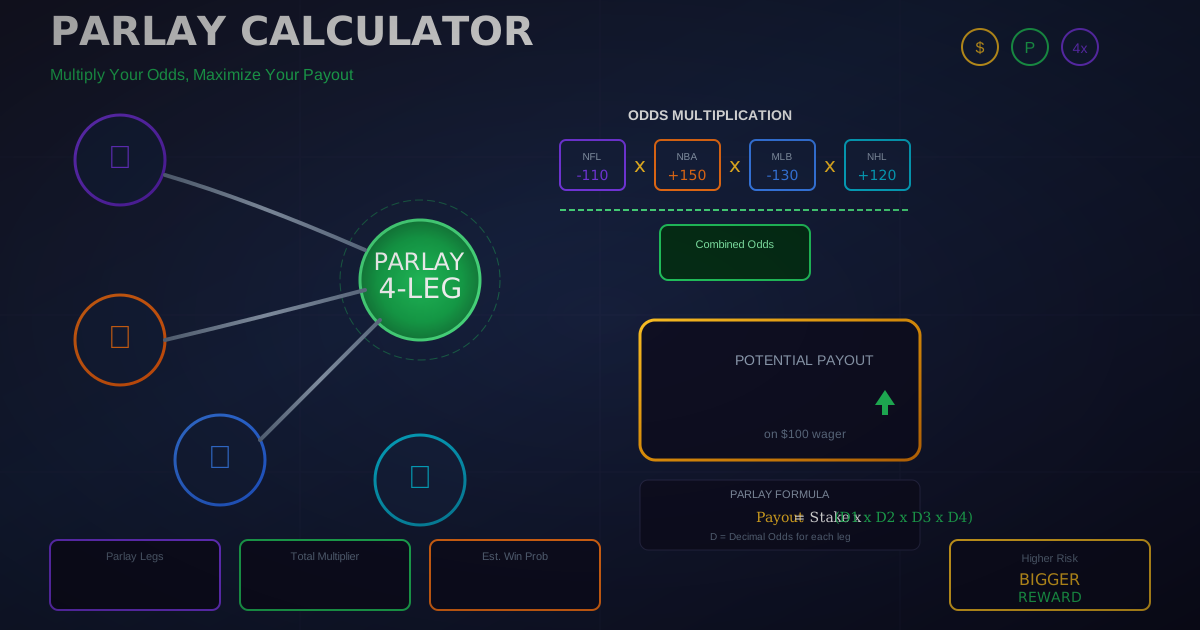
| Combined odds | Total parlay payout odds | Compare to fair-value parlay odds |
| Correlated or not | Whether legs are correlated | Correlated parlays can have +EV |
| Same-game parlay | SGP flag | SGPs have different dynamics |
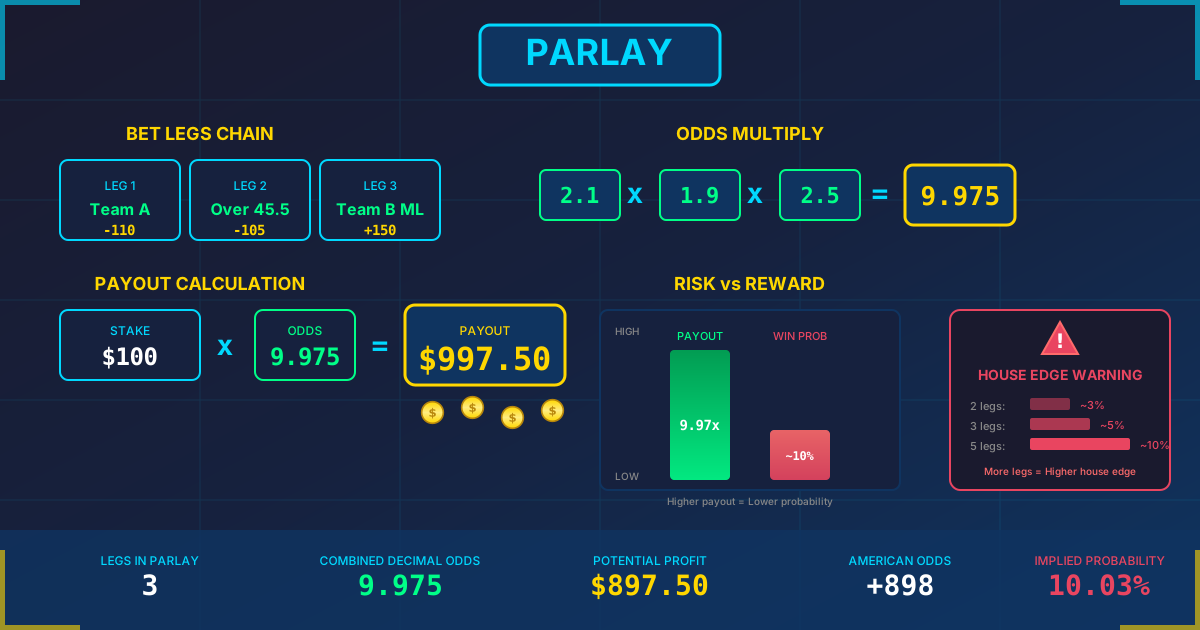
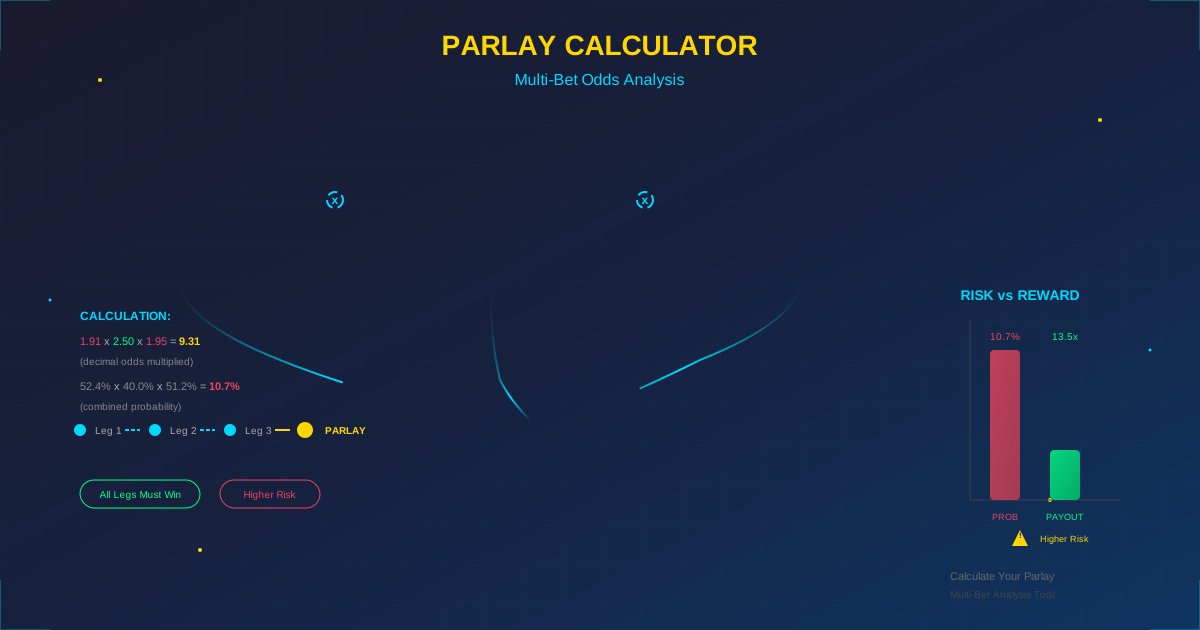
Parlay Profitability Reality
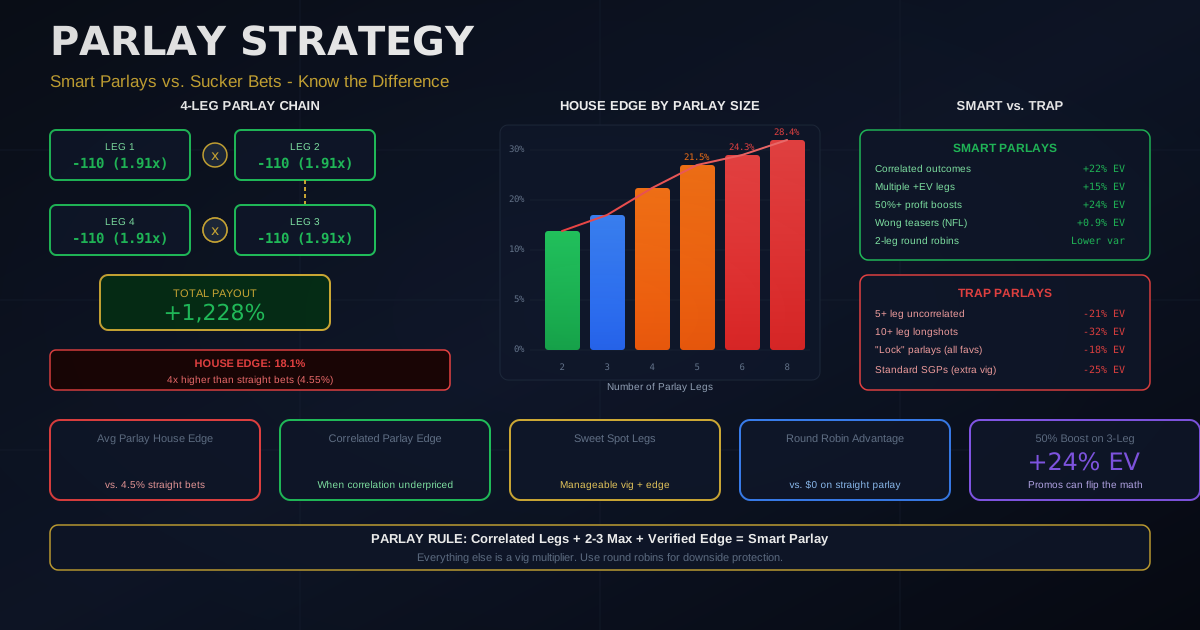
| Parlay Type | Typical Bettor ROI | House Edge | Realistic? |
|---|---|---|---|
| 2-leg | -5 to -10% | 10-20% | Possible to profit with edge on both legs |
| 3-leg | -10 to -20% | 20-35% | Very difficult to profit long-term |
| 4-leg | -20 to -35% | 35-50% | Nearly impossible to profit |
| 5+ legs | -30 to -60% | 50-75%+ | Entertainment only |
| Correlated SGP | -5 to +5% | Varies | Possible if correlation is mispriced |
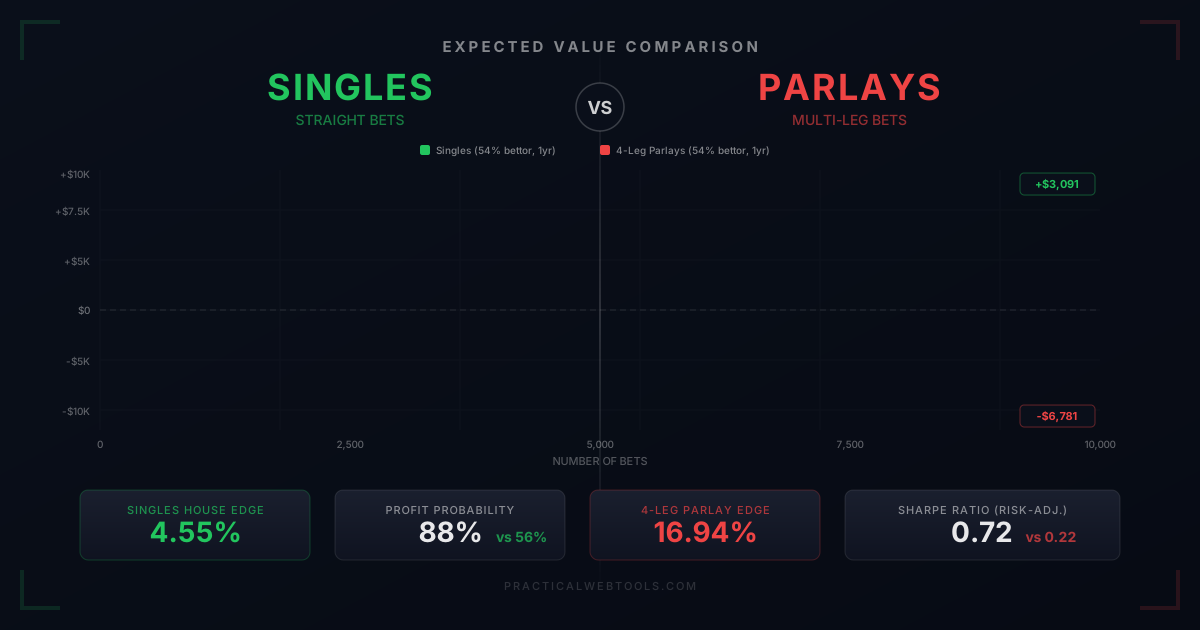
Most bettors discover, upon tracking, that their parlay bets are dragging down their overall ROI significantly. The data often reveals that a bettor with +2% ROI on straight bets has -15% ROI on parlays, and the combined result is barely break-even.
Calculate the true odds and payout of any parlay with our Parlay Calculator.
Tracking Teaser and Alternative Line Bets
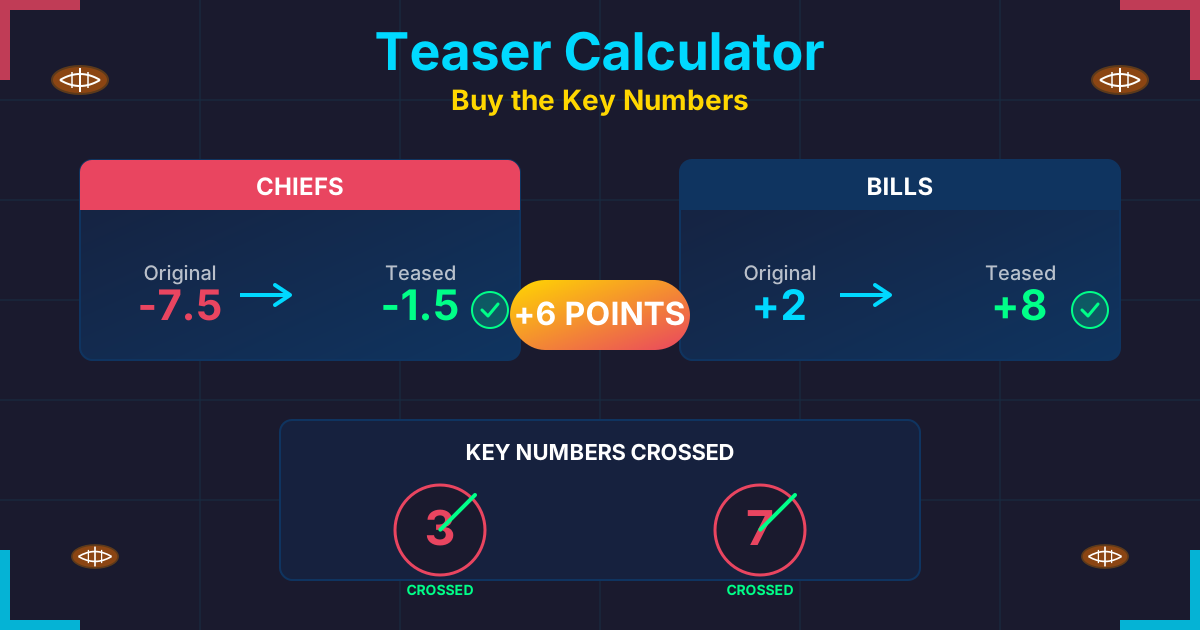
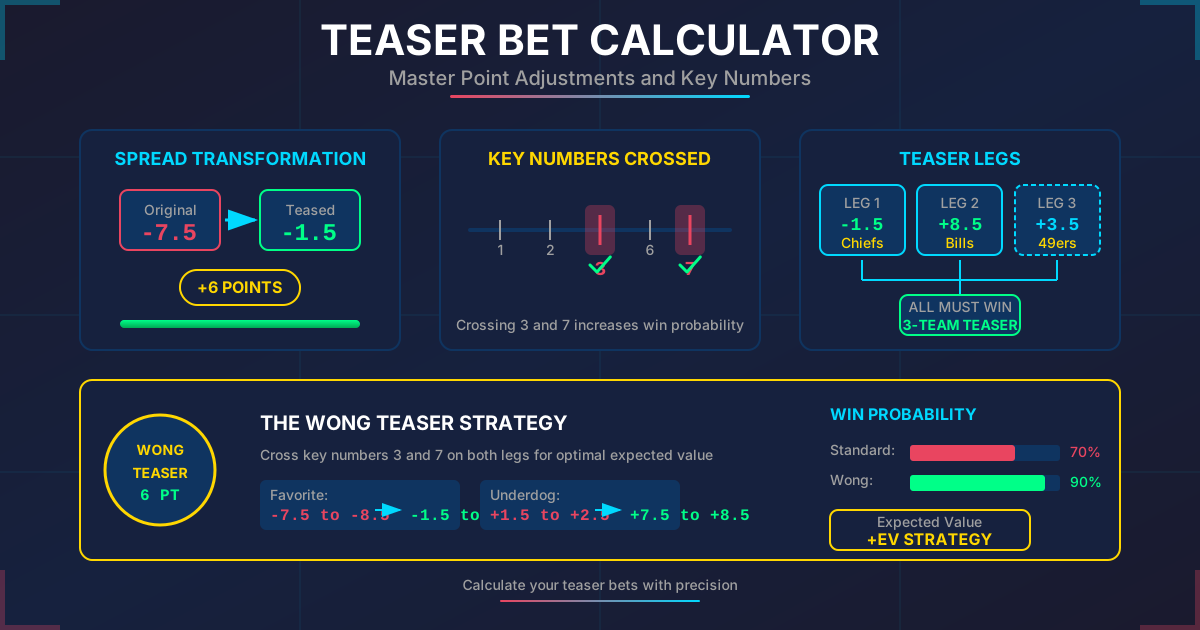
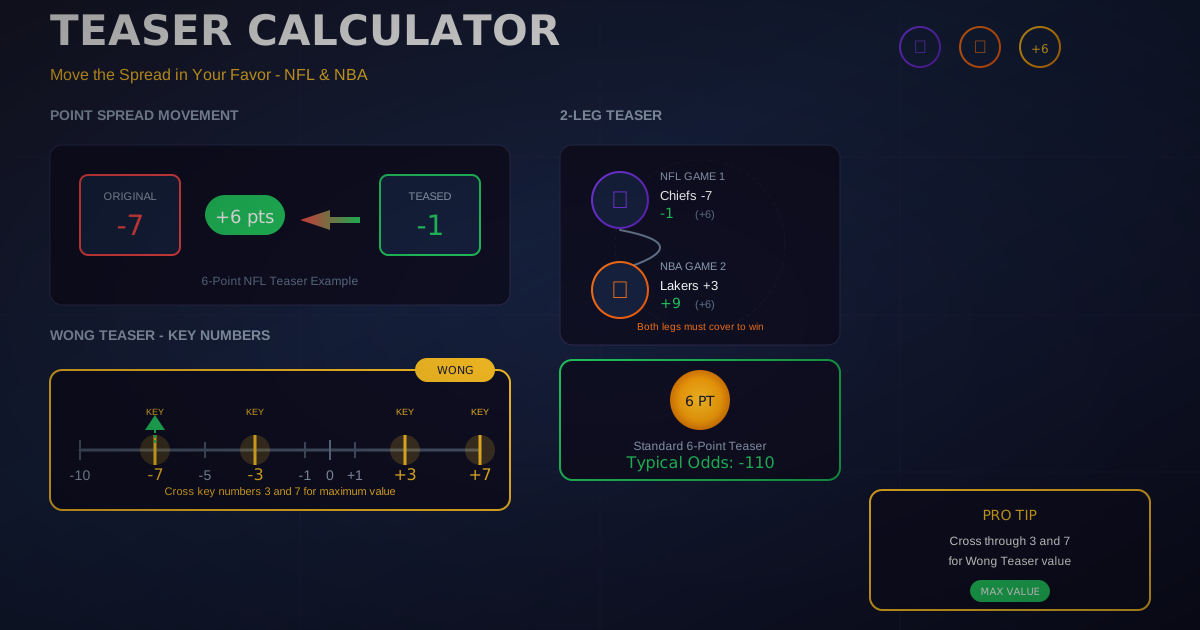
Teasers (buying additional points on multiple selections) should be tracked with:
- Original line and teased line
- Number of points bought
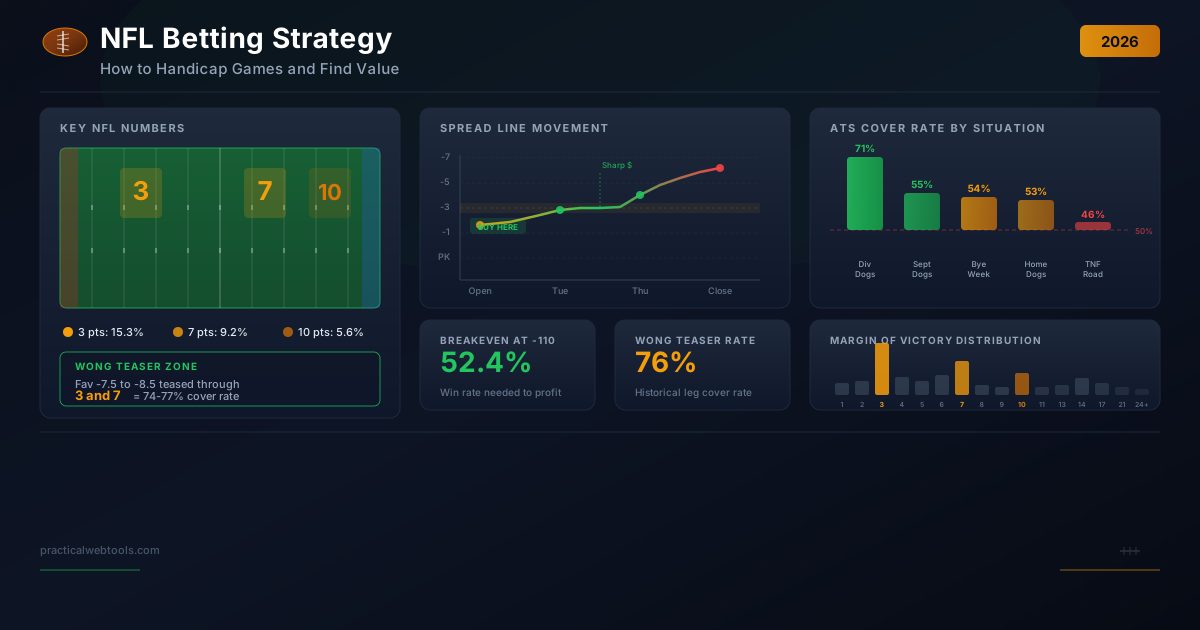
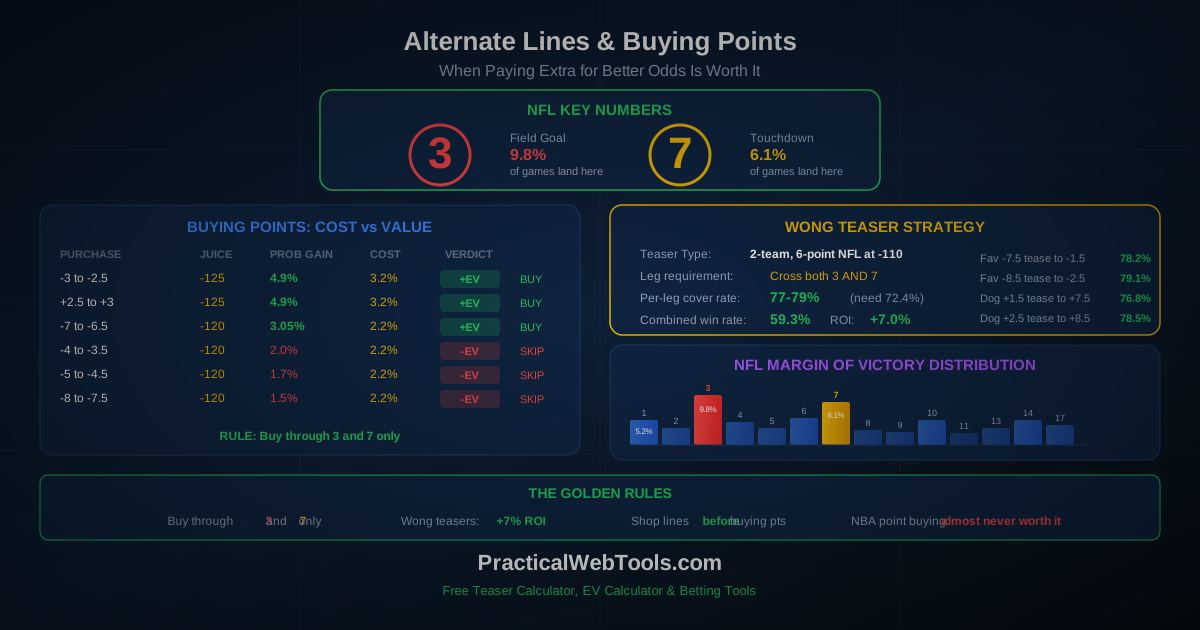
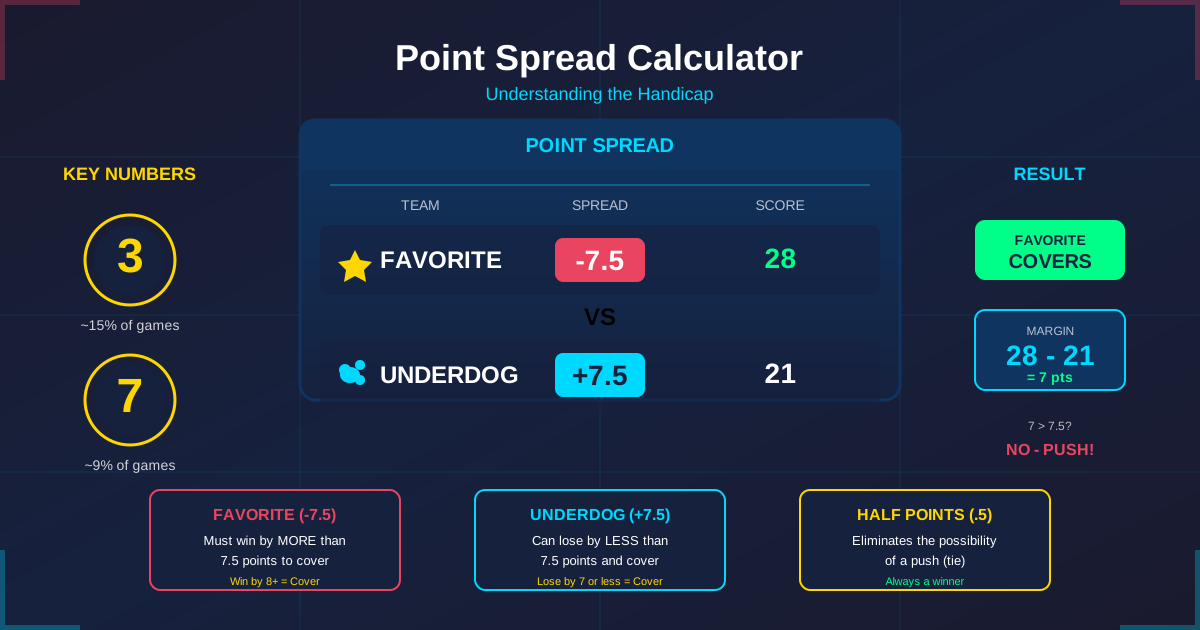
- Whether the tease crossed key numbers (3, 7 in NFL)
- Combined teaser odds vs. fair-value odds
What Are the Best Practices for Long-Term Bet Tracking?
Maintaining a tracking system over years requires discipline and good practices. Here is what separates bettors who track successfully from those who abandon it after a few weeks.
Daily Habits
| Habit | Time Required | Impact |
|---|---|---|
| Log every bet immediately after placing | 1-2 min per bet | Ensures no bets are missed |
| Record closing odds same day | 5 min per day | Enables CLV calculation |
| Note your reasoning for each bet | 1 min per bet | Enables qualitative review |
| Review daily P&L | 2 min | Keeps you aware of current position |
Weekly Habits
| Habit | Time Required | Impact |
|---|---|---|
| Review weekly P&L and ROI | 15 min | Short-term performance check |
| Verify all data entry is accurate | 10 min | Prevents compounding errors |
| Update bankroll total | 5 min | Ensures unit sizes are correct |
| Review CLV trend | 10 min | Early warning system for process changes |
Monthly Habits
| Habit | Time Required | Impact |
|---|---|---|
| Full performance review by sport/bet type | 30-60 min | Identify emerging leaks or strengths |
| Adjust strategy based on data | 30 min | Continuous improvement |
| Back up data | 5 min | Prevent data loss |
| Update model/approach if applicable | 1-2 hours | Keep strategy current |
Quarterly/Annual Habits
| Habit | Time Required | Impact |
|---|---|---|
| Comprehensive performance audit | 2-4 hours | Full strategic review |
| Tax preparation | 2-4 hours | Required for US bettors |
| Strategy adjustment for new season | 2-4 hours | Adapt to changing markets |
| Review sample size adequacy | 30 min | Ensure conclusions are statistically valid |
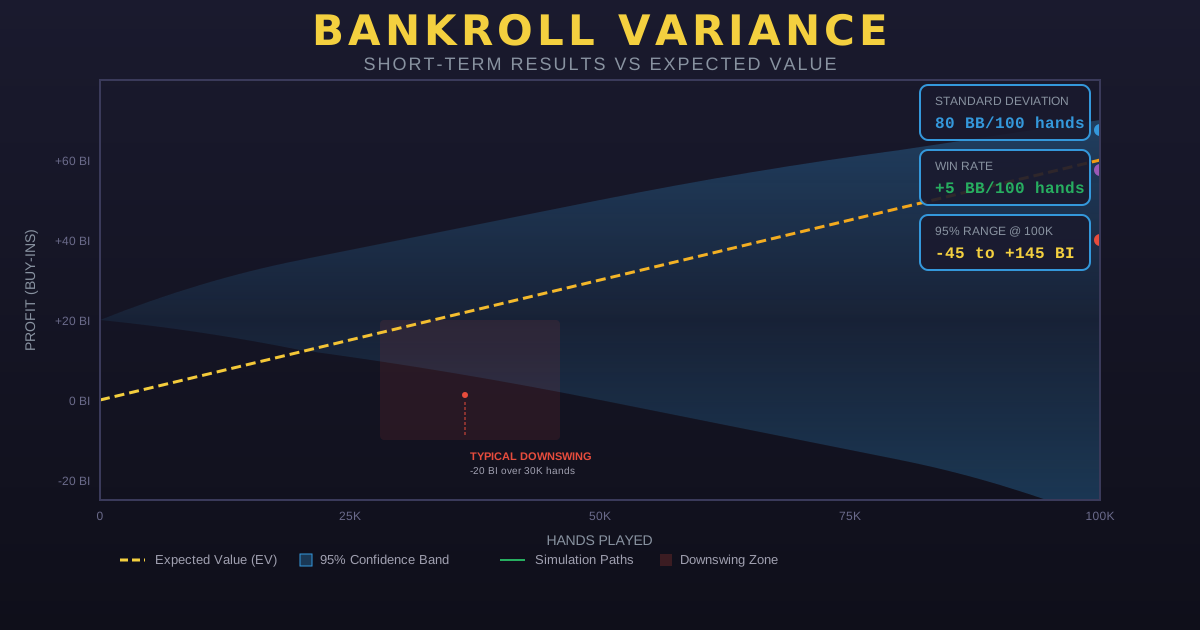
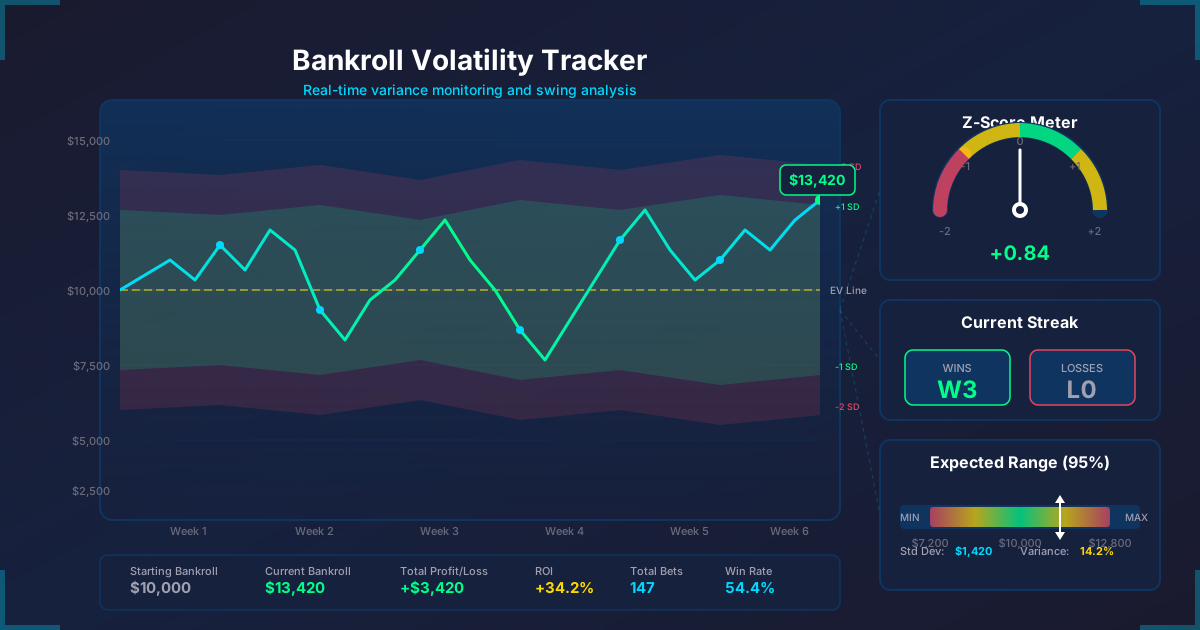
Monitor your bankroll health over time with our Bankroll Volatility Tracker.
How Do You Present Your Betting Data Visually?
Visualizing your betting data makes patterns immediately apparent that might be invisible in raw numbers.
Essential Charts
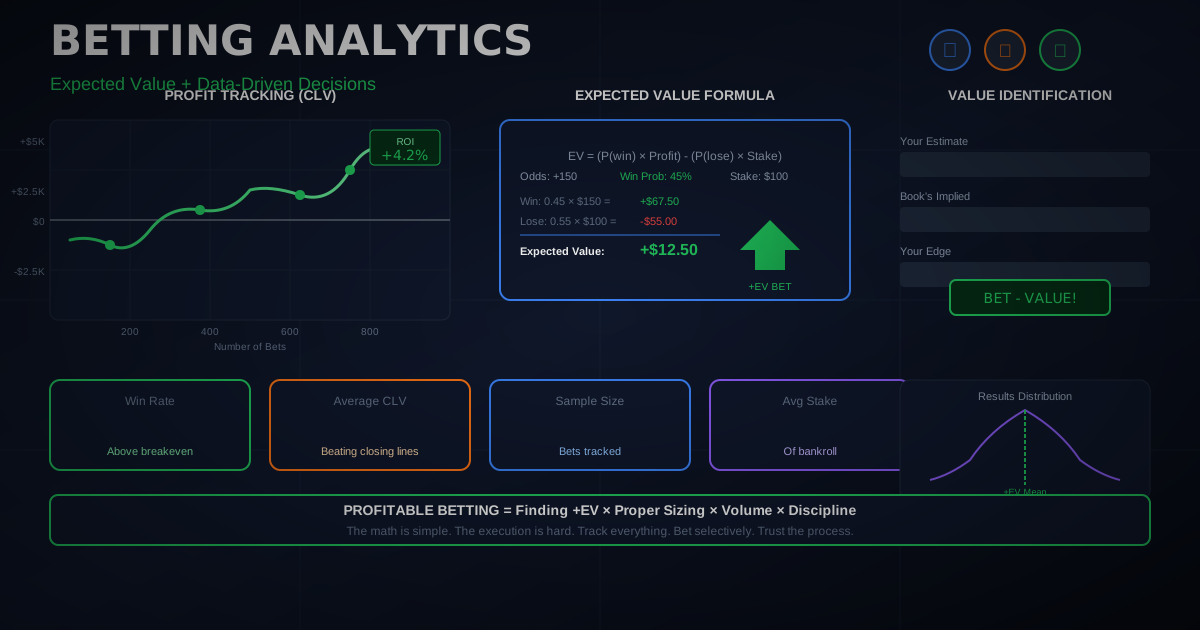
1. Cumulative Profit/Loss Line (Equity Curve) The most important chart for any bettor. It shows your total profit over time. An upward-trending line suggests a winning strategy. Wild swings suggest high variance or inconsistent strategy.
2. ROI by Category Bar Chart Compare ROI across sports, bet types, sportsbooks, and time periods. Immediately shows where you are making and losing money.
3. CLV Distribution A histogram showing how often you beat the closing line, by how much, and how often you get bad closing line value. The distribution should skew positive for a winning bettor.
4. Monthly P&L Heatmap Visualize your monthly results in a calendar-style heatmap. Green months are profitable, red months are losing. Helps identify seasonal patterns.
5. Stake Size vs. Result Scatter Plot Plot each bet with stake size on the X-axis and result on the Y-axis. If larger bets correlate with losses, you may be tilting (betting bigger when emotional).
Dashboard Design Principles
| Principle | Why It Matters |
|---|---|
| Show trailing metrics (30-day, 90-day, all-time) | Captures recent performance and long-term trend |
| Highlight CLV alongside P&L | CLV is more predictive than P&L over short periods |
| Color-code profitable vs unprofitable categories | Instant visual identification of strengths and weaknesses |
| Include sample size with every metric | Prevents overreacting to small-sample results |
| Update automatically | Reduces friction and ensures data is always current |
Use our Odds Converter to standardize all odds formats in your tracking system.
Frequently Asked Questions
What is the best free bet tracking app?
BetStamp offers the best free tier among dedicated bet tracking apps, with unlimited bet logging and basic CLV tracking. For complete control, a custom Google Sheets tracker costs nothing and can be as sophisticated as any paid app. Pikkit is another free option with automatic bet import from some sportsbooks, but it lacks CLV tracking.
How many bets do I need before my tracking data is meaningful?
At minimum, 500 bets are needed before drawing statistical conclusions about your ROI. For individual categories (like "NFL props"), you need 200+ bets in that category. CLV data becomes meaningful faster, around 200-300 bets, because it measures process quality rather than outcomes, which have higher variance.
Should I track bets I place for fun?
Yes, track every bet. "Fun" bets are still real money, and they affect your overall ROI. Many bettors discover that their "fun" parlays and impulse bets are responsible for the majority of their losses. If you want to separate serious bets from recreational ones, use a tag or category, but track them all.
What is the most important metric to track?
Closing Line Value (CLV) is the single most important metric for serious sports bettors. Positive CLV over a large sample is the strongest predictor of long-term profitability. ROI tells you what happened; CLV tells you whether your process is sound, which is far more valuable for predicting future results.
How do I track live/in-play bets?
Track in-play bets the same way as pre-game bets, with one addition: note the game state at the time of bet (score, time remaining, any relevant context). In-play bets do not have a "closing line" in the same sense, so CLV tracking is more difficult. Focus on ROI and whether in-play bets are profitable as a category.
Should I use units or dollar amounts for tracking?
Track both. Dollar amounts show your actual financial performance. Units (where 1 unit = a fixed percentage of your bankroll, typically 1%) normalize your results and allow for comparison across time periods when your bankroll size changed. Most professionals report performance in units.
How often should I review my betting data?
Daily: log all bets and note results. Weekly: review overall P&L and CLV. Monthly: analyze performance by category, identify leaks, and adjust strategy. Quarterly: comprehensive audit with enough data to make statistically meaningful decisions. Avoid over-analyzing daily or weekly results, which are dominated by variance.
Can I track bets across multiple sportsbooks?
Yes, and you should. Apps like BetStamp and OddsJam support multi-book tracking. In a spreadsheet, use a "Sportsbook" column to identify which book each bet was placed at. This data reveals which books consistently offer you the best odds and which ones are limiting your accounts.
Related Tools for Bet Tracking and Analysis
Enhance your bet tracking and analysis with these free calculators:
- Expected Value Calculator - Calculate the expected profit on any bet before placing it
- CLV Tracker - Track and analyze your closing line value over time
- Odds Converter - Convert between American, decimal, and fractional odds
- Implied Probability Calculator - See the true probability behind any odds
- Kelly Criterion Calculator - Calculate optimal bet sizing based on your tracked edge
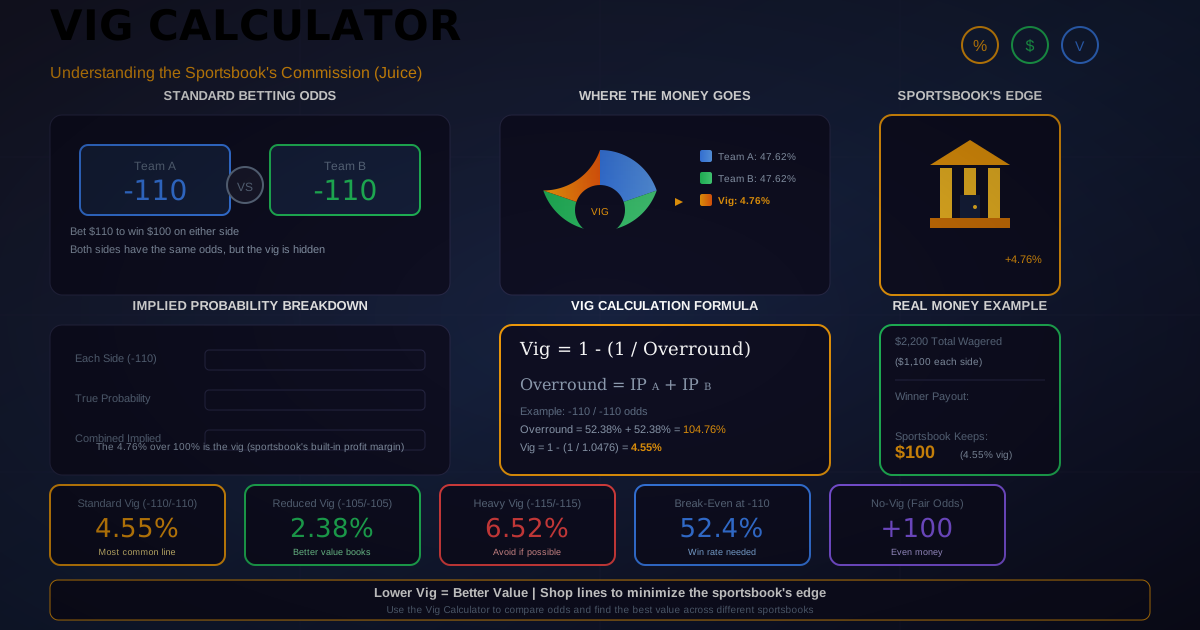
- Hold/Vig Calculator - Understand the margin built into the odds you track
- Bankroll Volatility Tracker - Model expected swings and risk of ruin
- Parlay Calculator - Calculate true parlay odds for tracking
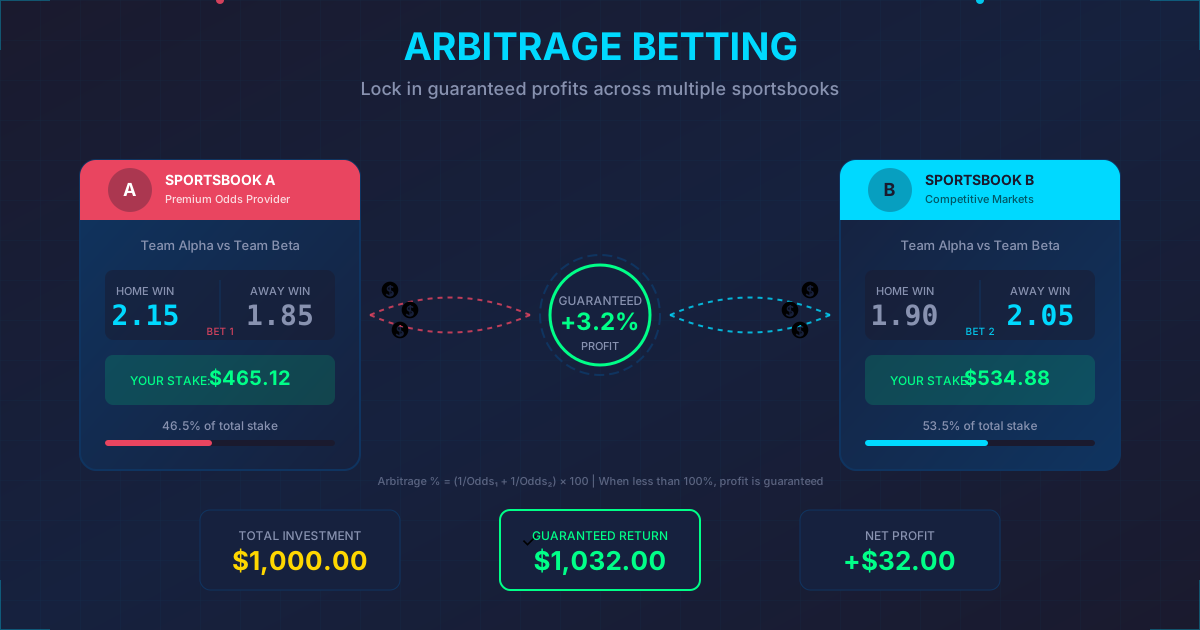
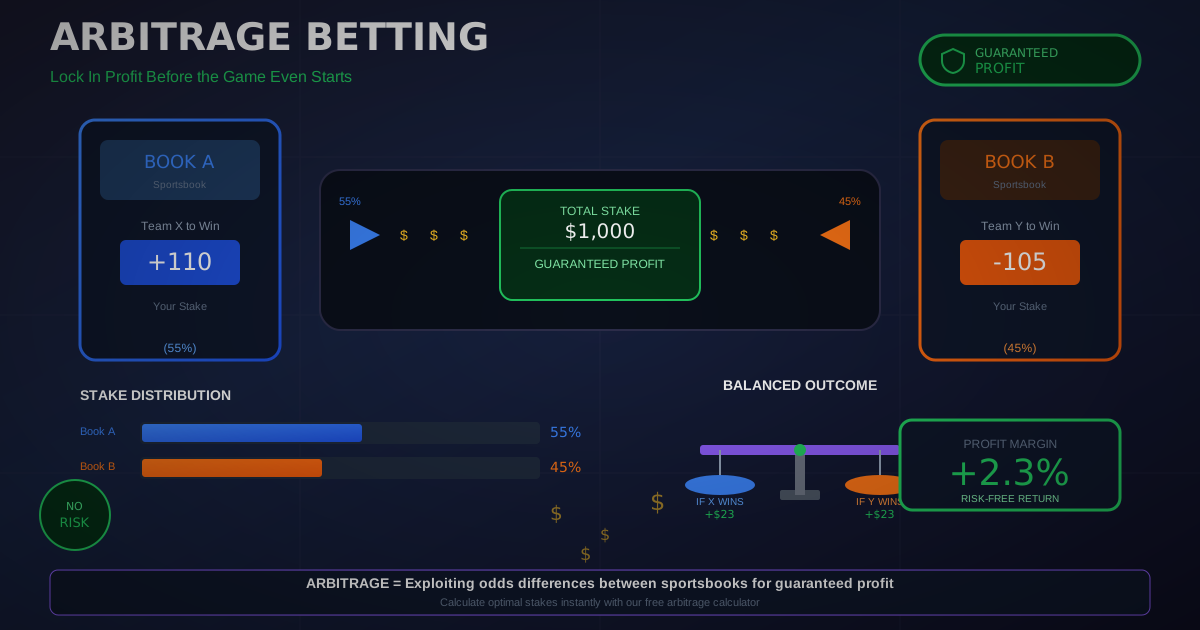
- Arbitrage Calculator - Find guaranteed profit opportunities between books
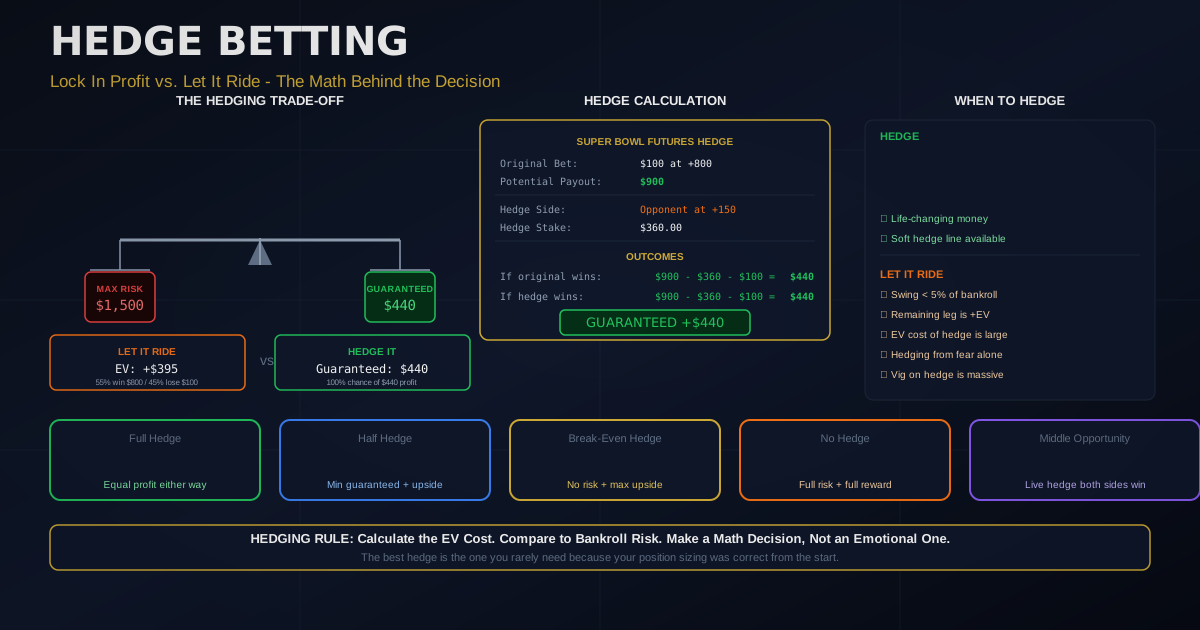
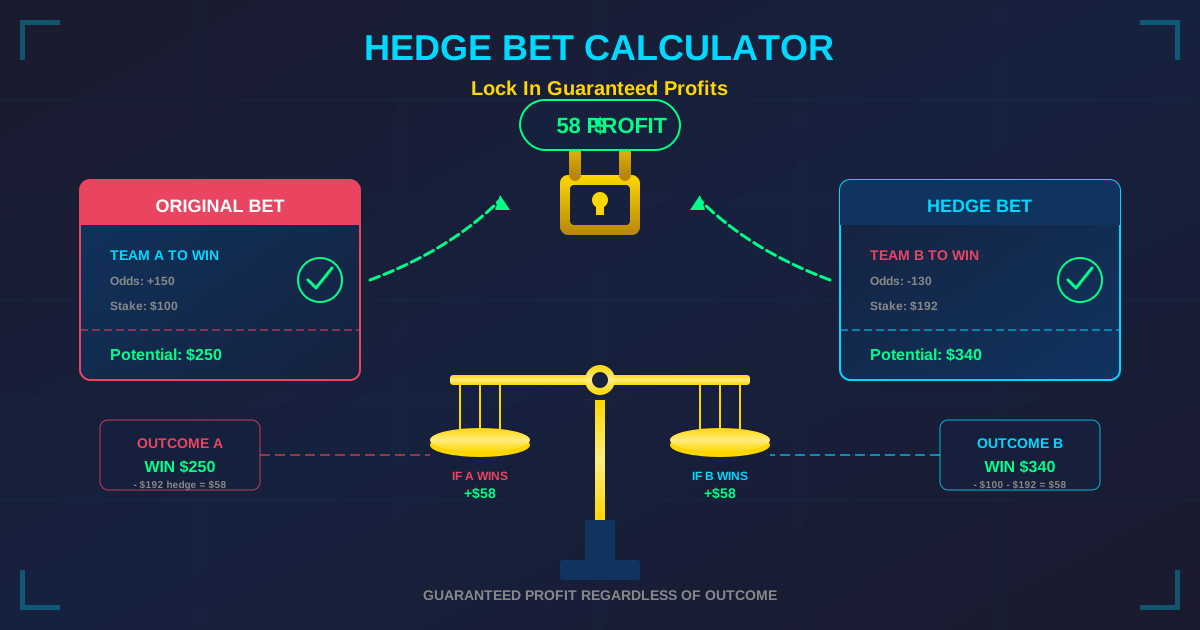
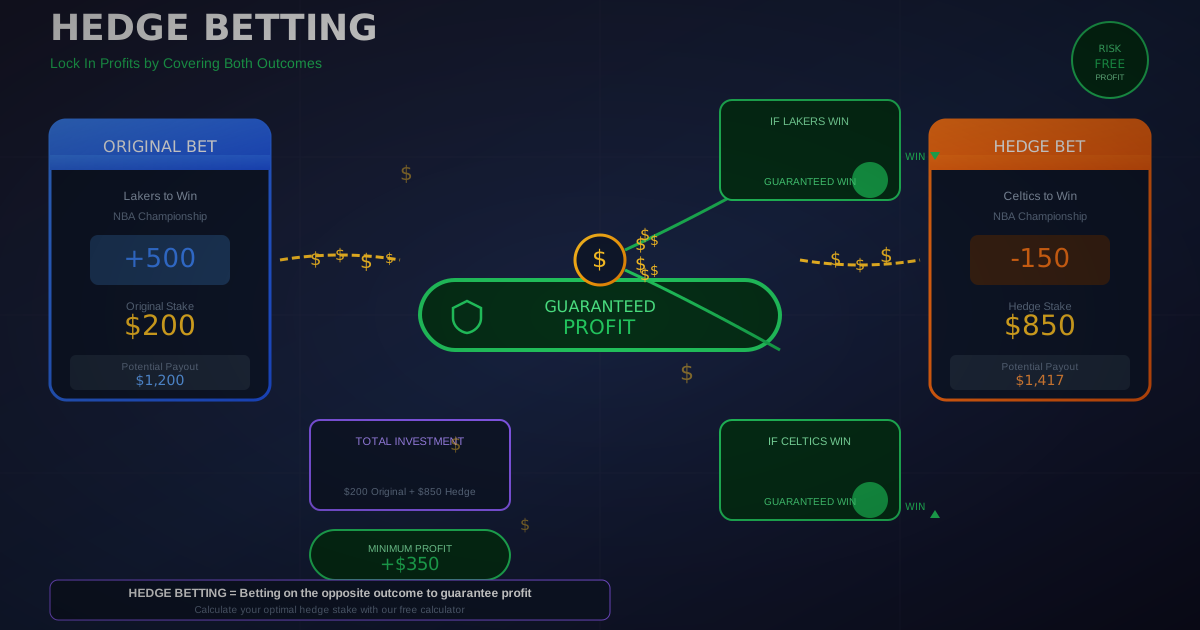
- Hedge Calculator - Calculate optimal hedging positions
- Sure Bet Calculator - Identify sure bet opportunities across books
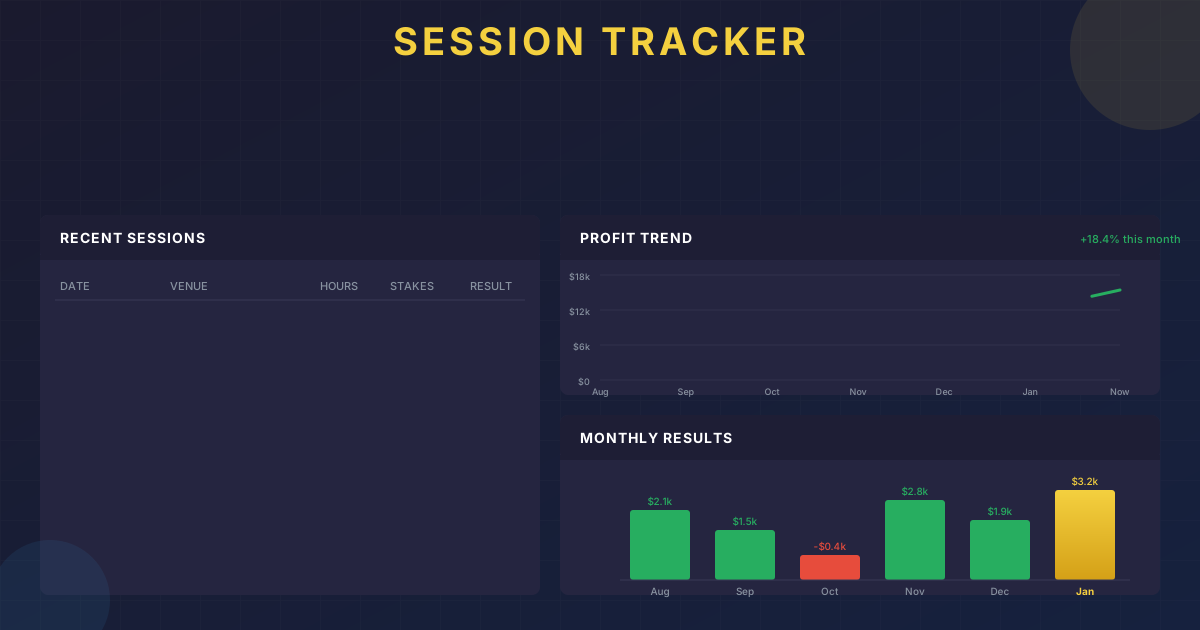
- Poker Session Tracker - Track poker sessions alongside sports betting
How Do You Use Tracking Data to Improve Your Strategy Over Time?
Collecting data is only the first step. The real value comes from using that data systematically to refine your betting approach, eliminate unprofitable patterns, and double down on what works.
The Quarterly Strategy Review Process
Every three months, serious bettors should conduct a comprehensive review of their tracking data. This process follows a structured framework:
Phase 1: Performance Summary (30 minutes) Calculate your headline metrics for the quarter: total bets, ROI, CLV, units won, win rate, and max drawdown. Compare these to the previous quarter and your all-time numbers.
| Metric | Q3 2025 | Q4 2025 | Q1 2026 | Trend |
|---|---|---|---|---|
| Total Bets | 580 | 620 | 710 | Increasing volume |
| ROI | +2.1% | +3.8% | +2.4% | Stable positive |
| Avg CLV | +1.5% | +2.2% | +1.9% | Consistently positive |
| Win Rate | 53.1% | 54.8% | 53.6% | Above breakeven |
| Units Won | +12.2 | +23.6 | +17.0 | Positive |
| Max Drawdown | -8.5 units | -5.2 units | -11.3 units | Q1 variance higher |
Phase 2: Category Breakdown (45 minutes) Break your results down by every trackable dimension and look for patterns. Which sports, bet types, sportsbooks, and timing windows are driving your results?
Phase 3: Leak Identification (30 minutes) Find categories with negative ROI AND negative CLV over 100+ bets. These are confirmed leaks, not just variance. Quantify the cost of each leak.
Phase 4: Strategy Adjustment (30 minutes) Based on the data, make specific, measurable changes:
- Stop betting unprofitable categories entirely
- Increase volume in highest-CLV categories
- Adjust stake sizing based on confirmed edge by category
- Test new approaches in small sample sizes before scaling
Phase 5: Set Goals for Next Quarter Define specific, data-driven goals:
- "Achieve +2% CLV across 700+ bets"
- "Eliminate NHL betting (confirmed leak)"
- "Increase NFL prop volume by 50%"
- "Maintain max drawdown below 15 units"
The Compound Effect of Small Improvements
Small data-driven improvements compound dramatically over time:
| Improvement | Impact Per Bet | Annual Impact (2,000 bets x $200 avg) |
|---|---|---|
| Eliminate one leak (-3% ROI category) | +$0.30/bet | +$600/year |
| Improve line shopping (+0.5% better odds) | +$1.00/bet | +$2,000/year |
| Better stake sizing (+0.3% ROI) | +$0.60/bet | +$1,200/year |
| Earlier betting (+0.5% CLV) | +$1.00/bet | +$2,000/year |
| Reduce parlay frequency (+1% overall ROI) | +$2.00/bet | +$4,000/year |
| Combined | +$4.90/bet | +$9,800/year |
An extra $9,800 per year from data-driven improvements, achievable by any bettor who tracks consistently and reviews quarterly. Over five years, that compounds to nearly $50,000 in additional profit, all from simply paying attention to the numbers.
Optimize your bet sizing based on your tracked edge with our Kelly Criterion Calculator.
Automating Your Tracking Workflow
For bettors placing 10+ bets per day, manual tracking becomes a bottleneck. Here are automation options:
| Automation Level | Tools | Setup Effort | Ongoing Effort |
|---|---|---|---|
| Manual entry | Google Sheets | Low | High (2 min/bet) |
| Semi-automatic | BetStamp + manual closing odds | Medium | Medium (30 sec/bet) |
| Mostly automatic | OddsJam or BetStamp Pro | Medium | Low (verify only) |
| Fully automatic | Custom API + sportsbook data feeds | High | Minimal |
| Enterprise | Custom database + Python scripts | Very High | Minimal |
For most serious bettors, the semi-automatic tier (BetStamp or similar app with some manual verification) offers the best balance of accuracy, effort, and cost. Fully automatic solutions require technical skills but are worth the investment for high-volume bettors placing 50+ bets per day.
The difference between a losing bettor and a winning bettor often comes down to one thing: data. Losing bettors guess at their performance, rely on memory, and make emotional decisions. Winning bettors track everything, analyze relentlessly, and let the numbers guide their strategy. Start tracking today, even if it is just a simple spreadsheet, and commit to recording every single bet. Six months from now, you will have the data to make decisions that no amount of gut feeling can match.
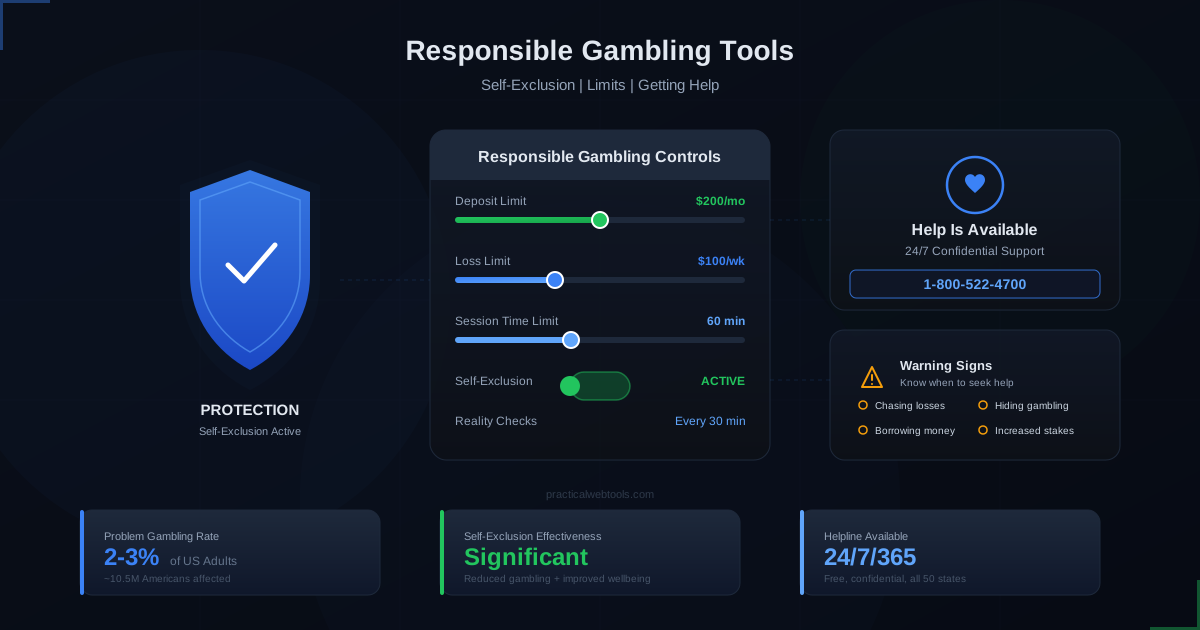
Gambling involves risk and should be approached as entertainment, not as a source of income. Always bet within your means, set strict bankroll limits, and never chase losses. If you or someone you know has a gambling problem, contact the National Council on Problem Gambling at 1-800-522-4700 or visit ncpgambling.org. Must be 21+ to gamble in most US jurisdictions. Please play responsibly.