College Football Playoff Betting: How to Handicap the Expanded Format (2026)

The expanded 12-team College Football Playoff has fundamentally rewritten the betting playbook. Through two seasons of the new format, we have witnessed Indiana win a national championship at 100-to-1 preseason odds, bye-week teams go a stunning 1-7 in the first year before bouncing back, and first-round home favorites dominate campus-site games with double-digit blowouts. The old four-team model rewarded chalk. The new format rewards preparation, data literacy, and the willingness to bet against public perception.
The numbers are staggering. In the inaugural 2024-25 expanded playoff, every home team in the first round won by at least 14 points. In the 2025-26 edition, a No. 9 seed knocked off a home No. 8 seed, a No. 10 seed ran the table to the championship game, and the team with the best regular-season record (Indiana) survived the bye-week curse to claim the title. For bettors, these results are not noise. They are signals--quantifiable edges that the sportsbooks have not yet fully priced in because the sample size remains small.
This guide breaks down every angle of CFP betting: the structural advantages built into the format, the data from two completed expanded playoffs, and the mathematical frameworks that separate sharp playoff bettors from the recreational public. Whether you are evaluating first-round campus-site spreads, quarterfinal neutral-site matchups, or season-long futures, the information here will give you a concrete edge.
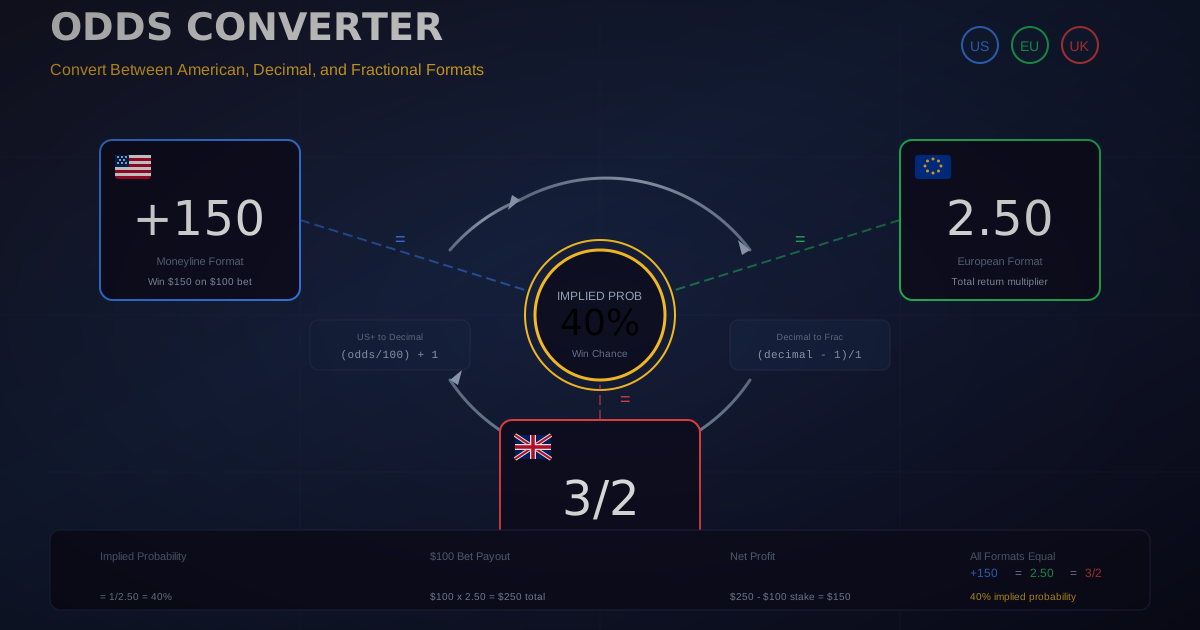
Convert any odds format and calculate implied probabilities instantly with our free Odds Converter.
The New 12-Team College Football Playoff Format Explained
Understanding the CFP structure is the foundation of any profitable betting approach. The format creates distinct phases, each with its own handicapping dynamics.
Selection and Seeding
The 13-member CFP Selection Committee ranks teams and fills the 12-team bracket according to these rules:
- The five highest-ranked conference champions receive automatic bids
- The remaining seven spots go to the next highest-ranked teams regardless of conference
- Seeds 1 through 4 go to the four highest-ranked teams and carry first-round byes
- Seeds 5 through 12 play in the first round
- There is no limit on teams from a single conference
Starting with the 2025-26 season, the bye structure changed. In the inaugural 2024-25 playoff, the four highest-ranked conference champions received byes regardless of overall ranking. From 2025-26 onward, the top four overall seeds receive byes, which is a critical distinction for handicapping because it means the four strongest teams--not just the four best conference winners--get extra rest.
The Bracket Structure
| Round | Matchups | Venue | Timing |
|---|---|---|---|
| First Round | #5 vs #12, #6 vs #11, #7 vs #10, #8 vs #9 | Higher seed's campus | Late December |
| Quarterfinals | #1 vs lowest remaining, #2 vs second-lowest, etc. | Rotating bowl sites (Cotton, Fiesta, Orange, Peach, Rose, Sugar) | Dec. 31 / Jan. 1 |
| Semifinals | Winners of QF1 vs QF2, QF3 vs QF4 | Rotating bowl sites | Early January |
| Championship | Semifinal winners | Predetermined neutral site | Mid-January |
Why the Format Creates Betting Value
The expanded playoff generates more games (11 total vs. 3 under the old system), which means more lines, more market inefficiencies, and more opportunities. Sportsbooks are still calibrating their models against only two years of expanded-format data. In contrast, they had a decade to sharpen four-team playoff pricing. This information asymmetry is where sharp bettors find edge.
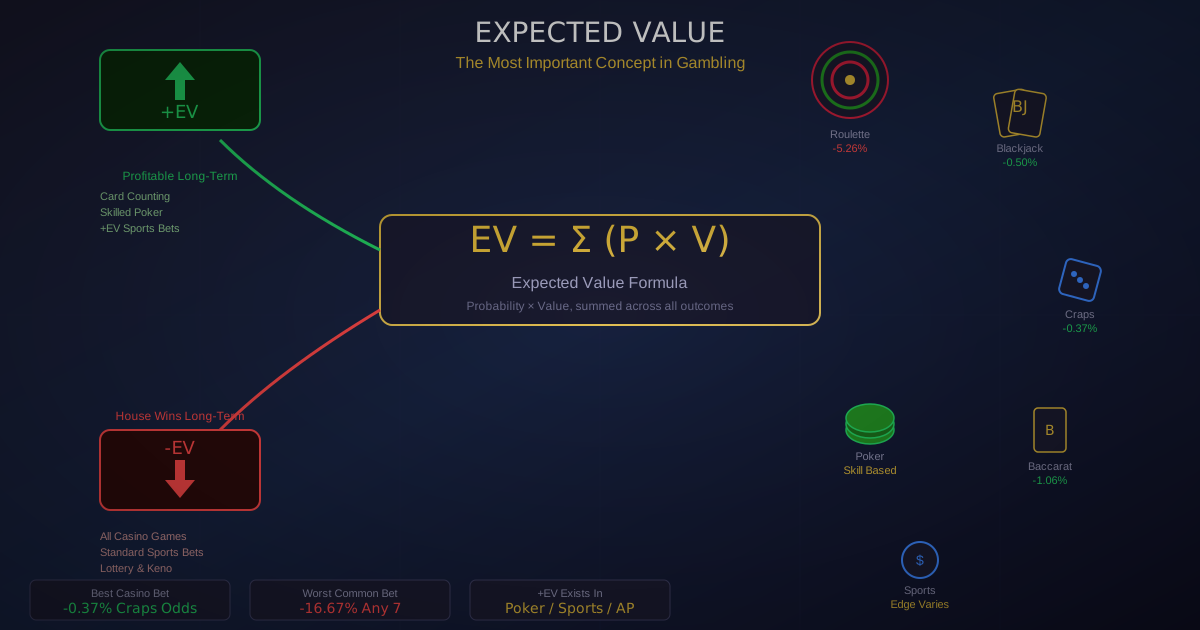
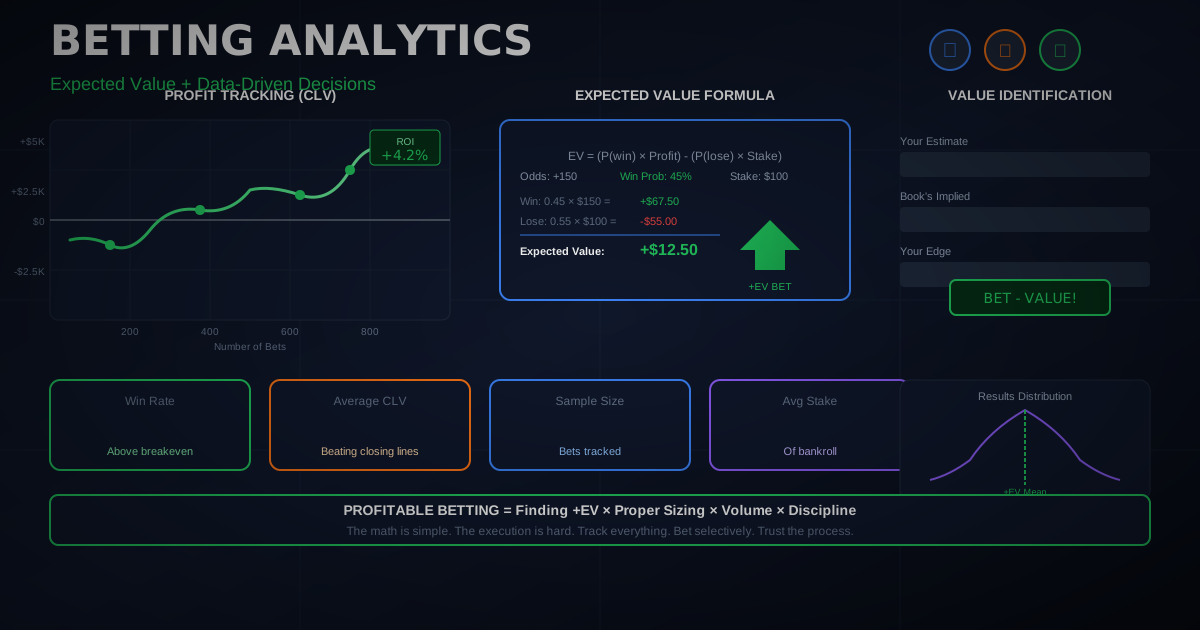
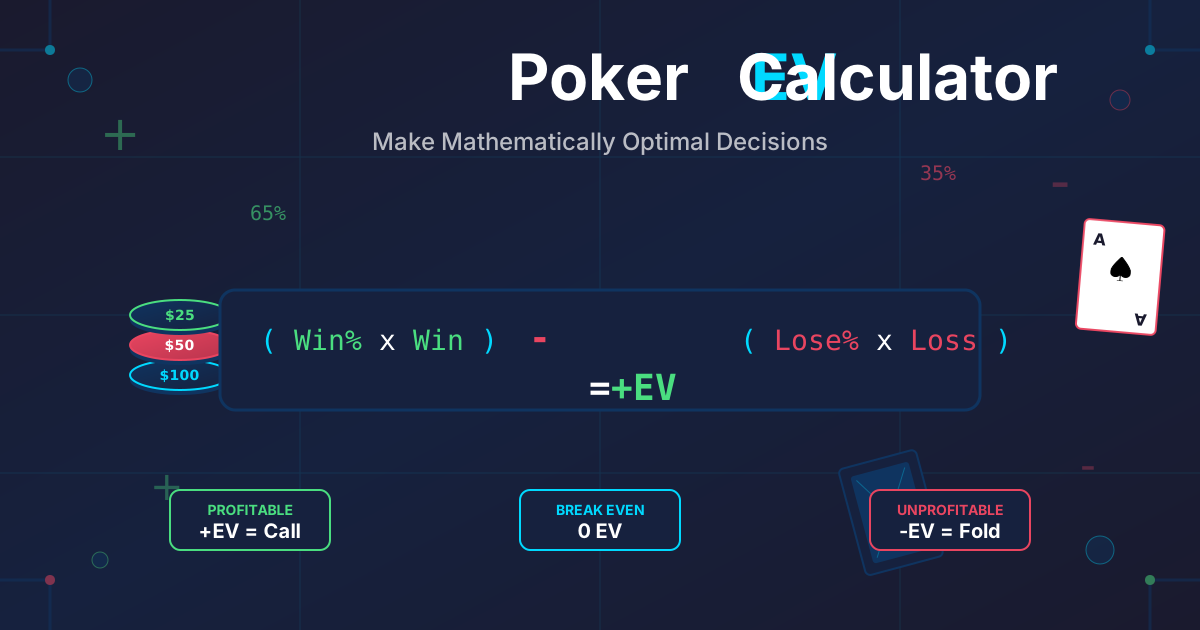
Calculate the expected value of any CFP bet with our Expected Value Calculator.
First-Round Home Games: Campus-Site Edges (Seeds 5-12)
The first round is where the expanded format departs most dramatically from any other postseason football format. Higher seeds host on their own campus--not at a neutral bowl site. This creates home-field advantages that are significantly larger than what bettors typically encounter in bowl games.
Two Seasons of First-Round Results
| Season | Matchup | Score | Spread | ATS Result | Margin |
|---|---|---|---|---|---|
| 2024-25 | #5 Texas vs #12 Clemson | 38-24 | Texas -11.5 | Covered | +2.5 |
| 2024-25 | #6 Penn State vs #11 SMU | 38-10 | Penn State -8.5 | Covered | +19.5 |
| 2024-25 | #7 Notre Dame vs #10 Indiana | 27-17 | Notre Dame -7 | Covered | +3 |
| 2024-25 | #8 Ohio State vs #9 Tennessee | 42-17 | Ohio State -6 | Covered | +19 |
| 2025-26 | #5 Oregon vs #12 James Madison | 51-34 | Oregon -21 | Covered | +4 |
| 2025-26 | #6 Ole Miss vs #11 Tulane | 41-10 | Ole Miss -17.5 | Covered | +13.5 |
| 2025-26 | #7 Texas A&M vs #10 Miami | 3-10 | Texas A&M -6.5 | Lost | -13.5 |
| 2025-26 | #8 Oklahoma vs #9 Alabama | 24-34 | Oklahoma -3 | Lost | -13 |
Home teams are 6-2 SU and 6-2 ATS in first-round campus games. The two upsets both occurred in the 2025-26 season and followed a pattern: the lower seed had significantly more postseason experience. Alabama's coaching staff, led by Kalen DeBoer, had navigated high-pressure playoff environments before. Miami entered with a veteran-heavy roster and an aggressive offensive identity that translated well on the road.
Quantifying Home-Field Advantage
College football home-field advantage has been studied extensively. The average home team scores approximately 3.5 points more than an equivalent road opponent, but that figure masks enormous program-specific variation:
| Program | Home-Field Advantage (Points) | Notable Factor |
|---|---|---|
| James Madison | +8.1 | Loudest per-seat environment |
| Texas A&M | +6.5 | Kyle Field 102,000-seat atmosphere |
| Clemson | +5.8 | Death Valley noise levels |
| Penn State | +5.5 | Whiteout game environments |
| Ohio State | +5.2 | 105,000-seat capacity |
| Average FBS | +3.5 | Baseline |
Key takeaway for bettors: When a team like Texas A&M or Clemson hosts a first-round game, the campus-site advantage is worth roughly 2-3 points more than the generic 3.5-point home-field number sportsbooks use. Books are still adjusting to pricing campus playoff games, creating potential value on home favorites in large, historically hostile venues.
Example: In the 2024-25 first round, Ohio State opened as a 5-point home favorite over Tennessee. The line moved to -6 at kickoff. Ohio State won 42-17. A bettor who recognized that Ohio State's home-field advantage (approximately +5.2 points above neutral) was underpriced by the opening line locked in value early. A $200 bet on Ohio State -5 at -110 returned $381.82 total ($181.82 profit).
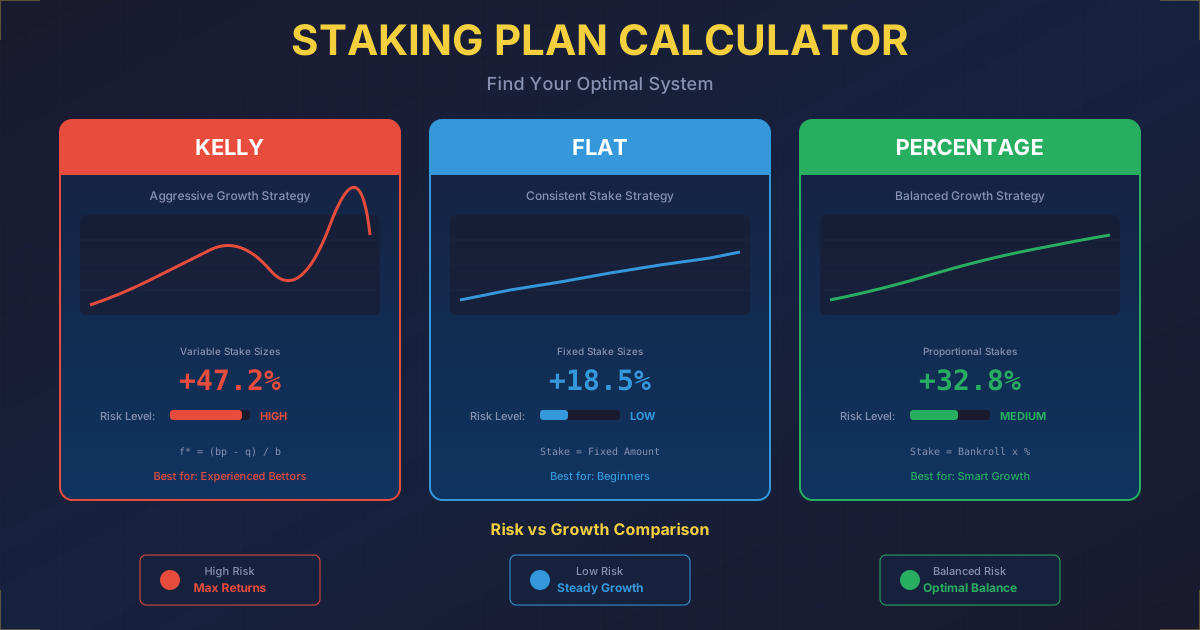
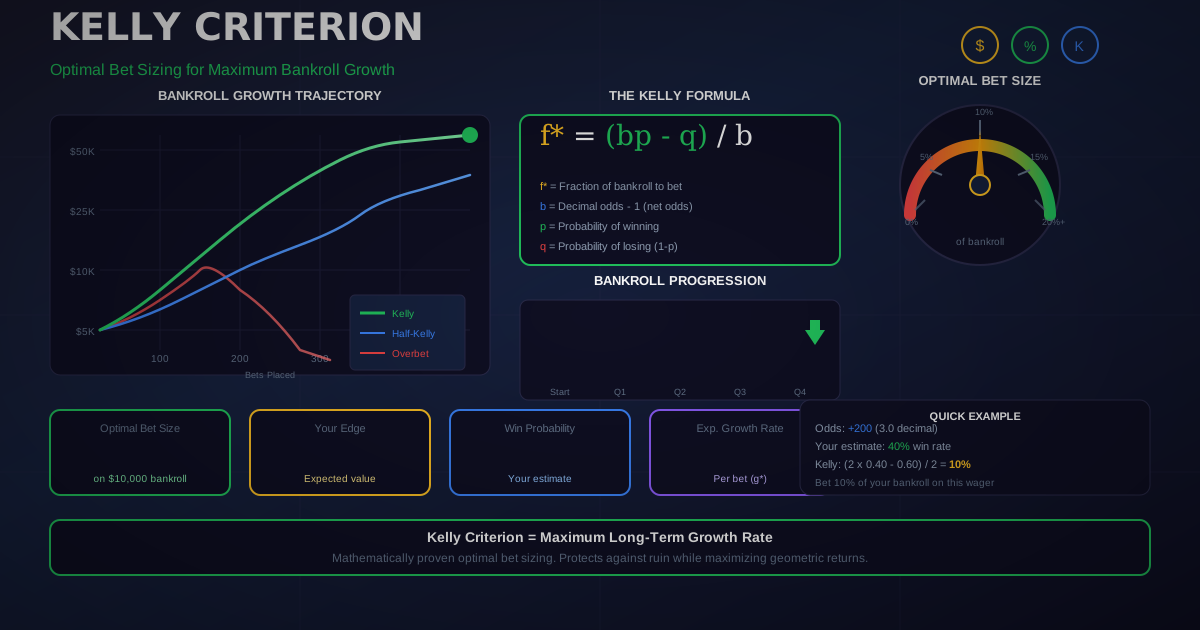
Size your bets optimally using our Kelly Criterion Calculator.
Quarterfinal and Semifinal Neutral-Site Analysis
Once the bracket moves to bowl-game venues, the handicapping dynamics shift entirely. Home-field advantage disappears, and different factors come into play.
Bowl-Site Historical Edges
The six rotating bowls have distinct ATS histories that bettors should factor into their analysis:
| Bowl Game | Underdog ATS Record (Since 2004) | Notable Trend |
|---|---|---|
| Cotton Bowl | Favorites dominate (22-0-1 ATS run for outright winners) | Strongest favorite lean |
| Orange Bowl | Underdogs 15-7 ATS | Best underdog venue |
| Fiesta Bowl | Roughly even | High-scoring affairs |
| Rose Bowl | Slight favorite lean | Big Ten advantage historically |
| Peach Bowl | Slight underdog lean | SEC teams overvalued |
| Sugar Bowl | Roughly even | Conference matchup dependent |
The Neutral-Site Adjustment
When handicapping quarterfinal and semifinal games, bettors must account for:
- Travel distance differential: A team playing in the Sugar Bowl (New Orleans) versus a West Coast opponent has a proximity edge worth approximately 1-1.5 points
- Fan base size and travel capacity: Blue-blood programs (Ohio State, Alabama, Texas) create semi-home environments at neutral sites
- Bowl-site familiarity: Coaches with multiple appearances at a specific venue have historically outperformed, going 203-156 SU (56.5%) when they hold an experience edge in bowl games coached
- Conference matchup history: Big Ten teams are 38-16-1 ATS as bowl favorites of 2+ points since 2007--a dominant trend
2024-25 Quarterfinal Results (Bye Teams 0-4)
| Matchup | Score | Favored | ATS Result |
|---|---|---|---|
| #1 Oregon vs #8 Ohio State | 23-41 (Ohio State won) | Oregon -2.5 | Oregon lost |
| #2 Georgia vs #7 Notre Dame | 23-23 (OT, Notre Dame won) | Georgia -1.5 | Georgia lost |
| #3 Boise State vs #6 Penn State | 21-31 (Penn State won) | Boise State -1 | Boise State lost |
| #4 Arizona State vs #5 Texas | 24-39 (Texas won) | Arizona State +2.5 | Texas covered |
All four bye teams lost. This was the single most significant betting result of the inaugural expanded playoff.
2025-26 Quarterfinal Results (Bye Teams 1-3)
| Matchup | Score | Favored | ATS Result |
|---|---|---|---|
| #1 Indiana vs #9 Alabama | 38-3 | Indiana -10.5 | Indiana covered |
| #2 Ohio State vs #10 Miami | 14-24 | Ohio State -7 | Ohio State lost |
| #3 Georgia vs #6 Ole Miss | 34-39 | Georgia -3.5 | Georgia lost |
| #4 Texas Tech vs #5 Oregon | 0-23 | Oregon -6.5 | Oregon covered |
Indiana broke the bye-week curse emphatically, but three of four top seeds still lost or failed to cover. The combined record for bye teams in quarterfinals across both years: 2-6 SU and 2-6 ATS.
Example: A bettor who placed $150 on Ohio State's opponent (Miami, +7) in the 2025-26 Cotton Bowl quarterfinal at -110 collected $286.36 total ($136.36 profit). Miami not only covered the 7-point spread but won outright 24-14. Fading bye-week rust at the quarterfinal stage has been remarkably profitable.
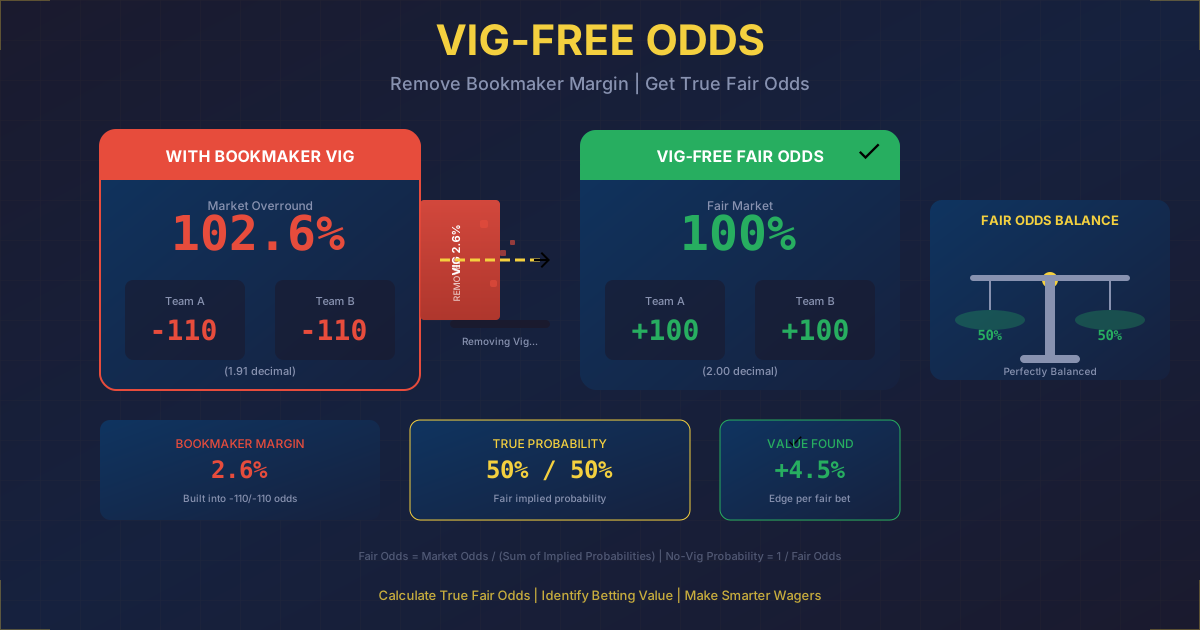
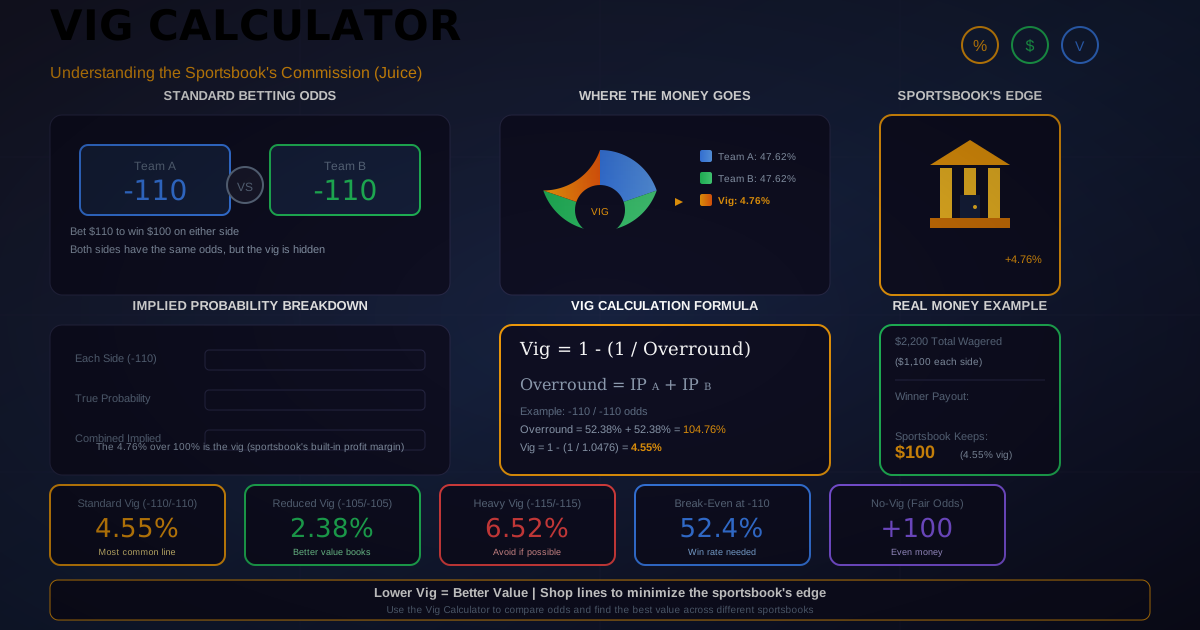
Analyze the vig on any CFP line with our Hold/Vig Calculator.
Conference Strength and Matchup Edges
Conference affiliation matters more in the expanded CFP than it did in the four-team era because cross-conference matchups are now guaranteed every round. Identifying which conferences are overvalued and undervalued by the market is a significant edge.
Conference Postseason Performance (2025-26 Season)
| Conference | Bowl Record | CFP Record | ATS Trend | Market Perception |
|---|---|---|---|---|
| Big Ten | 9-4 | Strong (Indiana champion) | Covers as favorites | Fairly valued |
| SEC | 4-10 | 2-8 vs non-SEC | Overvalued | Public overbet |
| Big 12 | Positive | Limited CFP data | Undervalued | Growing |
| ACC | Mixed | Limited CFP data | Neutral | Conference realignment factor |
The SEC Overvaluation Factor
The SEC's brand is so powerful that sportsbooks consistently shade lines toward SEC teams, knowing public money will follow. But the postseason data tells a different story. The SEC went 4-10 in bowls during the 2025-26 season and 2-8 against non-SEC opponents. Yet the public continues to bet SEC teams as though they hold the same dominance they had a decade ago.
Sharp play: When an SEC team faces a Big Ten or Big 12 opponent in the CFP quarterfinals or semifinals, the Big Ten/Big 12 side is often getting extra value because public money inflates the SEC line.
Example: Georgia was a 3.5-point favorite over Ole Miss in their 2025-26 quarterfinal. The line reflected Georgia's SEC brand and historical prestige. Ole Miss won 39-34. Bettors who recognized the SEC overvaluation and took Ole Miss +3.5 at -110 with a $100 bet collected $190.91 ($90.91 profit).
Conference Depth and Style Matchups
Beyond win-loss records, conference playstyle creates matchup-specific edges:
- Big Ten vs SEC: Big Ten teams emphasize physicality and run defense. When SEC teams built around speed and passing face Big Ten fronts, they historically underperform their regular-season point totals
- Group of Five in the CFP: Tulane and James Madison both lost their first-round games, but James Madison covered the spread (lost 34-51 against a 21-point spread). Group of Five teams as large underdogs in the first round may offer ATS value
- Independent Notre Dame: Notre Dame has a guaranteed at-large bid starting in 2026 if ranked in the top 12. Their neutral-site experience from years of playing "home" games at various venues gives them a unique edge in bowl-site CFP games
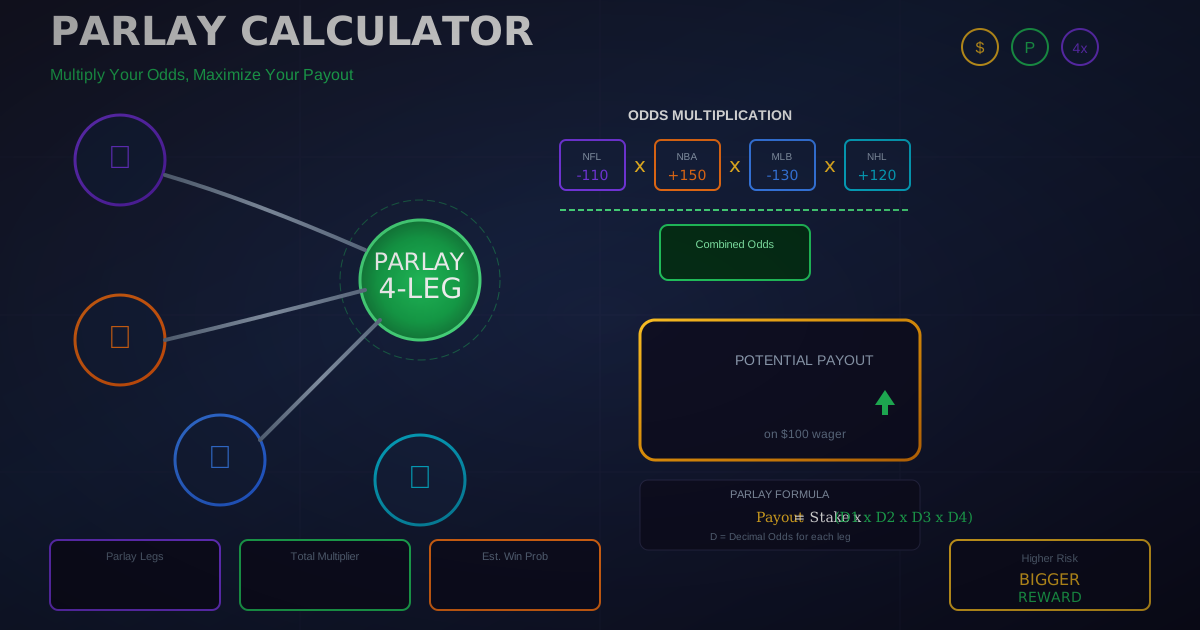
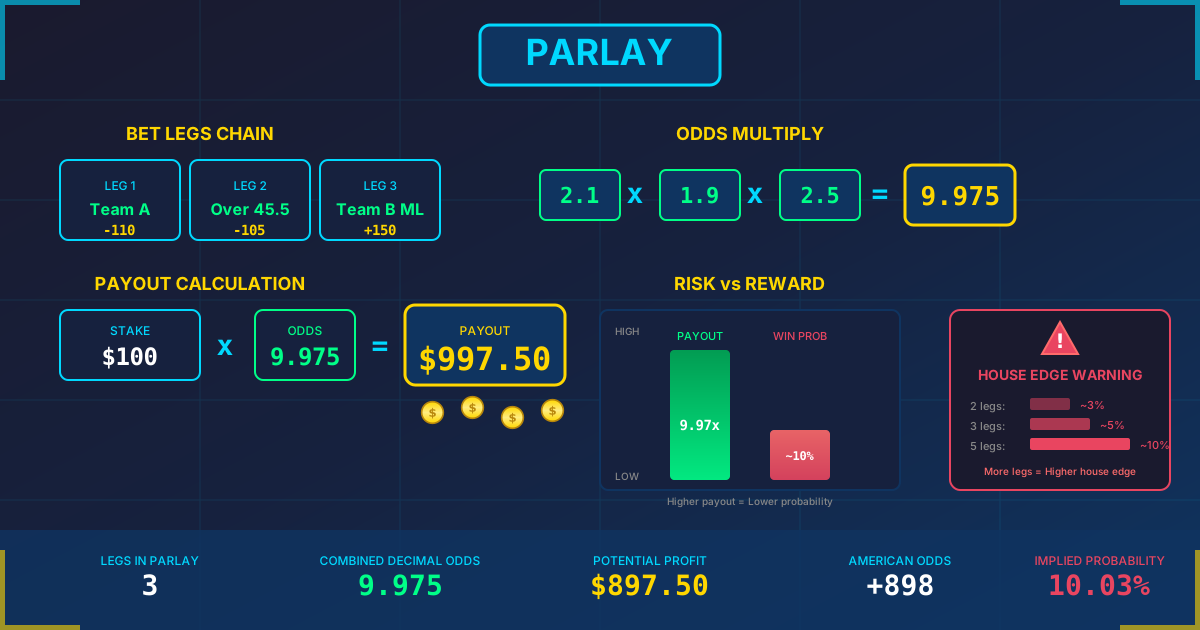
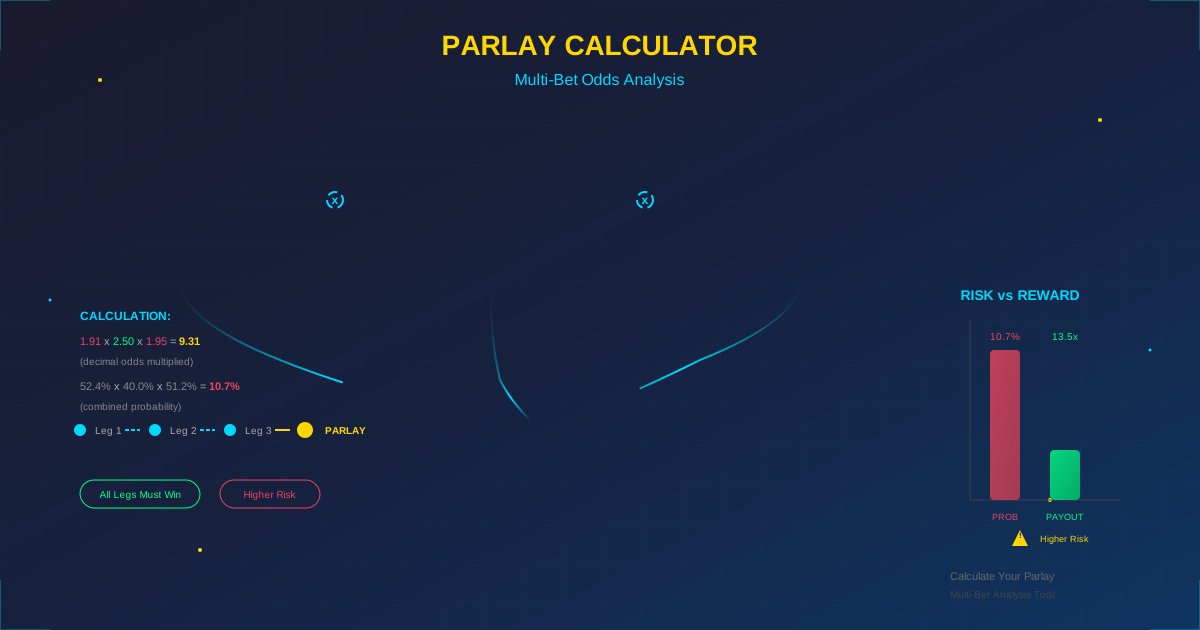
Calculate parlay payouts across multiple CFP games with our Parlay Calculator.
Bye Week Impact: The Rust vs. Rest Debate (Top 4 Seeds)
No single factor has generated more CFP betting debate than the first-round bye. Two seasons of data have created a volatile but informative picture.
The Damning Numbers
| Season | Bye Team QF Record (SU) | Bye Team QF Record (ATS) | Notable Result |
|---|---|---|---|
| 2024-25 | 0-4 | 0-4 | All four bye teams eliminated |
| 2025-26 | 1-3 | 2-2 | Indiana won title; Ohio State, Georgia, Texas Tech lost |
| Combined | 1-7 SU | 2-6 ATS | Bye teams cover 25% of the time |
A 1-7 straight-up record and 2-6 ATS record for bye teams is historically significant even with a small sample. The market has begun to adjust--bye-team lines moved shorter in 2025-26 compared to 2024-25--but may not have fully corrected yet.
Why Bye Teams Struggle
Several factors explain the underperformance:
- Rhythm and timing disruption: Teams play their conference championship in early December, then sit for roughly three weeks before their quarterfinal. Offensive timing, particularly in the passing game, suffers
- Opponent game-film advantage: First-round winners have fresh film on their upcoming opponent's current form. Bye teams are evaluating opponents based on regular-season tape that may be a month old
- Motivational asymmetry: First-round winners ride momentum from a playoff victory. Bye teams face the psychological challenge of maintaining intensity without competitive stimulus
- Physical preparation uncertainty: Bye teams must simulate game conditions in practice, which never fully replicates the intensity of actual competition
The Indiana Exception
Indiana's 2025-26 championship run is the one case where a bye team dominated. Key factors that distinguished Indiana:
- Dominant No. 1 overall seed: Indiana was not merely a top-4 seed; they were the consensus best team in the country
- 38-3 quarterfinal blowout: The margin was so large that any "rust" was irrelevant
- Coaching preparation: Curt Cignetti's staff specifically designed practice protocols to combat the layoff, including intra-squad scrimmages that simulated playoff intensity
Betting implication: Blindly fading every bye team is not the answer, but applying extra skepticism to bye teams favored by fewer than 7 points appears well-supported. Indiana won as a 10.5-point favorite. The bye teams that lost were mostly favored by single digits.
Find your optimal bet size for bye-team fades using our Kelly Criterion Calculator.
Historical Underdog Performance in the CFP
Underdogs have been the story of the expanded playoff. Understanding when and why they cover is essential.
First-Round Underdog Performance
| Seed Range | Record SU | Record ATS | Average Margin of Loss | Key Insight |
|---|---|---|---|---|
| #9 Seeds | 1-1 | 1-1 | Close games | Best upset candidates |
| #10 Seeds | 1-1 | 1-1 | Variable | Talent-dependent |
| #11 Seeds | 0-2 | 0-2 | Blowouts | Conference champions outmatched |
| #12 Seeds | 0-2 | 1-1 | Large losses but one cover | Large spreads create ATS value |
The first-round data suggests that the 8-vs-9 and 7-vs-10 games produce the most competitive matchups, while 5-vs-12 and 6-vs-11 games are more likely to be blowouts--though the large spreads in those games occasionally create ATS value for the underdog.
Quarterfinal Upsets: The Pattern
Quarterfinal upsets have been far more common than expected. The pattern across both years:
- Teams that played a first-round game outperformed bye teams 6 out of 8 times SU
- Ohio State (2024-25): Won as a #8 seed, then dominated Oregon in the quarterfinal before winning the championship
- Miami (2025-26): Won as a #10 seed on the road at Texas A&M, then upset #2 Ohio State in the quarterfinal, then beat Ole Miss in the semifinal before falling in the championship
The Cinderella Factor
Both championships have produced deep underdog runs:
| Team | Seed | Preseason Odds | Deepest Round | Key Win |
|---|---|---|---|---|
| Ohio State (2024-25) | #8 | +1200 | Champion | Beat Oregon in QF |
| Indiana (2025-26) | #1 | +10000 (preseason) | Champion | Dominated entire bracket |
| Miami (2025-26) | #10 | +5000 | Championship Game | Beat Ohio State and Ole Miss |
Example: A bettor who placed a $50 futures bet on Indiana at +10000 before the 2025-26 season would have collected $500,050 ($500,000 profit). Even a $10 bet at those odds would have returned $100,010. This illustrates why long-shot CFP futures can offer extraordinary value when you identify teams with the right profile.
Convert between American, decimal, and fractional odds with our Odds Converter.
Futures and Season-Long CFP Betting
CFP futures present the highest-variance but potentially highest-reward betting opportunities in all of college football. The expanded format makes futures more attractive than ever because 12 teams qualify instead of four.
When to Bet CFP Futures
| Timing | Typical Market State | Edge Opportunity |
|---|---|---|
| Preseason (June-August) | Widest odds, most uncertainty | Best prices on long shots; highest variance |
| Early Season (September) | Odds begin to adjust after Week 1-4 results | Overreactions to early wins/losses create value |
| Midseason (October) | Market solidifies around contenders | Best time to identify undervalued 8-12 seeds |
| Late Season (November) | Odds compress for favorites | Value shifts to "bubble" teams who need conference championship wins |
| Post-Selection (December) | Individual game lines available | Sharpest pricing; least futures edge |
Profile of a Value Futures Bet
Based on two years of expanded-playoff data, the ideal preseason CFP futures target has these characteristics:
- Returning starting quarterback with playoff-caliber talent
- Top-20 recruiting class depth (can absorb injuries)
- Favorable schedule (avoid front-loading difficult opponents)
- Conference championship path that avoids the top overall seed
- Coaching staff with postseason experience
Indiana in 2025-26 checked every box. They returned significant talent, played in a Big Ten that was deep but navigable, and had a coaching staff that prioritized physical preparation.
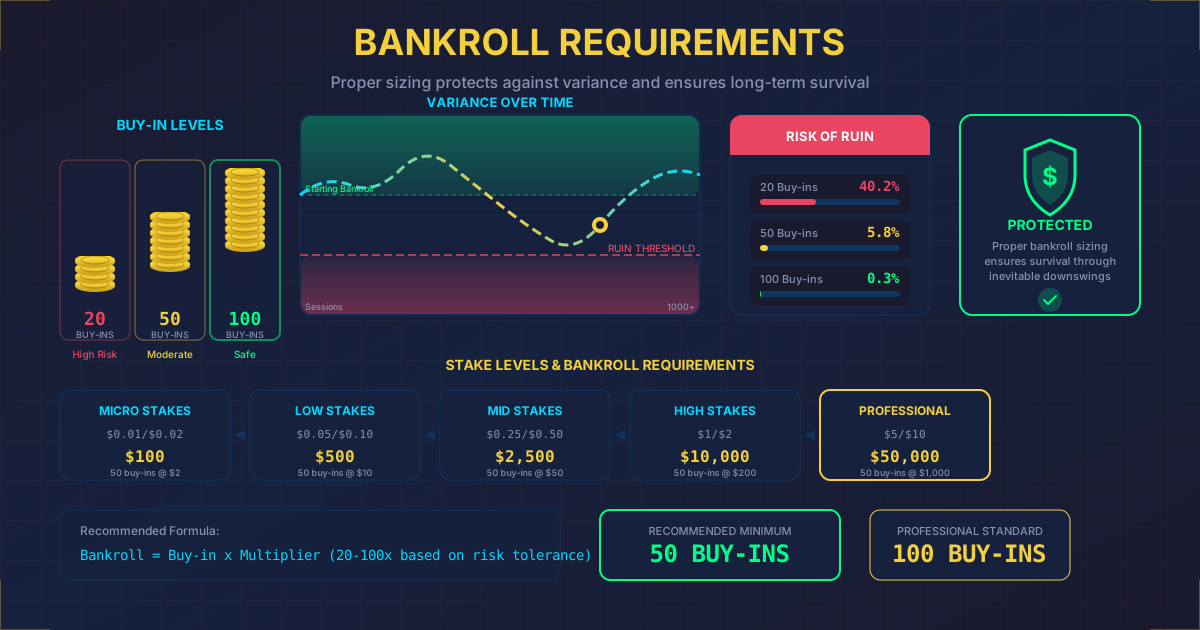
Futures Bankroll Allocation
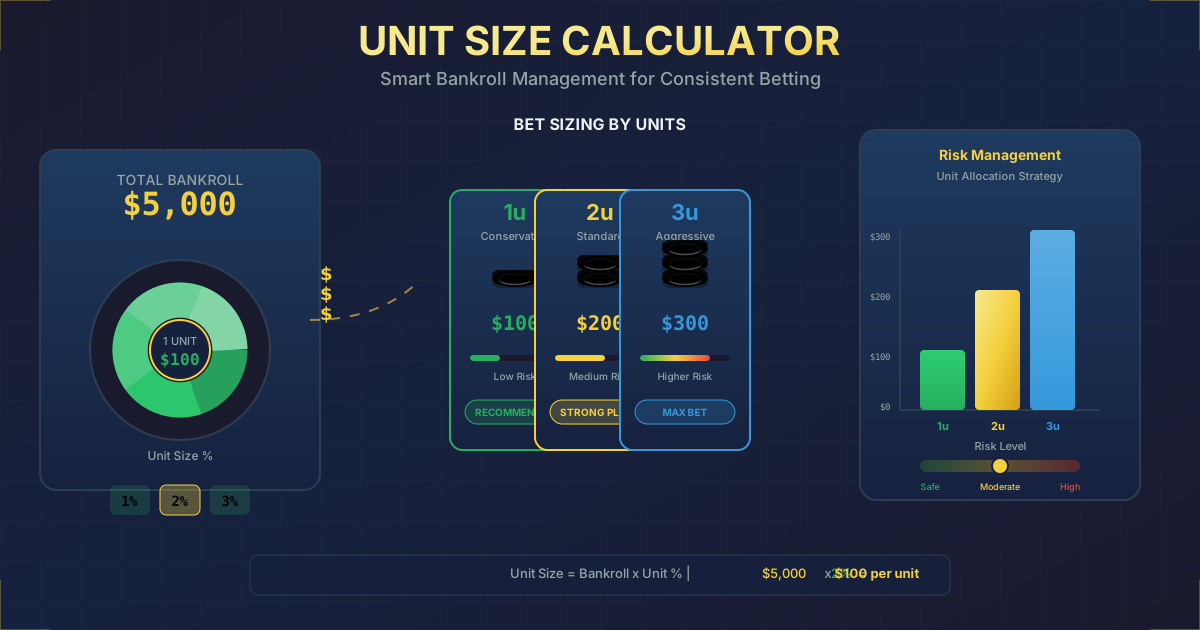
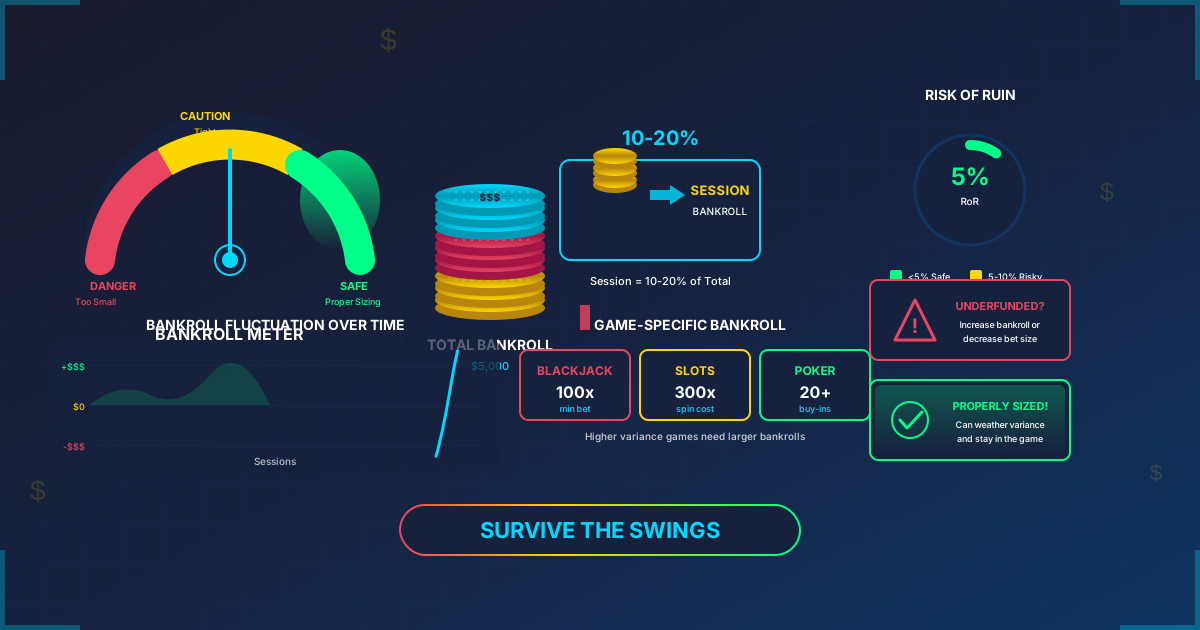
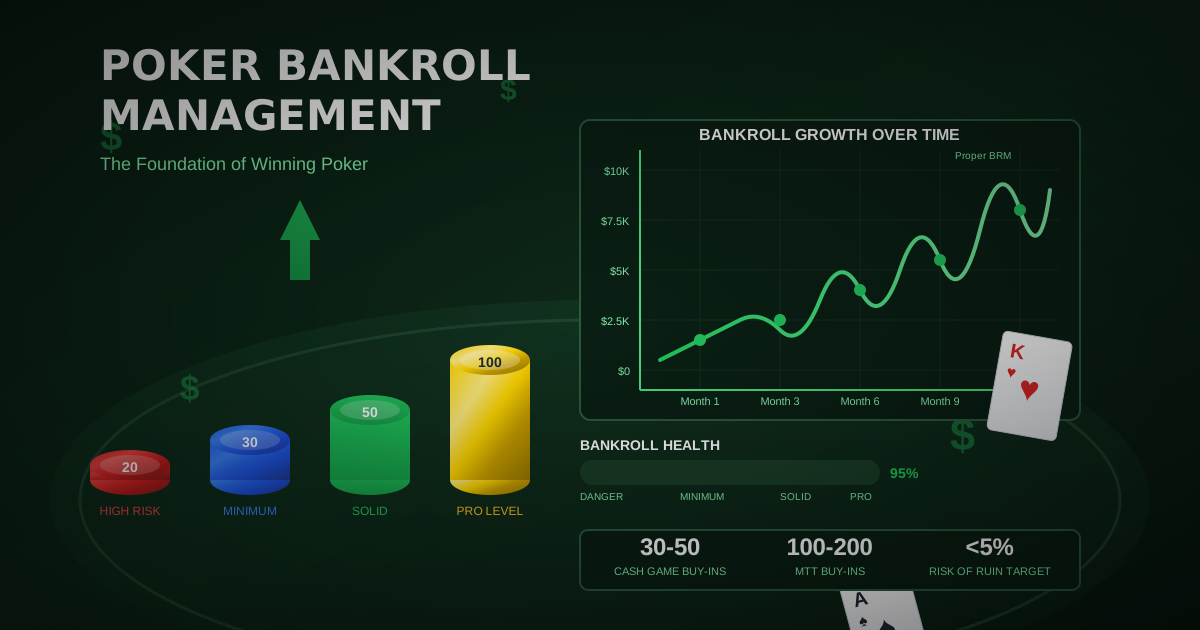
Smart futures bettors allocate a small percentage of their total bankroll (typically 1-3%) across multiple long-shot selections rather than concentrating on a single favorite. A sample allocation:
| Bet | Odds | Stake | Potential Payout |
|---|---|---|---|
| Preseason favorite | +350 | $50 | $225 |
| Dark horse contender | +2500 | $25 | $650 |
| Long shot with upside | +8000 | $15 | $1,215 |
| Conference champion long shot | +15000 | $10 | $1,510 |
| Total risk | $100 | Up to $1,510 |
By spreading $100 across four futures, you create multiple paths to profit while keeping total risk manageable. If any one bet hits, you are profitable for the entire futures portfolio.
Determine the implied probability behind any futures price with our Implied Probability Calculator.
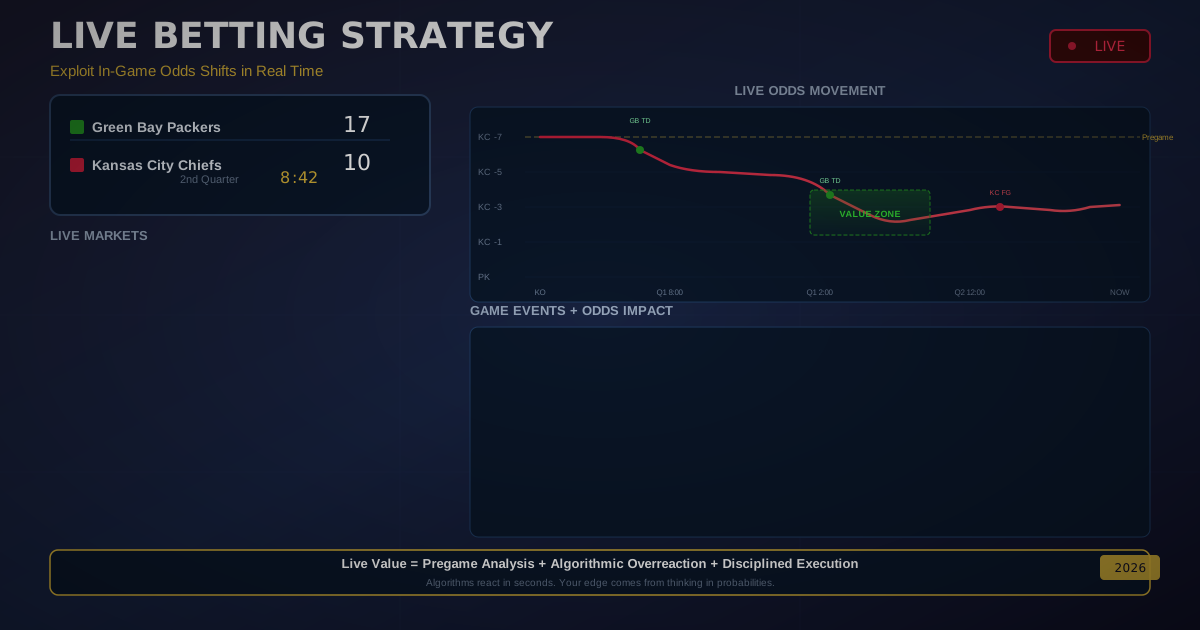
Live Betting the College Football Playoff
Live (in-game) betting during CFP games offers unique edges because the playoff creates emotional intensity that distorts public perception in real time.
Common Live Betting Edges in CFP Games
1. The Slow Start Overreaction
Top seeds frequently start slowly in quarterfinals after their bye week. When a bye team falls behind 7-0 or 10-0 in the first quarter, the live line overreacts. Public money floods the opponent, and the live spread moves dramatically. If your pre-game analysis identified the bye team as the stronger side, the live line after an early deficit often offers better value than the pre-game number.
Example: In the 2025-26 Peach Bowl semifinal, suppose Oregon trailed Indiana 7-0 early. A live bettor could have gotten Oregon at a spread 3-4 points better than the pre-game line. Indiana ultimately won 56-22, so this particular example would not have worked, but the principle is sound for games where the bye team is closely matched with its opponent.
2. Momentum Shifts After Turnovers
CFP games feature heightened pressure that leads to momentum-swinging turnovers. After a turnover by the favored team, the live line shifts rapidly. Sharp bettors who evaluate whether the turnover reflects a systemic problem or random variance can find value on the favorite at an improved price.
3. Second-Half Adjustments by Experienced Coaches
Coaches with extensive postseason experience (multiple CFP/bowl appearances) make better halftime adjustments. If a team with a veteran coaching staff trails at halftime, the second-half line may undervalue their ability to adjust.
Live Betting the Total
CFP games, particularly first-round campus games, have tended toward higher scoring because of the emotional atmosphere and offensive rhythm of home teams. Consider:
- First-round home teams averaged 37.0 points across eight games
- First-round away teams averaged 19.5 points across eight games
- The average combined score (56.5 points) has consistently cleared posted totals
If a first-round game starts with low scoring, the live total may drop below your pre-game assessment, creating over value.
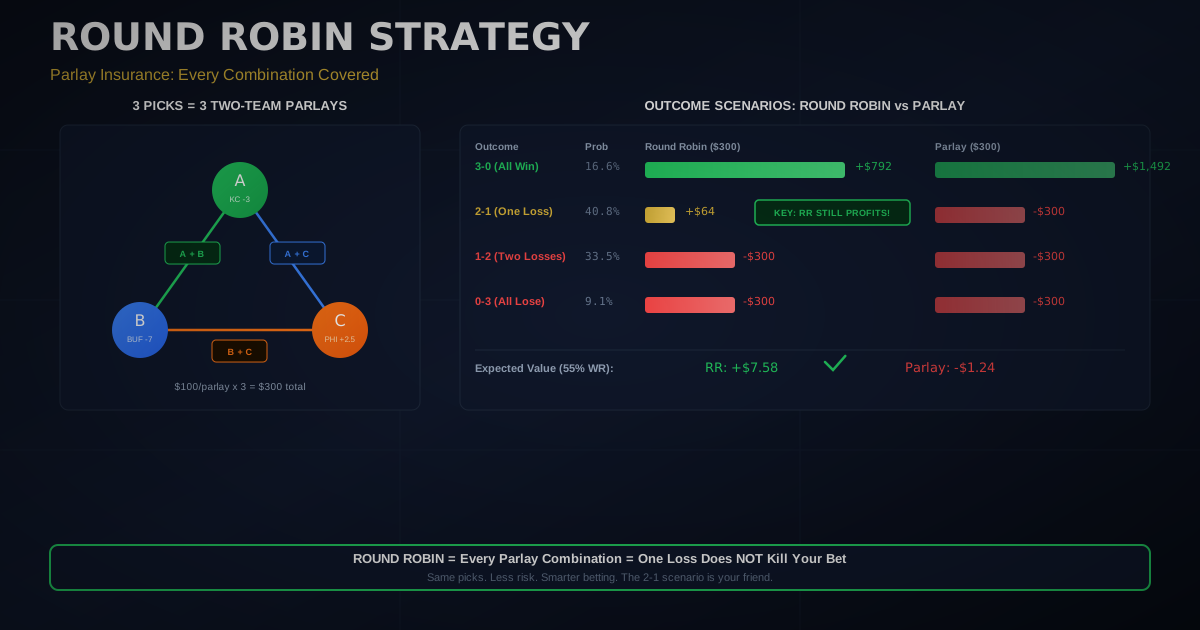
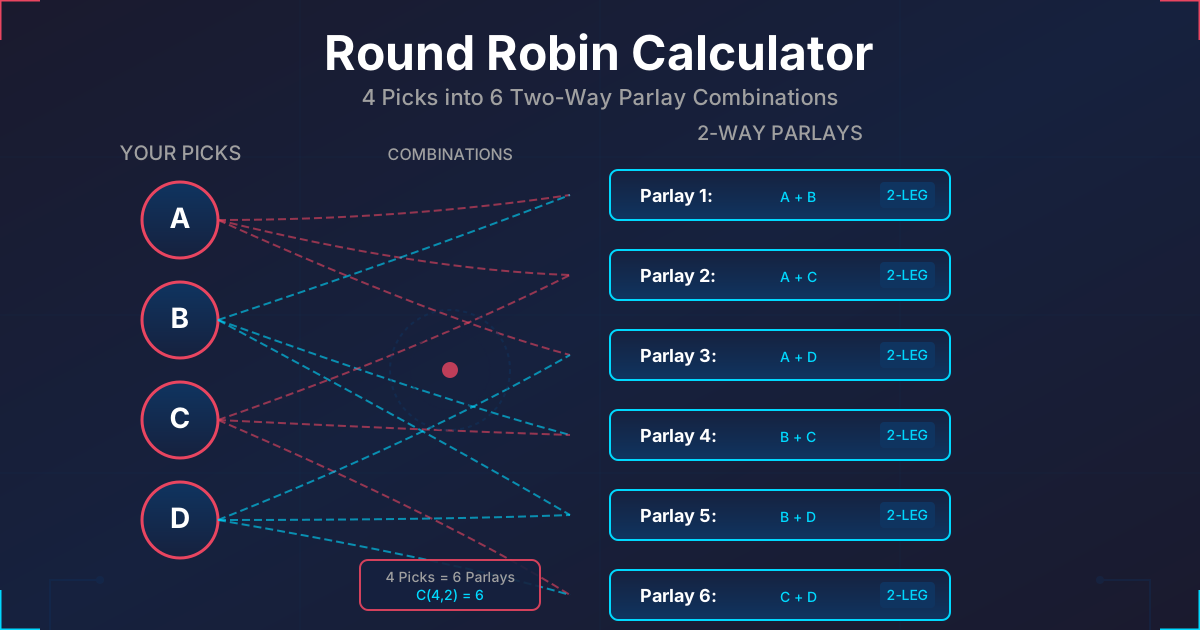
Build multi-leg live parlays across CFP games with our Round Robin Calculator.
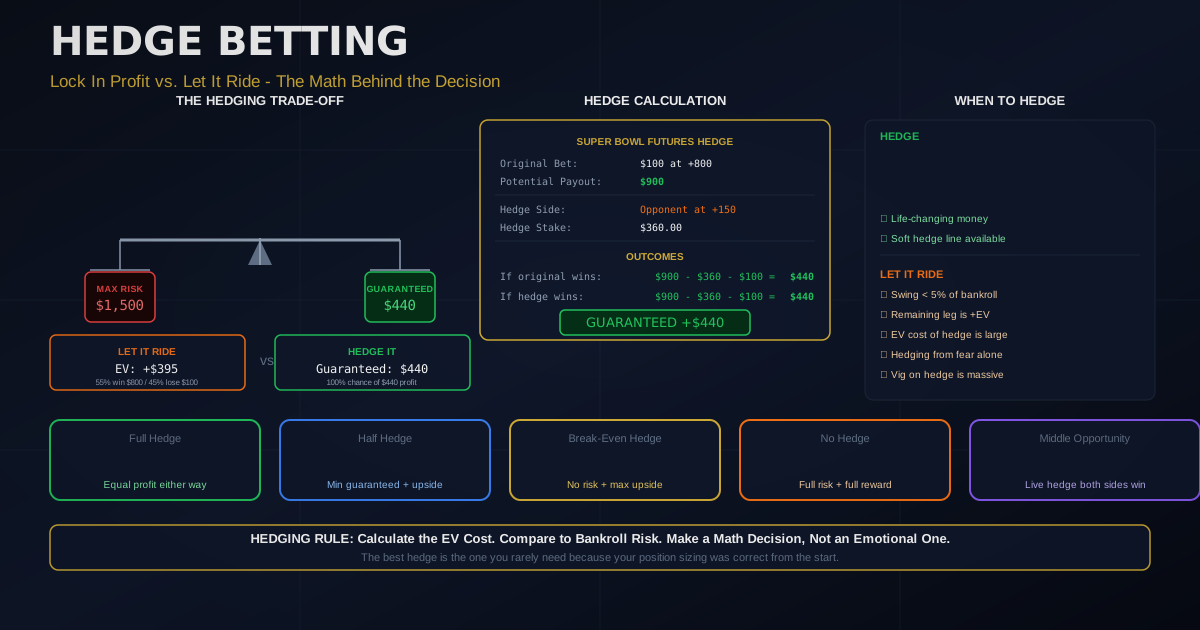
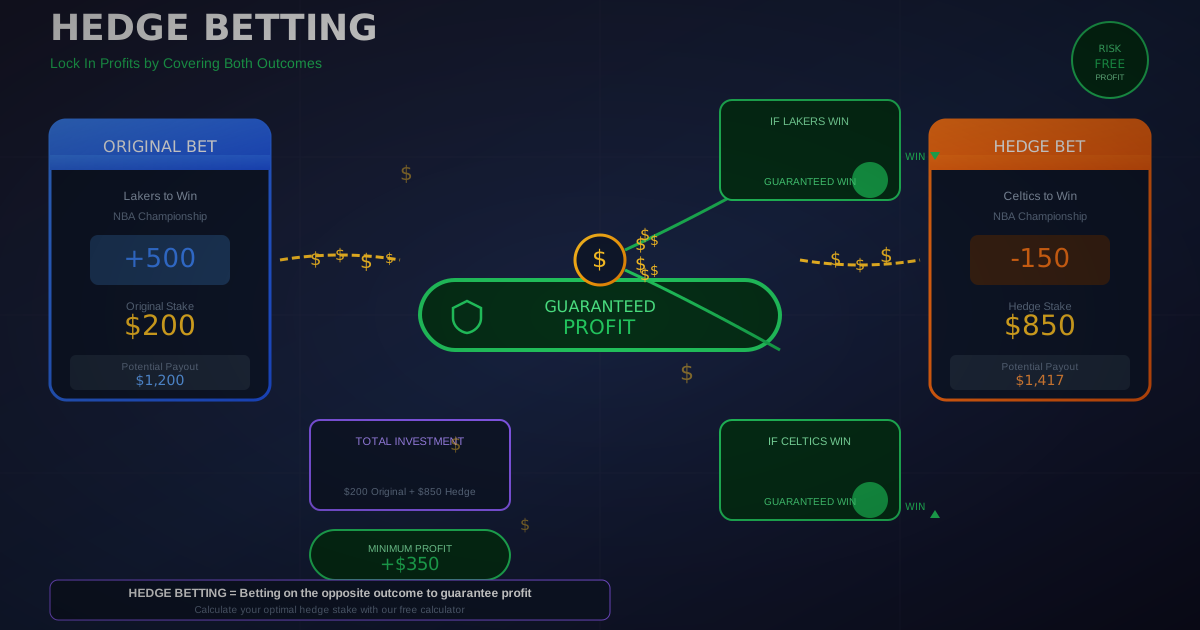
Hedging CFP Futures as the Bracket Advances
One of the most powerful strategies in expanded-playoff betting is hedging futures bets as your team advances through the bracket. With 11 games across four rounds, you have multiple opportunities to lock in profit.
The Hedging Decision Framework
Every time your futures team wins, their futures ticket increases in value and the potential hedge calculation changes. The key question: Should you let the futures ride for maximum upside, or hedge to guarantee profit?
| Scenario | Hedge? | Reasoning |
|---|---|---|
| Team wins first round, still a long shot | Usually no | Futures value has not appreciated enough to justify hedge cost |
| Team reaches quarterfinal, odds improved significantly | Consider partial hedge | Lock in some profit while maintaining upside |
| Team reaches semifinal | Strong hedge candidate | Futures ticket now worth substantial value |
| Team reaches championship game | Almost always hedge | Guarantee life-changing profit regardless of outcome |
Hedging Example: Miami's 2025-26 Run
Let us walk through a realistic hedging scenario using Miami's Cinderella run from #10 seed to the championship game.
Pre-season: You bet $50 on Miami to win the CFP at +5000.
- Potential payout: $2,550 ($2,500 profit)
After first-round win (beat Texas A&M as road underdog):
- Miami's odds to win the title improve to approximately +1500
- Futures ticket value: roughly $170
- Decision: Hold. The ticket has tripled in implied value, but +1500 still represents a long shot
After quarterfinal win (upset Ohio State):
- Miami's odds improve to approximately +400
- Futures ticket implied value: roughly $510
- Decision: Consider a small hedge. Bet $100 on the semifinal opponent (Ole Miss) at the semifinal spread
After semifinal win (beat Ole Miss):
- Miami is now in the championship game against Indiana
- Indiana opens as -6.5 favorite, moneyline approximately -260
- Hedge calculation: Bet $500 on Indiana -260 to win approximately $192
Outcome Analysis:
- If Miami wins the title: $2,550 (futures) - $100 (QF hedge) - $500 (championship hedge) = $1,950 profit
- If Indiana wins: $0 (futures lost) + possible QF hedge return + $692 (championship hedge) - $50 (original stake) - $100 (QF hedge) = profit depends on QF hedge result
The exact amounts depend on your risk tolerance, but the principle is clear: hedging a futures ticket across multiple rounds can convert a long-shot bet into a guaranteed profit.
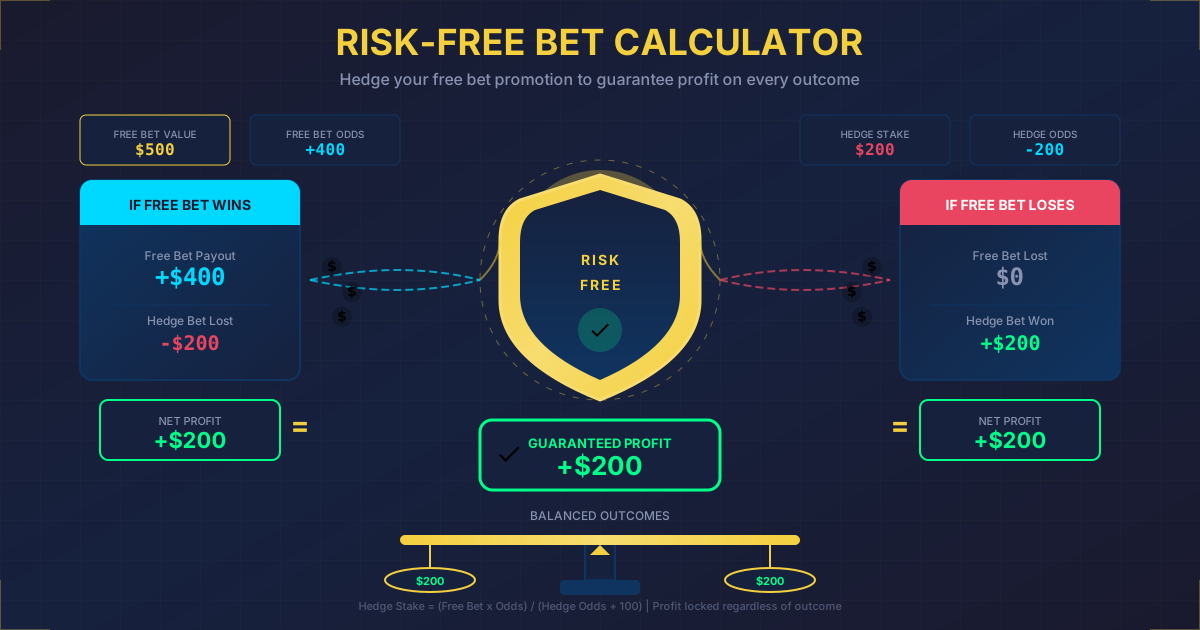
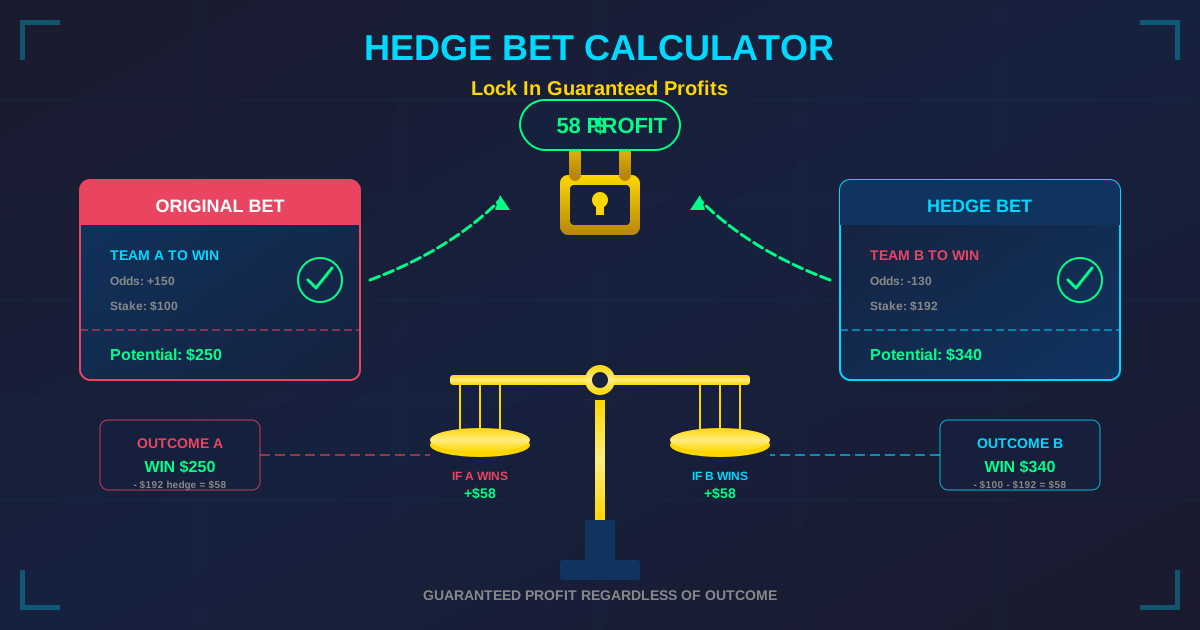
Calculate exact hedge amounts for any scenario with our Hedge Calculator.
Partial Hedging Strategy
Rather than fully hedging to guarantee equal profit on both sides, many sharp bettors use partial hedges:
- Hedge 30-50% of your potential profit to guarantee a positive outcome
- Leave 50-70% of the upside intact if your futures team wins
- This approach maximizes expected value while eliminating the possibility of a total loss
Building a CFP Betting Model
Serious CFP bettors build quantitative models that assign win probabilities to each possible matchup. Here is a framework for constructing your own.
Key Inputs for a CFP Model
| Factor | Weight (Suggested) | Data Source |
|---|---|---|
| SP+ or FPI rating differential | 30% | ESPN, Football Outsiders |
| Home-field advantage (first round only) | 15% | Program-specific data |
| Bye-week adjustment | 10% | Historical 1-7 SU trend |
| Conference postseason ATS trends | 10% | TeamRankings, Action Network |
| Coaching postseason experience | 10% | Historical bowl coaching records |
| Turnover margin and luck regression | 10% | Regression analysis |
| Strength of schedule adjustment | 10% | Sagarin, Massey |
| Injury and transfer portal impact | 5% | Manual assessment |
Applying the Model
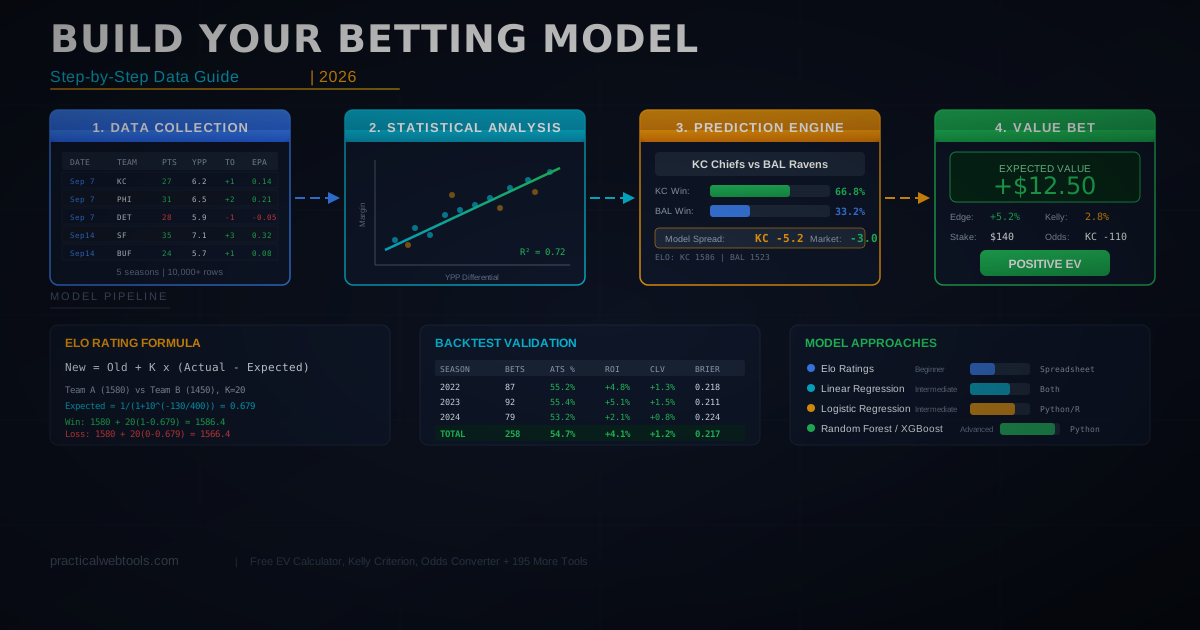
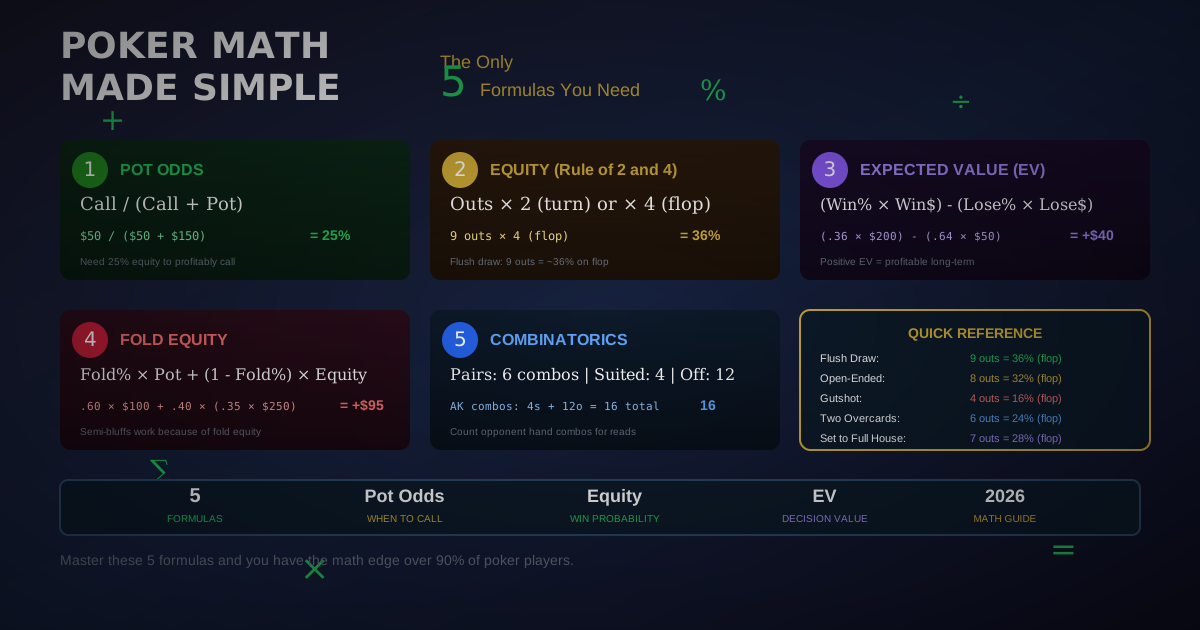
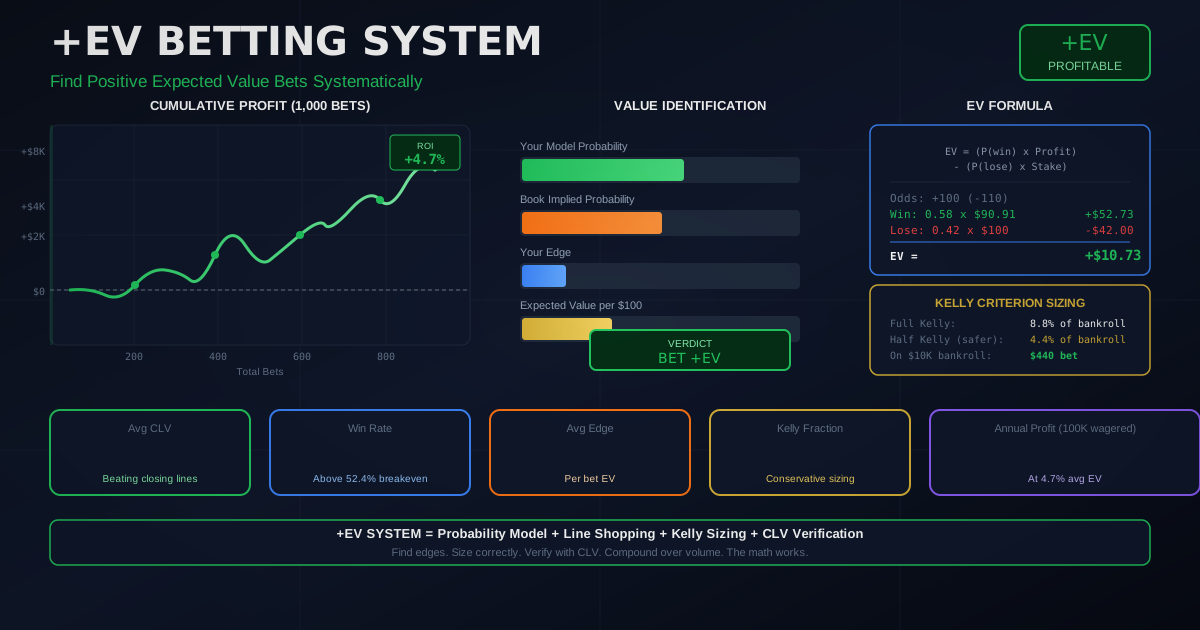
Once you have generated win probabilities for each game, compare them to the sportsbook implied probabilities:
- Convert the spread or moneyline to an implied probability
- Compare your model probability to the implied probability
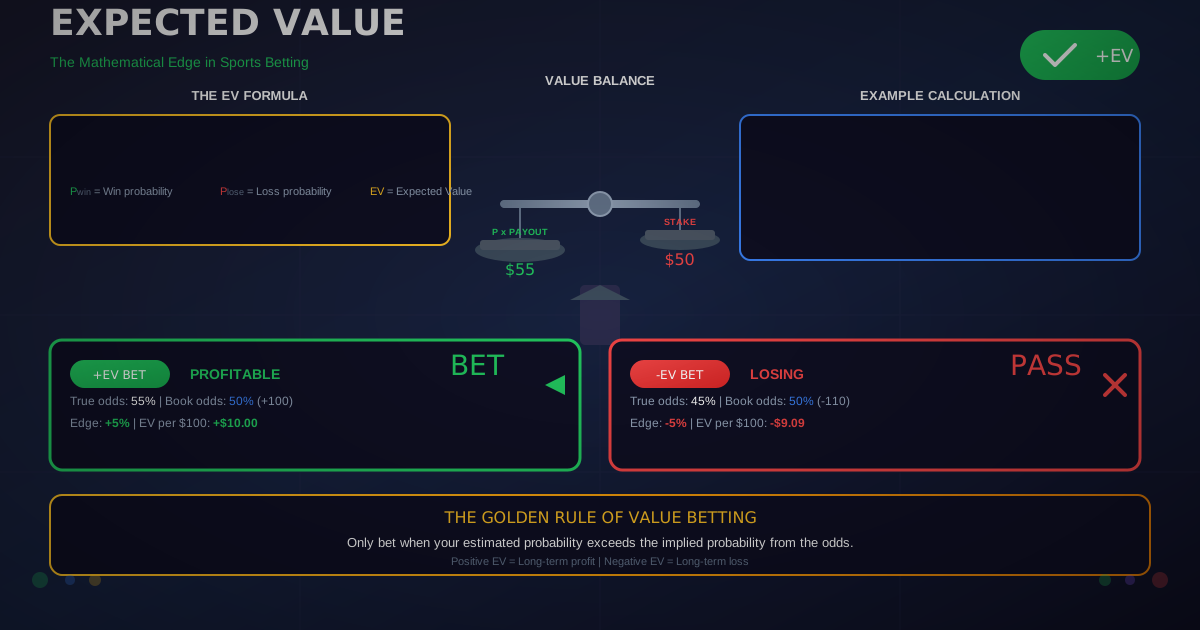
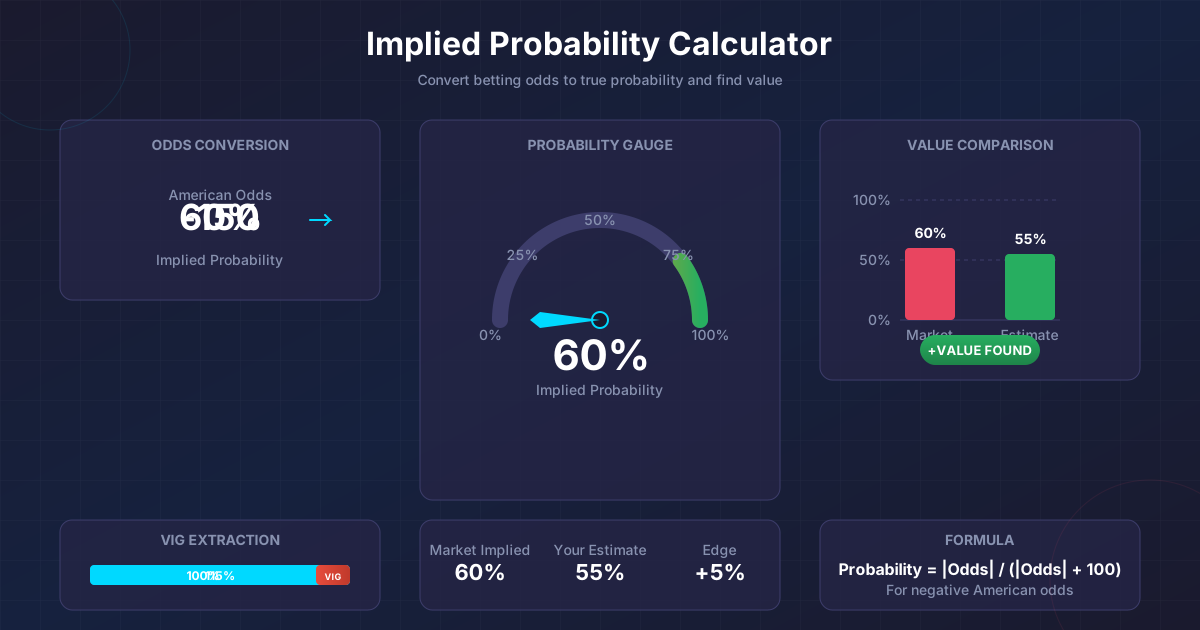
- If your model gives Team A a 60% chance to win but the implied probability is only 52%, you have found +EV
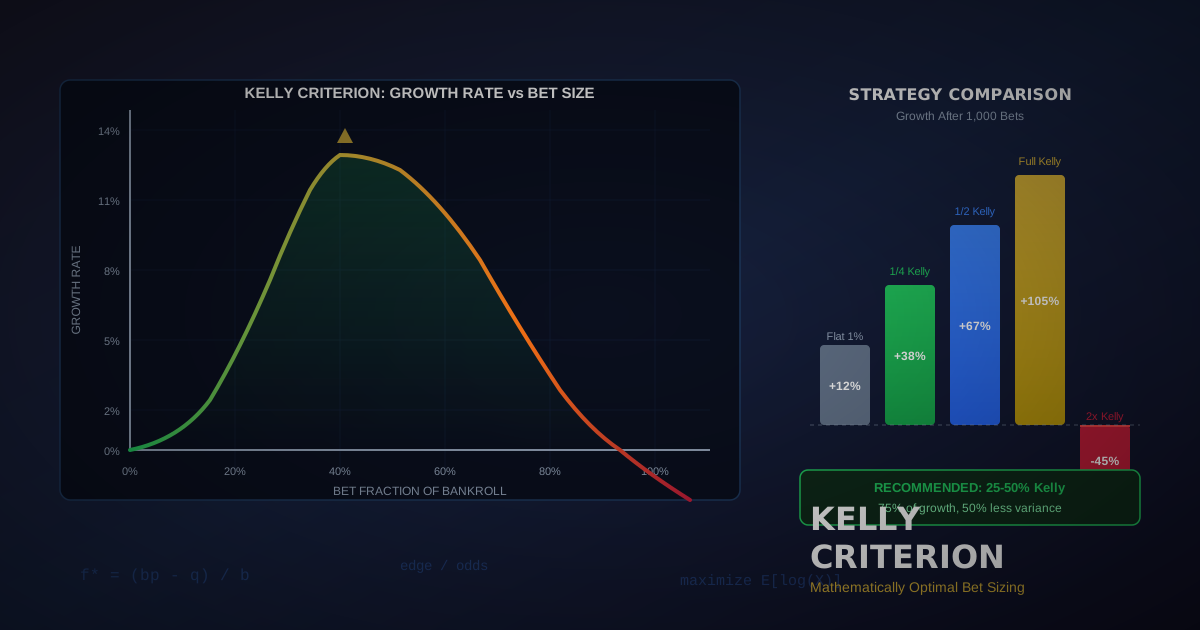
- Size the bet according to the Kelly Criterion or a fractional Kelly approach
Example: Your model assigns Oregon a 65% win probability in a first-round home game against a #12 seed. The sportsbook prices Oregon at -350 (implied probability: 77.8%). Your model says Oregon is overvalued--the line implies a higher probability than your analysis supports. In this case, you would either pass on the game or look for value on the underdog at +280 (implied probability: 26.3% vs your model's 35%).
Calculate expected value for any bet with our Expected Value Calculator.
Advanced CFP Betting Strategies
Strategy 1: Fade the Bye, Back the Momentum
Based on the 1-7 SU record of bye teams in quarterfinals, a systematic approach of betting against every bye team in the quarterfinals has been highly profitable. The key is managing risk:
- Bet against bye teams favored by fewer than 7 points (these are the most vulnerable)
- Use smaller stakes on bye teams favored by double digits (Indiana proved dominant teams can overcome the layoff)
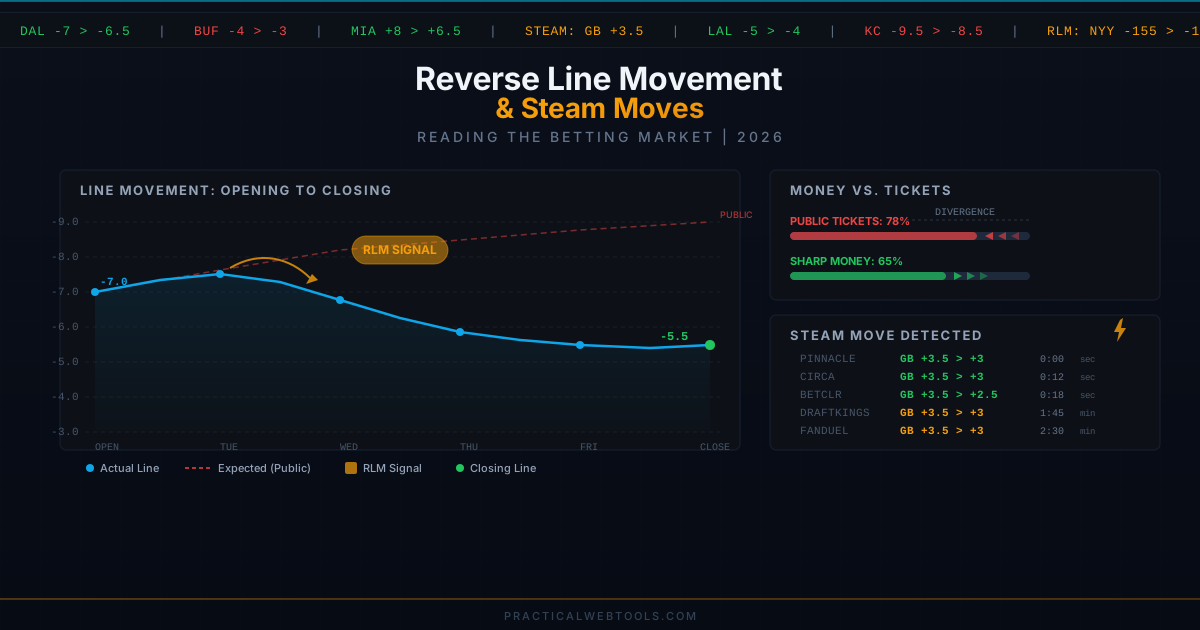
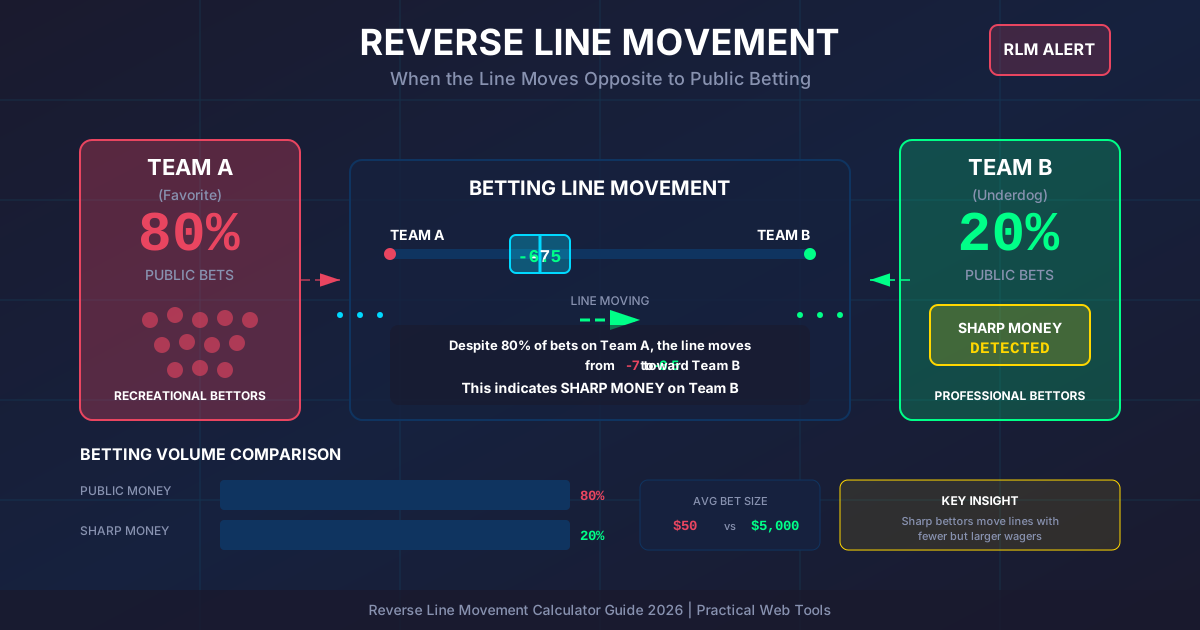
- Track line movement: if sharp money is moving the line toward the bye-team opponent, that confirms the rust narrative
Strategy 2: First-Round Home Favorite Windows
First-round home favorites have gone 6-2 SU and 6-2 ATS. But not all home-field advantages are equal. Target these situations:
- Home teams with top-15 attendance and historically loud environments (Texas A&M, Ohio State, Penn State, Clemson)
- Home teams facing opponents with limited road/neutral-site experience (Group of Five teams in hostile Power Four environments)
- Home teams with a rest advantage (conference championship the previous week vs opponent who played later)
Strategy 3: The Conference Mismatch Fade
When an SEC team faces a Big Ten team at a neutral site, bet the Big Ten side. The Big Ten's 38-16-1 ATS record as bowl favorites since 2007 is one of the most robust trends in college football. The public's perception of SEC dominance inflates SEC lines, creating value on the other side.
Strategy 4: Underdog Parlays Across Rounds
The expanded format creates enough underdog-friendly situations to build small parlay tickets:
- Take 2-3 CFP underdogs across different rounds
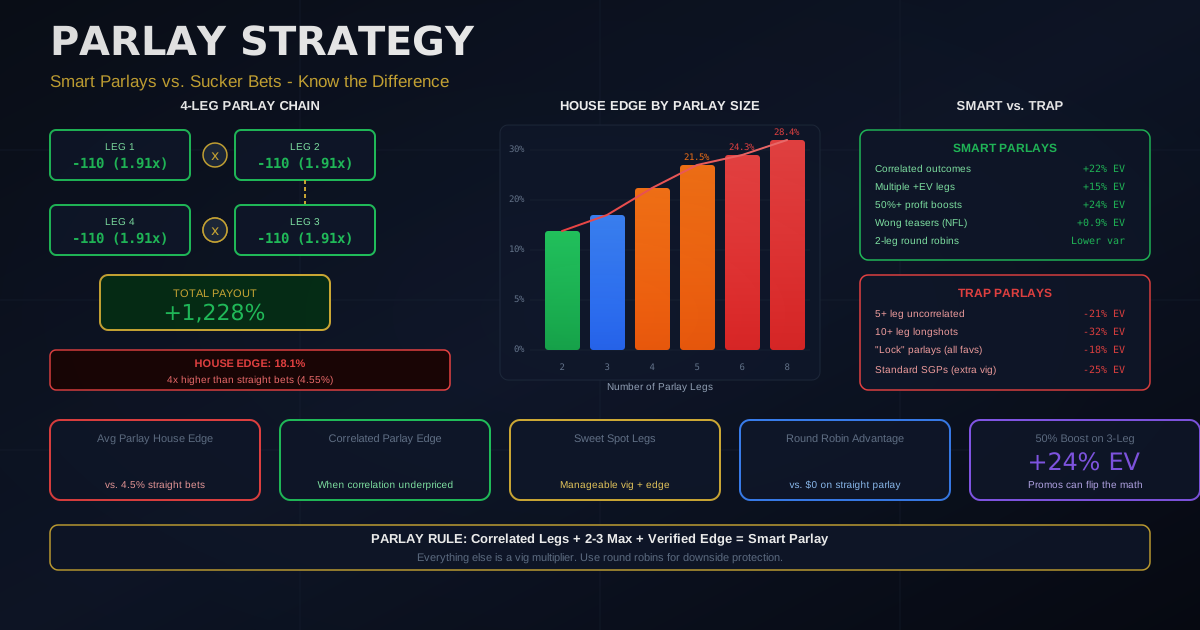
- A two-team underdog parlay at +150 and +200 pays approximately +800
- Even hitting one of three small parlay tickets can produce a net-positive result
Build and calculate underdog parlay combinations with our Parlay Calculator.
Key Numbers and Situational Spots to Watch
Critical Spread Numbers in CFP Games
| Spread | Significance |
|---|---|
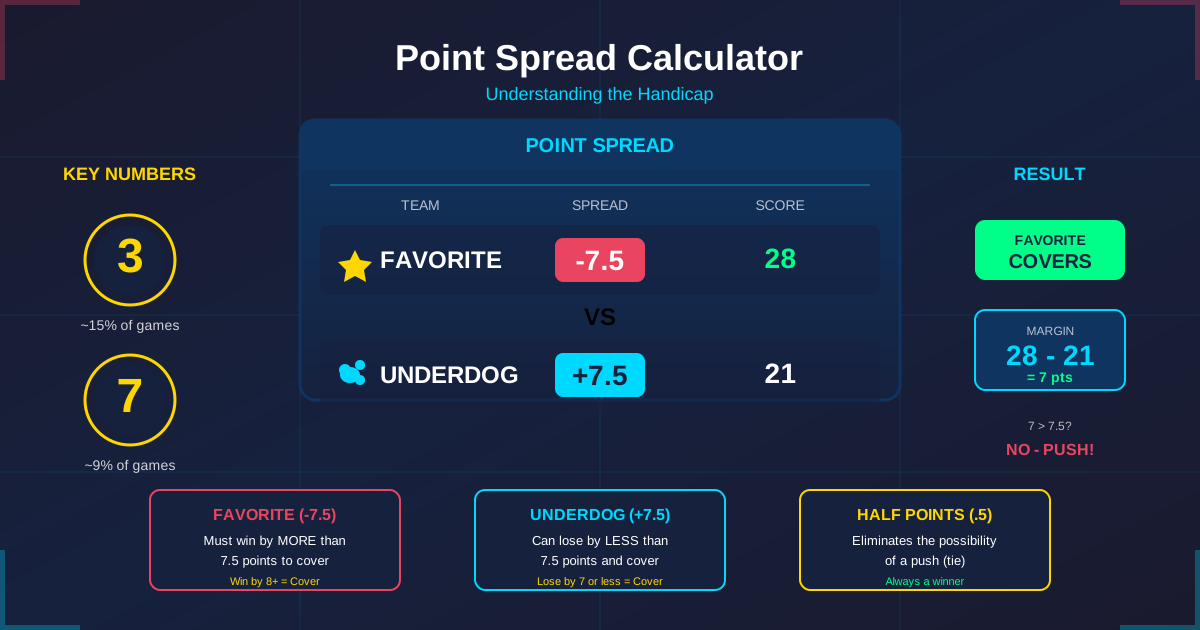
| 3 | Standard field-goal margin; most common winning margin in football |
| 6-7 | One-score game territory; highest variance for ATS results |
| 10-14 | Two-score games; historically where home favorites thrive in first round |
| 17+ | Blowout territory; underdogs can cover even in losses (see JMU covering 21 in 2025-26) |
Weather and Travel Factors
First-round campus games in late December introduce weather as a handicapping variable:
- Northern campus sites (Ohio State, Penn State, Michigan) can have snow, wind, and sub-freezing temperatures that favor run-heavy teams
- Southern campus sites (Texas, Ole Miss, Clemson) offer milder conditions that favor passing teams
- Travel distance affects visiting teams more in campus games than in bowl games because of the short preparation window
Frequently Asked Questions
How does the 12-team College Football Playoff bracket work? The 12-team CFP includes the five highest-ranked conference champions and seven at-large bids. Seeds 1-4 receive first-round byes. Seeds 5-12 play first-round games at the higher seed's campus. Quarterfinals and semifinals rotate among six major bowl sites (Cotton, Fiesta, Orange, Peach, Rose, Sugar). The championship is held at a predetermined neutral site. There is no limit on teams from a single conference.
Are first-round home teams a good bet in the CFP? Through two seasons of the expanded format, first-round home teams are 6-2 straight up and 6-2 against the spread. Home favorites with large, hostile stadiums and significant home-field advantages (Texas A&M, Ohio State, Penn State) have been particularly strong. However, the two road upsets (Alabama over Oklahoma, Miami over Texas A&M in 2025-26) show that experienced, talented road teams can win in hostile environments.
Should you bet against bye teams in the quarterfinals? The data supports skepticism toward bye teams. Across two seasons, teams with first-round byes are 1-7 SU and 2-6 ATS in the quarterfinals. The "rust vs. rest" debate has tilted heavily toward rust. However, Indiana's dominant 2025-26 title run as a bye team proves that elite teams can overcome the layoff. The sharpest approach is fading bye teams favored by fewer than 7 points while being cautious about fading dominant top seeds.
What is the best time to bet CFP futures? The best value on CFP futures typically comes during the preseason (June-August) when odds are widest and the market has the most uncertainty. Indiana paid +10000 before the 2025-26 season. However, midseason (October) offers the best risk-adjusted value because you can identify teams with favorable playoff paths after seeing several weeks of performance. Post-selection futures offer the least value because the market has fully priced in all available information.
How do conference matchups affect CFP betting? Conference identity significantly impacts CFP outcomes. The Big Ten has been the strongest postseason conference, going 9-4 in bowls during the 2025-26 season and producing the national champion. The SEC has been overvalued by the public despite a 4-10 bowl record and 2-8 record against non-SEC opponents. When an SEC team faces a Big Ten or Big 12 opponent at a neutral site, the non-SEC side often offers ATS value because public money inflates the SEC line.
How should you hedge CFP futures bets? Hedge gradually as your futures team advances. In the first round, typically hold your ticket and let it ride. After a quarterfinal win, consider a small hedge on the semifinal opponent to lock in partial profit. In the championship game, most bettors should hedge to guarantee meaningful profit regardless of the outcome. Use a hedge calculator to determine exact amounts based on your risk tolerance and the available odds.
What are the most important factors in handicapping CFP games? The five most important factors, in order: (1) team quality differential measured by SP+ or FPI, (2) home-field advantage for first-round campus games, (3) bye-week rust adjustment for quarterfinals, (4) coaching postseason experience, and (5) conference matchup ATS trends. A model that incorporates all five factors and compares its output to implied probabilities from the sportsbook line will consistently identify value bets.
Can you profit from live betting CFP games? Yes. CFP games generate emotional overreactions in live betting markets. The most common edges come from (1) slow starts by bye teams in quarterfinals, which create inflated live lines on their opponents, (2) momentum shifts after turnovers, where the live line moves too far in one direction, and (3) halftime adjustments by experienced coaching staffs that the live market undervalues. First-round campus games also tend to go over the live total because home crowds fuel offensive performance.
Essential CFP Betting Tools
Odds and Probability
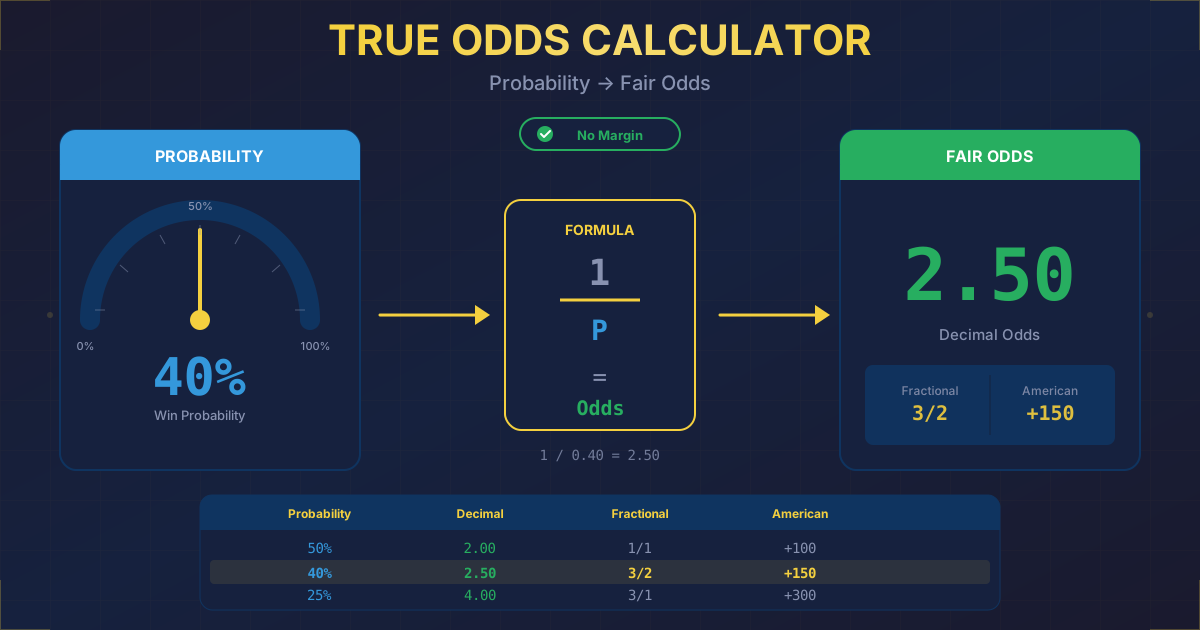
- Odds Converter: Convert American, decimal, and fractional odds for any CFP line
- Implied Probability Calculator: Determine the true probability behind any spread or moneyline
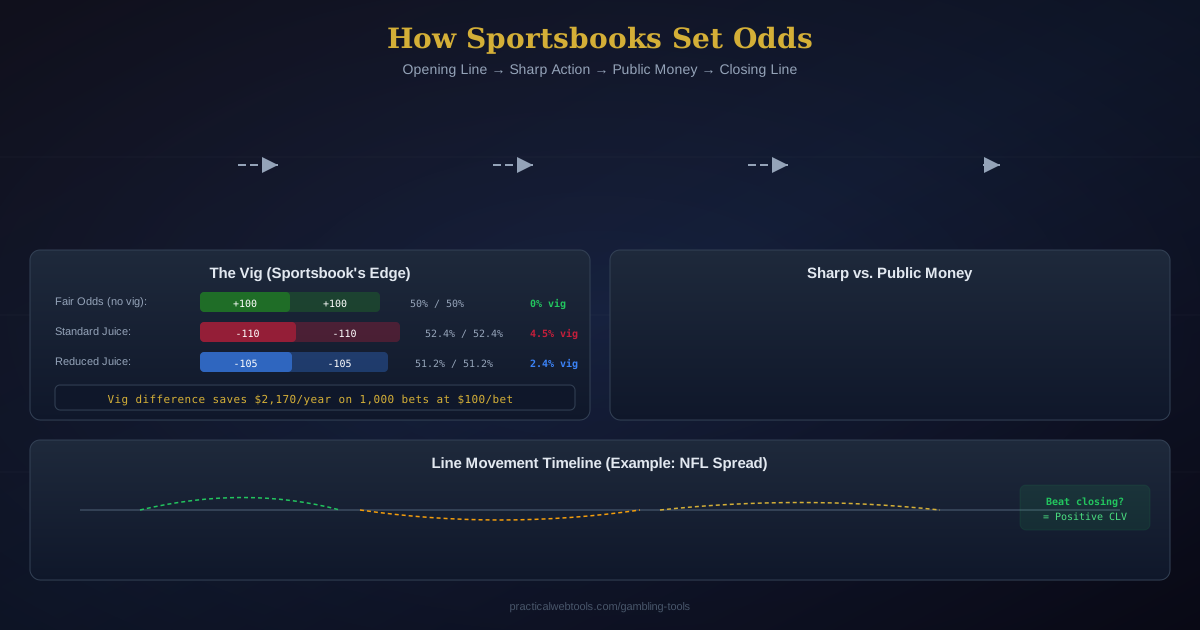
- Hold/Vig Calculator: Calculate the sportsbook edge built into CFP lines
Bet Sizing and Risk Management
- Kelly Criterion Calculator: Find the mathematically optimal bet size based on your edge
- Expected Value Calculator: Determine whether a CFP bet has positive expected value
- Hedge Calculator: Calculate exact hedge amounts as your futures team advances
Multi-Bet Strategies
- Parlay Calculator: Build and price multi-game CFP parlays
- Round Robin Calculator: Create round-robin combinations across CFP games
Conclusion
The expanded 12-team College Football Playoff is the most significant structural change in college football history, and it has created a betting landscape that rewards preparation, data analysis, and disciplined execution. Through two seasons, the data tells a clear story: home teams dominate first-round campus games, bye teams struggle with rust in the quarterfinals, the SEC is overvalued at neutral sites, and long-shot futures bets can produce extraordinary returns.
The sportsbooks are still calibrating. They are working with a sample of only two expanded playoffs, and their models are adapting in real time. This is precisely the environment where informed bettors find edge. By building a quantitative model, understanding the structural advantages and disadvantages at each round of the bracket, and applying disciplined bankroll management, you can approach CFP betting as an investment rather than a gamble.
The 2026-27 season will bring a third year of data, and the patterns identified here--bye-week rust, home-field edges, conference matchup value--will either strengthen or evolve. Stay ahead of the market by tracking these trends, adjusting your models, and always comparing your probability assessments to the implied probabilities offered by the books.
Start building your CFP betting edge today. Convert odds with our Odds Converter, calculate expected value with our Expected Value Calculator, and size your bets with our Kelly Criterion Calculator.
Gambling involves risk. This content is for educational and informational purposes only. Always gamble responsibly, set limits you can afford, and seek help if gambling becomes a problem. Visit the National Council on Problem Gambling or call 1-800-522-4700 for support.