The Psychology of Gambling: Why Smart People Make Irrational Bets (2026)

Your brain is a gambling machine that was never designed to calculate odds correctly. A person with a 140 IQ, a PhD in statistics, and decades of professional experience will still feel a gut-level certainty that red is "due" after seven consecutive blacks at roulette. They will know intellectually that each spin is independent. And they will feel the pull anyway, because cognitive biases do not care about your credentials.
This is not a matter of stupidity. It is a matter of architecture. The human brain evolved to find patterns in a world where patterns meant survival. Rustling in the grass might mean a predator. A successful hunting ground was worth revisiting. But a casino is not the savanna, and a slot machine is not a berry bush. The same neural hardware that kept your ancestors alive is now being exploited by billion-dollar industries that understand your psychology better than you do.
Here is the uncomfortable truth: the gambling industry does not need you to be foolish. It needs you to be human. Every cognitive bias cataloged in this guide operates automatically, beneath conscious awareness, and affects everyone from first-time slot players to professional poker grinders managing six-figure bankrolls. Understanding these biases will not make you immune to them. But it will give you a fighting chance at recognizing when your brain is lying to you about probability, value, and risk.
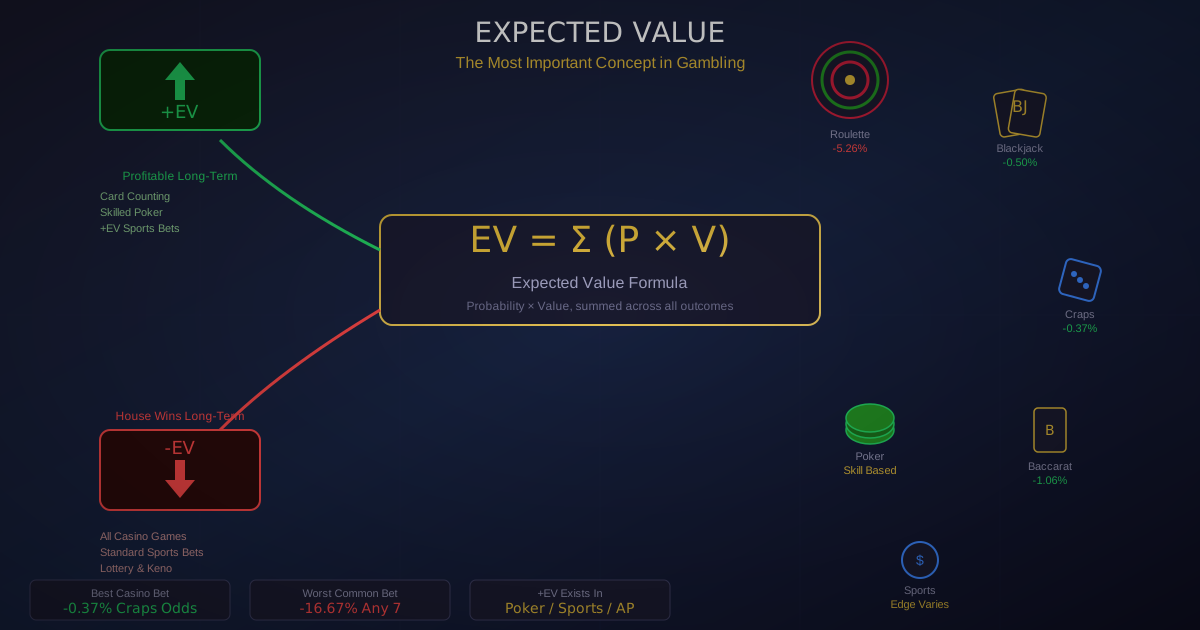
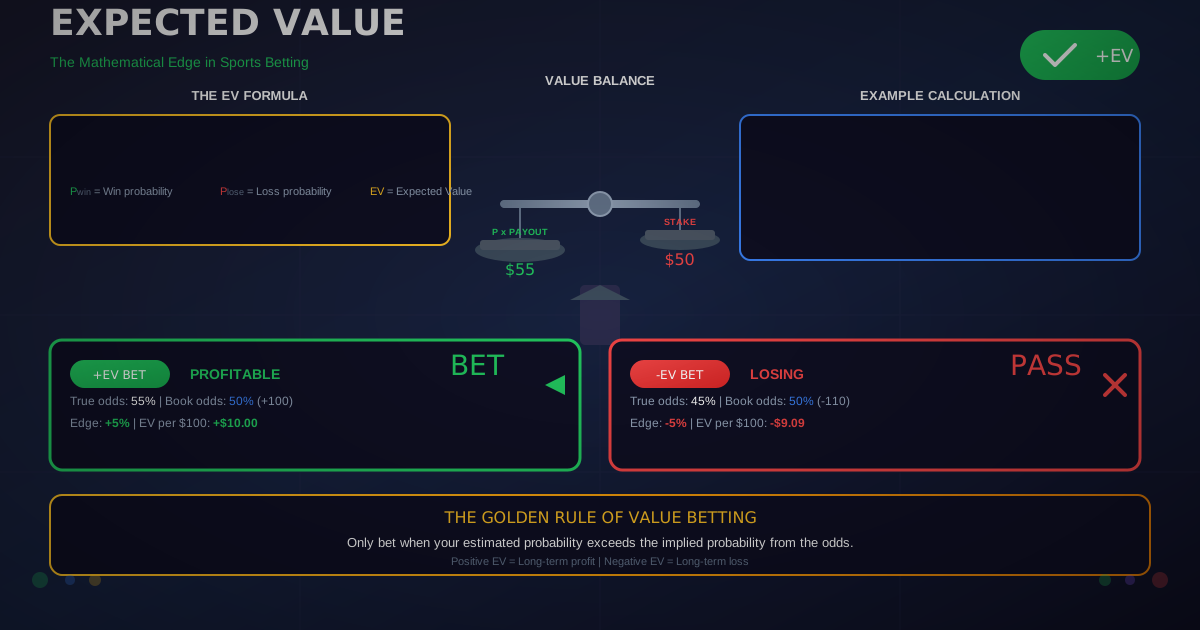
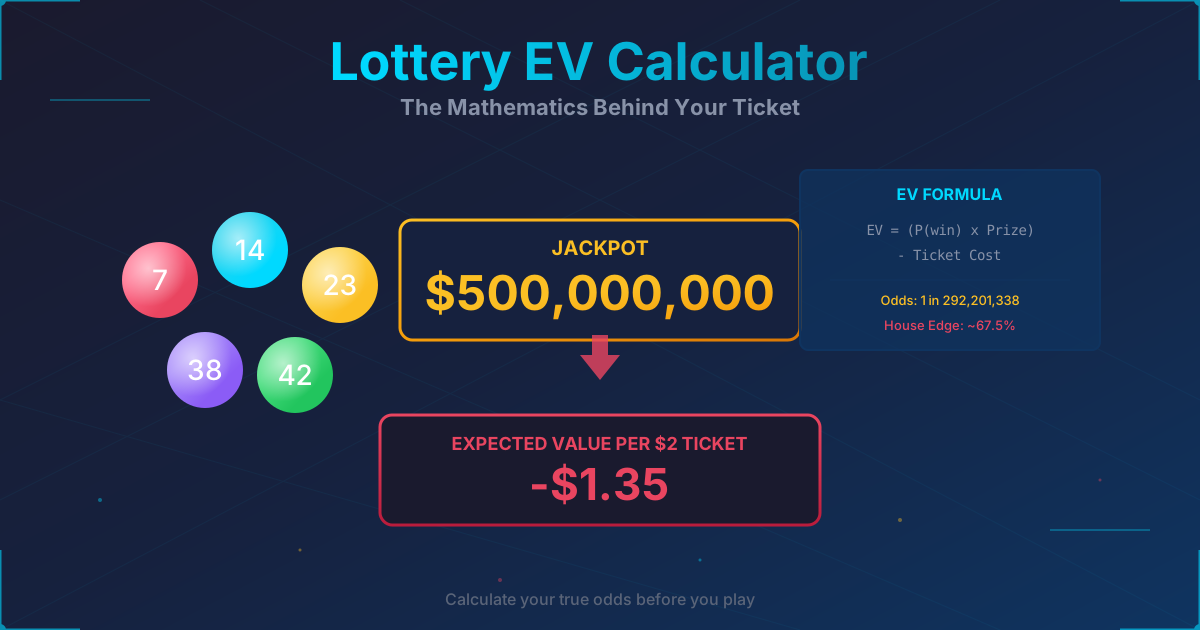
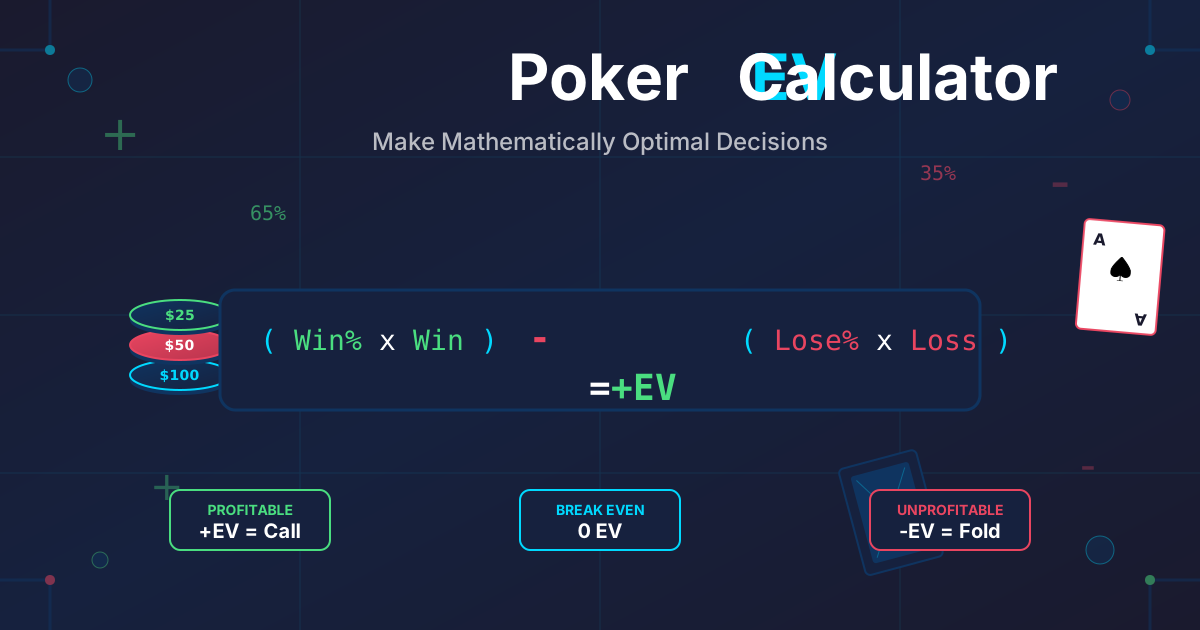
Calculate the true expected value of any bet before your biases decide for you with our free Expected Value Calculator.
The Dopamine Loop: Why Your Brain Treats Gambling Like Food and Sex
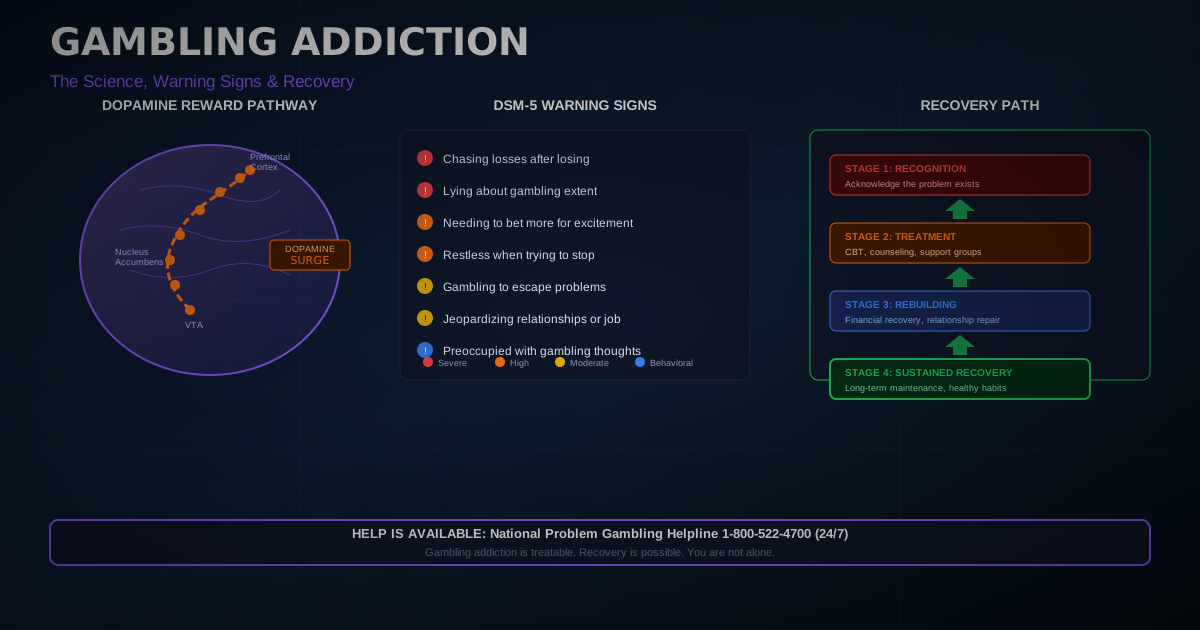
Gambling hijacks the same neurological reward system that evolved to reinforce behaviors essential for survival: eating, reproduction, social bonding. The neurotransmitter dopamine sits at the center of this system, and understanding how it operates during gambling is the foundation for understanding every cognitive bias that follows.
How Dopamine Works During Gambling
When you place a bet, your brain's ventral tegmental area (VTA) releases dopamine into the nucleus accumbens, the brain's primary reward center. This is the same pathway activated by food, sex, and drugs. But gambling exploits a critical quirk of this system: dopamine is released not when you win, but when you anticipate the possibility of winning.
Research published in the journal Neuroscience & Biobehavioral Reviews found that the neural circuitry underlying gambling-related decision-making comprises the ventral striatum, ventromedial prefrontal cortex, dopaminergic midbrain, and insula. These areas light up not at the moment of a win but during the uncertain period between placing a bet and seeing the outcome.
This means the roulette ball spinning around the wheel, the final card being dealt, the last seconds of a sports event you have wagered on---these are the moments when your brain is flooded with dopamine. The outcome itself is almost secondary to the anticipation.
The Tolerance Trap
Chronic gamblers develop dopamine tolerance, the same mechanism that drives drug addiction. The brain's reward system becomes less sensitive to stimulation over time, requiring larger bets, higher stakes, or riskier wagers to achieve the same neurochemical rush. A study in Biological Psychiatry found increased striatal dopamine synthesis capacity in people with gambling addiction, meaning their brains had physically adapted to require more stimulation.
| Dopamine Response Stage | What Happens | Gambling Behavior |
|---|---|---|
| Initial exposure | Normal dopamine release on wins | Casual betting, small stakes |
| Habituation | Reduced dopamine from same-size wins | Increasing bet sizes |
| Tolerance | Significantly blunted reward response | Chasing bigger risks, longer sessions |
| Dependence | Baseline dopamine drops below normal | Gambling to feel "normal," not to win |
| Withdrawal | Dopamine deficit causes dysphoria | Irritability, anxiety when not gambling |
Why This Matters for Every Gambler
Even if you never develop a clinical gambling disorder, the dopamine loop affects your decision-making in every session. That rush you feel when you are "on a heater" is not intuition telling you to bet bigger. It is dopamine flooding your prefrontal cortex and impairing the very brain region responsible for rational decision-making.
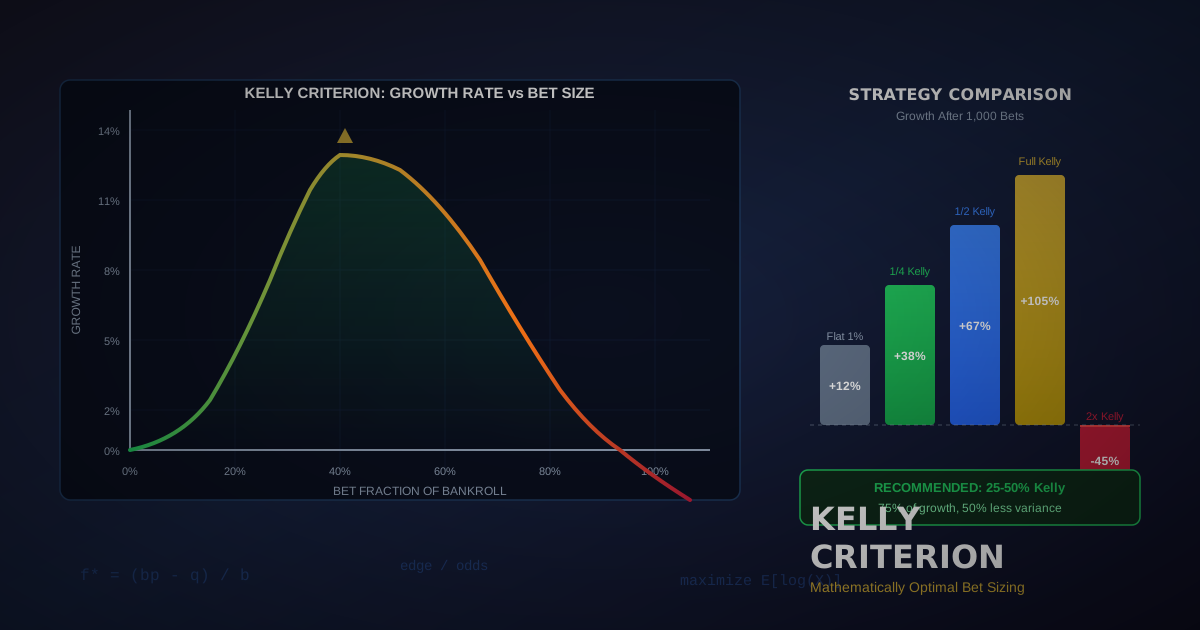
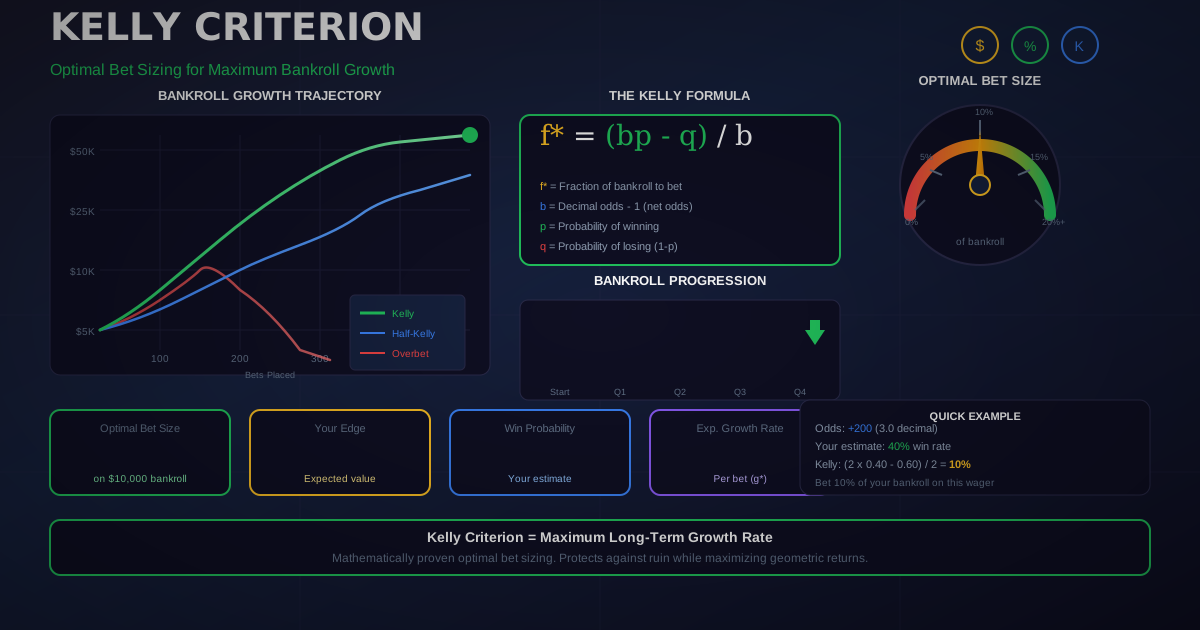
Use our Kelly Criterion Calculator to set mathematically optimal bet sizes that override emotional impulses.
The Gambler's Fallacy: The Most Dangerous Belief in Gambling
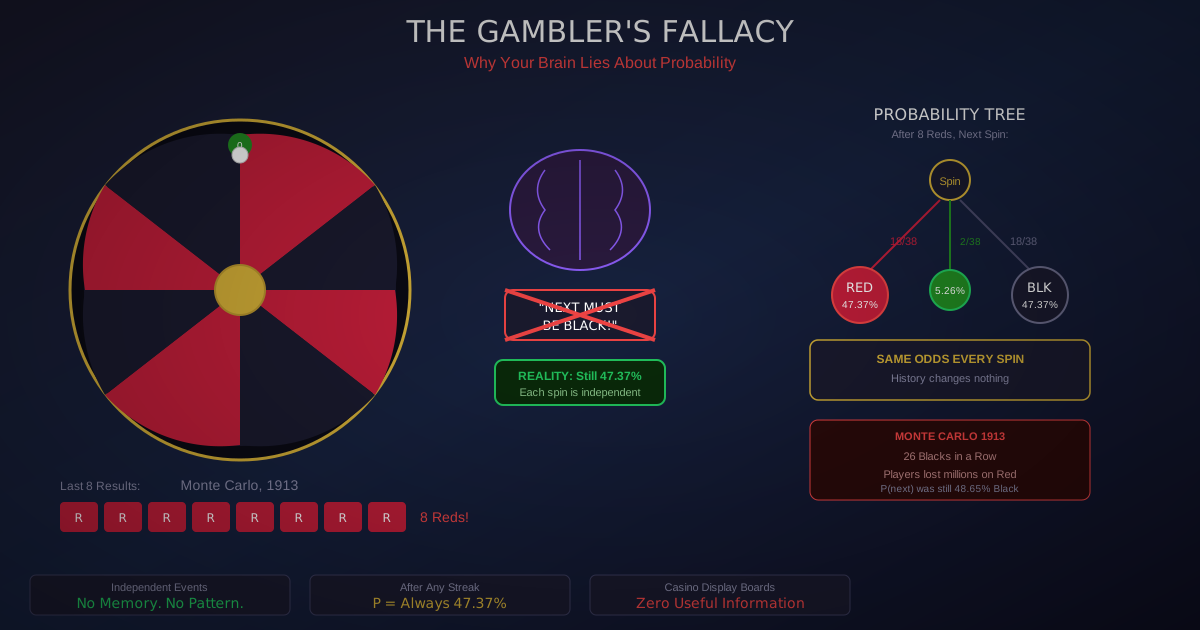
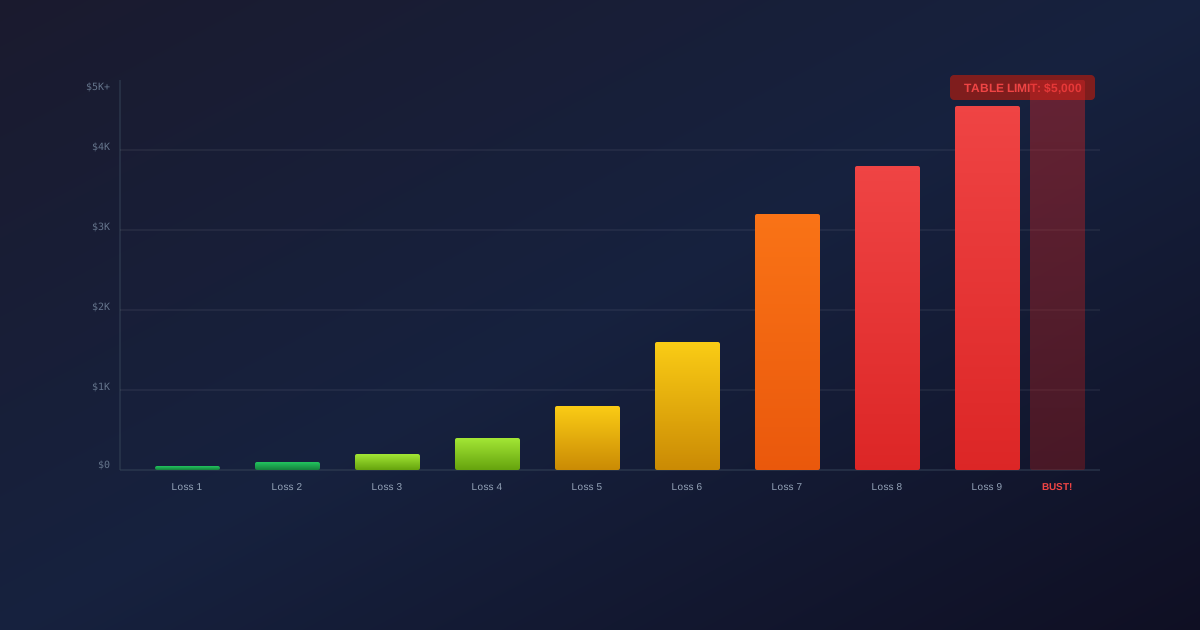
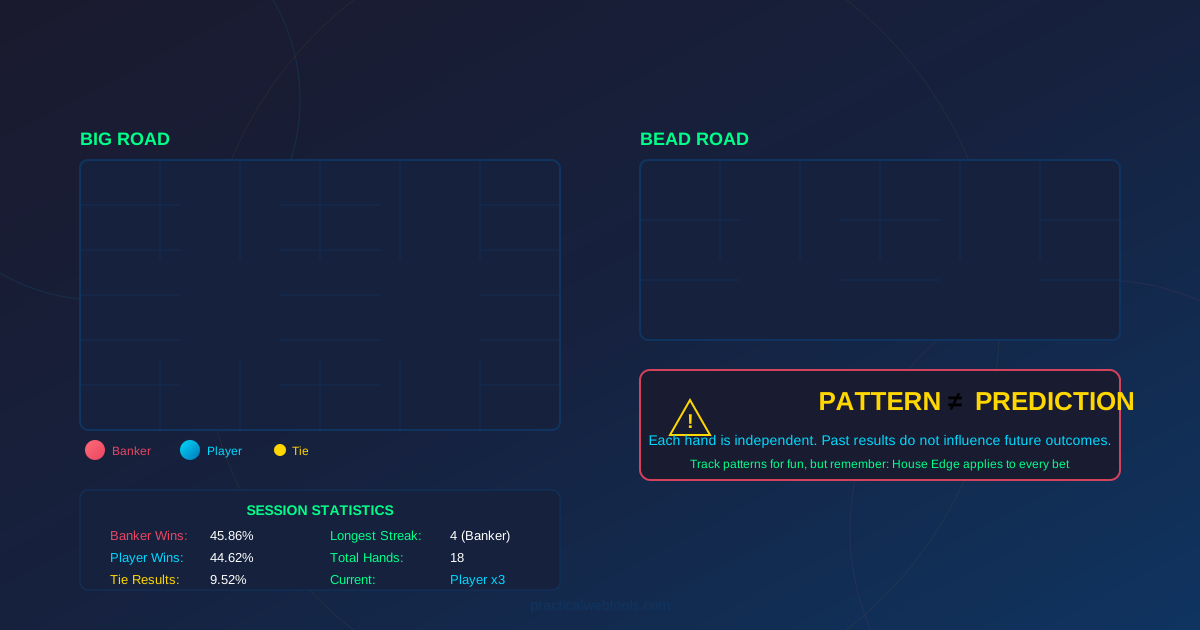
The gambler's fallacy is the single most widespread cognitive bias in gambling, and it has separated more people from their money than any other psychological error. It is the belief that if an independent random event has occurred more frequently than expected in the past, it is less likely to occur in the future (and vice versa).
How It Works
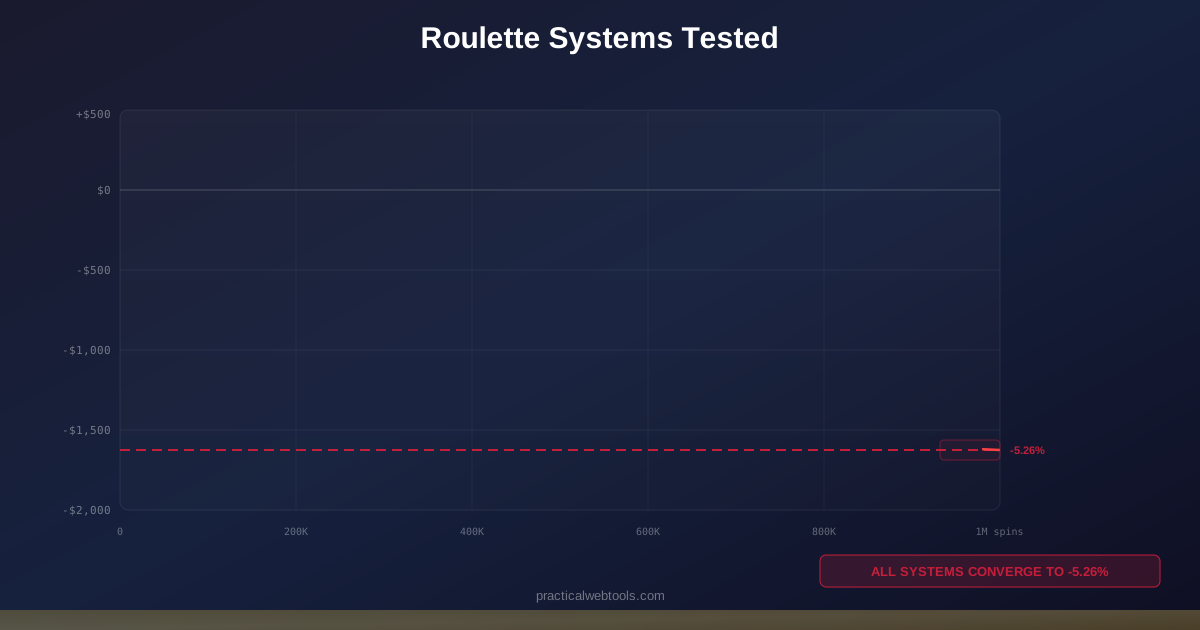
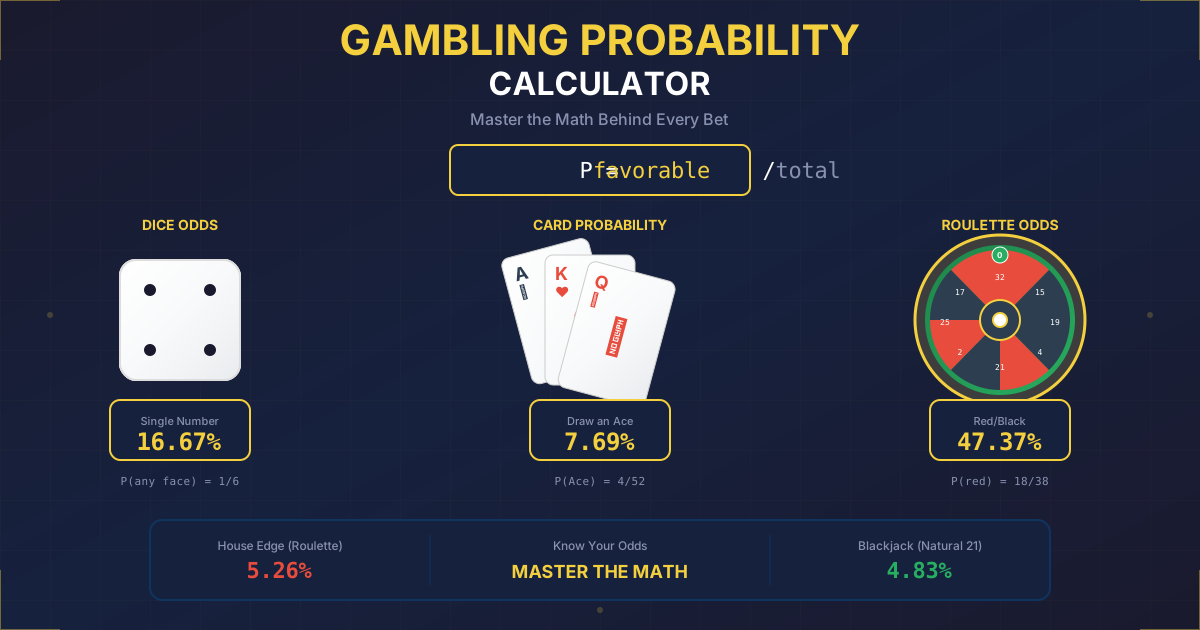
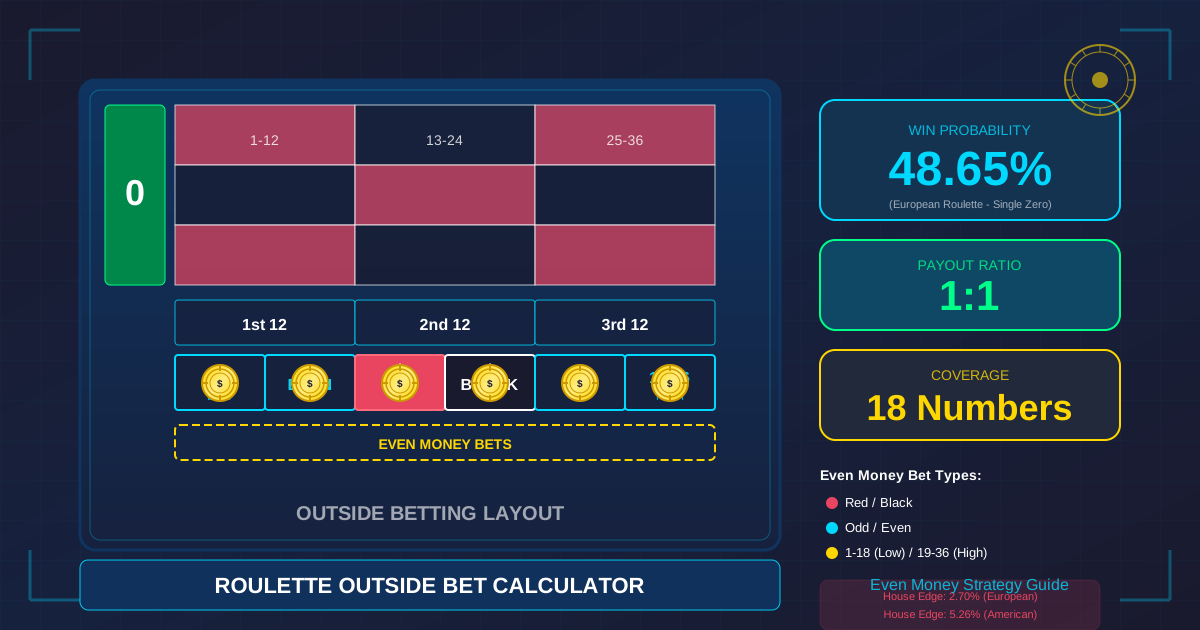
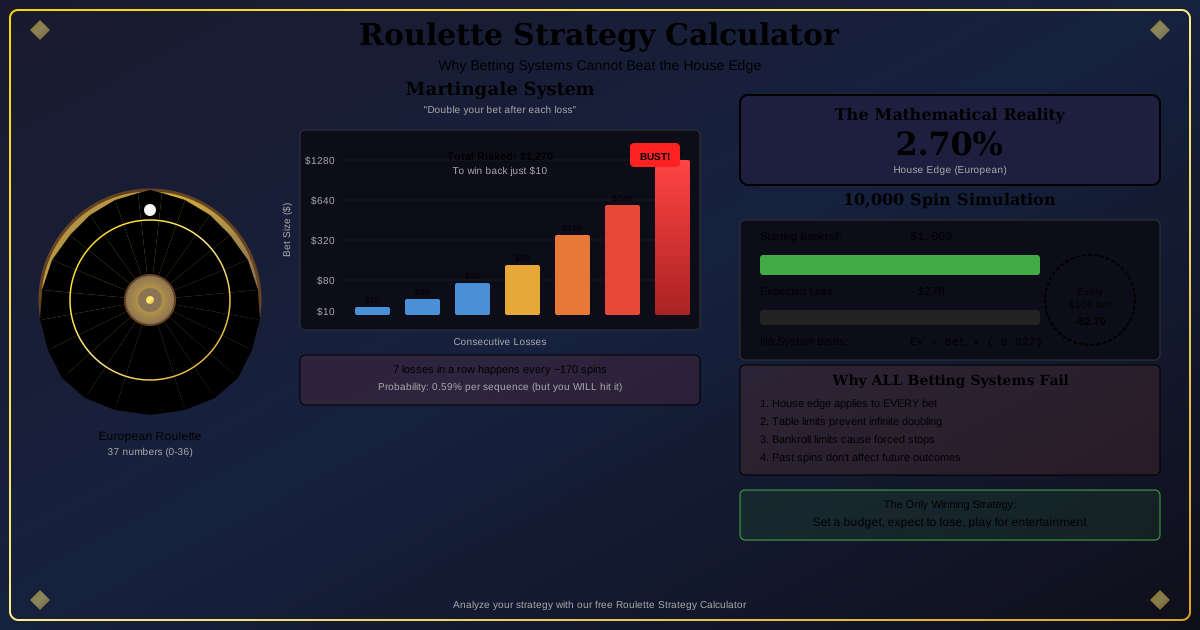
You are at a roulette table. Black has hit seven times in a row. Your brain screams that red is "due." You increase your bet on red. But the roulette wheel has no memory. The probability of red on the next spin is exactly 18/38 (47.37% on American roulette), the same as it was before the streak, the same as it will be after.
Kahneman and Tversky identified this bias as a product of the representativeness heuristic: people expect small samples to mirror the overall probability distribution. Seven blacks in a row does not "look like" a random sequence to the human brain, so we expect the universe to "correct" itself.
Real-World Cost: The Monte Carlo Disaster
On August 18, 1913, at the Monte Carlo Casino, black hit 26 times in a row on a roulette wheel. Gamblers lost millions of francs betting against the streak, doubling and tripling their wagers on red with each successive black outcome, convinced that the streak "had to end." The probability of 26 blacks in a row is approximately 1 in 66.6 million---rare, but entirely possible and requiring no external explanation.
Dollar impact: Estimates suggest that gamblers collectively lost the equivalent of $10+ million (adjusted for inflation) during this single streak, not because the wheel was biased, but because their brains were.
The Hot Hand Fallacy: The Mirror Image
The hot hand fallacy is the gambler's fallacy in reverse: the belief that a person who has experienced success has a greater chance of further success in future attempts. A 2026 study published in Cognitive Science found that as winning streaks grow, people first exhibit gambler's fallacy reasoning (expecting a reversal) but eventually switch to hot hand reasoning (expecting continuation). Both are wrong when applied to independent events.
| Bias | Core Belief | Example | Reality |
|---|---|---|---|
| Gambler's Fallacy | Past outcomes make opposite outcomes more likely | "Black is due after 7 reds" | Each spin is independent (47.37%) |
| Hot Hand Fallacy | Past success predicts future success | "I am on fire, my next bet will hit too" | Sequential wins do not change future odds |
| Combined Effect | Gamblers oscillate between both | Switch from "due" thinking to "streak" thinking | Neither pattern exists in random events |
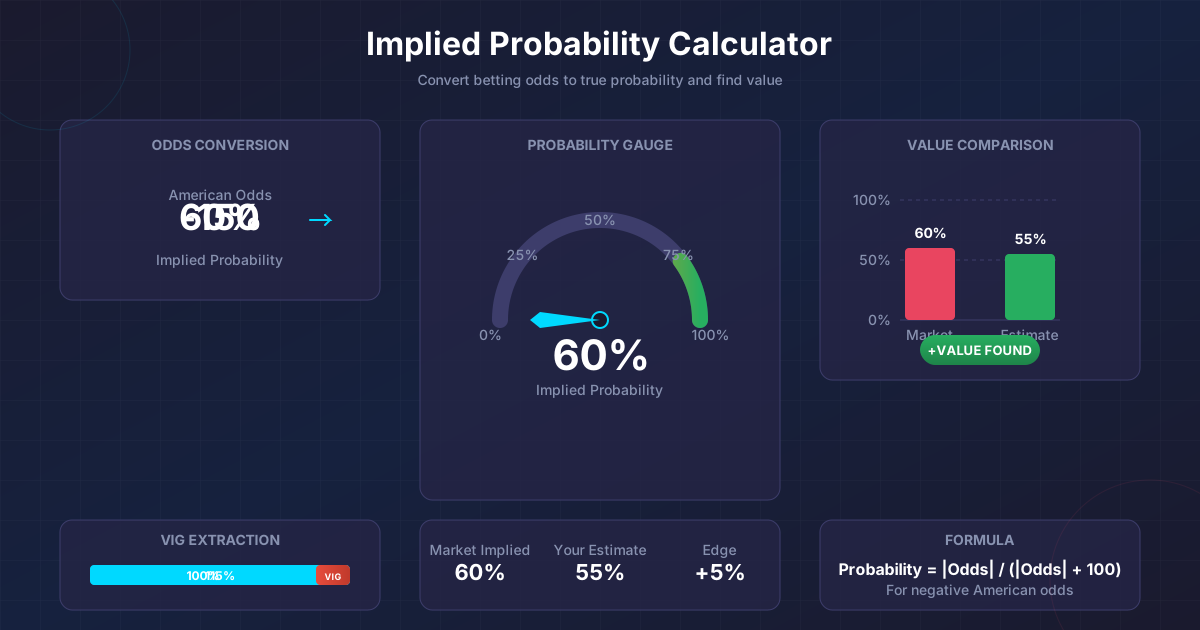
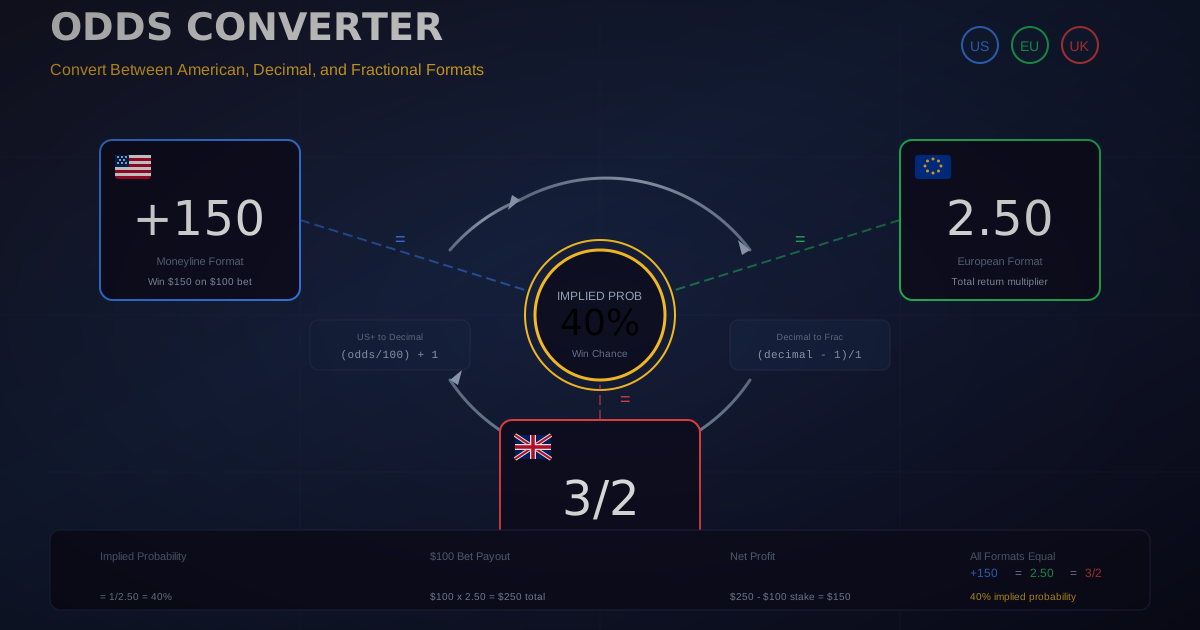
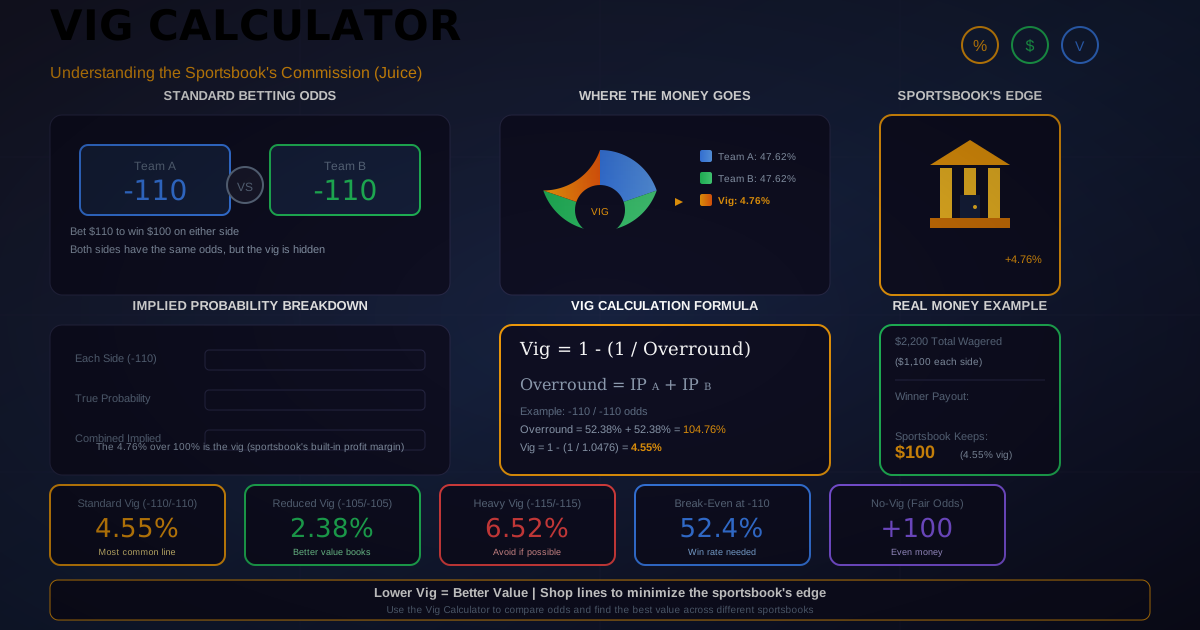
Convert any betting odds into true implied probability with our Implied Probability Calculator.
Confirmation Bias: Seeing What You Want to See in Sports Betting
Confirmation bias is the tendency to search for, interpret, and recall information in a way that confirms your pre-existing beliefs. In sports betting, this bias is devastating because there is always data available to support any position.
How It Destroys Sports Bettors
You believe the Lakers will cover the spread tonight. Before placing your bet, you check the stats. You notice the Lakers are 8-2 in their last 10 games. You see their star player is shooting 52% from the field this month. You read an article predicting a blowout win. You ignore that they are 2-8 against the spread in those same 10 games, that they are playing the second night of a back-to-back, and that the opposing team leads the league in defensive rating.
You did not research the bet. You built a case for a decision you had already made.
The Confirmation Bias Cycle in Gambling
| Stage | What Your Brain Does | What It Costs You |
|---|---|---|
| Pre-bet | Seeks information confirming your lean | Missed red flags, overlooked counter-evidence |
| Bet placement | Inflates confidence in chosen outcome | Larger bet size than warranted |
| During the event | Interprets ambiguous situations favorably | False hope during losing bets |
| After a win | Attributes success to skill and analysis | Overconfidence in future bets |
| After a loss | Blames bad luck, ignores faulty analysis | Failure to learn from mistakes |
Real-World Cost: The Public Favorite Trap
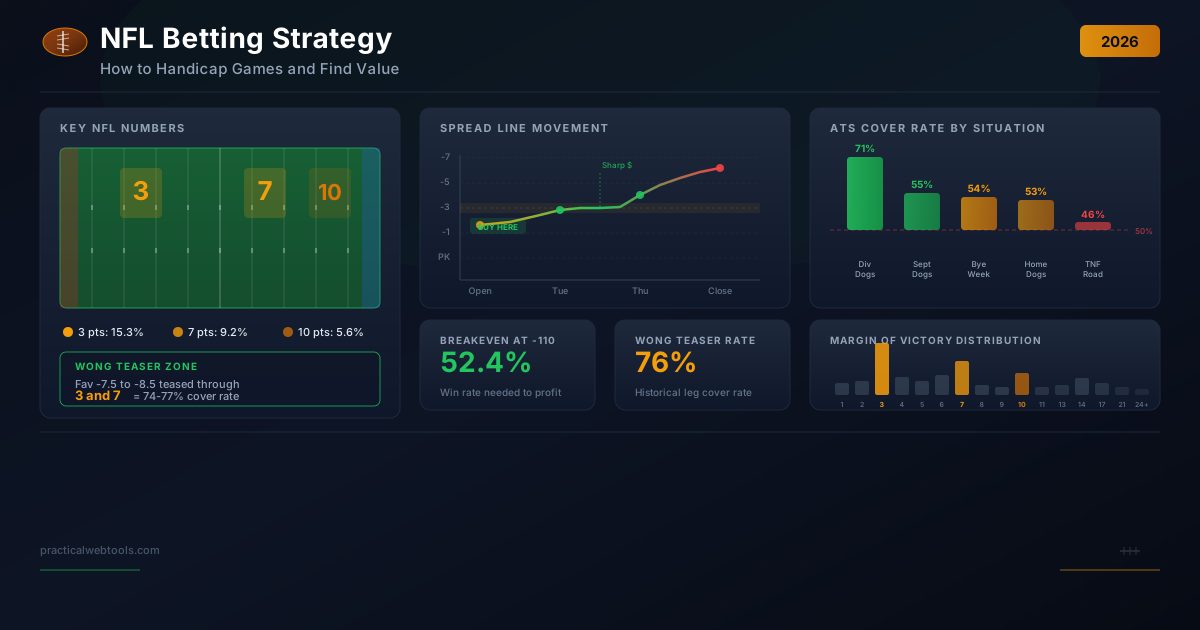
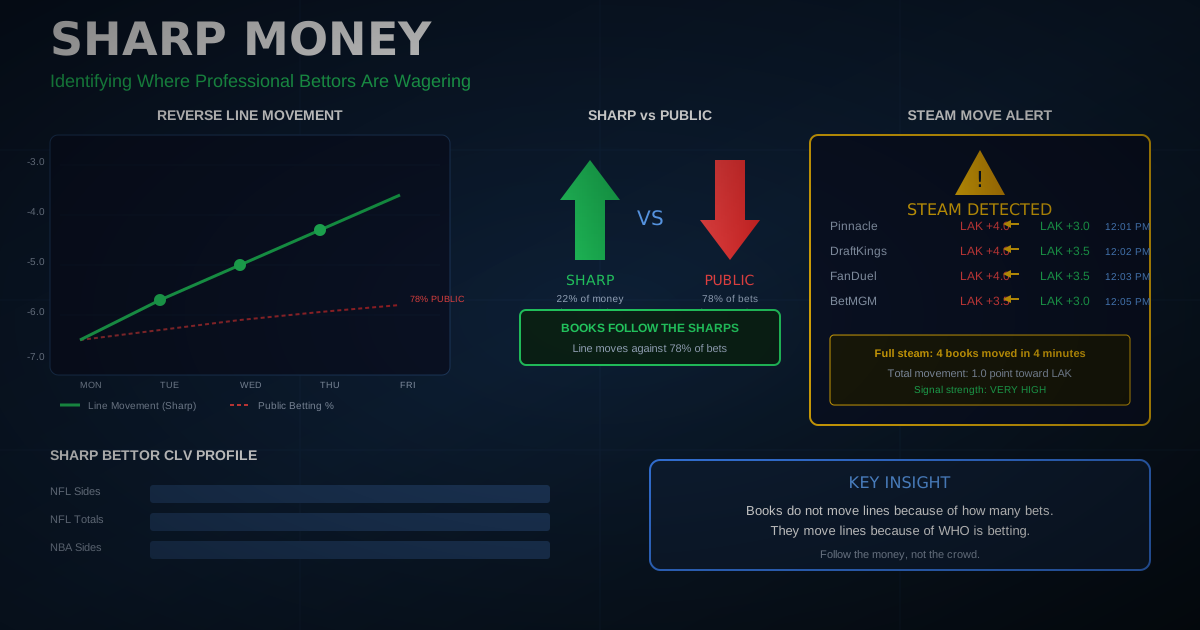
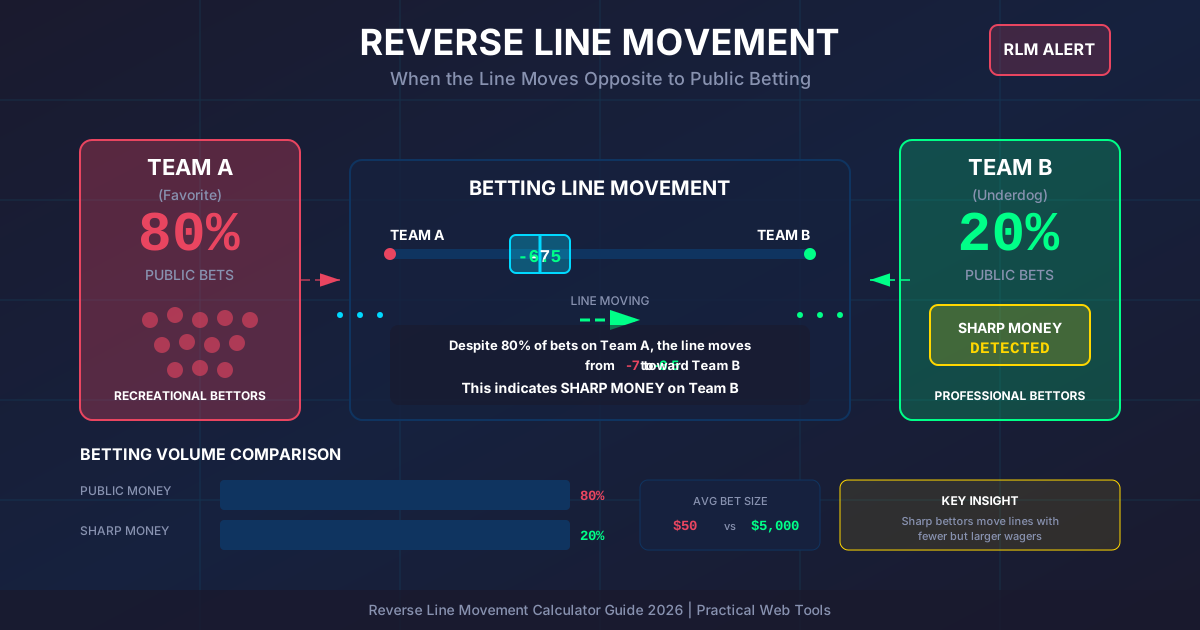
Sportsbooks track public betting percentages. When 75%+ of the public backs one side, the line moves to reflect public money, not necessarily probability. A study of NFL betting lines found that teams receiving 75%+ of public bets covered the spread only 46% of the time. In a single NFL season, a bettor placing $110 to win $100 on every heavy public favorite would lose approximately $3,200 on 272 qualifying bets.
Run the numbers on your bet before your biases do. Use our Expected Value Calculator to calculate the true mathematical edge.
Anchoring Bias: How Opening Lines Control Your Thinking
Anchoring bias occurs when people rely too heavily on the first piece of information they encounter (the "anchor") when making decisions. In gambling, the first number you see---the opening line, the listed odds, the initial price---becomes the reference point against which you evaluate everything else.
The Opening Line Trap
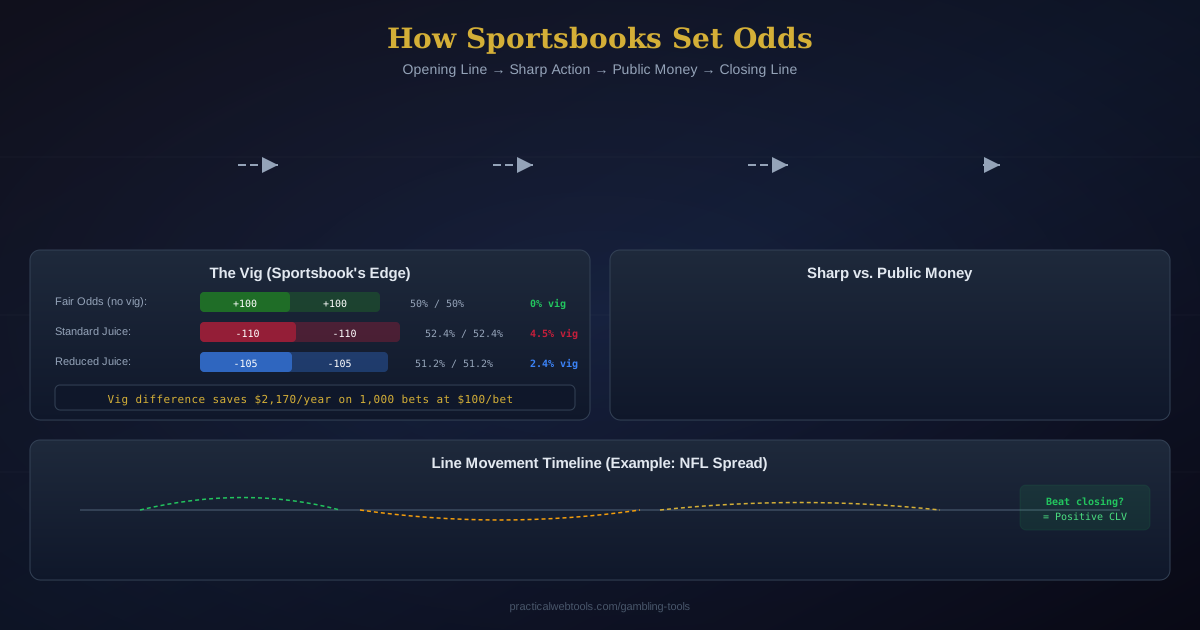
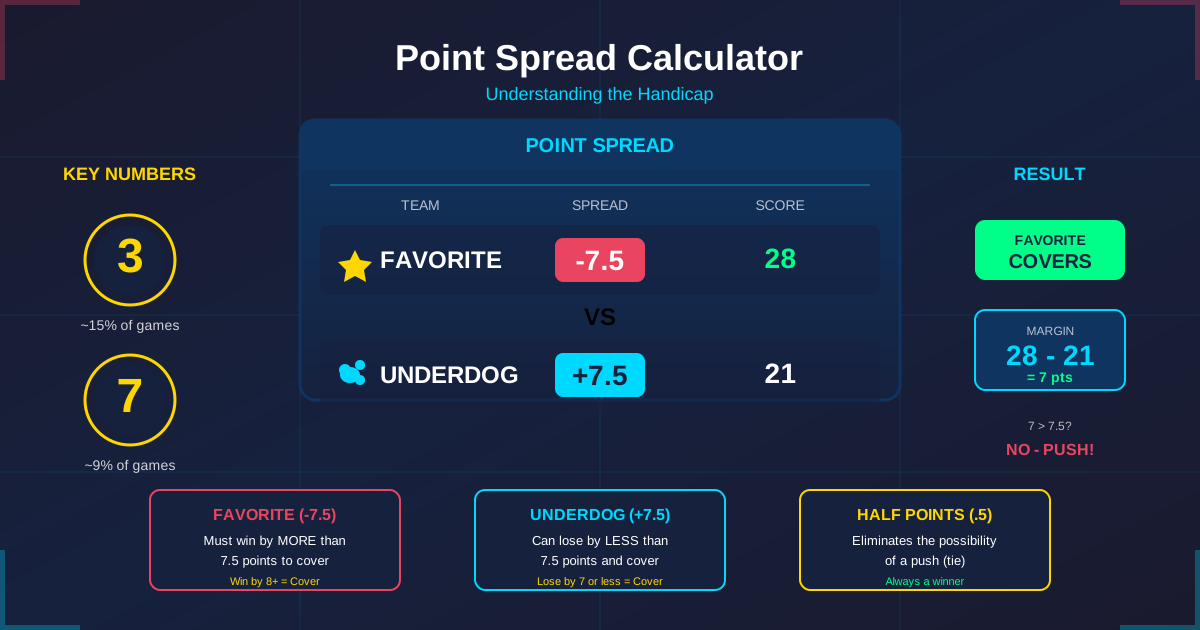
A sportsbook opens the Chiefs at -7.5 against the Bengals. You see this number. Your brain locks onto it. When the line moves to -6.5, your immediate reaction is "value"---the Chiefs are now "cheaper." But you never independently assessed whether the Chiefs should be favored by 7.5, 6.5, 3.5, or at all. The opening line became your anchor, and all subsequent analysis was distorted by it.
Professional bettors build their own models and set their own lines before looking at the sportsbook number. They know that seeing the market price first contaminates their independent assessment.
Anchoring in Casino Games
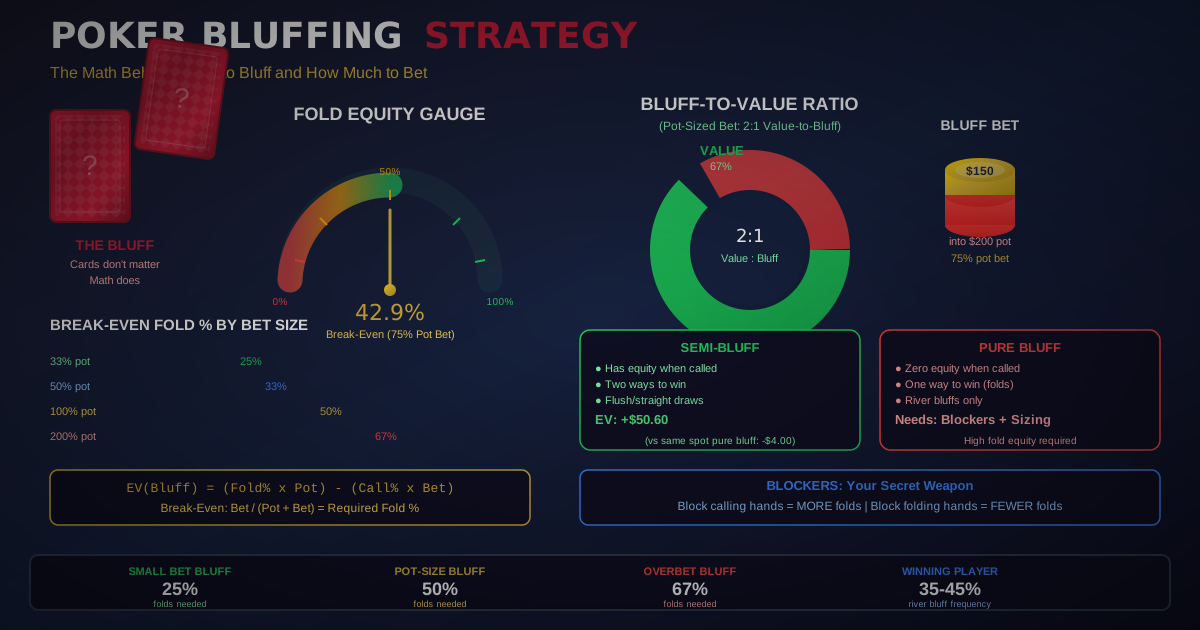
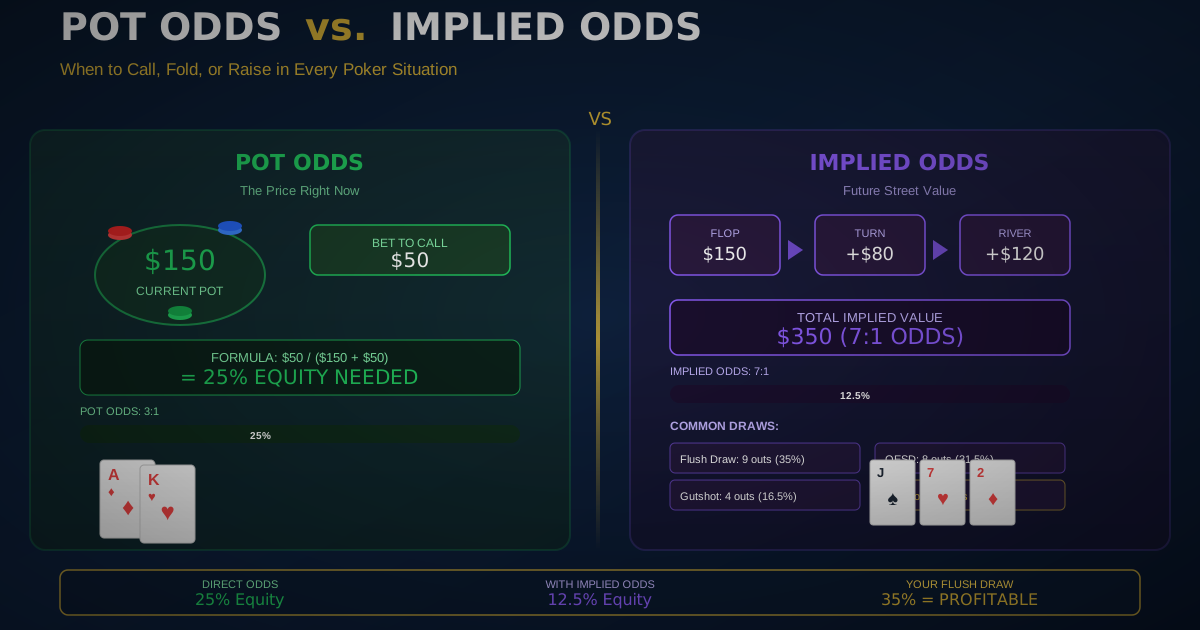
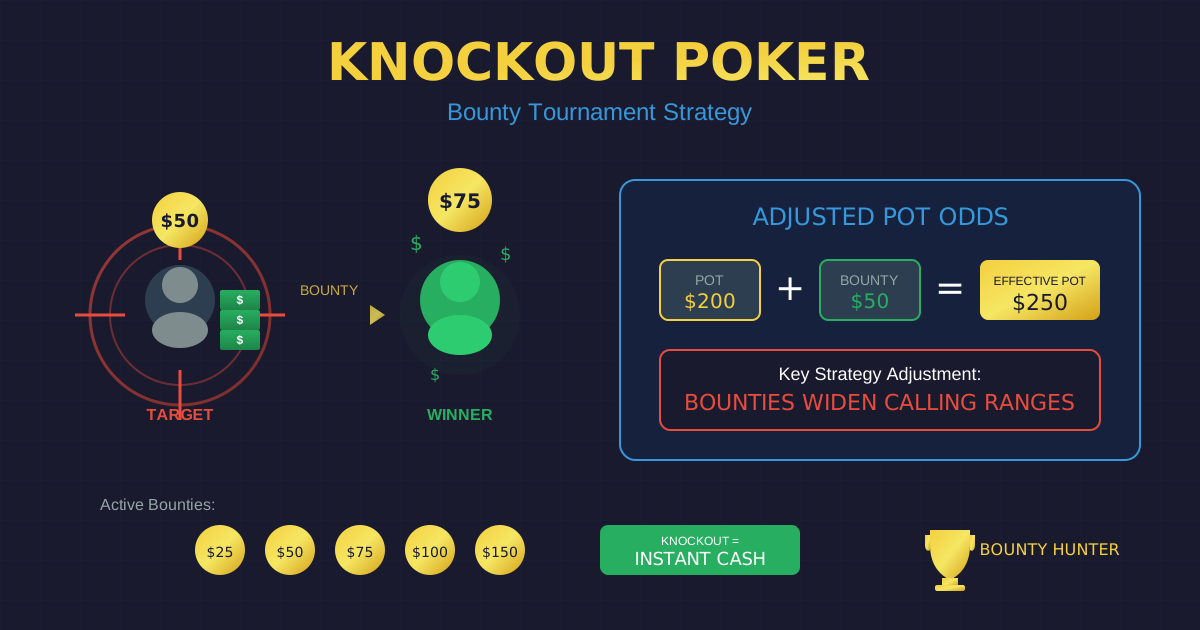
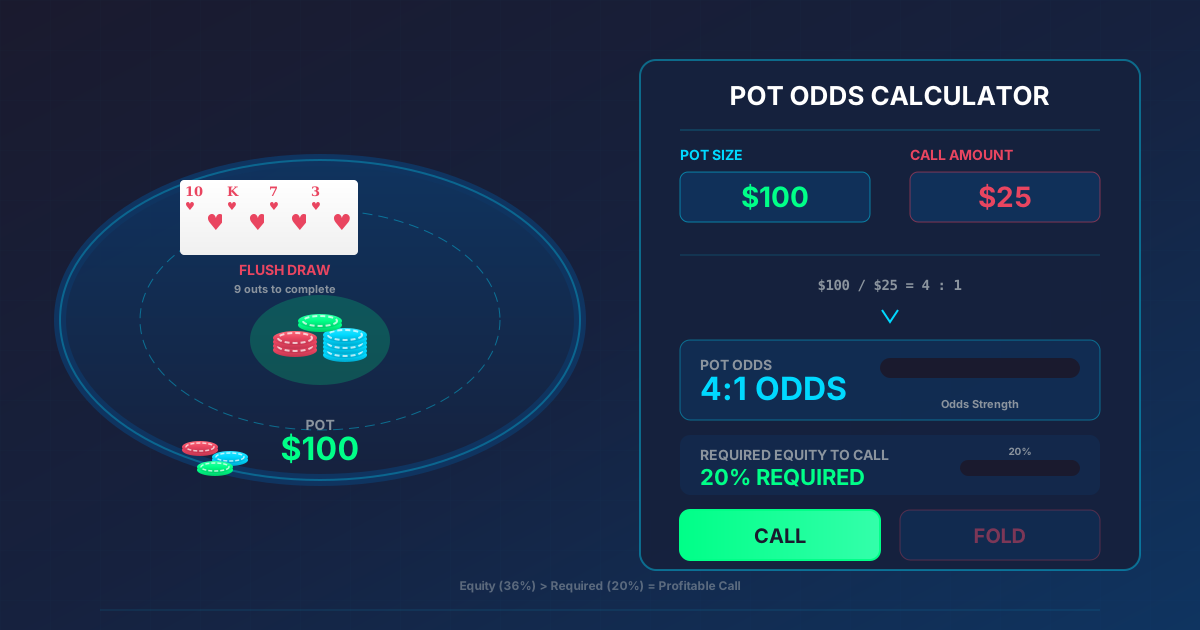
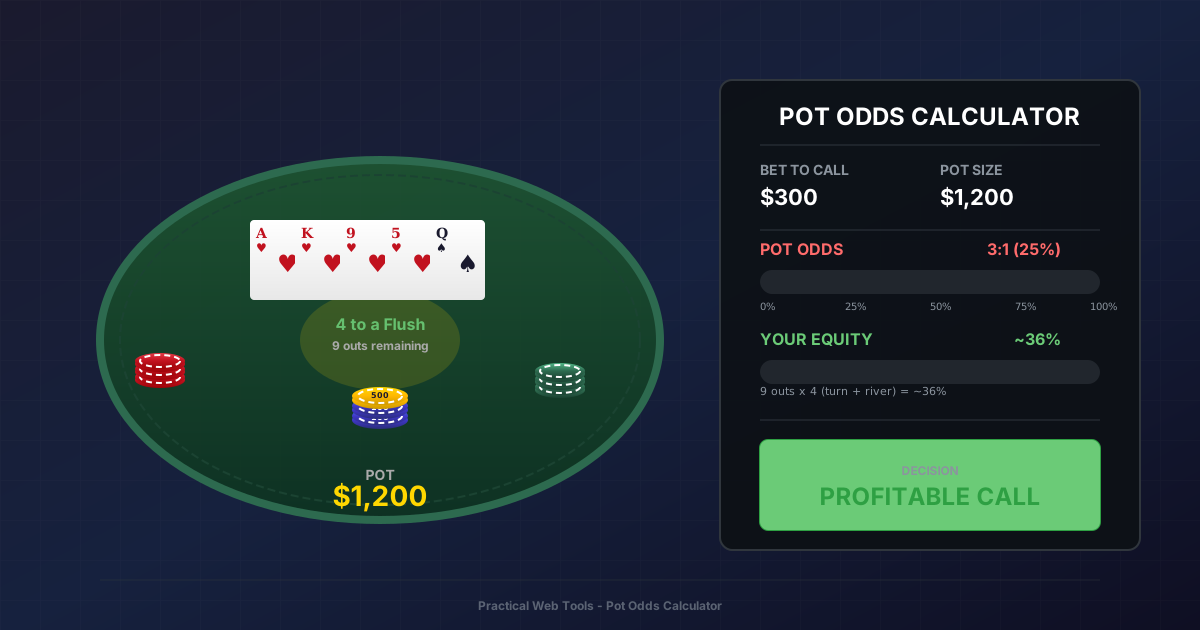
Anchoring extends beyond sports betting. In poker, the size of the pot "anchors" calling decisions. A $200 pot makes a $50 call feel small, even when the mathematical odds do not support it. At a blackjack table, seeing others bet $100 anchors your bet sizing, even if your bankroll warrants $10 bets.
Dollar impact: A sports bettor who always reacts to line movement rather than building independent projections typically surrenders 1-3% of expected value per bet. Over 500 bets at $100 per bet, that is $500 to $1,500 in unnecessary losses.
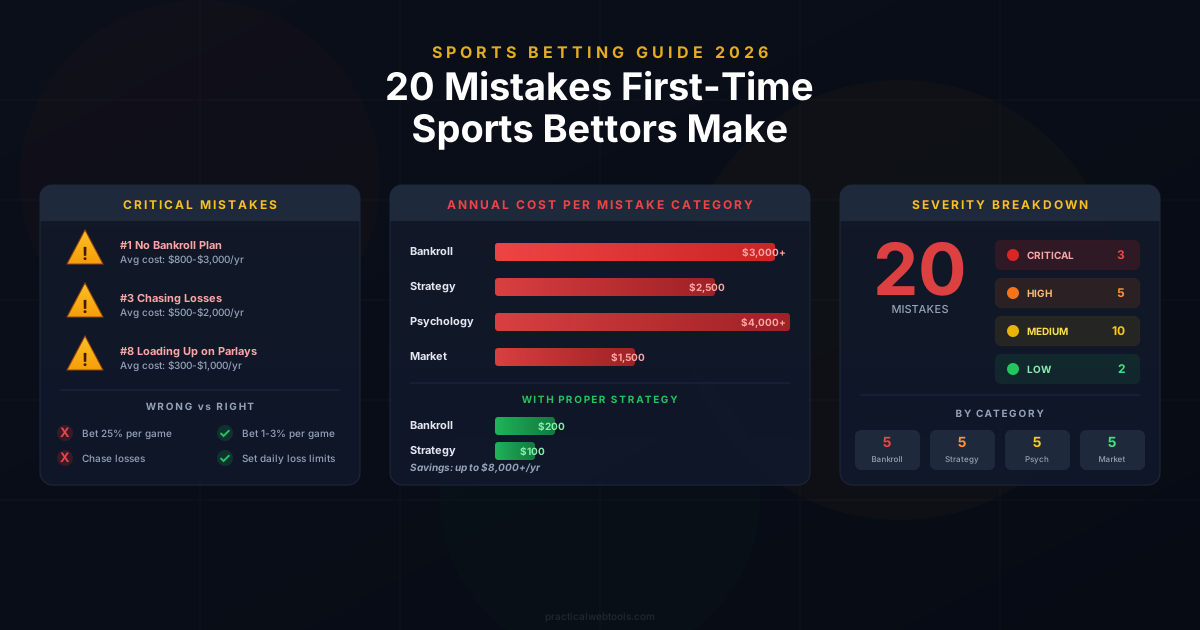
Loss Aversion and Chasing Losses: The Most Expensive Bias
Loss aversion, the cornerstone of Kahneman and Tversky's Prospect Theory, demonstrates that the psychological pain of losing is approximately twice as powerful as the pleasure of an equivalent gain. In gambling, this asymmetry produces one of the most destructive behaviors: chasing losses.
How Loss Aversion Works
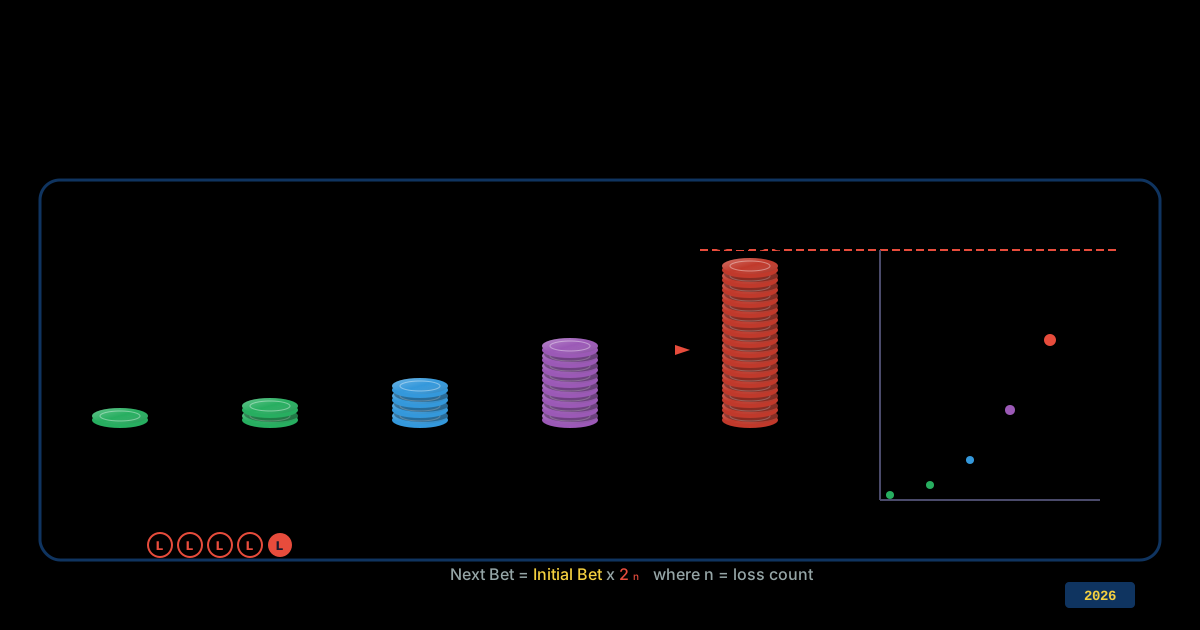
You start a poker session with $500. You lose $200 in the first hour through a combination of bad cards and one costly mistake. Rationally, your current bankroll is $300 and every decision should be evaluated based on that reality. But loss aversion means your brain is fixated on the $200 deficit. The pain of that loss is so disproportionate that your brain shifts from "play optimally" to "get back to even."
This shift changes everything. You play looser, call wider, bluff more aggressively. You move up in stakes because $1/$2 "cannot get you back" fast enough. Every decision is now contaminated by a reference point---your starting stack---that has no mathematical relevance to the correct strategy.
The Prospect Theory Value Function in Gambling
| Scenario | Gain/Loss | Emotional Weight | Behavioral Response |
|---|---|---|---|
| Win $500 at poker | +$500 | Moderate pleasure | Satisfaction, may quit while ahead |
| Lose $500 at poker | -$500 | Intense pain (2x the pleasure of gaining $500) | Desperate to continue, chase losses |
| Win $100 after losing $500 | +$100 (still down $400) | Minimal relief | "Not enough," keep playing |
| Break even after being down $500 | $0 net | Euphoric relief | May continue due to "hot streak" feeling |
Real-World Cost: The $50,000 Tilt Spiral
A professional poker player (we will call him "Mike") documented his worst session publicly on a poker forum. He sat down at $2/$5 NL with $1,000. After losing $800 in the first two hours to a series of coolers, he bought in again for $1,000. Loss aversion had taken hold. He moved to $5/$10 to "accelerate" the recovery. He lost another $2,000. By the end of the night, he had moved up to $10/$25, a game well above his regular stakes, and finished down $12,000---a sum that represented 24 buy-ins at his normal game and two months of profit.
The initial $800 loss was poker. The additional $11,200 was loss aversion.
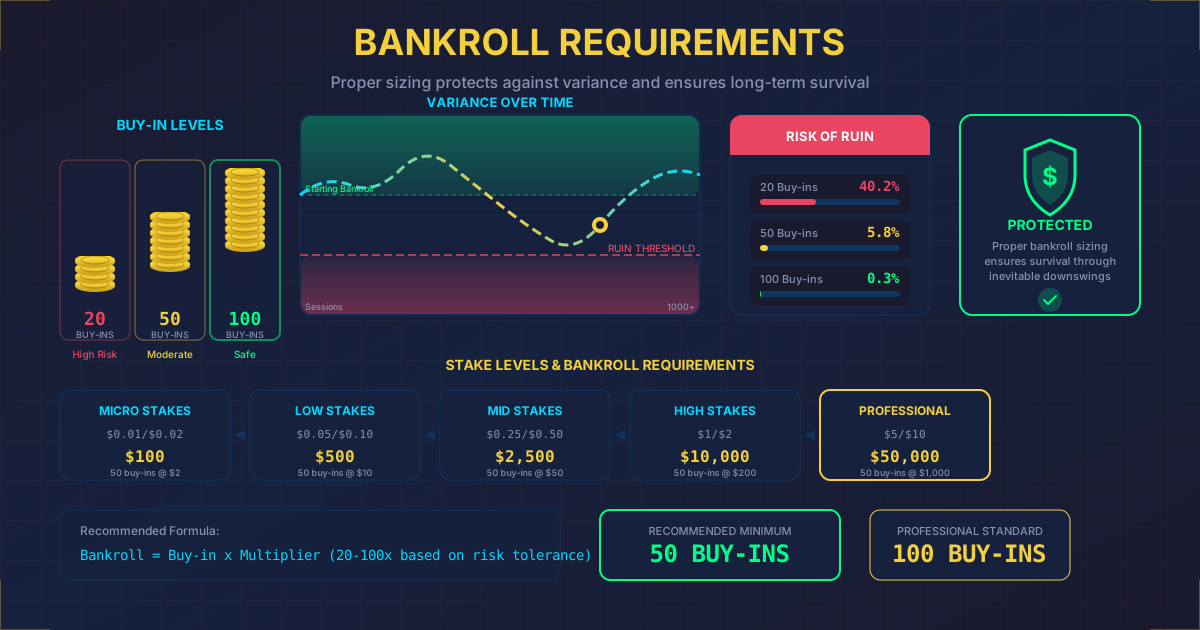
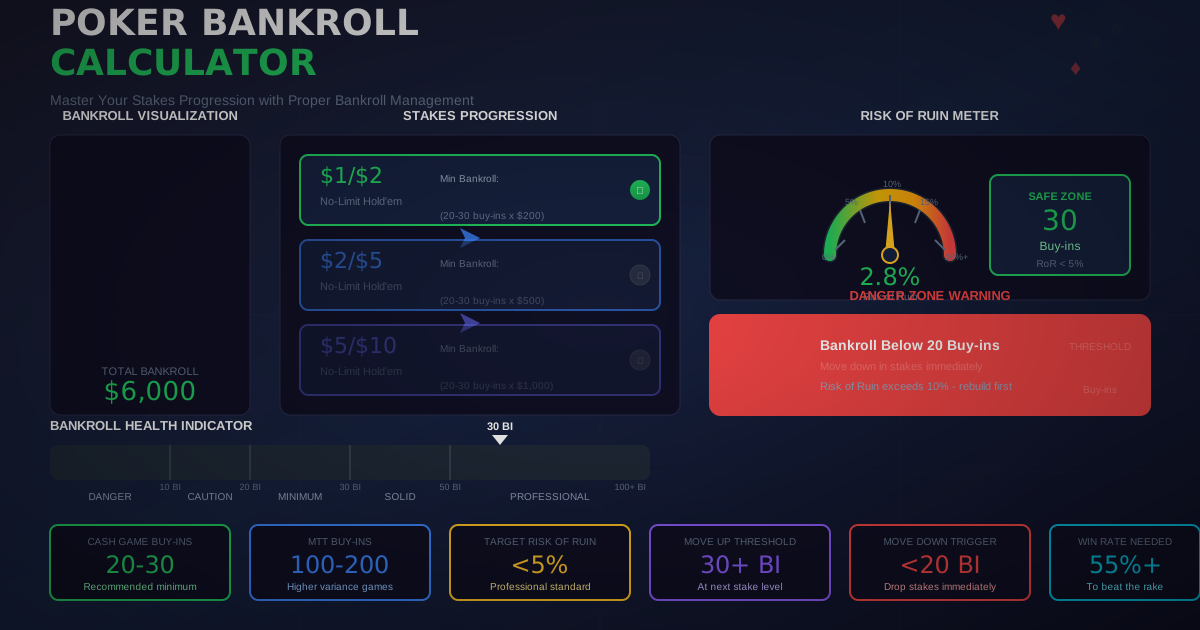
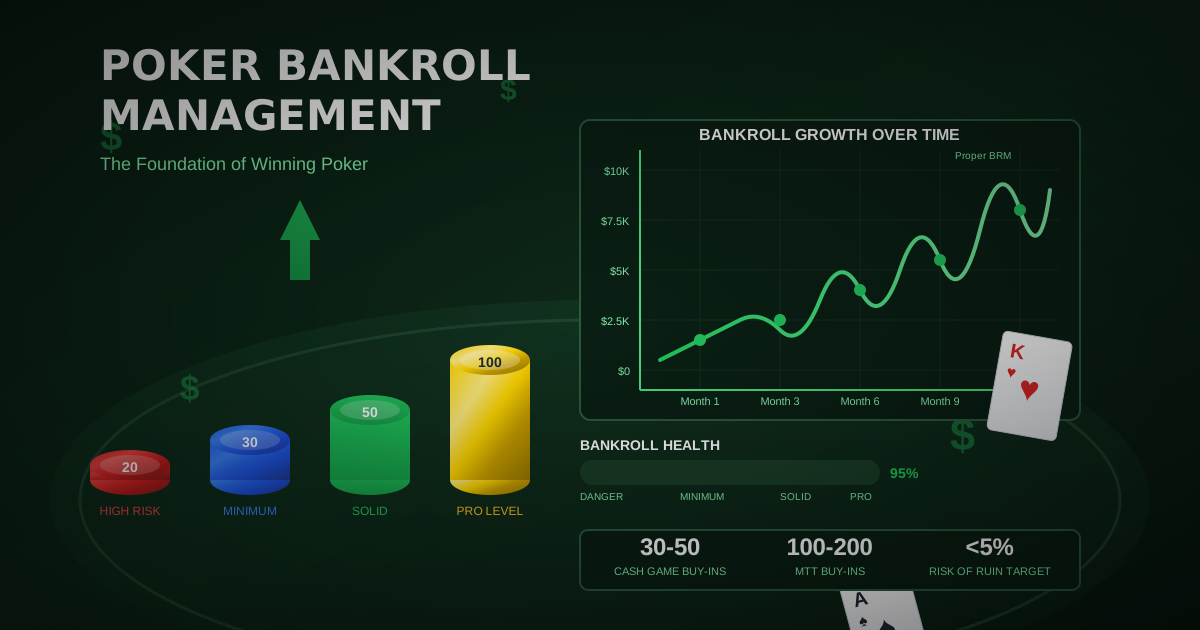
Determine whether your bankroll can handle the stakes you are playing with our Poker Bankroll Requirements Calculator.
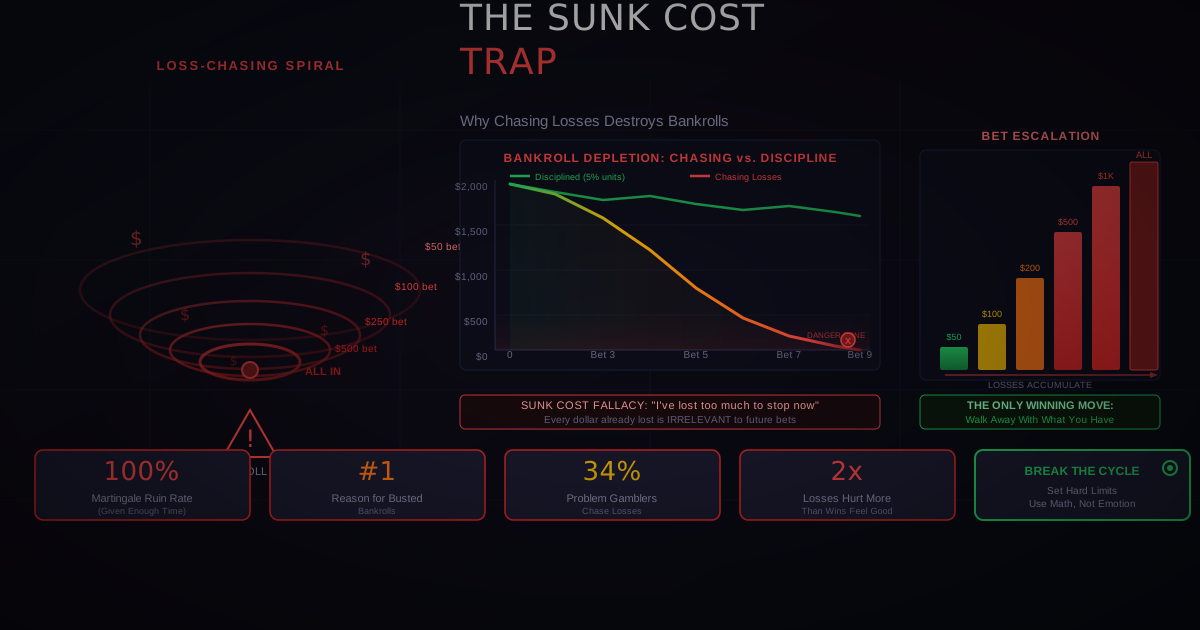
The Sunk Cost Fallacy: Why You Cannot Walk Away
The sunk cost fallacy is the tendency to continue an endeavor because of previously invested resources (time, money, effort) rather than future expected returns. In gambling, sunk costs are the chips already lost, the hours already spent, the emotional investment already made.
How It Traps Gamblers
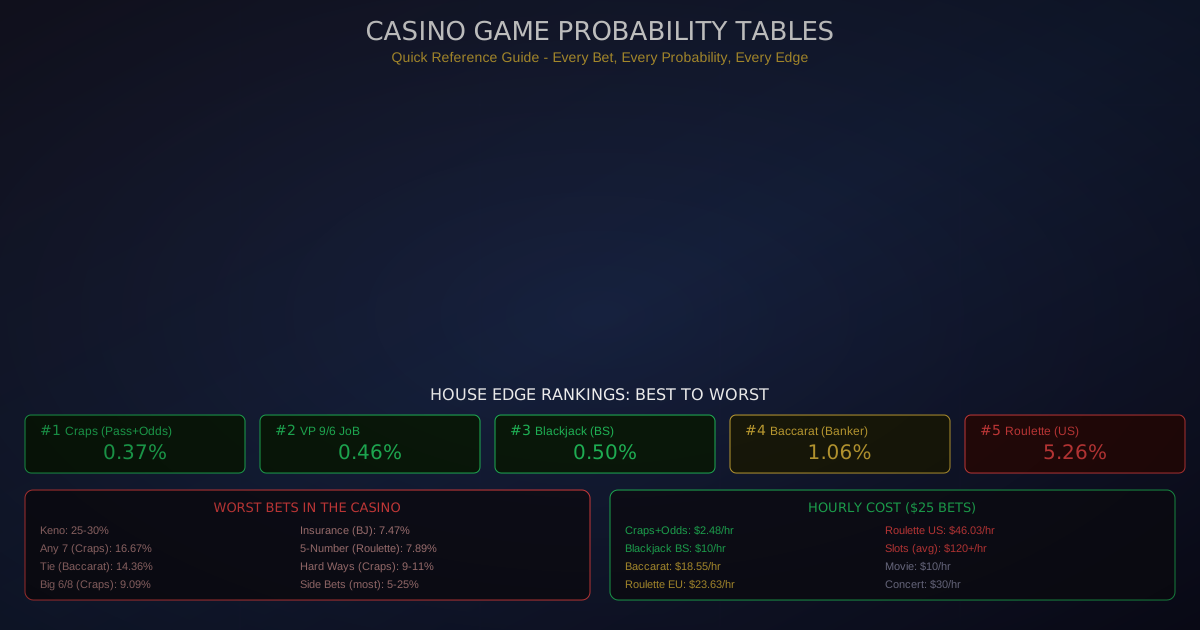
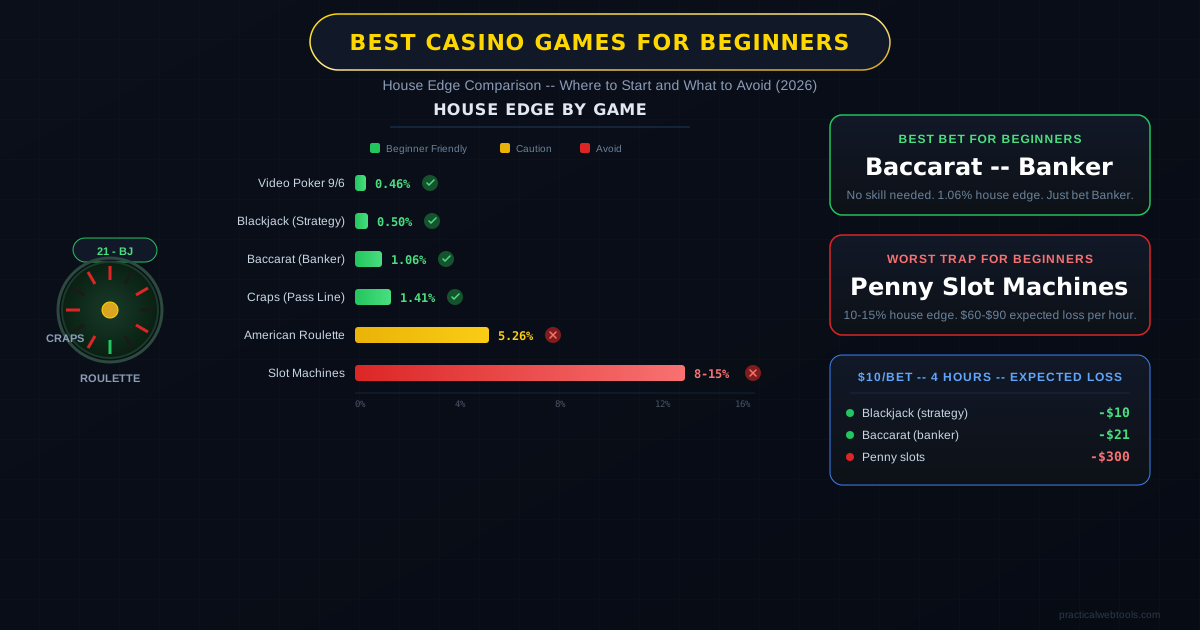
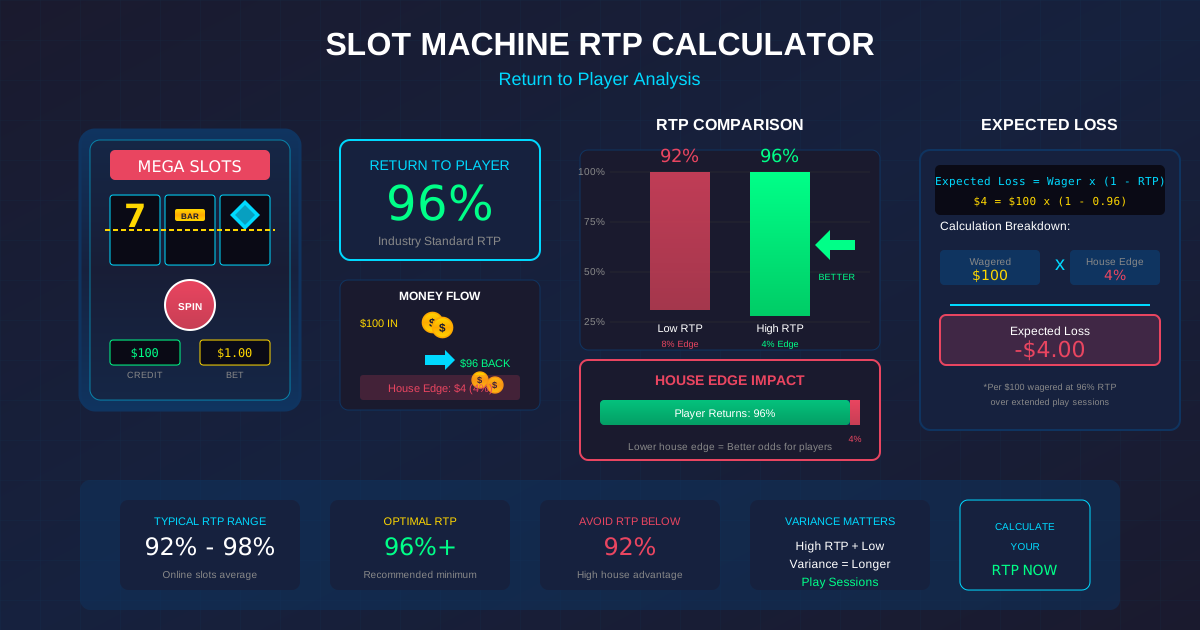
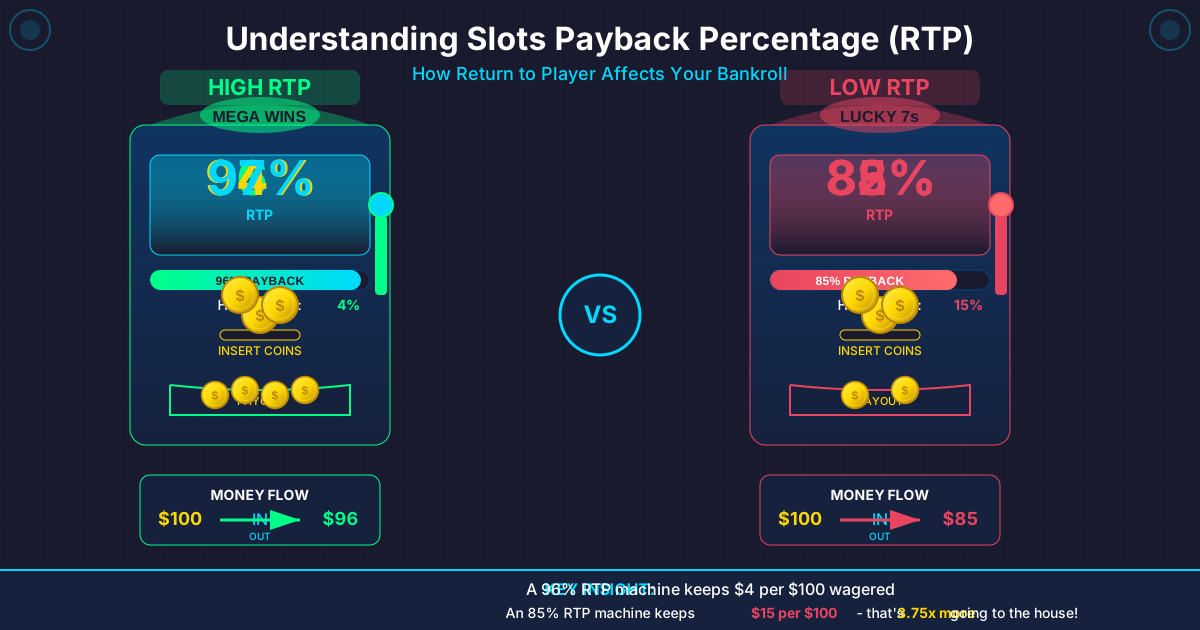
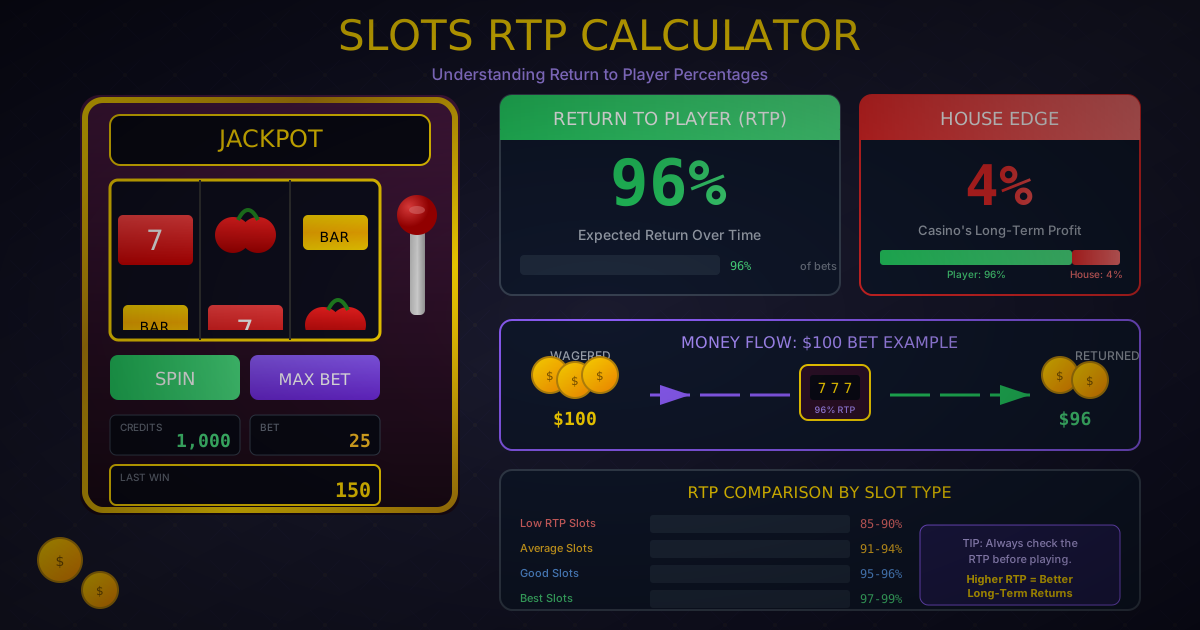
You have been playing a slot machine for three hours. You are down $400. A rational actor would evaluate: "Given my current bankroll, is continuing to play this machine with its 8% house edge a good use of my next dollar?" But the sunk cost fallacy reframes the decision: "I have already put $400 into this machine. If I walk away now, that money is wasted. I need to keep playing to get it back."
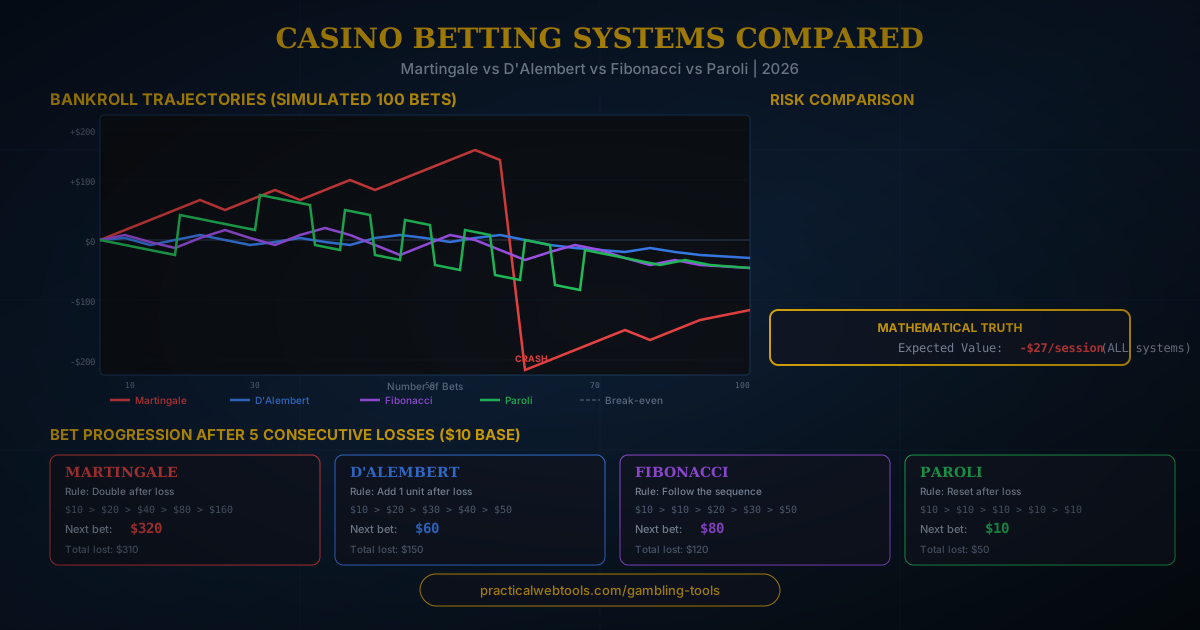
The $400 is gone regardless of what you do next. It is a sunk cost. But your brain treats it as an investment that can be "recovered" with more play, when in reality each additional dollar fed into a negative-EV game has the same expected loss as the first.
Sunk Cost in Sports Betting
The sunk cost fallacy also operates in sports betting when bettors "double down" on a losing system or tout service. After paying $500 for a betting system that has gone 12-18, many bettors continue following the picks because "I already paid for it and need to recoup the subscription cost plus the losses." They are adding future expected losses to past actual losses.
Dollar impact: A bettor who chases a $400 slot loss for three additional hours at $2 per spin (approximately 600 spins per hour) with an 8% house edge will lose an expected additional $288, turning a $400 loss into a $688 loss. The "recovery" attempt cost 72% of the original loss.
The Near-Miss Effect: Your Brain Cannot Tell the Difference
The near-miss effect is one of the most insidious cognitive biases in gambling because it operates at a neurological level that is nearly impossible to override with conscious thought. A near-miss occurs when the outcome of a gamble falls just short of a win---two jackpot symbols followed by a third that lands one position away, a basketball bet that loses by one point, pocket kings losing to pocket aces.
The Neuroscience of Near-Misses
A landmark study using fMRI brain imaging found that near-misses activate the same reward circuitry as actual wins. The ventral striatum---the brain's primary reward center---responds to a near-miss with dopamine release comparable to a small win, even though the financial outcome is identical to any other loss.
This means your brain literally cannot distinguish between "almost winning" and "winning a small amount." The near-miss feels like progress, like evidence that you are close to a breakthrough, when in reality it is simply a loss with a deceptive visual presentation.
How Casinos Exploit Near-Misses
Modern slot machines are programmed to display near-misses at rates far exceeding what random chance would produce. A study published in the Journal of Experimental Psychology found that slot machines are engineered to show near-wins on 30-40% of losing spins, compared to the 5-10% that pure randomness would produce.
| Near-Miss Type | How It Feels | Mathematical Reality | Brain Response |
|---|---|---|---|
| Two jackpot symbols + near-miss on third reel | "So close! One more try!" | Same probability as any other loss | Dopamine release similar to small win |
| Sports bet lost by 1 point | "I almost had it, my read was right" | A loss is a loss regardless of margin | Reinforces belief in betting ability |
| Poker bad beat (AA vs KK, K on river) | "I played it perfectly, just got unlucky" | Correct play, but loss is still -$X | Masks any strategy errors before the all-in |
| Roulette ball landing on adjacent number | "My number was right there!" | Adjacent numbers have no correlation | Encourages continued play |
Dollar impact: Research suggests that near-misses increase playing time by 30% or more. A slot player who would normally play 200 spins ($2/spin = $400 wagered) continues for 260 spins ($520 wagered). At an 8% house edge, the near-miss effect costs an additional $9.60 per session. Over 100 sessions per year, that is $960 in additional losses driven entirely by a neurological illusion.
Overconfidence Bias: The Dunning-Kruger Effect at the Poker Table
Overconfidence bias is the tendency to overestimate one's own abilities, knowledge, and the precision of one's predictions. In gambling, it manifests as an inflated sense of skill, an underestimation of variance, and a belief that one's edge is larger than it actually is.
Why Overconfidence Is Universal
Research consistently shows that approximately 80% of drivers rate themselves as "above average"---a mathematical impossibility. The same effect operates in gambling. A survey of poker players found that the vast majority rated themselves as "winning players," despite the mathematical reality that the majority must be losing (after rake).
In sports betting, overconfidence manifests as certainty about game outcomes. A bettor who is 55% confident in a pick (barely above coin-flip) often bets as though they are 70-80% confident, dramatically oversizing their wager relative to their actual edge.
The Overconfidence Tax
| Confidence Level | Implied Bet Size (Kelly) | Typical Actual Bet Size | Overbet Factor |
|---|---|---|---|
| 52% (2% edge on -110 line) | 1.1% of bankroll | 5% of bankroll | 4.5x too large |
| 55% (5% edge on -110 line) | 2.8% of bankroll | 10% of bankroll | 3.6x too large |
| 60% (10% edge on -110 line) | 5.5% of bankroll | 15% of bankroll | 2.7x too large |
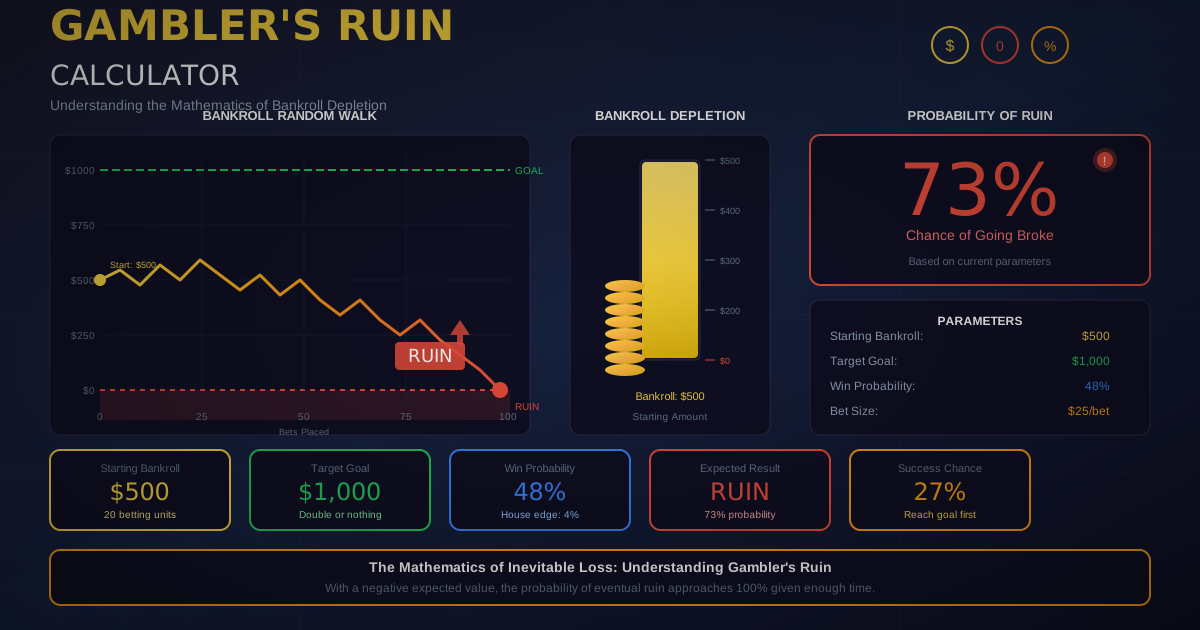
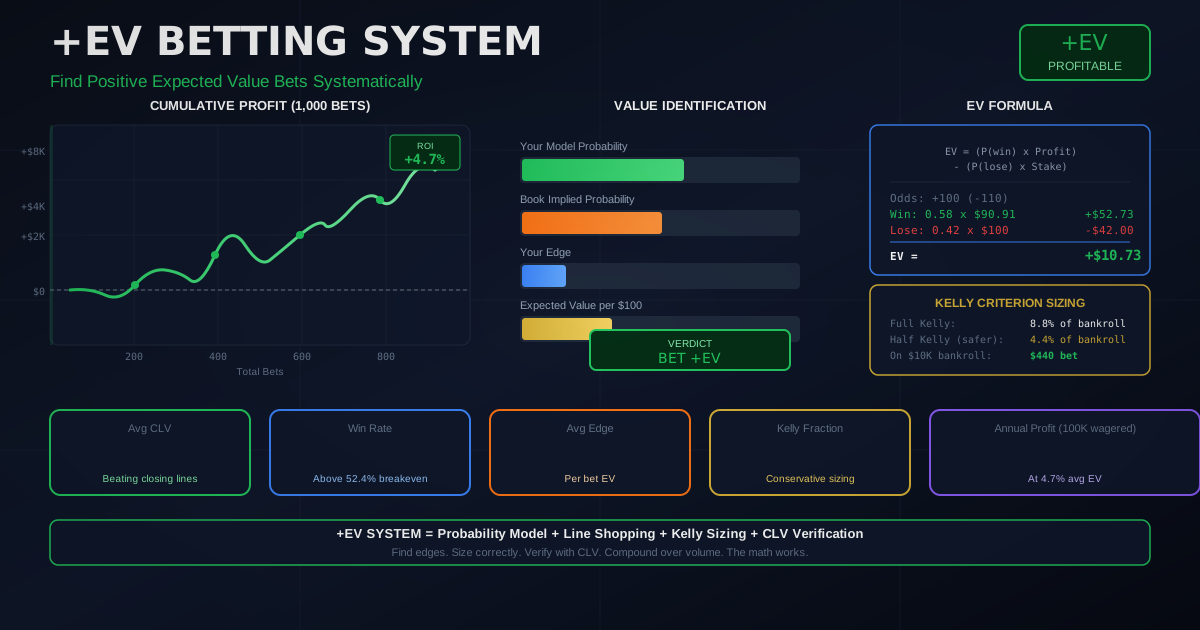
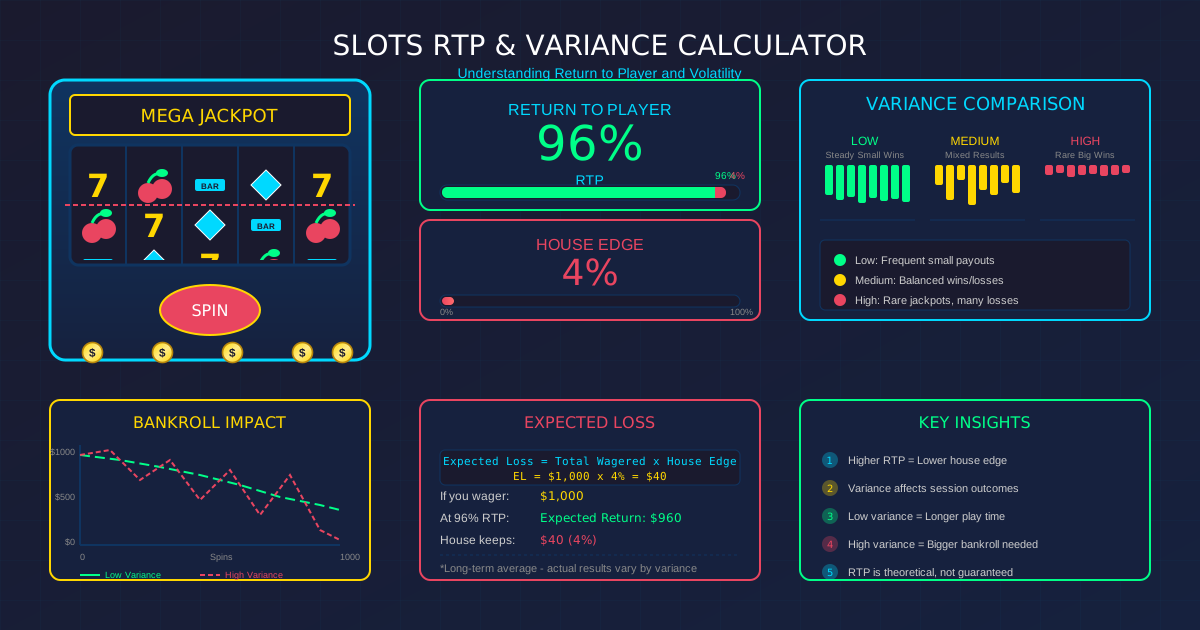
Dollar impact: A bettor with a $10,000 bankroll and a true 55% win rate who bets 10% per game ($1,000) instead of the Kelly-optimal 2.8% ($280) faces a 40% probability of ruin---losing their entire bankroll---within their first 500 bets. The same bettor using proper Kelly sizing has less than a 1% probability of ruin.
Calculate your true risk of going broke with our Poker Risk of Ruin Calculator.
Availability Bias: Why Jackpot Winners Ruin Your Decision-Making
Availability bias is the tendency to overestimate the likelihood of events that are easily recalled---vivid, recent, or emotionally charged memories dominate probability assessment. In gambling, availability bias is weaponized by every casino, sportsbook, and lottery commission on the planet.
How Availability Bias Distorts Gambling Decisions
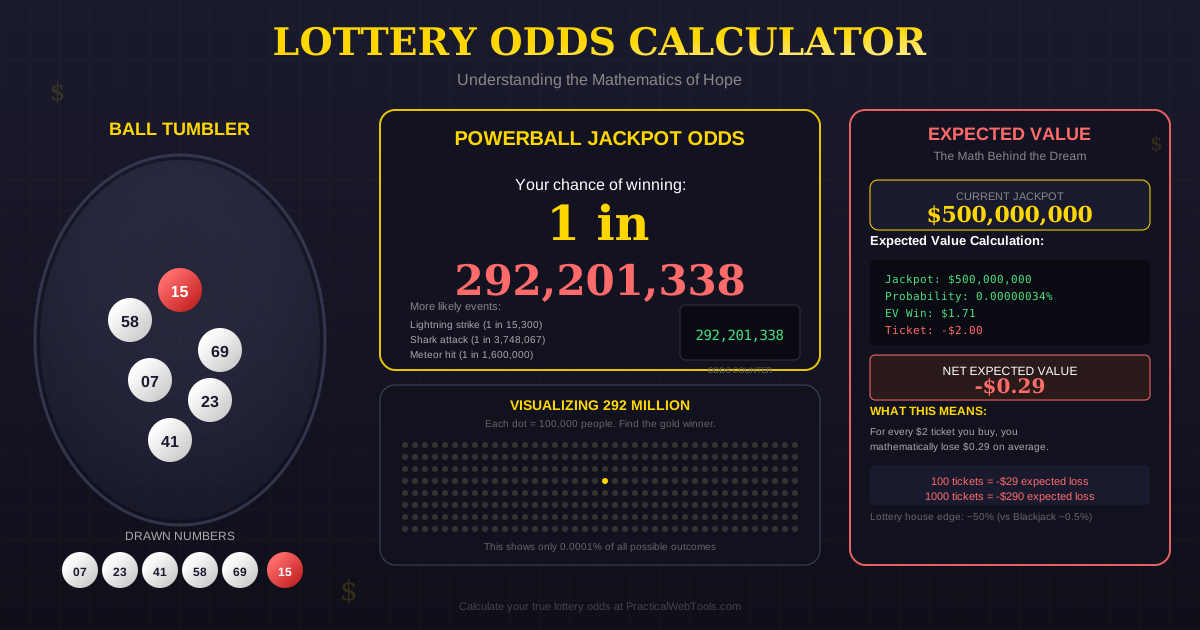
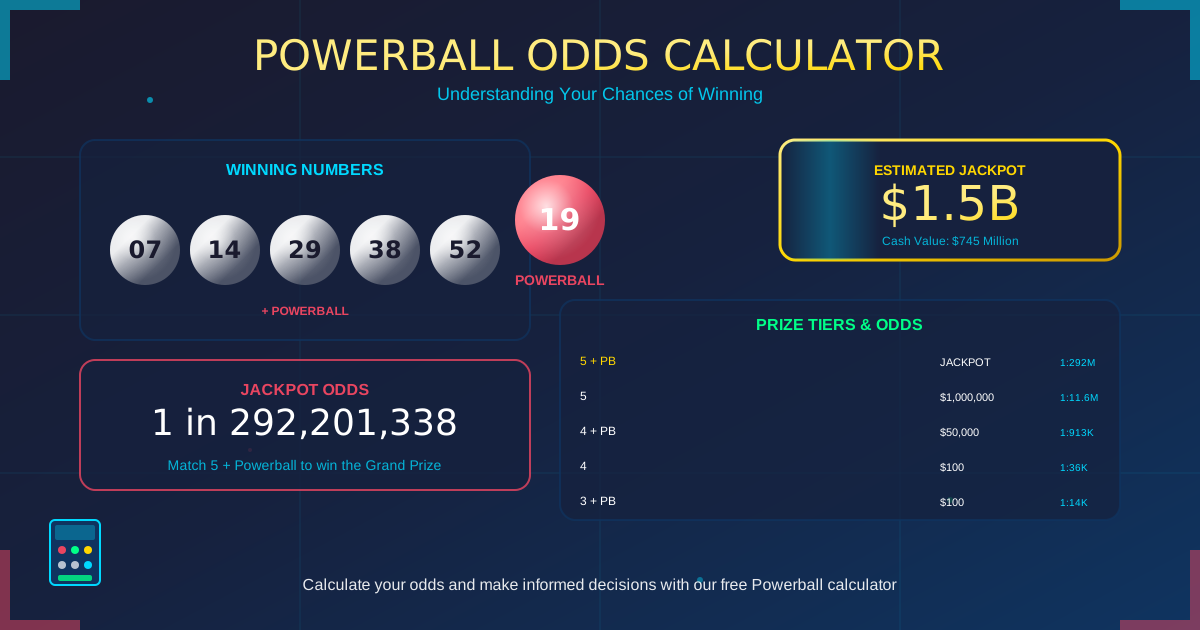
You see a news story about a $100 million Powerball winner. Your friend tells you about hitting a parlay for $5,000. The casino publishes photos of jackpot winners on giant screens above the slot floor. These vivid examples make winning feel common, achievable, and imminent.
Meanwhile, you never see the millions of losing tickets. Your friend does not mention the $20,000 he has lost on parlays this year. The casino does not display photos of the thousands of players who lost their mortgage payments last month.
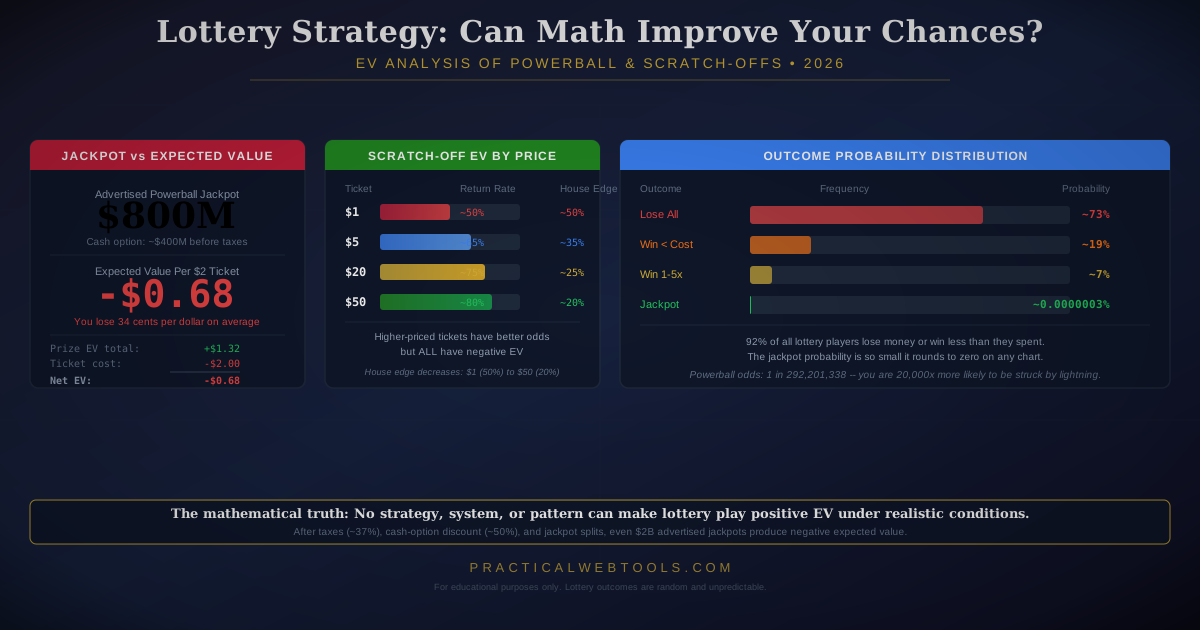
The result: your brain dramatically overestimates the probability of winning and underestimates the probability (near certainty) of losing.
The Parlay Illusion
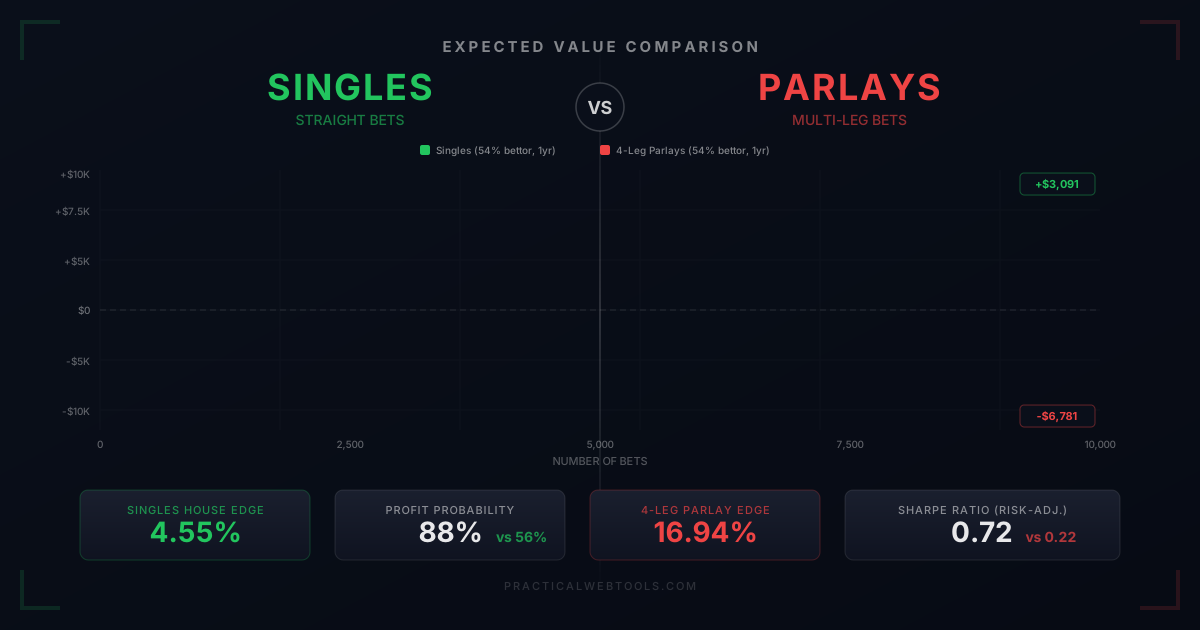
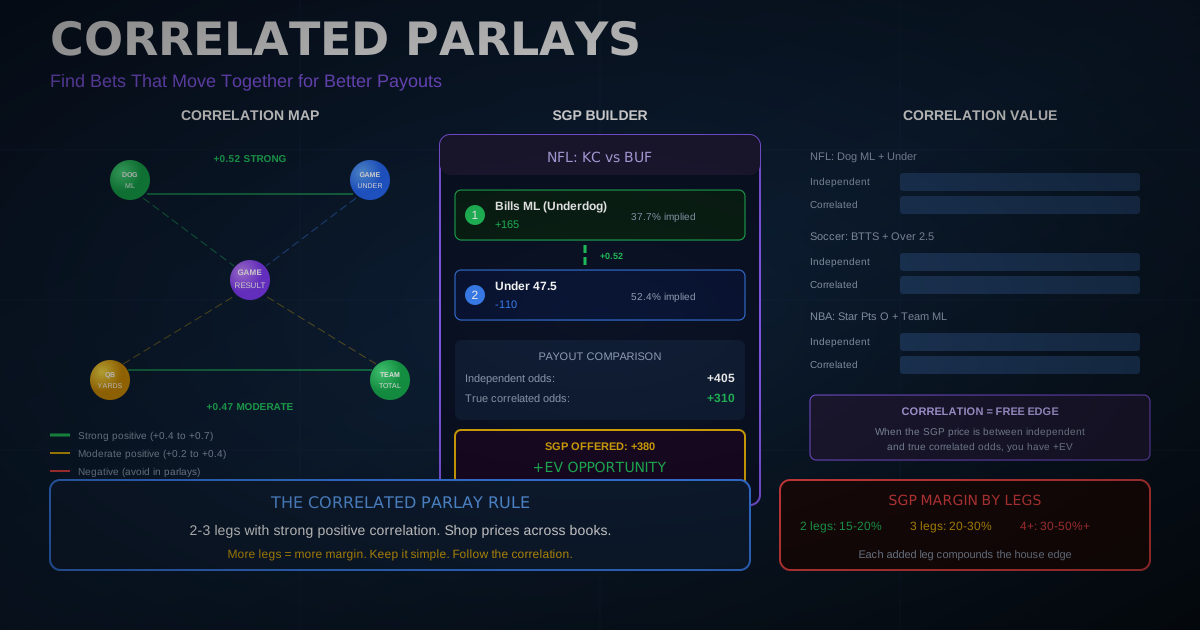
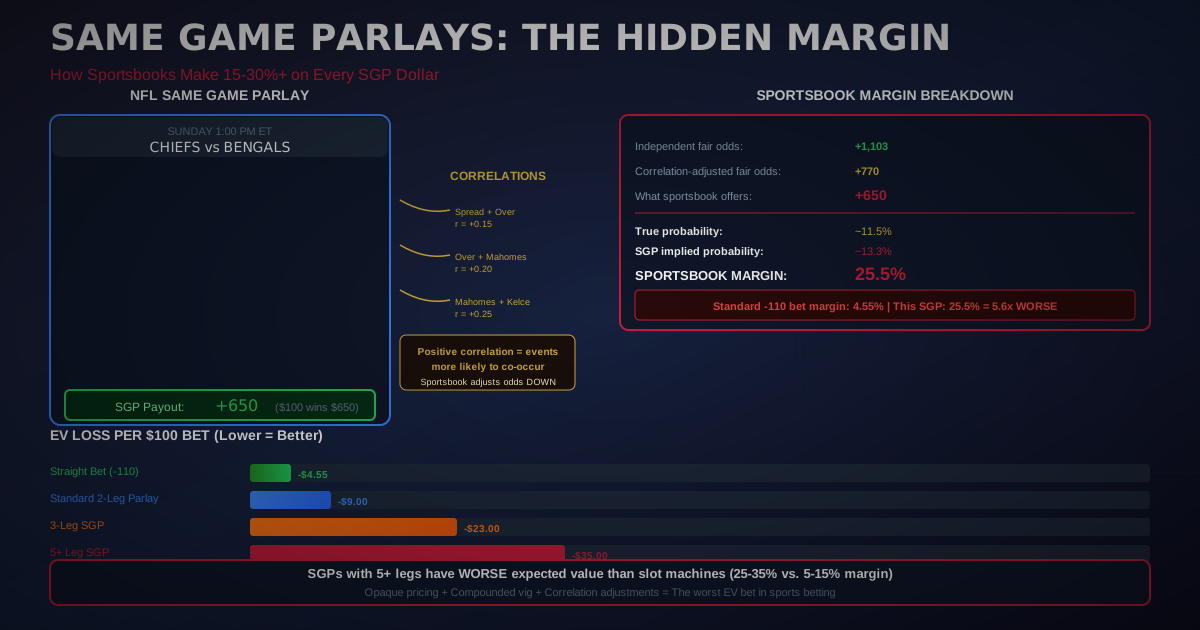
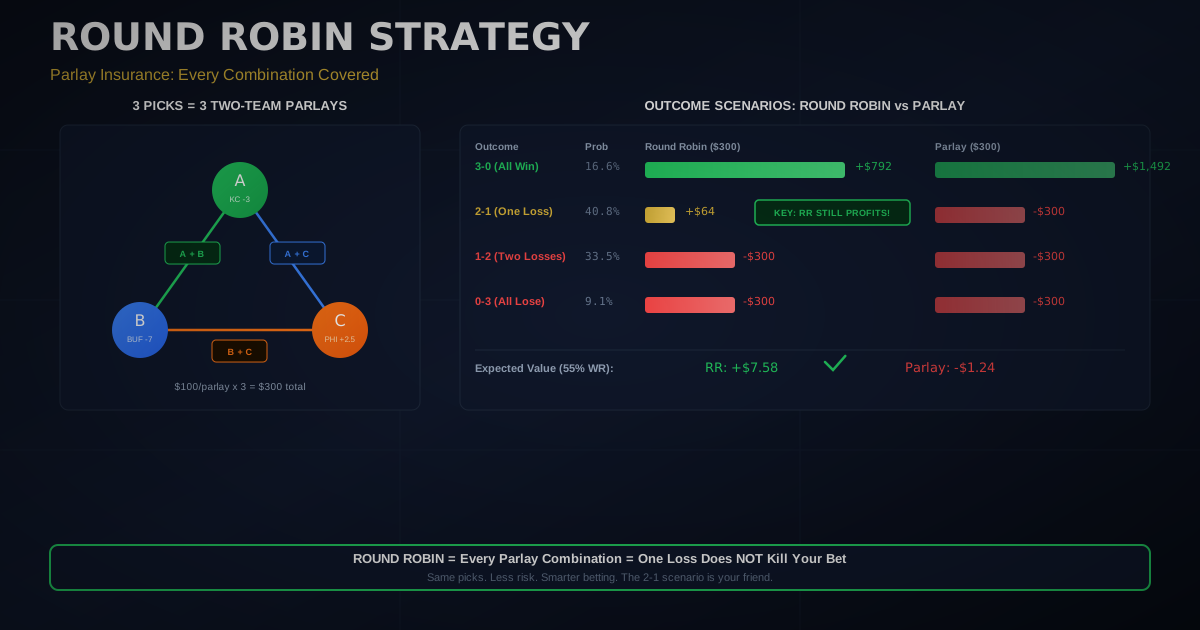
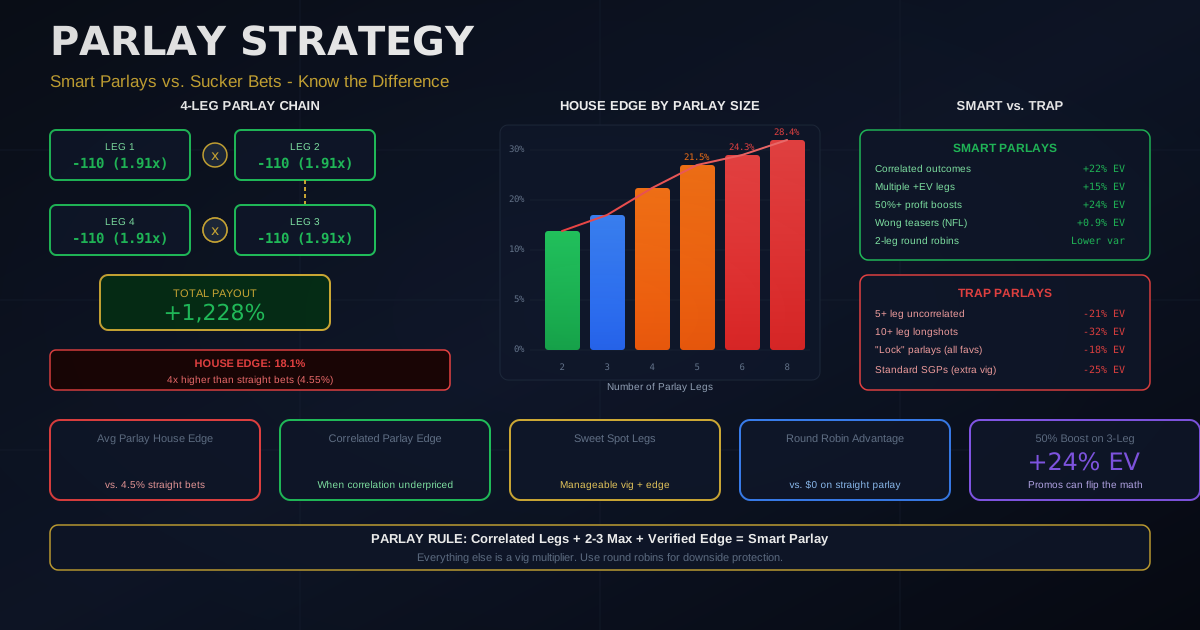
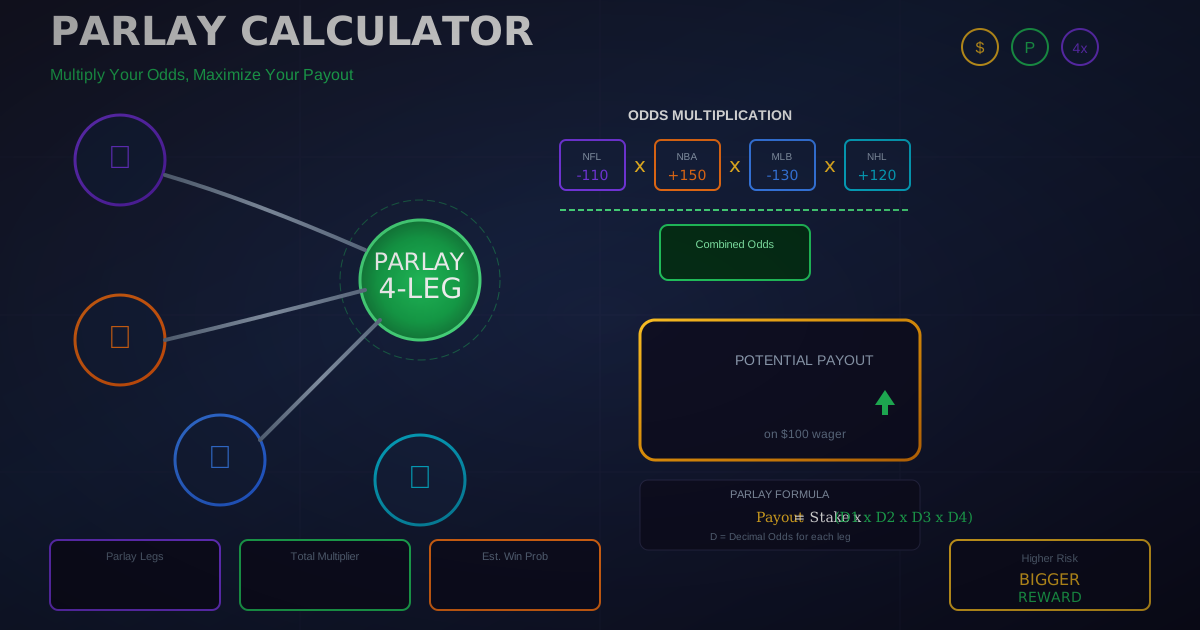
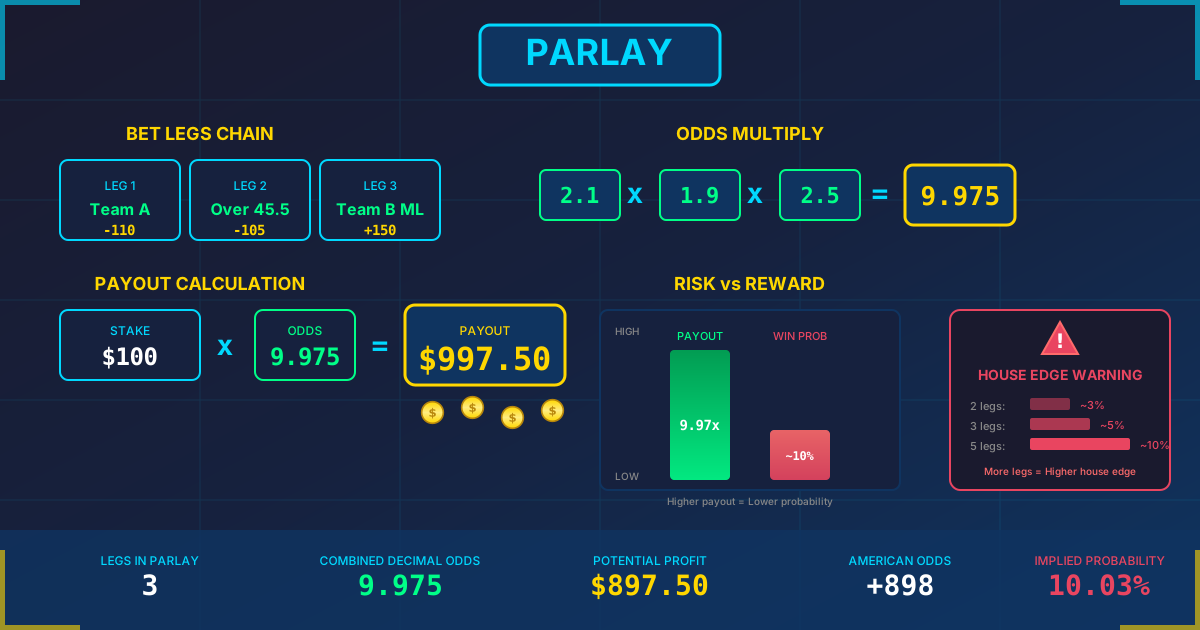
Parlay betting is availability bias in its purest form. Sportsbooks aggressively promote parlay wins because they are large, exciting, and memorable. But the mathematics are brutal:
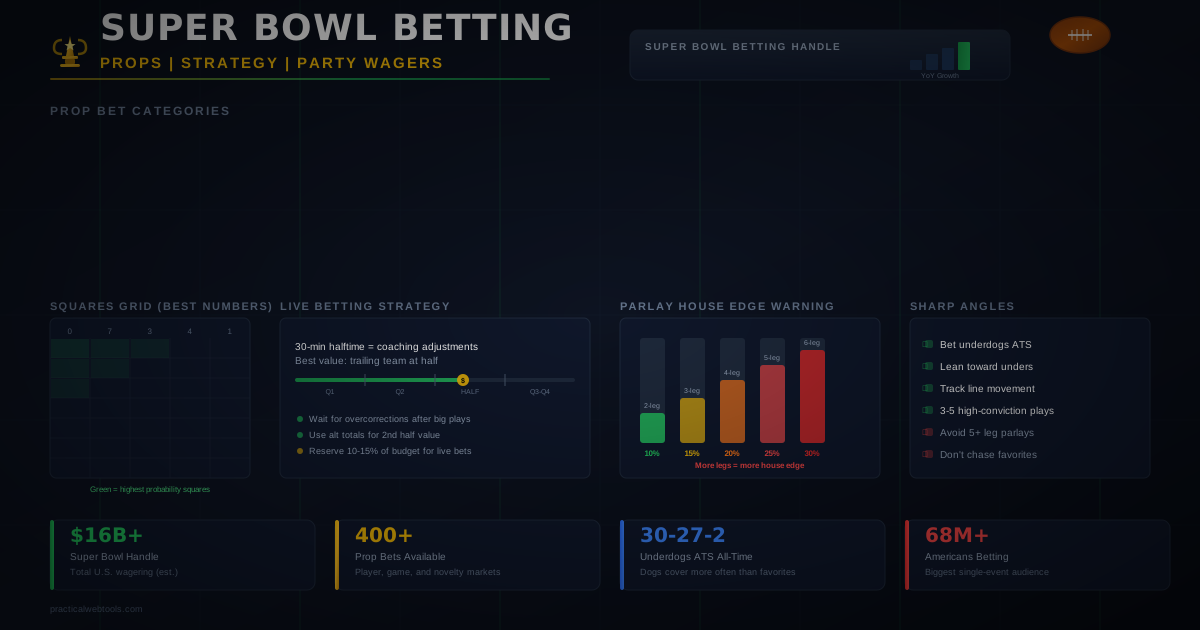
| Parlay Legs | Approximate Win Probability (even odds) | Sportsbook Edge | Your Expected Return per $100 |
|---|---|---|---|
| 2-leg | 25.0% | 10% | -$10.00 |
| 3-leg | 12.5% | 15% | -$15.00 |
| 4-leg | 6.25% | 20% | -$20.00 |
| 6-leg | 1.56% | 30% | -$30.00 |
| 10-leg | 0.098% | 50%+ | -$50.00+ |
A 10-leg parlay has roughly a 1-in-1,000 chance of hitting, and the payout is typically far less than 1,000-to-1 because of the compounding vig. But when someone hits one and it is featured on social media with a $250,000 payout, availability bias makes thousands of bettors think "that could be me."
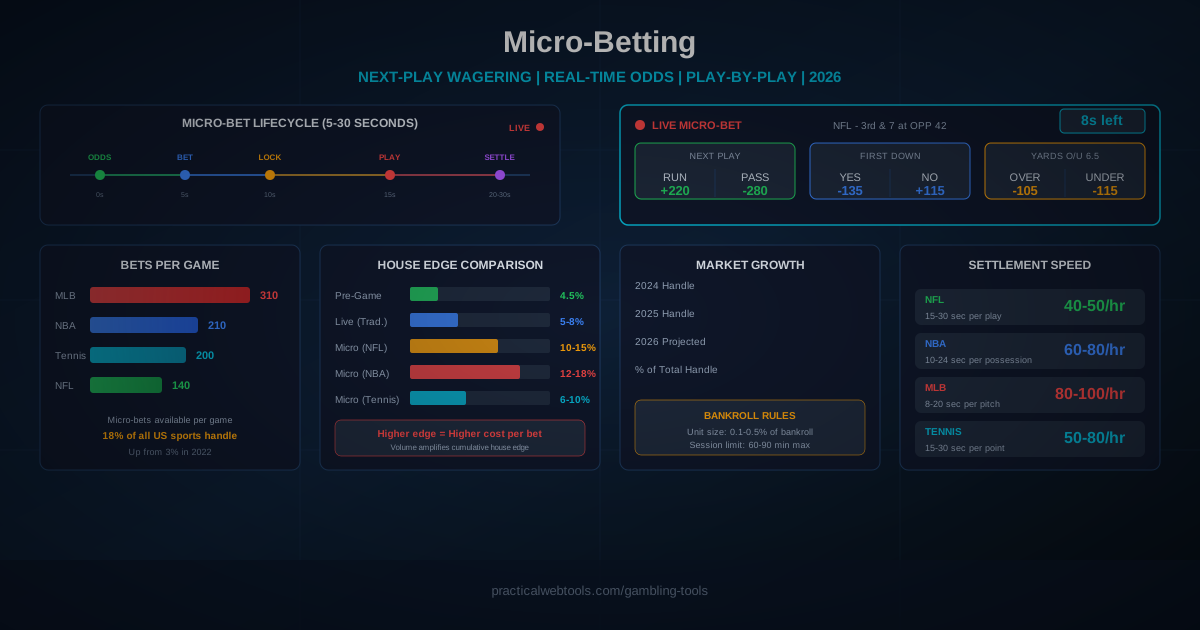
Dollar impact: Sportsbooks report that parlay and same-game parlay bets generate margins of 20-30%, compared to 5-7% on straight bets. If you wager $200 per week on parlays instead of straight bets, you are paying an additional $26 to $46 per week in expected losses---$1,350 to $2,400 per year---for the privilege of chasing memorable payouts.
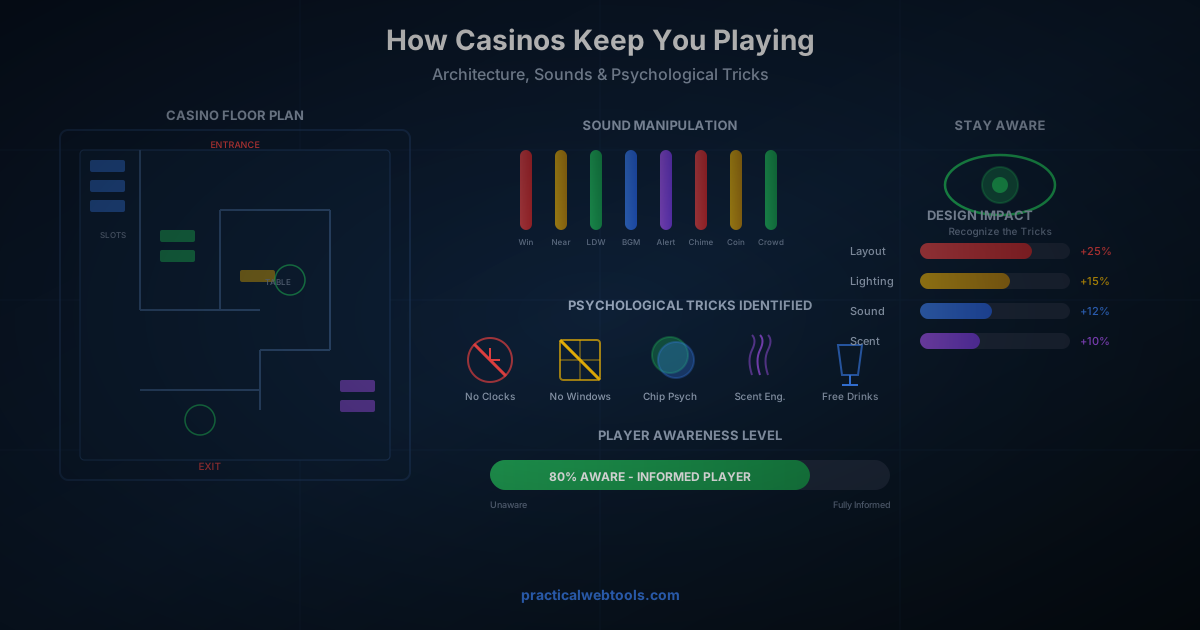
Casino Environmental Manipulation: The Architecture of Irrational Decisions
Casinos do not leave your cognitive biases to chance. Every element of the physical and digital casino environment is engineered to amplify the biases described above and suppress rational decision-making.
The Complete Casino Manipulation Playbook
| Environmental Factor | How It Works | Psychological Target |
|---|---|---|
| No clocks or windows | Eliminates time awareness | Extends session length, prevents "time to leave" cues |
| Oxygen-enriched air | Increases alertness and energy | Fights fatigue that would signal it is time to stop |
| Free alcohol | Impairs judgment and lowers inhibitions | Increases bet size, reduces strategic thinking |
| Carpet patterns | Disorienting designs keep eyes on machines/tables | Reduces wandering, keeps players seated |
| Near-miss programming | Slot machines engineered to show "almost wins" | Activates reward circuitry on losses |
| Small wins with big celebrations | Bells, lights, and sounds for minor wins | Creates illusion of frequent winning |
| Chip-based betting | Abstraction from real money | Reduces loss aversion, increases bet sizes |
| Maze-like layouts | No clear paths to exits | Extends time on floor, increases impulse plays |
| Scented environments | Pleasant scents elevate mood | Studies show 45% more money in odorized slot areas |
| Low-tempo background music | Relaxing soundscapes | Slower, less deliberate decision-making |
The Chip Abstraction Effect
One of the most powerful casino manipulations is the conversion of money into chips (or digital credits). Research in behavioral economics consistently shows that people spend abstract representations of money more freely than cash. This is the same reason credit cards increase spending compared to cash---the pain of payment is delayed and abstracted.
In a casino, you do not lose $500. You lose 10 green chips. The emotional impact is dramatically reduced, which means loss aversion---normally a brake on excessive spending---is weakened at exactly the moment you need it most.
Dollar impact: Studies suggest that chip-based gambling increases average bet sizes by 15-25% compared to equivalent cash wagering. For a player who would bet $50 with cash, this means betting $57.50-$62.50 with chips. Over a 200-bet session, the additional exposure is $1,500-$2,500, with an expected additional loss of $120-$200 at a 8% house edge.
How to Fight Your Biases: Practical Techniques That Actually Work
Understanding cognitive biases is necessary but not sufficient. You need systematic defenses that operate when your emotional brain is overriding your rational brain. The following techniques are drawn from behavioral economics research and adapted specifically for gambling contexts.
1. Pre-Commitment Strategies
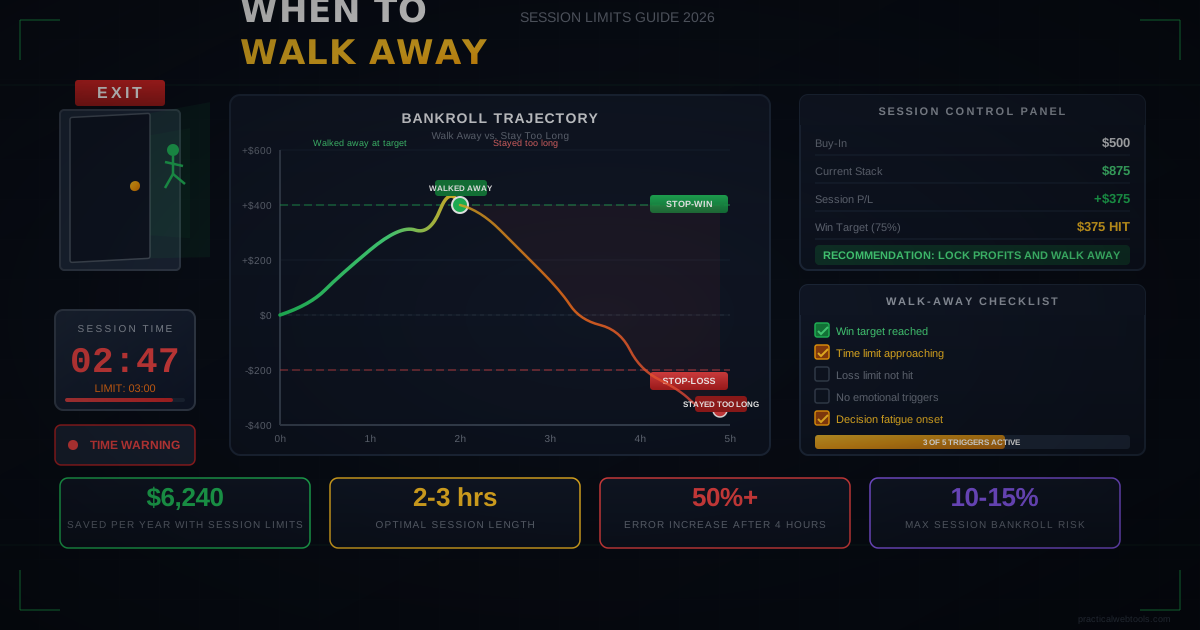
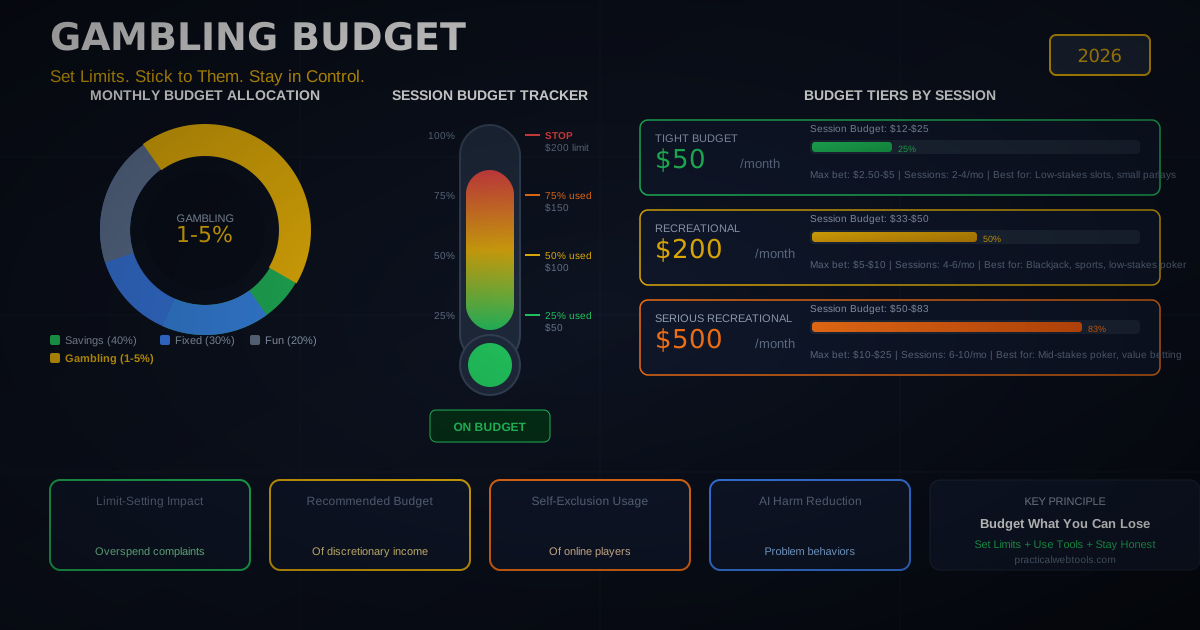
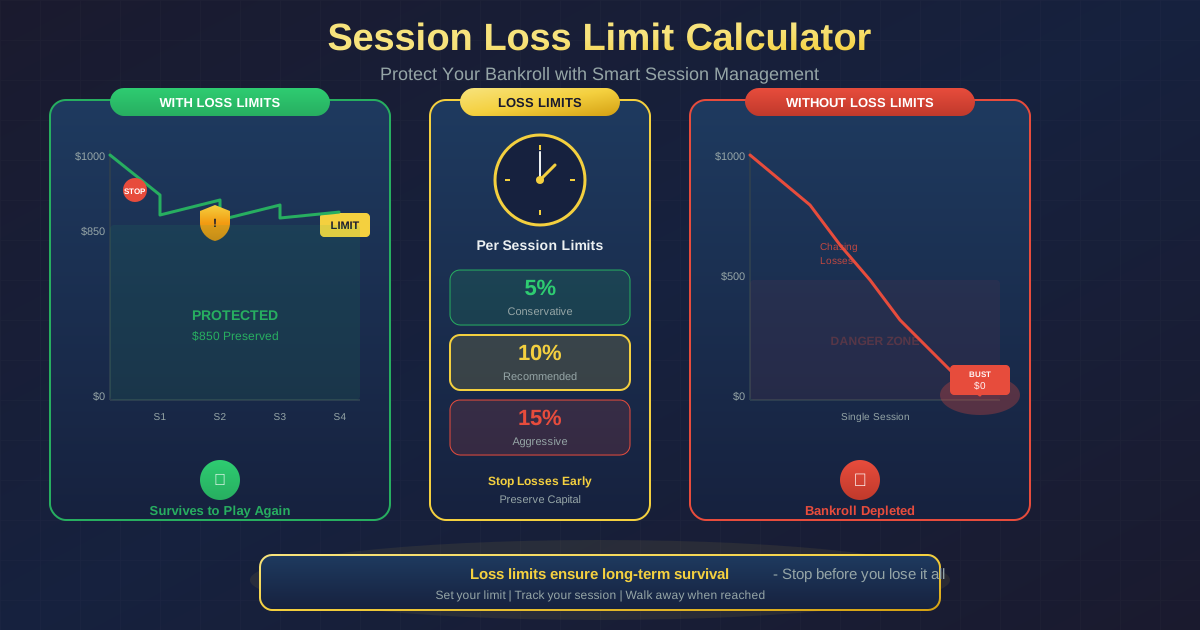
Set your loss limit, session length, and bet sizes before you enter the casino or open the sportsbook app. Write them down. Tell someone. Use deposit limits on online platforms. Pre-commitment works because it leverages your rational brain (when you are calm and not gambling) to constrain your emotional brain (when you are in the heat of the action).
2. The 10-Minute Rule
When you feel the urge to increase your bet, chase a loss, or deviate from your plan, wait 10 minutes. Do not make any betting decisions during this time. Research on impulse control shows that the intensity of emotional urges diminishes significantly within 10 minutes. The dopamine spike that is screaming "bet more NOW" will subside to a manageable level.
3. Calculate Before You Act
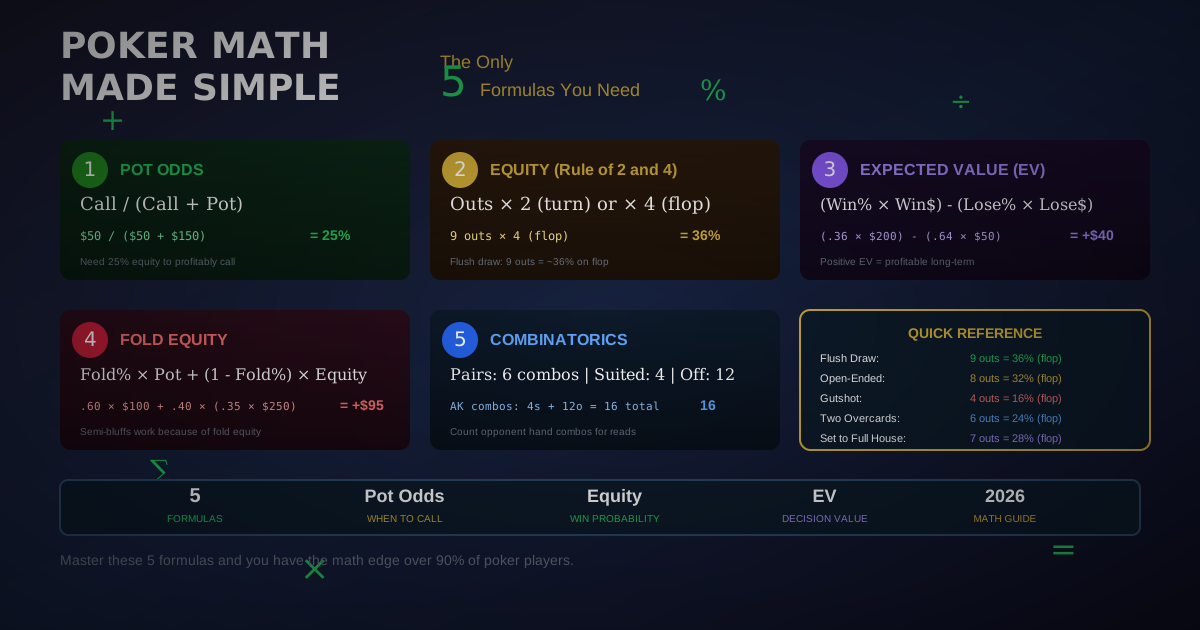
Before any bet, calculate the expected value. Do not estimate. Do not guess. Use a calculator. The act of performing a mathematical calculation engages your prefrontal cortex (rational brain) and dampens the influence of your limbic system (emotional brain).
Use our Expected Value Calculator before every bet to replace gut feelings with mathematics.
4. Keep a Betting Journal
Record every bet: the amount, your reasoning, the outcome, and---critically---your emotional state when you placed it. After 100 entries, patterns emerge. You will discover that your worst bets cluster around specific emotional states (tilted, euphoric, bored, chasing) and that your best bets are placed when you are calm, prepared, and following your system.
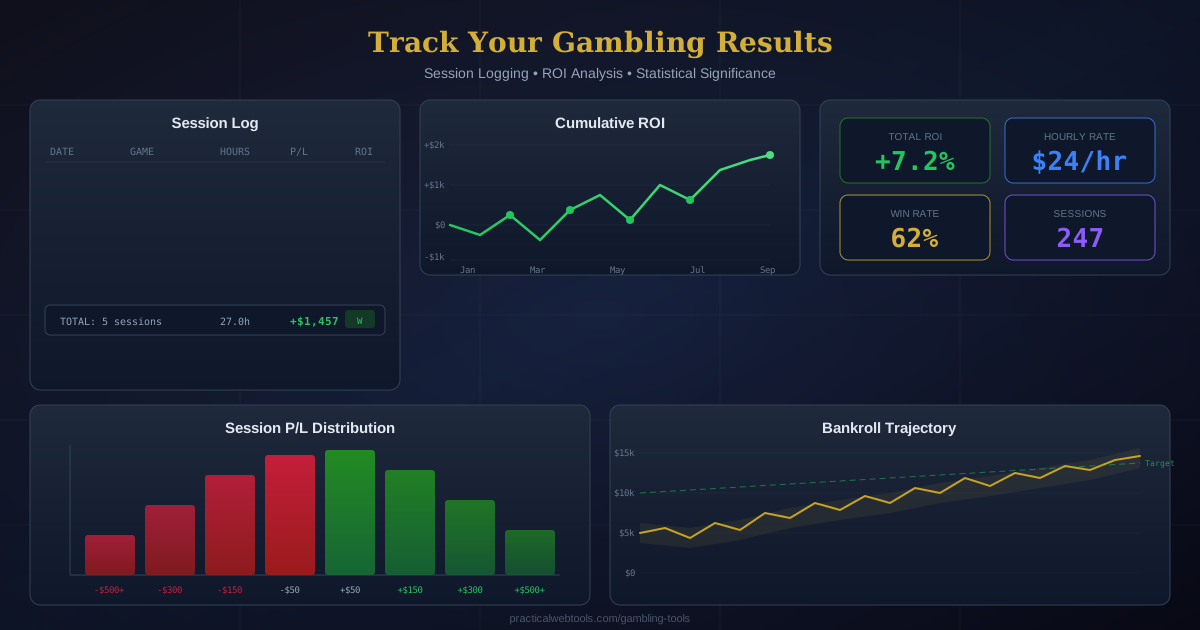
5. Track Your Results Honestly
Most gamblers overestimate their winnings and underestimate their losses because of confirmation bias and availability bias. Track every session, every bet, every dollar. The numbers do not lie, even when your memory does.
Self-Awareness Checklist: Are Your Biases in Control?
Use this checklist before and during any gambling session:
| Warning Sign | Bias in Control | What to Do |
|---|---|---|
| "I feel like this one is going to hit" | Overconfidence, Availability | Calculate EV, check your edge mathematically |
| "I am due for a win" | Gambler's Fallacy | Remind yourself: past outcomes do not affect future probabilities |
| "I just need to win back what I lost" | Loss Aversion, Sunk Cost | Accept the loss as final, evaluate next bet independently |
| "I am on a hot streak, can't stop now" | Hot Hand Fallacy | Wins do not predict future wins in independent events |
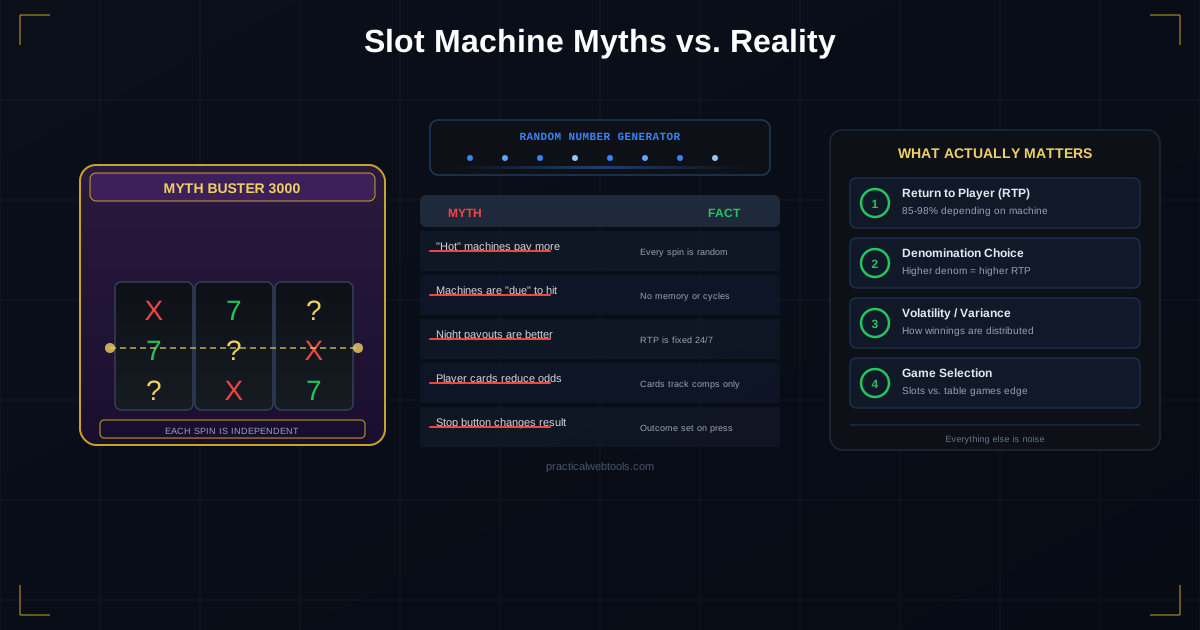
| "This machine is about to pay out" | Gambler's Fallacy, Near-Miss | Machines have no memory; every spin is independent |
| "I saw someone win big on this game" | Availability Bias | Recall the thousands of unseen losers |
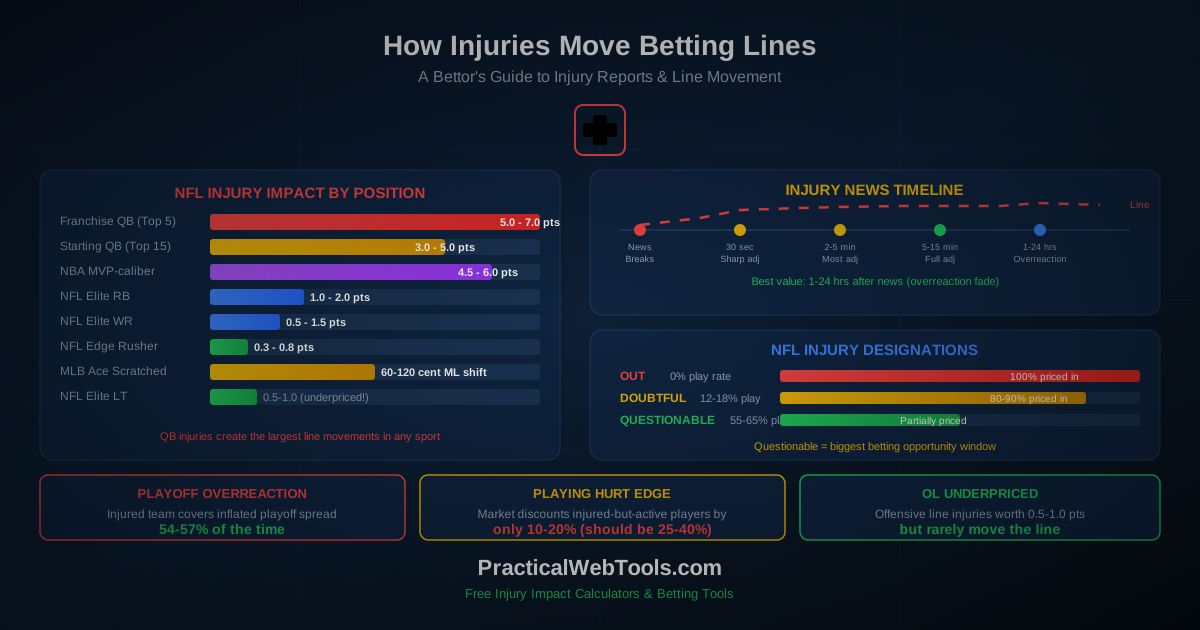
| "The line moved, so there must be value" | Anchoring Bias | Build your own projection before checking the market |
| "I have been playing for hours, I can't leave now" | Sunk Cost Fallacy | Time spent is gone; only future EV matters |
6. Use the Right Tools
Replace intuition with calculation. Every tool below is designed to short-circuit a specific cognitive bias by forcing mathematical analysis.
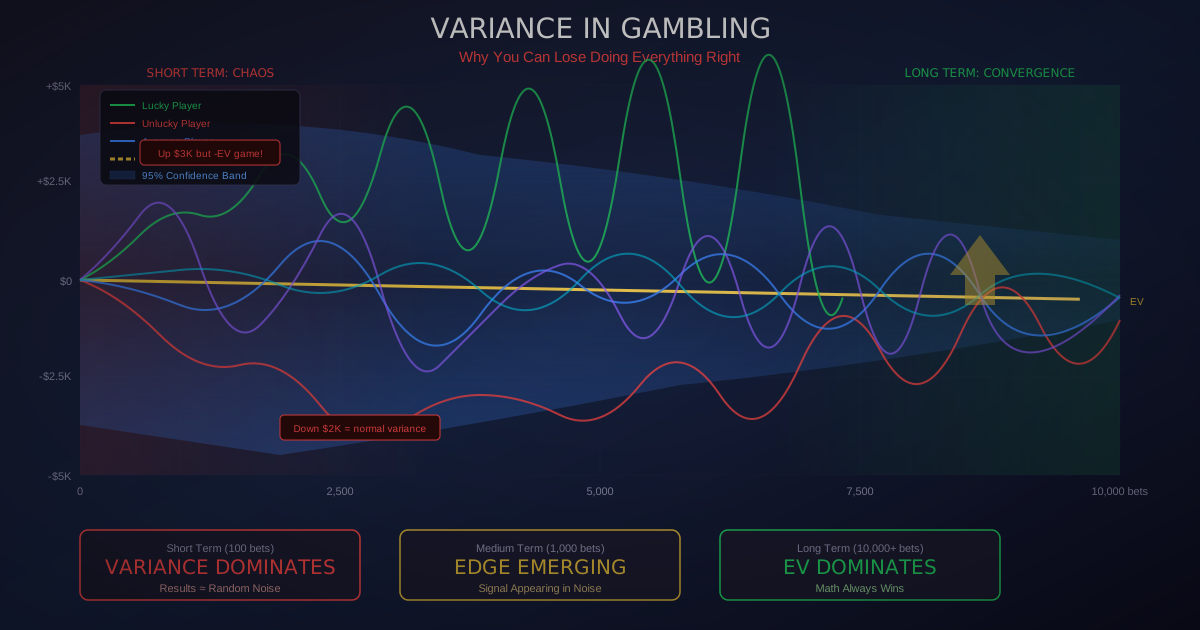
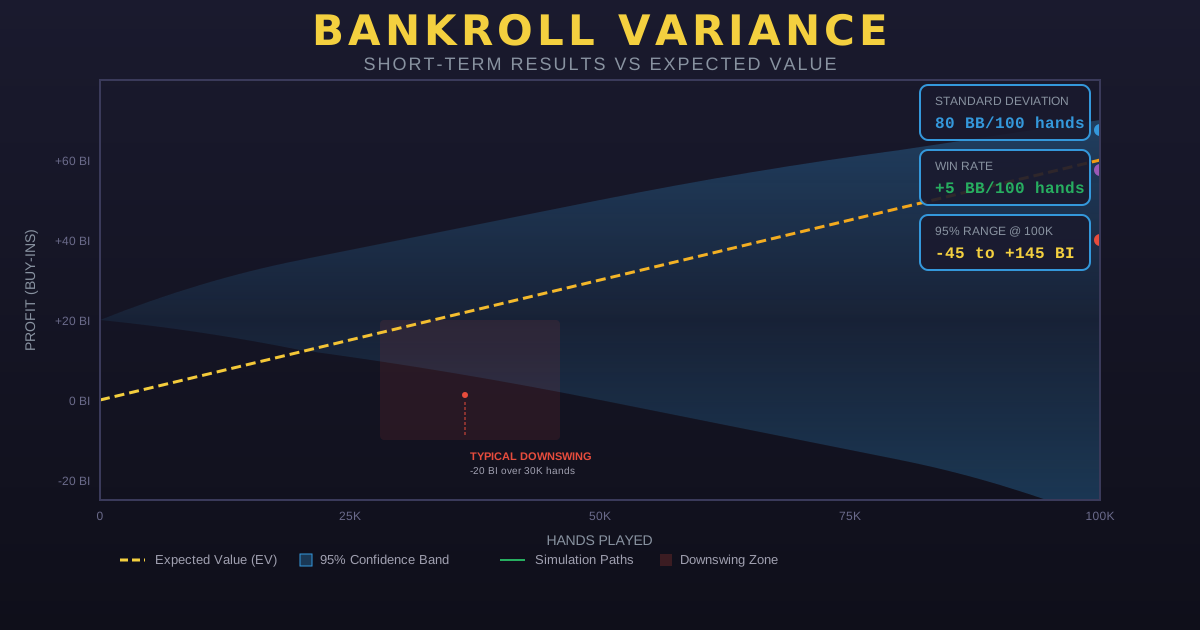
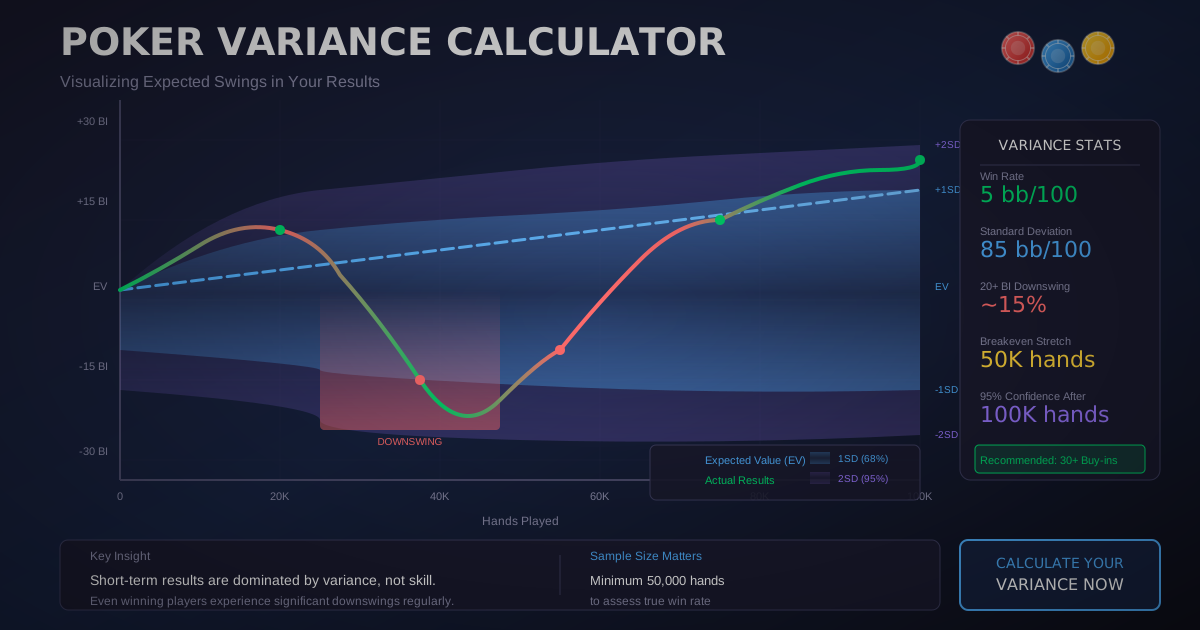
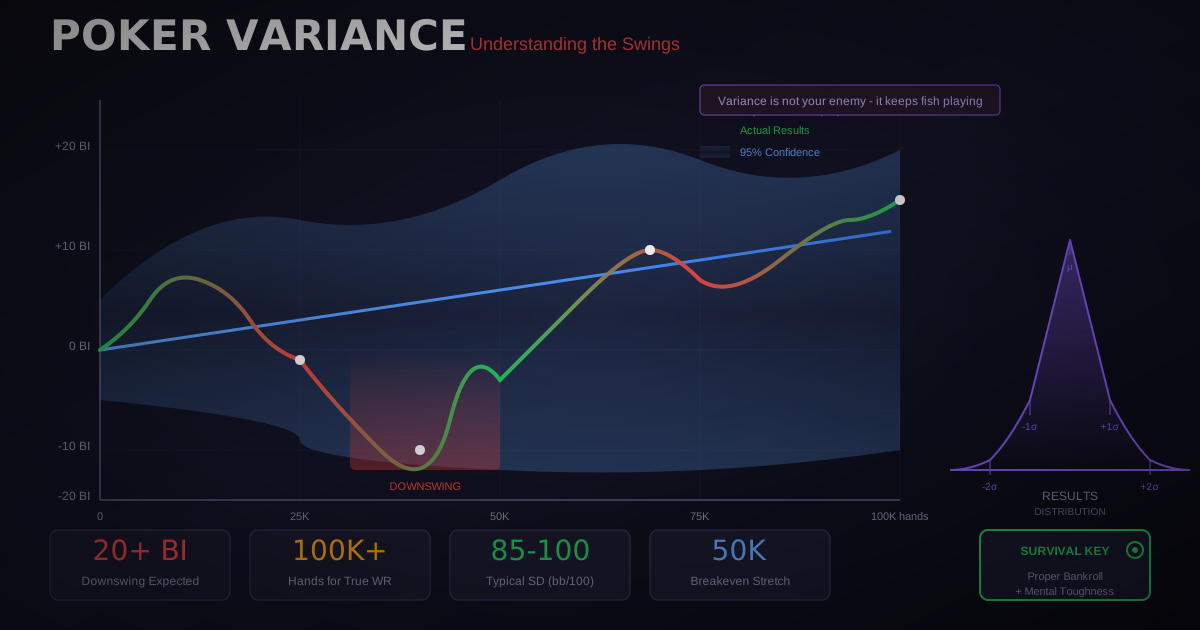
Calculate your long-term variance and expected downswings with our Poker Variance Calculator.
Frequently Asked Questions
What is the most common cognitive bias in gambling?
The gambler's fallacy is the most prevalent cognitive bias in gambling. It is the mistaken belief that past outcomes in independent random events influence future probabilities---for example, believing that red is "due" at roulette after a streak of blacks. Research by Kahneman and Tversky identified this as a product of the representativeness heuristic, where people expect small samples to mirror overall probability distributions. The gambler's fallacy operates in virtually every form of gambling, from slot machines to sports betting to poker.
Can intelligent people overcome gambling biases?
Intelligence alone does not protect against cognitive biases. Research published in Judgment and Decision Making found that cognitive biases affect individuals across all intelligence levels because they stem from automatic, unconscious cognitive processes rather than deliberate reasoning. A statistician who understands probability perfectly can still feel the pull of the gambler's fallacy. The key difference is not intelligence but awareness and systematic defenses: pre-commitment strategies, mathematical calculation tools, and structured decision-making processes that engage the rational prefrontal cortex over the emotional limbic system.
How do casinos use psychology to keep players gambling?
Casinos employ a comprehensive suite of environmental manipulations: removing clocks and windows to eliminate time awareness, using chip-based betting to abstract the pain of losing real money, programming slot machines to display near-misses at rates 3-4x higher than random chance, scenting the air (studies show 45% more money wagered in odorized areas), using maze-like layouts to prevent easy exits, offering free alcohol to impair judgment, and celebrating small wins with disproportionate audiovisual feedback. Every element is designed to amplify cognitive biases and suppress rational decision-making.
What is loss aversion and how does it affect gambling?
Loss aversion, discovered by Kahneman and Tversky as part of Prospect Theory, is the finding that the psychological pain of losing is approximately twice as powerful as the pleasure of an equivalent gain. In gambling, this means a $500 loss causes roughly twice the emotional distress that a $500 win causes pleasure. This asymmetry drives loss-chasing behavior: gamblers take increasingly risky bets to "get back to even" because the pain of the existing loss is so disproportionate that it overrides rational risk assessment. Loss aversion is the primary driver of the most expensive gambling mistakes.
What is the near-miss effect in slot machines?
The near-miss effect occurs when a gambling outcome falls just short of a win---for example, two jackpot symbols appearing with the third landing one position away. Neuroimaging research has shown that near-misses activate the brain's reward circuitry (ventral striatum) in a manner nearly identical to actual wins, releasing dopamine and creating a feeling of "almost winning" that motivates continued play. Modern slot machines are programmed to display near-misses on 30-40% of losing spins, far exceeding the 5-10% that random chance would produce. This engineering exploits an involuntary neurological response that players cannot consciously override.
How does the sunk cost fallacy apply to gambling?
The sunk cost fallacy in gambling is the tendency to continue betting because of money already lost, rather than evaluating future bets on their own merits. A gambler who has lost $400 at a slot machine continues playing not because the next spin has positive expected value (it does not) but because walking away would "waste" the $400 already spent. The critical error is treating lost money as a recoverable investment rather than an irrecoverable cost. Every future bet should be evaluated independently based on its own expected value, regardless of past results.
What is the best way to avoid cognitive biases when gambling?
The most effective approach combines multiple strategies: (1) Pre-commitment---set loss limits, session times, and bet sizes before you begin, (2) Mathematical calculation---use expected value calculators for every bet rather than relying on intuition, (3) Journaling---record bets, reasoning, and emotional states to identify bias patterns, (4) The 10-minute rule---delay all impulsive bet increases by 10 minutes to let dopamine spikes subside, (5) Honest tracking---log every session to counter the availability bias that makes you remember wins and forget losses. No single technique eliminates biases, but a layered system significantly reduces their financial impact.
Does knowing about cognitive biases make you immune to them?
No. Cognitive biases are not products of ignorance---they are products of neural architecture. Knowing about the gambler's fallacy does not stop your brain from feeling that red is "due." Knowing about loss aversion does not eliminate the disproportionate pain of a loss. What knowledge provides is the ability to recognize when a bias is operating, pause, and apply a systematic correction (such as calculating expected value before acting). Think of bias awareness as installing guardrails, not eliminating the cliff. You will still feel the pull toward irrational decisions. The goal is to prevent those feelings from controlling your actions.
Tools to Fight Your Biases
The following calculators are designed to replace intuition with mathematics, which is the single most effective defense against cognitive biases in gambling:
- Expected Value Calculator --- Calculate the true mathematical edge of any bet before emotional biases influence your decision.
- Kelly Criterion Calculator --- Determine mathematically optimal bet sizes that maximize growth while minimizing ruin, counteracting overconfidence bias.
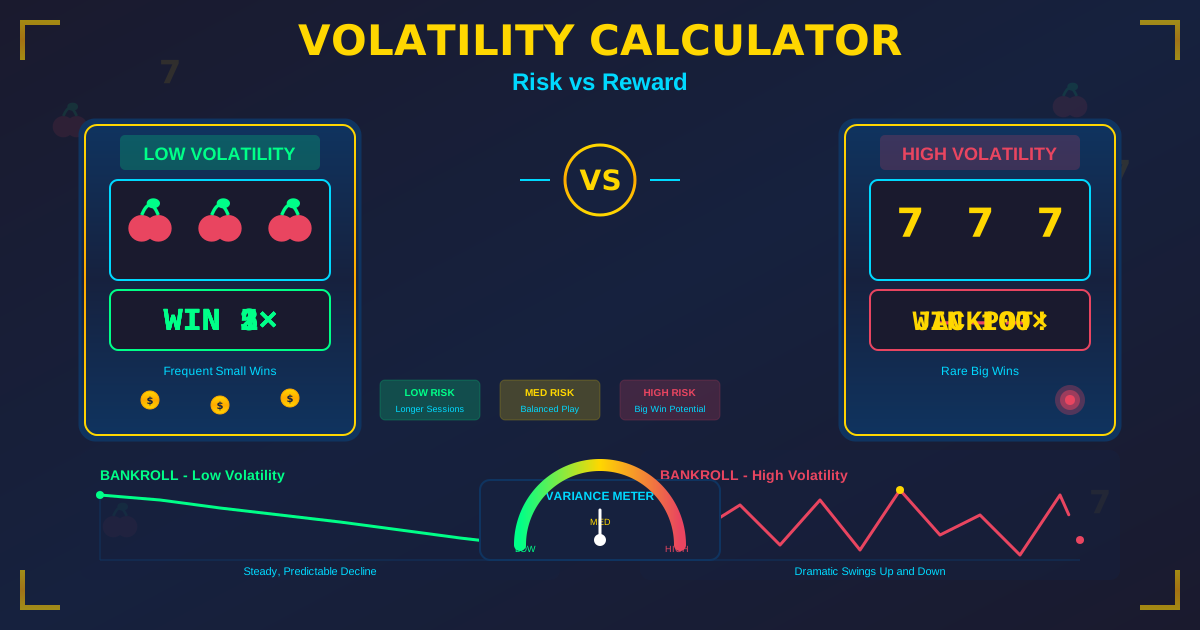
- Poker Variance Calculator --- Visualize the range of possible outcomes to set realistic expectations and combat outcome bias.
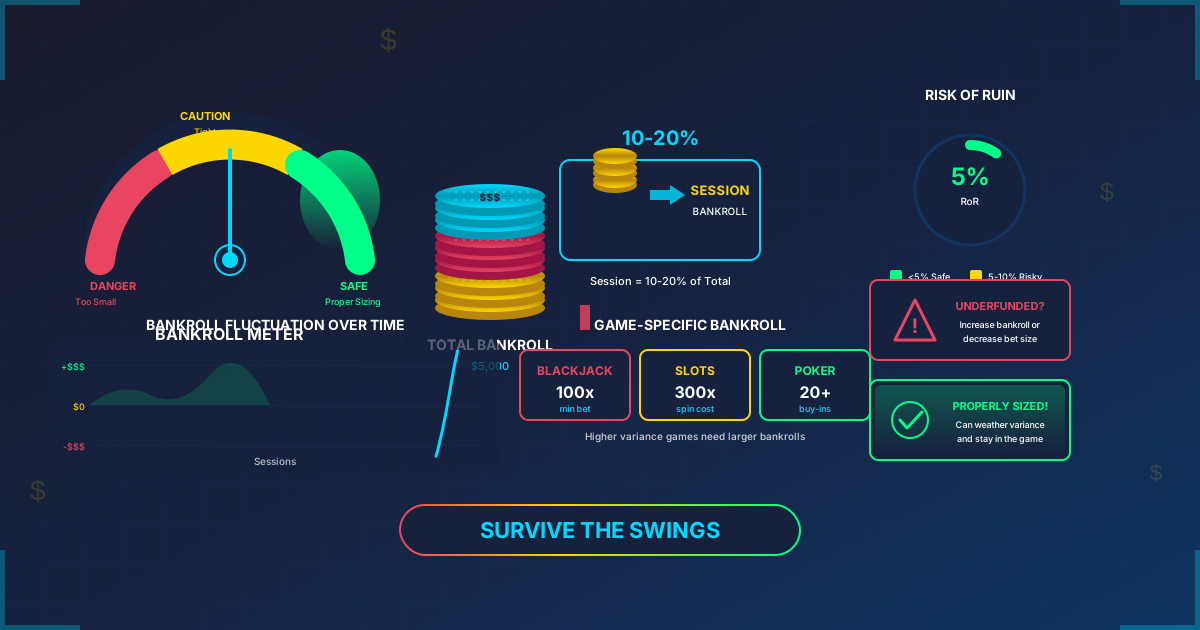
- Poker Bankroll Requirements --- Calculate the bankroll needed for your stakes to prevent tilt-induced shots at higher limits.
- Poker Risk of Ruin Calculator --- Quantify your probability of going broke to counteract overconfidence and inadequate bankroll management.
- Implied Probability Calculator --- Convert any odds format into true probability to identify when lines are mispriced versus when your brain is seeing value that does not exist.
Conclusion
Every cognitive bias described in this guide is operating in your brain right now, whether you are aware of it or not. The gambler's fallacy, loss aversion, confirmation bias, anchoring, the near-miss effect, overconfidence, availability bias, and the sunk cost fallacy are not character flaws. They are features of human cognition that evolved to serve you in a world without roulette wheels and sportsbook apps.
The gambling industry understands your psychology with scientific precision. Casinos are engineered environments designed to amplify your biases and suppress your rationality. Sportsbooks set lines that exploit public perception errors. Slot machines are programmed to manipulate your dopamine system with carefully calibrated near-misses.
Your defense is not to pretend these biases do not affect you. It is to build systems that constrain your behavior when your biases take over: pre-commitment strategies, mathematical tools, honest record-keeping, and the discipline to pause before acting on impulse. The smartest gambler is not the one who thinks they are immune to bias. It is the one who knows they are not and plans accordingly.
Start making mathematically informed decisions. Use our complete suite of free gambling calculators and tools to replace gut feelings with calculations.
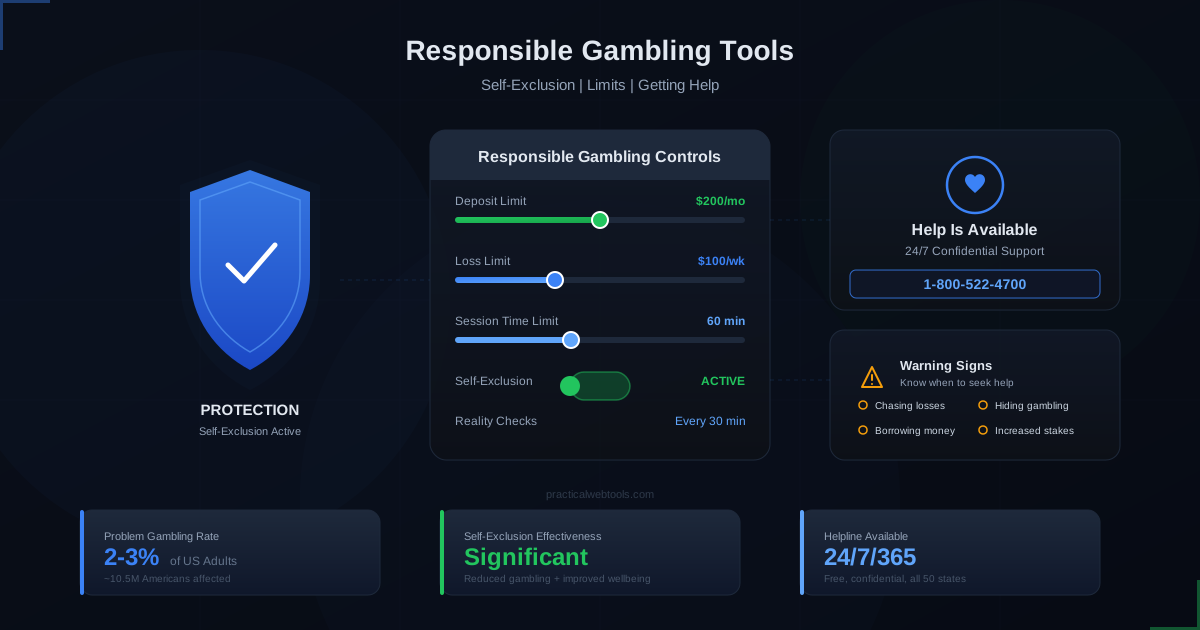
Gambling involves risk. This content is for educational and informational purposes only. Always gamble responsibly, set limits you can afford, and seek help if gambling becomes a problem. Visit the National Council on Problem Gambling or call 1-800-522-4700 for support.