M-Ratio Calculator: Tournament Stack Assessment (2026)
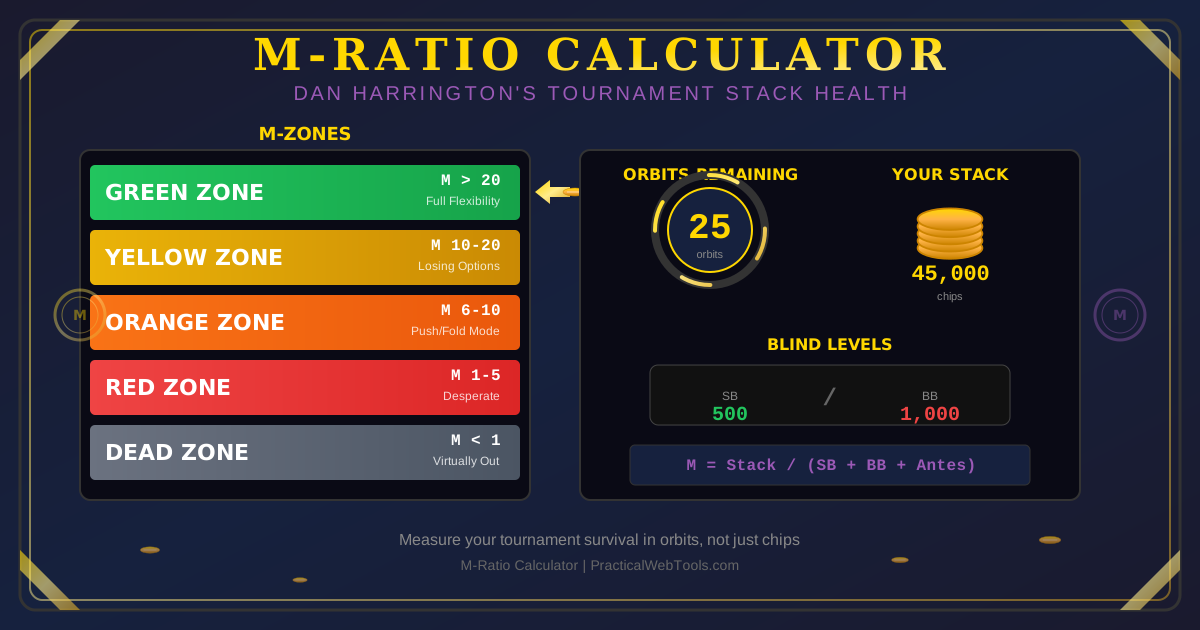
M-Ratio Calculator: Tournament Stack Survival
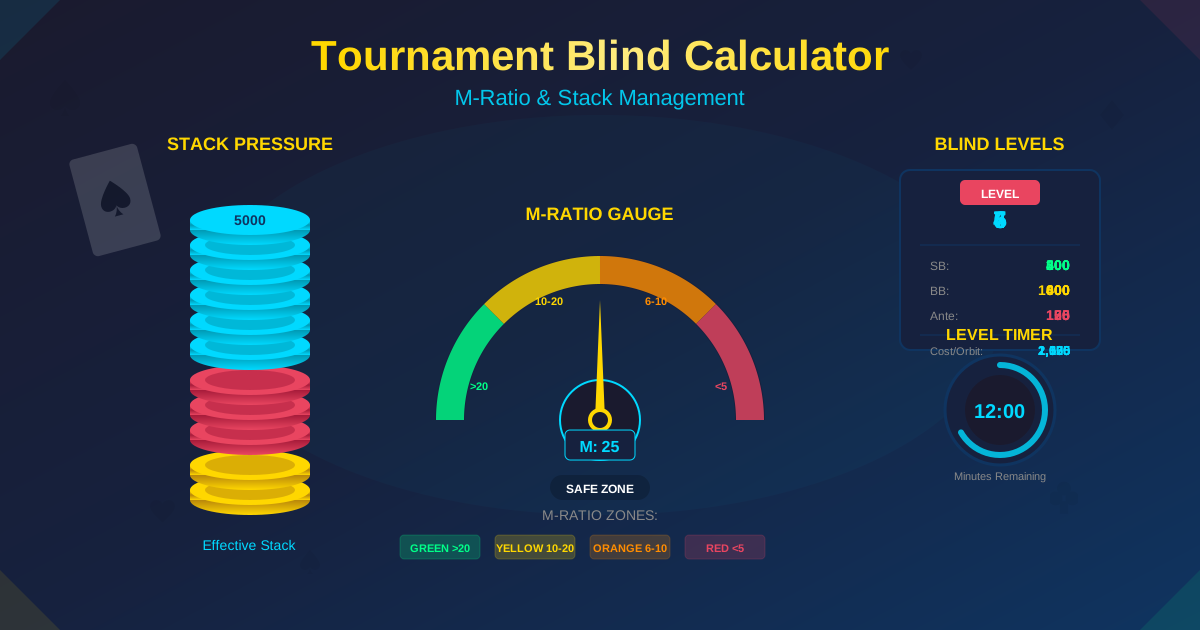
The M-Ratio measures tournament stack health—how many orbits you can survive before being blinded away. Our calculator reveals your M-Zone, when to shift from standard play to push/fold, and how Dan Harrington's revolutionary concept guides tournament survival.
What Is M-Ratio?
M-Ratio (or just "M") is your stack divided by the cost of one orbit (small blind + big blind + antes). An M of 20 means you can survive 20 orbits playing zero hands. Lower M requires more aggression; higher M allows patient play. This concept was popularized by Dan Harrington.
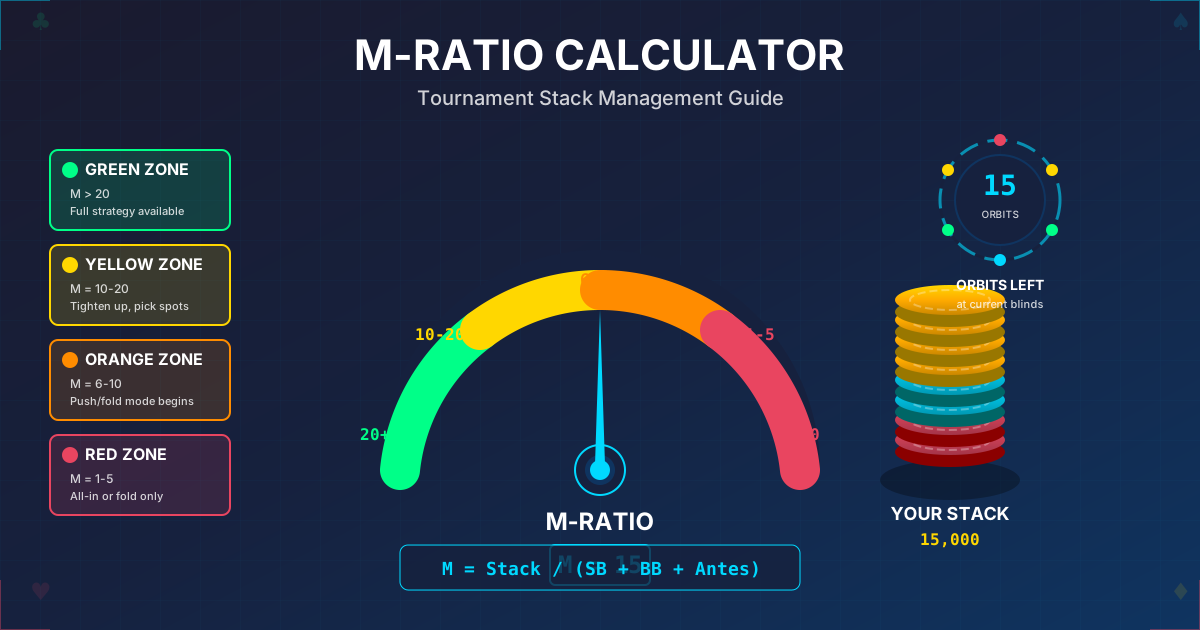
Quick Answer: M = Stack ÷ (SB + BB + Antes). Measures orbits of survival. Green Zone M>20: Full strategy. Yellow Zone M 10-20: Tighten, add aggression. Orange Zone M 6-10: Push/fold approaching. Red Zone M 1-5: Push/fold mode. Dead Zone M<1: Almost dead. Guides tournament aggression levels.
How to Use Our Calculator
Calculate your tournament M-Ratio.
Step-by-Step Instructions
-
Enter Your Stack: Current chip count
-
Input Blinds: Small and big blind
-
Add Antes: If applicable
-
View M-Ratio: Your current M
-
Check Zone: Strategy recommendation
Input Fields Explained
| Field | Description | Example |
|---|---|---|
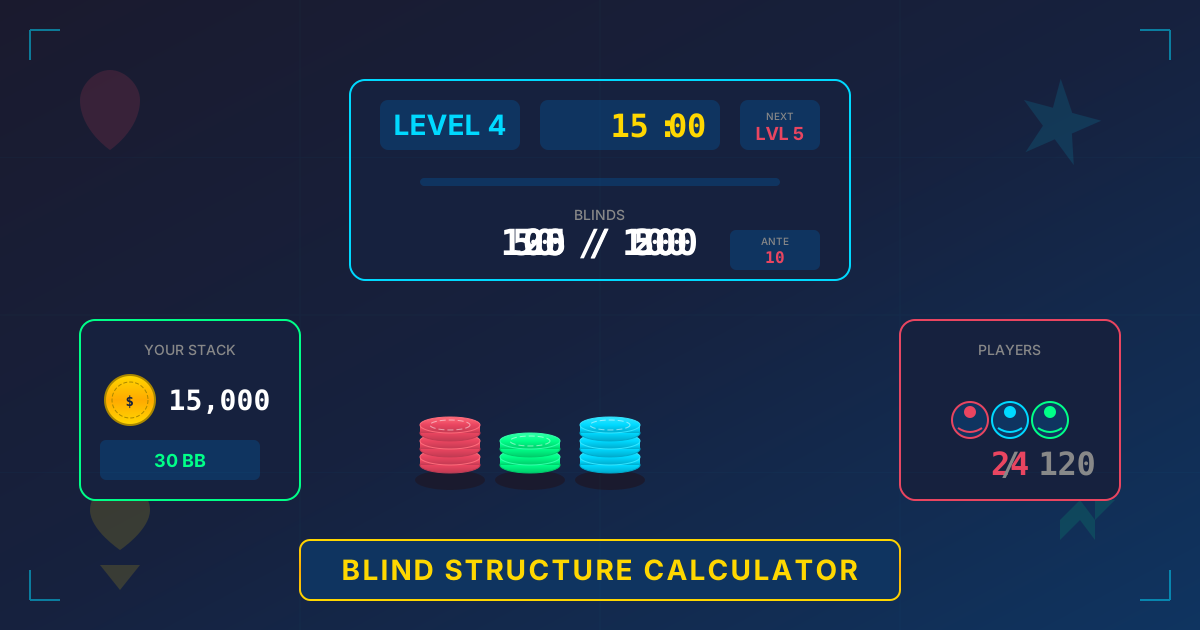
| Stack | Your chips | 15,000 |
| Small Blind | SB amount | 200 |
| Big Blind | BB amount | 400 |
| Antes | Per player ante | 50×9 = 450 |
| M-Ratio | Stack ÷ Orbit Cost | 14.3 |
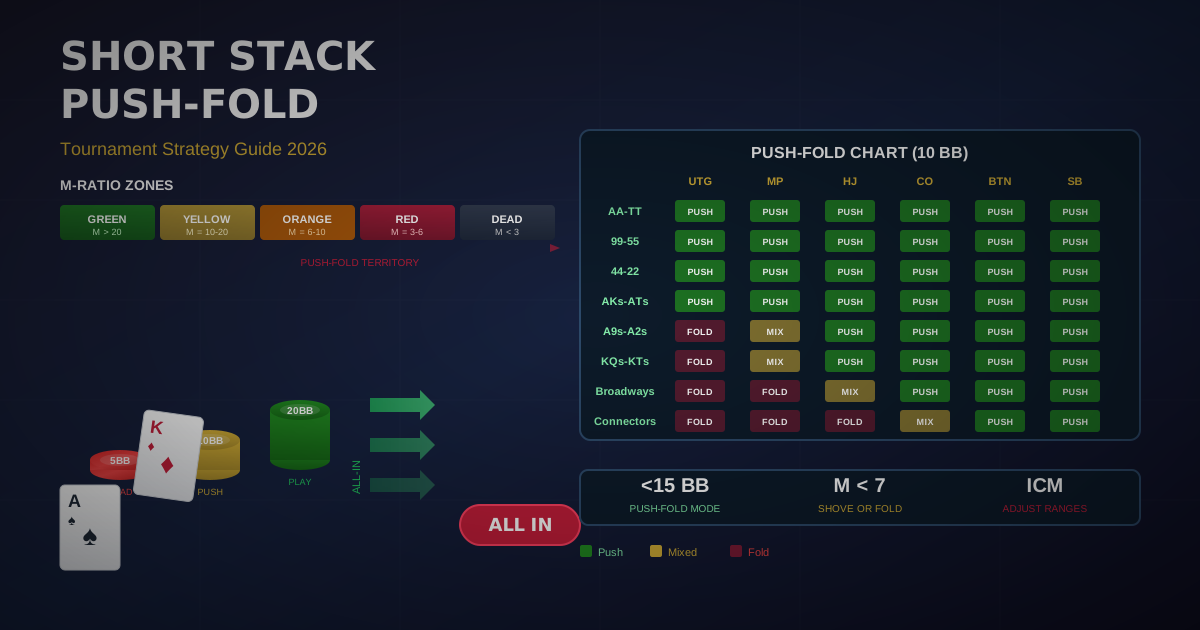
The M-Zones
Green Zone (M > 20)
Green Zone strategy:

M > 20
Full poker freedom
All strategies available

What you can do:
Limp, raise, 3-bet
Play drawing hands
Set mine profitably
Make moves post-flop
No survival pressure

Example:
Stack 50,000
Orbit cost 2,000
M = 25
Play normal poker
Yellow Zone (M 10-20)
Yellow Zone strategy:

M = 10-20
Still flexible but aware
Tighten hand selection
Add preflop aggression

What changes:
Fewer speculative hands
More preflop raising
Less calling
Position more important

Example:
Stack 30,000
Orbit cost 2,000
M = 15
Be selective, be aggressive
Orange Zone (M 6-10)
Orange Zone strategy:

M = 6-10
Approaching push/fold
First-in aggression key
No more limping

What changes:
Shove or fold with many hands
3-betting = shoving
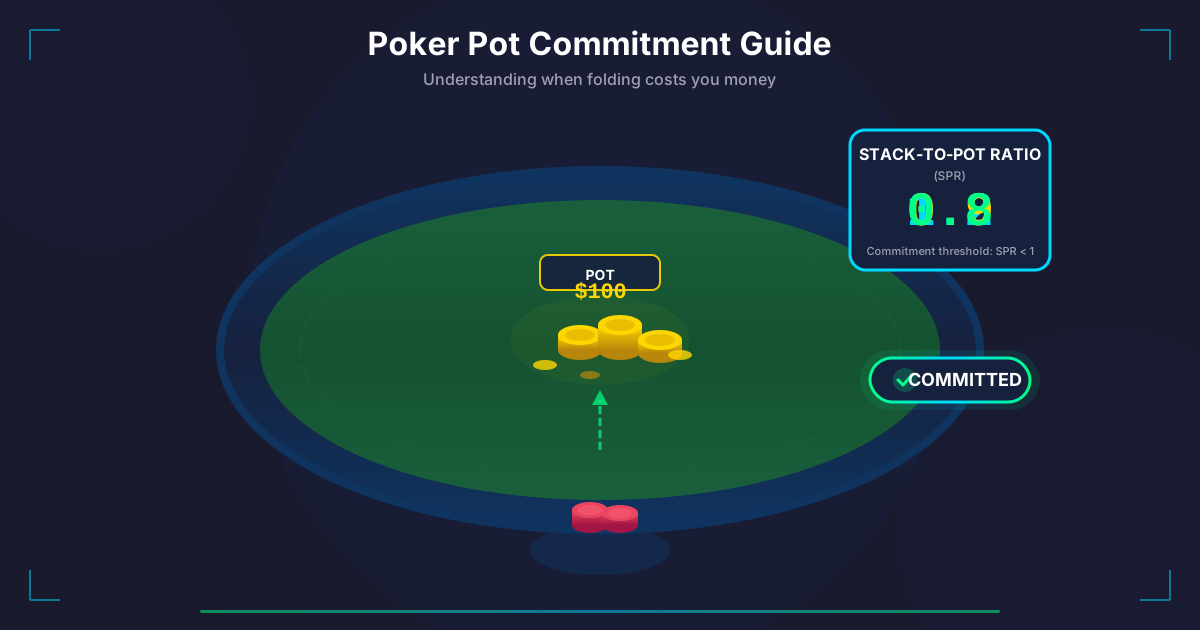
Calling = committing
Simple poker

Example:
Stack 16,000
Orbit cost 2,000
M = 8
Shove with wide range
Red Zone (M 1-5)
Red Zone strategy:

M = 1-5
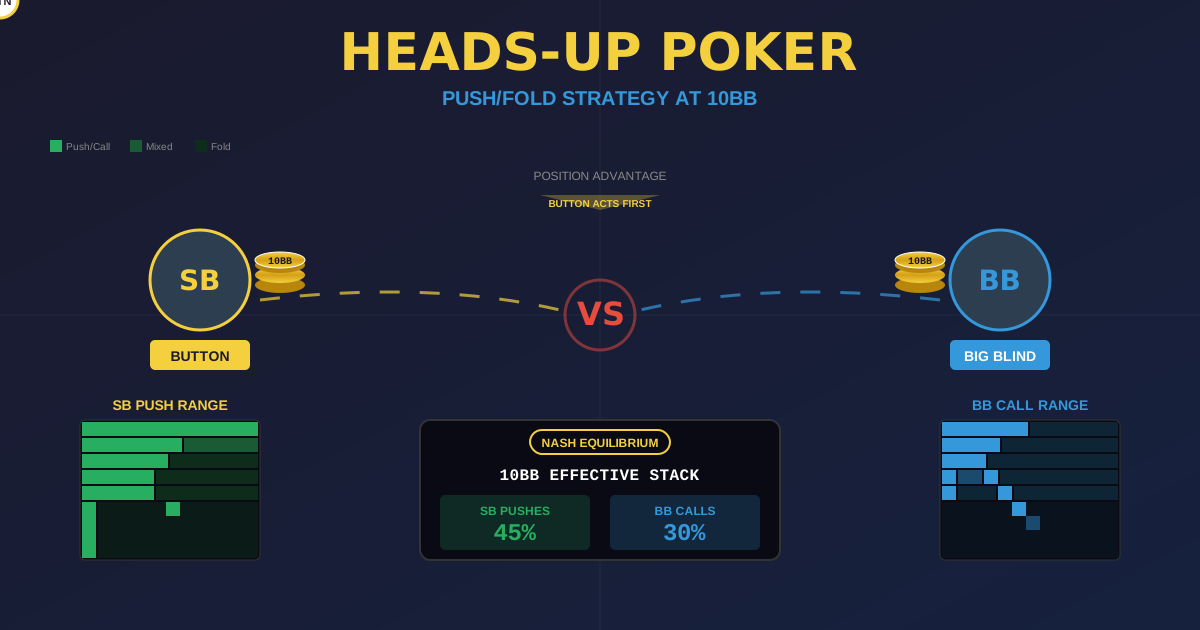
Push/fold only
Any first-in = shove
Fold equity critical

What changes:
No raising except all-in
Looking for spots to shove
Fold equity > card value
Survival mode

Example:
Stack 8,000
Orbit cost 2,000
M = 4
Shove Ax, Kx, pairs, suited
Dead Zone (M < 1)
Dead Zone reality:

M < 1
Desperately short
Any playable hand = shove
Almost no fold equity

What happens:
You'll be called
Need to win showdown
Take any chance

Example:
Stack 1,500
Orbit cost 2,000
M = 0.75
Shove anything decent
M-Ratio Calculations
Basic Formula
M = Stack ÷ (SB + BB + Antes)

Example 1 (no antes):
Stack: 20,000
SB: 100, BB: 200
Orbit cost: 300
M = 20,000 ÷ 300 = 66.7

Example 2 (with antes):
Stack: 20,000
SB: 200, BB: 400
Antes: 50 × 9 = 450
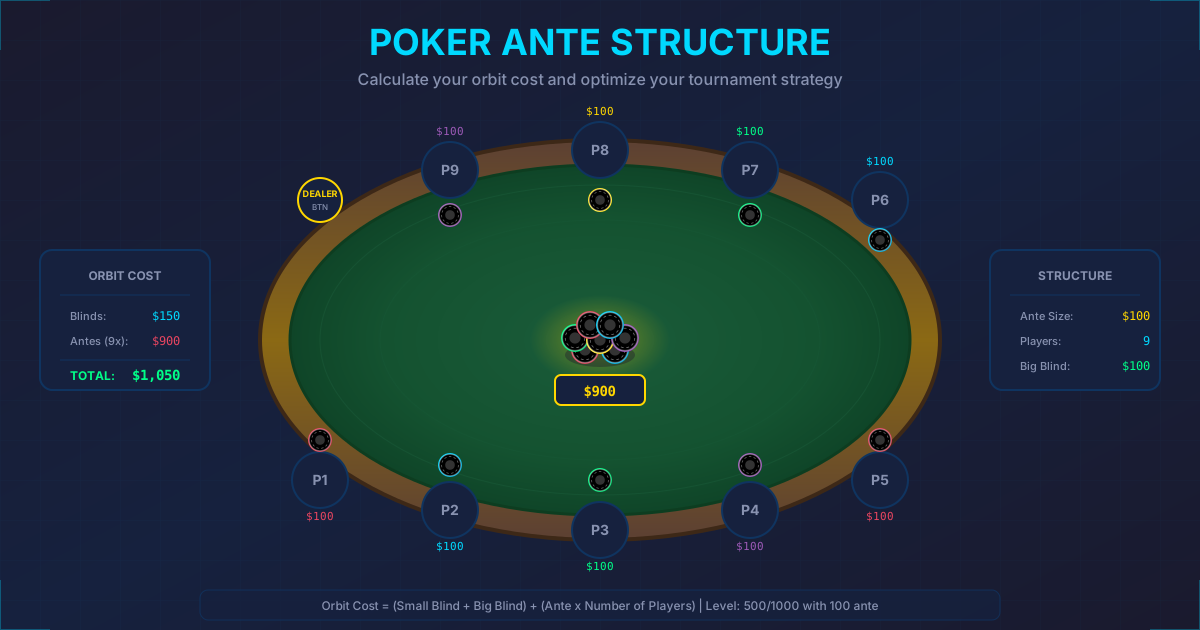
Orbit cost: 1,050
M = 20,000 ÷ 1,050 = 19
Effective M
Effective M (short-handed):

Standard M assumes full table (9-10)
Adjust for fewer players

Effective M = M × (Players/10)

Example:
Your M = 20
6-handed table
Effective M = 20 × (6/10) = 12

You're more orange than green
Blinds come faster
Strategy by Zone
Green Zone Play
M > 20 strategies:

Open wide from late position
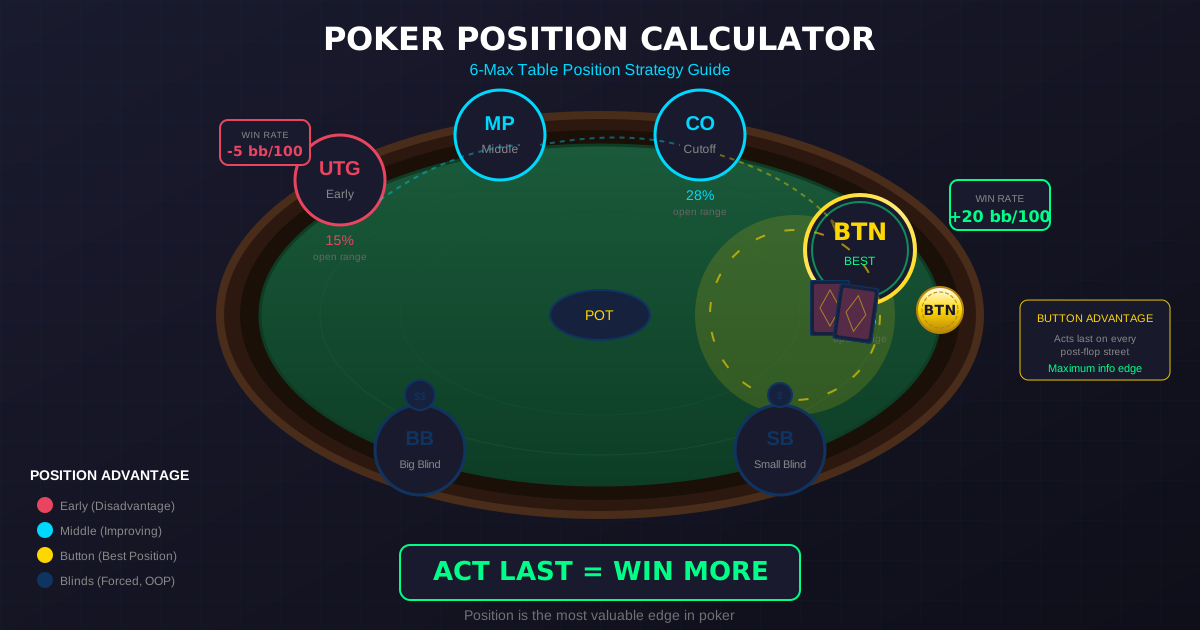
Defend blinds appropriately
3-bet for value and bluff
Play post-flop poker
Set-mine with small pairs
Play suited connectors
No rush, no panic
Yellow Zone Play
M 10-20 strategies:

Tighten opening range
Reduce calling
Increase 3-bet shoving
Avoid marginal spots
Position premium
Start accumulating or stay stable
Avoid big pots with medium hands
Orange Zone Play
M 6-10 strategies:

Shove or fold most spots
Open-shove becomes standard
Don't raise-fold
3-bet = all-in
Look for first-in spots
Any Ace, any pair
Suited broadways
Be first aggressor
Red Zone Play
M 1-5 strategies:

Push/fold charts
Any face card
Any Ace
Any pair
Suited connectors
Looking for double-up
Any fold equity is good
Don't wait for AA
Real-World Examples
Example 1: Green Zone Comfort
Full flexibility:
WSOP Main Event Day 2
Stack: 120,000
Blinds: 400/800/800 ante
9-handed

Orbit cost: 400 + 800 + 7,200 = 8,400
M = 120,000 ÷ 8,400 = 14.3

Yellow Zone—but close to green
Still plenty of play
Selective aggression
Normal poker available
Example 2: Orange Zone Shove
Limited options:
Online tournament
Stack: 18,000
Blinds: 500/1,000/100 ante
9-handed

Orbit cost: 500 + 1,000 + 900 = 2,400
M = 18,000 ÷ 2,400 = 7.5

Orange Zone
First-in with K♠T♦?
Shove! Don't raise-fold
Need fold equity
Example 3: Red Zone Desperation
Must move:
Final table bubble
Stack: 8,000
Blinds: 800/1,600/200 ante
8-handed

Orbit cost: 800 + 1,600 + 1,600 = 4,000
M = 8,000 ÷ 4,000 = 2

Red Zone
Shove with anything playable
7♠6♠ UTG? Maybe
A♣4♦ any position? Yes
No time to wait
Example 4: Dead Zone Prayer
All-in mentality:
Turbo tournament
Stack: 2,500
Blinds: 500/1,000/100 ante
6-handed

Orbit cost: 500 + 1,000 + 600 = 2,100
M = 2,500 ÷ 2,100 = 1.2

Dead Zone
Effective M even worse: 0.7
Shove next playable hand
Q♠8♦? Good enough
Need miracle
Common Mistakes
1. Ignoring Antes
Mistake: Calculating M without antes Problem: Underestimate true orbit cost Fix: Include total ante amount
2. Waiting Too Long
Mistake: Playing tight at M=6 Problem: Blinding down further Fix: Shove when M allows fold equity
3. Raising Small at Low M
Mistake: Open to 2.5bb at M=5 Problem: Committed if raised Fix: Shove or fold only
4. Ignoring Table Size
Mistake: Same M strategy 9-handed vs 5-handed Problem: Blinds hit faster short-handed Fix: Calculate effective M
Frequently Asked Questions
What's a good M-Ratio?
Green Zone (M>20) is comfortable. M<10 requires strategy changes. M<5 is push/fold territory.
How do antes affect M?
Significantly. A table with 100/200 blinds and 25×9 antes has orbit cost of 525, not 300. Always include antes.
When should I shift to push/fold?
Orange Zone (M 6-10) start incorporating more shoves. Red Zone (M 1-5) is pure push/fold.
Does position affect M strategy?
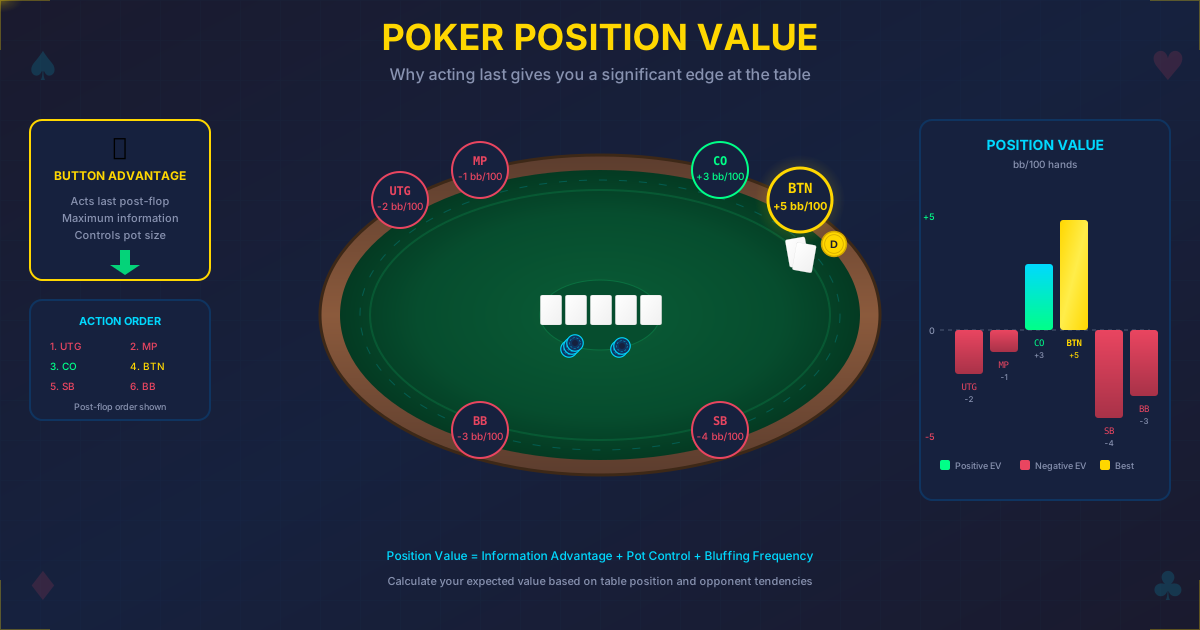
Yes. Same M but late position allows wider shoving. UTG at M=8 still needs decent hands.
How does effective M work?
Multiply M by (players/10). At 5-handed, your M=20 becomes effective M=10. Blinds hit twice as fast.
Can I rebuild from low M?
Yes, but requires luck. Double up once: M doubles. Get lucky twice from M=3: suddenly M=12.
Pro Tips
-
Include antes: Orbit cost = SB + BB + all antes
-
Know your zone: Strategy changes dramatically
-
M 6-10 is critical: Push/fold transition
-
Short-handed: Calculate effective M
-
Don't wait too long: Fold equity disappears
Related Calculators
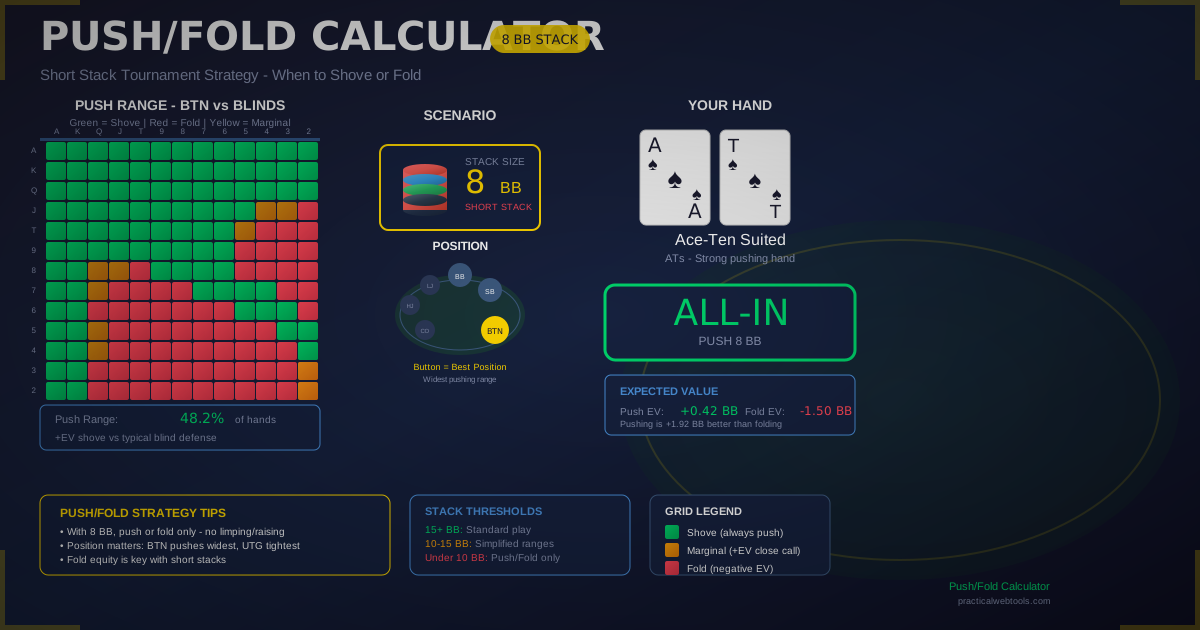
- Push/Fold Calculator - Shoving ranges
- ICM Calculator - Tournament equity
- Big Blind Calculator - Stack in BBs
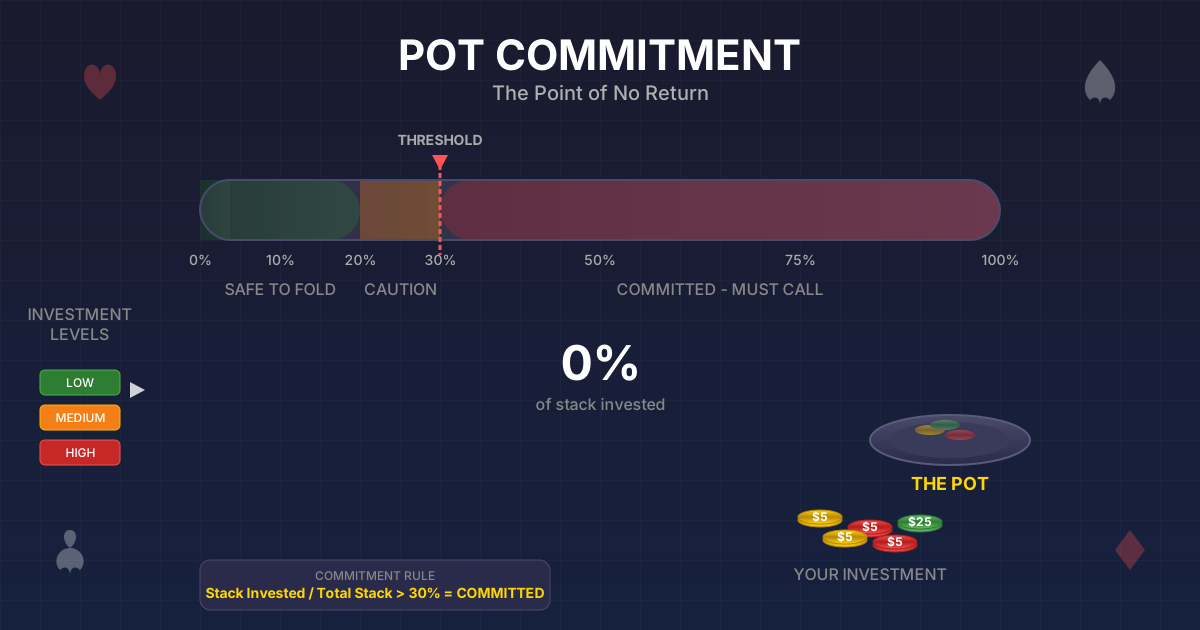
- Pot Commitment Calculator - Commitment
- Tournament EV Calculator - cEV analysis
Conclusion
M-Ratio reveals your tournament stack health—how many orbits you can survive and what strategies are available. Our calculator shows your M-Zone, when to shift from normal poker to push/fold, and why Dan Harrington's concept is essential for tournament survival.
You have 15,000 chips with blinds at 400/800 plus antes. Our calculator shows you're in the Orange Zone—time to start shoving or risk blinding away with no fold equity left.