NHL Betting Strategy: Puck Lines, Periods, and Hockey Handicapping (2026)
The NHL remains one of the most underappreciated betting markets in North American sports. While the NFL devours 40-50% of total sportsbook handle and the NBA commands the lion's share of the rest, hockey quietly offers sharper bettors some of the softest lines and most exploitable edges in the entire sports betting landscape. The reason is simple: less public money means less efficient markets, and less efficient markets mean more profitable opportunities for bettors who do their homework.
The 2025-2026 NHL season has delivered league-wide scoring averages hovering near 6.2 combined goals per game, continuing a multi-year trend of increased offense that has reshaped the totals market. Meanwhile, the parity across the league means underdogs win at rates that would shock NFL or NBA bettors, moneyline dogs are hitting at roughly 40-44% depending on home or away status, creating fertile ground for value plays. Home teams continue to win at approximately 56.6% across all game types, yet oddsmakers have become so efficient at pricing home ice that the Against The Spread record sits at a dead-even 50%.
This guide breaks down every angle of NHL betting: moneylines, puck lines, totals, period betting, goaltender analysis, scheduling edges, playoff adjustments, and live betting strategy. Whether you are a seasoned hockey bettor or placing your first puck line wager, the data-driven frameworks here will sharpen your approach and help you find edges the public misses.
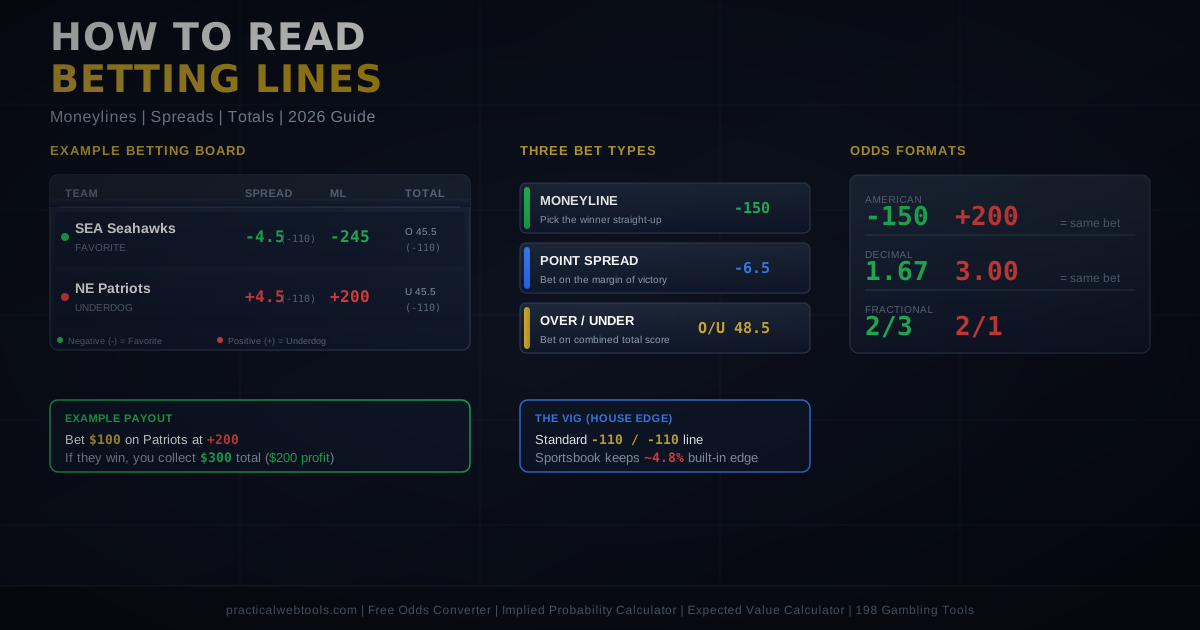
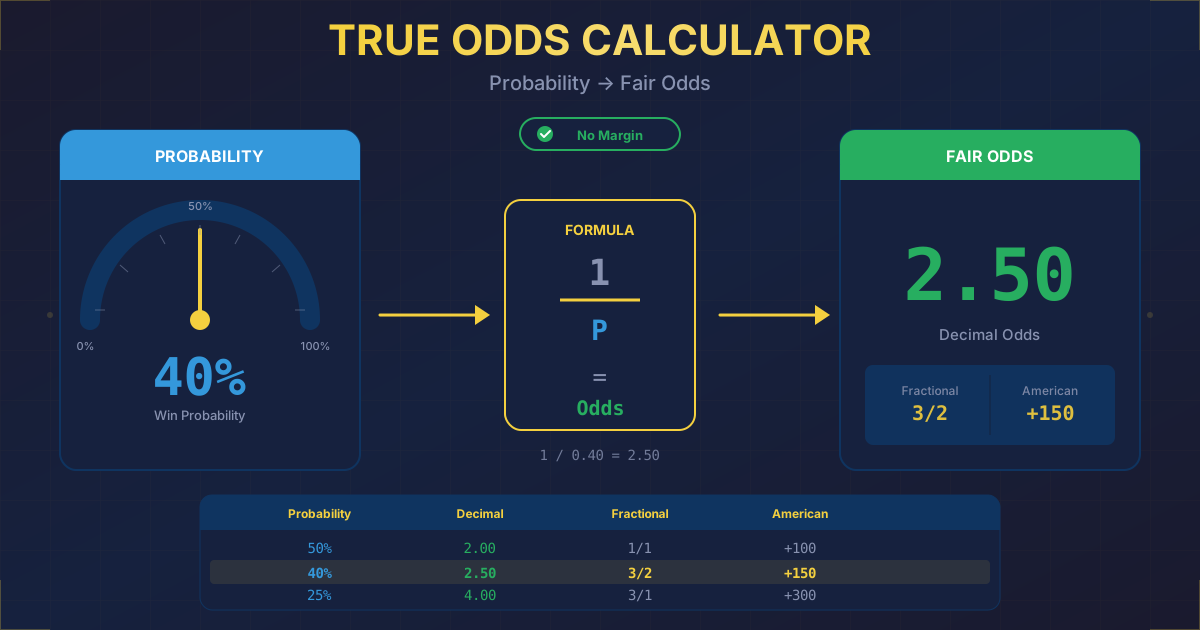
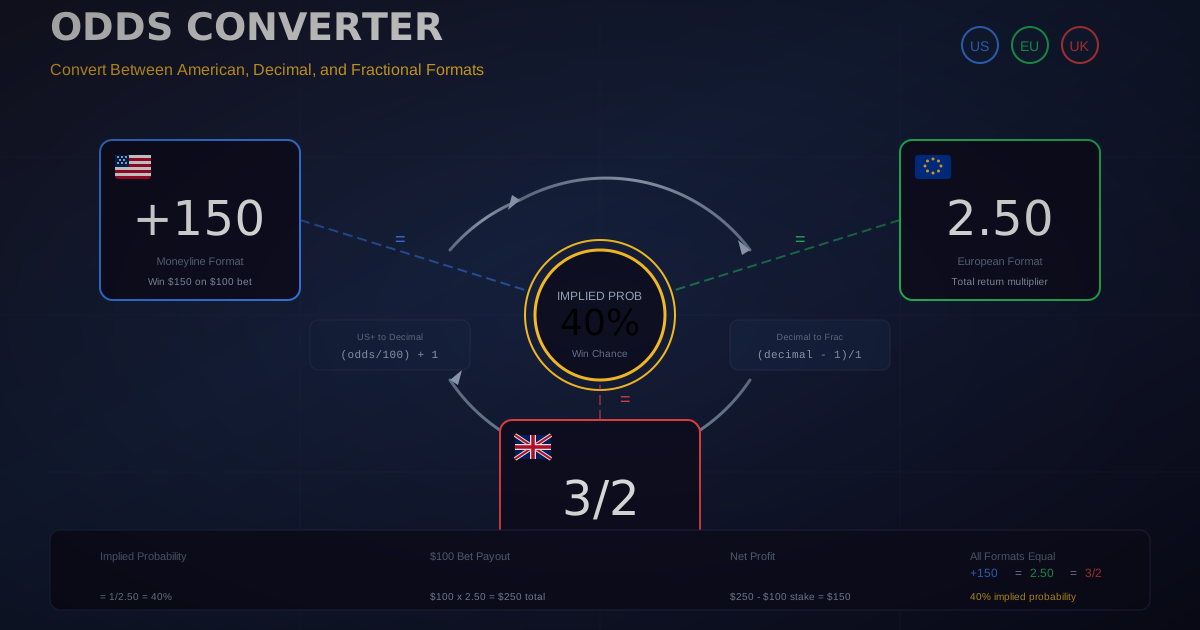
Convert any odds format and calculate your potential payout with our free Odds Converter.
The NHL Betting Market: Why Hockey Offers Hidden Value
The NHL betting market is smaller than football or basketball, and that is precisely what makes it attractive. Sportsbooks allocate fewer resources to setting and monitoring hockey lines, which means:
- Lines move less efficiently. Sharp money has a larger impact, and stale lines persist longer.
- Prop markets are thinner. Player props and period betting markets are less refined.
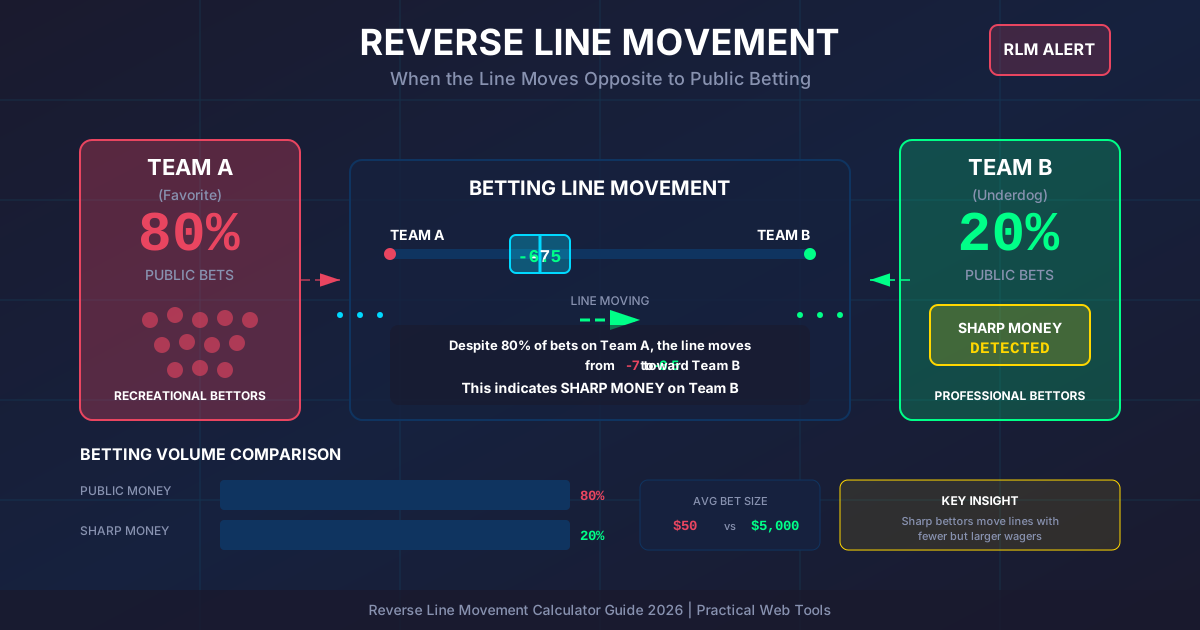
- Public bias is concentrated. Casual bettors overwhelmingly back favorites, large-market teams, and overs, creating predictable soft spots.
The NHL has 82 regular-season games per team, creating a massive 1,312-game sample across the league each season. That volume allows data-driven bettors to identify and exploit patterns with statistical confidence.
NHL Betting Market Overview (2025-2026)
| Metric | Value | Betting Implication |
|---|---|---|
| Games per team | 82 | Large sample for trend analysis |
| Total regular-season games | 1,312 | High volume = more opportunities |
| Average goals per game | ~6.2 combined | Totals market in flux |
| Home team win rate | 56.6% | Home ice advantage is real but priced in |
| Underdog win rate (road) | ~40.6% | Dogs hit often enough for profit |
| Underdog win rate (home) | ~44.4% | Home dogs are the sweet spot |
| Average line movement | 5-15 cents | Thinner market = bigger line swings |
The implication is clear: bettors who specialize in the NHL and develop sport-specific models have a genuine structural advantage over sportsbooks that spread their sharpest odds-making talent across football and basketball first.
NHL Moneyline Strategy: Parity Is Your Best Friend
The NHL is the most parity-driven of the four major North American professional sports leagues. The salary cap, the draft lottery, and the inherent randomness of a sport played on ice with a bouncing rubber puck all contribute to a league where any team can beat any other team on any given night.
Why Underdogs Are Profitable in Hockey
In the 2024-2025 season, road underdogs won approximately 40.6% of their games, and home underdogs won at an even more impressive 44.4%. Compare that to the NFL, where road underdogs of +7 or more win outright less than 25% of the time. The NHL's compressed talent distribution means the gap between the best team and the worst team is far smaller than in other sports.
Example: The Colorado Avalanche, currently the best home team in the league at an 84.6% home win rate, might be priced at -220 against a middling opponent. That implies a 68.8% win probability. But when they travel to face the same opponent, their line might only be -140, implying 58.3%. That swing of over 10 percentage points between home and away for the same team illustrates how much context matters in hockey.
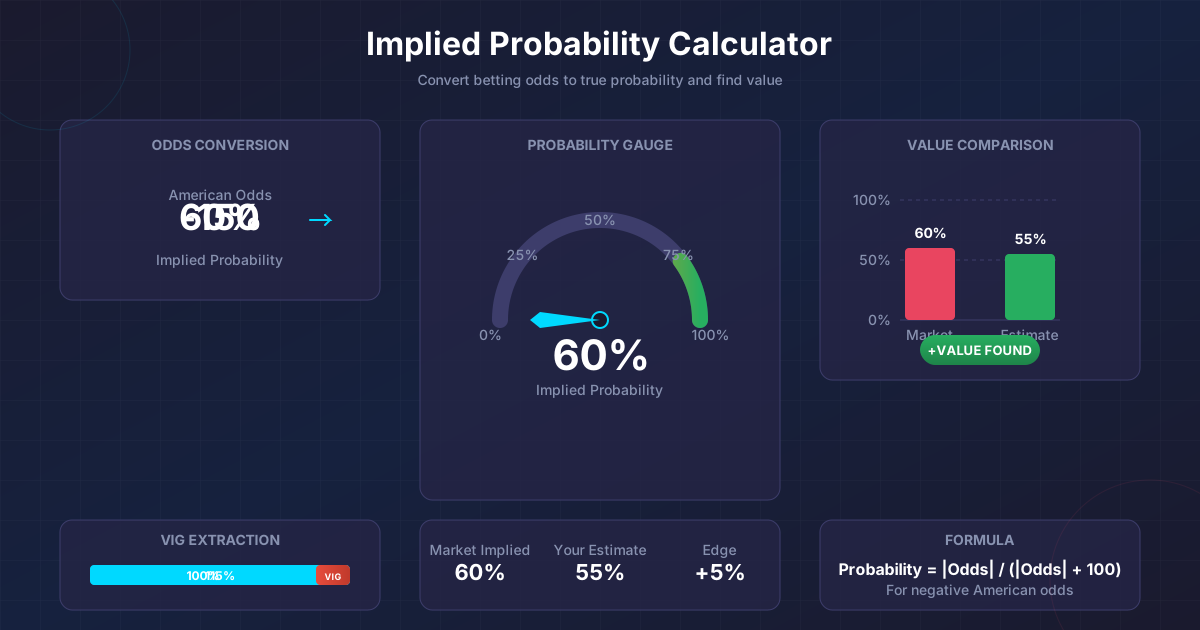
Check the implied probability behind any moneyline with our Implied Probability Calculator.
The Home Underdog Sweet Spot
The single most consistently profitable NHL betting angle over recent seasons has been the home underdog. Here is why:
| Scenario | Win Rate | ATS Cover Rate | Notes |
|---|---|---|---|
| Home favorites | 56.6% overall | 41.8% ATS | Overpriced by the public |
| Home underdogs | 44.4% | 63.9% ATS | Underpriced and undervalued |
| Road favorites | ~59.4% | ~50% ATS | Fairly priced by books |
| Road underdogs | ~40.6% | ~50% ATS | Selective value available |
Home underdogs cover the spread at a staggering 63.9%, compared to just 41.8% for home favorites. This is one of the most persistent edges in all of sports betting. The public reflexively backs favorites, especially on the road, inflating the price and creating value on the home side.
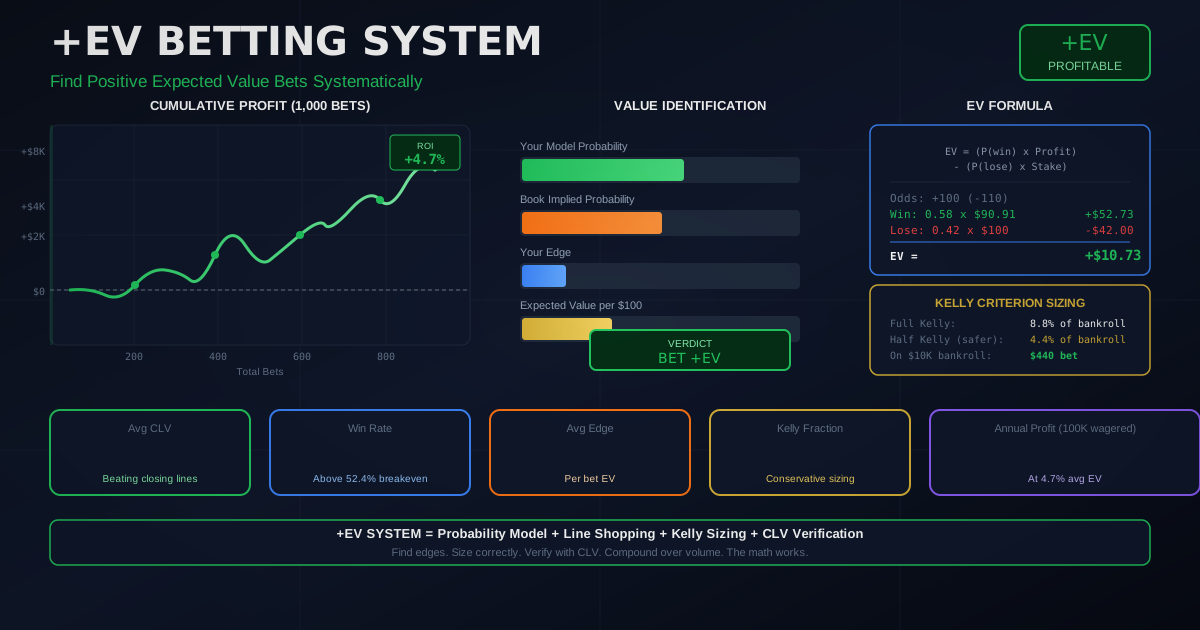
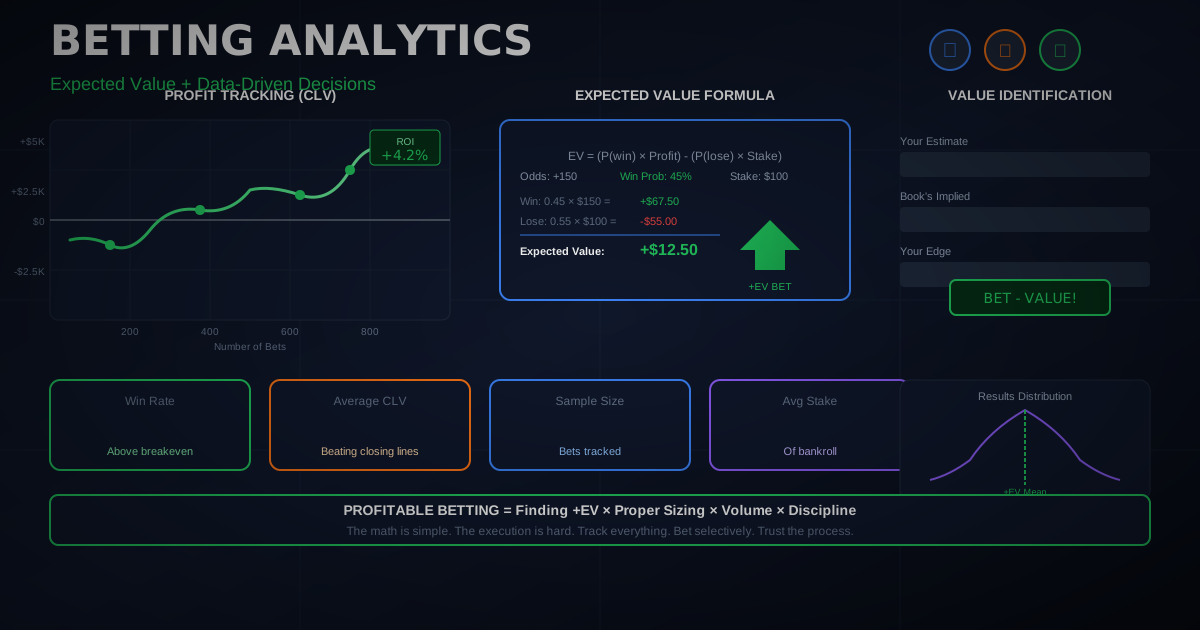
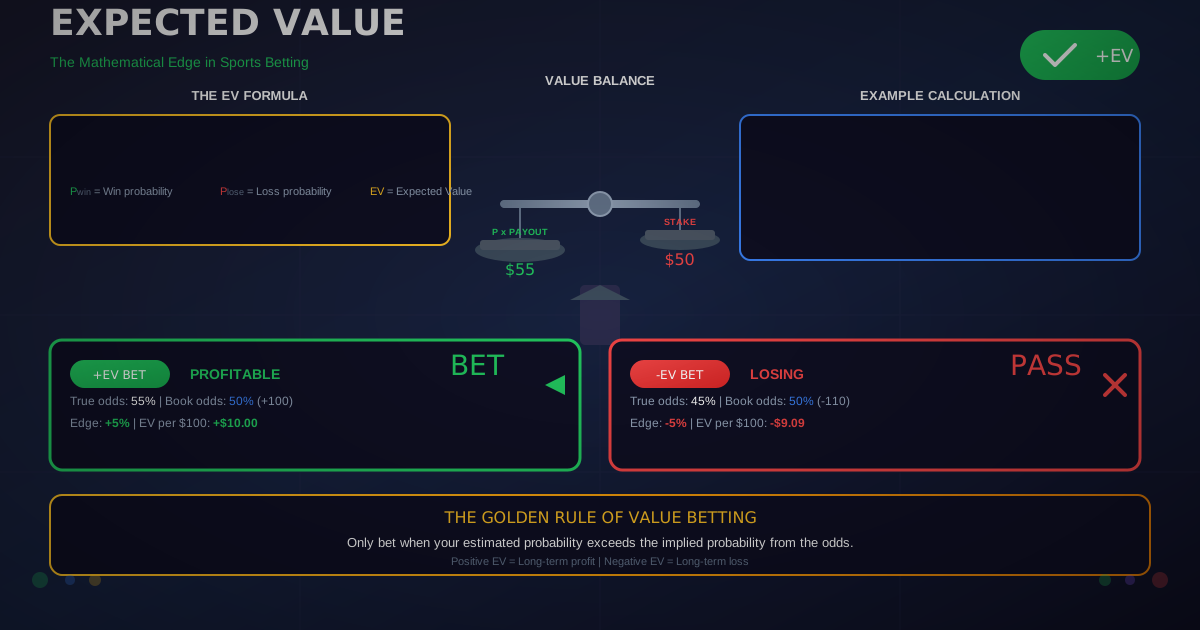
Example: The Ottawa Senators hosting the Tampa Bay Lightning might be listed at +145 on the moneyline. The implied probability is only 40.8%, but Ottawa's actual home win rate against comparable opponents is closer to 46%. A $100 bet at +145 returns $245 total. If you believe Ottawa wins 46% of the time, the expected value calculation becomes:
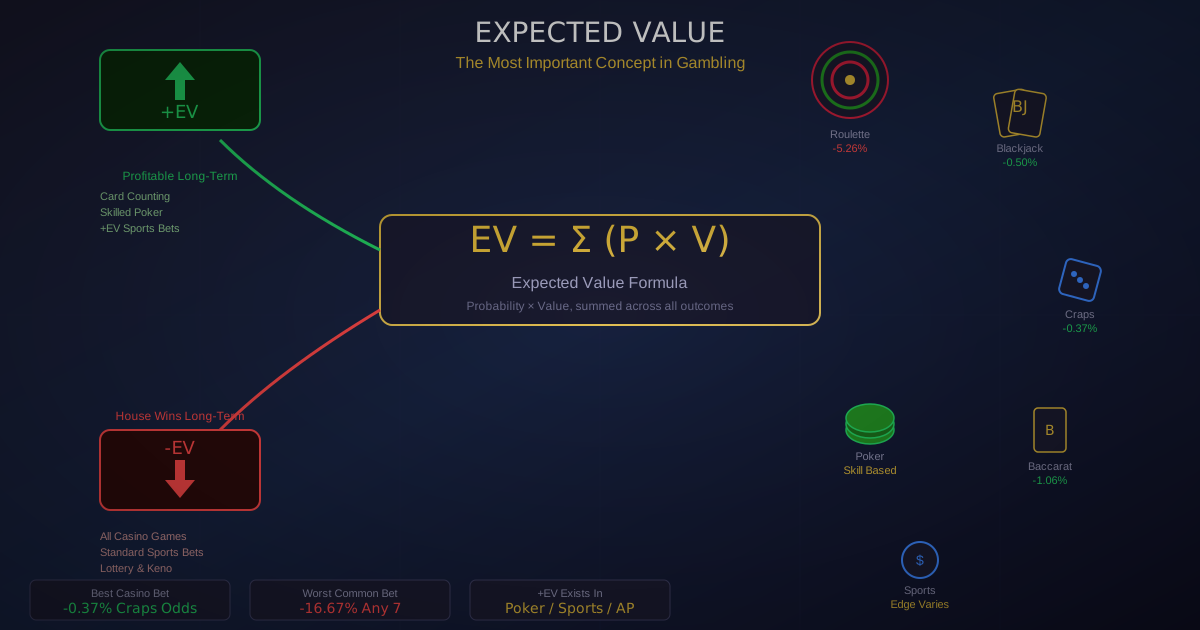
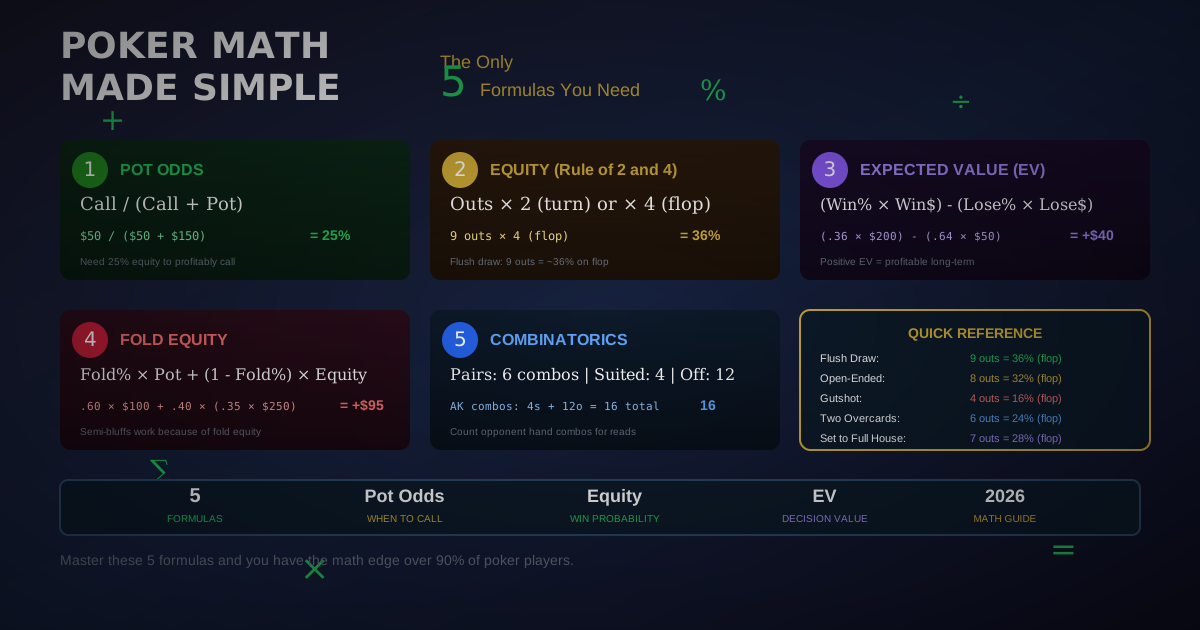
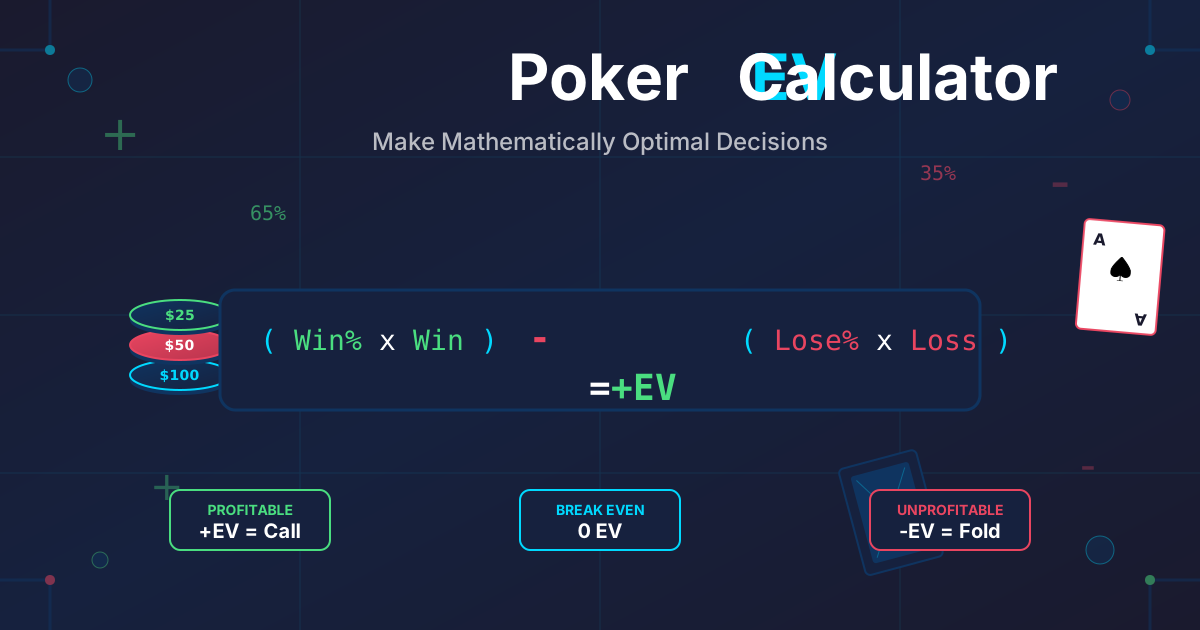
EV = (0.46 x $145) - (0.54 x $100) = $66.70 - $54.00 = +$12.70 per $100 wagered
That is a significant edge. Run that over 100 similar bets and your expected profit is $1,270.
Calculate the expected value of any NHL wager with our Expected Value Calculator.
Moneyline Staking: The Kelly Criterion Approach
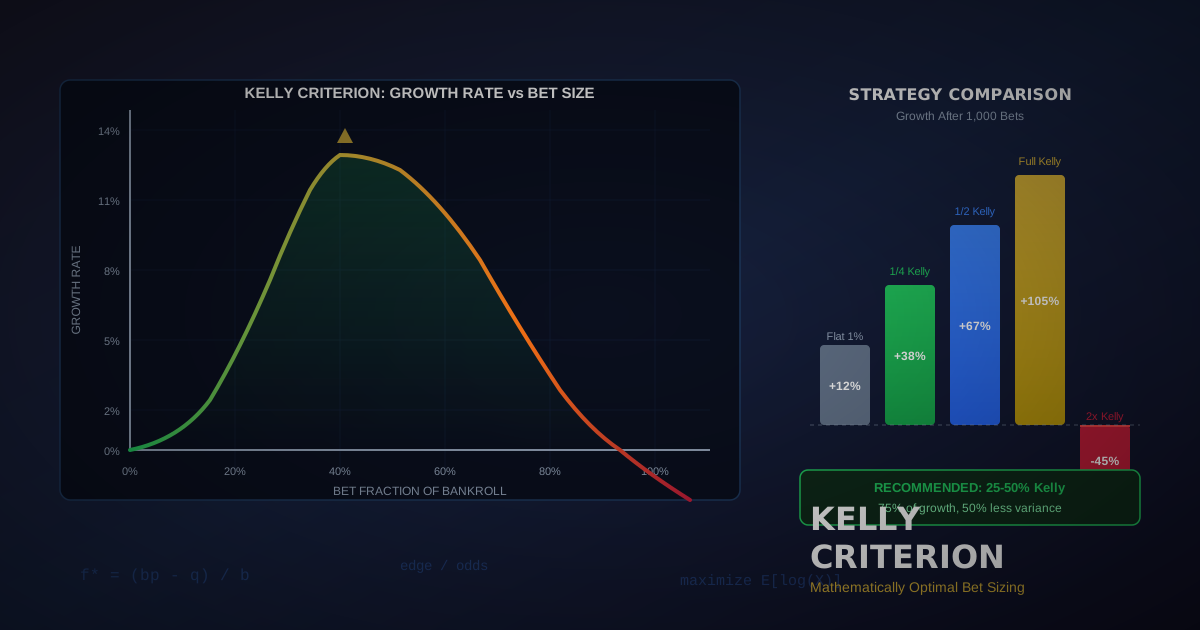
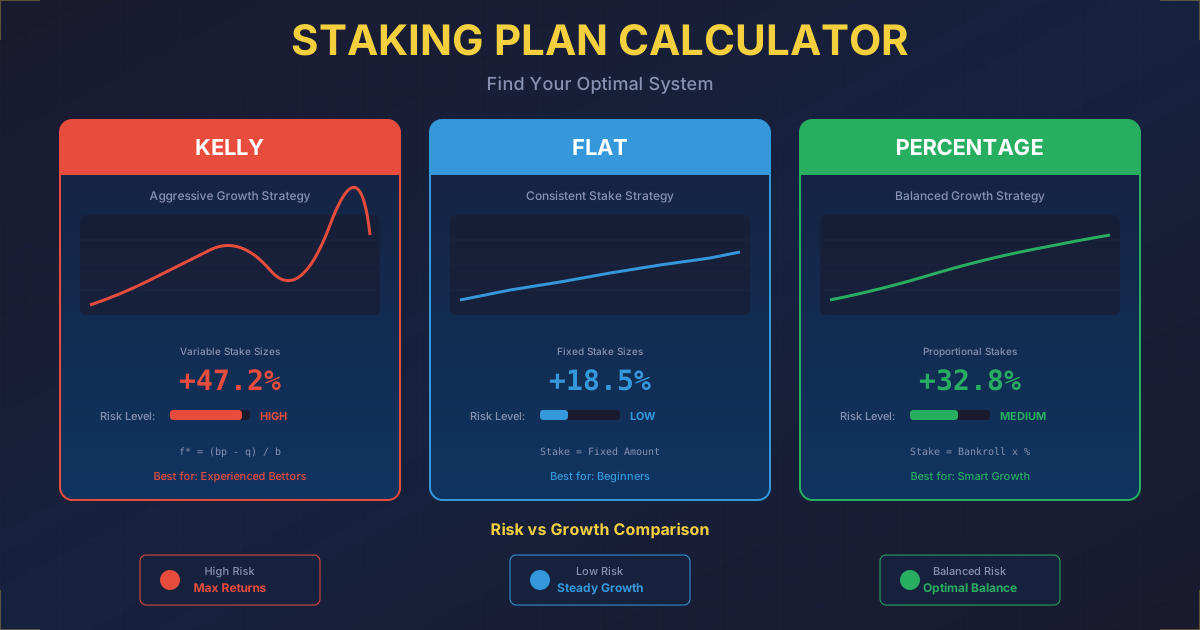
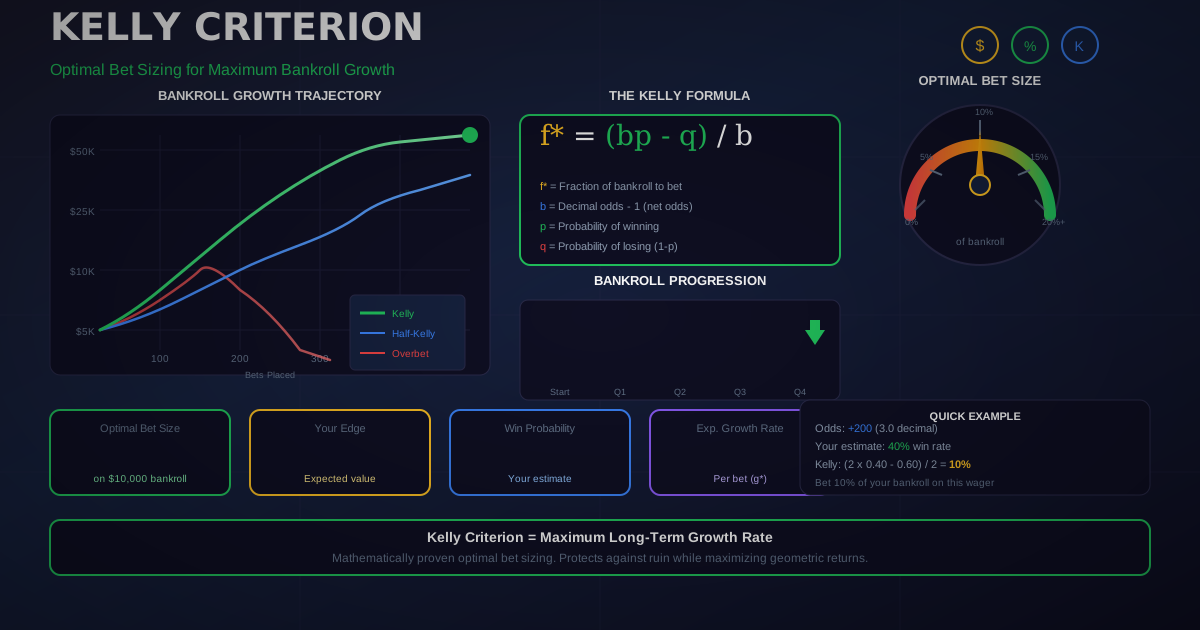
Finding value is only half the battle. Sizing your bets correctly is the other half, and arguably the more important half for long-term survival. The Kelly Criterion tells you exactly how much of your bankroll to wager based on your perceived edge:
Kelly % = (bp - q) / b
Where:
- b = decimal odds minus 1 (e.g., +150 = 1.5)
- p = your estimated win probability
- q = 1 - p (your estimated loss probability)
Example: You estimate a home underdog at +150 has a 46% chance of winning.
- b = 1.5
- p = 0.46
- q = 0.54
Kelly % = (1.5 x 0.46 - 0.54) / 1.5 = (0.69 - 0.54) / 1.5 = 0.15 / 1.5 = 10%
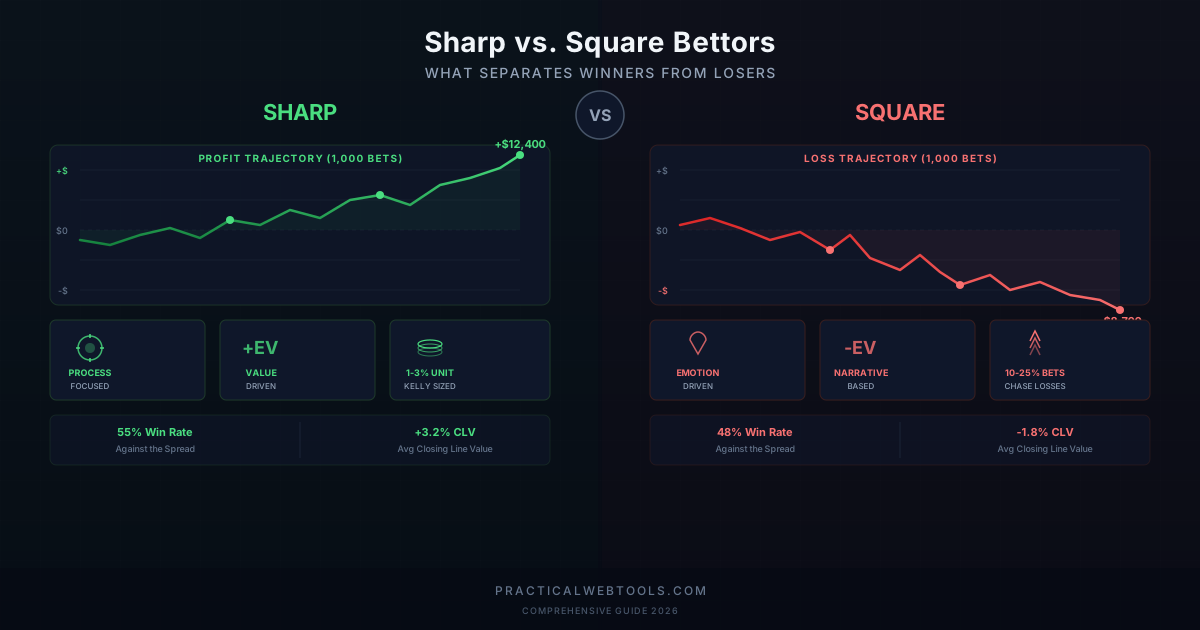
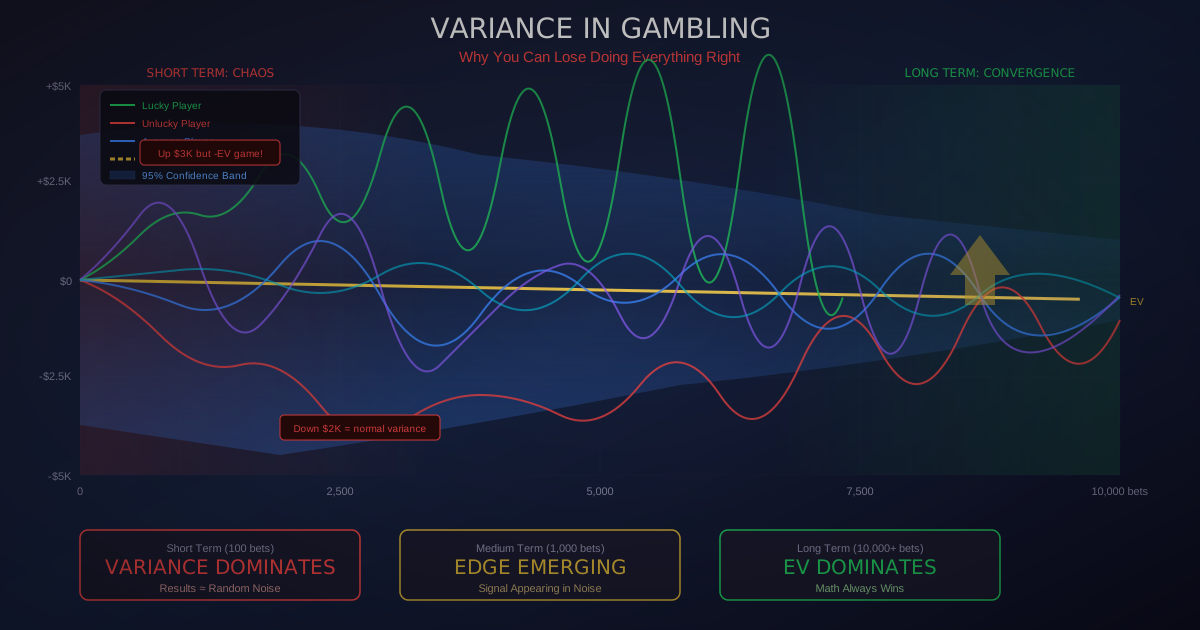
Full Kelly recommends 10% of your bankroll, but most professionals use quarter-Kelly or half-Kelly to reduce variance. A quarter-Kelly stake here would be 2.5% of your bankroll.
Determine your optimal bet size with our Kelly Criterion Calculator.
Puck Line Strategy: Understanding the +1.5 and -1.5 Spread
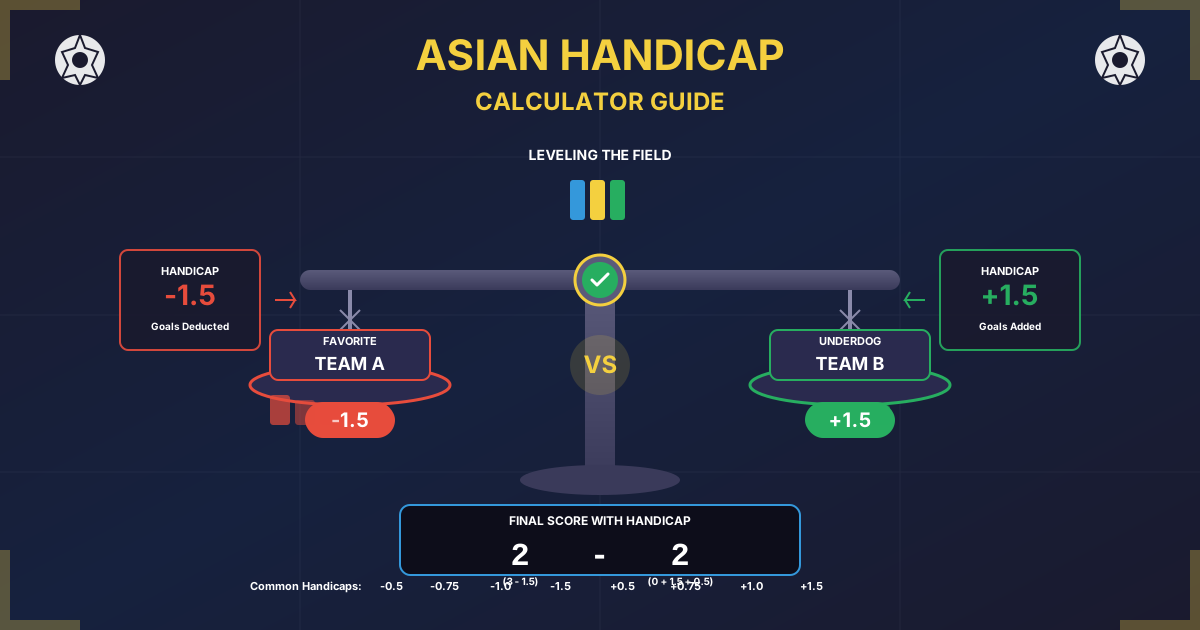
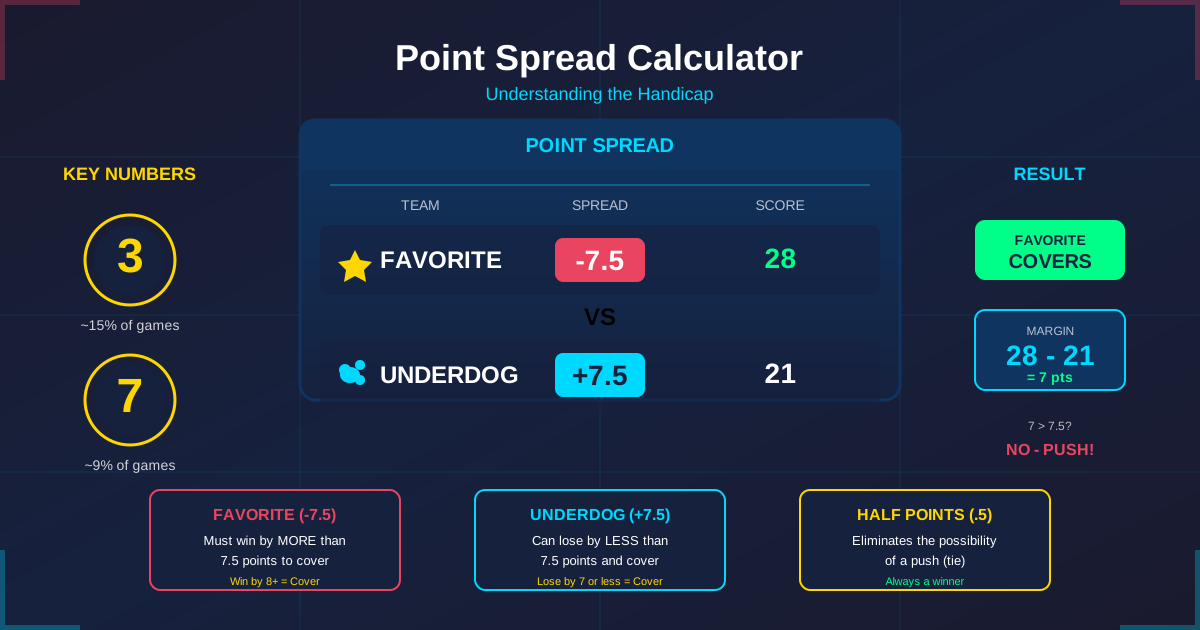
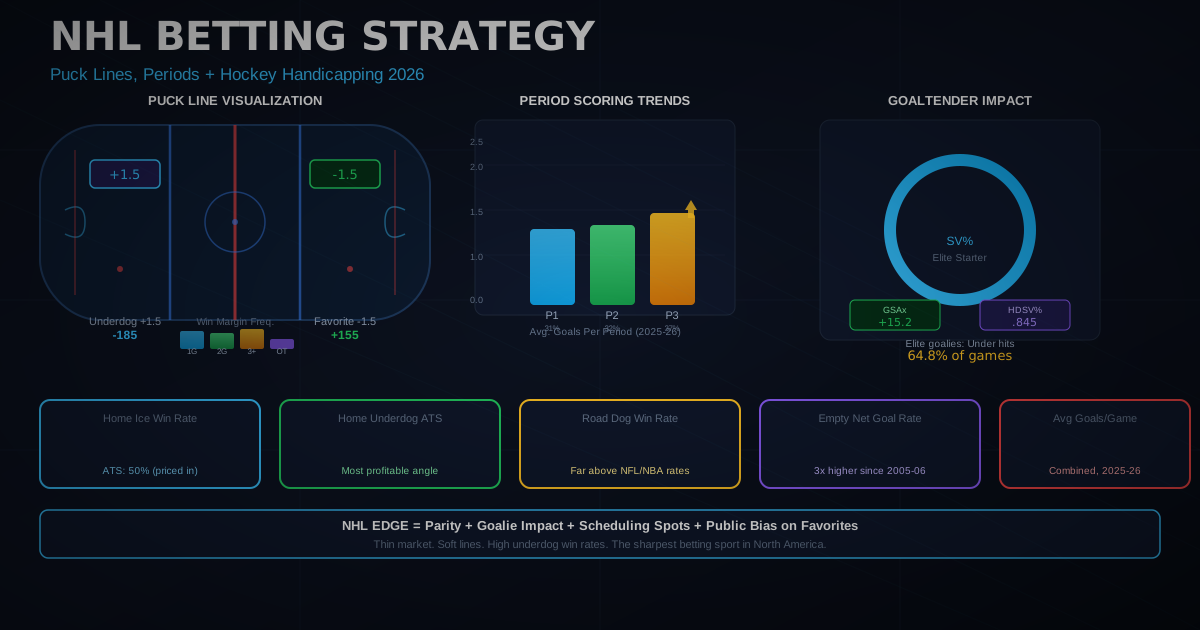
The puck line is hockey's version of the point spread, but it functions very differently from the NFL or NBA spread. In the NHL, the puck line is almost always fixed at 1.5 goals:
- Favorite -1.5: Must win by 2+ goals
- Underdog +1.5: Must lose by 1 goal or fewer (or win outright)
This binary structure creates unique strategic opportunities that do not exist in other sports.
Puck Line Hit Rates
Because the NHL is a low-scoring sport where one-goal games are the most common outcome, the puck line creates a dramatically different probability profile than the moneyline:
| Margin of Victory | Approximate Frequency | Puck Line Impact |
|---|---|---|
| 1 goal (regulation) | ~24% of games | +1.5 covers, -1.5 loses |
| 1 goal (OT/SO) | ~12% of games | +1.5 covers, -1.5 loses |
| 2 goals | ~22% of games | Both sides settle at minimum margin |
| 3+ goals | ~28% of games | -1.5 covers easily |
| Tied (goes to OT) | ~14% of games | +1.5 always covers OT/SO games |
Approximately 36% of NHL games are decided by exactly one goal (regulation or overtime combined), and another 14% go to overtime or shootout. That means the +1.5 underdog covers in roughly 50-55% of all games, which is why the +1.5 puck line typically comes with heavy juice, often in the -180 to -220 range.
When to Bet the Favorite -1.5
Betting the favorite at -1.5 is the high-risk, high-reward side of the puck line. You need the favorite to win by 2+ goals, which happens in roughly 45-50% of games where there is a clear favorite. The key is finding situations where the -1.5 price does not fully reflect the blowout potential:
Best situations for favorite -1.5:
- Elite team vs. backup goaltender. When the opposing starter is confirmed out and the backup has a .890 or lower save percentage, blowout probability increases significantly.
- Back-to-back fatigue mismatches. A rested home favorite facing a team on the second night of a back-to-back, especially with travel.
- Colorado Avalanche, Edmonton Oilers, or Florida Panthers at home. Teams with elite top-six forwards can pull away late in games.
- Empty-net goal factor. Approximately 7% of all goals in the modern NHL are scored into empty nets, and these are disproportionately scored by teams already leading, inflating the margin of victory.
Example: The Edmonton Oilers host the Anaheim Ducks. Edmonton is -240 on the moneyline. The puck line offers Edmonton -1.5 at +130. If you believe Edmonton wins by 2+ goals 48% of the time in this matchup (factoring in their elite power play and the Ducks' weak penalty kill), the EV is:
EV = (0.48 x $130) - (0.52 x $100) = $62.40 - $52.00 = +$10.40
That is a better expected value than laying -240 on the moneyline, where you risk $240 to win $100.
When to Bet the Underdog +1.5
The +1.5 puck line is the bread and butter of conservative NHL bettors. You are essentially asking: "Will this team keep it within one goal or win outright?" In a league this tight, the answer is yes more often than the price suggests.
Best situations for underdog +1.5:
- Divisional games. Teams that play each other 4+ times per season tend to produce tighter, more defensive contests.
- Strong goaltender matchup. An underdog starting an elite goaltender (top-10 save percentage) compresses the scoring margin.
- Desperate teams. Teams fighting for a playoff spot or trying to avoid elimination play with urgency that keeps games close.
- Late-season meaningless games for the favorite. When a favorite has clinched and is resting players, the underdog often keeps it close.
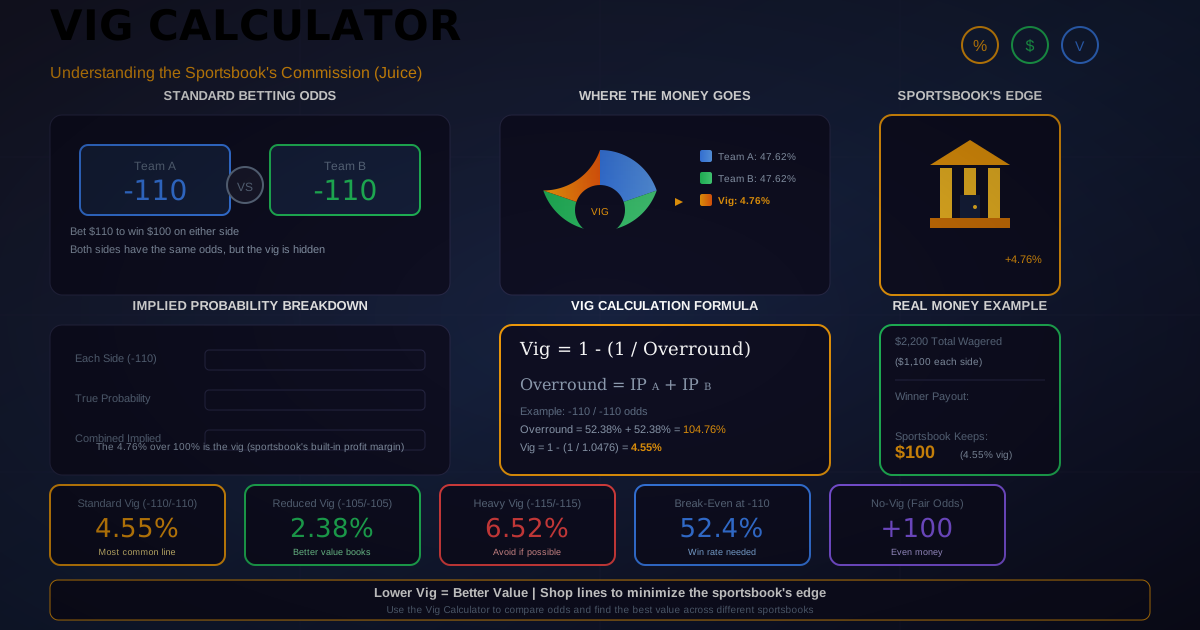
Analyze the vig built into any puck line with our Hold/Vig Calculator.
Puck Line vs. Moneyline: When to Choose Each
| Situation | Better Bet | Reasoning |
|---|---|---|
| Heavy favorite (-200+) | Puck line -1.5 | Better risk/reward if blowout likely |
| Slight favorite (-120 to -160) | Moneyline | The 1.5-goal margin is too tight to give up |
| Slight underdog (+110 to +150) | Moneyline | Getting paid more for an outright win |
| Heavy underdog (+200+) | Puck line +1.5 | You just need to keep it close |
| Overtime-prone matchup | Puck line +1.5 | OT/SO guarantees the +1.5 covers |
NHL Totals Strategy: Navigating the Scoring Era
The 2025-2026 season continues the modern NHL's trend toward higher scoring. Rule enforcement, smaller goaltending equipment, and improved offensive systems have pushed league-wide scoring to levels not seen since the early 2000s.
Scoring Trends by Era
| Era | Average Goals Per Game | Standard Total |
|---|---|---|
| 2013-2016 (Dead Puck 2.0) | 5.3-5.5 | 5 or 5.5 |
| 2016-2019 | 5.8-6.0 | 5.5 or 6 |
| 2019-2022 | 6.0-6.2 | 6 or 6.5 |
| 2022-2025 | 6.1-6.3 | 6 or 6.5 |
| 2025-2026 (current) | ~6.2 | 6 or 6.5 |
Most NHL totals are now set at 6 or 6.5, with occasional lines of 5.5 for defensive matchups or 7 for high-octane contests.
Key Totals Factors
Factors that push toward the Over:
- Both teams rank in the top 10 in goals per game
- Backup goaltenders on both sides
- Teams on the second game of a back-to-back (fatigue = defensive breakdowns)
- Power-play matchups where both teams have top-10 PP units
- Teams that play an up-tempo, transition-heavy style
Factors that push toward the Under:
- Elite goaltender matchup (both starters in top 10 save percentage)
- Divisional rivalry games (tighter checking, more conservative play)
- Playoff-caliber defensive systems (Carolina, New Jersey, Dallas)
- Games with top six goalies in save percentage go Under 64.8% of the time
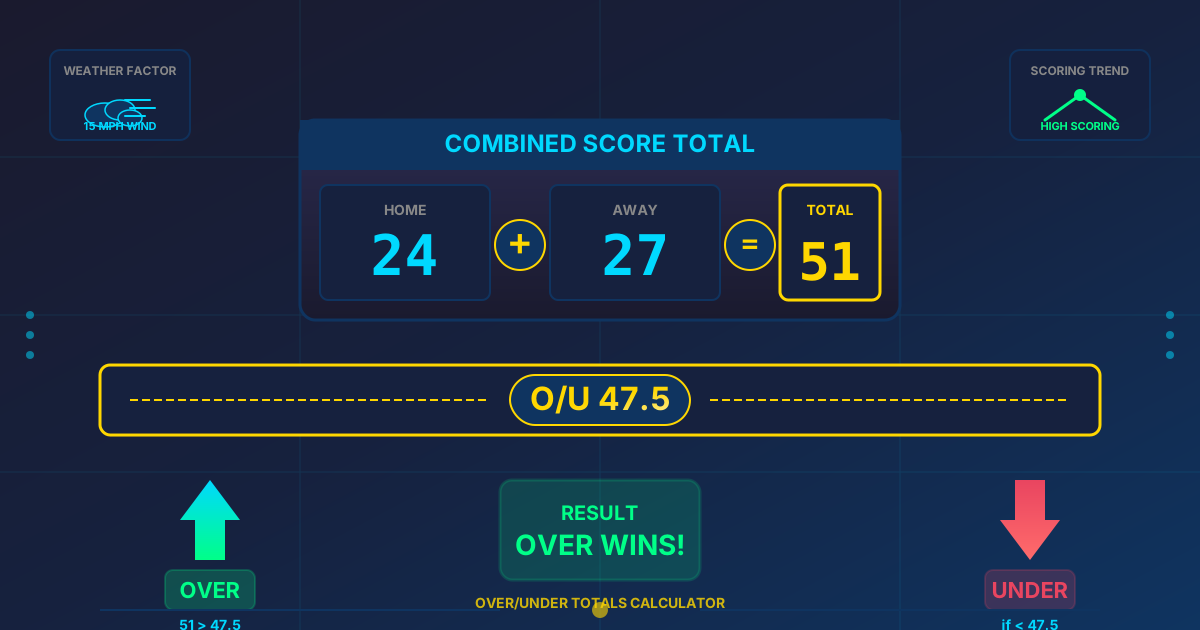
Example: The Carolina Hurricanes host the New Jersey Devils. Both teams rank in the top five in goals against per game. Carolina's Frederik Andersen (.921 SV%) faces New Jersey's Jacob Markstrom (.918 SV%). The total is set at 5.5 with the Under at -115. Given that games featuring two elite goalies go Under nearly 65% of the time, this is a strong Under play. A $115 risk to win $100 at a 65% expected hit rate produces:
EV = (0.65 x $100) - (0.35 x $115) = $65.00 - $40.25 = +$24.75
The Empty-Net Goal Factor
Empty-net goals have nearly tripled since the 2005-2006 season. Currently, approximately 7% of all NHL goals are scored into empty nets, meaning roughly 1 in every 14 goals league-wide comes with the opposing goaltender pulled. This has significant implications for totals betting:
- Late overs are more likely than ever. A game sitting at 5 goals with 3 minutes left has a real chance of hitting 6 or 7 once nets are emptied.
- The team trailing pulls its goalie earlier, sometimes with 2+ minutes remaining, giving the leading team extended empty-net opportunities.
- Empty-net goals inflate margins of victory, which also affects puck line outcomes.
| Empty-Net Trend | 2005-2006 | 2015-2016 | 2025-2026 |
|---|---|---|---|
| EN goals as % of all goals | ~2.5% | ~4.5% | ~7.0% |
| Avg. EN goals per team per season | ~3.5 | ~6.0 | ~10+ |
| Avg. time goalie pulled | 1:15 remaining | 1:30 remaining | 1:45-2:00+ remaining |
Period Betting: Finding Edges in 20-Minute Markets
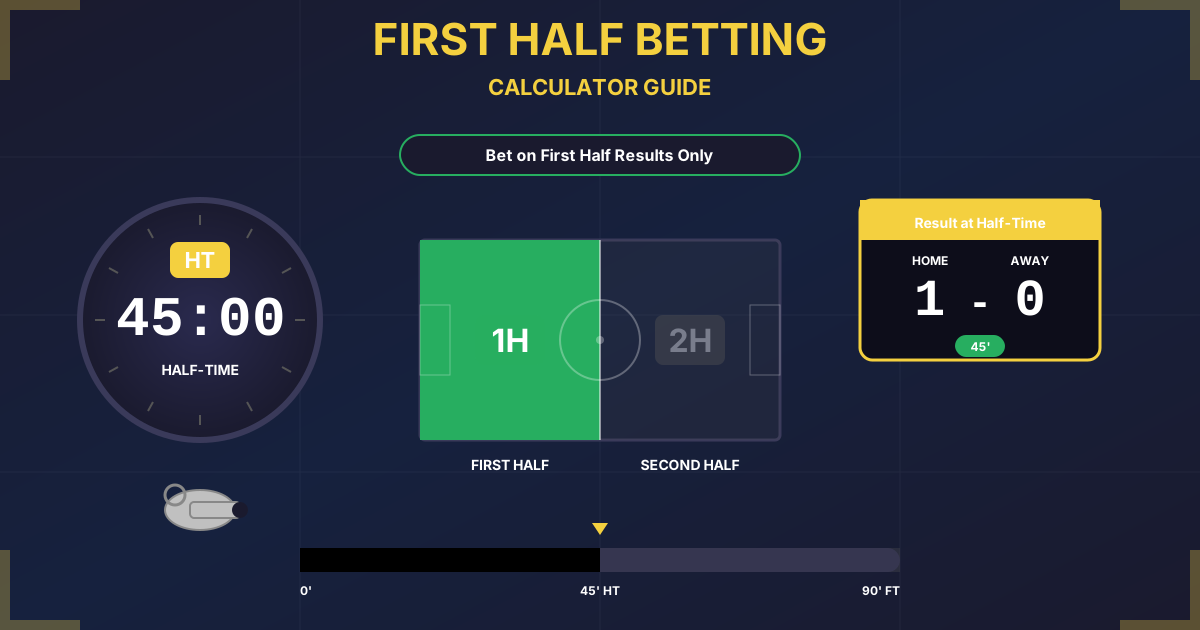
Period betting is one of the most underutilized markets in the NHL. Sportsbooks offer moneylines, totals, and spreads for each individual period, and the data reveals consistent patterns that bettors can exploit.
Scoring Distribution by Period
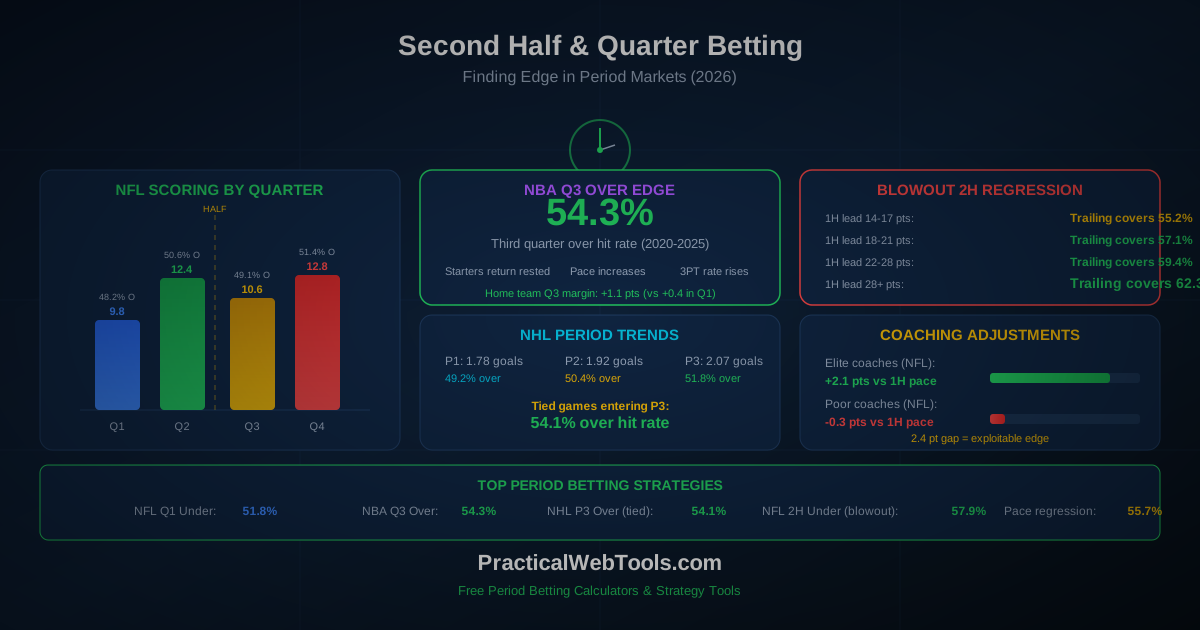
NHL scoring is not evenly distributed across the three periods. The data consistently shows that the third period produces more goals than the first or second:
| Period | Avg. Goals Scored | Percentage of Total Scoring | Key Driver |
|---|---|---|---|
| 1st Period | ~1.9 | ~31% | Cautious play, feeling out |
| 2nd Period | ~2.0 | ~32% | Adjustments, more aggressive |
| 3rd Period | ~2.3 | ~37% | Desperation, empty nets, pulling goalie |
The third period's scoring spike is driven by several factors:
- Trailing teams take more risks
- Goalie pulls add empty-net goal opportunities
- Fatigue leads to defensive breakdowns
- Power plays increase as trailing teams play more aggressively
First Period Under Trend
The first period is the lowest-scoring period on average, and first-period Unders have been a consistent winner. With many first-period totals set at 1.5 (Over/Under), the Under has historically hit at 52-55% across the league. More selective targeting can push that edge higher:
Best first-period Under spots:
- Divisional rivalry games
- Games involving teams that play conservative systems (Minnesota, Dallas, Carolina)
- Matchups with two elite starting goaltenders confirmed
- Early afternoon games (less energy from crowds and players)
Third Period Over Trend
Conversely, the third period is the highest-scoring period and offers Over value, particularly in games where one team is trailing by 1-2 goals entering the period. The combination of desperation offense, goalie pulls, and empty-net goals makes the third period a consistently high-scoring environment.
Calculate the expected value of any period bet with our Expected Value Calculator.
Goaltender Analysis: The Single Biggest Factor in NHL Betting
No position in professional team sports impacts game outcomes as dramatically as the NHL goaltender. A hot goalie can steal games for a mediocre team. A cold goalie can sink a Cup contender. Understanding goaltender matchups is the most important skill an NHL bettor can develop.
Goaltender Impact on Betting Lines
When an elite starting goaltender is confirmed, the moneyline typically moves 15-30 cents in that team's favor compared to the backup. When a backup is announced, the line moves the opposite direction. This creates opportunities for bettors who monitor goaltender confirmations closely.
| Goaltender Tier | Save Percentage Range | Impact on Totals | Impact on Moneyline |
|---|---|---|---|
| Elite (Top 5) | .920+ | Under 64.8% | 20-30 cent ML shift |
| Above Average (Top 15) | .910-.919 | Under 55-60% | 10-20 cent ML shift |
| Average | .900-.909 | Even split | Minimal movement |
| Below Average | .890-.899 | Over 55-60% | 10-20 cent shift away |
| Struggling Backup | Below .890 | Over 62%+ | 25-40 cent shift away |
Key Goaltender Metrics for Bettors
Save Percentage (SV%): The most basic and still the most important metric. Look at the last 10 games rather than season-long numbers, as goaltender performance is highly streaky.
Goals Saved Above Expected (GSAx): This advanced metric measures how many goals a goaltender has saved compared to what an average goaltender would have saved facing the same shots. A positive GSAx means the goalie is performing above expectations. This is the single best predictive metric for goaltender performance.
High-Danger Save Percentage (HDSV%): Measures saves on shots from the slot and crease area. Elite goalies separate themselves here.
Example: Connor Hellebuyck of the Winnipeg Jets might carry a .924 season save percentage and a +15.2 GSAx. When Hellebuyck starts at home, Winnipeg's implied win probability should be significantly higher than their overall record suggests. If the sportsbook has not fully adjusted for Hellebuyck's elite form, there is exploitable value on the Winnipeg moneyline.
Conversely, when Hellebuyck sits and the backup starts, the Jets' true win probability might drop 8-12 percentage points. If the sportsbook only adjusts the line by 5-8 percentage points, there is value on the opposing side.
The Backup Goaltender Opportunity
The backup goaltender market is one of the most exploitable in all of hockey betting. When a backup is announced, the public often still backs the favored team based on brand recognition, and the line does not always move far enough.
Strategy: Monitor daily goaltender confirmations via Daily Faceoff or the official NHL app. When a backup is confirmed for a favored team and the line has not moved significantly, look at:
- The opponent moneyline (value on the dog)
- The game total (Over becomes more attractive)
- The opponent puck line -1.5 (if the backup is particularly weak)
Back-to-Back Games and Travel Edges
The NHL schedule is grueling: 82 games in roughly 180 days, with frequent back-to-back games and cross-continent travel. This creates measurable fatigue effects that sharp bettors exploit.
Back-to-Back Performance Data
Teams playing the second game of a back-to-back consistently underperform, particularly when travel is involved:
| Scenario | Win Rate | Compared to Baseline | Betting Edge |
|---|---|---|---|
| Well-rested (2+ days off) | ~54% | +4% above average | Slight favorite edge |
| Normal rest (1 day off) | ~50% | Baseline | No significant edge |
| Back-to-back, home | ~46% | -4% below average | Mild fade opportunity |
| Back-to-back, road | ~42% | -8% below average | Strong fade opportunity |
| Back-to-back, road + time zone change | ~39% | -11% below average | Elite fade opportunity |
How to Exploit Schedule Spots
The strongest edges emerge when rest asymmetry is largest. A team on the second night of a back-to-back facing a rested opponent that had 2+ days off creates a rest differential of 3+ days. In these spots:
- The rested team wins approximately 58-62% of the time
- The fatigued team's goaltender (often the backup) is typically weaker
- Third-period collapses by the fatigued team are more common, favoring late-game live betting opportunities
Example: The Toronto Maple Leafs played in Montreal on Saturday night and must travel to Boston for a Sunday afternoon game. The Bruins have been off since Thursday. Boston is listed at -150. Given the rest differential, the Bruins' true win probability is likely closer to 62%, implying fair odds of -163. The -150 line offers value on Boston.
A $150 bet on Boston -150 expects:
EV = (0.62 x $100) - (0.38 x $150) = $62.00 - $57.00 = +$5.00 per bet
Over a season with 20-30 such spots, that adds up to $100-$150 in expected profit from this single angle.
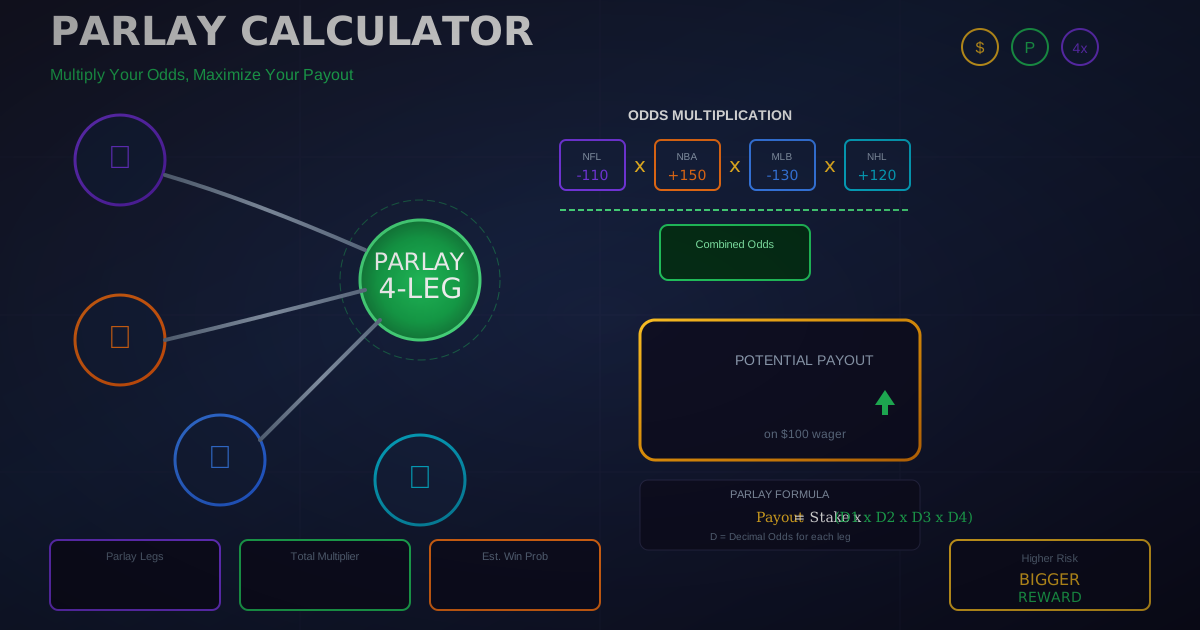
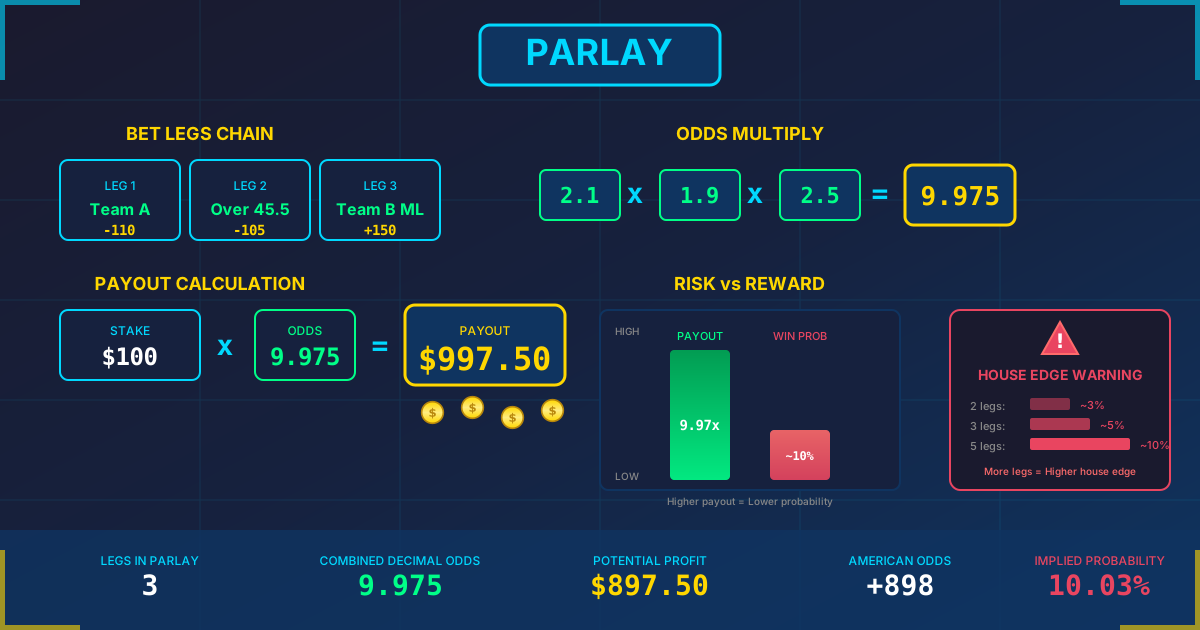
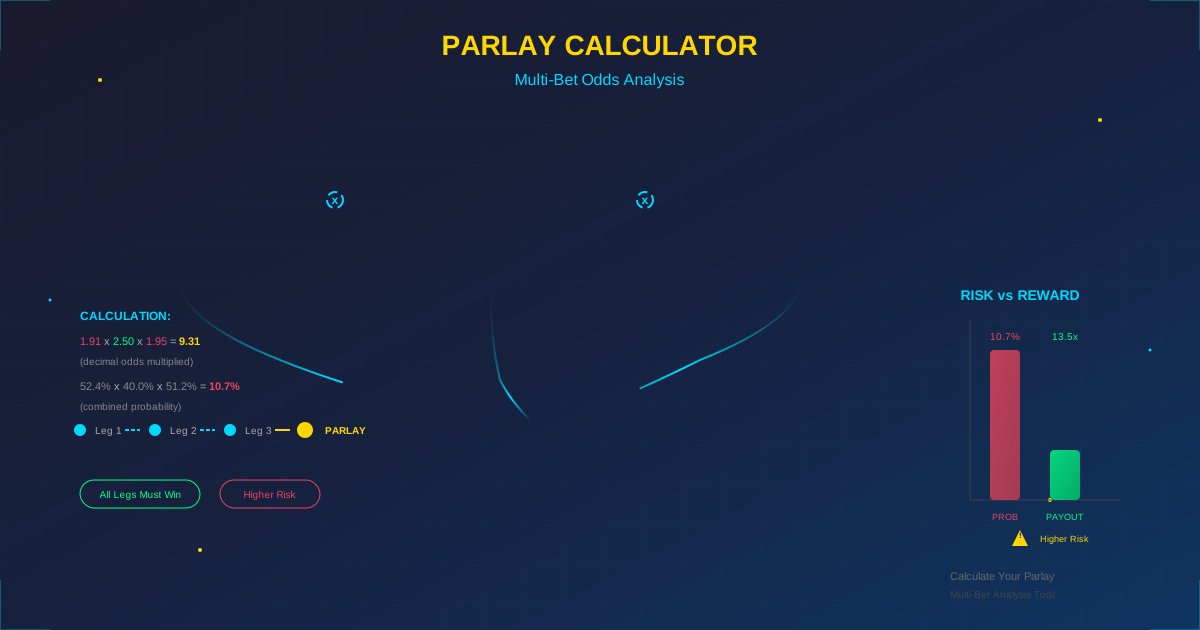
Run multi-leg NHL parlays through our Parlay Calculator to see combined payouts.
NHL Playoff Betting: How Everything Changes
The NHL playoffs are a fundamentally different betting market from the regular season. Understanding these differences is essential for bettors who want to remain profitable into the spring.
Key Playoff Differences
| Factor | Regular Season | Playoffs |
|---|---|---|
| Scoring | ~6.2 goals/game | ~5.4-5.6 goals/game |
| Home ice win rate | 56.6% | 55-56% (similar) |
| Back-to-back impact | Significant | N/A (no back-to-backs) |
| Goaltender starts | Rotation/load management | Starter plays every game |
| Defensive intensity | Variable | Dramatically higher |
| Overtime format | 3v3 + shootout | 5v5 sudden death |
| Line movement | Moderate | Extreme (more public money) |
Playoff Totals: Bet the Under
Playoff hockey consistently features lower scoring than the regular season. Defensive systems tighten, referees swallow their whistles (fewer power plays), and every shift is played with maximum effort. If the regular-season total between two teams would be 6.5, the playoff total is typically 5.5 or 6.
In the 2025 playoffs, home teams won 21 of 31 games through the early rounds, and the Under hit at a higher rate than during the regular season.
Playoff Series Pricing
Series prices (e.g., Team A to win the series at -150) often present value because:
- The public overreacts to Game 1 results
- Series prices do not account for schedule-specific rest advantages
- Goaltender workload and injury risk increase as series progress
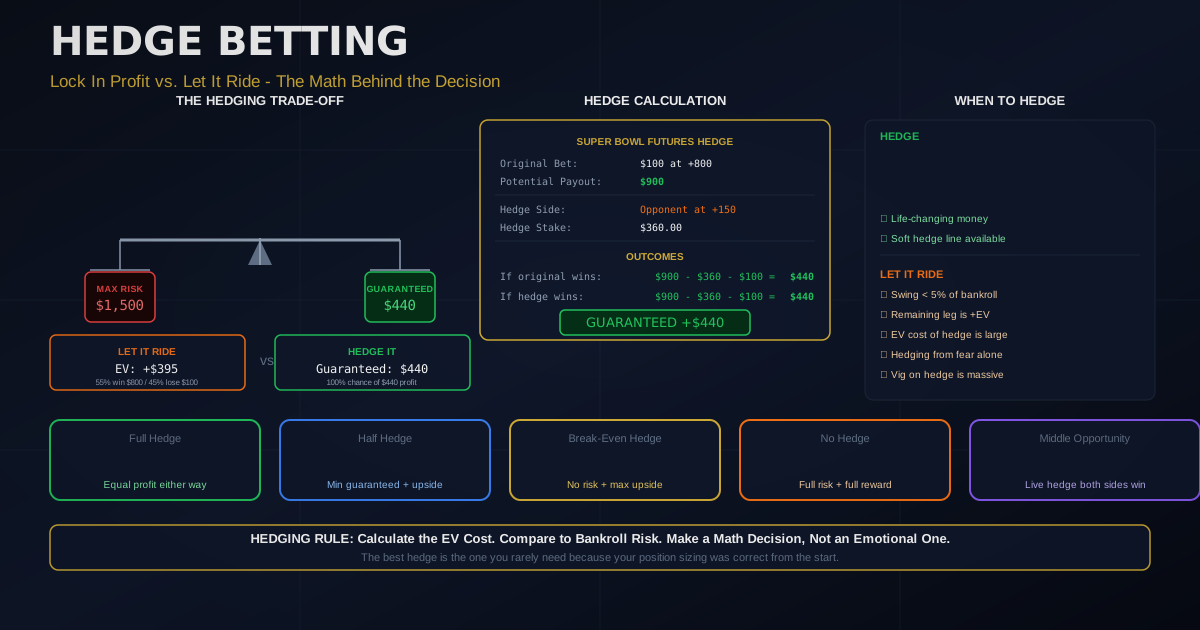
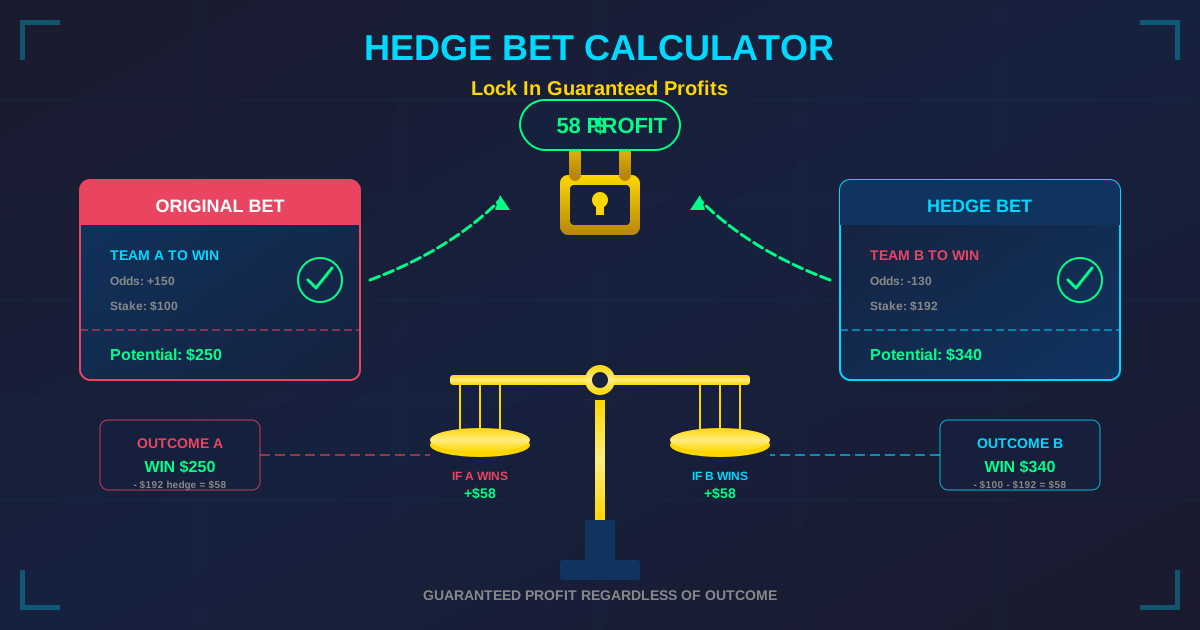
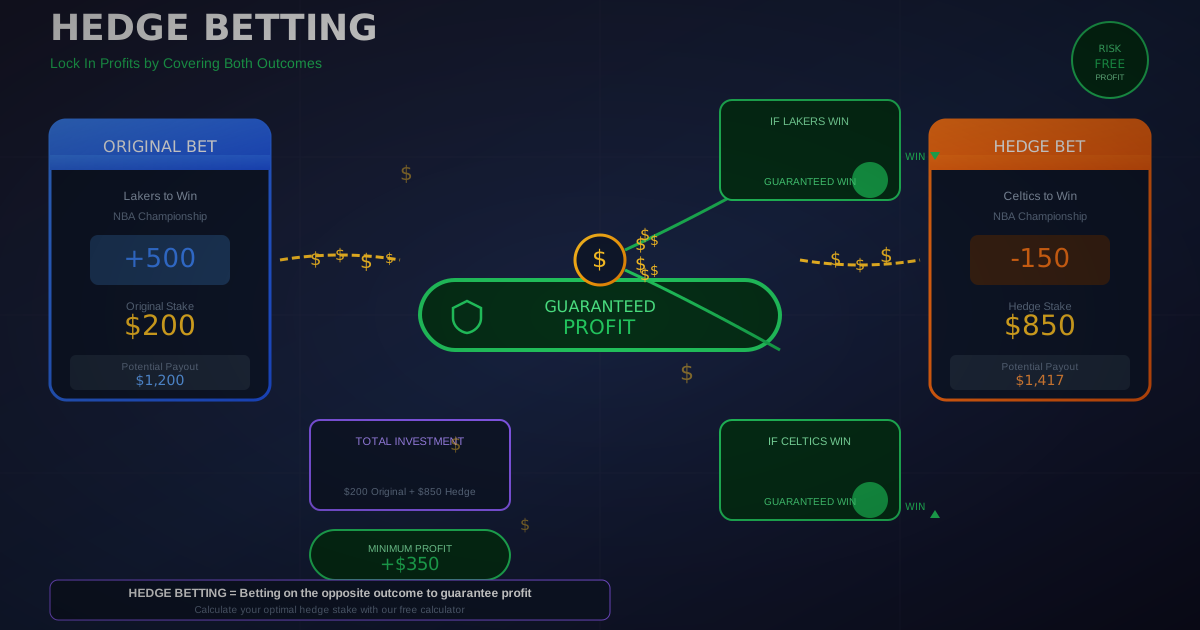
Evaluate your hedge options during a live playoff series with our Hedge Calculator.
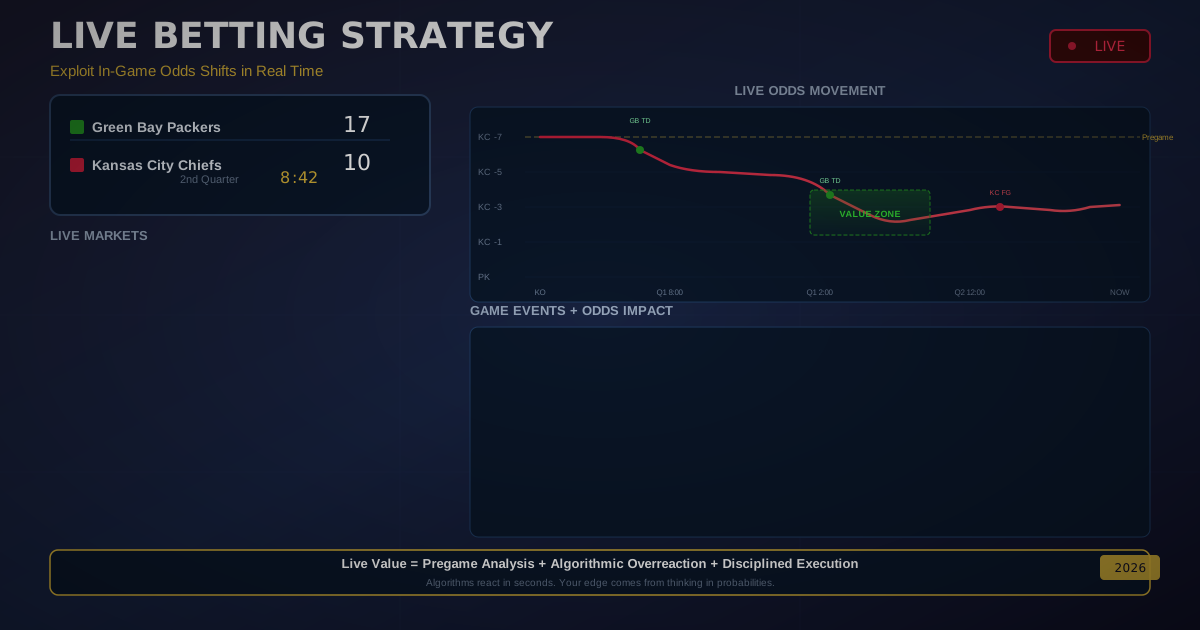
Live Betting in Hockey: Speed and Strategy
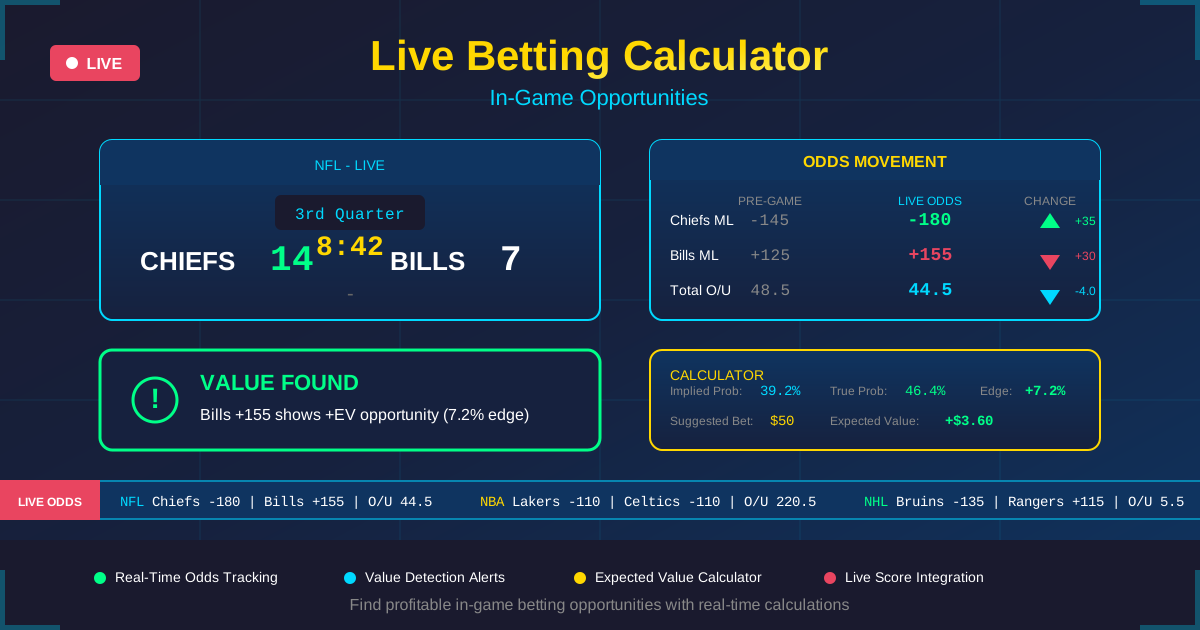
Live betting (or in-game betting) in the NHL is one of the fastest-growing and most profitable markets for sharp bettors. Hockey's rapid pace and frequent momentum shifts create constant pricing inefficiencies.
Why Live Betting Works in Hockey
- Goals change everything instantly. A single goal can swing the moneyline by 100+ cents. If you disagree with the market's reaction, there is immediate value.
- Momentum is overpriced. After a team scores, the live line often overcorrects in their favor. The trailing team may actually offer better value immediately after conceding.
- Goalie pulls create predictable endgame scenarios. When a team trails by 1-2 goals in the final minutes and pulls their goalie, the empty-net goal probability spikes. This creates value on the leading team's live puck line.
- Power plays are overreacted to. A 5-minute major penalty causes massive line movement, but the actual scoring probability on a power play is only 20-25%.
Live Betting Strategy Framework
Pre-game preparation: Before puck drop, identify your target live betting scenarios:
- At what price would you bet the underdog if the favorite scores first?
- At what price would you bet the Over if the first period ends 0-0?
- What is your target line for the favorite if they fall behind by 1 goal?
During the game:
- After a first-period 0-0 or 1-0 score: The total market often overcorrects toward the Under. If you believe the game will open up (particularly if one team dominated shot attempts), the Over may offer value.
- After the underdog scores first: The live moneyline on the favorite often drops to near pick-em or even underdog status. If the favorite is genuinely the better team, this is a prime buy-low opportunity.
- Final 5 minutes with a 1-goal lead: The trailing team will likely pull their goalie. Bet the leading team's live puck line -1.5 at plus money, as the empty-net goal probability is significant.
Example: The Vegas Golden Knights are -160 favorites pregame against the Seattle Kraken. Seattle scores first 8 minutes into the game. The live line shifts to Vegas -110. You believe Vegas is still the superior team and their true win probability from this game state is 55%. At -110, you need 52.4% to break even. Your perceived edge is +2.6%, making this a value bet on the live line.
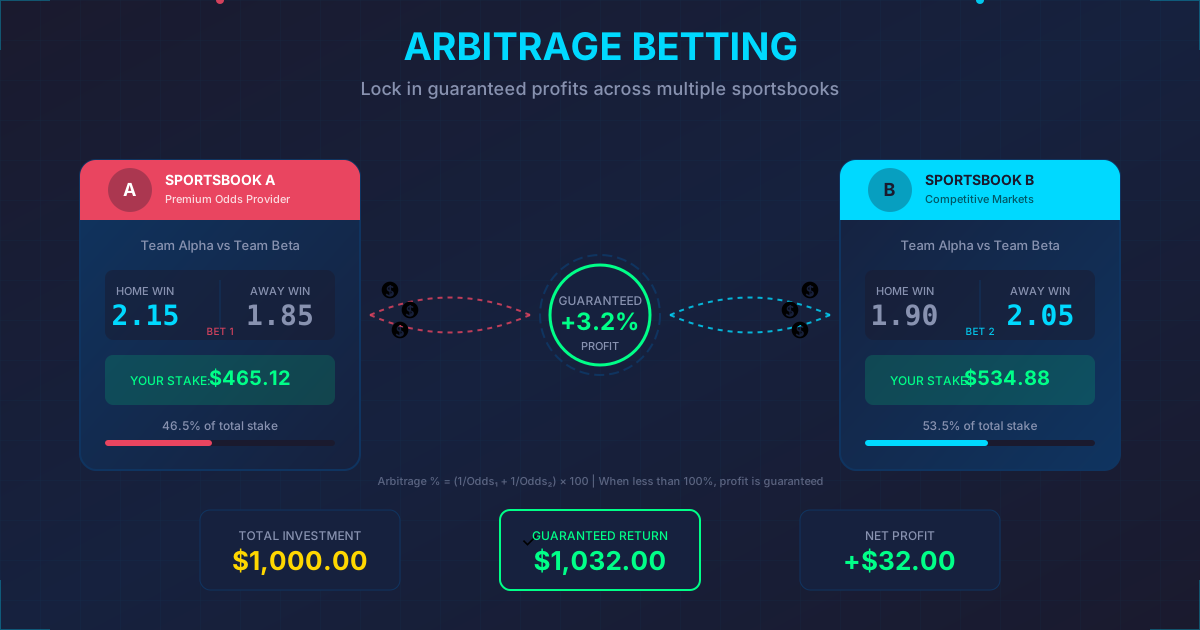
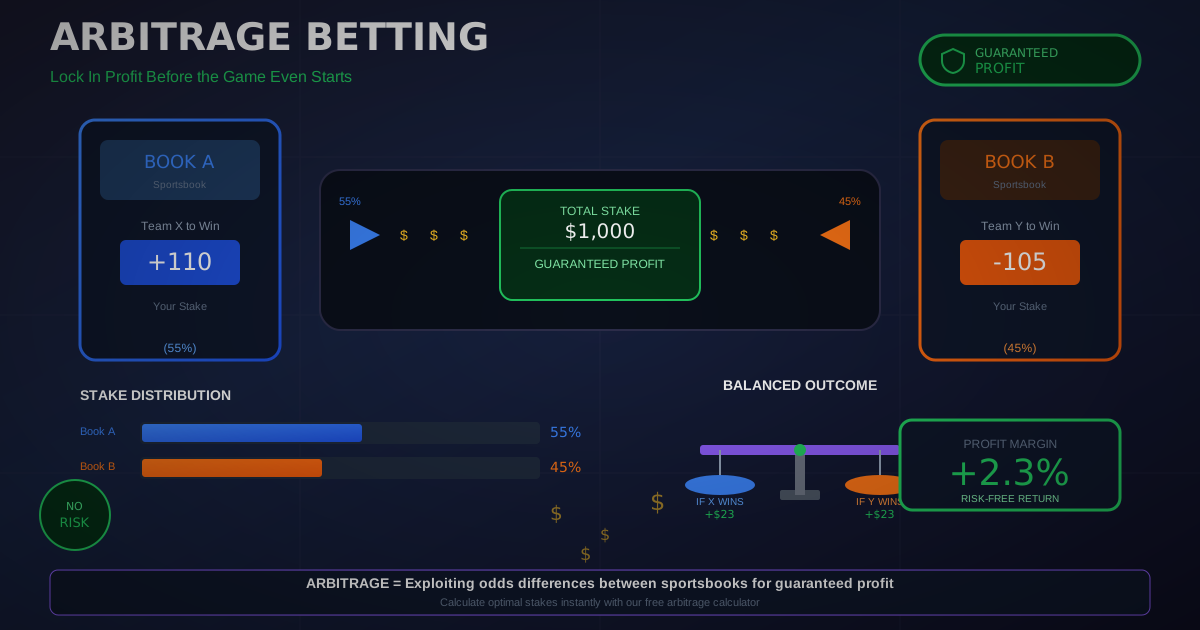
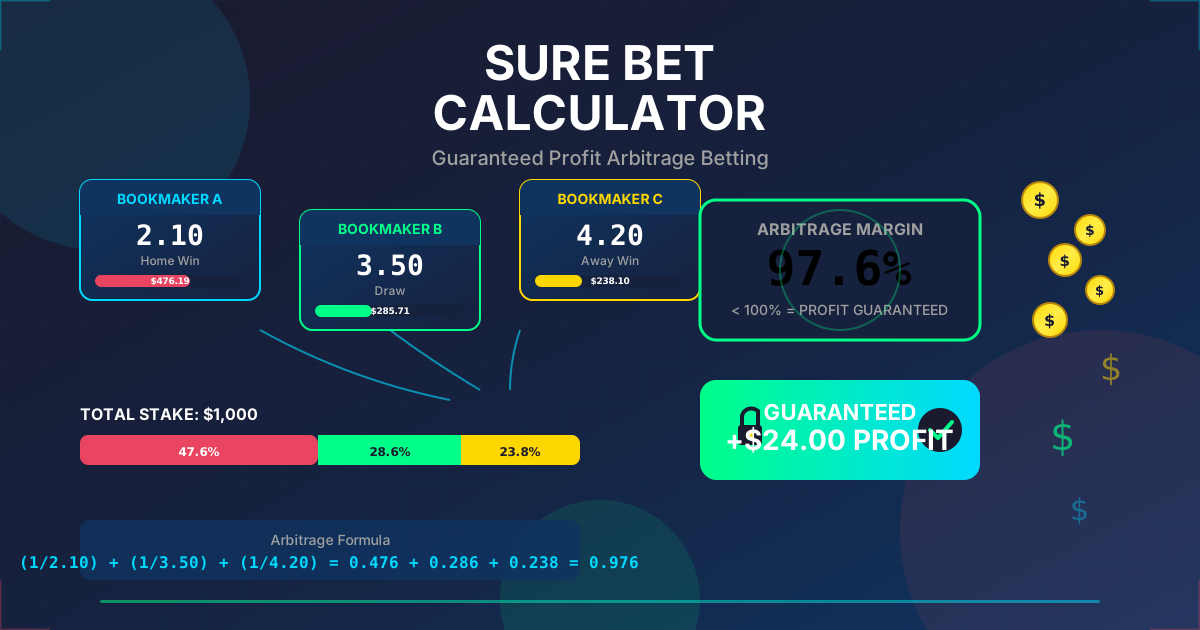
Spot risk-free profit opportunities across live lines with our Arbitrage Calculator.
Advanced Angles: Corsi, Fenwick, and Expected Goals
For bettors willing to dig deeper, advanced analytics provide a significant edge in the NHL betting market.
Shot-Based Metrics
Corsi (CF%): Measures all shot attempts (shots on goal + blocked shots + missed shots) as a percentage. A team with 55% Corsi is generating 55% of all shot attempts in their games. This is the best single predictor of future team performance.
Fenwick (FF%): Similar to Corsi but excludes blocked shots. Some analysts prefer it as a measure of true offensive generation.
Expected Goals (xG): The most sophisticated metric. xG assigns a probability to each shot based on location, angle, shot type, and game situation. A team that consistently generates more expected goals than their opponent is likely undervalued by traditional stats.
How to Use Advanced Stats in Betting
| Stat | What It Tells You | Betting Application |
|---|---|---|
| Corsi For % (CF%) | Shot attempt dominance | Teams with 53%+ CF% are strong ML bets |
| Expected Goals For % (xGF%) | Quality chance generation | Best predictor of future scoring |
| PDO (SV% + SH%) | Luck indicator (league avg = 100) | Teams with 103+ PDO will regress; Under on their totals |
| High-Danger Chances For % | Slot-area dominance | Identifies teams that may be underperforming |
Example: A team might have a 48% actual win percentage but a 53% expected goals percentage. This suggests they have been unlucky (perhaps poor goaltending, bad shooting percentage, or tough schedule). As the season progresses, their results should improve, making them a value bet on the moneyline before the market catches up.
Building Your NHL Betting System
A systematic approach to NHL betting is essential for long-term profitability. Here is a framework for building your own model:
Step 1: Establish Your Baseline
Track every bet with the following data points:
- Date, teams, bet type (ML, PL, total, period)
- Odds at time of bet
- Your estimated probability
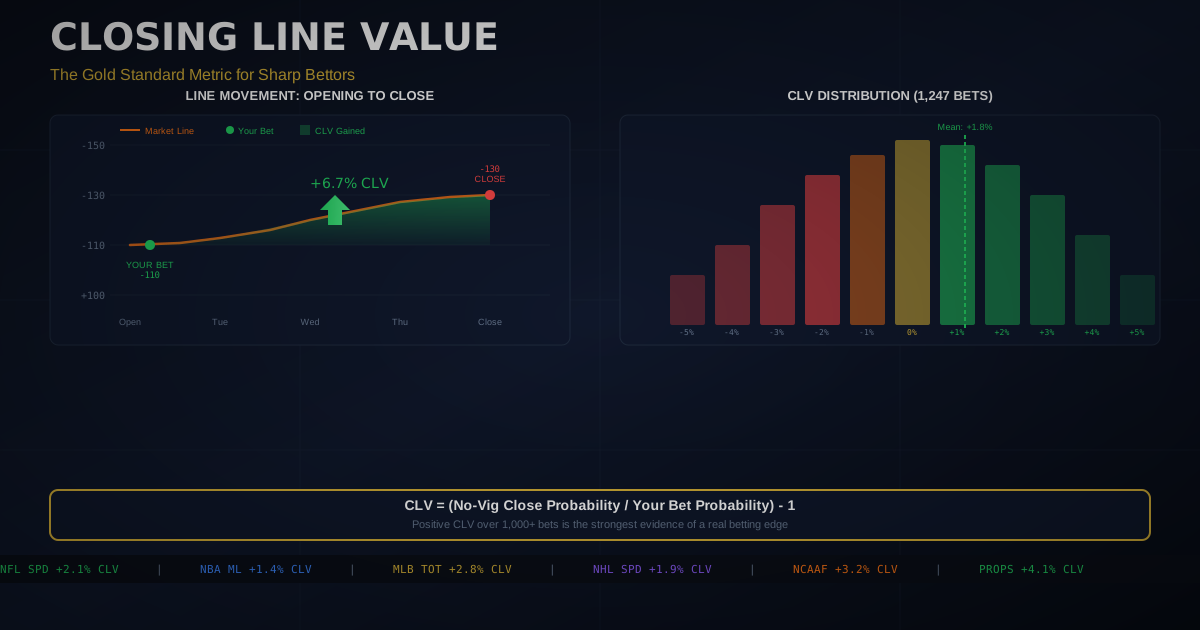
- Closing line (what the odds were at puck drop)
- Result and profit/loss
Step 2: Identify Your Edges
Focus on 2-3 specific angles where you believe you have an advantage:
- Goaltender confirmation plays
- Back-to-back fade spots
- Home underdog value
- Period totals
- Live betting momentum corrections
Step 3: Size Your Bets Properly
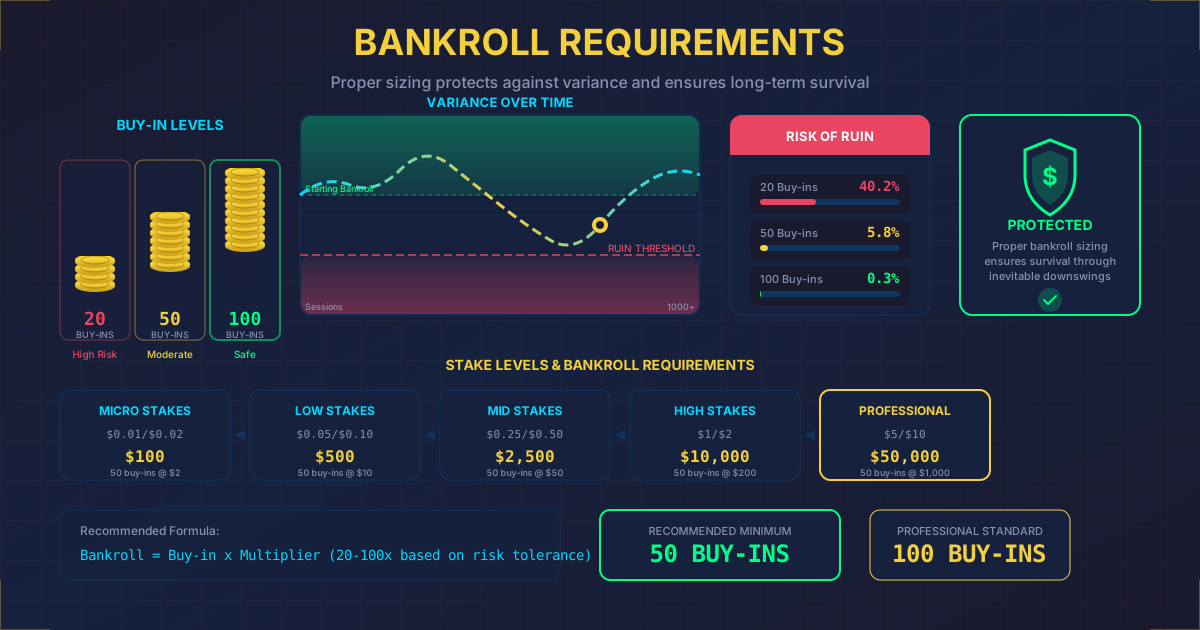
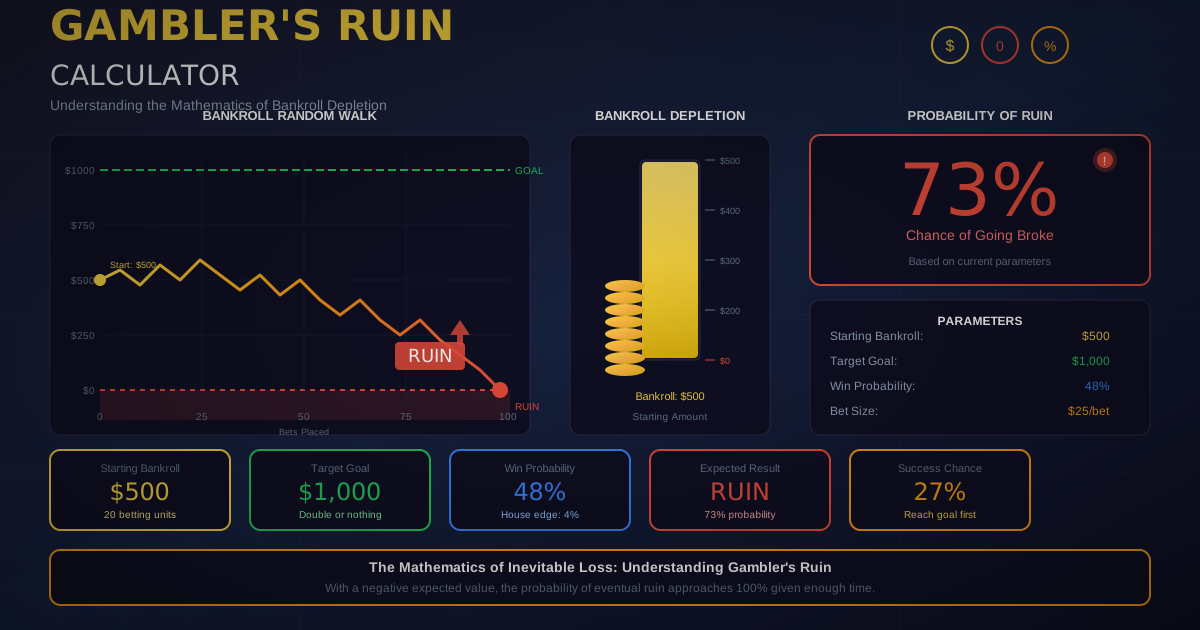
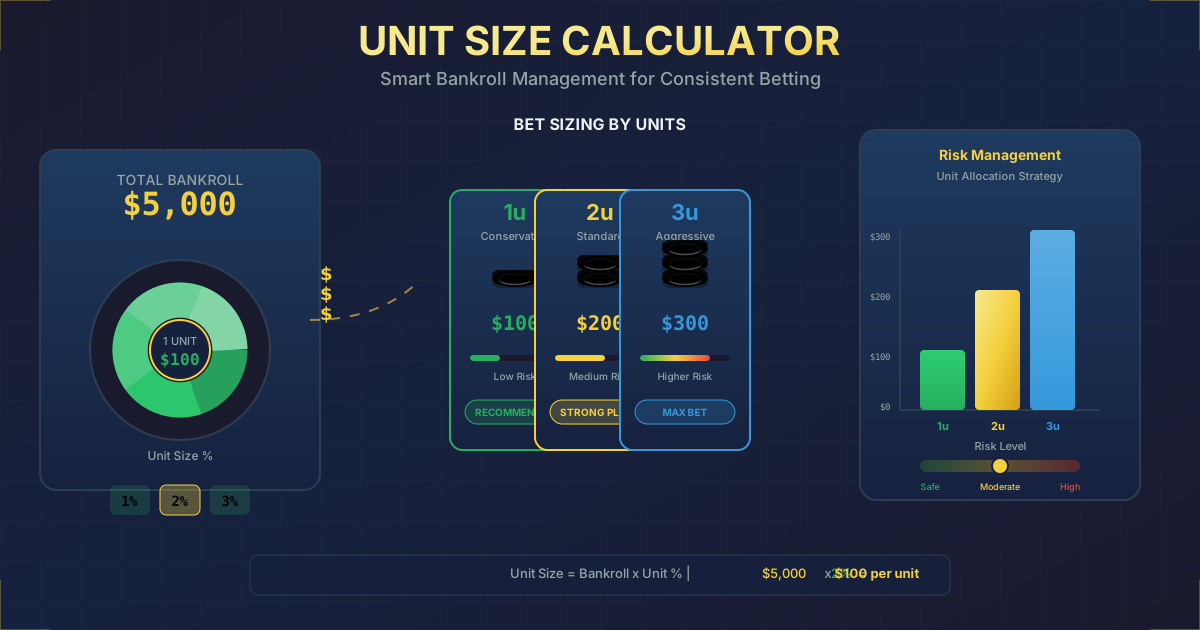
Use fractional Kelly Criterion (quarter to half Kelly) to size bets based on your perceived edge. Never bet more than 3-5% of your bankroll on a single game, regardless of confidence level.
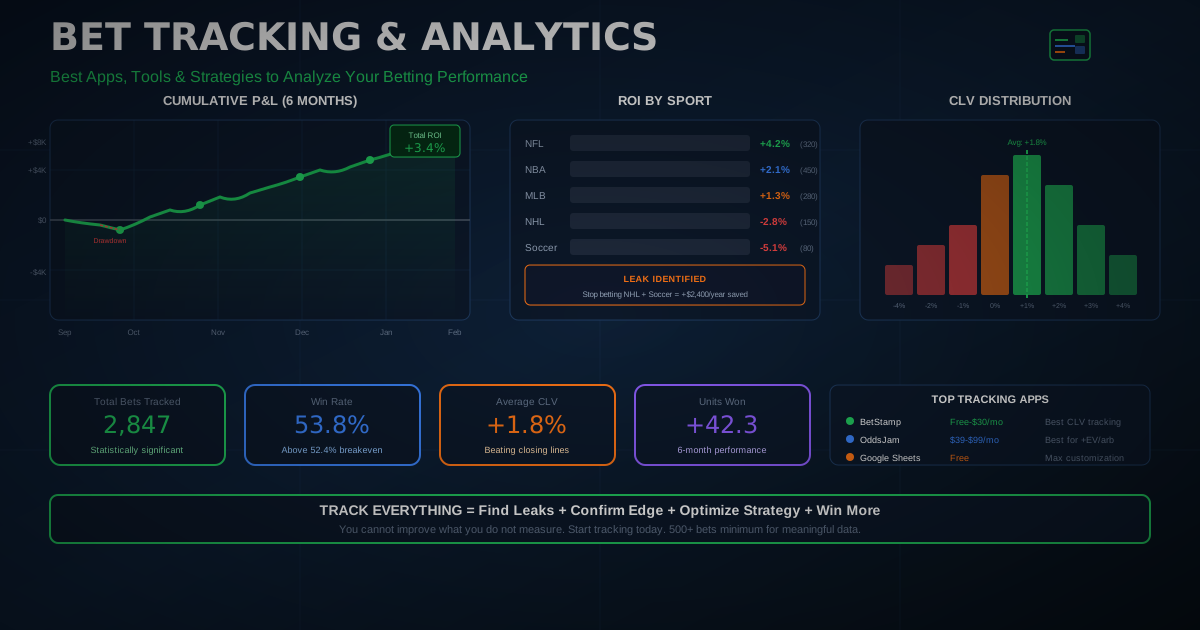
Step 4: Track and Adjust
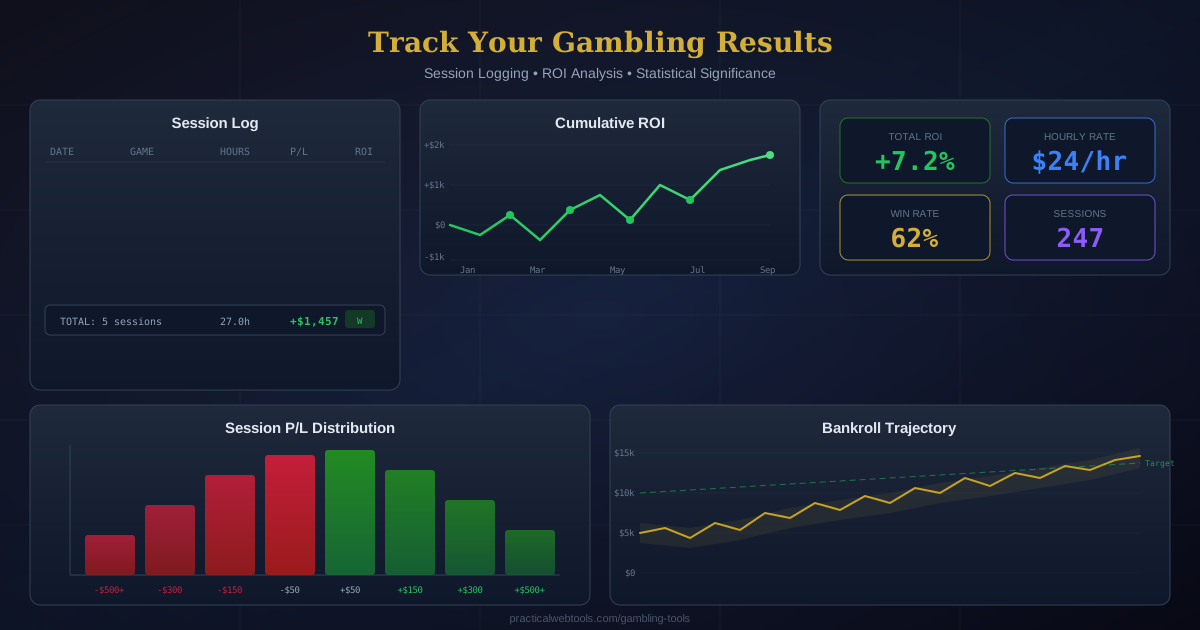
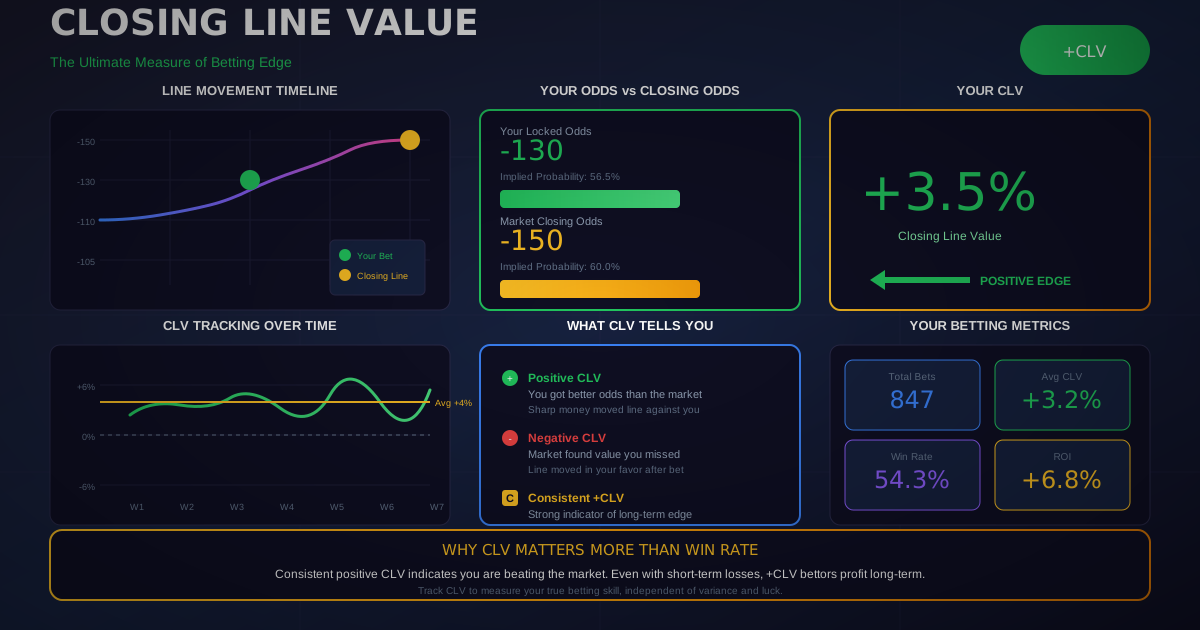
Review your results monthly. Are you beating the closing line consistently? If your bets move in your direction after you place them (Closing Line Value or CLV), you are finding genuine value, even if short-term results are negative.
Determine optimal staking for every NHL bet with our Kelly Criterion Calculator.
NHL Betting Tools and Resources
Successful NHL betting requires the right tools. Here are the essential calculators for hockey handicappers:
| Tool | Purpose | When to Use |
|---|---|---|
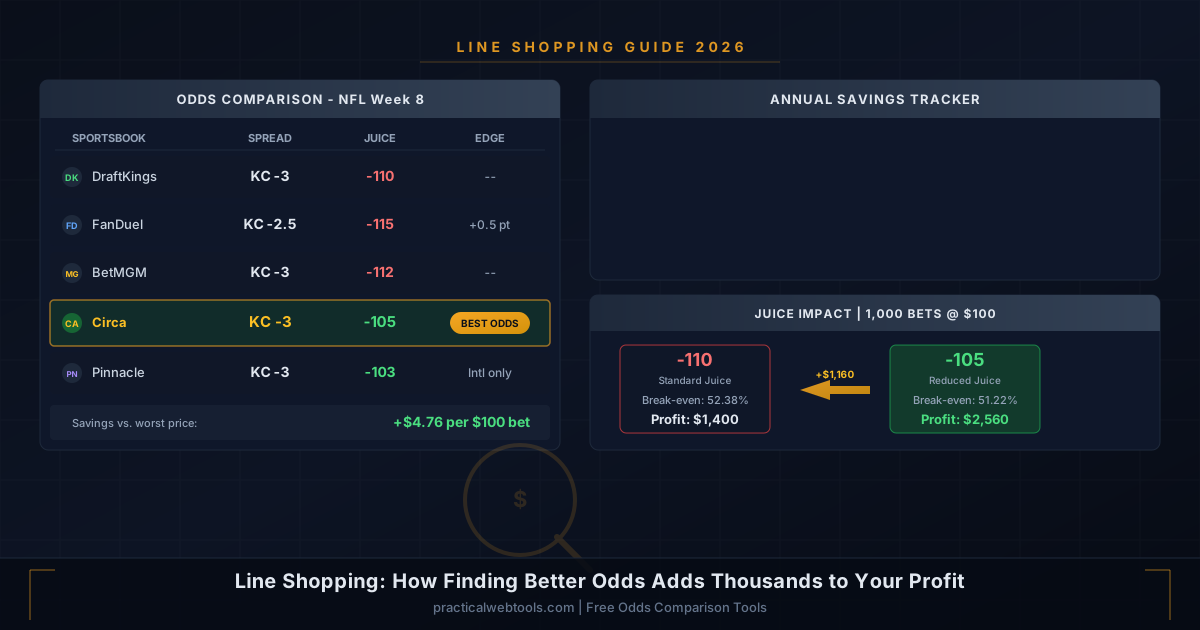
| Odds Converter | Convert between American, decimal, and fractional odds | Comparing lines across sportsbooks |
| Implied Probability Calculator | Calculate the true probability implied by any line | Evaluating whether a line offers value |
| Expected Value Calculator | Calculate EV based on your probability estimate | Before placing any bet |
| Kelly Criterion Calculator | Determine optimal bet sizing | After identifying a +EV opportunity |
| Parlay Calculator | Calculate multi-leg parlay payouts | Building NHL parlays |
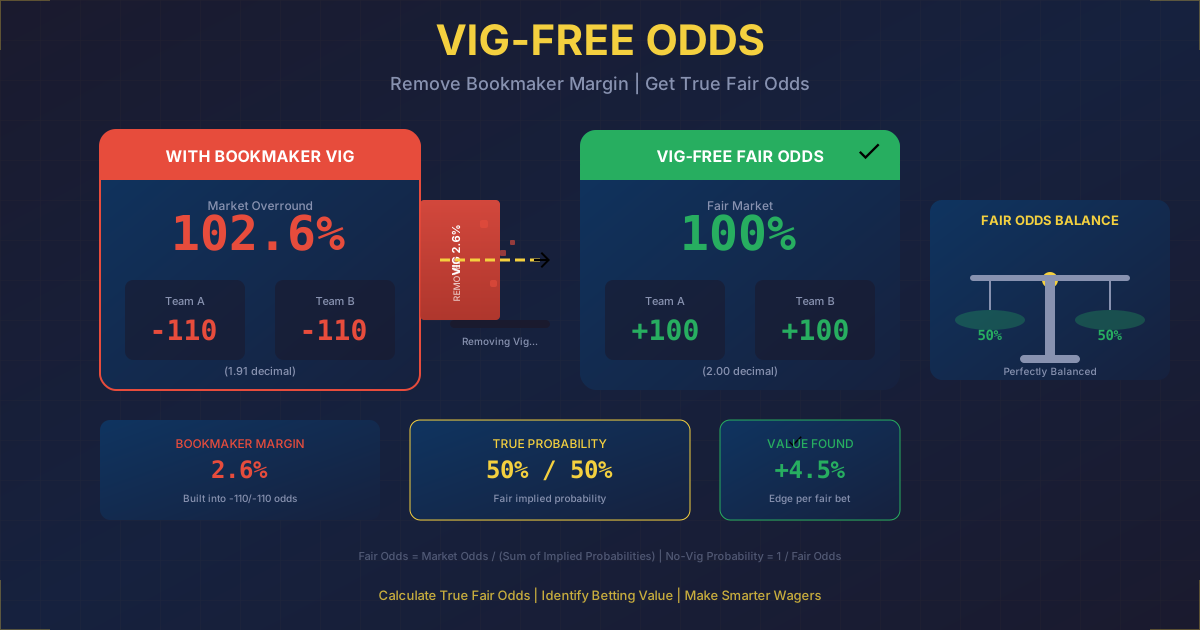
| Hold/Vig Calculator | Determine the sportsbook's margin | Identifying the sharpest lines |
| Hedge Calculator | Calculate hedge bet amounts for guaranteed profit | During live playoffs or in-game |
| Arbitrage Calculator | Find risk-free profit across sportsbooks | When lines differ significantly between books |
Frequently Asked Questions
What is a puck line bet in the NHL? A puck line bet is hockey's version of the point spread. The standard puck line is set at 1.5 goals. Betting the favorite at -1.5 means they must win by 2 or more goals. Betting the underdog at +1.5 means they can lose by 1 goal and you still win, or they win outright. The fixed 1.5-goal spread makes the puck line unique among major sports spreads and creates distinct strategic opportunities compared to moneyline betting.
Is betting NHL underdogs profitable? Yes, NHL underdogs are among the most profitable positions in all of sports betting. Road underdogs win approximately 40.6% of their games outright, and home underdogs win at roughly 44.4%. Home underdogs, in particular, have covered the puck line spread at a 63.9% rate in recent seasons. The NHL's salary cap and inherent randomness create more parity than football or basketball, making underdog betting a cornerstone of profitable hockey handicapping.
How much does a goaltender affect NHL betting lines? Goaltender selection is the single biggest factor in NHL betting. An elite starter versus a backup can shift the moneyline by 20-40 cents and dramatically impact totals. Games featuring top-five goaltenders in save percentage go Under 64.8% of the time. Bettors should always check confirmed starting goaltenders before placing any NHL wager and use a rolling 10-game save percentage rather than season-long numbers.
What is the best NHL period to bet on? The third period is the highest-scoring period in the NHL, averaging approximately 2.3 goals compared to 1.9 in the first period and 2.0 in the second. Third-period Overs benefit from goalie pulls, empty-net goals, and desperation offense by trailing teams. Conversely, first-period Unders are a consistent winner because teams play conservatively early in games. The best approach is to target first-period Unders in defensive matchups and third-period Overs in games where one team trails.
How does the back-to-back schedule affect NHL betting? Teams playing the second game of a back-to-back win approximately 42-46% of the time, depending on whether the game is at home or on the road. The effect is most pronounced when the fatigued team is also traveling, especially across time zones, where win rates can drop to around 39%. Bettors should track the NHL schedule closely and look for rest differentials of 2+ days between opponents, as these spots consistently produce an exploitable edge.
Should I bet NHL regular season differently than playoffs? Absolutely. Playoff hockey features lower scoring (approximately 5.4-5.6 goals per game versus 6.2 in the regular season), higher defensive intensity, no back-to-back games, and sudden-death overtime instead of the 3-on-3/shootout format. Totals should shift toward the Under, moneyline value on underdogs may decrease due to public attention, and goaltender analysis becomes even more critical since starters play every game. Series pricing can also offer unique value opportunities.
What advanced stats should NHL bettors track? The most valuable advanced stats for NHL bettors are Expected Goals For percentage (xGF%), Corsi For percentage (CF%), and Goals Saved Above Expected (GSAx). xGF% is the best predictor of future team performance because it measures the quality and quantity of scoring chances. CF% measures shot-attempt dominance. GSAx measures goaltender performance beyond simple save percentage. Teams with high xGF% but low actual win percentages are prime regression candidates and betting value plays.
How does live betting work in NHL games? Live betting allows you to wager on NHL games after puck drop, with odds updating in real time as the game progresses. In hockey, goals create dramatic line swings of 100+ cents on the moneyline, creating frequent pricing inefficiencies. The best live betting opportunities come after the underdog scores first (buy the favorite at a discount), during 0-0 first periods (the Over often gets underpriced), and in the final minutes when goalie pulls create predictable empty-net scenarios. Timing your bets during stoppages gives you the best prices.
Conclusion
The NHL betting market rewards specialization, patience, and disciplined execution. The combination of league-wide parity, the outsized impact of goaltending, frequent scheduling inequities, and the public's bias toward favorites creates a steady stream of exploitable edges for bettors willing to do the work.
Focus on 2-3 specific angles where you believe you have an advantage. Track every bet meticulously. Use proper bankroll management and Kelly Criterion sizing. Monitor goaltender confirmations daily. And above all, think in terms of expected value, not individual game outcomes. A bet that loses is not a bad bet if the math was in your favor. A bet that wins is not a good bet if you overpaid for the probability.
The data is clear: the NHL is one of the best betting markets in professional sports for disciplined, data-driven handicappers. Use the tools and frameworks in this guide to build your edge and execute it with consistency.
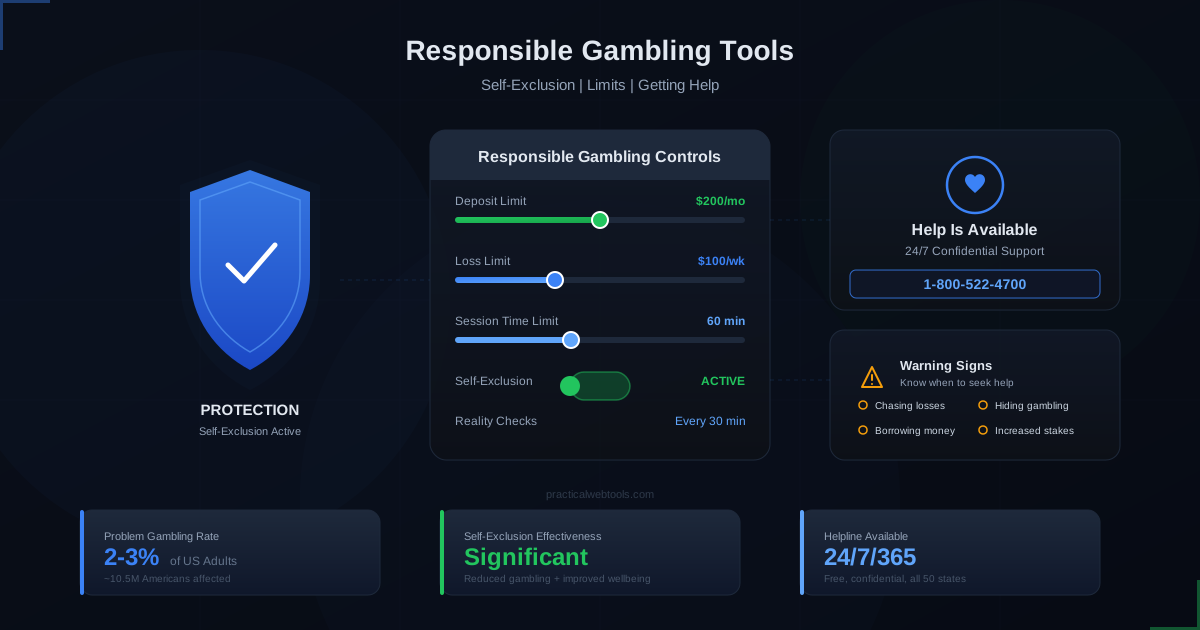
Gambling involves risk. This content is for educational and informational purposes only. Always gamble responsibly, set limits you can afford, and seek help if gambling becomes a problem. Visit the National Council on Problem Gambling or call 1-800-522-4700 for support.