Kelly Criterion for Gambling: How to Size Your Bets Mathematically (2026)
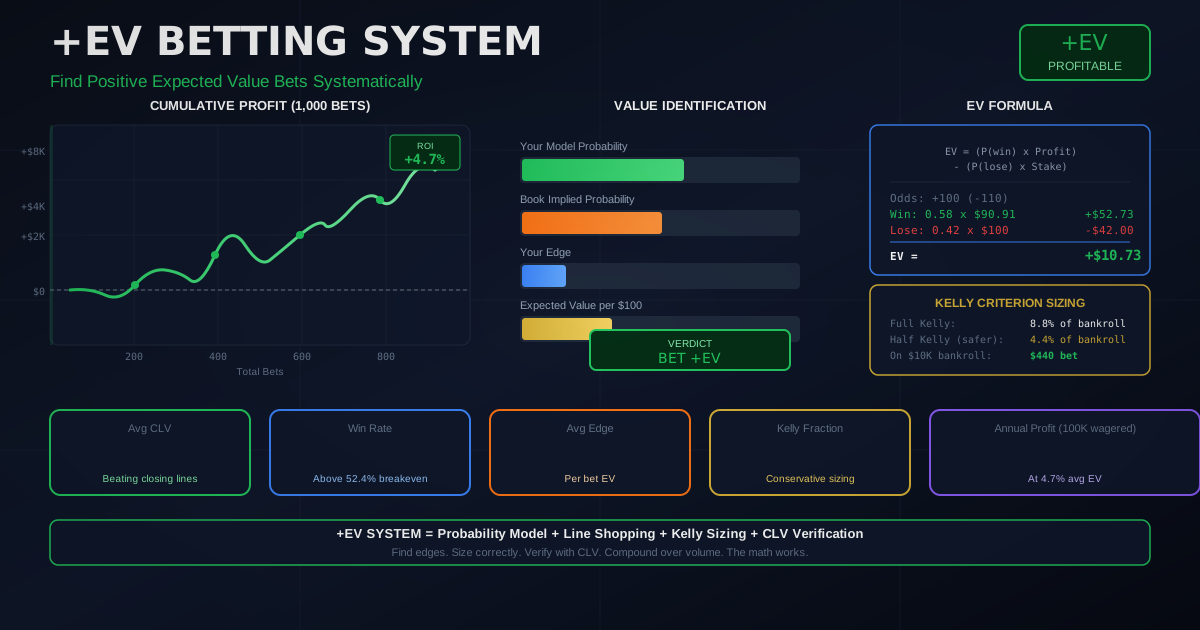
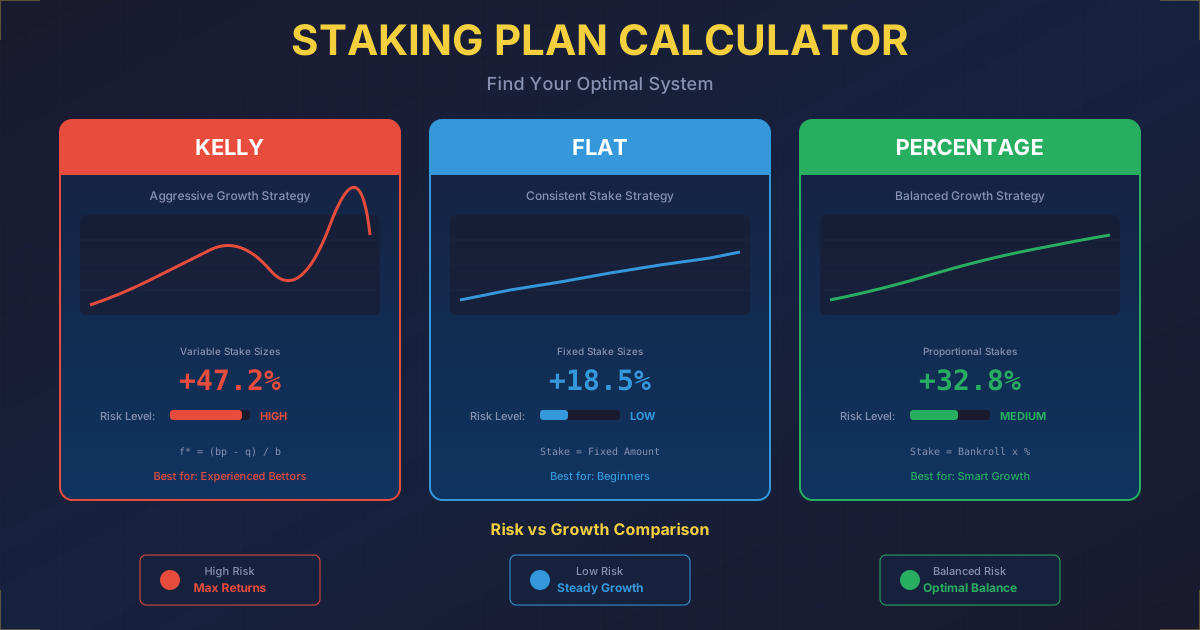
The Kelly Criterion is the only mathematically proven method for sizing bets to maximize long-term bankroll growth. Developed by Bell Labs scientist John Kelly in 1956, this formula tells you exactly what fraction of your bankroll to wager based on your edge and the odds offered. A sports bettor with a 5% edge on even-money bets should wager exactly 5% of their bankroll -- not 1%, not 10%, but precisely 5% to maximize the geometric growth rate of their money.
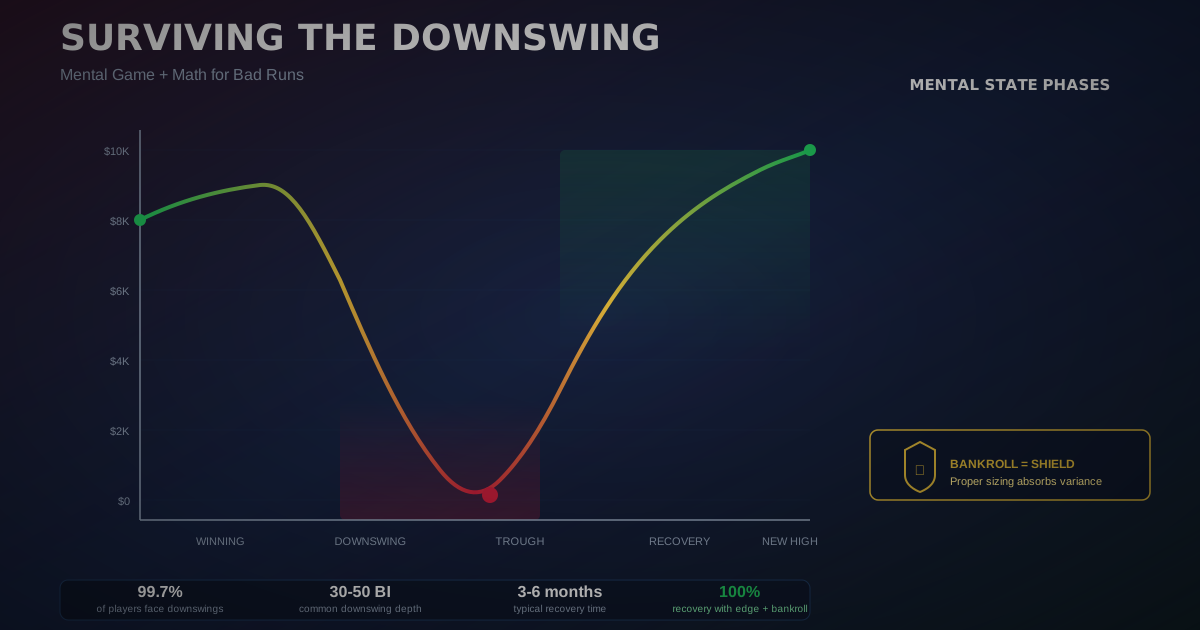
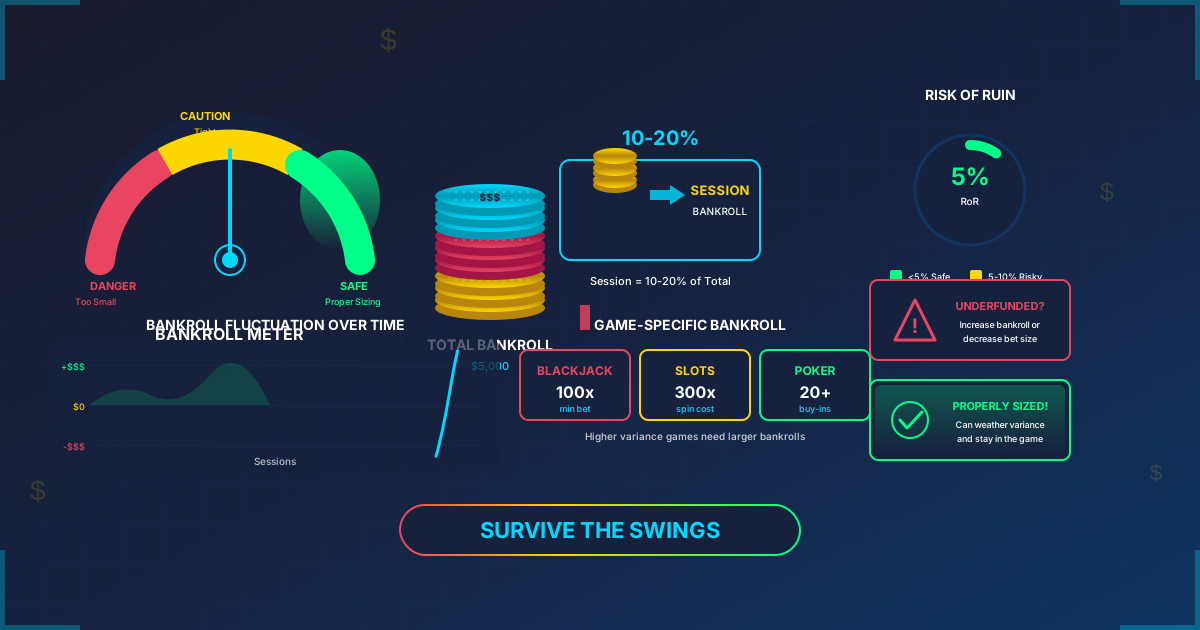
Yet full Kelly sizing is terrifyingly volatile. A bankroll can drop 50% before recovering, and the psychological toll drives most gamblers to ruin through tilted decisions long before the math rescues them. This is why every professional gambler uses fractional Kelly -- typically 25% to 50% of the Kelly-optimal amount -- sacrificing some growth for dramatically less variance.
Understanding the Kelly Criterion separates gamblers who grow their bankrolls systematically from those who either bet too little (leaving money on the table) or too much (courting disaster). This guide covers the formula, practical applications for every gambling type, and the specific fractional Kelly approach used by professionals.
Calculate your optimal bet size instantly with our free Kelly Criterion Calculator.
What Is the Kelly Criterion?
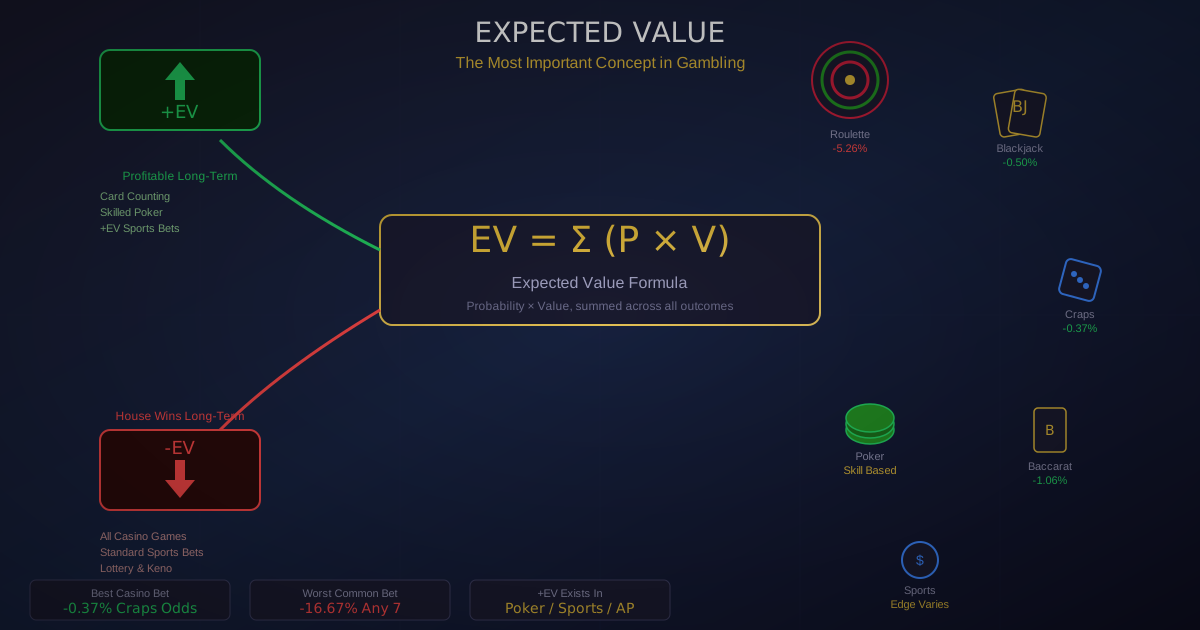
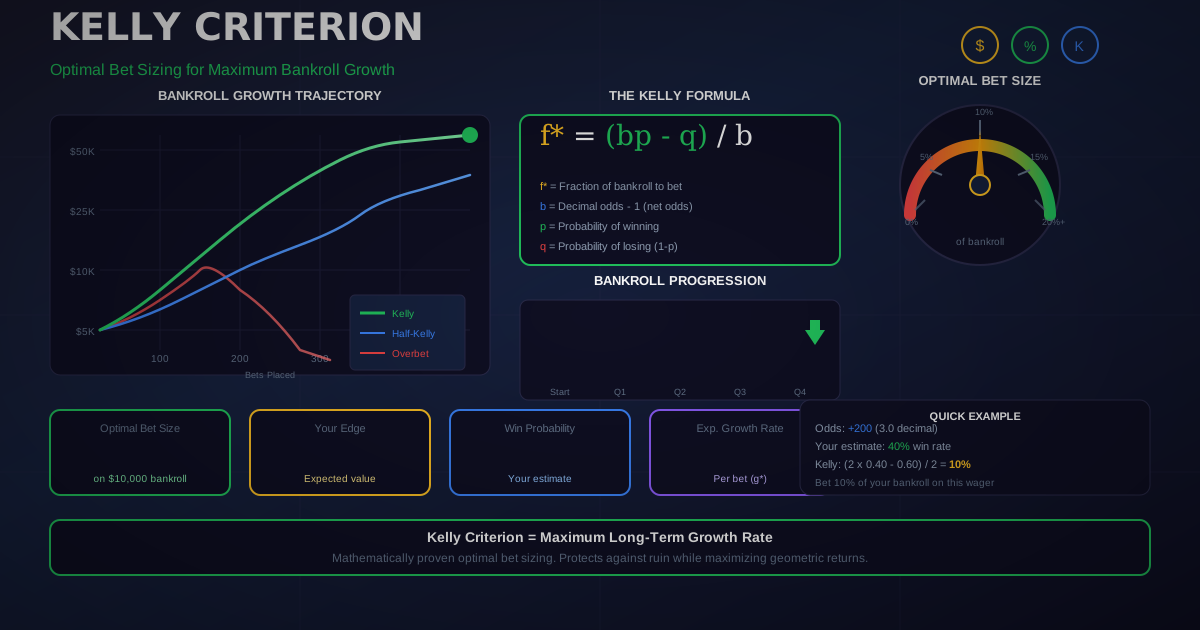
The Kelly Criterion is a formula that determines the optimal fraction of your bankroll to wager on a bet with positive expected value. "Optimal" means it maximizes the expected logarithm of wealth, which is equivalent to maximizing the long-term geometric growth rate of your bankroll.
In simpler terms: Kelly sizing grows your money faster than any other fixed-fraction betting strategy over the long run. Betting more than Kelly increases variance without increasing long-run growth (and actually decreases it). Betting less than Kelly is safer but grows your bankroll more slowly.
The formula was originally developed for information transmission over noisy channels, but its application to gambling was immediately recognized. Professional gamblers, hedge fund managers, and quantitative investors have used Kelly-based strategies for decades.
The beauty of Kelly is its simplicity: you need only two inputs -- your probability of winning and the odds offered. Everything else follows from the math.
The Kelly Criterion Formula
Simple Binary Bet (Win or Lose)
For a bet that either wins or loses a fixed amount:
f = (bp - q) / b*
Where:
- f* = the fraction of bankroll to wager (the Kelly fraction)
- b = the decimal odds minus 1 (the net odds received on the wager, i.e., profit-to-risk ratio)
- p = the probability of winning
- q = the probability of losing (q = 1 - p)
Alternative Formulation
An equivalent and sometimes more intuitive form:
f = edge / odds*
Where:
- edge = (probability of winning x payout) - (probability of losing x stake) = expected value per dollar wagered
- odds = the net payout on a winning bet (b in the formula above)
Example: Even-Money Bet with 55% Win Rate
- b = 1 (you win $1 for every $1 wagered)
- p = 0.55
- q = 0.45
- f* = (1 x 0.55 - 0.45) / 1 = 0.10 / 1 = 10%
You should bet 10% of your bankroll on each wager. On a $10,000 bankroll, that is $1,000 per bet.
Example: Sports Bet at -110 with 54% Win Rate
At -110 odds, you risk $110 to win $100. The decimal odds are 1.909, so b = 0.909.
- b = 0.909
- p = 0.54
- q = 0.46
- f* = (0.909 x 0.54 - 0.46) / 0.909
- f* = (0.4909 - 0.46) / 0.909
- f* = 0.0309 / 0.909
- f* = 3.4%
On a $10,000 bankroll, you should risk $340 per bet (not the $110/$100 format -- $340 is the amount at risk). Since you are betting at -110, you would wager $340 to win $309.
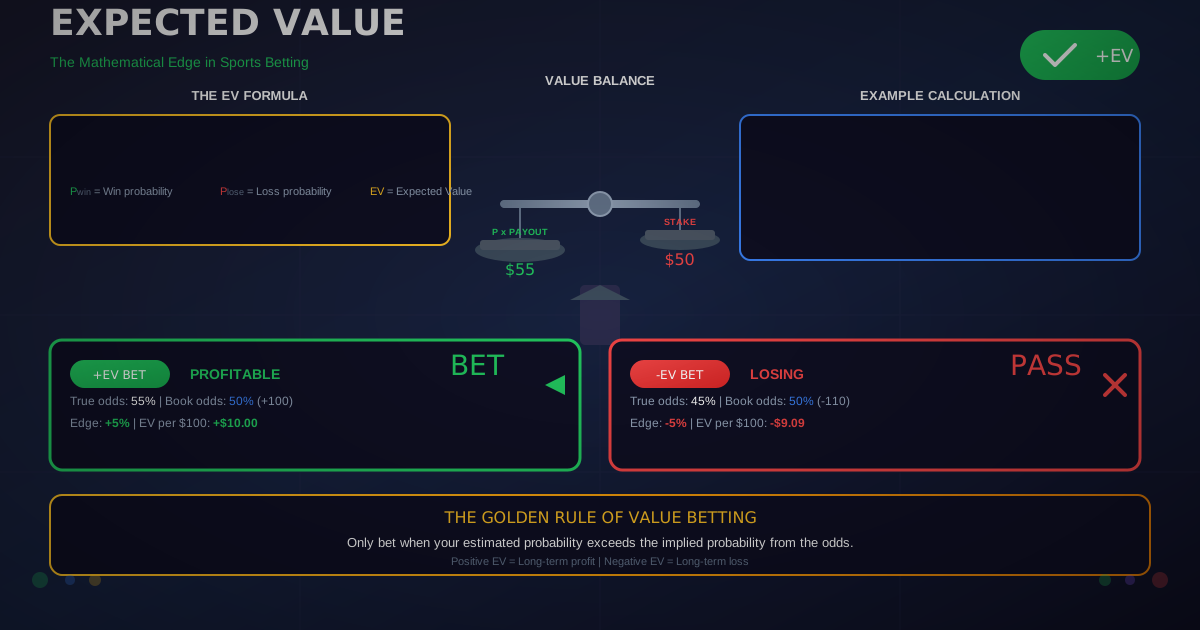
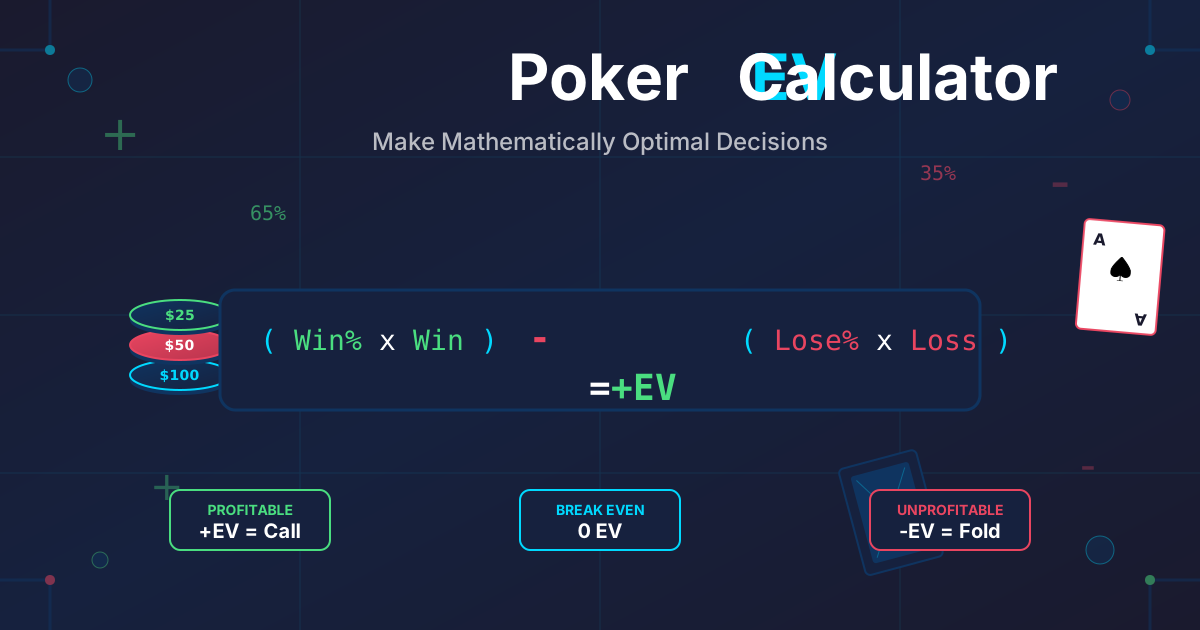
Verify your edge before sizing bets with our Expected Value Calculator and then optimize sizing with the Kelly Criterion Calculator.
Why Full Kelly Is Too Aggressive
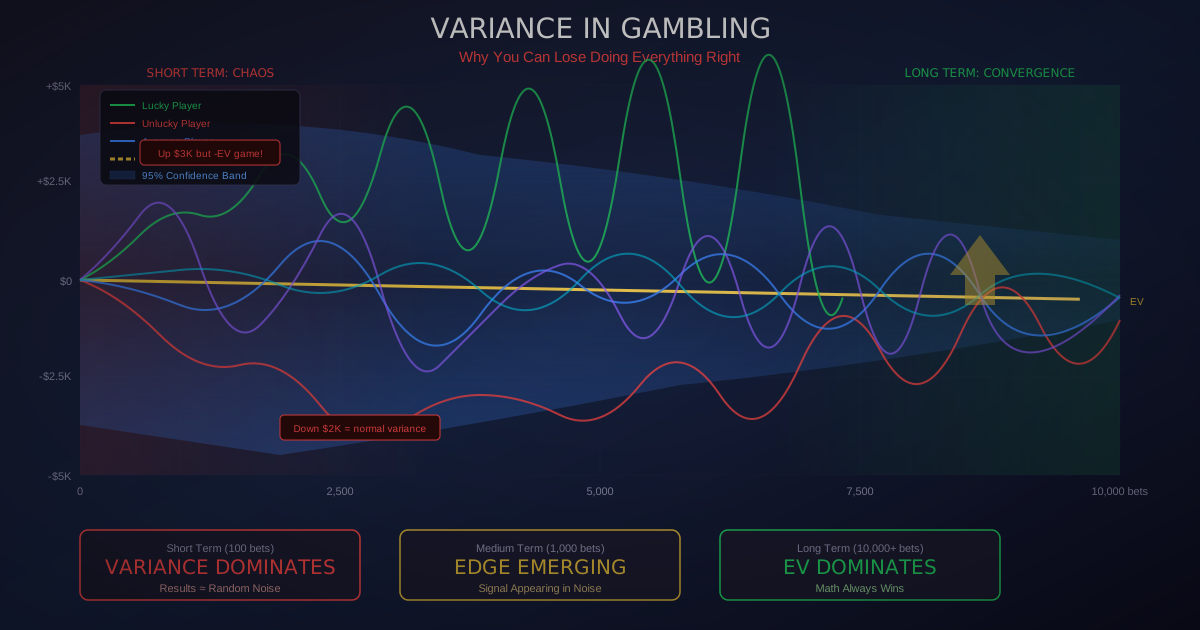
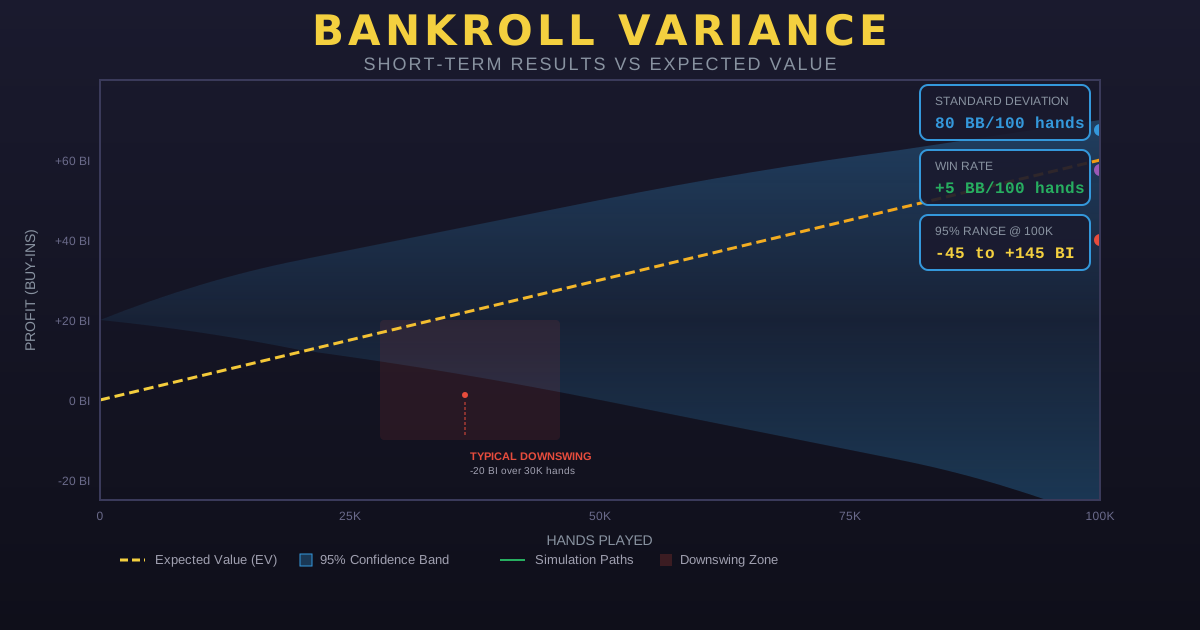
The Kelly Criterion maximizes long-term growth, but the path to that growth is extraordinarily volatile. Here is what full Kelly actually looks like in practice:
Full Kelly Volatility Statistics
| Metric | Full Kelly | Half Kelly | Quarter Kelly |
|---|---|---|---|
| Growth rate (vs optimal) | 100% | 75% | 50% |
| Probability of halving bankroll | 50% | 25% | 6.25% |
| Probability of losing 75% | 25% | 6.25% | 0.4% |
| Maximum drawdown (typical) | 80-90% | 50-60% | 25-35% |
| Time to recover from worst drawdown | Months to years | Weeks to months | Days to weeks |
| Psychological tolerability | Very low | Moderate | High |
The most striking statistic: with full Kelly, there is a 50% chance of your bankroll being cut in half at some point before it doubles. For most humans, watching $10,000 turn into $5,000 triggers emotional decisions that the formula does not account for.
The Growth Rate Curve
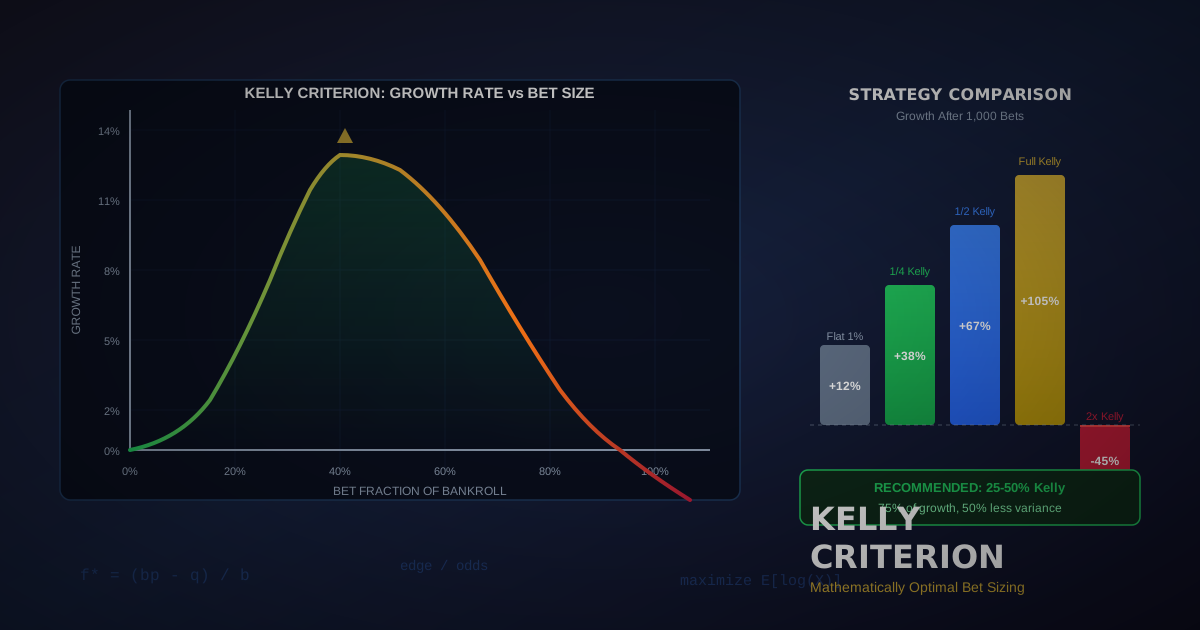
The relationship between bet fraction and growth rate forms a parabolic curve:
- At 0% of bankroll: growth rate is 0% (you never bet)
- At Kelly fraction: growth rate is maximized (the peak of the curve)
- At 2x Kelly: growth rate equals 0% (you are effectively treading water)
- Above 2x Kelly: growth rate is negative (you are expected to lose money over time)
This last point is critical: betting more than double the Kelly amount leads to negative expected growth. Overbetting is not just suboptimal -- it is destructive. A gambler betting 3x Kelly on a profitable bet will, counterintuitively, go broke with certainty given enough time.
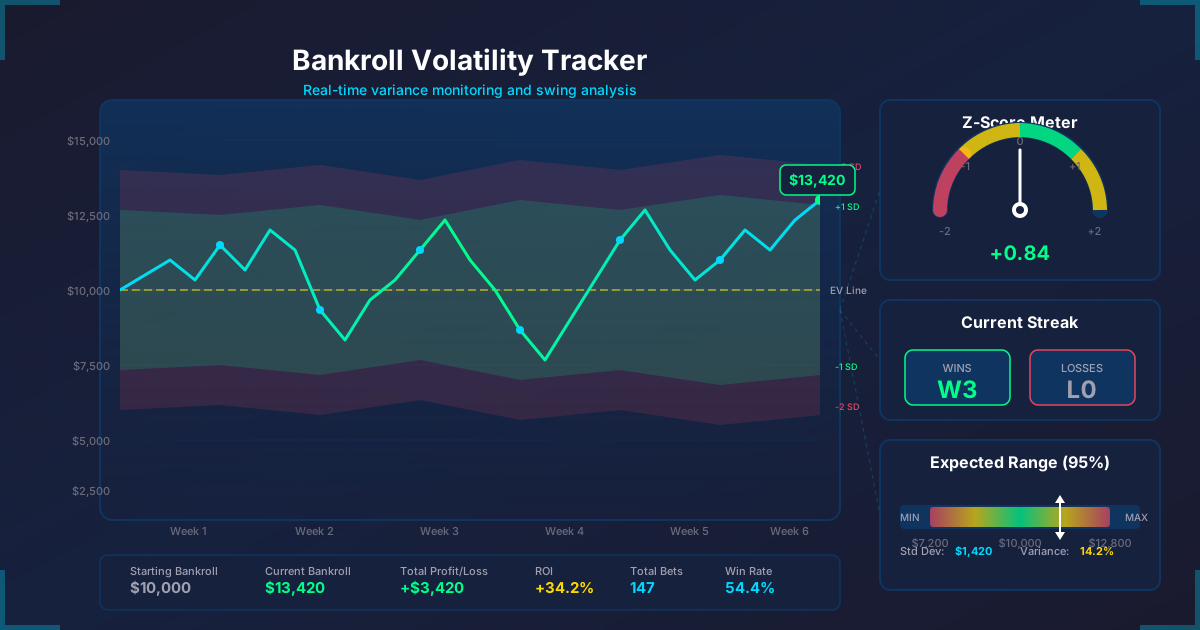
Use the Bankroll Volatility Tracker to monitor whether your actual betting patterns stay within Kelly-safe boundaries.
Fractional Kelly: The Professional Approach
Nearly every professional gambler uses fractional Kelly -- betting a fraction (typically 25-50%) of the Kelly-recommended amount. The math strongly supports this approach.
Fractional Kelly Comparison
| Strategy | Growth Rate | Variance | Max Drawdown | Practical Viability |
|---|---|---|---|---|
| Quarter Kelly (25%) | 44% of max | 6% of full | 25-35% | Excellent |
| Third Kelly (33%) | 56% of max | 11% of full | 30-40% | Very good |
| Half Kelly (50%) | 75% of max | 25% of full | 45-55% | Good |
| Three-Quarter Kelly (75%) | 94% of max | 56% of full | 65-75% | Aggressive |
| Full Kelly (100%) | 100% of max | 100% of full | 80-90% | Extreme |
The sweet spot is half Kelly, which captures 75% of the maximum possible growth rate while experiencing only 25% of the variance. For risk-averse professionals, quarter Kelly provides 44% of max growth with negligible risk of devastating drawdowns.
Why Fractional Kelly Is Mathematically Justified
Beyond psychological comfort, there are rigorous mathematical reasons to use fractional Kelly:
-
Parameter uncertainty: You never know your true edge precisely. If your estimated edge is 5% but your true edge is 3%, full Kelly based on 5% is actually overbetting relative to the true Kelly fraction. Fractional Kelly provides a buffer against estimation error.
-
Non-independent bets: Kelly assumes independent bets, but real gambling involves correlated outcomes (playing the same opponents, weather affecting multiple games, etc.). Fractional Kelly compensates for this correlation.
-
Discrete bankroll: Kelly assumes infinitely divisible bankrolls and continuous betting, but real gambling involves discrete units. Fractional Kelly smooths out the discretization errors.
-
Utility function mismatch: Kelly maximizes log-wealth, but most people's actual utility function is more risk-averse than logarithmic. Fractional Kelly better matches human risk preferences.
Calculate both full and fractional Kelly amounts with our Kelly Criterion Calculator.
Kelly Criterion for Sports Betting
Sports betting is the most straightforward application of Kelly because individual bets have clear probabilities and fixed payouts.
Step-by-Step Sports Betting Application
- Estimate your probability of the outcome (your model's prediction)
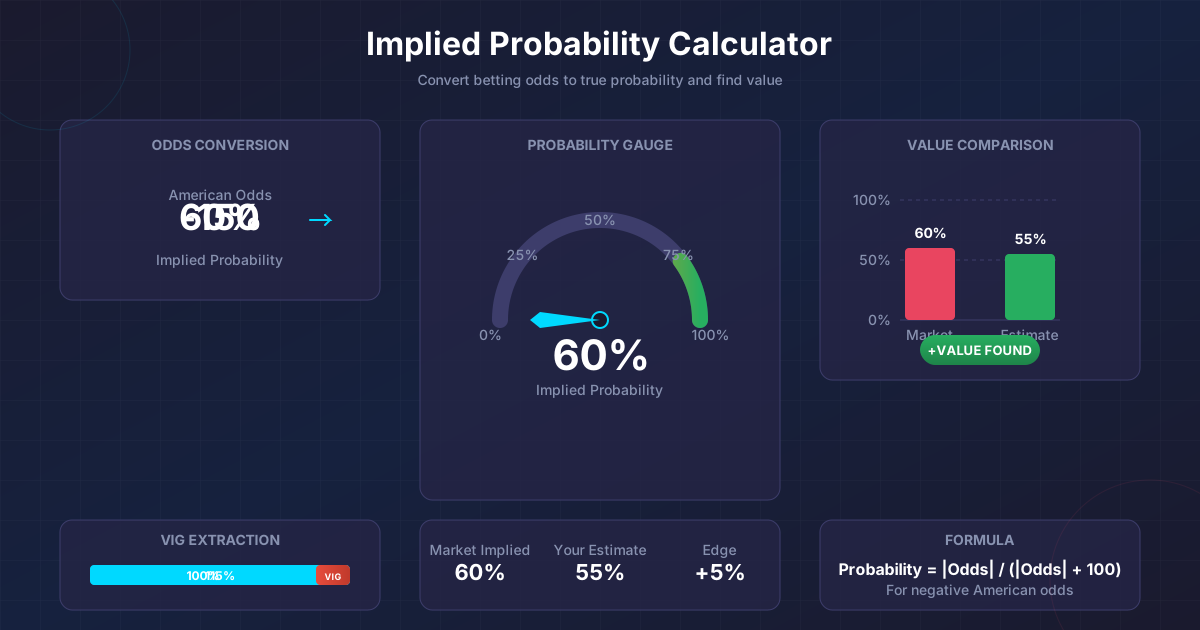
- Convert the bookmaker's odds to implied probability using the Implied Probability Calculator
- Calculate your edge: Your probability minus implied probability
- Apply Kelly formula to determine bet size
- Apply fractional Kelly (typically 25-50%) for practical sizing
Practical Example: NFL Point Spread
Your model gives Team A a 56% chance of covering the spread. The line is -110 (implied probability = 52.4%).
- Your edge: 56% - 52.4% = 3.6%
- b = 0.909 (payout on a winning -110 bet)
- f* = (0.909 x 0.56 - 0.44) / 0.909 = (0.509 - 0.44) / 0.909 = 7.6%
With half Kelly: 3.8% of bankroll
On a $10,000 bankroll: $380 risk (bet $418 at -110 to win $380)
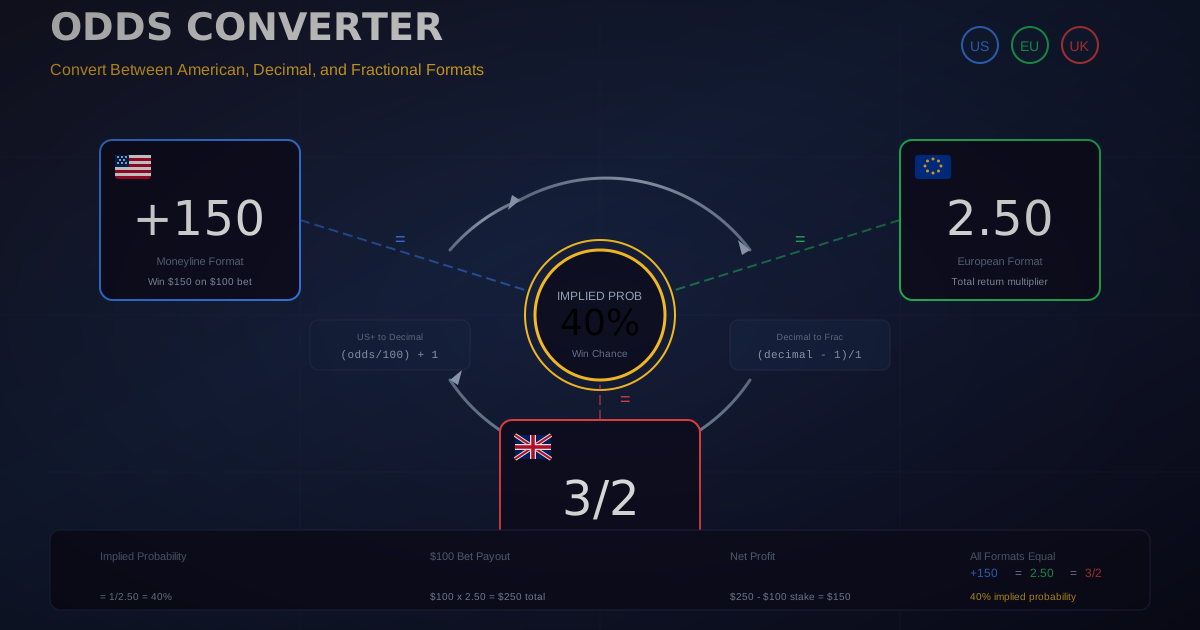
Use the Odds Converter to translate between American, decimal, and fractional odds formats for accurate Kelly calculations.
Handling Multiple Simultaneous Bets
When you have multiple bets open at the same time, the sum of all Kelly fractions should ideally not exceed a total Kelly fraction. The simplest approach:
- Calculate individual Kelly fractions for each bet
- If the sum exceeds your comfort level (e.g., 15-20% of bankroll), reduce all bets proportionally
- Alternatively, use the simultaneous Kelly formula which accounts for correlation
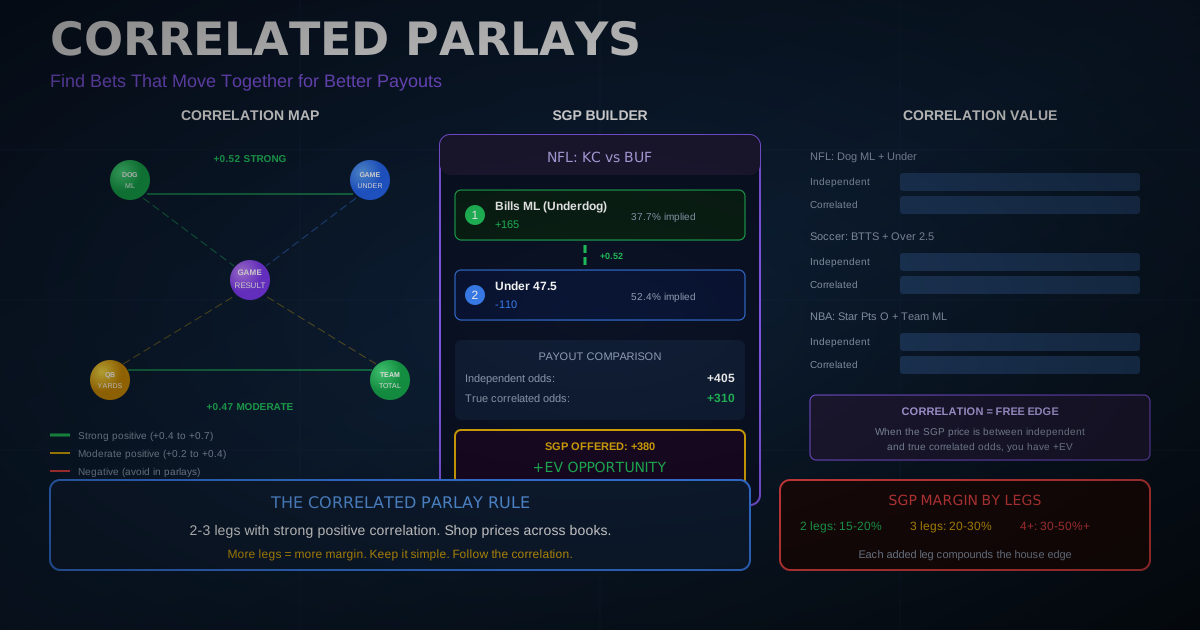
For uncorrelated bets, you can safely bet each independently up to your Kelly fraction. For correlated bets (e.g., multiple bets on the same game or related games), reduce each proportionally.
The Hold/Vig Calculator helps you understand how much of your edge is consumed by the bookmaker's margin, which directly affects your Kelly fraction.
Kelly Criterion for Poker
Applying Kelly to poker is more complex because poker has multiple outcomes (not just win/lose) and the "odds" are not fixed. However, Kelly principles still apply to several key poker decisions.
Bankroll Allocation Across Stakes
The most practical Kelly application in poker is determining what fraction of your bankroll to deploy at different stakes. If you can play at multiple stake levels, Kelly helps allocate:
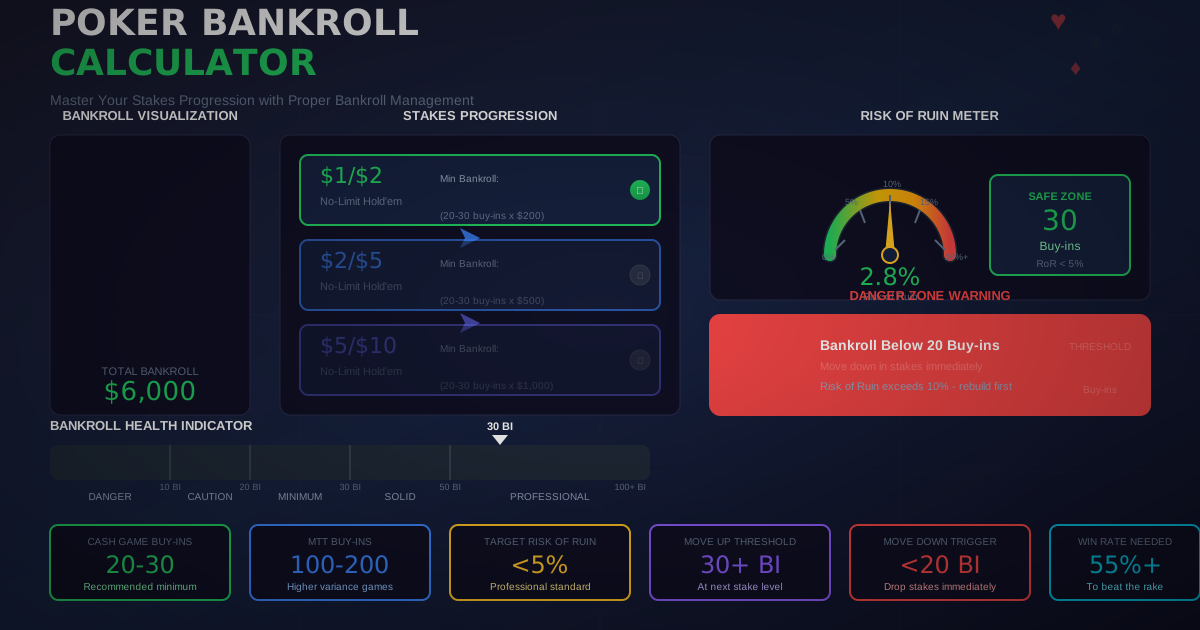
- Current bankroll: $20,000
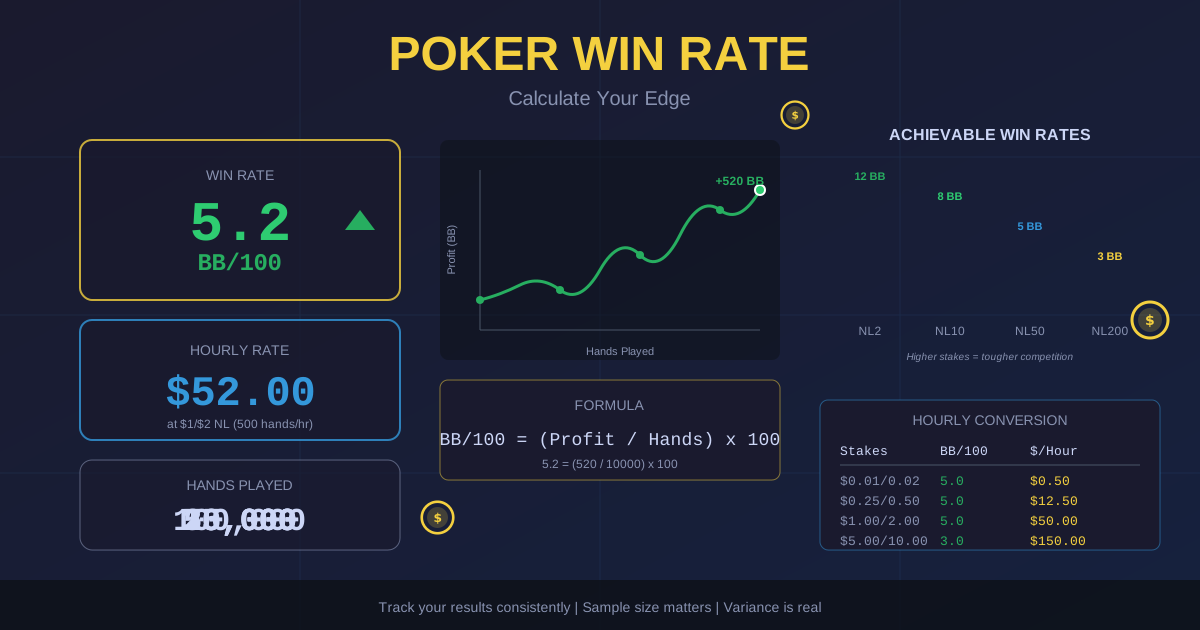
- $1/$2 win rate: 6 bb/100 (reliable over 200,000 hands)
- $2/$5 win rate: Estimated 4 bb/100 (uncertain, only 30,000 hands)
Full Kelly would suggest playing as high as your edge supports, but fractional Kelly recommends:
- Play $1/$2 until bankroll reaches $30,000 (60 buy-ins at $2/$5)
- Take shots at $2/$5 with strict move-down rules at 40 buy-ins
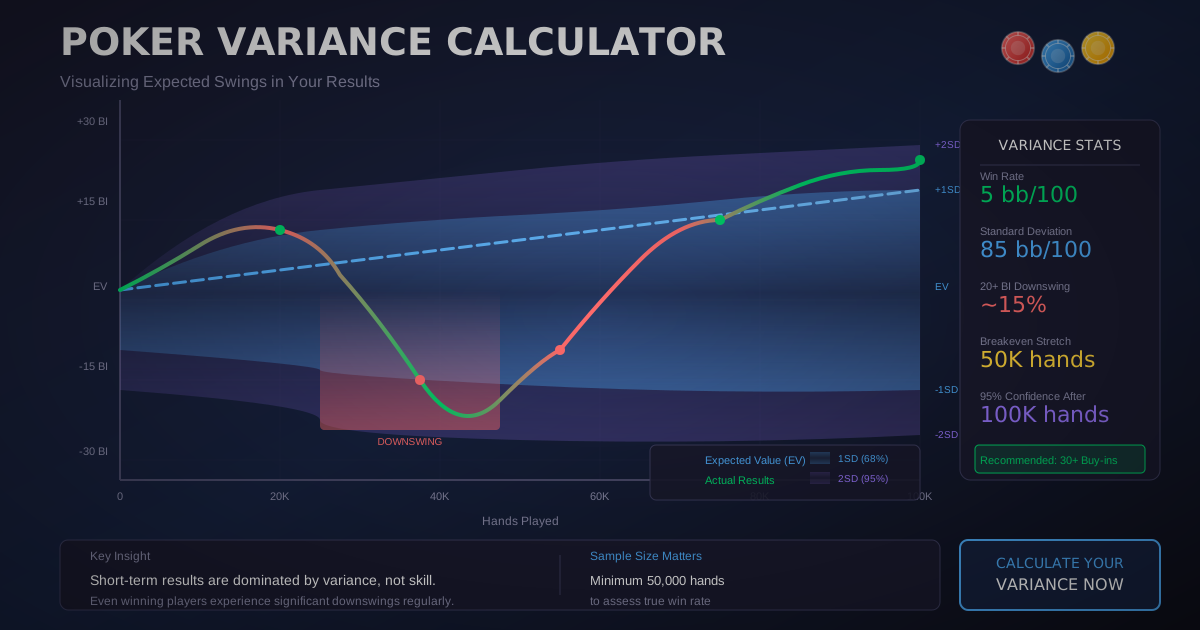
Use the Poker Bankroll Requirements Calculator to determine the right bankroll threshold for each stake level, and the Poker Variance Calculator to model expected swings at each level.
Tournament Buy-In Selection
Kelly is directly applicable to tournament poker. If you are deciding between a $200 and a $500 tournament:
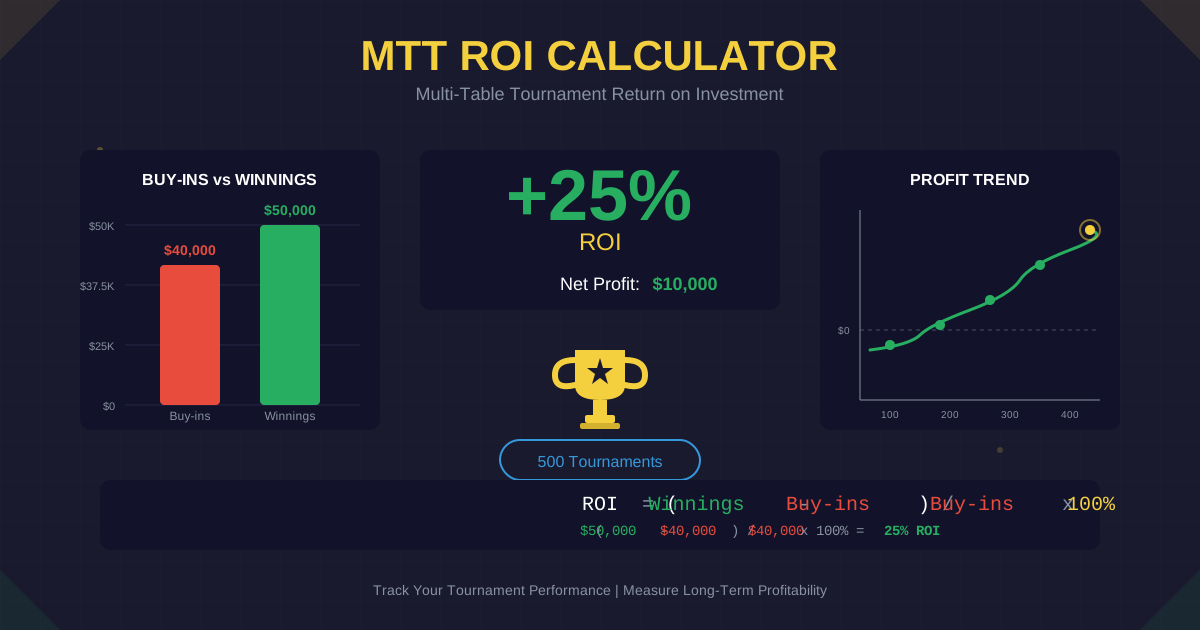
- $200 tournament: 30% ROI (well-documented)
- $500 tournament: 15% ROI (estimated, tougher field)
- Bankroll: $15,000
Kelly fraction for $200 tournament: Edge/Variance ratio suggests roughly 2-3% of bankroll per buy-in, meaning $200 buy-ins are appropriate (1.3% of bankroll per entry).
Kelly fraction for $500 tournament: Lower edge and higher absolute buy-in suggest roughly 1-1.5%, meaning $500 buy-ins at 3.3% are slightly above the recommended Kelly fraction.
The mathematically correct choice is to play more $200 tournaments rather than fewer $500 tournaments, unless the $500 events have soft enough fields to compensate.
Track your tournament results with the Poker Session Tracker and calculate your ROI with the Poker ROI Calculator to feed accurate data into Kelly calculations.
Applying Kelly to Individual Poker Hands
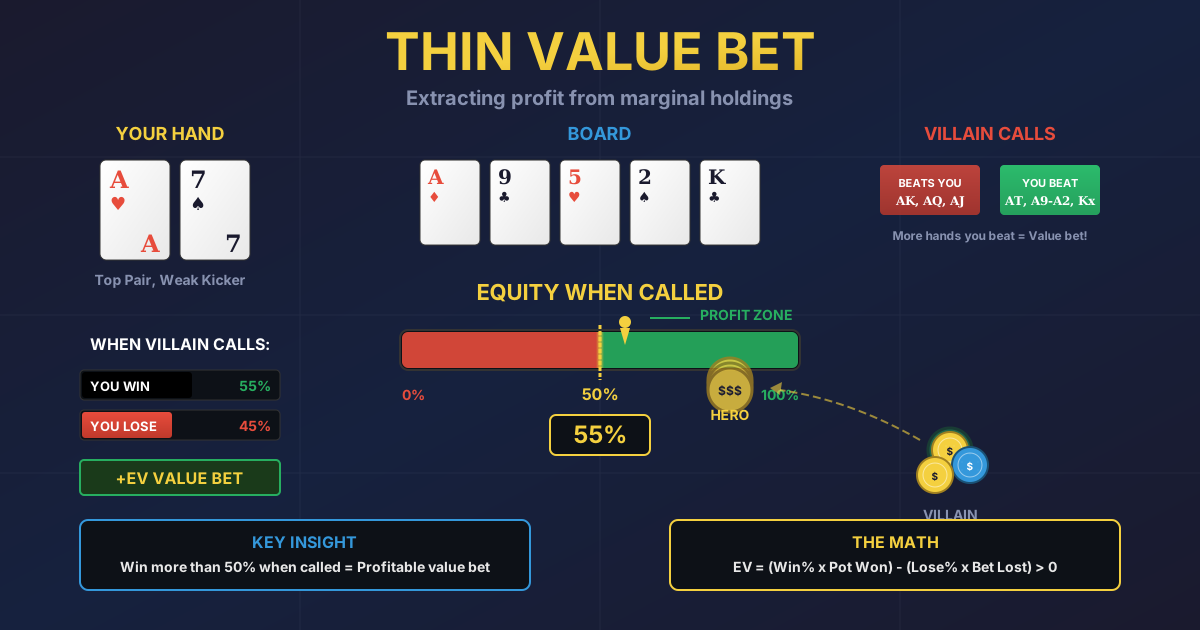
In-hand Kelly application is mostly theoretical because poker decisions happen too fast for calculation, but the principle is valuable for understanding all-in decisions:
If you are facing an all-in for 100 big blinds and you estimate 60% equity:
- b = 1 (you risk 100bb to win 100bb)
- p = 0.60, q = 0.40
- f* = (1 x 0.60 - 0.40) / 1 = 20%
If 100bb represents more than 20% of your total bankroll, this call is overbetting from a Kelly perspective -- even though it is clearly +EV. This is the mathematical basis for bankroll management rules in poker.
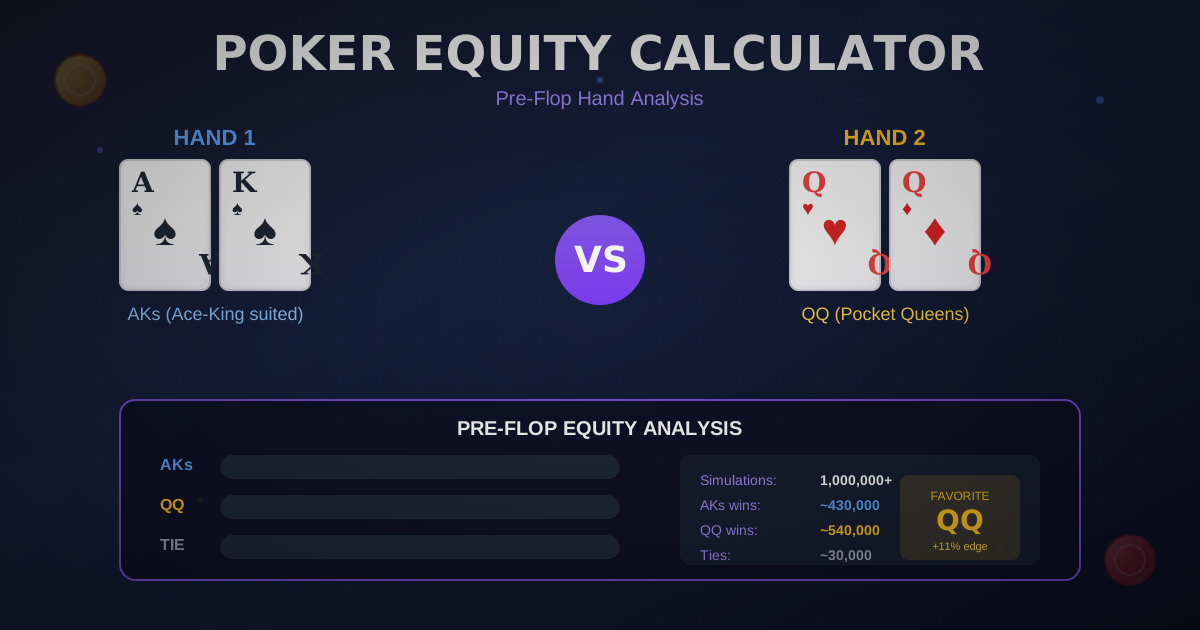
The Poker EV Calculator helps you analyze specific hand equities to understand the Kelly implications of major decisions.
Kelly Criterion for Blackjack
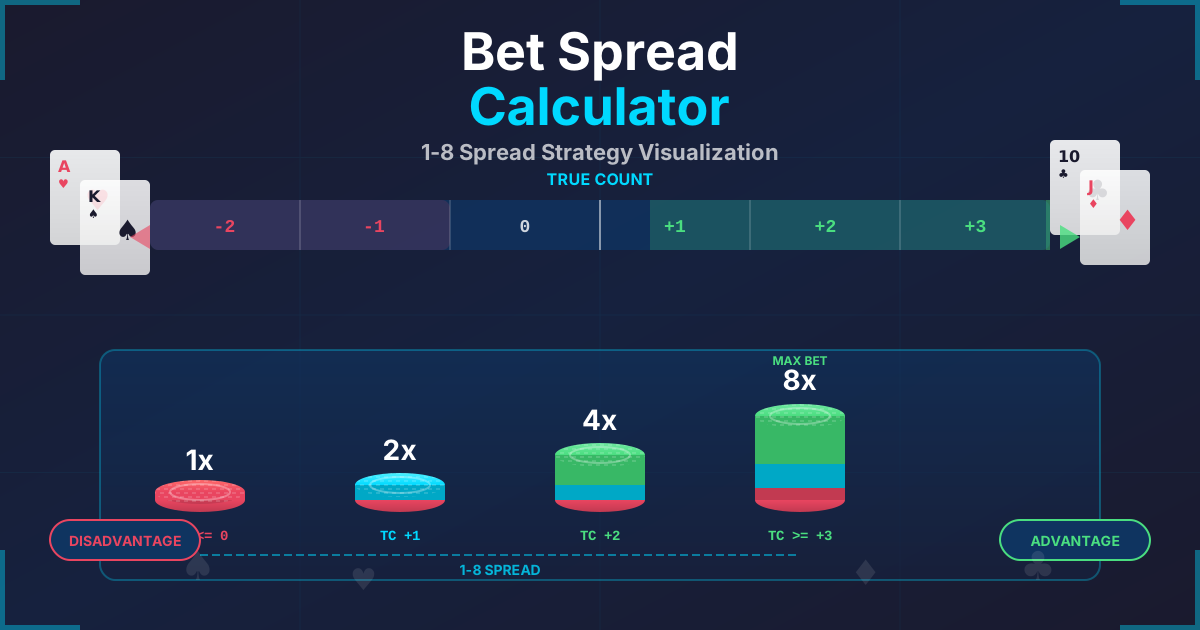
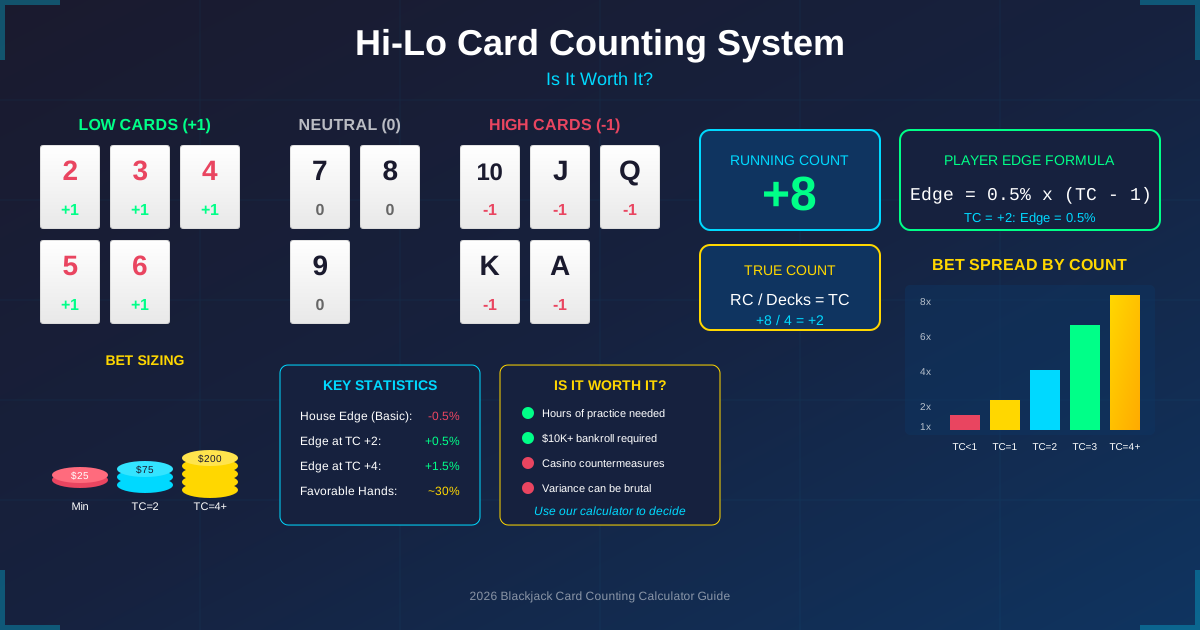
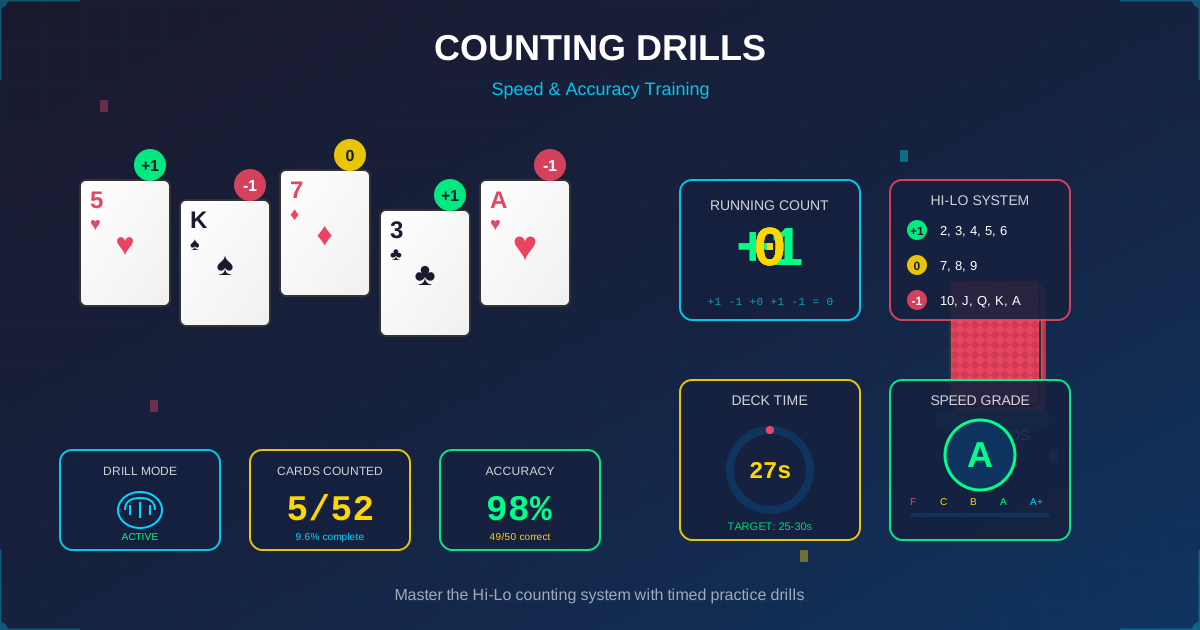
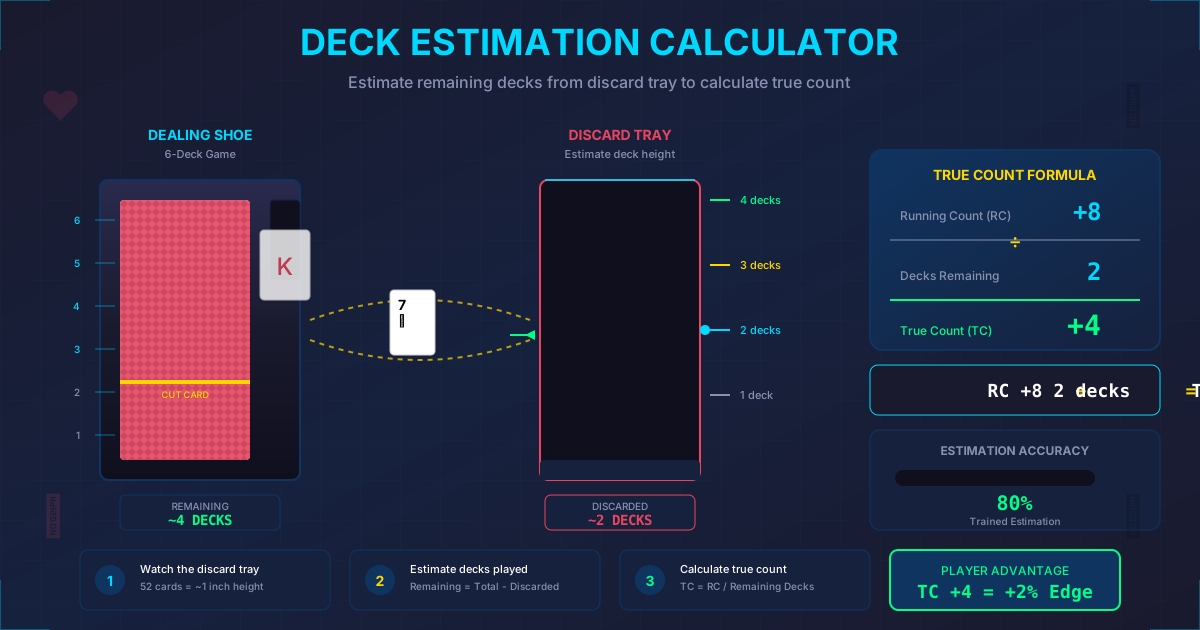
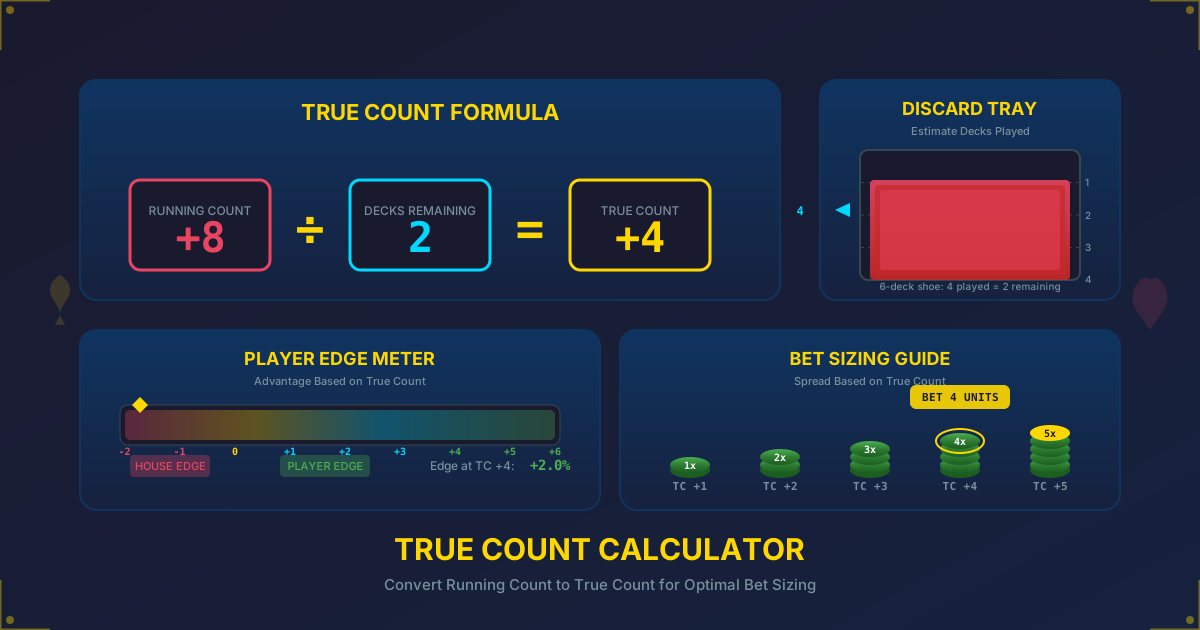
Card counters can apply Kelly to their bet spreads by calculating the Kelly fraction at each true count.
Kelly Bet Sizing by True Count
For a Hi-Lo counter at a standard 6-deck game:
| True Count | Edge | Kelly Fraction | Bet (on $25K bankroll) | Practical Bet (Half Kelly) |
|---|---|---|---|---|
| +1 | -0.2% | 0% (no bet) | $0 (minimum or sit out) | $25 (minimum) |
| +2 | +0.5% | 1.5% | $375 | $188 ($200) |
| +3 | +1.0% | 3.0% | $750 | $375 ($400) |
| +4 | +1.5% | 4.5% | $1,125 | $563 ($600) |
| +5 | +2.0% | 6.0% | $1,500 | $750 ($800) |
Notice that at true count +2 (the first profitable count), the Kelly-optimal bet is already 1.5% of bankroll. This gives you an idea of why card counters need large bankrolls -- they are betting meaningful fractions only when the count is high.
The Blackjack EV Calculator helps determine the precise edge at each count for your specific game conditions, and the Blackjack Betting Unit Calculator can optimize your unit sizing.
Kelly and the Blackjack Session
For individual blackjack sessions, the Blackjack Session Bankroll Calculator helps you determine how much to bring to the table based on Kelly principles. The goal is to have enough session bankroll that you never have to leave the table during a profitable shoe.
When Kelly Does Not Apply
The Kelly Criterion has important limitations that every gambler should understand:
1. Negative Expected Value Games
Kelly only works with positive EV bets. If your expected value is zero or negative, the Kelly fraction is zero or negative, meaning you should not bet at all. This applies to the vast majority of casino gambling.
Use the Expected Value Calculator to verify positive EV before applying Kelly.
2. Unknown or Uncertain Edge
If you are not confident in your edge estimate, Kelly can be dangerous. A 10% overestimate of your edge leads to significant overbetting. This is the primary reason for fractional Kelly -- it hedges against estimation error.
For sports betting, use the Implied Probability Calculator to compare your estimates against market-implied probabilities. If your edge over the market is consistently small (1-3%), you need to be especially careful with Kelly sizing.
3. Non-Repeating Unique Events
Kelly is designed for repeated bets over time. For one-off events (a single large tournament, a once-in-a-lifetime bet), Kelly is less applicable because the law of large numbers does not help you.
4. When You Cannot Afford to Lose
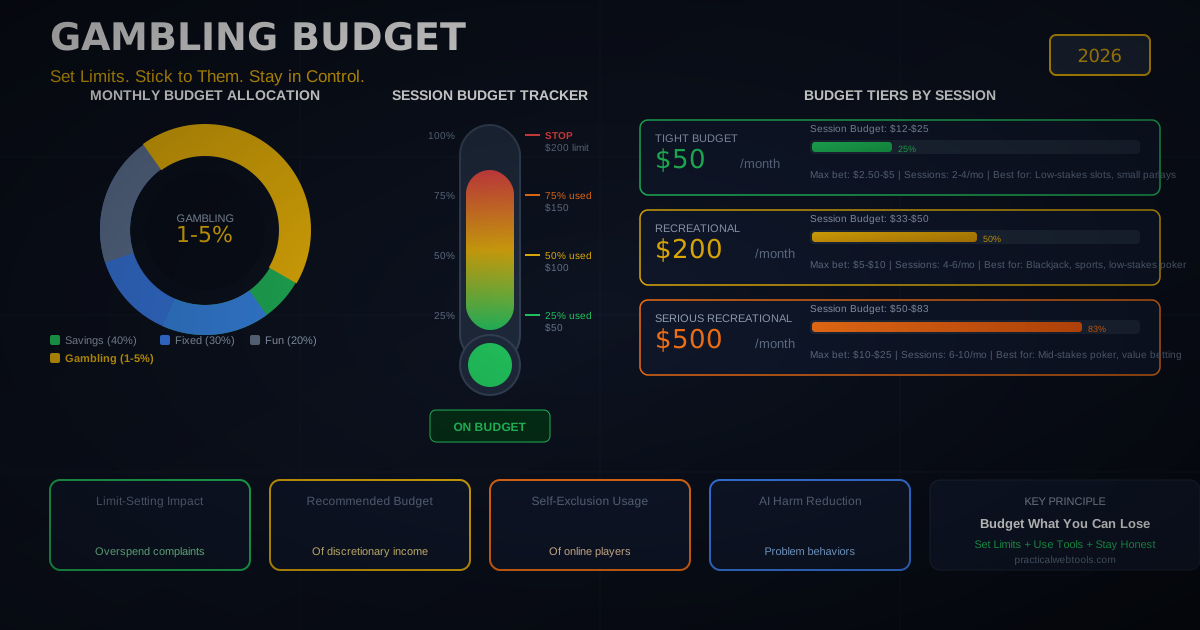
Kelly assumes you can tolerate any temporary drawdown. If losing 50% of your bankroll would force you to stop gambling entirely, full Kelly is inappropriate. Use fractional Kelly (25-33%) instead.
5. Highly Correlated Bets
Kelly assumes independence between bets. If your bets are correlated (e.g., betting multiple spreads that depend on the same underlying event), the effective Kelly fraction needs to be reduced.
Kelly Criterion vs. Flat Betting: A Comparison
Many gamblers use flat betting (wagering the same fixed dollar amount on every bet). How does this compare to Kelly?
1,000-Bet Simulation Results
| Strategy | Final Bankroll (median) | Growth | Worst Drawdown | Best Outcome |
|---|---|---|---|---|
| Flat 1% | $11,200 | +12% | -15% | +45% |
| Flat 3% | $13,800 | +38% | -38% | +140% |
| Quarter Kelly | $13,800 | +38% | -22% | +120% |
| Half Kelly | $16,700 | +67% | -40% | +250% |
| Full Kelly | $20,500 | +105% | -75% | +600% |
| 2x Kelly | $5,500 | -45% | -95% | +400% |
Assumptions: 55% win rate on even-money bets, 1,000 sequential bets, $10,000 starting bankroll
The Kelly strategies outperform flat betting at every level, but the advantage of full Kelly comes with extreme drawdowns. Half Kelly achieves 67% growth versus 38% for flat 3% -- with comparable drawdown risk.
The catastrophic result of 2x Kelly (-45% median) demonstrates why overbetting is far worse than underbetting. Losing half your bankroll is devastating; gaining somewhat less is merely suboptimal.
Real-World Kelly Criterion Examples
Example 1: The Professional Sports Bettor
James has a verified 3.2% edge across 5,000 NFL bets over four seasons. His bankroll is $50,000.
For a typical -110 bet:
- f* = 0.032 / 0.909 = 3.52% (full Kelly)
- Half Kelly: 1.76% of bankroll = $880 risk per bet
- Quarter Kelly: 0.88% = $440 risk per bet
James uses quarter Kelly because:
- His 3.2% edge has a confidence interval of approximately 1.5% to 4.9%
- He bets 3-5 games per week (multiple simultaneous exposures)
- Quarter Kelly keeps his worst-case seasonal drawdown to approximately 20%
At quarter Kelly, James expects to grow his bankroll by approximately 15-20% per year with a maximum drawdown of 20-25%.
Example 2: The Card Counter
Rachel counts cards with a 1.2% overall edge and a $40,000 bankroll. She plays $25 minimum tables.
At true count +3 (edge approximately 1.0%):
- Full Kelly: 3% of bankroll = $1,200 bet
- Half Kelly: $600 bet
- Quarter Kelly: $300 bet
Rachel uses half Kelly with a spread from $25 (minimum) to $600 (TC+5). Her expected annual profit with 600 hours of play:
- Hourly EV: approximately $28/hour
- Annual EV: $16,800
- Expected max drawdown: approximately $12,000 (30% of bankroll)
Example 3: The Poker Tournament Player
Alex plays $100-$300 online poker tournaments with a 20% ROI. His bankroll is $25,000.
For a $200 tournament:
- Edge per tournament: $40 (20% of $200)
- Variance per tournament is enormous (std dev approximately 5x buy-in)
- Kelly fraction: approximately 1.6% of bankroll per buy-in
Half Kelly: 0.8% = $200 is right at the Kelly-suggested limit. $300 tournaments at 1.2% of bankroll would be slightly over half Kelly.
Alex should stick primarily to $100-$200 tournaments and only play $300 events when his bankroll exceeds $30,000.
The Poker Risk of Ruin Calculator helps Alex understand the long-term survival implications of his tournament selection, while the Poker Downswing Probability Calculator shows how likely various losing stretches are.
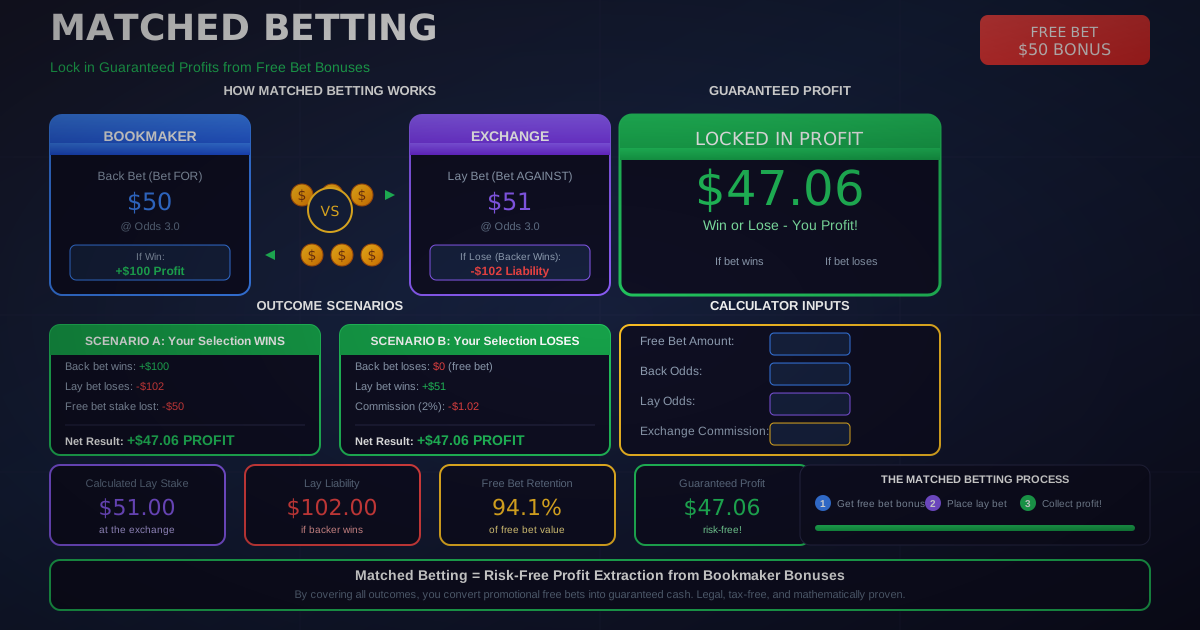
Example 4: The Matched Bettor
Sophie is exploiting a sign-up bonus that gives her a guaranteed 5% edge on $500 in qualifying bets. Her bankroll is $3,000.
- f* = 0.05 / 1.0 = 5% (full Kelly for even-money qualifiers)
- On a $3,000 bankroll, Kelly suggests $150 per qualifying bet
Since matched betting with proper lay-off bets is nearly risk-free, Sophie can use near-full Kelly here. The variance is minimal because the lay bet hedges most of the risk.
Kelly Criterion FAQ
What happens if I bet more than the Kelly amount?
Betting between 1x and 2x Kelly reduces your growth rate compared to optimal Kelly but still produces positive expected growth. Betting exactly 2x Kelly produces zero expected growth -- you are breaking even in the long run despite having an edge. Betting more than 2x Kelly produces negative expected growth, meaning you will lose money over time even though each individual bet has positive expected value. This is one of the most counterintuitive results in gambling mathematics.
Should I use full Kelly or fractional Kelly?
Almost always fractional Kelly. Full Kelly is mathematically optimal but practically intolerable for human psychology. The standard professional recommendation is 25-50% of the Kelly fraction. At half Kelly, you capture 75% of the maximum possible growth rate with only 25% of the variance. This trade-off is overwhelmingly favorable.
How do I estimate my edge accurately enough for Kelly?
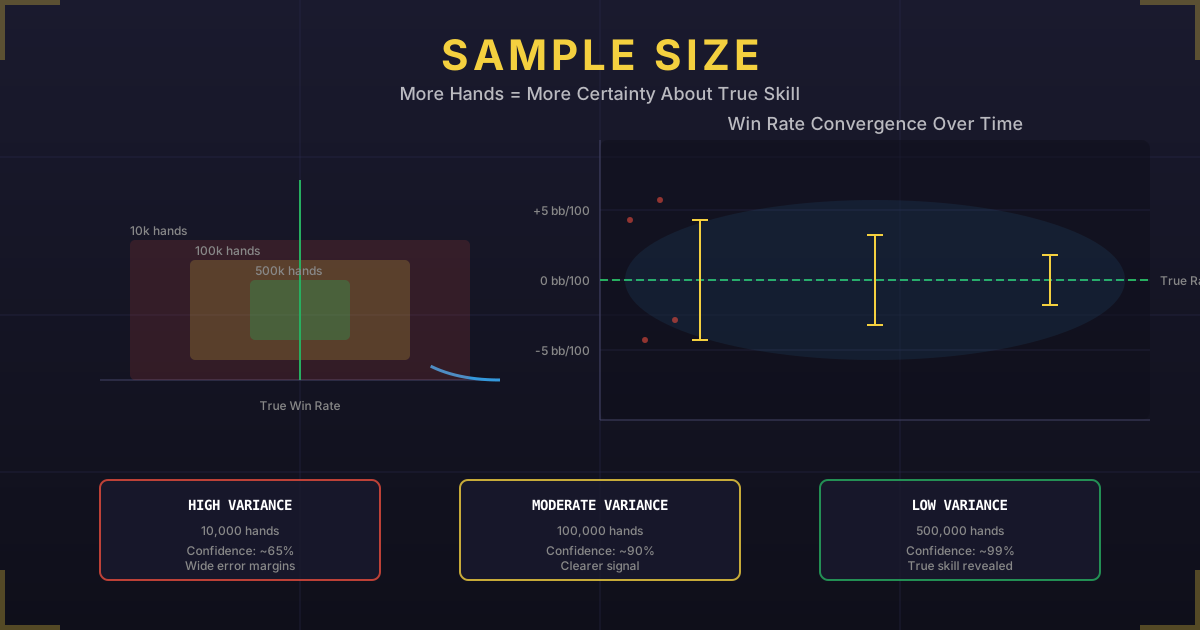
You need a large sample of bets to estimate your edge reliably. For sports betting, at least 1,000 bets at the same stake level. For poker, at least 100,000 hands. For blackjack, simulation based on your counting system and game conditions. When in doubt, assume your edge is smaller than you think -- this is a feature, not a bug, because underestimating your edge leads to underbetting (safe) rather than overbetting (dangerous).
Can Kelly be applied to parlays?
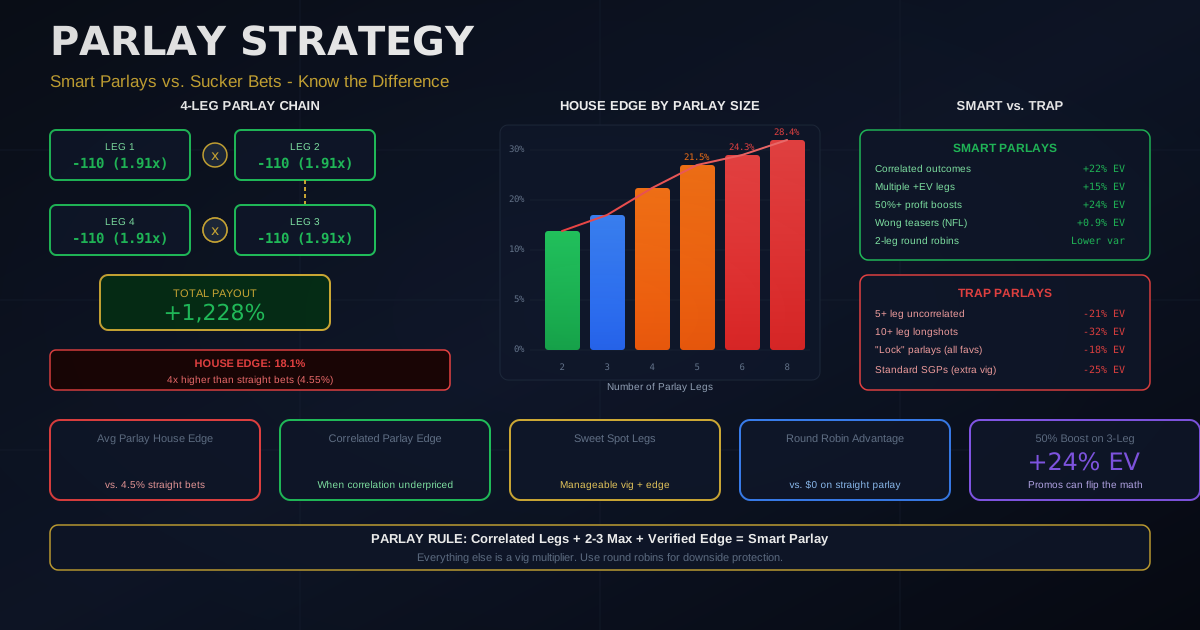
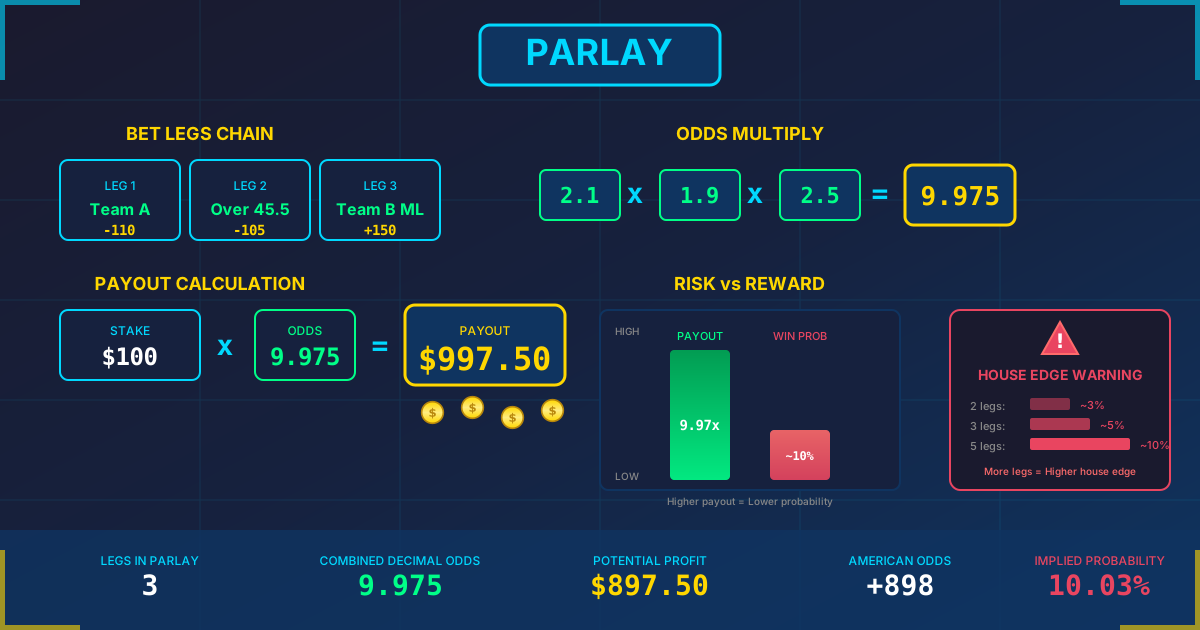
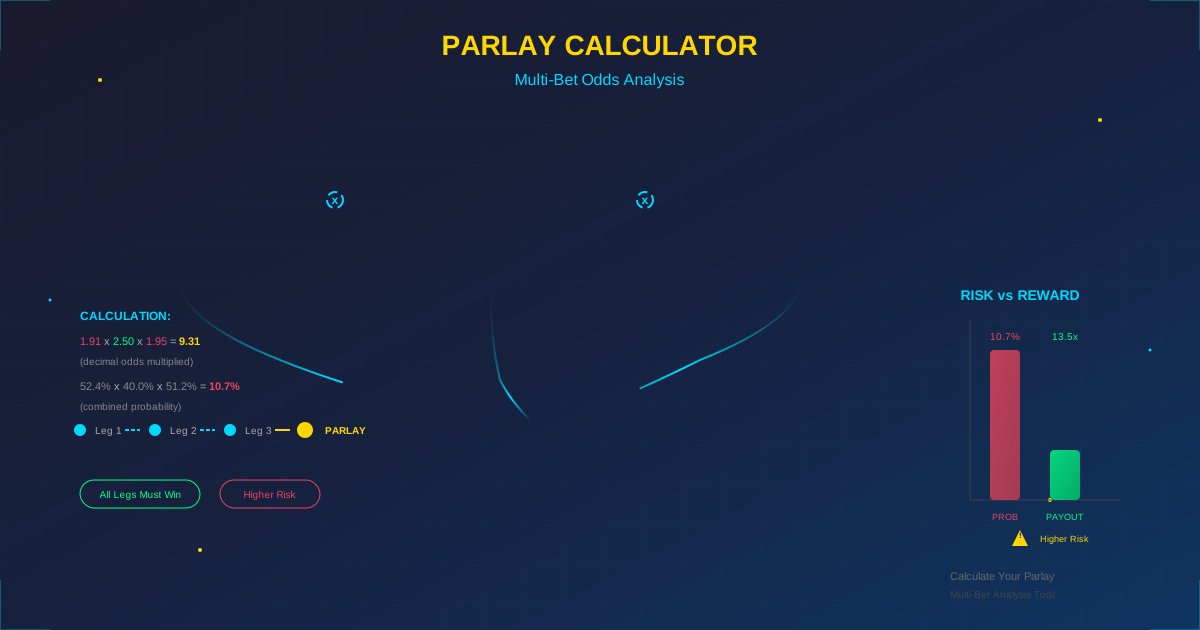
Yes, but the calculation becomes complex because parlays involve correlated legs with varying probabilities. For independent-leg parlays, you can calculate the Kelly fraction based on the overall probability and payout. However, the high variance of parlays means fractional Kelly is essential -- typically quarter Kelly or less.
How does Kelly work with the vig?
The vig reduces your effective edge, which reduces the Kelly fraction. A bet that would be 5% Kelly at true odds might be only 2% Kelly after accounting for the -110 vig. Always calculate Kelly based on the actual odds you receive, not the true underlying probability. The Hold/Vig Calculator shows how much the vig costs you.
Is Kelly better than unit-based flat betting?
Mathematically, yes -- Kelly grows your bankroll faster over the long run. But flat betting is simpler and more forgiving of edge estimation errors. If you are not confident in your ability to estimate edges precisely, flat betting at 1-2% of bankroll is a reasonable conservative approach. Kelly is most valuable when you have reliable edge estimates and bet frequently.
What is the relationship between Kelly and risk of ruin?
Full Kelly has a 0% risk of ruin in theory (because you always bet a fraction, you can never hit exactly zero). In practice, discretization (you cannot bet $0.47) and real-world constraints mean full Kelly has a small positive risk of ruin. Fractional Kelly further reduces risk of ruin. At half Kelly, the risk of ruin is dramatically lower than flat betting at equivalent bet sizes. The Poker Risk of Ruin Calculator can model how different Kelly fractions affect your survival probability.
How do I handle losing streaks with Kelly?
Kelly automatically handles losing streaks because your bet size decreases as your bankroll shrinks. A $10,000 bankroll betting 3% ($300) that drops to $7,000 automatically reduces bets to $210. This self-correcting mechanism is one of Kelly's greatest strengths -- you naturally become more conservative when losing and more aggressive when winning.
Related Tools for Kelly Criterion Calculations
Optimal bet sizing requires accurate inputs and ongoing monitoring. These tools work together to support Kelly-based bankroll management:
- Kelly Criterion Calculator - Calculate optimal bet fractions instantly
- Expected Value Calculator - Verify positive EV before applying Kelly
- Bankroll Volatility Tracker - Monitor growth rate and drawdowns
- Poker Bankroll Requirements Calculator - Determine Kelly-appropriate stakes
- Poker Risk of Ruin Calculator - Model survival probability under Kelly
- Blackjack Risk of Ruin Calculator - Blackjack-specific Kelly analysis
- Poker Variance Calculator - Understand variance for Kelly inputs
- Poker EV Calculator - Analyze hand-level expected values
- Hold/Vig Calculator - Account for vig in Kelly calculations
- Implied Probability Calculator - Convert odds to probabilities for Kelly
- Odds Converter - Translate between odds formats
- Blackjack EV Calculator - Blackjack edge by count for Kelly sizing
- Poker Session Tracker - Track results for edge estimation
- Blackjack Betting Unit Calculator - Optimize unit sizing for card counting
- Blackjack Session Bankroll Calculator - Plan session-level bankrolls
Conclusion
The Kelly Criterion is the gold standard for bet sizing because it solves the fundamental problem every gambler faces: how much should I bet? The answer is precise, mathematically rigorous, and dramatically outperforms both overbetting and underbetting over the long term.
The key principles to remember:
- Kelly fraction = edge / odds -- the formula is simple, but getting accurate inputs requires work
- Full Kelly is too aggressive for humans -- use 25-50% of the Kelly fraction for practical gambling
- Overbetting is catastrophic -- betting more than 2x Kelly produces negative expected growth, turning a winning strategy into a losing one
- Kelly is self-correcting -- bet sizes automatically decrease when losing and increase when winning
- Estimation error is your biggest enemy -- always assume your edge is smaller than you think
The difference between a gambler who uses Kelly and one who bets by feel compounds enormously over time. Over 1,000 bets, proper Kelly sizing can mean the difference between a 67% bankroll increase and a 12% increase -- or worse, a 45% loss from overbetting.
Start optimizing your bet sizes today with our free Kelly Criterion Calculator and transform your edge into maximum bankroll growth.
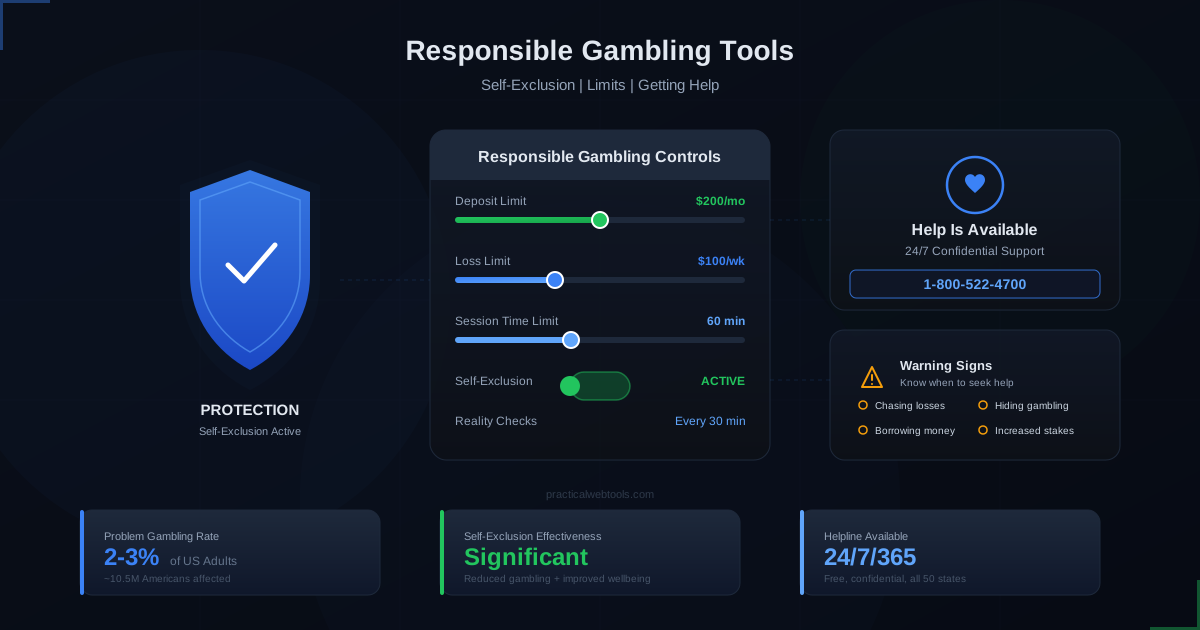
Gambling involves risk. This content is for educational and informational purposes only. Always gamble responsibly, set limits you can afford, and seek help if gambling becomes a problem. Visit the National Council on Problem Gambling or call 1-800-522-4700 for support.