How to Find Positive Expected Value (+EV) Bets: A Complete System for Sports Bettors (2026)
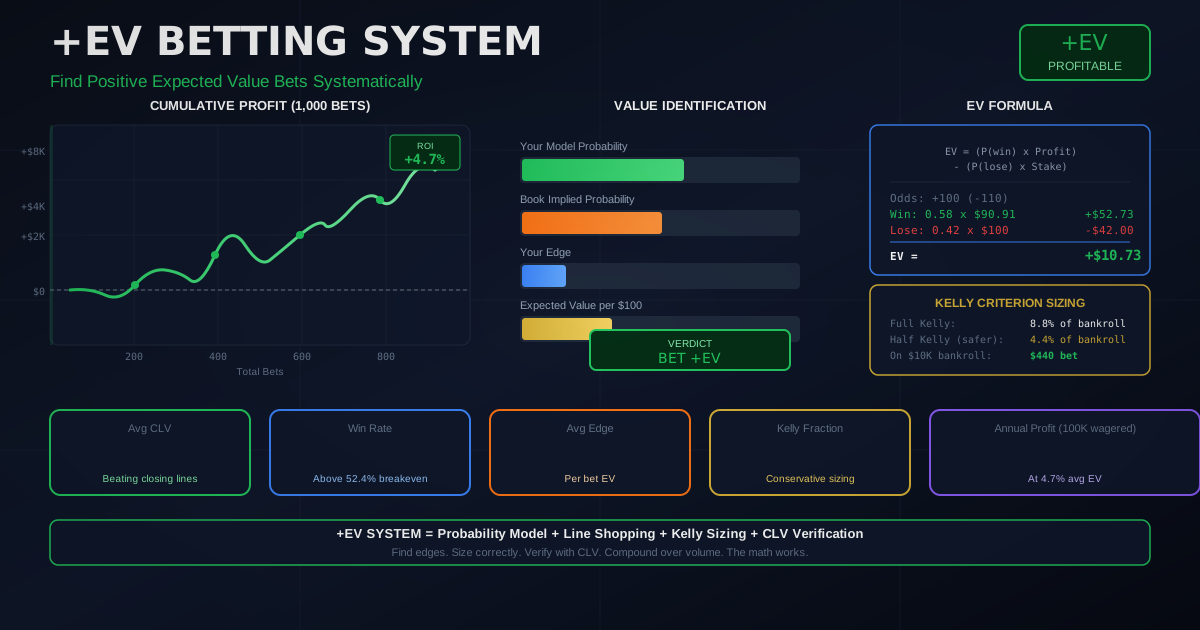
The difference between a winning sports bettor and a losing one is not prediction accuracy. It is price sensitivity. A bettor who wins 53% of bets at -110 odds is profitable. A bettor who wins 58% at -200 odds is losing money. The entire game comes down to one question: Is this bet priced below its true value?
Finding positive expected value (+EV) bets is the only mathematically proven path to long-term profitability in sports betting. The sportsbooks know this. They employ teams of quants, proprietary data feeds, and sophisticated models to set lines that extract money from recreational bettors. But markets are not perfect. Lines move. Information is asymmetric. And the window between a beatable price and an efficient one is where sharp bettors make their living.
This guide lays out a complete, repeatable system for identifying +EV bets. Not vague advice. Not "trust your gut." A step-by-step process grounded in math that you can implement today whether you are betting $50 or $5,000 per week.
Calculate the expected value of any bet instantly with our Expected Value Calculator.
What Is Positive Expected Value (+EV) Betting?
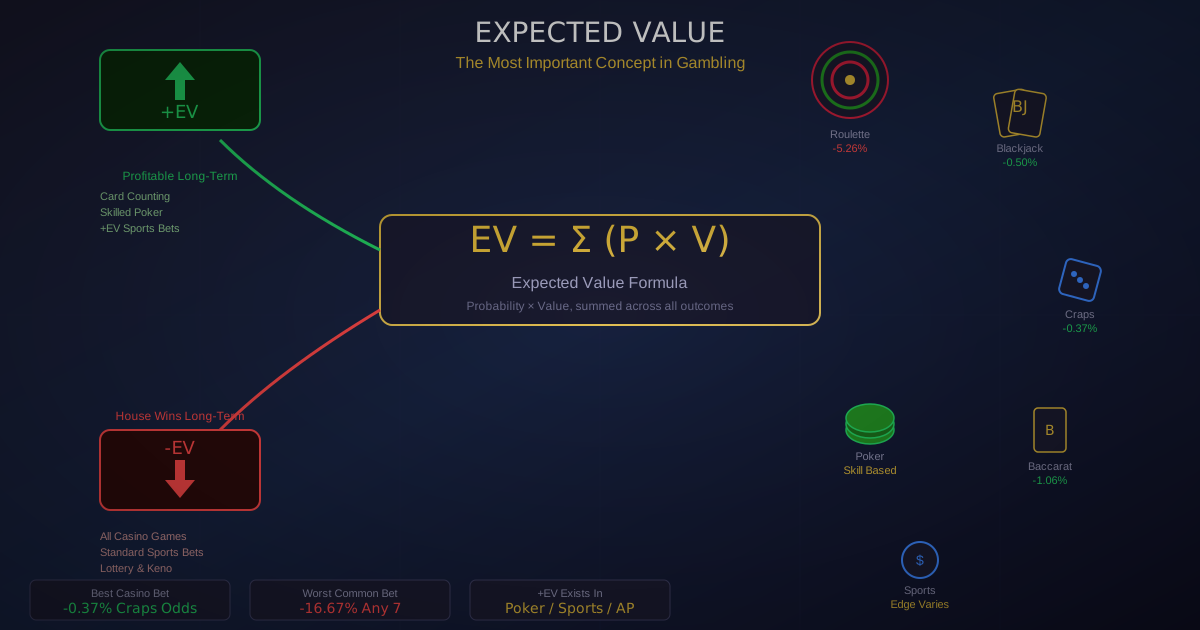
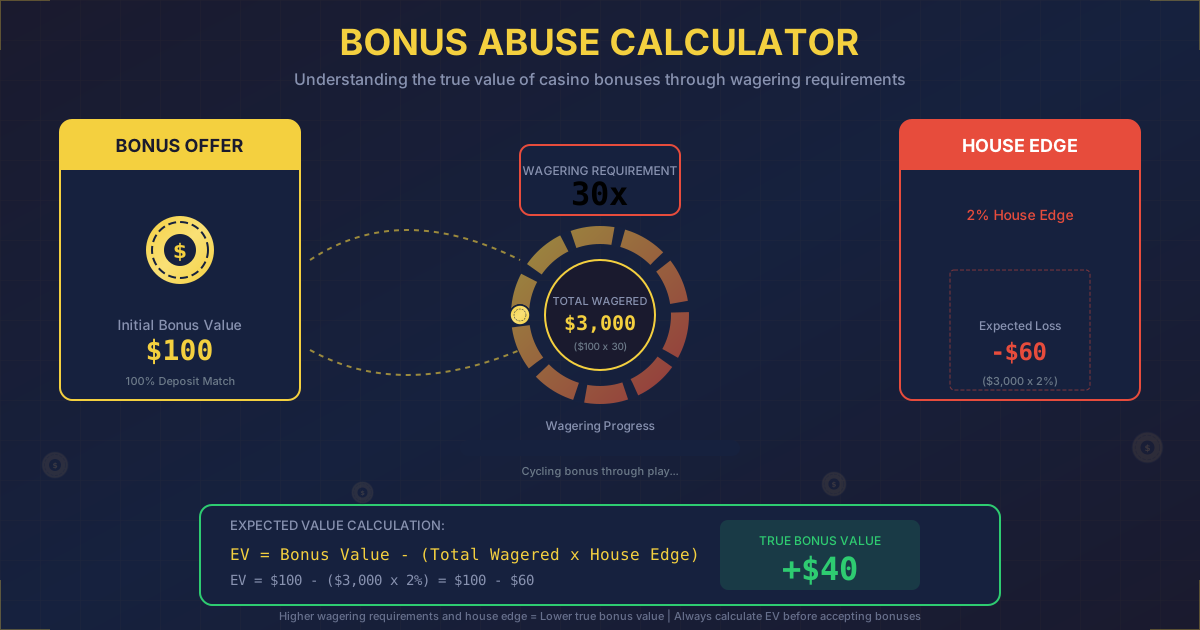
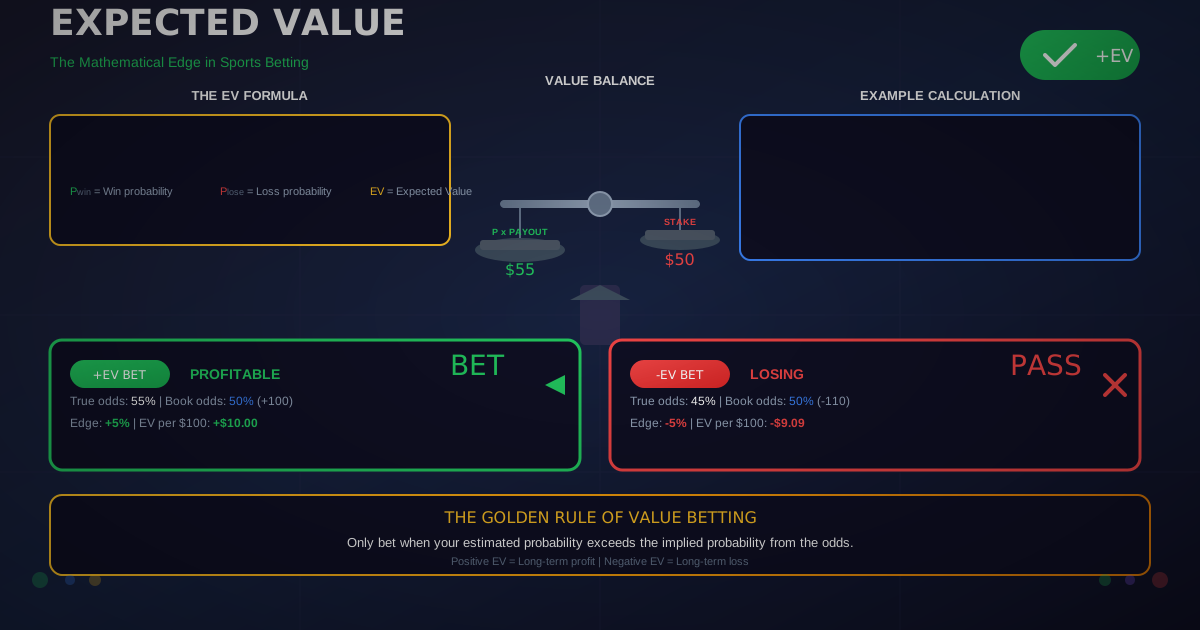
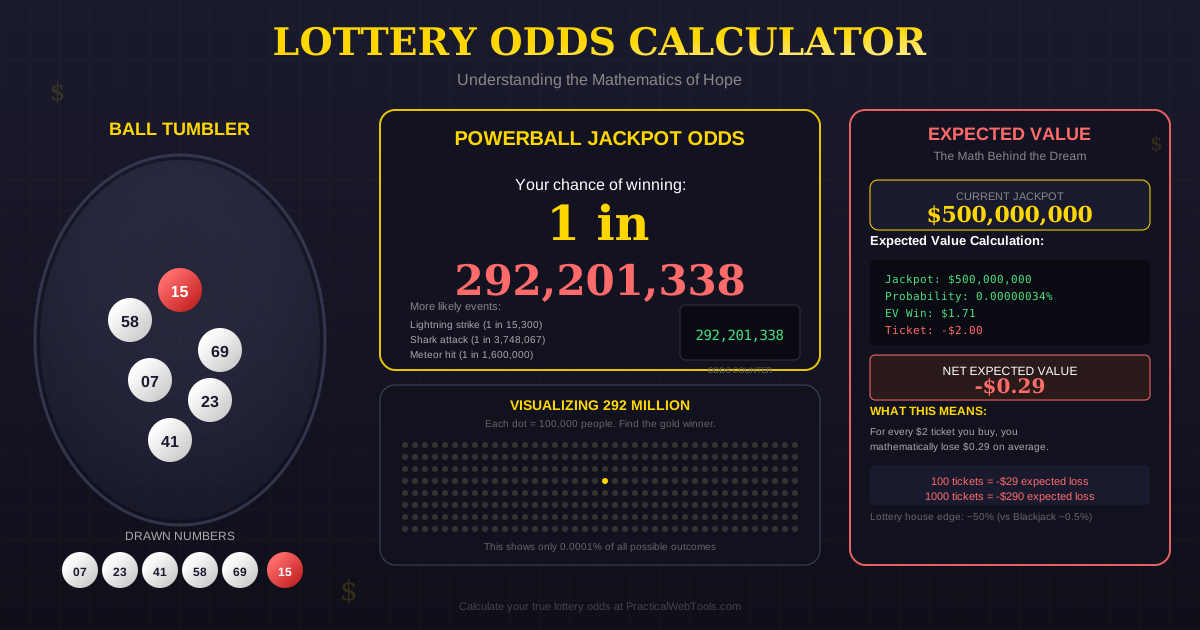
Positive expected value betting means placing wagers where your estimated probability of winning exceeds the implied probability embedded in the sportsbook's odds. Over a sufficient number of bets, +EV betting produces profit with mathematical certainty, just like a casino's house edge produces profit for the house.
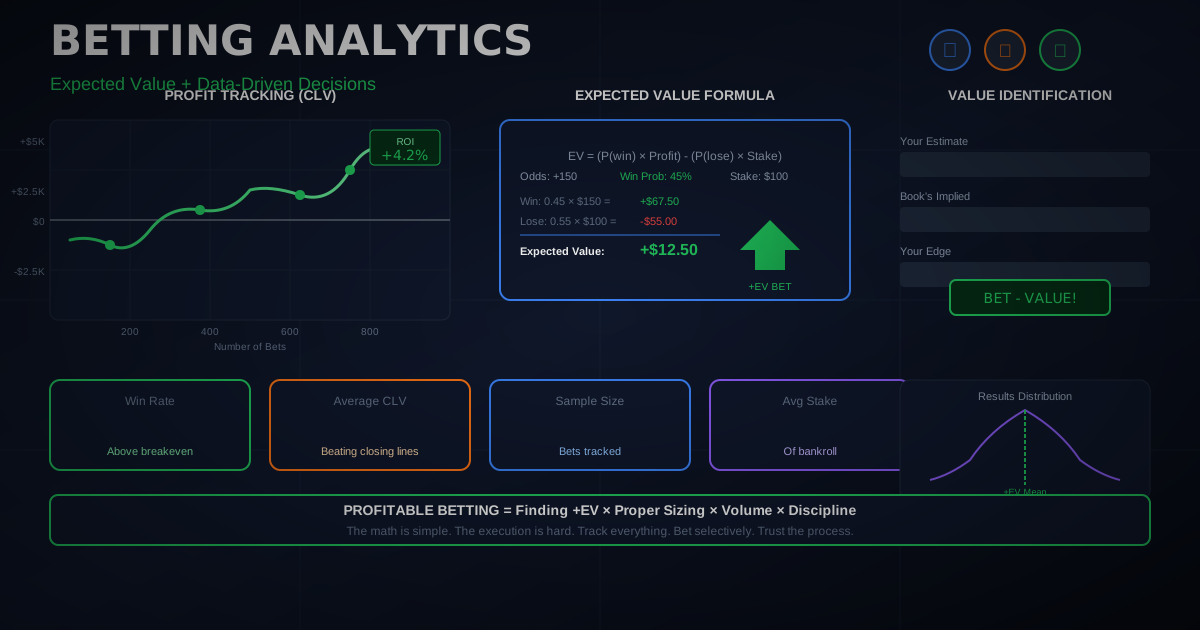
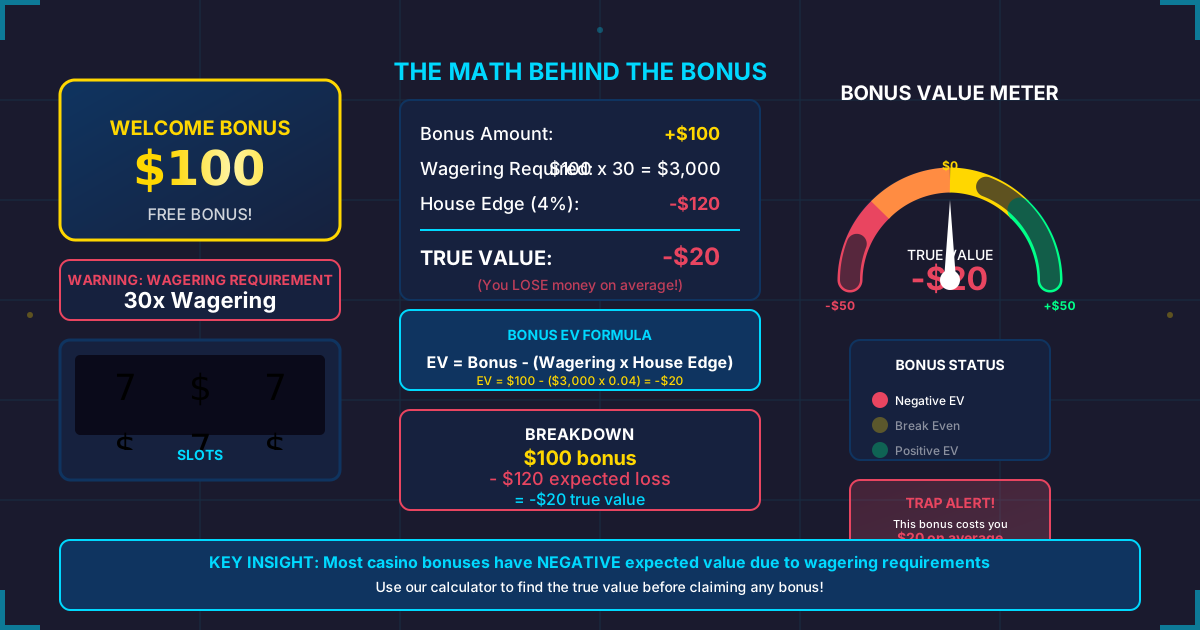
The EV Formula
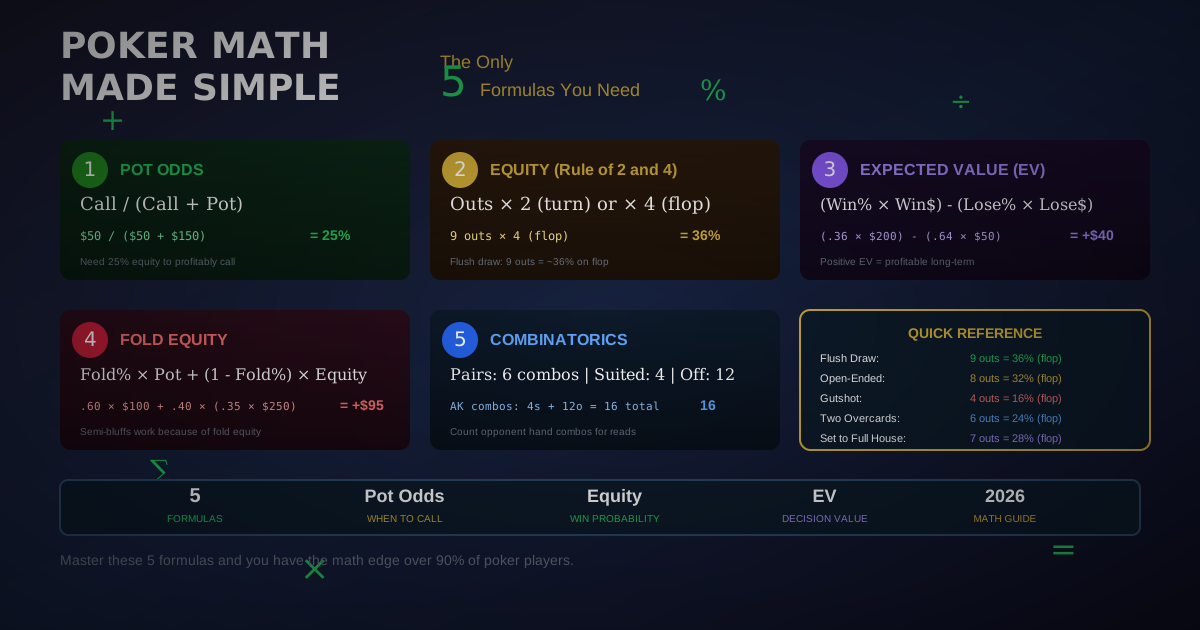
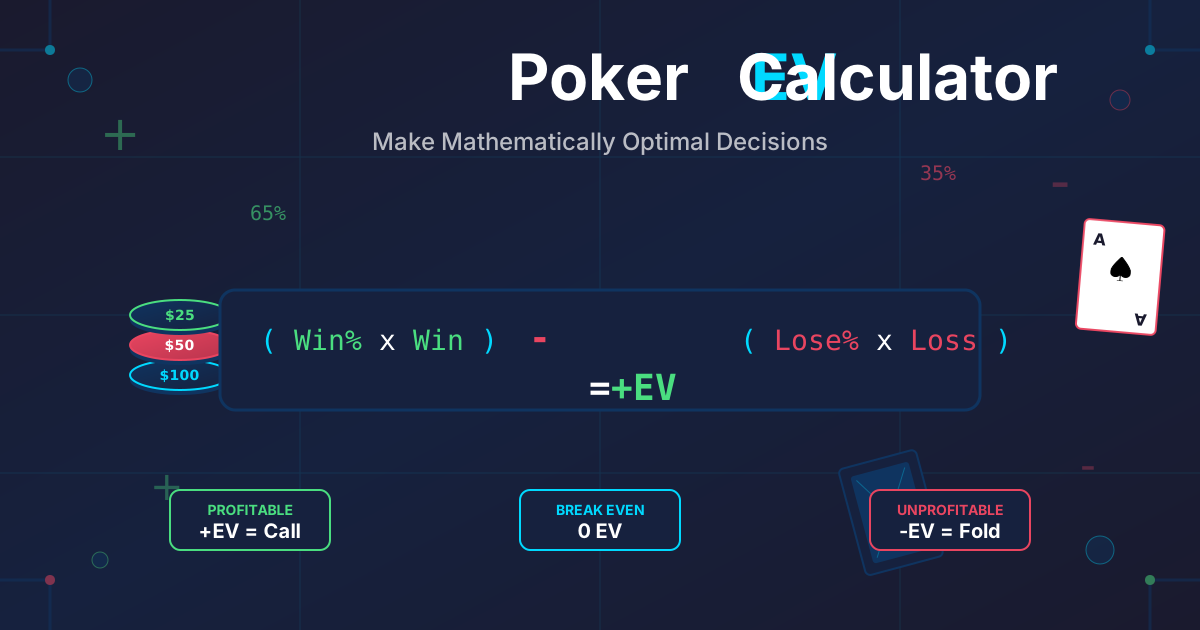
The expected value of a bet is calculated as:
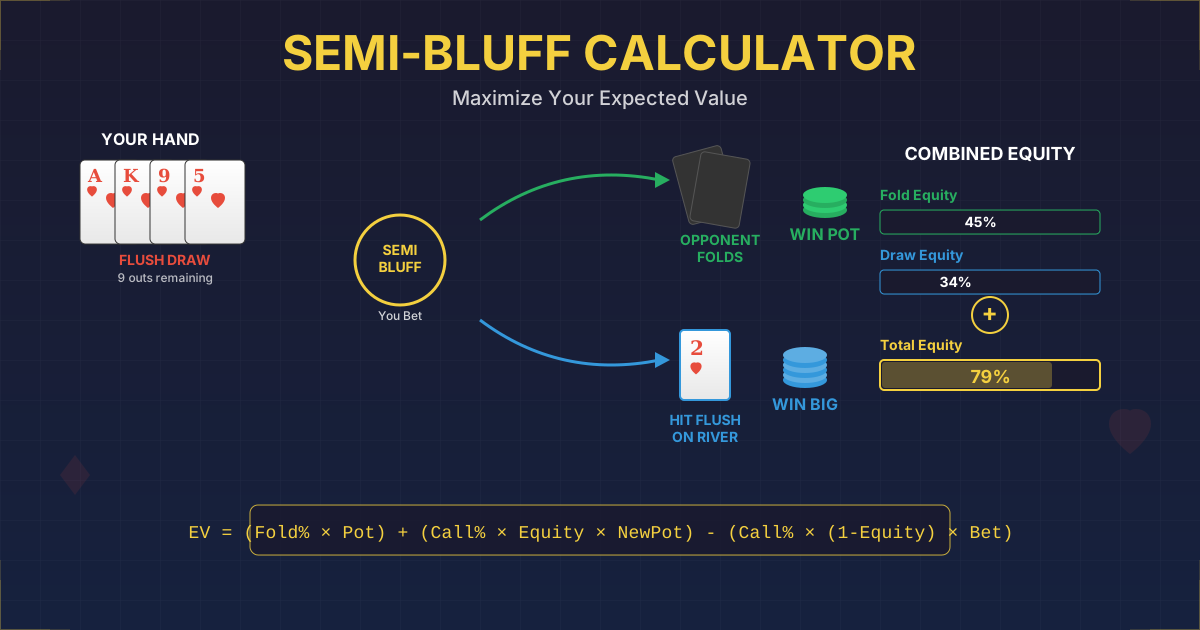
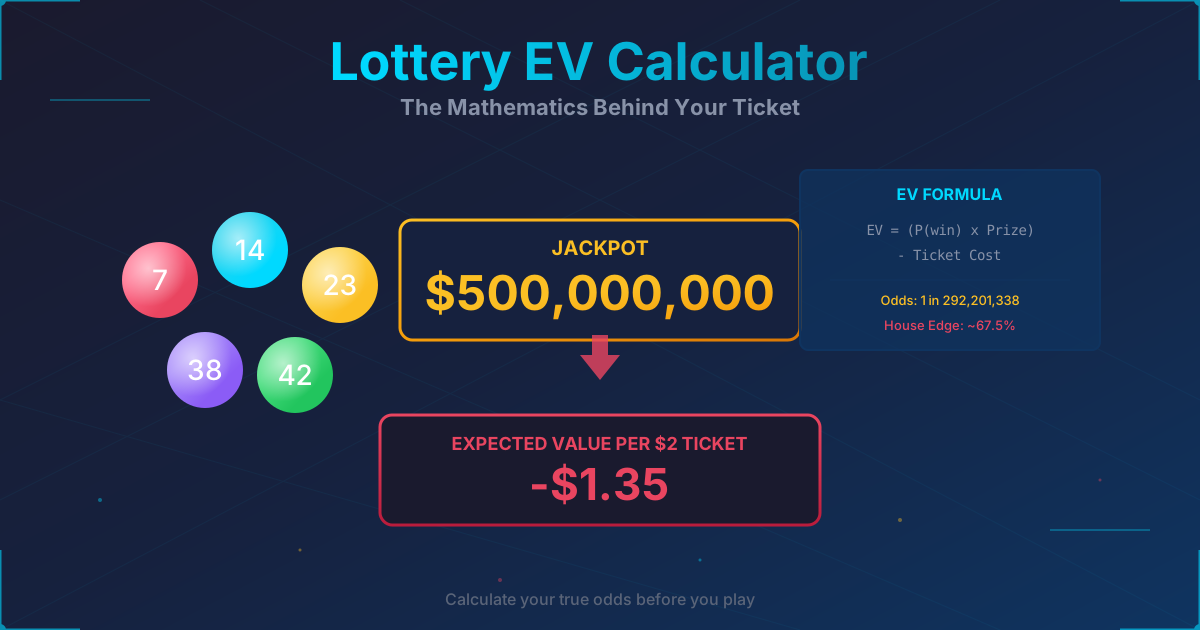
EV = (Probability of Winning x Profit if Win) - (Probability of Losing x Loss if Lose)
Or expressed as a percentage of stake:
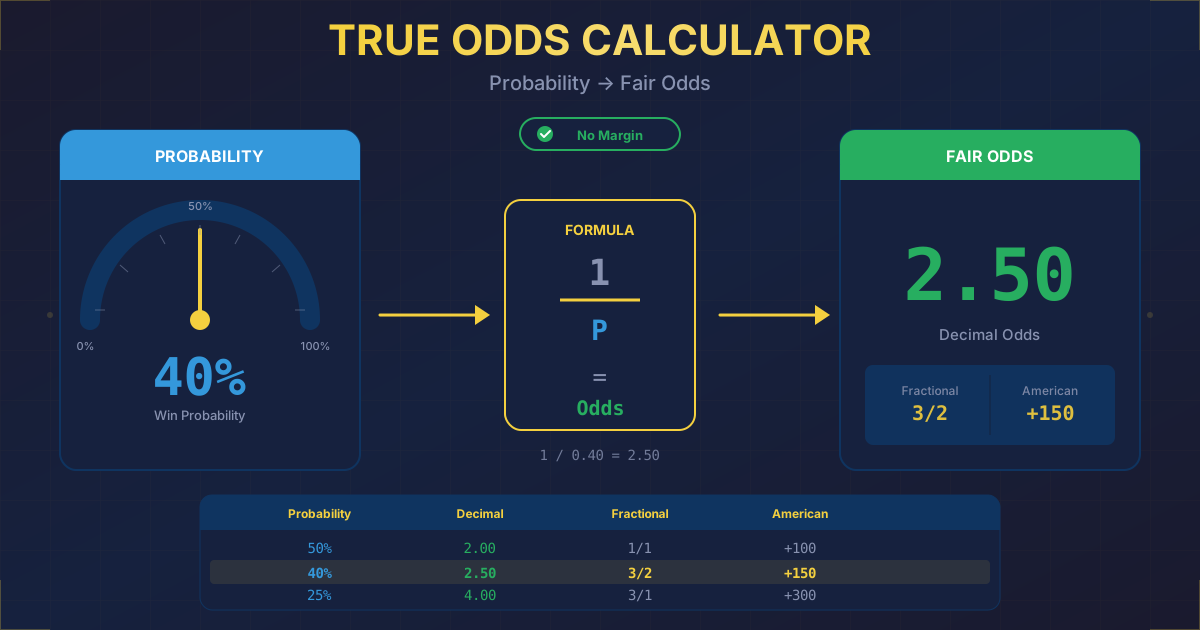
EV% = (True Probability x Decimal Odds) - 1
Here is a concrete example. You believe an NBA team has a 58% chance to cover the spread. The sportsbook is offering -110 odds (decimal 1.909).
- EV% = (0.58 x 1.909) - 1
- EV% = 1.107 - 1
- EV% = +10.7%
For a $100 bet, you expect to profit $10.70 on average. That is a massive edge. Most professional bettors sustain themselves on edges between 2% and 5%.
Why +EV Is the Only Path to Profit
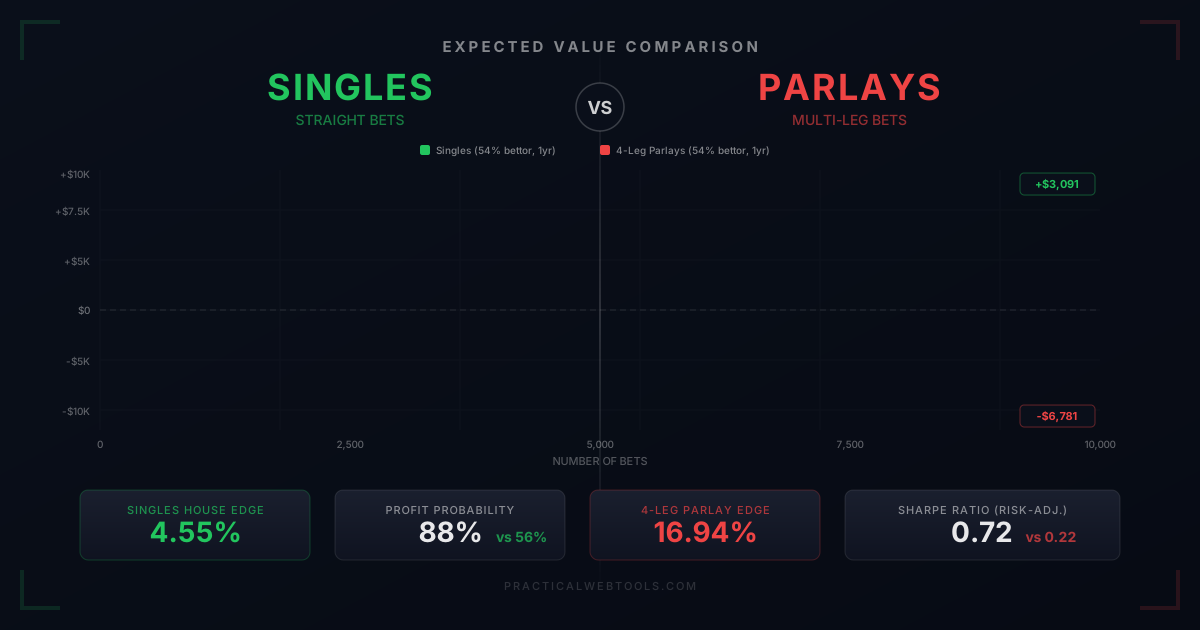
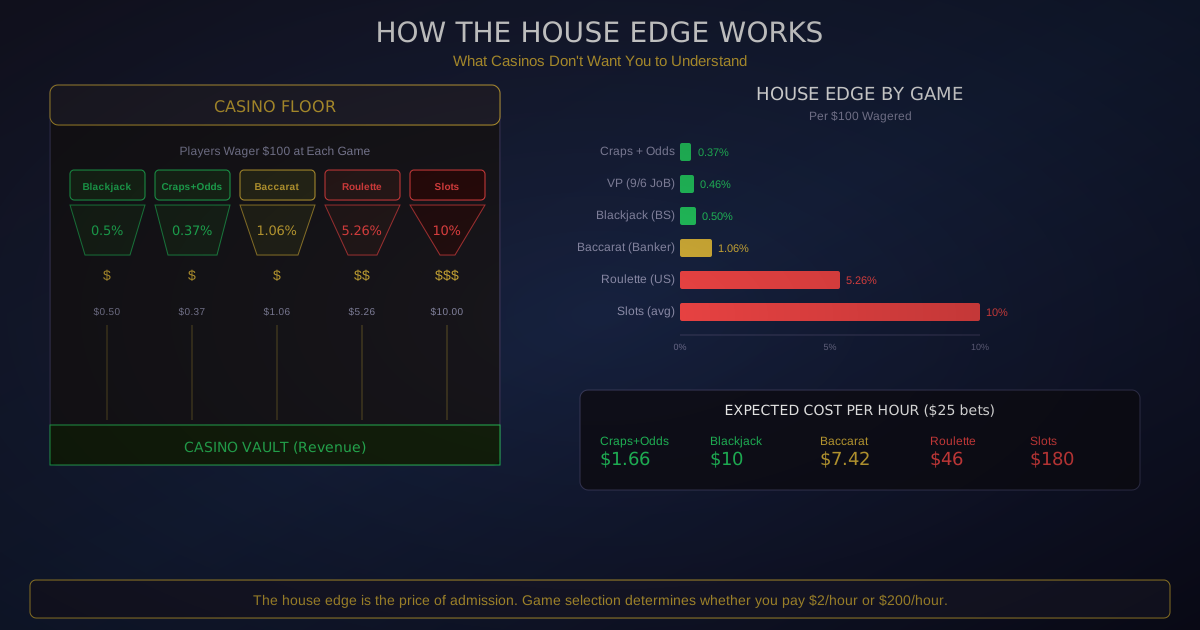
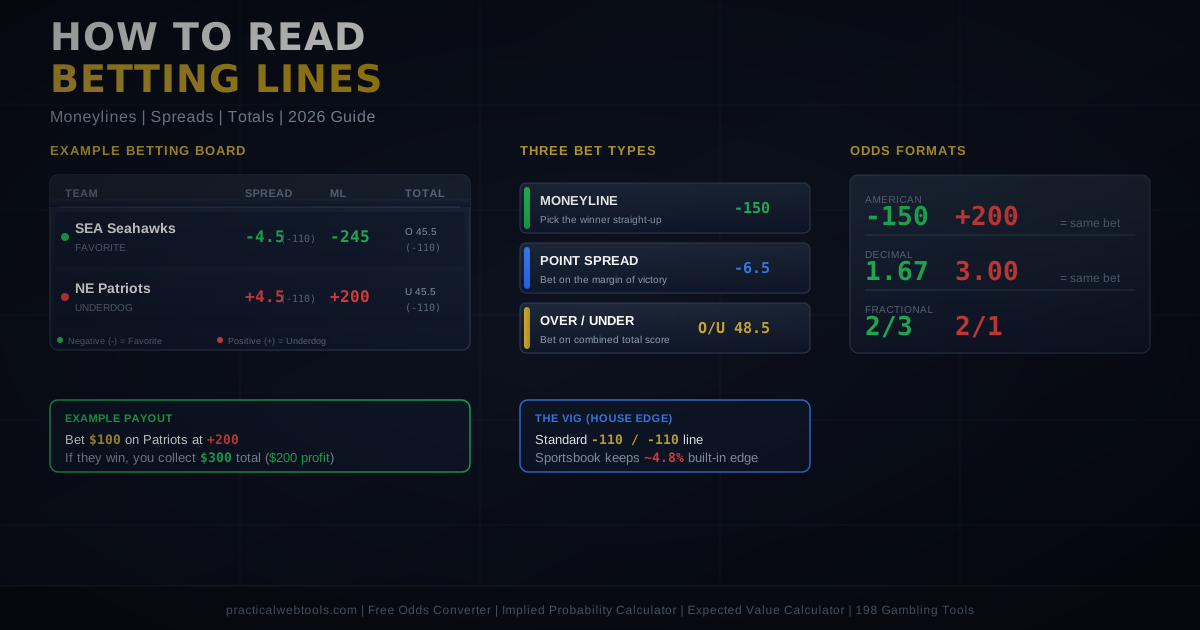
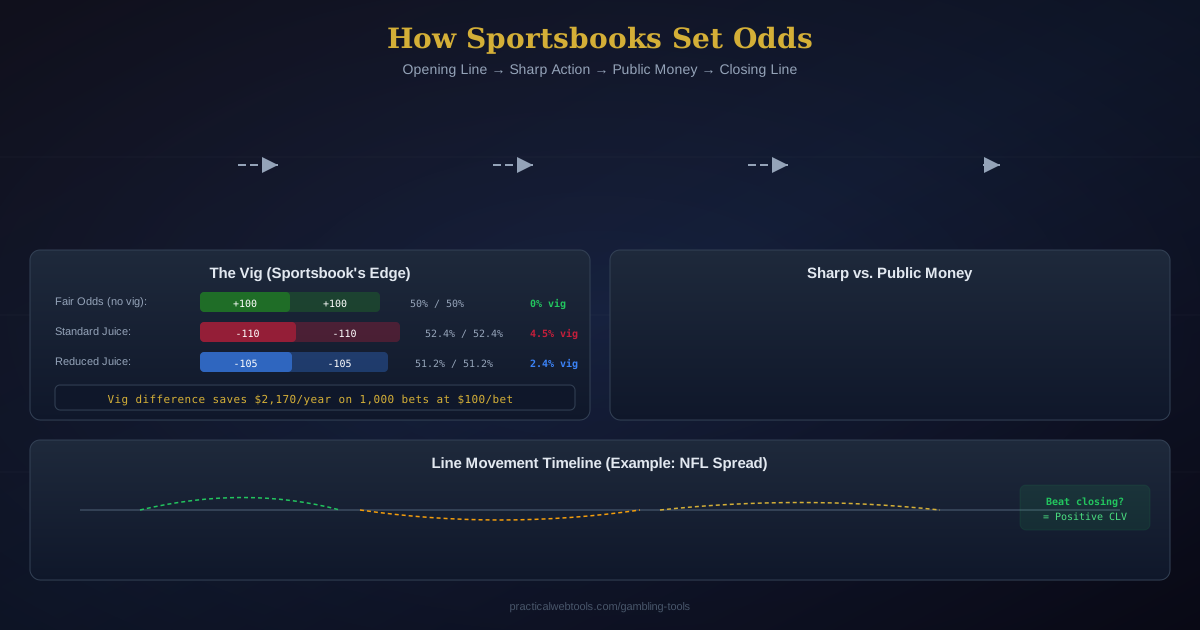
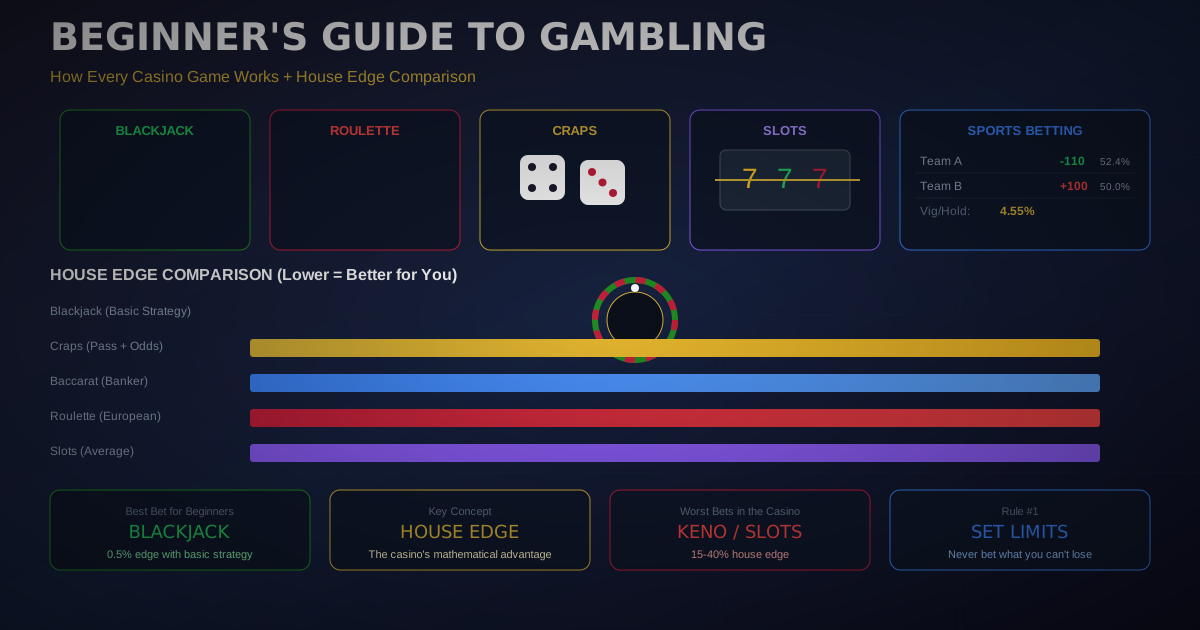
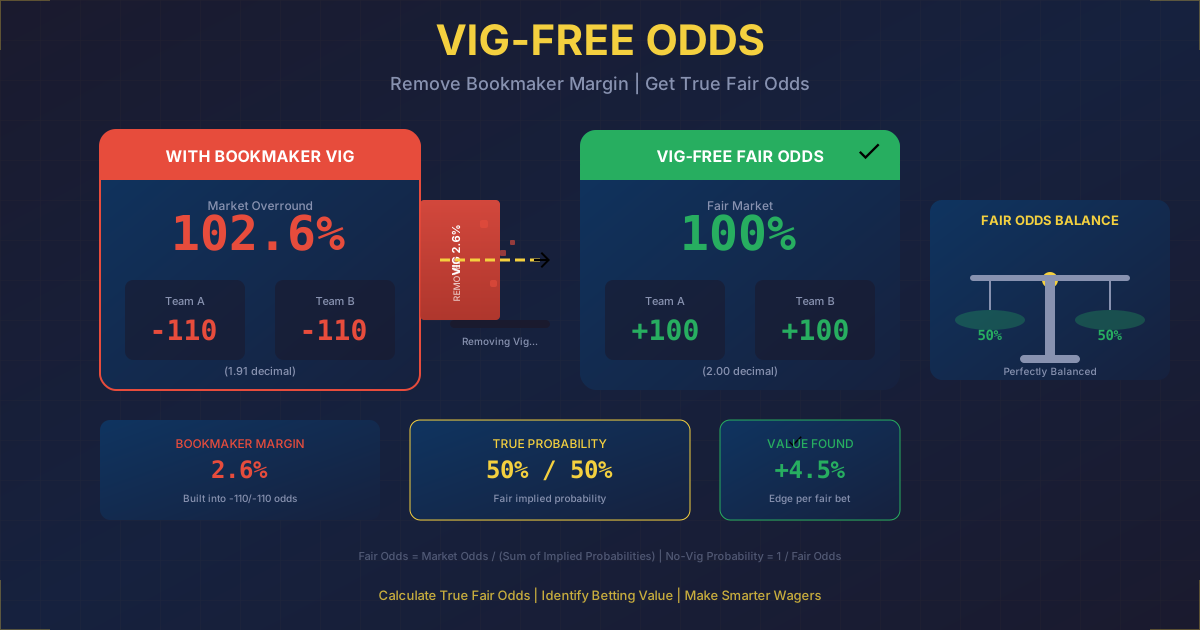
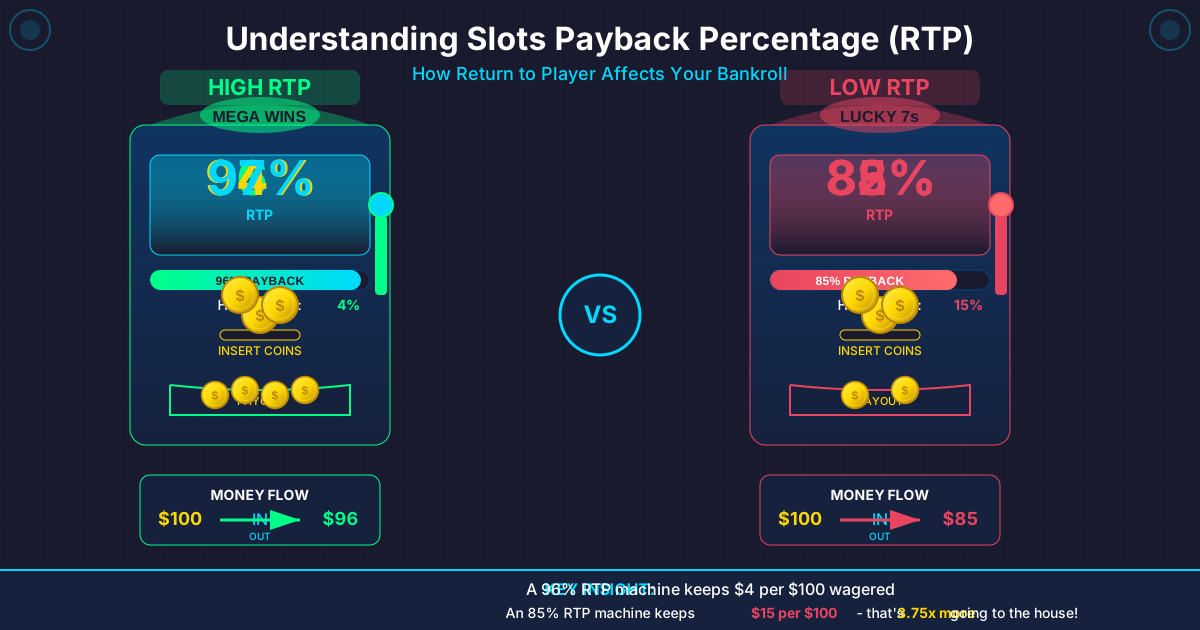
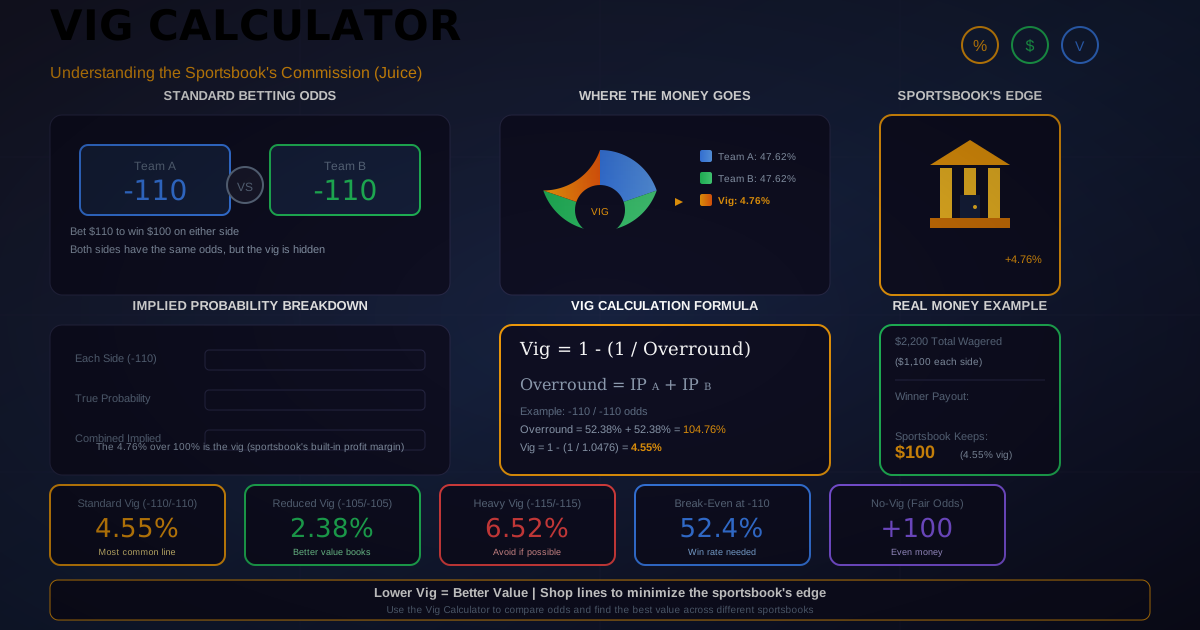
Every bet offered by a sportsbook has a built-in house edge called the vigorish (vig). Standard -110/-110 odds on a 50/50 event give the sportsbook a 4.55% hold. This means the average bettor loses 4.55 cents for every dollar wagered over time.
To overcome this vig, you must find bets where the true probability is sufficiently higher than the implied probability to not only erase the vig but generate positive expectation on top.
| Implied Probability | True Probability | Edge Over Vig | EV per $100 |
|---|---|---|---|
| 52.4% (-110) | 52.4% | 0% (break even) | $0.00 |
| 52.4% (-110) | 55% | +2.6% | +$5.00 |
| 52.4% (-110) | 58% | +5.6% | +$10.72 |
| 47.6% (+110) | 52% | +4.4% | +$9.20 |
| 33.3% (+200) | 38% | +4.7% | +$14.00 |
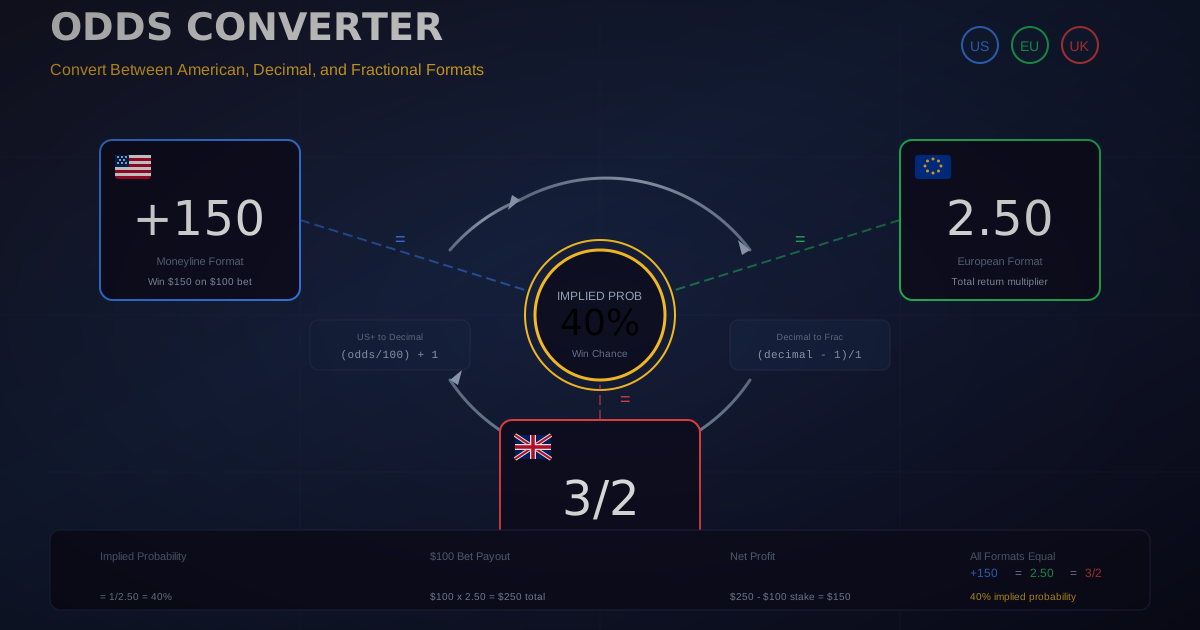
Convert between odds formats with our Odds Converter and extract implied probabilities with our Implied Probability Calculator.
Step 1: Build Your Probability Estimation Framework
The foundation of +EV betting is the ability to estimate the true probability of outcomes more accurately than the price implies. There are three primary approaches, and the best bettors combine elements of all three.
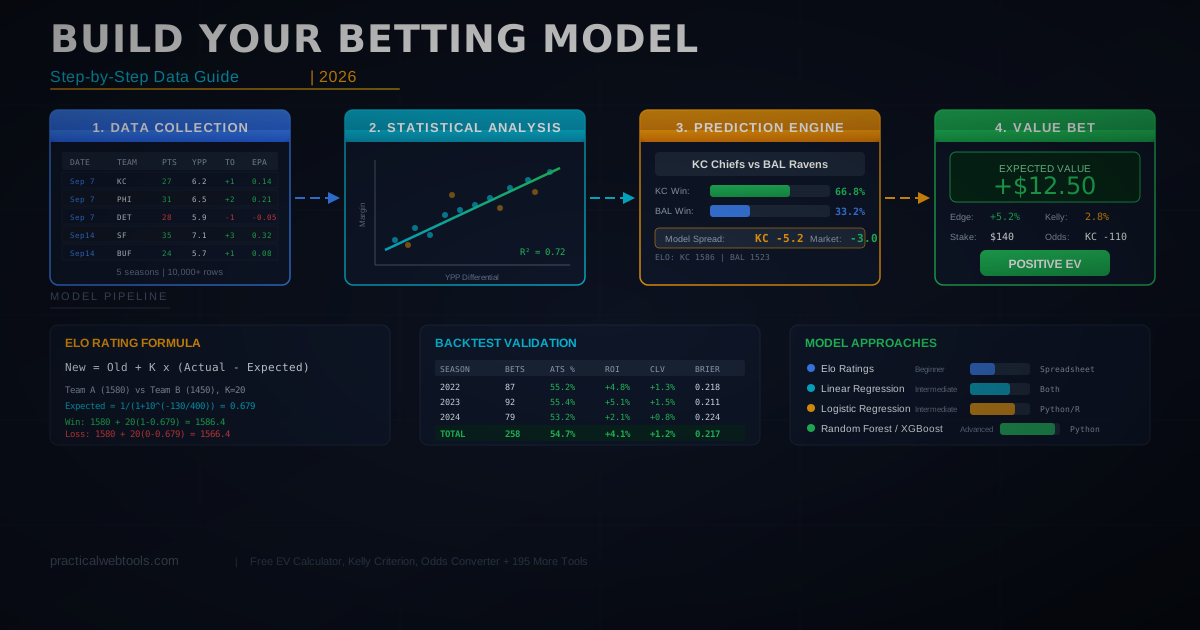
Approach 1: Model-Based Estimation
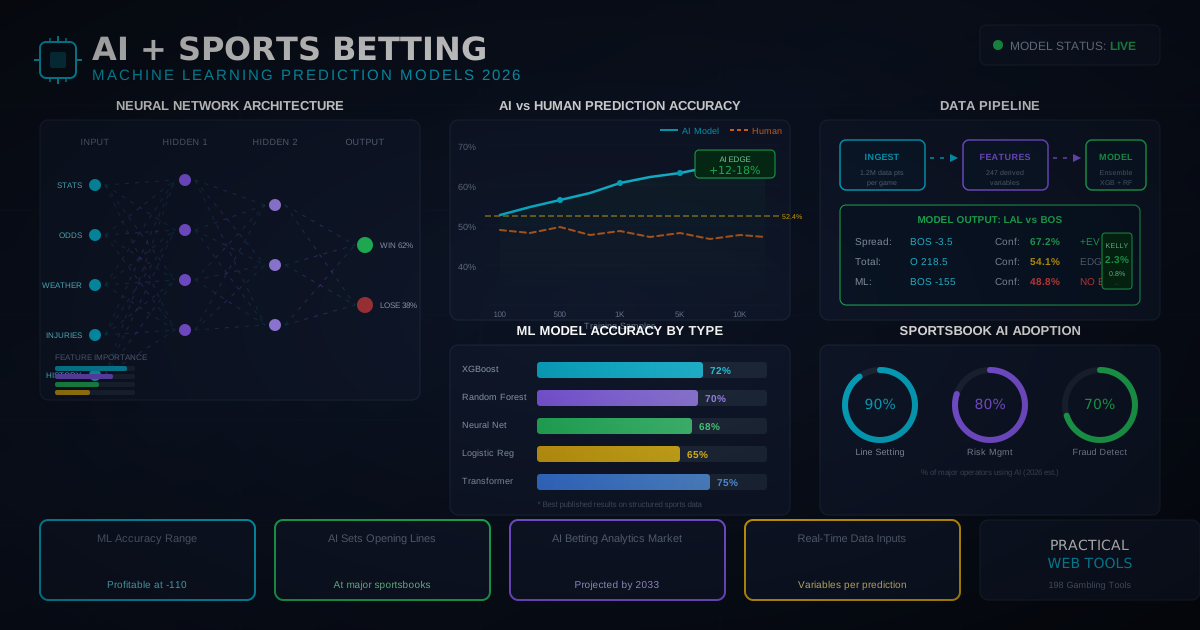
Build a quantitative model that outputs win probabilities based on historical data and relevant features. This does not require a PhD. A well-constructed spreadsheet model can find edges.
Key inputs for an NFL model might include:
- Adjusted points per drive (offense and defense)
- Turnover-adjusted EPA (Expected Points Added)
- Red zone efficiency
- Third-down conversion rate (offense vs. defense)
- Injury-adjusted roster strength
- Weather conditions (wind speed, temperature for outdoor games)
- Rest advantage (days since last game)
The model outputs a predicted point spread or win probability. You compare that to the market price. When your model disagrees with the market by a significant margin, you have a candidate +EV bet.
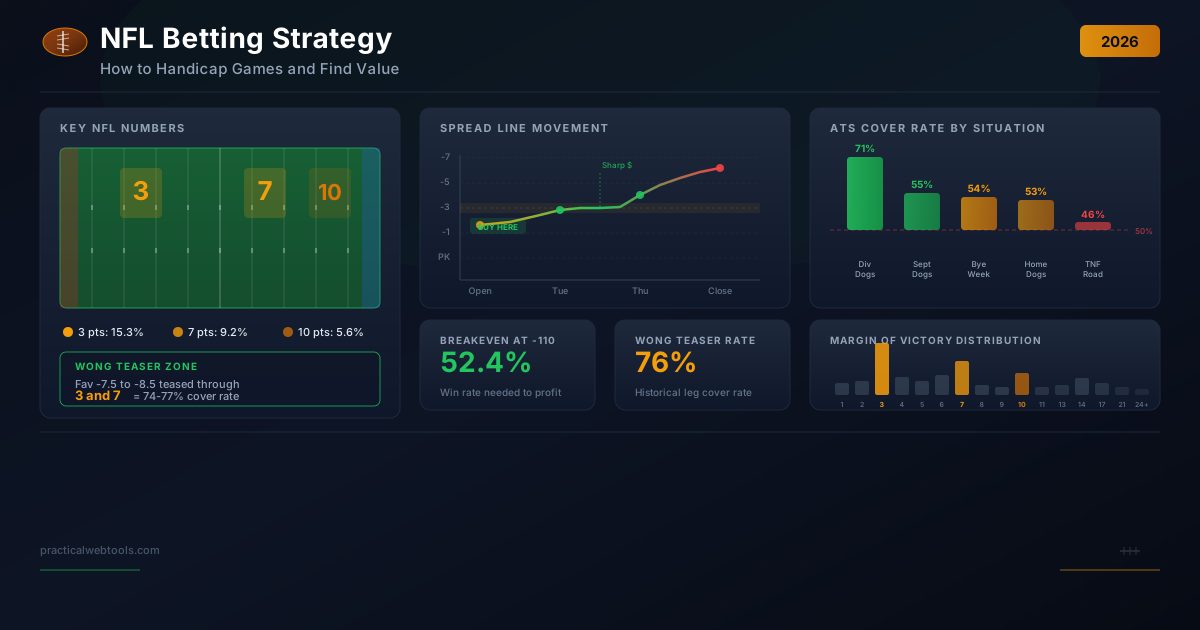
Example: Your model projects the Chiefs as 4.5-point favorites. The market line is Chiefs -3. That 1.5-point discrepancy on a spread bet translates to roughly a 4-5% edge, depending on the sport's distribution of outcomes.
Approach 2: Market-Based Estimation (Line Shopping)
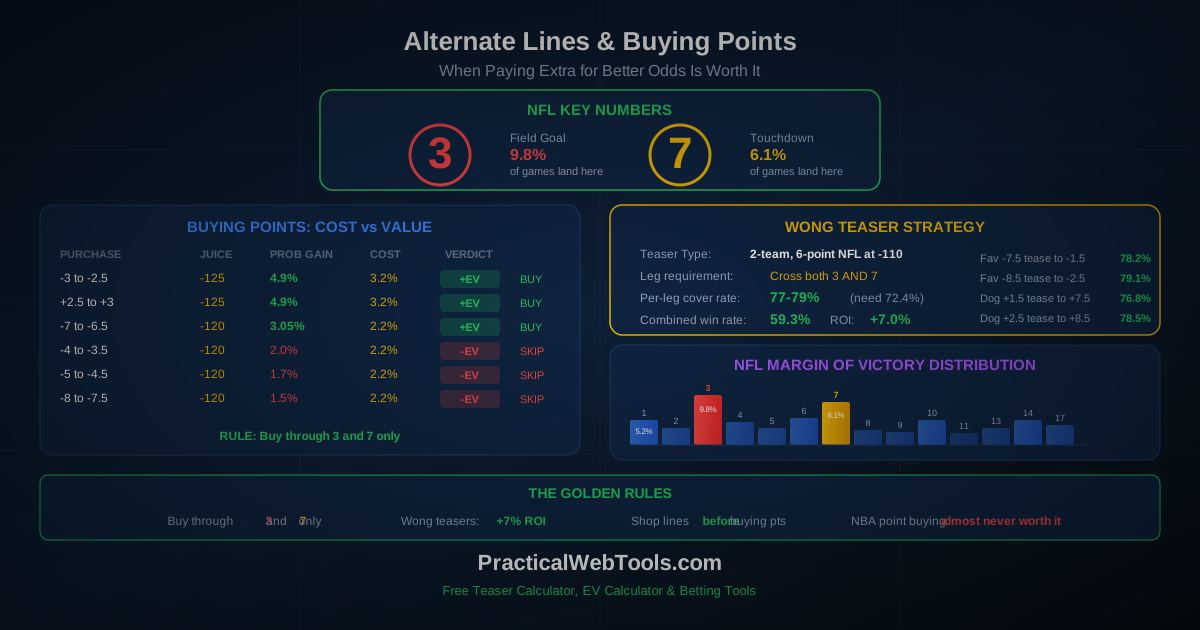
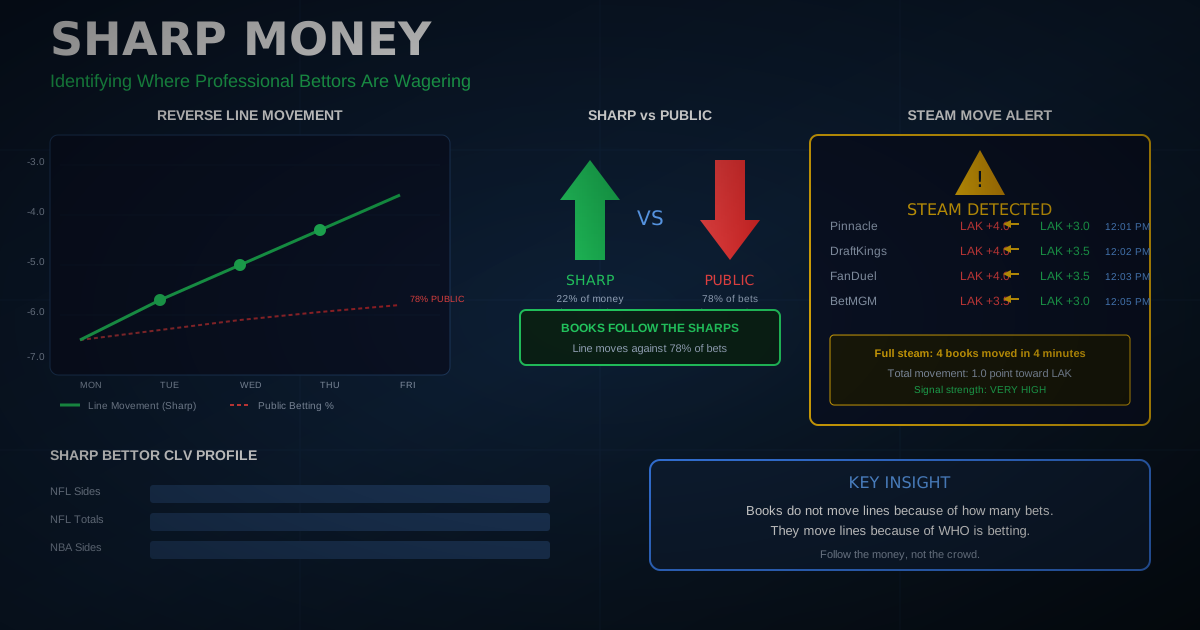
Instead of building your own model, you can use the market itself. Sharp sportsbooks like Pinnacle, Circa, and Bookmaker set their lines using sophisticated models. When a recreational-facing sportsbook like DraftKings or FanDuel offers a line that differs significantly from the sharp line, you have found potential value.
How to line shop effectively:
- Track the consensus sharp line (Pinnacle is the gold standard)
- Compare to all available sportsbooks
- When a soft book offers a line 1+ points off the sharp line on a spread, or 15+ cents off on a moneyline, evaluate the bet
- Account for vig differences between books
Example: Pinnacle has Lakers -5.5 (implying roughly 56% win probability after vig removal). FanDuel has Lakers -4 (-110). That 1.5-point difference at standard juice represents a significant edge.
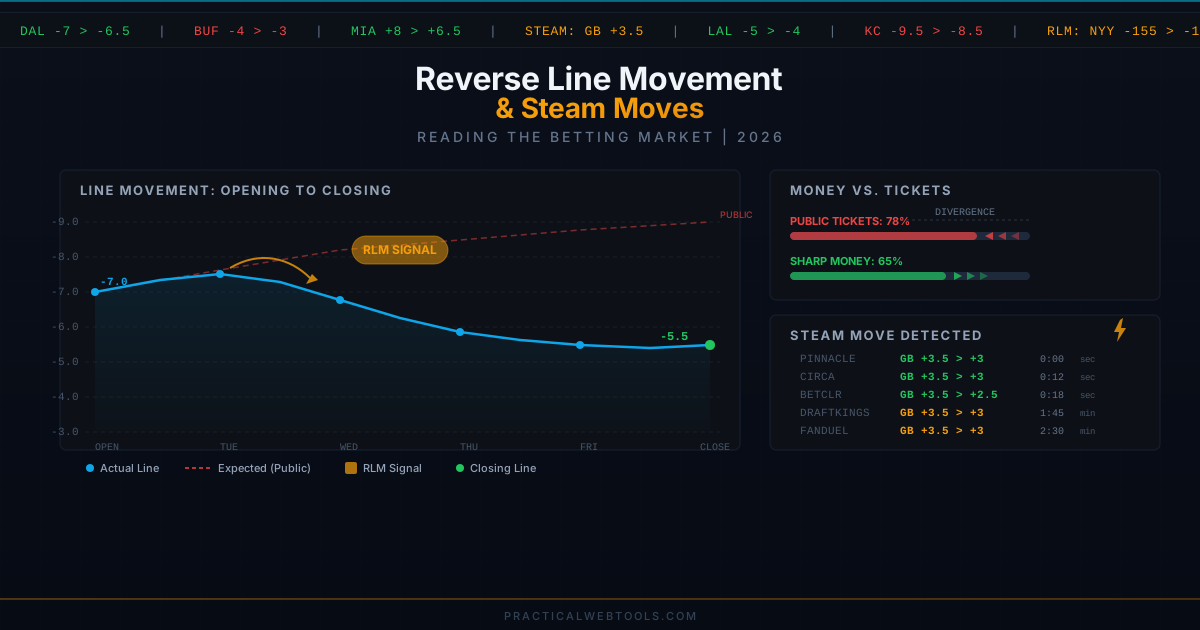
Approach 3: Steam Move Chasing
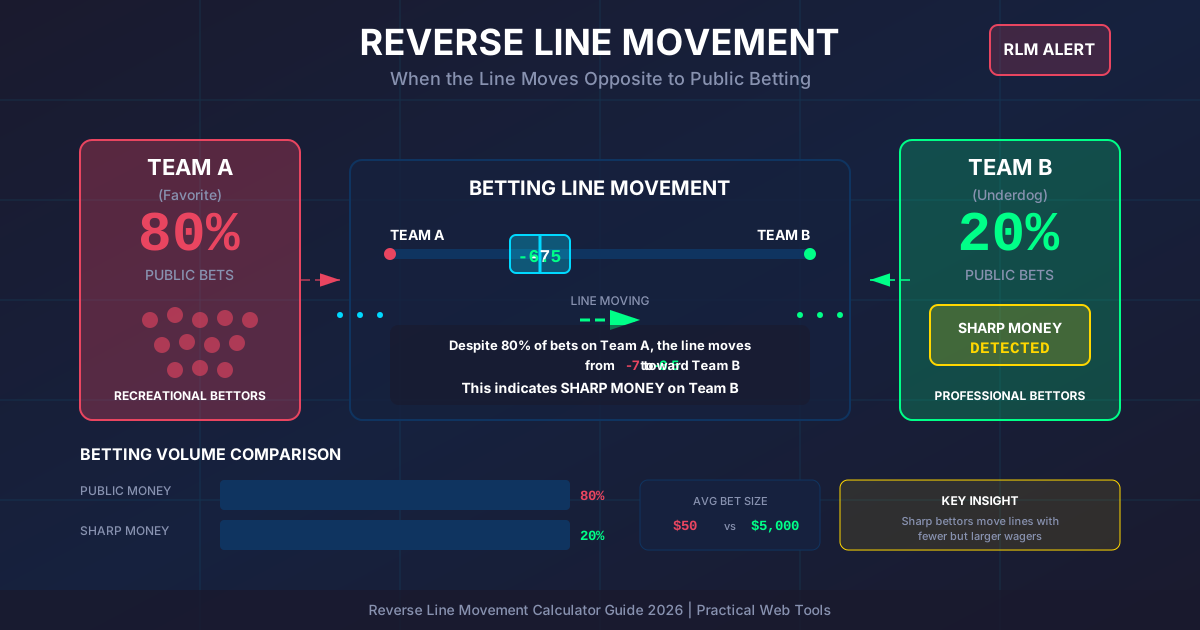
When sharp money hits a line and it moves, the old number at books that haven't moved yet represents value. This is reactive rather than predictive, but it works because sharp bettors are, by definition, profitable.
The process:
- Monitor line movements at sharp books in real time
- When a line moves significantly (0.5+ points on spreads, 10+ cents on totals), the old number at slow-moving books is likely +EV
- Act fast. These windows close in minutes.
Check the vig on any line with our Hold/Vig Calculator.
Step 2: Calculate EV on Every Candidate Bet
Once you have estimated the true probability, calculate the EV before placing any bet. This step transforms subjective analysis into objective math.
The Calculation Process
For each candidate bet:
- Estimate the true probability of the outcome (your model, sharp line comparison, or steam move)
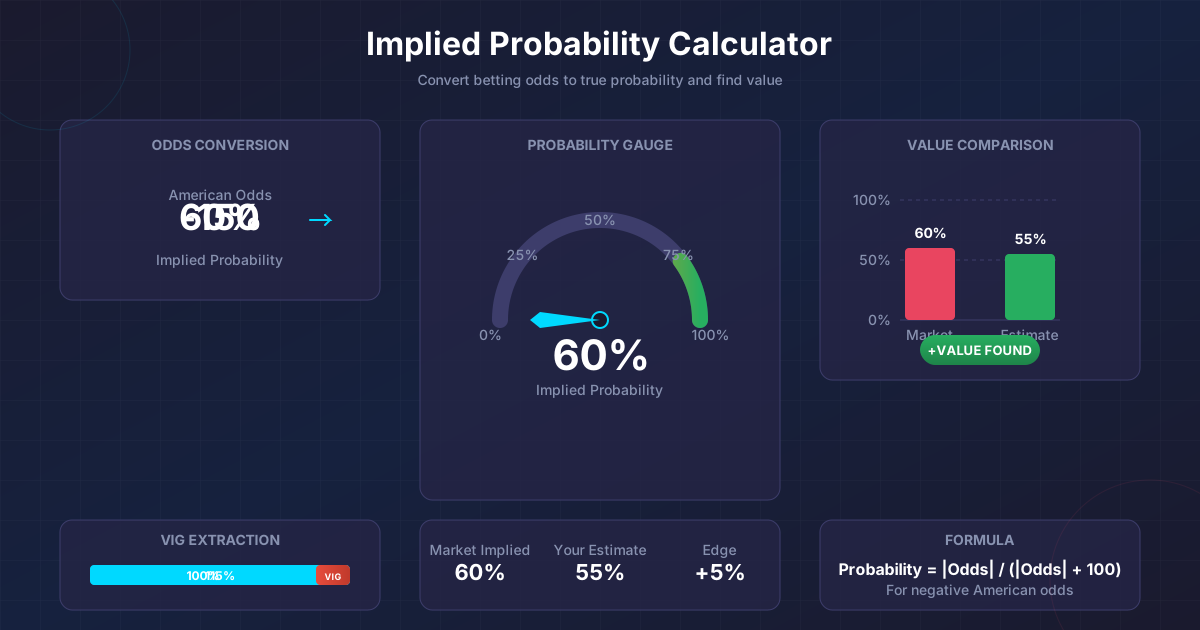
- Convert the offered odds to implied probability
- Calculate EV using the formula
Worked Example: NFL Spread Bet
You estimate the Eagles have a 57% chance to cover -3.5. The sportsbook offers -110.
True probability: 57%
Implied probability at -110: 52.38%
Edge: 57% - 52.38% = 4.62%

EV = (0.57 x $90.91) - (0.43 x $100)
EV = $51.82 - $43.00
EV = +$8.82 per $100 wagered
EV% = +8.82%
That is a strong +EV bet worth taking.
Worked Example: MLB Moneyline
You estimate the Dodgers have a 62% chance to win. Sportsbook offers -145.
True probability: 62%
Implied probability at -145: 59.18%
Edge: 62% - 59.18% = 2.82%

EV = (0.62 x $68.97) - (0.38 x $100)
EV = $42.76 - $38.00
EV = +$4.76 per $100 wagered
EV% = +4.76%
Positive, but a smaller edge. You would size this bet smaller than the Eagles bet.
Worked Example: Underdog Value
You estimate a tennis underdog has a 35% chance to win. Sportsbook offers +225.
True probability: 35%
Implied probability at +225: 30.77%
Edge: 35% - 30.77% = 4.23%

EV = (0.35 x $225) - (0.65 x $100)
EV = $78.75 - $65.00
EV = +$13.75 per $100 wagered
EV% = +13.75%
Excellent value. Underdogs frequently offer the highest EV because recreational bettors overweight favorites.
Run these calculations instantly with our Expected Value Calculator.
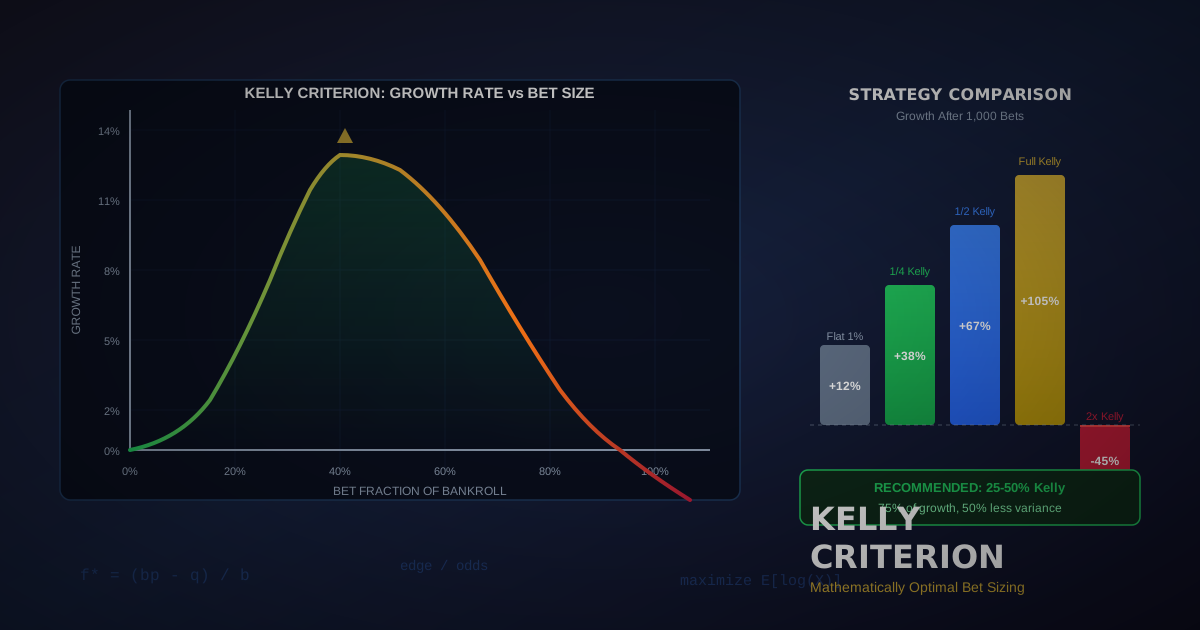
Step 3: Implement the Kelly Criterion for Bet Sizing
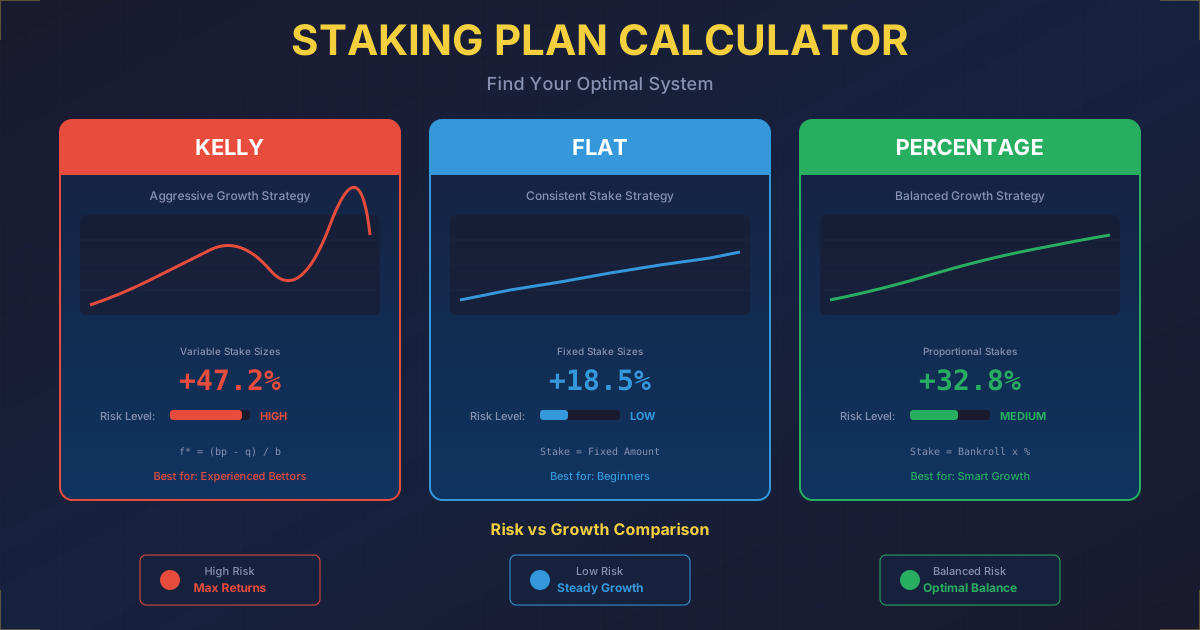
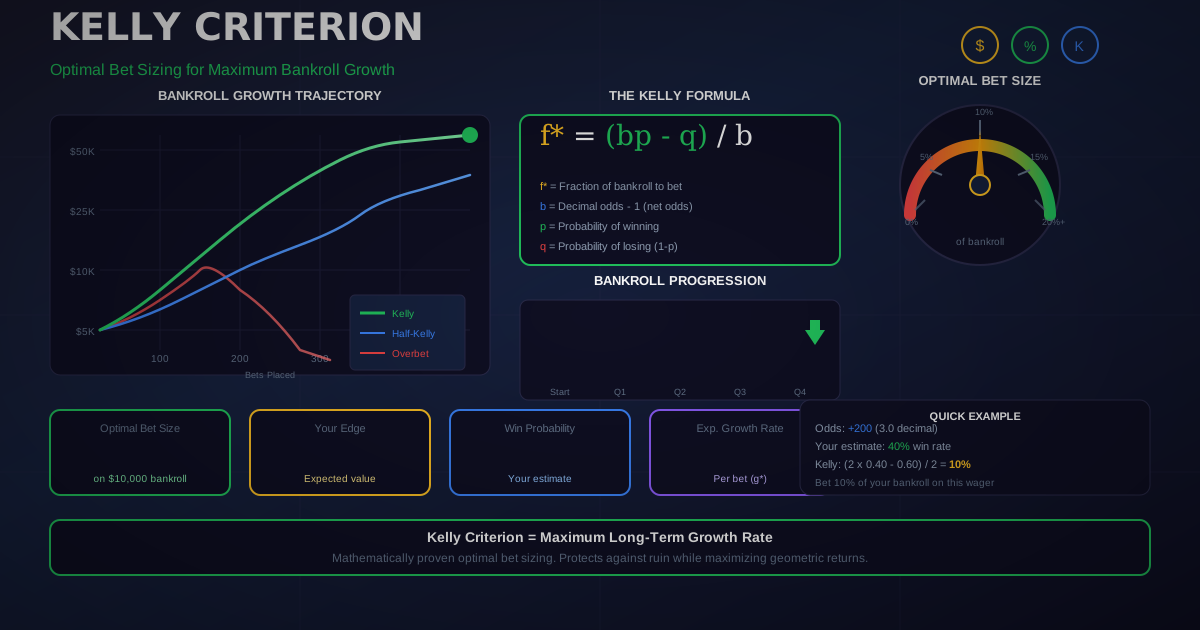
Finding +EV bets is only half the equation. Sizing them correctly determines whether your bankroll grows or gets destroyed by variance. The Kelly Criterion is the mathematically optimal solution.
The Kelly Formula
Kelly% = (bp - q) / b
Where:
- b = decimal odds - 1 (the net profit per dollar wagered)
- p = your estimated probability of winning
- q = 1 - p (probability of losing)
Example using the Eagles bet above:
- b = 1.909 - 1 = 0.909
- p = 0.57
- q = 0.43
Kelly% = (0.909 x 0.57 - 0.43) / 0.909 Kelly% = (0.518 - 0.43) / 0.909 Kelly% = 0.088 / 0.909 Kelly% = 9.68% of bankroll
Why You Should Use Fractional Kelly
Full Kelly maximizes long-term growth rate but produces stomach-churning variance. A 9.68% bet on a single game is reckless in practice because your probability estimates are never perfect.
Fractional Kelly guidelines:
| Kelly Fraction | Risk Level | Recommended For |
|---|---|---|
| 25% Kelly | Very conservative | New bettors, uncertain models |
| 33% Kelly | Conservative | Experienced with some edge uncertainty |
| 50% Kelly | Moderate | Confident models, verified edge |
| 75% Kelly | Aggressive | Highly verified, large sample edge |
| 100% Kelly | Maximum growth | Theoretical only; never in practice |
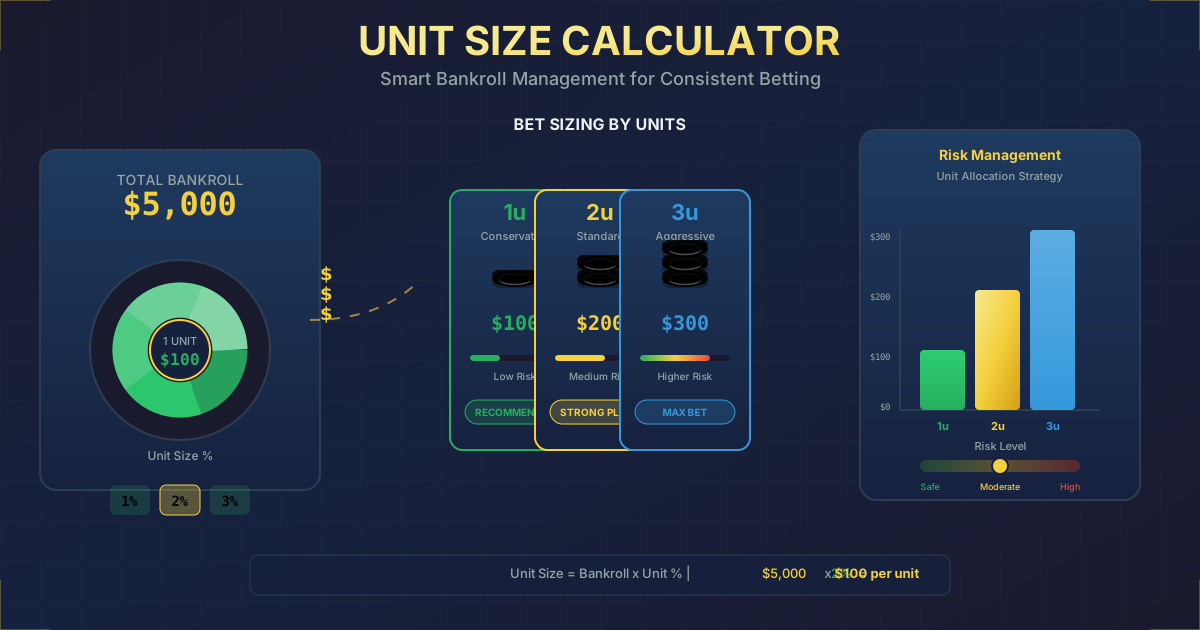
For the Eagles example, 33% Kelly would be 0.33 x 9.68% = 3.2% of bankroll. On a $10,000 bankroll, that is a $320 bet.
Calculate optimal bet sizes with our Kelly Criterion Calculator.
Step 4: Line Shop Across Multiple Sportsbooks
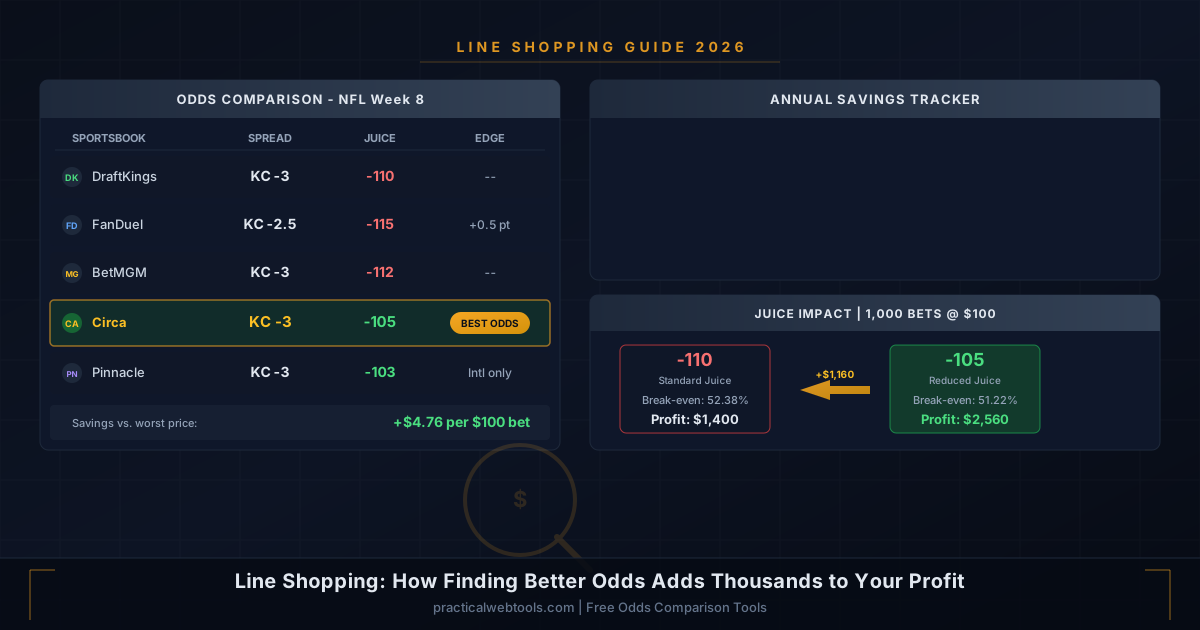
Line shopping is the single highest-impact habit you can develop as a +EV bettor. Even a 5-cent improvement in odds on every bet compounds into thousands of dollars over a year.
The Math of Line Shopping
Consider betting 1,000 bets per year at $100 average stake. The difference between getting -110 and -105 on average:
- At -110: Break-even requires 52.38% win rate
- At -105: Break-even requires 51.22% win rate
That 1.16% reduction in break-even threshold means, at a 55% win rate:
- At -110: Profit = 1,000 x $100 x 0.0262 = $2,620
- At -105: Profit = 1,000 x $100 x 0.0378 = $3,780
Line shopping alone added $1,160 in profit without changing a single bet selection.
How Many Sportsbooks Do You Need?
| Number of Books | Avg Line Improvement | Annual Profit Boost (1,000 bets x $100) |
|---|---|---|
| 1 | Baseline | $0 |
| 3 | +3 cents avg | +$580 |
| 5 | +5 cents avg | +$970 |
| 8 | +7 cents avg | +$1,350 |
| 12+ | +10 cents avg | +$1,930 |
Compare odds and identify the best lines using our Odds Converter.
Step 5: Verify Your Edge with Closing Line Value (CLV)
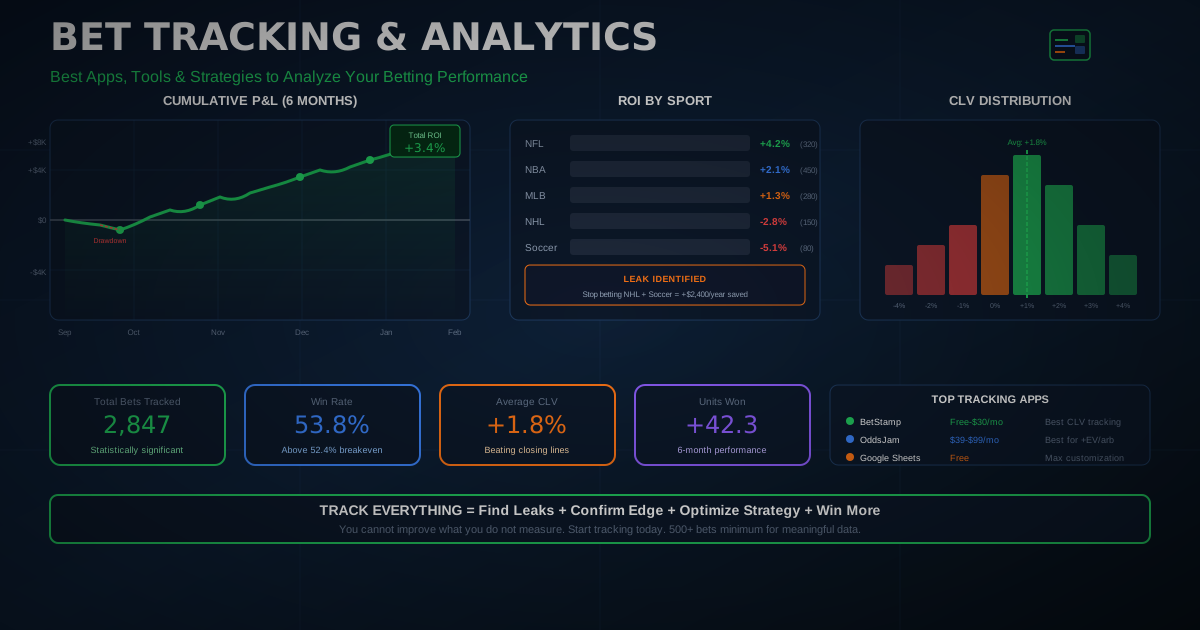
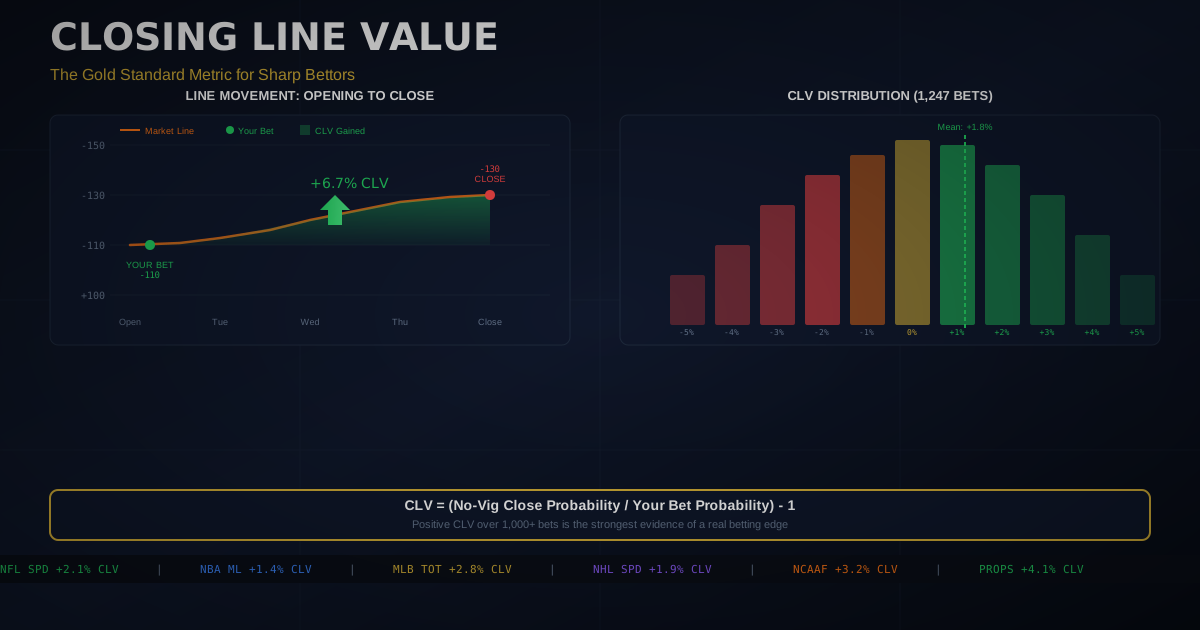
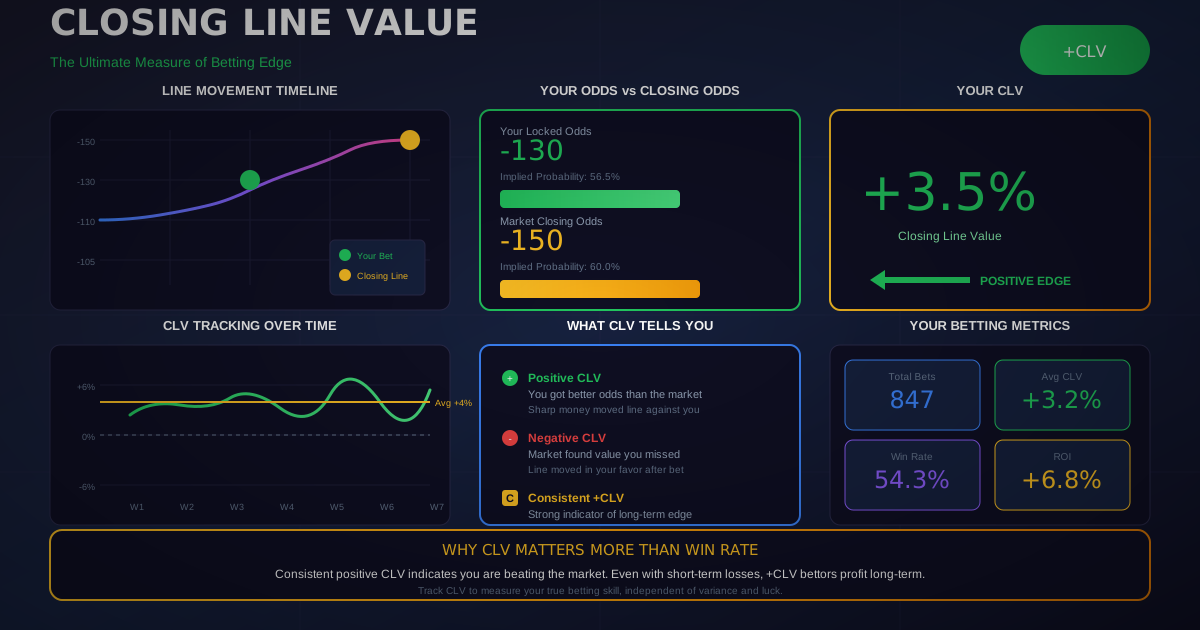
CLV is the single most important metric for evaluating whether you are actually a +EV bettor. It measures whether the odds you received were better than the closing line (the final odds before the event starts).
Why CLV Matters More Than Win Rate
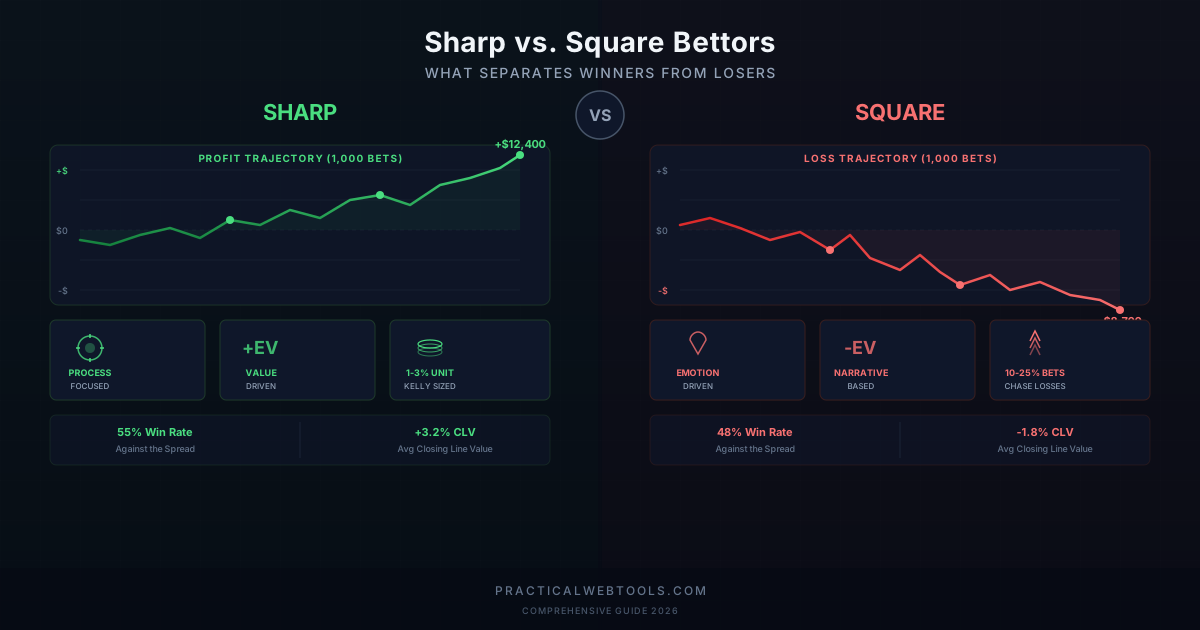
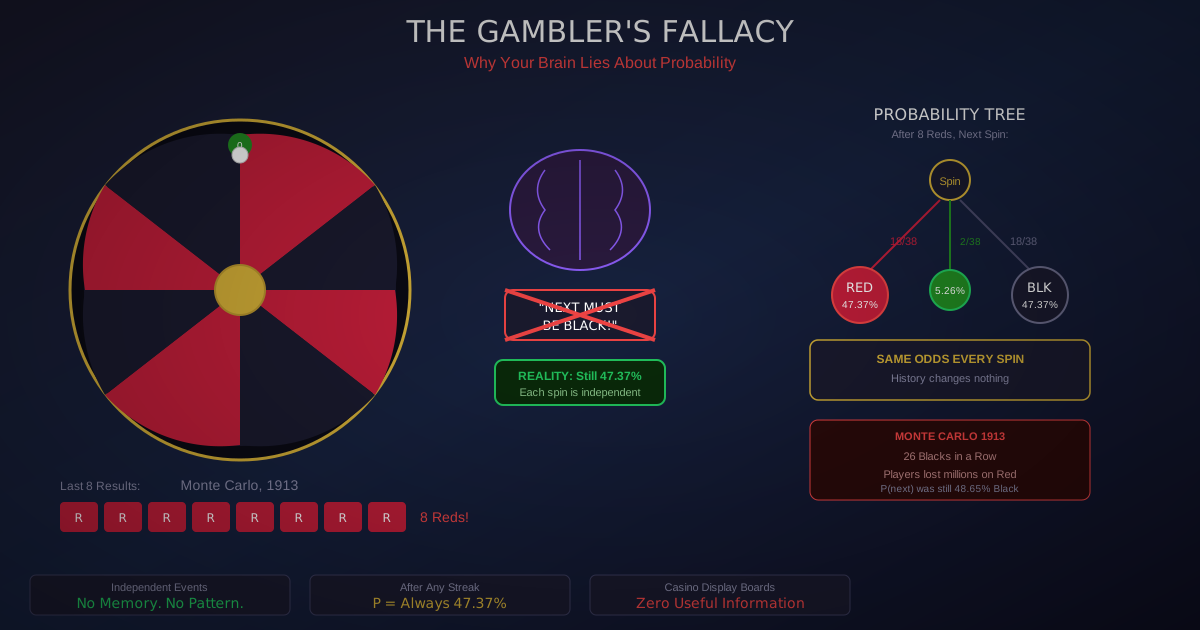
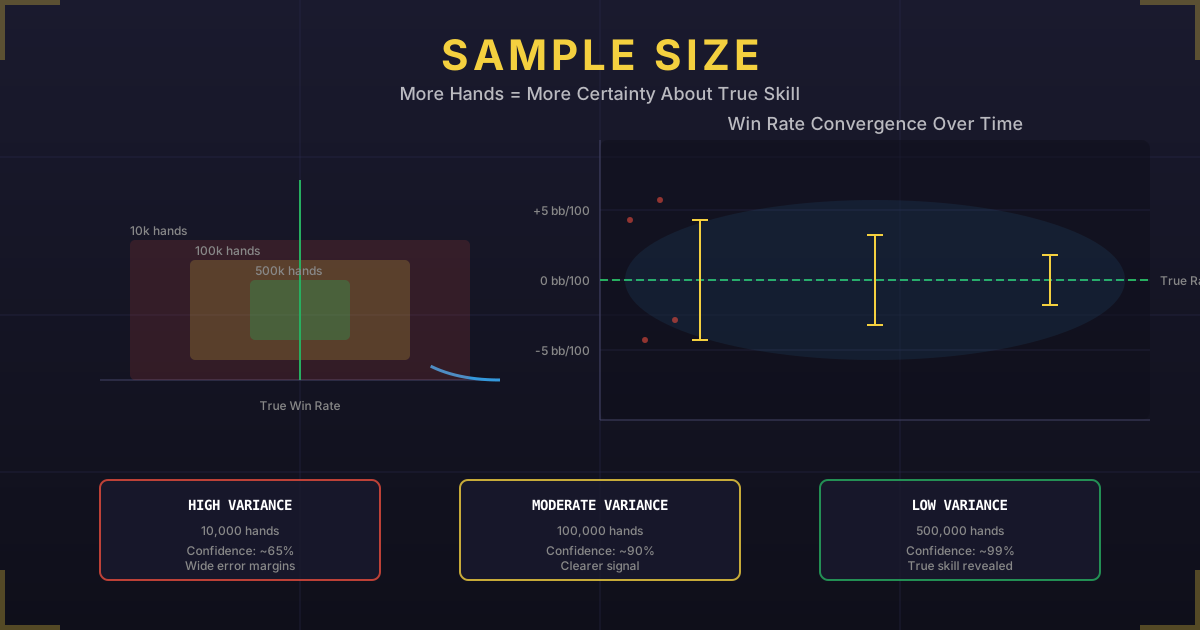
Win rate is noisy. A bettor with a true 55% edge might win only 50% over 200 bets due to variance. But CLV is a leading indicator. If you consistently beat the closing line, you are getting +EV prices even if short-term results do not reflect it.
Example of CLV tracking:
| Bet | Your Odds | Closing Odds | CLV |
|---|---|---|---|
| Chiefs -3 | -110 | -120 | +2.1% |
| Lakers ML | -150 | -165 | +3.2% |
| Over 48.5 | -108 | -105 | -0.7% |
| Celtics +5 | -110 | -115 | +1.0% |
| Average CLV | +1.4% |
A bettor averaging +1.4% CLV over 500+ bets is almost certainly profitable long-term.
CLV Calculation
CLV% = (Closing Implied Probability - Your Implied Probability) / Your Implied Probability x 100
If you bet at -110 (52.38% implied) and the line closes at -120 (54.55% implied):
CLV% = (54.55% - 52.38%) / 52.38% x 100 = +4.14%
Track your CLV systematically with our CLV Tracker.
Step 6: Manage Bankroll and Variance
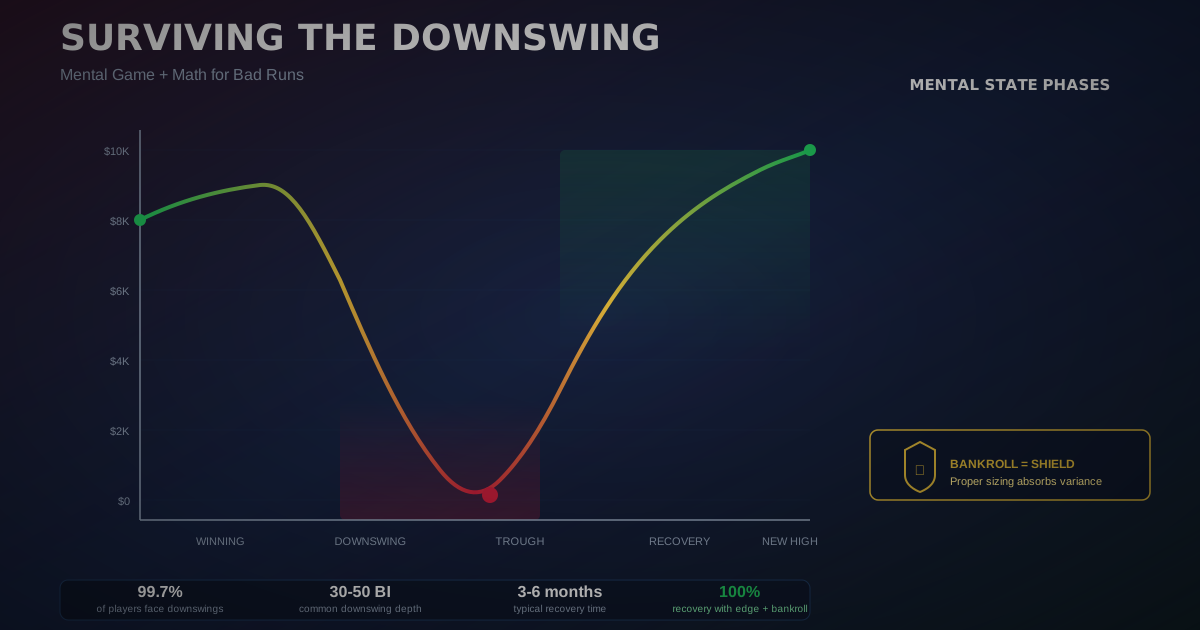
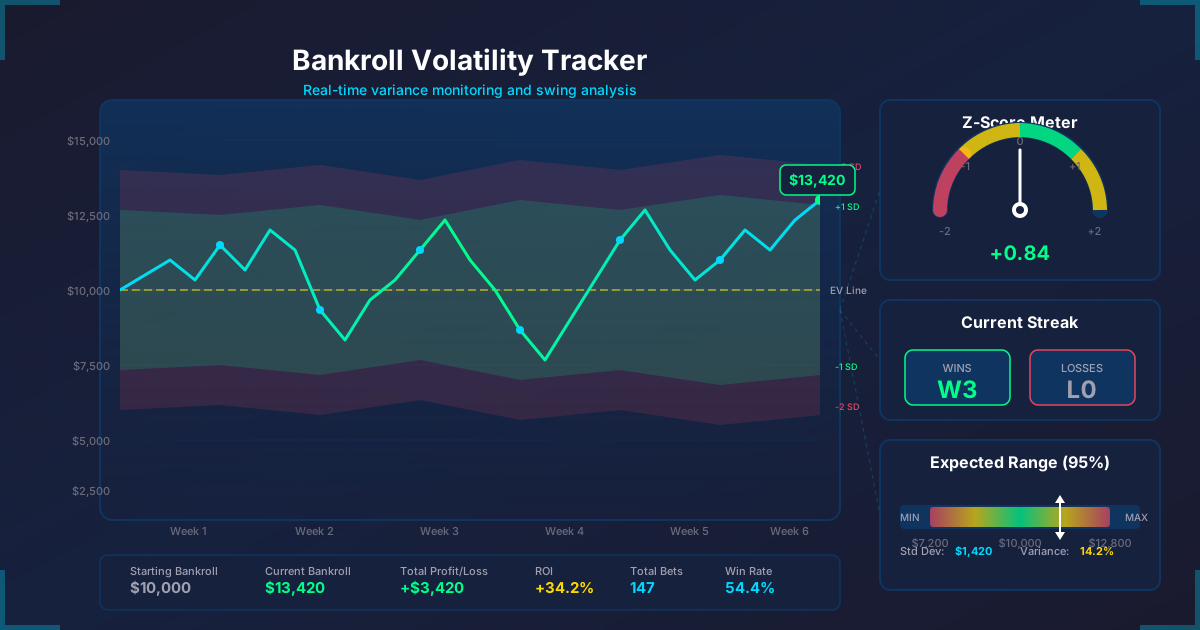
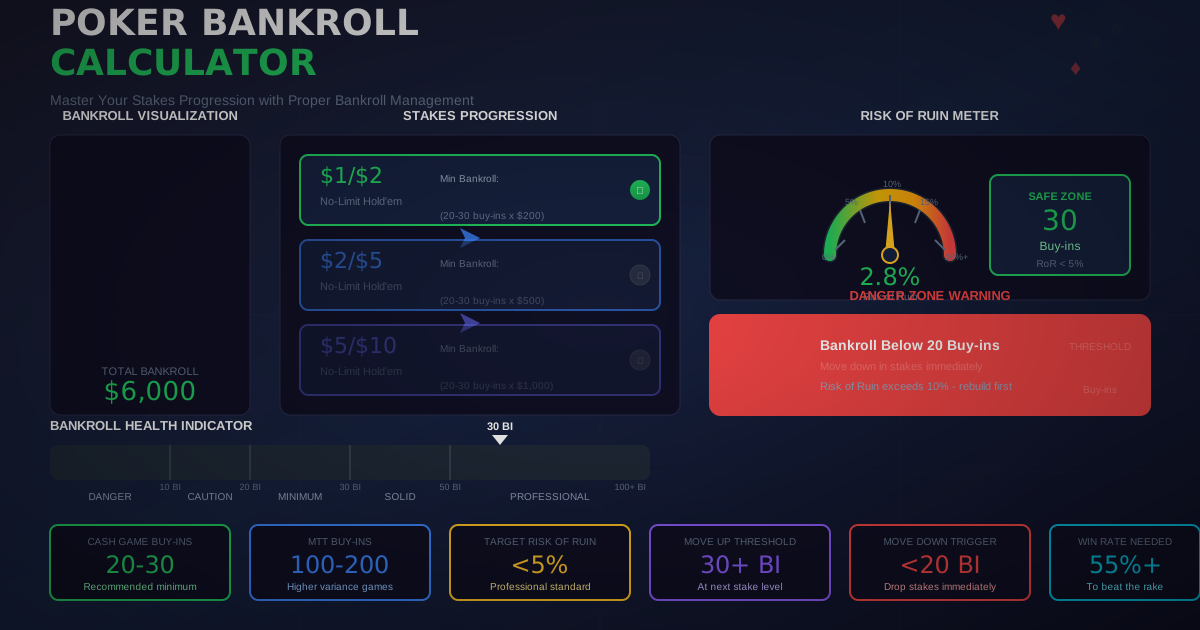
Even the best +EV bettors experience brutal losing streaks. Proper bankroll management ensures you survive them.
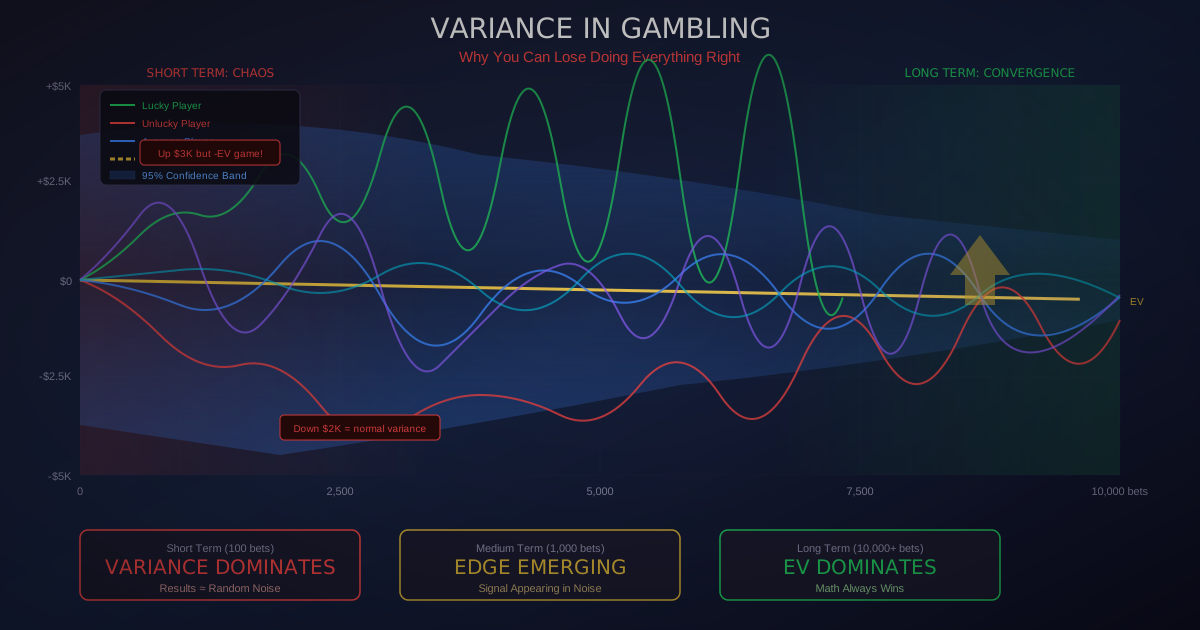
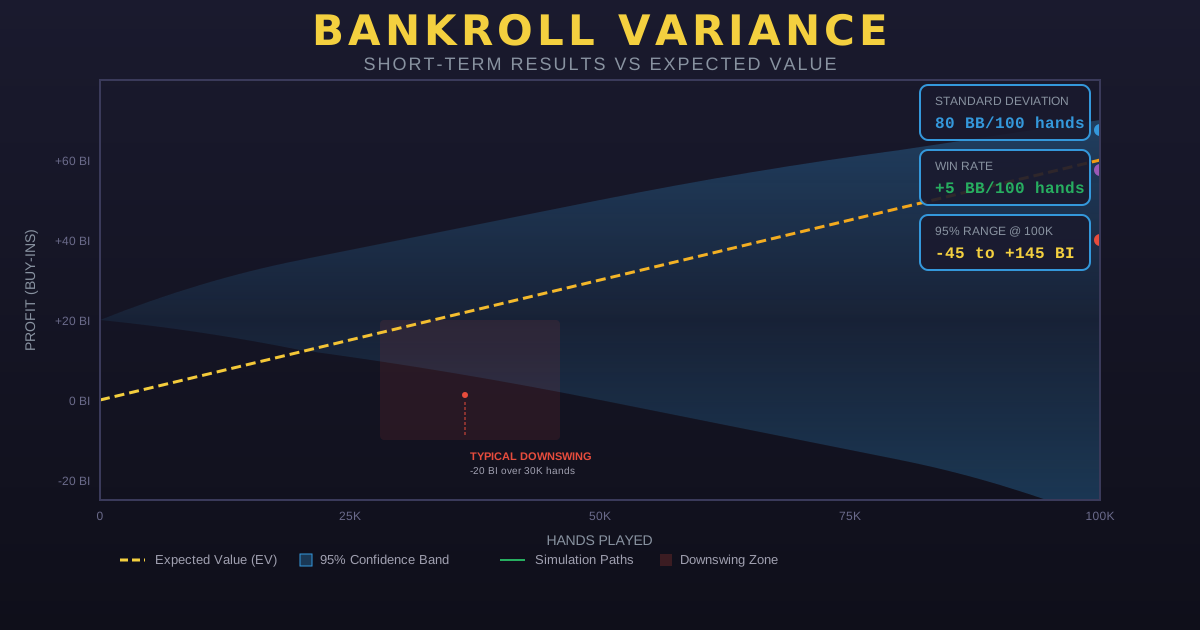
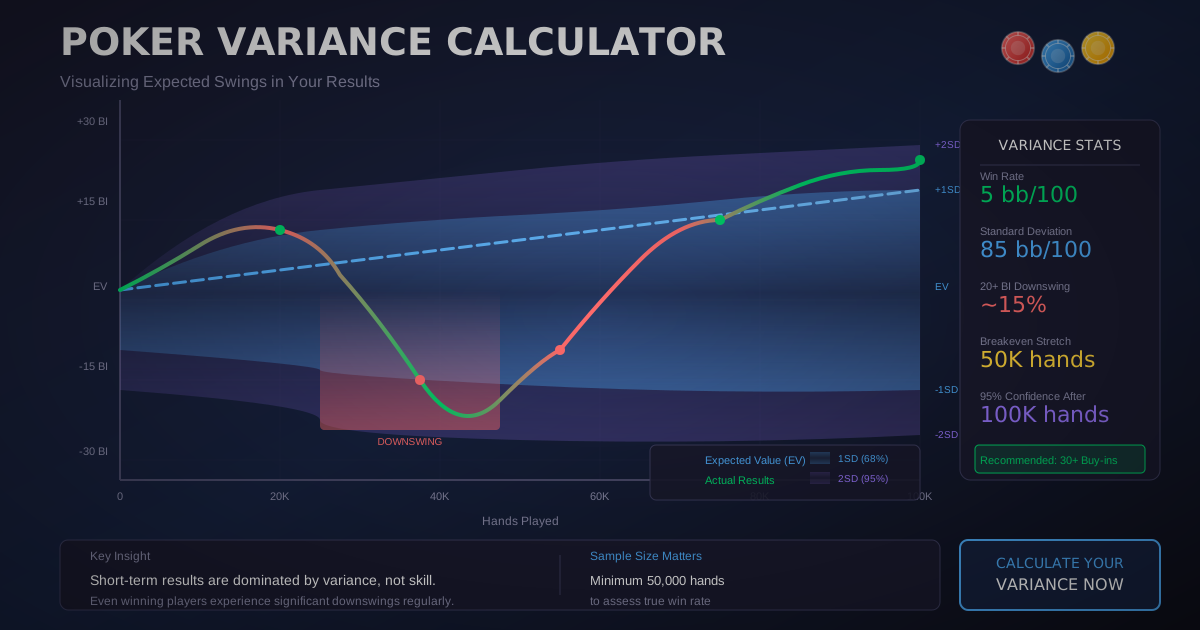
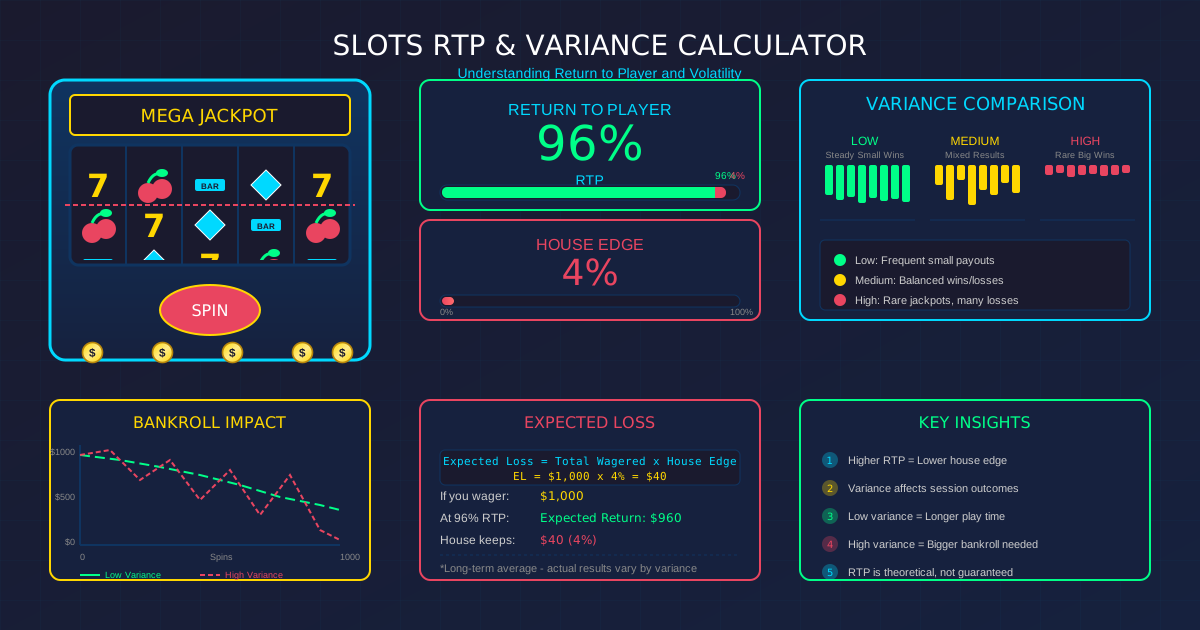
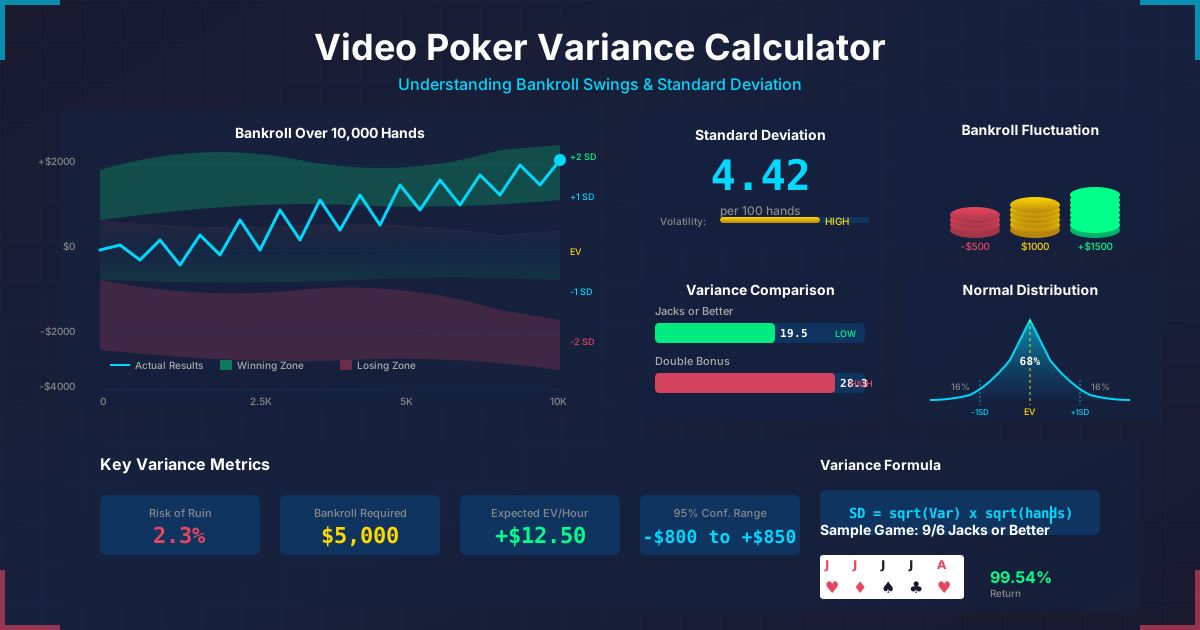
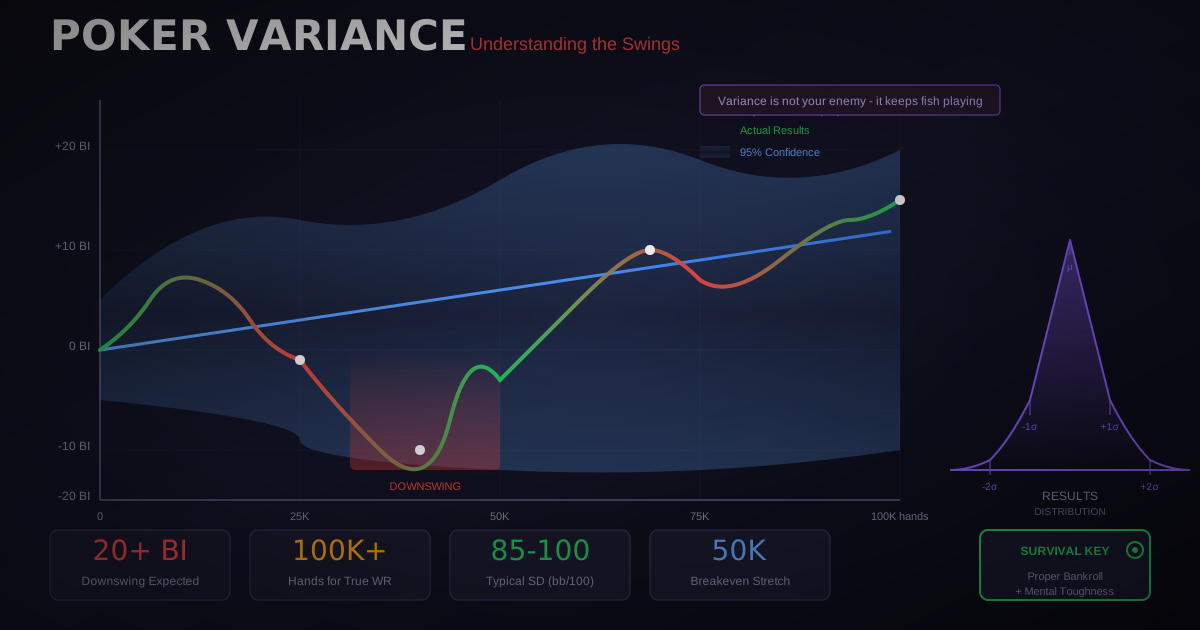
Understanding Variance in +EV Betting
With a 55% win rate on -110 bets (a very strong edge):
- Probability of 10-bet losing streak: 0.34% (happens once per ~300 bets)
- Probability of 15-bet losing streak: 0.005% (rare but possible over career)
- Maximum expected drawdown in 1,000 bets: 15-25% of bankroll
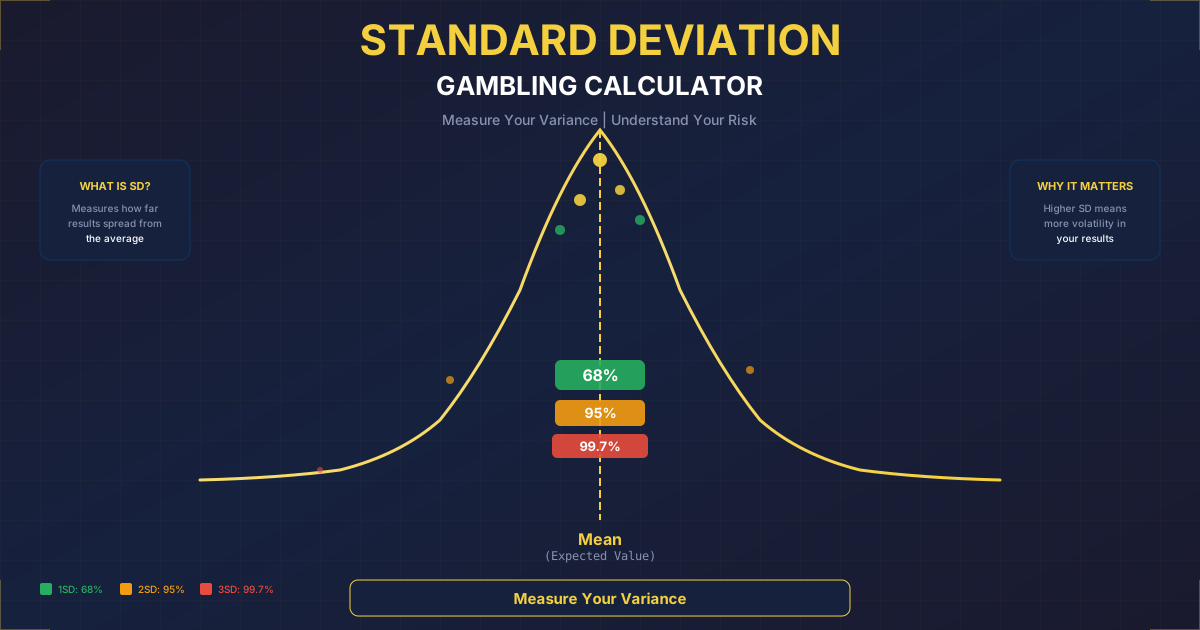
- Standard deviation per 100 bets: ~5 units
This means a $10,000 bankroll with 2% average bet sizing could drop to $7,500-$8,500 during a normal losing run before recovering.
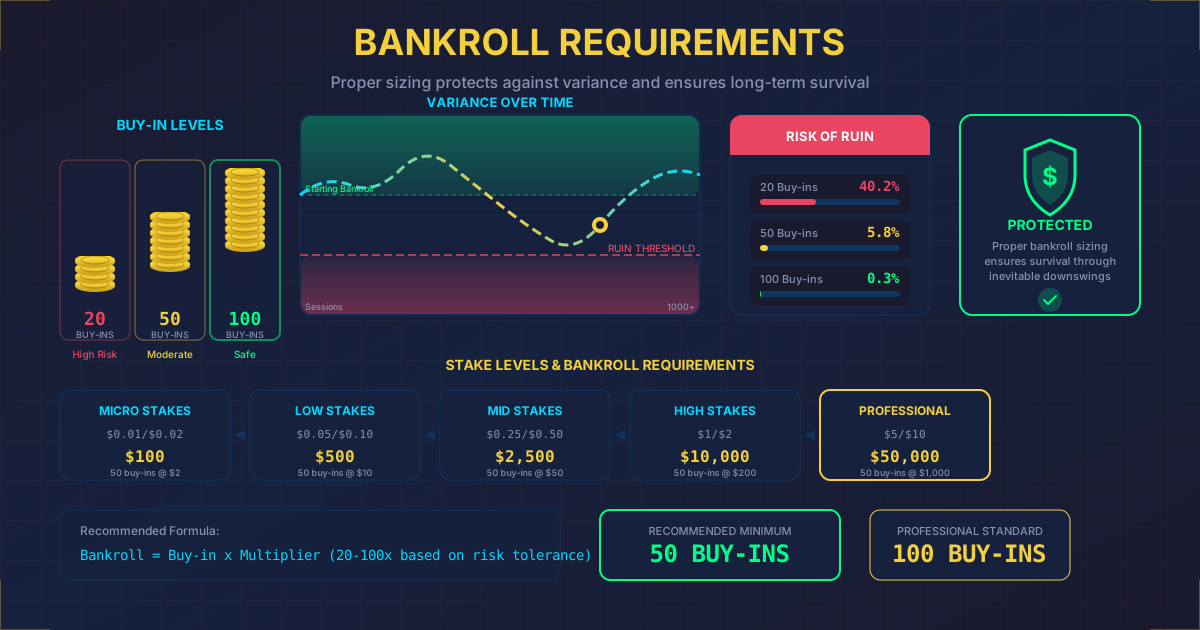
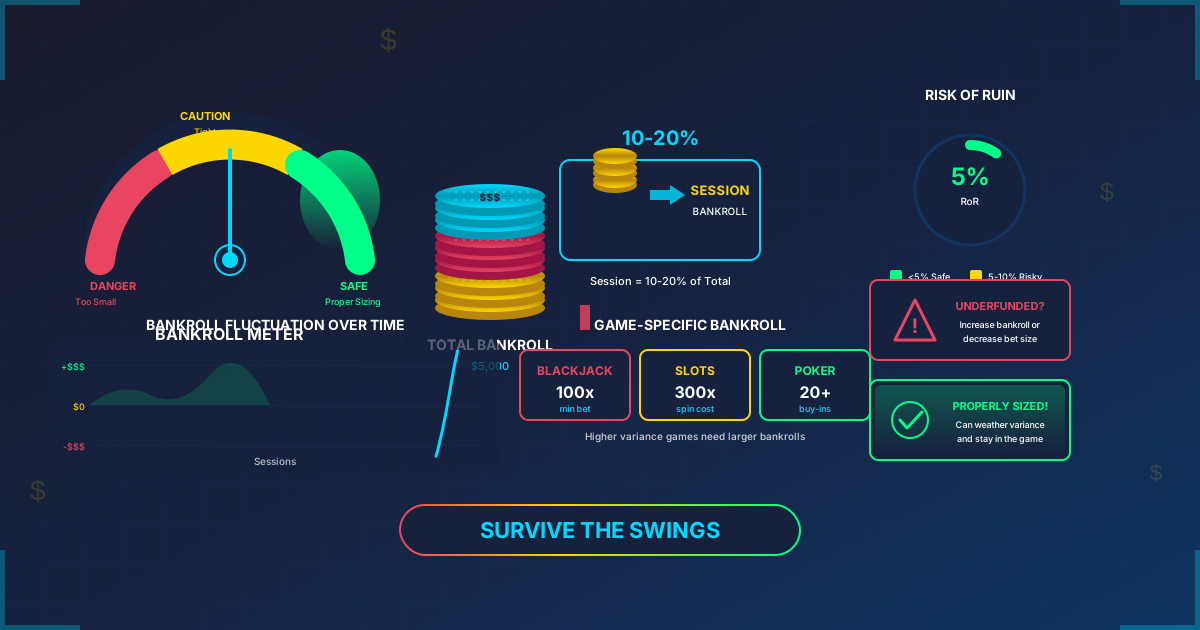
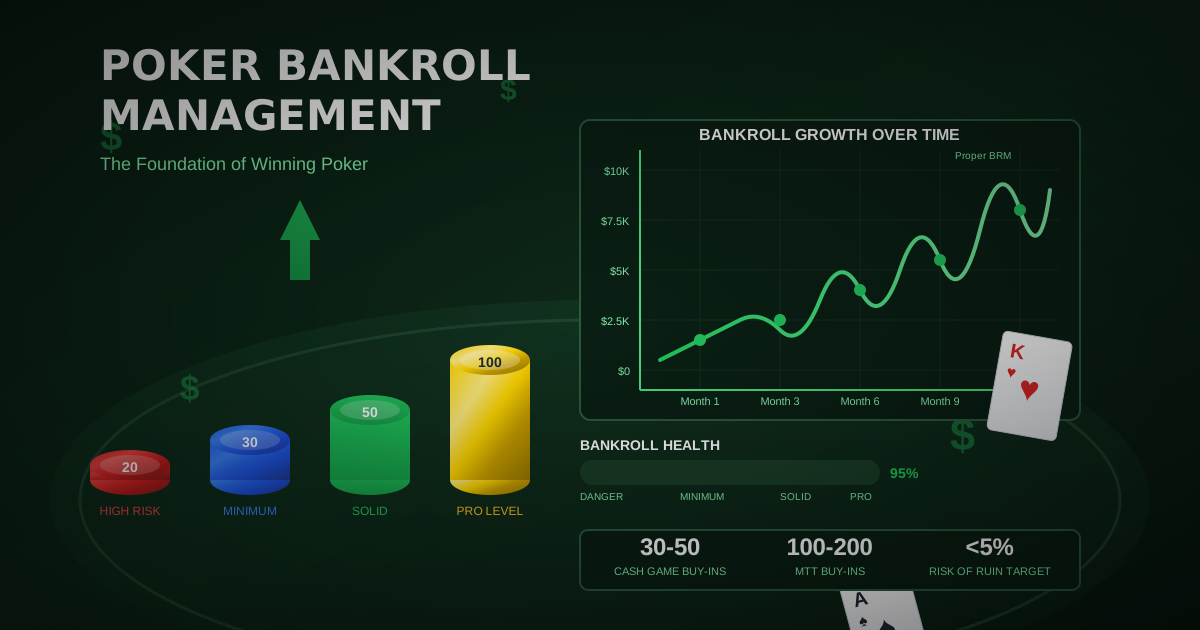
Bankroll Sizing Guidelines
| Average Bet Size | Minimum Bankroll (Units) | Risk of Ruin (RoR) |
|---|---|---|
| 1% of bankroll | 100 units | <1% |
| 2% of bankroll | 50 units | ~2% |
| 3% of bankroll | 33 units | ~5% |
| 5% of bankroll | 20 units | ~15% |
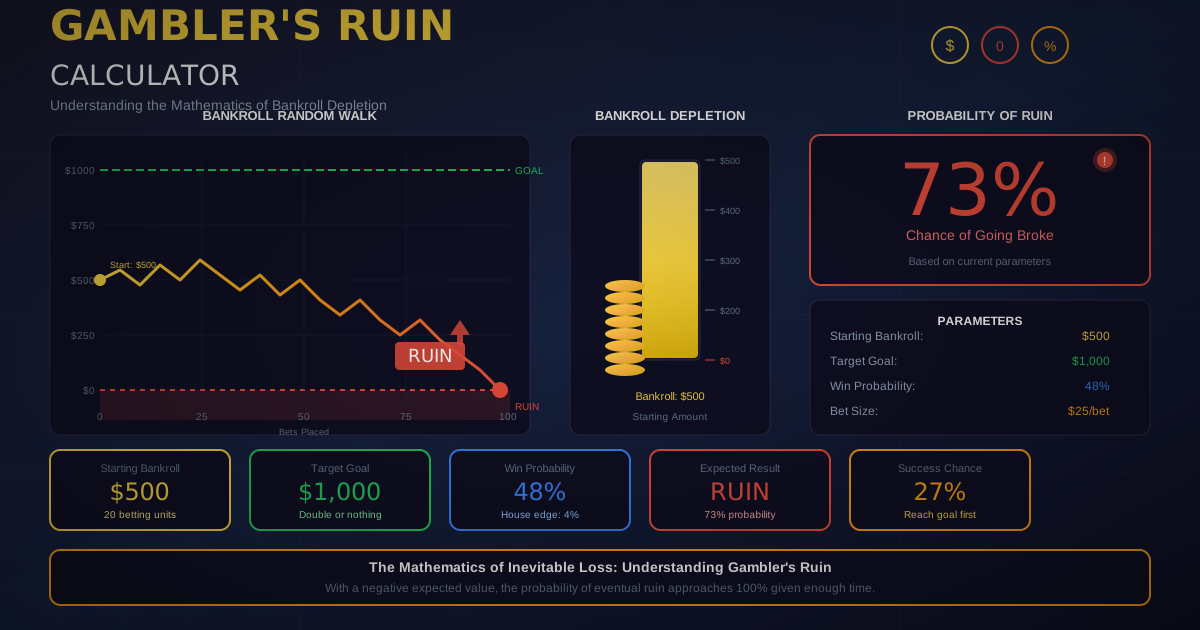
Risk of ruin is the probability of losing your entire bankroll before your edge compounds. For a 2% edge bettor, keeping individual bets at 1-2% of bankroll drives RoR close to zero.
Monitor your bankroll's volatility and risk with our Bankroll Volatility Tracker.
Real-World Examples: +EV Betting in Action
Example 1: The NFL Opener Line Grab
Week 1 NFL lines open on Sunday night for the following week. At open, DraftKings posts the Bills at -6.5 (-110). By Tuesday, sharp action moves the line to Bills -8. You bet the opener.
- Your odds: Bills -6.5 (-110)
- Closing line: Bills -8 (-110)
- CLV: +3.8% (that 1.5-point move represents significant value)
- Result: Bills win by 7. Your bet wins; the closing line pushes. +EV confirmed.
Over a season of grabbing openers, if your average CLV is +2%, that is roughly $2,000 profit per $100,000 wagered.
Example 2: The Player Prop Edge
Your research shows a running back averages 4.8 receptions per game over his last 20 games, but the book posts the over/under at 3.5 receptions at -120. You estimate the over hits 72% of the time.
- True probability: 72%
- Implied at -120: 54.55%
- EV%: (0.72 x 1.833) - 1 = +32.0%
- Bet size (33% Kelly): 7.2% of bankroll
- On a $5,000 bankroll: $360 bet
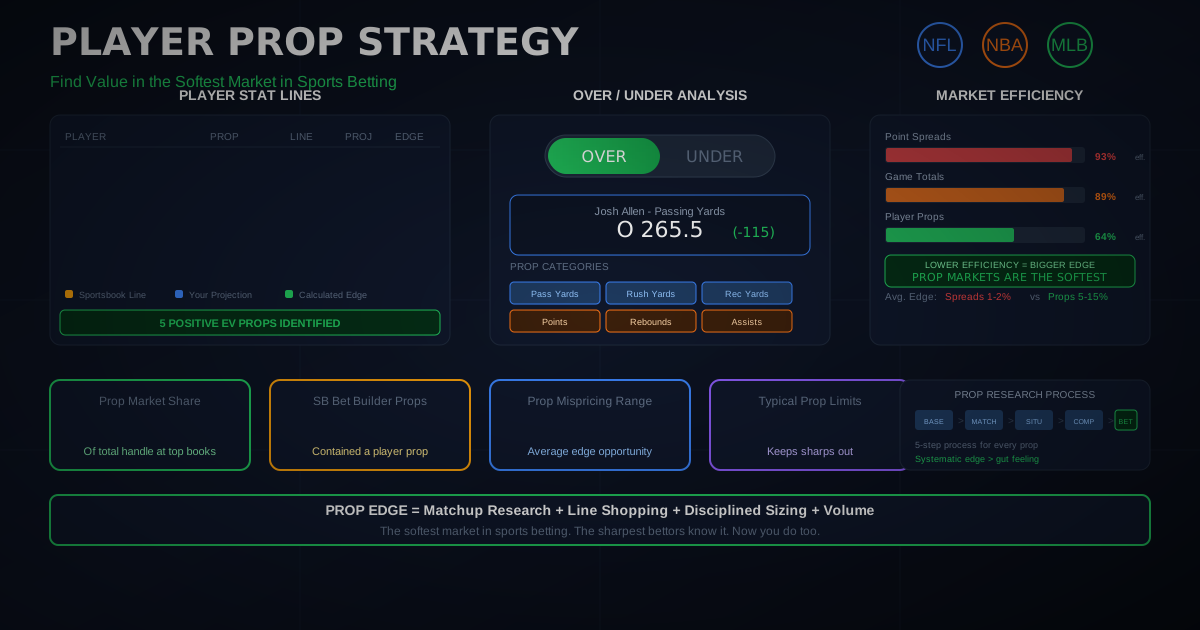
Player props are where recreational bettors find the most value because books set softer lines on lower-liquidity markets.
Example 3: The Cross-Sport Arb Opportunity
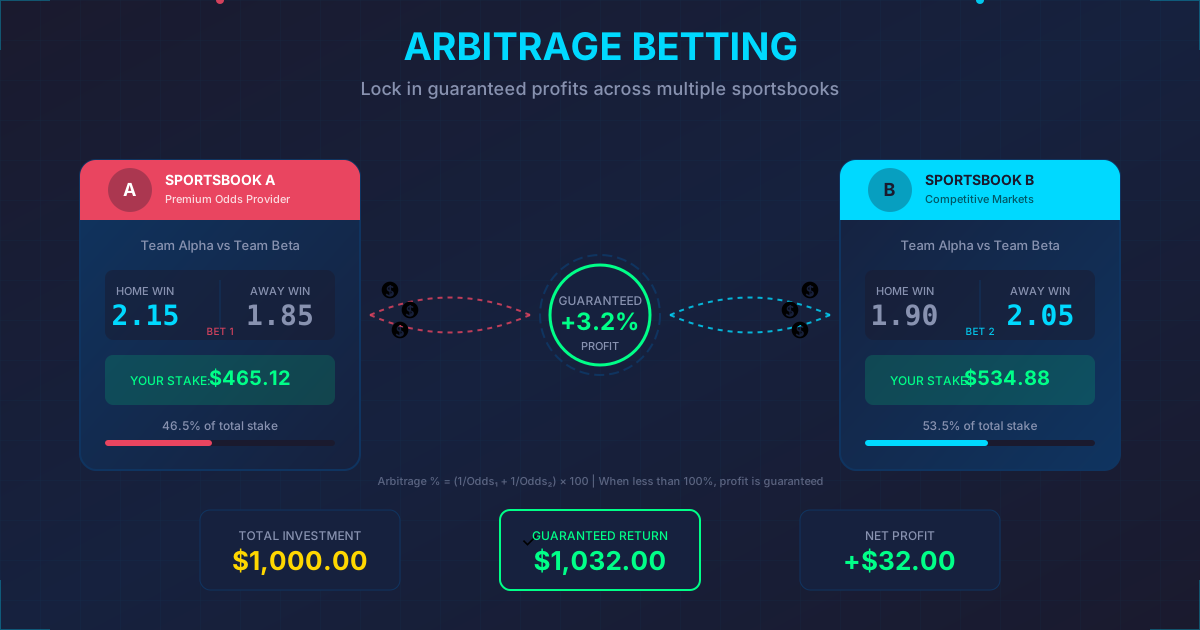
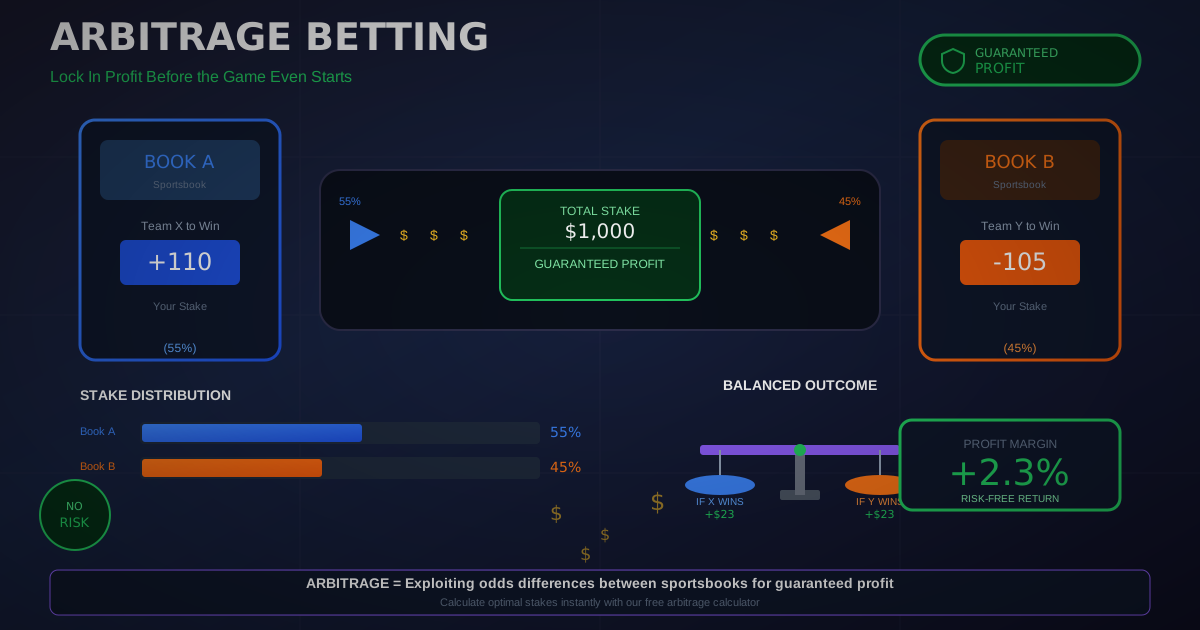
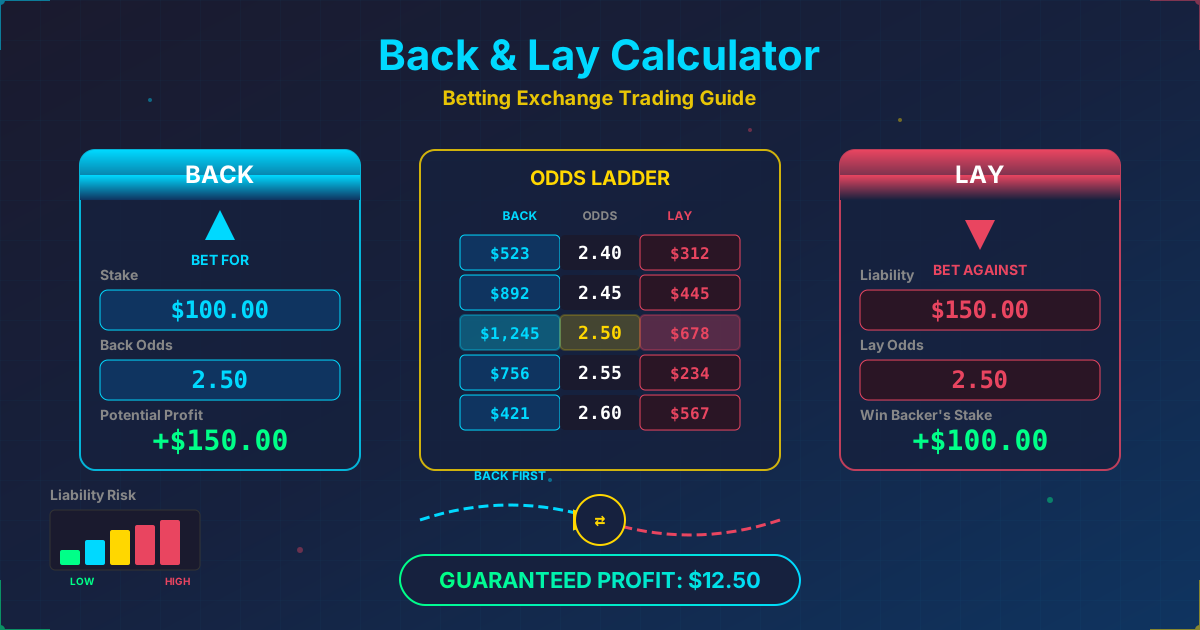
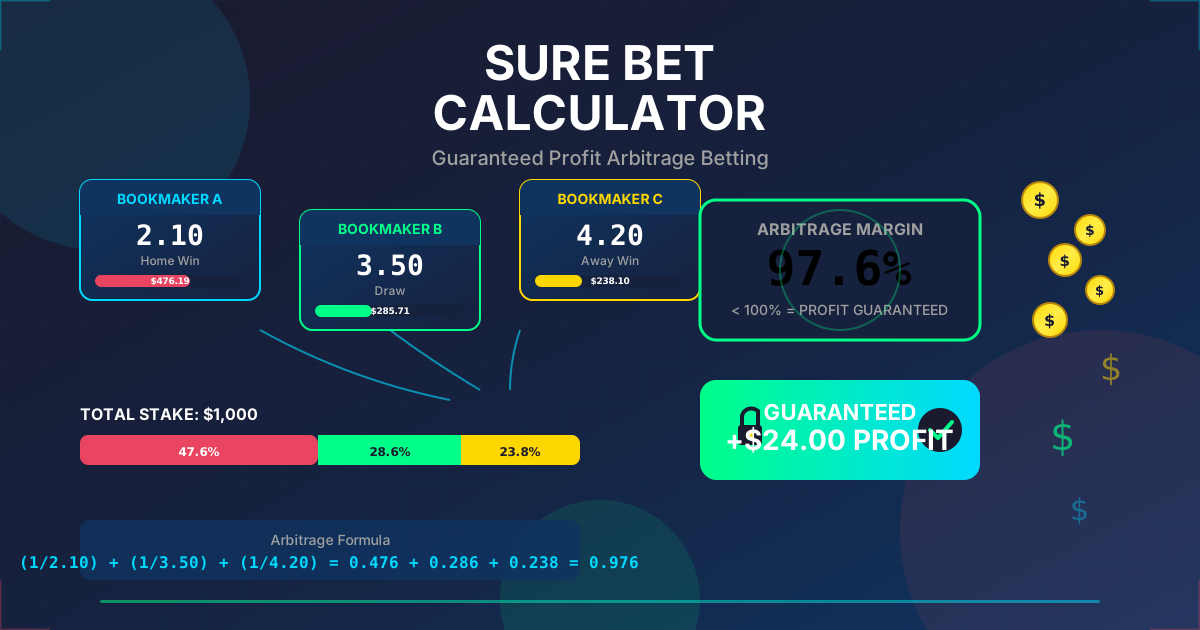
You find a tennis match where DraftKings has Player A at +145 and Pinnacle has Player B at -120. Running the numbers through an arb calculator shows the combined implied probability is 98.5%, meaning you can guarantee 1.5% profit by betting both sides.
- Bet 1: $100 on Player A at +145 (DraftKings)
- Bet 2: $143 on Player B at -120 (Pinnacle)
- Total outlay: $243
- Guaranteed return: $245 (Player A wins) or $262.17 (Player B wins)
- Guaranteed profit: $2-$19 depending on outcome
Identify arbitrage opportunities with our Arbitrage Calculator.
Example 4: The Closing Line Value Verification
You bet the Packers +3 at -110 early in the week. By game time, the line has moved to Packers +1.5 (-110). Your CLV on this bet is massive.
- Your implied probability: 52.38%
- Closing implied probability: 52.38% (same odds, but now only +1.5)
- Line value gained: 1.5 points
- Estimated CLV: +4.5%
- Whether the Packers cover or not, this was a great bet. If you find 1.5-point CLV edges consistently, you are printing money over sample size.
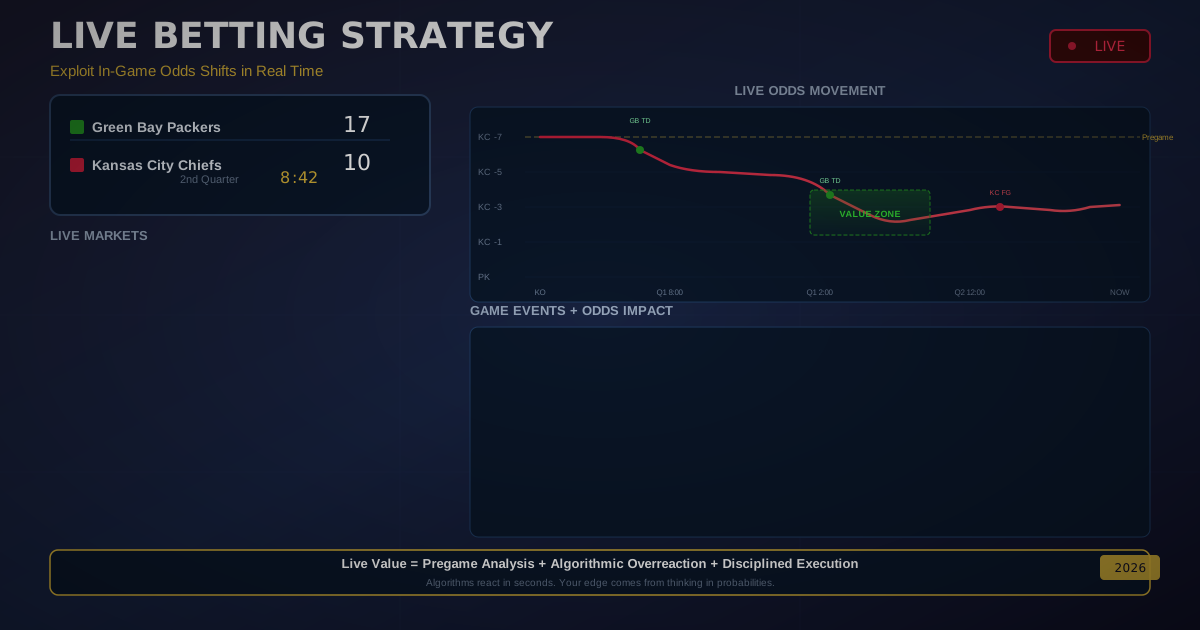
Example 5: The Live Betting Window
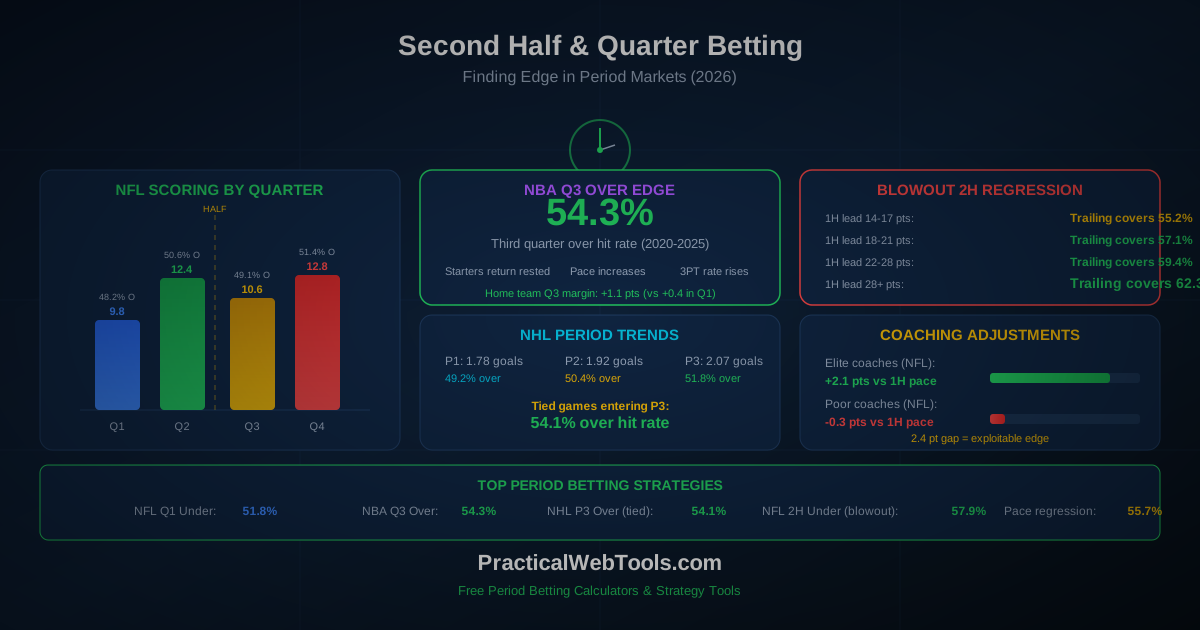
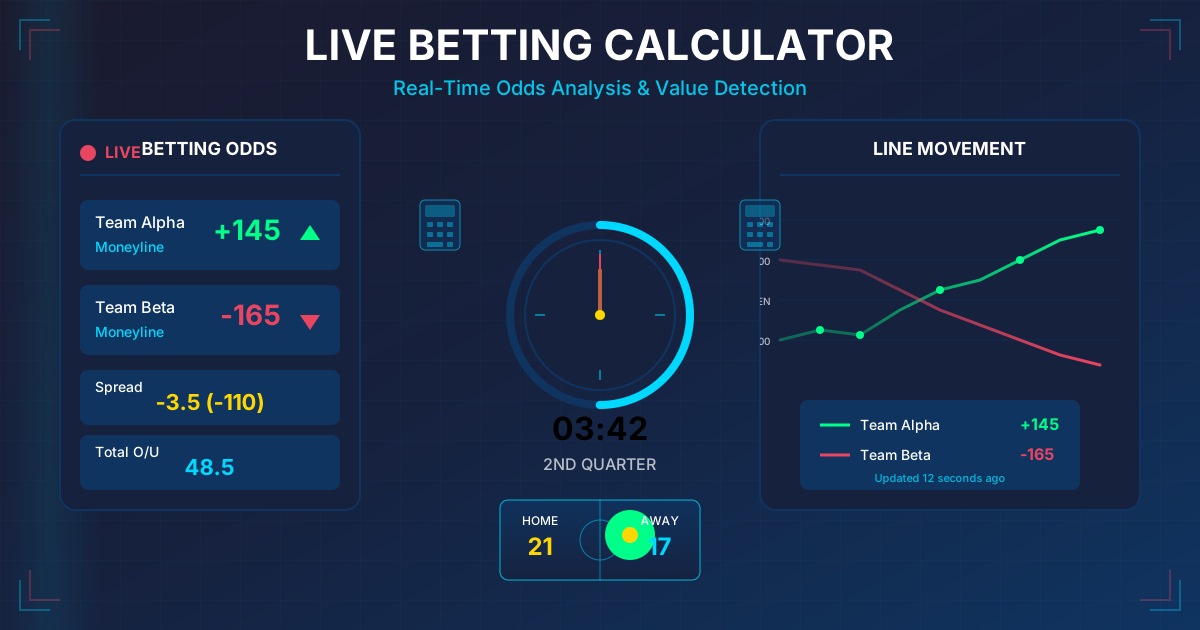
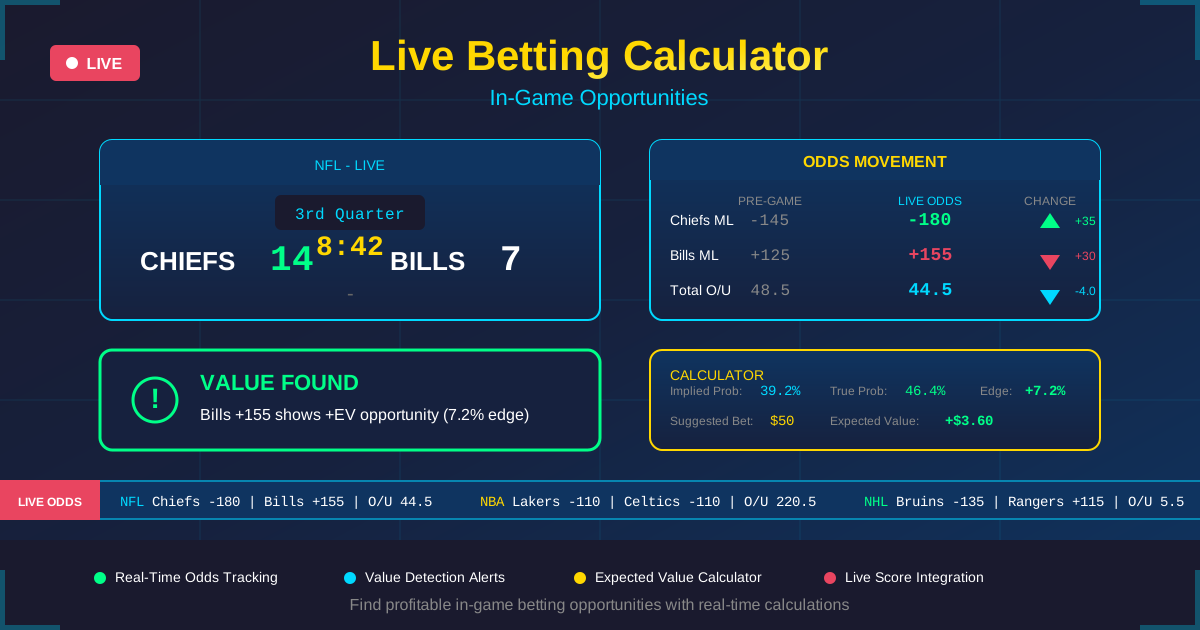
A basketball team goes down 15 points in the first quarter due to an unsustainable 3-point shooting run by the opponent. The live spread moves from -5 to +8 for the trailing team. Your model says the true line should be +3 based on pre-game strength and regression. You bet the trailing team at +8.
- True probability of covering +8: ~65%
- Implied at -110: 52.38%
- EV%: +24.3%
Live betting offers enormous edges when markets overreact to small-sample variance within games.
Example 6: The Reduced Juice Arbitrage
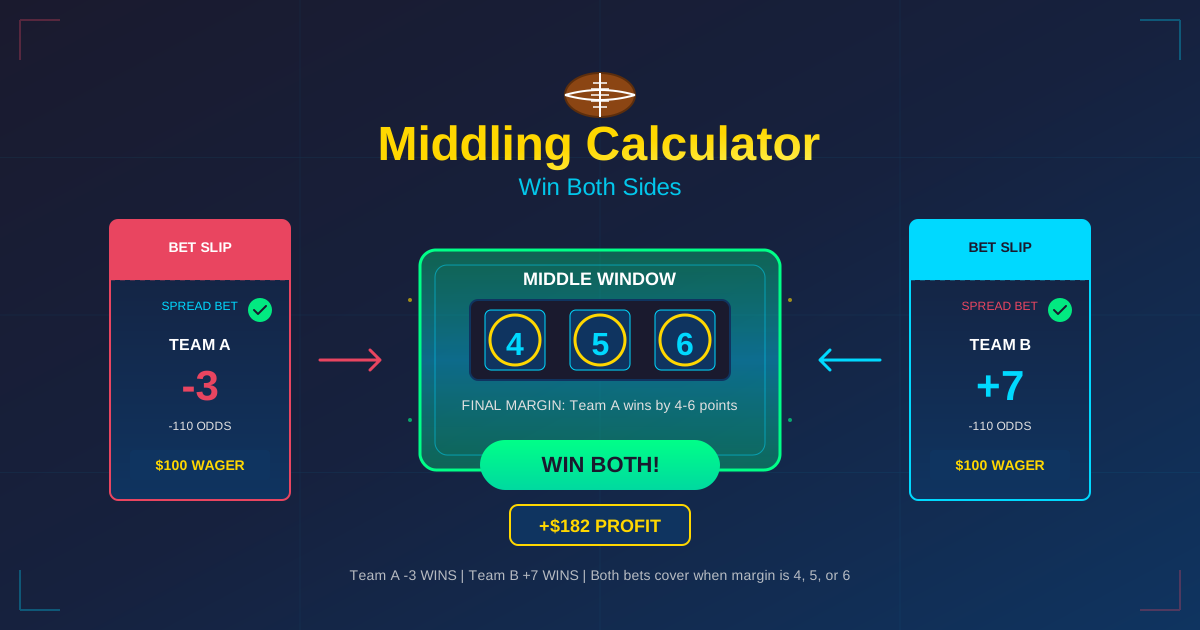
You find the total at Pinnacle (which offers -104/-104 juice) set at Over 221.5 at -104. FanDuel has Under 222.5 at -110. You can bet both sides and guarantee a profit if the total lands on 222.
- Bet Over 221.5 at -104: $100
- Bet Under 222.5 at -110: $95
- Total outlay: $195
- If total is 222: Both bets win, collecting $196.15 + $181.36 = $377.51. Profit: $182.51
- If total is under 222: Under wins. Return = $181.36. Loss on over: $100. Net: -$13.64
- If total is over 222: Over wins. Return = $196.15. Loss on under: $95. Net: +$6.15
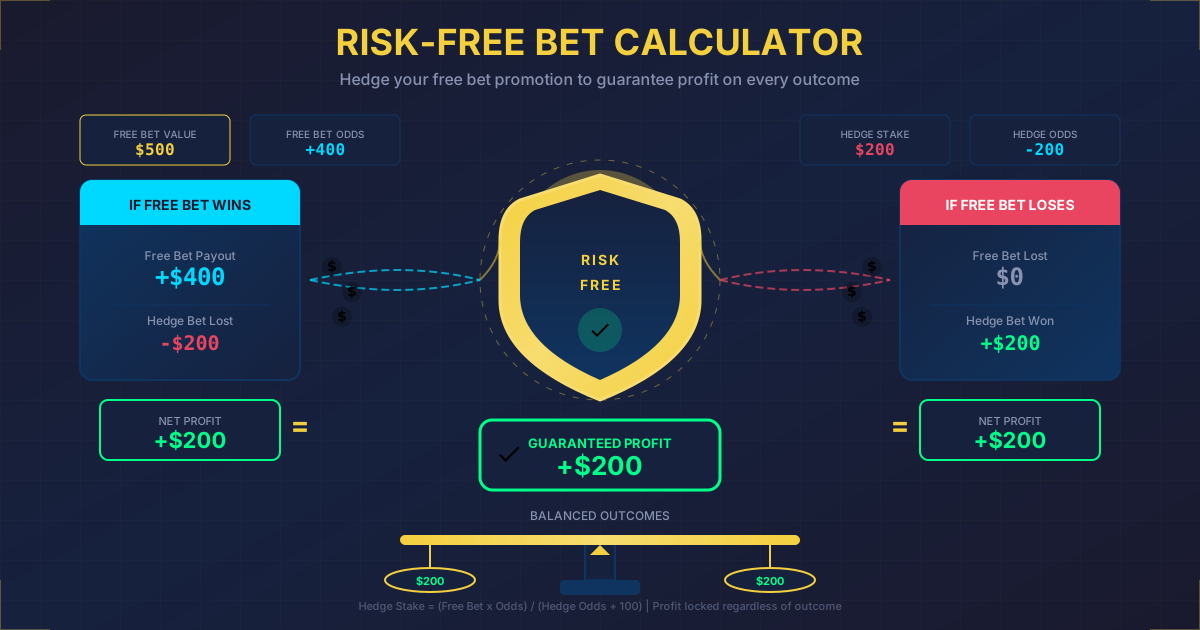
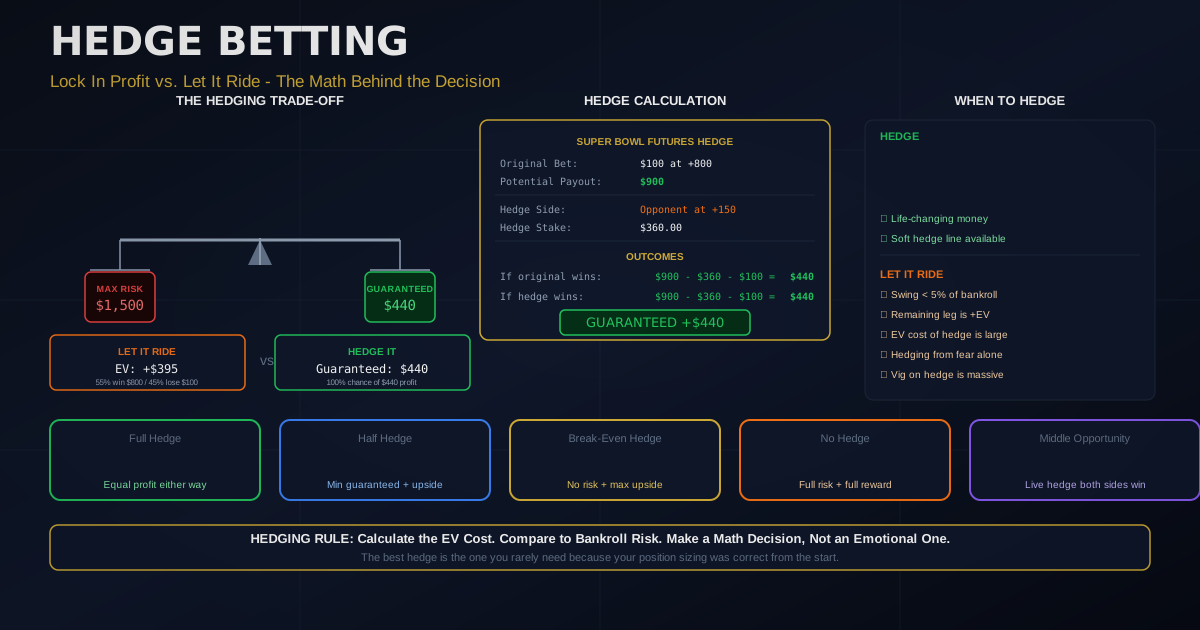
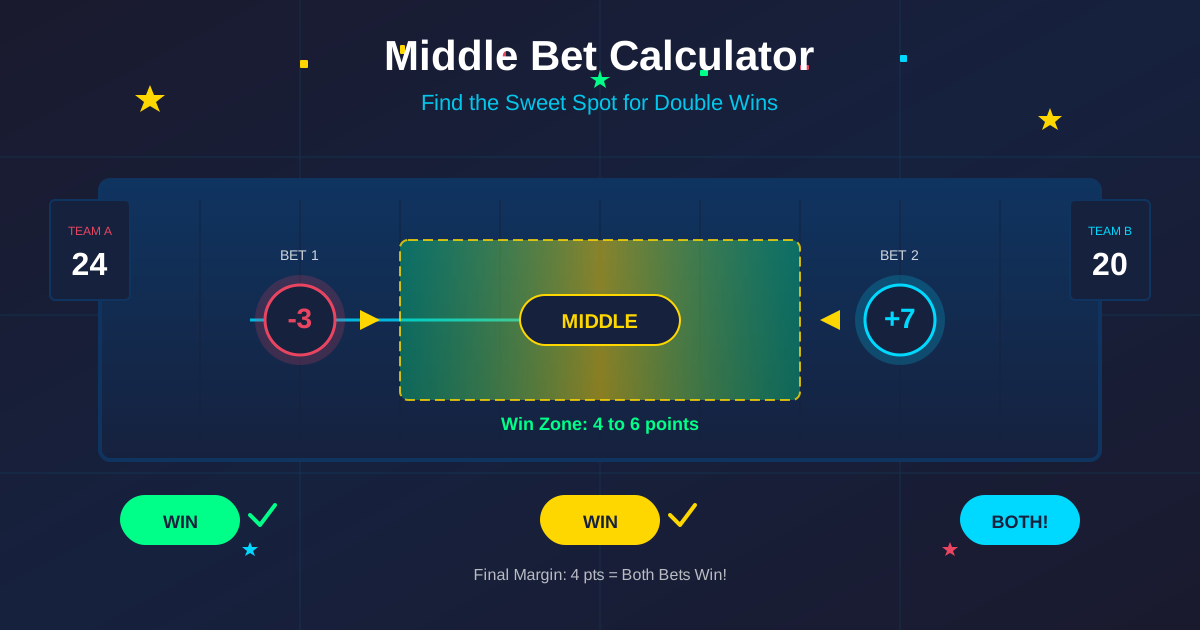
This is a middle opportunity. The guaranteed worst case is a small loss, but the middle hit pays off massively. Over time, middling is +EV when the probability of hitting the middle exceeds the loss in non-middle scenarios.
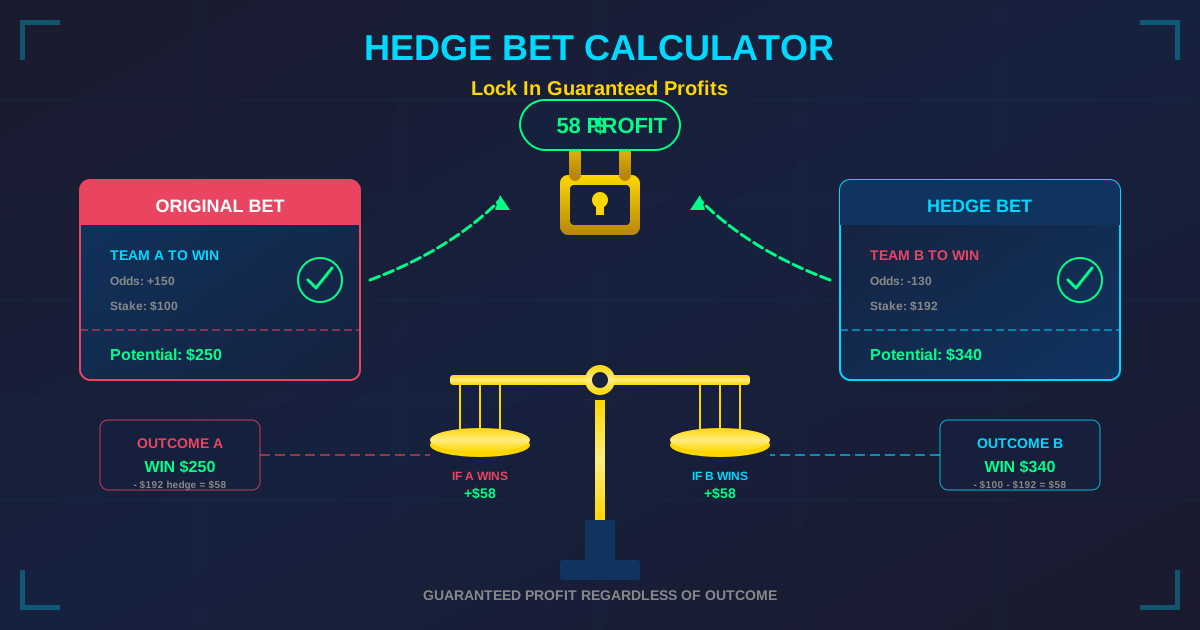
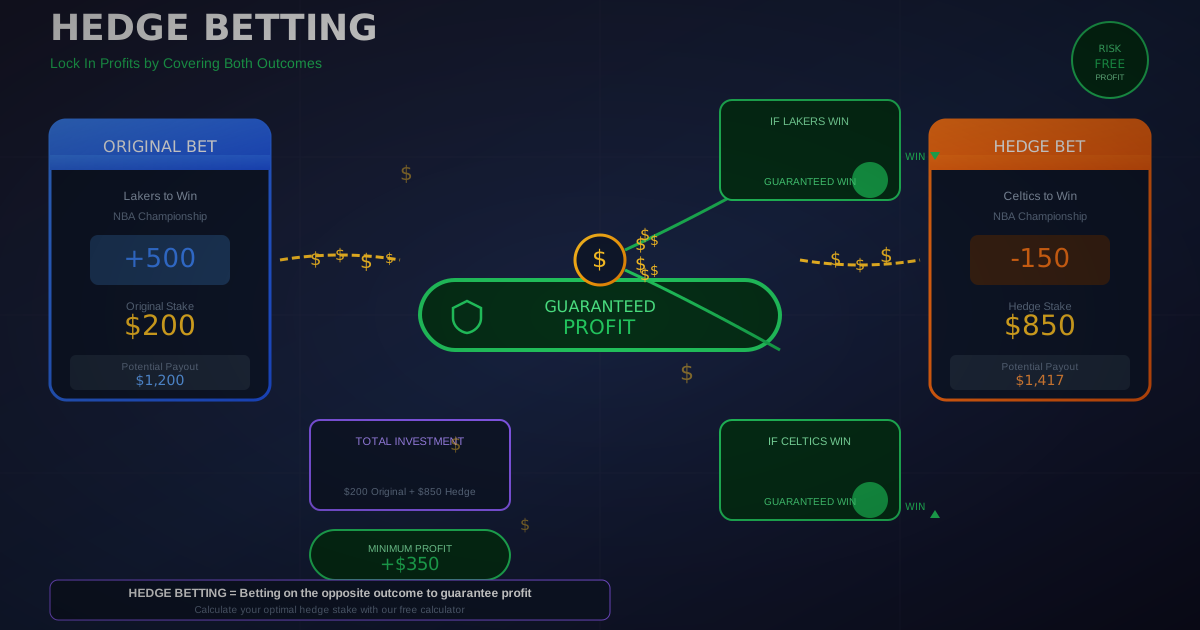
Calculate hedge and middle positions with our Hedge Calculator.
Advanced +EV Concepts
Vig-Free Probability Extraction
To compare your estimates to the market fairly, you need to remove the vig from sportsbook lines. The standard method is the multiplicative method.
Example: A game is priced at -150/+130.
- Favorite implied: 150/250 = 60%
- Underdog implied: 100/230 = 43.48%
- Total: 103.48% (the 3.48% is the vig)
Vig-free probabilities:
- Favorite: 60% / 103.48% = 57.98%
- Underdog: 43.48% / 103.48% = 42.02%
These vig-free numbers represent the market's true estimate. If your model says the favorite wins 63% of the time, your edge is 63% - 57.98% = 5.02%.
Correlating Bets for Enhanced Edge
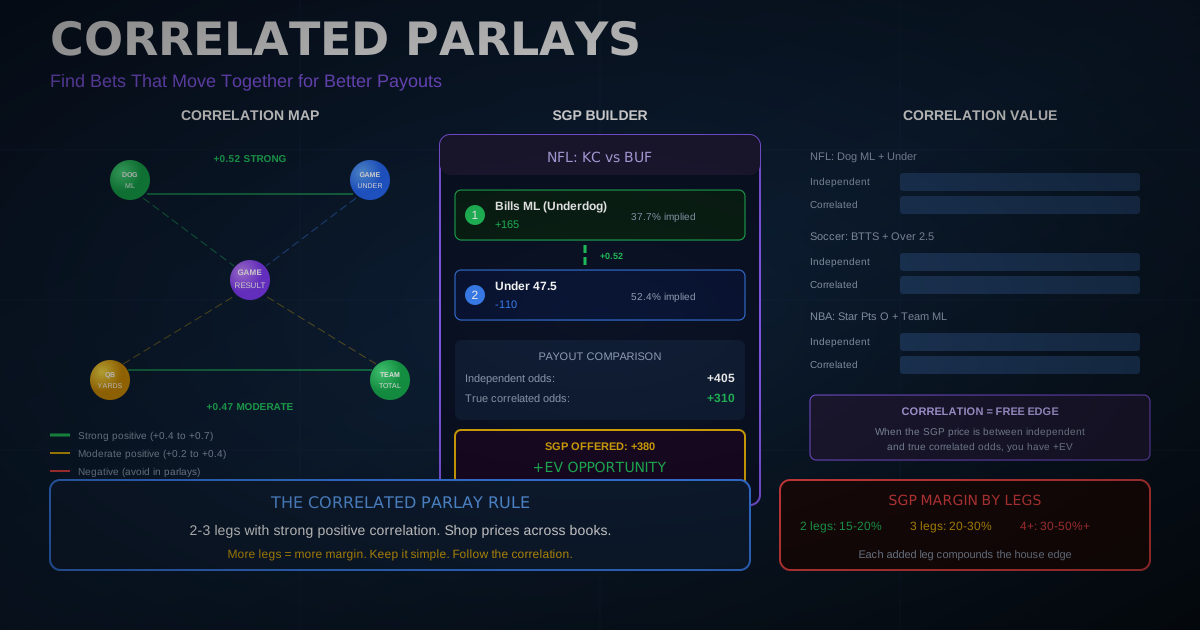
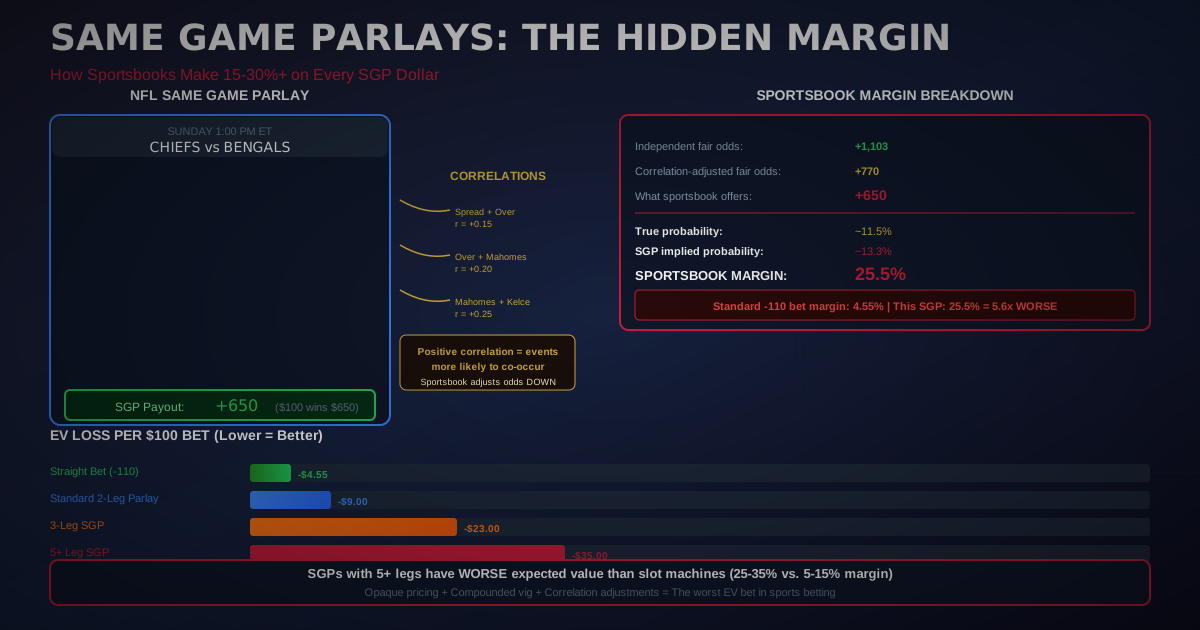
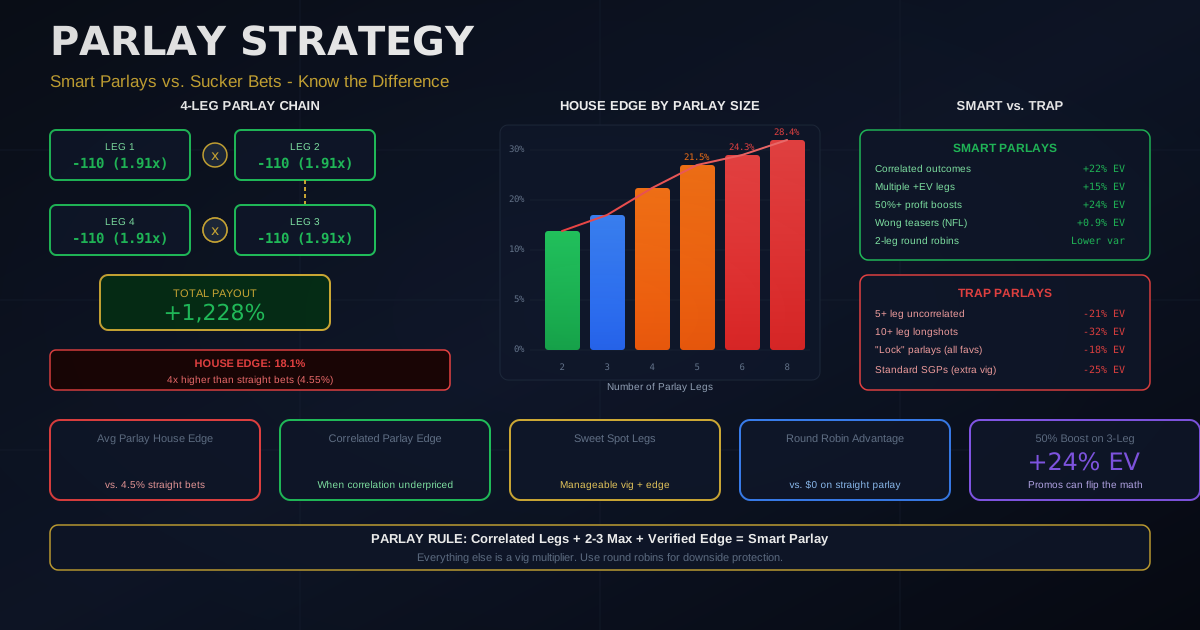
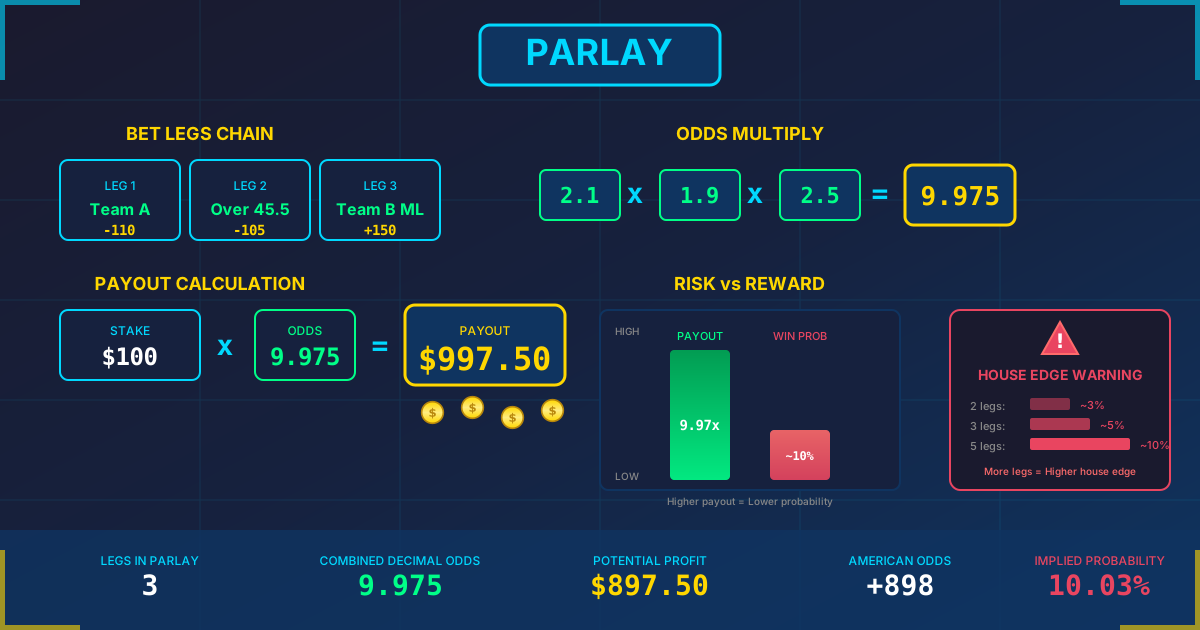
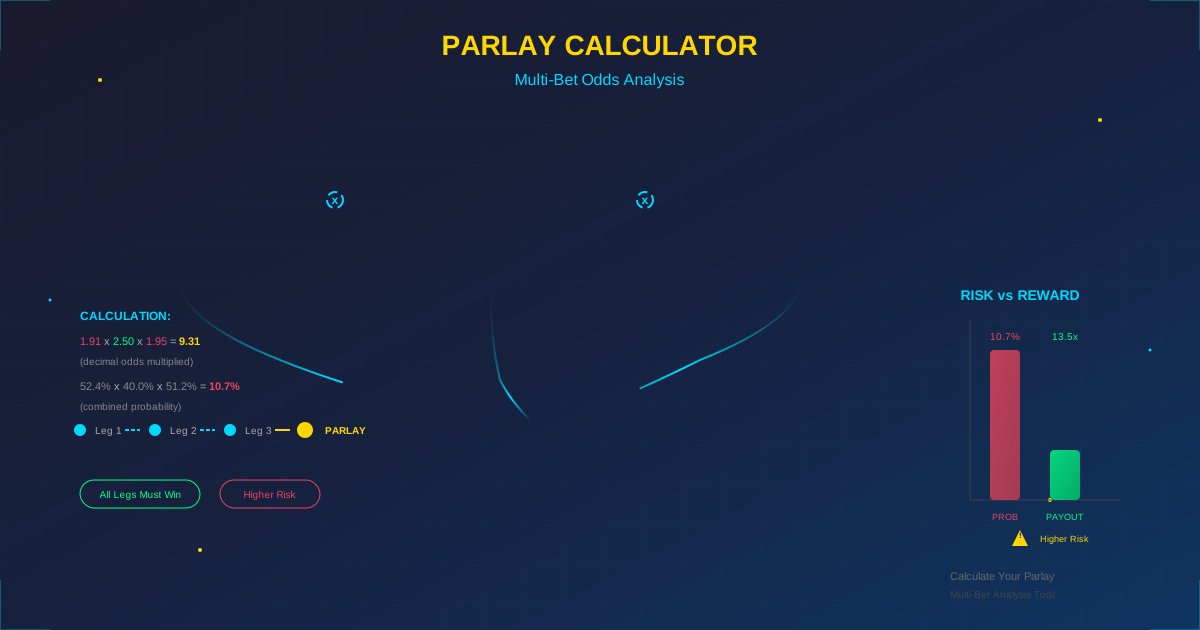
When two outcomes are positively correlated, parlaying them can be +EV even when each individual leg is only marginally +EV. The key is that the sportsbook prices the parlay as if the events are independent when they are not.
Example: You bet a football team to win AND the game to go over the total. If the team wins, it often means they scored a lot, which correlates with the over. A 2-leg correlated parlay where each leg has +2% EV might offer +6-8% EV as a parlay because the joint probability is higher than the product of individual probabilities.
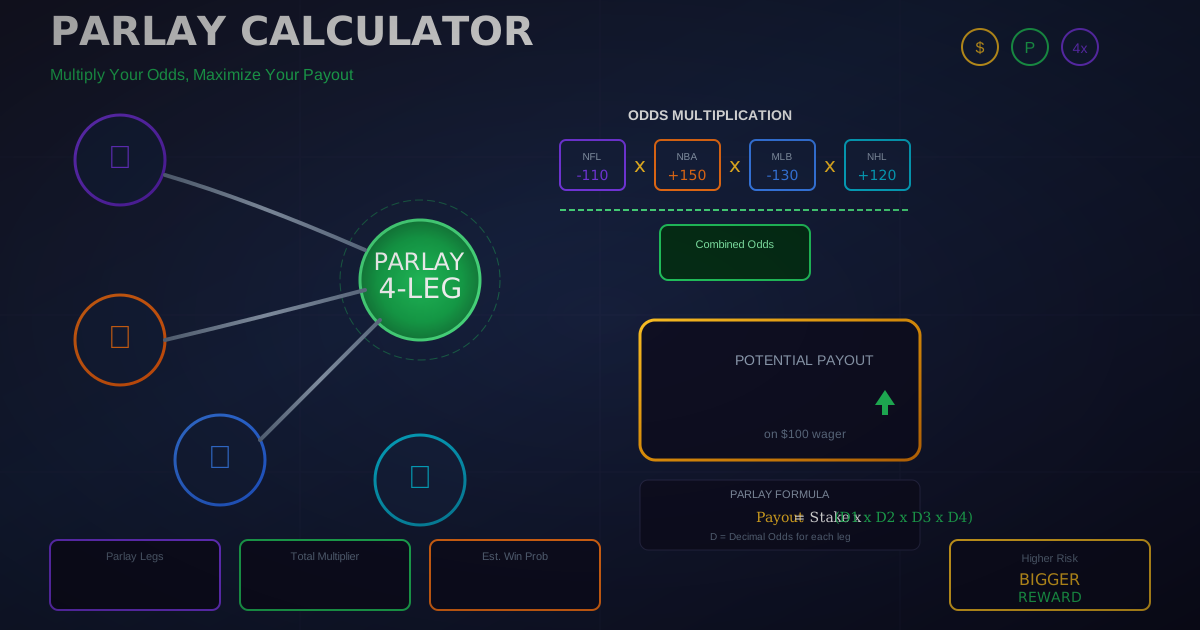
Calculate parlay payouts and EV with our Parlay Calculator.
The Concept of Market Efficiency Over Time
Sports betting markets become more efficient as game time approaches. This creates a time-value framework:
| Time to Event | Market Efficiency | Typical Edge Available |
|---|---|---|
| 7+ days out | Low-moderate | 3-8% (opener lines) |
| 3-7 days | Moderate | 2-5% (post-opener adjustment) |
| 1-3 days | High | 1-3% (steam moves) |
| 1-6 hours | Very high | 0.5-2% (late sharp money) |
| At close | Near-efficient | ~0% (fully priced) |
The most profitable bets are placed early when the market has had the least time to incorporate all information.
Building Your +EV System: A Daily Workflow
Morning Routine (15-30 minutes)
- Check overnight line movements across 5+ sportsbooks
- Compare current lines to your model's projections (or sharp consensus)
- Identify any lines that have moved significantly at sharp books but not yet at soft books
- Flag 3-5 candidate bets for deeper analysis
Analysis Phase (30-60 minutes)
- For each candidate, calculate EV using your probability estimate
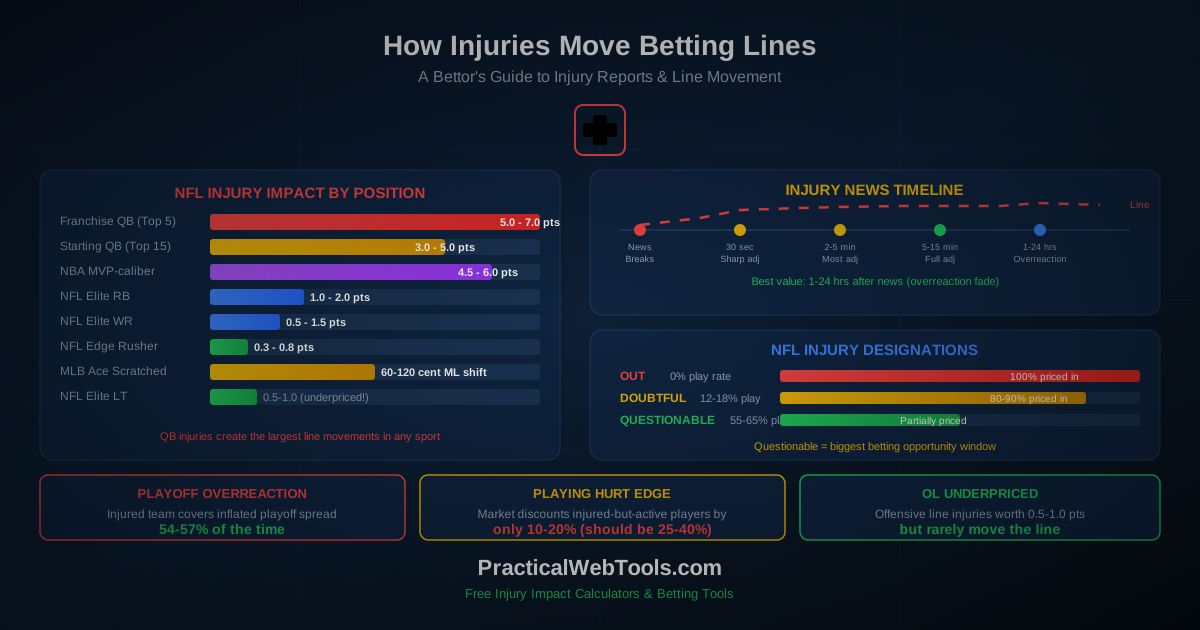
- Check injury reports, weather, and any news that could affect the line
- Determine bet size using fractional Kelly (25-50% of full Kelly)
- Set a minimum EV threshold (most pros require +3% minimum)
Execution (5-10 minutes)
- Place bets at the best available odds across your sportsbook accounts
- Record every bet: sport, event, odds obtained, stake, model probability, book
- Note the current sharp line for later CLV comparison
Post-Game Review (Weekly)
- Calculate CLV for every bet placed that week
- Track overall ROI and unit profit
- Analyze which sports, bet types, and timing generate the most CLV
- Adjust model weights or approach based on findings
Frequently Asked Questions
What is positive expected value (+EV) in sports betting? Positive expected value means a bet's estimated true probability of winning is higher than the implied probability from the odds. Over many bets, +EV wagers produce profit mathematically. Use our Expected Value Calculator to determine whether any bet is +EV before placing it.
How much money can you make with +EV betting? Realistic returns for disciplined +EV bettors range from 2-8% ROI on total amount wagered. On $100,000 wagered annually, that is $2,000-$8,000 in profit. Professionals who wager millions can earn six figures. Returns depend on edge size, volume, and bet sizing discipline.
How do I know if my probability estimates are accurate? Track Closing Line Value (CLV). If you consistently get better odds than the closing line, your estimates are extracting value. Our CLV Tracker lets you monitor this metric over time. A sample of 500+ bets with positive average CLV strongly suggests genuine edge.
Is +EV betting the same as arbitrage betting? No. Arbitrage guarantees profit on a single event by betting both sides across different books. +EV betting accepts risk on individual bets but profits over volume because each bet has positive expectation. Arbitrage is a subset of +EV strategy. Our Arbitrage Calculator helps identify risk-free opportunities.
What bankroll do I need to start +EV betting? A minimum of $2,000-$5,000 is practical. This allows bet sizes of $20-$50 per wager (1% of bankroll) which is enough to overcome vig while managing variance. Smaller bankrolls work but increase risk of ruin and reduce absolute profit.
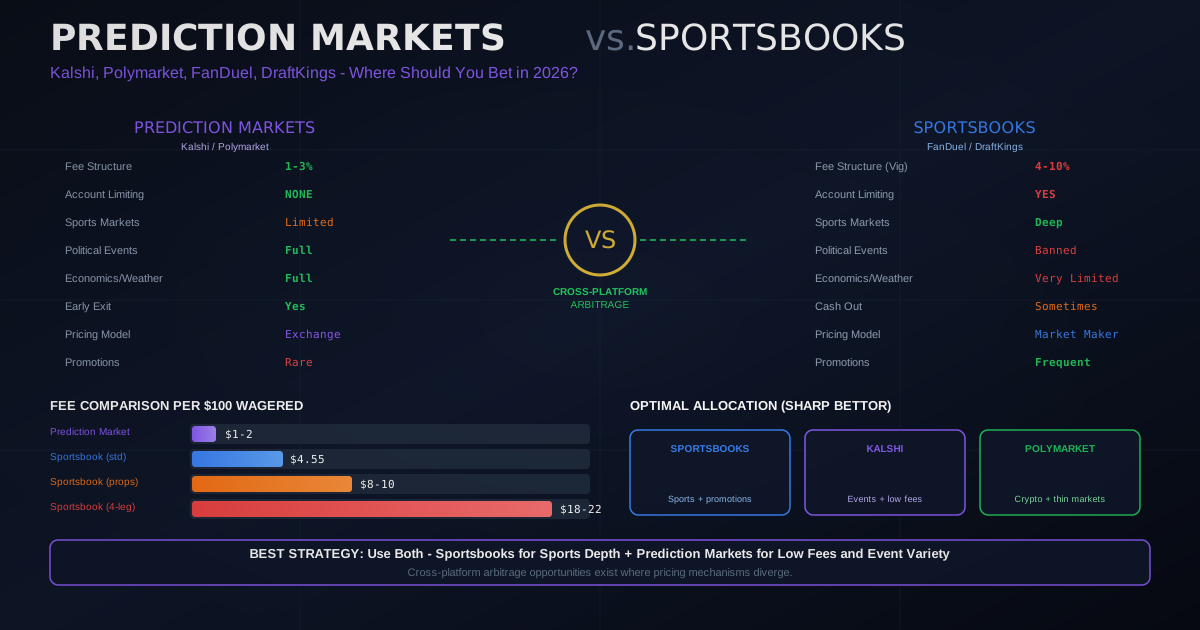
Will sportsbooks limit my account for +EV betting? Yes, eventually. Most recreational-facing sportsbooks limit or ban consistently profitable bettors. Strategies to delay limiting include mixing in recreational-looking bets, rounding bet amounts, and using multiple books. This is the biggest practical challenge in +EV betting.
What sports are best for finding +EV bets? NFL and NBA spreads and totals offer the most liquidity and data. Player props across all sports often have softer lines. College sports have less efficient markets due to the larger number of teams. Tennis and soccer offer opportunities due to global market fragmentation. Use our Implied Probability Calculator across any sport.
How many bets per day should a +EV bettor place? Quality over quantity. Most successful bettors place 2-5 bets per day during peak seasons, focusing only on bets that exceed their minimum EV threshold. Some high-volume bettors using automated tools place 10-20+ daily but require sophisticated infrastructure and many sportsbook accounts.
Essential Tools for +EV Bettors
Building a systematic +EV approach requires the right tools. Here are the essentials:
Core EV and Probability Tools
- Expected Value Calculator: Calculate the EV of any bet using true probability and offered odds
- Implied Probability Calculator: Convert sportsbook odds into implied probabilities for comparison
- Odds Converter: Seamlessly convert between American, decimal, and fractional odds formats
- Hold/Vig Calculator: Determine the sportsbook's edge on any market to extract vig-free probabilities
Bankroll and Sizing Tools
- Kelly Criterion Calculator: Calculate mathematically optimal bet sizes based on your edge
- Bankroll Volatility Tracker: Monitor variance, drawdowns, and risk exposure across your betting portfolio
Value Finding and Verification Tools
- CLV Tracker: Track closing line value across all your bets to verify you are genuinely finding edge
- Arbitrage Calculator: Identify risk-free arbitrage opportunities across sportsbooks
- Hedge Calculator: Calculate optimal hedge amounts when you want to lock in profit
Specialized Betting Tools
- Parlay Calculator: Analyze parlay payouts and determine whether correlated parlays offer +EV
Conclusion: The +EV Mindset
Positive expected value betting is not a get-rich-quick scheme. It is a disciplined process that treats sports betting as a financial activity governed by math. The system is simple in concept: estimate probabilities better than the market price implies, bet proportionally to your edge, verify with CLV, and repeat.
The hard part is execution. It requires patience during losing streaks, discipline to pass on bets that do not meet your threshold, and the humility to update your models when they are wrong.
Start small. Track everything. Trust the math. Over 1,000+ bets, positive expected value is not a theory. It is an inevitability.
Begin building your +EV system today with our Expected Value Calculator. Verify your edge with our CLV Tracker. And size your bets optimally with our Kelly Criterion Calculator.
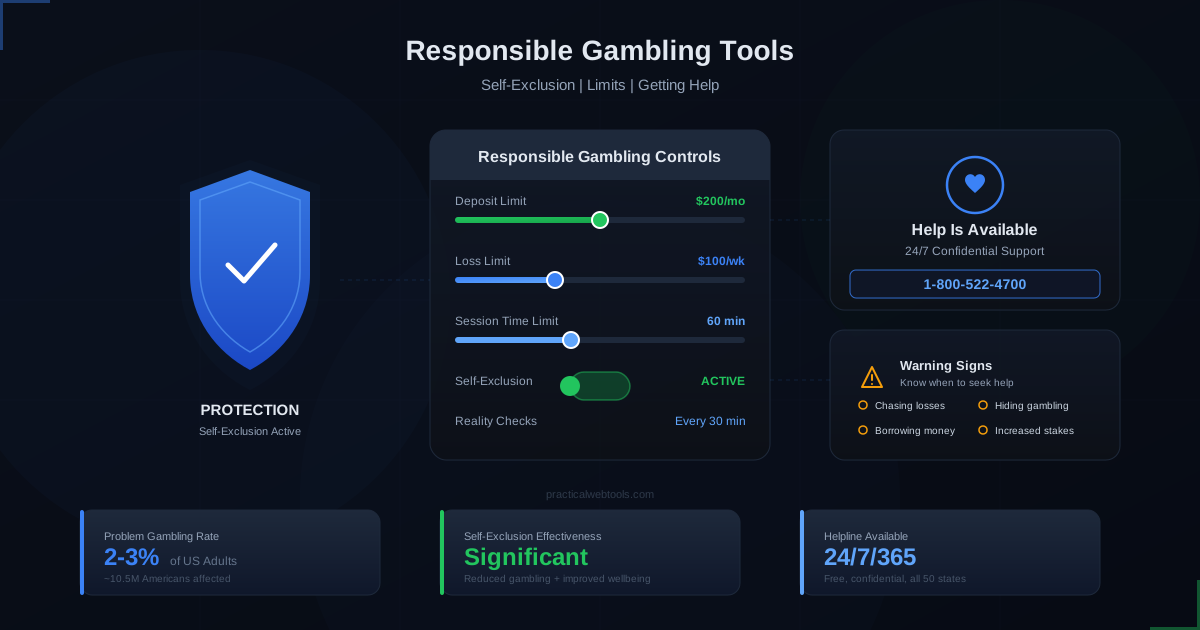
Gambling involves risk. This content is for educational and informational purposes only. Always gamble responsibly, set limits you can afford, and seek help if gambling becomes a problem. Visit the National Council on Problem Gambling or call 1-800-522-4700 for support.