Underage Gambling Prevention: A Parent's Guide to Protecting Kids Online (2026)
An estimated 1 in 8 teenagers in the United States has gambled for money in the past year, and that number is rising. A 2024 study by the International Centre for Youth Gambling Problems found that adolescents who gamble are 2-4 times more likely to develop a gambling disorder than adults who start gambling later in life. The teenage brain is uniquely vulnerable to gambling's reward mechanisms because the prefrontal cortex, responsible for impulse control and risk assessment, does not fully develop until age 25.
This guide is a public health education resource for parents. You will learn exactly how teenagers access gambling despite age restrictions, what the warning signs of youth gambling problems look like, how to set up effective parental controls, how to have honest conversations about gambling risk, and where to find professional help if needed. The goal is not to create fear but to provide the knowledge you need to protect your children.
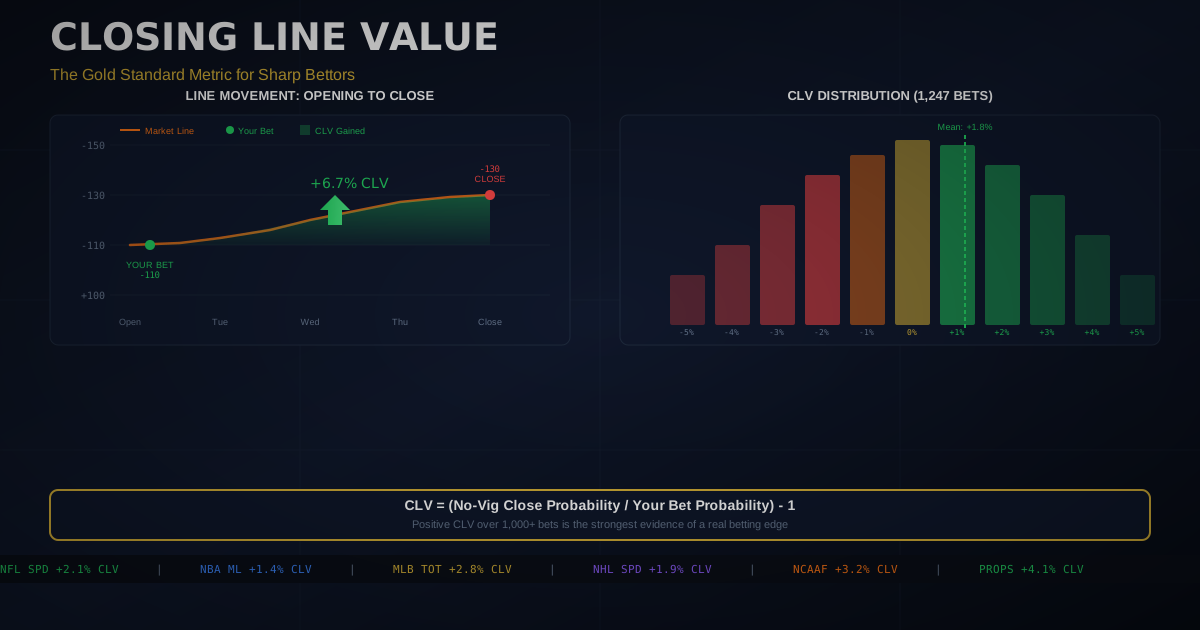
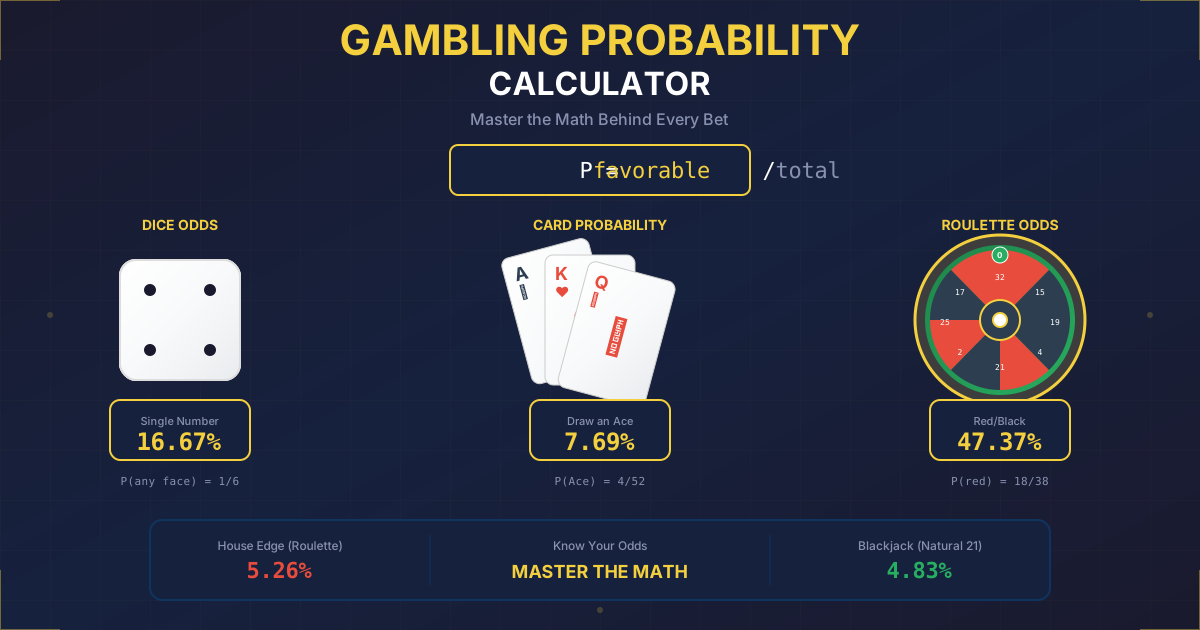
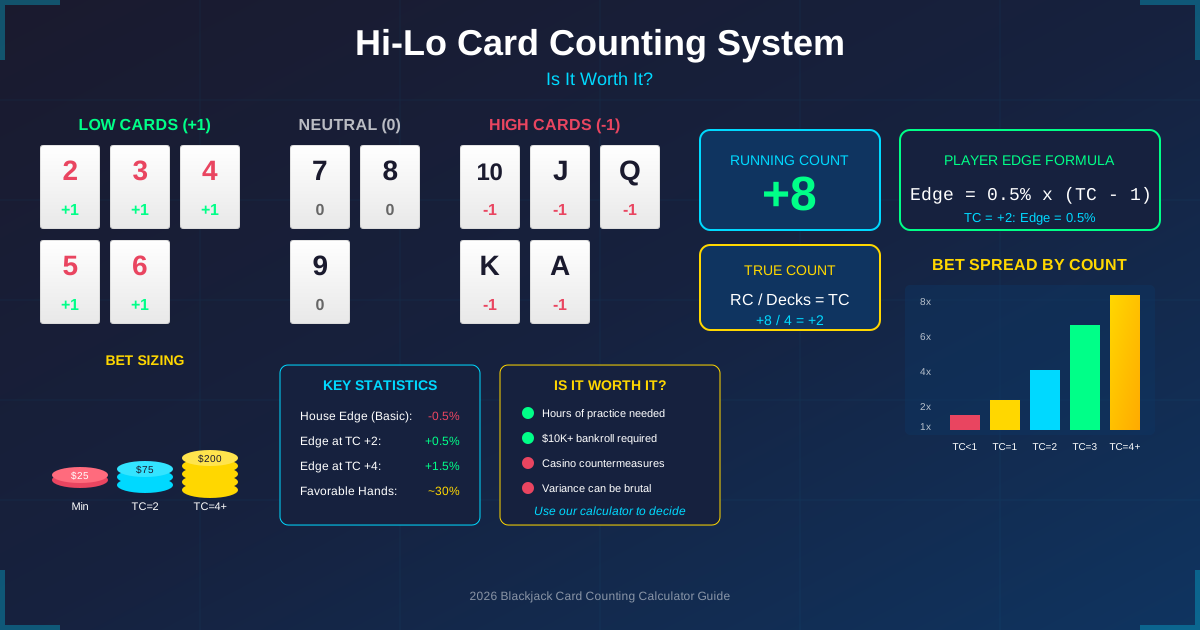
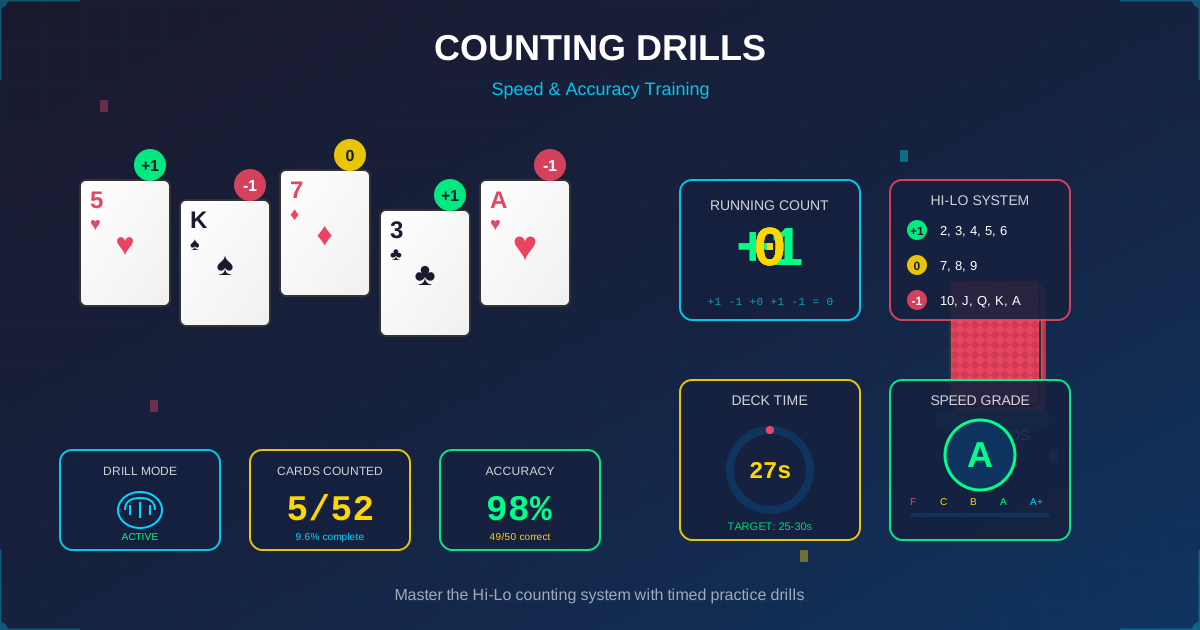
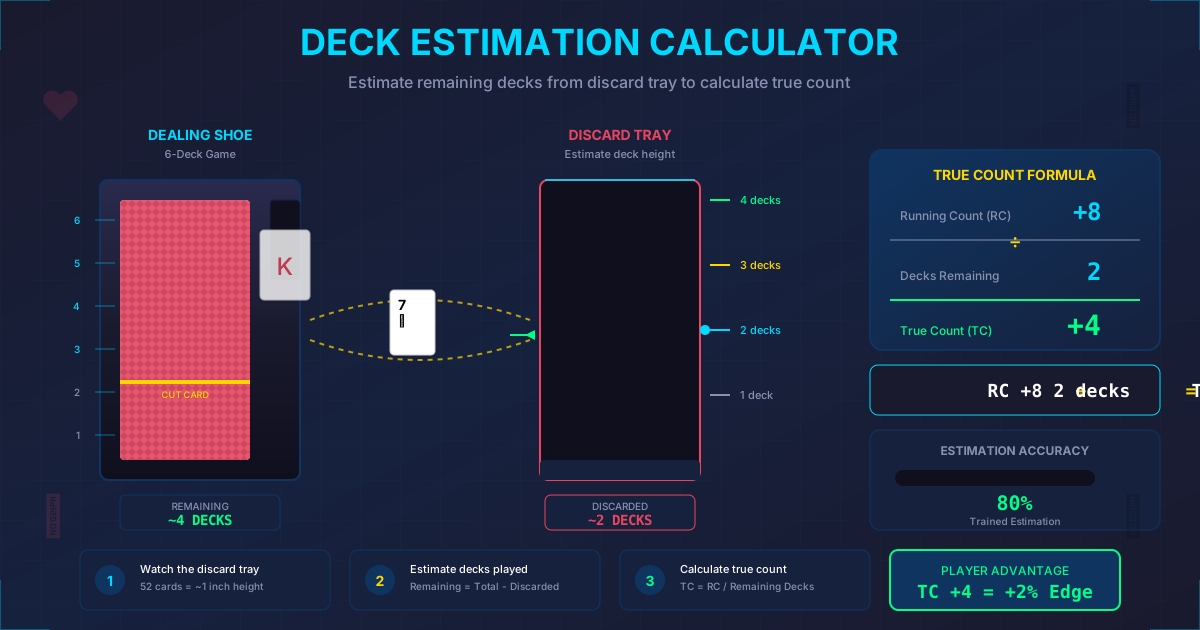
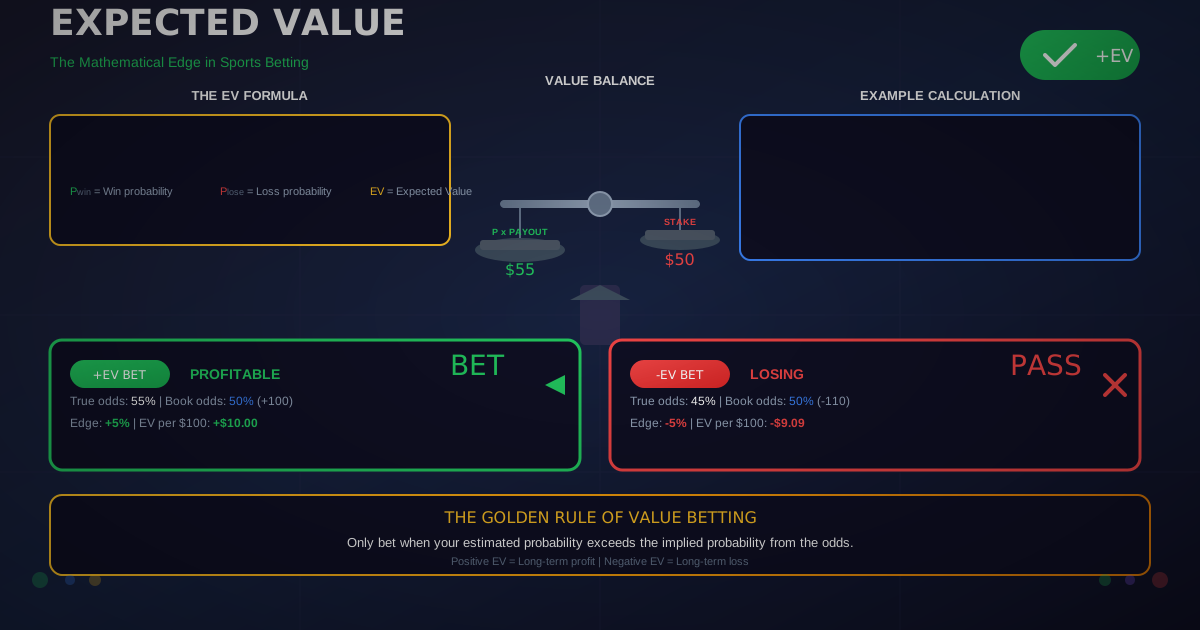
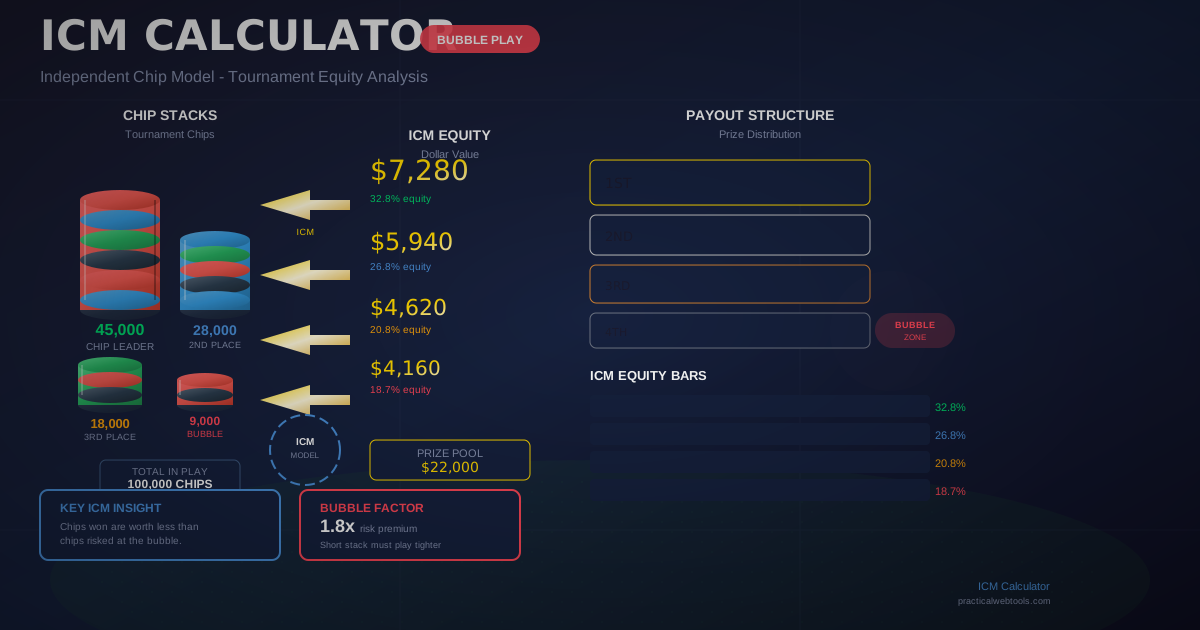
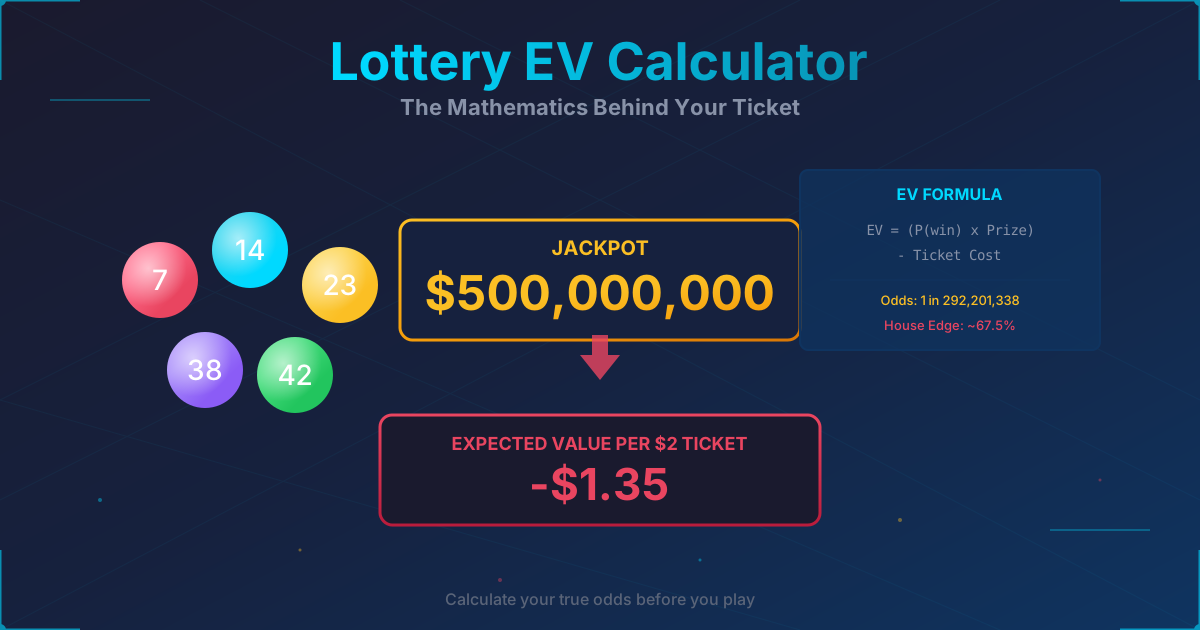
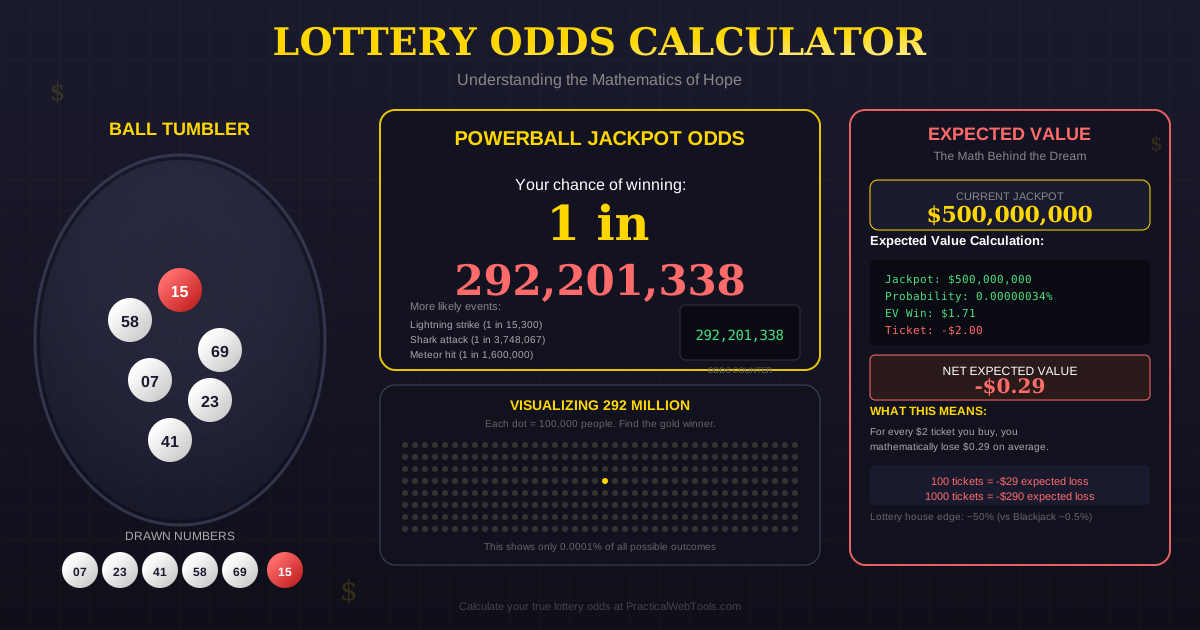
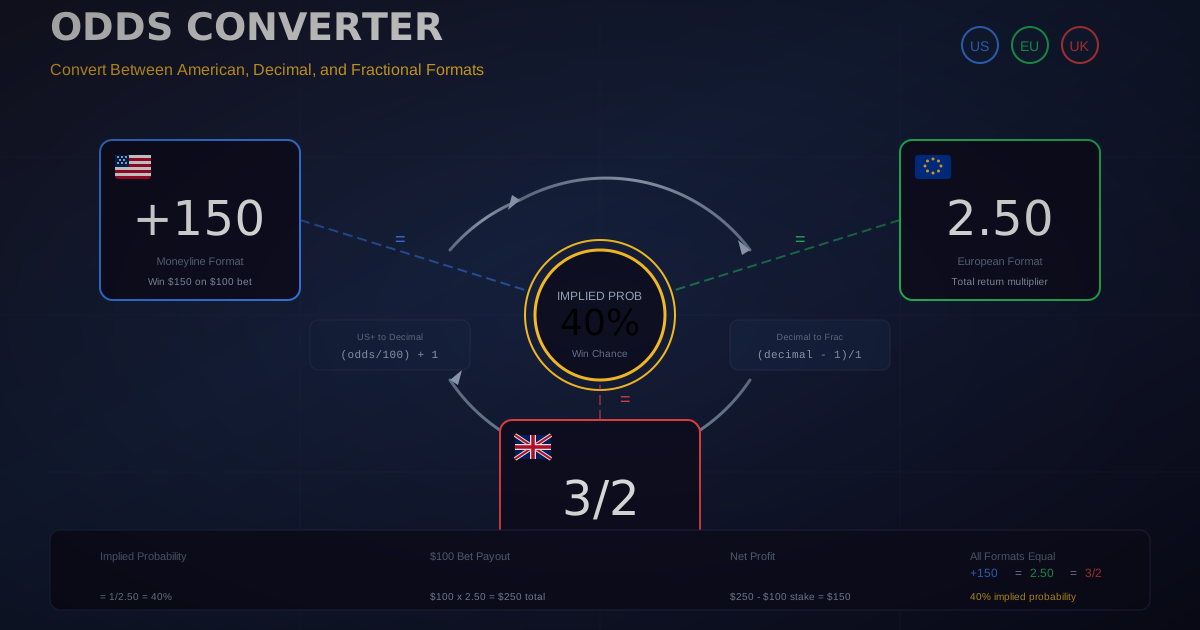
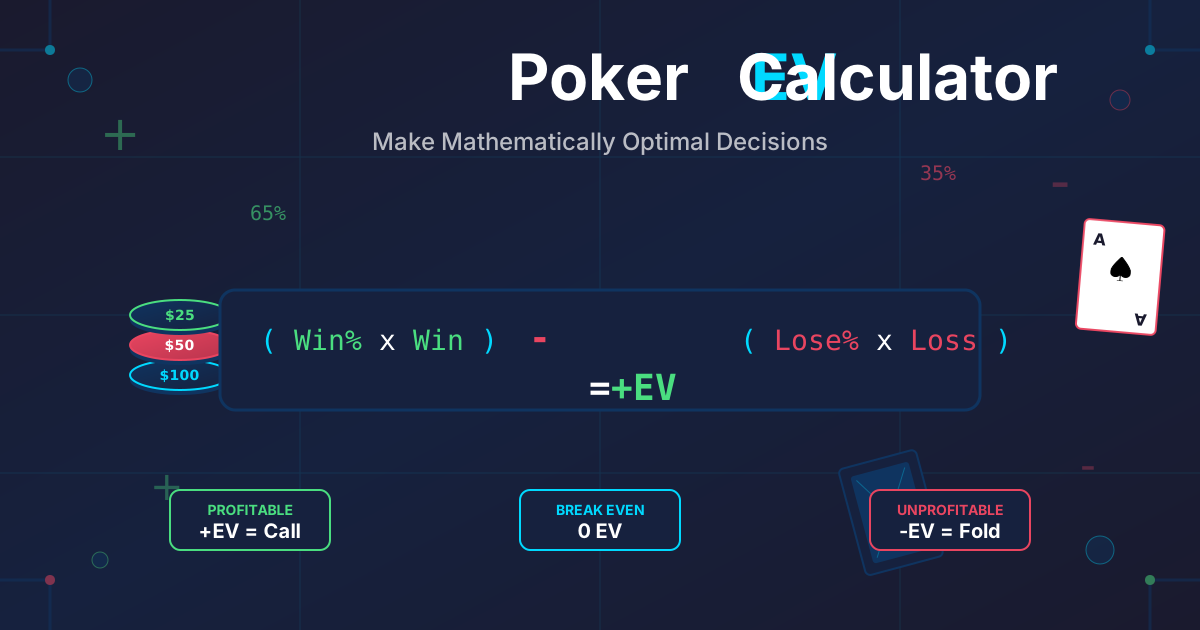
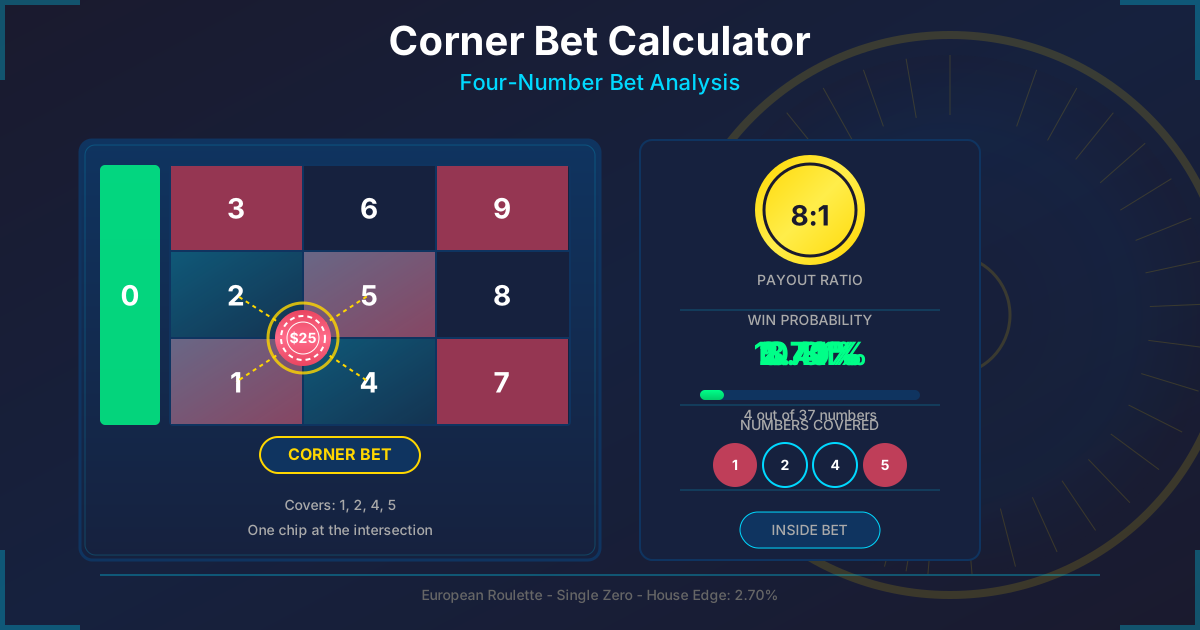
Understanding the mathematics behind gambling is one of the best tools for educating teens. Explore our free Odds Converter and Expected Value Calculator to teach the math that every young person should know before encountering gambling.
How Big Is the Youth Gambling Problem in 2026?
Youth gambling is a growing public health concern that affects an estimated 60-80% of teenagers in some form, whether through formal gambling, social betting, loot box purchases, or skin gambling. Research consistently shows that earlier exposure to gambling activities correlates with higher rates of problem gambling in adulthood.
Youth Gambling Statistics
| Statistic | Finding | Source/Year |
|---|---|---|
| Teens who have gambled for money (past year) | 12-15% of 12-17 year olds | NCPG, 2024 |
| Teens who have engaged in gambling-like activities (loot boxes, social casinos) | 40-60% of 13-17 year olds | Gambling Commission UK, 2024 |
| Age of first gambling experience (average) | 12 years old | ICYGP, 2023 |
| Teen problem gambling rate | 4-8% of teen gamblers | Multiple meta-analyses |
| Adult problem gambling rate (comparison) | 1-3% of adult gamblers | APA, 2024 |
| Increased risk of adult gambling disorder from teen gambling | 2-4x higher risk | Derevensky et al., 2023 |
| Boys vs. girls gambling participation | Boys 2-3x more likely | Multiple studies |
| Teens who hide gambling from parents | 70-80% | ICYGP, 2024 |
Why Teenagers Are More Vulnerable
The adolescent brain is biologically predisposed to risk-taking behavior. During teenage years:
- Dopamine sensitivity peaks. Teens experience stronger reward responses than adults, making gambling's intermittent reinforcement especially powerful.
- Risk assessment is underdeveloped. The prefrontal cortex, which manages impulse control and consequence evaluation, does not mature until the mid-20s.
- Peer influence is at its strongest. Social belonging drives behavior more powerfully during adolescence than at any other life stage.
- The illusion of control is stronger. Teens are more likely to believe they can influence random outcomes through skill or strategy.
- Financial consequences feel abstract. Without bills, mortgages, or financial responsibilities, money lost to gambling does not feel "real."
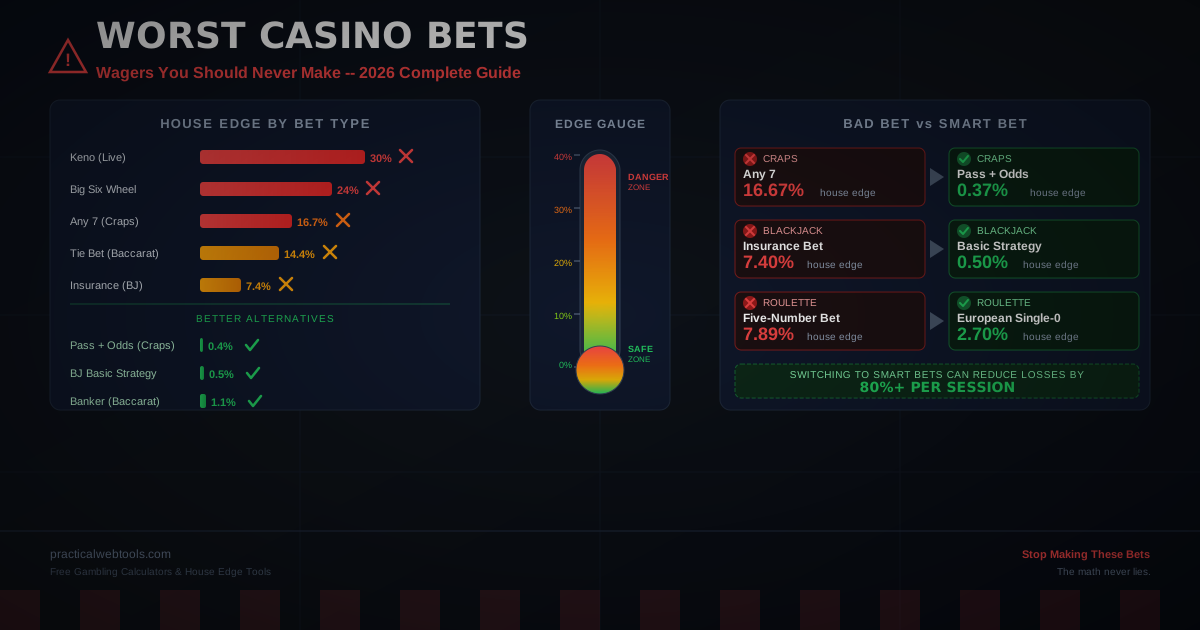
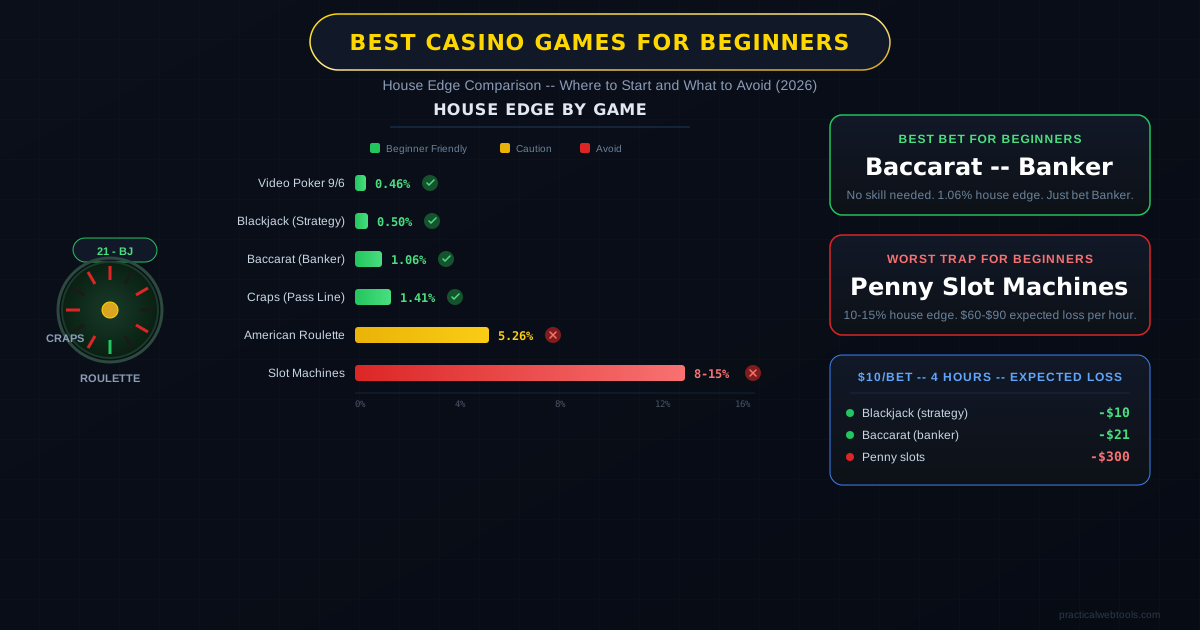
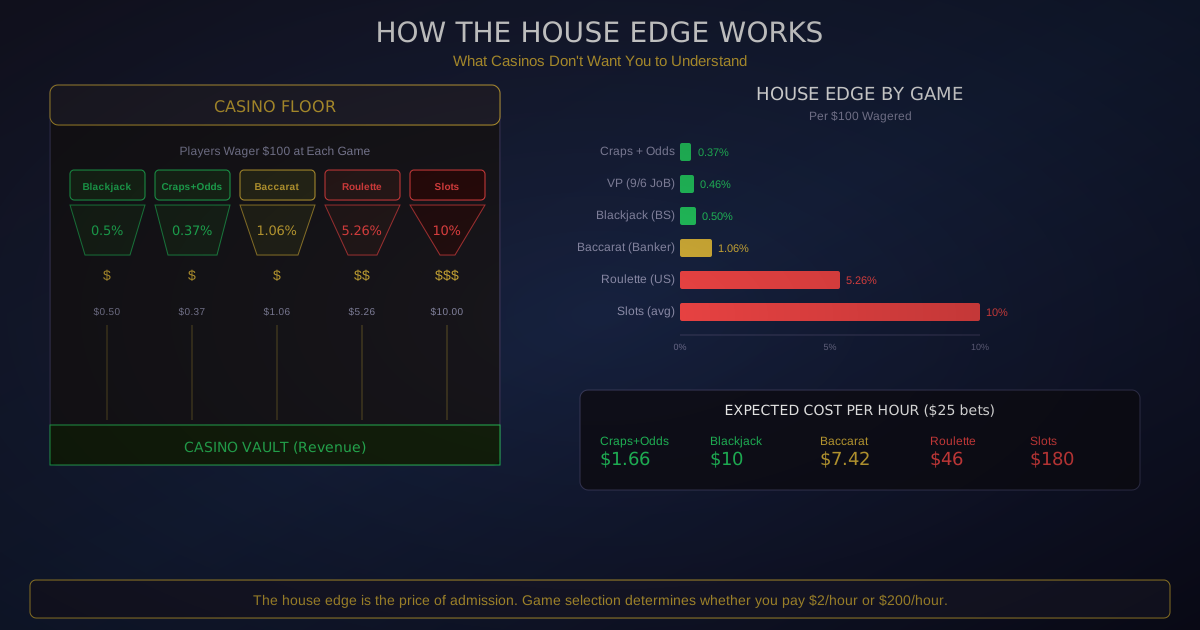
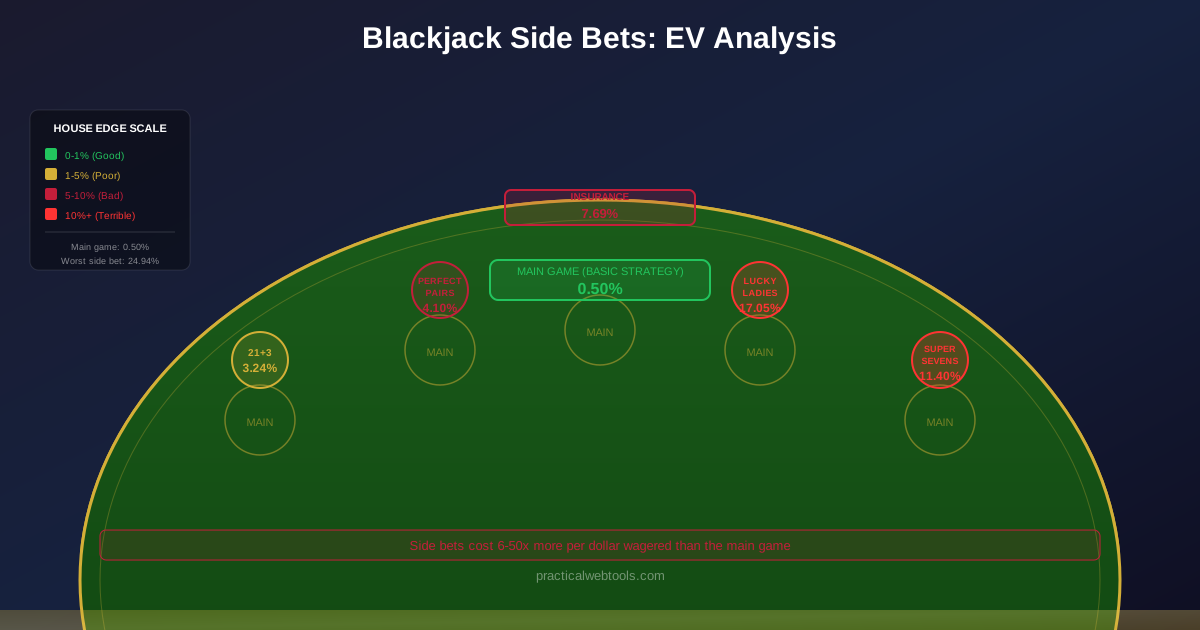
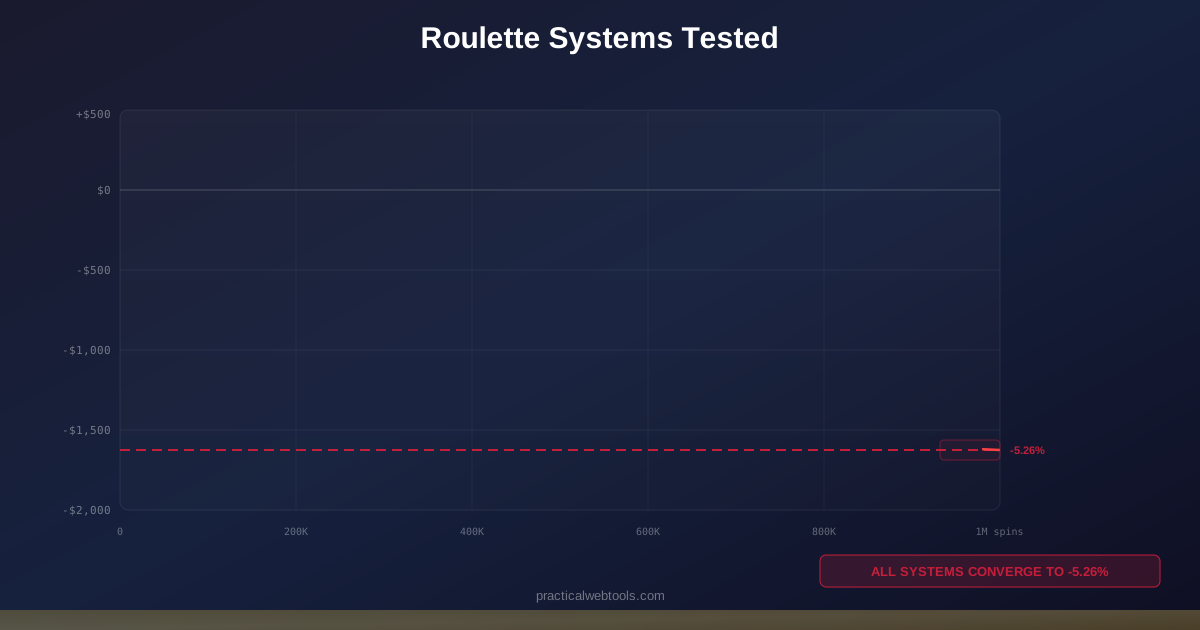
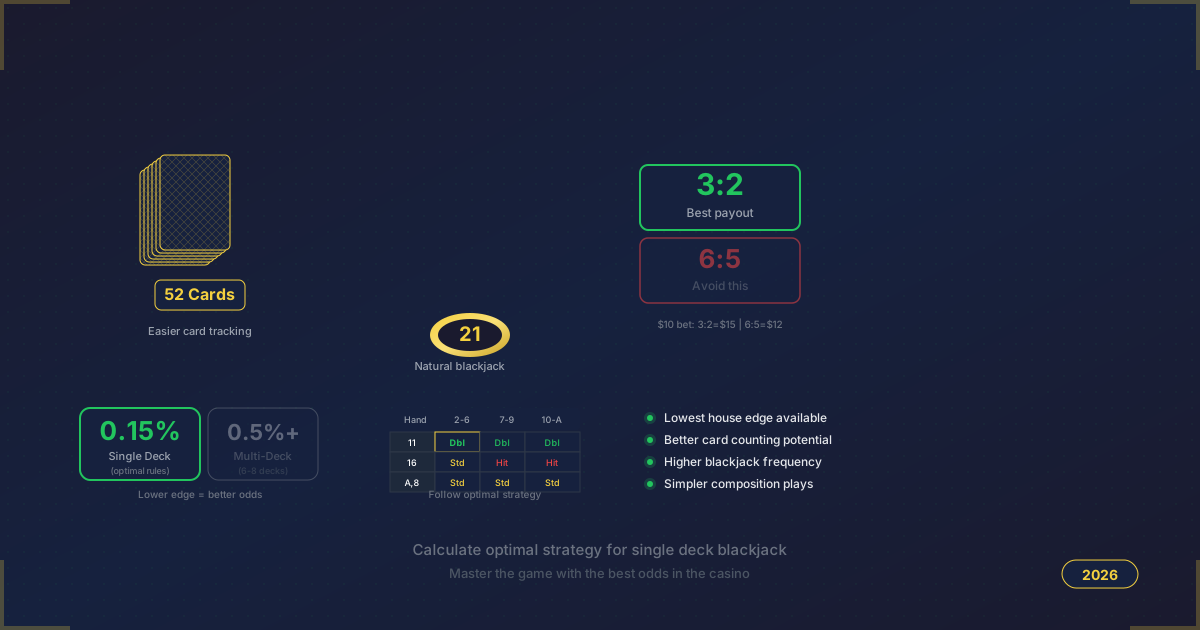
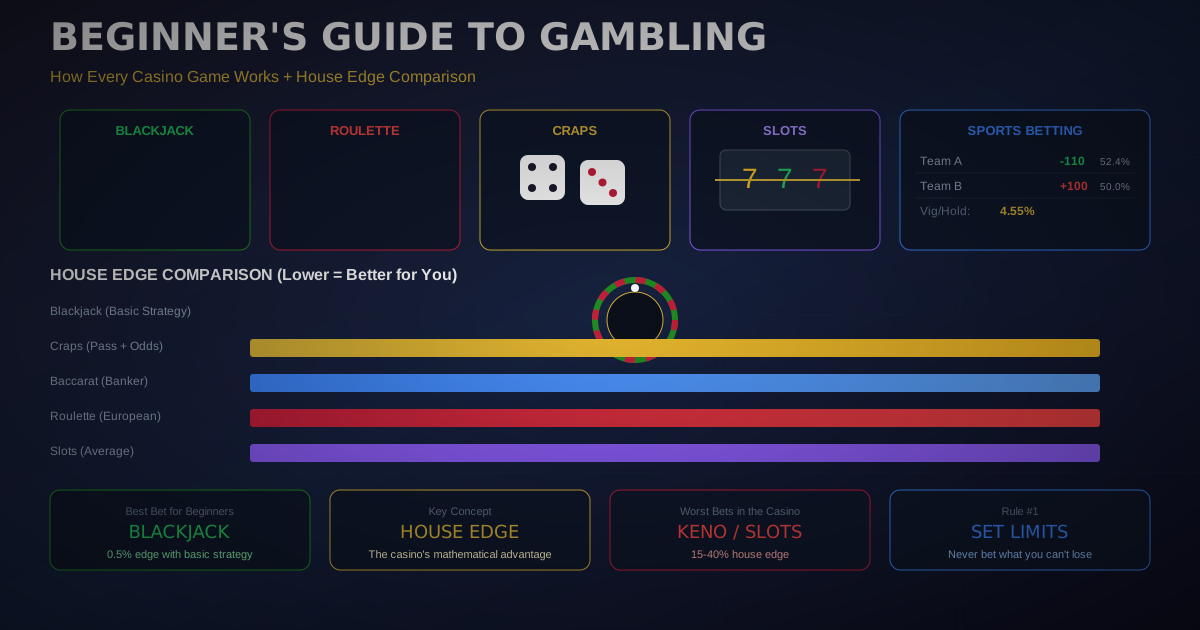
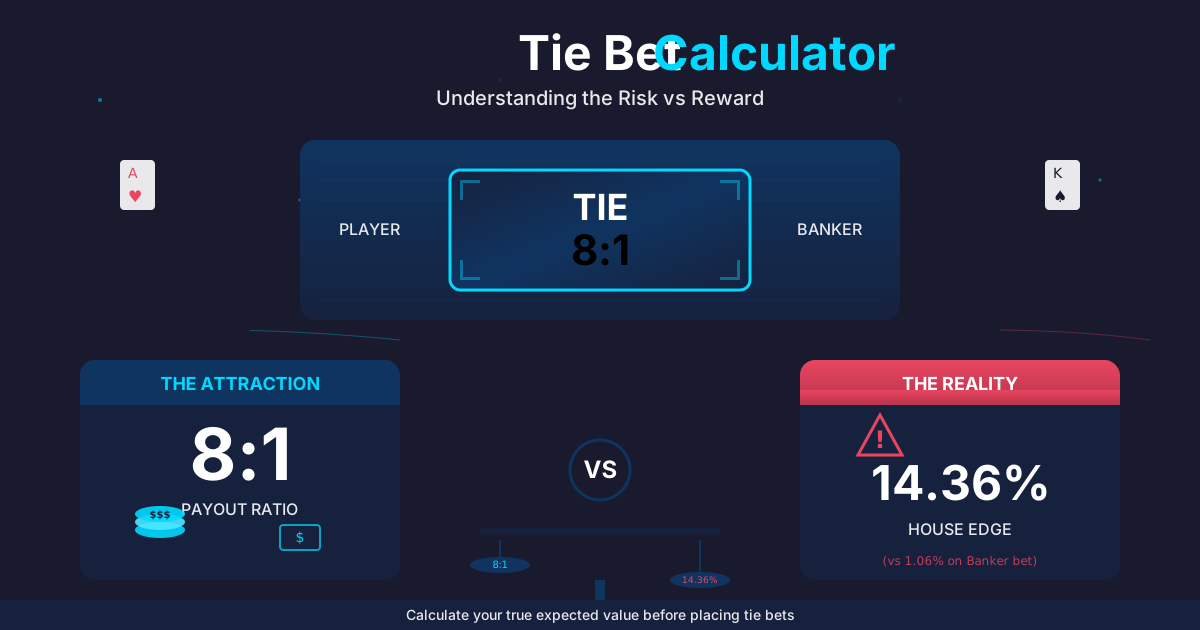
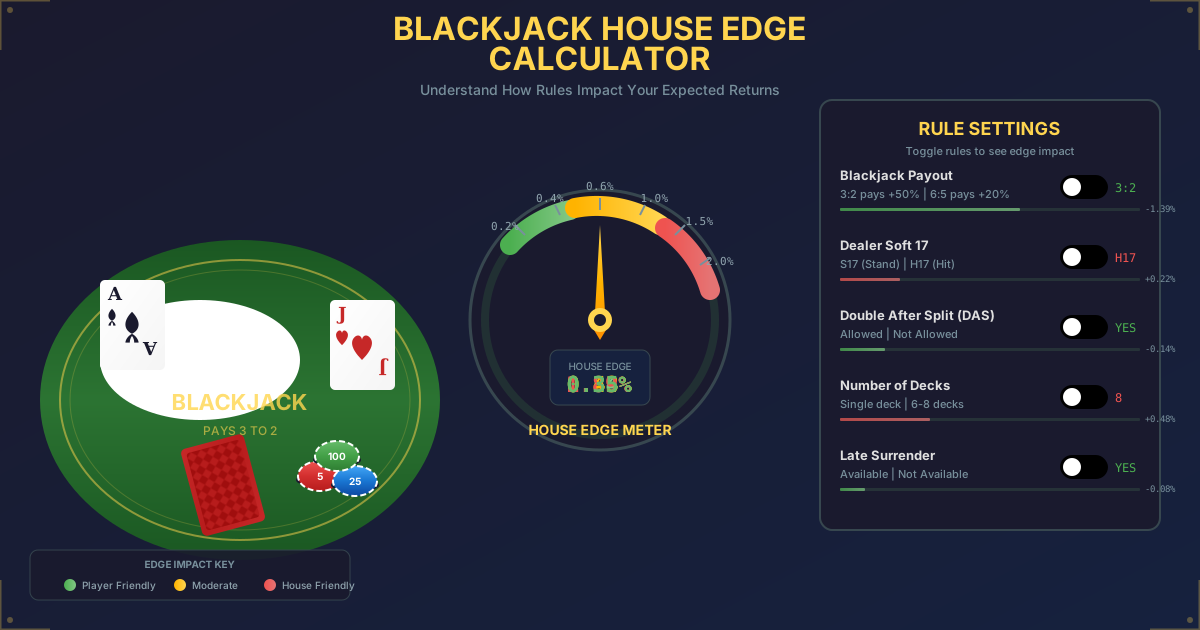
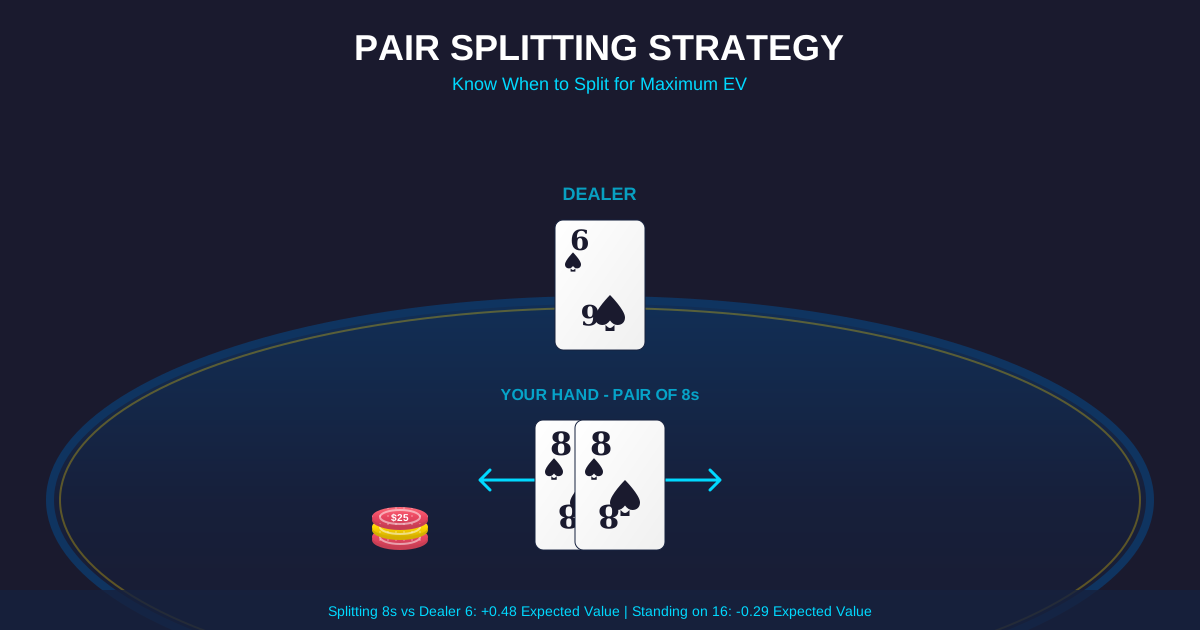
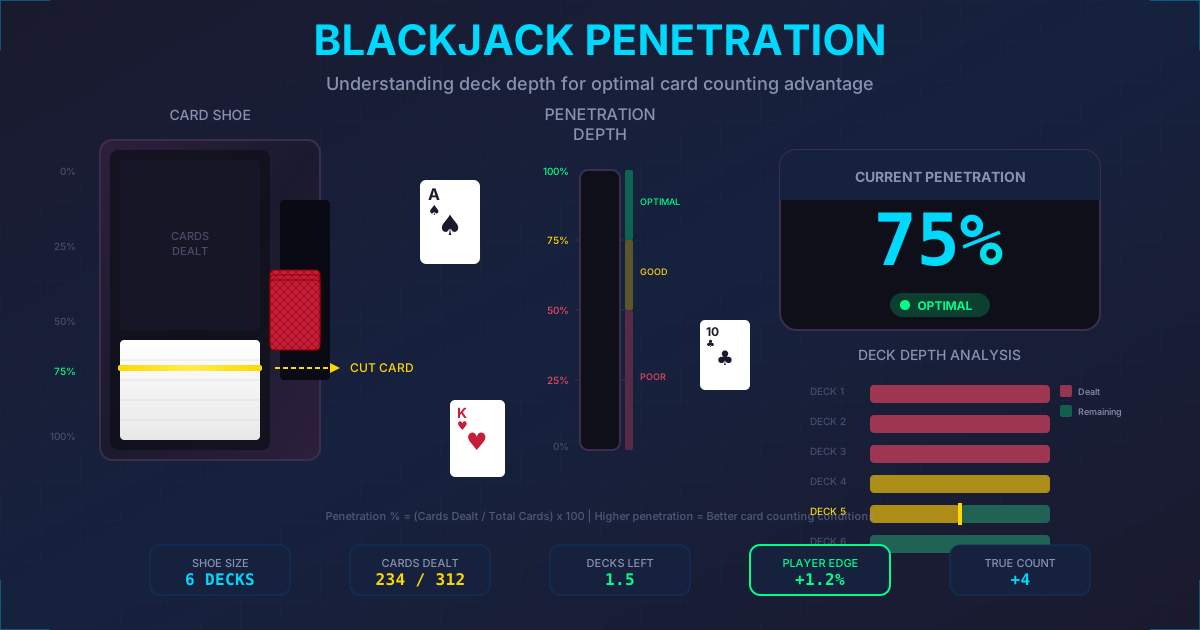
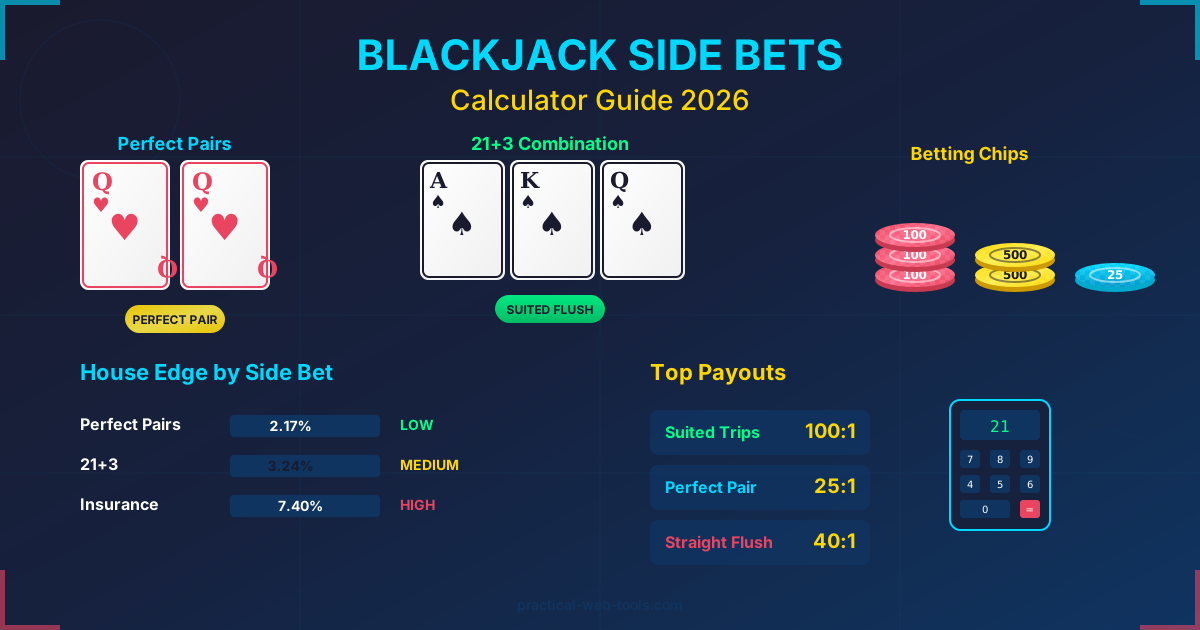
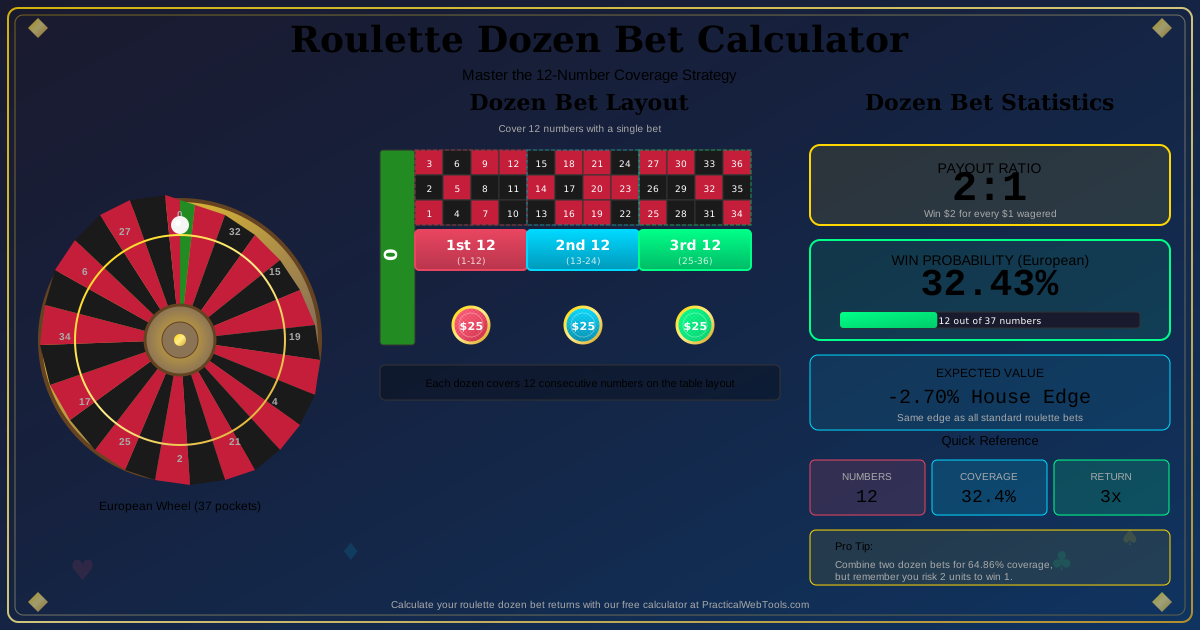
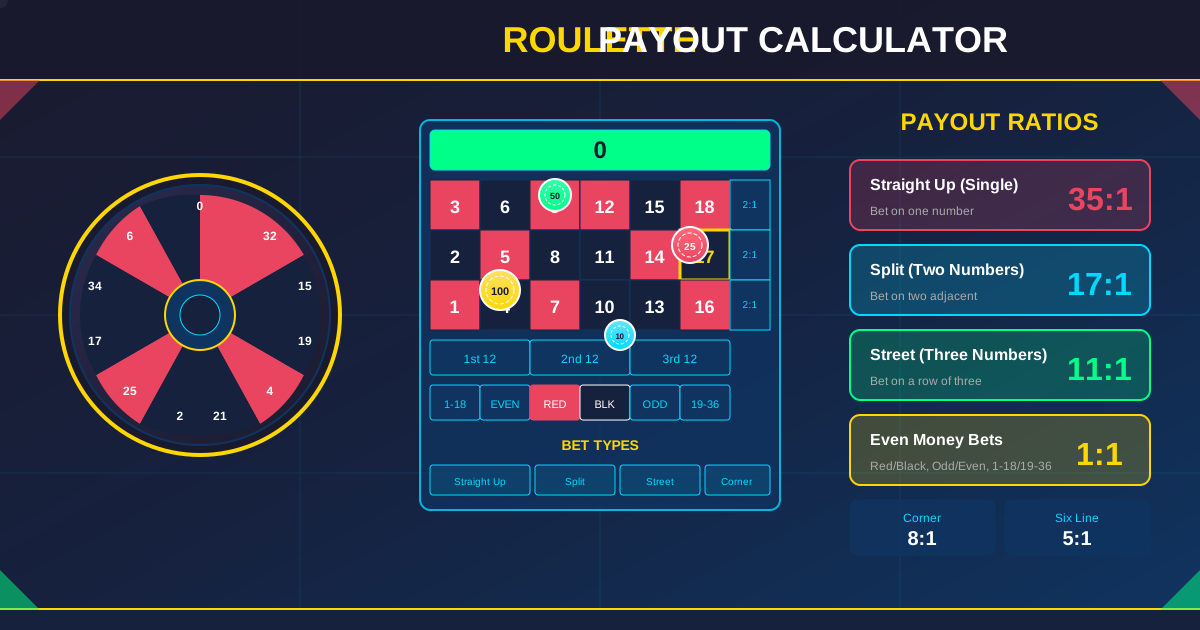
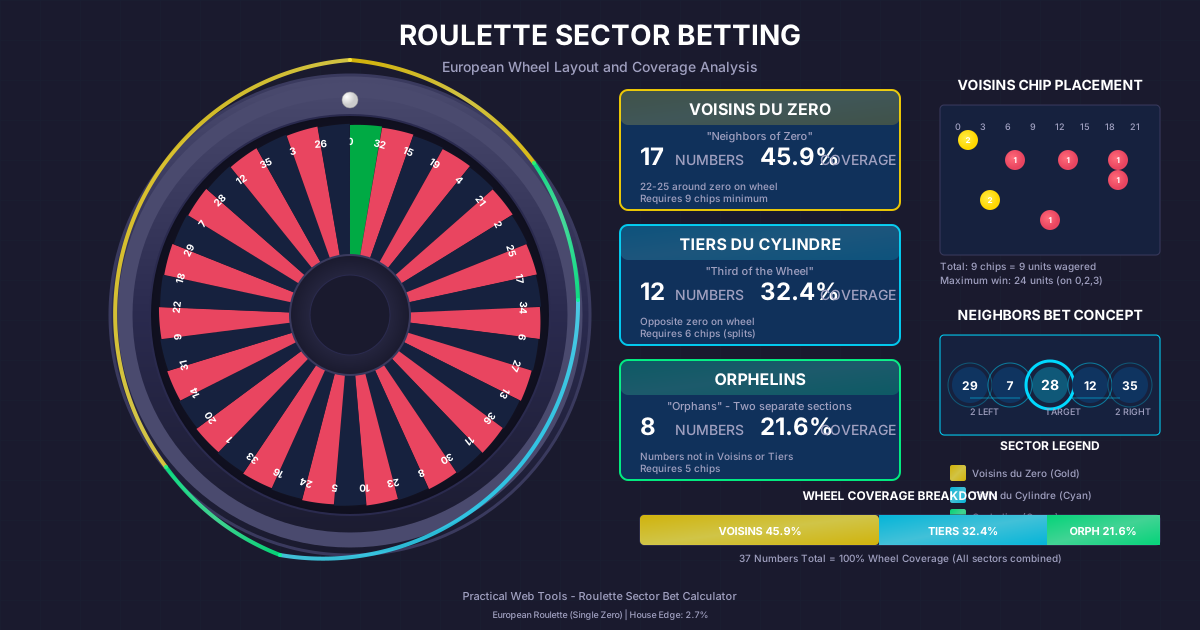
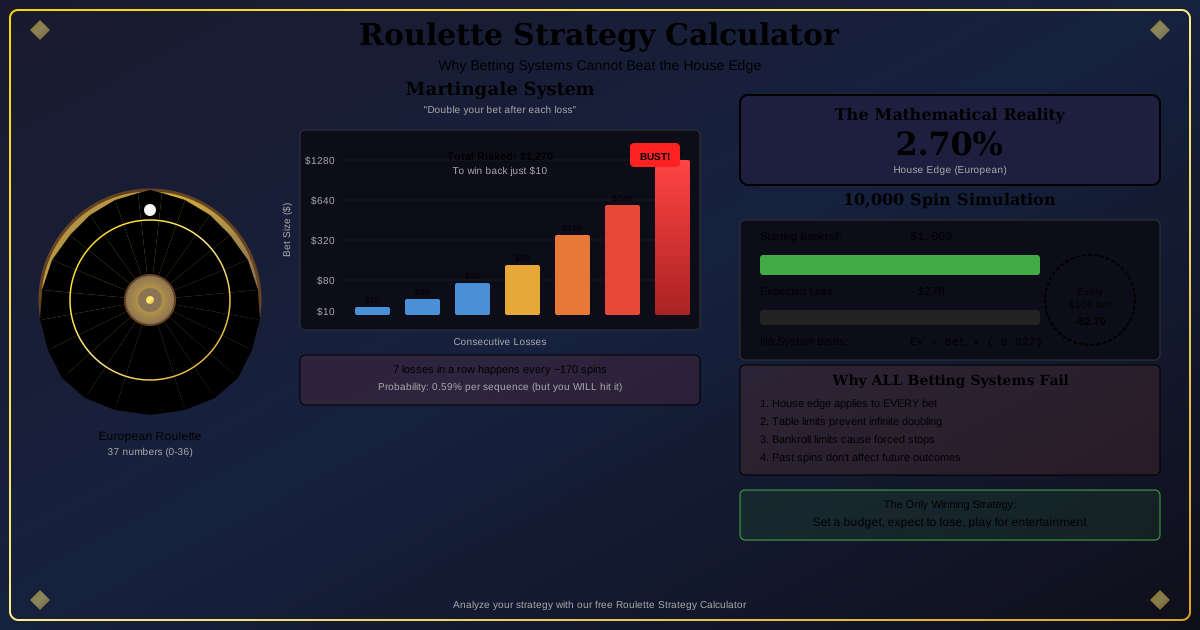
Teaching teens the mathematics of gambling is one of the most effective prevention strategies. Show them how house edge works using our Blackjack House Edge Calculator and Roulette House Edge Calculator.
How Do Teenagers Access Online Gambling?
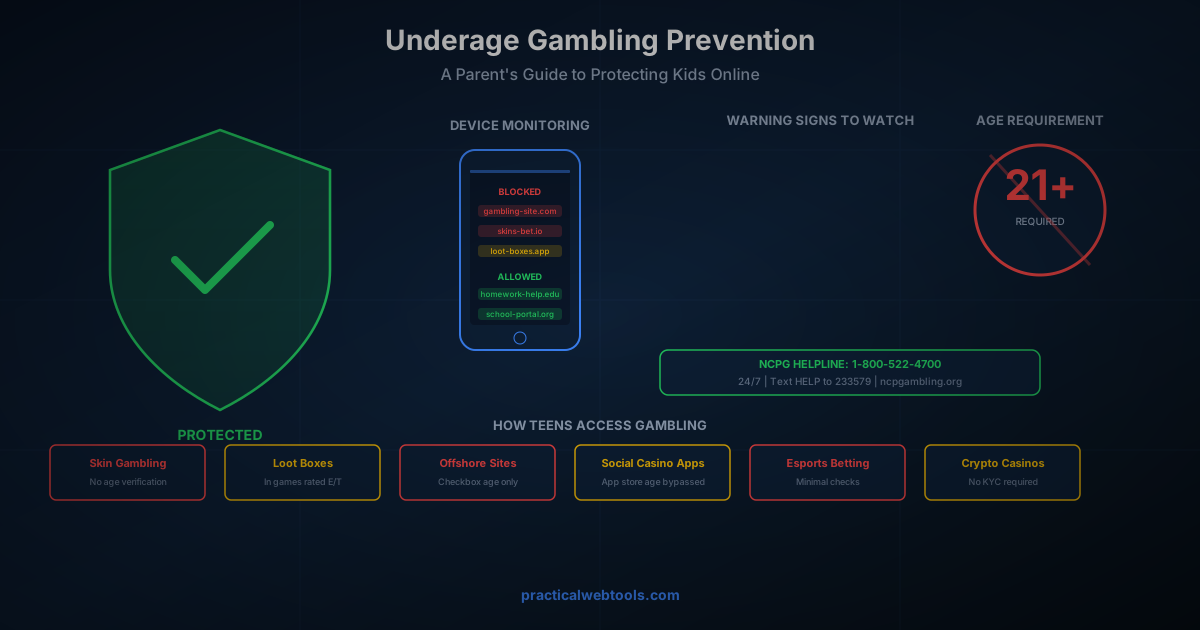
Teens access gambling through a surprising variety of channels, many of which parents do not recognize as gambling. The pathways include traditional online gambling sites, video game mechanics, social media, cryptocurrency platforms, and peer-to-peer betting.
Primary Access Points for Teen Gambling
| Access Point | How It Works | Age Verification | Risk Level |
|---|---|---|---|
| Offshore gambling sites | Unlicensed sites with minimal ID checks | Self-declaration only (checkbox) | Very high |
| Skin gambling (CS2, etc.) | Virtual items used as currency for betting | None | Very high |
| Loot boxes in video games | Random chance mechanic for in-game items | Age rating only (easily bypassed) | High |
| Social casino apps | Free-to-play casino games with in-app purchases | App store age rating (easily bypassed) | High |
| Esports betting sites | Betting on competitive gaming matches | Minimal to moderate | High |
| Discord/Telegram betting groups | Peer-organized betting pools | None | High |
| Cryptocurrency gambling sites | Crypto-based casinos with no KYC | None to minimal | Very high |
| Fantasy sports (daily) | Real-money contests based on player performance | Self-declaration | Moderate |
| Social media betting influencers | Promoted gambling through content creators | None | Moderate to high |
| Peer-to-peer betting (informal) | Bets between friends on sports, games, etc. | None | Moderate |
Skin Gambling: The Gateway Many Parents Miss
Skin gambling is one of the most pervasive forms of youth gambling and one of the least understood by parents. "Skins" are virtual cosmetic items in video games (weapon skins in Counter-Strike 2, character skins in Fortnite, card packs in FIFA). These items have real monetary value and can be traded, sold, or used as gambling stakes on third-party websites.
How it works:
- A teen acquires virtual items through gameplay or purchase
- They deposit these items on a third-party gambling website
- The website offers casino-style games (roulette, coin flip, jackpot) using skins as currency
- Winnings can be withdrawn as skins and sold for real money on marketplaces
The total skin gambling market was estimated at $11-14 billion in 2024. Because transactions involve virtual items rather than direct currency, these sites often operate in regulatory gray areas with no age verification whatsoever.
Loot Boxes: Gambling Mechanics in Games Rated for Children
Loot boxes are purchasable in-game items that contain randomized rewards. The player pays a fixed price (usually $1-5) but does not know what they will receive until the box is opened. This is mechanically identical to a slot machine spin.
| Game | Loot Box Type | Average Cost | Chance of Top-Tier Item | ESRB Rating |
|---|---|---|---|---|
| FIFA/EA FC (Ultimate Team packs) | Player card packs | $1-20 per pack | 0.5-2% for top players | E (Everyone) |
| Overwatch 2 | Cosmetic boxes | $2-5 | 5-10% for legendary items | T (Teen) |
| Fortnite | Llamas (Save the World) | $1-10 | 3-5% for rare items | T (Teen) |
| Genshin Impact | Wish system (gacha) | $2-3 per pull | 0.6% for 5-star characters | T (Teen) |
| Roblox | Various game-specific | $1-10+ | Varies widely | E10+ |
| Apex Legends | Apex Packs | $1-2 | 7.4% for legendary | T (Teen) |
Several countries (Belgium, Netherlands) have banned loot boxes as gambling. The United States has not, though federal legislation has been proposed.
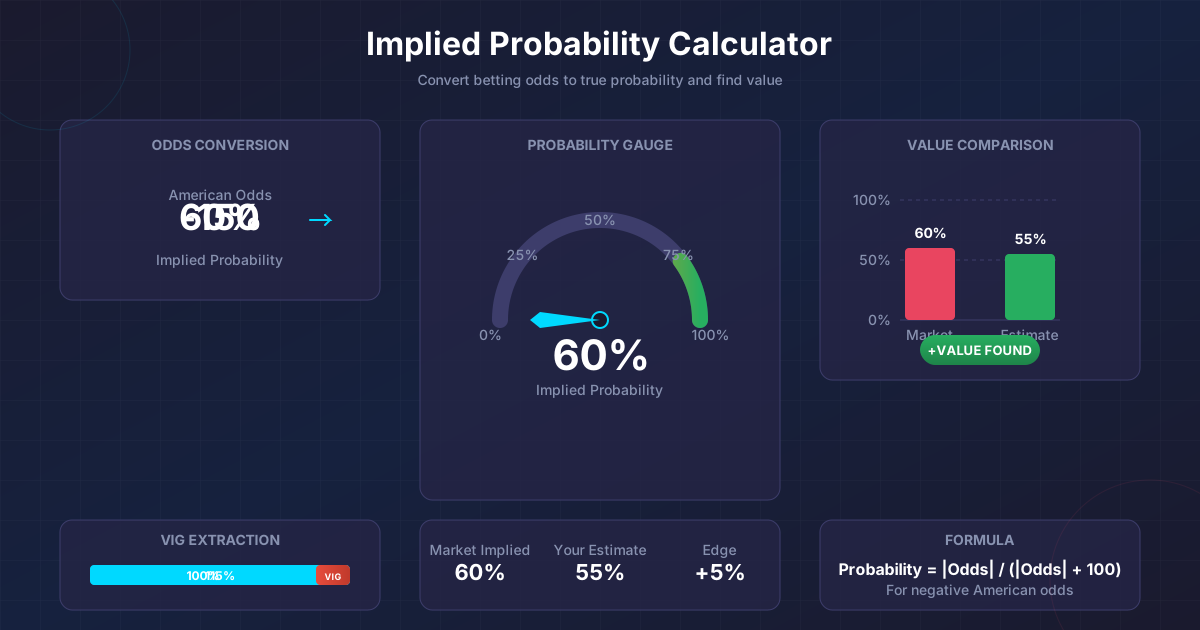
Understanding probability is the best defense against loot box manipulation. Show your teen the real odds with our Implied Probability Calculator.
What Are the Warning Signs of Teen Gambling Problems?
The warning signs of teen gambling often overlap with normal adolescent behavior, making detection difficult. However, certain patterns should raise concern, especially when multiple signs appear simultaneously or represent a change from previous behavior.
Behavioral Warning Signs
| Warning Sign | What to Look For | Why It Matters |
|---|---|---|
| Unexplained money issues | Asking for money frequently, unable to account for spending, selling belongings, borrowing from friends | Gambling losses create cash flow problems |
| Increased screen secrecy | Hiding phone/computer screens, new passwords, clearing browser history more often | Concealing gambling activity |
| Preoccupation with sports results | Obsessive checking of scores, unusual interest in games they have never followed | Tracking bets on unfamiliar sports or events |
| Mood swings tied to events | Elation after sporting events, visible distress after game outcomes | Emotional response to wins and losses |
| Decline in school performance | Dropping grades, missing homework, less engagement | Time and attention diverted to gambling |
| Sleep pattern changes | Staying up very late (gambling sites are 24/7), difficulty waking | Late-night gambling sessions |
| Social circle changes | New friends who are heavily into sports/gaming, withdrawal from old friendships | Seeking gambling-positive peer groups |
| Defensive about online activity | Aggressive responses when asked about internet use, refusal to show phone | Protecting gambling from discovery |
| Unusual apps or websites | Bookmarking of odds comparison sites, downloaded gambling or sports apps | Direct evidence of gambling engagement |
| Increased interest in cryptocurrency | Setting up crypto wallets, buying crypto with gift cards | Many teen gambling sites use cryptocurrency |
Financial Warning Signs Specific to Teens
| Sign | Possible Gambling Connection |
|---|---|
| Requesting advances on allowance | Funding gambling activity |
| Selling video game accounts or items | Converting virtual assets to gambling funds |
| Gift cards disappearing quickly | Using gift cards to purchase gambling currency (crypto, skins) |
| Finding charges on your credit card | Using parent credit card for gambling deposits |
| Asking about "investing" or "trading" | May be euphemisms for gambling activity |
| Interest in "making easy money online" | Drawn to gambling's promise of quick returns |
| Borrowing money from siblings or friends | Chasing gambling losses |
When to Be Seriously Concerned
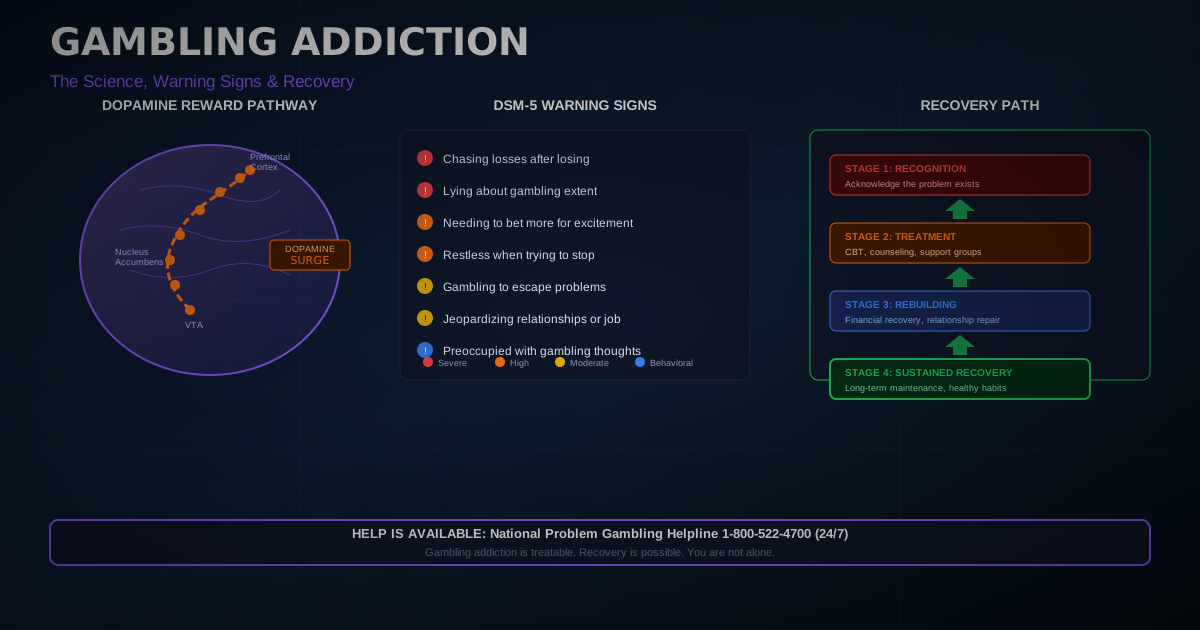
A teen may have a developing gambling problem if they:
- Continue gambling despite negative consequences
- Lie repeatedly about gambling activity
- Need to gamble with increasing amounts of money to feel excitement
- Become restless or irritable when trying to stop
- Use gambling to escape problems or negative feelings
- Have tried to stop gambling and cannot
- Have stolen money or items to fund gambling
These signs mirror the diagnostic criteria for gambling disorder in adults. If you observe three or more, professional consultation is recommended.
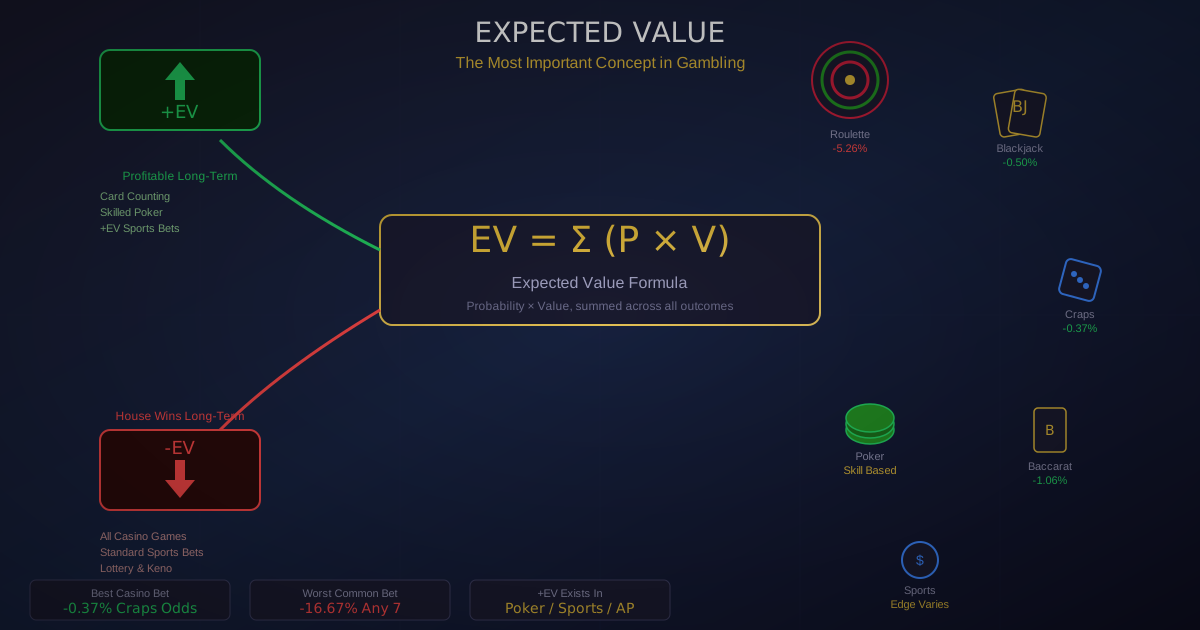
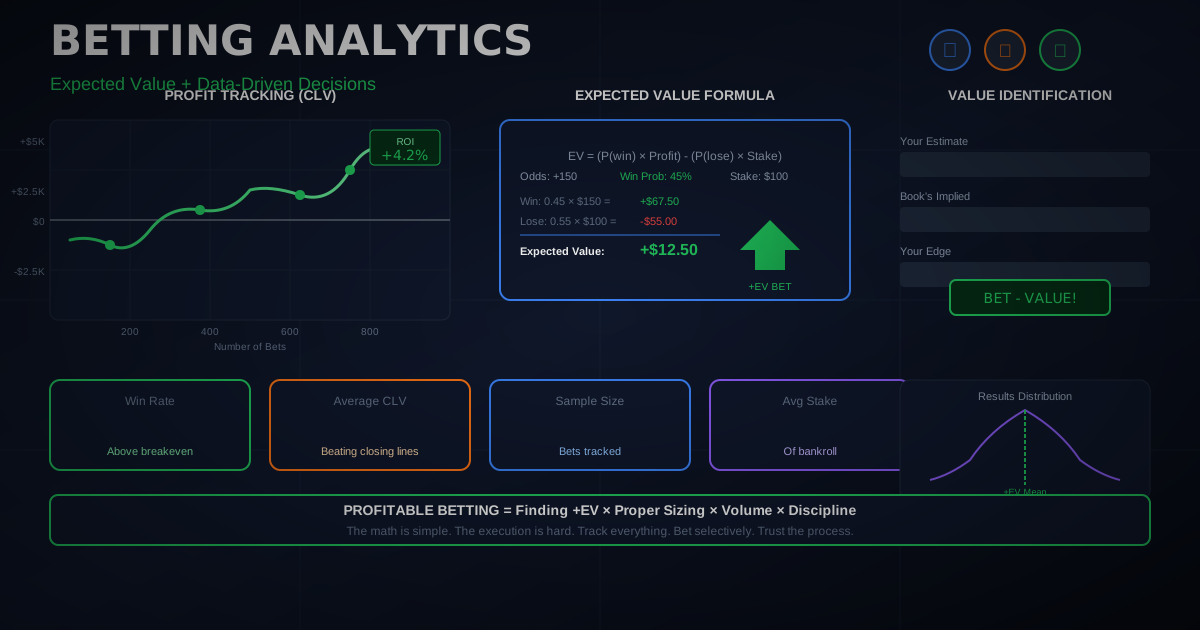
Help your teen understand why the house always wins with our Expected Value Calculator and Hold/Vig Calculator.
How Can Parents Set Up Effective Digital Protections?
No parental control system is foolproof, especially against a tech-savvy teenager. However, layered technical protections combined with open communication create the most effective defense. Technical controls buy you time and create opportunities for conversation; they are not a substitute for ongoing dialogue.
Parental Control Strategies by Device
| Device/Platform | Built-in Controls | Third-Party Options | Effectiveness |
|---|---|---|---|
| iPhone/iPad | Screen Time (Settings > Screen Time) | Bark, Qustodio, Net Nanny | High - App Store restrictions are strong |
| Android phone/tablet | Google Family Link | Bark, Qustodio, Net Nanny | Moderate - Sideloading possible on some devices |
| Windows PC | Microsoft Family Safety | Net Nanny, Bark, Norton Family | Moderate - Browser restrictions can be bypassed |
| Mac | Screen Time (System Settings) | Bark, Qustodio, Net Nanny | High - Paired with App Store restrictions |
| Gaming consoles (PlayStation, Xbox, Switch) | Built-in parental controls per console | Limited third-party options | Moderate - Blocks store purchases and age-rated content |
| Smart TV | Limited built-in controls | Router-level filtering | Low - Primarily content ratings |
| Home network (all devices) | Router-level filtering (OpenDNS, CleanBrowsing) | Circle, Gryphon router, Firewalla | High - Catches all devices on the network |
Step-by-Step Protection Setup
Step 1: Network-Level Filtering Configure your home router's DNS to use a family-friendly DNS service that blocks gambling categories:
| DNS Service | IP Addresses | Gambling Category Blocked | Cost |
|---|---|---|---|
| CleanBrowsing Family Filter | 185.228.168.168, 185.228.169.168 | Yes | Free |
| OpenDNS FamilyShield | 208.67.222.123, 208.67.220.123 | Yes | Free |
| Cloudflare for Families | 1.1.1.3, 1.0.0.3 | Yes (malware + adult) | Free |
| NextDNS | Custom | Configurable by category | Free/Premium |
Step 2: Device-Level Controls On each device your teen uses:
- Enable age restrictions for app downloads
- Require parent approval for all purchases
- Block the "Gambling" app category in the app store
- Enable browser content restrictions
- Turn on location sharing for accountability
Step 3: Payment Method Controls
- Do not store credit card information in your teen's device accounts
- Use prepaid cards with fixed limits for app purchases if needed
- Monitor bank statements for unusual transactions
- Disable in-app purchases unless explicitly approved
- Consider a teen banking app that sends purchase notifications to parents
Step 4: Monitoring (With Transparency)
- Discuss monitoring openly with your teen, explain it as safety, not surveillance
- Use monitoring apps that alert you to gambling-related searches or app downloads
- Review browsing history periodically (let your teen know you will)
- Check app download history regularly
- Monitor social media for gambling-related content and influencer follows
Limitations of Technical Controls
It is important to understand what parental controls cannot do:
- They cannot block a VPN that a tech-savvy teen installs
- They cannot monitor encrypted messaging apps (Signal, Telegram, WhatsApp)
- They cannot prevent gambling at a friend's house or on a friend's phone
- They cannot block peer-to-peer cash apps (Venmo, Zelle) being used for betting
- They cannot detect informal verbal bets between friends
- They may not recognize emerging gambling platforms that are not yet categorized
This is why technical controls must be paired with education and ongoing conversation.
Teach digital literacy alongside digital safety. Use our Odds Converter as an educational tool to show teens how gambling odds actually work.
How Should Parents Talk to Their Children About Gambling?
Open, honest, age-appropriate conversations about gambling are the single most effective prevention tool, more effective than any parental control software. Research from the Problem Gambling Foundation shows that children who have had direct conversations with parents about gambling risk are 40-50% less likely to develop gambling problems.
Conversation Guide by Age Group
| Age Group | Key Messages | Conversation Approach |
|---|---|---|
| 6-9 years | Games of chance vs. games of skill; you cannot control random outcomes; advertising is designed to persuade | Use board games and card games to demonstrate randomness naturally |
| 10-12 years | What gambling is; why there are age restrictions; loot boxes and randomized rewards cost real money; the house always wins | Relate to loot boxes and in-game purchases they may already encounter |
| 13-15 years | Probability and house edge math; how gambling advertising targets young people; skin gambling and cryptocurrency risks; peer pressure to bet | Use calculators and real examples to show the math; discuss specific scenarios |
| 16-18 years | Legal gambling age and consequences of underage gambling; problem gambling signs and self-assessment; how to help a friend with a gambling problem; sports integrity and match-fixing | Direct, adult-level conversation; share stories of gambling harm; discuss responsible gambling principles |
Starting the Conversation: Scripts for Parents
For younger children (6-9): "You know how we play board games and sometimes you win and sometimes you lose? That is because a lot of games use dice or cards, and nobody can control what comes up. Gambling is when adults play those kinds of chance games for real money. The people who run those games always set them up so they win more often than the players do. That is why there are rules about age, because kids should not risk real money on games where the rules are set up for you to lose."
For preteens (10-12): "Have you ever bought a loot box or mystery pack in a game? Did you notice that you usually get stuff you do not want, and the really good items almost never show up? That is exactly how gambling works. The company sets the odds so that you spend more money than the prizes are worth. When you grow up, you will see gambling everywhere, in casinos, on apps, in sports. I want you to understand the math before you encounter it, so you can make smart decisions."
For teens (13-15): "I want to talk about something important. A lot of kids your age are starting to bet on things, whether it is sports, gaming, or online. I am not here to lecture, I am here to make sure you understand how it actually works. Every gambling game is designed so the house, the company running it, wins over time. That is not opinion, that is math. If any of your friends are betting, or if you see opportunities online, I want you to know the real odds. Can I show you something? [Use the Expected Value Calculator together]."
For older teens (16-18): "Soon you will be old enough to gamble legally. Before that happens, I want to make sure you have the full picture. Gambling can be entertainment, like going to a movie, where you pay for the experience and expect nothing back. The problem happens when people start thinking they can beat the system, or when they gamble to escape stress, or when they chase losses. Here are the warning signs of a problem [share the list]. If you ever feel any of these, or if a friend does, I want you to know you can come to me without judgment. There are also professionals who help. Can we agree on that?"
Do's and Don'ts of Gambling Conversations
| Do | Do Not |
|---|---|
| Focus on math and probability | Moralize or use scare tactics |
| Ask open-ended questions | Interrogate or accuse |
| Share real-world examples | Make it abstract or theoretical |
| Acknowledge that gambling can be fun | Pretend gambling has no appeal |
| Discuss specific scenarios | Give vague warnings |
| Revisit the conversation regularly | Have one talk and consider it done |
| Be honest about your own gambling habits | Hide your own behavior while lecturing |
| Listen more than you talk | Dominate the conversation with rules |
Make the conversation interactive. Pull up our Implied Probability Calculator and let your teen convert odds to probabilities themselves.
What Role Do Social Media and Influencers Play in Teen Gambling?
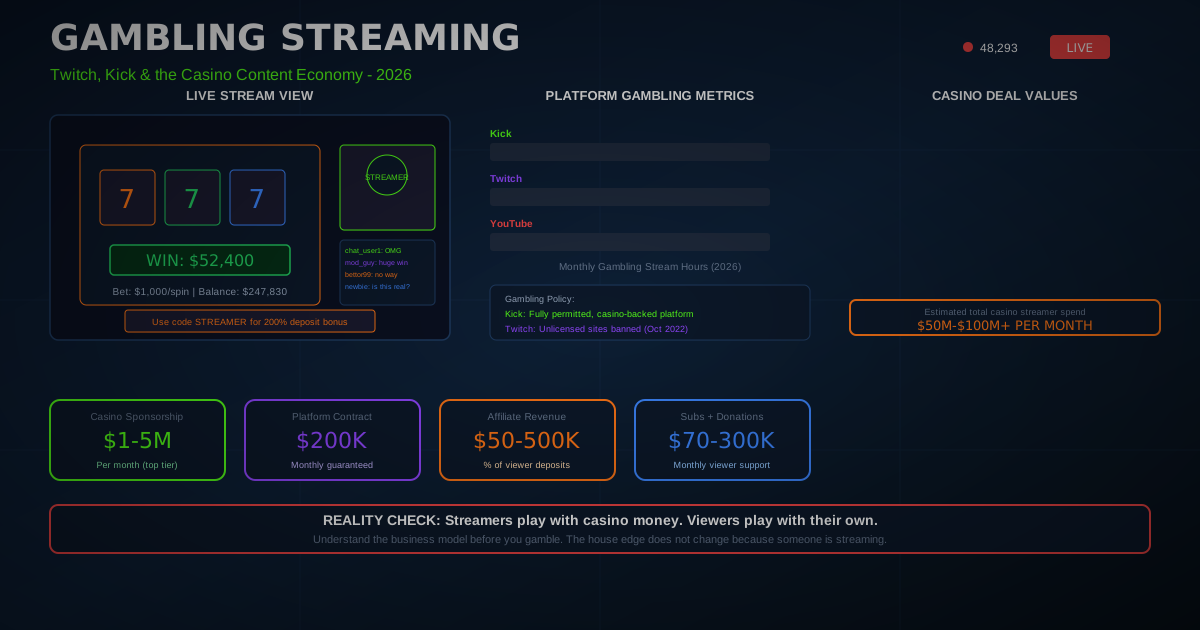
Social media is the primary advertising channel through which gambling reaches teenagers in 2026. Gambling companies sponsor influencers, esports teams, and content creators who have predominantly young audiences, creating powerful associations between gambling and entertainment, success, and social status.
How Gambling Reaches Teens Through Social Media
| Platform | Gambling Content Type | How Teens Encounter It | Regulation Status |
|---|---|---|---|
| YouTube | Casino streaming, sports betting tips, "big win" compilations | Recommended videos, influencer subscriptions | Minimal restrictions; some channels age-gated |
| TikTok | Short-form gambling clips, "easy money" content, promo codes | For You Page algorithm, hashtags | Gambling ads prohibited but organic content persists |
| Twitch | Live casino streaming, slots sessions, sports betting reactions | Browse and recommended streams | Category restrictions vary; enforcement inconsistent |
| Gambling lifestyle posts, tipster accounts, affiliate links | Explore page, influencer follows | Ads restricted in some regions; organic content unrestricted | |
| Twitter/X | Sports betting tips, parlays, "locks of the day" | Trending topics during sporting events | Gambling ads permitted in most markets |
| Discord | Betting groups, tipster servers, skin gambling communities | Server invitations, friend referrals | No content moderation by platform |
| Telegram | Betting channels, gambling bots, anonymous gambling groups | Direct invitations, search | Effectively unmoderated |
| Snapchat | Gambling-related stories and ads | Discover section, friend content | Some geographic ad restrictions |
The Influencer Pipeline
The typical path from social media exposure to youth gambling:
- Awareness: Teen follows a gaming or sports influencer on YouTube/TikTok/Twitch
- Normalization: Influencer casually mentions bets, shows gambling app, celebrates wins
- Interest: Teen sees wins presented as exciting and achievable
- Exploration: Teen searches for gambling content, joins Discord servers, follows tipster accounts
- Participation: Teen creates an account on a gambling site using minimal age verification
- Escalation: Initial small bets become larger as losses mount and the chase begins
What Parents Can Do About Social Media Gambling Exposure
- Know who your teen follows. Periodically review their subscriptions and followed accounts. Look for gambling affiliates, "tipsters," and casino streamers.
- Discuss advertising literacy. Help your teen understand that influencers are paid to promote gambling and that content showing big wins is cherry-picked from much larger volumes of losses.
- Report underage-targeted gambling content. Every platform has reporting mechanisms for content that violates gambling advertising policies.
- Use platform-specific content restrictions. YouTube's Restricted Mode, TikTok's Family Pairing, and Instagram's Sensitive Content Controls can reduce gambling content exposure.
- Follow the same influencers. By engaging with the same content, you can have informed, specific conversations about what your teen is seeing.
Teach your teen to think critically about "big win" claims by calculating the real probability with our Odds Converter.
What Are Esports Betting and Skin Gambling, and Why Are They Dangerous for Teens?
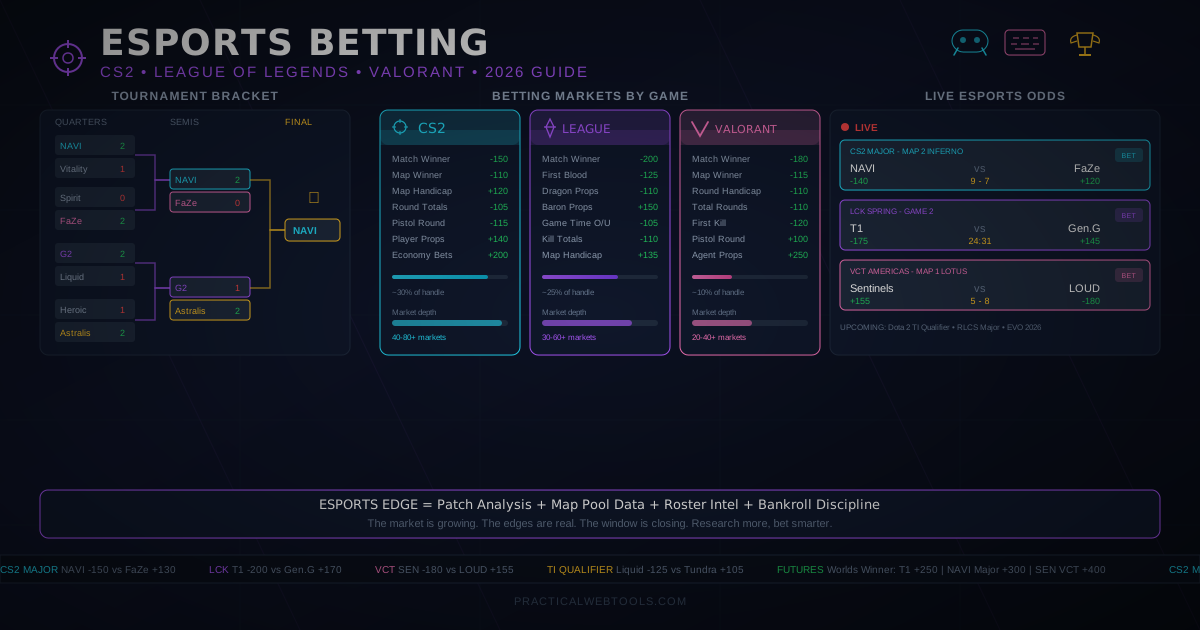
Esports betting and skin gambling are two rapidly growing forms of gambling that specifically target the gaming demographic, which skews heavily toward teenagers and young adults. These forms are particularly dangerous because they operate at the intersection of gaming culture and gambling, making them feel natural and low-risk to young gamers.
Esports Betting Explained
Esports betting involves wagering real money on the outcomes of competitive video game matches. Major esports titles with active betting markets include:
| Game | Major Tournaments | Estimated Betting Market | Average Viewer Age |
|---|---|---|---|
| League of Legends | Worlds, LCS, LEC | $5-8 billion annually | 18-24 |
| Counter-Strike 2 | Majors, Pro League | $4-6 billion annually | 16-22 |
| Dota 2 | The International | $2-4 billion annually | 18-25 |
| Valorant | Champions, VCT | $2-3 billion annually | 16-22 |
| Call of Duty | CDL | $1-2 billion annually | 16-24 |
| Overwatch 2 | OWL | $500M-1B annually | 16-24 |
The overlap between esports viewership and underage demographics is significant. Many esports fans are under 18, and the same platforms that stream esports tournaments (Twitch, YouTube Gaming) host gambling advertising and gambling content.
Skin Gambling Deep Dive
Skin gambling deserves special attention because it is the form of gambling most uniquely associated with youth:
Types of skin gambling sites:
| Site Type | How It Works | Typical Users |
|---|---|---|
| Jackpot sites | Players deposit skins into a pot; one player wins all (random) | Teens with gaming inventories |
| Roulette/coin flip | Classic casino games using skins as currency | Teens seeking gambling excitement |
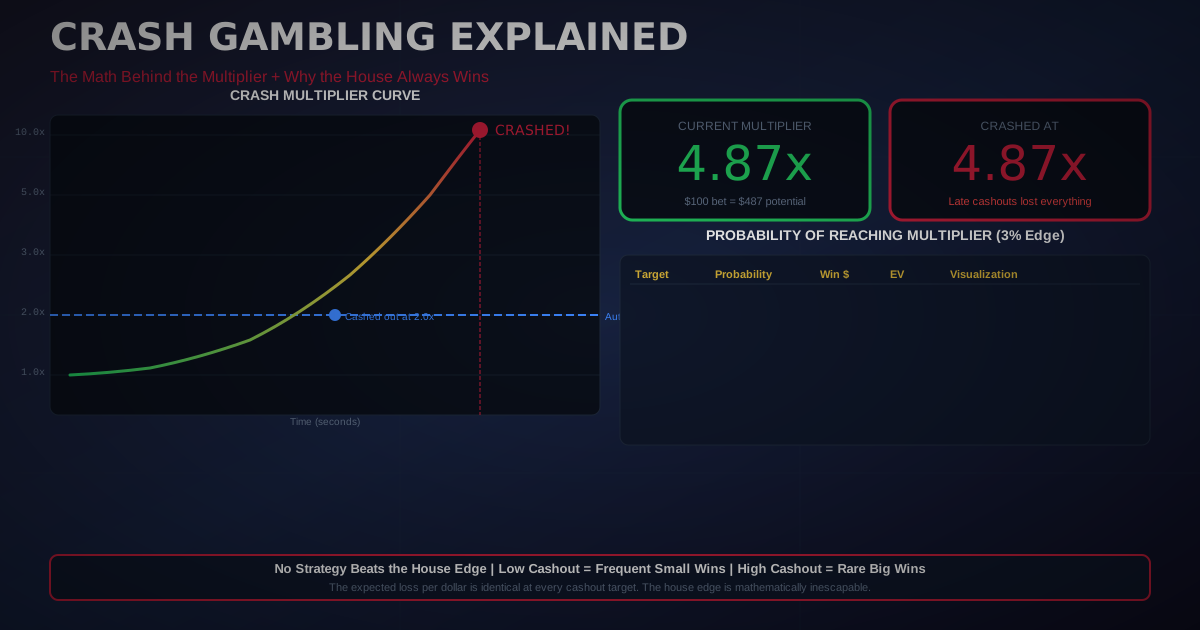
| Crash games | Multiplier increases until it "crashes"; cash out before crash | Teens attracted to high-risk/reward |
| Case opening | Simulated loot boxes with real skin rewards | Teens familiar with in-game loot boxes |
| Match betting | Bet skins on esports match outcomes | Teens who follow competitive gaming |
| Raffles/giveaways | Purchase entries for chance to win high-value skins | Teens who see it as "low cost" gambling |
Why skin gambling is especially dangerous for teens:
- No age verification whatsoever on most sites
- Virtual items feel less "real" than cash, reducing loss awareness
- Integrated into gaming culture and communities teens already belong to
- Promoted by gaming YouTubers and streamers teens already watch
- Easy to hide from parents (no bank statements, no credit card charges)
- Regulatory oversight is minimal or nonexistent
Help teens understand that virtual items have real value and real gambling odds using our Expected Value Calculator.
What School-Based Prevention Programs Exist?
School-based gambling prevention programs have shown measurable effectiveness in reducing youth gambling rates and increasing gambling literacy. Research indicates that evidence-based school programs can reduce gambling participation by 15-25% among students who complete them.
Evidence-Based Prevention Programs
| Program | Target Age | Format | Key Outcomes |
|---|---|---|---|
| Stacked Deck (Canada) | Grades 9-12 | 5-6 interactive lessons | 22% reduction in gambling participation at 6-month follow-up |
| The House Always Wins (Australia) | Grades 7-10 | Interactive workshop series | Significant improvement in gambling knowledge and attitudes |
| Don't Gamble Away Our Future (US) | Grades 7-12 | Curriculum + peer education | Increased knowledge of gambling odds and risks |
| Smart Gambling (EU) | Ages 13-17 | Online interactive modules | Improved ability to identify problem gambling signs |
| Media Aware (UK) | Ages 11-16 | Media literacy focused | Reduced susceptibility to gambling advertising |
What Effective Prevention Programs Teach
The most successful prevention programs share common elements:
- Mathematical literacy: Teaching probability, expected value, house edge, and the law of large numbers using real gambling examples
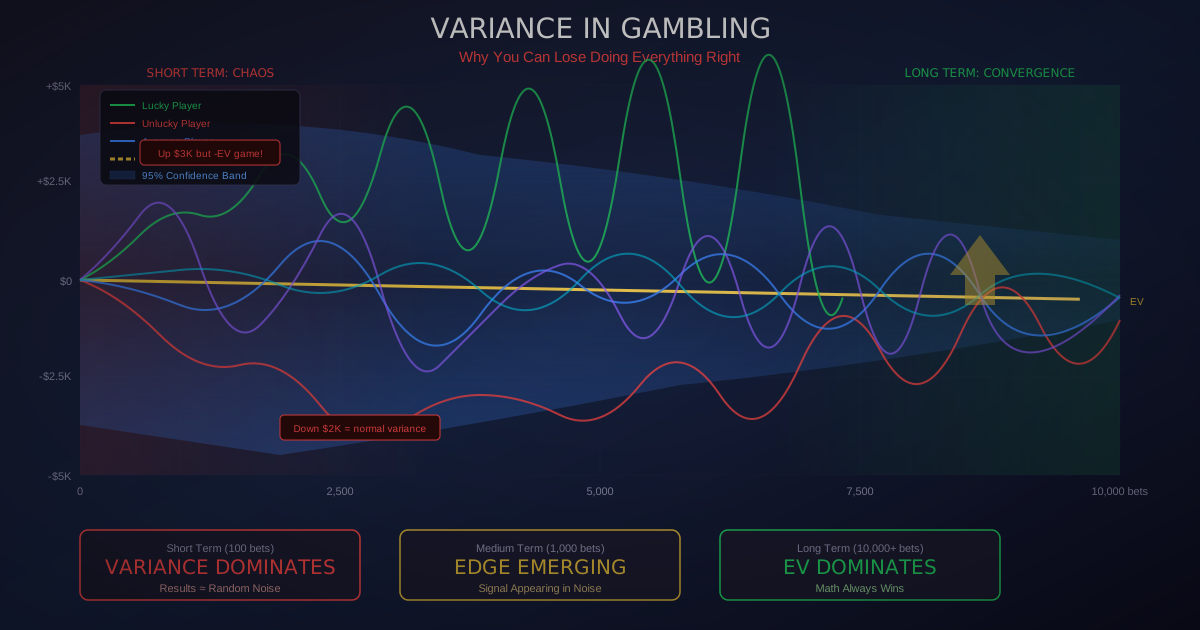
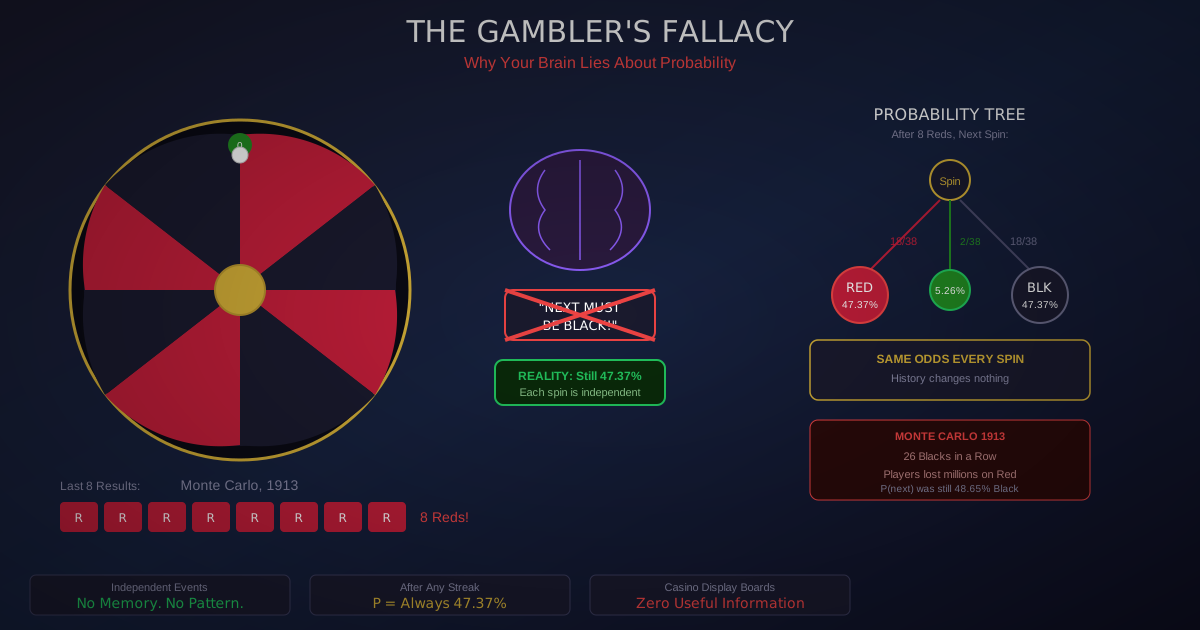
- Cognitive bias awareness: Helping students recognize the gambler's fallacy, illusion of control, and confirmation bias
- Advertising literacy: Teaching students to analyze gambling advertisements critically
- Social skills: Practicing refusal skills for peer pressure situations involving gambling
- Self-assessment: Providing tools for students to evaluate their own gambling behavior
- Help-seeking: Reducing stigma around asking for help and providing concrete resources
How Parents Can Advocate for Prevention Programs
If your child's school does not offer gambling prevention education:
- Contact the school counselor or health education department to request curriculum inclusion
- Share evidence-based program information with administrators
- Connect with your state's problem gambling council for school outreach programs
- Advocate at PTA/PTO meetings for digital literacy education that includes gambling awareness
- Volunteer to help organize a gambling awareness assembly or event
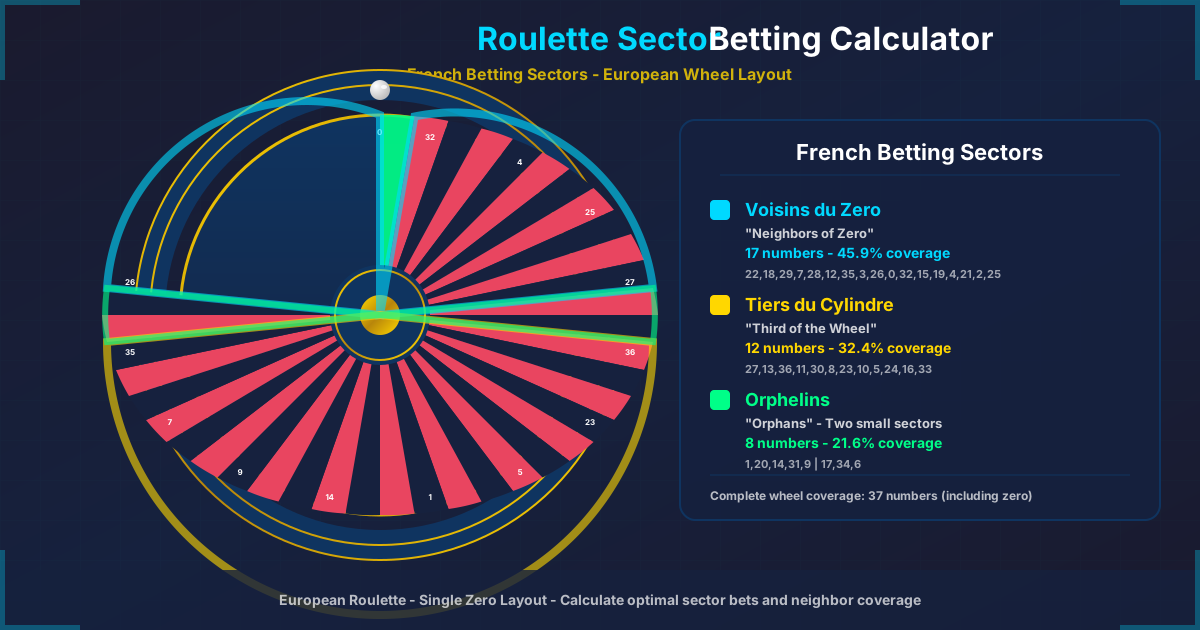
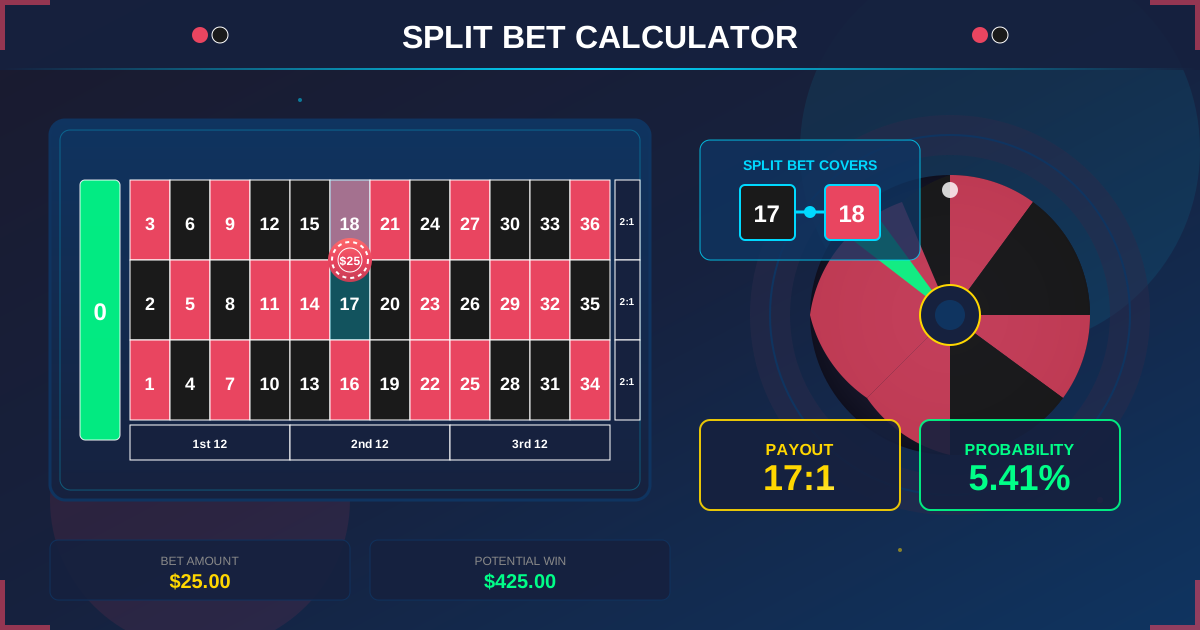
Use our free calculators as educational tools in your own home-based prevention. Our Roulette House Edge Calculator demonstrates the house edge concept clearly.
How Do Loot Boxes and Gacha Mechanics Normalize Gambling for Children?
Loot boxes and gacha mechanics are gambling-adjacent systems embedded in video games that normalize the core behavioral loop of gambling: paying money for a random chance at a desired outcome. By exposing children to these mechanics at young ages, they create familiarity and comfort with gambling behavior before the child is old enough to understand the risks.
The Gambling Connection
| Gambling Feature | Loot Box Equivalent | Psychological Effect |
|---|---|---|
| Placing a bet | Purchasing a loot box | Spending money on uncertain outcome |
| Slot machine spin | Opening animation | Anticipation and arousal |
| Near miss | Receiving item close to desired tier | Motivation to try again |
| Jackpot win | Receiving legendary/ultra-rare item | Dopamine spike, reinforcement |
| Loss | Receiving common/duplicate item | Frustration, desire to try again |
| Variable ratio reinforcement | Randomized reward schedule | Strongest form of behavioral conditioning |
| Losses disguised as wins | "New item!" for unwanted duplicate | Positive framing of negative outcome |
The Scale of Youth Spending on Loot Boxes
| Age Group | Average Monthly Spending on In-Game Purchases | Percentage Buying Loot Boxes | Average Per-Purchase Amount |
|---|---|---|---|
| 8-12 years | $15-30 | 35-45% | $3-5 |
| 13-15 years | $25-50 | 45-55% | $5-10 |
| 16-17 years | $40-80 | 50-60% | $5-20 |
| "Whale" teens (top 5% spenders) | $200-500+ | 90%+ | $20-100+ |
"Whales" is the industry term for the small percentage of players who account for the majority of revenue. Research suggests that teens who become whales for loot boxes are significantly more likely to transition to real-money gambling.
Regulatory Landscape for Loot Boxes (2026)
| Country/Region | Loot Box Status | Key Regulation |
|---|---|---|
| Belgium | Banned as gambling | Criminal offense to offer paid loot boxes |
| Netherlands | Restricted | Specific mechanics banned; odds disclosure required |
| China | Regulated | Must disclose exact probabilities; spending limits for minors |
| Japan | Partially regulated | "Kompu gacha" (complete gacha) banned; basic gacha allowed |
| South Korea | Regulated | Probability disclosure required; rating system impacts |
| Australia | Under review | Parliamentary inquiry recommended regulation |
| United Kingdom | Voluntary industry measures | Government review ongoing; mandatory age verification proposed |
| United States | Unregulated (federal level) | FTC hearings held; no federal legislation passed |
| European Union | Proposed regulation | Consumer protection directive includes loot box provisions |
What Parents Can Do About Loot Boxes
- Disable in-app purchases on all children's devices by default
- Require approval for any purchase in any game
- Discuss the math behind loot boxes openly with your child
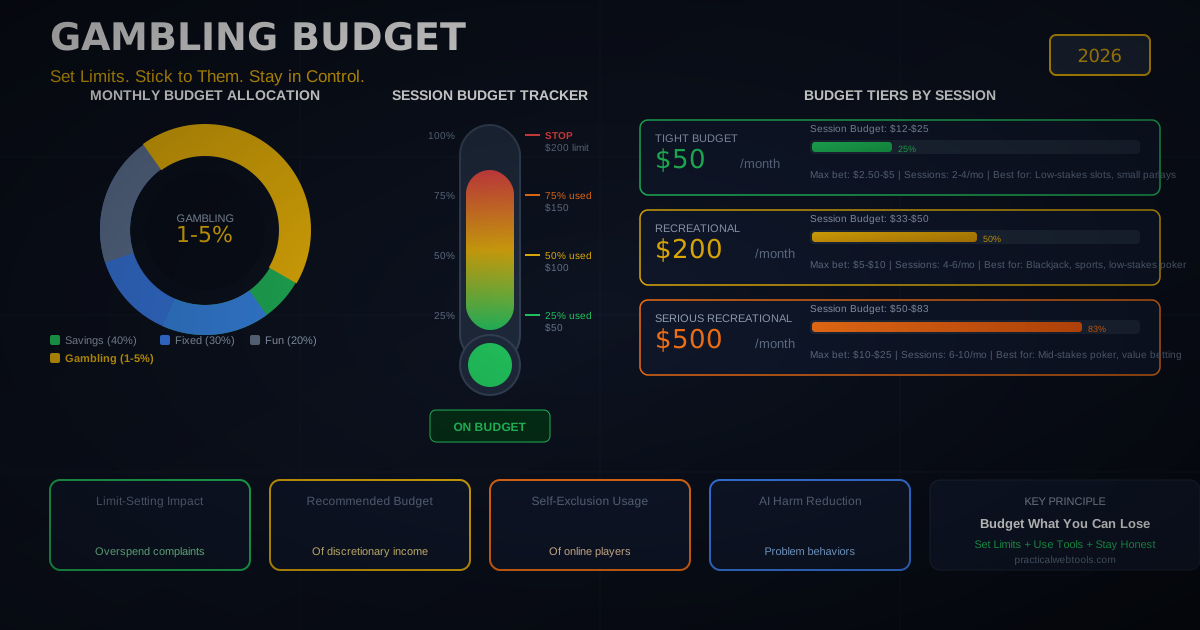
- Set a monthly spending limit for all gaming purchases and enforce it
- Play the games yourself to understand what your child is experiencing
- Favor games without loot boxes when making purchase decisions
- Support advocacy for loot box regulation in your jurisdiction
Show your child the real odds behind loot boxes by calculating the expected cost to get a specific item using our Expected Value Calculator.
Where Can Families Get Help for Youth Gambling Problems?
If you suspect your child has a gambling problem, professional help is available and effective. Early intervention produces the best outcomes. Do not wait for a crisis to seek help.
Immediate Resources
| Resource | Contact | Available | Best For |
|---|---|---|---|
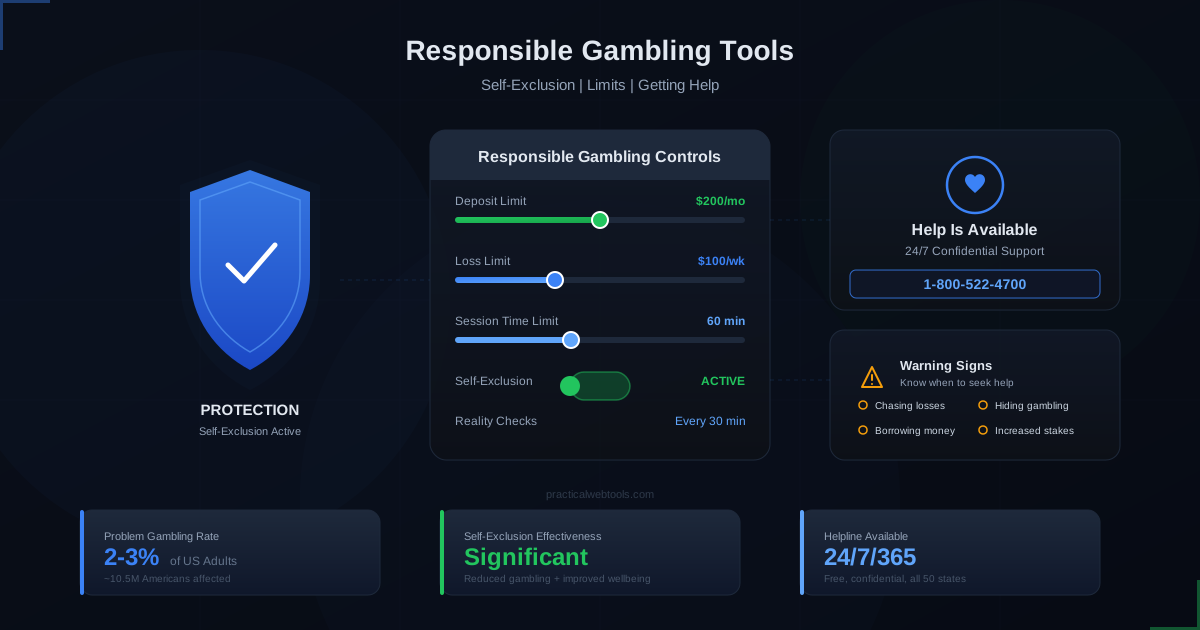
| National Council on Problem Gambling Helpline | 1-800-522-4700 | 24/7 | Immediate crisis support, referrals |
| NCPG Text Line | Text "HELP" to 233579 | 24/7 | Teens who prefer texting |
| NCPG Live Chat | ncpgambling.org/chat | 24/7 | Teens who prefer chat |
| Gamblers Anonymous | gamblersanonymous.org | Meeting schedules vary | Ongoing support groups |
| Gam-Anon | gam-anon.org | Meeting schedules vary | Support for family members |
| SAMHSA Helpline | 1-800-662-4357 | 24/7 | Co-occurring substance and gambling issues |
| Crisis Text Line | Text HOME to 741741 | 24/7 | Immediate crisis support for any issue |
Professional Treatment Options
| Treatment Type | What It Involves | Evidence Level | Typical Duration |
|---|---|---|---|
| Cognitive Behavioral Therapy (CBT) | Identifying and changing gambling-related thoughts and behaviors | Strong evidence | 8-16 sessions |
| Family therapy | Addressing family dynamics, communication, and support systems | Moderate evidence | 10-20 sessions |
| Motivational interviewing | Building internal motivation to change gambling behavior | Strong evidence | 4-8 sessions |
| Peer support groups | Age-appropriate group support with other young people | Moderate evidence | Ongoing |
| Digital CBT programs | Online therapy modules designed for young people | Emerging evidence | Self-paced, 6-12 weeks |
| School-based counseling | Counseling within the school setting for accessibility | Moderate evidence | Varies |
How to Approach a Teen You Suspect Has a Gambling Problem
- Choose the right time and place. Not during an argument, not when they are stressed, and not in public. Choose a private, calm moment.
- Lead with concern, not accusation. "I have noticed some changes and I am worried about you" rather than "I know you have been gambling."
- Present specific observations. "I noticed you sold your gaming headset, you have been checking your phone constantly during games, and you asked me for money twice this week" is more effective than "you seem different."
- Listen. Let them talk. Do not interrupt, do not argue, do not lecture. Just listen.
- Avoid ultimatums. "You must stop right now or else" does not work with addiction. It drives behavior underground.
- Offer help, not punishment. "I want to help you figure this out" is more productive than "you are grounded."
- Follow through. If your teen is open to help, make an appointment that same day. Motivation to seek help is fleeting.
- Do not blame yourself. Youth gambling problems are complex and multifactorial. You are not a bad parent because your child developed a gambling issue.
Understanding the math is therapeutic. Working through gambling calculations together can help a teen see that the system is designed against them. Try our Hold/Vig Calculator and Implied Probability Calculator as educational tools.
What Legal Protections Exist for Minors Against Gambling?
Legal frameworks for protecting minors from gambling vary significantly by jurisdiction and have struggled to keep pace with the digital evolution of gambling. Understanding the legal landscape helps parents know what protections exist and where gaps remain.
US Legal Framework for Youth Gambling Protection
| Protection | Federal or State | Coverage | Enforcement |
|---|---|---|---|
| Minimum gambling age (21+) | State law (most states) | Physical casinos, state-licensed online gambling | Generally well-enforced |
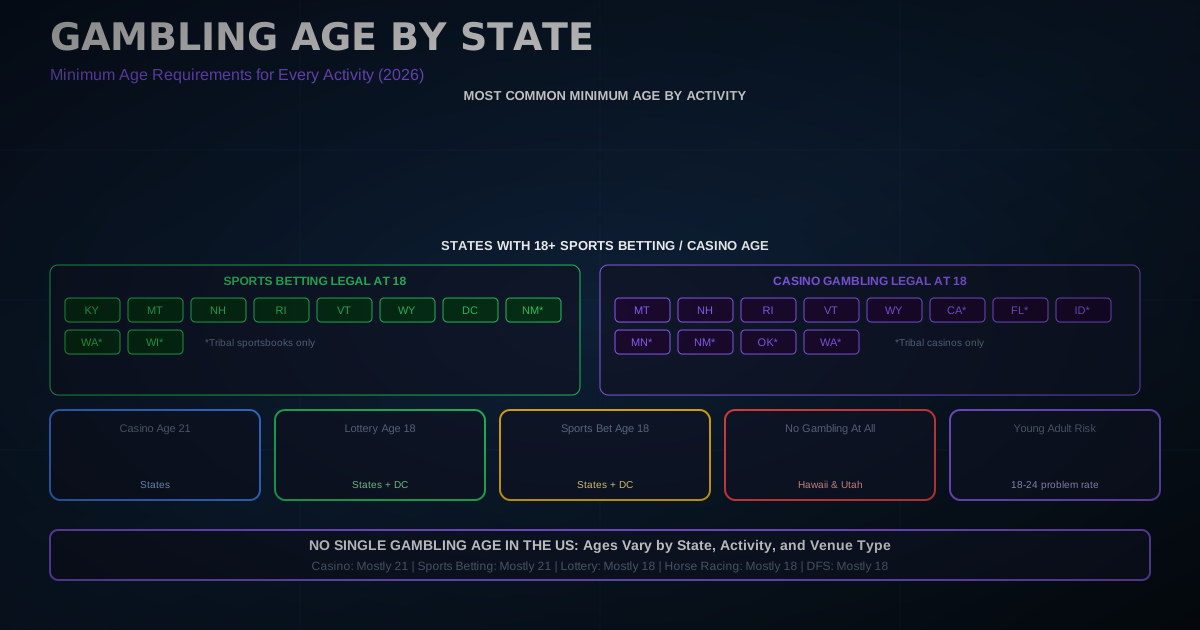
| Minimum gambling age (18+) | State law (some states, specific activities) | Lottery, bingo, tribal casinos (varies) | Varies by jurisdiction |
| Online gambling verification (KYC) | State law (licensed operators) | State-regulated online gambling | Strong for licensed operators |
| Loot box regulation | None (federal level) | N/A | No federal regulation |
| Skin gambling regulation | Minimal | Some state attorney general actions | Inconsistent, reactive |
| Social casino regulation | Minimal | Most treated as entertainment, not gambling | Limited consumer protection |
| COPPA (Children's Online Privacy) | Federal law | Websites collecting data from under-13s | FTC enforcement |
| Advertising restrictions | FTC guidelines + state law | Gambling ads must not target minors | Inconsistent enforcement |
What Parents Can Do Legally
- Report unlicensed gambling sites that your child has accessed to your state gaming commission and the FTC
- Report underage-targeted gambling advertising to the FTC and the platform hosting the ad
- File complaints about in-game gambling mechanics with the FTC and your state attorney general
- Support legislative efforts for stronger youth gambling protections in your state
- Document everything if your child has been harmed by a gambling operator's failure to verify age
International Comparison
| Country | Minimum Gambling Age | Online Verification | Loot Box Regulation | Social Casino Rules |
|---|---|---|---|---|
| United States | 18-21 (varies by state) | State-level for licensed operators | None | Minimal |
| United Kingdom | 18 | Strong (UKGC regulated) | Under review | Age verification required |
| Australia | 18 | Moderate | Under review | Varies by state |
| Canada | 18-19 (varies by province) | Provincial regulation | None | Provincial |
| Germany | 18 | Strong (GluNeuRStV) | Regulated | Age verification required |
| Sweden | 18 | Strong (Spelinspektionen) | None specific | Licensed operators only |
Knowledge is power. Equip your teen with mathematical literacy using our free Odds Converter and entire suite of gambling education tools.
How Can Parents Build Gambling Resilience in Their Children?
Building gambling resilience means equipping your child with the knowledge, skills, and critical thinking abilities to make informed decisions about gambling throughout their life. This is not about creating fear; it is about creating competence.
The Resilience Framework
| Resilience Factor | How to Build It | Age to Start |
|---|---|---|
| Mathematical literacy | Teach probability, expected value, house edge through games and calculators | 8-10 |
| Critical thinking | Analyze advertising claims together; question "too good to be true" offers | 10-12 |
| Emotional regulation | Model healthy responses to winning and losing in family games | 6-8 |
| Financial literacy | Give allowance, teach budgeting, discuss wants vs. needs | 8-10 |
| Media literacy | Discuss how content creators are paid, recognize sponsored content | 10-12 |
| Peer pressure resistance | Role-play refusal scenarios, discuss social dynamics | 12-14 |
| Help-seeking skills | Normalize asking for help; share helpline numbers openly | 12-14 |
| Self-assessment ability | Teach self-monitoring of behavior and emotional states | 14-16 |
Practical Activities for Building Resilience
For ages 8-10:
- Play board games and card games together, discuss why the winner varies each time
- Flip coins to demonstrate probability (try to predict 10 in a row, it is impossible)
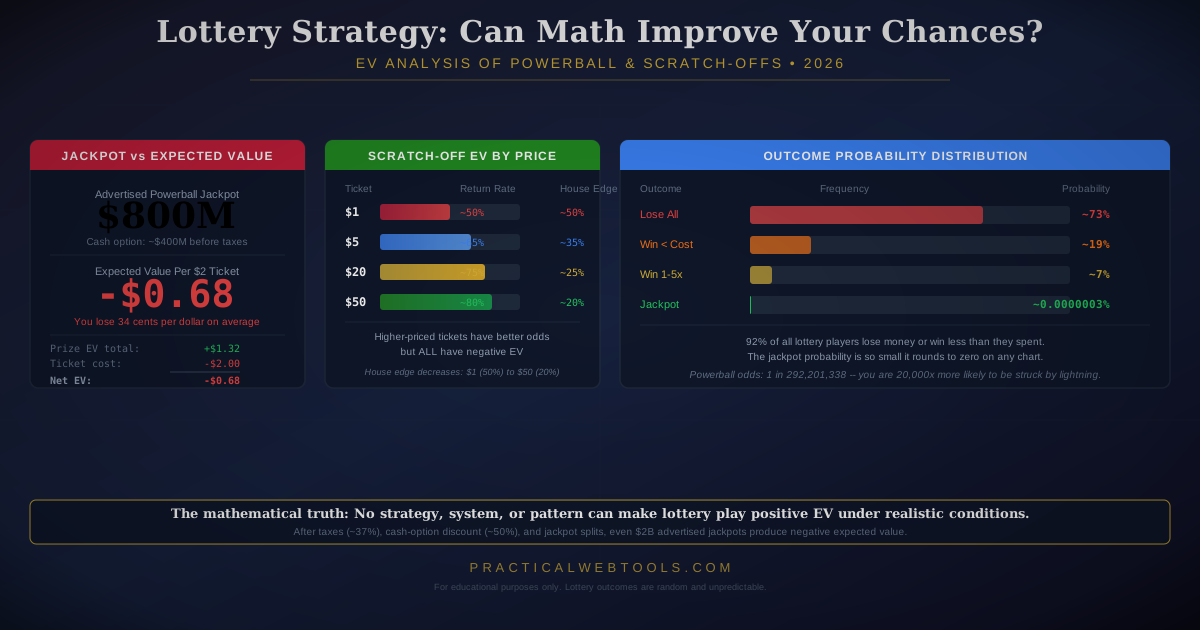
- Discuss why lottery tickets are bad deals mathematically
For ages 10-12:
- Calculate the house edge on simple games together
- Compare loot box expected value to buying desired items directly
- Watch gambling advertisements together and analyze their claims
For ages 13-15:
- Use our Expected Value Calculator to analyze real gambling scenarios
- Discuss news stories about gambling problems
- Review the family budget together to understand the value of money
For ages 16-18:
- Discuss responsible gambling principles in depth
- Share the NCPG self-assessment tool
- Have frank conversations about alcohol and gambling interactions
- Discuss the difference between entertainment spending and chasing profits
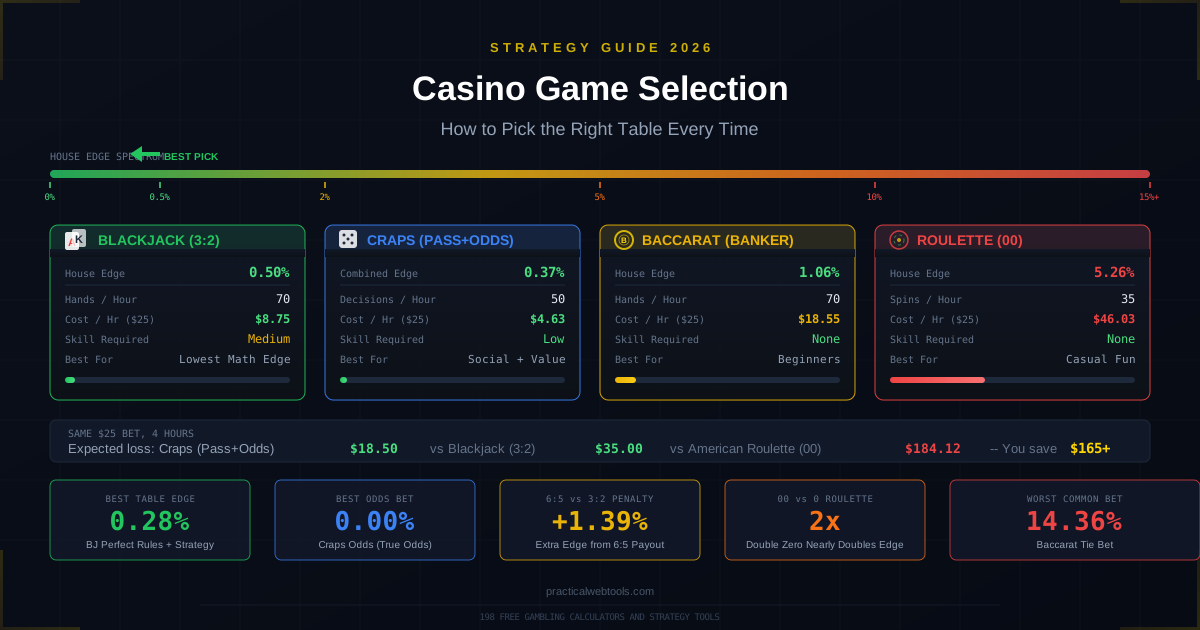
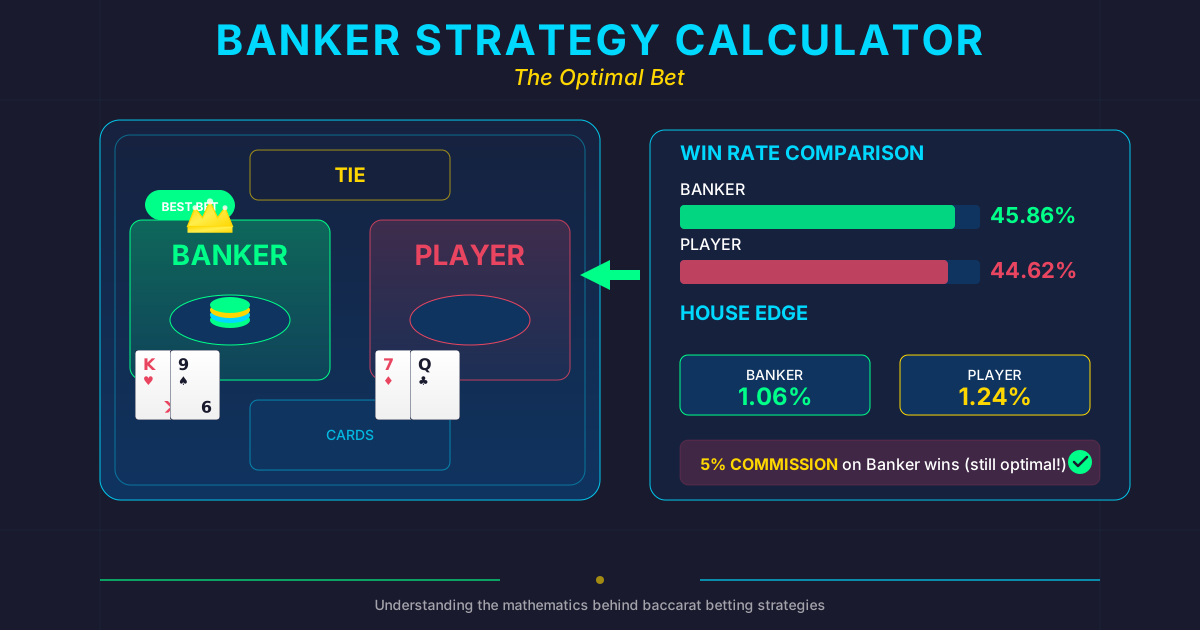
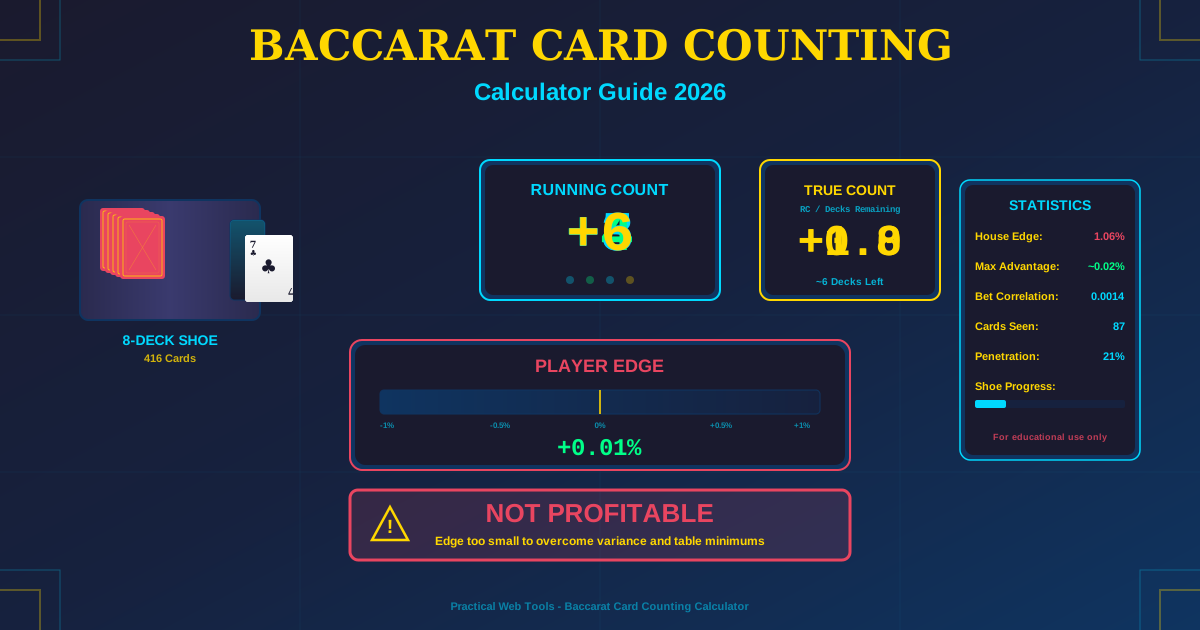
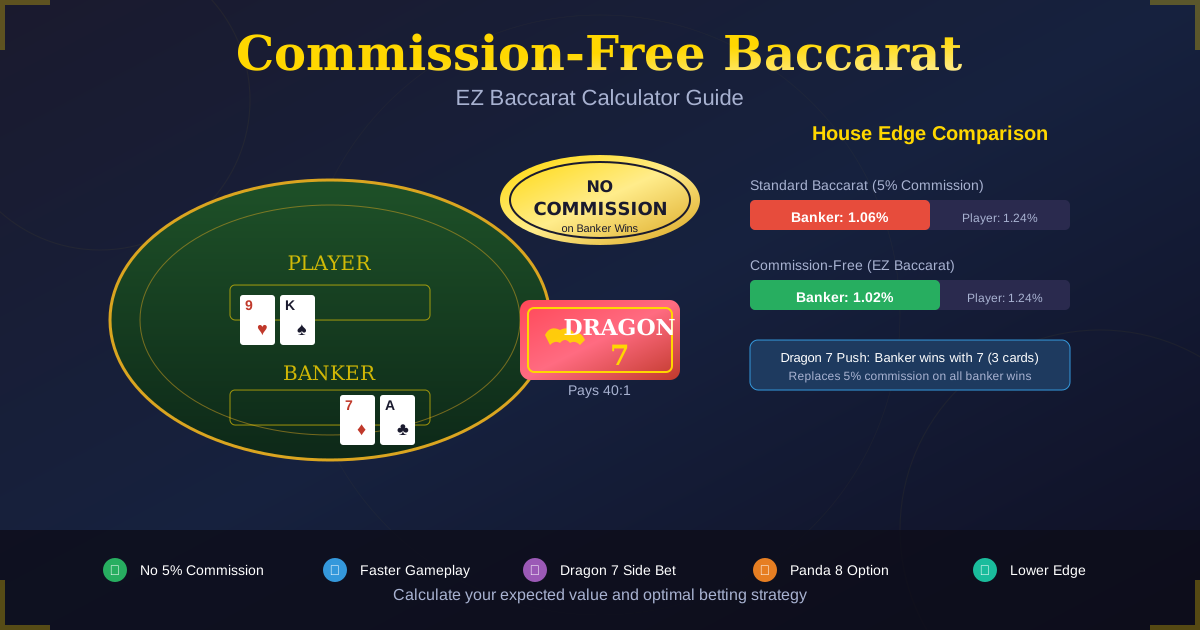
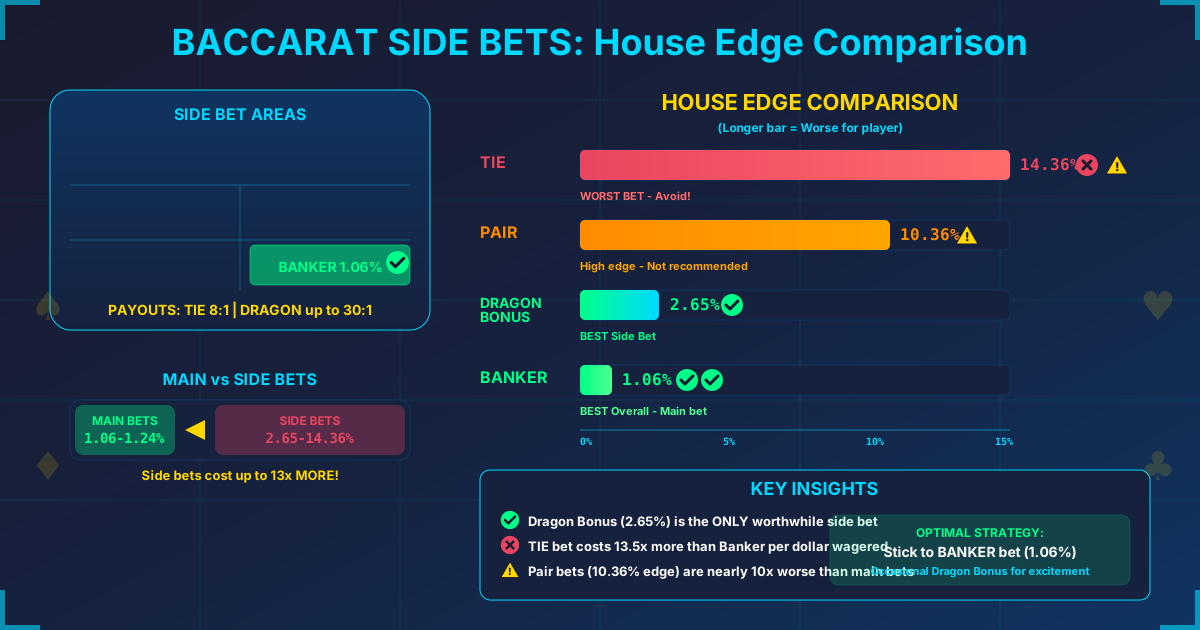
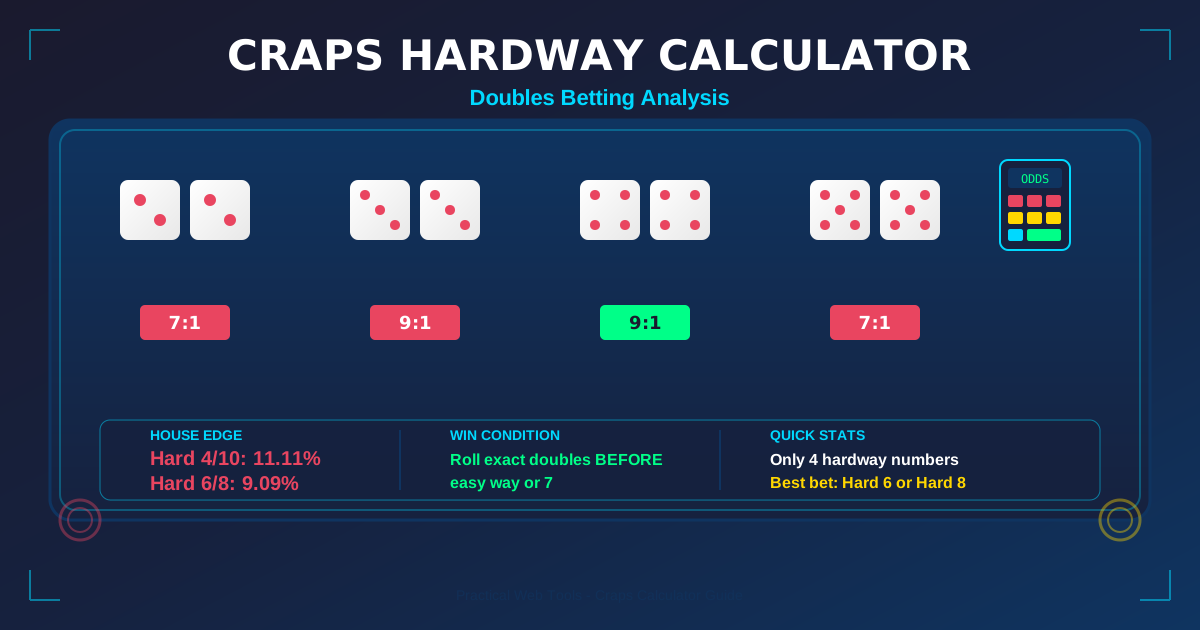
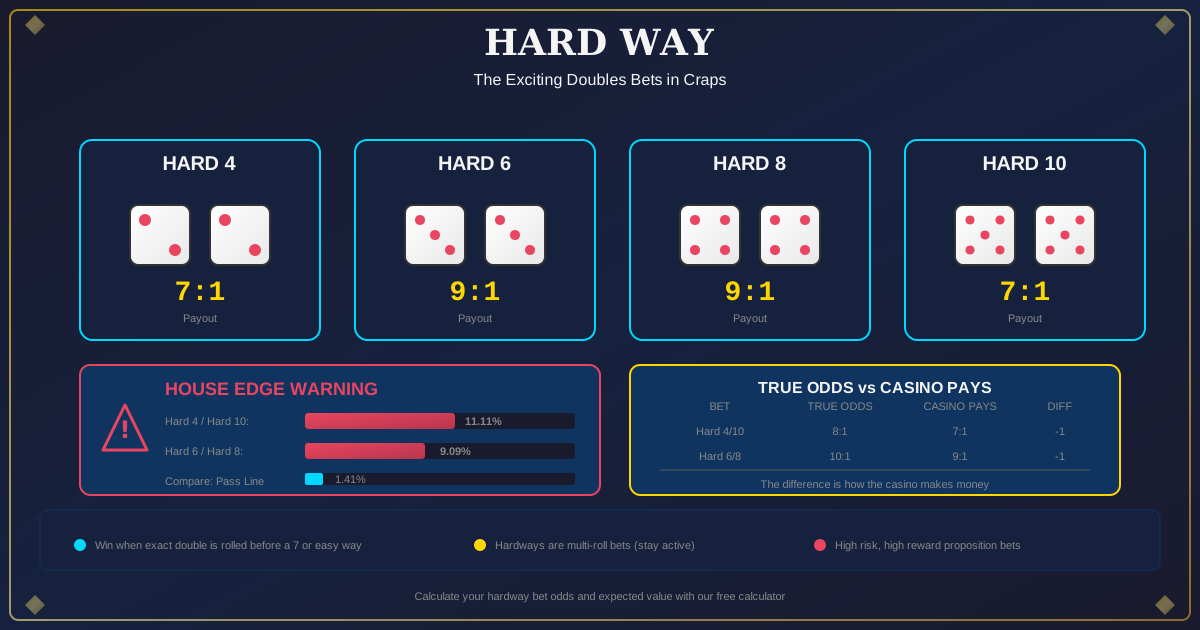
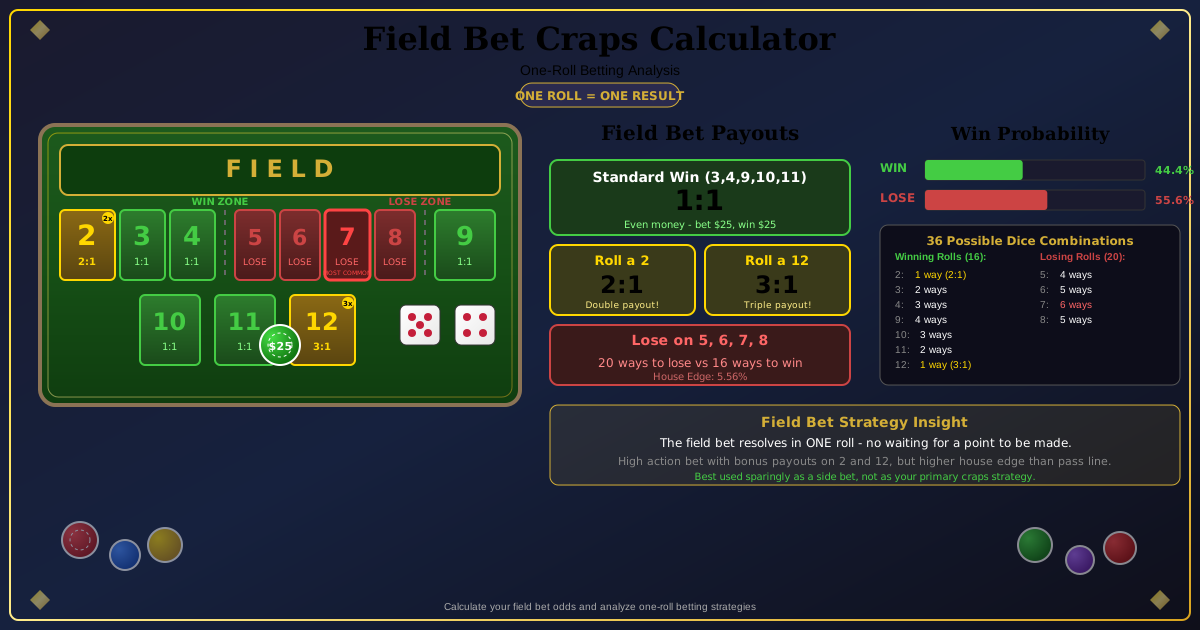
Use our entire suite of gambling calculators as educational tools: Blackjack House Edge, Roulette House Edge, Craps House Edge, and Baccarat House Edge.
Frequently Asked Questions
At what age should I start talking to my child about gambling? Begin with basic concepts about randomness and chance around age 6-8, using board games and coin flips as natural teaching moments. Introduce the concept of gambling specifically around age 10-12, when children may encounter loot boxes and in-game purchases. By 13-15, have direct conversations about sports betting, online gambling, and the mathematics of house edge. The key is making it an ongoing conversation that evolves with your child's age and exposure, not a single talk.
Are loot boxes really gambling? Mechanically, loot boxes share the core features of gambling: you pay money for an uncertain outcome determined by chance. However, legal classification varies by jurisdiction. Belgium and the Netherlands have classified certain loot boxes as gambling. The US has not. Regardless of legal classification, the psychological impact on developing brains is similar to gambling, creating the same patterns of anticipation, near-miss responses, and variable ratio reinforcement that make slot machines addictive.
My teen says everyone at school bets on games. Is that true? Peer-to-peer betting among teens is common and likely underreported. Studies suggest 20-40% of high school students have made informal bets with peers on sports, card games, or other outcomes. While small-stakes social betting among friends carries lower risk than online gambling, it can serve as a gateway to more serious gambling behavior. The appropriate response is not panic but conversation: ask about what kind of betting, how much money, and how they feel about it.
Can a teenager really develop a gambling addiction? Yes. Research clearly demonstrates that adolescents can develop gambling disorder, and they may be more susceptible than adults due to brain development factors. The DSM-5 gambling disorder criteria apply to individuals of all ages. Teen gambling disorder shares the same characteristics as adult gambling disorder: preoccupation, tolerance, withdrawal symptoms, loss of control, and continuation despite negative consequences. Early intervention produces the best outcomes.
How do I know if my child's gaming spending is a problem? Consider these questions: Is the spending within the agreed-upon budget? Is your child's mood significantly affected by in-game outcomes? Are they hiding purchases or lying about spending? Are they neglecting school, social life, or other activities to game? Are they requesting money more frequently or showing signs of financial stress? If you answer yes to two or more, it warrants a closer look and a conversation.
Should I ban my child from all video games with loot boxes? A complete ban is usually counterproductive, especially with older teens, because it eliminates the opportunity for guided learning and can damage trust. A more effective approach is to set clear spending limits, require purchase approval, discuss the mathematics of loot boxes openly, and monitor for escalating spending patterns. For younger children (under 10), choosing games without monetized randomized rewards is reasonable and easier to implement.
What if I have a gambling problem myself? If you have a gambling problem, addressing it is the most important thing you can do for your child's prevention. Children of problem gamblers are 4-8 times more likely to develop gambling problems themselves. Seek help through the NCPG helpline (1-800-522-4700) or Gamblers Anonymous. Being honest with your child about your struggle, at an age-appropriate level, can be a powerful prevention message and models healthy help-seeking behavior.
Are daily fantasy sports considered gambling for teens? Daily fantasy sports (DFS) involve wagering money on the statistical performance of athletes, and most platforms have a minimum age of 18 or 21. While DFS companies classify their products as "games of skill" rather than gambling, the psychological experience for the player closely mirrors sports betting. Teens who engage with free DFS platforms may develop familiarity with betting mechanics that transfers to real-money gambling.
Related Tools
- Odds Converter: Convert between odds formats to teach teens how gambling odds work mathematically.
- Expected Value Calculator: Show teens the mathematical expectation behind any gamble, including loot boxes.
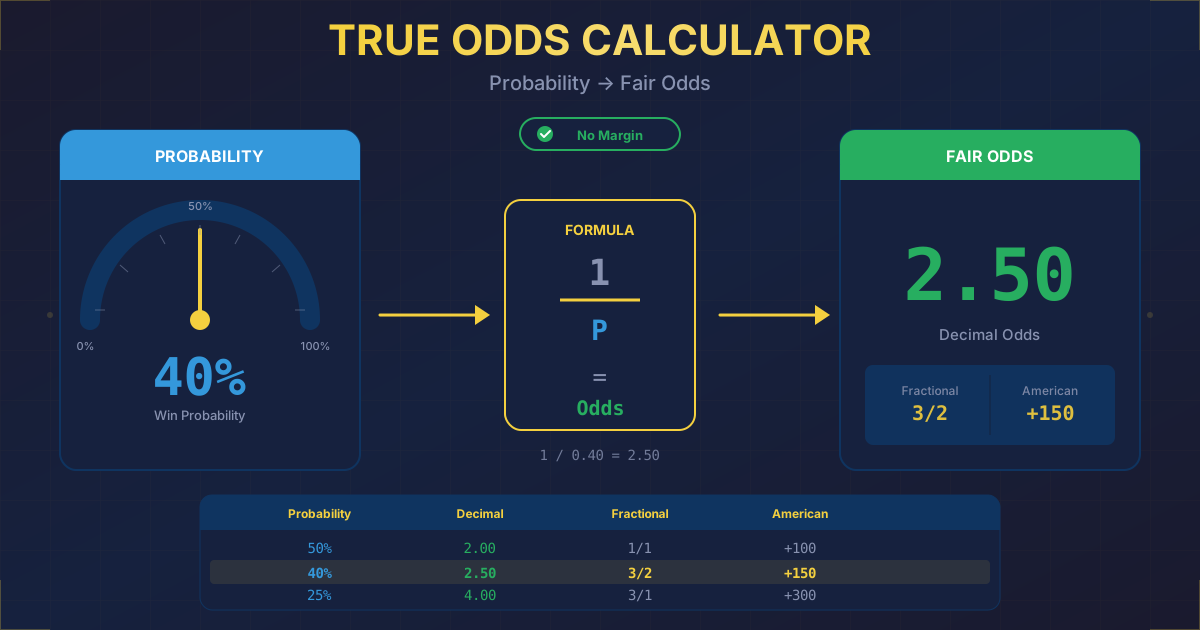
- Implied Probability Calculator: Convert odds to real probabilities to demonstrate how unlikely advertised outcomes truly are.
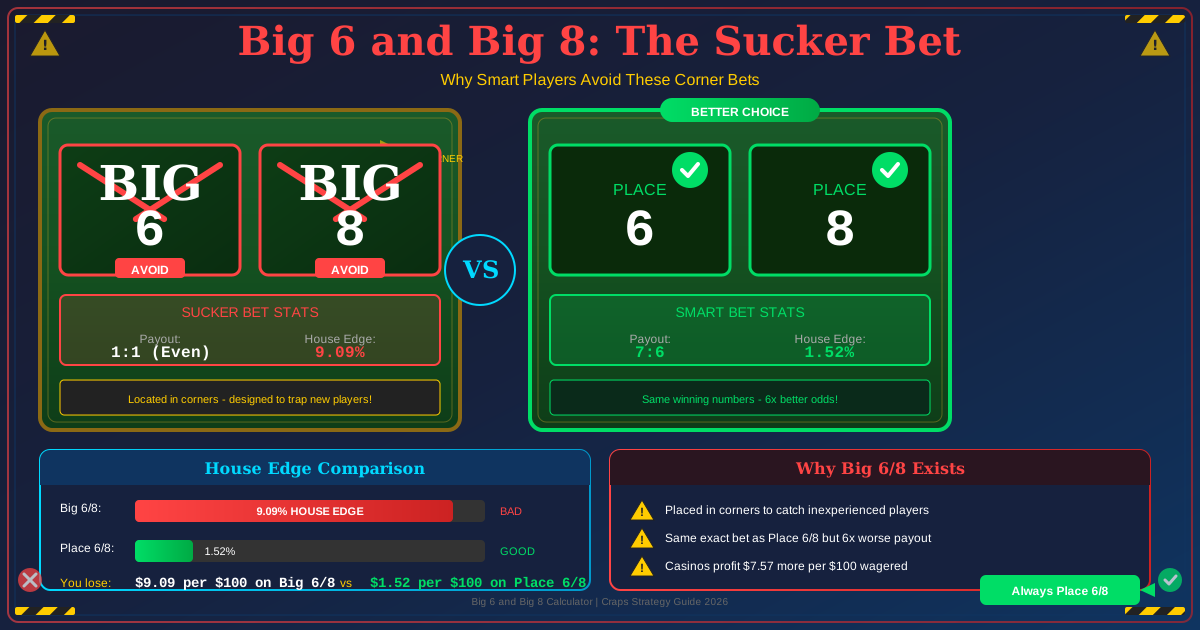
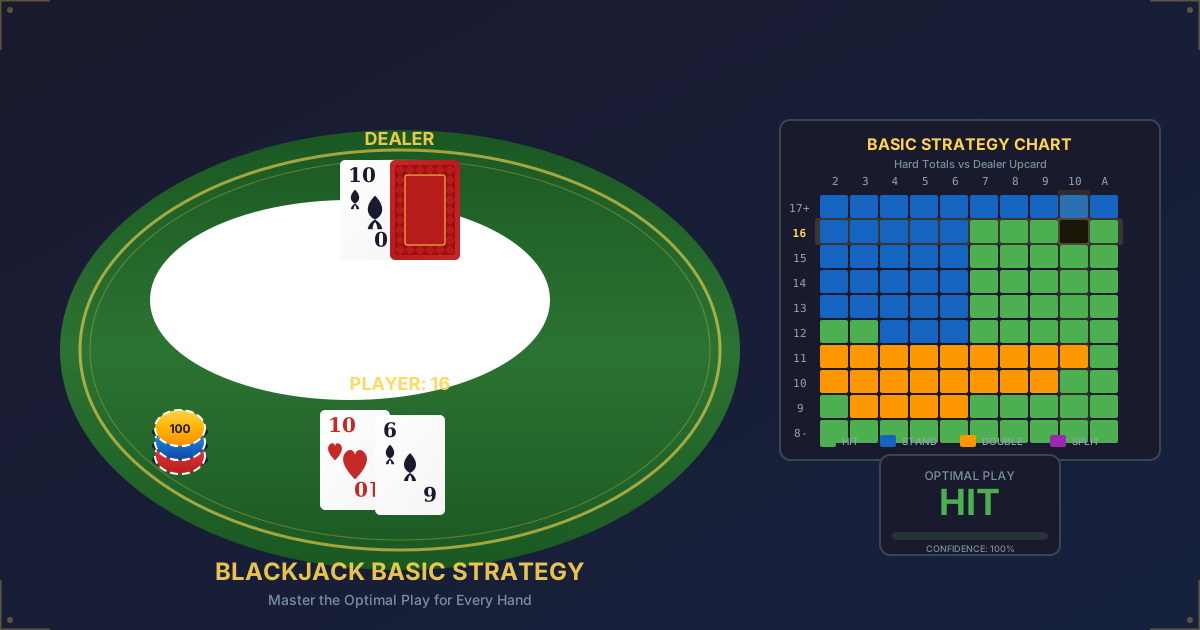
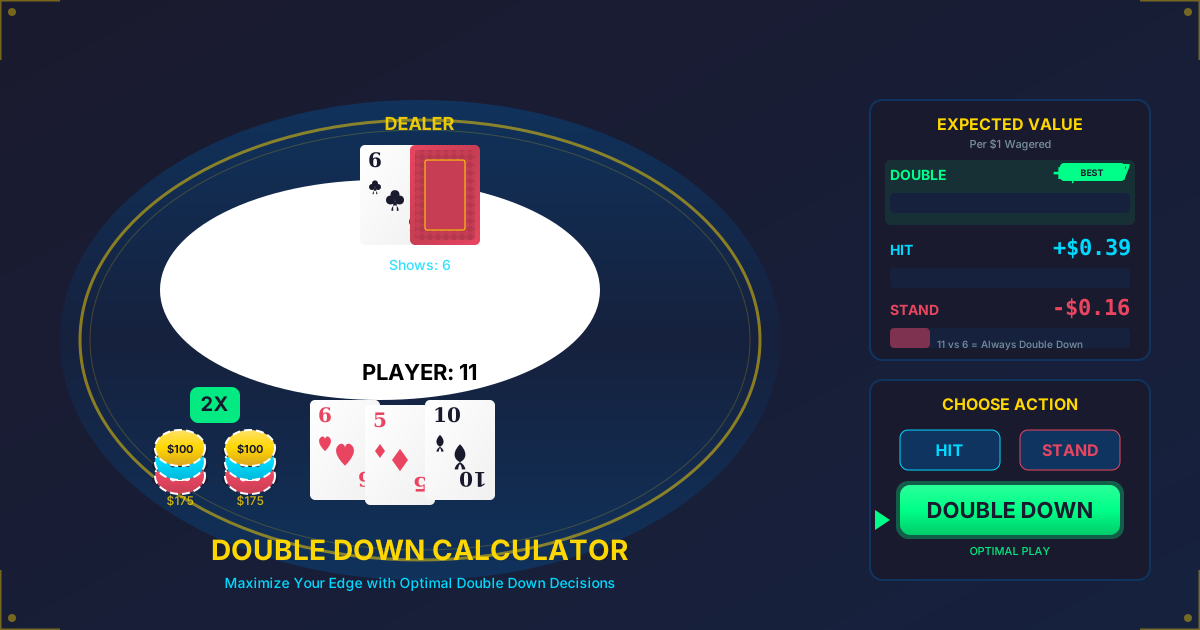
- Blackjack House Edge Calculator: Demonstrate the house edge concept with one of the most familiar casino games.
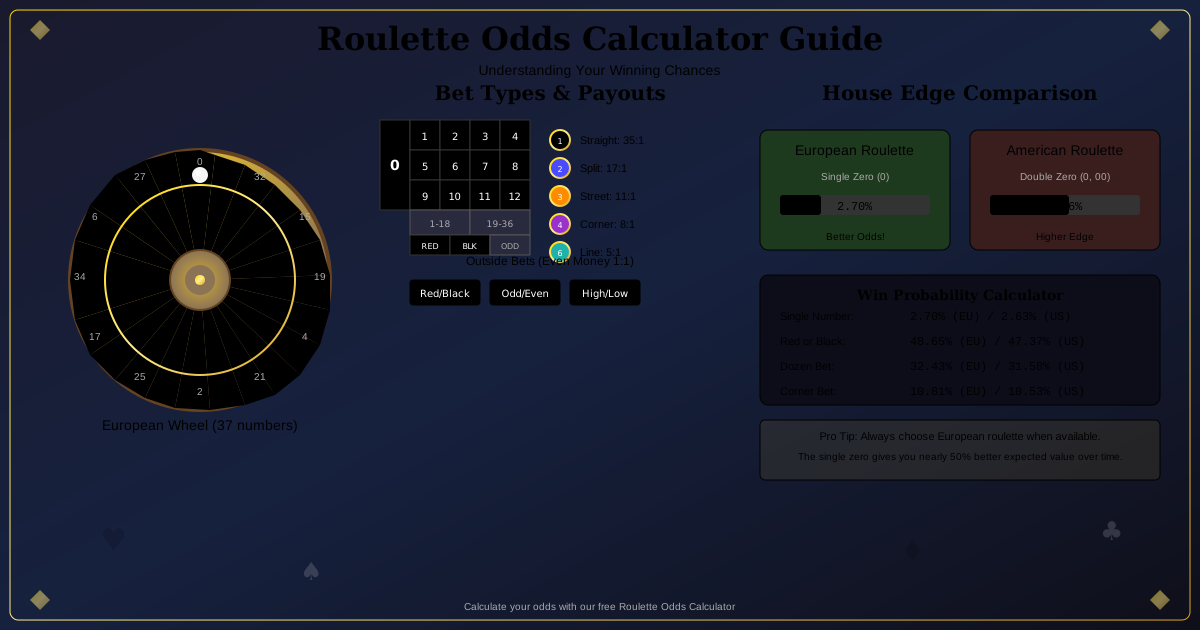
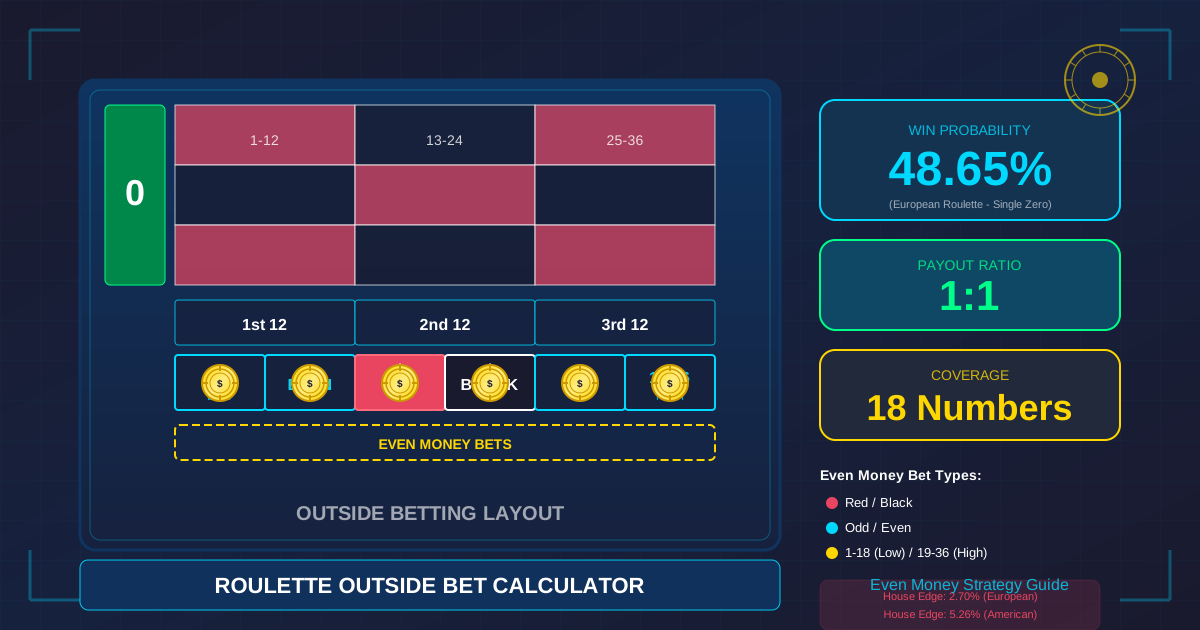
- Roulette House Edge Calculator: Visualize the house edge with the simple, intuitive roulette wheel.
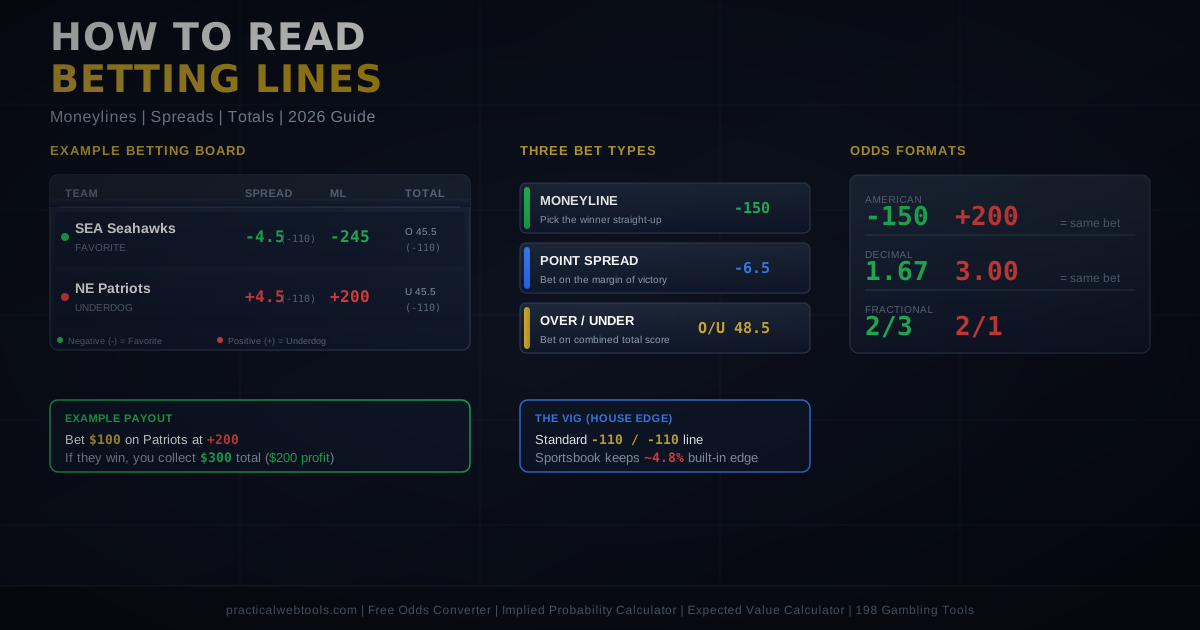
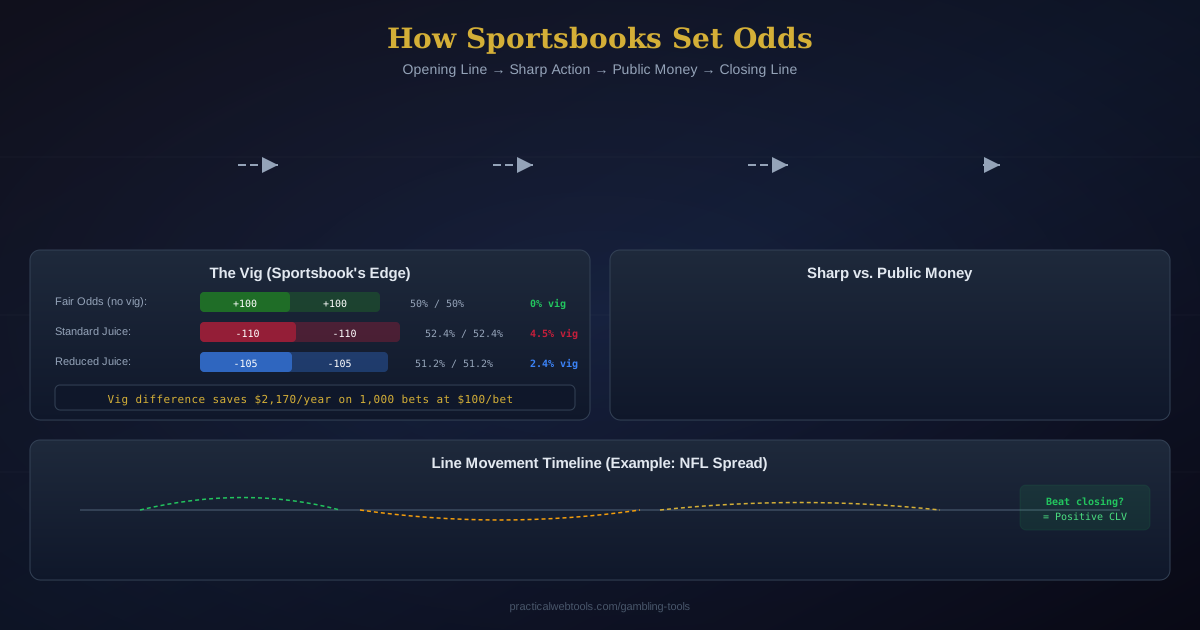
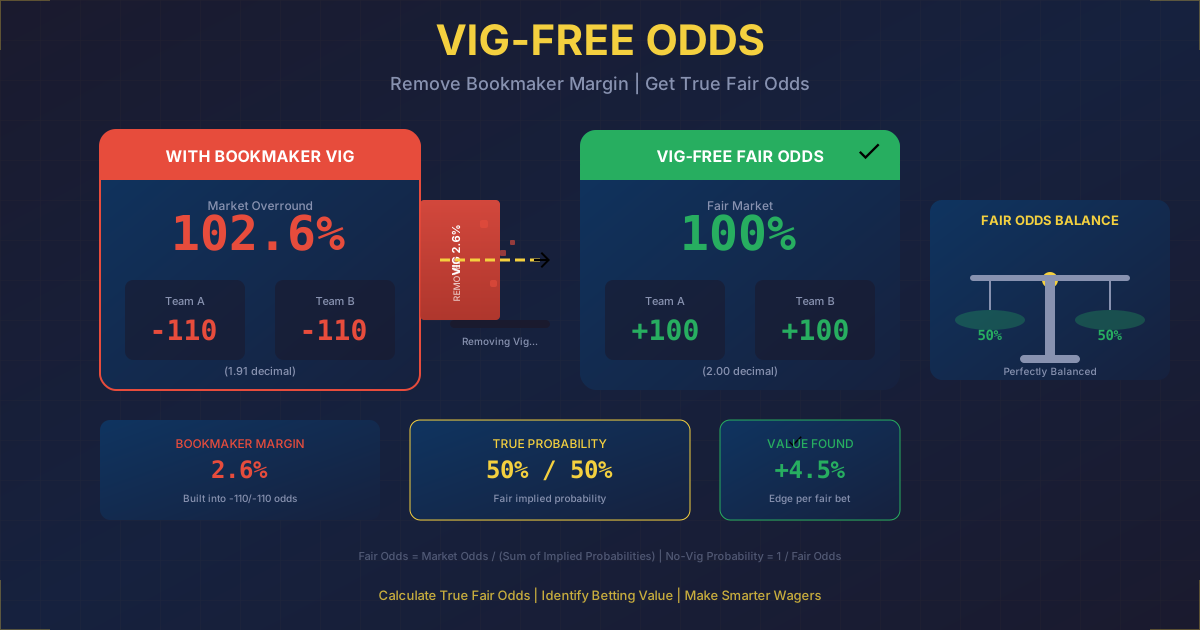
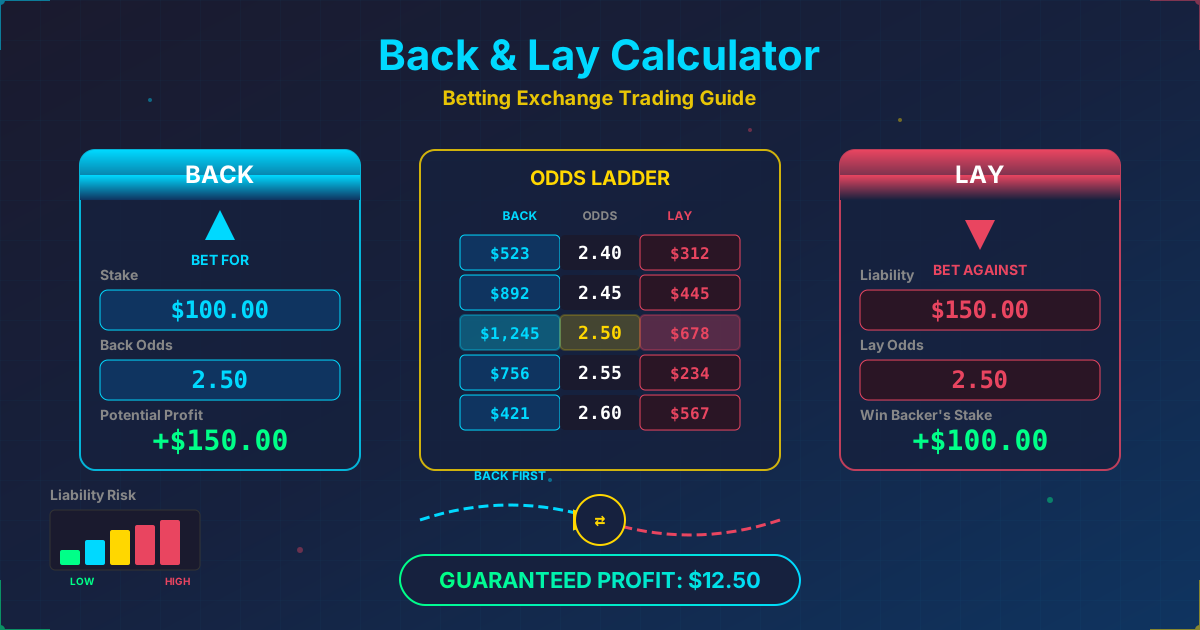
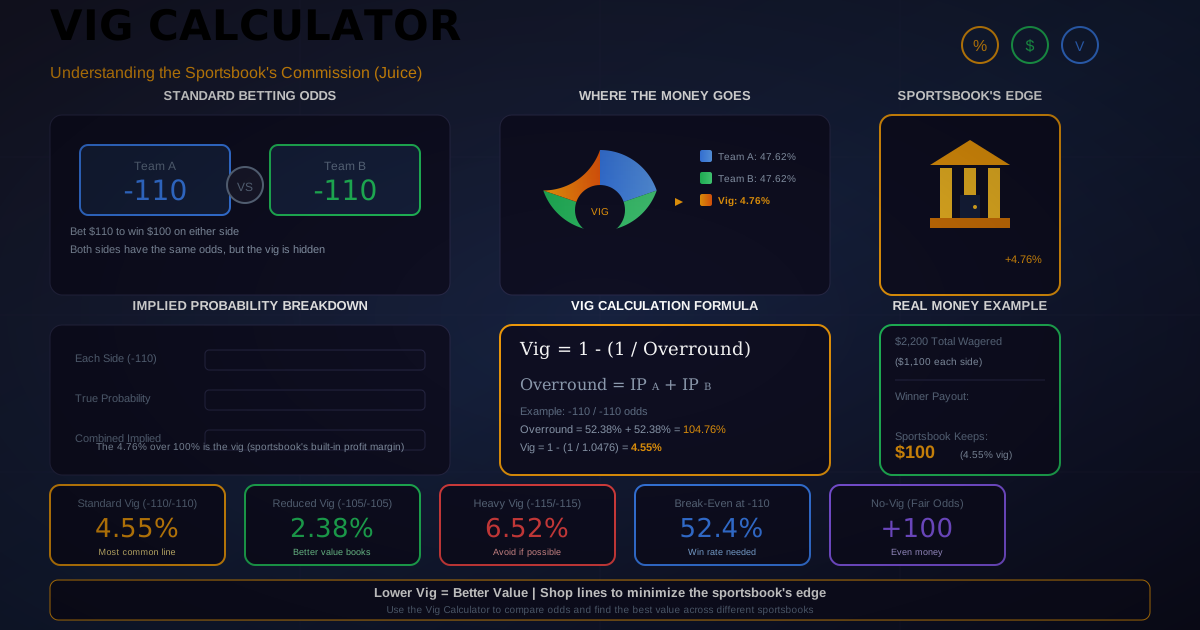
- Hold/Vig Calculator: Show how sportsbooks build in their profit margin on every bet.
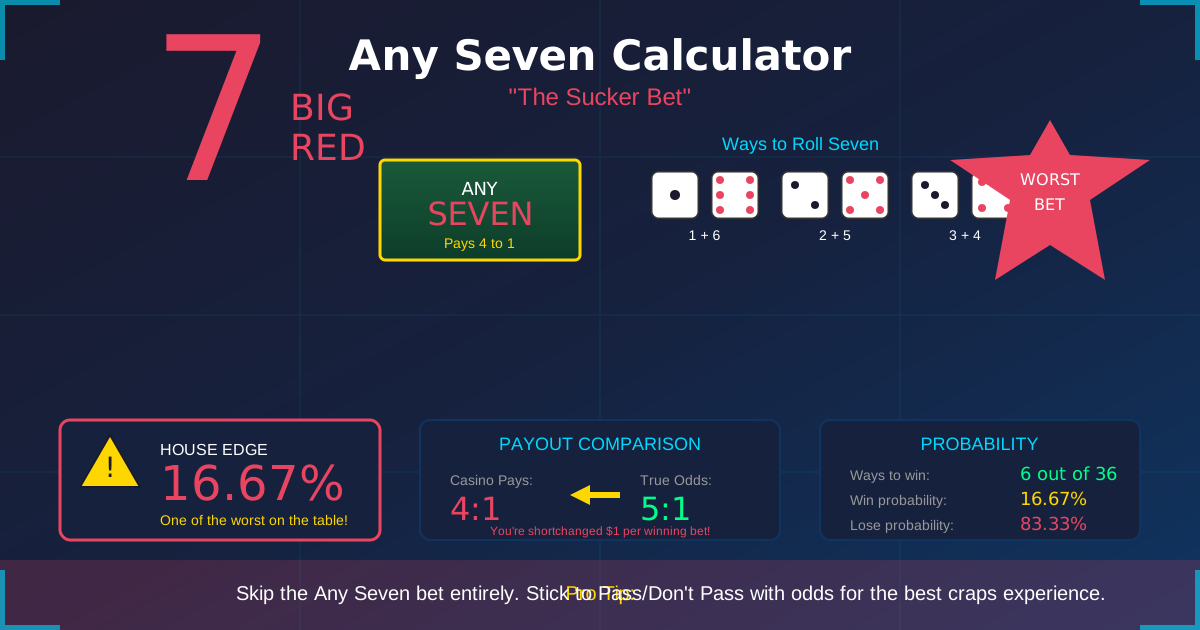
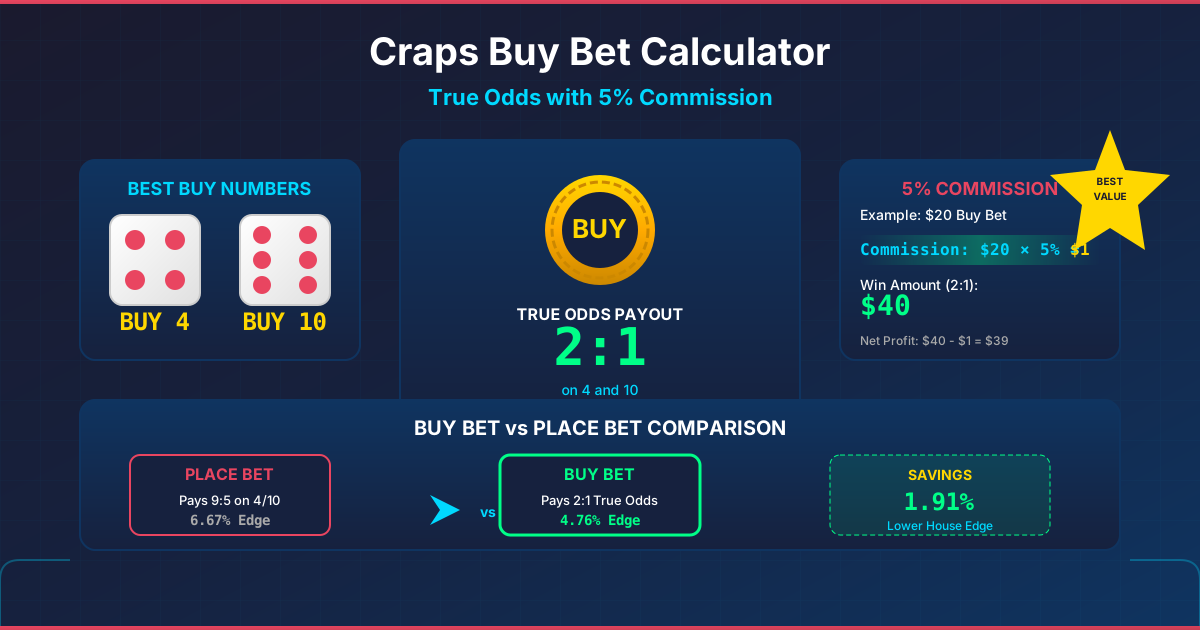
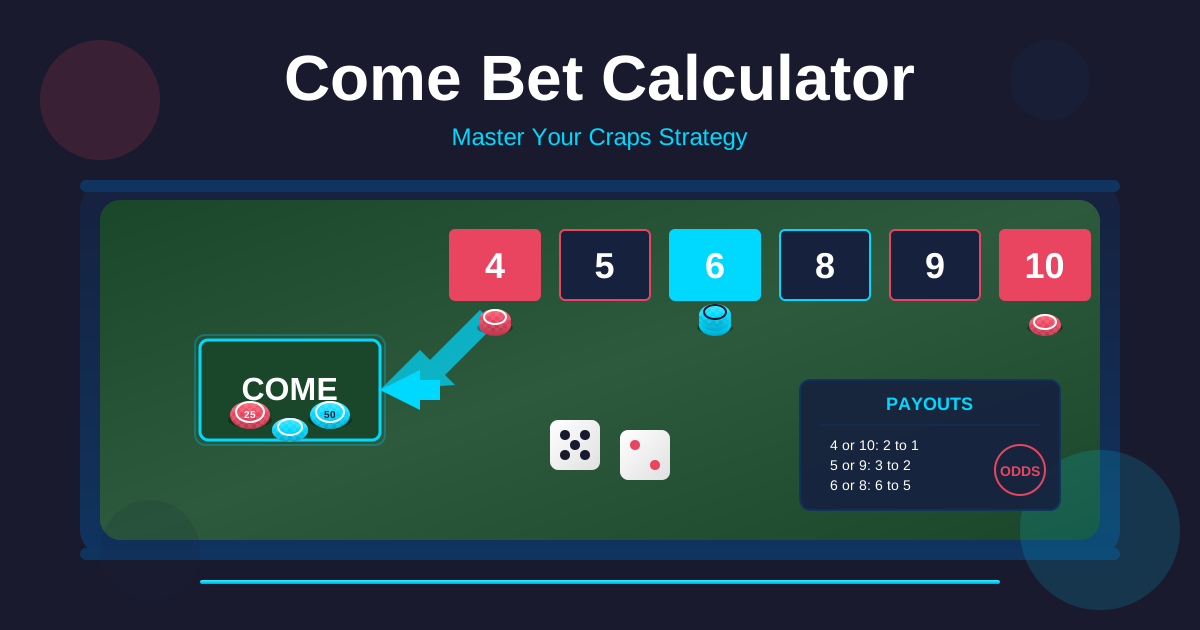
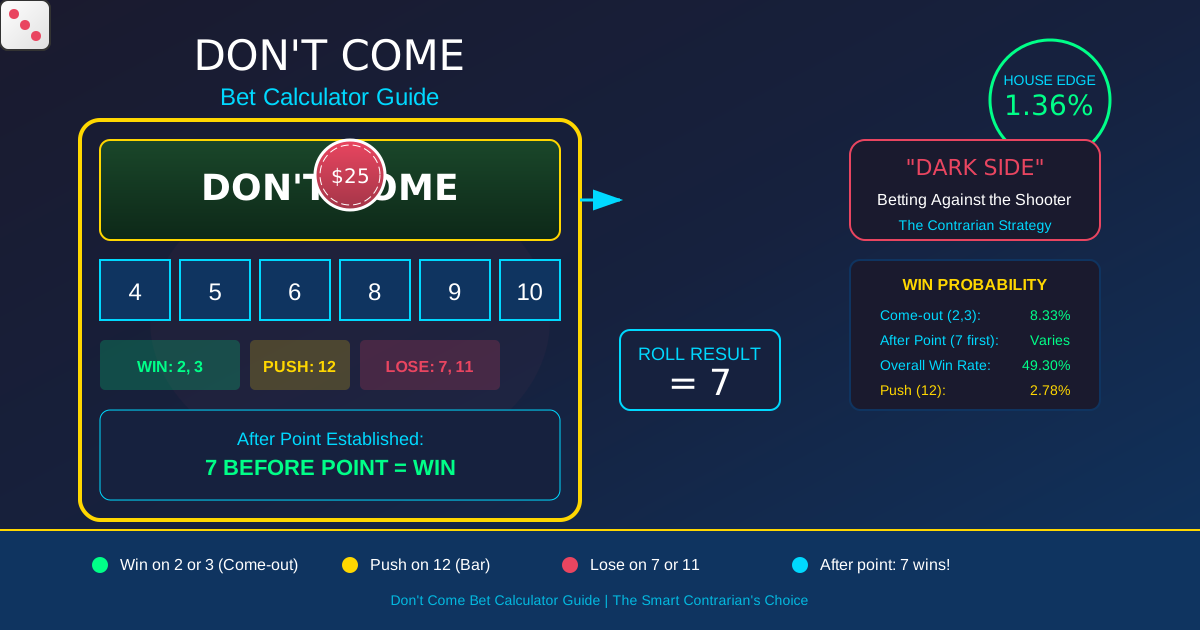
- Craps House Edge Calculator: Compare bet quality to teach decision-making about risk.
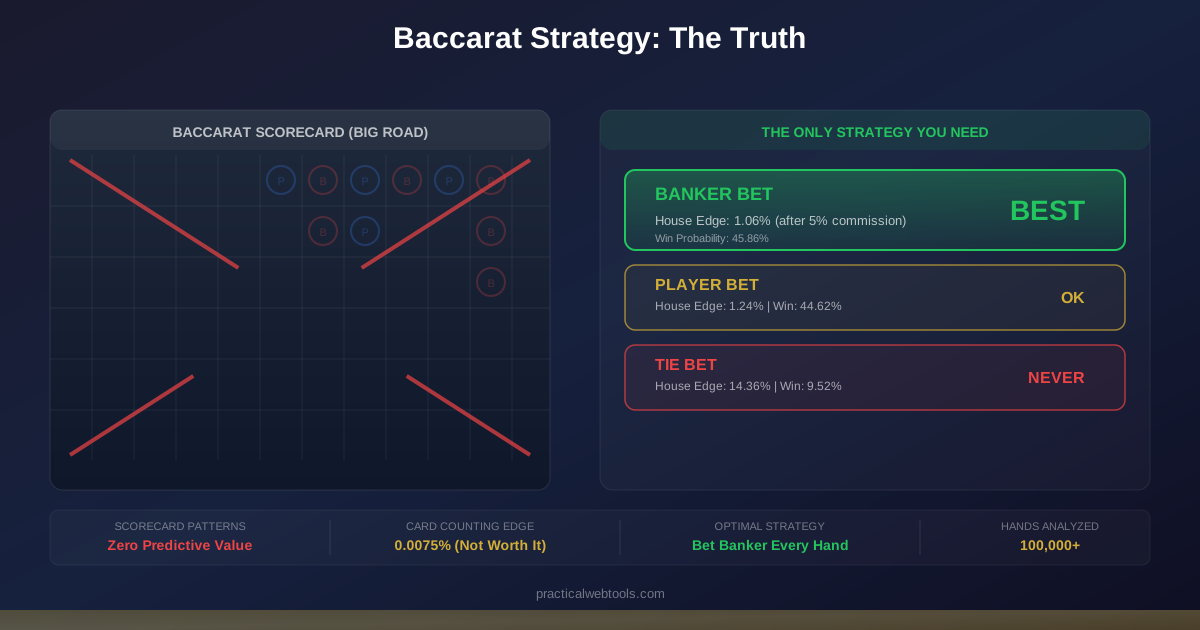
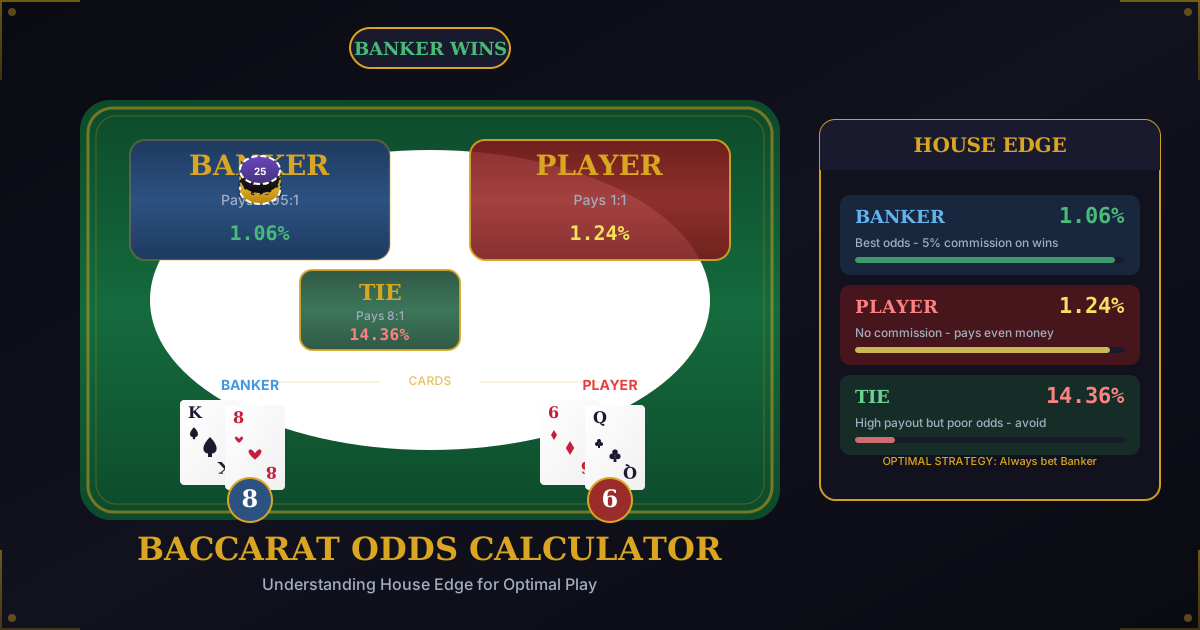
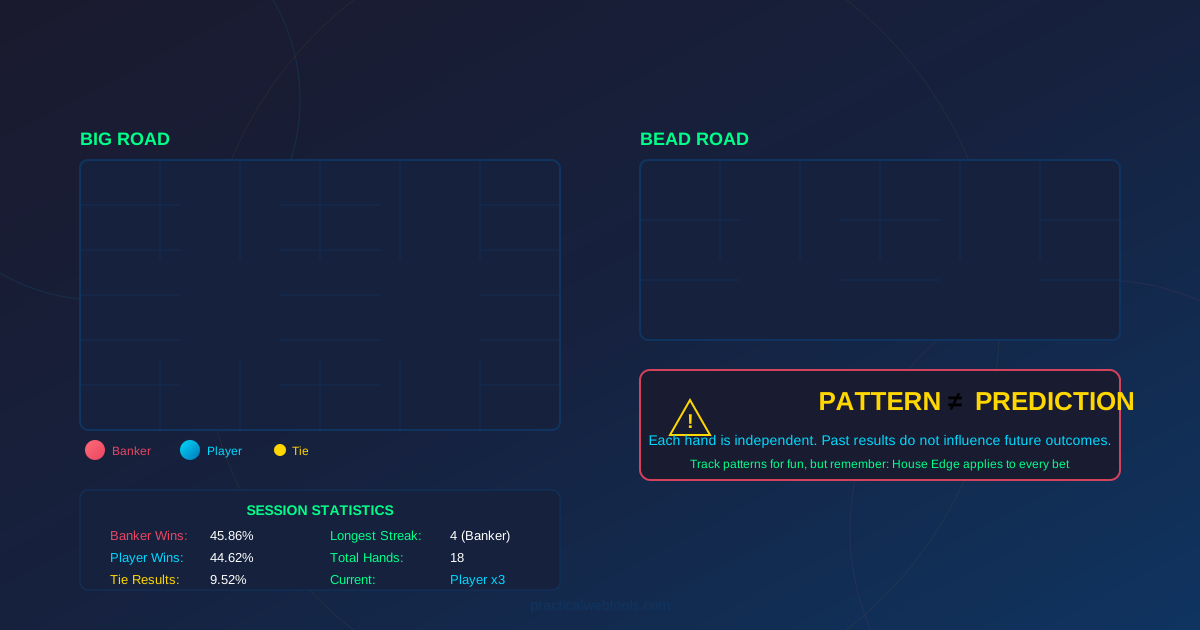
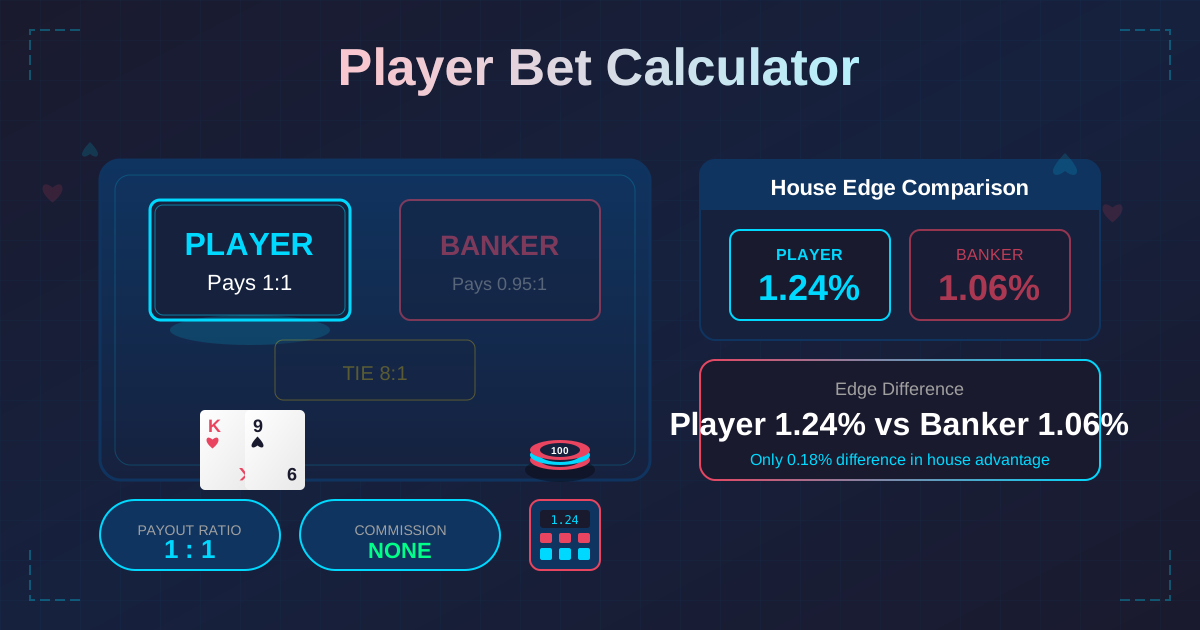
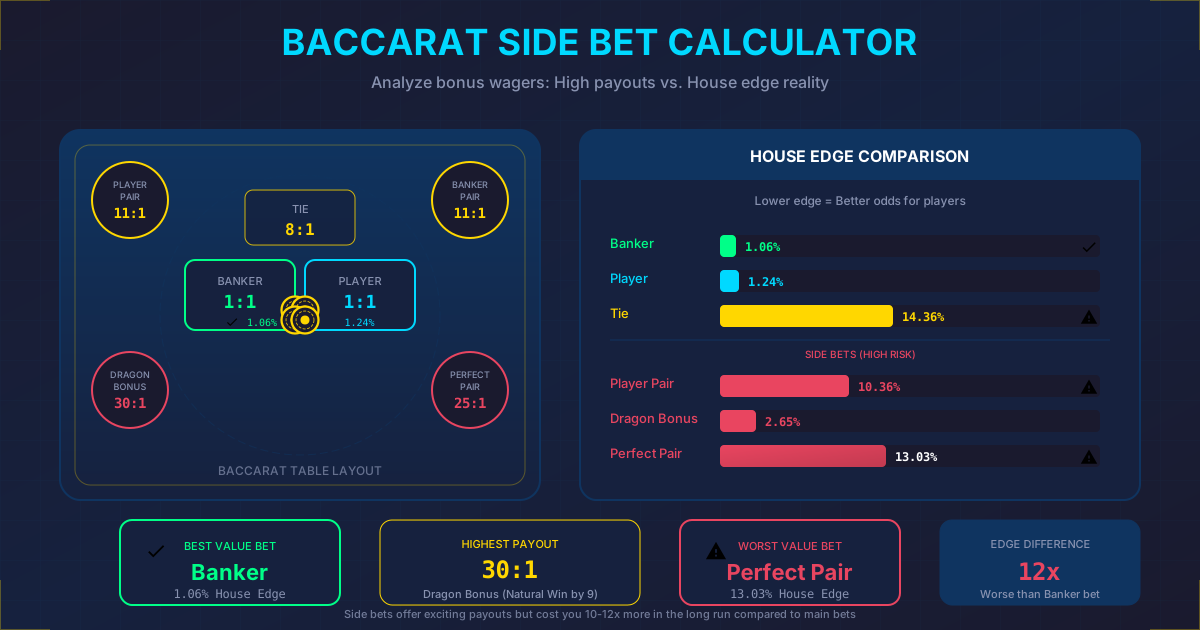
- Baccarat House Edge Calculator: Another house edge demonstration tool for educational conversations.
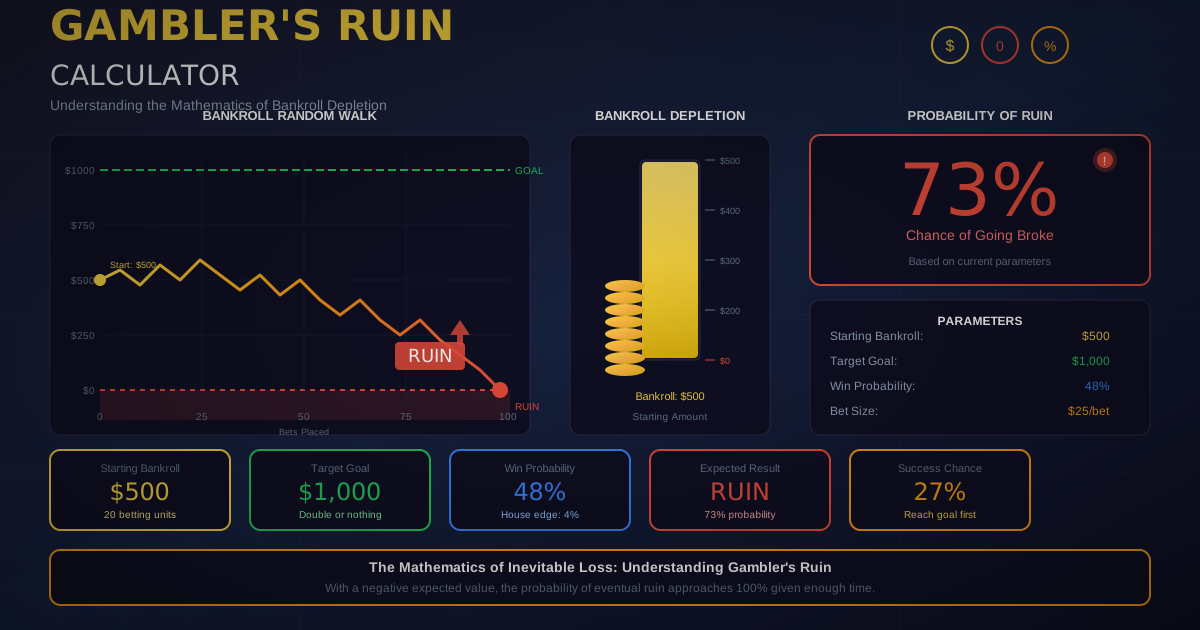
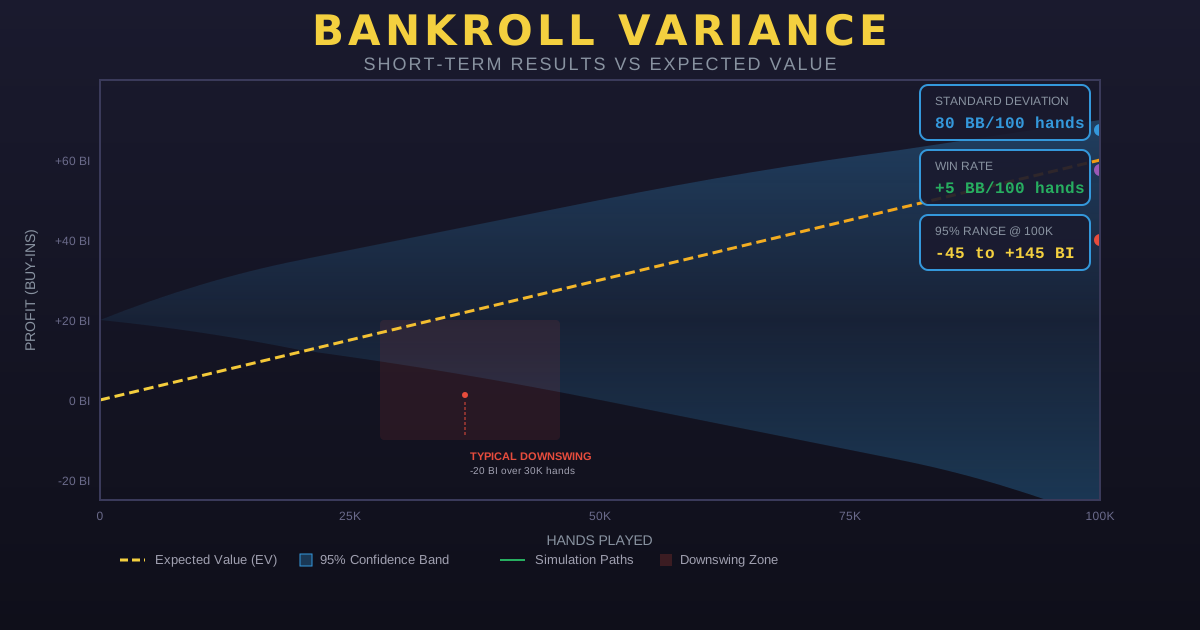
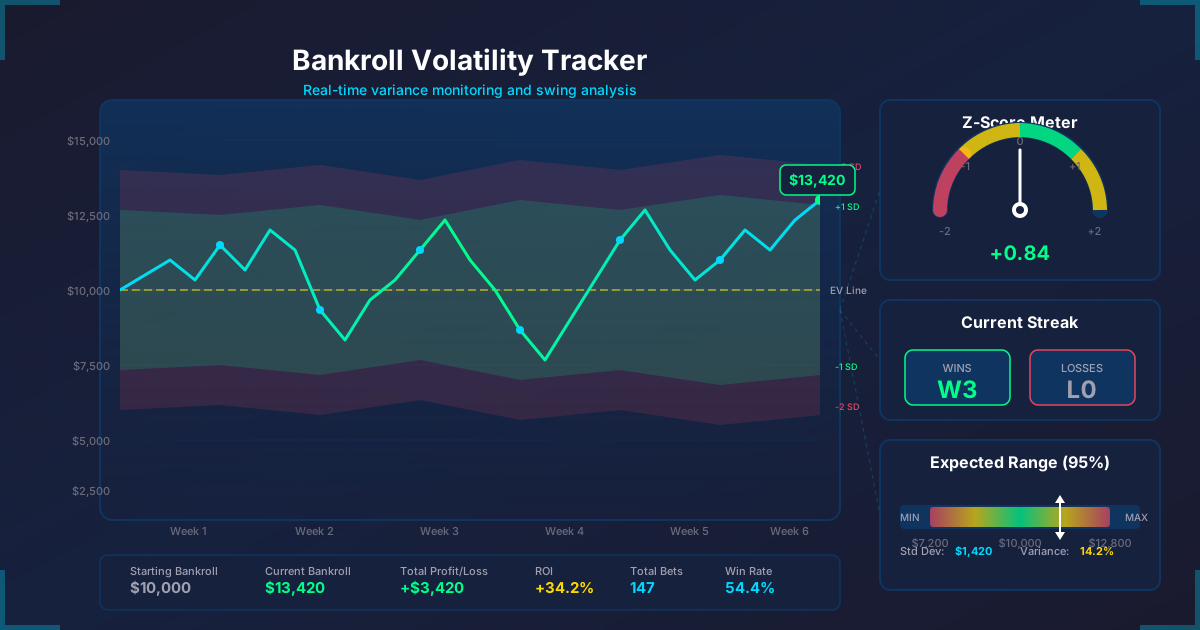
- Bankroll Volatility Tracker: Model how a bankroll erodes over time to demonstrate the house edge in action.
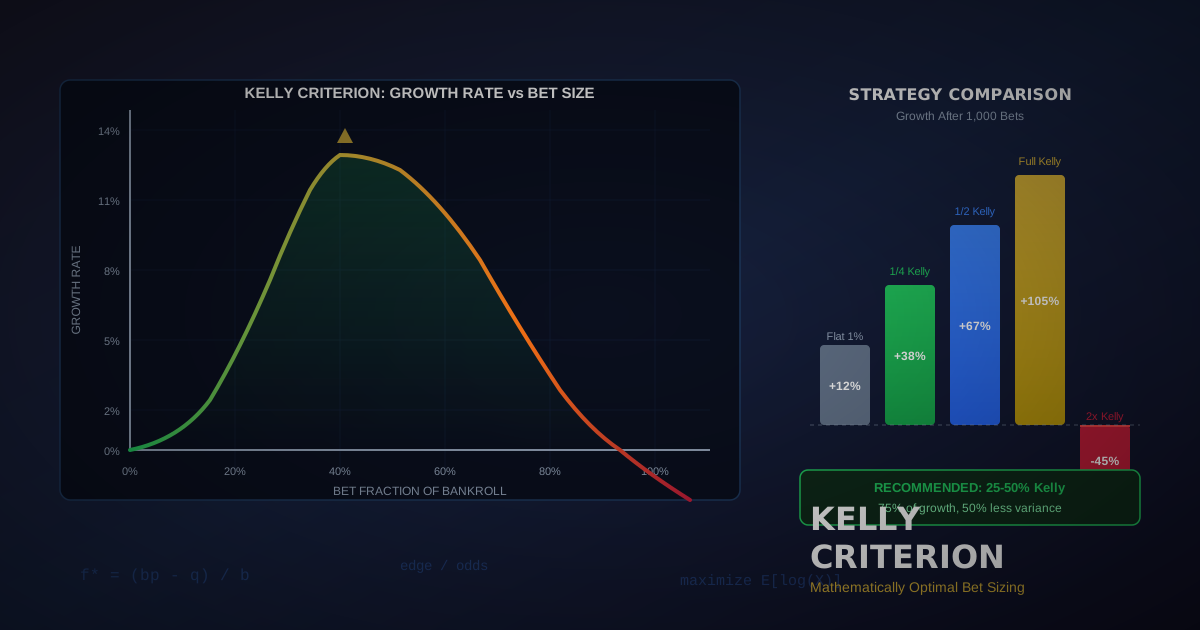
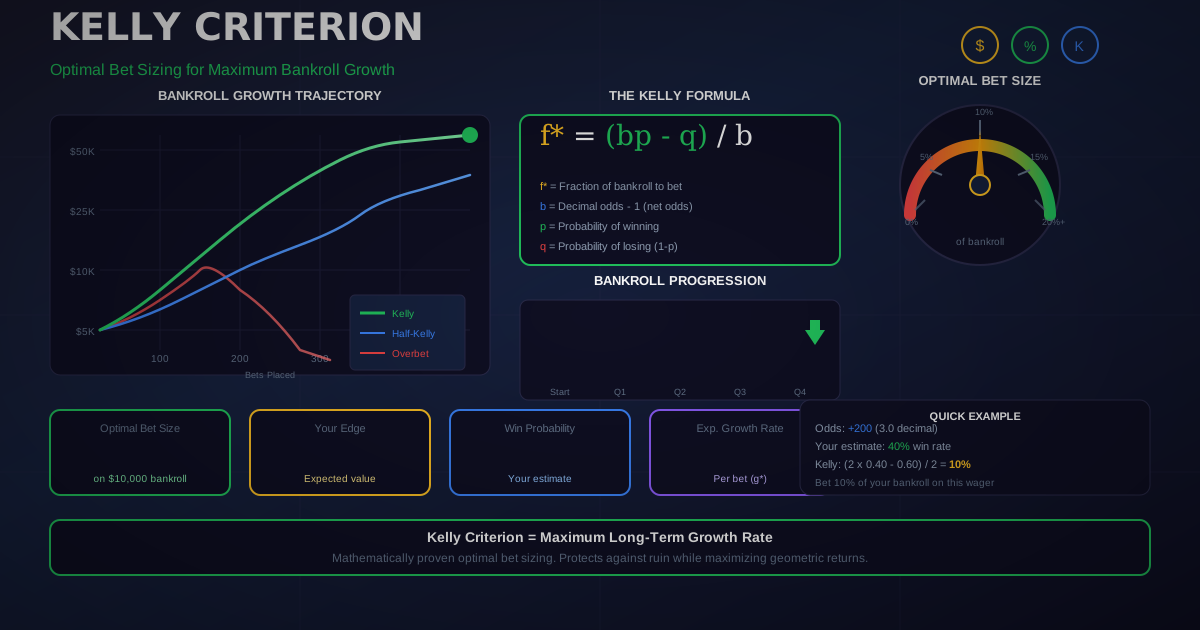
- Kelly Criterion Calculator: Advanced tool for teaching older teens about mathematical bet sizing.
- Blackjack Basic Strategy Calculator: Show that even with perfect strategy, the house still maintains an edge.
- Roulette Odds Calculator: Calculate exact probabilities for every roulette bet type.
Protecting your children from gambling harm is not about controlling every device and blocking every website. It is about building a relationship where your child feels safe discussing what they encounter online, understanding the mathematics well enough to make informed decisions, and knowing where to get help if they or a friend ever need it. Start the conversation today.
Explore all of our free gambling education tools at Practical Web Tools and use them as conversation starters with your family.
Gambling involves risk and should be approached as entertainment, not as a source of income. Always bet within your means, set strict bankroll limits, and never chase losses. If you or someone you know has a gambling problem, contact the National Council on Problem Gambling at 1-800-522-4700 or visit ncpgambling.org. Must be 21+ to gamble in most US jurisdictions. Please play responsibly.