GTO Poker Solvers Explained: How to Use Them to Improve Your Game (2026)
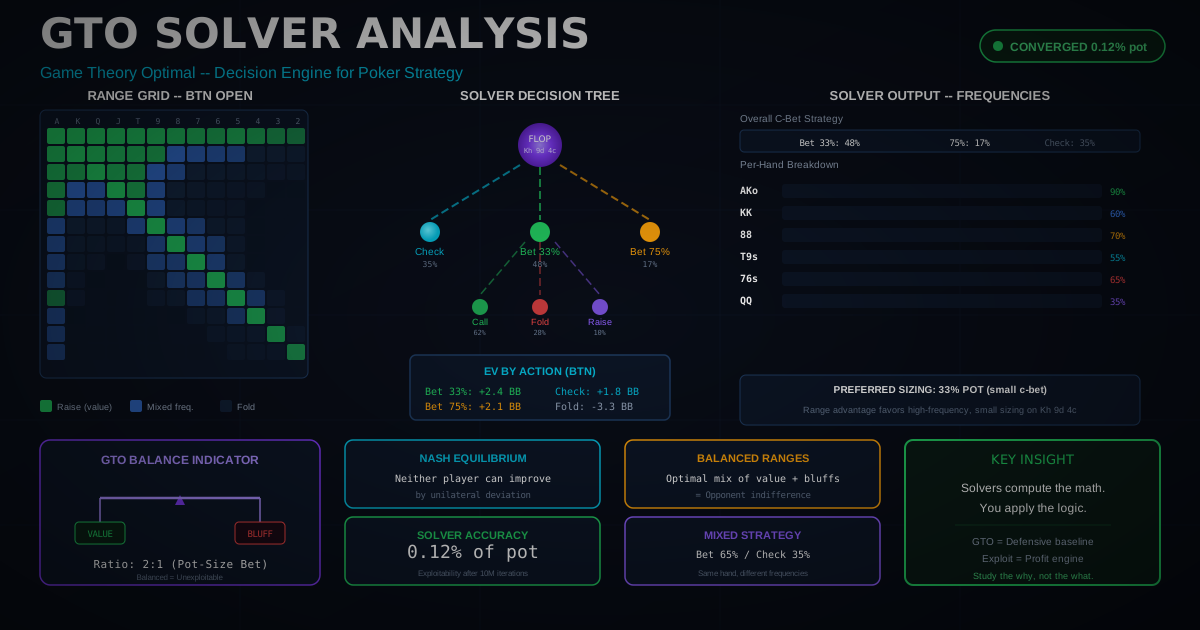
GTO poker solvers have become the single most transformative tool in modern poker, giving players access to mathematically optimal strategies that were once the exclusive domain of elite professionals and academic researchers. Whether you play $0.05/$0.10 online or grind mid-stakes live cash games, solver technology is reshaping how every winning player studies, prepares, and executes at the table.
A decade ago, understanding Game Theory Optimal play required a PhD-level grasp of mathematics. Today, software like PioSOLVER, GTO Wizard, and GTO+ can compute near-perfect Nash Equilibrium strategies for virtually any poker scenario in seconds. The barrier to entry has collapsed. The question is no longer whether you should study with solvers -- it is how to study with them effectively so the insights actually transfer to your live play.
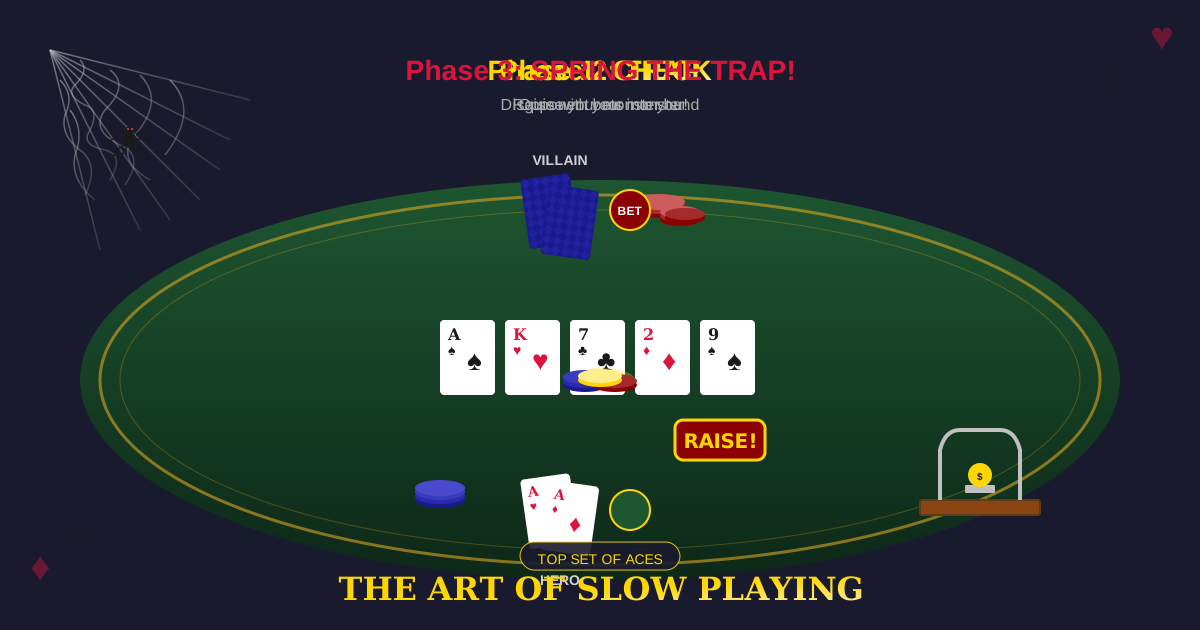
But here is the reality most players miss: owning a solver does not make you a better player any more than owning a gym membership makes you fit. The players who gain the most from solvers are those who approach them with structured study habits, ask the right questions, and understand that solver outputs are a starting point for deeper strategic thinking -- not a script to memorize.
This guide walks you through everything you need to know about GTO solvers in 2026: what they are, how they work, which one fits your budget and goals, how to read their output, and how to build a study routine that actually improves your win rate.
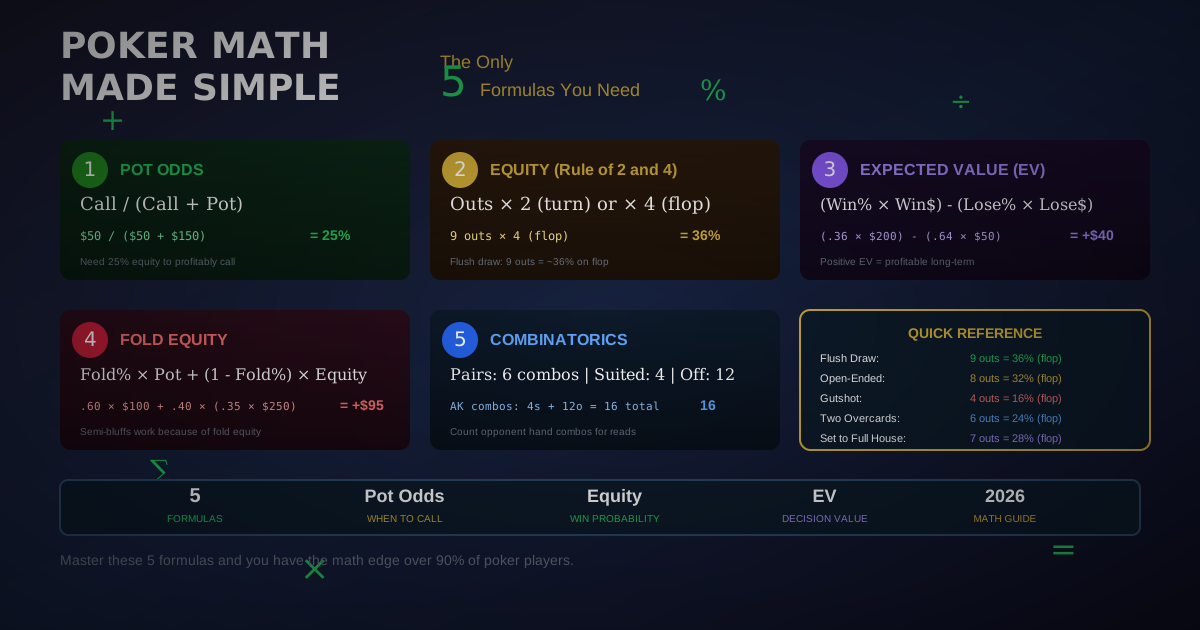
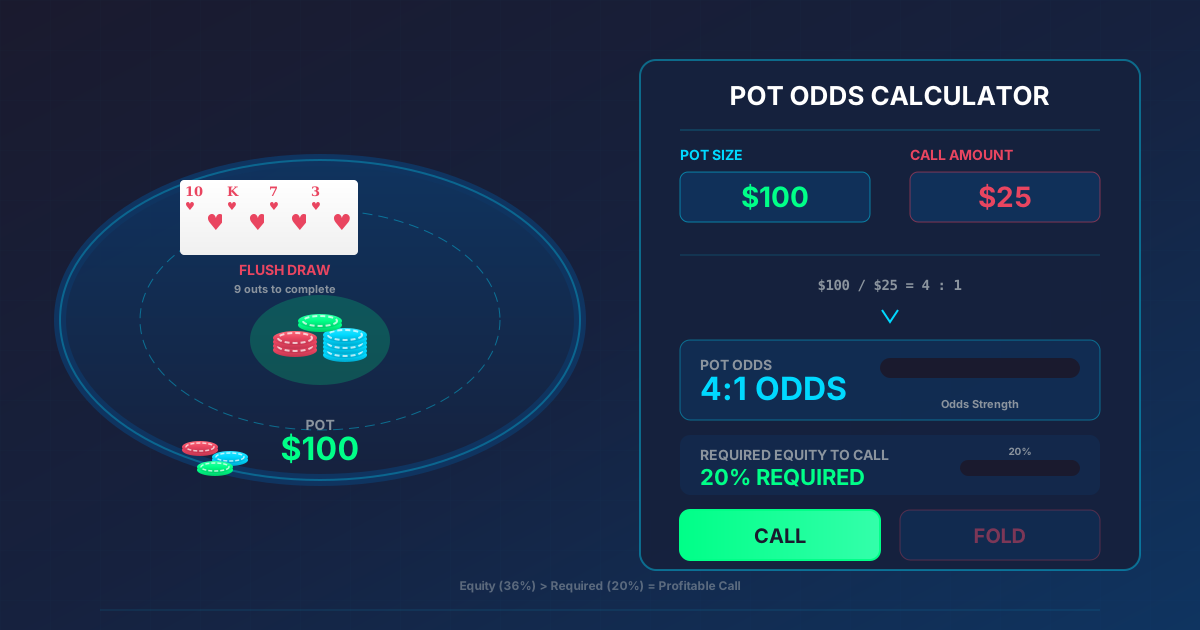
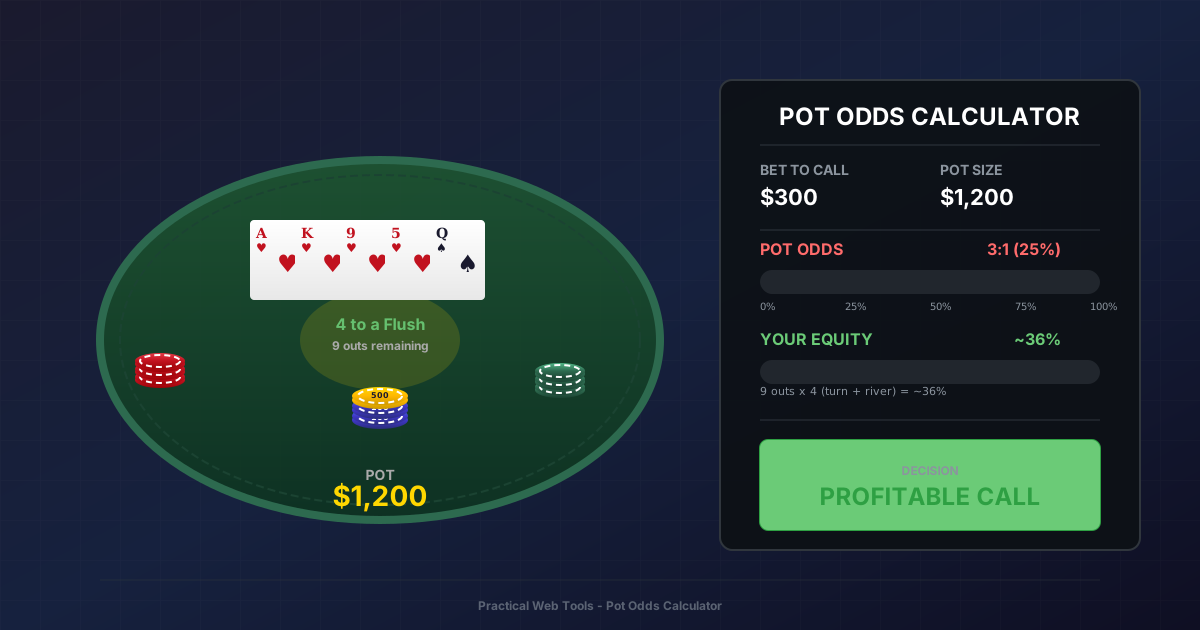
Calculate your pot odds and equity in real time with our free Pot Odds Calculator -- the perfect companion to solver study.
What Is GTO Poker?
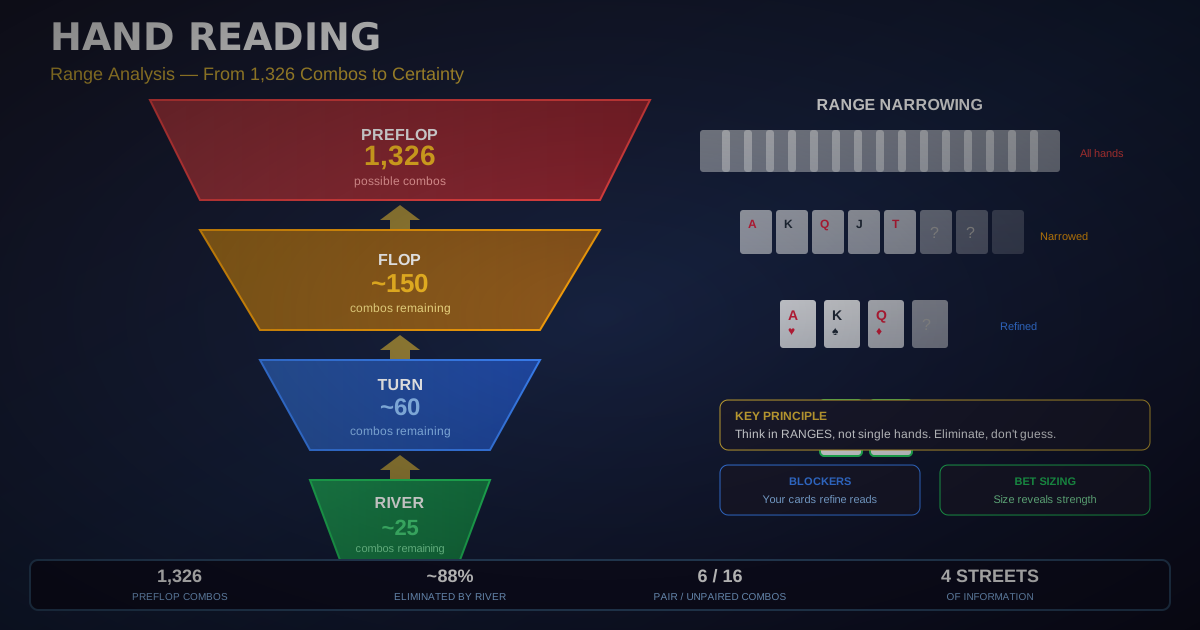
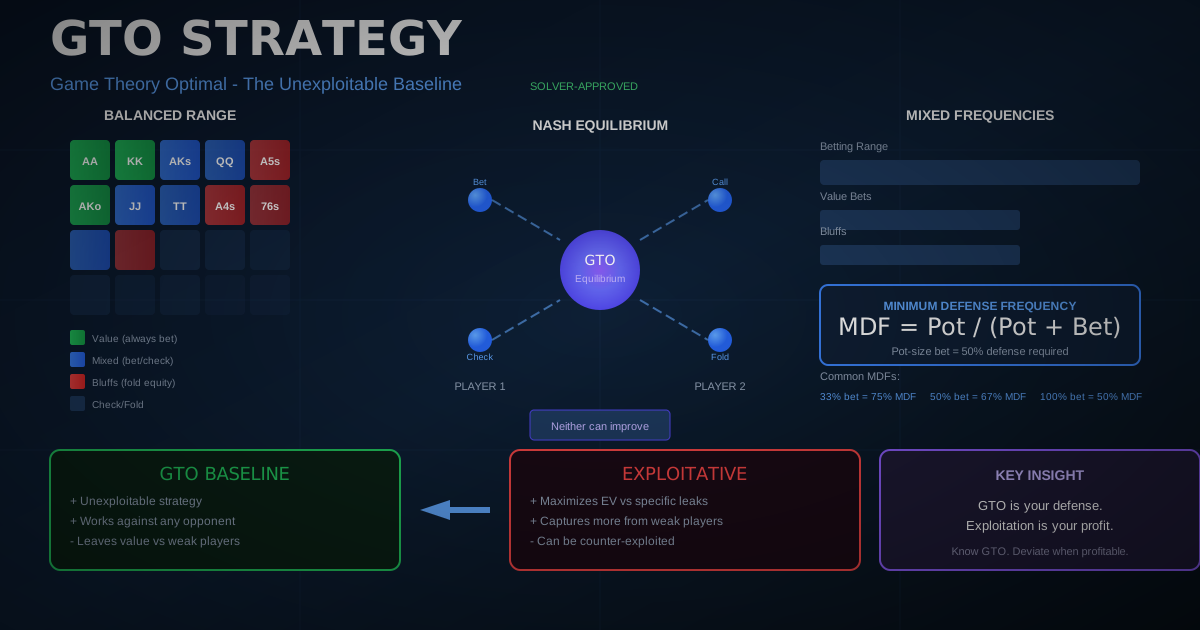
Game Theory Optimal (GTO) poker is a strategy rooted in Nash Equilibrium, a concept from mathematics and economics. In simple terms, a GTO strategy is one that cannot be exploited. If you play GTO perfectly, no adjustment your opponent makes can increase their expected value against you. You are playing a strategy that guarantees at least your fair share of every pot in the long run.
The Core Idea Behind GTO
GTO is built on three foundational principles:
- Balanced ranges: Your betting and checking ranges contain the right mix of strong hands and bluffs so opponents cannot profit by always calling or always folding against you
- Mixed strategies: The solver often recommends taking different actions with the same hand at specific frequencies (for example, betting AJs 60% of the time and checking it 40% on a particular flop)
- Opponent indifference: When you play GTO, your opponent's choices become irrelevant because they cannot find a profitable counter-strategy -- every option available to them yields the same expected value
GTO in Plain English
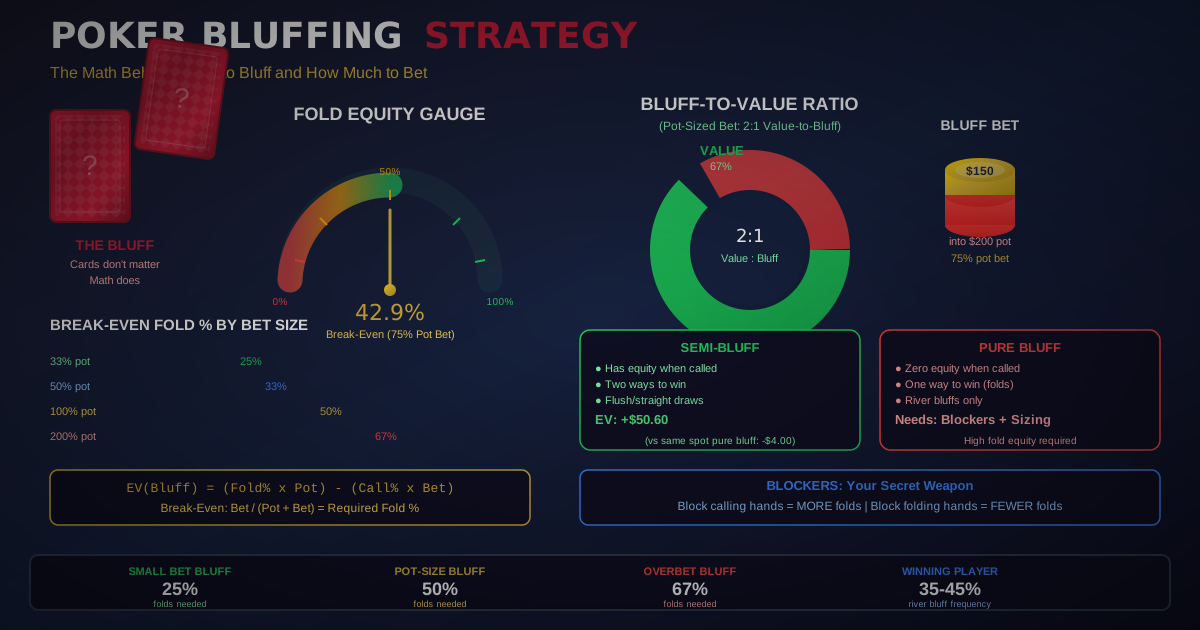
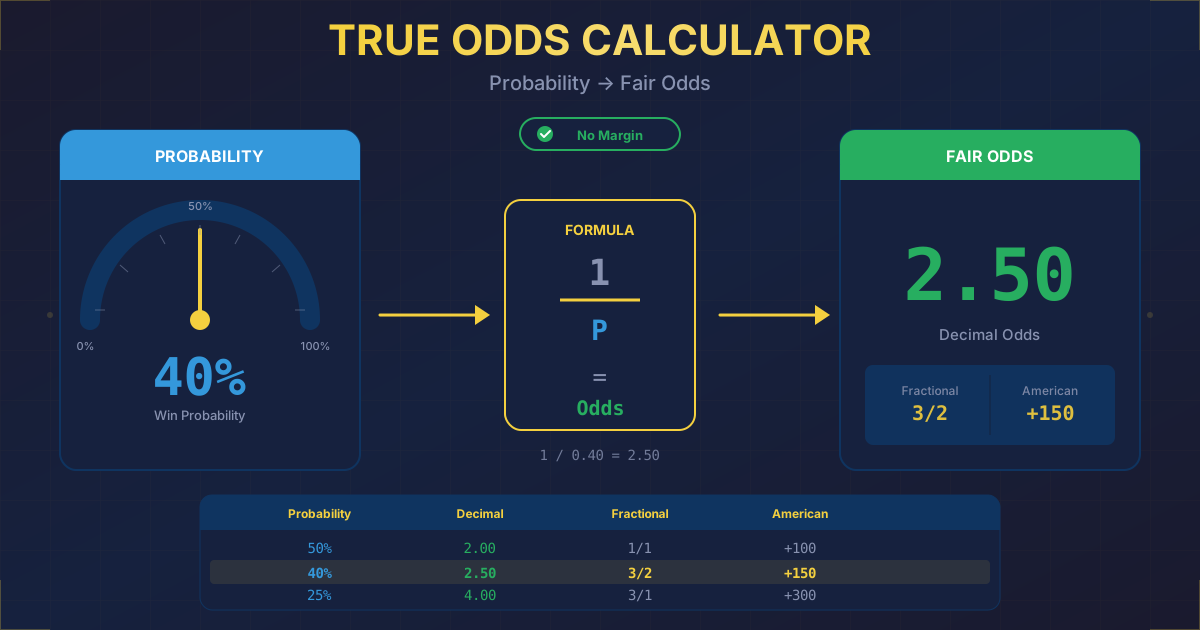
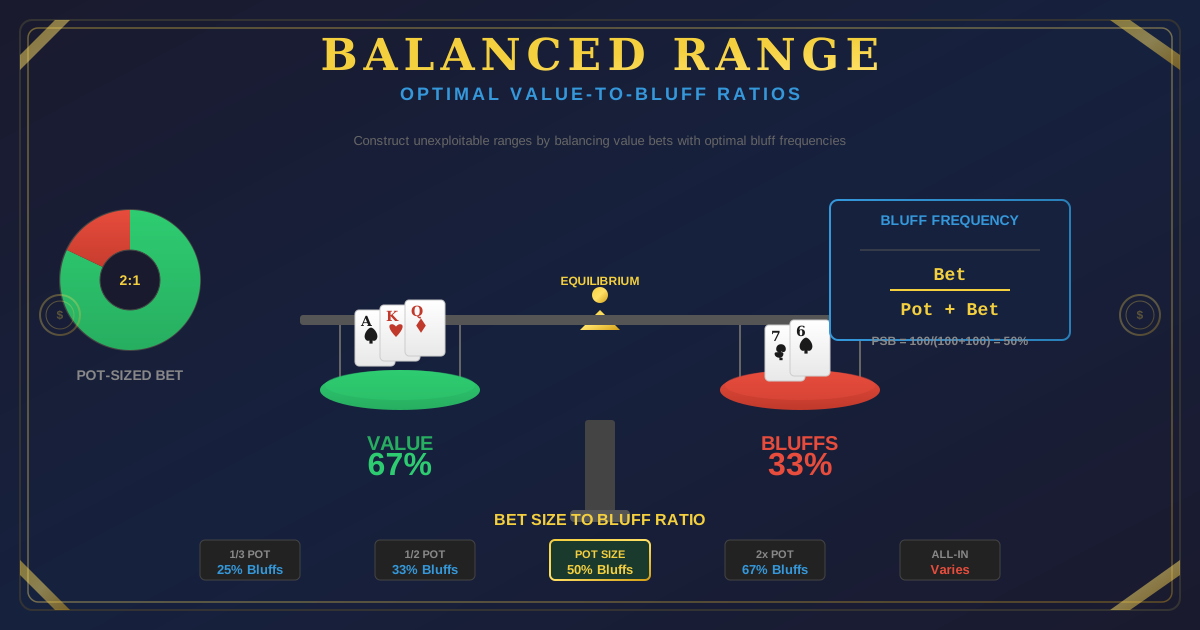
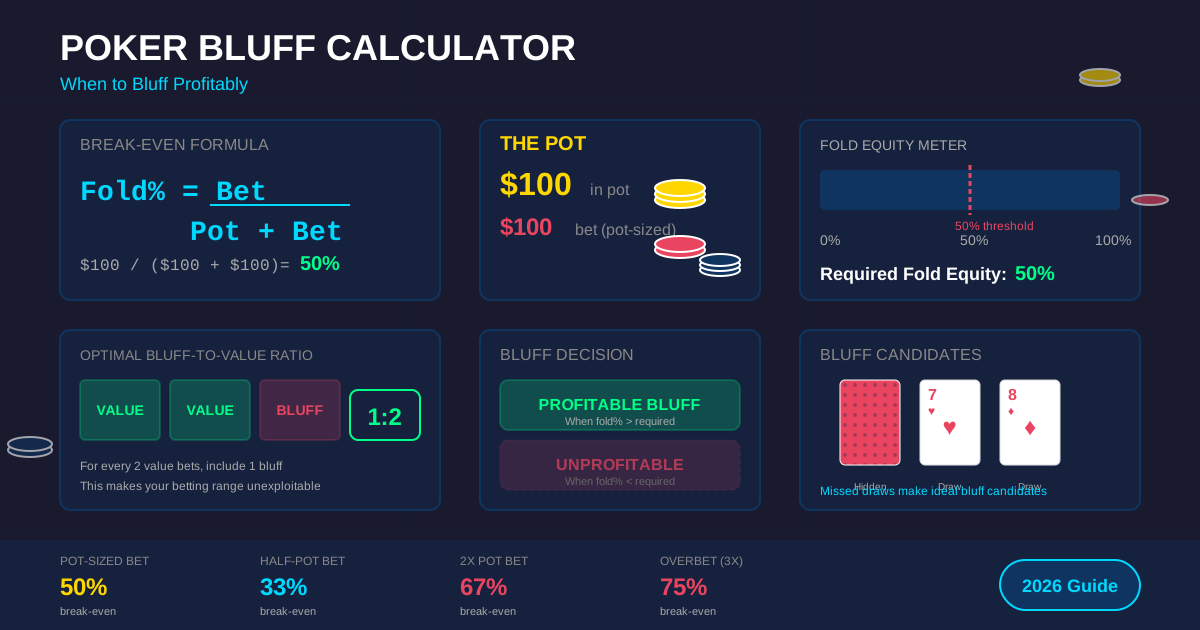
Imagine you are on the river with a pot of $100, and you bet $100 (a pot-sized bet). GTO dictates that your betting range should contain roughly 2 value bets for every 1 bluff. Why? Because your opponent is getting 2:1 odds to call, meaning they need to be right 33% of the time. If exactly 33% of your bets are bluffs, your opponent breaks even whether they call or fold -- they are indifferent. That is GTO.
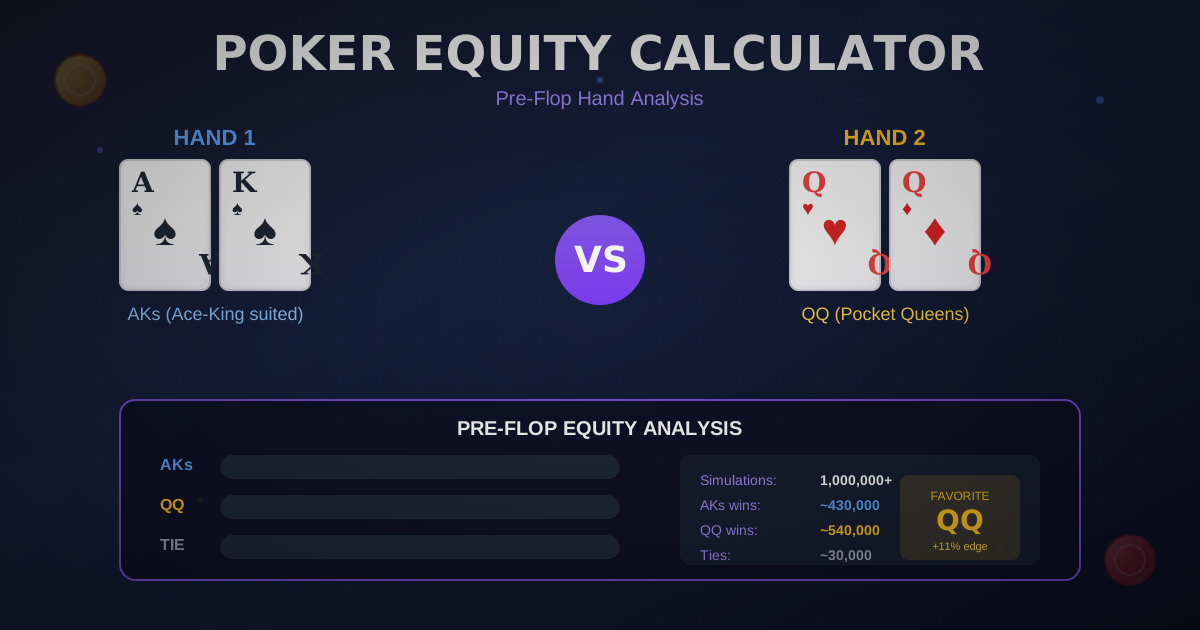
Verify these calculations yourself with the Poker Equity Calculator to see how equity shifts across different board textures.
Key GTO Terminology
Before diving into solvers, it helps to understand the vocabulary they use.
| Term | Definition | Why It Matters |
|---|---|---|
| Nash Equilibrium | A state where no player can improve their outcome by changing strategy alone | The mathematical foundation of all GTO solutions |
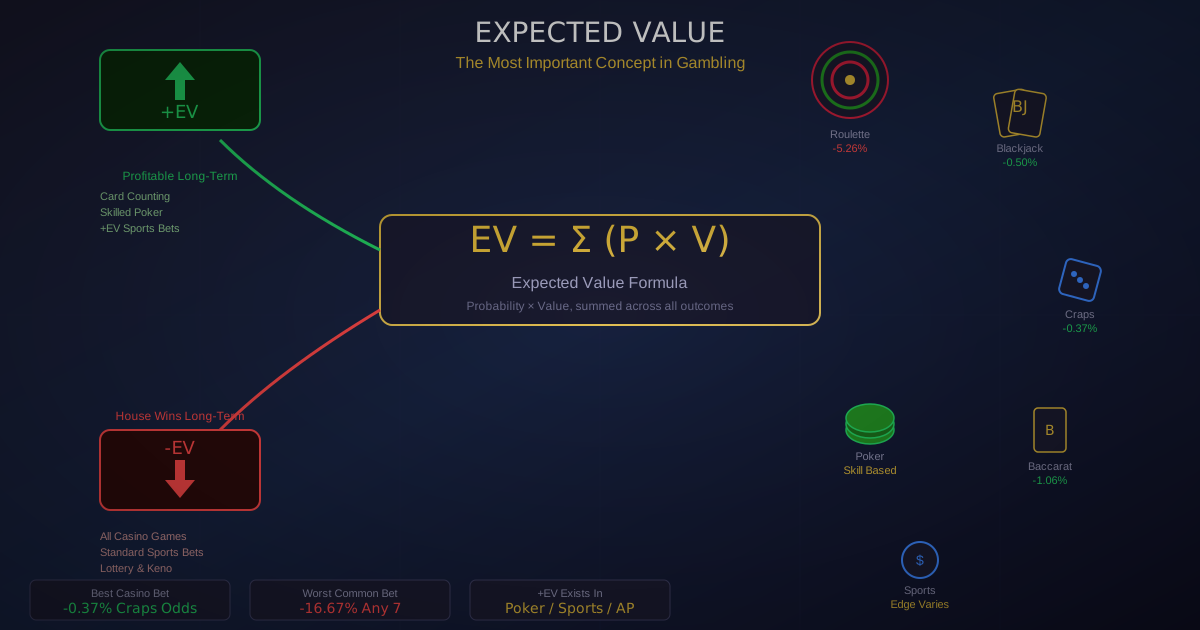
| EV (Expected Value) | The average amount you expect to win or lose with a decision over infinite repetitions | Solvers calculate EV for every possible action |
| Frequency | How often you should take a particular action (e.g., bet 67%, check 33%) | GTO relies on mixed frequencies, not always/never rules |
| MDF (Minimum Defense Frequency) | The minimum percentage of your range you must continue with to prevent opponent from profiting with any bluff | Formula: Pot / (Pot + Bet Size) |
| Indifference | When an opponent's EV is identical regardless of their action | The hallmark of a perfectly balanced GTO strategy |
| Node | A specific decision point in the game tree (e.g., BTN facing a 3-bet on the flop) | Solvers calculate optimal play at every node |
| Game Tree | The complete branching structure of all possible actions in a hand | Solvers traverse the entire tree to find equilibrium |
| Exploitative Play | Deviating from GTO to capitalize on a specific opponent's mistakes | The profit-maximizing complement to GTO knowledge |
How GTO Poker Solvers Work
A GTO solver is software that computes the Nash Equilibrium strategy for a given poker scenario. Understanding how they work -- even at a simplified level -- helps you interpret their output and avoid common mistakes.
The Simplified Process
- You define the inputs: Preflop ranges for each player, the board texture, stack sizes, pot size, and the available bet sizes
- The solver builds a game tree: It maps out every possible sequence of actions (bet, check, call, raise, fold) across every remaining street
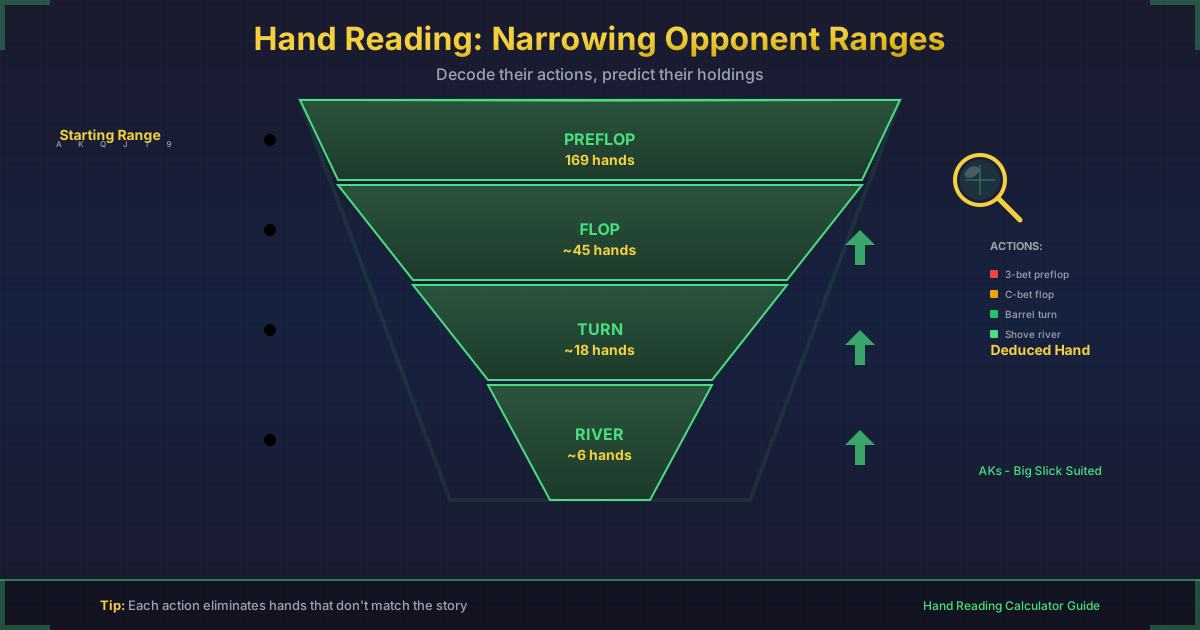
- Iterative convergence: The solver runs millions of iterations, adjusting each player's strategy until neither player can improve by changing. This is called converging to Nash Equilibrium
- Output: The solver displays the optimal action for every hand in every player's range at every decision point, along with the EV of each action
What Makes This Computationally Intense
A single poker hand from the flop to the river contains an enormous number of decision points. With multiple bet sizes, raise sizes, and possible board run-outs, the game tree can contain billions of nodes. This is why solvers require significant computational power and why solutions are approximations -- they converge to within a small margin of the true equilibrium (typically 0.1% to 0.5% of the pot).
Example: Button vs Big Blind, Single-Raised Pot on Kh 9d 4c
When you input this scenario, the solver might calculate:
- Over 50 million unique decision paths
- EV for every hand in both ranges at every action
- Optimal frequencies for 3+ different bet sizes
- Check-raise frequencies, delayed c-bet strategies, and turn/river plans
The output reveals not just what to do, but why. If the solver bets AhJh 75% of the time and checks 25%, understanding the strategic logic behind that split is far more valuable than memorizing the number.
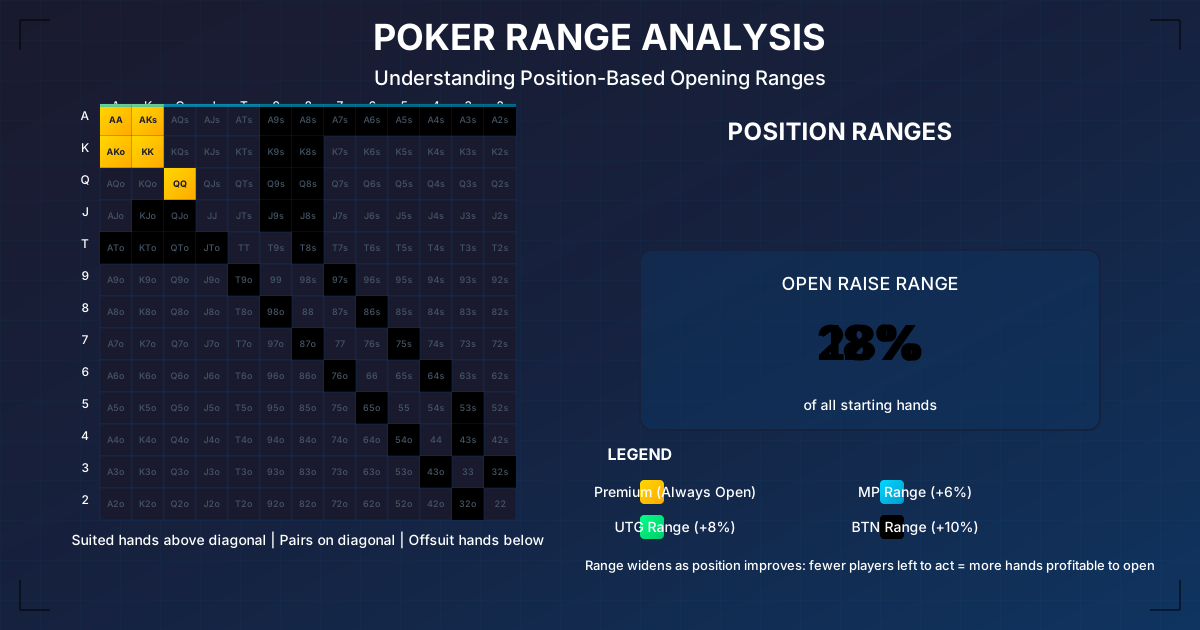
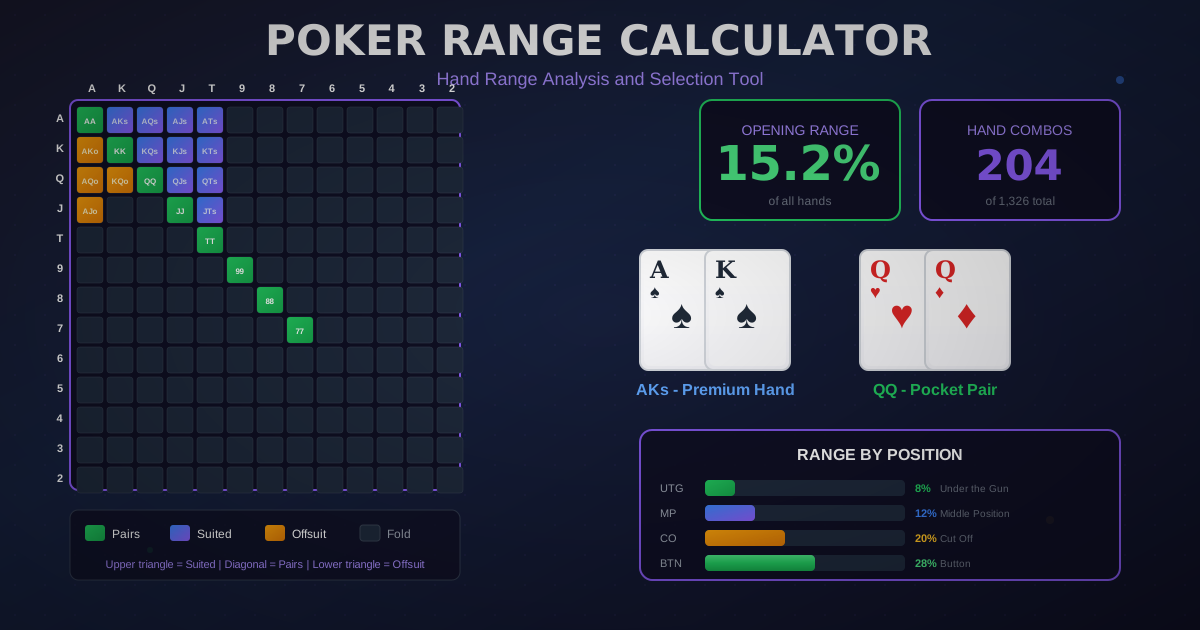
Use our Poker Hand Range Calculator to define accurate preflop ranges before plugging them into your solver.
Popular GTO Solvers Compared (2026)
The solver market in 2026 offers options for every budget and skill level. Here is an honest comparison of the major players.
Solver Feature Comparison
| Feature | PioSOLVER | GTO Wizard | GTO+ | Simple Postflop | MonkerSolver |
|---|---|---|---|---|---|
| Type | Desktop software | Cloud/browser-based | Desktop software | Cloud + desktop | Desktop software |
| Best For | Serious grinders, pros | All skill levels | Budget-conscious players | Quick cloud solves | PLO and preflop |
| Preflop Solver | Edge version only | Built-in library | No | Limited | Yes |
| Postflop Solver | Yes (industry standard) | Pre-computed library | Yes | Yes | Yes |
| Multiway Pots | No | Limited | Yes | No | Yes |
| Custom Bet Sizes | Unlimited | Fixed library | Unlimited | Flexible | Unlimited |
| Practice/Drill Mode | No | Yes (built-in) | No | No | No |
| Mobile Access | No | Yes | No | Browser version | No |
| Hardware Required | High (16GB+ RAM) | None (cloud) | Moderate (8GB+ RAM) | None (cloud) | Very high (32GB+ RAM) |
| Learning Curve | Steep | Gentle | Moderate | Moderate | Very steep |
Solver Pricing Comparison (2026)
| Solver | Pricing Model | Entry Price | Mid-Tier | Top Tier |
|---|---|---|---|---|
| PioSOLVER | One-time purchase | $249 (Basic) | $475 (Pro) | $1,099 (Edge) |
| GTO Wizard | Monthly subscription | Free (limited) | $35/month (Premium) | $99/month (Elite) |
| GTO+ | One-time purchase | $75 | -- | -- |
| Simple Postflop | Cloud credits + desktop | Free trial | ~$25/month | Varies by usage |
| MonkerSolver | One-time purchase | ~$500 | -- | -- |
PioSOLVER: The Industry Standard
PioSOLVER remains the gold standard for serious postflop analysis in No-Limit Hold'em. Professionals and high-stakes regulars overwhelmingly use PioSOLVER for deep study because of its unmatched flexibility in configuring bet sizes, its scripting capability (Pro and Edge versions), and the precision of its solutions.
Strengths:
- Most accurate solutions with customizable convergence settings
- Scripting allows batch-solving hundreds of spots overnight
- Edge version includes a preflop solver
- Large community with extensive tutorials and shared solve libraries
Limitations:
- Steep learning curve for beginners
- Requires a powerful computer (16GB+ RAM recommended, 32GB+ for complex solves)
- No built-in practice mode
- Postflop only in Basic and Pro versions
Best for: Players at $1/$2+ live or $0.25/$0.50+ online who are committed to serious study and already have basic GTO understanding.
GTO Wizard: The Accessible All-Rounder
GTO Wizard has emerged as the most popular solver platform for players at every level. Its browser-based interface provides instant access to pre-computed solutions, built-in drill modes, and an intuitive visualization of ranges and frequencies.
Strengths:
- Zero setup required -- solutions load instantly in your browser
- Built-in practice drills that test you against solver-optimal play
- Mobile-friendly for studying on the go
- Solutions cover Cash, MTT, Spin & Go, and more game types
- AI-powered features for analyzing your own hand histories
Limitations:
- Solutions use fixed bet sizes (you cannot customize the game tree)
- Subscription model means ongoing costs
- Less granular than running your own solves in PioSOLVER
- Pre-computed library may not cover every niche scenario
Best for: Players new to solver study, recreational players who want to improve without complex setup, and anyone who values convenience and drill functionality.
GTO+: The Budget Champion
GTO+ delivers professional-grade solving capability at a fraction of the price. At $75 for a lifetime license, it is the most cost-effective option for players who want to run their own custom solves without the premium price tag of PioSOLVER.
Strengths:
- Excellent value at $75 one-time
- Supports multiway pot solving (up to 3 players)
- Clean, intuitive interface
- Fast solve times for standard spots
- Dedicated Short Deck version available
Limitations:
- Smaller community than PioSOLVER
- No scripting or batch-solving capability
- No preflop solver
- Slightly less precise than PioSOLVER for complex game trees
Best for: Players on a budget who want real solving power, students stepping up from GTO Wizard to custom analysis, and Short Deck players.
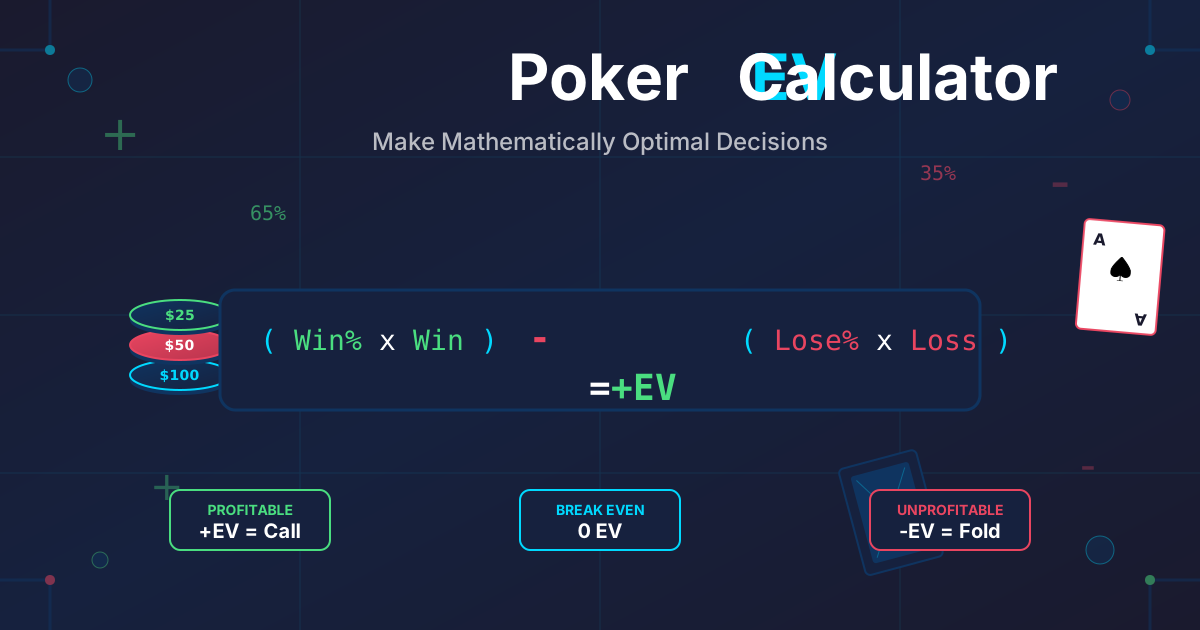
Calculate your expected value across different lines with the Poker EV Calculator to complement your solver study.
Setting Up Your First Solve
If you are new to solvers, the setup process can feel intimidating. Here is a step-by-step walkthrough using a common spot that every player encounters.
Example Scenario: BTN Open vs BB Call, Flop Ah 8d 3c
Step 1: Define the Preflop Ranges
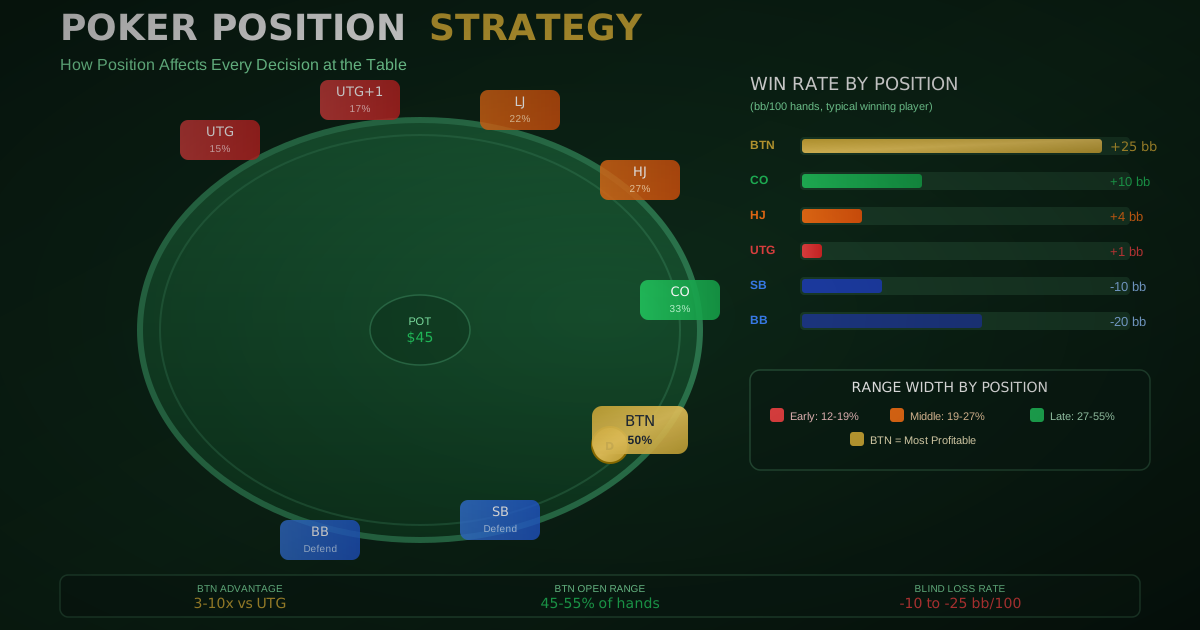
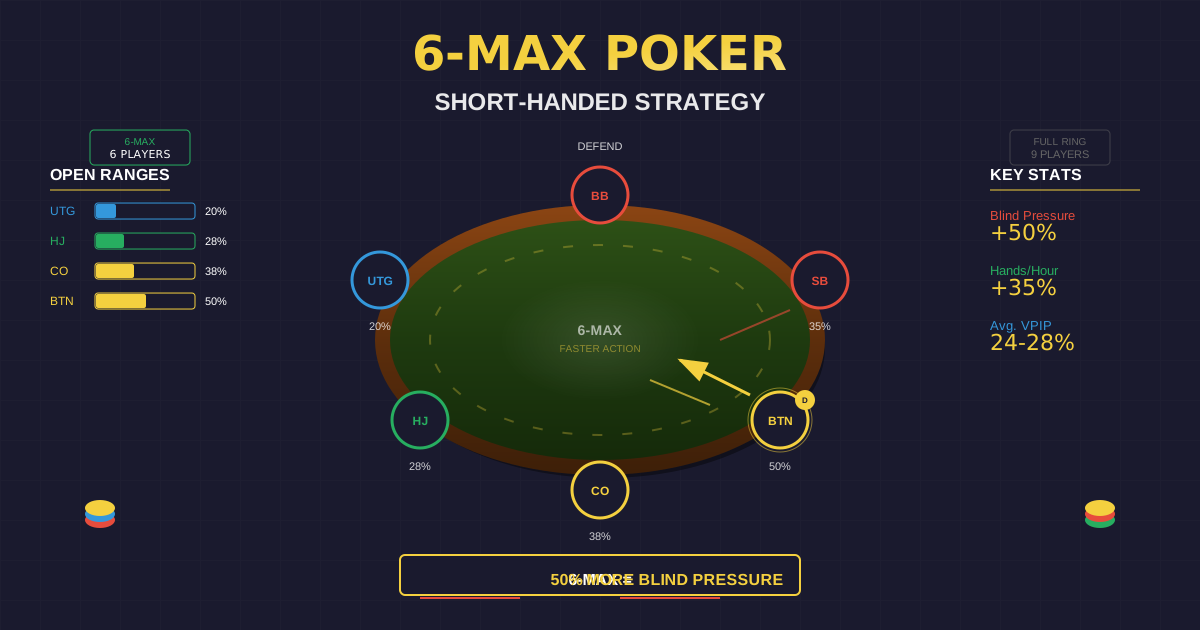
First, you need accurate ranges for both players. A standard BTN opening range might be roughly 45% of hands, while the BB defending range (calling the open) is typically 30-35% of hands.
Common BTN open range (simplified): All pairs, all suited aces, all suited broadways, most suited connectors, offsuit broadways down to KTo/QTo, some offsuit connectors.
BB call range (simplified): Small-medium pairs (22-TT), suited connectors (54s-T9s), suited aces (A2s-A9s), suited broadways (KQs, KJs, QJs), some offsuit broadways (KQo, KJo, QJo).
Step 2: Input the Board, Stacks, and Pot
- Board: Ah 8d 3c
- Effective stack: 97 BB (assuming 3 BB preflop with 100 BB starting stacks)
- Pot: 6.5 BB (BTN opens to 2.5 BB, BB calls, minus rake)
Step 3: Configure Bet Sizes
For your first solves, keep it simple:
| Street | Bet Sizes | Raise Sizes |
|---|---|---|
| Flop | 33% pot, 75% pot | 2.5x |
| Turn | 50% pot, 75% pot, 125% pot | 2.5x |
| River | 50% pot, 75% pot, 150% pot | 2.5x, All-in |
More experienced users can add additional sizes, but starting with 2-3 options per street keeps solve times manageable and outputs interpretable.
Step 4: Run the Solve
Click solve and wait. Depending on your hardware and the complexity of the game tree, this can take anywhere from 30 seconds (GTO+ with simple sizes) to 30+ minutes (PioSOLVER with many sizes and high accuracy).
Step 5: Review the Output
The solver will display the BTN's optimal flop strategy. On Ah 8d 3c, you will likely see the BTN betting frequently (this is a board that heavily favors the preflop raiser's range) with a preference for smaller sizing.
Reading Solver Output: Frequencies, EV, and Sizing
Understanding solver output is where many players struggle. The numbers mean nothing if you cannot interpret them. Here is how to read the most important elements.
Frequency Display
The solver shows how often each action should be taken with every hand in your range. Here is what a simplified BTN c-bet output might look like on Ah 8d 3c:
| Hand | Bet 33% | Bet 75% | Check | EV (Bet 33%) | EV (Check) |
|---|---|---|---|---|---|
| AA | 85% | 10% | 5% | 4.2 BB | 3.8 BB |
| AKo | 90% | 5% | 5% | 3.1 BB | 2.4 BB |
| KK | 45% | 15% | 40% | 2.8 BB | 2.7 BB |
| 30% | 5% | 65% | 2.1 BB | 2.0 BB | |
| 88 | 20% | 50% | 30% | 5.8 BB | 5.1 BB |
| 76s | 60% | 5% | 35% | 0.3 BB | 0.1 BB |
| T9s | 55% | 0% | 45% | 0.5 BB | 0.3 BB |
What This Tells Us
AA bets almost always (95% total bet frequency): On an ace-high board, top set is a clear value hand. The solver prefers the small 33% bet to build the pot while keeping bluffs in the opponent's range.
KK checks 40% of the time: This surprises many players. On an ace-high board, KK is vulnerable -- it blocks the opponent from having AK but not Ax hands. Checking protects the BTN's checking range and avoids bloating the pot in a spot where KK often faces tough decisions on later streets.
88 prefers the larger 75% bet when betting: With middle set on a dry board, 88 wants to build a pot and deny equity to draws. The solver sizes up because 88 benefits from fold equity against hands like T9s or 76s that have backdoor draws.
76s bets 65% of the time as a bluff: This is a key GTO concept. The solver uses hands with some backdoor equity (backdoor straight draw, potential to pick up a gutshot on the turn) as bluffs at a high frequency to maintain a balanced betting range.
EV Comparison
The EV column reveals how close different actions are. When the EV of betting and checking are nearly identical (like QQ at 2.1 BB vs 2.0 BB), the solver is close to indifferent. In practice, this means you can take either action without significant cost -- these are not spots to stress over.
When the EV gap is large (like AKo at 3.1 BB bet vs 2.4 BB check), the solver strongly prefers one action. Deviating from the preferred action costs you meaningful expected value.
Track your overall expected value across sessions with the Poker EV Calculator.
Common Solver Output Elements Explained
| Output Element | What It Shows | How to Use It |
|---|---|---|
| Action Frequency Bar | Color-coded bar showing % bet vs % check vs % raise | Identify whether a hand is pure (one action) or mixed (multiple actions) |
| EV by Action | Expected value in BB for each available action | Find the highest-EV line; note when EVs are close (indifference) |
| Range Heatmap | Color grid of all hands showing chosen action | Spot patterns: which hand classes bet, check, or fold |
| Bet Size Distribution | Pie chart of how often each size is used | Understand whether the solver prefers small, medium, or large bets |
| Equity vs Range | Your hand's equity against opponent's continuing range | See how betting filters the opponent's range |
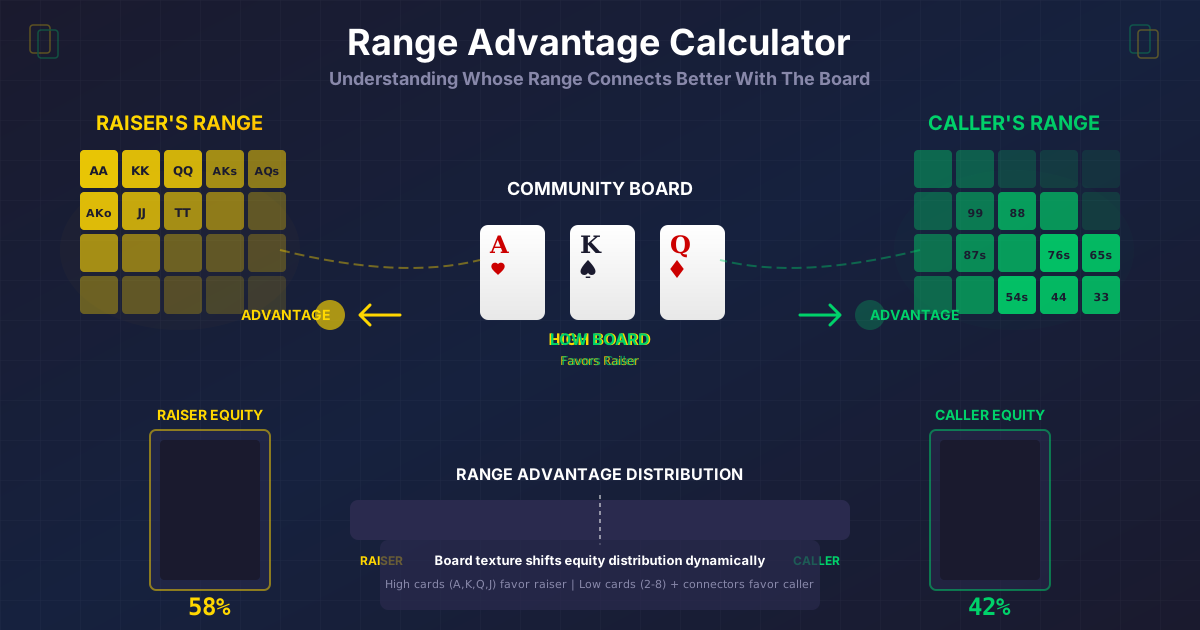
| Board Texture Metrics | Equity distribution and range advantage indicators | Understand why the solver adopts specific strategies on different boards |
How to Study with Solvers Effectively
Owning a solver is step one. Using it to actually improve your game requires a structured approach. Here are the methods that produce real results.
The 5-Step Solver Study Framework
Step 1: Identify a Leak
Start with a specific spot where you know you are making mistakes. Maybe you feel unsure about c-betting strategy on low boards as the preflop raiser, or you struggle with river decisions facing large bets.
Step 2: Set Up the Spot in the Solver
Input realistic ranges, stack sizes, and bet sizes. Resist the urge to overcomplicate -- use 2-3 bet sizes per street for your first study sessions.
Step 3: Study the Overall Strategy Before Individual Hands
Before diving into specific hands, look at the big picture: What is the overall betting frequency? Does the solver prefer small or large bets? How often does it check? Understanding the range-level strategy gives you the framework for individual hand decisions.
Step 4: Ask "Why?" for Every Surprising Result
When the solver does something unexpected (checking top pair, bluffing with a specific hand, overbetting the turn), figure out why. The "why" is what transfers to the table. Ask yourself:
- What does this hand gain from betting vs checking?
- What hands does this sizing target?
- How does this action balance the overall range?
Step 5: Create a Simple Heuristic
Translate the solver's complex frequencies into a rule you can implement at the table. For example: "On ace-high dry flops as the BTN, c-bet small (33%) with most of my range, but check back medium pairs without an ace."
Study Plan Template
Use this weekly schedule to build consistent solver study habits without burning out.
| Day | Focus | Duration | Activity |
|---|---|---|---|
| Monday | Preflop Review | 30 min | Review opening ranges by position; compare to solver recommendations |
| Tuesday | Flop C-Bet Study | 45 min | Analyze BTN vs BB c-bet strategy on 3 different board textures |
| Wednesday | Play Session | 2+ hours | Apply Tuesday's learnings in a real session; tag interesting hands |
| Thursday | Turn/River Study | 45 min | Load tagged hands from Wednesday into solver; study multi-street plans |
| Friday | Drill Practice | 30 min | Use GTO Wizard or a similar tool to drill the spots you studied |
| Saturday | Play Session | 2+ hours | Focus on implementing the week's study; track decision quality |
| Sunday | Review & Rest | 20 min | Journal key takeaways from the week; identify next week's focus |
Five Real-World Solver Study Examples
Example 1: The River Overbet Bluff
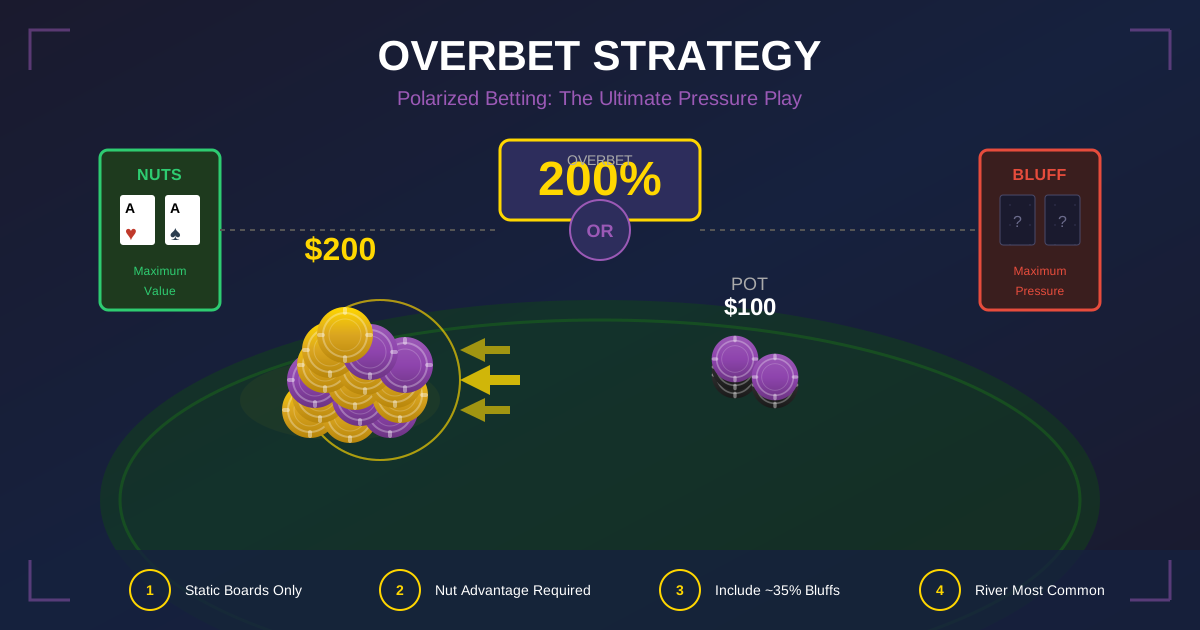
You hold 7h6h on a final board of Ks 9d 4c 2h Jh. You missed your flush draw. The pot is $80 and you have $120 behind. The solver recommends overbetting all-in with this hand 100% of the time.
Why? Your hand has zero showdown value, so checking is worth $0. By shoving 1.5x pot, you force your opponent to fold a massive portion of their range -- they need to call $120 to win $200, requiring 37.5% equity. Many one-pair hands will fold, and your bluff is balanced by value hands like sets and two-pair that also overbet.
Example 2: Checking Top Pair on a Wet Board
You hold AsKd on Kh 9h 7d. You are the preflop raiser and the solver recommends checking AK 55% of the time.
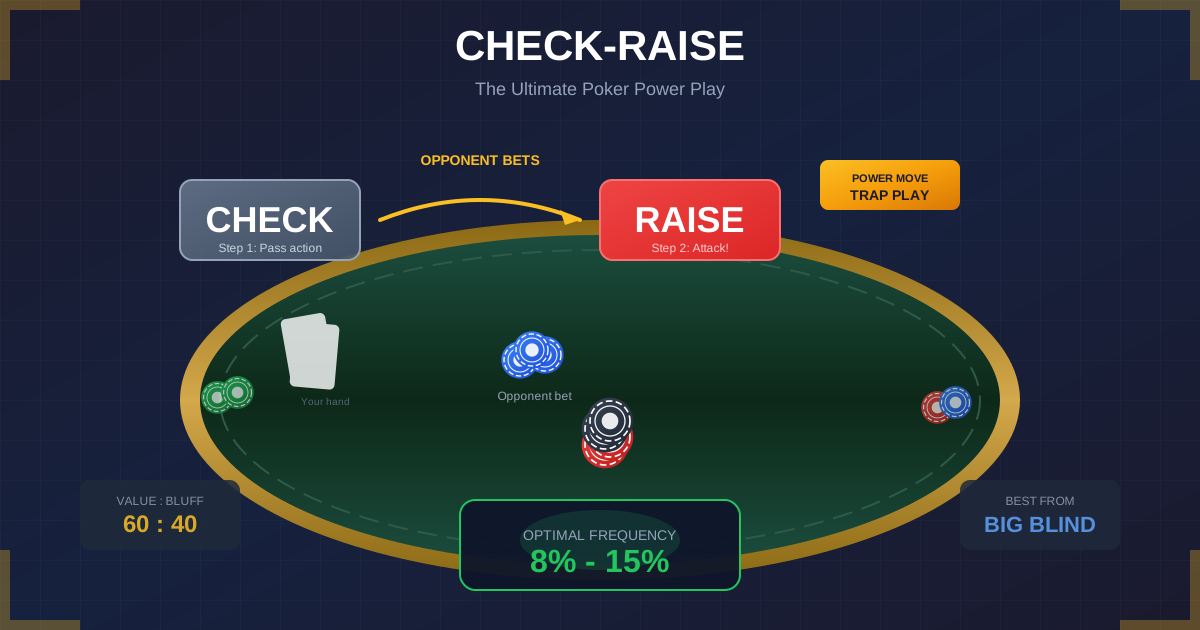
Why? This board is draw-heavy and the opponent's range contains many strong draws (flush draws, straight draws, combo draws). By checking, you protect your checking range, invite bluffs from missed draws on later streets, and avoid building a pot where you are often in a tough spot when draws complete. You also retain the option to check-raise on future streets.
Example 3: The Small C-Bet on a Dry Board
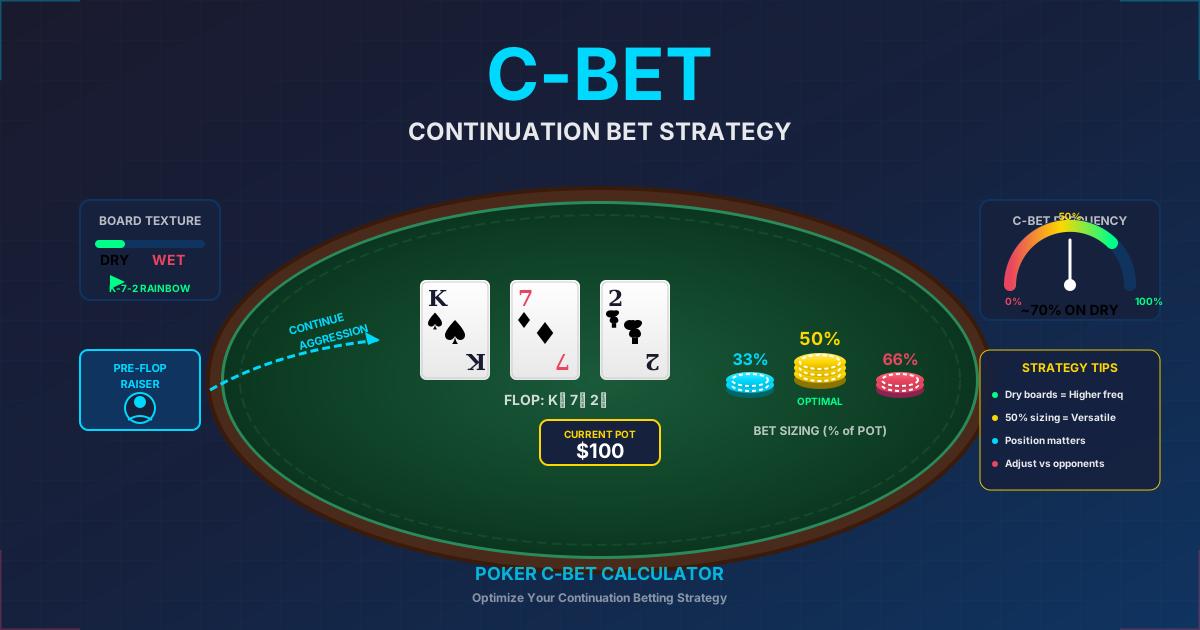
You are the BTN and opened preflop. On a board of Qd 7c 2s, the solver recommends c-betting 33% pot with 80%+ of your range.
Why? On dry, disconnected boards, the preflop raiser has a significant range advantage. A small bet exploits this advantage efficiently: it forces folds from hands with little equity, builds the pot slightly with value hands, and risks very little with bluffs. The high frequency means you bet almost everything, making the strategy easy to implement.
Example 4: The Check-Raise Semi-Bluff
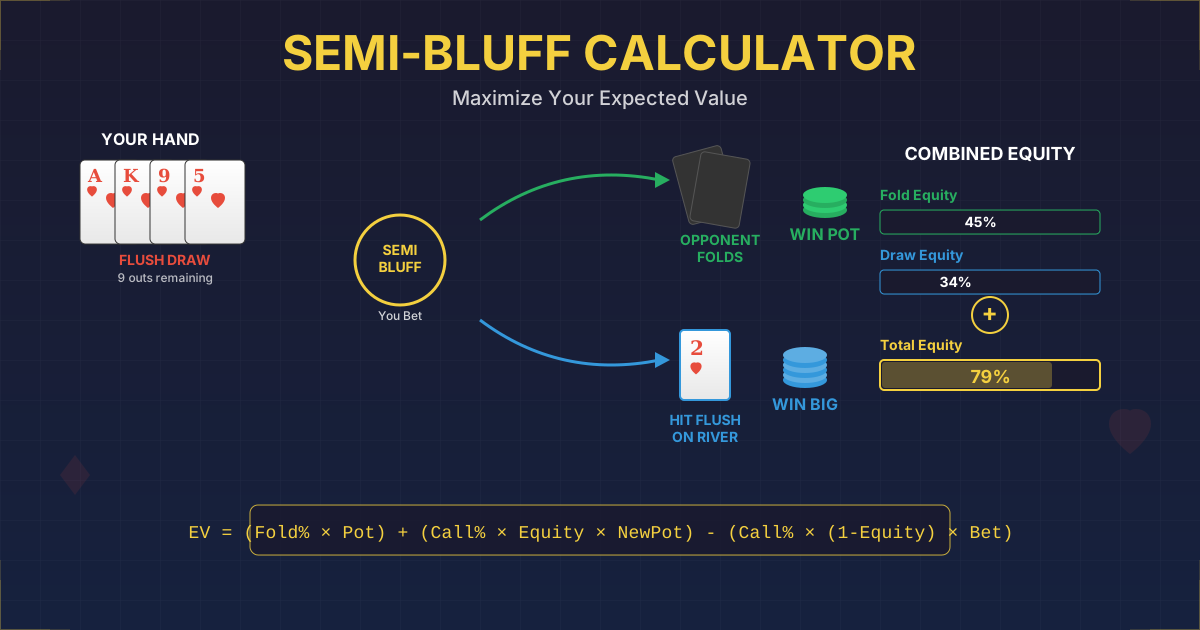
You are in the BB and called a BTN open. The flop is Ts 8s 3d. You hold Js9s (open-ended straight draw + flush draw). The solver recommends check-raising 2.5x against a 33% c-bet 90% of the time.
Why? Js9s has 15 outs to make a straight or flush -- it has roughly 54% equity against a typical c-bet range. By check-raising, you build the pot with a hand that is often ahead on equity, you pressure medium-strength hands into tough decisions, and you deny the BTN the ability to see cheap turn cards. This is a "monster draw" that plays aggressively in GTO.
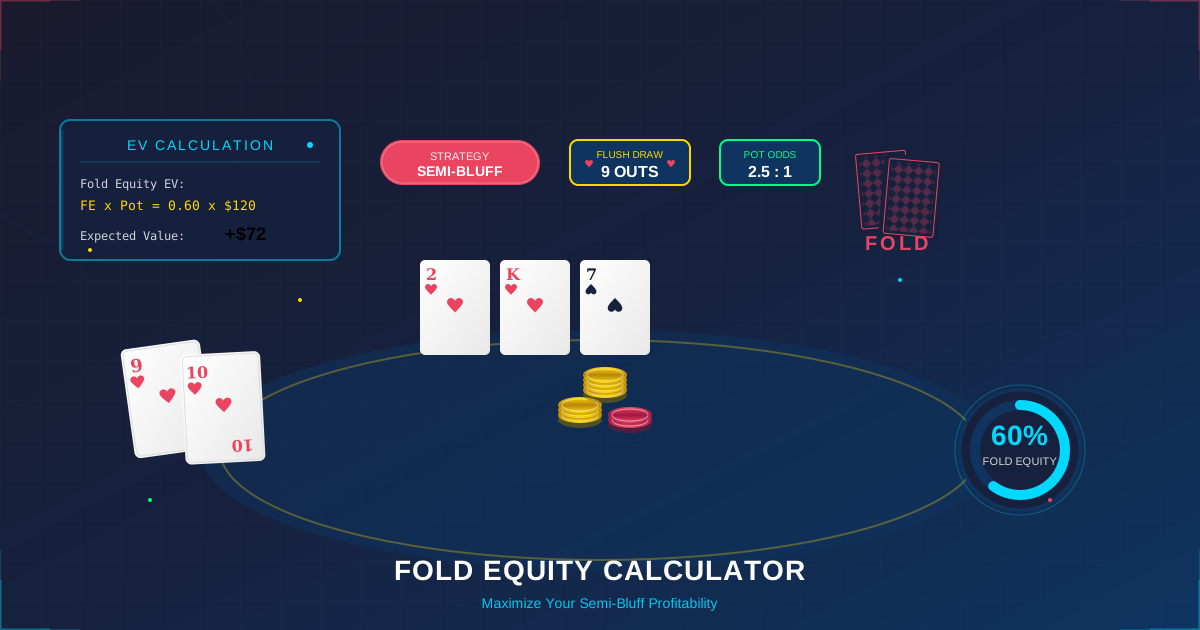
Evaluate your fold equity and semi-bluff profitability with the Poker Fold Equity Calculator.
Example 5: The Delayed C-Bet
You are the preflop raiser and checked the flop on Jc 8d 5s. The turn is the 2c. The solver now recommends betting 75% pot with a wide range including many hands you checked on the flop.
Why? After checking the flop, your opponent often interprets this as weakness and bets their own draws and marginal hands. By checking and then betting the turn (a "delayed c-bet"), you pick off those bets when you have strong hands, and you now fire your own bluffs on a turn that likely did not improve the opponent's range. The 2c is a blank that favors your delayed betting range.
What NOT to Do with Solvers
- Do not memorize specific frequencies. There are too many variables. Focus on patterns and heuristics.
- Do not study randomly. Pick one specific scenario and go deep rather than jumping between 20 different spots.
- Do not ignore the "why." If you know the solver bets 67% of the time but cannot explain why, you have learned nothing.
- Do not use solver outputs as gospel. Solvers assume perfect opponents. Real opponents have leaks you should exploit.
- Do not skip practice drills. Study without application does not stick. Use drill modes or play sessions to reinforce what you learn.
GTO vs Exploitative Play: When Each Is Better
The debate between GTO and exploitative play is one of the most discussed topics in poker strategy. The answer, as with most things in poker, is "it depends."
GTO vs Exploitative: Side-by-Side Comparison
| Factor | GTO Approach | Exploitative Approach |
|---|---|---|
| When to Use | Against unknown or strong opponents | Against opponents with clear, identified leaks |
| Goal | Prevent being exploited | Maximize profit against specific tendencies |
| Risk | Leaves money on the table vs weak players | Can be counter-exploited if reads are wrong |
| Information Needed | None -- works against any strategy | Requires reads, stats, or history on opponent |
| Complexity | High (requires memorization/study) | Variable (simple adjustments to complex deviations) |
| Best Environment | Tough games, online play, early in sessions | Soft live games, long sessions with same opponents |
| Long-Term Edge | Consistent, steady profit | Higher peaks but more variable results |
| Example | Bluffing river 33% of the time regardless of opponent | Bluffing river 0% vs a calling station, 70% vs a nit |
The Hybrid Approach (What Winning Players Actually Do)
The strongest players in 2026 do not choose between GTO and exploitative play. They use GTO as their baseline and make targeted exploitative adjustments when they have reliable information about an opponent.
Here is how this works in practice:
- Start of session (no reads): Play close to GTO. Make balanced c-bets, use standard sizing, defend at MDF.
- After 30+ hands (basic reads): Begin small adjustments. If a player folds to 3-bets 80% of the time, increase 3-bet bluffing frequency against them.
- After 100+ hands (reliable reads): Make larger exploitative deviations. Value bet thinner against calling stations. Stop bluffing rivers against players who never fold. Tighten up against aggressive players who 4-bet light.
- When in doubt: Return to GTO. If you are unsure whether your read is accurate, the GTO line is always your safe fallback.
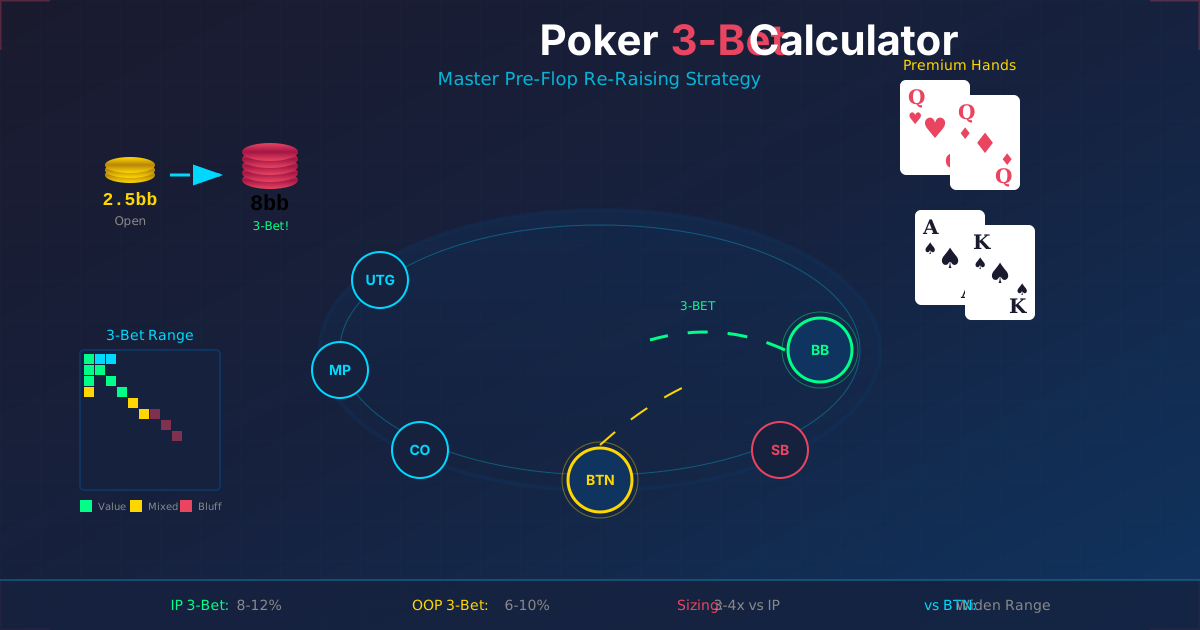
Evaluate your 3-betting frequencies and adjustments with the Poker 3-Bet Calculator.
When GTO Is Strictly Better
- Online play against regulars: Your opponents study solvers too. Attempting to exploit a solver-trained opponent without solid data can backfire spectacularly.
- High-stakes play: The higher the stakes, the fewer exploitable leaks opponents tend to have. GTO approaches protect your bottom line.
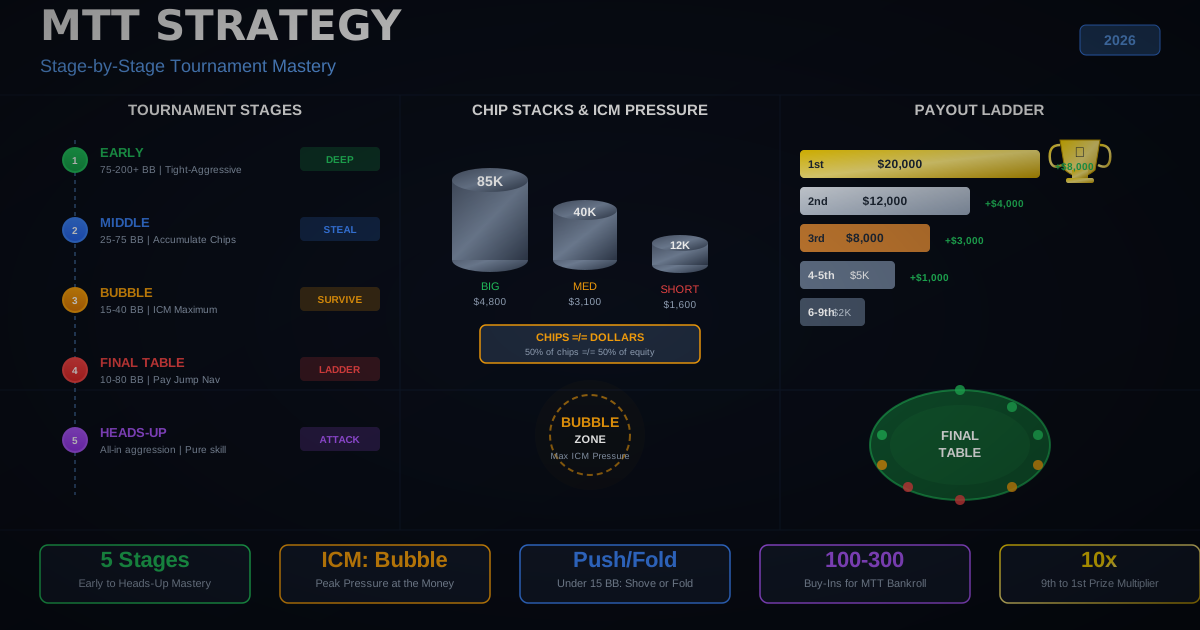
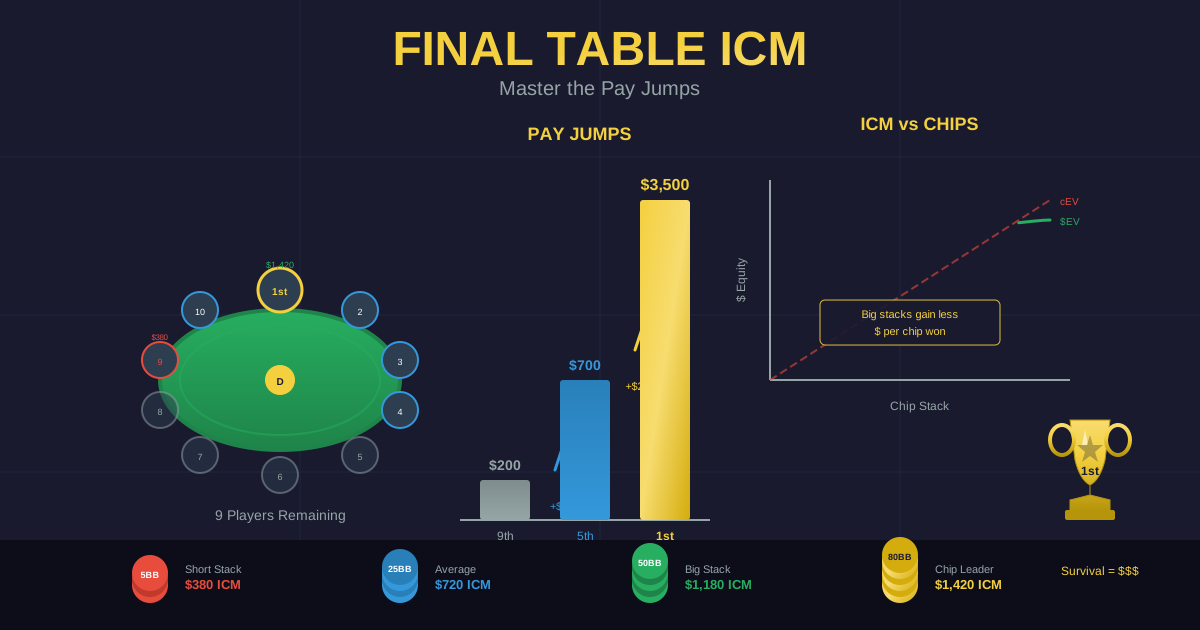
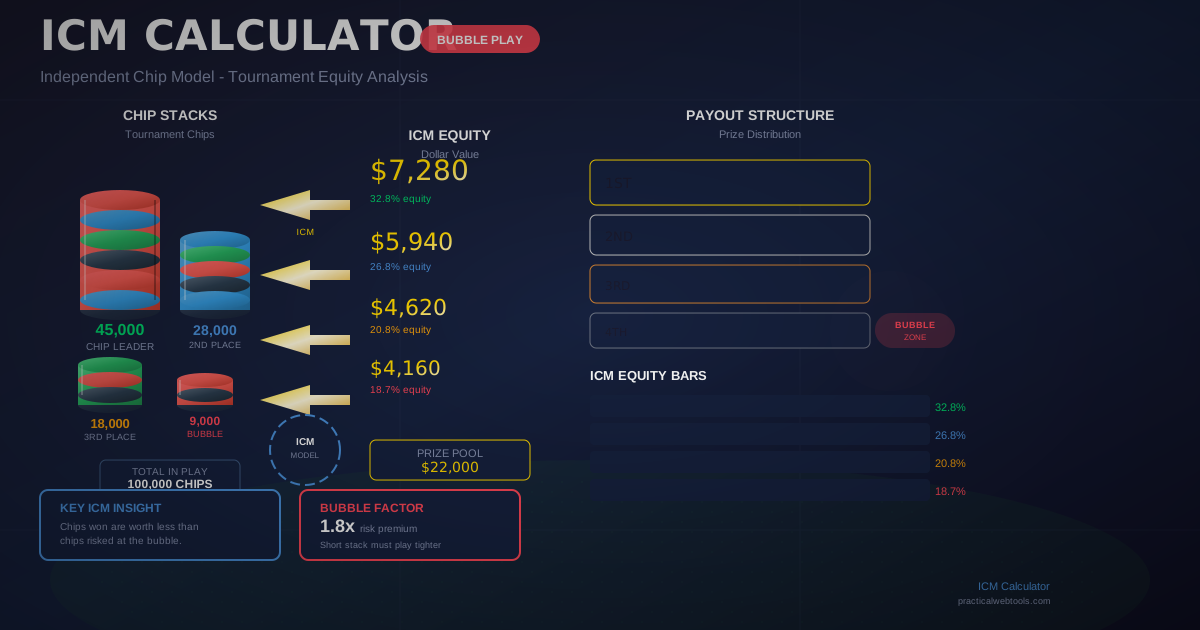
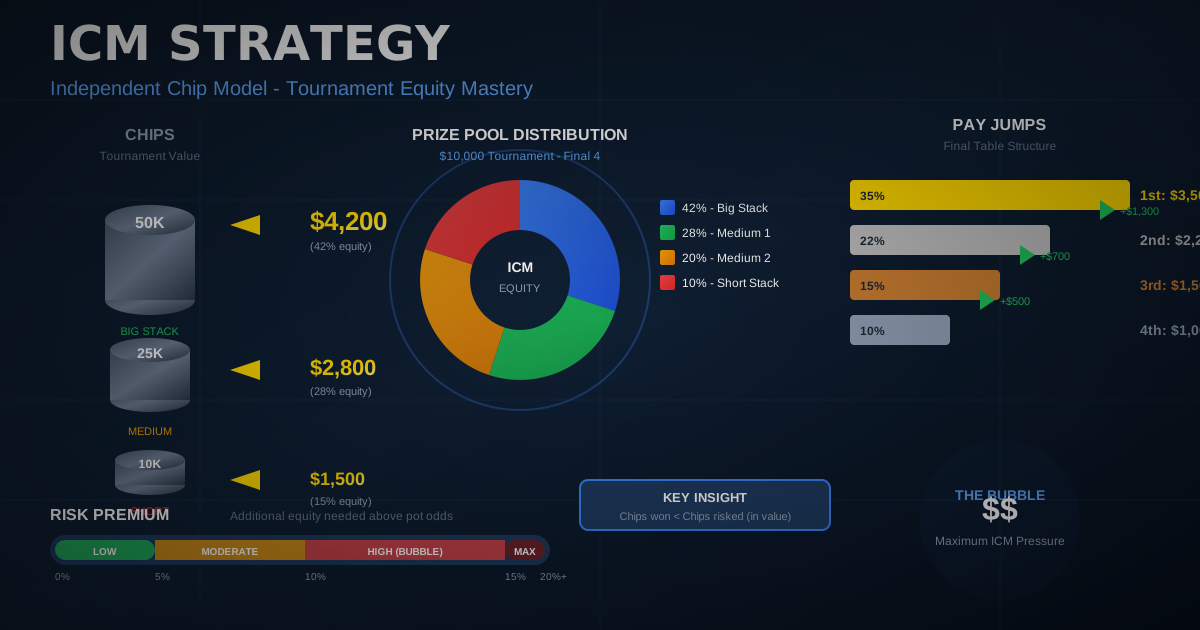
- Tournament play (ICM considerations): In tournaments, ICM pressure makes GTO-adjacent play essential because the cost of being exploited (busting) is disproportionately high compared to the reward of exploiting (winning a few extra chips).
- Early in online sessions: Without hand history or statistical reads, you have no reliable basis for exploitative deviations.
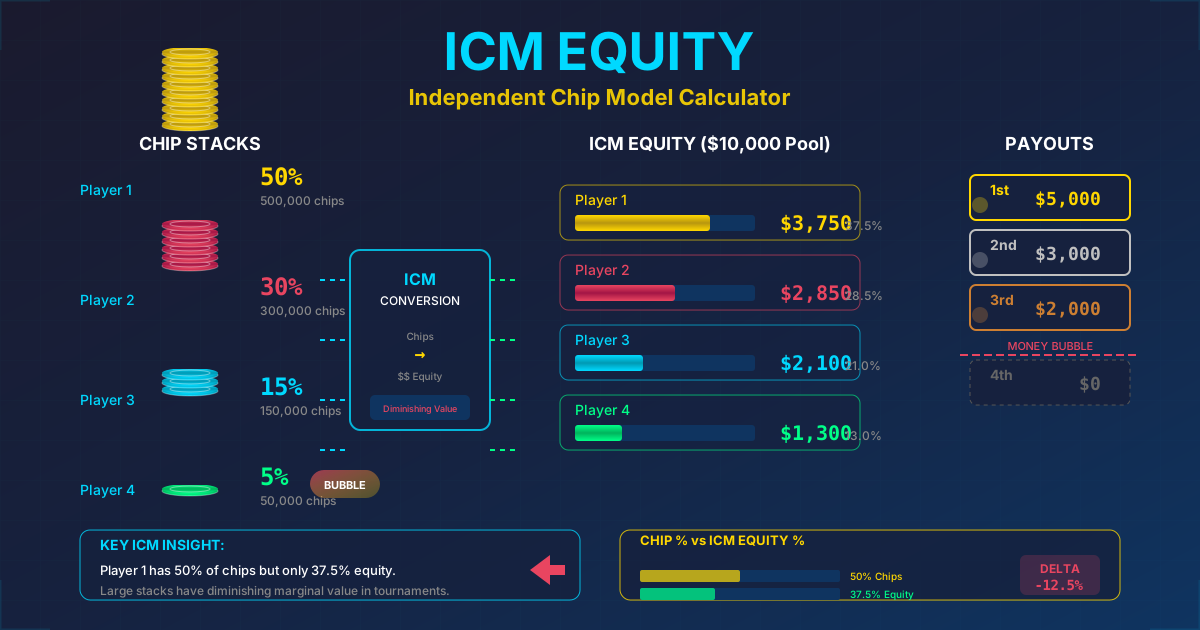
Model ICM-adjusted decisions with the ICM Calculator and fine-tune your tournament strategy.
When Exploitative Is Strictly Better
- Soft live games: Many live cash game players have glaring, consistent leaks. Folding too much to c-bets, never bluffing rivers, or calling down too light. Exploiting these tendencies is far more profitable than playing GTO.
- Against recreational players: A recreational player who limps 40% of hands and calls three streets with bottom pair is not playing a strategy you need to "balance" against. You maximize EV by value betting relentlessly and eliminating bluffs.
- Late in long sessions with the same opponents: After hours of play, you have extensive data. If you have seen a player fold to river bets in 15 out of 15 opportunities, bluffing that river is pure profit regardless of what GTO says.
Integrating Solver Study Into Your Actual Game
The gap between solver knowledge and table execution is where most players struggle. Here is how to bridge it.
The "Simplify to Implement" Principle
Solvers produce complex, mixed strategies. At the table, you cannot calculate that you should bet AJs exactly 62.3% of the time and check 37.7%. Instead, translate solver output into simple rules:
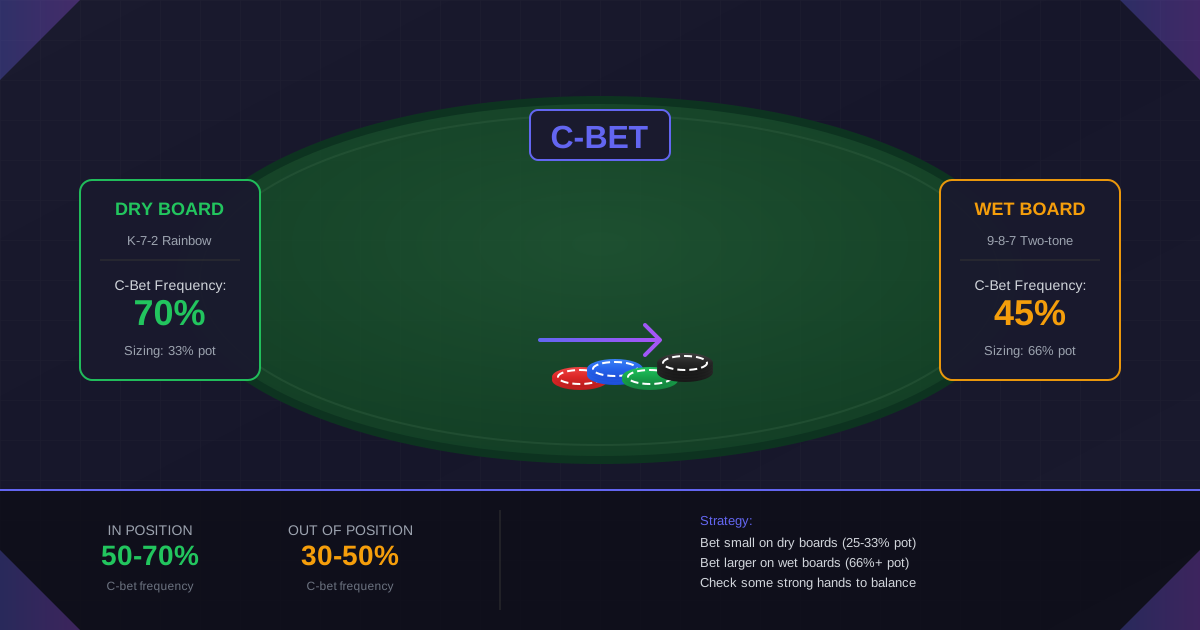
- "On dry ace-high boards as the preflop raiser, c-bet small with almost everything." (Derived from solver showing 80%+ c-bet frequency with 33% sizing on boards like A72r, A83r, AQ4r)
- "On wet, connected boards, check strong hands 40-50% of the time to protect my checking range." (Derived from solver checking top pair and overpairs at significant frequency on boards like T98, J87, QJT)
- "When I have a pure bluff on the river with zero showdown value, always bet or raise." (Derived from solver never checking hands with 0% equity on the river)
Tracking Your Progress
Keep a study journal with these columns:
- Spot studied: (e.g., "BTN vs BB, c-bet on K93r flop")
- Key solver insight: (e.g., "Solver c-bets 70% with 33% size, checks back all medium pairs without a king")
- My heuristic: (e.g., "On king-high dry boards, c-bet small with Kx, draws, and air. Check back pocket pairs below KK.")
- Session application: (e.g., "Applied correctly 4/5 times in Thursday's session. One mistake: c-bet QQ when I should have checked.")
- Result and adjustment: (e.g., "Need to internalize that checking QQ protects my checking range. Drill this spot Friday.")
Use Complementary Tools
Solvers give you the strategy. But executing that strategy requires real-time calculation skills. Build these supporting skills:
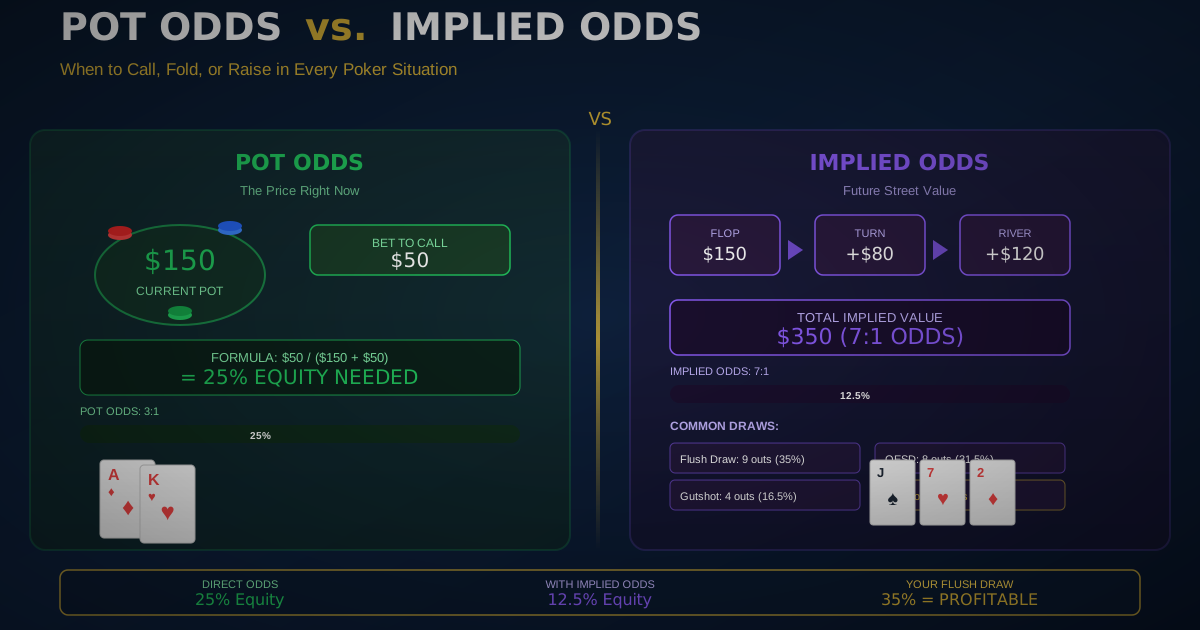
- Pot odds calculation: Know instantly whether a call is profitable. Practice with the Pot Odds Calculator.
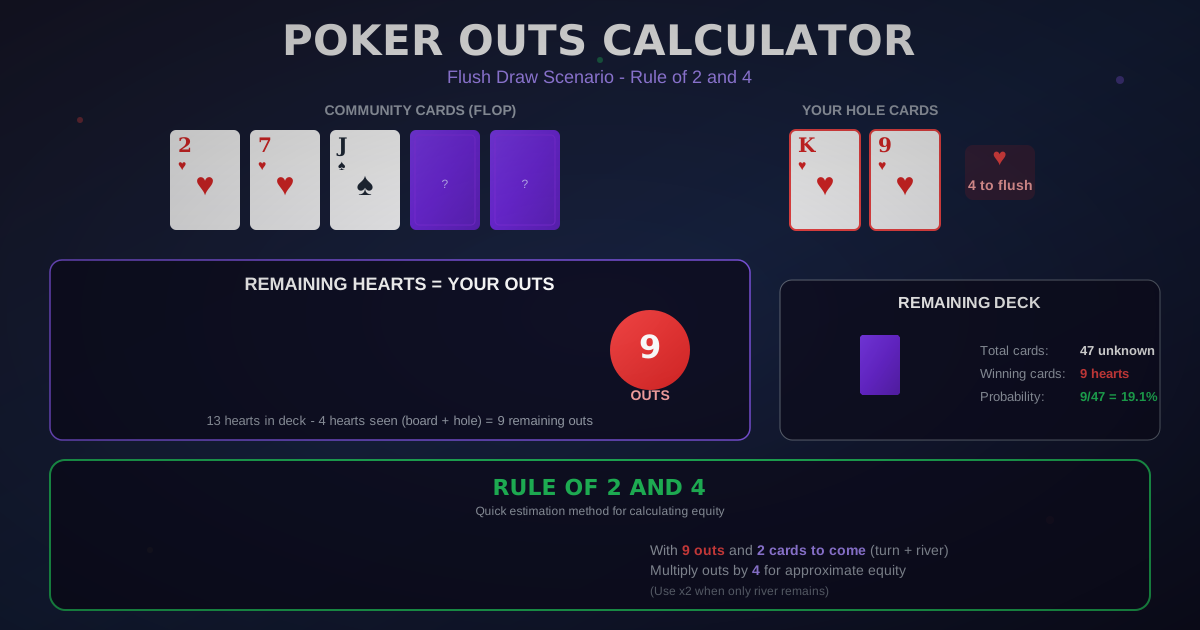
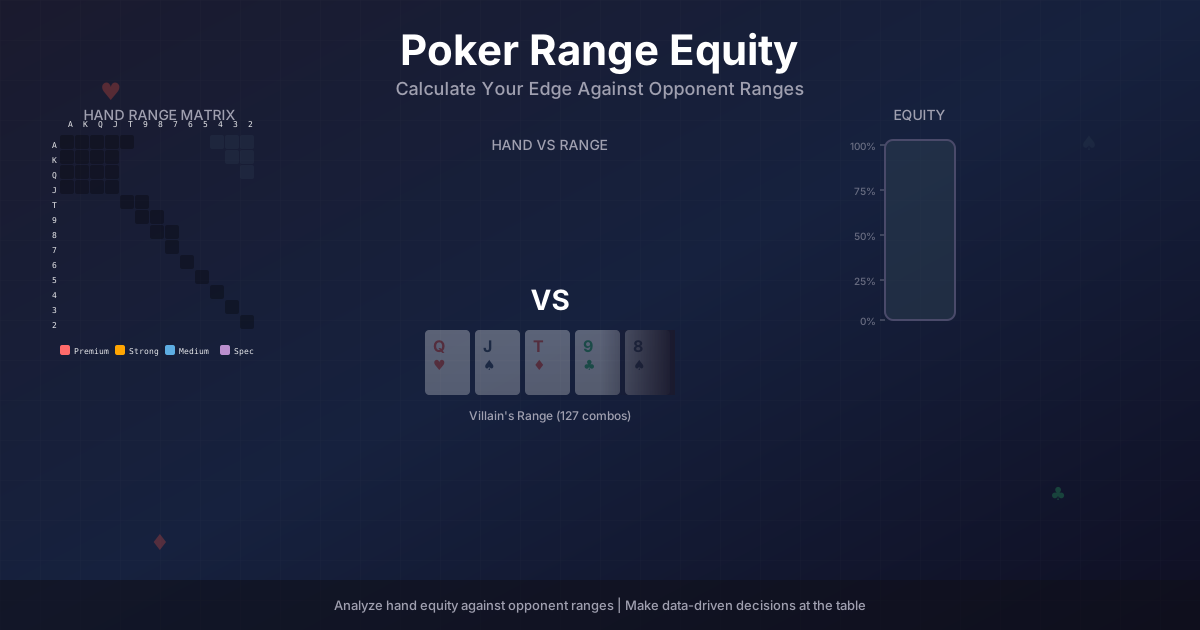
- Equity estimation: Quickly assess your hand's equity against opponent ranges. Use the Poker Equity Calculator.
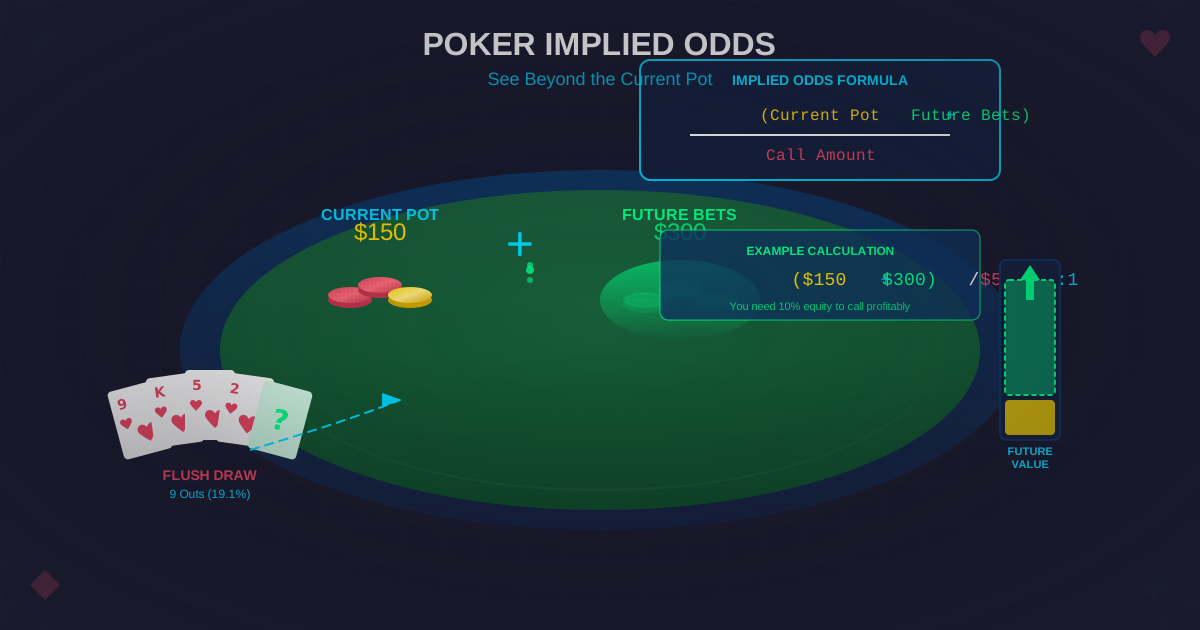
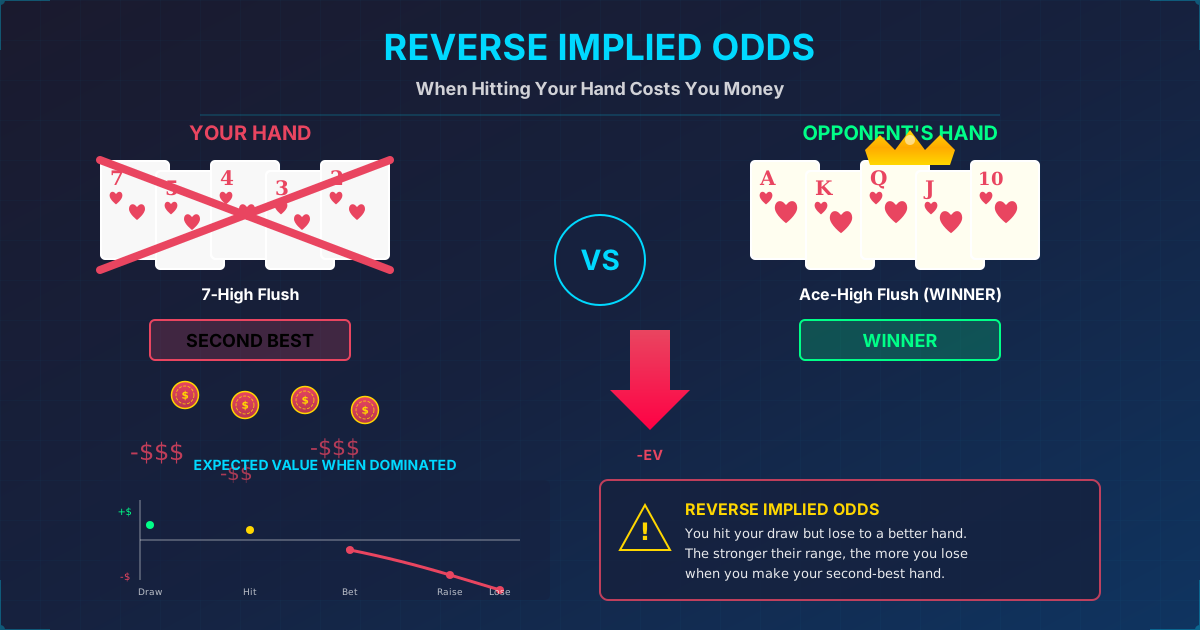
- Implied odds assessment: Understand when speculative hands are worth calling based on potential future bets. Try the Implied Odds Calculator.
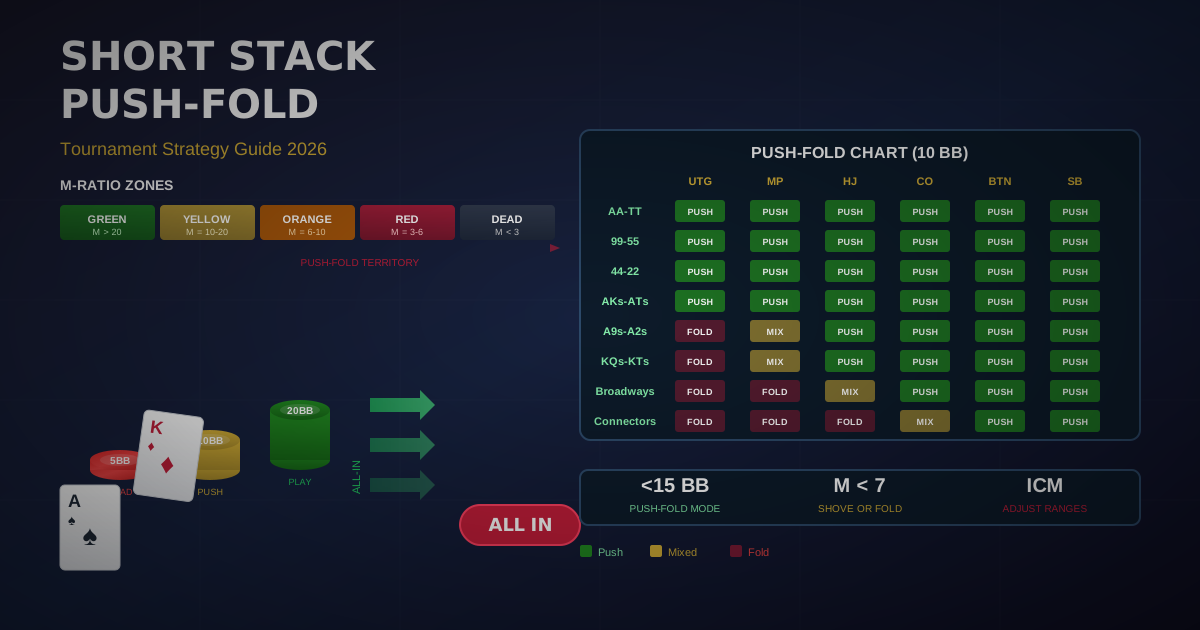
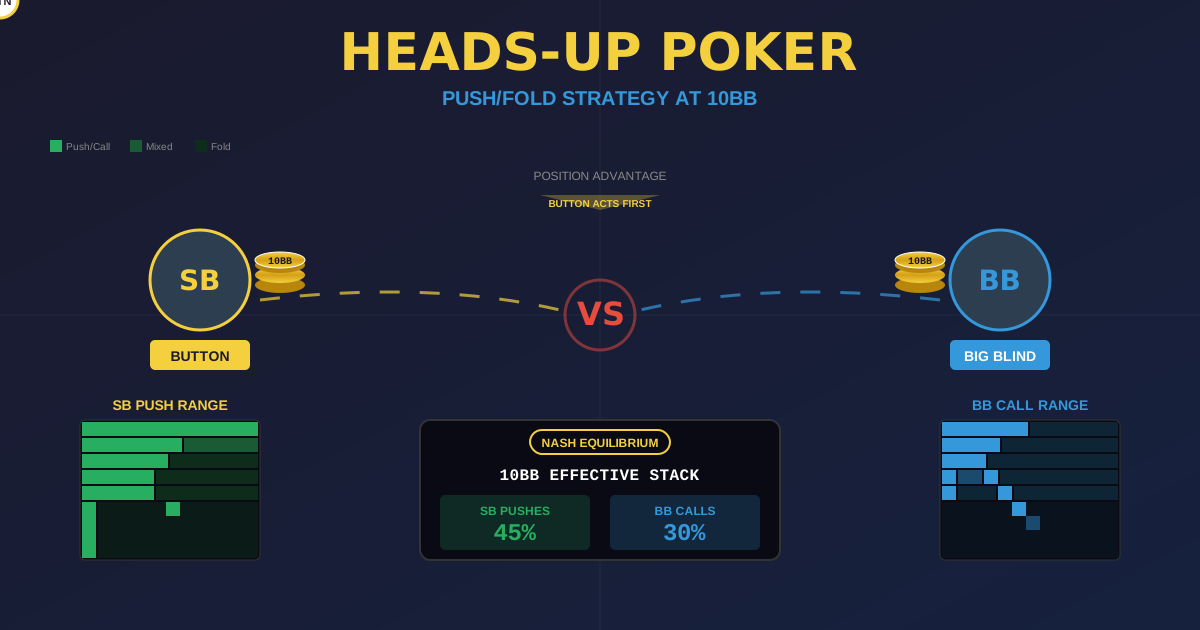
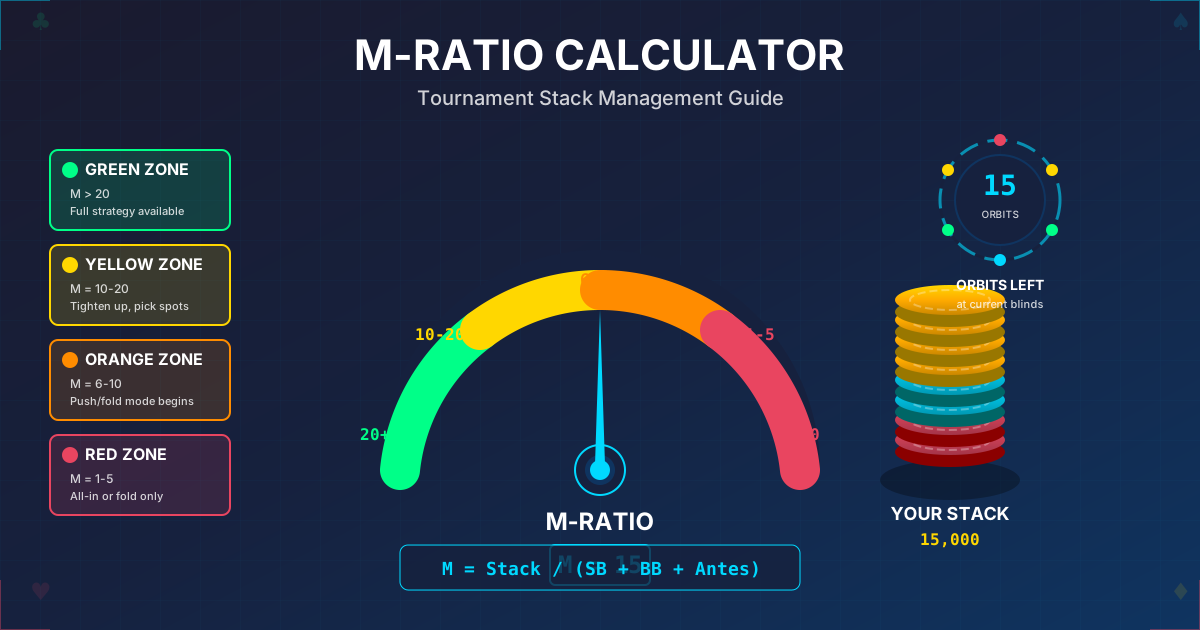
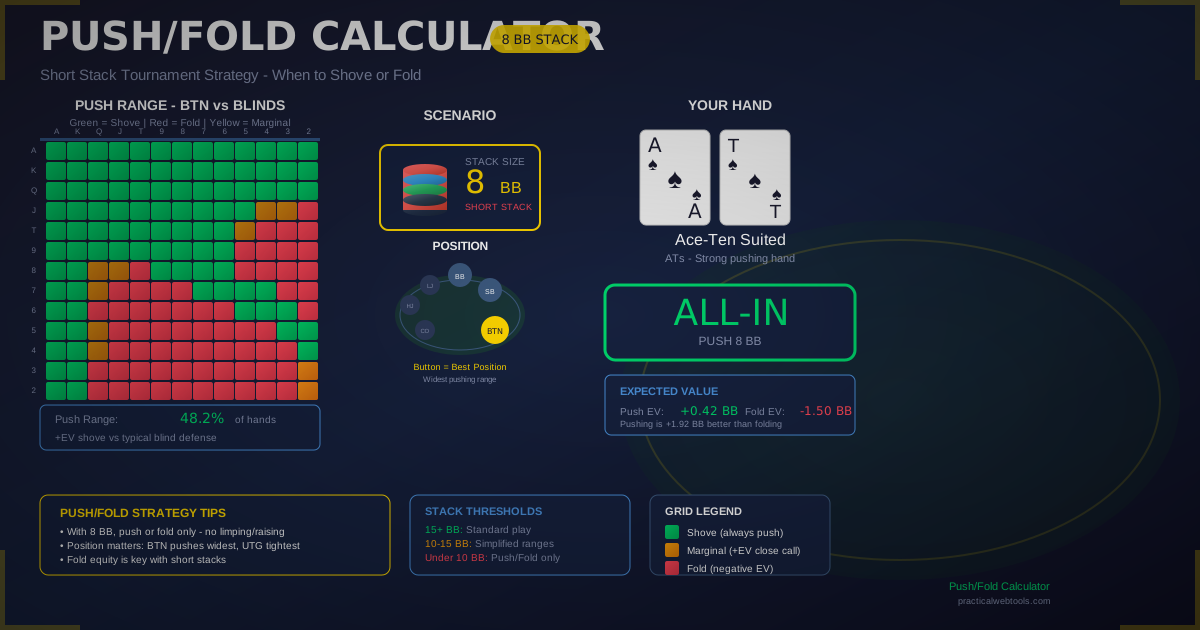
- Push/fold decisions: In short-stacked tournament spots, know your ranges cold. Practice with the Push Fold Calculator.
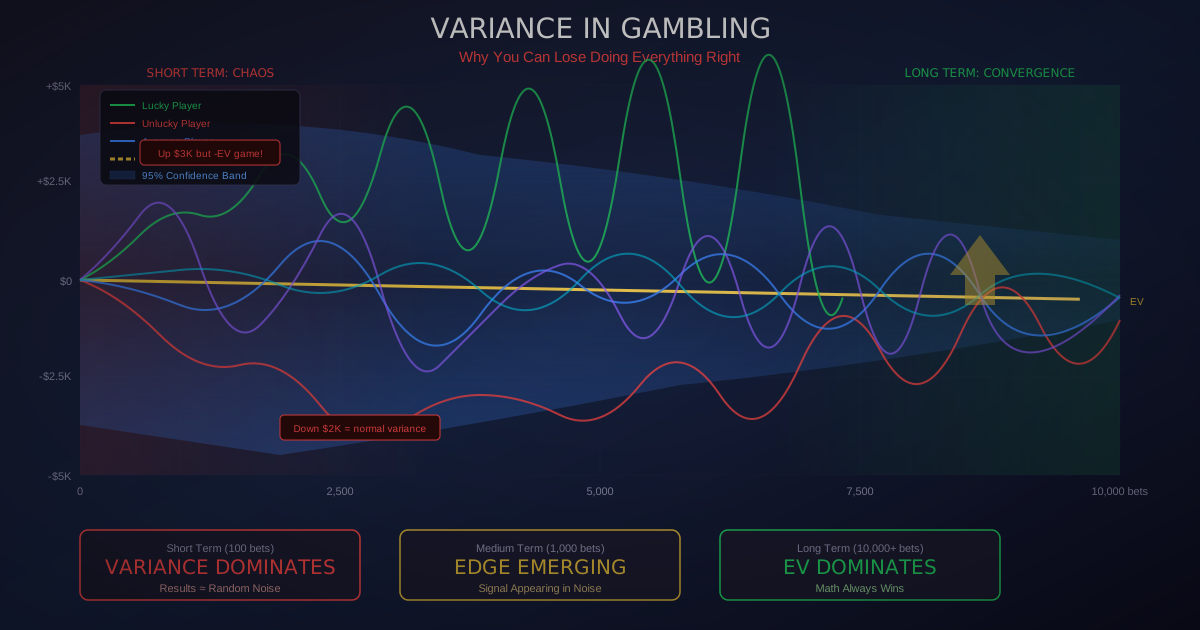
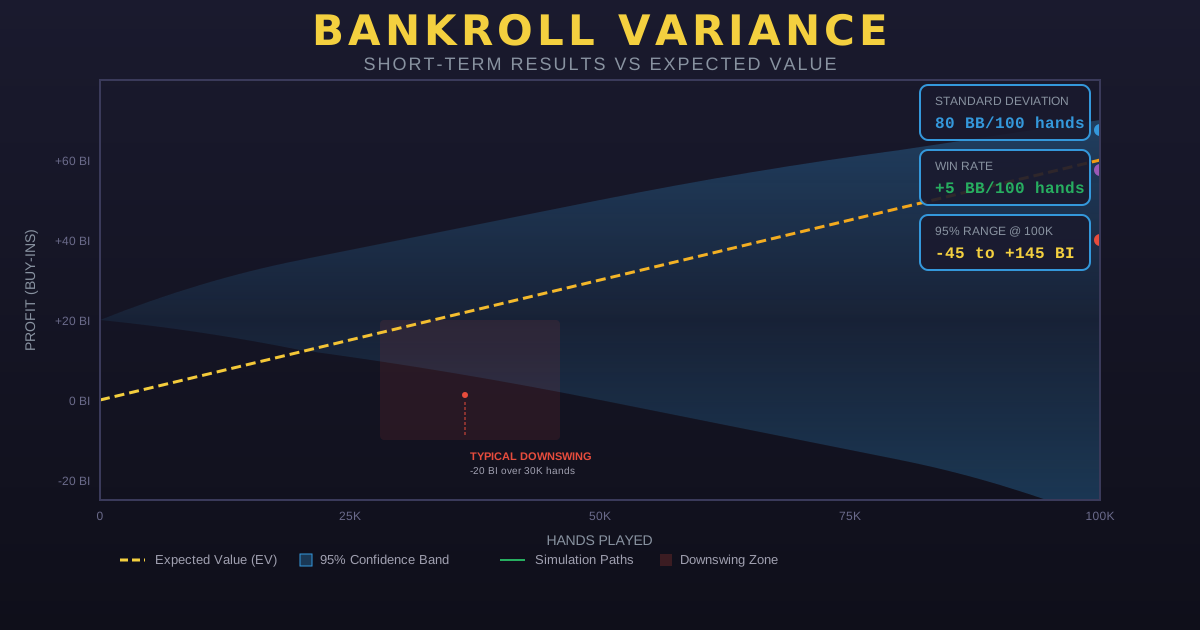
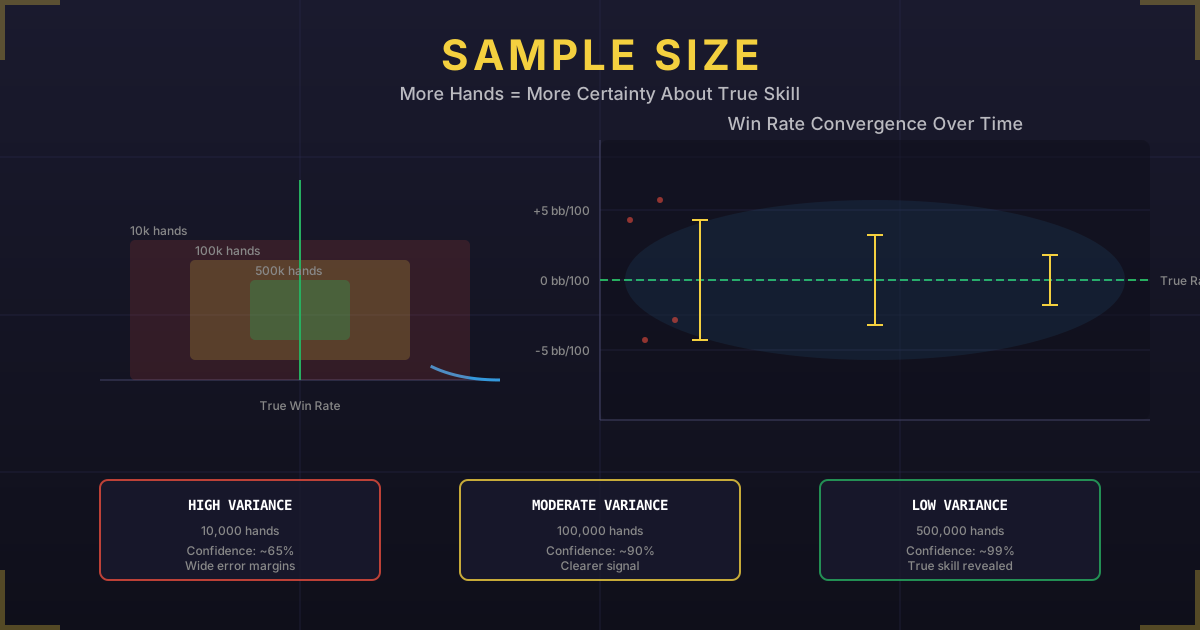
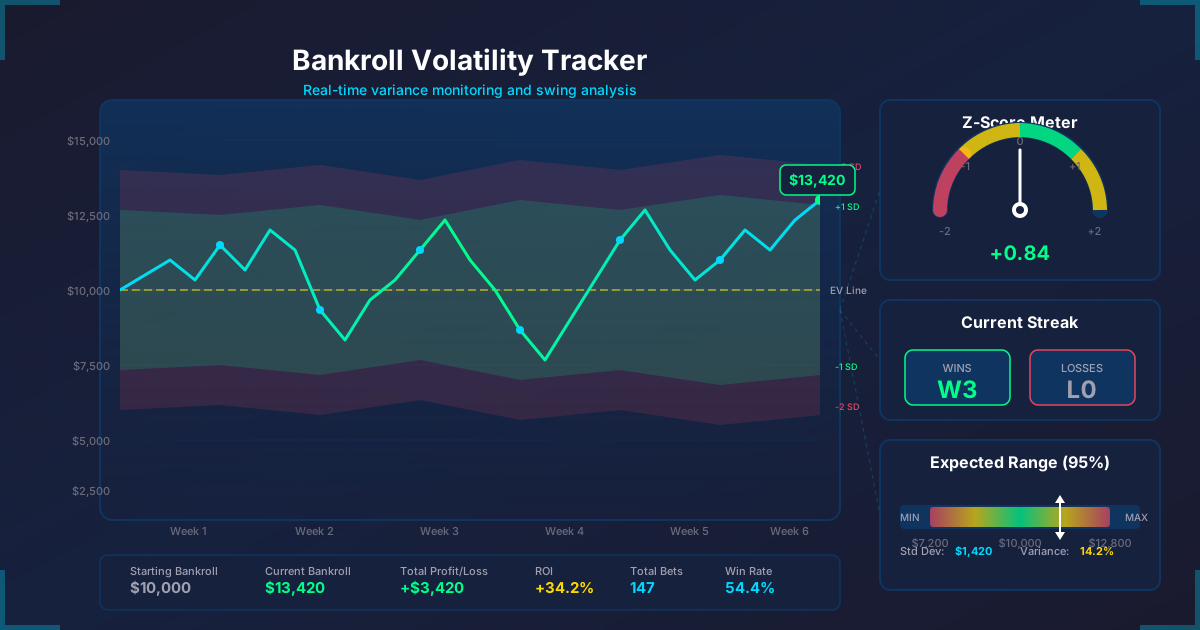
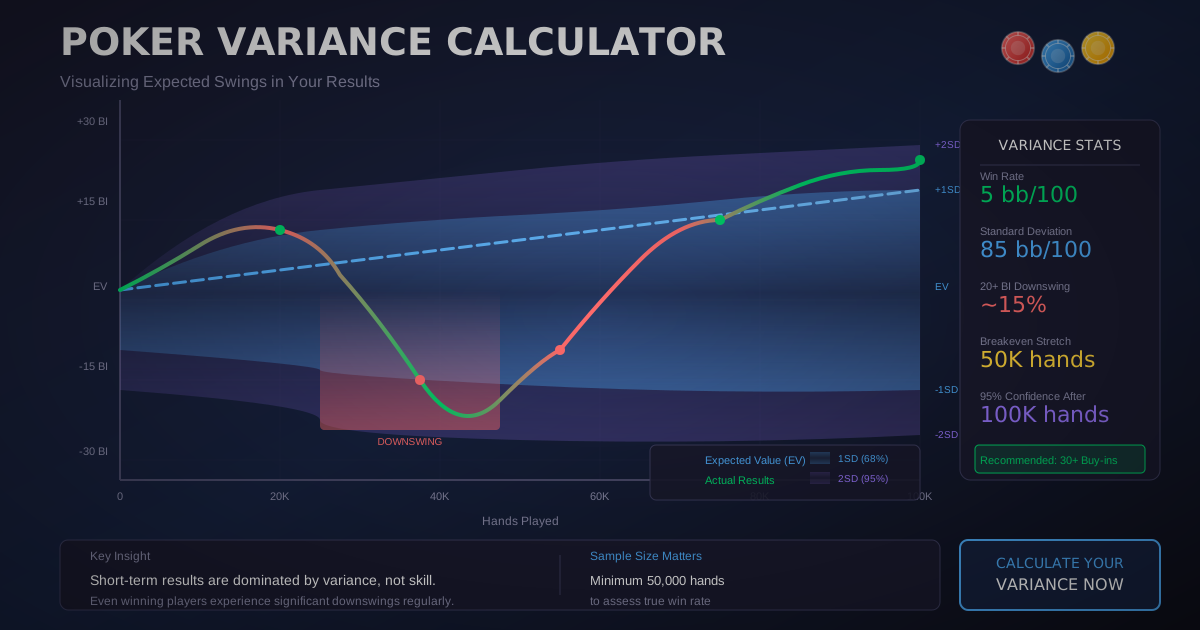
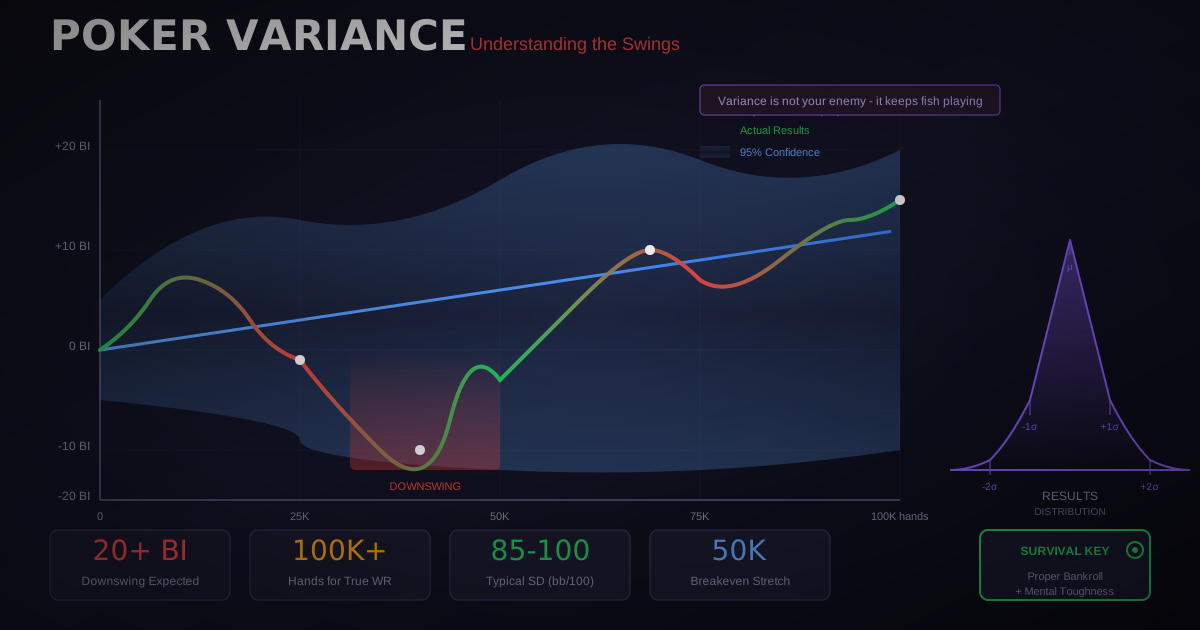
- Variance awareness: Understand that running below EV does not mean your solver-based strategy is wrong. Model your expected swings with the Poker Variance Calculator.
Common Solver Misconceptions
The poker community is rife with misunderstandings about what solvers can and cannot do. Here are the most dangerous myths and the truth behind them.
Myth 1: "The Solver Is Always Right"
Reality: A solver's output is only as good as the inputs you provide. If your preflop ranges are inaccurate, your bet sizes do not match real play, or you limit the solver to too few bet size options, the output will be flawed. Solvers solve for the specific game tree you construct -- change the assumptions and the solution changes.
Myth 2: "Playing GTO Means You Will Crush"
Reality: GTO is a defensive strategy. It ensures you are unexploitable, which means you capture your fair share of the pot. But against weak opponents, exploitative play captures more than your fair share. GTO prevents losses; exploitation generates profits. You need both.
Myth 3: "You Need to Memorize Solver Frequencies"
Reality: No human can execute solver strategies perfectly. There are too many variables -- board texture, stack depth, position, hand combos, and opponent tendencies all interact in ways that make memorization impossible. The goal is to understand the patterns and principles behind solver output, then translate them into implementable heuristics.
Myth 4: "Solvers Make Poker a Solved Game"
Reality: Heads-up limit Hold'em has been essentially solved by computer science. But No-Limit Hold'em -- the game most people play -- is far too complex to be fully solved. Solvers compute approximate equilibria for specific spots with specific assumptions. They do not "solve" poker. The game remains deeply strategic, creative, and dynamic.
Myth 5: "All Solvers Give the Same Answer"
Reality: Different solvers can produce different solutions for the same spot depending on their convergence algorithms, the bet sizes allowed, the accuracy settings, and the preflop ranges used. Even the same solver can give slightly different outputs if you change the number of bet size options or the convergence threshold. This is why understanding the logic is more important than memorizing any single output.
Myth 6: "GTO Is Only for Online Grinders"
Reality: GTO knowledge benefits every player at every level. Live cash game players who understand GTO can make better default decisions, identify opponent deviations more clearly, and build more balanced strategies. Tournament players need GTO foundations for ICM-adjusted play. Even home game players benefit from understanding why certain bet sizes and frequencies work.
Budget-Friendly Alternatives to Full Solvers
Not everyone needs a $249+ solver. Here are ways to learn GTO concepts without breaking the bank.
Free and Low-Cost Options
GTO Wizard Free Tier: Provides limited access to pre-computed solutions and basic drill functionality. Excellent for getting your feet wet without any financial commitment.
GTO+ at $75: The best value in poker software. A one-time purchase that gives you a fully functional postflop solver capable of handling the vast majority of study scenarios. If you can afford $75, this is the single best investment for solver-based study.
YouTube and Twitch Content: Many professional players and coaches share solver analysis publicly. Channels from training sites like Run It Once, Upswing Poker, and Pokercode regularly publish solver breakdowns of common spots.
Free Preflop Charts: Several websites offer solver-derived preflop opening, 3-betting, and defending ranges for free. While these are simplified, they provide a solid foundation.
Solver Study Groups: Join poker Discord servers or forums where players share solver outputs and discuss strategies. This gives you access to solver analysis without running your own solves.
The Minimum Viable Study Stack
If you are on a tight budget, here is the most efficient investment path:
| Priority | Tool/Resource | Cost | What It Gives You |
|---|---|---|---|
| 1 | GTO Wizard Free Tier | $0 | Basic solution access and intro drills |
| 2 | Free preflop charts | $0 | Solid opening/defending ranges |
| 3 | GTO+ | $75 (one-time) | Full postflop solving capability |
| 4 | GTO Wizard Premium | $35/month | Extensive solution library and advanced drills |
| 5 | PioSOLVER Basic | $249 (one-time) | Industry-standard analysis for serious study |
You do not need to start at step 5. Many winning players at $1/$2 live and below have never purchased PioSOLVER. GTO+ and GTO Wizard's free tier can carry you remarkably far.
Frequently Asked Questions
What is the best GTO poker solver for beginners?
GTO Wizard is the best starting point for beginners. Its browser-based platform requires no software installation or powerful hardware, provides instant access to pre-computed solutions with clear visual displays, and includes built-in practice drills that test your understanding against solver-optimal play. The free tier lets you explore before committing to a subscription. Once you outgrow its fixed game trees and want to run custom solves, GTO+ at $75 is the natural next step.
Do I need a powerful computer to run a poker solver?
It depends on the solver. Cloud-based tools like GTO Wizard require no computing power -- they run in your browser. Desktop solvers like PioSOLVER and GTO+ run locally and benefit from strong hardware. For PioSOLVER, 16GB of RAM is the practical minimum, with 32GB+ recommended for complex solves with many bet sizes. GTO+ is less demanding and runs well on most modern computers with 8GB+ RAM. MonkerSolver is the most hardware-intensive, often requiring 32-64GB of RAM for PLO solves.
How long does it take to see results from solver study?
Most players who follow a structured study routine begin noticing improvement within 2-4 weeks. The initial gains typically come from fixing major strategic errors: betting too infrequently or too frequently in specific spots, using incorrect sizing, or failing to defend against bets at the right frequency. Deeper gains from understanding mixed strategies and multi-street planning develop over 3-6 months of consistent study. The key is structured repetition, not volume -- 30 focused minutes per day outperforms 4 unfocused hours on weekends.
Is GTO poker actually beatable, or does it just break even?
GTO does not break even in practice because your opponents are not playing GTO themselves. When you play GTO against a non-GTO opponent, you automatically profit from their mistakes. The weaker your opponents play, the more you profit even while playing GTO. However, you would profit even more by making targeted exploitative adjustments against specific opponents -- which is why the best players use GTO as a baseline and deviate when they have reliable reads.
Can I use a poker solver during live play?
No. Using solvers or any software assistance during active play is prohibited by every legitimate poker room and online platform. Solvers are strictly study tools. You use them before and after sessions to analyze hands, identify patterns, and develop strategies. At the table, you rely on the heuristics and understanding you have built through off-table study. Using a solver during play is cheating and can result in permanent bans and forfeiture of funds.
What is the difference between a poker solver and a poker calculator?
A poker solver computes the complete Game Theory Optimal strategy for a given scenario, determining the optimal action for every hand at every decision point in the game tree. A poker calculator performs a specific mathematical computation, such as calculating pot odds, hand equity, or expected value for a single hand. Solvers answer "What should my entire range do here?" while calculators answer "What are the numbers for this specific hand?" Both are valuable study tools, and calculators like the Pot Odds Calculator and Poker Equity Calculator are essential companions to solver study.
How often should I study with a solver?
Consistency beats volume. Studying 30-45 minutes per day, 4-5 days per week, produces better results than marathon 6-hour sessions once a week. Each study session should focus on a single, specific scenario. Review the solver output, extract a heuristic, drill the spot, and then apply it in your next playing session. Over time, this builds a library of internalized strategies that become automatic at the table.
Are free poker solvers worth using?
Free solver options like GTO Wizard's free tier provide genuine value, especially for beginners. They expose you to GTO concepts, let you explore pre-computed solutions, and offer basic practice drills. The limitations -- restricted solution access, fixed bet sizes, and fewer game types -- only become bottlenecks once you advance past beginner-level study. Start free, and upgrade when you find yourself consistently wanting more depth or customization than the free tier provides.
Tools to Strengthen Your Solver Study
Solver study works best when paired with calculation tools that reinforce the math. Here are the tools that complement your GTO learning.
- Pot Odds Calculator: Instantly verify pot odds for any bet size -- essential for understanding solver calling and folding decisions
- Poker Equity Calculator: Calculate hand vs range equity to understand why the solver bets or checks specific hands
- Implied Odds Calculator: Assess speculative calls with drawing hands that need future street action to be profitable
- Poker EV Calculator: Compute the expected value of any decision to compare with solver EV outputs
- Poker Hand Range Calculator: Build and refine preflop ranges to use as accurate solver inputs
- Poker 3-Bet Calculator: Evaluate 3-betting frequencies and sizing decisions that feed into postflop solver study
- Poker Fold Equity Calculator: Determine how much fold equity you need for bluffs and semi-bluffs to be profitable
- ICM Calculator: Model ICM pressure in tournament spots where GTO deviations are dictated by payout structure
- Push Fold Calculator: Optimize short-stack tournament decisions with preflop shove/fold ranges
- Poker Variance Calculator: Simulate your expected results over thousands of hands to separate variance from strategic errors
Conclusion
GTO poker solvers have permanently changed how poker is studied, taught, and played. They provide a mathematical framework for making decisions that was previously inaccessible to all but the most dedicated students of the game. But the tool is only as powerful as the player using it.
The players who benefit most from solvers are those who approach them with curiosity rather than rigidity. They study with a purpose, focus on understanding principles rather than memorizing outputs, and translate complex solver strategies into simple, executable heuristics. They use GTO as their defensive foundation and exploit opponents whenever reliable information justifies the deviation.
Whether you start with the free tier of GTO Wizard, invest $75 in GTO+, or commit to PioSOLVER, the most important step is to begin. Open a solver, set up a common spot you encounter regularly, and start asking questions. The answers will transform how you think about every hand you play.
The edge in modern poker does not come from natural talent or table feel alone. It comes from the disciplined application of off-table study to real-world decisions. Solvers give you the knowledge. Your job is to turn that knowledge into action.
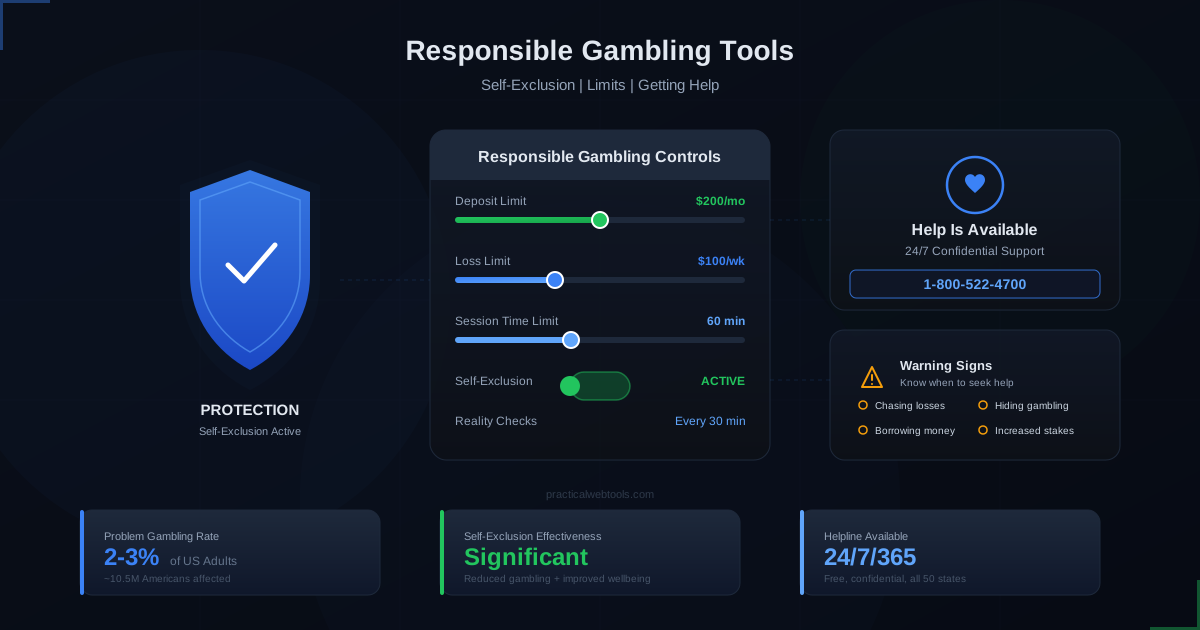
Gambling involves risk. This content is for educational and informational purposes only. Always gamble responsibly, set limits you can afford, and seek help if gambling becomes a problem. Visit the National Council on Problem Gambling or call 1-800-522-4700 for support.