Home Field Advantage in Sports Betting: How Much Is It Really Worth? (2026)

The home team wins 57.3% of all professional sporting events worldwide -- but that single number hides enormous variation that smart bettors can exploit. Home field advantage in the NFL is worth roughly 2.5 points on the spread. In the NBA, home court adds about 3.5 points. In European soccer, it can swing a match result probability by 15-25%. Yet sportsbooks do not always price these edges accurately, and the value of playing at home has shifted significantly since the COVID-19 pandemic revealed just how much of the advantage comes from crowd noise versus travel and familiarity.
This guide quantifies home field advantage across every major sport with specific point values, explains the underlying causes, shows you how the advantage has changed over time, and most importantly identifies when the market overprices or underprices home field so you can make sharper bets in 2026.
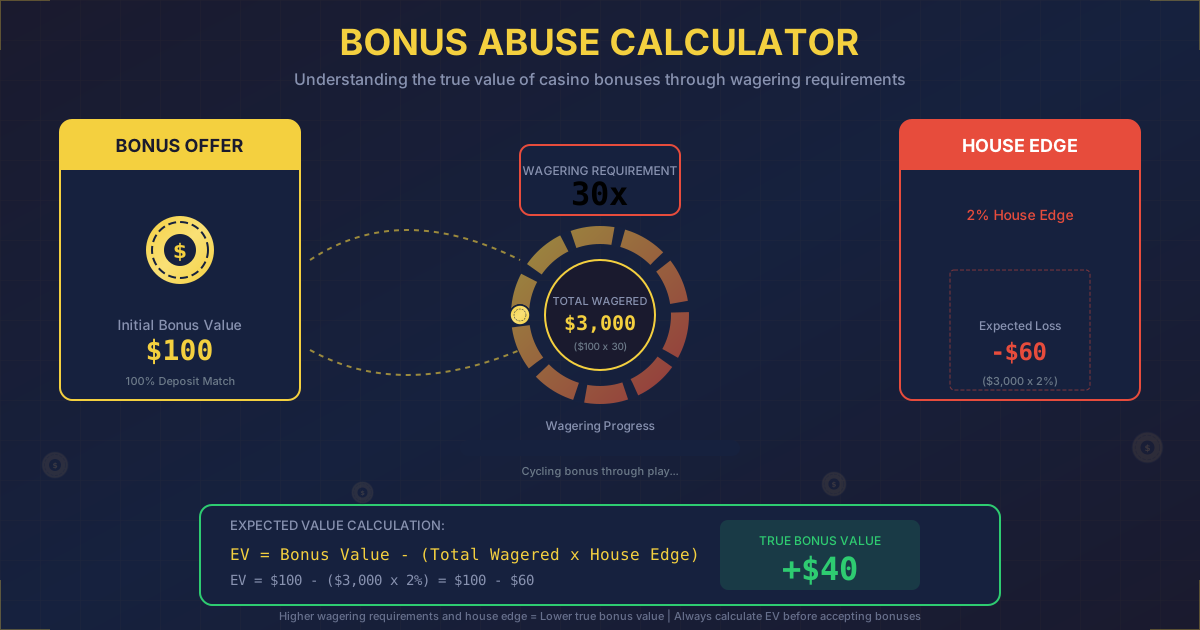
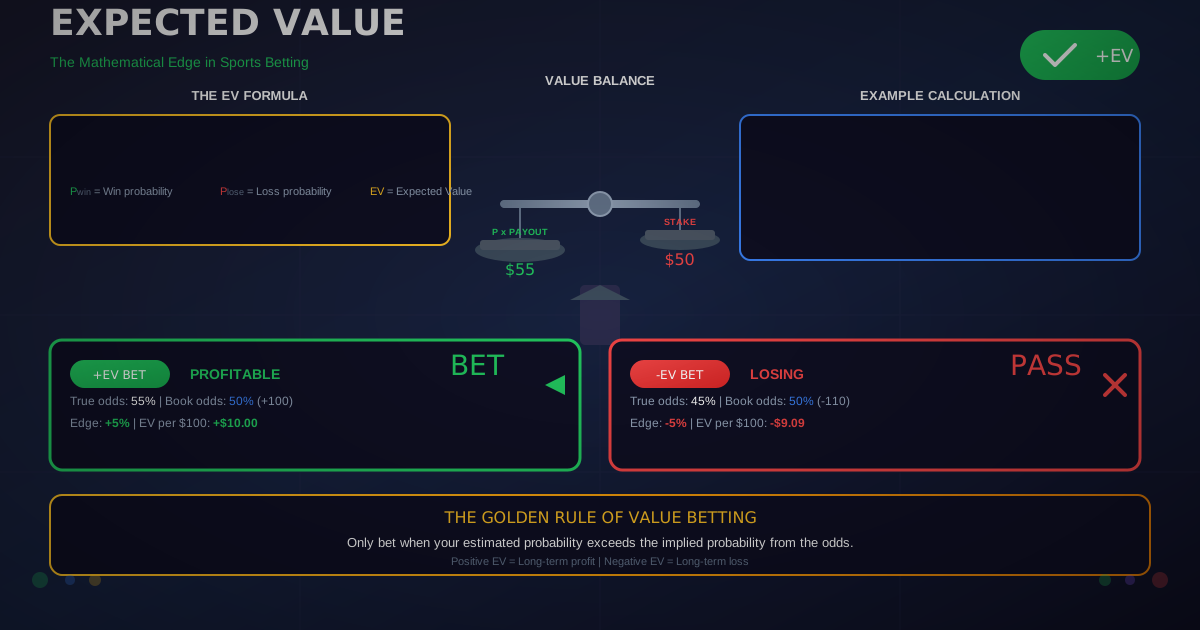
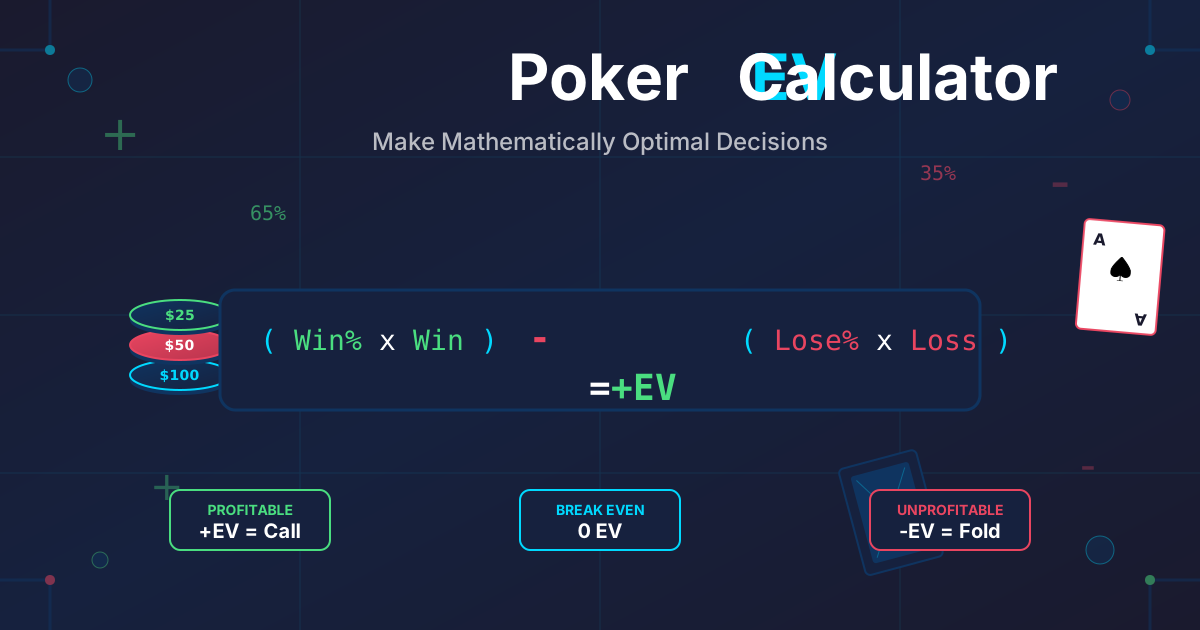
Calculate the expected value of any home-field-adjusted wager with our free Expected Value Calculator -- the analytical foundation that separates winning bettors from recreational players.
How Much Is Home Field Advantage Worth in the NFL?
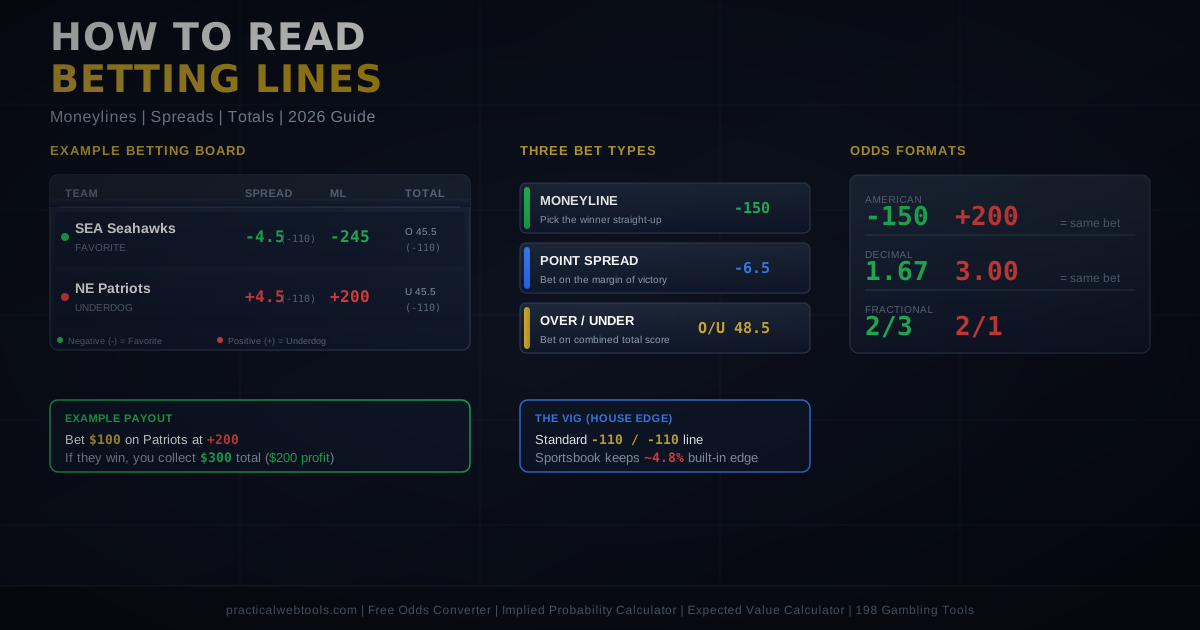
Home field advantage in the NFL is worth approximately 2.5 points on the spread as of 2026, down from roughly 3.0 points a decade ago. This means that if two equally matched NFL teams play, the home team would be favored by about 2.5 points at most sportsbooks.
Historical NFL Home Field Advantage Trends
The value of NFL home field advantage has declined steadily since the early 2000s. Several factors drive this trend: improved travel accommodations, rule changes that favor passing (which is less affected by crowd noise than rushing), and the overall parity created by the salary cap system.
| Era | Home Win % | Avg HFA Point Value | ATS Win % (Home Favorites) |
|---|---|---|---|
| 2000-2005 | 57.8% | 3.2 pts | 51.4% |
| 2006-2010 | 57.1% | 3.0 pts | 50.8% |
| 2011-2015 | 56.5% | 2.8 pts | 50.2% |
| 2016-2019 | 55.2% | 2.6 pts | 49.6% |
| 2020 (COVID, limited fans) | 51.3% | 1.4 pts | 47.1% |
| 2021-2023 | 54.8% | 2.3 pts | 49.4% |
| 2024-2025 | 55.5% | 2.5 pts | 50.1% |
The 2020 COVID season was a natural experiment that isolated crowd noise from other factors. With limited or no fans in attendance, home field advantage dropped to roughly 1.4 points -- suggesting that approximately half of the normal NFL HFA comes from crowd noise and its effects on opposing offense communication, and the other half from travel, routine, and field familiarity.
Which NFL Teams Have the Largest Home Field Advantage?
Not all home fields are created equal. Some NFL stadiums consistently produce larger home field advantages due to crowd noise, weather, altitude, or a combination of factors.
| Team | Stadium | 2020-2025 Home Win % | Estimated HFA (Points) | Key Factors |
|---|---|---|---|---|
| Seattle Seahawks | Lumen Field | 62.5% | 3.5 | Crowd noise (amplified by roof), travel to Pacific time |
| Green Bay Packers | Lambeau Field | 63.1% | 3.4 | Cold weather, crowd tradition, travel to small market |
| Kansas City Chiefs | Arrowhead Stadium | 64.8% | 3.6 | Crowd noise (Guinness record), strong home culture |
| Denver Broncos | Empower Field | 58.7% | 3.2 | Altitude (5,280 ft), thin air, visiting team fatigue |
| New Orleans Saints | Caesars Superdome | 60.3% | 3.1 | Dome noise amplification, travel to New Orleans |
| Pittsburgh Steelers | Acrisure Stadium | 59.2% | 2.9 | Cold weather, intimidating atmosphere |
| Buffalo Bills | Highmark Stadium | 61.4% | 3.3 | Extreme weather, passionate fanbase |
| Las Vegas Raiders | Allegiant Stadium | 52.1% | 1.8 | Dome (neutral conditions), large visiting fan contingent |
| Los Angeles Chargers | SoFi Stadium | 50.8% | 1.5 | Small home fanbase, visiting fans regularly outnumber |
The Chargers and Raiders represent the opposite extreme -- teams whose home field is worth less than the league average because their venues attract substantial numbers of opposing fans.
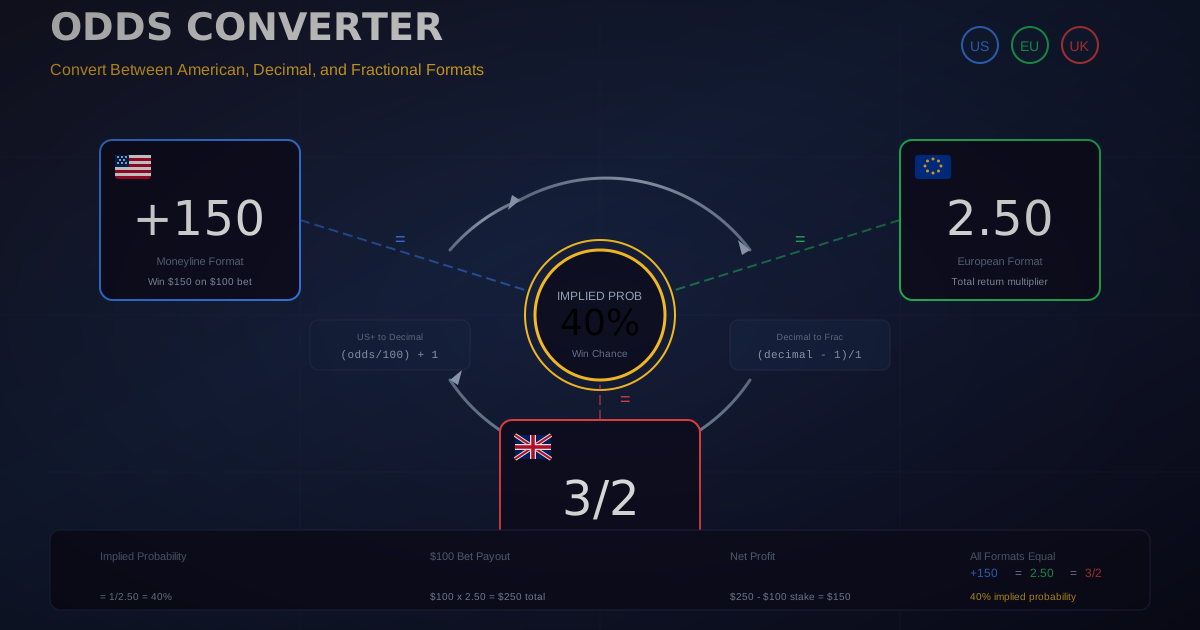
Compare odds across sportsbooks for home-field-adjusted lines with our Odds Converter.
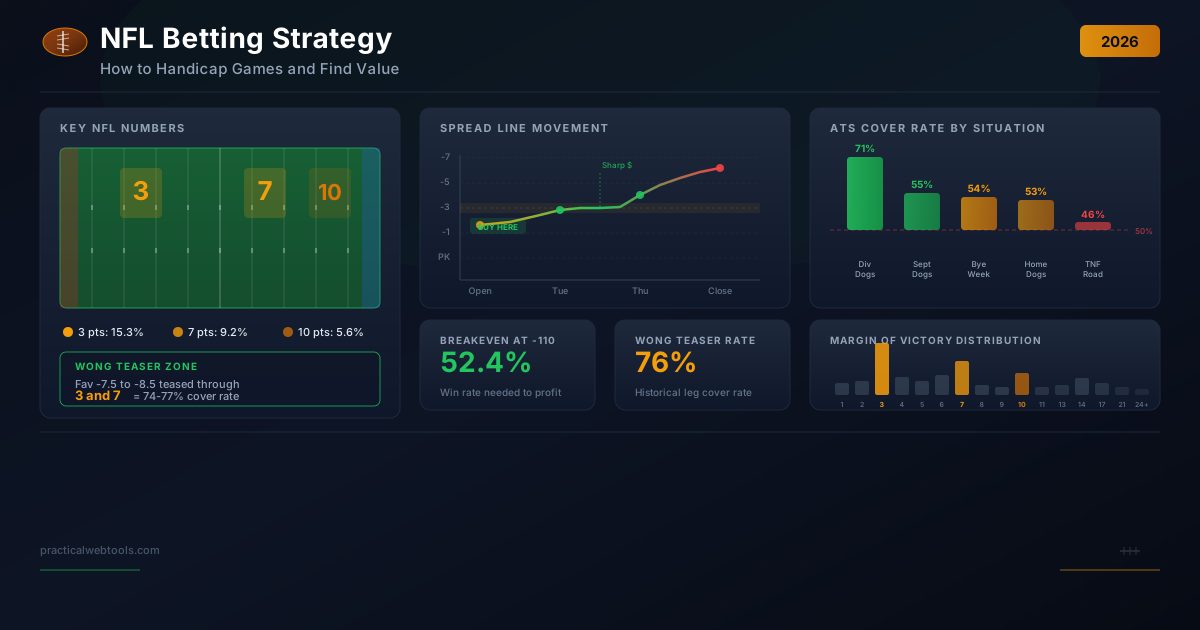
NFL Home Field and the Spread Market
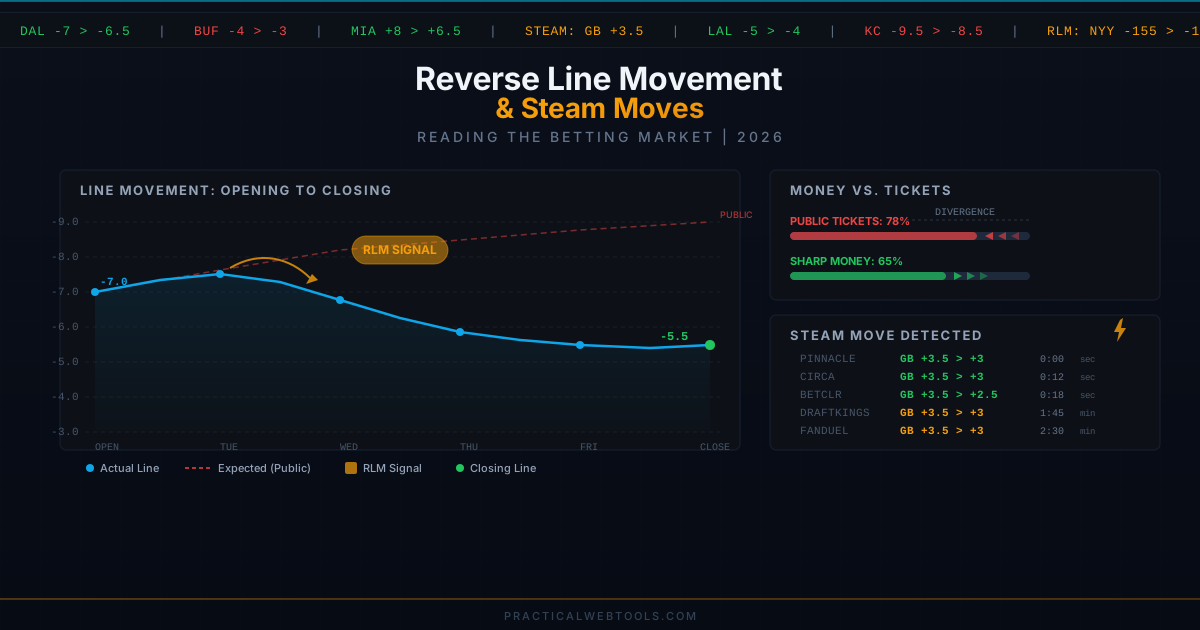
The crucial question for bettors is not whether home field advantage exists but whether the market prices it correctly. Historical data shows that the market has gradually adjusted to the declining HFA, but the adjustment lags reality. In seasons where HFA temporarily increases (post-COVID return of full crowds, for example), sportsbooks were slow to reprice, creating temporary value on home teams.
Conversely, when the market prices NFL HFA at 3 points for a neutral matchup but the actual advantage is closer to 2.5 points, there is systematic value on road teams -- especially road teams with strong records that attract public betting on the home side.
How Much Is Home Court Advantage Worth in the NBA?
Home court advantage in the NBA is worth approximately 3.0-3.5 points on the spread as of 2026, making it the largest home field advantage by point value among the four major North American professional sports leagues.
NBA Home Court by the Numbers
| Season | Home Win % | Avg HFA (Points) | Home ATS Record |
|---|---|---|---|
| 2017-18 | 59.2% | 3.6 | 50.8% |
| 2018-19 | 58.5% | 3.4 | 50.3% |
| 2019-20 (COVID bubble) | 49.8% | 0.3 | 48.2% |
| 2020-21 (limited fans) | 54.7% | 2.1 | 49.1% |
| 2021-22 | 57.3% | 3.2 | 50.4% |
| 2022-23 | 57.8% | 3.3 | 50.2% |
| 2023-24 | 58.1% | 3.4 | 50.5% |
| 2024-25 | 57.6% | 3.3 | 50.3% |
The NBA bubble season in 2019-20 provided the cleanest natural experiment of any sport: with all games played at a neutral site with no fans, home court advantage virtually disappeared. This proved conclusively that NBA home court advantage comes almost entirely from crowd presence and its effects on officiating, not from travel or floor familiarity.
The Referee Factor
Multiple academic studies have documented referee bias toward the home team in the NBA. The mechanism is not intentional corruption -- it is unconscious influence from crowd noise. Research published in the Journal of Sports Economics found that:
- Home teams receive approximately 1.2 more free throw attempts per game than road teams after controlling for all other variables.
- The free throw disparity is largest in close games where crowd intensity is highest.
- The referee bias effect accounts for approximately 0.8-1.2 points of the total home court advantage.
- During the bubble season (no crowd), the free throw disparity between home and road teams dropped to statistically zero.
This means roughly one-third of NBA home court advantage comes from officiating bias influenced by crowd noise. The rest comes from familiar surroundings, sleep quality, travel fatigue, and crowd energy affecting player performance.
NBA Altitude and Travel Effects
The Denver Nuggets have historically enjoyed one of the largest home court advantages in the NBA. At 5,280 feet elevation, visiting teams show measurable performance declines in the second half, particularly in the third quarter. The Nuggets' home winning percentage has been approximately 5-7% higher than their overall talent level would predict, and their second-half scoring margin at home is roughly 2 points better than on the road.
The Utah Jazz (4,226 feet in Salt Lake City) enjoy a similar but smaller altitude effect.
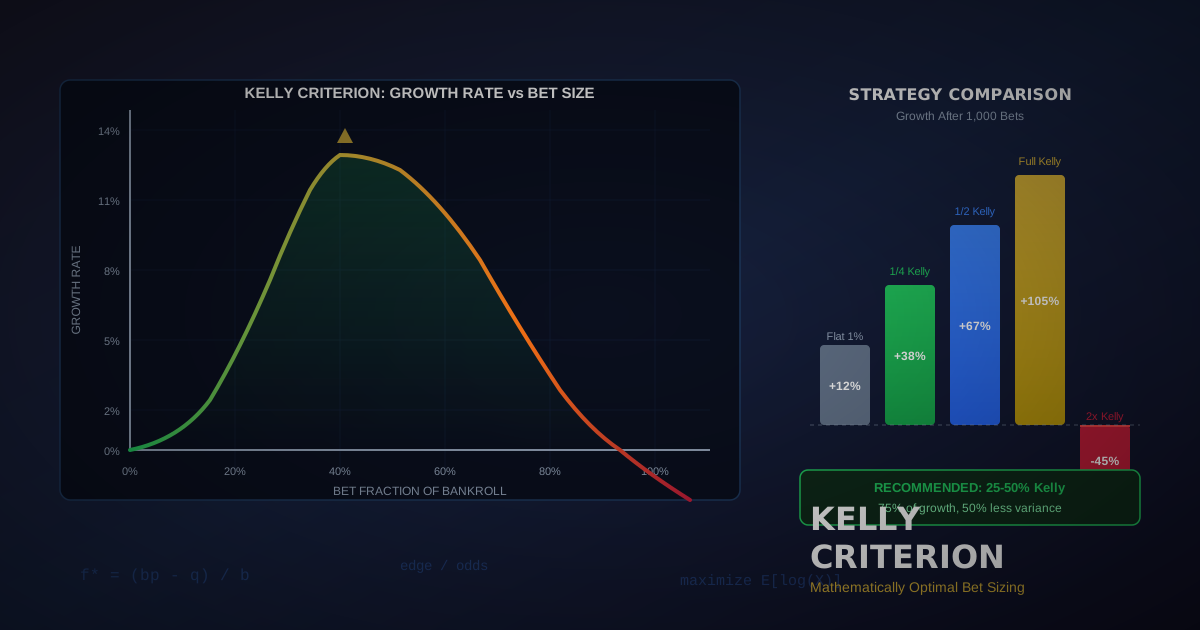
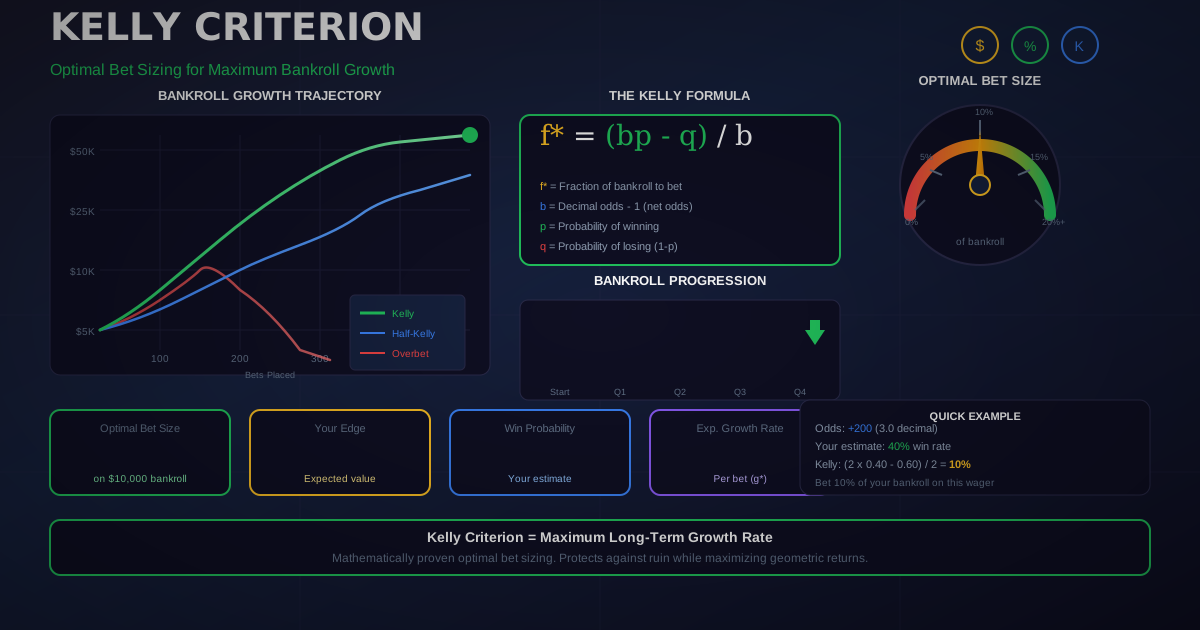
Determine optimal bet sizing for home court advantage plays using our Kelly Criterion Calculator.
Back-to-Back and Schedule Factors
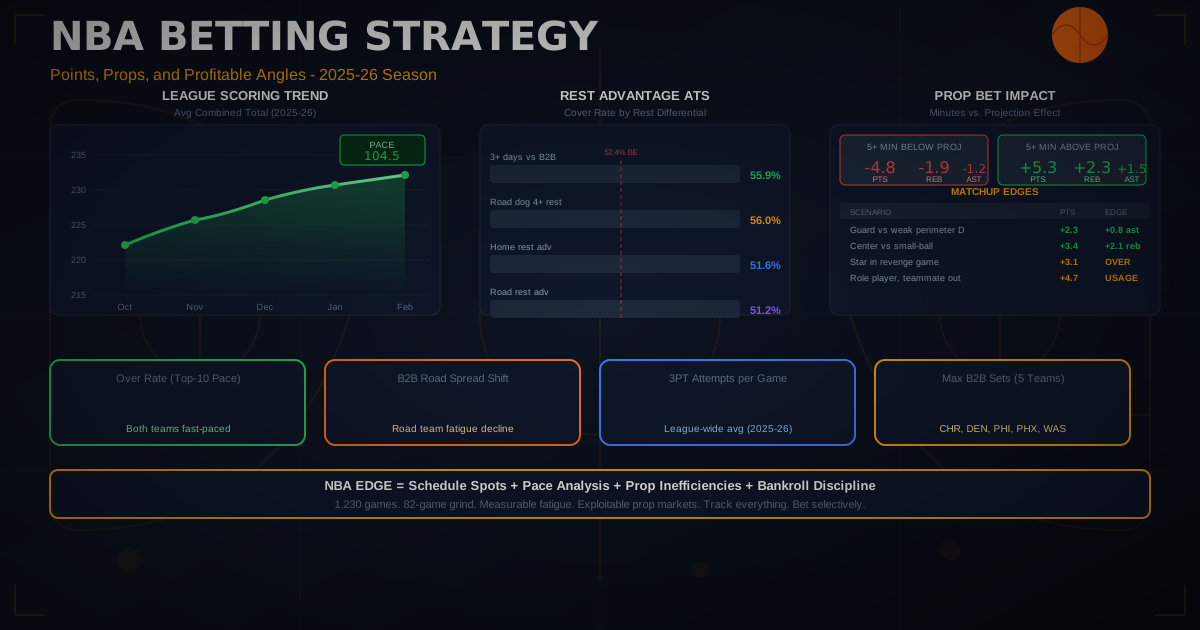
Travel scheduling dramatically affects NBA home court advantage. A home team that is rested (no game in the previous 2 days) facing a road team on the second night of a back-to-back has a significantly larger advantage:
| Scenario | Home Win % | Effective HFA (Points) |
|---|---|---|
| Both teams rested | 56.8% | 3.0 |
| Home rested, road on B2B | 64.2% | 5.8 |
| Home on B2B, road rested | 52.1% | 1.5 |
| Both on B2B | 55.3% | 2.6 |
| Home rested, road 3-in-4 nights | 66.8% | 6.5 |
When a rested home team faces a road team on the tail end of a back-to-back, the effective home court advantage roughly doubles. This is one of the most well-documented edges in NBA betting, though the market has become reasonably efficient at pricing it.
How Does Home Field Advantage Work in MLB?
Home field advantage in MLB is the smallest among the four major sports, with home teams winning approximately 54% of games. The advantage is worth roughly 15-20 cents on the moneyline or about 0.5-0.7 runs on the run line.
MLB Home Advantage Factors
| Factor | Impact | Explanation |
|---|---|---|
| Last at-bat advantage | High | Home team always bats in the bottom of each inning, allowing strategic responses |
| Fan familiarity with park | Moderate | Outfielders know wall angles, wind patterns, and surface quirks |
| Travel fatigue | Low-Moderate | MLB travel is frequent; teams adjust more quickly |
| Umpire bias | Low | MLB has moved to automated systems for balls/strikes in some contexts |
| Ballpark dimensions | Moderate | Teams build rosters to exploit their home park |
| Sleep and routine | Moderate | Players sleep in their own beds, eat familiar food |
Ballpark-Specific Home Field Advantages
Some MLB ballparks produce significantly larger or smaller home advantages due to their unique characteristics.
| Ballpark | Team | Home Win % (2020-25) | Key Home Advantage Factor |
|---|---|---|---|
| Coors Field | Rockies | 55.8% | Altitude; Rockies build roster for thin air |
| Fenway Park | Red Sox | 55.2% | Green Monster; left-handed pull hitters thrive |
| Minute Maid Park | Astros | 57.1% | Strong home culture, retractable roof advantage |
| Wrigley Field | Cubs | 54.9% | Wind patterns; home team knows daily wind effects |
| Oracle Park | Giants | 54.1% | Wind from McCovey Cove; favors pitching |
| Yankee Stadium | Yankees | 55.4% | Short right field porch; built for left-handed power |
| Tropicana Field | Rays | 52.3% | Poor attendance, minimal crowd effect |
| Oakland Coliseum | Athletics | 51.1% | Minimal fan support, no meaningful home advantage |
The Rockies' situation is unique because their roster is constructed to exploit Coors Field's altitude and dimensions. Colorado hitters learn to hit in thin air, while visiting pitchers often struggle to adjust their pitch selection and location.
Find the best moneyline prices for home teams with our Odds Converter.
The Starting Pitcher Override
In MLB, starting pitching quality often overrides home field advantage entirely. An ace pitcher on the road is a much stronger predictor of the game outcome than which team is playing at home. When a top-10 starting pitcher by ERA is on the road against a bottom-third starter at home, the road team wins approximately 57% of the time, effectively erasing the home advantage.
This means MLB bettors should generally weight starting pitching 3-5 times more heavily than home field when making their assessments.
What Is Home Ice Advantage Worth in the NHL?
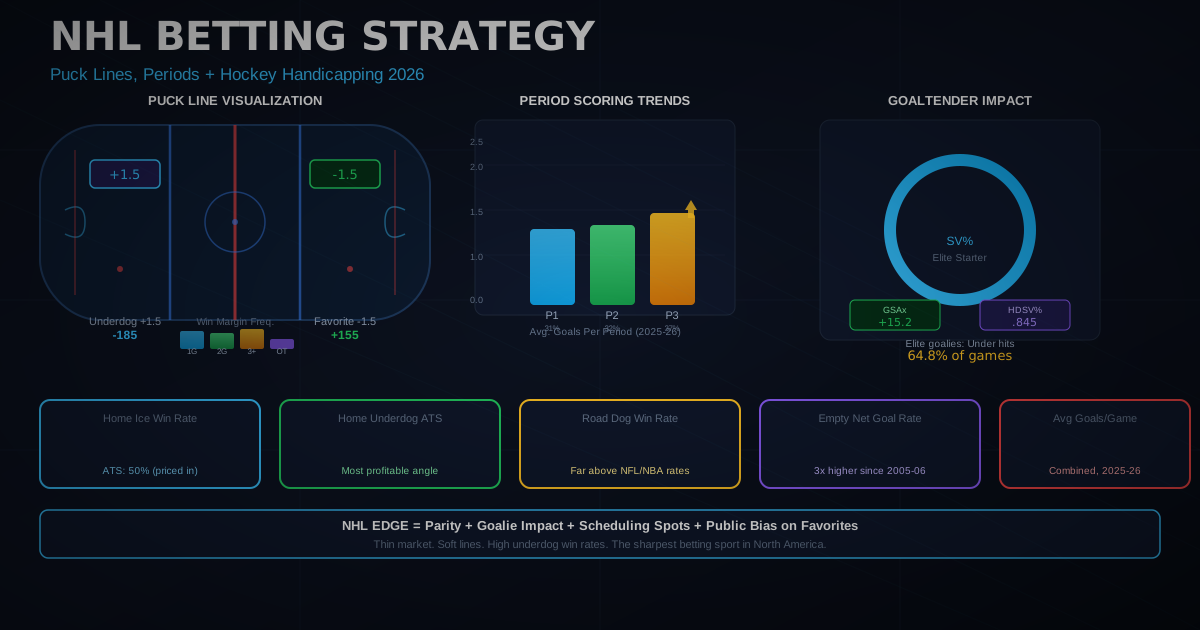
Home ice advantage in the NHL is worth approximately 55% win probability for the home team, translating to roughly 1.5-2.0 points of goal differential value per game. The advantage stems primarily from last change (allowing the home coach to exploit favorable matchups) and the energy boost from home crowds.
NHL Home Ice Trends
| Season Range | Home Win % | Home Goals Per Game | Road Goals Per Game |
|---|---|---|---|
| 2015-2018 | 55.3% | 3.12 | 2.78 |
| 2018-2020 | 54.8% | 3.09 | 2.81 |
| 2020-21 (COVID, limited fans) | 52.4% | 2.98 | 2.86 |
| 2021-2023 | 54.1% | 3.05 | 2.82 |
| 2023-2025 | 54.5% | 3.08 | 2.80 |
The Last Change Advantage
The NHL's unique "last change" rule gives the home team the ability to send out their lines after the visiting team, enabling favorable matchups. Smart coaches exploit this by matching their top defensive line against the opponent's top offensive line, while getting their own top line favorable matchups against weaker opponents.
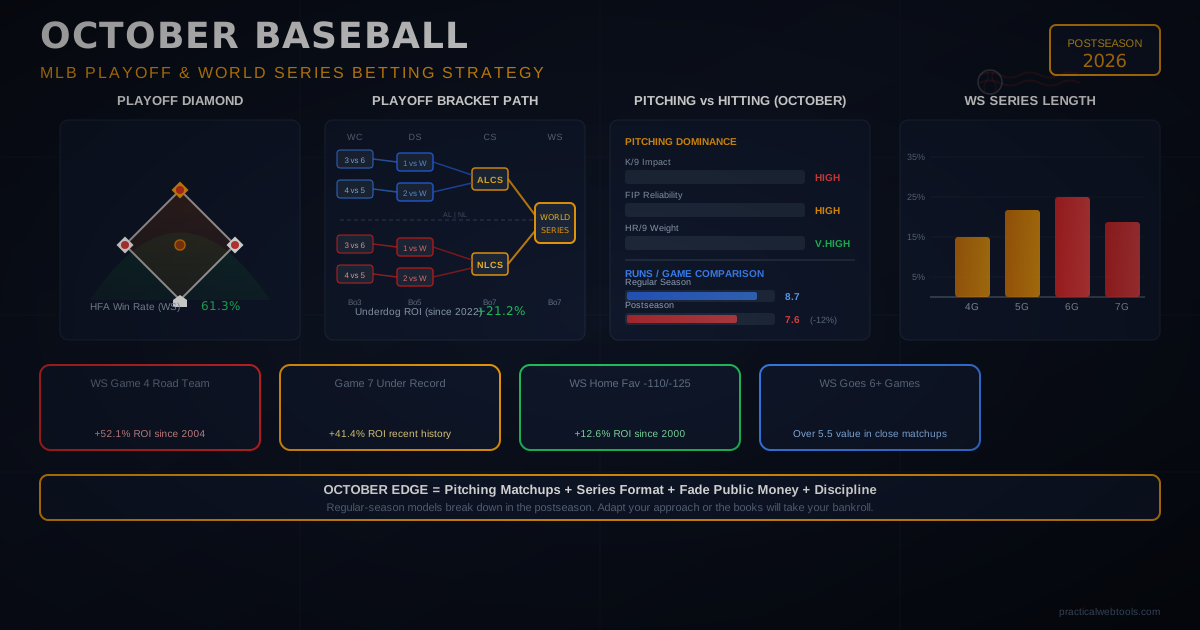
The last change advantage is most valuable in the playoffs, where coaching adjustments are more deliberate and series-long matchup strategies develop. Home teams win approximately 55.5% of playoff games, slightly higher than the regular-season rate, partly because playoff coaching maximizes the last change.
Travel and Time Zone Effects in the NHL
NHL schedule density creates meaningful travel effects. Teams playing the third game in four nights on the road see their win probability drop to approximately 45%, regardless of opponent quality. West-to-East travel (playing against the body clock) produces slightly worse results than East-to-West travel.
| Travel Scenario | Road Win % | Goals Against Avg | Save % |
|---|---|---|---|
| No travel (previous game at home) | 47.2% | 2.91 | .912 |
| Short travel (< 500 miles) | 46.1% | 2.98 | .910 |
| Long travel (> 1,000 miles) | 44.3% | 3.08 | .907 |
| West-to-East crossing 2+ time zones | 43.1% | 3.14 | .904 |
| 3rd game in 4 nights, road | 41.8% | 3.22 | .901 |
Model the expected value of home ice plays across the season with our Expected Value Calculator.
How Does Home Advantage Differ in Soccer Across Leagues?
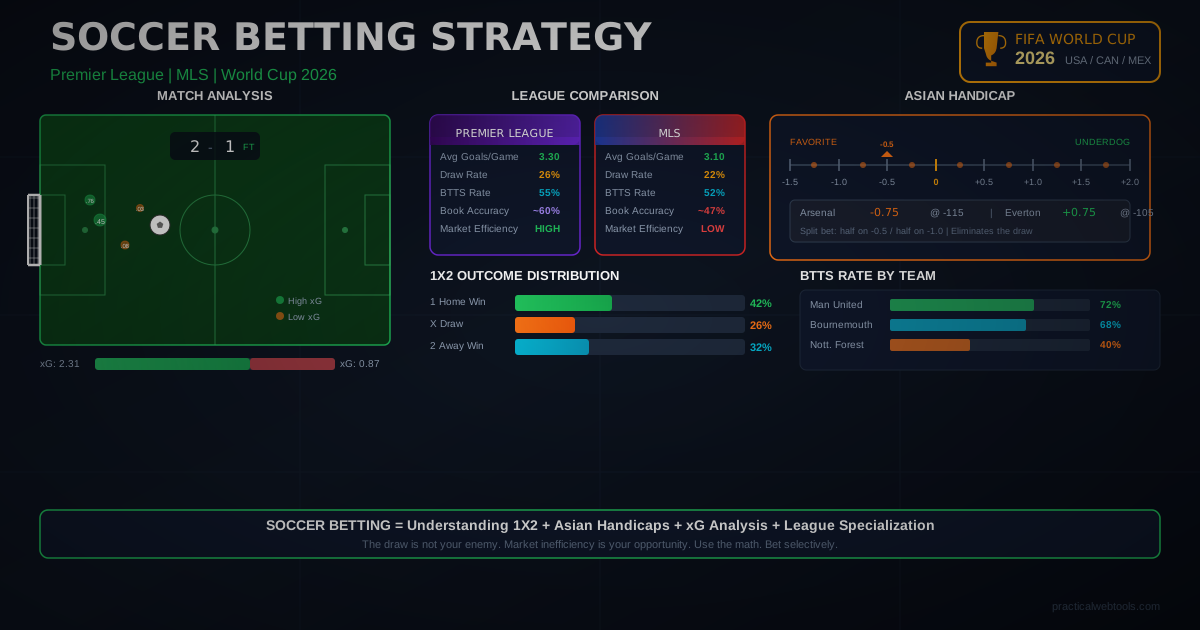
Home advantage in soccer varies dramatically by league, ranging from approximately 45-48% home win rates in some leagues to over 60% in others. The size of the advantage depends on travel distances, fan culture, stadium intimidation, and refereeing standards.
Home Win Rates by Major Soccer League
| League | Country | Home Win % | Draw % | Away Win % | Effective HFA |
|---|---|---|---|---|---|
| Premier League | England | 45.8% | 25.2% | 29.0% | Moderate |
| La Liga | Spain | 48.1% | 23.8% | 28.1% | Moderate-High |
| Serie A | Italy | 47.5% | 26.3% | 26.2% | Moderate-High |
| Bundesliga | Germany | 44.9% | 24.6% | 30.5% | Moderate |
| Ligue 1 | France | 46.2% | 25.1% | 28.7% | Moderate |
| MLS | USA | 50.8% | 22.1% | 27.1% | High |
| Liga MX | Mexico | 52.3% | 24.5% | 23.2% | Very High |
| Argentine Primera | Argentina | 53.1% | 23.8% | 23.1% | Very High |
| Turkish Super Lig | Turkey | 51.7% | 23.2% | 25.1% | High |
| Brazilian Serie A | Brazil | 54.8% | 22.3% | 22.9% | Very High |
Why South American and MLS Home Advantages Are Larger
Several factors explain the larger home advantages in South American and MLS soccer:
- Travel distances: MLS teams routinely travel 2,000-3,000 miles for away matches, compared to 200-400 miles in European domestic leagues. Brazilian and Argentine leagues also cover enormous distances.
- Altitude: Several Liga MX stadiums (Mexico City, Toluca, Puebla) sit above 7,000 feet, creating extreme altitude advantages.
- Fan culture: South American fan sections (barras bravas) create genuinely intimidating environments with pyrotechnics, constant singing, and physical proximity to the field.
- Refereeing: In leagues with less VAR implementation, referee home bias tends to be larger. Studies have shown that referees in South American leagues add more stoppage time when the home team is trailing and award more borderline penalties to the home side.
The VAR Effect on Home Advantage in Soccer
The introduction of VAR (Video Assistant Referee) has reduced home advantage in soccer by approximately 2-4 percentage points in leagues that use it extensively. VAR corrects incorrect penalty decisions and red cards that historically favored the home team due to referee crowd influence. The Premier League saw its home win rate drop from approximately 49% pre-VAR to 45-46% post-VAR -- a meaningful shift for bettors.
Find value in soccer home/draw/away markets with our Implied Probability Calculator.
How Has Home Field Advantage Changed Since COVID-19?
Home field advantage declined sharply during the COVID-19 pandemic when fans were excluded or limited, and it has not fully recovered to pre-pandemic levels in most sports. The lasting effect has been a 0.3-0.5 point reduction in the perceived value of home field across major sports.
Pre-COVID vs Post-COVID Home Advantage
| Sport | Pre-COVID HFA (2017-19) | COVID HFA (2020-21) | Post-COVID HFA (2022-25) | Net Change |
|---|---|---|---|---|
| NFL | 2.8 pts | 1.4 pts | 2.5 pts | -0.3 pts |
| NBA | 3.4 pts | 0.3 pts (bubble) | 3.3 pts | -0.1 pts |
| MLB | 54.2% home W% | 53.1% | 54.0% | -0.2% |
| NHL | 55.1% home W% | 52.4% | 54.5% | -0.6% |
| EPL | 48.7% home W% | 44.1% | 45.8% | -2.9% |
The most significant lasting impact has been in European soccer, where the Premier League home win rate has not recovered to pre-COVID levels. This may indicate that some of the pre-2020 home advantage in soccer was driven by referee crowd influence, which VAR technology has permanently reduced, and that the pandemic accelerated this structural shift.
What COVID Taught Us About the Sources of HFA
The pandemic period was a goldmine for understanding what drives home field advantage:
- Crowd noise accounts for approximately 40-60% of HFA depending on the sport. This was proven by the near-elimination of home advantage in empty stadiums.
- Travel and routine account for approximately 20-30%. Teams still had slightly better results at their home venue even without fans.
- Familiarity with the venue accounts for approximately 10-20%. Knowing the dimensions, sightlines, and quirks of your home arena provides a small but measurable edge.
- Referee/umpire bias accounts for approximately 15-25% of the crowd-related component. Studies consistently show that officials make more favorable calls for the home team when crowds are present.
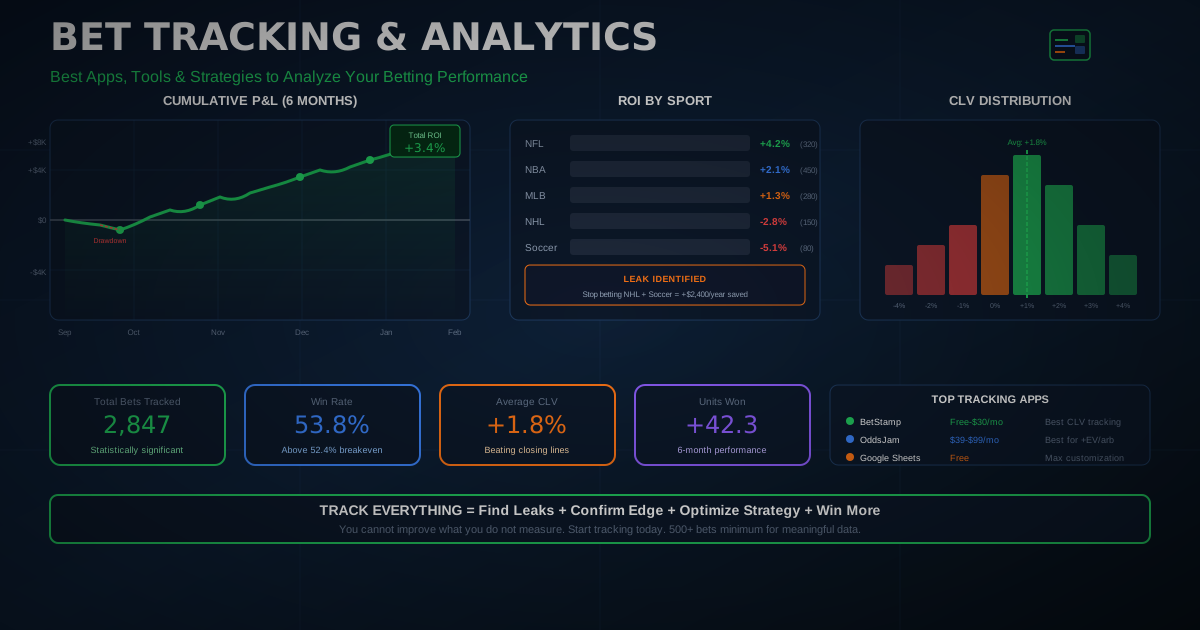
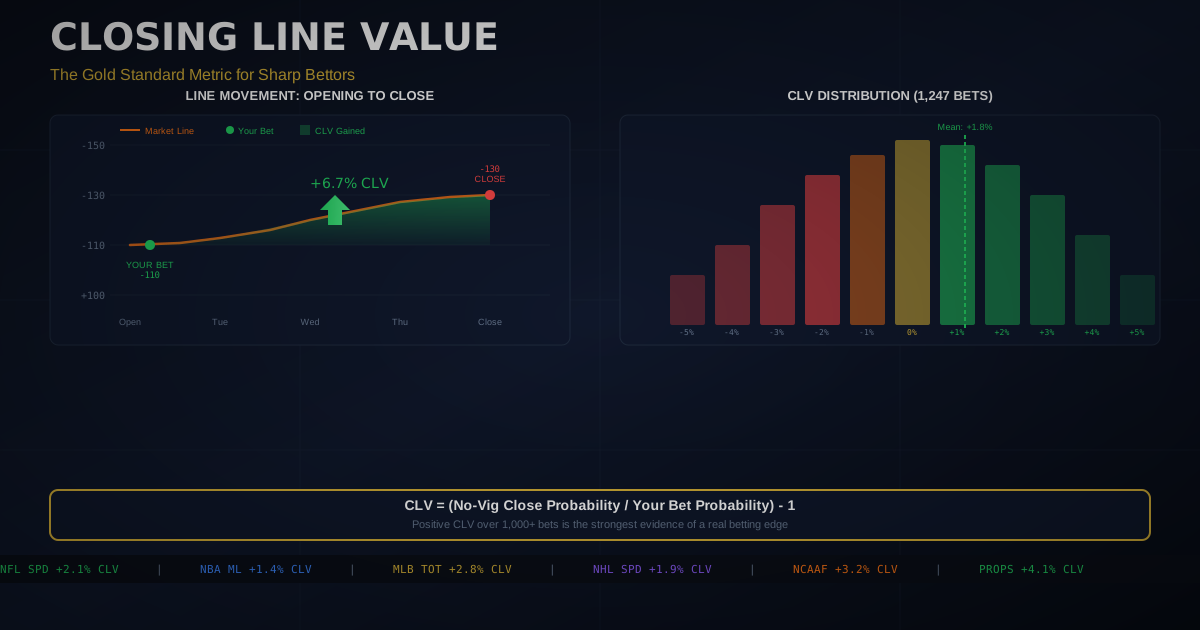
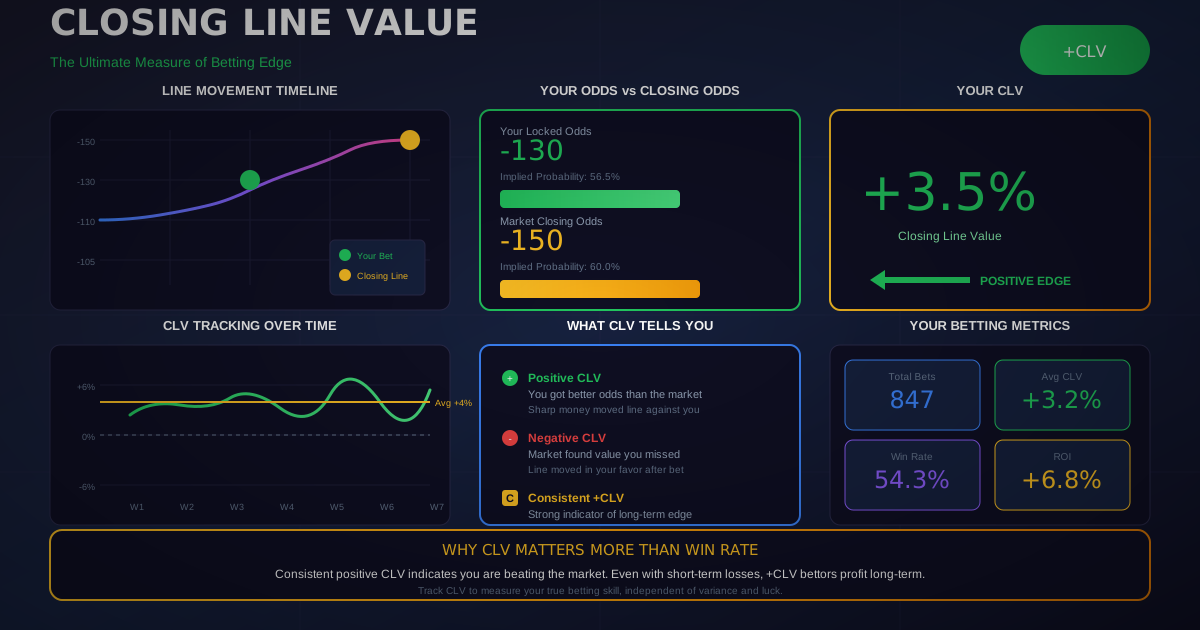
Track your betting performance on home/away plays over time with our CLV Tracker.
When Is Home Field Advantage Overpriced in Betting Lines?
Home field advantage is most commonly overpriced when popular home teams face less-followed opponents, when the home team has a strong recent record that inflates public perception, and when the home team plays in a high-profile prime-time slot that attracts casual betting action.
Overpriced HFA Scenarios
| Scenario | Why HFA Is Overpriced | Historical Edge (Road ATS) |
|---|---|---|
| Home favorite > 10 pts (NFL) | Public piles on blowout favorites | Road covers 53.8% |
| Prime-time home favorites (NFL) | Casual bettors back home teams in SNF/MNF | Road covers 52.4% |
| NBA home favorites > 8 pts | Market overly punishes road teams | Road covers 52.1% |
| Home teams coming off bye (NFL) | Public overvalues rest + home | Road covers 51.7% |
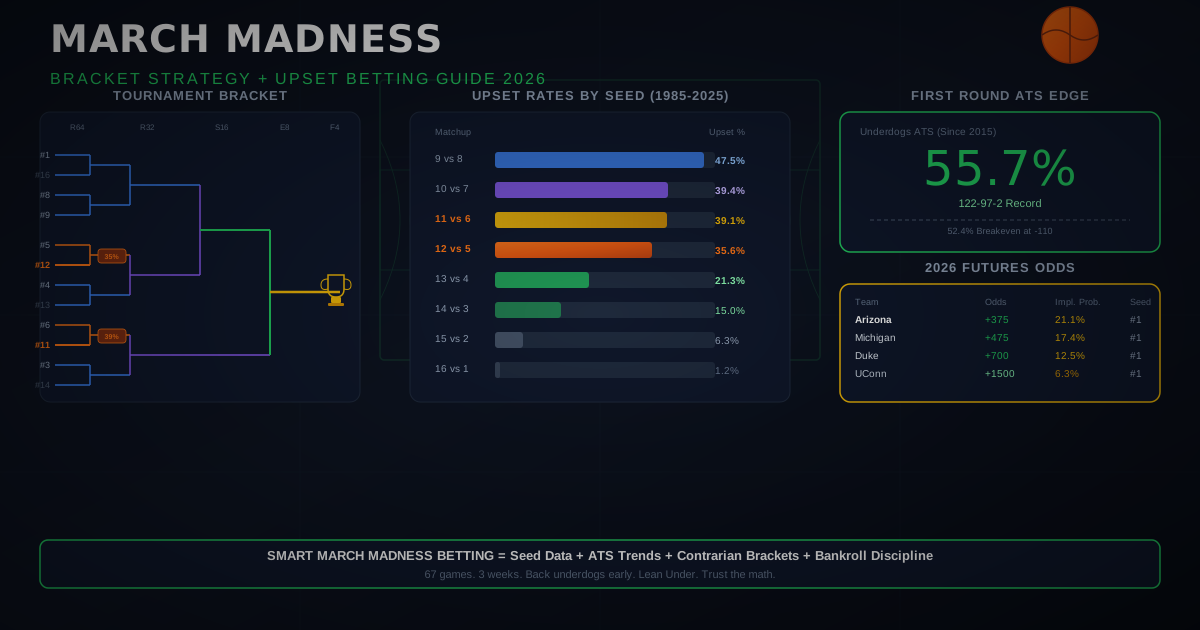
| Playoff home teams vs lower seeds | "Home court" narrative overcounted | Upsets at ~38% vs expected 30% |
Underpriced HFA Scenarios
Conversely, home field advantage tends to be underpriced in several specific situations:
- Early-season NFL games at altitude in Denver. Visiting teams from sea-level cities playing their first game at altitude have historically struggled more than the line reflects, particularly in September when temperatures are still warm and dehydration compounds the altitude effect.
- MLS and Liga MX home teams. The market often undervalues the extreme travel and altitude factors in North American soccer. Home favorites in MLS cover at approximately 54% when the visiting team has traveled more than 1,500 miles.
- NHL home teams after 2+ game road trips. The "return home" bounce after an extended road trip is consistently underpriced, with home teams winning at approximately 58% in this scenario.
- College basketball home teams at mid-major venues. Small, loud, intimate arenas produce some of the largest home court advantages in sports. Teams like Gonzaga at the McCarthey Athletic Center or Saint Mary's at University Credit Union Pavilion have home court advantages worth 5-7 points, but the market often assigns them closer to the standard 3.5 points.
Calculate whether a home/road ATS bet offers positive expected value with our Expected Value Calculator.
How Does Travel Fatigue Affect Betting Lines?
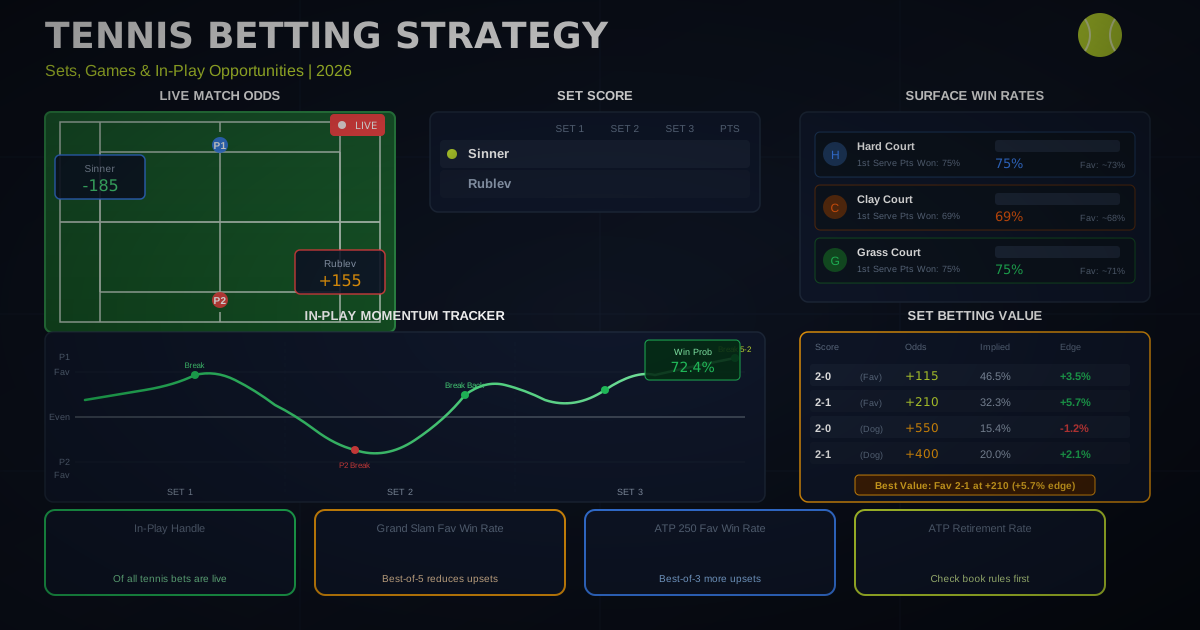
Travel fatigue affects sports outcomes measurably, particularly in back-to-back situations and when teams cross multiple time zones. West-to-East travel is more disruptive than East-to-West travel, and the effect is strongest on the first day in a new time zone.
Time Zone Crossing Effects
| Scenario | Sport | Performance Decline | Betting Implication |
|---|---|---|---|
| 1 time zone East | NFL | -0.5% win prob | Minimal impact |
| 2 time zones East | NFL | -1.8% win prob | ~0.5 pt spread value |
| 3 time zones East | NFL | -3.2% win prob | ~1.0 pt spread value |
| 1 time zone West | NFL | -0.2% win prob | Negligible |
| 2 time zones West | NFL | -0.9% win prob | Minimal impact |
| 3 time zones West | NFL | -1.5% win prob | ~0.5 pt spread value |
| Coast-to-coast, early start | NBA | -4.1% win prob | ~1.5 pts spread value |
| 3rd city in 5 days | NHL | -5.8% win prob | ~2.0 pts spread value |
The asymmetry between eastward and westward travel reflects circadian rhythm science: traveling east requires advancing the body clock, which is harder for the human body than delaying it. For NFL bettors, this means West Coast teams playing 1 PM ET road games (which feel like 10 AM to their bodies) face a measurable disadvantage beyond the standard home/road differential.
The Monday After Sunday Effect
In the NFL, teams that play a Sunday afternoon game and then travel for a Thursday Night Football game face compounded fatigue. The home team in Thursday Night Football has won approximately 58% of games historically -- significantly higher than the standard home advantage -- partly because the visiting team had less recovery and preparation time.
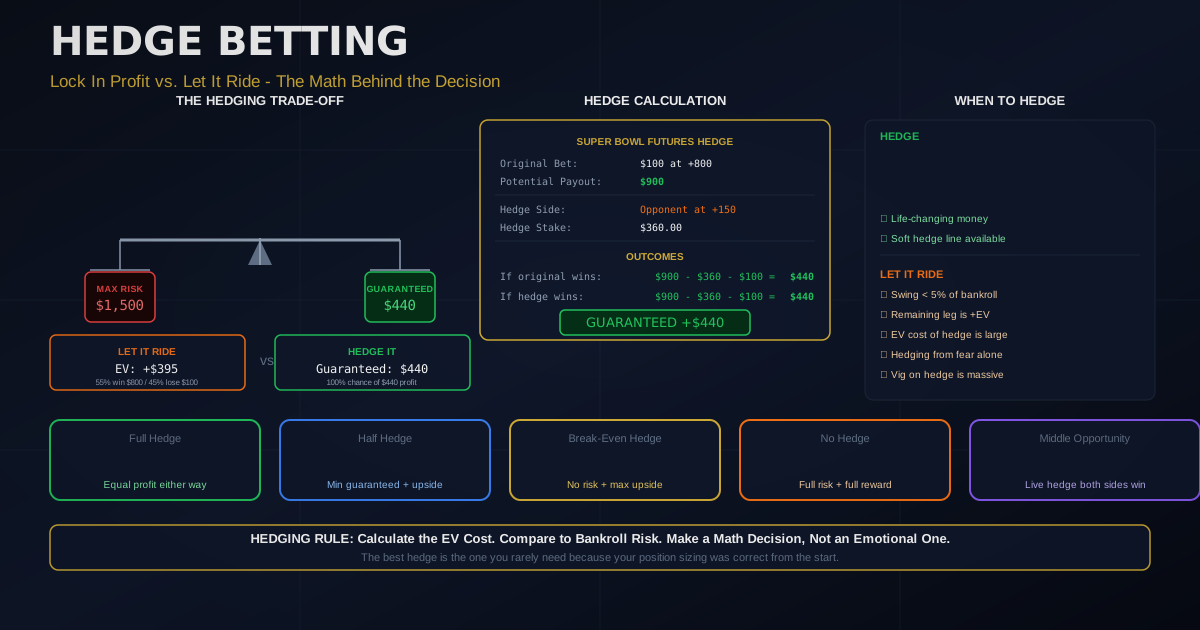
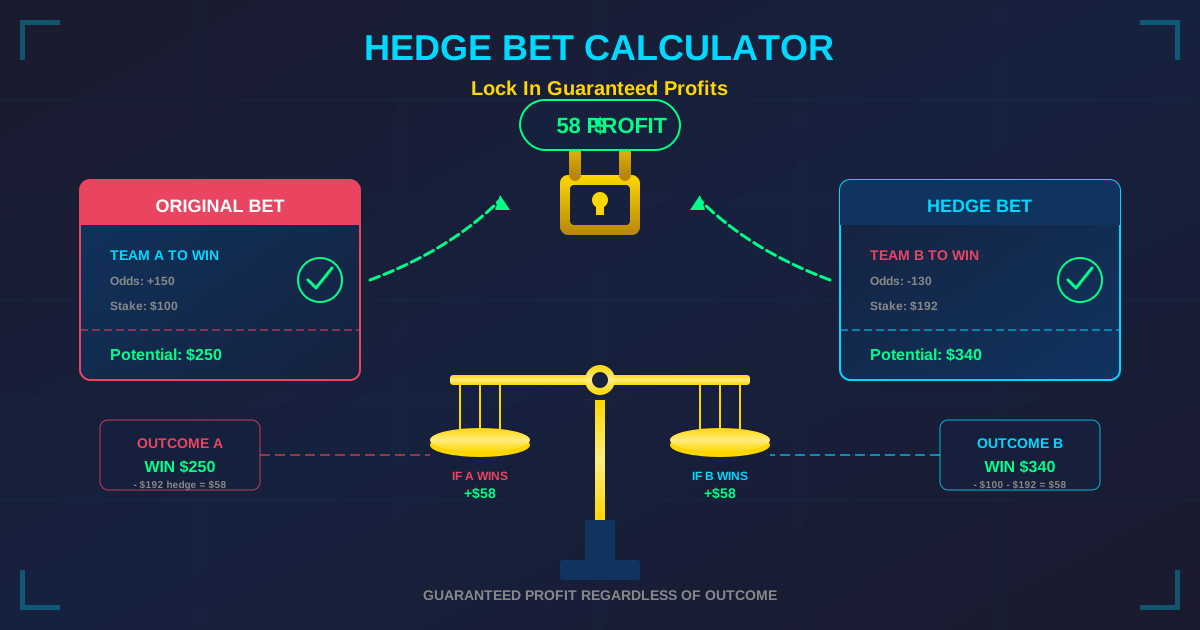
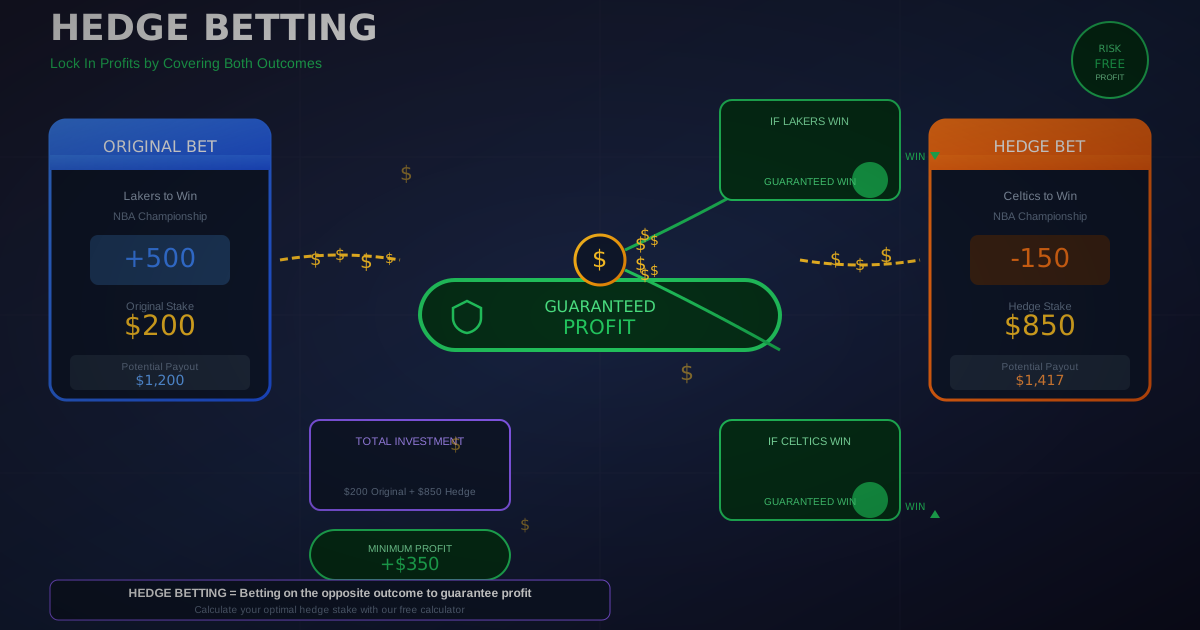
Hedge your travel-fade bets when the line moves in your favor using our Hedge Calculator.
Coast-to-Coast NBA Road Trips
NBA teams on extended West Coast road trips (3+ games crossing from Eastern to Pacific time) show a cumulative fatigue effect. By the third game of a coast-to-coast trip, the traveling team's effective performance drops by approximately 3-4 points relative to their baseline. This effect is not always fully priced into the spread, particularly for the final game of the trip when the team is expected to "push through."
How Does Fan Noise Quantifiably Affect Game Outcomes?
Fan noise affects game outcomes primarily through three mechanisms: disrupting visiting team communication (especially in football), influencing referee decisions, and providing emotional energy to home players. Studies measuring crowd decibel levels have found that each 10-decibel increase in sustained crowd noise corresponds to approximately a 0.2-0.4 point increase in home advantage.
Decibel Levels and Performance Impact
| Venue | Sport | Peak Decibels | Sustained Noise Level | Measured Impact |
|---|---|---|---|---|
| Arrowhead Stadium | NFL | 142.2 dB | 95-105 dB | +3.6 pts HFA |
| CenturyLink/Lumen Field | NFL | 137.6 dB | 92-102 dB | +3.5 pts HFA |
| Caesars Superdome | NFL | 130+ dB | 90-100 dB | +3.1 pts HFA |
| Cameron Indoor Stadium | NCAAB | 120+ dB | 85-95 dB | +6.2 pts HFA |
| Allen Fieldhouse | NCAAB | 120+ dB | 85-95 dB | +5.8 pts HFA |
| Ball Arena (Denver) | NBA | 110+ dB | 80-90 dB | +3.8 pts HFA |
| Madison Square Garden | NBA | 115+ dB | 82-92 dB | +3.5 pts HFA |
| Anfield | Soccer | 115+ dB | 80-90 dB | +12% home W% boost |
The Communication Disruption Factor
In the NFL, crowd noise directly disrupts the visiting offense's ability to communicate at the line of scrimmage. This leads to:
- Increased false start penalties (visiting teams commit approximately 35% more false starts in the loudest venues)
- More delay-of-game penalties
- Reduced ability to audible and make pre-snap adjustments
- Greater reliance on the silent count, which limits offensive tempo
Data shows that visiting offenses in the top 5 loudest NFL stadiums average 0.4 fewer points per drive compared to league average, even after adjusting for the quality of the home defense. The effect is strongest on third downs, where communication and play-calling adjustments are most critical.
Calculate the implied probability of home team victory including noise factors using our Implied Probability Calculator.
Is College Home Field Advantage Larger Than Professional?
Yes, college home field advantage is substantially larger than professional home field advantage in both football and basketball. College football HFA is worth approximately 3.5-4.5 points (compared to 2.5 NFL), and college basketball HFA can range from 3 to 8 points depending on the venue.
College Football Home Field Rankings
| Venue | Team | Capacity | 2015-2025 Home Win % | Estimated HFA (Points) |
|---|---|---|---|---|
| Tiger Stadium | LSU | 102,321 | 83.1% | 5.2 |
| Kyle Field | Texas A&M | 102,733 | 79.8% | 4.8 |
| Ohio Stadium | Ohio State | 102,780 | 84.5% | 5.5 |
| Beaver Stadium | Penn State | 106,572 | 80.2% | 4.6 |
| Neyland Stadium | Tennessee | 102,455 | 78.4% | 4.3 |
| Autzen Stadium | Oregon | 54,000 | 82.7% | 5.0 |
| Death Valley | Clemson | 81,500 | 85.3% | 5.6 |
| Camp Randall | Wisconsin | 80,321 | 79.1% | 4.4 |
Why College HFA Is Larger
Several factors explain the larger college home advantage:
- Travel disruption for 18-22 year olds. Young athletes are more affected by travel, unfamiliar environments, and hostile crowds than experienced professionals.
- Crowd intensity per square foot. College student sections are packed tighter and often louder per-seat than professional stadiums.
- Recruiting advantage. Home teams are often built around local recruiting, giving players deep familiarity with the venue and conditions.
- Experience asymmetry. A senior-heavy team playing at home against a roster with many freshmen traveling to a hostile environment creates a disproportionate advantage.
- Night games. College football night games at venues like Tiger Stadium and Autzen Stadium produce some of the most intimidating atmospheres in all of sports, with estimated HFA values of 5-6 points.
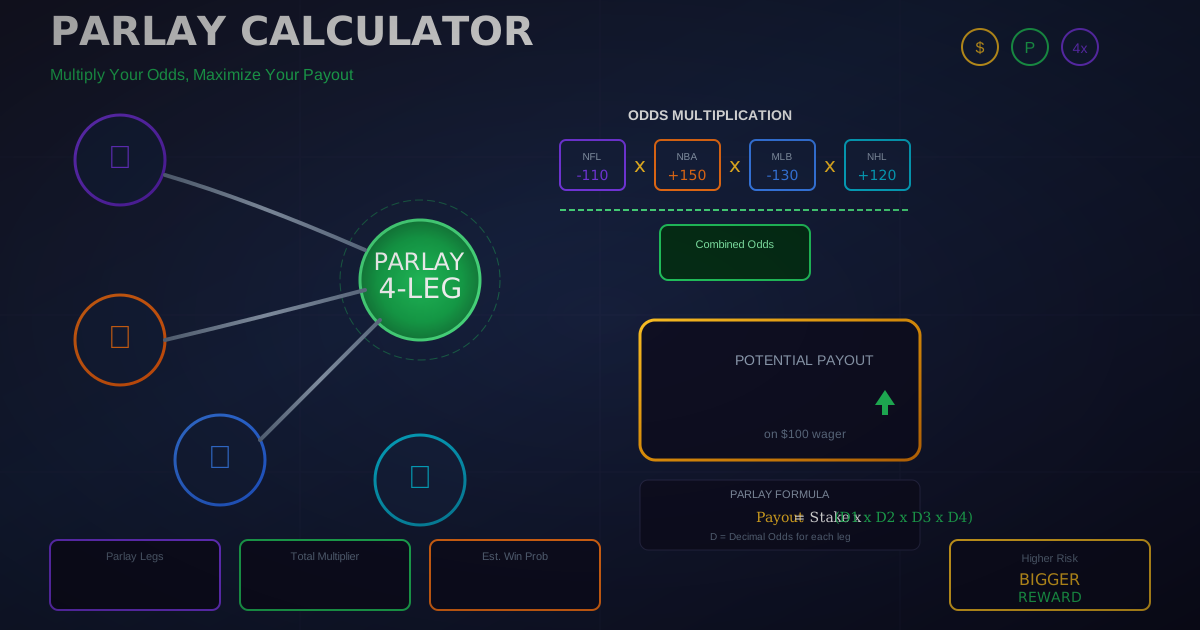
Run parlay calculations on your college home field plays using our Parlay Calculator.
College Basketball Small Venues
Some of the largest home court advantages in all of sports belong to college basketball teams in small, intimate arenas:
| Venue | Team | Capacity | Home Win % | Est HFA (Points) |
|---|---|---|---|---|
| Cameron Indoor Stadium | Duke | 9,314 | 87.2% | 6.2 |
| Allen Fieldhouse | Kansas | 16,300 | 88.5% | 6.5 |
| McCarthey Athletic Center | Gonzaga | 6,000 | 90.1% | 7.0 |
| Hinkle Fieldhouse | Butler | 9,100 | 78.3% | 5.1 |
| The Palestra | Penn | 8,722 | 76.8% | 4.8 |
| McKale Center | Arizona | 14,644 | 82.7% | 5.5 |
These venues pack passionate fans close to the court, creating an acoustically intense environment. For bettors, this means that mid-major teams at home are often significantly undervalued by the market, which tends to apply a standard 3-4 point home court adjustment regardless of venue.
How Should Bettors Adjust Their Models for Home Field Advantage?
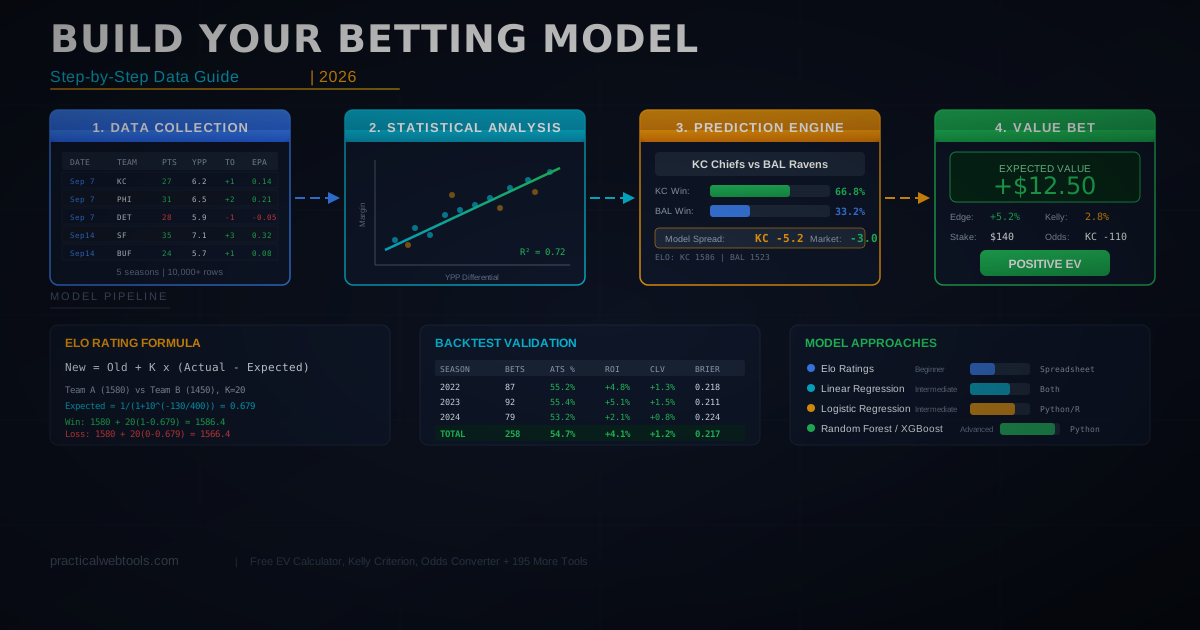
Bettors should assign sport-specific baseline HFA values, then adjust up or down based on venue-specific factors, travel distance, rest advantage, and the specific matchup. The most common mistake is using a one-size-fits-all HFA number without accounting for the enormous variation between venues.
A Practical HFA Adjustment Framework
| Step | Action | Example (NFL) |
|---|---|---|
| 1 | Start with league baseline HFA | 2.5 points |
| 2 | Adjust for specific venue | Lambeau = +0.9, SoFi = -1.0 |
| 3 | Adjust for time zone travel | 3 zones East = +0.5 for home |
| 4 | Adjust for rest differential | Home off bye vs road short week = +1.0 |
| 5 | Adjust for weather (outdoor) | Cold game, warm-weather visitor = +0.5 |
| 6 | Adjust for crowd factor | Prime time = +0.3, early kickoff = -0.2 |
| 7 | Compare to market line | Your HFA vs implied HFA in the spread |
If your model assigns 4.0 points of HFA to a specific game but the spread implies only 2.5 points of home advantage (after accounting for team strength), you have identified potential value on the home team.
Common Modeling Mistakes
- Using a static HFA across all venues. The difference between Arrowhead Stadium (+3.6) and SoFi Stadium (+1.5) is over 2 points. Treating all venues equally costs you edge.
- Ignoring schedule context. Rest days, travel, and back-to-back situations can double or halve the effective HFA.
- Overweighting recent home results. A team that went 6-2 at home last year may regress to something closer to the mean this year. Use multi-year samples.
- Not adjusting for COVID-era data. If your model includes 2020-2021 data, the suppressed HFA from that period will drag down your estimates. Consider weighting recent full-fan seasons more heavily.
Track whether your HFA-adjusted bets beat the closing line with our CLV Tracker.
How Does Home Field Advantage Interact With Betting Market Psychology?
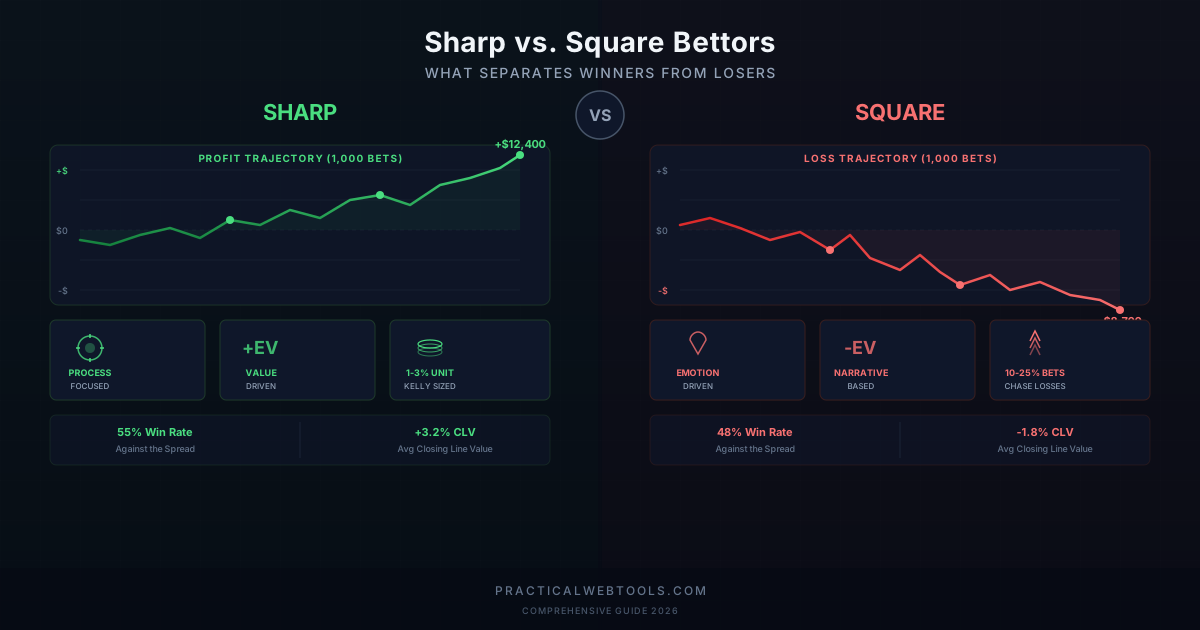
Home field advantage interacts with market psychology in a way that consistently creates value for contrarian bettors. The public tends to overvalue home field for popular teams and undervalue it for less-followed teams, creating systematic pricing errors that sharp bettors exploit.
The Public Perception Problem
Recreational bettors display several psychological biases related to home field:
- Availability bias. Fans remember dramatic home victories (Monday Night Football blowouts, playoff home games) more vividly than routine road wins. This makes them overestimate the value of playing at home for teams that have recently had exciting home wins.
- Narrative bias. When media analysts emphasize "they're tough to beat at home," it creates an anchoring effect that leads bettors to overweight HFA for that specific team.
- Recency bias. A team that went 7-1 at home last season will attract disproportionate home betting this season, even though home records are highly variable year to year and tend to regress toward the mean.
- Celebrity stadium effect. Venues with famous reputations (Lambeau Field, Cameron Indoor Stadium, Anfield) attract extra home-team action regardless of whether the current team deserves the historical reputation.
Quantifying the Public Bias
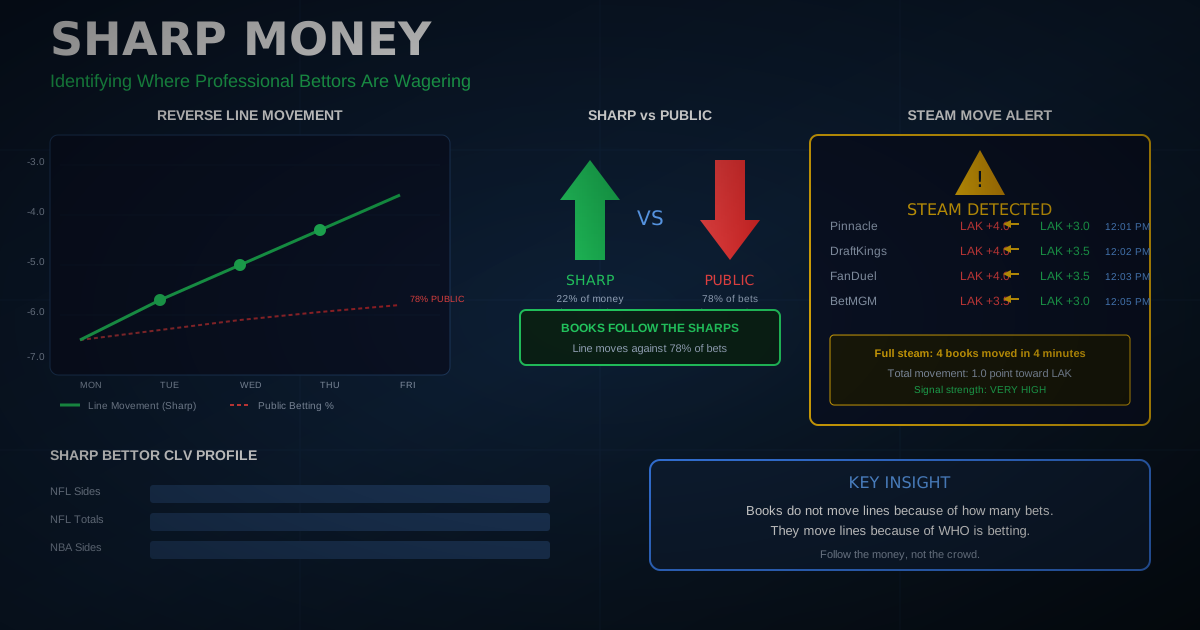
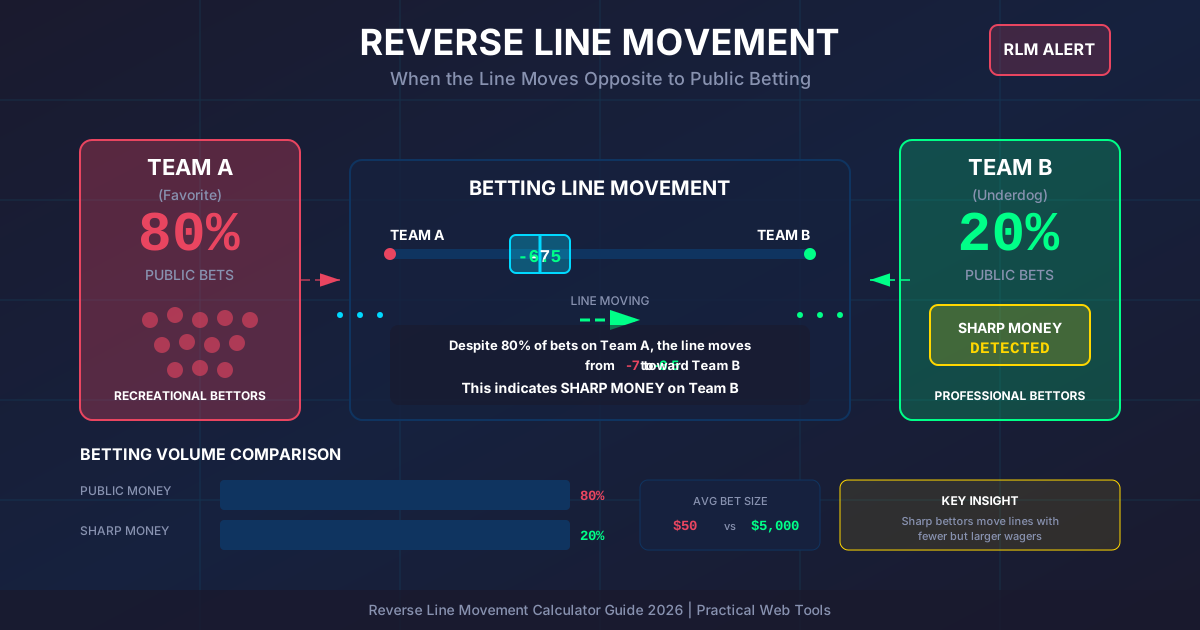
Data from major sportsbooks shows that the percentage of bets (not dollars) placed on home teams is consistently higher than the percentage of dollars. This indicates that the public leans toward home teams while sharper money (larger individual bets) is more balanced or slightly favors road teams in situations where HFA is overpriced.
| Bet Type | % of Bets on Home Team | % of Dollars on Home Team | Interpretation |
|---|---|---|---|
| NFL sides | 55.2% | 49.8% | Public leans home, sharp money balanced |
| NBA sides | 54.8% | 50.1% | Similar pattern |
| College FB sides | 57.3% | 48.5% | Strongest public home bias |
| MLB moneyline | 53.5% | 50.8% | Moderate home bias |
When there is a significant split between bet percentage and dollar percentage (more bets on home, more dollars on road), it often signals that the home team is overvalued by the public. These situations historically produce value on the road side.
Contrarian Home/Road Strategies
Several contrarian strategies related to HFA have shown historical profitability:
- Fading large home favorites in prime time (NFL). When the public overwhelmingly backs a home favorite of 10+ points on Sunday Night Football or Monday Night Football, the road team covers approximately 53-54% of the time.
- Backing road teams with losing records. Teams with losing records on the road get minimal public support, which sometimes pushes the line too far against them. Road teams with 3-6 records or worse cover at approximately 51.5% when the public is heavily backing the home team.
- Betting home underdogs. Home underdogs are one of the most consistently profitable positions in NFL betting, covering at approximately 53% against the spread. The combination of HFA plus underdog pricing creates a double discount.
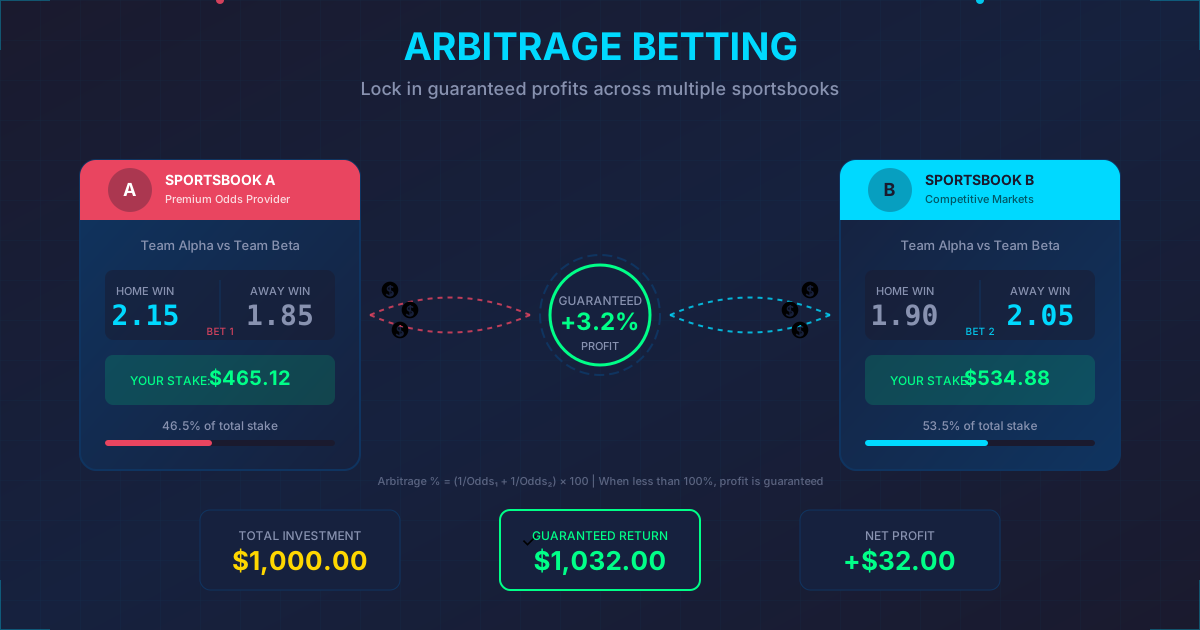
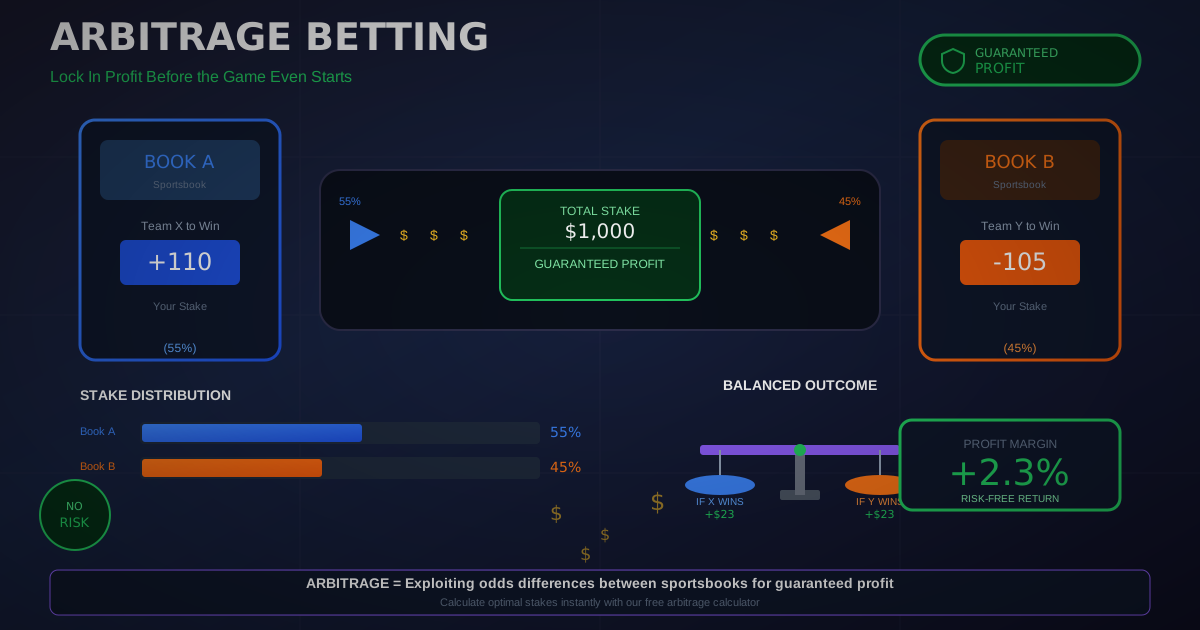
Find arbitrage opportunities created by HFA mispricing across sportsbooks with our Arbitrage Calculator.
Seasonal Patterns in HFA Value
Home field advantage is not constant throughout the season. In the NFL, HFA tends to be largest in the early weeks (when teams have not yet traveled extensively and stadium atmospheres are freshest) and in December/January (when weather becomes a factor for cold-weather stadiums). HFA dips slightly in October and November when weather is moderate and both teams are in mid-season form.
In the NBA, HFA is largest in the first and last months of the season. Early-season HFA benefits from fan energy and fresh legs. Late-season HFA increases as playoff positioning creates heightened home crowd intensity and as travel fatigue accumulates for teams on long road trips.
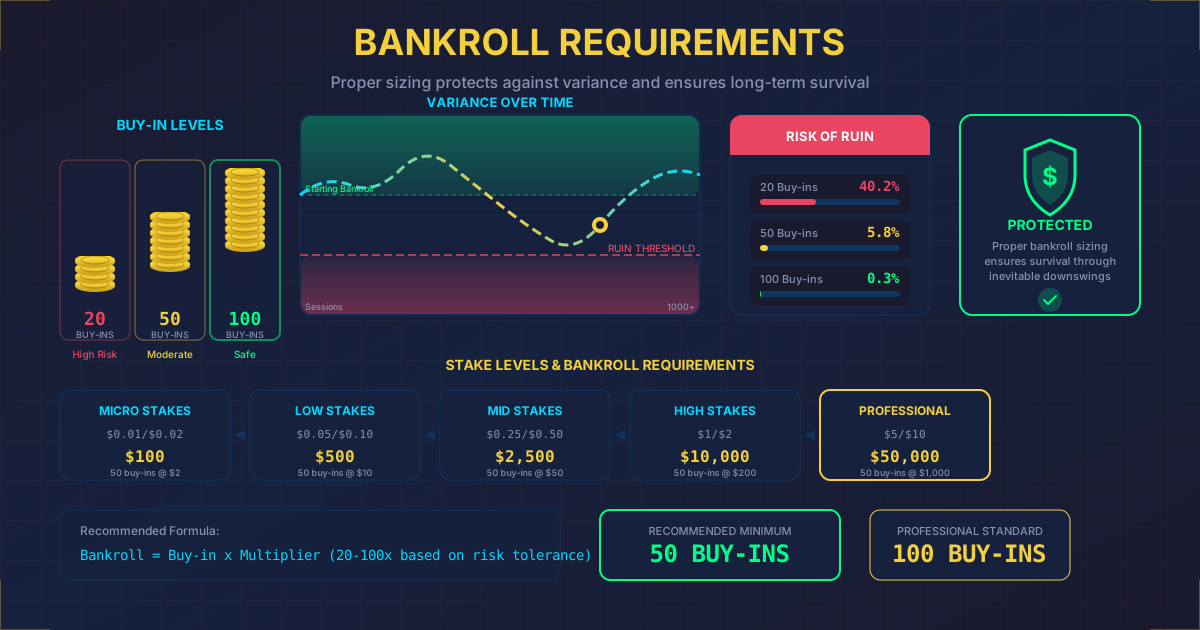
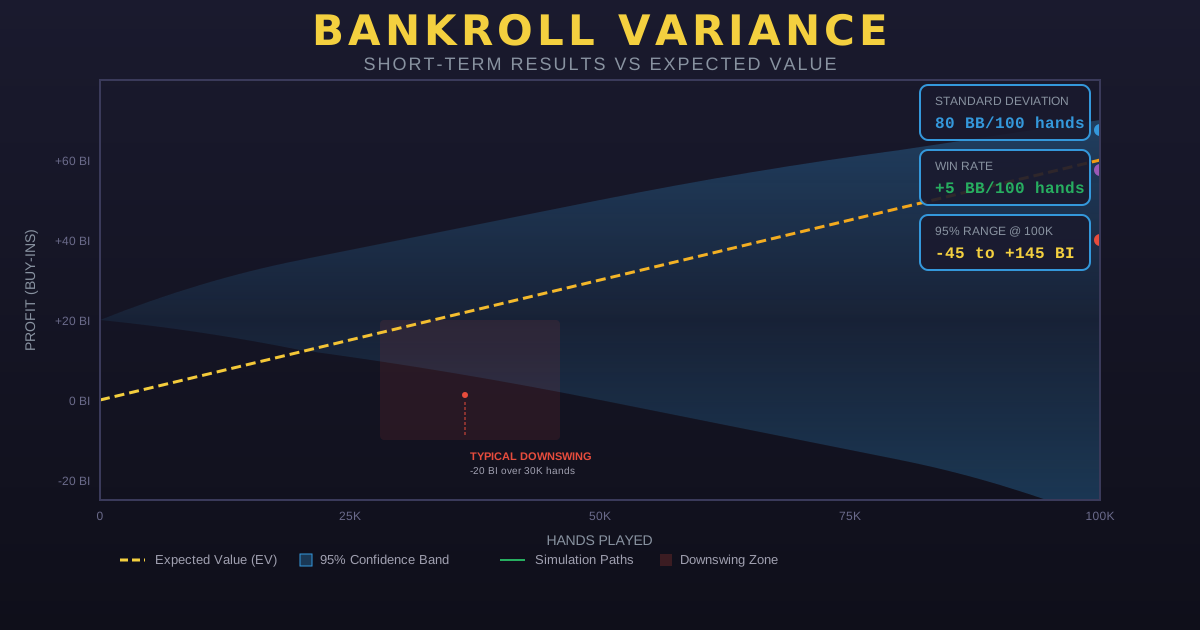
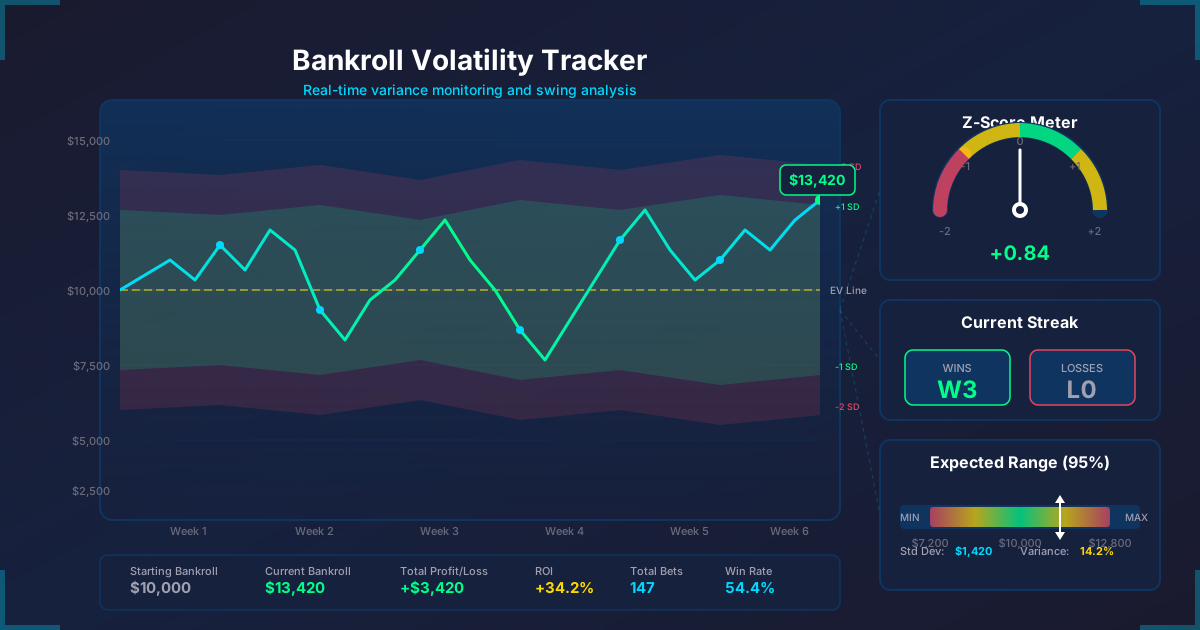
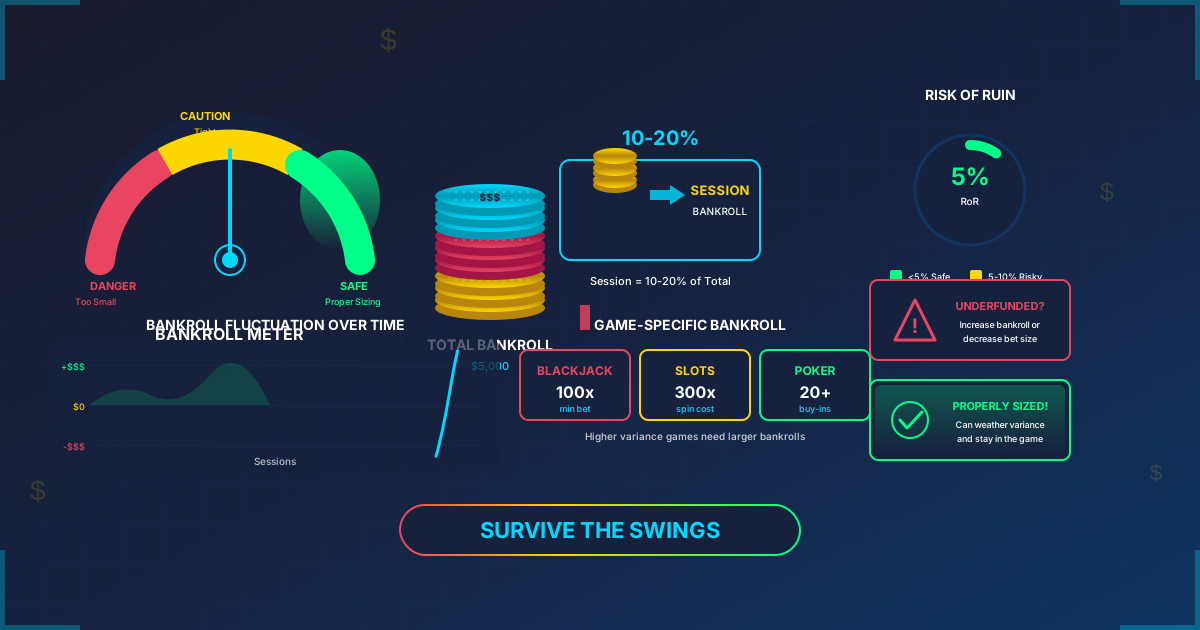
Manage your bankroll across a season of HFA plays with our Bankroll Volatility Tracker.
Frequently Asked Questions
How much is home field advantage worth in the NFL in 2026? Home field advantage in the NFL is worth approximately 2.5 points on the spread as of 2026. This means if two equally talented teams play, the home team would typically be favored by 2.5 points. The value has declined from roughly 3.0 points a decade ago due to improved travel, rule changes favoring passing, and salary cap-driven parity. Some venues like Arrowhead Stadium (3.6 points) are worth significantly more than others like SoFi Stadium (1.5 points).
Did COVID permanently change home field advantage? COVID reduced home field advantage during the 2020-2021 seasons when fans were absent or limited, and the advantage has not fully recovered to pre-pandemic levels in most sports. The NFL is down approximately 0.3 points, and the English Premier League home win rate dropped by nearly 3 percentage points and has not recovered. The pandemic permanently demonstrated that approximately 40-60% of home advantage comes from crowd noise and its effects on officiating.
Is home field advantage more important in college or pro sports? Home field advantage is significantly larger in college sports. College football HFA is approximately 3.5-4.5 points compared to 2.5 in the NFL, and college basketball ranges from 3 to 8 points depending on the venue compared to 3.0-3.5 in the NBA. The difference stems from younger athletes being more affected by hostile environments, more intense student sections, and greater venue variation.
How does altitude affect home field advantage? Altitude provides a measurable home advantage, particularly in Denver at 5,280 feet and Mexico City at 7,350 feet. Visiting athletes experience reduced oxygen availability, which leads to faster fatigue, especially in the second half. In Denver, the Broncos enjoy an estimated 3.2-point HFA (above the 2.5-point league average), and the Nuggets see visiting team field goal percentages drop by 1.5-2.0% in the second half.
When is home field advantage overpriced by sportsbooks? Home field advantage is most commonly overpriced for large home favorites (10+ points in NFL), prime-time home teams that attract casual betting action, and home teams coming off a bye week. In these situations, road teams have historically covered the spread at rates of 52-54%, indicating the market assigns too much value to the home team.
Does travel direction matter for betting? Yes. West-to-East travel is more disruptive than East-to-West because advancing the body clock is harder than delaying it. NFL teams traveling three time zones eastward show approximately a 3.2% decline in win probability, worth roughly 1 point on the spread. West Coast teams playing 1 PM ET road games are particularly vulnerable because kickoff feels like 10 AM to their internal clocks.
How do back-to-back games affect NBA home court advantage? When a rested NBA home team faces a road team playing the second night of a back-to-back, the effective home court advantage roughly doubles from approximately 3.3 points to 5.8 points. This is one of the most well-documented edges in NBA betting, though the market has become reasonably efficient at pricing it.
Related Tools
- Expected Value Calculator: Calculate whether your home-field-adjusted probability gives you a positive EV edge at the current market odds.
- Odds Converter: Convert between American, decimal, and fractional odds to compare home team pricing across sportsbooks.
- Kelly Criterion Calculator: Determine the mathematically optimal bet size based on your estimated home field edge.
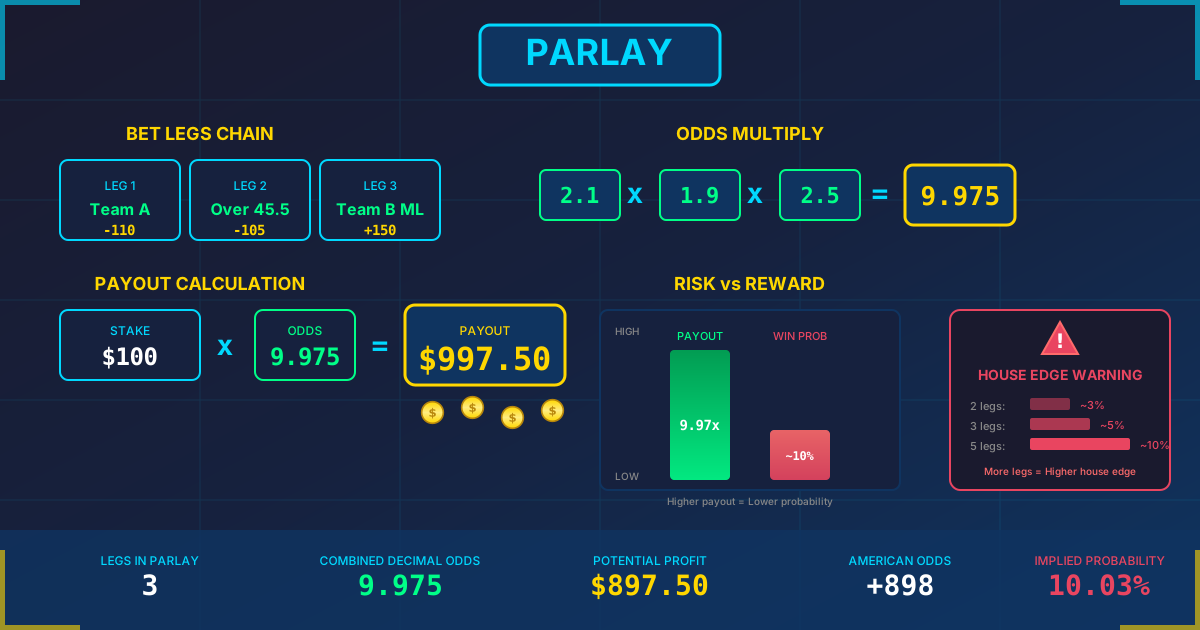
- Parlay Calculator: Combine home field advantage plays across multiple games into parlay bets.
- Hedge Calculator: Lock in profits when home/away lines move after your initial wager.
- Implied Probability Calculator: Convert odds to probabilities to see how much HFA the market is pricing into each game.
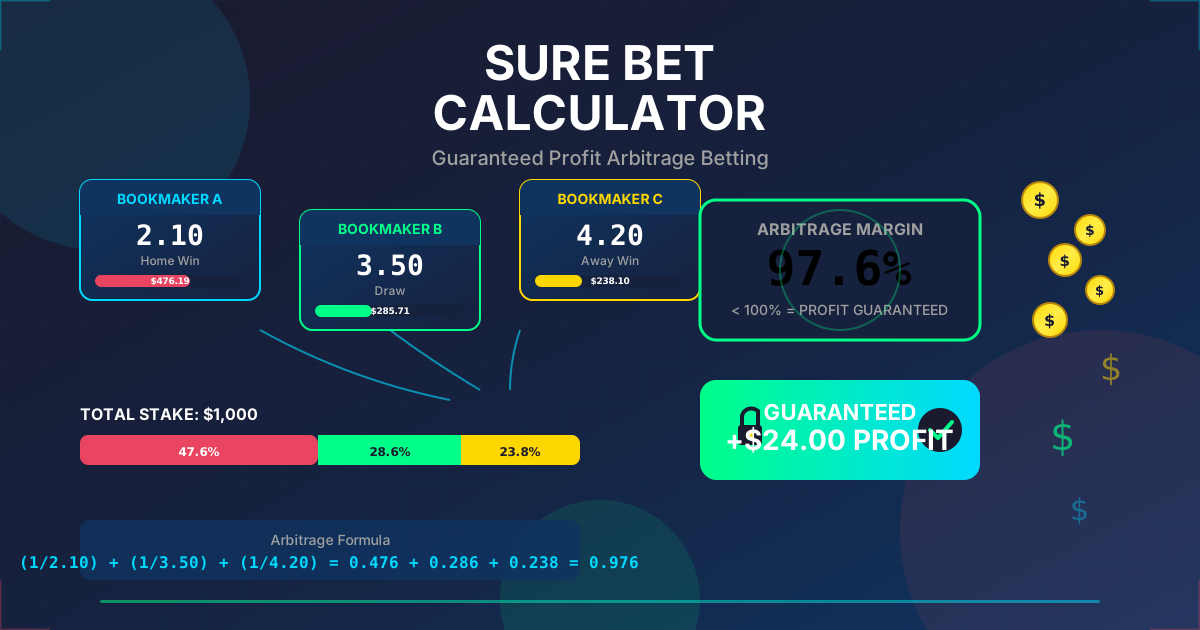
- Arbitrage Calculator: Find risk-free plays when different sportsbooks disagree on how much HFA to assign.
- CLV Tracker: Track your closing line value on home/away bets to measure long-term edge.
- Bankroll Volatility Tracker: Monitor the variance in your home-field-focused betting strategy.
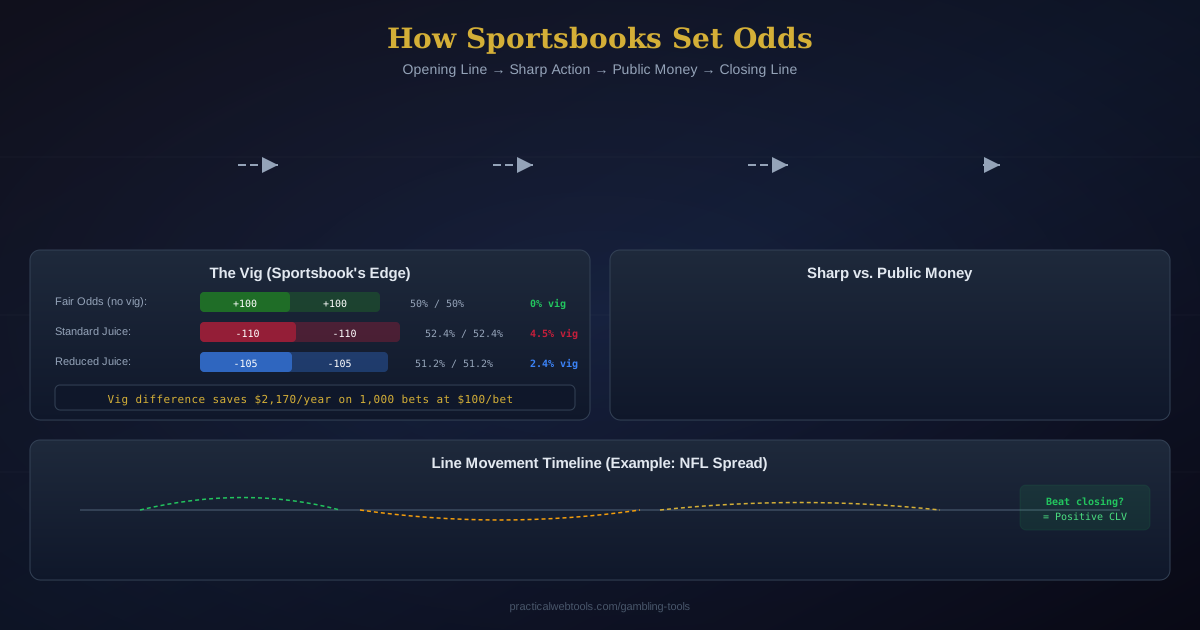
- Hold/Vig Calculator: Determine the sportsbook's margin on home/away spreads to find the best value.
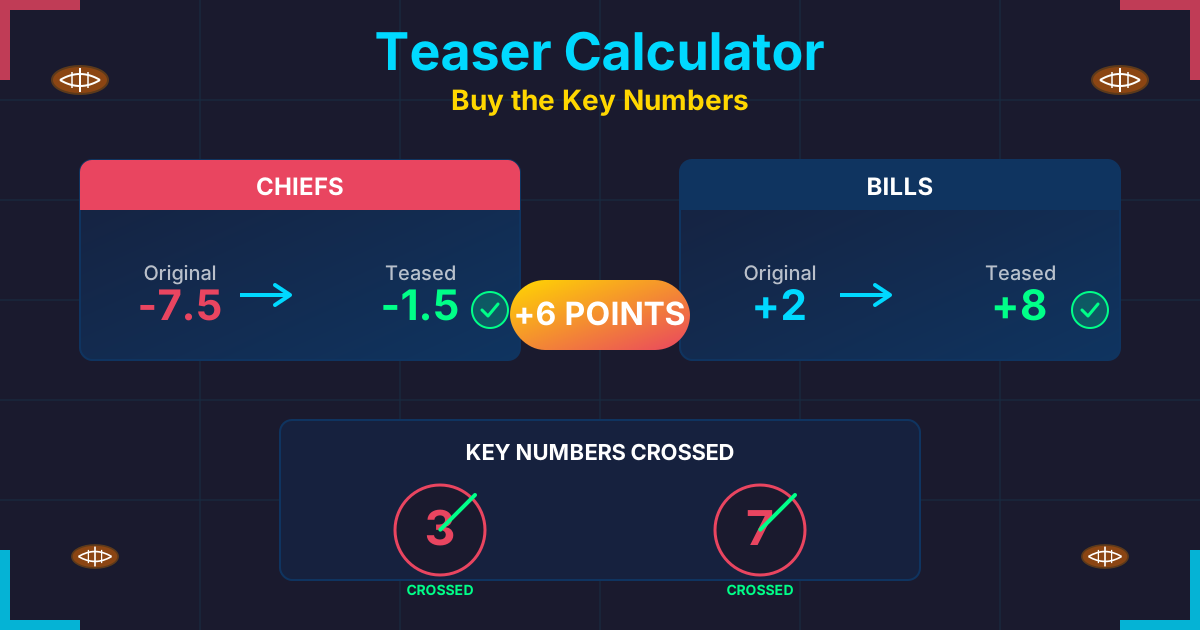
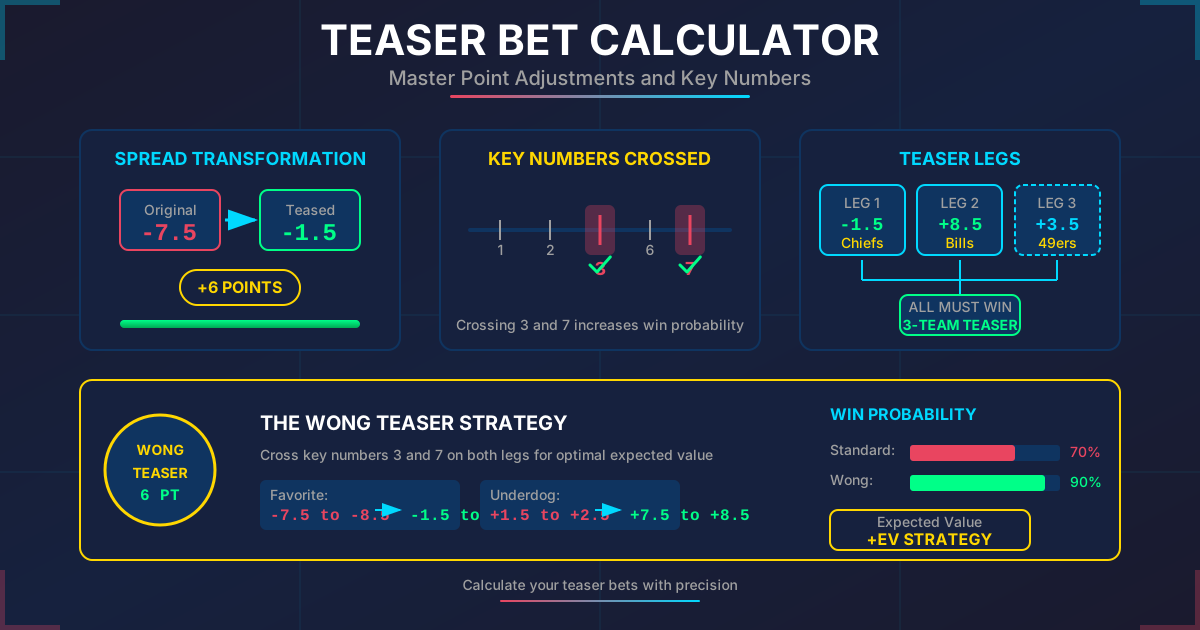
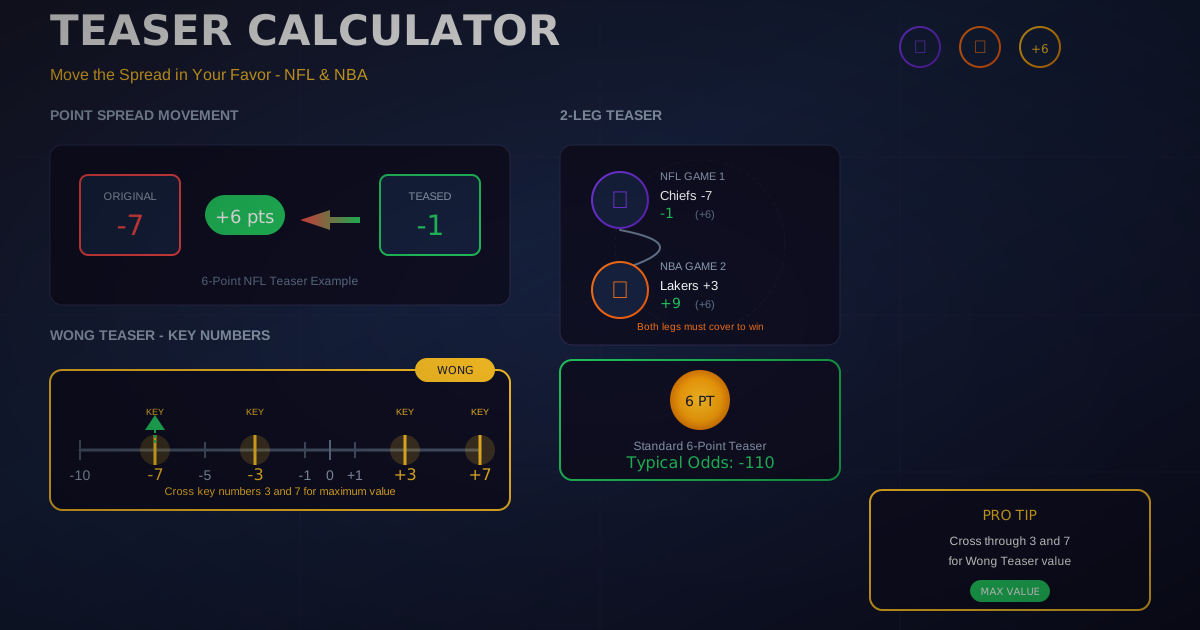
- Teaser Calculator: Evaluate teaser value when buying through key numbers on home team spreads.
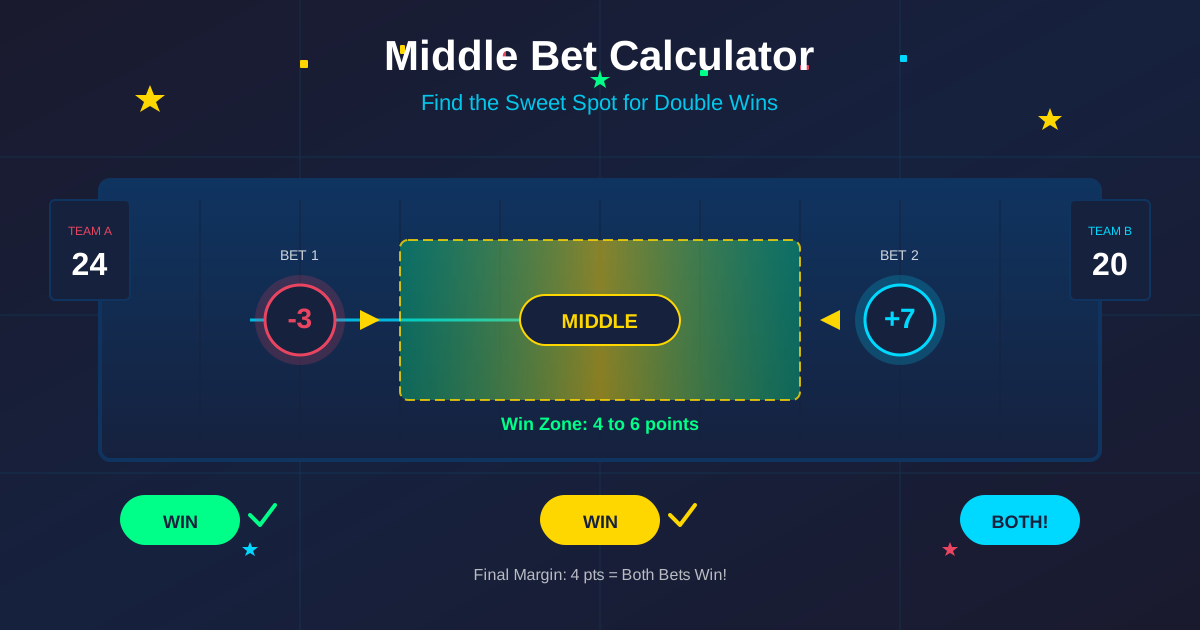
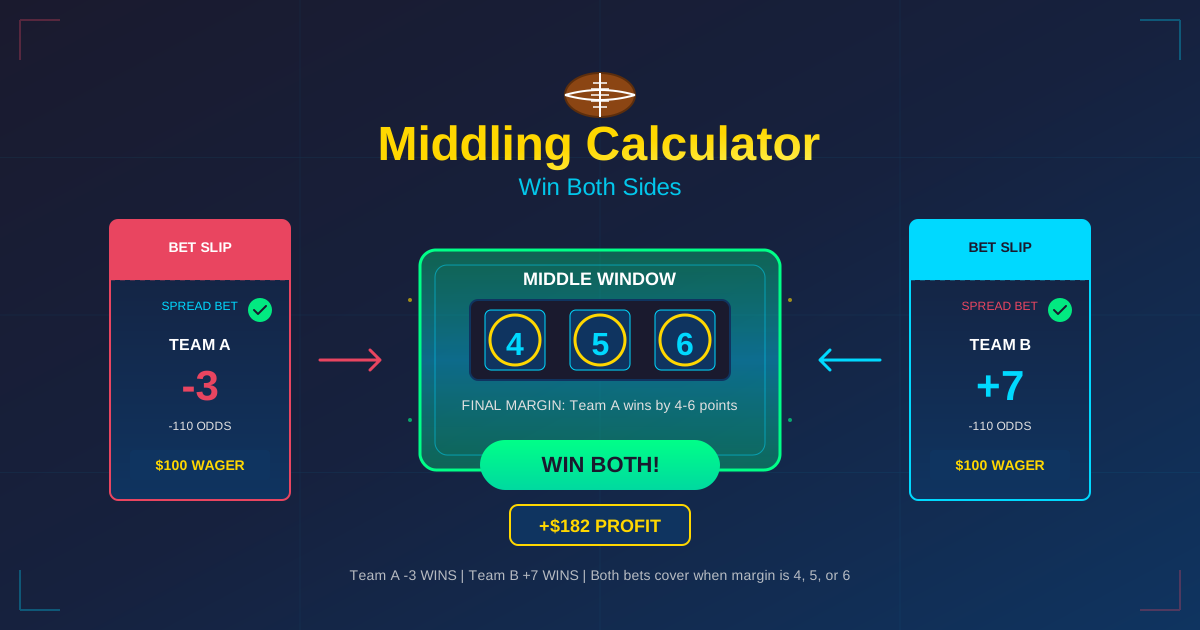
- Middle Bet Calculator: Find middling opportunities when HFA-driven line movement creates a gap.
Home field advantage is real, measurable, and variable -- and that variability is where the betting value lives. The bettor who uses a flat 3-point HFA adjustment for every NFL game is leaving money on the table compared to the bettor who accounts for venue-specific factors, travel schedules, crowd intensity, and altitude. Build a nuanced HFA model, compare it to the market, and bet the discrepancies.
Start analyzing home field value in your next bet with our free Expected Value Calculator -- no account required.
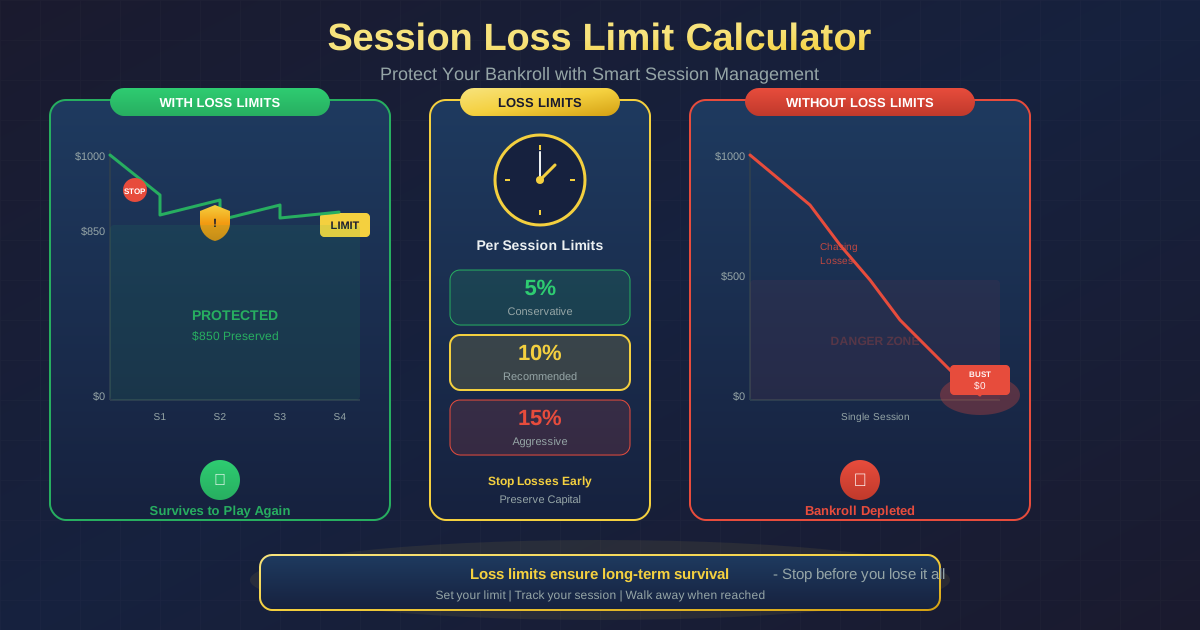
Gambling involves risk and should be approached as entertainment, not as a source of income. Always bet within your means, set strict bankroll limits, and never chase losses. If you or someone you know has a gambling problem, contact the National Council on Problem Gambling at 1-800-522-4700 or visit ncpgambling.org. Must be 21+ to gamble in most US jurisdictions. Please play responsibly.