How to Survive a Gambling Downswing: Mental Game and Math for Bad Runs (2026)
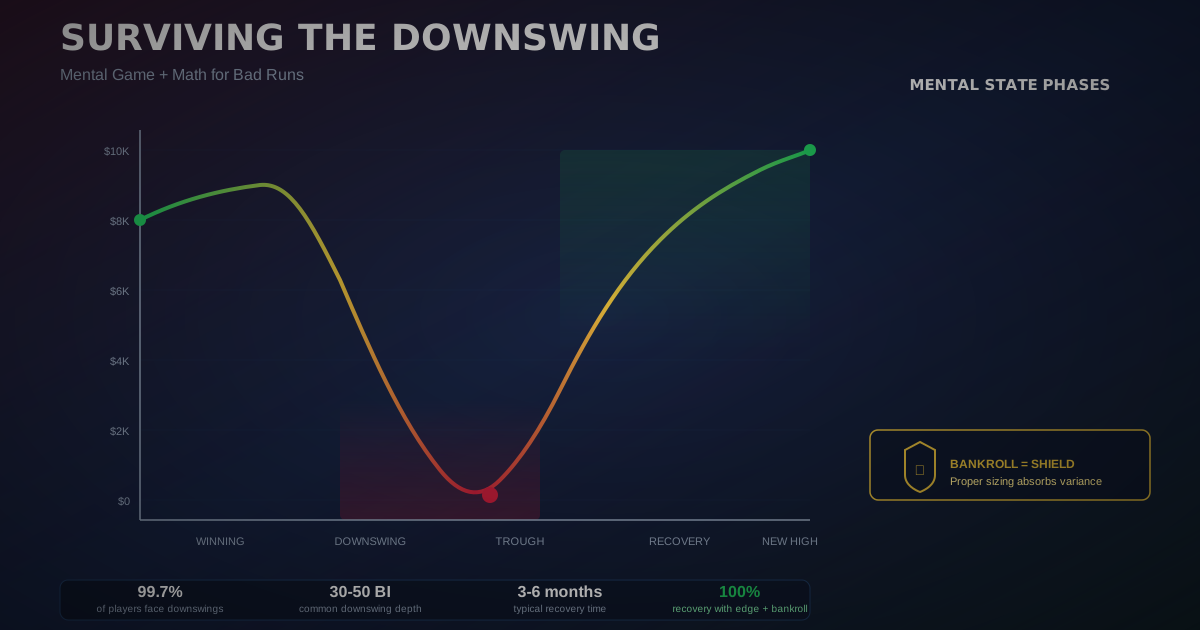
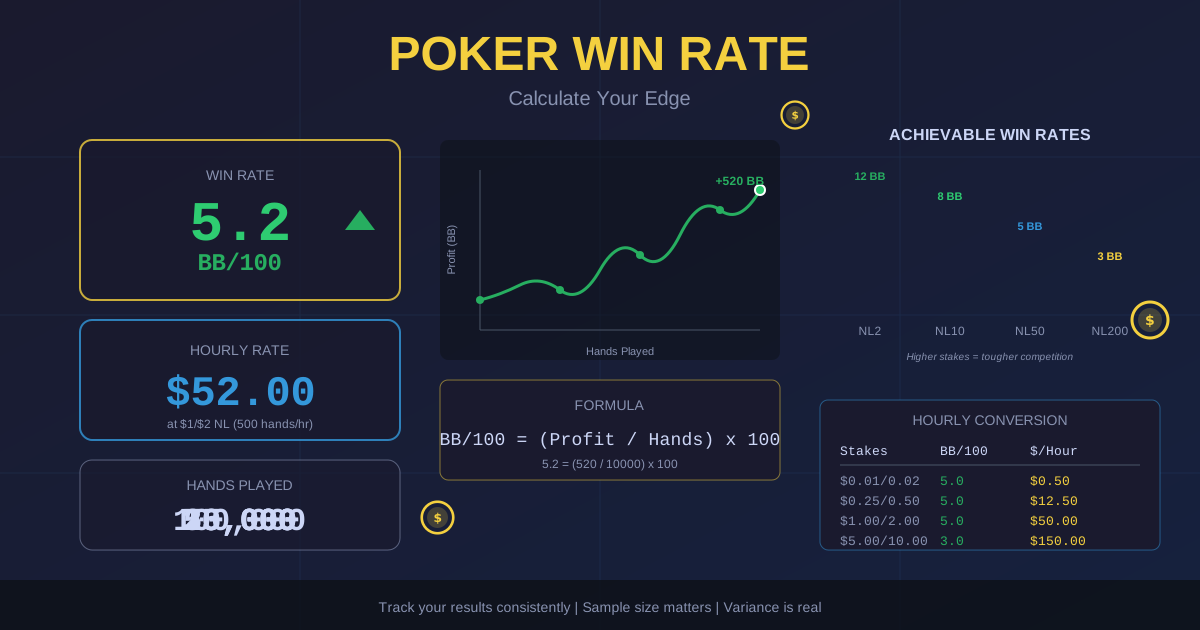
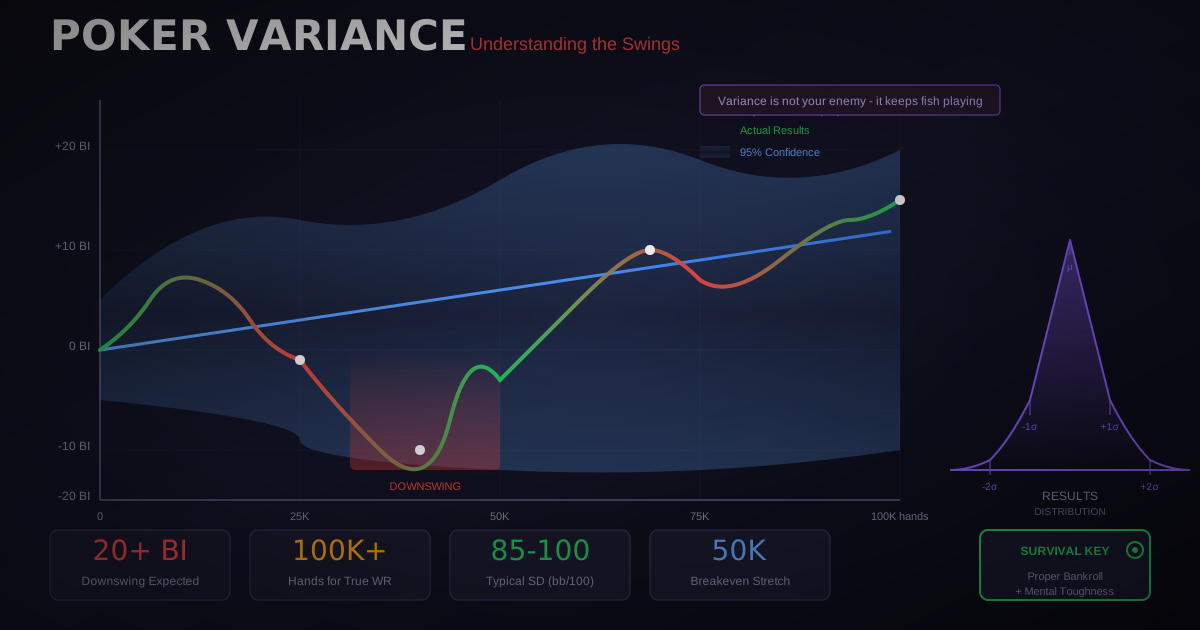
If you gamble with a positive edge, downswings are not a possibility -- they are a mathematical certainty. Every poker player, card counter, and sports bettor will experience extended periods where their bankroll drops significantly despite playing correctly. A solid poker player winning 5 bb/100 has a 95% probability of experiencing a 30+ buy-in downswing at some point in their career. A sports bettor with a 3% edge will endure losing months 30-40% of the time. These are not signs of failure -- they are the unavoidable cost of variance.
The difference between professional gamblers who survive downswings and those who go broke during them comes down to two things: adequate bankroll sizing and mental resilience. You cannot avoid downswings, but you can prepare for them mathematically and psychologically so they become temporary setbacks rather than career-ending events.
This guide covers the hard math of how likely downswings are, how deep they go, how long they last, and -- most importantly -- the mental game strategies and bankroll management techniques that get you through to the other side.
Calculate the exact probability of your current downswing with our free Poker Downswing Probability Calculator.
The Math of Downswings: How Likely Are They?
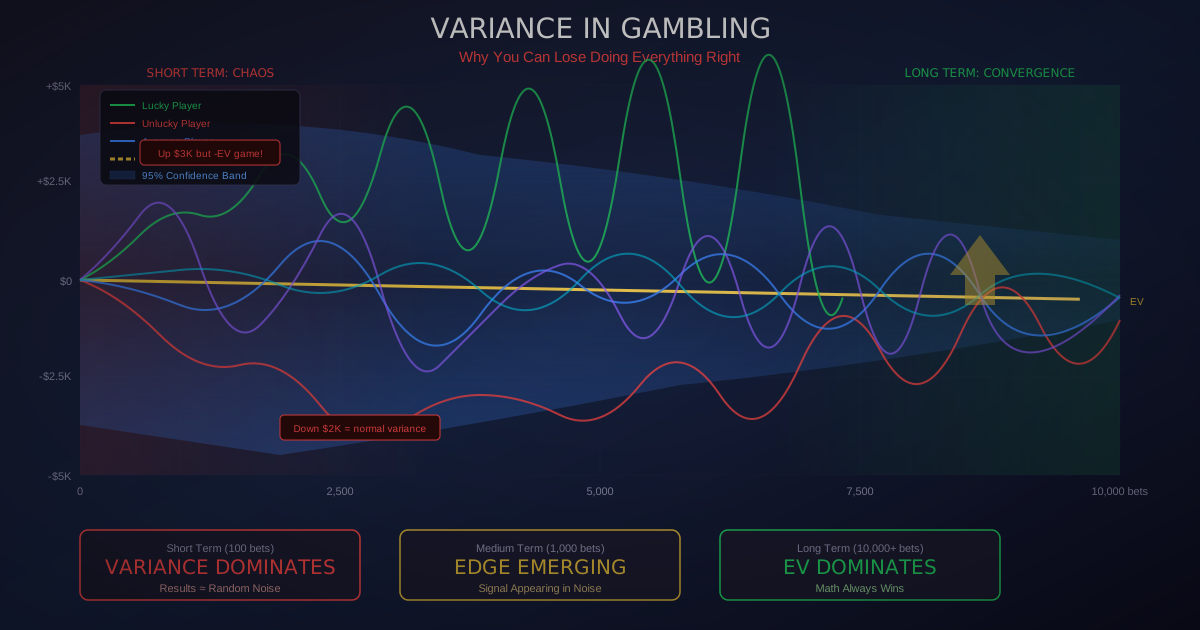
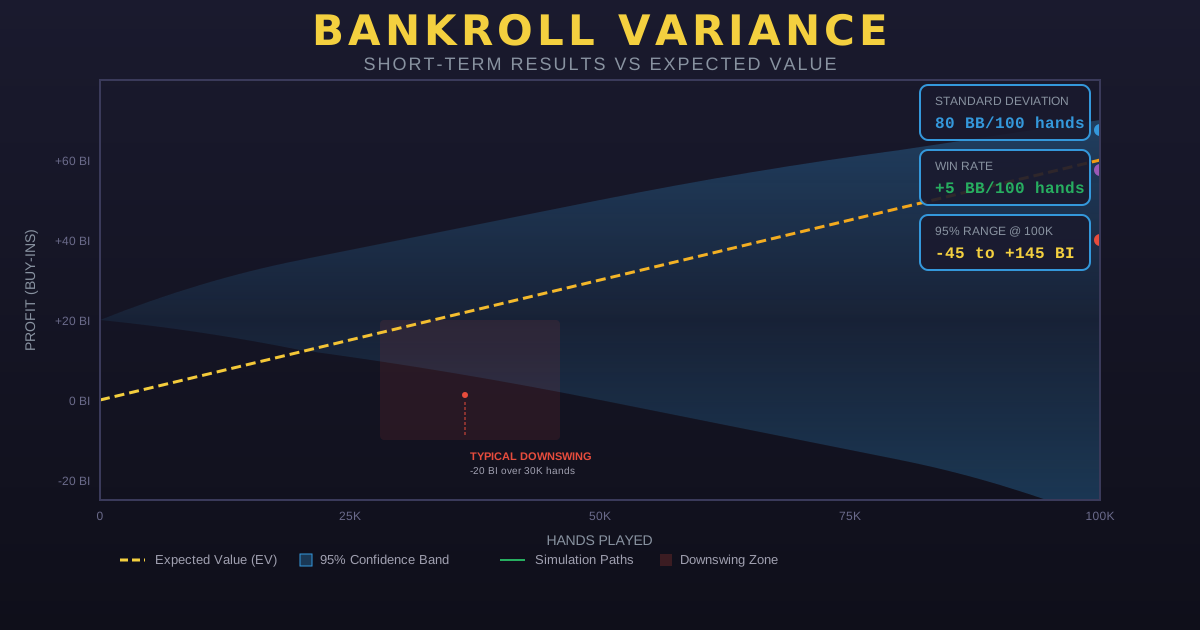
Downswings are not bad luck -- they are statistical inevitabilities. The probability of experiencing a downswing of a given depth depends on your win rate, your variance (standard deviation), and the number of hands, hours, or bets played.
Downswing Probability Over a Poker Career
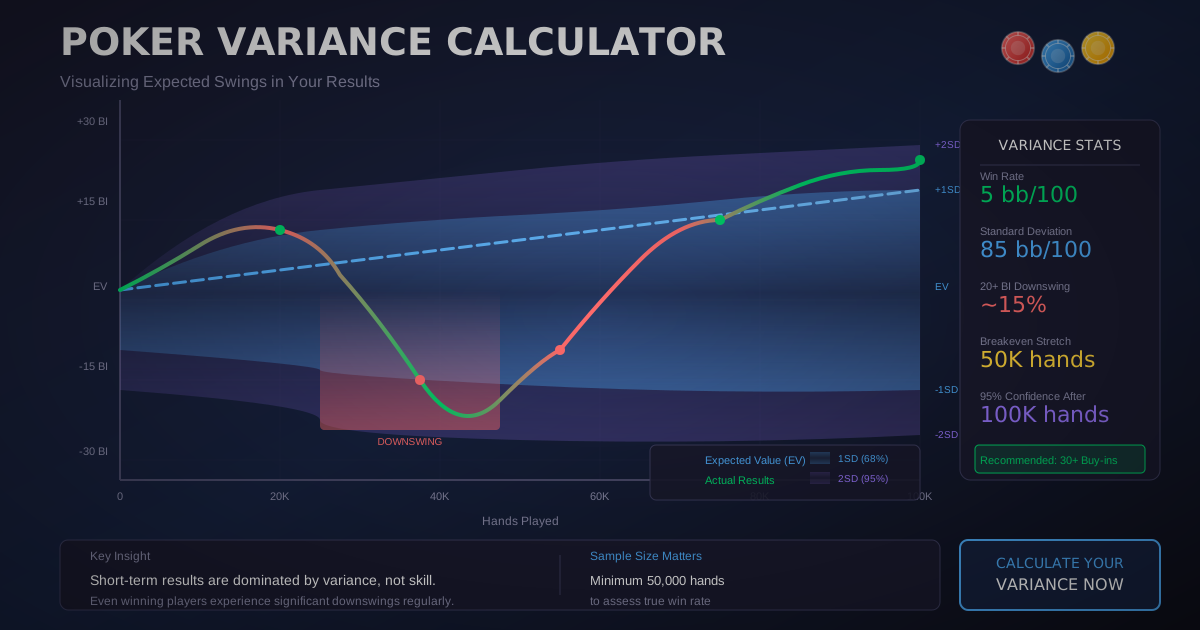
For a poker player with a 5 bb/100 win rate and 85 bb/100 standard deviation (typical for solid 6-max NLHE):
| Downswing Depth | Probability Over 500K Hands | Probability Over 1M Hands | Average Duration |
|---|---|---|---|
| 10 buy-ins | 99.9% | 99.99% | 15,000 hands |
| 20 buy-ins | 82% | 96% | 40,000 hands |
| 30 buy-ins | 45% | 72% | 80,000 hands |
| 40 buy-ins | 20% | 42% | 130,000 hands |
| 50 buy-ins | 8% | 21% | 200,000 hands |
| 60 buy-ins | 3% | 10% | 280,000 hands |
| 75 buy-ins | 0.5% | 3% | 400,000 hands |
Let that sink in: a winning player has a 45% chance of dropping 30 buy-ins at some point over 500,000 hands. That is $6,000 at $1/$2. If you play 50,000 hands per month, a 30 buy-in downswing might last roughly 2 months.
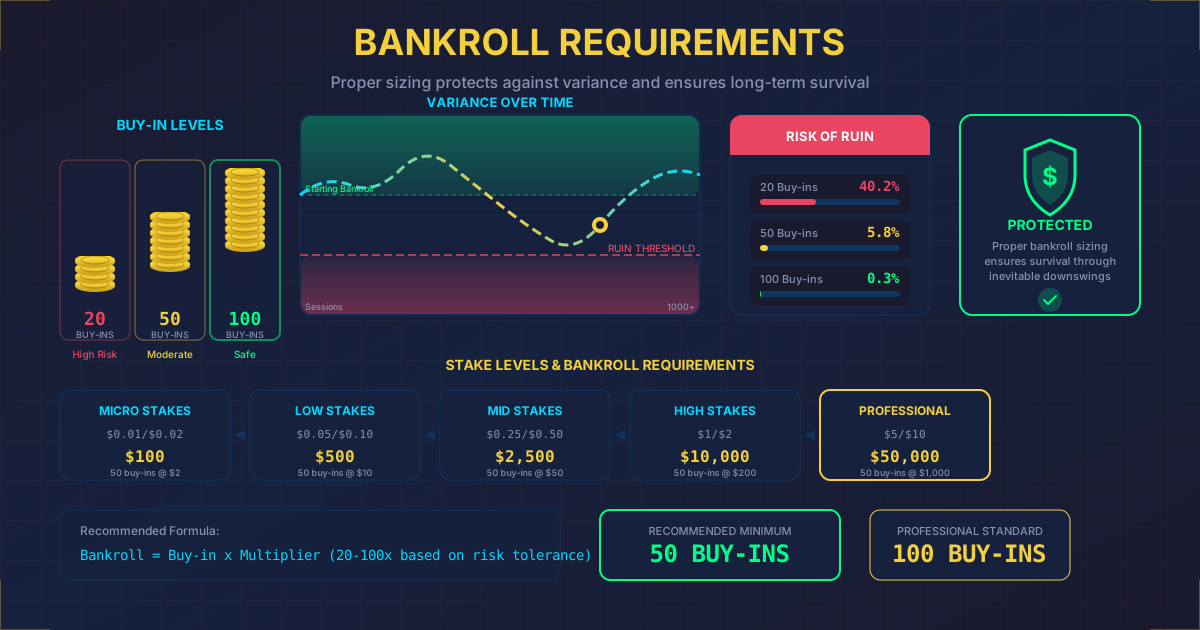
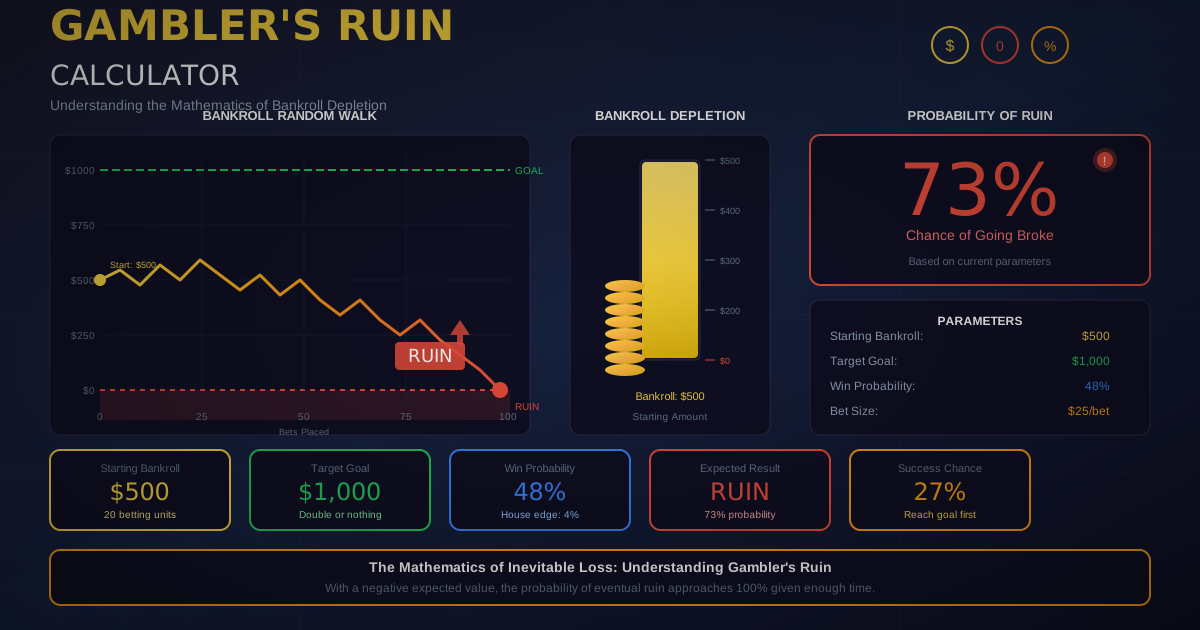
At the extreme end, a 50 buy-in downswing (21% chance over a million hands) would take a $10,000 bankroll down to zero if you only started with 50 buy-ins. This is why professionals maintain 100+ buy-ins.
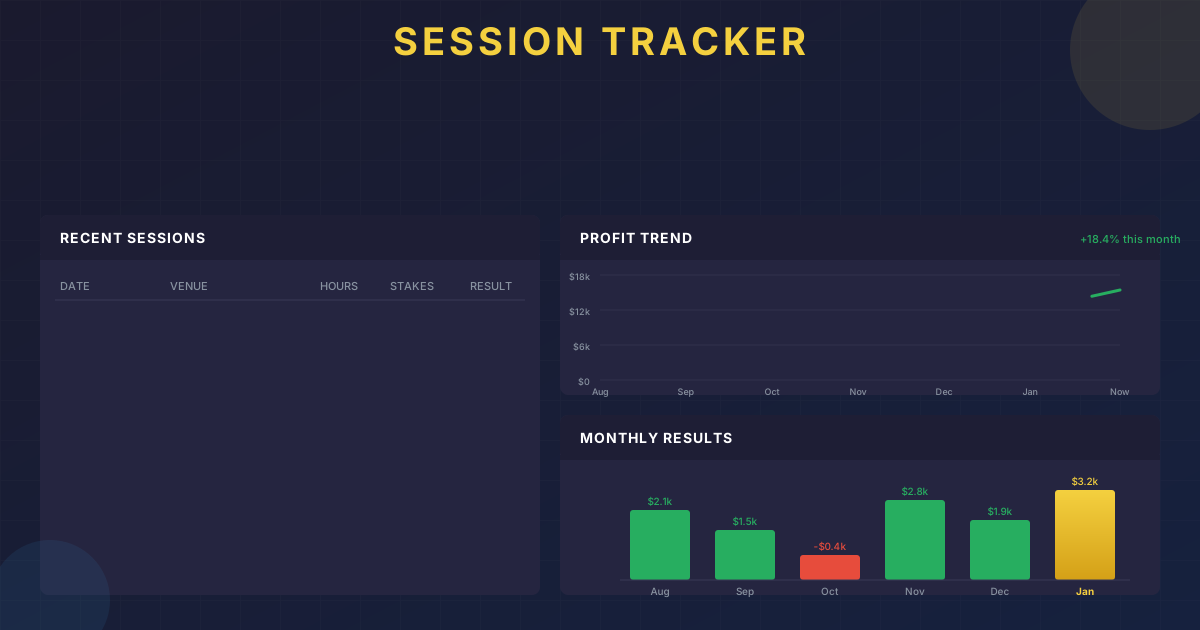
Model your specific downswing scenarios with the Poker Variance Calculator and track your actual results with the Poker Session Tracker.
Sports Betting Downswing Probability
For a sports bettor with a 3% edge on -110 lines (approximately 53.5% win rate):
| Losing Streak Length | Probability Per 100 Bets | Probability Per 1,000 Bets |
|---|---|---|
| 5 consecutive losses | 95% | 99.99% |
| 8 consecutive losses | 42% | 99.5% |
| 10 consecutive losses | 15% | 79% |
| 12 consecutive losses | 5% | 42% |
| 15 consecutive losses | 0.8% | 8% |
Beyond individual streaks, the more meaningful metric is drawdown from peak bankroll:
| Drawdown Depth (units) | Probability Over 1,000 Bets |
|---|---|
| 10 units | 98% |
| 20 units | 65% |
| 30 units | 25% |
| 40 units | 8% |
| 50 units | 2% |
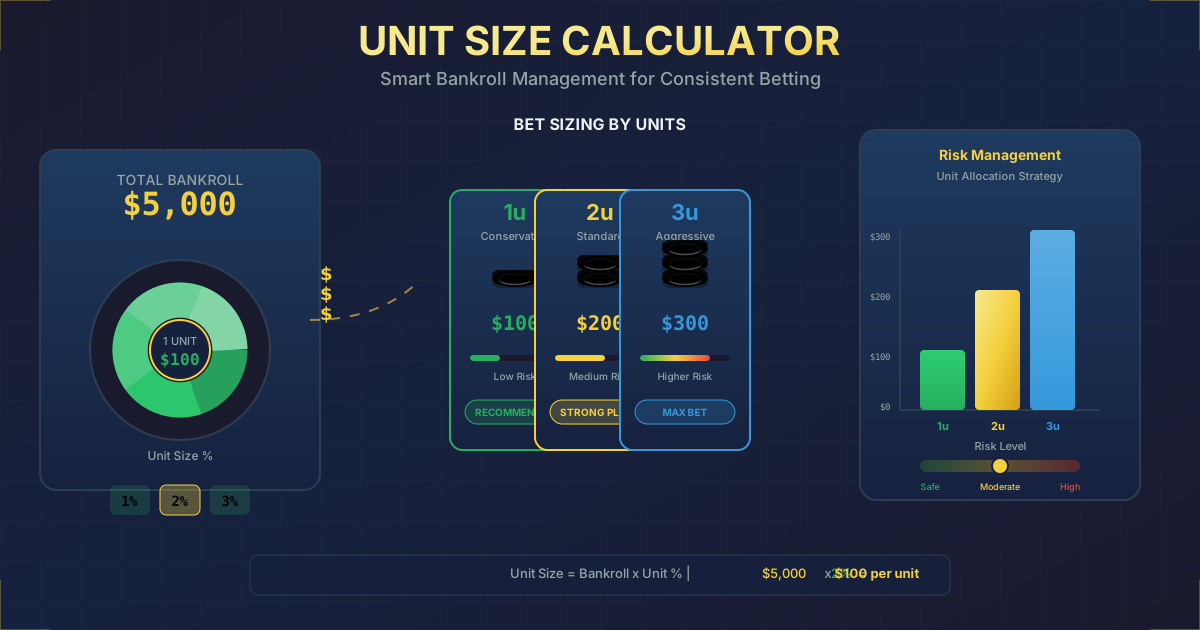
A sports bettor risking 2% of bankroll per bet ($200 on a $10,000 bankroll) has a 25% chance of experiencing a $6,000 drawdown (30 units) over the course of 1,000 bets. That is roughly one year of betting for someone placing 3-4 bets per day.
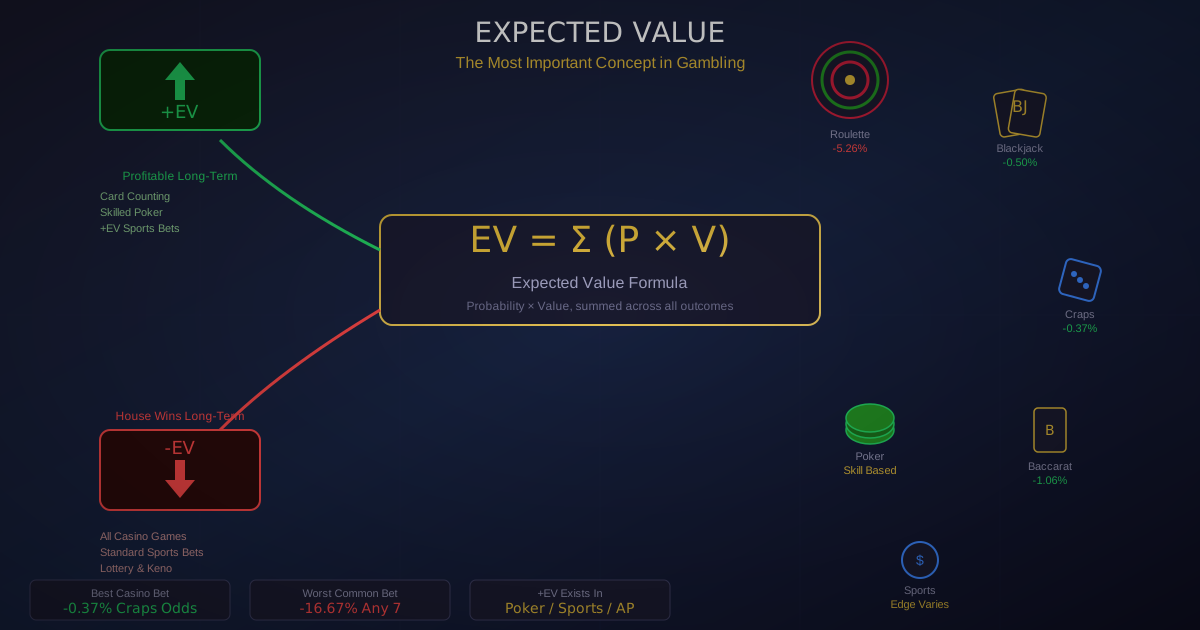
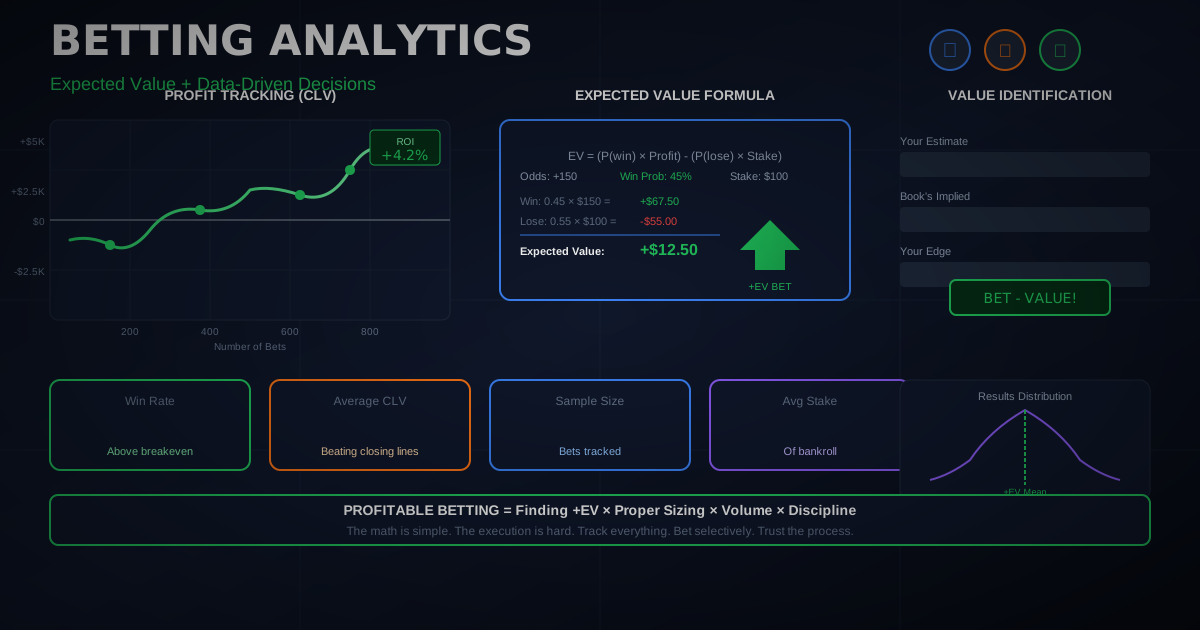
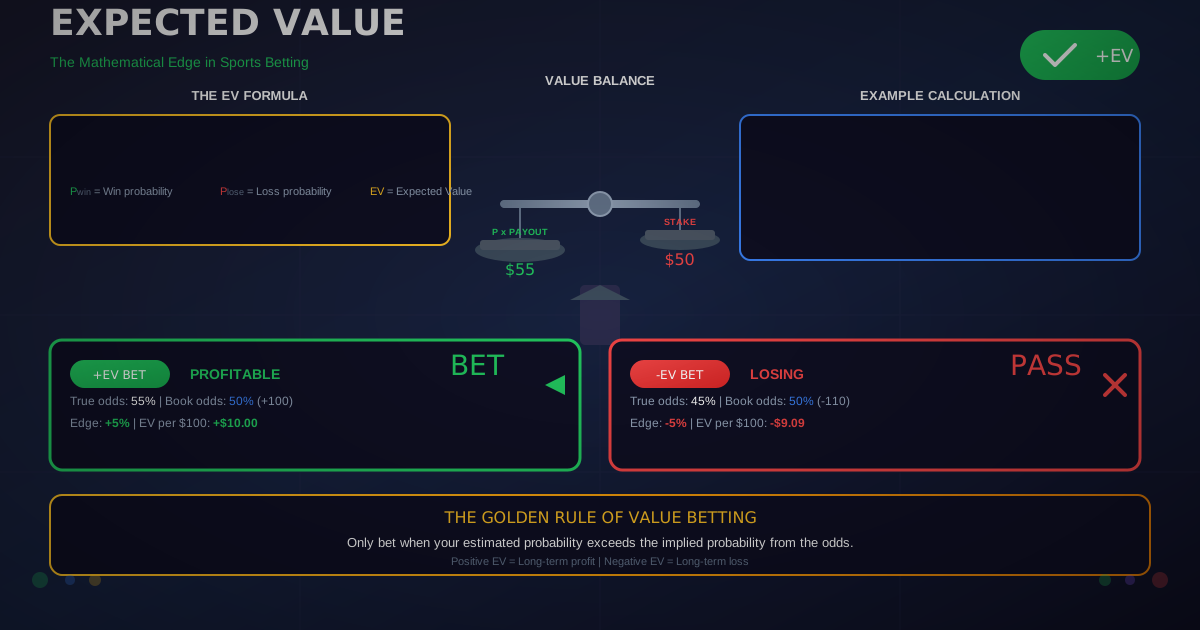
Use the Expected Value Calculator to verify that your edge is real before attributing a losing streak to variance rather than negative EV play.
Blackjack Card Counting Downswings
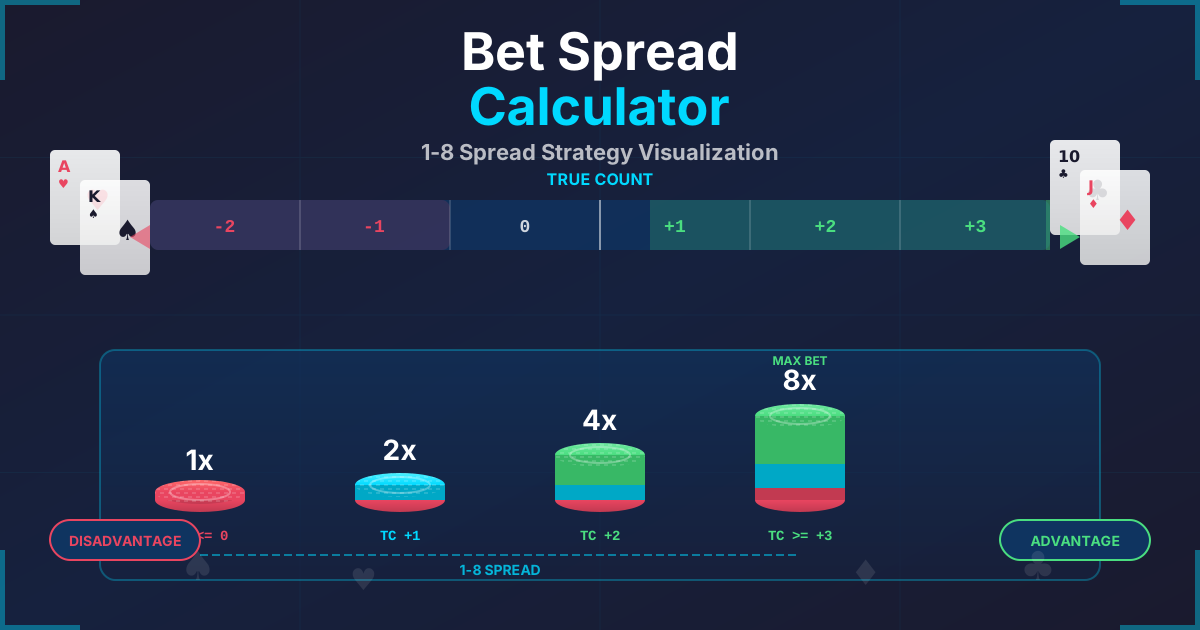
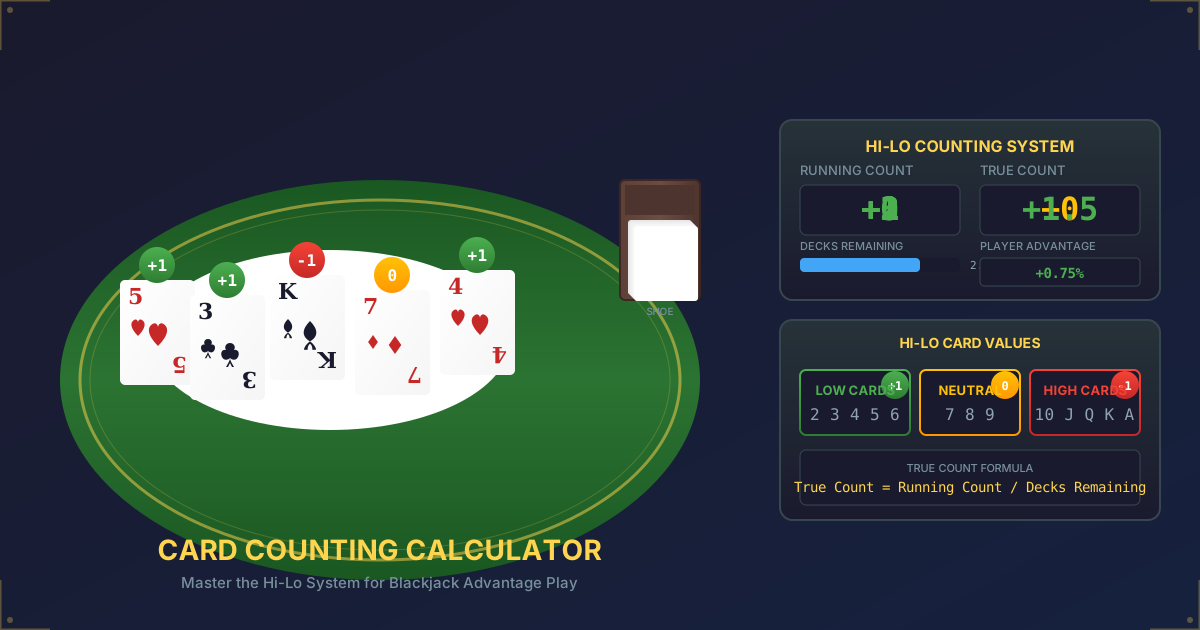
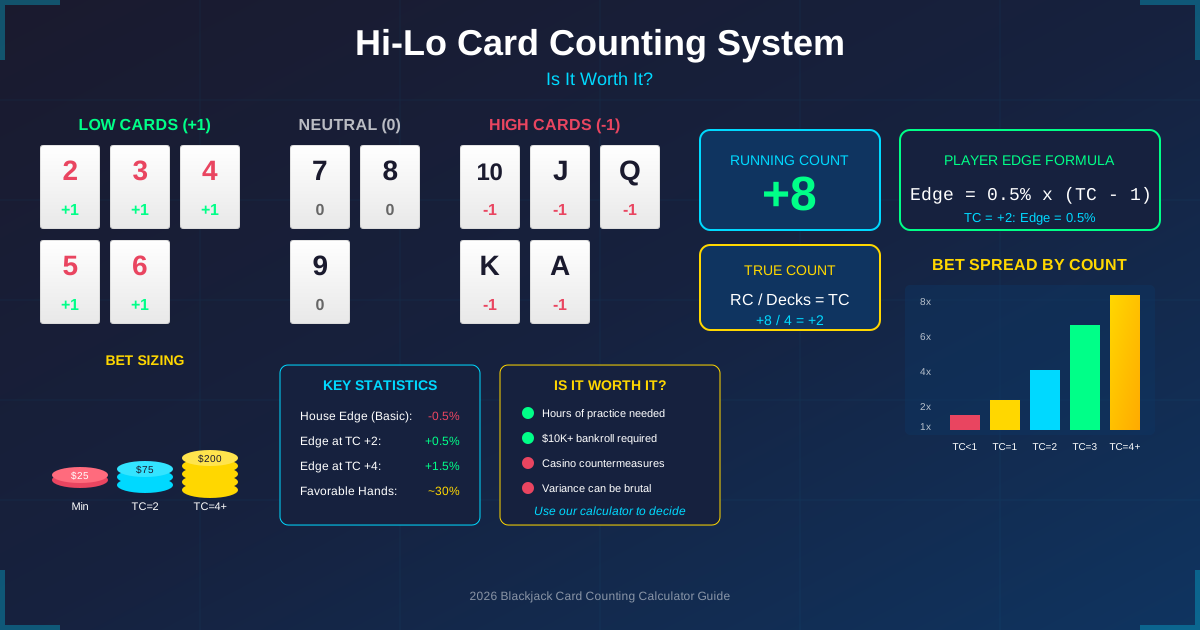
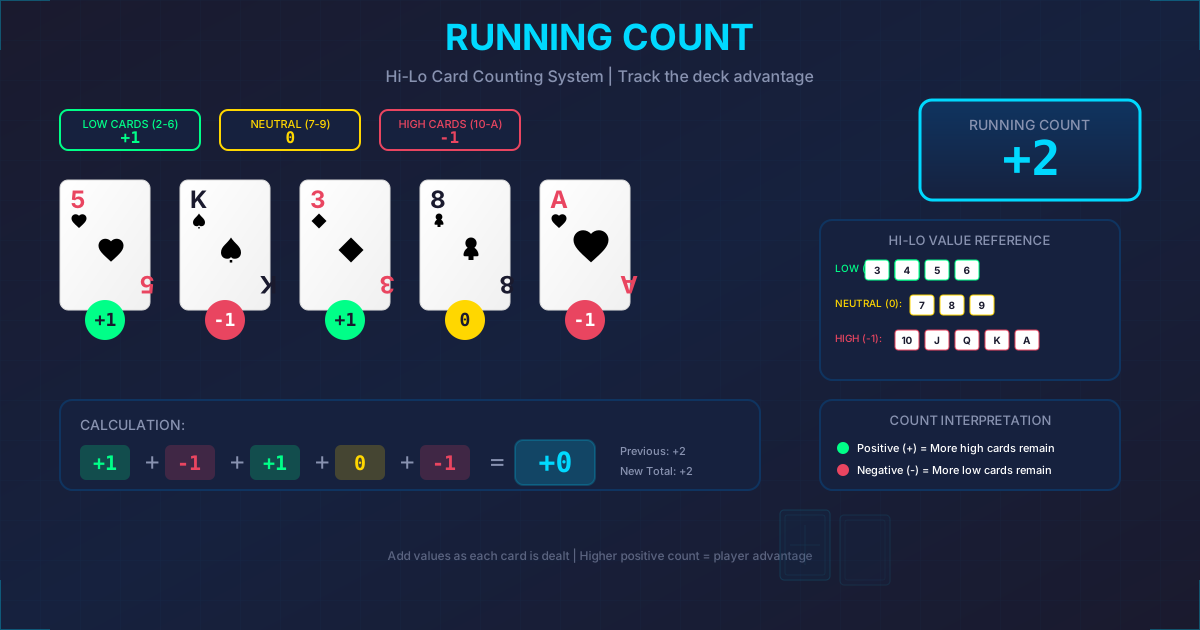
Card counters face particularly brutal variance because their edge is small (typically 0.5-1.5%) and their bet spread creates enormous swings.
For a Hi-Lo counter with 1% edge and 1-12 bet spread:
| Downswing Depth (min bets) | Probability Over 500 Hours | Average Duration |
|---|---|---|
| 200 min bets | 98% | 15 hours |
| 400 min bets | 75% | 40 hours |
| 600 min bets | 40% | 80 hours |
| 800 min bets | 18% | 130 hours |
| 1,000 min bets | 7% | 200 hours |
For a $25 minimum bettor, a 600-unit downswing is $15,000. At 80 hours per downswing, that is roughly a month of full-time play in the red.
The Blackjack Variance Calculator can model your specific counting system and bet spread to predict expected downswings, and the Blackjack Risk of Ruin Calculator shows whether your bankroll can survive them.
Is It Variance or Are You Actually Losing?
This is the most important question during any downswing: Am I running bad, or am I playing bad? The honest answer determines whether you should keep grinding or stop and reassess.
Statistical Tests for Downswing Evaluation
To determine whether your results are within normal variance:
- Calculate your expected results over the downswing period based on your previously established win rate
- Calculate the standard deviation of results over that period
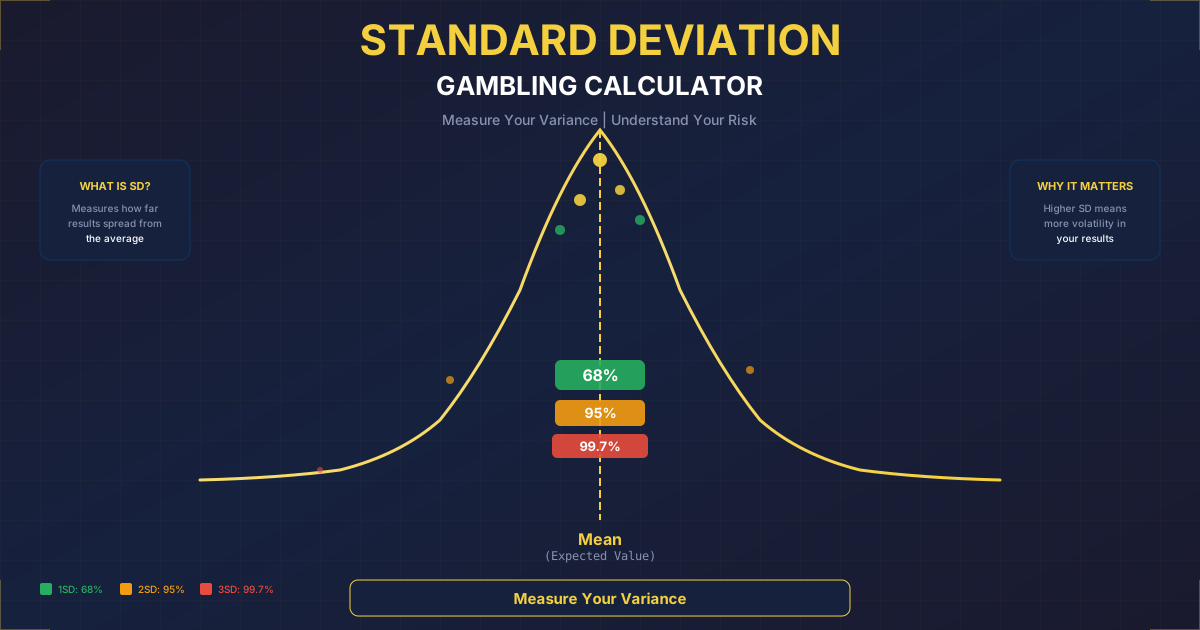
- Check if your actual results fall within 2 standard deviations of expected results
If your actual results are within 2 standard deviations of expected, the downswing is statistically normal. If they fall outside 2 standard deviations, something may have changed (your play, the games, or the competition).
Example: Evaluating a Poker Downswing
You normally win 6 bb/100 with an 85 bb/100 standard deviation. Over the last 50,000 hands, you have lost 1,500 big blinds (a loss rate of -3 bb/100).
- Expected profit: 6 bb/100 x 500 (hundred-hand blocks) = 3,000 bb
- Standard deviation over 50,000 hands: 85 x sqrt(500) = 1,901 bb
- Your actual result: -1,500 bb
- Deviation from expected: -1,500 - 3,000 = -4,500 bb
- Number of standard deviations: -4,500 / 1,901 = -2.37 SD
At -2.37 standard deviations, this result is unusual (roughly a 1% chance if your true win rate is still 6 bb/100). This warrants serious investigation. Either:
- You ran very badly (1% probability events do happen)
- Your win rate has genuinely declined (game selection, opponents improving, tilt)
- Both factors are contributing
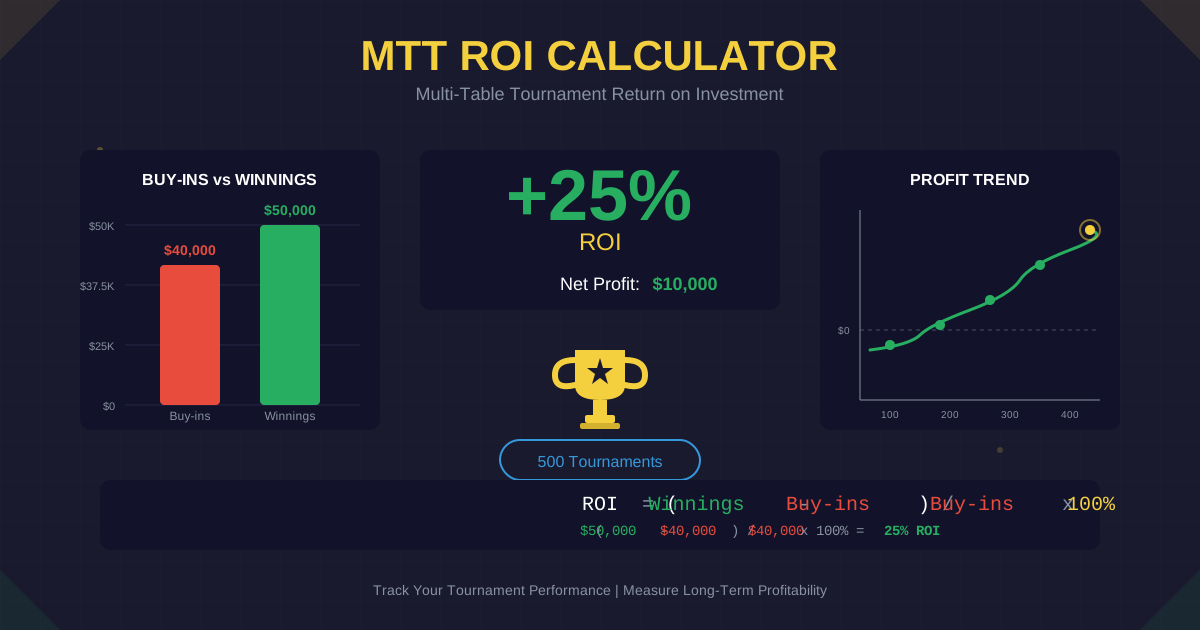
Use the Poker Hourly Rate Calculator to track how your win rate has trended over time, and the Poker ROI Calculator for tournament players.
Red Flags That It Is Not Just Variance
Look for these warning signs that your downswing has a skill component:
| Warning Sign | What It Means |
|---|---|
| Win rate declined gradually over 6+ months | Games are getting tougher, or your edge has eroded |
| Large losses concentrated at specific stakes | You may be outclassed at those stakes |
| Losses worse when tired, drunk, or tilted | Emotional leaks are contributing to results |
| Losing at games/stakes where you used to win | The player pool has improved |
| Running above expectation at new games | You might be playing a beatable game badly at a game you know well |
| Significantly worse results on weekdays vs weekends | Game selection matters -- weekday fields are tougher |
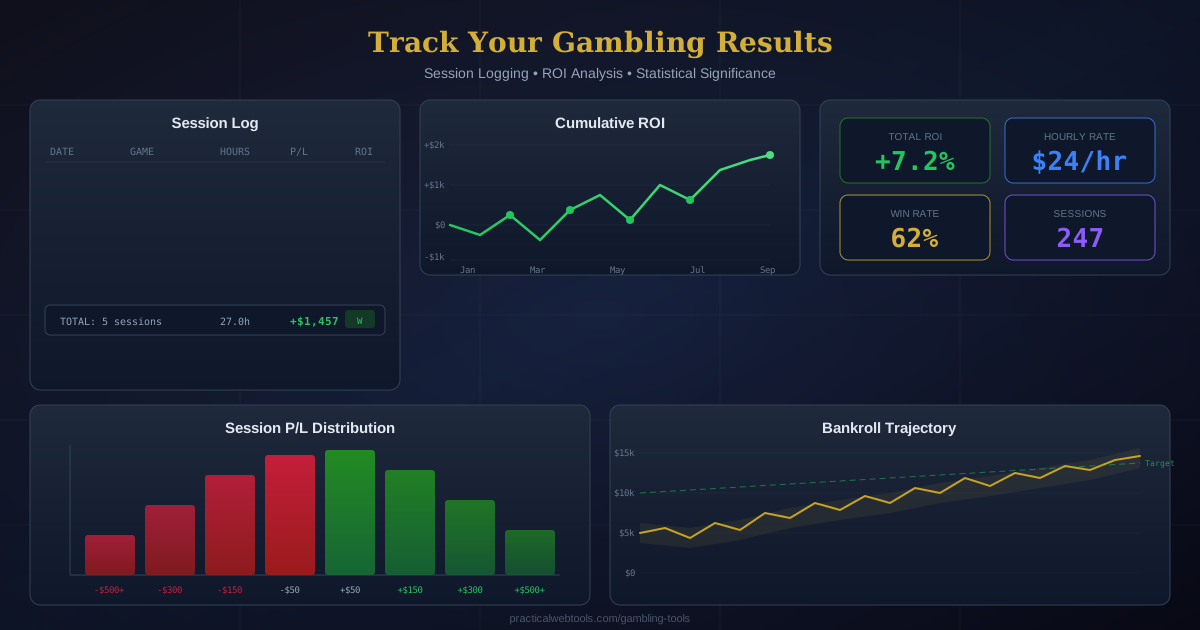
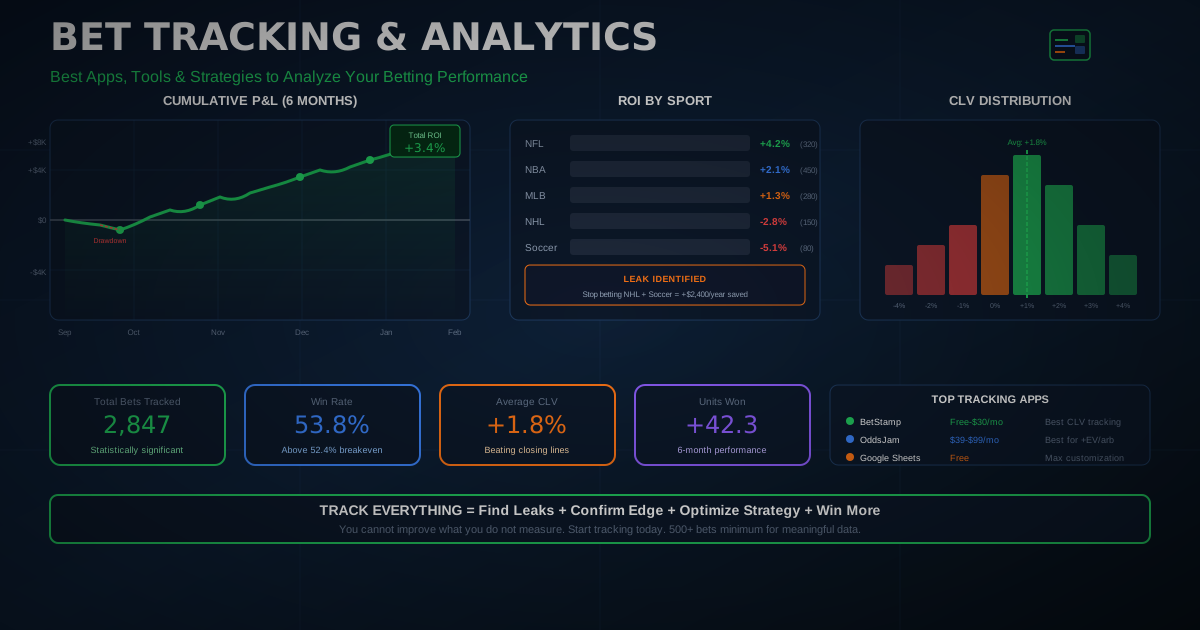
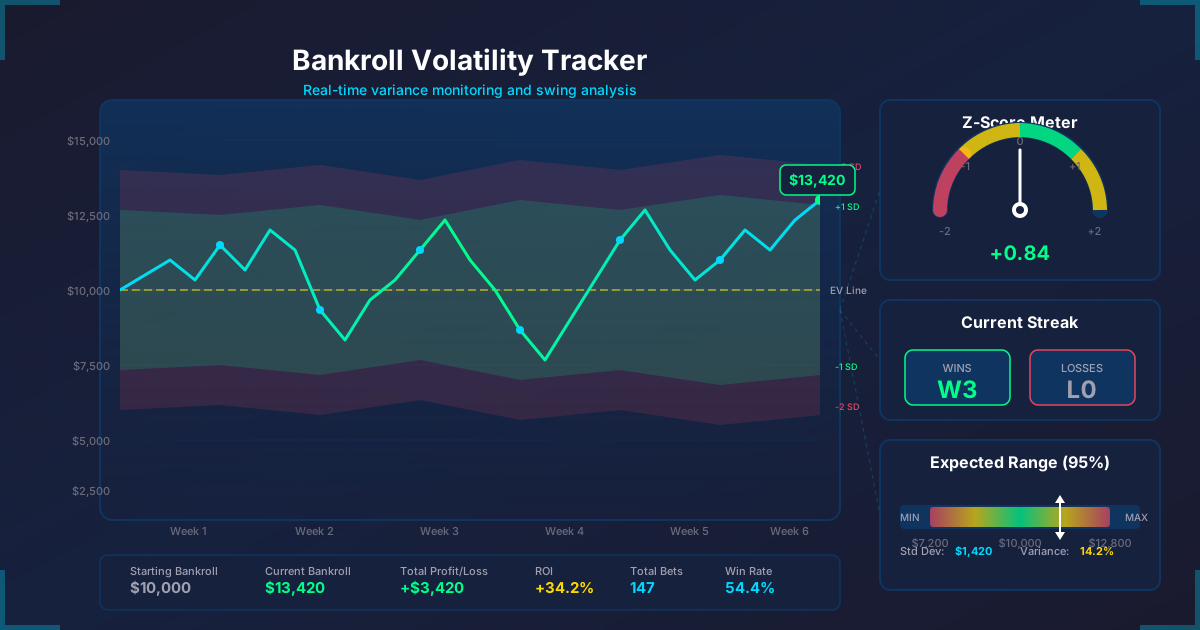
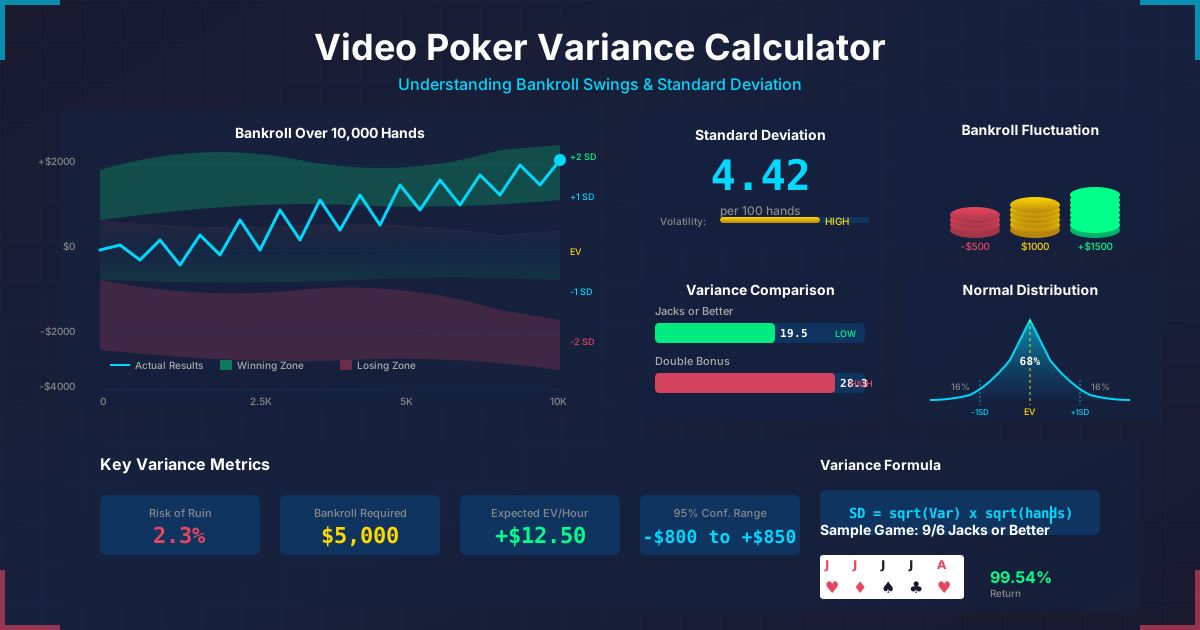
The Bankroll Volatility Tracker helps you visualize your bankroll trajectory over time, making it easier to spot trends that deviate from normal variance patterns.
The Mental Game of Downswings
The math tells you that downswings are inevitable. Your mental game determines whether they destroy you or become temporary setbacks. Professional gamblers develop specific psychological frameworks for handling losing periods.
The Five Stages of a Gambling Downswing
Most gamblers go through predictable psychological stages during a downswing:
Stage 1: Denial (first 5-10 buy-ins down) "This is just a normal dip. I will win it back in a few sessions."
At this stage, most players are fine. The downswing is within the range of normal session-to-session variance, and experienced players recognize this.
Stage 2: Frustration (10-20 buy-ins down) "This is ridiculous. Every river card is going against me."
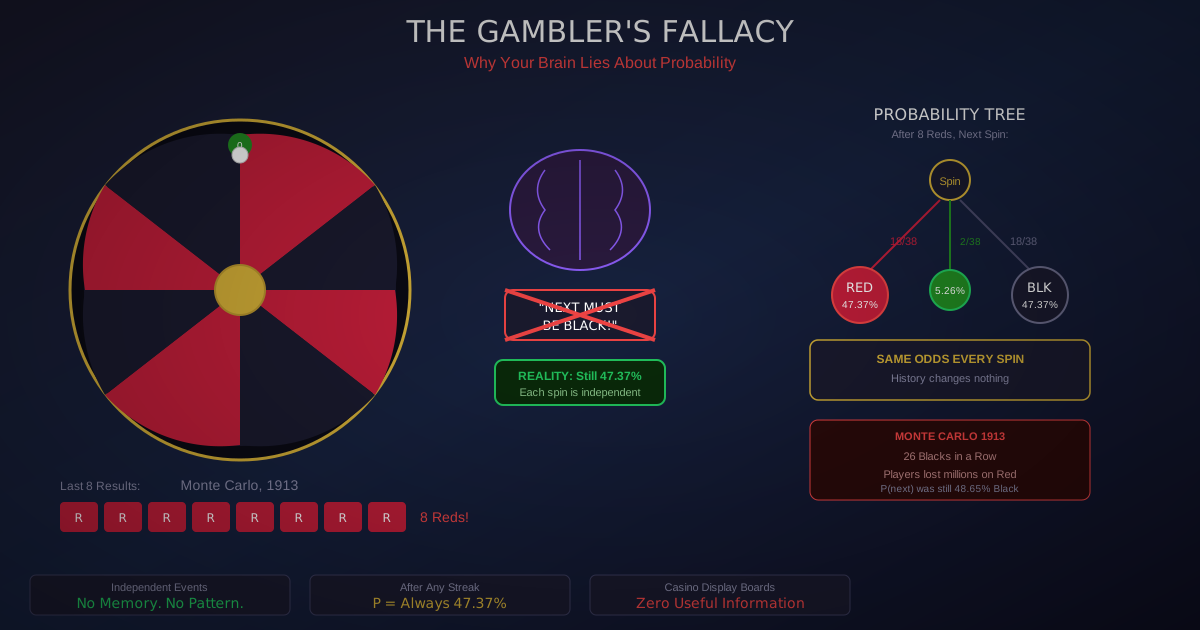
Players begin focusing on individual bad beats rather than the overall statistical picture. Selective memory kicks in -- you remember every bad beat vividly but forget the pots you sucked out on.
Stage 3: Self-Doubt (20-30 buy-ins down) "Maybe I am not actually a winning player. Maybe I was just lucky before."
This is the most dangerous stage. Self-doubt leads to two destructive patterns:
- Passivity: Playing too tight, folding winning hands, and leaving money on the table
- Aggression: Trying to force the action, making -EV plays to "get even"
Stage 4: Despair (30+ buy-ins down) "I should quit gambling entirely. I have been wasting my time."
The urge to quit is strongest at the exact moment when, statistically, the recovery is most likely about to begin. The deeper into a downswing you are, the more likely it is to end soon (assuming your edge is real).
Stage 5: Recovery (upswing begins) "Okay, the variance was real. I was right to keep playing."
Recovery confirms that the downswing was variance, not skill degradation. But the lessons learned during the downswing -- about emotional control, bankroll management, and honest self-assessment -- are permanent.
Mental Strategies That Actually Work
1. Focus on Decisions, Not Results
The single most important mental shift for surviving downswings is evaluating your play by the quality of your decisions, not by outcomes. A correct fold that would have won the pot is still a correct fold. An incorrect call that happened to win is still an incorrect call.
Keep a decision journal where you record 3-5 hands per session and evaluate whether you made the right play regardless of the result. Over time, this builds confidence that your process is sound even when outcomes are poor.
2. Track Your EV Line
Many poker tracking programs show your "all-in EV line" -- what your results would be if every all-in situation resolved according to equity rather than the actual cards dealt. If your EV line is rising while your actual results are falling, the downswing is pure variance.
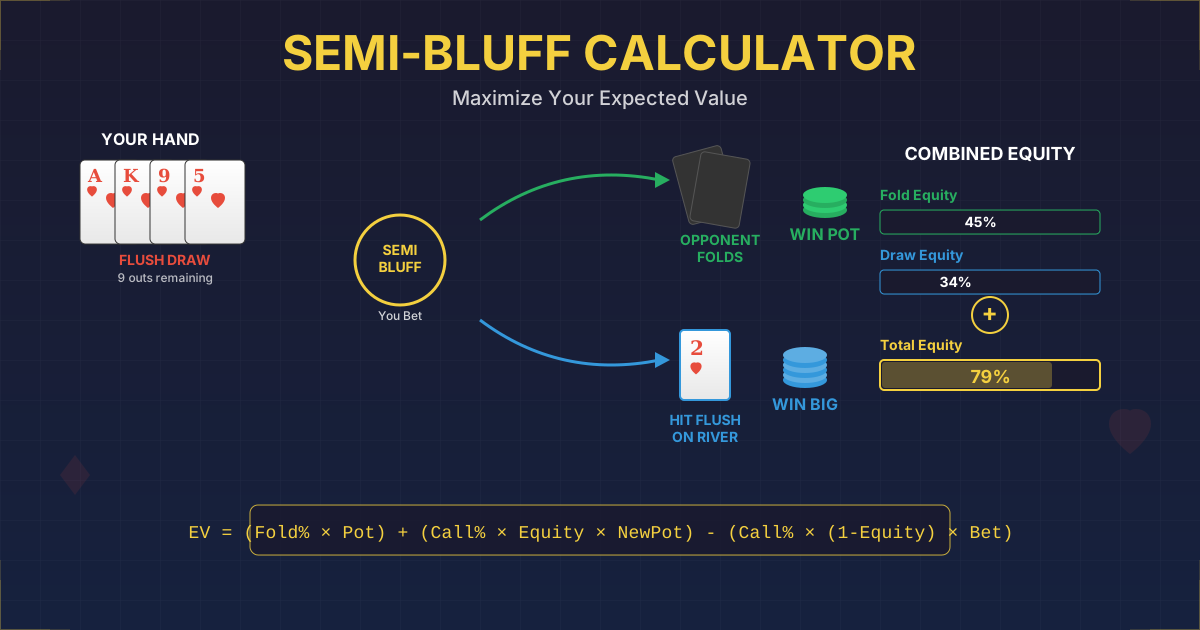
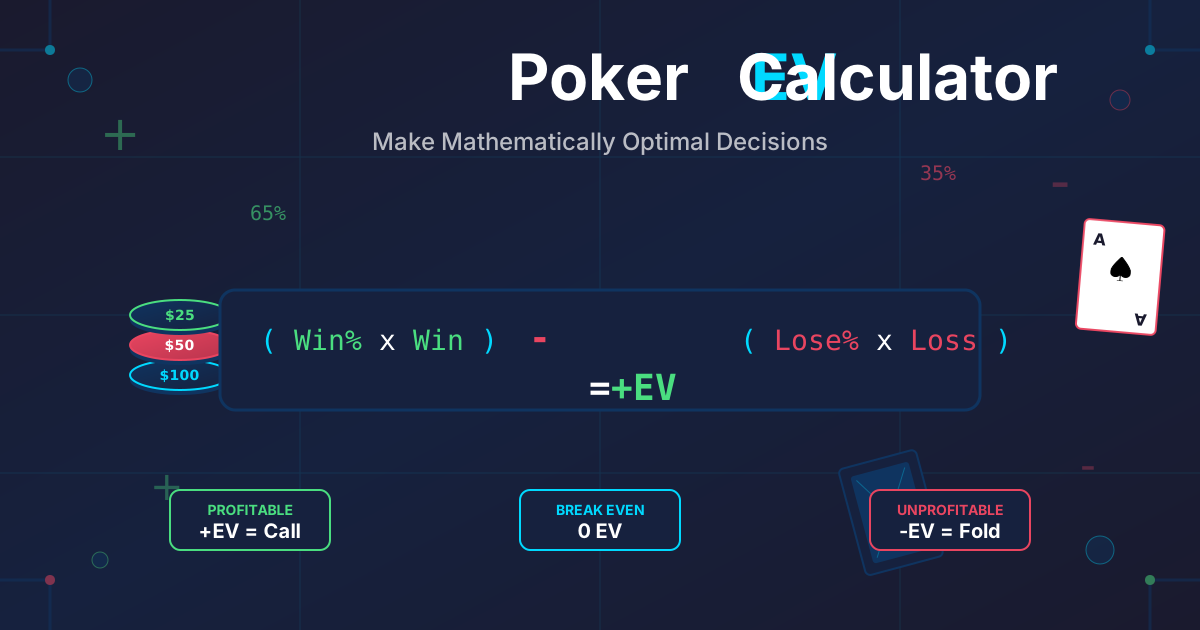
The Poker EV Calculator helps you understand the expected value of individual decisions, giving you confidence that your play is correct even when results say otherwise.
3. Study More During Downswings
Downswings are the best time to study because:
- You are motivated to find leaks
- You have less confidence, which makes you more open to learning
- Time spent studying is time not spent playing on tilt
Allocate the hours you would normally play to review sessions, work with training materials, or discuss hands with other players.
4. Take Scheduled Breaks
Do not wait until you are emotionally broken to take a break. Schedule them proactively:
- After any session where you feel frustration affecting your play
- After losing more than 3 buy-ins in a single session
- One full day off per week regardless of results
- One full week off after a 20+ buy-in downswing
5. Move Down in Stakes Before You Have To
The standard rule is to move down when your bankroll falls below a certain threshold (e.g., 25 buy-ins at current stakes). But moving down proactively -- at 30 buy-ins instead of waiting for 20 -- provides psychological relief and reduces the risk that the downswing becomes fatal.
The Poker Bankroll Requirements Calculator helps you set specific move-down thresholds based on your win rate and risk tolerance.
6. Use the Math as Emotional Armor
When you know that a 30 buy-in downswing has a 45% probability over a career, experiencing one does not feel like a personal failure. It feels like a predictable event that you prepared for. Run your numbers through the Poker Downswing Probability Calculator regularly so you internalize the statistical reality.
Recovery Timelines: How Long Will It Take?
The recovery time from a downswing depends on three factors:
- The depth of the downswing (how much you lost)
- Your win rate (how quickly you earn it back)
- Your volume (how many hands/bets per day)
Poker Recovery Timelines
For a 5 bb/100 winner playing 50,000 hands per month:
| Downswing Depth | Expected Recovery Time | 90th Percentile Recovery |
|---|---|---|
| 10 buy-ins ($2,000 at $1/$2) | 1.5 months | 3 months |
| 20 buy-ins ($4,000) | 3 months | 6 months |
| 30 buy-ins ($6,000) | 5 months | 9 months |
| 40 buy-ins ($8,000) | 7 months | 12 months |
| 50 buy-ins ($10,000) | 9 months | 15 months |
The "90th percentile" column shows the time by which 90% of players with this win rate will have recovered. Some players will recover faster (running above EV), but 10% will take even longer.
Note that recovery time is not simply "lost amount / win rate." Because variance continues during recovery, you can have additional smaller downswings within the recovery period that extend the timeline.
Sports Betting Recovery Timelines
For a bettor with 3% edge placing 5 bets per day:
| Drawdown (units) | Expected Recovery (days) | 90th Percentile |
|---|---|---|
| 10 units | 25 days | 50 days |
| 20 units | 55 days | 100 days |
| 30 units | 90 days | 160 days |
| 50 units | 150 days | 260 days |
Recovery times are measured from the trough of the downswing, not from the peak. The total peak-to-peak time (reaching your previous high-water mark) will be longer.
Blackjack Recovery Timelines
For a card counter with 1% edge playing 25 hours per week:
| Drawdown (min bet units) | Expected Recovery (weeks) | 90th Percentile |
|---|---|---|
| 200 units | 3 weeks | 6 weeks |
| 400 units | 6 weeks | 12 weeks |
| 600 units | 10 weeks | 18 weeks |
| 1,000 units | 18 weeks | 30 weeks |
The Bankroll Volatility Tracker helps you monitor your recovery progress against these expected timelines, and the Poker Session Tracker maintains the session-by-session data needed for accurate recovery tracking.
Bankroll Cushion Calculations
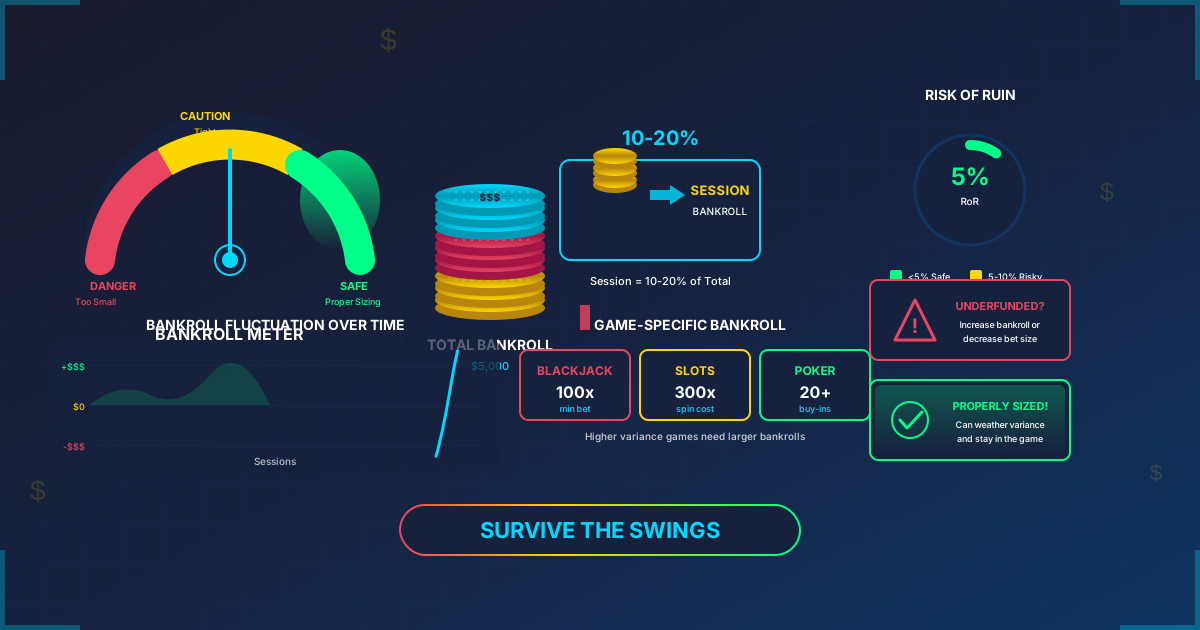
Your bankroll must be large enough to survive the worst expected downswing with enough remaining to continue playing. Here is how to calculate the right cushion:
The Bankroll Cushion Formula
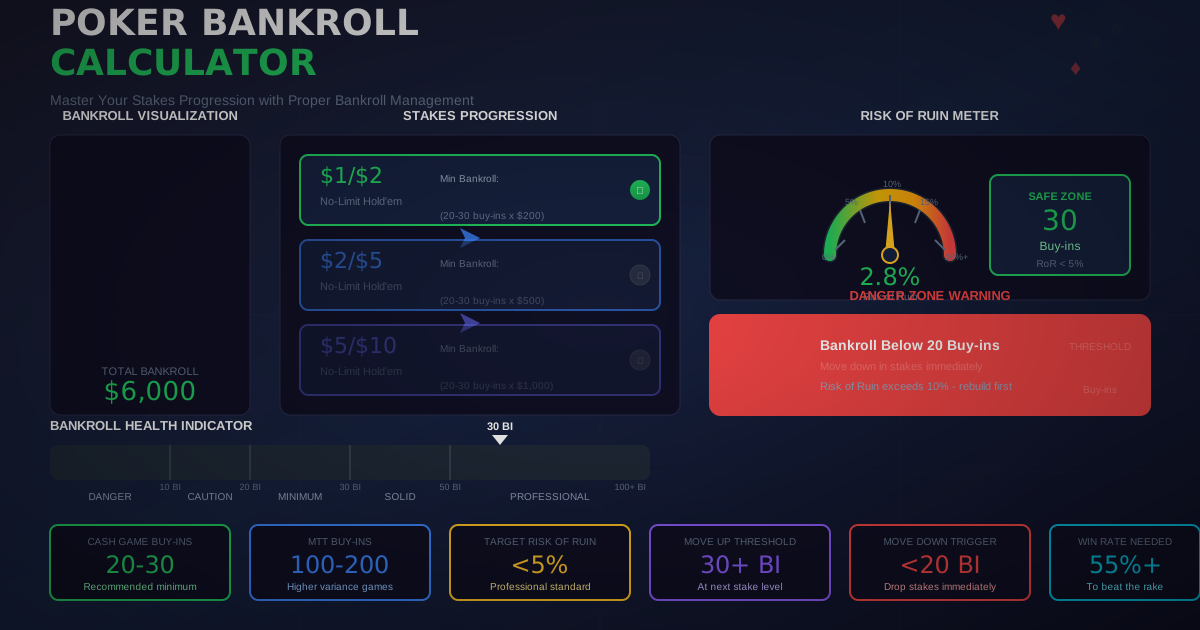
Minimum Bankroll = Maximum Expected Downswing + Minimum Playable Bankroll
For a poker player targeting less than 5% risk of ruin:
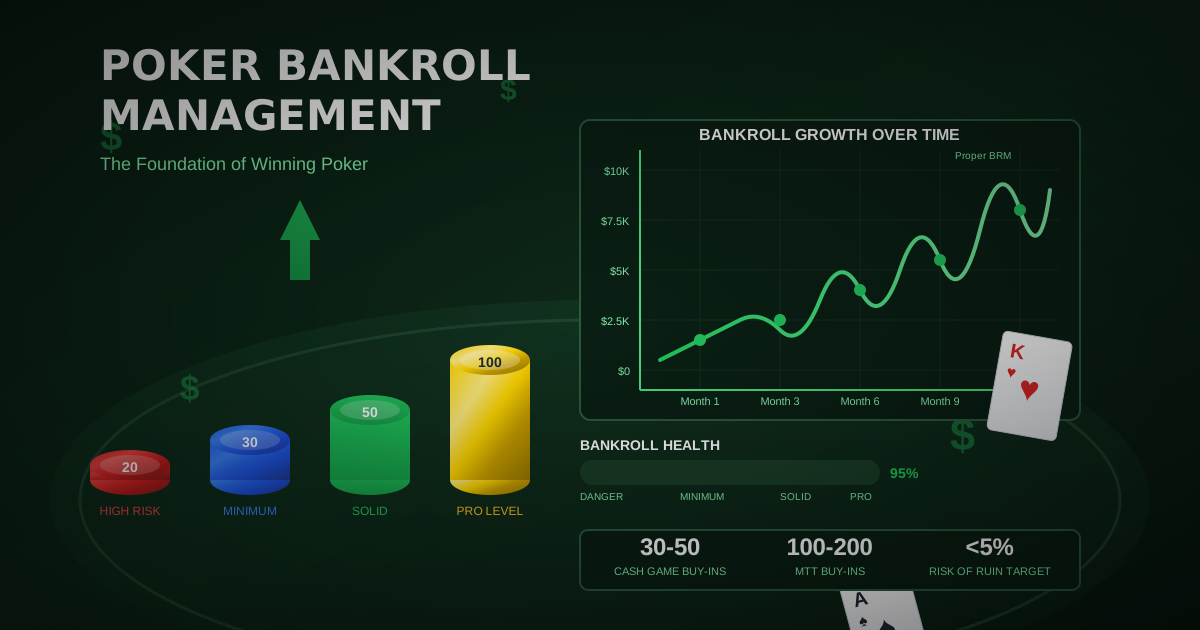
- Maximum expected downswing at 95th percentile: approximately 40 buy-ins
- Minimum playable bankroll (20 buy-ins for recreational, 30 for semi-pro): 20-30 buy-ins
- Total minimum: 60-70 buy-ins
For a poker player targeting less than 1% risk of ruin:
- Maximum expected downswing at 99th percentile: approximately 60 buy-ins
- Minimum playable bankroll: 30 buy-ins
- Total minimum: 90-100 buy-ins
This explains why professional players maintain 100+ buy-ins -- it is not excessive caution, it is mathematical necessity.
Bankroll by Gambling Type (5% Risk of Ruin Target)
| Gambling Type | Typical Downswing (95th pct) | Min Playable | Recommended Total |
|---|---|---|---|
| NLHE Cash (6-max) | 40 buy-ins | 25 buy-ins | 65 buy-ins |
| PLO Cash | 60 buy-ins | 35 buy-ins | 95 buy-ins |
| MTT Poker | 100 buy-ins | 50 buy-ins | 150 buy-ins |
| Blackjack (1-12 spread) | 800 min bets | 400 min bets | 1,200 min bets |
| Sports Betting (2% edge) | 40 units | 25 units | 65 units |
| Sports Betting (5% edge) | 25 units | 15 units | 40 units |
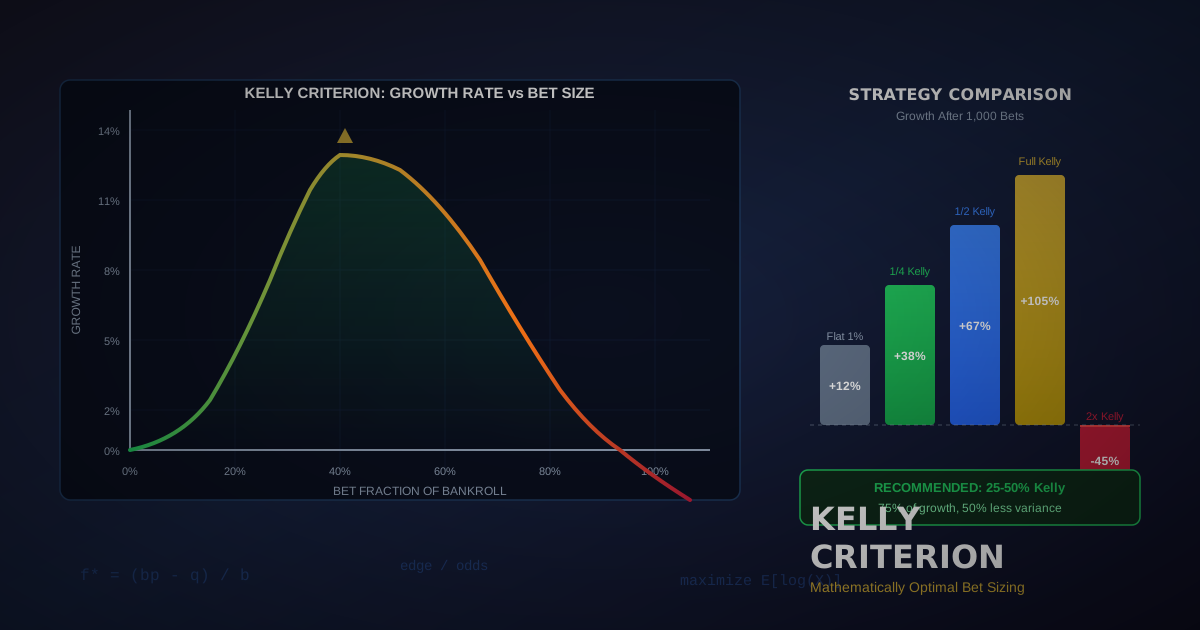
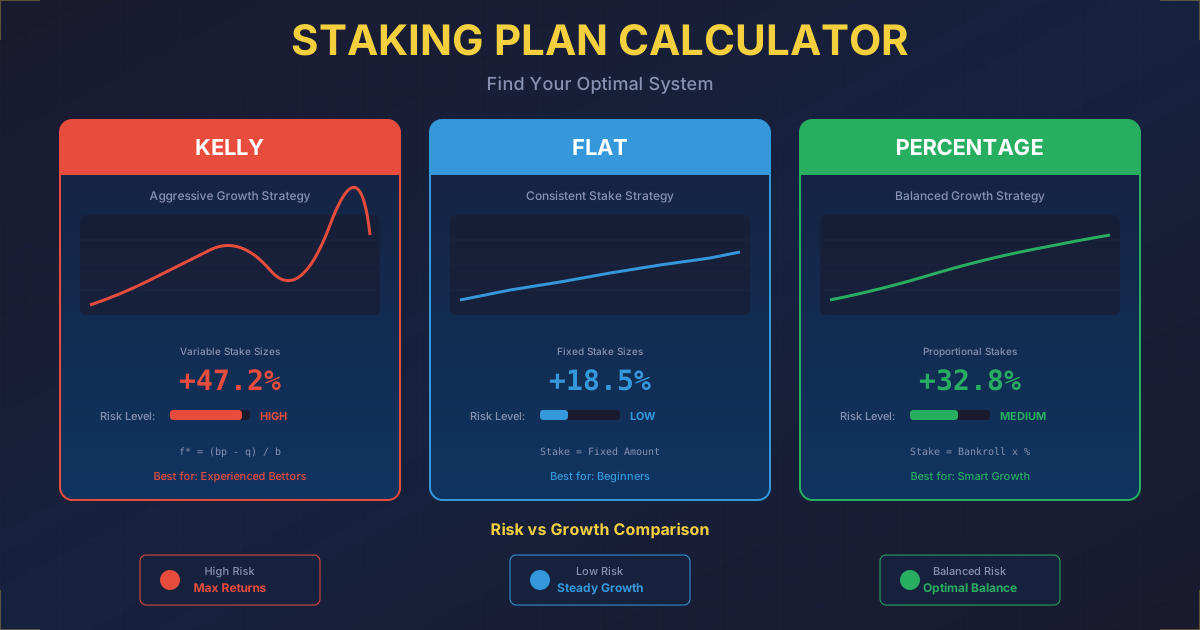
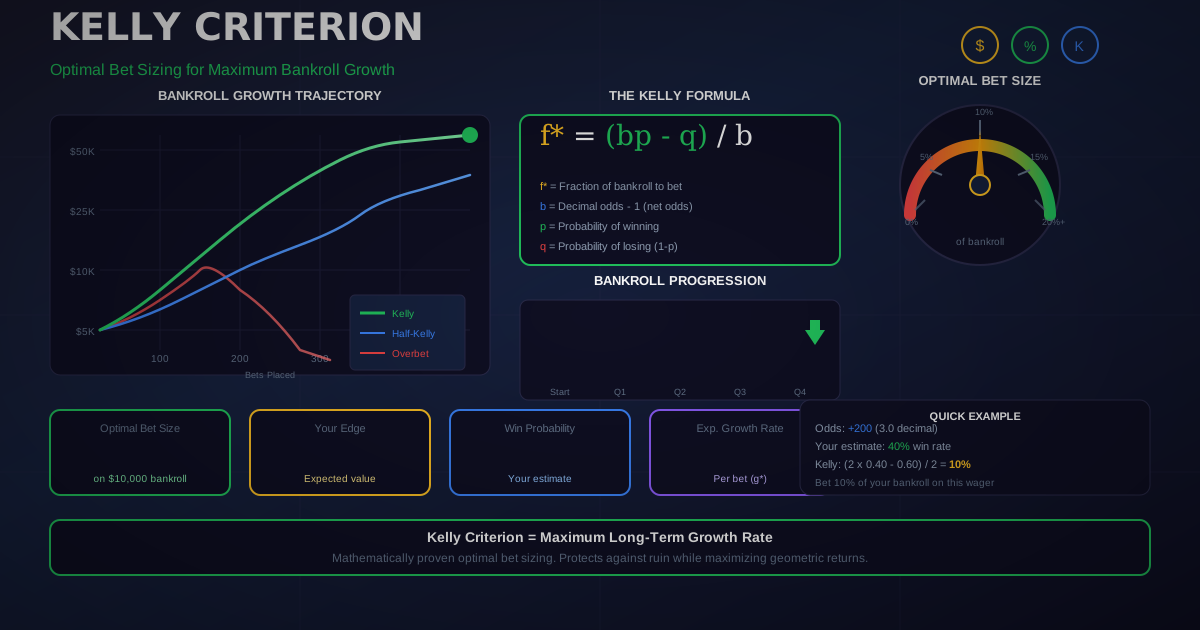
Use the Kelly Criterion Calculator to optimize your bet sizing within these bankroll constraints, and the Poker Risk of Ruin Calculator to verify that your specific bankroll provides adequate protection.
Real-World Downswing Survival Stories
Example 1: The Online Poker Grinder's 50 Buy-In Horror
Marcus played $1/$2 online with a 4 bb/100 win rate over 300,000 hands. His bankroll was $12,000 (60 buy-ins). Over a three-month stretch of 150,000 hands, he lost $10,000 (50 buy-ins), taking his bankroll down to $2,000.
At his lowest point, Marcus:
- Moved down to $0.50/$1 (20 buy-ins at the lower stake)
- Reduced his table count from 6 to 4 to improve decision quality
- Spent 2 hours per day studying instead of playing
- Used the Poker Variance Calculator to confirm his downswing was within normal bounds for his stats
Recovery took 4 months at $0.50/$1, during which he rebuilt to $8,000. He then moved back to $1/$2 at 40 buy-ins and rebuilt to his original bankroll within another 3 months. Total downswing-to-recovery time: 10 months.
Key lesson: Moving down in stakes preserved his bankroll and gave him lower-stress conditions to rebuild confidence.
Example 2: The Sports Bettor's Losing Quarter
Priya had a verified 2.8% edge over 4,000 NFL and NBA bets. Her bankroll was $20,000, betting $400 per game (2% of bankroll). During a brutal Q4, she lost 35 units ($7,000) over 400 bets -- a win rate of negative 8.75% over that stretch.
Her statistical analysis showed:
- Expected result at 2.8% edge: +$1,120
- Actual result: -$7,000
- Deviation: -$8,120
- Standard deviation for 400 bets at -110: approximately $5,600
- Number of SDs below expected: -1.45
At -1.45 standard deviations, this downswing was unpleasant but statistically unremarkable (approximately 7% of bettors with her edge would experience something this bad or worse over 400 bets).
Priya adjusted her unit size down to 1.5% of current bankroll ($195) and continued betting. Over the next quarter, she won 42 units and recovered fully.
Key lesson: Statistical analysis during the downswing confirmed it was variance, not a loss of edge. Reducing unit size while continuing to bet was the correct response.
Example 3: The Card Counter's Nightmare Session
Derek counted cards at $25 minimum tables with a $30,000 bankroll. During a single weekend trip, he lost $8,000 (320 minimum bet units) in approximately 12 hours of play.
Analysis:
- Expected win for 12 hours at $28/hr: +$336
- Actual result: -$8,000
- Standard deviation for 12 hours (approx 960 hands with variable bets): approximately $4,500
- Number of SDs: (-8,000 - 336) / 4,500 = -1.85
This was a bad session but not impossibly unlikely (approximately 3% probability). Derek's $30,000 bankroll could absorb the hit, leaving him at $22,000 (880 minimum bet units) -- still adequate for his spread.
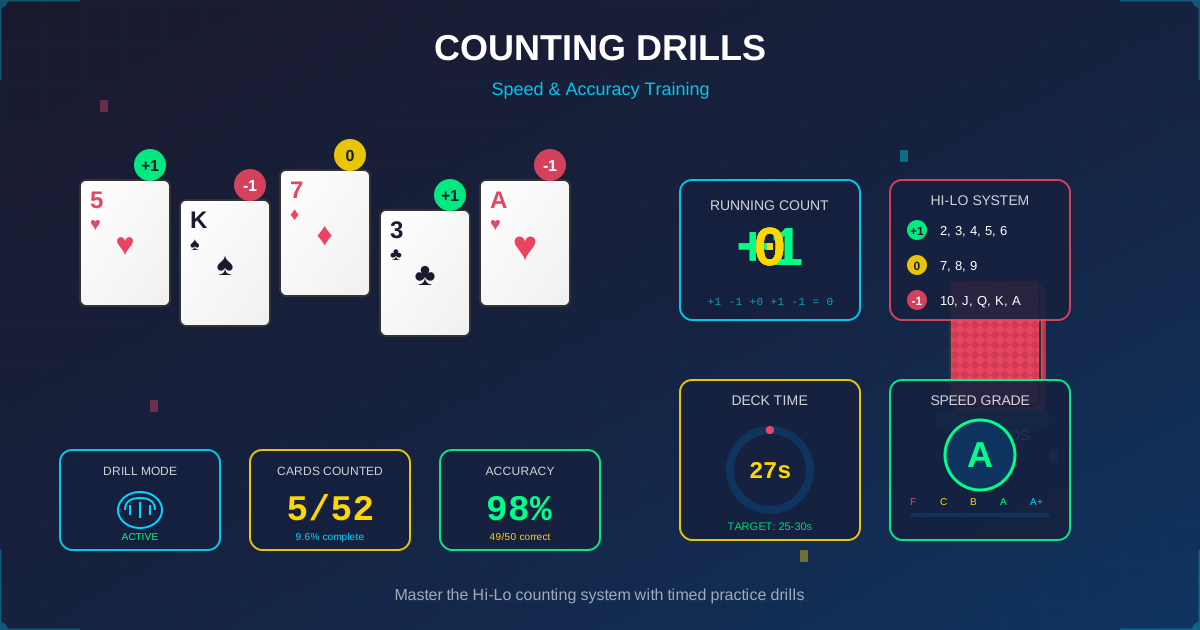
Derek took a week off, reviewed his counting accuracy with drill software, confirmed his play was correct, and returned. Within 100 hours of additional play, he had recovered the loss.
Key lesson: Even a single catastrophic session cannot break you if your bankroll is properly sized. The Blackjack Session Bankroll Calculator helps plan session amounts to ensure you can always weather a bad shoe.
Downswing FAQ
How do I know when to quit during a session that is going badly?
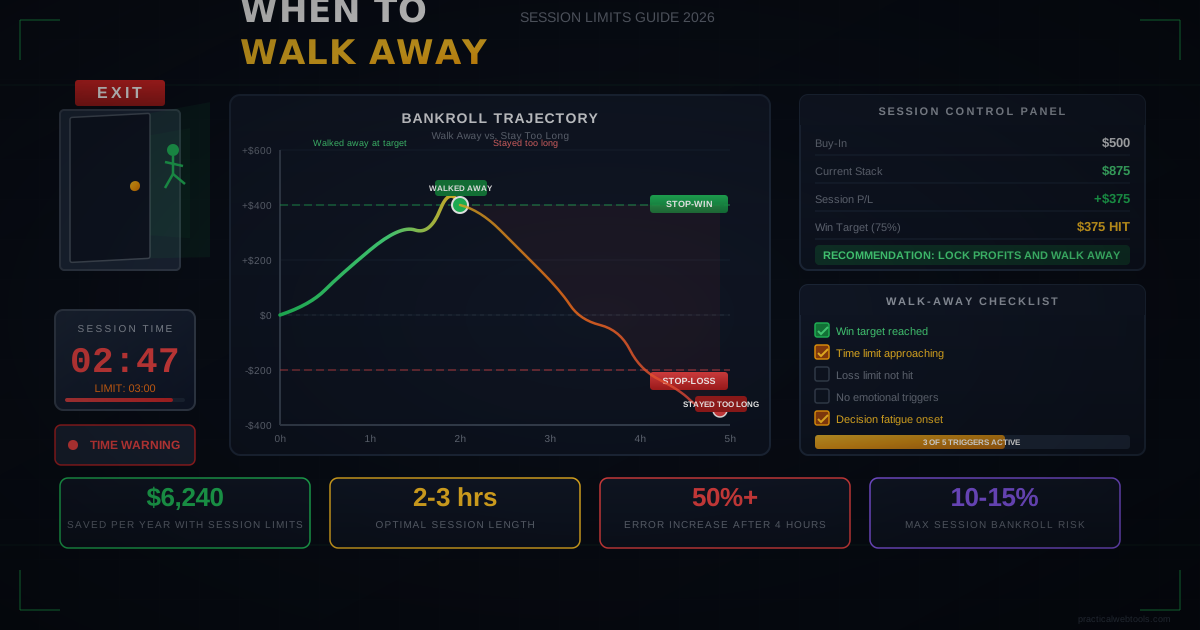
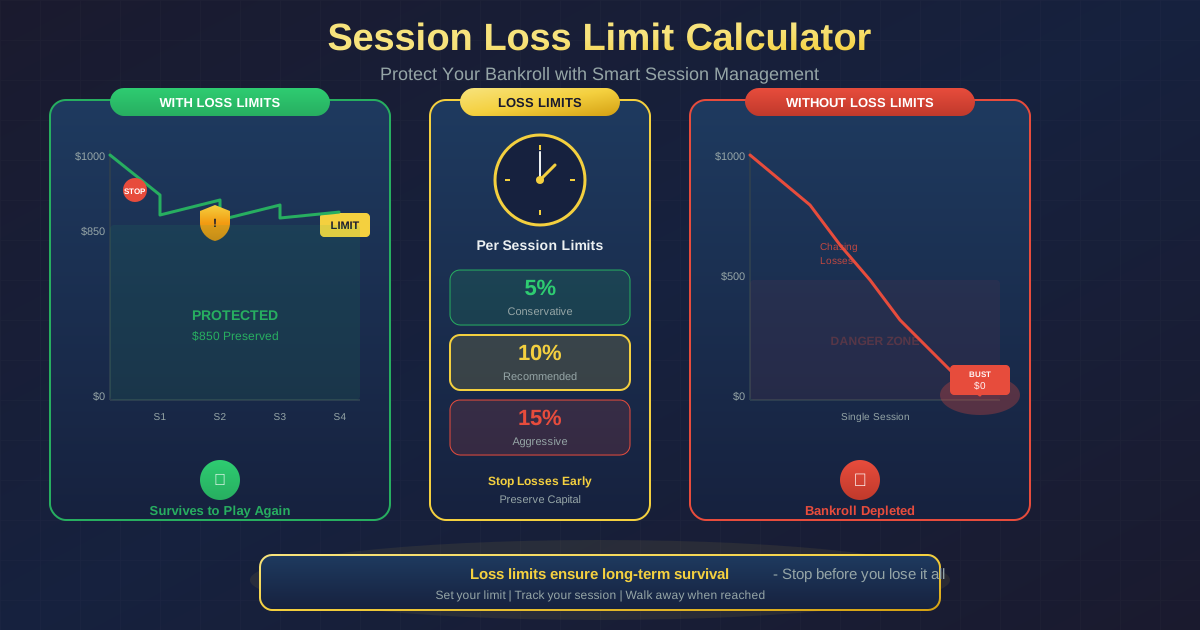
Set a session stop-loss before you start playing. For poker, a common rule is quitting after losing 3 buy-ins in a single session. For sports betting, stop for the day after losing 5% of your bankroll. For blackjack, leave the table after losing your predetermined session bankroll. These rules prevent tilt-driven losses from extending a normal bad session into a catastrophic one.
Should I change my strategy during a downswing?
No, unless you have identified a specific leak through honest analysis. The downswing exists precisely because variance is affecting your results, not your strategy. Changing a winning strategy during a losing period is called "resulting" -- making strategy decisions based on outcomes rather than process. The correct response is to continue making the same quality decisions.
How do I handle financial pressure during a downswing?
If you are a professional gambler and your bankroll drops to a level where you cannot pay bills, you have a bankroll management problem that existed before the downswing. Professionals should maintain 3-6 months of living expenses separate from their gambling bankroll. If you do not have this buffer, consider part-time work while your bankroll recovers.
Is it possible that my edge has genuinely disappeared?
Yes. Games change, opponents improve, and strategies that worked last year may not work this year. If your downswing persists beyond what variance explains (more than 2.5 standard deviations below expectation), seriously consider that your edge may have declined. Review your results with the Poker Hourly Rate Calculator to track win rate trends over time.
How do downswings affect tilt?
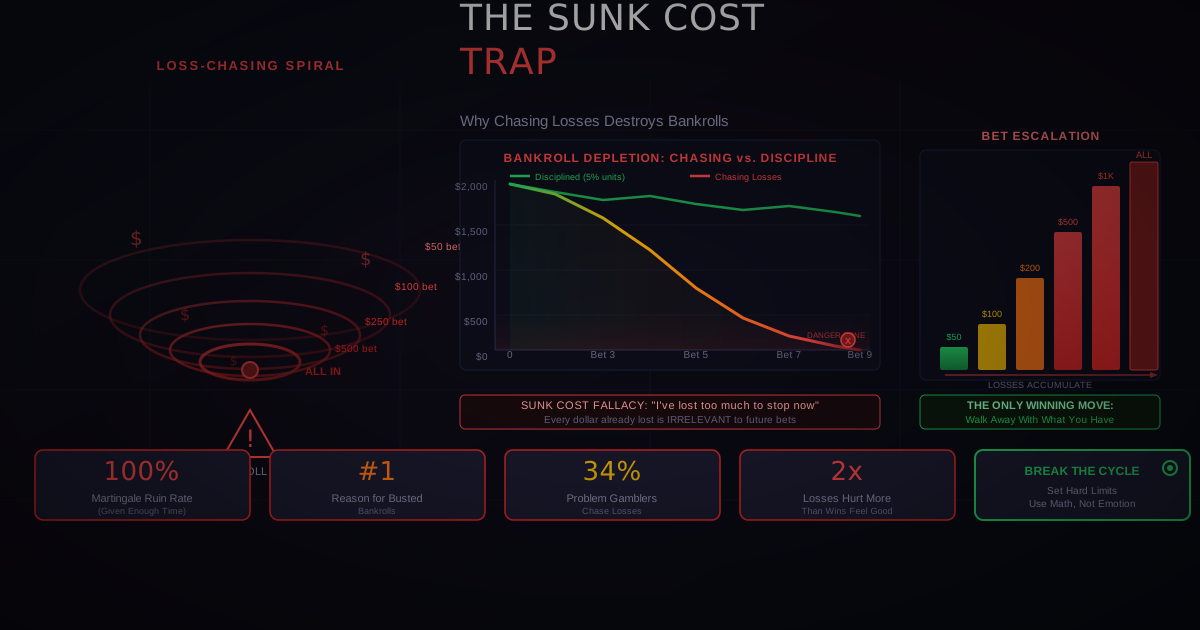
Downswings and tilt form a vicious cycle. Losing causes frustration, frustration causes worse play, worse play causes more losing. The only way to break this cycle is to recognize when tilt is affecting your play and stop immediately. A session played on tilt during a downswing compounds the damage exponentially.
Can I play through a downswing at higher stakes to recover faster?
This is one of the most destructive impulses in gambling. Moving UP in stakes during a downswing increases your risk of ruin dramatically. You have less bankroll (from the downswing), you are likely on tilt (from frustration), and the competition is tougher (at higher stakes). Always move DOWN during downswings, never up.
What percentage of my downswing is likely due to luck vs. skill?
This depends on the size of the downswing relative to your expected variance. Use this rough guide: if your downswing is within 1 standard deviation of expected results, it is almost certainly pure variance. Between 1-2 standard deviations, it is probably variance but worth investigating. Beyond 2 standard deviations, there is likely a skill component -- either your edge has declined or tilt is contributing.
How do professionals maintain confidence during long downswings?
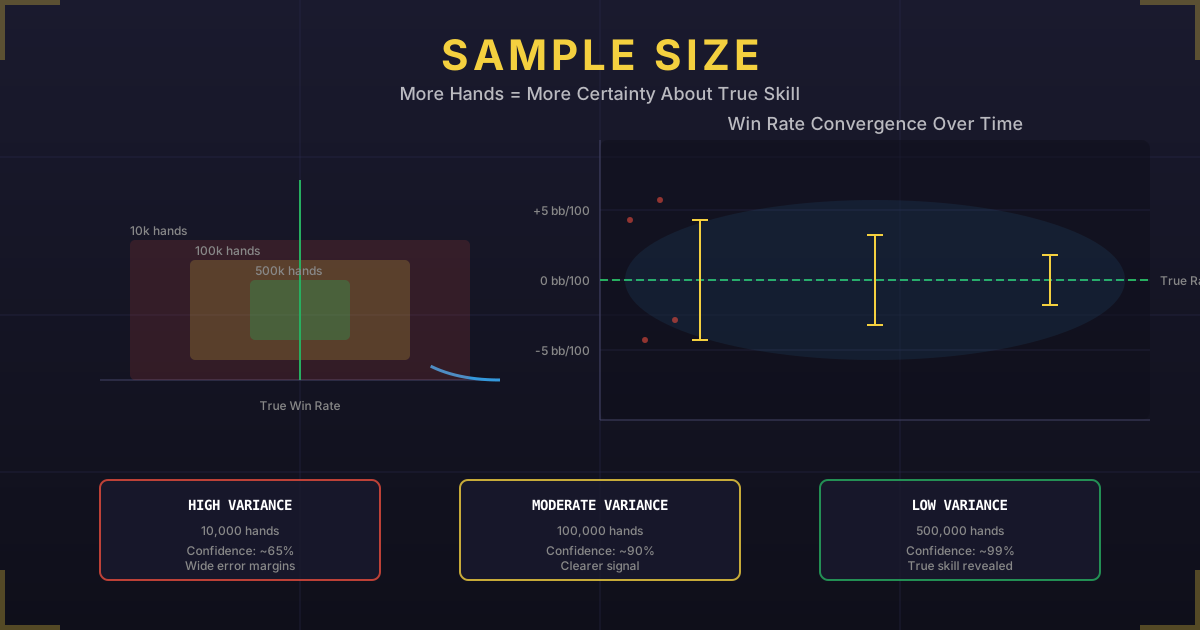
Professionals rely on large sample sizes of past results. If you have 500,000 winning hands in your database, a 50,000-hand downswing does not change the overall picture. They also maintain strong study habits, peer support networks, and the understanding that downswings are mathematical certainties, not personal failures. The Poker Downswing Probability Calculator helps quantify exactly how (un)lucky you have been.
Related Tools for Downswing Management
Surviving downswings requires preparation, monitoring, and honest analysis. These tools work together to help you navigate losing periods:
- Poker Downswing Probability Calculator - Calculate how likely your downswing is
- Poker Variance Calculator - Model expected variance and downswings
- Bankroll Volatility Tracker - Monitor your bankroll trajectory
- Poker Session Tracker - Track results for downswing analysis
- Blackjack Variance Calculator - Model blackjack downswing probability
- Poker Risk of Ruin Calculator - Check if your bankroll survives the downswing
- Blackjack Risk of Ruin Calculator - Blackjack-specific survival analysis
- Kelly Criterion Calculator - Adjust bet sizing during downswings
- Poker Bankroll Requirements Calculator - Determine move-down thresholds
- Expected Value Calculator - Verify your play is still +EV
- Poker EV Calculator - Analyze key hand decisions
- Poker Hourly Rate Calculator - Track win rate trends
- Poker ROI Calculator - Monitor tournament ROI during downswings
- Blackjack Session Bankroll Calculator - Plan safe session amounts
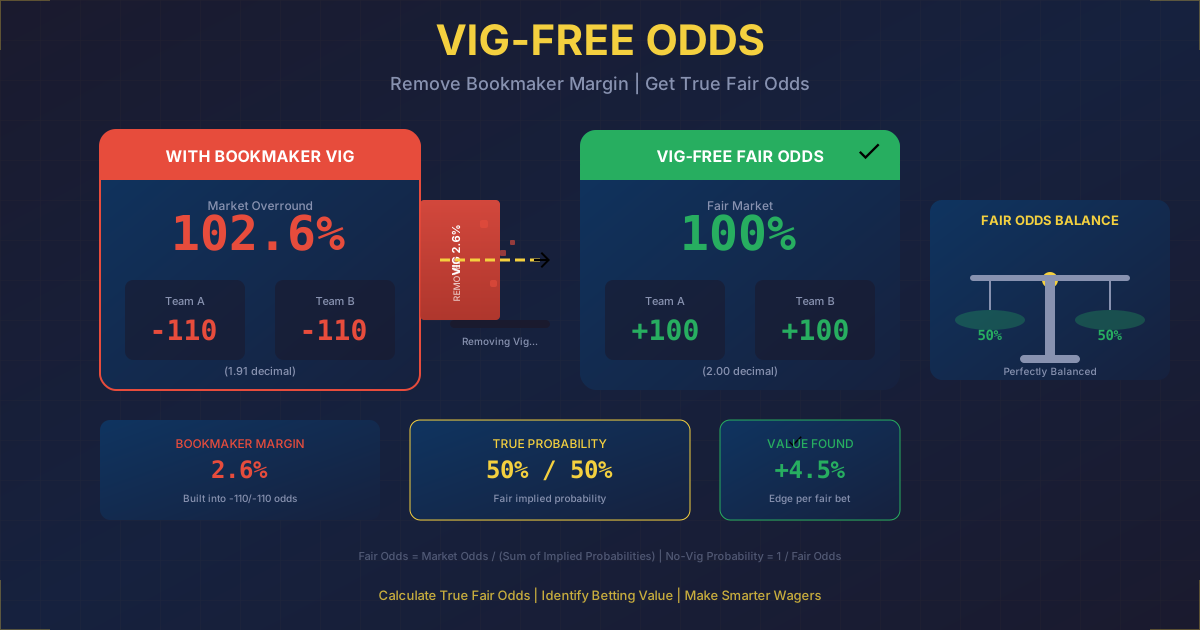
- Hold/Vig Calculator - Verify edge hasn't eroded from line changes
Conclusion
Downswings are the price of admission to profitable gambling. Every winning player faces them. Every professional has survived multiple devastating losing streaks that would cause recreational players to quit. The difference is not luck -- it is preparation.
The math is clear: a poker player with a solid 5 bb/100 win rate has a 95% lifetime probability of experiencing a 30+ buy-in downswing. A sports bettor with a strong 3% edge will lose money in roughly 35% of all months. Card counters with a legitimate 1% advantage routinely face 600+ unit drawdowns. These are not worst-case scenarios -- they are expected scenarios.
Surviving requires three things:
-
A bankroll large enough to absorb the hit. This means 50-100 buy-ins for poker, 40-65 units for sports betting, and 1,000+ minimum bet units for card counting. Skimping on bankroll is the number one reason winning players go broke.
-
Mental strategies that keep you playing well during adversity. Focus on decisions over results, track your EV line, study more during downswings, take scheduled breaks, and move down in stakes proactively rather than reactively.
-
The statistical knowledge to distinguish variance from genuine skill decline. Use the calculators and trackers available to you to evaluate whether your downswing is normal or whether something has changed. Be honest with yourself -- the math does not lie.
Start preparing for your next downswing today by calculating your expected downswing probability with our Poker Downswing Probability Calculator and ensuring your bankroll is adequate with the Bankroll Volatility Tracker.
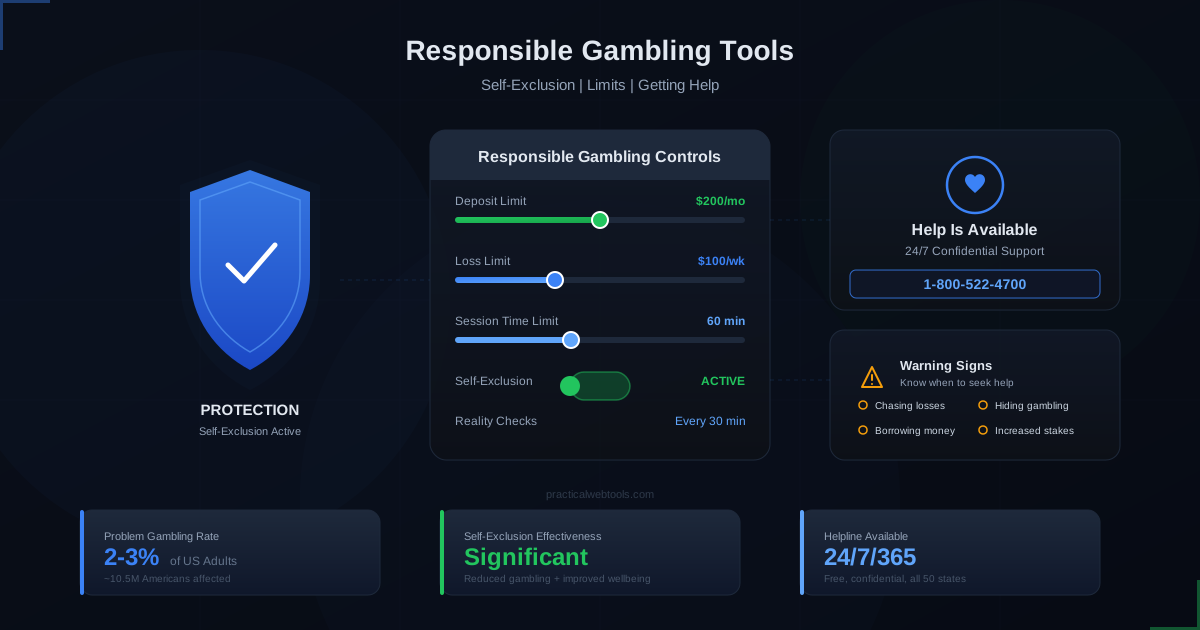
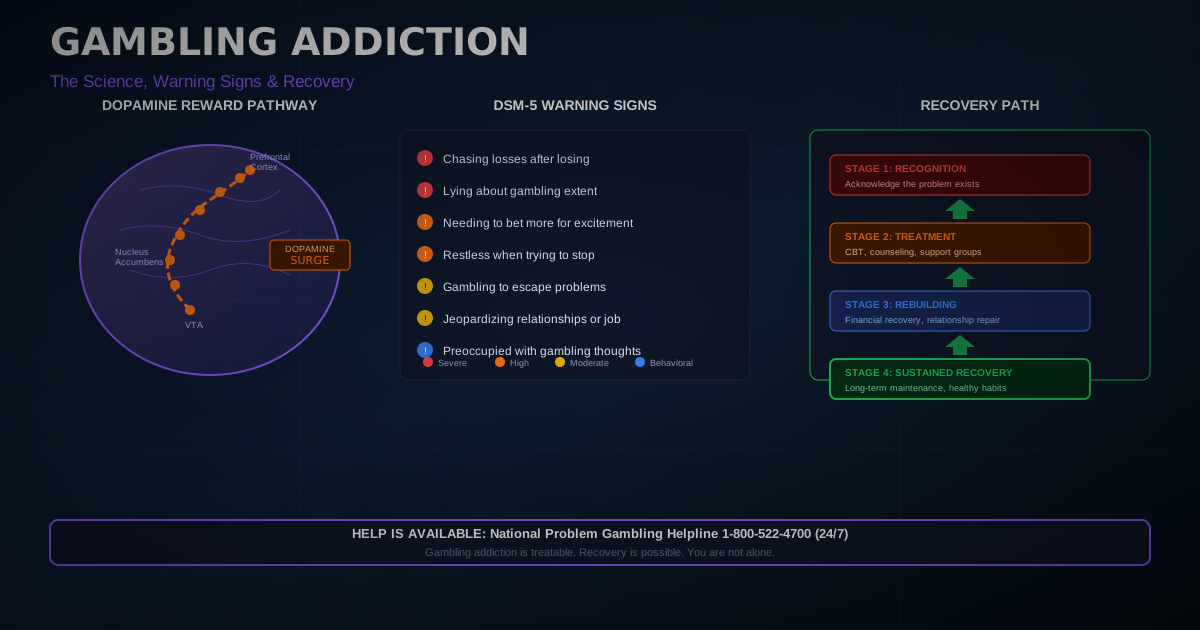
Gambling involves risk. This content is for educational and informational purposes only. Always gamble responsibly, set limits you can afford, and seek help if gambling becomes a problem. Visit the National Council on Problem Gambling or call 1-800-522-4700 for support.