Closing Line Value (CLV): The Only Metric That Proves You're a Winning Sports Bettor (2026)
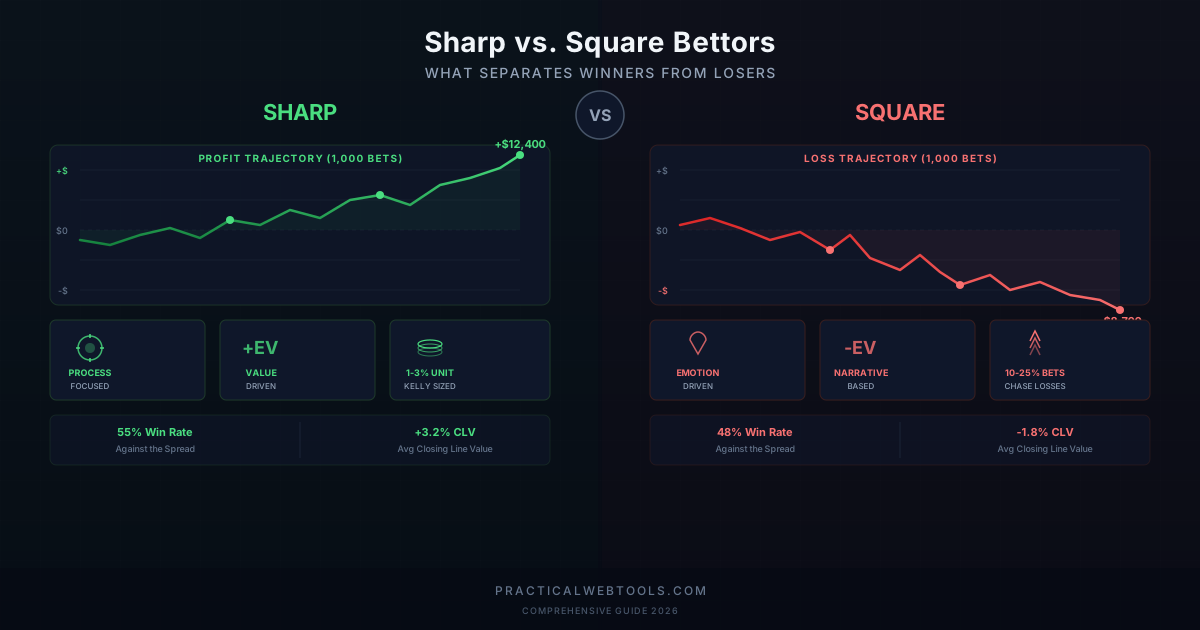
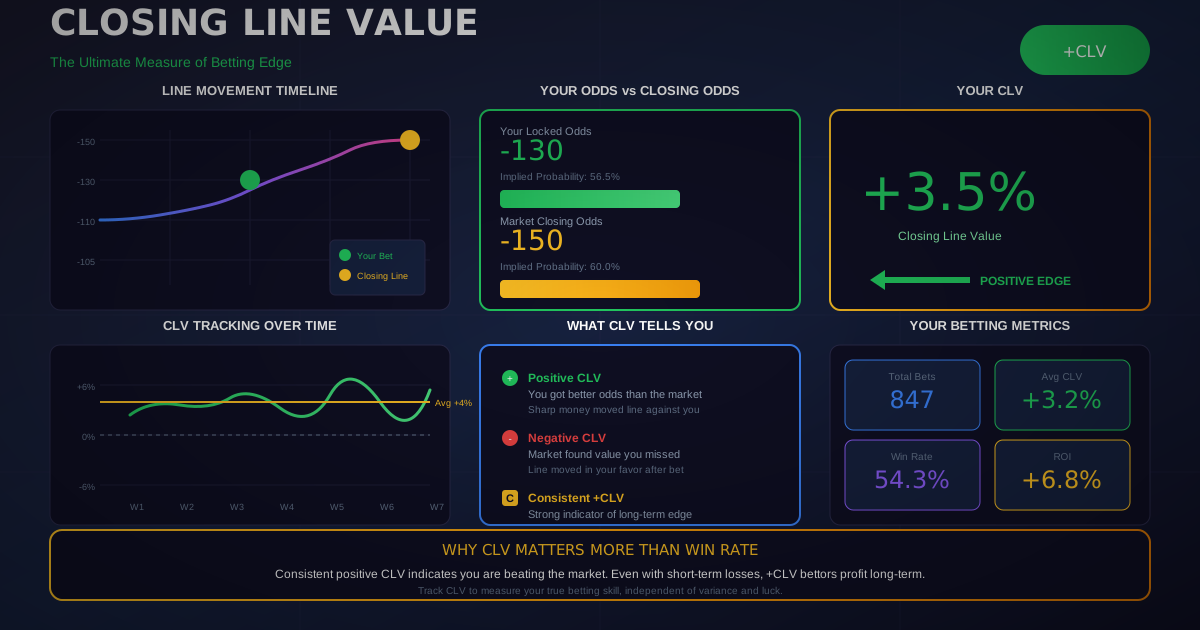
If you want one number that separates winning bettors from losing ones, it is Closing Line Value. Not win rate. Not ROI over a few hundred bets. Not your best week. CLV -- the difference between the odds you locked in and the final odds at market close -- is the single most predictive metric of long-term sports betting profitability.
Professional sportsbooks know this. Pinnacle, the sharpest book in the world, uses CLV as its primary tool for identifying winning accounts. If you consistently get better odds than the closing line, the math guarantees you will profit over a sufficient sample. The closing line represents the market's most efficient assessment of true probability, refined by millions of dollars in sharp action. Beating it means you are sharper than the consensus.
Yet most recreational bettors have never heard of CLV. They obsess over win rate -- a metric so noisy that a bettor with a genuine 55% edge can easily go 45-55 over 100 bets from variance alone. CLV cuts through that noise and tells you whether your process is sound, regardless of short-term results.
Track your CLV across every bet with our free CLV Tracker.
What Is Closing Line Value?
Closing Line Value measures the percentage difference between the odds you placed your bet at and the odds available at market close (typically the final line before game time). It answers a simple question: did you get a better price than the market's final, most efficient number?
The CLV Formula
There are two common ways to calculate CLV:
Method 1: Simple Odds Comparison
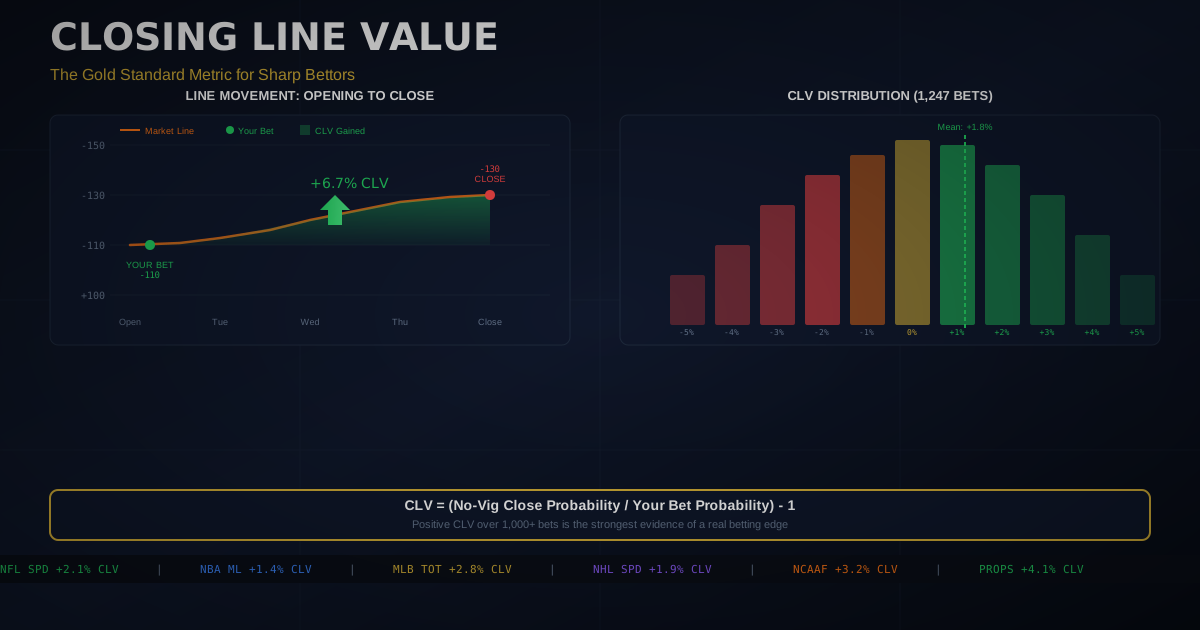
CLV = (Your Implied Probability at Close / Your Implied Probability at Bet) - 1
Method 2: No-Vig CLV (More Accurate)
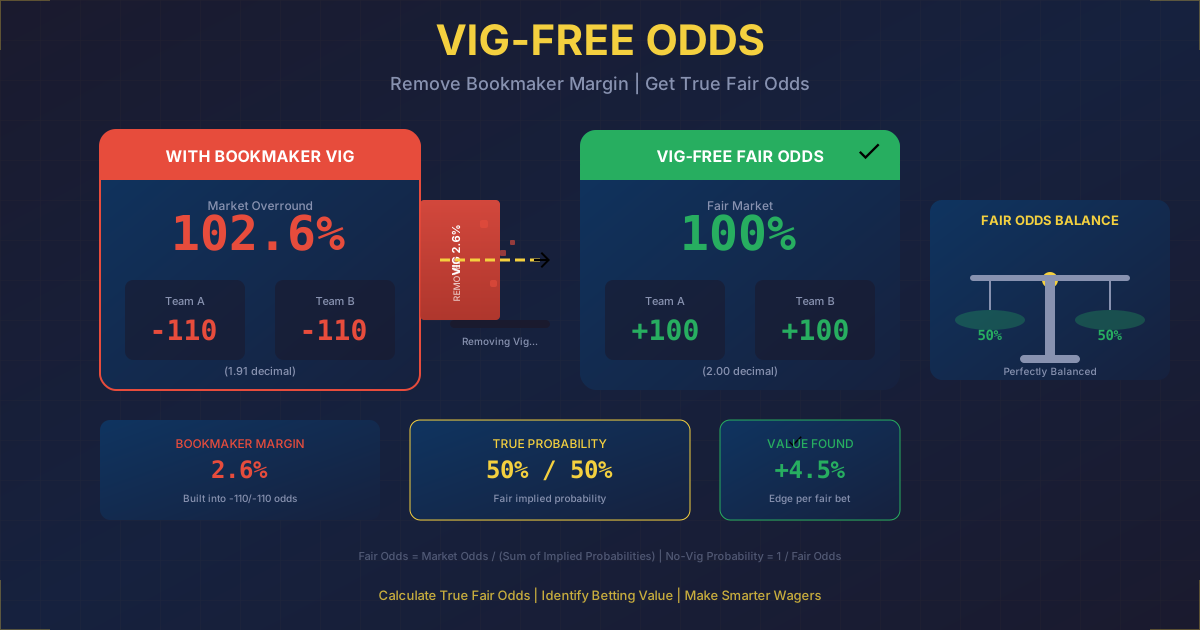
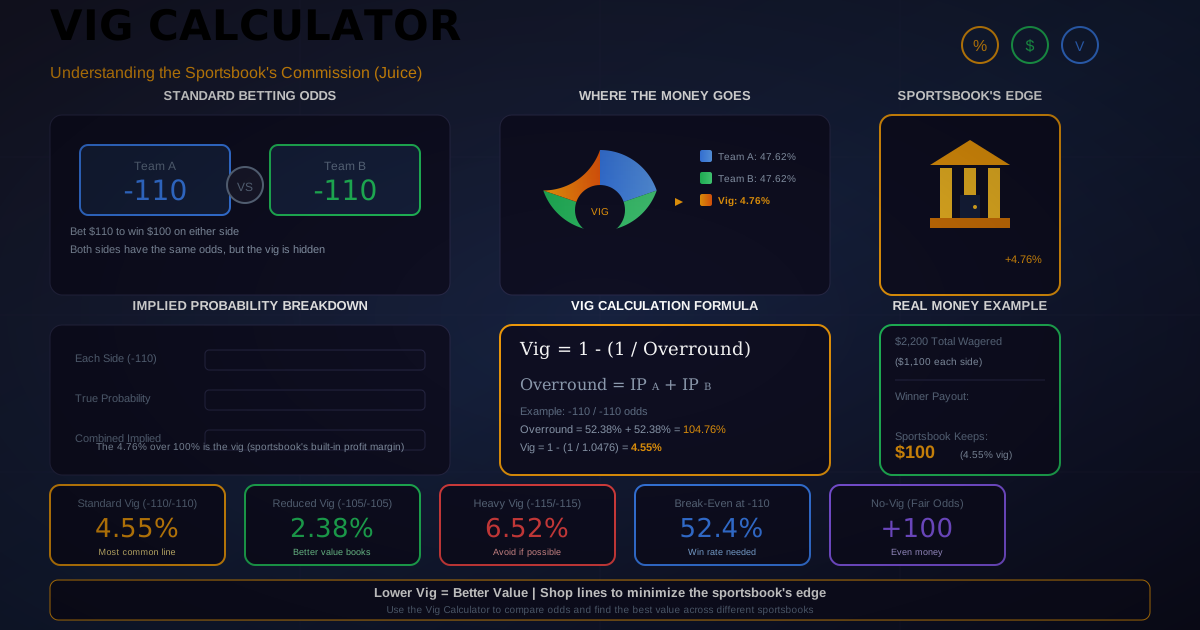
This method removes the vig from the closing line to get the "true" closing probability, then compares your odds against that fair line.
- Calculate no-vig closing probability using both sides of the market
- Compare your bet's implied probability against the no-vig close
- Express the difference as a percentage
Example:
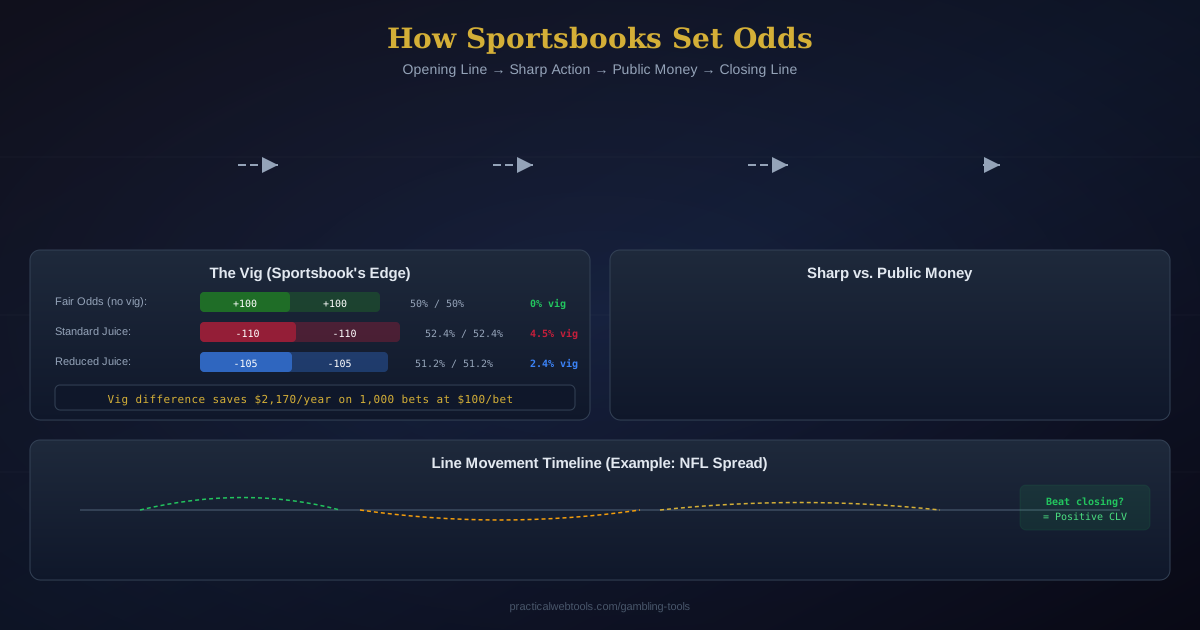
- You bet Team A at -110 (implied probability: 52.38%)
- At close, Team A is -130 / Team B is +110
- No-vig closing probability for Team A: approximately 55.9%
- Your implied probability: 52.38%
- CLV: (55.9% / 52.38%) - 1 = +6.7%
You got 6.7% better than the market's final efficient price. That is excellent CLV.
Remove the vig from any line instantly with our Hold/Vig Calculator.
Why the Closing Line Is the "True" Price
The closing line is the most efficient price in sports betting because:
- Maximum information. By game time, injury reports, weather, lineup confirmations, and all relevant news is priced in.
- Maximum liquidity. Sharp money has had hours or days to move the line to its correct level.
- Market efficiency. Research consistently shows closing lines at sharp books are nearly perfectly calibrated -- a team closing at -150 wins almost exactly 60% of the time.
- Self-correcting mechanism. If a line is off, sharps exploit it, moving it toward efficiency.
This is why beating the close is so meaningful. You are not beating a lazy number. You are beating the most informed, liquid, efficient price the market produces.
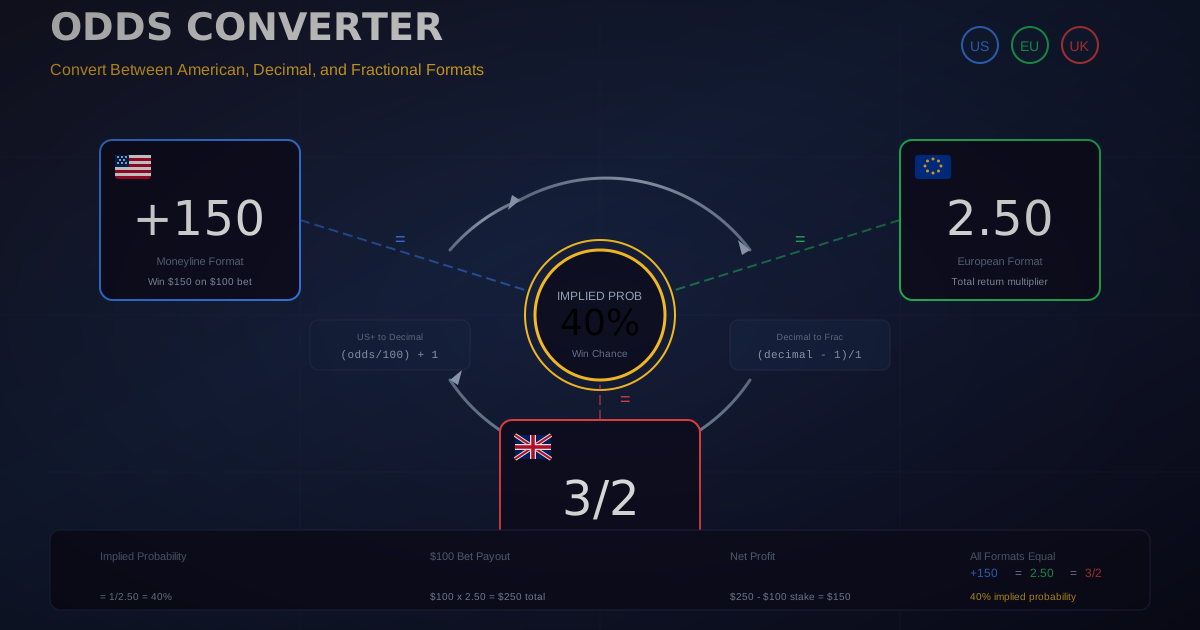
Convert between American, decimal, and fractional odds with our Odds Converter.
Why CLV Matters More Than Win Rate
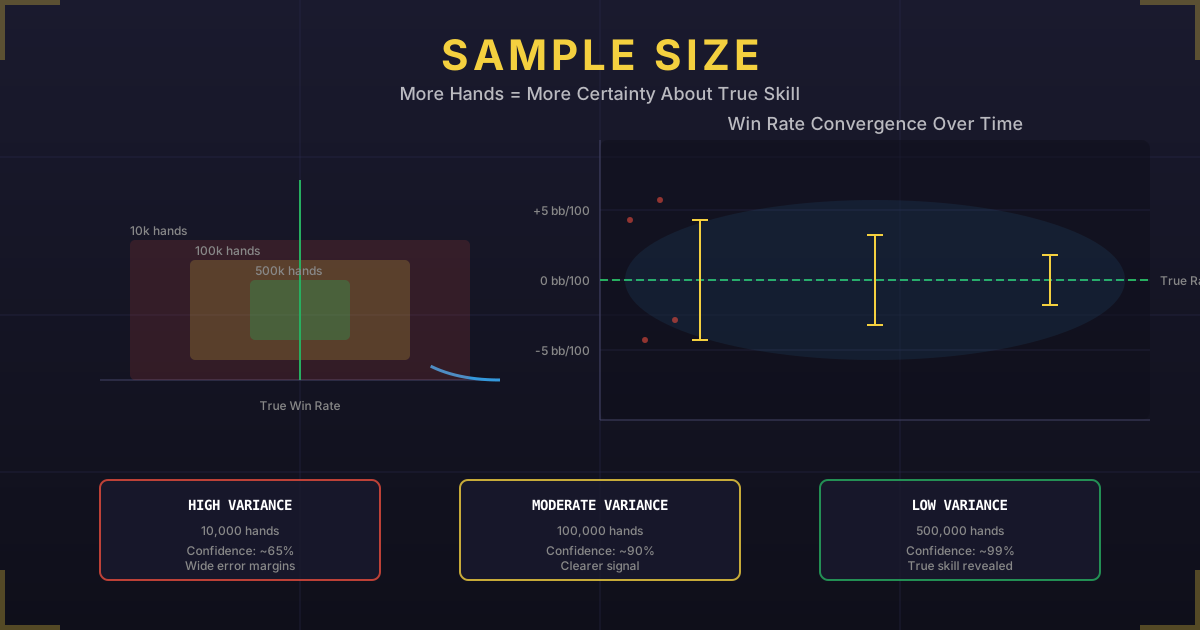
Here is the uncomfortable truth: win rate is nearly useless over small samples. CLV is not.
The Sample Size Problem with Win Rate
Consider a bettor with a true 55% win rate on -110 bets (a strong, professional-level edge). Over 500 bets:
| Metric | Value |
|---|---|
| Expected win rate | 55% |
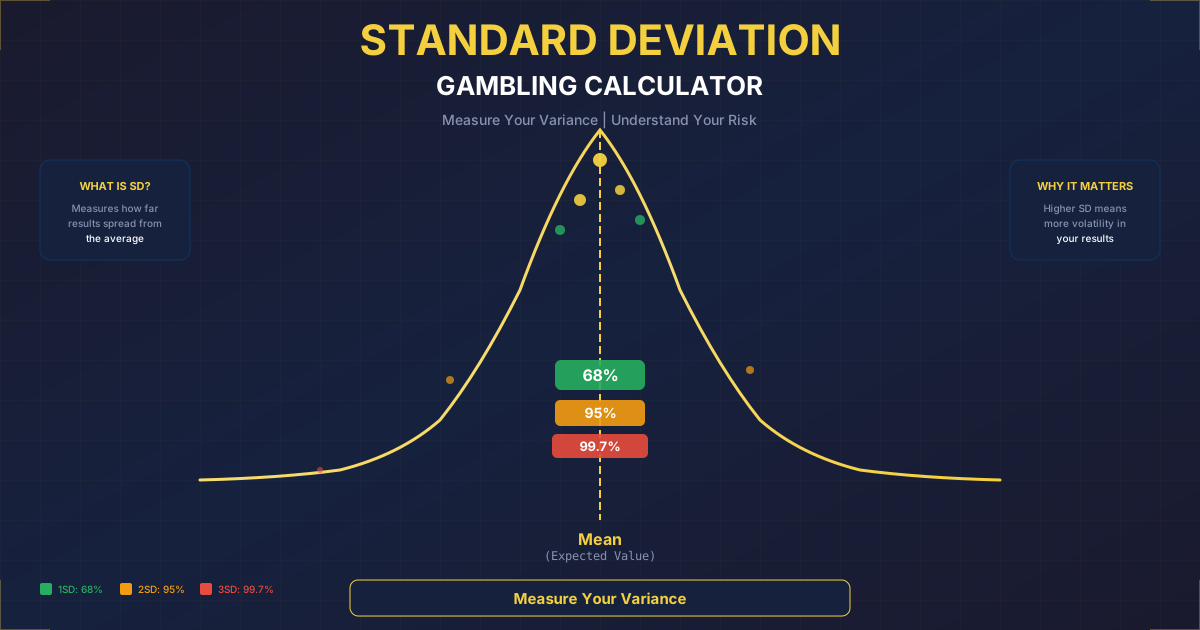
| Standard deviation | 2.22% |
| 95% confidence interval | 50.6% - 59.4% |
| Probability of showing below 50% win rate | ~1.2% |
| Probability of showing below 52% win rate | ~8.8% |
That means there is roughly a 1-in-11 chance this legitimately strong bettor looks like a losing bettor over 500 bets when measured by win rate alone. With different odds on each bet (as in real betting), the noise gets even worse.
CLV Converges Faster
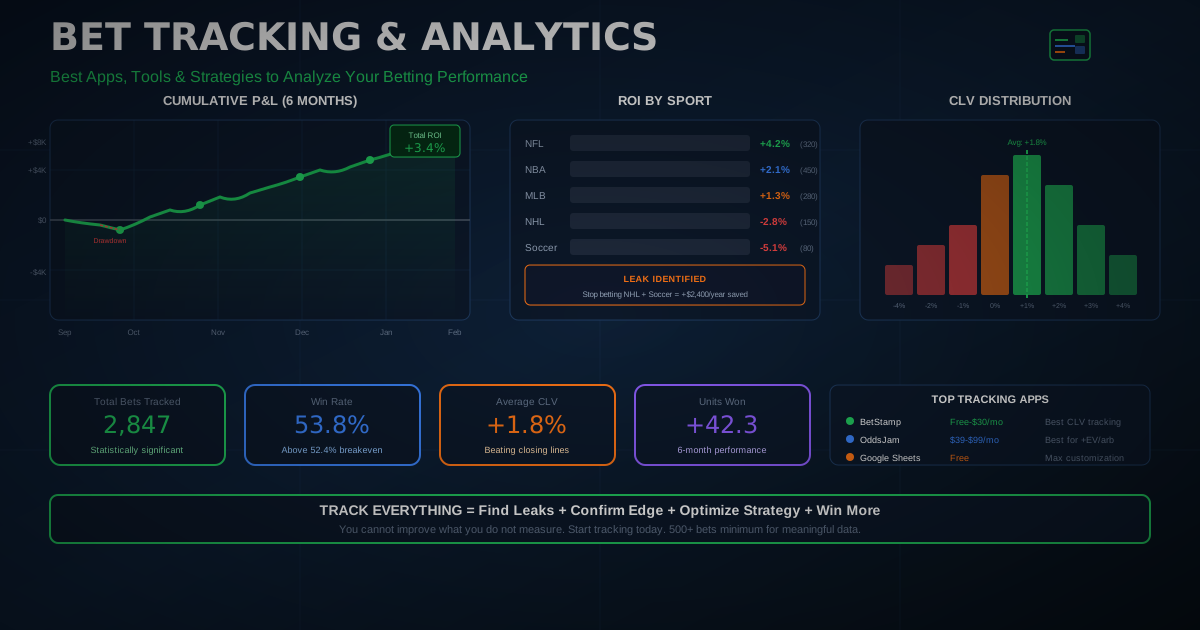
CLV has a critical statistical advantage: it is measured on every single bet, regardless of outcome. You do not need to wait for the game result. You get a CLV reading the moment the market closes.
| Sample Size | Win Rate Confidence | CLV Confidence |
|---|---|---|
| 100 bets | Very low | Moderate |
| 500 bets | Low-moderate | High |
| 1,000 bets | Moderate | Very high |
| 2,500 bets | Good | Near-definitive |
A bettor with +2% average CLV across 500 bets almost certainly has a real edge. A bettor with a 55% win rate across 500 bets -- you still cannot be sure.
The Mathematical Relationship Between CLV and Profit
Academic and industry research consistently shows a near-linear relationship between average CLV and long-term ROI. The approximate conversion:
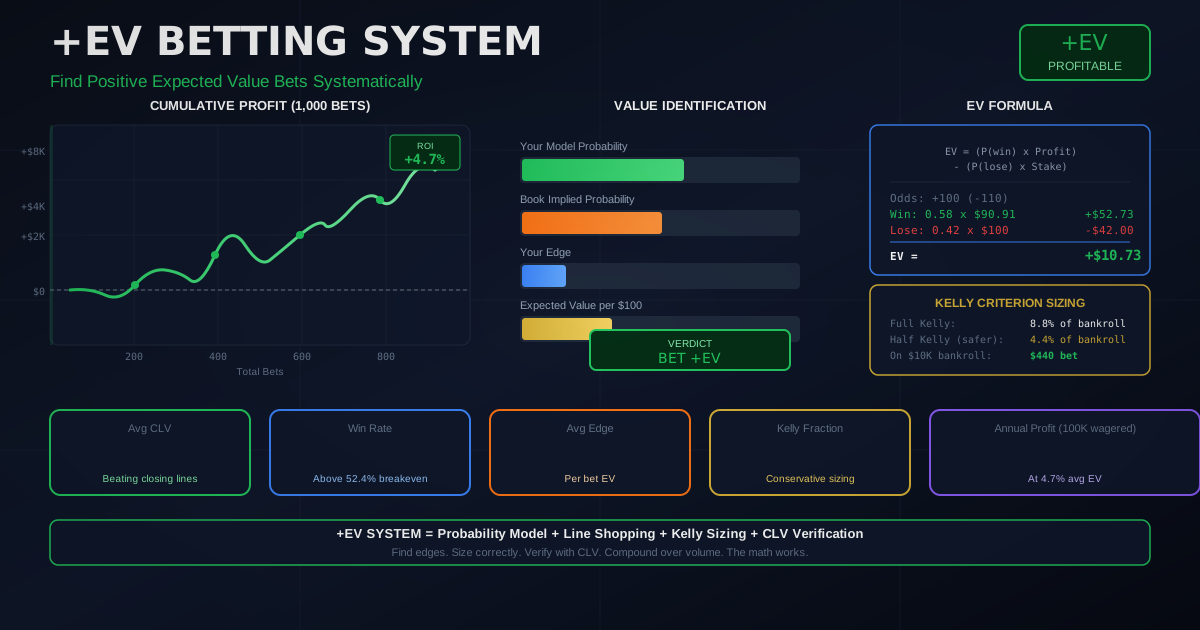
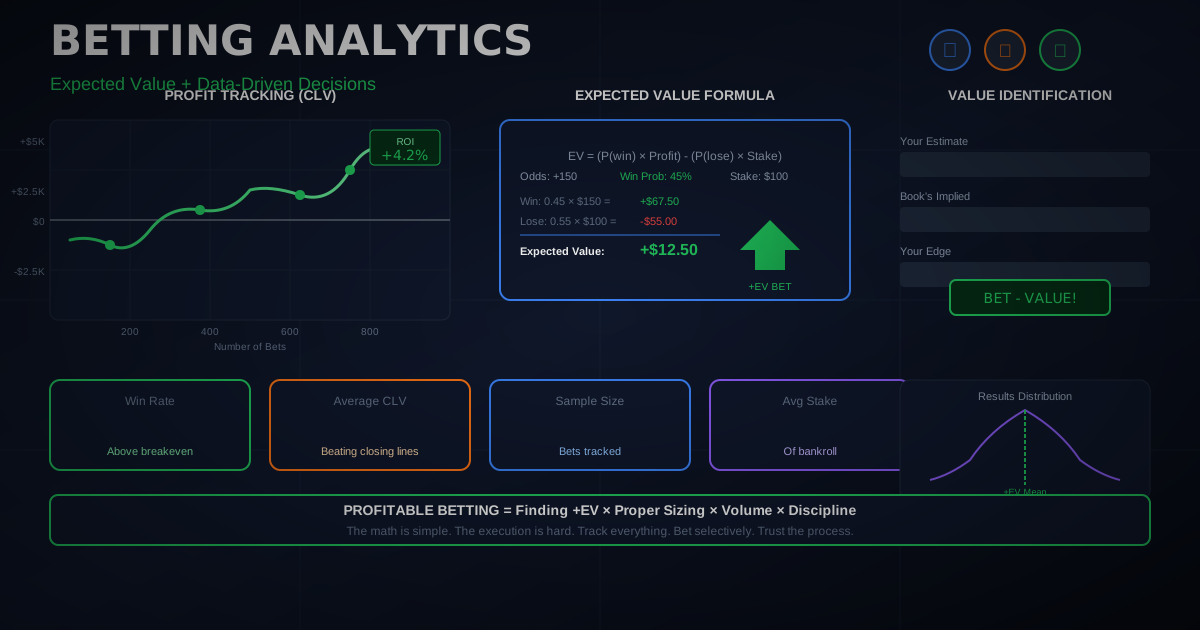
Average CLV of +X% corresponds to approximately +X% ROI on turnover.
This means:
- +1% average CLV leads to roughly +1% ROI
- +2% average CLV leads to roughly +2% ROI
- +3% average CLV leads to roughly +3% ROI
This relationship holds because the closing line is so well-calibrated. If you consistently beat it by 2%, you are effectively getting 2% better odds than "fair" on every bet, which directly translates to profit.
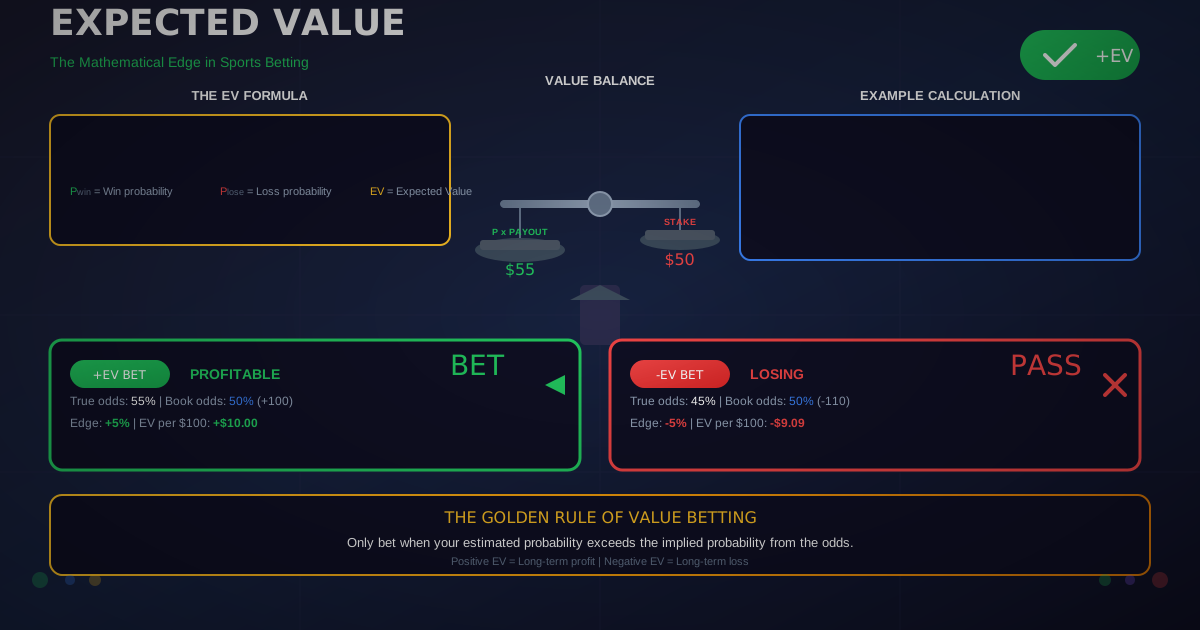
Calculate the expected value of any bet with our Expected Value Calculator.
What Good CLV Looks Like: Benchmarks and Real Examples
Not all CLV is equal. Here is a framework for interpreting your numbers.
CLV Benchmarks by Profile
| Average CLV | Interpretation | Profile |
|---|---|---|
| -3% or worse | Significantly losing | Recreational, chasing steam moves late |
| -1% to -3% | Below market efficiency | Slight negative edge, losing after vig |
| -1% to 0% | Roughly break-even | Covering vig but no real edge |
| 0% to +1% | Slight positive edge | Marginal winner, may not overcome all costs |
| +1% to +2% | Solid edge | Consistent winner, sustainable long-term |
| +2% to +3% | Strong edge | Professional-level, excellent process |
| +3% to +5% | Elite edge | Top-tier sharp, likely using models/algorithms |
| +5% or more | Exceptional | Extremely rare, verify data before celebrating |
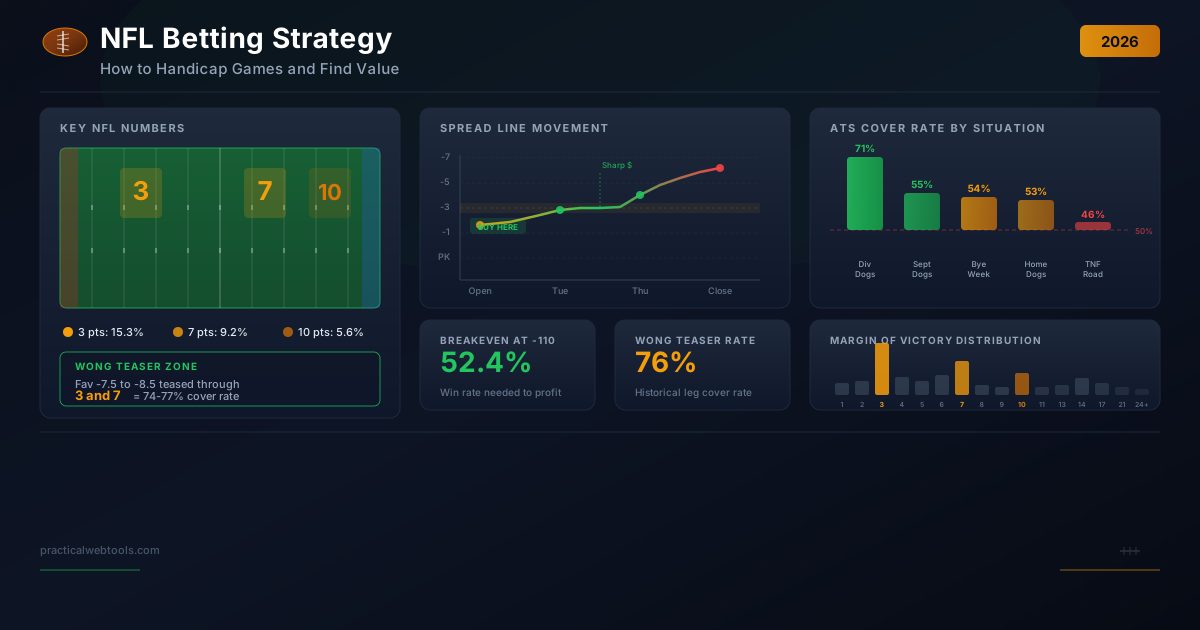
Example 1: The Early NFL Line Grabber (+$7,200 Season)
You specialize in grabbing NFL spreads on Sunday night when lines first post. Your typical pattern:
- Bet Chiefs -3 at -110 on Sunday night
- By kickoff the following Sunday, line has moved to Chiefs -4.5 at -110
- Your implied probability at -110: 52.38%
- No-vig closing probability for the original -3 market: approximately 57%
- CLV on this bet: +8.8%
Over the 2025 NFL season, you placed 180 bets at an average of $200. Your average CLV was +2.0%.
- Total wagered: $36,000
- Expected profit: $36,000 x 2.0% = $720
- Actual result: +$1,140 (within expected variance)
- If scaled to $500/bet with same CLV: $18,000 wagered per week, $7,200 expected season profit
Example 2: The Steam Chaser (-$4,500 Season)
A different bettor sees lines move and chases the action. They bet Patriots +5.5 after watching the line drop from +7. The line then settles at +5 at close.
- Bet at +5.5 (-110): implied 52.38%
- Close at +5 (-110): they got a worse number than close
- CLV: approximately -1.5%
Over 300 bets at $100 average: $30,000 wagered x -1.5% CLV = -$450 expected loss from CLV alone, plus the standard vig cost. Actual loss: -$4,500 including vig drag.
Example 3: The Model-Driven MLB Bettor (+$12,800 Season)
This bettor runs a pitching-based model for MLB moneylines. The model identifies mispriced games early in the day.
- Average bet size: $300
- Total bets: 420 over a full MLB season
- Average CLV: +2.4%
- Total wagered: $126,000
- Expected profit: $126,000 x 2.4% = $3,024
- Actual result: +$4,280 (strong positive variance)
- Projected over 3 seasons at same rate: +$12,800 (variance smooths out)
Evaluate your true probability estimates with our Implied Probability Calculator.
How to Track CLV Systematically
Tracking CLV requires discipline and a system. Here is exactly what you need.
What to Record for Every Bet
For each wager, you must capture:
- Timestamp of bet placement -- when you locked in the odds
- Your odds at bet placement -- the exact line you received
- The closing odds -- the last available line before market suspension
- Both sides of the closing line -- needed to calculate no-vig closing probability
- Bet type -- spread, moneyline, total, prop
- Sport and league -- CLV varies by market efficiency
- Stake -- for weighted CLV calculations
Calculating Weighted CLV
Simple average CLV treats a $10 bet and a $500 bet equally. Weighted CLV accounts for how much you actually risked at each price:
Weighted CLV = Sum(CLV_i x Stake_i) / Sum(Stake_i)
This gives a more accurate picture of your true performance because it reflects the impact of your bet sizing decisions.
Automate your CLV tracking with our CLV Tracker. Input your bet odds, closing odds, and the tool handles the math -- including no-vig CLV calculations and running averages.
CLV by Market Type
Different markets have different efficiency levels, which affects CLV interpretation:
| Market | Efficiency Level | Good CLV Target |
|---|---|---|
| NFL spreads | Very high | +1% is strong |
| NFL totals | High | +1.5% is strong |
| NBA spreads | High | +1.5% is strong |
| NBA player props | Moderate | +3% is achievable |
| MLB moneylines | Moderate-high | +2% is strong |
| Soccer match result | Moderate | +2-3% is strong |
| Player props (general) | Lower | +3-5% achievable |
| Niche markets | Lowest | +5%+ possible |
Less efficient markets offer higher CLV potential but also carry more noise. A +5% CLV on player props does not mean the same thing as +5% CLV on NFL spreads -- the former is expected, the latter would make you one of the best in the world.
How to Beat the Closing Line: 6 Proven Methods
Understanding CLV is one thing. Actually generating positive CLV is the hard part. Here are the primary methods professional bettors use.
1. Bet Early and Bet Sharp Lines
The most straightforward path to positive CLV: get your bets in before the market moves.
Opening lines are less efficient than closing lines. Sharps and model-driven bettors correct these early, moving lines toward their "true" level. If you identify the correct side before this correction, you capture CLV.
Best practices:
- Monitor opening lines as soon as they are released (typically Sunday/Monday for NFL)
- Compare your assessment to the opening number immediately
- Place bets before significant sharp action moves the line
- Use multiple books to get the best available opening number
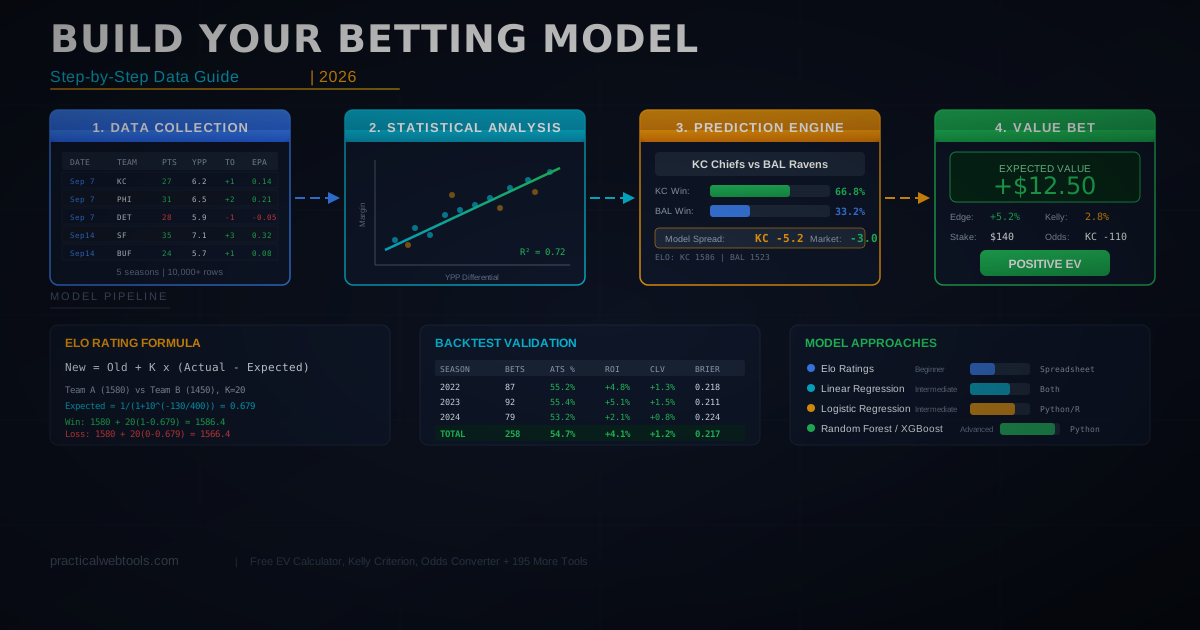
2. Build or Use Predictive Models
Data-driven models can identify mispricings before the market corrects them.
Model components typically include:
- Power ratings based on performance metrics
- Pace and efficiency data (especially for NBA)
- Injury and rest adjustments
- Weather factors (outdoor sports)
- Situational factors (travel, schedule spots, motivation)
- Market overreactions to recent results
A model that produces probabilities more accurate than the opening line will generate positive CLV as the market moves toward those probabilities by close.
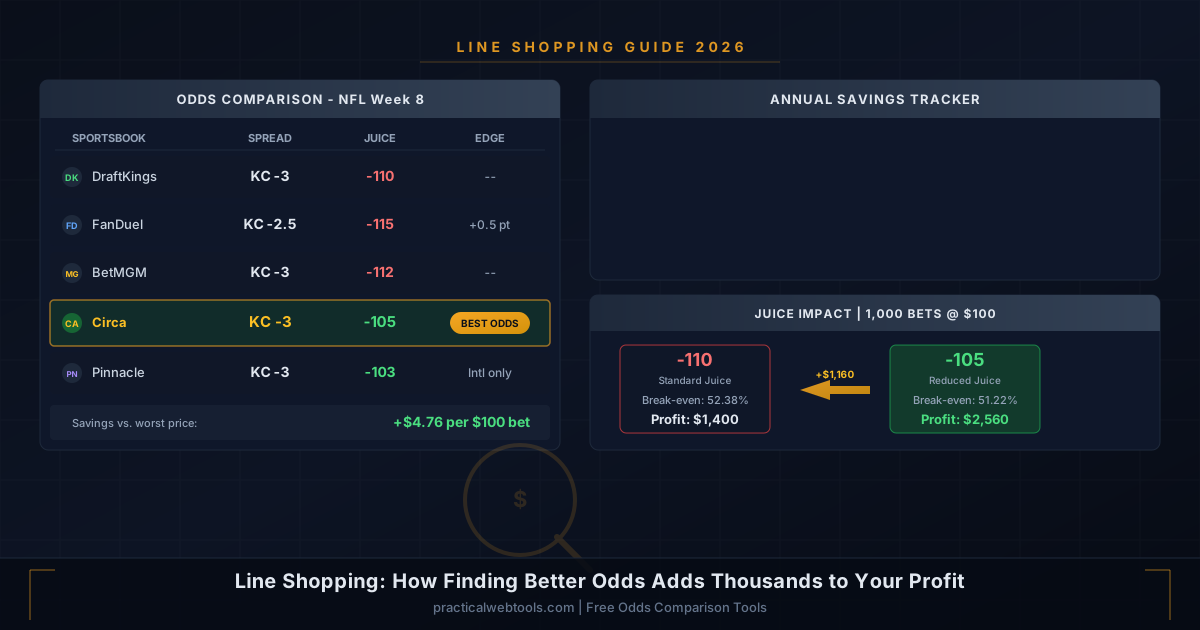
3. Line Shop Aggressively Across Multiple Books
Different sportsbooks post different numbers. The book with the best price for your side represents the most CLV potential.
Example of line shopping value:
| Sportsbook | Chiefs Spread | CLV Potential vs Close |
|---|---|---|
| Book A | Chiefs -3 (-110) | Baseline |
| Book B | Chiefs -2.5 (-115) | +1.5% CLV potential |
| Book C | Chiefs -3 (-105) | +1.2% CLV potential |
| Book D | Chiefs -3.5 (-110) | -1.5% CLV (worse) |
Always take the best available number. Over thousands of bets, the half-point and juice differences compound enormously. A bettor who consistently grabs the best available line across 5-6 books will outperform someone locked into a single book by 1-2% CLV on average.
Calculate how much the vig costs you at different sportsbooks with our Hold/Vig Calculator.
4. Specialize in Less Efficient Markets
Main market NFL spreads are fiercely efficient. But several markets offer exploitable CLV opportunities:
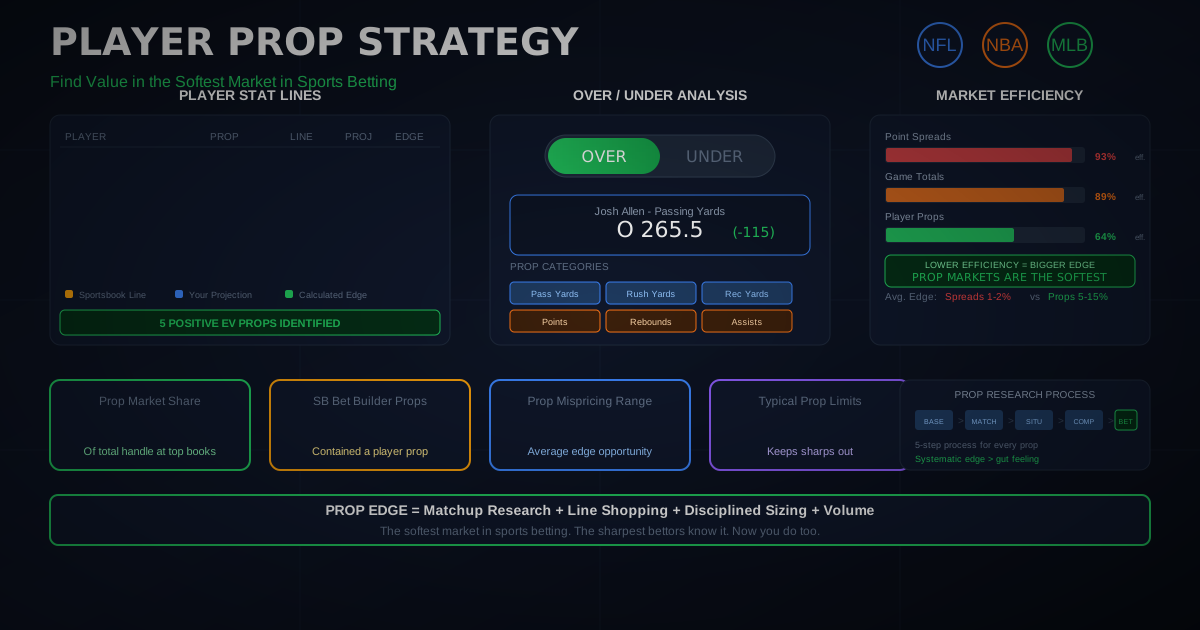
- Player props are less efficiently priced, especially at smaller books
- Alternate lines sometimes offer mispriced odds
- Game totals in smaller leagues receive less sharp attention
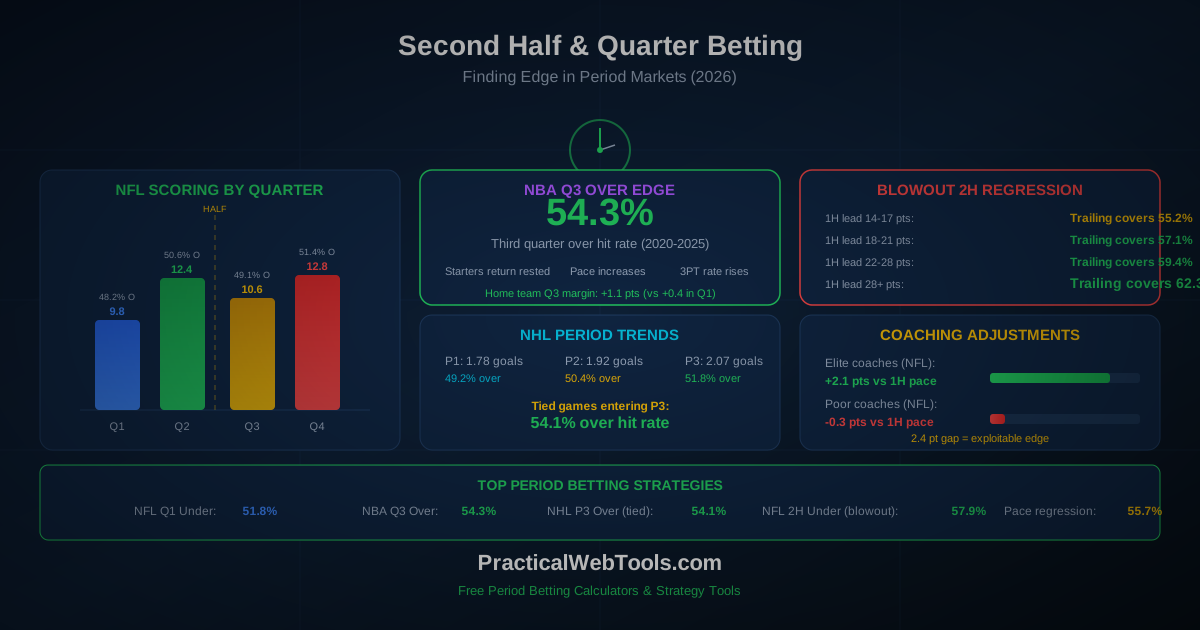
- First-half and first-quarter lines often lag behind full-game adjustments
Specialization in one of these areas can generate consistent CLV because the closing line, while still the best estimate, is less refined than in major markets.
5. Understand and Exploit Market Psychology
Lines move based on both information and public sentiment. Public money tends to:
- Overvalue favorites and overs
- Chase recent trends and hot teams
- Overreact to nationally televised results
- Undervalue rest, travel, and schedule spots
If you can identify when public money is pushing a line away from its "true" value, you can get ahead of the correction and lock in positive CLV before sharps move the number back.
6. Combine Multiple Edges
The strongest CLV profiles come from bettors who stack multiple small advantages:
- Early line access + model-based selection + aggressive line shopping
- Each edge alone might produce +0.5% CLV, but combined they produce +2%+ CLV
- Track which component contributes the most to your overall CLV
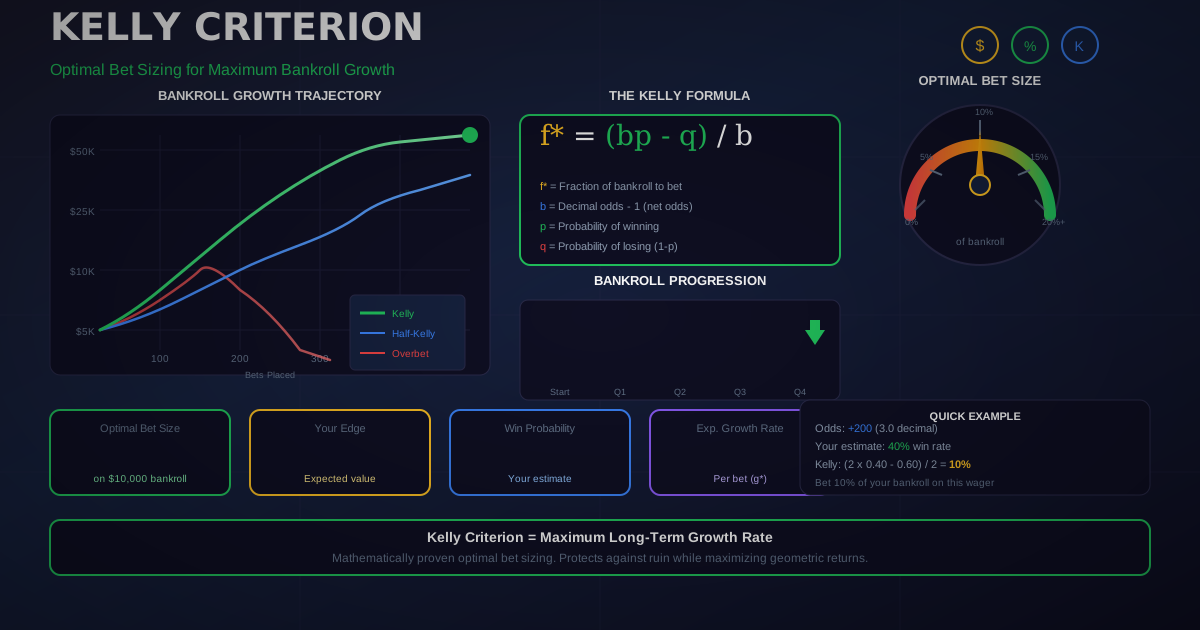
Size your bets optimally based on your estimated edge with our Kelly Criterion Calculator.
CLV and Account Limits: The Sharp Bettor's Dilemma
Here is the catch: consistently beating the close is exactly how sportsbooks identify sharp bettors -- and limit or ban their accounts.
How Books Use CLV Against You
Sportsbooks run CLV analysis on every account. If your average CLV exceeds a threshold (typically around +1% to +2% at soft books), expect:
- Reduced limits -- Maximum bet sizes drop from thousands to tens of dollars
- Delayed bet acceptance -- Your bets go to a manual review queue
- Account closure -- Some books simply shut winning accounts down
- Odds adjustment -- Your specific odds may be shaded worse than the displayed line
Strategies to Extend Account Longevity
While maintaining positive CLV:
- Round bet amounts -- $100 instead of $113.47
- Mix in recreational bet types -- Occasional parlays on popular sides
- Do not always take the best line -- Sometimes bet the second-best price at a book you want to preserve
- Avoid betting exclusively early-week lines -- Mix in some game-day action
- Use sharp-friendly books as your primary home -- Pinnacle, Circa, and Bookmaker rarely limit
The Sharp Book vs. Soft Book Dynamic
Sharp books (Pinnacle, Circa, Bookmaker): Welcome sharp action, rarely limit, offer lower vig. CLV here is harder to achieve but more sustainable.
Soft books (most US retail and app-based books): Offer worse odds overall, limit winners aggressively, but occasionally post exploitable lines that generate high CLV.
The ideal approach: generate your CLV signals from sharp book lines, execute at soft books when they offer better numbers, and use sharp books as your permanent long-term home.
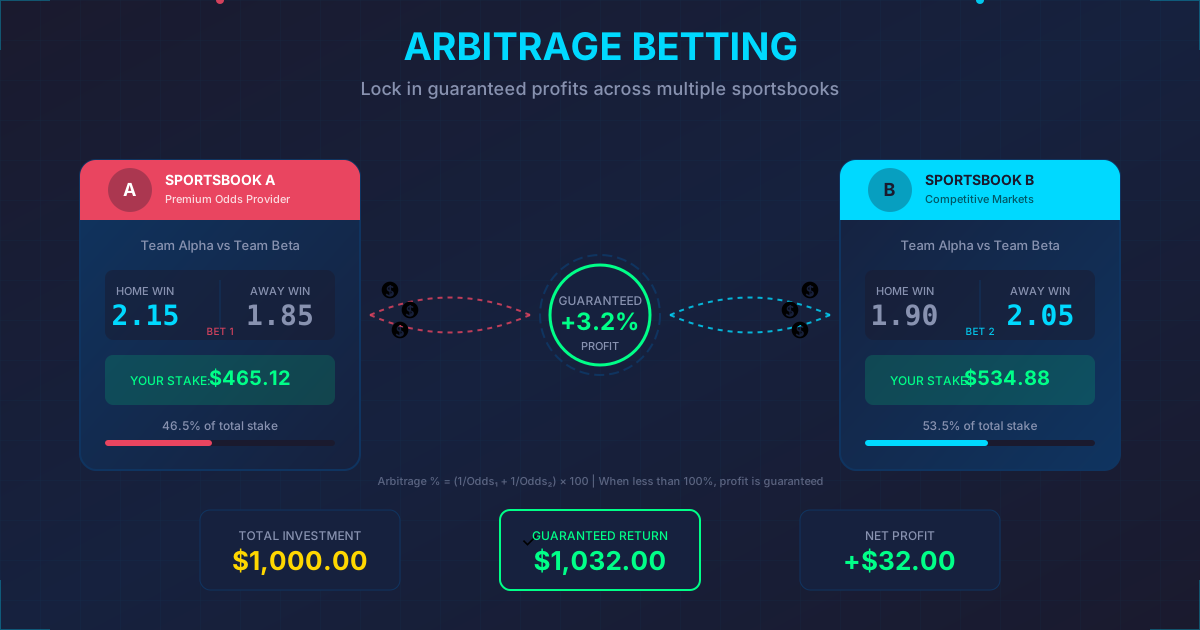
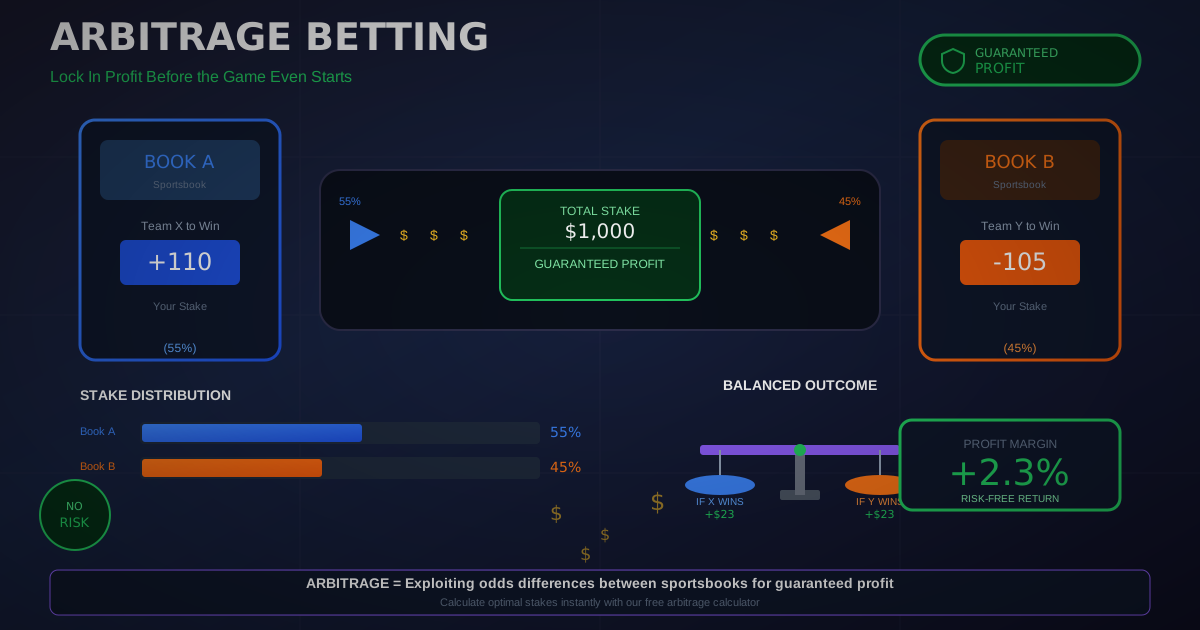
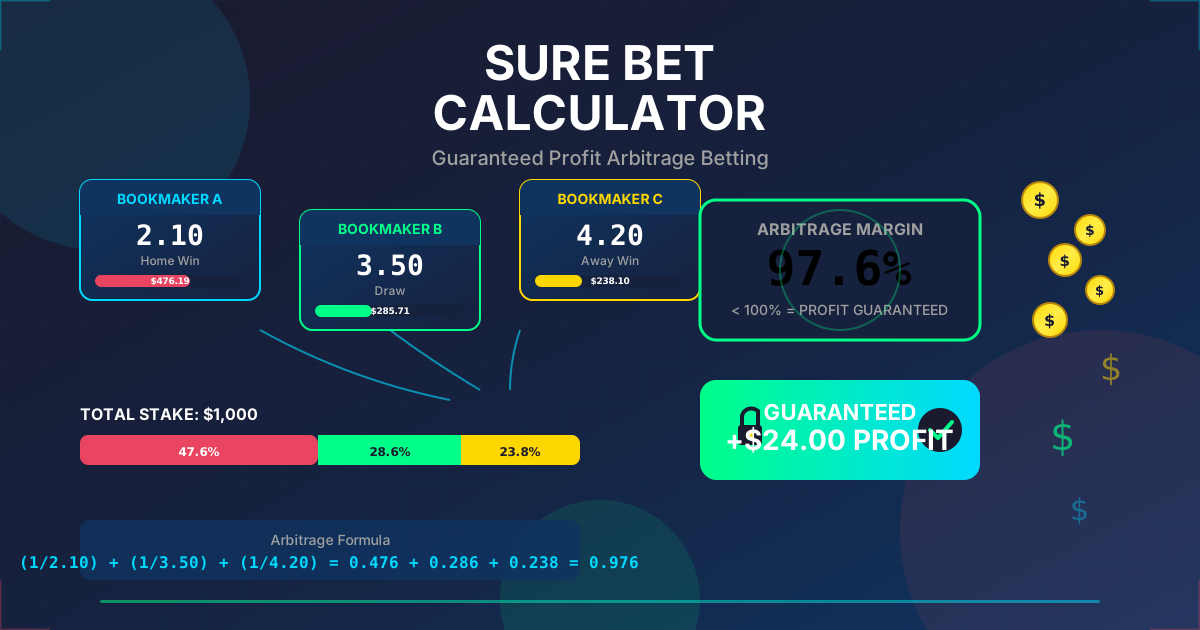
Find price discrepancies between sharp and soft books with our Arbitrage Calculator.
Advanced CLV Concepts
Adjusted CLV: Accounting for Movement Direction
Not all CLV is created equal in terms of what it signals about your skill.
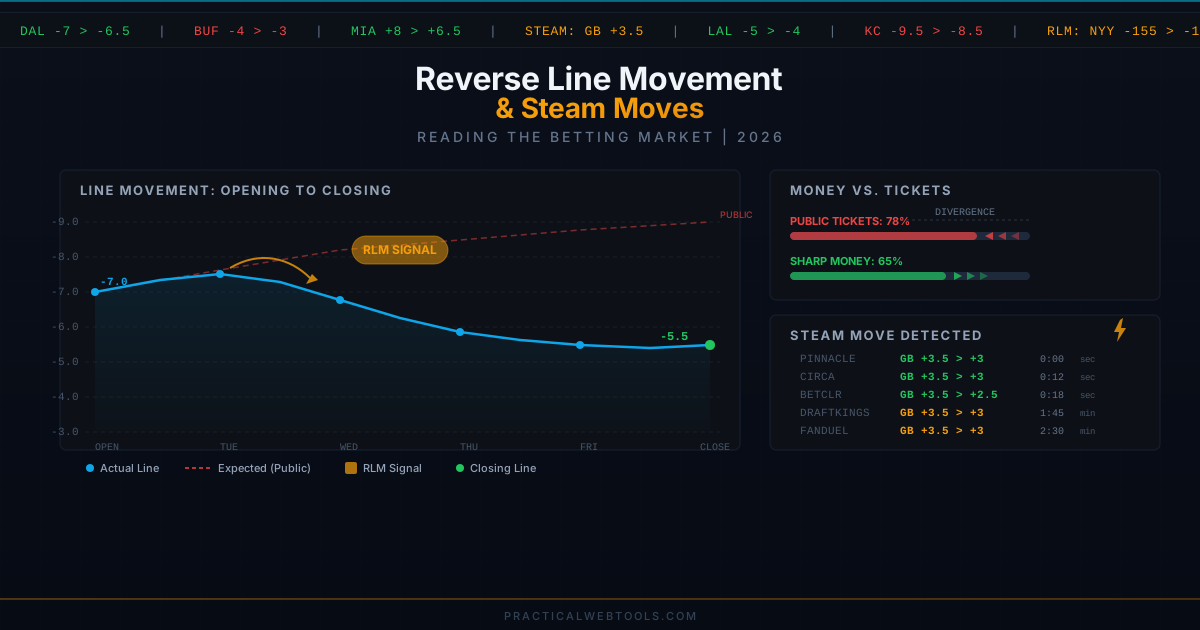
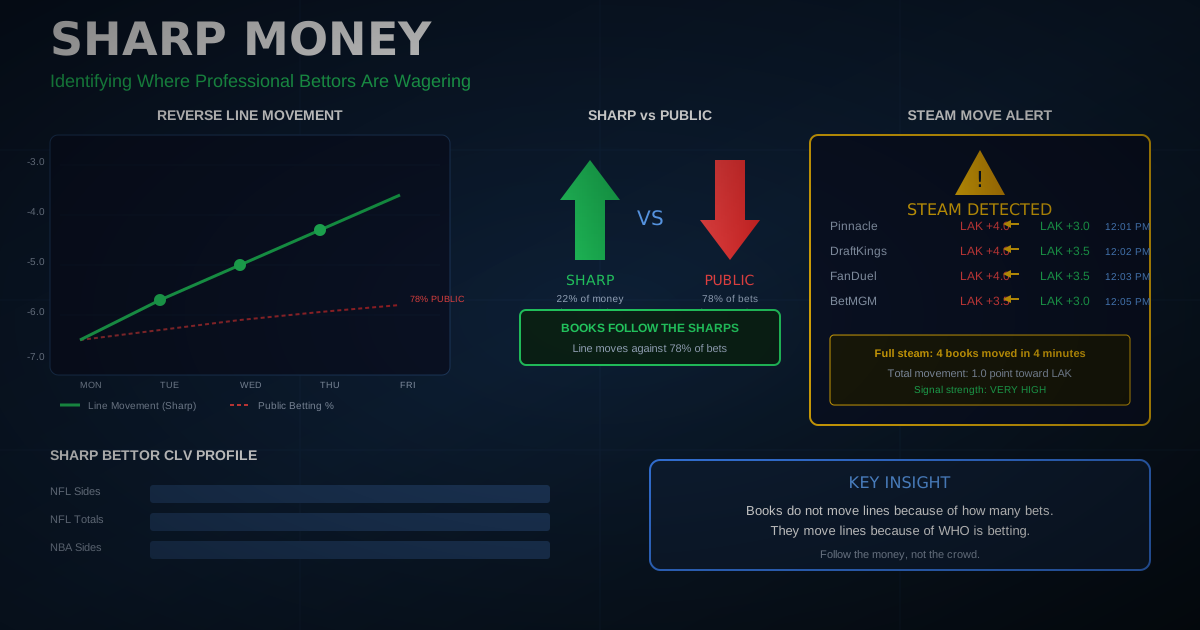
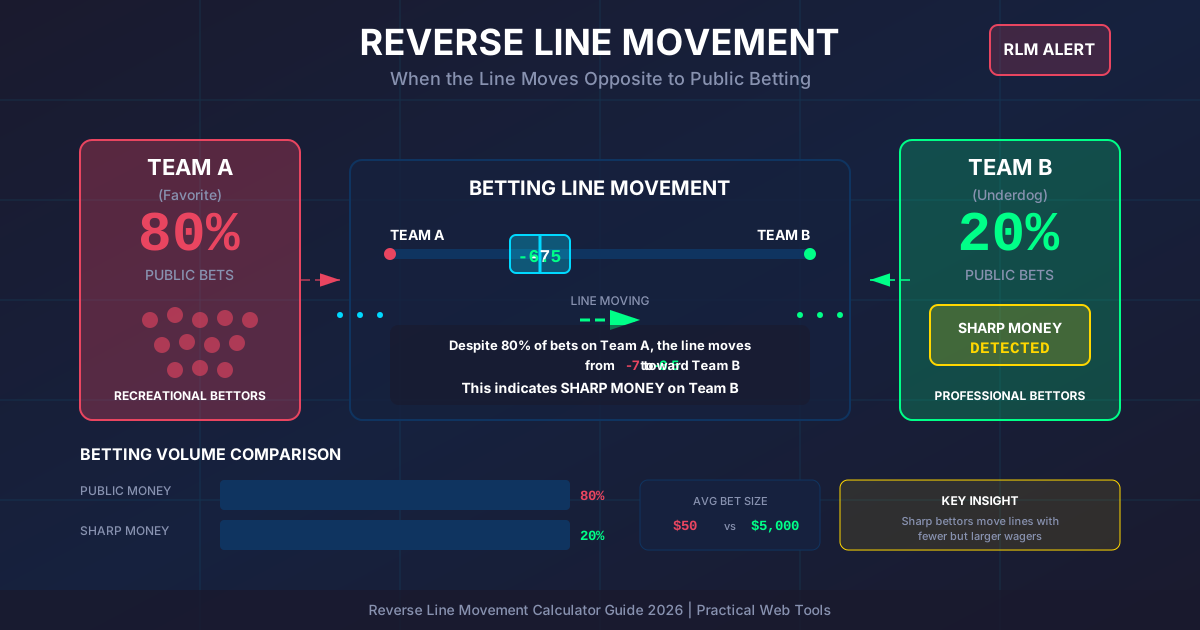
Steam CLV: If you bet the right side and the line moves because other sharps piled in, your CLV is partly attributable to market movement rather than your own analysis. It is still profitable CLV, but it may overstate your independent edge.
Contrarian CLV: If you bet against the public and the line moves toward you despite public money pushing the other way, that CLV is more likely to reflect genuine analytical edge. This is the most valuable type of CLV.
CLV by Bet Timing
Track when you place your bets and the CLV generated at each timing window:
| Bet Timing | Typical CLV Profile |
|---|---|
| Opening line (first hour) | Highest CLV potential, highest variance |
| Early week (1-3 days before) | Strong CLV potential |
| Day before game | Moderate CLV potential |
| Game day (hours before) | Low CLV potential |
| Last 30 minutes before close | Very low CLV potential |
If your CLV is concentrated in early-week bets, that confirms your edge comes from early line analysis. If it is evenly distributed, you may have a fundamental analytical edge that persists regardless of timing.
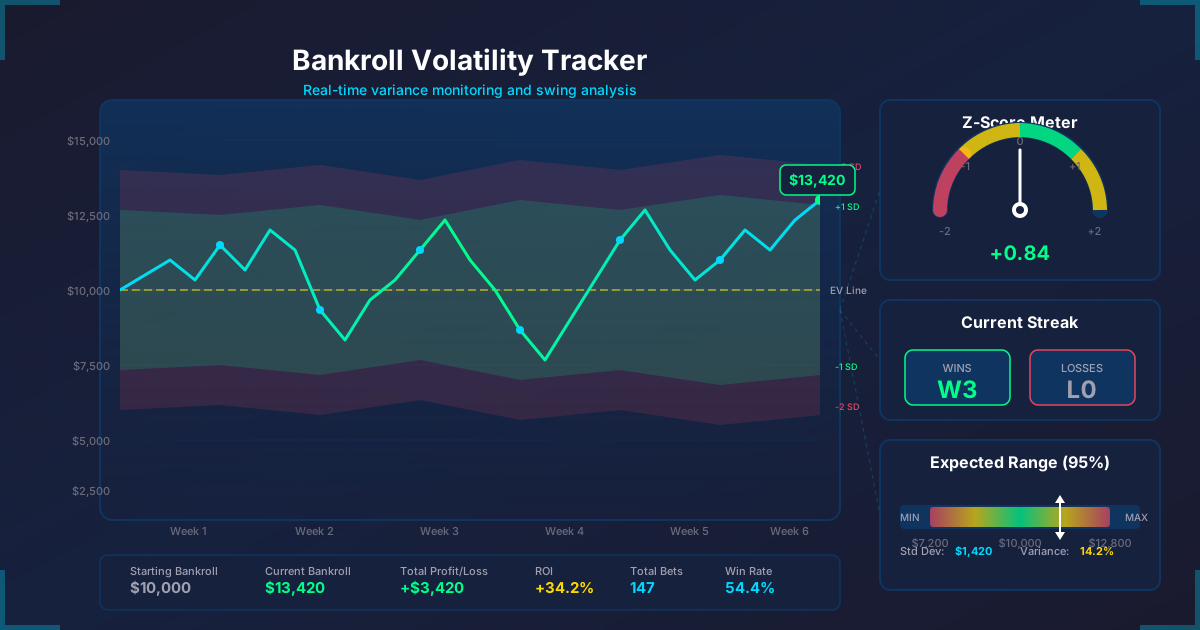
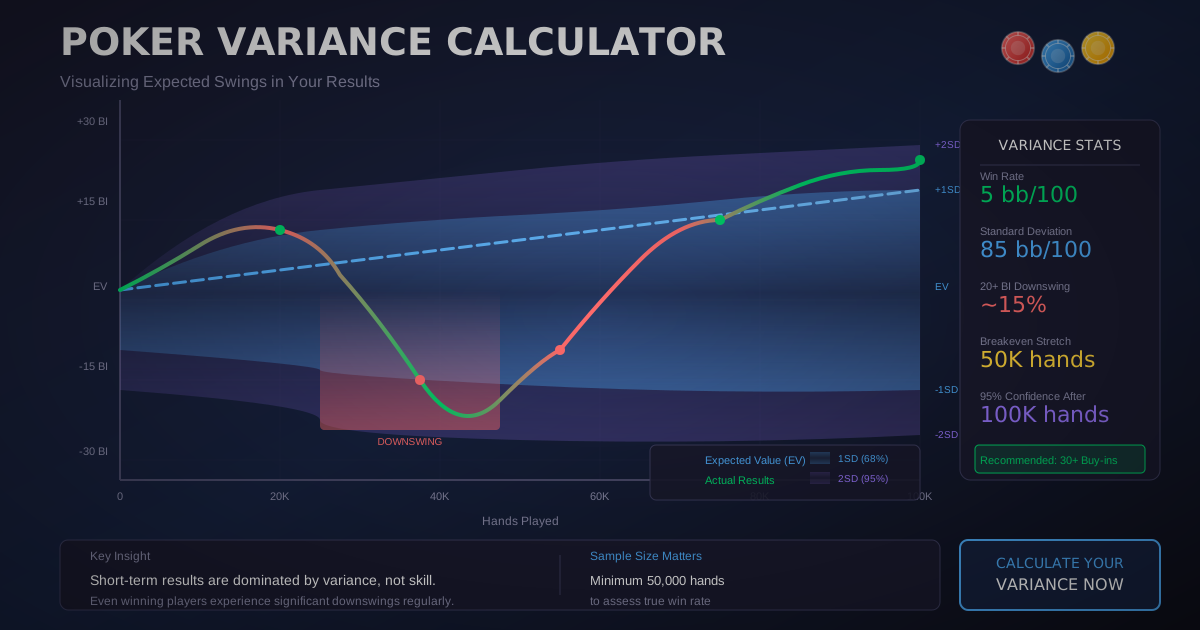
CLV and Bankroll Volatility
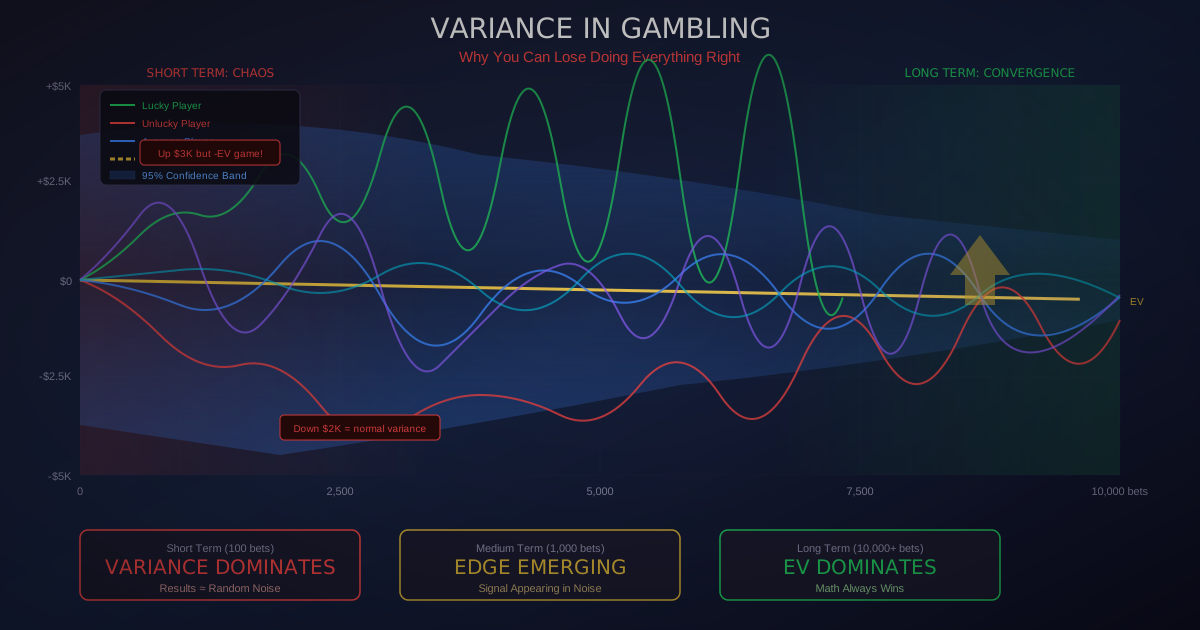
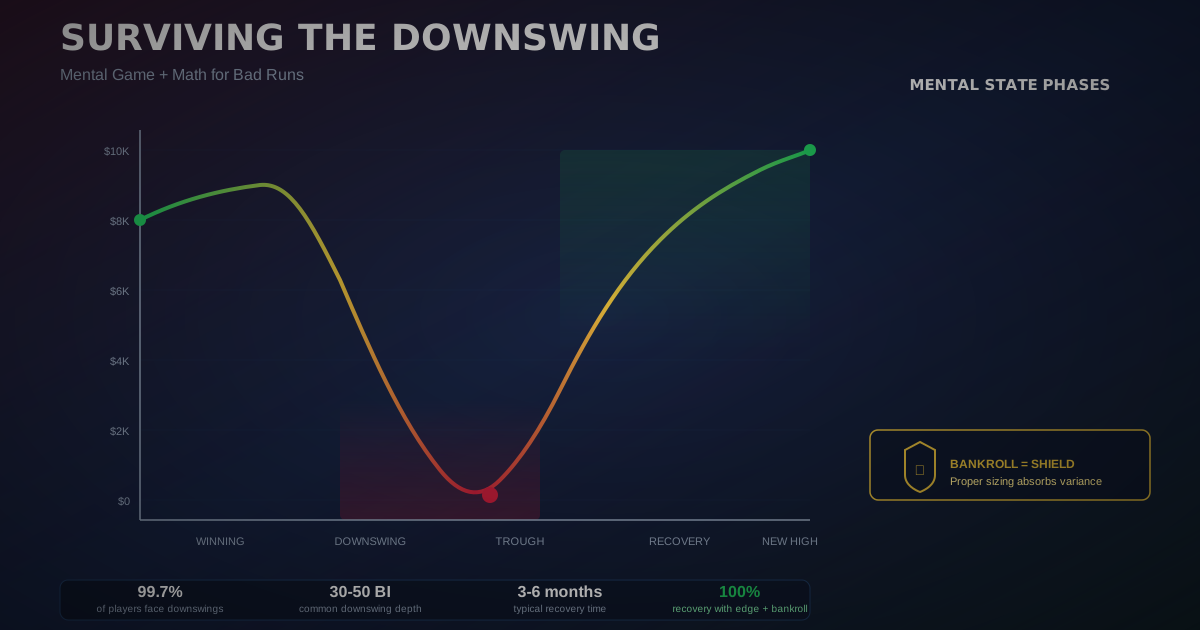
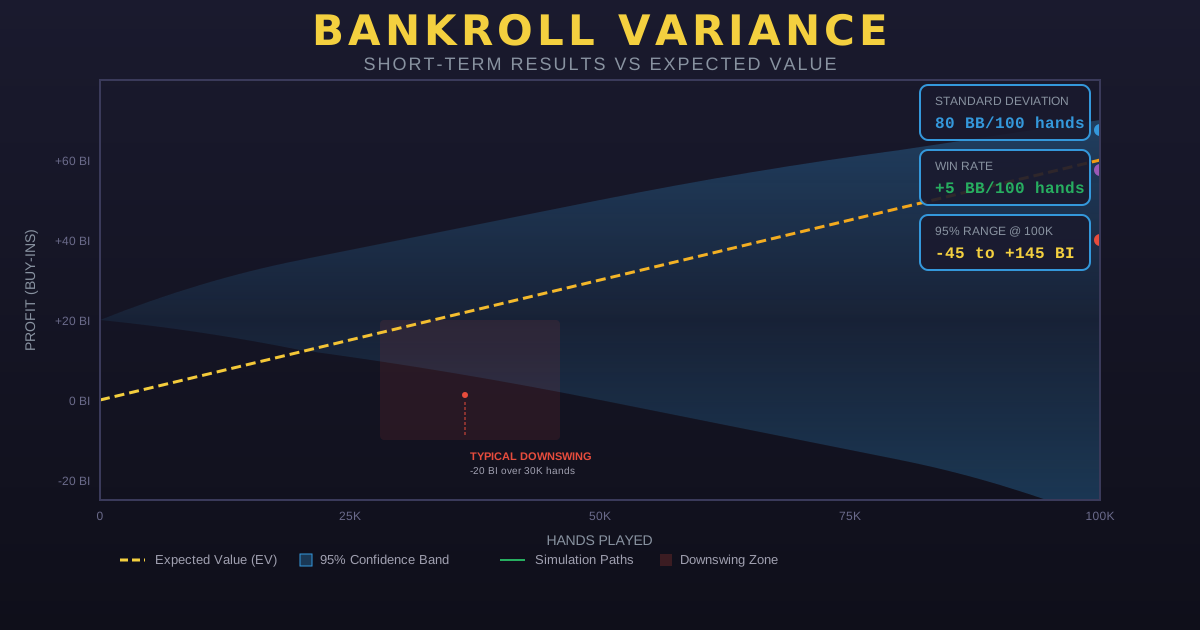
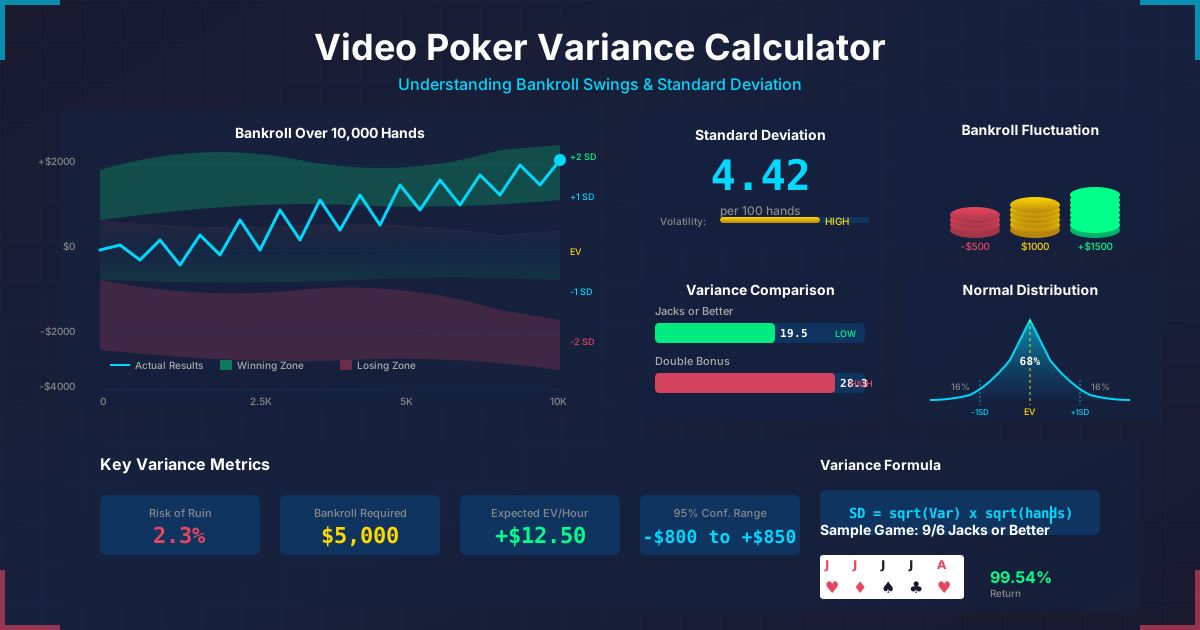
Positive CLV does not eliminate variance. Even with +3% average CLV, individual bets have massive variance.
Variance analysis for a +2% CLV bettor wagering $200 per bet:
- After 100 bets: 95% confidence profit range of -$3,800 to +$4,600
- After 500 bets: 95% confidence profit range of -$1,200 to +$5,200
- After 1,000 bets: 95% confidence profit range of +$400 to +$7,600
- After 2,500 bets: 95% confidence profit range of +$4,000 to +$14,000
Notice how the lower bound turns positive around 1,000 bets. That is when your edge becomes statistically undeniable.
Model your bankroll volatility and drawdown risk with our Bankroll Volatility Tracker.
Common CLV Mistakes to Avoid
Mistake 1: Using the Wrong Closing Line Source
The closing line should come from a sharp, efficient book -- not a soft recreational book that may have distorted odds from public money. Pinnacle's closing line is the industry gold standard. Using a soft book's close can make your CLV look better than it actually is.
Mistake 2: Ignoring No-Vig Adjustments
Raw CLV comparison without removing the vig overstates your edge. A line that moves from -110/-110 to -115/-105 looks like movement, but the true probability shift is smaller than the raw odds suggest. Always calculate no-vig closing probability for accurate CLV measurement.
Mistake 3: Small Sample Overconfidence
Even CLV needs sample size. A +5% CLV over 50 bets means very little. The standard deviation of CLV is large enough that 50 bets cannot distinguish skill from noise. Aim for at least 500 bets before drawing conclusions, and 1,000+ for high confidence.
Mistake 4: Confusing CLV with Guaranteed Profit
Positive CLV means your process is likely profitable long-term. It does not mean every bet wins or that short-term losses are impossible. A +2% CLV bettor can easily lose money over a 200-bet sample from pure variance. The guarantee only manifests over thousands of bets.
Mistake 5: Chasing CLV Instead of Value
Do not bet earlier just to capture CLV artificially. Bet when your analysis identifies genuine value. If that happens to be early, great. If it happens game day, that is fine too. Mechanically placing bets early without analytical conviction produces inconsistent CLV and inconsistent results.
Mistake 6: Not Segmenting CLV by Sport and Market
Your NFL spread CLV and your NBA player prop CLV measure very different things. Always segment your CLV tracking by sport, league, and bet type. You may discover your edge is concentrated in one area while you are losing in another.
Frequently Asked Questions
What is Closing Line Value in sports betting? Closing Line Value (CLV) is the difference between the odds you placed your bet at and the final odds available at market close before the game starts. Positive CLV means you got better odds than the closing line. It is the most reliable predictor of long-term betting profitability because the closing line represents the market's most efficient price. Track your CLV automatically with our CLV Tracker.
Why is CLV better than win rate for evaluating betting skill? Win rate is subject to enormous variance over typical sample sizes. A strong bettor with a 55% true win rate can easily show 48% over 200 bets from randomness alone. CLV is measurable on every bet regardless of outcome and converges to your true edge much faster. A bettor with +2% average CLV over 500 bets almost certainly has a real edge, while the same bettor's win rate might still look indistinguishable from coin-flipping.
What is considered good CLV in sports betting? For major markets like NFL spreads, +1% to +2% average CLV is strong and indicates a consistent winner. For less efficient markets like player props, +3% to +5% is achievable and considered good. Elite bettors on major markets may average +2% to +3% CLV. Use our Hold/Vig Calculator to remove the vig from closing lines for accurate CLV measurement.
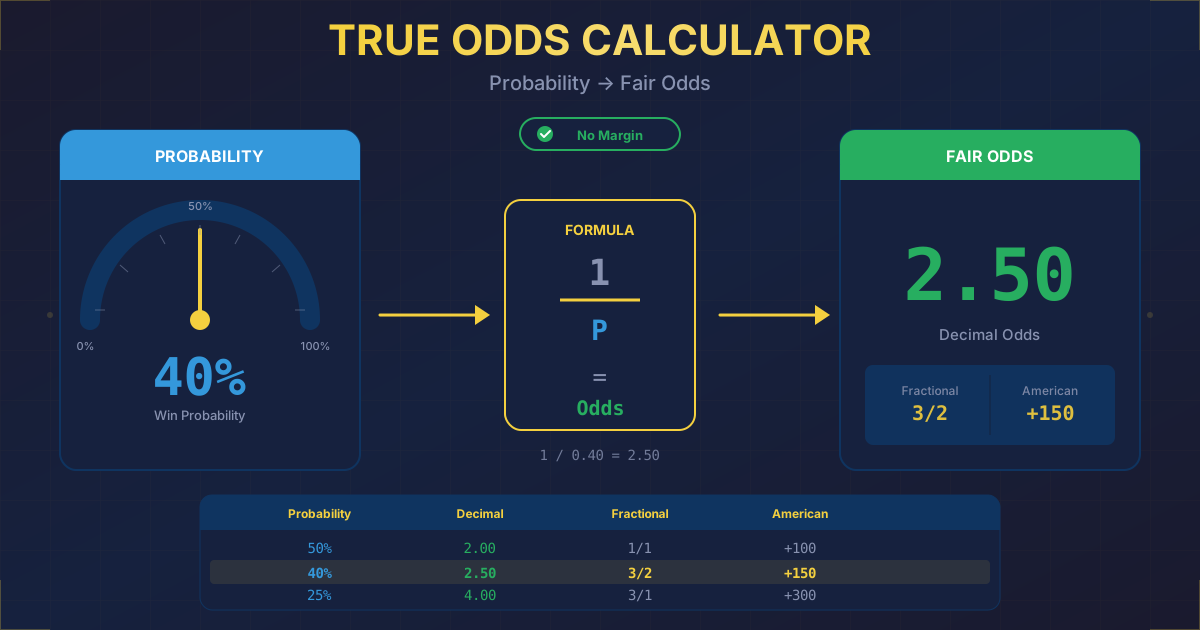
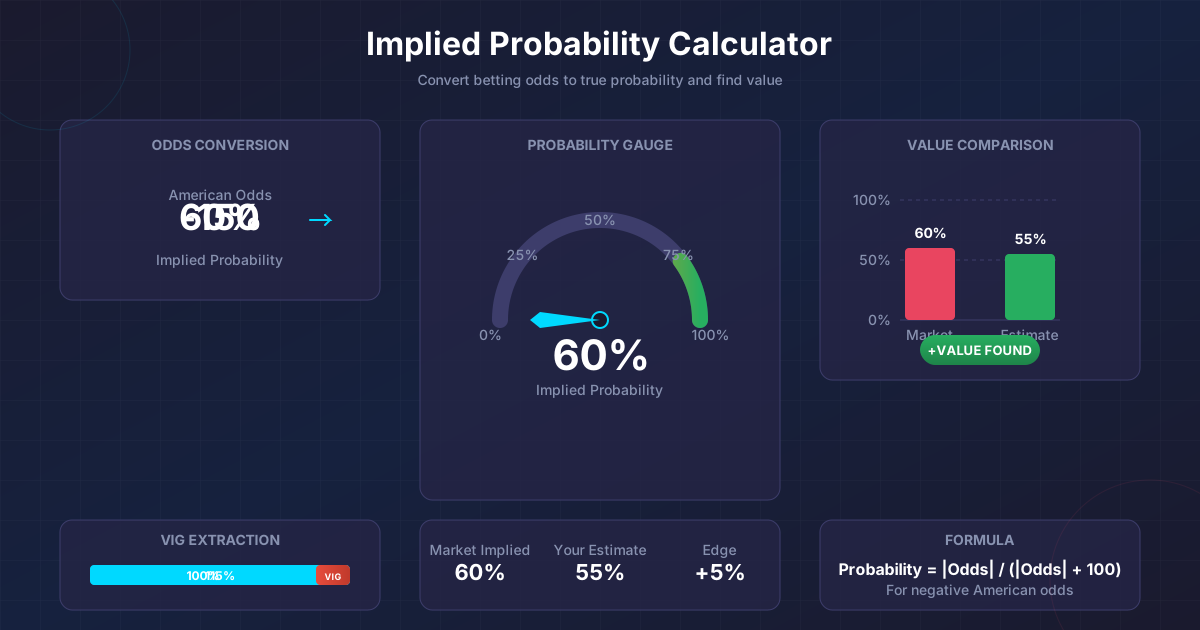
How do I calculate no-vig CLV? First, take both sides of the closing line and remove the vig to get the "true" closing probabilities. Then compare your bet's implied probability to the no-vig closing probability. For example, if you bet at -110 (52.38% implied) and the no-vig close is 55%, your CLV is (55% / 52.38%) - 1 = +5%. Our Implied Probability Calculator handles these conversions instantly.
How many bets do I need to evaluate my CLV meaningfully? At minimum, 500 bets provide a reasonable initial assessment. For high confidence, 1,000+ bets is recommended. For near-definitive conclusions about your edge, 2,500+ bets is ideal. The more bets you track, the tighter the confidence interval around your true CLV becomes. Use our Expected Value Calculator alongside CLV tracking for the most complete picture.
Does positive CLV guarantee profit? Not on any individual bet or short stretch -- variance is real. But consistently positive CLV over a large sample (1,000+ bets) virtually guarantees long-term profit because the closing line is so well-calibrated as a probability estimate. Think of CLV as a thermometer for your process, not a crystal ball for individual outcomes.
Will sportsbooks limit me if I have positive CLV? Soft recreational sportsbooks will likely limit or close accounts that show consistent positive CLV, typically above +1% to +2% average. Sharp books like Pinnacle are much less likely to limit. This is why many winning bettors maintain accounts at multiple books and diversify their action. Use our Hedge Calculator when you need to distribute action across books.
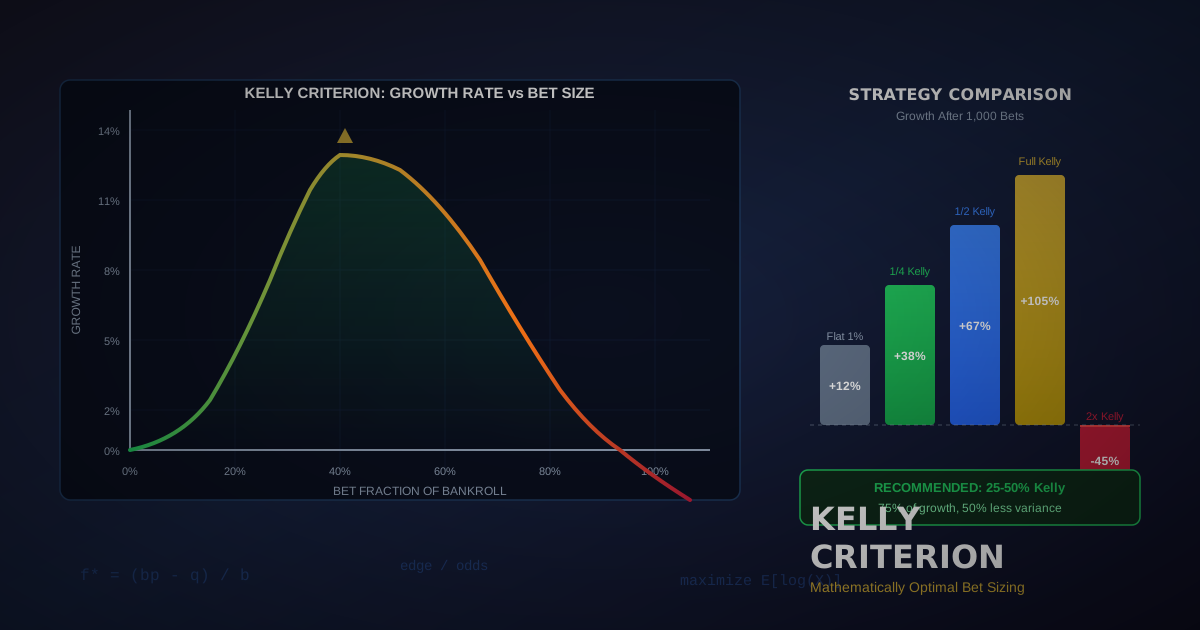
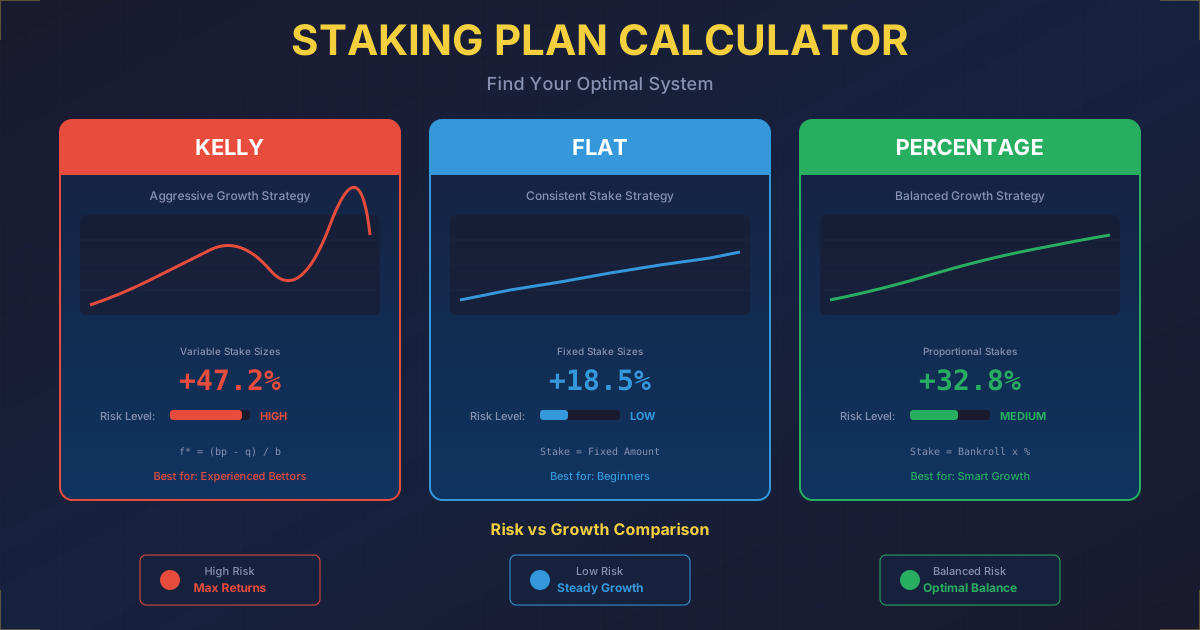
How does CLV relate to the Kelly Criterion for bet sizing? CLV tells you whether your edge is real. The Kelly Criterion tells you how much to bet given that edge. If your CLV data confirms you have a +2% edge, you can input that edge estimate into the Kelly Criterion Calculator to determine optimal bet sizing. Most professionals use fractional Kelly (25-50% of full Kelly) for additional safety against variance.
Essential Tools for CLV-Based Betting
CLV Tracking and Analysis
- CLV Tracker: Track closing line value across all your bets with automatic no-vig calculations and running averages
- Expected Value Calculator: Calculate the expected value of any bet before placing it
- Implied Probability Calculator: Convert any odds format into true implied probabilities for CLV comparison
Odds and Line Analysis
- Odds Converter: Instantly convert between American, decimal, and fractional odds for cross-book comparison
- Hold/Vig Calculator: Calculate the sportsbook's hold and remove vig from any line for accurate no-vig CLV
- Arbitrage Calculator: Find pricing discrepancies between sportsbooks that indicate CLV opportunities
Bankroll and Risk Management
- Kelly Criterion Calculator: Determine optimal bet sizing based on your CLV-proven edge
- Bankroll Volatility Tracker: Model variance and drawdown probability for your betting volume and CLV level
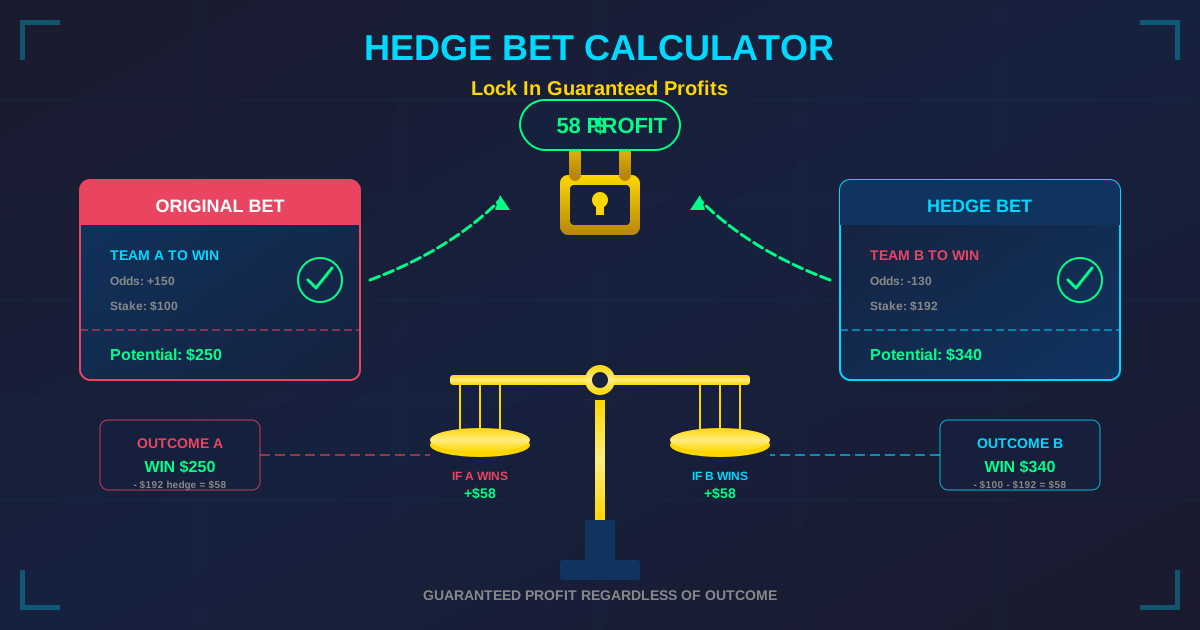
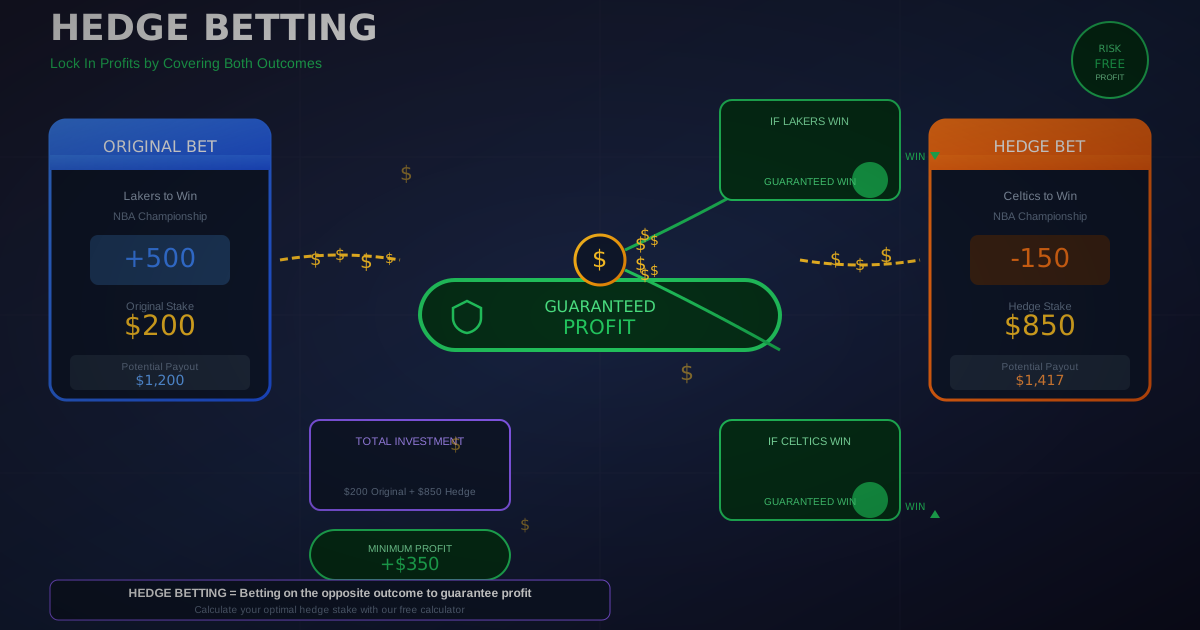
- Hedge Calculator: Calculate optimal hedge amounts when locking in profit or managing multi-book exposure
The Bottom Line: CLV Is Your Compass
Sports betting success is not about picking winners. It is about finding prices that are better than what the final, efficient market determines. CLV is the only metric that measures this directly.
If your average CLV is positive over 1,000+ bets, you almost certainly have a real edge. If it is negative, no amount of hot streaks changes the underlying math -- your process needs improvement.
Start tracking today. Record every bet, every closing line, every no-vig calculation. The data will tell you the truth about your betting ability faster and more reliably than any other metric in existence.
Begin tracking your CLV immediately with our CLV Tracker. Convert odds formats with our Odds Converter. And size your bets correctly based on your proven edge using our Kelly Criterion Calculator.
The closing line is the market's final word. Beat it consistently, and the profits follow.
Gambling involves risk. This content is for educational and informational purposes only. Always gamble responsibly, set limits you can afford, and seek help if gambling becomes a problem. Visit the National Council on Problem Gambling or call 1-800-522-4700 for support.