How Injuries Move Betting Lines: A Bettor's Guide to Injury Reports (2026)
When Lamar Jackson was listed as questionable for a 2024 playoff game, the line moved 3.5 points in under 90 minutes -- and the bettors who acted on the first whisper of the injury report banked a spread that the rest of the market would never see again. Injuries are the single largest driver of line movement in sports betting. A star quarterback going from "probable" to "out" can swing an NFL spread by 3-7 points. An NBA superstar being ruled out can shift a line by 4-6 points. And in MLB, a late pitching change can flip a moneyline from -150 to +110 in seconds.
The bettors who consistently profit from injury information are not the ones with insider access -- they are the ones who understand the system. They know how to read injury reports, when to act, how much each position is worth on the spread, and when the market has already priced in the injury news. This guide gives you that complete framework for 2026.
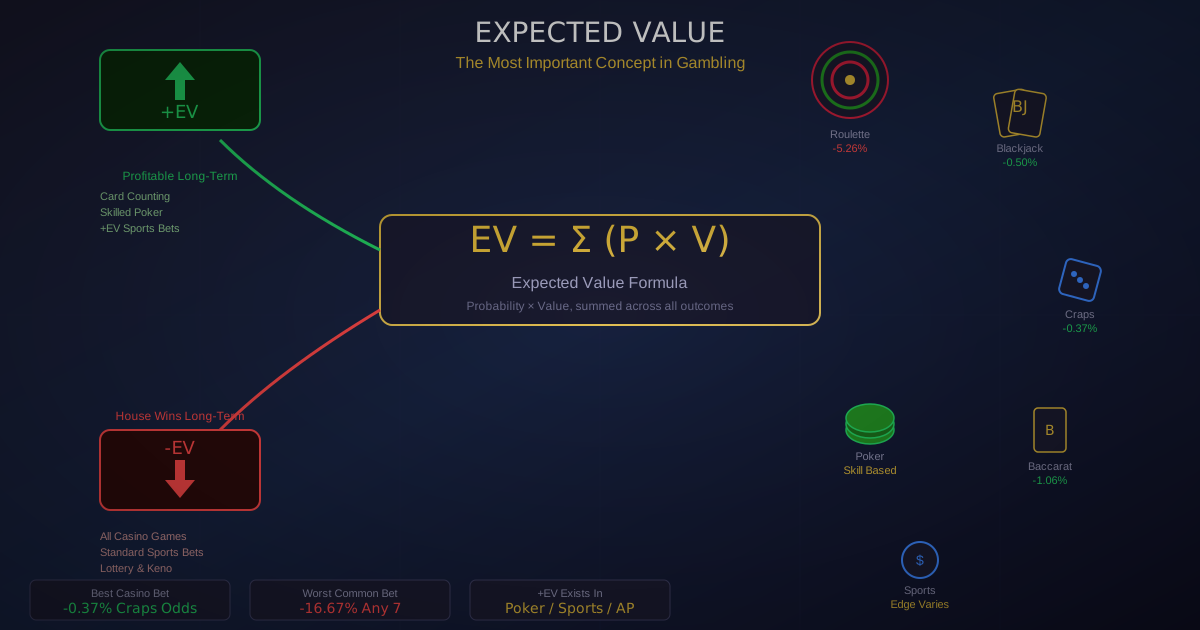
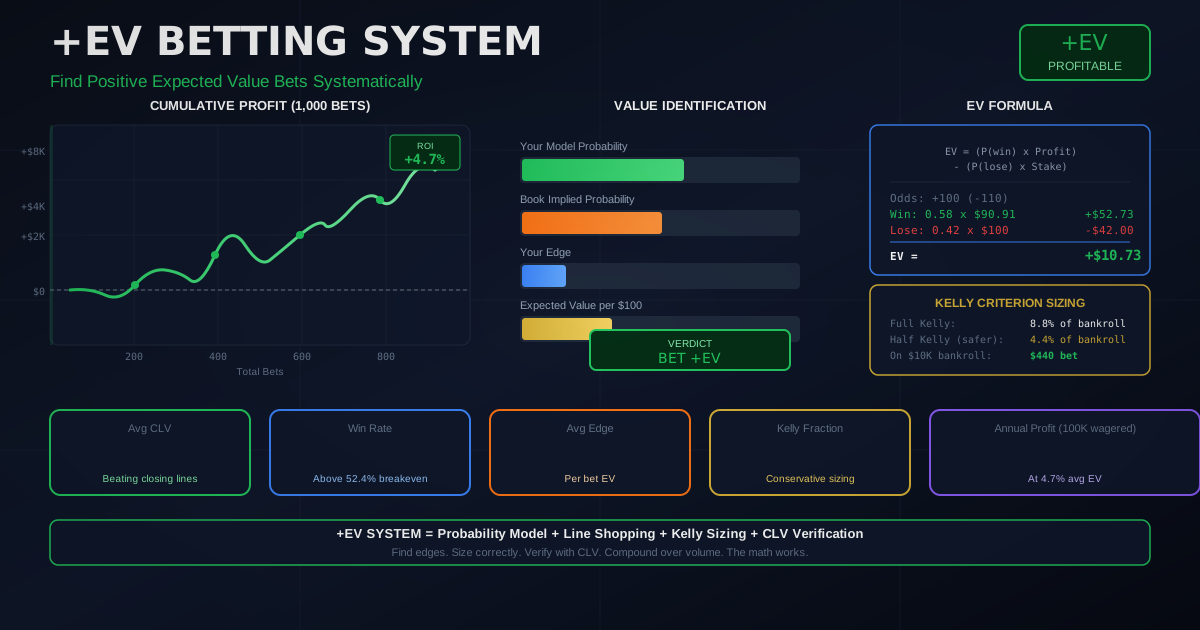
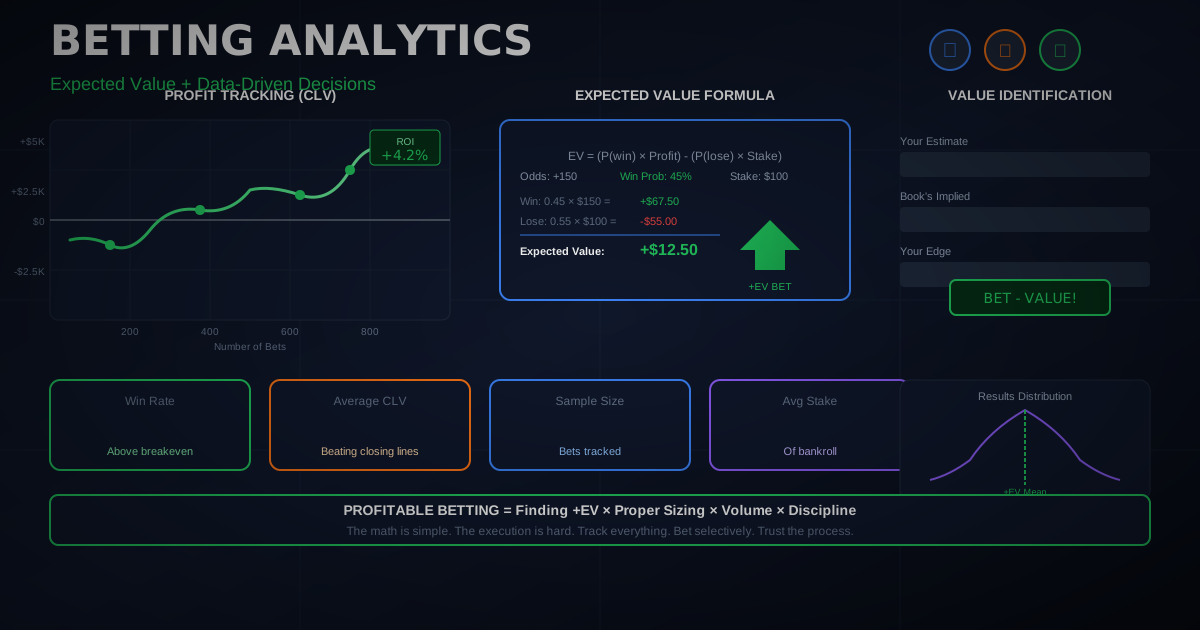
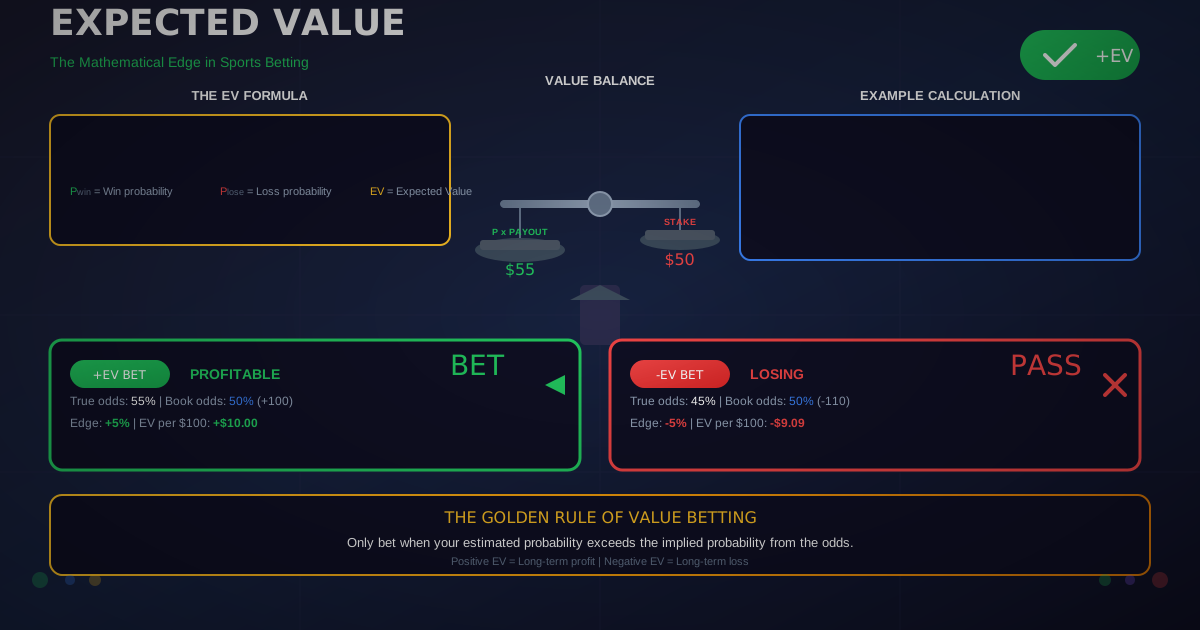
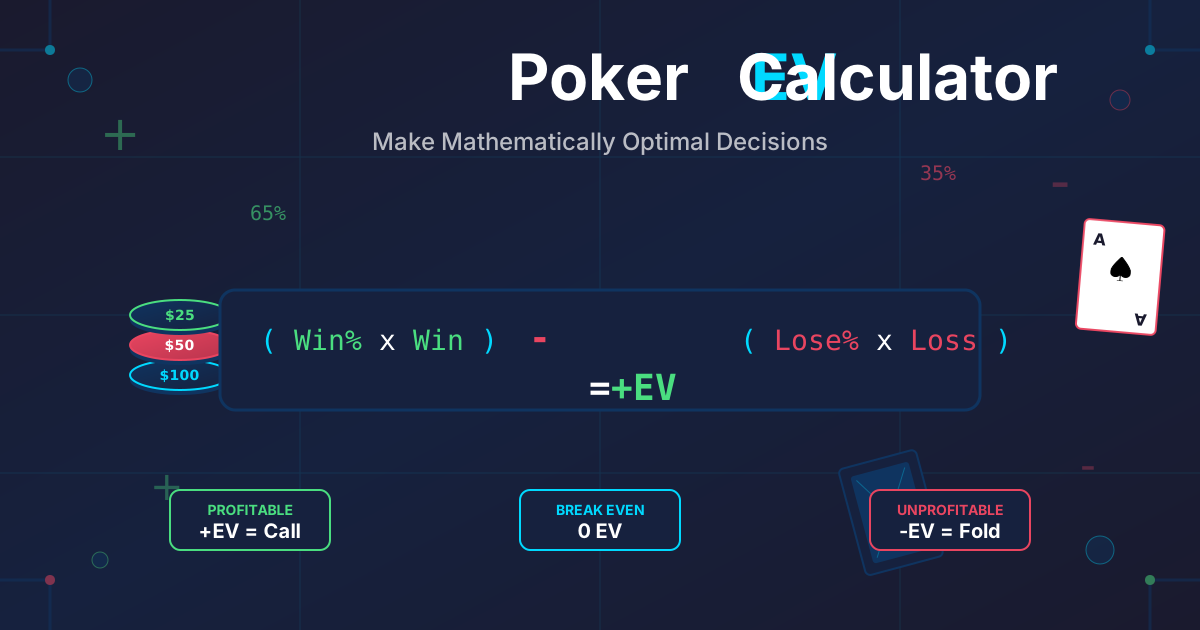
Run the expected value on any injury-adjusted line with our free Expected Value Calculator -- the tool that turns information into edge.
How Do NFL Injury Designations Work for Betting Purposes?
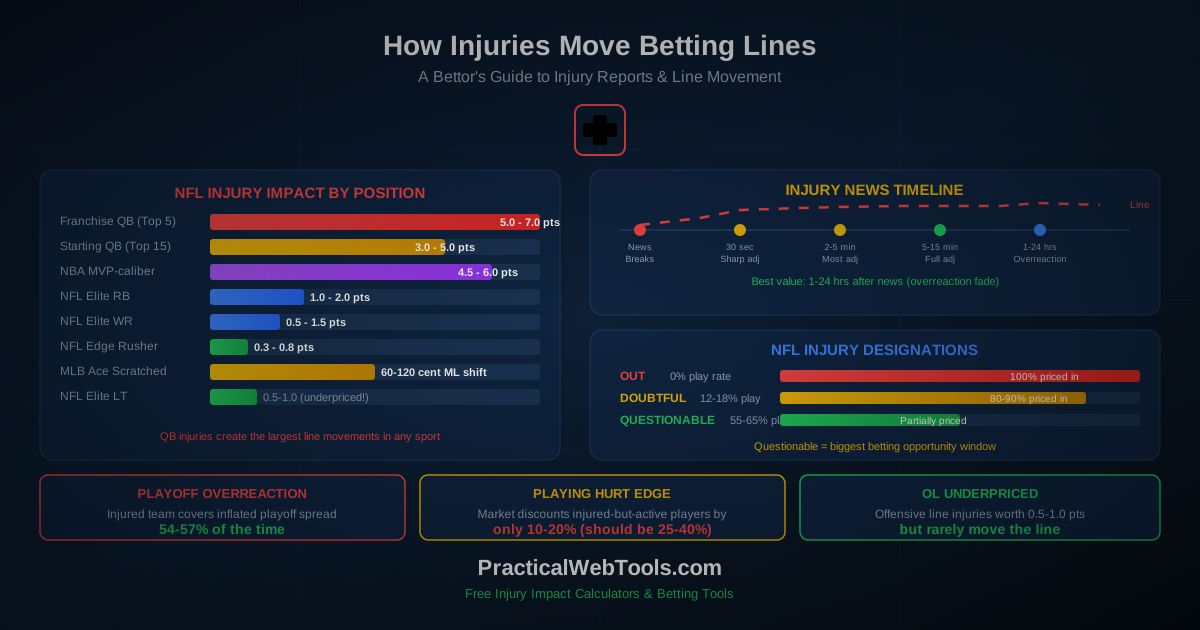
The NFL uses four official injury designations: Out (will not play), Doubtful (unlikely to play, roughly 25% chance), Questionable (uncertain, roughly 50% chance), and no designation (expected to play). Understanding what each designation actually means in practice -- versus the official definition -- is critical for interpreting line movement and finding value.
NFL Injury Designation Breakdown
| Designation | Official Definition | Actual Play Rate (2019-2025) | Typical Line Impact if Out | When Reported |
|---|---|---|---|---|
| Out | Will not play | 0% | Full impact priced in | Wednesday-Saturday |
| Doubtful | Unlikely to play | 12-18% | 80-90% priced in | Friday-Saturday |
| Questionable | Uncertain | 55-65% | Partially priced in (varies) | Friday-Saturday |
| No designation | Expected to play | 95%+ | None | Not listed after Wednesday |
The NFL requires teams to submit injury reports on Wednesday, Thursday, and Friday during the regular season (Thursday, Friday, and Saturday for Monday games). The key designations for bettors are Questionable and Doubtful, because these create the most uncertainty and therefore the most line movement.
The Elimination of "Probable"
The NFL eliminated the "Probable" designation before the 2016 season because it was essentially meaningless -- players designated as probable played approximately 97% of the time. The removal increased the number of players listed as Questionable, since players who would have been Probable now either receive no designation or are listed as Questionable. This means the modern Questionable designation covers a wider range of actual injury severity, from "will almost certainly play" to "genuine coin flip."
Experienced bettors track each team's historical usage of the Questionable tag. Some coaching staffs use Questionable liberally as a strategic tool, while others reserve it for genuinely uncertain situations. Understanding these tendencies is a real edge.
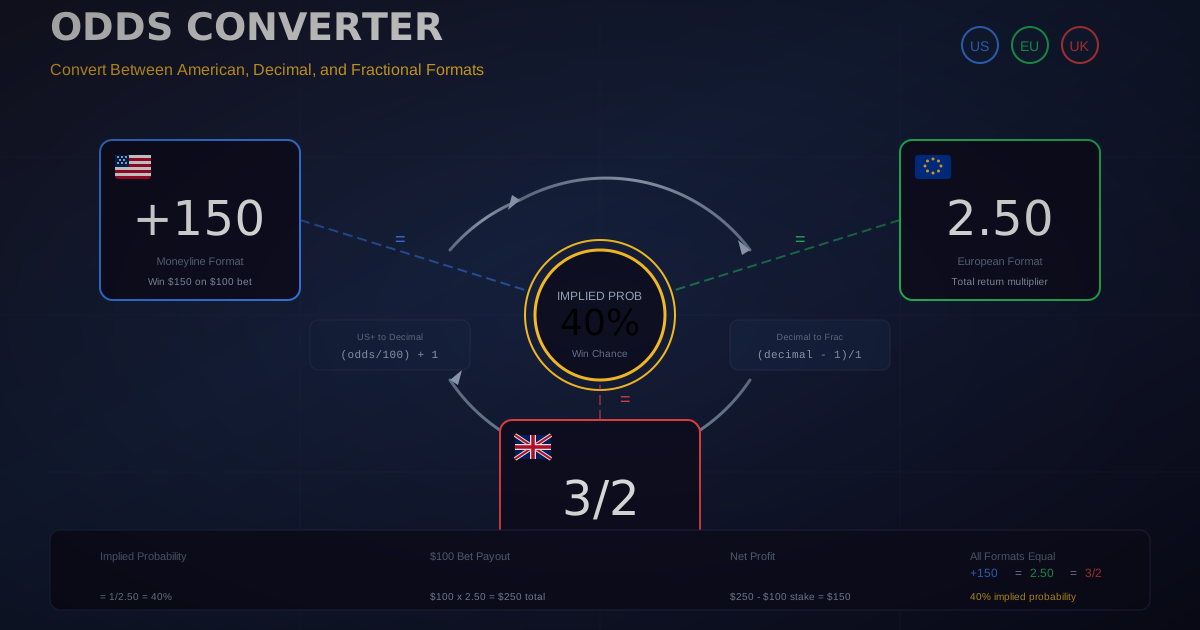
Convert between American and decimal odds to find the best price on injury-adjusted lines with our Odds Converter.
How "Game-Time Decisions" Affect the Line
When a key player is listed as a game-time decision (GTD), the line typically reflects a weighted probability of the player playing or sitting. For example, if a quarterback is a true 50/50 GTD, the line might sit midway between the "QB plays" line and the "QB sits" line. The opportunity for bettors is to have a stronger opinion than the market on whether the player will actually play.
Sources for game-time intelligence include:
- Pregame warmup reports (usually 60-90 minutes before kickoff)
- Beat reporters at the stadium who observe practice participation
- Coaching press conference tone and language
- Historical patterns (a coach who says "we'll see" almost always means the player is out)
How Much Do Star Player Injuries Move NFL Spreads?
Star player injuries move NFL spreads by 1-7 points depending on the position and the player's value. Quarterback injuries produce the largest movements, with franchise QBs worth 3-7 points on the spread. Non-QB injuries typically move lines by 0.5-2.5 points.
Position-by-Position Point Impact
| Position | Player Tier | Typical Line Movement | Example Impact |
|---|---|---|---|
| Franchise QB (Top 5) | Elite | 5.0-7.0 pts | Patrick Mahomes out = ~6.5 pt swing |
| Starting QB (Top 15) | High | 3.0-5.0 pts | Joe Burrow out = ~4.0 pt swing |
| Starting QB (Bottom 15) | Moderate | 1.5-3.0 pts | Sam Howell out = ~2.0 pt swing |
| RB1 (Elite) | High | 1.0-2.0 pts | Derrick Henry out = ~1.5 pt swing |
| WR1 (Elite) | High | 0.5-1.5 pts | Ja'Marr Chase out = ~1.0 pt swing |
| LT (Elite) | Moderate | 0.5-1.0 pts | Protects blind side |
| Edge Rusher (Elite) | Moderate | 0.3-0.8 pts | Myles Garrett out = ~0.5 pt swing |
| CB1 (Elite) | Low-Moderate | 0.3-0.7 pts | Sauce Gardner out = ~0.4 pt swing |
| Kicker | Low | 0.0-0.3 pts | Rarely moves the line |
The quarterback position is uniquely valuable because it touches every offensive play. No other position in any major sport has a comparable individual impact on the point spread. When a top-5 quarterback is ruled out, the replacement quarterback is typically worth 15-25 fewer expected points per game, and the spread reflects this.
Cumulative Injury Effects
Individual injury values are not perfectly additive but they do stack. If a team loses both its starting quarterback and its top running back, the combined line impact is typically 80-90% of the sum of the individual values (not 100%, because the offense was already expected to be worse without the QB, so the marginal value of the RB changes).
| Scenario | Individual Impact Sum | Actual Combined Impact | Correlation Discount |
|---|---|---|---|
| QB + WR1 out | 5.0 + 1.0 = 6.0 | 5.2-5.5 pts | ~10% |
| QB + RB1 out | 5.0 + 1.5 = 6.5 | 5.5-6.0 pts | ~10% |
| WR1 + WR2 out | 1.0 + 0.5 = 1.5 | 1.8-2.0 pts | Amplification |
| RB1 + OL starter out | 1.5 + 0.7 = 2.2 | 2.0-2.3 pts | ~5% |
| CB1 + CB2 out | 0.4 + 0.3 = 0.7 | 0.9-1.1 pts | Amplification |
Notably, losing two players at the same position group can have an amplifying effect rather than a discount. If a team loses both starting cornerbacks, the secondary is significantly more compromised than the sum of two individual losses, because the third cornerback now facing the opponent's WR1 is a much larger downgrade.
Calculate the true probability implied by the injury-adjusted line with our Implied Probability Calculator.
How Do NBA Injury Reports Differ from NFL Reports?
NBA injury reports are submitted daily and use a different set of designations: Out, Doubtful, Questionable, and Probable (the NBA still uses Probable, unlike the NFL). The NBA's reporting requirements are more frequent and more detailed, but teams have become increasingly strategic about using rest designations to manage star player workloads.
NBA Injury Designation Play Rates
| Designation | Definition | Actual Play Rate (2022-2025) | Typical Line Impact |
|---|---|---|---|
| Out | Will not play | 0% | Full impact |
| Doubtful | Unlikely to play | 8-15% | 85-95% priced in |
| Questionable | Uncertain | 45-55% | Partially priced in |
| Probable | Likely to play | 88-95% | Minimal impact |
| GTD (Game-Time Decision) | Late determination | 40-60% | Variable |
Star Player Impact in the NBA
The NBA is more star-driven than the NFL because basketball involves only 5 players on the court at a time, and a single superstar touches the ball on a much higher percentage of possessions. This concentration means star injuries have a disproportionate impact.
| Player Tier | Examples | Points Off Spread | Win % Impact |
|---|---|---|---|
| MVP-caliber | Jokic, Giannis, Luka | 4.5-6.0 pts | -12 to -18% |
| All-NBA | Tatum, SGA, Edwards | 3.5-5.0 pts | -9 to -14% |
| All-Star | Brunson, Mitchell, Fox | 2.5-4.0 pts | -6 to -10% |
| Quality starter | Role-dependent | 1.0-2.5 pts | -3 to -7% |
| Rotation player | Minutes-dependent | 0.3-1.0 pts | -1 to -3% |
When a player like Nikola Jokic (who controls approximately 32% of Denver's offensive possessions) is out, the Nuggets' expected offensive efficiency drops by roughly 8-10 points per 100 possessions. This translates to approximately 5-6 points on the spread, one of the largest individual player impacts in any sport.
The "Load Management" Factor
NBA load management has introduced a unique challenge for bettors. Star players sitting out for rest on the second night of back-to-back sets or before/after long road trips is now common. The key for bettors is to anticipate load management sits before the official announcement:
- Second night of a back-to-back for players with known knee, ankle, or back issues: 40-60% chance of sitting.
- Third game in four nights for stars over age 30: 50-70% chance of sitting.
- Games before nationally televised matchups: Stars sometimes rest in the "less important" game. This is especially common in the final month of the season.
- Early-season games for teams with playoff aspirations: Load management has shifted earlier into the season as teams prioritize health for the postseason.
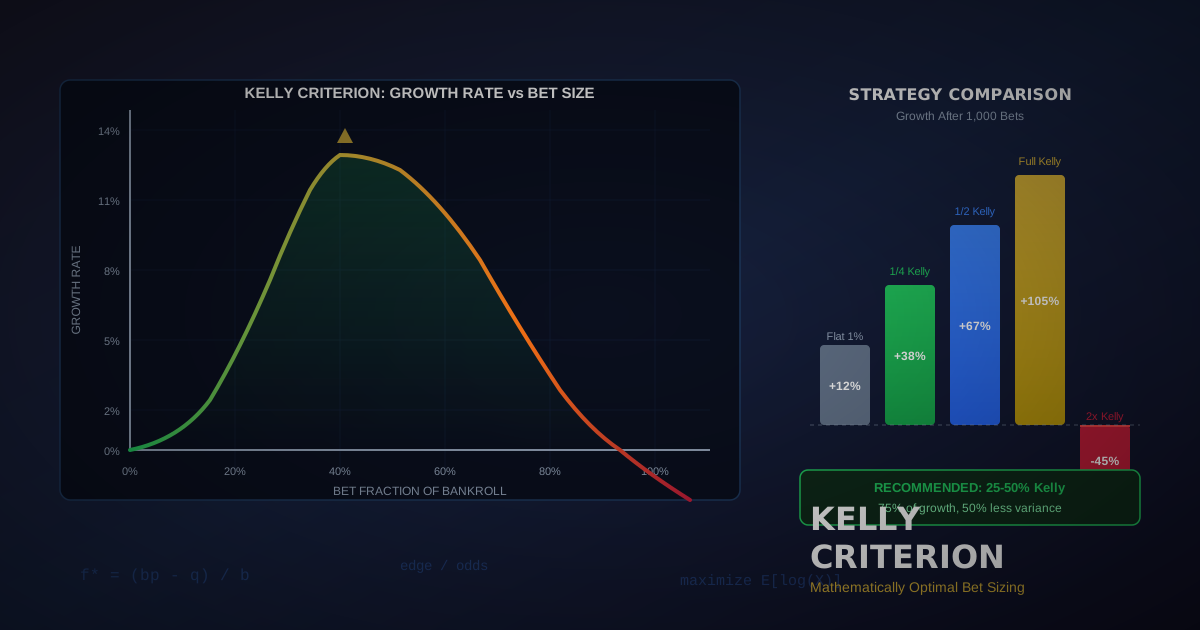
Evaluate your edge and optimal sizing on injury-adjusted NBA bets with our Kelly Criterion Calculator.
How Do MLB Pitching Changes Affect Betting Lines?
In MLB, the starting pitcher is the single most impactful player in any game. A late pitching change -- when the announced starter is scratched and replaced by a different pitcher -- can move the moneyline by 30-80 cents and shift the total by 1-3 runs. Understanding pitching values is essential for MLB bettors.
Pitcher Quality Tiers and Line Impact
| Pitcher Tier | ERA Range | Avg Moneyline Impact (Home) | Avg Total Impact | Example Scratch Effect |
|---|---|---|---|---|
| Ace (Top 10 MLB) | < 2.80 | +80 to +120 cents | -1.5 to -2.5 runs | Ace scratched, line flips from -180 to -110 |
| #2 Starter (Top 30) | 2.80-3.30 | +50 to +80 cents | -1.0 to -1.5 runs | Line moves from -150 to -100 |
| Mid-rotation (Top 60) | 3.30-3.90 | +30 to +50 cents | -0.5 to -1.0 runs | Line moves from -130 to -110 |
| Back-end starter | 3.90-4.50 | +15 to +30 cents | -0.3 to -0.5 runs | Minimal movement |
| Replacement-level | > 4.50 | 0 to +15 cents | 0 to -0.3 runs | Negligible movement |
How Sportsbooks Handle Pitching Changes
Most sportsbooks offer "listed pitchers" and "action" options for MLB bets:
- Listed pitchers: Your bet is only valid if both listed starters actually start the game. If either is scratched, your bet is refunded. This protects you from unexpected pitching changes.
- Action: Your bet stands regardless of who pitches. If the listed starter is scratched, you keep your bet at potentially different odds.
The strategic question is whether to bet "listed" or "action." If you have strong confidence that both starters will pitch as scheduled, "action" is fine. But if there is any rumor of a pitching change, "listed" protects your edge because your handicap is based on the specific matchup.
Timing of MLB Pitching Announcements
MLB starting lineups are typically announced 3-4 hours before first pitch. However, many teams confirm their pitching rotation 1-2 days in advance. The opportunity for bettors is in the gap between when a pitching change becomes likely (through beat reporter information, bullpen usage patterns, or minor injury reports) and when the sportsbook officially adjusts the line.
Check whether a pitching-adjusted moneyline offers positive expected value with our Expected Value Calculator.
How Do Sportsbooks React to Breaking Injury News?
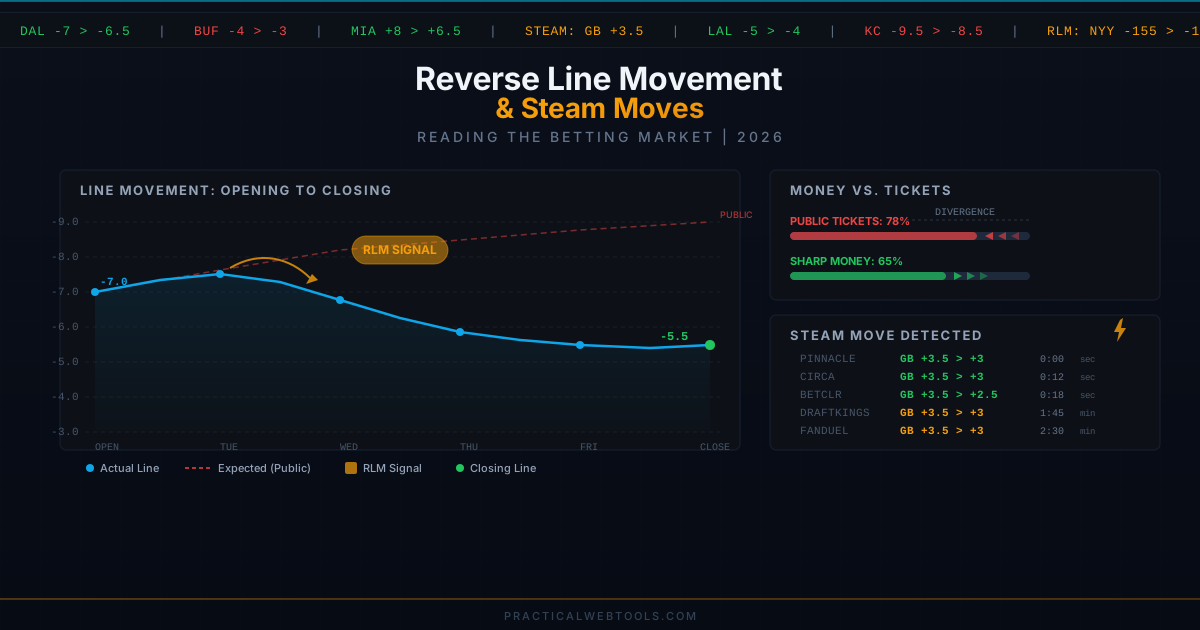
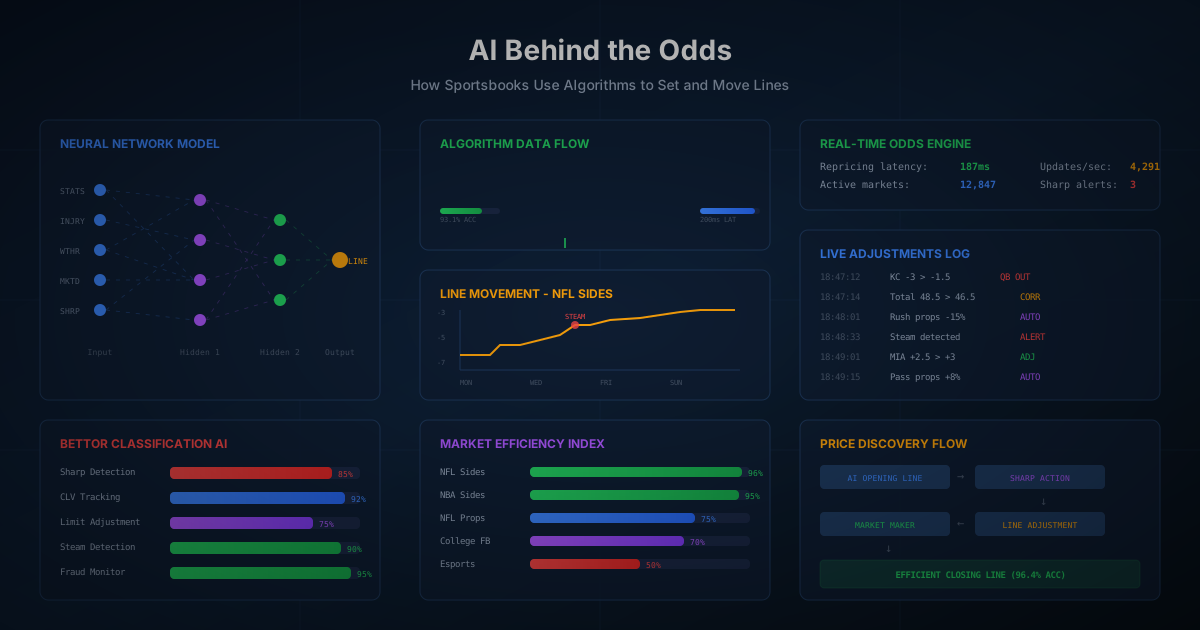
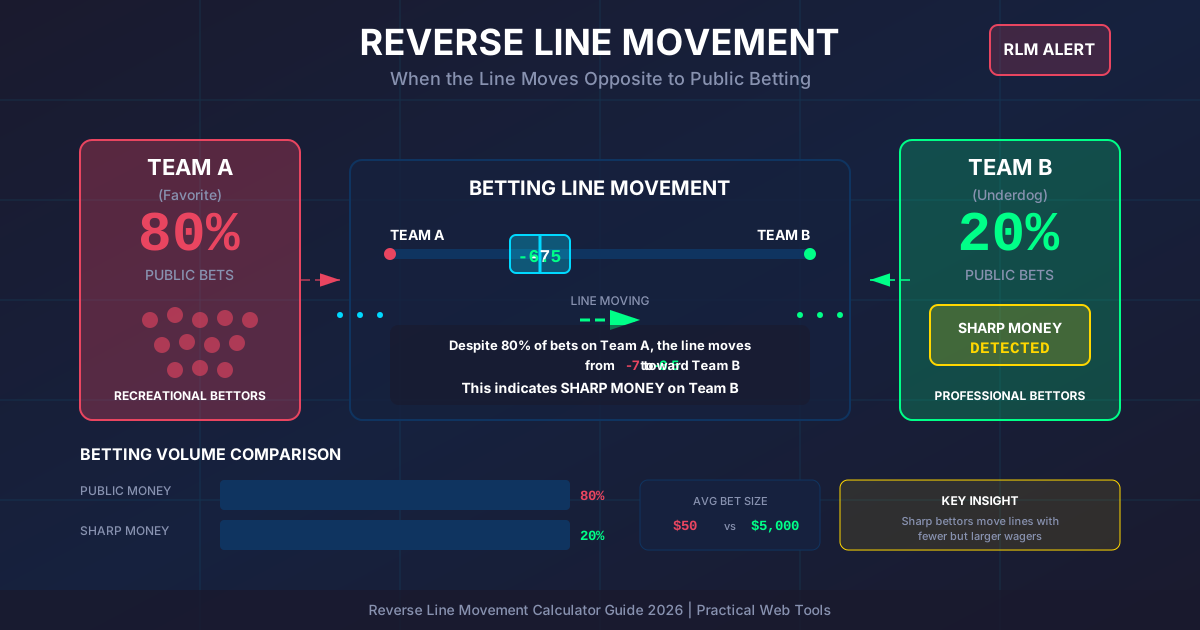
Sportsbooks react to injury news in a tiered response system: automated adjustments for well-known player values, manual review for unusual situations, and temporary line removal for the most significant news. The fastest sportsbooks can adjust within 30-60 seconds of major injury news, while slower books may take 5-15 minutes.
The Sportsbook Injury Response Timeline
| Time After News | Sportsbook Action | Bettor Opportunity |
|---|---|---|
| 0-30 seconds | Sharp books pull the line or auto-adjust | Almost no opportunity at sharp books |
| 30 sec - 2 min | Major books adjust, recreational books lag | Small window at slower books |
| 2-5 minutes | Most books adjusted, some props still stale | Prop market opportunities |
| 5-15 minutes | Full adjustment across all markets | No spread/total value remaining |
| 15-60 minutes | Player prop markets fully adjusted | No value |
| 1-24 hours | Public money arrives, possible overreaction | Potential fade opportunity |
The realistic opportunity window for recreational bettors is not in the first few minutes after injury news (you cannot outpace the algorithms and sharp bettors). The real opportunity is in the overreaction phase: 1-24 hours after the news, when public bettors have piled onto the team that benefits from the injury, potentially pushing the line past fair value.
When the Market Overreacts to Injuries
The market tends to overreact to injuries in specific scenarios:
- Marquee quarterback injuries: When a household-name QB is ruled out, public money floods in against that team, sometimes pushing the line 1-2 points past the sharp assessment. The backup quarterback is often slightly better than the market implies.
- Injuries to famous players who have declined: A star player past his prime may be ruled out, and the line moves as if the team lost a peak performer. In reality, the backup may only be marginally worse.
- Double-injury announcements: When two starters on the same team are ruled out simultaneously, the market sometimes applies the full individual impact of each, overestimating the combined effect.
Conversely, the market tends to underreact to:
- Offensive line injuries (unglamorous but impactful)
- Defensive coordinator or position coach absences (rarely reported but affect game planning)
- Nagging injuries that limit but do not remove a player (a quarterback playing at 80% is often worse than a healthy backup)
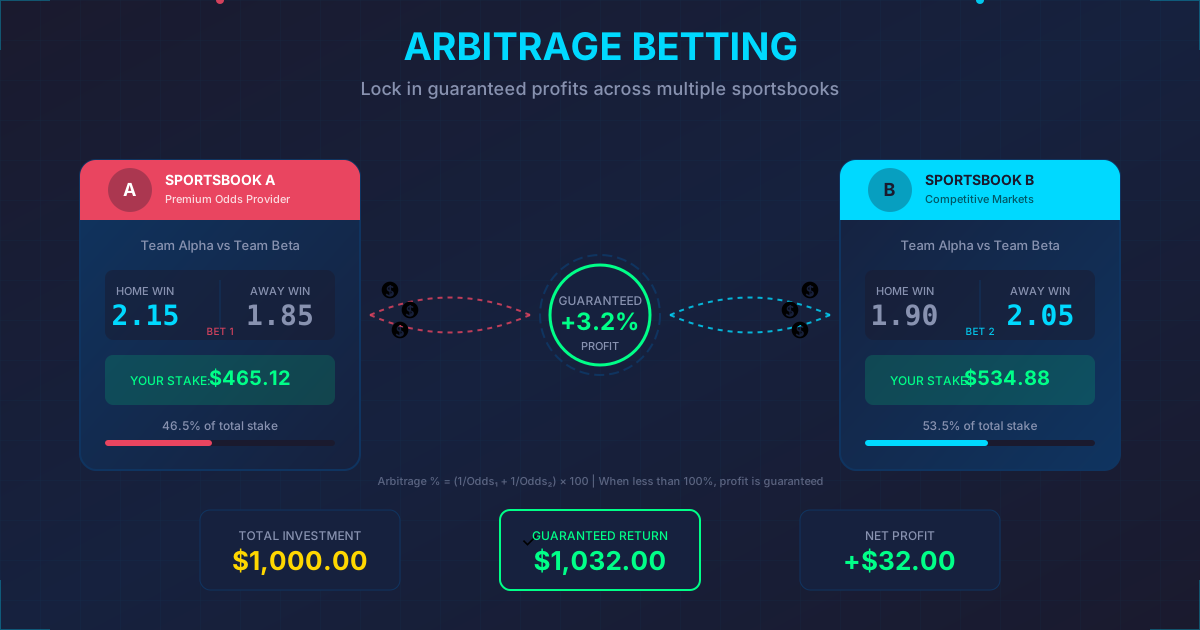
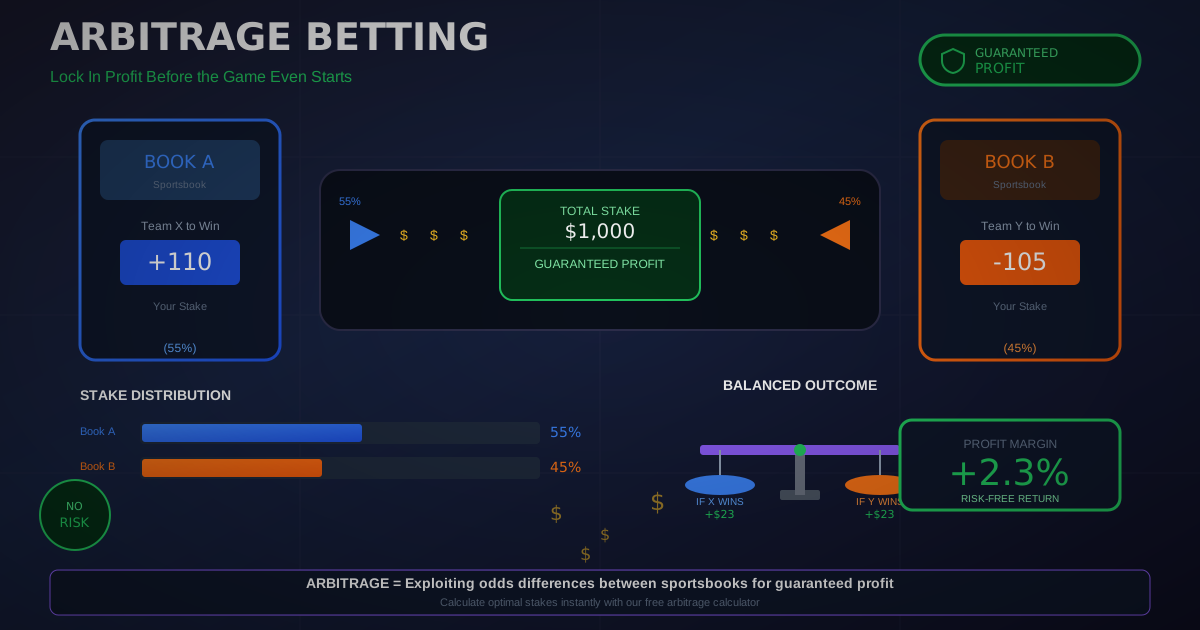
Find arbitrage opportunities when slow-adjusting books haven't priced an injury yet with our Arbitrage Calculator.
What Are "Decoy" Injuries and How Do You Spot Them?
A "decoy" injury is when a team lists a player as questionable or doubtful with the intention of keeping the opponent guessing, even though the player is expected to play (or expected to sit). Coaches use injury report gamesmanship to create strategic uncertainty, and spotting the decoys is a genuine edge for bettors.
Common Decoy Patterns
| Pattern | Description | How to Identify | Frequency |
|---|---|---|---|
| The "questionable lock" | Star player listed as questionable but always plays | Track historical pattern -- player has played through this designation 90%+ of the time | Very common |
| The "healthy scratch setup" | Player listed as questionable to mask a planned rest | Watch practice participation -- limited Wednesday, full Thursday/Friday = playing | Common |
| The "strategic DNP" | Player sits out Wednesday practice but was always planning to play | Check if it is a veteran rest day pattern | Very common |
| The "opponent confusion" | Multiple players listed to force opponent to prepare for different scenarios | Look for players who practiced in full but are still listed | Moderate |
| The "actual decoy" | Player suits up but takes limited snaps to draw defensive attention | Watch pregame warmup intensity and snap count history | Rare but impactful |
How to Cut Through the Noise
The most reliable indicators of whether a questionable player will actually play:
-
Practice participation on Friday (or Saturday for Monday games). Full participation on the final practice = very likely to play regardless of designation. Limited participation = genuinely uncertain. DNP (Did Not Participate) on Friday = likely out.
-
Travel roster confirmation. If a player travels with the team for an away game, the probability of playing jumps to approximately 75-80% even if listed as questionable.
-
Coach-speak analysis. Coaches have patterns. Some are truthful ("he's questionable, we'll see how he responds to treatment" usually means genuinely uncertain). Others are consistently evasive ("he'll be fine" from Bill Belichick historically meant nothing).
-
Beat reporter context. Local beat reporters who attend practice and have relationships with team staff often provide the most accurate assessments of player status. Follow 2-3 beat reporters for each team you regularly bet on.
Calculate the expected value across both scenarios (player plays vs. sits) with our Expected Value Calculator.
How Do In-Game Injuries Create Live Betting Opportunities?
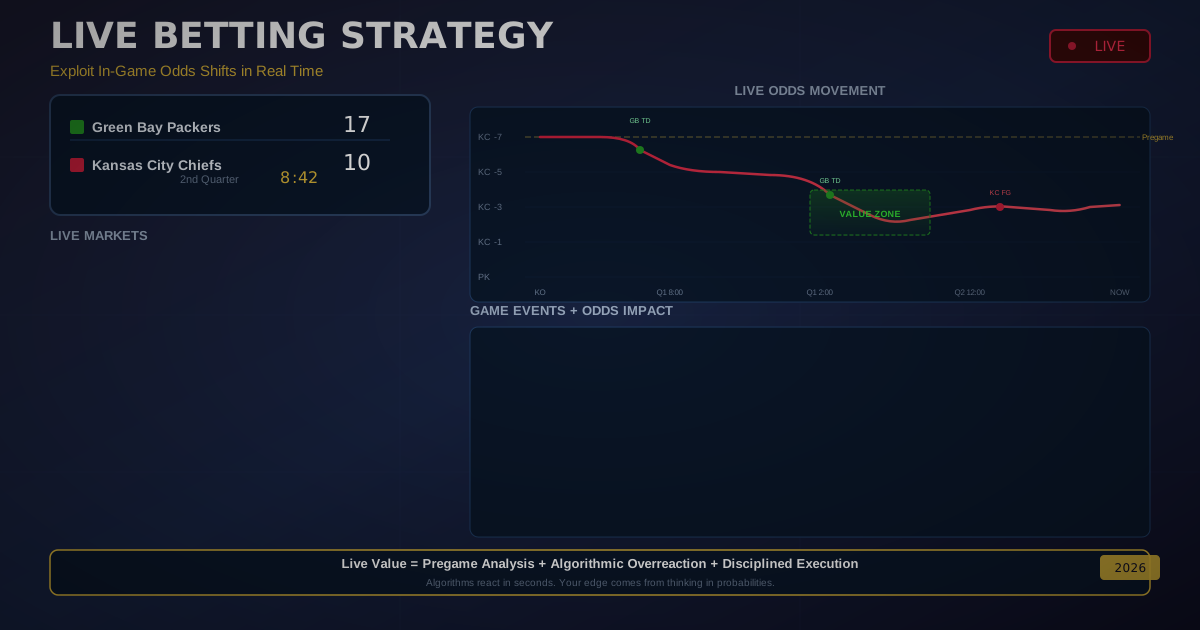
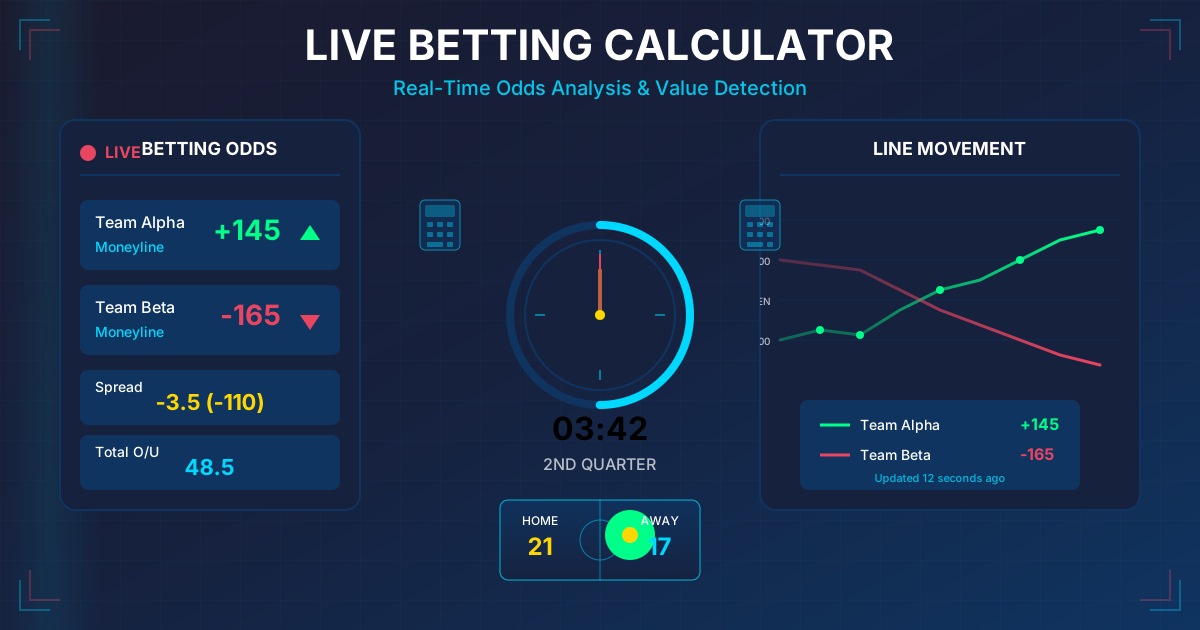
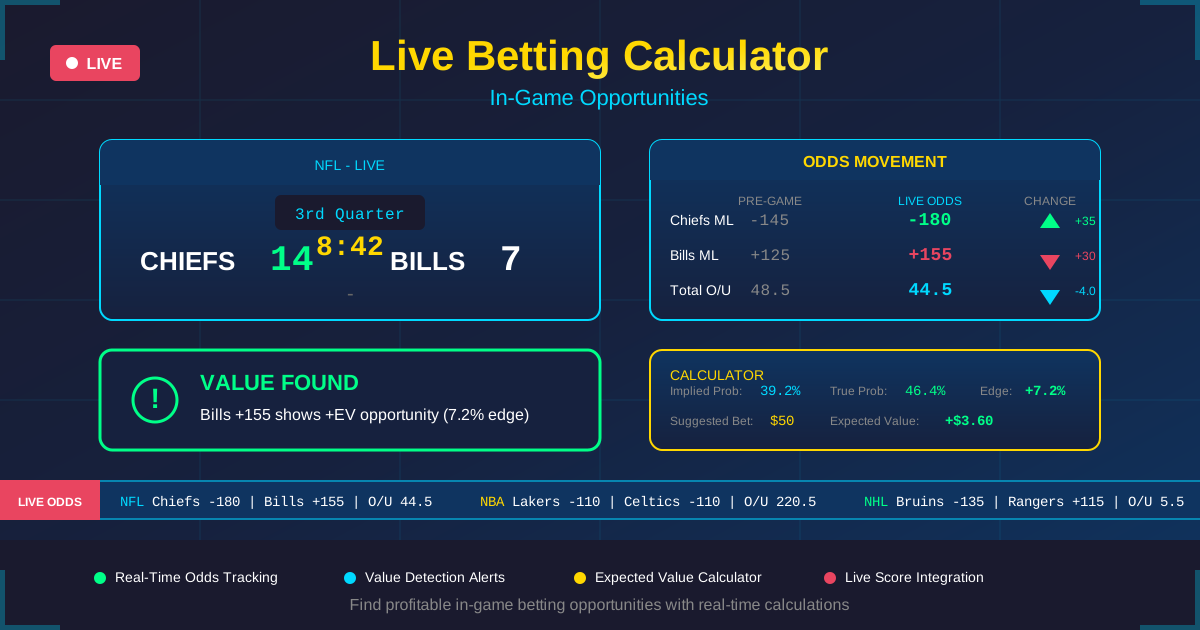
In-game injuries create some of the best live betting opportunities because the line adjustment is imperfect and immediate. When a star player goes down mid-game, live odds shift based on pre-programmed player values that may not account for game context, score, or the specific backup entering.
The In-Game Injury Live Betting Window
When a key player is injured during a game, here is the typical sequence:
- Player goes down (0-30 seconds): Live odds may freeze temporarily or adjust slightly based on automated models.
- Player leaves the field (30 sec - 3 min): The line begins moving. If the injury looks severe, sharp bettors immediately attack the other side.
- Sideline evaluation (3-10 min): Uncertainty peaks. The line has moved but the extent of the injury is unknown. Is the player returning?
- Ruling announced (10-30 min): "Questionable to return" or "ruled out" triggers a second wave of adjustment.
- Market stabilizes (30+ min): All markets reflect the new information. Value has been captured or missed.
Specific In-Game Injury Scenarios
| Scenario | Live Betting Action | Edge Opportunity |
|---|---|---|
| QB limps off, backup enters | Live spread moves 3-5 pts | If backup is competent, the move may overreact |
| Star RB goes to locker room | Live spread moves 0.5-1.5 pts | Often underpriced because RB depth is better than perceived |
| Star QB returns after scare | Line partially returns but not fully | Bet the returning QB's team if line hasn't fully corrected |
| Key defender ejected | Live total moves up 1-2 pts | Often fairly priced; limited edge |
| Pitcher pulled early (MLB) | Live total adjusts based on bullpen quality | If strong bullpen, total may over-adjust upward |
The most profitable in-game injury situations are when the live line overadjusts. This happens most often with quarterback injuries because the automated system applies a standard backup QB discount that may be too large if the backup is experienced or if the offense is not quarterback-dependent.
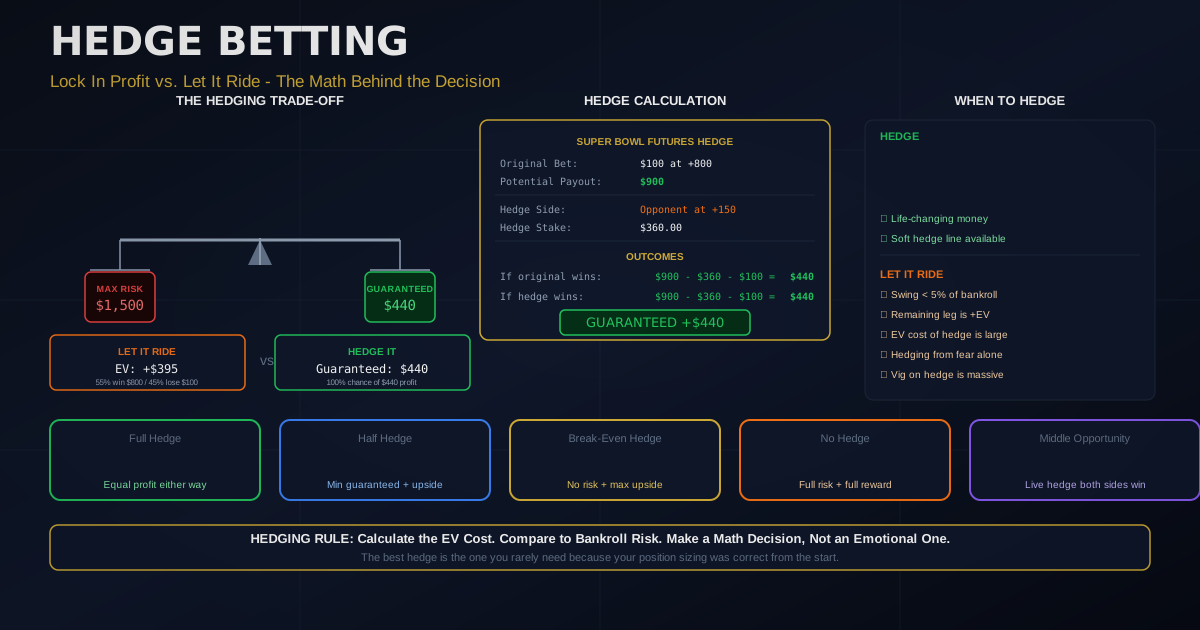
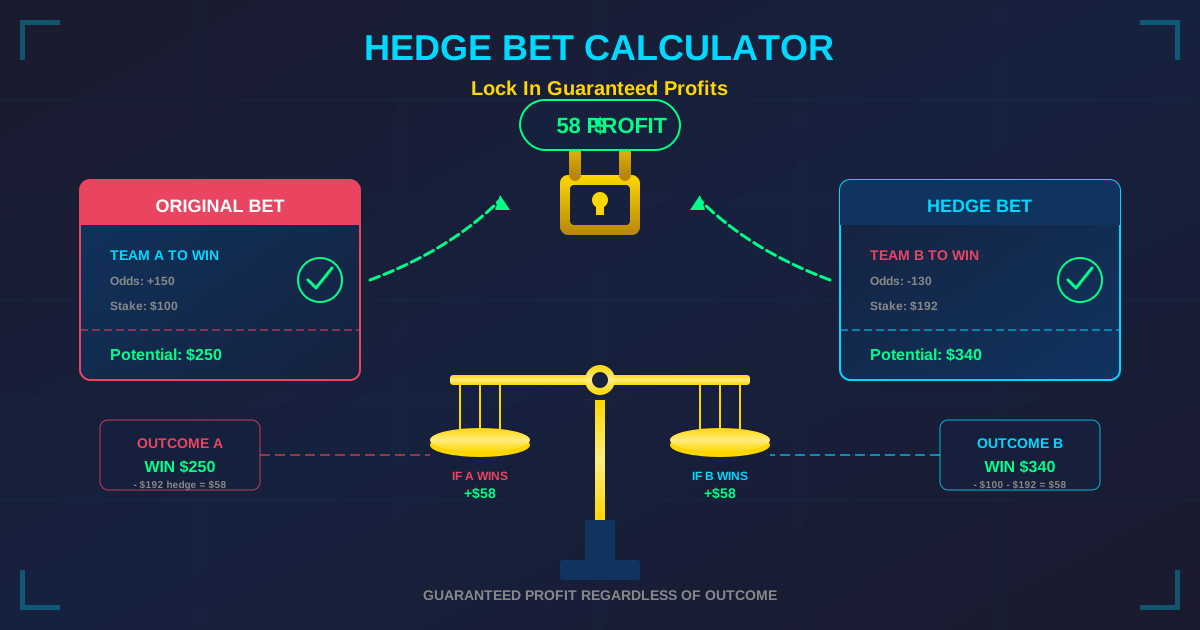
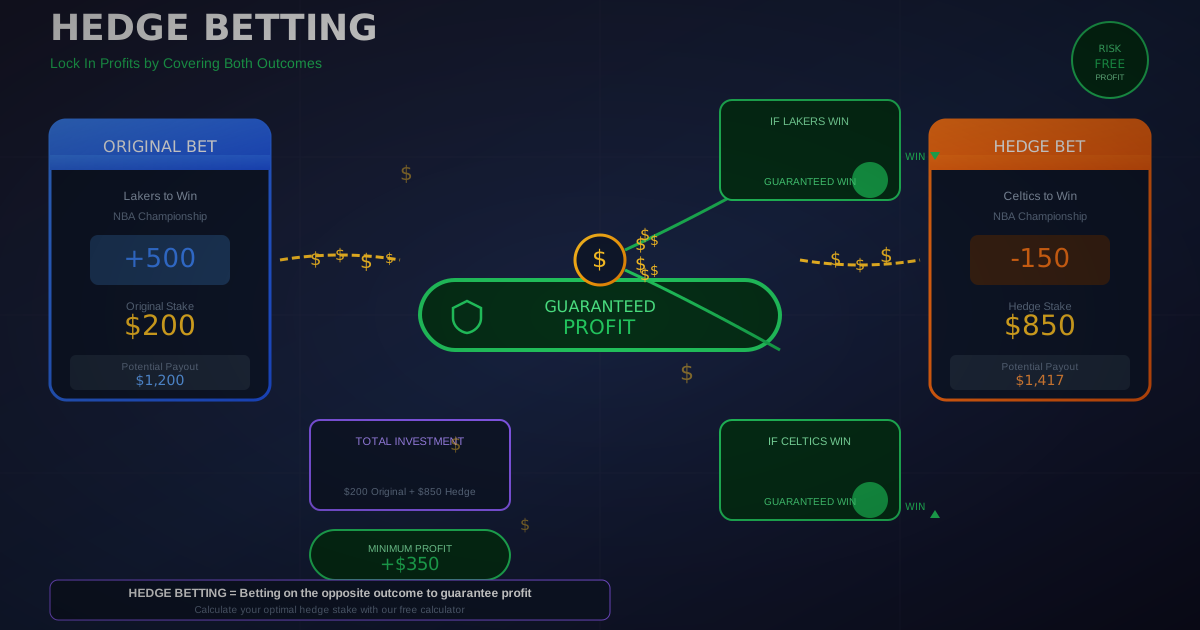
Lock in profits on a live injury bet by hedging with our Hedge Calculator.
How Should You Build an Injury Monitoring System?
An effective injury monitoring system for sports bettors combines official reports, social media intelligence, beat reporter tracking, and historical pattern analysis. The goal is to have an informed opinion on player availability before the market fully prices it in.
Essential Injury Information Sources
| Source Type | Examples | Speed | Reliability | Cost |
|---|---|---|---|---|
| Official league reports | NFL injury report, NBA injury report | Slowest (scheduled releases) | Highest | Free |
| Team beat reporters | ESPN/Athletic team reporters | Fast (1-4 hours before official) | High | Subscription ($5-10/mo) |
| National insiders | Adam Schefter, Shams Charania, Jeff Passan | Very fast (minutes to hours before) | High | Free (Twitter/X) |
| Player social media | Instagram, Twitter activity | Variable | Low-Moderate | Free |
| Pregame reporters | Stadium reporters at warmups | Very fast (60-90 min before game) | High | Free |
| Injury aggregator sites | RotoGrinders, Fantasy Life, Action Network | Fast (curated feeds) | High | Free to $20/mo |
Building Your Daily Injury Workflow
A practical daily process for injury monitoring:
- Morning (8-9 AM ET): Check overnight injury news. Review NBA injury reports for that evening's games. Scan MLB pitching confirmations.
- Midday (12-1 PM ET): Review NFL practice participation reports (Wednesday-Friday). Check for any updated NBA injury designations.
- Afternoon (2-4 PM ET): Monitor beat reporter updates. Check for any surprise additions to injury reports. For MLB, confirm pitching matchups.
- Pre-game (1-2 hours before): Final injury updates. Check warmup reports for game-time decisions. Place bets if your injury assessment differs from the market.
- During games: Monitor for in-game injuries. Have live betting accounts funded and ready.
Tracking Injury Impact Over Time
Keep a spreadsheet or database tracking:
- Player name, team, position
- Injury designation (Out, Doubtful, Questionable)
- Whether the player actually played
- Line movement associated with the injury
- Game result vs. the injury-adjusted line
- Your bet result (if you wagered)
Over time, this data reveals patterns: which team's injury reports are reliable, which positions the market overvalues, and where your own injury assessments have been most accurate.
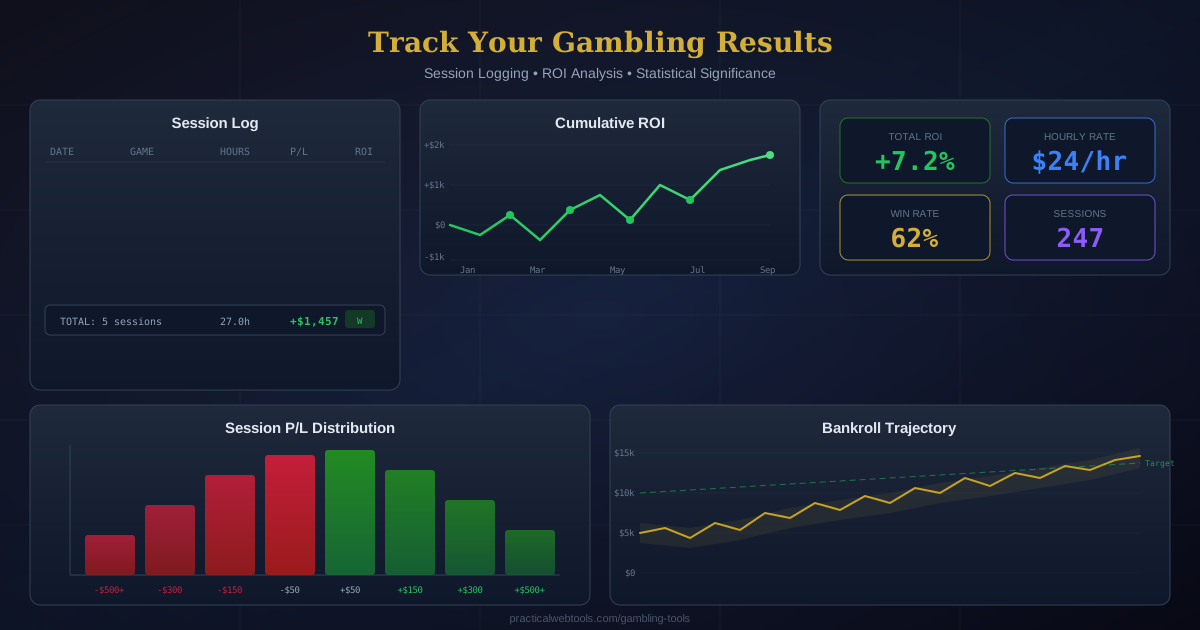
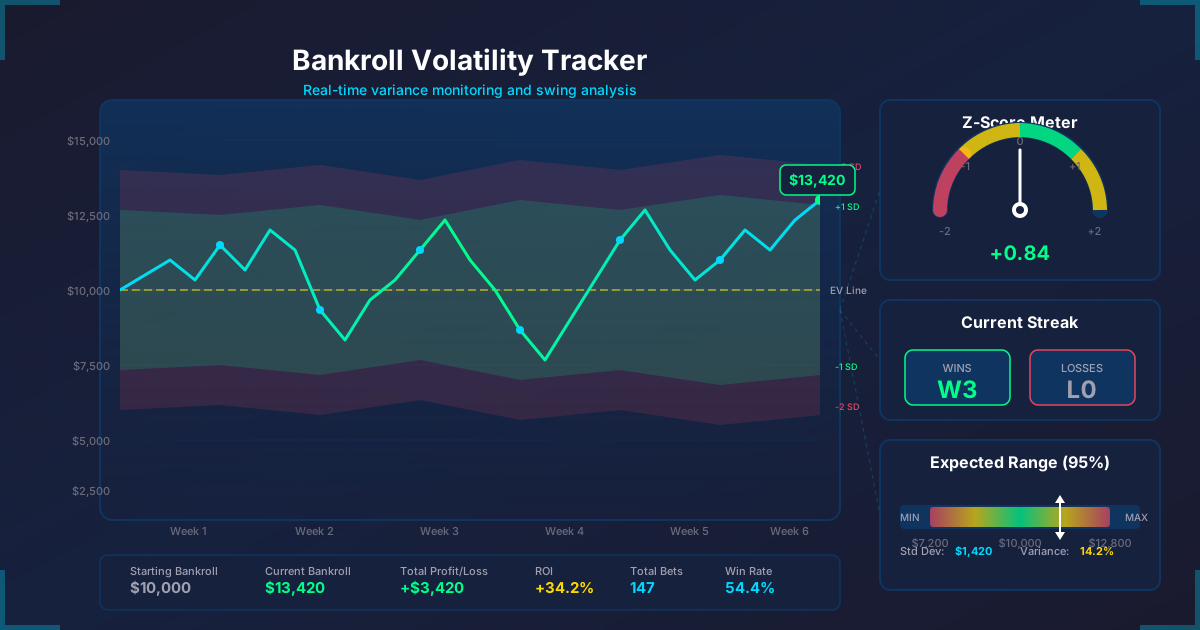
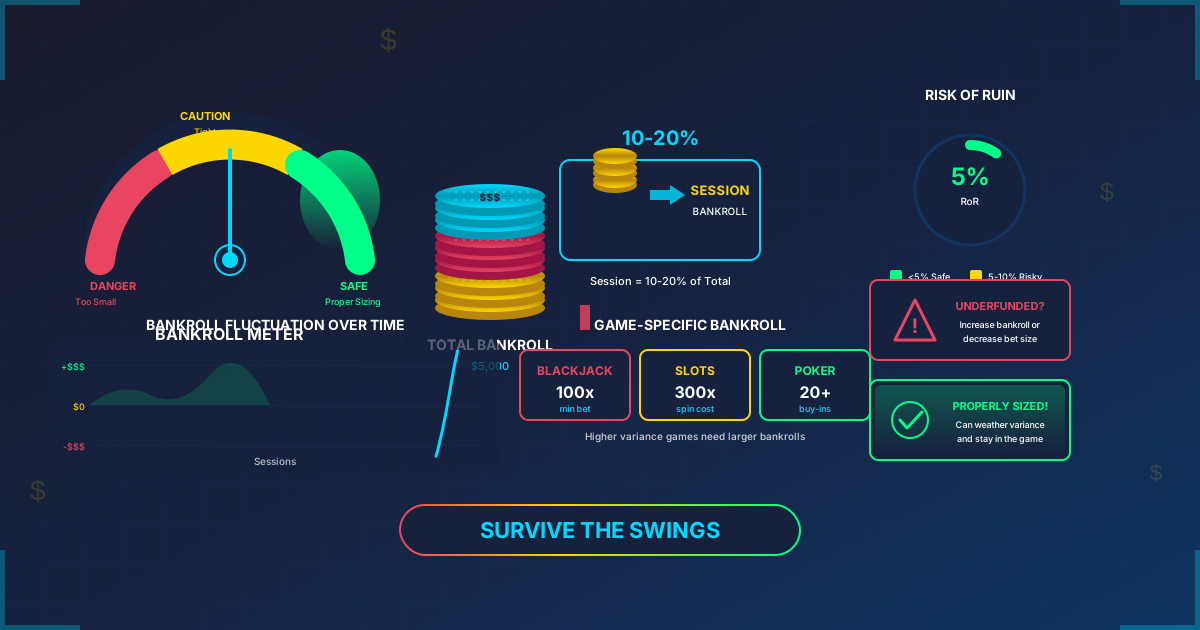
Track the performance of your injury-based betting strategy with our Bankroll Volatility Tracker.
How Do Playoff Injuries Affect Betting Lines Differently Than Regular Season?
Playoff injuries typically create larger line movements than identical regular-season injuries because the stakes amplify the market's emotional reaction, the games are more heavily bet (increasing public money's influence), and there is no "next week" to recover.
Playoff vs. Regular Season Injury Impact
| Injury Type | Regular Season Line Move | Playoff Line Move | Overreaction Rate (Playoffs) |
|---|---|---|---|
| Star QB out (NFL) | 4.0-5.5 pts | 5.5-7.0 pts | 40% of the time, line moves too far |
| Star player out (NBA) | 3.5-5.0 pts | 5.0-6.5 pts | 35% overreaction rate |
| Ace pitcher scratched (MLB) | ML shifts 40-70 cents | ML shifts 60-100 cents | 30% overreaction rate |
| Star player out (NHL) | 0.3-0.5 goals | 0.5-0.8 goals | 25% overreaction rate |
The playoff overreaction creates a contrarian opportunity: betting on the team that lost the injured player when the line has moved beyond the player's true value. This is not intuitive -- it requires betting on the "weaker" team -- but historically, the team affected by the injury covers the inflated spread approximately 54-57% of the time in the playoffs.
Why Playoff Injury Lines Overreact
Several factors drive the overreaction:
- Public money surge. Casual bettors who only wager on playoff games pile onto the team benefiting from the opponent's injury, pushing the line past fair value.
- Narrative bias. Media coverage amplifies the injury story, making it feel more significant than the underlying data supports.
- Recency and availability bias. If the backup player recently performed poorly, bettors overweight that sample even if the backup's career performance is better.
- Failure to account for coaching adjustments. In the playoffs, coaches have more time to prepare and adapt their game plan around the injury. A team missing its star QB may game-plan around the run game, shortening the game and limiting the impact.
Calculate whether the playoff injury line offers value using our Expected Value Calculator.
What Historical Examples Show the Biggest Injury-Driven Line Movements?
Some of the largest injury-driven line movements in sports betting history provide lessons about how the market processes player availability. These examples illustrate both efficient pricing and overreactions that sharp bettors exploited.
Notable Historical Injury Line Movements
| Year | Player/Sport | Injury Situation | Line Before | Line After | Movement | Outcome |
|---|---|---|---|---|---|---|
| 2023 | Josh Allen (NFL) | Elbow injury, questionable | BUF -6.5 | BUF -2.5 | 4.0 pts | Allen played, BUF covered original |
| 2024 | Patrick Mahomes (NFL) | Ankle, ruled out | KC -7 | KC -1 | 6.0 pts | KC lost by 3, under original spread |
| 2023 | Giannis Antetokounmpo (NBA) | Knee, ruled out for series | MIL -4 | MIL +1.5 | 5.5 pts | MIA won by 2, close to adjusted line |
| 2024 | Shohei Ohtani (MLB) | UCL concern, scratched from start | LAD -180 | LAD -115 | 65 cents | LAD won, original line was fair |
| 2022 | Dak Prescott (NFL) | Thumb fracture mid-game | DAL -3 (pregame) | Live: DAL +4 | 7.0 pts live | DAL lost but backup covered |
| 2025 | Luka Doncic (NBA) | Calf strain, out 2 weeks | DAL -5.5 | DAL -1 | 4.5 pts | DAL covered adjusted line |
Lessons from Historical Movements
The data suggests several consistent patterns:
- QB injuries produce the most efficient adjustments because the impact is well-understood and the market has extensive historical data on backup QB performance.
- NBA star injuries tend to overadjust by 0.5-1.5 points because the market overestimates the difference between a star and their replacement in a single game (the replacement often steps up).
- MLB pitching changes are generally fairly priced within the first 15 minutes but overreact in the subsequent public money wave.
- In-game injuries create the most value because the live market must adjust on the fly without the benefit of pregame analysis.
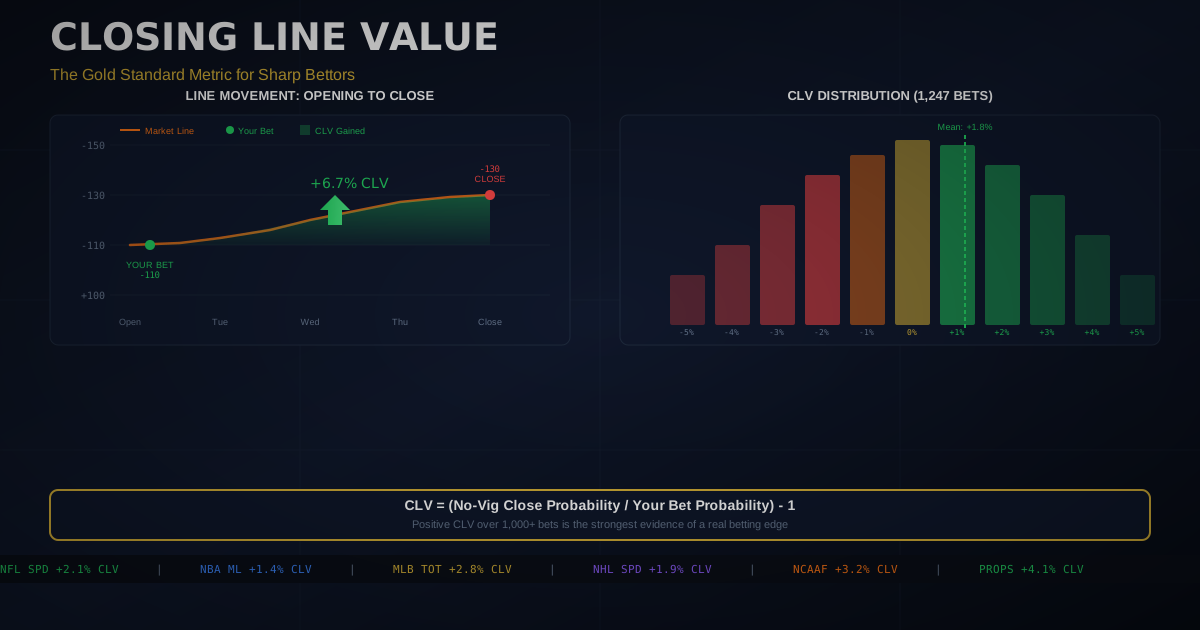
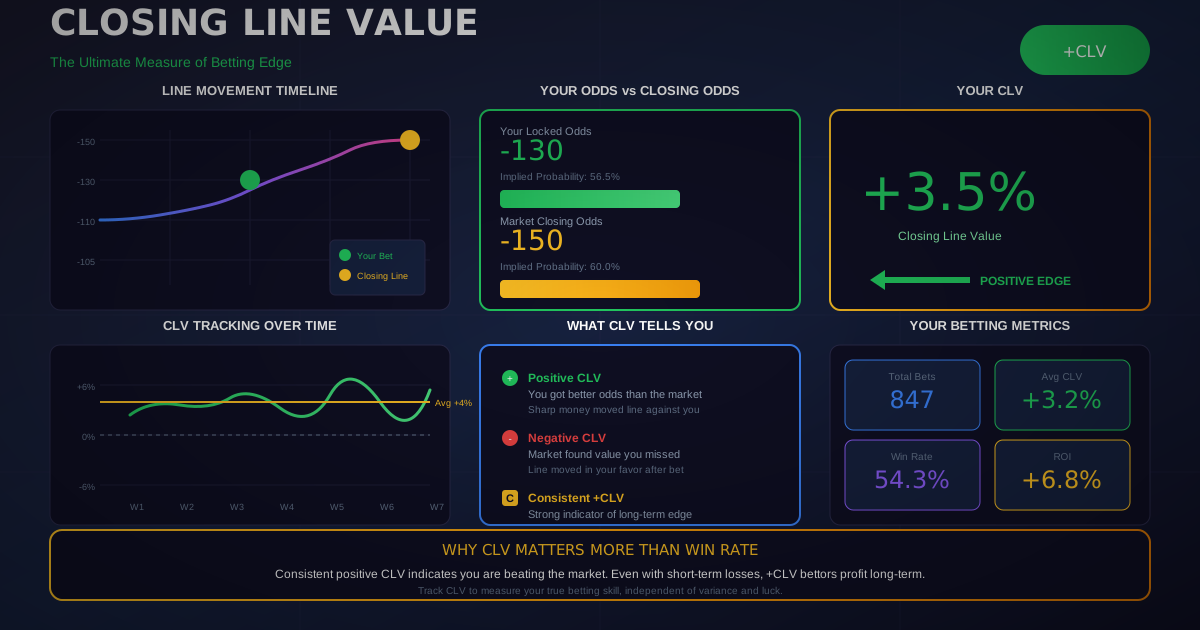
Track your closing line value on injury-adjusted bets over time with our CLV Tracker.
How Do You Quantify the Impact of "Playing Hurt" on Betting Lines?
A player who is active but playing at less than 100% health is often more damaging to a team's betting value than if the player were simply ruled out and the backup took full reps. The market typically does not adjust enough for diminished-capacity players, creating a subtle but consistent edge.
The "Playing Hurt" Discount
| Injury Severity | Est. Performance Level | Market Adjustment | Actual Impact | Edge |
|---|---|---|---|---|
| Minor (tape it and go) | 90-95% | ~0% discount | -0.3 to -0.5 pts | 0.3-0.5 pts |
| Moderate (limited mobility) | 75-85% | ~10-20% of full out impact | -1.0 to -2.0 pts | 0.5-1.5 pts |
| Severe (gutting it out) | 60-75% | ~20-30% of full out impact | -2.0 to -3.5 pts | 1.0-2.0 pts |
| Very severe (decoy territory) | 40-60% | ~30-40% of full out impact | -2.5 to -4.0 pts | 1.0-2.5 pts |
The most exploitable scenario is when a star player is listed as active but is clearly limited. A quarterback with a sprained ankle who cannot scramble effectively may be worth 60-70% of his normal value, but the spread only discounts by 10-20%. The market treats "active" as essentially "healthy," which is often wrong.
How to Identify Playing Hurt Situations
Watch for these indicators that a player is active but significantly limited:
- Practice participation logged as "limited" on Thursday and Friday. If a player never upgrades to full participation, they are likely playing at reduced capacity.
- Change in pregame warmup routine. A quarterback who typically throws deep during warmups but is only throwing short passes is telegraphing limited arm strength or mobility.
- Snap count drops. If a player who normally plays 95% of snaps sees his snap count drop to 70-80%, the injury is affecting availability even though the player is technically "active."
- Reduced statistical production in first quarter. Track whether the player's early-game usage suggests limitation.
Size your "playing hurt" bets appropriately using our Kelly Criterion Calculator.
How Do Injury Impacts Differ Across Sports and Positions?
Injury impacts vary enormously by sport because each sport has different roster sizes, positional value hierarchies, and substitution rules. Understanding these structural differences is essential for correctly pricing injury-driven line movements across your betting portfolio.
Sport-by-Sport Injury Impact Comparison
| Sport | Roster Size (Active) | Star Player % of Team Output | Max Injury Line Impact | Substitution Flexibility |
|---|---|---|---|---|
| NFL | 53 (46 active) | QB: 40-50% of offense | 7.0 pts (franchise QB) | Low -- position-specific |
| NBA | 15 (13 active) | Star: 25-35% of usage | 6.0 pts (MVP-caliber) | High -- positionless basketball |
| MLB | 26 (active roster) | Pitcher: 70-80% of game impact | 120 cents ML (ace) | None during game for SP |
| NHL | 23 (20 dressed) | Goalie: 50-60% of team defense | 0.8 goals (elite goalie) | Moderate -- line shuffling |
| Soccer | 25 (18 match day) | Star: 15-25% of attack | 5-10% win prob shift | Low -- 3 subs max |
NFL: The Quarterback Monopoly
The NFL is unique among major sports in how heavily a single position dominates the injury calculus. No other sport has a single position that touches every offensive play and has such an enormous talent gap between starters and backups. This is why NFL quarterback injuries produce the largest and most efficient line movements in sports betting.
However, the quarterback monopoly also means that non-QB injury impacts are often underestimated. A defense losing its top pass rusher and top cornerback simultaneously may see a combined 1.5-2.0 point impact, but because the market is fixated on quarterback health, defensive injuries frequently fly under the radar. Sharp bettors who track defensive personnel at a granular level can find consistent value here.
NBA: The Usage Concentration Problem
The NBA's injury impact is uniquely concentrated because modern basketball features 2-3 players who handle 50-70% of a team's offensive possessions. When one of these high-usage players is out, the remaining players must assume responsibilities they are not accustomed to, leading to efficiency drops that exceed the simple per-minute production replacement.
This is why NBA star injuries sometimes cause line movements that seem excessive but are actually well-calibrated. A player like Nikola Jokic or Luka Doncic does not just contribute points -- they orchestrate the entire offense. Removing them does not just remove their individual production; it degrades the production of every teammate who benefited from their playmaking.
MLB: The Binary Pitcher Problem
MLB is the only major sport where a single player (the starting pitcher) has a near-total monopoly on one side of the game for 5-7 innings. This creates binary outcomes: if the announced pitcher starts, your handicap is valid. If a different pitcher starts, your entire analysis may be wrong.
This is why using "listed pitchers" for MLB bets is strongly recommended. The difference between an ace with a 2.50 ERA and a replacement-level starter with a 5.00 ERA is approximately 2.5 expected runs over 6 innings -- an enormous gap that can flip the entire game projection.
Compare injury-adjusted odds across all sports with our Odds Converter.
Injury Recovery Timelines and Return-to-Form Data
Another underappreciated factor is how quickly players return to full performance after different injury types. The market often treats a player's first game back from injury as if they are at 100%, but the data shows measurable performance declines in the first 1-3 games after returning from significant injuries.
| Injury Type | Typical Recovery | Games to Full Performance | First-Game-Back Performance |
|---|---|---|---|
| Ankle sprain (Grade 1-2) | 1-3 weeks | 2-3 games | 80-85% of baseline |
| Hamstring strain | 2-4 weeks | 3-5 games | 75-85% of baseline |
| Concussion | 1-2 weeks | 1-2 games | 85-90% of baseline |
| ACL return (NFL) | 9-12 months | 4-8 games | 70-80% of pre-injury level |
| Tommy John (MLB) | 12-18 months | 5-10 starts | 80-90% of pre-injury velocity |
The betting implication: when a star player returns from injury, the market typically prices them at close to full value immediately. The smart play is to bet against the returning player's team in their first 1-2 games back, especially after lower-body injuries that affect mobility (ankle, knee, hamstring).
Calculate the EV of fading a player's first game back with our Expected Value Calculator.
Frequently Asked Questions
How much does a starting NFL quarterback injury move the line? A starting NFL quarterback injury typically moves the spread by 3-7 points depending on the quarterback's quality. A top-5 franchise quarterback (Mahomes, Allen, Burrow) being ruled out can move the line 5-7 points. A mid-tier starter being replaced by a competent backup moves the line 3-4 points. A below-average starter being replaced moves it 1.5-3 points. These values represent the market's assessment of the gap between the starter and backup.
Should I bet as soon as injury news breaks? For recreational bettors, trying to beat the market in the first 30-60 seconds after major injury news is almost impossible -- sharp bettors and algorithms are faster. Instead, wait 1-24 hours for the overreaction phase, where public money may push the line past fair value. The team that lost the injured player covers the inflated spread approximately 54-57% of the time in high-profile injury situations.
How do I read NBA injury reports for betting purposes? NBA injury reports are released daily, usually by 1 PM ET for that evening's games (5 PM for West Coast games). The key designations are Out (will not play), Doubtful (8-15% chance of playing), Questionable (45-55% chance), and Probable (88-95% chance). Track each team's patterns -- some list players as questionable who always end up playing, while others use the designation more honestly.
Do offensive line injuries matter for betting? Yes, but the market significantly underprices them. An elite left tackle being out is worth approximately 0.5-1.0 points on the spread but often receives minimal line movement because casual bettors and media focus on skill position players. If your model tracks offensive line health separately, you may find consistent value in games where key linemen are out but the line has barely moved.
How do MLB pitching changes affect totals? A late pitching change from an ace to a replacement-level starter can push the total up by 1-3 runs and shift the moneyline by 30-80 cents. The total adjustment is usually accurate within the first 15 minutes, but subsequent public money on the over can create value on the under if the replacement pitcher is better than the market implies.
What is a "decoy" injury in the NFL? A decoy injury occurs when a team lists a player as questionable or game-time decision to create strategic uncertainty for the opposing coaching staff, even though the player is expected to play. The opposite also occurs -- a player is listed as questionable to mask the fact that they will definitely sit. Beat reporters and Friday practice reports are the best tools for identifying decoys.
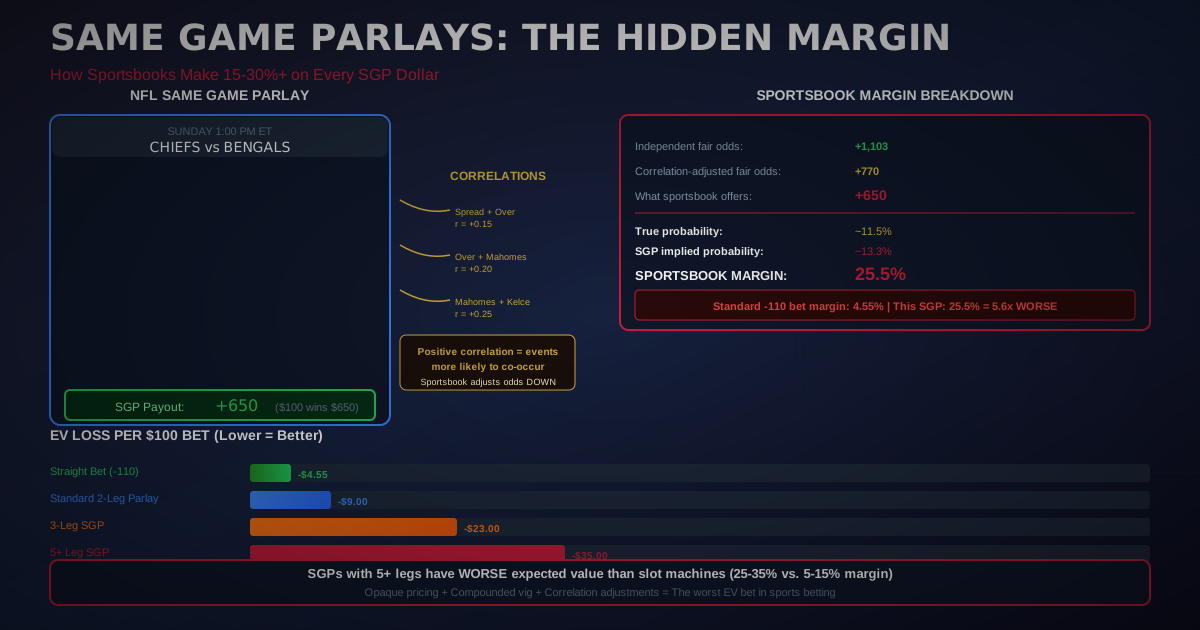
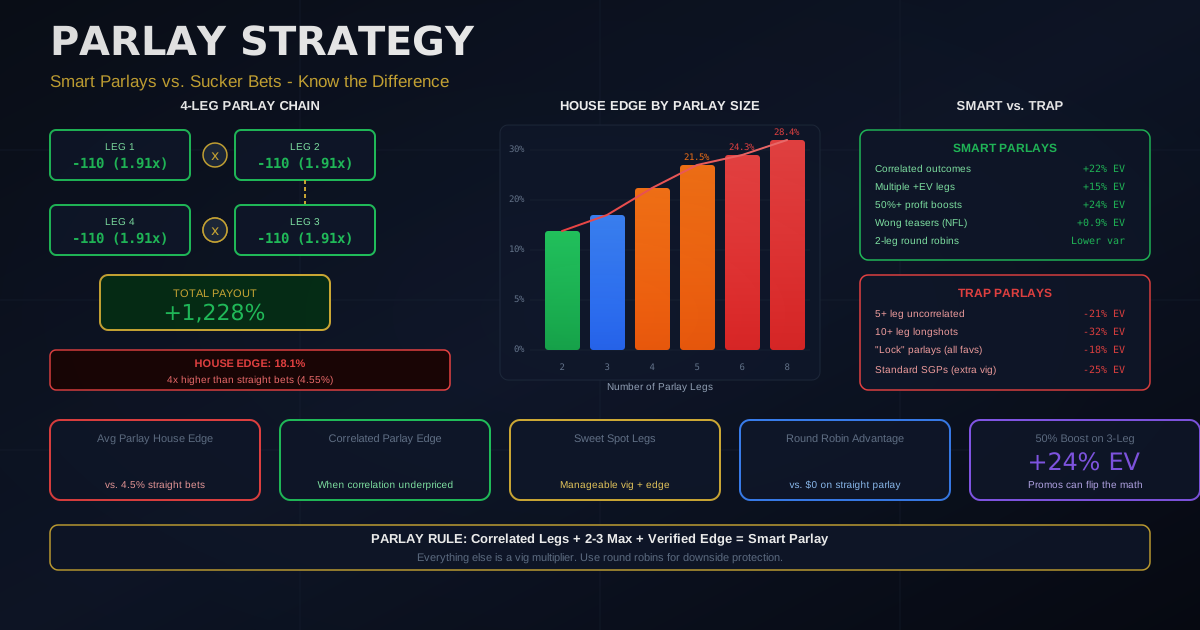
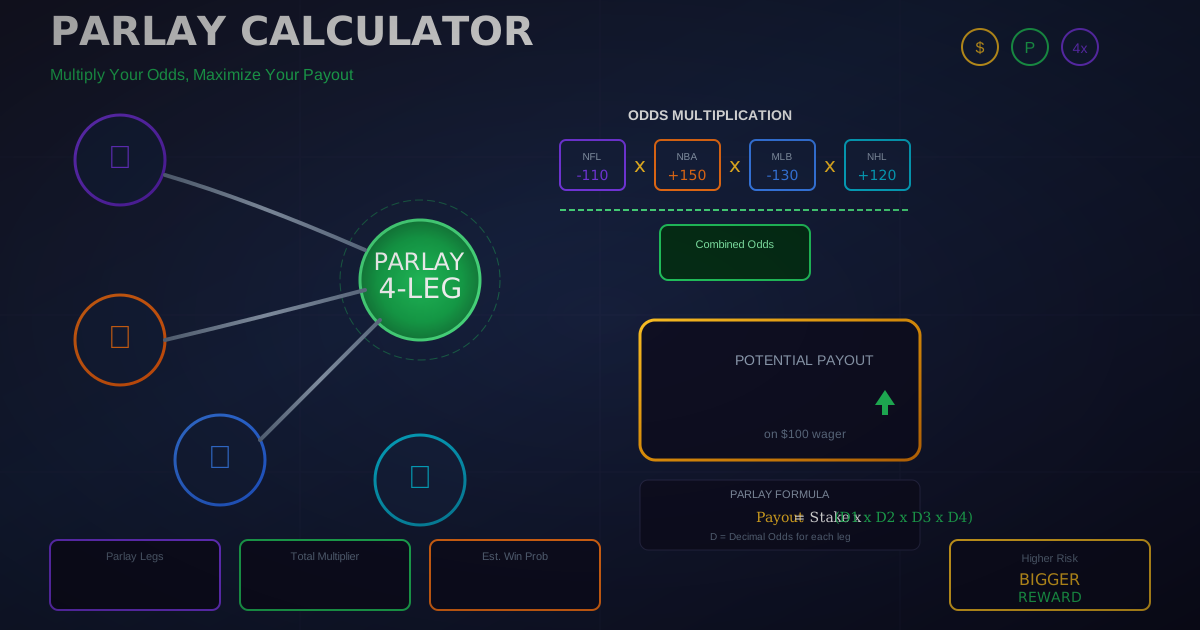
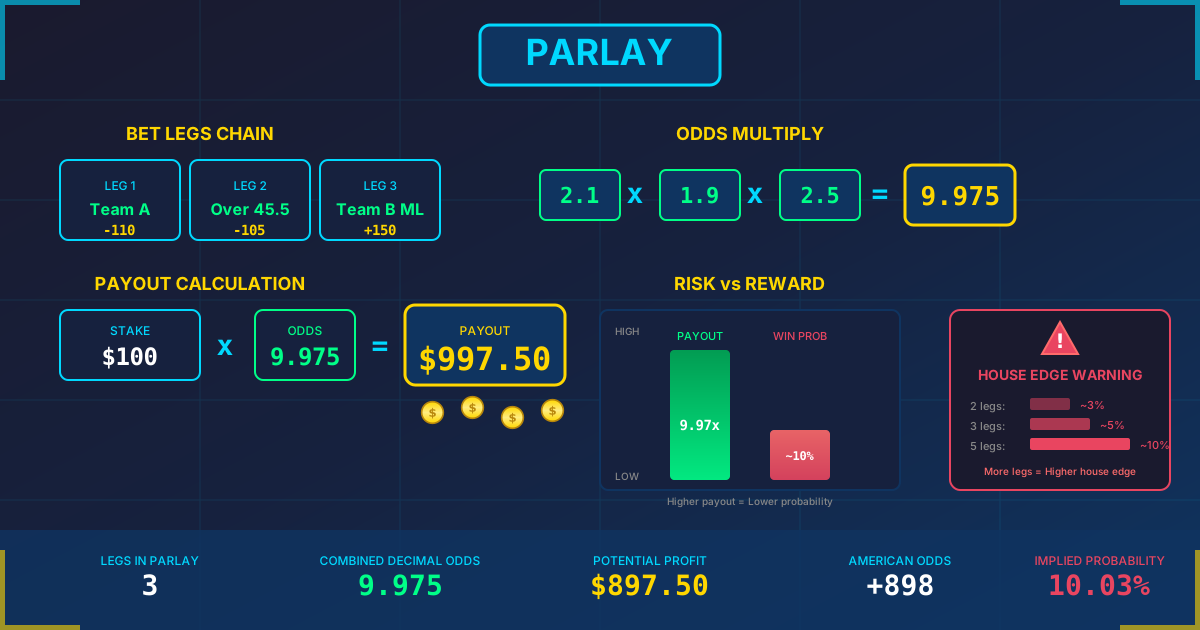
How should I factor injuries into parlay bets? Injuries can strengthen parlay legs if you have a strong read on the injury situation before the market fully adjusts. However, injury uncertainty also adds variance. If a key player is a game-time decision, avoid including that game in a parlay unless you have high confidence in the outcome regardless of the player's status. Use "listed pitchers" in MLB parlays to protect against unexpected scratches.
Do injuries matter more in the playoffs? Playoff injury line movements are typically 25-40% larger than regular-season movements for the same injury because public betting volume surges and narrative bias amplifies the perceived impact. Historically, the team that lost the injured player covers the inflated playoff spread more often than not, suggesting the market overreacts during the postseason.
Related Tools
- Expected Value Calculator: Calculate whether an injury-adjusted line offers a positive expected value bet at current odds.
- Odds Converter: Compare injury-adjusted lines across sportsbooks in any odds format.
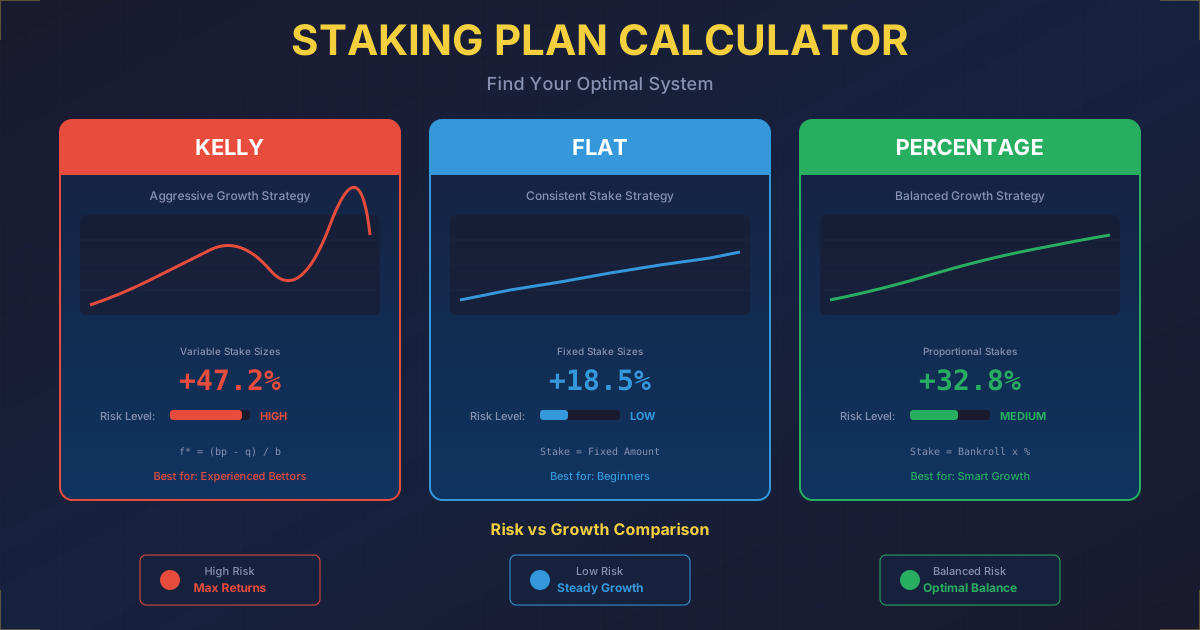
- Kelly Criterion Calculator: Size your injury-driven bets optimally based on your estimated edge.
- Implied Probability Calculator: Convert the injury-adjusted odds into win probabilities to compare against your model.
- Hedge Calculator: Lock in profits when an injury announcement moves the line after your initial bet.
- Arbitrage Calculator: Find risk-free profits when different books adjust at different speeds for injury news.
- Bankroll Volatility Tracker: Track the variance and drawdowns from your injury-based betting strategy.
- CLV Tracker: Measure whether your injury bets consistently beat the closing line.
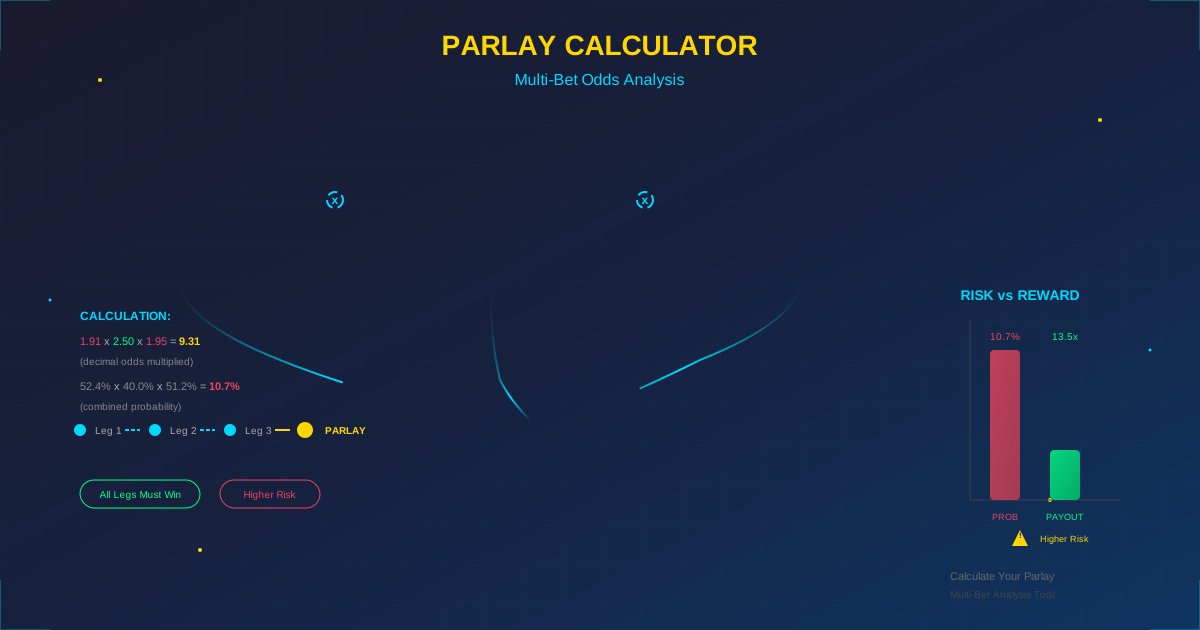
- Parlay Calculator: Build multi-game parlays with injury-adjusted legs across sports.
- Hold/Vig Calculator: Find the sportsbook with the lowest margin on injury-adjusted markets.
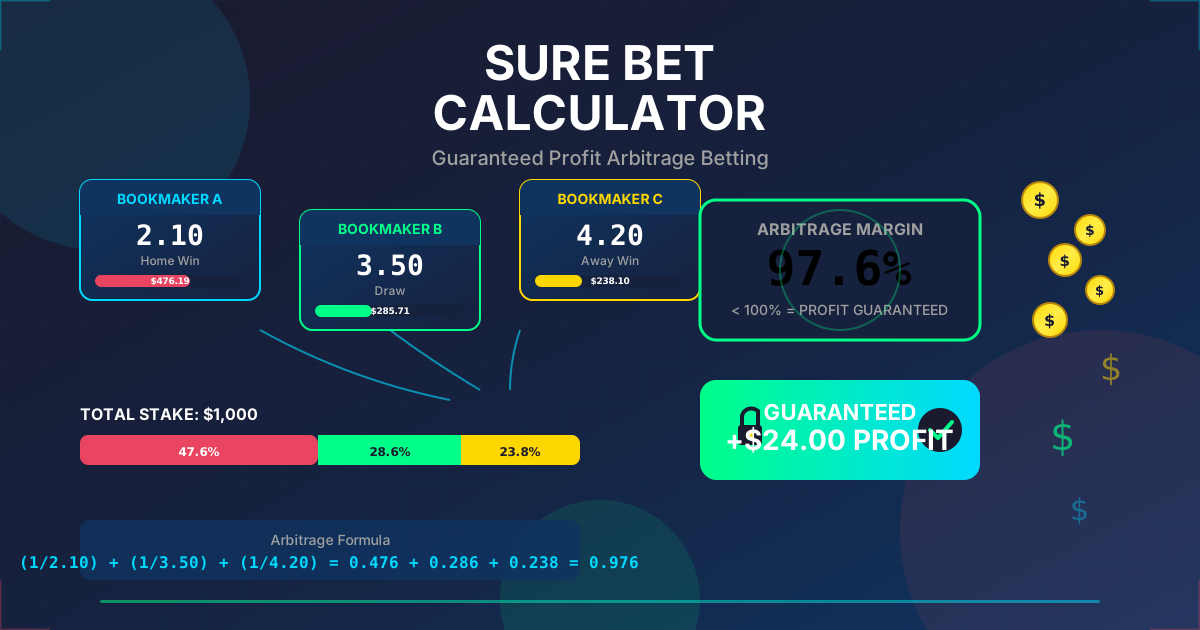
- Sure Bet Calculator: Identify guaranteed profits from injury-driven line discrepancies between books.
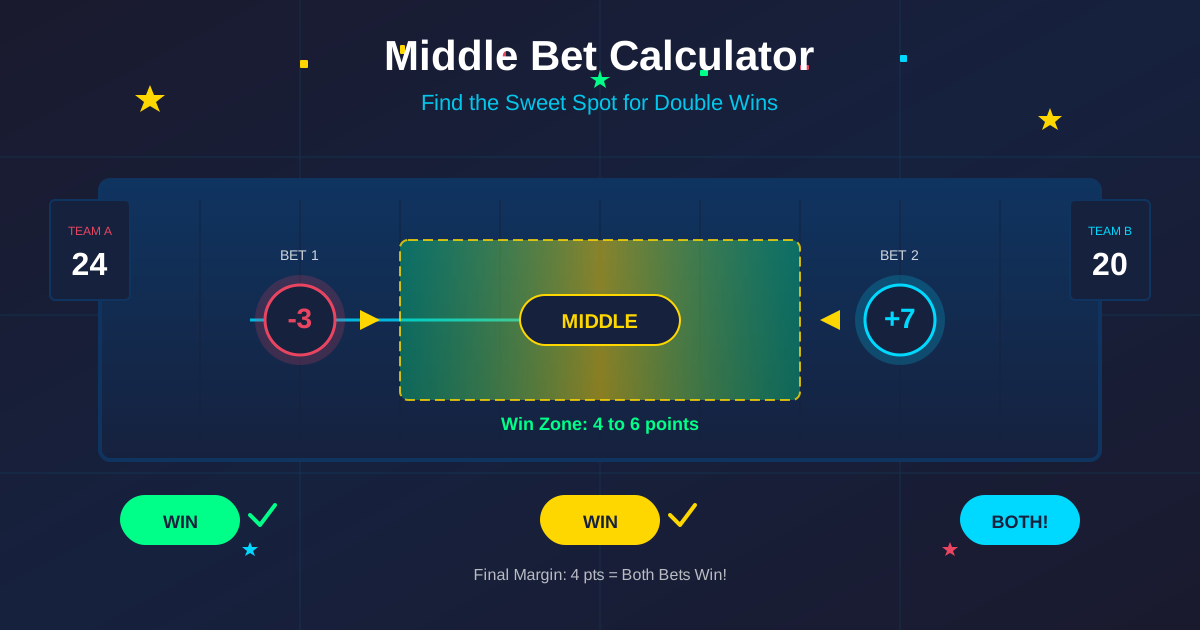
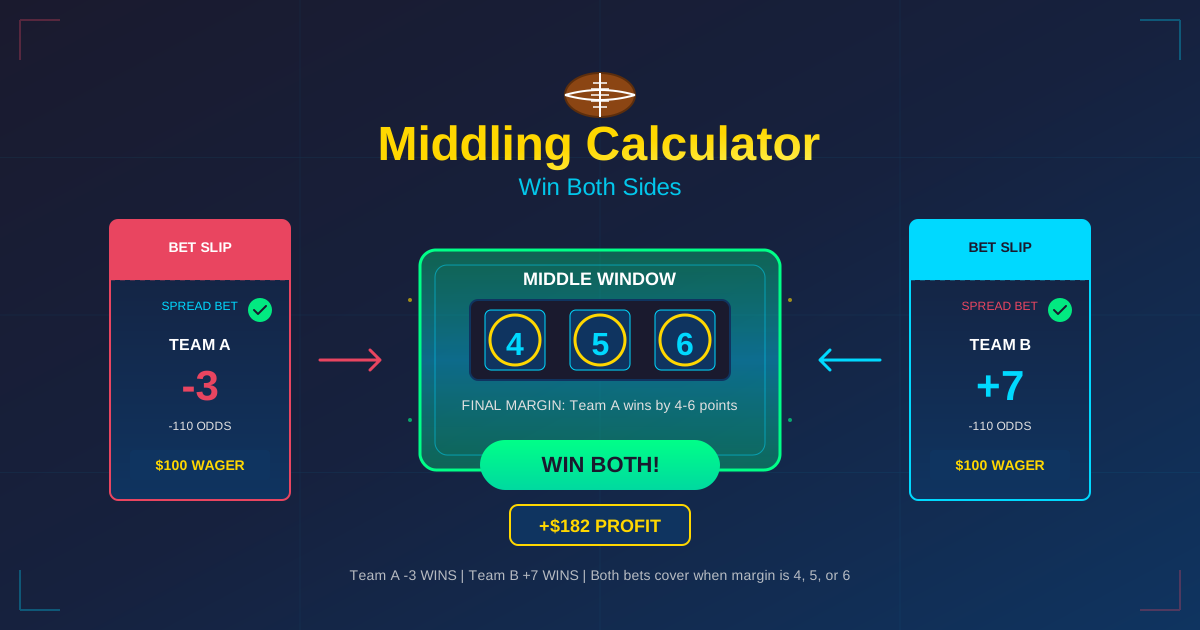
- Middle Bet Calculator: Find middling opportunities when injury news creates a gap between pre- and post-injury lines.
Injuries are the great equalizer in sports and the great disruptor in betting markets. The information is publicly available to everyone, but the interpretation -- knowing how much an injury is truly worth, when the market has overreacted, and how to exploit the gap between perception and reality -- is where the edge lives. Build your injury monitoring system, track your results, and bet the discrepancies between your assessment and the market's.
Start running injury-adjusted expected value calculations with our free Expected Value Calculator -- no account needed.
Gambling involves risk and should be approached as entertainment, not as a source of income. Always bet within your means, set strict bankroll limits, and never chase losses. If you or someone you know has a gambling problem, contact the National Council on Problem Gambling at 1-800-522-4700 or visit ncpgambling.org. Must be 21+ to gamble in most US jurisdictions. Please play responsibly.