Sportsbook Terms and Conditions: How to Read the Fine Print and Avoid Traps (2026)
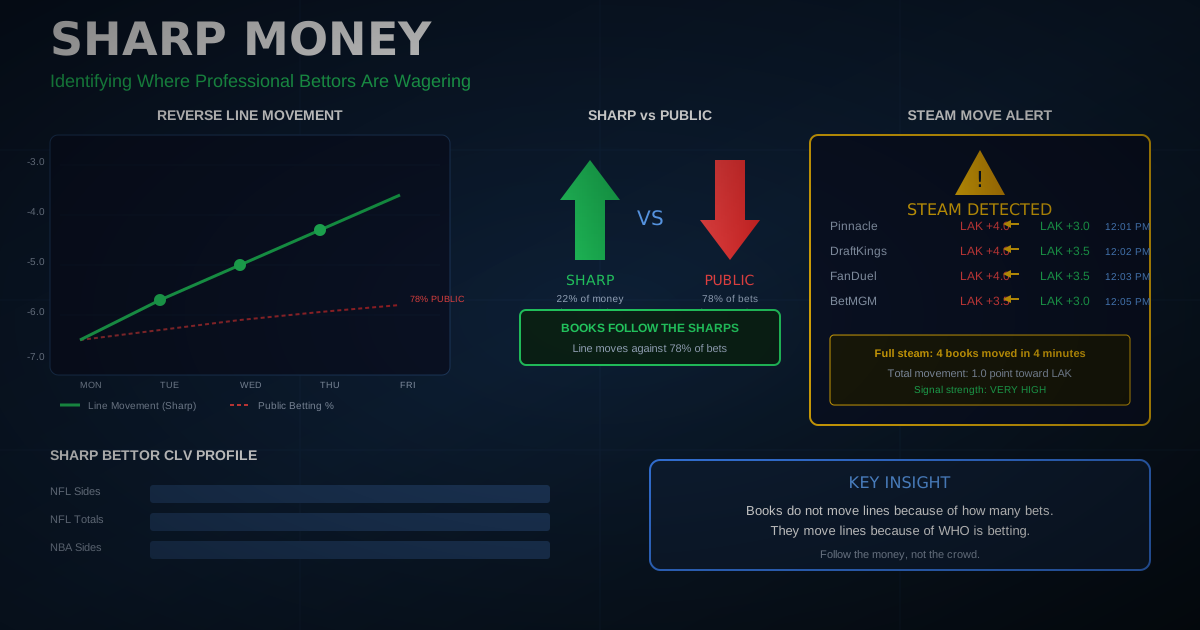
The average sportsbook terms and conditions document runs 15,000 to 25,000 words---longer than a novella---and fewer than 3% of bettors read them before depositing money. Buried in that legal text are rollover requirements that can lock up your funds for months, withdrawal restrictions that delay payouts by weeks, bet-voiding clauses that can erase winning wagers, and account limitation policies that penalize successful bettors.
Every year, thousands of bettors lose money not because they picked the wrong side, but because they did not understand the rules governing their account. A $1,000 "risk-free bet" that requires 10x rollover means you must wager $10,000 before withdrawing a penny. A "maximum payout" clause can cap your parlay winnings at $100,000 even if the calculated payout is $500,000. A "palping error" provision can void your bet after you have already celebrated a win.
This guide dissects every critical section of sportsbook terms and conditions, explains what the fine print actually means in plain language, compares policies across major operators, and gives you the knowledge to protect your money and avoid the most common traps.
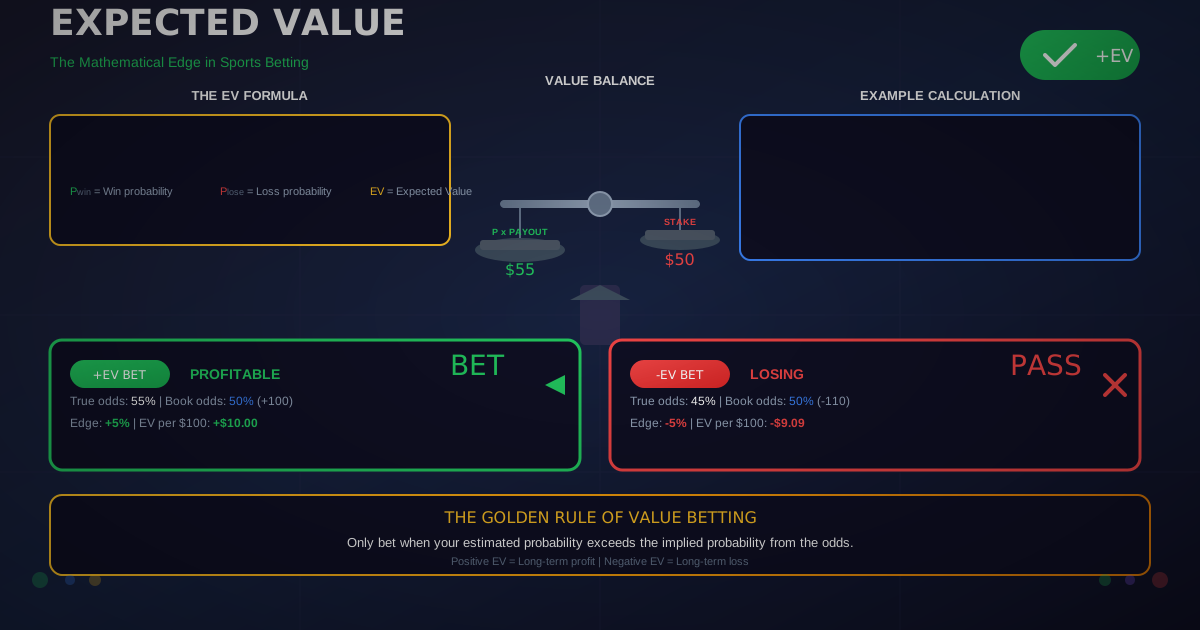
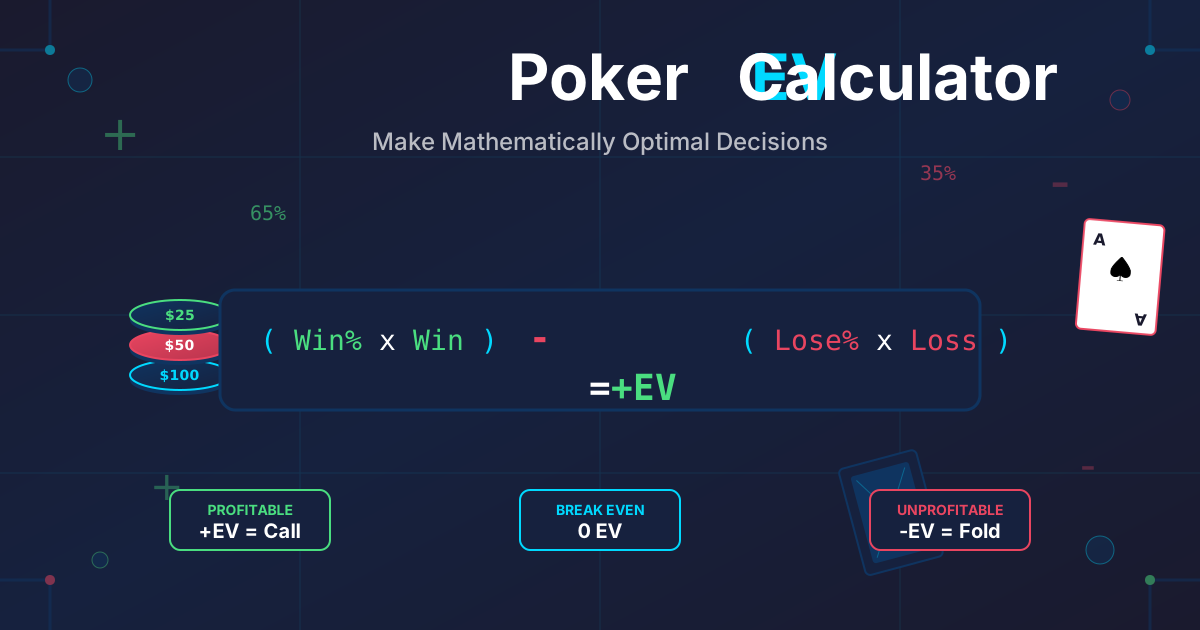
Before accepting any sportsbook bonus, calculate the true cost of rollover requirements with our free Expected Value Calculator.
What Are Rollover Requirements and Why Do They Matter?
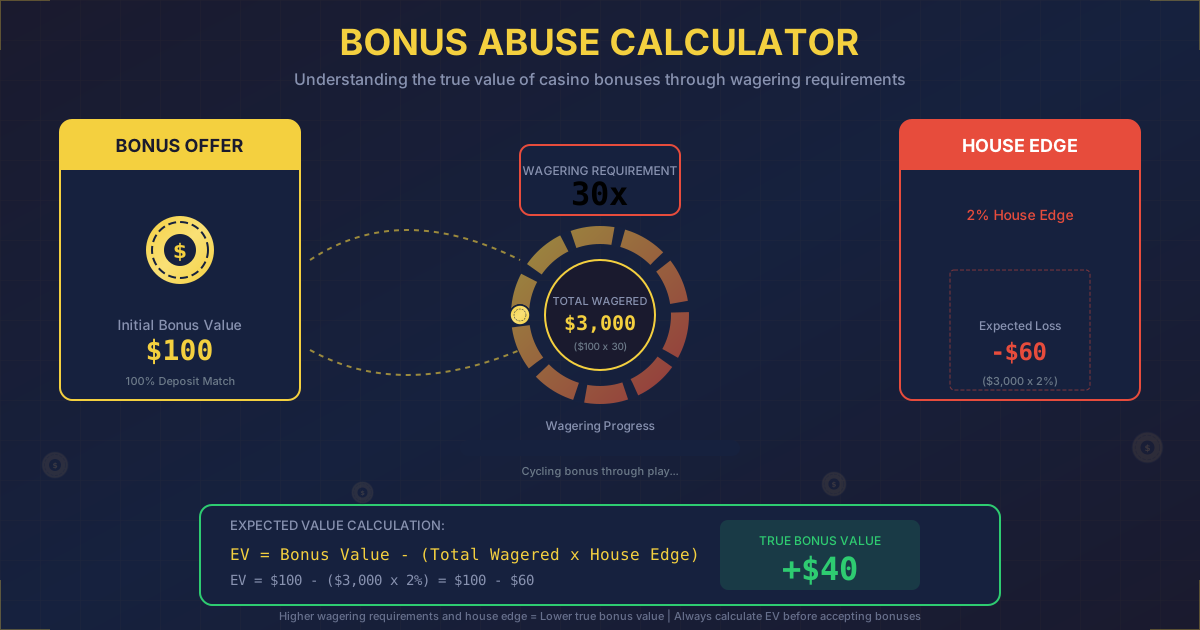
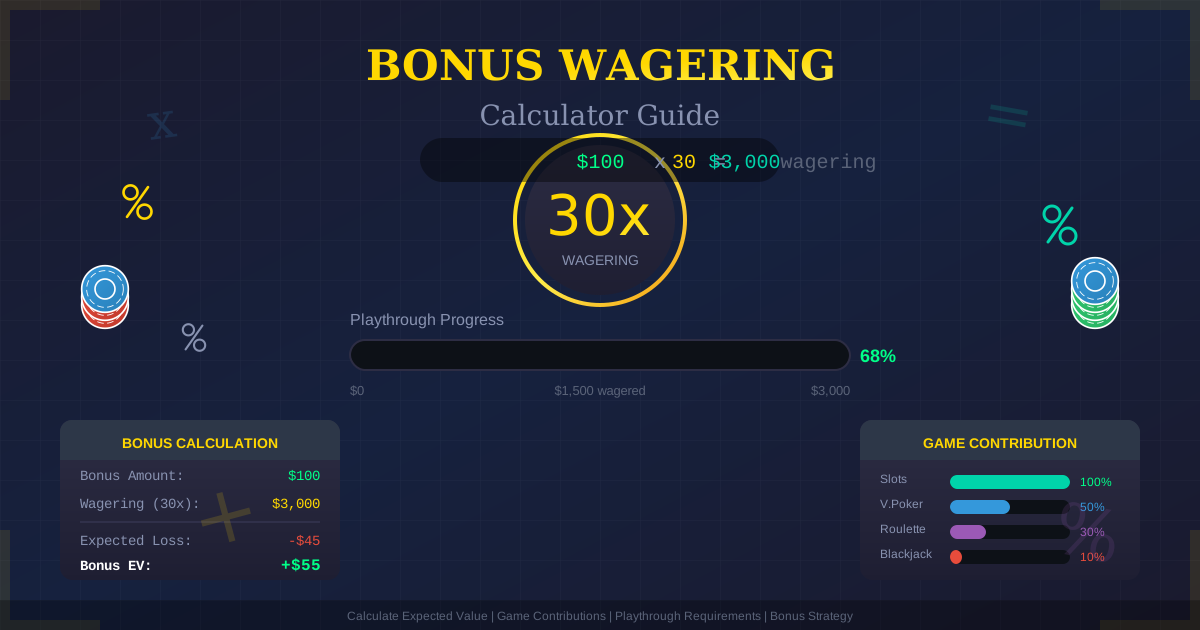
Rollover requirements (also called wagering requirements or playthrough requirements) are the single most important terms to understand before accepting any sportsbook bonus. They determine how much you must wager before you can withdraw bonus funds or associated winnings.
How Rollover Requirements Work
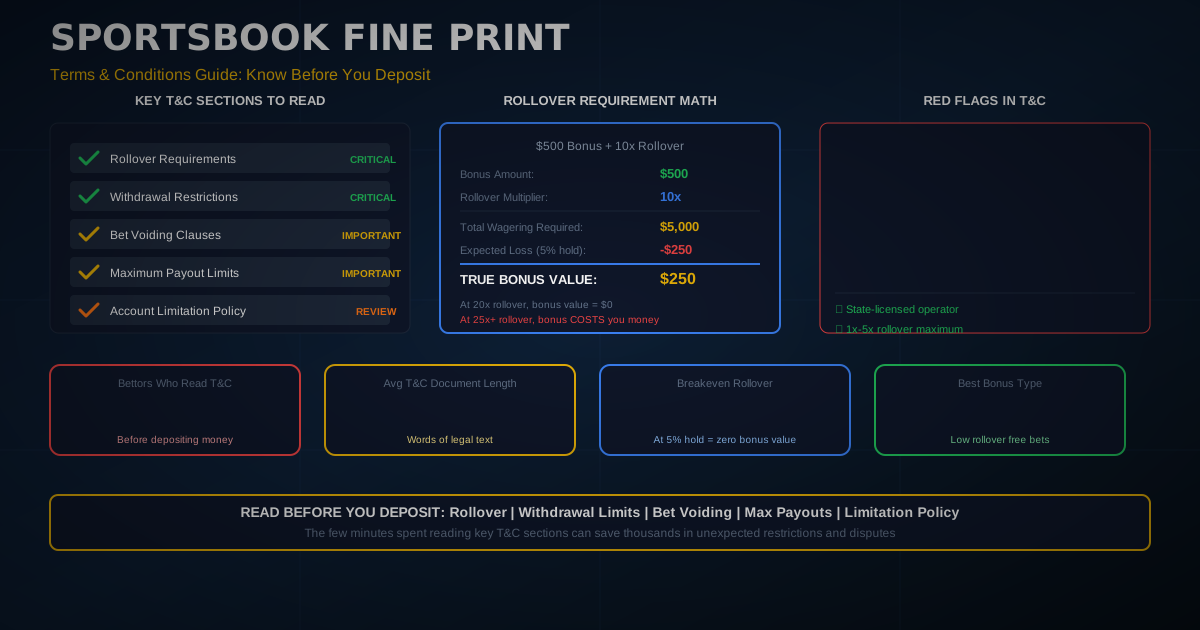
When a sportsbook offers a "$500 deposit match with 10x rollover," this means:
- You deposit $500
- The sportsbook matches with $500 bonus
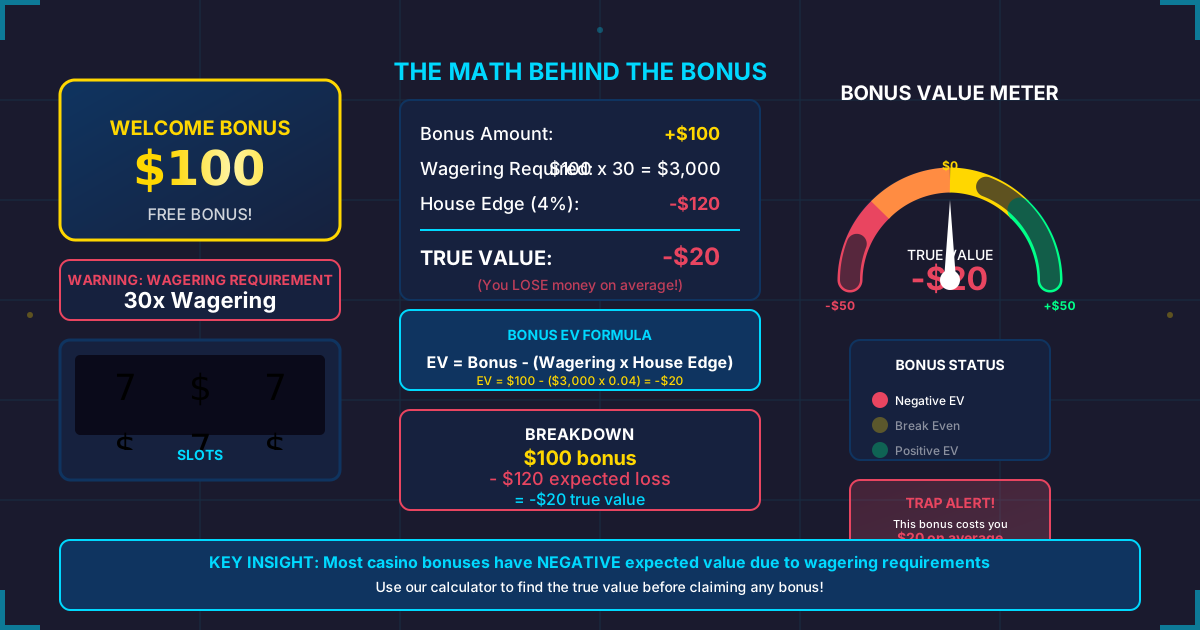
- You must wager $500 x 10 = $5,000 in total bets before withdrawing
- Only bets at minimum odds (usually -200 or longer) count toward rollover
- The rollover period is typically 30-90 days
The True Cost of Rollover
The real cost of a rollover requirement depends on the sportsbook's hold percentage and the minimum odds restriction:
| Rollover Multiplier | Bonus Amount | Total Wagering Required | Expected Loss at 5% Hold | Net Bonus Value |
|---|---|---|---|---|
| 1x | $500 | $500 | $25 | $475 |
| 3x | $500 | $1,500 | $75 | $425 |
| 5x | $500 | $2,500 | $125 | $375 |
| 10x | $500 | $5,000 | $250 | $250 |
| 15x | $500 | $7,500 | $375 | $125 |
| 20x | $500 | $10,000 | $500 | $0 |
| 25x | $500 | $12,500 | $625 | -$125 |
At a typical 5% hold rate, a 20x rollover requirement completely eliminates the value of a deposit match bonus. Anything above 20x actually costs you money compared to not accepting the bonus.
Rollover Requirements by Major Sportsbook (2026)
| Sportsbook | Welcome Offer | Rollover | Min Odds | Time Limit | True Value* |
|---|---|---|---|---|---|
| DraftKings | Bet $5, Get $200 in bonus bets | 1x | -300 | 7 days | High |
| FanDuel | Bet $5, Get $200 in bonus bets | 1x | None | 14 days | High |
| BetMGM | Up to $1,500 first bet offer | 1x (if refunded) | -200 | 7 days | Moderate |
| Caesars | Up to $1,000 first bet | 1x (if refunded) | -200 | 14 days | Moderate |
| ESPN BET | Bet $10, Get $150 in bonus bets | 1x | -300 | 7 days | Good |
| bet365 | Up to $1,000 first bet safety net | 1x | -200 | 30 days | Good |
| Hard Rock Bet | No Regret First Bet up to $100 | 1x | -200 | 7 days | Good |
| BetRivers | 2nd chance bet up to $500 | 1x | -200 | 7 days | Good |
*True value considers rollover difficulty, odds restrictions, and time limitations.
Red Flags in Rollover Terms
Watch for these predatory rollover provisions:
| Red Flag | What It Means | Risk Level |
|---|---|---|
| 15x+ rollover | Extremely difficult to clear; bonus likely worthless | High |
| -200 or shorter odds only | Limits your ability to find +EV bets during rollover | Moderate |
| "Bonus funds used first" | Your bonus balance depletes before your cash balance | High |
| No partial withdrawal | Cannot withdraw any funds until full rollover complete | High |
| Rollover resets on deposit | Making a new deposit restarts the clock | Very High |
| Voided bets don't count | Cancelled or voided bets do not contribute to rollover | Moderate |
Calculate the exact expected value of any bonus offer with our Expected Value Calculator to determine if the rollover makes it profitable.
What Withdrawal Restrictions Should You Know About?
Withdrawal policies are where many bettors encounter their most frustrating experiences. Understanding these terms before you deposit can save significant headaches.
Standard Withdrawal Terms
Most regulated US sportsbooks have similar baseline withdrawal policies:
| Policy | Typical Terms | What to Watch For |
|---|---|---|
| Minimum withdrawal | $10-$25 | Some books set $50+ minimums |
| Processing time | 1-5 business days | Bank transfers can take 5-7 days |
| Maximum withdrawal (per transaction) | $10,000-$100,000 | Varies widely by method and operator |
| Monthly withdrawal limit | $25,000-$100,000 | Lower for newer accounts |
| Withdrawal methods | Must match deposit method | Cannot deposit via card, withdraw to different account |
| Identity verification | Required for first withdrawal | Can delay first payout by 24-72 hours |
| Reversal period | 0-24 hours | Some books let you cancel a withdrawal |
Why Withdrawal Methods Matter
The withdrawal method you choose significantly affects how quickly you receive your money:
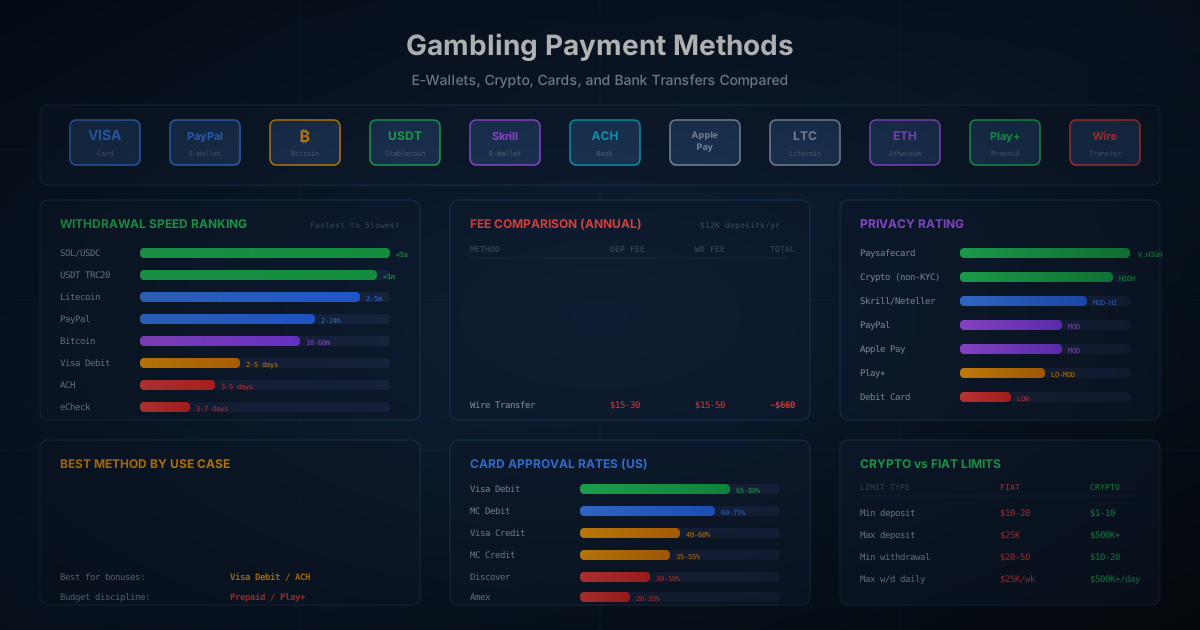
| Method | Typical Processing | Fees | Maximum |
|---|---|---|---|
| PayPal | 1-24 hours | Free | $10,000-$60,000 |
| Venmo | 1-24 hours | Free | $10,000-$50,000 |
| Online banking (ACH) | 2-5 business days | Free | $100,000+ |
| Debit card | 2-5 business days | Free | $10,000-$25,000 |
| Check by mail | 7-14 business days | Free | $100,000+ |
| Wire transfer | 1-3 business days | $15-$30 | $100,000+ |
| Cash at cage (retail) | Instant | Free | $5,000-$25,000 |
Common Withdrawal Traps
1. "Reverse withdrawal" policies: Some sportsbooks allow you to cancel a pending withdrawal and return the funds to your betting account. While this seems like a feature, it encourages impulsive re-gambling of money you intended to cash out. Some operators even enable this by default.
2. "Deposit method" matching: You must withdraw using the same method you deposited with, up to the deposit amount. If you deposited $500 via credit card and won $2,000, the first $500 withdrawal goes back to your card, and only the remaining $1,500 can go to your chosen method.
3. Staged payouts for large wins: Wins above $25,000-$100,000 may be paid in installments over weeks or months rather than as a lump sum. Check the maximum single withdrawal amount in the T&C.
4. "Pending period" exploitation: During the 24-72 hour verification period before your first withdrawal, operators often send promotional offers encouraging you to keep playing.
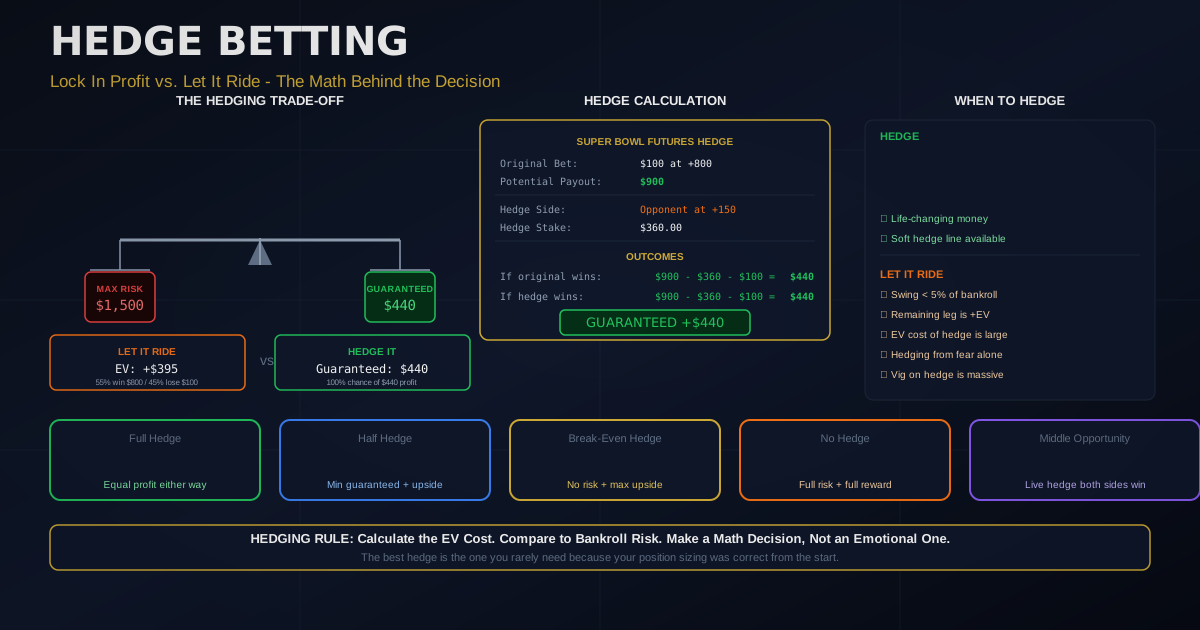
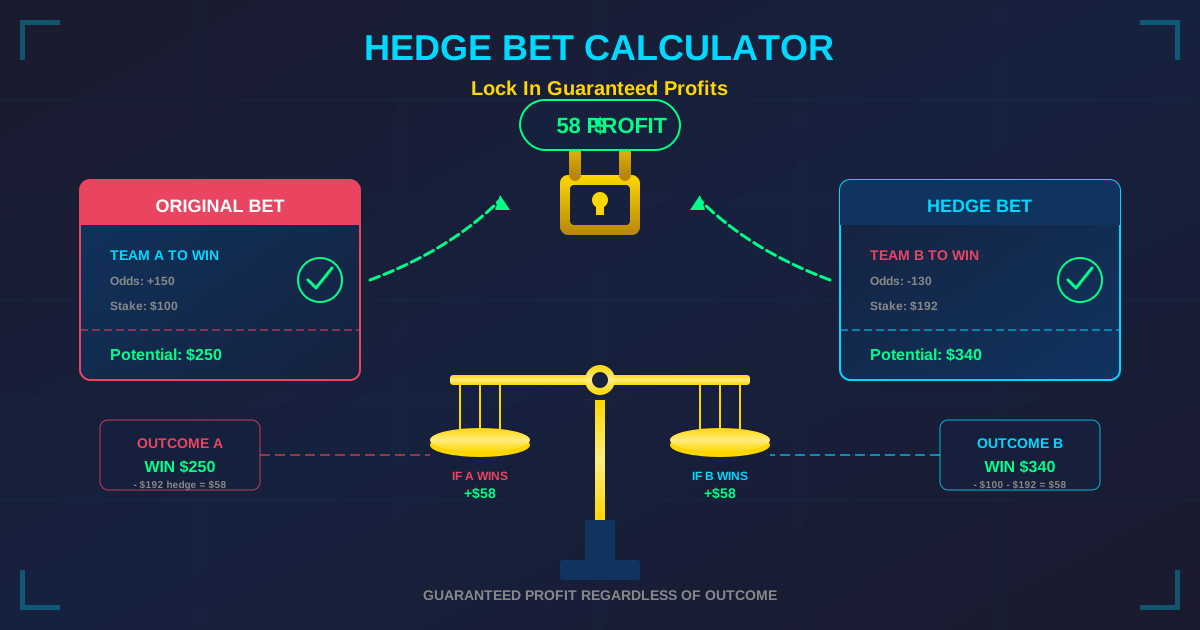
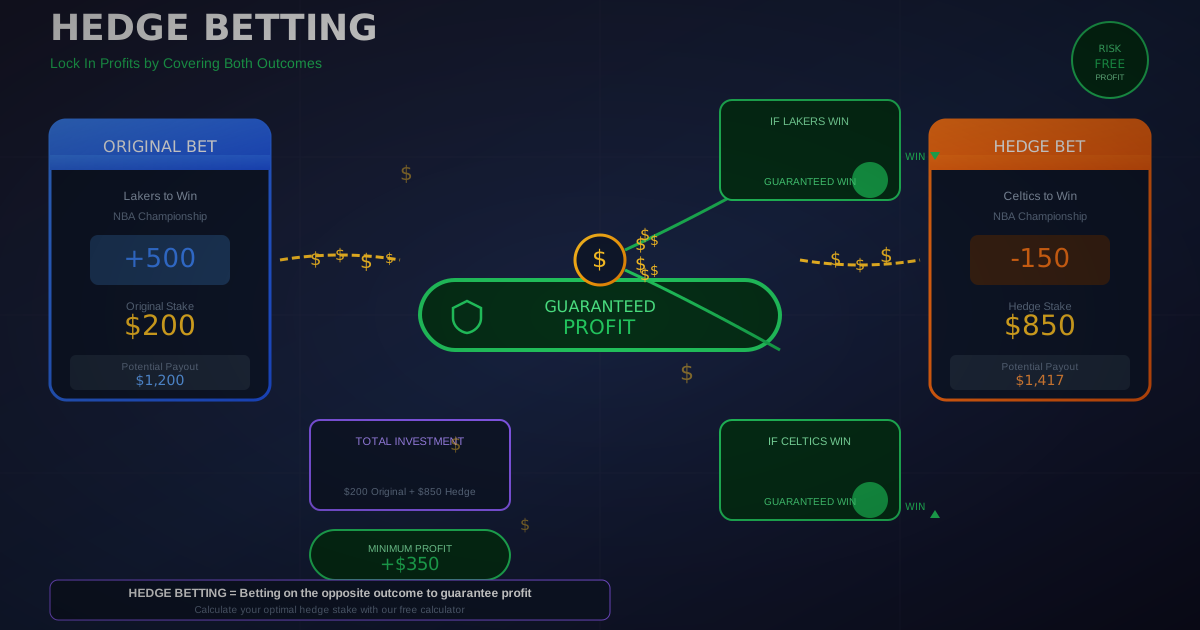
Use our Hedge Calculator to lock in guaranteed profits before navigating withdrawal processes.
How Do Bet-Voiding Rules Work?
Bet-voiding clauses give sportsbooks the right to cancel settled bets under certain circumstances. Understanding when your winning bet can be retroactively voided is critical.
Common Bet-Voiding Conditions
| Condition | Description | How Common |
|---|---|---|
| Palpable errors ("palps") | Odds were clearly wrong (e.g., -110 posted as +1100) | Very common |
| Technical malfunctions | System errors in odds posting or settlement | Common |
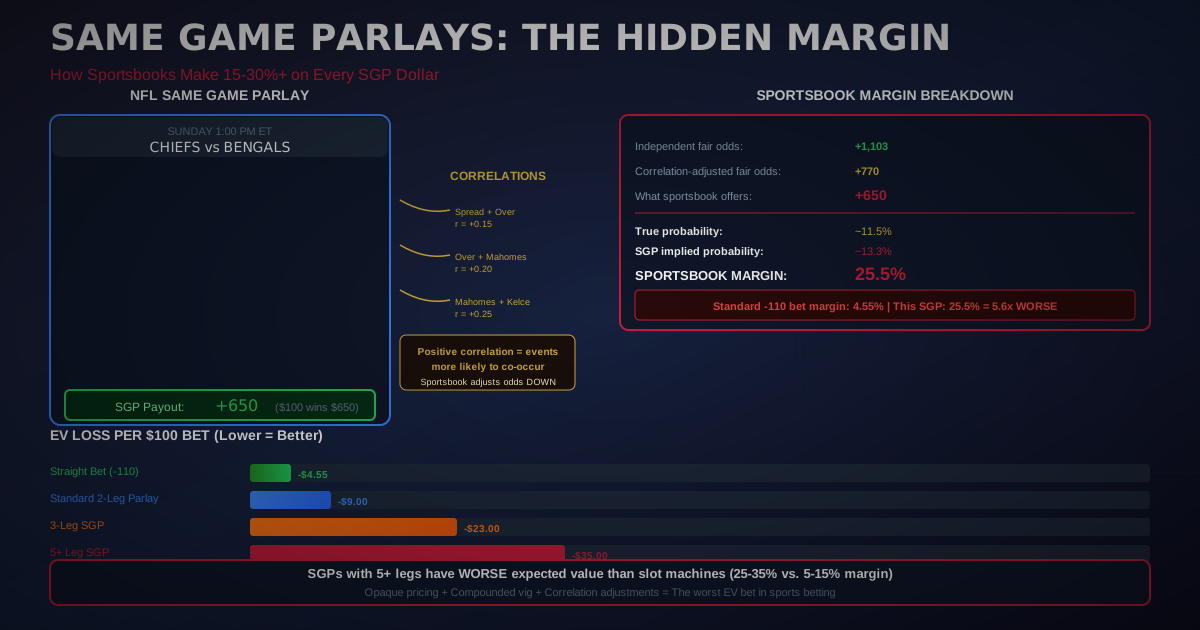
| Correlated parlays | Parlay legs that are not statistically independent | Common |
| Event manipulation | Evidence of match fixing or insider information | Rare |
| Incorrect event information | Wrong team, wrong date, wrong league | Occasional |
| Violation of T&C | Bet placed in violation of any terms | Common |
| Duplicate accounts | Multiple accounts detected | Common |
| Geolocation failure | Bet placed from outside legal jurisdiction | Common |
What Is a "Palpable Error"?
A palpable error (or "palp") is odds that are obviously wrong---typically due to a data feed glitch or manual error. The key word is "obviously," but the definition varies by sportsbook:
DraftKings definition: "An error that is obvious and clear, such that it would have been immediately apparent to a reasonable, experienced bettor."
FanDuel definition: "An error in the odds, prices, or terms of a bet that is clear from the circumstances."
The problem: There is no objective standard for "obvious." A -110 line posted as +110 is clearly wrong, but a -200 line posted as -150 might or might not be a palp depending on the sportsbook's interpretation.
Examples of Palp Situations
| Scenario | Sportsbook Response | Bettor Recourse |
|---|---|---|
| Odds posted as +5000 instead of -500 | Almost certainly voided | None; clearly erroneous |
| Odds posted as +200 instead of +120 | Likely voided | Can dispute; outcome uncertain |
| Line moves 3 points after late injury news | Typically honored | N/A; this is normal market movement |
| Same game parlay odds posted incorrectly | Often voided | Can escalate to gaming commission |
| Promotional odds boost calculated wrong | Usually honored at posted rate | Sportsbook typically honors promotions |
How to Protect Yourself from Voided Bets
- Screenshot every bet immediately after placing it, including the odds, stake, and potential payout
- Save confirmation emails from the sportsbook
- Check odds across multiple books before placing large bets---if one book's odds are drastically different, the outlier may be an error
- Read the voiding clause specifically for any sportsbook where you bet significant amounts
- Understand that offshore books have much broader voiding rights than regulated US books
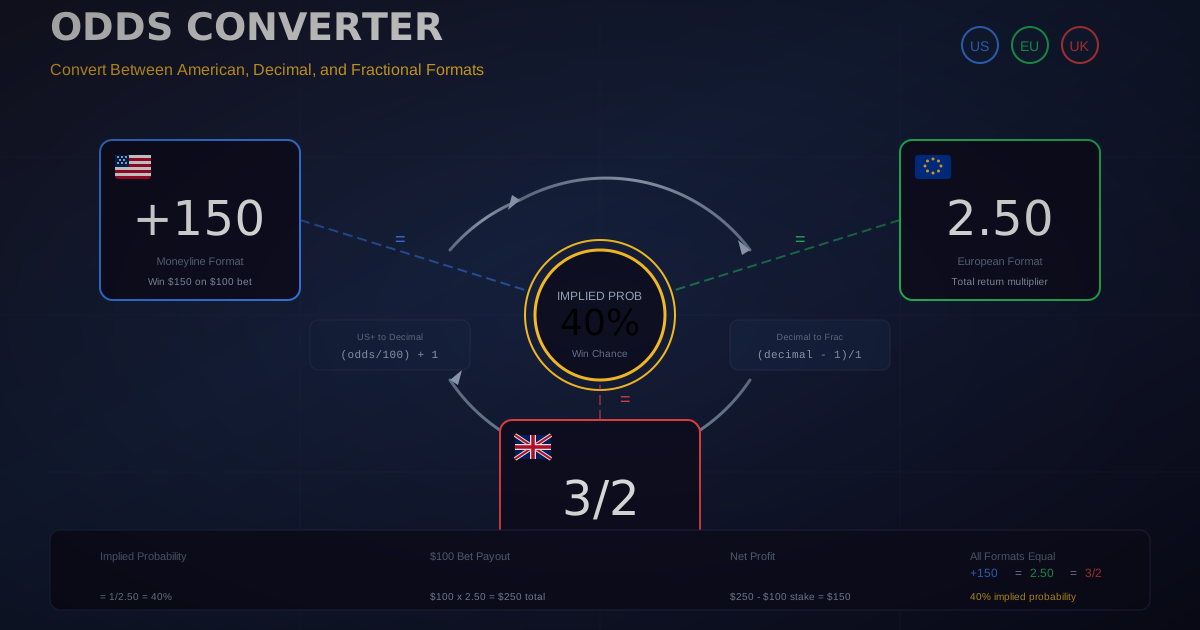
Calculate what your bet should pay at various odds with our Odds Converter to identify potential palps before you bet.
What Are Maximum Payout Limits and How Do They Affect You?
Every sportsbook has maximum payout limits that cap the amount you can win on a single bet, regardless of the calculated payout. These limits are often buried deep in the T&C.
Maximum Payout Limits by Sportsbook and Market
| Sportsbook | NFL Side/Total | NBA Side/Total | MLB | Parlay Max | Overall Max |
|---|---|---|---|---|---|
| DraftKings | $500,000 | $250,000 | $250,000 | $1,000,000 | $1,000,000 |
| FanDuel | $1,000,000 | $500,000 | $250,000 | $1,000,000 | $1,000,000 |
| BetMGM | $500,000 | $250,000 | $250,000 | $500,000 | $1,000,000 |
| Caesars | $500,000 | $250,000 | $250,000 | $500,000 | $1,000,000 |
| bet365 | $500,000 | $250,000 | $250,000 | $1,000,000 | $2,000,000 |
| BetRivers | $250,000 | $100,000 | $100,000 | $250,000 | $500,000 |
Note: These limits can change and may be lower for niche sports, player props, and live betting markets.
How Payout Limits Affect Parlay Bettors
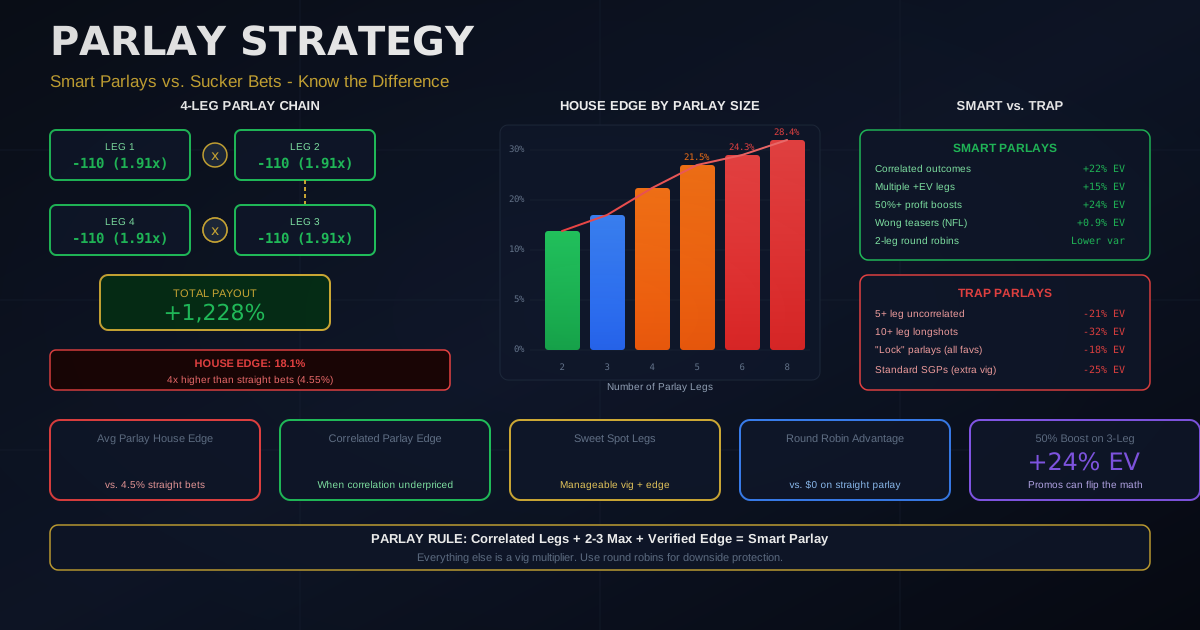
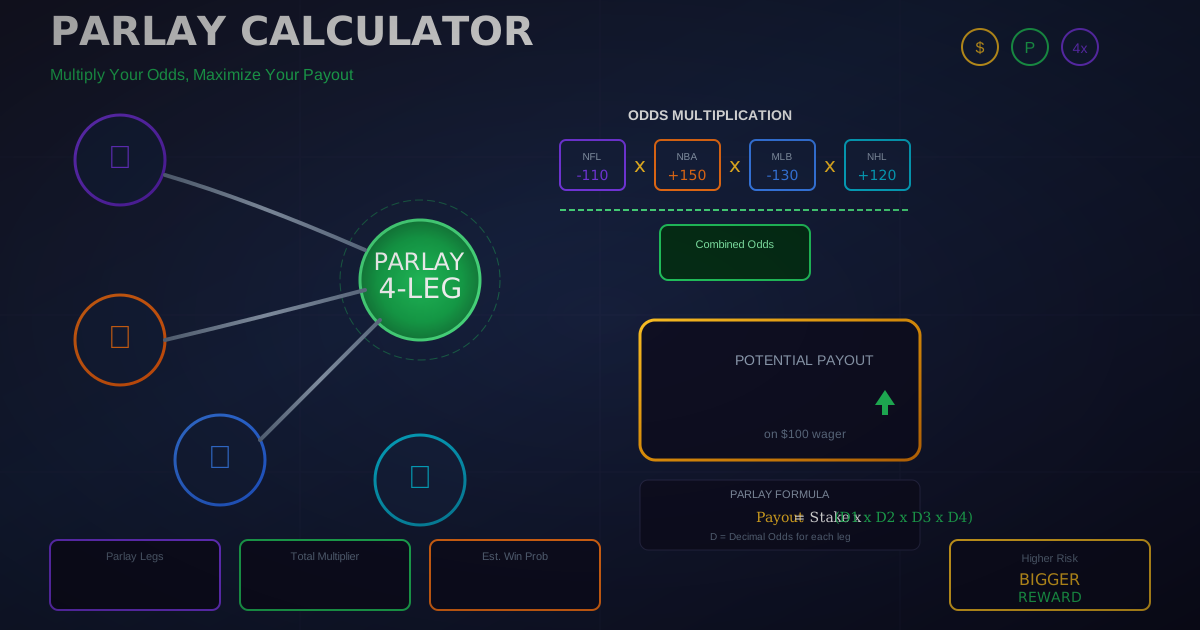
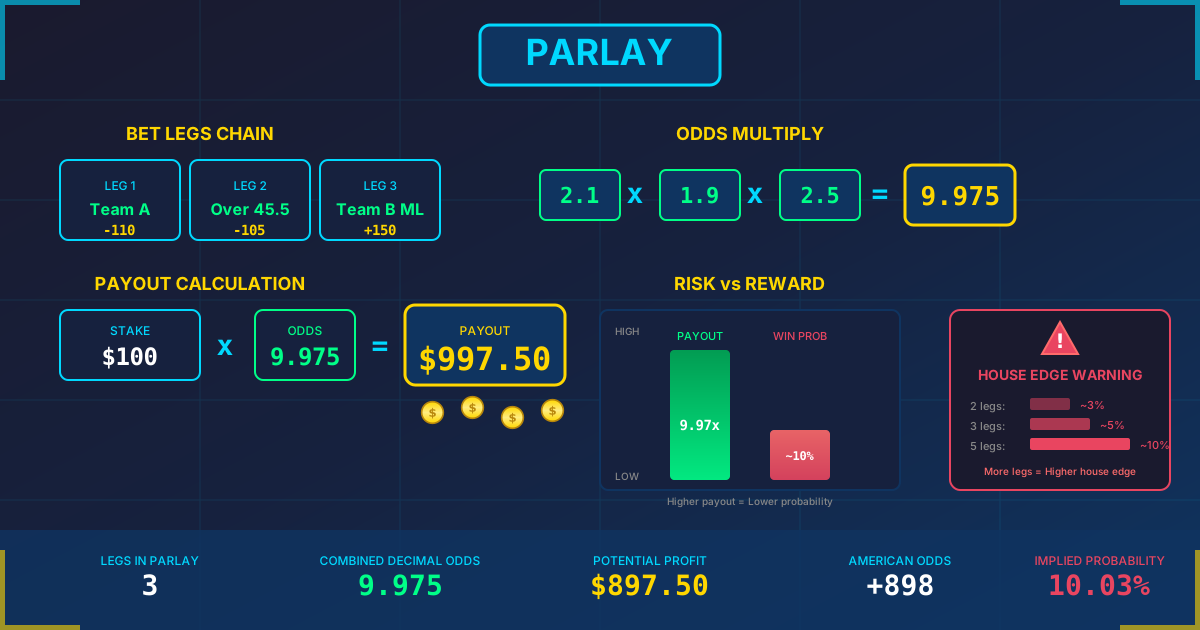
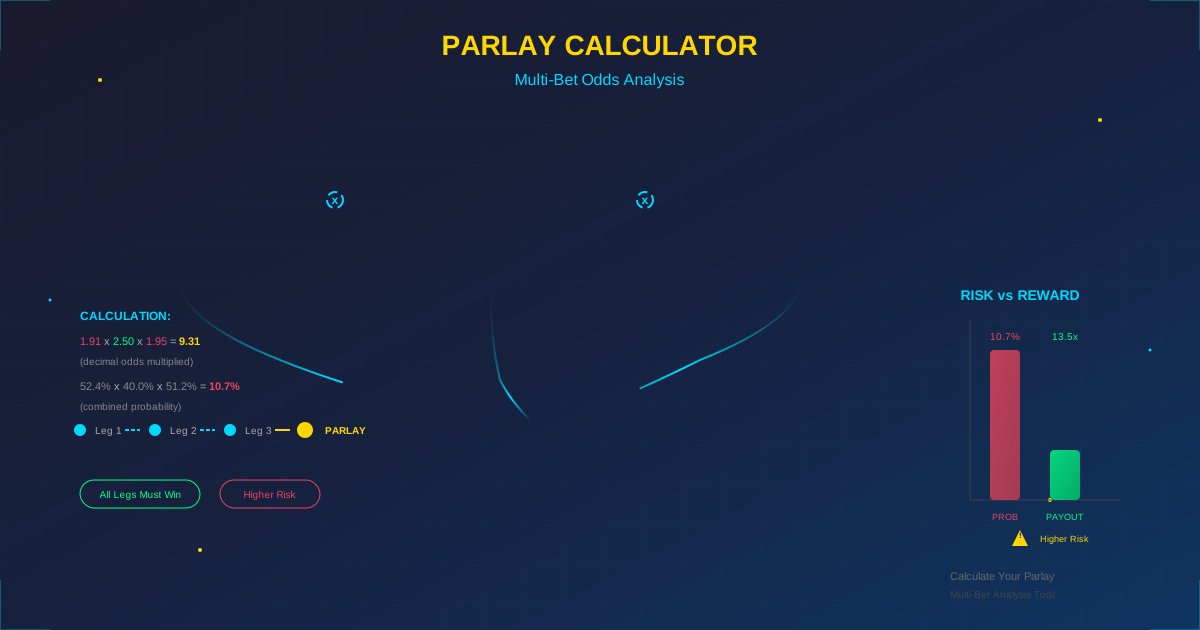
Parlay bettors are most commonly impacted by maximum payout limits. If you place a 12-leg parlay that calculates to a $2 million payout but the sportsbook's parlay max is $500,000, you only receive $500,000.
| Parlay Stake | Parlay Odds | Calculated Payout | Book's Max Payout | Actual Payout | Lost Upside |
|---|---|---|---|---|---|
| $10 | +50000 | $50,010 | $1,000,000 | $50,010 | $0 |
| $100 | +50000 | $500,100 | $1,000,000 | $500,100 | $0 |
| $100 | +500000 | $5,000,100 | $1,000,000 | $1,000,000 | $4,000,100 |
| $50 | +2000000 | $10,000,050 | $500,000 | $500,000 | $9,500,050 |
Strategies to Maximize Payouts
- Split large parlays across multiple sportsbooks to stay within each book's limits
- Check sport-specific limits before placing large bets on niche sports
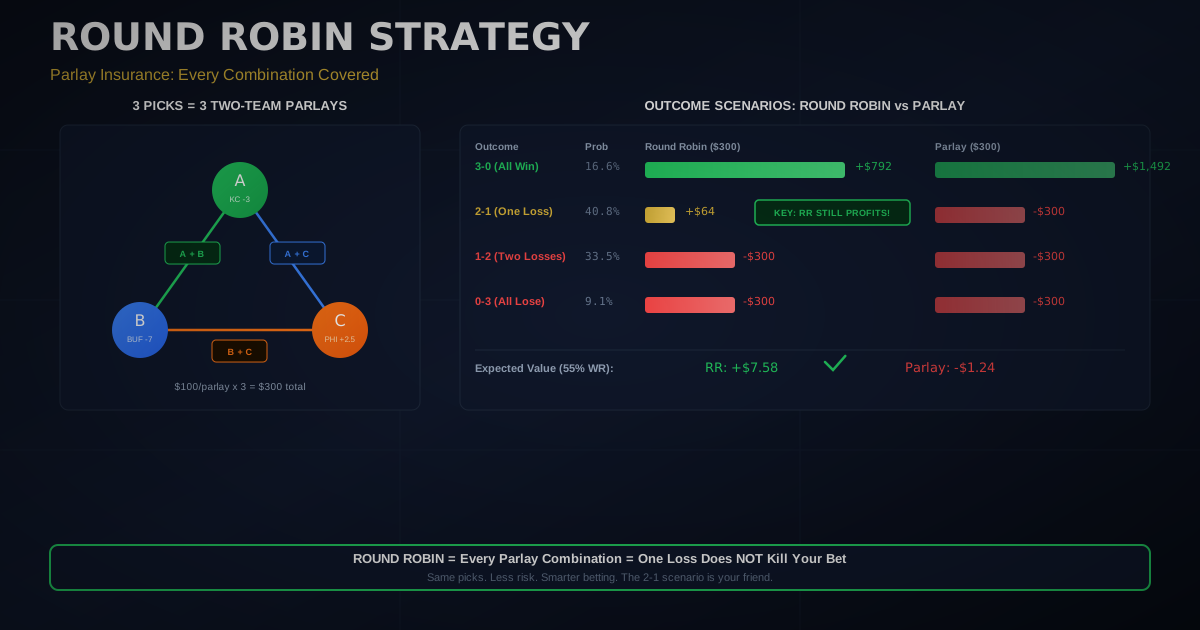
- Use correlated round-robin bets instead of single large parlays
- Know the difference between "maximum stake" limits and "maximum payout" limits
Calculate exact parlay payouts with our Parlay Calculator and compare against each book's maximum payout limits.
How Do Account Limitation Policies Work?
Account limitation (commonly called being "limited" or "promo banned") is one of the most controversial aspects of sports betting. Sportsbooks reserve the right to restrict winning accounts, and their T&C give them broad authority to do so.
What Account Limitation Looks Like
When a sportsbook limits your account, you may experience:
| Limitation Type | Description | Warning Signs |
|---|---|---|
| Stake reduction | Maximum bet amounts reduced (e.g., from $500 to $20) | Small bet amounts rejected |
| Odds restriction | Cannot bet on certain markets or events | Markets disappear from your account |
| Bonus exclusion | Removed from all promotional offers | No more odds boosts or bonus bets |
| Delayed approval | Bets require manual approval before acceptance | "Pending" status on bet placement |
| Market restriction | Cannot bet on player props or derivatives | Only main lines available |
| Full closure | Account closed entirely | Access denied; balance returned |
Why Sportsbooks Limit Accounts
| Reason | Likelihood | Your Options |
|---|---|---|
| Consistent winning (sharp bettor) | Very common | Limited; use multiple books |
| Arbitrage betting detected | Very common | Avoid cross-book arb patterns |
| Bonus abuse (promo abuse) | Common | Stay within reasonable promo usage |
| Correlated betting patterns | Common | Diversify betting patterns |
| Winning specific market segments | Common | Spread bets across markets |
| Violating T&C (any provision) | Common | Read and follow all terms |
| Using VPN or location spoofing | Common | Never use VPN for betting |
The Legal Landscape of Account Limitation
In most US states, sportsbooks have broad legal authority to limit or close accounts at their discretion. However, some states have enacted or proposed consumer protections:
| State | Consumer Protection | Limitation Rules |
|---|---|---|
| New Jersey | DGE oversight; complaint process available | Books must return balances; cannot arbitrarily close without explanation |
| Pennsylvania | PGCB regulations | Similar to NJ; regulatory complaint process |
| Colorado | Limited licensee obligations | Operators must provide written notice of limitations |
| Tennessee | Sports Wagering Advisory Council | Relatively fewer consumer protections |
| New York | Strong Gaming Commission oversight | Regulatory complaints available |
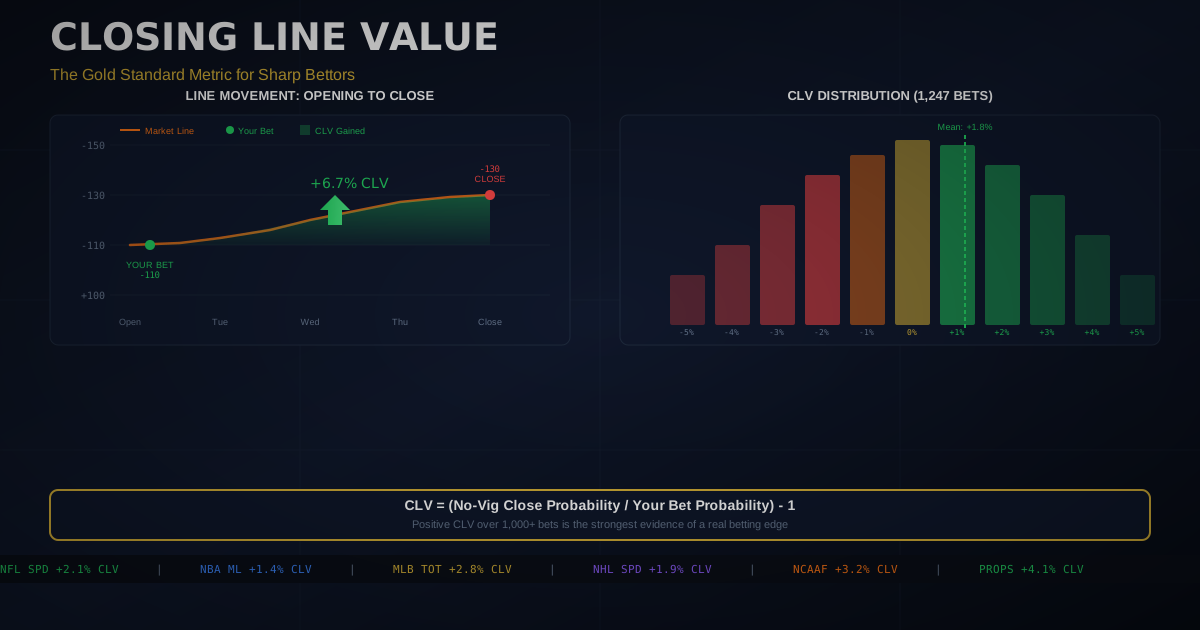
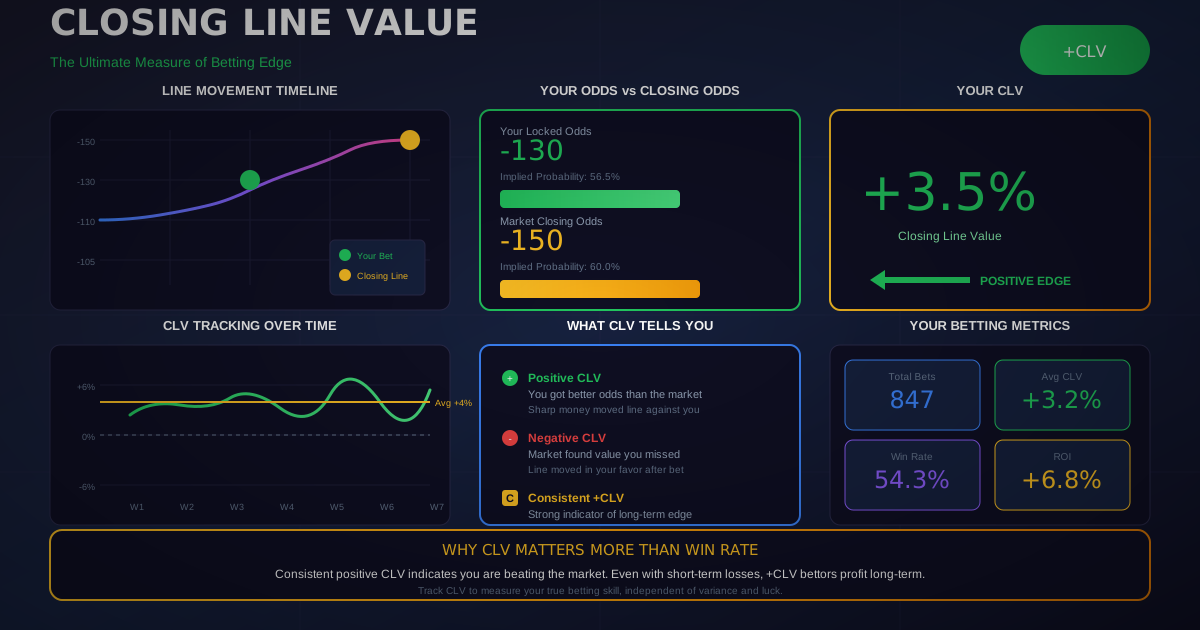
Track your long-term performance to see if you are at risk of limitation with our CLV Tracker.
What KYC Verification Requirements Should You Expect?
Know Your Customer (KYC) verification is legally required for all regulated US sportsbooks. Understanding the process prevents delays and ensures you can access your funds when you want them.
Standard KYC Requirements
| Document Type | When Required | Accepted Forms |
|---|---|---|
| Identity verification | Account creation | Driver's license, passport, state ID |
| Address verification | First withdrawal or $10,000+ in deposits | Utility bill, bank statement, lease agreement |
| SSN verification | Account creation or first withdrawal | SSN matching through verification databases |
| Source of funds | Large deposits ($10,000+) or suspicious activity | Bank statements, pay stubs, tax returns |
| Enhanced due diligence | VIP accounts or very large transactions | Additional financial documentation |
KYC Timeline
| Stage | Typical Processing | Expedited Processing |
|---|---|---|
| Initial account verification | Instant (automated) | N/A |
| First withdrawal verification | 24-72 hours | 12-24 hours (if docs pre-submitted) |
| Additional document requests | 48-96 hours | 24-48 hours |
| Source of funds verification | 1-2 weeks | 3-5 business days |
Pro Tips for Smooth KYC
- Submit documents proactively before your first withdrawal, not after
- Use the same name across all sportsbooks, bank accounts, and ID documents
- Update your address if you move; mismatched addresses delay verification
- Keep documents current---expired IDs will be rejected
- Contact support preemptively if you plan to make a large withdrawal
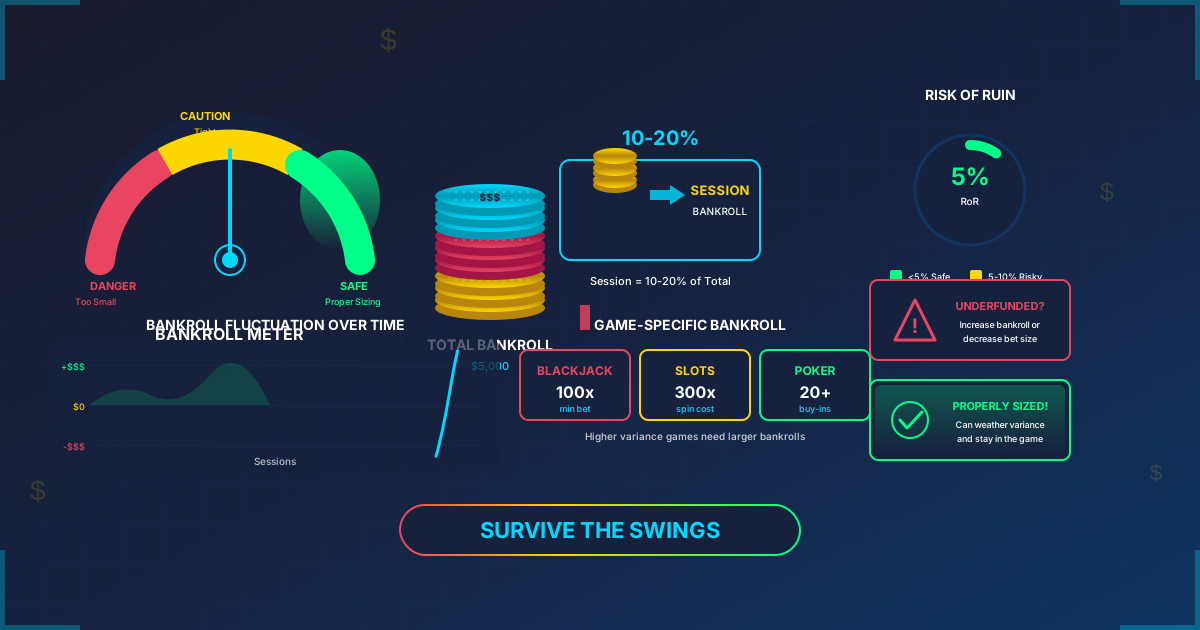
Use our Bankroll Volatility Tracker to understand your risk profile before committing funds to any sportsbook.
What Are the Self-Exclusion and Responsible Gambling Terms?
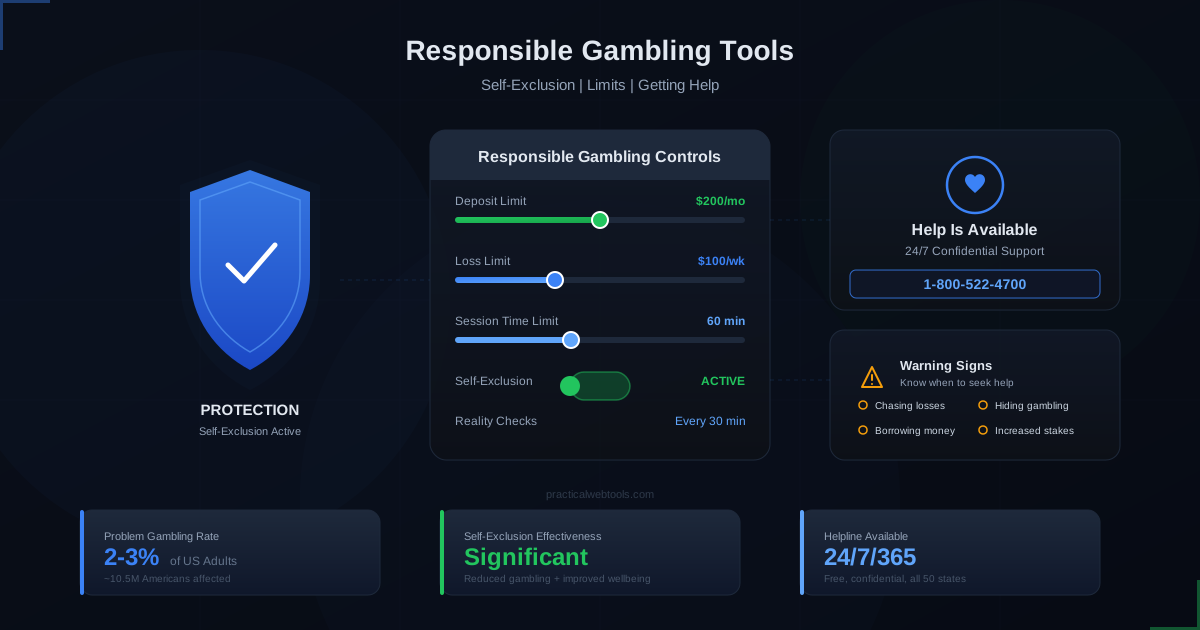
Every regulated US sportsbook includes responsible gambling provisions in their T&C, and understanding these terms is important for your protection.
Self-Exclusion Programs
| Feature | Description | Typical Terms |
|---|---|---|
| Cooling-off period | Temporary account suspension (24 hours to 30 days) | Self-service; reversible after period ends |
| Self-exclusion | Voluntary ban from the sportsbook (6 months to lifetime) | May be irreversible for chosen duration |
| State exclusion list | Ban from all licensed operators in a state | Managed by state gaming commission; typically 1-5 years |
| Deposit limits | Cap on daily/weekly/monthly deposits | Self-service; decrease effective immediately, increase takes 24-72 hours |
| Wager limits | Cap on daily/weekly/monthly wagering | Similar to deposit limits |
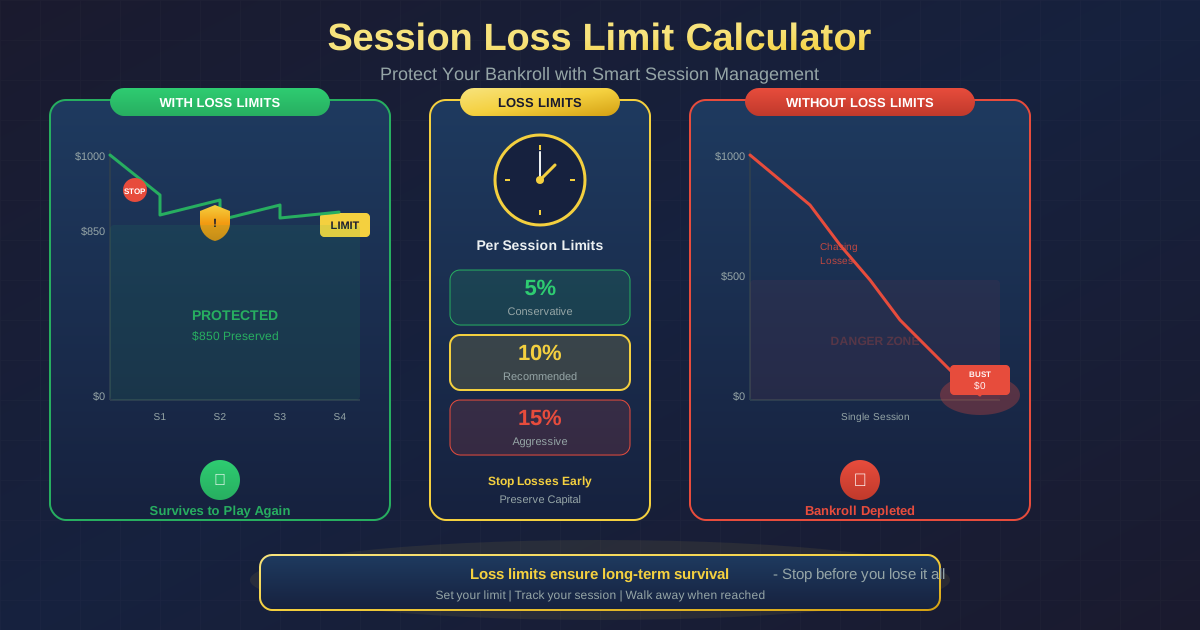
| Loss limits | Cap on net losses per period | Available at most regulated operators |
| Time limits | Session time reminders or automatic logoff | Opt-in at most operators |
Key Self-Exclusion Terms to Understand
Irrevocability: Many self-exclusion commitments cannot be reversed before the chosen period ends. If you self-exclude for one year, you cannot reopen your account in six months even if you want to.
Cross-operator: State-level self-exclusion lists apply to all licensed operators in that state. If you join Ohio's self-exclusion list, every Ohio sportsbook must deny you service.
Account balance: If you self-exclude with a balance on your account, the sportsbook must return your funds. They cannot confiscate your balance as a consequence of self-exclusion.
Pending bets: Most sportsbooks will settle pending bets before completing the self-exclusion. Some will void pending bets and refund the stakes.
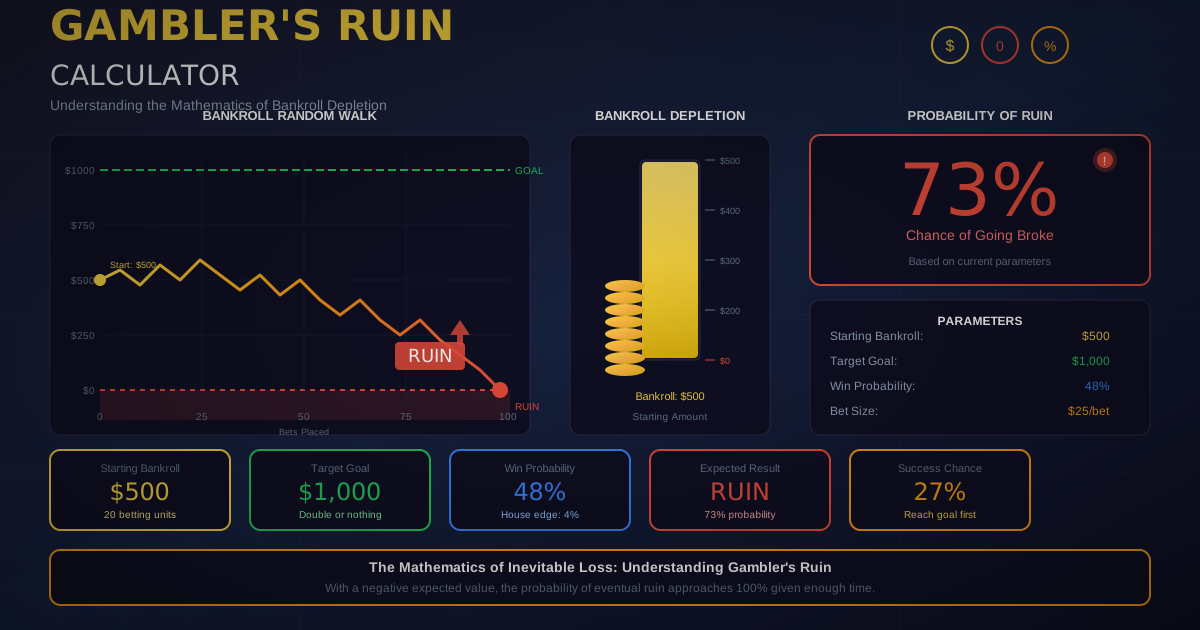
Calculate your risk of ruin before setting your deposit limits with our Bankroll Volatility Tracker.
How Do Promotional Terms Differ from Standard Terms?
Promotional offers (odds boosts, free bets, deposit matches) have their own terms and conditions that layer on top of the standard T&C. These promotional terms often contain the most restrictive provisions.
Free Bet Terms (Stake Not Returned vs. Stake Returned)
The most important distinction in free bet terms is whether the free bet stake is included in the payout:
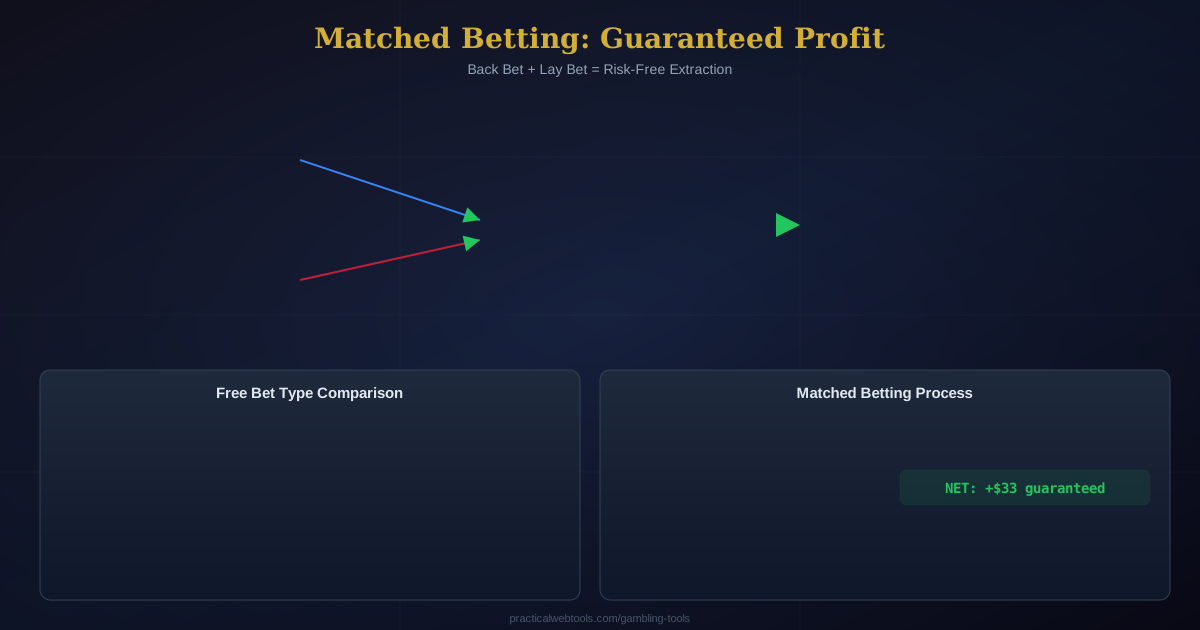
| Free Bet Type | How It Works | Example: $100 Free Bet on +200 Odds |
|---|---|---|
| Stake Not Returned (SNR) | You receive only the profit; the free bet stake is deducted from winnings | Win: $200 profit (not $300) |
| Stake Returned (SR) | You receive the full payout including the stake | Win: $300 (stake + profit) |
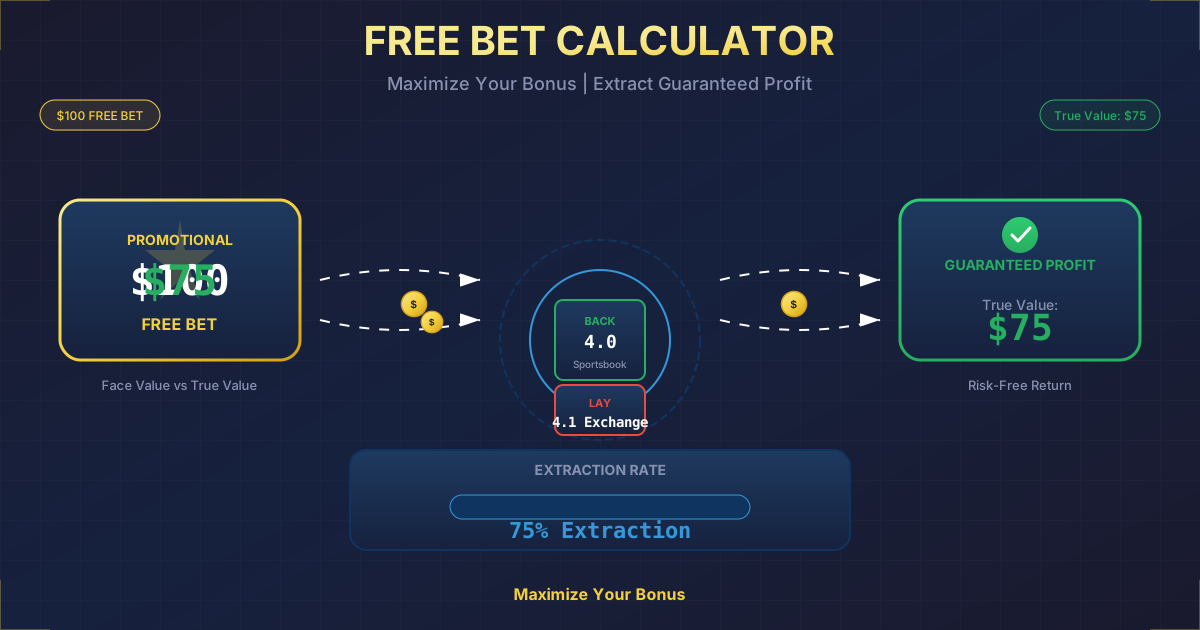
SNR free bets are worth approximately 60-70% of their face value for standard odds bets. SR free bets are worth closer to 100% of face value.
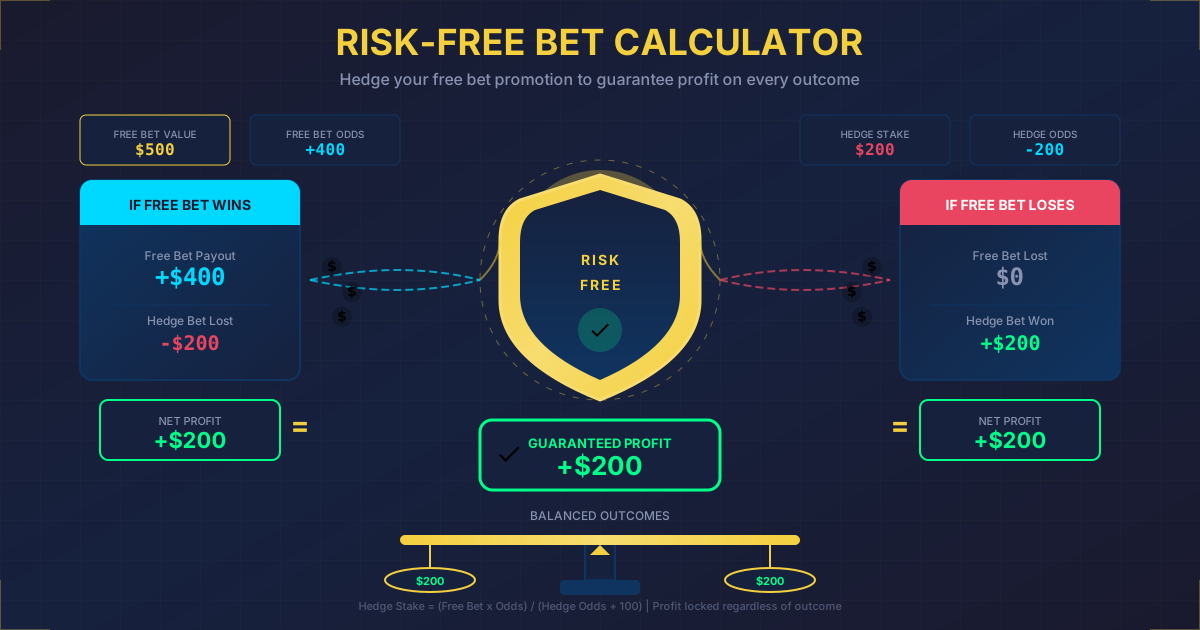
Calculate the exact value of any free bet with our Free Bet Calculator (Stake Not Returned) or Free Bet Calculator (Stake Returned).
Odds Boost Terms
Odds boosts increase the payout on a specific bet, but they often come with limitations:
| Odds Boost Term | What It Means | Impact |
|---|---|---|
| Maximum stake | Usually $10-$50 per boost | Limits potential profit |
| Odds format lock | Boost calculated on specific odds format | Minor; mainly display issue |
| Single use | One boost per customer per event | Cannot stack boosts |
| Selected markets only | Boost applies to specific bet type | May not match your preferred bet |
| Combined with other promos | Usually cannot combine boosts with free bets | Reduces versatility |
Deposit Match Terms
Deposit matches are the most complex promotional offers:
| Term | Favorable | Unfavorable |
|---|---|---|
| Match percentage | 100%+ | Less than 50% |
| Maximum match | $1,000+ | Less than $100 |
| Rollover | 1x-3x | 10x+ |
| Minimum odds | -300 or longer | -150 or longer |
| Time limit | 30+ days | 7 days or less |
| Eligible bet types | All markets | Only specific markets |
| Withdrawal of deposit | Allowed during rollover | Locked until rollover complete |
Referral Bonus Terms
| Typical Requirement | Standard Terms |
|---|---|
| Referee must deposit | $10-$50 minimum first deposit |
| Referee must bet | Must place qualifying bet (usually 1x rollover) |
| Maximum referrals | 5-20 per account |
| Bonus form | Bonus bets (not cash) |
| Expiration | 7-30 days to use bonus |
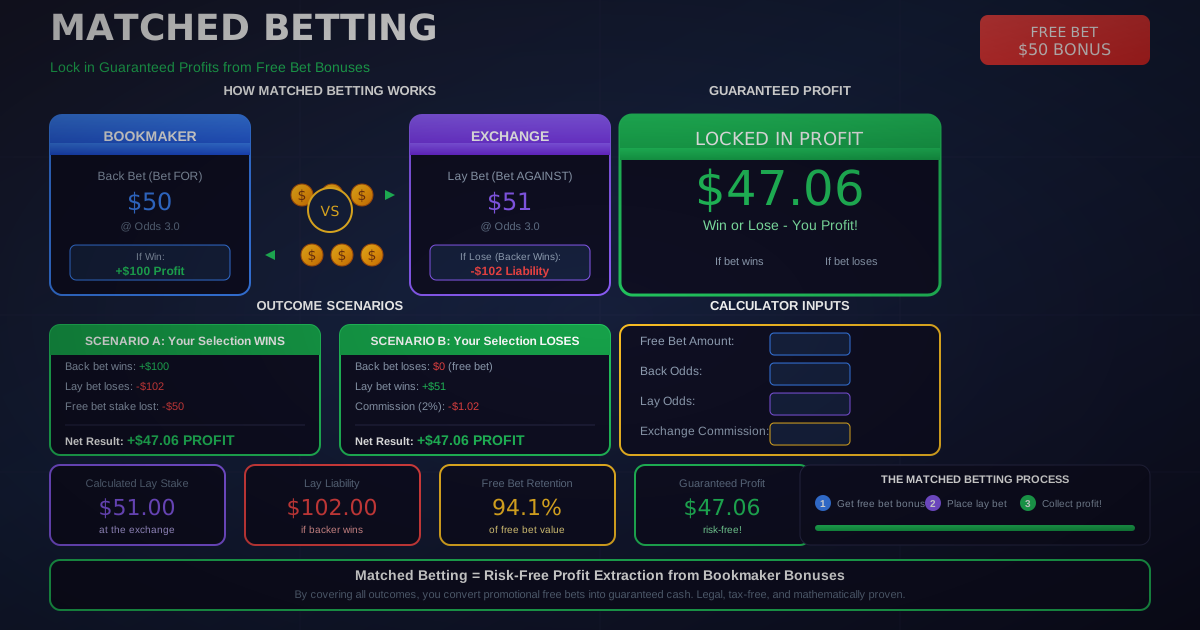
Extract maximum value from every promotion with our Matched Betting Calculator.
What Data Privacy and Security Terms Should You Review?
Sportsbook terms include data privacy provisions that govern how your personal and financial information is collected, used, shared, and protected. Given the sensitive nature of the data involved (SSN, bank details, betting history), these terms deserve attention.
Data Collection Practices
| Data Collected | Purpose | Shared With |
|---|---|---|
| Full legal name, DOB, SSN | Identity and age verification | ID verification services, IRS (for W-2G) |
| Home address | Geolocation verification, tax reporting | State gaming commissions, tax authorities |
| Email and phone | Account communications, marketing | Third-party marketing platforms (with consent) |
| Bank and payment details | Deposits and withdrawals | Payment processors |
| Betting history | Account management, risk assessment, regulatory compliance | State regulators (upon request) |
| Device information | Fraud prevention, geolocation | GeoComply, device fingerprinting services |
| IP address | Security, geolocation, fraud detection | Security services |
| Browsing behavior | Marketing personalization | Analytics platforms |
Key Privacy Terms to Understand
Marketing opt-out: Most sportsbooks default to marketing communications being enabled. You must actively opt out to stop receiving promotional emails, push notifications, and SMS messages. The T&C should specify how to opt out.
Data retention: Sportsbooks retain your data for varying periods after account closure. Typical retention:
- Account data: 5-7 years (regulatory requirement)
- Transaction records: 5-10 years (tax and regulatory)
- Betting history: 5-7 years
- Marketing data: Until opt-out or account closure
Third-party sharing: All regulated sportsbooks share data with state gaming commissions and, where required, with law enforcement. Most also share anonymized data with analytics providers and marketing partners.
Data breach notification: State laws require sportsbooks to notify you within a specific timeframe (typically 30-60 days) if your personal data is compromised. Check the T&C for the operator's specific breach notification policy.
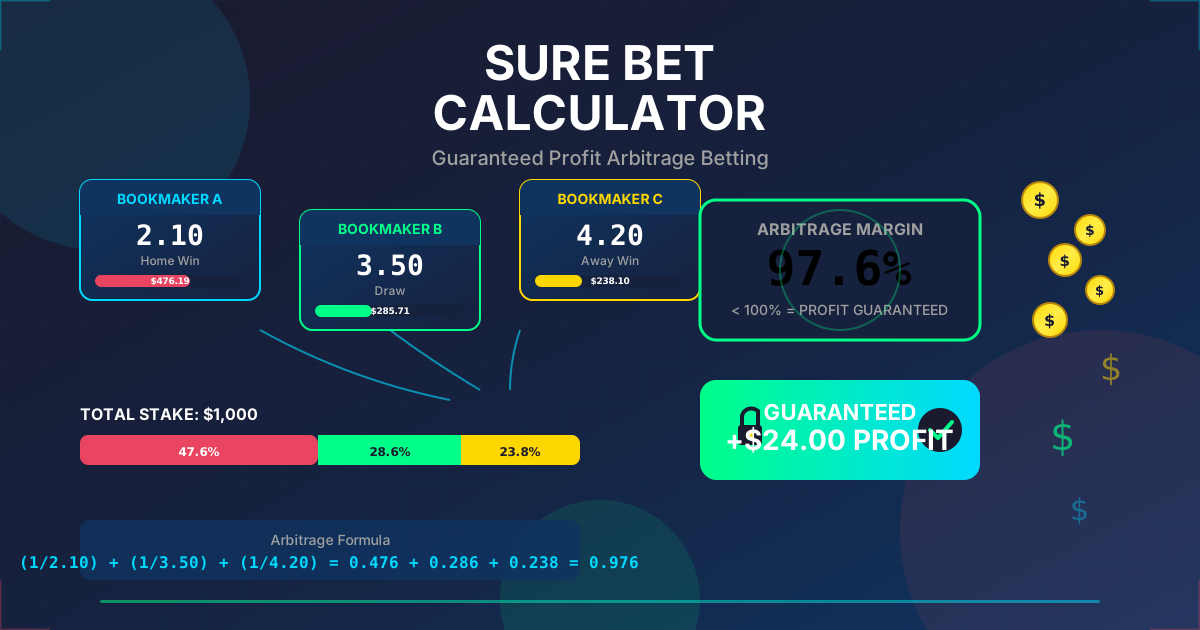
Use our Sure Bet Calculator to identify opportunities that minimize your need to deposit at multiple sportsbooks.
How Do Dispute Resolution Procedures Work?
When a dispute arises with a sportsbook, the T&C specify the process for resolving it. Understanding this process in advance saves time and frustration.
Typical Dispute Resolution Steps
| Step | Action | Typical Timeline |
|---|---|---|
| 1 | Contact customer support via live chat or email | Immediate to 24 hours |
| 2 | Request escalation to supervisor or compliance team | 24-48 hours |
| 3 | File formal written complaint with the sportsbook | 5-10 business days for response |
| 4 | File complaint with state gaming commission | 30-90 days for investigation |
| 5 | Alternative Dispute Resolution (ADR) if available | 60-180 days |
| 6 | Legal action (small claims or civil court) | 6-12+ months |
State Gaming Commission Complaint Process
Each legal state has a gaming commission or regulatory body that handles consumer complaints:
| State | Regulatory Body | Complaint Method |
|---|---|---|
| New Jersey | Division of Gaming Enforcement (DGE) | Online form at nj.gov/oag/ge |
| Pennsylvania | PA Gaming Control Board (PGCB) | Online at gamingcontrolboard.pa.gov |
| New York | NY Gaming Commission | Online at gaming.ny.gov |
| Michigan | MI Gaming Control Board | Email or online form |
| Illinois | IL Gaming Board | Online at igb.illinois.gov |
| Colorado | CO Division of Gaming | Online at sbg.colorado.gov |
| Ohio | OH Casino Control Commission | Online at casinocontrol.ohio.gov |
| Massachusetts | MA Gaming Commission | Online at massgaming.com |
Arbitration Clauses
Many sportsbooks include mandatory binding arbitration clauses that waive your right to file a lawsuit or participate in a class action. Key points:
- Binding arbitration means a private arbitrator decides the dispute, not a court
- Class action waiver means you cannot join other affected bettors in a group lawsuit
- Opt-out provisions exist at some sportsbooks (typically 30 days after account creation to opt out)
- Small claims exception usually allows you to file in small claims court for amounts under the jurisdictional limit ($5,000-$10,000 in most states)
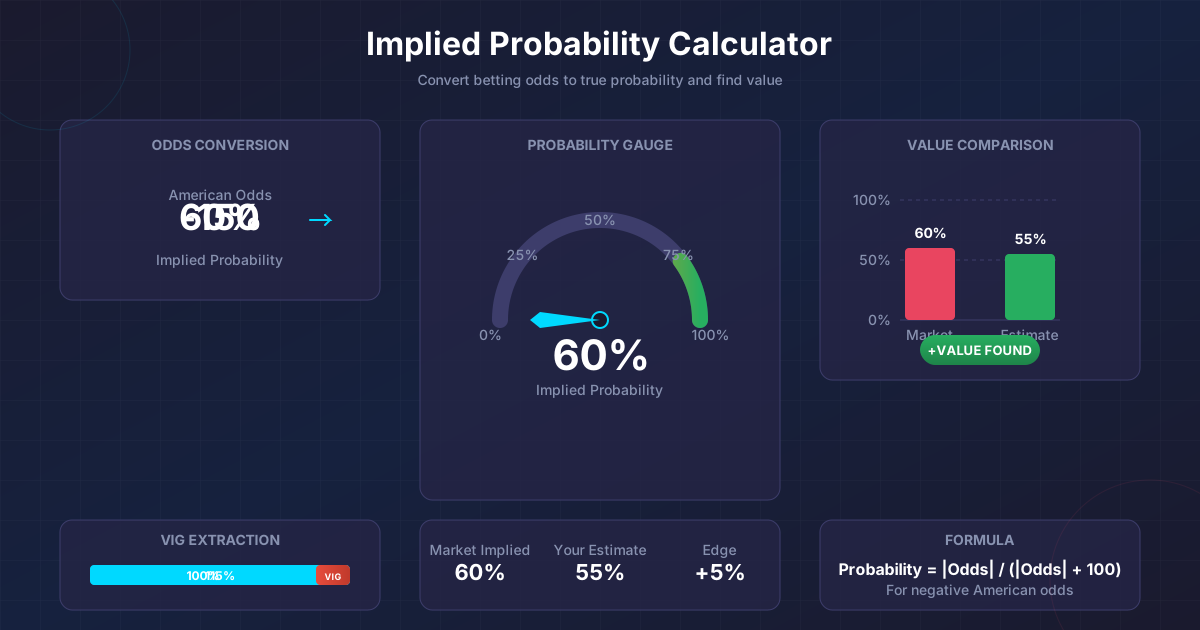
If a dispute involves suspected unfair odds, verify the true probability with our Implied Probability Calculator.
What Responsible Gambling Tools Are Required in Sportsbook Terms?
Every regulated US sportsbook is required to offer responsible gambling tools as part of their licensing obligations. Understanding these provisions in the T&C is important for your protection.
Mandatory Responsible Gambling Features
| Feature | Description | How to Access |
|---|---|---|
| Deposit limits | Set maximum daily, weekly, or monthly deposit amounts | Account settings page |
| Wager limits | Cap on total amount wagered per period | Account settings or contact support |
| Loss limits | Maximum net loss per day, week, or month | Account settings page |
| Session time limits | Alerts or automatic logout after set time | Account settings page |
| Reality checks | Periodic pop-ups showing time spent and money wagered | Enabled in settings |
| Cooling-off period | Temporary account suspension (24 hours to 30 days) | Account settings or contact support |
| Self-exclusion | Voluntary ban from the platform (6 months to lifetime) | Account settings or contact support |
| Transaction history | Complete record of all deposits, withdrawals, and bets | Account history page |
How Limit Changes Work
A critical detail in the T&C that protects you: reducing limits takes effect immediately, but increasing limits has a mandatory waiting period.
| Limit Change | Effective When | Waiting Period |
|---|---|---|
| Decrease deposit limit | Immediately | None |
| Decrease loss limit | Immediately | None |
| Decrease wager limit | Immediately | None |
| Increase deposit limit | After waiting period | 24-72 hours (varies by operator) |
| Increase loss limit | After waiting period | 24-72 hours |
| Remove self-exclusion | After exclusion period ends | Minimum 6 months typically |
This asymmetric design prevents impulsive increases during a losing streak while allowing immediate protection when you recognize the need.
State-Level Responsible Gambling Programs
| State | Program | Contact |
|---|---|---|
| National | NCPG | 1-800-522-4700 |
| New Jersey | 1-800-GAMBLER | 1-800-426-2537 |
| New York | OASAS HOPEline | 1-877-846-7369 |
| Pennsylvania | Council on Compulsive Gambling | 1-800-848-1880 |
| Michigan | MI Dept. of Health | 1-800-270-7117 |
| Massachusetts | GameSense | 1-800-426-1234 |
If you need to set bankroll limits, use our Bankroll Volatility Tracker to determine appropriate limits based on your risk tolerance.
How Do You Identify Predatory Terms Before Signing Up?
Recognizing predatory or unfair T&C before you deposit money is the best way to protect yourself. Here are the key indicators of problematic terms.
Predatory T&C Red Flags Checklist
| Red Flag | What to Look For | Risk |
|---|---|---|
| Rollover above 10x | Bonus wagering requirements exceeding 10x the bonus amount | High cost; bonus may have negative value |
| No withdrawal until rollover complete | All funds (including your deposit) locked until rollover is met | Cannot access your own money |
| Broad palp clause | Vague "palpable error" definition with sole sportsbook discretion | Winning bets can be voided subjectively |
| Unlimited maximum bet reduction | Right to limit bets to $1 or less with no notice | Winning accounts rendered useless |
| No payout timeline guarantee | No specified maximum processing time for withdrawals | Indefinite payout delays |
| Forfeiture on inactivity | Account balance confiscated after 90-180 days of inactivity | Lose money for not betting |
| Unilateral T&C changes | Right to change terms at any time without notice | Rules can change after you deposit |
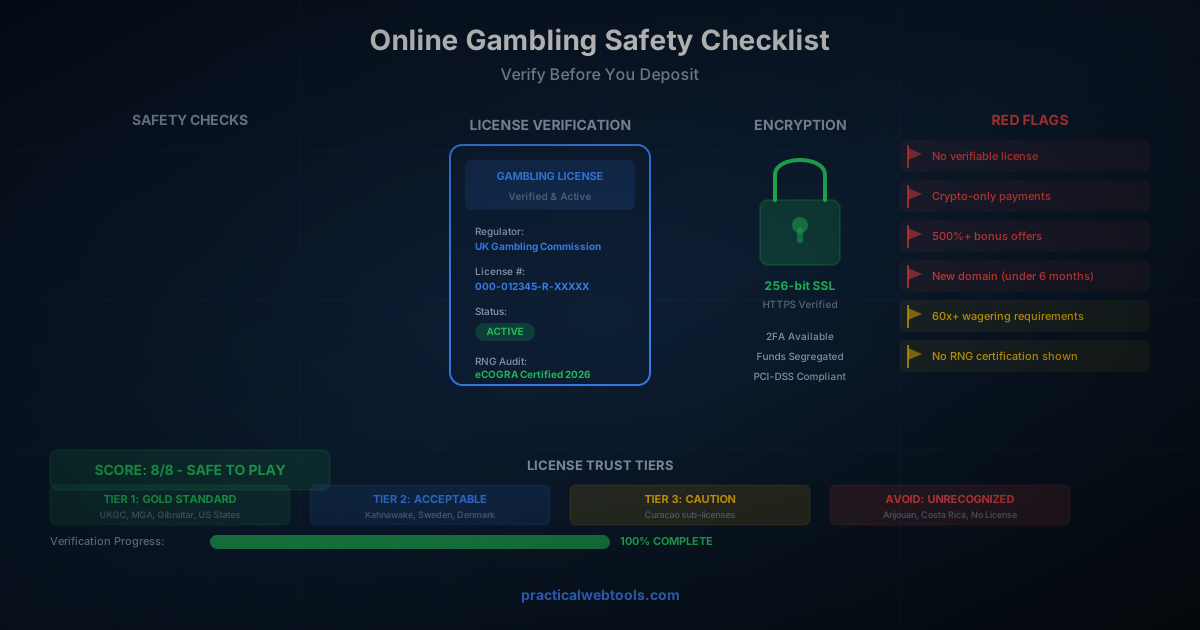
| No regulatory body listed | No mention of licensing jurisdiction or complaint process | May be unlicensed or offshore |
Comparison: Regulated vs. Offshore T&C
| Term | Regulated US Sportsbook | Offshore Sportsbook |
|---|---|---|
| Licensing | State gaming commission | Often Curacao, Costa Rica, or unlisted |
| Player fund protection | Segregated accounts required by law | No requirement; funds may be commingled |
| Dispute resolution | Gaming commission complaint process | None; operator has final say |
| Maximum payout | Published and enforced | Can be changed retroactively |
| KYC requirements | Federal and state law compliance | Minimal or inconsistent |
| Responsible gambling tools | Required by law | Minimal or absent |
| Palpable error definition | Typically reasonable and defined | Often extremely broad |
| Account limitation transparency | Some states require notice | No transparency required |
The difference between regulated and offshore sportsbooks cannot be overstated. Regulated operators are subject to government oversight, required to segregate player funds, and accountable to gaming commissions. Offshore operators operate outside US jurisdiction with no meaningful accountability.
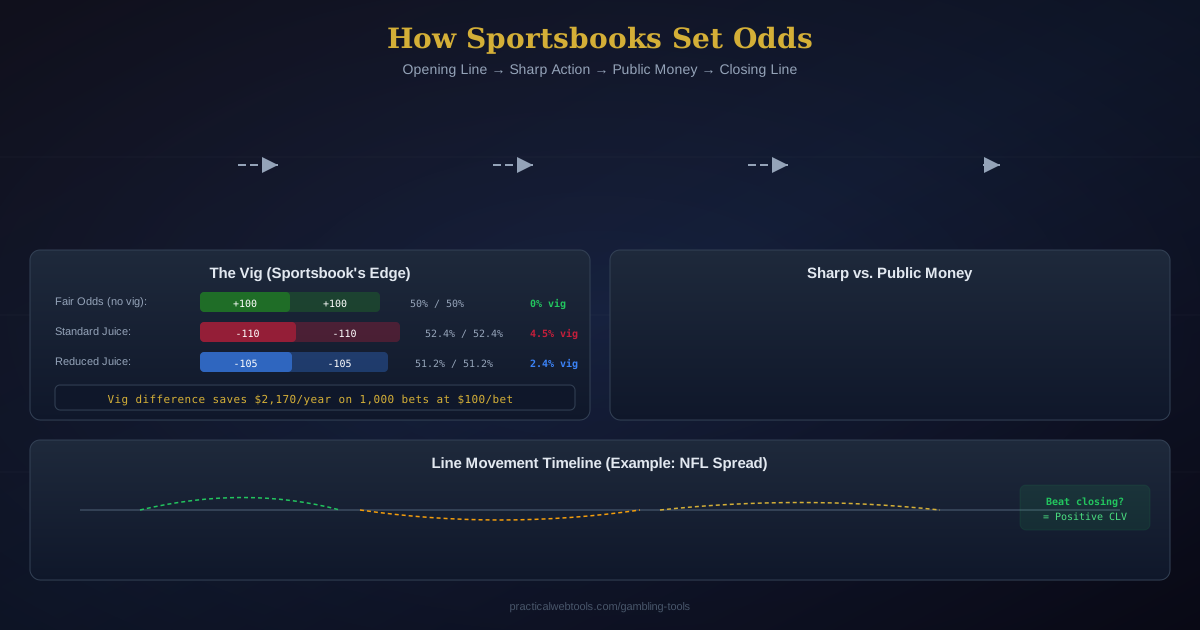
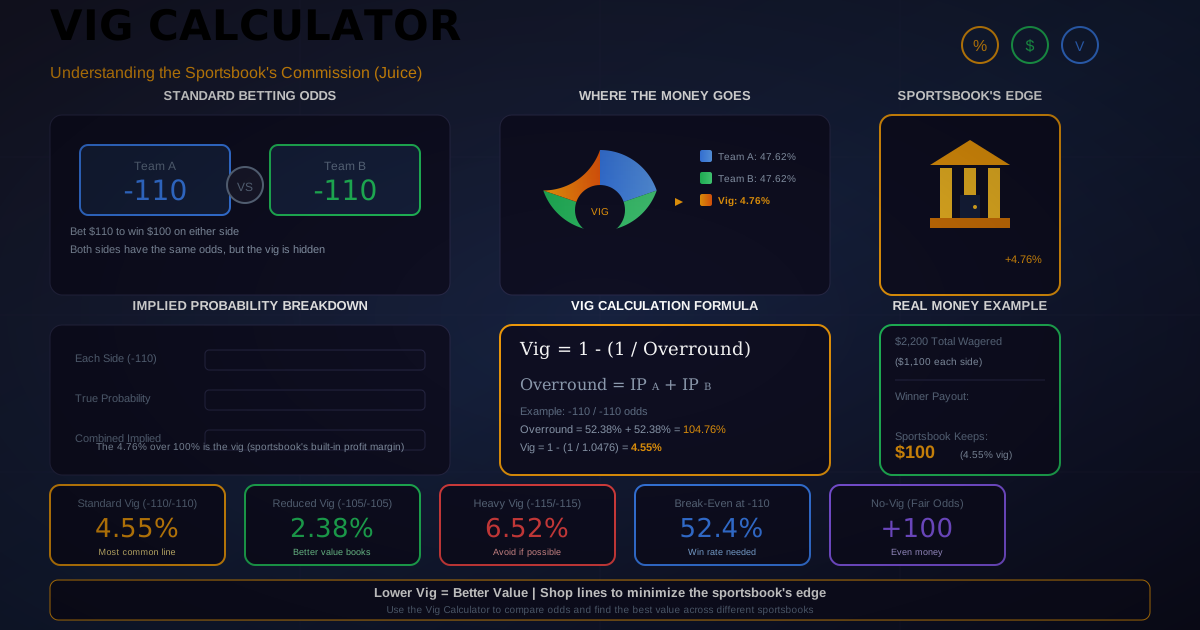
Compare the true hold percentage across sportsbooks with our Hold/Vig Calculator to find the most competitive odds.
What Geolocation and Account Sharing Rules Apply?
Every regulated US sportsbook uses geolocation technology to verify you are physically within a legal state when placing bets. The T&C contain strict provisions about location verification and account sharing.
Geolocation Requirements
| Requirement | Details |
|---|---|
| Active geolocation | Your device must confirm your physical location for every bet |
| VPN prohibition | Using a VPN to mask your location is grounds for account termination |
| Wi-Fi assisted | Some apps require Wi-Fi to be enabled for accurate geolocation |
| Border zones | Bets may fail near state borders due to geolocation uncertainty |
| Multiple device limits | Some books limit simultaneous logins on multiple devices |
| International use | Most US sportsbooks are completely inaccessible from outside the US |
Account Sharing Prohibitions
| Violation | Consequence |
|---|---|
| Sharing login credentials | Account closure; forfeiture of balance possible |
| Betting on behalf of others | Account closure; potential legal consequences |
| Multiple accounts per person | All accounts closed; balances on secondary accounts forfeited |
| Gnoming (using others' accounts for bonuses) | All involved accounts closed; possible lifetime ban |
| Selling or transferring accounts | Account closure and possible regulatory referral |
Practical Implications
- Do not let friends or family members log into your sportsbook account, even to place bets for you
- Do not create multiple accounts to take advantage of welcome bonuses
- Do not attempt to bet from a state where you are not physically present
- If you travel between legal states, your sportsbook access may change (different operators are licensed in different states)
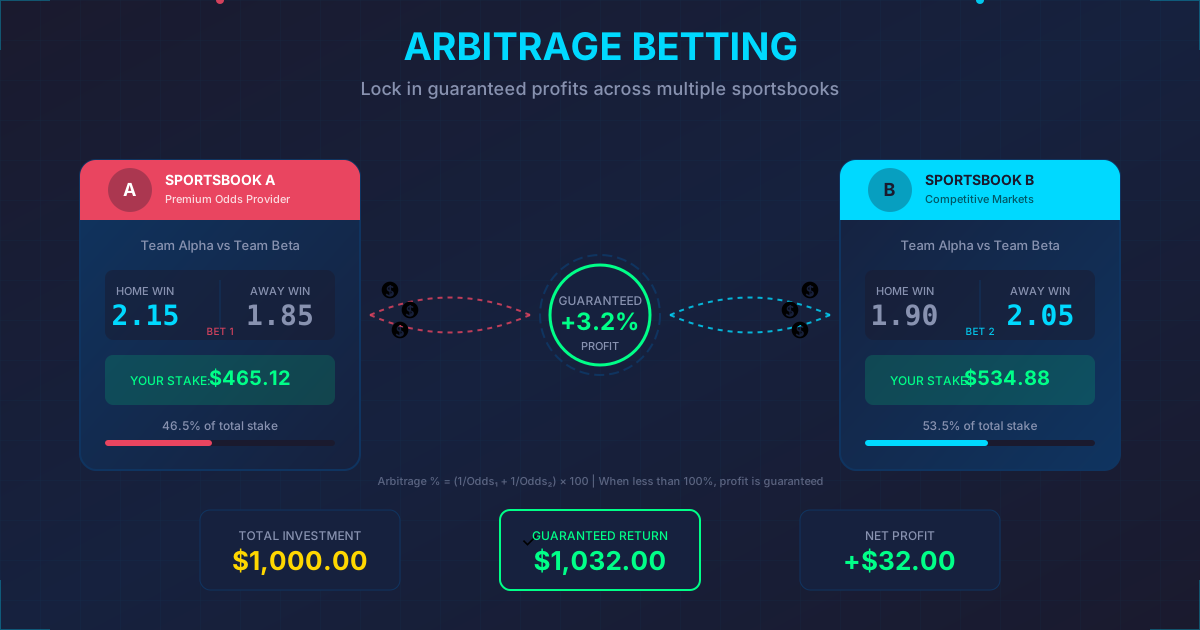
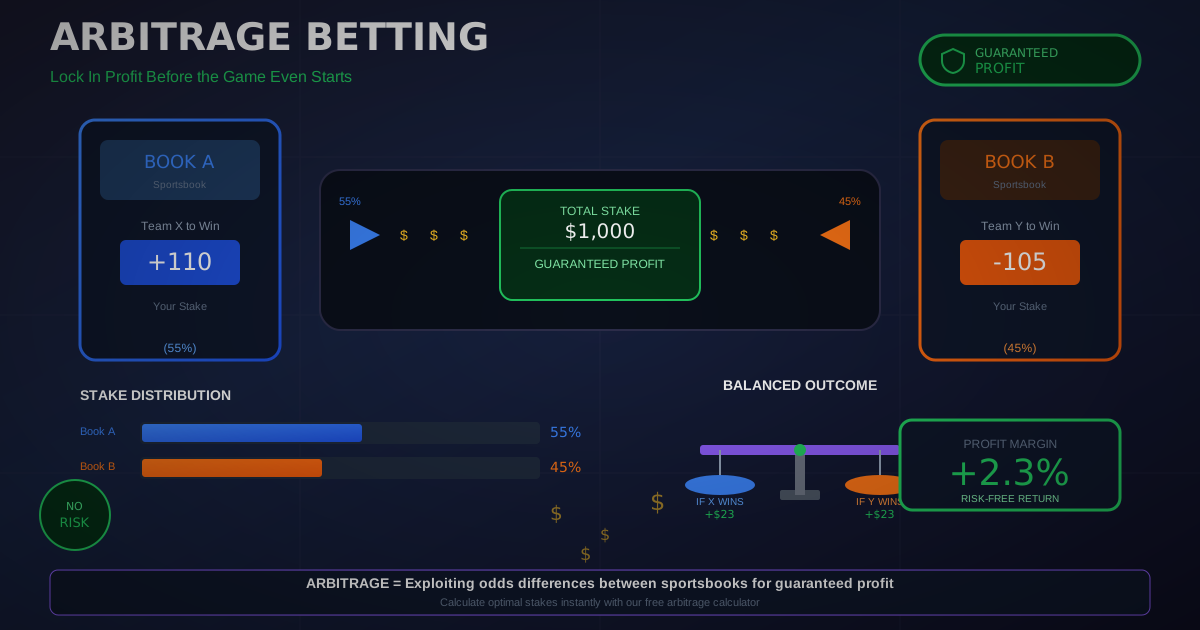
Find guaranteed profit opportunities across multiple sportsbooks with our Arbitrage Calculator---but be aware of each book's arbitrage policies.
Frequently Asked Questions
What is a rollover requirement on a sportsbook bonus? A rollover requirement is the number of times you must wager the bonus amount before you can withdraw it. A 10x rollover on a $500 bonus means you must place $5,000 in total bets before the bonus funds become withdrawable. Use our Expected Value Calculator to determine if the bonus is worth the rollover cost.
Can a sportsbook void my winning bet? Yes. Regulated sportsbooks can void bets under specific conditions outlined in their terms, most commonly for "palpable errors" (obviously incorrect odds), technical malfunctions, or T&C violations. Always screenshot your bets immediately after placing them to document the odds you received.
Why was my sportsbook account limited? Sportsbooks limit accounts that they identify as consistently profitable, arbitrage bettors, or bonus abusers. In most US states, sportsbooks have the legal right to limit bet sizes, restrict market access, or exclude you from promotions at their discretion. Some states require operators to provide notice of limitations.
How long should a sportsbook withdrawal take? Most regulated US sportsbooks process withdrawals within 1-5 business days depending on the method. E-wallets (PayPal, Venmo) are fastest (1-24 hours), followed by online banking (2-5 days) and checks (7-14 days). If your withdrawal is delayed beyond the sportsbook's stated processing time, contact support and then file a regulatory complaint if necessary.
What should I do if a sportsbook won't pay me? First, contact customer support and document every interaction. If unresolved, escalate to a supervisor or compliance team. If still unresolved, file a formal complaint with your state's gaming commission. For amounts within small claims court jurisdiction ($5,000-$10,000 depending on your state), filing a small claims case is also an option.
Are offshore sportsbook terms enforceable? Offshore sportsbooks operate outside US jurisdiction, and their terms are effectively unenforceable by US courts. This means you have no legal recourse if an offshore book refuses to pay or changes their terms retroactively. Always use regulated, state-licensed sportsbooks.
Can sportsbooks change their terms after I deposit? Yes. Most sportsbook T&C include a clause allowing changes at any time, typically with notification (email or posted notice). However, changes generally cannot retroactively affect bets already placed or bonuses already in progress. If terms change unfavorably, you can withdraw your balance (subject to existing withdrawal terms) and close your account.
Do sportsbook terms differ by state? Yes. Sportsbooks must comply with each state's specific regulations, which means the T&C may vary by state. Tax withholding, maximum deposit limits, responsible gambling features, and dispute resolution procedures can all differ depending on which state you are betting in.
Related Gambling Tools
Use these free calculators to make informed decisions and protect your bankroll:
Bonus and Promotion Tools
- Free Bet Calculator (SNR): Calculate the true value of stake-not-returned free bets
- Free Bet Calculator (SR): Calculate the true value of stake-returned free bets
- Matched Betting Calculator: Maximize promotional value through matched betting
- Expected Value Calculator: Determine if any bet or bonus is +EV
Odds and Value Tools
- Odds Converter: Convert between American, decimal, and fractional odds
- Implied Probability Calculator: Find the true probability behind any odds
- Hold/Vig Calculator: Calculate the sportsbook's built-in edge
- Sure Bet Calculator: Identify risk-free opportunities
Bankroll Management Tools
- Kelly Criterion Calculator: Optimal bet sizing based on edge
- Bankroll Volatility Tracker: Model risk and variance
- Hedge Calculator: Calculate hedge amounts for guaranteed profit
- Arbitrage Calculator: Find and size arbitrage opportunities
Parlay and Multi-Bet Tools
- Parlay Calculator: Calculate exact parlay payouts
- CLV Tracker: Track your long-term edge
Read the Fine Print---Or Pay the Price
The terms and conditions of a sportsbook are not a formality. They are a binding legal agreement that governs every aspect of your relationship with the operator, from how your bonus works to whether your winning bet gets paid. The few minutes you spend reading the key sections---rollover requirements, withdrawal policies, bet voiding clauses, and maximum payouts---can save you thousands of dollars in unexpected restrictions and disputes.
Choose regulated, state-licensed sportsbooks. Understand the bonus math before you claim an offer. Document every bet. Know your rights under your state's gaming regulations. And when in doubt, take your business to the operator with the clearest, fairest terms.
Start by understanding the true value of any bonus with our Expected Value Calculator. Compare odds across books with our Odds Converter. And protect your bankroll with our Kelly Criterion Calculator.
The house always has an edge in the odds. Do not let the fine print give them another one.
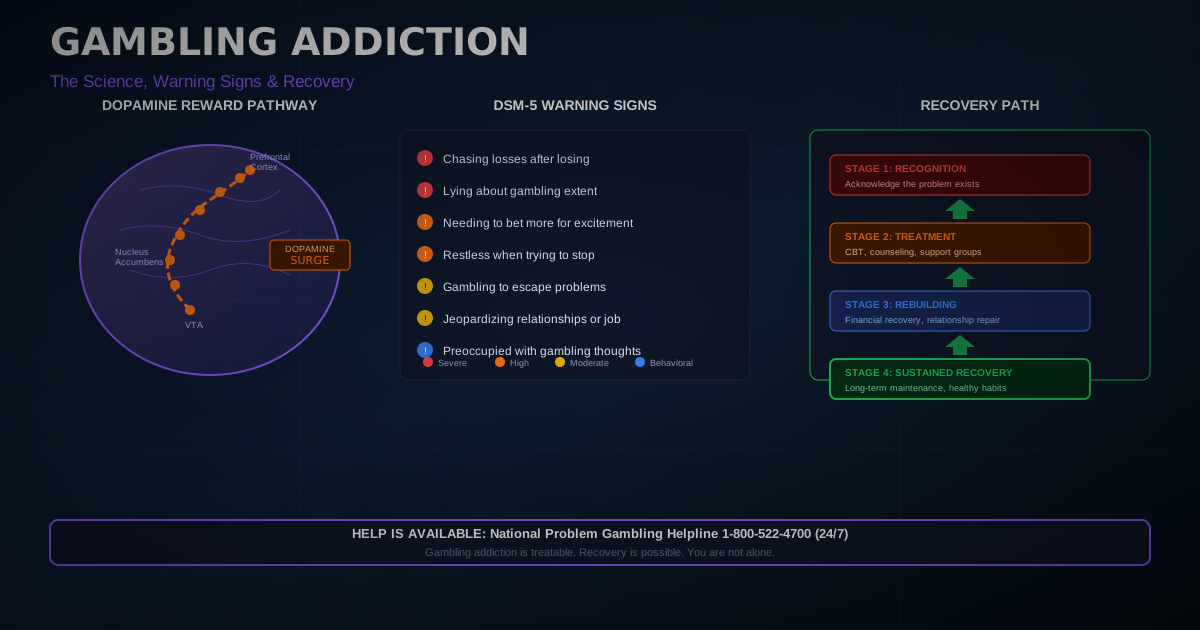
Gambling involves risk and should be approached as entertainment, not as a source of income. Always bet within your means, set strict bankroll limits, and never chase losses. If you or someone you know has a gambling problem, contact the National Council on Problem Gambling at 1-800-522-4700 or visit ncpgambling.org. Must be 21+ to gamble in most US jurisdictions. Please play responsibly.