Tennis Betting Strategy: Sets, Games, and In-Play Opportunities (2026)

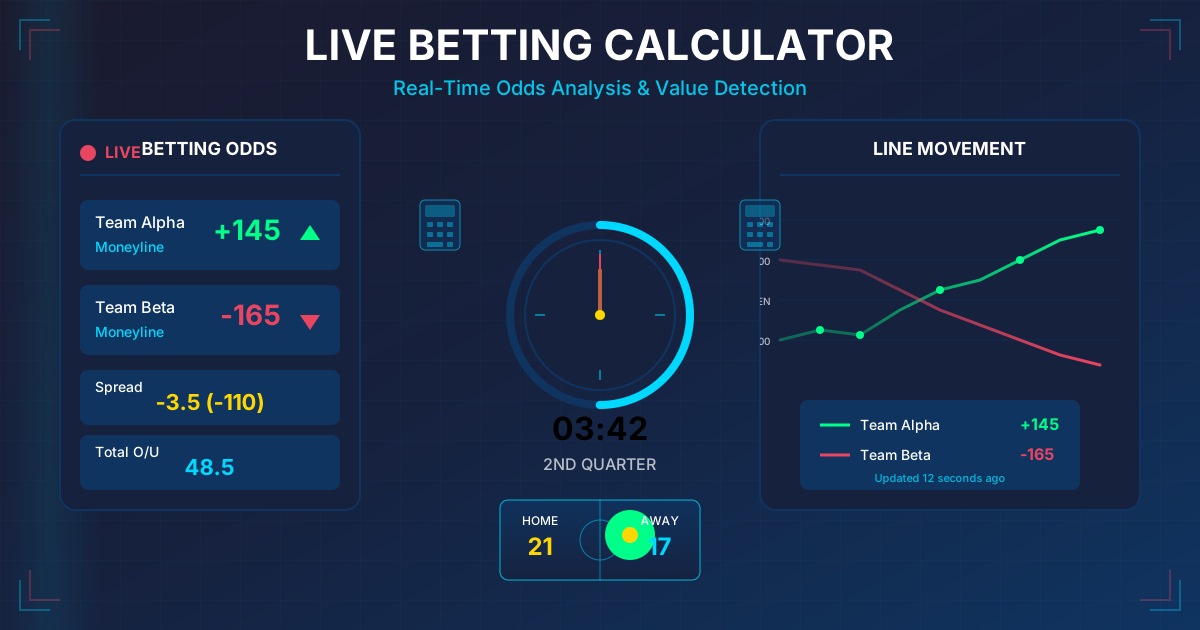
Tennis is the undisputed king of live betting, and it is not close. Roughly 90% of all tennis betting handle is placed in-play---a figure no other major sport comes close to matching. Every point shifts the odds. Every break of serve sends implied probabilities lurching. Every momentum swing in a third-set tiebreak creates windows where sharp bettors find value that pre-match markets never offered.
The sport's structure---individual competition, continuous scoring, no clock, surface-dependent dynamics---makes it a laboratory for disciplined bettors. Unlike team sports where substitutions, coaching adjustments, and defensive schemes muddy the analysis, tennis distills competition down to two players, a court surface, and the mental game. If you can read momentum, understand surface mechanics, and identify market overreactions, tennis offers some of the highest-edge live betting opportunities available in 2026.
But exploiting those opportunities requires more than gut feel. You need a framework for evaluating set betting value, understanding game handicap pricing, managing retirement risk, and differentiating between Grand Slam and regular-tour dynamics. That is exactly what this guide delivers.
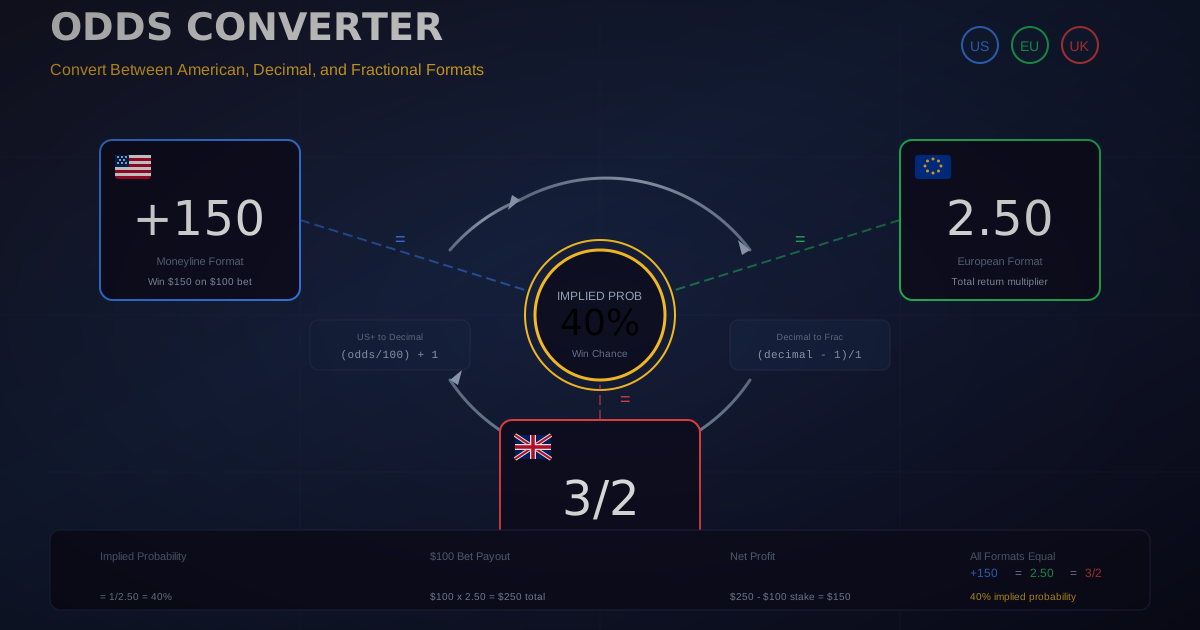
Convert between American, decimal, and fractional odds instantly with our free Odds Converter before placing any tennis wager.
Understanding Tennis Betting Markets
Tennis offers a broader range of betting markets than most casual bettors realize. Each market type rewards different analytical skills and carries different risk-reward profiles.
Match Winner (Moneyline)
The simplest tennis bet: pick which player wins the match. This is where most recreational bettors start, but it is also where value is hardest to find. Sportsbooks devote significant resources to pricing match winner markets, especially for high-profile ATP and WTA events.
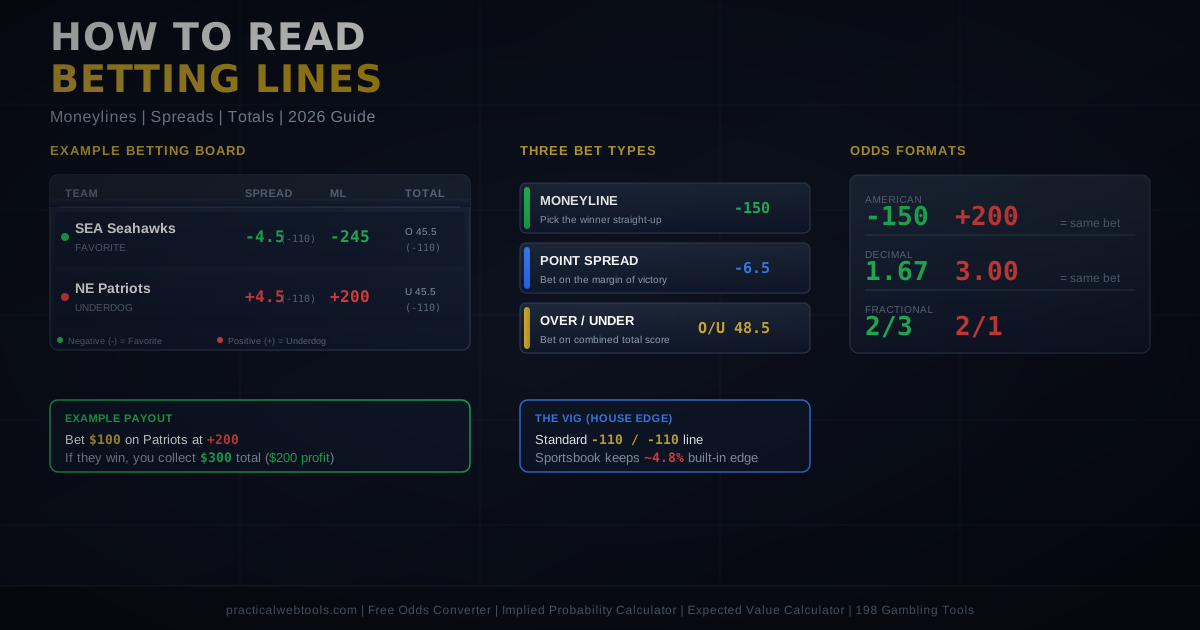
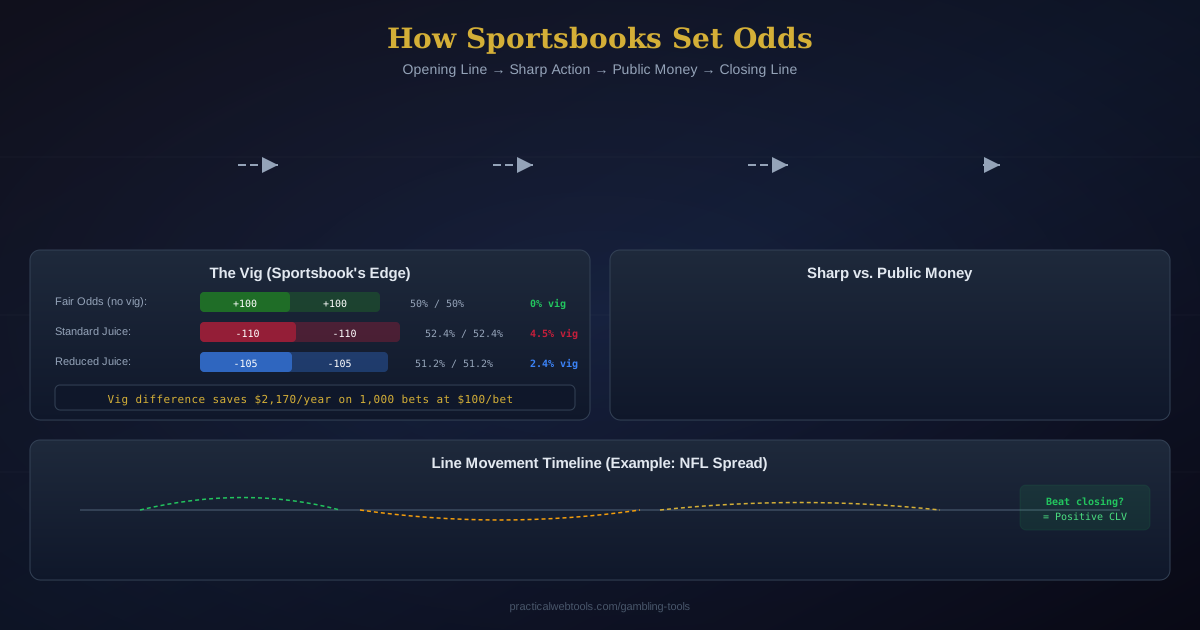
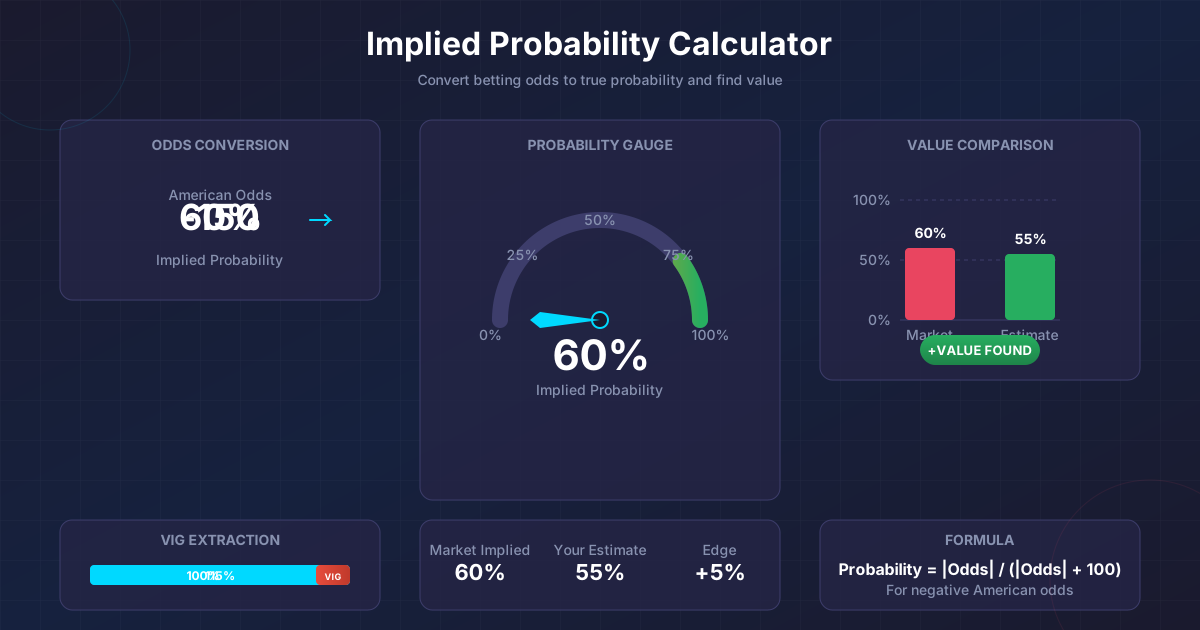
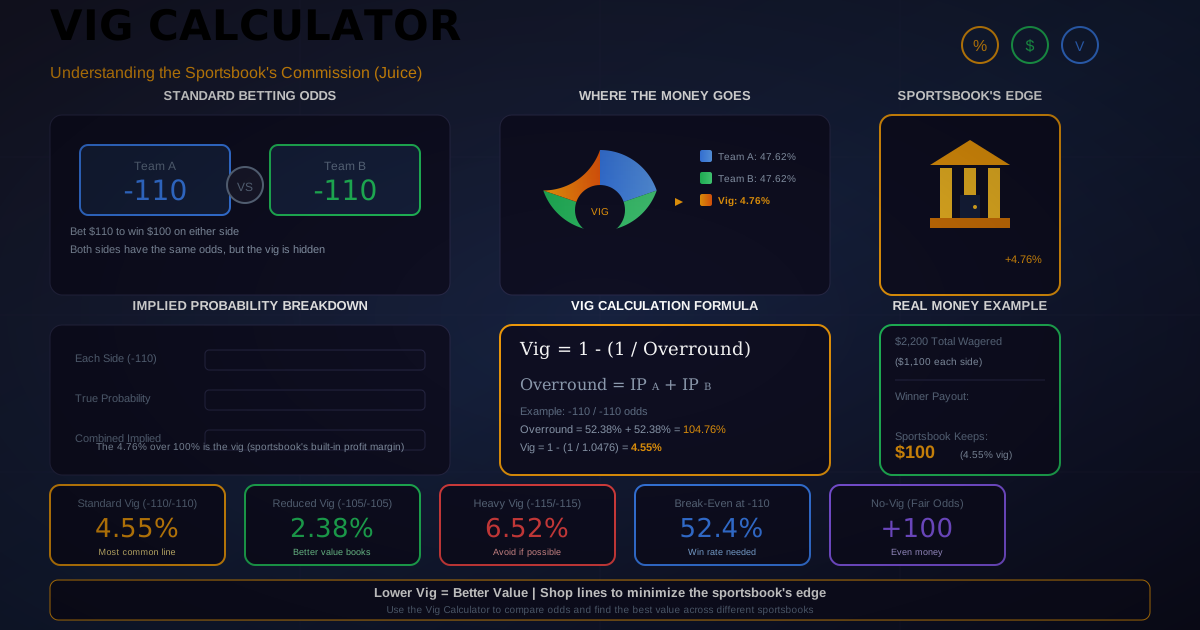
Example: Jannik Sinner opens at -280 against Taylor Fritz at +220 for an Australian Open quarterfinal on hard court. The implied probability on Sinner is approximately 73.7%, while Fritz's implied probability is roughly 31.3%. The combined implied probability of 105% reflects the sportsbook's vig.
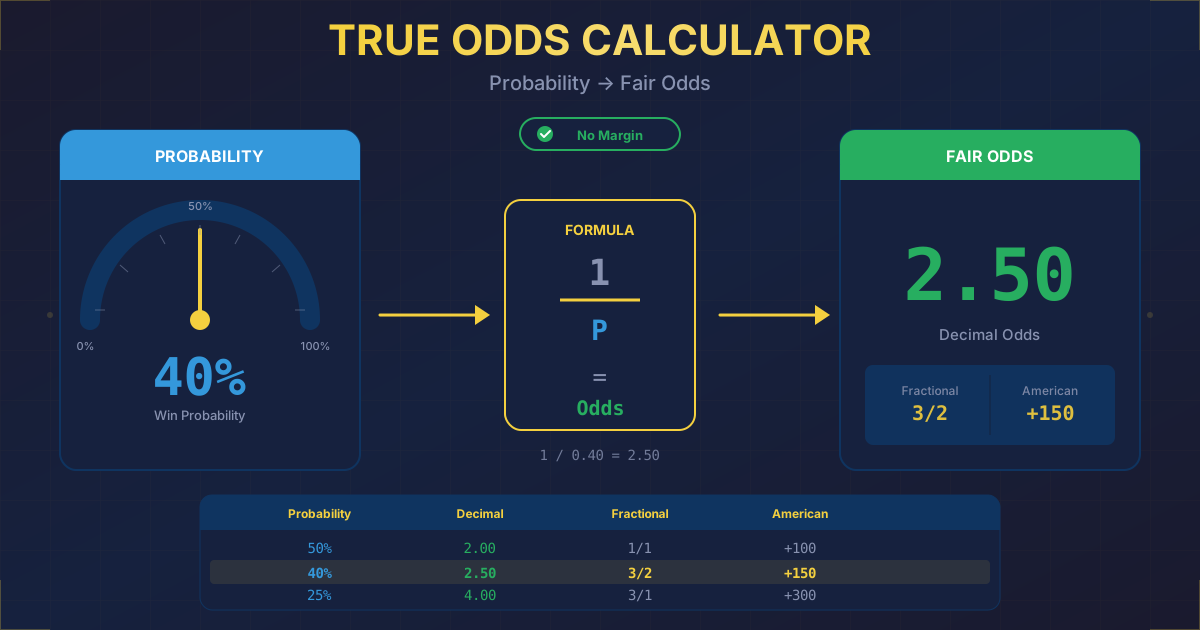
Check implied probabilities on any odds with our Implied Probability Calculator.
Set Betting
Set betting requires you to predict the exact score in sets (e.g., 2-0, 2-1, 3-1). This is where serious tennis bettors find some of the best value because the market is less efficient than match winner pricing.
| Set Score | Typical Odds Range (Best of 3) | When to Target |
|---|---|---|
| 2-0 (Favorite) | -110 to +140 | Strong server on fast surface, dominant matchup |
| 2-1 (Favorite) | +160 to +250 | Competitive match, favorite likely to face resistance |
| 2-0 (Underdog) | +400 to +800 | Underdog with serve advantage or surface edge |
| 2-1 (Underdog) | +350 to +600 | Underdog competitive but needs tight sets |
Example: Carlos Alcaraz faces Daniil Medvedev on hard court at a Masters 1000 event. The match winner line has Alcaraz at -175. But the set betting market offers Alcaraz 2-1 at +210 and Alcaraz 2-0 at +115. If your analysis suggests a competitive match where Alcaraz wins roughly 63% of the time but only wins in straight sets 35% of the time, the 2-1 line at +210 (implied 32.3%) offers better value than the match winner line.
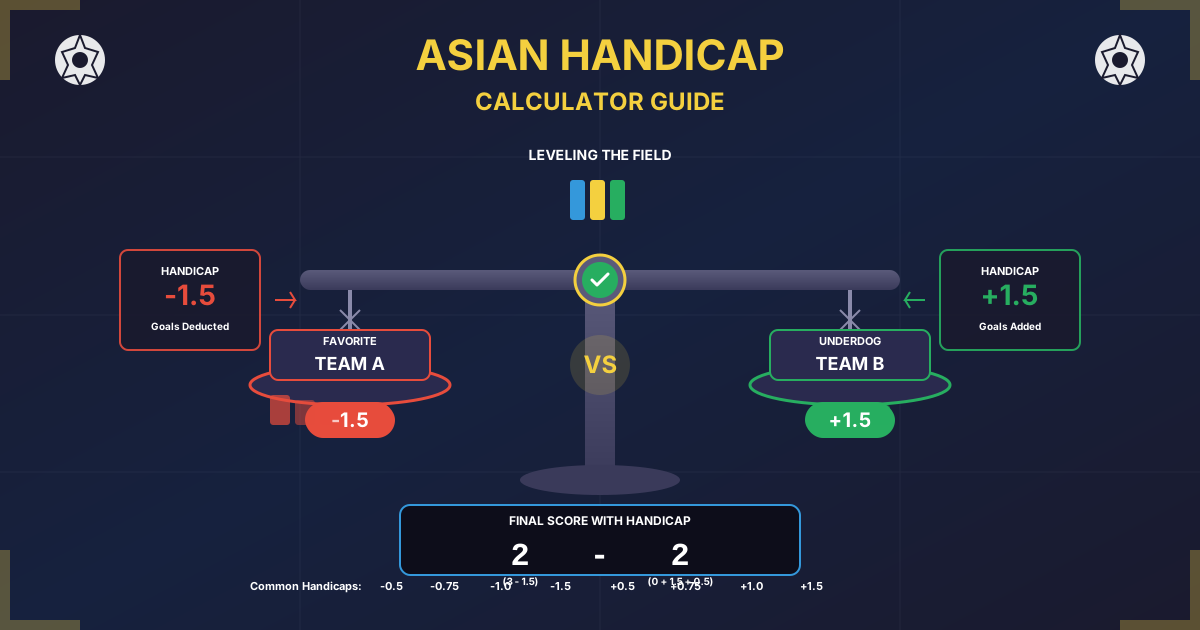
Game Handicap Betting
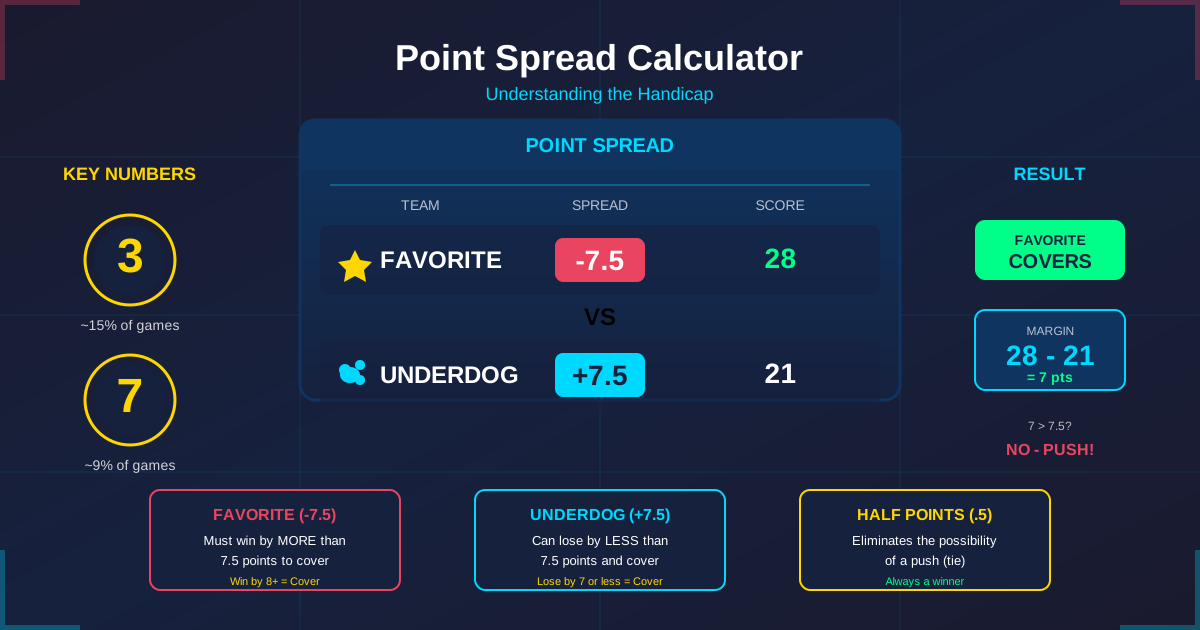
Game handicaps apply a spread to the total number of games won by each player. This market is particularly valuable when betting on heavy favorites where the match winner odds offer minimal return.
| Handicap | What It Means | Example Scenario |
|---|---|---|
| -3.5 games | Favorite must win by 4+ games total | Sinner beats Fritz 6-3, 6-4 (win by 5 games) |
| -5.5 games | Favorite must win by 6+ games total | Dominant straight-sets win needed |
| +4.5 games | Underdog can lose by up to 4 games | Fritz loses 4-6, 5-7 (loses by 4 games, covers) |
| -1.5 sets | Favorite must win in straight sets | Best of 3: must win 2-0 |
Example: Iga Swiatek is -450 to beat a qualifier on clay. The moneyline offers poor value. But Swiatek -5.5 games at -120 becomes interesting if you expect a score like 6-2, 6-3 (winning by 7 games) or 6-1, 6-2 (winning by 9 games). Swiatek's clay dominance---she has historically won over 90% of her clay matches---makes large game handicaps viable on her best surface.
Over/Under Total Games
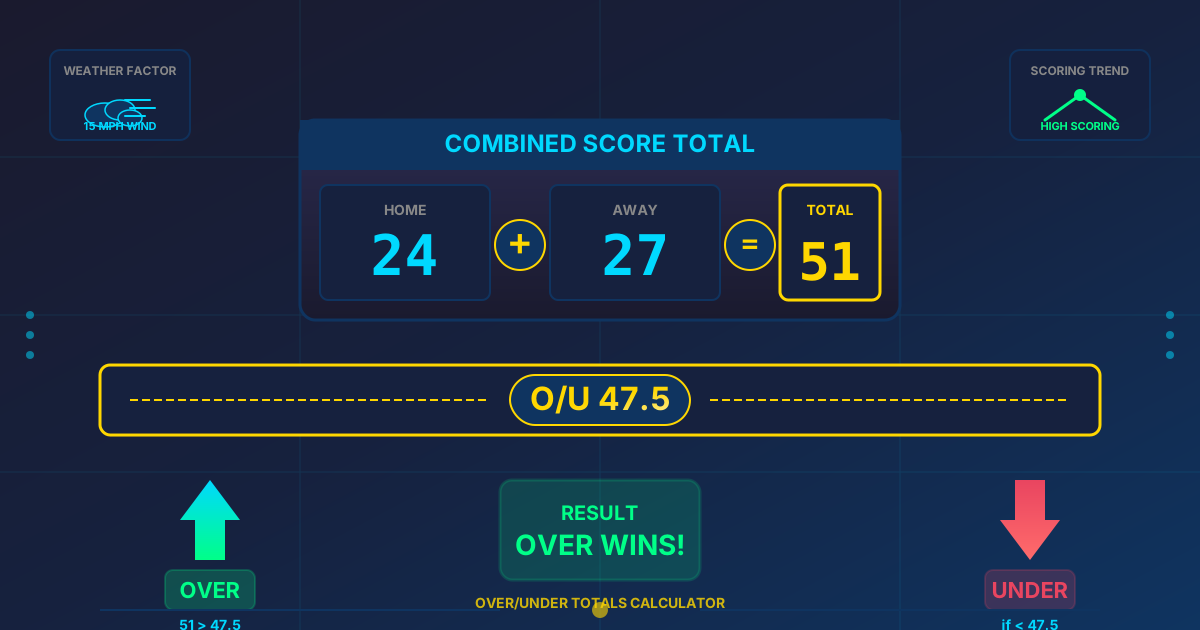
Sportsbooks set a line for the total number of games played in a match. This market rewards understanding of serving dynamics and surface speed.
| Surface | Typical O/U Line (Best of 3) | Lean Direction |
|---|---|---|
| Grass | 21.5 - 23.5 | Under (serve dominance, fewer breaks) |
| Hard Court | 21.5 - 22.5 | Market-dependent on matchup |
| Clay | 22.5 - 24.5 | Over (more breaks, longer rallies) |
Example: A grass-court match between two elite servers like Hubert Hurkacz and Felix Auger-Aliassime might have a total of 23.5 games. If both players hold serve through most of the match and sets go to tiebreaks, a 7-6, 7-6 result yields 26 total games (over). But a 7-6, 6-4 result yields 23 games (under). Serve-and-volley matchups on grass frequently produce low break rates that push totals toward overs via tiebreaks.
Prop Bets and Specials
Advanced tennis markets include:
- First set winner: Often priced differently from match winner due to slow starters
- Tiebreak in match (yes/no): Driven by server strength and surface
- Total aces: Favor big servers on fast surfaces
- Player to win a set: Value on underdogs who may take one set without winning the match
- Break of serve in first set: Lower probability on grass, higher on clay
Why Live Betting Dominates Tennis
Tennis is structurally designed for in-play betting in ways no other sport can match. Understanding why helps you exploit the opportunities.
The 90% In-Play Handle
According to major betting operators like Entain, approximately 90% of all tennis betting stakes are placed in-play. The top three live markets---Match Betting, Current Game Winner, and Set Winner---account for about 85% of those in-play stakes. No other sport approaches this proportion.
Why tennis dominates live betting:
- Continuous scoring: Unlike football or baseball with long breaks, tennis has a point scored every 30-60 seconds
- No clock: Matches have no time limit, meaning momentum shifts play out fully
- Individual sport: No substitutions, bullpen changes, or defensive adjustments can intervene
- Transparent momentum: Break points, set points, and body language are visible in real time
- Score granularity: Points within games within sets create layered betting opportunities
How Live Odds Move in Tennis
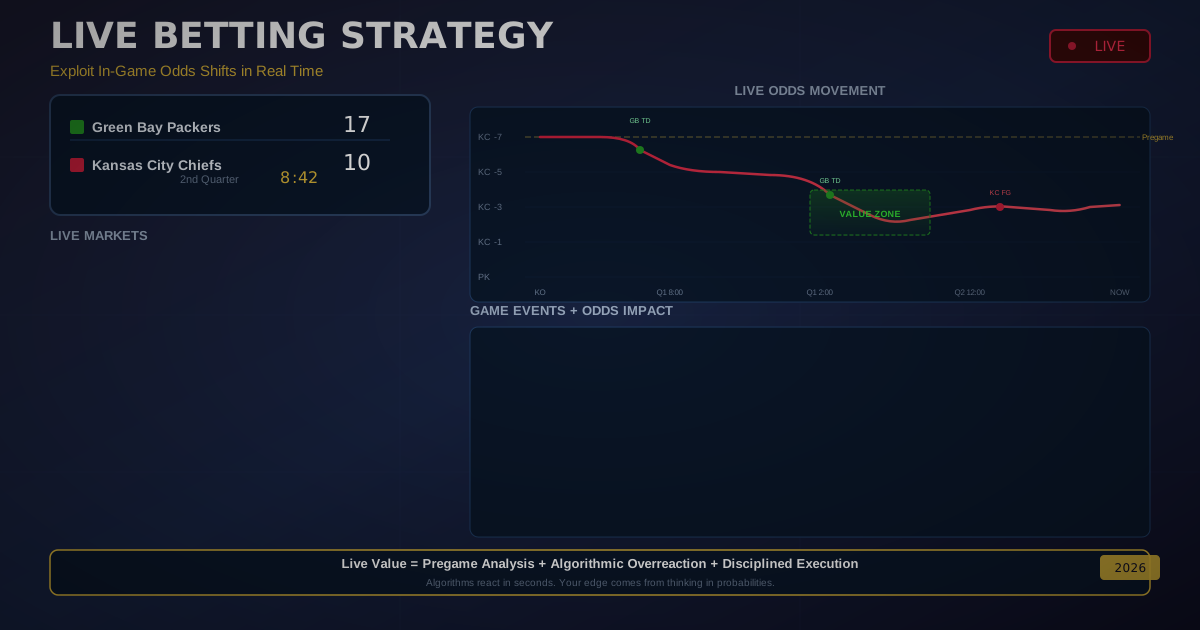
Tennis odds react to specific in-match triggers with predictable patterns that informed bettors can anticipate:
| Trigger Event | Typical Odds Movement | Overreaction Potential |
|---|---|---|
| Break of serve (early set) | 5-15% shift in implied probability | Moderate---market often overcorrects |
| Break of serve (late set) | 15-30% shift | High---5-4 with a break is treated as decisive |
| Set won by underdog | 20-40% shift | Very high---recency bias inflates underdog |
| Medical timeout called | 5-15% shift toward opponent | High---injury severity often unknown |
| Double fault on break point | 3-8% shift | Moderate---single point overweighted |
| Tiebreak loss by favorite | 15-25% shift | High---tiebreaks are high-variance |
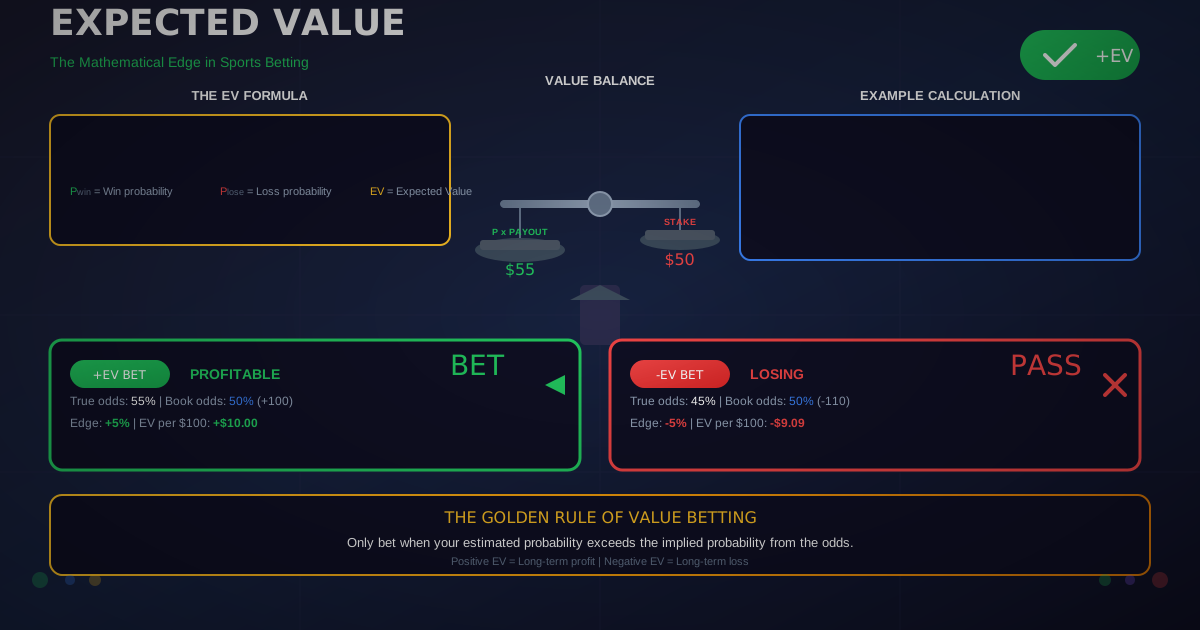
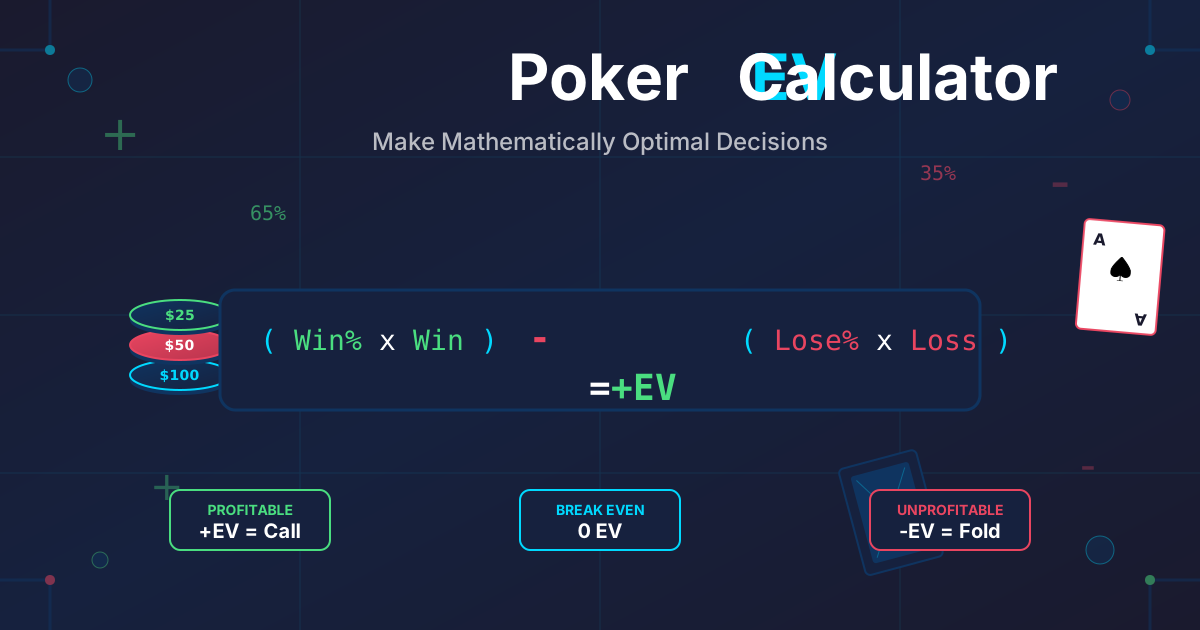
Calculate the expected value of live betting opportunities with our Expected Value Calculator.
Identifying Live Betting Value Windows
The best live betting opportunities appear during moments of maximum market overreaction:
After a first-set loss by the favorite: This is the single most profitable live betting scenario in tennis. When a heavy favorite drops the first set, the live odds overcorrect significantly. A player who was -300 pre-match might shift to +120 or even +150 after losing set one. But historical data shows that elite players recover from first-set losses far more often than these adjusted odds imply, especially in best-of-five Grand Slam matches.
Example: Novak Djokovic is -350 pre-match against Ben Shelton at the US Open. Shelton wins the first set 7-5 in a tight affair. Live odds shift Djokovic to -110. But Djokovic's career record after losing the first set in Grand Slams is extraordinary---he has won well over 50% of such matches throughout his career. The live line at -110 likely undervalues his comeback probability, creating a +EV window.
During a momentum swing after the underdog breaks: When an underdog breaks serve in the second set, markets often project that momentum forward as if it will continue. But break-back rates---especially among elite servers---are much higher than the market implies. If a player with a strong serve gets broken once, the odds of an immediate break back are significant.
Surface Analysis: Hard Court, Clay, and Grass
Surface is the single most important contextual variable in tennis betting. A player's win rate, serving effectiveness, and match dynamics change dramatically across surfaces. Ignoring surface analysis is like ignoring weather in baseball or altitude in NFL games---you are betting blind.
Surface Performance Comparison
| Metric | Hard Court | Clay | Grass |
|---|---|---|---|
| First serve points won | ~75% | ~69% | ~75% |
| Break frequency | Moderate | High | Low |
| Average rally length | 4-5 shots | 5-7 shots | 3-4 shots |
| Tiebreak frequency | Moderate | Low | High |
| Tournament share (ATP) | ~55% | ~30% | ~12% |
| Upset rate | Moderate | Moderate-High | Lower (small sample) |
| Favorite cover rate (game handicap) | ~50-52% | ~48-50% | ~51-53% |
Hard Court Betting Strategy
Hard court is the default surface of professional tennis, hosting over half of all ATP and WTA tournaments. It is also the most "neutral" surface, meaning player quality tends to prevail more consistently than on specialized surfaces.
Key hard court betting insights:
- Serve remains king: First serve point percentage of approximately 75% means holding serve is the baseline expectation. Bettors should weight first-serve percentage and ace counts heavily.
- Baseline power rewarded: Players like Jannik Sinner, who thrive on hard court, can show a 10%+ difference in win rate compared to clay or grass. Sinner's game---flat, penetrating groundstrokes hit through the court---is optimized for hard court speed.
- Under totals more viable in fast hard court conditions: Indoor hard courts play faster than outdoor, reducing break opportunities and pushing sets toward tiebreaks.
Example: Sinner is -200 against Stefanos Tsitsipas on indoor hard court. Historically, Sinner's hard court win rate exceeds his clay win rate by more than 10 percentage points. Tsitsipas, more comfortable on clay, has a weaker indoor record. The -200 line may actually undervalue Sinner in this specific context. A $200 bet to win $100 might represent genuine value if Sinner's true win probability on indoor hard court against this opponent exceeds 70%.
Clay Court Betting Strategy
Clay is the great equalizer. The slower surface gives defenders more time, reduces the impact of big serves, and produces longer rallies that test fitness and mental endurance.
Key clay court betting insights:
- Break frequency is the differentiator. First serve points won drops to approximately 69% on clay. More breaks mean more swings in momentum, more live betting opportunities, and wider variance.
- Surface specialists dominate value. Rafael Nadal's historic 92% win rate on clay is the most extreme example, but the principle holds broadly: players whose games are built for clay outperform their overall rankings on this surface.
- Game handicaps require caution on clay. The higher break rate means even dominant players may drop more games than expected. A -5.5 game handicap that looks safe on hard court becomes risky on clay where a single service game lapse adds significant games to the opponent's total.
- Overs are more common. More breaks lead to more games, pushing totals higher. The typical over/under line on clay is 1-2 games higher than on hard court.
Example: A clay court match between Casper Ruud and Holger Rune has a total of 23.5 games. Both players break serve frequently on clay. If each player breaks the other twice per set, a typical score might be 6-4, 4-6, 7-5---totaling 32 games, well over the line. Clay court overs hit more reliably for players with high break rates.
Grass Court Betting Strategy
Grass is the rarest and most serve-dominant surface. Only a handful of top-level tournaments are played on grass each year, with Wimbledon being the crown jewel. This limited sample creates inefficiencies.
Key grass court betting insights:
- Serve dominance compresses outcomes. First serve points won of approximately 75%---combined with a slippery, low-bouncing surface---means fewer breaks and more tiebreaks.
- Specialist edges are massive. Players whose games rely on serve-and-volley or slice approaches gain disproportionate advantages on grass. This can create significant disconnects between a player's overall ranking and their grass court ability.
- Tiebreak props offer value. The high hold-of-serve rate on grass means "tiebreak in match: yes" bets hit more frequently. A match between two strong servers on grass might see 60-70% of sets go to tiebreaks.
- Under totals are tricky. While individual sets may be tight (few breaks), tiebreaks add games. A 7-6, 7-6 match has 26 games; a 6-4, 7-6 has 23. The under is viable only if one player's return game is strong enough to generate clean breaks.
Momentum Swings and Live Betting Strategy
Tennis is a sport of runs. A player can look dominant for six games and then mentally collapse for the next four. Understanding momentum patterns---and how the market misprices them---is the core skill of profitable live tennis betting.
The Psychology of Momentum in Tennis
Unlike team sports, tennis players have nowhere to hide. There is no bench, no huddle, no timeout (beyond the 25-second serve clock and changeovers). This creates predictable psychological patterns:
After winning the first set: The winner often relaxes slightly at the start of set two, especially if they won decisively. This creates a window where the set-two line may undervalue the loser, who is now playing with desperation and nothing to lose.
After saving break points: Players who save multiple break points in a single game often experience a surge of confidence that carries into subsequent games. The market does not fully price in this emotional boost.
At 4-4 or 5-5 in a set: These pressure moments reveal which player handles stress better. Historical data on clutch serving---hold percentage when facing break points---is one of the most underutilized metrics in tennis betting.
Live Betting Momentum Indicators
| Indicator | What to Watch | Betting Implication |
|---|---|---|
| First serve percentage trending up | Player finding rhythm | Back this player; market may lag |
| Unforced errors spiking | Mental frustration | Fade this player; momentum shifting |
| Time between points increasing | Player stalling, fatigued | Back opponent; fatigue compounds |
| Winner-to-error ratio improving | Confidence growing | Back this player before odds adjust |
| Body language shifts (towel usage, talking to box) | Mental distress | Fade; retirement risk also rises |
| Break point conversion rate in match | Clutch performance indicator | High conversion = back; low = fade on break chances |
The "Broken Back" Pattern
One of the most exploitable patterns in live tennis betting is the break-back. When a player gets broken, the market shifts significantly toward the opponent. But the break-back rate in professional tennis is substantial---particularly for strong servers who may have had one poor service game but are otherwise solid.
Example: Alexander Zverev is serving at 3-4 after getting broken in the previous game against Andrey Rublev on hard court. The live odds shift Rublev to -140 for the set. But Zverev's career break-back rate---the percentage of times he breaks back immediately after being broken---is historically strong. If that rate exceeds the implied 41.7% probability that the current line suggests for Zverev to win the set, there is live value on Zverev.
Determine exact bet sizing using our Kelly Criterion Calculator when you spot a live value opportunity.
Set Betting Value: Where the Edge Lives
Set betting is where experienced tennis bettors find their most consistent edges. The market is less efficient than match winner pricing for several reasons.
Why Set Betting Offers Value
- Fewer bettors participate. Casual bettors stick to match winner, meaning set betting lines receive less sharp action and correct more slowly.
- Multiple outcomes split the pool. In a best-of-three match, there are four possible set scores (2-0 either direction, 2-1 either direction). In a best-of-five Grand Slam, there are ten possibilities. Sportsbooks cannot efficiently price all ten.
- Surface and matchup specifics matter more. A straight-sets win on grass (where breaks are rare and the better player holds more consistently) is more likely than on clay (where breaks create volatility). The set betting market does not always fully adjust for this.
Set Betting Odds Guide (Best of 3)
| Scenario | Typical Odds | Key Factor | Value Signal |
|---|---|---|---|
| Heavy fav 2-0 | -130 to +100 | Surface speed, serve dominance | Value on fast surfaces with large skill gap |
| Heavy fav 2-1 | +200 to +300 | Opponent's serve quality | Value when underdog has strong serve but weaker return |
| Moderate fav 2-0 | +110 to +170 | Head-to-head, confidence | Value when favorite has dominant H2H on this surface |
| Moderate fav 2-1 | +200 to +280 | Match competitiveness | Value in competitive matchups where favorite still prevails |
| Underdog 2-1 | +350 to +600 | Underdog's mental strength | Value for experienced underdogs on their preferred surface |
| Underdog 2-0 | +500 to +1000 | Upset potential | Selective---only when matchup and surface strongly favor underdog |
Set Betting in Best of 5 (Grand Slams)
Grand Slam set betting adds enormous complexity and opportunity. With ten possible set scores (3-0, 3-1, 3-2 for either player, plus 0-3, 1-3, 2-3), the market must spread its pricing across many more outcomes.
Example: At Roland Garros, Alcaraz faces Djokovic. Pre-match odds have Alcaraz at -130. The set betting market offers:
- Alcaraz 3-0: +500
- Alcaraz 3-1: +350
- Alcaraz 3-2: +400
- Djokovic 3-0: +700
- Djokovic 3-1: +450
- Djokovic 3-2: +500
If your model suggests this match goes at least four sets 70% of the time (based on their historically competitive matchups), then the 3-0 lines for both players are overpriced by the market. The 3-1 and 3-2 lines collectively should absorb more probability mass than the market is allocating. Betting Alcaraz 3-1 at +350 and Alcaraz 3-2 at +400 individually may offer better expected value than the match winner line at -130.
Grand Slam vs. Regular Tournament Differences
The differences between Grand Slam and tour-level events create systematic betting opportunities that many bettors overlook.
Format Impact on Favorites
The best-of-five format at Grand Slams (men's singles) significantly favors the better player compared to the best-of-three format used at all other events. Research shows that pre-match favorites win approximately 78.5% of Grand Slam matches, compared to roughly 68.5% at ATP 250 events. That 10-percentage-point gap is massive.
| Tournament Level | Format (Men's) | Favorite Win Rate | Upset Frequency |
|---|---|---|---|
| Grand Slam | Best of 5 sets | ~78.5% | Lower---better player has more time to recover |
| Masters 1000 | Best of 3 sets | ~72-74% | Moderate |
| ATP 500 | Best of 3 sets | ~70-72% | Moderate |
| ATP 250 | Best of 3 sets | ~68.5% | Higher---underdogs can catch fire for 2 sets |
Why best-of-five favors favorites:
- Recovery time: Elite players can afford a slow start. Dropping the first set in a best-of-five match is not catastrophic; in best-of-three, it is nearly fatal.
- Physical endurance: Top players invest heavily in fitness. Five-set matches amplify the endurance advantage.
- Mental resilience: The longer format rewards patience and tactical adjustments. A lower-ranked player who finds a tactical edge early may not sustain it over five sets.
- Statistical regression: Over more sets, the better player's quality is more likely to assert itself. Variance is reduced.
Grand Slam Betting Implications
Favor favorites more aggressively at Grand Slams. The 10% higher win rate for favorites justifies tighter moneyline pricing. If a favorite is priced the same at a Grand Slam as at a regular tournament, the Grand Slam line offers better value.
Game handicaps are riskier at Grand Slams. More sets mean more total games, and the possibility of a five-set win with a close overall game margin. A player can win a Grand Slam match 3-2 while losing the total game count.
Set betting has more outcomes and more inefficiency. Ten possible outcomes in best-of-five create more opportunities for mispricing. Grand Slam set betting markets deserve extra attention.
Physical monitoring matters more. Five-set matches in heat or humidity test conditioning. Players with known fitness issues or who played long previous matches become riskier favorites.
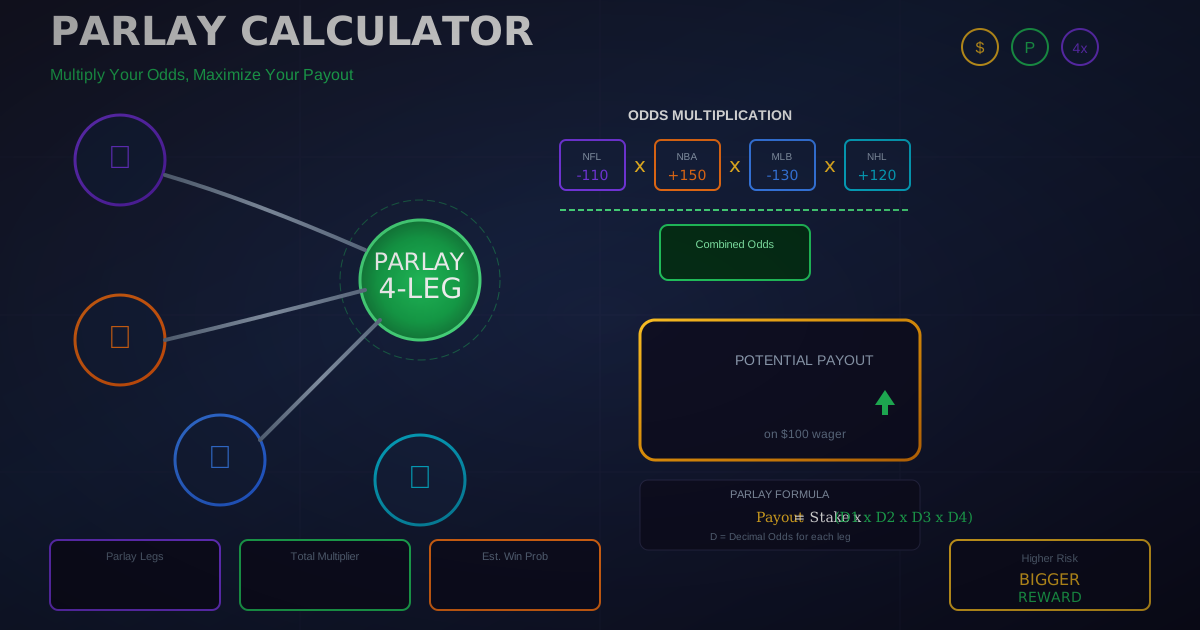
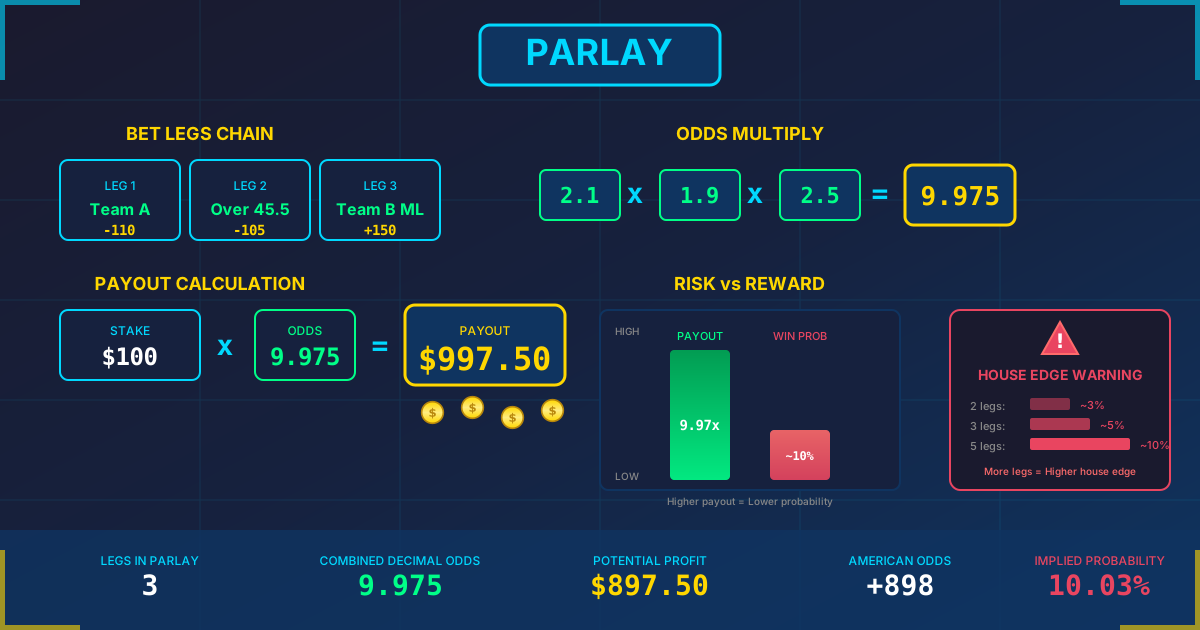
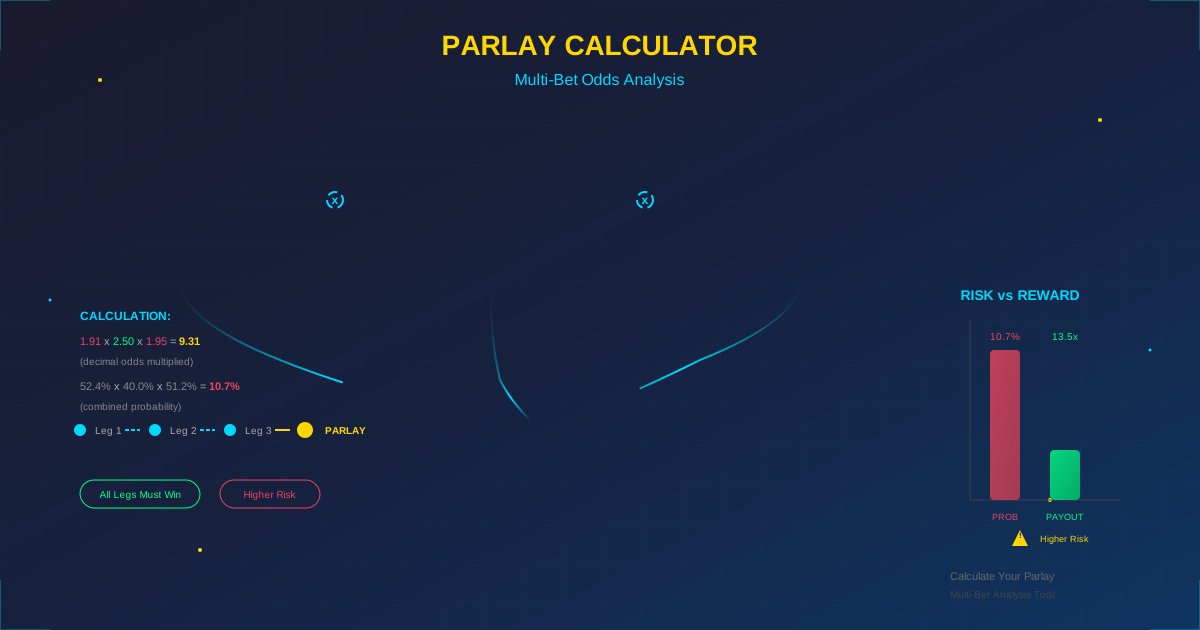
Compute potential parlay payouts with our Parlay Calculator when combining Grand Slam bets.
Men's vs. Women's Tennis Betting
The structural differences between ATP and WTA tours create distinct betting dynamics that require separate analytical approaches.
Key Differences
| Factor | ATP (Men's) | WTA (Women's) |
|---|---|---|
| Set format (non-Slam) | Best of 3 | Best of 3 |
| Set format (Slams) | Best of 5 | Best of 3 |
| Field depth | Deeper---top 50 highly competitive | More top-heavy---wider gaps outside top 10 |
| Upset rate | Lower (especially at Slams) | Higher---best-of-3 at all events |
| Serve dominance | Higher---bigger serves, more aces | Lower---return game more impactful |
| Market pricing efficiency | Tighter---more betting volume | Softer---less sharp action |
| Consistency of favorites | More consistent | More volatile |
WTA Betting Strategy
Volatility is the defining characteristic of WTA betting. The best-of-three format at all events---including Grand Slams---means that upsets are more common across the board. A WTA favorite at -300 carries more risk than an ATP favorite at the same price.
Where to find WTA value:
- Fade overpriced favorites. WTA markets often price heavy favorites similarly to ATP markets despite the higher upset rate. A WTA player at -400 may only win 75% of the time, while an ATP player at -400 wins 80%+.
- Back experienced underdogs. Veteran WTA players who have faced top competition before tend to outperform their odds in big moments.
- Serve-return matchups matter more. Since WTA serves are less dominant, break-of-serve rates are higher, leading to more volatile scores and more live betting opportunities.
ATP Betting Strategy
Consistency rewards patient bettors. ATP favorites win at higher rates, meaning:
- Moneyline favorites are more reliable but offer lower payouts
- Game handicaps work better because skill gaps manifest more cleanly in game totals
- Grand Slam favorites deserve premium backing due to the best-of-five format advantage
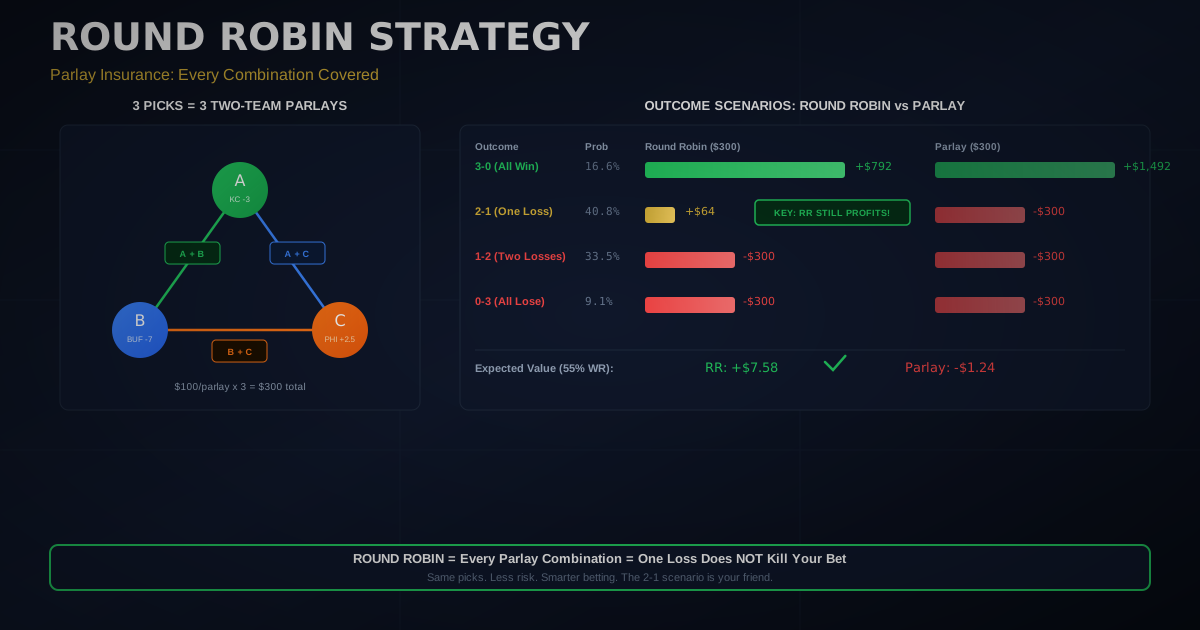
Example: You identify three WTA favorites each at -250 and three ATP favorites each at -250. Building separate parlays, the ATP parlay is mathematically more likely to hit because ATP favorites at that price point have a higher historical win rate than WTA favorites at the same price. Use the Parlay Calculator to model both scenarios.
Retirement Risk Management
Player retirements represent one of the most misunderstood risks in tennis betting. Unlike team sports, individual tennis players can withdraw mid-match due to injury, illness, or fatigue, and sportsbook rules for handling retirements vary significantly.
Retirement Statistics
Retirement rates in professional tennis have trended upward over the past two decades. Studies show that ATP tour retirements occur in roughly 2-3% of matches, with the rate rising above 5% when including pre-match walkovers at Grand Slams. The grueling physical demands of the modern game---particularly for players competing in back-to-back tournaments---contribute to this trend.
How Sportsbooks Handle Retirements
This is critical knowledge. Different sportsbooks have different rules, and getting caught by a retirement on the wrong book can void a winning bet.
| Sportsbook Rule Type | Match Winner Bet | Set/Game Bets | When Applied |
|---|---|---|---|
| "One set completed" | Winner = advancing player (if after set 1) | Completed sets settled, incomplete voided | DraftKings (ATP), many US books |
| "Full match required" | Voided if retirement before match completion | All voided | DraftKings (WTA), some international books |
| "Walkovers void all" | Voided (match never started) | All voided | Universal |
| "Official result stands" | Winner = advancing player | Completed markets settled | Some European books |
Managing Retirement Risk
Before betting any tennis match, check:
- Injury reports: Has either player shown signs of physical distress in recent matches?
- Tournament schedule: Is either player on a heavy schedule with short recovery between events?
- Historical retirement rate: Some players retire more frequently than others. Track this.
- Sportsbook retirement rules: Know your book's specific rules before placing the bet.
Risk mitigation strategies:
- Avoid heavy favorites with injury concerns. If your -500 favorite retires, you may lose the bet or have it voided depending on the book and timing.
- Live betting after set one reduces retirement risk. If a player completes set one without issues, most books will settle match winner bets normally even if a retirement occurs later.
- Game handicap and set betting carry unique retirement risks. If a match is retired after one set, your game handicap bet on a three-set match may be voided entirely.
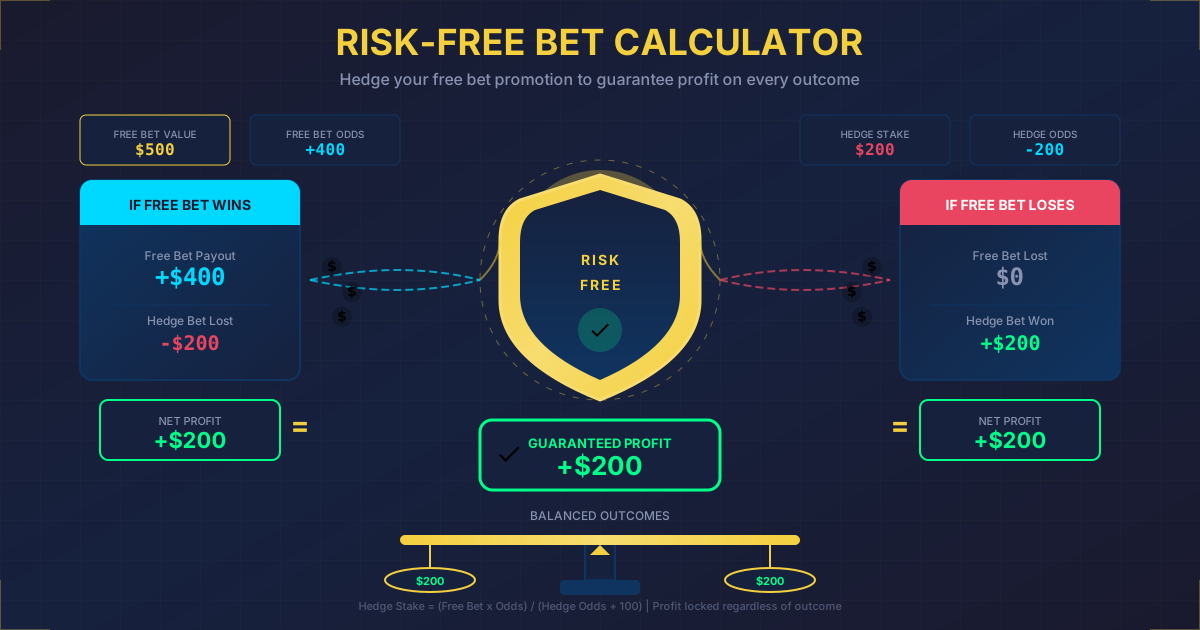
Use our Hedge Calculator to protect against retirement risk by hedging in-play when you spot early warning signs.
Advanced Tennis Betting Strategies
The First-Set Reset
This strategy exploits the market's tendency to overweight the first set result. After the first set concludes:
- If the favorite lost set one, assess whether the loss was due to (a) a genuine skill deficit or (b) a slow start, bad luck on break points, or a single tiebreak loss.
- If the answer is (b), the live odds likely overvalue the underdog. Back the favorite.
- If the favorite won set one easily, assess whether the underdog has any path to extending the match. If not, the live game handicap on the favorite may offer value.
Example: Aryna Sabalenka loses the first set 6-7 to Coco Gauff on hard court. Sabalenka's live odds shift from -180 pre-match to +110. But the first set went to a tiebreak---there were no breaks of serve in the entire set. Sabalenka's serve was effective; she simply lost a coin-flip tiebreak. The +110 line dramatically undervalues Sabalenka's chances of winning the next two sets. A $110 bet on Sabalenka at +110 to win $110 likely represents significant +EV.
Surface Transition Exploitation
When the tour transitions between surfaces (hard to clay in spring, clay to grass in summer), some players adjust faster than others. The first week of clay-court events often features hard-court specialists struggling to adapt, while clay specialists are already in form from training.
Actionable angles:
- Back clay specialists at elevated odds in their first clay events---the market may still be pricing based on their hard court results.
- Fade hard-court specialists in early clay events, especially in game handicap markets where the surface mismatch amplifies over a full match.
- On the grass transition, back serve-and-volley players whose styles are uniquely suited to grass, even if their ranking has dropped during the clay season.
Line Shopping for Tennis
Tennis odds can vary significantly between sportsbooks, more so than major team sports. Because tennis receives less sharp action, books are slower to correct their lines.
Where to find the biggest discrepancies:
- Early-round matches at smaller tournaments
- WTA events (less betting volume = wider spreads)
- Prop markets (aces, tiebreaks, set score)
- Live betting odds during momentum swings
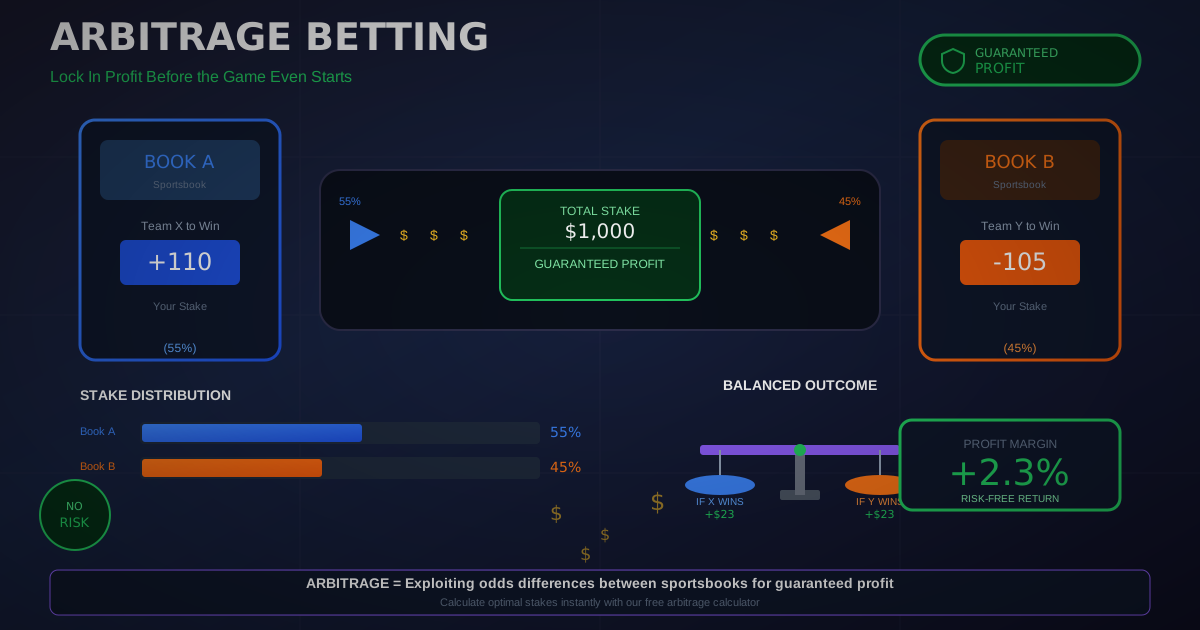
Identify arbitrage opportunities between books with our Arbitrage Calculator.
The Kelly Criterion for Tennis
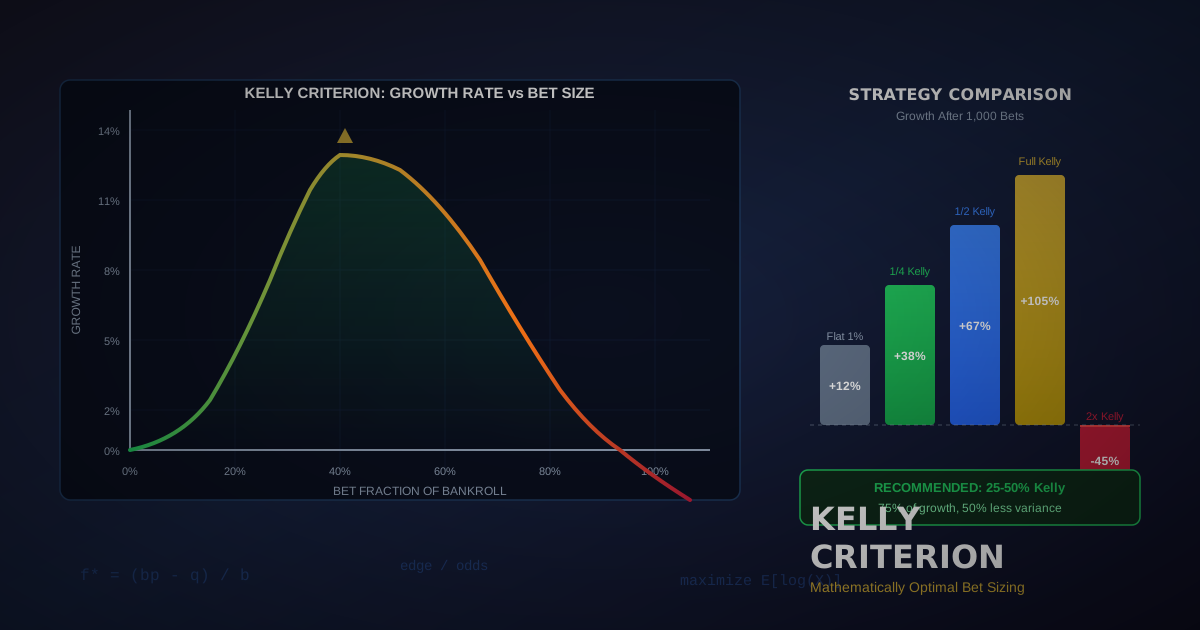
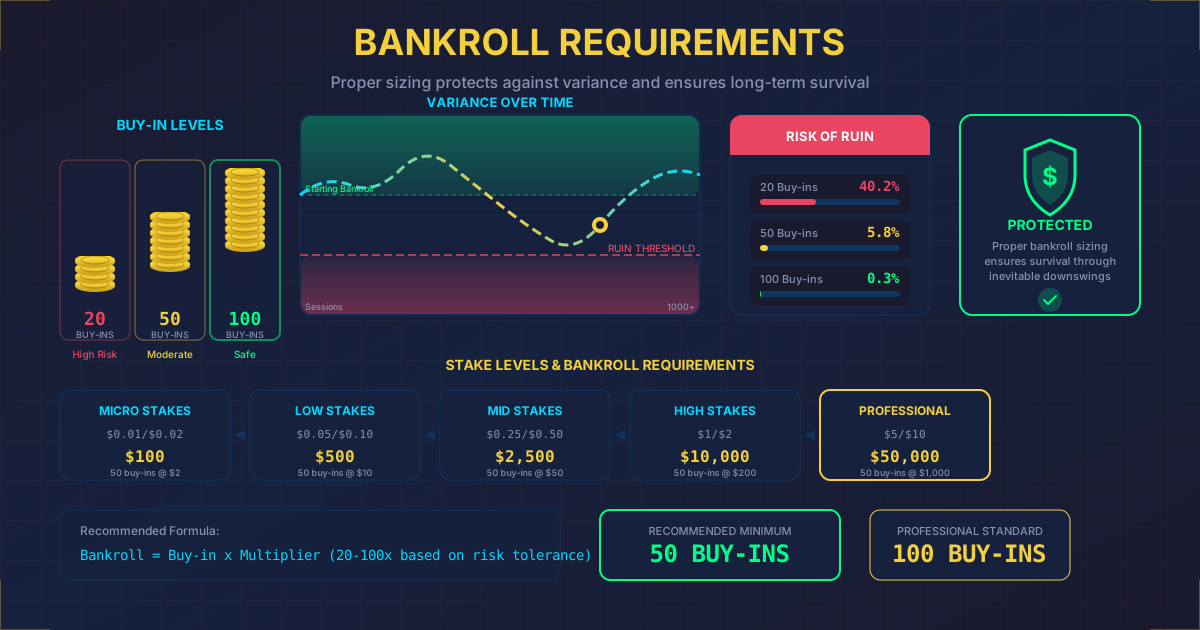
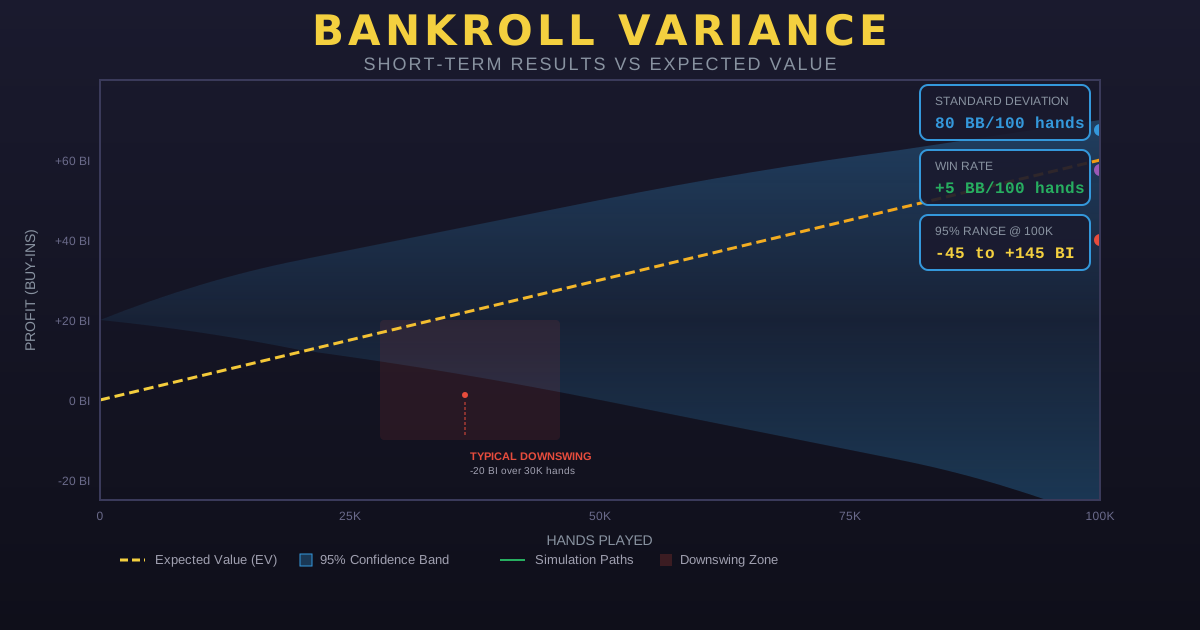
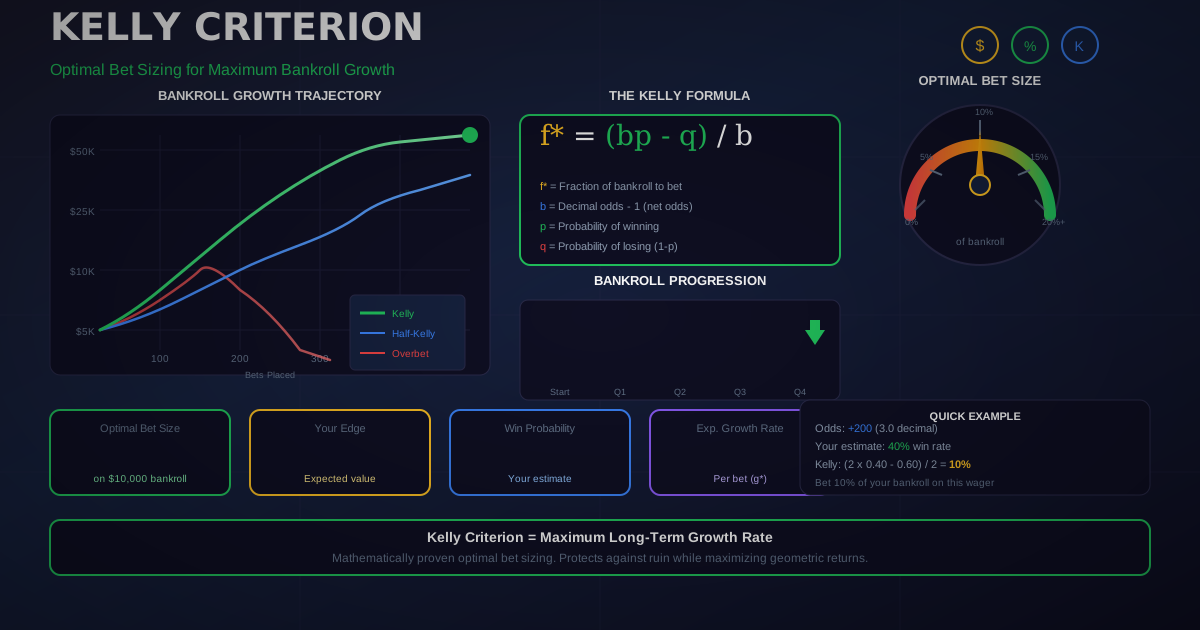
Tennis betting's higher variance---especially in WTA and best-of-three events---means proper bankroll management is essential. The Kelly Criterion provides a mathematical framework for optimal bet sizing based on your estimated edge.
Practical Kelly application for tennis:
- Use fractional Kelly (25-50% of full Kelly) to reduce variance
- Reduce Kelly fraction further for WTA and ATP 250 events where upsets are more common
- Increase Kelly fraction slightly for Grand Slam favorites where the best-of-five format reduces upset risk
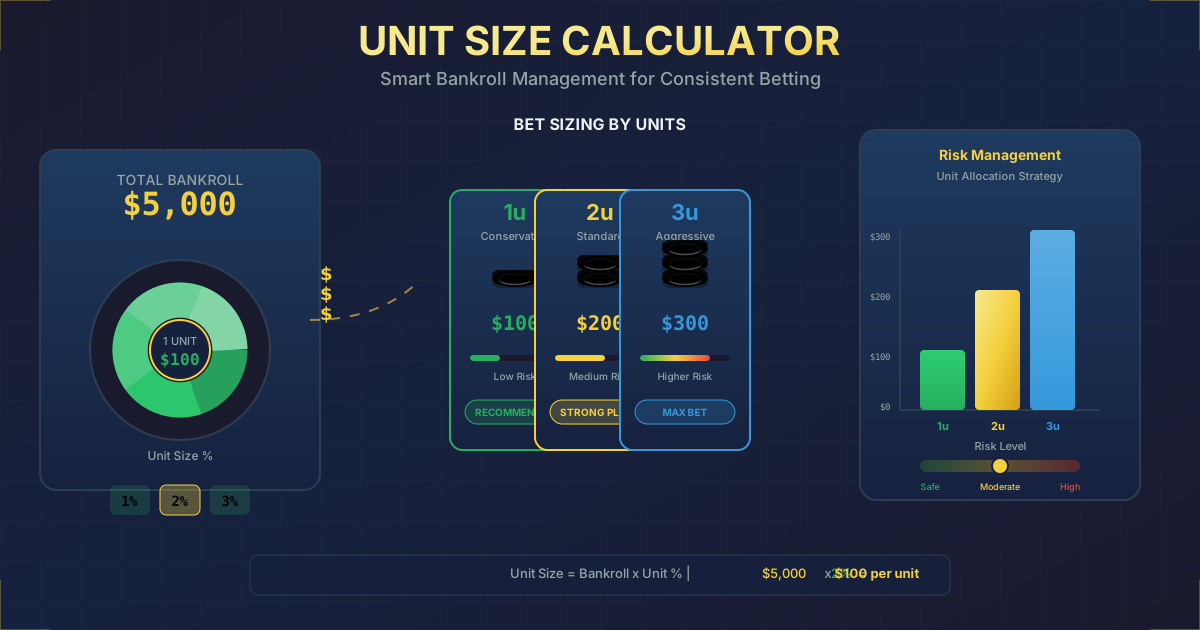
Example: You estimate Sinner has a 72% chance of beating Fritz on hard court. The sportsbook offers -250 (implied 71.4%). Your edge is 0.6%. Full Kelly suggests risking approximately 1.5% of your bankroll. At half Kelly, you bet 0.75% of your $5,000 bankroll, or $37.50. This conservative sizing protects you from the variance inherent in tennis while still capitalizing on positive expected value.
Calculate your exact Kelly bet size with our Kelly Criterion Calculator.
Measure the vig on any tennis line with our Hold/Vig Calculator.
Frequently Asked Questions
What percentage of tennis betting is done live (in-play)? Approximately 90% of all tennis betting stakes are placed in-play, according to major operator Entain. This is the highest proportion of any major sport. The continuous scoring system, lack of a clock, and frequent momentum shifts make tennis uniquely suited for live wagering. The top three in-play markets---Match Betting, Current Game Winner, and Set Winner---account for about 85% of in-play stakes.
What is set betting in tennis, and is it more profitable than match winner betting? Set betting requires predicting the exact score in sets (such as 2-0 or 2-1 in best-of-three matches). It often offers better value than match winner betting because the market is less efficient---fewer bettors participate, and sportsbooks have more difficulty accurately pricing multiple outcomes. Experienced bettors who can accurately predict match competitiveness often find their best edges in set betting markets.
How does court surface affect tennis betting? Surface is the most important contextual variable in tennis betting. Hard courts produce approximately 75% first-serve points won and moderate break rates. Clay courts reduce first-serve effectiveness to about 69%, creating more breaks and higher volatility. Grass courts favor big servers with few breaks and frequent tiebreaks. Players can show 10%+ differences in win rate across surfaces---Sinner, for example, performs significantly better on hard court than on clay or grass.
Do favorites win more often at Grand Slams? Yes, significantly. In best-of-five format, pre-match favorites win approximately 78.5% of Grand Slam matches, compared to roughly 68.5% at ATP 250 events (best-of-three). The longer format gives better players more time to recover from slow starts, amplifies endurance advantages, and reduces variance. This 10-percentage-point gap means Grand Slam favorites deserve tighter pricing and stronger backing.
What happens to my bet if a tennis player retires mid-match? Rules vary significantly by sportsbook. Some books (like DraftKings for ATP events) settle match winner bets normally if at least one set has been completed, with the advancing player declared the winner. Others void all bets if the match is not completed. Walkovers (pre-match withdrawals) universally void all bets. Always check your specific sportsbook's retirement rules before placing tennis bets. Use our Odds Converter to compare lines across books with different rules.
Should I bet ATP or WTA tennis for better value? Both tours offer value, but in different ways. ATP markets are more heavily bet and tightly priced, making edges harder to find but more reliable when identified. WTA markets receive less sharp action, creating more pricing inefficiencies. However, WTA results are more volatile due to the best-of-three format at all events (including Grand Slams), meaning upsets are more common. Many sharp bettors find their best edges in WTA markets precisely because sportsbooks devote fewer resources to pricing them accurately.
How should I manage my bankroll for tennis betting? Use the Kelly Criterion at a fractional rate (25-50% of full Kelly). For a typical tennis bet where you estimate a small edge, this means risking 0.5-2% of your bankroll per wager. Reduce your stake size for WTA events, ATP 250s, and any match with retirement risk. Increase slightly for Grand Slam favorites in favorable matchups. Track all bets meticulously and evaluate your Closing Line Value to verify that your edge estimates are accurate over time. Our Kelly Criterion Calculator and Expected Value Calculator can help you determine optimal sizing.
What is game handicap betting in tennis? Game handicap betting applies a spread to the total games won by each player across the match. If you bet a favorite at -4.5 games, they must win the total game count by five or more. This market is especially useful when match winner odds are too short to offer value (such as -400 or greater). It rewards analysis of matchup dynamics, surface, and serving strength rather than simply picking the winner.
Essential Tennis Betting Tools
Build a complete tennis betting toolkit with these free calculators:
Odds and Probability
- Odds Converter: Convert between American, decimal, and fractional odds across sportsbooks
- Implied Probability Calculator: Convert any tennis odds to true probability estimates
- Hold/Vig Calculator: Calculate the sportsbook edge built into any tennis market
Bet Sizing and Value
- Expected Value Calculator: Determine whether any tennis bet is +EV or -EV
- Kelly Criterion Calculator: Calculate optimal bet size based on your edge
- Parlay Calculator: Model multi-leg tennis parlays and their true probabilities
Risk Management
- Hedge Calculator: Calculate hedge amounts for live tennis positions
- Arbitrage Calculator: Find risk-free profit across sportsbooks offering different tennis lines
Conclusion
Tennis betting rewards the prepared mind. The sport's structure---continuous scoring, surface-dependent dynamics, individual psychology, and the sheer volume of live betting---creates more opportunities for analytical bettors than almost any other sport. But those opportunities demand discipline.
The fundamentals matter most: understand how surfaces change the game, recognize that favorites win at systematically different rates across tournament levels, price set betting markets independently from match winner markets, and always---always---manage retirement risk before placing a wager.
Live betting is where the real edge lives. That 90% in-play handle exists because the market is constantly repricing, and constant repricing means constant opportunity for mispricing. Learn to read momentum, identify overreactions to first-set results and break-of-serve events, and size your bets conservatively enough to survive the variance that tennis inevitably delivers.
Start with our Odds Converter to standardize your odds comparison. Use the Expected Value Calculator to verify that every bet clears a positive EV threshold. Apply the Kelly Criterion Calculator to size your positions. And lean on the Hedge Calculator when live positions need protection.
The court is set. The odds are moving. Find your edge.
Gambling involves risk. This content is for educational and informational purposes only. Always gamble responsibly, set limits you can afford, and seek help if gambling becomes a problem. Visit the National Council on Problem Gambling or call 1-800-522-4700 for support.