Formula 1 Betting Strategy: How to Bet on F1 Races and Championships (2026)
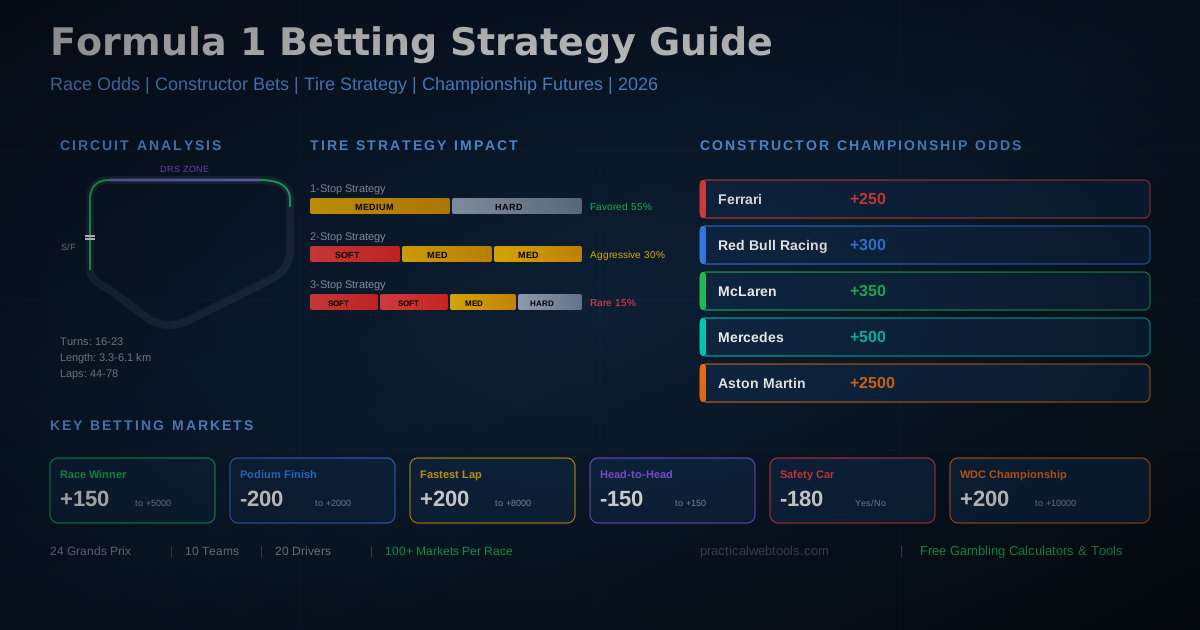
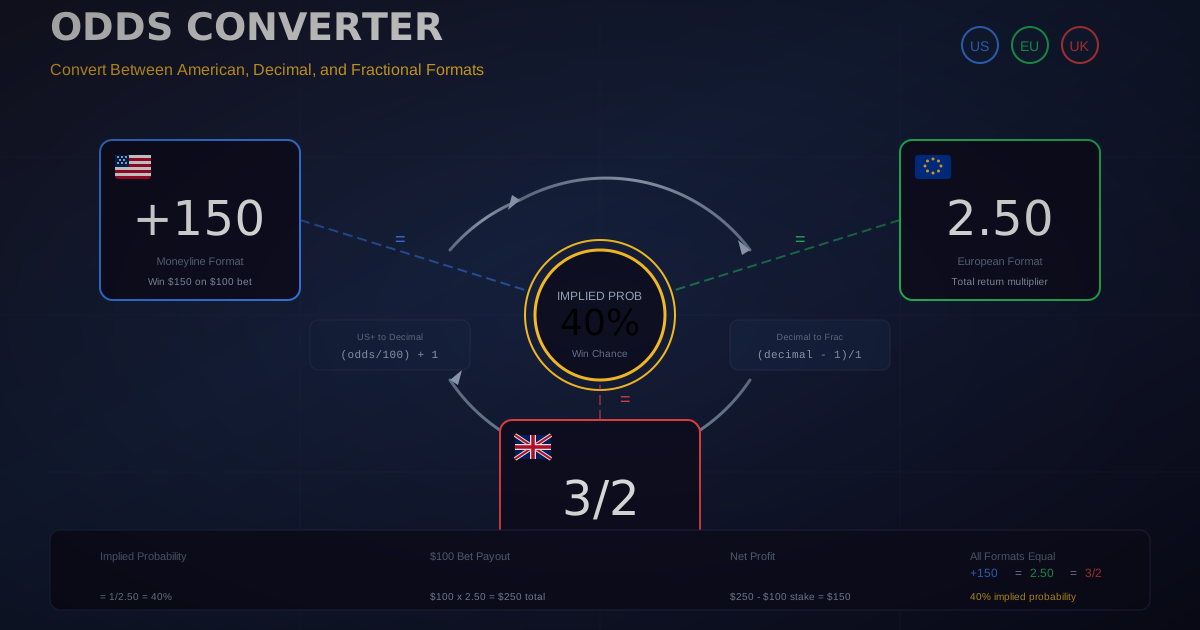
Formula 1 has experienced a meteoric rise in global betting popularity, with the sport's annual wagering handle exceeding $3 billion worldwide as of 2025, driven by Netflix's "Drive to Survive" documentary series and a wave of new fans who view F1 as the perfect intersection of technology, strategy, and individual competition. The 2026 season marks a massive regulation change with new power units and aerodynamic rules, reshuffling the competitive order and creating unprecedented betting value. With 24 Grands Prix, 10 constructor teams, and over 100 betting markets per race weekend, this guide covers every strategy and analytical framework you need to wager on Formula 1 profitably. Convert F1 odds between formats instantly with our Odds Converter
What Are the Main Types of Formula 1 Bets?
The main types of Formula 1 bets include race winner, podium finish (top 3), fastest lap, driver head-to-head matchups, constructor matchups, qualifying position props, championship futures (both driver and constructor), and race-specific props such as safety car deployment, number of retirements, and margin of victory. Race winner and championship futures are the highest-volume F1 markets, but head-to-head matchups consistently offer the best value for informed bettors.
Race Winner Bets
Race winner bets require you to pick which driver crosses the finish line first in a specific Grand Prix. With only 20 drivers on the grid (compared to 36+ in NASCAR), F1 race winner markets are more concentrated, and the favorite wins approximately 40-50% of races during dominant eras but only 25-35% during competitive seasons. The 2026 regulation reset is expected to produce a more competitive field, at least initially.
| Bet Type | Typical Odds Range | Win Frequency (Favorite) | Skill Factor | Best For |
|---|---|---|---|---|
| Race Winner | -200 to +5000 | 30-45% | Very High | All bettors |
| Podium Finish (Top 3) | -400 to +2000 | 60-70% (top drivers) | High | Conservative bettors |
| Fastest Lap | +200 to +8000 | 15-25% (favorite) | Medium | Prop specialists |
| Head-to-Head (Driver) | -200 to +200 | ~50% per side | Very High | Sharp bettors |
| Head-to-Head (Constructor) | -250 to +250 | ~50% per side | High | Sharp bettors |
| Qualifying Winner | -150 to +3000 | 35-50% (favorite) | High | Qualifying specialists |
| Points Finish (Top 10) | -500 to +300 | Varies by driver | Medium | Conservative bettors |
| WDC Championship | +150 to +10000 | Varies | Medium-High | Long-term bettors |
| WCC Championship | +200 to +8000 | Varies | Medium-High | Long-term bettors |
Head-to-Head Matchup Bets
F1 head-to-head matchups are the sharpest bettor's favorite market. These can be between teammates (e.g., which Ferrari driver finishes higher) or between non-teammates (e.g., Verstappen vs. Norris). Teammate matchups are particularly interesting because both drivers have the same car, isolating driver skill and race-day execution.
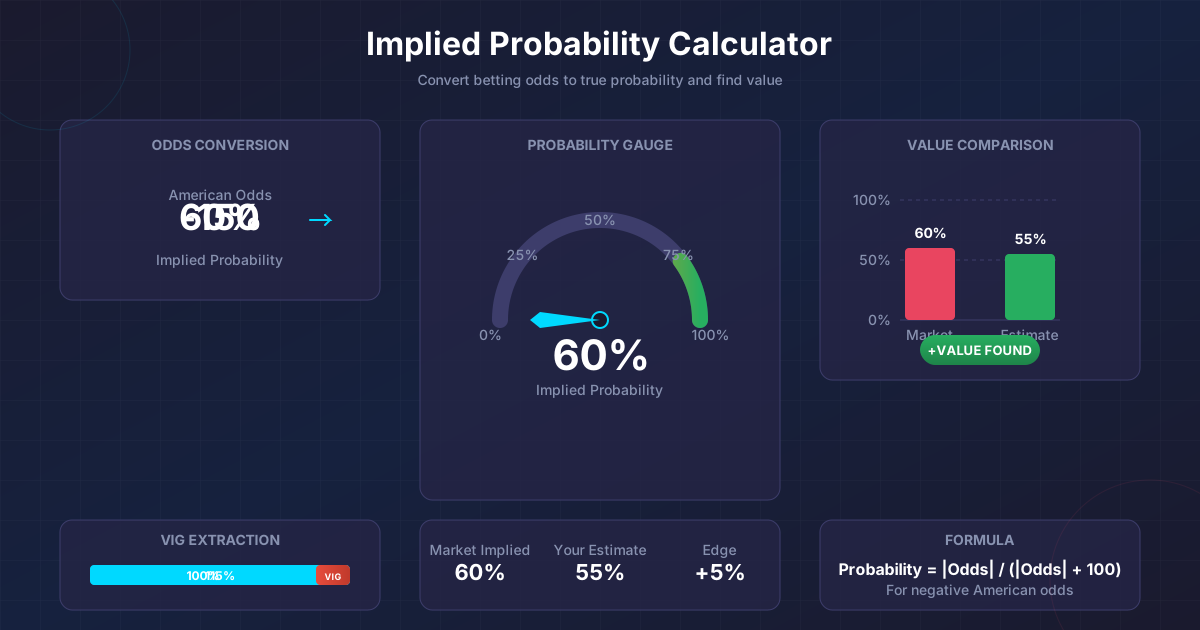
Use our Implied Probability Calculator to convert F1 matchup odds into probabilities and identify mispriced lines.
Championship Futures
The World Drivers' Championship (WDC) and World Constructors' Championship (WCC) are season-long markets that fluctuate after every race. Pre-season championship futures carry the highest variance but also the highest potential value, especially in a regulation-change year like 2026 when the competitive order is uncertain.
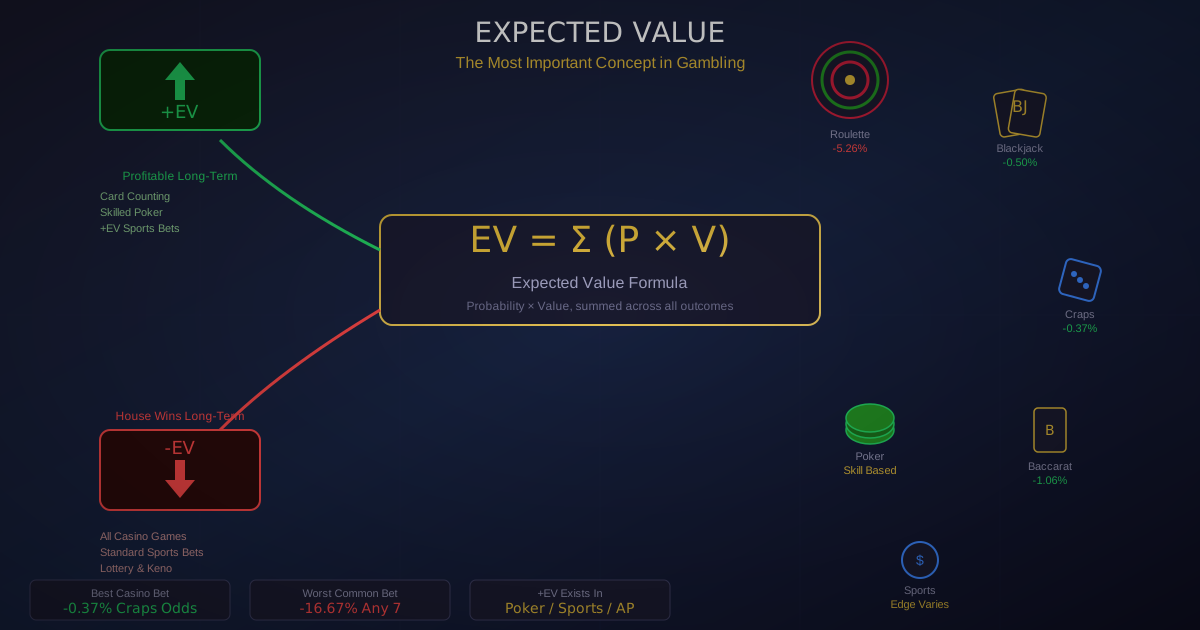
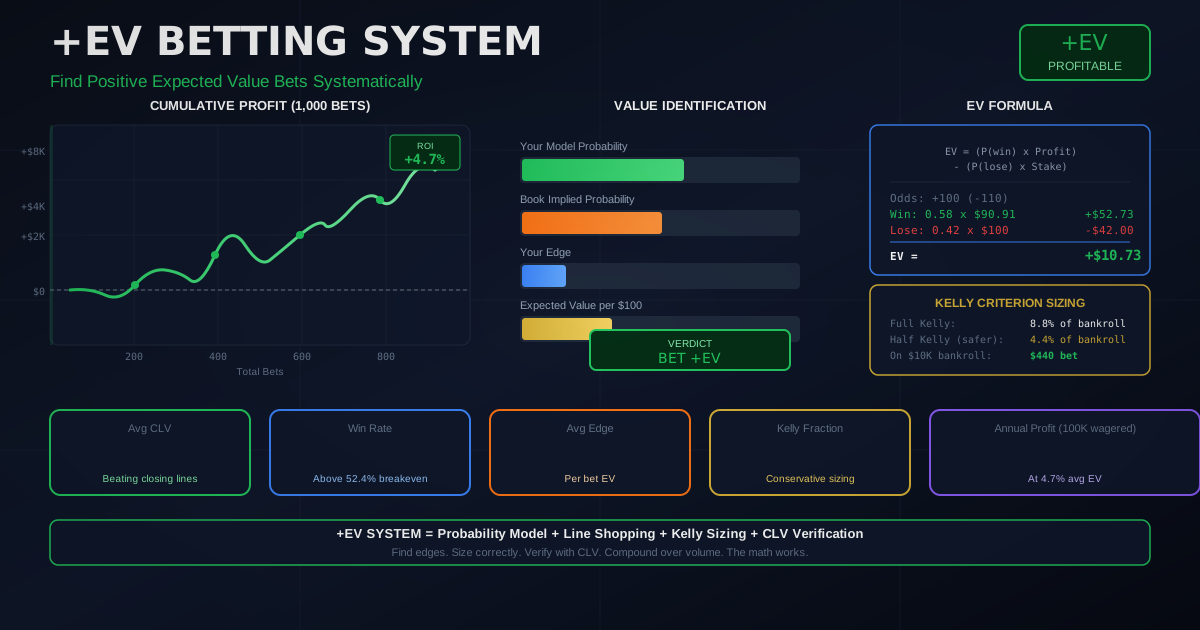
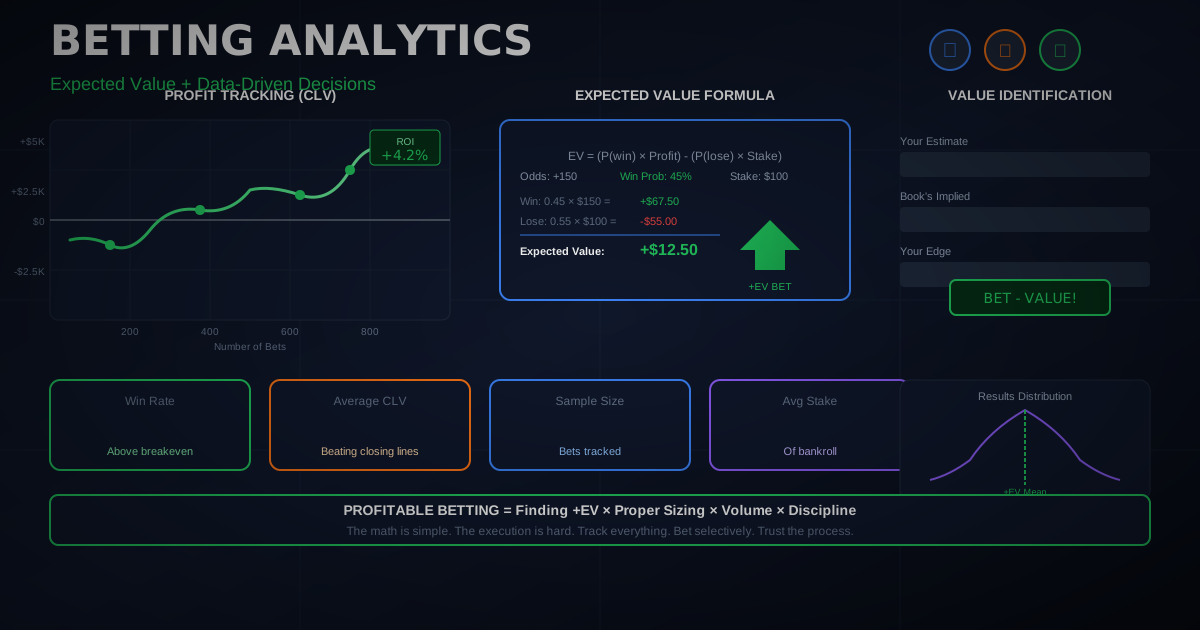
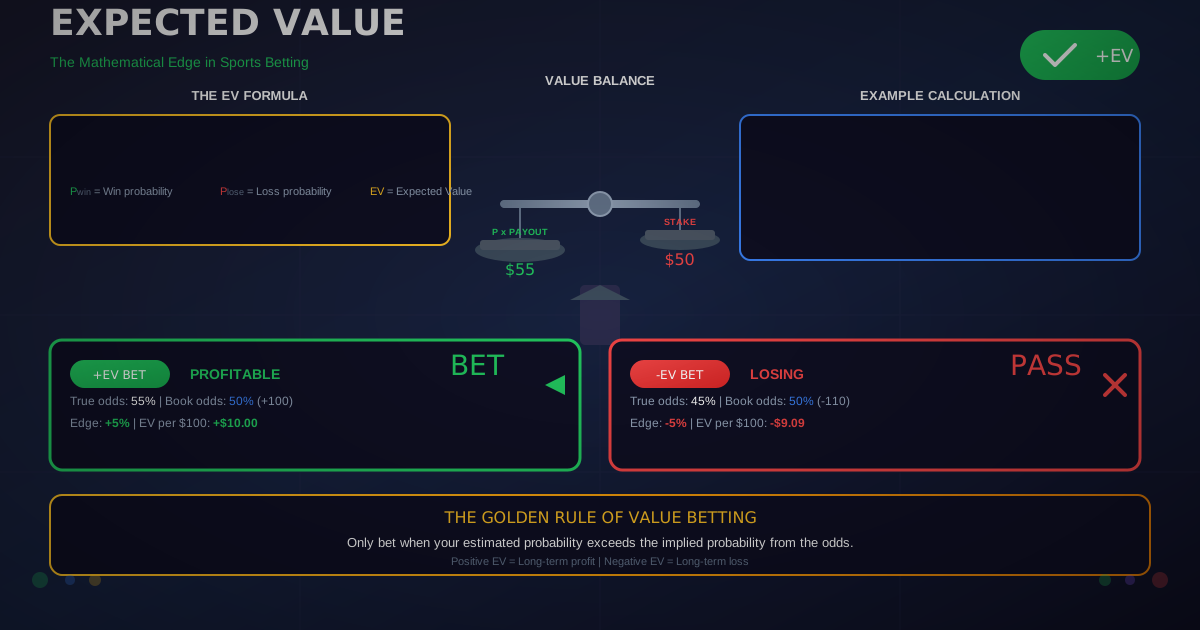
Use our Expected Value Calculator to assess whether pre-season championship futures prices offer positive expected value given the regulation uncertainty.
How Does Qualifying Affect F1 Race Betting?
Qualifying is the single most predictive factor for F1 race outcomes, with the pole-position starter winning approximately 40-45% of all races and the top-3 qualifiers combining for roughly 70-75% of race victories, making qualifying results the most important data point for adjusting race-day bets. Unlike NASCAR where track position can be overcome through pit strategy and drafting, F1's aero-dependent racing makes overtaking difficult at many circuits, amplifying qualifying performance.
Grid Position Win Probability
| Starting Position | Historical Win Rate | Podium Rate | Points Finish Rate |
|---|---|---|---|
| P1 (Pole) | 40-45% | 70-75% | 90%+ |
| P2 | 18-22% | 55-60% | 88%+ |
| P3 | 10-14% | 45-50% | 85%+ |
| P4-P5 | 5-8% each | 25-35% | 80%+ |
| P6-P10 | 1-3% each | 10-20% | 65-80% |
| P11-P15 | <1% each | 2-5% | 40-60% |
| P16-P20 | <0.5% each | <1% | 15-35% |
Circuit-Specific Qualifying Importance
The importance of qualifying varies dramatically by circuit. Street circuits (Monaco, Singapore, Baku) where overtaking is nearly impossible make qualifying paramount -- the pole sitter at Monaco wins approximately 60-65% of the time. High-speed circuits with long straights and DRS zones (Monza, Spa) allow more overtaking, reducing qualifying's predictive power to 30-35% for the pole sitter.
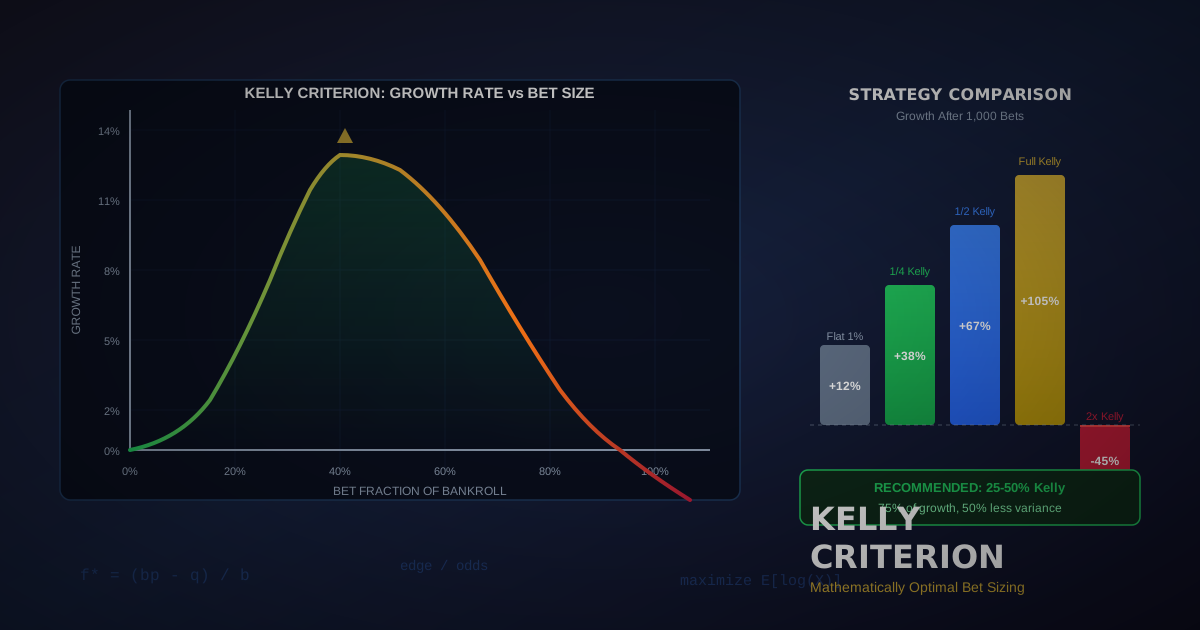
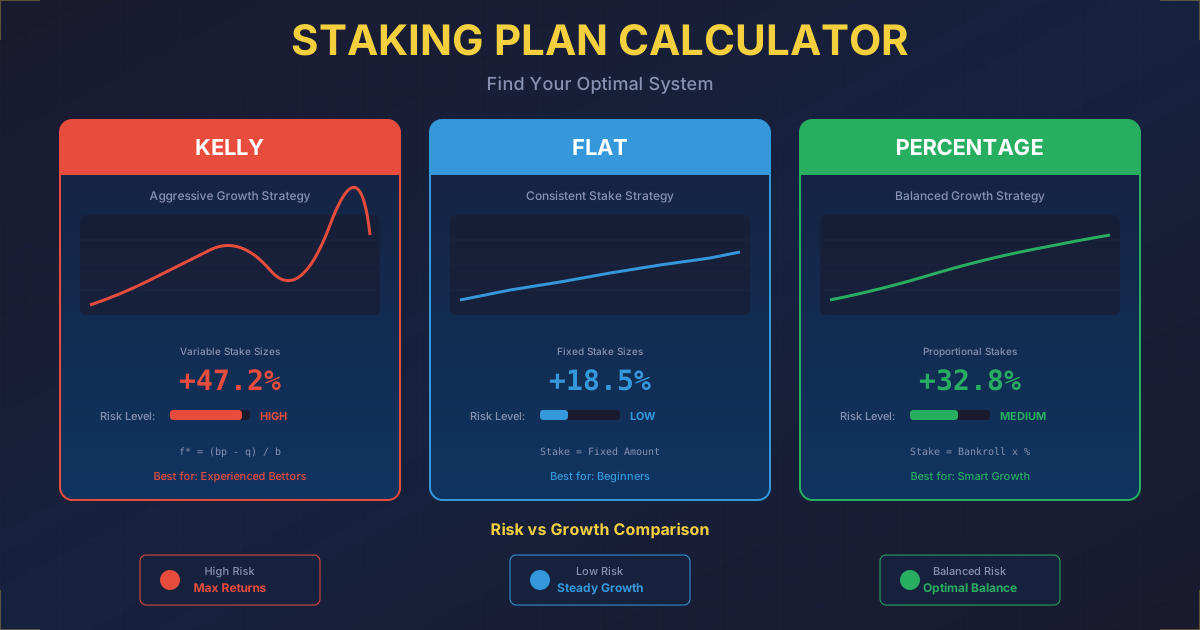
Use our Kelly Criterion Calculator to size your post-qualifying race bets optimally based on the circuit's overtaking characteristics.
Sprint Race Weekends
Several F1 weekends feature a sprint race format with a separate short race on Saturday. Sprint weekends affect betting in multiple ways: they provide an additional race result for betting, they alter Sunday's grid (sprint results can influence tire strategy choices), and the compressed practice schedule can disadvantage teams that need more setup time.
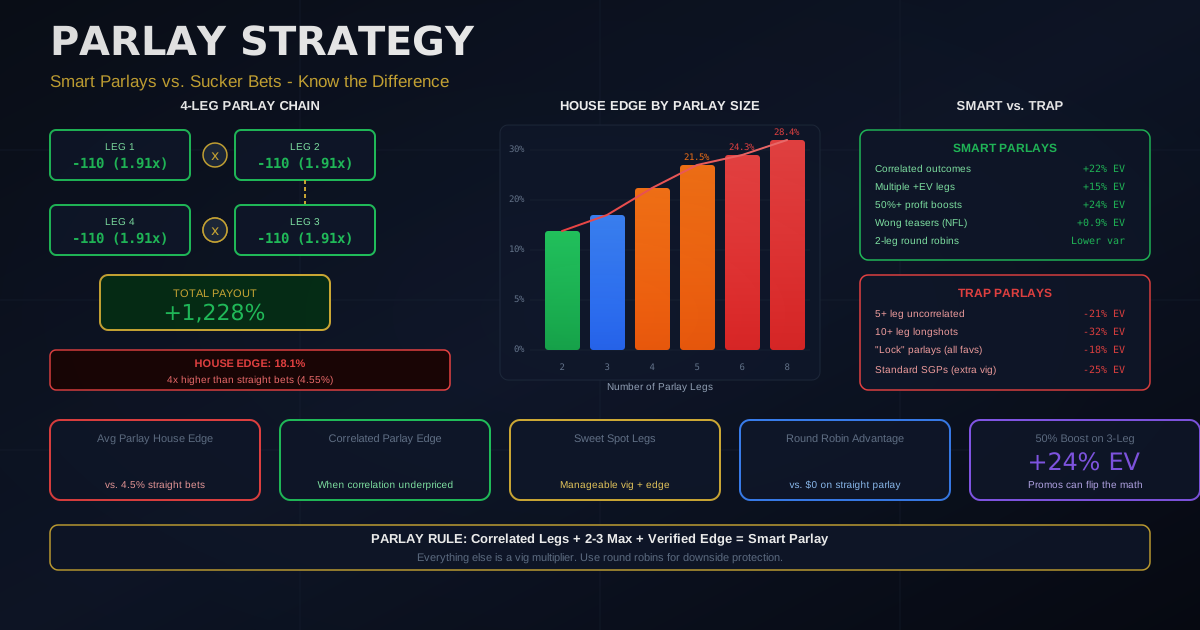
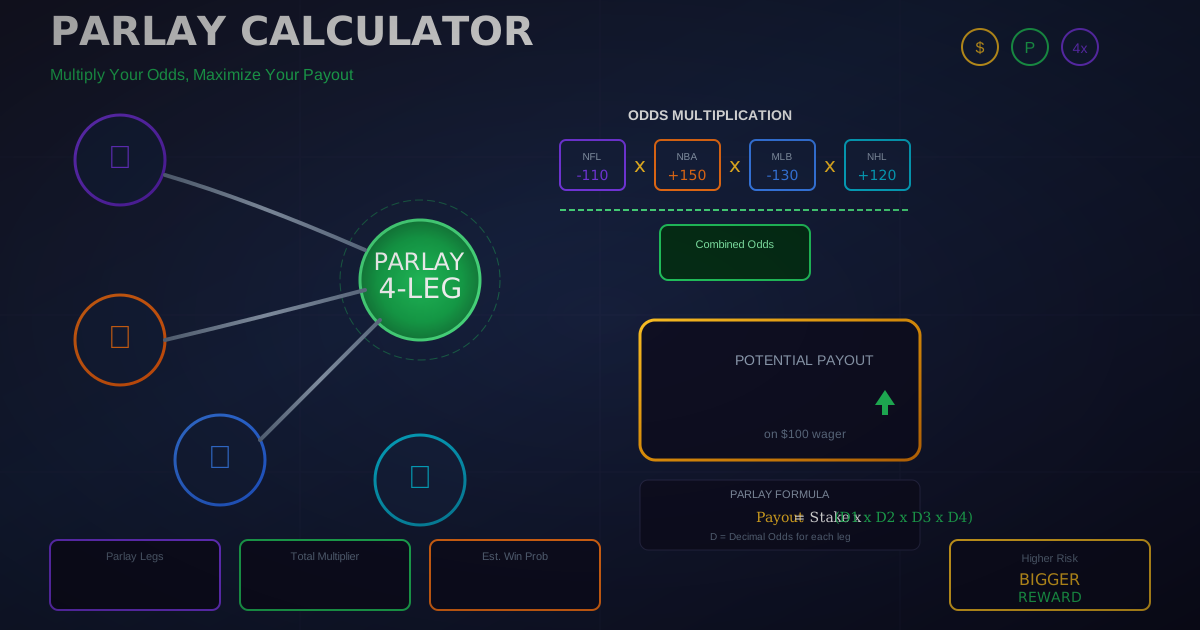
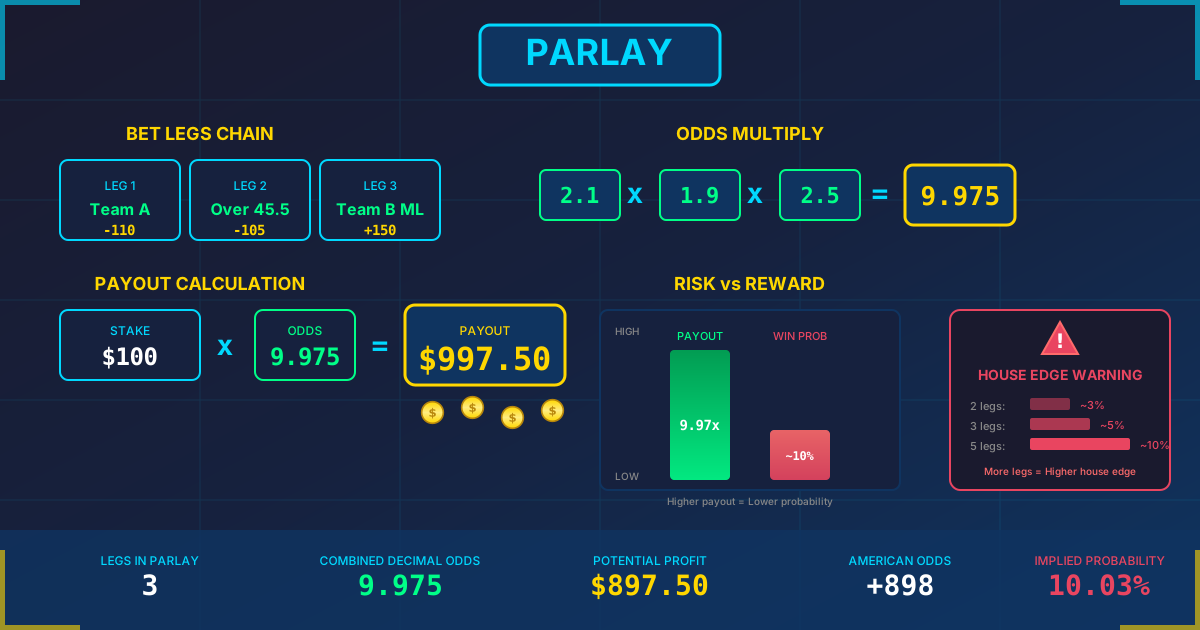
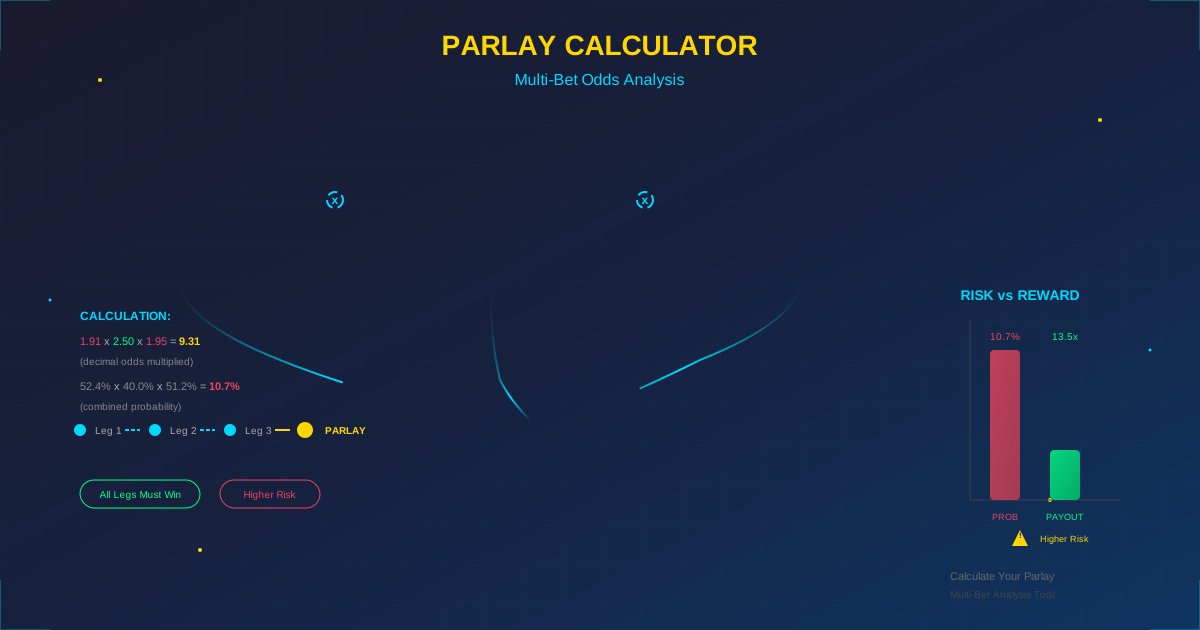
Use our Parlay Calculator to combine sprint race and main race bets into higher-payout parlays.
How Does Tire Strategy Impact F1 Race Outcomes and Betting?
Tire strategy is arguably the most complex and impactful variable in F1 betting, with the choice between one-stop, two-stop, and three-stop strategies often determining the race winner, and undercut/overcut pit timing decisions creating 5-10 second swings that reshuffled podium positions in approximately 35% of 2025 races. Bettors who understand tire degradation patterns, compound performance windows, and pit stop timing gain a meaningful analytical edge.
Understanding Tire Compounds
Pirelli supplies three dry-weather compounds for each race weekend, marked as soft (red), medium (yellow), and hard (white). The specific rubber formulations vary by circuit, but the relative performance hierarchy remains: softs are fastest but degrade quickest, hards are slowest but last longest, and mediums balance performance and durability.
| Compound | Speed Advantage | Typical Lifespan | Best Strategy Role | Betting Implication |
|---|---|---|---|---|
| Soft (Red) | +0.8-1.2 sec/lap | 15-20 laps | Qualifying, short stints | Early-race advantage, fades |
| Medium (Yellow) | Baseline | 25-35 laps | Primary race compound | Most versatile, balanced |
| Hard (White) | -0.4-0.8 sec/lap | 35-50 laps | Long stints, 1-stop | Slow but steady, undercuts |
| Intermediate (Green) | Variable | Variable | Light rain | Unpredictable, high variance |
| Full Wet (Blue) | Variable | Variable | Heavy rain | Extreme unpredictability |
One-Stop vs. Two-Stop Analysis
The one-stop versus two-stop strategic decision is the most common tactical fork in an F1 race. One-stop strategies sacrifice peak tire performance for fewer time-costly pit stops. Two-stop strategies maximize tire grip but lose 22-25 seconds per additional pit stop. The optimal choice depends on circuit characteristics, tire degradation rates, and how easy it is to overtake.
Use our Expected Value Calculator to model how different strategy scenarios affect a driver's win probability at a specific circuit.
Undercut and Overcut Dynamics
The "undercut" (pitting before your rival to gain a speed advantage on fresh tires) and "overcut" (staying out longer to benefit from a clear track and potentially better tire life) are crucial F1 strategic tools. Circuits where the undercut is powerful (high tire degradation, difficult overtaking) favor the driver who pits first, while circuits where the overcut works (low degradation, clean-air advantage) favor patience.
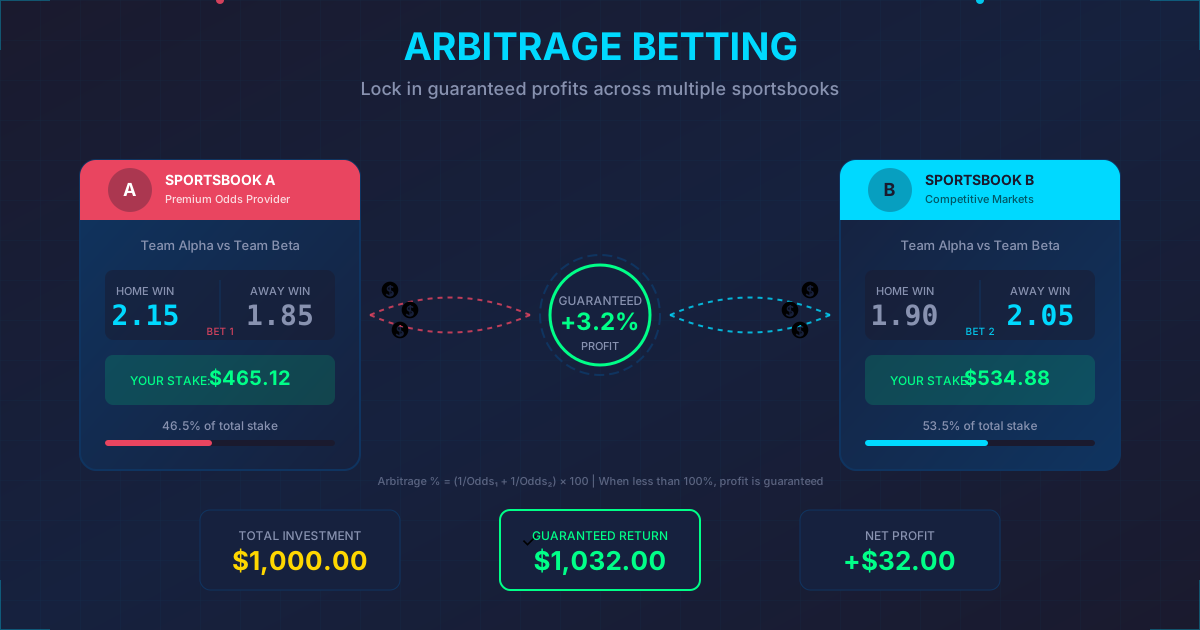
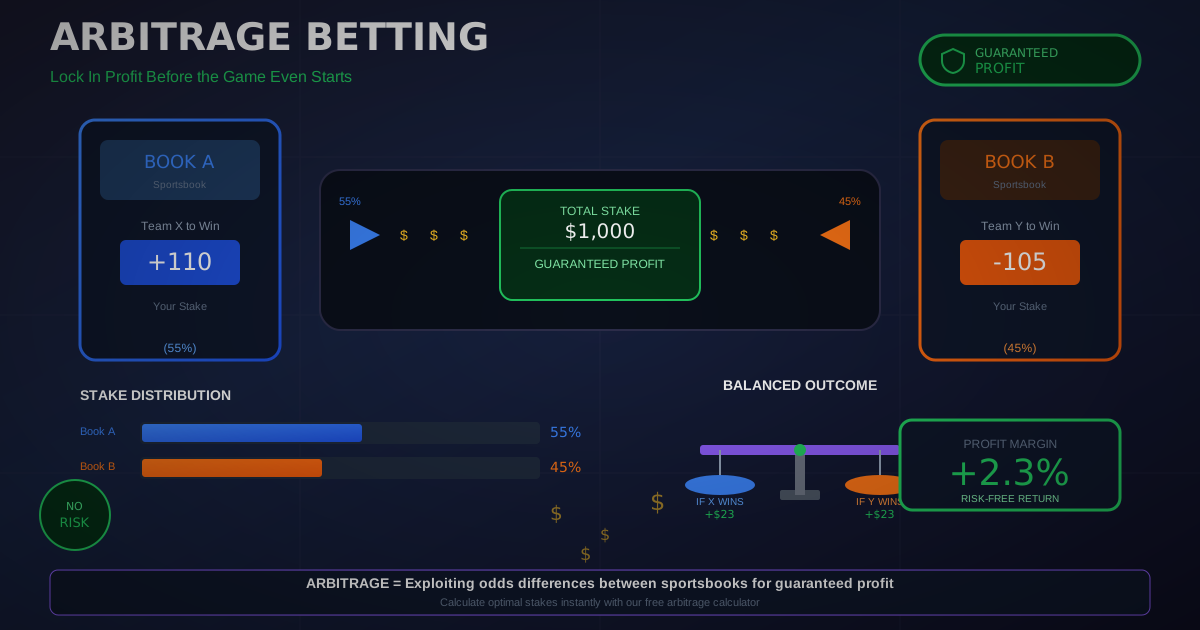
Use our Arbitrage Calculator to find pricing discrepancies across sportsbooks on F1 race winner markets after free practice reveals tire strategy data.
What Role Does Weather Play in F1 Betting?
Weather is the single greatest source of betting variance in Formula 1, with rain races producing an average winner starting position of P6.2 compared to P2.1 in dry races, effectively tripling the field of realistic contenders and making rain one of the most profitable betting catalysts for prepared bettors. Wet conditions neutralize much of the car performance advantage that separates the top teams from the midfield.
Wet Race Statistics
| Condition | Avg Winner Starting Pos | Favorite Win Rate | Podium Variety | Betting Strategy |
|---|---|---|---|---|
| Fully Dry | P2.1 | 42% | Low (usual suspects) | Data-driven, qualifying focused |
| Mixed (Dry-to-Wet) | P4.8 | 28% | High | Back wet-weather specialists |
| Wet Start, Drying | P5.5 | 22% | Very High | Strategy and tire calls matter most |
| Full Wet Race | P6.2 | 18% | Very High | Rain masters, back underdogs |
| Red-Flagged | Variable | 15% | Extreme | High variance, reduce stakes |
Rain Specialists and Historical Data
Certain drivers have historically excelled in wet conditions, demonstrating car control and confidence on a slippery surface that separates them from the pack. Lewis Hamilton, Max Verstappen, and Fernando Alonso are historically elite rain performers. In a regulation-change year, wet-weather driving skill becomes even more valuable because teams have less data on how their new cars behave in the rain.
Use our Implied Probability Calculator to reassess race winner probabilities when rain is forecast and compare against the sportsbook's rain-adjusted odds.
Race-Day Weather Monitoring
F1 races take place at locations spanning 5 continents, and local weather forecasts can shift dramatically in the hours before a race. Bettors who monitor granular weather data (not just general forecasts but hour-by-hour precipitation probabilities) can place bets before sportsbooks fully adjust their lines. Many Grand Prix locations (particularly tropical venues like Singapore, Brazil, and Japan) are prone to sudden downpours.
Use our Hedge Calculator to hedge a dry-race bet if rain becomes likely, or vice versa.
How Do You Bet on F1 Constructor Matchups and Championships?
F1 constructor betting compares teams rather than individual drivers, with the primary markets being which constructor's driver finishes highest in a specific race, head-to-head constructor matchups (which team scores more points), and the season-long World Constructors' Championship (WCC) futures market. Constructor bets are particularly valuable in 2026 because the regulation changes will produce significant performance shuffles between teams.
Constructor Power Rankings and Betting Implications
| Constructor | Projected 2026 Tier | WCC Odds | Engine Supplier | Regulation Change Impact |
|---|---|---|---|---|
| Ferrari | Tier 1 | +250 | Ferrari | Strong PU development reported |
| Red Bull Racing | Tier 1 | +300 | Ford (new partner) | New PU partnership risk |
| McLaren | Tier 1 | +350 | Mercedes | Strong aero philosophy |
| Mercedes | Tier 1-2 | +500 | Mercedes | New PU regulations favor them |
| Aston Martin | Tier 2 | +2500 | Honda | Honda partnership matures |
| Williams | Tier 3 | +8000 | Mercedes | Customer team, limited resources |
| Haas | Tier 3 | +10000 | Ferrari | Small team, high variance |
| RB (VCARB) | Tier 2-3 | +6000 | Ford | Aligned with Red Bull technology |
| Alpine | Tier 2-3 | +5000 | Renault/Alpine | Own PU, wildcard |
| Sauber/Audi | Tier 2-3 | +4000 | Audi (new) | Brand new PU, highest uncertainty |
Teammate Matchups as Constructor Indicators
When both drivers from the same team perform consistently (or inconsistently), it reveals whether performance is car-driven or driver-driven. If both Ferrari drivers are outperforming expectations, the car is likely strong. If only one driver excels while the other struggles, the performance difference is driver-related. Monitoring both sides of the garage provides deeper insight than focusing on a single driver.
Use our Hold/Vig Calculator to identify which sportsbook offers the lowest margin on constructor matchup markets.
When to Buy and Sell Constructor Futures
Constructor futures prices fluctuate after every race. The optimal buying strategy targets constructors that have:
- Underperformed in the first 2-3 races due to setup issues (not fundamental car problems)
- Shown strong race pace but suffered reliability failures
- Brought significant upgrades that have not yet been reflected in results
Use our Hedge Calculator to progressively hedge constructor championship futures as the season evolves and standings become clearer.
What Are the Best F1 Prop Bets and How Do You Find Value?
The best F1 prop bets include safety car deployment (yes/no and number of safety cars), number of classified finishers, fastest lap, margin of victory over/under, driver to set fastest qualifying lap, and whether there will be a first-lap incident. Prop markets are where sportsbooks are most vulnerable in F1 because they cannot model every variable with the same precision as the main race winner market.
Safety Car Props
Safety car deployment is one of the most popular F1 props. Historical data shows that approximately 65-70% of F1 races feature at least one safety car deployment. Street circuits and wet races have even higher safety car frequencies (80-90%), while wide-open circuits with large run-off areas have lower frequencies (50-60%).
| Prop Market | Typical Line/Odds | Key Factors | Edge Potential |
|---|---|---|---|
| Safety Car - Yes | -180 to -220 | Circuit type, weather | Medium |
| Number of Safety Cars O/U | 1.5 (varies) | Circuit, first-lap incident rate | Medium-High |
| Fastest Lap | +200 to +8000 | Tire strategy, points incentive | High |
| Margin of Victory O/U | 5.5-10.5 sec (varies) | Circuit, competitive balance | Medium |
| First-Lap Retirement | -130 to +130 | Grid penalties, midfield congestion | Medium |
| Classified Finishers O/U | 17.5-18.5 | Reliability, circuit demands | Low-Medium |
| Virtual Safety Car | +100 to -150 | Circuit debris potential | Medium |
Fastest Lap Value
The fastest lap prop in F1 carries unique dynamics because an extra championship point is awarded to the driver who sets the fastest lap (if they finish in the top 10). This creates end-of-race strategic behavior where teams on fresh tires deliberately push for the fastest lap point. Understanding which teams are likely to make a late pit stop for fresh tires (usually teams solidly in the points but not fighting for position) is the key to beating this market.
Use our Expected Value Calculator to determine whether fastest lap odds accurately reflect the probability based on tire strategy expectations.
Qualifying Props
Qualifying position props (e.g., Verstappen to qualify P1 at -150) are highly predictable at certain circuits. Some drivers and cars are dominant qualifiers at specific tracks due to circuit characteristics matching their car's strengths. Practice session data (particularly the gap between teams in FP2 and FP3) strongly predicts qualifying outcomes.
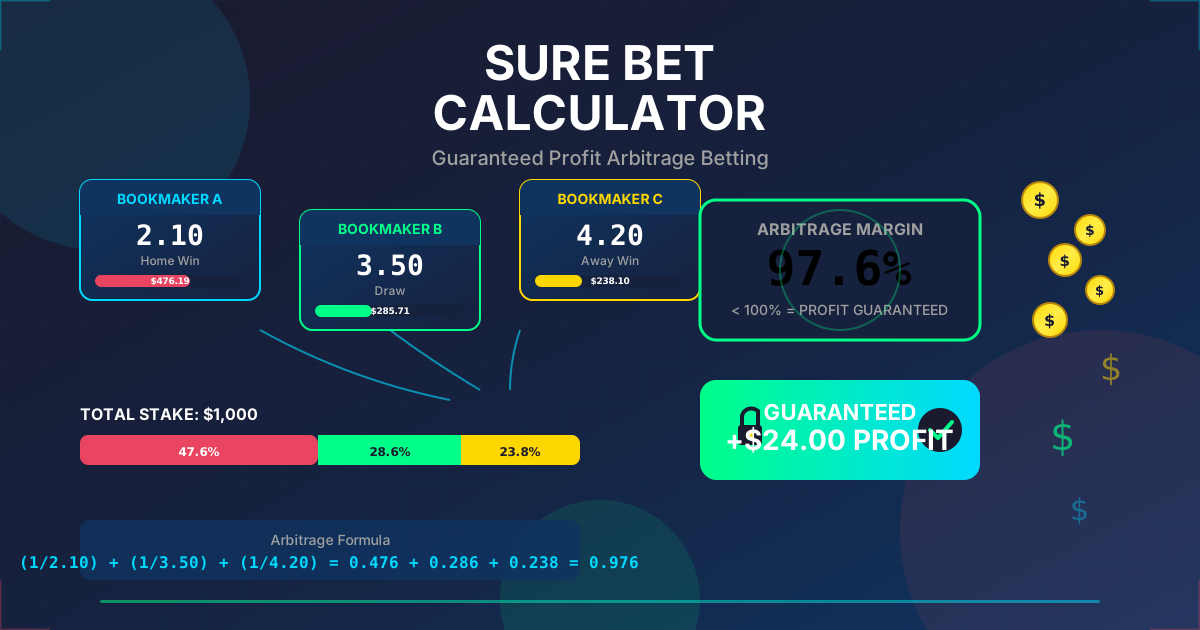
Use our Sure Bet Calculator to find arbitrage opportunities on F1 qualifying props across different sportsbooks.
How Should You Approach F1 Championship Futures Betting?
F1 championship futures should be approached as a portfolio investment rather than a single bet, with the optimal strategy involving buying undervalued championship contenders early in the season, hedging progressively as the standings crystallize, and using race-by-race results to identify when the market has overreacted to short-term form. The 2026 regulation change makes pre-season futures particularly volatile and potentially value-rich.
Pre-Season vs. Mid-Season Entry Points
| Timing | Advantage | Disadvantage | Best Strategy |
|---|---|---|---|
| Pre-Season (Feb-Mar) | Longest odds, highest potential value | No race data, highest uncertainty | Small stakes on 2-3 contenders |
| Early Season (Races 1-4) | Some data, still volatile odds | Sample size too small for firm conclusions | Buy dips on strong teams with bad luck |
| Mid-Season (Races 5-12) | Clear competitive picture | Shorter odds on leaders | Hedge early bets or target value at longer odds |
| Late Season (Races 13-20) | Strong data, clearer picture | Very short odds on leader | Primarily hedging existing positions |
| Final Races (21-24) | Near certainty on leader | Almost no value remaining | Final hedge calculations only |
Regulation Change Year Strategy (2026)
The 2026 season features the most significant regulation change since the ground-effect era began in 2022. New power unit regulations (including a much more powerful electric component), new aerodynamic rules, and active aerodynamics will reshape the competitive order. Historically, regulation-change years produce surprise winners and underperformers.
Key factors for 2026 regulation analysis:
- Engine manufacturer investment: Factory teams (Ferrari, Mercedes, Renault/Alpine) have direct control over PU development
- New partnerships: Red Bull-Ford and Sauber-Audi are brand-new PU collaborations with higher uncertainty
- Aero philosophy: Teams that correctly interpret the new aero rules gain early-season advantages
- Testing performance: Pre-season testing provides the first real data points
Use our Kelly Criterion Calculator to determine appropriate stake sizes for high-uncertainty pre-season championship futures.
Progressive Hedging Through the Season
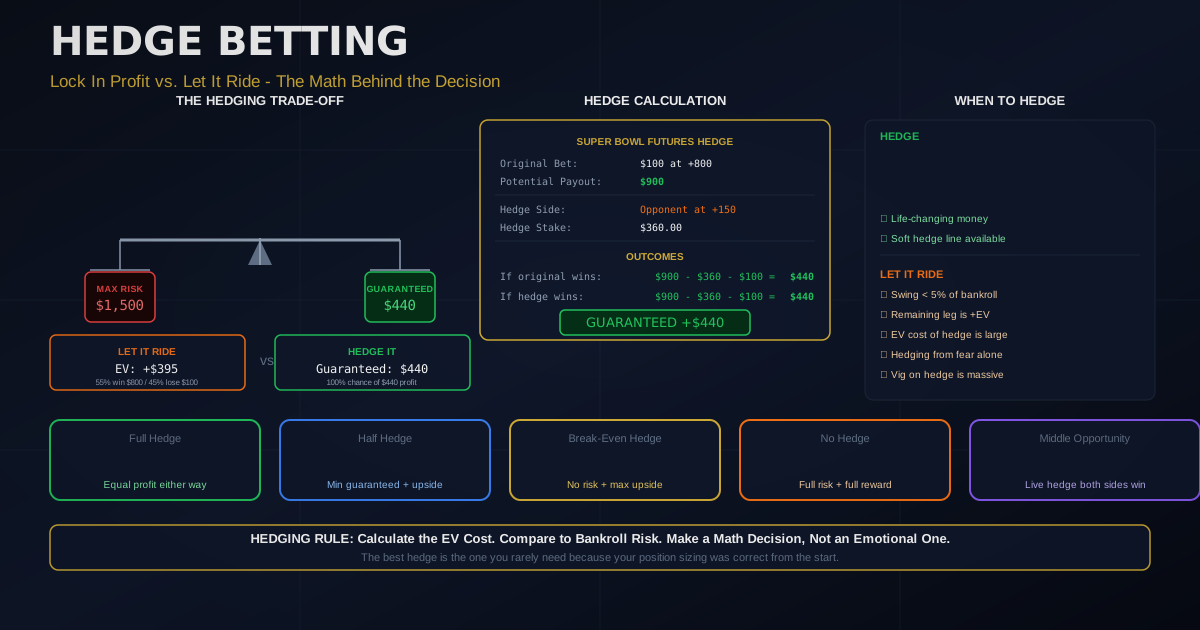
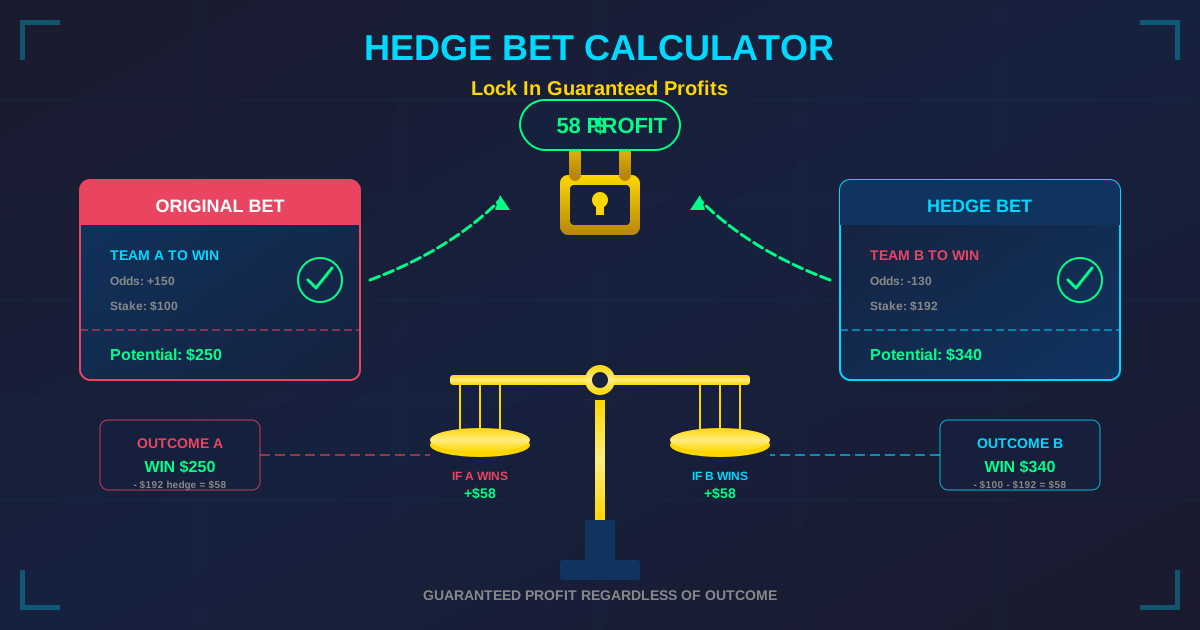
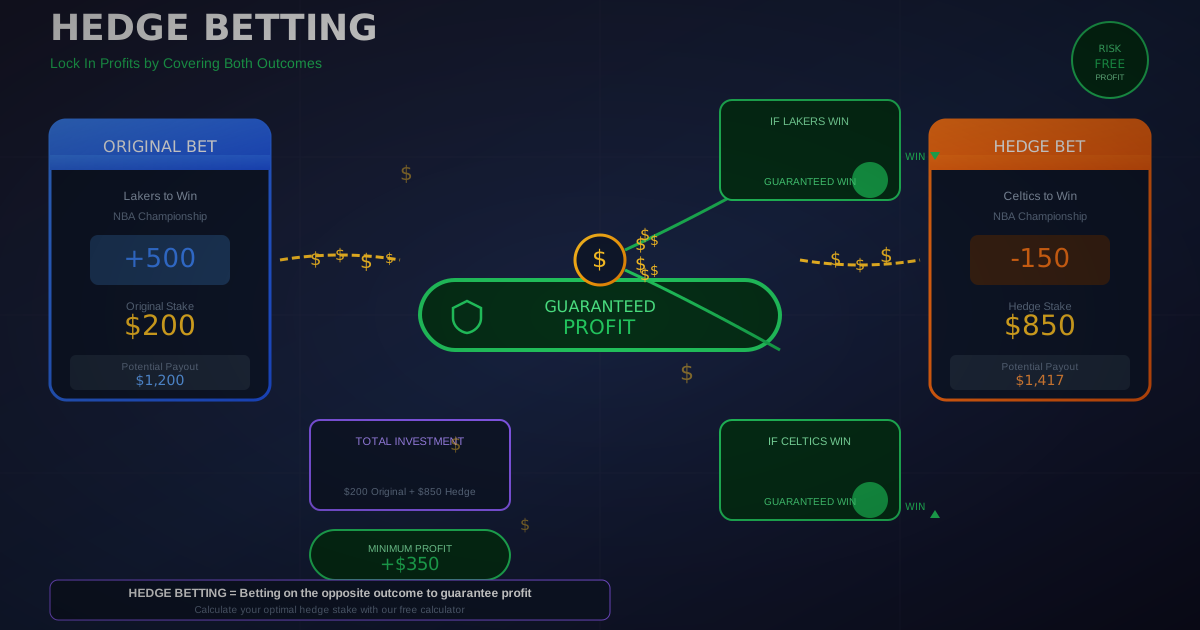
As the season progresses and the championship picture clarifies, you can lock in guaranteed profits by hedging. If you backed a driver at +2000 pre-season and they lead the championship after 10 races with odds shortened to +150, the hedging math becomes very favorable.
Use our Hedge Calculator to calculate exact hedge amounts at any point during the F1 season.
What Role Does Reliability Play in F1 Betting?
Reliability (or the lack thereof) is a critical F1 betting factor that the public market consistently underweights, with mechanical DNFs (Did Not Finish) affecting approximately 10-15% of all race starts across the grid, and specific teams historically experiencing higher or lower reliability rates that bettors can exploit in head-to-head matchups and race finish props. A car that is fast but unreliable is overvalued by casual bettors who focus on raw pace.
Historical Reliability by Team
| Constructor | 2025 DNF Rate (Mechanical) | 2025 DNF Rate (Incident) | Total Non-Finishes | Reliability Trend |
|---|---|---|---|---|
| Red Bull | 5% | 4% | 9% | Stable |
| Ferrari | 8% | 3% | 11% | Concerning |
| McLaren | 4% | 5% | 9% | Improving |
| Mercedes | 3% | 4% | 7% | Excellent |
| Aston Martin | 7% | 5% | 12% | Needs improvement |
| Alpine | 10% | 4% | 14% | Problematic |
DNF Props and Markets
Some sportsbooks offer props on whether a specific driver will finish the race ("classified finisher" Yes/No). For teams with known reliability concerns, the "No" side can carry value, especially at circuits that are particularly demanding on engines and gearboxes (like Singapore's bumpy streets and Jeddah's high-speed straights).
Use our Implied Probability Calculator to convert DNF prop odds into probabilities and compare against team-specific reliability data.
How Reliability Affects Championship Betting
In a close championship battle, a single mechanical DNF costs approximately 25 points (the difference between a potential win and zero points). Over a season, teams with 2-3 extra mechanical DNFs sacrifice 50-75 points, which can be the difference between championship glory and defeat. Factoring reliability into championship futures analysis is essential.
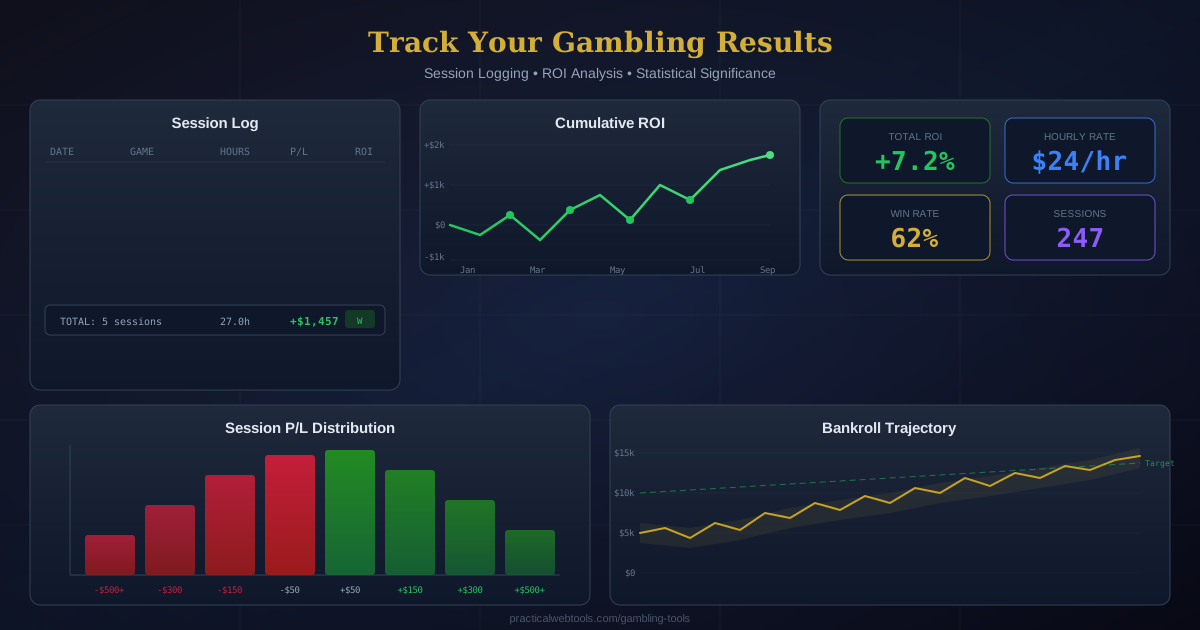
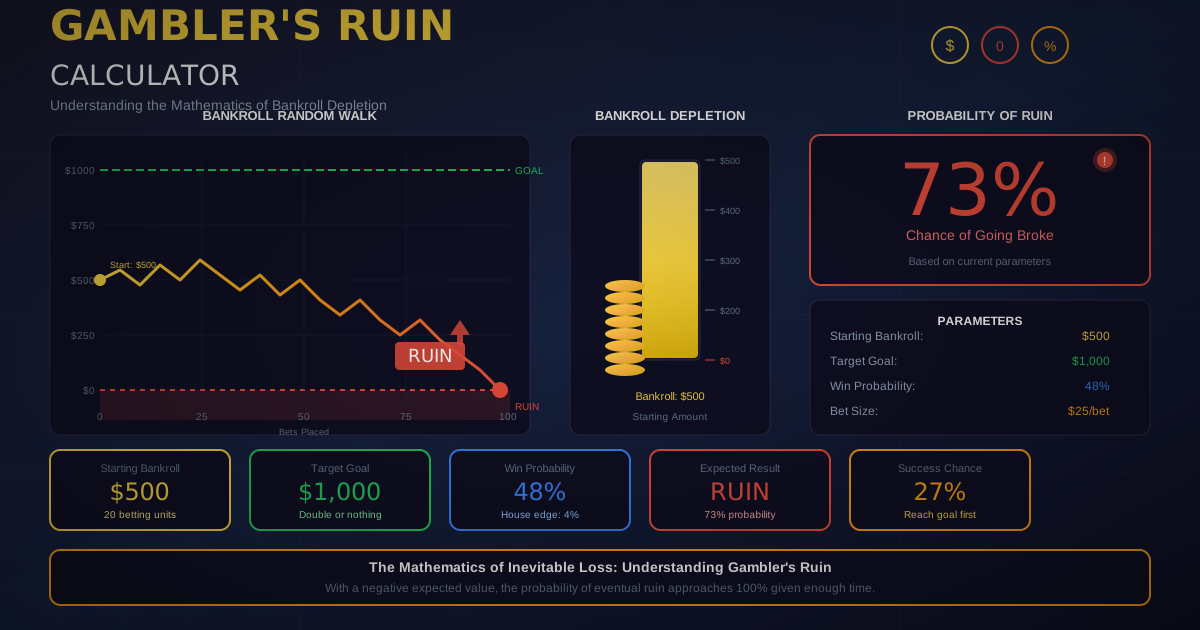
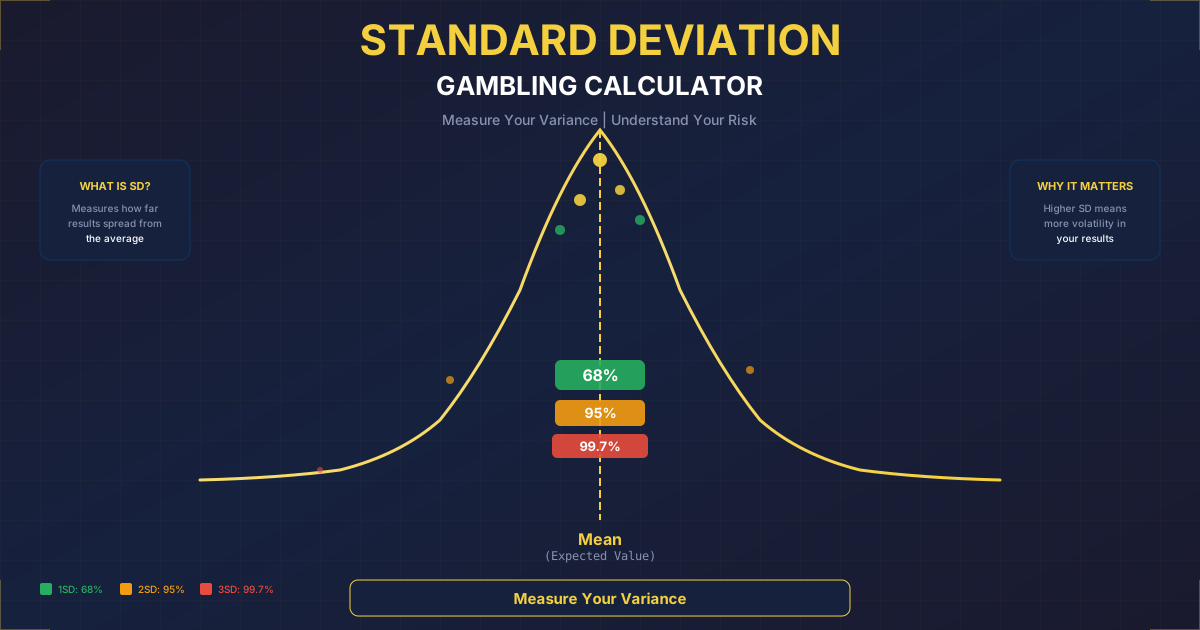
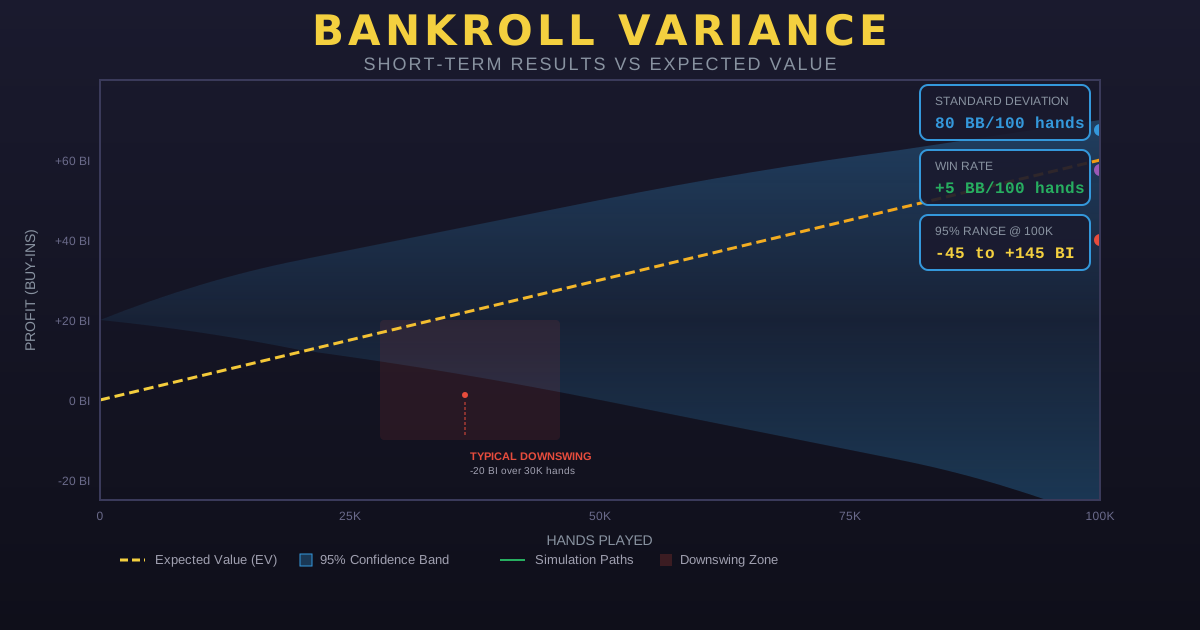
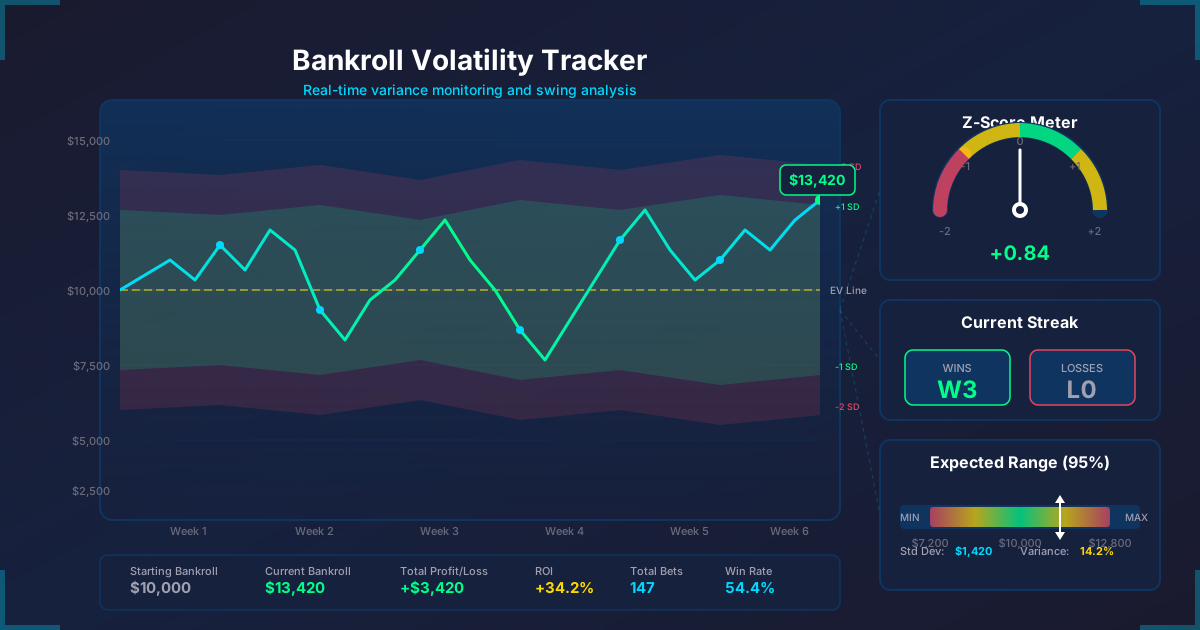
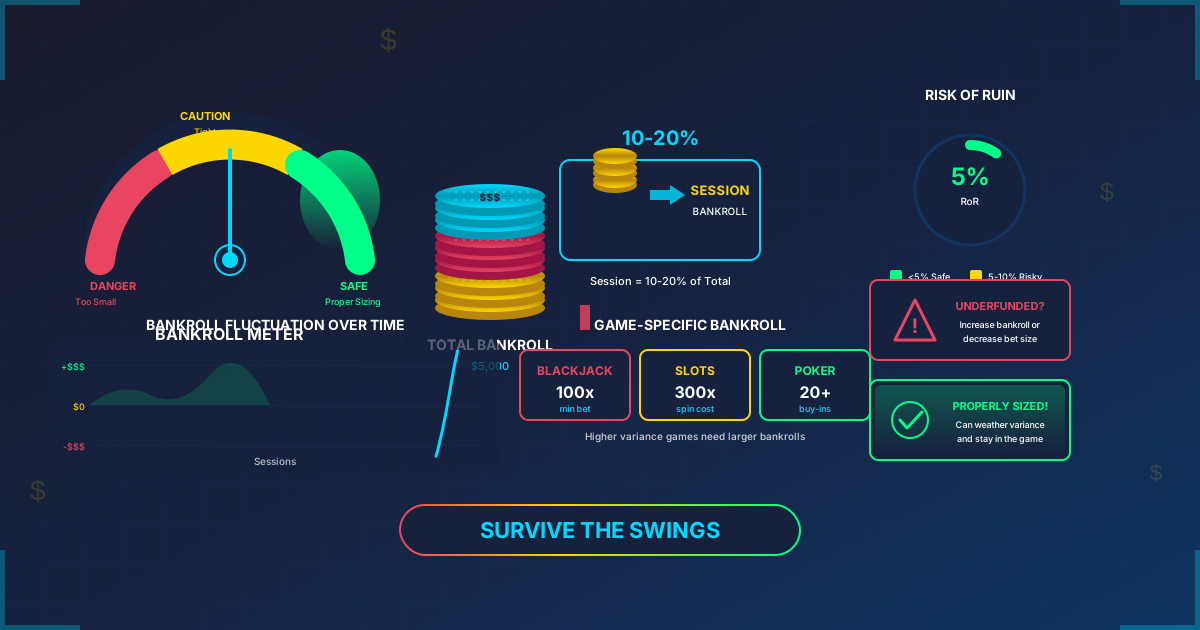
Use our Bankroll Volatility Tracker to manage the inherent volatility of F1 season-long betting across 24 races.
How Do Circuit Characteristics Affect F1 Betting Strategy?
Circuit characteristics fundamentally shape F1 betting strategy because each of the 24 tracks on the calendar favors different car attributes (downforce, straight-line speed, tire management, power unit deployment), and certain teams and drivers have statistically significant performance patterns at specific circuit types. A team that dominates high-downforce circuits may struggle at power circuits, and vice versa.
Circuit Type Classification
| Circuit Type | Key Circuits | Favored Car Attribute | Typical Winner Profile | Qualifying Importance |
|---|---|---|---|---|
| High Downforce | Monaco, Singapore, Hungary | Mechanical grip, cornering | Best chassis team | Extremely High |
| Power Circuit | Monza, Spa, Baku straights | Straight-line speed, PU power | Best engine team | High |
| Street Circuit | Monaco, Jeddah, Las Vegas | Car width, precision driving | Experienced drivers | Very High |
| High Degradation | Barcelona, Silverstone | Tire management | Best strategy teams | Medium-High |
| Low Degradation | Suzuka, COTA | Raw pace, consistency | Fastest car overall | High |
| Altitude | Mexico City (2,240m) | PU cooling, turbo efficiency | Best PU cooling design | Medium |
Team Performance Patterns by Circuit Type
Tracking each team's performance by circuit type reveals exploitable patterns. For example, if Team A consistently runs 0.3 seconds faster at high-downforce circuits but 0.2 seconds slower at power circuits, their odds may not fully reflect this at specific venues if the sportsbook uses season-average performance to set lines.
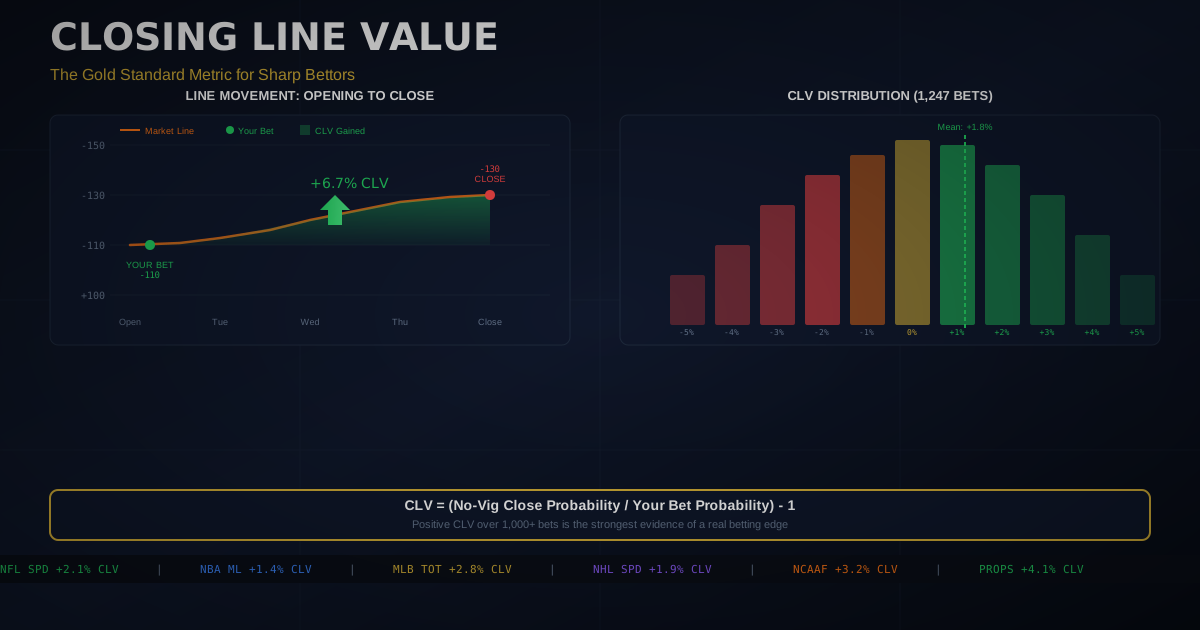
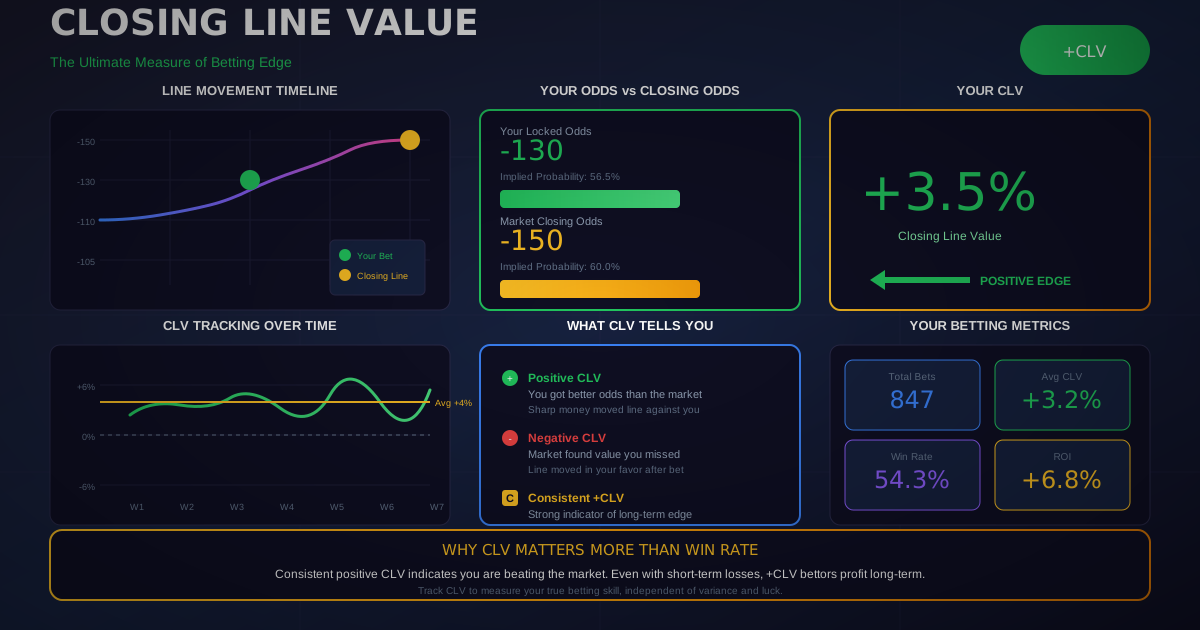
Use our Closing Line Value Tracker to measure whether your circuit-type-specific F1 bets consistently beat the closing line.
Track-Specific Historical Data
Some drivers have remarkable records at specific circuits. Fernando Alonso's record at Barcelona, Lewis Hamilton's record at Silverstone, and Max Verstappen's record at Spa are examples of track-specific dominance that can inform betting. However, in a regulation-change year, historical track-specific data is less reliable because the cars behave differently.
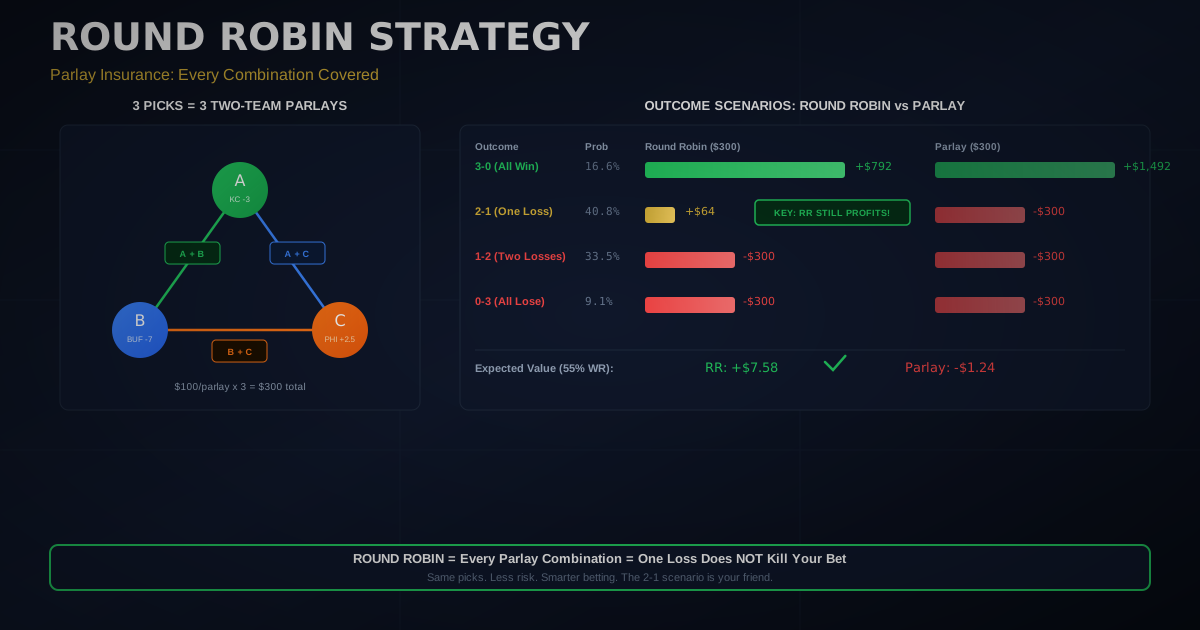
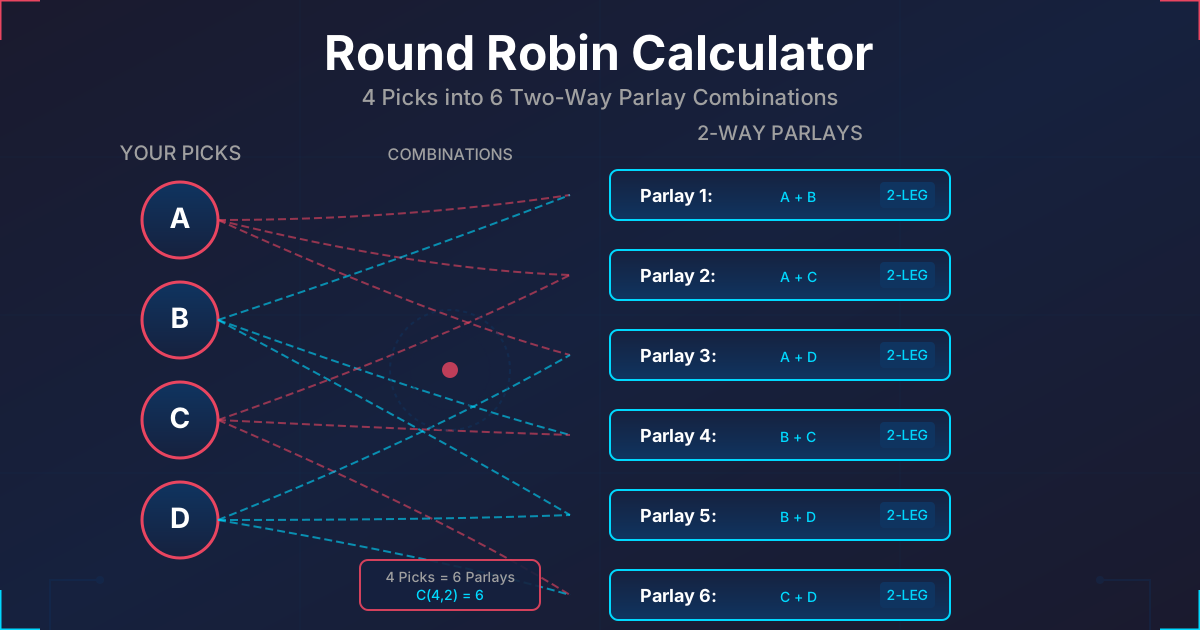
Use our Round Robin Calculator to build round robin bets across multiple race weekends targeting specific circuit types where you have identified value.
How Do You Live Bet During an F1 Race?
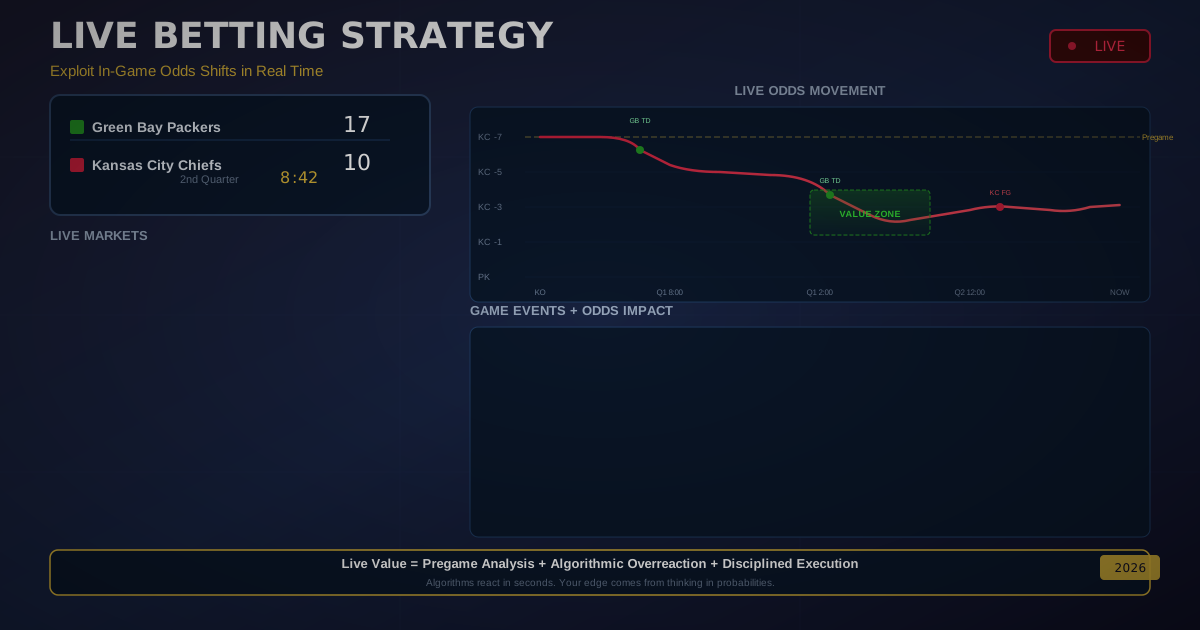
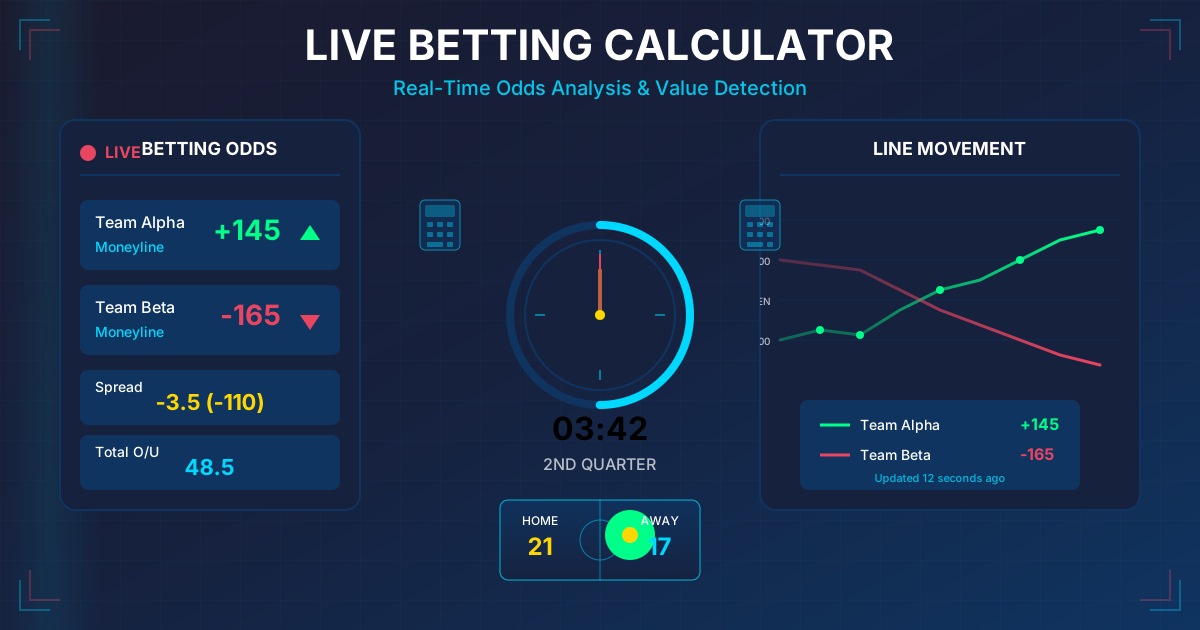
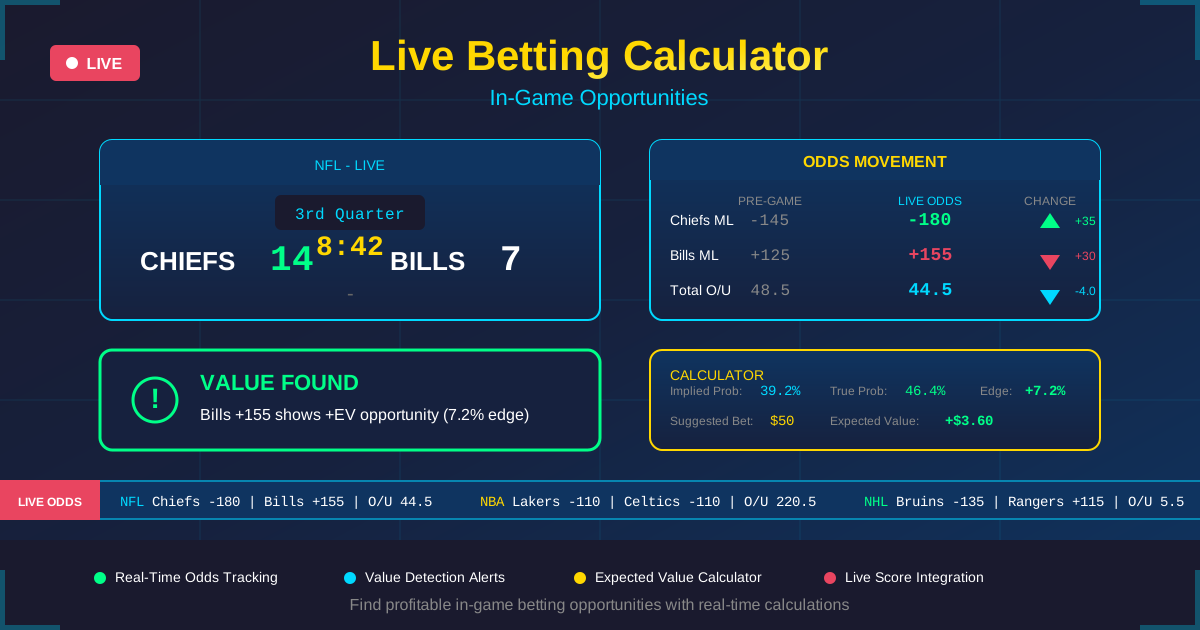
Live betting during an F1 race is most effective when you monitor pit stop timing, tire strategy decisions, safety car deployments, and weather changes in real time, using this information to identify moments when the sportsbook's odds have not yet fully adjusted to a significant race event. F1's real-time timing data, team radio broadcasts, and live TV coverage provide bettors with detailed information that creates genuine live betting edges.
Key Live Betting Moments
| Race Event | Betting Opportunity | Typical Odds Shift | Optimal Action |
|---|---|---|---|
| First-Lap Incident | Eliminates contenders, reshuffles grid | Significant for affected drivers | Bet new favorites if mispriced |
| Safety Car Deployment | Bunches field, negates gaps | Moderate for all drivers | Assess restart strength, tire condition |
| Pit Stop (Undercut) | Driver gains/loses positions | Varies by time gained/lost | Compare actual vs. expected gap change |
| Rain Onset | Dramatically changes competitive order | Very significant | Back rain specialists at value odds |
| Mechanical Issue | Team/driver retirement imminent | Driver-specific collapse | Bet opponents in head-to-heads |
| Red Flag | Race paused, free tire changes | Moderate to significant | Reassess based on new tire equality |
| DRS Train Formation | Lead group separates from pursuers | Moderate | Position-specific props |
Monitoring Team Radio
F1 team radio broadcasts are available with a slight delay on the official F1 TV app. These communications reveal strategy intentions ("box this lap"), mechanical concerns ("engine temperatures are critical"), and driver confidence levels. Bettors who monitor team radio while live betting gain a 30-60 second information advantage before the broader market reacts.
Use our Arbitrage Calculator to find pricing discrepancies between sportsbooks during fast-moving F1 live betting situations.
Post-Safety-Car Restart Betting
The restart after a safety car is one of the most valuable live betting windows. The bunched-up field creates overtaking opportunities on the restart lap, and drivers on fresher tires have a significant advantage. If a safety car comes out and one driver pits for fresh tires while the leader stays out on old tires, the pitting driver's win probability increases substantially.
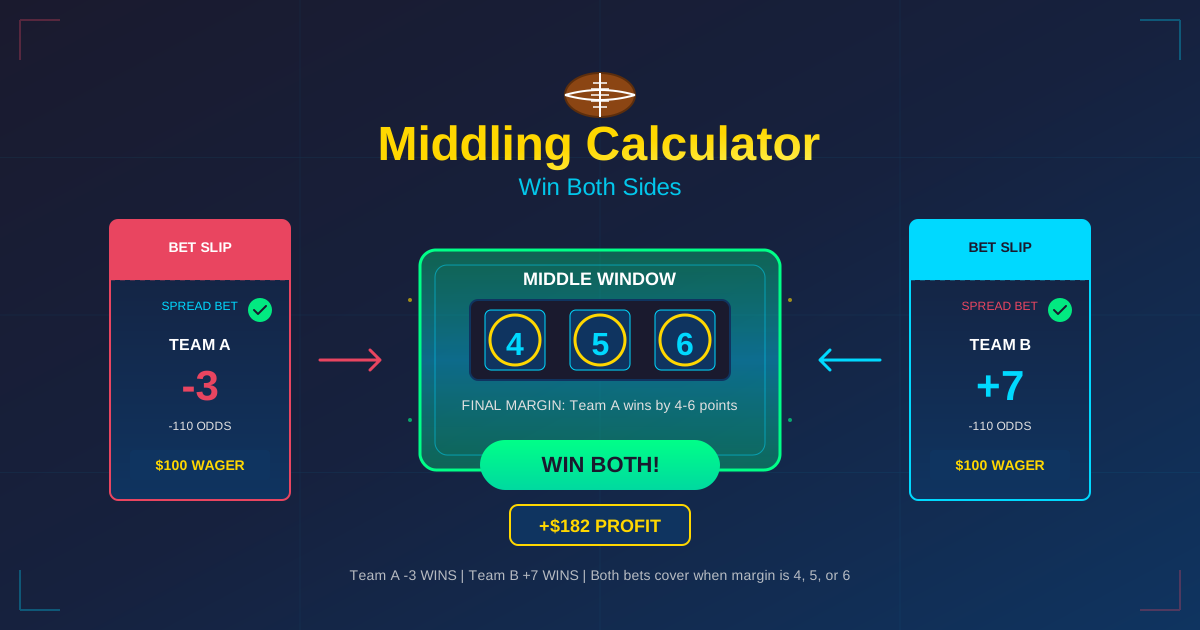
Use our Middle Bet Calculator to identify middling opportunities when F1 live odds swing dramatically during a safety car period.
What Common Mistakes Do F1 Bettors Make?
The most common F1 betting mistakes include overvaluing a single dominant team's chances (resulting in betting prohibitive favorites at negative expected value), ignoring the impact of tire strategy and pit stops on race outcomes, underestimating weather's equalizing effect, and failing to adjust for circuit-specific performance variations. Avoiding these errors separates recreational F1 bettors from profitable ones.
Betting Prohibitive Favorites
In dominant eras (like Red Bull's 2023 season), the race favorite can be priced at -300 or shorter. While these favorites win frequently, the payout is insufficient to overcome the 25-30% of races where they do not win. Flat-betting -300 favorites who win 70% of the time produces a negative ROI because you risk $300 to win $100 on every bet.
| Favorite Odds | Break-Even Win Rate | Typical Actual Win Rate | Expected ROI |
|---|---|---|---|
| -150 | 60.0% | 55-65% | -5% to +5% |
| -200 | 66.7% | 60-70% | -5% to +5% |
| -300 | 75.0% | 65-75% | -5% to 0% |
| -400 | 80.0% | 70-78% | -5% to -2% |
| -500 | 83.3% | 72-80% | -8% to -3% |
Ignoring Free Practice Data
Free practice sessions (FP1, FP2, FP3) provide crucial data on car performance, tire degradation, and setup directions that many recreational bettors ignore. While practice times must be interpreted carefully (teams run different fuel loads and tire compounds), the relative pace between teams in race-simulation runs is highly predictive of Sunday performance.
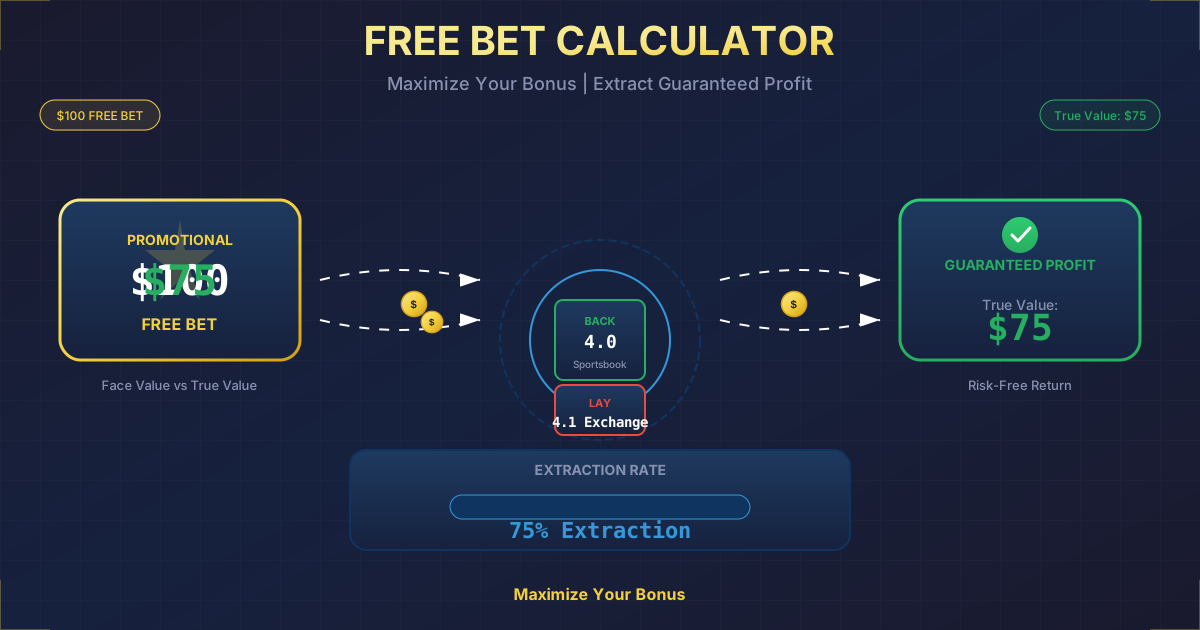
Use our Free Bet Calculator (Stake Returned) to maximize promotional free bets by deploying them on F1 markets where you have identified strong edges through practice data analysis.
Overreacting to a Single Race Result
F1 championship futures should be evaluated over the full 24-race season, not after every individual race. A driver who finishes P8 due to a first-lap puncture has not suddenly become slower. Bettors who buy low after a single bad result and sell high after a strong result can extract value from the market's overreaction to short-term noise.
Use our Matched Betting Calculator to extract guaranteed value from F1-specific sportsbook promotions and bonuses.
Frequently Asked Questions
How do you bet on Formula 1 for beginners? Start with head-to-head matchup bets between drivers, which simplify the decision to a two-driver comparison. Focus on learning one team's competitive dynamics (e.g., the two Ferrari drivers) and bet their matchup each week. Use qualifying results as your primary data input for race-day bets. Set a modest bankroll and bet 1-2% per race as you learn the sport's nuances. Use our Odds Converter to understand the odds at your sportsbook.
What is the most profitable F1 bet type? Head-to-head driver matchups (both teammate and cross-team) offer the best combination of skill edge and manageable variance. The market is less efficient than the race winner market, qualifying and practice data provide actionable edges, and the variance is lower than picking outright winners. Prop bets on safety cars and fastest lap also offer consistent value for specialized bettors.
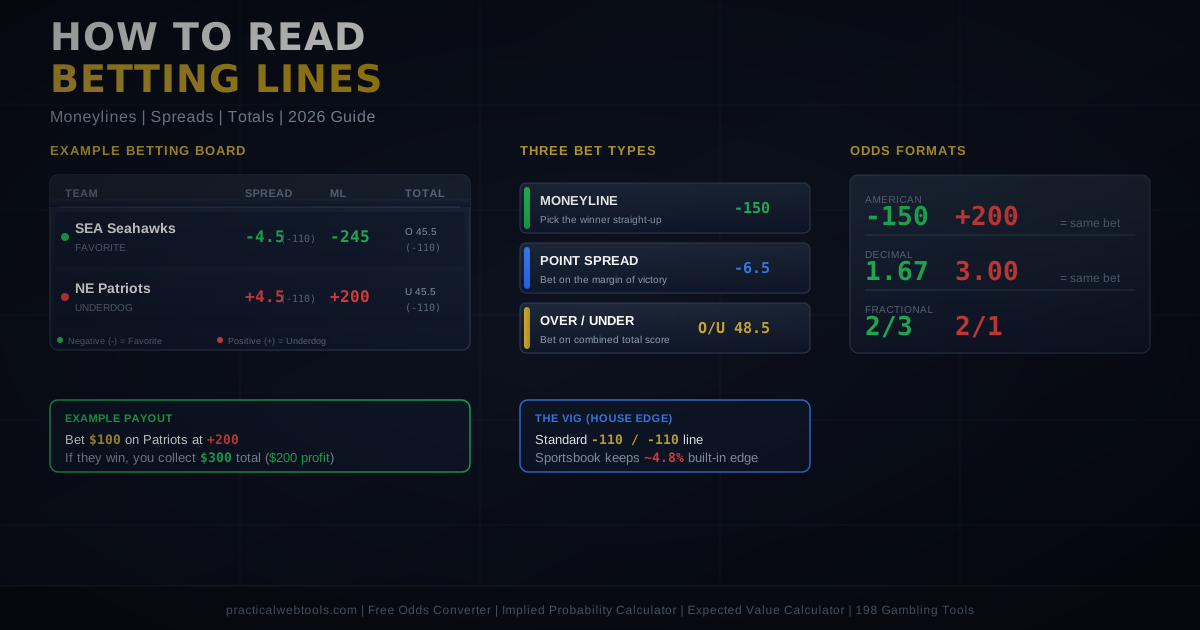
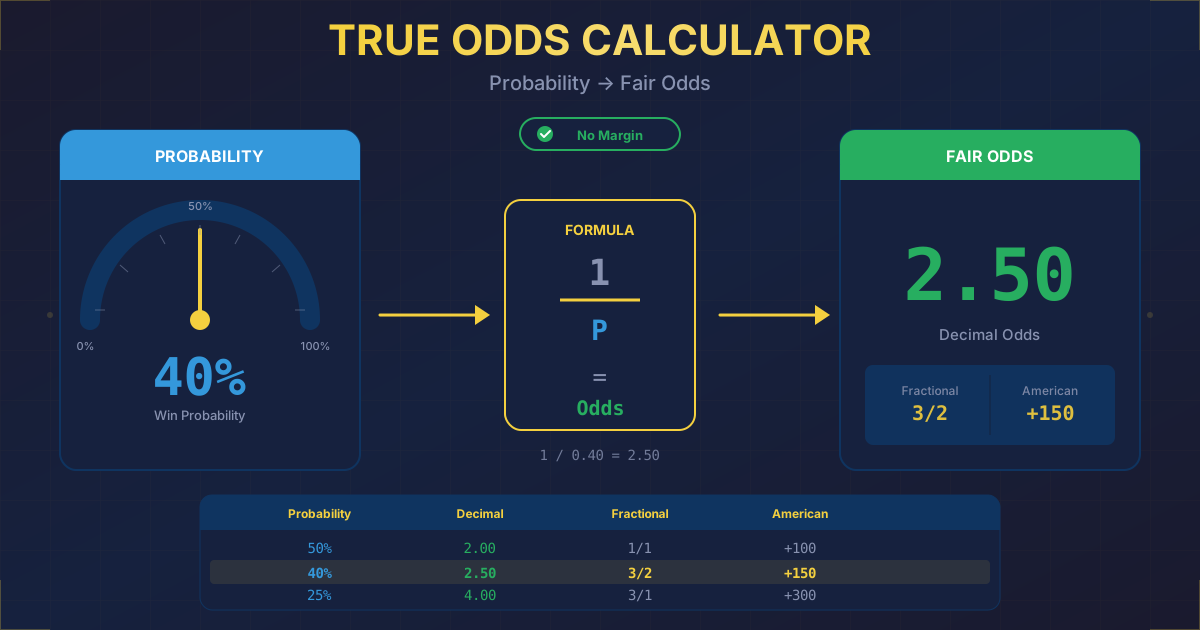
How do F1 odds work? F1 odds work like any sports betting odds. For race winners, the favorite might be priced at +150 (bet $100 to win $150 profit) while a midfield driver could be +5000 (bet $100 to win $5,000 profit). Negative odds like -200 mean you must bet $200 to win $100 profit. Use our Odds Converter to convert between American, decimal, and fractional formats.
Does qualifying position determine the race winner in F1? Qualifying position is the strongest single predictor of the race winner, with the pole sitter winning 40-45% of races. However, it is not deterministic -- tire strategy, weather, reliability, safety cars, and first-lap incidents all introduce variance. At street circuits, qualifying is even more important (60-65% pole-to-win conversion), while at power circuits with long DRS zones, overtaking from lower grid positions is more feasible.
How do regulation changes affect F1 betting? Regulation changes (like the 2026 overhaul) dramatically increase uncertainty in championship futures and early-season race markets. Teams that correctly interpret the new rules gain an advantage, while previously dominant teams may fall behind. For bettors, this means: spread championship futures across multiple contenders, weight pre-season testing data heavily, and expect higher variance in the first 5-6 races before the competitive order stabilizes.
Can you live bet during F1 races? Yes, most major sportsbooks offer live betting throughout F1 races. Odds update based on track position, tire strategy, safety car deployments, and weather changes. The best live betting opportunities occur during safety car periods (when the field bunches up), after pit stops (when position changes create new dynamics), and when rain begins or stops during a race.
Related Gambling Tools
- Odds Converter: Convert F1 odds between American, decimal, and fractional formats to compare lines across global sportsbooks.
- Expected Value Calculator: Calculate whether an F1 bet offers positive expected value based on your race analysis.
- Kelly Criterion Calculator: Determine optimal bet sizing for each F1 wager based on your assessed edge and bankroll.
- Implied Probability Calculator: Convert F1 odds into implied probabilities for direct comparison against your models.
- Parlay Calculator: Compute payouts for multi-race or sprint+race F1 parlays.
- Hedge Calculator: Calculate hedge amounts to lock in profits on F1 championship futures as the season progresses.
- Arbitrage Calculator: Find risk-free opportunities by comparing F1 odds across multiple sportsbooks.
- Bankroll Volatility Tracker: Monitor your F1 betting bankroll across the 24-race season.
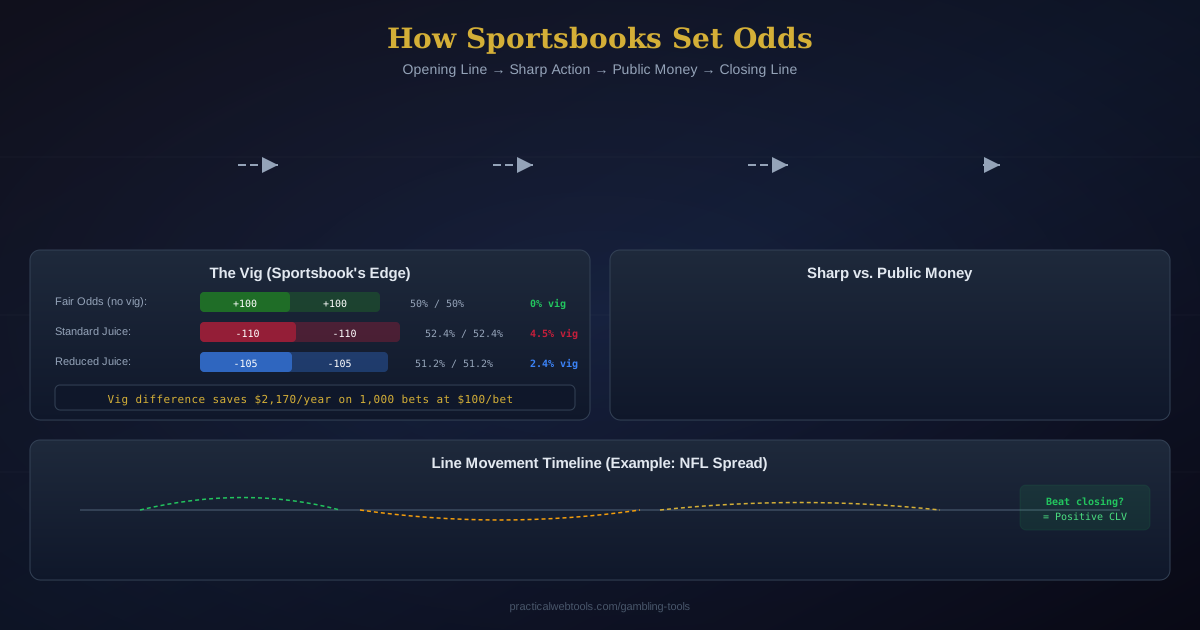
- Hold/Vig Calculator: Identify which sportsbook offers the lowest margin on F1 markets.
- Sure Bet Calculator: Find guaranteed profit opportunities on F1 qualifying and race winner markets.
- Closing Line Value Tracker: Track your F1 betting skill by measuring closing line value across every wager.
- Matched Betting Calculator: Extract maximum value from sportsbook promotions during the F1 season.
- Middle Bet Calculator: Identify middling opportunities when F1 live odds shift during safety car periods.
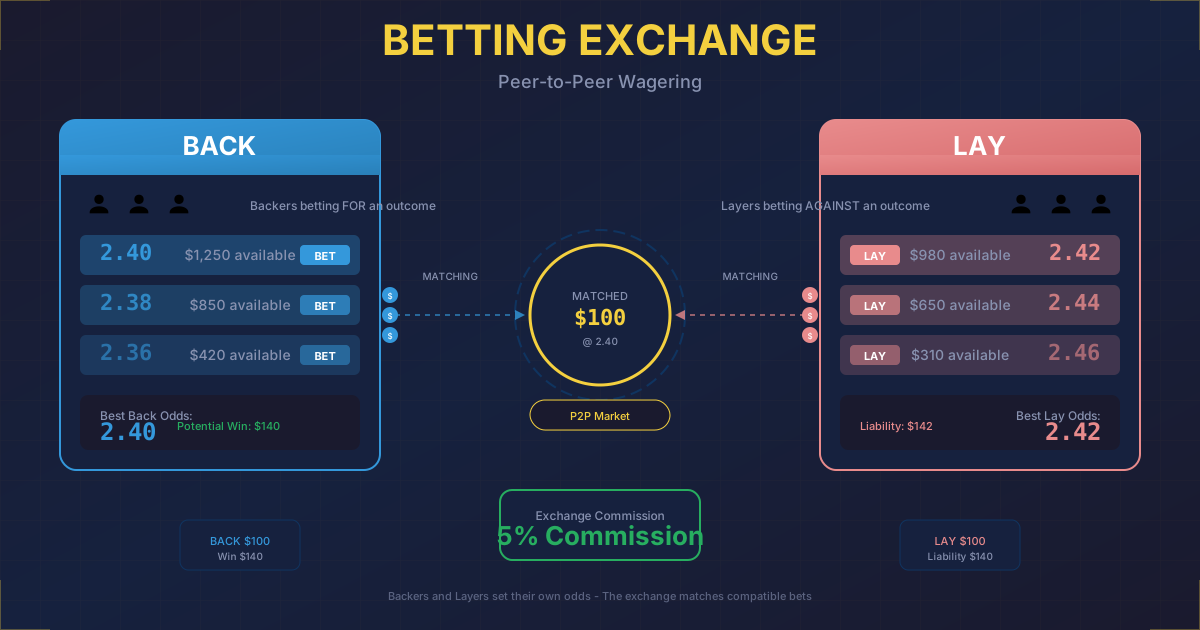
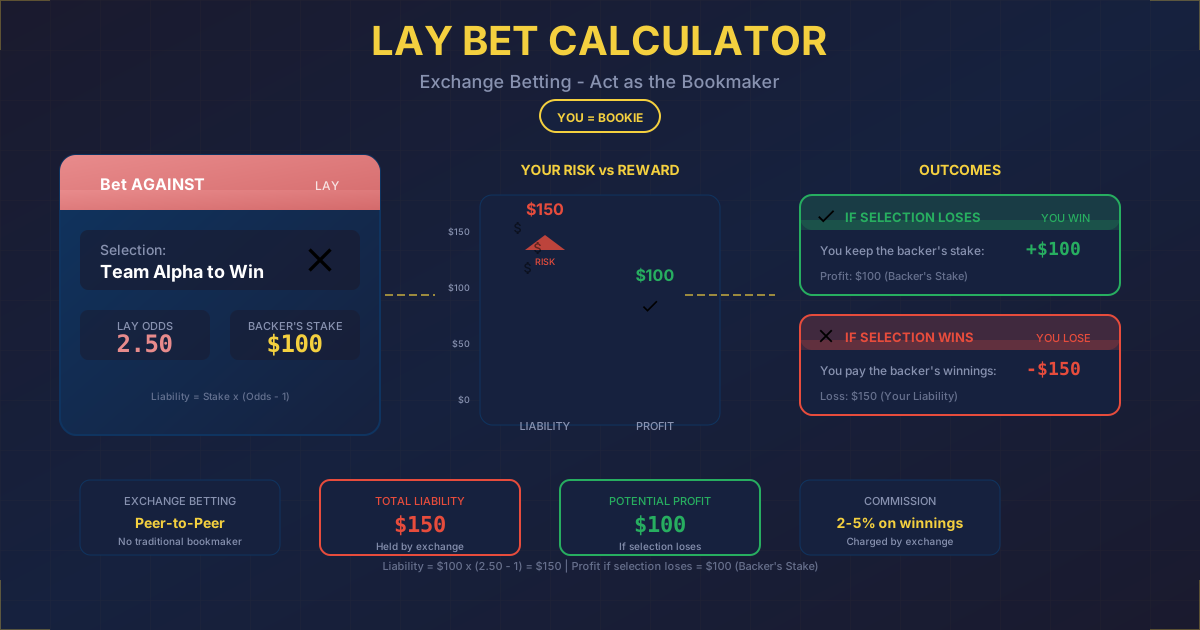
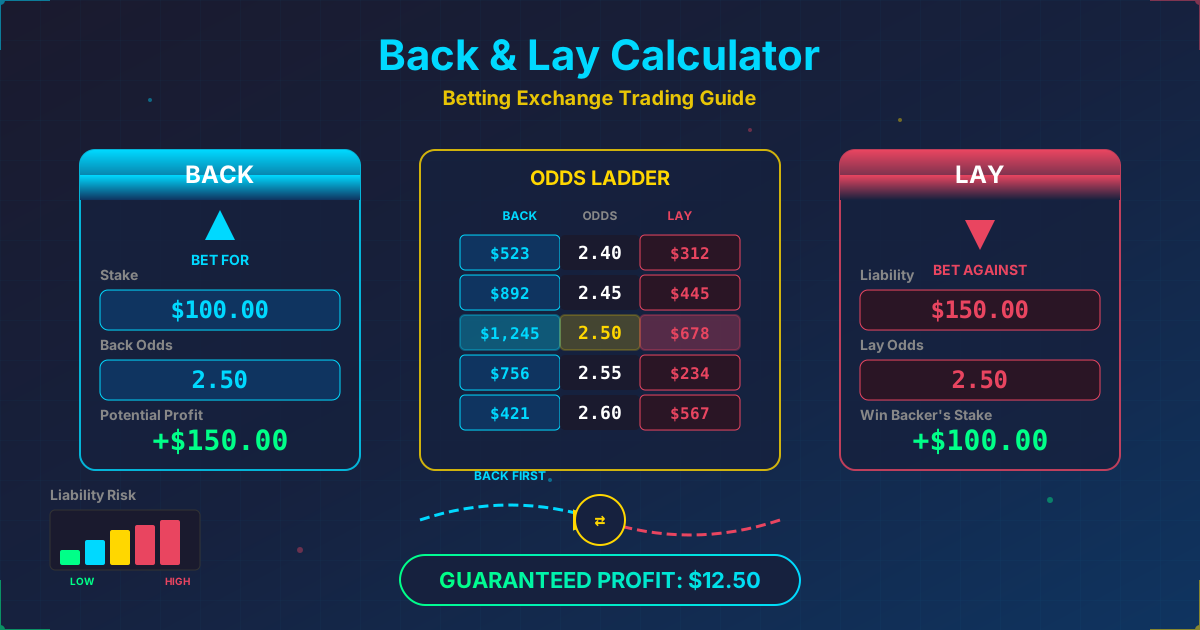
- Back/Lay Calculator: Calculate exchange betting liability when laying F1 favorites on Betfair or similar platforms.
Formula 1 betting in 2026 presents a once-in-a-generation opportunity due to the massive regulation changes reshuffling the competitive order. The bettors who profit will be those who analyze pre-season testing data carefully, understand the technical implications of the new power unit and aero rules, and maintain disciplined bankroll management across a 24-race marathon. Start with matchup bets to build your analytical foundation, track your results meticulously, and let data drive your decisions. Begin your F1 betting analysis with our free calculator suite
Gambling involves risk and should be approached as entertainment, not as a source of income. Always bet within your means, set strict bankroll limits, and never chase losses. If you or someone you know has a gambling problem, contact the National Council on Problem Gambling at 1-800-522-4700 or visit ncpgambling.org. Must be 21+ to gamble in most US jurisdictions. Please play responsibly.