Sharp vs. Square Bettors: What Separates Winners from Losers (2026)
Only 3% of sports bettors are profitable long-term. The other 97% slowly bleed money to sportsbooks, parlays, and their own biases. That is not a scare tactic. It is the reality of an industry where the house builds a mathematical edge into every single line, and the vast majority of bettors never learn how to overcome it.
But here is what is remarkable: the 3% who do profit are not clairvoyants. They do not have inside information. They do not pick winners at some impossible rate. In fact, the best sports bettors in the world lose close to half of their bets. What separates them from the losing majority is not the ability to predict outcomes -- it is a completely different approach to the entire process of wagering.
In the sports betting world, these two groups have names. The winners are called sharps (or "wiseguys"). The losers are called squares (or recreational bettors). The gap between them is not talent. It is methodology. Sharps have systems, discipline, and a relentless focus on value. Squares have hunches, emotions, and a dangerous attachment to their favorite teams.
This guide breaks down every meaningful difference between sharp and square bettors -- how they think, how they analyze, how they manage money, and how they interact with sportsbooks. More importantly, it gives you a concrete roadmap for moving from the square side to the sharp side, one habit at a time.
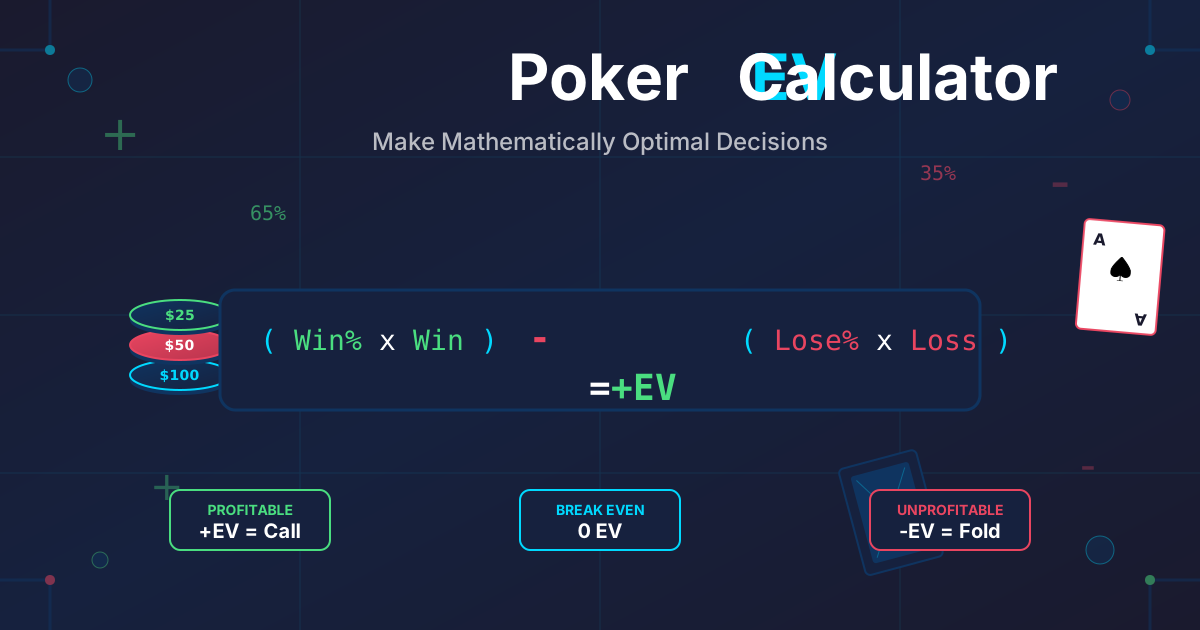
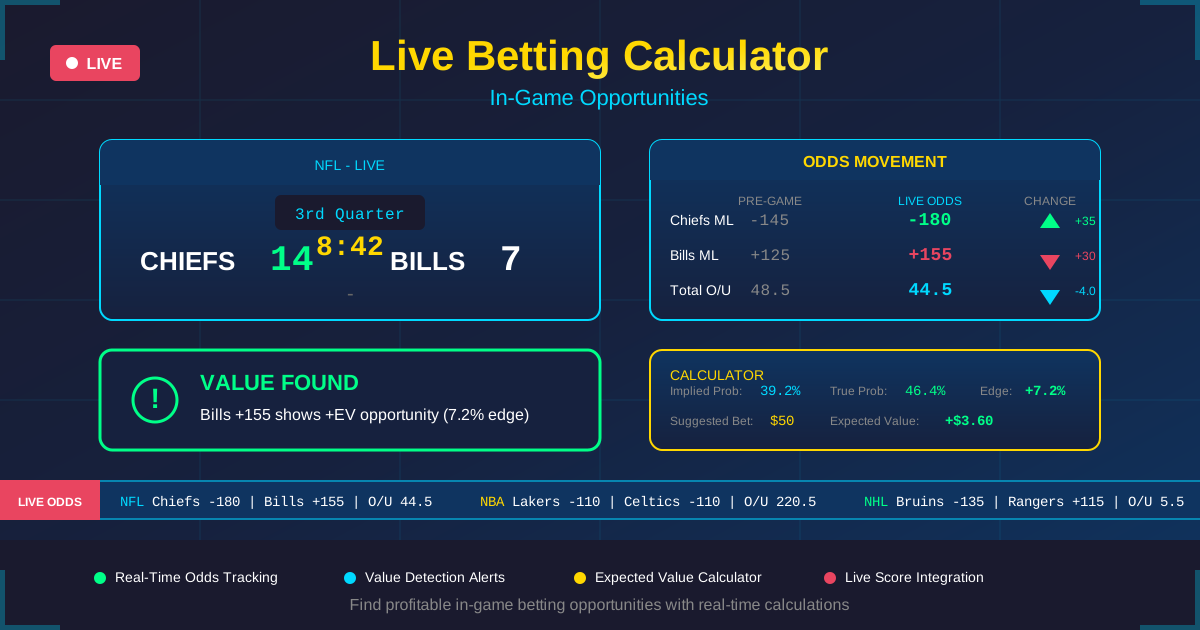
Find value in every line with our free Expected Value Calculator -- the same math sharps use on every bet.
Defining Sharp and Square Bettors
What Is a Sharp Bettor?
A sharp bettor is a professional or semi-professional sports bettor who consistently profits over thousands of wagers by finding and exploiting value in betting markets. Sharps treat sports betting as an investment discipline, not entertainment.
Key characteristics of sharp bettors:
- They bet numbers, not teams. A sharp will bet on a last-place team if the line offers value. They have zero emotional attachment to any side.
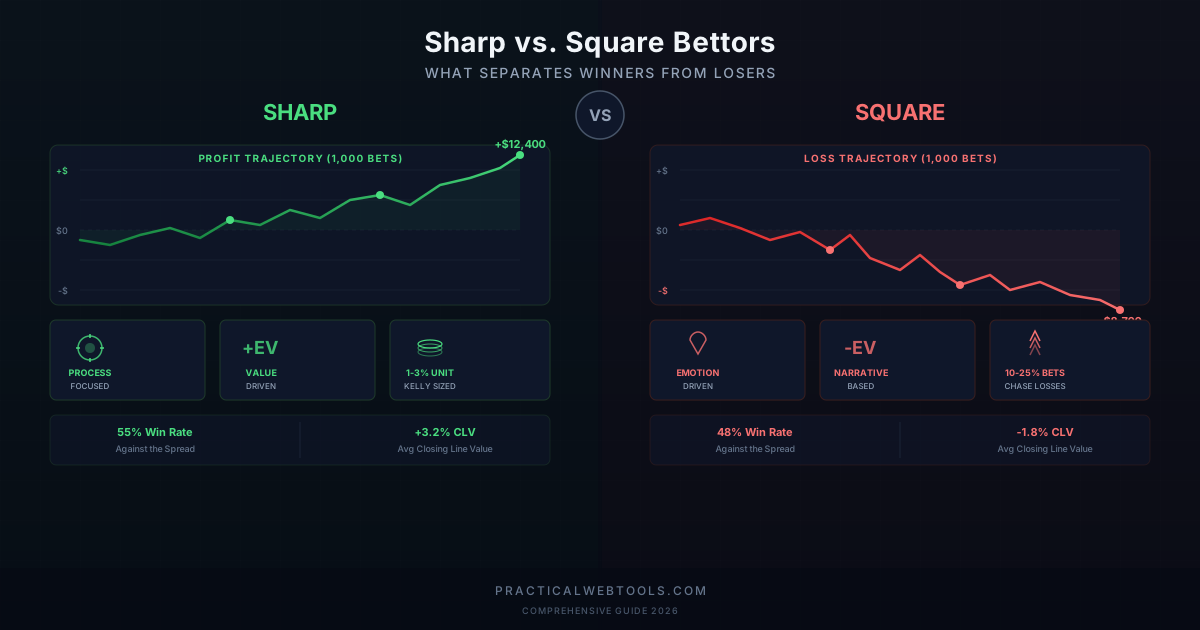
- They win 53-57% of their bets against the spread. That is enough to produce significant long-term profit against standard -110 odds.
- They move betting lines. Sportsbooks adjust odds when known sharps place bets, because sharp action is considered "smart money."
- They have accounts at 10+ sportsbooks to line-shop for the best price on every bet.
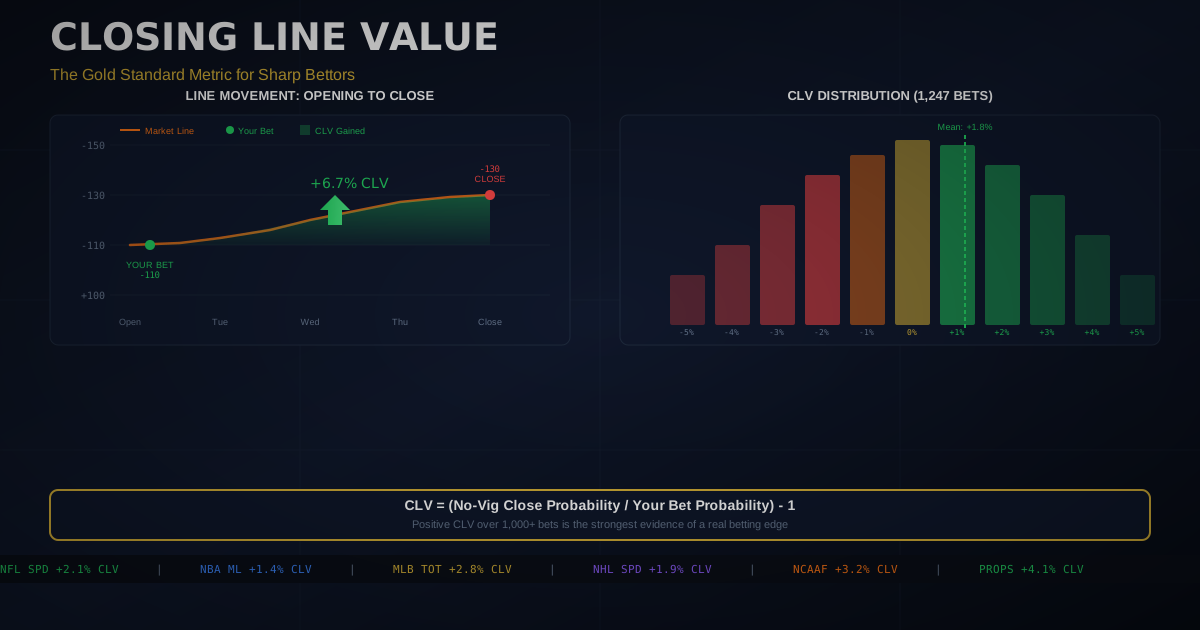
- They measure success by Closing Line Value (CLV), not win-loss records over small samples.
What Is a Square Bettor?
A square bettor is a recreational or casual sports bettor who wagers primarily for entertainment and typically loses money over time. Squares make up roughly 90-95% of all sports bettors.
Key characteristics of square bettors:
- They bet on teams they like or follow. Emotional attachment drives most of their action.
- They win roughly 47-49% of their bets against the spread. This sounds close to 50/50, but the vig makes it consistently unprofitable.
- They chase losses and increase stakes after bad days. Emotional reactions replace disciplined money management.
- They use one or two sportsbooks and never compare lines.
- They measure success by recent results, not long-term edge or process quality.
The Numbers Side by Side
| Metric | Sharp Bettors | Square Bettors |
|---|---|---|
| Win rate (ATS) | 53-57% | 47-49% |
| Long-term profitability | Positive ROI (2-10%) | Negative ROI (-5% to -15%) |
| Accounts used | 8-15+ sportsbooks | 1-2 sportsbooks |
| Bet selection process | Model-driven, value-based | Gut feeling, narratives |
| Bankroll management | 1-3% per bet (Kelly-based) | 5-25% per bet (emotional) |
| Primary metric | Closing Line Value (CLV) | Win-loss record |
| Bet types | Mostly straight bets | Heavy parlay usage |
| Research hours per week | 20-60+ hours | 0-2 hours |
| Emotional state while betting | Detached, process-focused | Excited, outcome-focused |
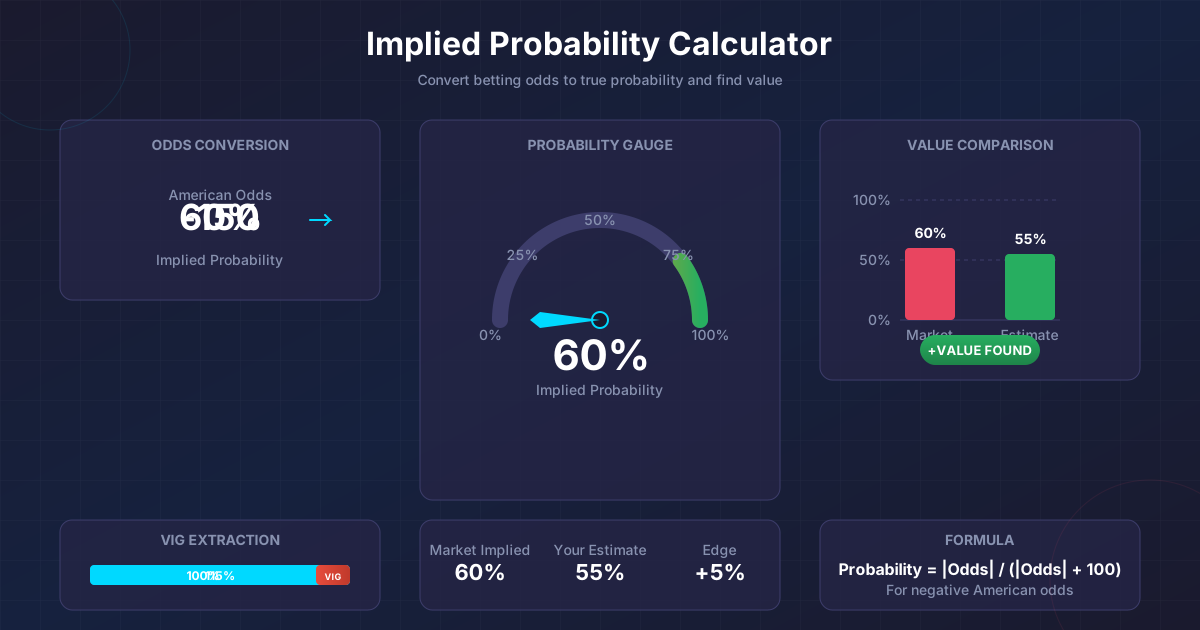
Convert odds to true probabilities with our Implied Probability Calculator -- the foundation of value betting.
The Mindset Difference: Process vs. Outcome
The single most important difference between sharps and squares is not knowledge, access to data, or bankroll size. It is their relationship with outcomes.
Squares Are Outcome-Oriented
A square bettor evaluates every bet by whether it won or lost. This seems logical on the surface, but it creates a devastating feedback loop:
- Winning a bad bet reinforces bad behavior. If a square bets the Cowboys because "they always play well on Monday night" and the Cowboys win, the square feels validated. The process was terrible, but the outcome rewards it.
- Losing a good bet punishes smart behavior. If a square makes a well-researched bet that happens to lose, they question their approach and often revert to gut feelings.
- Small samples dominate thinking. A square who goes 6-4 in a weekend feels like a genius. A square who goes 3-7 feels like a failure. Neither sample means anything statistically.
Sharps Are Process-Oriented
A sharp bettor evaluates every bet by whether the process was sound, regardless of the outcome. This is fundamentally different:
- A winning bad bet is still a mistake. If a sharp bets a line that was -EV and happens to win, they do not celebrate. They made an error that variance bailed them out of.
- A losing good bet is still a success. If a sharp correctly identifies +EV and the bet loses, the process was perfect. Over thousands of repetitions, correct process produces profit.
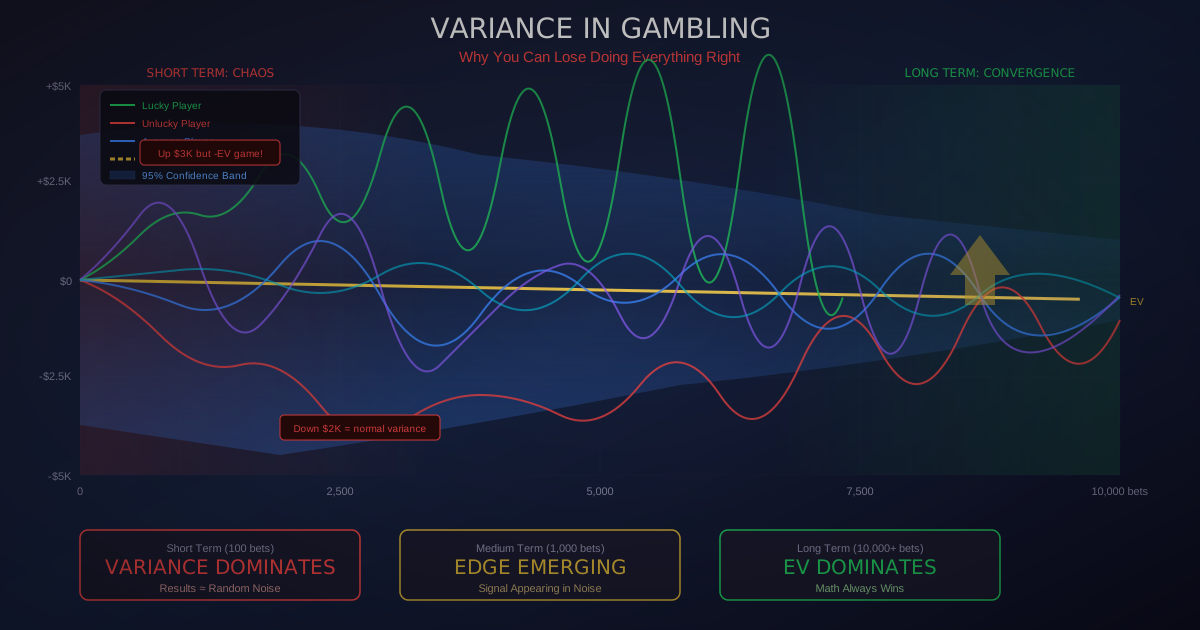
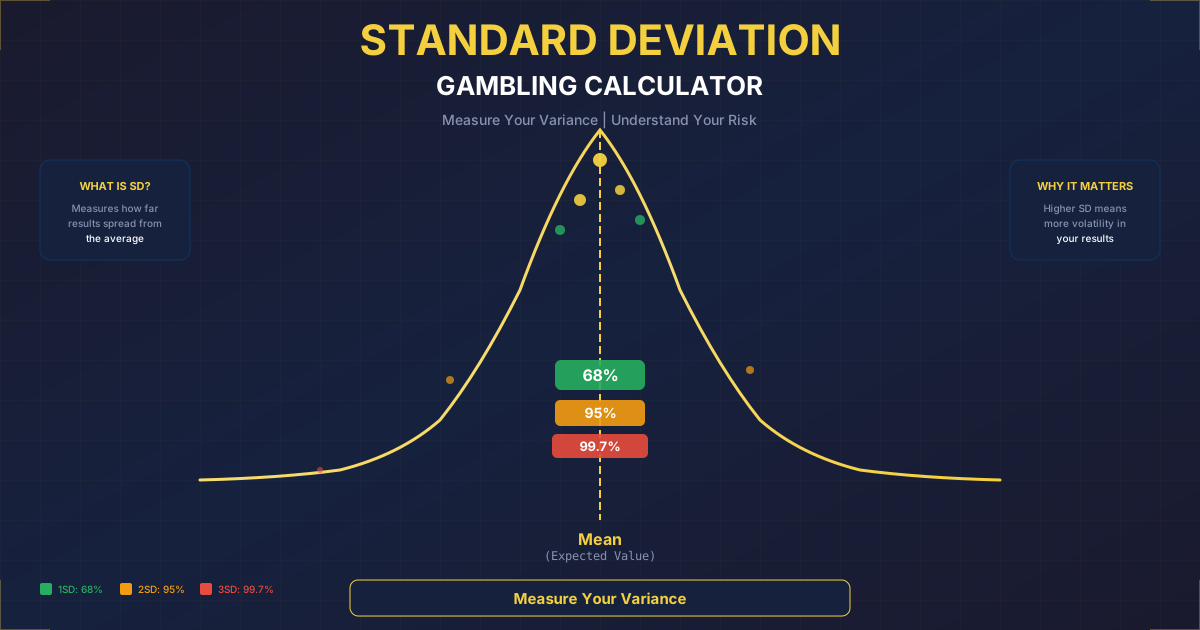
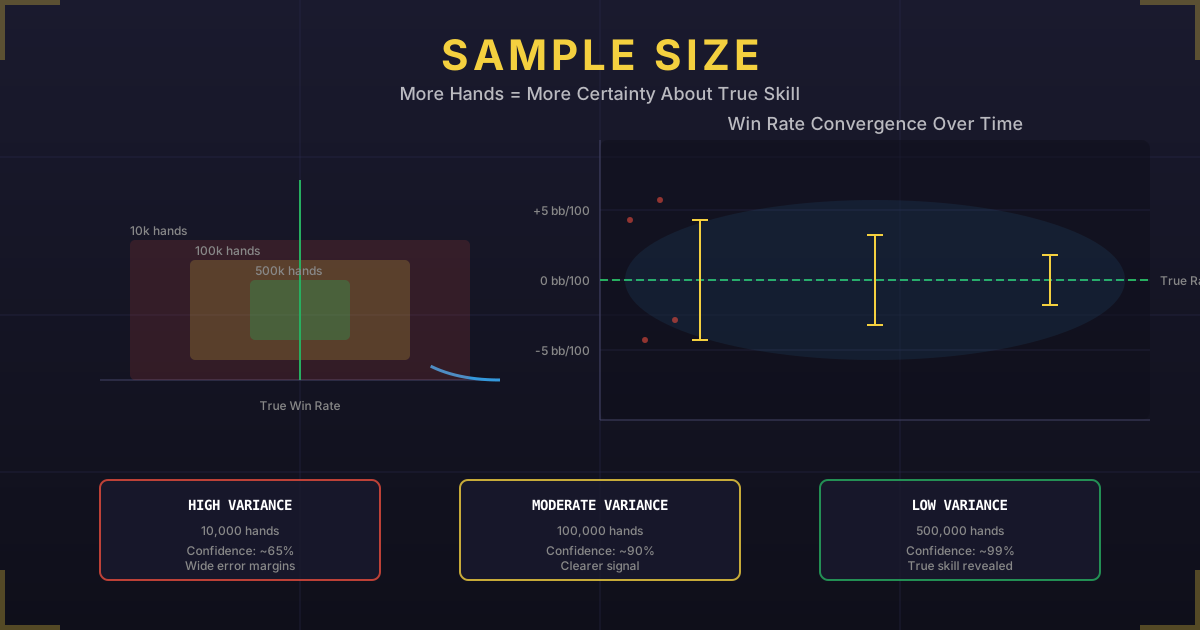
- Large samples are all that matter. Sharps evaluate themselves over 500, 1,000, or 5,000+ bets. They know that any given week is noise.
Real-World Example: Process vs. Outcome
The Bet: Patriots vs. Jets, Patriots -7 (-110)
The Square's Approach: "The Patriots are at home, they always beat the Jets. Brady -- er, the new QB -- looked great last week. I am going with the Pats."
- Bet: $200 on Patriots -7
- Result: Patriots win 24-14 (cover by 3)
- Square's takeaway: "I knew it. I am great at this."
The Sharp's Approach: "My model has this game at Patriots -5.2. The market is offering -7. That is 1.8 points of negative value. Even though the Patriots will likely win, the spread is inflated. I am either passing or taking the Jets +7."
- Bet: $100 on Jets +7 (or no bet)
- Result: Patriots win 24-14 (Jets +7 pushes or loses by 3)
- Sharp's takeaway: "The line was correct -- the market overvalued the Patriots by nearly 2 points. My model worked well regardless of this specific outcome."
The square won money on this particular bet. The sharp either broke even or lost. But over 1,000 similar situations, the sharp's approach produces profit because they are consistently on the right side of value.
| Evaluation Approach | Square | Sharp |
|---|---|---|
| After a winning bet | "I am a good bettor" | "Was the process correct? Was there +EV?" |
| After a losing bet | "I am unlucky / need to bet more to recover" | "Was the process correct? Was there +EV?" |
| After a 3-7 weekend | Panic, change strategy, chase losses | Review model accuracy, adjust inputs if needed |
| After a 8-2 weekend | Overconfidence, increase bet sizes | Review model accuracy, check for lucky variance |
| Measuring success | This week's record | CLV over 500+ bets |
How Sharps Find Value: CLV, Models, and Market Analysis
Sharp bettors have a systematic approach to finding bets where the odds are mispriced in their favor. Here is how each major component works.
Closing Line Value: The Gold Standard
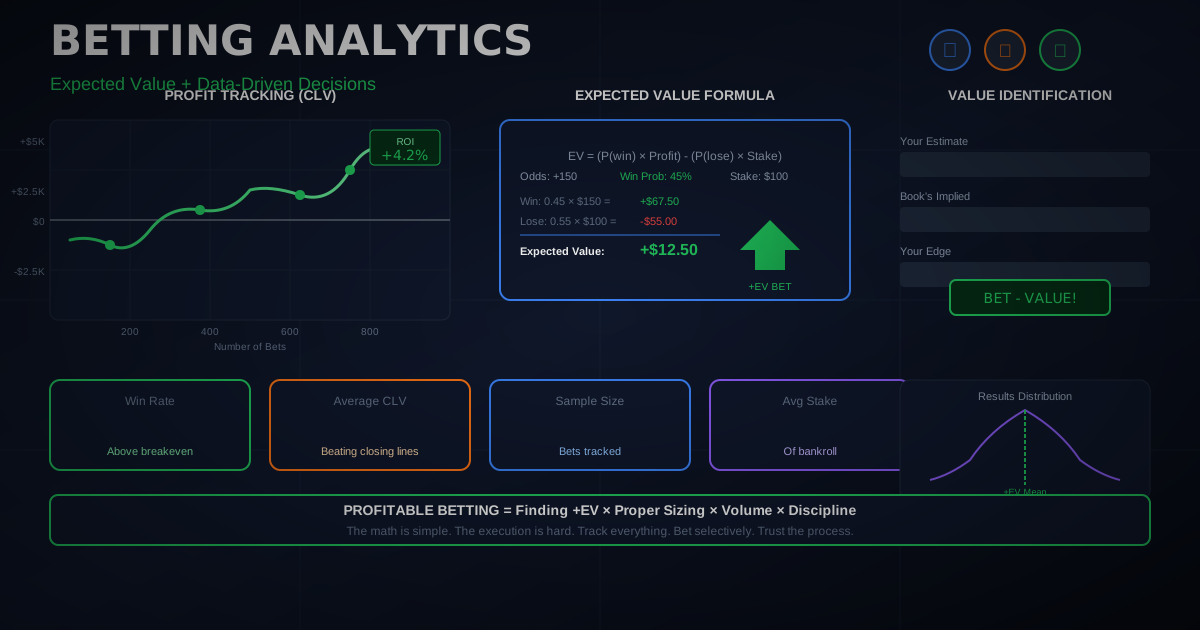
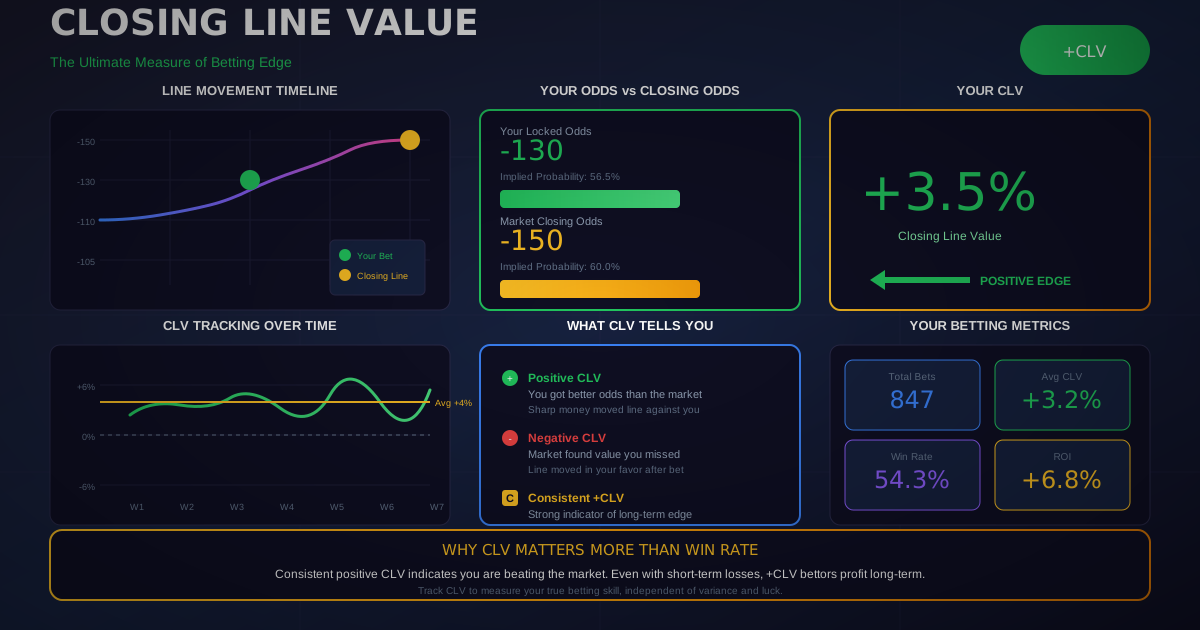
Closing Line Value (CLV) is the single best predictor of long-term sports betting success. It measures whether you consistently get better odds than the market's final price.
Why CLV matters more than win-loss records:
The closing line represents the most efficient expression of true probability. By game time, sharp money, injury reports, weather updates, and all available information have been incorporated into the line. Research shows that closing odds predict outcomes with near-perfect accuracy over large samples.
If you consistently bet at odds better than the close, you are finding value before the market does. That is the definition of a sharp bettor.
CLV Example:
- Monday: You bet Bills +6.5 (-110) against the Chiefs
- Sunday (game time): The line closes at Bills +4.5 (-110)
- Your CLV: +2 points of value
You got the Bills at 2 points better than where the entire market settled. Even if the Bills lose by 5 (your bet loses but the closing line would have lost too), you still demonstrated sharp ability by beating the close.
Track your CLV on every bet with our CLV Tracker -- the metric that separates sharps from squares.
Power Ratings and Predictive Models
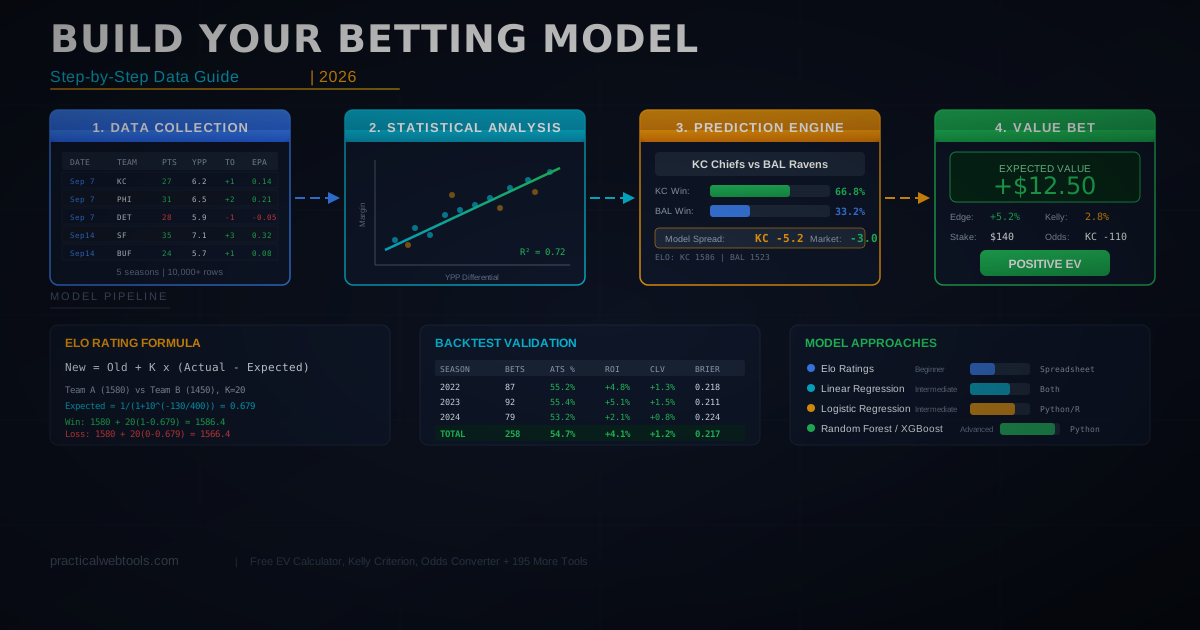
Most professional bettors build or subscribe to predictive models that generate their own point spreads and totals. These models typically incorporate:
- Team efficiency metrics (offensive and defensive)
- Pace of play and style matchup data
- Injury impact quantification
- Rest advantages and scheduling factors
- Weather and venue effects
- Historical line movement patterns
How a Model Creates an Edge:
| Step | What the Sharp Does | What the Square Does |
|---|---|---|
| 1. Generate a line | Model says: Game should be -4.5 | Does not generate own line |
| 2. Compare to market | Market says: -6.5 | Looks at who is favored, not by how much |
| 3. Identify discrepancy | 2-point difference = potential value | No comparison framework |
| 4. Determine if edge is sufficient | 2 pts > 1 pt threshold = bet underdog | Bets favorite because "they are better" |
| 5. Size the bet | Kelly Criterion says 1.5% of bankroll | "I feel good about this one" = 10% of bankroll |
The sharp's entire process is mathematical. The square's process is narrative-driven.
Size every bet optimally with our Kelly Criterion Calculator.
Line Shopping: The Easiest Edge
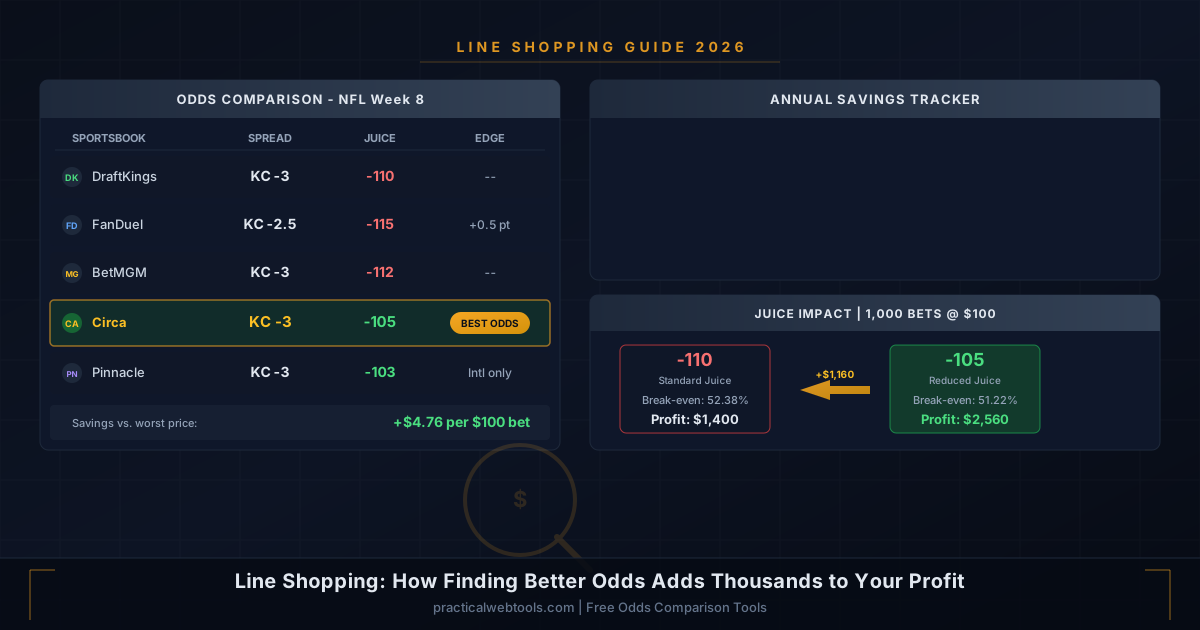
Line shopping is the simplest sharp habit and one of the most impactful. By maintaining accounts at multiple sportsbooks, sharps ensure they always get the best available price.
Real-World Line Shopping Example:
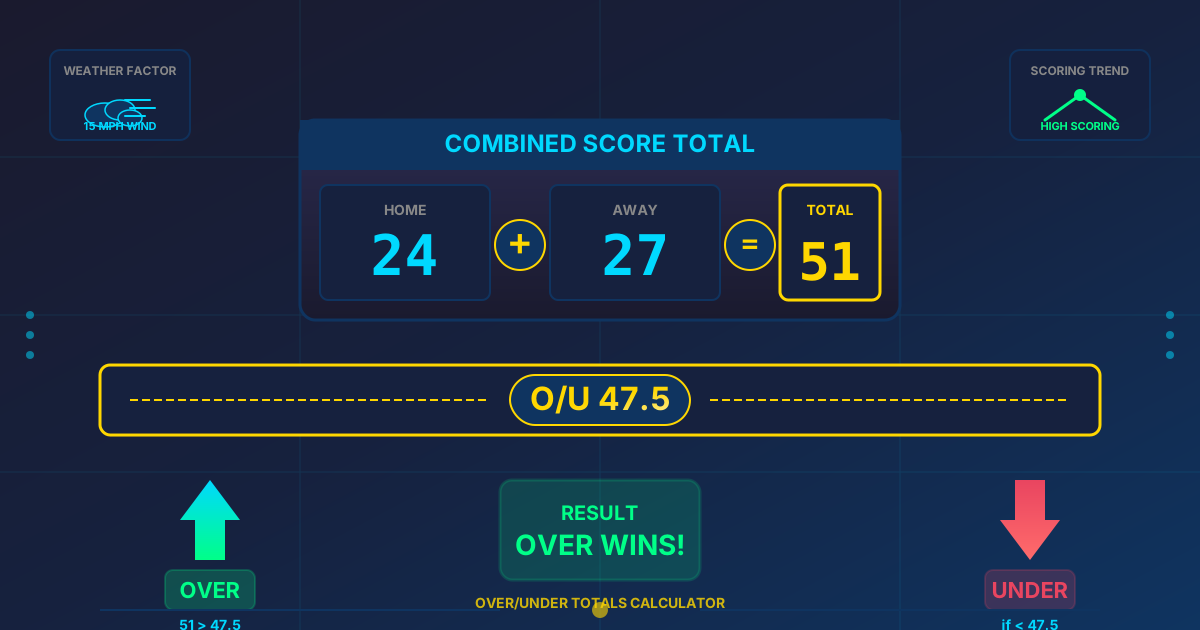
You want to bet the over 47.5 in a Sunday Night Football game. Here are the odds at five different sportsbooks:
| Sportsbook | Over 47.5 Odds | $100 Payout if Win |
|---|---|---|
| Book A | -115 | $186.96 |
| Book B | -110 | $190.91 |
| Book C | -108 | $192.59 |
| Book D | -105 | $195.24 |
| Book E | -112 | $189.29 |
A square bettor using only Book A pays $115 to win $100. A sharp using Book D pays $105 to win $100. That is a $10 difference on a single bet. Over 1,000 bets per year, this line shopping edge alone can be worth thousands of dollars.
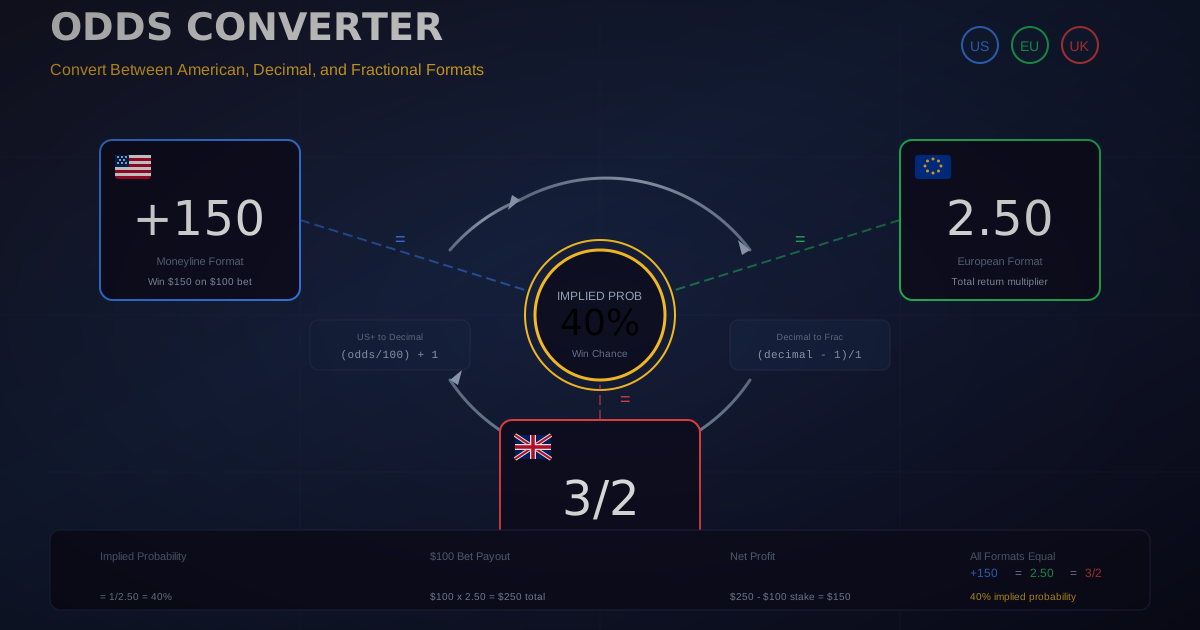
Compare odds across formats instantly with our Odds Converter.
Market Analysis and Steam Moves
Sharps pay close attention to how lines move after opening. Key concepts:
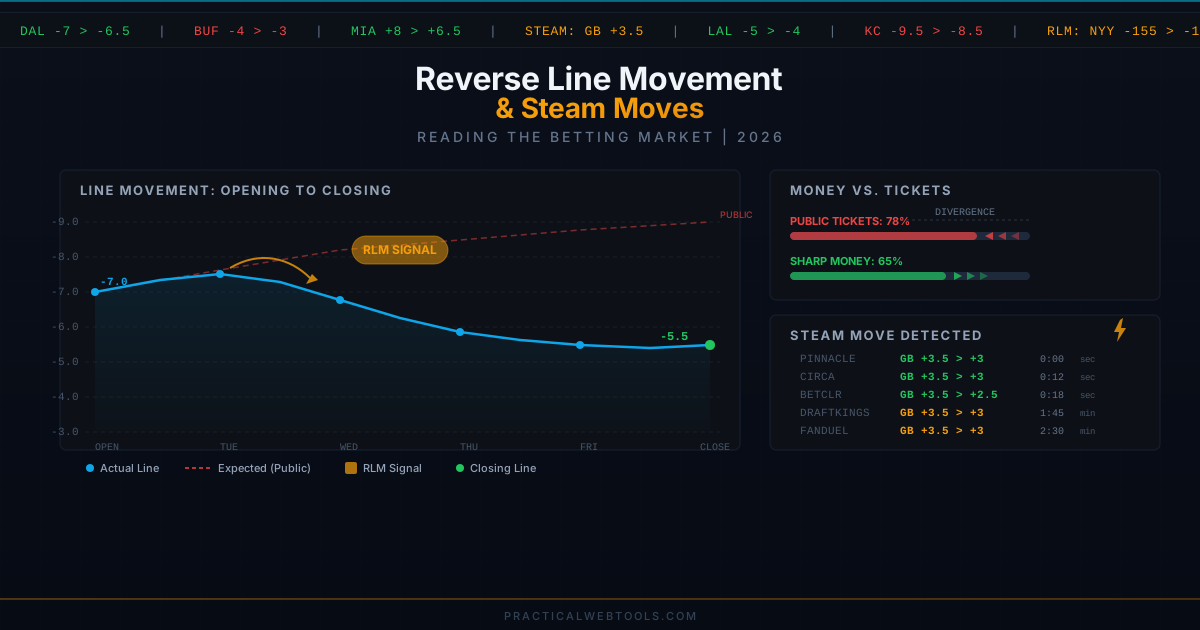
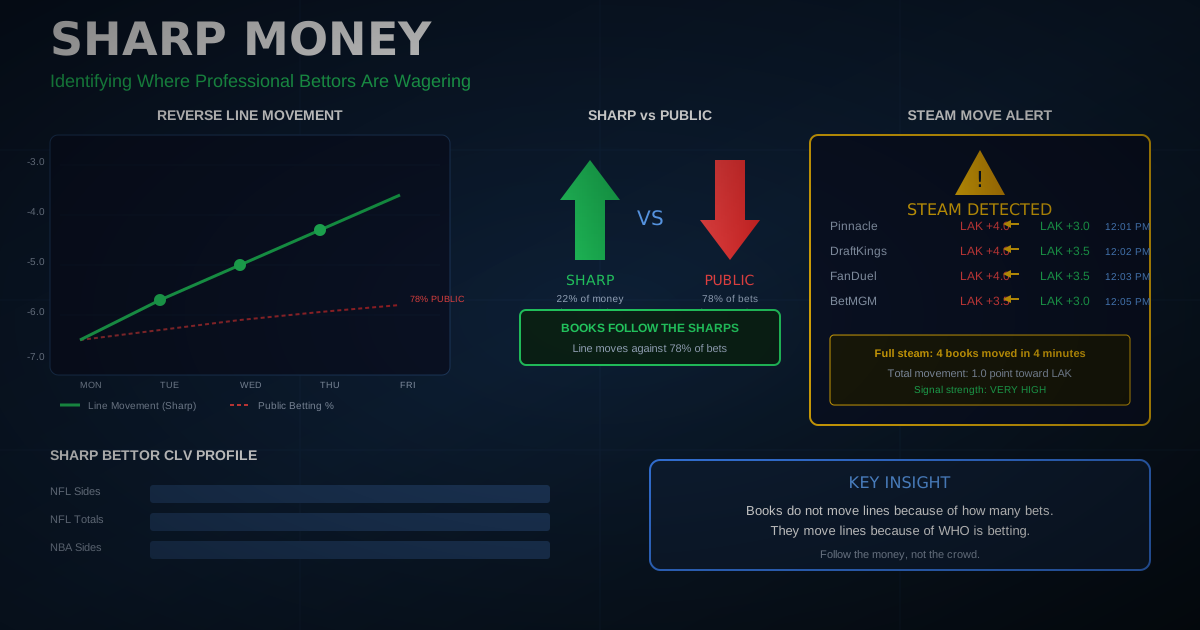
- Steam moves: Sudden, sharp line movements across multiple sportsbooks simultaneously, usually caused by sharp action or syndicate money hitting the market.
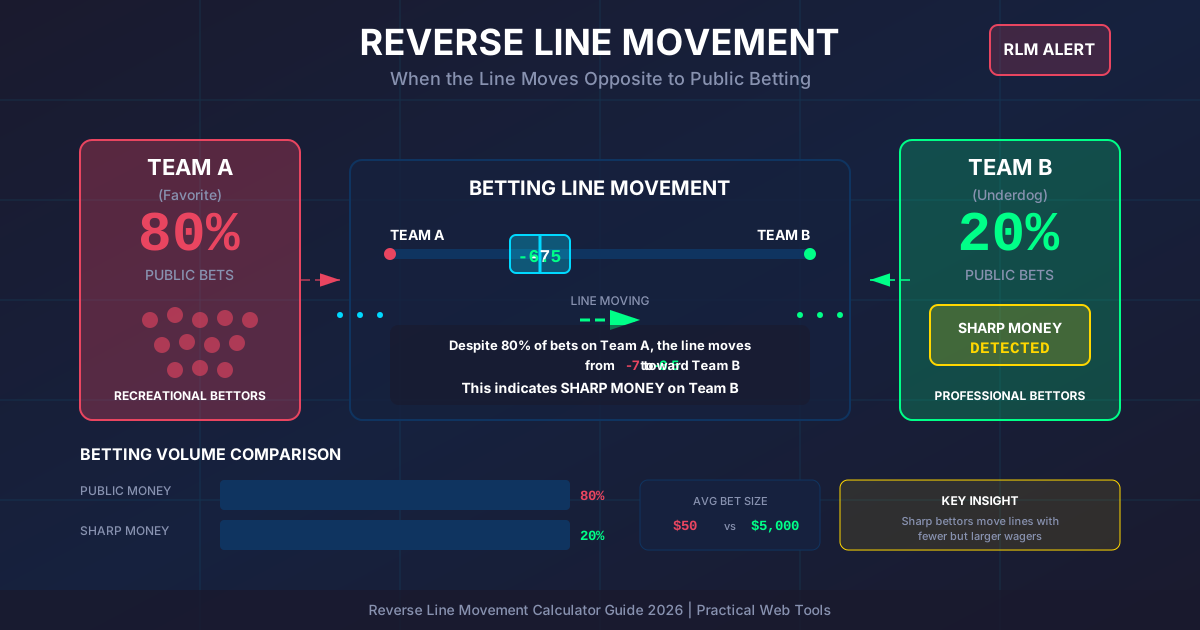
- Reverse line movement: When the line moves in the opposite direction of where the public (square) money is going. If 75% of bets are on Team A but the line moves toward Team B, sharp money is likely on Team B.
- Originating lines: The first sportsbook to post a line often has the softest numbers. Sharps target these early lines before the market corrects.
How Squares Bet: Bias, Emotion, and Narratives
Understanding square behavior is not about mocking casual bettors. It is about identifying patterns in your own betting that cost you money. Most bettors exhibit some or all of these tendencies.
The Narrative Trap
Squares love stories. They bet on:
- "Revenge games" (a team playing their former coach)
- "Statement games" (a team needing to prove something)
- "Must-win situations" (a team fighting for a playoff spot)
- "Hot streaks" (a team that has won 5 straight)
These narratives are already priced into the line. The market knows about revenge games and playoff implications. Betting on narratives means you are not finding value -- you are betting on information the line already reflects.
Favorite and Over Bias
Square bettors systematically overvalue favorites and overs:
- Favorite bias: Squares prefer betting on the better team. It feels safer. This inflates favorite lines, creating value on underdogs.
- Over bias: Squares prefer action and excitement, which means points. They bet overs disproportionately, which inflates totals.
These biases are well-documented in academic research and represent some of the most persistent inefficiencies in betting markets. Sharps exploit them regularly.
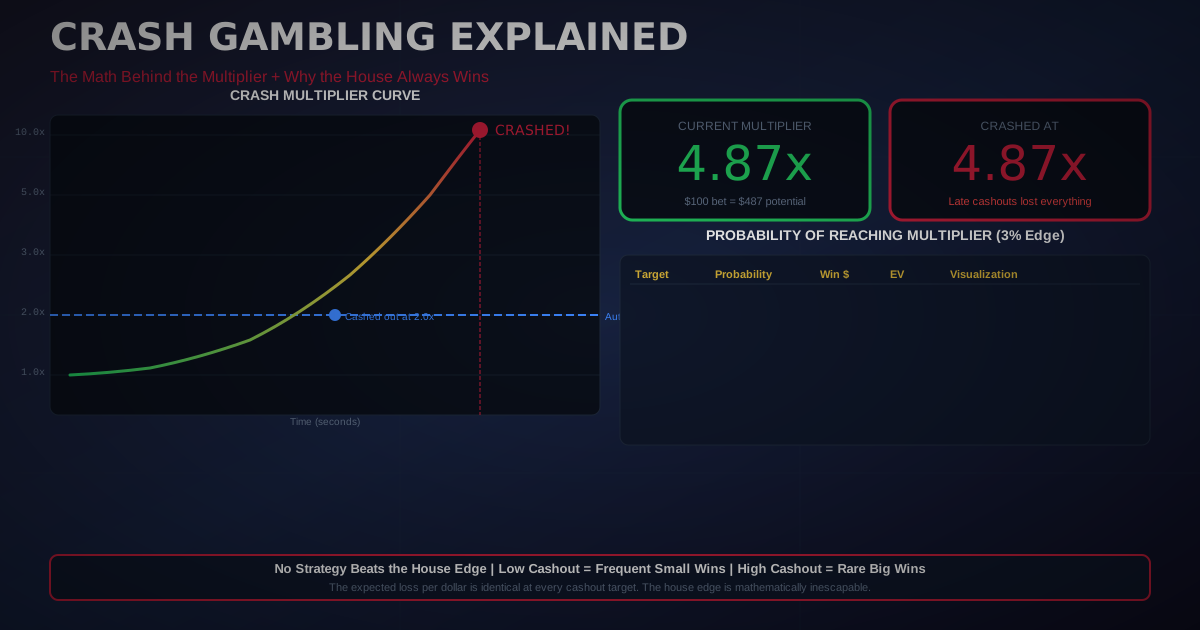
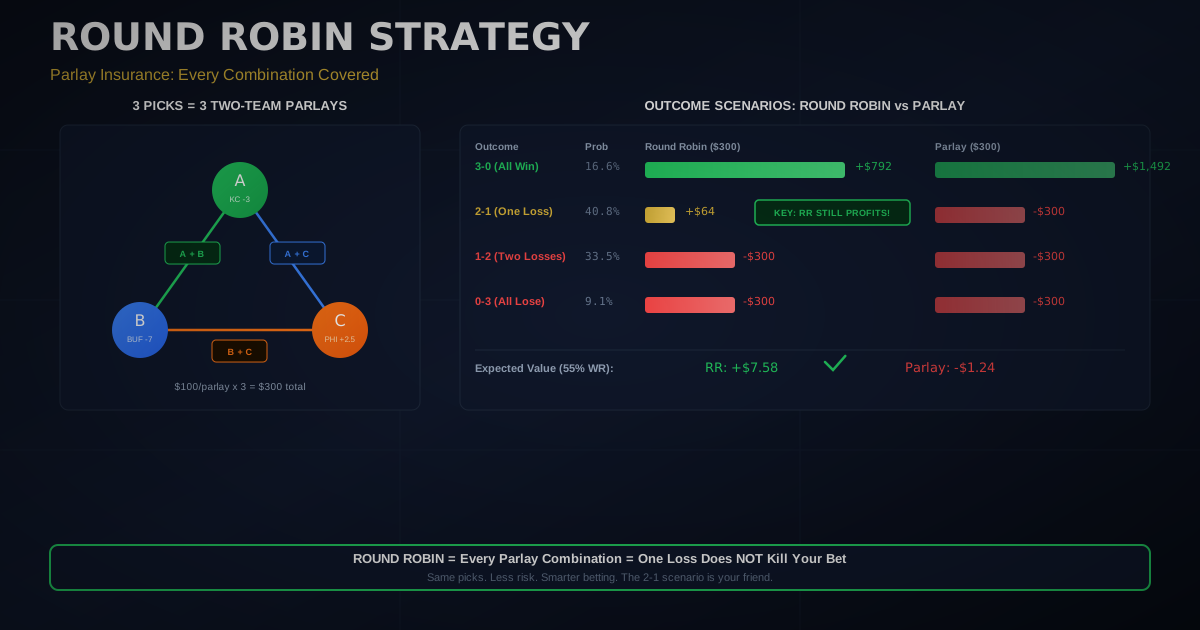
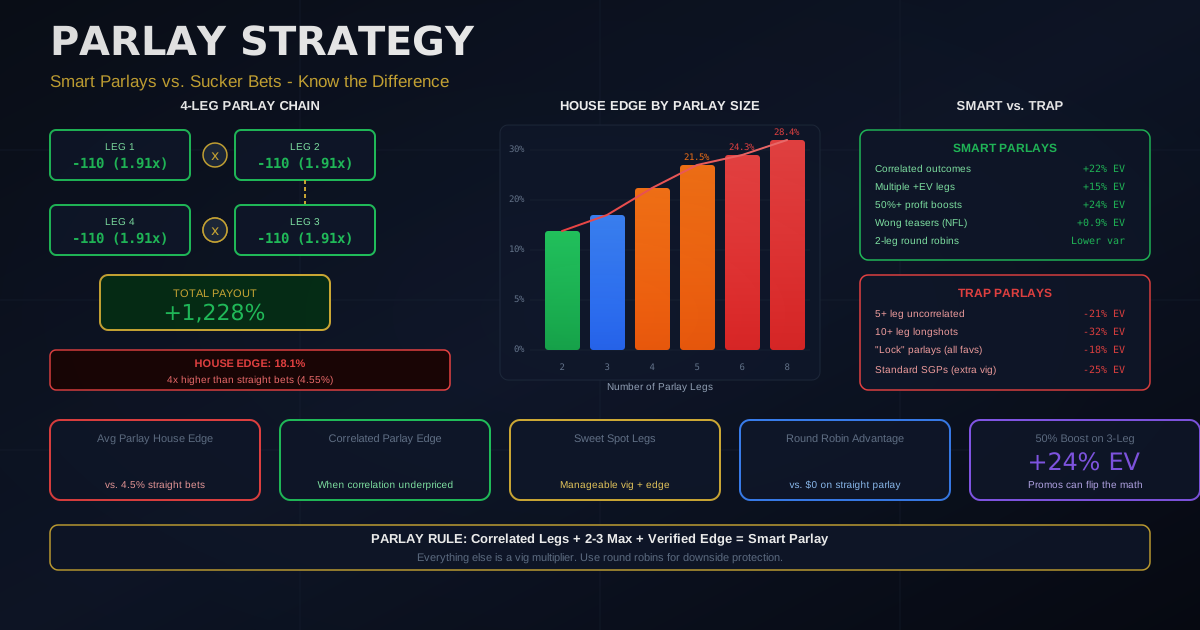
Parlay Addiction
Parlays are the clearest indicator of square betting. Here is why:
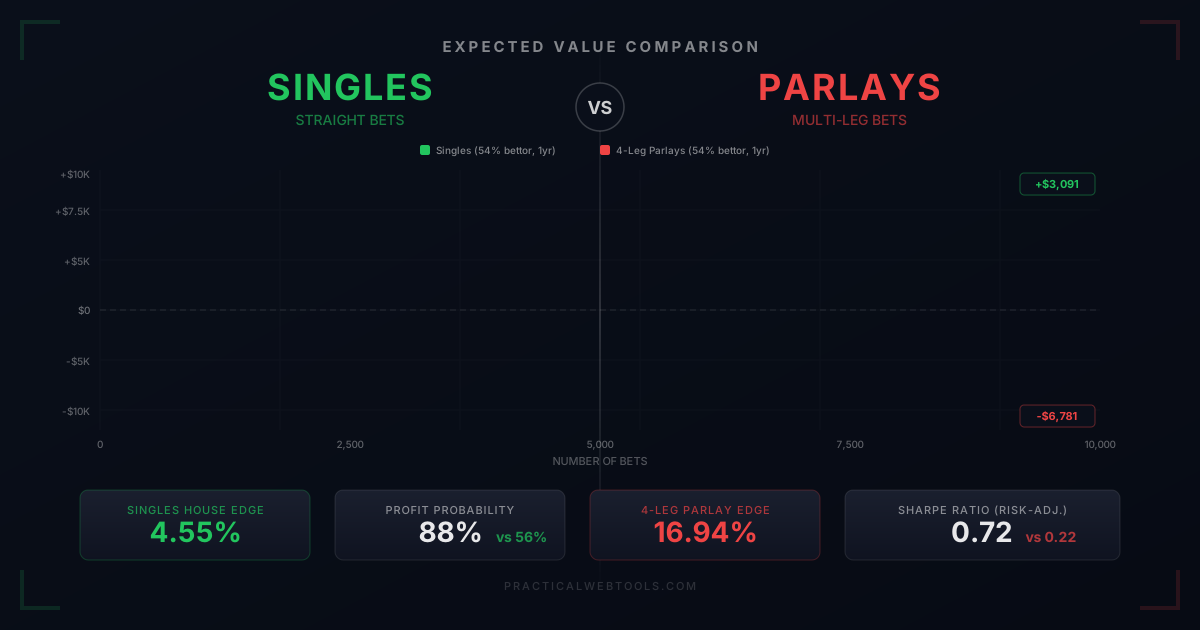
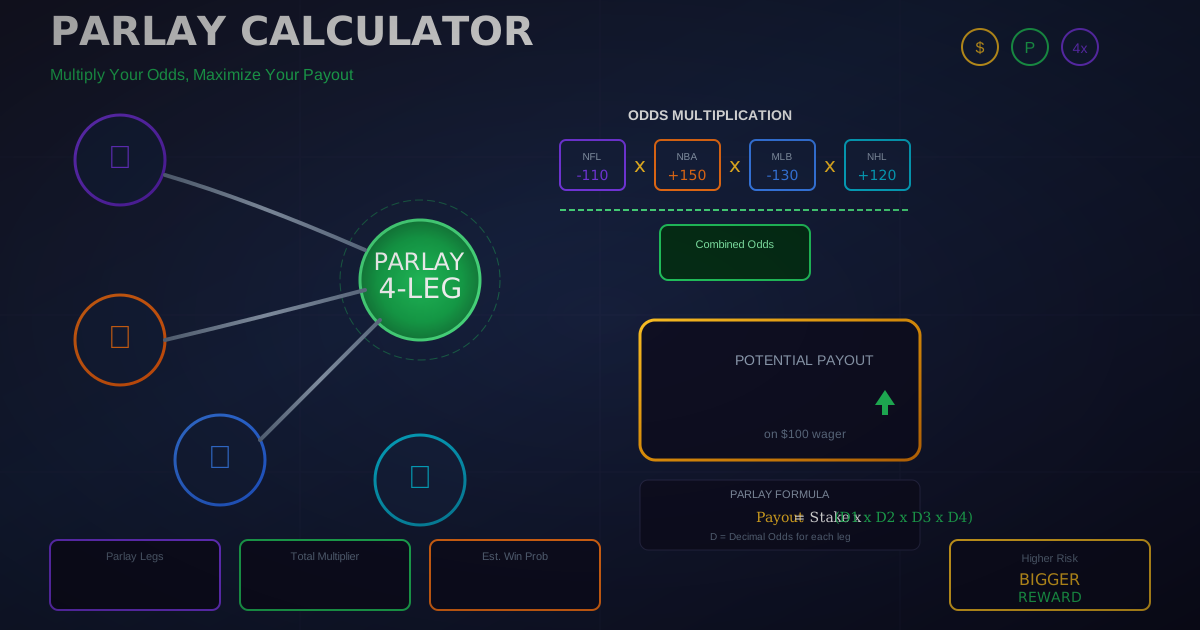
$100 Bet: Straight Bets vs. Parlay
| Approach | Win Probability | Expected Payout | Expected Value |
|---|---|---|---|
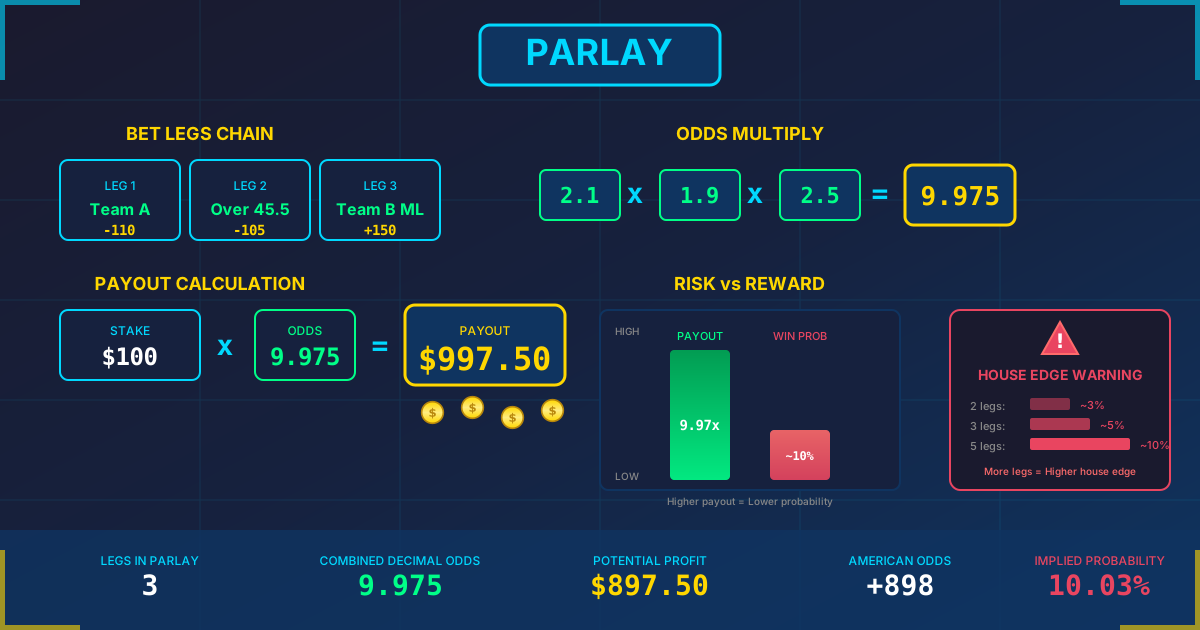
| 4 straight bets at -110 ($25 each) | ~50% each independently | ~$90.91 per win | -$4.55 per bet (vig only) |
| 4-leg parlay at -110 each ($100) | ~6.25% to hit all four | $1,228.27 if all hit | -$23.23 (much higher vig) |
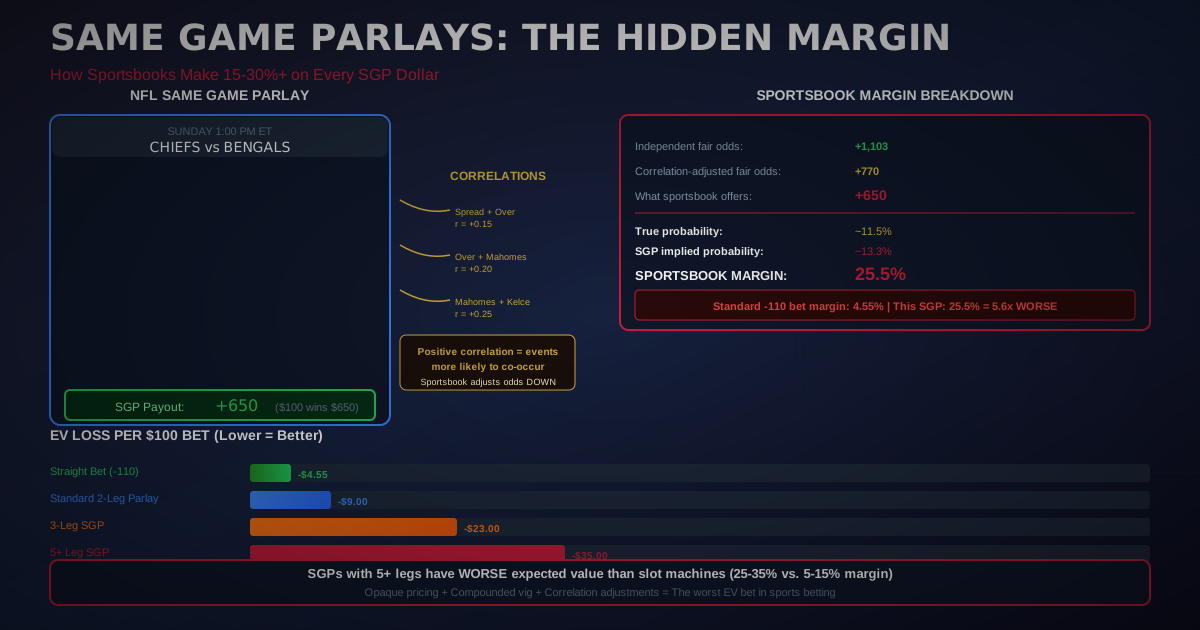
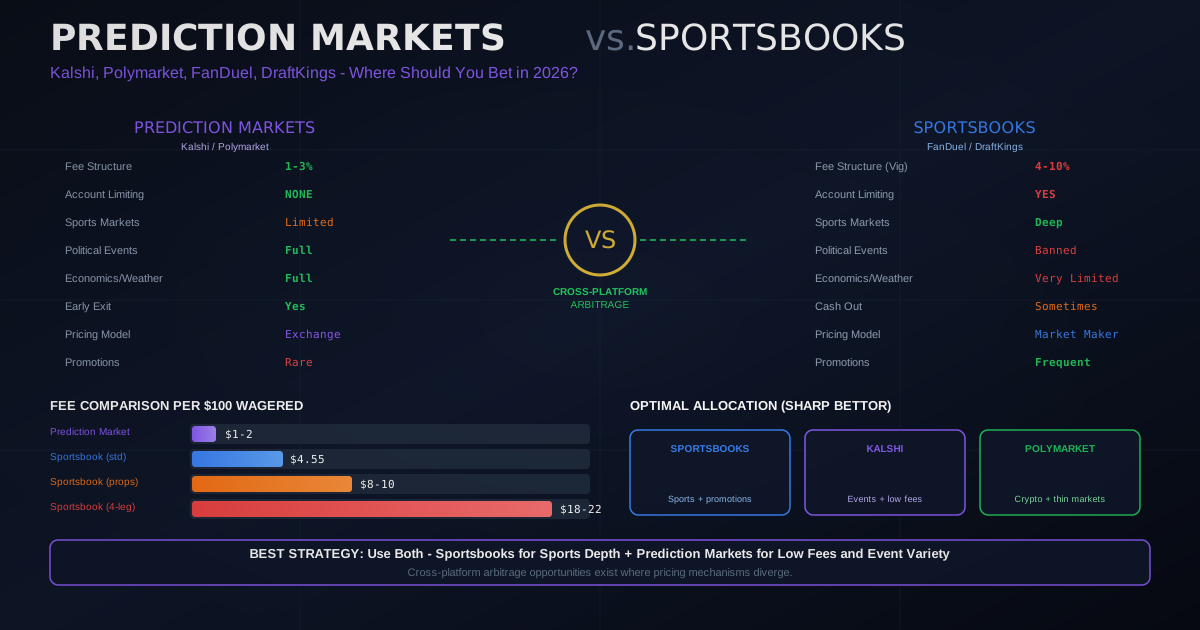
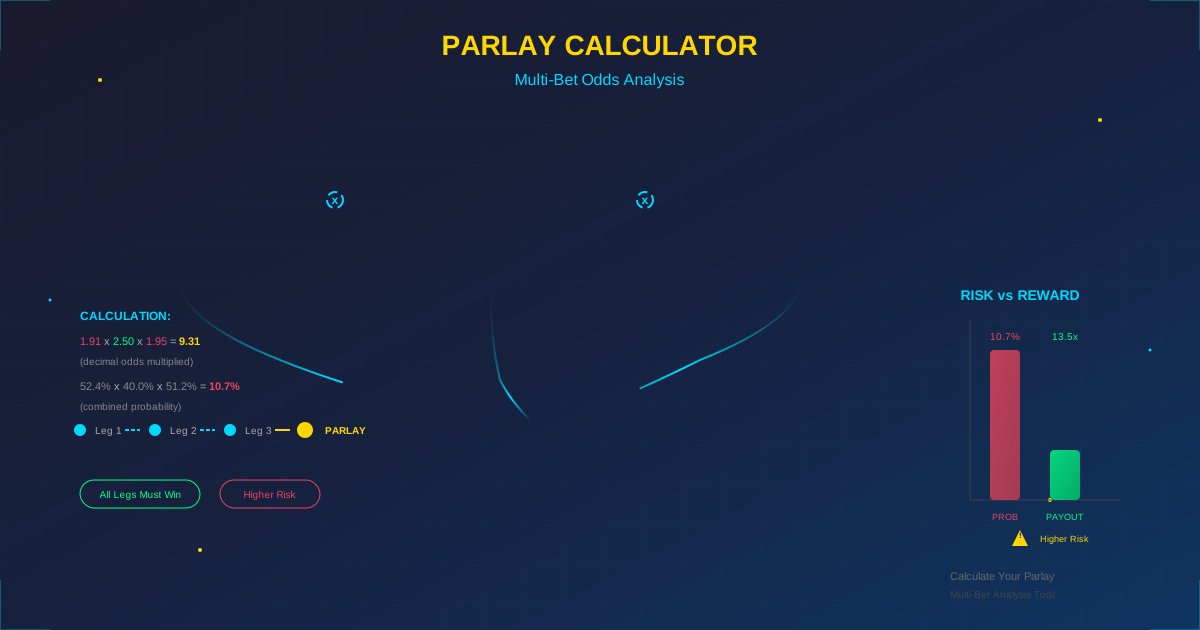
The parlay compounds the vig on each leg, dramatically increasing the house edge. Sportsbooks earn a much larger margin on parlays than straight bets, which is exactly why they promote them so aggressively. Every "Parlay of the Day" promotion exists because parlays are enormously profitable for the house.
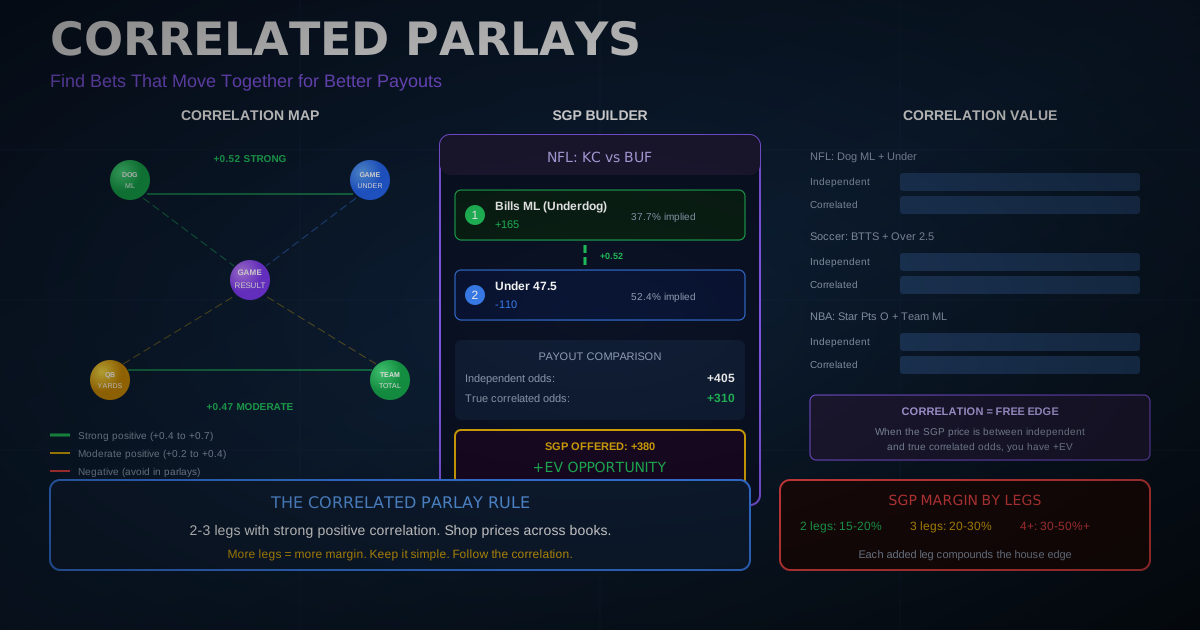
Sharp bettors almost never play parlays. When they do, it is a correlated parlay with a mathematical edge -- not a 10-leg Same Game Parlay built on narratives.
Calculate the true house edge on any line with our Hold/Vig Calculator.
Recency Bias and Sample Size Ignorance
Squares weigh recent events far too heavily:
- "The Rams just scored 42 points, I am taking the over next week" (one game is not a trend)
- "I am 7-3 this month on unders, I have a system" (10 bets prove nothing statistically)
- "That team just beat the #1 team in the league, they must be good" (single game variance)
Sharps know that meaningful trends require hundreds or thousands of data points. A 7-3 run over 10 bets has a p-value that proves nothing. You need 500+ bets at a consistent CLV to have statistical confidence in your edge.
Bankroll Management: The Silent Killer
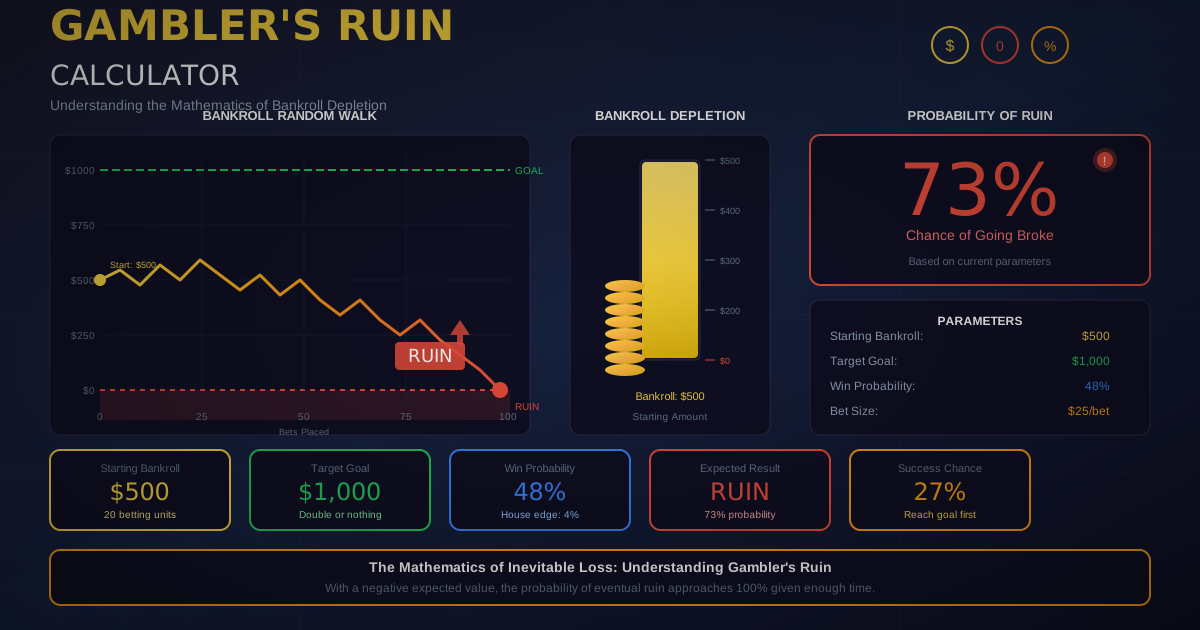
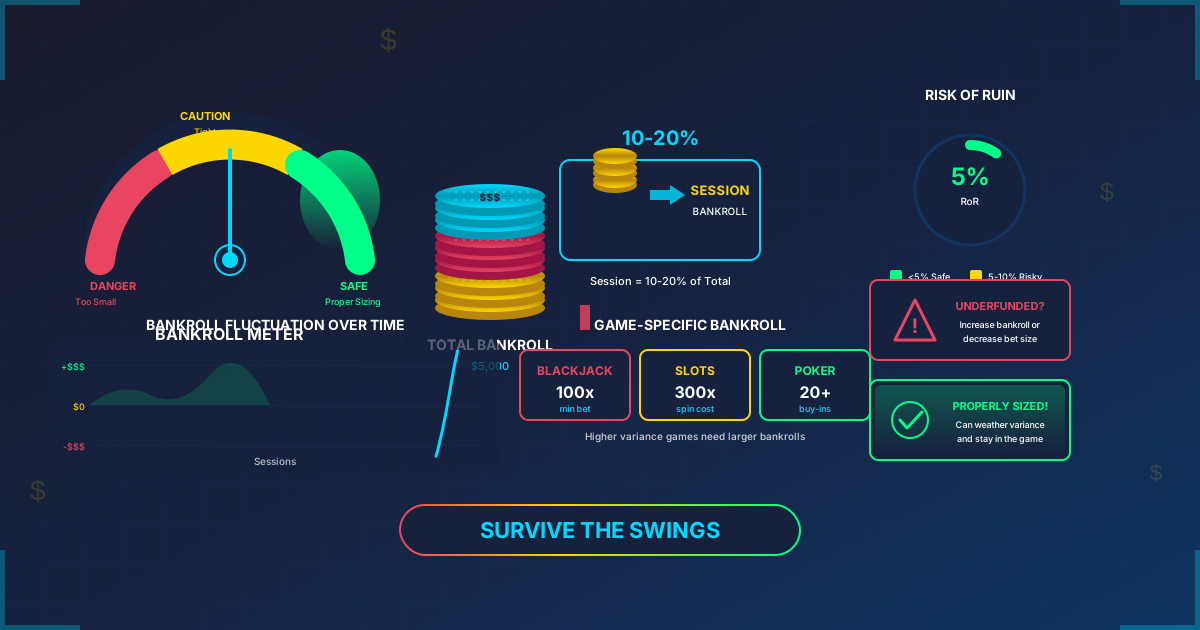
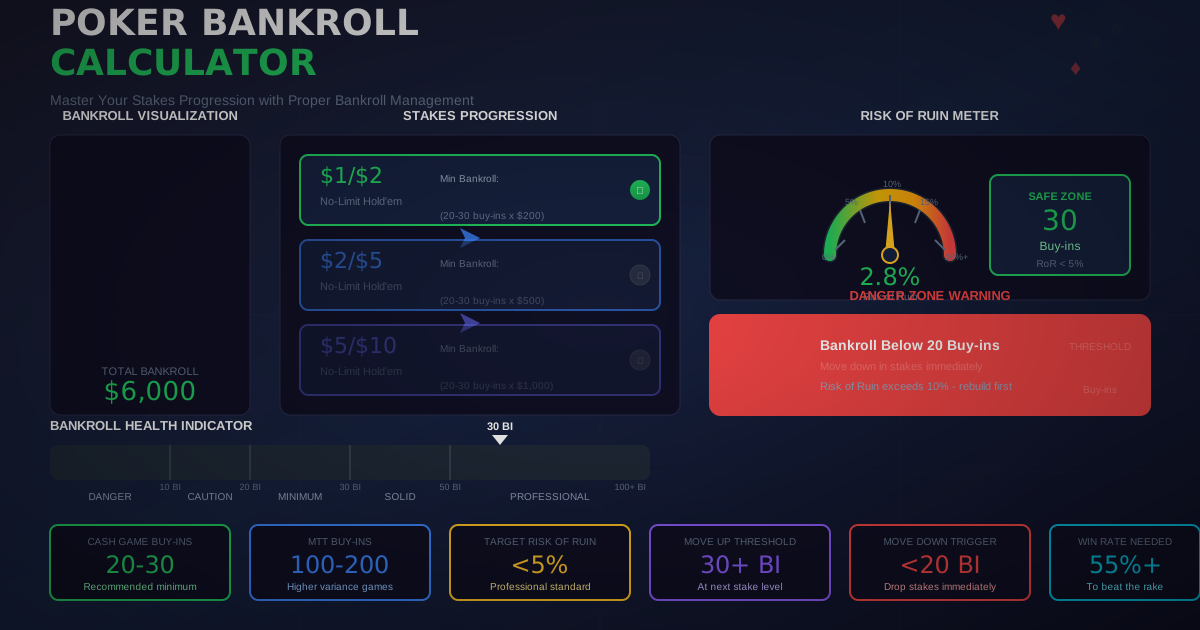
Bankroll management is where most aspiring sharps fail even after fixing their analytical approach. You can find +EV bets all day long and still go broke if you size your bets poorly.
Sharp Bankroll Management
Professional bettors use structured, mathematical approaches to bet sizing:
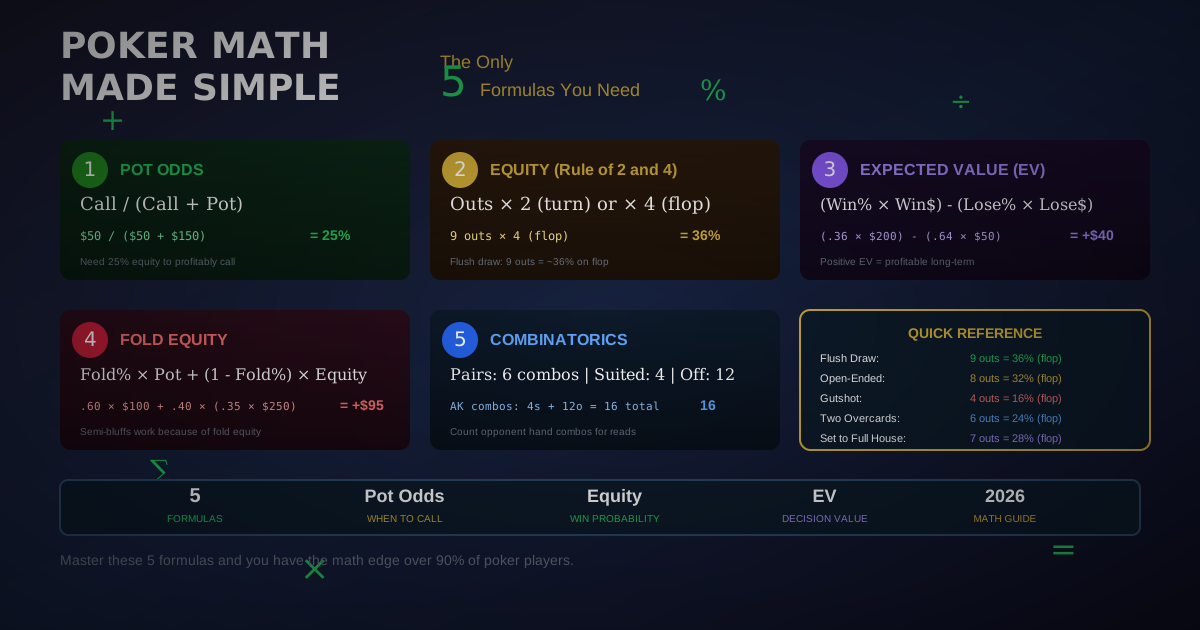
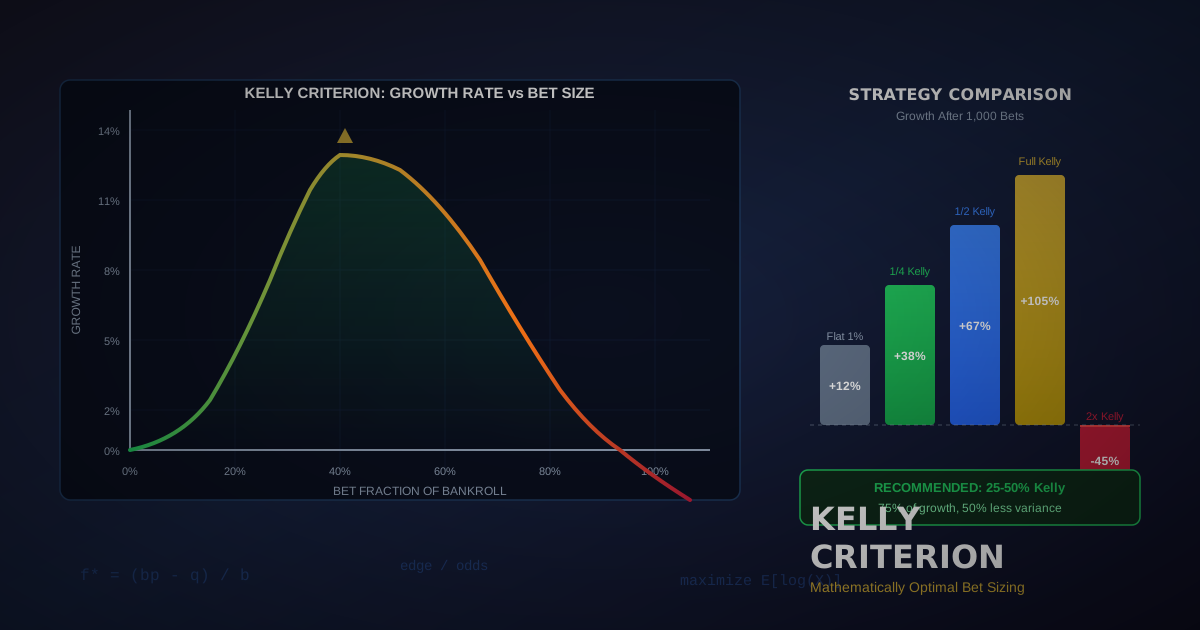
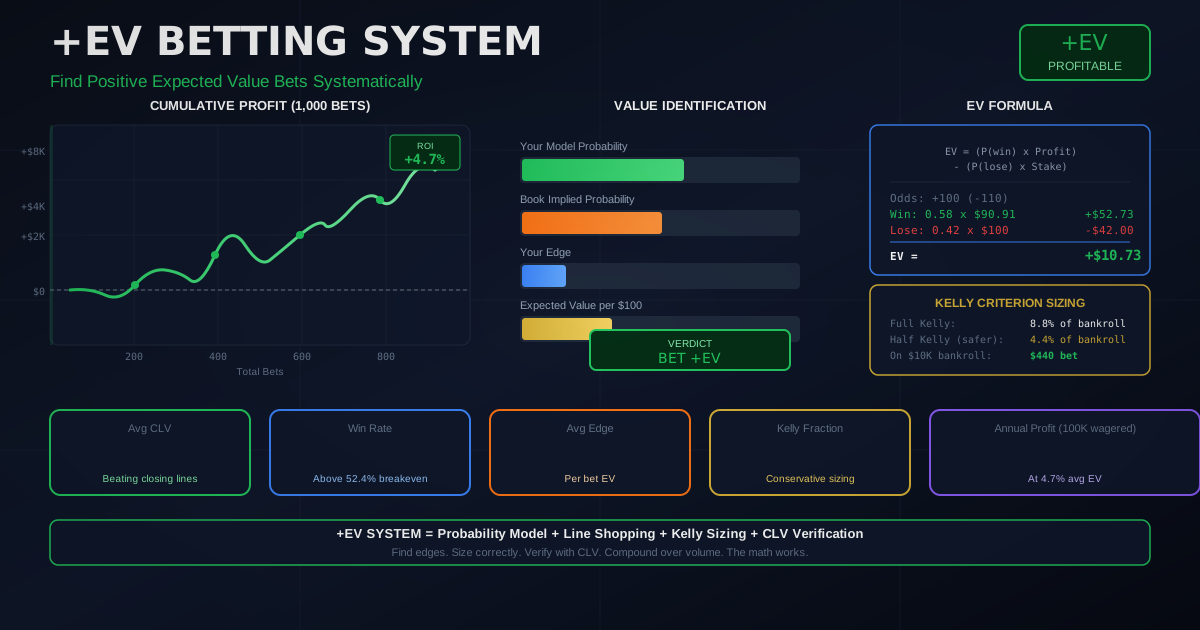
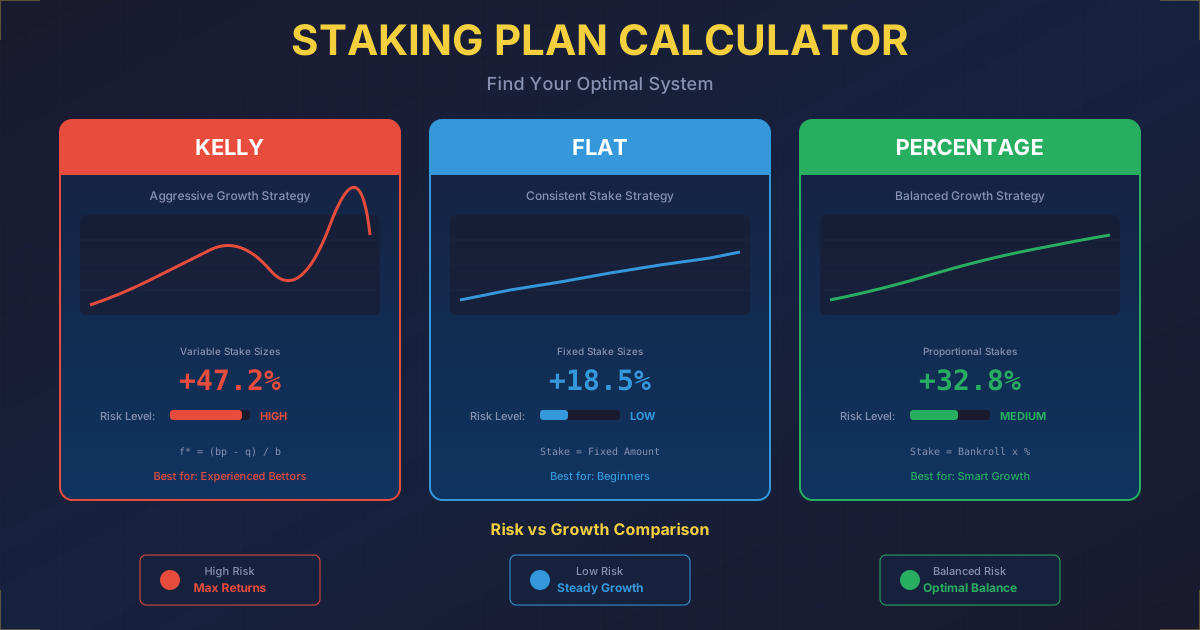
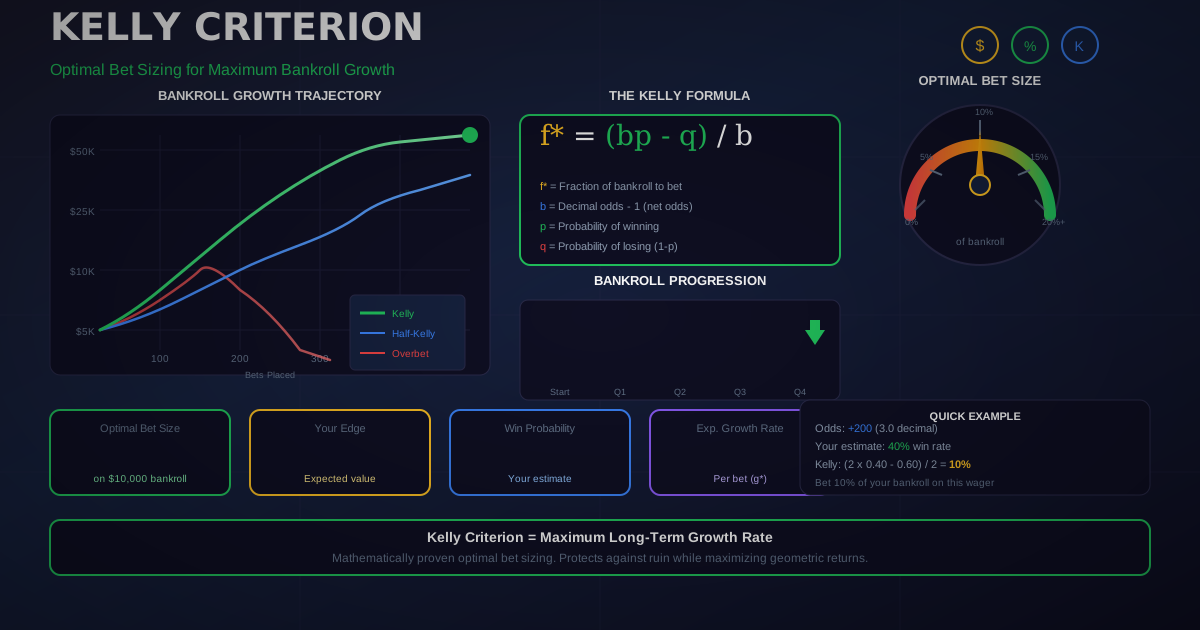
The Kelly Criterion is the gold standard. It calculates the optimal percentage of your bankroll to wager based on your perceived edge and the odds offered.
Kelly Formula: f = (bp - q) / b
Where:
- f = fraction of bankroll to wager
- b = decimal odds - 1
- p = your estimated probability of winning
- q = 1 - p (probability of losing)
Example:
- Your model says a team has a 55% chance to win
- The odds are +110 (decimal 2.10, so b = 1.10)
- f = (1.10 x 0.55 - 0.45) / 1.10
- f = (0.605 - 0.45) / 1.10
- f = 0.155 / 1.10
- f = 0.141 or 14.1% of bankroll
Most sharps use fractional Kelly (typically 25-50% of the full Kelly recommendation) to reduce variance and protect against estimation errors.
| Approach | Full Kelly Says | Sharp Actually Bets | Why |
|---|---|---|---|
| Strong edge (55% at +110) | 14.1% | 3.5-7% (quarter to half Kelly) | Protects against probability estimation errors |
| Moderate edge (53% at -110) | 3.6% | 1-2% (quarter to half Kelly) | Standard sizing for typical sharp edge |
| Small edge (51.5% at -110) | 0.5% | 0.25-0.5% | Minimum sizing, high volume needed |
| No edge identified | 0% (no bet) | 0% (no bet) | Sharps never force action |
Calculate your optimal bet size with our Kelly Criterion Calculator.
Square Bankroll Management
Most recreational bettors have no formal bankroll management at all. Common square patterns include:
- No defined bankroll. Money comes from the general checking account with no separation between betting money and living expenses.
- Bet sizing based on confidence. "I really like this game" means 10-20% of the bankroll. "I kind of like this game" means 3-5%. This guarantees that the bets you are most emotionally attached to (and therefore most likely biased about) carry the largest risk.
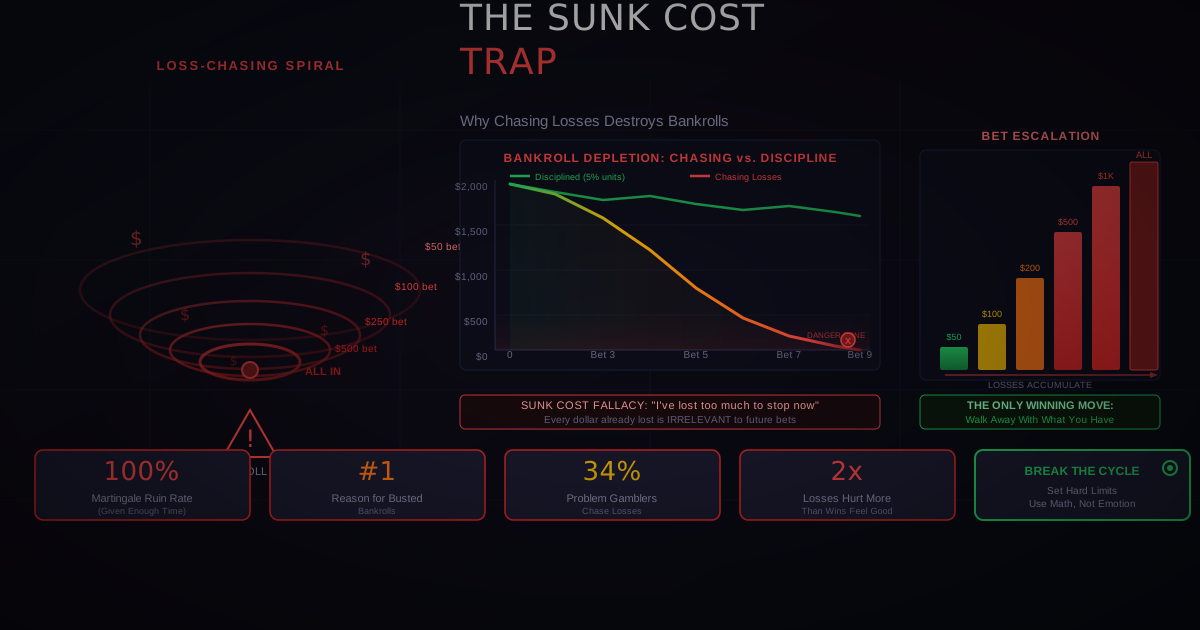
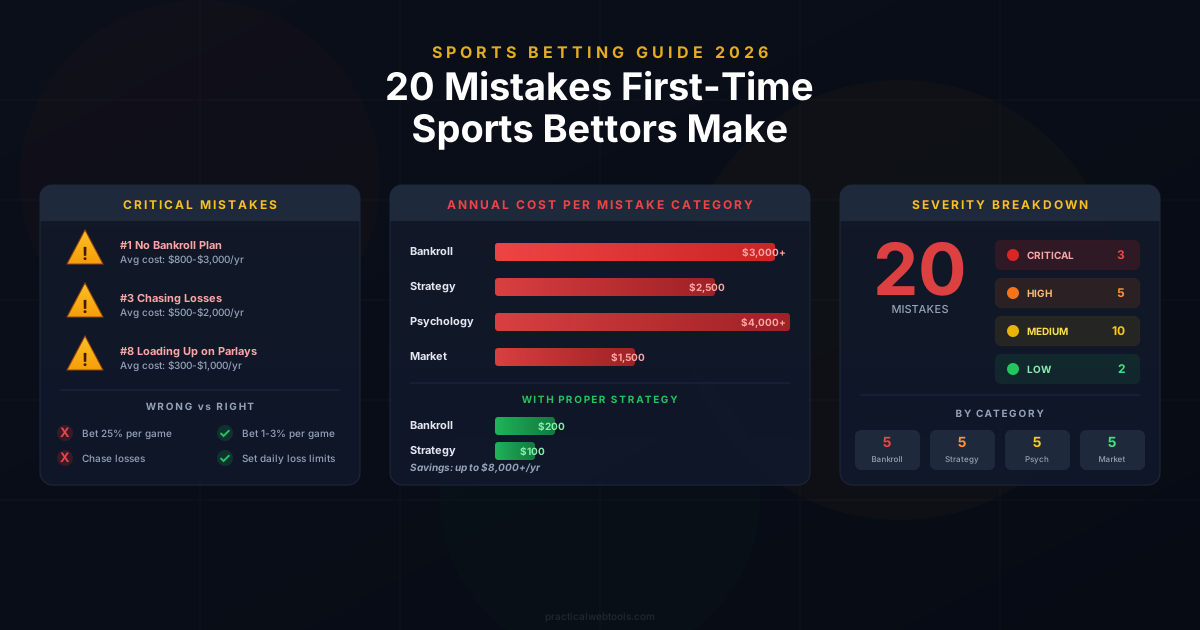
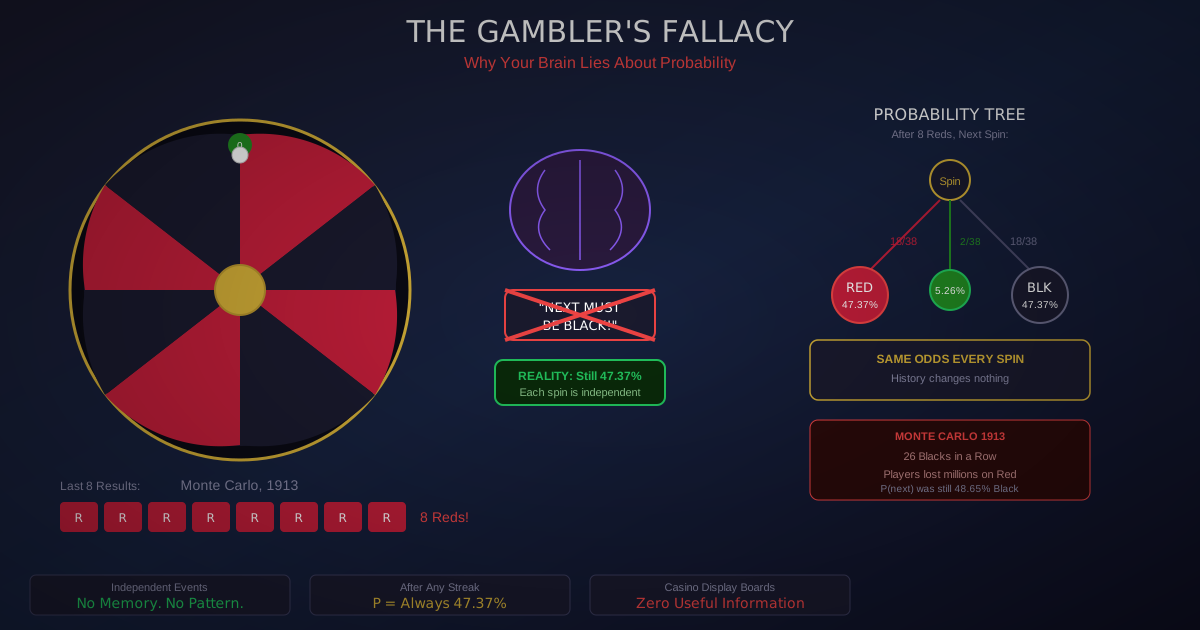
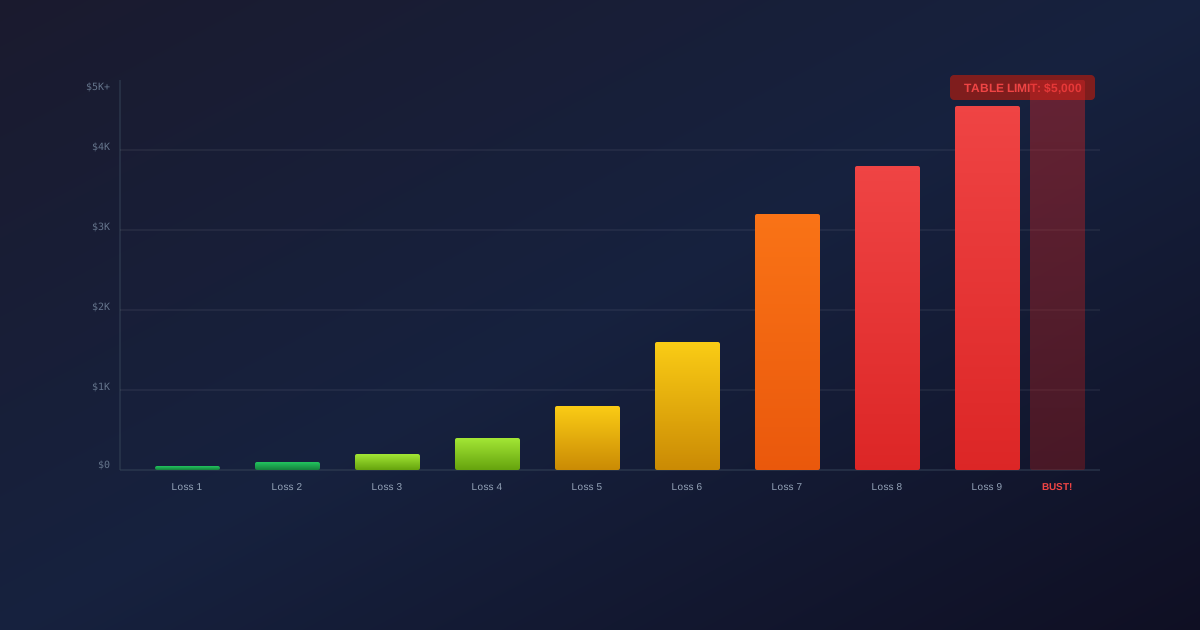
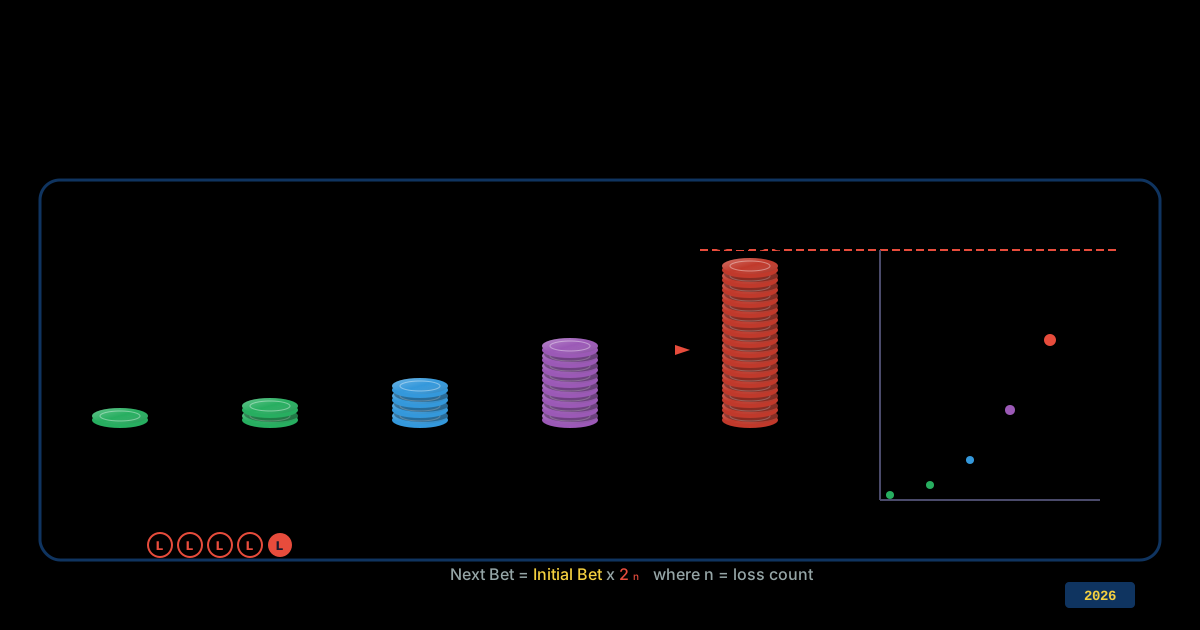
- Chasing losses. After a losing day, squares increase bet sizes to "get back to even." This is the fastest path to going broke.
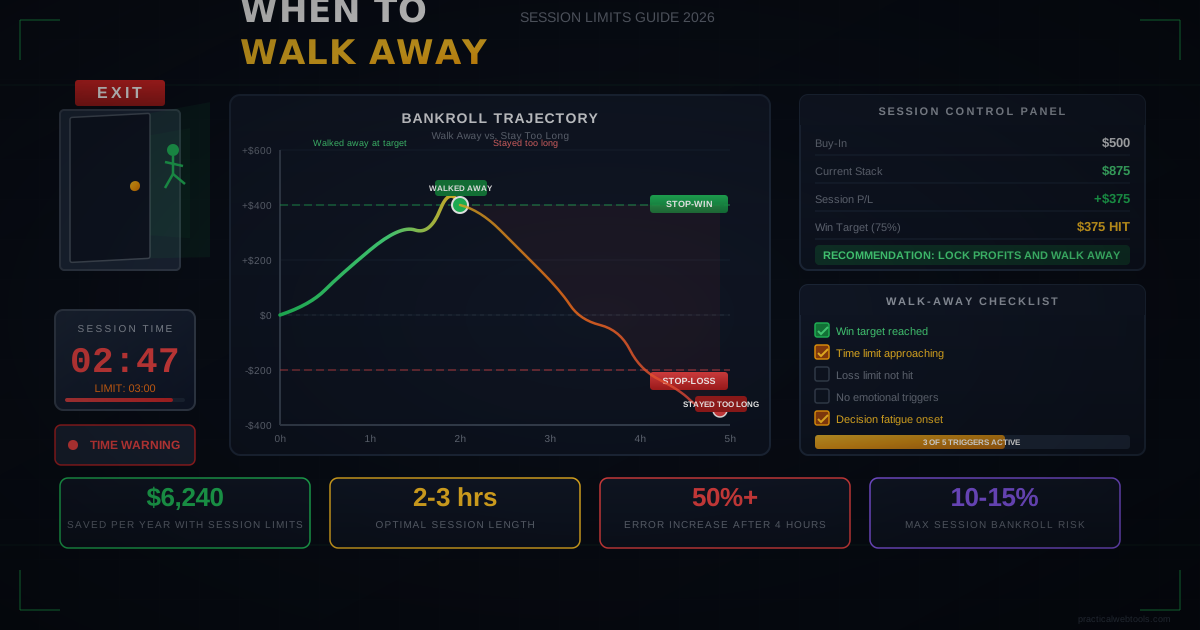
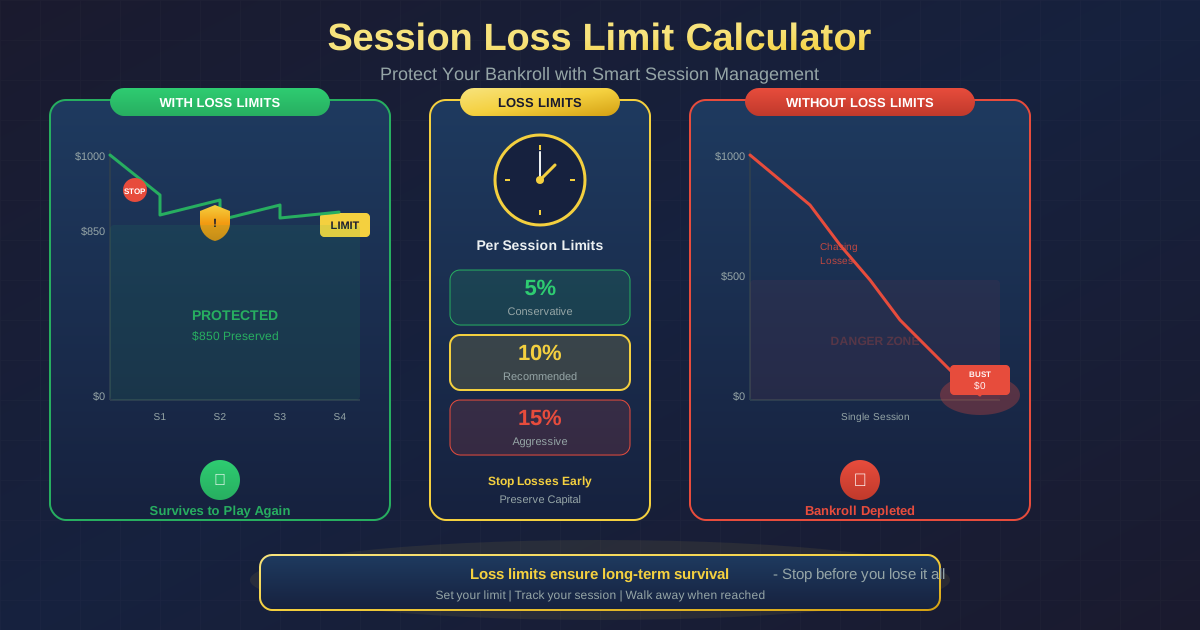
- No stop-loss discipline. Squares do not have a point where they stop betting for the day, week, or season.
Bankroll Management Comparison
| Factor | Sharp Approach | Square Approach |
|---|---|---|
| Bankroll definition | Separate, dedicated fund | Part of general finances |
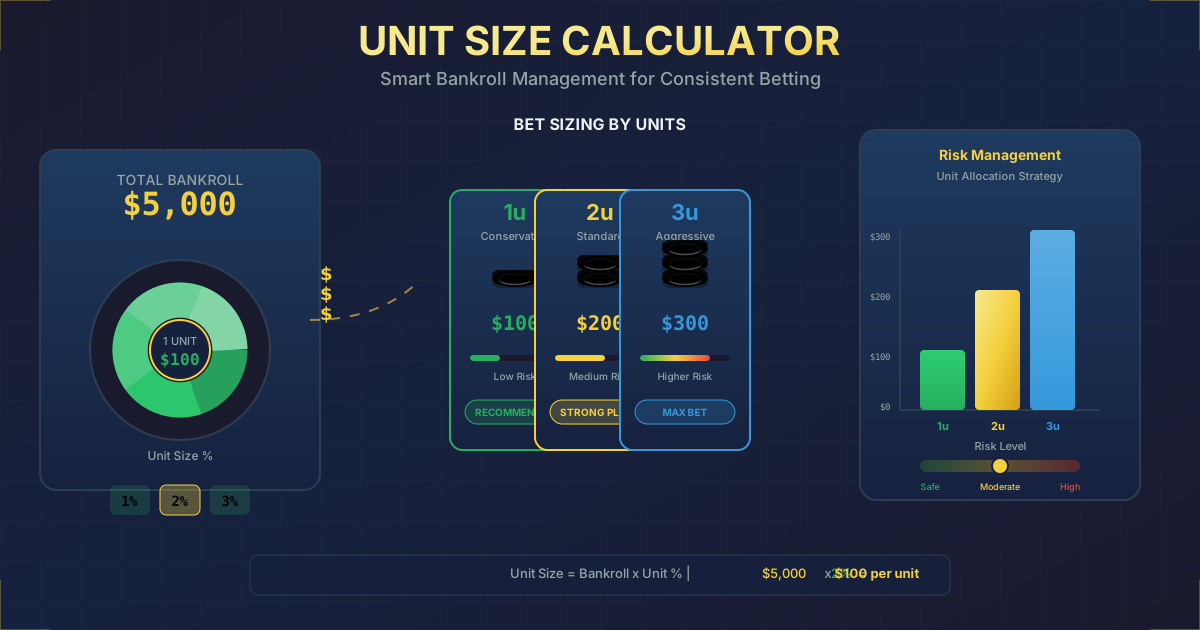
| Unit size | 1-3% of bankroll | 5-25% of bankroll |
| Sizing method | Kelly Criterion (fractional) | Confidence level / gut feeling |
| After a loss | Same unit size, same process | Increase bets to chase losses |
| After a win streak | Same unit size, same process | Increase bets (overconfidence) |
| Season bankroll growth target | 15-40% annually | "Double my money" or no target |
| Risk of ruin | Calculated and minimized (<1%) | Unknown and unmanaged |
Why Sportsbooks Limit Sharp Bettors
One of the clearest proofs that sharps have a genuine edge: sportsbooks actively try to stop them from betting.
How Limiting Works
When a sportsbook identifies a bettor as sharp (typically through algorithms that track CLV, bet timing, and profitability), they respond with:
- Stake reduction. Your maximum bet drops from $5,000 to $50 or even $5.
- Delayed bet acceptance. Your bets get "reviewed" for several minutes, allowing the line to move.
- Account closure. Some books simply close winning accounts entirely.
- Worse lines. You get offered different (worse) odds than other customers.
Why This Matters
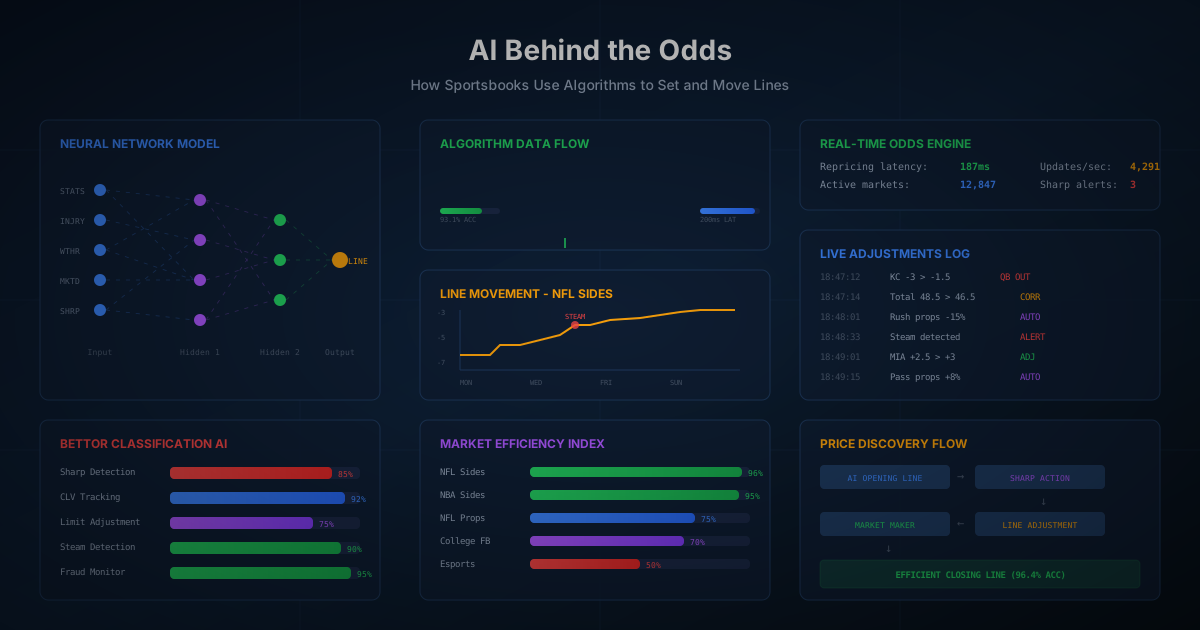
Think about what this means. Sportsbooks are multi-billion-dollar companies with teams of analysts, traders, and algorithms. When a bettor consistently beats their lines, the sportsbook's response is not "let's figure out how they are doing it and improve our lines." It is "prevent this person from betting with us."
This tells you two critical things:
- Edges exist. If markets were perfectly efficient, no bettor would consistently beat the closing line and sportsbooks would not need to limit anyone.
- Sharps are genuinely dangerous to the sportsbook's bottom line. The house is not afraid of squares. It is afraid of sharps.
The Regulatory Landscape (2026)
The practice of limiting winning bettors has drawn increasing scrutiny from regulators. Several states have proposed or enacted legislation requiring sportsbooks to disclose when and why they limit customers. Massachusetts held a high-profile roundtable in 2024 where sportsbooks defended the practice, and New York introduced a bill that would prevent operators from limiting users solely because they are profitable.
For sharp bettors, this means the environment may slowly improve, but for now, maintaining accounts at numerous sportsbooks and betting within each book's tolerance levels remains essential.
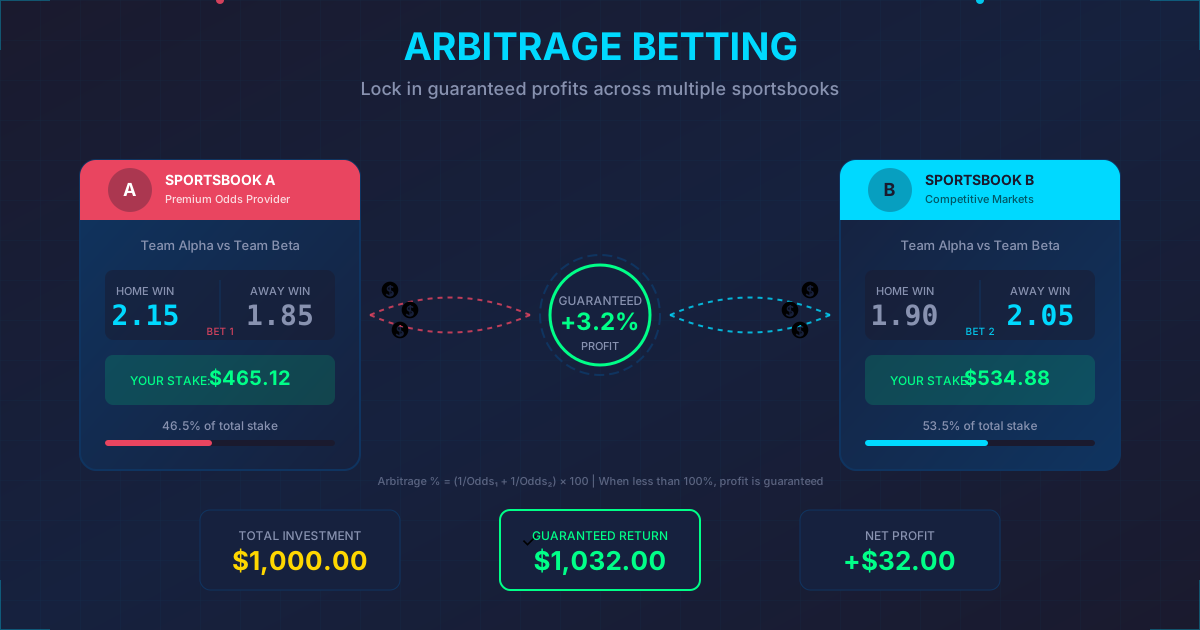
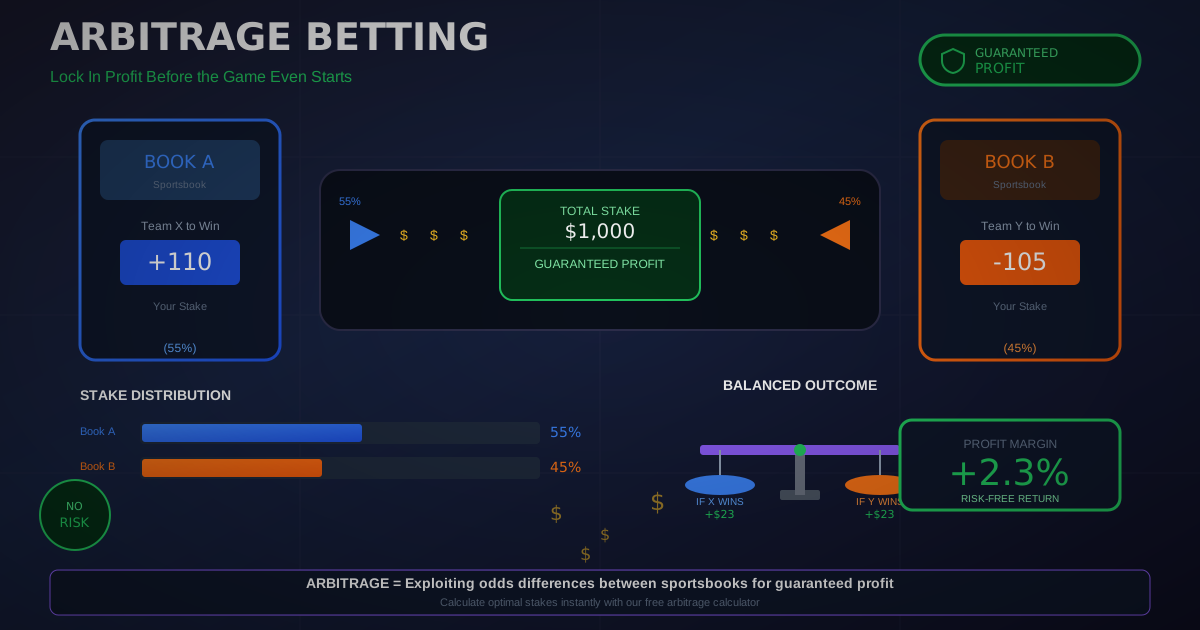
Find risk-free arbitrage opportunities across books with our Arbitrage Calculator.
How to Think More Like a Sharp: A Practical Roadmap
You do not become a sharp overnight. But you can adopt sharp habits incrementally. Here is a step-by-step transition plan.
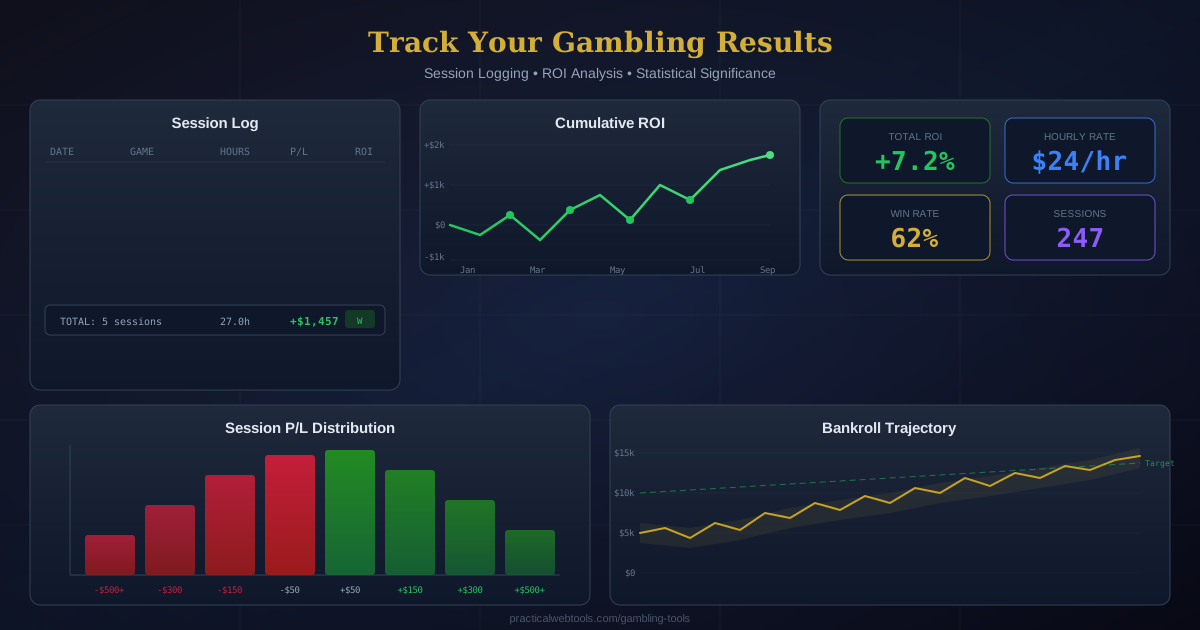
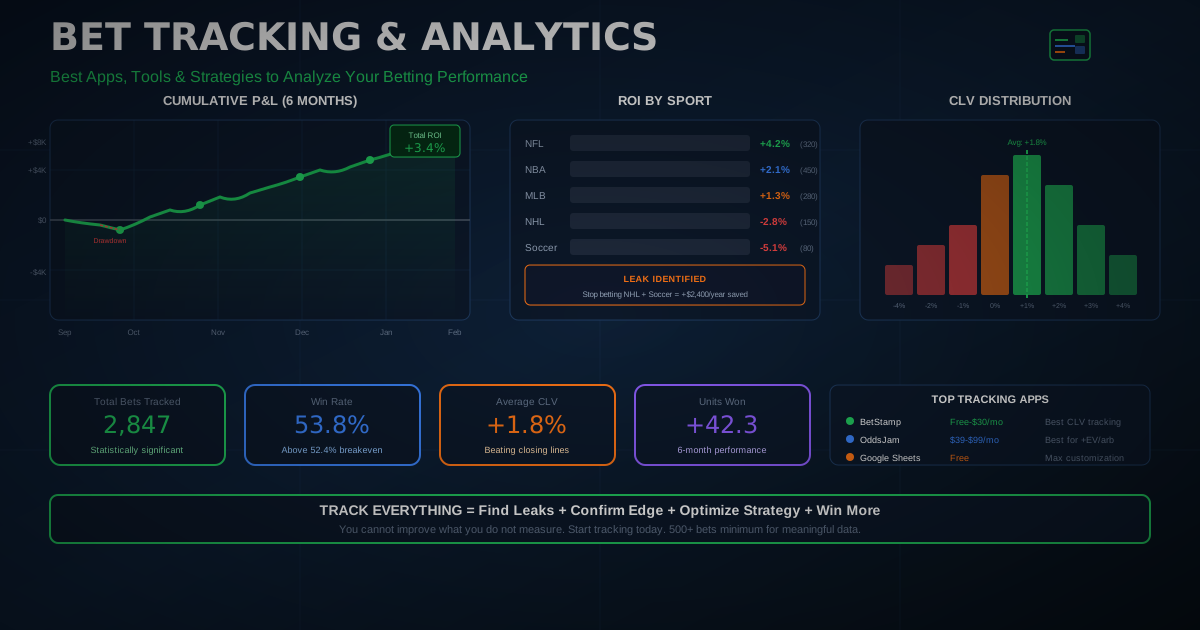
Step 1: Start Tracking Everything
Before you change how you bet, start recording every bet you make:
- Date and time of bet placement
- Sport, teams/players, market (spread, total, moneyline)
- Odds when you placed the bet
- Odds at closing (game time)
- Stake amount
- Result (win/loss/push)
- Profit or loss
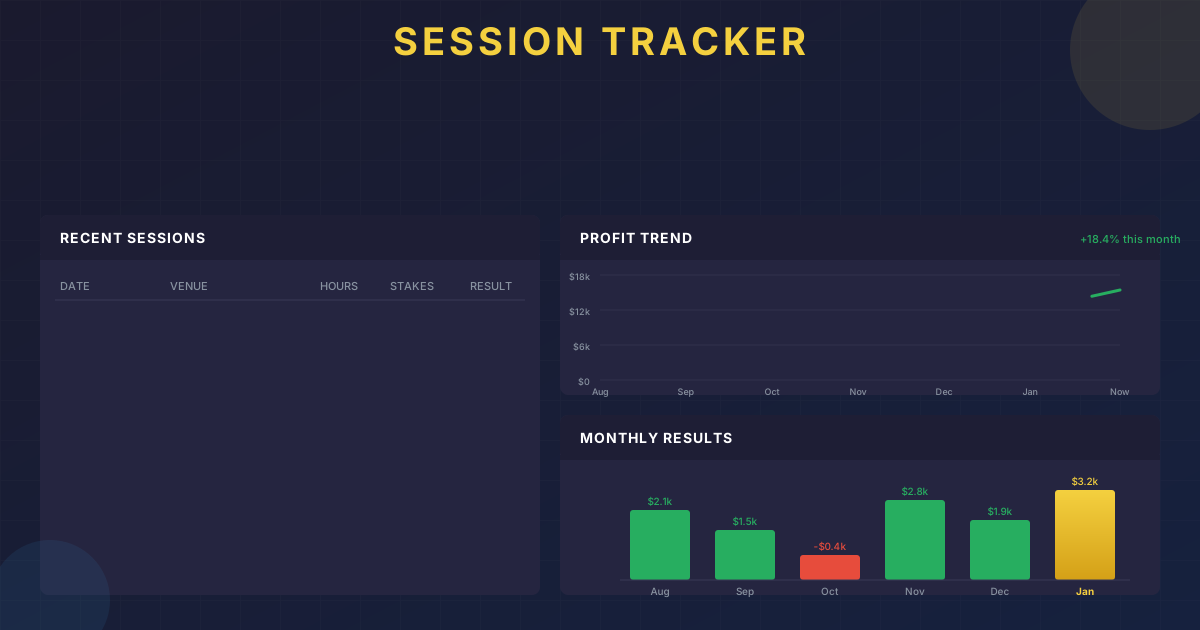
After 100+ bets, you will have data to analyze. Are you beating the closing line? Are you profitable? On which sports or bet types? This data is the foundation of improvement.
Step 2: Eliminate the Worst Square Habits
Based on your tracking data, identify and eliminate:
- Parlay betting. Switch to straight bets only for at least 3 months. The reduction in vig alone will improve your results.
- Favorite bias. Track your record on favorites vs. underdogs. If you are betting 80%+ favorites, you are likely overpaying.
- Emotional bets. If you bet on your favorite team, stop. You cannot objectively evaluate a team you are emotionally invested in.
Step 3: Learn to Think in Probabilities
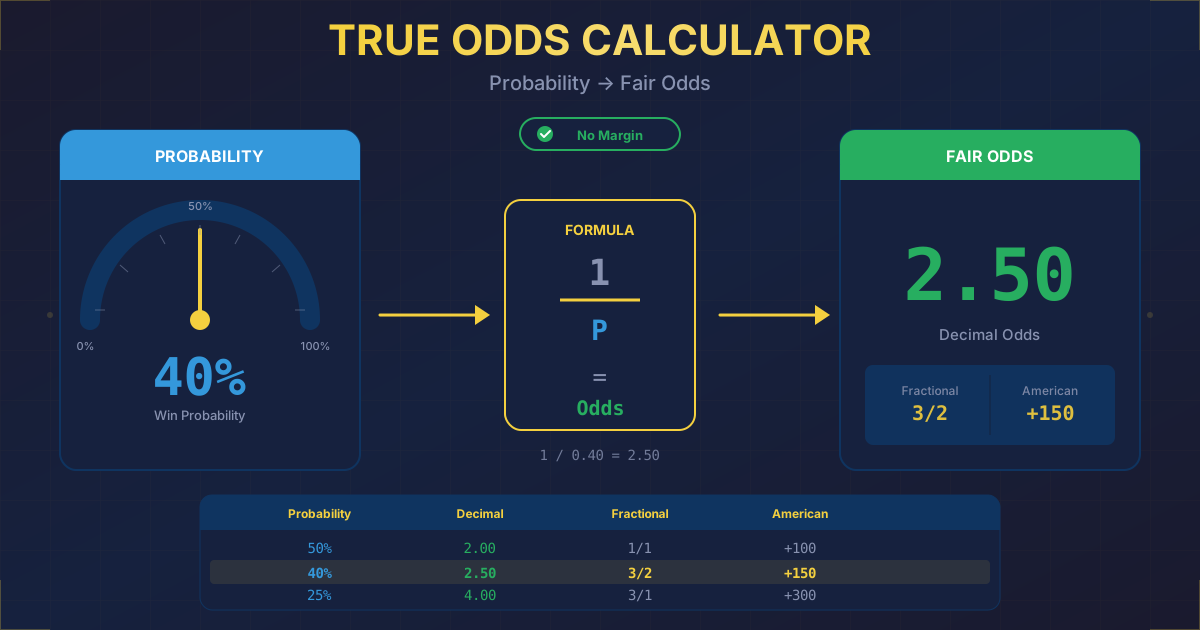
Every bet has an implied probability (the probability the odds suggest) and a true probability (what you believe the actual chance is). Your job is to estimate true probability as accurately as possible.
Practice exercise: Before looking at any betting lines for this weekend's games, write down your estimated probability for each game's spread, total, and moneyline. Then compare your estimates to the market. Where do you differ? Why? This exercise forces you to develop your own assessments rather than anchoring to the market's line.
Convert any odds format to implied probability with our Implied Probability Calculator.
Step 4: Open Multiple Sportsbook Accounts
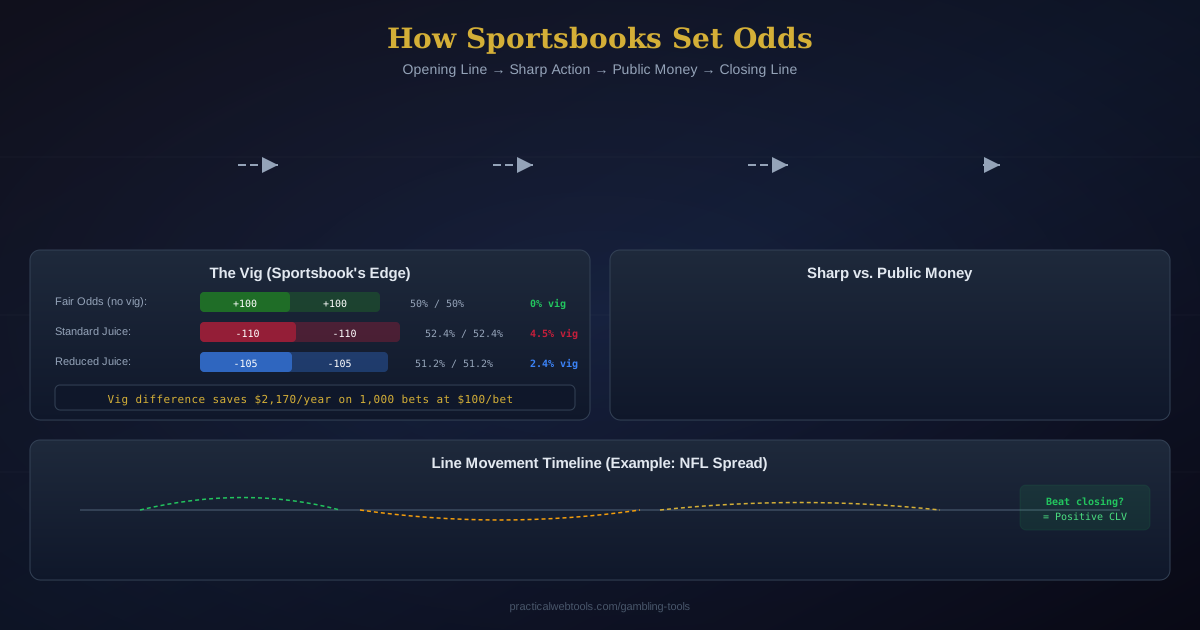
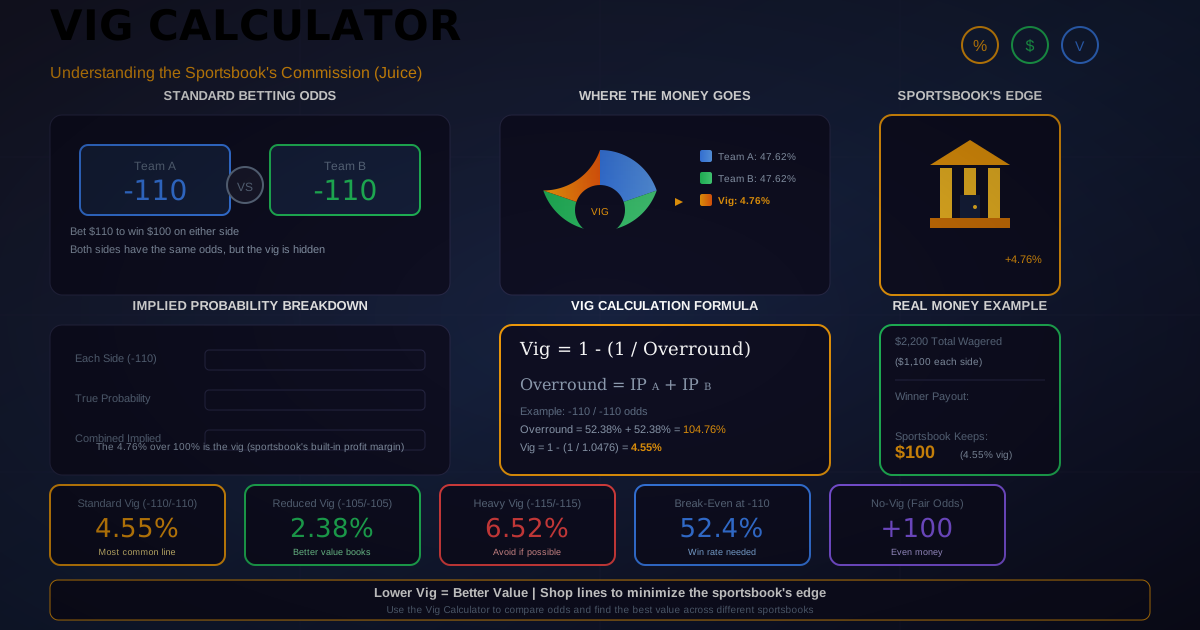
This is non-negotiable for anyone serious about improving. You need at least 5-6 sportsbook accounts to line-shop effectively. The difference between -110 and -105 on the same bet is the difference between a 4.55% house edge and a 2.38% house edge. That gap, compounded over hundreds of bets, is enormous.
Step 5: Develop or Adopt a Model
You do not need to build a model from scratch (though many sharps do). Options include:
- Build your own. Use historical data, efficiency metrics, and regression analysis. This is the most work but gives you the most unique edge.
- Use market-derived tools. Track line movements, steam moves, and reverse line movement. Let the sharp money guide you.
- Adopt public models. Several reputable analysts share model outputs. Use them as a starting point, not a complete strategy.
- Hybrid approach. Use publicly available power ratings and adjust them based on your own research into specific factors (injuries, rest, matchup specifics).
Step 6: Implement Proper Bankroll Management
Set a dedicated bankroll, define your unit size (1-3% of bankroll), and use the Kelly Criterion or a flat-betting approach. Never deviate from your system based on emotion.
Real-World Transition Example:
| Month | Action | Expected Impact |
|---|---|---|
| Month 1 | Start tracking all bets, calculate CLV | Baseline data collection |
| Month 2 | Eliminate parlays and team-bias bets | Reduce vig by 5-10% |
| Month 3 | Open 4 new sportsbook accounts, start line shopping | Improve average odds by 1-3% |
| Month 4 | Begin developing/using a simple model | Start identifying +EV spots |
| Month 5 | Implement Kelly Criterion bankroll management | Optimize bet sizing |
| Month 6 | Review 500+ bet sample for CLV and ROI | Evaluate edge and adjust |
Common Square Behaviors to Eliminate
Here is a checklist of the most costly square habits, ranked from most to least damaging.
1. Chasing Losses
What it looks like: You lose $300 on the early NFL games. Instead of accepting the loss and staying disciplined, you increase your bets on the late games to "get back to even."
Why it destroys you: Chasing losses means you are making larger bets when you are most emotional and least rational. You are compounding a bad day with worse decision-making.
The sharp alternative: Same unit size, every single bet, regardless of what happened earlier in the day, week, or month. Sharps know that each bet is independent.
2. Playing 10+ Leg Parlays
What it looks like: You build a 12-leg Same Game Parlay because the potential $10 to $5,000 payout is exciting.
Why it destroys you: The hold on a 12-leg parlay can exceed 40%. You are essentially paying a 40%+ tax on every dollar wagered. No amount of handicapping overcomes that margin.
The sharp alternative: Straight bets only. If you must combine bets, stick to 2-leg correlated parlays where you have identified a mathematical edge.
3. Betting Without Line Shopping
What it looks like: You have one sportsbook app on your phone and you bet whatever line they give you.
Why it destroys you: You are voluntarily paying more for the same product. Over a season of 500 bets, not line-shopping can cost 2-5% of your total handle.
The sharp alternative: Accounts at 8-15 sportsbooks. Check every line before placing every bet. Take the best price available.
4. Overvaluing Recent Performance
What it looks like: A team just scored 45 points, so you slam the over in their next game. A quarterback threw 4 interceptions, so you fade him next week.
Why it destroys you: One-game samples are statistical noise. The market already adjusts for recent performance. You are not finding value; you are overreacting to randomness.
The sharp alternative: Use season-long and multi-season data. Weight recent performance appropriately (it matters, but not as much as squares think). Let your model incorporate recency without overweighting it.
5. Betting Your Favorite Team
What it looks like: You bet the Cowboys every week because you have been a fan since childhood.
Why it destroys you: Emotional attachment creates bias. You overestimate your team's chances and underestimate opponents. Studies consistently show that bettors perform worse when wagering on teams they support.
The sharp alternative: Never bet on (or against) teams you are emotionally invested in. If you cannot evaluate a game objectively, skip it.
6. Ignoring Vig and Hold
What it looks like: You do not know what vig means, or you do not factor it into your betting decisions.
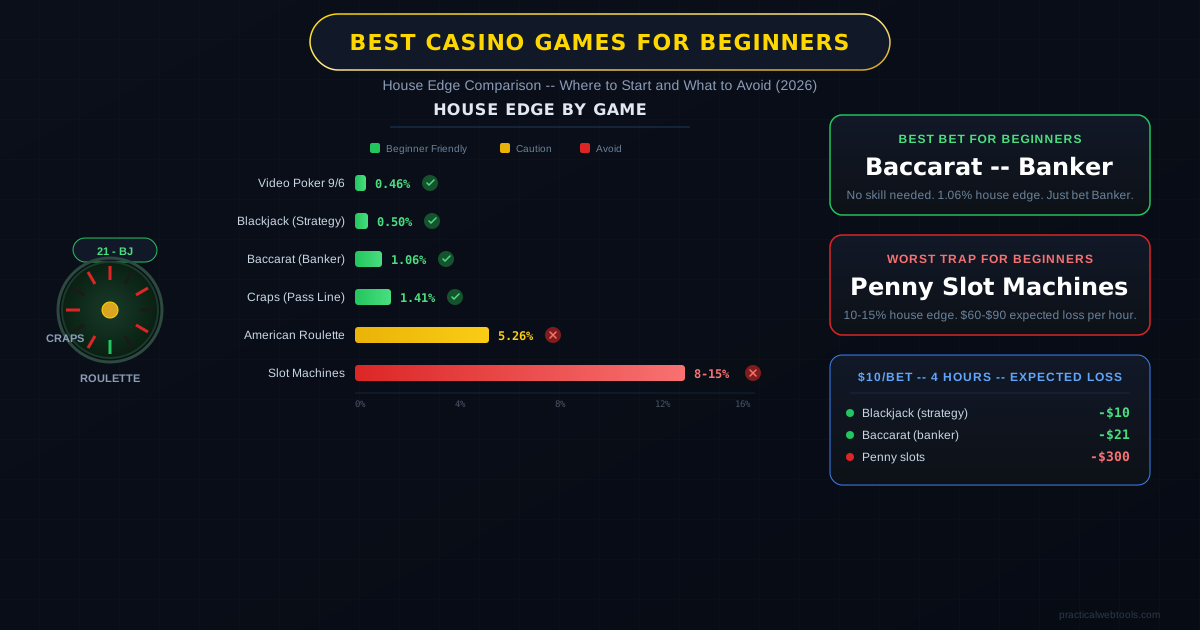
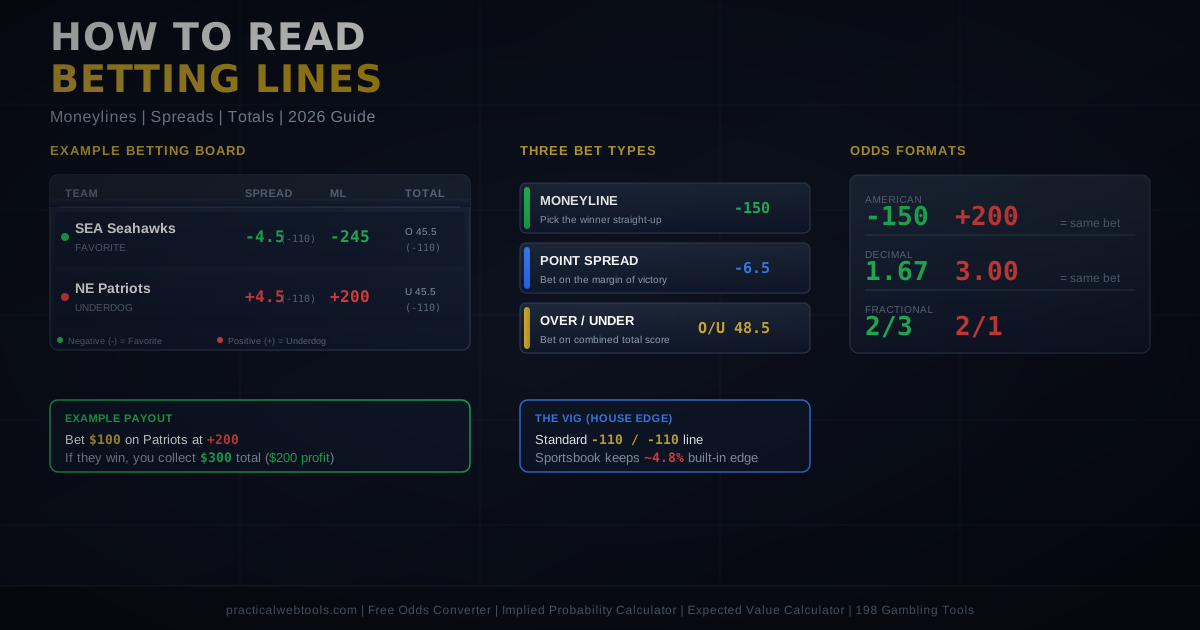
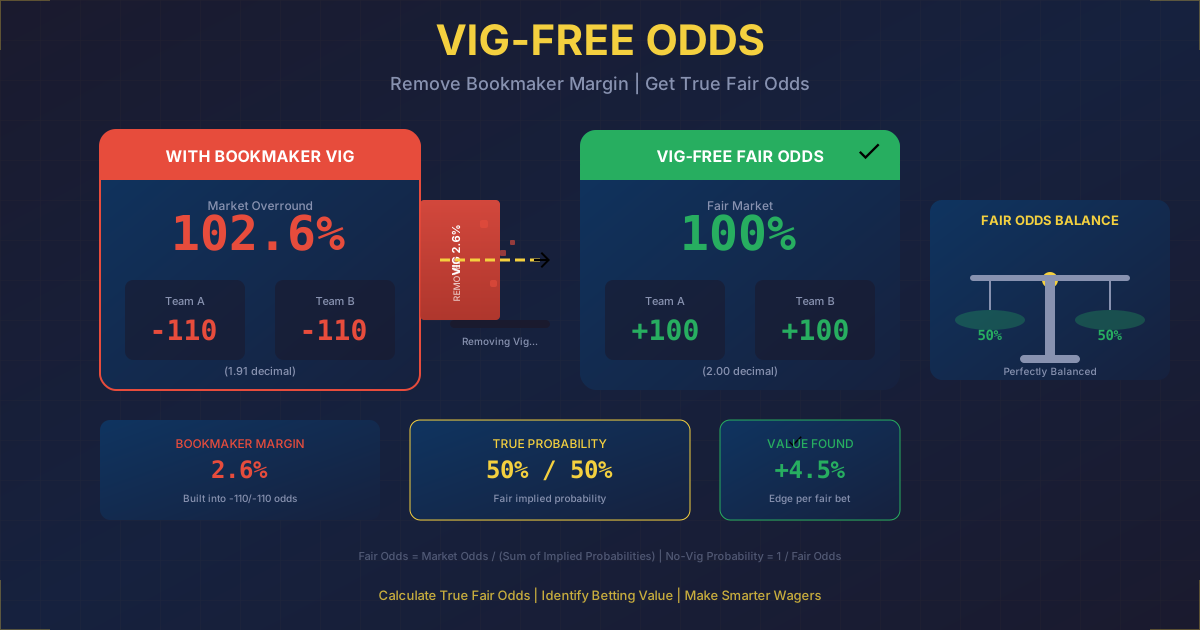
Why it destroys you: The vig is the sportsbook's built-in edge. At standard -110/-110 odds, you need to win 52.4% just to break even. If you are not accounting for this, you are underestimating how good you need to be.
The sharp alternative: Calculate the vig on every market before betting. Look for reduced-vig lines (-105 or better). Understand that every bet starts as a losing proposition, and you need to overcome the vig before you can profit.
Calculate the exact hold on any line with our Hold/Vig Calculator.
Tools Sharps Use Daily
Professional bettors rely on a suite of analytical tools to maintain their edge. Here are the tools that separate sharp workflows from square guesswork.
Expected Value Calculator
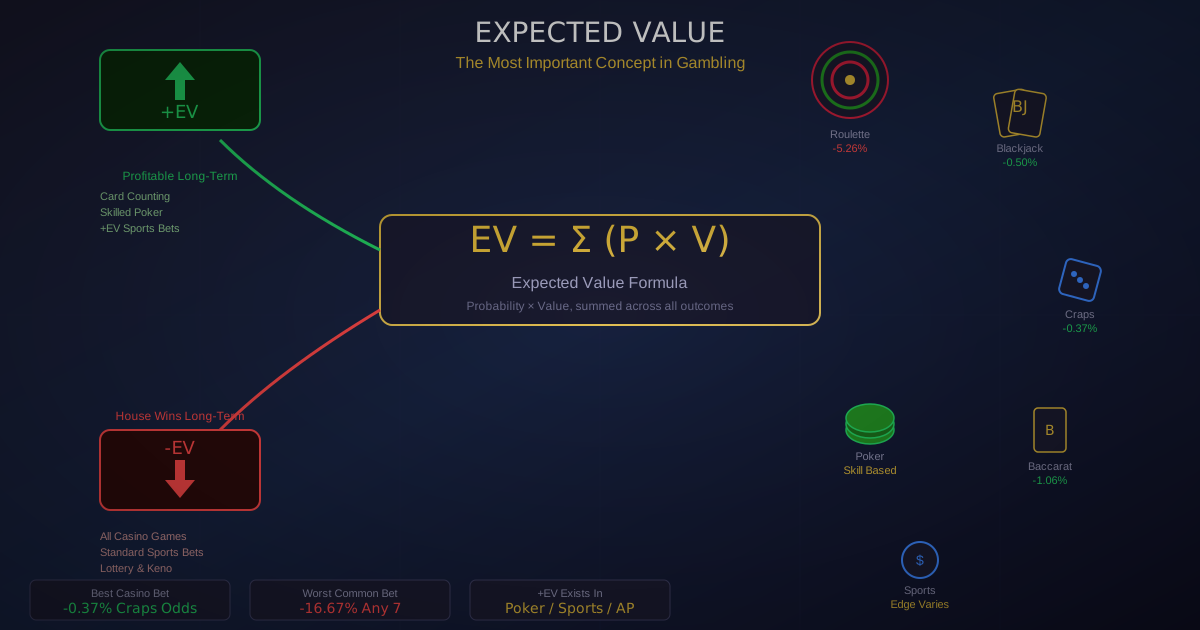
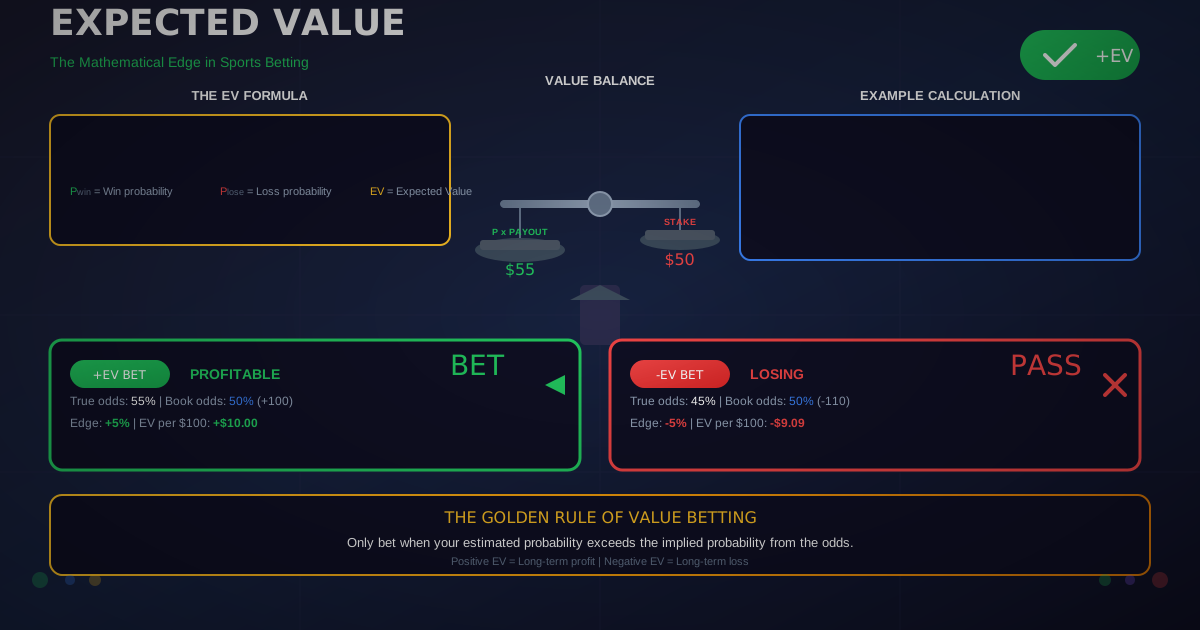
The foundation of sharp betting. Every bet should be evaluated for expected value before it is placed. If a bet is -EV, sharps pass -- no matter how confident they feel about the outcome.
Expected Value Calculator -- Calculate the EV of any bet based on your probability estimate and the odds offered.
CLV Tracker
The most important long-term metric for any bettor. Tracking CLV over hundreds of bets tells you whether you are genuinely finding value or just experiencing variance.
CLV Tracker -- Input your bet odds and closing odds to track your CLV over time.
Kelly Criterion Calculator
Proper bet sizing prevents ruin and maximizes long-term growth. The Kelly Criterion tells you exactly how much to wager based on your edge.
Kelly Criterion Calculator -- Calculate optimal bet size based on your probability estimate and bankroll.
Odds Converter
Sharps need to convert between American, decimal, and fractional odds instantly when line-shopping across sportsbooks that use different formats.
Odds Converter -- Convert between all major odds formats.
Implied Probability Calculator
Converting odds to implied probability is the first step in finding value. If the implied probability is lower than your estimated true probability, you have a potential edge.
Implied Probability Calculator -- Convert any odds to their implied probability.
Hold/Vig Calculator
Understanding the sportsbook's margin on every market helps sharps identify the most and least efficient markets to target.
Hold/Vig Calculator -- Calculate the hold percentage on any two-way or three-way market.
Arbitrage Calculator
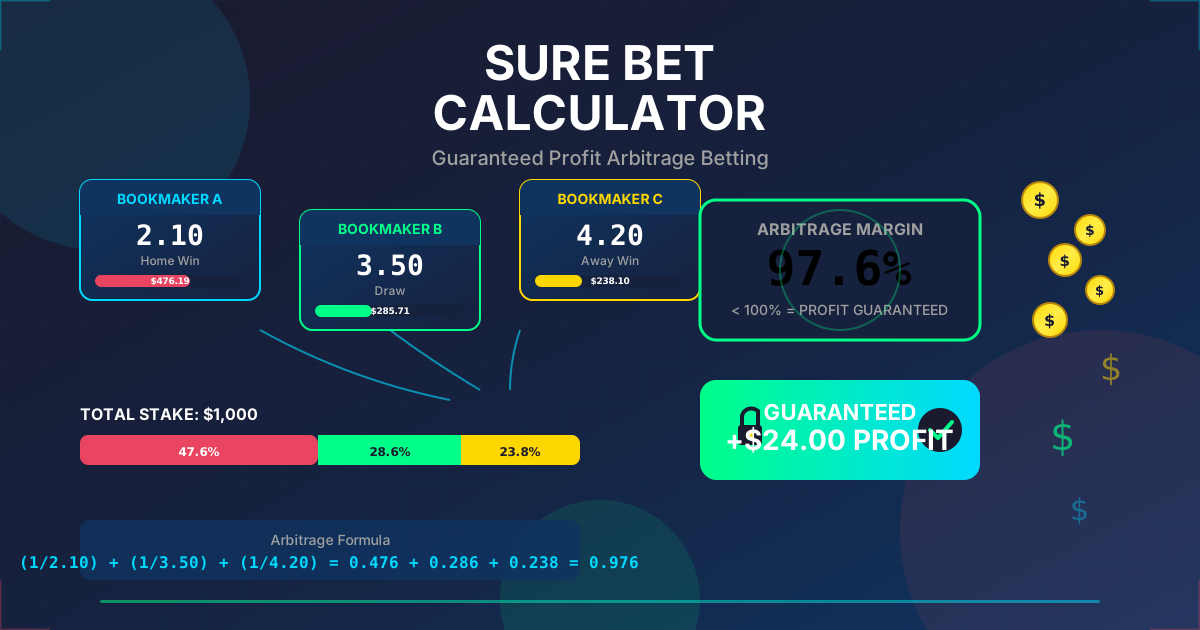
When odds across sportsbooks create a guaranteed profit opportunity, sharps capitalize immediately. Arbitrage situations are rare and short-lived, but they represent risk-free profit.
Arbitrage Calculator -- Identify and calculate arbitrage opportunities across sportsbooks.
Hedge Calculator
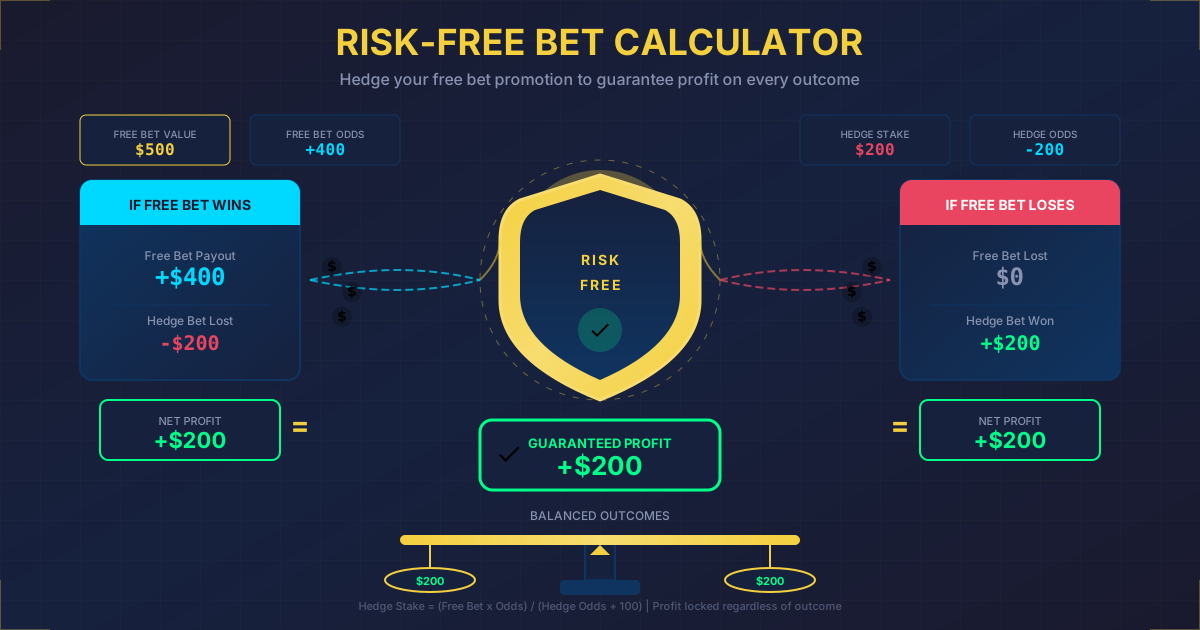
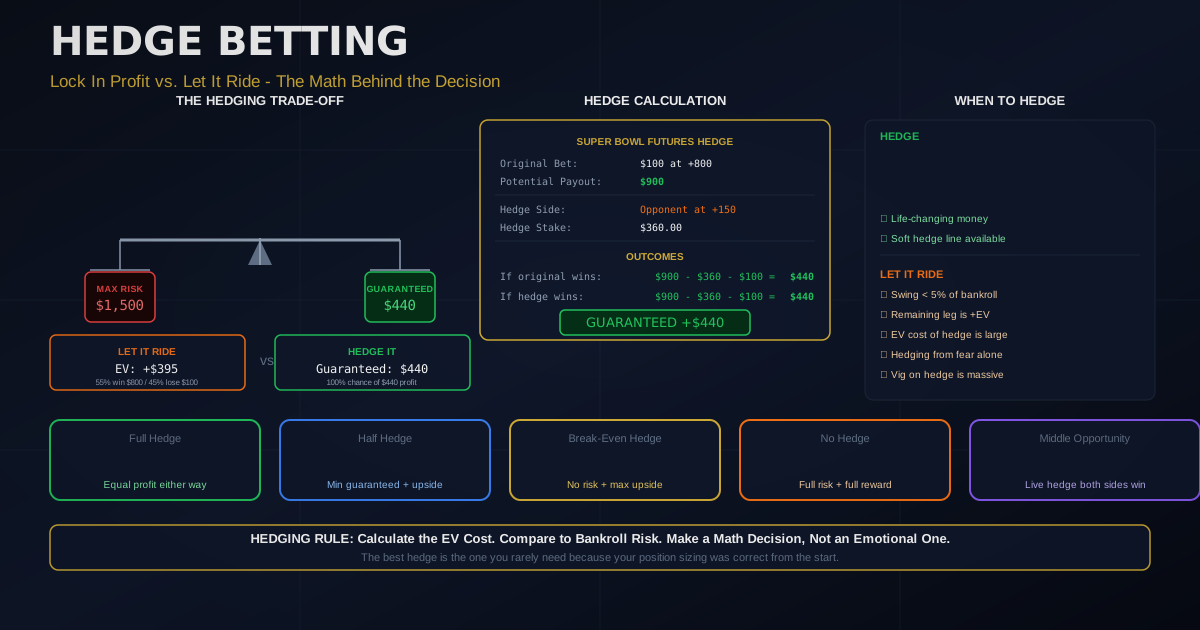
Sometimes sharps need to lock in profit or reduce risk on an existing position. The hedge calculator determines exactly how much to bet on the opposite side.
Hedge Calculator -- Calculate the optimal hedge bet to guarantee profit or minimize loss.
Sharp vs. Square: Five Side-by-Side Betting Scenarios
To make these differences concrete, here are five real-world scenarios showing how a sharp and a square approach the exact same bet.
Scenario 1: NFL Sunday -- Chiefs vs. Ravens
Market: Chiefs -3 (-110) / Ravens +3 (-110) | Total 51.5
The Square ($2,000 Bankroll):
- "The Chiefs are the best team in football. Mahomes is unstoppable. I am taking Chiefs -3 for $400." (20% of bankroll on one bet)
- Did not check other sportsbooks
- Did not calculate implied probability or EV
- Result: Chiefs win 27-24. Bet loses (did not cover -3).
- Loss: -$400
The Sharp ($20,000 Bankroll):
- Model projects Chiefs -1.8. Market offers -3. That is 1.2 points of negative value on the Chiefs.
- Checks 8 sportsbooks. Finds Ravens +3.5 (-108) at Book C.
- Calculates EV: With a 53.2% estimated probability of Ravens +3.5 covering, and -108 odds, the EV is +$12.60 per $100 wagered.
- Kelly Criterion suggests 2.1% of bankroll. Bets $420 on Ravens +3.5 (-108).
- Result: Chiefs win 27-24. Ravens +3.5 covers.
- Profit: +$388.89
Same game. Opposite sides. The sharp won by following a process. The square lost by following a narrative.
Scenario 2: NBA Tuesday -- Chasing Losses
Situation: Both bettors lost $300 on Monday night.
The Square ($1,700 remaining bankroll):
- "I need to get that $300 back. Let me find a lock tonight."
- Bets $600 on Lakers -5 (-110) because "LeBron always shows up in big spots."
- Result: Lakers win 112-110. Bet loses.
- Loss: -$600. Now down $900 total in two days.
- Next move: Considers betting $1,000 on Wednesday to recover.
The Sharp ($19,580 remaining bankroll):
- Reviews Tuesday slate against their model. Finds two +EV spots.
- Bets $300 (1.5% of bankroll) on Pacers +7 (-105) and $250 (1.3%) on Nuggets/Suns Under 228.5 (-108).
- Result: Pacers +7 covers. Under misses.
- Net: +$285.71 - $250 = +$35.71
- Tuesday loss recovered partially. Process unchanged. Unit sizes unchanged.
Scenario 3: MLB Summer -- The Parlay Temptation
The Square ($1,500 Bankroll):
- Builds a 5-leg parlay: Yankees ML + Dodgers ML + Braves ML + Over 8.5 (Mets/Phillies) + Astros -1.5
- Bet: $50 to win $1,487
- Implied hold on this parlay: ~35%
- Result: First four legs hit. Astros lose by 1. Parlay loses.
- Loss: -$50 (but lost what would have been $1,487 on the last leg)
- This happens over and over. The square remembers the "almost" hits, not the math.
The Sharp ($20,000 Bankroll):
- Identified one MLB +EV spot: Reds ML +145 (model says 44% true probability vs. 40.8% implied)
- Bet: $300 (1.5% of bankroll) on Reds +145
- Result: Reds win.
- Profit: +$435
- No parlay. One bet. Clear edge. Proper sizing.
Scenario 4: College Football Saturday -- Public vs. Sharp Side
Game: #5 Ohio State vs. Unranked Purdue | Line: Ohio State -21 (-110)
The Square:
- "Ohio State is a top-5 team playing at home against nobody. Easy cover. $250 on Ohio State -21."
- Reasoning: Brand-name team, big ranking gap, national TV game.
The Sharp:
- "78% of public money is on Ohio State -21. But the line has not moved from -21 to -22 or higher. In fact, some books have it at -20.5. Reverse line movement suggests sharp money is on Purdue."
- Model has the game at Ohio State -17.5. Four points of value on Purdue.
- Bet: $400 on Purdue +21 (-105) at the best available line.
- Result: Ohio State wins 35-17. Purdue +21 covers by 3.
- The sharp profits. The square loses. The public was on the wrong side, as usual.
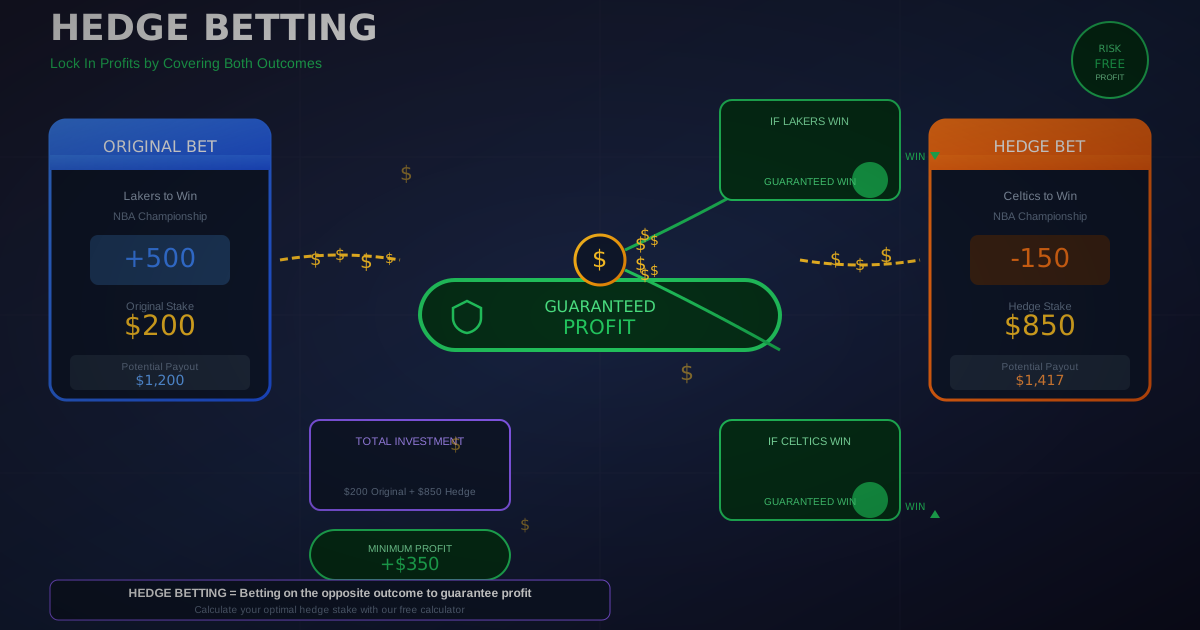
Scenario 5: Hedging a Futures Bet
Situation: Both bettors placed a $100 futures bet on the Bengals to win the Super Bowl at +2500 before the season. The Bengals are now in the Super Bowl.
The Square:
- "I cannot hedge. If the Bengals win, I will make $2,500! I believe in my team!"
- Result if Bengals lose: -$100 on the futures bet. No hedge profit.
- Result if Bengals win: +$2,500.
The Sharp:
- The opposing team (49ers) is -140 on the moneyline for the Super Bowl.
- Uses the hedge calculator to determine the optimal hedge.
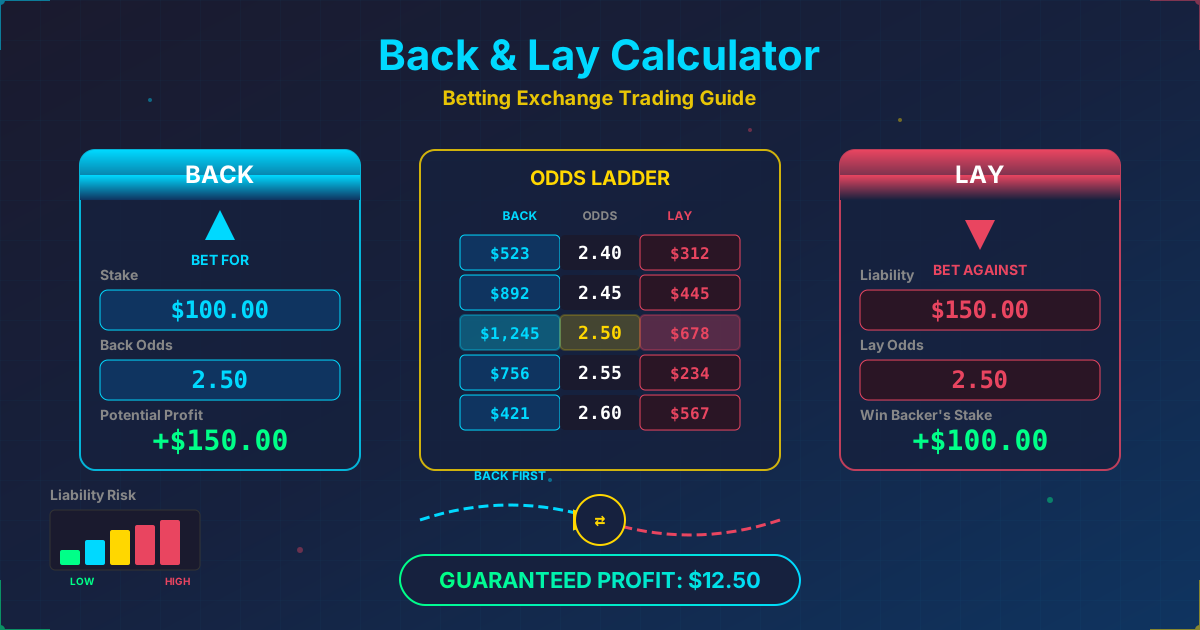
- Bets $1,200 on 49ers ML (-140) to guarantee profit either way.
- If Bengals win: +$2,500 (futures) - $1,200 (hedge) = +$1,300
- If 49ers win: -$100 (futures) + $857.14 (hedge payout) = +$757.14
- Guaranteed profit of at least $757 regardless of outcome.
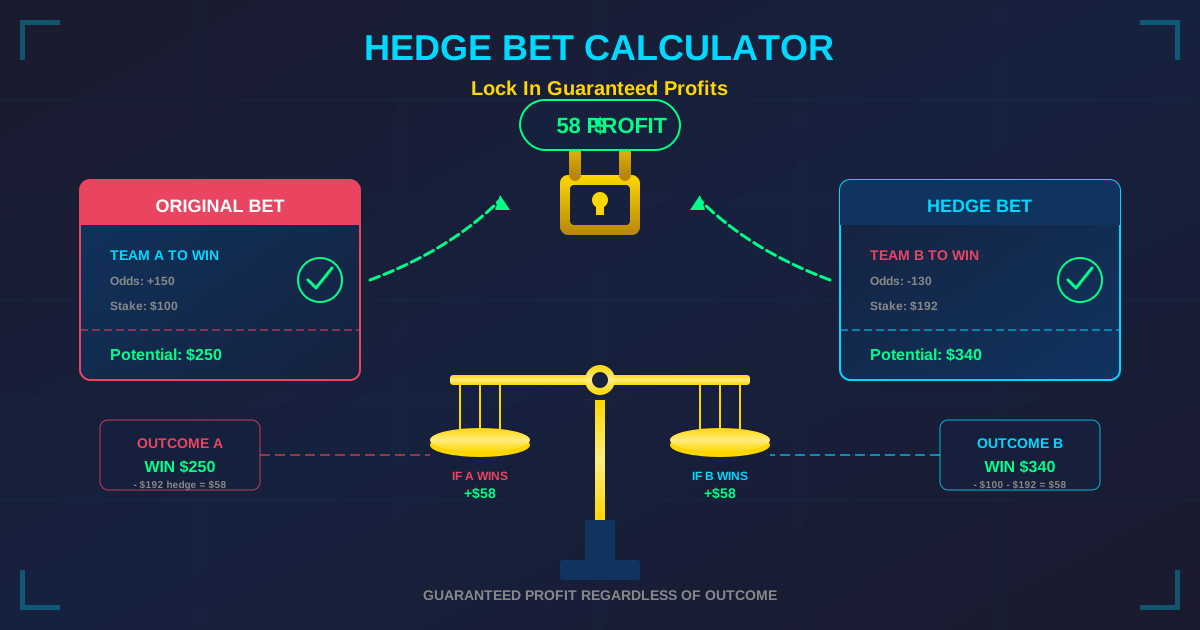
Lock in guaranteed profits with our Hedge Calculator.
Frequently Asked Questions
What percentage of sports bettors actually make money long-term? Research consistently shows that only 2-3% of sports bettors are profitable over the long term. Some estimates suggest up to 5% may show a profit over a single year, but the number who sustain profitability across multiple years is closer to 2-3%. The primary reason is the built-in vigorish (vig) that sportsbooks charge, which requires bettors to win at least 52.4% of standard -110 bets just to break even.
What win rate do professional sports bettors actually achieve? Professional sports bettors typically win 53-57% of their bets against the spread at standard -110 odds. This sounds modest, but a 55% win rate on -110 odds produces roughly a 5% ROI. Over 2,000 bets at $500 per bet, that is $50,000 in profit. The myth that sharps win 65% or 70% of their bets is exactly that -- a myth. Consistent 55% is elite.
Is Closing Line Value (CLV) really the best predictor of betting success? Yes. CLV is widely regarded as the strongest predictor of long-term sports betting profitability. Because closing lines incorporate all available information -- including sharp money, injuries, and market corrections -- they represent the most efficient expression of true probability. A bettor who consistently beats the closing line is demonstrating genuine skill in finding value. Research shows that only 50 bets of consistent CLV may be enough to demonstrate statistical significance, while proving profit through results alone can require thousands of bets.
Can a square bettor become a sharp bettor? Absolutely, but it requires a fundamental mindset shift and significant commitment. The transition from square to sharp is not about learning a secret or getting better picks. It is about adopting a process-oriented approach: tracking every bet, calculating expected value, line-shopping across multiple sportsbooks, implementing bankroll management, and measuring yourself by CLV rather than short-term results. Most successful sharps spent months or years developing their approach before becoming consistently profitable.
Why do sportsbooks limit winning bettors instead of improving their lines? Sportsbooks limit sharps because it is more profitable to restrict winning bettors than to create perfectly efficient lines. If a sportsbook could make perfectly efficient lines, they would not need recreational bettors at all -- but they would also have very thin margins. Sportsbooks prefer lines that attract balanced action from recreational bettors (who provide the revenue) while limiting sharps who exploit inefficiencies. It is a business model decision, not a failure of their pricing ability.
What is the single most important habit to develop for becoming a sharper bettor? Tracking your bets and calculating CLV on every single wager. Without data, you cannot improve. Most bettors have no idea whether they are actually profitable, what their CLV looks like, or which bet types and sports are their strengths and weaknesses. Once you have 200-500 tracked bets with CLV data, you can make informed decisions about your strategy. Everything else -- models, bankroll management, line shopping -- builds on this foundation.
How much money do you need to be a sharp bettor? There is no minimum bankroll to think like a sharp. You can apply every principle in this guide with a $500 bankroll, a $5,000 bankroll, or a $500,000 bankroll. The percentages remain the same: 1-3% per bet, Kelly Criterion sizing, value-based selection. However, if you are trying to generate meaningful income from sports betting, most professionals suggest a minimum working bankroll of $10,000-$25,000 and a plan to place 500+ bets per year at a 2-5% ROI.
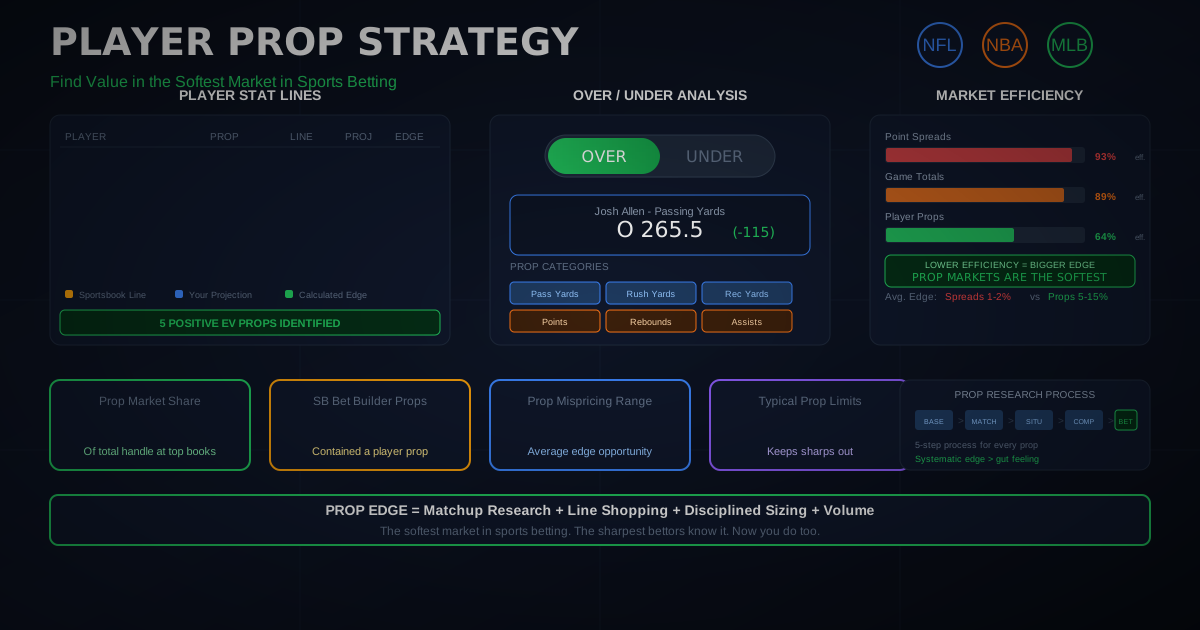
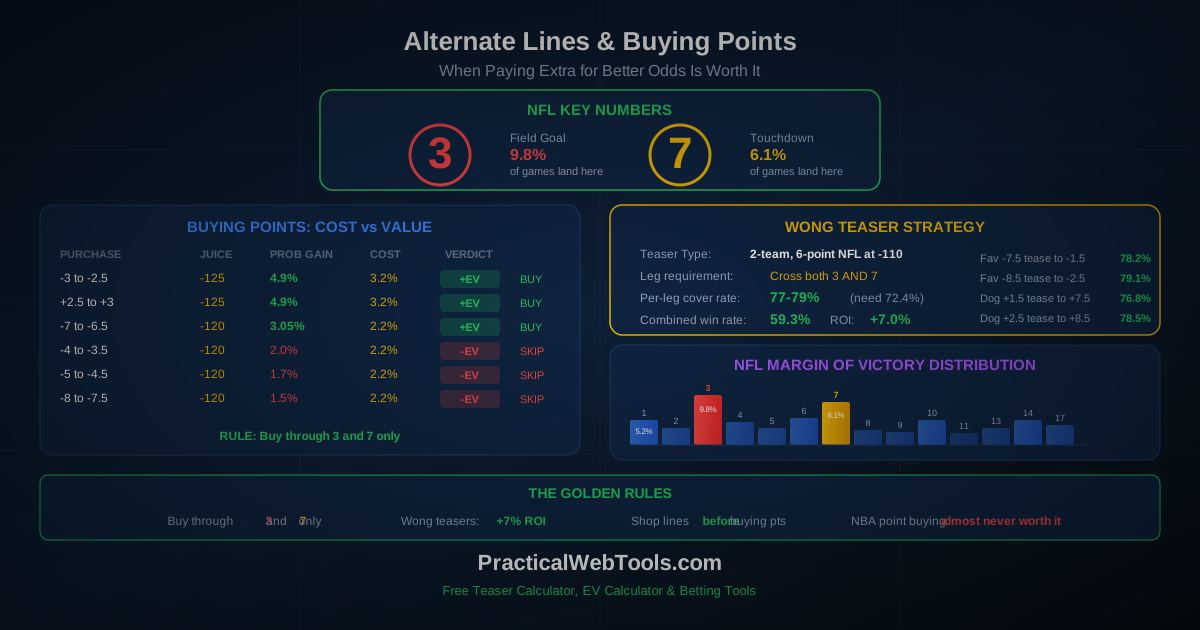
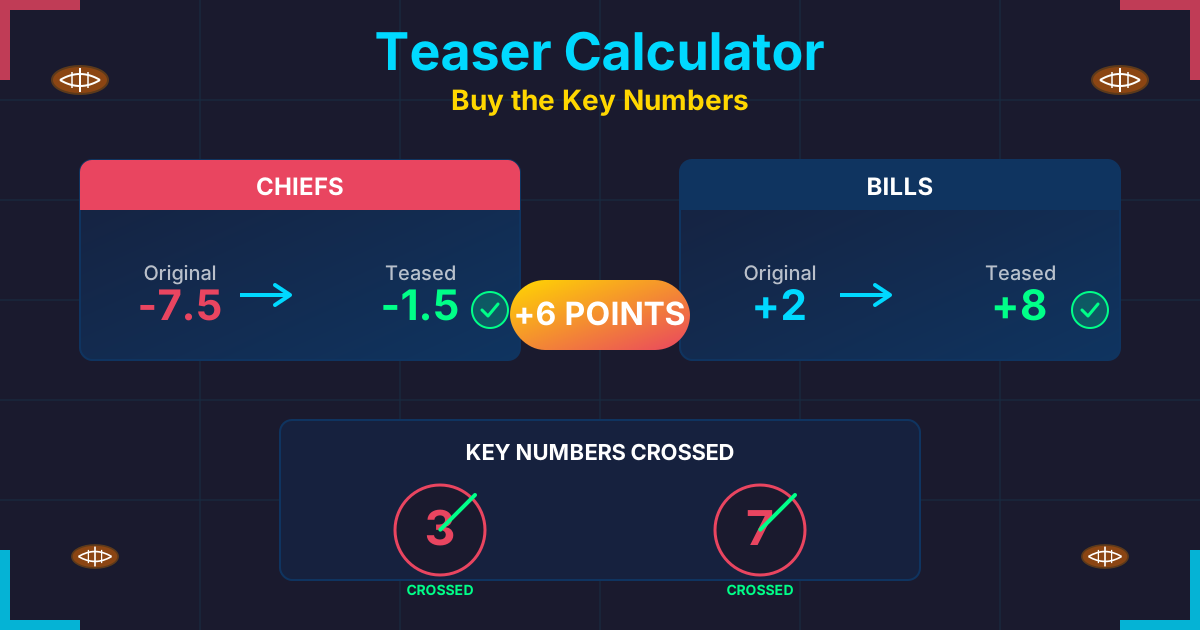
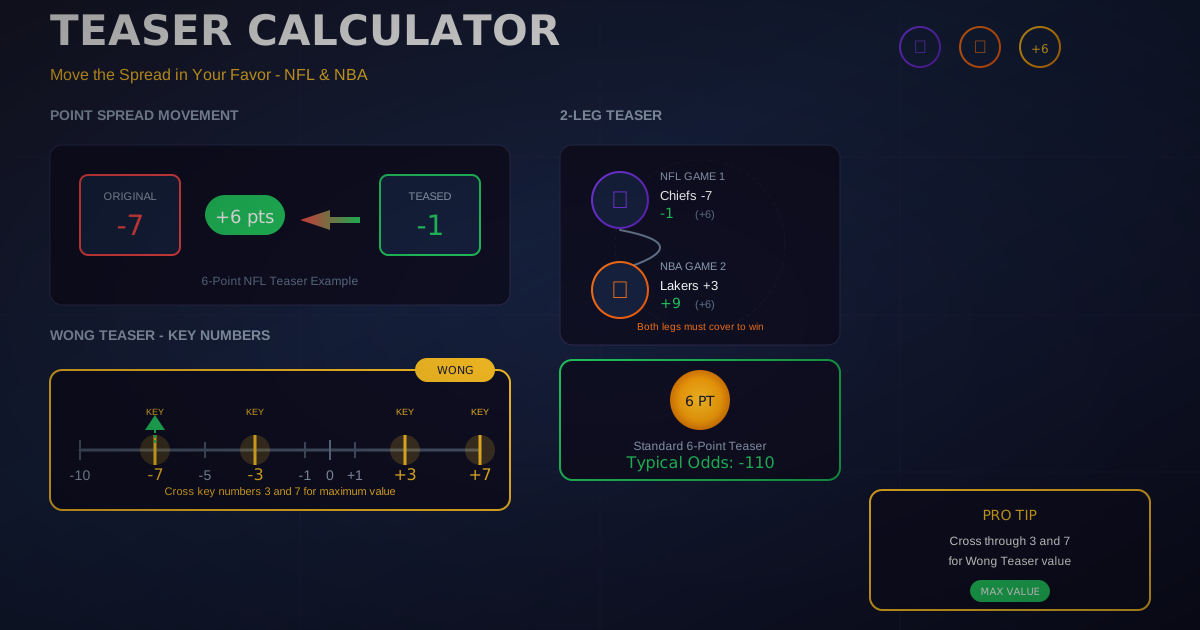
Are there any bet types that sharps prefer over others? Sharps tend to focus on markets where they can find the largest edges relative to the vig. Point spreads and totals in major sports (NFL, NBA, MLB) are the most liquid and efficient markets, but sharps find edges in player props, alternative lines, first-half lines, and smaller markets where sportsbooks have less pricing expertise. The key is not the bet type itself but whether your model or analysis identifies genuine value in that specific market. Sharps also avoid high-vig bet types like teasers and large parlays.
Essential Sharp Betting Tools
Sharps do not guess. They calculate. These free tools automate the math behind every sharp betting decision:
- Expected Value Calculator: Determine the +EV or -EV of any bet
- CLV Tracker: Track your closing line value over time
- Kelly Criterion Calculator: Calculate optimal bet sizing
- Odds Converter: Convert between American, decimal, and fractional odds
- Implied Probability Calculator: Convert odds to true probabilities
- Hold/Vig Calculator: Calculate the sportsbook's edge
- Arbitrage Calculator: Find guaranteed profit opportunities
- Hedge Calculator: Lock in profits on existing bets
Conclusion: The Choice Is Yours
The gap between sharp and square is not about intelligence, luck, or access to secret information. It is about discipline, process, and a willingness to let math guide your decisions instead of emotion.
Every single day, squares make the same mistakes: betting their favorite team, chasing losses, playing 10-leg parlays, ignoring the vig, and evaluating themselves by last weekend's results. Every single day, sharps do the opposite: they calculate expected value, track CLV, size bets with Kelly Criterion, line-shop across a dozen sportsbooks, and evaluate themselves over thousands of bets.
The 97% who lose money are not stupid. They are human. The biases that make us bad bettors -- recency bias, emotional attachment, narrative thinking, loss aversion -- are deeply wired into our psychology. Overcoming them requires deliberate, systematic effort.
The good news: every sharp habit is learnable. Start tracking your bets today. Open more sportsbook accounts. Calculate EV before placing your next bet. Stop playing parlays. These changes alone will move you closer to the sharp side of the ledger.
The math is clear. The tools are free. The only question is whether you are willing to do the work.
Start building your edge today with our Expected Value Calculator.
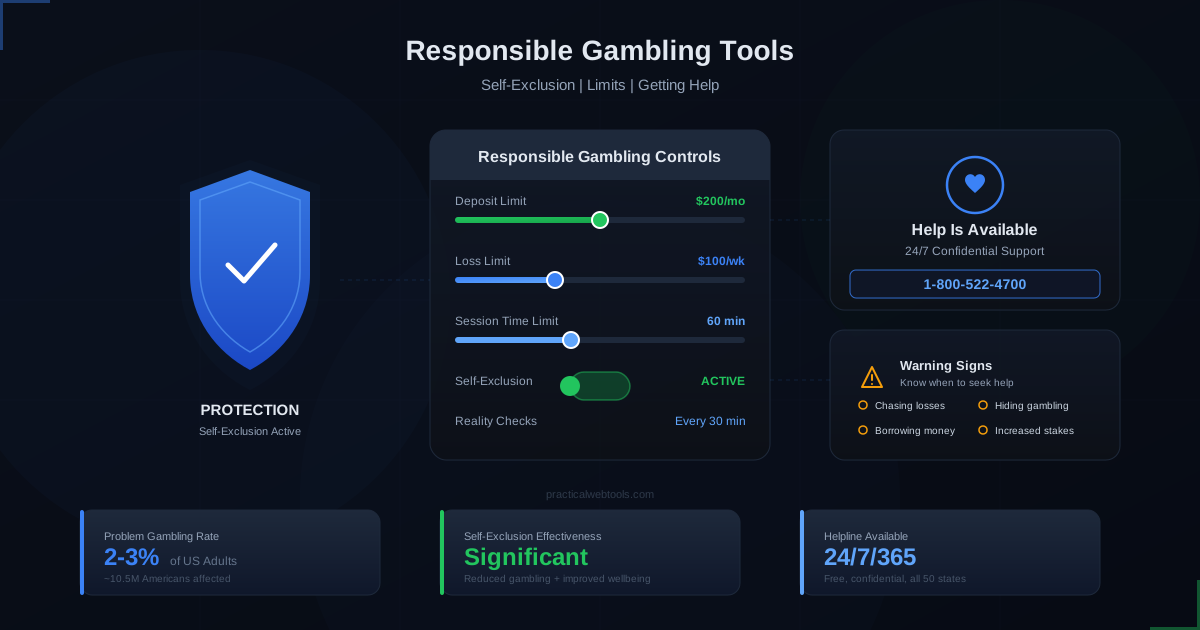
Gambling involves risk. This content is for educational and informational purposes only. Always gamble responsibly, set limits you can afford, and seek help if gambling becomes a problem. Visit the National Council on Problem Gambling or call 1-800-522-4700 for support.