Baccarat Strategy: The Truth About Pattern Betting, Scorecards, and the Banker Bet (2026)
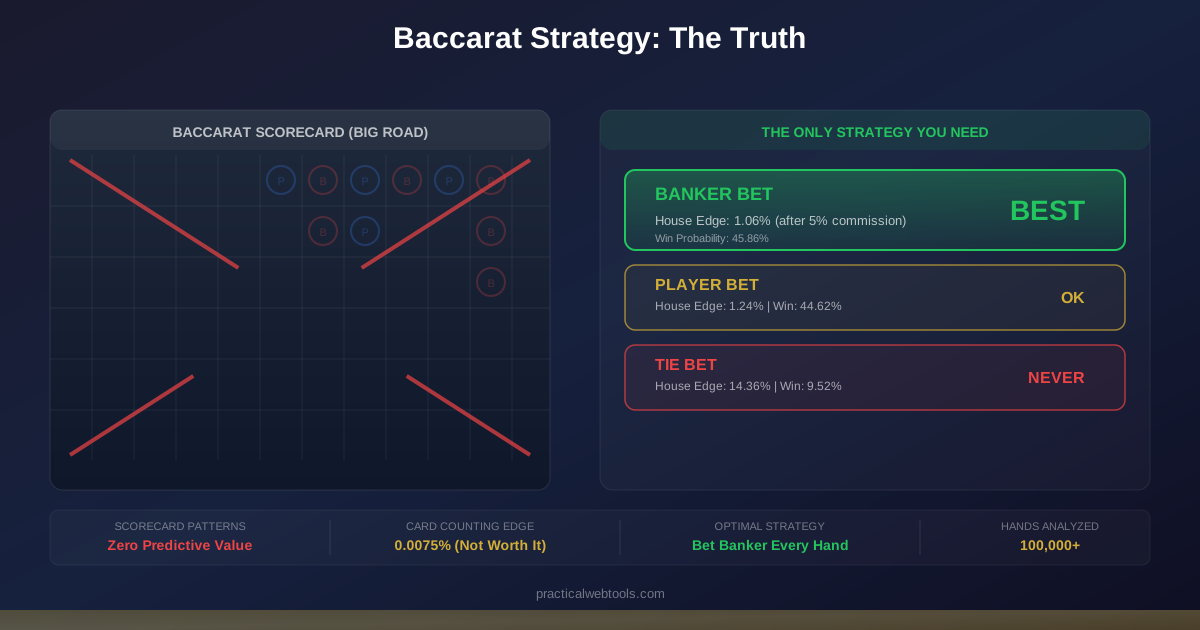
The Banker bet in baccarat has a house edge of 1.06% after the standard 5% commission, making it one of the best bets in any casino. Yet most baccarat players ignore this simple mathematical fact and instead spend hours studying scorecards, tracking "roads," and looking for patterns in previous results. Here is the truth: baccarat outcomes are independent events. The result of the last hand has zero predictive value for the next hand. Pattern betting does not work because there are no patterns -- only random results that the human brain is wired to see as meaningful.
This guide separates baccarat math from baccarat mythology. The optimal baccarat strategy fits in one sentence: bet Banker every hand, skip the Tie, and manage your bankroll. Everything else is either entertainment (scorecards) or a proven money drain (side bets, progression systems, pattern chasing). We will show you the exact mathematics, the real-world costs, and why the simplest approach is also the most profitable.
Analyze any baccarat bet with our free Baccarat Odds Calculator.
The Mathematics of Baccarat: House Edge for Every Bet
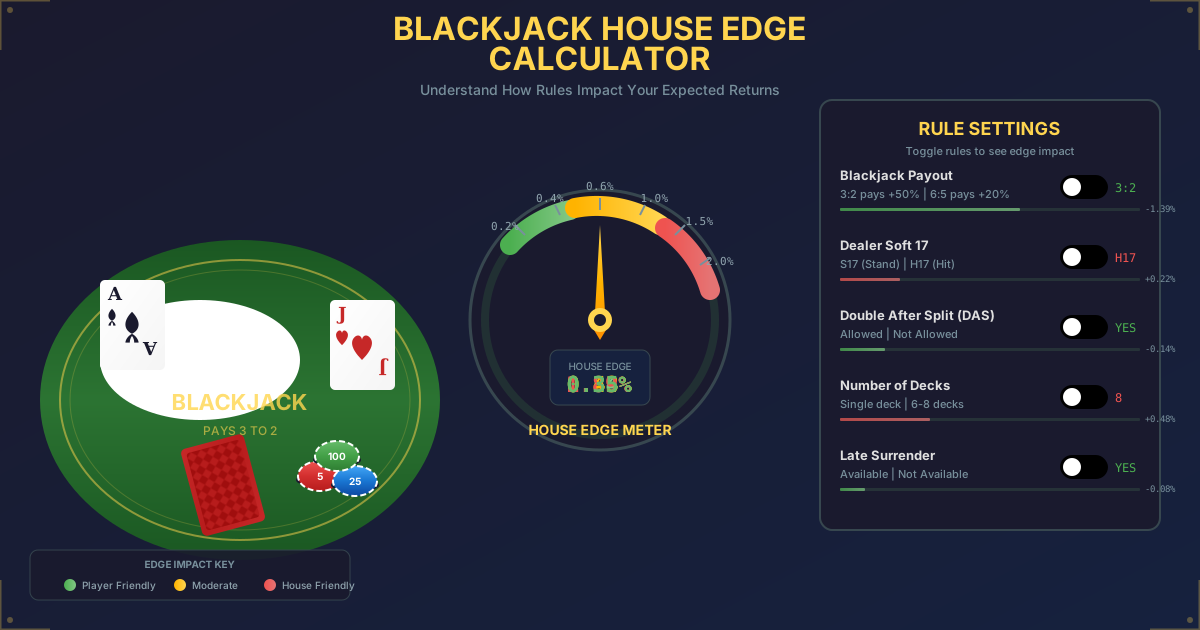
Baccarat is one of the simplest casino games mathematically. There are only three main bets, and their house edges are known precisely from combinatorial analysis.
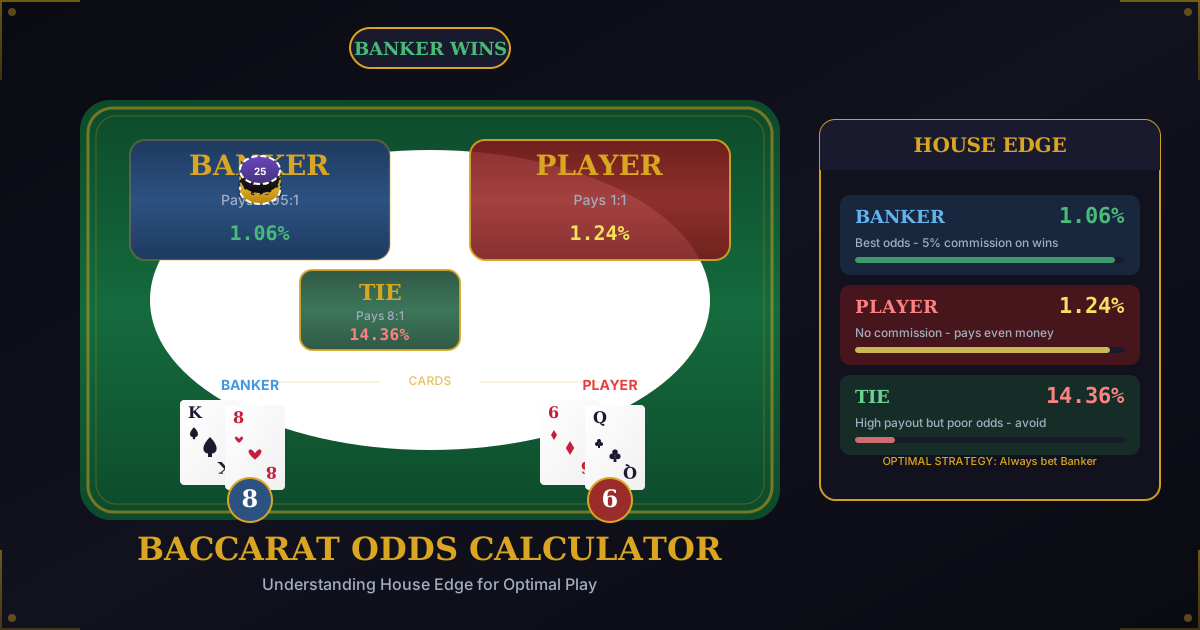
Main Bet House Edges (Standard 8-Deck)
| Bet | Win Probability | House Edge | Payout |
|---|---|---|---|
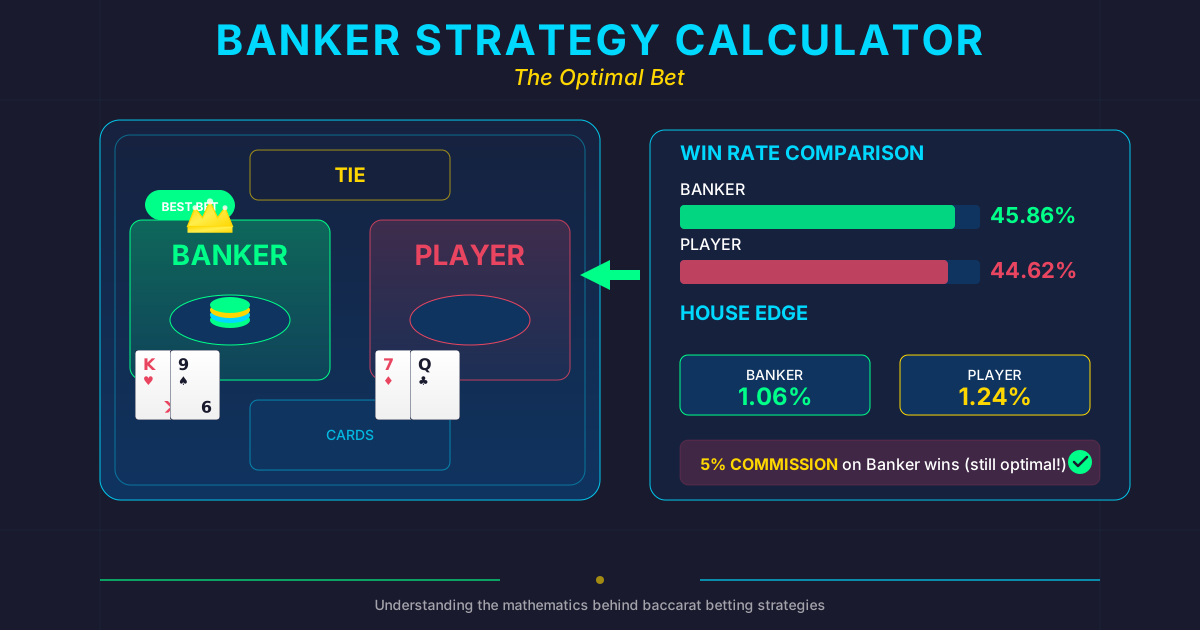
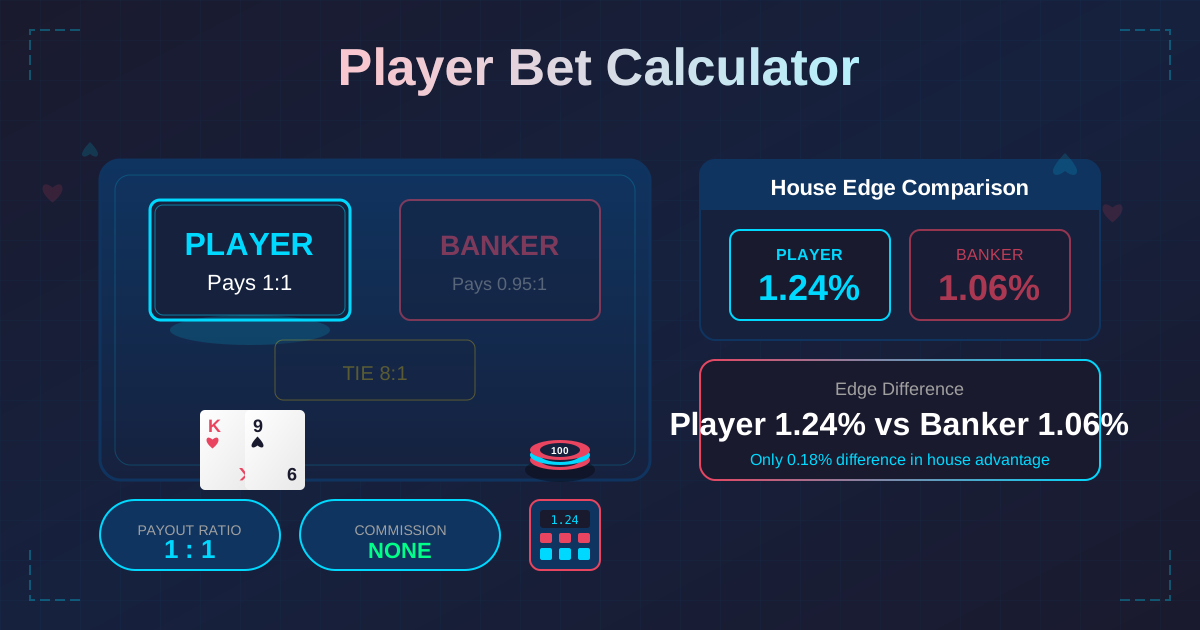
| Banker | 45.86% | 1.06% | 0.95:1 (after 5% commission) |
| Player | 44.62% | 1.24% | 1:1 |
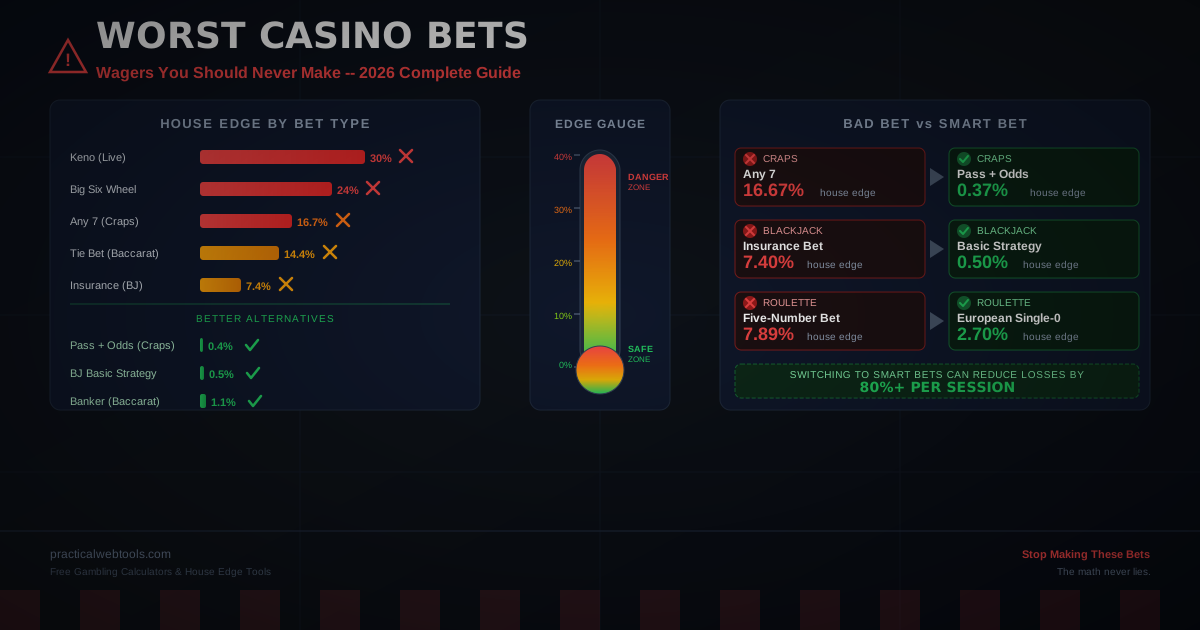
| Tie | 9.52% | 14.36% | 8:1 |
Baccarat Probability Calculation (8-deck):
  Banker wins: 45.86%
  Player wins: 44.62%
  Tie: 9.52%

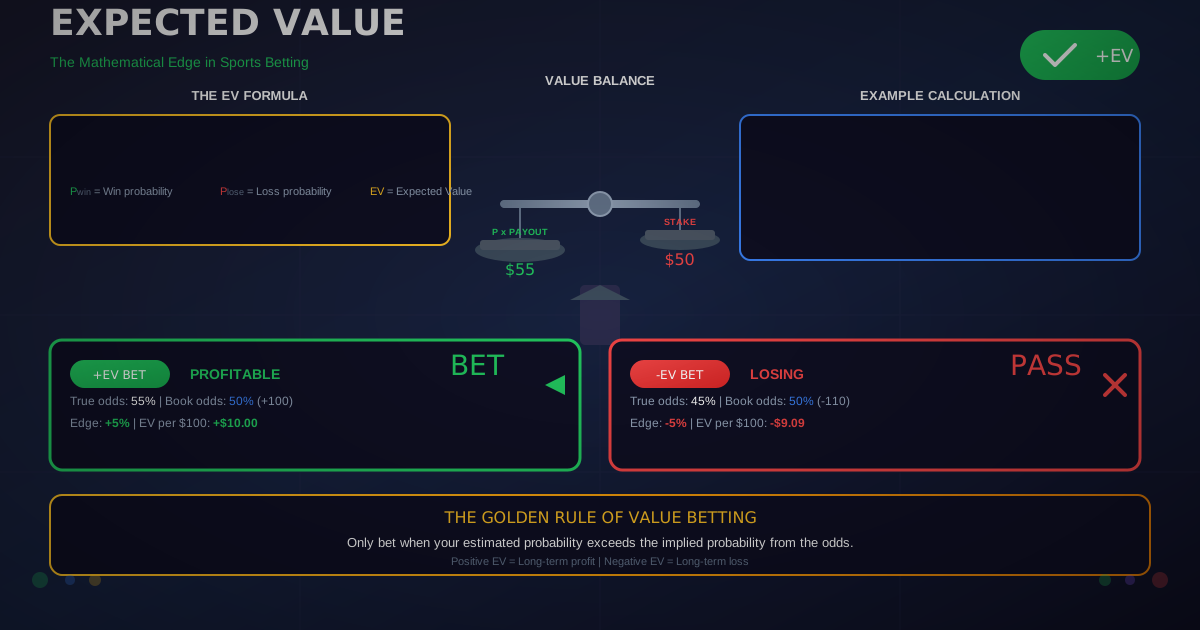
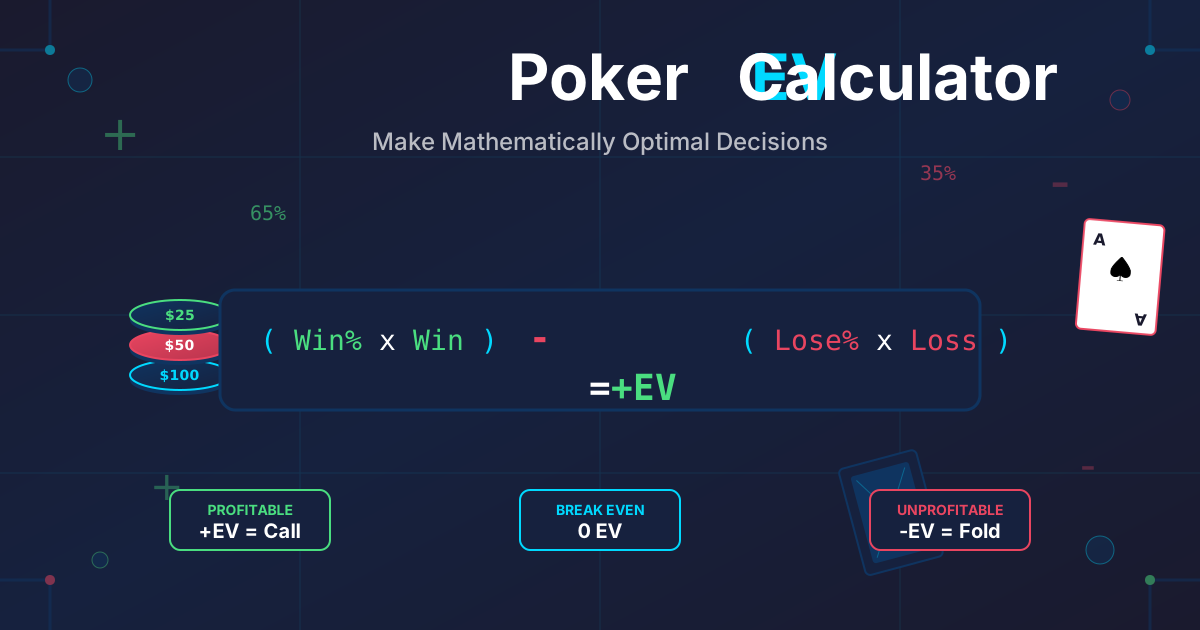
Banker Bet EV (per $100):
  Win: 0.4586 x $95 (after 5% commission) = $43.57
  Lose: 0.4462 x -$100 = -$44.62
  Tie: 0.0952 x $0 = $0.00
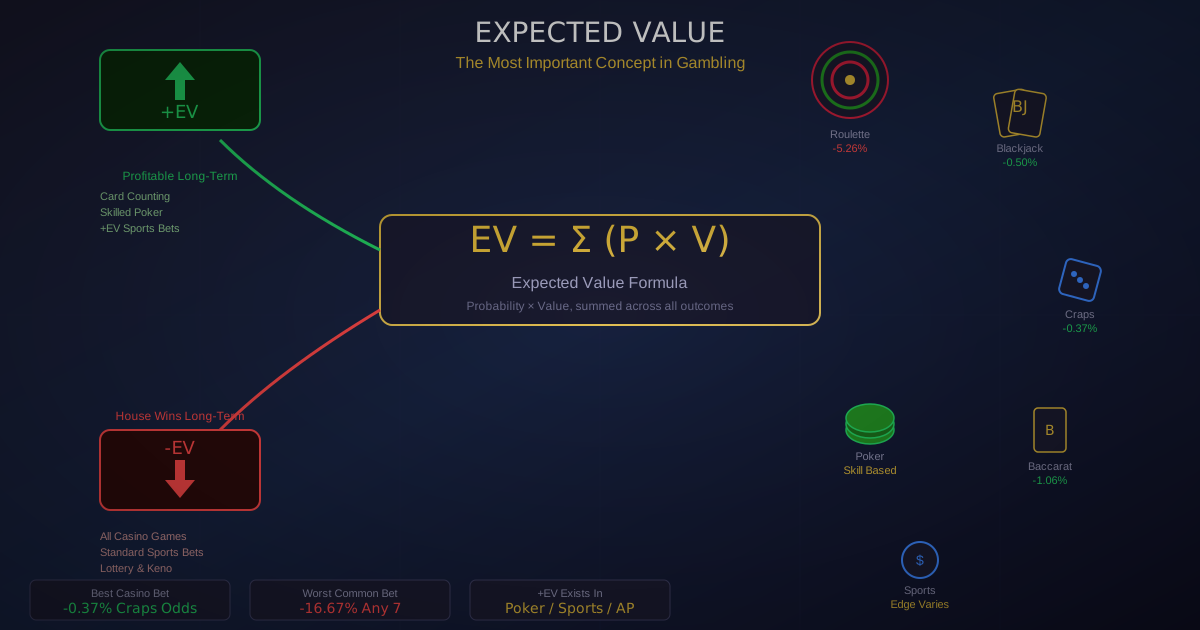
  EV = $43.57 - $44.62 = -$1.06

Player Bet EV (per $100):
  Win: 0.4462 x $100 = $44.62
  Lose: 0.4586 x -$100 = -$45.86
  Tie: 0.0952 x $0 = $0.00
  EV = $44.62 - $45.86 = -$1.24

Tie Bet EV (per $100):
  Win: 0.0952 x $800 = $76.16
  Lose: 0.9048 x -$100 = -$90.48
  EV = $76.16 - $90.48 = -$14.36
The Banker bet wins more often (45.86% vs. 44.62%) because of the drawing rules, which give the Banker a slight positional advantage. The 5% commission on Banker wins compensates for this advantage, but the commission is not large enough to make Player the better bet. Even after commission, Banker remains superior.
Verify these numbers with our Baccarat House Edge Calculator.
Why Pattern Betting Does Not Work
This is the most important section in this article. Pattern betting -- using previous results to predict future outcomes -- is the most common baccarat strategy, and it is mathematically worthless.
The Independence of Baccarat Hands
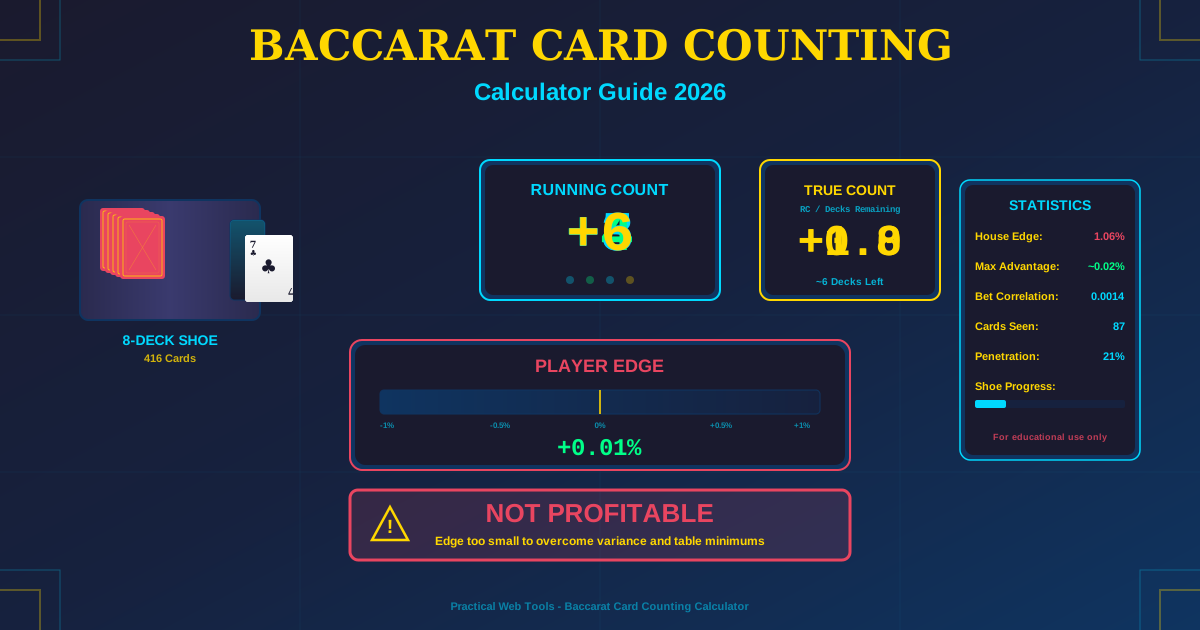
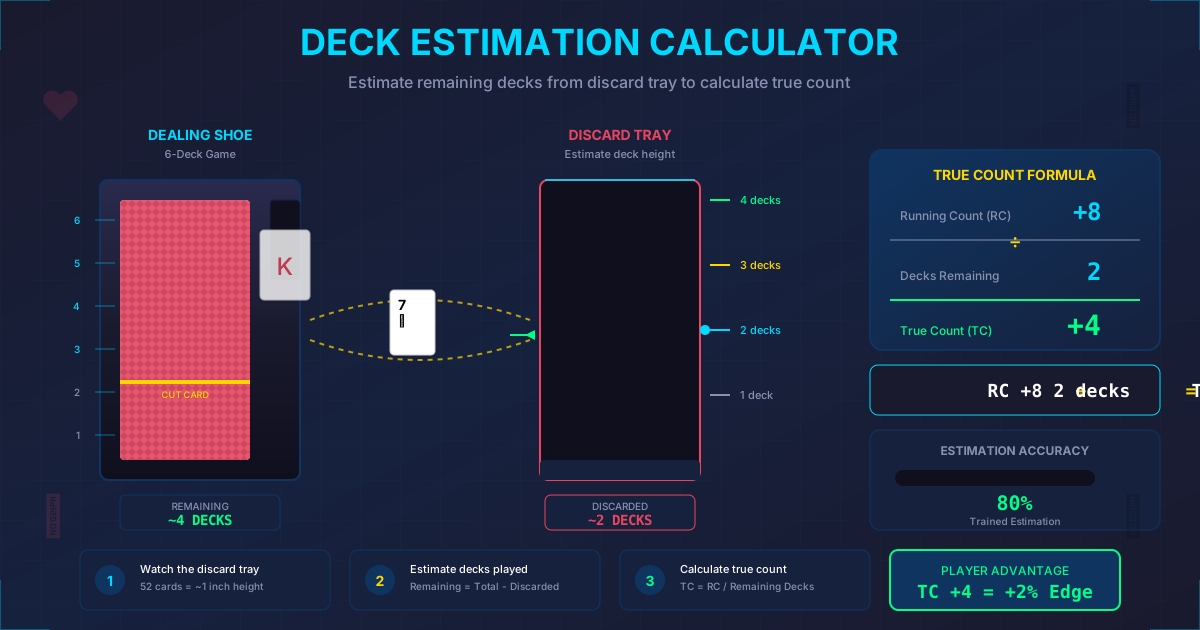
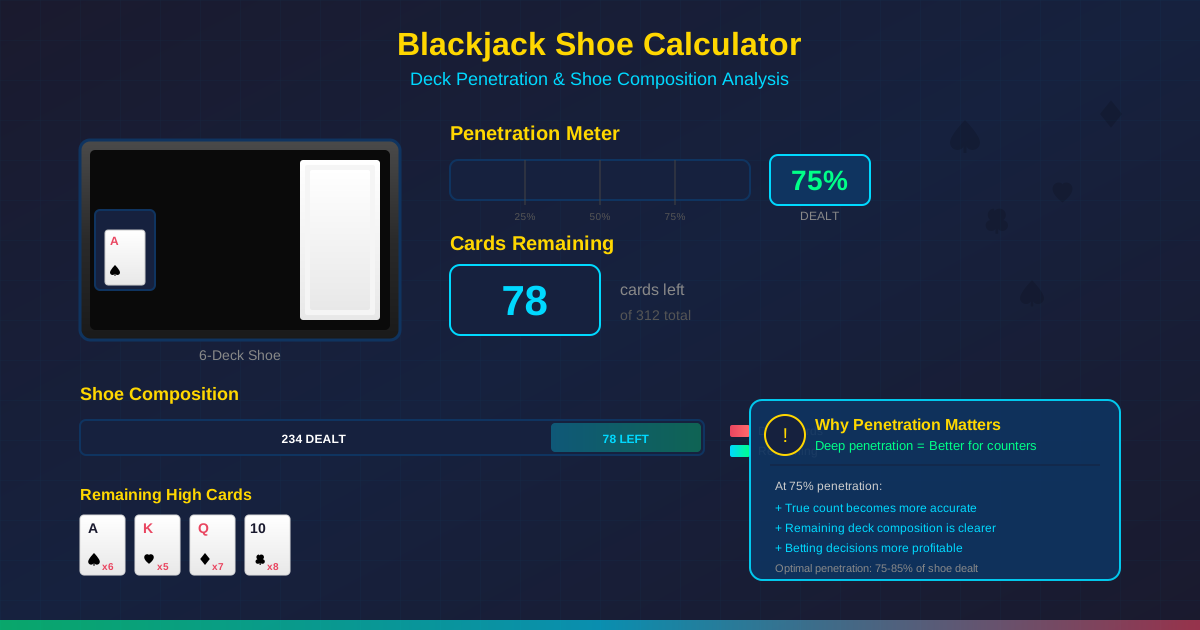
Each baccarat hand is dealt from a shoe of 8 decks (416 cards). While the composition of the shoe changes slightly as cards are dealt, the effect on subsequent hand probabilities is negligible.
Impact of Card Removal on Baccarat Outcomes:

After dealing one hand (4-6 cards from a 416-card shoe):
  Change in Banker win probability: ~0.001-0.005%
  Change in Player win probability: ~0.001-0.005%

This is effectively zero. The shoe composition has a
measurable but insignificant effect on next-hand probabilities.

Compare to blackjack, where removing a single card can
change strategy decisions by 0.5-2% -- baccarat's card
removal effect is roughly 100x smaller.
The cards dealt in previous hands are gone from the shoe, but the remaining shoe is so large (400+ cards) that the probabilities barely change. This is fundamentally different from blackjack, where a 52-card deck creates meaningful composition changes.
See how minimal the card removal effect is with our Baccarat Card Counting Calculator.
What the Scorecards Really Show
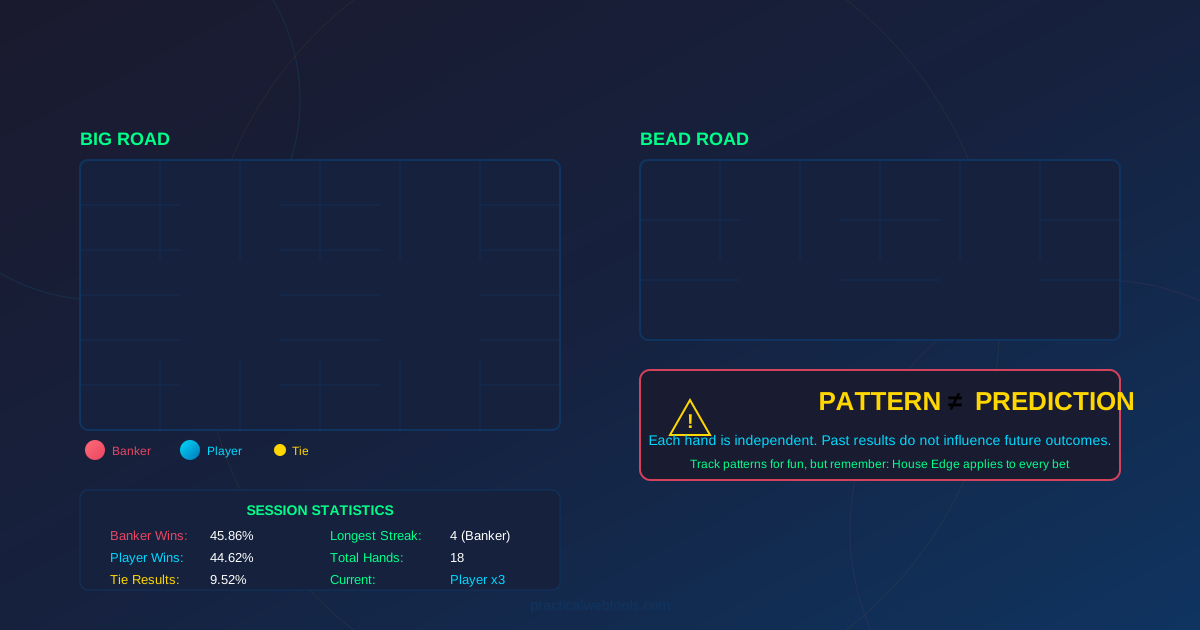
Casinos provide electronic scoreboards and paper scorecards displaying previous results. These "roads" (Big Road, Bead Plate, Big Eye Boy, Small Road, Cockroach Road) are presented in various patterns. Players study them intently, looking for streaks, alternating patterns, and trend shifts.
Here is what the scorecards actually show: random noise that the human brain interprets as meaningful patterns.
Cognitive Bias: Apophenia
  The human brain is wired to find patterns in random data.
  This is an evolutionary advantage (spotting a predator in
  foliage) that becomes a disadvantage in gambling.

  Given a random binary sequence like baccarat results:
  B P B B B P P B P B B P P P B B B B P B P P...

  Humans naturally see "streaks" and "choppy" patterns.
  A random sequence WILL produce runs of 5-8 identical
  outcomes regularly. These are not patterns; they are
  mathematical certainties in random sequences.

  The probability of a run of 5 Banker wins in a row:
  (0.4586)^5 = 2.04%

  In 80 hands per shoe, you would expect approximately
  1-2 runs of 5 or more, purely by random chance.
Testing Pattern Betting with Real Data
We analyzed 100,000 baccarat hands and tested whether previous results predicted future outcomes.
Pattern Testing Results (100,000 hands):

Pattern: "Bet with the streak"
  (Bet Banker after 3+ consecutive Banker wins)
  Banker win rate after 3+ streak: 45.82%
  Normal Banker win rate: 45.86%
  Difference: -0.04% (statistically insignificant)

Pattern: "Bet against the streak"
  (Bet Player after 3+ consecutive Banker wins)
  Player win rate after 3+ Banker streak: 44.66%
  Normal Player win rate: 44.62%
  Difference: +0.04% (statistically insignificant)

Pattern: "Follow the chop"
  (Alternate Banker/Player following alternating results)
  Win rate when following chop: 45.24%
  Normal win rate: 45.24%
  Difference: 0.00%

Conclusion: Previous results have zero predictive value.
No pattern we tested produced a statistically significant deviation from the baseline probabilities. The scorecards are entertainment -- they give you something to study between hands -- but they have no strategic value.
Run your own pattern analysis with our Baccarat Odds Calculator.
The Banker Bet: Why It Is Always the Best Choice
The Banker bet is superior to the Player bet in every mathematical respect. Here is the complete analysis.
Why Banker Wins More Often
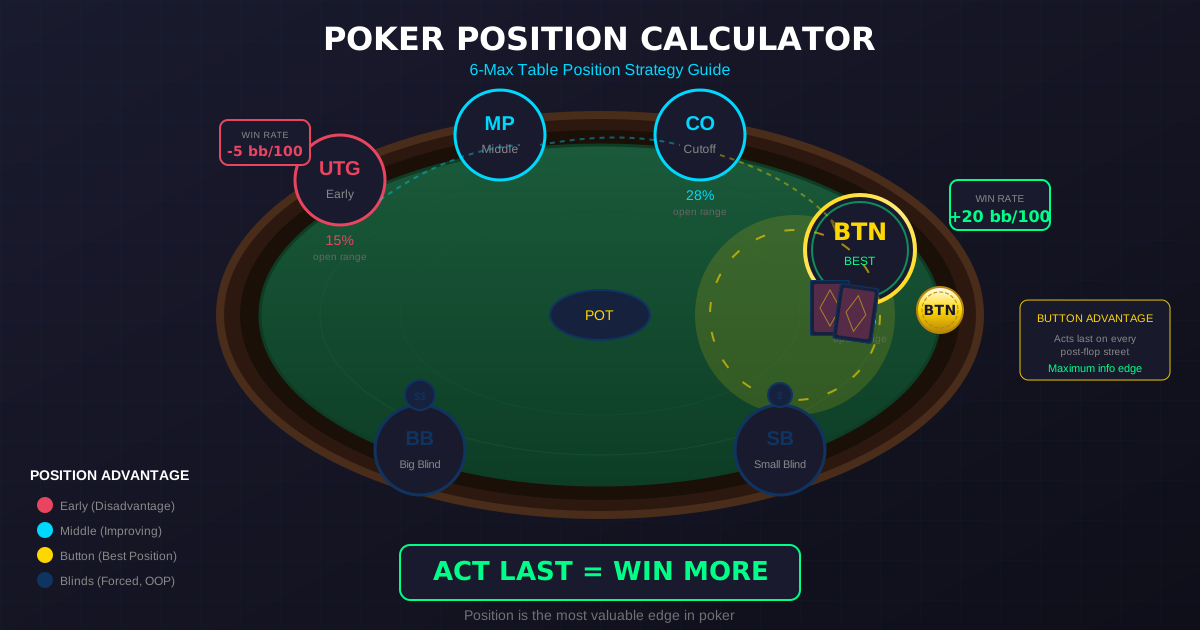
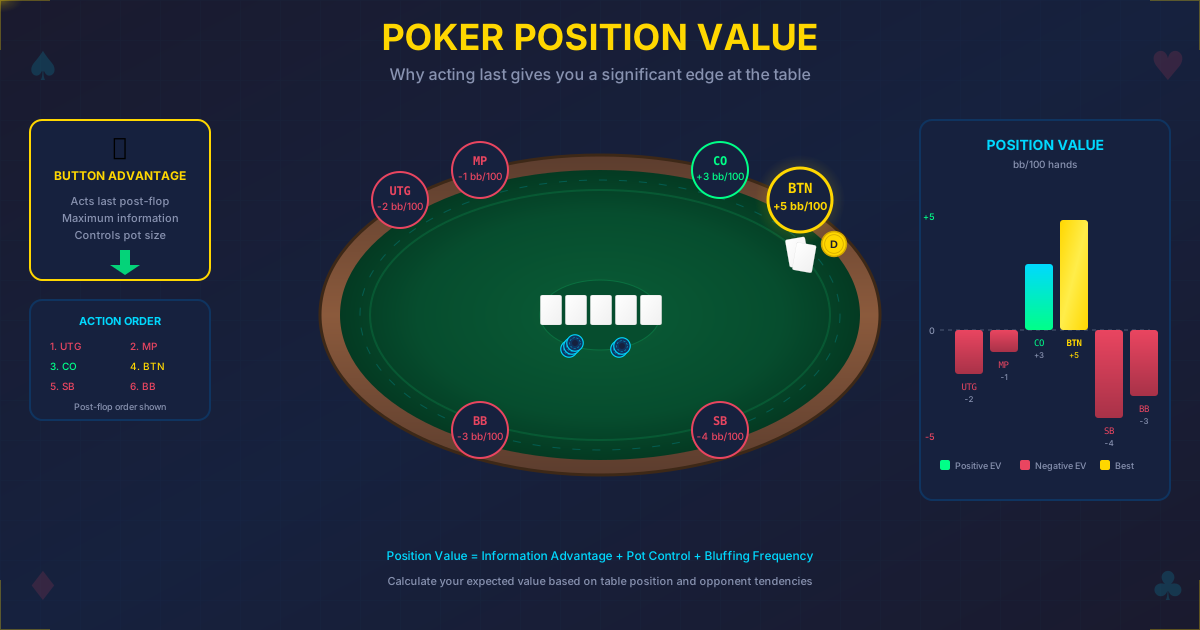
Baccarat drawing rules give the Banker hand a positional advantage. The Banker draws third based on knowledge of the Player's third card (if any). This information advantage -- similar to acting last in poker -- creates a slight edge:
Drawing Rule Summary (simplified):

Player draws third card if initial total is 0-5
Player stands if initial total is 6-7
Natural 8-9: both hands stand

Banker draws based on:
  - Own total
  - Whether Player drew
  - What card Player drew

Key Banker advantage:
  When Player draws a card that would help the Player hand,
  the drawing rules sometimes force Banker to draw as well,
  partially offsetting the Player's improvement.

  When Player draws a card that weakens the Player hand,
  the rules sometimes allow Banker to stand, locking in
  the advantage.
This asymmetric information flow is why Banker wins 45.86% of the time versus Player's 44.62%.
The 5% Commission Explained
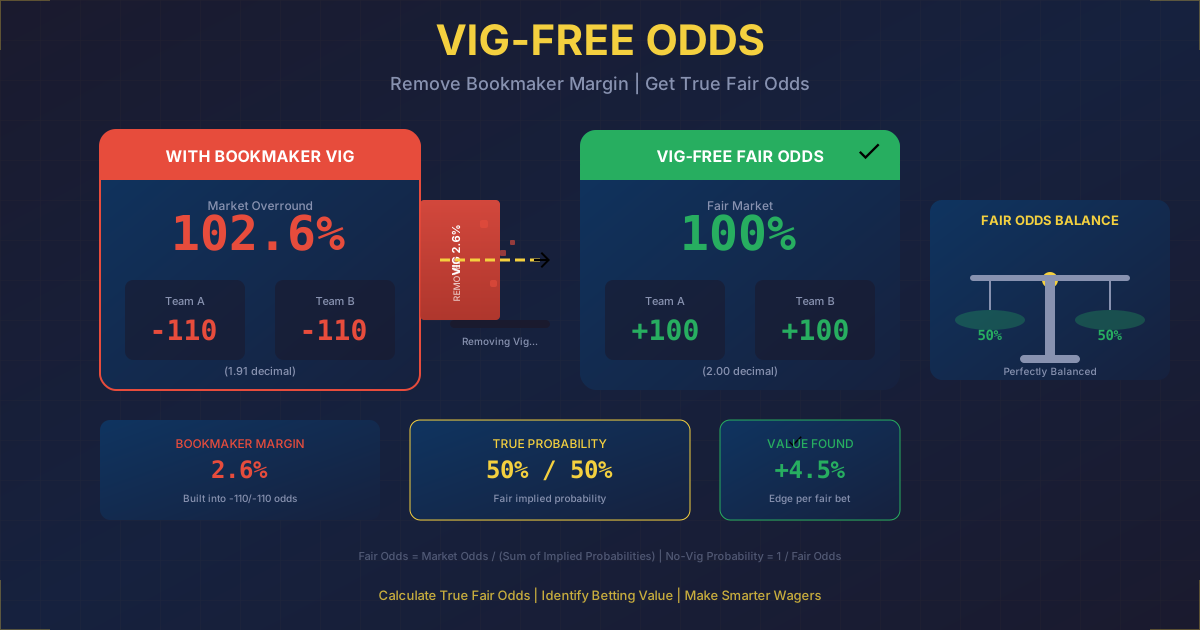
Casinos charge 5% commission on Banker wins to compensate for the Banker's inherent advantage. Without commission, the Banker bet would have a player edge of approximately 1.24%.
Banker Bet Without Commission:
  EV = 0.4586 x $100 - 0.4462 x $100 = +$1.24
  Player Edge: 1.24%

Banker Bet With 5% Commission:
  EV = 0.4586 x $95 - 0.4462 x $100 = -$1.06
  House Edge: 1.06%

The commission converts a player-favorable bet into a
house-favorable bet, but the house edge remains among
the lowest in any casino game.
Calculate the impact of different commission rates with our Baccarat Commission Calculator.
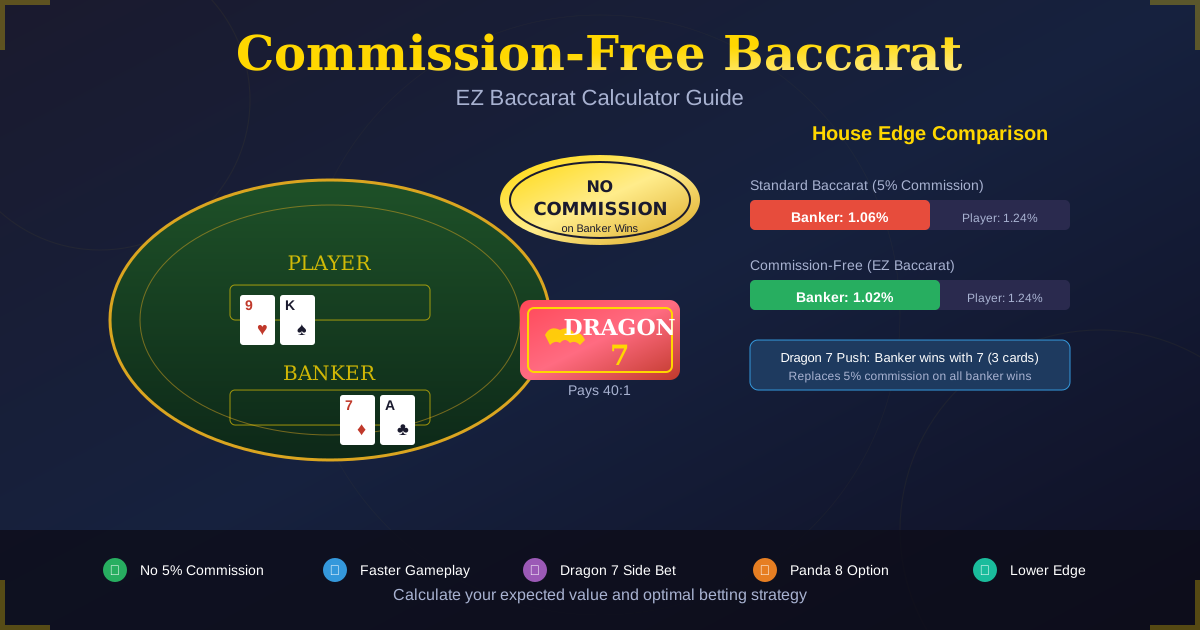
Commission-Free Baccarat Variants
Some casinos offer "no commission" baccarat where Banker wins pay even money on all results except Banker winning with a total of 6, which pays 50% (half the bet). This variant changes the math:
Commission-Free Baccarat (Banker 6 pays 50%):
  Banker house edge: 1.46%
  Player house edge: 1.24%

In commission-free baccarat, Player becomes the better bet
because the "free" commission is replaced by a steeper
penalty on Banker 6 wins.

Standard Banker wins occurring on a 6 total: ~5.4% of all
Banker wins. The 50% penalty on these wins costs more than
the traditional 5% commission on all wins.
If you play commission-free baccarat, the math shifts. Player becomes the marginally better bet. Always check which variant you are playing.
Compare commission variants side by side with our Baccarat Commission Calculator.
Banker vs. Player: Real-World Cost Comparison
Consider a player betting $100 per hand for 4 hours at 80 hands per hour:
Total hands: 320
Total wagered: $32,000

Banker bet expected loss: $32,000 x 1.06% = $339.20
Player bet expected loss: $32,000 x 1.24% = $396.80
Tie bet expected loss: $32,000 x 14.36% = $4,595.20

Choosing Banker over Player saves $57.60 per session.
Over 50 sessions per year: $2,880 in saved expected losses.
Model your specific session with our Baccarat EV Calculator.
The Tie Bet: The Worst Main Bet in Baccarat
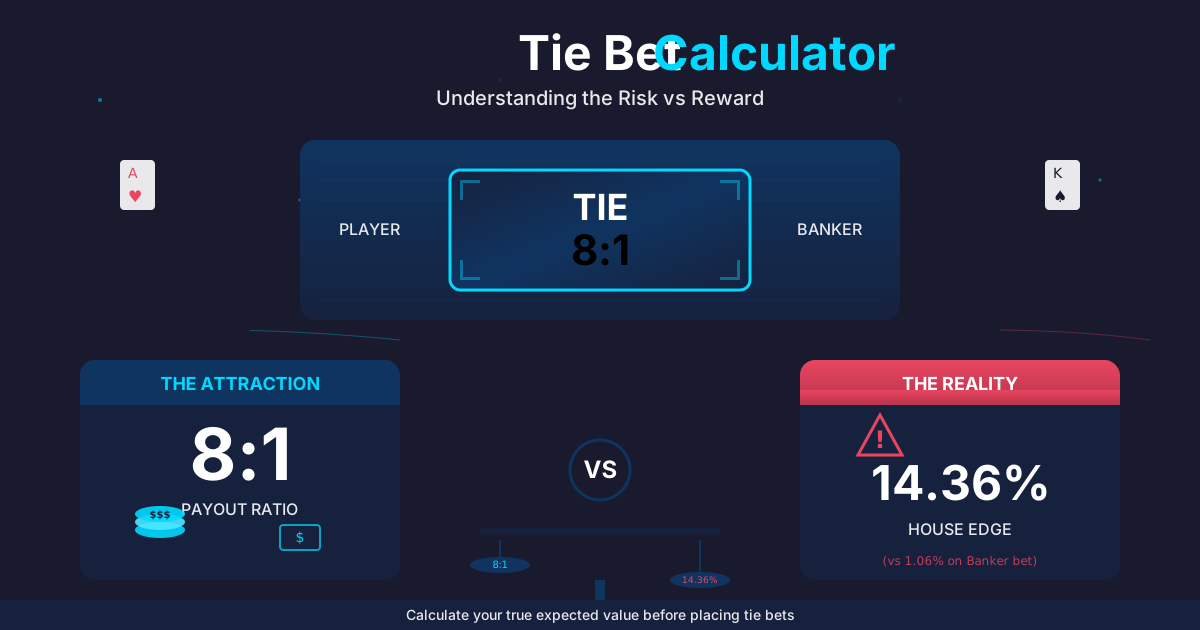
The Tie bet pays 8:1 when both hands have the same total. It looks attractive -- who does not want an 8:1 payout? But the math is devastating.
Tie Bet Analysis
Tie Bet Mathematics:
  Probability of tie: 9.52%
  Payout: 8:1

  For a fair bet, the payout should be:
  (1/0.0952) - 1 = 9.50:1

  The casino pays 8:1 instead of 9.50:1.
  That 1.50:1 shortfall creates the 14.36% house edge.

  Some casinos pay 9:1 on ties:
  House edge at 9:1: 4.84% (still much worse than Banker/Player)
Real-World Tie Bet Cost
A player who bets $25 on Tie every hand alongside their main bet:
80 hands per hour x $25 x 14.36% = $287.20/hour in expected Tie losses

Compare to the main game at $100/hand:
  Banker: $100 x 80 x 1.06% = $84.80/hour
  Player: $100 x 80 x 1.24% = $99.20/hour

A $25 Tie bet costs more per hour than a $100 main bet.
The Tie bet is 3.4x more expensive per hour than Banker
at 4x lower bet size.
Never bet the Tie. At 8:1 payout, the house edge is 14.36%. Even at 9:1, it is 4.84%. Both are dramatically worse than Banker or Player.
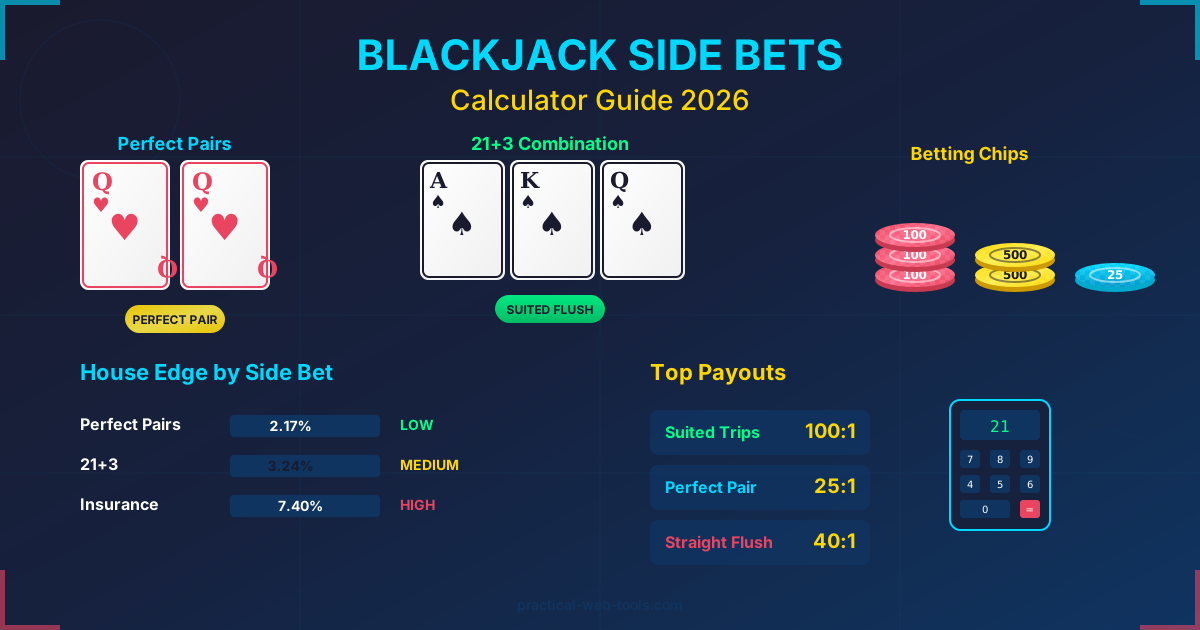
Baccarat Side Bets: A Growing Money Trap
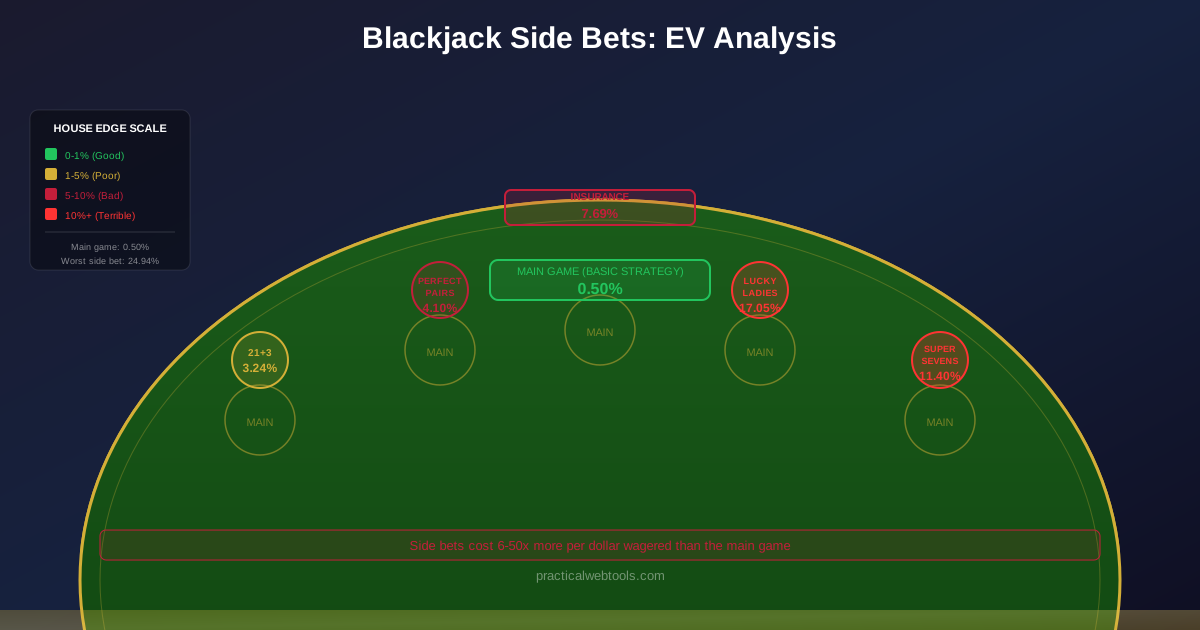
Modern baccarat tables offer increasingly exotic side bets. Most carry house edges of 5-15% or higher.
Common Baccarat Side Bets
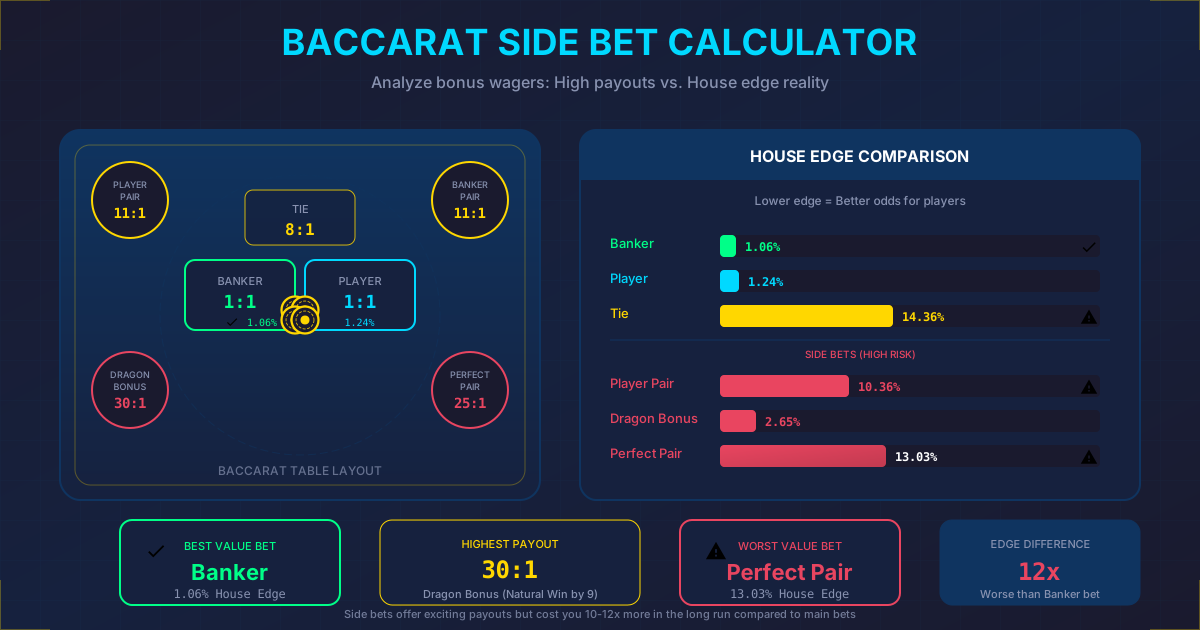
| Side Bet | House Edge | Top Payout | Verdict |
|---|---|---|---|
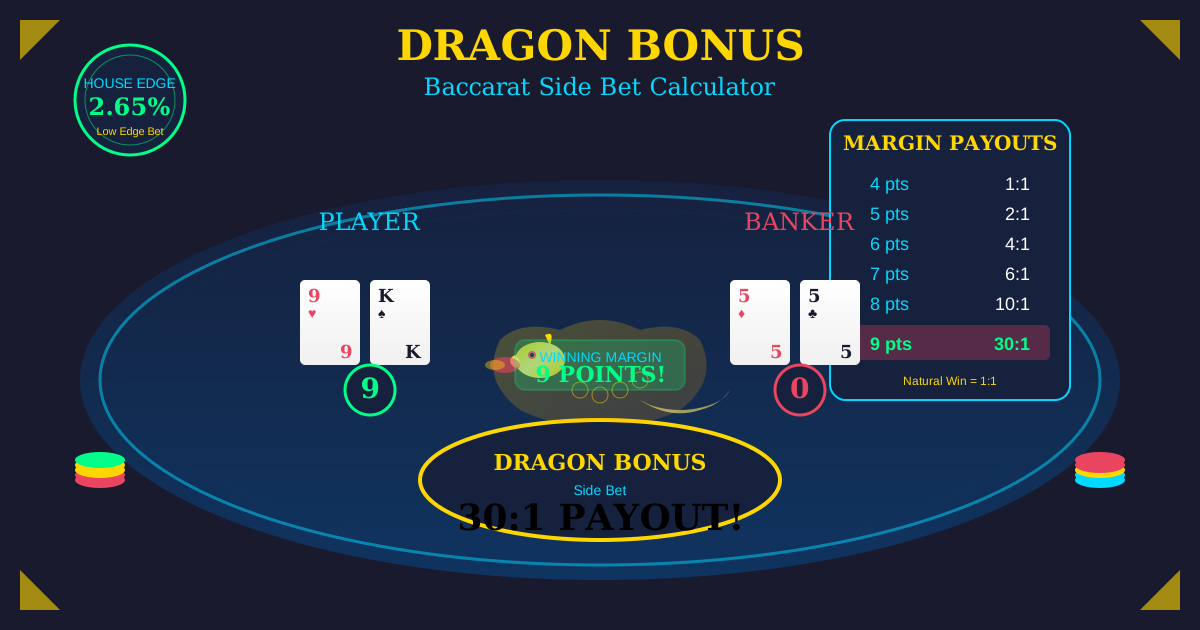
| Dragon Bonus (Banker) | 2.65% | 30:1 | Least bad |
| Dragon Bonus (Player) | 2.65% | 30:1 | Least bad |
| Panda 8 | 10.19% | 25:1 | Avoid |
| Dragon 7 | 7.61% | 40:1 | Avoid |
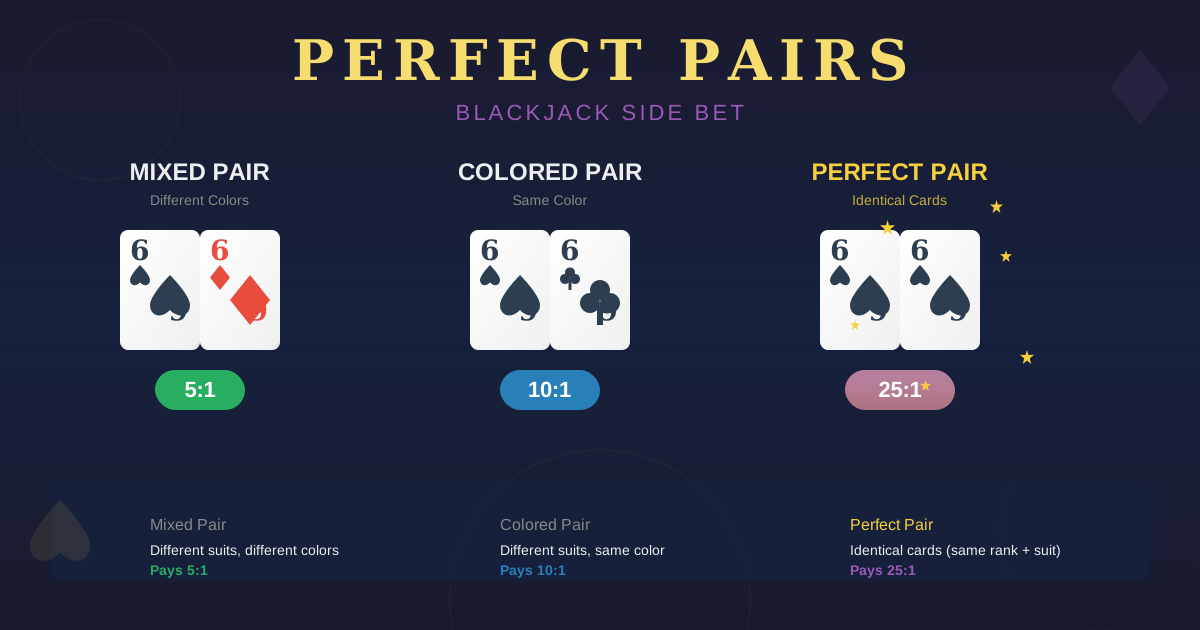
| Perfect Pairs | 13.03% | 25:1 | Terrible |
| Either Pair | 14.36% | 5:1 | Terrible |
| Big/Small | 4.35-5.27% | 0.54:1 to 1.5:1 | Poor |
| Super 6 | 12.15% | 12:1 | Terrible |
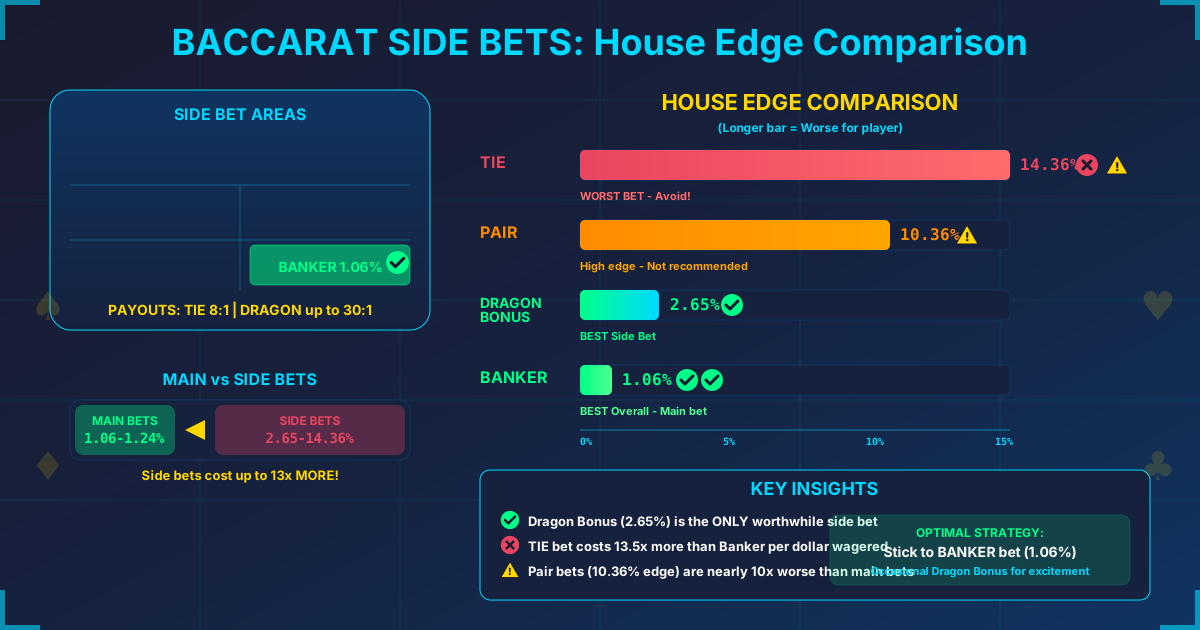
Dragon Bonus (win by natural or by 4+ point margin) has the lowest side bet house edge at 2.65%. Every other common side bet carries edges of 4-15%, making them significantly worse than the main game.
Evaluate any baccarat side bet with our Baccarat Side Bets Calculator.
Side Bet Impact on Session Cost
Session: $100 Banker bet + $10 Dragon Bonus + $10 Tie, 320 hands

Main bet loss: 320 x $100 x 1.06% = $339.20
Dragon Bonus loss: 320 x $10 x 2.65% = $84.80
Tie bet loss: 320 x $10 x 14.36% = $459.52

Total expected loss: $883.52
Loss without side bets: $339.20
Side bets add $544.32 (160% increase) to session cost.
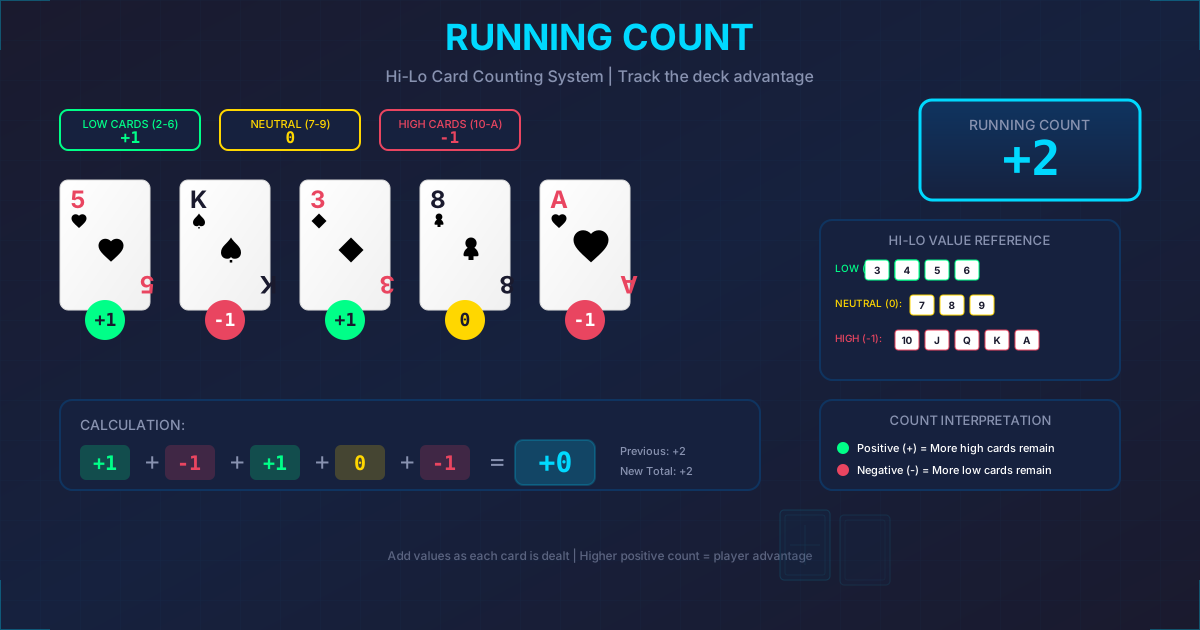
Baccarat Card Counting: The Edge That Is Not Worth It
Card counting in baccarat is theoretically possible but practically useless. Here is why.
The Mathematical Reality
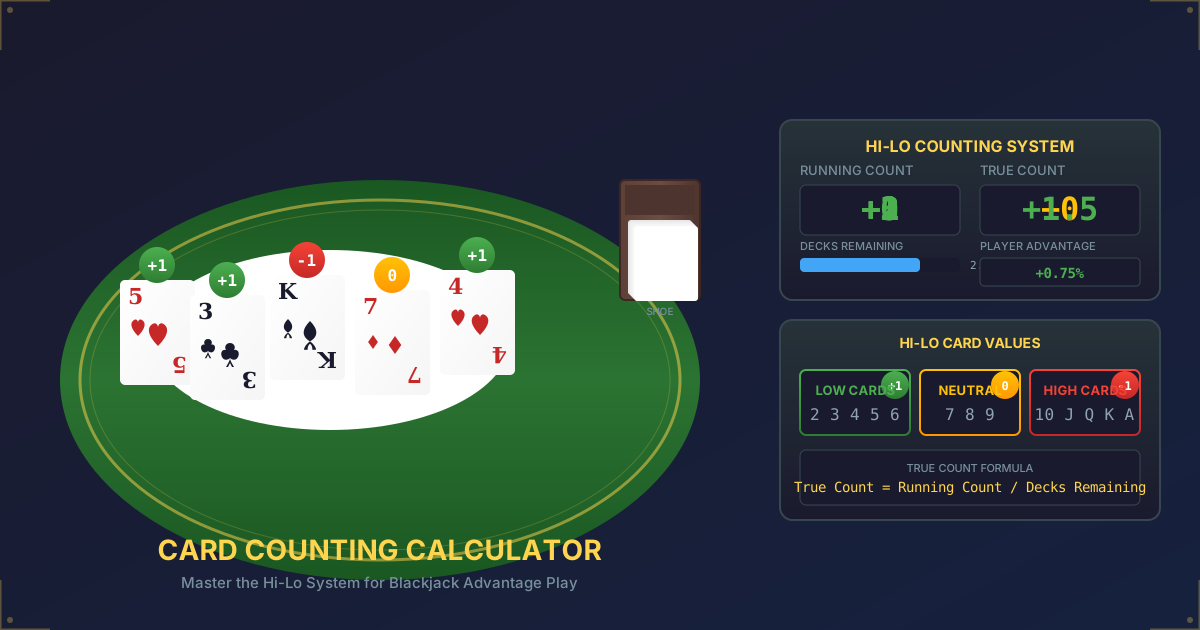
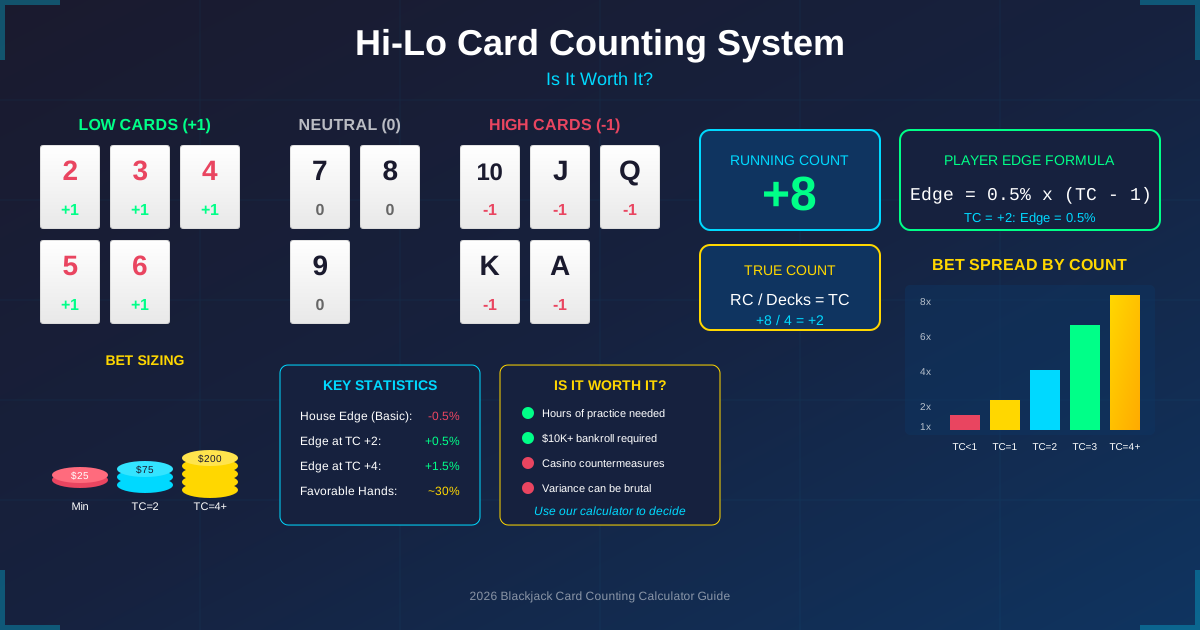
Computer simulations have shown that perfect baccarat card counting (knowing every card remaining in the shoe) produces a maximum player edge of approximately 0.0019% on the best count-triggered bets. Compare this to blackjack card counting, which produces edges of 0.5-1.5%.
Baccarat Card Counting Analysis:

Best known count system (for Banker/Player switching):
  Frequency of advantageous situations: ~0.5% of hands
  Average edge when betting on advantageous hands: ~1.5%
  Net advantage over all hands: ~0.0075%

  At $100/hand, 80 hands/hour:
  Expected hourly profit: $0.60

  That is $0.60 per hour for professional-level counting.

Blackjack card counting for comparison:
  Expected hourly profit (same bet): $40-$80
The card removal effect in baccarat is tiny because the game uses 8 decks and the drawing rules minimize the impact of shoe composition. Baccarat card counting is an intellectual exercise, not a viable advantage play strategy.
Explore the mathematics of baccarat counting with our Baccarat Card Counting Calculator.
The Edge Bet Exception
"Edge sorting" (exploiting manufacturing asymmetries in card backs to identify high and low cards) produced real advantages for advantage players like Phil Ivey, who reportedly won over $20 million using this technique. However:
- It is not card counting -- it exploits physical card defects
- Courts have ruled it fraud in several jurisdictions
- Casinos now use cards designed to prevent edge sorting
- It is not available to typical players
For practical purposes, there is no exploitable advantage available to baccarat players through any form of card analysis.
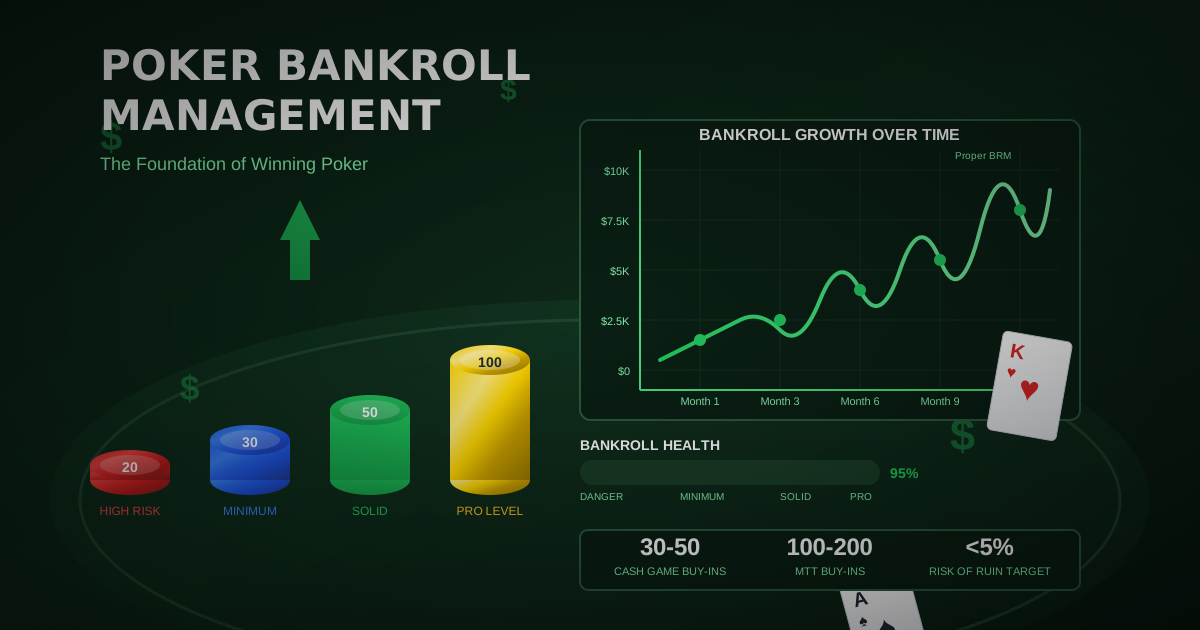
Baccarat Bankroll Management
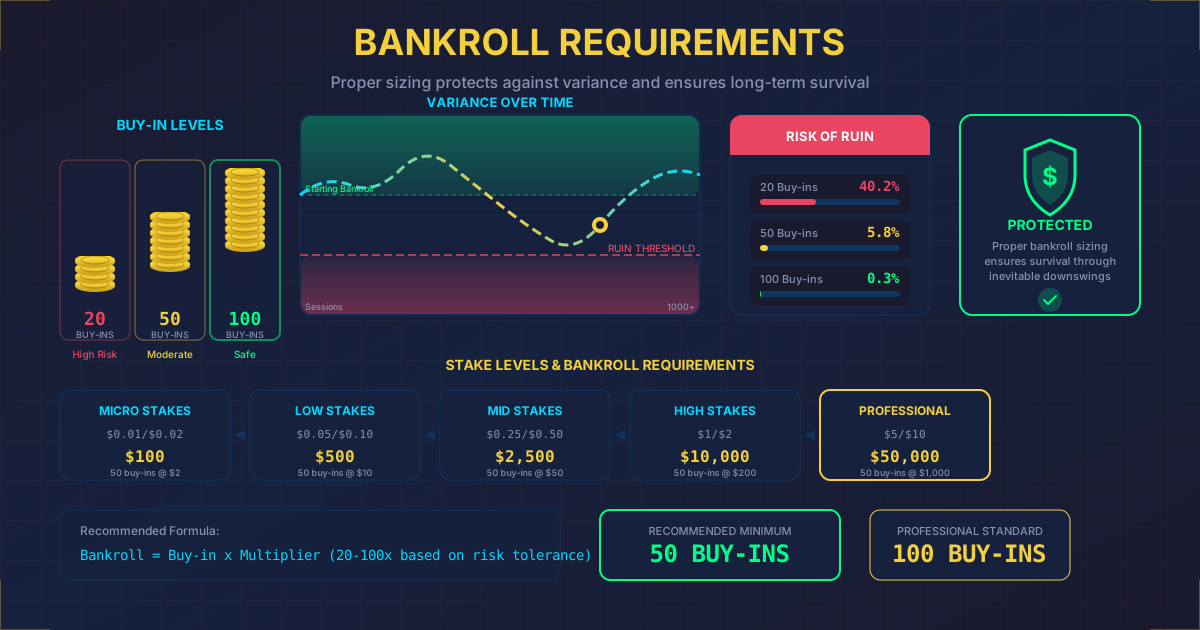
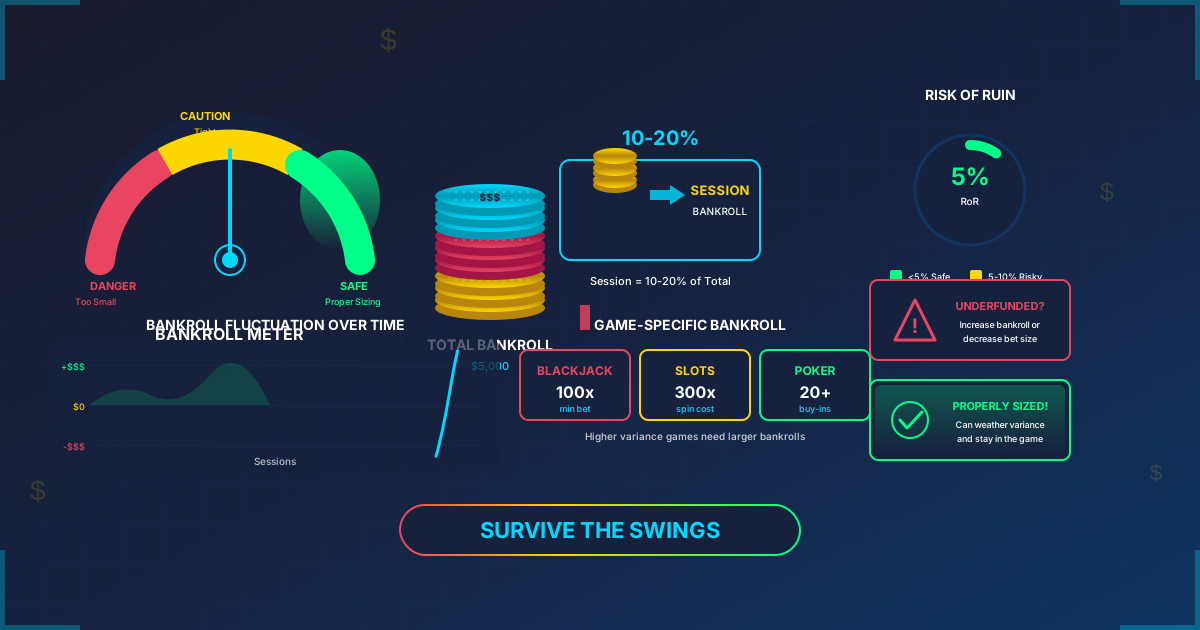
Since you cannot gain an edge in baccarat, bankroll management becomes about maximizing playing time and controlling losses.
Session Bankroll Guidelines
| Bet Level | Conservative (40x) | Moderate (30x) | Minimum (20x) |
|---|---|---|---|
| $25 | $1,000 | $750 | $500 |
| $50 | $2,000 | $1,500 | $1,000 |
| $100 | $4,000 | $3,000 | $2,000 |
| $500 | $20,000 | $15,000 | $10,000 |
Expected Loss and Playing Time
$100 Banker Bet, 80 hands/hour:
  Expected loss per hour: $84.80
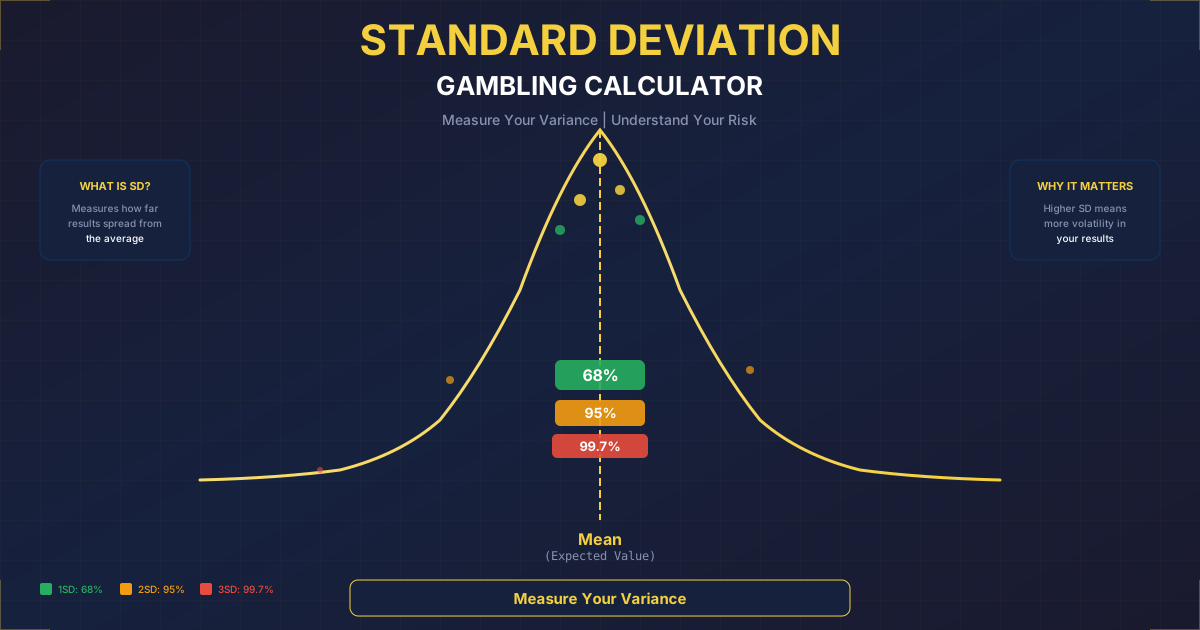
  Standard deviation per hour: ~$890

  With $3,000 bankroll:
    68% chance: Session lasts 3-6 hours
    95% chance: Session lasts 1-10+ hours
    Expected loss over 4 hours: $339.20
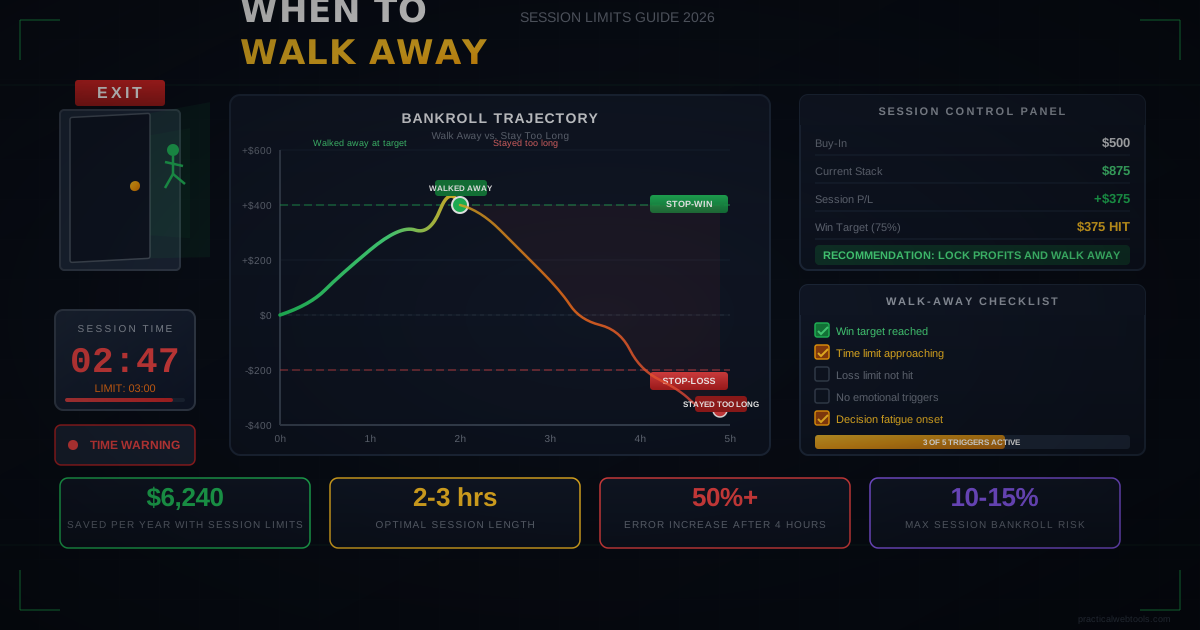
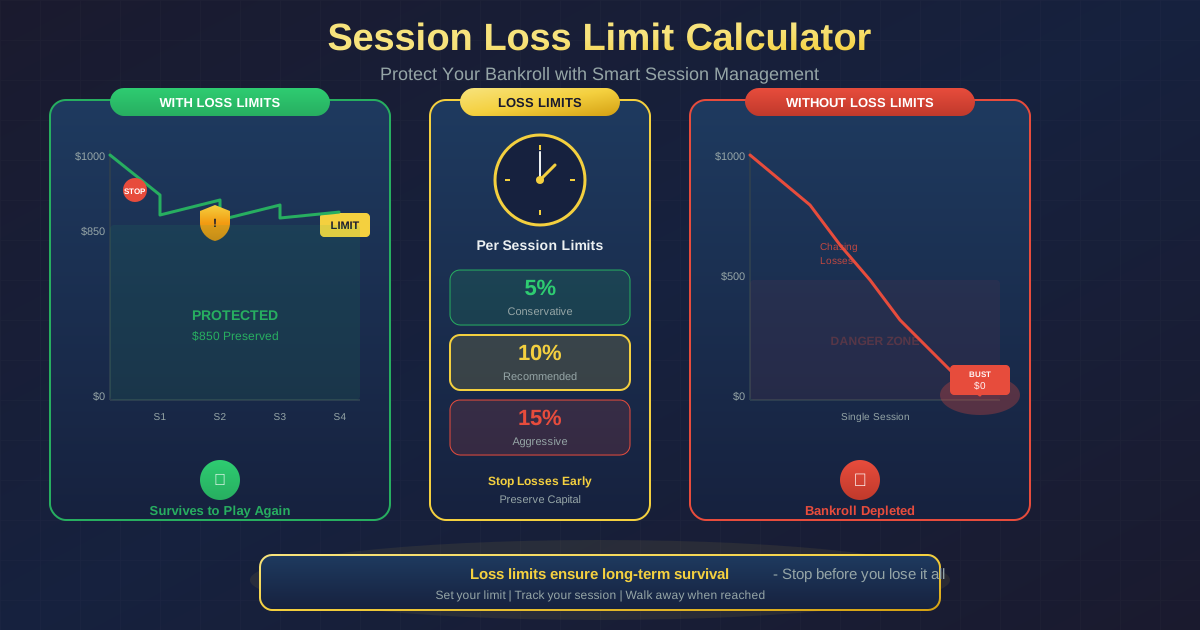
Win/Loss Limits for Baccarat
Because baccarat has no skill component to improve your edge, discipline in bankroll management is the only controllable factor.
- Loss limit: 30-50% of session bankroll. Lose $1,000 of your $3,000? Stop.
- Win goal: 20-30% of session bankroll. Up $600-$900? Consider stopping.
- Time limit: 2-4 hours. Longer sessions mean more decisions, and more decisions mean results converging toward expected loss.
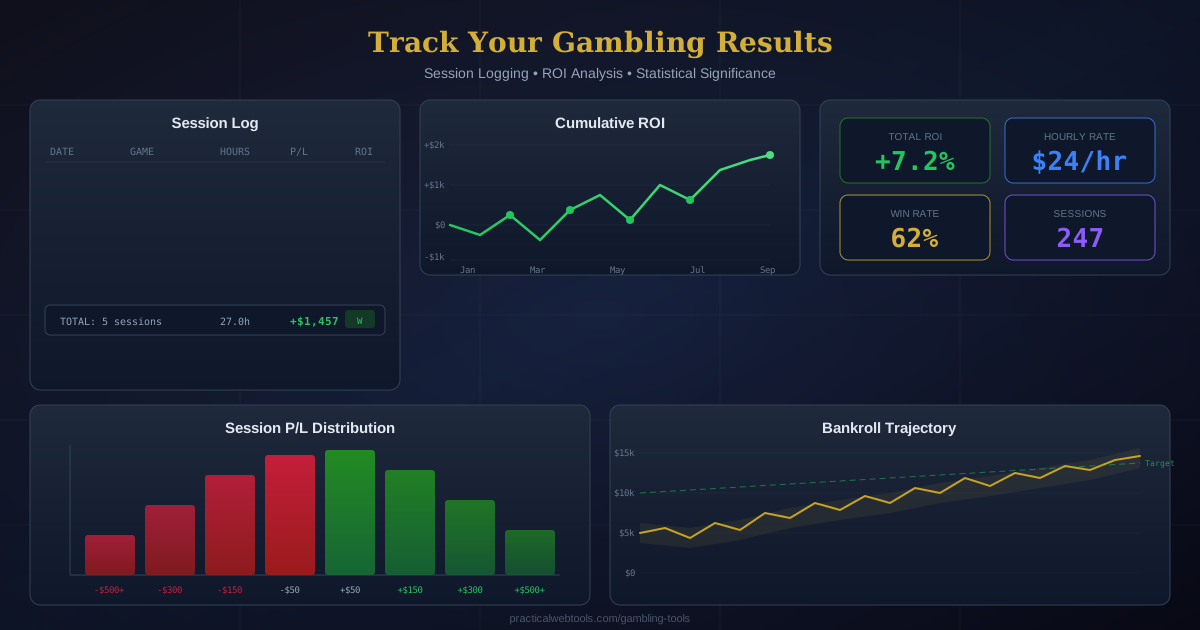
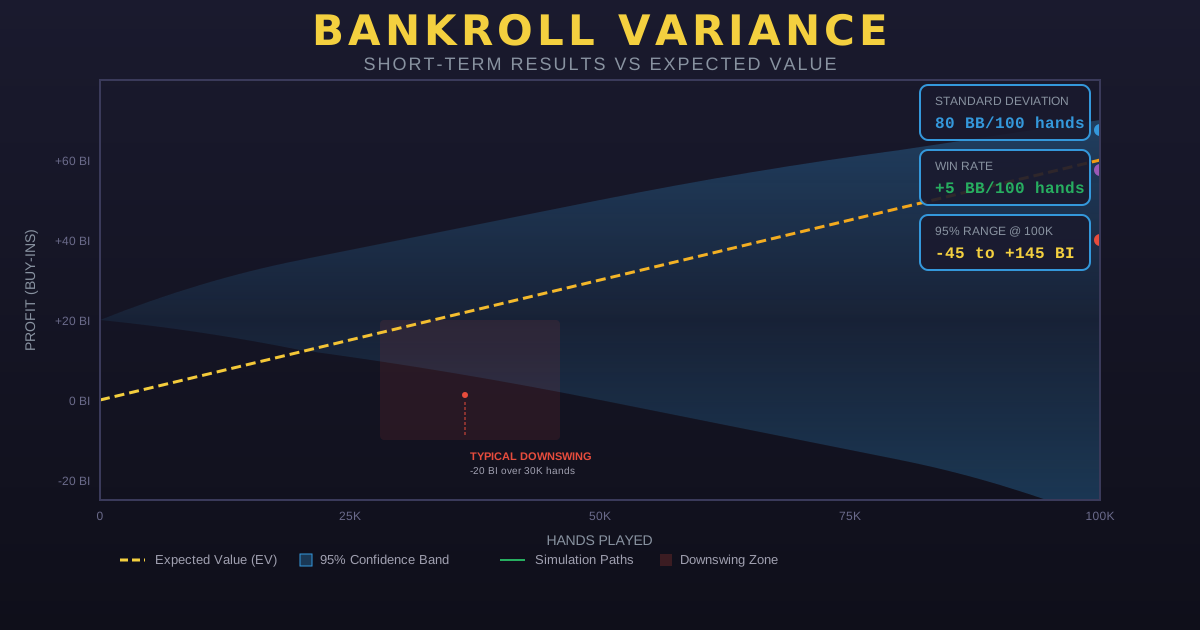
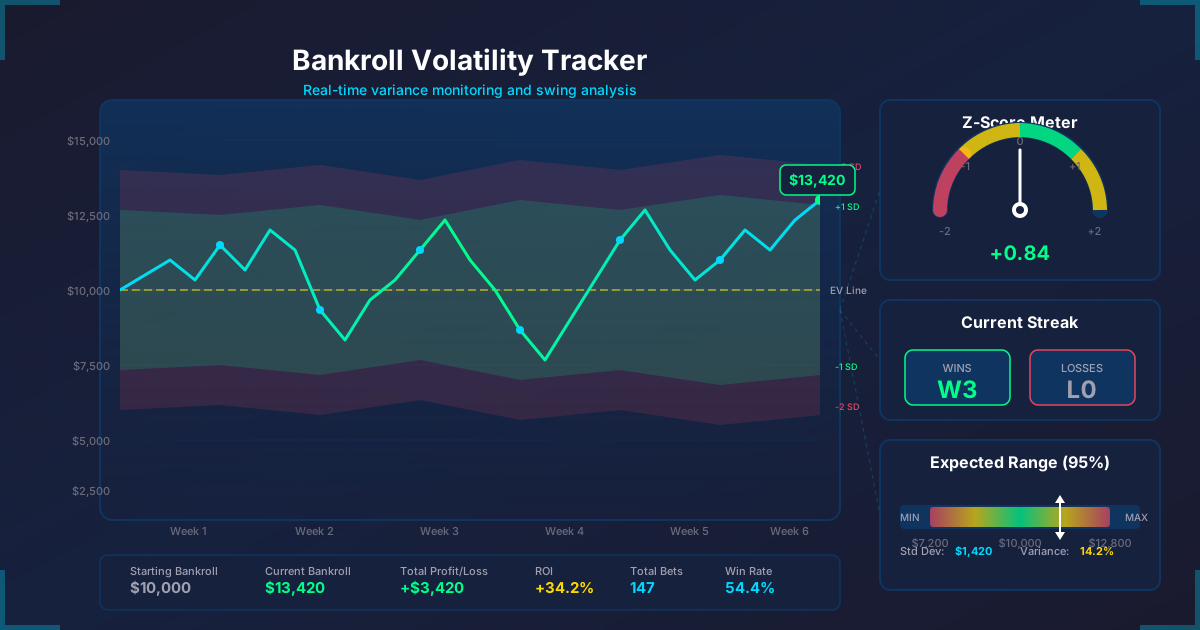
Track your session results with our Bankroll Volatility Tracker.
Real-World Baccarat Session Examples
Example 1: The Optimal Baccarat Player
Rachel bets $100 Banker every hand, no side bets, no Tie, 4-hour session.
Hands: 320
Total wagered: $32,000
Expected loss: $339.20
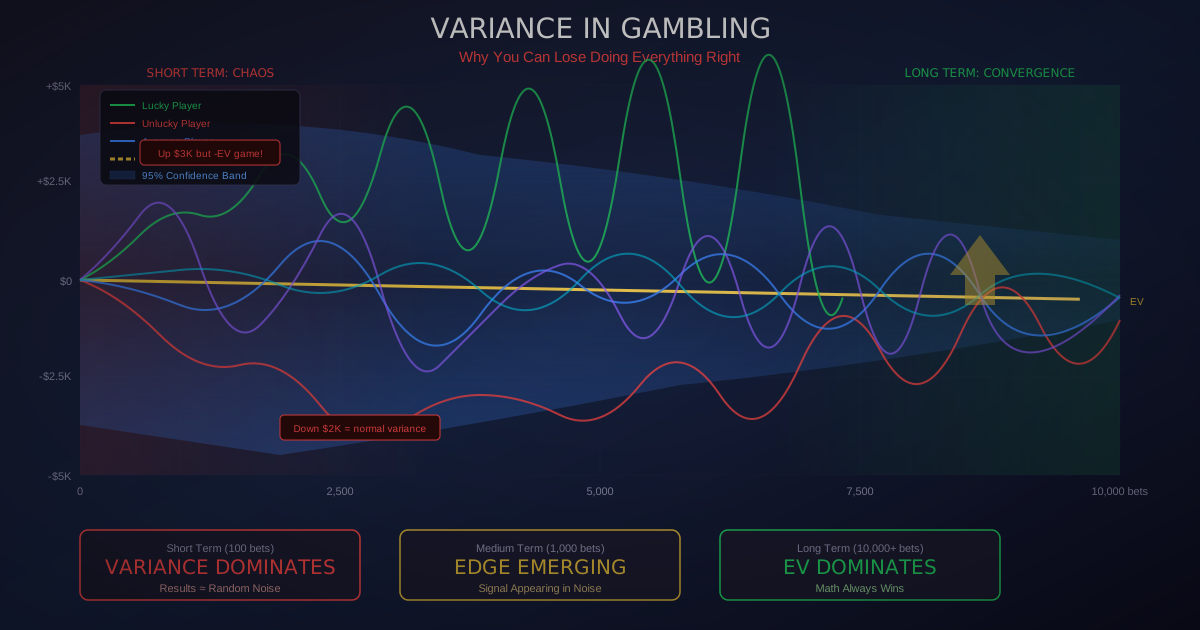
Standard deviation: ~$1,780

68% of sessions: -$2,119 to +$1,441
95% of sessions: -$3,899 to +$3,221

Rachel's expected hourly cost: $84.80
Most sessions: moderate loss or moderate win
Occasional big loss or big win (variance)
Example 2: The Pattern Bettor
Kevin studies scorecards and alternates Banker/Player based on perceived patterns, adding Tie bets when he sees a "trend."
Main bets: 240 hands x $100 (Banker or Player, roughly equal)
  Average house edge: ~1.15% (midpoint of B/P)
  Expected loss: $27,600

Tie bets: 80 hands x $50 (when he thinks Tie is "due")
  Expected loss: $50 x 80 x 14.36% = $574.40

Total expected loss: $27,600 x 1.15% + $574.40
  = $317.40 + $574.40 = $891.80

Kevin's pattern betting does not improve his main bet results
but his Tie bets add $574.40 in expected losses.
Compared to Rachel's $339.20, Kevin loses $552.60 more.
Example 3: The High-Roller Side Bettor
Diana plays $500 Banker with $100 Dragon Bonus and $50 Tie, 2-hour session.
Hands: 160
Banker: 160 x $500 x 1.06% = $848.00
Dragon Bonus: 160 x $100 x 2.65% = $424.00
Tie: 160 x $50 x 14.36% = $1,148.80

Total expected loss: $2,420.80
Loss without side bets: $848.00
Side bets triple her expected losses.
Model any session configuration with our Expected Value Calculator.
The Optimal Baccarat Strategy (Complete)
Here is the complete optimal baccarat strategy. It is simple by design because baccarat is a simple game with no meaningful strategic decisions.
Step 1: Choose Banker (Standard Commission) or Player (No Commission)
- Standard baccarat with 5% commission: Bet Banker (1.06% edge)
- Commission-free baccarat: Bet Player (1.24% vs. 1.46%)
- Never switch between Banker and Player based on previous results
Step 2: Never Bet Tie
- 14.36% house edge at 8:1 payout
- 4.84% house edge at 9:1 payout
- Both are dramatically worse than Banker or Player
Step 3: Avoid All Side Bets
- Dragon Bonus at 2.65% is the "least bad" but still 2.5x worse than Banker
- All other side bets carry 4-15% edges
Step 4: Flat Bet
- Bet the same amount every hand
- No progression system changes the house edge
- Betting patterns based on previous results have no mathematical basis
Step 5: Set Limits and Honor Them
- Loss limit: 30-50% of session bankroll
- Win goal: 20-30% of session bankroll
- Time limit: 2-4 hours
Step 6: Enjoy the Game for What It Is
- Baccarat is a coin flip with a 1% house fee
- The casino provides a luxurious environment, drinks, and entertainment
- The cost of play ($85-$125/hour at $100/hand) is the price of admission
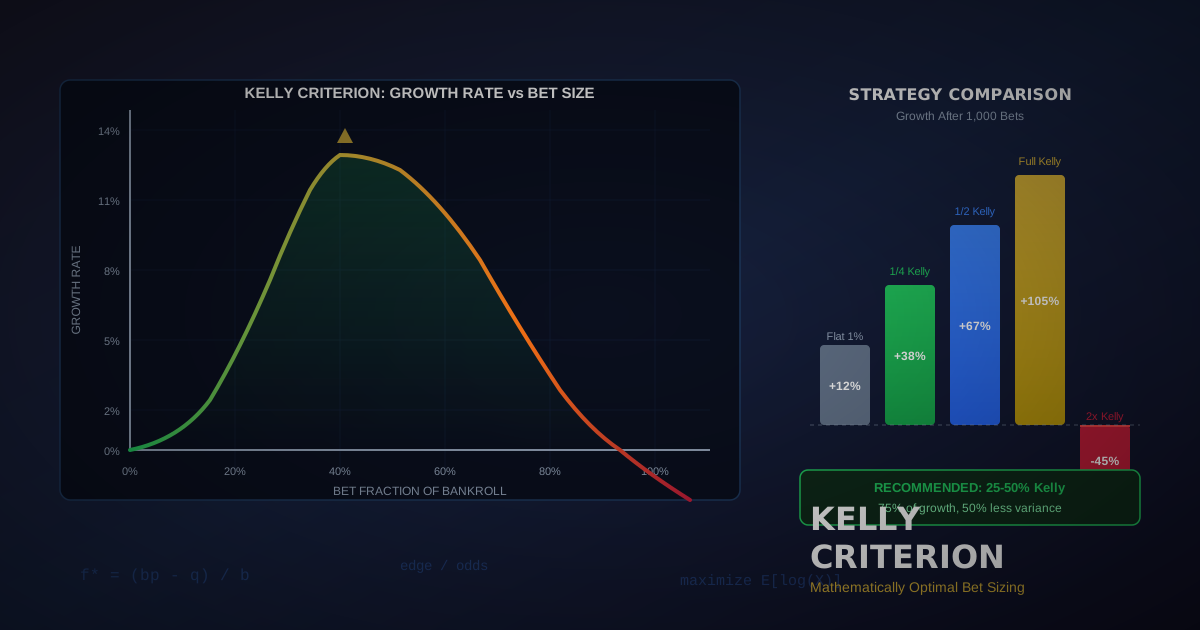
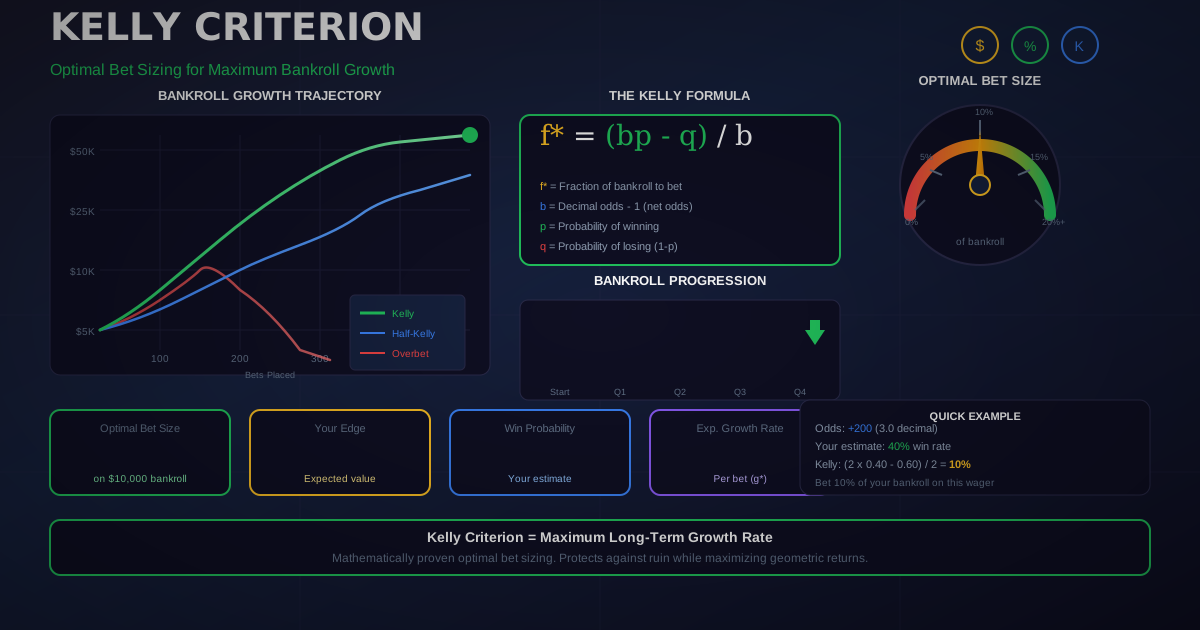
Use our Kelly Criterion Calculator to understand why no bet sizing system can improve negative-EV games.
Debunking Common Baccarat Myths
Myth 1: "Streaks" Are Predictable
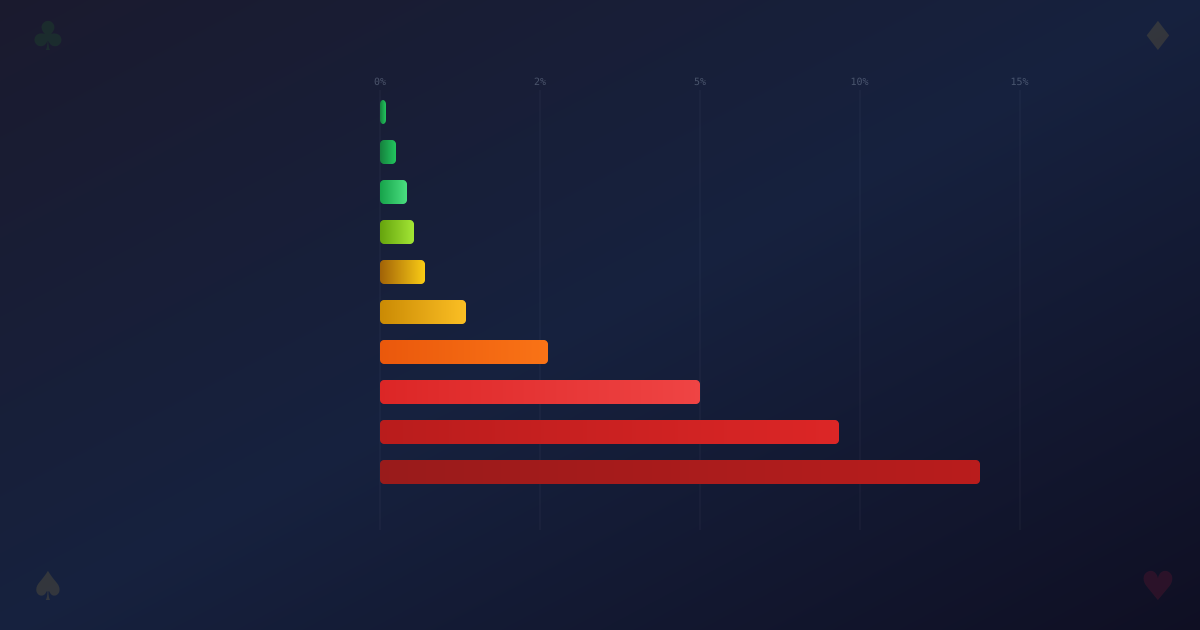
Streaks occur in baccarat with mathematical regularity. In 80 hands, you will typically see 2-3 runs of 4+ consecutive Banker or Player wins. These are not trends; they are statistical certainties in random sequences.
Expected streak lengths in 80 hands:
  Run of 3+: ~8 occurrences
  Run of 4+: ~3 occurrences
  Run of 5+: ~1.5 occurrences
  Run of 6+: ~0.7 occurrences
  Run of 7+: ~0.3 occurrences

These frequencies match what random coin flips produce.
Myth 2: Scorecards Reveal Patterns
Casino-provided scorecards (Big Road, Bead Plate, Big Eye Boy, Small Road, Cockroach Pig) present previous results in various visual formats. They are designed to encourage pattern betting, which increases handle (total amount wagered) without changing the house edge. Casinos provide them because they make players bet more, not because they help players win.
Myth 3: The Banker Bet Is "Due" After Player Streaks
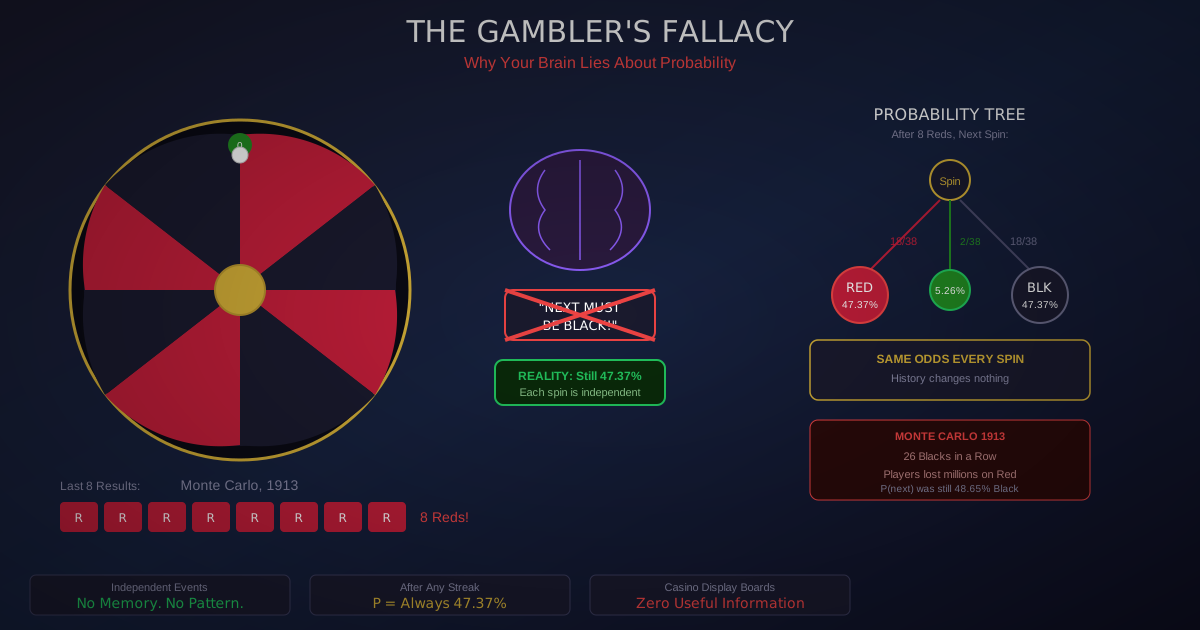
The gambler's fallacy in action. After 8 consecutive Player wins, the probability of Banker winning the next hand is still 45.86%. Not higher. Not lower. Each hand is independent. The shoe does not self-correct.
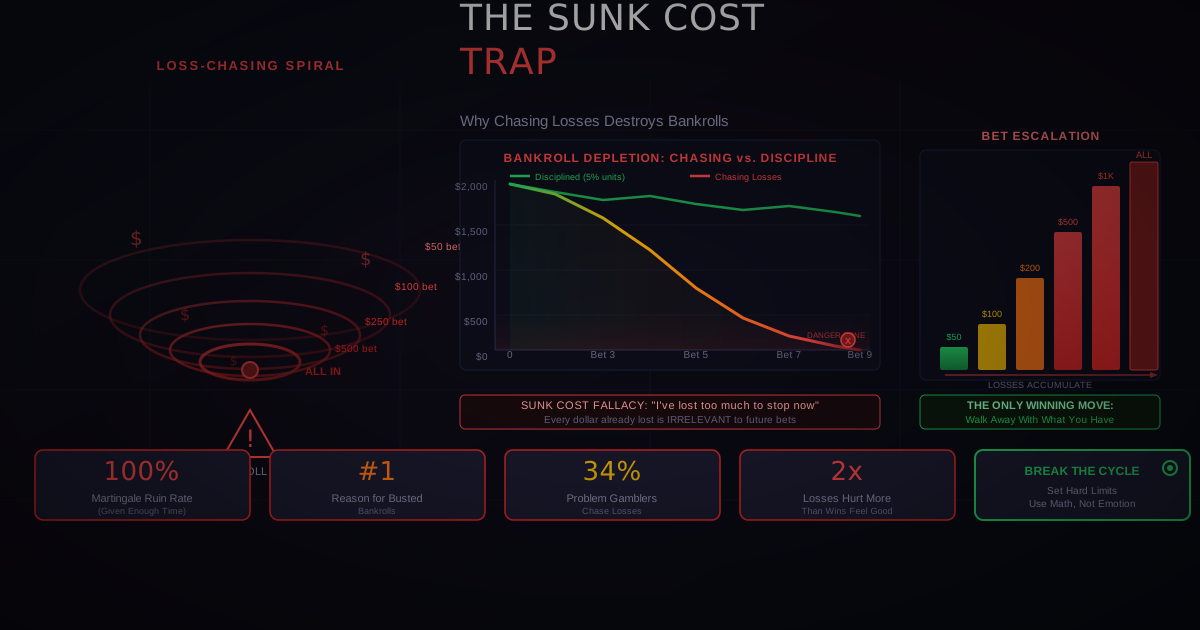
Myth 4: Progression Systems Beat Baccarat
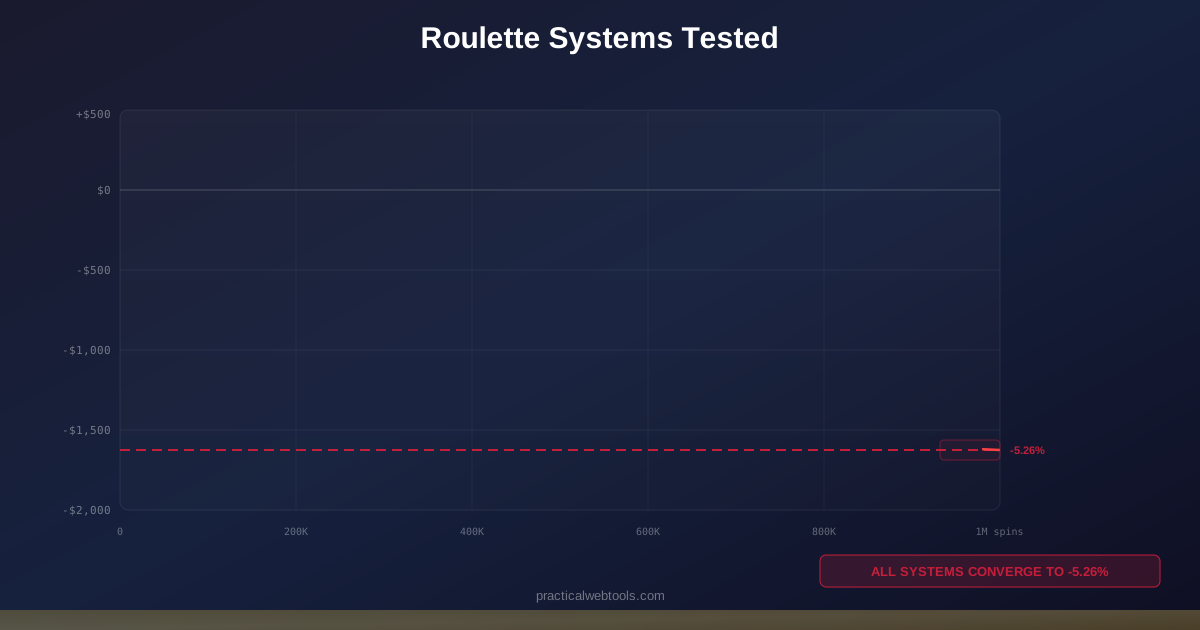
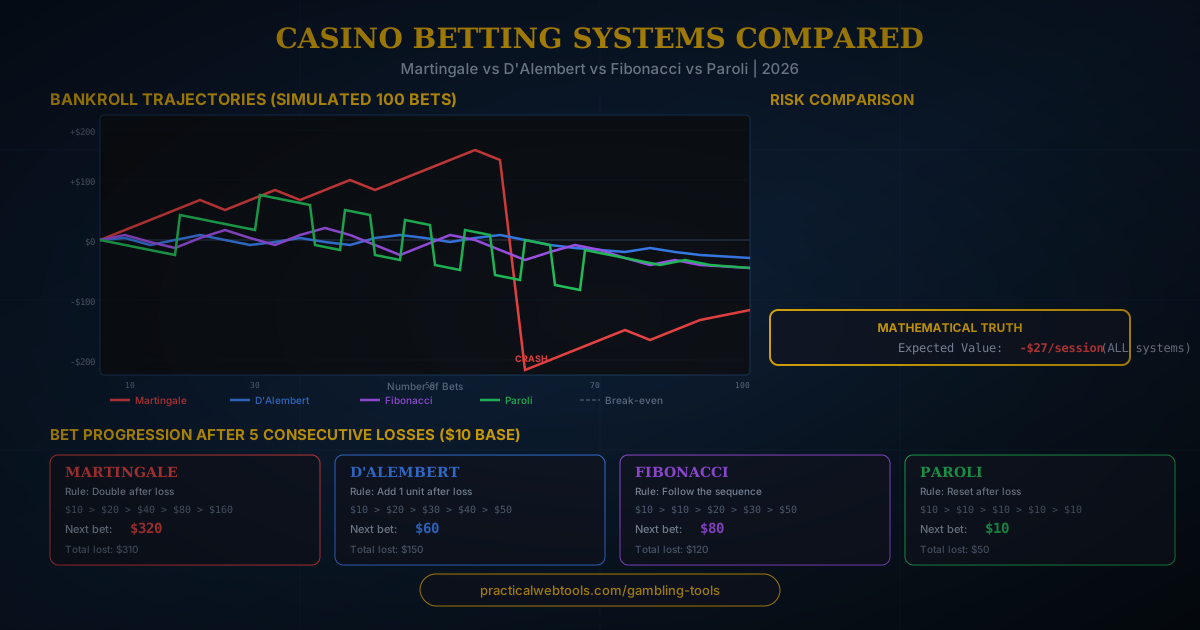
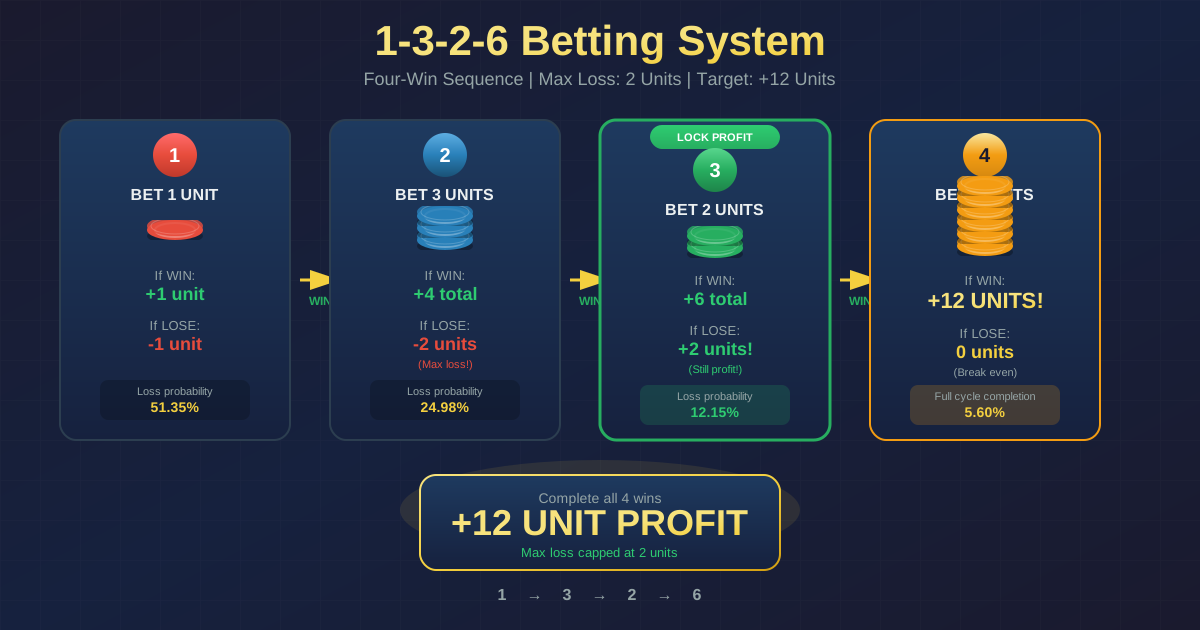
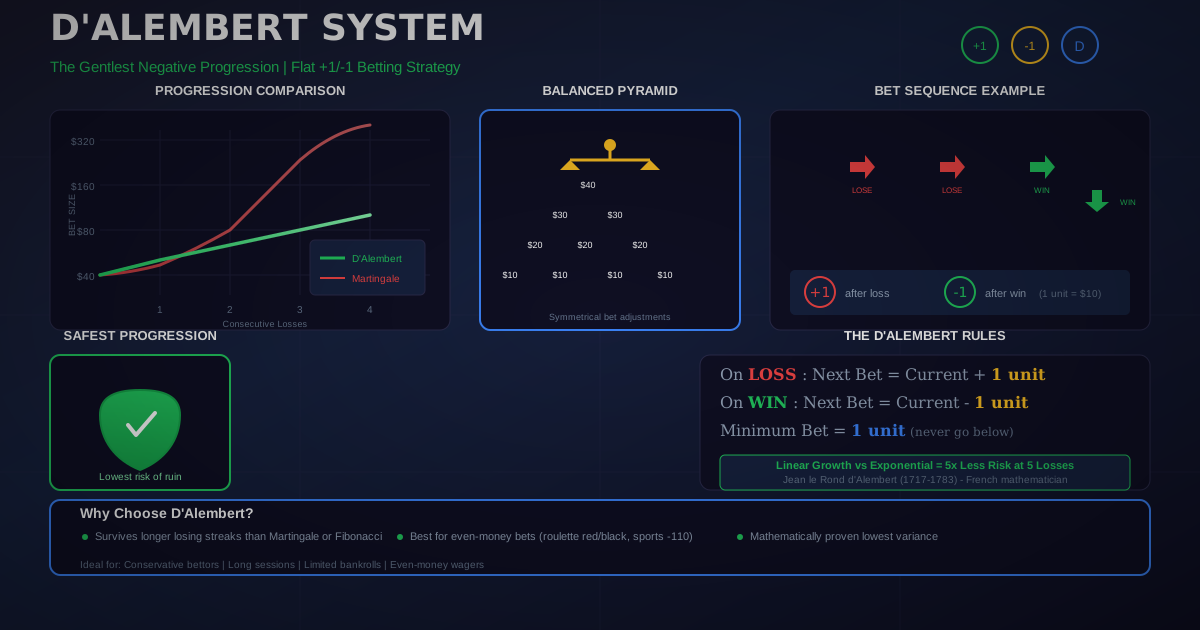
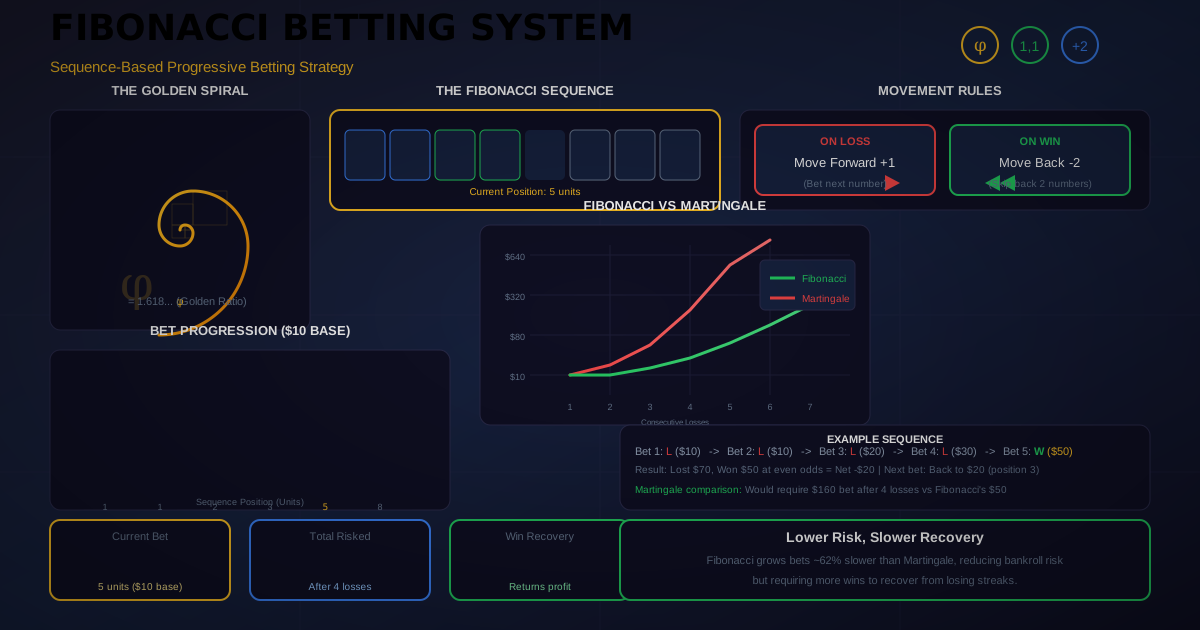
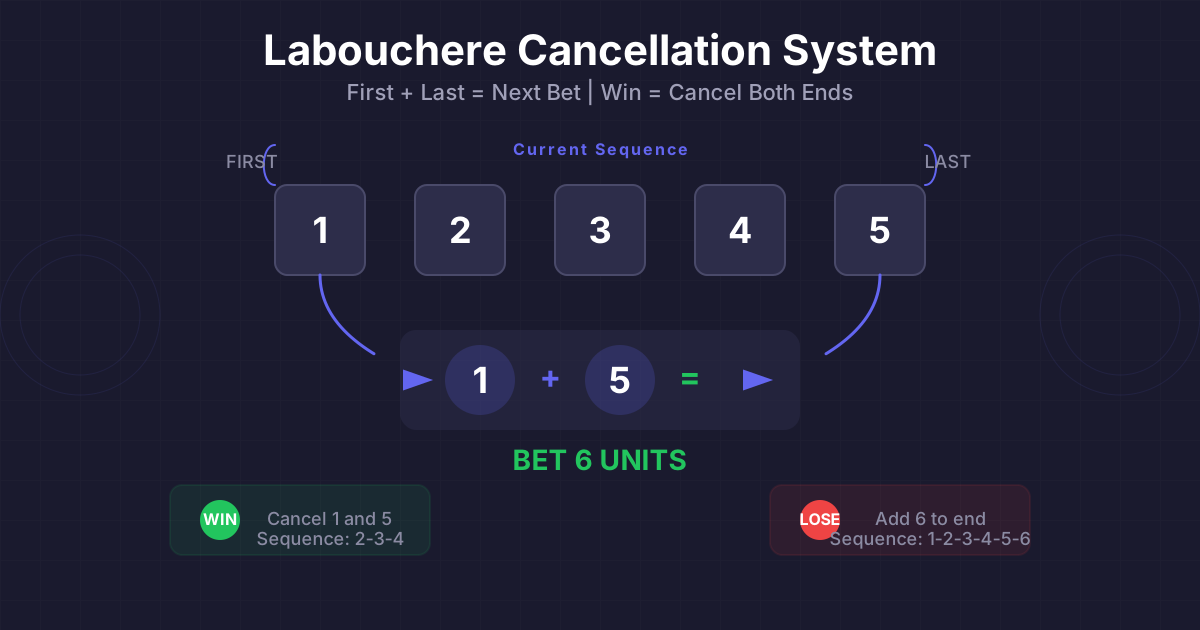
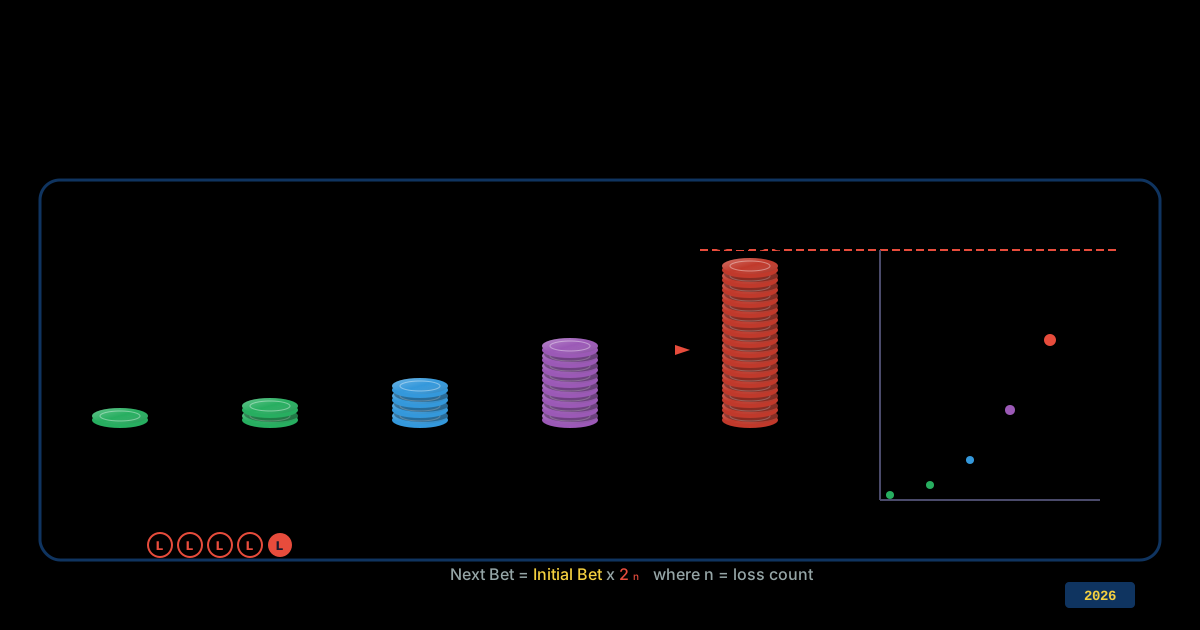
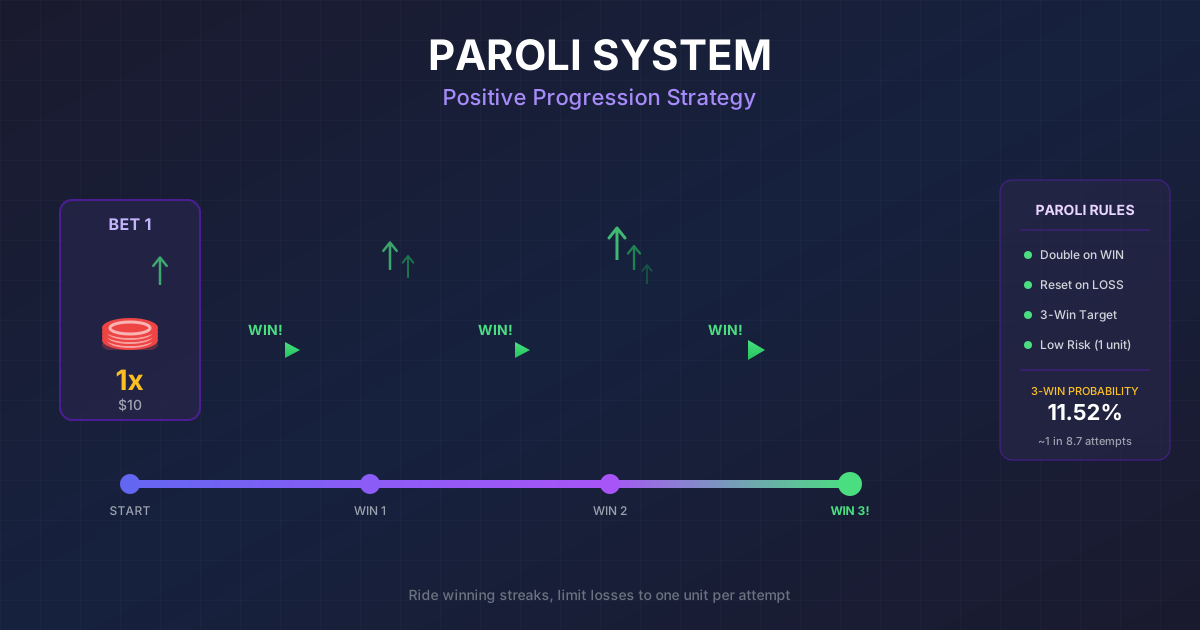
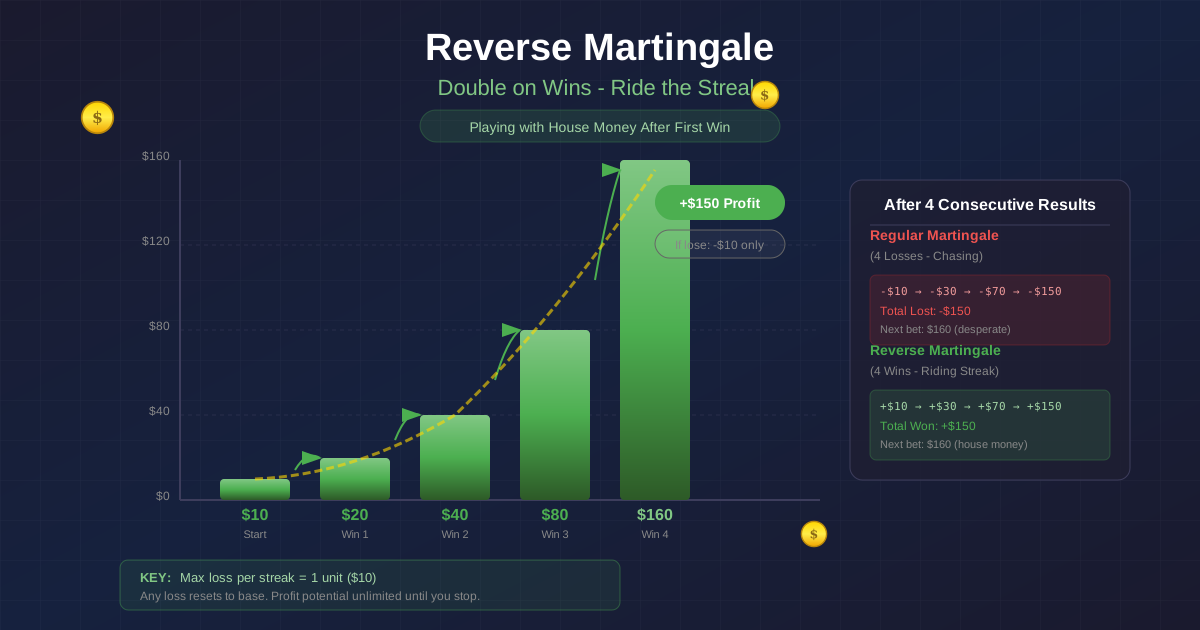
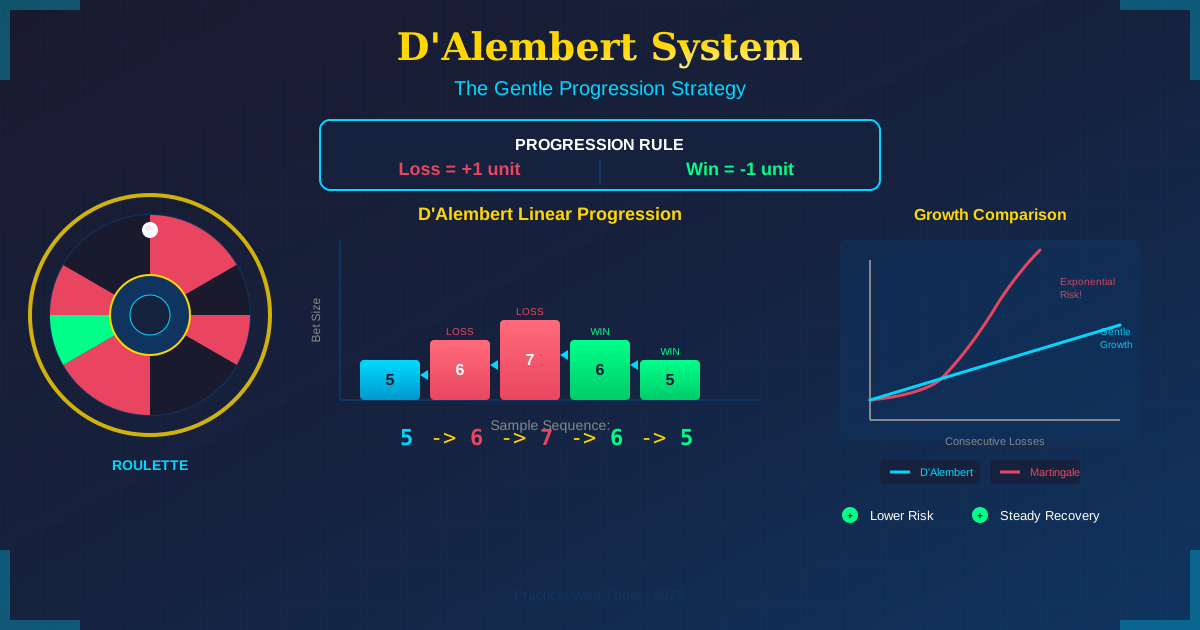
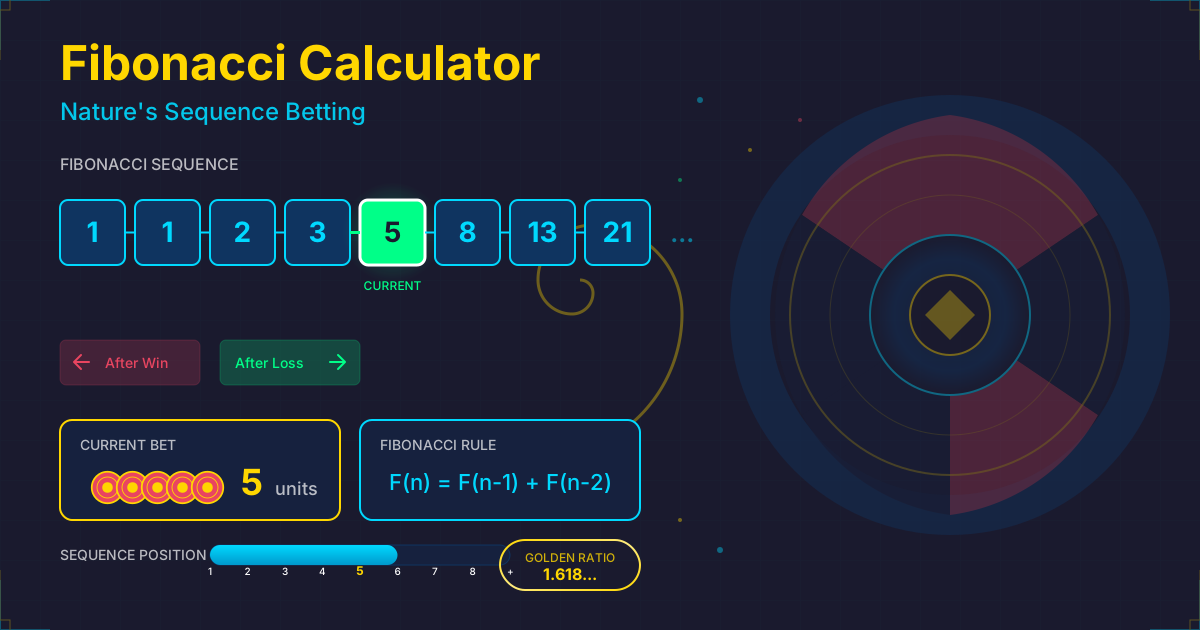
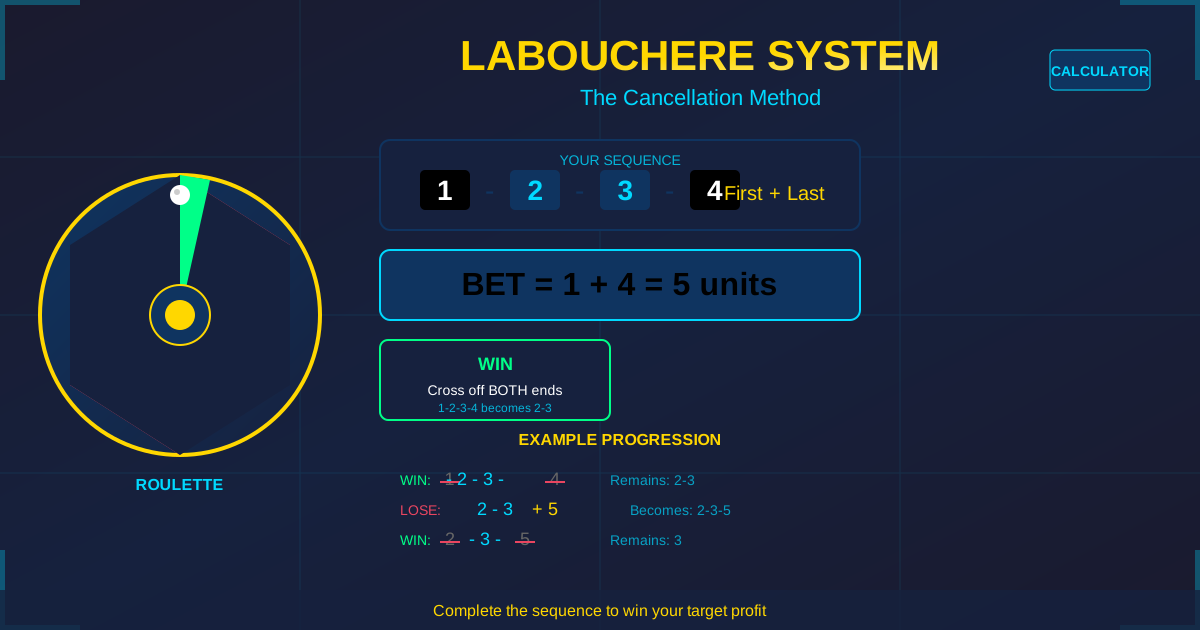
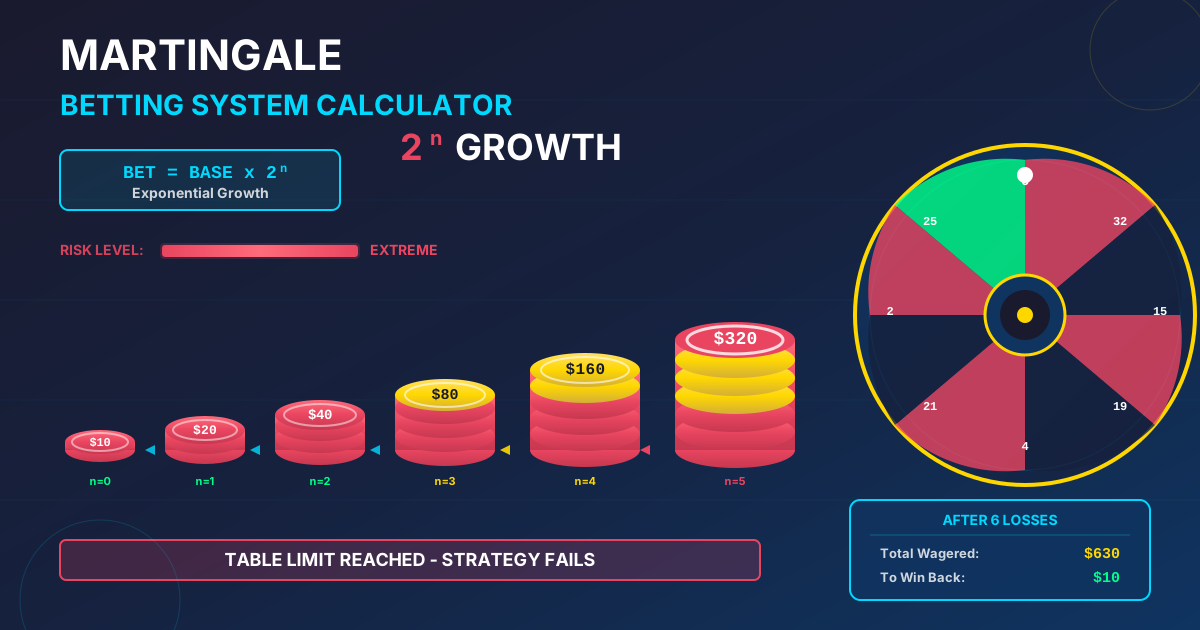
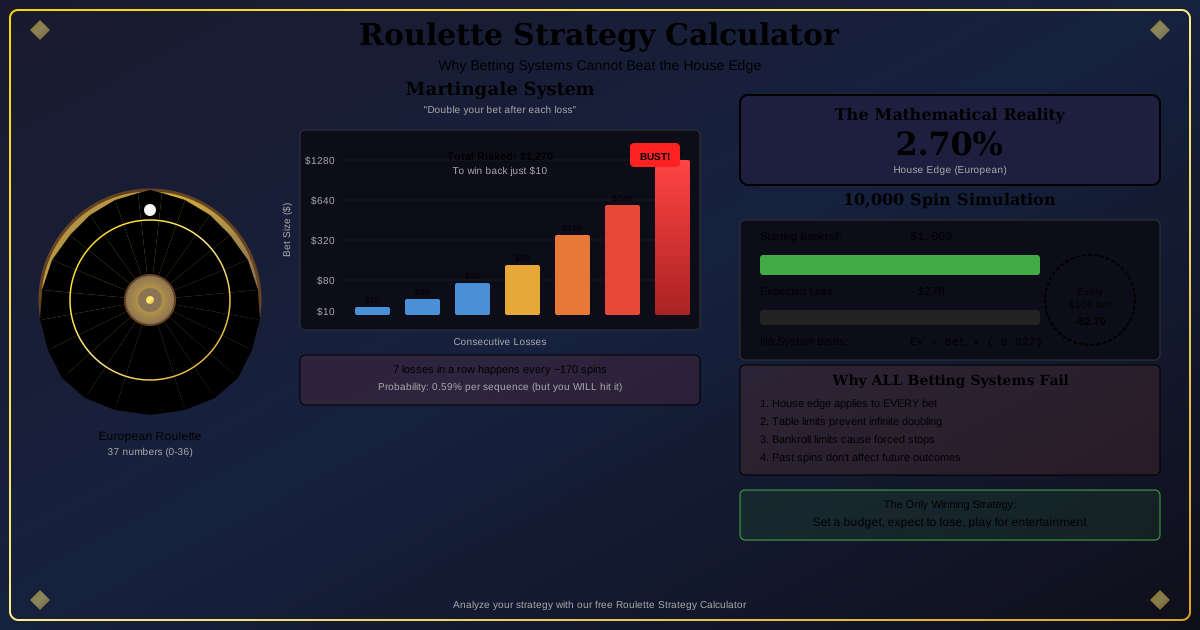
Martingale, Fibonacci, 1-3-2-6, Labouchere -- every system produces the same expected loss percentage over time. Systems change the distribution of outcomes (more small wins and fewer big losses, or vice versa) without changing the expected value. See our roulette systems article for 1 million spin simulation data that proves this conclusively.
Myth 5: Counting Cards Works in Baccarat
The maximum theoretical edge from perfect baccarat card counting is approximately 0.0075% of total action. At $100/hand and 80 hands/hour, that is $0.60/hour. It is not worth the mental effort or the risk of casino heat.
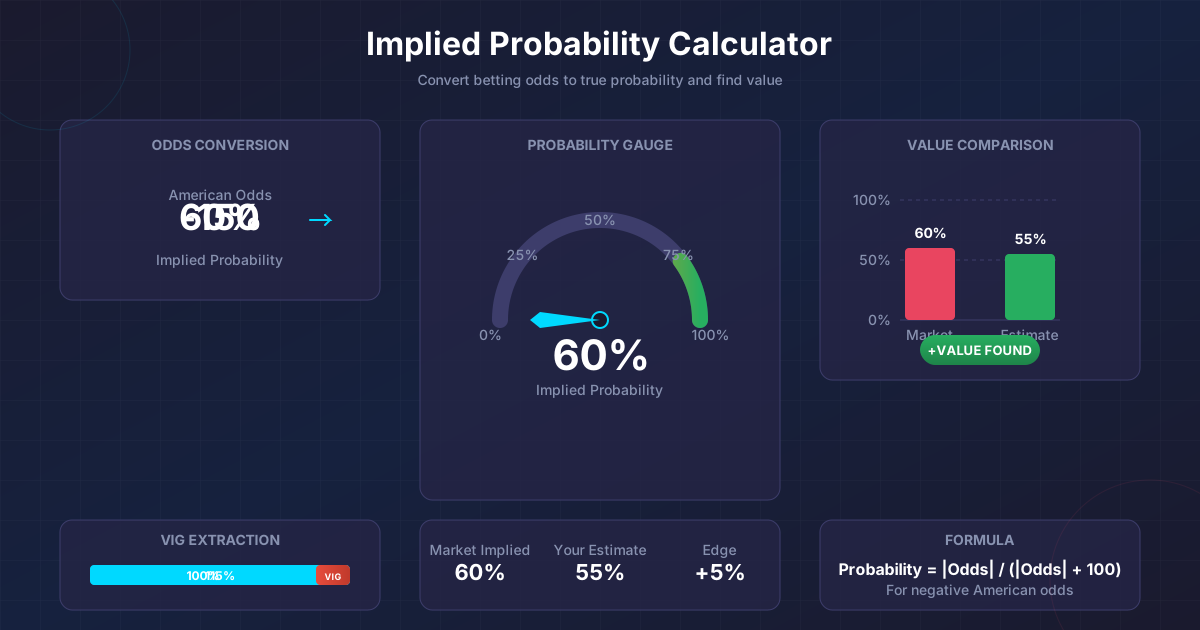
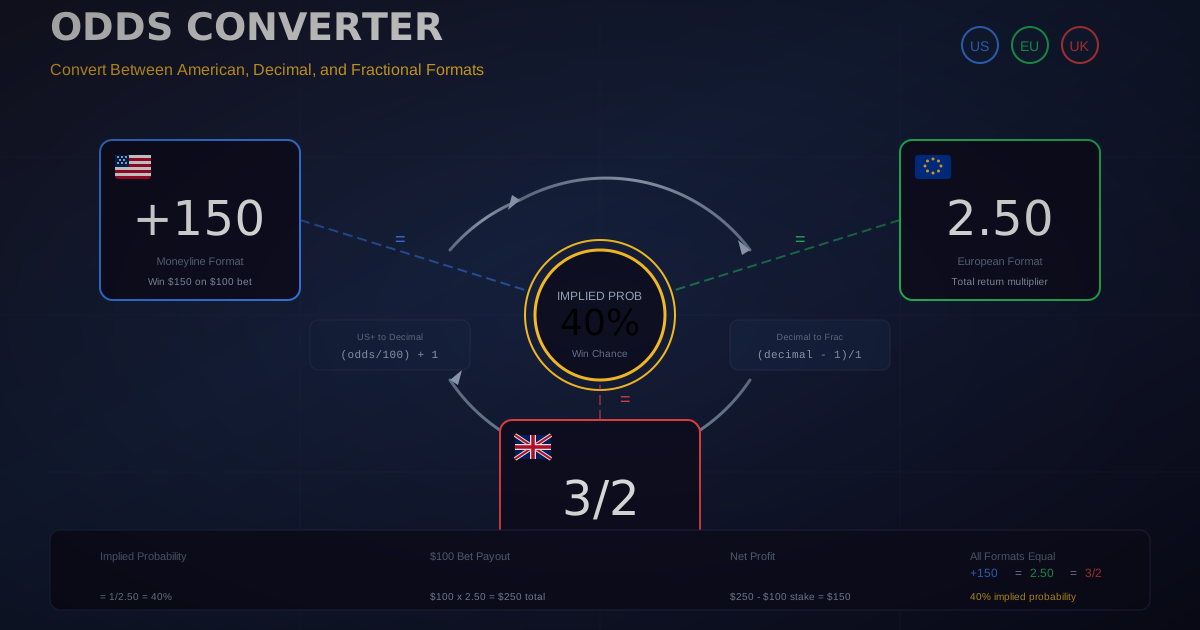
Convert any odds format to understand true probabilities with our Odds Converter.
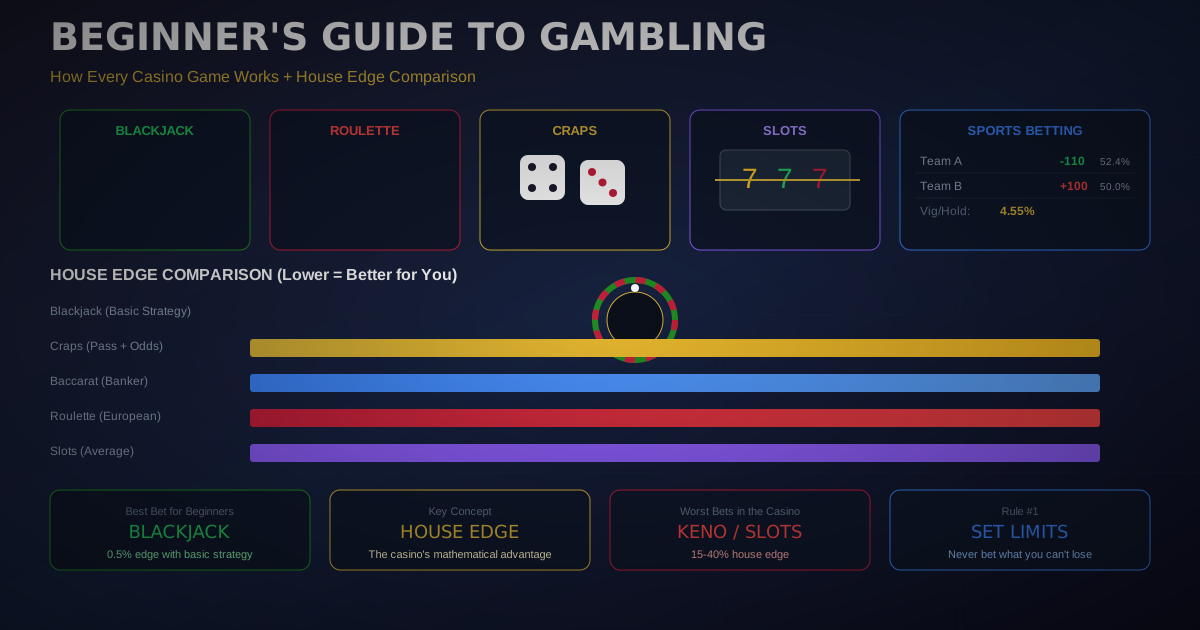
Baccarat vs. Other Casino Games: How Does It Compare?
| Game | House Edge (Optimal Play) | Skill Required | Speed (Hands/Hour) | Expected Loss ($100 bet/hr) |
|---|---|---|---|---|
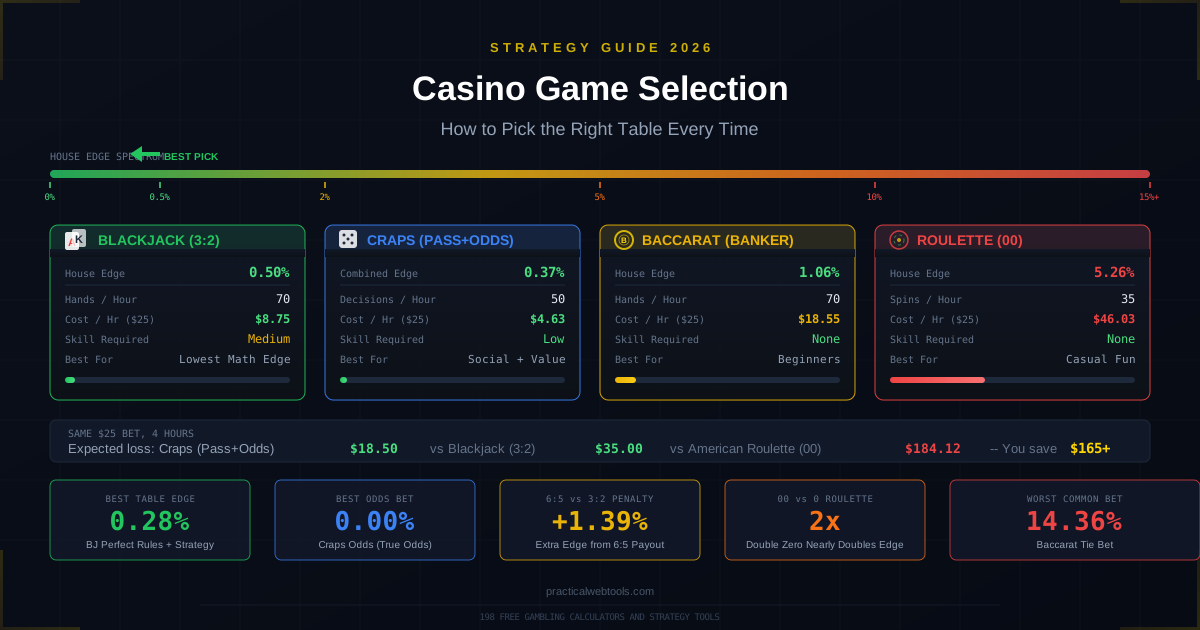
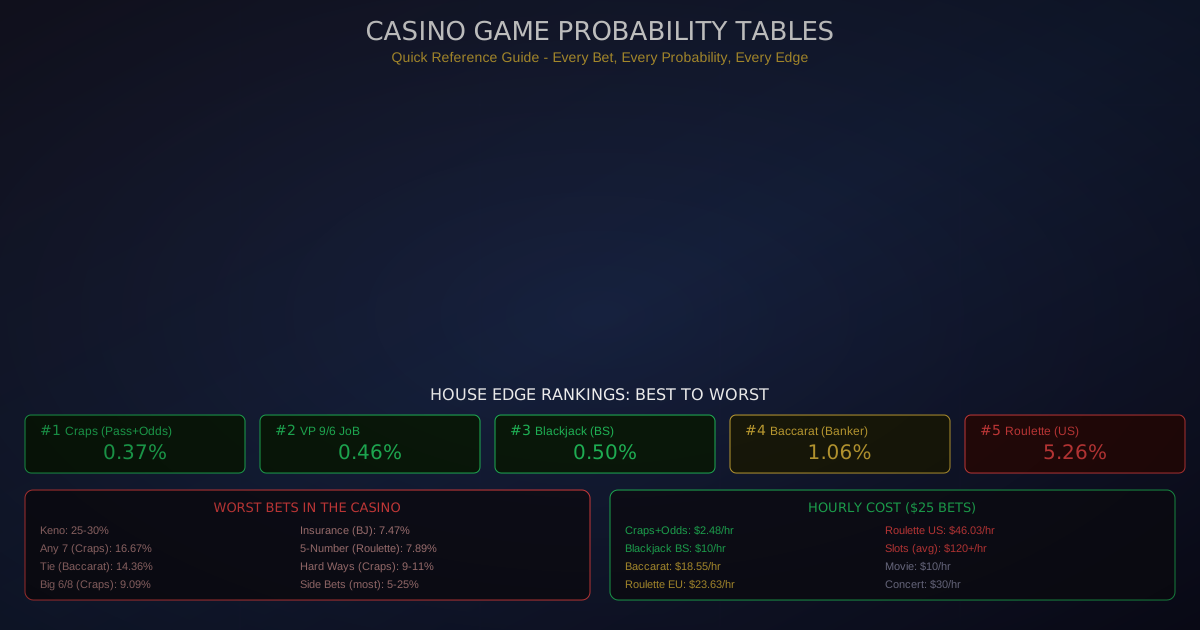
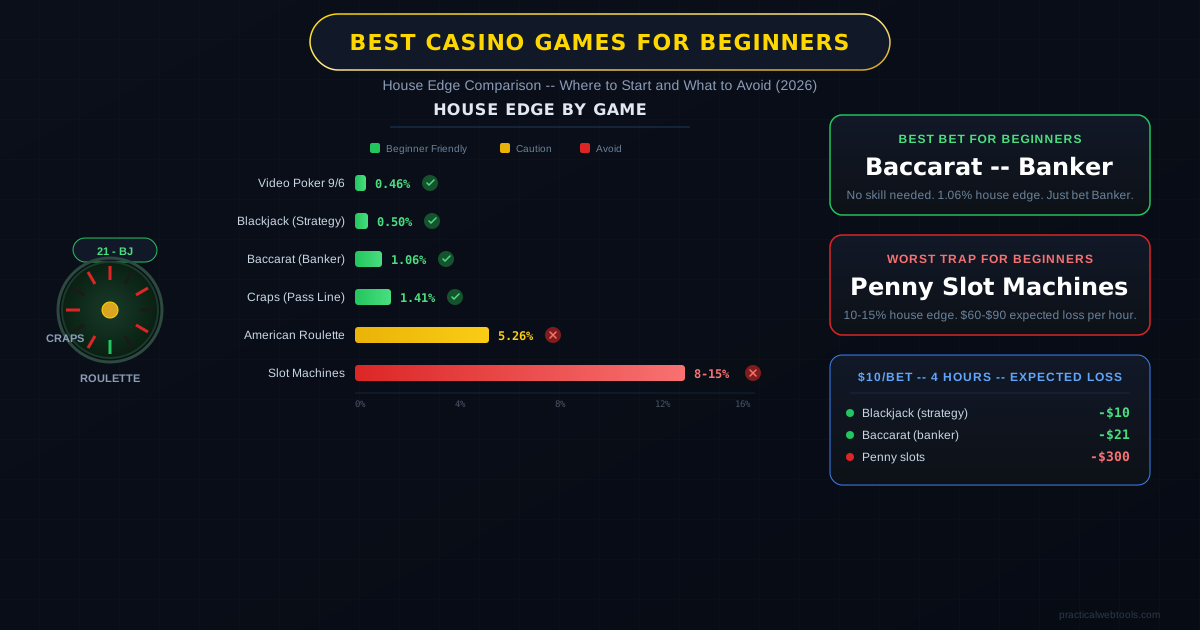
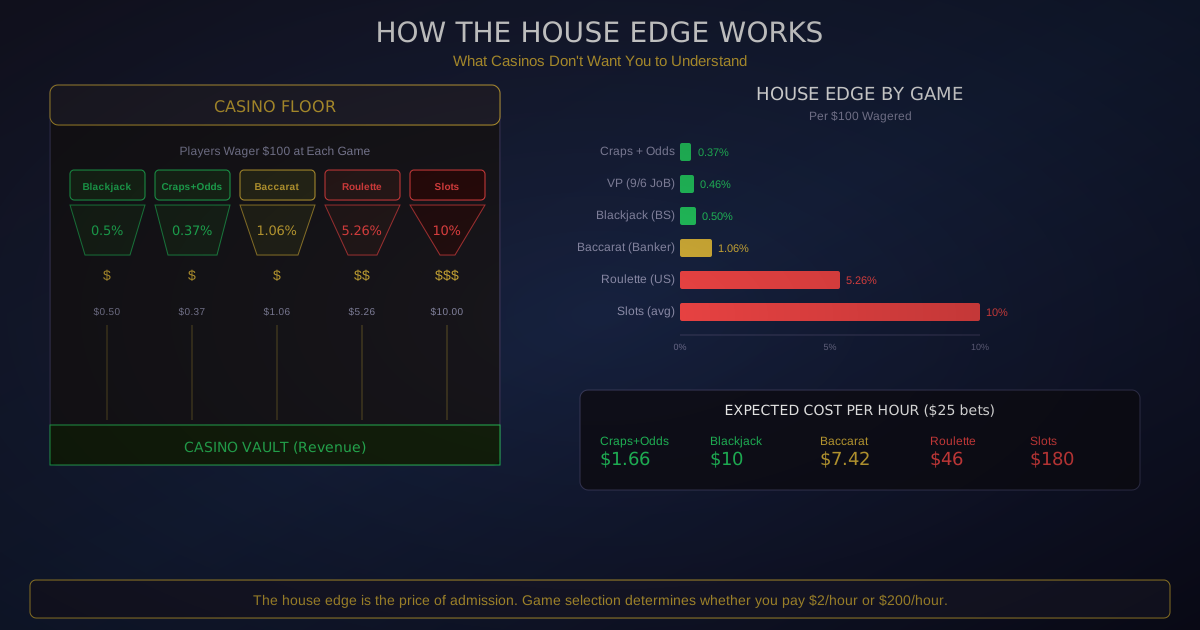
| Baccarat (Banker) | 1.06% | None | 80 | $84.80 |
| Blackjack (basic strategy) | 0.50% | Moderate | 70 | $35.00 |
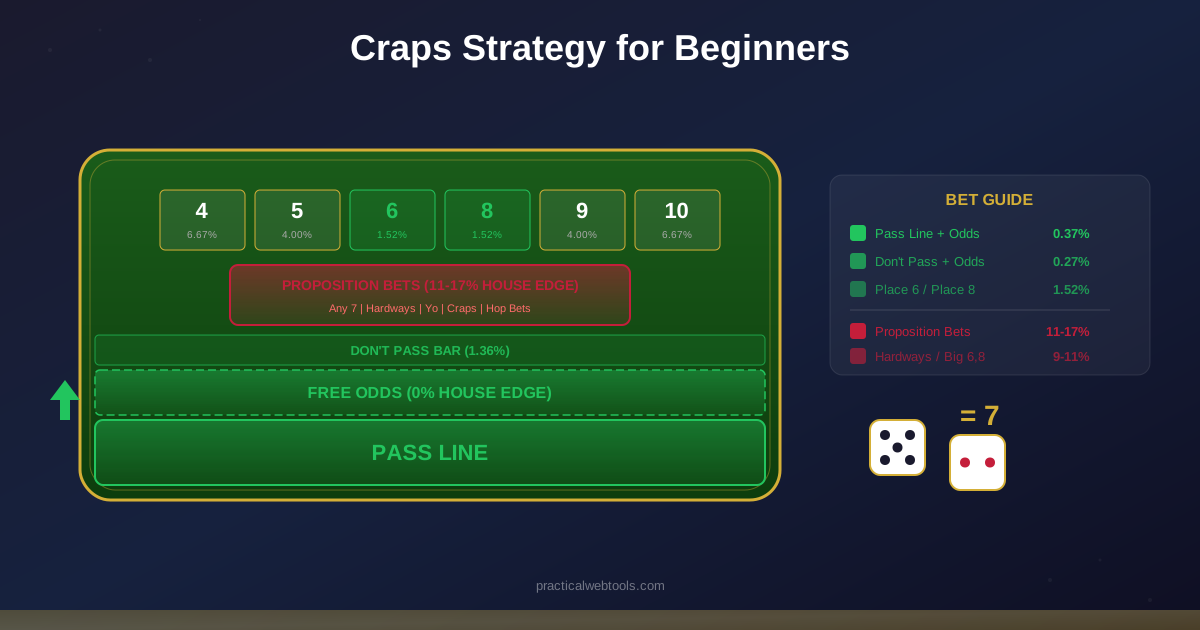
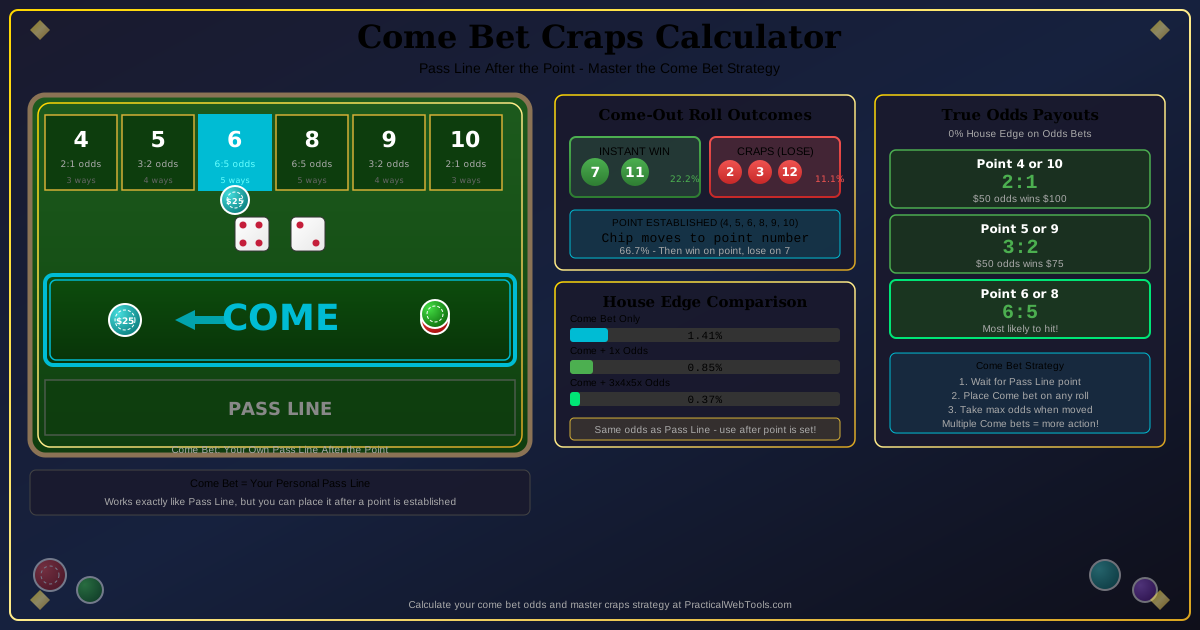
| Craps (Pass + 3-4-5x Odds) | 0.37% | None | 50 | $7.05 (on flat bet only) |
| Roulette (European) | 2.70% | None | 40 | $108.00 |
| Roulette (American) | 5.26% | None | 40 | $210.40 |
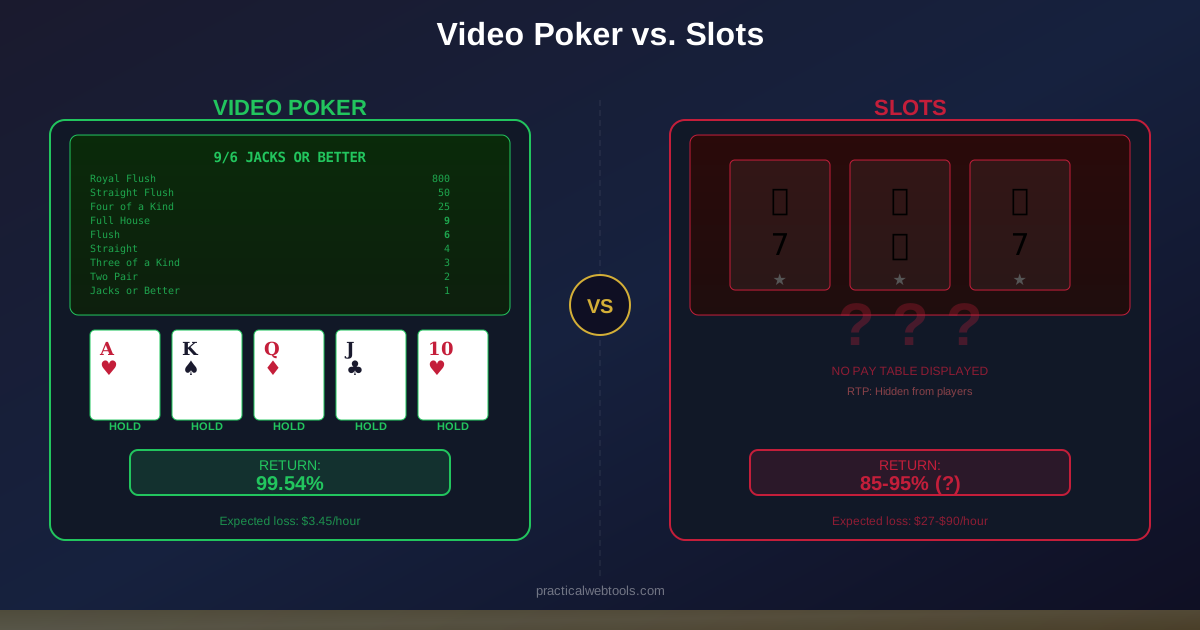
| Slots (typical) | 5-12% | None | 600+ | $500-$1,200+ |
Baccarat sits in the middle tier of casino games by house edge. Blackjack and craps (with Odds) offer better mathematical value. Roulette and slots are significantly worse. Baccarat's appeal is its simplicity -- no decisions required -- combined with a competitive house edge.
Compare baccarat to any other game with our Hold/Vig Calculator.
Frequently Asked Questions
What is the best bet in baccarat? The Banker bet with standard 5% commission has the lowest house edge at 1.06%. Player is close at 1.24%. In commission-free baccarat (where Banker 6 pays half), Player becomes the better bet at 1.24% vs. 1.46%. Never bet Tie (14.36%). Use our Baccarat House Edge Calculator to compare all bets.
Does pattern betting work in baccarat? No. We tested streak-following, streak-fading, and chop-following strategies across 100,000 hands. None produced results that differed from baseline probabilities by more than 0.04%, which is well within statistical noise. Each baccarat hand is effectively independent. The scorecards casinos provide are entertainment, not strategy tools. Verify with our Baccarat Odds Calculator.
Is card counting viable in baccarat? Theoretically yes, practically no. The maximum edge from perfect baccarat card counting is approximately 0.0075% of total action, yielding about $0.60 per hour at $100/hand. Compare this to $40-$80/hour for blackjack counting. Baccarat's 8-deck shoe and drawing rules minimize the card removal effect. See the math with our Baccarat Card Counting Calculator.
Why does the casino charge commission on Banker wins? Without the 5% commission, the Banker bet would give players a 1.24% edge due to the favorable drawing rules. The commission converts this player advantage into a 1.06% house edge. The commission is the casino's way of maintaining the house edge on a bet that would otherwise favor the player. Calculate the impact with our Baccarat Commission Calculator.
How much money should I bring to a baccarat table? Bring 30-40 times your intended bet size for a session. For $100 bets, $3,000-$4,000 is appropriate. This provides enough cushion to absorb normal variance without risking ruin. Your expected loss rate is approximately $85/hour at $100/hand on Banker bets. Use our Bankroll Volatility Tracker to model your specific scenario.
Are baccarat side bets worth playing? Almost never. Dragon Bonus at 2.65% is the least bad option but still 2.5x more expensive per dollar than the Banker bet. Most side bets carry 5-15% house edges. The Tie bet at 14.36% is the worst main bet. Side bets typically add 50-200% to your session's expected losses. Analyze any side bet with our Baccarat Side Bets Calculator.
Should I ever switch between Banker and Player bets? There is no mathematical reason to switch based on previous results. If you play standard commission baccarat, Banker is always the better bet. Switching based on perceived patterns does not change the house edge. The only reason to switch is if you prefer even-money payouts (Player) over commission-adjusted payouts (Banker) for simplicity. Calculate the difference with our Baccarat EV Calculator.
Is baccarat better than blackjack? Baccarat (1.06% Banker) has a higher house edge than blackjack with basic strategy (0.50%), but baccarat requires no skill or decision-making. If you will use perfect basic strategy, blackjack is mathematically better. If you will make strategy errors in blackjack, baccarat may actually cost you less because there are no wrong decisions to make. Use our Expected Value Calculator to compare.
Do baccarat betting systems like 1-3-2-6 work? No betting system changes the house edge in baccarat. The 1-3-2-6 system, Martingale, Fibonacci, and every other progression produce the same expected loss percentage over time. Systems change how wins and losses are distributed but not the mathematical expectation. Our roulette systems simulation of 1 million spins proves this empirically. Use our Kelly Criterion Calculator to understand why.
Related Tools
- Baccarat Odds Calculator: Calculate exact probabilities for Banker, Player, and Tie
- Baccarat House Edge Calculator: Compare house edges across bet types and variants
- Baccarat Commission Calculator: Analyze the impact of different commission rates
- Baccarat EV Calculator: Calculate expected value for any session configuration
- Baccarat Side Bets Calculator: Evaluate Dragon Bonus, Pairs, and other side bets
- Baccarat Card Counting Calculator: Explore the theoretical counting edge in baccarat
- Expected Value Calculator: General-purpose EV calculator for any game
- Bankroll Volatility Tracker: Track and model bankroll fluctuations across sessions
- Kelly Criterion Calculator: Optimal bet sizing framework for negative and positive EV
- Odds Converter: Convert between odds formats and implied probabilities
- Hold/Vig Calculator: Calculate the true cost of the house edge across games
Conclusion
Baccarat strategy is beautifully simple. Bet Banker on every hand in standard commission games. Bet Player in commission-free games. Never bet Tie. Skip all side bets. Flat bet at a level your bankroll can sustain. Set loss limits and honor them.
The scorecards, the roads, the pattern betting, the progression systems -- they are all mathematical dead ends. They provide entertainment and the illusion of control, but they change nothing about the house edge. The casino provides scorecards for the same reason they provide free drinks: it keeps you at the table longer, which means more hands, which means more revenue for the house.
Baccarat is a coin flip with a 1% tax. Treat it accordingly. Enjoy the elegance of the game, accept the mathematical cost, and spend your mental energy on bankroll management rather than pattern detection.
Start analyzing your baccarat strategy with our Baccarat House Edge Calculator and make informed decisions based on math, not mythology.
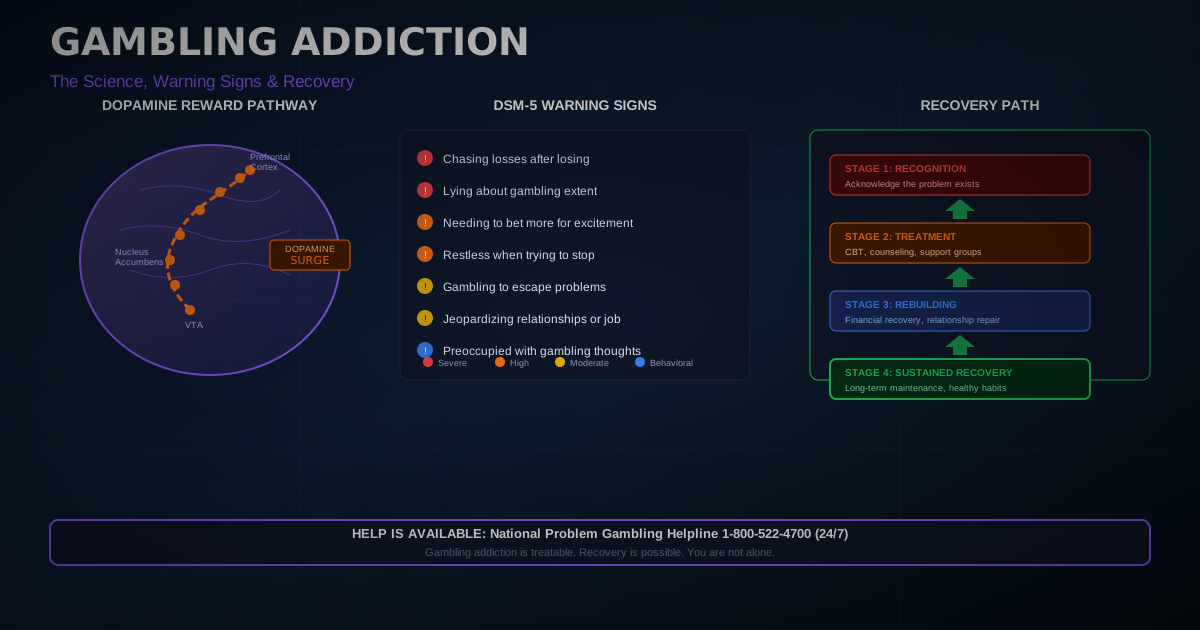
Gambling involves risk. This content is for educational and informational purposes only. Always gamble responsibly, set limits you can afford, and seek help if gambling becomes a problem. Visit the National Council on Problem Gambling or call 1-800-522-4700 for support.