Casino Betting Systems Compared: Martingale vs. D'Alembert vs. Fibonacci vs. Paroli (2026)
No betting system in the history of gambling has ever overcome the house edge over the long term -- and yet millions of players continue to use them. The appeal is understandable. Betting systems provide structure, the illusion of control, and in the short term, they can produce impressive-looking winning sessions. But the mathematics are unambiguous: no sequence of bet sizes can transform a negative-expectation game into a positive one.
That said, betting systems are not equally useless. Some manage bankroll variance more effectively than others, some extend session time, and some are outright dangerous. A Martingale player risks catastrophic loss from a single bad streak, while a D'Alembert player experiences slower, more controlled bankroll movement. Neither beats the house, but the experience is dramatically different.
This guide provides an honest, mathematically rigorous comparison of every major casino betting system: how each works, its bankroll requirements, risk of ruin, simulated performance over thousands of sessions, and the real-world scenarios where each might be entertaining versus dangerous.
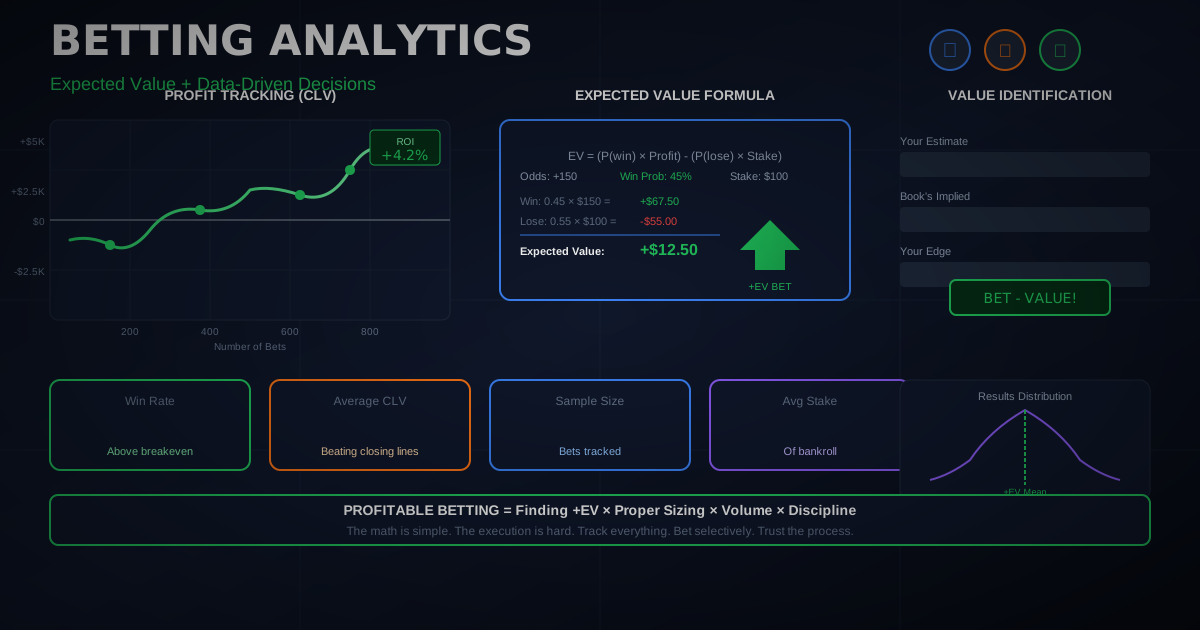
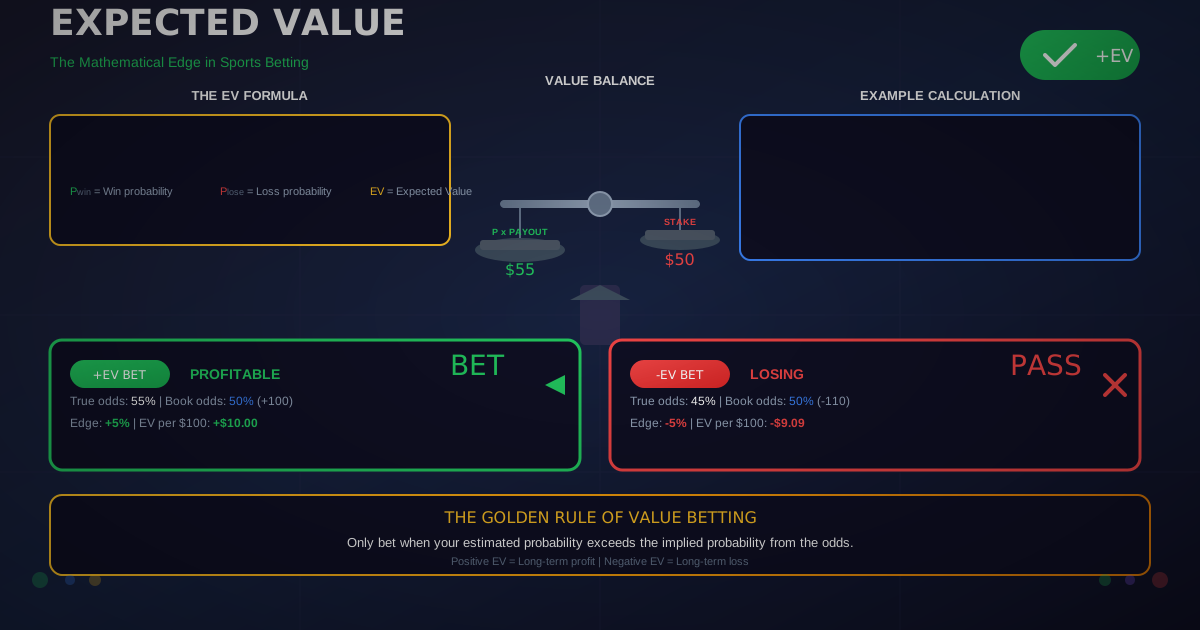
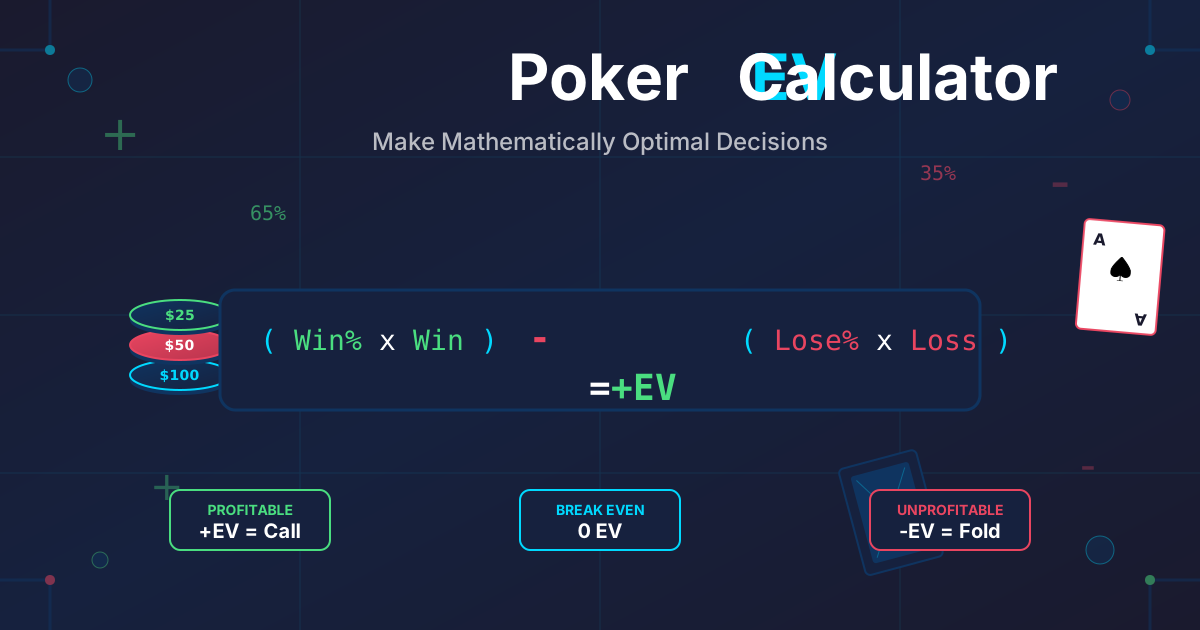
Calculate the expected value of any bet with our free Expected Value Calculator.
What Are Casino Betting Systems and Why Do People Use Them?
A casino betting system is a structured method for adjusting bet sizes based on previous outcomes. Systems tell you how much to bet after a win, after a loss, or in a specific sequence. They do not change the odds of the underlying game -- they only change the distribution of risk across your session.
Why Systems Exist
Casino betting systems endure because they address real psychological needs:
- Structure: They provide a plan, replacing random bet sizing with intentional action
- Short-term results: Many systems produce frequent small wins (at the cost of rare large losses)
- Illusion of control: Following a system feels more strategic than flat betting
- Social currency: Systems are fun to discuss, teach, and debate among gambling friends
- Selective memory: Players remember the sessions where the system "worked" and forget the catastrophic losses
The Fundamental Mathematical Truth
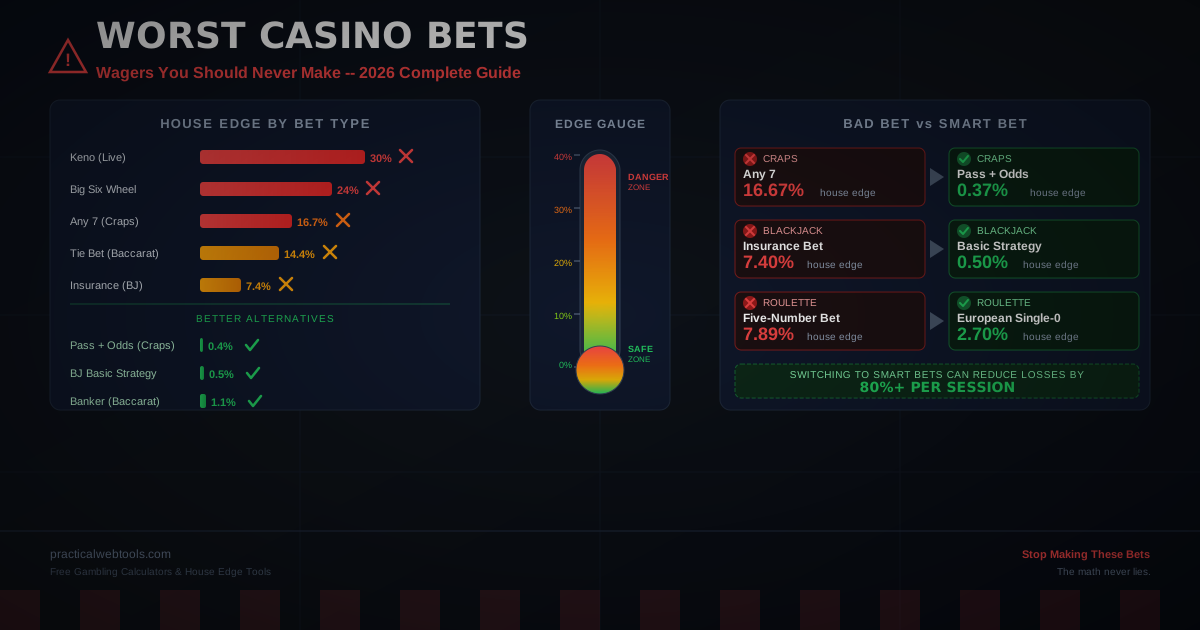
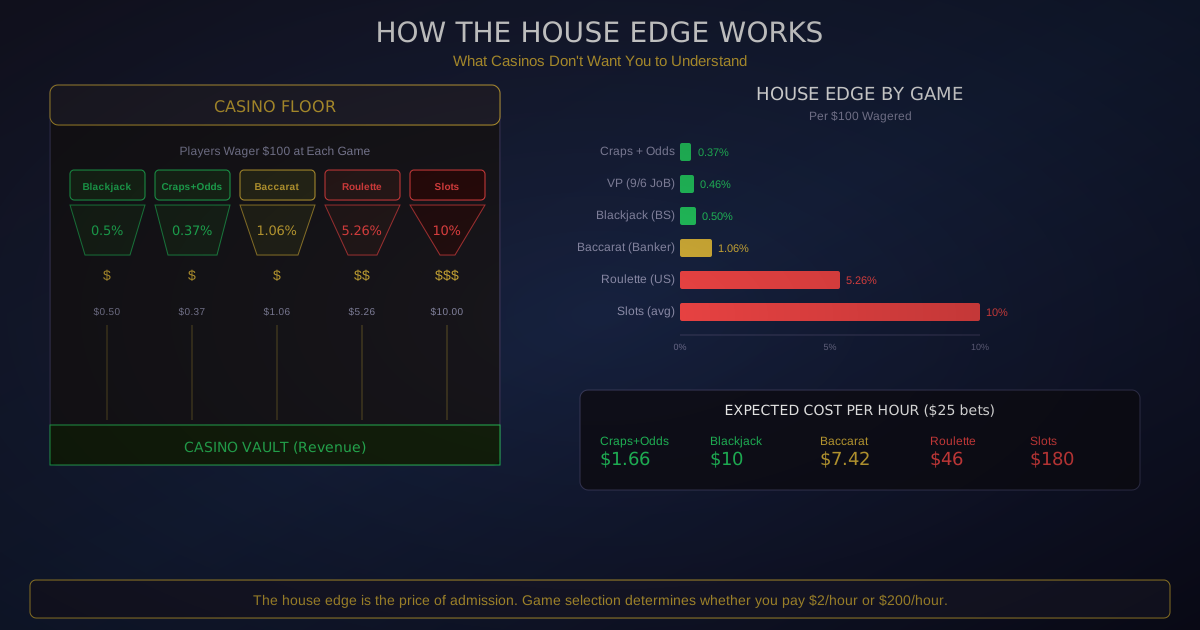
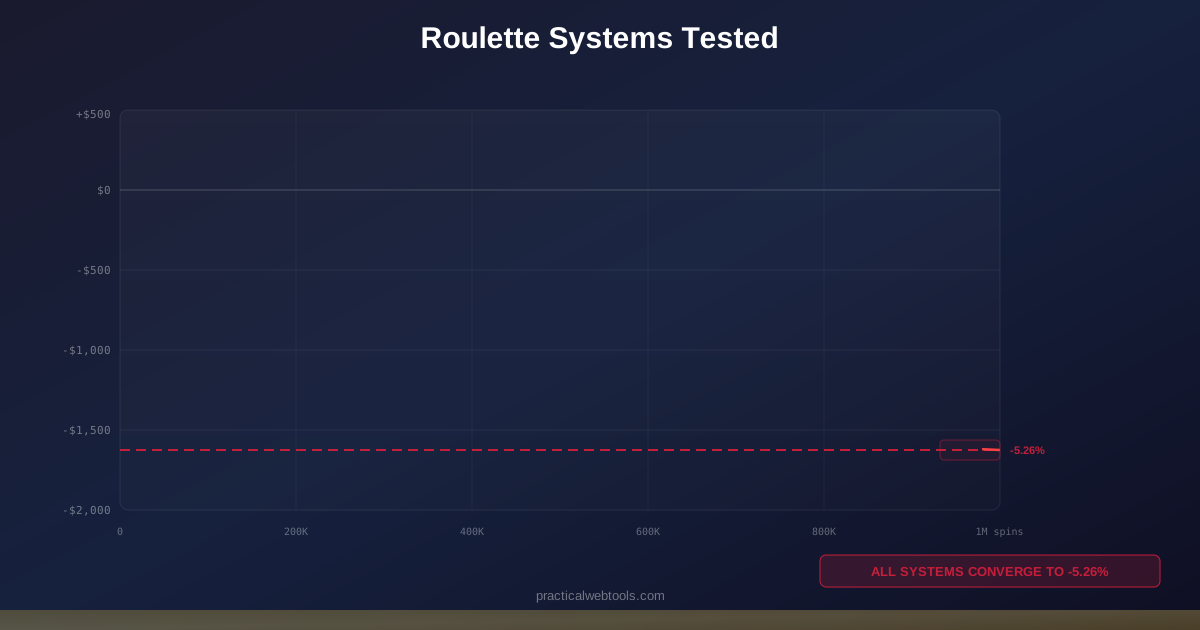
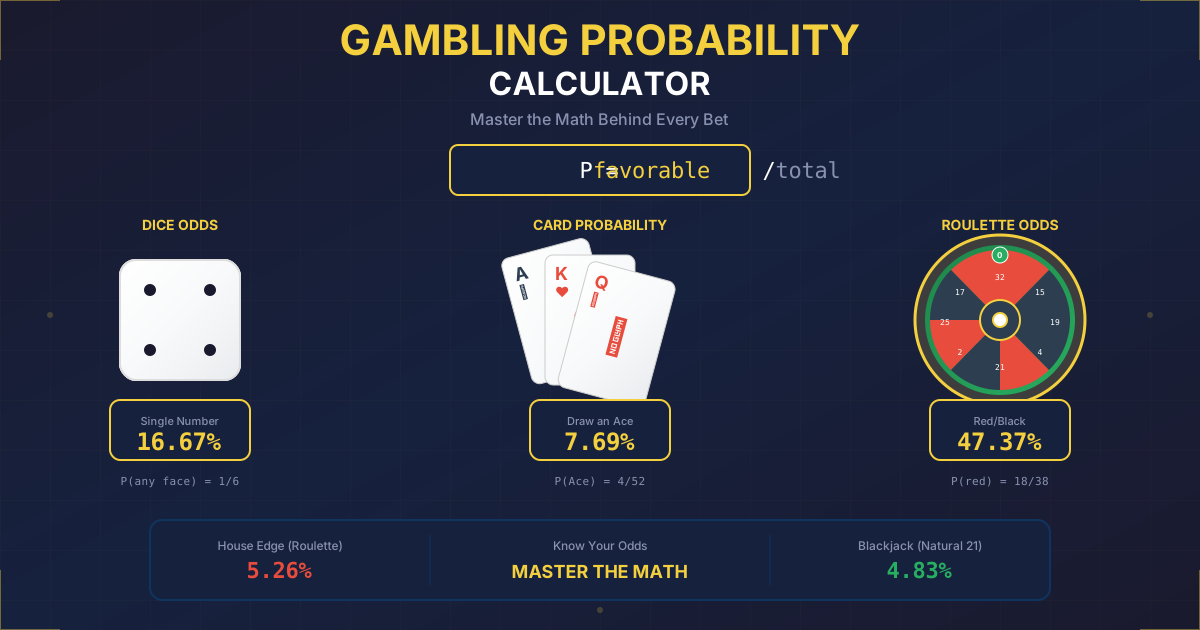
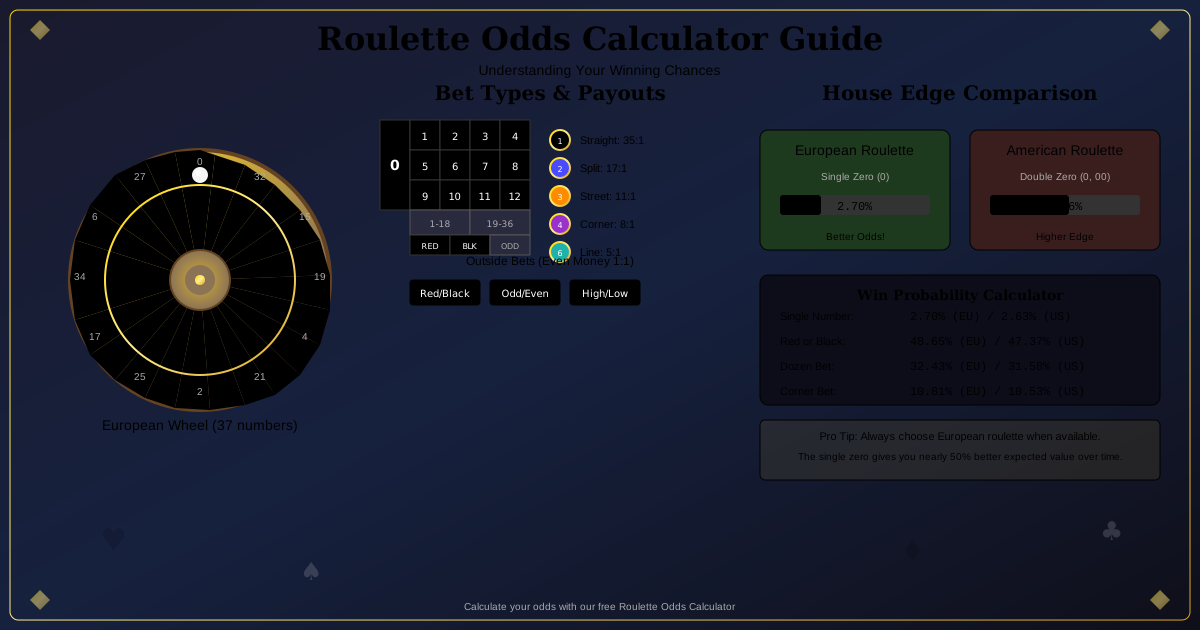
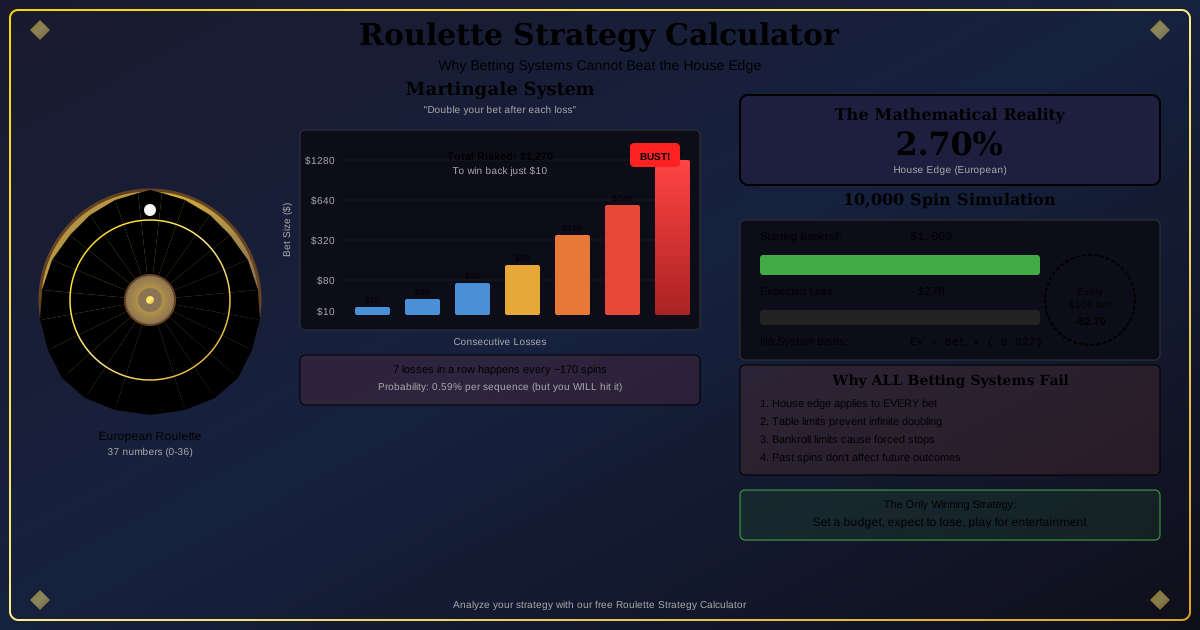
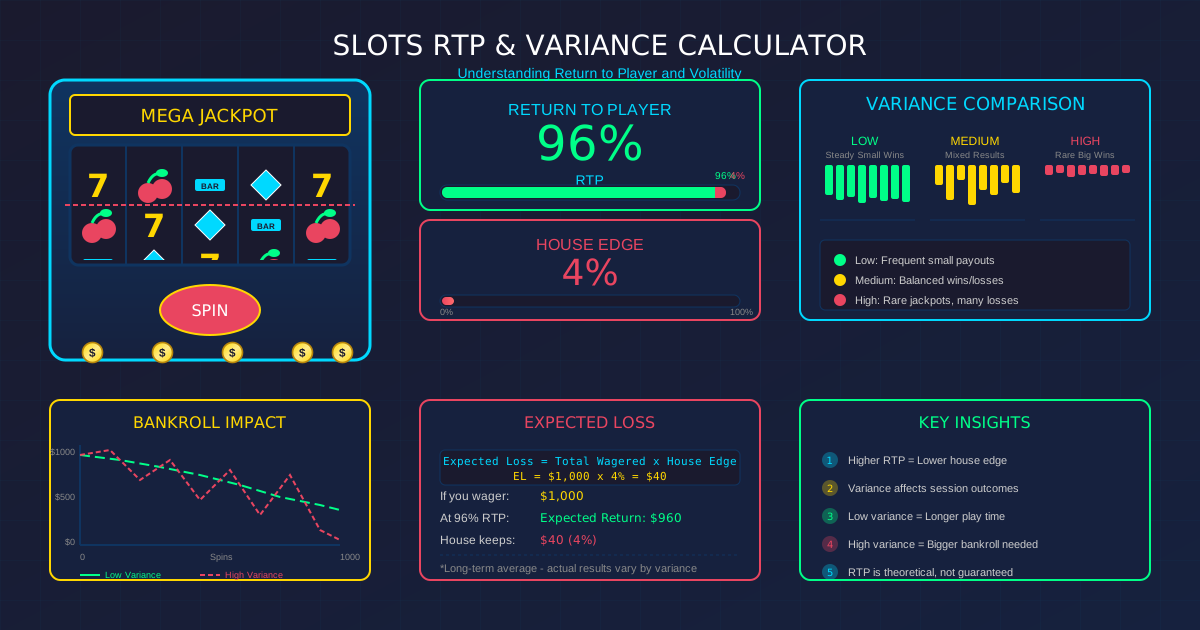
Every casino game has a house edge. On a fair roulette table (European, single zero), the house edge is 2.70%. This means for every $100 wagered, the expected return is $97.30 -- regardless of bet size, bet timing, or bet sequence.
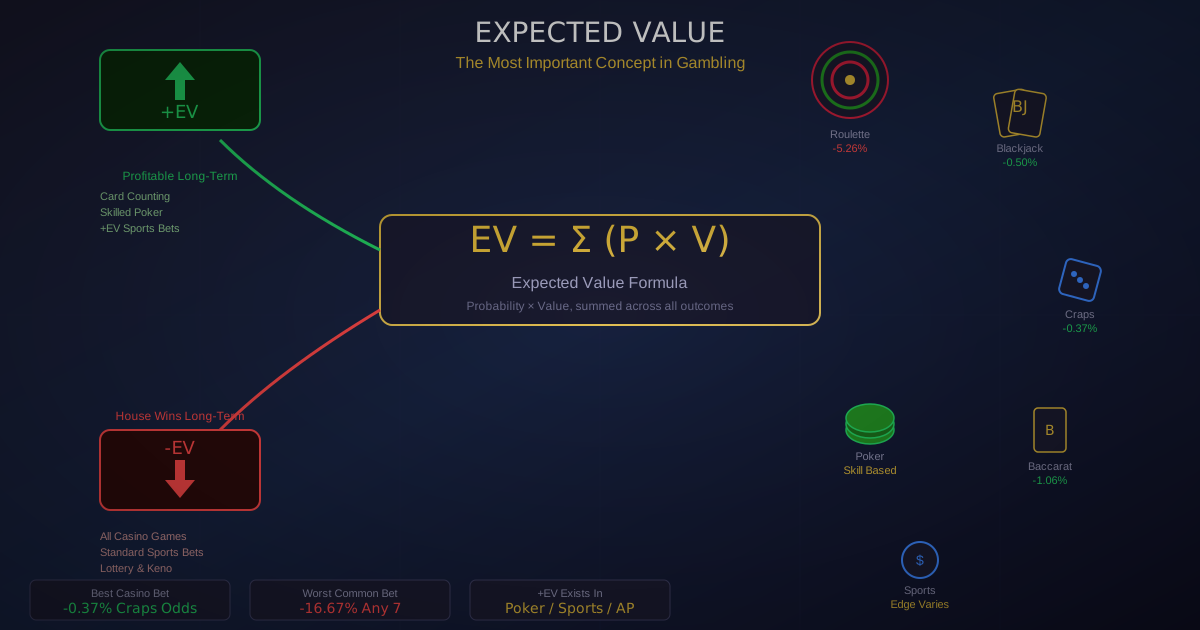
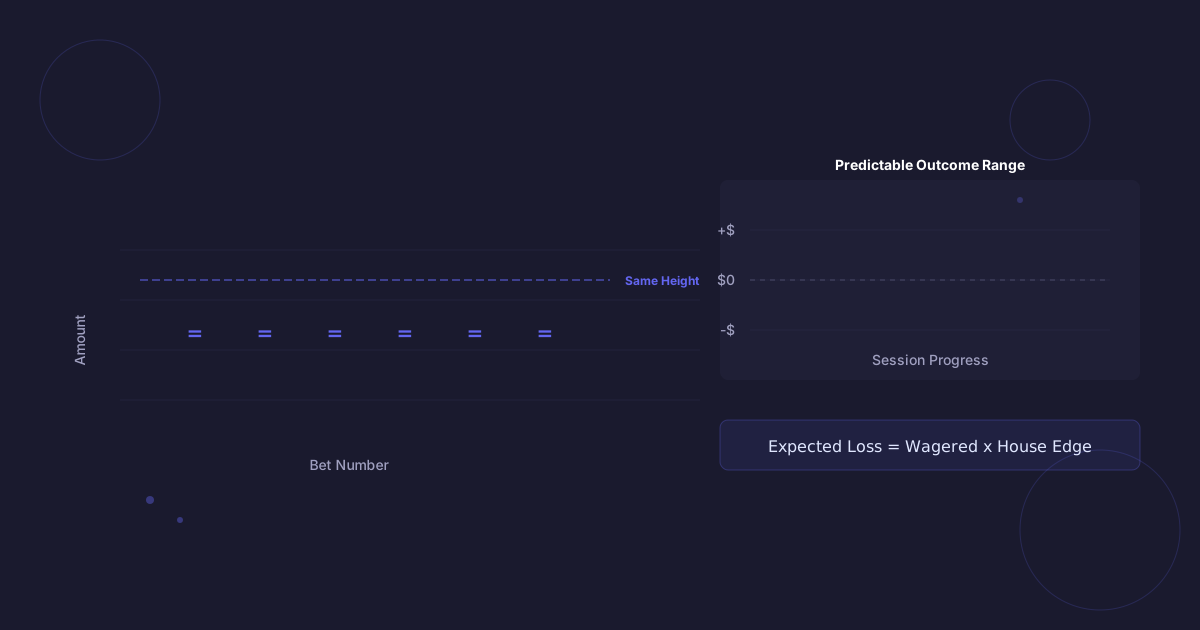
No betting system changes this. Over infinite trials, every system converges to the same expected loss: House Edge x Total Amount Wagered.
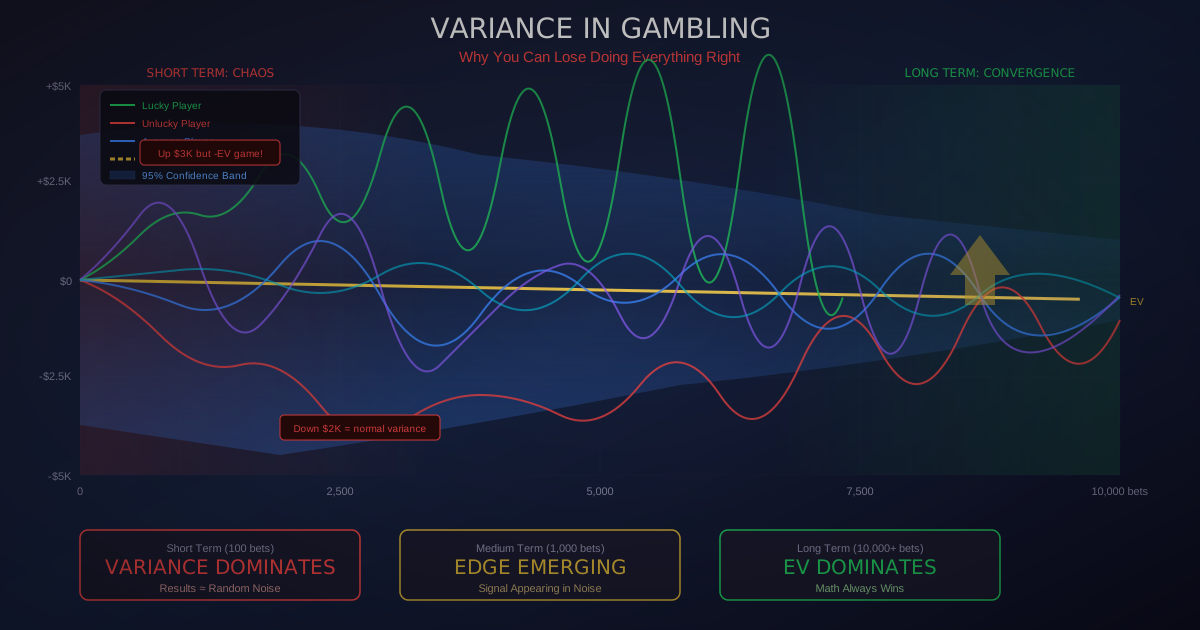
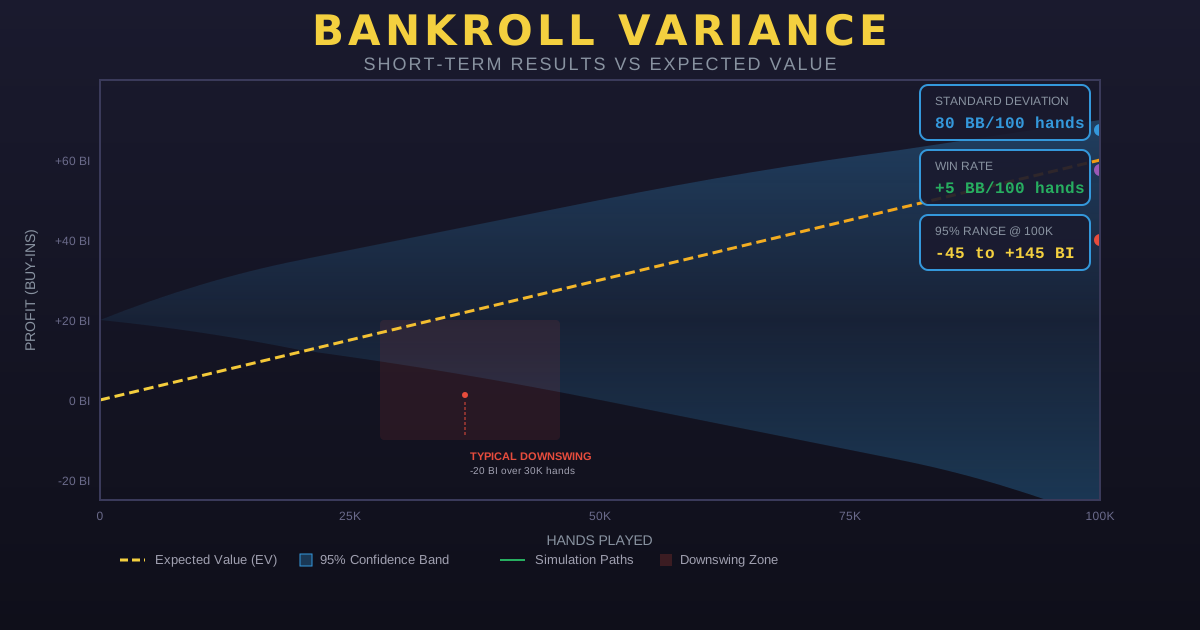
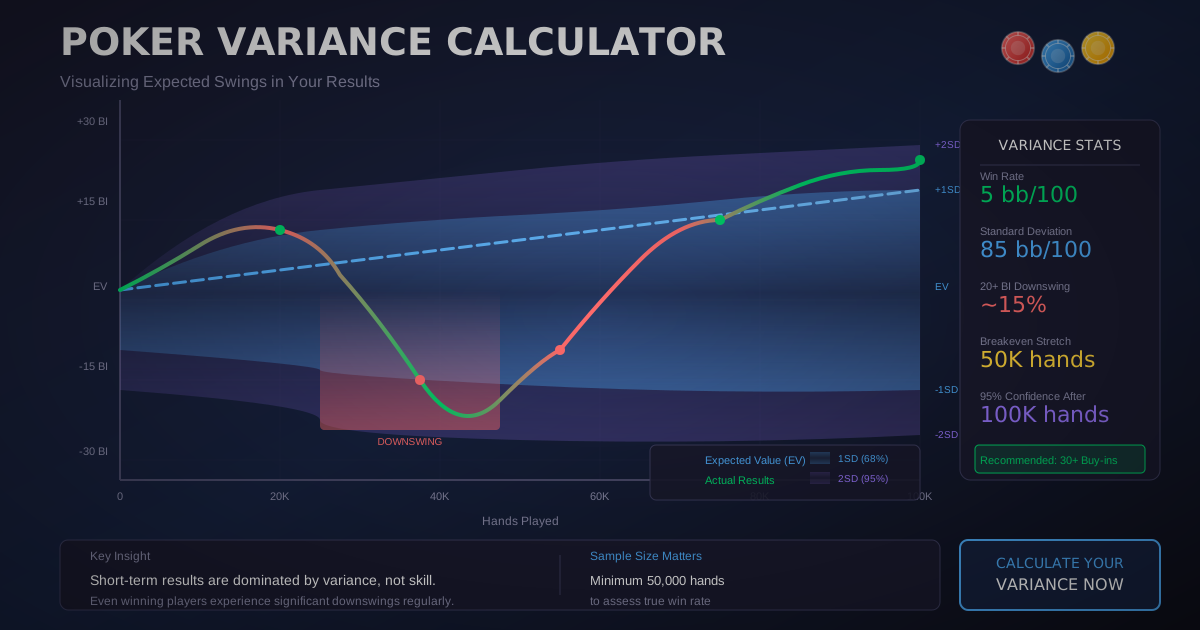
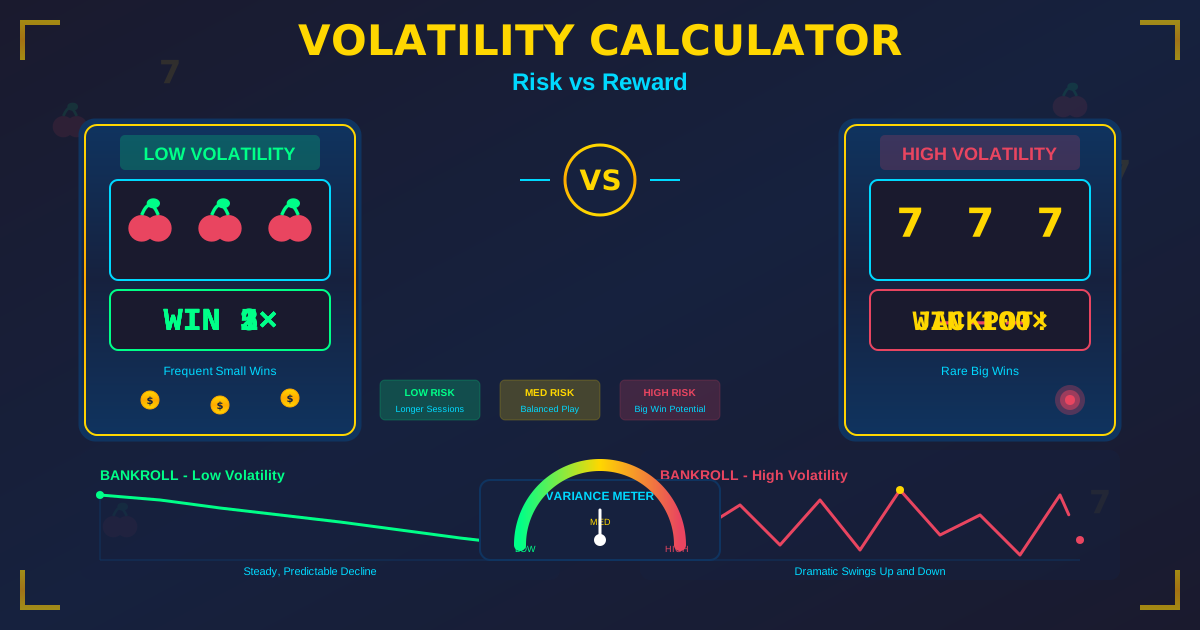
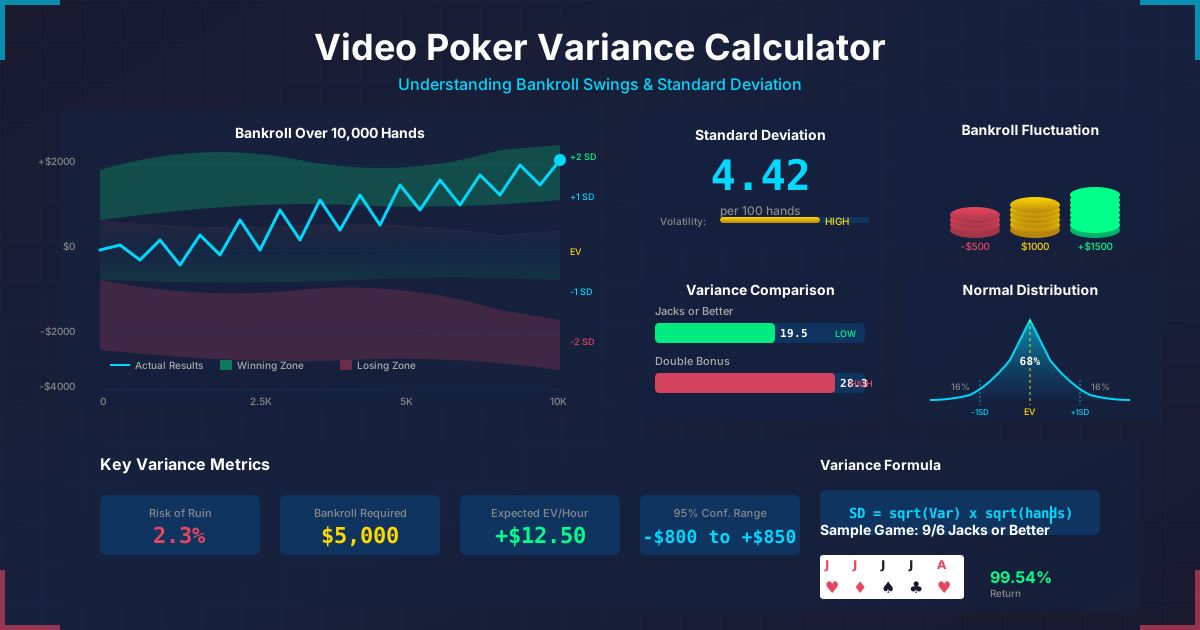
What systems DO change is the variance -- how the wins and losses are distributed within and across sessions.
Understand the house edge you are playing against with our Roulette House Edge Calculator.
How Does the Martingale System Work?
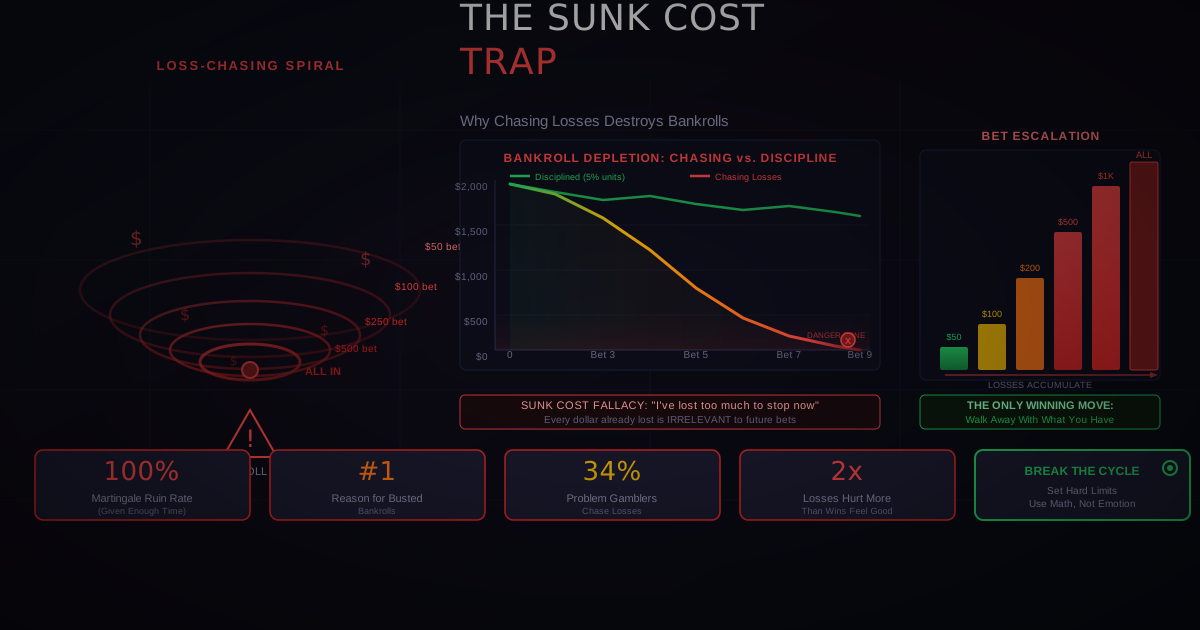
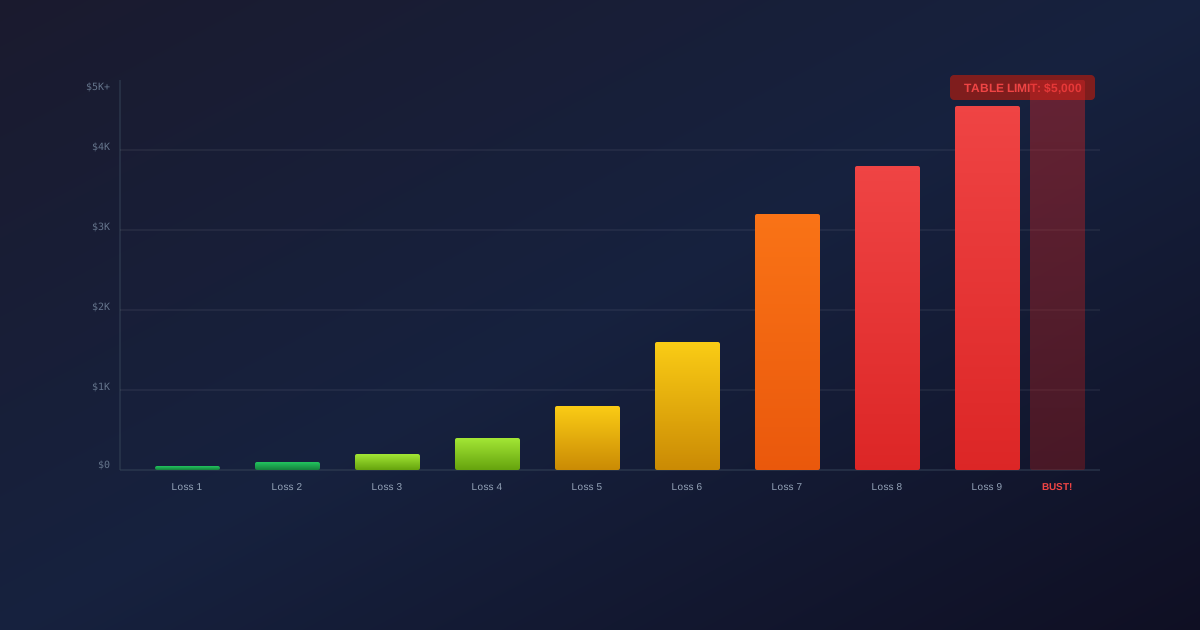
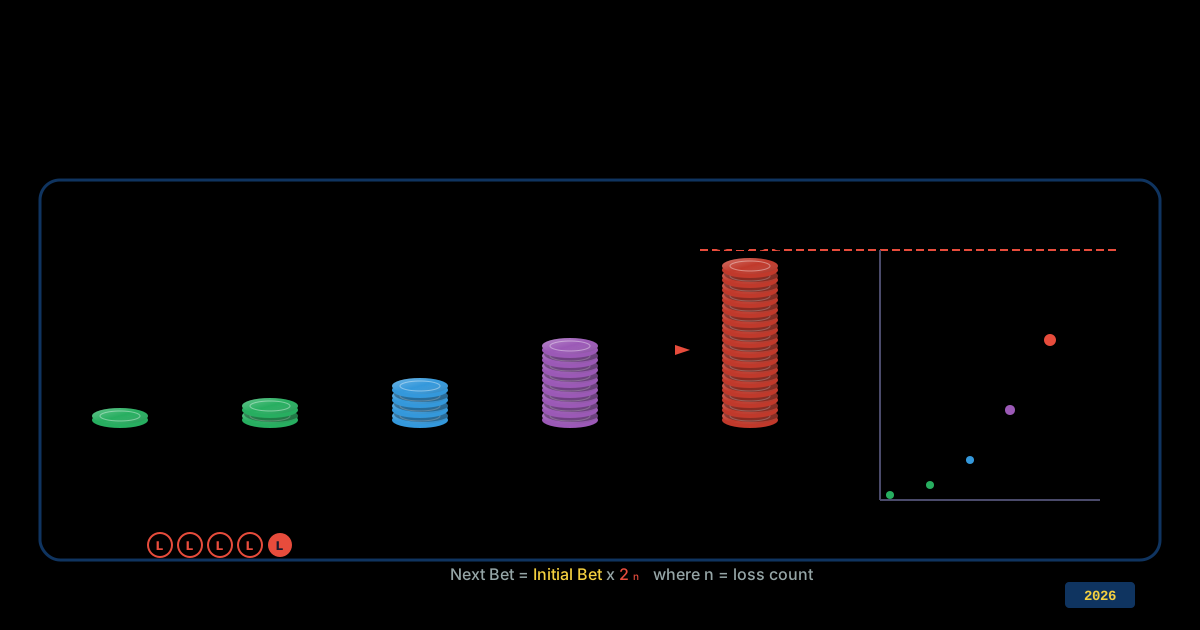
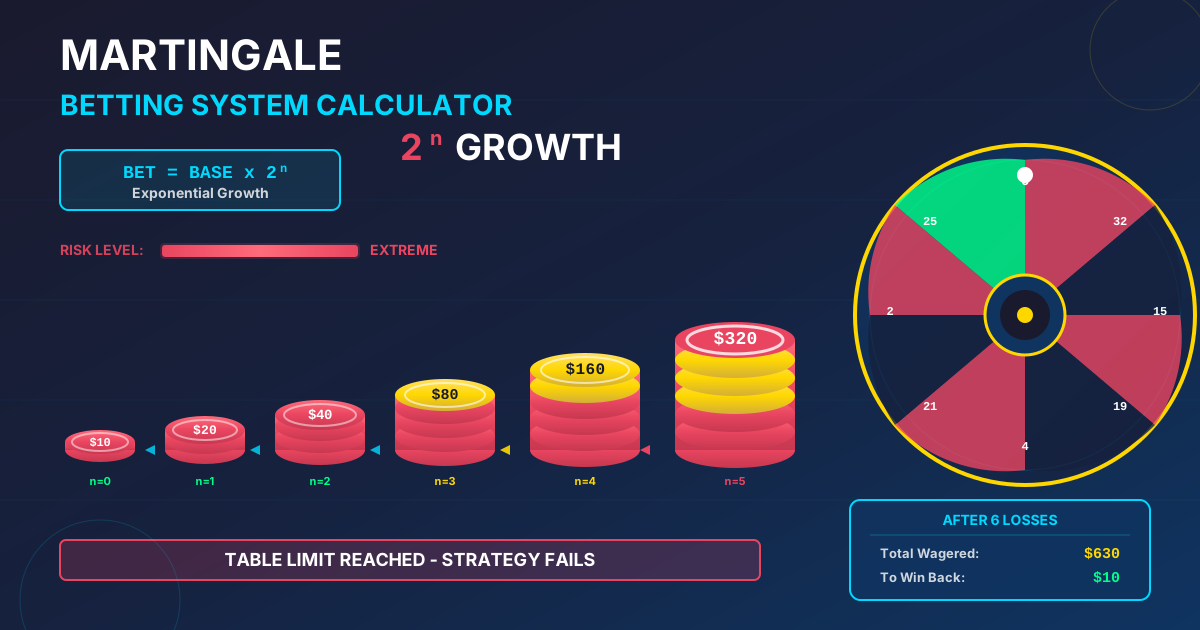
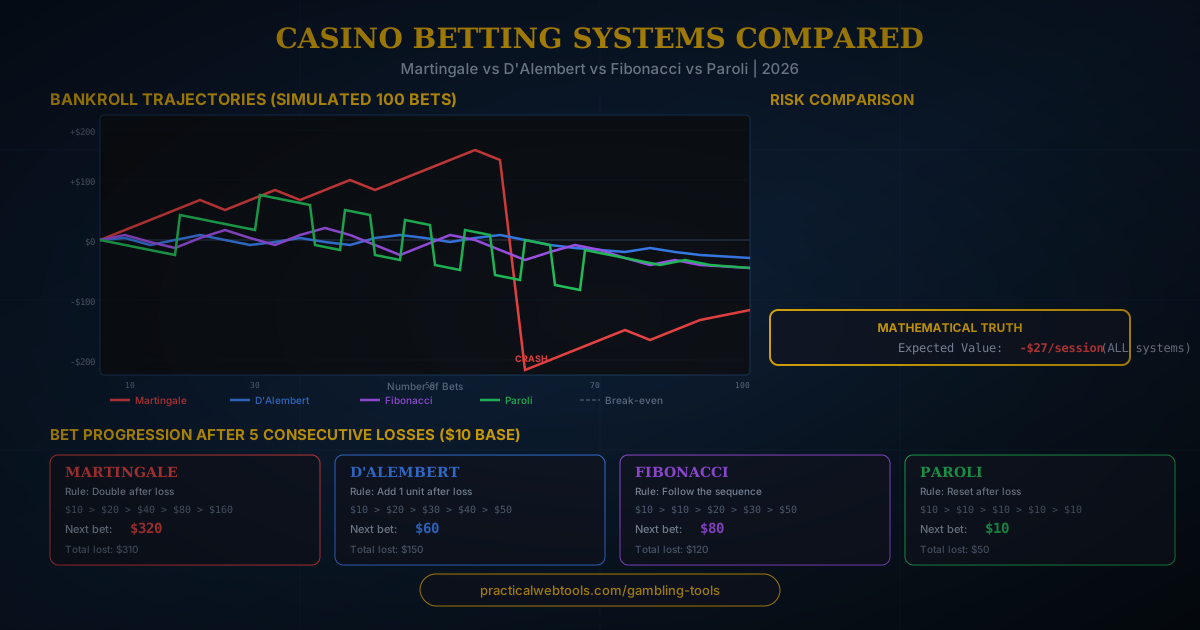
The Martingale is the most famous and most dangerous betting system. The concept is simple: double your bet after every loss, and return to your base bet after every win. The theory is that a single win recovers all previous losses plus one unit of profit.
Martingale Mechanics
Rule: After a loss, double your bet. After a win, return to base bet.
Starting Bet: $10 (1 unit)
| Round | Bet | Outcome | Running P/L | Next Bet |
|---|---|---|---|---|
| 1 | $10 | Loss | -$10 | $20 |
| 2 | $20 | Loss | -$30 | $40 |
| 3 | $40 | Loss | -$70 | $80 |
| 4 | $80 | Loss | -$150 | $160 |
| 5 | $160 | Loss | -$310 | $320 |
| 6 | $320 | Win | +$10 | $10 |
After 5 consecutive losses and 1 win, the net result is +$10 (one base unit). The system "works" -- but at what cost?
Martingale Bankroll Requirements
| Consecutive Losses | Cumulative Bet Required | Total Lost Before Recovery | Bankroll Needed |
|---|---|---|---|
| 1 | $10 | $10 | $30 |
| 2 | $30 | $30 | $70 |
| 3 | $70 | $70 | $150 |
| 4 | $150 | $150 | $310 |
| 5 | $310 | $310 | $630 |
| 6 | $630 | $630 | $1,270 |
| 7 | $1,270 | $1,270 | $2,550 |
| 8 | $2,550 | $2,550 | $5,110 |
| 9 | $5,110 | $5,110 | $10,230 |
| 10 | $10,230 | $10,230 | $20,470 |
To survive 10 consecutive losses at a $10 base bet, you need over $20,000 in bankroll -- all to win $10 per successful cycle.
Probability of Consecutive Losses (Even-Money Bets, European Roulette)
| Consecutive Losses | Probability (European Roulette, 48.65% win) | Average Occurrence |
|---|---|---|
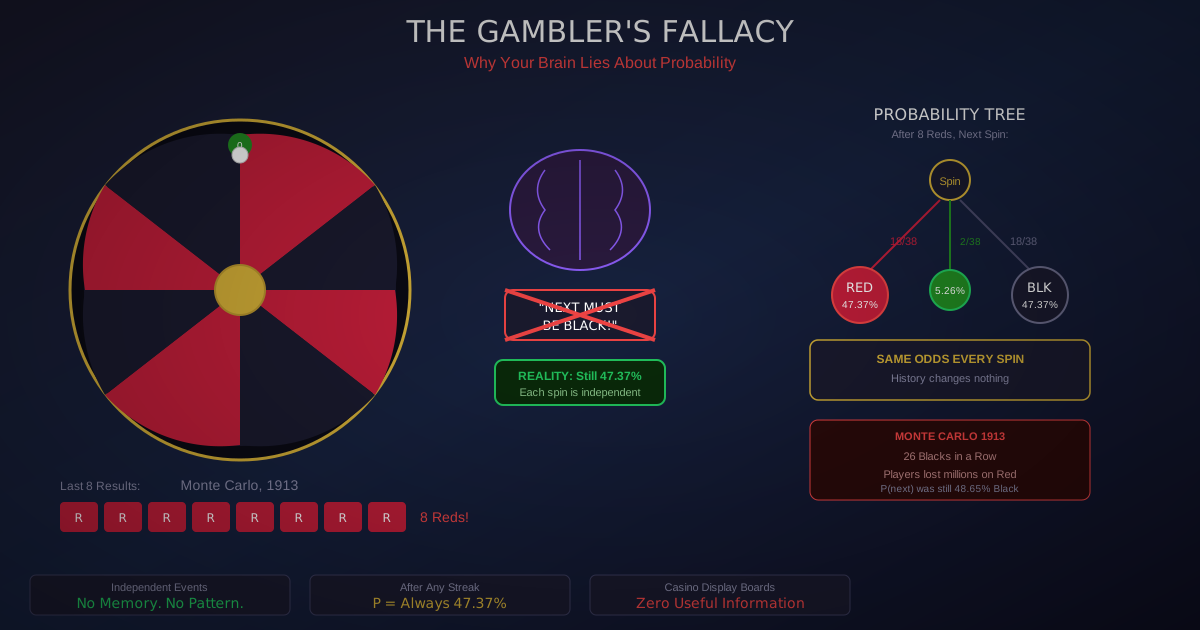
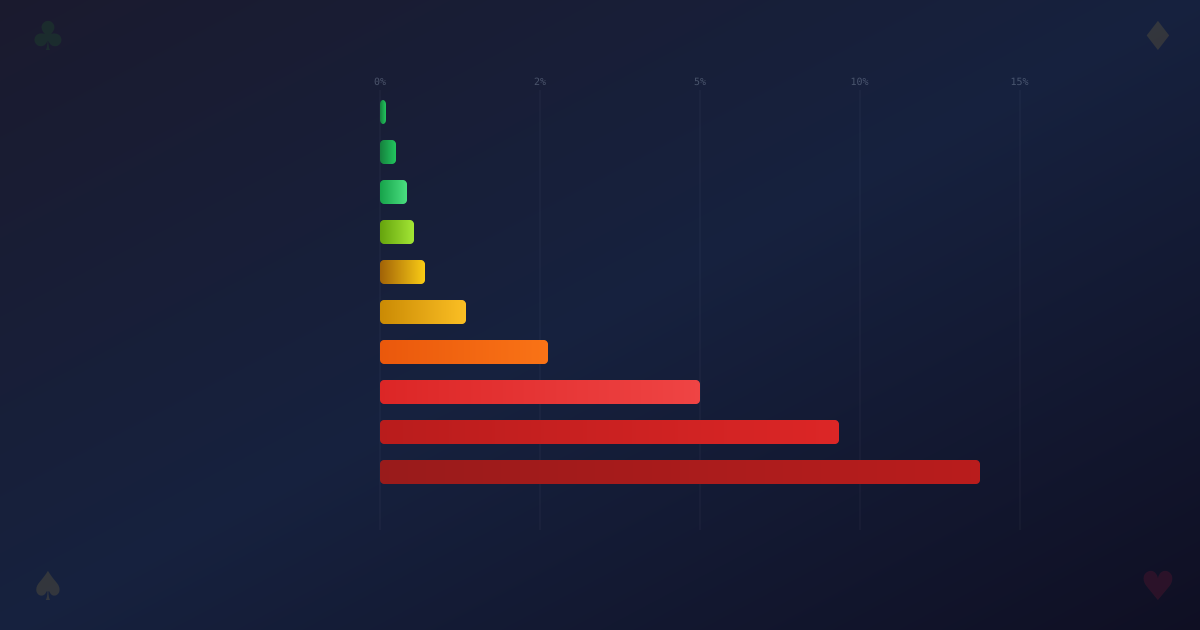
| 3 in a row | 13.5% | ~1 in 7 sequences |
| 5 in a row | 3.5% | ~1 in 29 sequences |
| 7 in a row | 0.89% | ~1 in 112 sequences |
| 8 in a row | 0.46% | ~1 in 217 sequences |
| 10 in a row | 0.12% | ~1 in 833 sequences |
| 12 in a row | 0.031% | ~1 in 3,226 sequences |
An 8-loss streak (which costs $2,550 at $10 base) occurs roughly once every 217 betting sequences. If you play 50 sequences per session and visit the casino weekly, you will hit an 8-loss streak approximately every month.
Martingale Simulated Results (10,000 Sessions, 100 Spins Each, $10 Base Bet)
| Metric | Result |
|---|---|
| Sessions with net profit | ~51% |
| Sessions with net loss | ~49% |
| Average profit (winning sessions) | +$34 |
| Average loss (losing sessions) | -$380 |
| Overall expected value per session | -$27 (negative) |
| Maximum single-session loss | -$10,230 |
| Median session result | +$10 |
The Martingale produces frequent small wins and rare catastrophic losses. The median result is positive (+$10), creating the illusion that it "works." But the average (mean) result is negative because the rare large losses more than offset the frequent small wins.
Calculate probability distributions with our Roulette Probability Calculator.
How Does the D'Alembert System Work?
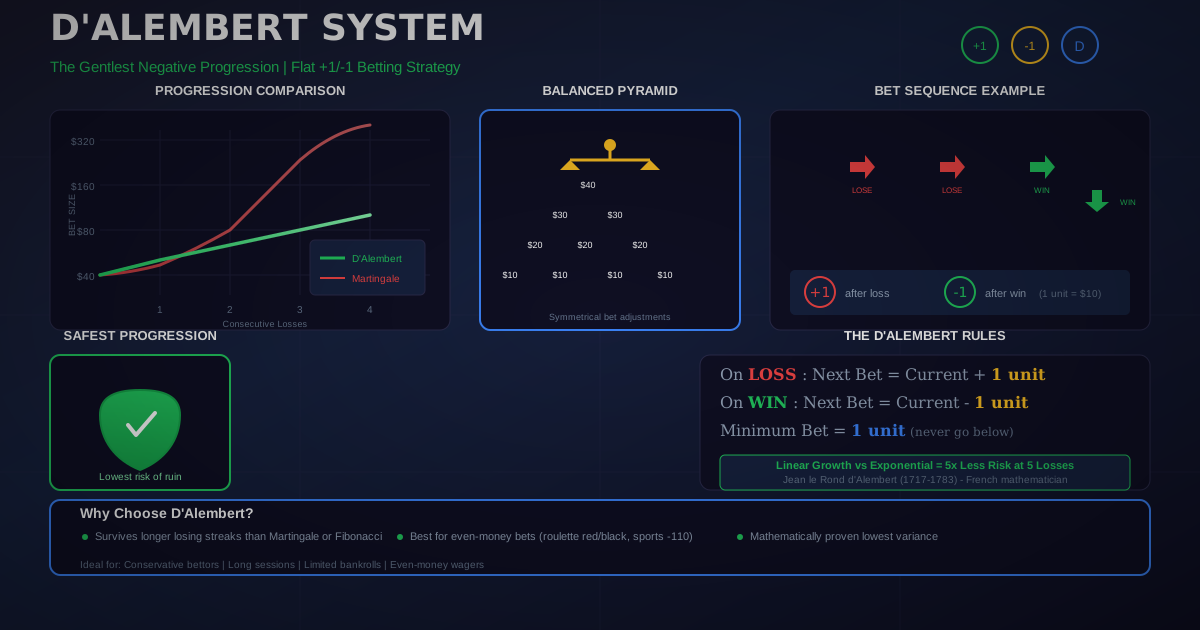
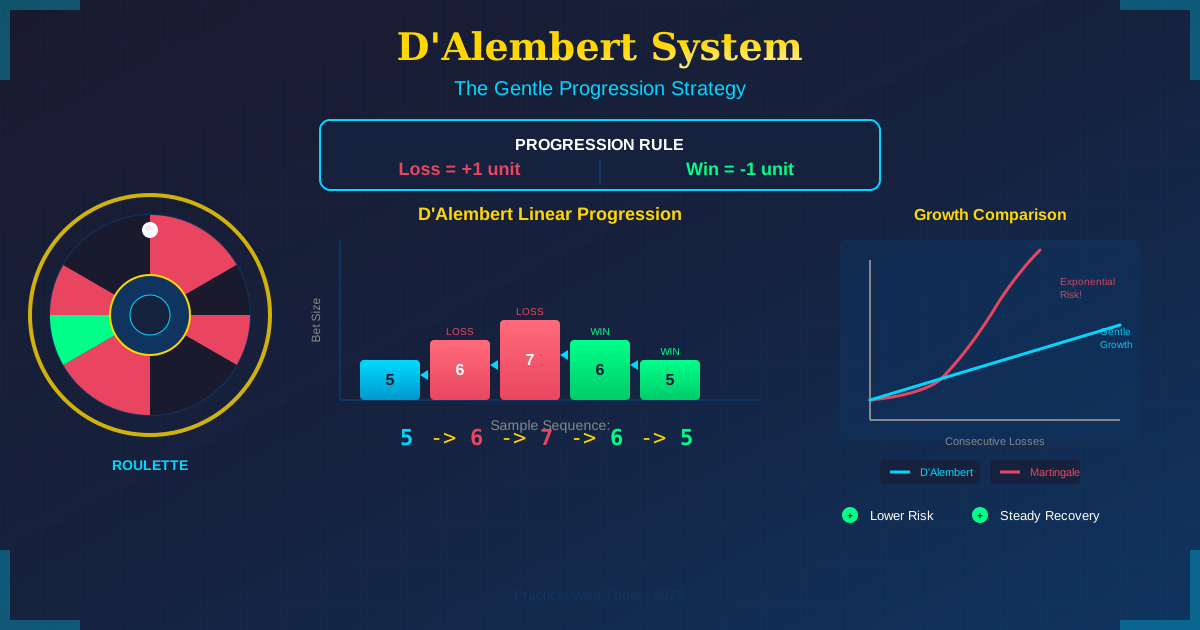
The D'Alembert (also called the Pyramid system) is a negative progression system that increases bets more gradually than the Martingale. After a loss, you increase your bet by one unit. After a win, you decrease by one unit.
D'Alembert Mechanics
Rule: After a loss, add 1 unit. After a win, subtract 1 unit. Never go below the base bet.
Starting Bet: $10 (1 unit = $10)
| Round | Bet | Outcome | Running P/L | Next Bet |
|---|---|---|---|---|
| 1 | $10 | Loss | -$10 | $20 |
| 2 | $20 | Loss | -$30 | $30 |
| 3 | $30 | Win | +$0 | $20 |
| 4 | $20 | Loss | -$20 | $30 |
| 5 | $30 | Win | +$10 | $20 |
| 6 | $20 | Win | +$30 | $10 |
D'Alembert vs. Martingale Comparison
| Feature | Martingale | D'Alembert |
|---|---|---|
| Bet increase after loss | Double (2x) | Add 1 unit |
| Maximum bet growth | Exponential | Linear |
| Bankroll requirement | Very high | Moderate |
| Recovery speed | Fast (1 win recovers all) | Slow (needs multiple wins) |
| Catastrophic loss risk | Very high | Moderate |
| Session survival rate | Moderate | High |
| Emotional stress | High | Low |
D'Alembert Bankroll Requirements
| Losing Streak Length | Cumulative Bet (vs. Martingale) | Bankroll Needed |
|---|---|---|
| 3 losses | $60 (vs. $70) | $100 |
| 5 losses | $150 (vs. $310) | $200 |
| 7 losses | $280 (vs. $1,270) | $350 |
| 10 losses | $550 (vs. $10,230) | $650 |
| 15 losses | $1,200 (vs. $327,670) | $1,400 |
The D'Alembert's linear growth means even extended losing streaks are manageable. A 10-loss streak costs $550 vs. $10,230 with Martingale -- roughly 19x less exposure.
D'Alembert Simulated Results (10,000 Sessions, 100 Spins Each, $10 Base Unit)
| Metric | D'Alembert | Martingale (for comparison) |
|---|---|---|
| Sessions with net profit | ~47% | ~51% |
| Sessions with net loss | ~53% | ~49% |
| Average profit (winning sessions) | +$65 | +$34 |
| Average loss (losing sessions) | -$85 | -$380 |
| Overall EV per session | -$27 | -$27 |
| Maximum single-session loss | -$550 | -$10,230 |
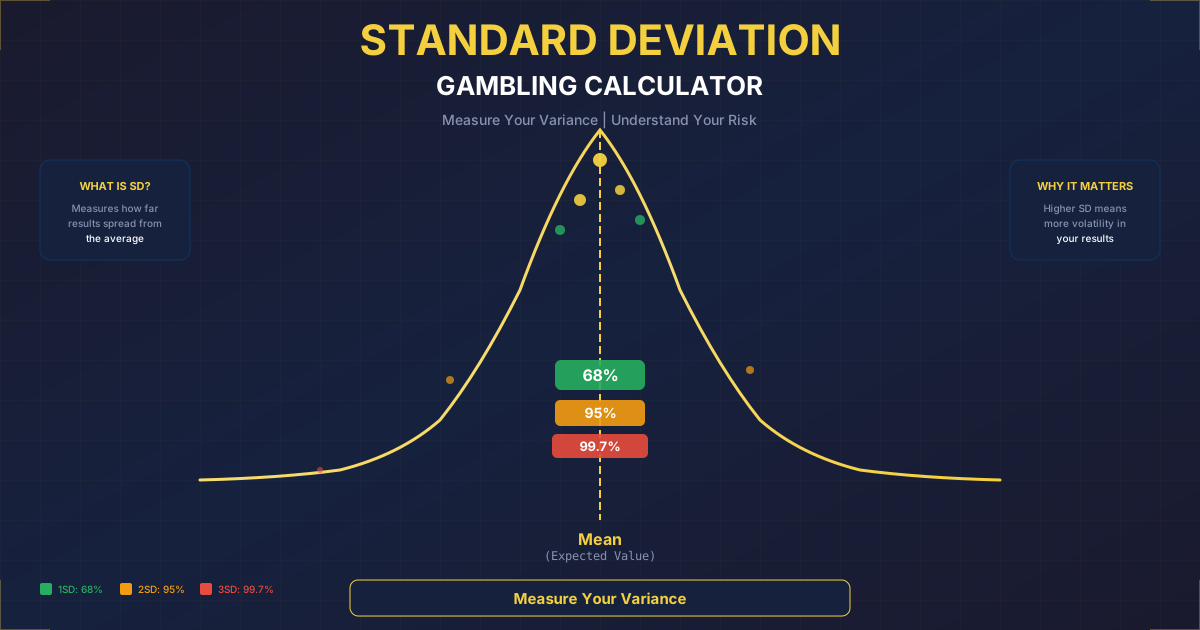
| Standard deviation of results | $110 | $520 |
Notice: the overall expected value is identical (-$27 per session) because both systems play the same game with the same house edge. But the D'Alembert has dramatically lower variance: the worst-case loss is $550 vs. $10,230, and the standard deviation is less than a quarter of the Martingale's.
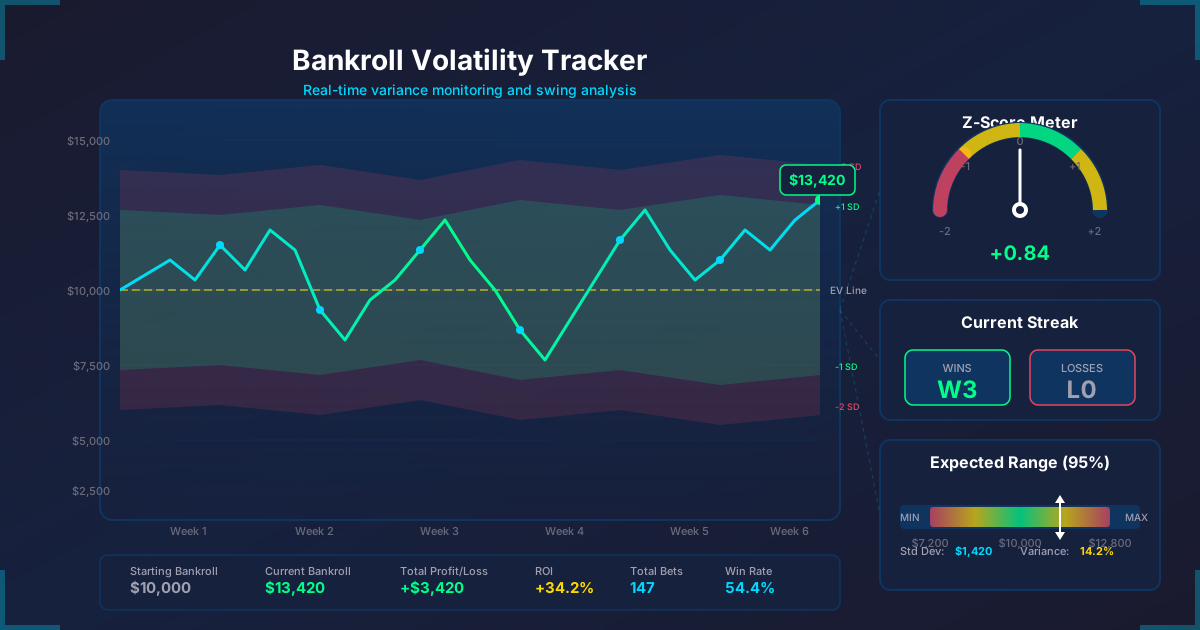
Track your session variance with our Bankroll Volatility Tracker.
How Does the Fibonacci System Work?
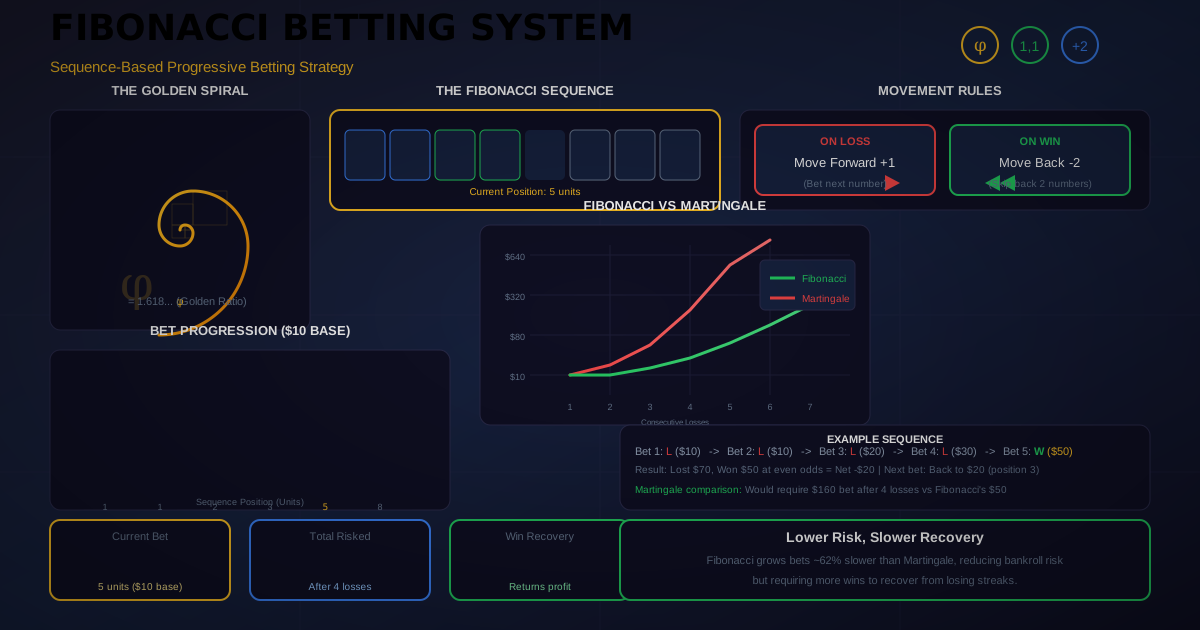
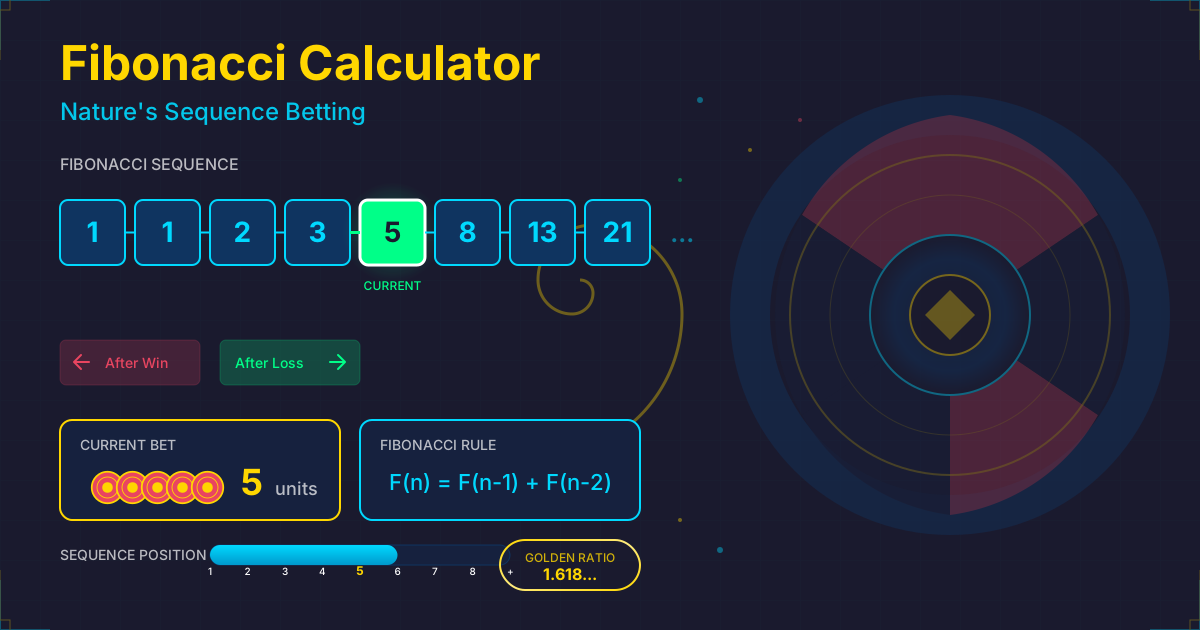
The Fibonacci betting system follows the famous mathematical sequence (1, 1, 2, 3, 5, 8, 13, 21, 34...) where each number is the sum of the two preceding numbers. After a loss, you advance one step in the sequence. After a win, you retreat two steps.
Fibonacci Mechanics
Rule: After a loss, move forward one step. After a win, move back two steps. Start at the beginning of the sequence.
Sequence: 1, 1, 2, 3, 5, 8, 13, 21, 34, 55, 89, 144...
Starting Bet: $10 (1 unit = $10)
| Round | Sequence Position | Bet | Outcome | Running P/L | Next Position |
|---|---|---|---|---|---|
| 1 | 1st (1) | $10 | Loss | -$10 | 2nd |
| 2 | 2nd (1) | $10 | Loss | -$20 | 3rd |
| 3 | 3rd (2) | $20 | Loss | -$40 | 4th |
| 4 | 4th (3) | $30 | Loss | -$70 | 5th |
| 5 | 5th (5) | $50 | Win | -$20 | 3rd |
| 6 | 3rd (2) | $20 | Win | $0 | 1st |
Fibonacci Bet Progression
| Step | Fibonacci Number | Bet ($10 unit) | Cumulative Loss if All Losses |
|---|---|---|---|
| 1 | 1 | $10 | $10 |
| 2 | 1 | $10 | $20 |
| 3 | 2 | $20 | $40 |
| 4 | 3 | $30 | $70 |
| 5 | 5 | $50 | $120 |
| 6 | 8 | $80 | $200 |
| 7 | 13 | $130 | $330 |
| 8 | 21 | $210 | $540 |
| 9 | 34 | $340 | $880 |
| 10 | 55 | $550 | $1,430 |
| 11 | 89 | $890 | $2,320 |
| 12 | 144 | $1,440 | $3,760 |
The Fibonacci grows faster than D'Alembert but much slower than Martingale. After 10 losses, the Fibonacci requires $1,430 vs. D'Alembert's $550 and Martingale's $10,230.
Fibonacci Simulated Results (10,000 Sessions, 100 Spins Each, $10 Base Unit)
| Metric | Fibonacci | D'Alembert | Martingale |
|---|---|---|---|
| Sessions with net profit | ~48% | ~47% | ~51% |
| Sessions with net loss | ~52% | ~53% | ~49% |
| Average profit (winning sessions) | +$82 | +$65 | +$34 |
| Average loss (losing sessions) | -$130 | -$85 | -$380 |
| Overall EV per session | -$27 | -$27 | -$27 |
| Maximum single-session loss | -$3,760 | -$550 | -$10,230 |
| Standard deviation of results | $180 | $110 | $520 |
The Fibonacci sits between D'Alembert and Martingale in both risk and reward potential. It offers larger winning sessions than D'Alembert but with more volatile losing sessions.
Calculate odds for any roulette bet with our Roulette Odds Calculator.
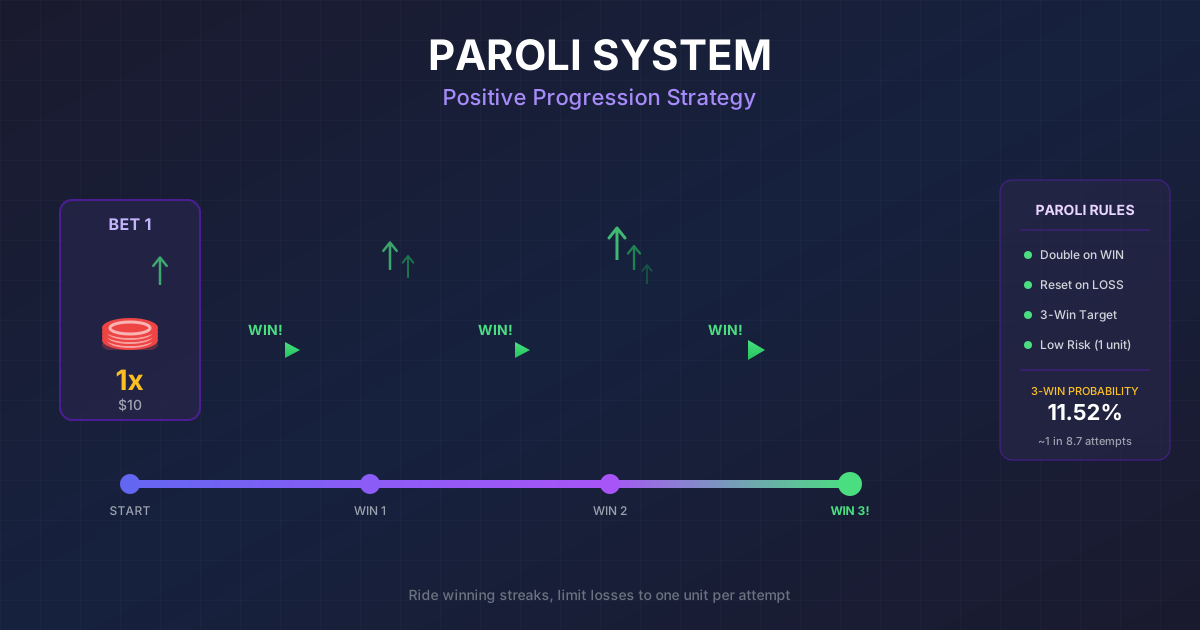
How Does the Paroli (Reverse Martingale) System Work?
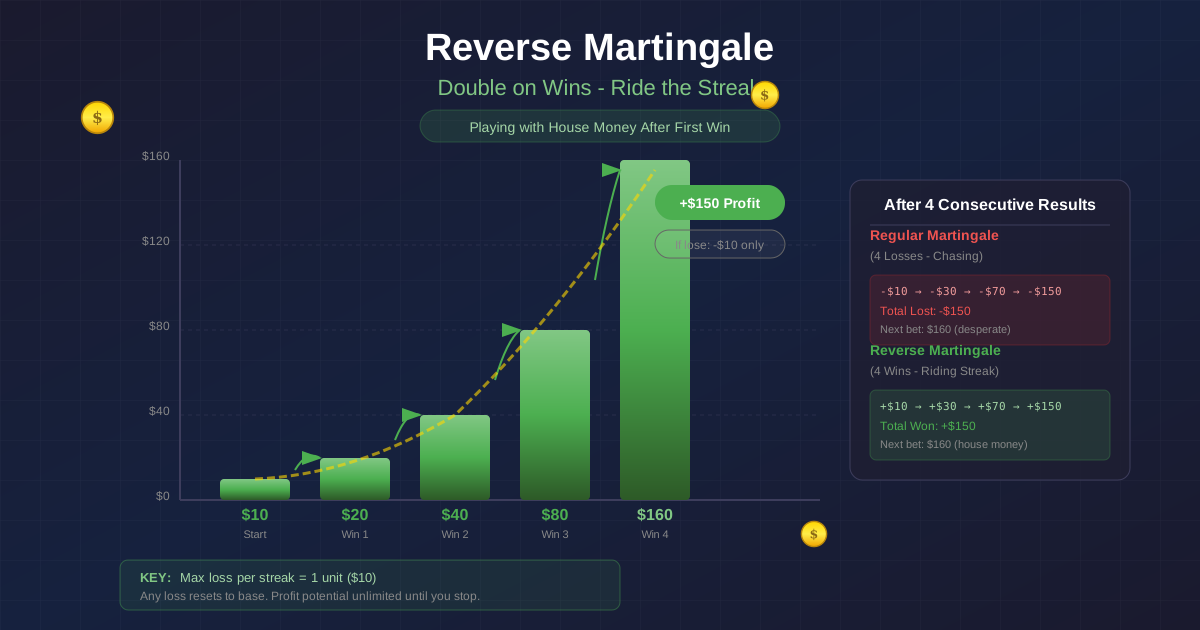
The Paroli system (also called the Reverse Martingale or Anti-Martingale) is a positive progression system -- you increase bets after wins, not losses. The goal is to capitalize on winning streaks while keeping losses small.
Paroli Mechanics
Rule: Double your bet after a win. Return to base bet after a loss or after 3 consecutive wins.
Starting Bet: $10
| Round | Bet | Outcome | Running P/L | Next Bet |
|---|---|---|---|---|
| 1 | $10 | Win | +$10 | $20 |
| 2 | $20 | Win | +$30 | $40 |
| 3 | $40 | Win | +$70 | $10 (reset after 3 wins) |
| 4 | $10 | Loss | +$60 | $10 |
| 5 | $10 | Win | +$70 | $20 |
| 6 | $20 | Loss | +$50 | $10 |
Paroli Outcome Distribution
With a 3-win cap (the most common variant), there are 8 possible outcomes for each 3-bet cycle:
| Sequence | Result | P/L | Probability (48.65% win rate) |
|---|---|---|---|
| L | -1 unit | -$10 | 51.35% |
| W-L | -1 unit | -$10 | 24.98% |
| W-W-L | -1 unit | -$10 | 12.15% |
| W-W-W | +7 units | +$70 | 11.52% |
Key insight: You lose 1 unit in 88.48% of cycles and win 7 units in 11.52% of cycles. The expected value per cycle: (-$10 x 0.8848) + ($70 x 0.1152) = -$8.85 + $8.06 = -$0.79 per cycle.
Paroli vs. Martingale (Risk Profile)
| Feature | Paroli (Positive Progression) | Martingale (Negative Progression) |
|---|---|---|
| Increases bets after | Wins | Losses |
| Maximum bet exposure | 4 units (3 consecutive doublings) | Unlimited (until bankroll or table limit) |
| Losing streak impact | -1 unit per loss (fixed) | Exponentially growing losses |
| Winning streak impact | Large profit (+7 units for 3 wins) | +1 unit (always) |
| Risk of ruin | Very low | Very high |
| Emotional experience | Exciting (riding wins) | Stressful (chasing losses) |
| Session volatility | Moderate | Extreme |
Paroli Simulated Results (10,000 Sessions, 100 Spins Each, $10 Base Bet)
| Metric | Paroli | D'Alembert | Martingale |
|---|---|---|---|
| Sessions with net profit | ~42% | ~47% | ~51% |
| Sessions with net loss | ~58% | ~53% | ~49% |
| Average profit (winning sessions) | +$95 | +$65 | +$34 |
| Average loss (losing sessions) | -$55 | -$85 | -$380 |
| Overall EV per session | -$27 | -$27 | -$27 |
| Maximum single-session loss | -$100 | -$550 | -$10,230 |
| Standard deviation of results | $85 | $110 | $520 |
The Paroli is the safest system in terms of maximum loss (-$100 for a session of 100 spins at $10 base) but wins less frequently. It reverses the Martingale's risk profile: frequent small losses with occasional nice wins.
Determine optimal bet sizing with our Kelly Criterion Calculator.
How Does the Labouchere System Work?
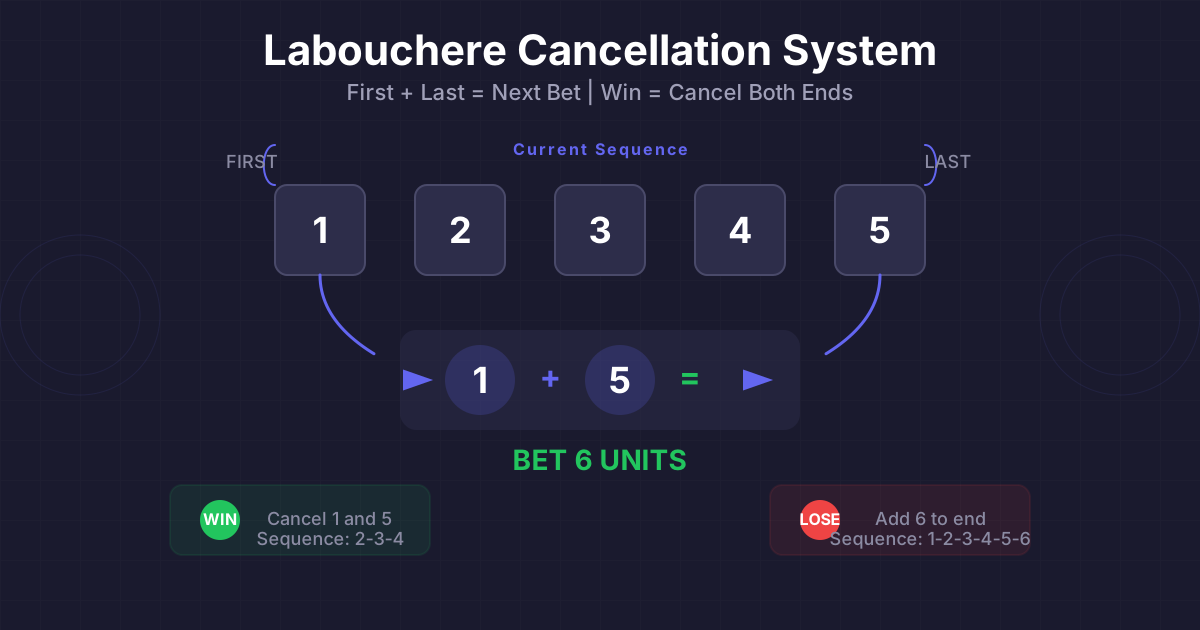
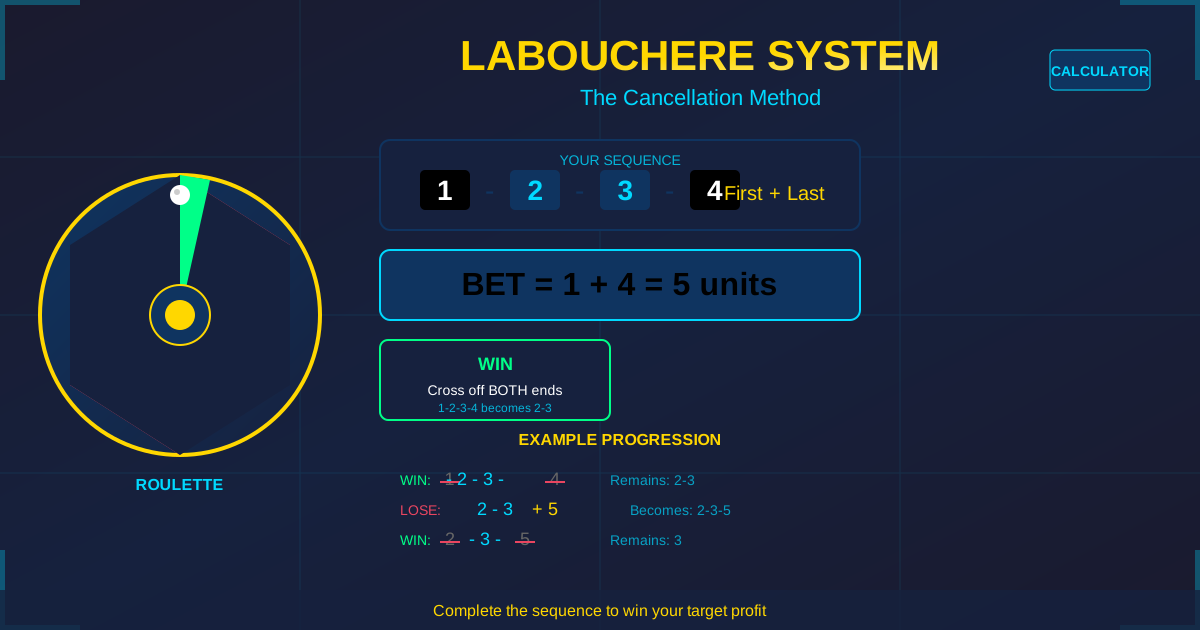
The Labouchere (also called the Cancellation system or Cross-Out system) is a negative progression system where you create a custom number sequence and bet the sum of the first and last numbers. Wins cross off two numbers; losses add the lost amount to the end.
Labouchere Mechanics
Rule: Write a sequence of numbers. Bet the sum of the first and last numbers. If you win, cross off both numbers. If you lose, add the bet amount to the end of the sequence. Complete when all numbers are crossed off.
Starting Sequence: 1-2-3-4-5 (units of $10)
| Round | Sequence | Bet (First + Last) | Outcome | Result |
|---|---|---|---|---|
| 1 | 1-2-3-4-5 | $60 (1+5) | Win | Cross off 1 and 5 |
| 2 | 2-3-4 | $60 (2+4) | Loss | Add 6 to end |
| 3 | 2-3-4-6 | $80 (2+6) | Win | Cross off 2 and 6 |
| 4 | 3-4 | $70 (3+4) | Win | Cross off 3 and 4 |
| 5 | (empty) | System complete | - | Net profit: +$150 |
If the sequence is completed, the profit equals the sum of the original numbers (1+2+3+4+5 = 15 units = $150 in this example).
Labouchere Risk Analysis
The Labouchere's danger lies in sequence growth during losing streaks:
| Starting Sequence | Target Profit | Worst Case (5 consecutive losses) | Sequence After 5 Losses |
|---|---|---|---|
| 1-1-1 | $30 | -$170 | 1-1-1-2-3-4-5-7 |
| 1-2-3 | $60 | -$320 | 1-2-3-4-5-7-9-12 |
| 1-2-3-4-5 | $150 | -$660 | 1-2-3-4-5-6-8-11-14-19 |
| 2-3-4-5-6 | $200 | -$880 | Rapidly expanding |
The sequence can grow unpredictably, leading to bets much larger than anticipated.
Labouchere Simulated Results (10,000 Attempts to Complete Sequence 1-2-3-4-5)
| Metric | Result |
|---|---|
| Sequences completed (profit achieved) | ~43% |
| Sequences abandoned (hit bankroll limit) | ~57% |
| Average profit when completed | +$150 (by design) |
| Average loss when abandoned | -$780 |
| Overall EV | Negative (same as all systems) |
| Longest sequence before completion | 50+ rounds |
Model your bankroll exposure with our Bankroll Volatility Tracker.
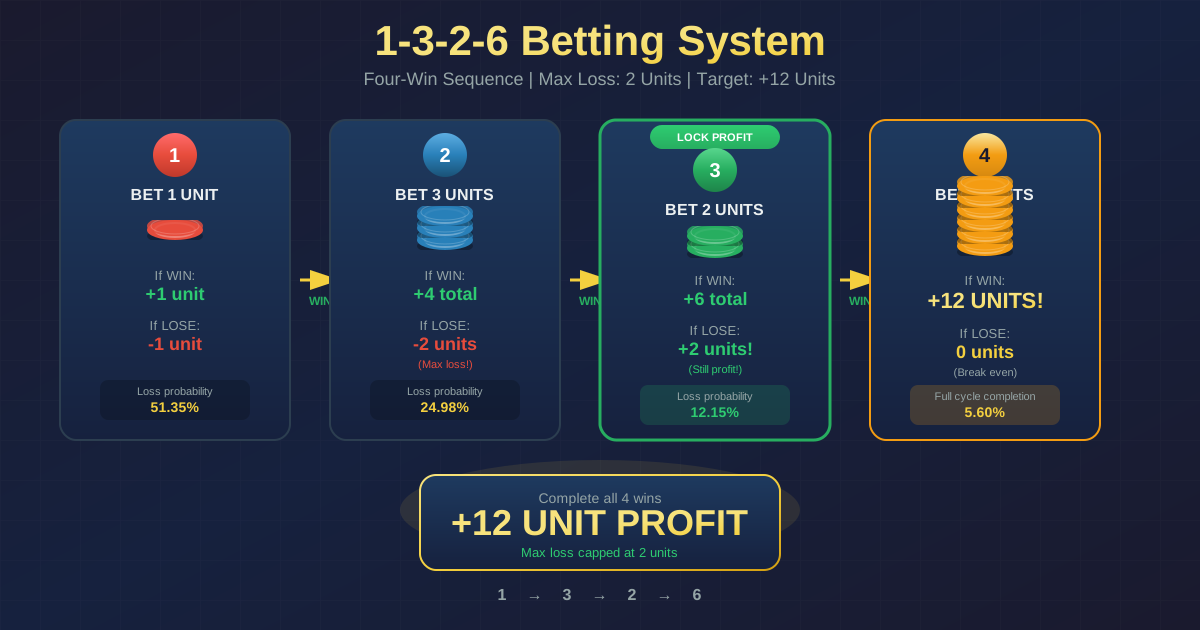
How Does the 1-3-2-6 System Work?
The 1-3-2-6 system is a positive progression system designed to capitalize on winning streaks of exactly 4 bets. You follow a fixed betting sequence: 1 unit, 3 units, 2 units, 6 units. After any loss or completing all 4 bets, you return to the start.
1-3-2-6 Mechanics
Sequence: Bet 1 unit, then 3 units, then 2 units, then 6 units (using winnings).
Starting Bet: $10 (1 unit = $10)
| Step | Bet | Outcome | Running P/L | Notes |
|---|---|---|---|---|
| 1 | $10 (1 unit) | Win | +$10 | Advance to step 2 |
| 2 | $30 (3 units) | Win | +$40 | Advance to step 3 |
| 3 | $20 (2 units) | Win | +$60 | Advance to step 4 |
| 4 | $60 (6 units) | Win | +$120 | Cycle complete, restart |
1-3-2-6 Outcome Table (All Possible Results)
| Outcome Sequence | P/L | Probability | Expected Contribution |
|---|---|---|---|
| L (loss on step 1) | -$10 | 51.35% | -$5.14 |
| W-L (loss on step 2) | -$20 | 24.98% | -$5.00 |
| W-W-L (loss on step 3) | +$20 | 12.15% | +$2.43 |
| W-W-W-L (loss on step 4) | +$0 (break even) | 5.91% | $0.00 |
| W-W-W-W (complete cycle) | +$120 | 5.58% | +$6.70 |
Expected value per cycle: -$5.14 + (-$5.00) + $2.43 + $0 + $6.70 = -$1.01 per cycle
The 1-3-2-6 is one of the more structured systems with clearly defined risk. The maximum loss per cycle is $20 (losing on step 2 after a win on step 1), and the maximum gain is $120 (all four steps win).
1-3-2-6 Simulated Results (10,000 Sessions, 100 Spins Each, $10 Unit)
| Metric | 1-3-2-6 | Paroli | Flat Bet |
|---|---|---|---|
| Sessions with net profit | ~40% | ~42% | ~45% |
| Sessions with net loss | ~60% | ~58% | ~55% |
| Average profit (winning sessions) | +$110 | +$95 | +$50 |
| Average loss (losing sessions) | -$62 | -$55 | -$50 |
| Overall EV per session | -$27 | -$27 | -$27 |
| Maximum single-session loss | -$200 | -$100 | -$270 |
| Standard deviation | $95 | $85 | $75 |
Calculate expected returns on structured bets with our Expected Value Calculator.
How Does Oscar's Grind Work?
Oscar's Grind is a positive progression system with a unique goal: win exactly 1 unit per cycle. You increase your bet by 1 unit after a win but never bet more than what would make your profit exceed 1 unit. After a loss, your bet stays the same.
Oscar's Grind Mechanics
Rules:
- Start with 1 unit
- After a loss, bet the same amount
- After a win, increase by 1 unit (unless doing so would profit more than 1 unit)
- Stop the cycle when you are up exactly 1 unit
| Round | Bet | Outcome | Cumulative P/L | Next Bet |
|---|---|---|---|---|
| 1 | $10 | Loss | -$10 | $10 (same) |
| 2 | $10 | Loss | -$20 | $10 (same) |
| 3 | $10 | Win | -$10 | $20 (+1 unit) |
| 4 | $20 | Loss | -$30 | $20 (same) |
| 5 | $20 | Win | -$10 | $20 (would put at +$10, but only need +$10, so bet $20) |
| 6 | $20 | Win | +$10 | Cycle complete (+1 unit profit) |
Oscar's Grind Characteristics
| Feature | Oscar's Grind |
|---|---|
| Progression type | Positive (increase after wins) |
| Goal per cycle | Exactly 1 unit profit |
| Bet after loss | Same bet (no increase) |
| Bet after win | +1 unit (capped) |
| Maximum bet exposure | Moderate (grows slowly) |
| Cycle length | Variable (can be very long) |
| Session volatility | Low |
| Emotional experience | Patient, methodical |
Oscar's Grind Simulated Results (10,000 Sessions)
| Metric | Oscar's Grind | D'Alembert | Flat Bet |
|---|---|---|---|
| Average cycle length | 6.2 rounds | N/A | N/A |
| Cycles completed per session (100 spins) | ~16 | N/A | 100 |
| Sessions with net profit | ~48% | ~47% | ~45% |
| Average session result | -$27 | -$27 | -$27 |
| Standard deviation | $95 | $110 | $75 |
| Max single-session loss | -$400 | -$550 | -$270 |
Oscar's Grind produces results similar to D'Alembert but with slightly lower variance. Its methodical nature makes it one of the "safest" progression systems.
Monitor your session results across systems with our Bankroll Volatility Tracker.
How Do All Betting Systems Compare Head-to-Head?
Here is the definitive comparison of all major systems across key metrics.
Complete System Comparison
| System | Type | Bet After Loss | Bet After Win | Max Exposure (10 losses) | Risk Level |
|---|---|---|---|---|---|
| Flat Bet | None | Same | Same | $100 ($10 x 10) | Low |
| Martingale | Negative | Double | Reset | $10,230 | Extreme |
| D'Alembert | Negative | +1 unit | -1 unit | $550 | Low-Moderate |
| Fibonacci | Negative | Next in sequence | Back 2 steps | $1,430 | Moderate |
| Labouchere | Negative | Add to sequence | Cross off ends | Variable (high) | Moderate-High |
| Paroli | Positive | Reset | Double (3 cap) | $100 (flat losses) | Very Low |
| 1-3-2-6 | Positive | Reset | Follow sequence | $200 max/cycle | Low |
| Oscar's Grind | Positive | Same | +1 unit (capped) | Moderate | Low |
| Reverse Fibonacci | Positive | Reset | Next in sequence | Variable | Moderate |
Simulated Performance Comparison (10,000 Sessions, 100 Even-Money Bets, $10 Base, European Roulette)
| System | Win Rate (Sessions) | Avg Win | Avg Loss | Max Loss | EV/Session | Std Dev |
|---|---|---|---|---|---|---|
| Flat Bet | 45% | +$50 | -$50 | -$270 | -$27 | $75 |
| Martingale | 51% | +$34 | -$380 | -$10,230 | -$27 | $520 |
| D'Alembert | 47% | +$65 | -$85 | -$550 | -$27 | $110 |
| Fibonacci | 48% | +$82 | -$130 | -$3,760 | -$27 | $180 |
| Labouchere | 43% | +$150 | -$780 | -$5,000+ | -$27 | $350 |
| Paroli (3-cap) | 42% | +$95 | -$55 | -$100 | -$27 | $85 |
| 1-3-2-6 | 40% | +$110 | -$62 | -$200 | -$27 | $95 |
| Oscar's Grind | 48% | +$72 | -$80 | -$400 | -$27 | $95 |
The expected value is identical across all systems (-$27 per session). The only differences are in win frequency, win/loss magnitude, and variance.
Risk-to-Reward Visualization
| System | Risk Rating (1-10) | Reward Frequency | Best For |
|---|---|---|---|
| Flat Bet | 3 | Moderate | Baseline, long sessions |
| Martingale | 9 | Frequent small wins | Short sessions with high bankroll |
| D'Alembert | 4 | Moderate | Cautious players |
| Fibonacci | 6 | Moderate | Balance-seekers |
| Labouchere | 7 | Structured target | Goal-oriented players |
| Paroli | 2 | Infrequent larger wins | Risk-averse players |
| 1-3-2-6 | 3 | Infrequent larger wins | Structured positive play |
| Oscar's Grind | 3 | Moderate | Patient, methodical players |
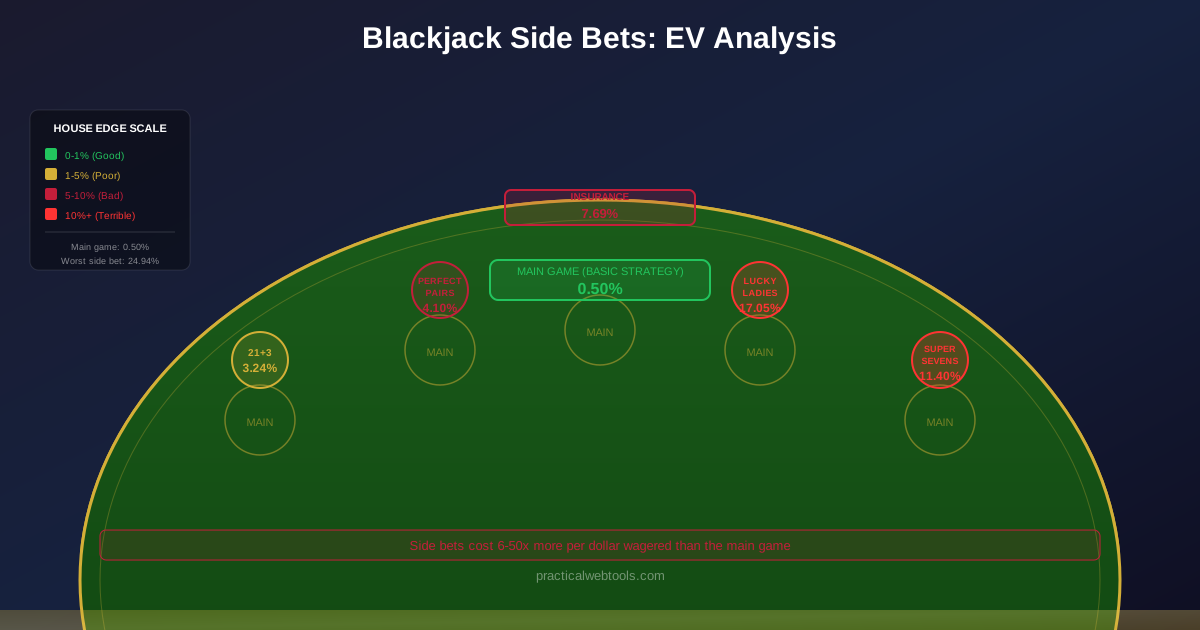
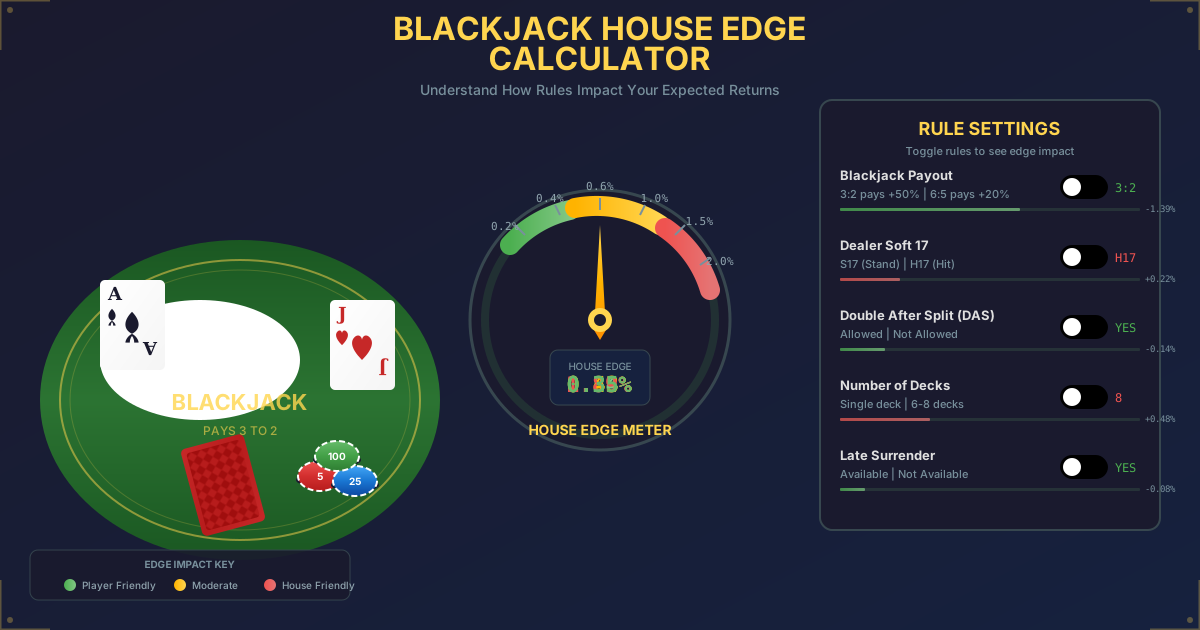
Compare house edges across different games before choosing where to apply a system: Blackjack House Edge Calculator.
What Game Should You Use Each System On?
While no system beats the house, some systems are better suited to certain games based on the game's characteristics.
System-to-Game Matching
| Game | Best Systems | Worst Systems | Why |
|---|---|---|---|
| European Roulette (even money) | D'Alembert, Paroli, 1-3-2-6 | Martingale | Single zero + even money bets = lowest house edge for system play |
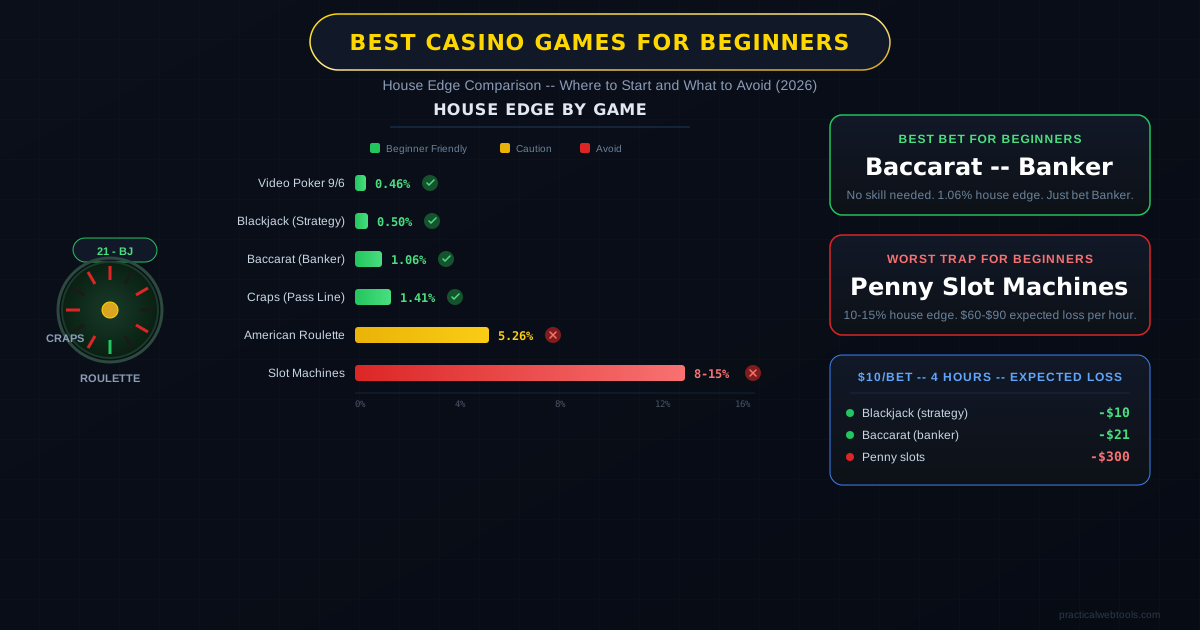
| American Roulette (even money) | None recommended | All | 5.26% house edge amplifies system losses |
| Blackjack (basic strategy) | Paroli, Oscar's Grind | Martingale | Low house edge, but bet variation attracts attention |
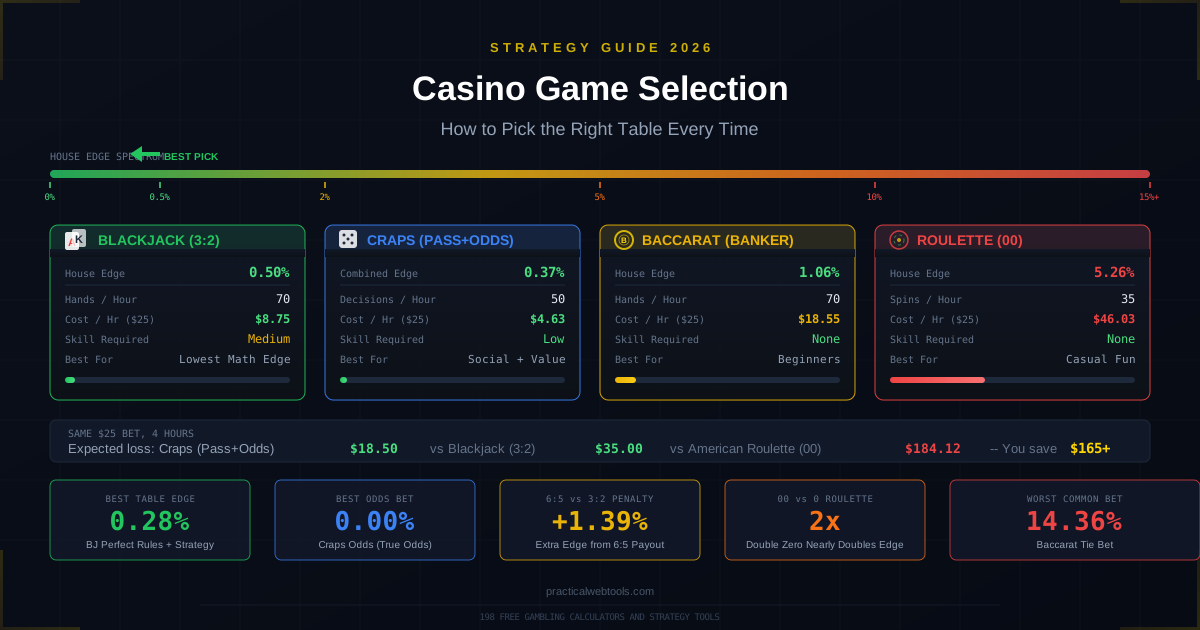
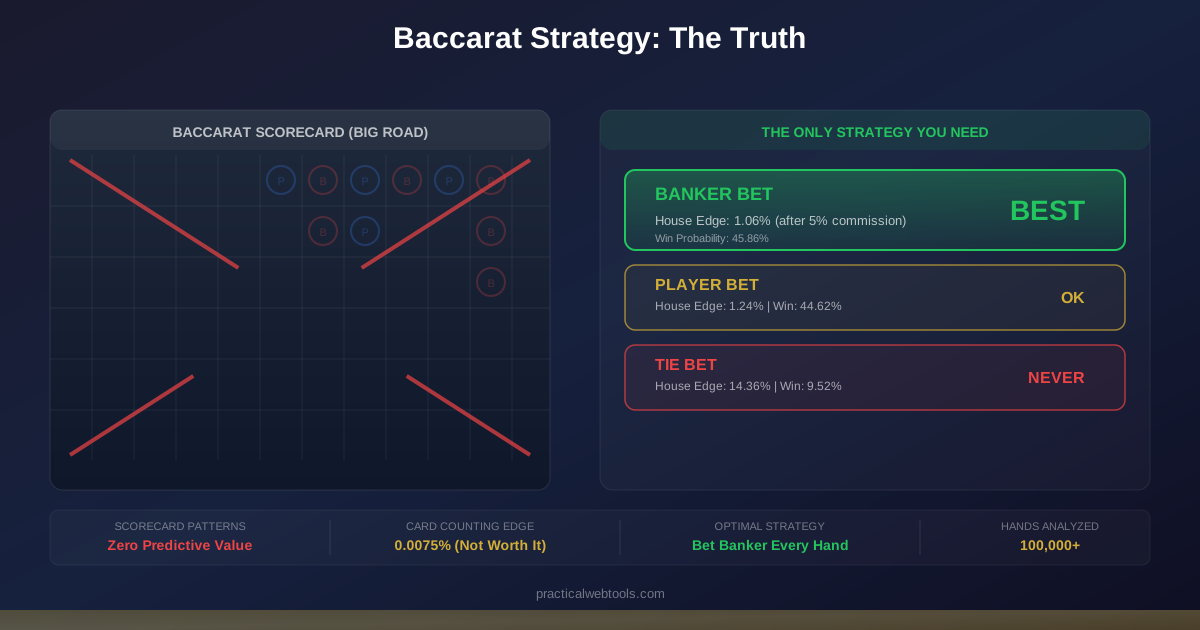
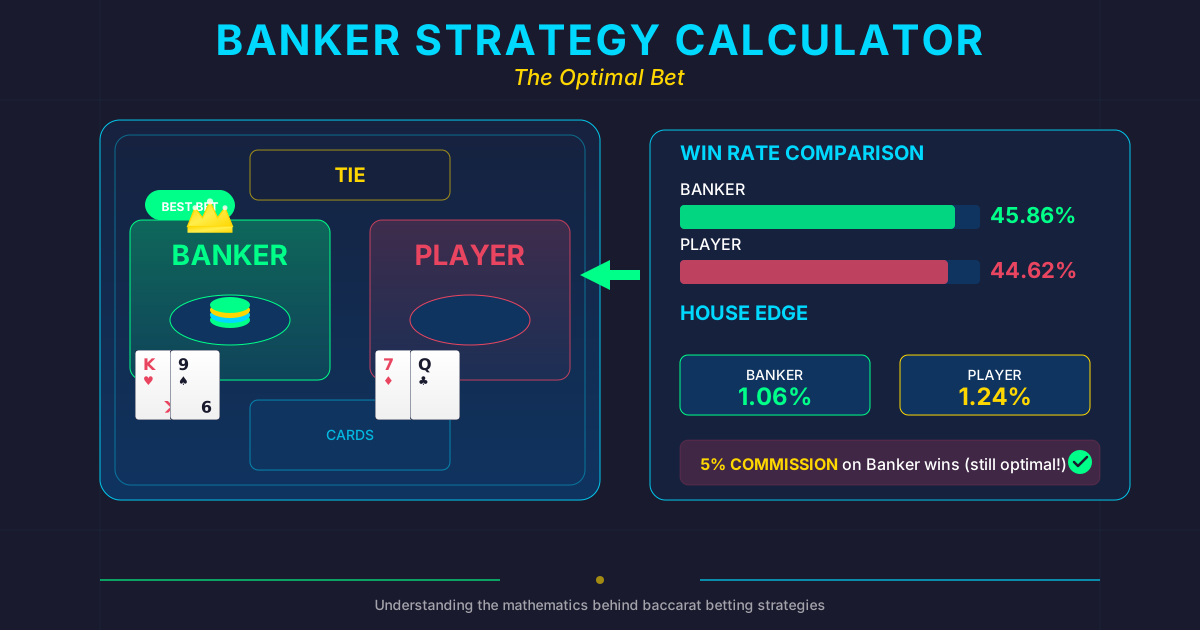
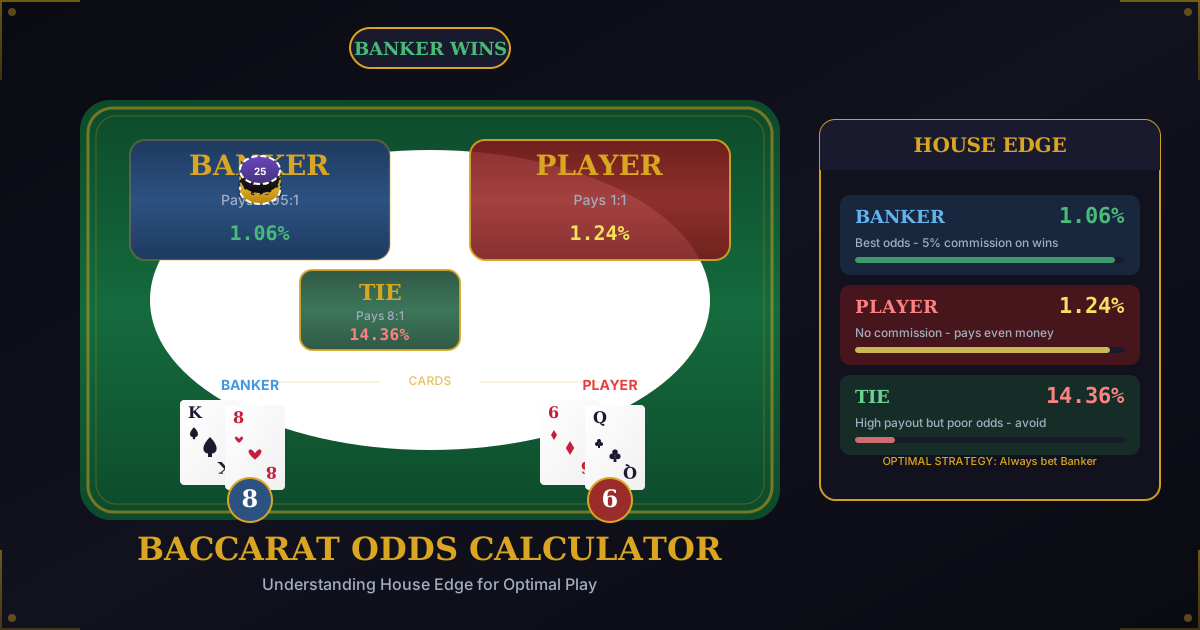
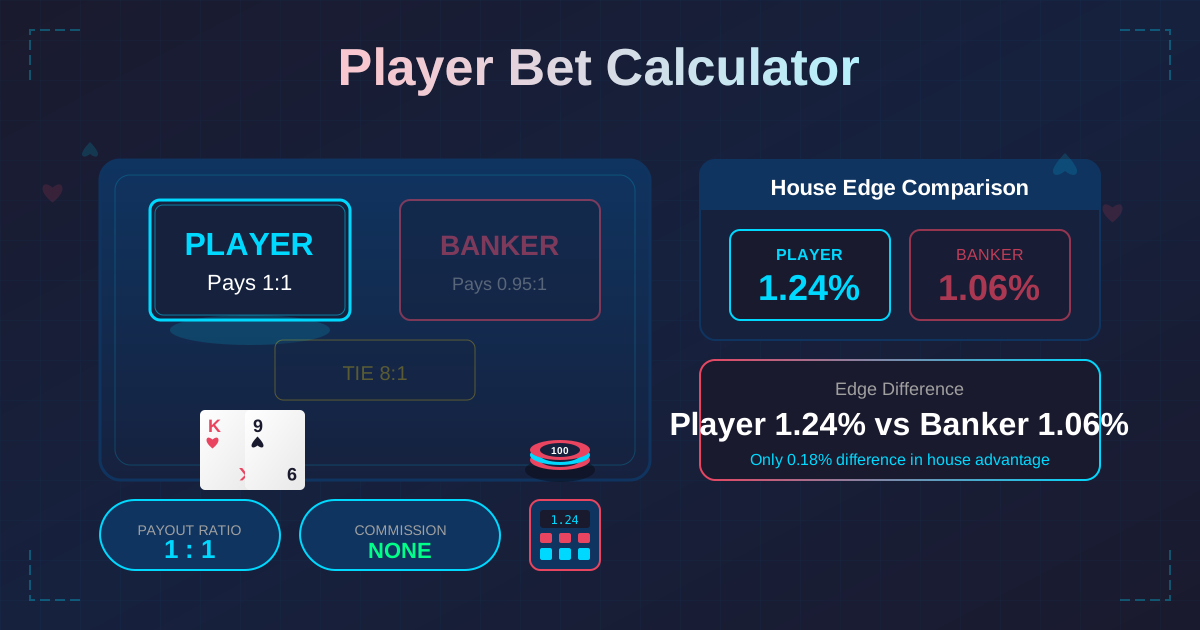
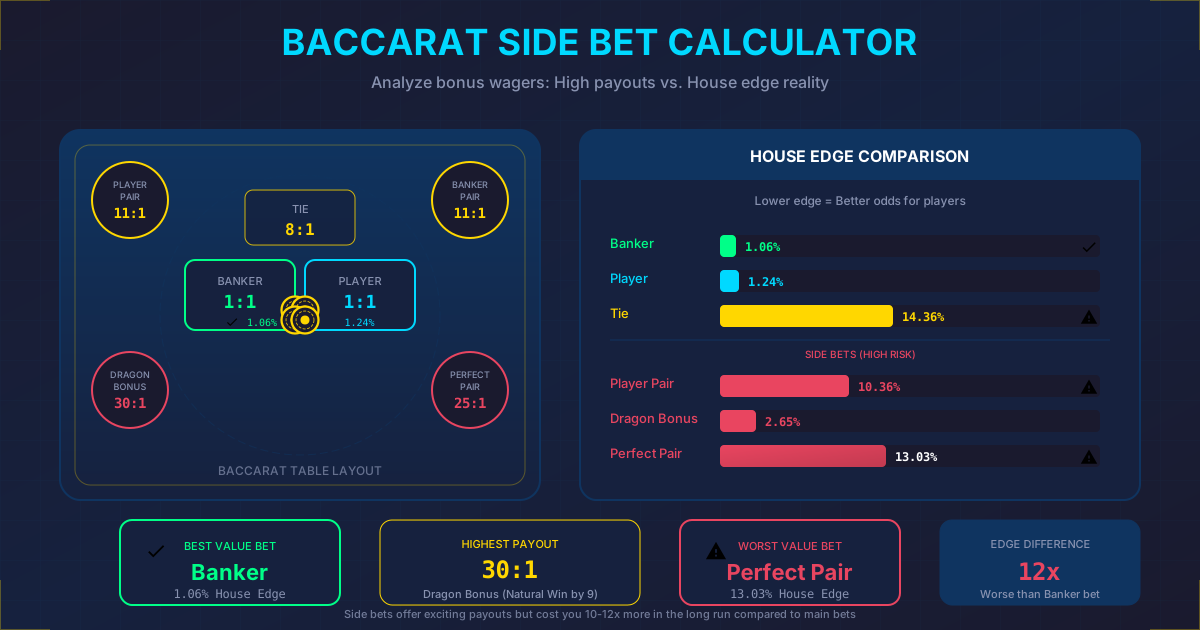
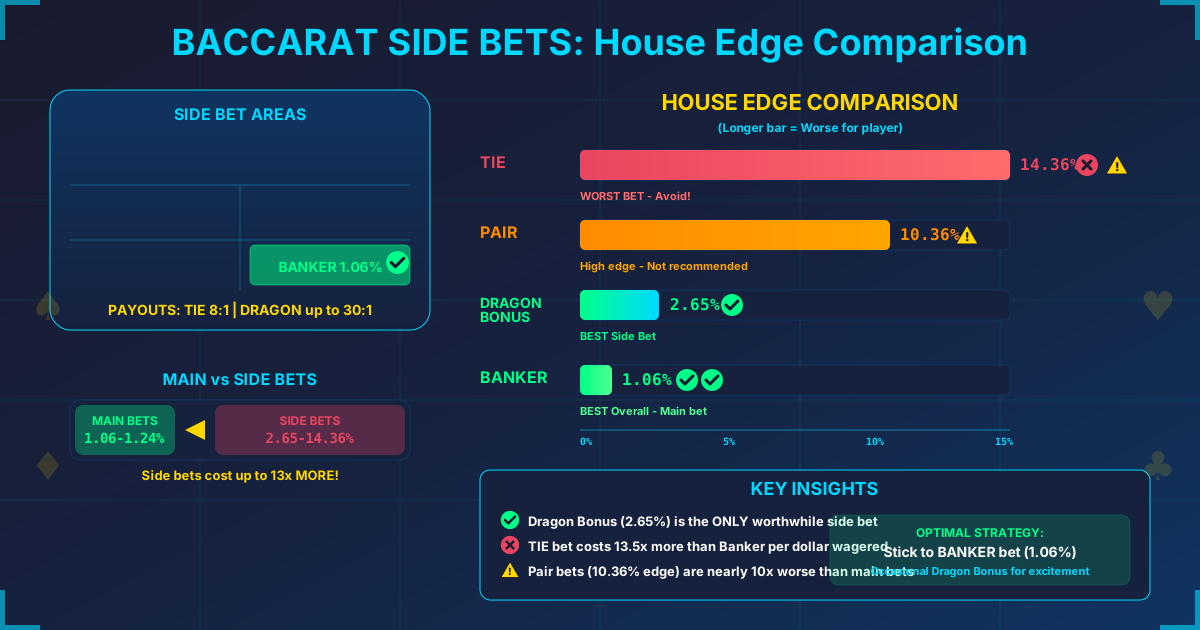
| Baccarat (Banker) | D'Alembert, Paroli | Martingale (limited use) | 1.06% edge, natural for system play |
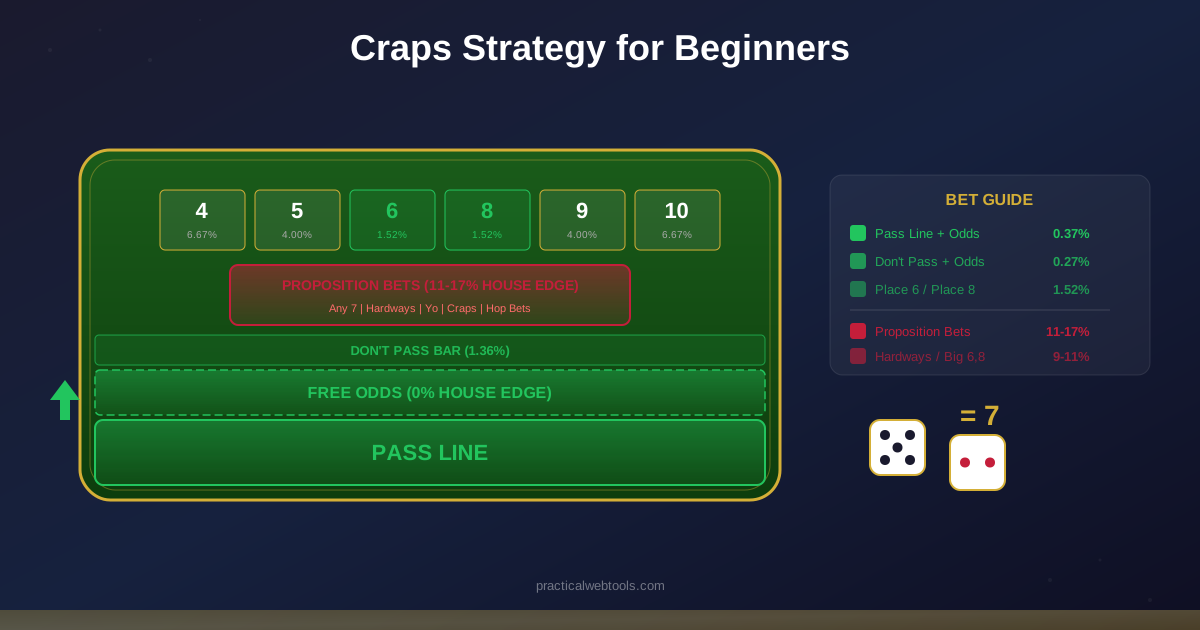
| Craps (Pass/Don't Pass) | D'Alembert, Paroli | Aggressive negative progressions | Low house edge on base bets |
| Slots | None | All | House edge too high, no even-money option |
Table Limit Impact on Systems
Table limits are the ultimate destroyer of negative progression systems. Every casino has minimum and maximum bet limits that constrain how many doublings or increases a system can sustain.
| Table Limits | Martingale Doublings Before Limit | Max Possible Loss |
|---|---|---|
| $10 min / $500 max | 5 doublings ($10→$20→$40→$80→$160→$320) | $620 |
| $10 min / $1,000 max | 6 doublings (up to $640) | $1,270 |
| $25 min / $5,000 max | 7 doublings (up to $3,200) | $6,350 |
| $25 min / $10,000 max | 8 doublings (up to $6,400) | $12,750 |
| $100 min / $10,000 max | 6 doublings (up to $6,400) | $12,700 |
A $10/$500 table allows only 5 Martingale doublings. A 6-loss streak at this table is unrecoverable, and 6-loss streaks occur approximately once every 112 sequences.
Calculate roulette payouts for any bet with our Roulette Payout Calculator.
Can Any Betting System Ever Be Profitable?
The honest answer is: no betting system can be profitable when applied to a negative-expectation game over the long term. This is a mathematical certainty, not an opinion.
The Mathematical Proof (Simplified)
- In a negative-expectation game, the expected value of every individual bet is negative
- The expected value of a series of bets is the sum of the individual expected values
- A sum of negative numbers is always negative
- No rearrangement of negative numbers produces a positive sum
- Therefore, no sequence of bet sizes can produce a positive expected outcome
What About Combining Systems with Advantage Play?
If you have a genuine edge (card counting in blackjack, for example), a betting system CAN be useful -- not to create an edge, but to exploit an existing one more efficiently.
| Approach | System Useful? | Why |
|---|---|---|
| Card counting + bet variation | Yes | Increase bets when count is favorable (this IS a system) |
| Flat betting with basic strategy | N/A | No system needed; just play optimally |
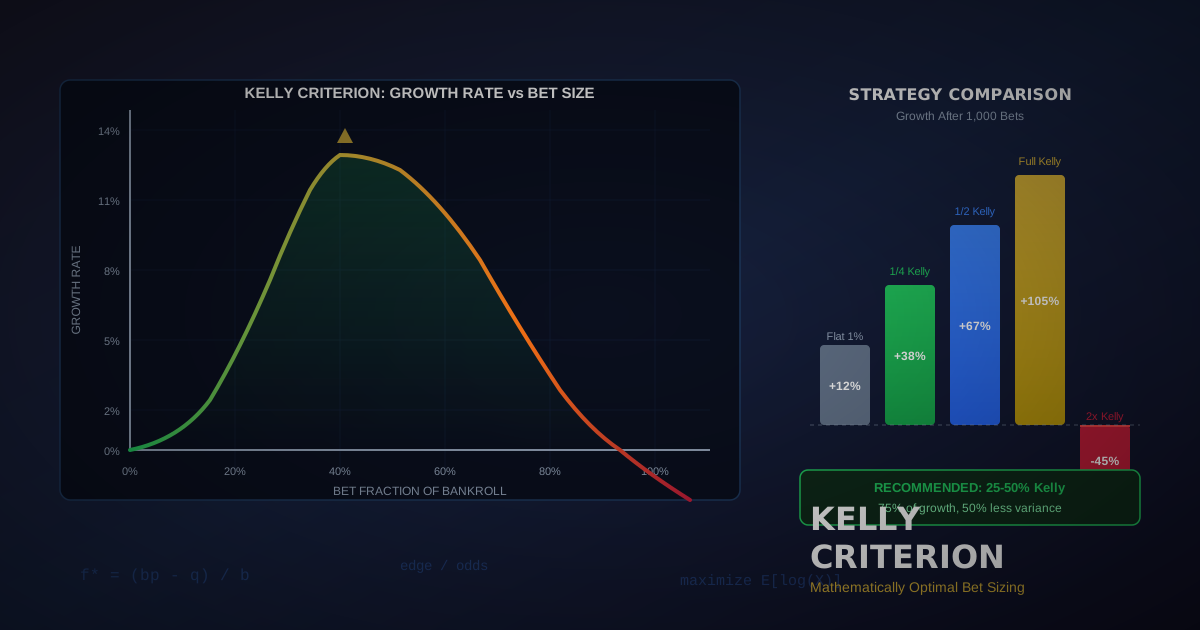
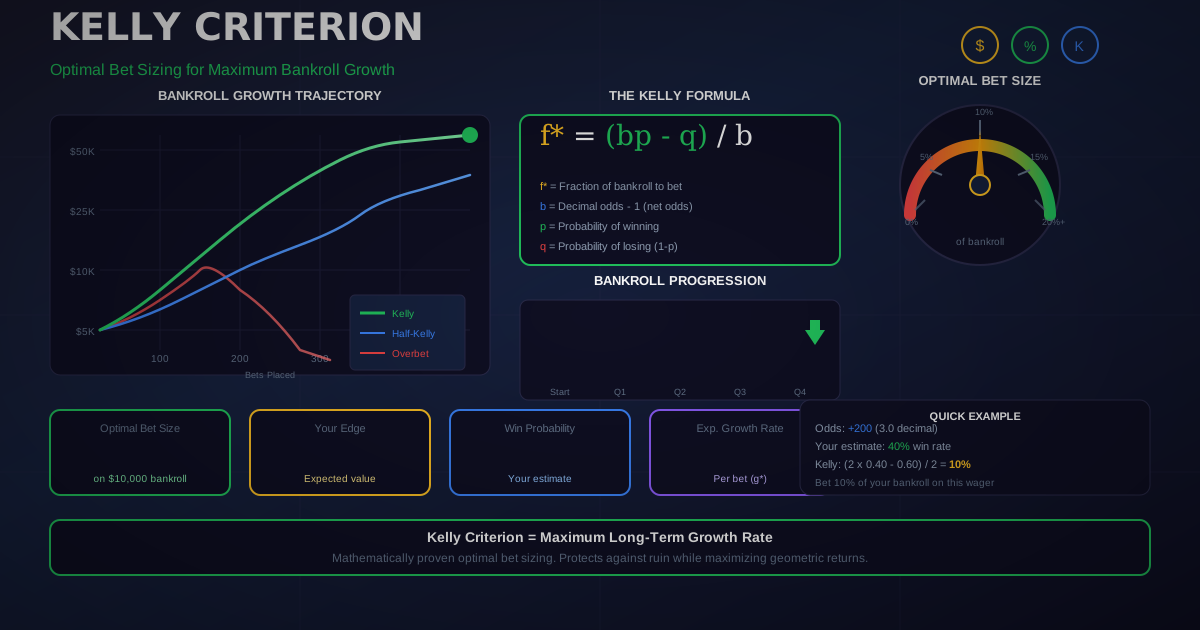
| Sports betting with +EV picks | Kelly Criterion | Kelly is technically a "system" that maximizes edge exploitation |
| Roulette with no edge | No | No system can overcome 2.70% house edge |
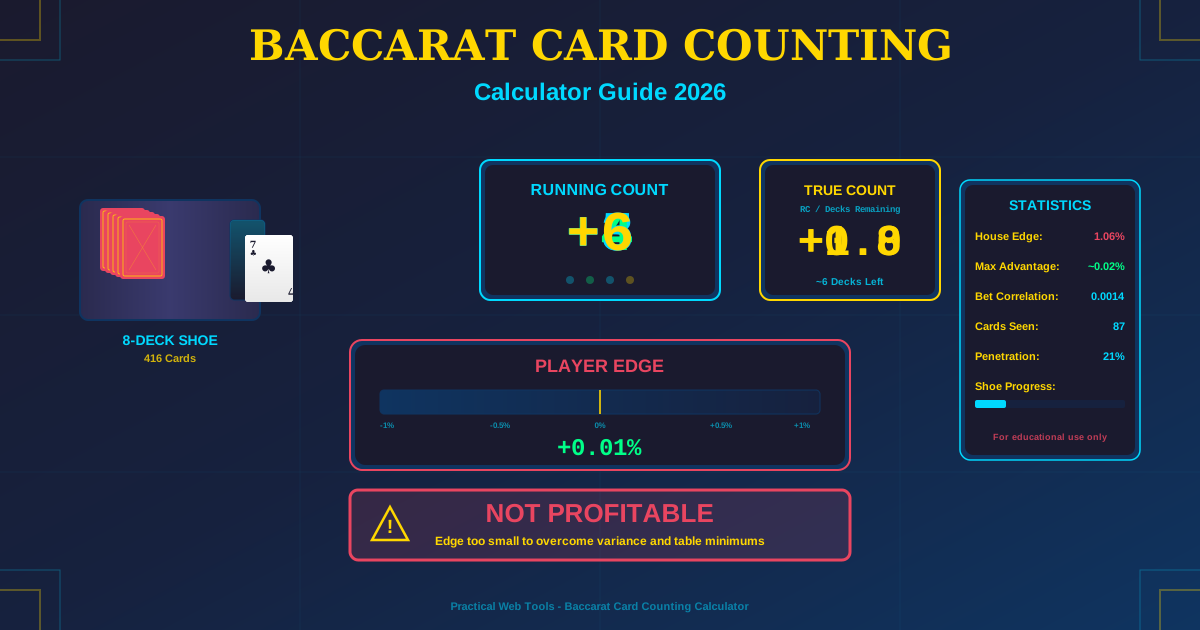
| Baccarat with no edge | No | No system can overcome 1.06% house edge |
The Only "System" That Works
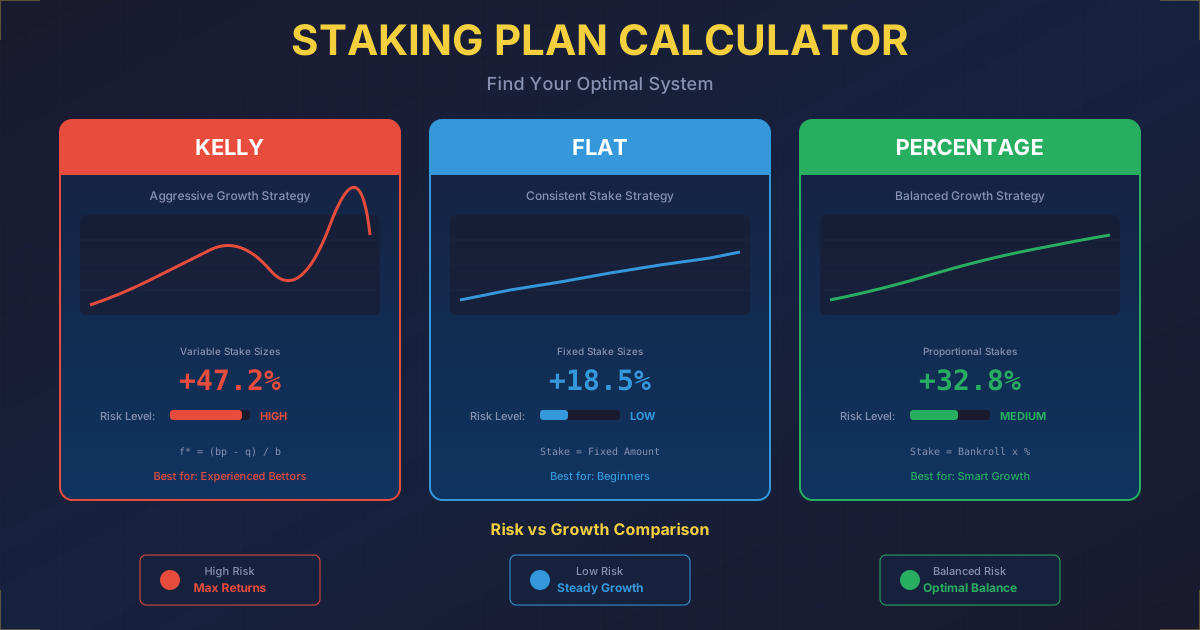
The Kelly Criterion is sometimes called a betting system, but it is fundamentally different: it optimizes bet sizing when you have a known edge. It does not create an edge -- it assumes one exists and determines how much to bet.
Apply the Kelly Criterion to advantage situations with our Kelly Criterion Calculator.
When Are Betting Systems Fun vs. Dangerous?
Systems occupy a spectrum from harmless entertainment to genuinely dangerous behavior.
Fun/Harmless System Use
| Indicator | Description |
|---|---|
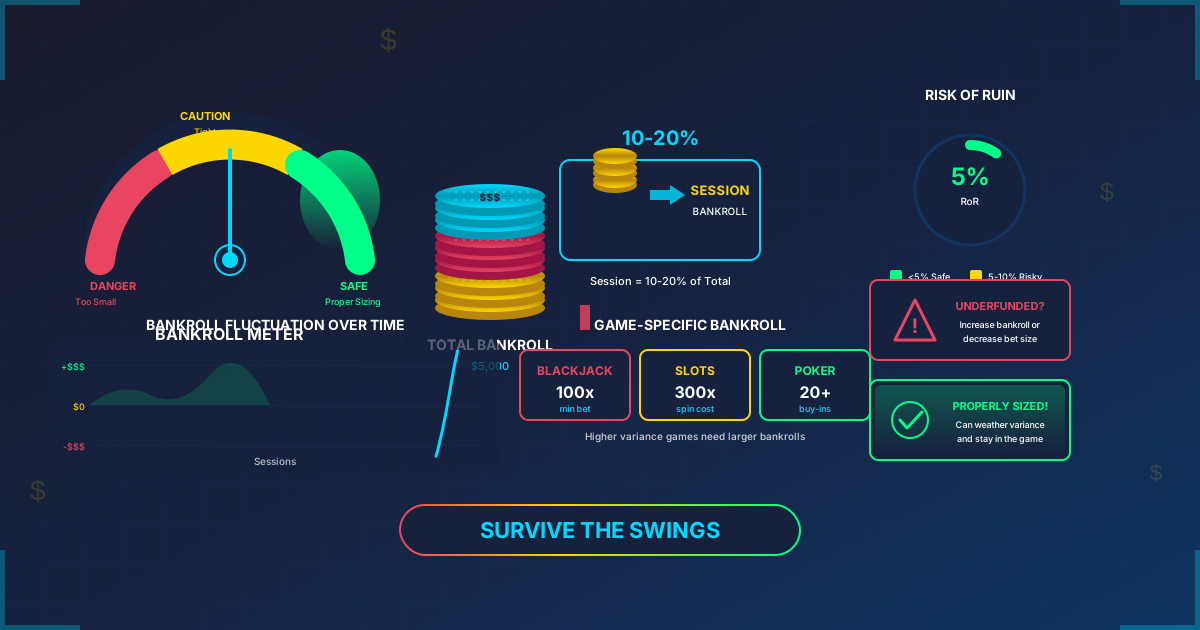
| Fixed session bankroll | You set aside a specific amount and do not exceed it |
| Entertainment mindset | You view the system as a way to add structure to play, not as a path to profit |
| Low base bet | Your unit size is a small fraction of your bankroll |
| Positive progression | You use systems like Paroli or 1-3-2-6 that limit downside |
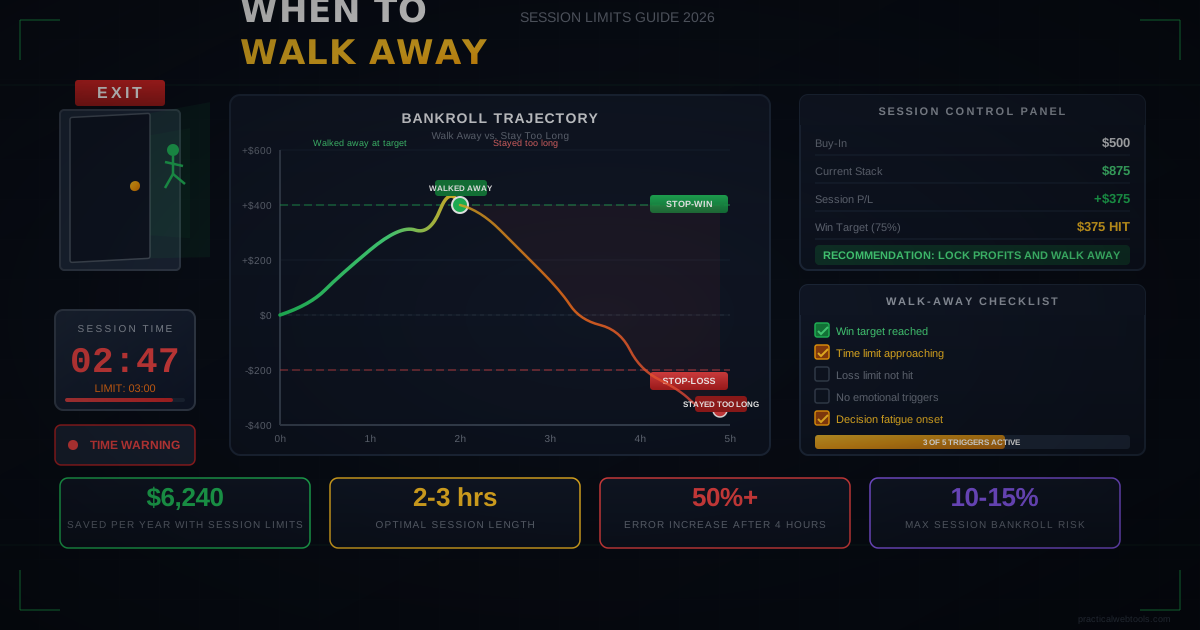
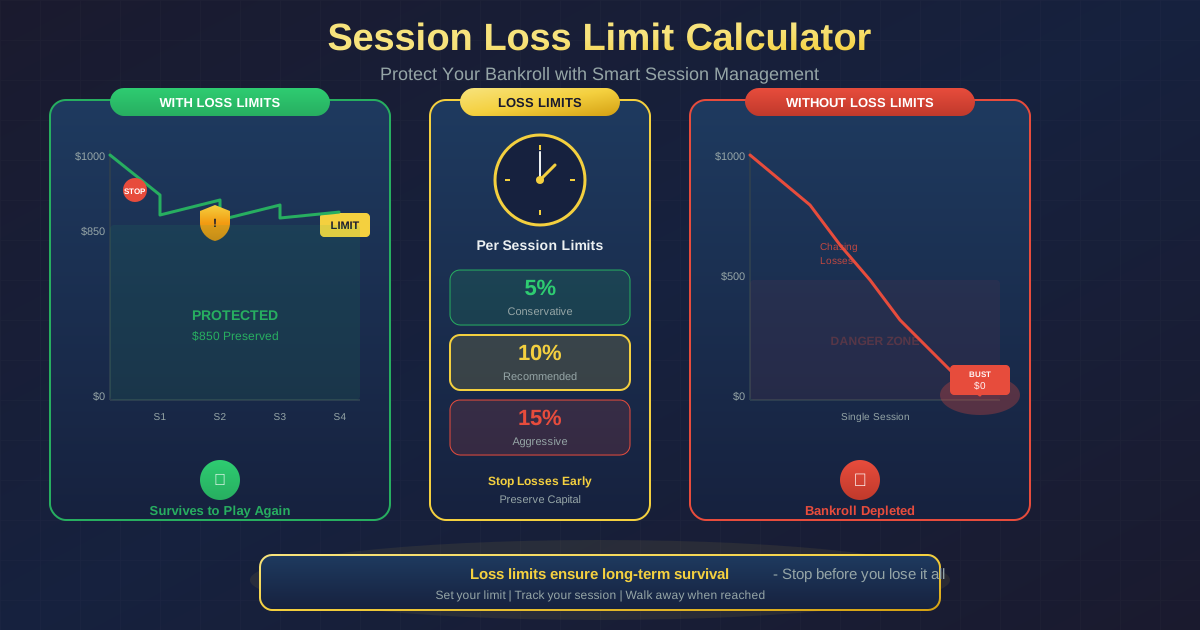
| Session limits | You stop at a predetermined time or loss threshold |
Dangerous System Use
| Warning Sign | Description |
|---|---|
| Increasing base bet to recover losses | Raising your unit size after losing sessions |
| Borrowing money to fund the system | Taking on debt to maintain the progression |
| Believing the system "must" work | Conviction that continued play guarantees recovery |
| Ignoring session limits | Playing past your stop-loss because "the system needs more time" |
| Emotional attachment | Feeling anxious or obsessive about the system's performance |
| Chasing across sessions | Using one session's results to determine the next session's starting bet |
A Responsible Framework for System Play
- Pick a system that matches your risk tolerance (Paroli/1-3-2-6 for risk-averse, D'Alembert for moderate)
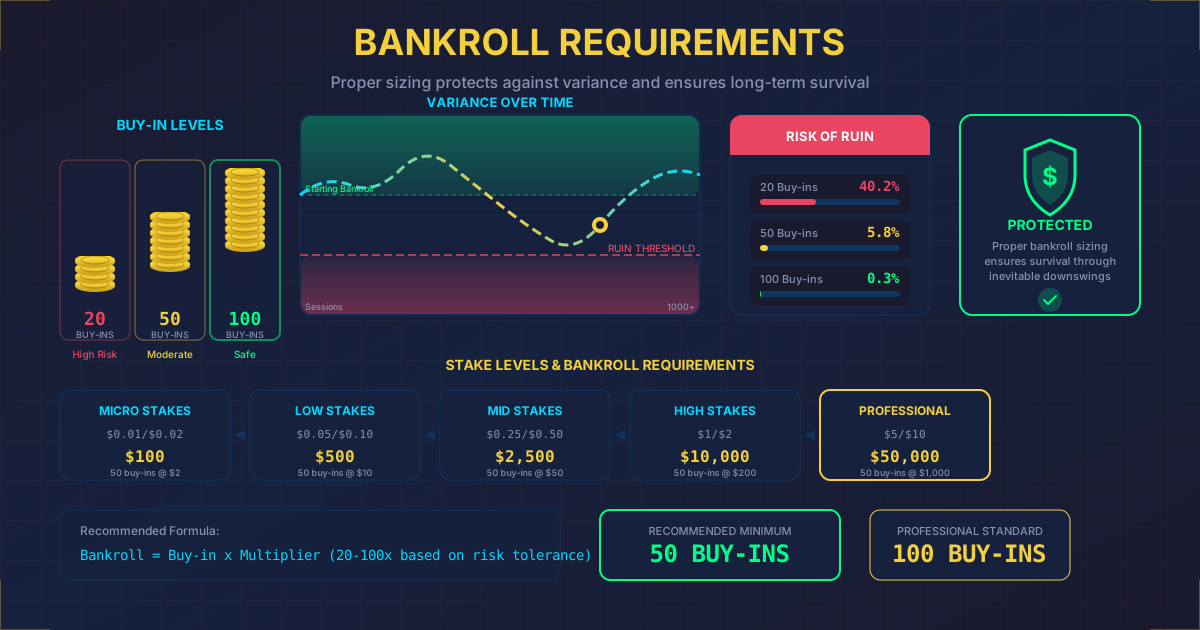
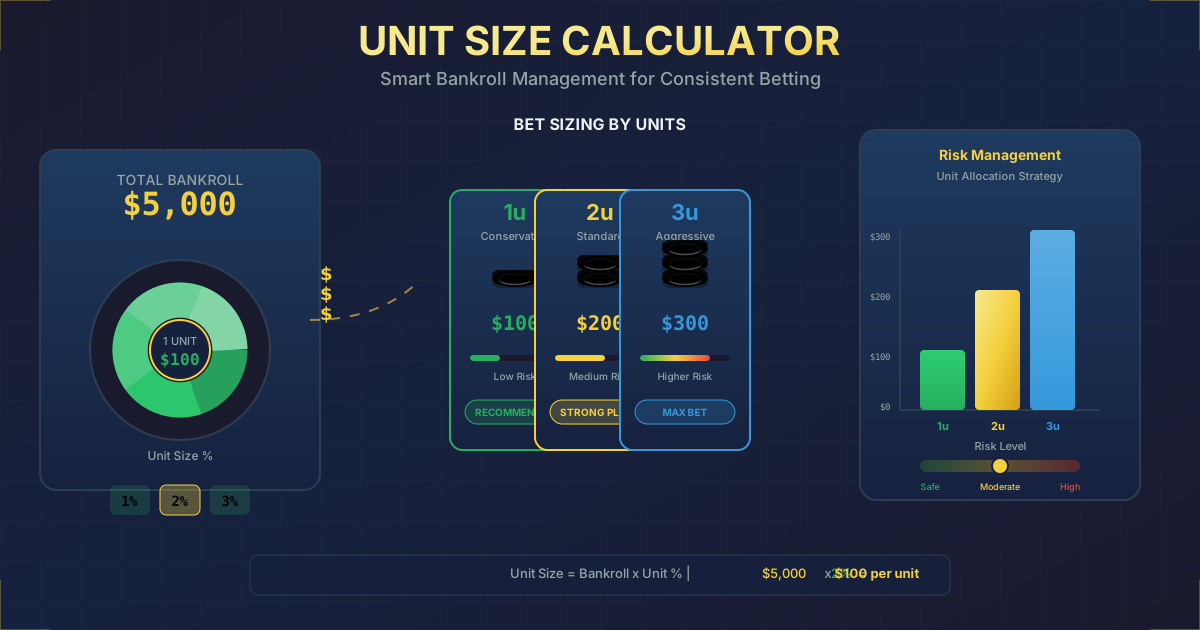
- Set a base bet at 1-2% of your session bankroll ($10 base on $500 bankroll)
- Set a hard stop-loss (never more than 50% of your session bankroll)
- Set a win goal (lock up profits when you reach your target)
- Treat each session as independent (do not carry system progress between sessions)
- Track your results honestly (including losses)
- Accept the house edge (you are paying for entertainment, not investing)
Track your session results with our Bankroll Volatility Tracker.
How Does Flat Betting Compare to All Systems?
Flat betting (wagering the same amount every time) is the baseline against which all systems should be compared. Surprisingly, flat betting has several advantages that systems lack.
Flat Betting Advantages
| Advantage | Explanation |
|---|---|
| Lowest variance | Consistent bet sizes produce the most predictable outcomes |
| No catastrophic risk | Maximum session loss is predictable and bounded |
| No decision stress | No calculations needed, no pressure to adjust |
| Longest session time | Per dollar of bankroll, flat betting lasts longer than negative progressions |
| Easiest to track | Simple math for recording wins and losses |
| Best for learning | Eliminates system complexity so you can focus on game strategy |
Flat Betting vs. Systems: Session Duration
| System ($10 base, $500 bankroll, European Roulette even money) | Expected Spins Before Ruin |
|---|---|
| Flat Bet ($10) | ~185 spins |
| Martingale ($10 base) | ~110 spins (catastrophic loss ends session early) |
| D'Alembert ($10 base) | ~165 spins |
| Fibonacci ($10 base) | ~140 spins |
| Paroli ($10 base) | ~190 spins |
| 1-3-2-6 ($10 base) | ~180 spins |
| Oscar's Grind ($10 base) | ~170 spins |
Flat betting and Paroli provide the longest sessions because they never increase bets after losses. The Martingale provides the shortest sessions because a single bad streak can consume the entire bankroll.
Calculate your expected session length with our Roulette Session Loss Calculator.
Frequently Asked Questions About Betting Systems
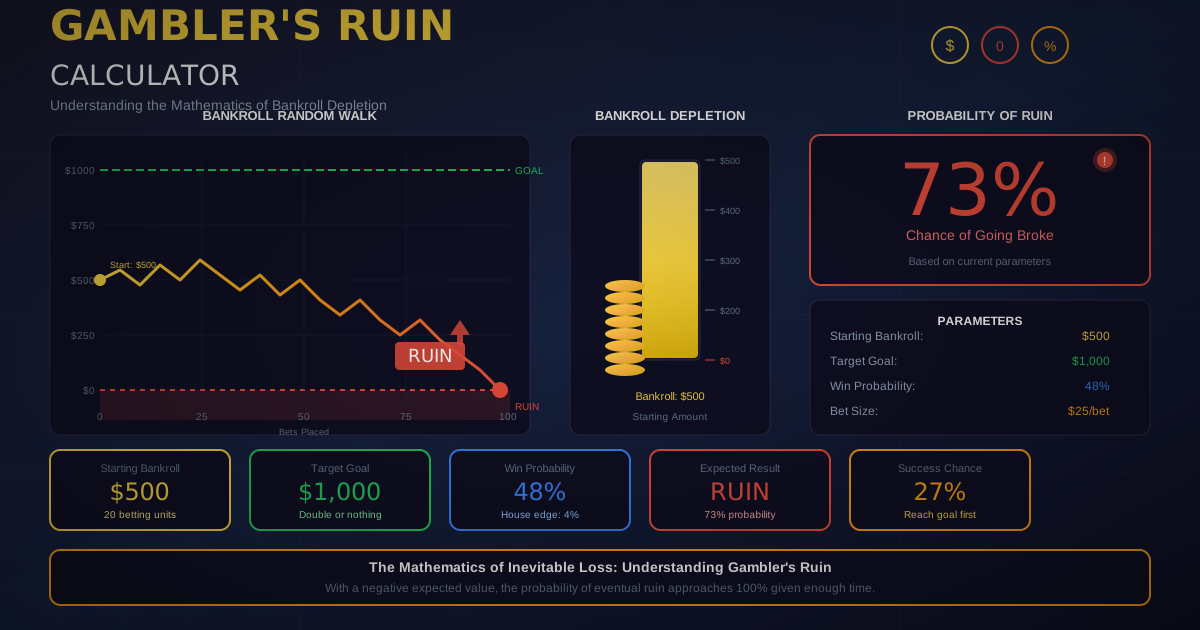
Does the Martingale system work? In the short term, the Martingale produces small wins in approximately 51% of sessions. In the long term, the rare catastrophic losses (when you hit a long losing streak) more than offset all the small wins. Over thousands of sessions, Martingale players lose exactly as much as flat bettors -- they just experience the losses differently (few big losses vs. many small ones).
What is the safest betting system? The Paroli (Reverse Martingale) and 1-3-2-6 systems have the lowest maximum loss per cycle because they only increase bets after wins. The worst-case loss per cycle is limited to a small, predictable amount. The D'Alembert is the safest negative progression because it increases bets linearly rather than exponentially.
Can I combine multiple systems? You can, but it adds complexity without changing the expected value. Some players use a positive progression (Paroli) during winning streaks and flat bet during losing streaks. This is fine for entertainment but does not create an edge.
Do casinos care if I use a betting system? Casinos do not prohibit or discourage betting systems because systems do not affect the house edge. In fact, negative progression systems like the Martingale often increase the casino's revenue because they cause players to bet more per hour than flat bettors. Casinos are only concerned about genuine advantage play (card counting, etc.).
Which system is best for roulette? For even-money bets on European roulette (2.70% house edge), the Paroli or D'Alembert offers the best balance of entertainment and risk management. The Paroli limits downside while providing occasional exciting winning streaks. The D'Alembert provides steady, controlled play. Never use the Martingale on American double-zero roulette (5.26% edge) -- the higher house edge accelerates system failure.
Should I increase my base bet size over time? No. Increasing your base bet increases your expected hourly loss proportionally. If your bankroll grows, you could theoretically increase, but only if the growth came from non-gambling sources. Increasing bets from gambling winnings in the context of a negative-expectation game is a recipe for returning those winnings to the casino.
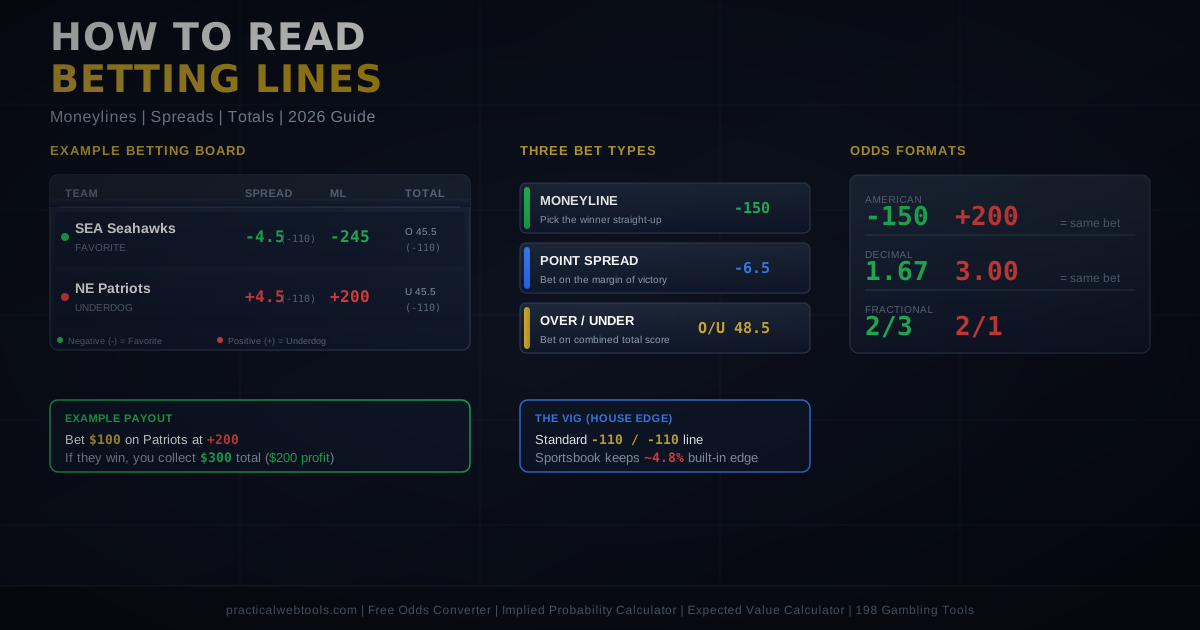
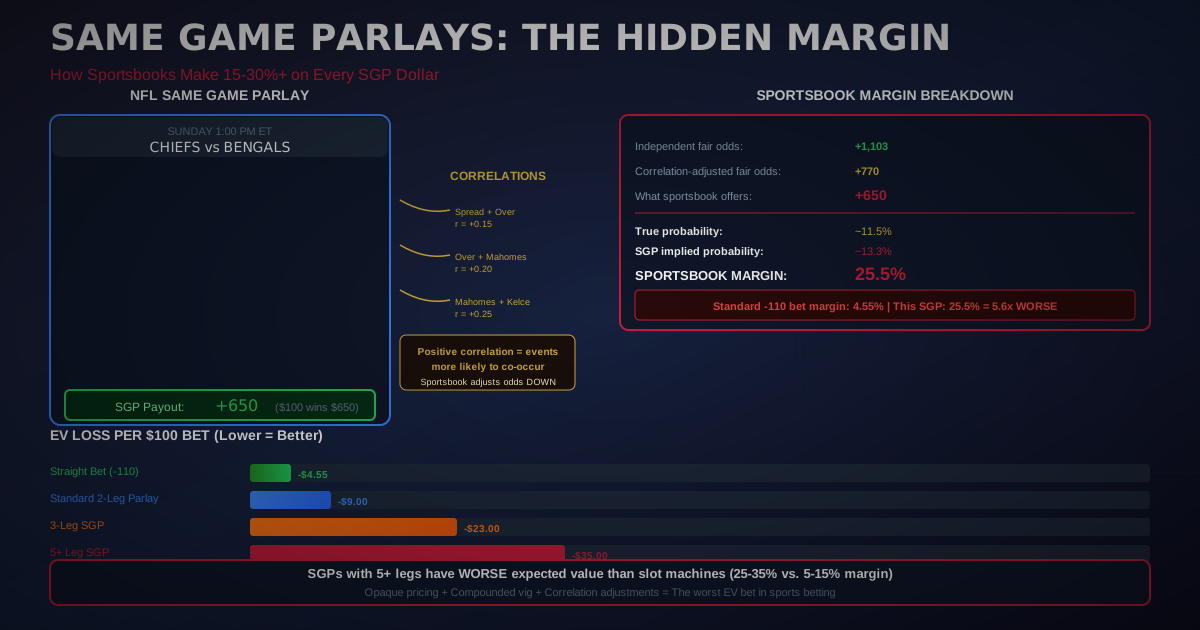
What about using systems on sports betting? Sports betting is fundamentally different because individual bets can have positive expected value (if you handicap better than the market). In +EV sports betting, the Kelly Criterion is the mathematically optimal system. For -EV sports betting (most recreational bettors), the same rules apply as casino games: no system overcomes the vig.
Are there any new betting systems that work in 2026? No. The mathematics of negative expectation are unchanged and unchangeable. Any "new" system marketed as a guaranteed winner is either a repackaged version of an existing system or an outright scam. The fundamental theorem is proven: no bet sizing strategy can overcome a negative expected value per bet.
Related Gambling Tools
Make data-driven decisions with these free calculators:
- Expected Value Calculator -- Calculate the EV of any bet
- Kelly Criterion Calculator -- Optimal bet sizing when you have an edge
- Bankroll Volatility Tracker -- Track bankroll variance across sessions
- Roulette House Edge Calculator -- Compare American vs European roulette
- Roulette Odds Calculator -- Calculate odds for any roulette bet
- Roulette Probability Calculator -- Model outcome probabilities
- Roulette Payout Calculator -- Calculate payouts for any bet type
- Roulette Session Loss Calculator -- Estimate expected session losses
- Roulette EV Calculator -- Calculate expected value per spin
- Blackjack House Edge Calculator -- Evaluate blackjack rule impacts
- Baccarat House Edge Calculator -- Compare baccarat bet options
- Implied Probability Calculator -- Convert odds to probability
- Odds Converter -- Convert between odds formats
Final Thoughts: The Honest Truth About Betting Systems
Casino betting systems are neither magic nor worthless. They are tools for managing variance -- for shaping how wins and losses are distributed across your sessions. Used wisely, they add structure and enjoyment to casino play. Used recklessly, they accelerate losses and create the dangerous illusion of control.
The Martingale is thrilling until it fails catastrophically. The Paroli is disciplined but requires patience. The D'Alembert is steady and calm. The Fibonacci is elegant and moderately risky. The 1-3-2-6 is structured and predictable. None of them beats the house.
If you choose to use a betting system, pick one that matches your emotional temperament and risk tolerance. Use it with a fixed bankroll, firm stop-losses, and the clear understanding that you are paying for entertainment. And if anyone tells you they have a system that guarantees profit, they are either misinformed or trying to sell you something.
The only guaranteed way to profit from a casino is to own one.
Start analyzing your gambling decisions with our free Expected Value Calculator.
Gambling involves risk and should be approached as entertainment, not as a source of income. Always bet within your means, set strict bankroll limits, and never chase losses. If you or someone you know has a gambling problem, contact the National Council on Problem Gambling at 1-800-522-4700 or visit ncpgambling.org. Must be 21+ to gamble in most US jurisdictions. Please play responsibly.