Esports Betting Guide: How to Bet on CS2, League of Legends, and Valorant (2026)
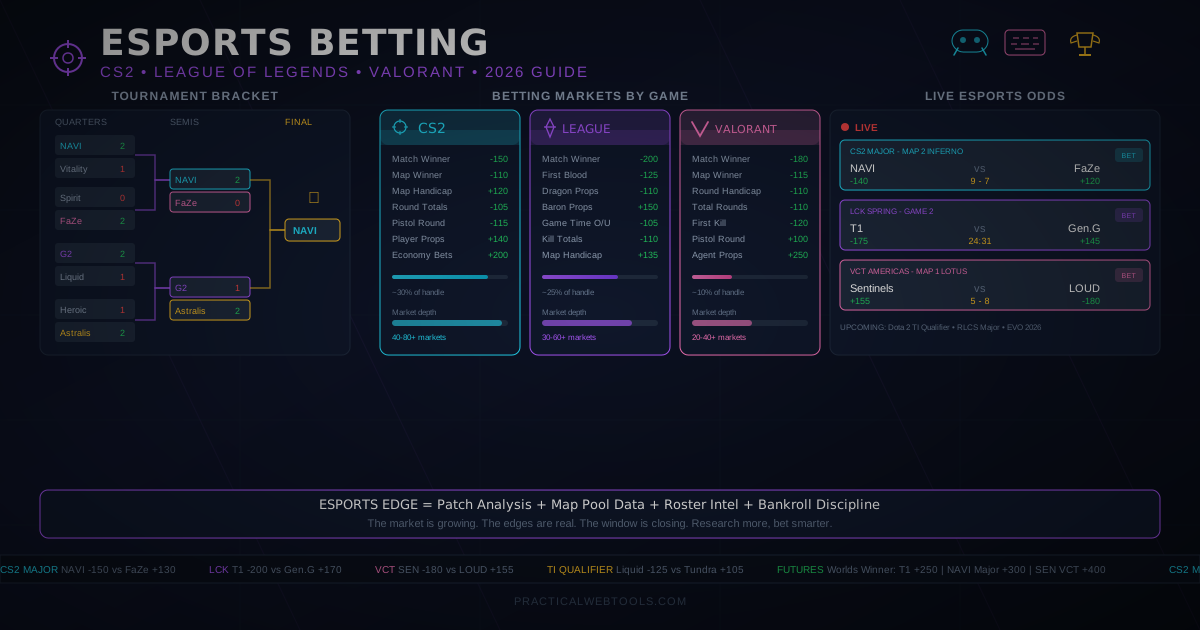
Esports betting is the fastest-growing segment of the global sports wagering industry, and it is not slowing down. The worldwide esports betting market surged past $16 billion in 2025 and is projected to reach $18.5 billion in 2026, growing at a compound annual rate near 14%. More than 80 million people now wager on professional gaming matches every year, and major licensed sportsbooks in the United States have dedicated esports sections with dozens of markets per match. Counter-Strike 2 alone accounts for roughly 30% of all esports betting handle, followed by League of Legends, Dota 2, and a rapidly expanding Valorant market.
If you have been betting on the NFL, NBA, or soccer and want a new edge, or if you are a competitive gamer who already understands the titles but has never placed a real-money wager, this guide covers everything: the games worth betting, the markets available, the strategies that separate winners from recreational bettors, and the pitfalls that can empty a bankroll overnight.
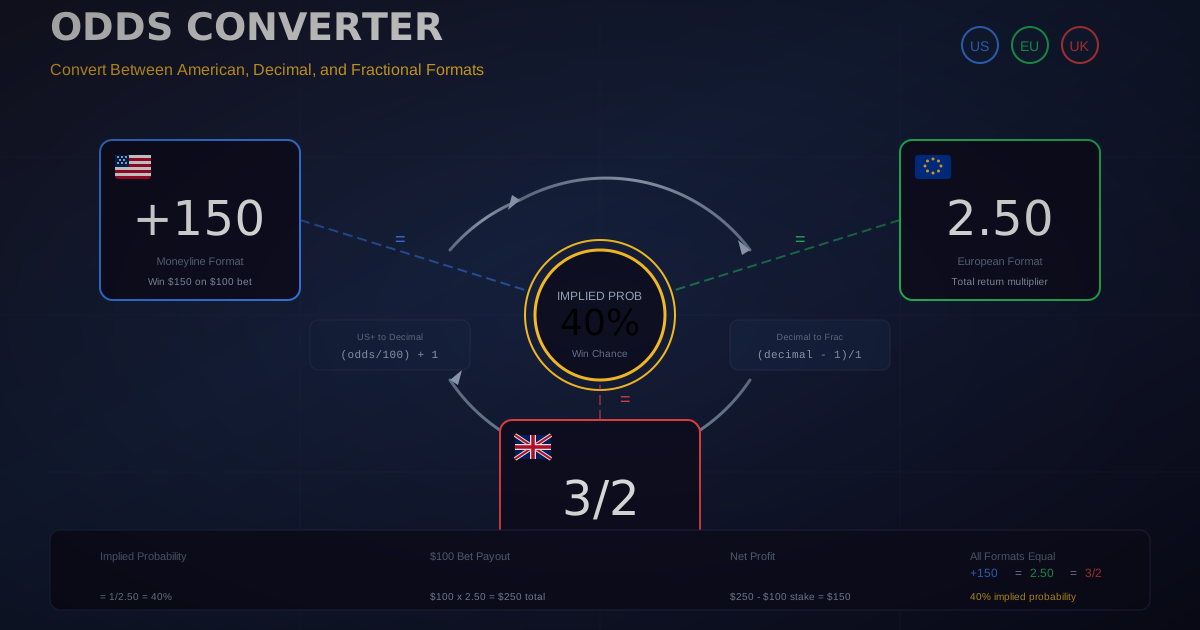
Convert any odds format and assess your edge before placing a bet with our free Odds Converter.
Why Esports Betting Is Exploding in 2026
Several forces are driving the esports betting boom simultaneously:
- Audience growth. The global esports viewership audience reached an estimated 600 million in 2025. More viewers means more informed bettors and deeper markets.
- Mobile accessibility. Over 70% of all esports bets are now placed on mobile devices, making wagering as frictionless as watching a Twitch stream.
- Year-round schedule. Unlike the NFL or NBA with defined off-seasons, CS2 Majors, LCK/LEC/LCS splits, VCT Champions events, and Dota 2 Internationals spread across twelve months. There is always something to bet.
- Legalization momentum. As of early 2026, 19 US states have explicitly legalized esports betting, and major operators like DraftKings, FanDuel, and BetMGM offer esports odds in approved jurisdictions.
- Information asymmetry. Compared to the NFL where every snap is analyzed by thousands of sharp bettors, esports markets are still relatively inefficient. A bettor who truly understands CS2 economy mechanics or League of Legends patch meta can find edges the bookmakers miss.
| Growth Driver | 2023 | 2025 | 2026 Projected |
|---|---|---|---|
| Global esports betting market size | ~$10B | ~$16.3B | ~$18.5B |
| Estimated esports bettors worldwide | 50M | 80M | 88M+ |
| US states with legal esports betting | 12 | 19 | 22+ |
| Mobile share of esports wagers | 58% | 70%+ | 74%+ |
| Sportsbooks offering dedicated esports sections | Limited | Major operators | Near-universal |
The Big Three: Which Esports to Bet On
Not every esport is equally bettable. Market depth, data availability, tournament frequency, and bookmaker coverage all vary. Here is a breakdown of the top games for wagering in 2026.
| Game | % of Esports Betting Handle | Avg Markets Per Match | Best Bet Types | Data Availability | Year-Round Schedule? |
|---|---|---|---|---|---|
| Counter-Strike 2 (CS2) | ~30% | 40-80+ | Map winner, handicaps, round totals | Excellent (HLTV) | Yes |
| League of Legends (LoL) | ~25% | 30-60+ | Match winner, first blood, dragon/baron props | Very Good (Oracle's Elixir, Gol.gg) | Yes (regional splits) |
| Dota 2 | ~20% | 30-60+ | Match winner, map handicaps, kill totals, Roshan props | Good (Dotabuff, OpenDota) | Yes |
| Valorant | ~10% | 20-40+ | Match winner, map winner, round handicaps, first kill | Improving (VLR.gg, rib.gg) | Yes (VCT circuit) |
| Other (FGC, Rocket League, etc.) | ~15% combined | 5-15 | Match winner, set betting | Limited | Event-based |
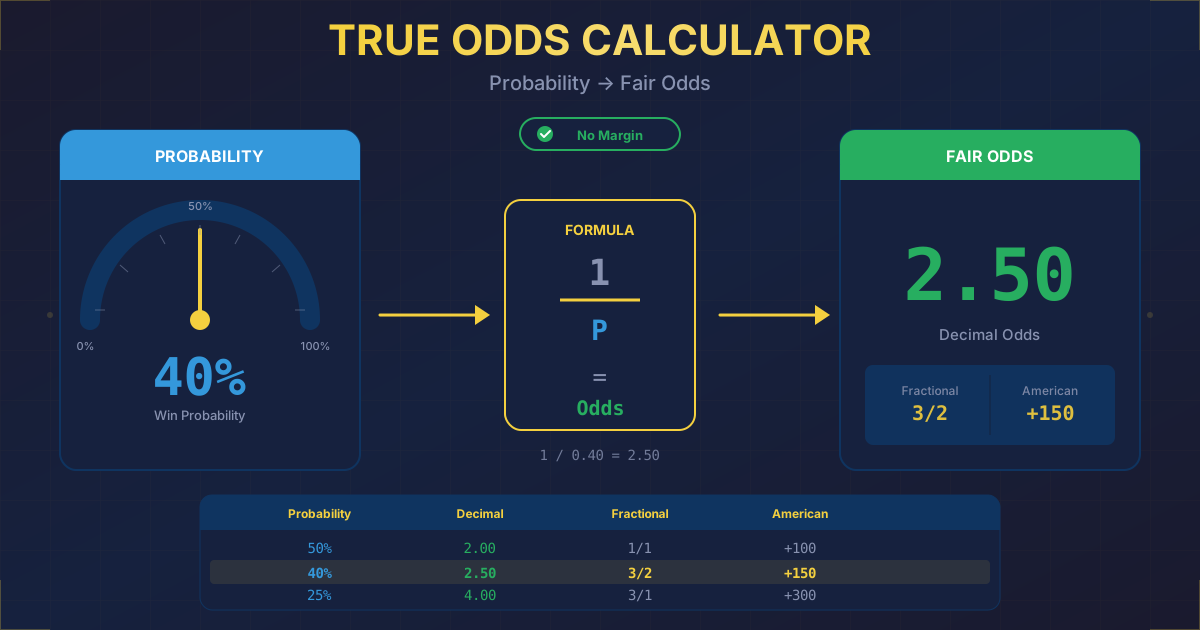
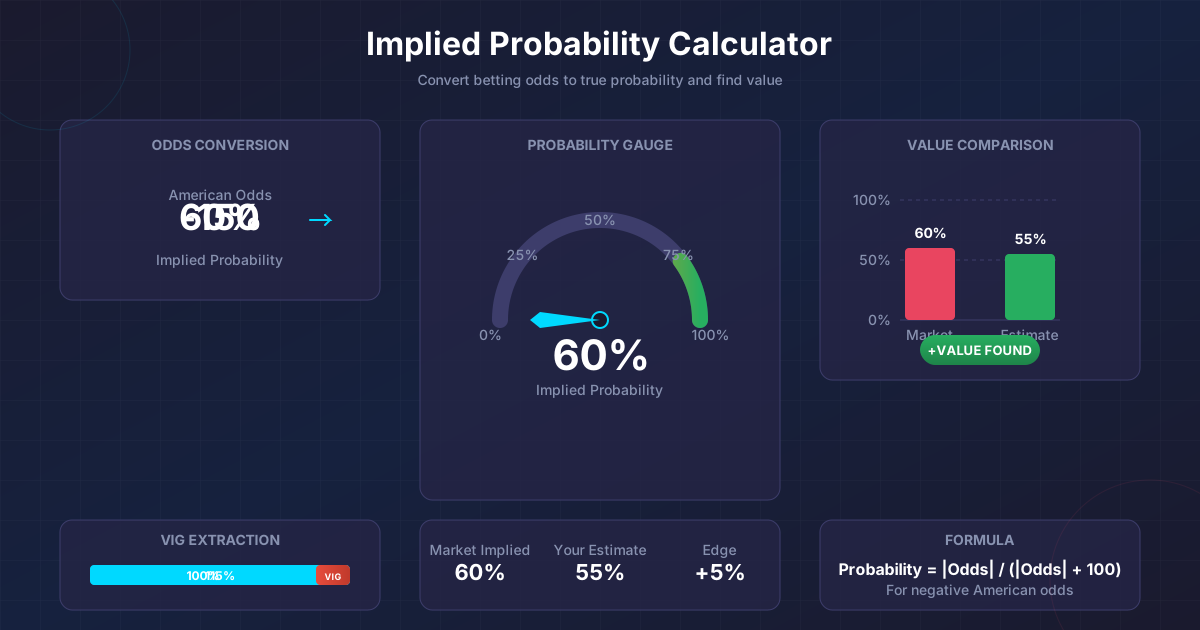
Determine the implied probability behind any esports line with our Implied Probability Calculator.
CS2 Betting: Maps, Economy, and Team Form
Counter-Strike 2 is the most mature and liquid esports betting market. The game's round-based, map-based structure creates an enormous variety of bet types, and the wealth of publicly available data on HLTV.org makes informed wagering possible in ways that are difficult for bookmakers to fully price.
Understanding CS2 Match Structure
A standard CS2 professional match is a best-of-3 (Bo3) maps. Each map consists of two halves (MR12 format: first to 13 rounds wins, with overtime at 12-12). Teams go through a veto process to select and ban maps from a pool of seven.
Why the veto matters for betting: The map veto is arguably the single most important factor in CS2 betting. Teams have "power maps" where they perform 15-20% better than their overall average. If Team A is forced onto Nuke (their worst map) while Team B selected it (their best), the pregame moneyline may not fully account for that disparity.
Key CS2 Betting Markets
| Market Type | Description | Edge Opportunity |
|---|---|---|
| Match Winner | Who wins the Bo3/Bo5 series | Low edge; well-priced by books |
| Map Winner | Who wins a specific map | Medium edge; map-veto analysis is underpriced |
| Map Handicap | e.g., Team A -1.5 maps | Good edge on dominant teams with strong veto advantage |
| Round Handicap | e.g., Team A -4.5 rounds on Map 1 | Higher variance; requires deep map-level knowledge |
| Total Rounds Over/Under | Over/Under 24.5 rounds on a map | Valuable when one team's CT side is historically dominant |
| Pistol Round Winner | First round of each half | 50/50 feel, but some teams invest heavily in pistol strats |
| Player Props | Player X over/under 22.5 kills | Edges exist when player form or role changes are not priced in |
CS2 Betting Strategy: What to Look For
1. Map pool depth and veto tendencies. Check HLTV for each team's map-by-map win rate over the last three months. A team with a 75% win rate on Mirage but 40% on Ancient has a massive map-dependent swing that the overall moneyline may not reflect.
Example: At IEM Katowice 2026, NAVI were listed at -160 against FaZe Clan in a Bo3. But FaZe had a 78% win rate on Inferno (NAVI's permaban) and a 71% win rate on Anubis. After the veto landed on Anubis and Mirage, sharps who tracked veto patterns grabbed FaZe +140 before the line moved to +115. FaZe won 2-1.
2. Recent roster changes. CS2 teams with a new fifth player often need 4-6 weeks of official matches to integrate. Bookmakers frequently overprice the "brand name" of an org and underprice the disruption of a roster swap.
3. LAN vs. online form. Some teams consistently perform better on LAN (crowd energy, bootcamp preparation) while others thrive online. Compare a team's LAN rating on HLTV to their online rating before a Major.
4. Economy and anti-eco rounds. Under the MR12 economy system, anti-eco (force buy) rounds are more frequent and more winnable than under the old MR15 format. Teams that convert force buys at a high rate outperform their round-by-round expected value. This matters for round totals and handicap markets.
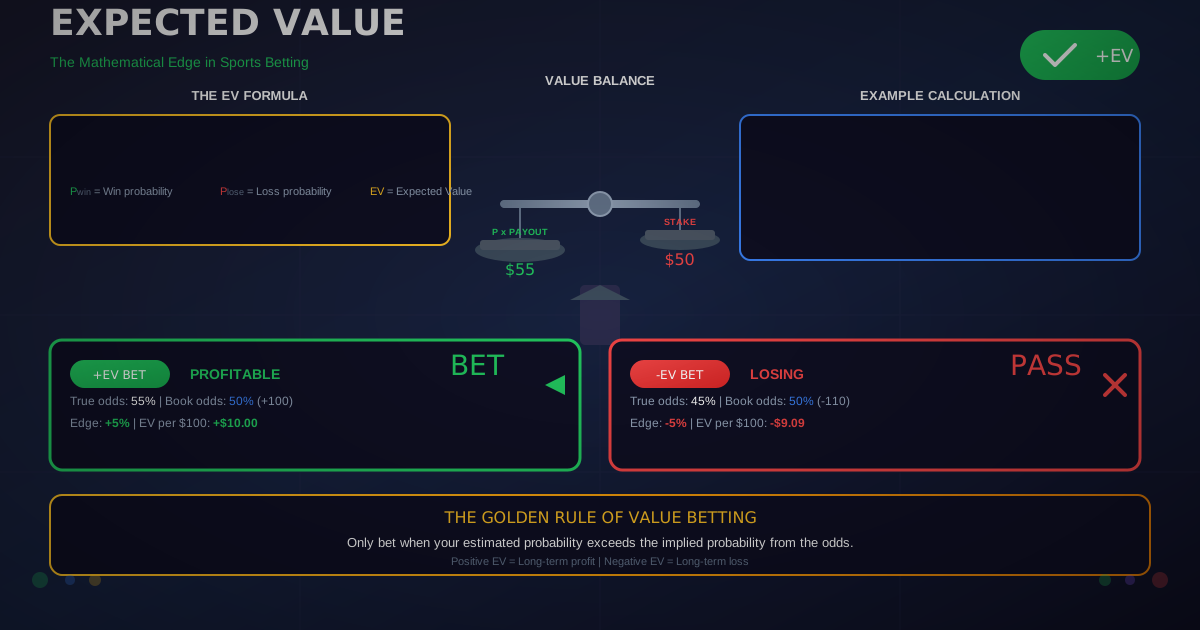
Check whether a CS2 moneyline represents value with our Expected Value Calculator.
League of Legends Betting: Patches, Drafts, and Regional Meta
League of Legends is the second-largest esports betting market globally. Its structure is fundamentally different from CS2: each match is a single map (Summoner's Rift) played in best-of-1 (regular season) or best-of-3/5 (playoffs). This means the draft phase and patch meta carry outsized importance.
How Patches Change Everything
Riot Games patches League of Legends roughly every two weeks. Each patch buffs, nerfs, or reworks champions, items, and game systems. A team that dominated on Patch 14.5 can struggle on 14.6 if their signature champions get nerfed.
Why this matters for betting: Bookmakers set opening lines based on recent results. If a team won five straight on the previous patch, the line reflects that streak. But if the new patch guts their preferred compositions, they are overvalued. Bettors who read patch notes and understand champion tier lists have a structural edge in the first 1-2 weeks of a new patch.
Example: In LCK Spring 2026, T1 was listed at -200 against KT Rolster in the first week after a major patch that nerfed the Corki mid-lane build Faker had been dominating on. KT, who ran flexible draft strategies, upset T1 at +170 odds. Bettors tracking the patch impact found clear +EV on the underdog.
Fearless Draft: The 2026 Game-Changer
The Fearless Draft format, now adopted across LCK and several international events, prohibits teams from reusing champions across games in a series. This fundamentally changes Bo3/Bo5 betting:
- Champion pool depth matters more than ever. Teams with narrow champion pools are significantly disadvantaged in Game 3 and beyond.
- Game-specific betting is more profitable. In a Bo5 under Fearless, Games 4 and 5 are almost entirely unpredictable based on pre-series analysis because the available champion pool has been drastically reduced.
- Depth-chart analysis is king. Research how many viable champion picks each player has. A mid-laner with a 3-champion pool versus one with a 7-champion pool creates exploitable market inefficiencies.
Key League of Legends Betting Markets
| Market | Description | Edge Potential |
|---|---|---|
| Match Winner | Who wins the Bo1/Bo3/Bo5 | Moderate; well-studied by books |
| First Blood | Which team gets the first kill | High variance but predictable with lane matchup analysis |
| First Dragon / First Baron | Objective-based props | Valuable if you track team priority on early drakes |
| Total Game Time Over/Under | e.g., Over/Under 32.5 minutes | Useful when one team plays a scaling comp vs. early aggression |
| Kill Totals | Over/Under total kills in a game | Meta-dependent; some patches produce bloodbaths, others are farm-fests |
| Map Handicap | e.g., Team A -1.5 maps in Bo3 | Exploit Fearless draft advantages for deeper-pool teams |
| Tower Totals | First tower / total towers destroyed | Correlates with playstyle; lane-dominant teams take early towers |
Regional Strength Matters
League of Legends is divided into regional leagues: LCK (Korea), LPL (China), LEC (Europe), LCS (Americas). At international events (MSI, Worlds), regional strength disparities are significant:
- LCK and LPL teams are historically stronger. Betting on an LCK team against an LCS team at international events often carries less risk than the odds suggest.
- Regular season vs. playoffs. Some teams (particularly experienced rosters) famously "turn it on" in playoffs. Bo5 specialists are undervalued in series pricing.
Size your League of Legends bets mathematically with our Kelly Criterion Calculator.
Valorant Betting: Maps, Agents, and the VCT Ecosystem
Valorant is the youngest of the big three esports betting titles, and that youth creates opportunity. Markets are thinner, data infrastructure is still developing, and bookmakers devote fewer resources to pricing Valorant compared to CS2 or LoL. For bettors who put in the research, this is where edges are easiest to find in 2026.
Valorant Match Structure
Like CS2, Valorant is played on a map-based, round-by-round system. Standard competitive matches are Bo3 maps, with each map first-to-13 rounds (overtime rules apply at 12-12). The map pool currently consists of seven maps, and teams go through a pick/ban process.
Agent Compositions: A Unique Betting Angle
Unlike CS2 (where both teams play with identical equipment options), Valorant has Agents with unique abilities grouped into four roles: Duelists, Initiators, Controllers, and Sentinels. Team compositions vary by map, and shifts in the Agent meta directly affect outcomes.
Why this matters for betting: A team that relies heavily on a specific Duelist-dominant composition on Bind may struggle if a patch nerfs that Agent. Similarly, a team transitioning to a new composition (e.g., dropping a second Duelist for a second Initiator) will have an adjustment period that the moneyline may not reflect.
Example: At VCT Americas 2026, Sentinels were listed at -180 against LOUD on Lotus. But Sentinels had been running an experimental double-Controller composition that had only a 40% win rate in scrims (leaked through community sources). Sharp bettors who tracked Agent composition trends grabbed LOUD +155 before the match. LOUD won 13-9.
Key Valorant Betting Markets
| Market | Description | Where to Find Edge |
|---|---|---|
| Match Winner | Overall series winner | Solid for larger mismatches; tight for top teams |
| Map Winner | Individual map results | Strong edge potential from map/agent comp analysis |
| Round Handicap | e.g., Team A -3.5 rounds | Profitable on Attack/Defense-sided map dynamics |
| Total Rounds | Over/Under 22.5 rounds | Track how often teams force overtime or stomp |
| First Kill | Which team gets the opening pick | Correlates with Duelist player skill; some teams win 60%+ of opening duels |
| Pistol Round Winner | Who wins the opening round of each half | Underpriced when teams have dedicated pistol strats |
Where to Find Valorant Data
- VLR.gg: The HLTV equivalent for Valorant. Match results, player stats, event brackets, map-by-map records.
- rib.gg: Advanced analytics including Agent usage, composition win rates, first-kill statistics.
- Official VCT broadcasts: Riot's desk analysts often reveal compositional trends and team tendencies during pre-match coverage.
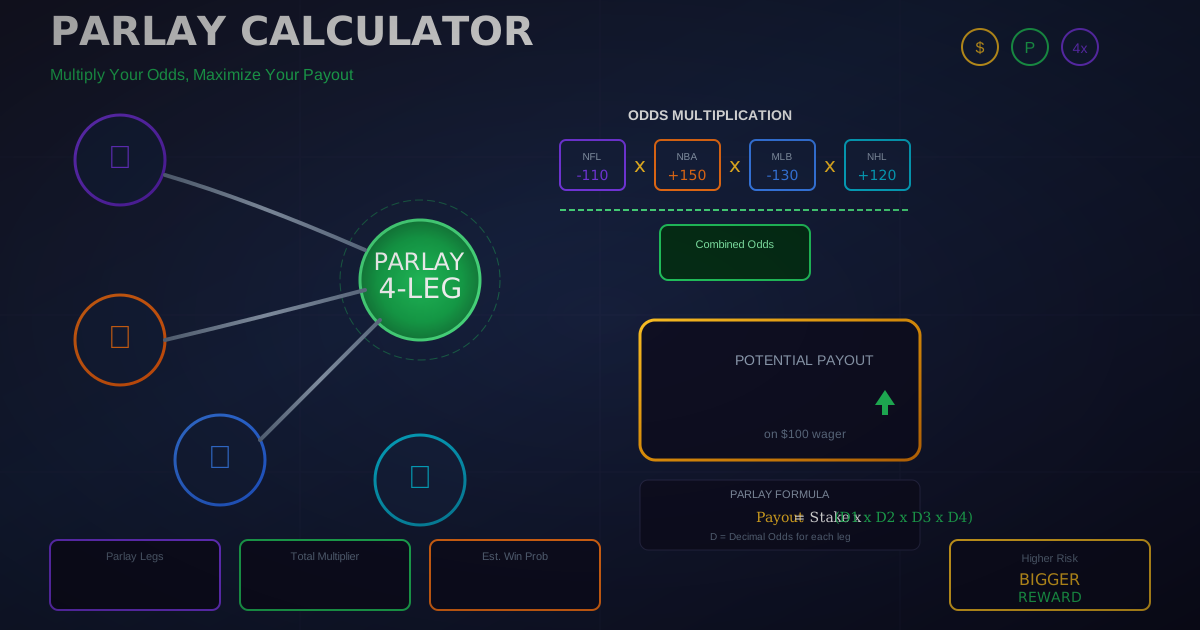
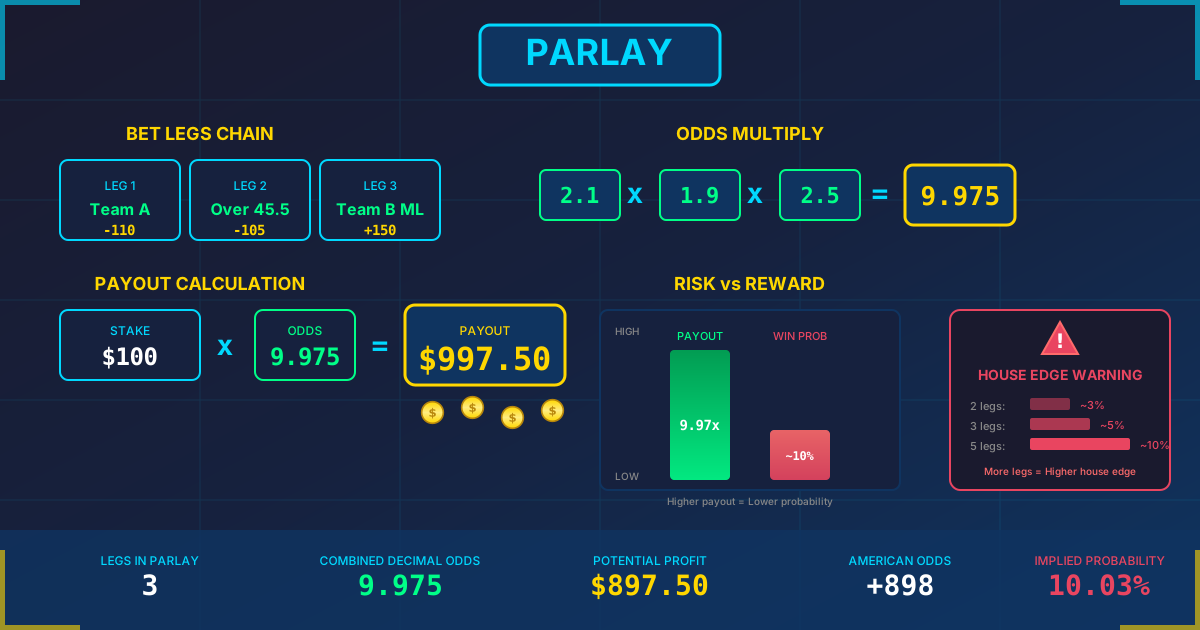
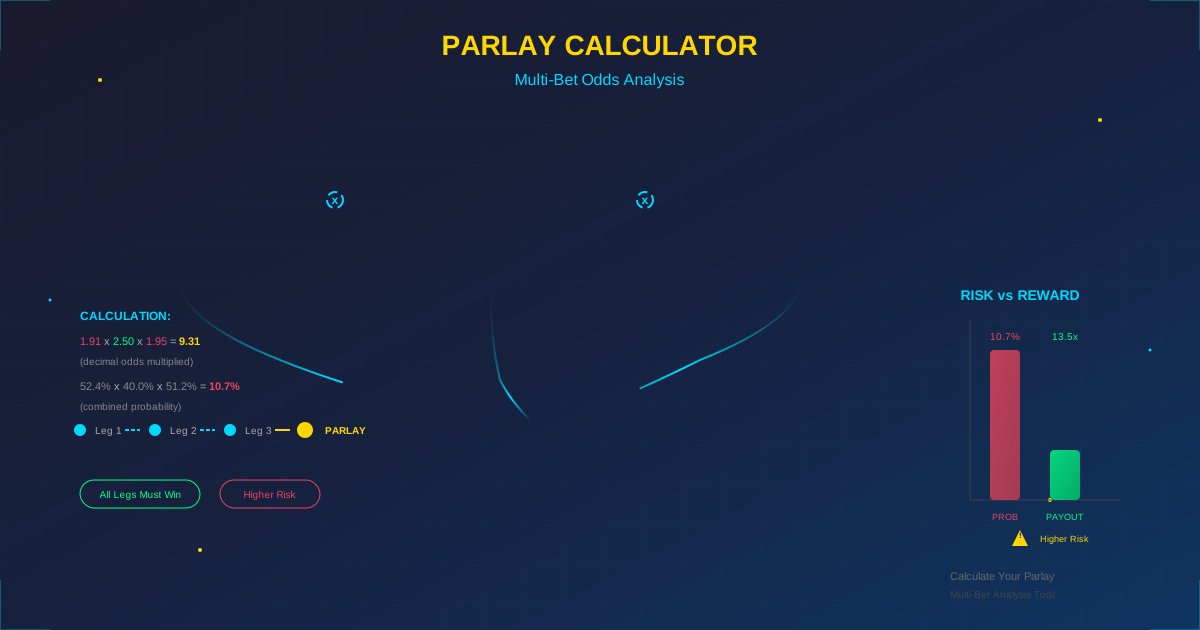
Calculate whether a Valorant parlay is worth the risk with our Parlay Calculator.
Dota 2 and Other Esports Worth Betting
Dota 2
Dota 2 commands roughly 20% of esports betting turnover, driven largely by The International (TI) and the DPC circuit. Key characteristics for bettors:
- Extreme patch volatility. Dota 2 patches are massive, sometimes reworking entire heroes and item systems. The first tournament after a major patch is a goldmine for bettors who study patch notes.
- Deep markets. Sportsbooks offer match winner, map winner, kill totals, first Roshan, time-based props (e.g., game over/under 35 minutes), and even specific hero pick/ban markets during TI.
- Roshan timing props. Roshan kill timing is predictable based on team playstyle (aggressive teams take Rosh earlier), creating edge in time-based prop markets.
- The International prize pool effect. TI is the biggest event in Dota, and some teams visibly underperform under the pressure of a $3M+ prize pool. Track historical TI performance vs. regular-season results.
Example: At The International 2025 in Hamburg, Team Liquid was listed at -130 to beat Tundra Esports in the upper bracket. But Tundra had a historical 62% win rate at TI events (vs. 54% at regular DPC events), suggesting TI-specific form that the line undervalued. Tundra won 2-1.
Fighting Games (FGC)
Street Fighter 6 and Tekken 8 events (EVO, Capcom Cup) offer limited but exploitable markets:
- Player-vs-player dynamics. FGC is individual, and specific player matchups (both character and player skill) are highly predictable to community insiders.
- Thin markets, wide lines. Bookmakers know less about FGC, so opening lines can be significantly off.
- Limited market types. Usually match winner and set betting only.
Rocket League, Call of Duty, and Others
Markets exist for RLCS (Rocket League) and CDL (Call of Duty) but are thinner and harder to find consistent edges in due to limited data infrastructure and lower bookmaker coverage. These are best treated as occasional opportunities rather than core betting markets.
Esports Bet Types and Markets Explained
Understanding the full range of available markets is essential for finding value. Here is a comprehensive breakdown of esports-specific bet types.
Pre-Match Markets
| Bet Type | How It Works | Example |
|---|---|---|
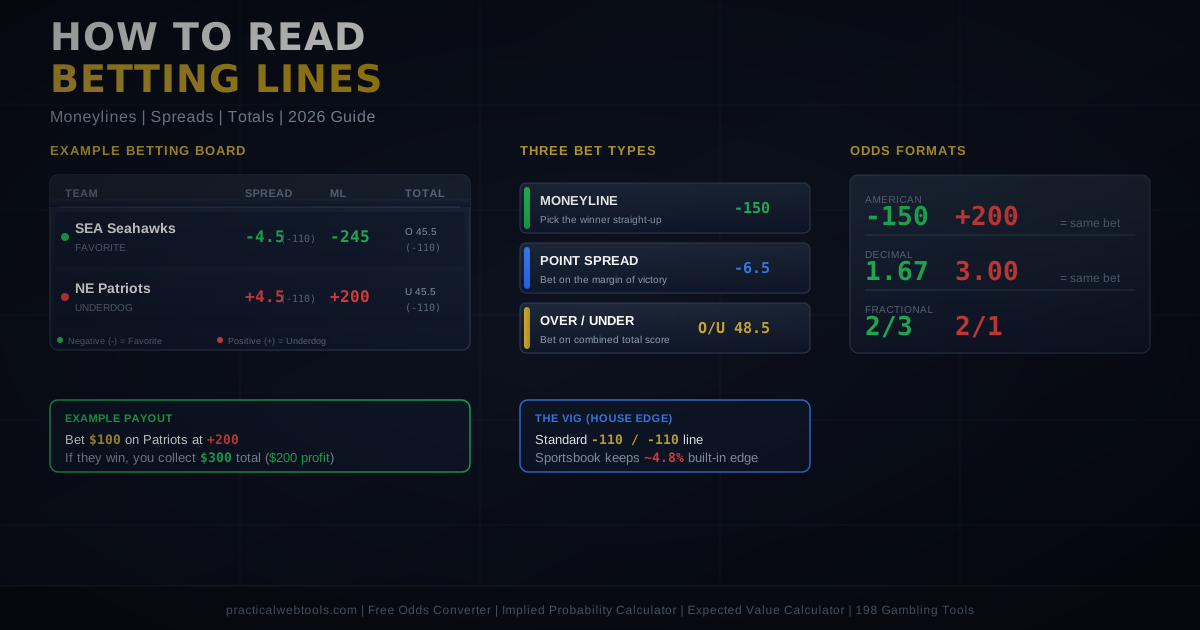
| Moneyline / Match Winner | Pick the team that wins the series | NAVI -150, FaZe +130 |
| Map Handicap | Team must win by X maps (or cover a deficit) | NAVI -1.5 maps at +120 |
| Map Winner | Bet on a specific map in the series | NAVI to win Map 2 at -110 |
| Total Maps | Over/Under number of maps played | Over 2.5 maps at -125 (series goes to Map 3) |
| Round Handicap | Team handicap on specific map rounds | FaZe +4.5 rounds on Map 1 at -110 |
| Total Rounds | Over/Under rounds played on a map | Over 24.5 rounds at -105 |
| First Blood / First Kill | Which team gets the first elimination | NAVI first kill at -120 |
| Outright / Futures | Who wins the entire tournament | Team Spirit to win the Major at +350 |
| Player Props | Individual player performance | s1mple over 22.5 kills on Map 1 at -115 |
Live / In-Play Markets
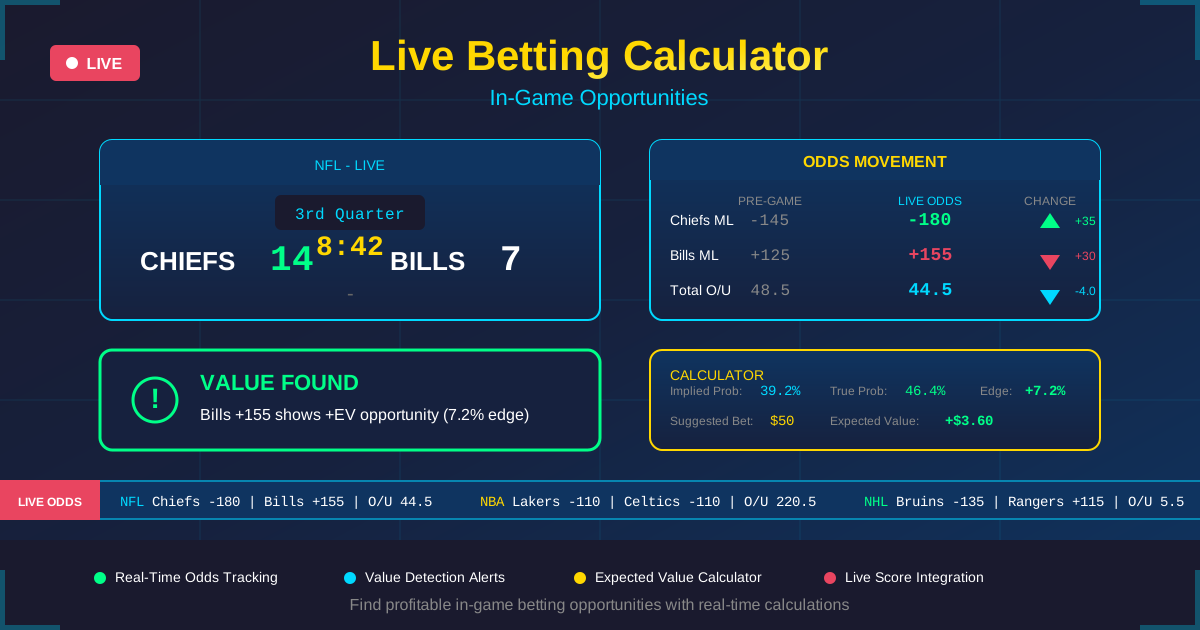
Live betting on esports is growing rapidly and offers some of the most exploitable edges:
- Map winner (mid-map). If a team loses the pistol round but has a structurally stronger economy setup, live odds overreact.
- Next round winner. In CS2, if you know one team is on an eco (save round), the opponent wins the next round 80%+ of the time. The live line rarely reflects that fully.
- Round handicap adjustments. Live handicaps shift aggressively after a few rounds, creating value if you project a strong comeback based on side (CT/T) dynamics.
Warning: Live esports betting moves extremely fast. Odds can shift in seconds. Only bet live if you are watching the match and can make decisions quickly.
Esports vs. Traditional Sports Betting
| Factor | Traditional Sports | Esports |
|---|---|---|
| Market maturity | Extremely efficient | Less efficient; more edge opportunities |
| Data availability | Comprehensive (decades of data) | Growing but incomplete; 3-5 years of reliable data |
| Roster stability | Seasonal contracts; rare mid-season trades | Frequent roster swaps; 3-6 month team cycles |
| Patch/rule changes | Rare; rules stable across seasons | Frequent; game patches every 2-4 weeks alter meta |
| Line movement speed | Hours to days before events | Minutes to hours; sharps move lines quickly |
| Bookmaker expertise | Deep; dedicated trading desks | Growing; less specialized staff |
| Live betting depth | Deep; dozens of markets | Moderate; 10-20 live markets per match |
| Season length | 4-10 months | Year-round for most titles |
| Information sources | Mainstream media, injury reports | Community sources, patch notes, scrims leaks |
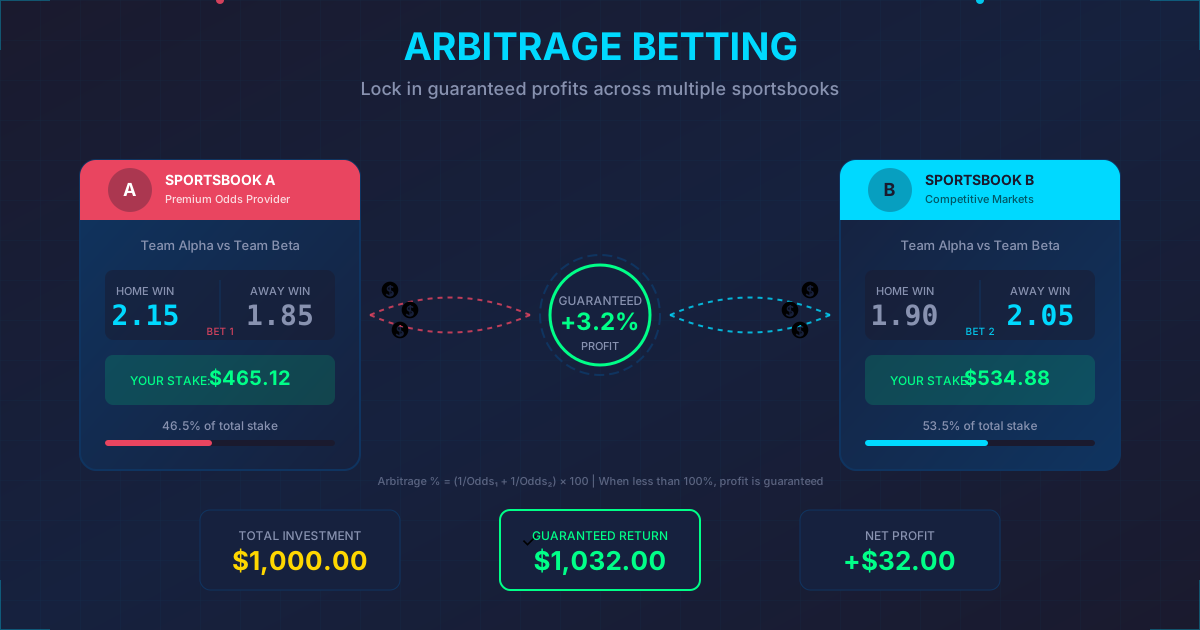
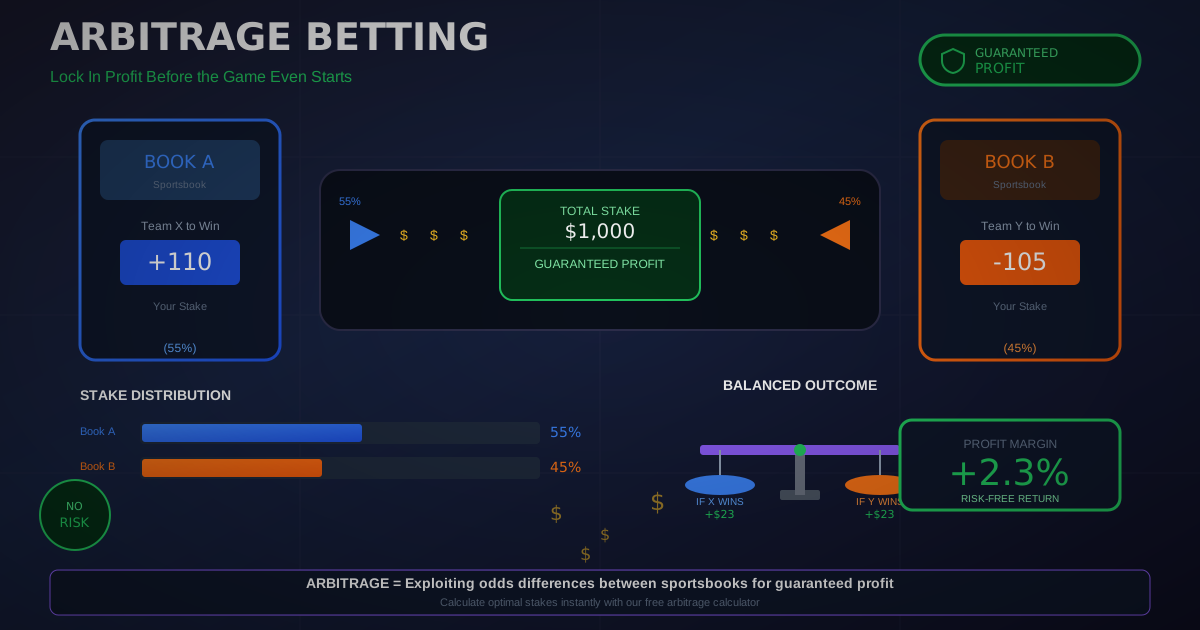
Identify guaranteed-profit situations across esports sportsbooks with our Arbitrage Calculator.
Where to Bet on Esports Legally in 2026
Esports betting legality depends on your jurisdiction. Here is the landscape for US-based bettors.
Licensed US Sportsbooks Offering Esports
| Sportsbook | Esports Coverage | CS2 | LoL | Valorant | Dota 2 | Mobile App |
|---|---|---|---|---|---|---|
| DraftKings | Major events + some regular season | Yes | Yes | Yes | Yes | Yes |
| FanDuel | Major events | Yes | Yes | Limited | Limited | Yes |
| BetMGM | Major events | Yes | Yes | Yes | Yes | Yes |
| Caesars | Select events | Yes | Yes | No | No | Yes |
| bet365 | Broad coverage, regular season | Yes | Yes | Yes | Yes | Yes |
| Betway | Strong esports focus | Yes | Yes | Yes | Yes | Yes |
US States Where Esports Betting Is Legal (As of Early 2026)
Esports betting is currently legal and regulated in: Arizona, Colorado, Connecticut, Kentucky, Louisiana, Maine, Maryland, Massachusetts, Nebraska, Nevada, New Jersey, North Carolina, Ohio, Tennessee, Vermont, Virginia, Washington, West Virginia, and Wyoming.
Important caveats:
- Not all events are approved in all states. Some state regulators only approve betting on specific tournaments (e.g., Valve Majors, Riot-sanctioned events) rather than all professional matches.
- Coverage varies by sportsbook. Even in legal states, one sportsbook may offer CS2 Major odds while another does not list them at all. Check multiple books.
- Age-restricted events. Some states restrict wagering on events where participants are under 18. This can limit certain esports markets.
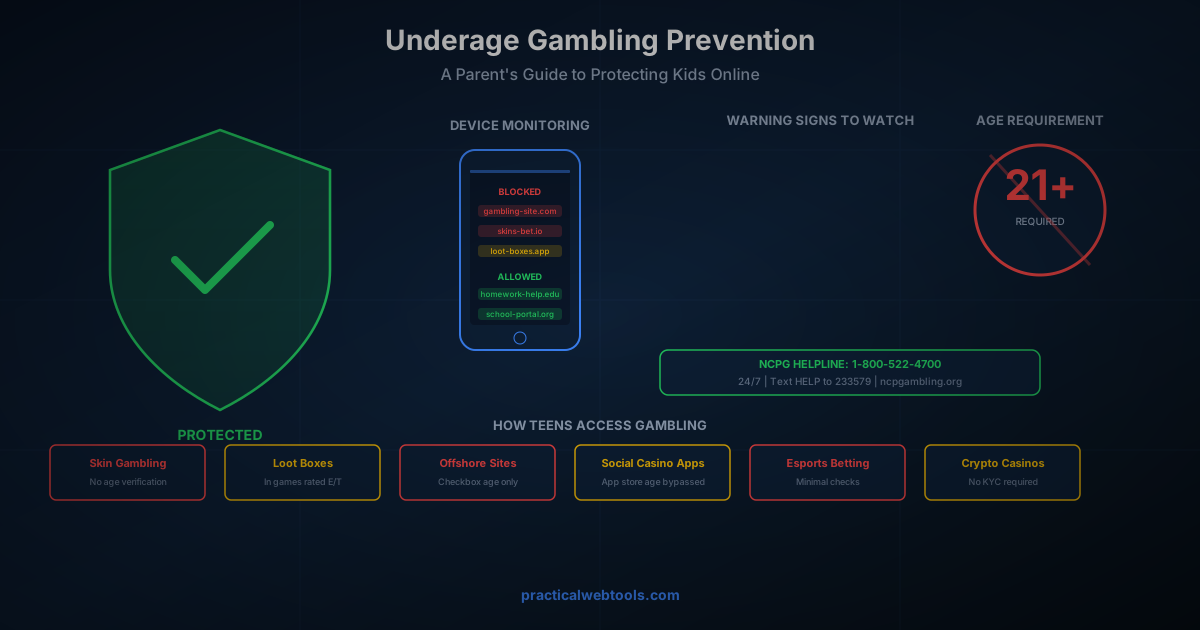
- Skin betting is unregulated. Third-party sites that allow betting with in-game skins (CS2 skins, etc.) operate in a legal gray area and are not licensed or regulated. Stick to licensed sportsbooks.
International Betting Landscape
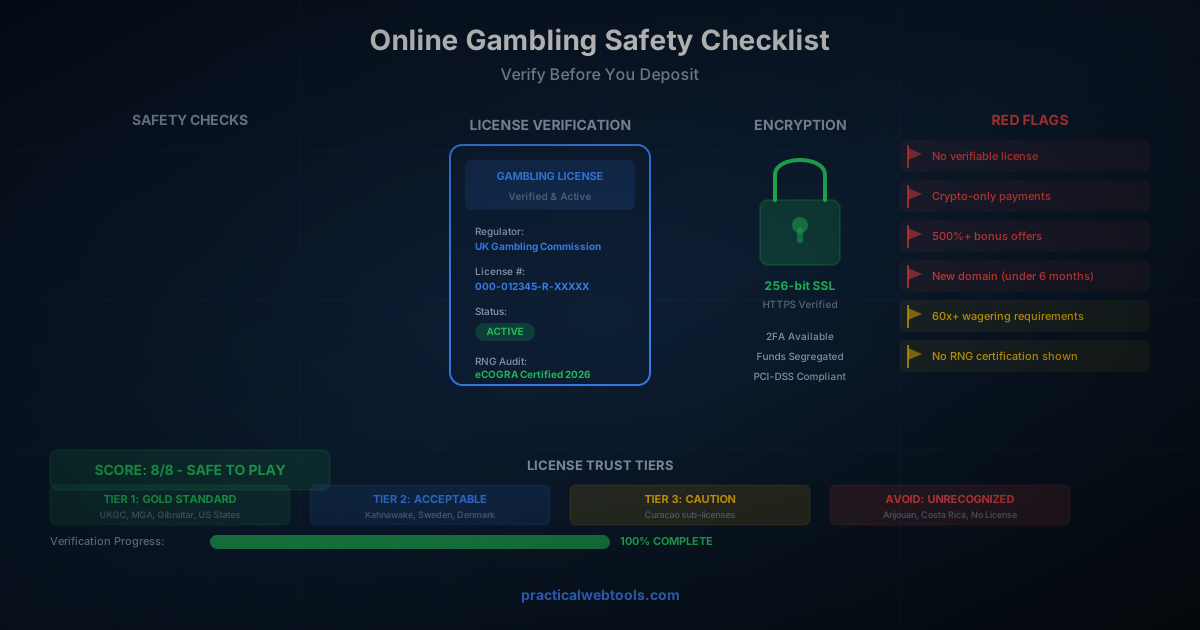
Outside the US, esports betting is widely available through licensed operators in the UK (regulated by the UKGC), Malta (MGA-licensed operators), and most of Europe. Asian markets (Philippines, Isle of Man-licensed operators serving Asia) also have deep esports coverage. Always verify licensing and regulation before depositing.
Live Betting on Esports: Strategies and Pitfalls
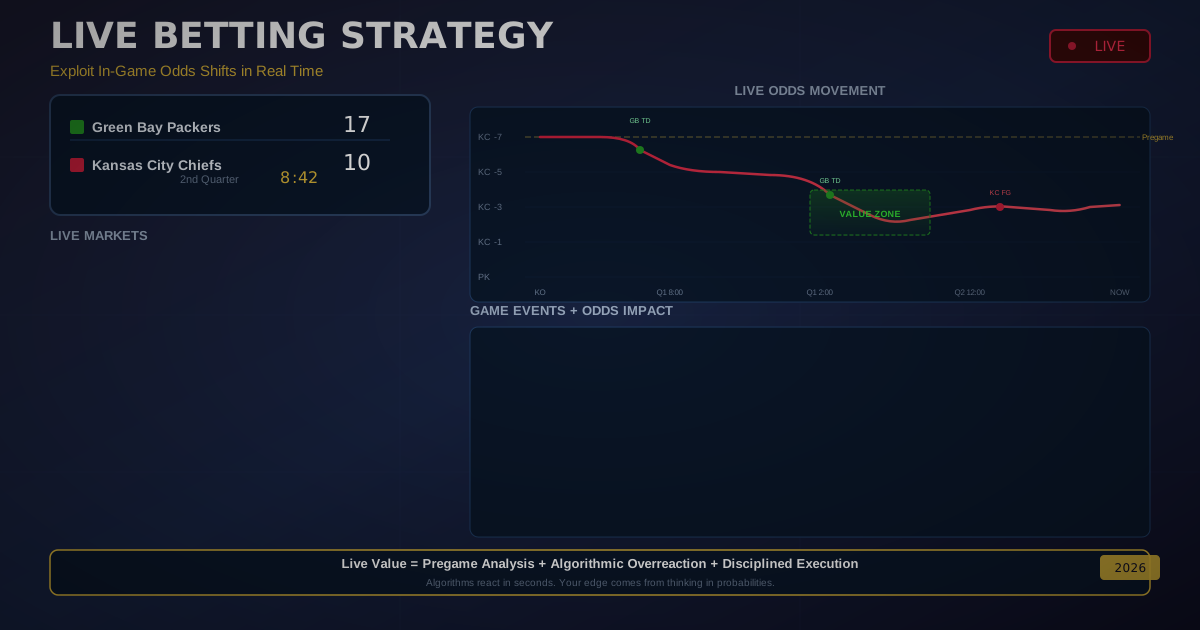
Live (in-play) betting is where knowledgeable esports bettors find their biggest edges, but it is also where undisciplined bettors lose money fastest.
Why Live Esports Betting Offers Edge
-
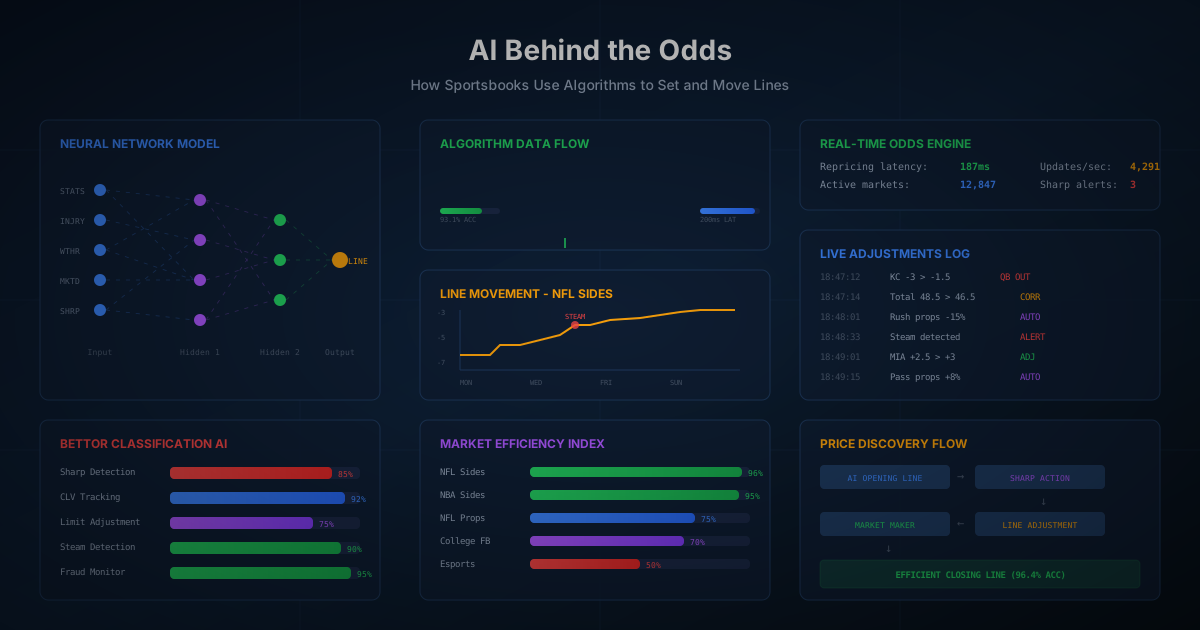
Bookmaker algorithms lag behind game knowledge. Automated odds-setting systems use general models, but they do not always understand game-specific dynamics like CS2 economy cycles, LoL power spikes at specific item completions, or Valorant ultimate ability availability.
-
Momentum overreaction. Sportsbooks (and their algorithms) overweight recent rounds. If a team loses three rounds in a row, live odds shift dramatically, but a CS2 team on their strong CT side of Nuke losing three T-side rounds is not the crisis the odds suggest.
-
Information advantage. If you are watching the live broadcast and notice a team has changed their default setup, swapped roles, or appears to have communication issues, you are processing information that the odds algorithm cannot.
Live Betting Pitfalls
- Speed kills. Odds change every 10-15 seconds during live esports. Hesitation means missed value.
- Emotional betting. Watching a match live triggers emotional responses (tilt after a bad round, overconfidence after a good one). Set pre-match conditions for live bets and stick to them.
- Limited markets. Live esports markets are thinner than pre-match. You may only get match winner, map winner, and round handicaps in-play.
Example: During IEM Dallas 2026, Team Spirit was down 3-9 on their T side of Mirage against G2 Esports. Live odds on Spirit to win the map moved to +450. But Spirit had a historically dominant CT side on Mirage (72% CT round win rate), and they only needed to win 10 of 15 remaining regulation rounds to force overtime. Sharp bettors who tracked side-specific stats grabbed +450. Spirit won 16-14 in overtime.
Match Integrity and Red Flags in Esports Betting
Match-fixing is a real concern in esports, and bettors need to protect themselves from betting on compromised matches.
The State of Match Integrity in 2026
Sportradar monitored over 1 million sporting events in 2025, identifying 1,116 suspicious matches across all sports. While global match-fixing showed a slight decline overall, esports remains a vulnerable category due to:
- Young, financially insecure players. Many esports professionals start competing in their teens with minimal salary guarantees. The temptation to accept payments for throwing matches is real.
- Unregulated lower-tier tournaments. Tier-3 and Tier-4 events (online qualifiers, regional leagues with small prize pools) have minimal oversight and are prime targets for fixers.
- Cross-border betting markets. Esports matches can be bet on from jurisdictions with little regulatory oversight, making it easier for fixers to place large wagers without detection.
Recent Match-Fixing Cases
- VCT Pacific 2025: Valorant player Joseph "Ban" Seung-min received a 12-month suspension from all Riot-sanctioned events after an investigation found he breached match-fixing rules related to the Global Esports Code of Conduct.
- MPL Singapore 2025: A Mobile Legends team was suspended from playoffs after match-fixing allegations surfaced during the Season 9 qualifying stage.
- Ongoing CS2 concerns: Lower-tier CS2 events (ESEA Open, regional online cups) continue to see suspicious line movements flagged by integrity monitoring services.
Red Flags to Watch For
| Red Flag | What It Means | What to Do |
|---|---|---|
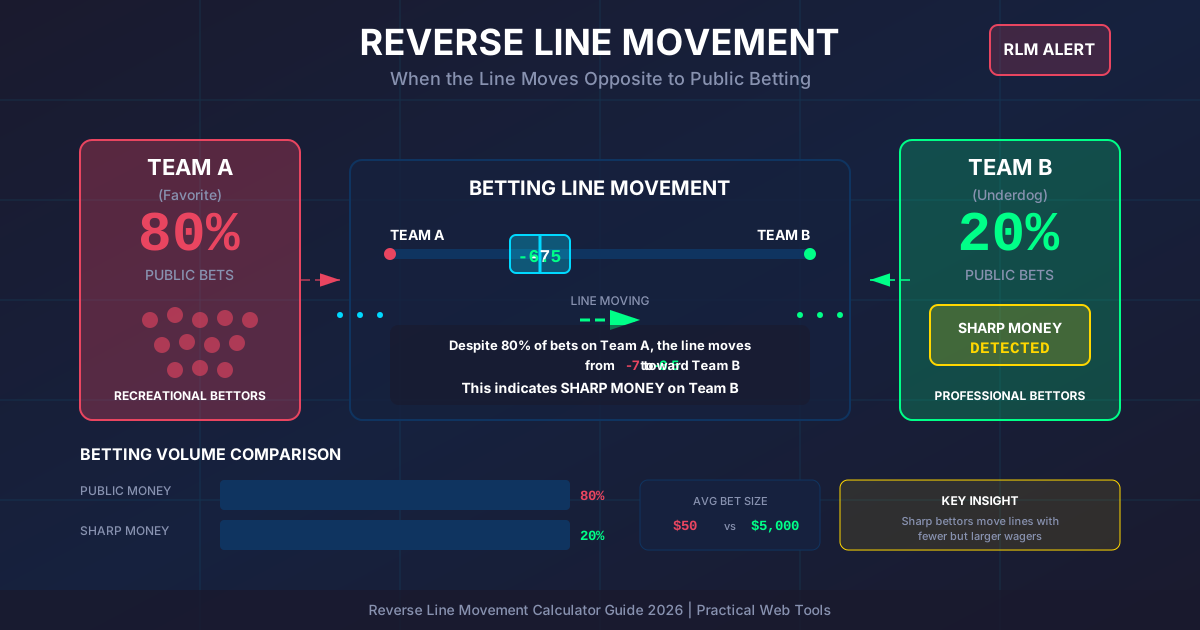
| Sharp line movement against the favorite | Large, sudden bets placed on the underdog in a low-tier match | Avoid the match entirely |
| Unusual player substitutions | Key players benched for "personal reasons" before a minor event | Wait for information; do not bet blind |
| Tier-4 online matches with high betting volume | Disproportionate betting interest in an obscure qualifier | Stay away; this is a classic fixing setup |
| Teams with nothing to play for | Eliminated teams in group stages with no playoff implications | Be cautious; motivation is low and fixing risk is higher |
| Inconsistent in-game behavior | Players making obviously poor decisions (running into crosshairs, refusing to use abilities) | If watching live, do not bet further on this match |
How to Protect Yourself
- Stick to Tier-1 and Tier-2 events. Valve Majors, Riot-sanctioned VCT/LCK/LEC events, and PGL/ESL/BLAST premier tournaments have integrity monitoring and meaningful player consequences for fixing.
- Monitor line movements. If a line moves 15%+ in implied probability within hours before a lower-tier match, something is likely wrong.
- Use licensed sportsbooks. Regulated operators cooperate with integrity units and are more likely to void bets on compromised matches.
- Do not chase "sure things" from tipster groups. If someone on Discord is promising guaranteed winners on Tier-3 CS2 matches, they may be connected to match-fixers. Walk away.
Esports Betting Bankroll Management
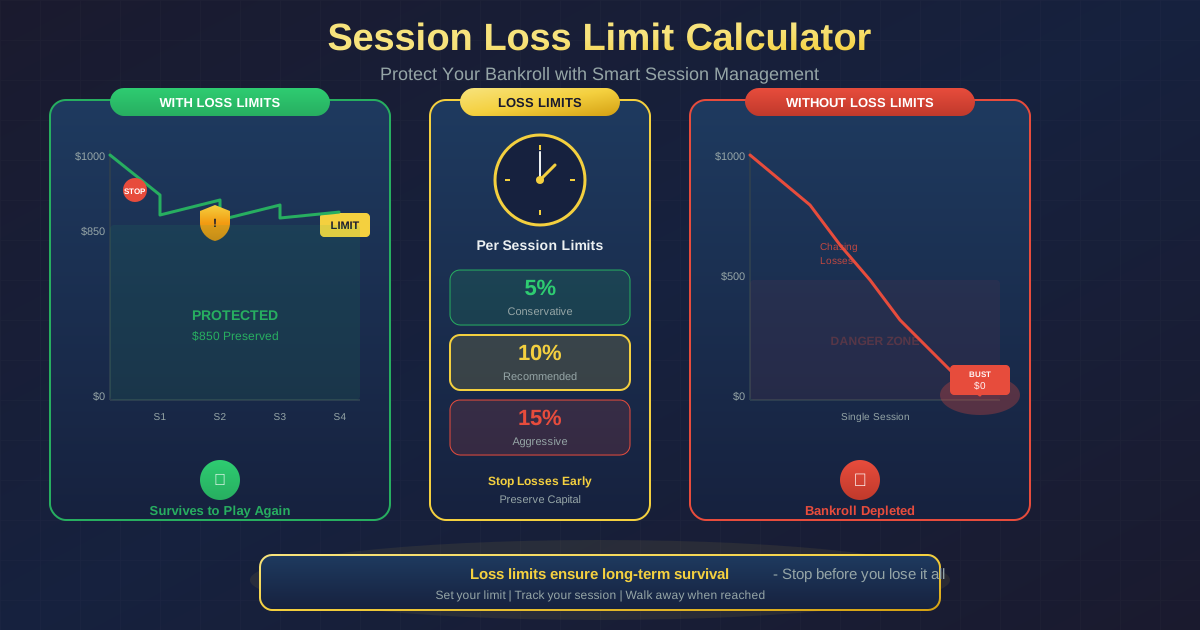
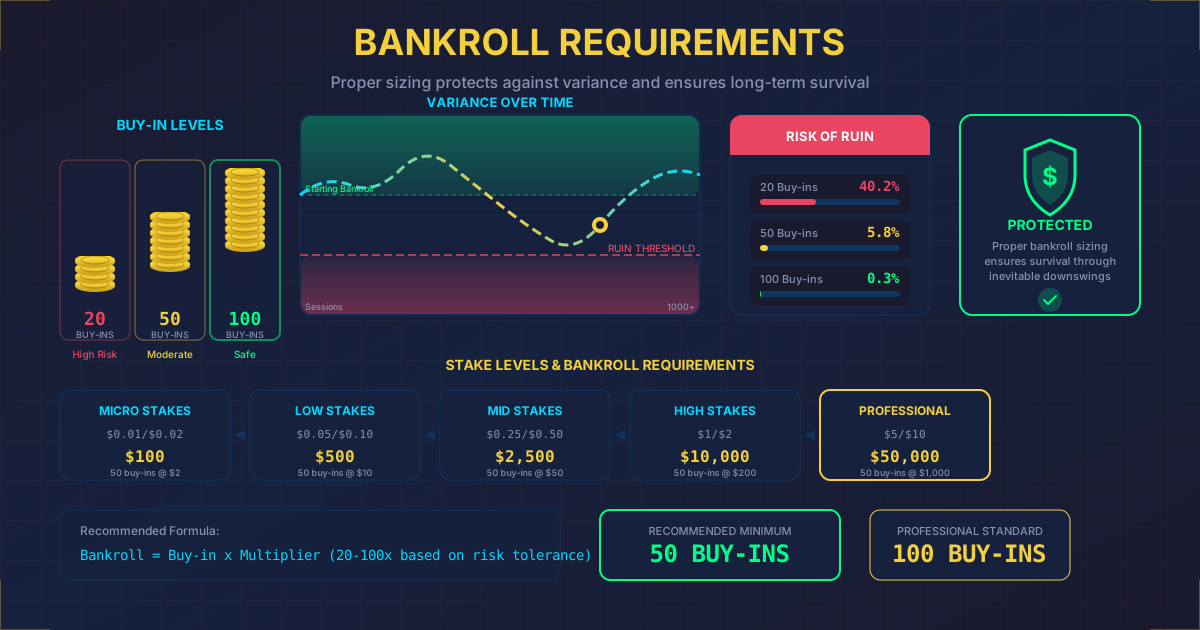
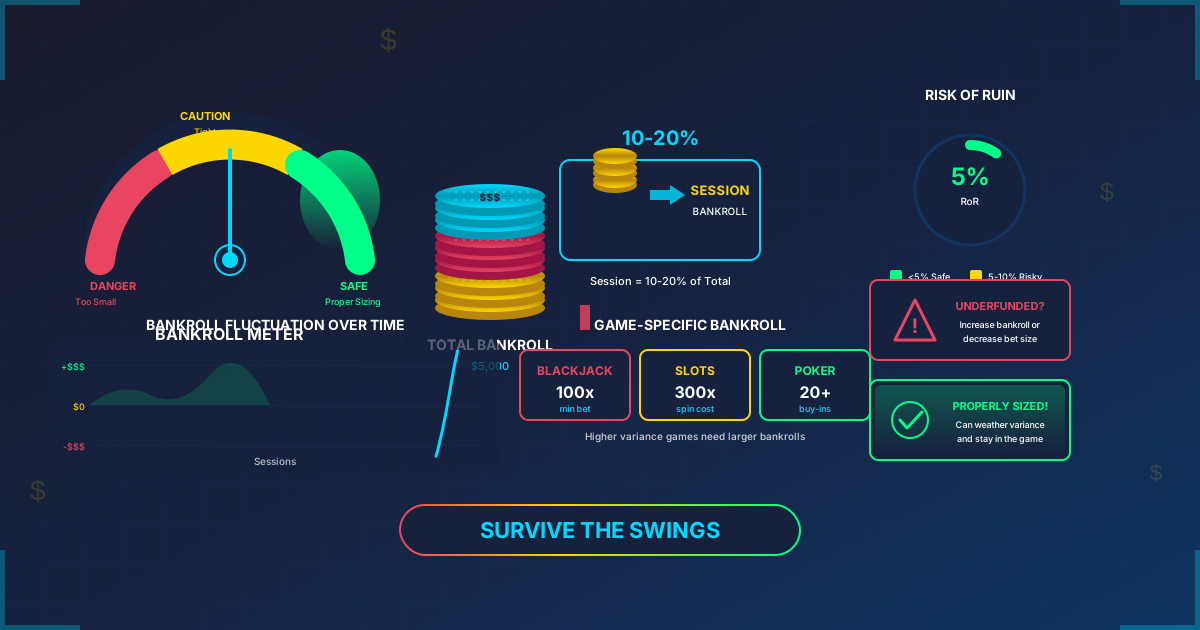
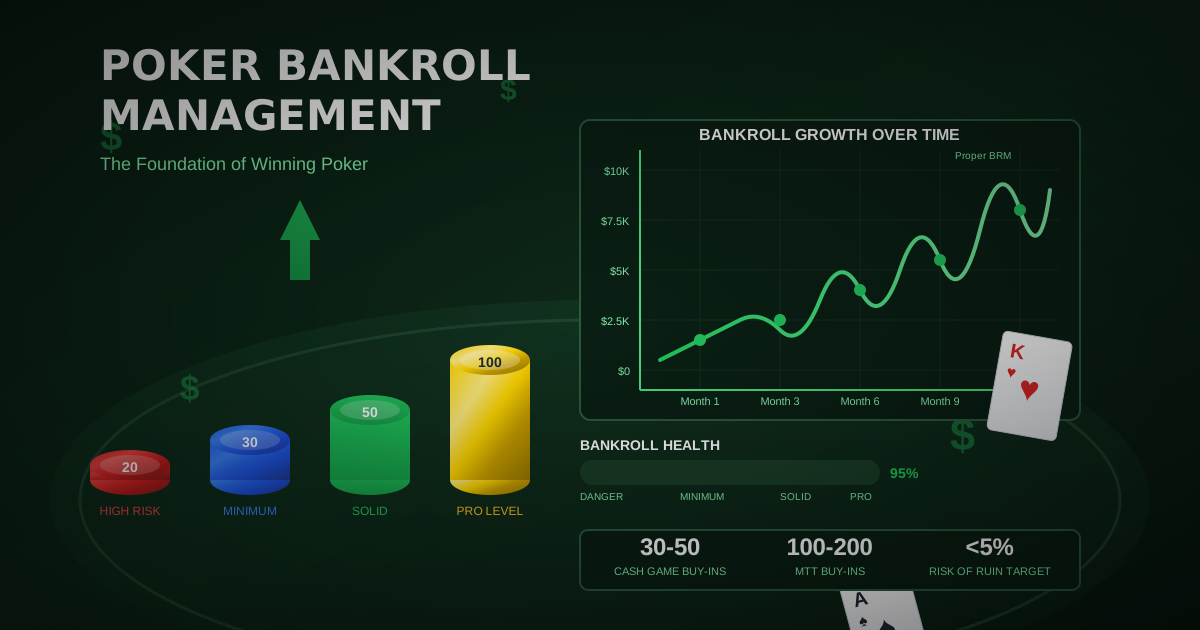
Bankroll management is the single factor that separates bettors who survive long enough to profit from those who go broke during inevitable losing streaks. Esports betting variance is significant, and even skilled bettors experience extended downswings.
Setting Up Your Bankroll
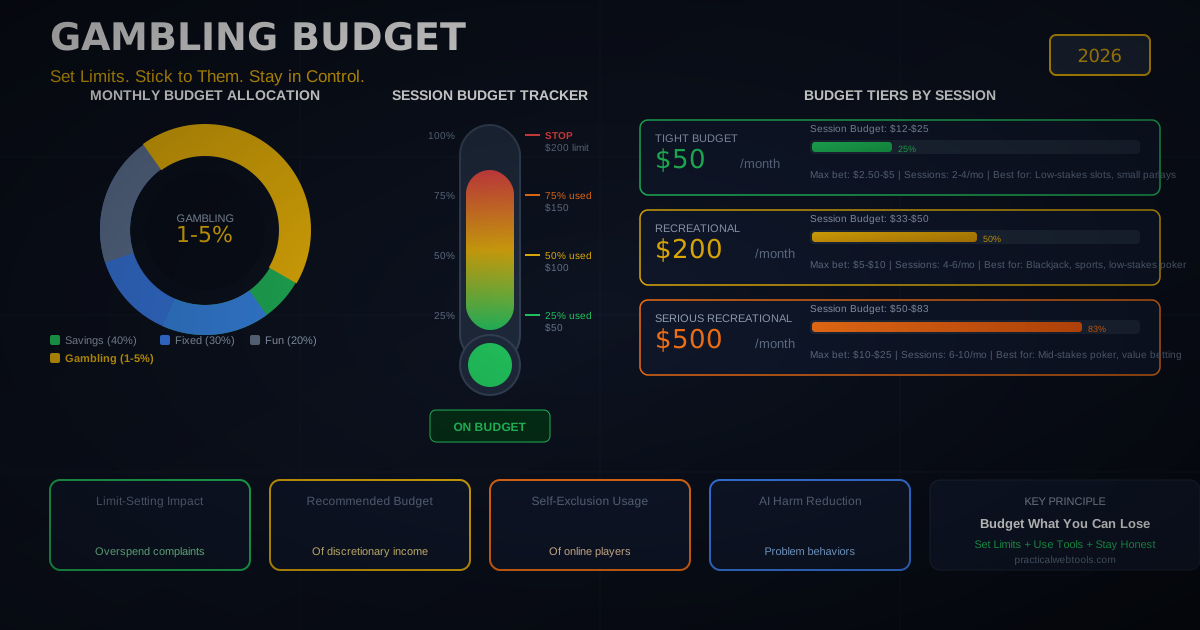
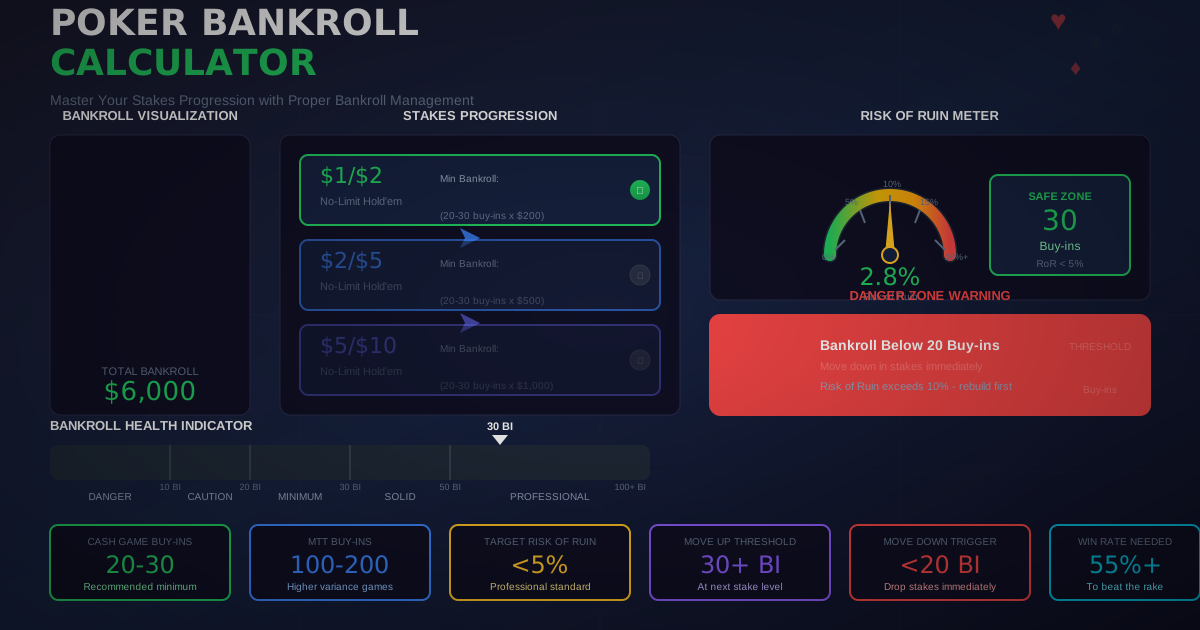
Step 1: Define your bankroll. This is money you can afford to lose entirely. Not rent money. Not savings. A dedicated betting bankroll separate from your finances.
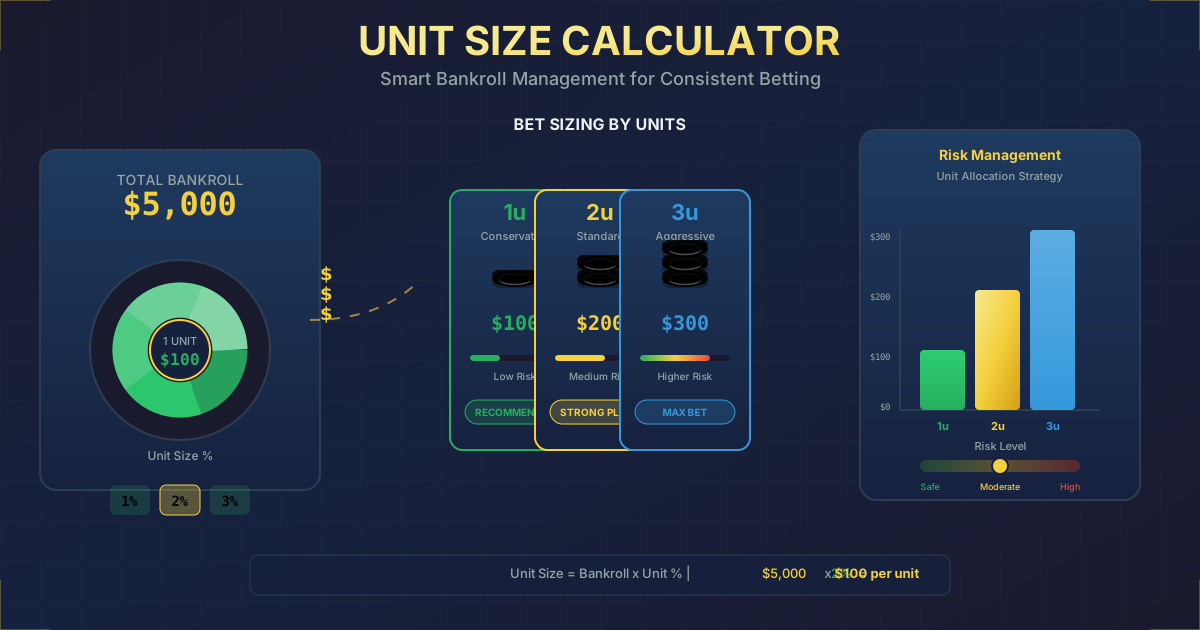
Step 2: Determine unit size. A "unit" is your standard bet size, typically 1-3% of your total bankroll.
| Bankroll Size | Conservative Unit (1%) | Moderate Unit (2%) | Aggressive Unit (3%) |
|---|---|---|---|
| $500 | $5 | $10 | $15 |
| $1,000 | $10 | $20 | $30 |
| $2,500 | $25 | $50 | $75 |
| $5,000 | $50 | $100 | $150 |
| $10,000 | $100 | $200 | $300 |
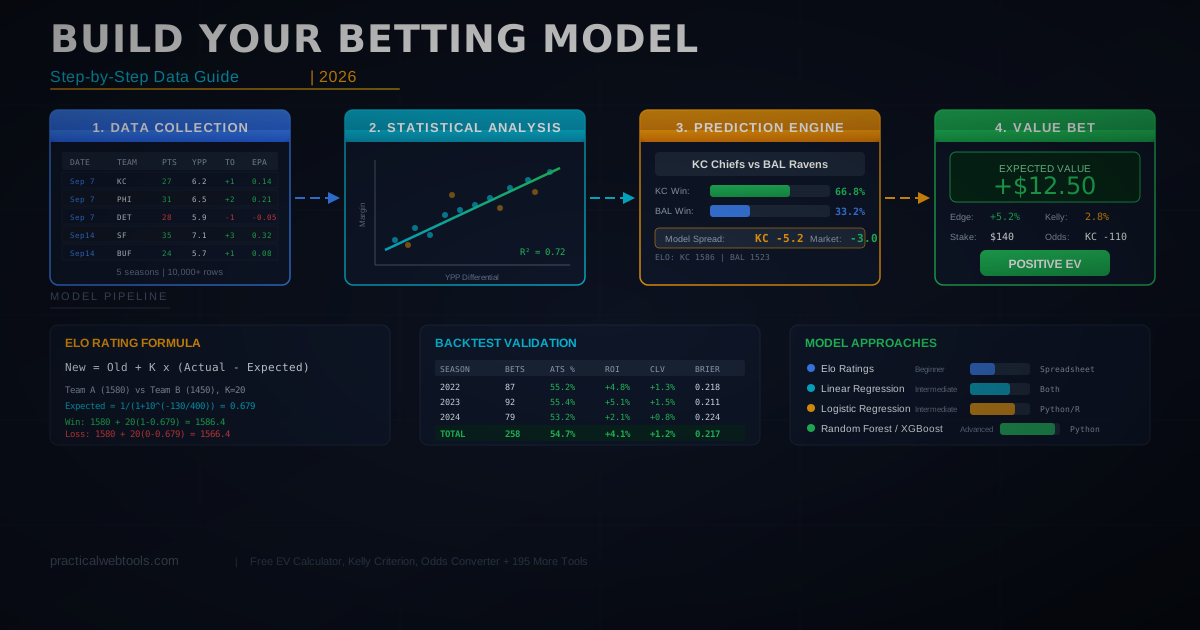
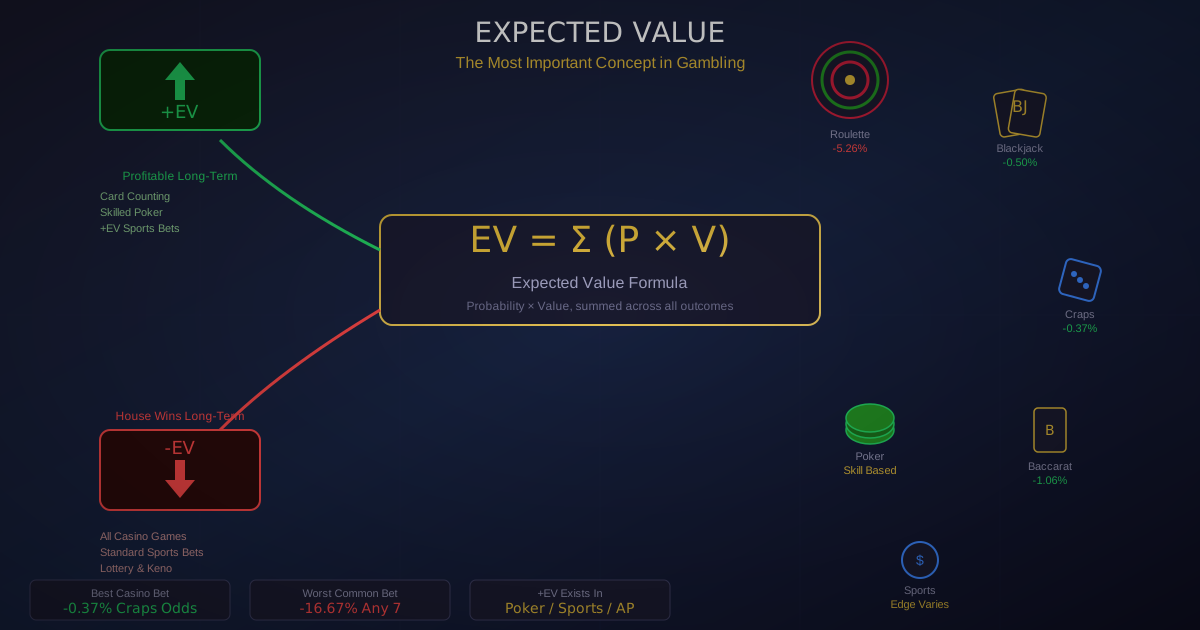
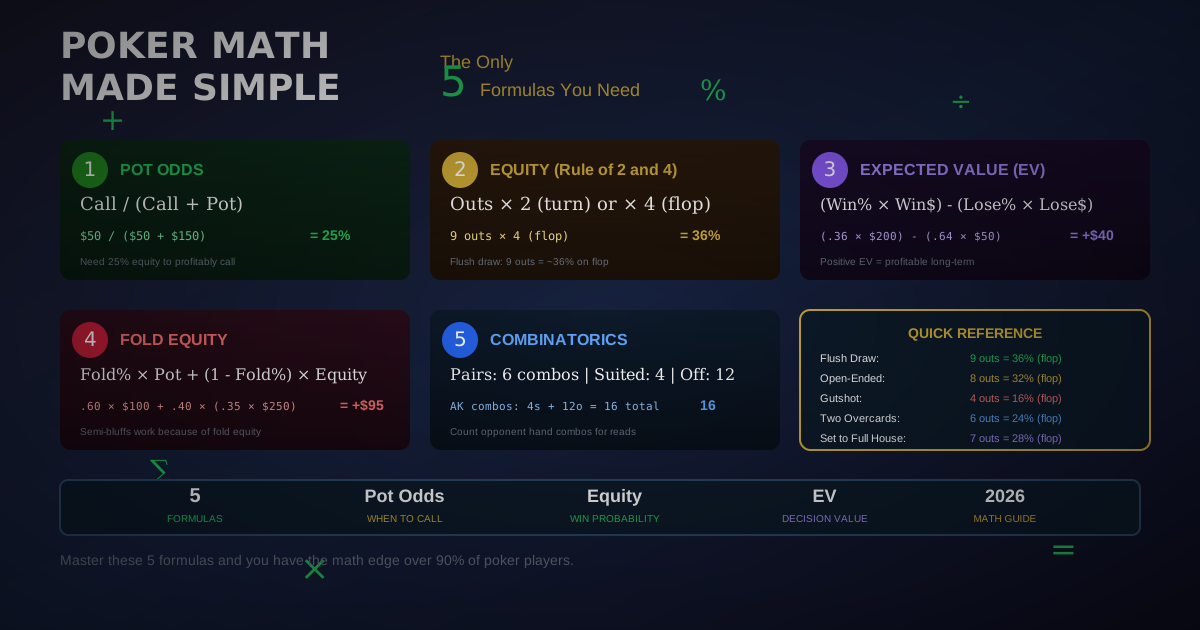
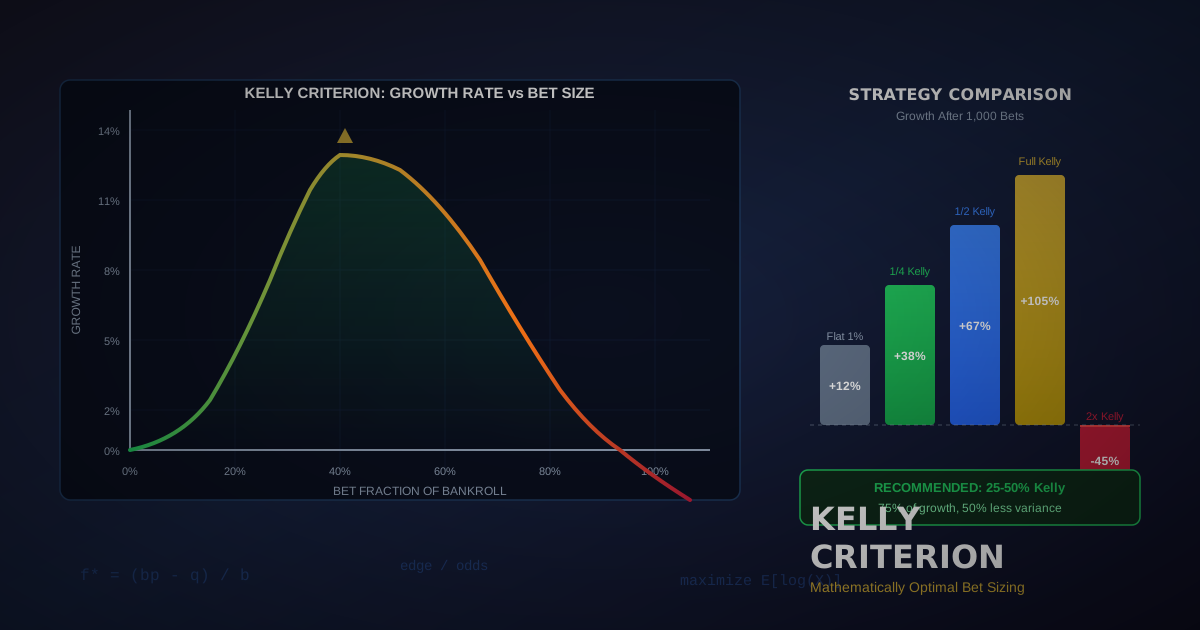
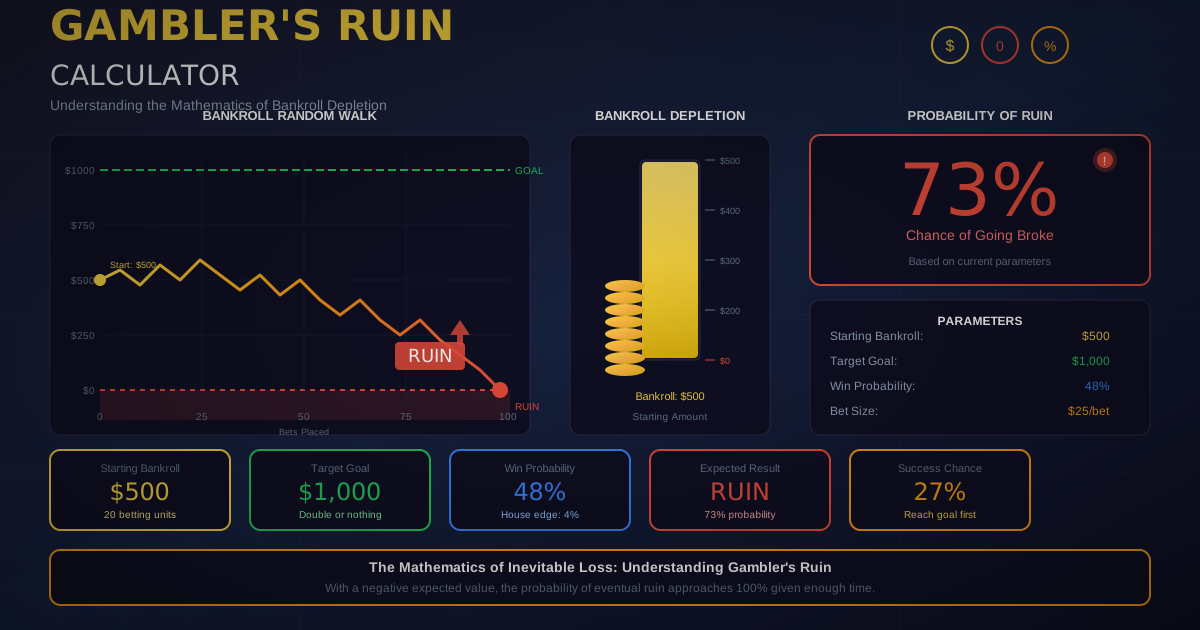
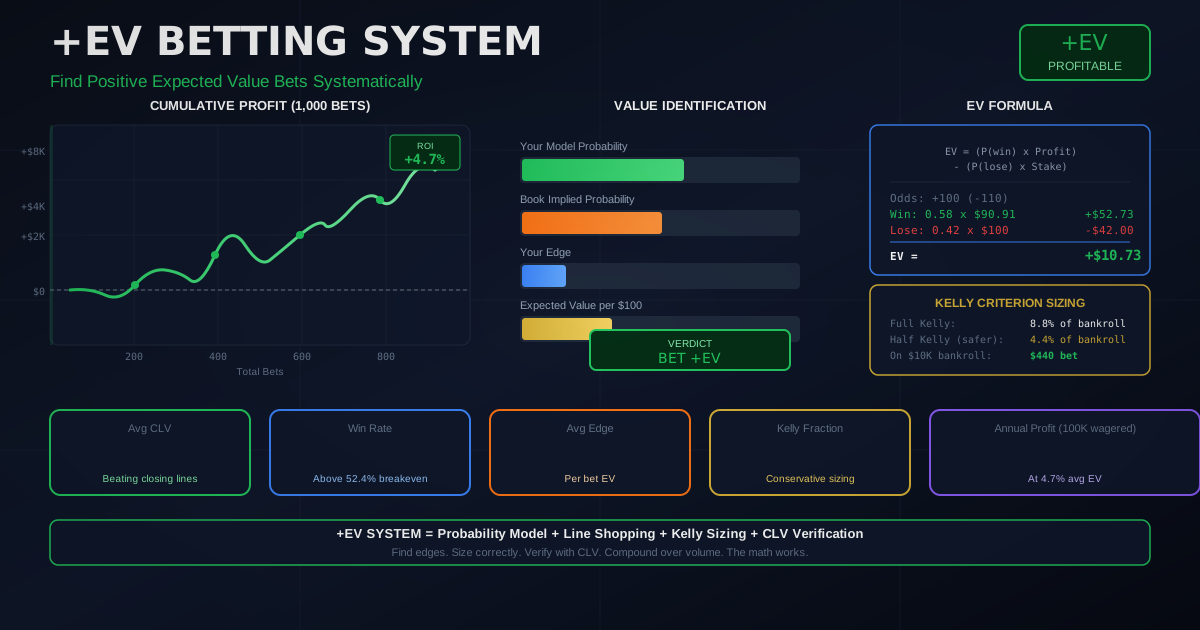
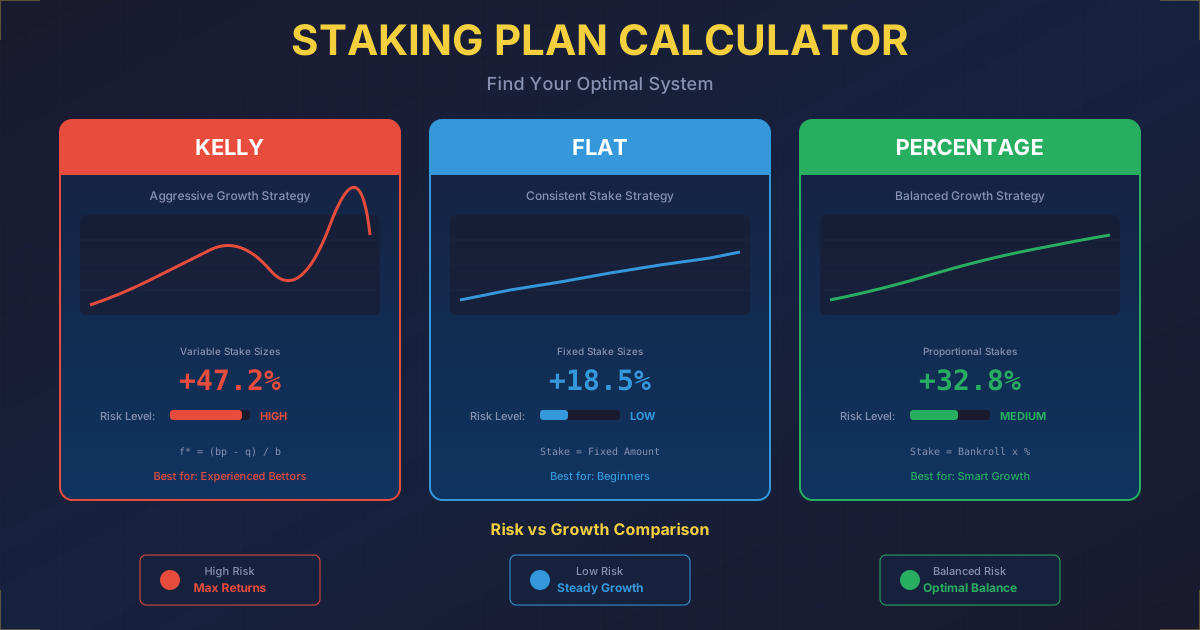
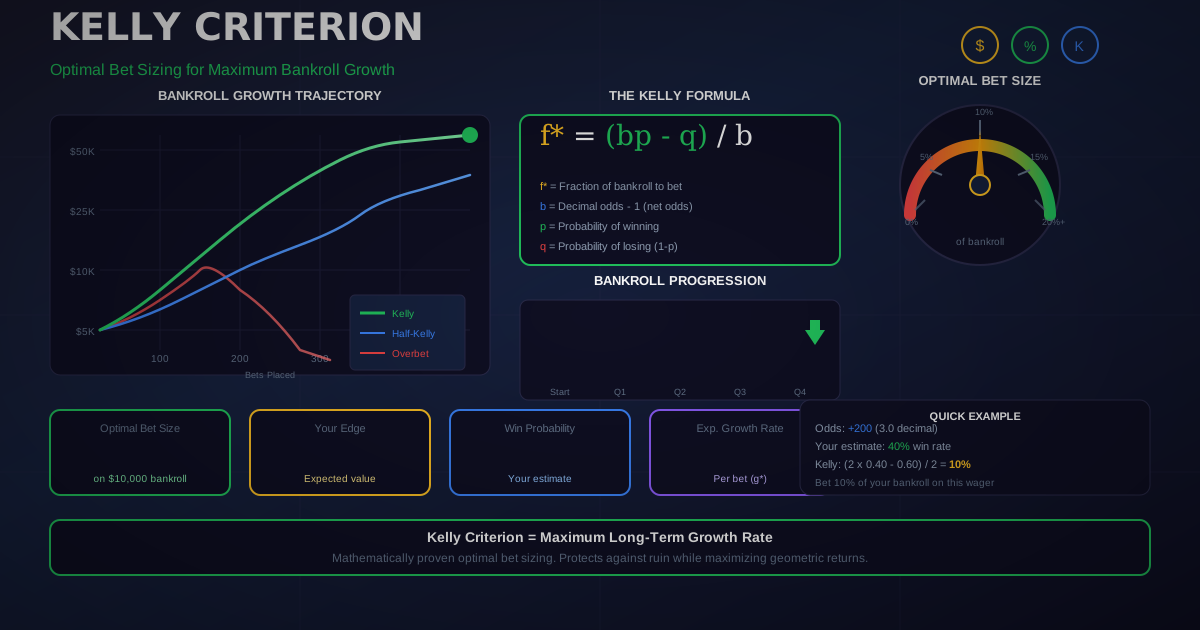
Step 3: Apply the Kelly Criterion. The Kelly Criterion calculates optimal bet sizing based on your assessed edge and the odds offered. It maximizes long-term growth while avoiding ruin.
Kelly % = (bp - q) / b
Where b = decimal odds - 1, p = your estimated win probability, q = 1 - p.
Example: You believe NAVI has a 60% chance to beat Vitality. The sportsbook offers NAVI at -140 (decimal 1.714).
- b = 0.714
- p = 0.60, q = 0.40
- Kelly % = (0.714 x 0.60 - 0.40) / 0.714 = (0.4284 - 0.40) / 0.714 = 3.98%
Full Kelly suggests betting 3.98% of your bankroll. Most professionals use fractional Kelly (25-50% of the calculated amount) to reduce variance.
Calculate optimal bet sizes for every esports wager with our Kelly Criterion Calculator.
Managing Downswings
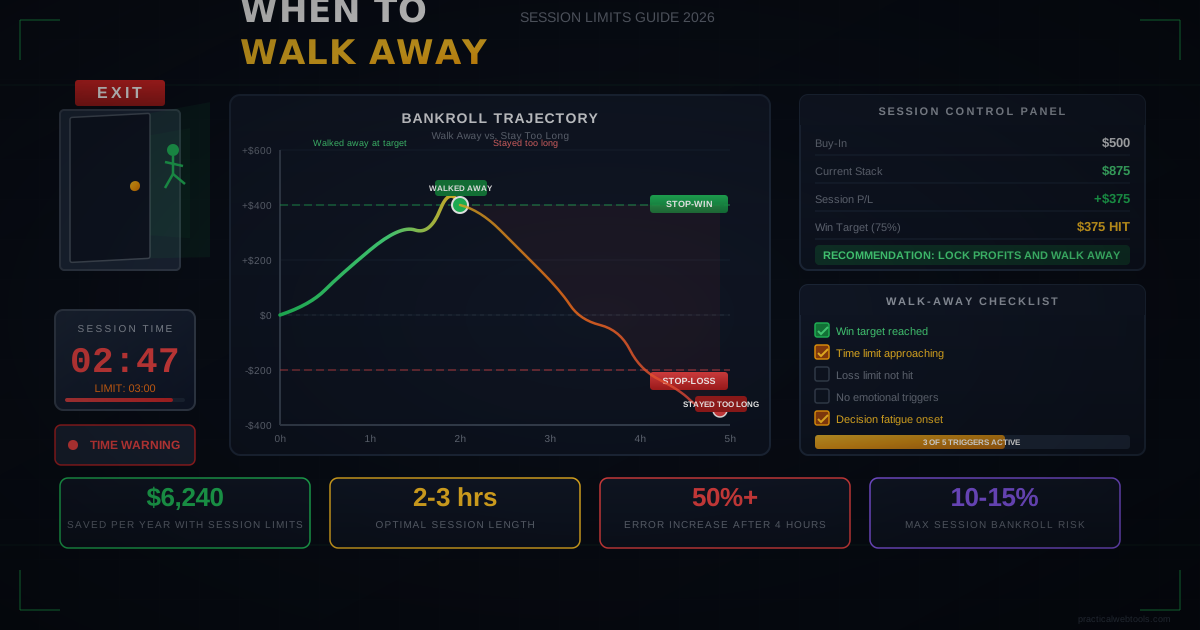
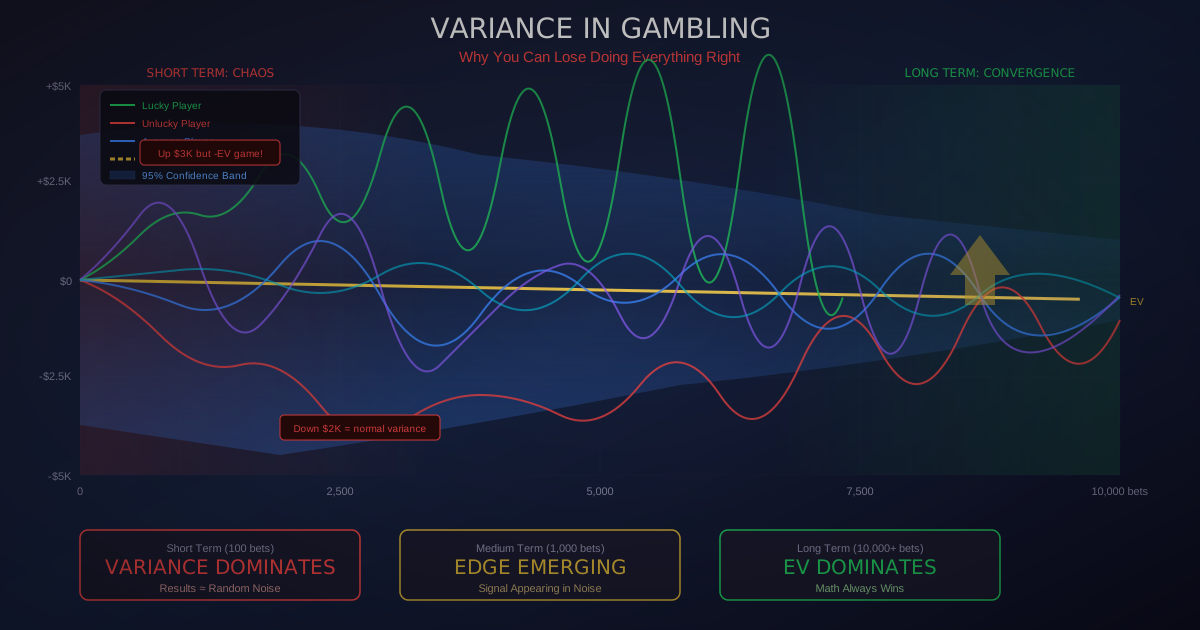
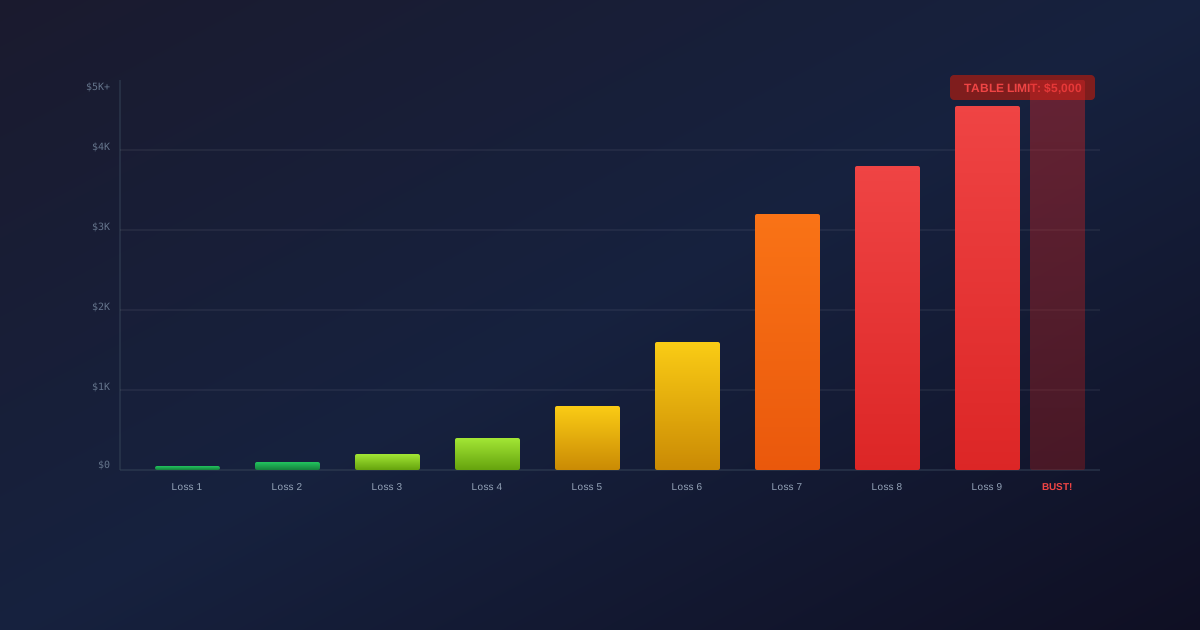
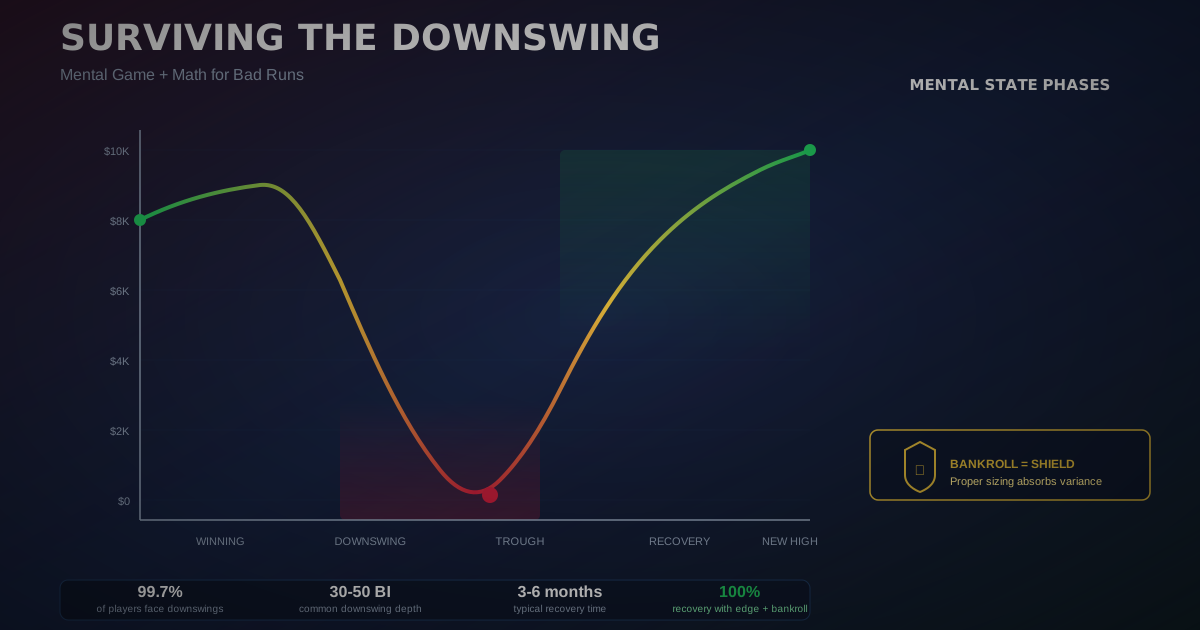
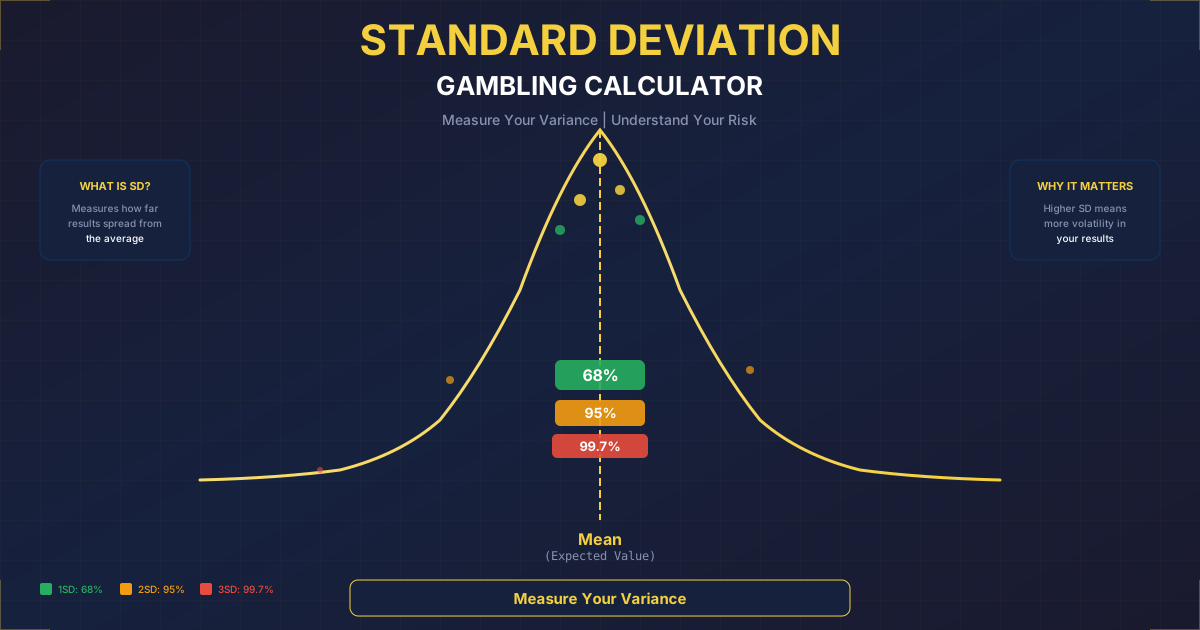
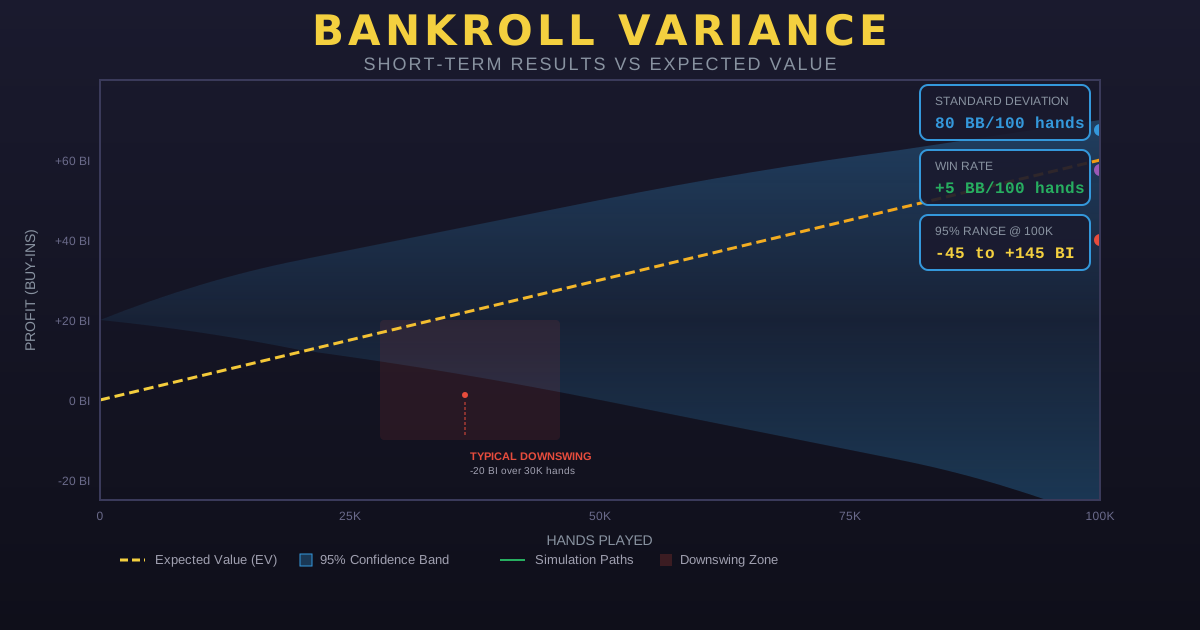
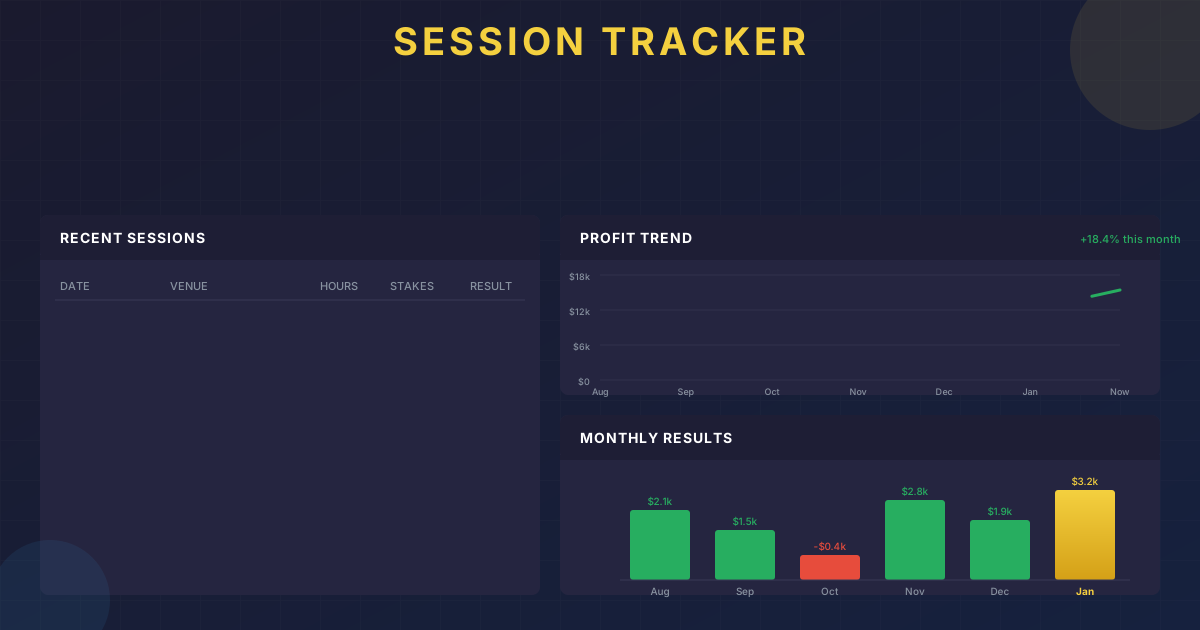
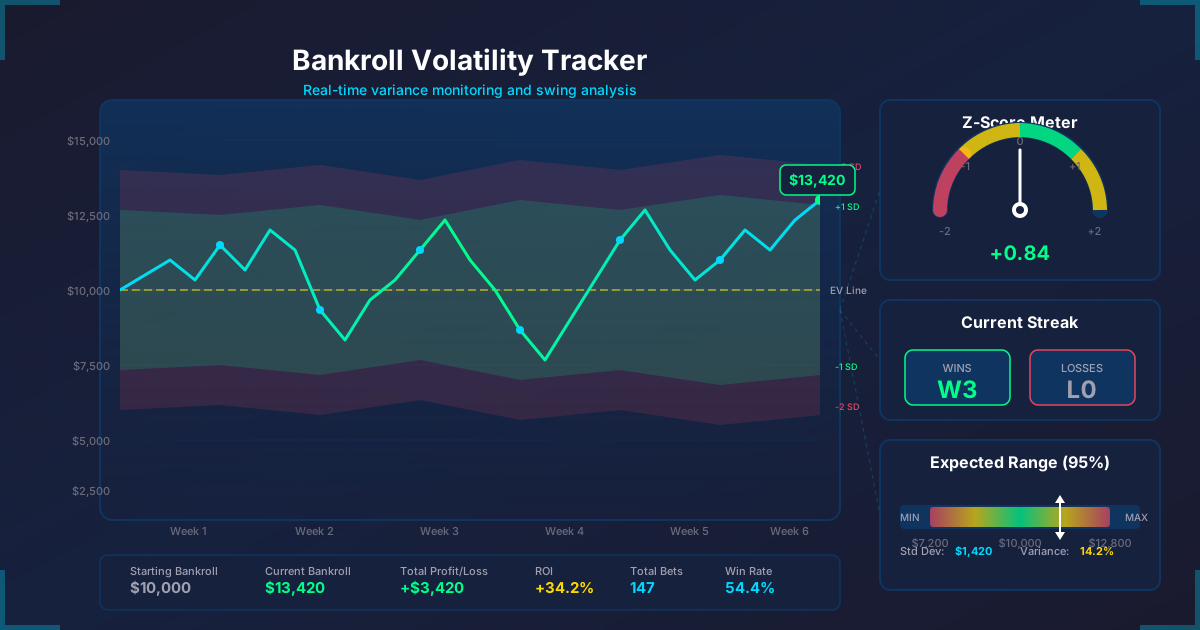
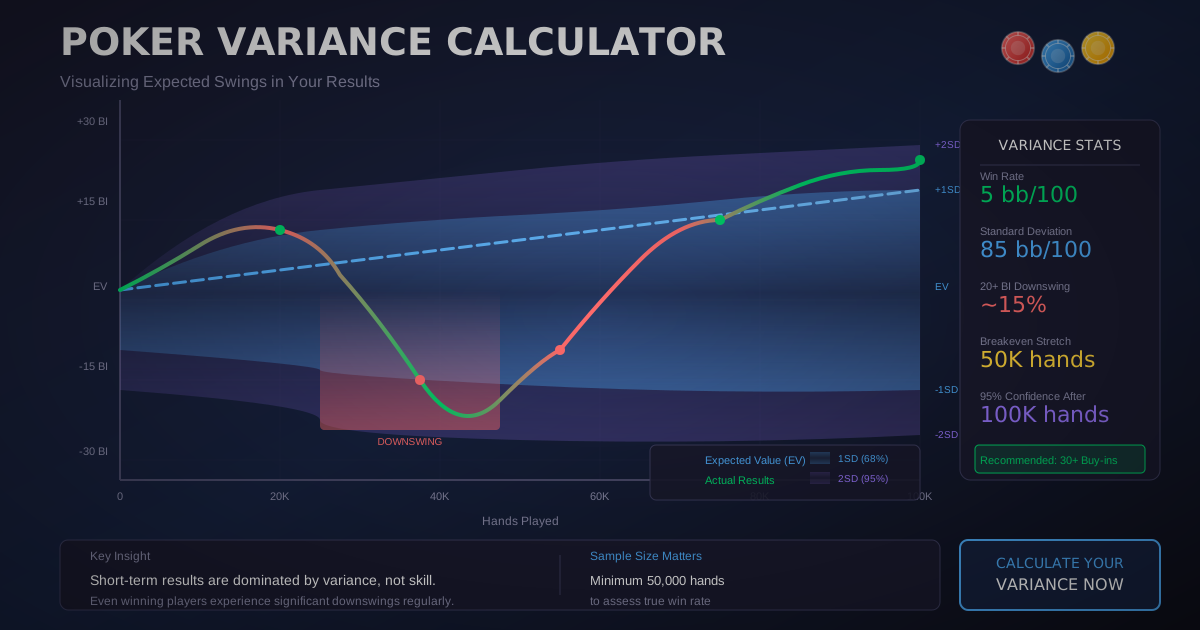
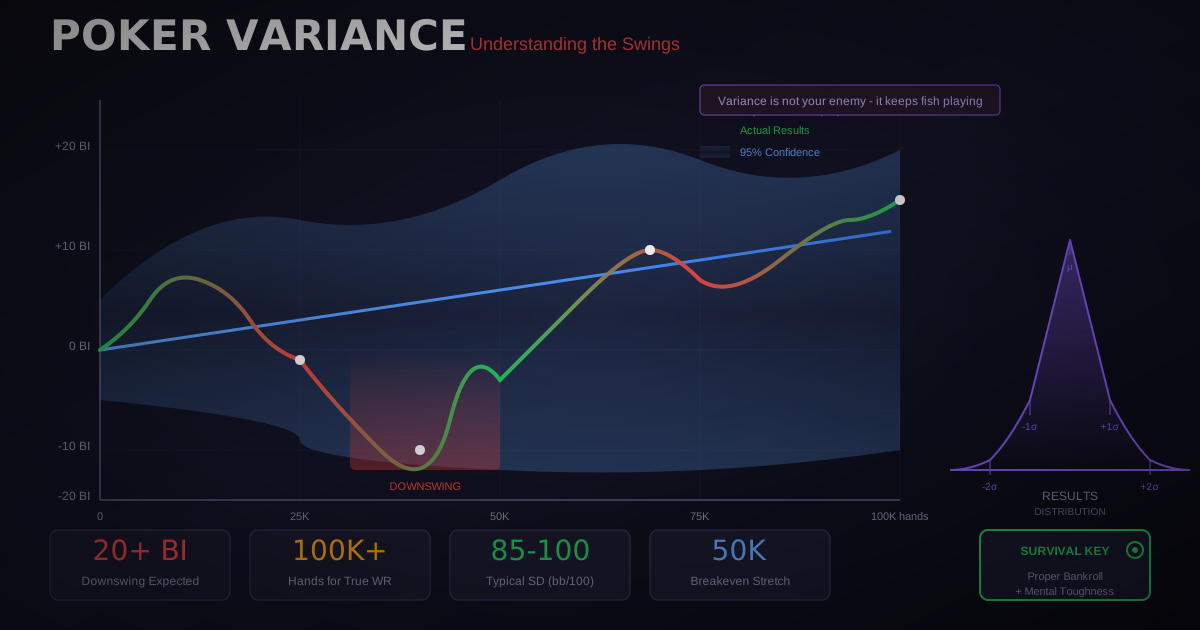
Even with a 55% win rate and proper bankroll management, you will experience losing streaks of 8-12 bets in a row. This is mathematically inevitable. The key rules:
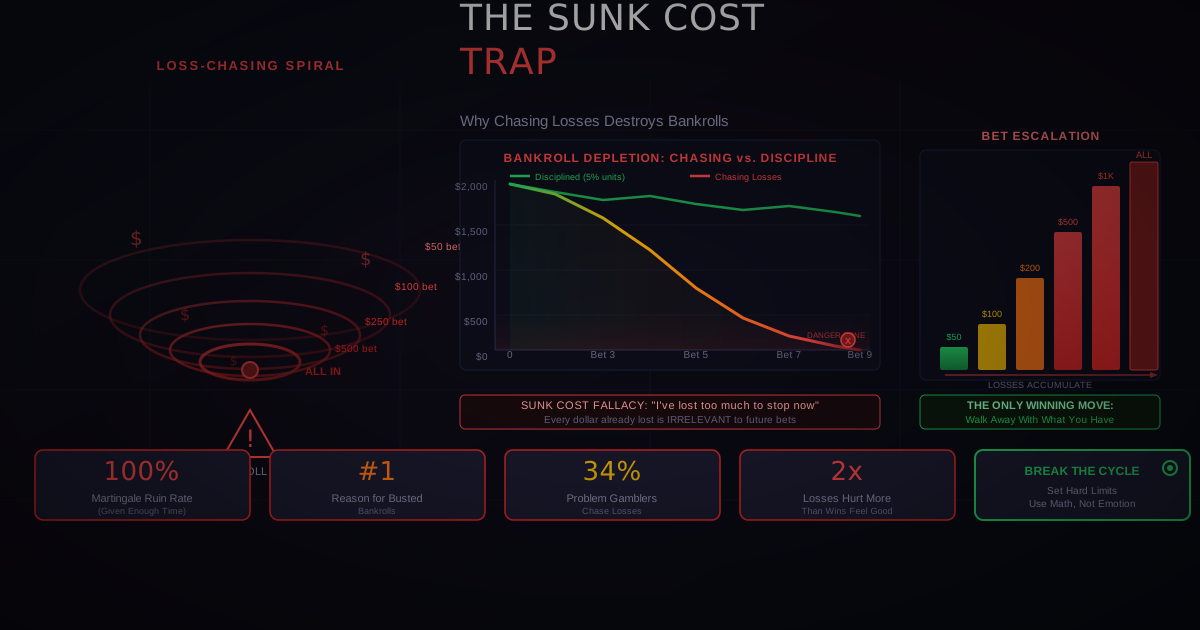
- Never increase unit size to chase losses. Your edge has not changed because of yesterday's results.
- Review your process, not your outcomes. If you are making +EV bets, short-term losses are variance, not evidence of a broken strategy.
- Take breaks. If a losing streak is causing emotional decisions (larger bets, betting on unfamiliar games, chasing live markets), step away for 48-72 hours.
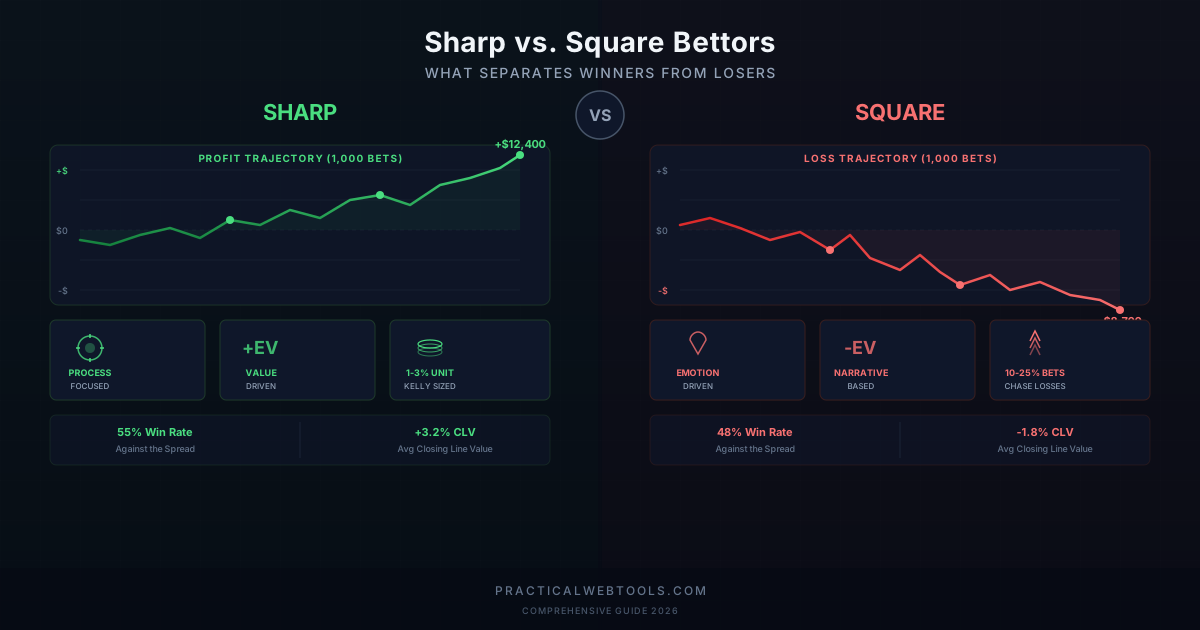
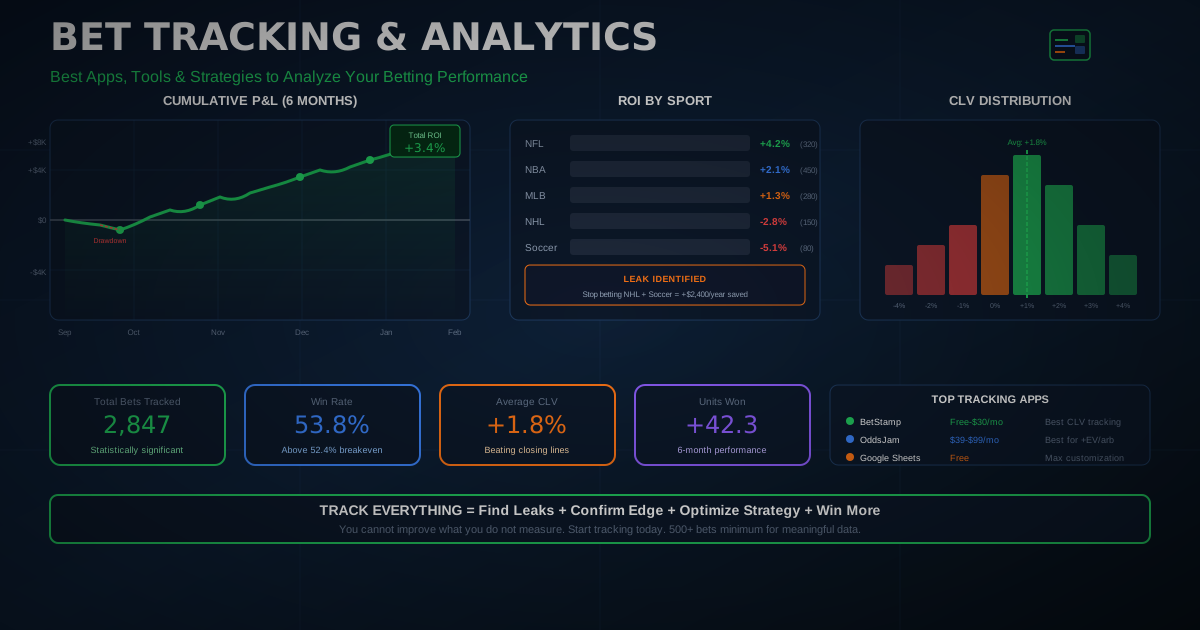
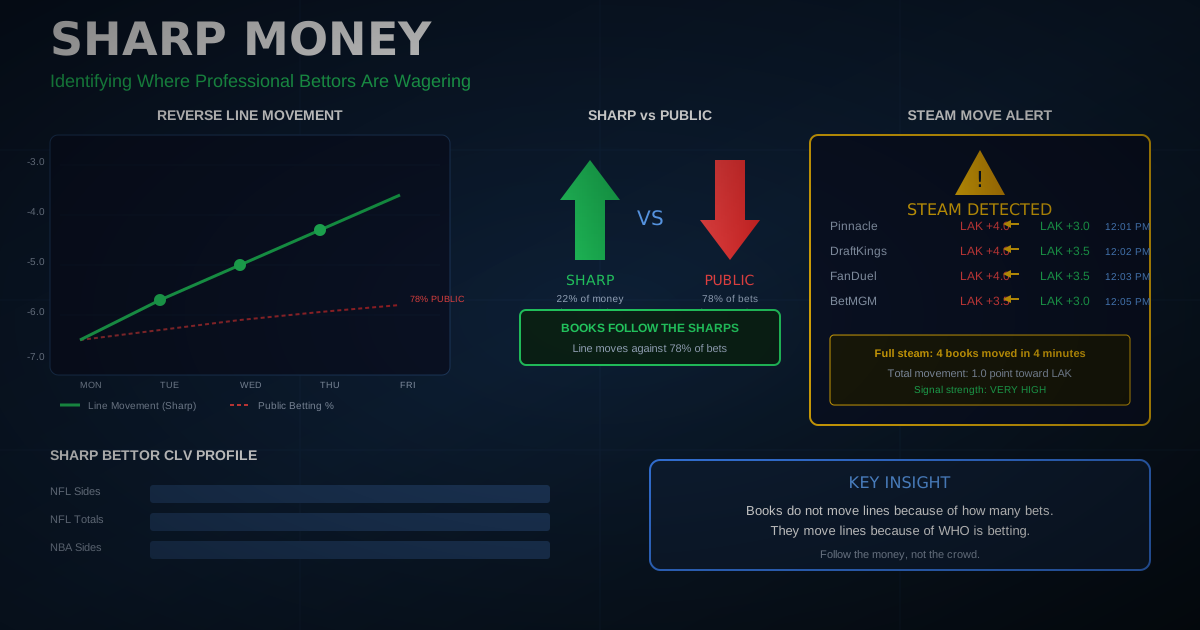
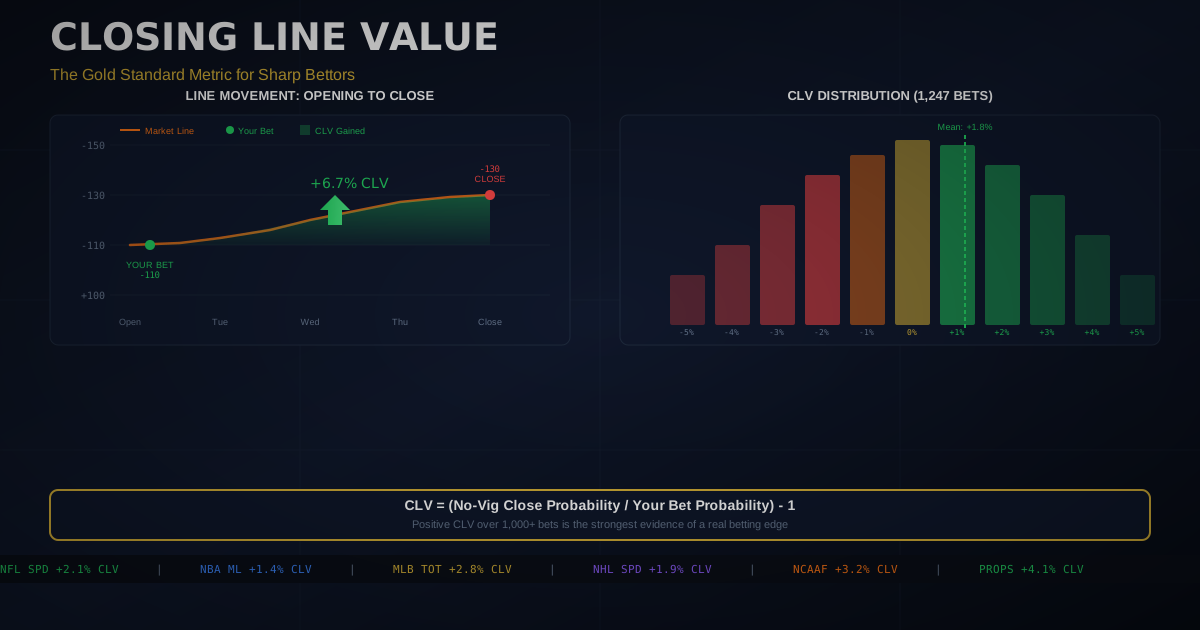
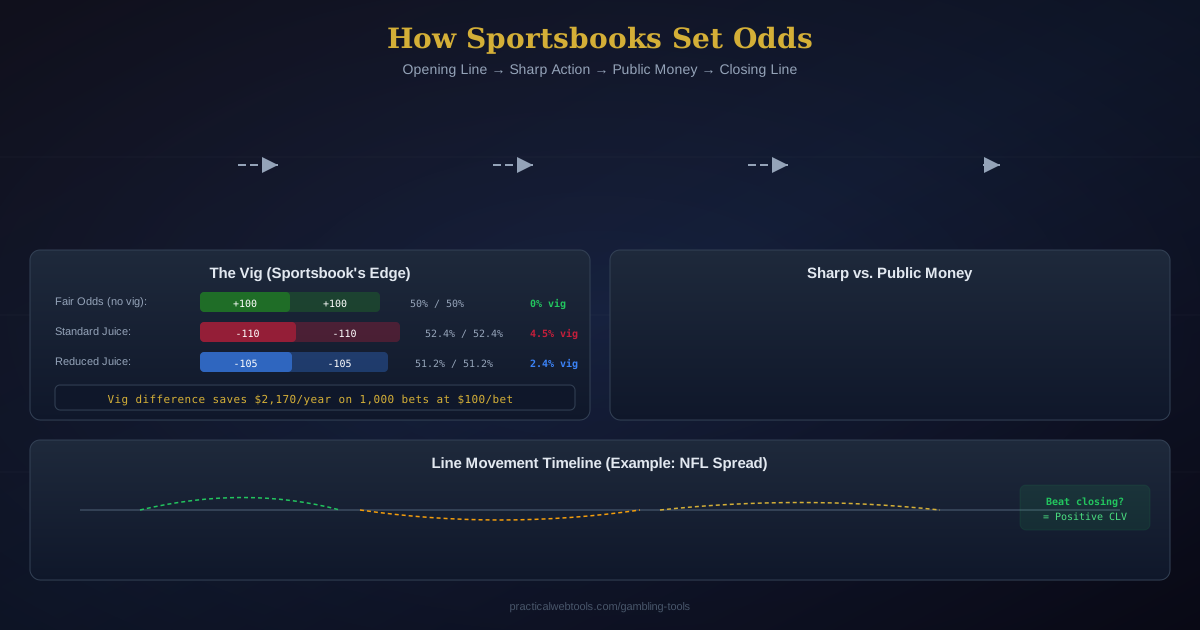
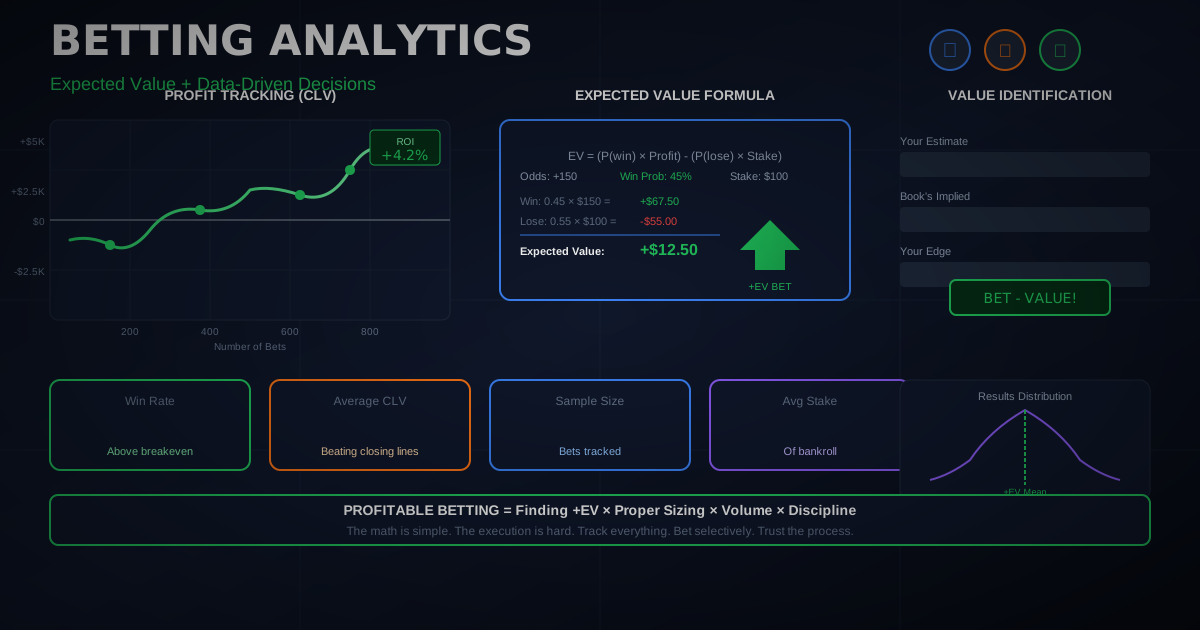
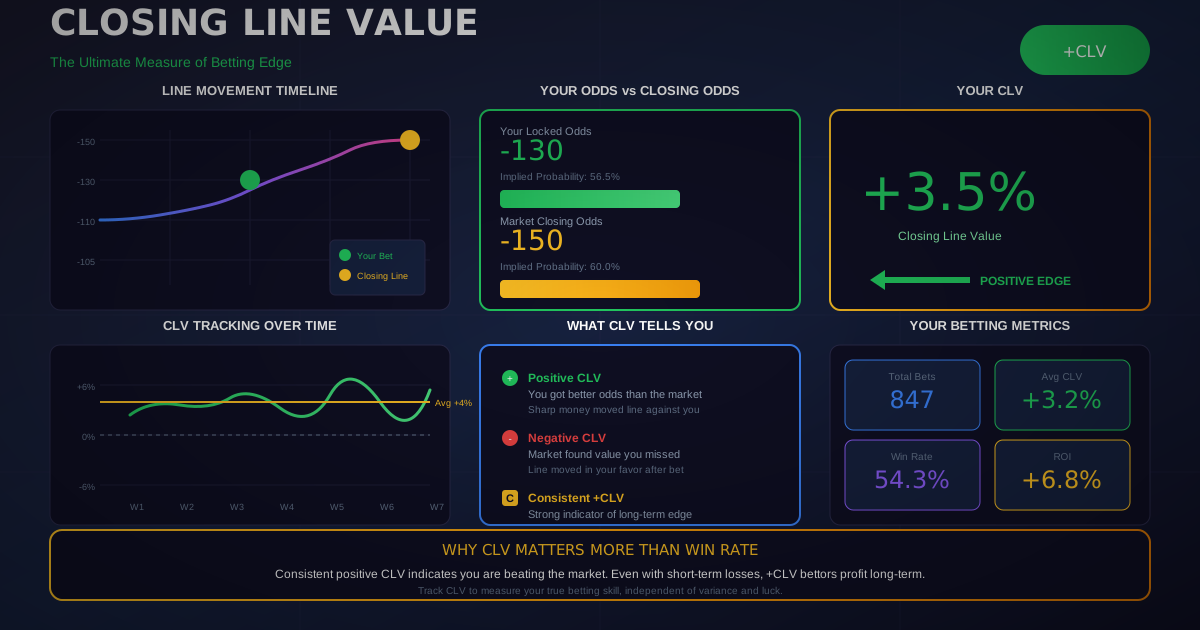
- Track CLV (Closing Line Value). If you are consistently getting better odds than the closing line, you are finding value even if results are temporarily negative.
Tournament-Specific Bankroll Strategy
Major esports events (CS2 Majors, LoL Worlds, TI, VCT Champions) offer denser betting opportunities than regular-season matches. Smart bankroll strategy for tournament periods:
- Reduce individual bet size during early rounds. Group stages feature more unknown matchups and higher variance. Bet 0.5-1% per wager.
- Increase selectively in bracket stages. Once you have observed teams at the event and identified live form, increase to 1.5-2.5% on your highest-conviction plays.
- Reserve bankroll for live betting. Allocate 20-30% of your tournament bankroll for in-play opportunities during matches where you spot real-time edges.
Assess the expected profit on any tournament outright bet with our Expected Value Calculator.
Esports Betting Strategy: Finding Your Edge
Strategy 1: Patch Meta Exploitation
This is the single most underpriced edge in esports betting. When a new patch drops (in LoL, Valorant, or Dota 2), bookmakers rely on historical results to set lines. But the meta has shifted.
How to exploit it:
- Read patch notes immediately upon release.
- Identify which teams relied on nerfed champions/agents/heroes.
- Identify which teams benefit from buffed options.
- Bet against teams whose strategies were nerfed, especially in the first 1-2 weeks of the new patch when lines have not adjusted.
Strategy 2: Map Pool Arbitrage (CS2 and Valorant)
Teams have wildly different win rates across maps. A team might be -200 overall but only -110 on a specific map if the veto goes against them.
How to exploit it:
- Track map-by-map win rates for both teams.
- Predict the likely veto outcome.
- Bet on map-specific markets where one team has a significant advantage the overall line does not reflect.
Strategy 3: Roster Change Windows
Esports rosters change frequently, especially between splits. New players need integration time, and bookmakers often continue pricing the "brand" rather than the current roster.
How to exploit it:
- Track roster announcements across all titles.
- Bet against teams with new rosters in their first 2-3 weeks.
- Bet on stable rosters playing against newly shuffled teams.
Strategy 4: Regional Cross-Over Events
At international events (LoL MSI/Worlds, CS2 Majors, VCT Champions), regional strength disparities create value:
- LCK/LPL vs. LCS at Worlds. Asian League of Legends teams are historically dominant but not always priced as such in early group stages.
- European CS2 teams at Majors. European CS2 has depth advantages that show up in lower-bracket resilience.
Strategy 5: Closing Line Value Tracking
The closing line (the last odds available before a match starts) is the most efficient expression of true probability. If you consistently get better odds than the closing line, you are finding value.
How to implement:
- Record the odds when you place every bet.
- Record the closing odds for the same market.
- Calculate the difference.
- Over 200+ bets, if your average CLV is positive, you have a real edge.
Compare odds across books instantly with our Odds Converter.
Frequently Asked Questions About Esports Betting
Is esports betting legal in the United States? Yes, in specific states. As of early 2026, 19 US states have legalized esports betting, including New Jersey, Nevada, Colorado, Virginia, and Arizona. Coverage varies by state and sportsbook. Not all events are approved in all states. Always verify your state's regulations before placing bets on licensed sportsbooks like DraftKings, FanDuel, or BetMGM.
Which esport is best for beginners to bet on? CS2 is the best starting point. The game structure is straightforward (first-to-13 rounds, best-of-3 maps), data availability is excellent through HLTV.org, and market depth is the deepest of any esport. The round-by-round nature also makes it easy to follow along and understand why bets win or lose. Start with simple match winner and map winner bets before moving to handicaps and props.
How much money do I need to start esports betting? You can start with as little as $200-500 as a dedicated bankroll, betting 1-2% per wager ($2-10 per bet). This is enough to develop your process, track results, and determine whether you have an edge before committing more capital. Never bet money you cannot afford to lose entirely.
What is the biggest mistake new esports bettors make? Betting on games and teams they do not actually follow. Esports betting edge comes from information advantages, understanding patch meta shifts, roster dynamics, and map pool tendencies that only come from watching matches and reading community analysis. Betting purely on odds or "expert picks" without personal knowledge of the game is a path to long-term losses. Use our Implied Probability Calculator to assess whether lines are accurate before wagering.
Can I make a living from esports betting? It is theoretically possible but extremely difficult. You would need a consistent edge of 3-5%+ ROI, a bankroll of $20,000 or more, access to multiple sportsbooks with high limits, and the discipline to maintain your process during 10+ bet losing streaks. Most professional esports bettors treat it as a supplement to other income rather than a sole profession. The market is also becoming more efficient as bookmakers invest in esports trading desks.
How do I spot a fixed esports match? Watch for sudden, unexplained line movements against the favorite in lower-tier matches, unusual substitutions before minor events, disproportionately high betting volume on obscure qualifiers, and in-game behavior that looks intentionally poor (refusing to use abilities, walking into obvious traps). Stick to Tier-1 and Tier-2 events with integrity monitoring. If something feels wrong, do not bet.
Is live betting on esports profitable? Live betting offers some of the highest-edge opportunities in esports, but only if you are watching the match and understand game-specific dynamics (CS2 economy cycles, LoL power spike timings, Valorant ultimate economy). Bookmaker live odds algorithms lag behind real game knowledge. However, live betting also carries the highest risk of emotional, impulsive wagering. Set rules before the match starts and stick to them.
What tools should I use for esports betting? At minimum, you need an odds converter to compare lines across sportsbooks, an expected value calculator to determine whether a bet is +EV, and a Kelly Criterion calculator to size your bets properly. Track every bet you place including odds obtained, closing line, stake, and result. Our free Odds Converter, Expected Value Calculator, and Kelly Criterion Calculator handle the math so you can focus on analysis.
Your Esports Betting Toolkit
Build your esports betting foundation with these free tools:
Odds and Probability
- Odds Converter: Convert American, decimal, and fractional odds instantly
- Implied Probability Calculator: See the true probability behind any esports line
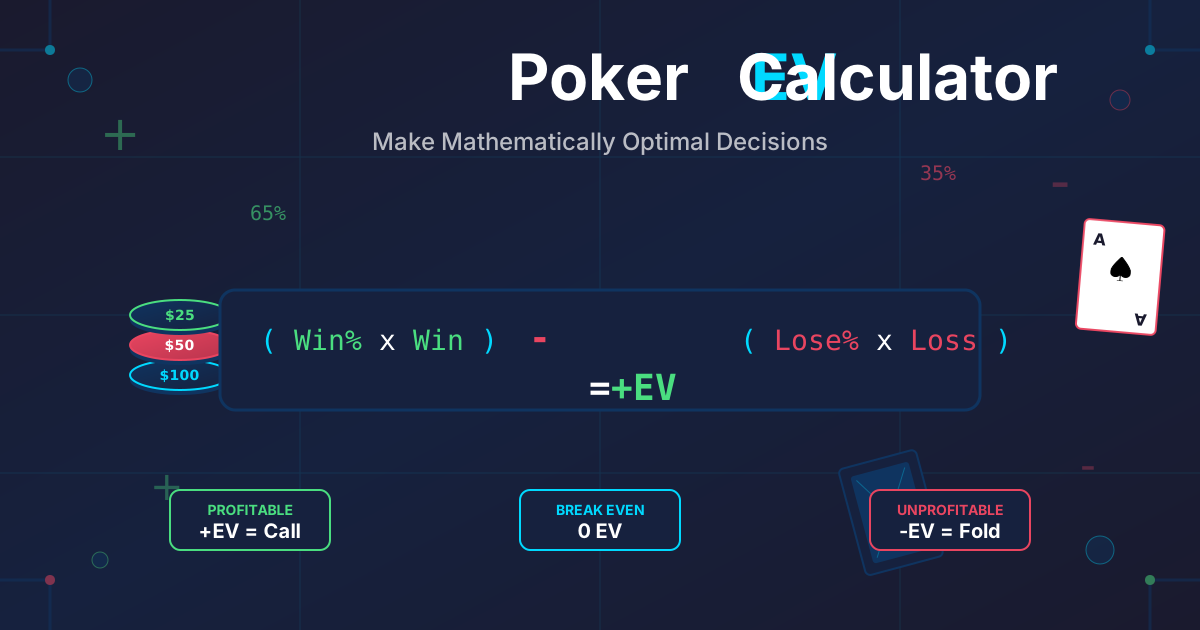
- Expected Value Calculator: Determine whether a bet is +EV before you place it
Bankroll Management
- Kelly Criterion Calculator: Calculate optimal bet sizing based on your edge
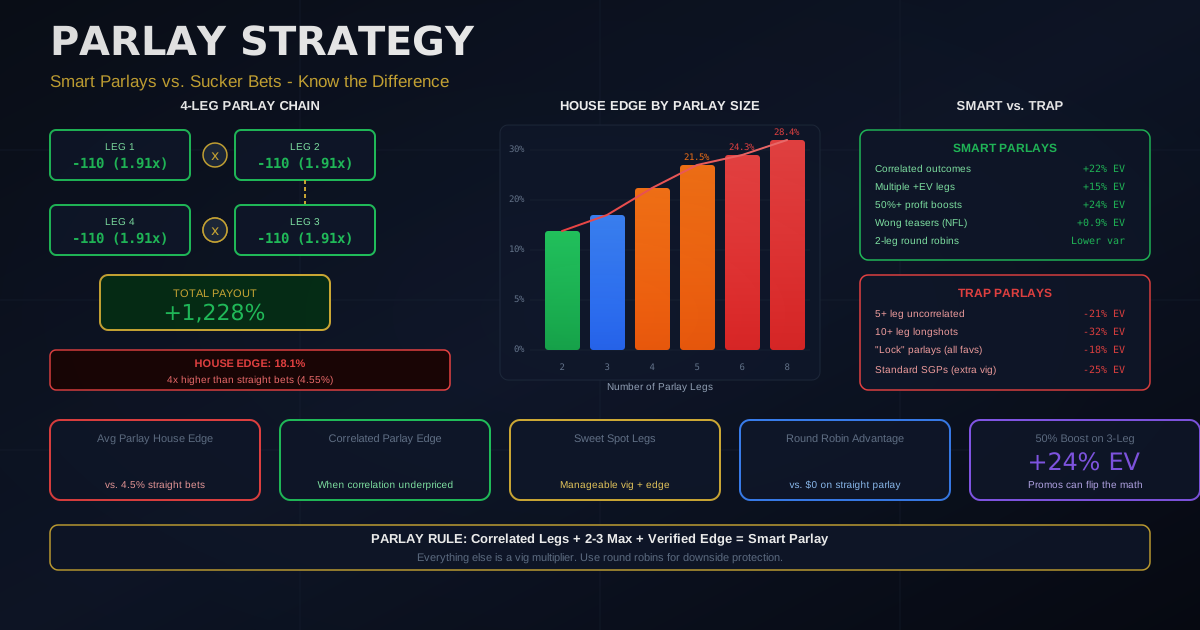
- Parlay Calculator: Assess multi-leg esports parlays and their true implied probability
Advanced Tools
- Arbitrage Calculator: Find risk-free profit opportunities across esports sportsbooks
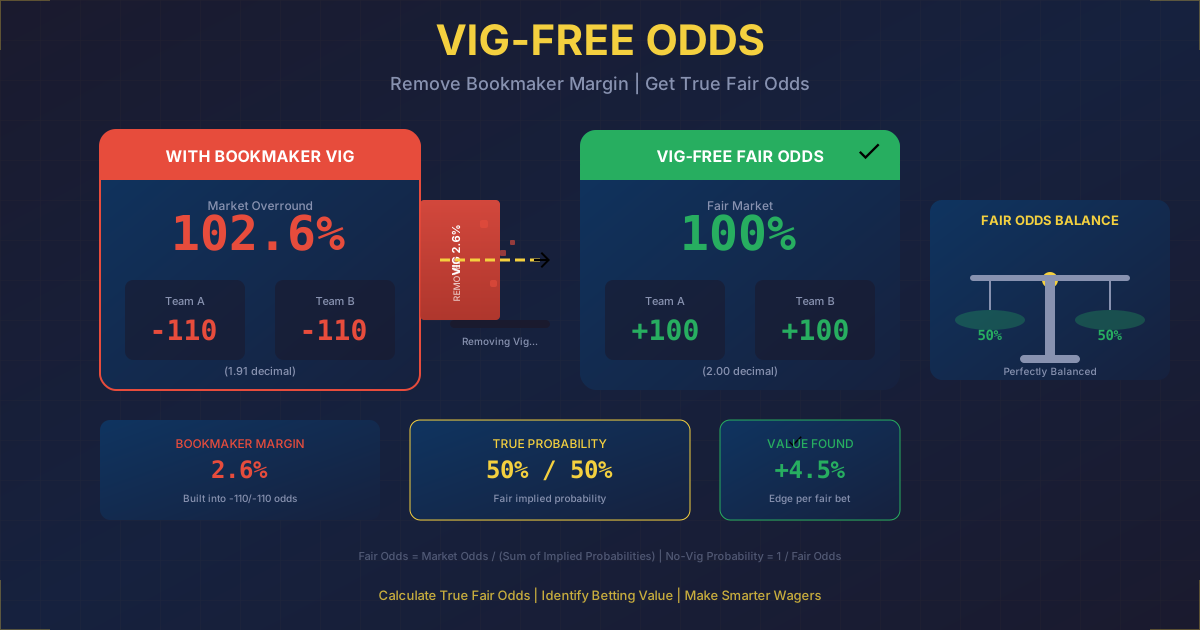
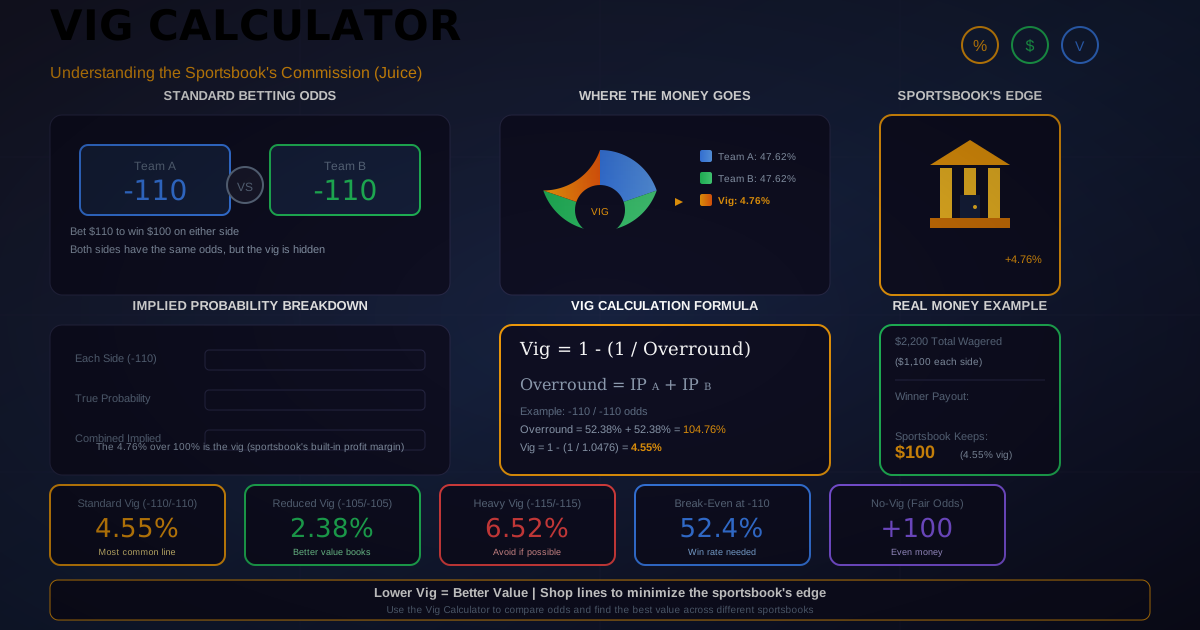
- Hold/Vig Calculator: Calculate how much the sportsbook is charging you on any esports line
Conclusion: The Esports Betting Edge Is Real, But Perishable
Esports betting in 2026 occupies a unique position: markets are liquid enough to support serious wagering but inefficient enough that informed bettors can still find consistent edges. That window will not stay open forever. As bookmakers hire dedicated esports traders, invest in predictive models, and tighten lines, the easy edges will disappear just as they did in traditional sports betting decades ago.
The bettors who profit in this environment share common traits: they play the games (or watch them obsessively), they read patch notes before they read odds, they track every bet with mathematical rigor, and they manage their bankrolls with discipline that would make a financial advisor proud.
Start building your esports betting process today. Assess your edge with our Expected Value Calculator. Convert odds across formats with our Odds Converter. And size every bet properly with our Kelly Criterion Calculator.
The math is on your side. The question is whether your discipline is too.
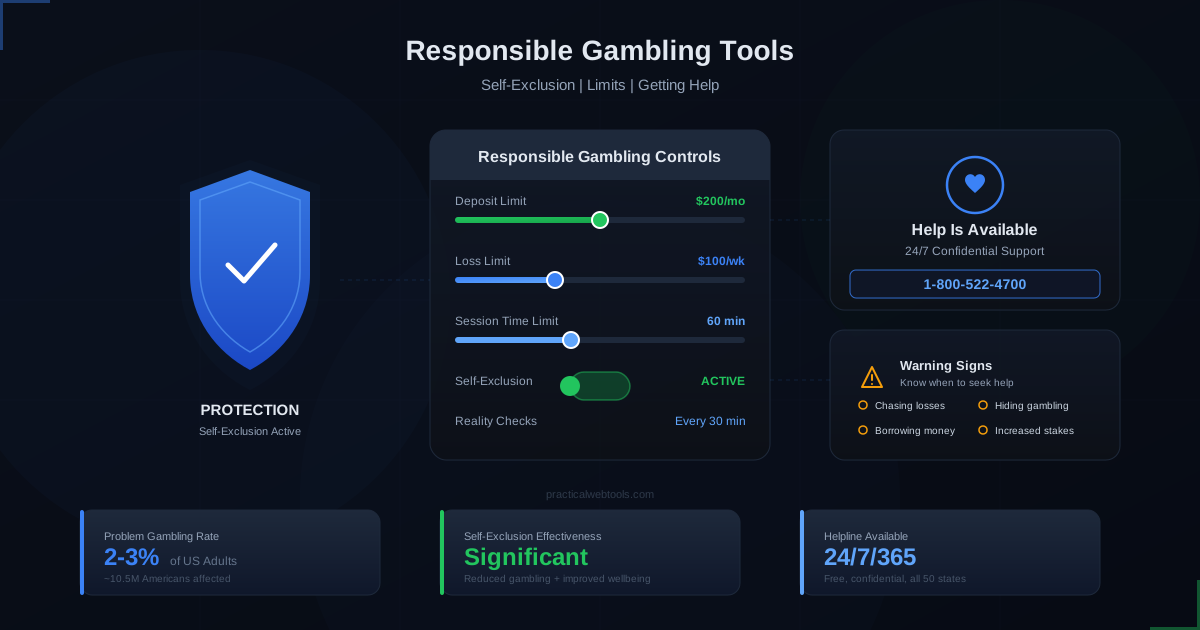
Gambling involves risk. This content is for educational and informational purposes only. Always gamble responsibly, set limits you can afford, and seek help if gambling becomes a problem. Visit the National Council on Problem Gambling or call 1-800-522-4700 for support.