Online Poker in 2026: Best Sites, Game Selection, and How to Beat Today's Games
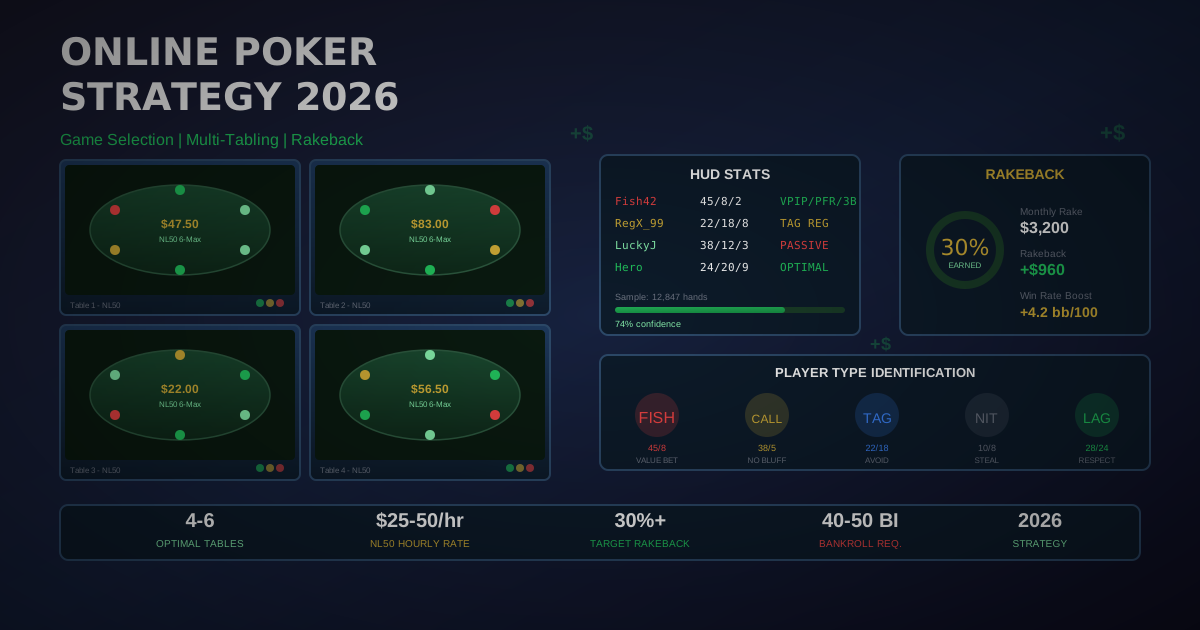
Online poker in 2026 is harder than it has ever been—and more profitable than most players realize. The average skill level has risen dramatically over the past decade, but the gap between a strategic, tool-equipped player and the recreational field remains enormous. Players who study, use proper bankroll management, and optimize their game selection are still extracting consistent profits from online tables.
The global online poker market generated over $9 billion in revenue in 2025, and the player pool continues to grow. More recreational players than ever are depositing for entertainment, driven by poker content on streaming platforms and social media. These players are the source of profit for serious grinders—but only if you know where to find them and how to play against them.
Here is the uncomfortable truth: the typical "tight-aggressive" strategy that dominated online poker in 2015 is no longer sufficient. Modern opponents understand hand ranges, position, and continuation betting. To beat today's games, you need a refined approach that combines solid fundamentals, game selection discipline, rakeback optimization, and mental game management.
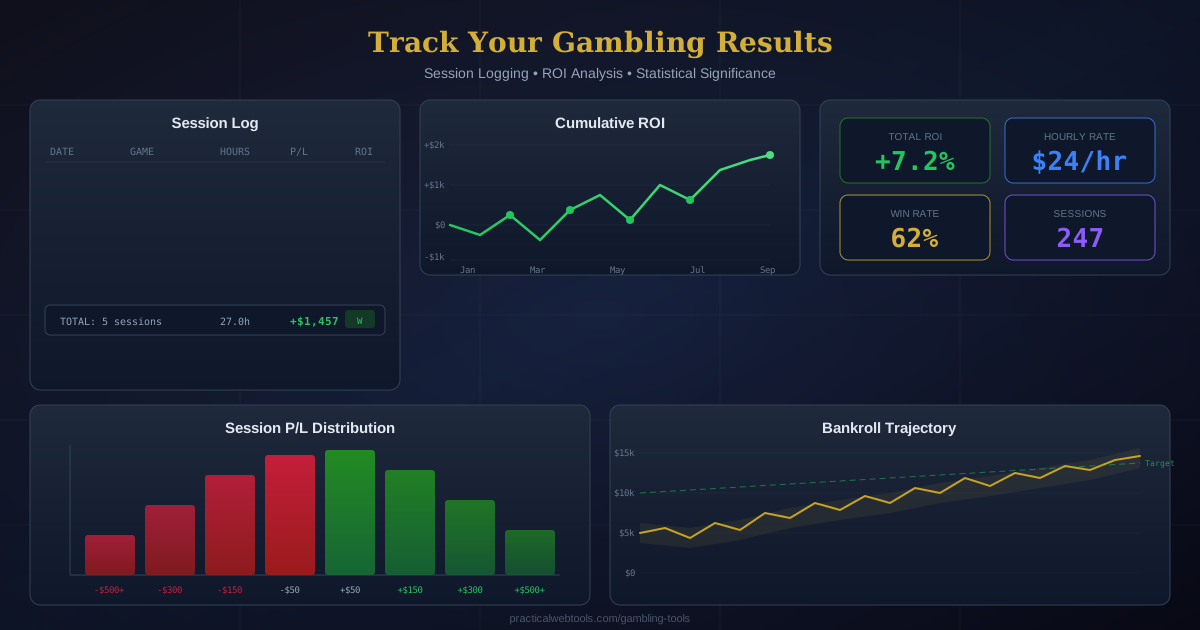
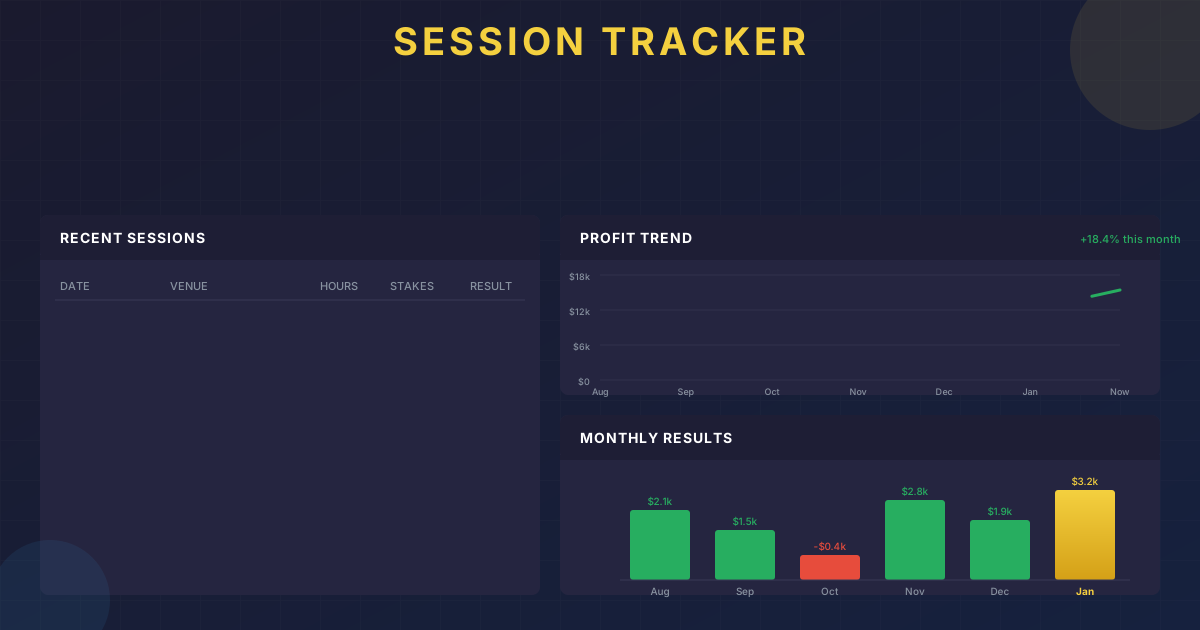
Track your online poker profitability with our free Poker Session Tracker and calculate your true hourly rate with our Poker Hourly Rate Calculator.
The Online Poker Landscape in 2026
Where the Money Is
The online poker ecosystem has evolved significantly. Understanding where profits come from is the first step to a winning strategy.
Global Player Pool Trends:
| Region | Estimated Active Players | Game Quality | Key Platforms |
|---|---|---|---|
| North America (regulated states) | 3-5 million | Softest games, recreational heavy | WSOP.com, PokerStars US, BetMGM |
| Europe | 8-12 million | Moderate difficulty, good volume | PokerStars, GGPoker, partypoker |
| Asia-Pacific | 5-8 million | Mixed, many recreational players | GGPoker, Natural8 |
| Latin America | 2-4 million | Soft, growing market | PokerStars, 888poker |
| Global (unregulated) | 10-15 million | Varies widely | Various offshore sites |
The regulated US market deserves special attention. Since legalization expanded to more states, the player pools have been filled with recreational players who previously played home games or visited casinos. These pools are among the softest in the world.
Stakes and Profitability Overview
Not all stakes are equally profitable. Here is a realistic assessment of what skilled players can expect:
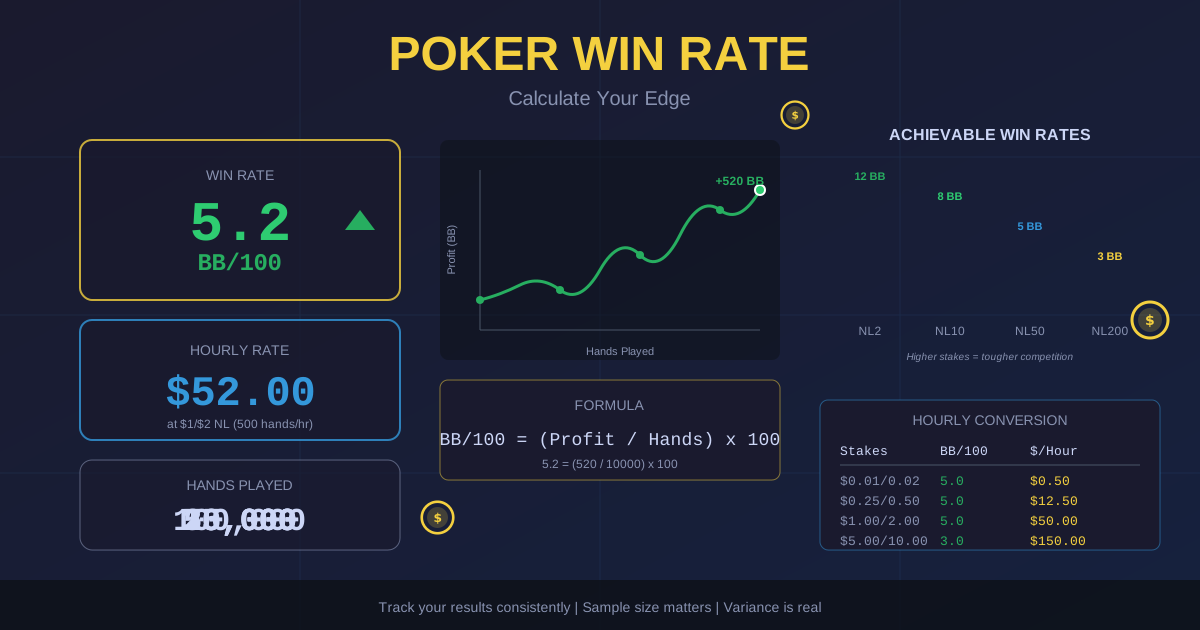
| Stakes (NLHE 6-Max) | Average Win Rate (bb/100) | Hourly Rate (1 table) | Difficulty Level |
|---|---|---|---|
| $0.01/$0.02 (NL2) | 8-15 bb/100 | $0.50-$1.00 | Easy |
| $0.02/$0.05 (NL5) | 6-12 bb/100 | $1.50-$3.00 | Easy |
| $0.05/$0.10 (NL10) | 5-10 bb/100 | $3-$6 | Moderate |
| $0.10/$0.25 (NL25) | 3-8 bb/100 | $5-$12 | Moderate |
| $0.25/$0.50 (NL50) | 2-6 bb/100 | $8-$20 | Challenging |
| $0.50/$1 (NL100) | 2-5 bb/100 | $15-$35 | Hard |
| $1/$2 (NL200) | 1-4 bb/100 | $20-$60 | Very Hard |
| $2.50/$5 (NL500) | 1-3 bb/100 | $40-$100 | Expert |
These numbers assume a single table. Multi-tabling multiplies hourly rates but typically reduces per-table win rate by 20-40%.
Calculate your exact hourly earnings based on your win rate with our Poker Hourly Rate Calculator.
Game Selection: The Most Underrated Skill
Game selection—choosing which tables, which sites, and which game types to play—is the single most impactful decision you make as an online poker player. A mediocre player at a soft table will earn more than an excellent player at a tough table.
How to Identify Soft Tables
Look for these indicators when selecting tables:
Player Statistics (via HUD):
- VPIP > 35%: Players voluntarily putting money in 35%+ of hands are playing far too many hands
- PFR < 10%: Low preflop raise percentage indicates passive play
- 3-Bet < 4%: Players who rarely 3-bet are easy to play against
- Fold to C-Bet > 65%: Opponents who fold too often to continuation bets
Observable Patterns:
- Players who limp (call the big blind) preflop frequently
- Players who min-bet or min-raise on most streets
- Short stacks who buy in for the minimum repeatedly
- Players using the auto-rebuy feature (often recreational)
- Tables with average pot sizes significantly above the norm for that stake
Table Selection Strategy
Follow this systematic approach to maximize your table quality:
- Open the lobby and sort by average pot size. Larger average pots usually indicate weaker players.
- Check wait lists for popular tables. If multiple regulars are waiting, the table has a known recreational player.
- Sit to the left of weak players. Position advantage over recreational players compounds your edge.
- Leave tables where the fish has busted. No ego—when the profitable player leaves, find a new table.
- Play during peak recreational hours. Evenings and weekends, especially after major sports events or holidays.
Peak Playing Times (by region):
| Region | Best Hours (Local Time) | Why |
|---|---|---|
| US East Coast | 7 PM - 12 AM EST | After work, recreational players log on |
| US West Coast | 6 PM - 11 PM PST | Same pattern, slightly later |
| Europe | 7 PM - 1 AM CET | Evening entertainment players |
| Weekends (Any) | Saturday 2 PM - Sunday 2 AM | Highest recreational traffic |
| Major Sports Events | During and after games | Gambling-minded players cross over |
Site Selection
Not all poker sites are equal. Key factors for site selection:
Traffic Volume: Higher traffic means more table selection options. You can avoid tough tables entirely when hundreds of tables are running.
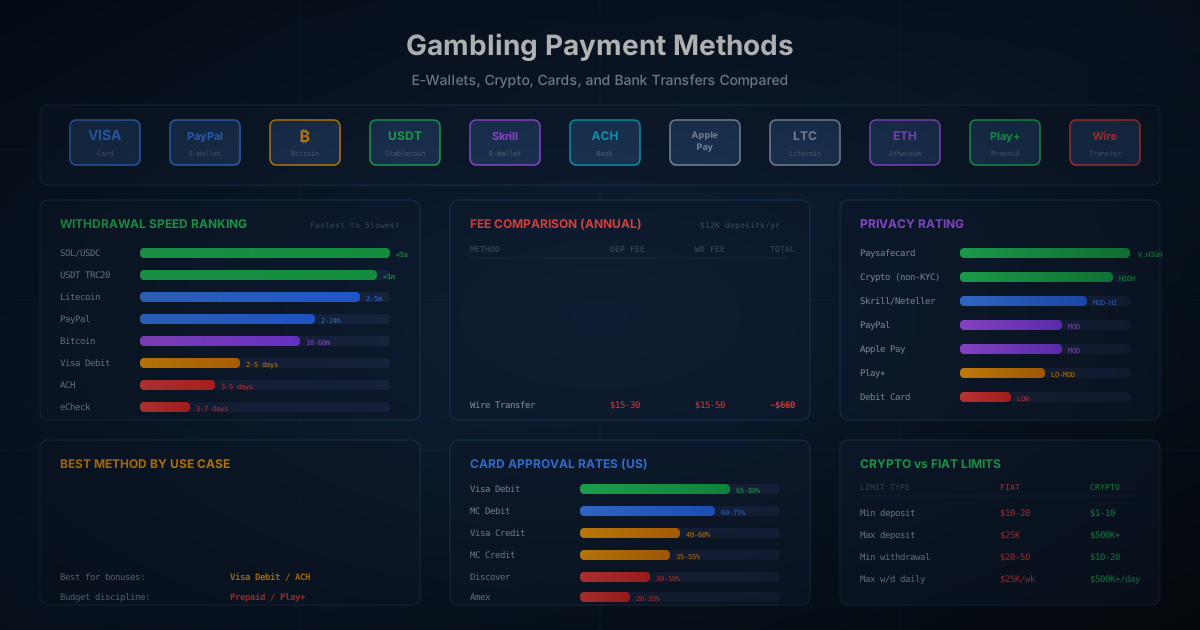
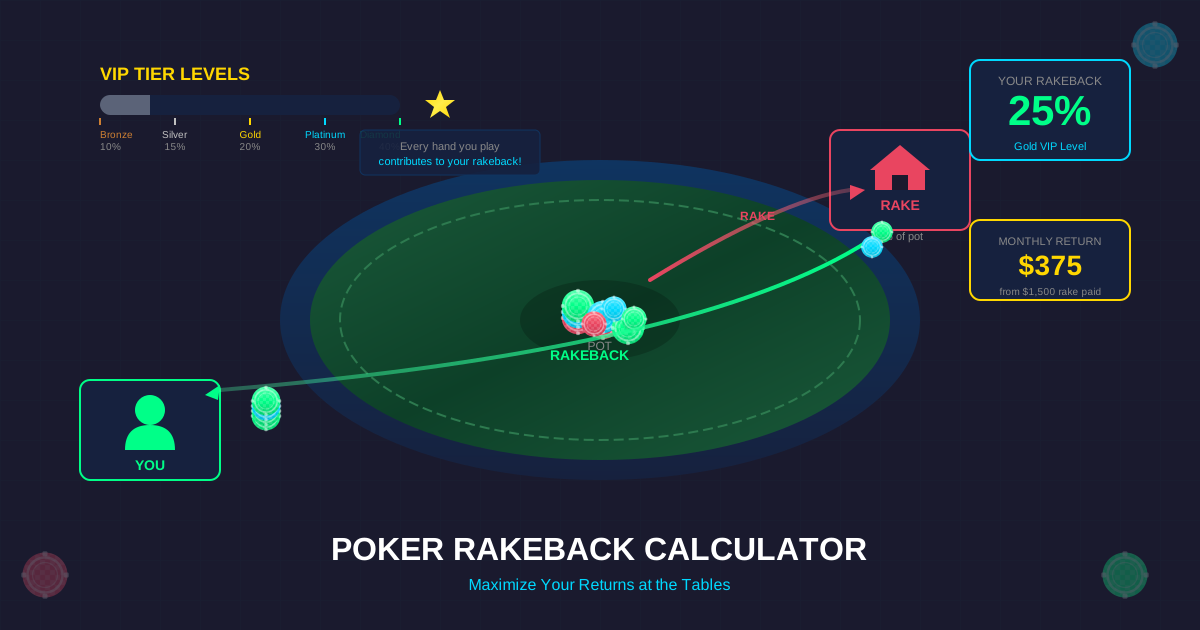
Rake Structure: Lower rake directly increases your win rate. A player paying 4bb/100 less in rake effectively has a 4bb/100 higher win rate. Use our Poker Rakeback Calculator to compare the true cost of different platforms.
Rakeback and Promotions: Some sites offer 20-40% rakeback that directly adds to your bottom line. A player generating $5,000/month in rake with 30% rakeback earns $1,500/month before even counting winnings.
Player Pool Quality: Regulated US sites tend to have softer player pools than international sites due to the higher percentage of casual players.
Software Quality: Better software means faster play, fewer disconnections, and improved multi-tabling capability.
Rakeback Optimization
Rakeback is one of the most reliable income streams for online poker players. Unlike table winnings, which fluctuate with variance, rakeback is consistent and proportional to volume.
Understanding Rake Impact
Rake is the fee the poker site takes from each pot (or tournament entry). Understanding its impact on your win rate is critical:
Cash Game Rake Example (NL50, 6-Max):
- Average pot: $15
- Rake per pot (5% capped at $3): approximately $0.75-$1.50
- Rake per 100 hands: approximately $8-$12
- Rake in bb/100 terms: approximately 16-24 bb/100
This means you need to beat the game by at least 16-24 bb/100 in "pre-rake" terms just to break even. With 30% rakeback, you recover 5-7 bb/100, reducing your breakeven requirement to 11-17 bb/100.
Calculate your exact rakeback earnings with our Poker Rakeback Calculator.
Rakeback Comparison Table
| Site Category | Typical Rakeback | Monthly Rake ($5K generated) | Net Rakeback |
|---|---|---|---|
| No rakeback program | 0% | $5,000 | $0 |
| Basic rewards program | 10-15% | $5,000 | $500-$750 |
| Mid-tier program | 20-30% | $5,000 | $1,000-$1,500 |
| High-volume deals | 30-40% | $5,000 | $1,500-$2,000 |
| Elite/VIP programs | 40-60% | $5,000 | $2,000-$3,000 |
For a player grinding NL50-NL100, $1,000-$2,000/month in rakeback can represent 50-100% of total table winnings. Ignoring rakeback optimization is leaving thousands of dollars on the table.
Maximizing Rakeback
- Choose sites with the best rakeback structure for your volume. Low-volume players benefit from milestone bonuses; high-volume grinders need high flat-rate rakeback.
- Track your rake contribution accurately. Some loyalty programs have opaque formulas. Log your actual rake and compare to payouts.
- Consider multiple sites. Some players split volume to hit bonus thresholds on multiple platforms.
- Negotiate. High-volume players can often negotiate custom rakeback deals above standard rates.
Multi-Tabling Strategy
Multi-tabling is the primary way online poker players increase their hourly rate. Playing 4 tables at a 3 bb/100 win rate earns more per hour than playing 1 table at 8 bb/100—and most players can manage 4 tables with practice.
Optimal Table Count
| Skill Level | Recommended Tables | Win Rate Impact | Hourly Rate Impact |
|---|---|---|---|
| Beginner | 1-2 tables | No reduction | Baseline |
| Developing | 2-4 tables | -10 to -20% per table | 1.5x-3x hourly rate |
| Intermediate | 4-8 tables | -15 to -25% per table | 3x-6x hourly rate |
| Advanced | 8-12 tables | -20 to -35% per table | 5x-8x hourly rate |
| Mass multi-tabler | 12-24 tables | -30 to -50% per table | 6x-12x hourly rate |
The sweet spot for most players is 4-6 tables. Beyond this, the per-table win rate decline becomes significant, and only players with highly automated decision-making processes maintain profitability at 12+ tables.
Multi-Tabling Setup
Hardware Requirements:
- Minimum 2 monitors (strongly recommended: 3)
- 16GB+ RAM
- Modern processor (the software requires CPU for HUD calculations)
- Wired internet connection (WiFi disconnections at 8+ tables are costly)
Software Configuration:
- Use a tiling layout (non-overlapping windows) for 4-8 tables
- Cascading layout for 8+ tables
- Hot keys for common actions (fold, call, raise preset amounts)
- Auto-time bank for complex decisions
- Table highlighting for action required
Decision Priorities: When multi-tabling, you cannot analyze every hand deeply. Prioritize:
- Large pots (any pot over 50 BB deserves full attention)
- Decisions against known weak players (maximum edge extraction)
- River decisions (highest EV impact)
- Preflop 3-bet and 4-bet pots (set up correctly to avoid post-flop disasters)
Track your multi-table sessions and compare profitability with our Poker Session Tracker.
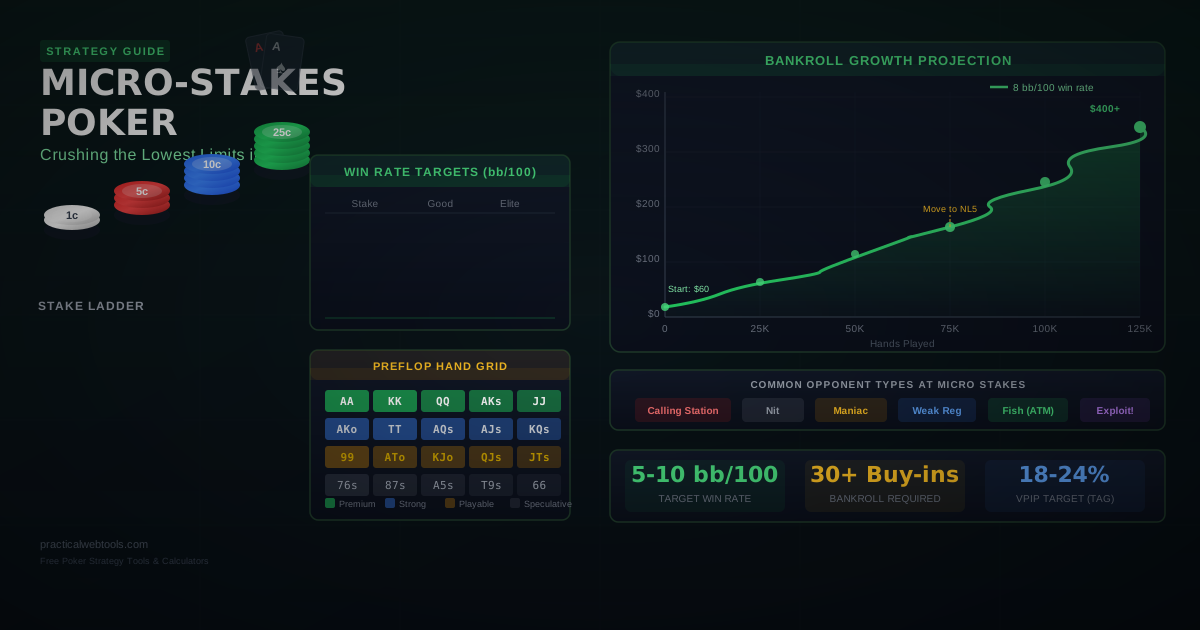
Beating Microstakes ($0.01/$0.02 to $0.10/$0.25)
Microstakes online poker is the training ground for every aspiring player. The competition is weak, the mistakes are frequent, and the edge available is enormous. Here is exactly how to beat these games.
The Core Microstakes Strategy
1. Play Tight-Aggressive Preflop
At microstakes, your opponents make massive preflop errors (calling with trash, never 3-betting). Exploit this by playing a tight range of strong hands and raising aggressively.
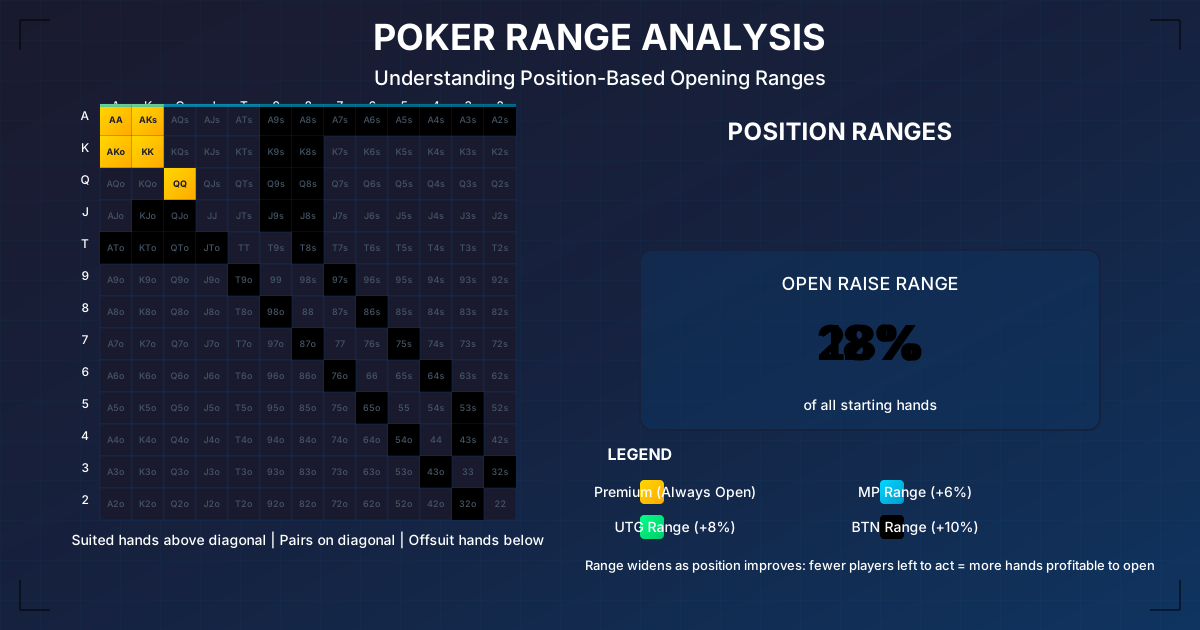
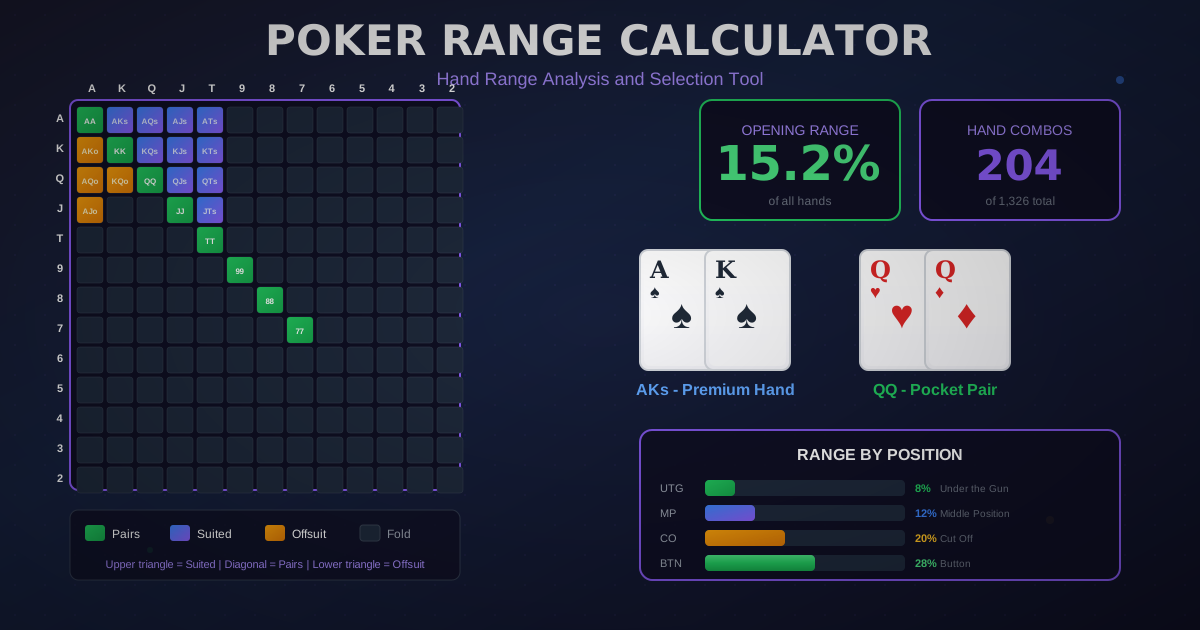
Recommended Opening Ranges (6-Max):
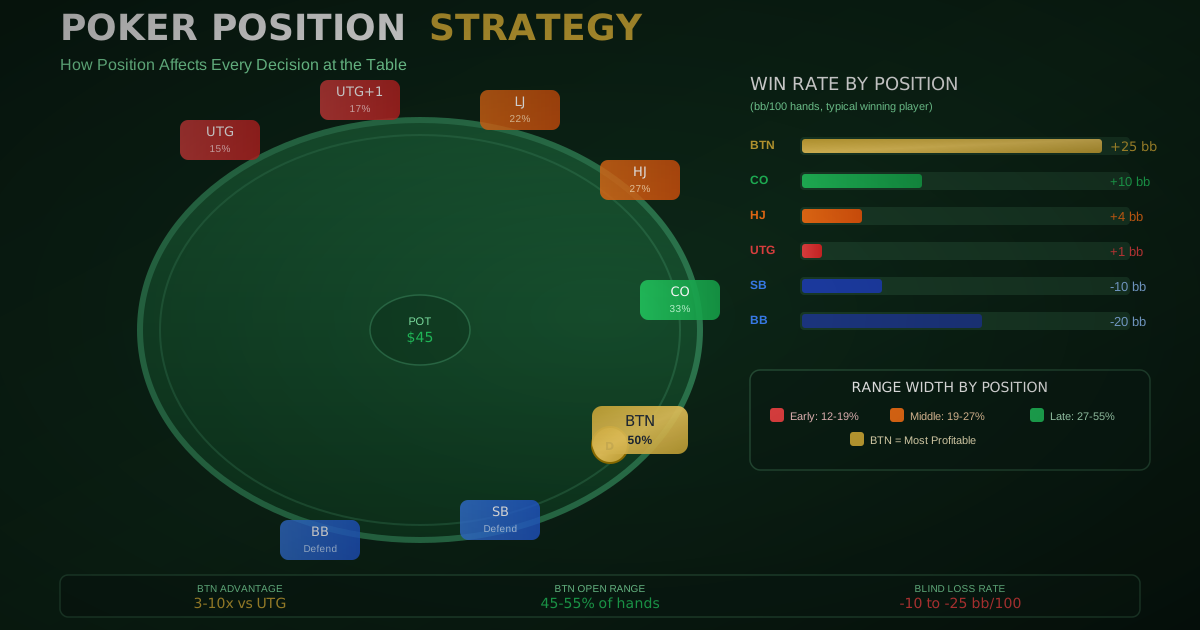
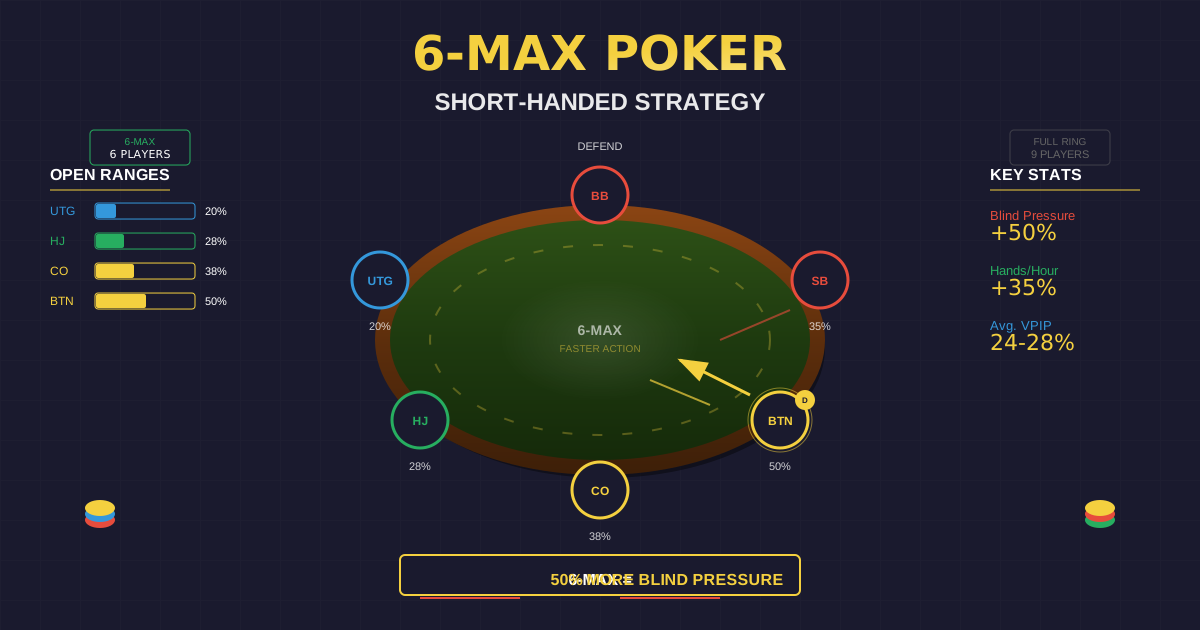
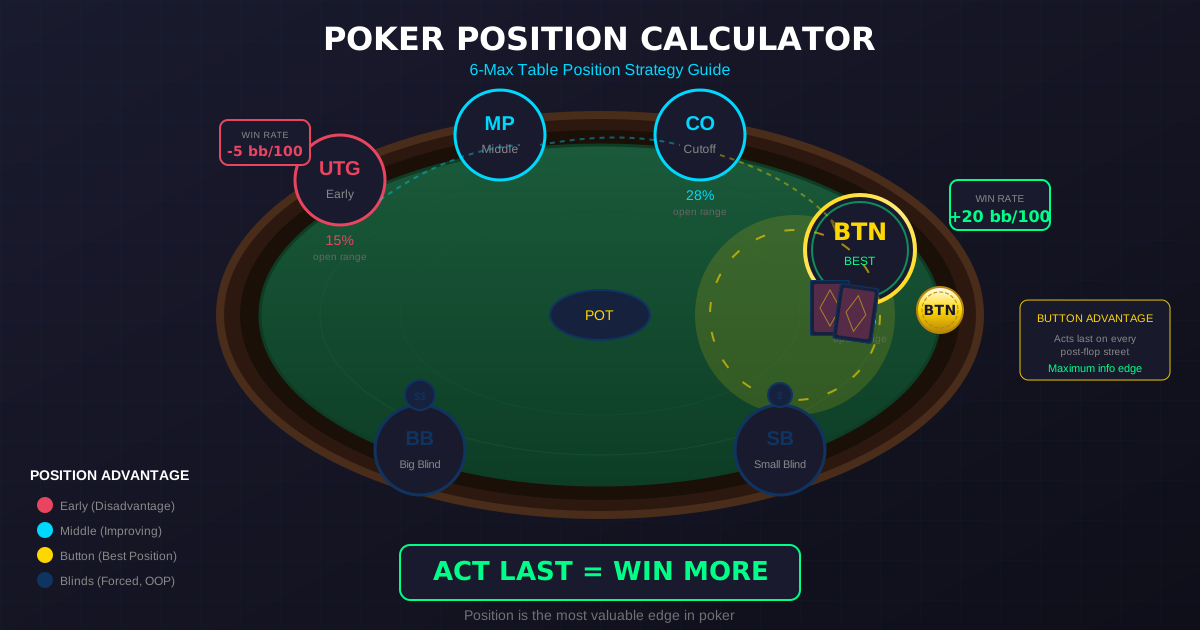
- UTG: 77+, ATs+, AJo+, KQs (approximately 12% of hands)
- MP: 66+, A9s+, ATo+, KJs+, KQo, QJs (approximately 16% of hands)
- CO: 55+, A5s+, A8o+, KTs+, KJo+, QTs+, QJo, JTs (approximately 22% of hands)
- BTN: 22+, A2s+, A5o+, K8s+, KTo+, Q9s+, QTo+, J9s+, JTo, T9s, 98s (approximately 35% of hands)
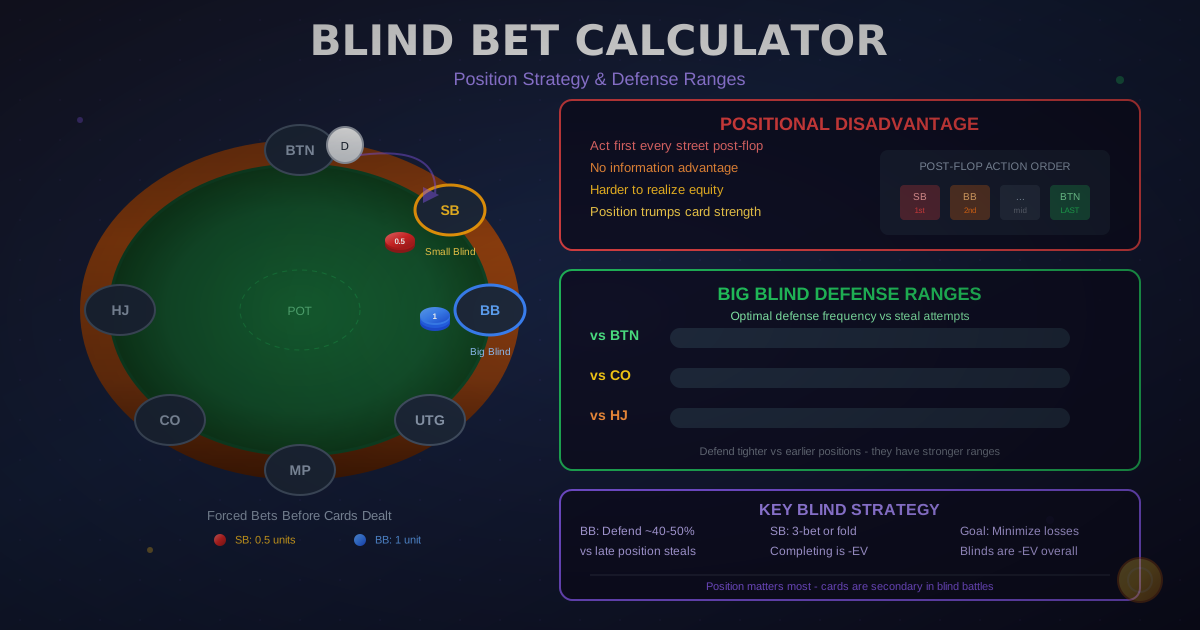
- SB: 22+, A2s+, A7o+, K9s+, KTo+, QTs+, QJo, JTs, T9s (approximately 28% of hands)
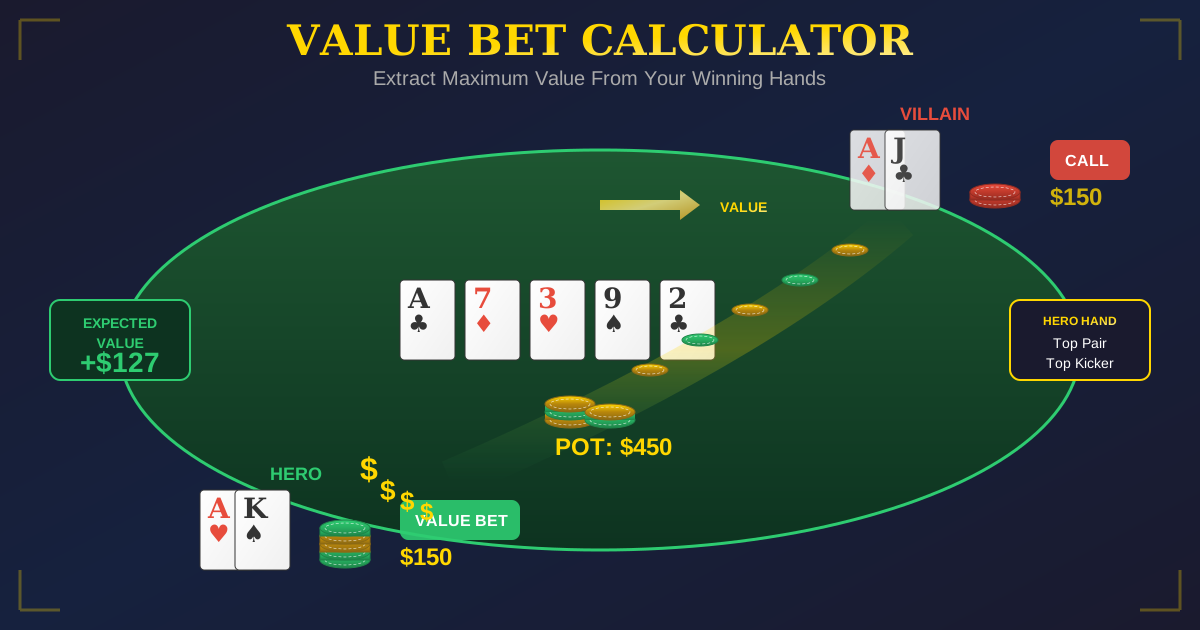
2. Value Bet Relentlessly
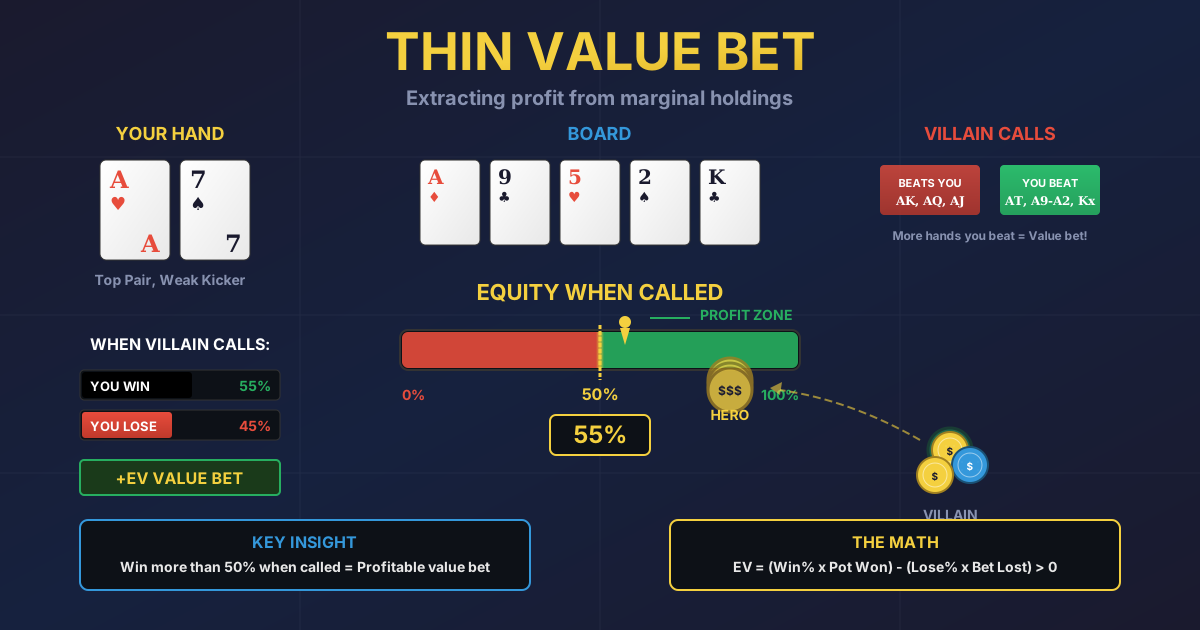
Microstakes players call too much. Do not bluff excessively. Instead, bet your strong hands on all three streets for maximum value. A player who calls too much is giving you money every time you bet with a strong hand.
Example: You have A-K on a K-7-3 rainbow board. At higher stakes, you might check some of the time for balance. At microstakes, bet every time—your opponents will call with K-5, Q-7, pocket fives, and all manner of inferior hands.
3. Do Not Bluff Calling Stations
The biggest leak in microstakes players is calling too frequently. Bluffing against someone who calls with any pair or any draw is lighting money on fire. Save your bluffs for opponents who can fold.
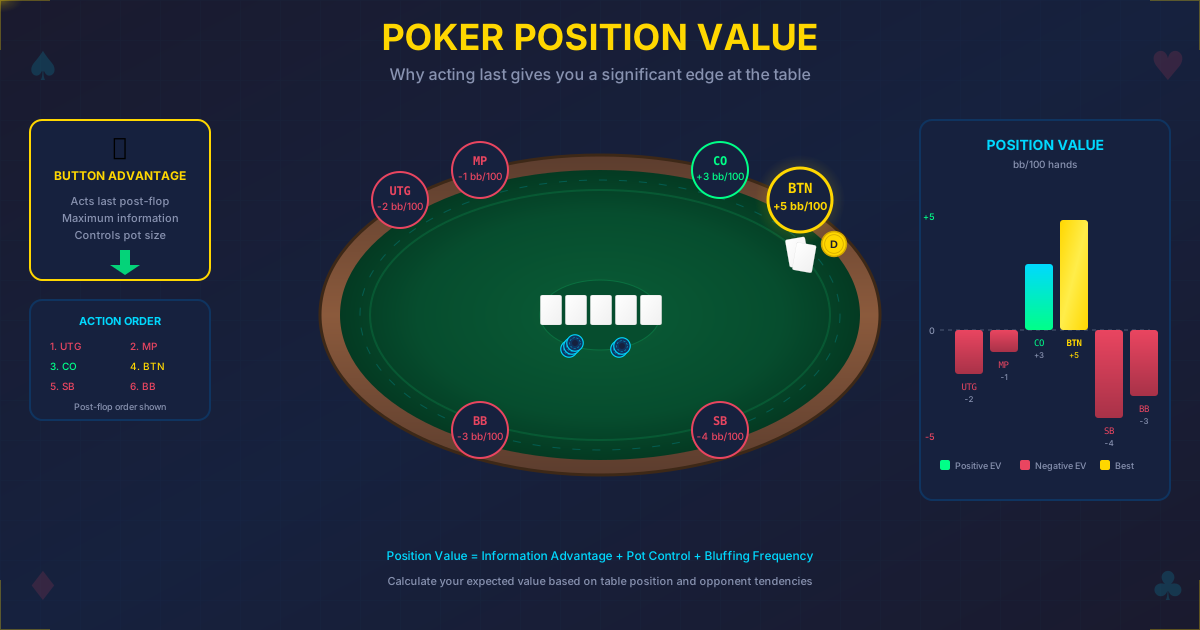
4. Position Is Everything
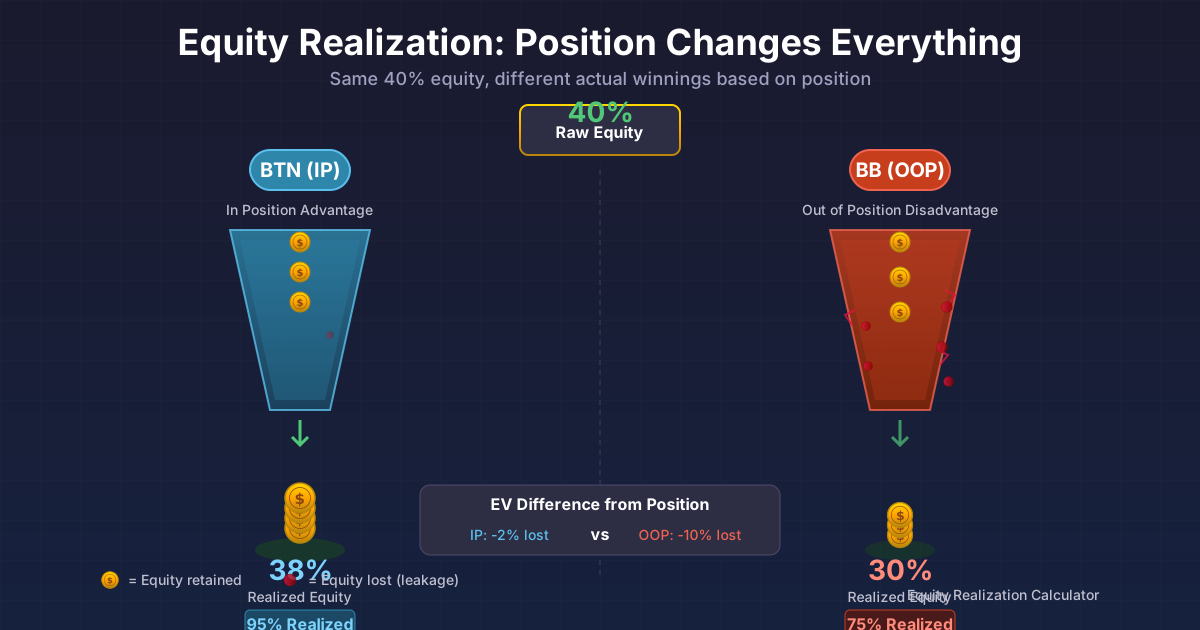
Playing in position gives you information and control. At microstakes, the value of position is amplified because opponents make larger mistakes when out of position and do not adjust.
Analyze your positional winrates with our Poker Session Tracker.
Common Microstakes Player Types
| Player Type | VPIP/PFR | Strategy Against |
|---|---|---|
| Calling Station | 45/8 | Value bet thin, never bluff |
| Passive Fish | 35/5 | Isolate with raises, value bet relentlessly |
| Nit | 10/8 | Steal their blinds constantly, fold to their raises |
| Aggro Fish | 40/30 | Call down with medium-strength hands, let them bluff |
| Competent Regular | 22/18 | Avoid, play standard TAG |
Beating Low-Stakes ($0.25/$0.50 to $1/$2)
At low-stakes, the player pool becomes significantly tougher. You will encounter more regulars who understand basic strategy, use HUDs, and study their game. Beating these games requires refinement.
Key Adjustments for Low-Stakes
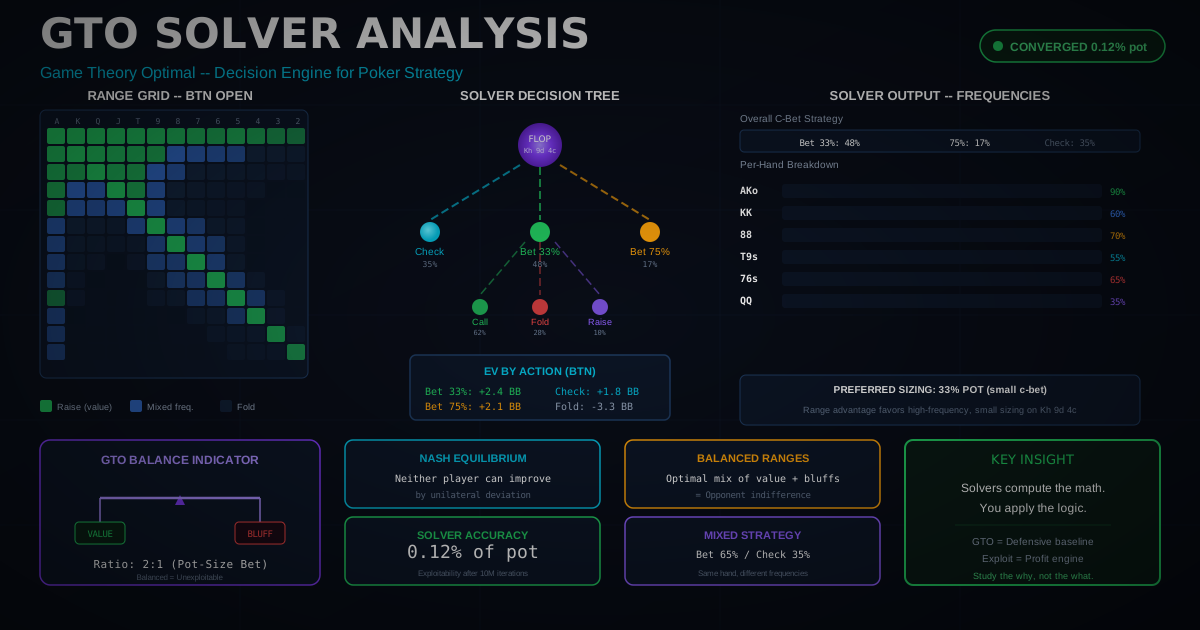
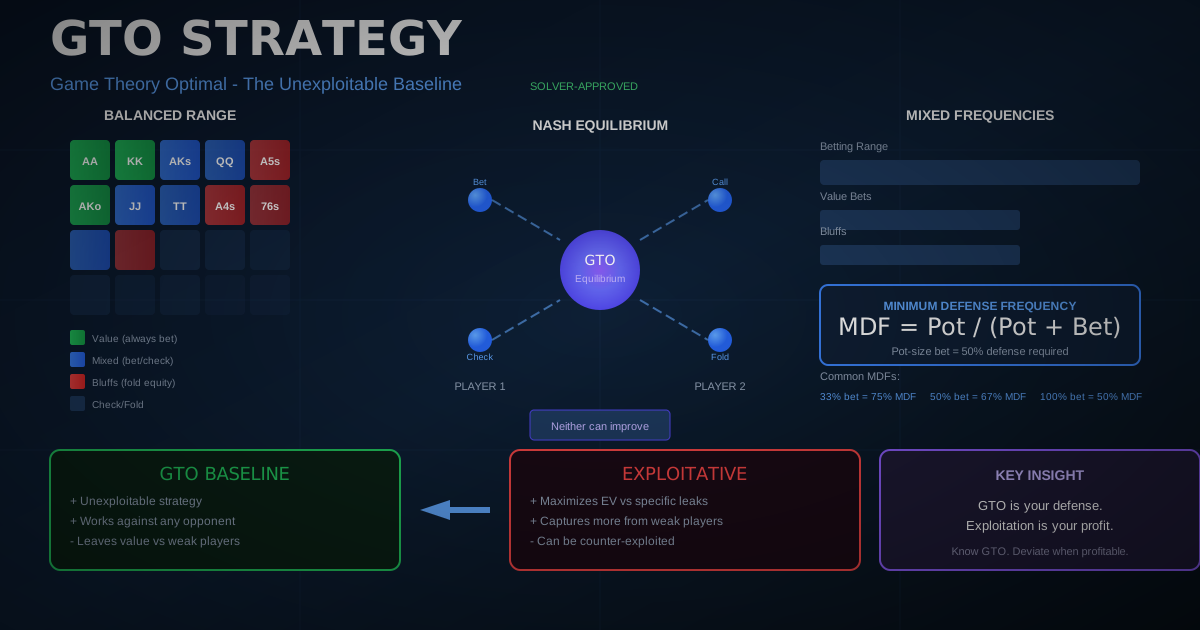
1. Understand and Apply GTO Concepts
At low-stakes, purely exploitative play is not enough because opponents will adjust. You need a balanced baseline strategy that incorporates:
- Balanced check-back frequencies
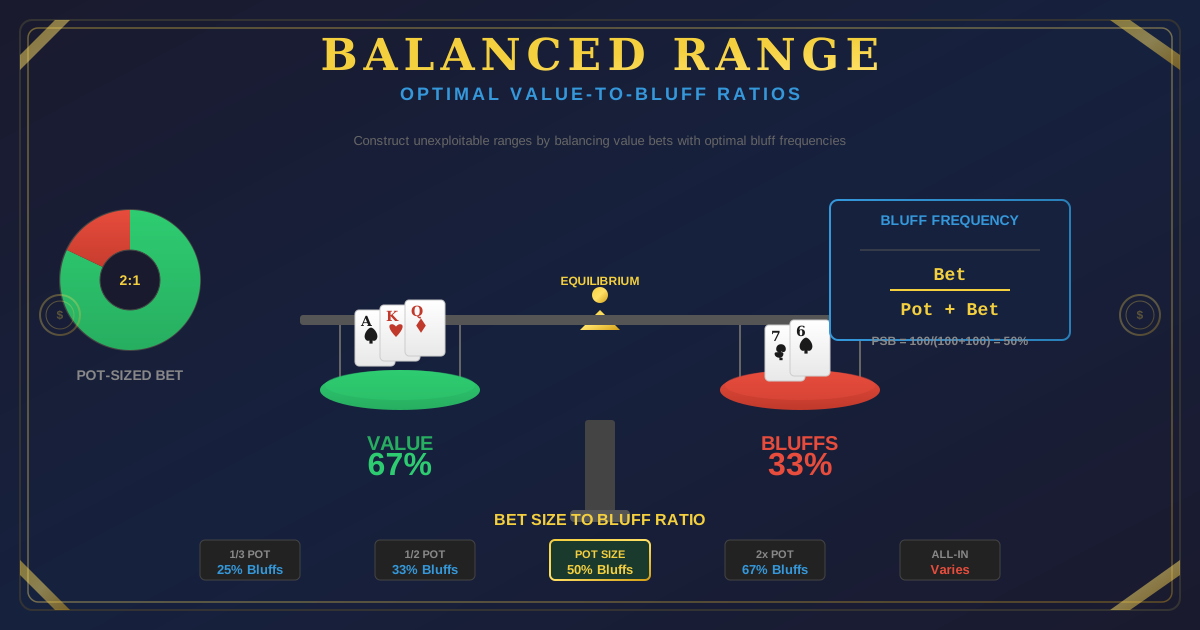
- Appropriate bluff-to-value ratios on each street
- Mixed strategies in marginal spots
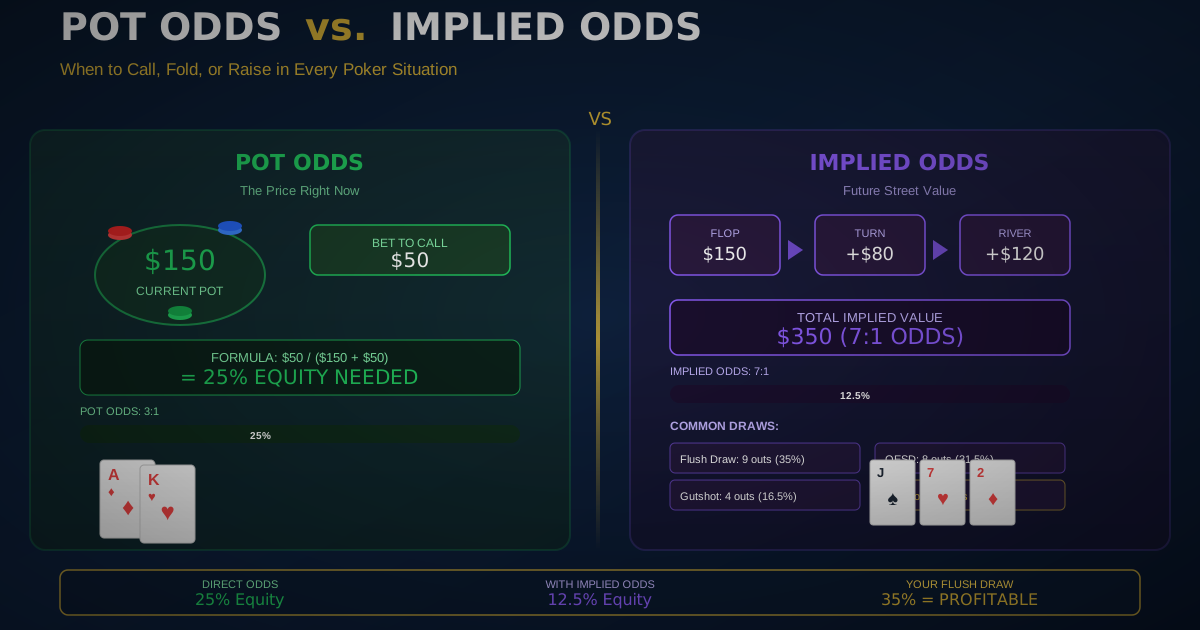
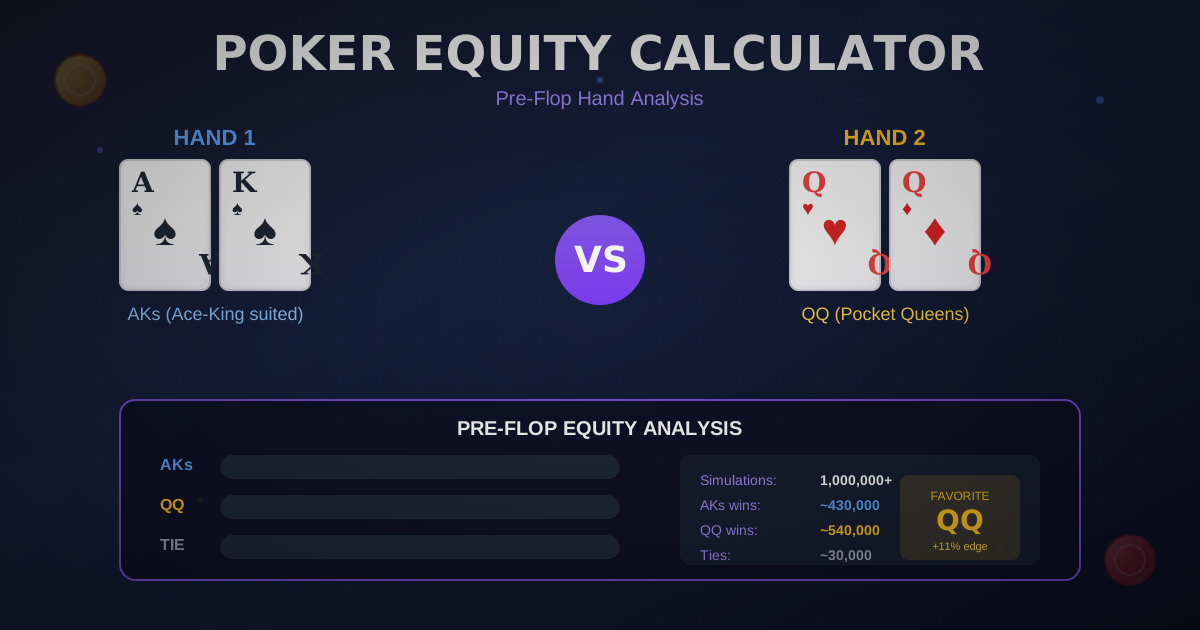
Use our Poker Equity Calculator to analyze your hand equity against different opponent ranges.
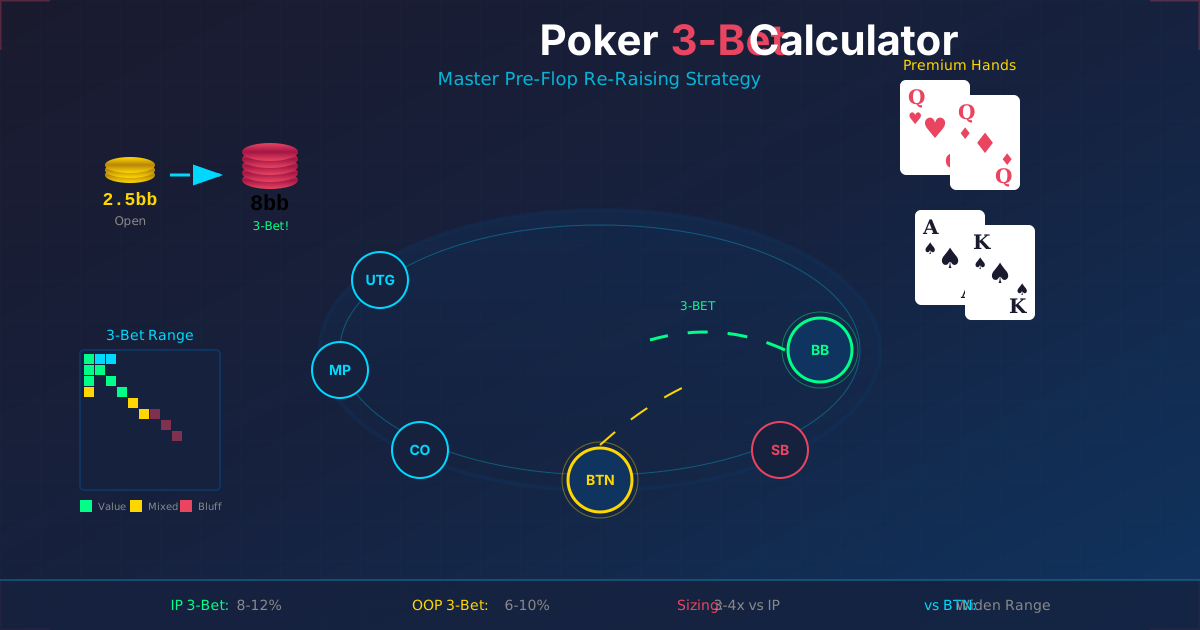
2. Expand Your 3-Bet Range
Low-stakes regulars open too wide and fold to 3-bets too often. Add light 3-bets with hands like A5s, 76s, and KQo to exploit this tendency.
Profitable 3-bet spots:
- 3-bet the cutoff open from the button with a merged range
- 3-bet aggressive blinds stealers from the big blind
- 3-bet wide vs. players who fold >65% to 3-bets
3. Master Post-Flop Aggression
Continuation betting at low-stakes requires more nuance than at microstakes:
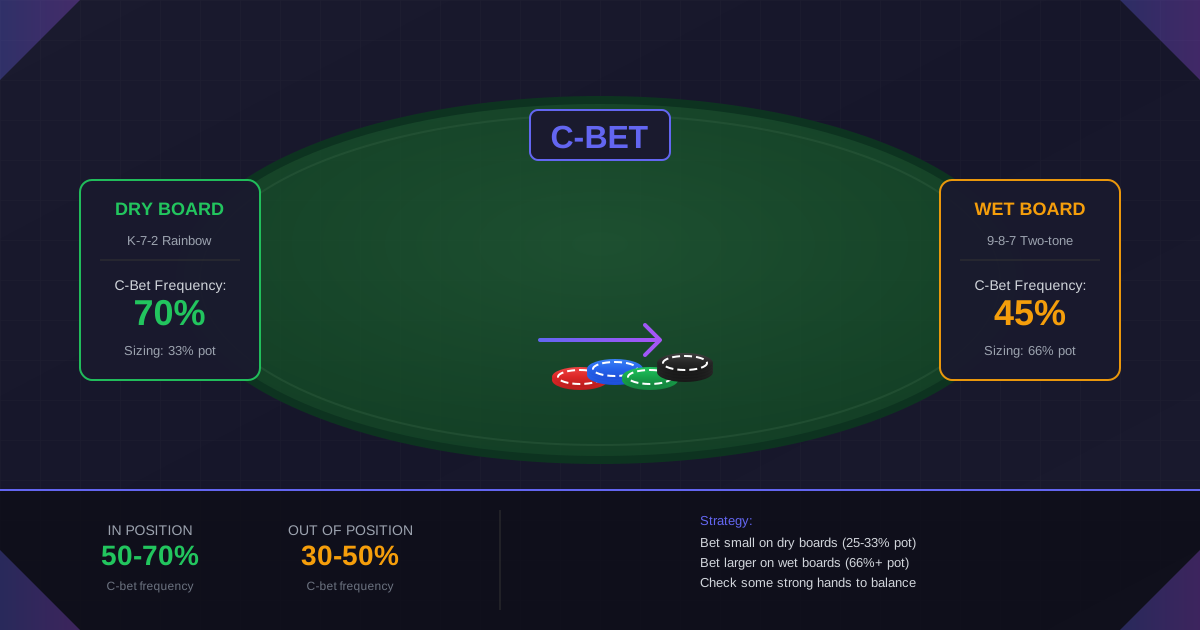
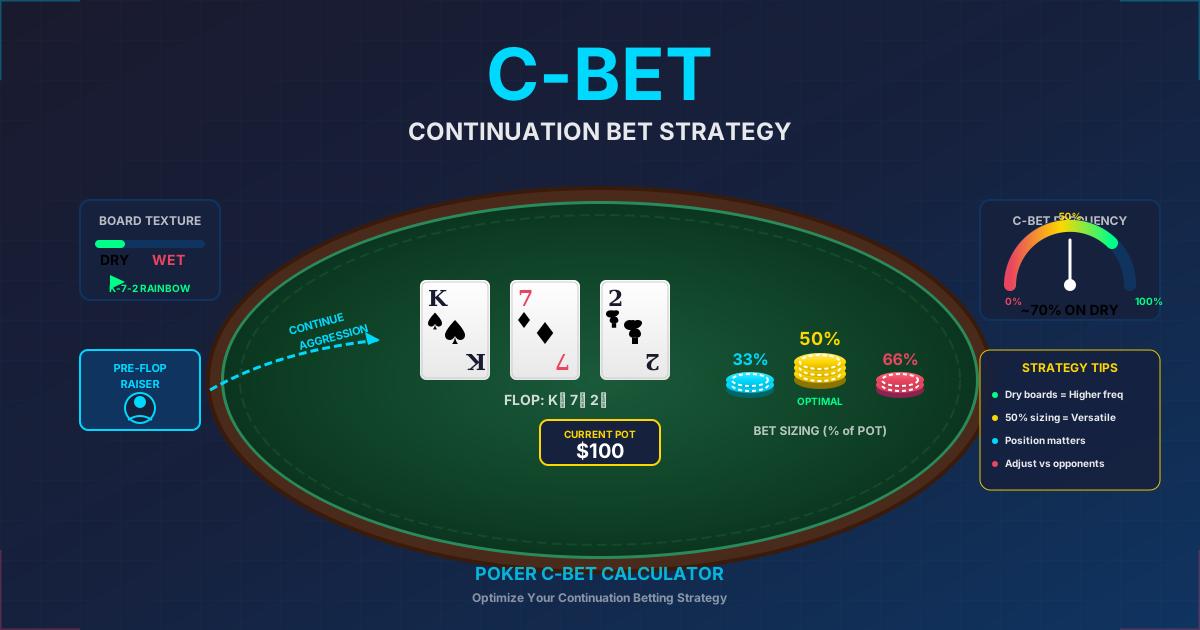
- Dry boards (K-7-2 rainbow): C-bet 60-70% of range
- Wet boards (J-T-8 two-tone): C-bet selectively with equity and strong hands
- Paired boards (Q-Q-5): C-bet most of range (opponents rarely have trips)
4. Exploit Population Tendencies
Low-stakes populations have specific leaks:
- Fold too much to river raises (bluff rivers more)
- Call too much on the flop (value bet thinner on flop)
- Do not 3-bet enough (open wider, especially from late position)
- Overvalue top pair (value bet two pair+ heavily)
Moving Through the Stakes
The progression from microstakes to low-stakes should be systematic:
| Milestone | Action | Bankroll Required |
|---|---|---|
| Consistent NL10 winner | Review fundamentals, move to NL25 | $750+ (30 buy-ins) |
| 5bb/100+ at NL25 over 50K hands | Study advanced concepts, shot-take NL50 | $1,500+ (30 buy-ins) |
| Breakeven or better at NL50 | Refine strategy, plug leaks, try NL100 | $3,000+ (30 buy-ins) |
| Winning at NL100 | Serious study regime, consider coaching | $6,000+ (30 buy-ins) |
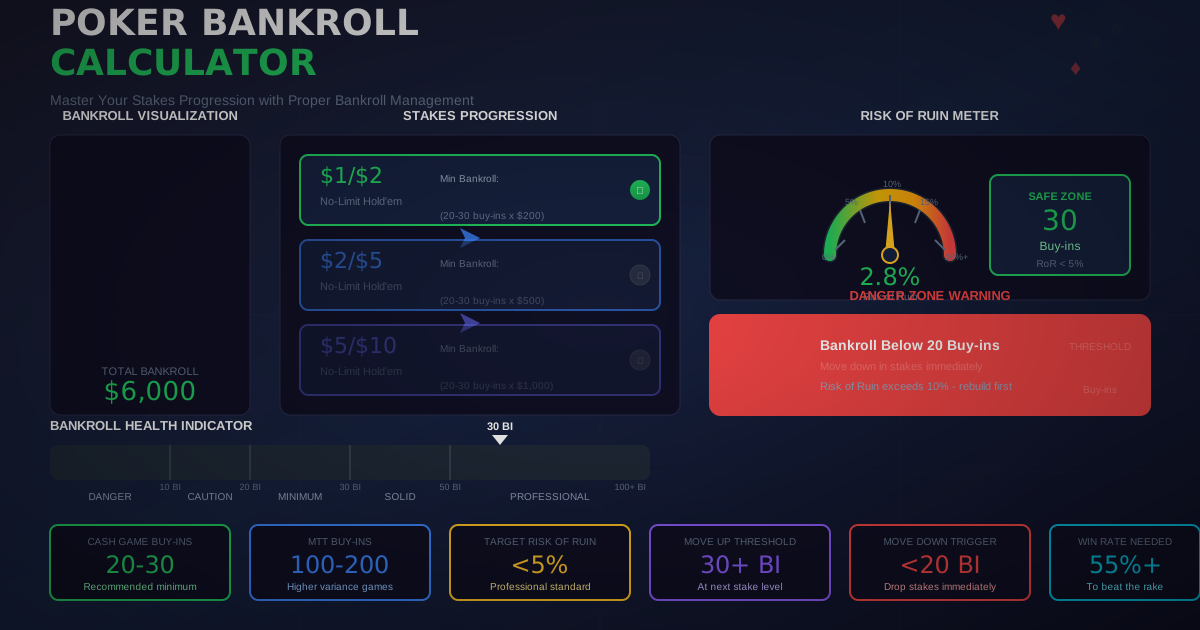
Calculate your exact bankroll requirements for moving up with our Poker Bankroll Requirements Calculator.
Beating Mid-Stakes ($2.50/$5 to $5/$10)
Mid-stakes is where online poker becomes a genuine profession. The competition is strong, the edges are thin, and the mental game becomes critical. Most mid-stakes winners earn $50,000-$200,000+ annually.
What Separates Mid-Stakes Winners
1. Solver-Informed Play
Mid-stakes regulars study solver outputs and implement mixed strategies. You must understand:
- GTO bet sizing (multiple sizes, overbets)
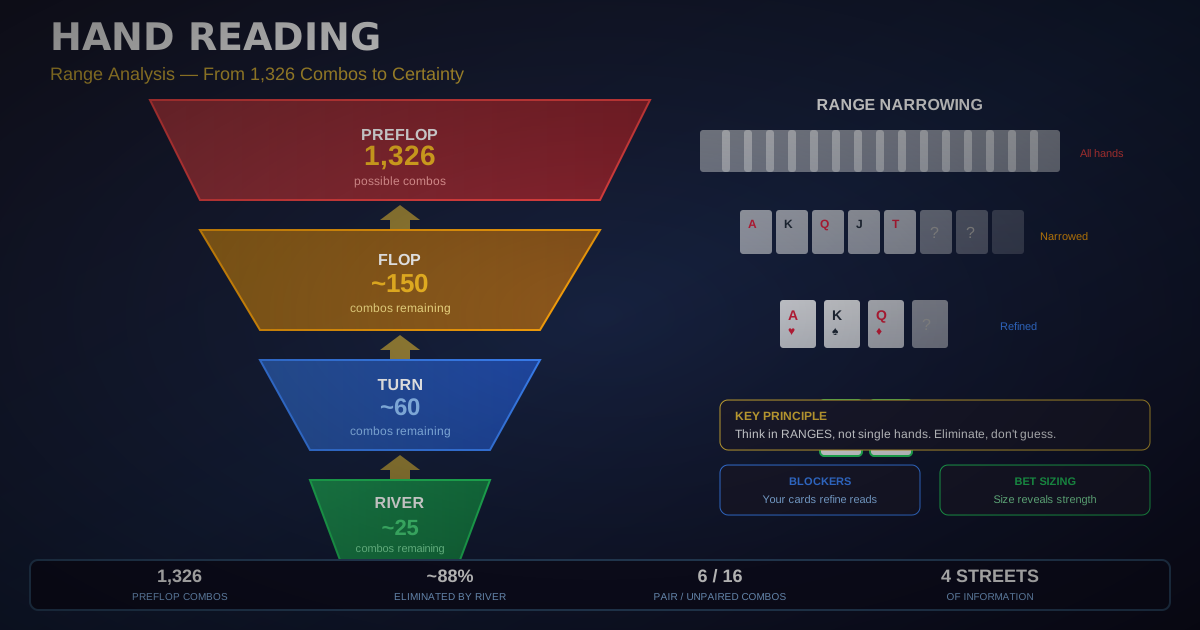
- Range-based play (not hand-based)
- Frequency-based decisions (bet X hand 60% of the time)
2. Opponent-Specific Reads
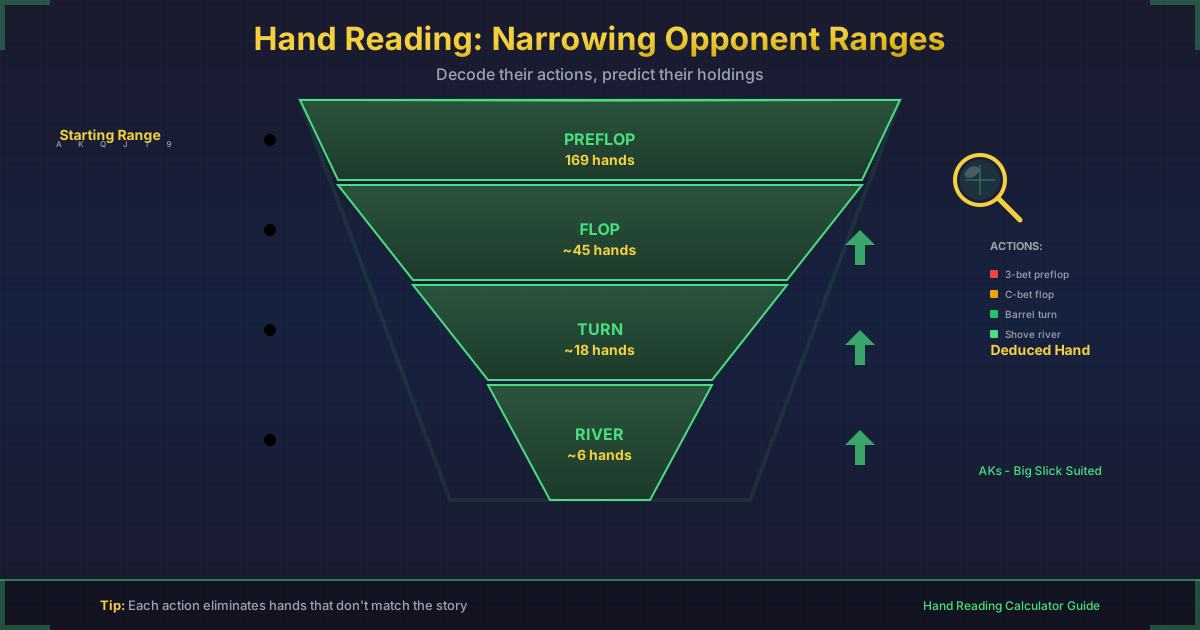
At mid-stakes, you play against the same regulars frequently. Building detailed notes and HUD profiles on each opponent is essential:
- How do they respond to overbets?
- Do they over-fold rivers?
- What is their 4-bet range?
- How do they play multi-way pots?
3. Mental Game Excellence
Mid-stakes variance creates significant emotional pressure. A 15 buy-in downswing at NL500 means losing $7,500. Without mental game skills, this leads to tilt and further losses.
Use our Poker Downswing Probability Calculator to understand that downswings are mathematically inevitable and plan accordingly.
4. Volume Optimization
Mid-stakes players must balance quality (win rate) and volume (hands played). The optimal approach:
- Play 4-6 tables for maximum per-table win rate
- Increase to 8-10 tables when the player pool is soft
- Drop to 2-3 tables when studying or facing tough lineups
Mid-Stakes Hourly Rate Calculation
Example: NL500 6-Max, 4 Tables
- Win rate: 2.5 bb/100 ($12.50/100 hands)
- Hands per hour per table: 75
- Total hands per hour: 300
- Hourly win rate: 300/100 x $12.50 = $37.50/hour
- Monthly (160 hours): $6,000/month from table winnings
- Rakeback (estimated $3,000/month in rake at 25%): $750/month
- Total monthly: $6,750/month
Calculate your own hourly rate based on your stats with our Poker Hourly Rate Calculator.
Using HUDs and Tracking Software
Heads-Up Displays (HUDs) are essential tools for online poker that overlay real-time statistics on your opponents.
Essential HUD Statistics
| Statistic | Abbreviation | What It Tells You | Ideal Value (Good Player) |
|---|---|---|---|
| Voluntarily Put Money In Pot | VPIP | How many hands they play | 22-28% (6-max) |
| Preflop Raise | PFR | How often they raise preflop | 18-24% (6-max) |
| 3-Bet Percentage | 3Bet | How often they re-raise preflop | 7-10% |
| Fold to 3-Bet | F3B | How often they fold to re-raises | 55-65% |
| C-Bet Flop | CBF | Flop continuation bet frequency | 55-70% |
| Fold to C-Bet | FtCB | How often they fold to c-bets | 40-55% |
| Went to Showdown | WTSD | How often they go to showdown | 24-30% |
| Won at Showdown | W$SD | Showdown win percentage | 50-55% |
Reading HUD Stats for Exploitation
High VPIP / Low PFR (35/8): This player is a calling station. Value bet mercilessly, do not bluff. They play too many hands passively and will call down with marginal holdings.
Low VPIP / High PFR (16/14): This is a tight-aggressive nit. Respect their raises—they have a strong range. Steal their blinds relentlessly and fold to their aggression.
High VPIP / High PFR (30/26): This is an aggressive recreational player or a LAG regular. If recreational, call down and let them hang themselves. If a skilled LAG, tighten up and play position.
Very High Fold to 3-Bet (>70%): This player is printing money for you by folding too much to 3-bets. 3-bet them relentlessly from position with a wide range.
Very Low Fold to C-Bet (<30%): Do not c-bet this player as a bluff. Only bet for value and check back marginal hands. They will call with almost anything.
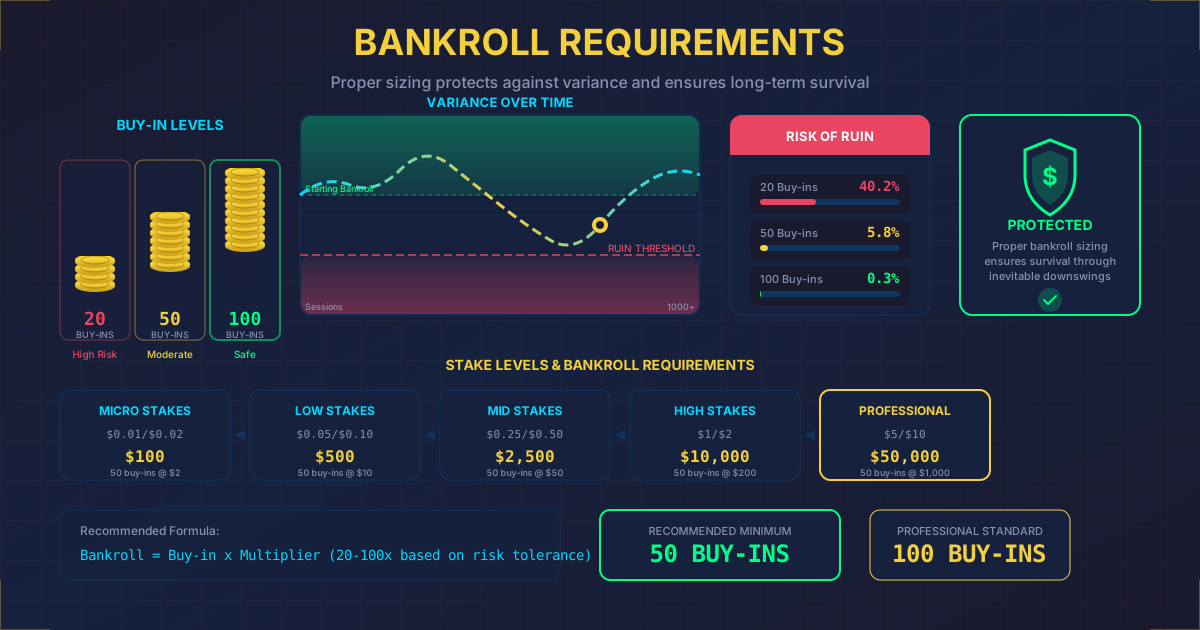
Bankroll Management for Online Poker
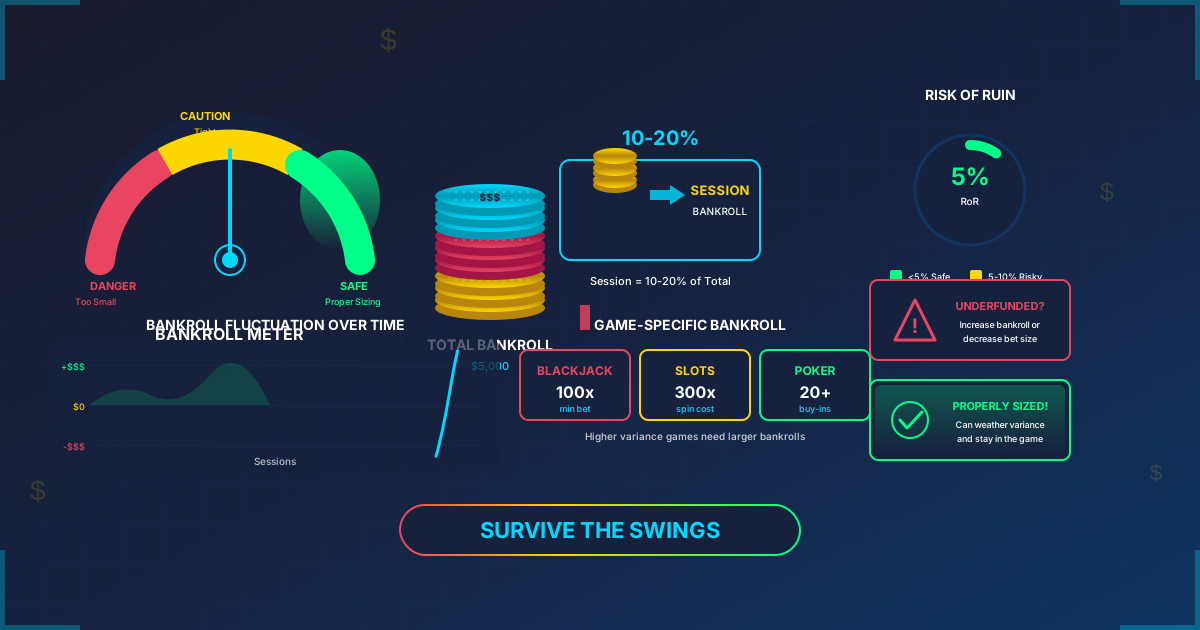
Online poker bankroll management differs from live poker due to higher volume, lower variance per session, and easier stake selection.
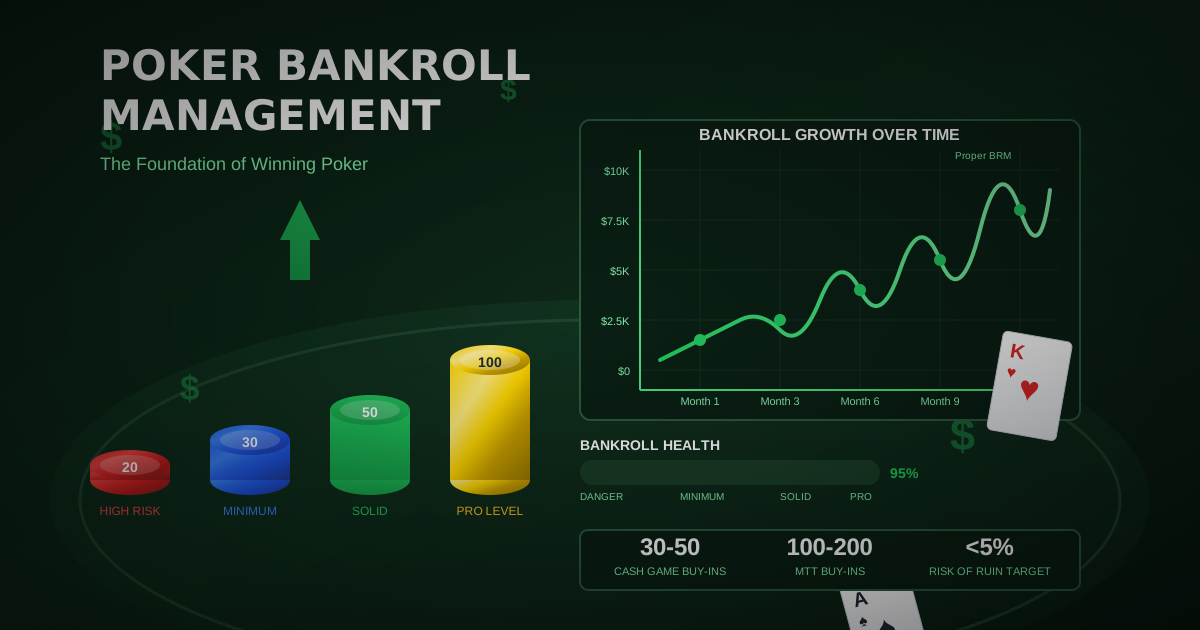
Online Bankroll Requirements
| Format | Minimum Buy-Ins | Recommended Buy-Ins |
|---|---|---|
| Cash Games (6-Max) | 25 | 40-50 |
| Cash Games (Full Ring) | 20 | 30-40 |
| Regular MTTs | 80 | 150-200 |
| Sit & Go | 40 | 60-80 |
| Zoom/Fast-Fold | 30 | 50-60 |
Why Online Bankrolls Can Be Smaller:
- You can play multiple tables (reducing variance through volume)
- Stakes are available in small increments (easy to move down)
- No travel costs or time commitment to switch stakes
- Faster accumulation of hands for accurate sample sizes
However, online bankrolls face unique risks:
- Site closures or payment processing issues
- Higher rake at lower stakes
- More temptation to move up prematurely (tables are always available)
Calculate your online bankroll requirements with our Poker Bankroll Requirements Calculator.
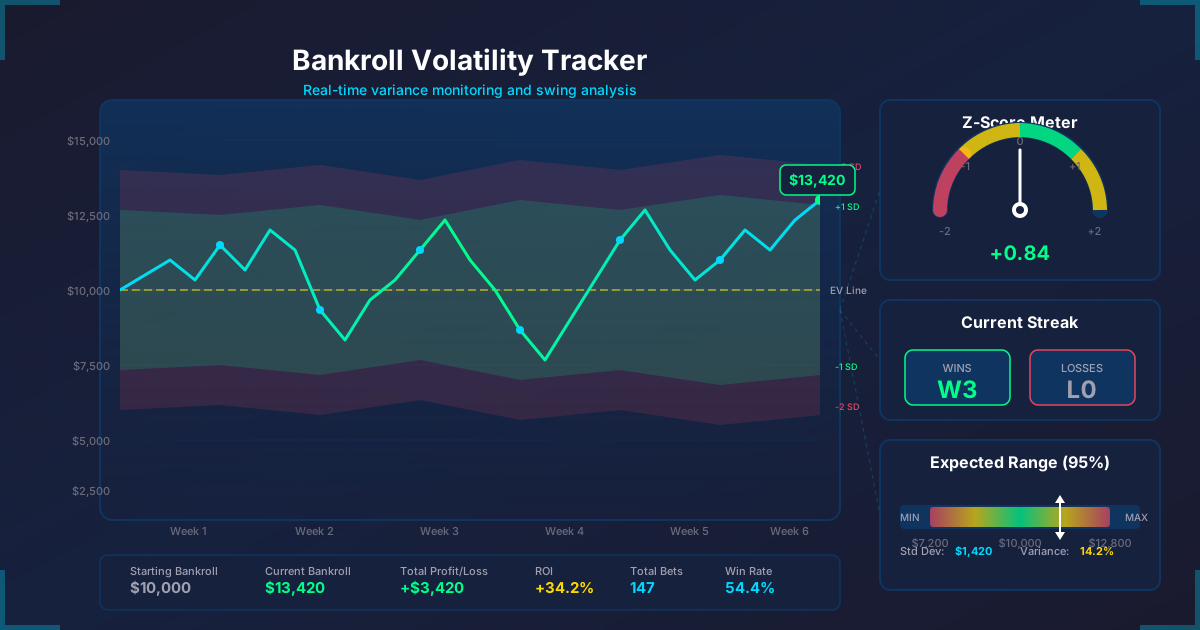
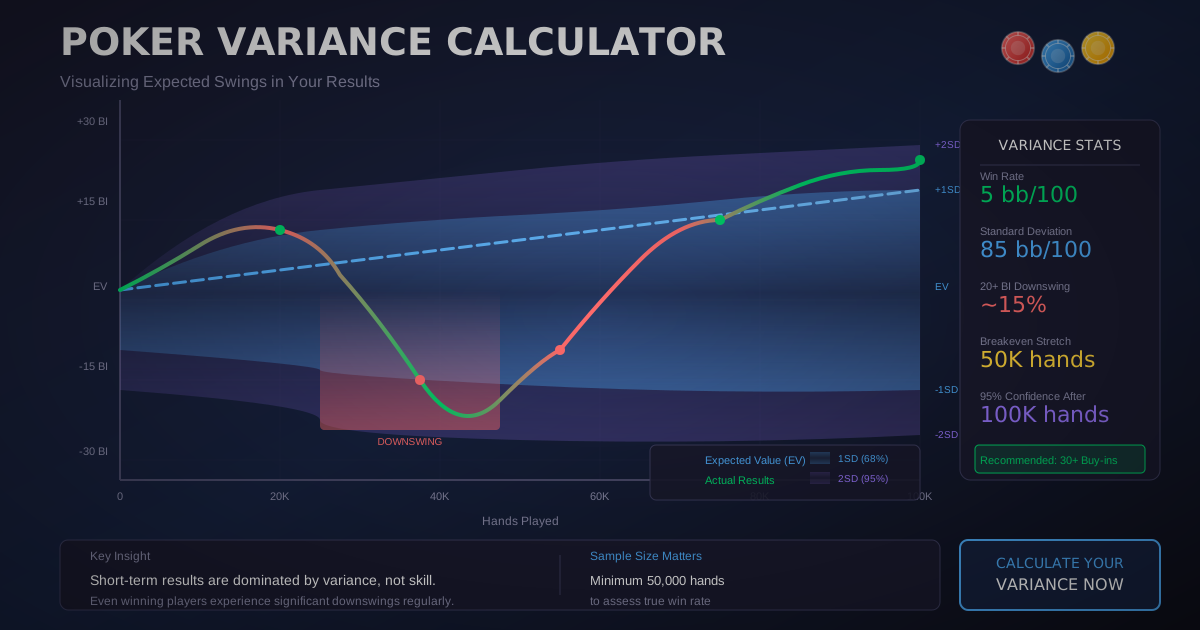
Understanding Variance in Online Poker
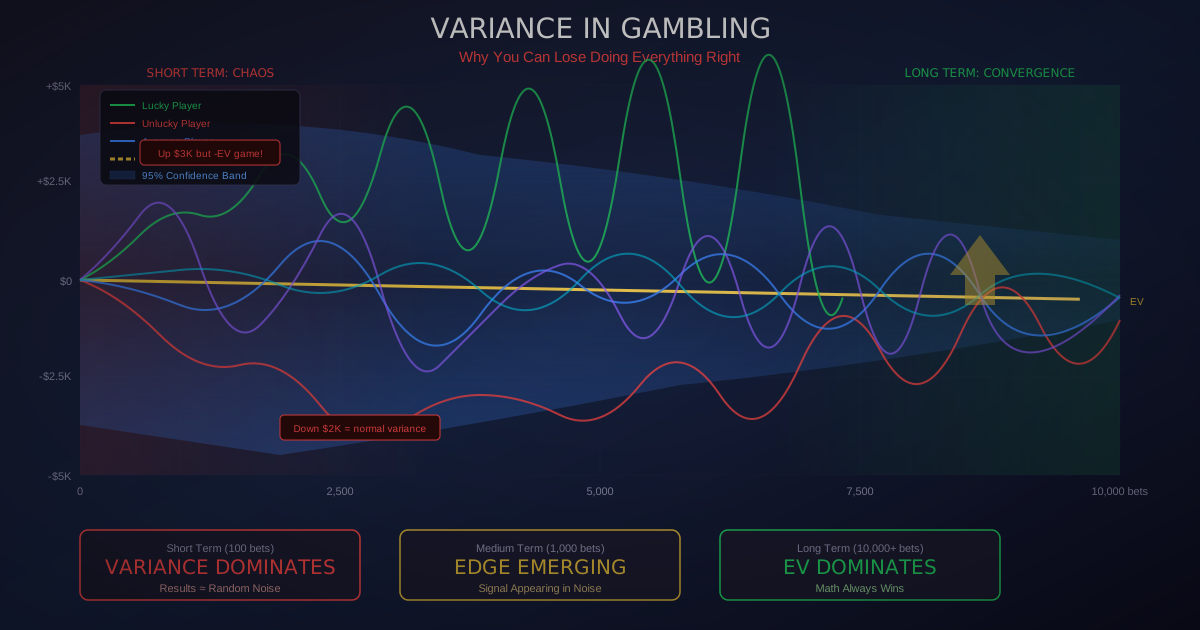
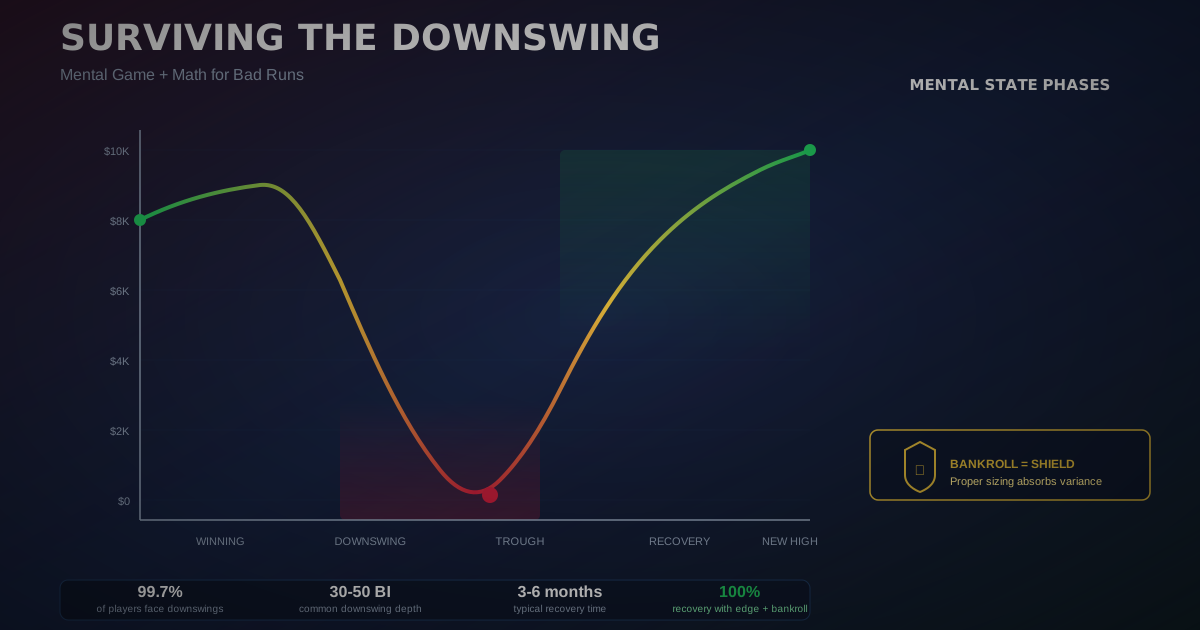
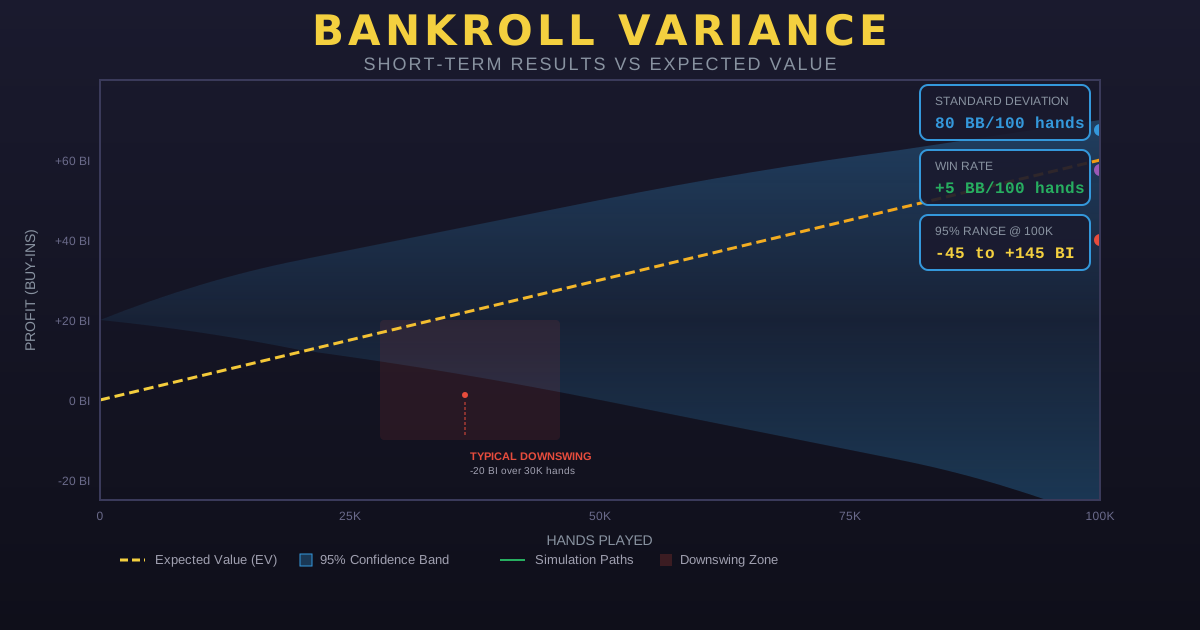
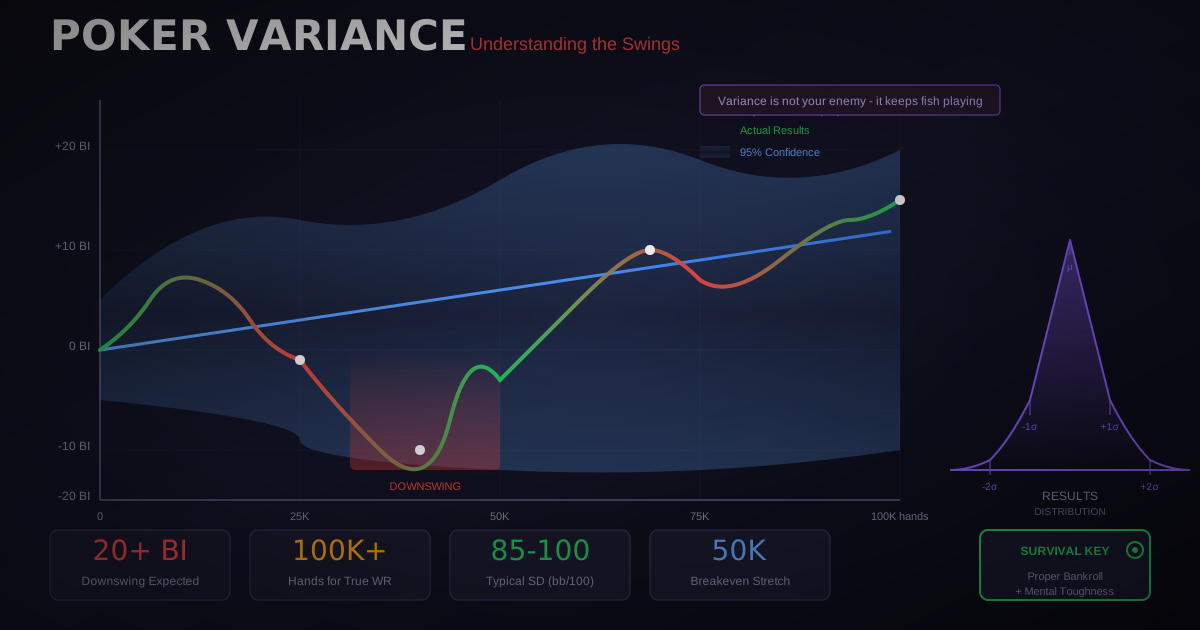
Because you play more hands online, you experience the full spectrum of variance more quickly. A live player might see a 10 buy-in downswing over weeks. Online, that same downswing can happen in a single evening across multiple tables.
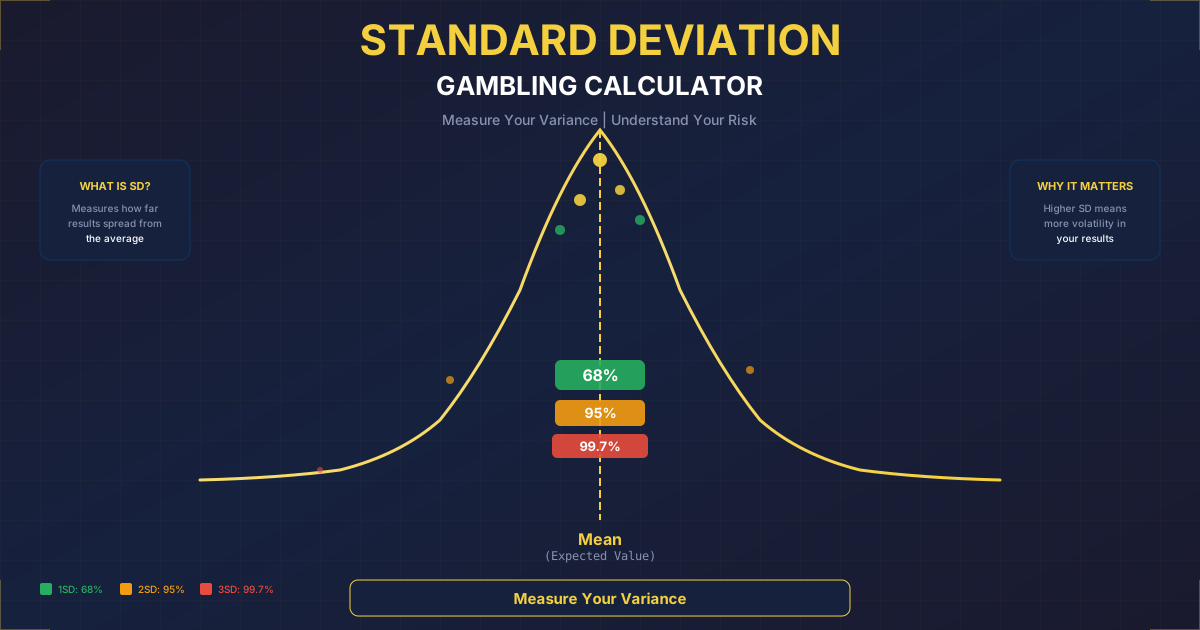
Expected Downswing by Sample Size (5bb/100 winner, 85bb/100 SD):
| Sample Size | Worst Expected Downswing |
|---|---|
| 25,000 hands | 10-15 buy-ins |
| 50,000 hands | 15-20 buy-ins |
| 100,000 hands | 20-30 buy-ins |
| 250,000 hands | 25-40 buy-ins |
| 500,000 hands | 30-50 buy-ins |
Simulate your expected variance with our Poker Variance Calculator.
Evaluating Your Results
Online poker provides the advantage of precise data. Use it to evaluate your game rigorously.
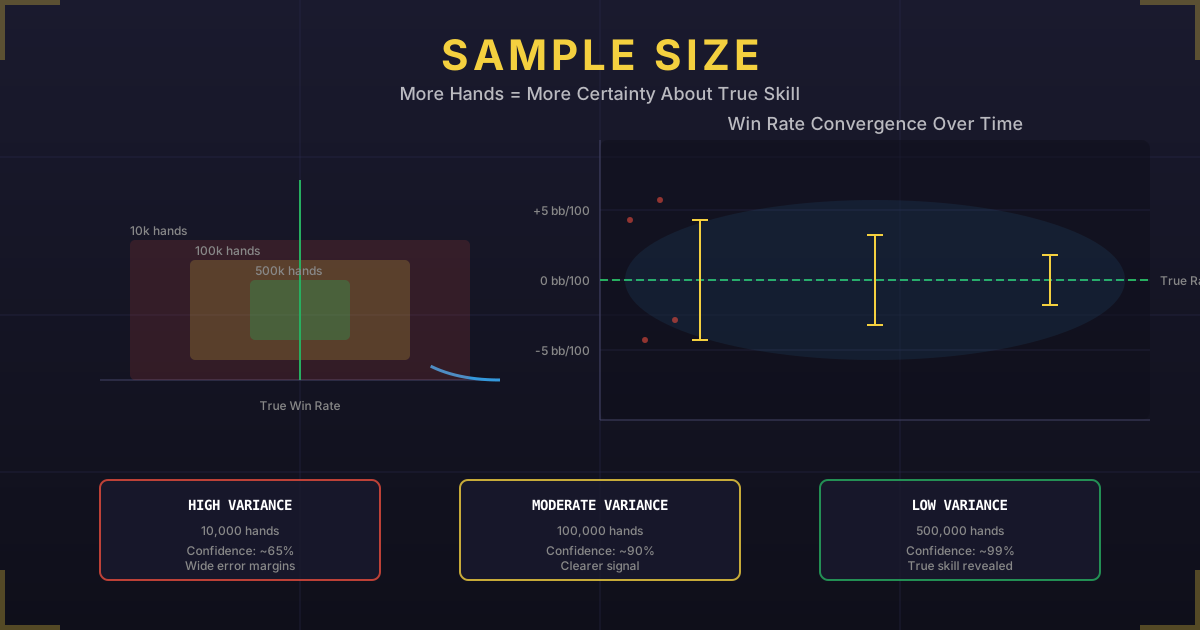
Sample Size Requirements
| Measurement | Minimum Sample for Reliability |
|---|---|
| Win rate (approximate) | 50,000 hands |
| Win rate (confident) | 100,000+ hands |
| Positional stats | 30,000+ hands |
| Opponent-specific reads | 500+ hands against individual |
| Tournament ROI | 500+ tournaments |
Key Performance Metrics
Win Rate (bb/100): Your profit per 100 hands in big blinds. This is the gold standard for cash game performance.
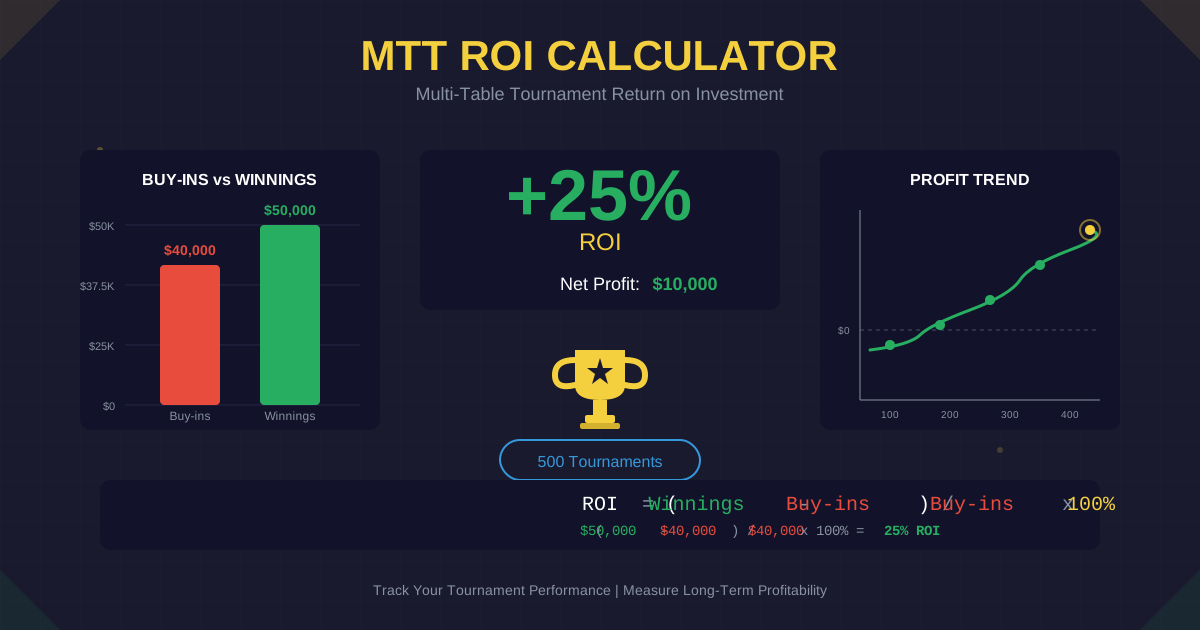
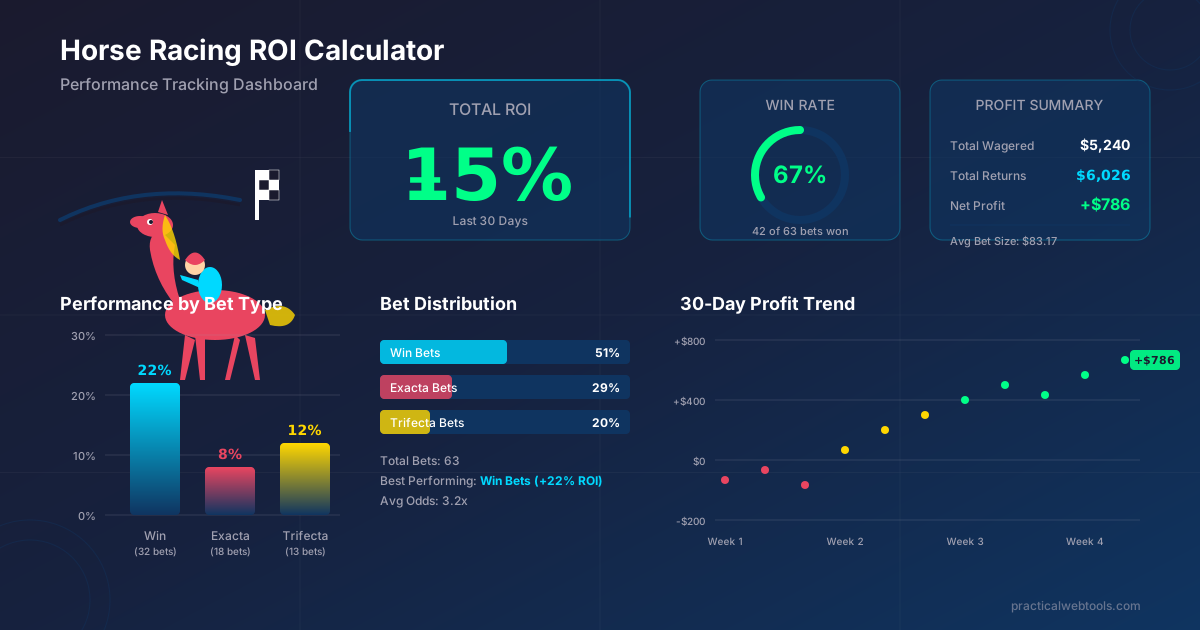
ROI (Return on Investment): For tournaments, ROI measures your percentage return on entry fees. Use our Poker ROI Calculator to track this metric.
Hourly Rate: Your actual earnings per hour of play, accounting for all tables. This is the number that matters for life decisions.
EV-Adjusted Win Rate: Your expected win rate based on all-in EV rather than actual outcomes. This removes short-term luck and shows your "true" performance. Use our Poker All-In EV Calculator to compare actual results to expected.
Understanding Your Risk Profile
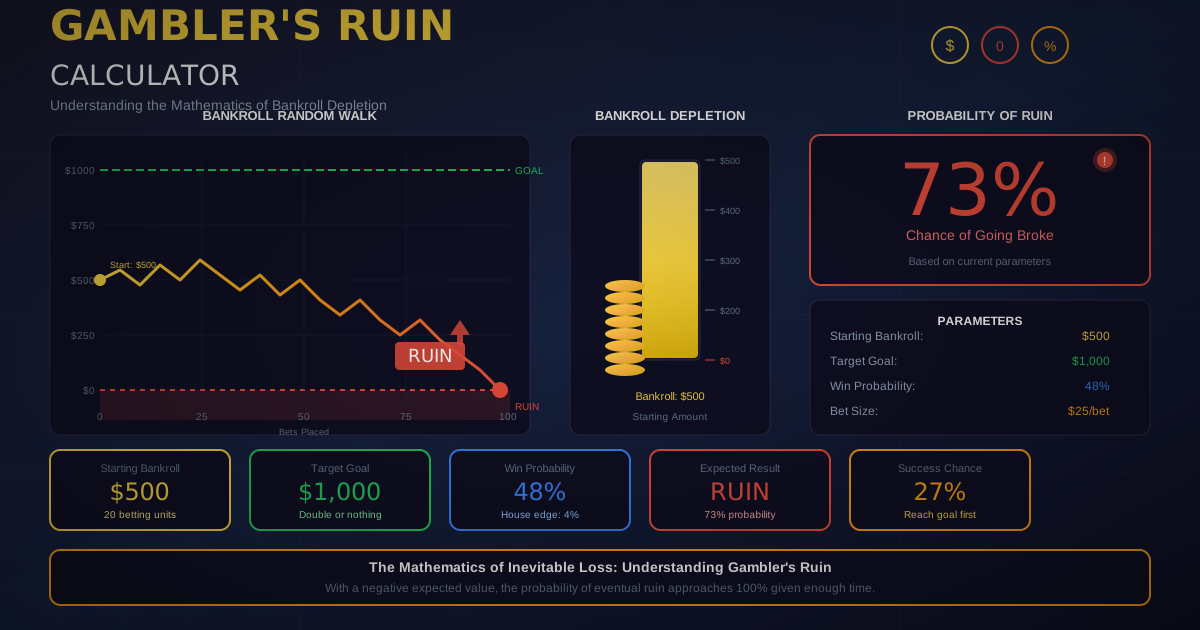
Every online poker player should know their risk of ruin. This depends on your win rate, standard deviation, and bankroll size.
Use our Poker Risk of Ruin Calculator to determine your probability of going broke at your current stakes.
Real-World Online Poker Case Studies
Case Study 1: Microstakes Grinder to NL100
Background: Player starts with $200 bankroll at NL5 in January 2025.
Strategy: Plays 4 tables of NL5 6-Max. Focuses on value betting against calling stations. Studies 1 hour per day using training sites.
Results over 12 months:
- NL5 (Jan-Mar): +$380 in 120K hands (7.6bb/100). Bankroll: $580.
- NL10 (Apr-Jun): +$520 in 100K hands (5.2bb/100). Bankroll: $1,100.
- NL25 (Jul-Sep): +$900 in 80K hands (4.5bb/100). Bankroll: $2,000.
- NL50 (Oct-Dec): +$1,200 in 60K hands (4.0bb/100). Bankroll: $3,200.
- Shot-takes NL100 in January 2026.
Key takeaway: Patience and consistent study compound. This player moved up only when they had 30+ buy-ins for the next level.
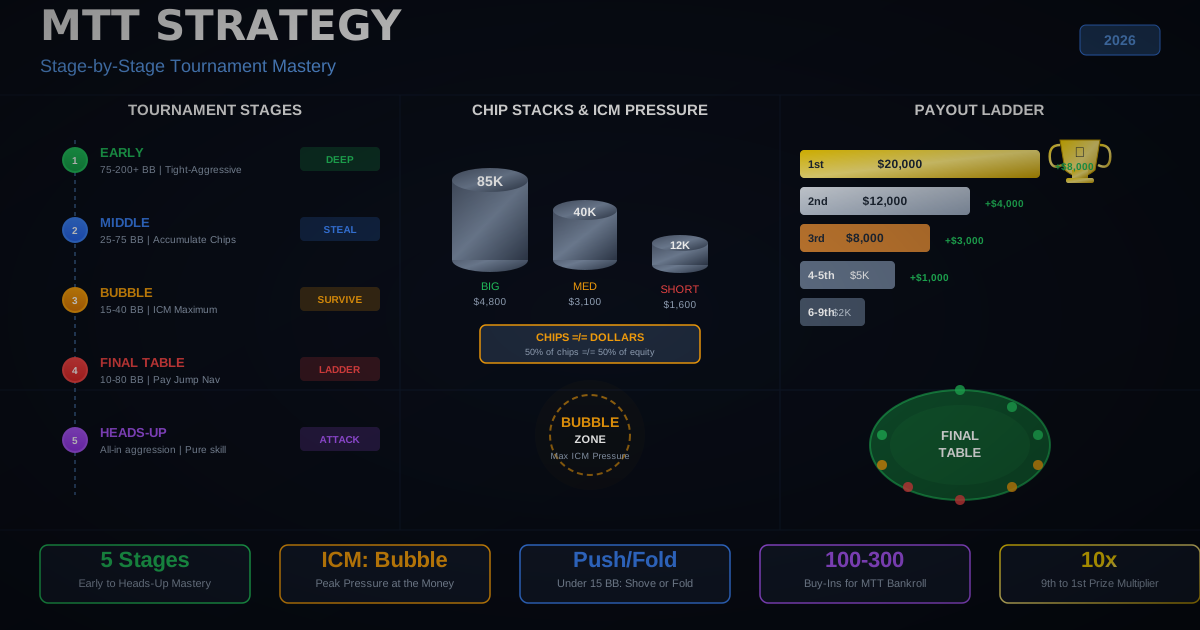
Case Study 2: Tournament Grinder with Rakeback
Background: Player grinds $10-$30 online MTTs with a $3,000 bankroll.
Monthly volume: 400 tournaments averaging $20 buy-in = $8,000 in entries.
Results:
- Tournament winnings: Average 15% ROI = $1,200/month profit
- Rake generated: approximately $800/month
- Rakeback (25%): $200/month
- Total monthly income: $1,400/month
With volume increase to 600 tournaments:
- Tournament winnings: $1,800/month
- Rakeback: $300/month
- Total: $2,100/month
Calculate your tournament ROI and projected earnings with our Poker ROI Calculator.
Case Study 3: The Multi-Table Cash Game Professional
Background: Professional NL200 player running 8 tables, playing 30 hours/week.
Monthly stats:
- Hands per month: 8 tables x 75 hands/hour x 130 hours = 78,000 hands
- Win rate: 2.2 bb/100 = $8.80/100 hands
- Table winnings: $6,864/month
- Rake generated: approximately $4,000/month
- Rakeback (30%): $1,200/month
- Total monthly income: $8,064/month ($96,768/year)
Case Study 4: Weekend Recreational Player
Background: Works full-time, plays 10 hours/week at NL25 on weekends.
Monthly stats:
- Tables: 2 (focused play)
- Hands per month: 6,000
- Win rate: 6 bb/100 (soft weekend games)
- Table winnings: $90/month
- Rakeback: $30/month
- Total: $120/month supplemental income
This player benefits from playing exclusively during peak recreational hours when the games are softest.
Frequently Asked Questions
Is online poker still profitable in 2026? Yes, for players who study, practice game selection, and manage their bankrolls. The games are tougher than 2010, but significant profit opportunities exist, especially at microstakes and low-stakes where recreational players dominate. Rakeback alone can make borderline winners solidly profitable.
How many tables should I play? Start with 2 tables and add 1 more only when you feel completely comfortable. Most players maximize their hourly rate at 4-6 tables. Do not sacrifice significant win rate for marginal volume increases. Track your per-table win rate with our Poker Session Tracker.
How much can I realistically earn playing online poker? At NL50 with 4 tables and a 3bb/100 win rate, expect $15-25/hour including rakeback. At NL200 with 6 tables, $40-80/hour is realistic for strong players. Use our Poker Hourly Rate Calculator for personalized estimates.
Is a HUD necessary to win at online poker? Not at microstakes, where opponents make such large errors that basic observation suffices. From NL50 and above, a HUD provides a significant edge by tracking opponent tendencies across large sample sizes. The information advantage compounds over thousands of hands.
How long does it take to become a winning player? Most dedicated students become consistent winners at microstakes within 3-6 months of serious study (10+ hours/week including play and study). Moving up through the stakes to low/mid-stakes typically takes 1-3 years.
What is the best game type for beginners? Start with 6-Max No-Limit Hold'em cash games. The format teaches essential skills (position, aggression, hand reading) without the ICM complexity of tournaments. Cash games also allow for unlimited buy-ins and flexible session lengths.
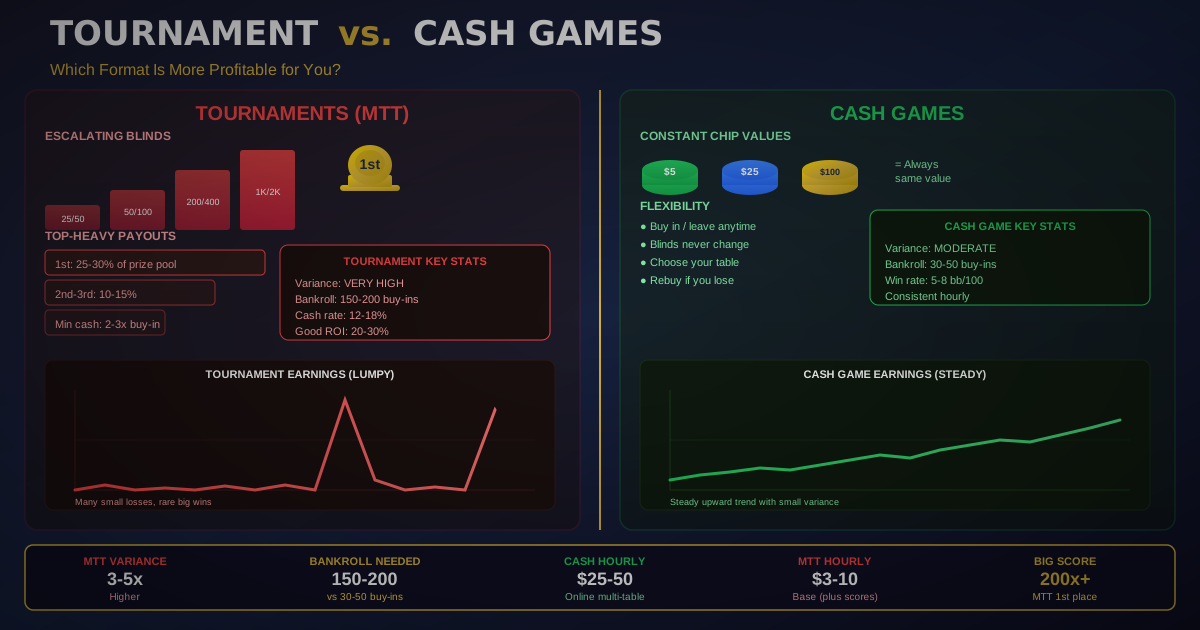
Should I play cash games or tournaments? Cash games offer more consistent income and lower variance, making them better for building a bankroll. Tournaments offer the chance for big scores but with higher variance. Many professionals play both, using cash games as their "salary" and tournaments as their "bonus." Understand the variance difference with our Poker Variance Calculator.
How do I handle downswings online? Downswings are mathematically inevitable. When experiencing one: (1) review your play for leaks, (2) drop down one stake if your bankroll is stressed, (3) reduce table count to focus on quality decisions, and (4) take breaks if your mental game is suffering. Use our Poker Downswing Probability Calculator to understand the likelihood of your current downswing.
Essential Online Poker Tools
Build your complete online poker toolkit with these calculators:
Profitability Tracking
- Poker Rakeback Calculator: Calculate your true rakeback earnings
- Poker Hourly Rate Calculator: Convert win rates to hourly income
- Poker Session Tracker: Log and analyze your sessions
- Poker ROI Calculator: Track tournament return on investment
Bankroll and Risk Management
- Poker Bankroll Requirements Calculator: Calculate required buy-ins for your stakes
- Poker Variance Calculator: Simulate expected results and swings
- Poker Downswing Probability Calculator: Understand downswing likelihood
- Poker Risk of Ruin Calculator: Determine probability of going broke
Strategy and Analysis
- Poker Equity Calculator: Calculate hand vs. range equity
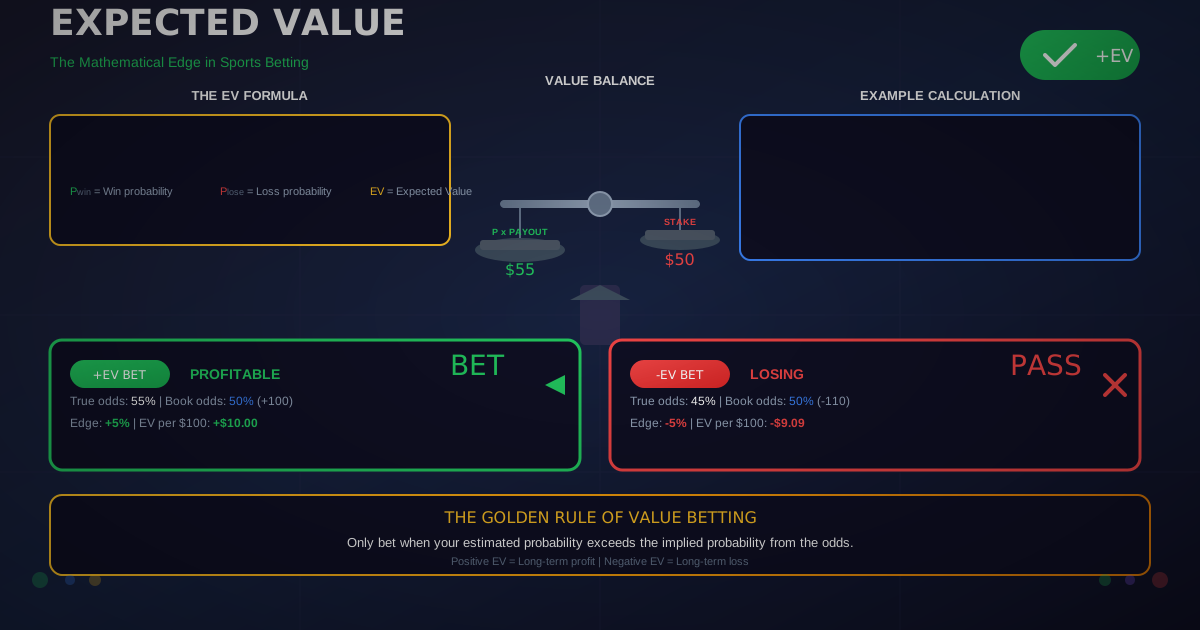
- Poker EV Calculator: Analyze expected value of decisions
Conclusion: Build Your Online Poker Career
Online poker in 2026 rewards players who approach it professionally. The recreational players are still depositing, the games are still beatable, and the tools available to serious students have never been better.
Your path to online poker profitability follows these steps:
- Master fundamentals at microstakes (3-6 months)
- Track every session and study your leaks
- Optimize rakeback to maximize total income
- Move up stakes only with adequate bankroll
- Develop multi-tabling skills gradually
- Study opponent tendencies through HUD data
- Maintain strict game selection discipline
Start your online poker journey by calculating your bankroll requirements with our Poker Bankroll Requirements Calculator. Track your progress with our Poker Session Tracker. And optimize your income with our Poker Rakeback Calculator.
The players who treat online poker as a skill game—studying, tracking, and continuously improving—are the ones who profit year after year. The tools are available. The games are running. The question is whether you are willing to put in the work.
Gambling involves risk. This content is for educational and informational purposes only. Always gamble responsibly, set limits you can afford, and seek help if gambling becomes a problem. Visit the National Council on Problem Gambling or call 1-800-522-4700 for support.