The AI Behind the Odds: How Sportsbooks Use Algorithms to Set and Move Lines (2026)
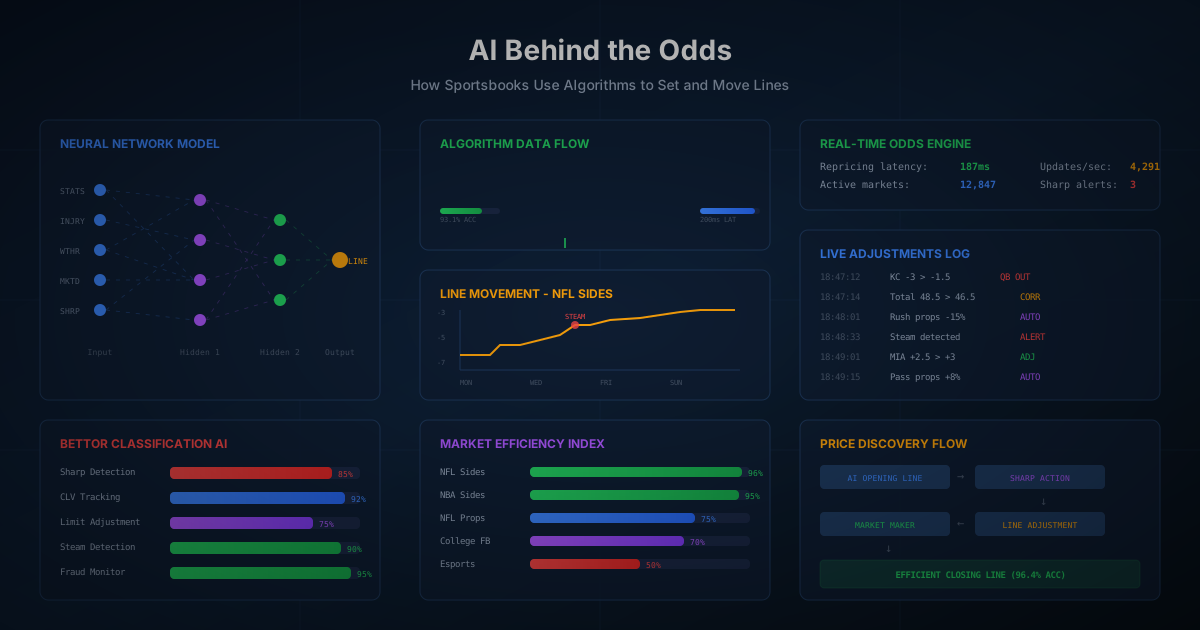
A single tweet from a beat reporter changed everything. At 6:47 PM Eastern on a Sunday in January 2026, a local journalist posted that a star quarterback was "moving gingerly" during warmups. Within 90 seconds -- before the tweet had even gained traction on social media -- the point spread at Pinnacle had shifted from -3 to -1.5, the total had dropped 2 points, and dozens of correlated player prop markets had been repriced entirely. No human oddsmaker made a phone call. No committee held a meeting. An algorithm ingested the information, assigned a probability weight, cross-referenced it against historical injury-impact data, and recalibrated every connected market faster than most bettors could open their apps.
Welcome to the algorithmic age of sports betting. In 2026, artificial intelligence does not just assist oddsmakers -- it has effectively replaced them for the vast majority of line-setting and line-moving decisions. The sportsbook algorithms running behind the scenes are more sophisticated, faster, and more data-hungry than anything the industry has ever seen. They ingest satellite weather data, track social media sentiment, monitor sharp betting syndicates in real time, and adjust thousands of markets per second during live events.
For bettors, understanding how these systems work is no longer optional. It is the foundation of any serious betting strategy. If you do not know how the line was made, you have no basis for deciding whether it is wrong.
This guide takes you inside the machine. We will explain exactly how sportsbooks use AI and machine learning to create opening lines, how those lines move throughout the week, how algorithms distinguish sharp money from recreational noise, and why some markets remain beatable despite all this technology.
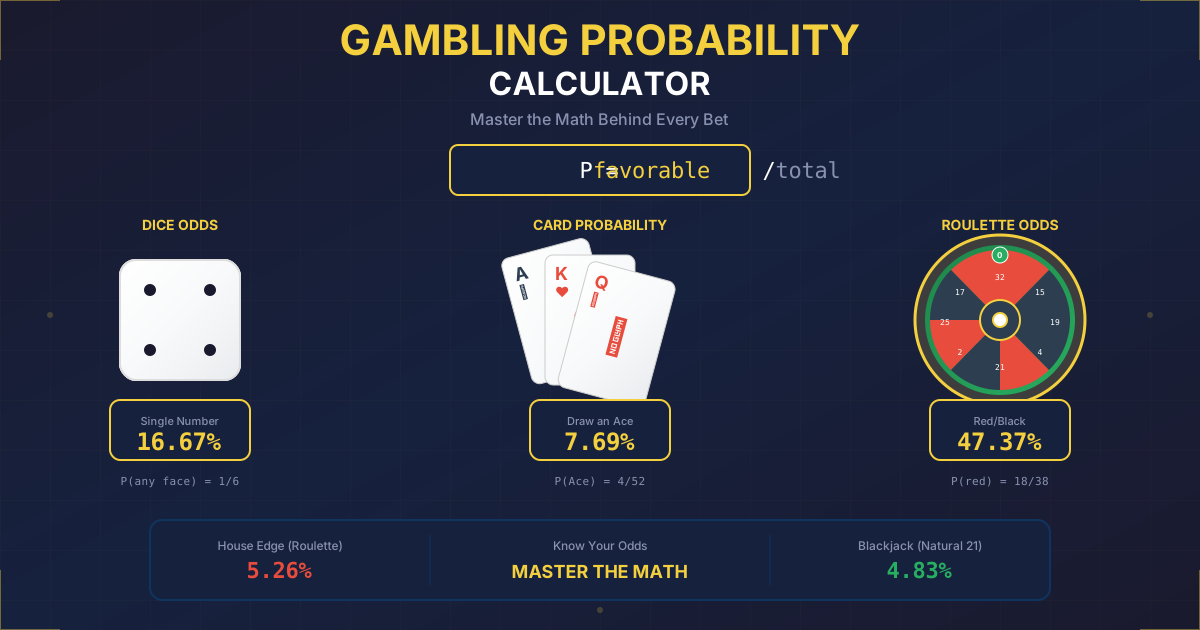
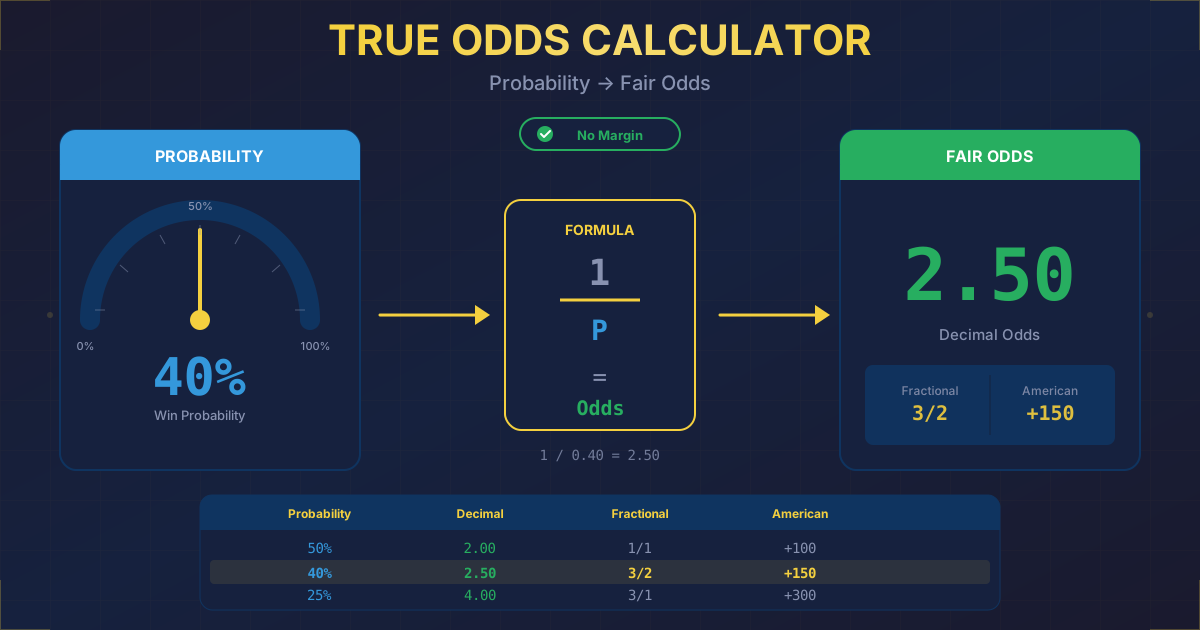
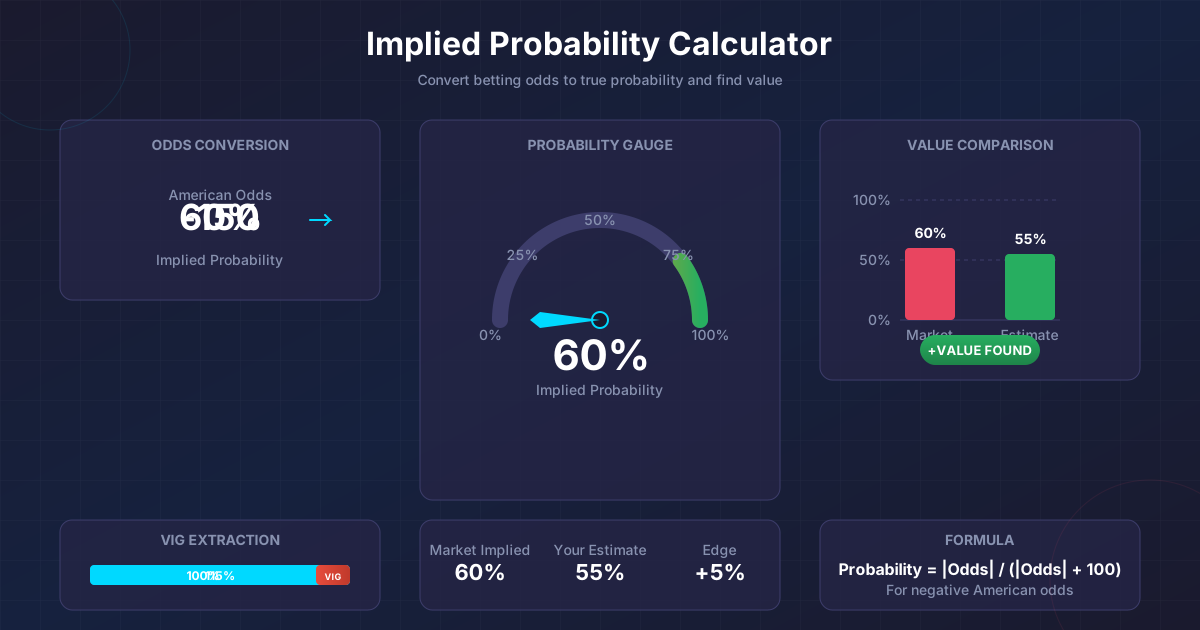
Start by understanding what the odds actually imply with our free Implied Probability Calculator -- the first step to evaluating any line.
How Do Sportsbooks Create Opening Lines Using AI?
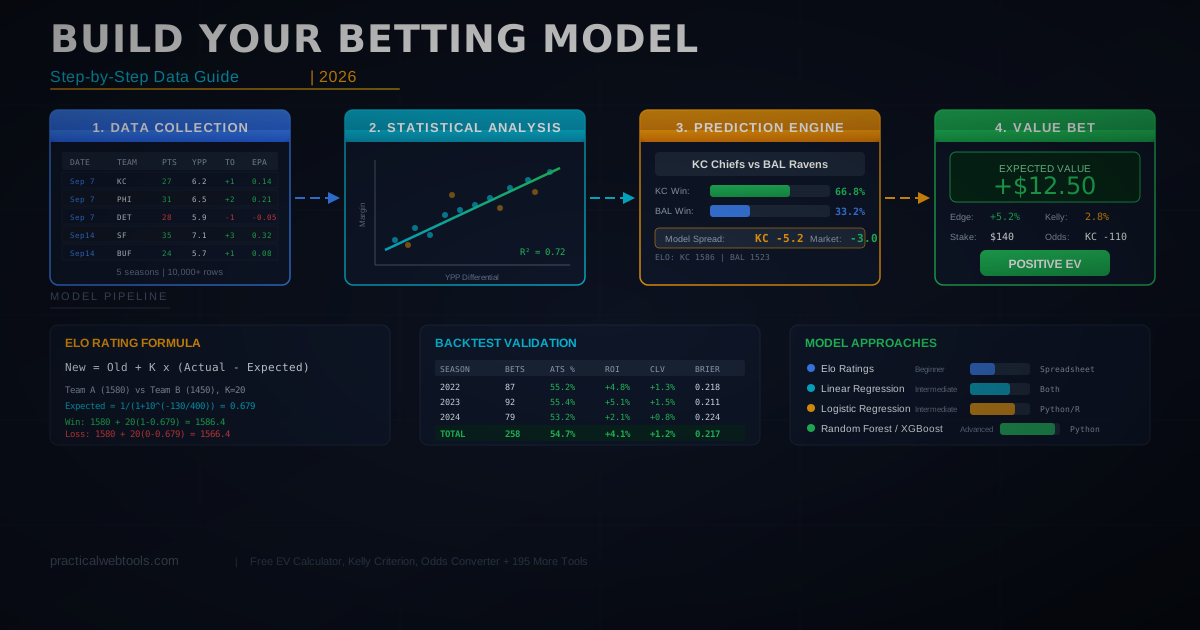
Opening lines are generated through a combination of proprietary power ratings, historical performance models, and real-time market data. Modern sportsbooks use machine learning systems that process thousands of variables simultaneously to produce an initial price for every market they offer.
The Power Rating Foundation
Every sportsbook maintains a set of numerical power ratings for each team in every sport. These ratings quantify a team's overall strength on a standardized scale. In the NFL, for example, a power rating system might assign the Kansas City Chiefs a rating of 92.4 and the Cleveland Browns a rating of 81.7. The difference, combined with a home-field advantage factor (typically 1.5 to 3 points in 2026, down from the historical 3-point standard), produces a raw projected spread.
But the 2026 power ratings are far more granular than a single number. Modern AI systems maintain separate ratings for:
| Rating Component | What It Measures | Update Frequency |
|---|---|---|
| Offensive efficiency | Points per possession, expected points per play | After every game |
| Defensive efficiency | Points allowed per possession, DVOA | After every game |
| Situational strength | Performance in specific game states (trailing, leading, red zone) | Weekly |
| Rest and fatigue | Days since last game, travel distance, time zone shifts | Daily |
| Roster health | Weighted impact of injured or questionable players | Hourly on game days |
| Coaching factors | In-game decision tendencies, playcalling efficiency | Monthly |
| Pace and style | Tempo, pass/run ratio, defensive scheme classification | Weekly |
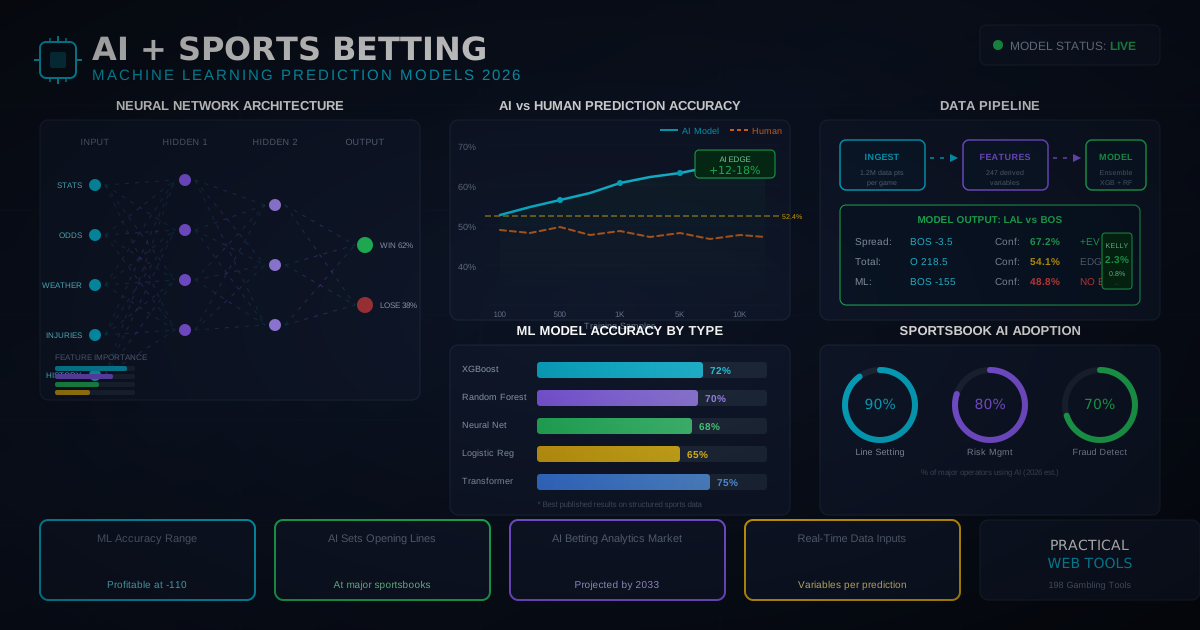
These component ratings are fed into a machine learning model -- typically a gradient-boosted decision tree ensemble or a deep neural network -- that has been trained on tens of thousands of historical games. The model learns how each component interacts with others. For example, it might learn that a team with elite defensive efficiency but below-average pace tends to produce lower-scoring games even when facing average offenses, or that a team traveling across three time zones for a Thursday night game loses an additional 0.8 points of expected performance.
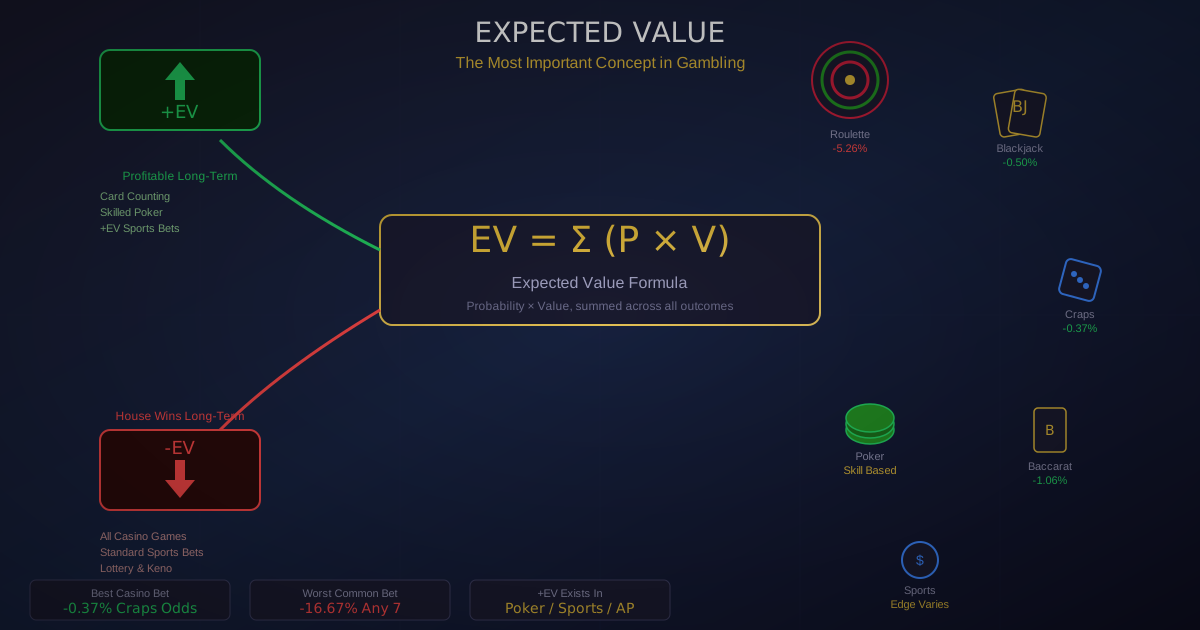
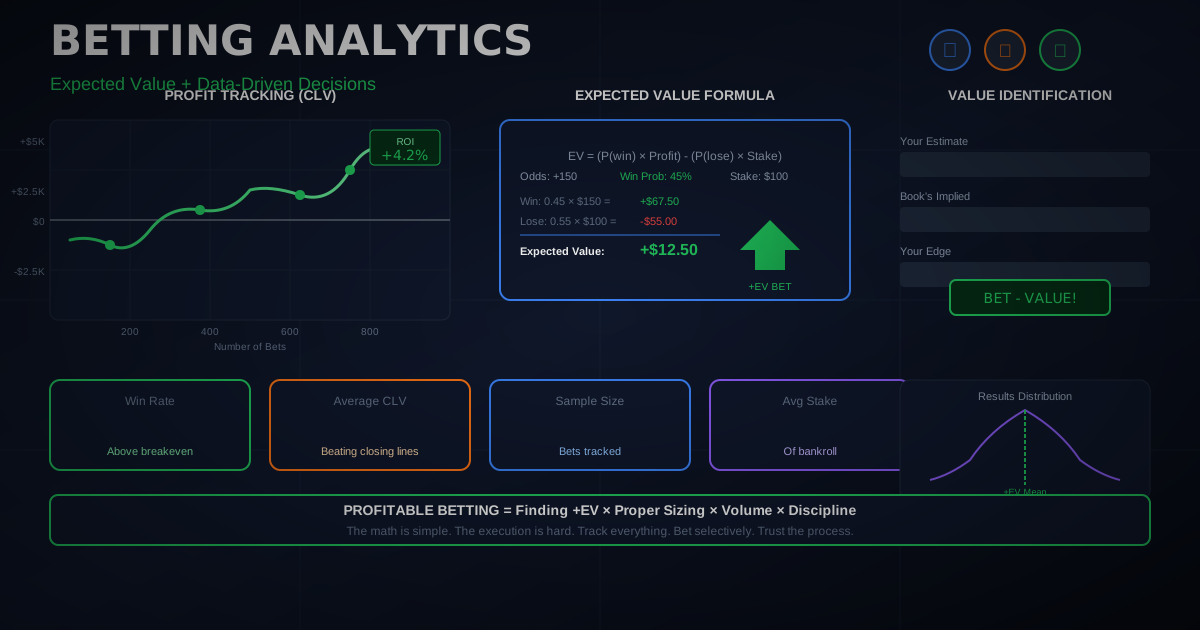
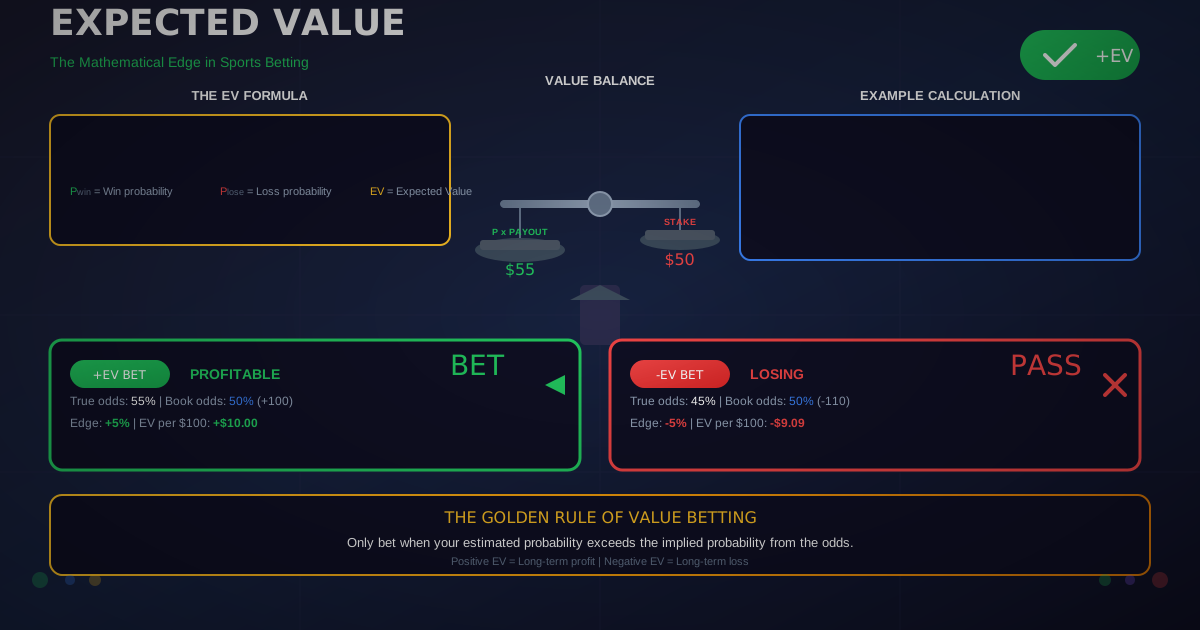
Want to see how power rating differences translate to betting value? Use our Expected Value Calculator to quantify the edge.
Market Data Integration
Power ratings alone do not set the line. Sportsbooks also incorporate market data from multiple sources:
- Pinnacle and CRIS lines: These market-making books post the earliest lines and attract the sharpest money. Other sportsbooks use their numbers as a benchmark.
- Offshore market movement: Lines from licensed and unlicensed books worldwide provide additional pricing data.
- Futures market implications: If a team's Super Bowl odds have shifted significantly, that information should be reflected in weekly spreads.
- Historical market efficiency data: The algorithm knows which markets tend to be most efficient and which tend to have persistent biases.
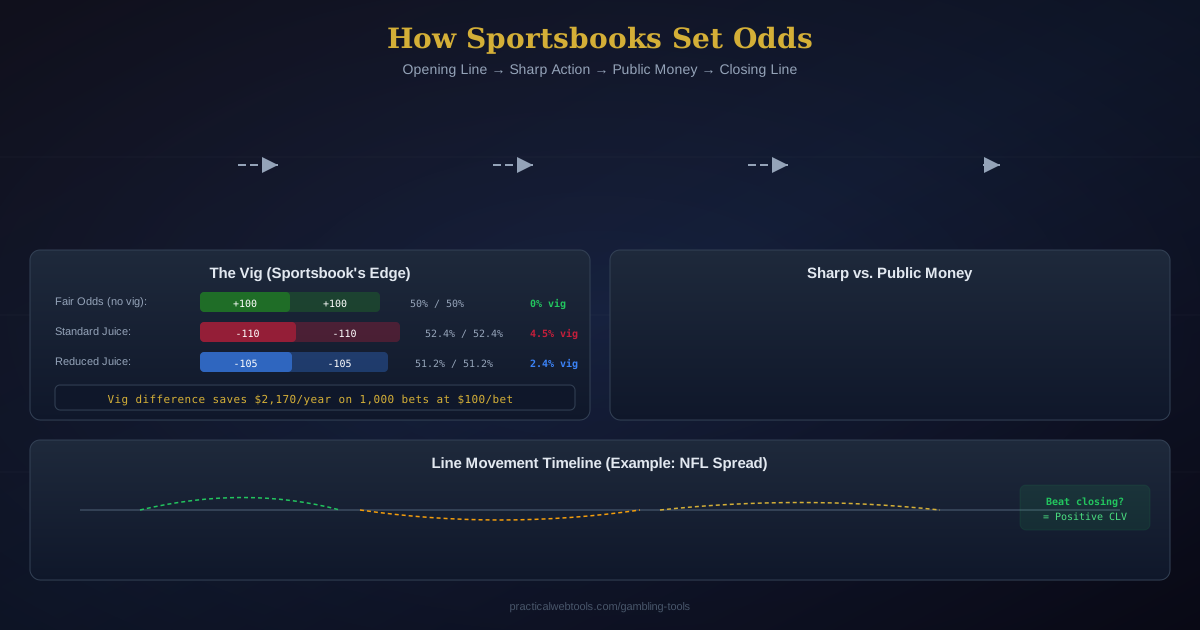
The AI synthesizes all of this into an opening line that represents the sportsbook's best estimate of the true probability, adjusted by the built-in margin (vig or juice).
How Accurate Are AI-Generated Opening Lines?
Remarkably accurate. Research from the University of Nevada Las Vegas and independent handicapping analysts has consistently found that sportsbook closing lines are among the most efficient probability estimates available for sporting events. Opening lines are slightly less efficient, but the gap has narrowed dramatically since AI adoption became widespread.
| Market | Opening Line Accuracy (2020) | Opening Line Accuracy (2026) | Closing Line Accuracy (2026) |
|---|---|---|---|
| NFL Sides | 88.2% | 93.1% | 96.4% |
| NFL Totals | 85.7% | 91.8% | 95.2% |
| NBA Sides | 86.9% | 92.4% | 95.8% |
| NBA Totals | 84.3% | 90.6% | 94.7% |
| MLB Money Lines | 87.1% | 92.8% | 96.1% |
| NHL Money Lines | 83.5% | 89.4% | 93.6% |
| Soccer (Big 5 Leagues) | 86.4% | 91.7% | 95.3% |
"Accuracy" here refers to the percentage of games where the final outcome fell within the predicted probability distribution. The improvement from 2020 to 2026 is directly attributable to AI and machine learning adoption.
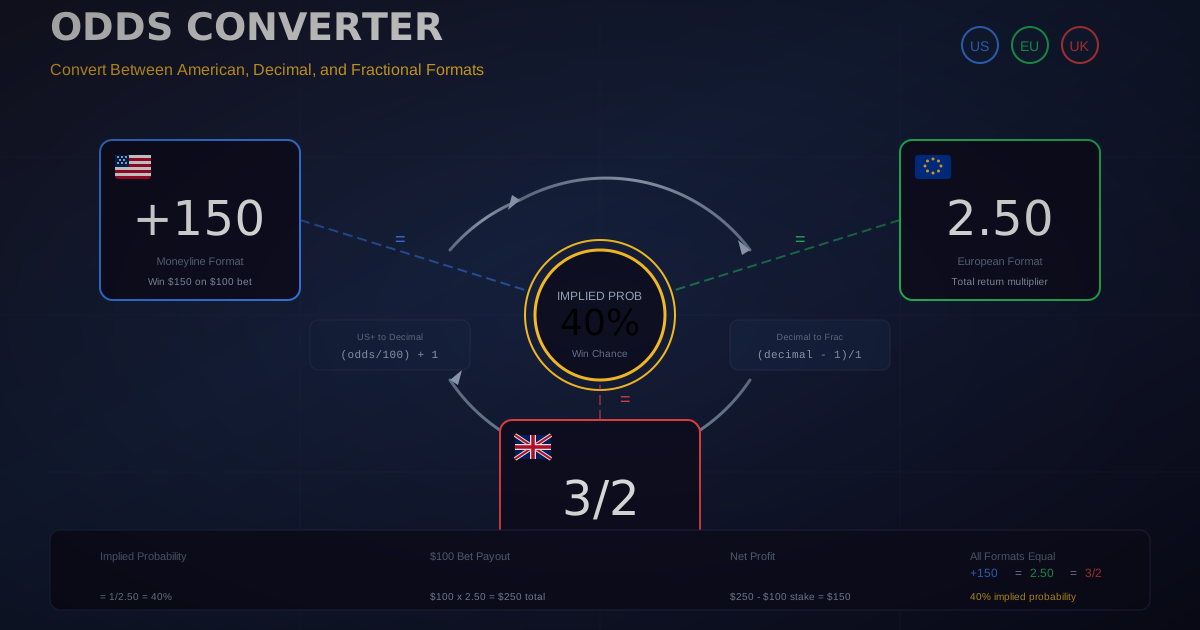
Convert between American, decimal, and fractional odds to compare lines across sportsbooks with our Odds Converter.
How Do Algorithms Adjust Lines After They Open?
Lines move for two primary reasons: new information (injuries, weather, lineup changes) and betting action (the weight and direction of money wagered). AI systems handle both simultaneously and continuously.
Information-Driven Adjustments
Modern sportsbook algorithms are connected to real-time data feeds that monitor:
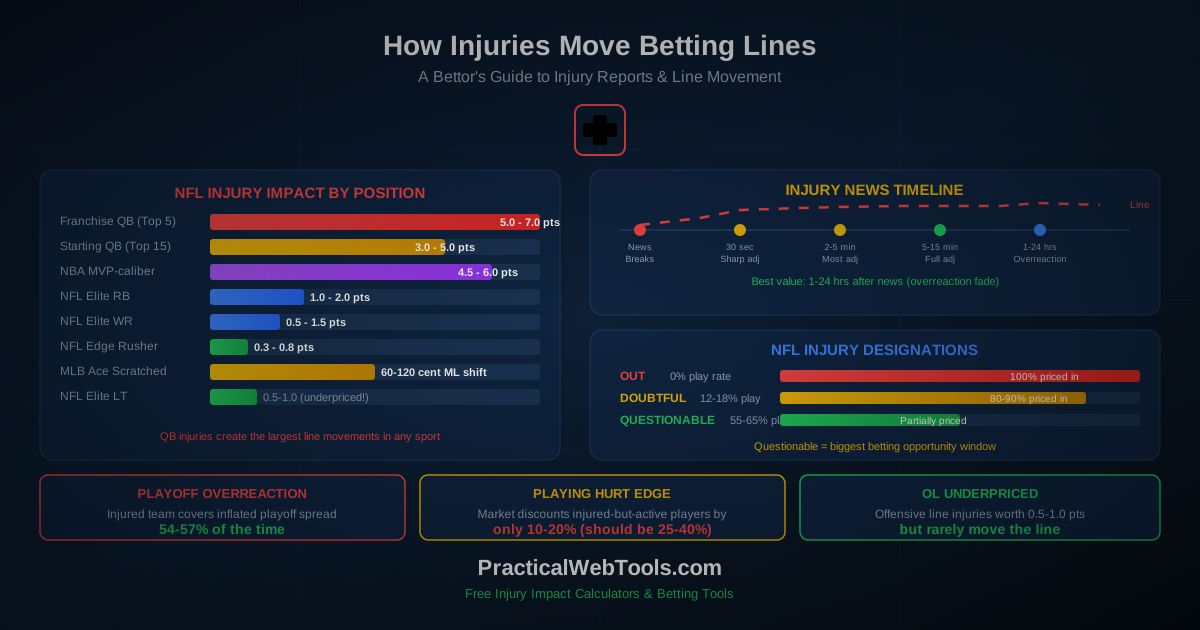
- Injury report updates: Official NFL injury designations, NBA injury reports, and equivalent reports in other sports trigger automatic line adjustments. The magnitude of the adjustment depends on the player's impact rating in the algorithm's model.
- Weather data: For outdoor sports, algorithms pull data from commercial weather services every 15 to 30 minutes. Temperature, wind speed, wind direction, precipitation probability, and humidity all factor into total adjustments for football, baseball, and soccer.
- Lineup confirmations: In basketball and baseball especially, starting lineup confirmations can move lines significantly. A confirmed rest day for a star NBA player might shift a spread by 3 to 5 points.
- News and social media: Some advanced systems use natural language processing (NLP) to scan news articles and social media for relevant information. These systems are not fooled by rumors easily -- they weight information by source reliability and cross-reference multiple mentions.
Action-Driven Adjustments
The second and more complex driver of line movement is betting action. Not all money is treated equally.
When a bet comes in, the algorithm evaluates:
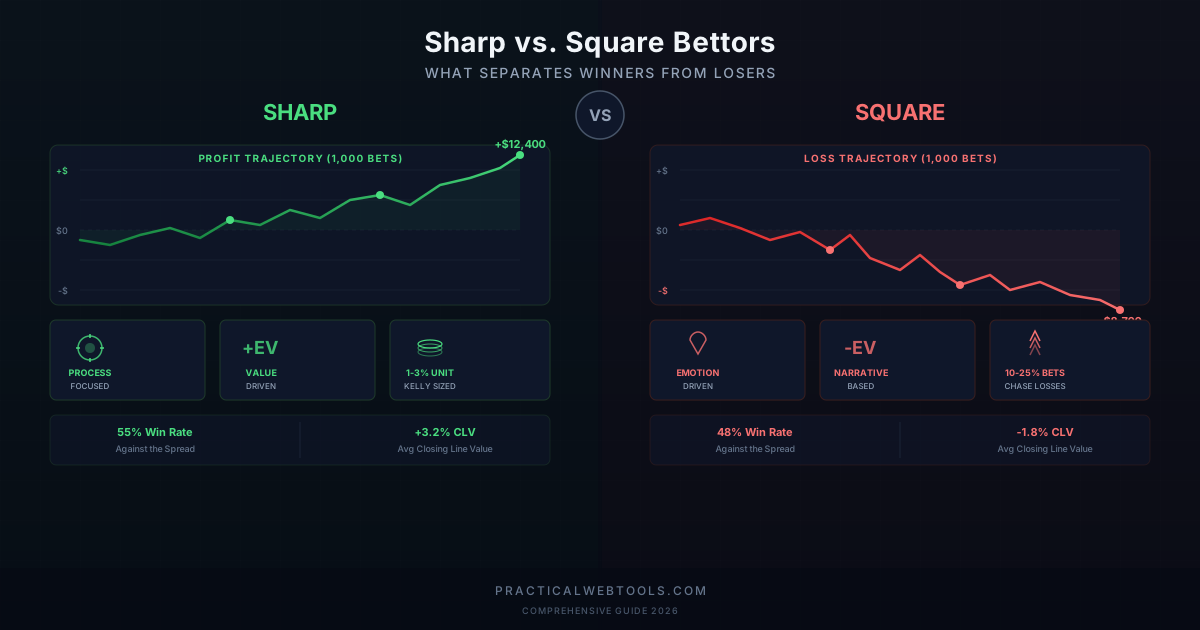
- Bettor classification: Is this a known sharp, a recreational bettor, or an unknown account? Sharp bettors receive significantly more weight.
- Bet size relative to limits: A max bet at the current limit signals stronger conviction than a minimum bet.
- Timing: Early-week action on NFL games is weighted differently than Saturday night action. Early money tends to be sharper.
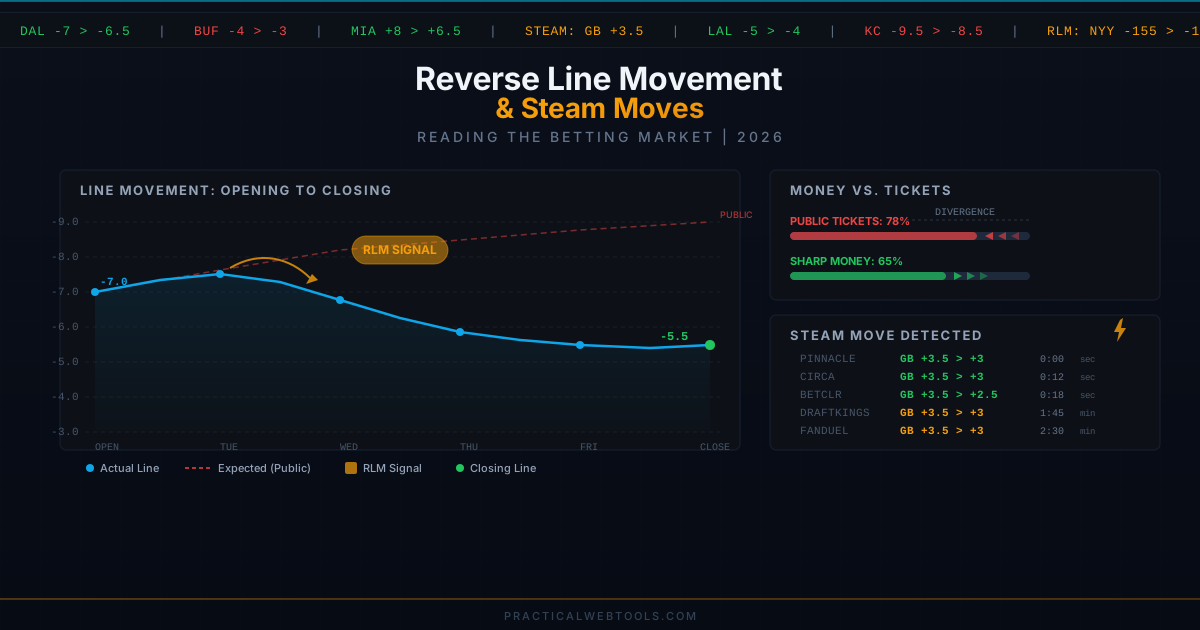
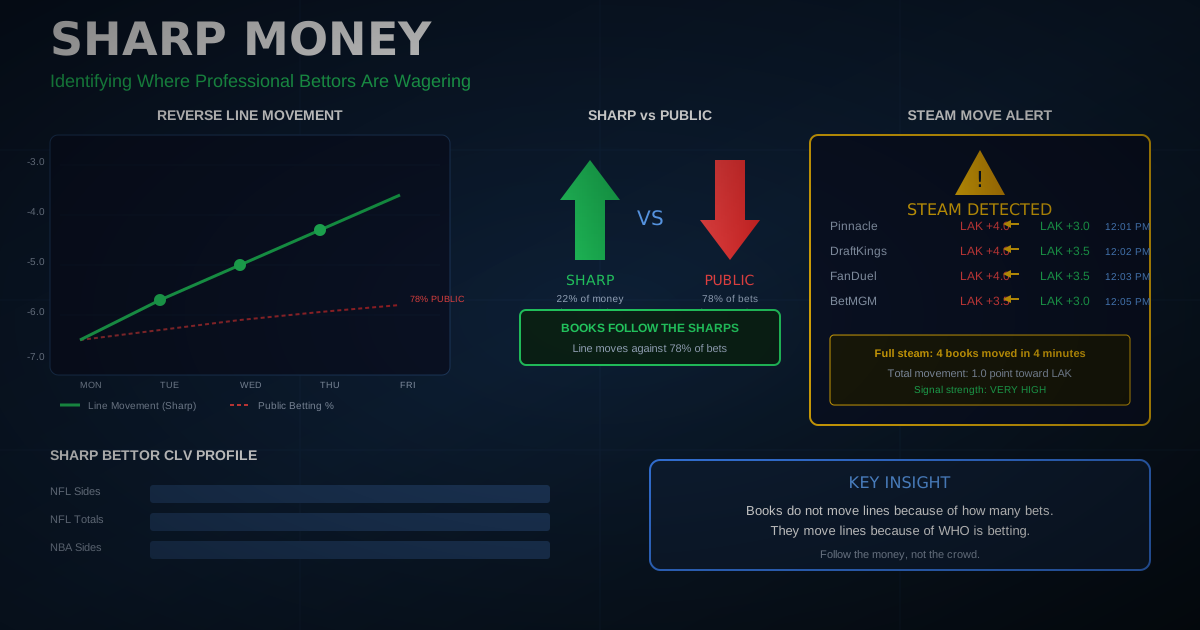
- Correlation: If the same side is receiving action from multiple independent sharp accounts simultaneously (a "steam move"), the algorithm responds more aggressively.
- Market consistency: If one book is moving but others are not, the algorithm considers whether the move is justified by fundamentals or is an overreaction to a single large bet.
| Action Type | Typical Line Response | Algorithm Confidence |
|---|---|---|
| Single recreational bet ($50-$500) | No movement | N/A |
| Single sharp bet at limit | 0.5-1 point move | Moderate |
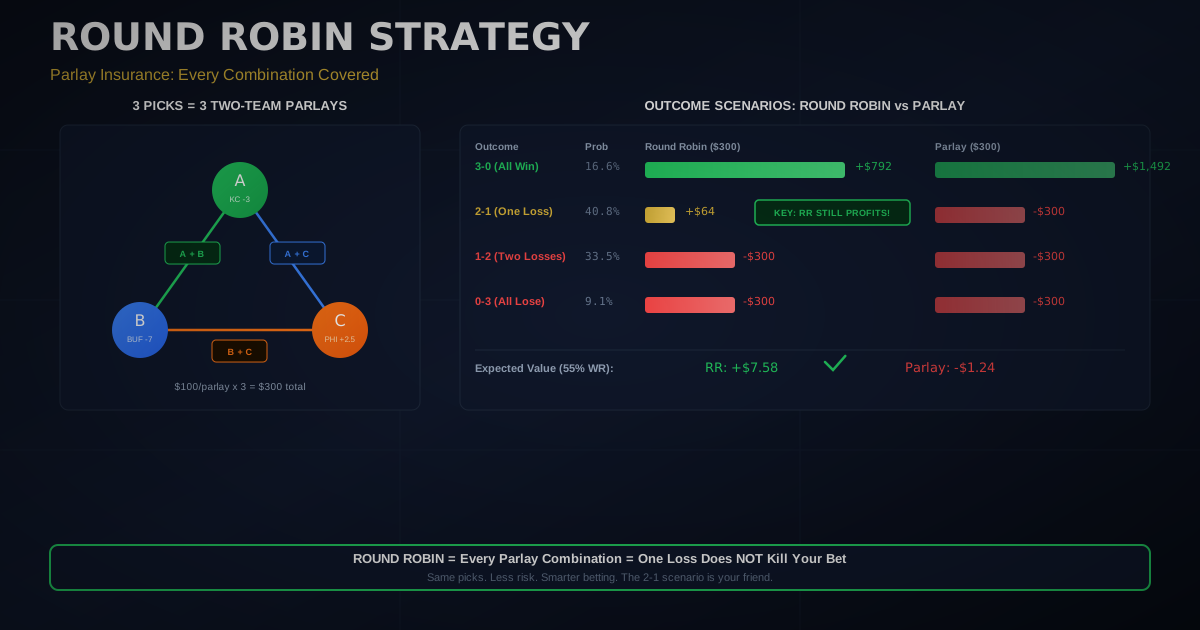
| Steam move (3+ sharps, same side, <5 min) | 1-2 point move | High |
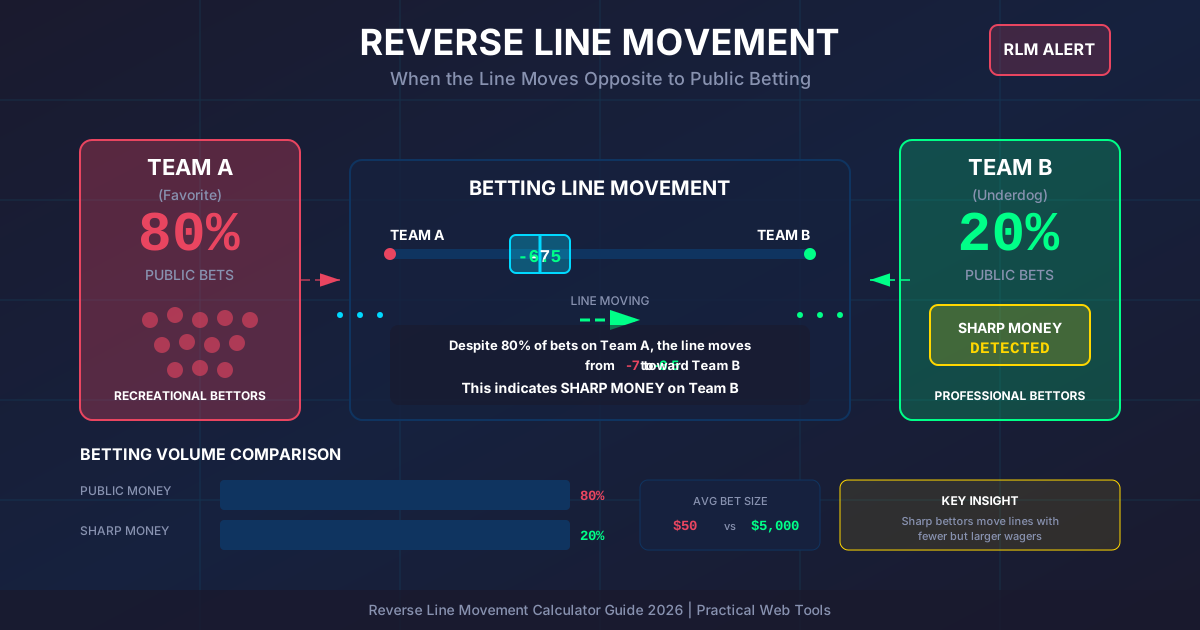
| Reverse line movement (line moves against public %) | Indicates sharp side | High |
| Heavy one-sided public action | Gradual move toward public side | Low -- often a trap |
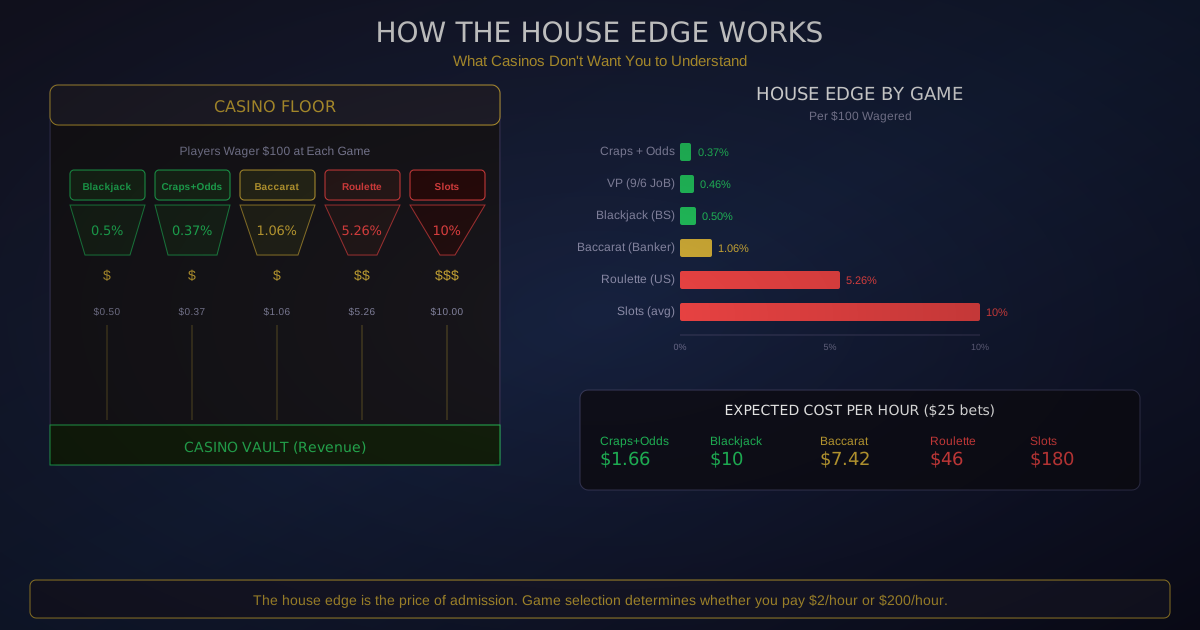
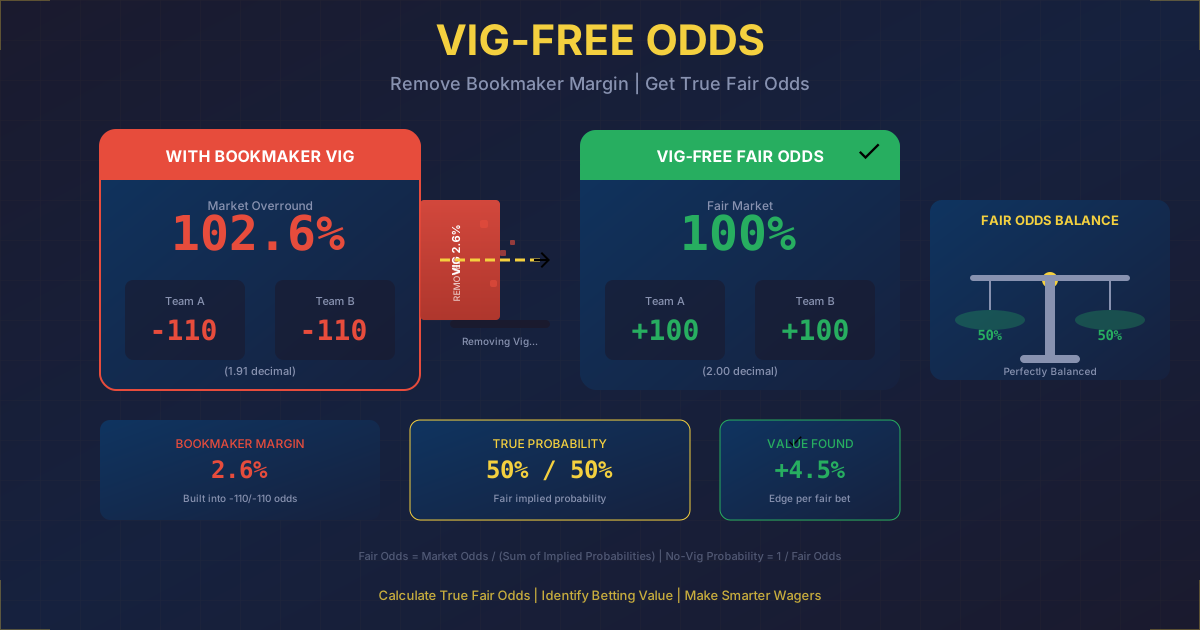
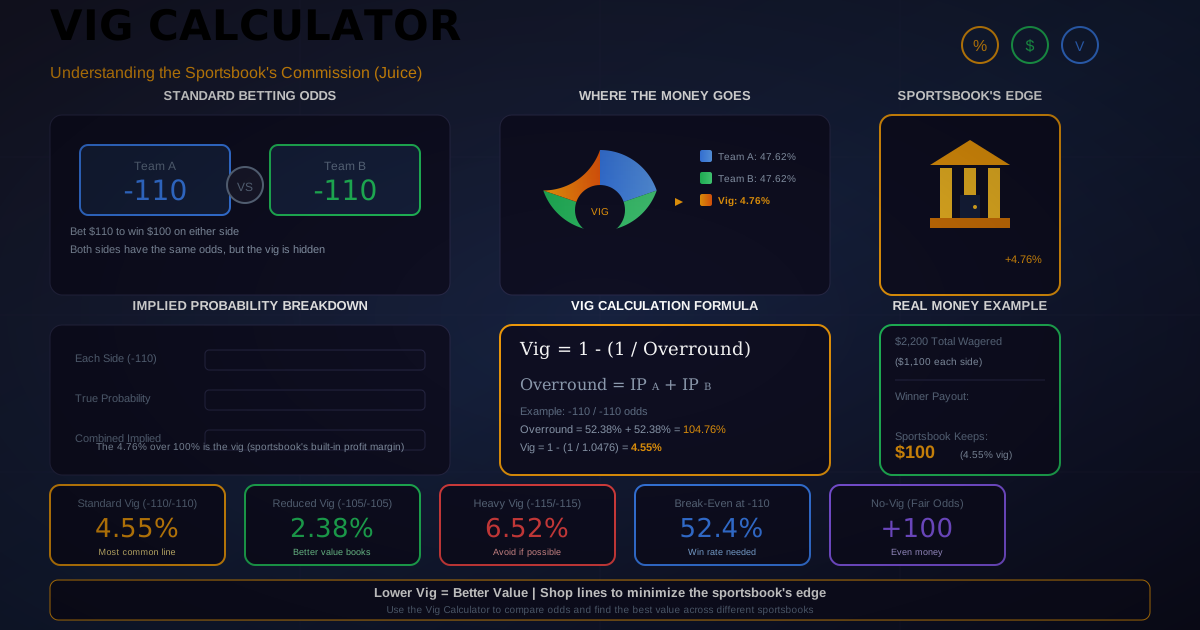
Understand the sportsbook's built-in margin on any line with our Hold/Vig Calculator.
What Is a Market-Setting Book and Why Does It Matter?
A market-setting book is a sportsbook that posts lines early, accepts large wagers from professional bettors, and effectively establishes the benchmark price for a given market. Pinnacle (formerly CRIS) is the most well-known market-setting book in the world.
How Pinnacle Sets the Global Market
Pinnacle's business model is fundamentally different from retail sportsbooks like DraftKings, FanDuel, or BetMGM. Pinnacle:
- Posts lines earlier than most competitors, sometimes days before retail books
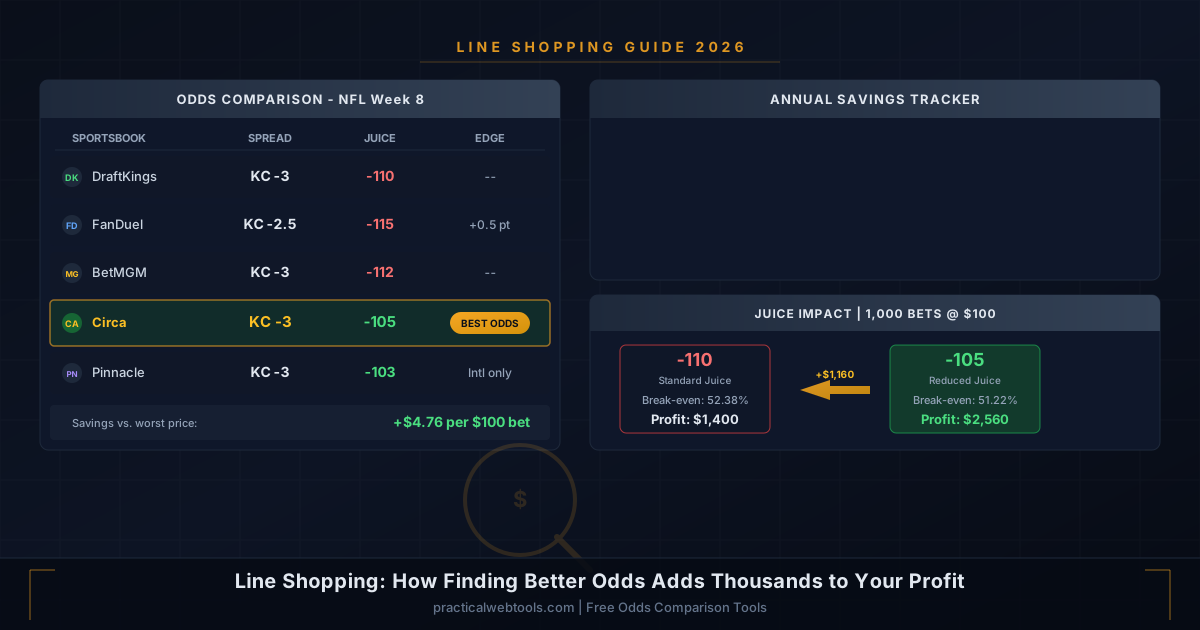
- Offers the lowest margins (vig) in the industry, typically -104/-104 or -103/-103 on major markets
- Does not limit winning bettors, allowing professionals to bet thousands or tens of thousands on a single market
- Uses the resulting betting action from the world's sharpest bettors to refine its lines
This creates a powerful feedback loop. Because Pinnacle welcomes sharp action, the sharpest bettors in the world bet there first. Their action moves the line. That line movement reflects genuine probability information. Other sportsbooks then use Pinnacle's line as a reference point.
The Offshore Ecosystem
The flow of information in the global betting market follows a roughly consistent pattern:
- Pinnacle or another market-maker posts the opening line based on its AI models and power ratings.
- Professional bettors evaluate the line and wager if they see value, moving the line toward its efficient price.
- Offshore sportsbooks in Costa Rica, Curacao, and other jurisdictions adopt the Pinnacle line (often with wider margins) as their own.
- U.S. regulated sportsbooks post their lines, typically referencing Pinnacle and offshore consensus, then adjust based on their own customer action.
- Retail bettors wager at U.S. books, and any significant imbalances feed back into the line.
The result is that by game time, lines across the global market have converged toward a consensus price that reflects the aggregate information of every sharp and recreational bettor who has participated.
Check whether a line offers positive expected value before placing any bet with our Expected Value Calculator.
How Does AI Detect Sharp vs. Recreational Bettors?
Sportsbook algorithms classify bettors using machine learning models trained on historical account data. The classification happens automatically and continuously updates as new betting data is collected.
Classification Features
The AI evaluates dozens of behavioral signals:
| Signal | Sharp Indicator | Recreational Indicator |
|---|---|---|
| Bet timing | Early in the week, before market settles | Close to game time, often after heavy media coverage |
| Market selection | Obscure markets, player props, alternate lines | Popular games, primetime events |
| Bet sizing | Consistent, often at or near maximum limits | Highly variable, often round numbers |
| Sport diversity | Focused on 1-2 sports with deep knowledge | Bets across many sports, including unfamiliar ones |
| Win rate vs. closing line | Consistently beats closing line value (CLV) | Loses to closing line value |
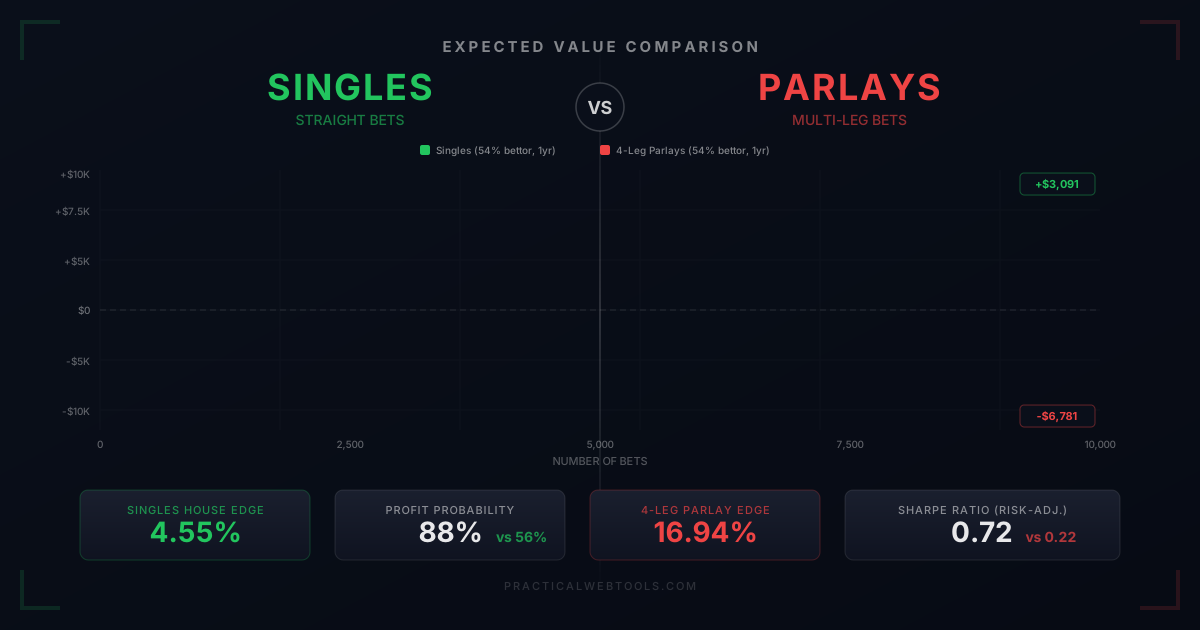
| Parlay frequency | Rarely parlays | Frequently places parlays |
| Cash-out usage | Almost never uses cash-out features | Frequently cashes out early |
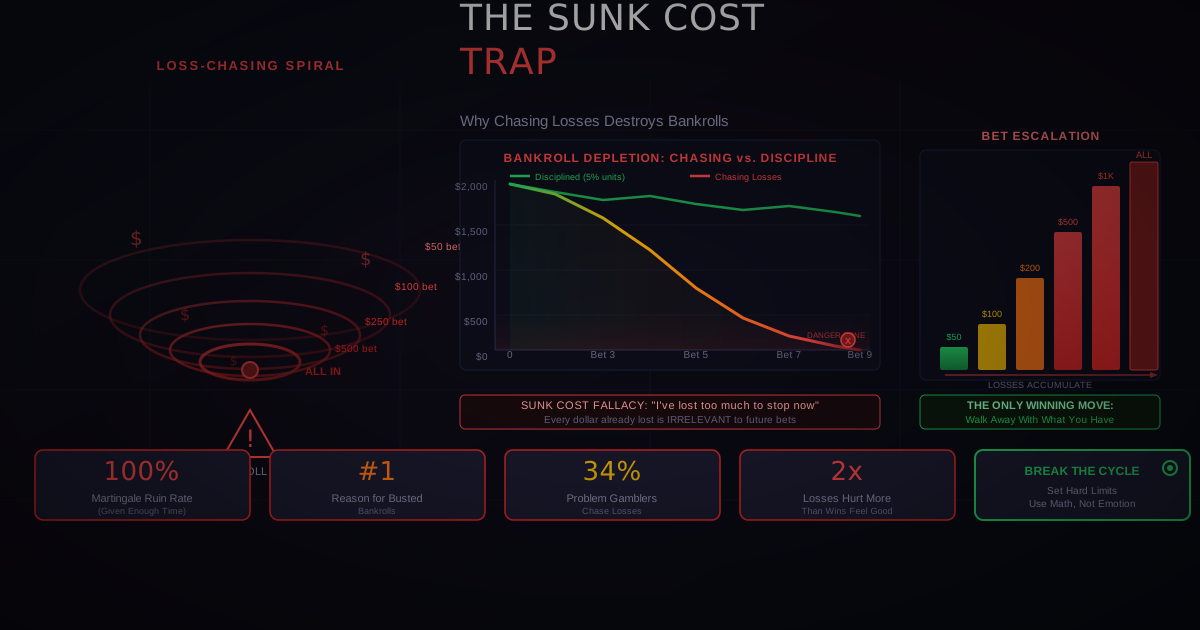
| Deposit patterns | Fewer, larger deposits | Frequent smaller deposits, often following losses |
| Session timing | Consistent, scheduled betting windows | Irregular, often late-night or post-event emotional bets |
Closing Line Value as the Gold Standard
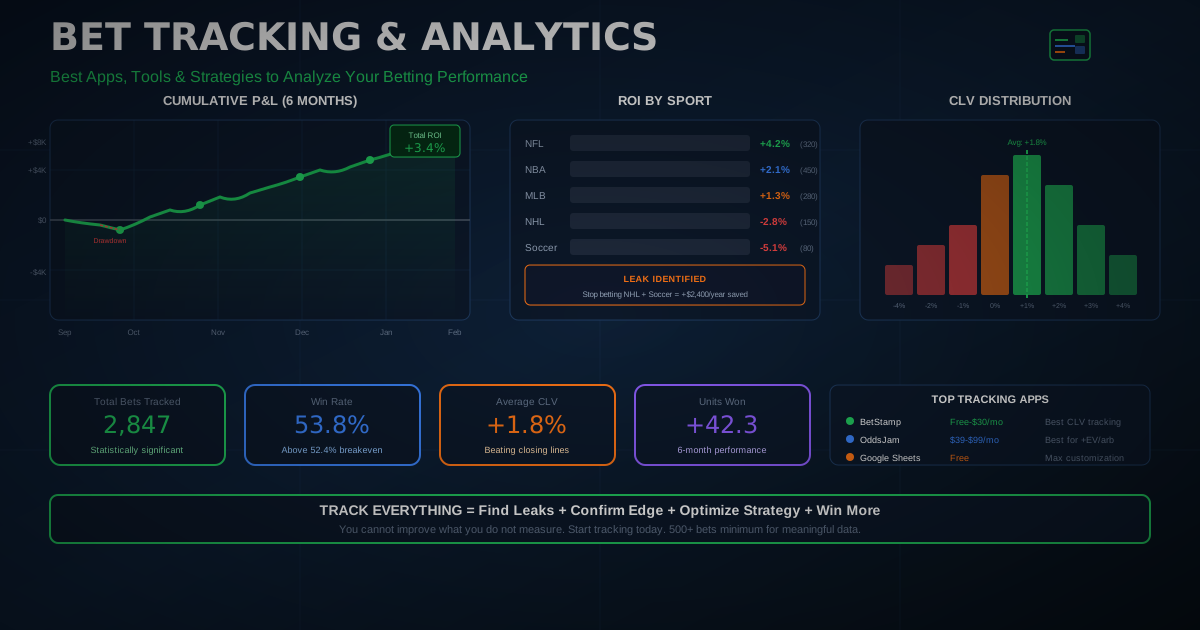
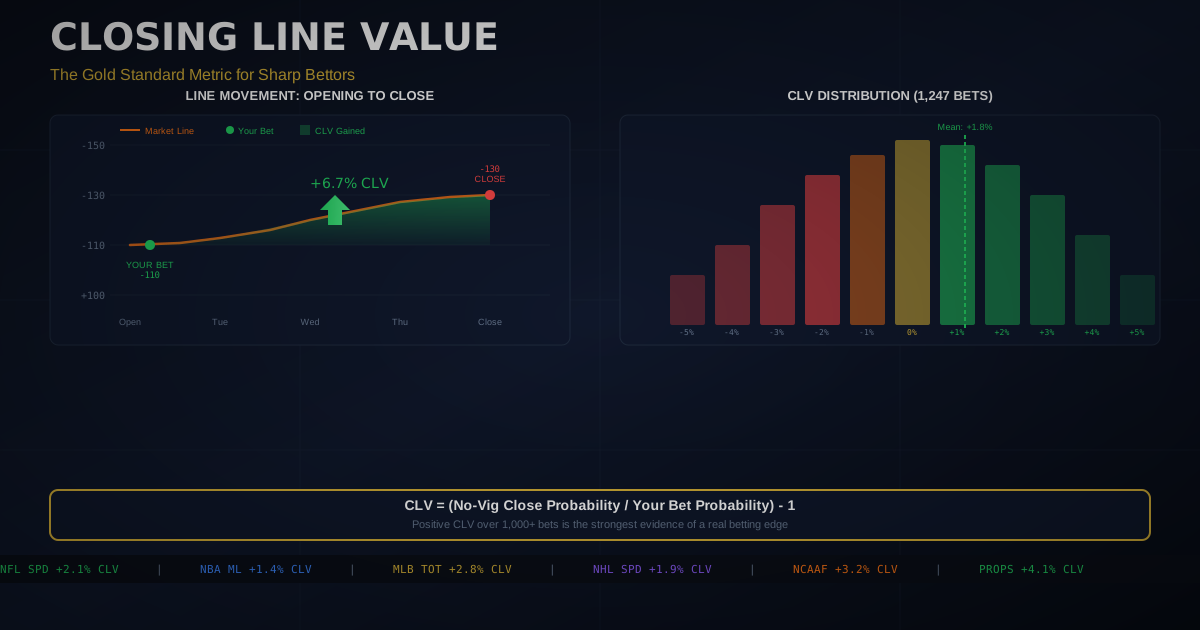
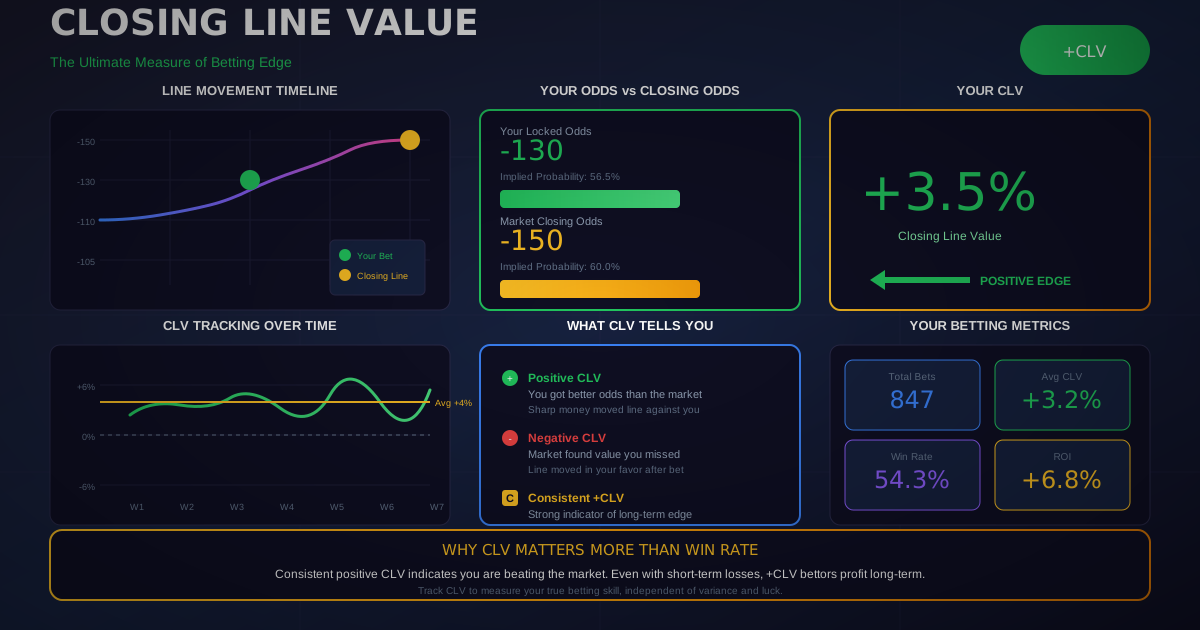
The single most important metric sportsbooks use to classify bettors is Closing Line Value (CLV). If you consistently bet at prices that are better than the closing line, you are almost certainly a long-term winner -- and the sportsbook knows it.
For example, if you bet the Bills at -3 (-110) on Tuesday, and the line closes at Bills -4 (-110) on Sunday, you captured 1 point of CLV. Do this consistently, and the algorithm will flag your account for reduced limits or outright banning at retail sportsbooks.
Research suggests that bettors who achieve CLV of +2% or better over a sample of 500+ bets have roughly a 90% probability of being long-term profitable. The algorithms know this, which is why CLV tracking is central to risk management.
Track your own closing line value over time with our CLV Tracker to measure whether you are getting down at sharp prices.
The Limit Reduction Process
Once the AI classifies an account as sharp, the sportsbook reduces betting limits in stages:
- Initial limits: Full market limits ($5,000-$20,000 on NFL sides at major retail books)
- First reduction: Limits cut to 25-50% of normal after the model detects consistent CLV
- Second reduction: Limits cut to $50-$500, effectively making the account unprofitable to use
- Virtual ban: Limits set to $5-$25, rendering the account useless for serious betting
This entire process can happen within 50 to 200 bets at aggressive books. The AI does not need a large sample to identify patterns, especially when it can cross-reference an account's behavior against known sharp networks.
What Role Do Sharp Bettors Play in Price Discovery?
Sharp bettors are the human element in an increasingly algorithmic market. They serve a critical function: identifying and correcting errors in AI-generated lines that the models themselves cannot detect.
Why Algorithms Still Need Sharps
AI models are powerful, but they have limitations:
- Novel situations: When a team hires a new coach who runs a radically different system, historical data is less predictive. Sharp bettors who have studied that coach's tendencies at a previous job may have an information edge.
- Motivation and effort: Algorithms struggle to quantify factors like whether a team is "mailing it in" at the end of a lost season or playing with unusual intensity for a beloved retiring player. Experienced sharps observe these dynamics.
- Market structure: Sharps understand how the market itself works -- which books are slow to move, which markets are thinnest, and where temporary mispricings are most likely to appear.
- Breaking news speed: While algorithms scan news feeds, a sharp bettor with a direct source (a team insider, a local reporter on speed dial) can sometimes act before the information reaches the NLP system.
The Price Discovery Process
Price discovery in sports betting follows a pattern similar to financial markets:
- AI posts an initial estimate based on models and data.
- Market-making books (Pinnacle) open the line to sharp bettors.
- Sharps identify edges and bet into them, moving the line.
- The algorithm incorporates this information and adjusts.
- The process repeats through multiple iterations until the market reaches equilibrium.
- By game time, the closing line is the most accurate estimate available -- incorporating both algorithmic analysis and human expertise.
This is why the closing line is such a powerful benchmark. It represents the final output of a system that combines the best AI models with the collective intelligence of the world's sharpest bettors.
Use our Implied Probability Calculator to convert any line into a true probability estimate and see how it compares to your own assessment.
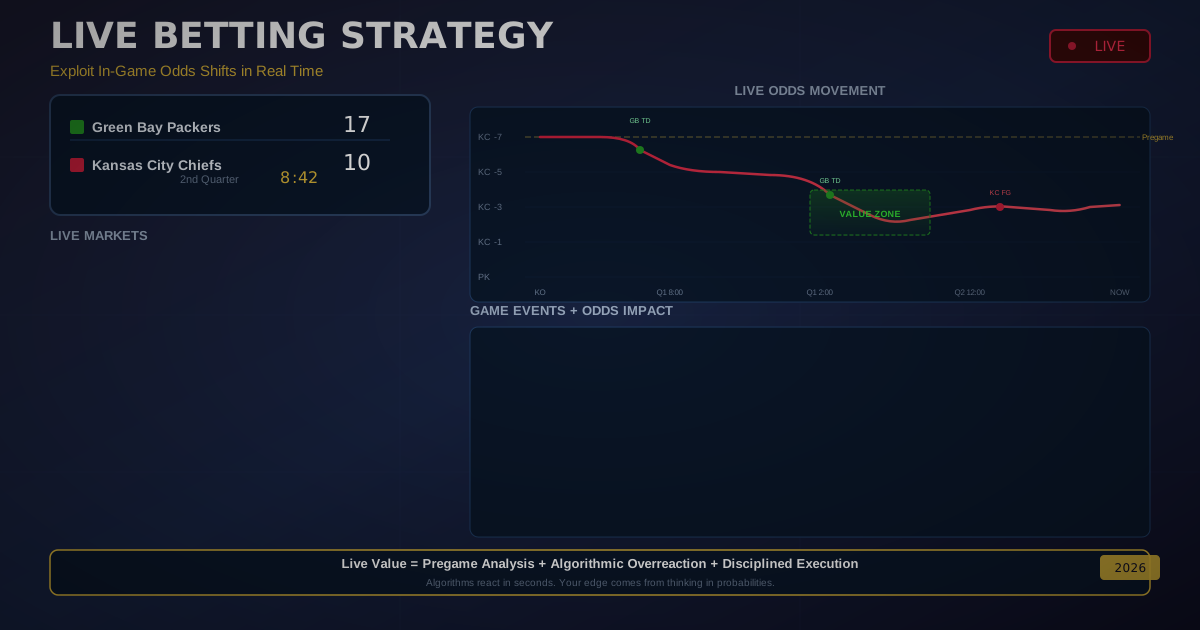
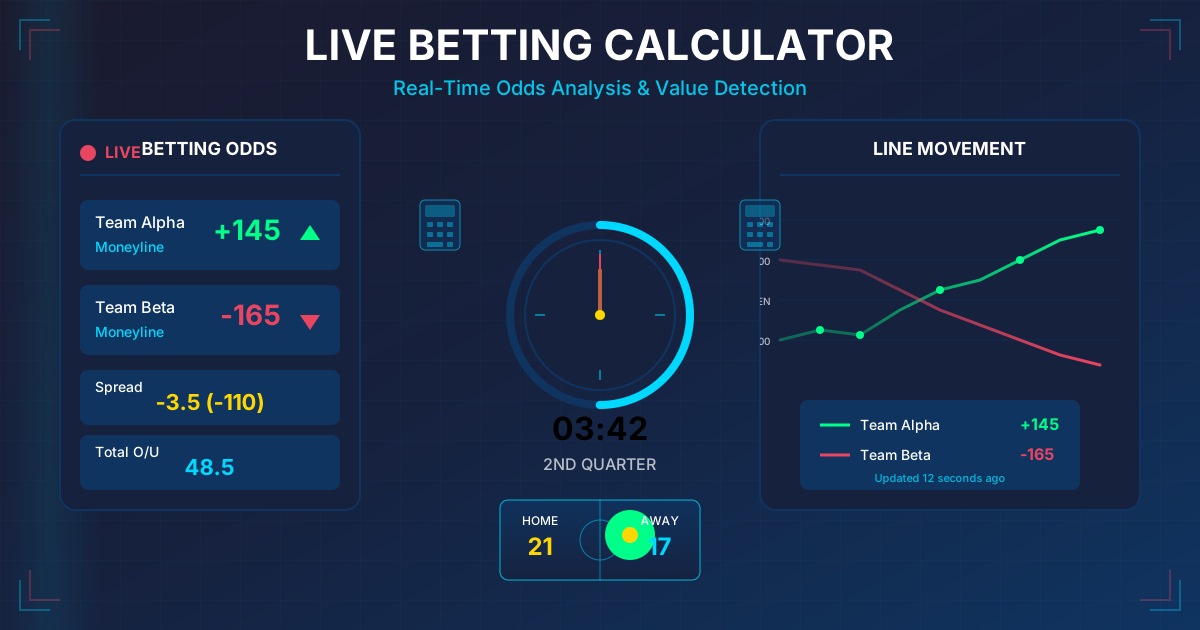
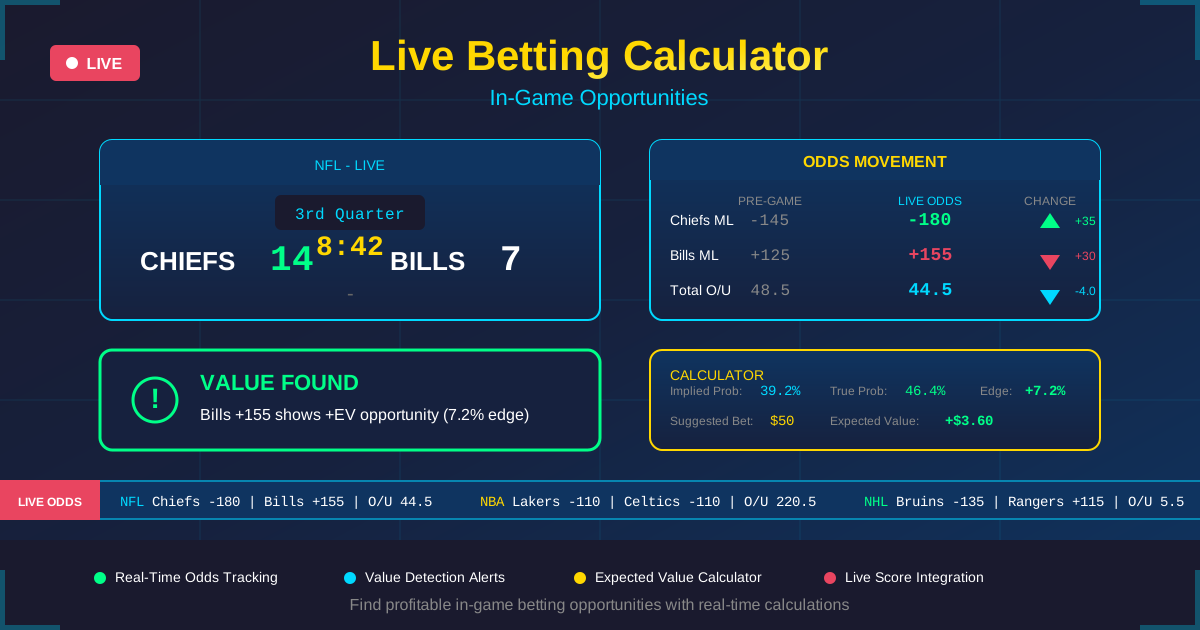
How Do Real-Time Line Adjustment Algorithms Work During Live Events?
Live or in-play betting represents the most computationally intensive application of AI in sportsbooks. During a live event, algorithms must continuously update thousands of markets based on rapidly changing game states.
The Live Pricing Engine
A live pricing engine for an NFL game might manage:
| Market Type | Number of Markets | Repricing Frequency |
|---|---|---|
| Game spread and total | 2 | Every play |
| Moneyline | 1 | Every play |
| Quarter/half spreads and totals | 8+ | Every play |
| Next scoring play type | 6+ | Every play |
| Player passing yards | 10+ | Every play |
| Player rushing yards | 8+ | Every play |
| Player receiving props | 15+ | Every play |
| Alternate spreads and totals | 20+ | Every play |
| Drive result props | 4+ | Every play |
| Total active markets | 75-100+ | Every 30-40 seconds |
Each repricing requires the algorithm to:
- Ingest the new game state (score, time, field position, possession, down and distance)
- Recalculate the probability of every possible outcome
- Apply the margin (vig) to produce new odds
- Check for consistency across correlated markets (the spread, total, and moneyline should all imply similar probabilities)
- Compare the new price against current liability (how much money is at risk on each side)
- Publish the new odds to customers
This entire process must complete in under 500 milliseconds to stay competitive. Most major sportsbooks target sub-200ms repricing latency.
Latency as Competitive Advantage
Speed matters enormously in live betting. A sportsbook that is slow to update its lines after a scoring play is vulnerable to "stale line" exploitation, where savvy bettors place wagers at outdated odds that no longer reflect the true probability.
Sportsbooks combat this with:
- Pre-computed probability tables: Before the game starts, the algorithm pre-calculates probabilities for thousands of possible game states, allowing instant lookups rather than real-time computation.
- Temporary market suspension: When a high-impact event occurs (touchdown, injury, turnover), the book briefly suspends markets (typically 2-10 seconds) while the algorithm reprices.
- Latency monitoring: The system tracks the delay between an event occurring and the odds being updated, flagging any instance where the delay exceeds thresholds.
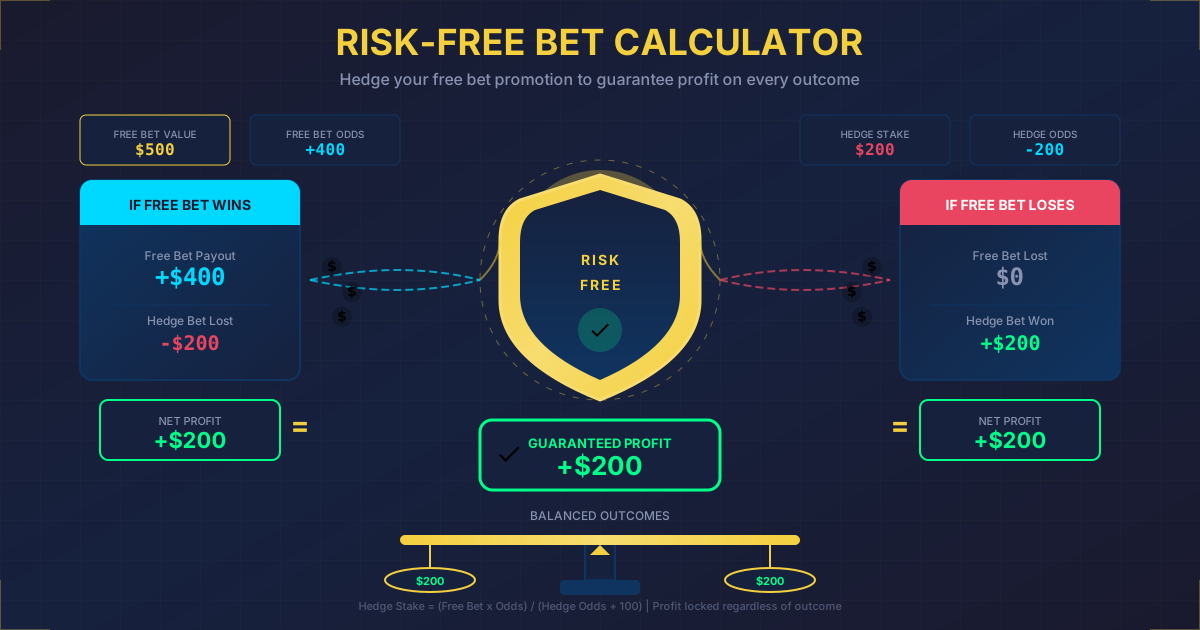
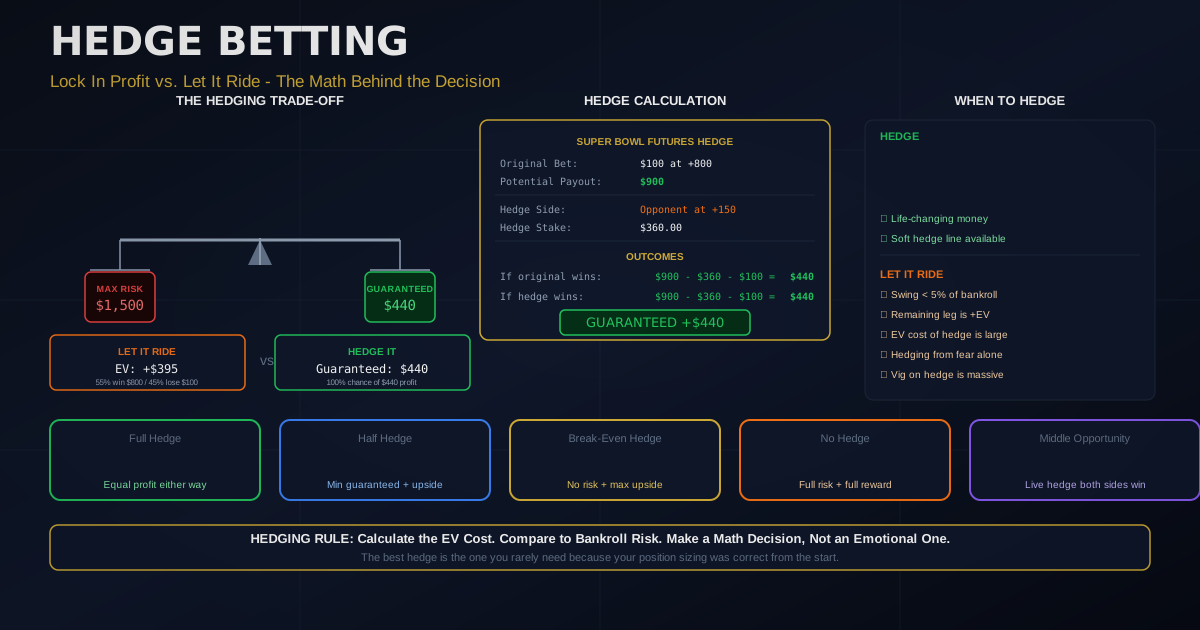
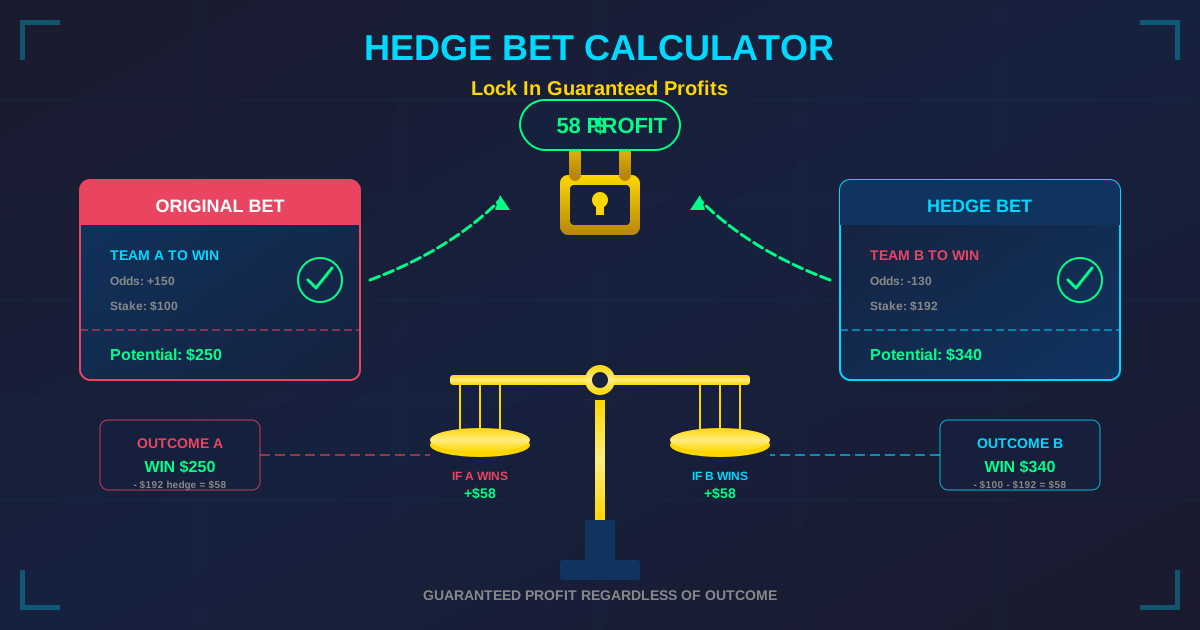
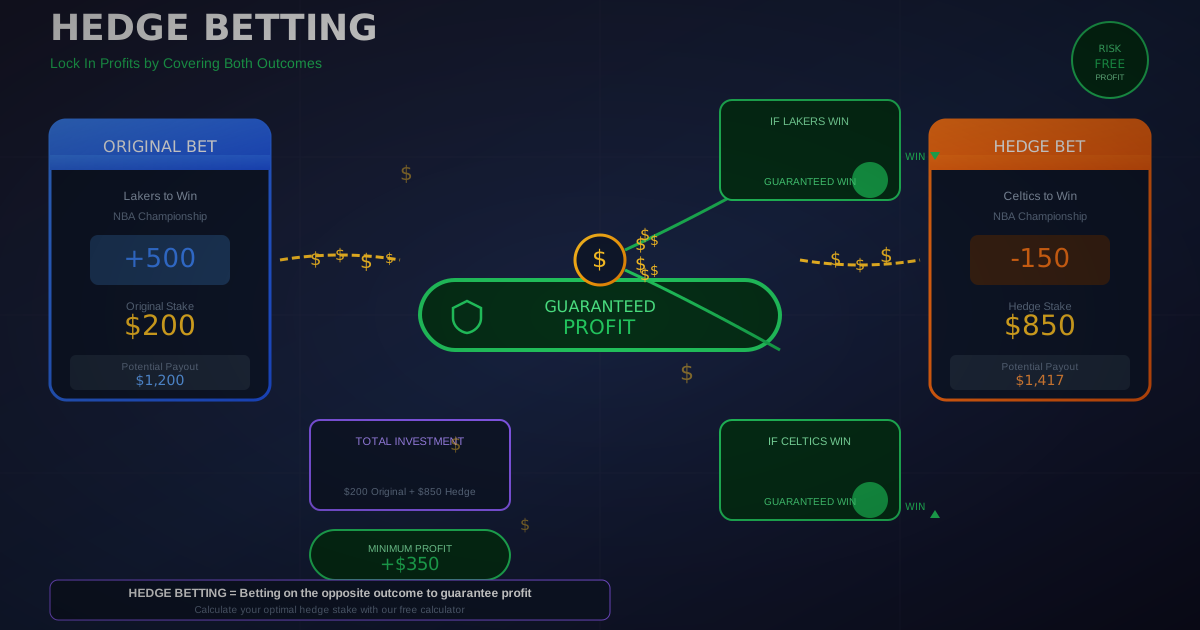
Use our Hedge Calculator to calculate optimal hedge bets when live lines move in your favor mid-game.
Why Are Some Betting Markets More Efficient Than Others?
Not all betting markets are created equal. Efficiency -- the degree to which the odds accurately reflect true probabilities -- varies significantly across sports, leagues, and bet types.
The Efficiency Hierarchy
| Market | Efficiency Level | Why |
|---|---|---|
| NFL sides (spread) | Very High | Highest volume, most sharp action, most data |
| NBA sides (spread) | Very High | High volume, strong models, frequent games |
| MLB moneylines | High | Large sample sizes, consistent data |
| NFL totals | High | Strong models but more variance from weather, pace |
| NBA totals | High | Pace data improves models significantly |
| NFL player props | Moderate | Less liquidity, more modeling uncertainty |
| NHL moneylines | Moderate | Lower volume than NFL/NBA, goalie-dependent |
| College football sides | Moderate | Less data, higher roster turnover, motivation questions |
| College basketball sides | Moderate | Huge number of teams, less coverage |
| Soccer (Big 5 Leagues) | Moderate-High | Global market, but draws add complexity |
| Tennis/Golf outrights | Low-Moderate | Individual sport variability, thin markets |
| Esports | Low-Moderate | Newer markets, less modeling data, roster volatility |
| Lower-league soccer | Low | Minimal data, motivation/integrity concerns |
What Makes a Market Inefficient?
Several factors contribute to inefficiency:
- Low liquidity: When a market attracts little betting volume, sharp bettors may not bother to correct mispricings because the potential profit is too small relative to their time and bankroll.
- Limited data: AI models are only as good as their training data. For obscure leagues, niche sports, or new competitions, the models have less to work with.
- Complexity: Markets with many possible outcomes (tournament winner, correct score in soccer) are harder to price accurately than binary markets (win/lose).
- Correlated uncertainty: Player prop markets in the NFL, for example, depend on game script. If the algorithm underestimates a team's likelihood of falling behind, it will systematically misprice rushing props (lower), passing props (higher), and time-of-possession-related markets.
- Recreational demand: Markets that attract heavy recreational betting (parlays, same-game parlays, novelty props) may have wider margins and less efficient pricing because the books can afford to be less precise when the customer base is less price-sensitive.
Identify whether a bet offers genuine value by running the numbers through our Expected Value Calculator.
How Does AI Handle Injury News and Weather Data?
Injury news and weather data are two of the most impactful external variables that sportsbook algorithms must process. The speed and accuracy of this processing directly affects the book's profitability.
Injury Impact Models
Sportsbooks maintain proprietary databases that quantify the expected impact of every meaningful player in every sport. When an injury is reported, the algorithm:
- Identifies the player and retrieves their impact rating (a composite score reflecting their contribution to team performance in various dimensions).
- Assesses the severity by parsing the injury report language. "Questionable" is treated differently from "Out." Natural language processing can even distinguish between "expected to play through injury" and "unlikely to suit up."
- Calculates the replacement effect: The algorithm considers who will replace the injured player and the performance gap between the starter and the backup.
- Adjusts all correlated markets: A starting quarterback injury does not just affect the spread. It affects the total, first-half spreads, player props for both teams, and even season-long futures.
| Injury Scenario (NFL) | Typical Spread Adjustment | Total Adjustment |
|---|---|---|
| Starting QB ruled out (elite) | 3-6 points | -2 to -4 points |
| Starting QB ruled out (average) | 1.5-3 points | -1 to -2 points |
| Star RB ruled out | 0.5-1.5 points | -0.5 to -1 point |
| WR1 ruled out | 0.5-1 point | -0.5 point |
| Top CB ruled out | 0.5-1 point | +0.5 to +1 point |
| Starting LT ruled out | 0.3-0.7 points | Minimal |
Weather Processing
For outdoor sports, weather data is updated continuously from commercial forecasting services. The algorithm applies sport-specific adjustments:
- Wind over 15 mph in NFL: Reduces total by 1-3 points, depending on speed and direction relative to the field. Also impacts kicker props and field goal-related markets.
- Rain or snow in NFL: Reduces total by 1-2 points, increases turnover probability estimates.
- Temperature below 20 degrees F in NFL: Minor total reduction (0.5-1 point), but larger impact on player comfort and injury risk.
- Humidity and heat index in baseball: Affects ball flight distance, impacting over/under and home run props.
- Wind speed and direction in baseball: Impacts ball flight significantly. Wind blowing out at Wrigley Field can add 1-2 runs to the total.
Compare odds across different formats and sportsbooks to find the best line with our Odds Converter.
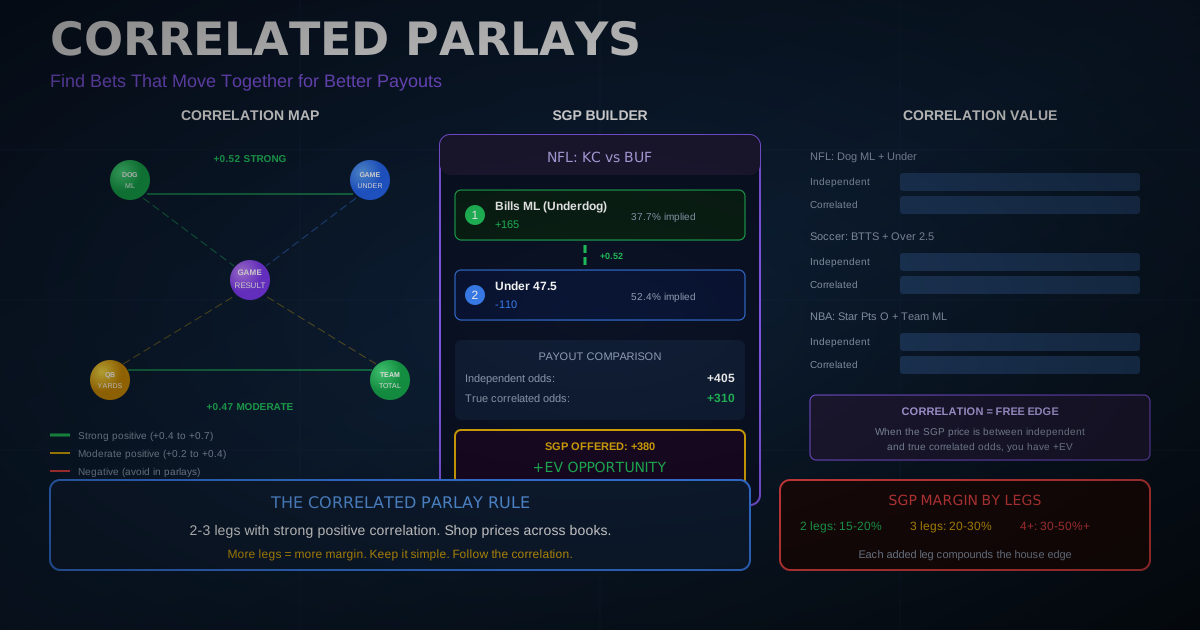
How Do Same-Game Parlays and Complex Markets Get Priced?
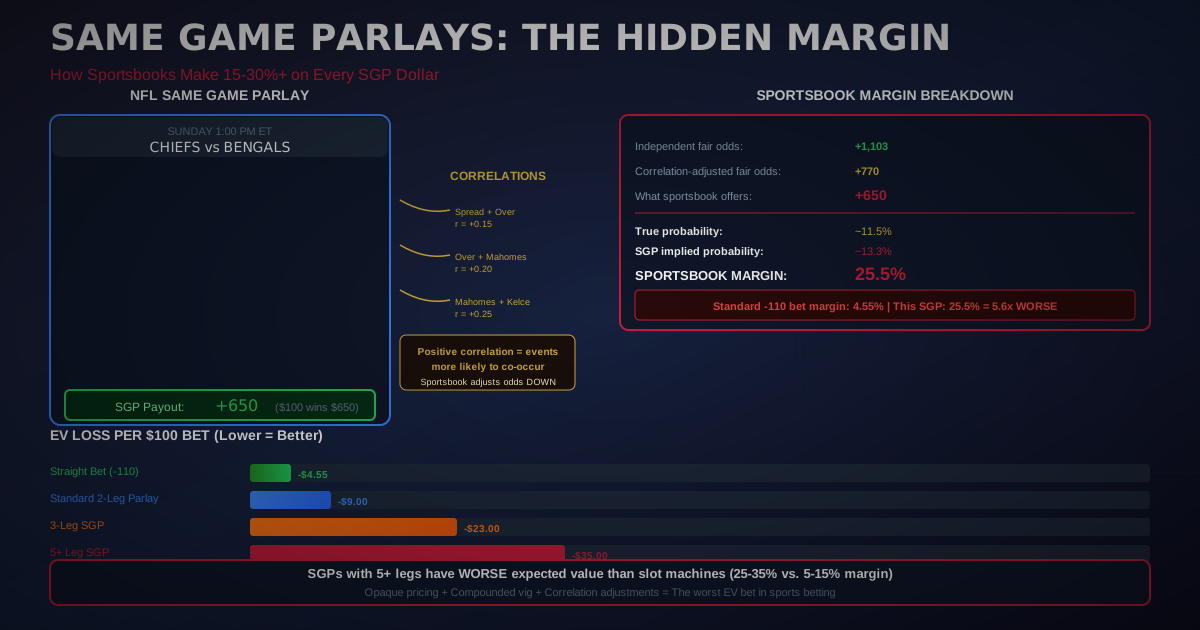
Same-game parlays (SGPs) have become one of the most profitable products for sportsbooks, largely because the AI systems that price them can embed significant hidden margins that are difficult for bettors to detect.
The Correlation Challenge
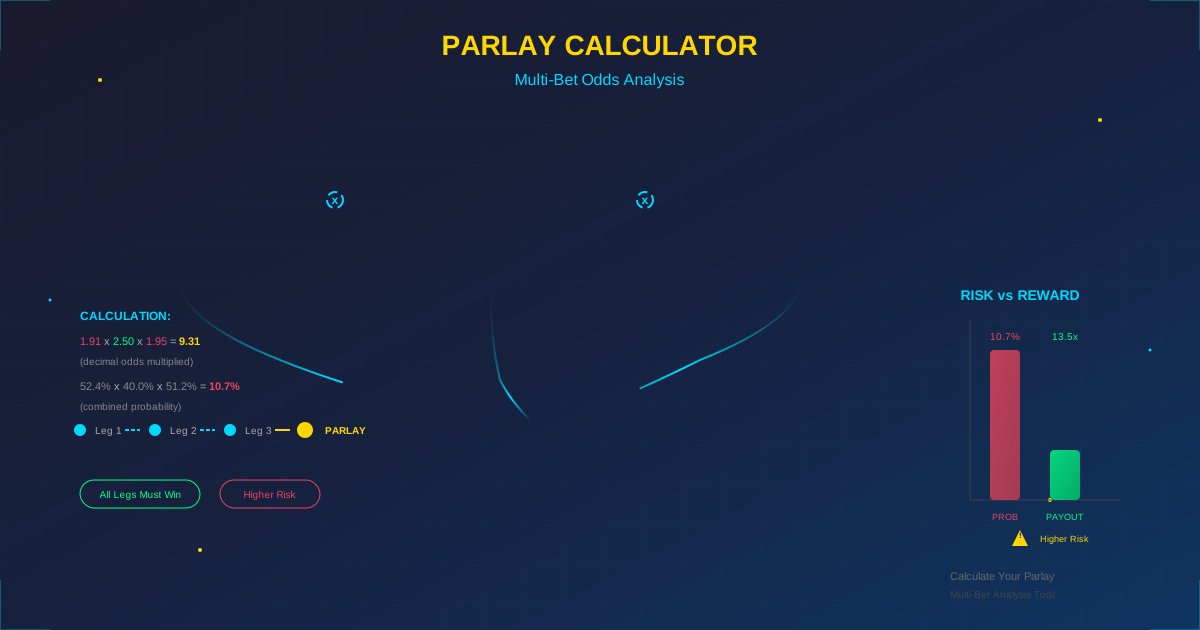
In a traditional parlay, the individual legs are assumed to be independent events. The combined probability is simply the product of the individual probabilities. But in a same-game parlay, the legs are correlated, and the algorithm must account for this.
For example, consider an NFL SGP that combines:
- Team A to win
- Over 48.5 total points
- Player X (Team A QB) over 275.5 passing yards
These three outcomes are positively correlated. If Team A wins, they probably scored a lot of points, which means the game is more likely to go over the total. If the game goes over, it is more likely that the QB threw for high yardage. Pricing the SGP as if these events were independent would significantly underestimate the true probability of all three hitting, giving the bettor too high a payout.
How the Algorithm Handles It
Sportsbook AI uses copula models and Bayesian networks to estimate joint probabilities between correlated legs. The system:
- Calculates the marginal probability of each individual leg.
- Estimates pairwise correlations between every pair of legs using historical game data and Monte Carlo simulation.
- Adjusts the joint probability to account for these correlations, typically reducing the payout compared to a naive independent calculation.
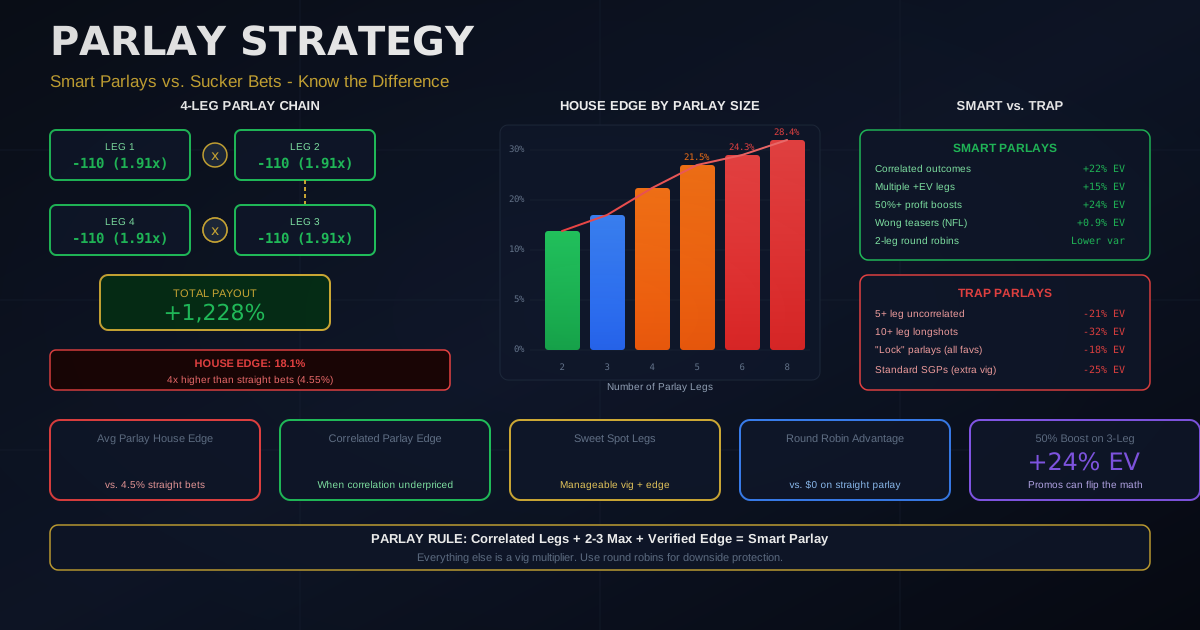
- Adds additional margin: On top of the correlation adjustment, sportsbooks add extra juice to SGPs. Industry estimates suggest SGP margins run between 15% and 30%, compared to 4-6% on standard sides.
| Parlay Type | Typical Sportsbook Margin | Correlation Complexity |
|---|---|---|
| Traditional 2-leg parlay (different games) | 6-10% | None -- legs are independent |
| Same-game 2-leg parlay | 12-18% | Moderate |
| Same-game 3-leg parlay | 18-25% | High |
| Same-game 4+ leg parlay | 25-40% | Very High |
| Multi-sport parlay | 8-15% | Minimal cross-sport correlation |
Why SGPs Are the Sportsbook's Best Friend
The combination of complex correlation pricing and higher margins makes SGPs enormously profitable for sportsbooks. Bettors have difficulty evaluating whether the offered price is fair because they cannot easily calculate the true joint probability themselves. This information asymmetry is the core profit driver.
DraftKings reported in 2025 that same-game parlays generated approximately 3x the hold percentage of traditional single bets, and they represented a growing share of total handle.
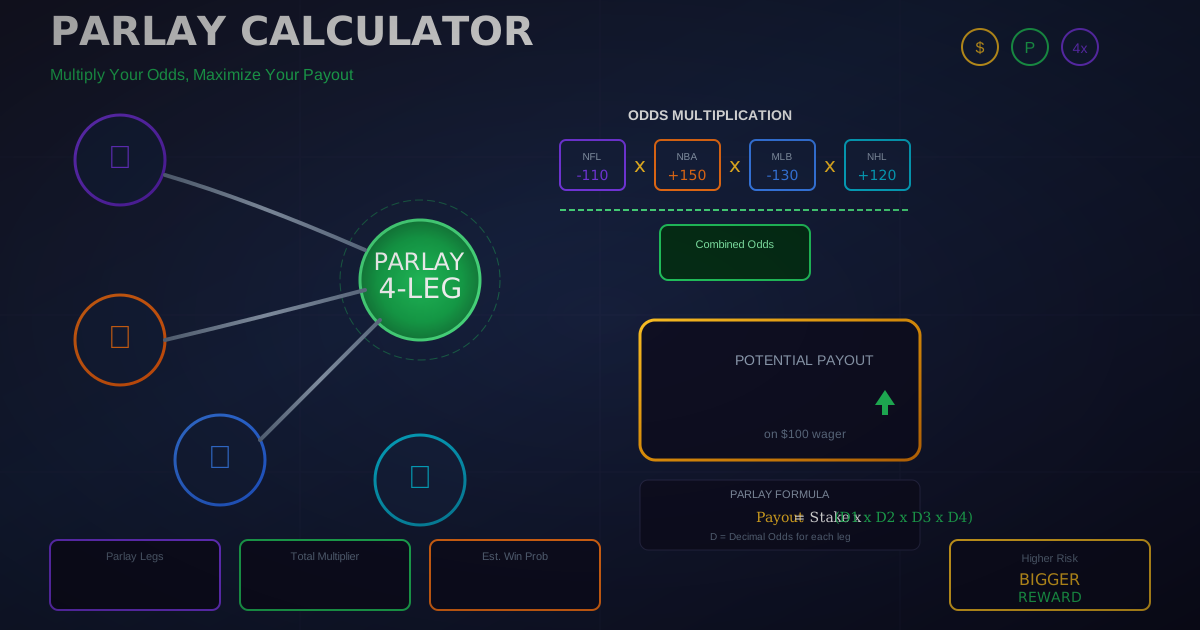
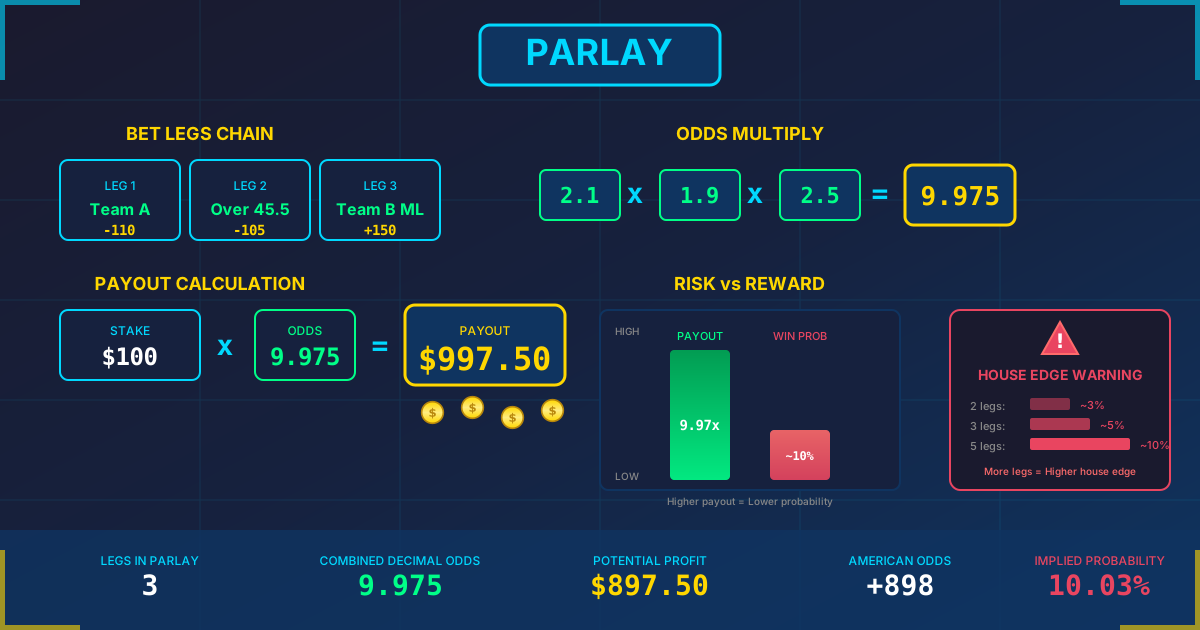
Calculate the true payout on any parlay and see how the vig compounds with our Parlay Calculator.
What Is Algorithmic Steam Move Detection?
A steam move occurs when multiple sharp bettors simultaneously place large wagers on the same side of a market, triggering rapid, significant line movement. Sportsbook algorithms are specifically designed to detect and respond to steam moves.
How Steam Moves Form
Steam moves are not coordinated conspiracies. They occur because professional bettors independently arrive at the same conclusion:
- A sharp bettor identifies value in a line.
- They place a large bet at a market-making book (Pinnacle, Circa, Bookmaker).
- The line moves.
- Other sharp bettors notice the movement and/or independently arrive at the same assessment.
- They bet at other books that have not yet moved.
- Within minutes, multiple books receive large sharp bets on the same side.
- The line moves quickly across the entire market.
Algorithm Detection Process
Modern detection systems track:
| Detection Feature | What It Identifies | Response Time |
|---|---|---|
| Simultaneous sharp account activity | Multiple known sharps betting the same side within 5 minutes | 30-90 seconds |
| Cross-book line movement | Pinnacle or Circa moves, other books receive action on the same side | 60-180 seconds |
| Bet velocity | Sudden spike in bet count or handle on one side | 15-60 seconds |
| Account clustering | Multiple accounts with correlated historical behavior betting together | Flagged immediately |
| Geographic clustering | Sudden spike in action from known sharp geographic regions (Costa Rica, Las Vegas, Manila) | 60-120 seconds |
When a steam move is detected, the algorithm:
- Immediately halts new wager acceptance on the affected market (2-10 second pause).
- Reprices the line based on the magnitude and source quality of the steam.
- Reopens the market at the new price.
- Alerts risk management for manual review if the steam exceeds predefined thresholds.
Can Bettors Follow Steam Moves Profitably?
Following steam moves can be profitable if you act quickly enough. Research from betting data aggregators suggests that bettors who consistently place wagers within 60 seconds of a steam move at books that have not yet adjusted can capture CLV of +1.5% to +3%. However:
- Most retail bettors do not have access to real-time steam detection tools.
- By the time steam moves appear on public line-tracking sites, the value is often gone.
- Sportsbooks are increasingly fast at adjusting, shrinking the window of opportunity.
Check if you are consistently beating the closing line with our CLV Tracker.
How Do Sportsbook Algorithms Handle Futures and Season-Long Markets?
Futures markets -- Super Bowl winner, MVP, division champions, win totals -- present unique algorithmic challenges because they span weeks or months and involve far more uncertainty than single-game markets.
Futures Pricing Models
Sportsbook AI prices futures using a combination of:
- Monte Carlo simulation: The algorithm simulates the remaining season thousands or millions of times, using current power ratings, remaining schedule strength, injury probability distributions, and historical variance patterns. The proportion of simulations in which each team wins the championship becomes the basis for the odds.
- Market consensus: Futures prices at other sportsbooks serve as a benchmark, especially for less liquid markets where the book's own model may be less confident.
- Liability management: Unlike single-game markets where the book aims for balanced action, futures markets often have significant imbalances. The algorithm adjusts prices to manage risk exposure rather than to reflect true probability.
The Margin Structure in Futures
Futures markets carry substantially higher margins than single-game markets:
| Futures Market | Typical Total Margin (Overround) | Number of Outcomes |
|---|---|---|
| Super Bowl Winner | 30-60% | 32 teams |
| Conference Winner | 20-40% | 16 teams |
| Division Winner | 15-25% | 4 teams |
| Regular Season Win Total | 5-10% | 2 (over/under) |
| MVP | 40-80% | 20-40 candidates |
| Exact Regular Season Record | 80-150%+ | Many outcomes |
The high margins exist because futures markets attract primarily recreational bettors who are willing to pay for the excitement of a long-shot bet. Sharp bettors rarely wager on long-shot futures because the margin embedded in the odds makes positive expected value almost impossible to achieve.
How Futures Lines Move
Futures prices update continuously based on:
- Game results: A team that wins big moves up in championship odds.
- Injury reports: A season-ending injury to a key player can dramatically shift futures.
- Betting action: Large bets on specific futures teams trigger repricing.
- Remaining schedule: As the season progresses and the remaining schedule crystallizes, the algorithm refines its simulations.
Calculate the true implied probability of any futures price with our Implied Probability Calculator -- and see just how much margin the book has embedded.
What Data Sources Feed Into Sportsbook AI Models?
The breadth of data consumed by modern sportsbook algorithms goes far beyond box scores and traditional statistics. Here is a comprehensive overview of the data ecosystem.
Primary Data Sources
| Data Category | Examples | Typical Source |
|---|---|---|
| Historical game data | Scores, statistics, play-by-play | Official league feeds (Sportradar, Genius Sports) |
| Player tracking data | GPS location, speed, acceleration, distance covered | Second Spectrum, Hawkeye, StatCast |
| Injury reports | Official team reports, beat reporter updates | League feeds, NLP scraping of news |
| Weather | Temperature, wind, precipitation, humidity | Commercial weather APIs (AccuWeather, The Weather Company) |
| Betting market data | Lines, odds, handle, and bet counts at competitors | Proprietary monitoring, odds aggregation services |
| Social media | Tweets, posts, and comments about teams and players | NLP scraping with source weighting |
| Team news | Coaching changes, roster moves, scheme changes | News feeds, team official communications |
| Referee/umpire data | Historical tendencies for penalty rates, foul calls, scoring impact | Proprietary databases |
| Venue data | Altitude, turf type, dome vs outdoor, crowd capacity | Static databases updated as needed |
| Travel and scheduling | Flight data, time zone changes, days of rest | Schedule analysis algorithms |
| Advanced analytics | EPA, DVOA, PER, WAR, xG (soccer), and hundreds more | Sports analytics providers |
Proprietary vs. Public Data
The real competitive advantage for sportsbooks lies in proprietary data -- information that is not available to the betting public:
- Internal betting data: The book knows exactly how much money is on each side, which accounts are betting, and the timing of every wager. This is an enormous informational advantage.
- Bettor classification models: The book knows who its sharp customers are, which the public does not.
- Real-time camera feeds: Some sportsbooks have partnerships for real-time video analysis that can detect injuries or lineup changes before they are officially announced.
- Cross-platform data: Large operators running multiple sportsbooks across multiple states can aggregate data across all platforms for a larger sample.
See how the vig and margin affect your bottom line across different bet types with our Hold/Vig Calculator.
Can Bettors Use AI to Beat Sportsbook Algorithms?
This is the central question for any serious bettor. The answer is nuanced: yes, but with significant caveats and limitations.
Where Bettor AI Can Find Edges
Despite the sophistication of sportsbook algorithms, there are structural reasons why individual bettors can still find value:
-
Niche markets: Sportsbooks allocate fewer modeling resources to lower-volume markets. A bettor who specializes deeply in a niche (Korean baseball, women's tennis, second-tier European soccer) may develop superior models for that specific domain.
-
Novel information sources: If you have access to information that is not yet in the sportsbook's data feed -- perhaps you attend a team's open practices, have sources in local media, or have developed a proprietary data set -- you have an informational edge.
-
Structural biases: Sportsbook algorithms are designed to maximize profit, not to maximize accuracy. This means they sometimes:
- Shade lines toward popular teams to attract recreational money
- Overprice certain prop markets because the margin cushion allows sloppier pricing
- Underprice less popular outcomes in futures markets to avoid liability
-
Speed advantages in specific contexts: During injury report releases, lineup changes, or other breaking news, a bettor who reacts faster than the algorithm's NLP system can capture value before the line moves.
-
Cross-market inefficiencies: Sometimes the algorithm correctly prices individual markets but creates inconsistencies between related markets. For example, the spread and total may imply different game scripts than the player prop markets.
What Bettor AI Cannot Do
- Beat the closing line consistently at scale in major markets: The top sportsbook algorithms are backed by hundreds of millions of dollars in development, enormous proprietary data sets, and teams of PhD-level data scientists. A solo bettor or small group is unlikely to build a model that consistently outperforms the consensus closing line on NFL sides.
- Overcome limits at retail books: Even if your model identifies value, retail sportsbooks will limit your account once you start winning consistently. This caps the practical profitability of any AI-driven strategy at regulated U.S. books.
- Predict individual game outcomes with high reliability: No model can predict who wins a single football game with more than roughly 65-70% accuracy. Variance is inherent to sports. The goal is not to be "right" on each bet but to capture positive expected value over large samples.
Building Your Own AI Betting Model
If you are serious about using AI for sports betting, here are the essential components:
| Component | What You Need | Estimated Investment |
|---|---|---|
| Data | Historical play-by-play, box scores, team stats, weather, injury data | $200-$2,000/year for quality data |
| Computing | Cloud GPU for model training, local machine for inference | $50-$300/month |
| Skills | Python, statistics, machine learning fundamentals, domain expertise | Months to years of learning |
| Odds comparison | Real-time access to odds at multiple sportsbooks | $50-$200/month for commercial feeds |
| Bankroll | Sufficient capital to withstand variance | $5,000-$50,000+ depending on volume |
| Time | 10-30+ hours/week for model development, monitoring, and refinement | Ongoing commitment |
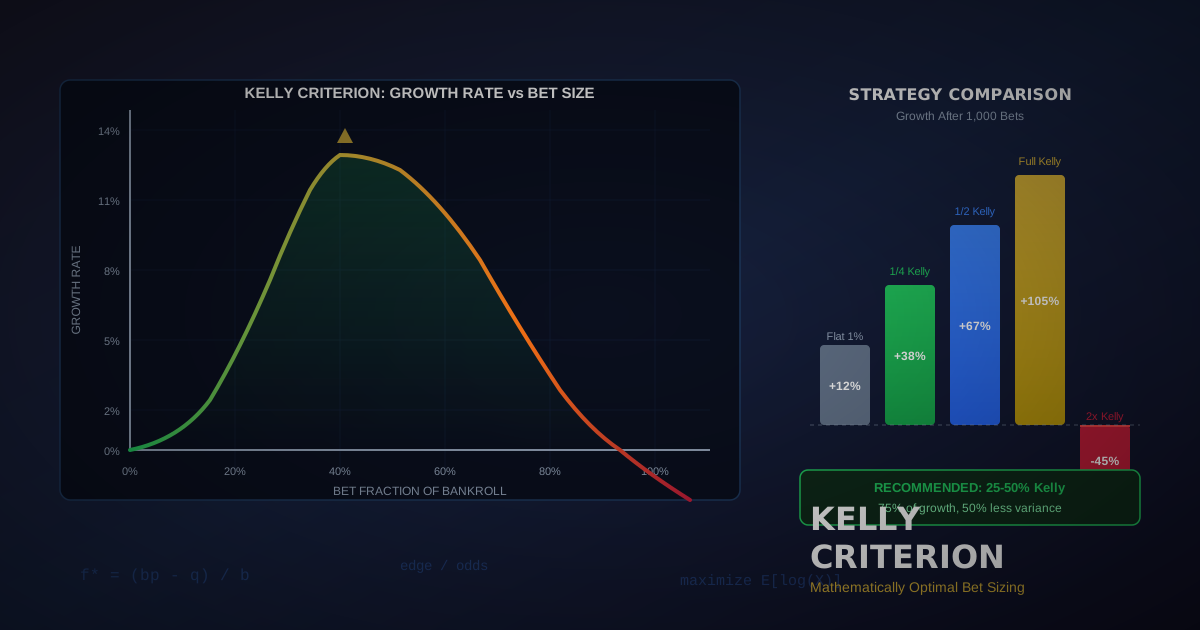
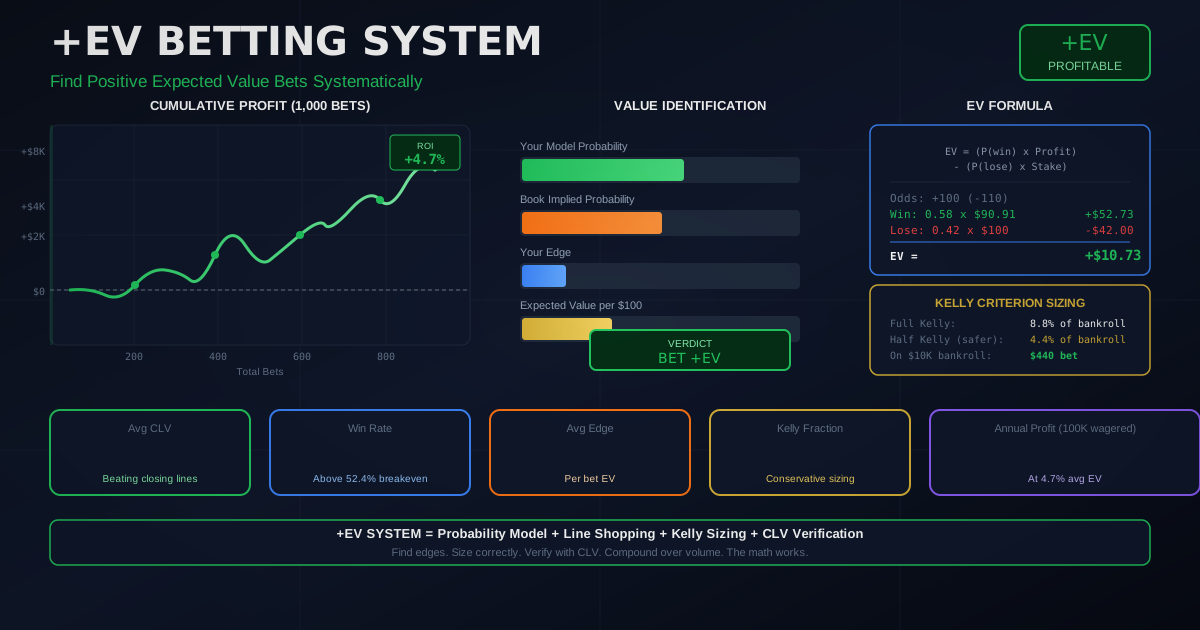
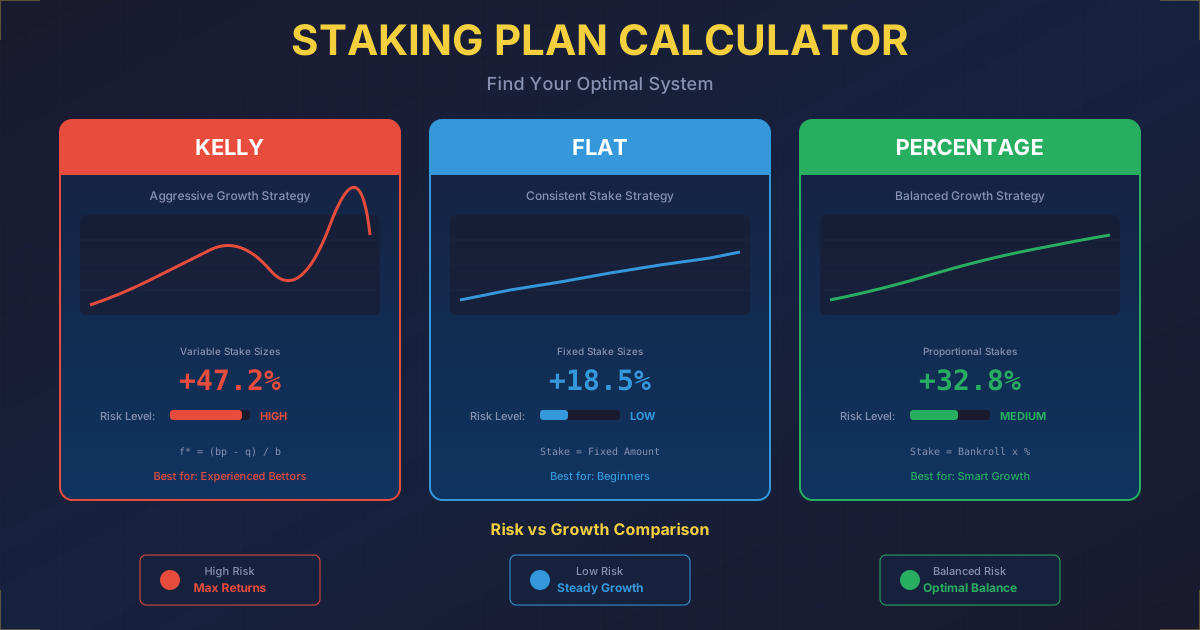
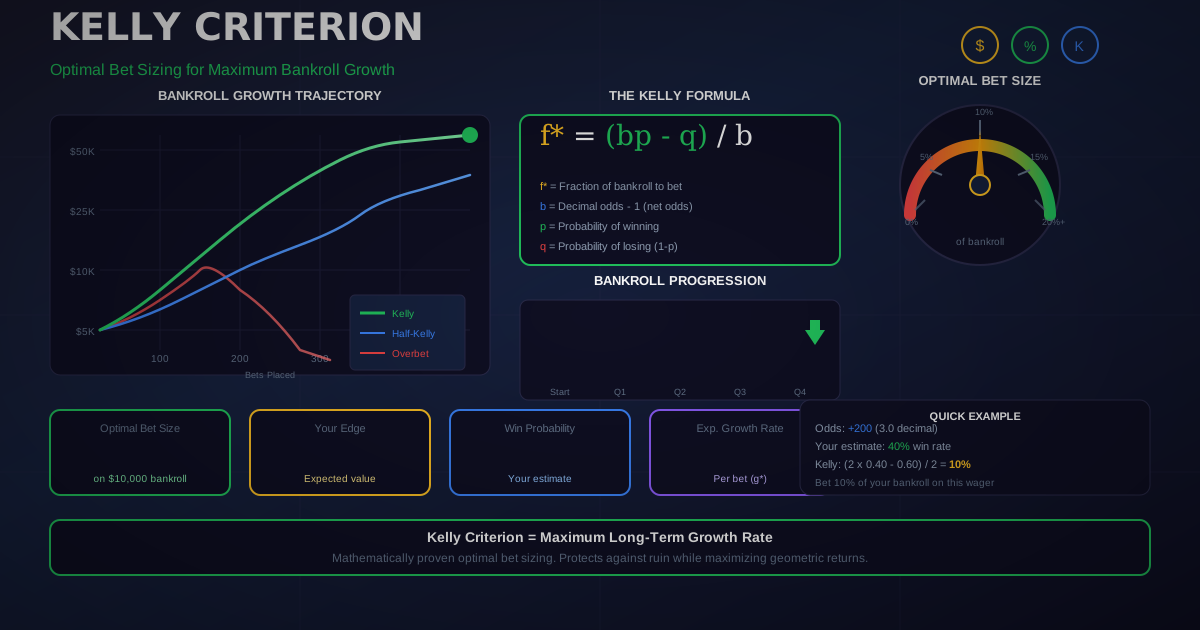
Before building your own model, use our Kelly Criterion Calculator to understand optimal bet sizing for any edge you identify.
How Will AI in Sports Betting Evolve Beyond 2026?
The trajectory of AI in sports betting points toward increasingly sophisticated systems that will reshape the industry over the next several years.
Near-Term Developments (2026-2028)
- Computer vision integration: Algorithms will increasingly use real-time video analysis from game broadcasts to detect injuries, formation tendencies, and momentum shifts before they appear in traditional data feeds.
- Personalized pricing: Sportsbooks will move toward offering individualized odds based on a bettor's historical behavior, risk profile, and engagement patterns. This is already happening in subtle ways through targeted promotions, but explicit personalized odds are on the horizon.
- Natural language interfaces: Bettors will interact with AI assistants that can answer questions like "What is the most likely score of tonight's game given the weather forecast?" and generate real-time bet recommendations.
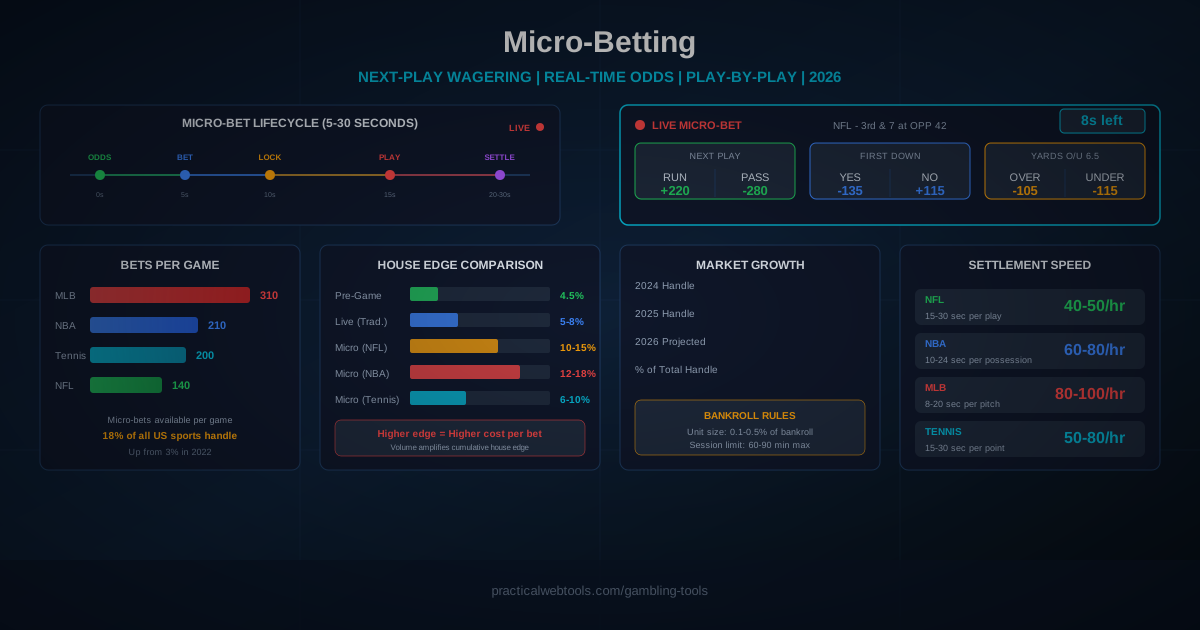
- Deeper micro-market expansion: Expect AI to price increasingly granular markets -- not just "next play touchdown" but "type of play on next down" or "yards gained on next rush attempt."
Longer-Term Possibilities (2028-2032)
- Autonomous sportsbooks: Fully automated operations where AI handles every aspect of line-setting, risk management, customer service, and compliance with zero human intervention.
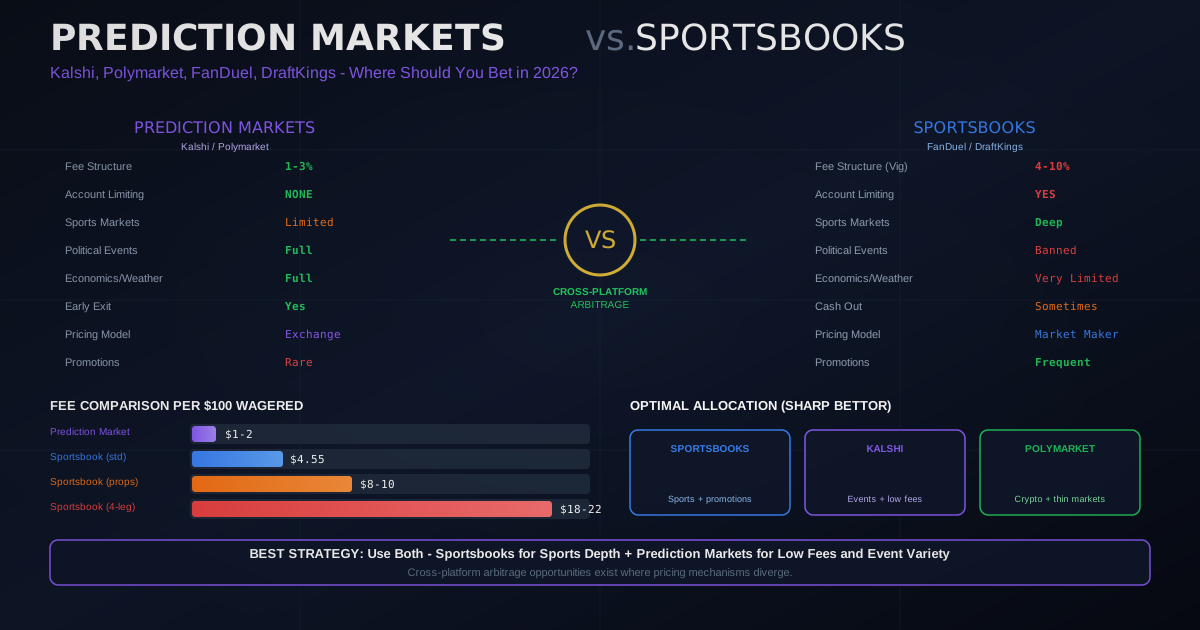
- Decentralized AI markets: Blockchain-based prediction markets where AI agents compete against each other to provide the most accurate odds, potentially disrupting the centralized sportsbook model.
- Regulatory AI: Government regulators deploying their own AI to monitor sportsbook operations in real time, ensuring compliance and detecting market manipulation.
What This Means for Bettors
The increasing sophistication of sportsbook AI means that finding edges will become progressively harder in major markets. The future for profitable bettors likely involves:
- Deeper specialization in niche markets
- Faster information acquisition and processing
- More sophisticated bankroll management
- Greater emphasis on exploiting structural biases rather than pure modeling advantages
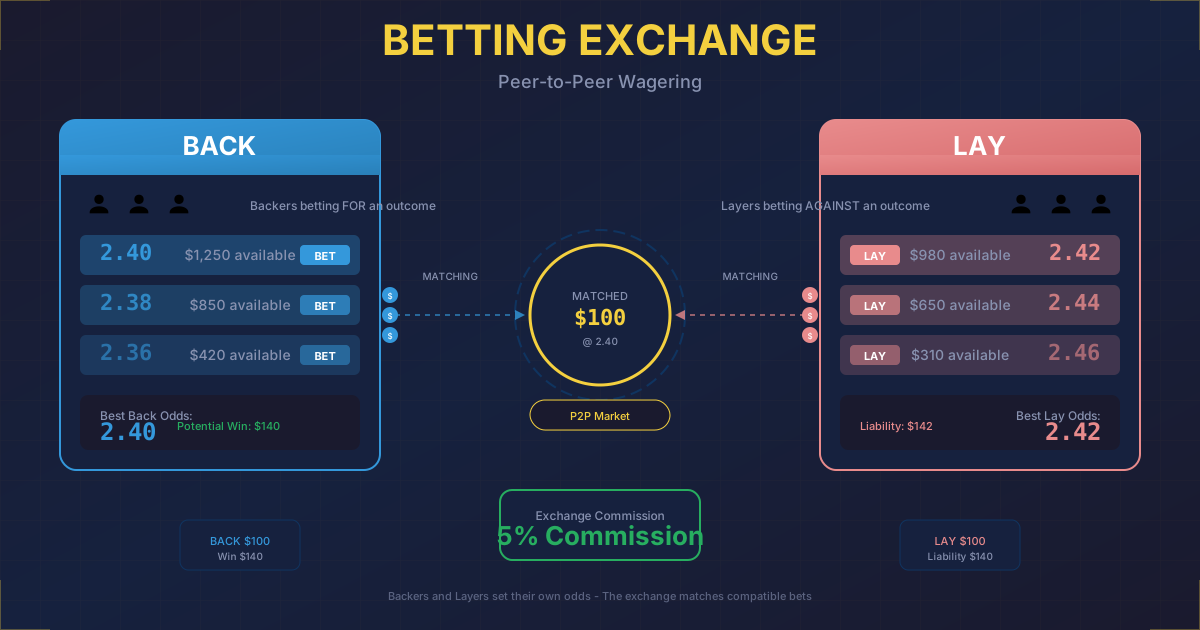
- Possible migration toward decentralized or peer-to-peer betting platforms where the playing field is more level
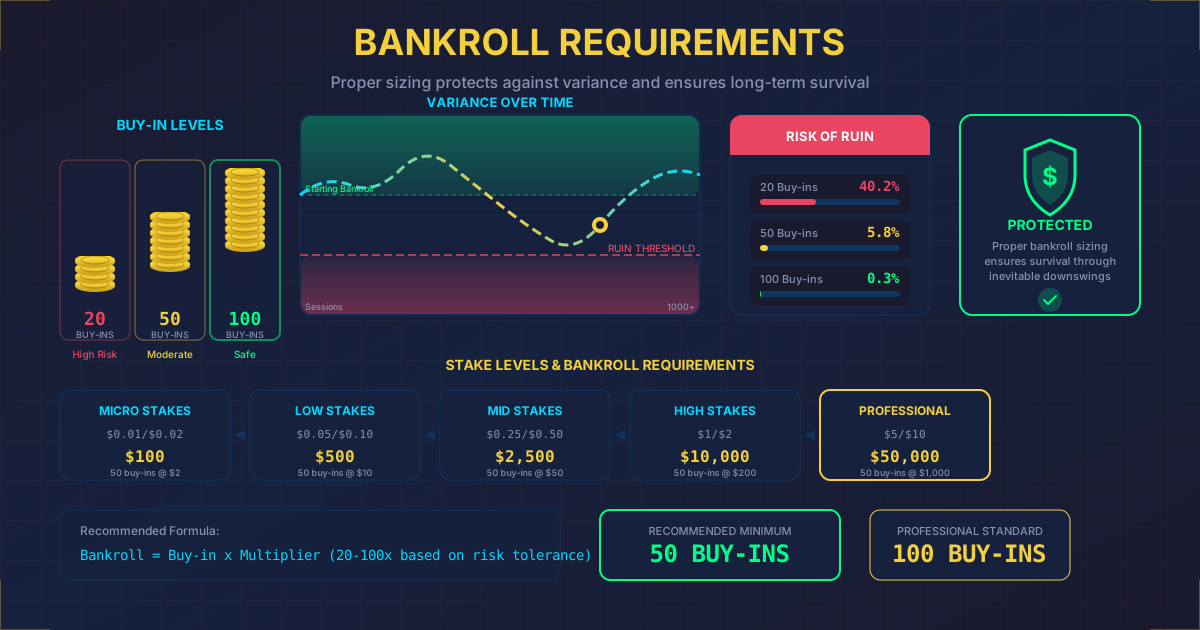
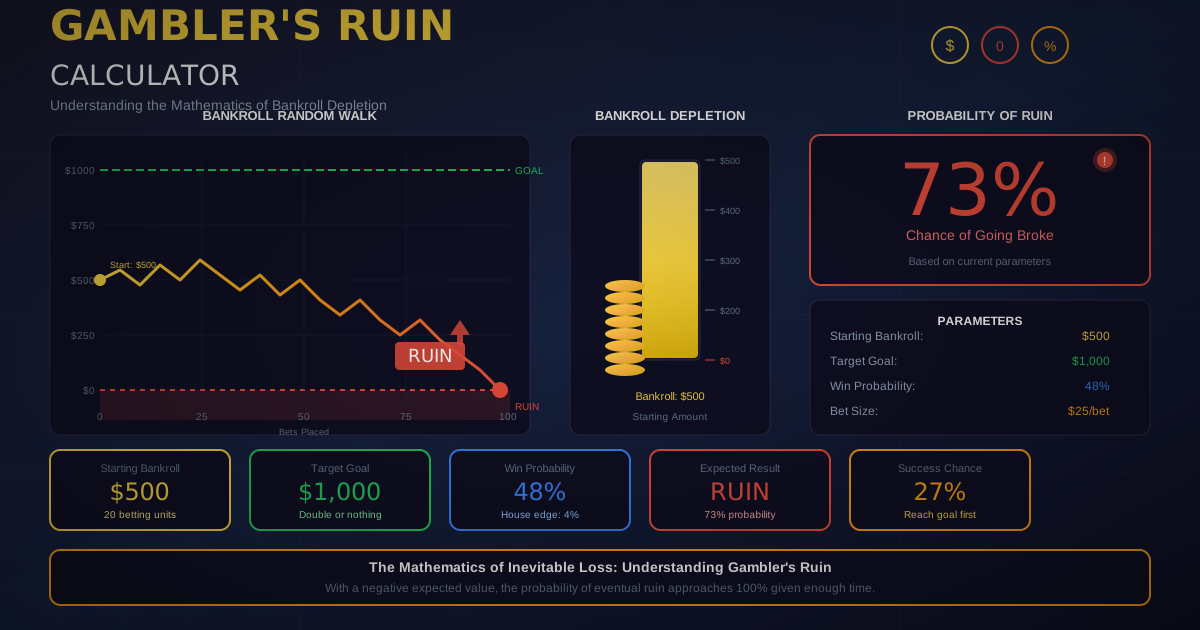
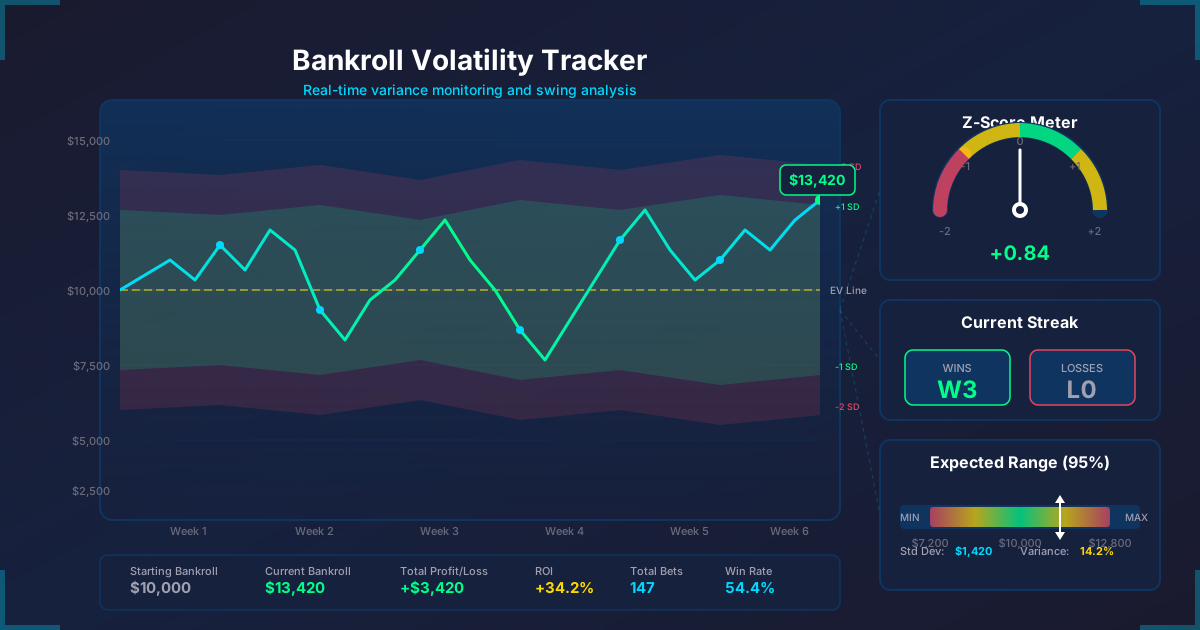
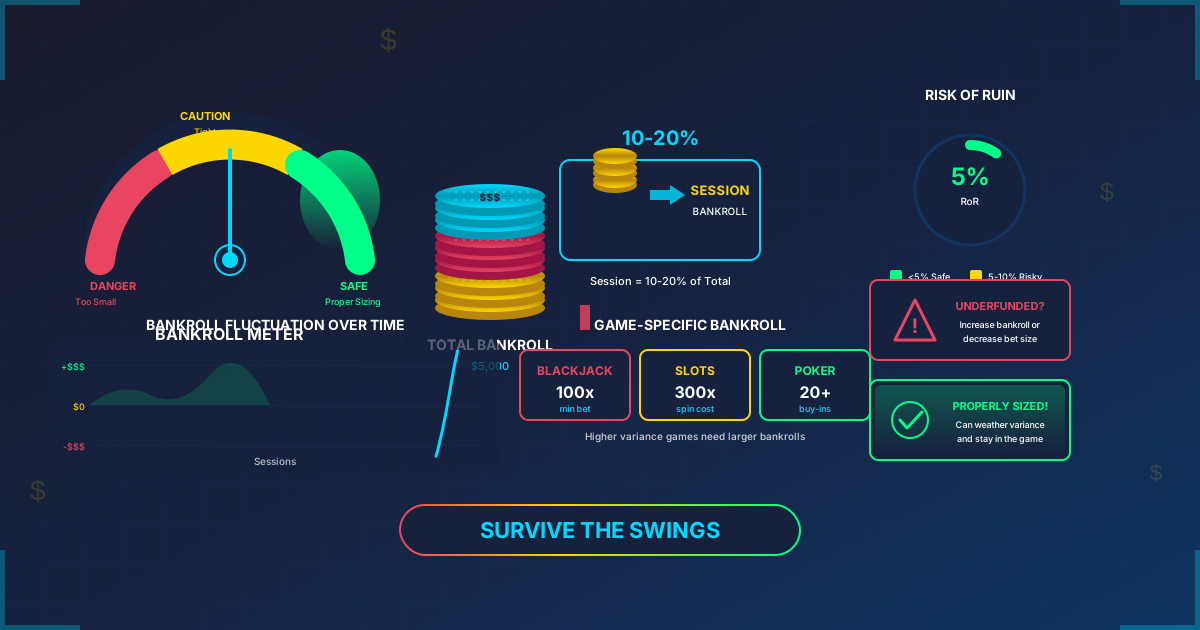
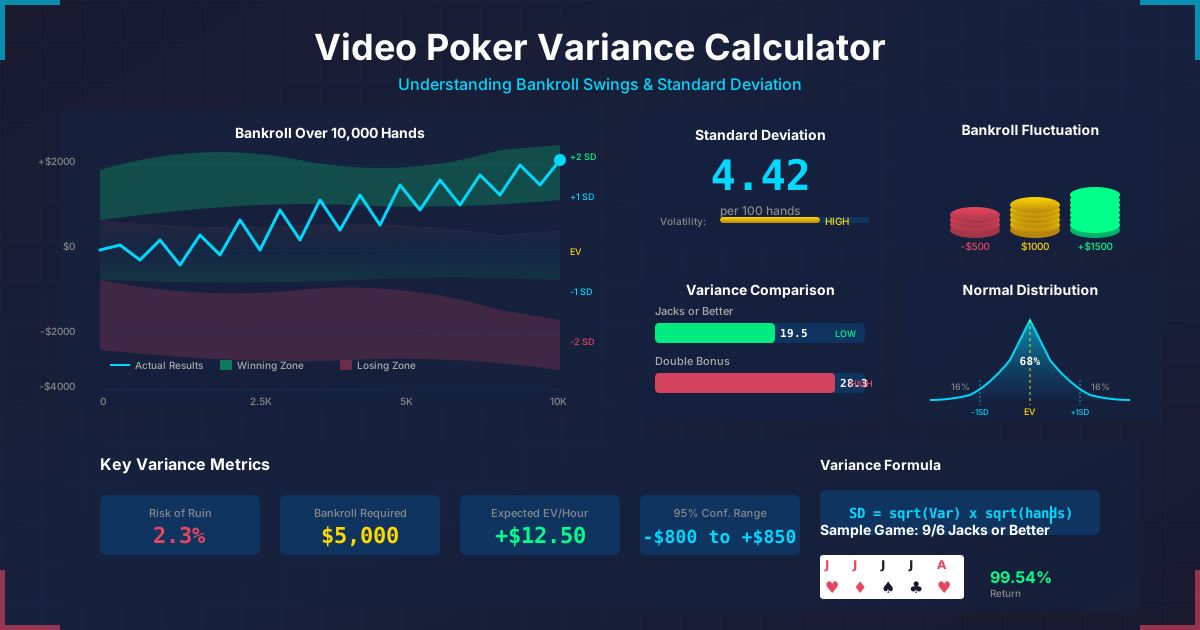
Track the volatility of your betting bankroll and understand your risk of ruin with our Bankroll Volatility Tracker.
Frequently Asked Questions
How accurate are sportsbook AI algorithms at predicting game outcomes? Sportsbook AI algorithms achieve closing line accuracy rates of roughly 93-96% across major markets, meaning the final odds closely reflect true outcome probabilities. However, this does not mean they predict the winner correctly 93% of the time -- it means the implied probabilities are well-calibrated. A team priced at 60% wins approximately 60% of the time, not more or less. The accuracy improves as the market incorporates more information from opening line to closing line.
Can sportsbooks legally use AI to limit winning bettors? Yes, in most jurisdictions. In the United States, sportsbooks are generally permitted to set and adjust individual customer limits at their discretion. There is no federal law requiring equal access to betting limits. Some states have introduced regulations requiring sportsbooks to maintain minimum bet limits (Nevada requires a minimum $20 bet on certain markets), but outright bans on AI-driven limit reduction are rare. The practice is widely criticized by professional bettors and advocacy groups.
Do all sportsbooks use the same AI algorithms? No. Each major sportsbook operates its own proprietary technology stack. DraftKings, FanDuel, BetMGM, Caesars, and Pinnacle all use different models, different data sources, and different risk management approaches. However, because they are all pricing the same events and incorporating similar public information, their lines tend to converge toward a consensus price. The differences are most pronounced in opening lines and less liquid markets.
How much does it cost to build a sportsbook AI system? Building a competitive sportsbook AI system from scratch is estimated to cost between $10 million and $50 million for a major operator, with ongoing annual costs of $3-10 million for data feeds, computing infrastructure, and engineering talent. Smaller operators often license third-party pricing feeds rather than building their own models, at a cost of $500,000 to $2 million annually.
Is it possible to reverse-engineer sportsbook algorithms? Not directly, because the algorithms are proprietary and the underlying data is private. However, bettors can infer algorithmic behavior by observing line movements, studying how quickly lines react to specific types of information, and tracking the relationship between public betting percentages and line movement. This inferential approach can reveal tendencies and biases in specific books' pricing systems, even without knowing the exact algorithm.
How do sportsbooks prevent their AI from being manipulated? Sportsbooks implement multiple layers of protection against algorithm manipulation. These include bet velocity limits (restricting how quickly a single account can place bets), identity verification to prevent multi-accounting, cross-referencing of account clusters that show correlated behavior, and manual review triggers for unusual market activity. The AI itself is trained to recognize patterns of coordinated manipulation and to respond by suspending markets rather than being exploited.
What happens when the AI makes a clearly wrong line? When a sportsbook AI generates a clearly erroneous line (sometimes called a "bad line" or "palpable error"), the book typically reserves the right to void bets placed at the erroneous price. This is standard in most sportsbook terms and conditions. However, sharp bettors are extremely skilled at identifying and betting into lines that are merely mispriced rather than obviously erroneous -- lines where the value is genuine but subtle. These bets are generally honored, which is how sharps generate consistent profits.
Related Gambling Tools
Deepen your understanding of sportsbook odds and make smarter betting decisions with these free tools:
- Odds Converter -- Convert between American, decimal, and fractional odds formats
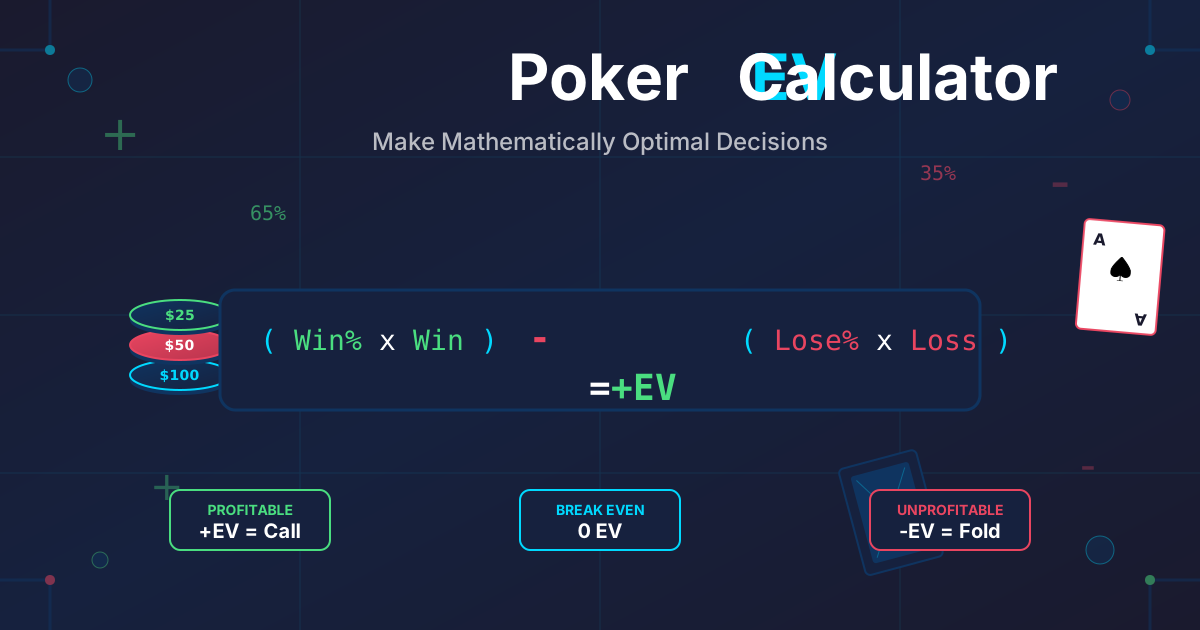
- Expected Value Calculator -- Calculate the expected value of any wager
- Implied Probability Calculator -- See the true probability behind any odds
- Kelly Criterion Calculator -- Calculate optimal bet sizing for your edge
- Hold/Vig Calculator -- Understand the sportsbook's built-in margin
- CLV Tracker -- Track your closing line value performance over time
- Parlay Calculator -- Calculate true parlay payouts and see compounding vig
- Hedge Calculator -- Find optimal hedge positions when lines move
- Arbitrage Calculator -- Identify risk-free arbitrage opportunities across books
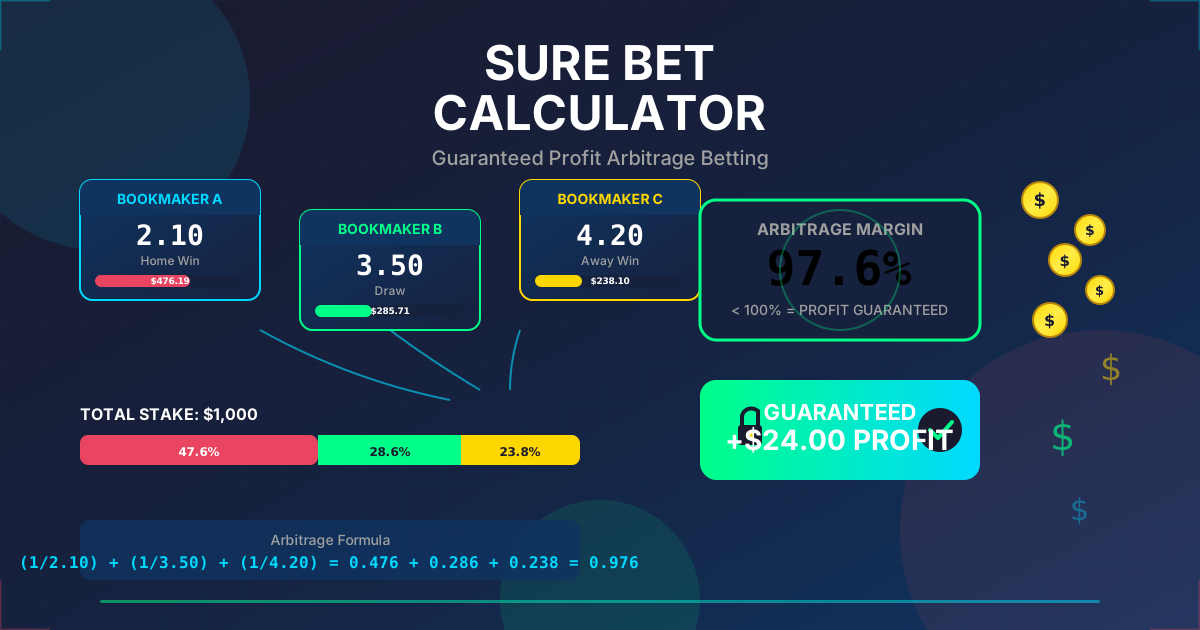
- Sure Bet Calculator -- Verify and calculate sure bet opportunities
- Bankroll Volatility Tracker -- Monitor bankroll swings and risk of ruin
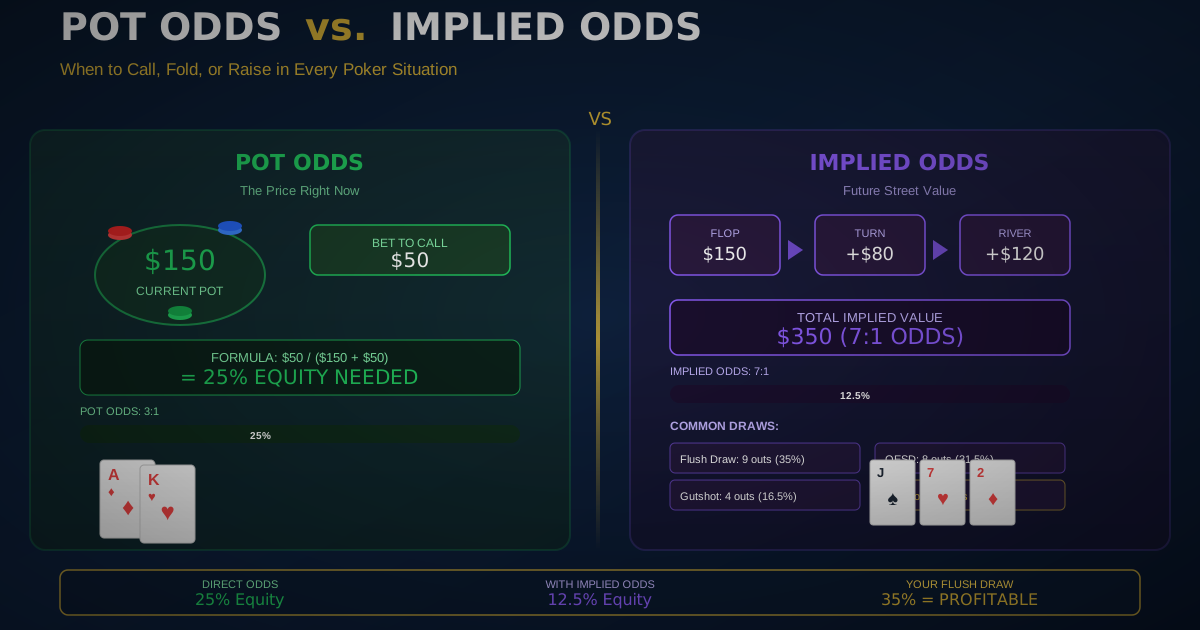
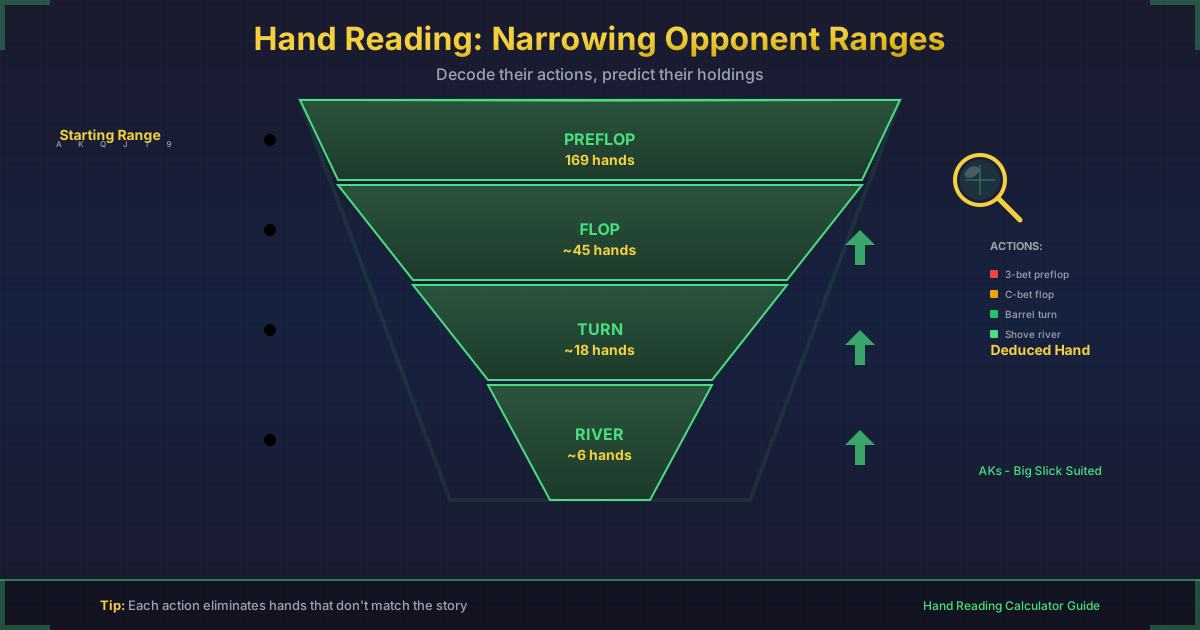
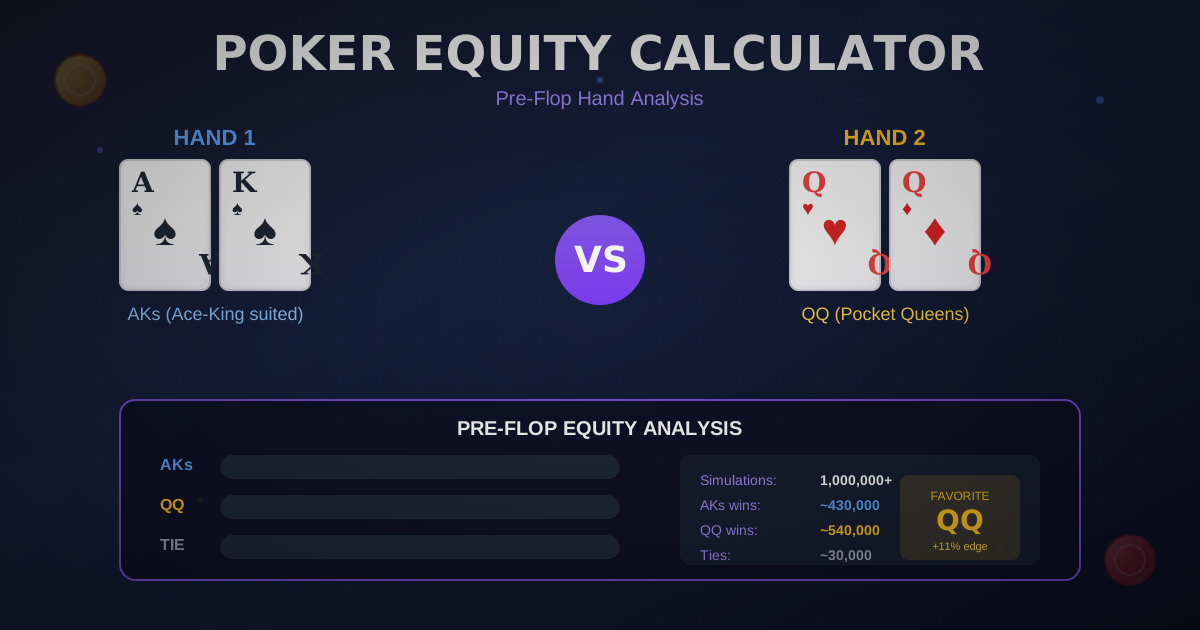
- Poker Equity Calculator -- Calculate hand equity in poker scenarios
Conclusion
The AI revolution in sports betting is not coming -- it is here. Sportsbook algorithms in 2026 are faster, smarter, and more data-driven than at any point in the industry's history. They set lines with remarkable precision, detect sharp bettors with unsettling speed, and adjust prices in milliseconds based on a torrent of real-time data.
For bettors, this reality demands a shift in approach. The days of finding easy edges through basic handicapping are largely over in major markets. Today's successful bettors need to understand the technology they are betting against, identify the specific structural weaknesses in algorithmic pricing, specialize in markets where their expertise can outpace the models, and manage their bankrolls with mathematical precision.
The tools on this page are designed to help you do exactly that. Whether you are evaluating expected value, tracking closing line performance, converting odds formats, or sizing your bets optimally, these calculators provide the analytical foundation that every data-driven bettor needs.
The sportsbooks have their algorithms. Now it is time to sharpen yours.
Start building your analytical edge today with our complete suite of Gambling Tools -- all free, all built for serious bettors.
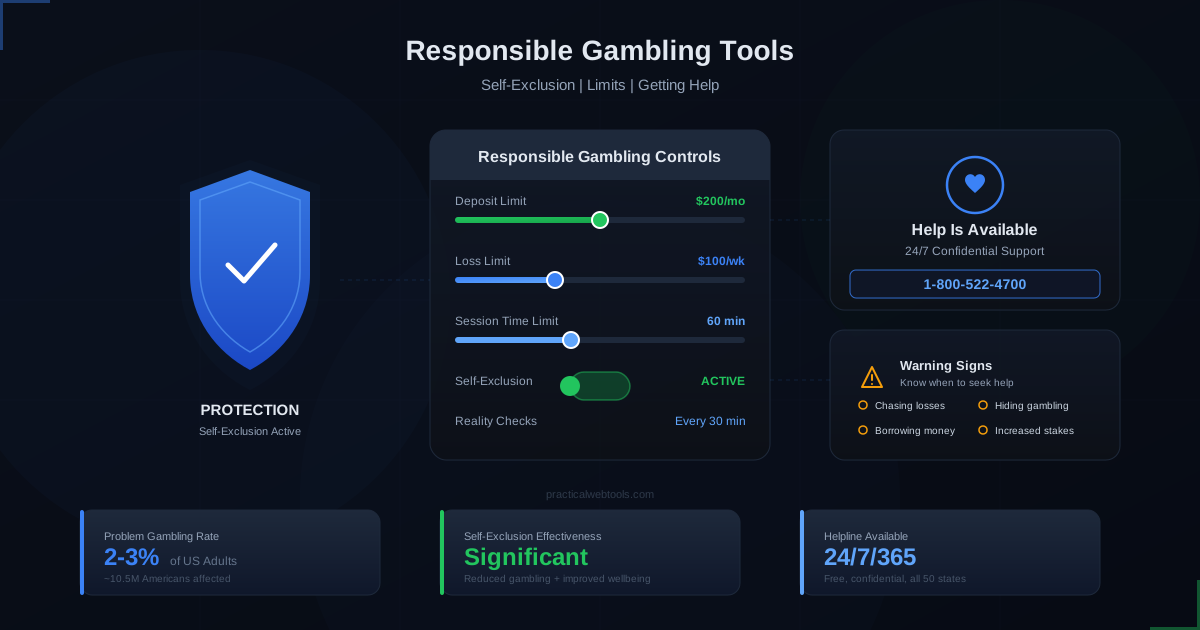
Gambling involves risk and should be approached as entertainment, not as a source of income. Always bet within your means, set strict bankroll limits, and never chase losses. If you or someone you know has a gambling problem, contact the National Council on Problem Gambling at 1-800-522-4700 or visit ncpgambling.org. Must be 21+ to gamble in most US jurisdictions. Please play responsibly.