Poker Tournament Blind Calculator: Structure and Stack Management (2026)
Poker Tournament Blind Calculator: Mastering Structure and Timing
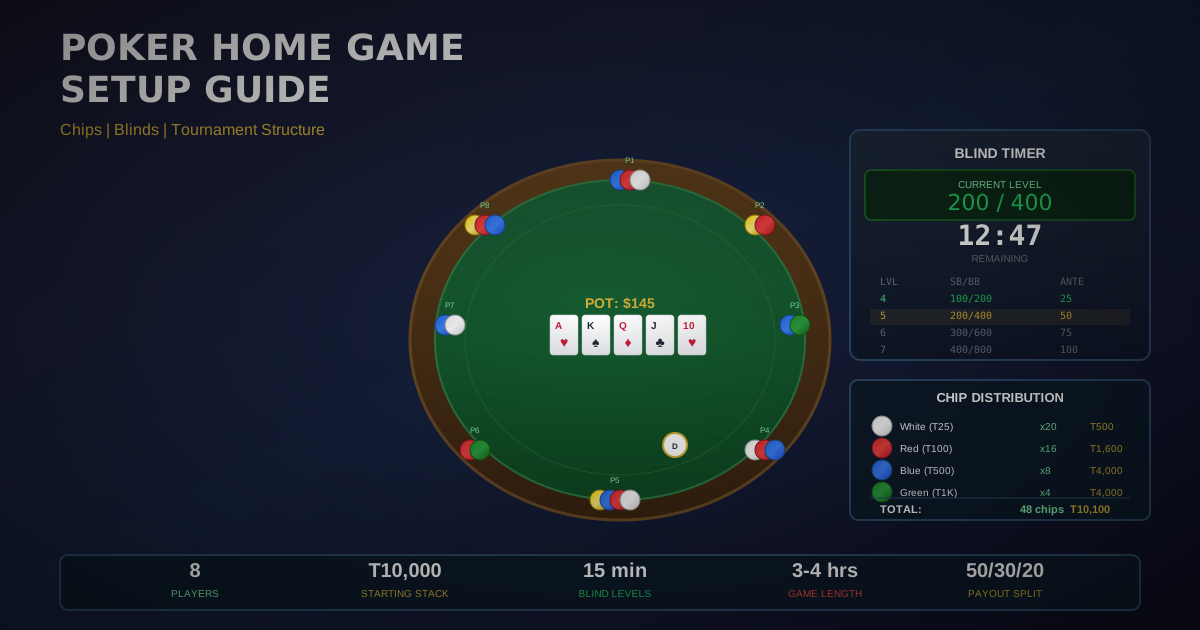
Tournament poker is a race against the blinds. Our calculator tracks your stack relative to blinds, calculates M-ratio, and shows when your strategy must change as the structure escalates.
What Are Tournament Blinds?
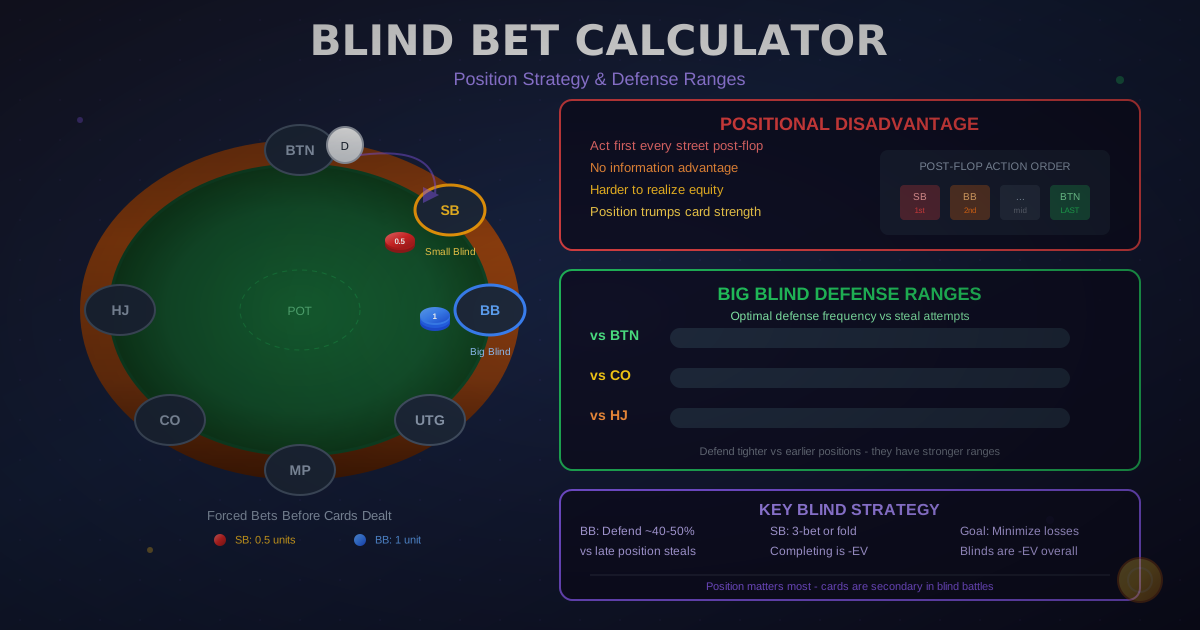
Blinds are forced bets that escalate on a schedule, ensuring tournaments end. Starting at low levels, they increase every 15-60 minutes. Your stack's relationship to the blinds—not its absolute size—determines your strategic options and urgency.
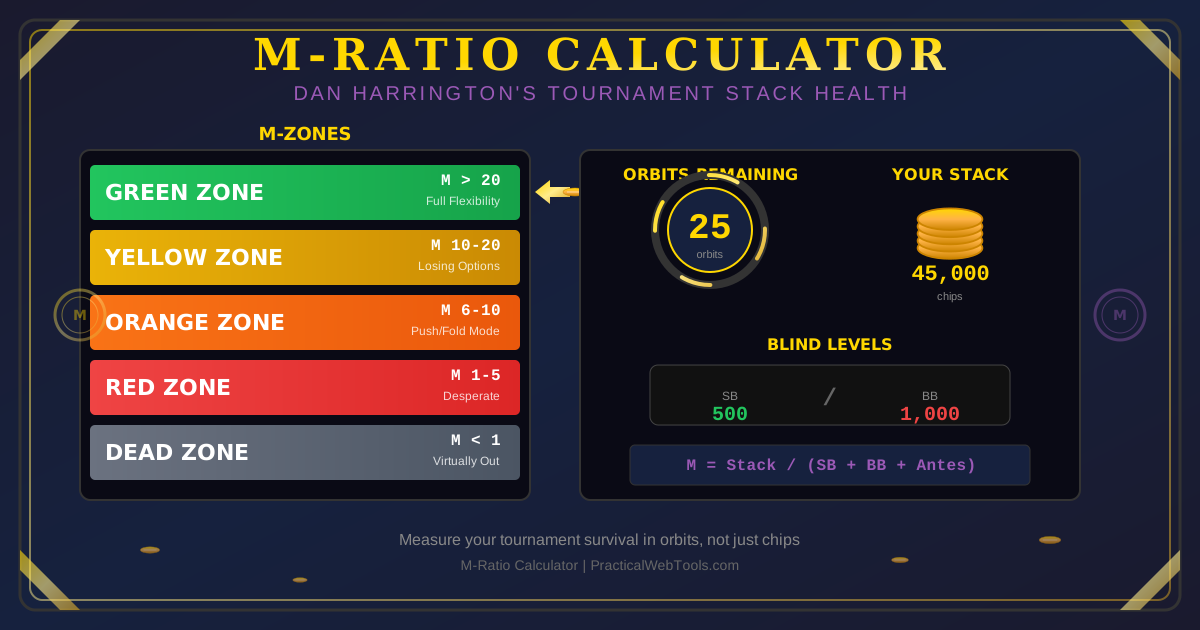
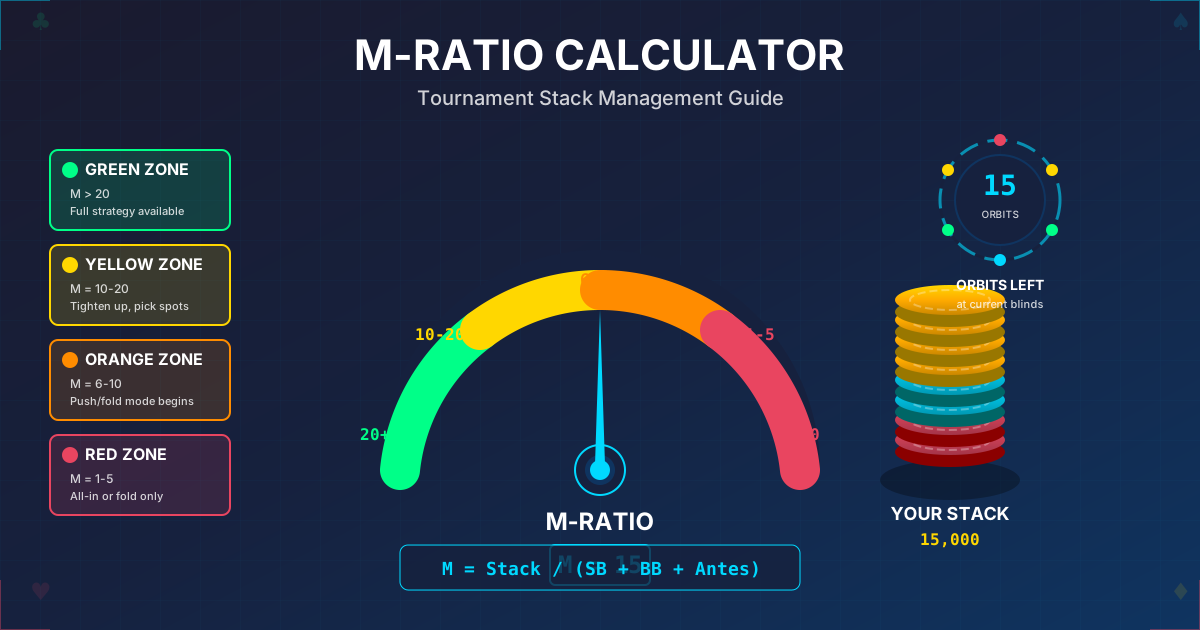
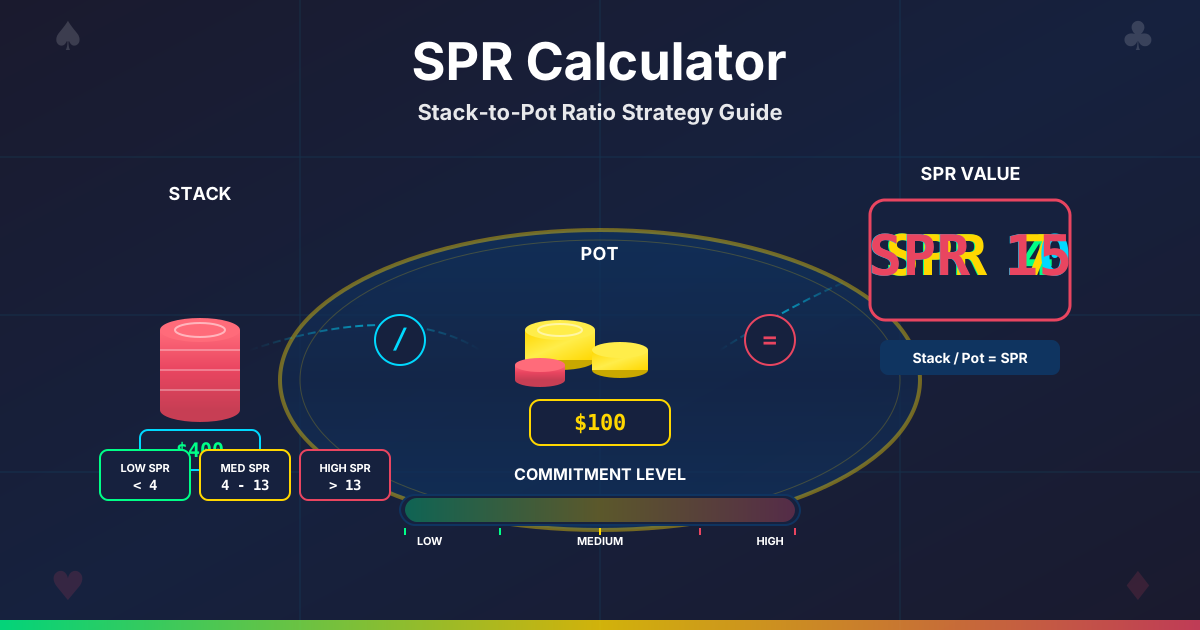
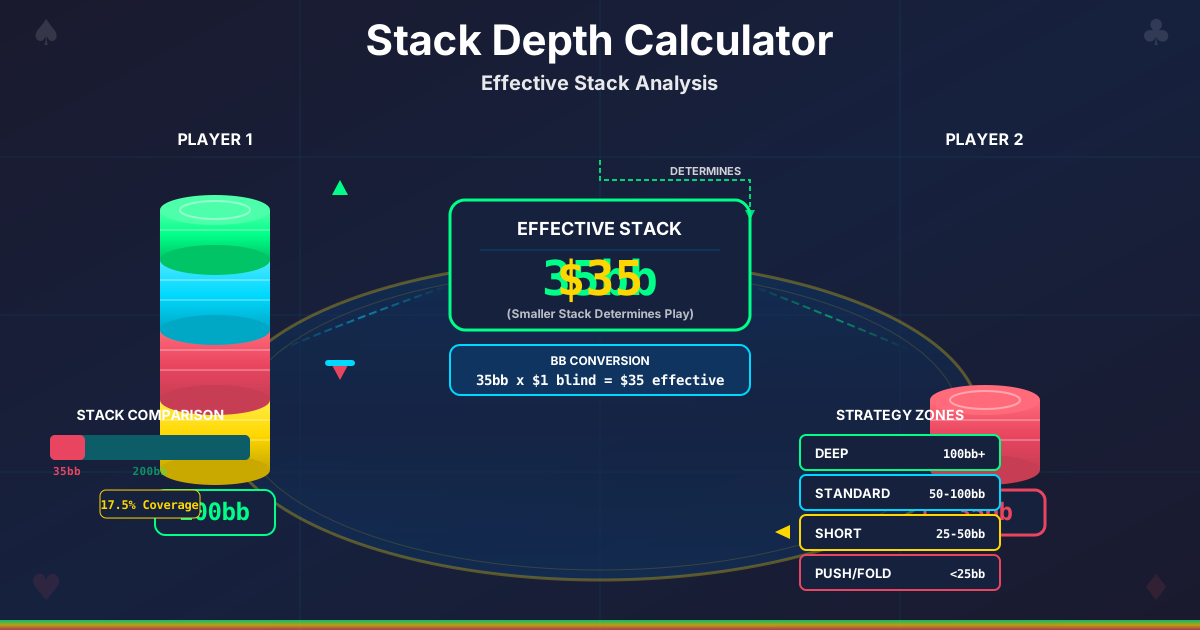
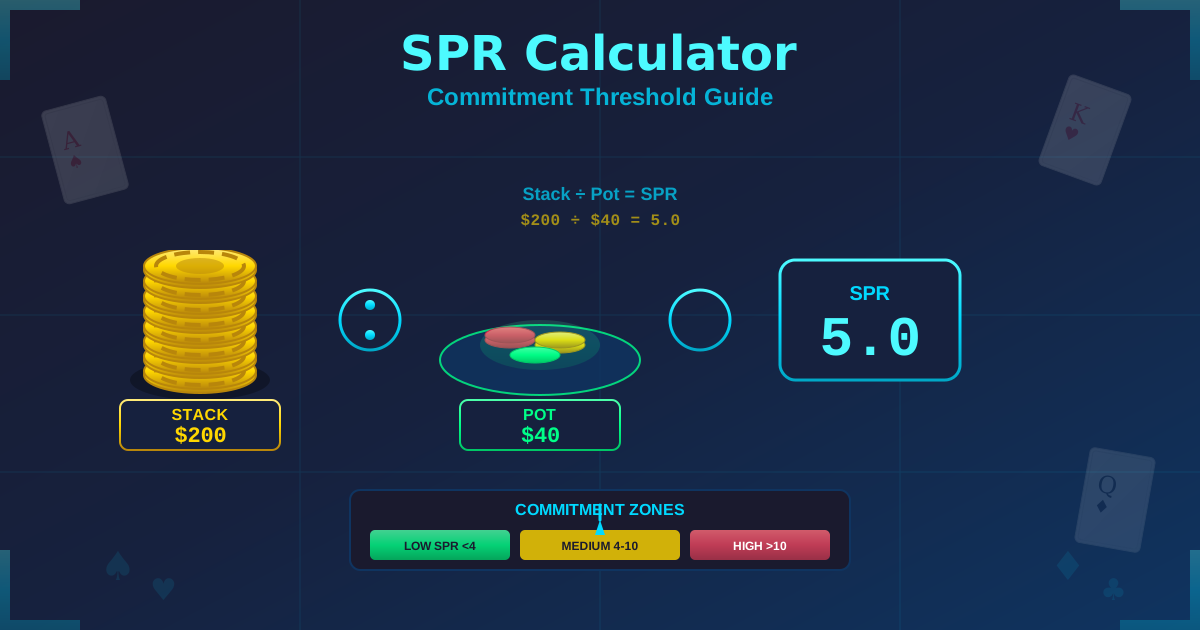
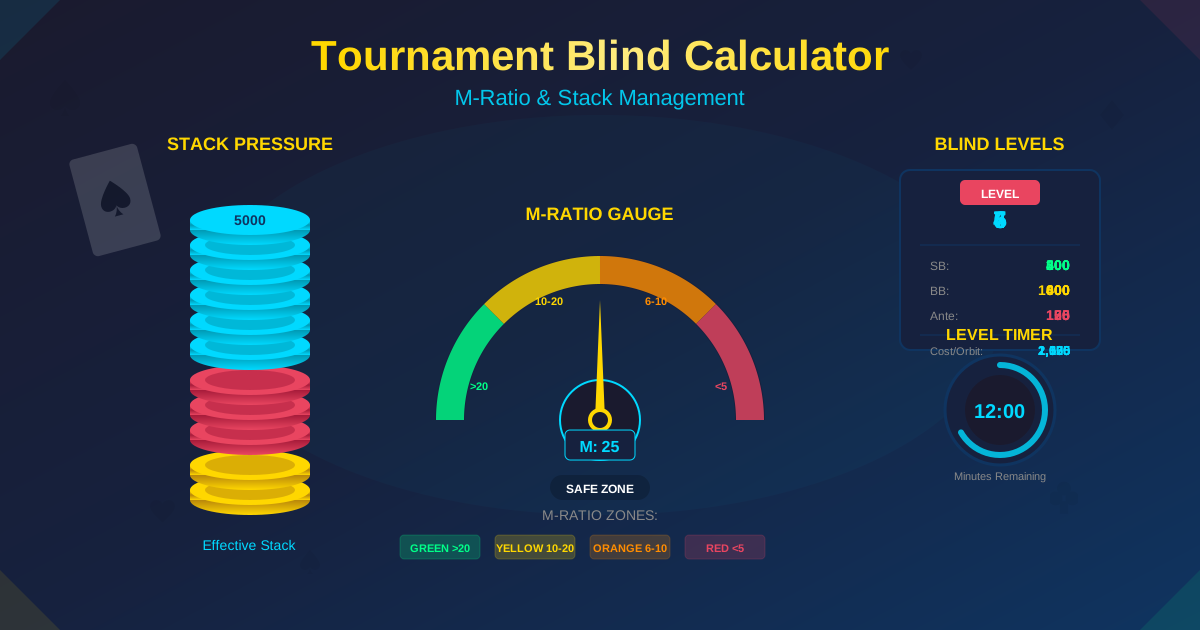
Quick Answer: M-ratio = Stack / (SB + BB + Antes). M > 20: Full strategy available, play patient poker. M 10-20: Tighten up, avoid marginal spots. M 5-10: Push/fold mode approaching, steal aggressively. M < 5: Push/fold only, any playable hand is all-in. Track your M continuously—it changes faster than you think. A 50BB stack can become 25BB in one level.
How to Use Our Calculator
Use the Tournament Blind Calculator →
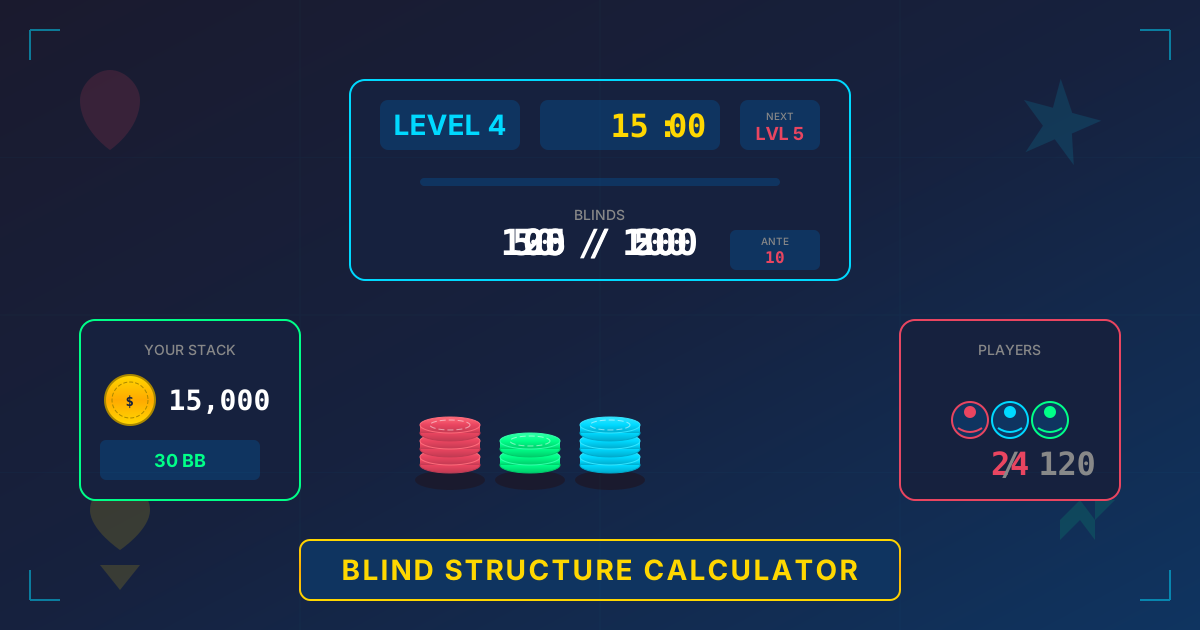
Enter stack and blind levels to see key metrics.
Step-by-Step Instructions
-
Enter Your Stack: Current chip count
-
Input Current Blinds: SB/BB/Ante
-
View M-Ratio: Your effective stack
-
See BB Count: Traditional measure
-
Check Strategy Zone: What play is appropriate
Input Fields Explained
| Field | Description | Example |
|---|---|---|
| Stack Size | Your chips | 15,000 |
| Small Blind | Current SB | 200 |
| Big Blind | Current BB | 400 |
| Ante | Per player | 50 |
| M-Ratio | Effective stack | 15 |
| Big Blinds | Stack/BB | 37.5 |
Understanding M-Ratio
The Calculation
M = Stack / (SB + BB + Total Antes)

9-handed table with antes:
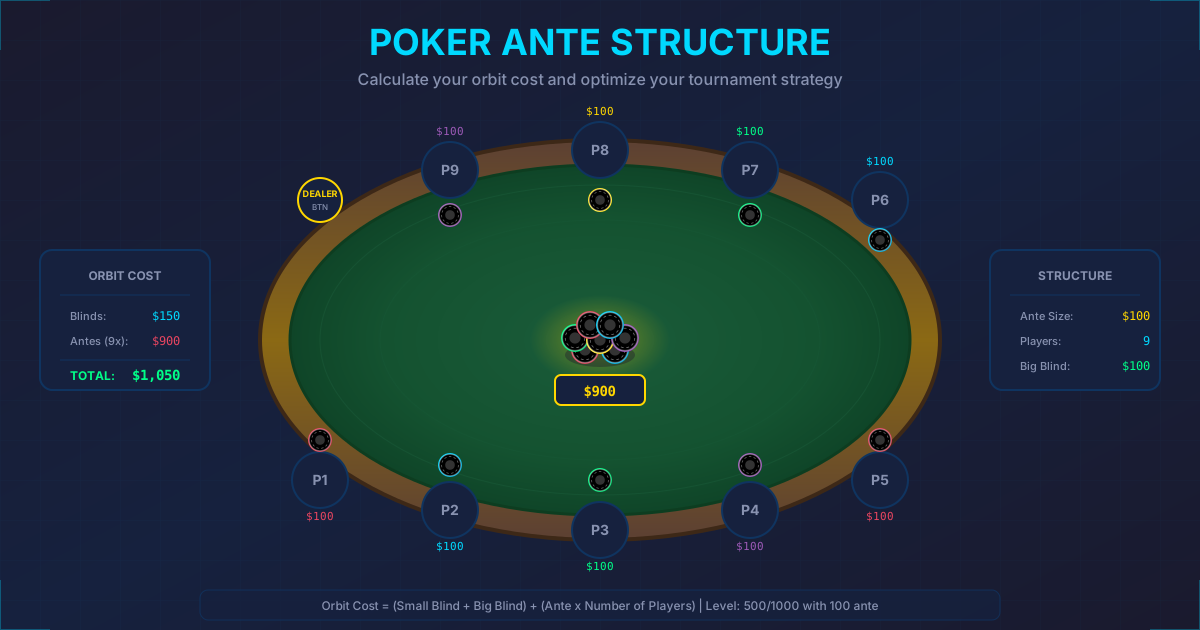
Pot before cards: 200 + 400 + (9 × 50) = 1,050

15,000 stack:
M = 15,000 / 1,050 = 14.3
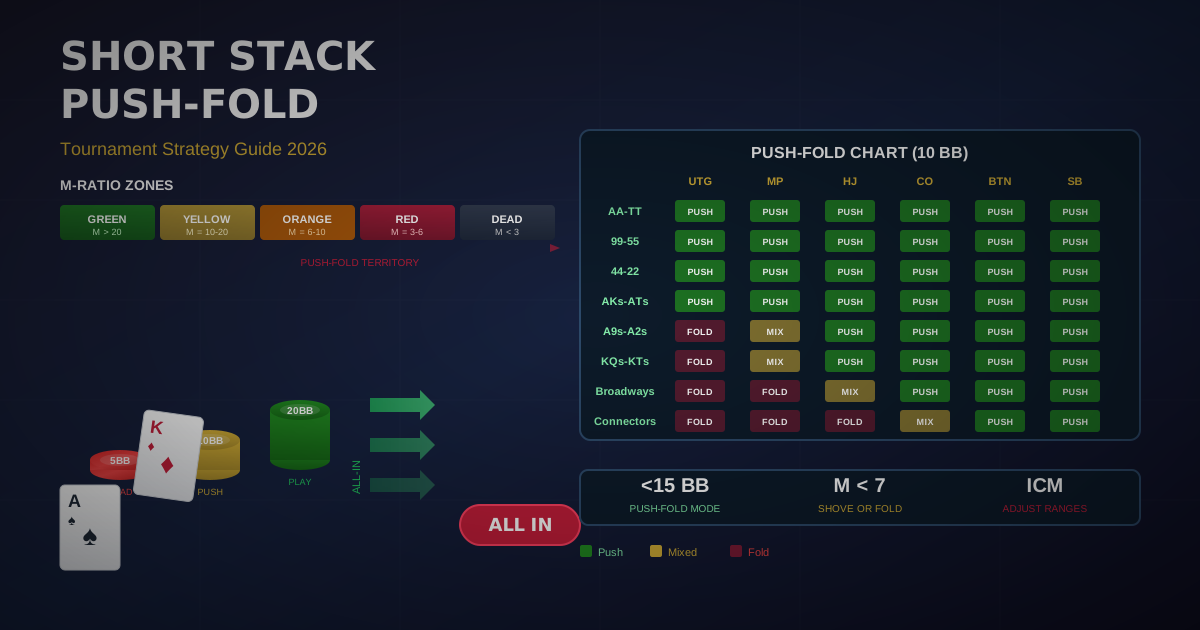
M-Ratio Zones
| M-Ratio | Zone | Strategy |
|---|---|---|
| 20+ | Green | Full poker, all options |
| 10-20 | Yellow | Tighten, avoid thin spots |
| 6-10 | Orange | Push/fold approaching |
| 1-5 | Red | Push/fold mode |
| <1 | Dead | Desperate, any two cards |
Why M Matters More Than BB
50 BB with no antes:
Pot before cards = 1.5 BB
M = 50 / 1.5 = 33

50 BB with 10% antes (9-handed):
Pot before cards = 1.5 + 0.9 = 2.4 BB
M = 50 / 2.4 = 21

Same BB count, different M
Antes change everything
Blind Structure Analysis
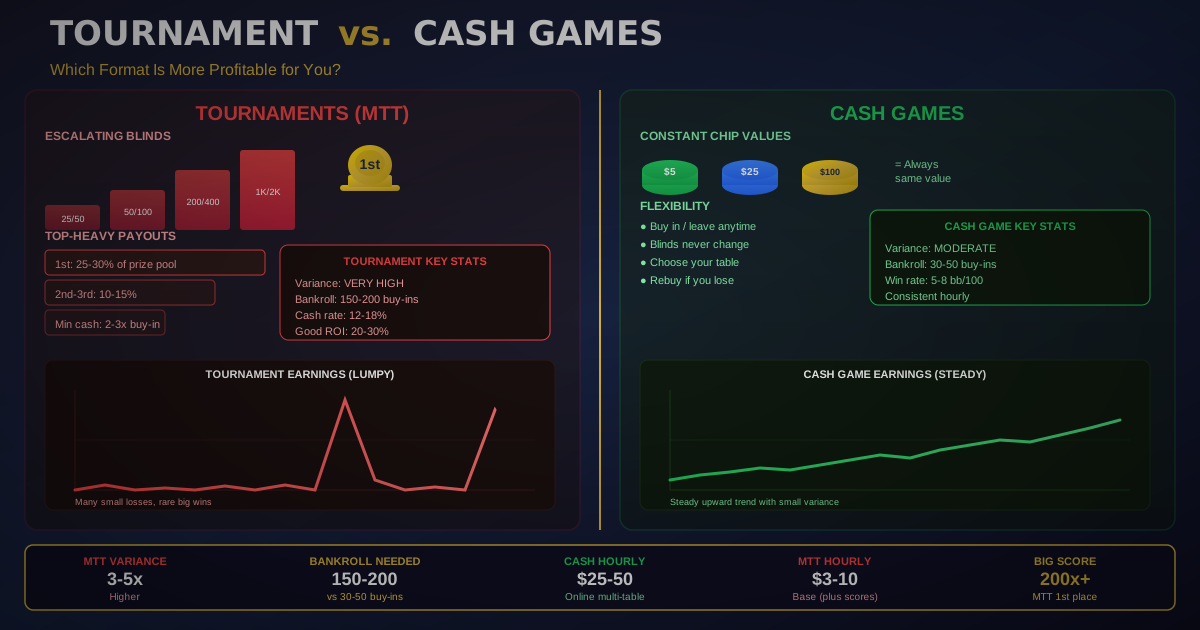
Fast Structure (Turbo)
15-minute levels
Blinds double every 3-4 levels
Antes introduced early

Characteristics:
- High variance
- Less post-flop skill
- Push/fold comes quickly
- Luck factor increases
Standard Structure
30-minute levels
Gradual blind increases
Antes at mid-levels

Characteristics:
- Balanced skill/luck
- Time for adjustments
- Post-flop play matters
- Standard tournament poker
Deep Structure
60-minute levels
Slow blind progression
Late ante introduction

Characteristics:
- Maximum skill edge
- Full strategy available longer
- Patience rewarded
- Professionals prefer
Real-World Examples
Example 1: Early Tournament
Situation: Level 3, starting stack retained
Stack: 10,000
Blinds: 50/100
Antes: 0

M = 10,000 / 150 = 67
BB count: 100

Zone: Green (full strategy)
Play: Patient, selective, post-flop focused
No rush, excellent position
Example 2: Middle Tournament
Situation: Average stack, antes just introduced
Stack: 25,000
Blinds: 300/600
Antes: 75 × 9 = 675

M = 25,000 / 1,575 = 15.9
BB count: 41.7

Zone: Yellow (caution)
Play: Tighter, steal more, defend less
Avoid marginal spots
Example 3: Late Tournament
Situation: Short stack approaching bubble
Stack: 12,000
Blinds: 500/1,000
Antes: 125 × 9 = 1,125

M = 12,000 / 2,625 = 4.6
BB count: 12

Zone: Red (push/fold)
Play: All-in or fold with most hands
Look for spots to shove
Example 4: Chip Leader Strategy
Situation: Big stack at final table
Stack: 180,000
Blinds: 2,000/4,000
Antes: 500 × 9 = 4,500

M = 180,000 / 10,500 = 17.1
BB count: 45

Zone: Yellow
But relative stack = huge

Play: Pressure short stacks
Use stack as weapon
Attack players with low M
Strategy by M-Zone
Green Zone (M > 20)
Full poker available:
- Speculative hands playable
- Small ball poker works
- Post-flop skill rewarded
- Patience pays off

No urgency
Wait for premium spots
Build gradually
Yellow Zone (M 10-20)
Tightening required:
- Cut speculative hands
- Increase aggression with premiums
- Steal blinds more actively
- Defend BB less wide

Avoid marginal pots
Stack preservation matters
Orange Zone (M 6-10)
Push/fold approaching:
- Stop limping entirely
- Open-shove or fold most hands
- Look for resteal spots
- Any pair is strong

Time running out
Must accumulate chips
Aggression or bust
Red Zone (M 1-5)
Push/fold only:
- Charts determine all decisions
- Position = shove range
- Fold equity still matters
- Any ace, pair, or broadway

Desperation mode
Double up or go home
Dead Zone (M < 1)
Critical:
- Shove almost any two cards
- Fold equity nearly gone
- Need double or triple up
- Survival unlikely

Hail Mary time
Take any reasonable spot
Blind Level Transitions
Calculating Future M
Current: M = 20
Next level blinds increase 50%

Current pot: 1,000
Next pot: 1,500

If stack unchanged:
Current M: 20,000 / 1,000 = 20
Next M: 20,000 / 1,500 = 13.3

One level = 33% M reduction
Must account in planning
Planning Ahead
Levels until M critical:

Start M: 20
Each level reduces M by ~25-35%

Level 1: M = 20
Level 2: M = 15
Level 3: M = 11
Level 4: M = 8
Level 5: M = 6

Plan aggression before M drops
Stack-to-Blind Ratio
BB Count vs M
Simple: Stack / BB
Example: 30,000 / 600 = 50 BB

Useful but incomplete:
- Ignores ante impact
- Less accurate at late stages
- Still commonly referenced

Use M for precision
Use BB for quick reference
Quick Conversions
| BB Count (no ante) | Approximate M |
|---|---|
| 100 BB | M ≈ 67 |
| 50 BB | M ≈ 33 |
| 30 BB | M ≈ 20 |
| 20 BB | M ≈ 13 |
| 15 BB | M ≈ 10 |
| 10 BB | M ≈ 7 |
With antes, M is 20-40% lower
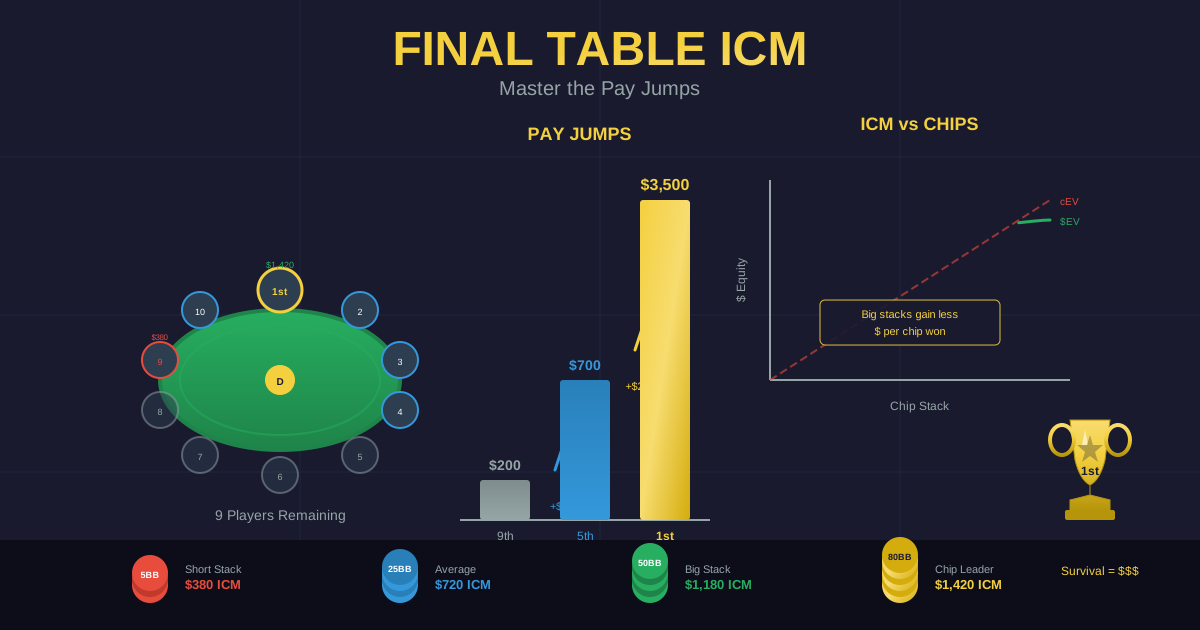
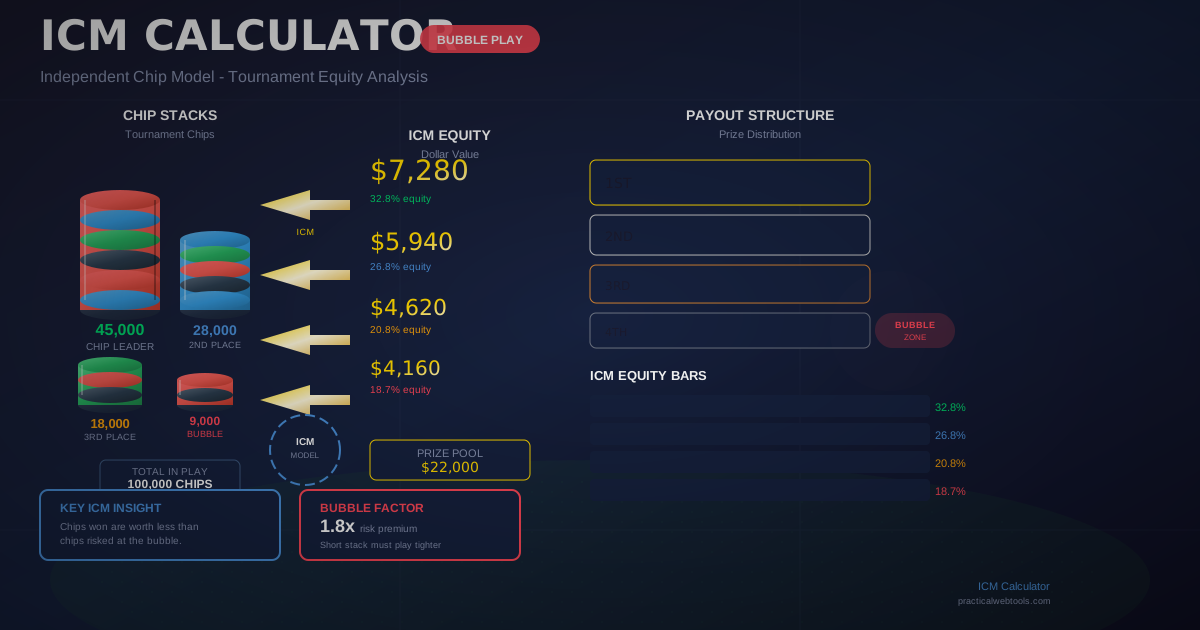
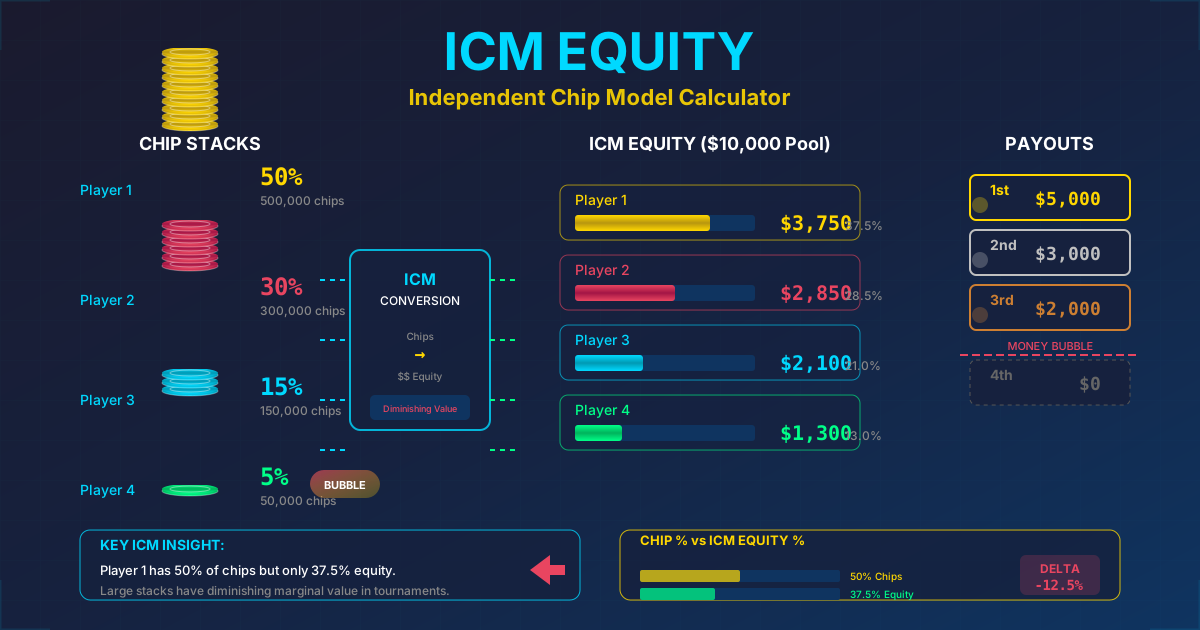
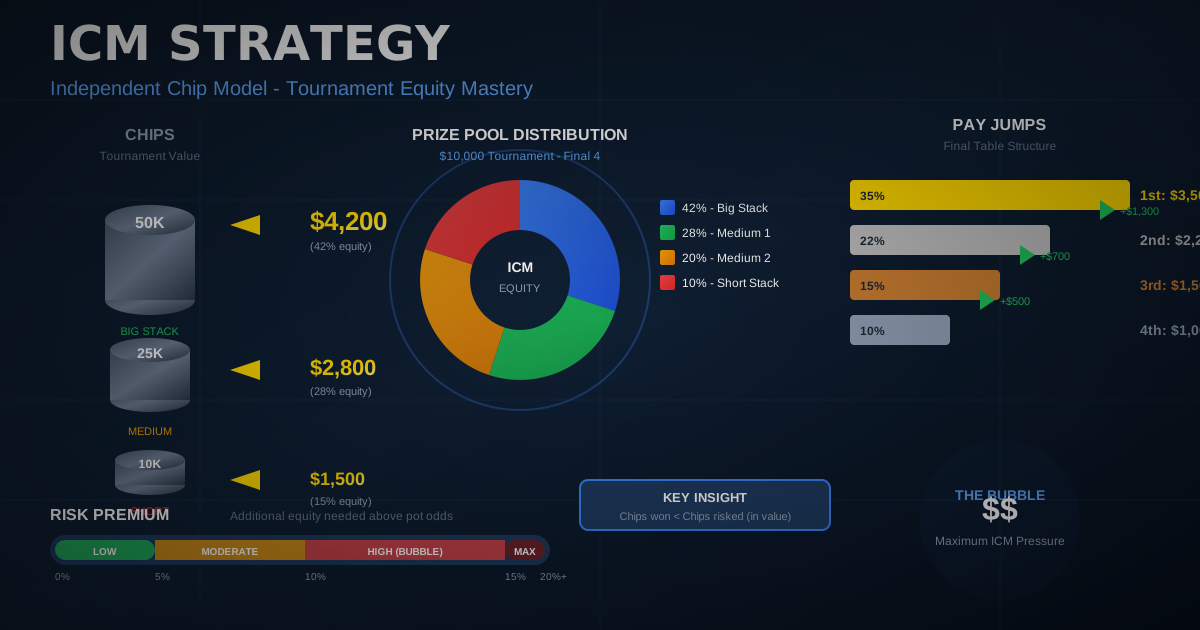
ICM Considerations
M and ICM Interact
Low M + ICM pressure:
- Can't play push/fold freely
- Bubble survival matters
- Risk tolerance changes

High M + ICM pressure:
- Attack low M players
- They can't call light
- Accumulate through pressure
Adjusting for Pay Jumps
Short stack on bubble:
M = 5 but ICM says wait

Let others bust
Survival = guaranteed money
Risk only with premiums

Big stack on bubble:
M = 15 but attack freely
Low M players can't defend
Accumulate for final table
Common Mistakes
1. Ignoring Antes in M Calculation
Mistake: Calculate stack/BB only Problem: Underestimates urgency with antes Fix: Always include total pot in M calculation
2. Playing Too Passive in Orange Zone
Mistake: Wait for premium hands at M = 7 Problem: Blinds eat stack before cards come Fix: Widen shoving range, increase aggression
3. Not Planning for Level Changes
Mistake: Comfortable at M = 15, relax Problem: Two levels later, M = 8 Fix: Track future M, act before critical
4. Using Cash Game Strategy
Mistake: Play same range at all M levels Problem: Tournament structure demands adjustment Fix: Adapt to M, tighten/loosen appropriately
Frequently Asked Questions
What's a good M-ratio to maintain?
Above 20 is comfortable—full strategy available. 10-20 requires adjustment. Below 10 means push/fold is approaching. Aim to stay in green/yellow zones.
How do I calculate M with antes quickly?
Rough method: M = Stack / (2.5 × BB) with 10% antes at 9-handed. Adjust for actual ante size and table size.
Should I open-shove at M = 10?
Depends on position. M = 10 allows some small raises from late position, but any significant resistance means pot-committed. Open-shoving is often cleaner.
How do structures affect professional edge?
Slower structures = more skill edge. Fast turbos increase variance. Pros prefer deep structures; recreational players often prefer turbos.
When should I start stealing blinds aggressively?
As M drops below 20, blind stealing becomes mandatory. By M = 15, most opens should be steal attempts. By M = 10, you're fighting for survival.
What about rebuy tournaments?
During rebuy period, M is less relevant—you can reload. After rebuy closes, standard M strategy applies.
Pro Tips
-
Calculate M every level: Know your zone constantly
-
Watch table's M distribution: Attack low M, avoid high M
-
Account for antes: They change everything
-
Plan 2-3 levels ahead: Don't get surprised
-
Position adjusts shove range: UTG ≠ Button at any M
Related Calculators
- Poker ICM Calculator - Final table equity
- Poker Pot Odds Calculator - Call/fold decisions
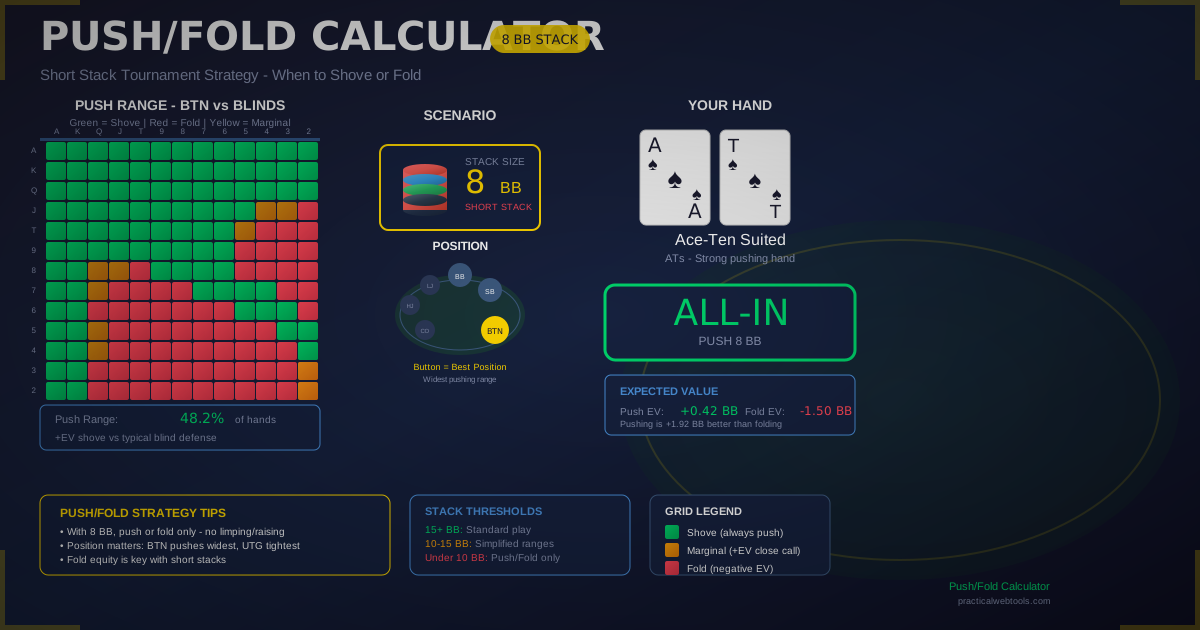
- Poker Push/Fold Calculator - Shove ranges
- Poker Expected Value Calculator - EV analysis
- Poker Bankroll Calculator - Tournament buy-ins
Conclusion
Tournament poker revolves around your relationship to the blinds. Our calculator tracks M-ratio, projects future stack pressure, and shows exactly when your strategy must change. Understanding structure separates tournament specialists from cash game players dabbling in events.
Calculate Tournament Blinds Now →
The blinds always increase. Your job is managing that pressure—accumulating before M drops, attacking at the right times, and adjusting strategy as zones change. Our calculator keeps you aware of where you stand and what's coming next.