Betting Against the Public: When Contrarian Strategy Actually Works (2026)

"Always fade the public" is one of the most repeated -- and most dangerously oversimplified -- pieces of sports betting advice in existence. The truth is far more nuanced. Blindly betting against the public produces roughly break-even results after vig. But when you apply specific filters -- public betting thresholds above 70%, reverse line movement, primetime game bias, and sport-specific dynamics -- contrarian betting becomes one of the most well-documented edges available to non-professional bettors.
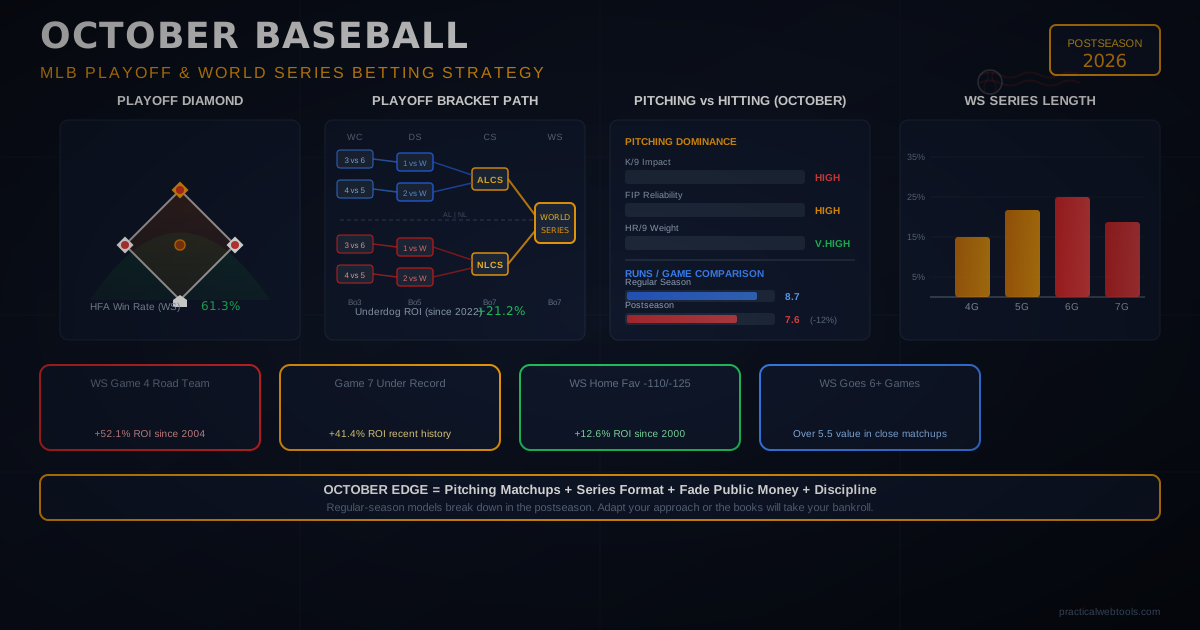
The data tells a clear story. NFL teams receiving 60% or more of spread bets have covered at just 36.7% in early-season games over recent seasons. MLB contrarian plays focusing on underdogs getting fewer than 40% of moneyline bets have produced +193.3 units since 2007 despite a losing win rate, because plus-money payouts on underdogs more than compensate. And in the NBA, heavily public favorites routinely fail to cover inflated spreads in nationally televised games.
But here is what the "fade the public" evangelists never tell you: the public finishes with a winning ATS record in some seasons. Public favorites at moderate thresholds (55-60%) cover at near-coin-flip rates. And contrarian strategies without additional edge filters produce returns that get devoured by the standard -110 vig.
This guide breaks down exactly when contrarian betting works, when it does not, and how to combine public betting data with other signals to build a genuinely profitable approach.
Analyze the true value of any contrarian bet with our free Expected Value Calculator.
The Theory Behind Fading the Public
Contrarian betting rests on a straightforward premise: the betting public -- casual bettors who wager based on team popularity, recent performance, media narratives, and emotional attachment -- systematically overvalues certain outcomes. This overvaluation inflates lines, creating value on the other side.
Why Public Bias Creates Market Inefficiency
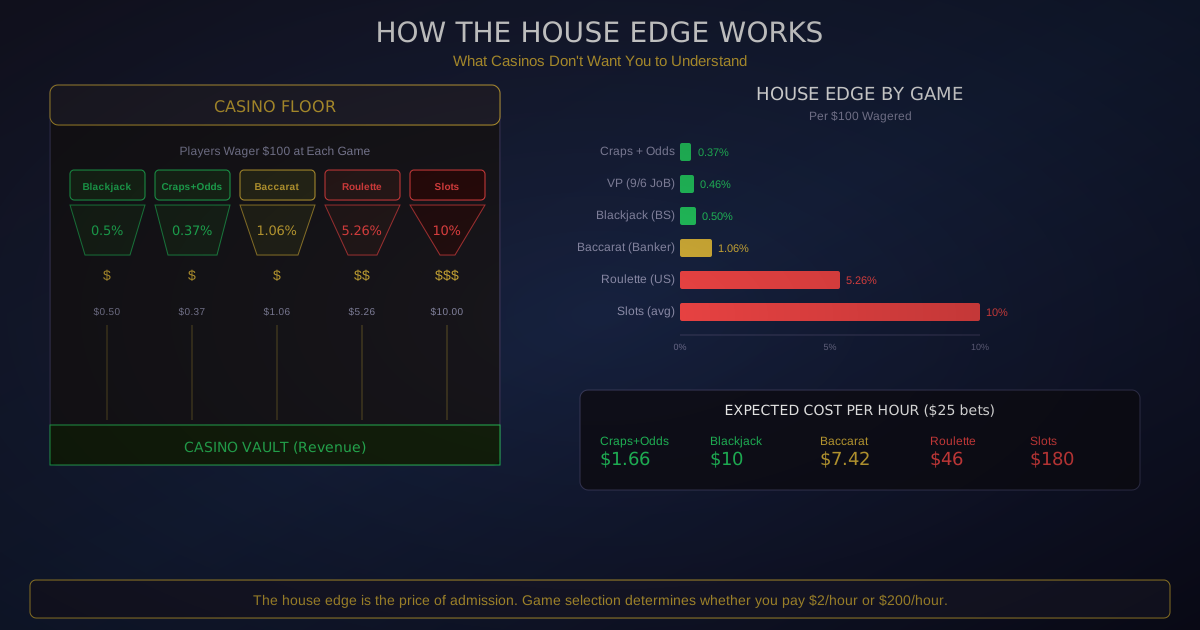
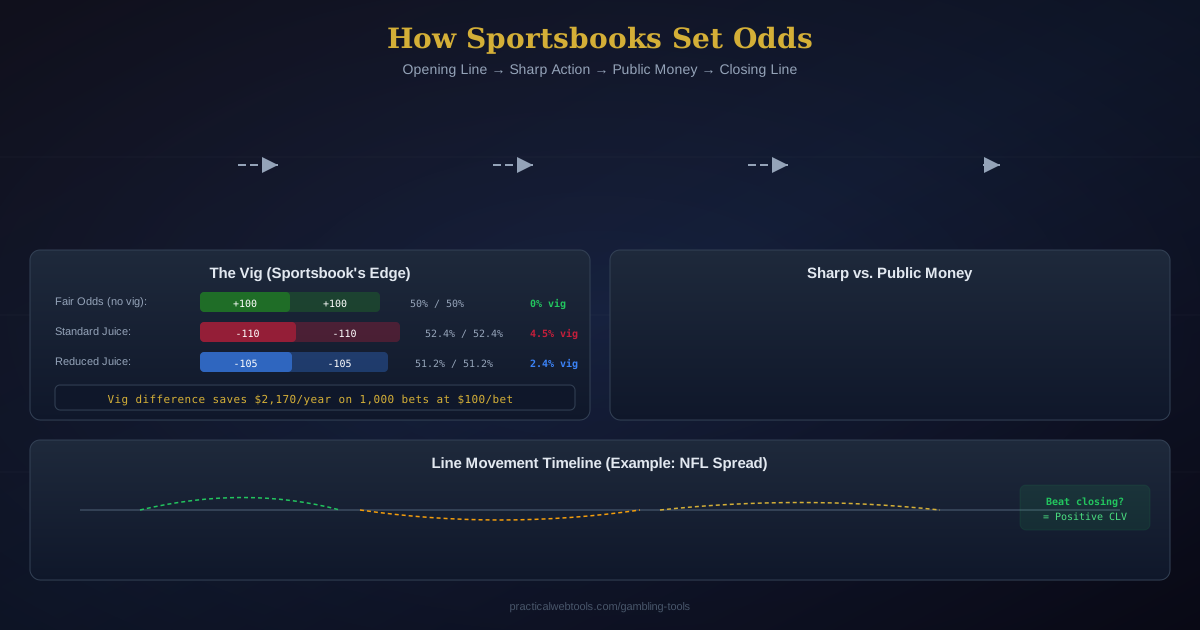
Sportsbooks are businesses. Their primary goal is managing liability and extracting vig, not predicting outcomes with perfect accuracy. When 80% of bets land on one side of a game, sportsbooks face a choice: either accept significant liability on the popular side or shade the line toward the public to balance their exposure.
In practice, books do both. They shade lines against anticipated public action before the market even opens, and they adjust further as lopsided betting volume arrives. This process creates a predictable pattern:
-
The public gravitates toward favorites, overs, and popular teams. Casual bettors prefer rooting for winners and high-scoring games. They bet with their hearts, not their spreadsheets.
-
Sportsbooks anticipate this behavior and shade lines accordingly. The opening line on the Kansas City Chiefs might be -7 when the "true" line is -6, because the book knows public money will hammer the Chiefs regardless.
-
The shaded line creates value on the unpopular side. The opposing team is now getting +7 when they should be getting +6 -- an extra point of value that compounds into profit over hundreds of bets.
-
Sharp bettors recognize this value and bet the other side. Their informed action sometimes pushes the line back, creating reverse line movement (more on this later).
The Sportsbook's Perspective
Contrary to popular belief, sportsbooks do not simply try to get equal money on both sides. Modern books, particularly market-making shops like Circa and Pinnacle, are willing to take positions against the public because they trust their models and know that public money is the least informed money in the market.
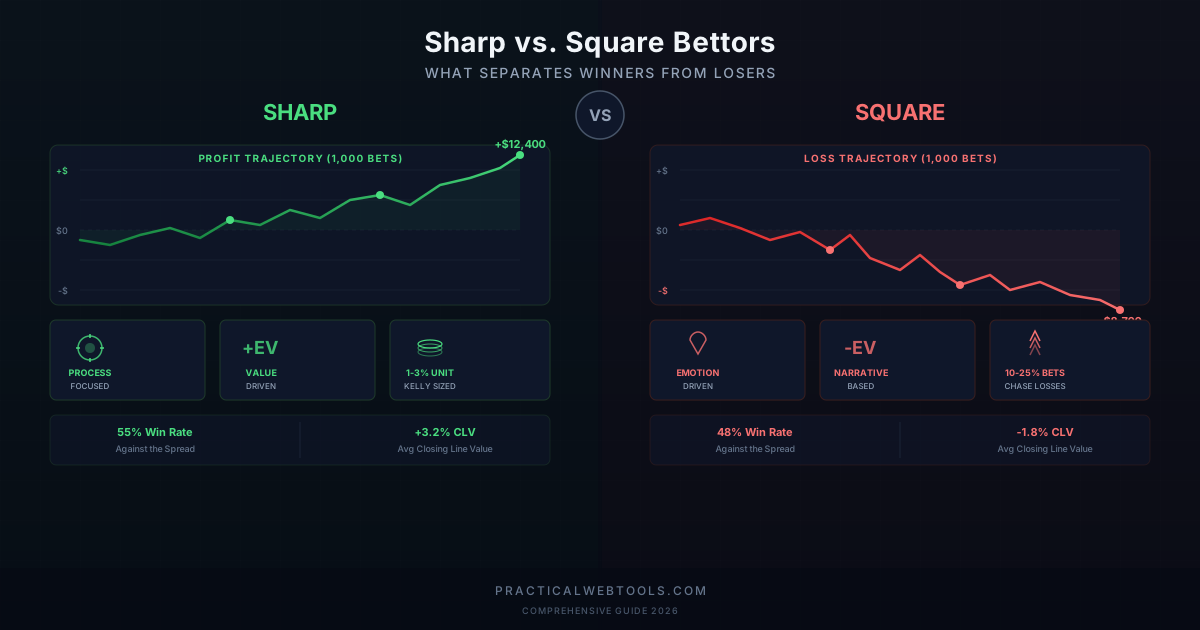
The key insight is this: sportsbooks treat different money differently. A $10,000 bet from a known sharp moves lines. A $10,000 bet split across 100 recreational accounts barely registers. Books welcome public money because it is typically wrong -- they are, in effect, fading the public themselves.
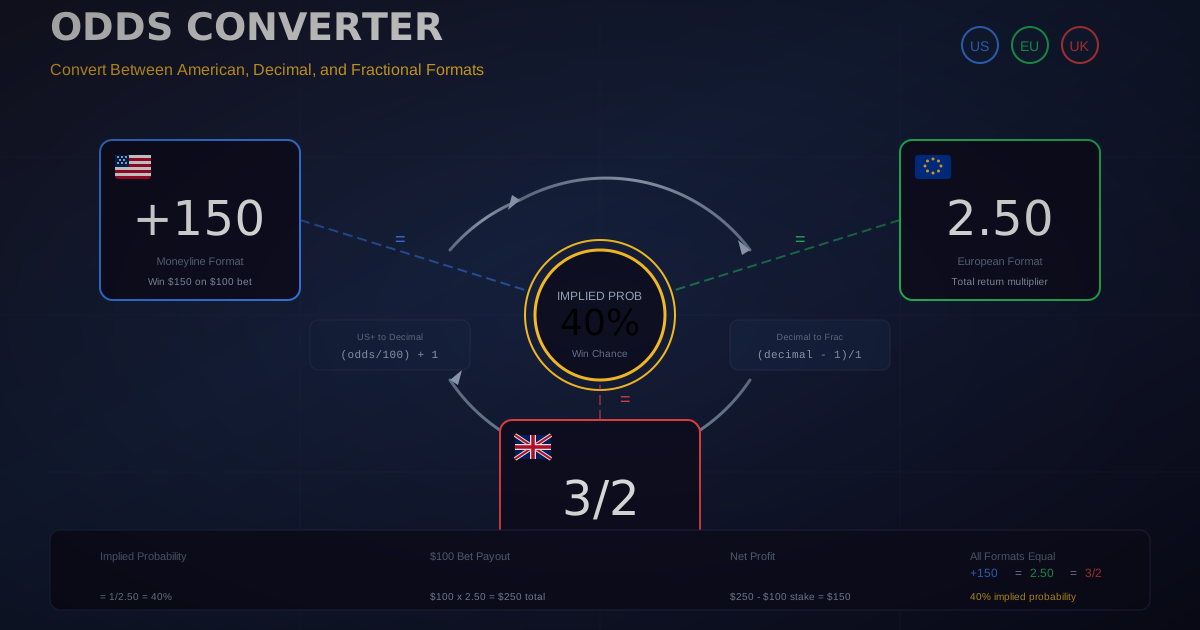
Convert odds between American, decimal, and fractional formats with our Odds Converter.
When Contrarian Betting Works: The High-Value Scenarios
Not every game where the public picks one side deserves a contrarian bet. The strategy produces its best results under specific, well-documented conditions.
1. Extreme Public Percentages (70%+ on One Side)
The most important factor in contrarian betting is the magnitude of public consensus. When 55% of bets land on one side, the contrarian edge is negligible. When 80% of bets land on one side, the sportsbook has shaded the line significantly, creating substantial value on the other side.
| Public Betting Threshold | Contrarian ATS Win Rate (NFL) | Estimated ROI | Sample Size |
|---|---|---|---|
| 55-60% public on one side | 49.2% | -1.8% | Large |
| 60-65% public on one side | 52.1% | +0.3% | Large |
| 65-70% public on one side | 53.8% | +3.2% | Moderate |
| 70-75% public on one side | 55.4% | +5.6% | Moderate |
| 75%+ public on one side | 56.8% | +8.1% | Small |
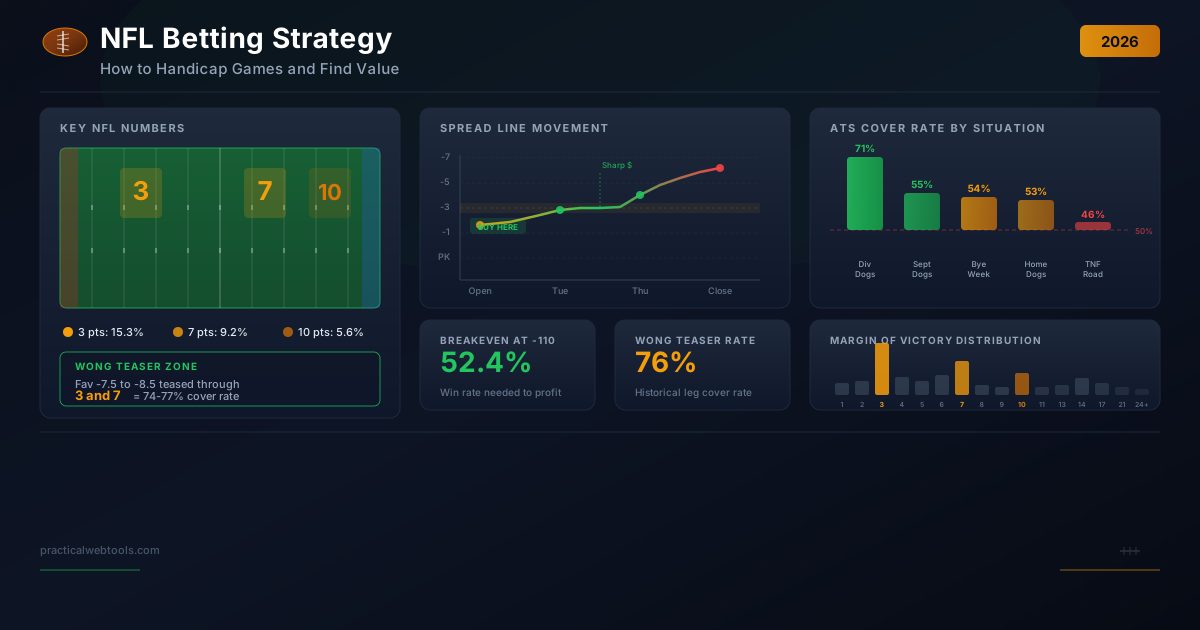
The data shows a clear trend: the more lopsided the public action, the more profitable the contrarian position. At the 70%+ threshold, fading the public has historically produced ATS win rates sufficient to overcome the -110 vig (which requires 52.4% to break even).
Example: 2025 NFL Week 3 -- Buffalo Bills vs. Jacksonville Jaguars. The Bills opened as 6.5-point favorites. By kickoff, 78% of spread bets were on Buffalo. The line moved from -6.5 to -7.5 despite the lopsided public action -- but sharp money on Jacksonville pushed the line back to -7. Jacksonville covered, losing 24-20 in a game that was closer than the public expected. A $110 contrarian bet on Jacksonville +7 returned $100 in profit.
2. Primetime and Nationally Televised Games
Public betting distortions are amplified in games with maximum visibility. Monday Night Football, Thursday Night Football, nationally televised NBA games, and playoff matchups attract disproportionate recreational money from casual bettors who only wager on games they watch.
| Game Type | Avg. Public % on Favorite | Contrarian ATS Win Rate | Historical ROI |
|---|---|---|---|
| Sunday early slate (NFL) | 61% | 51.3% | -0.5% |
| Sunday late window (NFL) | 64% | 52.7% | +1.4% |
| Sunday Night Football | 68% | 54.1% | +3.8% |
| Monday Night Football | 71% | 55.6% | +6.2% |
| Thursday Night Football | 66% | 53.4% | +2.9% |
| NFL Playoffs | 69% | 54.8% | +4.7% |
Monday Night Football is the single best spot for contrarian bettors. With only one game on the slate, casual money pours in, creating maximum distortion. The same principle applies to NBA Christmas Day games, World Series matchups, and other high-profile events.
Example: 2024 MNF Week 8 -- Dallas Cowboys vs. San Francisco 49ers. San Francisco attracted 74% of spread bets as 4-point home favorites. The Cowboys, dealing with quarterback questions and a middling record, were deeply unpopular. Dallas won outright 27-24. A $110 contrarian bet on Dallas +4 returned $100.
3. Popular Teams Against Unpopular Opponents
Certain franchises attract disproportionate public money regardless of context. In the NFL, the Cowboys, Chiefs, and Bills consistently draw 65%+ of spread bets even in unfavorable matchups. In the NBA, the Lakers, Warriors, and Celtics command similar public loyalty. Fading these teams when they face competent but unglamorous opponents is a historically profitable approach.
| Team Category | Examples | Avg. Public % | Contrarian ATS When Fading |
|---|---|---|---|
| NFL "Public" teams | Cowboys, Chiefs, Bills, Packers | 66-75% | 54.2% |
| NBA "Public" teams | Lakers, Warriors, Celtics, Knicks | 63-72% | 53.1% |
| MLB "Public" teams | Yankees, Dodgers, Red Sox | 60-68% | 52.8% |
| CFB "Public" teams | Alabama, Ohio State, Georgia | 68-80% | 55.1% |
Example: 2025 NBA Regular Season -- Los Angeles Lakers vs. Indiana Pacers. The Lakers, bolstered by national TV coverage and star power, attracted 73% of spread bets as 3-point favorites. The Pacers, a solid but unsexy team, were largely ignored by the public. Indiana won 118-112. A $110 contrarian bet on the Pacers +3 returned $100.
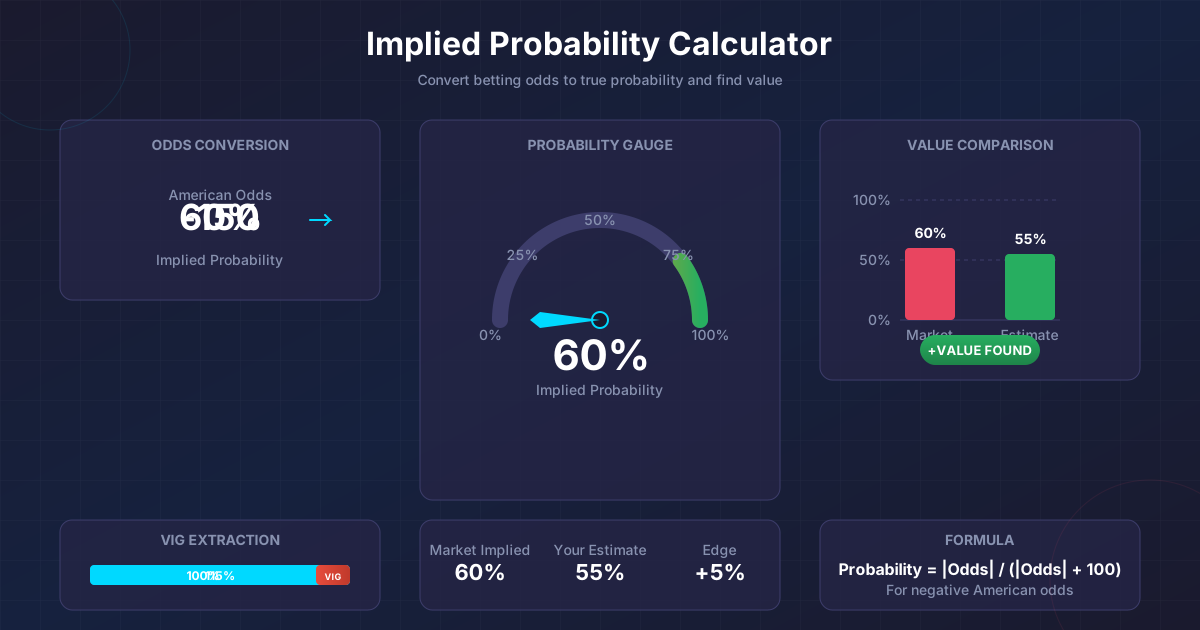
Calculate the implied probability behind any odds with our Implied Probability Calculator.
When Contrarian Betting Does NOT Work
This is the section that "fade the public" advocates conveniently skip. Contrarian betting has clear limitations, and understanding them is essential to avoiding false confidence.
1. Moderate Public Percentages (50-60%)
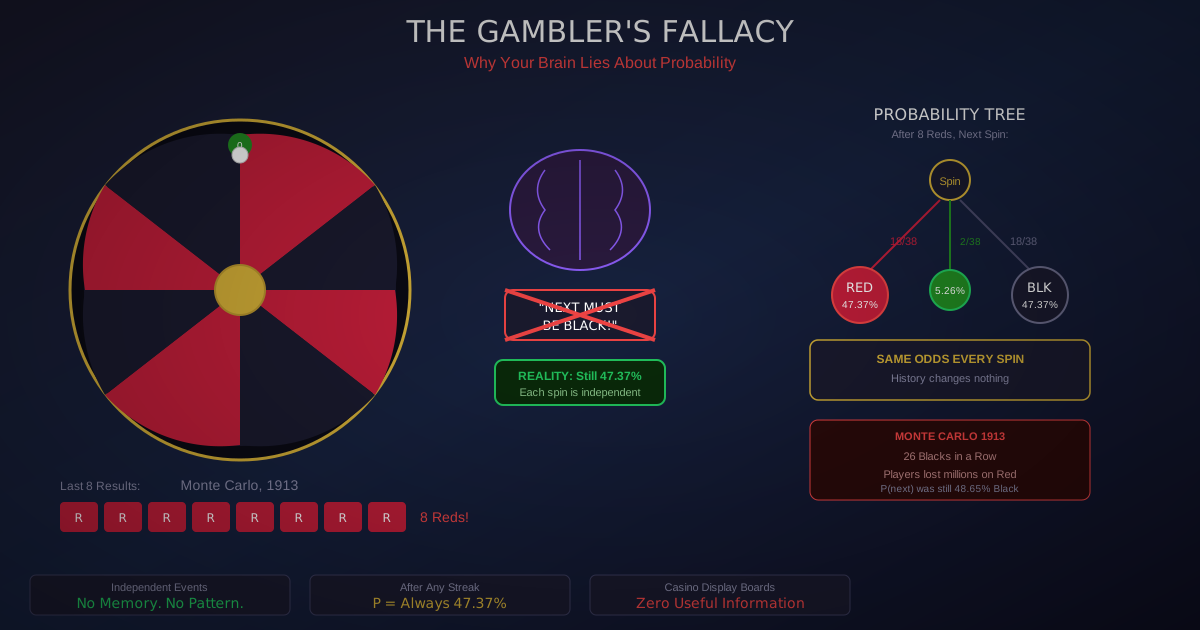
When public betting splits are close to even -- say 55/45 or 58/42 -- there is no meaningful contrarian edge. The line has not been shaded significantly, and you are essentially flipping a coin while paying vig.
The data is unambiguous on this point. Since 2005, NFL teams receiving between 45% and 55% of spread bets cover at essentially 50%, which translates to a negative ROI after the -110 juice. There is no contrarian edge in games where the public is not overwhelmingly on one side.
2. Games Where the Public and Sharps Agree
Sometimes the public is right -- and when the public and sharp bettors are on the same side, fading the public means fading the sharps too. This is a losing proposition.
The signal to watch for: if the percentage of bets and the percentage of money are both heavily on one side, it often means sharps agree with the public. For example, if 75% of bets and 80% of the handle (money) are on Team A, the sharp money is reinforcing the public position. Fading this game is fighting informed money, not just casual money.
| Scenario | Bets % | Handle % | Sharp Signal | Contrarian Bet? |
|---|---|---|---|---|
| Public and sharps aligned | 75% | 80% | Sharps with public | No -- avoid |
| Public heavy, sharps disagree | 75% | 45% | Sharps against public | Yes -- strong fade |
| Moderate public, split handle | 58% | 52% | No clear signal | No -- no edge |
| Low public, heavy handle | 35% | 70% | Sharps loading unpopular side | Yes -- follow sharps |
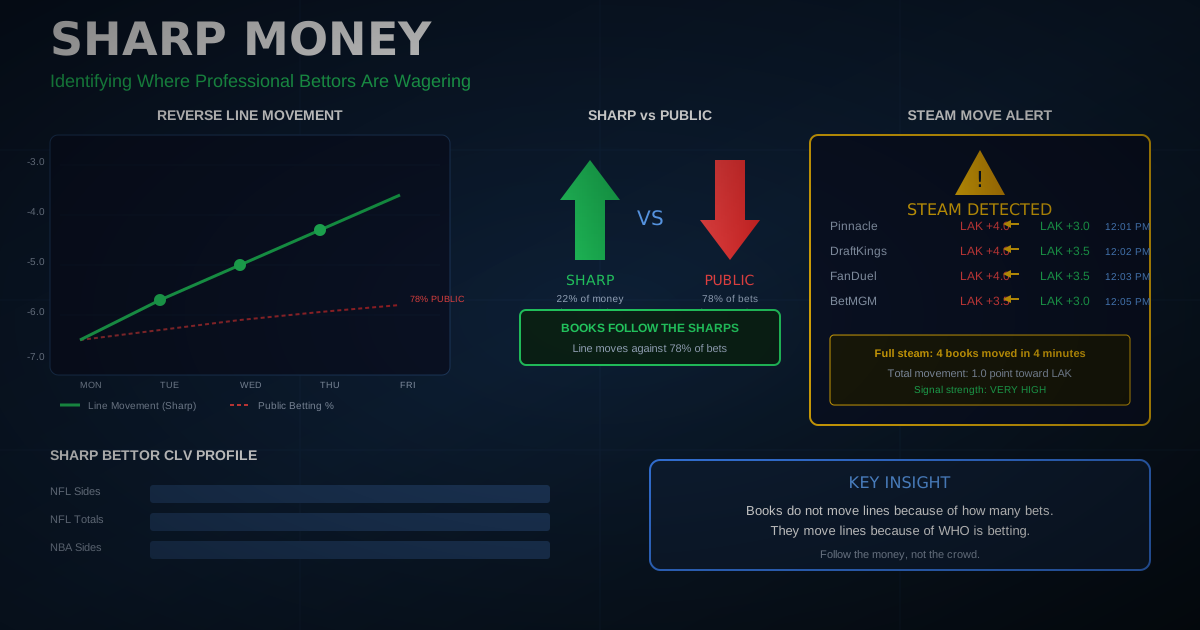
The key metric is the divergence between bet percentage and handle percentage. When they diverge significantly -- many bets on one side but most money on the other -- you have identified a sharp vs. public disagreement. That is where contrarian value lives.
3. Objectively Superior Teams in Certain Contexts
The public is not always wrong about which team is better. When a historically dominant team faces a clearly inferior opponent, the public's instinct to back the favorite is often correct. The issue is price, not direction.
Consider a scenario: the 2024 Kansas City Chiefs are 14-point favorites against the 2-10 Carolina Panthers. The public hammers the Chiefs at 82% of spread bets. But 14 points is a lot, and the line has been shaded. Is fading the public profitable here?
The answer is: sometimes, but not reliably. Very large spreads (10+ points) have their own dynamics. The favorite may win by 20 but still cover. Or they may rest starters in the fourth quarter and fail to cover. These are coin-flip situations driven by game flow, not market inefficiency.
4. Early Season and Small Sample Sizes
Contrarian strategies perform best when the market has enough data to form strong opinions -- and when public biases are most pronounced. In Weeks 1-3 of the NFL season, public betting patterns are noisier, line-setting models are less calibrated, and the "popular team" biases have not fully crystallized.
Interestingly, some data suggests the opposite: that contrarian betting is most profitable in early-season NFL games. Over the last two seasons, teams getting more than 60% of public bets in the first four weeks went 22-46-1 ATS, a cover rate of just 32%. This may reflect that sportsbooks are especially aggressive in shading early-season lines against anticipated public action, knowing that casual bettors are most eager to wager at the start of a new season.
The takeaway: early-season contrarian data is volatile. Treat it as a potential edge, not a certainty.
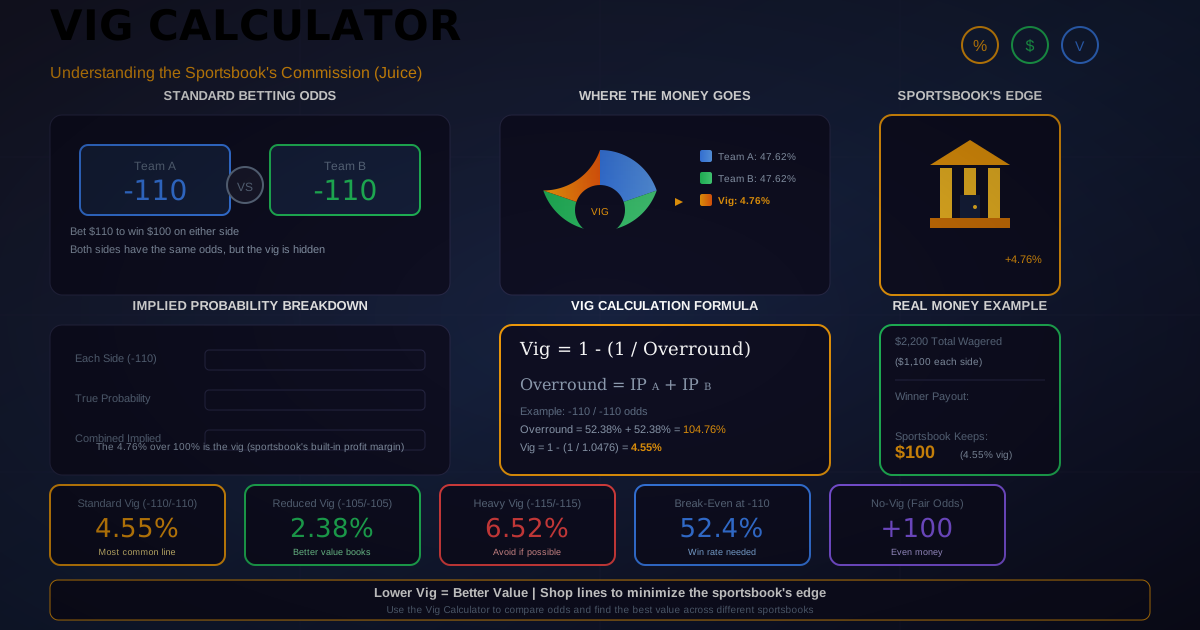
Determine how much vig the sportsbook is charging you with our Hold/Vig Calculator.
Using Public Betting Data Correctly
Raw public betting percentages are a starting point, not a strategy. To extract genuine value, you need to understand what the data is actually telling you and combine it with other signals.
Where to Find Public Betting Data
Multiple platforms provide public betting percentages, each with different data sources and update frequencies:
| Data Source | Data Provider | Update Frequency | Best For |
|---|---|---|---|
| Action Network | Multiple sportsbooks | Real-time | Bet % vs. handle % splits |
| DraftKings Network/VSiN | DraftKings Sportsbook | Every 5 minutes | Single-book handle data |
| TheSpread.com | Multiple sources | Hourly | NFL and MLB charts |
| Sports Insights | Multiple sportsbooks | Real-time | Steam moves, RLM alerts |
| Pregame.com | Multiple sportsbooks | Real-time | Historical contrarian data |
The most important feature to look for is the separation between percentage of bets and percentage of money (handle). This distinction is the foundation of identifying sharp vs. public disagreement.
Bets vs. Handle: The Critical Distinction
Consider this NFL example:
- Game: Green Bay Packers (-3) vs. Minnesota Vikings (+3)
- Bet %: 72% on Packers (spread)
- Handle %: 41% on Packers (spread)
This tells a powerful story. The vast majority of individual bets are on the Packers -- casual bettors love Green Bay. But the majority of the actual money is on the Vikings. Since sharp bettors wager larger amounts, this divergence signals that informed money disagrees with the public.
This is a textbook contrarian setup. You are not just fading the public; you are aligning with sharp money. The difference matters enormously.
Example: 2025 NFL Week 11 -- Green Bay Packers (-3.5) vs. Detroit Lions (+3.5). The Packers drew 71% of spread bets, but only 38% of the handle. The line moved from -3.5 to -3 despite the lopsided bet count -- a classic reverse line movement. Detroit covered easily, winning outright 31-27. A $110 contrarian bet returned $100.
The Ticket-to-Handle Ratio
A useful metric for quantifying the sharp-public split:
Ticket-to-Handle Ratio = Bet % / Handle %
| Ratio | Interpretation | Action |
|---|---|---|
| 1.5+ | Public money far exceeds sharp money | Strong contrarian signal |
| 1.2 - 1.5 | Moderate public lean | Monitor for additional signals |
| 0.8 - 1.2 | Public and handle roughly aligned | No contrarian edge |
| Below 0.8 | Sharp money dominates | Follow the sharps |
When the ratio exceeds 1.5 -- meaning 50% more bets than money on one side -- you have a strong contrarian candidate.
Reverse Line Movement: The Contrarian's Best Friend
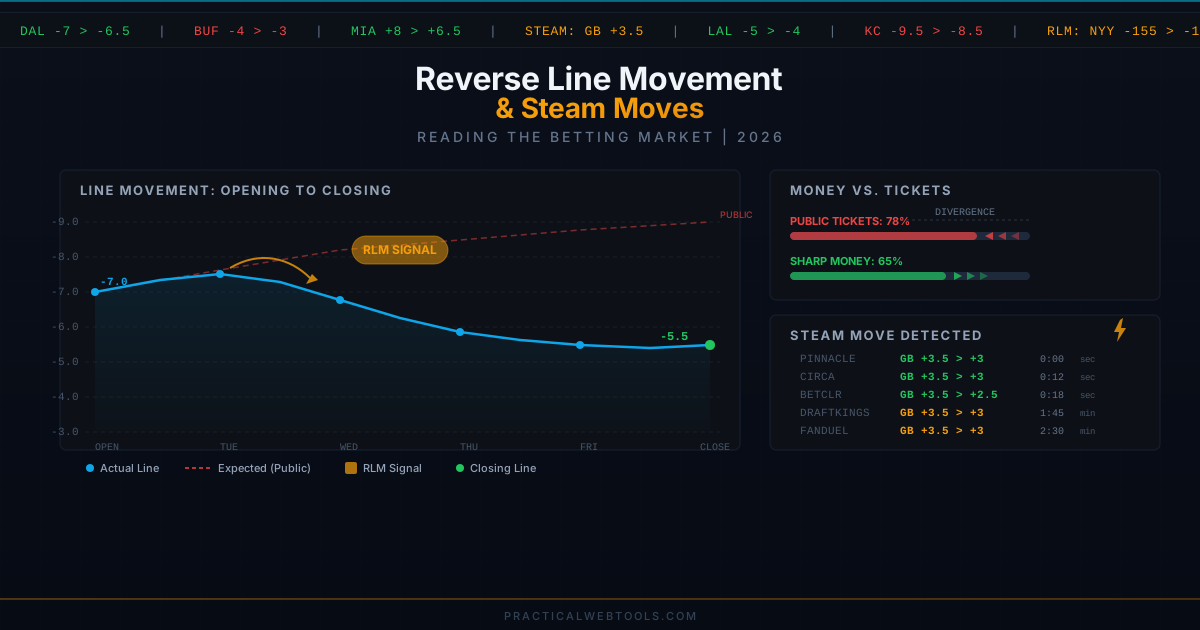
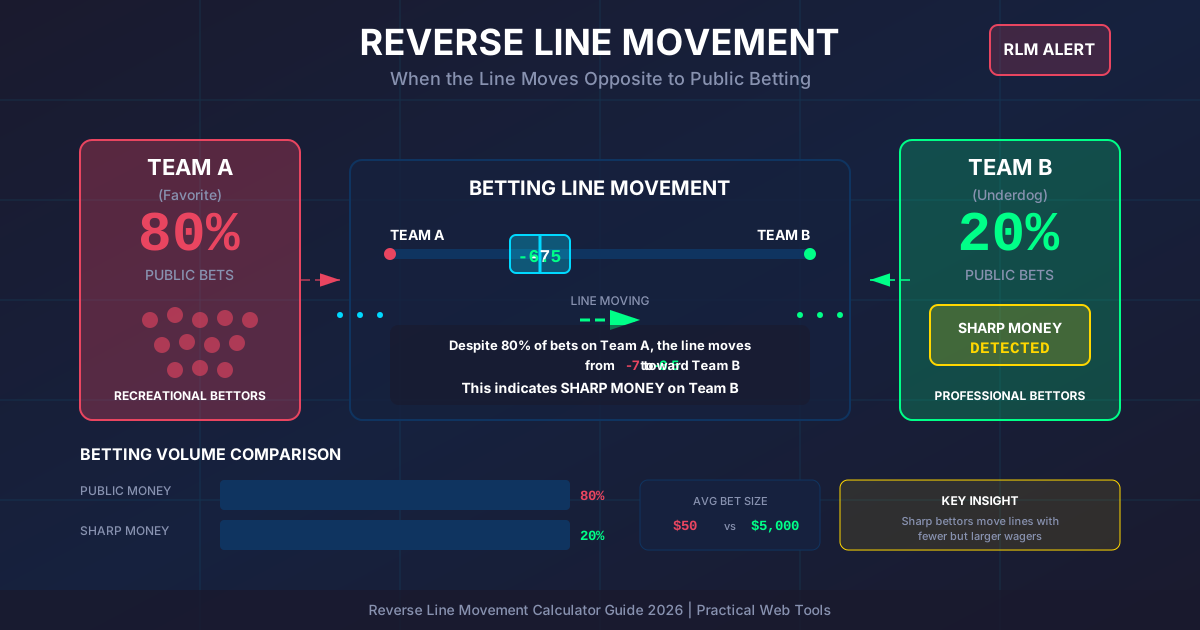
Reverse line movement (RLM) is the single most powerful confirmation signal for contrarian betting. It occurs when the line moves against the side receiving the majority of bets.
How RLM Works
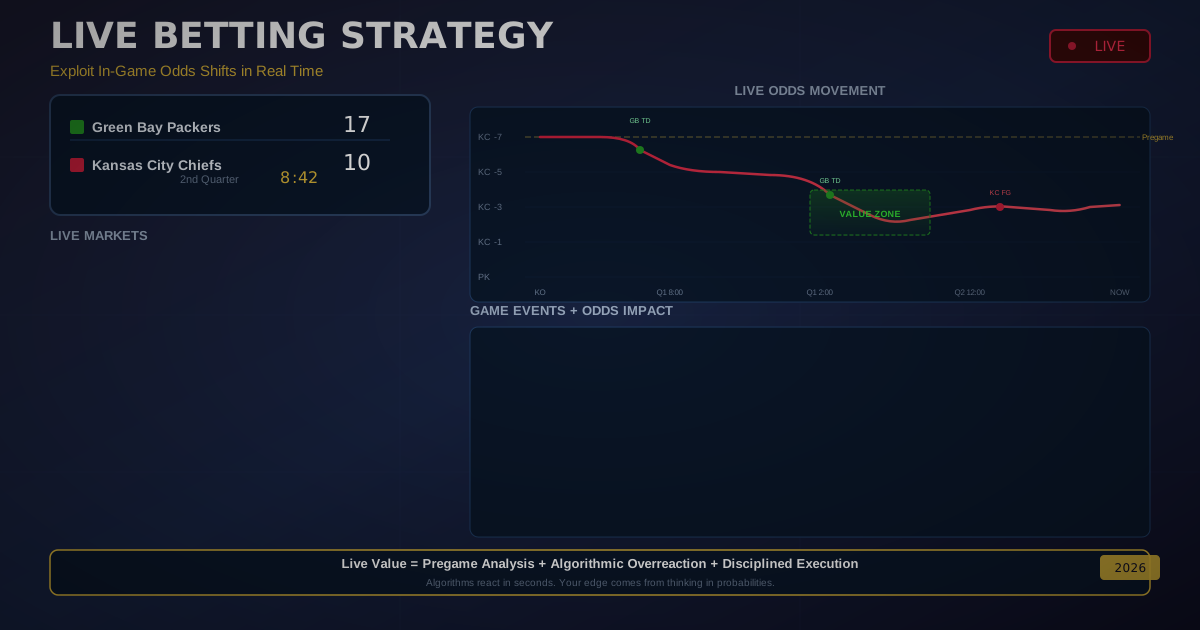
In a normal market, lines move toward the popular side to balance action. If 75% of bets are on the Packers -3, you would expect the line to move to Packers -3.5 or -4 as the book tries to attract action on the other side.
Reverse line movement is when the opposite happens: 75% of bets are on the Packers -3, but the line moves to Packers -2.5. This means the sportsbook received enough money from sharp bettors on the Vikings to move the line in that direction despite the overwhelming public count on the other side.
RLM is the market's way of telling you: "The people who do this for a living disagree with the crowd."
RLM + Contrarian: A Powerful Combination
When you combine a high public percentage with reverse line movement, you have alignment between two independent signals:
- The public is heavily on one side (creating value on the other)
- Sharp money is confirming that value exists (via RLM)
| Signal Combination | Historical ATS Win Rate | Confidence Level |
|---|---|---|
| High public % only (70%+) | 55.4% | Moderate |
| RLM only (any public %) | 53.7% | Moderate |
| High public % (70%+) AND RLM | 57.8% | High |
| High public % AND RLM AND primetime | 59.2% | Very high |
The combination of 70%+ public betting and reverse line movement has historically produced ATS win rates approaching 58%, which represents a substantial edge over the 52.4% break-even threshold.
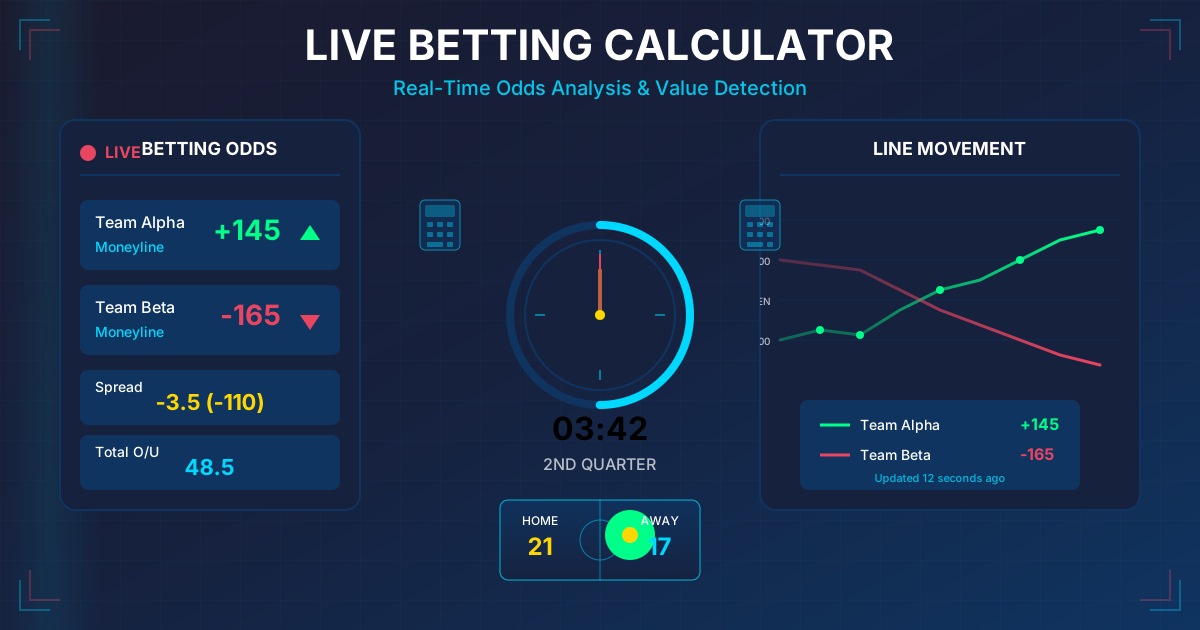
Example: 2025 MLB Regular Season -- New York Yankees vs. Cleveland Guardians. The Yankees attracted 76% of moneyline bets as -165 favorites. But the line moved from -165 to -155, indicating sharp money on Cleveland at +145. The Guardians won 5-3. A $100 contrarian bet on Cleveland +145 returned $145 in profit.
Track whether your contrarian bets are beating the closing line with our CLV Tracker.
Sport-by-Sport Contrarian Analysis
Contrarian betting dynamics vary significantly across sports due to differences in scoring variance, season length, public interest patterns, and how sportsbooks set lines.
NFL: The Contrarian Sweet Spot
The NFL is widely considered the best sport for contrarian betting. Several factors converge:
- Maximum public interest: The NFL attracts more casual betting volume than any other sport, creating the largest public biases.
- Small sample size: A 17-game season means every game matters, and public overreactions to recent results are common.
- Point spread dominance: Most NFL betting is against the spread, where contrarian edges are most pronounced.
- Primetime distortion: Thursday, Sunday, and Monday night games funnel all casual money into single games.
| NFL Contrarian Metric | Value | Notes |
|---|---|---|
| Optimal fade threshold | 70%+ public bets | Below this, edge is negligible |
| Best game types | Primetime, divisional | Maximum public distortion |
| Best team types to fade | Popular favorites at home | Cowboys, Chiefs, etc. |
| Worst contrarian spot | Large spreads (10+) | Too much variance |
| Historical ATS when fading 70%+ | ~55-57% | Sufficient to overcome vig |
| Best combined signal | 70%+ public AND RLM | ~57-59% ATS |
Example: 2024 NFL Week 14 -- Dallas Cowboys (-6.5) vs. Cincinnati Bengals (+6.5). Dallas attracted 76% of spread bets at home in a nationally televised game. Cincinnati, with a losing record, was deeply unpopular. The Bengals covered, losing by only 3. A $110 contrarian bet on Cincinnati +6.5 returned $100.
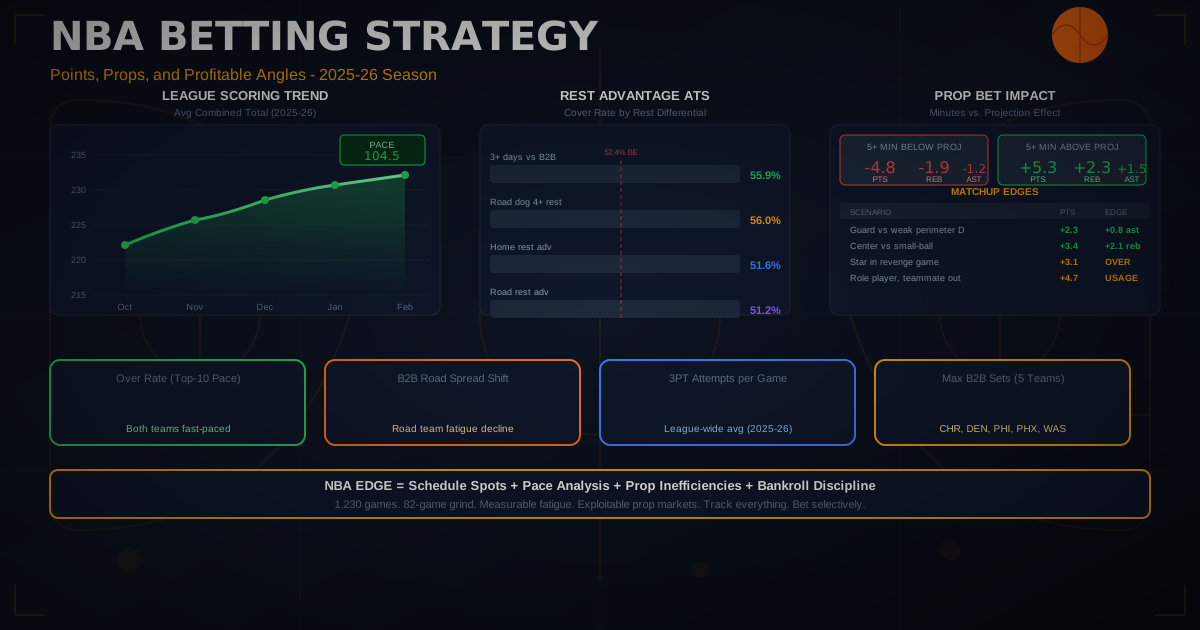
NBA: Contrarian Works, With Caveats
The NBA presents contrarian opportunities but with important differences from football:
- Higher scoring variance: NBA games have more possessions and more variance in final margins, making spread betting inherently noisier.
- Back-to-back fatigue: Public bettors often ignore rest differentials, creating contrarian value when a popular team plays on the second night of a back-to-back.
- Star player impact: Public money floods toward teams with star players regardless of matchup context. Fading LeBron, Curry, or Tatum in unfavorable spots has been historically profitable.
- Season length: 82 games means more data but also more grind. Contrarian NBA betting requires volume.
| NBA Contrarian Metric | Value | Notes |
|---|---|---|
| Optimal fade threshold | 68%+ public bets | Slightly lower than NFL |
| Best situations | B2B fades, national TV | Rest and visibility biases |
| Historical ATS when fading 68%+ | ~53-55% | Moderate edge |
| Best combined signal | 68%+ public AND b2b for favorite | ~55-57% ATS |
MLB: The Contrarian Gold Mine
Baseball is arguably the most profitable sport for contrarian betting, and the reason is structural: MLB betting is primarily moneyline-based, and underdogs pay plus-money. This means you can have a losing win rate and still profit.
Since 2007, Sports Insights' MLB Contrarian plays -- focusing on underdogs getting fewer than 40% of moneyline bets in the most heavily bet games -- have gone 2,239-2,873 (43.8%). A losing record. But because those underdogs pay plus-money on the moneyline, the strategy has produced +193.3 units won.
| MLB Contrarian Metric | Value | Notes |
|---|---|---|
| Optimal fade threshold | 65%+ public on favorite | Moneyline basis |
| Win rate expectation | 42-46% | Losing record is normal |
| Profitability driver | Plus-money underdogs | +130 to +200 range |
| Best filter | <35% ML bets + RLM of 10+ cents | +$8,700 per $100 bettor since 2005 |
| Key moneyline range | +105 to +200 | Moderate underdogs, not extreme longshots |
Example: 2025 MLB August -- Los Angeles Dodgers (-180) vs. Arizona Diamondbacks (+155). The Dodgers attracted 74% of moneyline bets. But the line moved from -180 to -170, showing sharp money on Arizona. The Diamondbacks won 6-4. A $100 contrarian bet on Arizona +155 returned $155 in profit.
NHL: Emerging Contrarian Opportunity
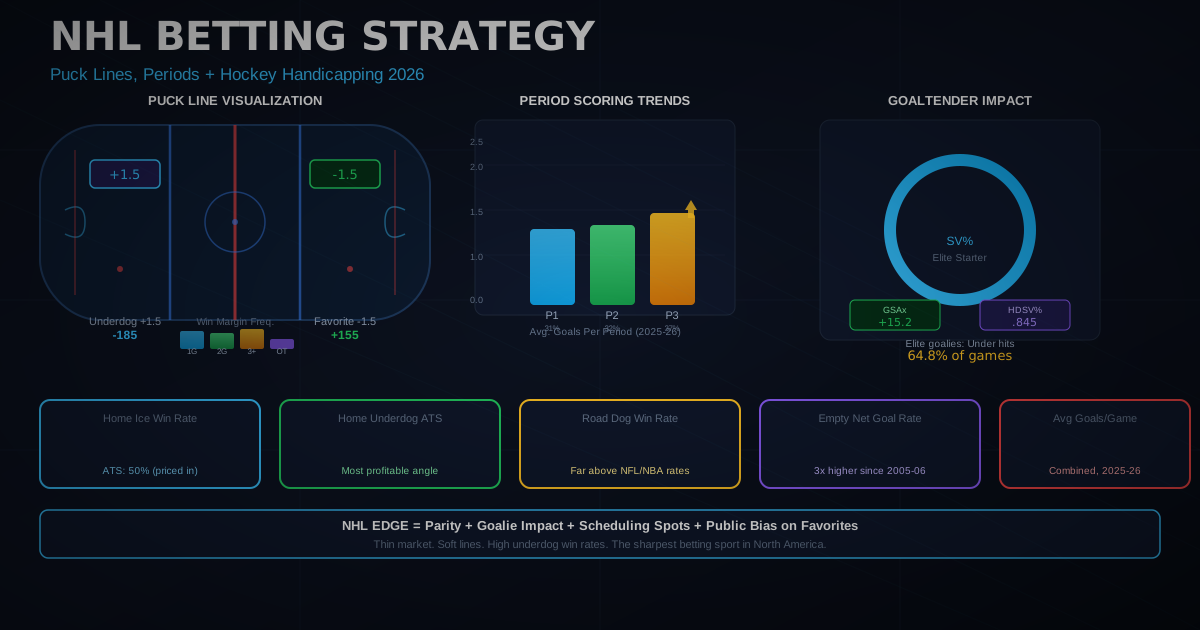
Hockey's low-scoring nature and high variance make it a natural fit for contrarian strategies, though public betting volume is smaller than in the NFL or NBA.
The key NHL contrarian principle: the public overvalues recent form and undervalues goaltending matchups. When a hot team faces a solid but unsexy opponent with a strong starting goaltender, fading the public can be profitable.
Determine your optimal contrarian bet size based on your edge with our Kelly Criterion Calculator.
Combining Contrarian Signals With Other Edges
Contrarian betting is most powerful when it confirms other edges rather than serving as a standalone strategy. The best contrarian bettors layer multiple signals.
The Multi-Signal Contrarian Framework
| Signal | What It Tells You | Weight |
|---|---|---|
| Public betting % (70%+) | Line is shaded against unpopular side | Primary |
| Reverse line movement | Sharps disagree with public | Strong confirmation |
| Bet % vs. handle % divergence | Smart money on opposite side | Strong confirmation |
| Closing line value (CLV) | Market moving toward your side | Validation |
| Rest/schedule advantage | Unpopular side has structural edge | Supporting |
| Weather/situational factors | Not priced into public perception | Supporting |
The most reliable contrarian bets check three or more of these boxes. For example:
- The public is 75% on Team A (primary signal)
- The line has moved toward Team B despite the public action (RLM confirmation)
- Team B is on extra rest while Team A is on a back-to-back (supporting edge)
- The handle percentage shows sharps are loading Team B (smart money confirmation)
This convergence of signals transforms a speculative fade into a high-confidence contrarian play.
Closing Line Value: The Ultimate Validator
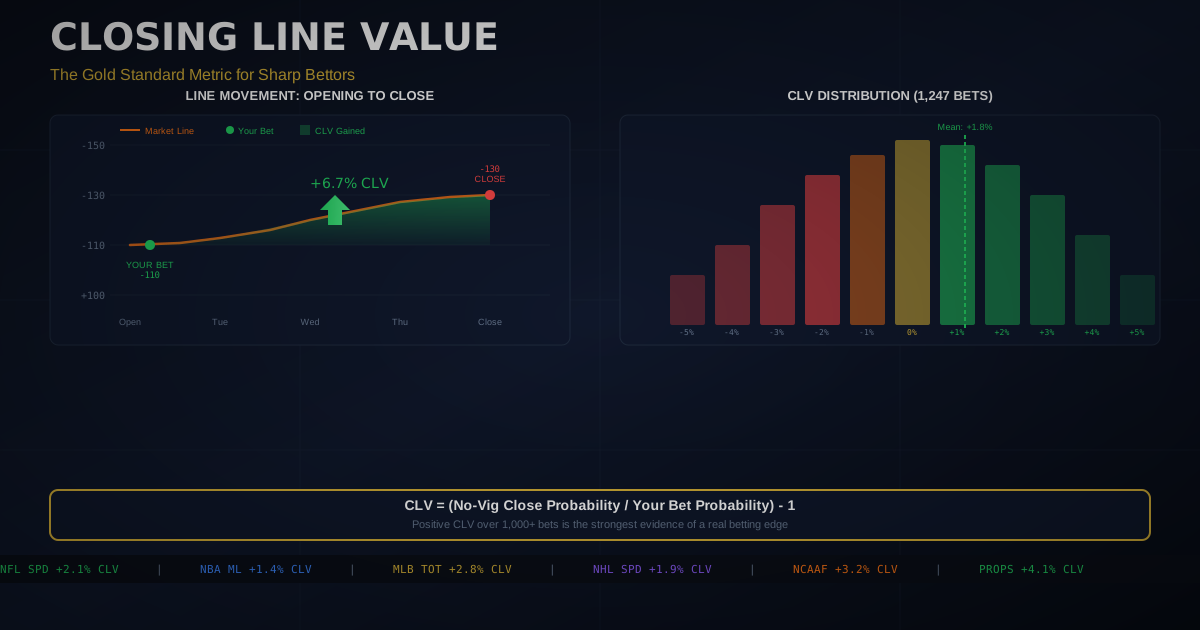
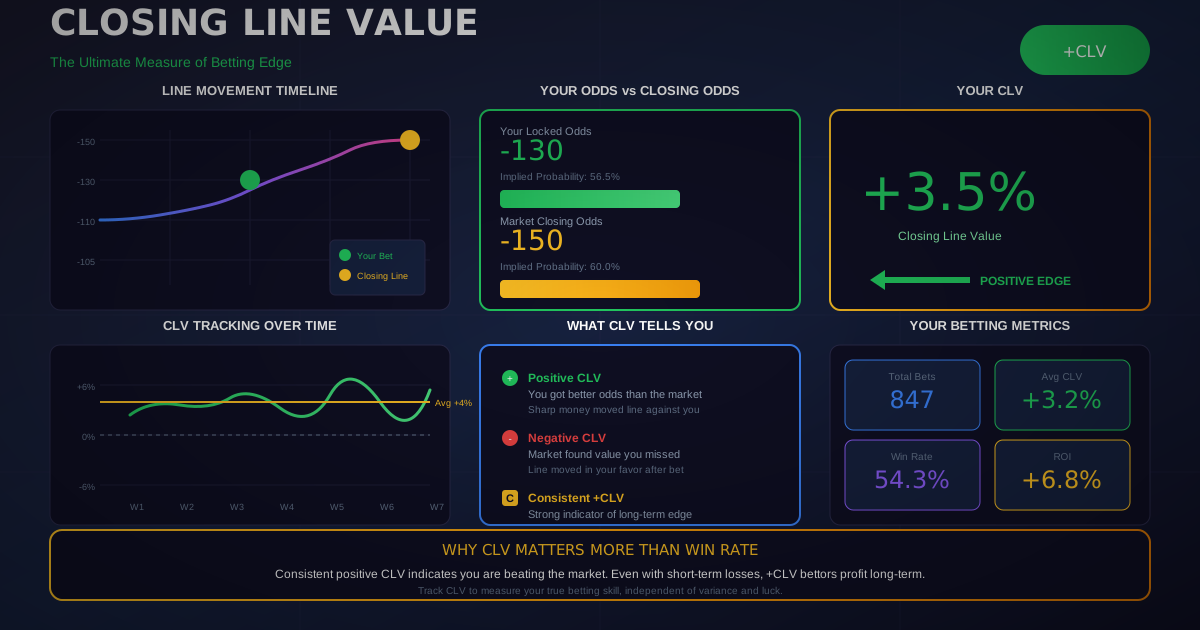
Closing Line Value (CLV) measures whether you got a better price than the closing line. If you bet the Vikings +3 and the line closes at Vikings +2, you have positive CLV -- and positive CLV is the single best predictor of long-term profitability.
Contrarian bets should consistently produce positive CLV. If you are fading the public at 70%+ thresholds and your bets are regularly closing with positive CLV, your strategy is working regardless of short-term results. If your contrarian bets are consistently producing negative CLV, something is wrong -- perhaps the public percentages you are using are inaccurate, or your thresholds are not selective enough.
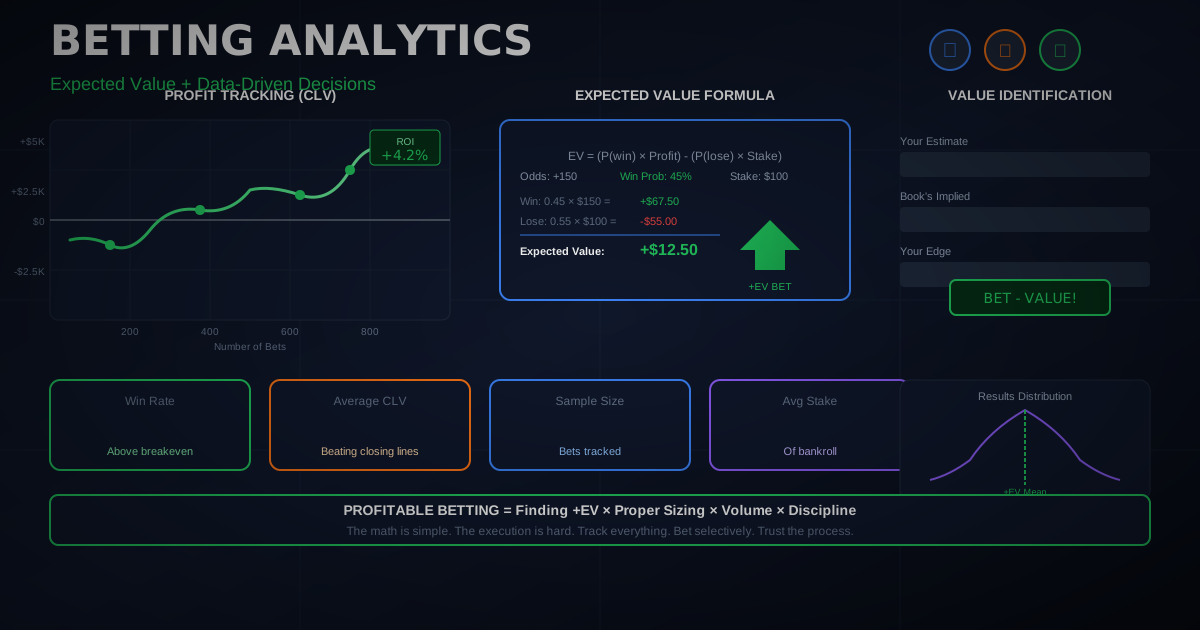
Expected Value Calculation for Contrarian Bets
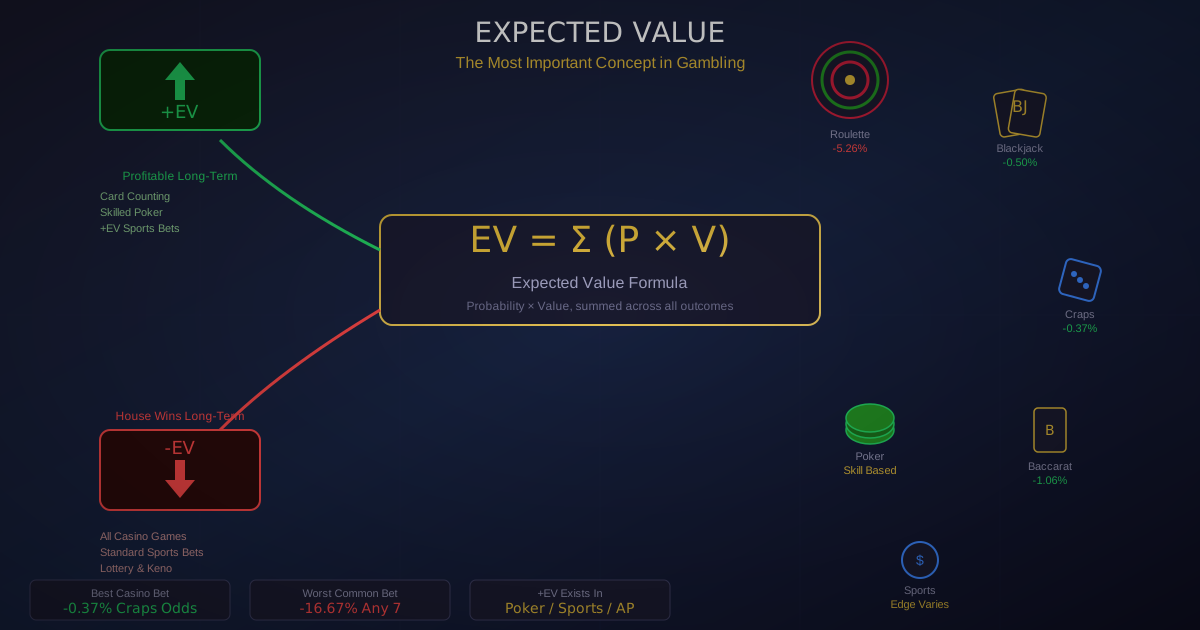
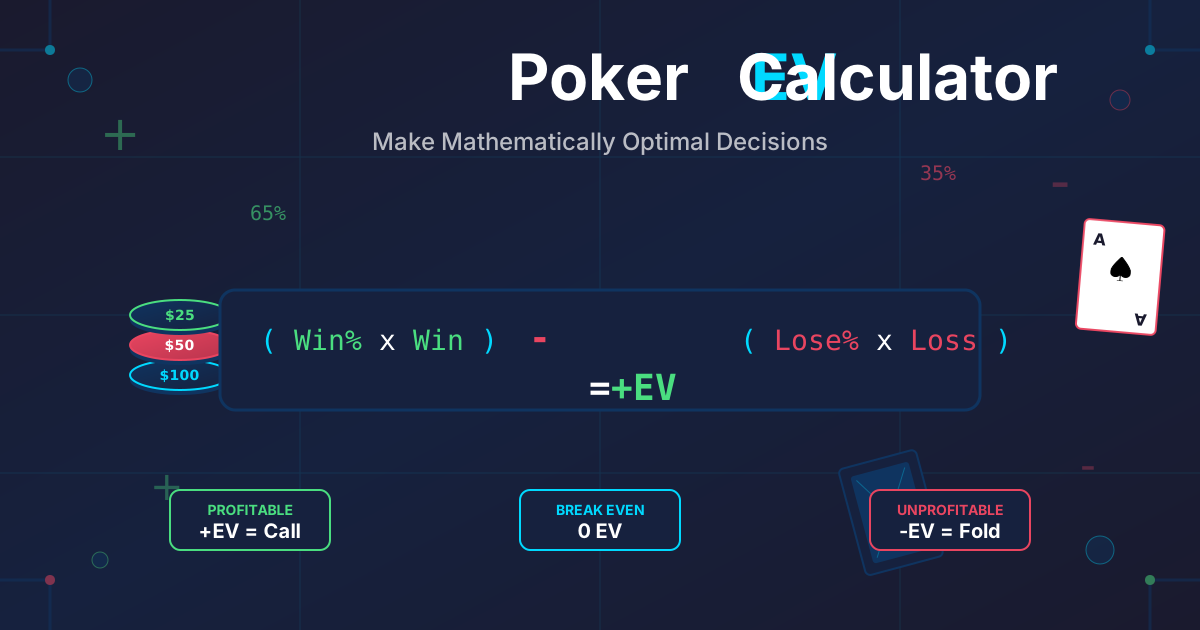
Before placing any contrarian bet, calculate the expected value:
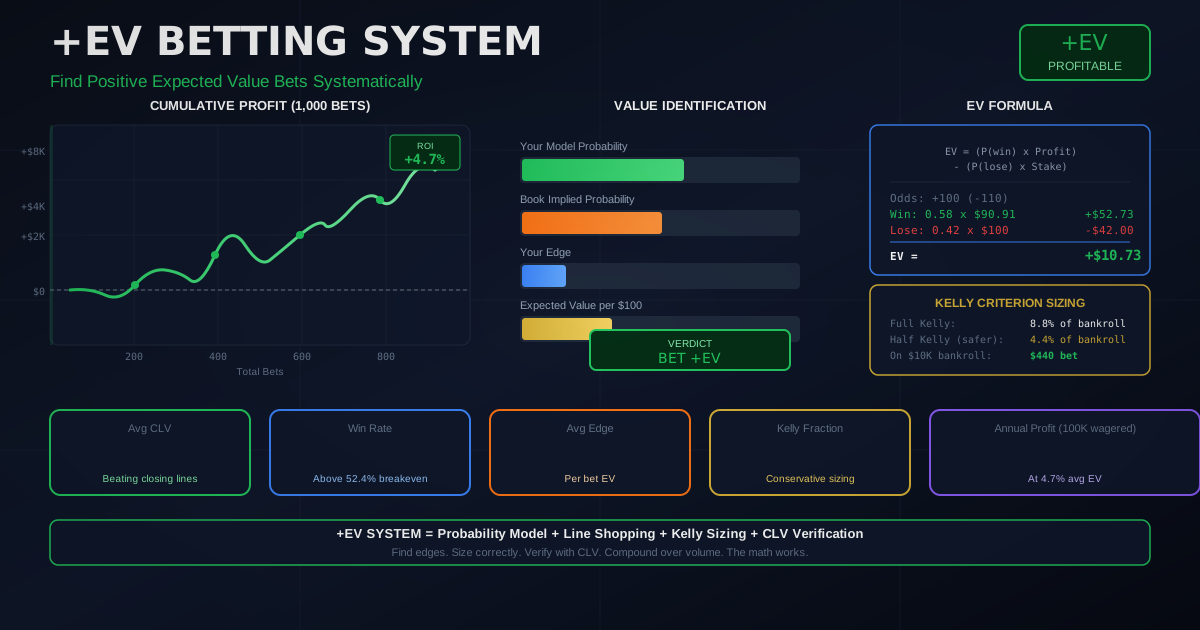
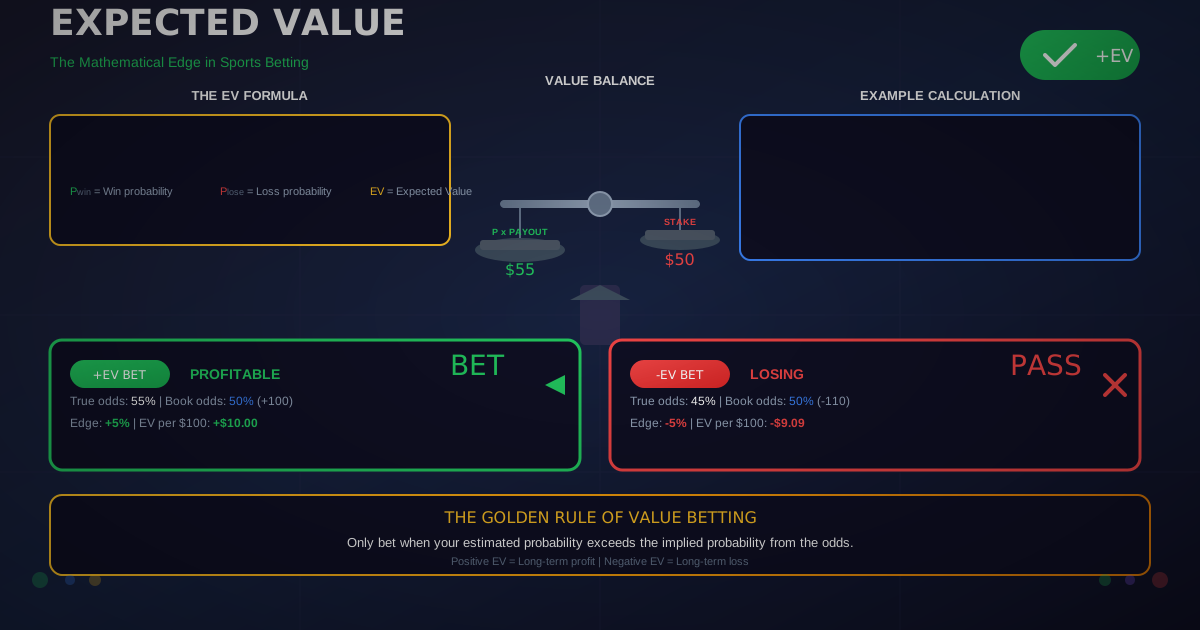
Suppose you believe a contrarian bet on an NFL underdog at +7 (-110) has a 55% chance of covering based on your contrarian analysis.
- Probability of covering: 55% (0.55)
- Profit if win: $100 (at -110)
- Probability of not covering: 45% (0.45)
- Loss if lose: $110
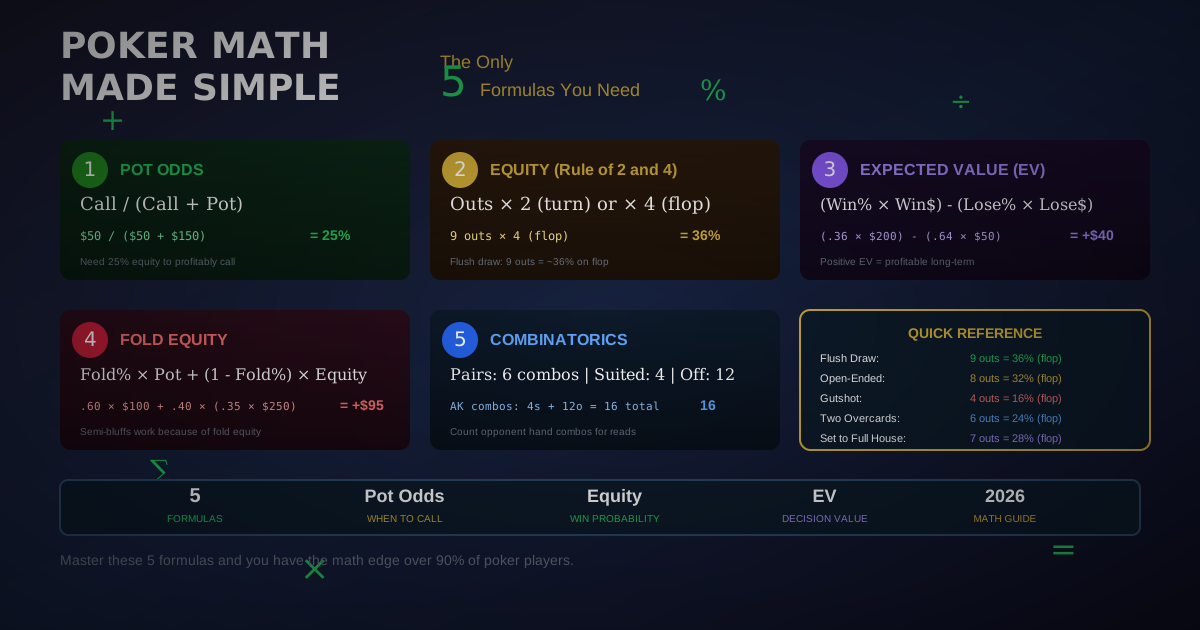
EV = (0.55 x $100) - (0.45 x $110) = $55.00 - $49.50 = +$5.50
This is a positive EV bet. Over 100 similar bets, you expect to profit $550. This is the mathematical foundation that makes contrarian betting viable.
Run this calculation instantly with our Expected Value Calculator.
Common Contrarian Betting Mistakes
Even bettors who understand the theory behind contrarian betting frequently undermine their results with these avoidable errors.
Mistake 1: Fading Everything
The most common mistake is treating every public lean as a contrarian opportunity. If the public is 57% on Team A, that is not a fade candidate -- it is noise. Successful contrarian bettors are highly selective, waiting for 70%+ public thresholds and confirming signals like RLM.
A practical rule: if you are betting more than 3-5 contrarian plays per week across all sports, your filters are not selective enough.
Mistake 2: Ignoring the Handle
Bettors who look only at bet percentages without checking handle percentages are using incomplete data. A game where 75% of bets and 75% of the handle are on one side is not a contrarian opportunity -- it is a game where sharps and the public agree. Only when bet percentage and handle percentage diverge do you have a genuine sharp-public split.
Mistake 3: Using Unreliable Data Sources
Not all public betting data is created equal. Some sites aggregate data from a single sportsbook, which may not represent the broader market. Others report betting percentages that lag significantly behind real-time market conditions.
For reliable contrarian betting, use platforms that aggregate data from multiple sportsbooks and report both bet and handle percentages in real time. Action Network, Sports Insights, and VSiN/DraftKings splits are among the most reliable sources.
Mistake 4: Overbetting Individual Games
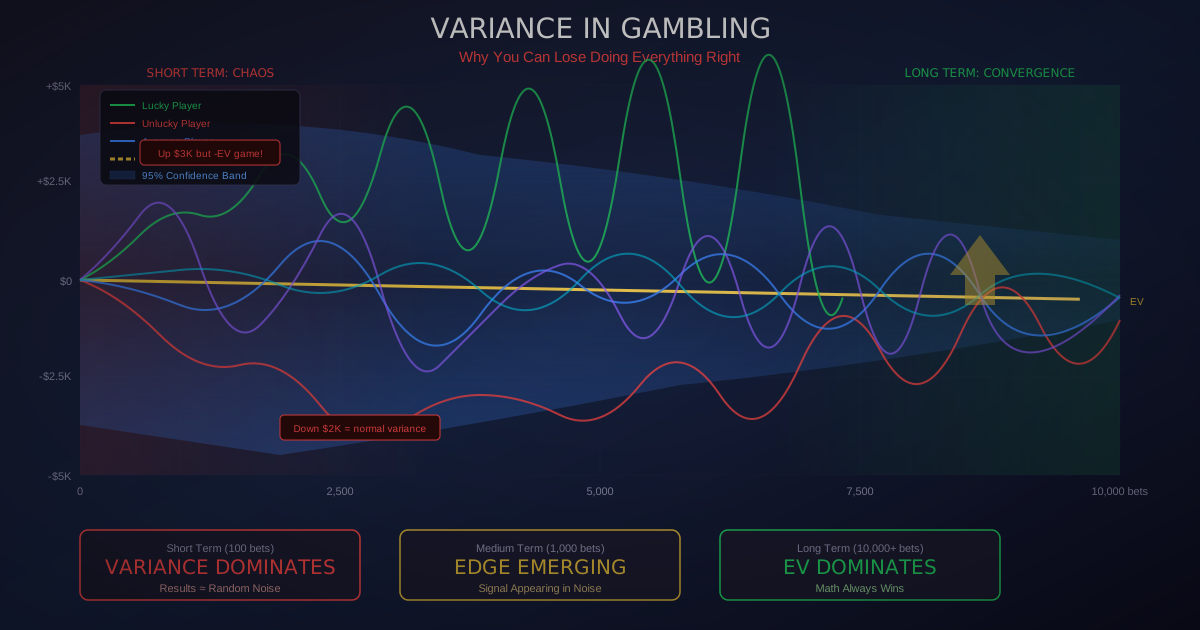
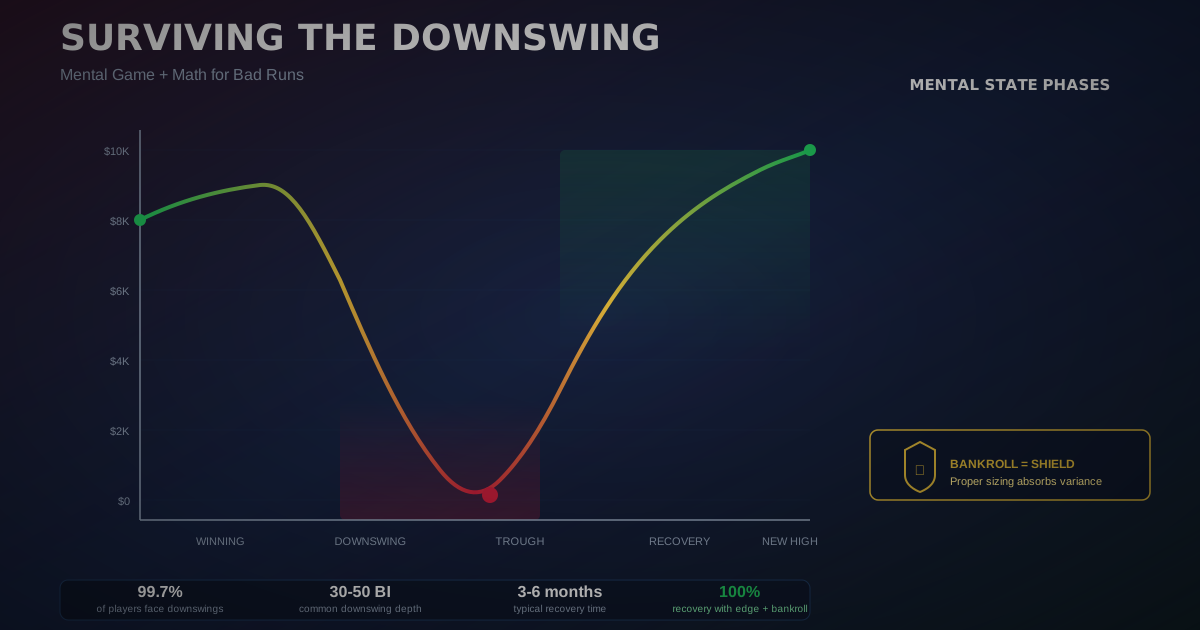
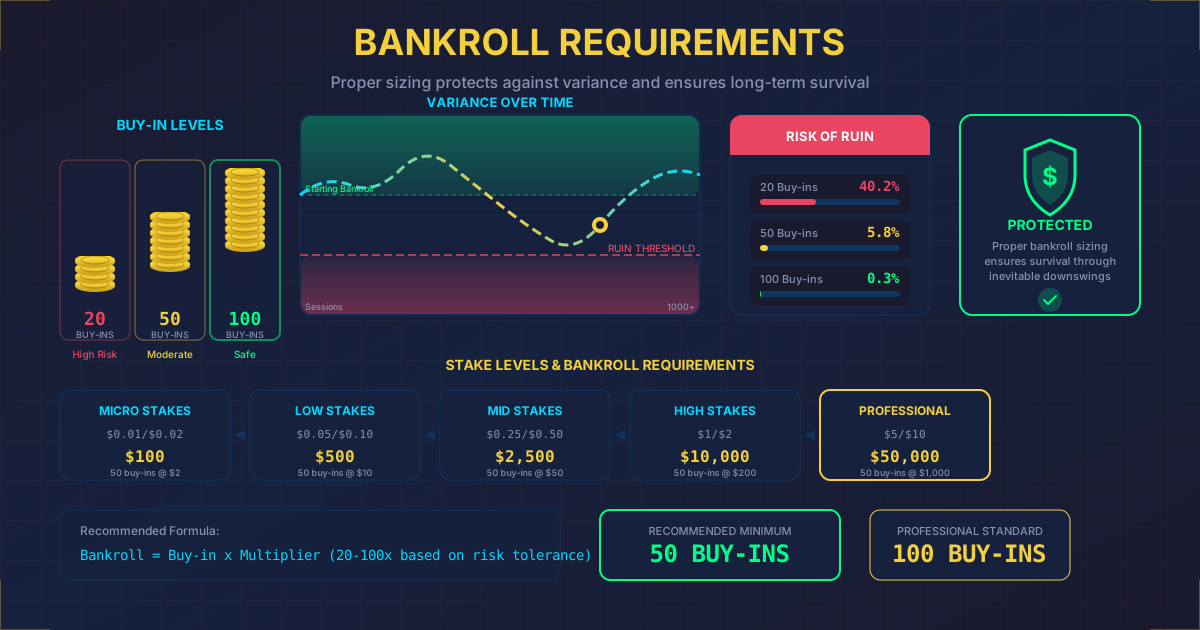
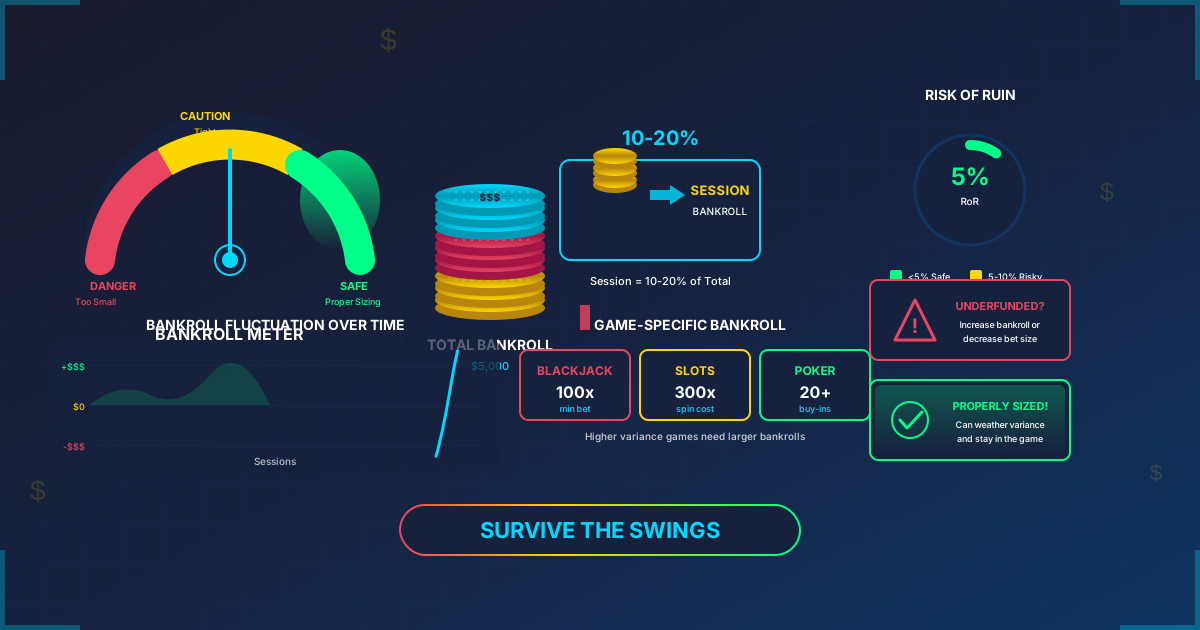
Even the best contrarian signals produce win rates of 55-58%. That means 42-45% of your bets lose. Overbetting any single game -- even one with perfect contrarian alignment -- exposes you to unnecessary bankroll risk.
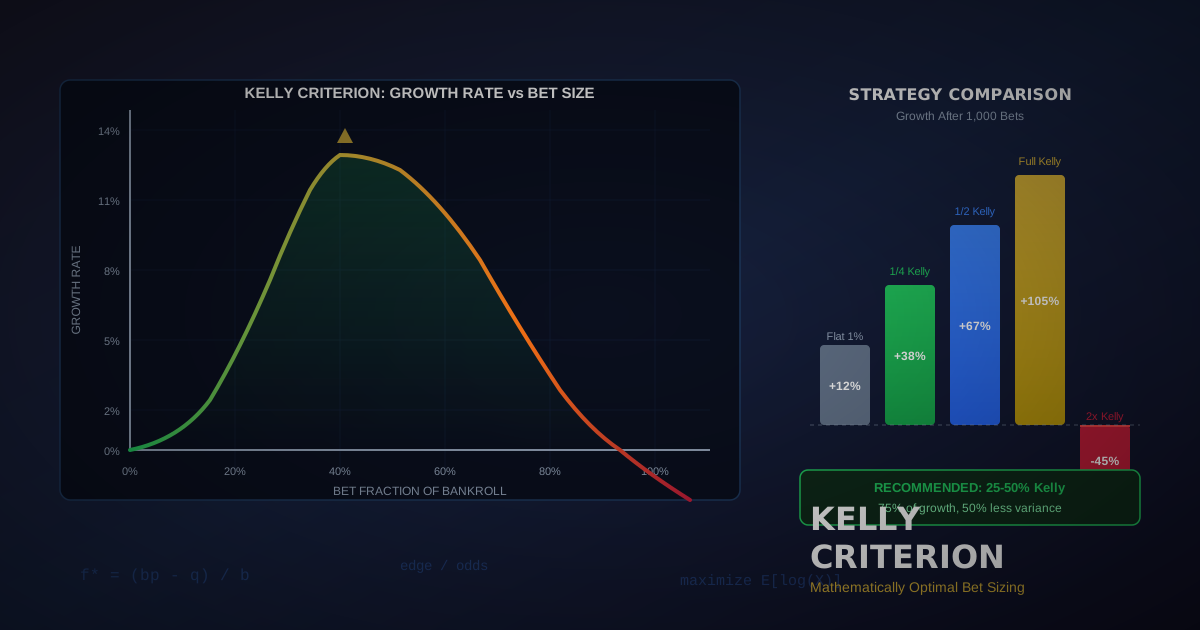
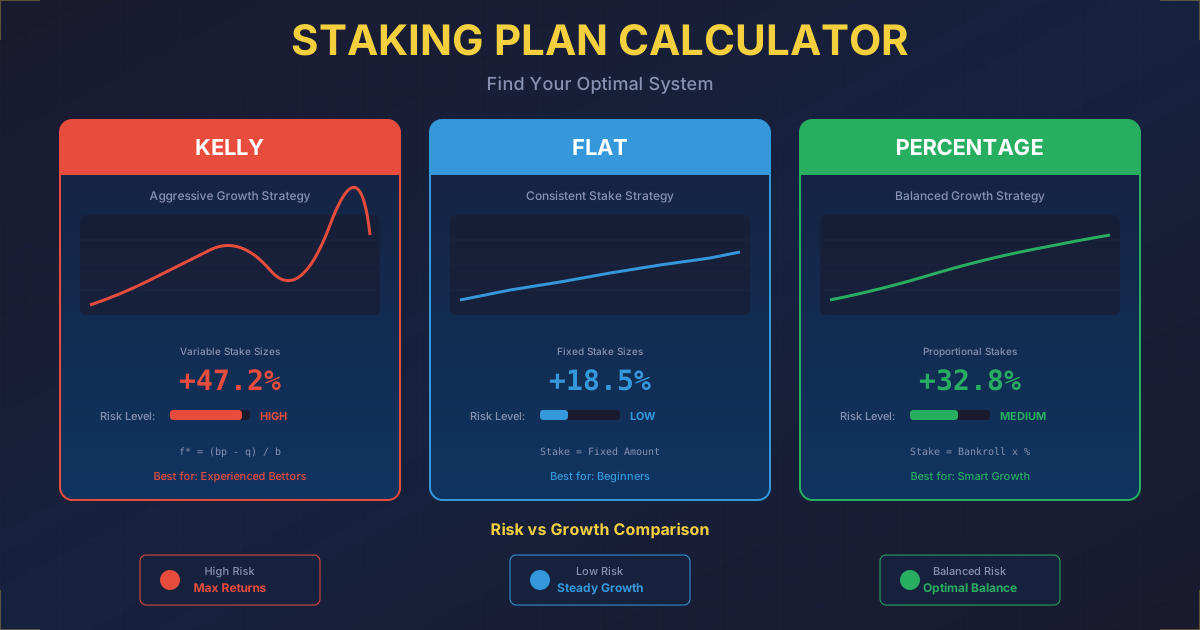
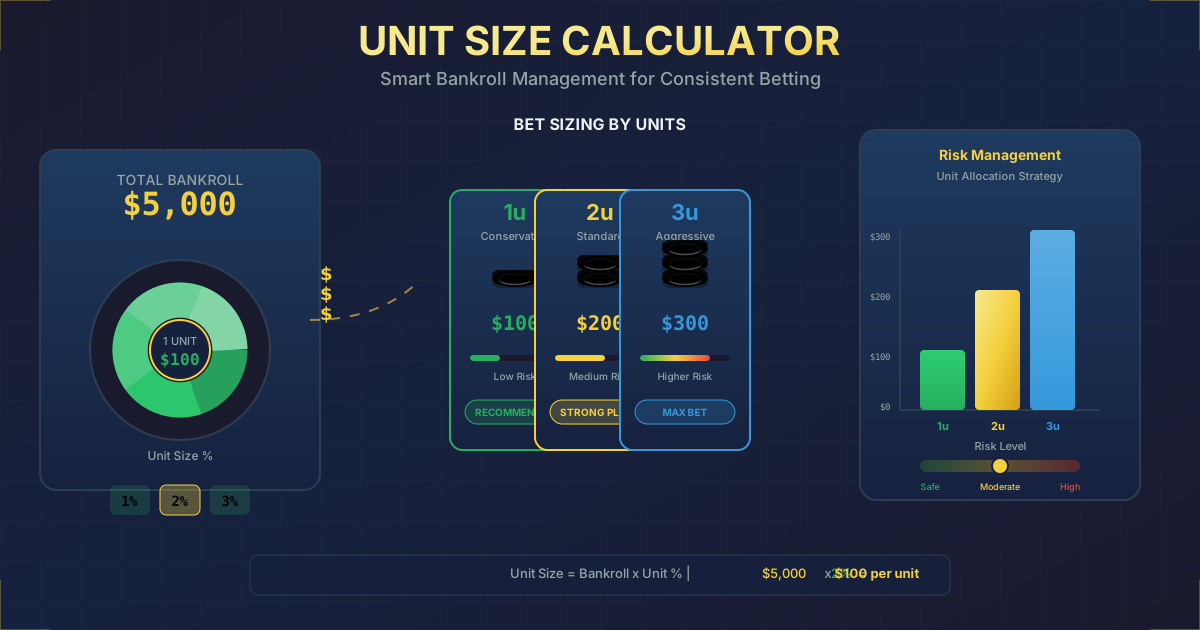
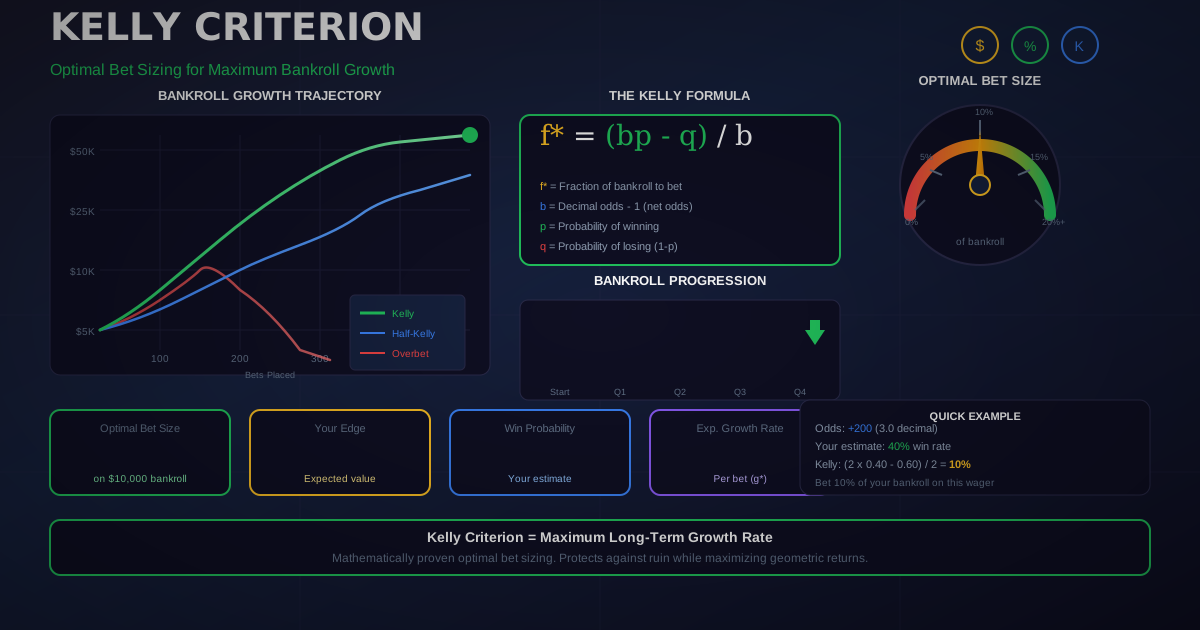
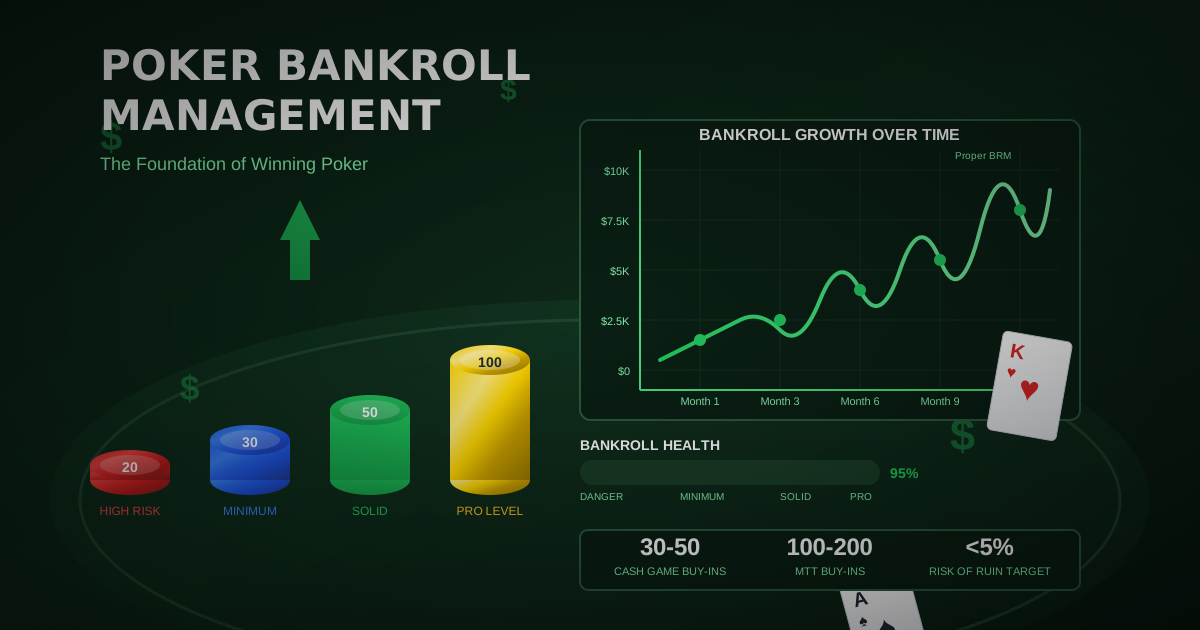
Kelly Criterion principles suggest that a 55% edge at -110 odds warrants roughly a 5% bankroll bet. Most professional bettors use fractional Kelly (25-50% of the full Kelly amount) to account for uncertainty in their edge estimates, which translates to 1-3% of bankroll per contrarian play.
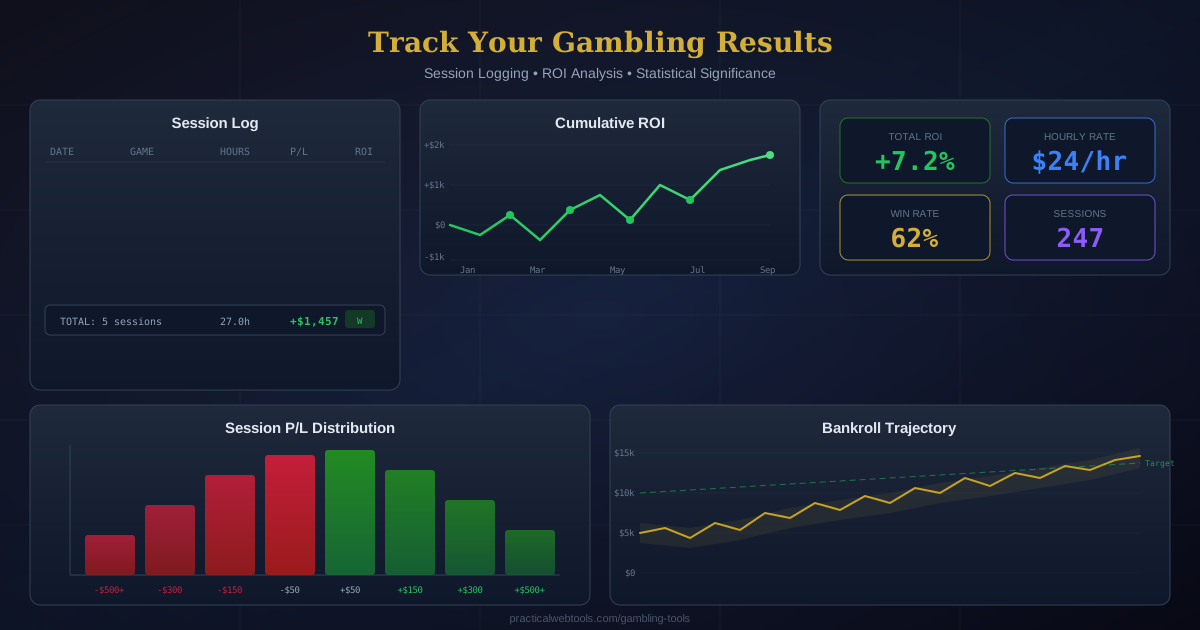
Mistake 5: Not Tracking Results
Many contrarian bettors have no idea whether their strategy is actually working because they do not track results systematically. At minimum, track:
- Your contrarian ATS record by sport
- Your average CLV (closing line value) on contrarian bets
- Your ROI by public percentage threshold
- Whether RLM-confirmed plays outperform non-RLM plays
Without this data, you cannot refine your approach or identify which specific contrarian filters are producing your edge.
Mistake 6: Emotional Contrarian Betting
Some bettors develop an identity around being contrarian and start fading the public for psychological satisfaction rather than mathematical edge. If you find yourself fading every popular pick out of a desire to be "the smart money," you have moved from strategy to ego. The data should drive every decision.
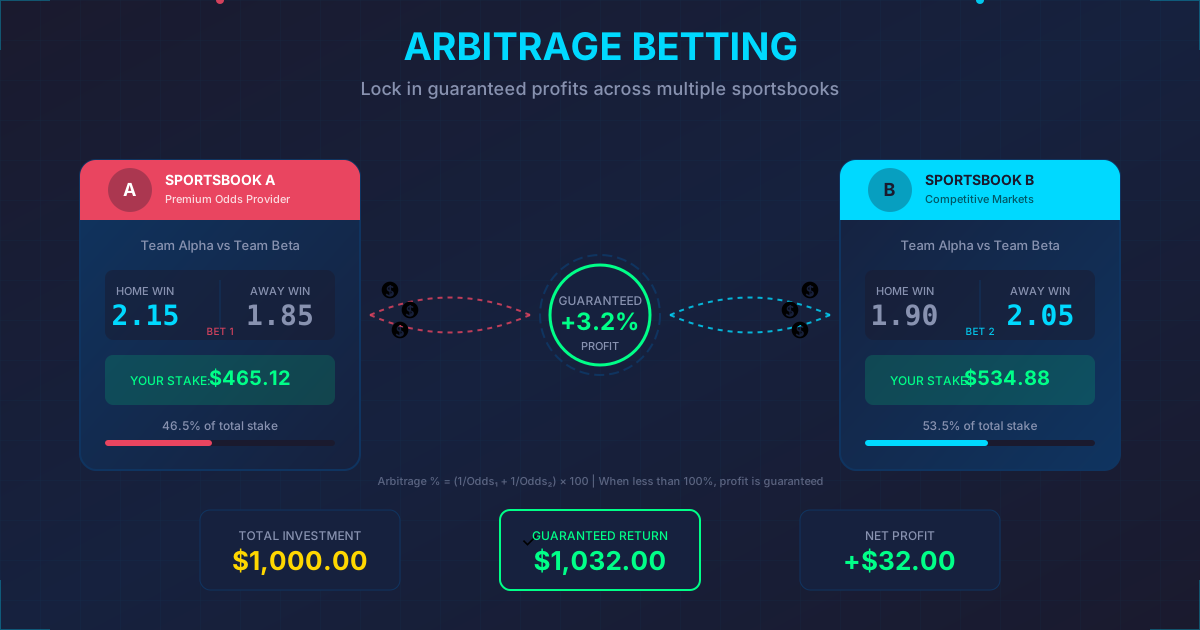
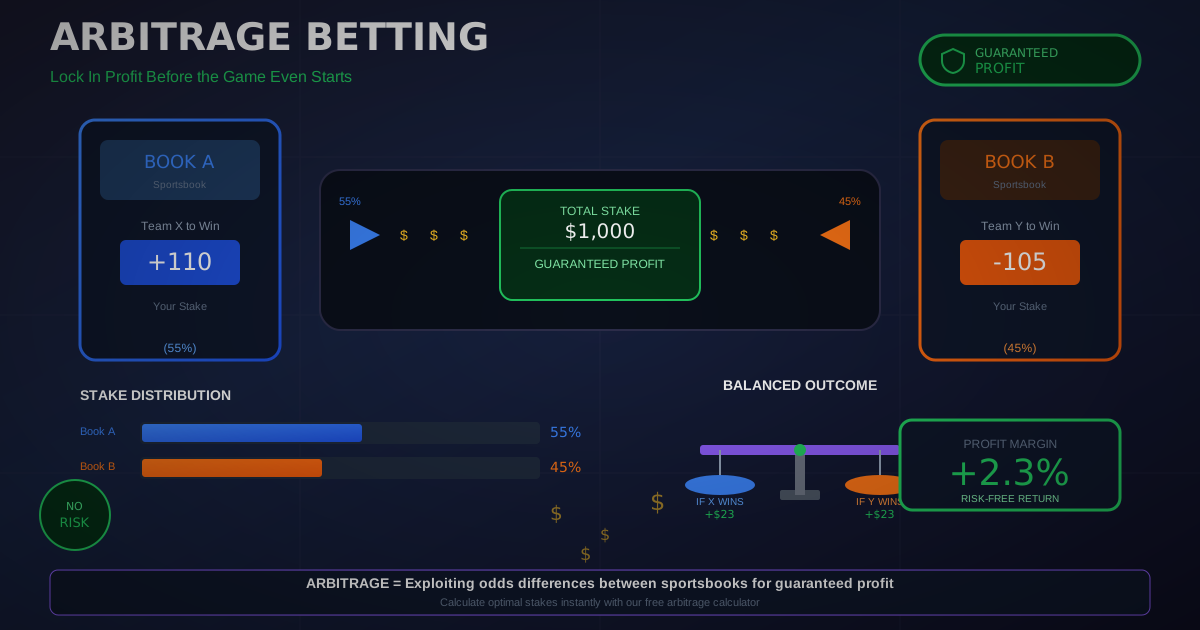
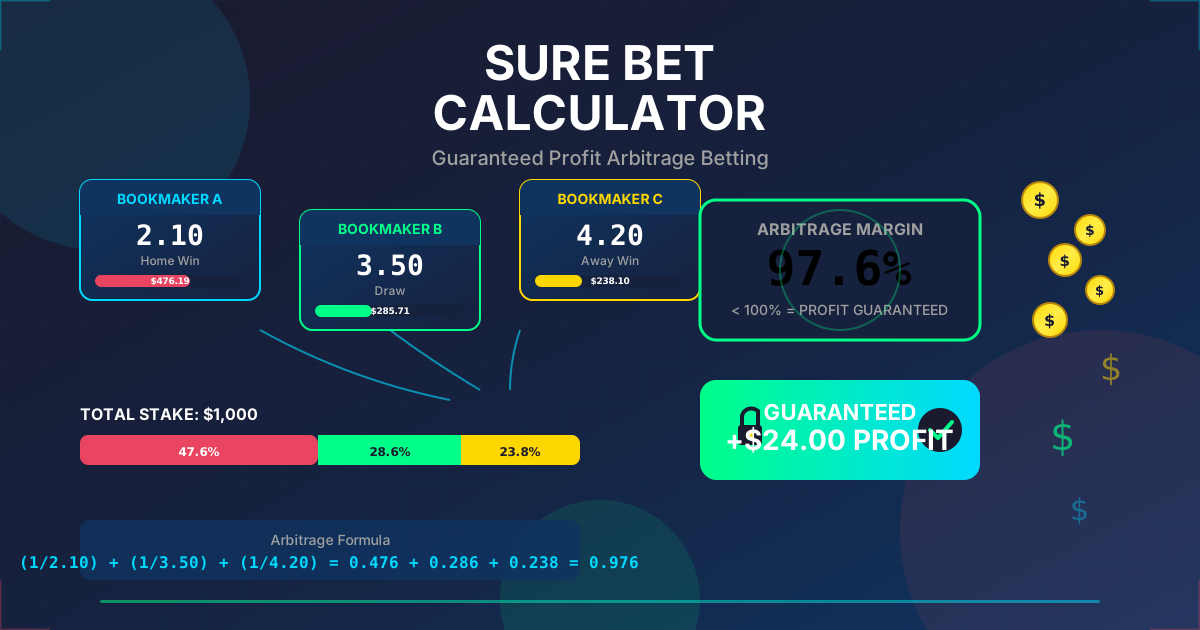
Check for risk-free contrarian opportunities across sportsbooks with our Arbitrage Calculator.
Frequently Asked Questions
What does "fading the public" mean in sports betting?
Fading the public means betting against the side that the majority of the betting public is backing. If 75% of bets are on the Kansas City Chiefs -7, fading the public means betting on their opponent at +7. The strategy is based on the theory that public betting biases cause sportsbooks to shade lines, creating value on the unpopular side. Successful fading requires high public percentages (70%+), not just a slight lean toward one side.
Does fading the public actually work long-term?
Selectively, yes. Blindly betting against the public at all thresholds produces roughly break-even results before vig and slightly negative results after vig. But when you apply specific filters -- 70%+ public betting percentage, reverse line movement, primetime games, and bet-versus-handle divergence -- contrarian betting has produced documented edges of 3-8% ROI over large sample sizes. The key word is "selectively." Contrarian betting without filters is not a strategy; it is a coin flip with a vig tax.
What is reverse line movement and why does it matter for contrarian betting?
Reverse line movement occurs when the betting line moves against the side receiving the majority of bets. For example, if 80% of bets are on Team A at -3, but the line moves to -2.5, that is reverse line movement. It indicates that sharp bettors -- professionals who wager large amounts -- are betting on Team B with enough volume to move the line despite the overwhelming public count on Team A. RLM is the strongest confirmation signal for contrarian bets because it shows informed money aligning with your contrarian position.
What is the best sport for contrarian betting?
The NFL offers the highest contrarian edge per bet due to maximum public interest, primetime distortion, and short-season variance. However, MLB may be the most profitable sport for total units won because of its moneyline structure -- you can lose more bets than you win and still profit from plus-money underdogs. Since 2007, MLB contrarian plays on underdogs getting fewer than 40% of moneyline bets have produced +193.3 units despite a 43.8% win rate. The NBA falls between the two, offering moderate contrarian edges with higher volume opportunity across an 82-game season.
Where can I find public betting percentage data?
The most reliable sources for public betting data include Action Network (multiple sportsbook aggregation with bet % and handle % splits), VSiN/DraftKings Network (DraftKings-specific handle data updated every 5 minutes), TheSpread.com (NFL and MLB public betting charts), Sports Insights (real-time steam moves and RLM alerts), and individual sportsbook apps like DraftKings and FanDuel that sometimes display their own betting splits. The most important feature is access to both bet percentage and handle percentage, since the divergence between these two numbers identifies sharp vs. public disagreement.
How much of my bankroll should I bet on a contrarian play?
Professional bettors typically risk 1-3% of their total bankroll on individual contrarian plays. Even the best contrarian signals produce win rates of 55-58%, which means 42-45% of bets lose. Using Kelly Criterion principles, a 55% edge at -110 odds suggests a full Kelly bet of roughly 5% of bankroll. Most professionals use fractional Kelly (25-50% of full Kelly), which translates to 1.25-2.5% per bet. This conservative sizing protects against the inevitable losing streaks while allowing the mathematical edge to compound over time.
Can sportsbooks adjust to eliminate contrarian edges?
Sportsbooks continuously improve their models, and the contrarian edge has narrowed over the past decade as markets have become more efficient. However, the fundamental dynamic persists: casual bettors will always gravitate toward popular teams, favorites, and overs, and sportsbooks will always shade lines to manage liability from this predictable behavior. The contrarian edge may shrink but is unlikely to disappear entirely as long as recreational betting volume exists. The key for bettors is to raise their contrarian thresholds as markets become more efficient -- what worked at 60% public thresholds a decade ago may now require 70%+ thresholds to remain profitable.
Should I use contrarian betting as my only strategy?
No. Contrarian betting is most effective as one component of a broader handicapping approach. The best sports bettors combine contrarian signals with their own power ratings, situational analysis (rest, travel, motivation), injury information, weather factors, and expected value calculations. Think of contrarian data as a filter that helps you identify games where the market may be mispriced, then apply your own analysis to determine whether the contrarian side genuinely offers value. A contrarian signal that conflicts with your own independent analysis is not an automatic bet.
Tools to Improve Your Contrarian Betting
Successful contrarian betting requires the right analytical tools. These free calculators help you evaluate whether a contrarian bet offers genuine expected value:
- Expected Value Calculator: Determine whether your contrarian bet is +EV based on your estimated probability and the odds offered.
- Odds Converter: Convert between American, decimal, fractional, and implied probability formats to compare odds across sportsbooks.
- Implied Probability Calculator: Calculate the implied probability behind any betting line to identify when a sportsbook is pricing a side too low.
- Kelly Criterion Calculator: Determine your optimal bet size based on your contrarian edge and current bankroll.
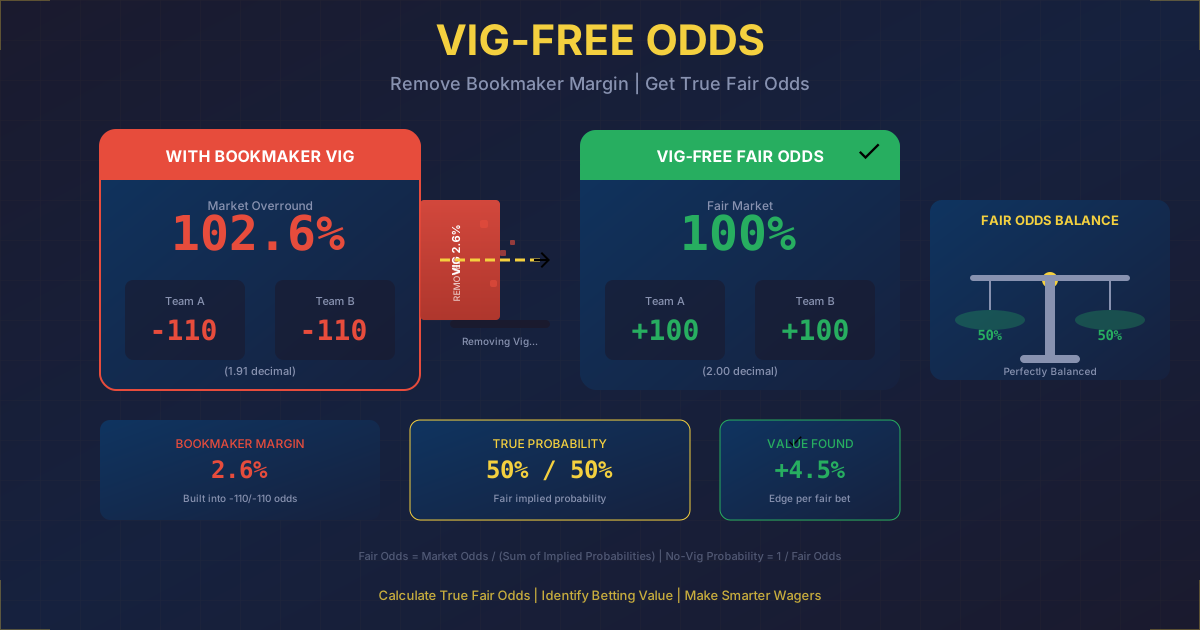
- Hold/Vig Calculator: See exactly how much juice the sportsbook is charging so you can factor vig into your contrarian ROI calculations.
- CLV Tracker: Track your closing line value to validate whether your contrarian bets are consistently beating the market.
- Arbitrage Calculator: Identify risk-free opportunities when contrarian line movement creates price discrepancies across sportsbooks.
Conclusion
Contrarian betting is real. The edge is documented across thousands of games and multiple sports. But it is not the simple "always bet against the public" strategy that social media and betting podcasts make it out to be.
The profitable approach requires discipline and specificity: wait for extreme public percentages (70%+), confirm with reverse line movement and bet-versus-handle divergence, focus on primetime games and popular teams, and use expected value calculations to validate every bet before you place it. In MLB, the moneyline structure makes contrarian underdogs profitable even with a losing win rate. In the NFL, primetime contrarian plays at high public thresholds have historically produced 55-58% ATS win rates. In the NBA, fading public favorites on back-to-backs against unglamorous opponents offers moderate but consistent edges.
The bettors who profit from contrarian strategies are the ones who treat public betting data as one input among many -- not a magic formula, but a powerful filter that, when combined with sharp money signals, sound analysis, and rigorous bankroll management, tilts the long-term math in their favor.
Track your results. Calculate your expected value. Respect the vig. And remember: being contrarian for its own sake is not a strategy. Being contrarian when the data supports it is.
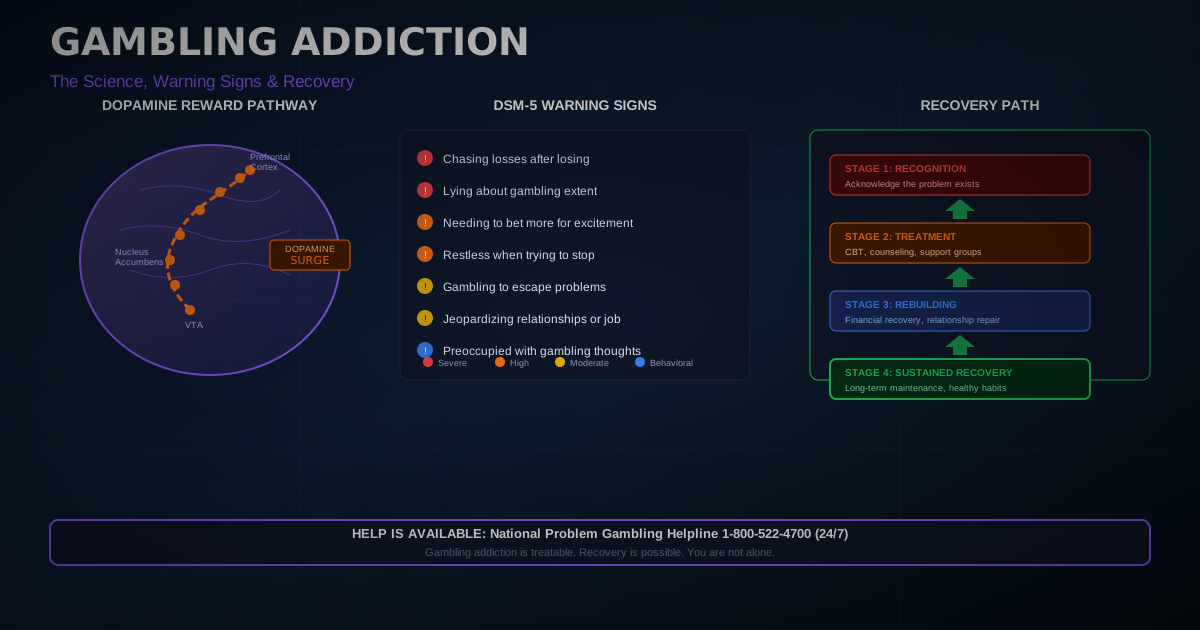
Gambling involves risk. This content is for educational and informational purposes only. Always gamble responsibly, set limits you can afford, and seek help if gambling becomes a problem. Visit the National Council on Problem Gambling or call 1-800-522-4700 for support.