Online Gambling Safety Checklist: How to Verify a Site Before You Deposit (2026)
An estimated $5.8 billion was lost to fraudulent or unlicensed online gambling operations globally in 2024, and most victims had no recourse to recover their funds. The online gambling industry is projected to exceed $130 billion in revenue by 2027, and that growth attracts both legitimate operators and sophisticated scam operations designed to steal deposits, rig games, and exploit personal data. A single deposit to an unverified site can expose your banking information, identity, and funds to criminal operations.
This guide is a consumer protection resource. You will learn exactly how to verify whether an online gambling site is legitimate before you deposit a single dollar. We cover licensing verification, SSL encryption checks, RNG certification, payment security, terms and conditions red flags, complaint history research, and customer support testing. Each section includes a concrete checklist item you can complete in minutes.
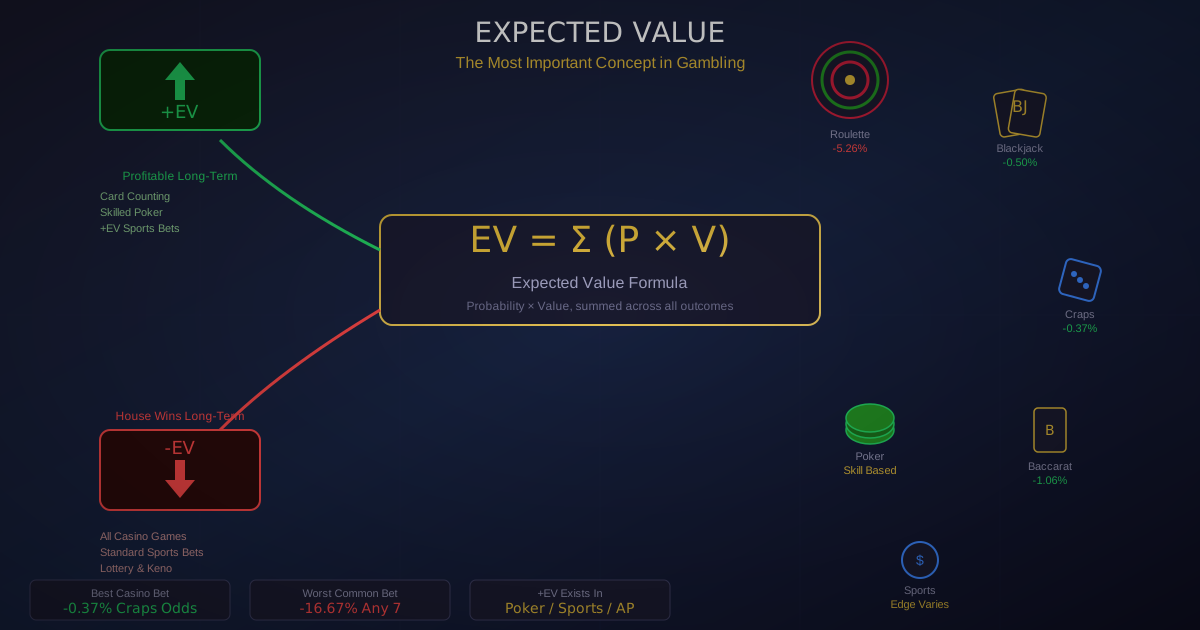
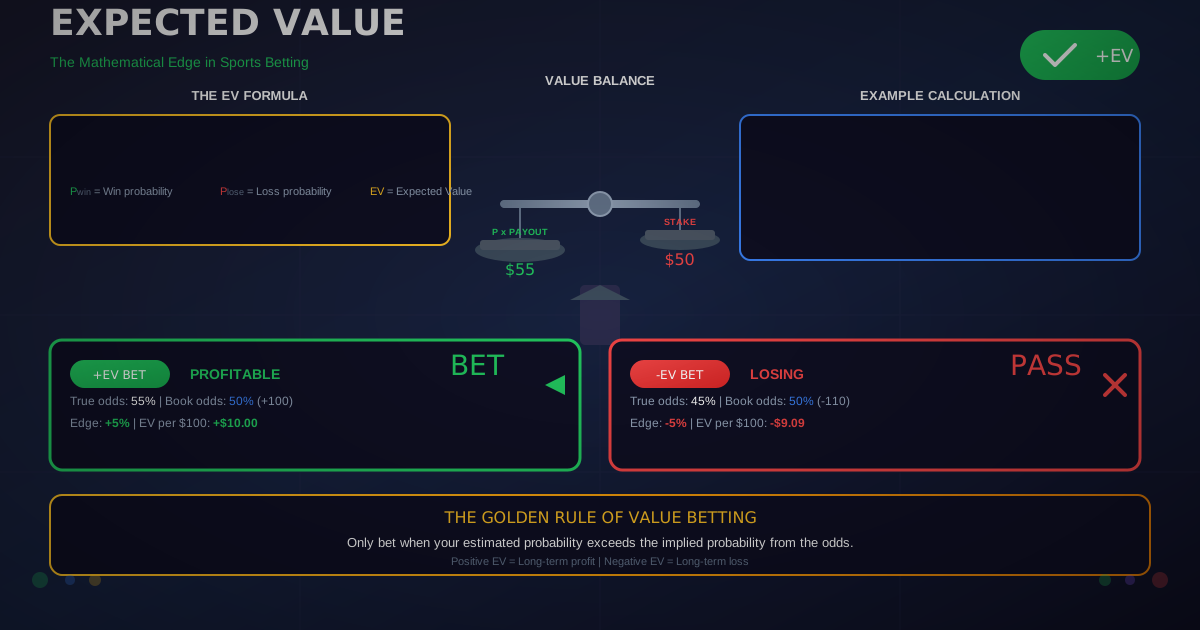
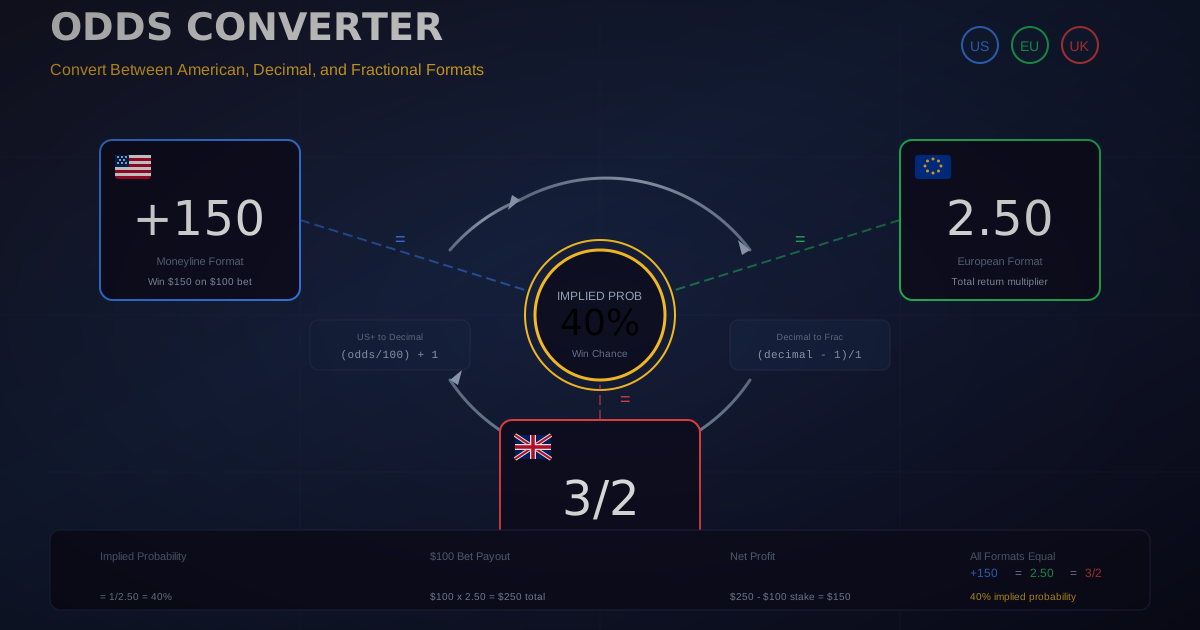
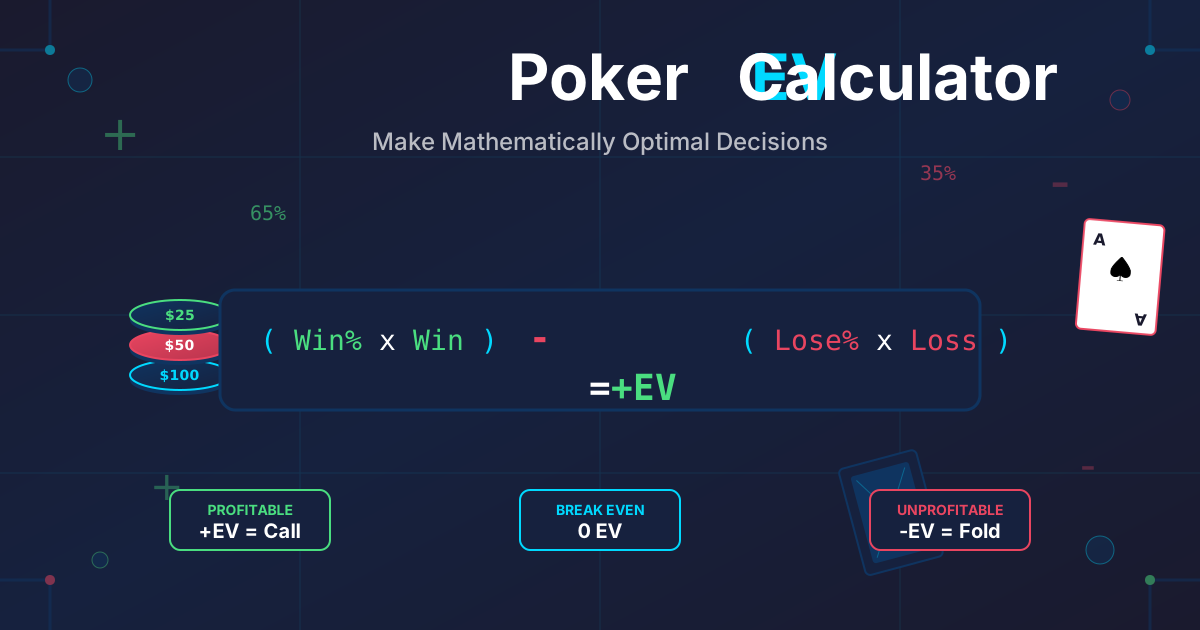
Before analyzing any betting site, make sure you understand the true odds behind their games using our free Odds Converter and Expected Value Calculator.
What Is the First Thing to Check on Any Online Gambling Site?
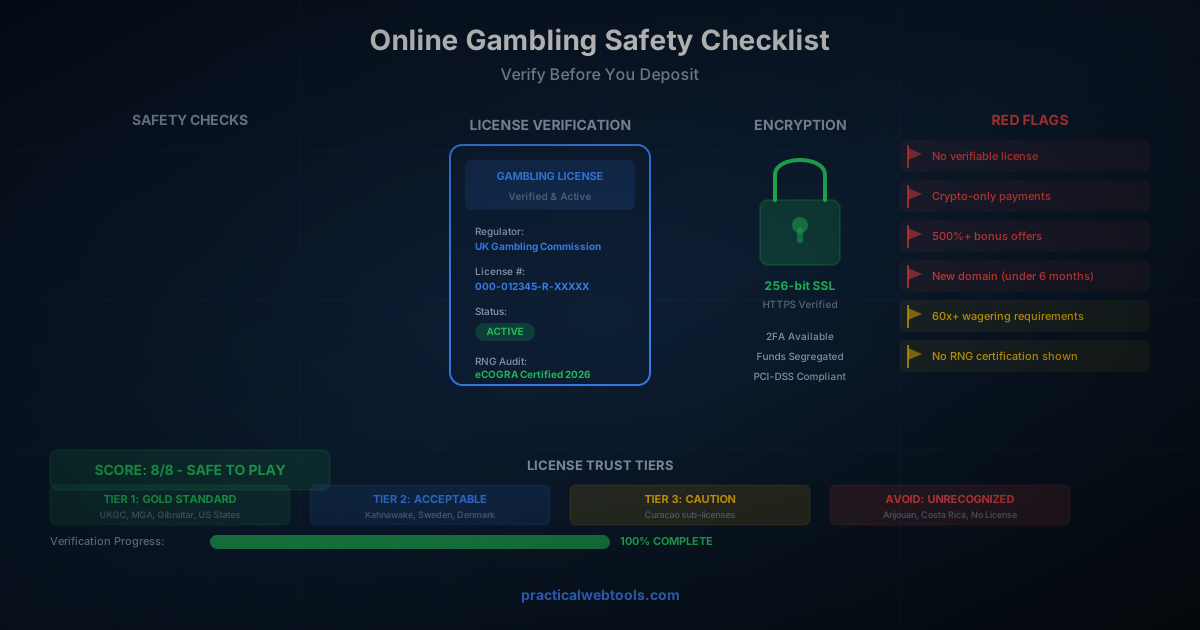
The first thing to check is the site's gambling license. A valid license from a reputable regulatory body is the single most important indicator of site legitimacy. If a site has no license, or a license from an unrecognized jurisdiction, do not deposit money under any circumstances.
Why Licensing Matters
A gambling license means:
- The operator has been vetted by a regulatory authority
- Player funds must be kept in segregated accounts (in most jurisdictions)
- Games must be tested for fairness by independent auditors
- The operator must have a dispute resolution process
- There are consequences (fines, license revocation) for violating regulations
- Your personal and financial data is subject to data protection requirements
An unlicensed operator has no legal obligation to pay you your winnings, protect your data, or operate fair games.
Tier 1 Licensing Authorities (Most Trusted)
| Regulatory Body | Jurisdiction | License Check URL | Reputation |
|---|---|---|---|
| UK Gambling Commission (UKGC) | United Kingdom | gamblingcommission.gov.uk | Gold standard; strictest consumer protections |
| Malta Gaming Authority (MGA) | Malta/EU | mga.org.mt | Widely respected; EU oversight |
| Gibraltar Gambling Commissioner | Gibraltar | gibraltar.gov.gi | Strong track record; limited licensees |
| Alderney Gambling Control Commission | Alderney (Channel Islands) | gamblingcontrol.org | Rigorous but small jurisdiction |
| Isle of Man Gambling Supervision Commission | Isle of Man | gov.im/gambling | Long-established; strong oversight |
| New Jersey Division of Gaming Enforcement | New Jersey, USA | nj.gov/oag/ge | US state-level gold standard |
| Pennsylvania Gaming Control Board | Pennsylvania, USA | gamingcontrolboard.pa.gov | Strict US state regulation |
| Michigan Gaming Control Board | Michigan, USA | michigan.gov/mgcb | Strong consumer protections |
Tier 2 Licensing Authorities (Acceptable)
| Regulatory Body | Jurisdiction | Notes |
|---|---|---|
| Kahnawake Gaming Commission | Quebec, Canada | Long-standing but limited enforcement |
| Swedish Gambling Authority (Spelinspektionen) | Sweden | Strong domestic regulation |
| Danish Gambling Authority | Denmark | Solid EU member state regulation |
| Ontario iGaming (AGCO) | Ontario, Canada | Relatively new but well-structured |
| Curaçao eGaming | Curaçao | Very common; minimal oversight; lower trust |
Tier 3 and Unrecognized (Avoid)
| Licensing Situation | Risk Level | Recommendation |
|---|---|---|
| Curaçao (some sub-licensees) | Moderate-high | Additional verification strongly recommended |
| Anjouan (Comoros Islands) | Very high | Avoid; often used by fraudulent operators |
| No license displayed | Critical | Never deposit; likely unlicensed or fraudulent |
| License number that cannot be verified | Critical | Likely fabricated; avoid entirely |
| Costa Rica "license" | High | Costa Rica does not regulate online gambling; operators merely register businesses there |
| Panama "license" | High | Similar to Costa Rica; business registration, not gambling regulation |
How to Verify a License in 3 Steps
- Find the license information. Look at the bottom of the site's homepage or in the "About Us" / "Legal" section. Legitimate sites prominently display license numbers and regulator logos.
- Go directly to the regulator's website. Do not click the logo on the gambling site (it could link to a fake page). Type the regulator's URL directly into your browser.
- Search for the operator. Use the regulator's public register to confirm the license number, operator name, and license status (active vs. suspended/revoked).
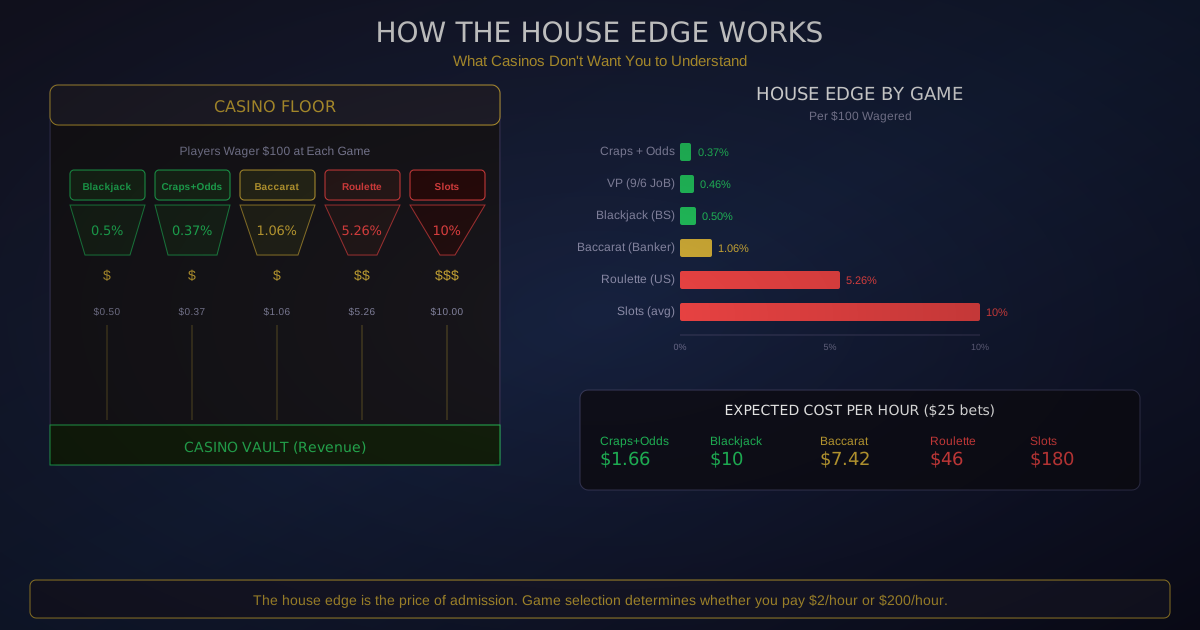
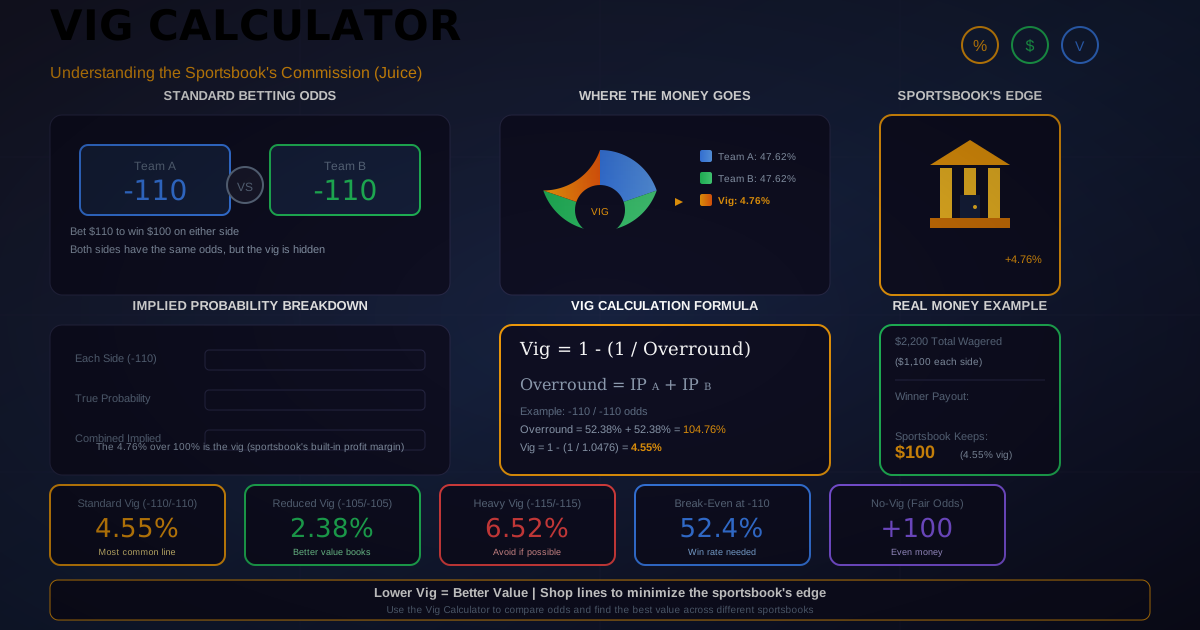
Understand how licensed operators build their edge into every game with our Hold/Vig Calculator.
How Do You Check if an Online Casino's Connection Is Secure?
Every legitimate online gambling site must use SSL/TLS encryption (HTTPS) to protect your data in transit. This is a baseline requirement, not a distinguishing feature. If a site does not have HTTPS, it is either fraudulent or dangerously negligent.
SSL/TLS Verification Checklist
| Check | How to Verify | What to Look For |
|---|---|---|
| HTTPS in URL bar | Look at the address bar | URL must start with https:// (not http://) |
| Padlock icon | Click the padlock in the address bar | Padlock should be present and closed |
| Certificate issuer | Click padlock > "Certificate" or "Connection is secure" | Issued by a recognized CA (DigiCert, Comodo, Let's Encrypt, Sectigo) |
| Certificate validity | Check expiration date in certificate details | Must not be expired |
| Organization validation | Check certificate type (DV, OV, EV) | OV or EV certificates show the company name (stronger validation) |
| Domain match | Verify the certificate domain matches the URL | Mismatched domains indicate a phishing site |
Certificate Types Explained
| Certificate Type | Validation Level | What It Proves | Visual Indicator |
|---|---|---|---|
| Domain Validation (DV) | Low | Someone controls the domain | Padlock icon only |
| Organization Validation (OV) | Medium | A verified organization owns the domain | Padlock + org name in certificate details |
| Extended Validation (EV) | High | The organization has been thoroughly vetted | Padlock + org name (some browsers display in green) |
A legitimate gambling site should have at minimum an OV certificate. An EV certificate demonstrates a higher level of organizational verification. A DV-only certificate on a gambling site that handles financial transactions is a yellow flag.
Beyond SSL: Additional Security Indicators
| Security Feature | How to Check | Importance |
|---|---|---|
| Two-factor authentication (2FA) | Check account settings after registration | High - protects your account from unauthorized access |
| Strong password requirements | Note requirements during registration | Medium - at minimum 8 characters, mixed case, numbers |
| Session timeout | Check if you are logged out after inactivity | Medium - prevents unauthorized access on shared devices |
| Account activity log | Check if the site shows login history | Medium - lets you detect unauthorized access |
| IP-based login alerts | Check email after logging in from a new location | High - alerts you to suspicious access |
Calculate the true cost of playing on any site, licensed or otherwise, with our Expected Value Calculator.
How Do You Verify That Games Are Fair and RNG Certified?
Fair games use a Random Number Generator (RNG) that has been independently tested and certified. RNG certification ensures that game outcomes are truly random and not manipulated in the operator's favor beyond the stated house edge.
What RNG Certification Means
An RNG is the software algorithm that determines the outcome of every slot spin, card deal, roulette spin, and other game result. Independent testing labs evaluate RNGs for:
- Statistical randomness: Outcomes must pass multiple tests for randomness (chi-squared, serial correlation, runs tests)
- Unpredictability: Future outcomes cannot be predicted from past results
- Non-repeatability: The sequence does not repeat within a practical timeframe
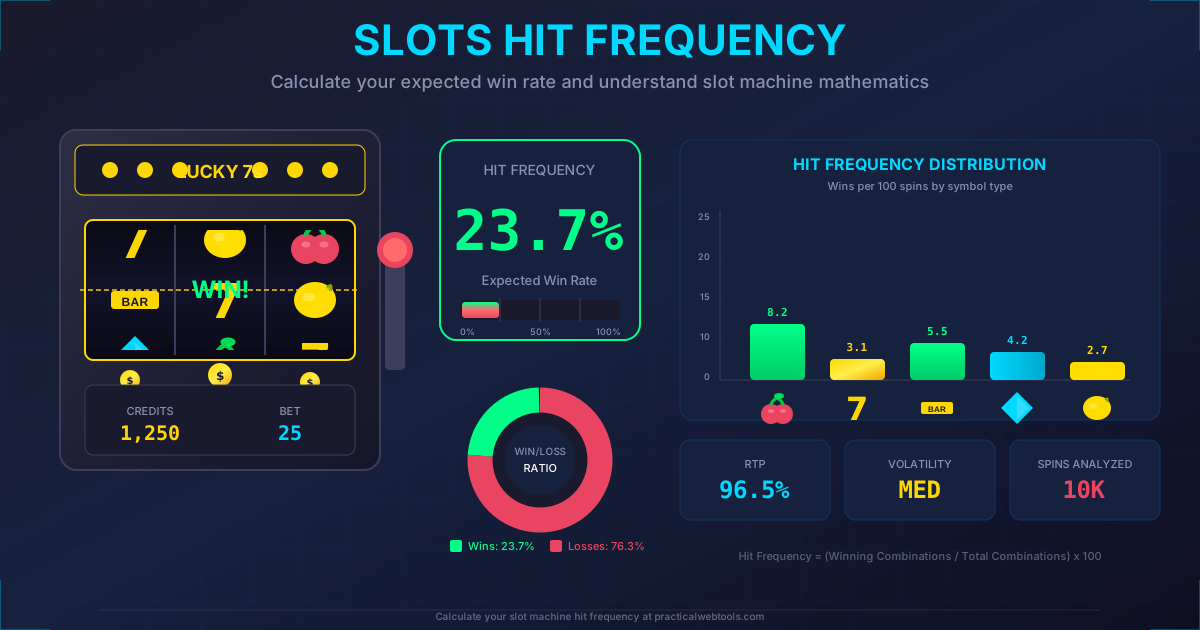
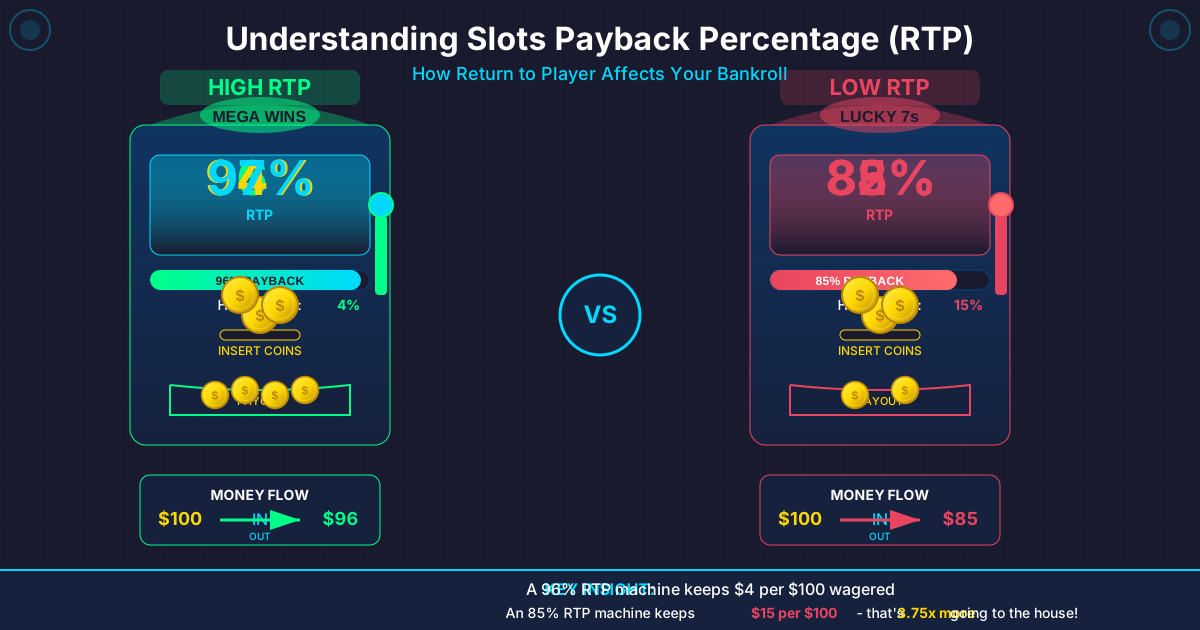
- Return-to-player (RTP) accuracy: The actual payout percentage matches the stated percentage
Recognized Independent Testing Labs
| Testing Lab | Abbreviation | Website | Reputation |
|---|---|---|---|
| eCOGRA | eCOGRA | ecogra.org | Gold standard; widely recognized |
| Gaming Laboratories International | GLI | gaminglabs.com | Industry leader; extensive testing |
| BMM Testlabs | BMM | bmm.com | One of the oldest; very reputable |
| iTech Labs | iTech | itechlabs.com | Strong reputation in Asia-Pacific |
| Technical Systems Testing | TST (now GLI) | tst.com (now part of GLI) | Merged with GLI; legacy reputation |
| QUINEL | QUINEL | quinel.com | Newer; used by UK-licensed operators |
| NMi | NMi | nmi.nl | Netherlands-based; EU focus |
How to Check RNG Certification
- Look for testing lab logos. Legitimate sites display logos of their testing labs in the footer, usually near the licensing information.
- Click the logo. It should link to a certificate or audit report on the testing lab's website (not a page on the gambling site itself).
- Verify on the testing lab's website. Search for the operator on the testing lab's public directory if available.
- Check for current audit dates. RNG testing should be ongoing, not a one-time certification from years ago. Look for audit dates within the past 12 months.
Return-to-Player (RTP) Transparency
| Transparency Level | What the Site Provides | Trust Indicator |
|---|---|---|
| Excellent | Individual game RTPs published, third-party audit reports available | High trust |
| Good | General RTP ranges stated, testing lab logo displayed | Moderate-high trust |
| Adequate | States games are tested for fairness, names the testing lab | Moderate trust |
| Poor | Vague "fair gaming" claims with no specifics | Low trust |
| None | No mention of game fairness, testing, or RTP | Avoid entirely |
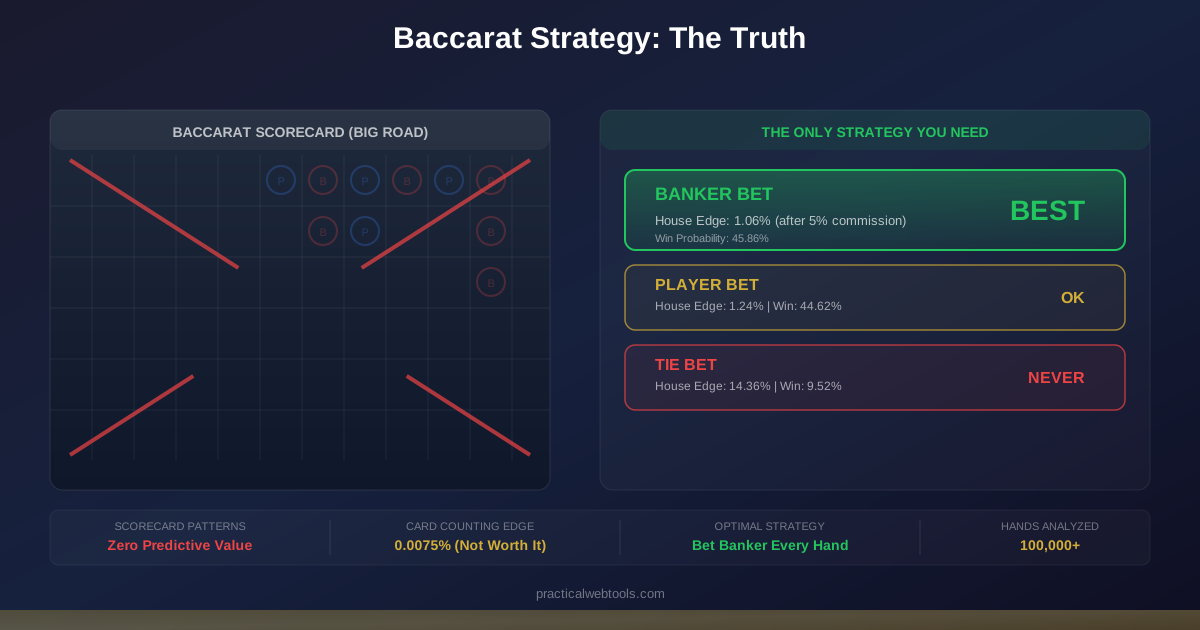
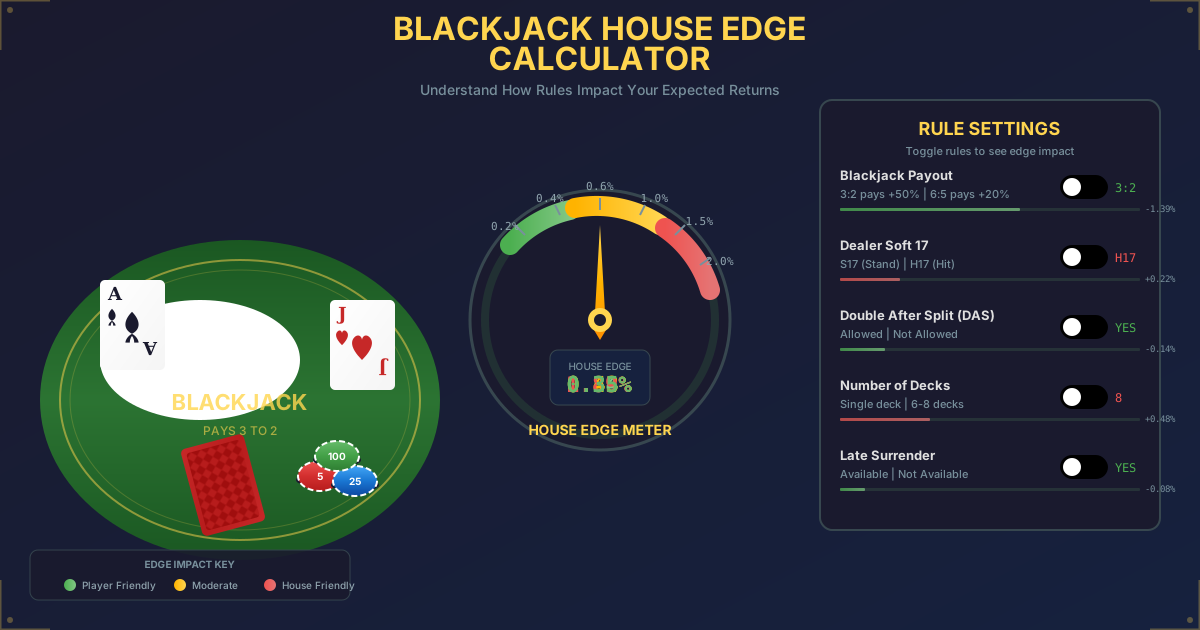
Verify the stated house edge of any game using our Blackjack House Edge Calculator, Roulette House Edge Calculator, and Baccarat House Edge Calculator.
What Should You Look for in Payment Methods and Financial Security?
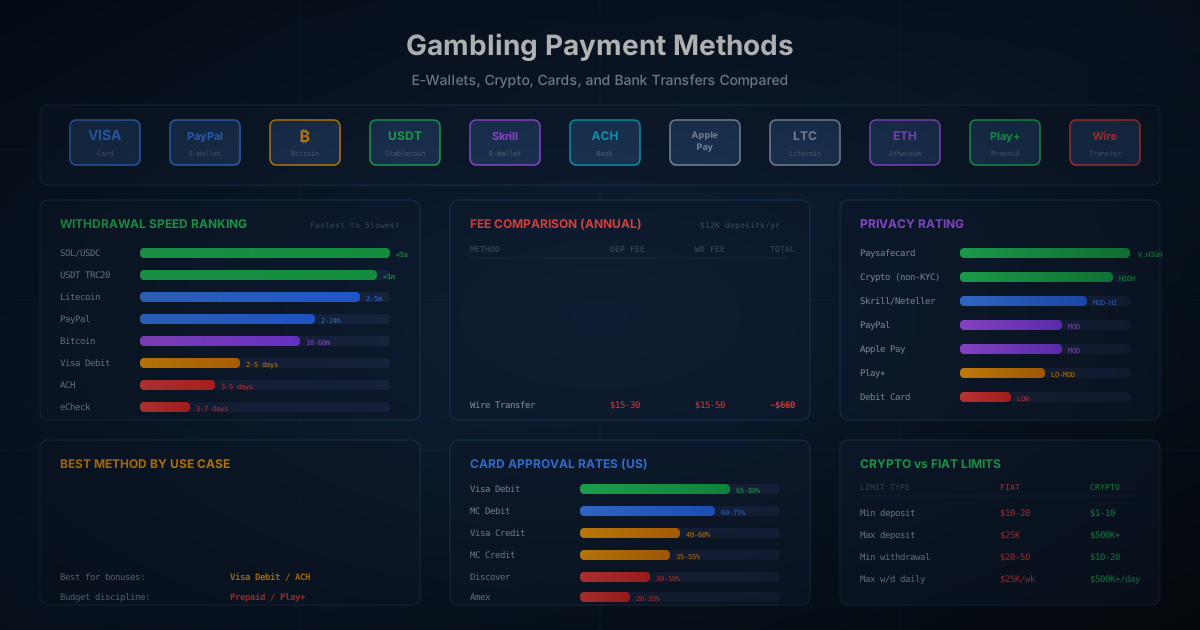
The payment methods offered by an online gambling site reveal a great deal about its legitimacy and financial stability. Legitimate sites offer reputable, regulated payment processors. Scam sites rely on irreversible payment methods and cryptocurrency.
Payment Method Trust Tiers
| Trust Tier | Payment Methods | Why This Tier |
|---|---|---|
| High trust | Visa, Mastercard (credit/debit), PayPal, bank transfer | Major payment processors require merchant vetting |
| Good trust | Skrill, Neteller, Apple Pay, Google Pay | E-wallet providers have their own compliance requirements |
| Moderate trust | Paysafecard, prepaid cards, Trustly | Less direct accountability but legitimate services |
| Lower trust | Cryptocurrency only (Bitcoin, Ethereum, etc.) | Transactions are irreversible; harder to recover funds |
| Red flag | Wire transfer only, gift cards, money orders | Common payment methods for fraudulent operations |
Financial Safety Checklist
| Check | What to Look For | Red Flag |
|---|---|---|
| Deposit methods | Multiple reputable options including credit cards and e-wallets | Only cryptocurrency or wire transfer accepted |
| Withdrawal methods | Same methods available for withdrawal as deposit | Deposits easy but withdrawals restricted to one method |
| Withdrawal processing time | Published timeframe (24-72 hours for e-wallets; 3-5 days for bank) | No timeframe published; "up to 30 days" or longer |
| Withdrawal limits | Reasonable limits (at least $5,000-$10,000/month) | Very low limits ($500/week) or no stated limits |
| Fee transparency | Clearly published fees or "no fees" statement | Fees hidden in T&C or discovered during withdrawal |
| Currency options | Supports your local currency | Only obscure currencies available |
| Player fund segregation | States that player funds are held separately from operating funds | No mention of fund segregation |
The Withdrawal Test
Before depositing significant amounts, perform a withdrawal test:
- Deposit a small amount ($20-50)
- Meet any minimum wagering requirements
- Request a withdrawal of your remaining balance
- Note how long the withdrawal takes, what documentation is requested, and whether any unexpected fees are charged
- If the withdrawal is smooth and timely, the site passes this basic test
- If the withdrawal is delayed, denied for unclear reasons, or involves unexpected requirements, consider this a warning
Deposit Limits and Responsible Gambling Tools
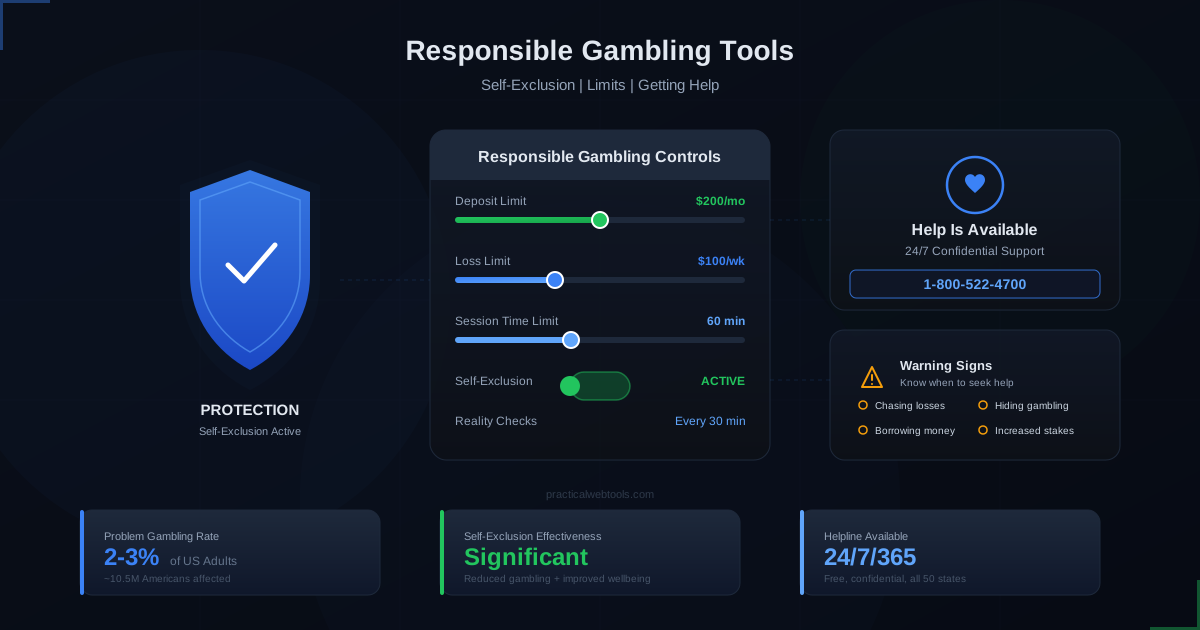
Legitimate, well-regulated sites are required to offer responsible gambling tools. Their presence is both a regulatory compliance indicator and a consumer protection feature:
| Responsible Gambling Tool | What It Does | Regulatory Requirement |
|---|---|---|
| Deposit limits (daily/weekly/monthly) | Caps how much you can deposit | Required in UK, Sweden, Ontario, NJ, PA, MI |
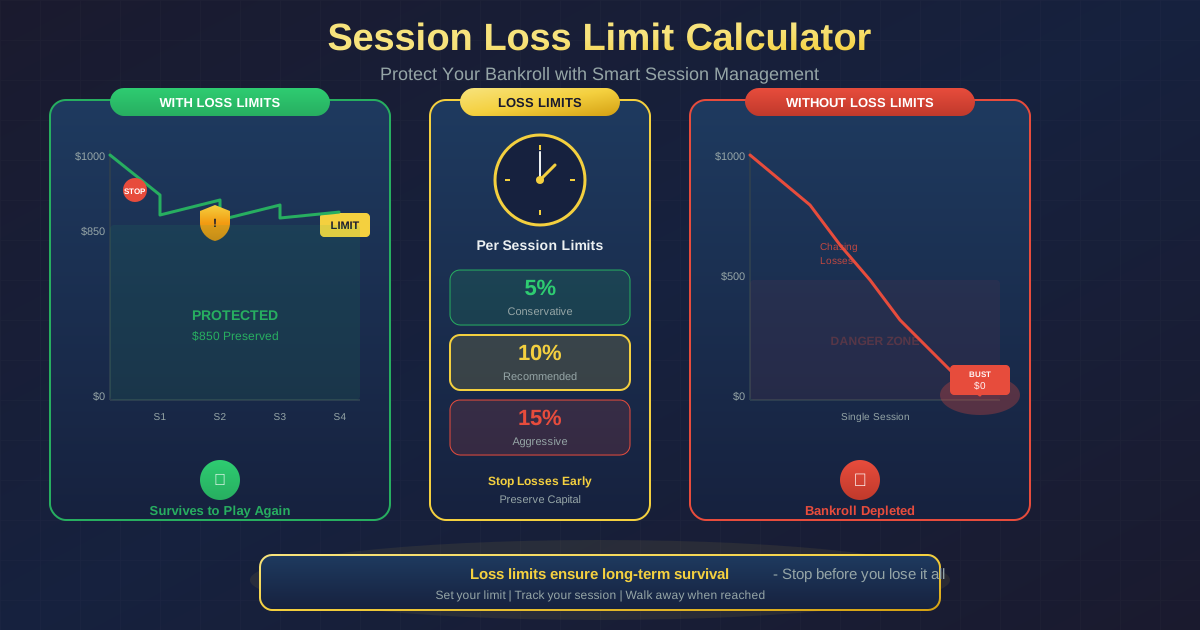
| Loss limits | Caps how much you can lose in a period | Required in some jurisdictions |
| Session time limits | Alerts or logs you out after a set time | Required in UK, Sweden |
| Reality check pop-ups | Periodic notifications of time/money spent | Required in UK, NJ |
| Self-exclusion | Temporary or permanent self-ban from the site | Required in all regulated markets |
| Cool-off periods | Short-term account suspension (24hrs, 7 days) | Required in UK, some US states |
If a site does not offer these tools, it is either unlicensed or operating in an unregulated market, either way, increased caution is warranted.
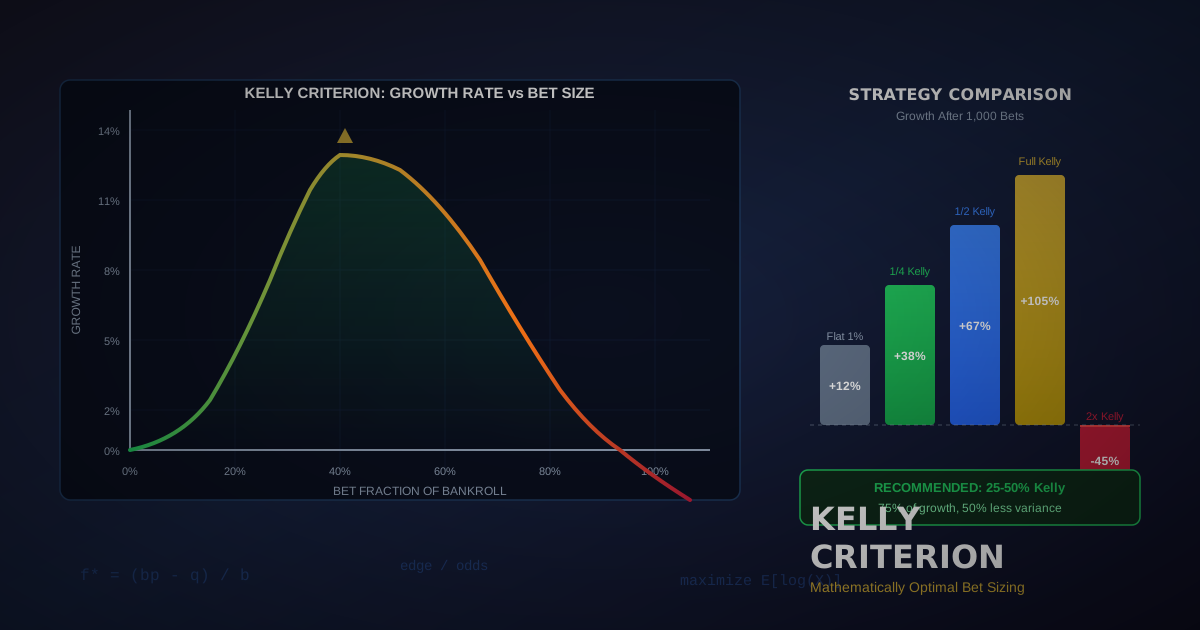
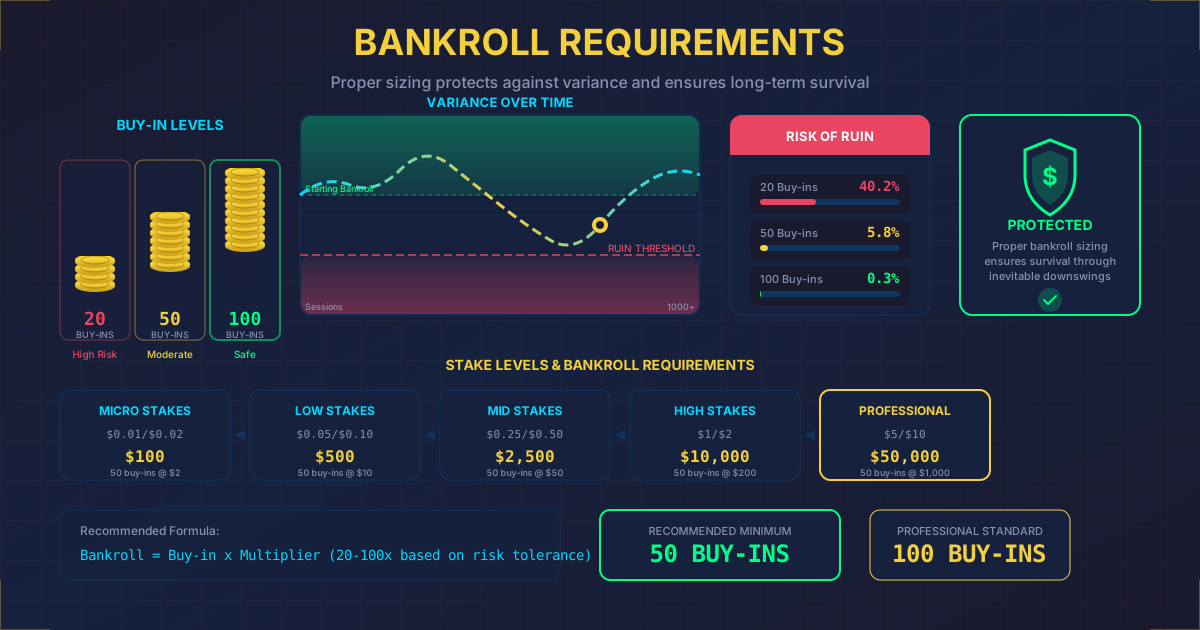
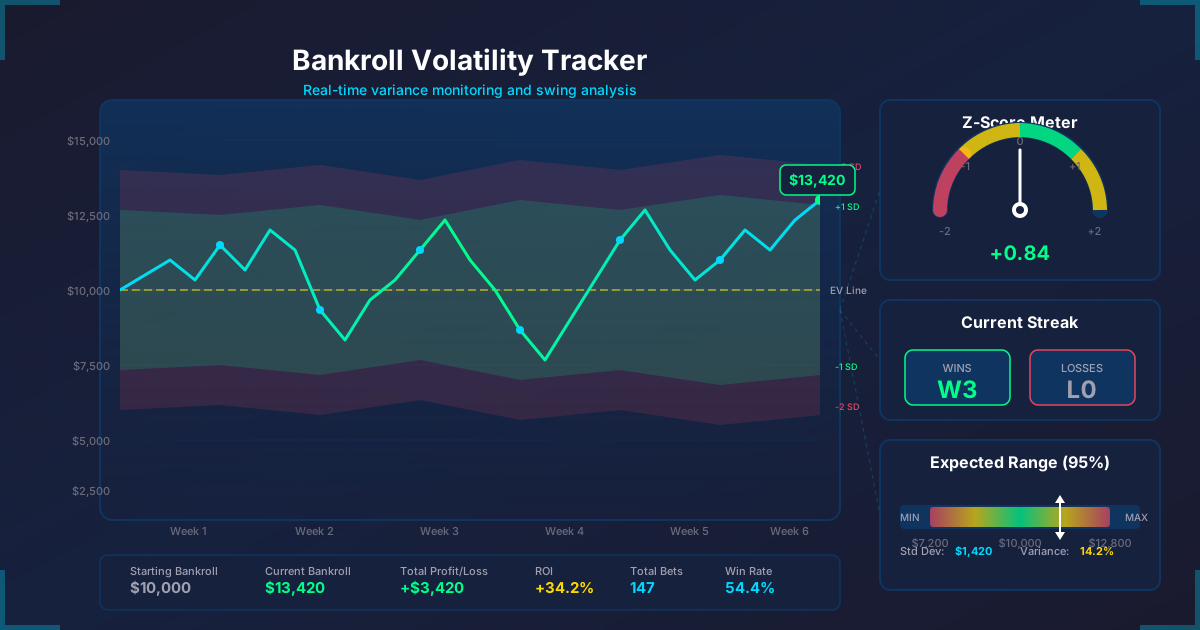
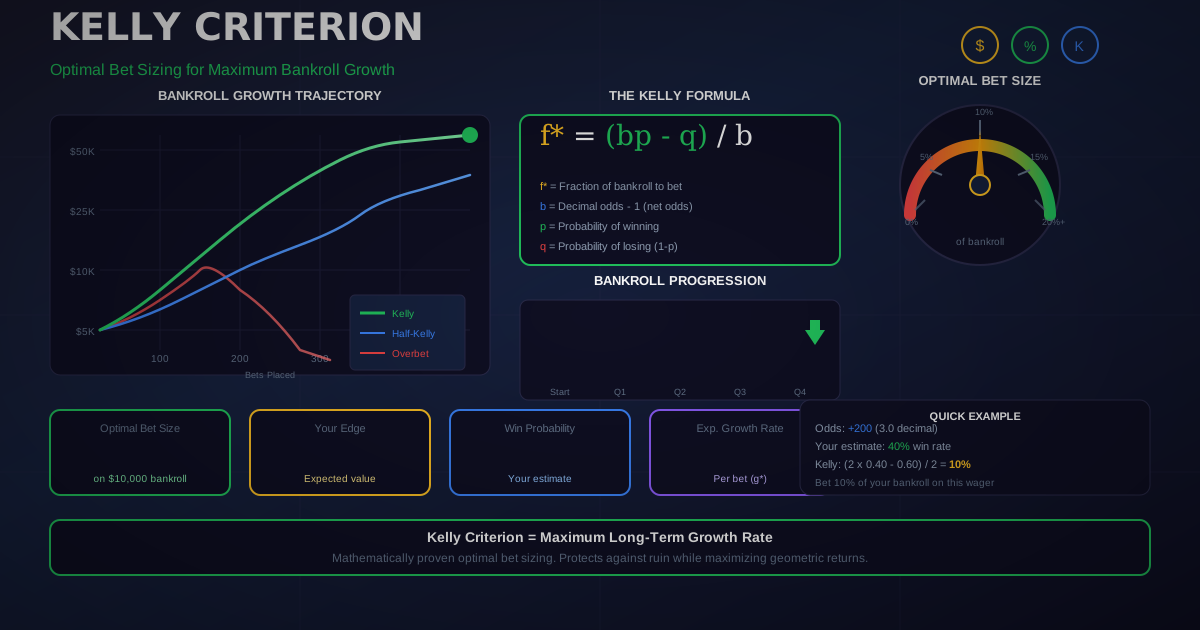
Set your own limits before you play using our Bankroll Volatility Tracker and Kelly Criterion Calculator.
What Terms and Conditions Red Flags Should You Watch For?
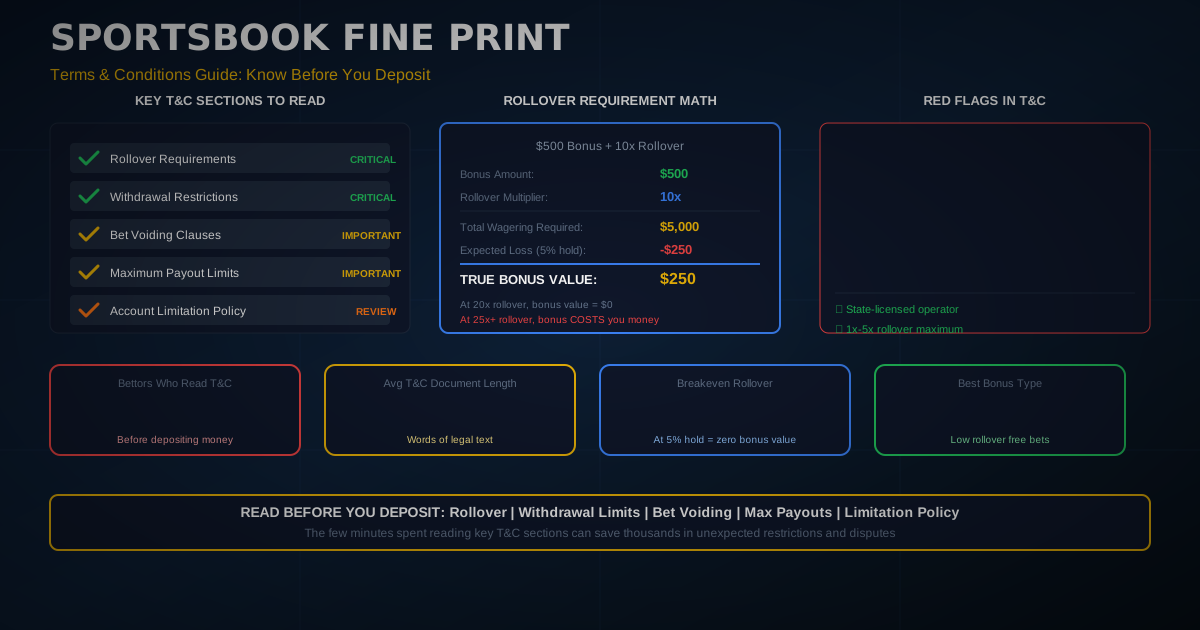
The terms and conditions (T&C) of an online gambling site are legally binding. Scam and predatory operators hide unfavorable terms in long, dense legal documents that most players never read. Spending 15 minutes reviewing key sections can save you thousands of dollars.
Critical T&C Sections to Review
| Section | What to Look For | Red Flag |
|---|---|---|
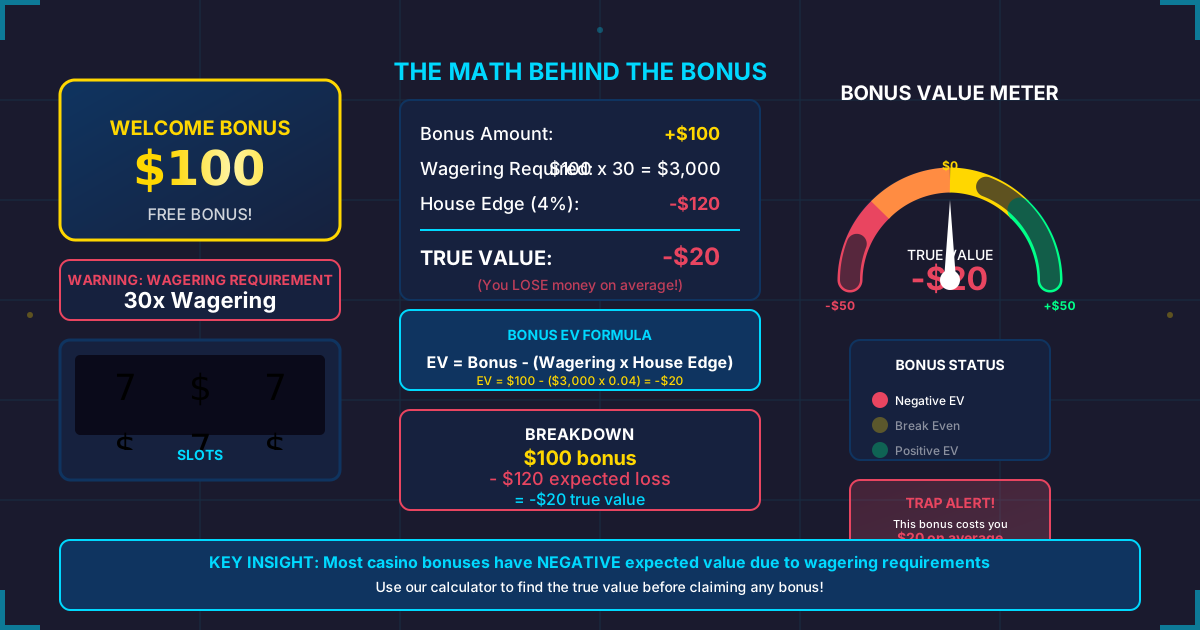
| Bonus wagering requirements | Reasonable playthrough (20-40x bonus amount) | 60x+ wagering, or wagering on bonus + deposit combined |
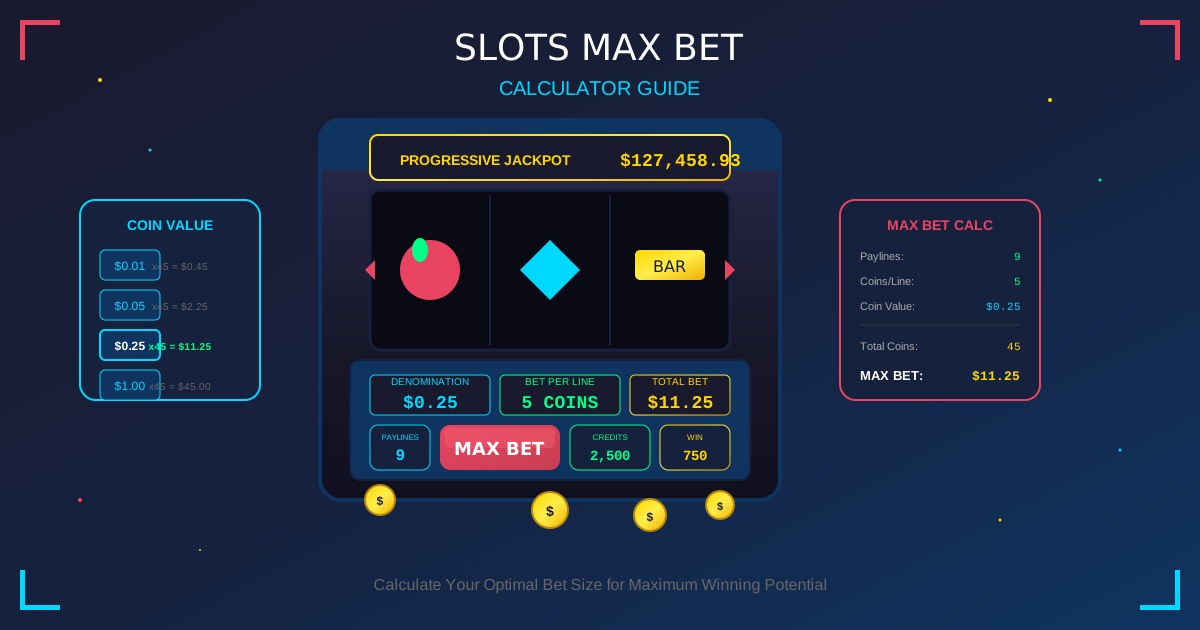
| Maximum bet while bonus active | Clearly stated (usually $5-10) | No maximum stated (entire bonus can be voided for "excessive" bets, determined subjectively) |
| Game weighting for wagering | All games contribute, with clear percentages | Slots at 100% but table games at 0-10% (forces you into high house edge games) |
| Withdrawal caps on bonus wins | Reasonable caps (5-10x bonus) or no cap | Very low caps ($100-200 max win from bonus) or no stated cap (determined later) |
| Withdrawal processing time | Specific timeframe (24-72 hours) | Vague language like "up to 30 business days" |
| Account verification timeline | States when verification is required (usually at first withdrawal) | Verification can be requested at any time and delays withdrawal indefinitely |
| Inactivity fees | Clearly stated or absent | Monthly fees after 30-90 days of inactivity |
| Confiscation clauses | Limited to clear violations (fraud, multiple accounts) | Broad language allowing confiscation for vague "abuse" or "irregular play" |
| Dispute resolution | Named arbitrator or ADR service | No dispute process; operator's decision is final |
| Jurisdiction and governing law | Named jurisdiction (preferably where the license is held) | Offshore jurisdiction with no consumer protection |
Bonus Terms Deep Dive
Bonus terms are where players most often get caught. Here is what realistic versus predatory terms look like:
| Term | Realistic/Fair | Predatory/Red Flag |
|---|---|---|
| Wagering requirement | 25-35x bonus amount | 50x+ bonus + deposit |
| Wagering timeframe | 30-60 days | 7-14 days (nearly impossible to complete) |
| Maximum cashout from bonus | $500-5,000+ or no cap | $50-200 |
| Game restrictions | Table games count 10-50% | Only slots count; all other games 0% |
| Maximum bet during wagering | $5-10 clearly stated | Not stated; "determined at management discretion" |
| Bonus forfeiture conditions | Clearly listed (requesting withdrawal forfeits remaining bonus) | Vague: "suspicious activity" or "bonus abuse" with no definition |
| Excluded countries | Clearly listed | You discover your country is excluded after depositing |
The "Too Good to Be True" Test
| Bonus Offer | Realistic? | Likely Reality |
|---|---|---|
| 100% match up to $500, 30x wagering | Yes | Industry standard; reasonable |
| 200% match up to $2,000, 25x wagering | Possibly | Generous but check all other terms closely |
| 500% match up to $10,000 | No | Extreme wagering requirements, low max cashout, or scam |
| No wagering bonus | Rare but real | Verify the site is licensed; a few legitimate operators offer this |
| $50 no-deposit bonus, no wagering | Almost certainly a scam | If it sounds impossible, it probably is |
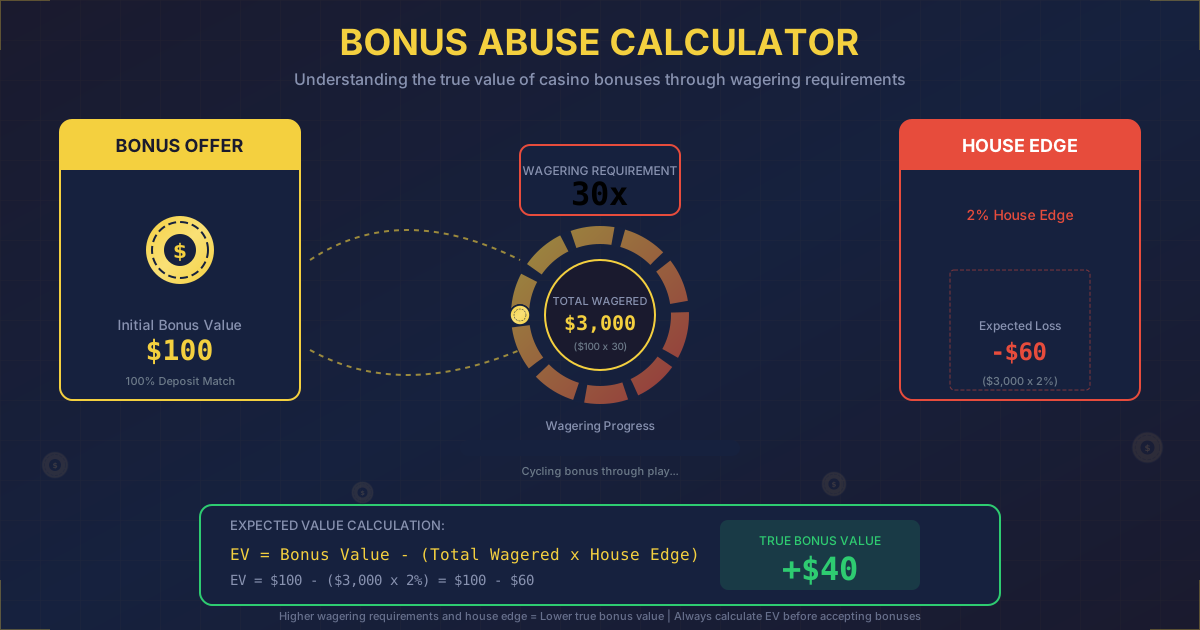
Calculate the expected cost of completing bonus wagering requirements with our Expected Value Calculator.
How Do You Research a Gambling Site's Complaint History?
A site's history of player complaints is one of the most valuable data points for assessing trustworthiness. Every gambling site will have some complaints, but the volume, nature, and resolution of complaints reveal the operator's true character.
Where to Research Complaints
| Resource | URL | What It Provides |
|---|---|---|
| AskGamblers | askgamblers.com | Player complaint database with resolution tracking |
| Casinomeister | casinomeister.com | Longest-running casino watchdog; rogue list |
| ThePogg | thepogg.com | Dispute mediation service and operator ratings |
| Trustpilot | trustpilot.com | General review platform (filter for gambling companies) |
| Reddit (r/gambling, r/onlinegambling, r/sportsbook) | reddit.com | User-reported experiences and warnings |
| Regulator complaint records | Varies by regulator | Official complaints filed with licensing authority |
| Better Business Bureau | bbb.org | US-focused business complaint tracking |
| Google "[site name] scam" or "[site name] complaints" | google.com | Aggregates various sources |
Complaint Analysis Framework
Not all complaints are equal. Use this framework to assess what you find:
| Complaint Type | Significance | What It Tells You |
|---|---|---|
| Slow withdrawals | High (if pattern) | Possible cash flow problems or deliberate delay tactics |
| Withdrawal denied after verification | Very high | Potential bad actor; verify specific reasons given |
| Account closed with balance remaining | Critical | Confiscation indicates predatory operator |
| Bonus terms enforced unfairly | Moderate | Aggressive T&C enforcement; read terms very carefully |
| Poor customer support | Low-moderate | Common but not necessarily indicative of fraud |
| Technical issues (game crashes, etc.) | Low | Normal operational issues; assess responsiveness |
| Identity theft/data breach | Critical | Avoid entirely; report to regulators |
| Unresponsive complaint resolution | High | Operator does not engage with player concerns |
Red Flags in Complaint Patterns
- Volume: More than 10 unresolved complaints per quarter suggests systemic issues
- Recency: Recent complaints are more relevant than old ones; operators can improve or deteriorate
- Theme: Repeated complaints about the same issue (e.g., withdrawal delays) indicate a policy problem, not one-off incidents
- Resolution rate: Legitimate operators resolve 80%+ of complaints through official channels
- Regulator involvement: If players regularly need to escalate to the regulator, the operator's internal processes are inadequate
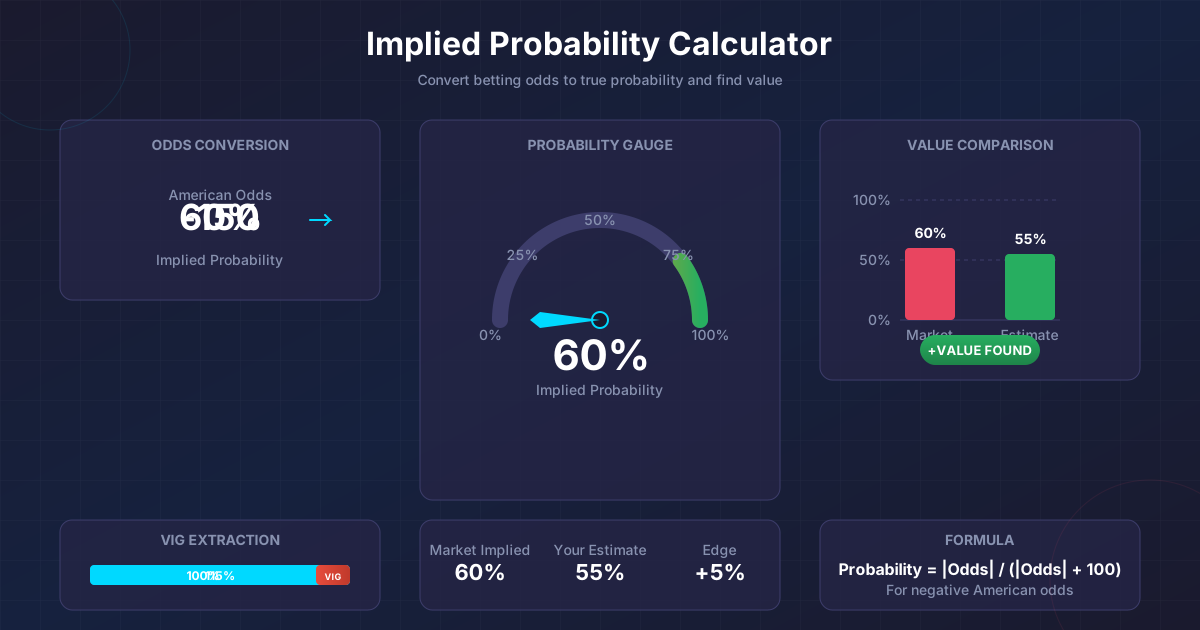
Analyze the true value of any site's odds and promotions with our Implied Probability Calculator and Odds Converter.
How Do You Test Customer Support Before Depositing?
Testing customer support before depositing money is a simple step that most players skip. A legitimate site's customer support should be responsive, knowledgeable, and accessible through multiple channels.
The Pre-Deposit Support Test
Before depositing, contact customer support with specific questions and evaluate the response:
| Test Question | What a Good Response Looks Like | Red Flag Response |
|---|---|---|
| "What is your license number and which authority regulates you?" | Immediate, specific answer with license details | Evasive, vague, or "we'll get back to you" |
| "What is the average withdrawal processing time?" | Specific timeframe (e.g., "24-48 hours for e-wallets") | Vague ("as soon as possible") or deflection |
| "What documents are needed for identity verification?" | Clear list (ID, proof of address, payment method proof) | "We'll let you know when necessary" |
| "Is there a maximum withdrawal limit?" | Specific dollar amount and timeframe | No answer or "it depends" |
| "What happens if I have a dispute about a game outcome?" | Named process (internal review + external ADR) | "Our system is always correct" or no clear process |
Support Channel Assessment
| Channel | Expected Response Time | Red Flag |
|---|---|---|
| Live chat | Under 5 minutes during business hours | No live chat available; chat "offline" permanently |
| Under 24 hours | No response after 48 hours | |
| Phone | Immediate during business hours | No phone support; phone number does not work |
| Social media | Under 4 hours during business hours | No social media presence; deleted negative comments |
| FAQ/Help center | Self-service available | No help section; all questions require contacting support |
What to Document
Keep records of all pre-deposit communications:
- Screenshot live chat conversations
- Save email responses
- Note the date, time, and name of any support agent you interact with
- Document any commitments or promises made
These records serve as evidence if a dispute arises later.
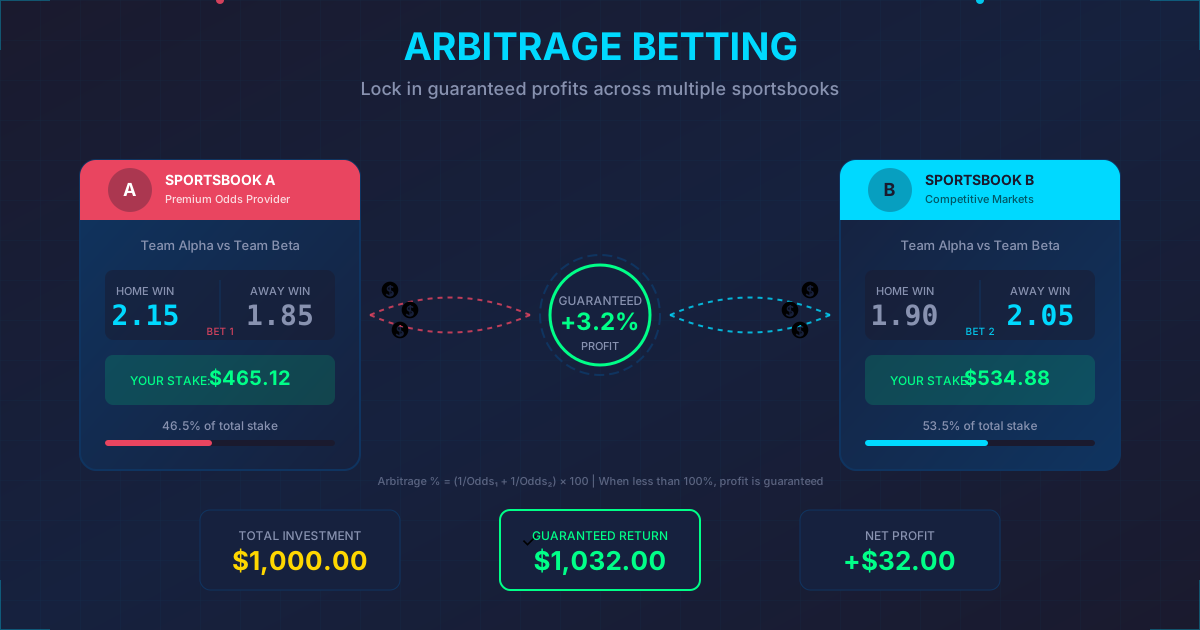
Make informed betting decisions regardless of what customer support tells you with our Hold/Vig Calculator and Arbitrage Calculator.
What Are the Biggest Scam Indicators for Online Gambling Sites?
Scam gambling sites have evolved to appear increasingly professional, but certain indicators consistently separate fraudulent operations from legitimate businesses.
Definitive Scam Indicators (Leave Immediately)
| Indicator | Description | Risk |
|---|---|---|
| No verifiable license | No license mentioned, or license cannot be confirmed on regulator's website | Critical - Almost certainly fraudulent |
| Copied website design | Layout, text, or branding copied from a known legitimate site | Critical - Phishing operation |
| No HTTPS encryption | Site loads over HTTP without SSL/TLS | Critical - Data is unprotected |
| Unrealistic bonuses | 500%+ match, no wagering, guaranteed profits | Critical - Designed to attract deposits |
| No company information | No registered company name, address, or contact details | Critical - Cannot be held accountable |
| Only cryptocurrency payments | No credit card or e-wallet options | High - Transactions are irreversible |
| Newly registered domain | Domain registered within the past 6 months | High - Legitimate operators have established domains |
| Aggressive pop-ups/redirects | Site opens additional windows or redirects unexpectedly | High - Malware or phishing risk |
Serious Warning Signs (Investigate Further)
| Warning Sign | Description | What to Do |
|---|---|---|
| No RNG certification displayed | No testing lab mentioned or linked | Verify through other means or avoid |
| Minimal responsible gambling tools | No deposit limits, self-exclusion, or reality checks | Likely unregulated; use extreme caution |
| Withdrawal complaints dominant in reviews | Pattern of withdrawal issues in player forums | Test with a small deposit and withdrawal first |
| Template/generic website | Uses a white-label platform with minimal customization | Not inherently fraudulent but lower investment in brand |
| Offshore-only customer support | Support only available during non-standard hours | May indicate outsourced or minimal support operation |
| Constantly changing promotions | Offers change daily or are inconsistent with T&C | Unstable operations or bait-and-switch tactics |
| Excessive KYC delays | Verification takes weeks with repeated document requests | May be stalling to avoid paying withdrawals |
Domain Age and Registration Check
You can check when a website was registered and who owns it:
- Visit whois.domaintools.com or who.is
- Enter the gambling site's domain name
- Check the creation date (legitimate operators typically have domains registered 2+ years ago)
- Check the registrant information (privacy protection is normal, but a complete absence of any organizational information combined with a new domain is concerning)
- Check the hosting location (if the site claims to be based in the UK but is hosted in an unrelated country, investigate further)
Protect your bankroll by calculating true expected value before depositing anywhere using our Expected Value Calculator.
What Privacy and Data Protection Standards Should You Expect?
Legitimate online gambling sites collect sensitive personal and financial data. You should understand what data is collected, how it is used, and what protections are in place.
Data Collection Standards
| Data Type | Why It Is Collected | Privacy Expectation |
|---|---|---|
| Full legal name | Identity verification, KYC compliance | Stored encrypted; shared only with regulators |
| Date of birth | Age verification, responsible gambling | Stored encrypted; not shared with third parties |
| Address | Identity verification, tax reporting | Stored encrypted; shared with regulators as required |
| Government ID scan | KYC compliance, fraud prevention | Stored encrypted with strict access controls; deleted after verification period |
| Payment information | Transaction processing | Processed by PCI-DSS compliant payment processor; not stored in plain text |
| Gambling history | Regulatory compliance, responsible gambling monitoring | Available to you on request; shared with regulators if required |
| IP address | Geolocation (legality), fraud prevention | Logged for security; subject to data retention policy |
| Device information | Fraud prevention, session security | Used for security; should not be shared with marketing partners |
Privacy Policy Red Flags
| Red Flag | What It Means |
|---|---|
| No privacy policy | Non-compliant with virtually all data protection laws; avoid |
| Policy allows selling data to "marketing partners" | Your gambling activity may be shared with third parties |
| No data deletion provision | May violate GDPR (for EU residents) and indicates poor data hygiene |
| No contact for data requests | Non-compliant with privacy regulations |
| Policy allows indefinite data retention | Data should be deleted after a reasonable period or upon account closure |
| No mention of encryption or security measures | Operator is either negligent or non-transparent |
Your Privacy Rights (by Region)
| Region | Primary Law | Key Rights |
|---|---|---|
| European Union | GDPR | Access, deletion, portability, restriction, objection |
| United Kingdom | UK GDPR + Data Protection Act 2018 | Same as EU GDPR |
| California | CCPA/CPRA | Access, deletion, opt-out of sale, non-discrimination |
| Other US states | Varies (growing number have privacy laws) | Check state-specific legislation |
| Canada | PIPEDA + provincial laws | Access, correction, consent requirements |
| Australia | Privacy Act 1988 | Access, correction, complaint to OAIC |
Protect yourself mathematically and digitally. Use our Bankroll Volatility Tracker to manage risk and always verify site legitimacy before depositing.
What Is the Complete Pre-Deposit Safety Checklist?
Here is the consolidated checklist. Complete every item before depositing money on any online gambling site. Each check takes 2-5 minutes. The entire checklist can be completed in under 30 minutes.
The 20-Point Safety Checklist
| # | Check | How | Pass/Fail Criteria |
|---|---|---|---|
| 1 | License displayed on site | Look in footer/legal section | License number visible and regulator named |
| 2 | License verified with regulator | Visit regulator website directly | License is active and matches the operator |
| 3 | HTTPS encryption active | Check URL bar for padlock | Padlock present; certificate valid |
| 4 | Certificate type is OV or EV | Click padlock > certificate details | Organization name visible in certificate |
| 5 | RNG certification displayed | Look for testing lab logos in footer | Recognized testing lab named |
| 6 | RNG certification verified | Click testing lab logo or search lab's site | Certificate or audit report accessible |
| 7 | Multiple payment methods offered | Check deposit/withdrawal pages | Credit cards + e-wallets available (not crypto-only) |
| 8 | Withdrawal methods match deposit methods | Verify in T&C or payment section | Can withdraw via same method used to deposit |
| 9 | Withdrawal timeframes published | Check T&C or help section | Specific timeframes stated (not "as soon as possible") |
| 10 | Responsible gambling tools available | Check account settings | Deposit limits, self-exclusion, session limits present |
| 11 | T&C bonus wagering is reasonable | Read bonus terms | 40x or lower on bonus amount only |
| 12 | T&C has clear dispute process | Read dispute/complaints section | Named ADR service or clear internal process |
| 13 | No confiscation clauses for vague reasons | Read account closure section | Confiscation limited to fraud/clear violations |
| 14 | Company information published | Check About Us/Legal pages | Registered company name and address visible |
| 15 | Domain registered 2+ years ago | Check WHOIS record | Domain creation date is 2+ years old |
| 16 | Complaint history reviewed | Search AskGamblers, Casinomeister, Reddit | No pattern of unresolved withdrawal complaints |
| 17 | Customer support tested | Contact via live chat with a question | Response within 5 minutes; knowledgeable answer |
| 18 | Privacy policy reviewed | Read key sections | Clear data handling, no data selling, deletion rights |
| 19 | 2FA available | Check account security settings | Two-factor authentication offered |
| 20 | Small withdrawal test completed | Deposit $20-50, meet requirements, withdraw | Withdrawal processed within stated timeframe |
Scoring
- 18-20 checks passed: Site appears legitimate and well-regulated. Proceed with standard caution.
- 14-17 checks passed: Some concerns. Investigate failed checks before depositing significant amounts.
- 10-13 checks passed: Significant concerns. Consider alternative sites that pass more checks.
- Below 10 checks passed: Avoid this site. Too many red flags for safe gambling.
Use our complete suite of calculators to verify any site's claims about odds, payouts, and game fairness: Roulette Odds Calculator, Blackjack Basic Strategy Calculator, and Craps House Edge Calculator.
How Do Regulated US State Markets Differ from Offshore Sites?
If you live in a US state with legal online gambling, using a state-regulated site provides dramatically stronger consumer protections compared to offshore alternatives.
State-Regulated vs. Offshore Comparison
| Feature | State-Regulated (e.g., NJ, PA, MI) | Offshore/Unlicensed |
|---|---|---|
| License verification | State gaming commission; publicly searchable | Often unverifiable or fake |
| Player fund protection | Segregated accounts required by law | No legal requirement |
| RNG testing | Mandated by state regulation; regular audits | May or may not be tested |
| Dispute resolution | State gaming commission handles complaints | No regulatory recourse |
| Responsible gambling tools | Required by law | Optional or absent |
| Geolocation verification | Required; ensures legal play | Often claims to accept US players without verification |
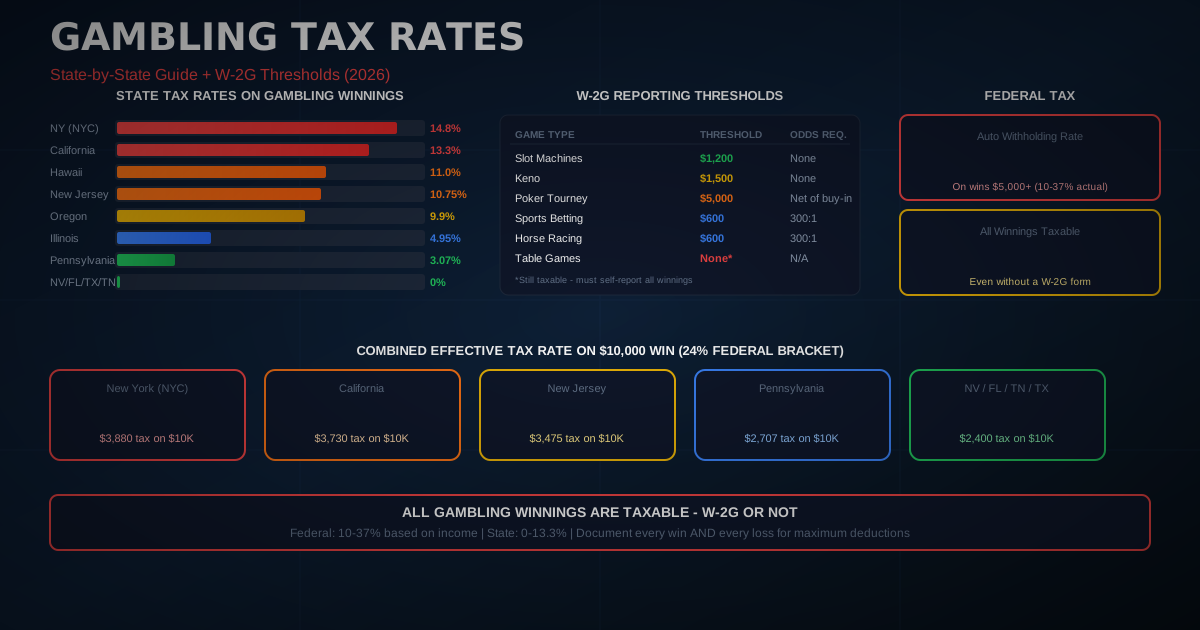
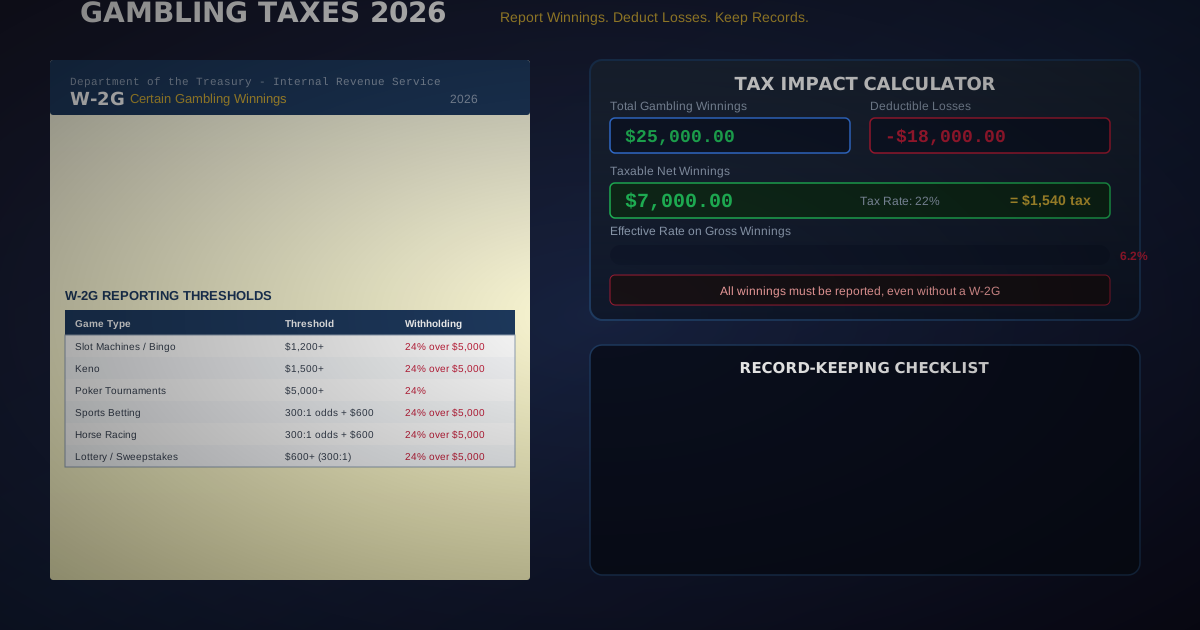
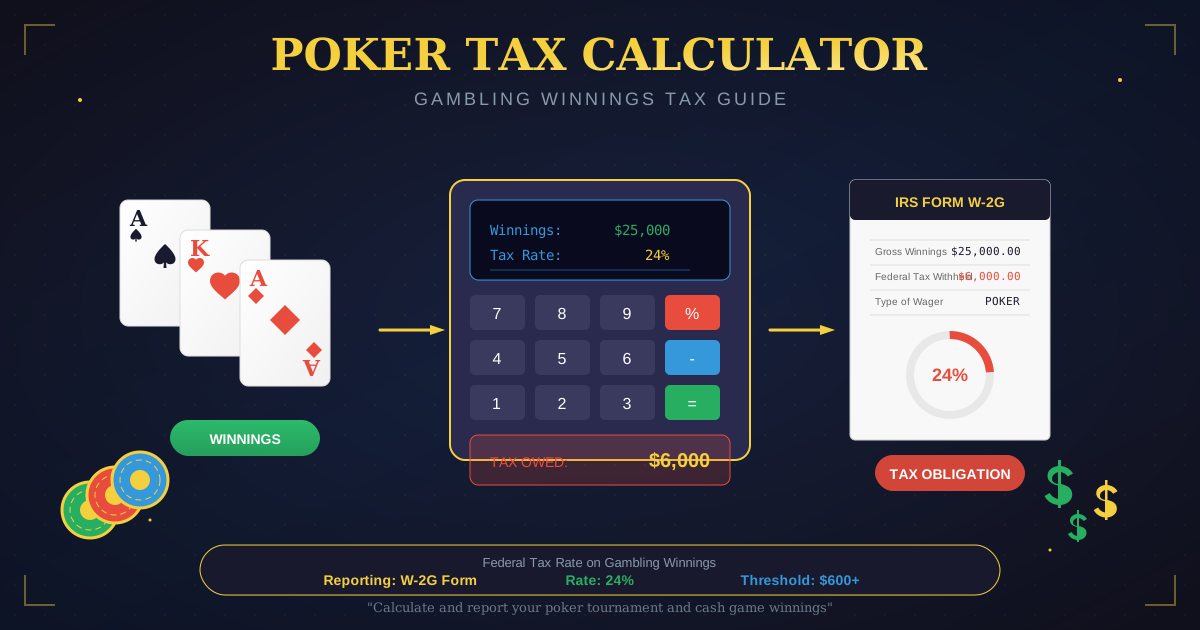
| Tax reporting | Automatic W-2G for qualifying wins | No tax reporting (increases legal risk for player) |
| Data protection | Subject to US state and federal privacy laws | Subject to whatever jurisdiction they claim |
| Withdrawal reliability | Enforced by regulator; operator loses license for non-payment | No enforcement mechanism |
| Game fairness | Independently tested and state-approved | No verification available |
States with Legal Online Gambling (2026)
| State | Online Casino | Online Sports Betting | Online Poker |
|---|---|---|---|
| New Jersey | Legal | Legal | Legal |
| Pennsylvania | Legal | Legal | Legal |
| Michigan | Legal | Legal | Legal |
| West Virginia | Legal | Legal | Legal |
| Connecticut | Legal | Legal | No |
| Delaware | Legal | Legal | Legal |
| Rhode Island | Legal | Legal | No |
| New York | No | Legal | No |
| Illinois | No | Legal | No |
| Colorado | No | Legal | No |
| Virginia | No | Legal | No |
| Arizona | No | Legal | No |
| Ohio | No | Legal | No |
| Maryland | No | Legal | No |
| Massachusetts | No | Legal | No |
| Kentucky | No | Legal | No |
| North Carolina | No | Legal | No |
| Vermont | No | Legal | No |
| Maine | No | Legal | No |
| Louisiana | No | Legal (most parishes) | No |
This list is current as of early 2026. Legislation is evolving rapidly; check your state's gaming commission for the latest status.
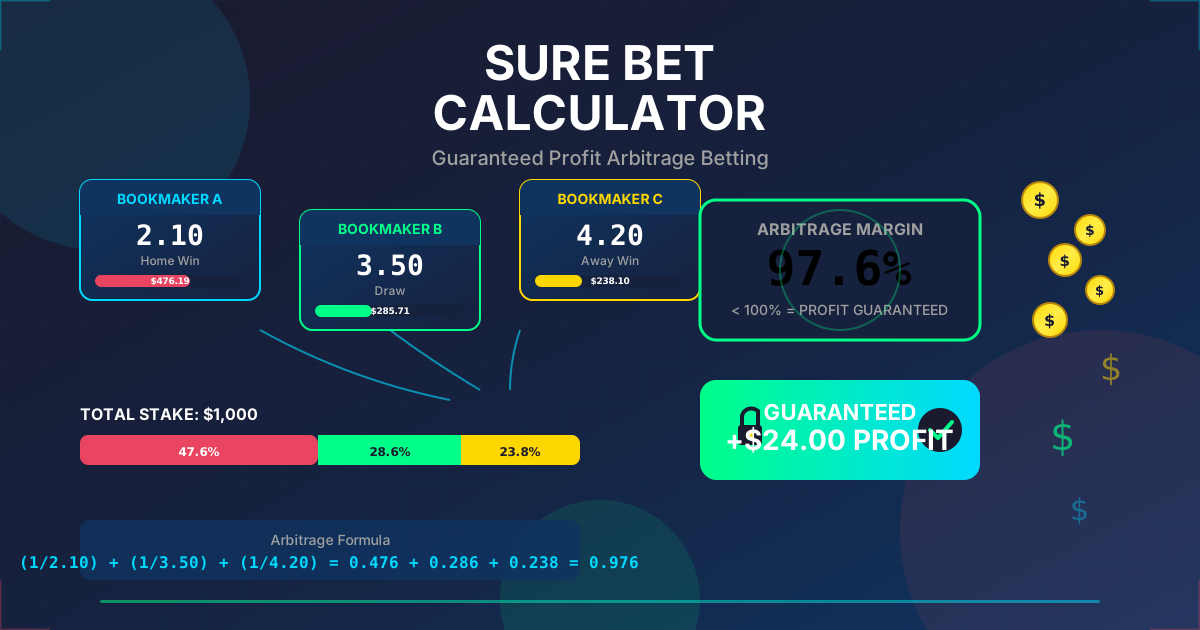
Compare odds across legal, regulated sportsbooks using our Arbitrage Calculator and Sure Bet Calculator.
Frequently Asked Questions
Can I get my money back from an unlicensed gambling site? Recovery from unlicensed sites is extremely difficult. If you paid by credit card, you may be able to initiate a chargeback through your card issuer. Debit card chargebacks are harder. Cryptocurrency transactions are generally irreversible. File complaints with your state attorney general, the FTC, and the IC3 (FBI's Internet Crime Complaint Center). For licensed sites that are not paying, contact the licensing regulator directly. Prevention, through the checklist in this guide, is far more effective than attempting recovery after the fact.
Is it safe to use cryptocurrency for online gambling? Cryptocurrency itself is not inherently unsafe, but it does remove consumer protections that traditional payment methods provide. Credit card chargebacks, bank fraud departments, and e-wallet dispute processes do not exist for crypto transactions. If a crypto-only gambling site refuses to pay your winnings, you have no payment processor to appeal to. If you choose to gamble with cryptocurrency, use only sites that also accept traditional payment methods (indicating they have passed payment processor vetting) and hold licenses from Tier 1 regulators.
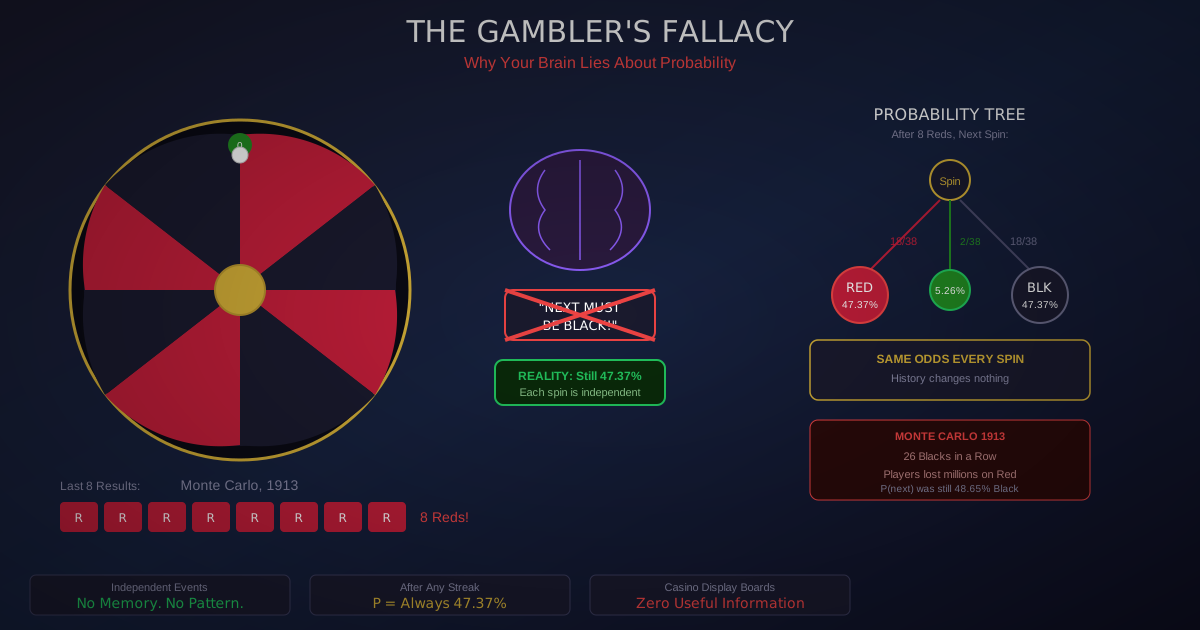
How do I know if a casino's games are rigged? No properly licensed and audited casino rigs its games because the consequences (license revocation, criminal prosecution, massive fines) far outweigh the incremental revenue from cheating. The house edge built into every game already guarantees the casino profits over time. If you suspect a game is rigged, check for RNG certification from a recognized testing lab, verify the site's license, and research player complaints. If a site is unlicensed, you have no assurance that games are fair.
What should I do if a gambling site refuses to process my withdrawal? First, contact customer support and document all communications. Ask for a specific reason for the delay or refusal and reference the site's T&C. If unresolved after 48 hours, escalate to the site's complaints process (if one exists). If still unresolved, file a complaint with the licensing regulator using the site's license number. Post your experience on player forums like AskGamblers, Casinomeister, or Reddit with documentation. If the site is unlicensed, your options are limited to chargebacks and legal complaints.
Are VPN-accessed gambling sites safe? Using a VPN to access a gambling site from a restricted jurisdiction typically violates the site's terms and conditions, giving them grounds to confiscate your balance. Additionally, if you need a VPN to access a site, you are likely circumventing either local gambling laws or the site's geographic restrictions, both of which create legal and financial risks for you. Stick to sites that legally operate in your jurisdiction.
How often should I re-verify a gambling site I already use? Re-verify your site's licensing status annually and any time you notice changes in operations (new ownership, rebranding, changes to terms, payment issues). Set a calendar reminder to check the regulator's public register once per year. Also monitor player forums periodically for emerging complaint patterns. A site that was legitimate when you joined can deteriorate under new management.
What is the safest type of online gambling? State-regulated online gambling in the United States offers the strongest consumer protections. Sites licensed in your state are subject to local regulatory oversight, mandatory player protections, independent game testing, and accessible dispute resolution. Among game types, table games with published house edges (blackjack, baccarat) offer the most transparent odds. Sports betting at licensed sportsbooks with clear line publication is also relatively transparent.
Can I trust gambling site reviews? Be cautious with gambling site reviews. Many "review" sites are affiliate marketing operations that earn commissions when you sign up through their links, creating a financial incentive to recommend sites regardless of quality. Look for reviews that include specific negatives, documented player experiences, and data-based assessments rather than purely promotional content. Cross-reference multiple independent sources before forming an opinion.
Related Tools
- Odds Converter: Convert between American, decimal, fractional, and implied probability formats instantly.
- Expected Value Calculator: Calculate the mathematical expectation of any wager at any site.
- Implied Probability Calculator: Convert odds to true probabilities to evaluate game and betting fairness.
- Hold/Vig Calculator: Calculate the sportsbook's built-in margin on any line.
- Arbitrage Calculator: Find risk-free opportunities across multiple legitimate sportsbooks.
- Sure Bet Calculator: Calculate guaranteed profit opportunities across verified sites.
- Bankroll Volatility Tracker: Manage your bankroll risk regardless of which site you play on.
- Kelly Criterion Calculator: Calculate optimal bet sizing for disciplined bankroll management.
- Blackjack House Edge Calculator: Verify the house edge of any blackjack game offered.
- Roulette House Edge Calculator: Confirm the house edge for any roulette variant.
- Baccarat House Edge Calculator: Check baccarat house edge across different rule sets.
- Blackjack Basic Strategy Calculator: Ensure you are playing optimally at any verified site.
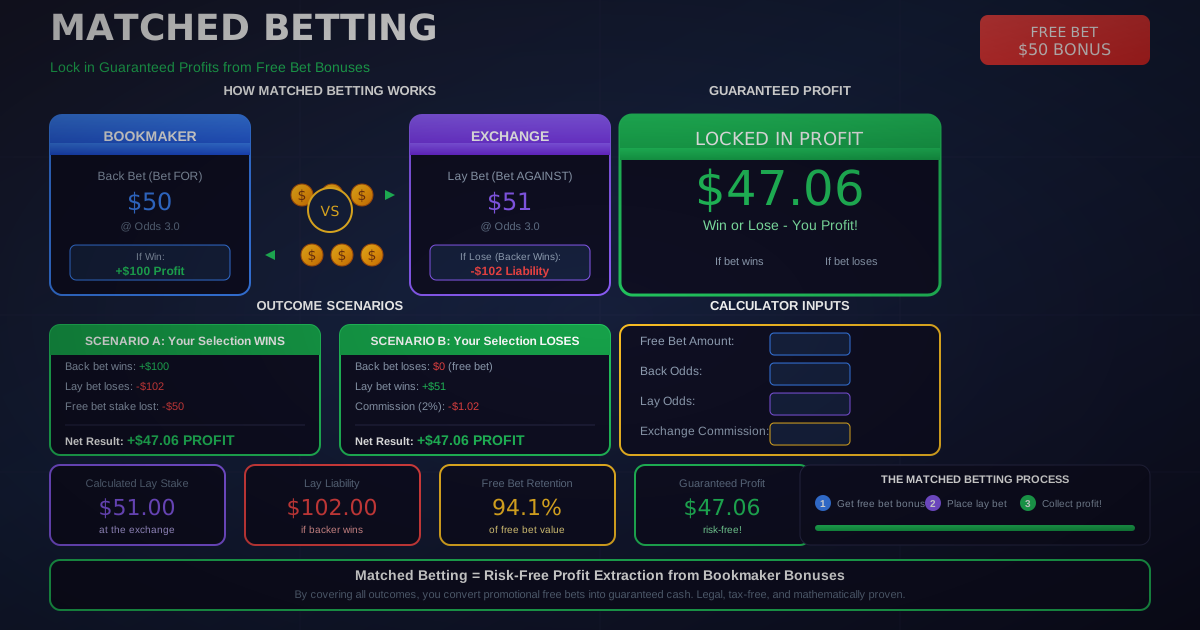
- Matched Betting Calculator: Calculate the true value of bonus offers from legitimate sites.
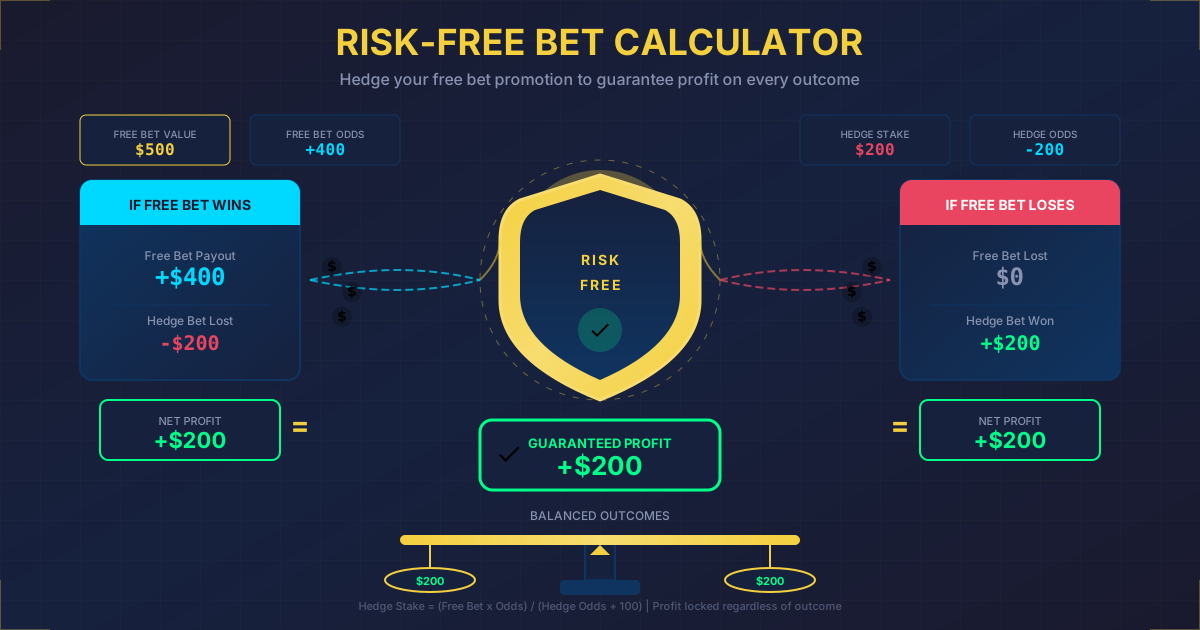
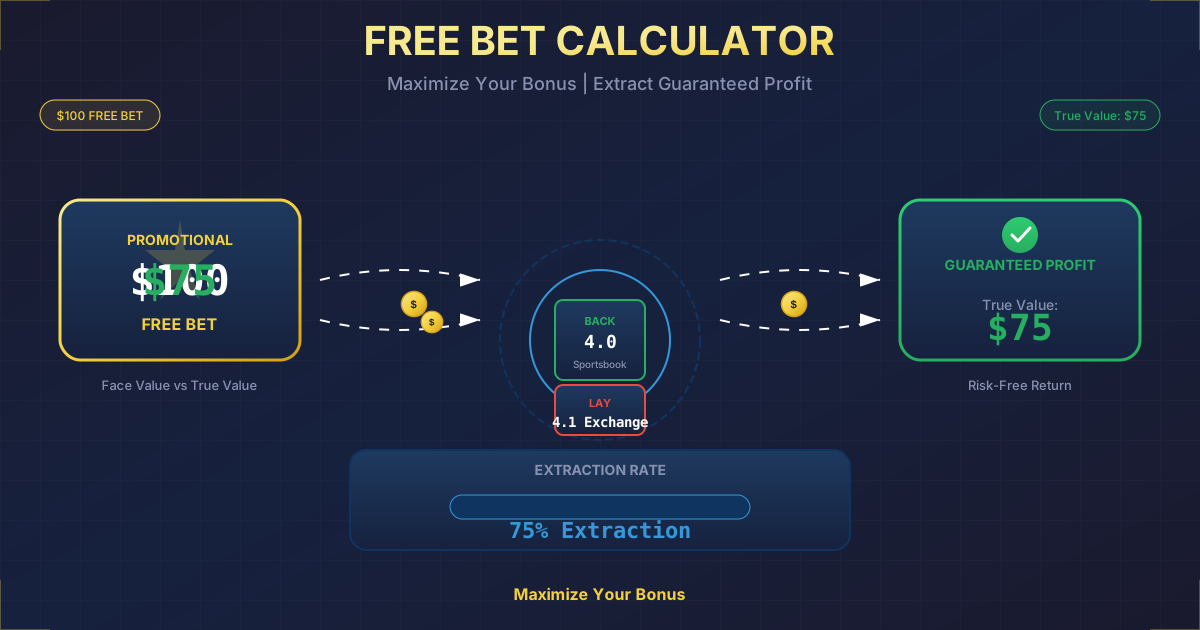
- Free Bet Calculator: Evaluate stake-not-returned free bet offers mathematically.
The 30 minutes you spend verifying a gambling site before depositing can save you thousands of dollars and protect your personal data from criminal exploitation. No legitimate operator will object to an informed, cautious player. If a site makes verification difficult, that is the biggest red flag of all.
Explore all of our free gambling safety and calculation tools at Practical Web Tools to gamble safely and informed.
Gambling involves risk and should be approached as entertainment, not as a source of income. Always bet within your means, set strict bankroll limits, and never chase losses. If you or someone you know has a gambling problem, contact the National Council on Problem Gambling at 1-800-522-4700 or visit ncpgambling.org. Must be 21+ to gamble in most US jurisdictions. Please play responsibly.