Slot Machine Myths vs. Reality: 15 Things That Don't Actually Affect Your Odds (2026)
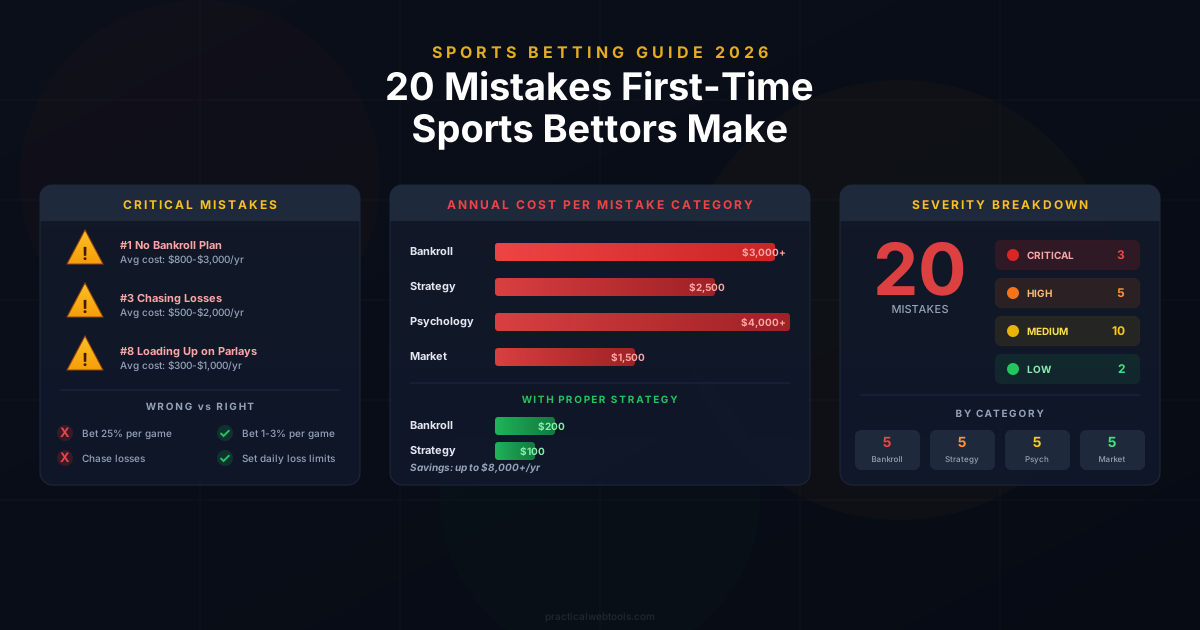
Slot machine myths cost players real money every single day. Not because the myths themselves change the math, but because they lead to decisions that do. A player who believes a machine is "due" will chase losses on a cold streak instead of walking away. A player who avoids using a loyalty card because they think it tightens the machine forfeits thousands of dollars in comps over a lifetime. A player who hunts for "hot" machines wastes time and mental energy on a strategy that has zero mathematical basis.
Slot machines generated over $10 billion in revenue in Nevada alone during a single fiscal year. Across the United States, commercial gaming revenue topped $71.49 billion through the first eleven months of 2025, with slot machines accounting for over 70% of total casino gaming income. That revenue comes overwhelmingly from players who do not understand how the machines actually work.
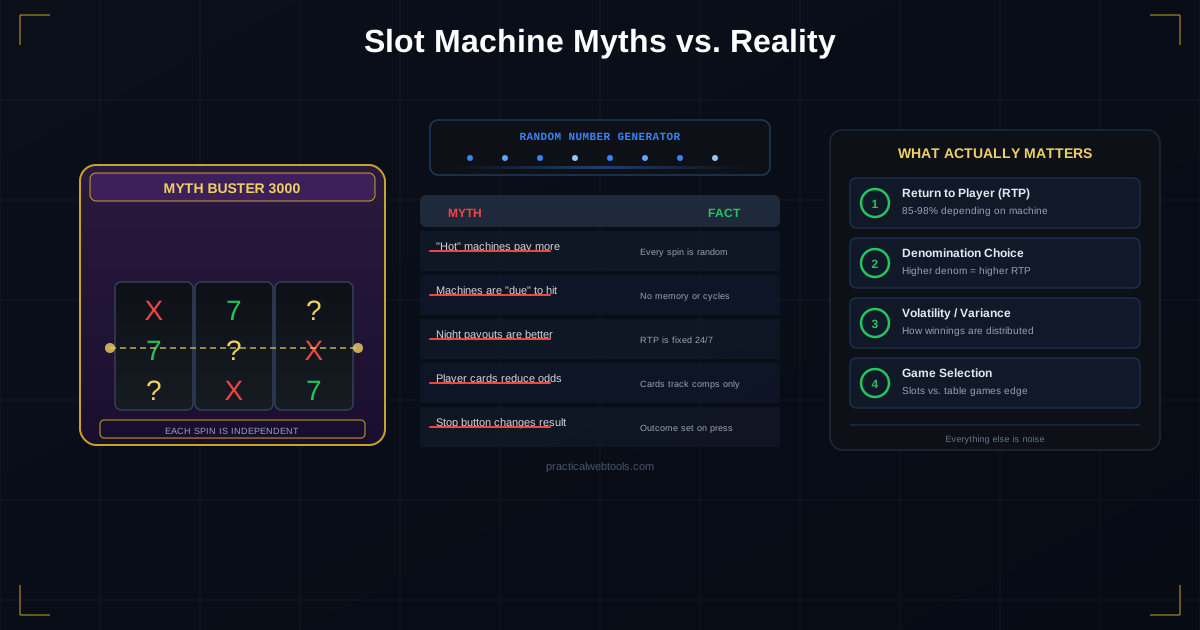
The core truth is straightforward: every modern slot machine uses a Random Number Generator (RNG) that produces thousands of outcomes per second. The result of every spin is determined the instant you press the button. Nothing you did before, nothing you do after, and nothing the casino does between spins changes that outcome. The reels are cosmetic. The animations are theater. The math is fixed.
This guide dismantles 15 of the most persistent slot machine myths, explains exactly why each one is wrong, and identifies the few things that actually do affect your expected return. If you play slots, this is the most important thing you will read all year.
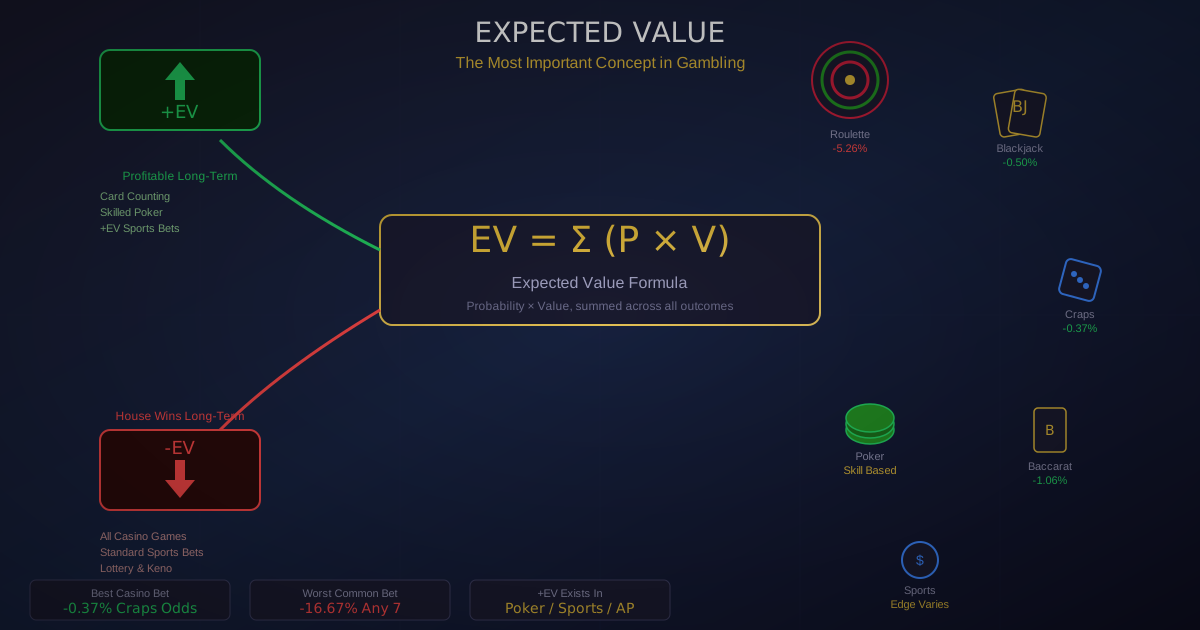
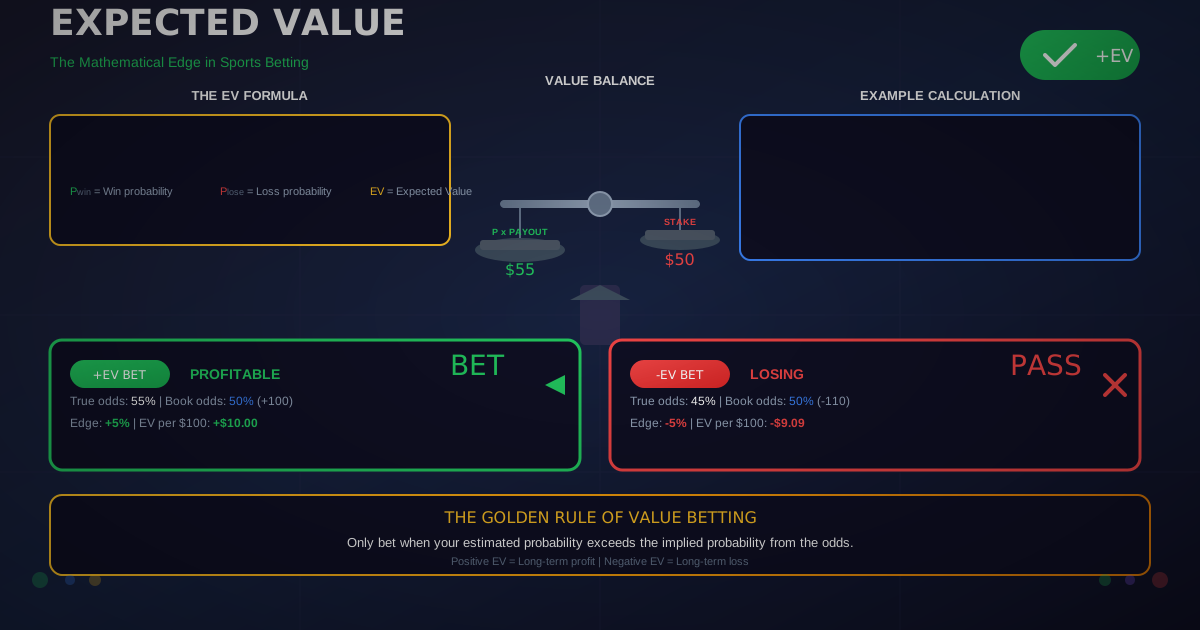
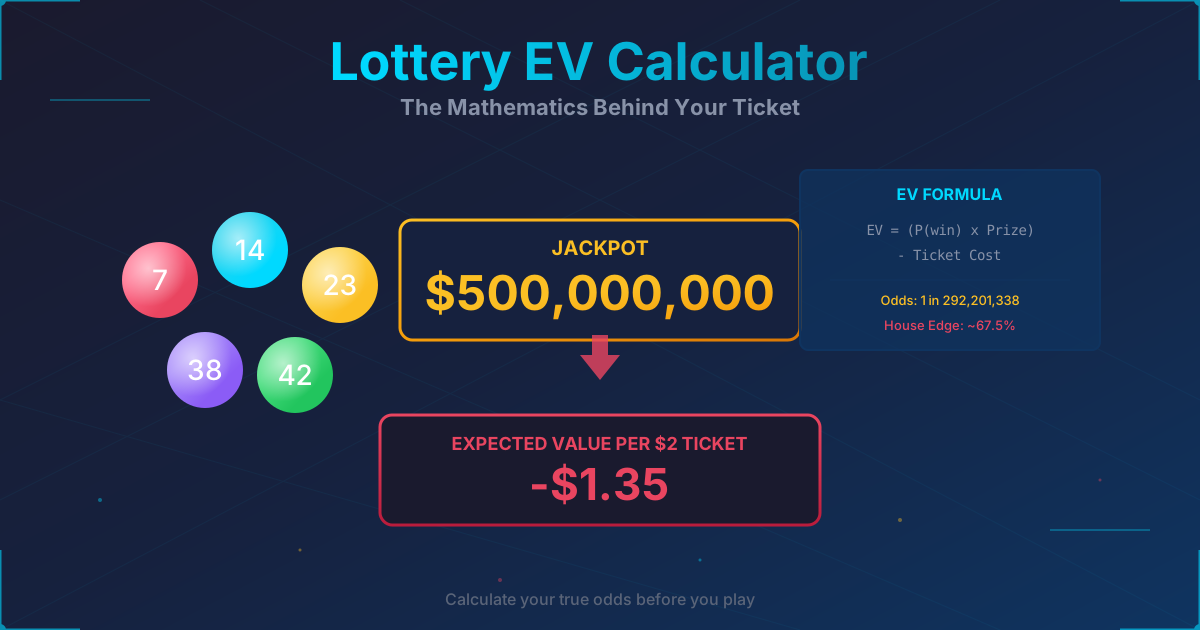
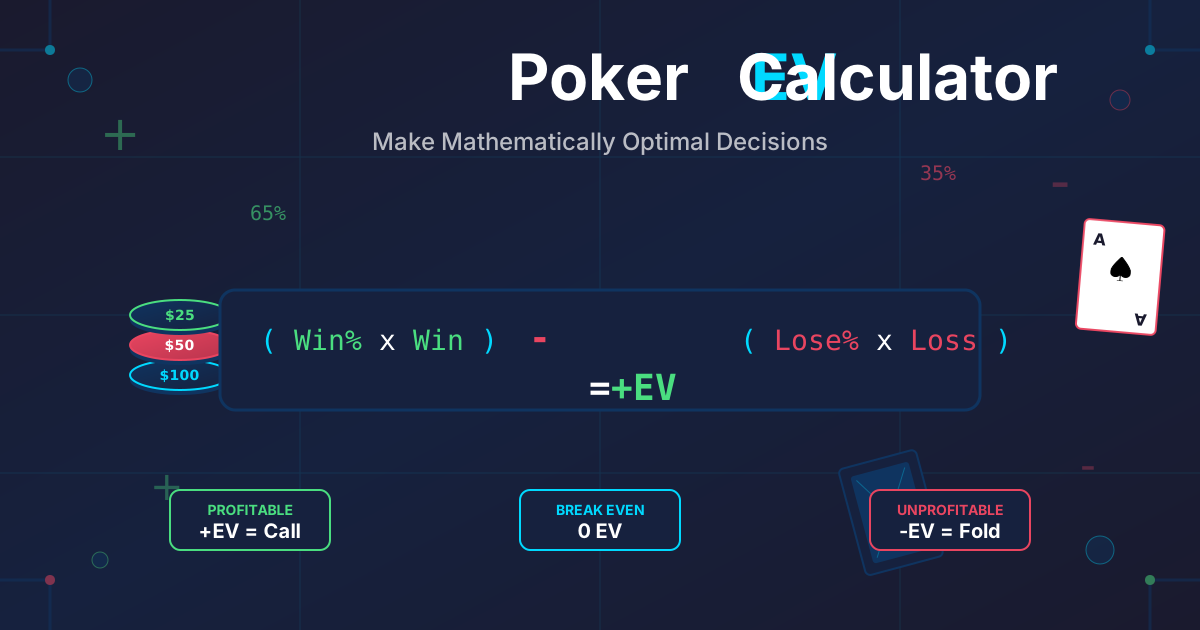
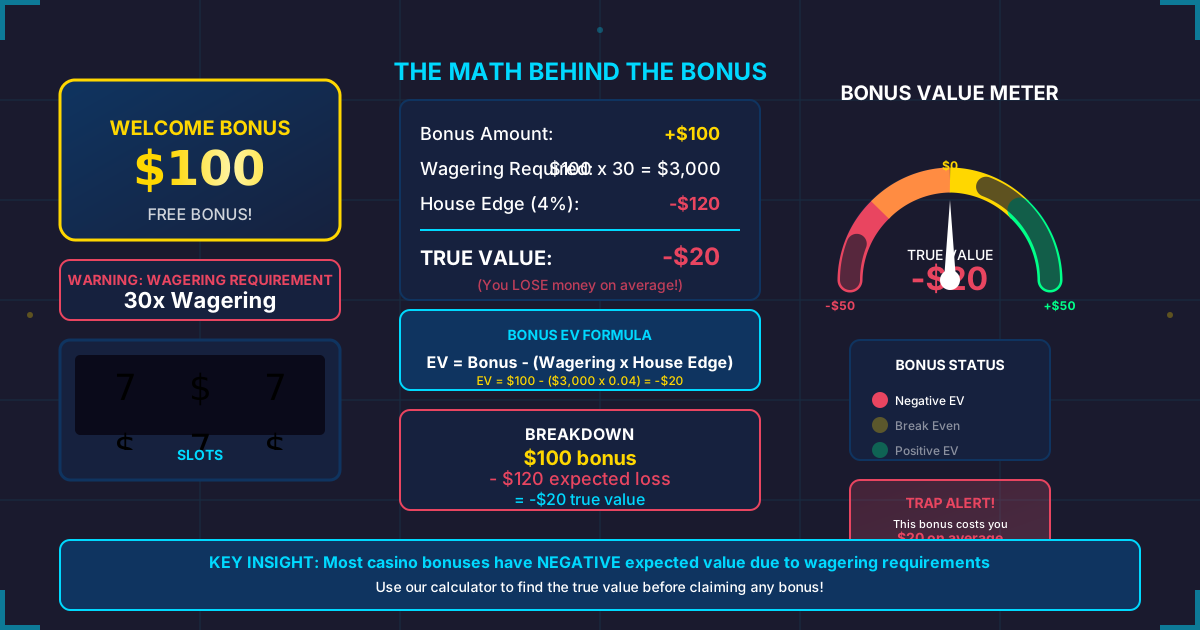
Calculate the expected value of any gambling scenario, including slot sessions, with our free Expected Value Calculator.
How Slot Machines Actually Work: The 60-Second Version
Before we debunk myths, you need a baseline understanding of slot mechanics. Every myth on this list collapses once you understand these three facts:
1. The RNG never stops running. The Random Number Generator inside every slot machine cycles through numbers continuously, typically producing between 1,000 and several billion numbers per second. It runs whether the machine is being played or sitting idle. When you press the spin button, the RNG captures the number it happens to be on at that exact millisecond. That number maps to a reel combination. That is your result.
2. Every spin is independent. The outcome of spin #500 has no relationship to spin #499 or spin #501. The RNG does not track previous results. There is no counter, no memory, and no cycle. Each spin is a fresh, independent event with the same probability distribution as every other spin on that machine.
3. The payback percentage is baked into the math. A slot machine's Return to Player (RTP) is determined by the combination of its reel composition and paytable. It is set when the machine is manufactured and configured by the casino within regulatory limits. It cannot be changed on the fly, remotely, or based on any external factor.
| Slot Machine Component | What It Does | What It Does NOT Do |
|---|---|---|
| Random Number Generator (RNG) | Determines spin outcome at the instant you press the button | Track previous results, adjust based on time, or respond to bet size |
| Reel Strips (Virtual) | Map RNG output to symbol positions | Change composition between spins or based on player behavior |
| Paytable | Define what each combination pays | Adjust payouts based on recent wins or losses |
| Return to Player (RTP) | Set the long-term mathematical payback percentage | Fluctuate based on time of day, player card, or casino decision |
| Bonus Features | Trigger based on specific symbol combinations | Become more or less likely based on how long you have played |
With that foundation, let us destroy some myths.
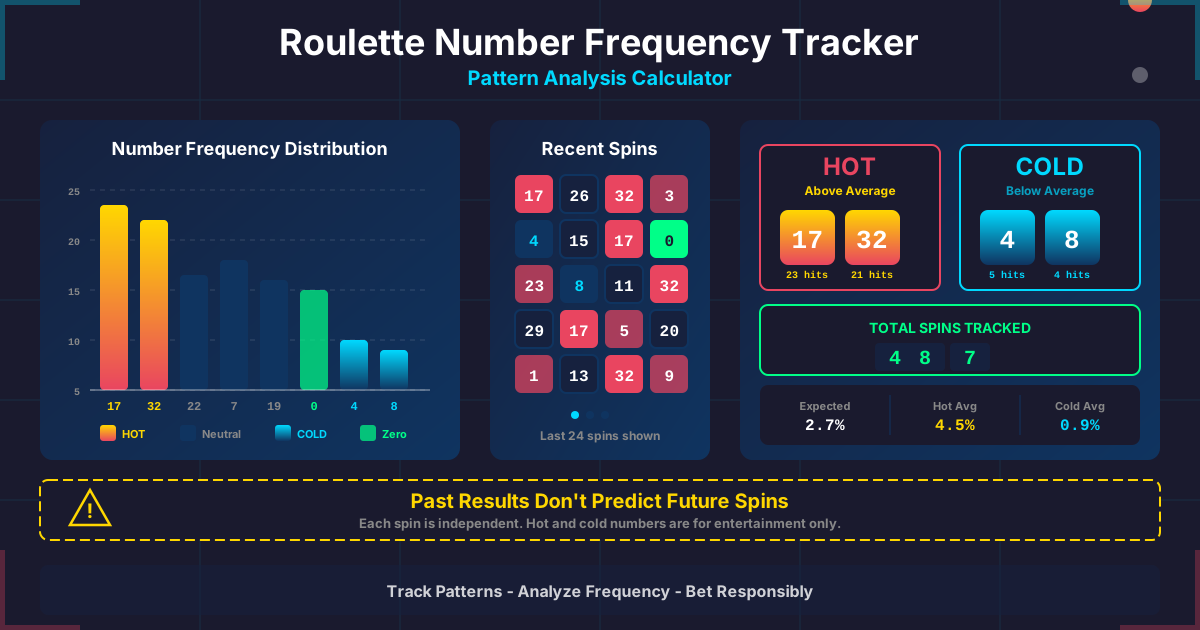
Myth #1: Slot Machines Run Hot and Cold
The Myth: Slot machines go through cycles of paying out frequently ("hot") and paying out rarely ("cold"). Smart players can identify hot machines and ride the streak.
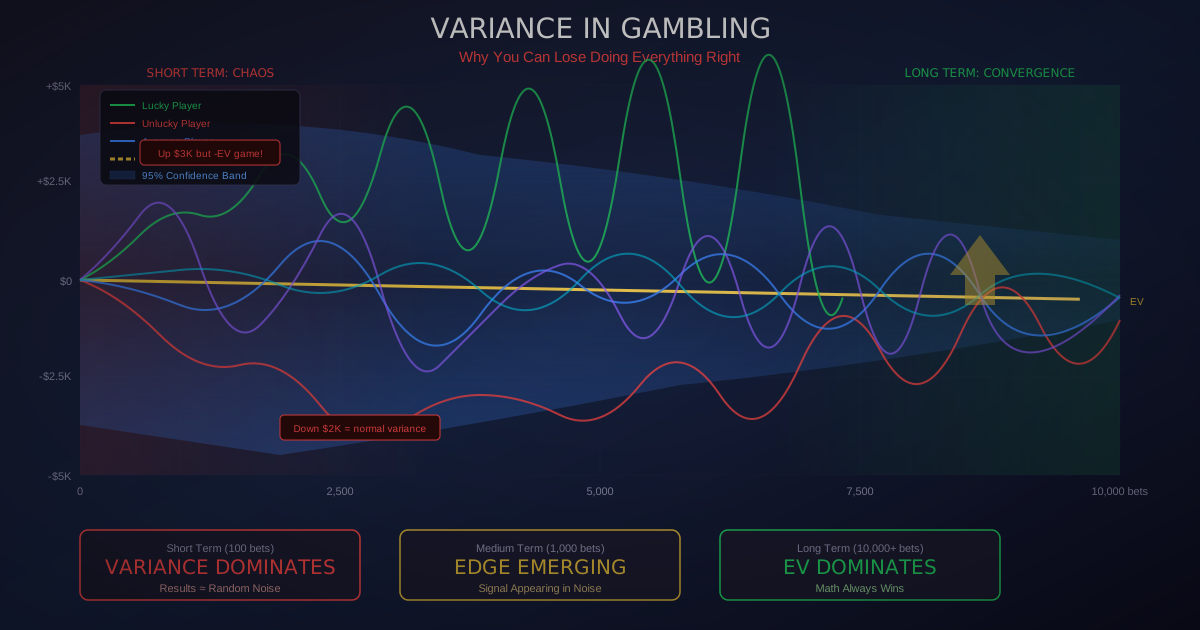
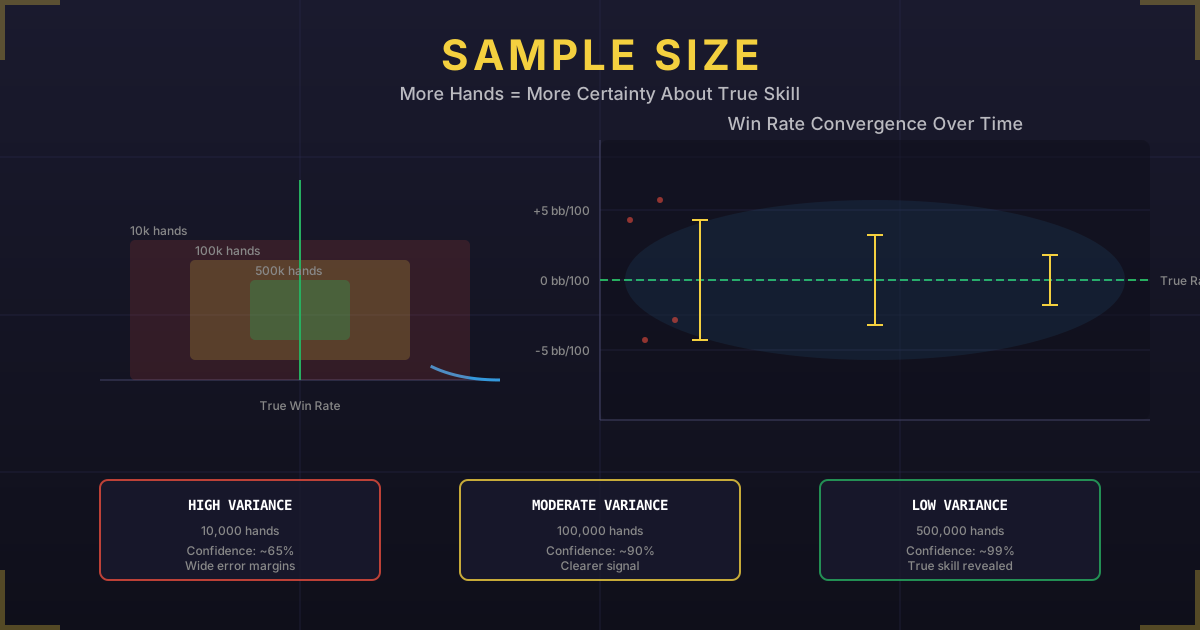
The Reality: There are no hot or cold cycles. The RNG produces statistically independent outcomes on every single spin. What players perceive as a "hot streak" is simply normal variance in a random system. If you flip a fair coin 100 times, you will absolutely see streaks of 5, 6, or even 8 heads in a row. That does not mean the coin was "hot." It means randomness is streaky.
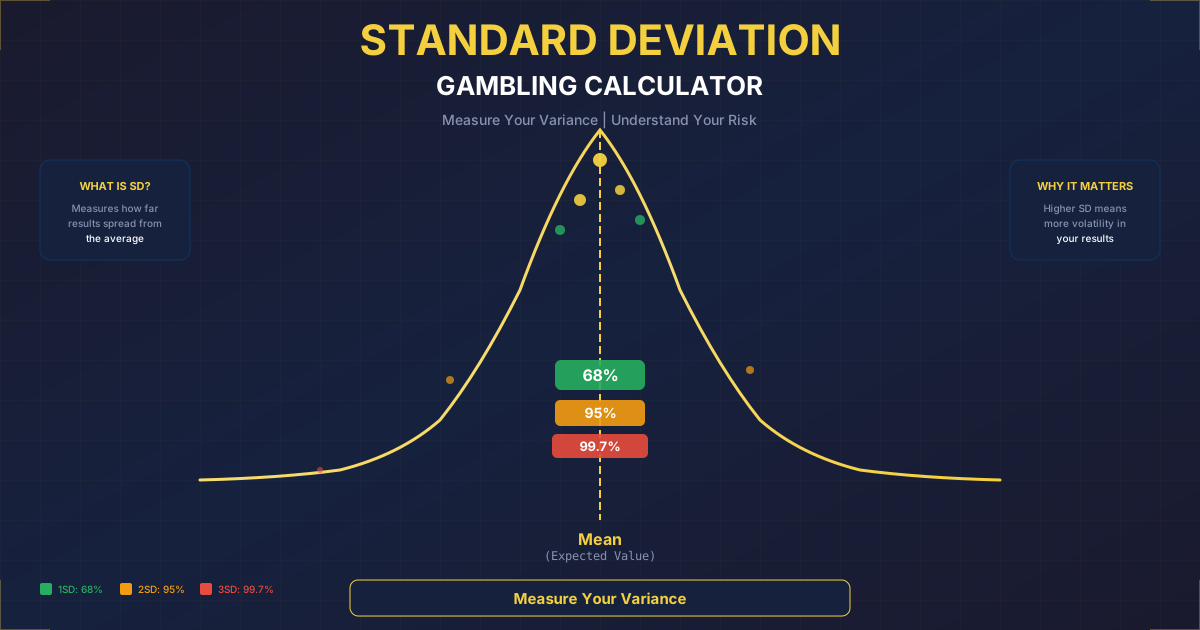
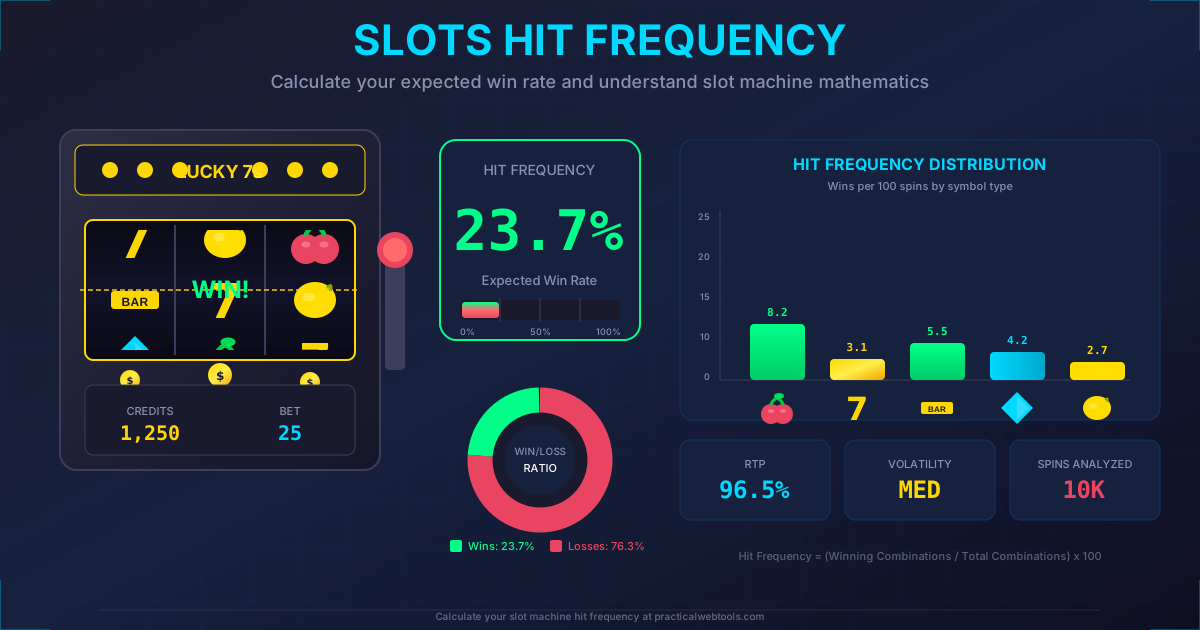
The Math: Consider a slot machine with a hit frequency of 30% (roughly one winning spin in three). Over 100 spins, you would expect about 30 wins. But the standard deviation for 100 trials at 30% probability is approximately 4.6. That means getting anywhere from 21 to 39 wins in 100 spins is entirely normal. A stretch of 12 spins without a win? Statistically unremarkable. A stretch of 5 wins in 8 spins? Same thing.
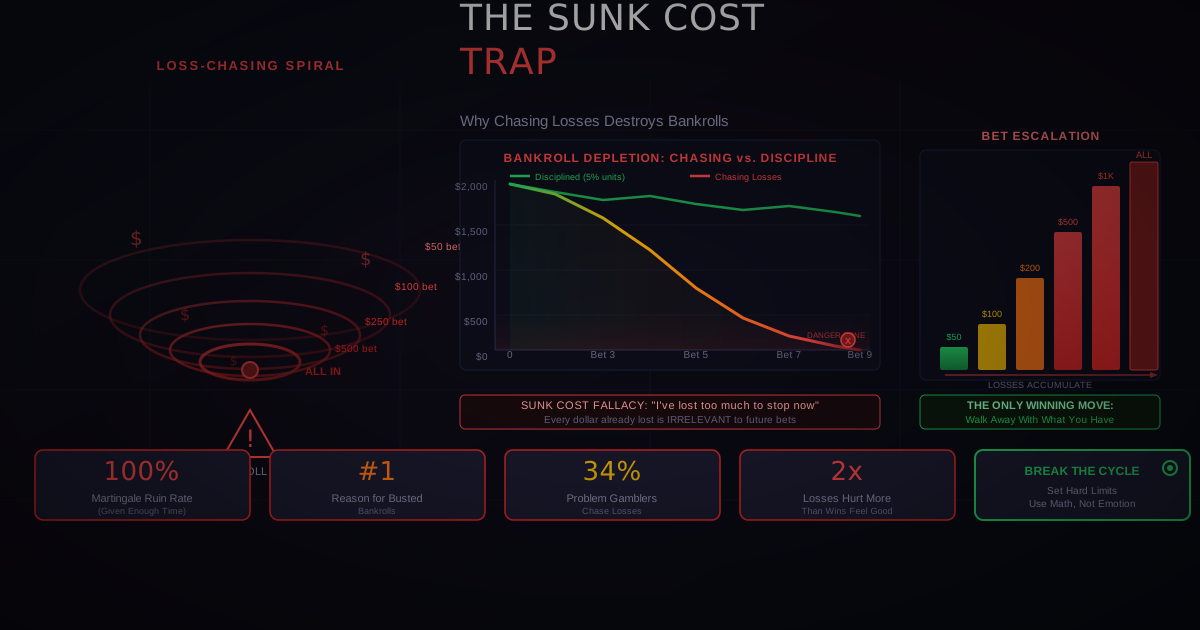
The Cost: Players who chase "hot" machines often increase their bet size during perceived streaks, then refuse to leave during perceived cold streaks because they believe the machine "has to" turn around. Both behaviors increase total losses.
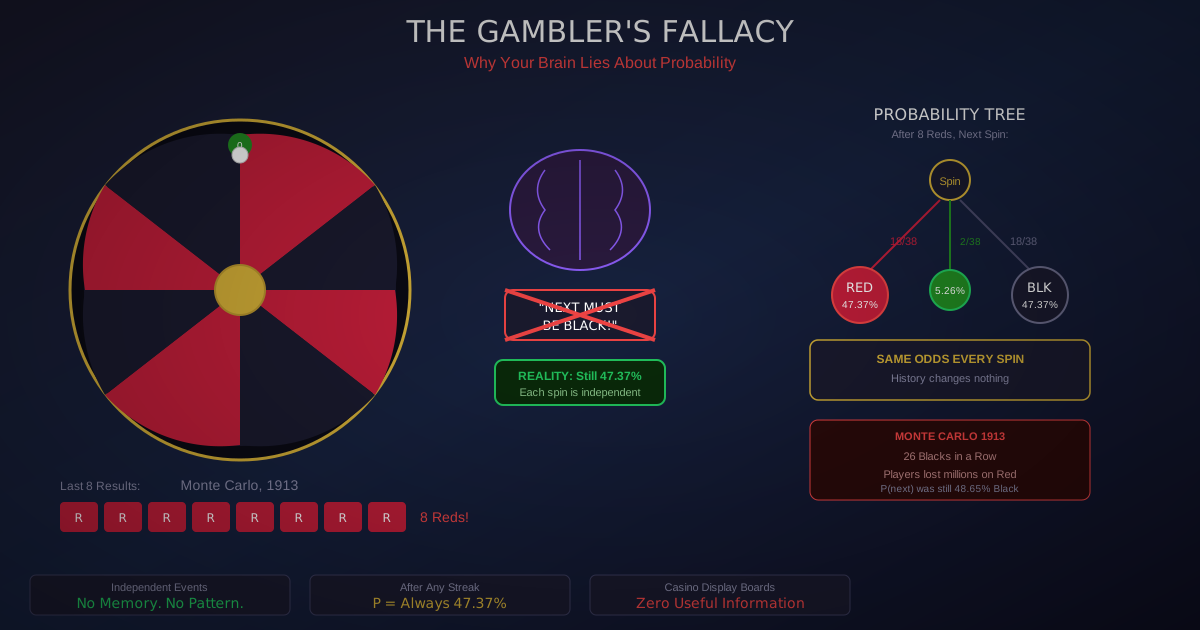
Myth #2: Machines Are "Due" for a Win After a Long Losing Streak
The Myth: If a slot machine has not paid out in a long time, it is "due" for a big win. The longer the drought, the more likely a payout becomes.
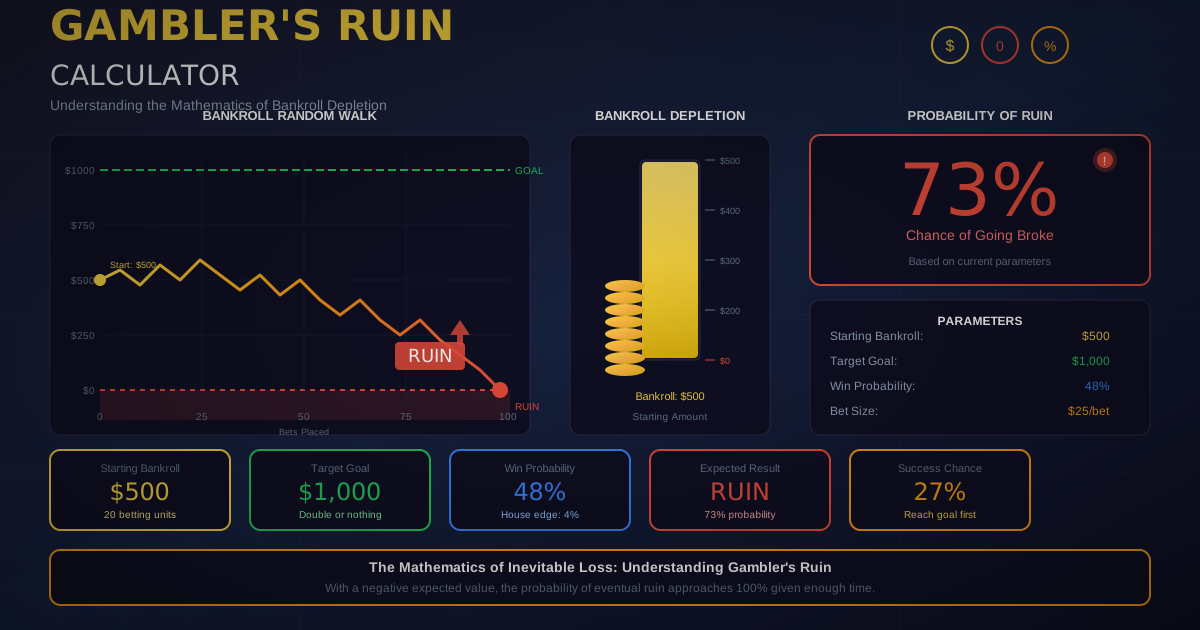
The Reality: This is the textbook Gambler's Fallacy. The machine has no memory. It does not know it has not paid out recently. The probability of winning on the next spin is identical whether the last 10 spins were losses or the last 10 spins were wins.
The Math: Suppose a jackpot has a 1-in-50,000 probability of hitting on any given spin. After 100,000 spins without a jackpot, the probability of hitting on spin 100,001 is still exactly 1 in 50,000. Not 1 in 1. Not "almost certain." Exactly the same as it was on spin #1.
| Spins Without Jackpot | Probability of Jackpot on Next Spin | What Players Believe |
|---|---|---|
| 0 | 1 in 50,000 (0.002%) | "Normal odds" |
| 10,000 | 1 in 50,000 (0.002%) | "Getting closer" |
| 50,000 | 1 in 50,000 (0.002%) | "Any spin now" |
| 100,000 | 1 in 50,000 (0.002%) | "It HAS to hit" |
| 200,000 | 1 in 50,000 (0.002%) | "It's overdue, guaranteed" |
The probability never changes. Ever.
Myth #3: Slot Machines Pay More at Night or on Weekends
The Myth: Casinos loosen their slot machines during busy periods (nights, weekends, holidays) to attract more players, or tighten them because they know more people will play regardless.
The Reality: Changing a slot machine's payback percentage is not a simple dial turn. In most jurisdictions, it requires physically replacing a computer chip (EPROM) or, in server-based systems, filing documentation with the gaming commission and following a multi-step regulatory process. Casinos cannot adjust payouts based on time of day, day of the week, or how crowded the floor is.
The Evidence: Nevada Gaming Control Board regulations require that any change to a slot machine's theoretical payback percentage be documented, approved, and in many cases involve a waiting period before the machine can be returned to the floor. The idea that casinos are constantly adjusting thousands of machines based on the clock is logistically impossible and legally prohibited.
Real-World Example: A Las Vegas Strip casino might have 2,000 slot machines on its floor. If adjusting each machine took even 15 minutes of technician time, "loosening" the floor for Friday night would require 500 person-hours of work, plus regulatory paperwork for every single change. And then they would need to do it again Monday morning to "tighten" them back. No casino operates this way.
Myth #4: Machines Near the Entrance or Aisle Pay Better
The Myth: Casinos place their "loosest" slot machines near entrances, aisles, and high-traffic areas so that passersby see people winning and are drawn in to play.
The Reality: This myth has a kernel of historical truth. Decades ago, some casino floor managers did reportedly place higher-paying machines in visible locations. However, modern casino floor design has evolved significantly. Today, machine placement is driven by game popularity, theme grouping, and player traffic flow rather than secret payback percentage strategies.
The Evidence: Modern gaming regulations require that every machine's RTP falls within a set range (typically 75% minimum in most jurisdictions, with practical floor averages between 88% and 95%). The variation between any two machines of the same type on the same floor is typically small. More importantly, the RNG does not know or care where the machine is physically located.
What Actually Happens: Casinos place popular, visually exciting games in high-traffic areas because those games attract attention regardless of their payback. The goal is to get players to stop and engage, not to let them win more. If anything, some industry experts suggest that high-traffic areas may have slightly tighter machines because those positions will be played regardless.
Myth #5: Using Your Player's Club Card Reduces Your Payouts
The Myth: When you insert your loyalty card, the machine knows who you are and tightens the payouts. Casinos use the card to track winners and reduce their chances. Playing without a card gives you better odds.
The Reality: This is one of the most costly myths in gambling because it causes players to leave free money on the table. The player tracking system and the RNG are completely separate systems. The loyalty card tracks your play for the purpose of calculating comps, cashback, and promotional offers. It has zero connection to the game's outcome determination.
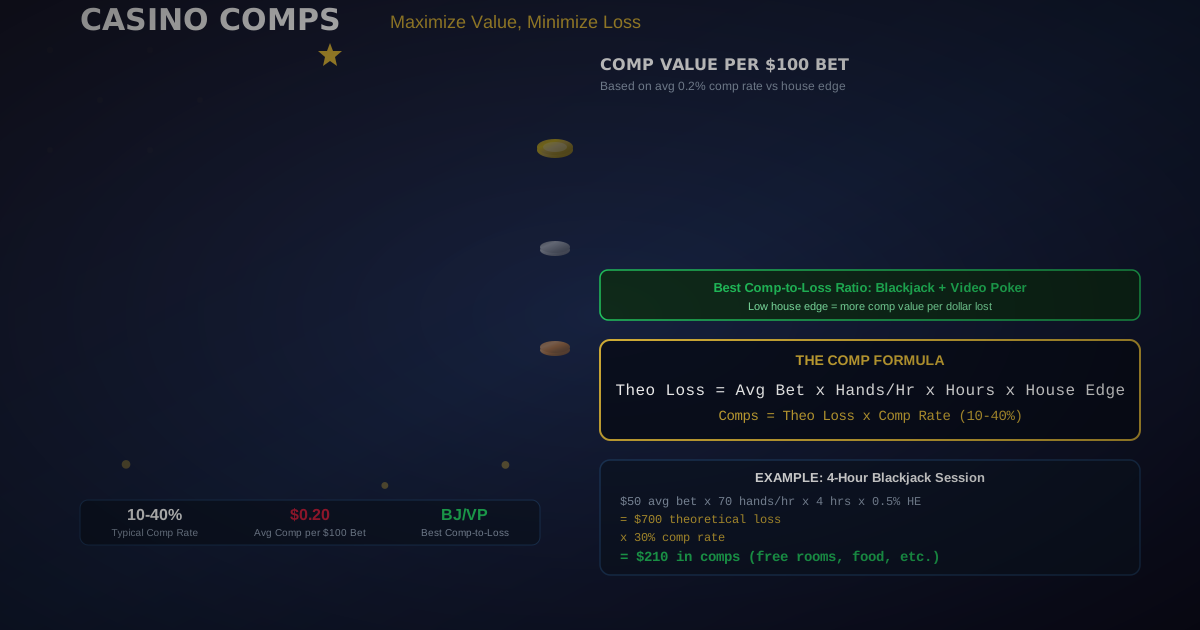
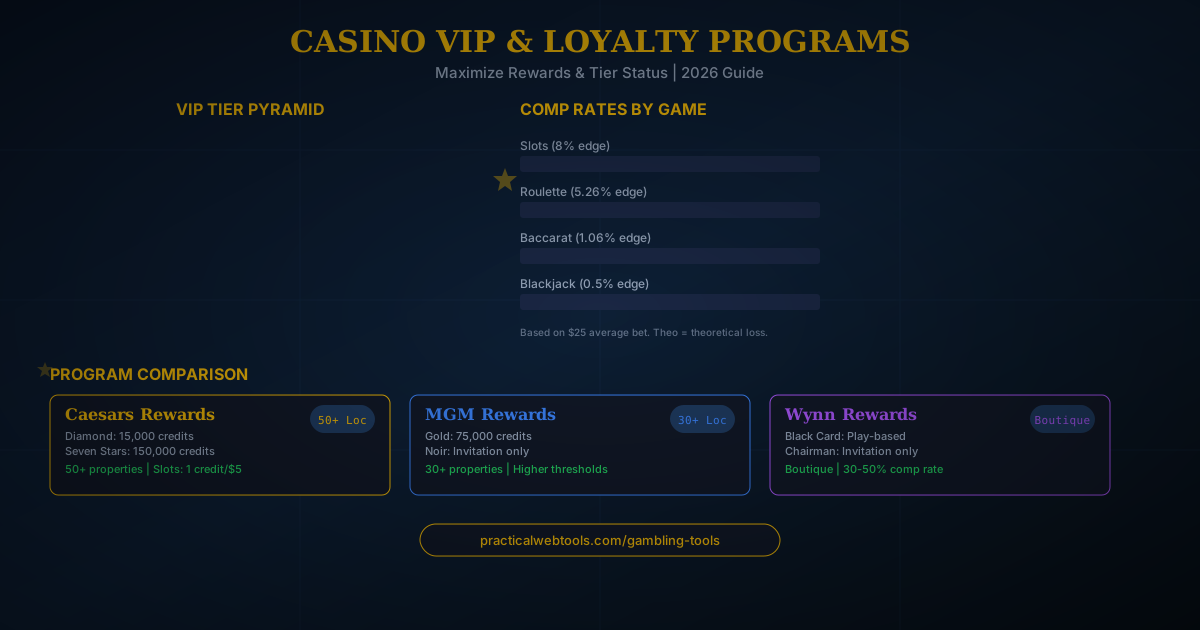
The Math: A typical player's club card returns 0.1% to 0.5% of total wagered in comps and cashback. Over a year of regular play, that can add up to hundreds or thousands of dollars in free meals, hotel rooms, and cash. By not using a card, you are getting the same odds but forfeiting the rewards.
Real-World Example: A player who wagers $50,000 per year through slot machines (which is not unusual for a weekly player) and receives 0.3% back through their loyalty program earns $150 in comps. Over 10 years, that is $1,500 in free value they would have forfeited by playing without a card. The slot machine does not care whether the card is inserted. The math is identical either way.
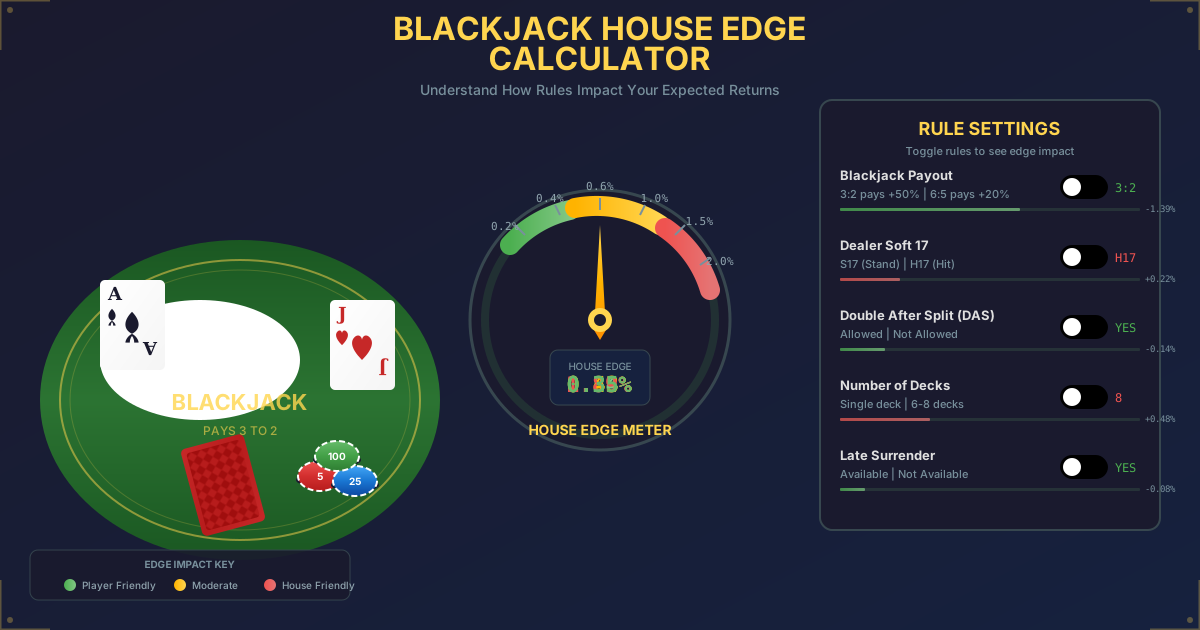
Compare the house edge across different games to understand what the card is actually worth relative to the edge you face, using our Blackjack House Edge Calculator and Roulette House Edge Calculator.
Myth #6: Pulling the Handle vs. Pressing the Button Affects Outcomes
The Myth: Old-school players insist that pulling the physical handle on a slot machine gives different (usually better) results than pressing the spin button. Some believe the handle introduces a skill element or that the casino programmed the button differently.
The Reality: On modern slot machines, the handle and the spin button do exactly the same thing: they send a signal to the computer to capture the current RNG value. There is no difference in outcome. The handle is a nostalgic feature maintained because some players prefer the tactile experience. The RNG does not know or care whether the signal came from a handle pull or a button press.
The Evidence: Gaming certification labs, including GLI (Gaming Laboratories International) and BMM Testlabs, test slot machines to verify that all activation methods produce identical statistical distributions. If the handle produced different results than the button, the machine would fail certification and would be illegal to operate.
Myth #7: Betting Maximum Always Improves Your Odds
The Myth: You should always bet the maximum number of coins or credits because betting max gives you better odds of winning or triggers better payback percentages.
The Reality: This one is nuanced because there is a small grain of truth buried under a mountain of misunderstanding.
On most modern video slots, the payback percentage is the same regardless of bet size. Betting $0.50 per spin or $5.00 per spin, the RTP does not change.
However, there are two specific exceptions:
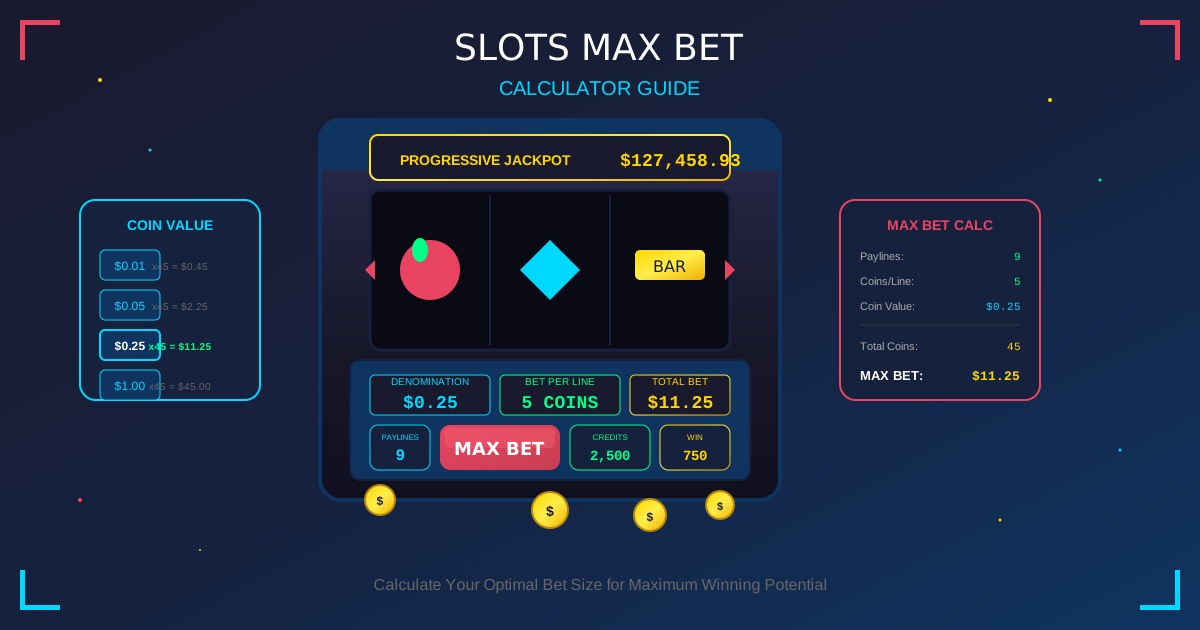
Exception 1: Classic reel machines with jackpot multipliers. On some older three-reel machines, the top jackpot only pays its full amount when maximum coins are bet. On these machines, betting less than max reduces the effective RTP because you are excluded from the top payout. For example, a machine might pay 1,000 coins for the jackpot on a 1-coin bet but 5,000 coins for the same combination on a 3-coin max bet. That disproportionate top payout means the full RTP is only achievable at max bet.
Exception 2: Progressive jackpots. Most progressive slot machines require a maximum bet to be eligible for the progressive jackpot. Since the progressive jackpot is funded by a portion of all bets, playing less than max means you are contributing to the jackpot but cannot win it. This creates a mathematically disadvantageous situation.
| Bet Level | Standard Video Slots | Classic Reel (Jackpot Bonus) | Progressive Slots |
|---|---|---|---|
| Minimum Bet | Same RTP | Slightly lower RTP (jackpot excluded) | Lower RTP (progressive excluded) |
| Medium Bet | Same RTP | Slightly lower RTP | Lower RTP (progressive excluded) |
| Maximum Bet | Same RTP | Full RTP achieved | Full RTP achieved |
| Recommendation | Bet what fits your bankroll | Bet max or play a different machine | Bet max or play a non-progressive |
The Bottom Line: On modern video slots (which are the vast majority of machines on any casino floor), bet sizing does not affect your odds. Bet what you can afford within your bankroll management plan. If you cannot afford to bet max, play a lower denomination machine rather than betting below max on a high-denomination machine.
Myth #8: The Casino Can Remotely Adjust a Machine's Payback
The Myth: Casino management can sit in a back room and flip a switch to make a specific machine tighter or looser. They might tighten a machine after a big win or loosen one that has been cold too long.
The Reality: In most jurisdictions, this is illegal. Gaming regulations require strict procedures for changing a machine's payback percentage. Even in jurisdictions that allow server-based gaming changes, the process involves regulatory notification, mandatory waiting periods (often 24 to 72 hours), and the machine typically must sit idle during the transition.
The Regulatory Framework:
| Jurisdiction | How Payback Changes Work | Remote Changes Allowed? |
|---|---|---|
| Nevada | EPROM chip replacement with Gaming Control Board notification | Limited server-based with strict waiting periods |
| New Jersey | Software change with Division of Gaming Enforcement approval | Server-based with mandatory 4-minute idle period |
| Most U.S. States | Physical chip replacement with regulatory notification | Varies; always requires regulatory documentation |
| Online (Regulated) | Software update with licensing body approval and independent testing | Yes, but requires full re-certification |
Real-World Example: If a casino wanted to change the payback percentage on a single machine in Nevada, a technician would need to open the machine, replace the EPROM chip, reseal the machine, and file documentation. The gaming board can audit this at any time. The idea of casinos secretly adjusting machines between spins or during a player's session is fiction.
Myth #9: A Machine That Just Hit a Jackpot Won't Pay Again for a Long Time
The Myth: After a machine pays out a large jackpot, it enters a "recovery" period where it pays out less frequently to recoup the money. You should avoid a machine that just hit big.
The Reality: The machine does not know it just paid a jackpot. The RNG does not track payouts. The instant after a $50,000 jackpot, the probability of the next spin hitting the same jackpot is identical to what it was before.
The Math: This myth assumes the machine operates on a cycle (say, one jackpot per 100,000 spins) and that hitting the jackpot "resets" the counter. In reality, there is no cycle and no counter. Each spin is independent. The probability of back-to-back jackpots is astronomically low (1/50,000 multiplied by 1/50,000 = 1 in 2.5 billion), but not because the machine is in recovery mode. It is low because the probability was always low on any individual spin.
The Evidence: There are documented cases of the same machine paying major jackpots within hours or even minutes of each other. In 2012, a Las Vegas casino paid two jackpots on the same Megabucks machine within 24 hours. This would be impossible if machines entered recovery periods.
Myth #10: Playing Faster or Slower Changes Your Results
The Myth: If you spin faster, you burn through the "cold" spins more quickly and get to the wins sooner. Alternatively, spinning slowly gives the RNG more time to "land" on a winning number.
The Reality: The RNG cycles through numbers so quickly (typically millions per second) that the difference between pressing the button one second earlier or later produces a completely different and equally random result. Speed of play has no effect on the probability of any individual spin winning.
What Speed DOES Affect: Your hourly loss rate. This is the one legitimate financial consideration related to speed of play. A player spinning 600 times per hour at $1 per spin on a machine with a 10% house edge will lose an expected $60 per hour. The same player slowing down to 400 spins per hour loses an expected $40 per hour. Slower play does not improve your odds, but it reduces your total exposure.
| Spins Per Hour | Bet Per Spin | Total Wagered/Hour | House Edge (10%) | Expected Hourly Loss |
|---|---|---|---|---|
| 600 | $1.00 | $600 | 10% | $60.00 |
| 400 | $1.00 | $400 | 10% | $40.00 |
| 200 | $1.00 | $200 | 10% | $20.00 |
| 600 | $0.50 | $300 | 10% | $30.00 |
| 600 | $2.00 | $1,200 | 10% | $120.00 |
See how expected value calculations work for any bet size and house edge with our Expected Value Calculator.
Myth #11: The Stop Button Can Change the Outcome
The Myth: Pressing the stop button at exactly the right moment lets you control which symbols land on the reels. Skilled players can "time" their stops to influence results.
The Reality: The outcome of every spin is determined the instant you press the spin button, before the reels begin animating. The stop button simply ends the reel animation early and displays the already-determined result. It is a convenience feature, not a skill feature.
The Evidence: Gaming certification standards require that the outcome be fixed at the moment of initiation (the spin button press). The reel animation is purely cosmetic. Whether you watch the full animation, press stop immediately, or let an autoplay feature run, the outcome is identical because it was determined before any of those things happened.
Why the Myth Persists: The "near miss" effect. When you press stop and see two jackpot symbols with the third just above or below the payline, it feels like you almost won and could have timed it differently. In reality, the final symbol was determined before the reels started moving. The near-miss display is a function of how the virtual reel maps to the physical reel animation, not evidence that timing matters.
Myth #12: Casinos Put Loose Machines Next to Tight Ones
The Myth: Casinos deliberately place tight machines next to loose ones so that when a player on the tight machine sees someone winning on the adjacent loose machine, they keep playing in hopes of similar results.
The Reality: While casinos are strategic about floor layout, the idea that they meticulously pair loose and tight machines side by side is an oversimplification. Modern casino floor management focuses on game variety, theme clustering, and traffic flow. Two identical machines sitting side by side may have slightly different payback percentages (within the same regulatory range), but this is a function of the game's configuration, not a deliberate pairing strategy.
What Actually Happens: Casinos group machines by type (all Buffalo machines together, all Lightning Link machines together) because players look for specific games. Within a bank of identical machines, the payback percentage is typically the same because they are running the same software and configuration.
Myth #13: New Machines Pay Better Than Old Ones
The Myth: When a casino installs a new machine, they set it to "loose" to attract players and build interest. After a few weeks, they tighten it up.
The Reality: A new machine arrives with its RTP already configured. Changing it requires the same regulatory process as any other payback modification. Casinos do not install machines at one payback and secretly switch them later.
What IS True: Newer game designs sometimes have higher RTPs than older ones because game developers compete on this metric. A brand-new game released in 2026 might offer 92% RTP while an older game from 2015 on the same floor offers 89%. But this is a function of game design, not a casino manipulation. The new game had that same 92% RTP from the moment it was manufactured.
Real-World Example: A casino replaces 50 older machines with newer models. The newer models happen to have a 93% RTP compared to the 90% of the old machines. Players on the new machines notice they seem to "pay better." They conclude the casino set them loose to build interest. In reality, the higher payback is permanent and built into the game's mathematical model.
Myth #14: Certain Times of the Month Are Better for Slot Play
The Myth: Play slots at the beginning of the month when casinos are trying to meet revenue targets, or at the end of the month after quotas are met and machines are loosened up.
The Reality: Casinos do not adjust machine payback based on monthly revenue targets. The RNG does not have a calendar. Payback percentages remain constant regardless of the date.
What Might Fuel This Myth: Casinos do run more aggressive promotions (bonus point multipliers, free play offers, slot tournaments) at certain times of the month. These promotions can genuinely improve a player's overall return, but they do so through comp value and bonus play, not by changing the machines themselves. A "5X points Wednesday" does not change the machine's RTP from 92% to something higher. It gives you 5 times the loyalty points on top of the same 92% RTP.
Myth #15: You Can Predict When a Progressive Jackpot Will Hit
The Myth: Progressive jackpots have a "must-hit-by" amount, and as the jackpot grows closer to that ceiling, the odds of it hitting increase. Smart players wait until the jackpot is high before playing.
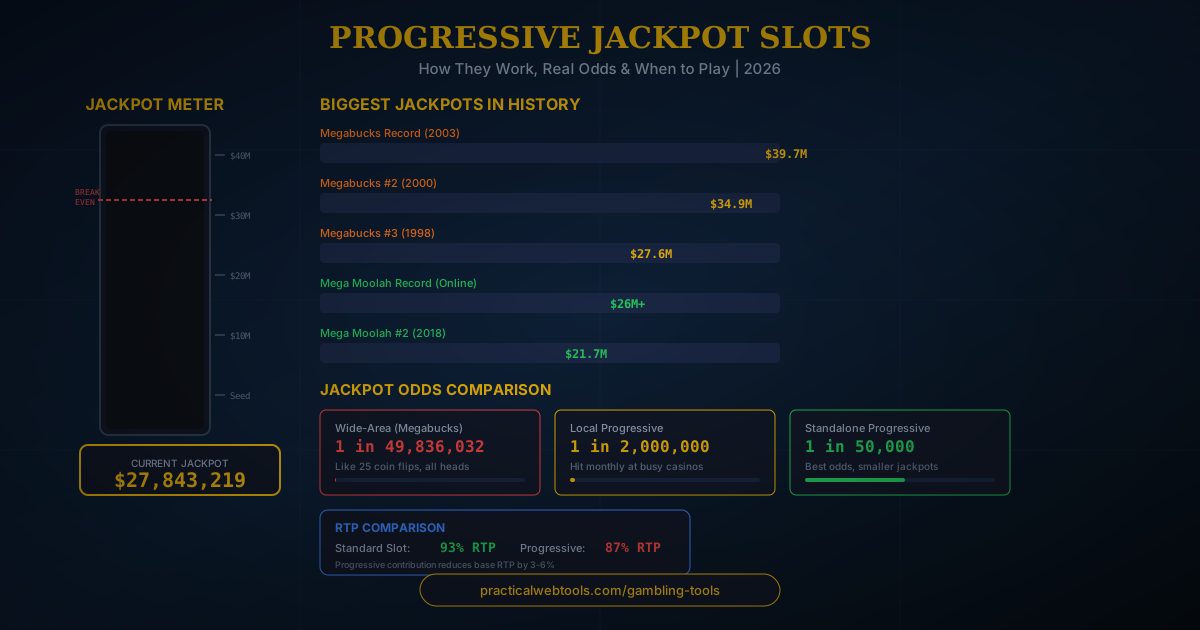
The Reality: Most progressive jackpots do not have a must-hit-by amount. The probability of hitting the progressive is the same on every spin, regardless of the current jackpot size. A Megabucks jackpot at $12 million has the same hit probability as one at $40 million.
The Exception: Some progressive machines do have a "must-hit-by" feature, where the jackpot is guaranteed to hit before reaching a specified ceiling. On these specific machines, there is a legitimate strategy: as the jackpot approaches the must-hit-by amount, the expected value of each spin increases because the probability of hitting per spin increases (the machine must award it before the ceiling). This is one of the rare situations where timing genuinely matters in slot play.
The Math on Progressive Contribution:
| Progressive Type | Contribution Rate | Base Reset | Typical Odds | RTP Impact |
|---|---|---|---|---|
| Standalone | 1-3% of wager | $1,000-$10,000 | 1 in 10,000-50,000 | -1% to -3% vs. non-progressive |
| Local Area Network | 1-2% of wager | $10,000-$500,000 | 1 in 50,000-500,000 | -1% to -2% vs. non-progressive |
| Wide Area Network (e.g., Megabucks) | 1-3% of wager | $10,000,000+ | 1 in 50,000,000+ | -2% to -5% vs. non-progressive |
Progressive machines typically have lower base RTPs than non-progressive machines because a portion of every bet goes to fund the jackpot. If you never hit the progressive, your effective RTP is lower than you would get playing a standard machine of the same denomination.
See how jackpot contribution affects expected value with our Expected Value Calculator.
What ACTUALLY Matters: The Things That DO Affect Your Slot Returns
Now that we have eliminated 15 things that do not matter, let us focus on what does.
1. Return to Player (RTP)
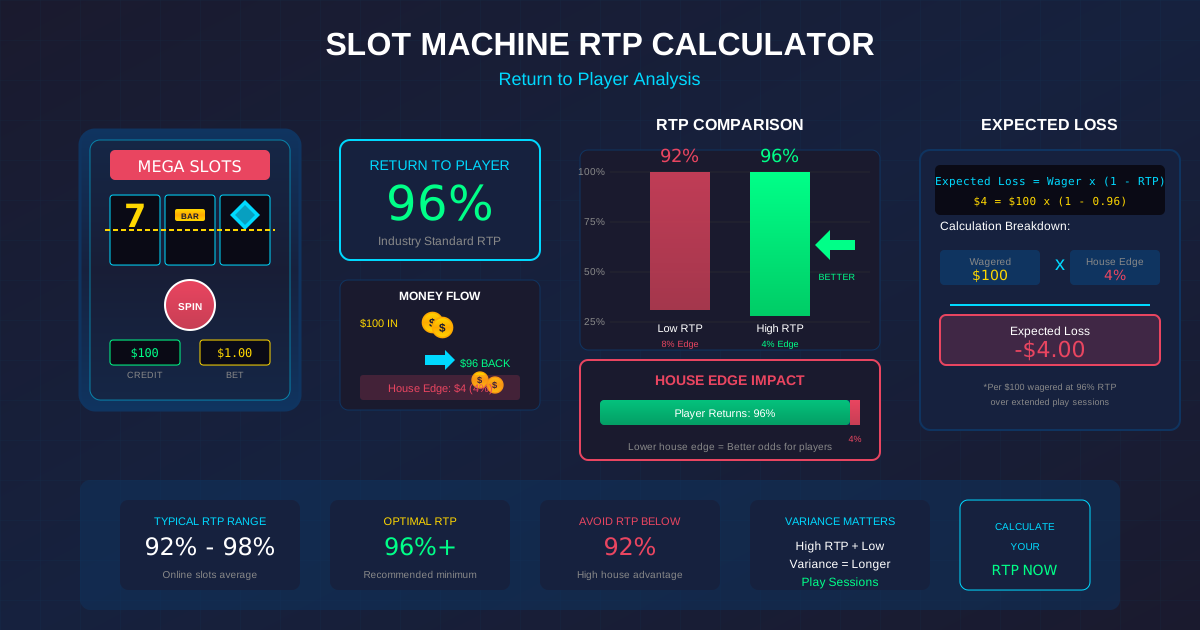
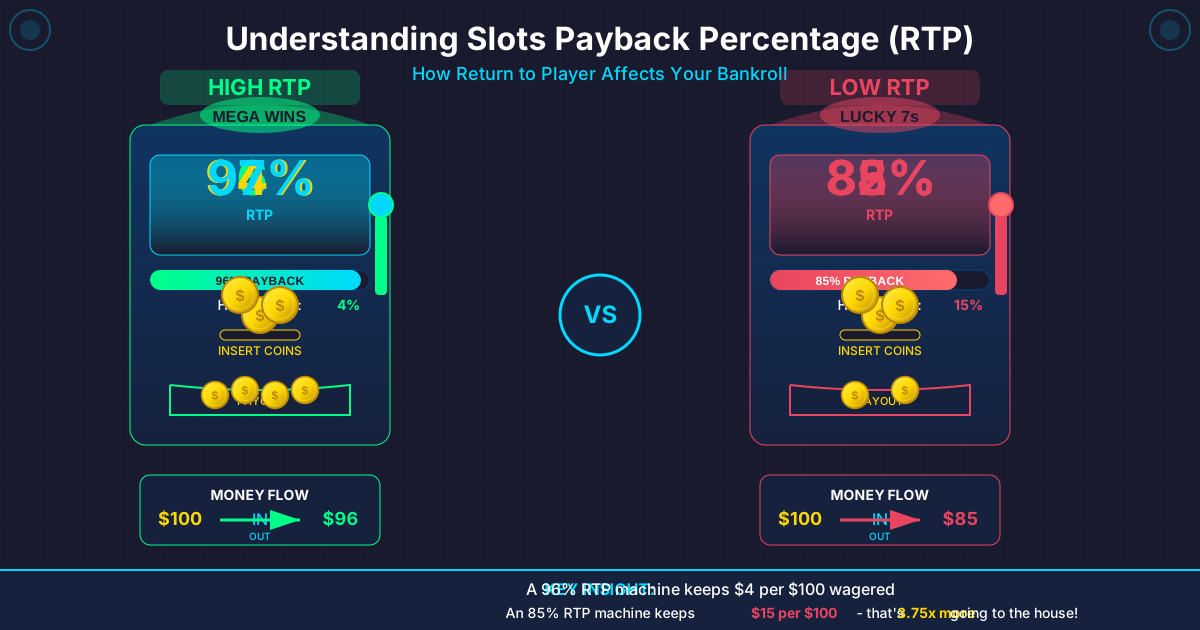
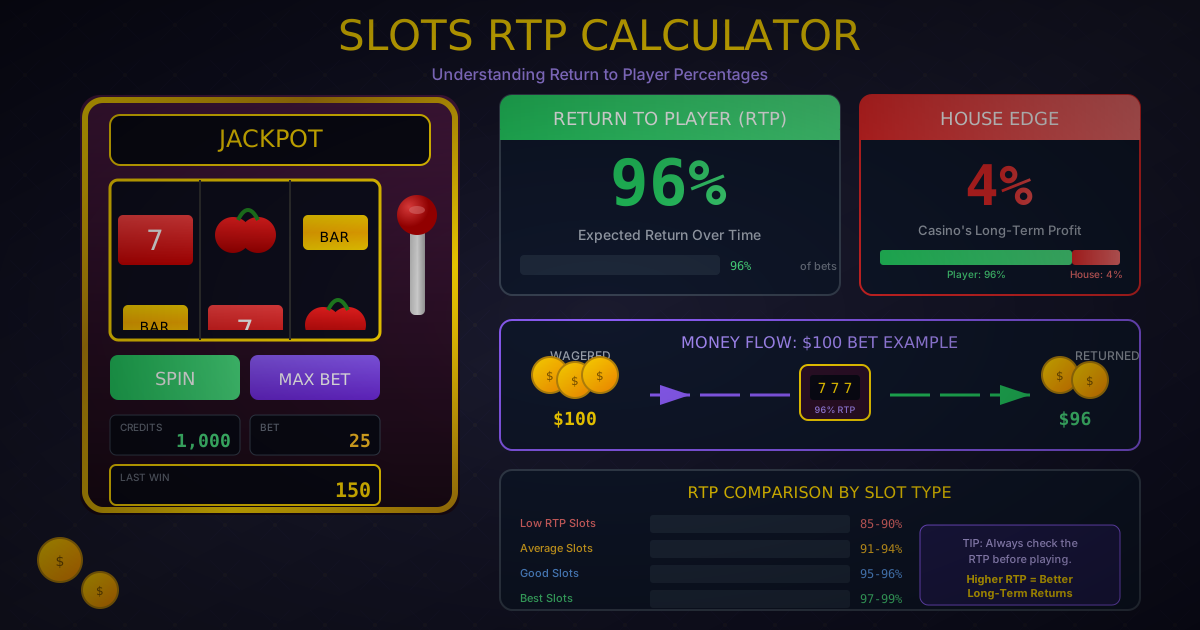
RTP is the single most important number in slot machine gambling. It tells you what percentage of all money wagered the machine is designed to return to players over the long run. An RTP of 95% means that for every $100 wagered, the machine returns $95 and keeps $5 on average.
How to find RTP: Online slots are often required to publish RTP. For land-based machines, you can find aggregate payback percentages by jurisdiction through gaming commission reports. Nevada, for example, publishes monthly slot statistics broken down by denomination and region.
2. Denomination
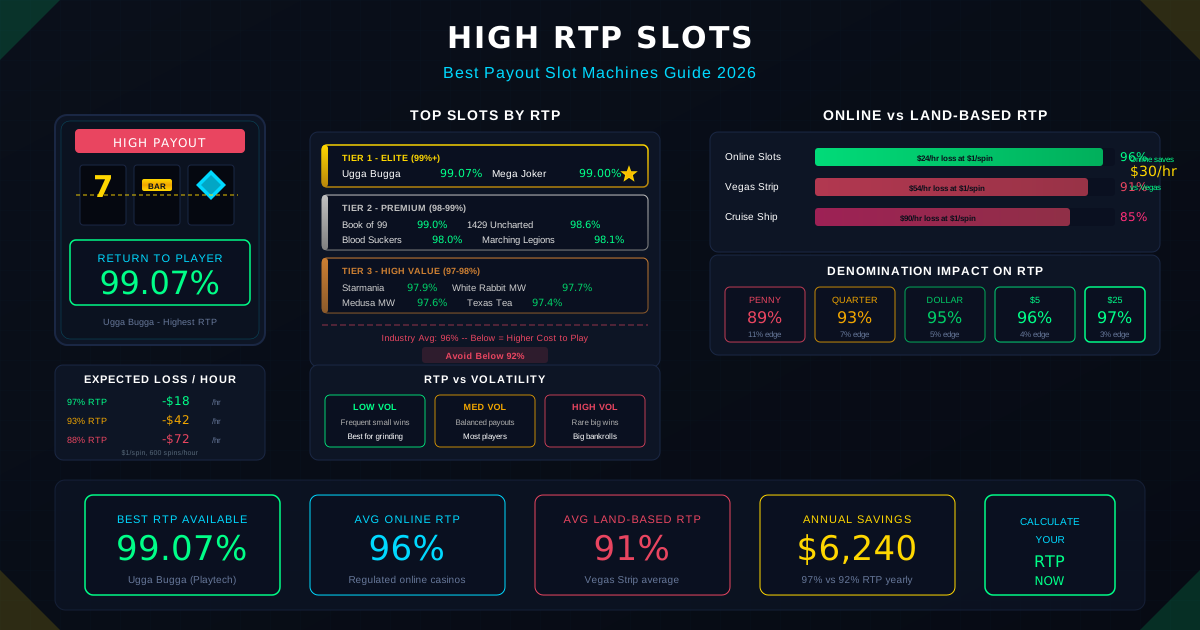
Higher denomination machines generally have higher RTPs. This is the most consistent pattern in slot machine data.
| Denomination | Typical RTP Range | House Edge Range | Annual Nevada Average |
|---|---|---|---|
| Penny ($0.01) | 85-91% | 9-15% | ~88% |
| Nickel ($0.05) | 88-93% | 7-12% | ~92% |
| Quarter ($0.25) | 90-95% | 5-10% | ~92% |
| Dollar ($1.00) | 92-97% | 3-8% | ~94% |
| Five Dollar ($5.00) | 94-98% | 2-6% | ~95% |
| Twenty-Five Dollar ($25.00) | 95-99% | 1-5% | ~96% |
The Critical Caveat: Higher denomination means higher cost per spin. A penny slot with an 88% RTP at $0.50 per spin costs you an expected $0.06 per spin. A dollar slot with a 94% RTP at $3.00 per spin costs you an expected $0.18 per spin. The percentage is better but the absolute dollar loss per spin is higher.
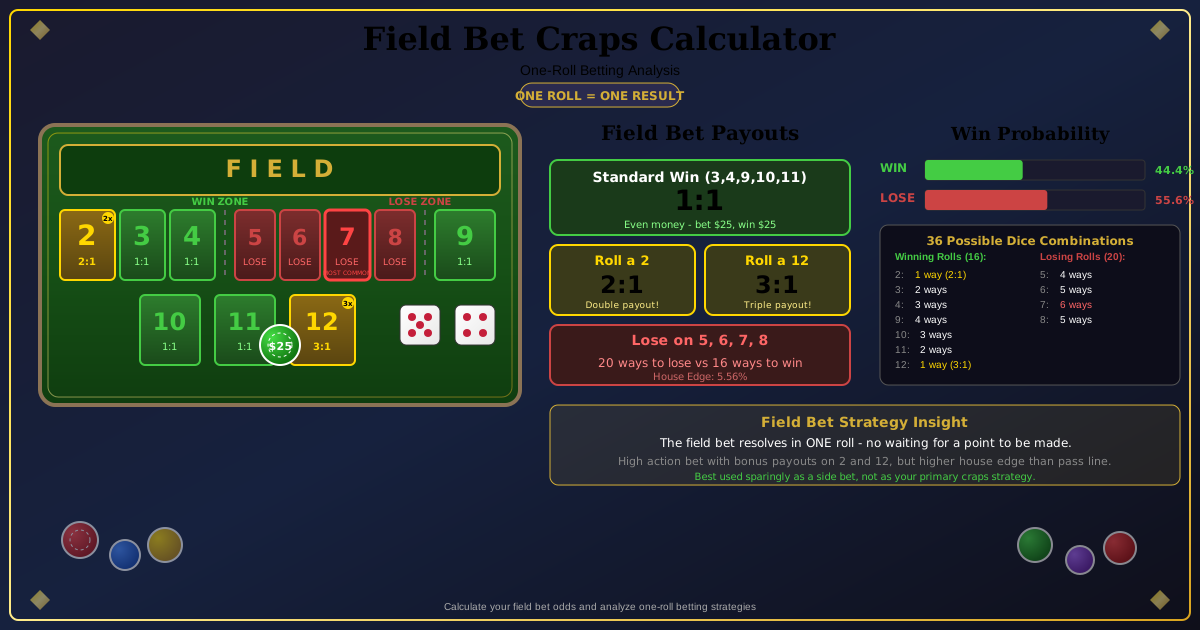
Compare house edges across all casino games with our Blackjack House Edge Calculator, Roulette House Edge Calculator, and Craps House Edge Calculator.
3. Volatility (Variance)
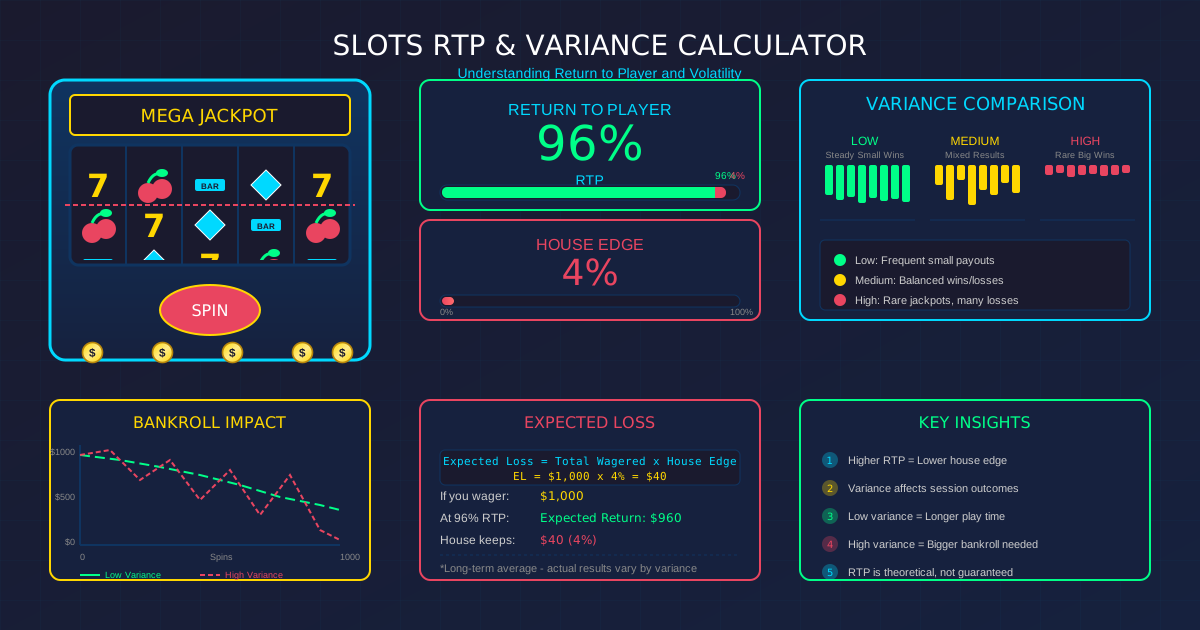
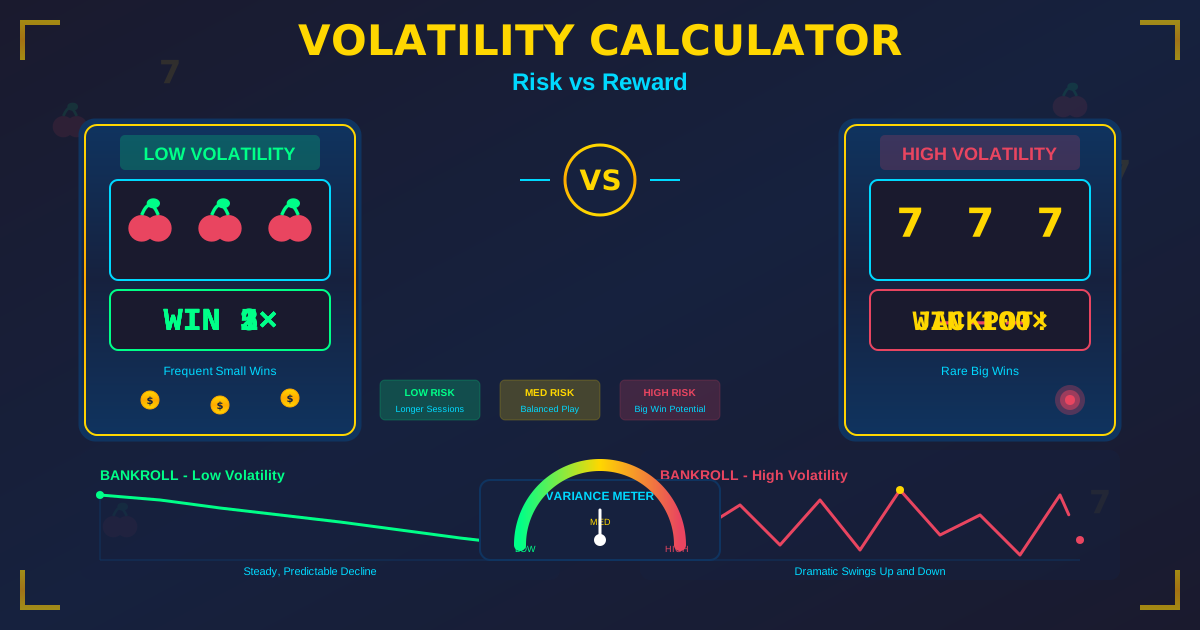
Volatility describes how the RTP is distributed across individual spins. Two machines can have identical 95% RTPs but radically different player experiences:
| Volatility Level | Win Frequency | Average Win Size | Session Variance | Best For |
|---|---|---|---|---|
| Low | High (30-40% of spins) | Small (1-5x bet) | Low | Long sessions, steady play |
| Medium | Moderate (20-30% of spins) | Medium (5-20x bet) | Medium | Balanced experience |
| High | Low (10-20% of spins) | Large (20-100x+ bet) | High | Big-win seekers, larger bankrolls |
High-volatility machines can eat through a bankroll very quickly during dry spells but also produce the large wins that players find exciting. Low-volatility machines provide more consistent, smaller wins that extend playing time.
4. Payline Structure and Total Bet
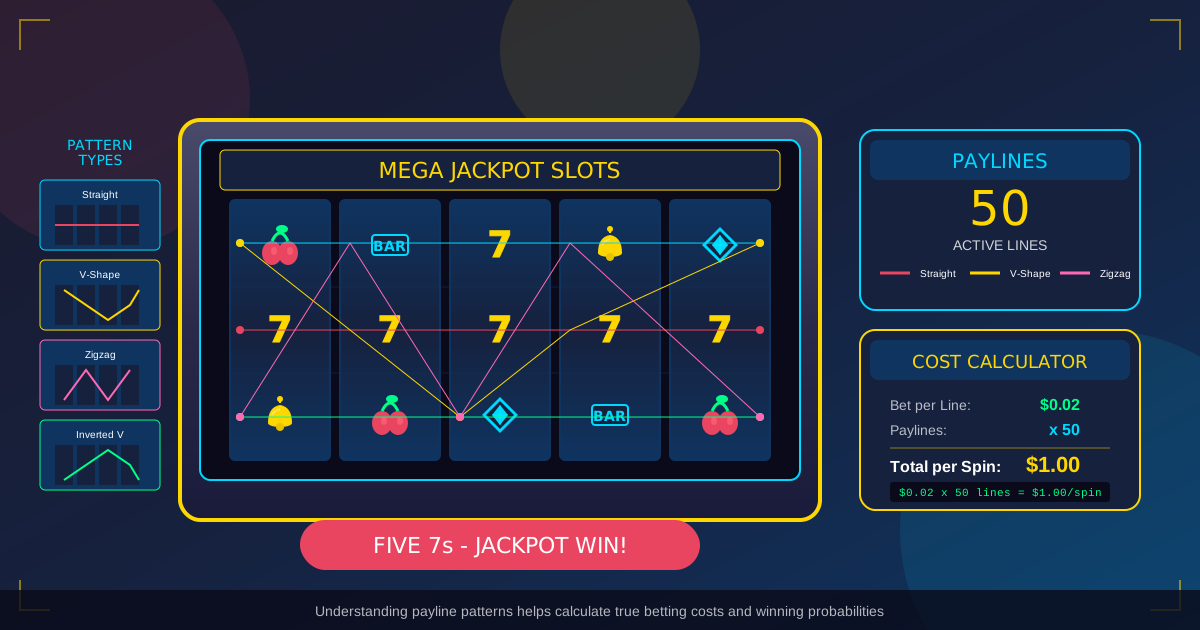
Modern video slots often have 20, 50, or even 243+ "ways to win." The total cost per spin is the denomination multiplied by the number of active paylines or ways. A "penny" slot with 50 lines at 1 cent each costs $0.50 per spin, which is actually a 50-cent machine in practical terms.
Real-World Example: A player thinks they are playing a cheap penny slot. They are betting 1 cent per line on a 50-line machine, so each spin costs $0.50. At 500 spins per hour, they wager $250 per hour. With a 10% house edge, their expected loss is $25 per hour. That "penny slot" is costing them more per hour than a $1 traditional reel machine at 200 spins per hour ($200 wagered at a 5% house edge = $10 per hour expected loss).
5. Bonus Feature Frequency and Value
A significant portion of a modern slot machine's total RTP is often locked inside bonus features (free spins, pick-em bonuses, wheel spins). If the base game has a low hit frequency but a generous bonus round, a large share of total returns come from infrequent bonus triggers. This increases effective volatility and means short sessions may return less than the stated RTP.
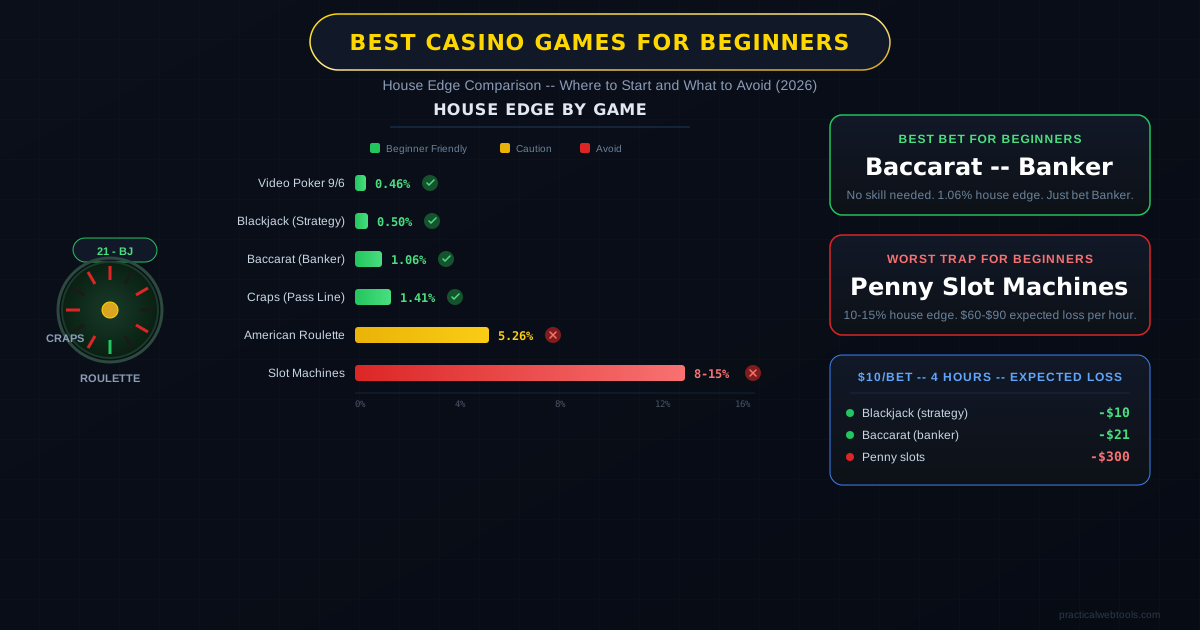
6. Game Selection: Slots vs. Other Casino Games
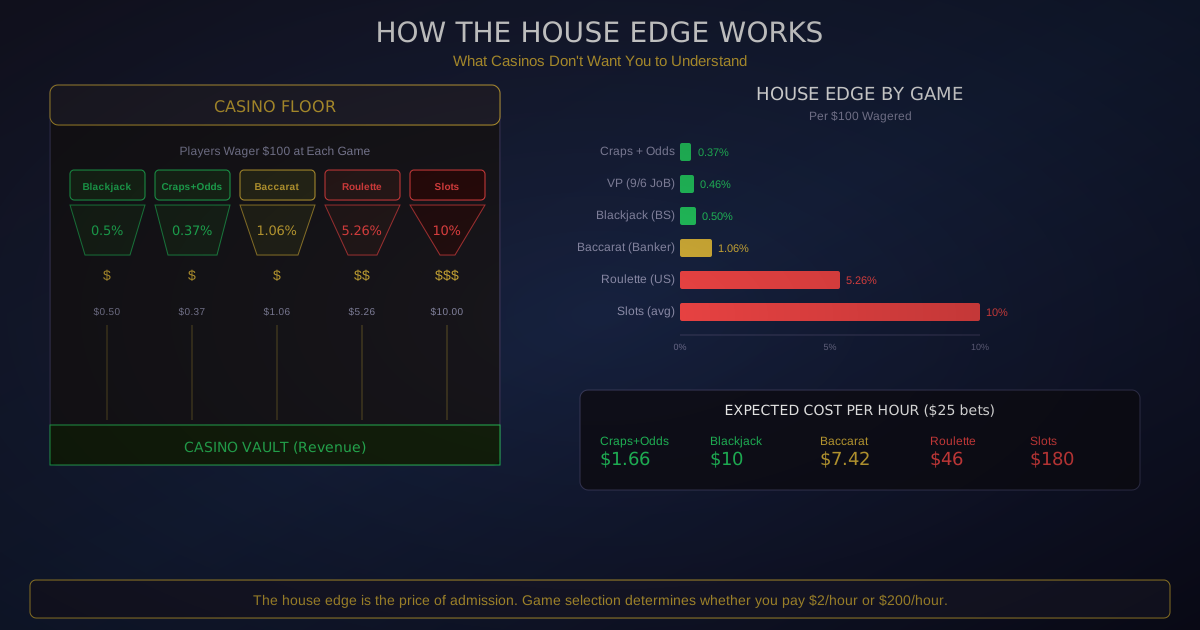
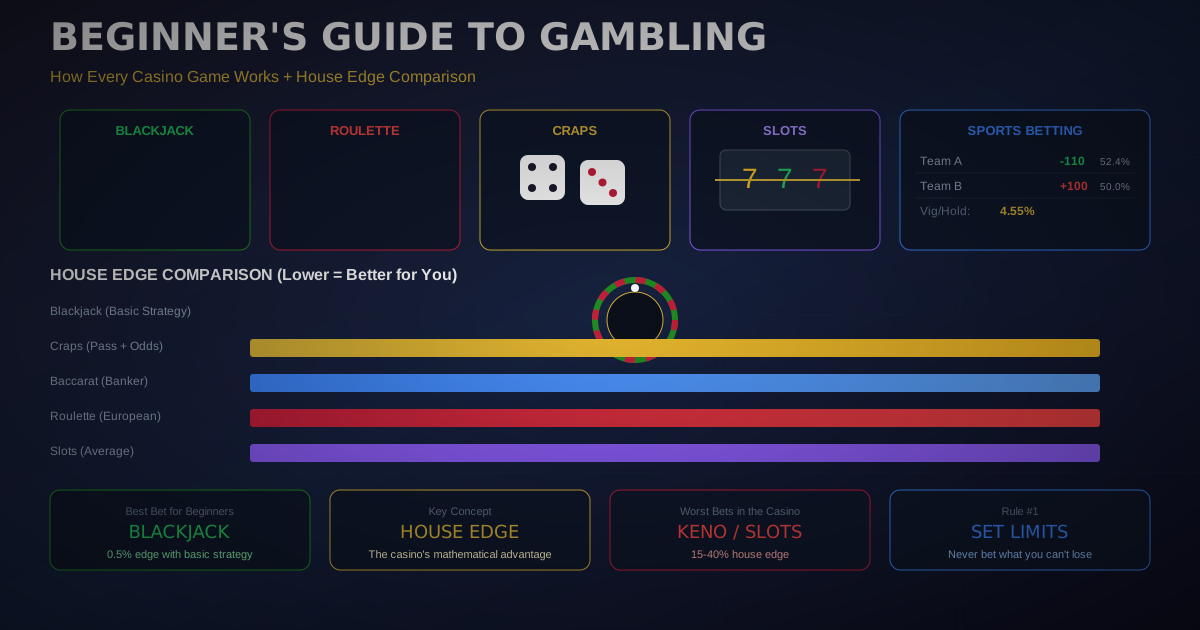
This is the factor most slot players overlook entirely. Slot machines have some of the highest house edges on the casino floor.
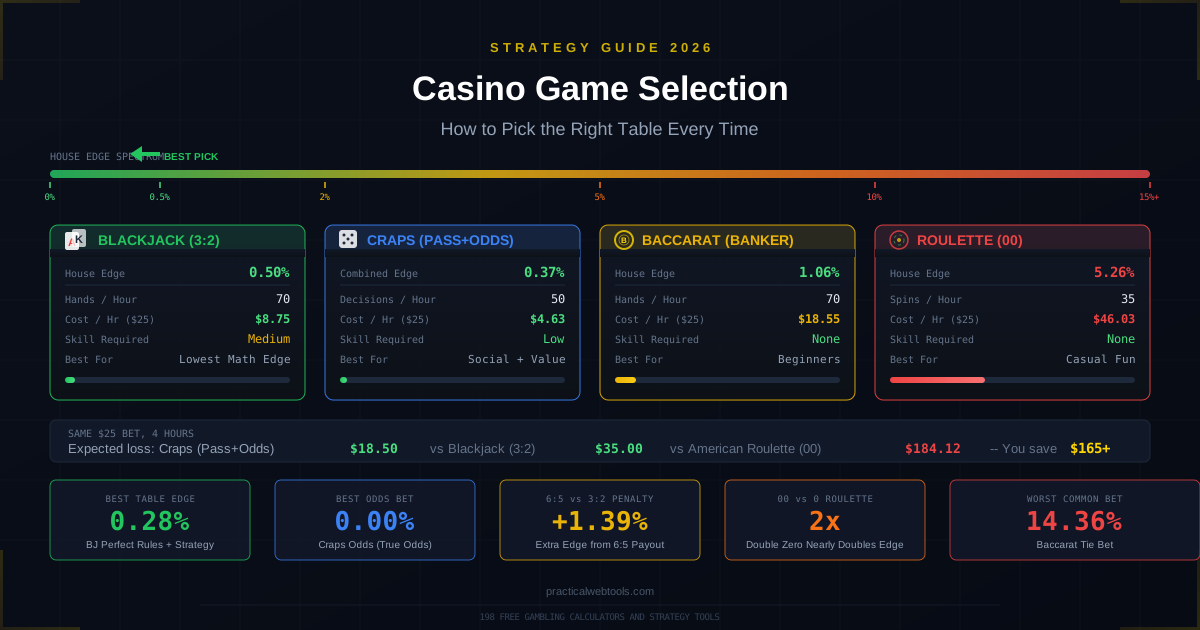
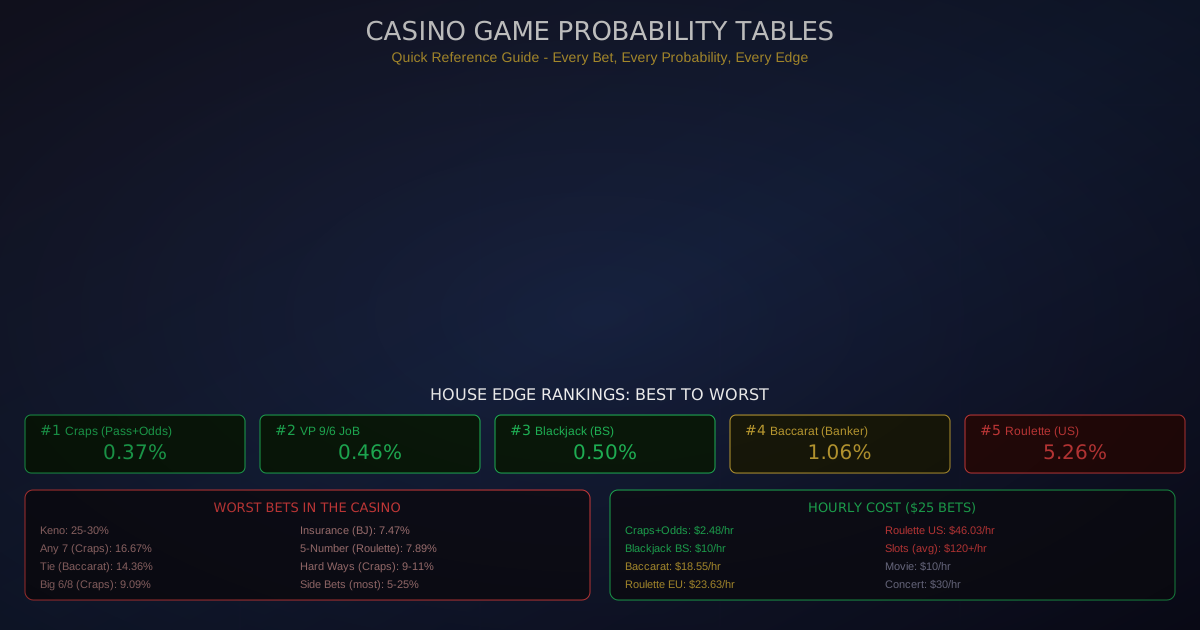
| Game | Typical House Edge | Skill Required | Speed of Play |
|---|---|---|---|
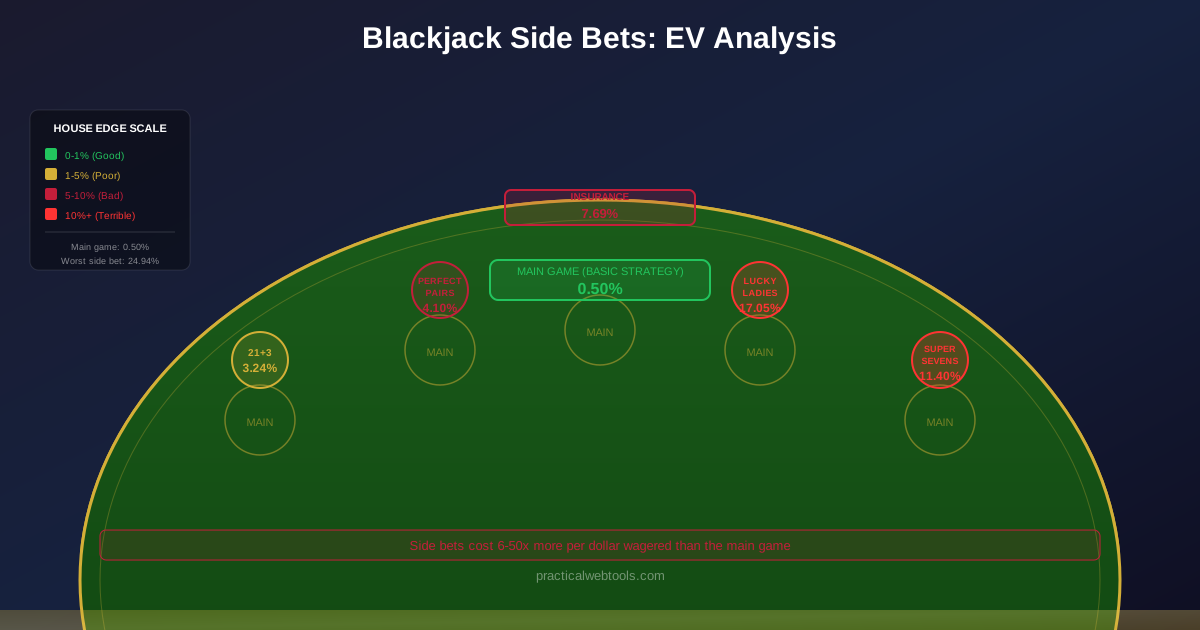
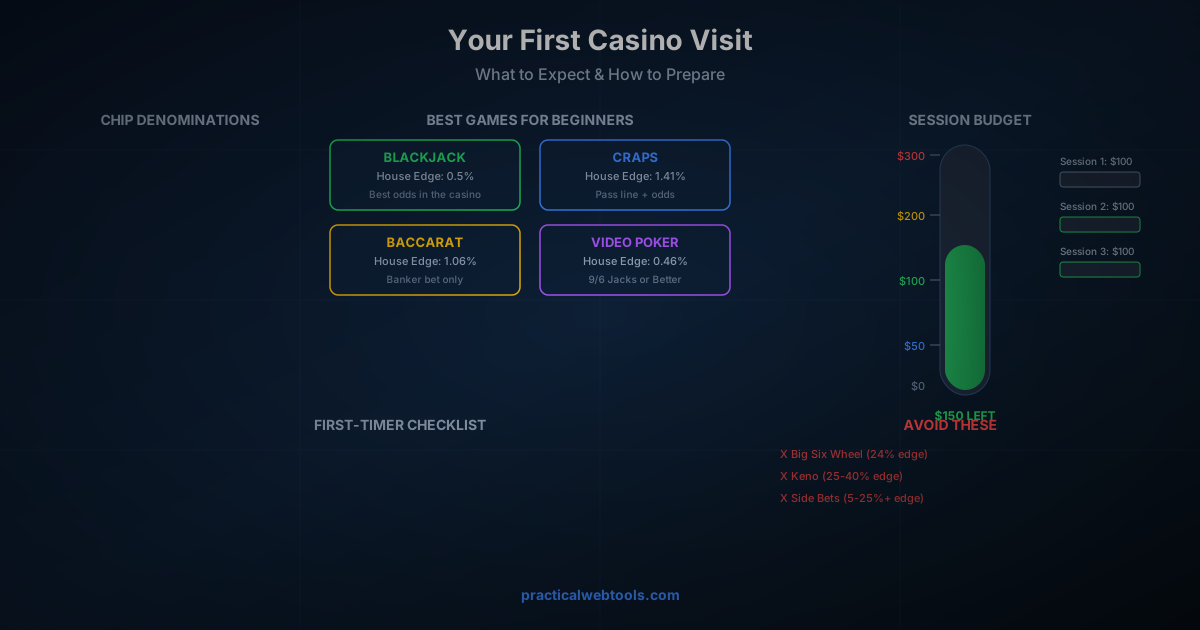
| Blackjack (Basic Strategy) | 0.5% | Yes | 60-80 hands/hour |
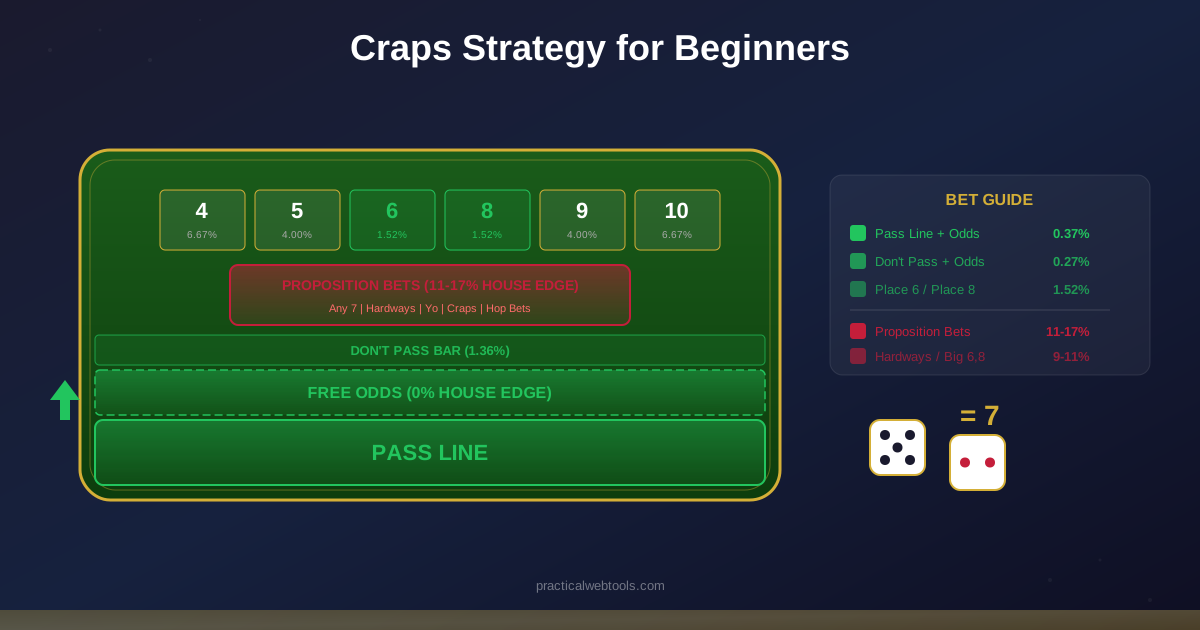
| Craps (Pass Line + Odds) | 0.8% | Minimal | 30-40 rolls/hour |
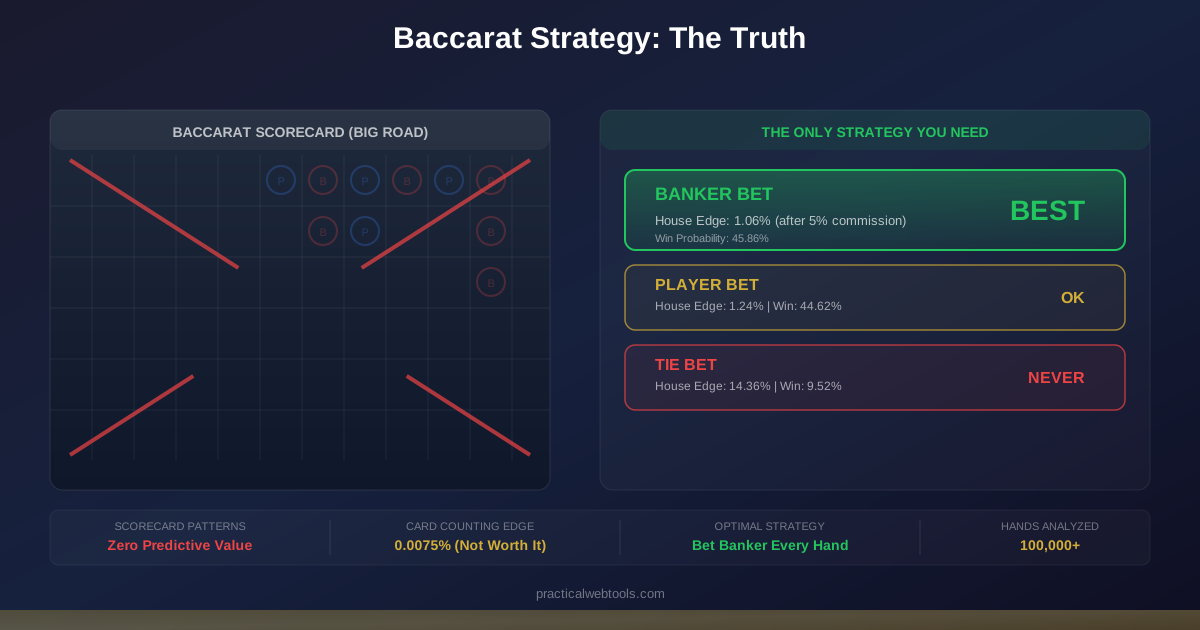
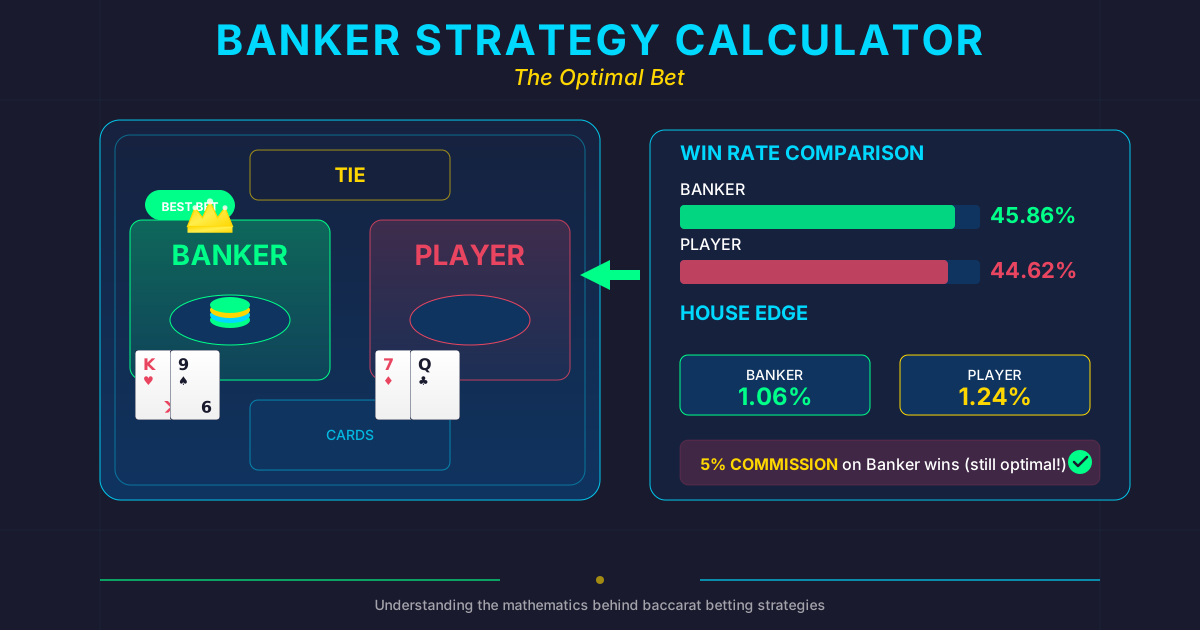
| Baccarat (Banker Bet) | 1.06% | None | 40-60 hands/hour |
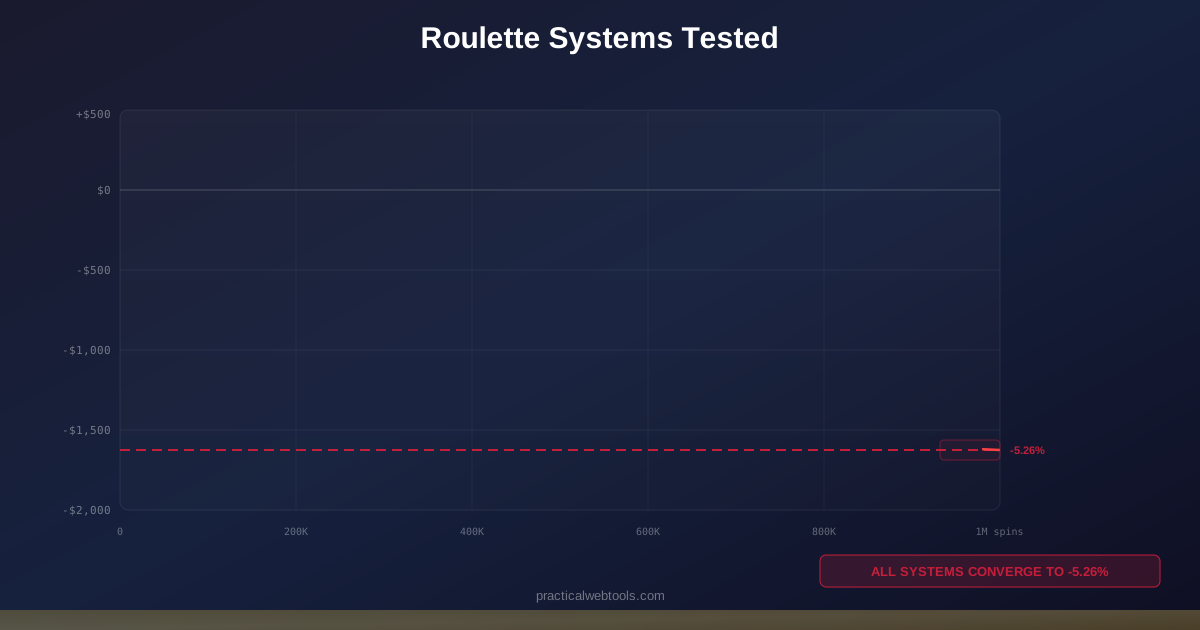
| Roulette (European/Single Zero) | 2.7% | None | 30-40 spins/hour |
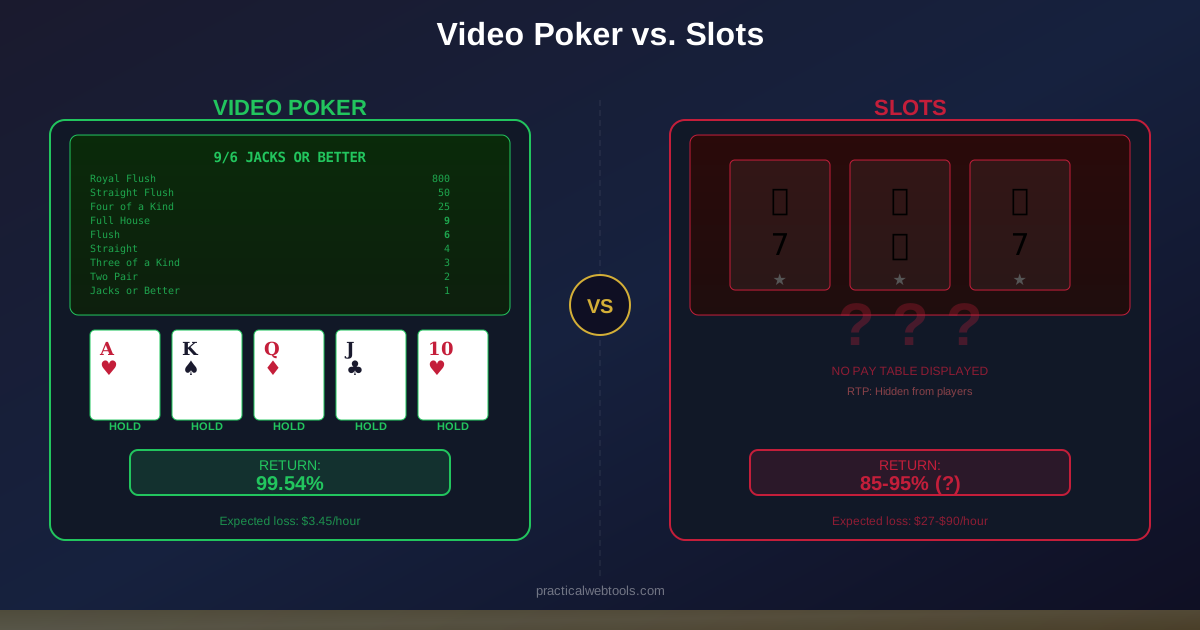
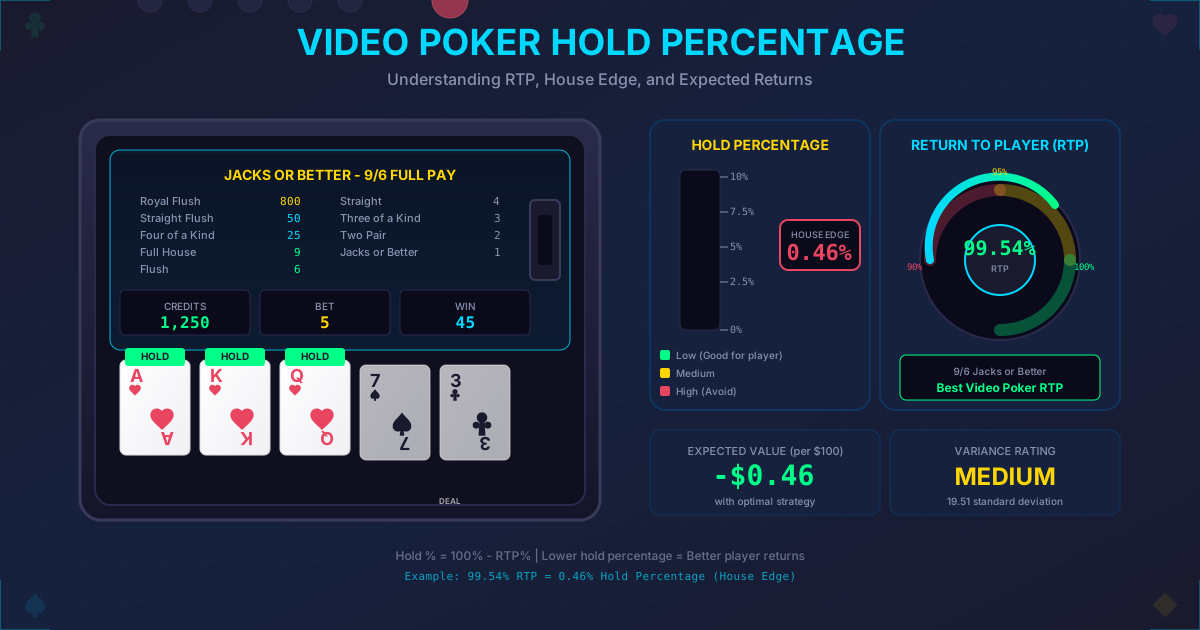
| Video Poker (Full-Pay Jacks or Better) | 0.46% | Yes | 400-600 hands/hour |
| Penny Slots | 8-15% | None | 500-700 spins/hour |
| Dollar Slots | 3-8% | None | 300-500 spins/hour |
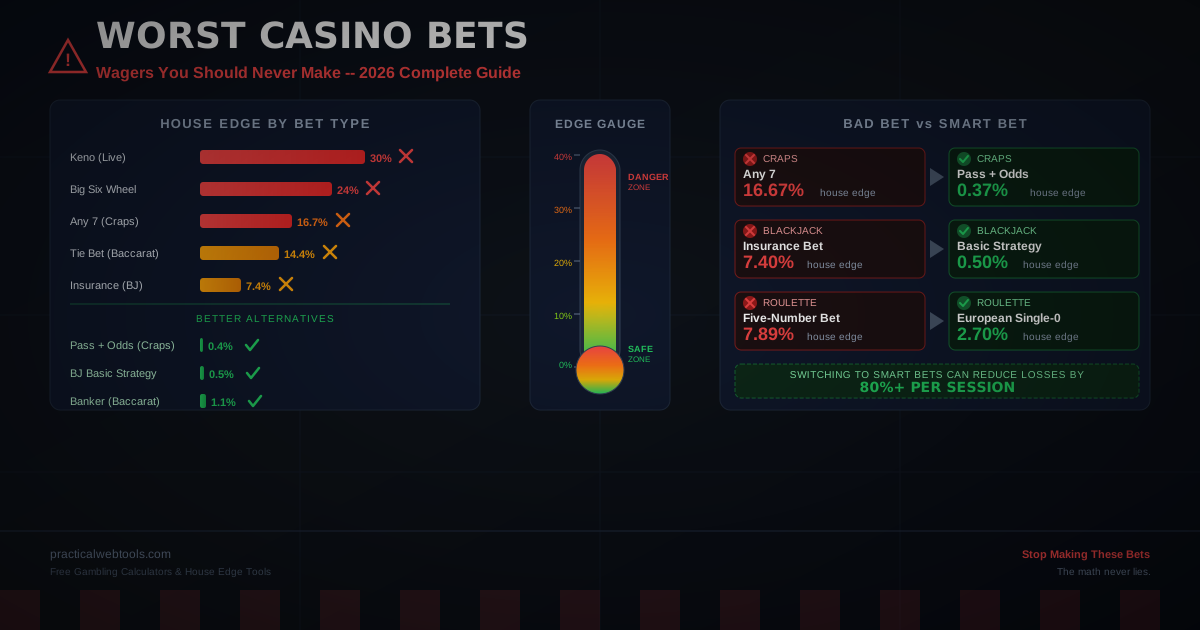
If your goal is to minimize the mathematical cost of casino entertainment, slots are among the most expensive options. Video poker, by contrast, can offer house edges below 0.5% with optimal strategy.
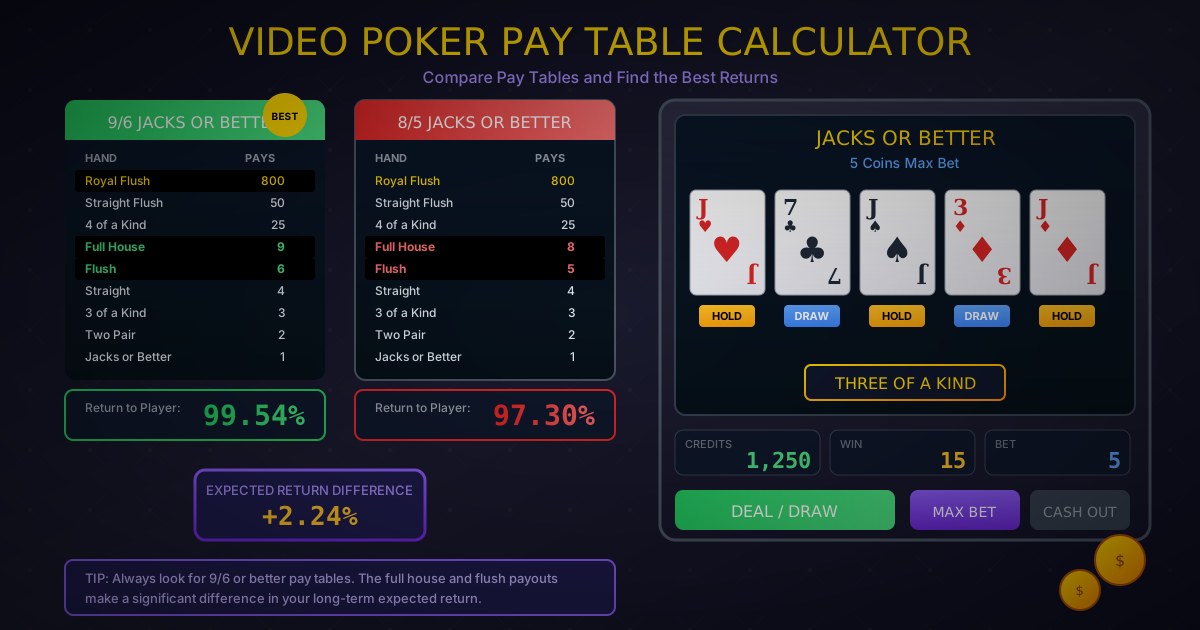
Analyze video poker pay tables and find the best-paying machines with our Video Poker Odds Calculator and Video Poker EV Calculator.
The Real Cost of Slot Machine Myths: Five Scenarios
To illustrate how myths translate into real money, here are five scenarios showing what misinformation actually costs:
Scenario 1: The "Due Machine" Chaser
A player loses $200 on a machine and believes it is "due." Instead of walking away, they add another $200 to their session. The machine's 10% house edge does not change because of past losses. Expected additional loss: $20. Total session loss increases from $200 to a potential $420 ($200 lost + $200 additional risk with $20 expected additional loss).
Scenario 2: The Card-Phobic Player
A player avoids using their loyalty card for 5 years, wagering an average of $40,000 per year through slot machines. At a 0.25% comp rate, they forfeit $100 per year in comps, or $500 over five years. At a 0.5% rate available at many properties, that figure rises to $1,000.
Scenario 3: The "Loose Machine" Hunter
A player spends 30 minutes per casino visit wandering the floor looking for "hot" machines instead of playing. Over 100 casino visits per year, that is 50 hours of unpaid detective work. The machines they eventually sit at have the same RTP as the machines they walked past.
Scenario 4: The Max Bet Misunderstanding
A player with a $500 bankroll bets max ($5 per spin) on a dollar progressive because they heard "always bet max." At 400 spins per hour and a 12% house edge, their expected loss rate is $240 per hour. Their bankroll lasts approximately 2 hours. Had they played a $1 per spin, non-progressive dollar slot at 6% house edge, their expected loss rate would be $2.40 per hour, and their bankroll would last significantly longer.
Scenario 5: The Penny Slot Illusion
A player thinks they are being conservative by playing penny slots. They bet 50 lines at $0.01, costing $0.50 per spin. At 600 spins per hour on a machine with an 88% RTP (12% house edge), they wager $300 per hour and lose an expected $36 per hour. A player on a $1 traditional reel machine at 250 spins per hour and 94% RTP (6% house edge) wagers $250 per hour and loses an expected $15 per hour. The "penny" player loses 2.4 times more per hour than the "dollar" player.
Frequently Asked Questions
Do slot machines pay more at certain times of day? No. The RNG operates continuously and produces identical probability distributions at 3 AM and 3 PM. Time of day has zero effect on slot machine outcomes. Casinos cannot and do not adjust payback percentages based on the clock.
Can casinos change slot machine payouts remotely? In most jurisdictions, no. Payback changes require physical chip replacement or, in server-based systems, regulatory notification and mandatory waiting periods. Casinos cannot change payouts mid-session or in response to an individual player's results. Gaming commissions like the Nevada Gaming Control Board enforce strict oversight on all payback modifications.
Does my player's card affect the machine's payouts? Absolutely not. The player tracking system and the RNG are completely separate systems. Your loyalty card tracks your play for comp purposes only. It does not communicate with or influence the game's outcome engine. Not using your card forfeits valuable comps without providing any mathematical benefit.
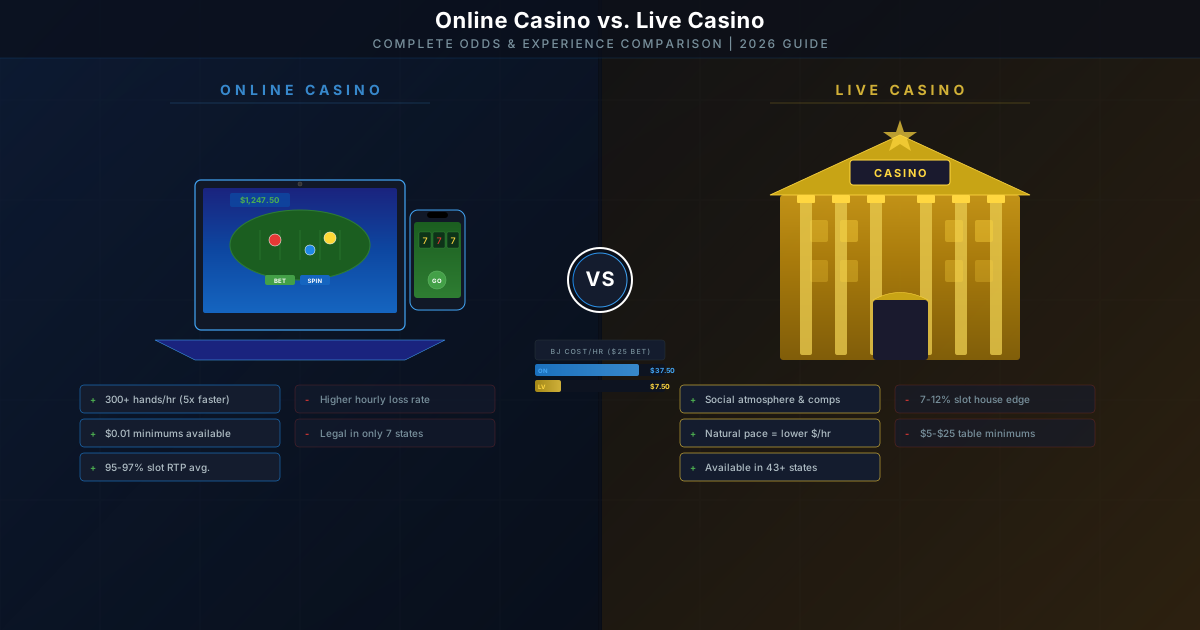
Are online slots more fair than land-based slots? Online slots typically offer higher RTPs (95-98%) compared to land-based machines (85-95%) because online casinos have lower overhead costs. Both are fair in the sense that certified RNGs determine outcomes, but the mathematical return is generally more favorable online. All regulated online slots must be tested by independent labs such as eCOGRA, GLI, or BMM Testlabs.
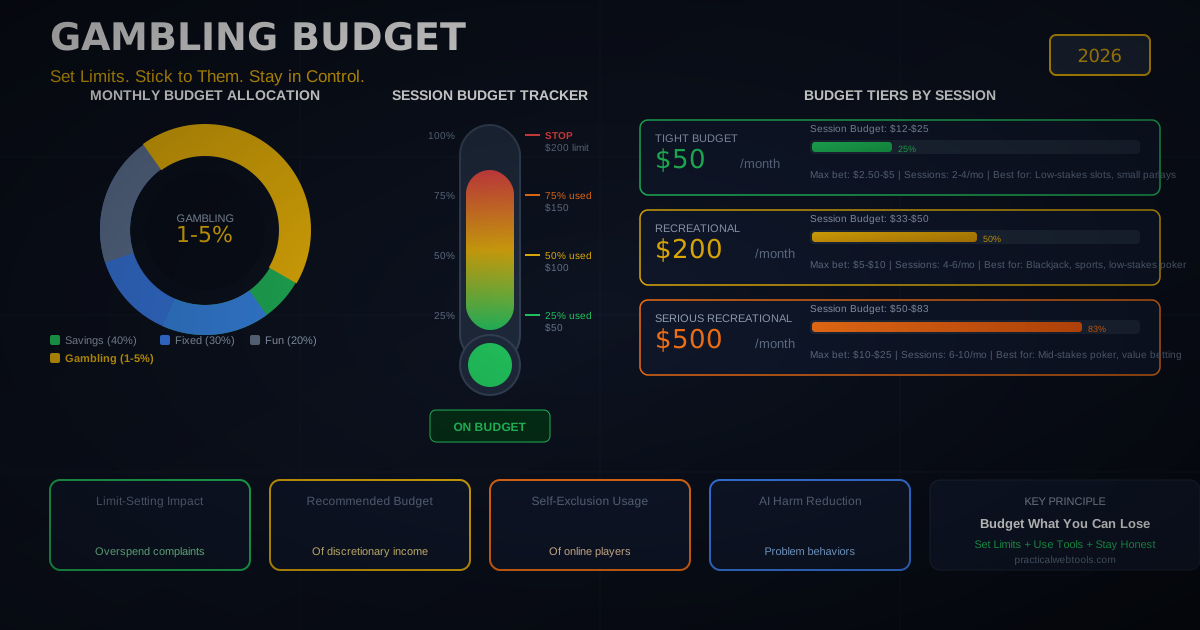
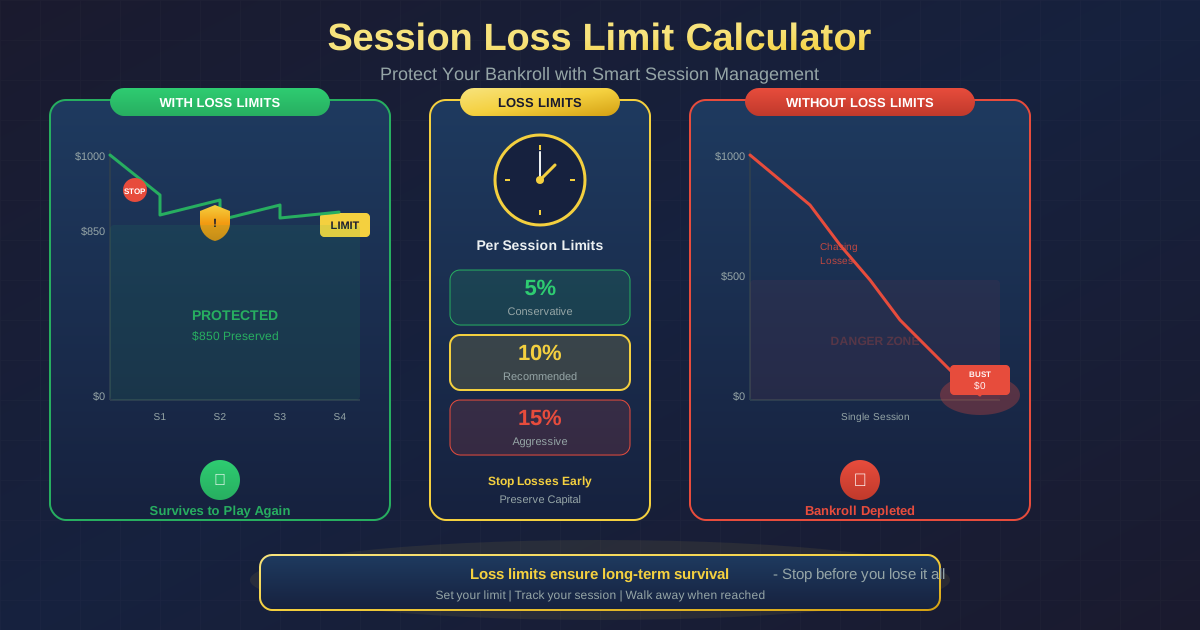
What is the best slot machine strategy? The only legitimate strategy is bankroll management combined with game selection. Choose higher denomination machines (if your bankroll supports it) for better RTP. Set a loss limit before you start. Take advantage of loyalty programs. Understand that slots are entertainment with a mathematical cost, not an investment. If you want to minimize the house edge, consider video poker instead, which can offer edges below 0.5% with optimal play.
Do progressive slots have worse odds than regular slots? Yes. Progressive machines divert a portion of every bet (typically 1-3%) into the jackpot pool. This means the base game RTP is lower than a comparable non-progressive machine. Unless you hit the progressive, your effective return is reduced. Only play progressives if you are betting the maximum required to qualify for the jackpot; otherwise, you are contributing to a prize you cannot win.
How are slot machines tested for fairness? Every slot machine must be certified by an independent testing laboratory (such as GLI, BMM Testlabs, or eCOGRA) before it can be placed on a casino floor. Testing involves verifying the RNG's randomness, confirming the stated RTP through millions of simulated spins, checking software for vulnerabilities, and ensuring compliance with jurisdiction-specific regulations. Ongoing audits and inspections ensure continued compliance after deployment.
Is there any way to tell if a slot machine is about to hit? No. Because each spin is determined by an RNG producing results at the instant you press the button, there are no patterns, tells, or indicators that predict upcoming results. Any system, strategy, or device that claims to predict slot outcomes is fraudulent.
Tools for Understanding Casino Math
Understanding slot machine odds requires understanding the broader math of casino gambling. These free calculators can help you analyze any gambling scenario:
Core Calculators:
- Expected Value Calculator -- Calculate the mathematical value of any bet, including slot sessions
- Blackjack House Edge Calculator -- Compare slot house edges to blackjack
- Roulette House Edge Calculator -- See how roulette compares to slot odds
- Craps House Edge Calculator -- Understand craps odds vs. slot machine odds
Video Poker (Lower Edge Alternative to Slots):
- Video Poker Odds Calculator -- Analyze any video poker pay table
- Video Poker EV Calculator -- Find the expected value of any video poker game
Conclusion
Every myth on this list has the same root cause: the human brain is wired to find patterns in randomness. We see streaks and assume causation. We experience losses and invent explanations. We want control over outcomes that are genuinely, certifiably, mathematically random.
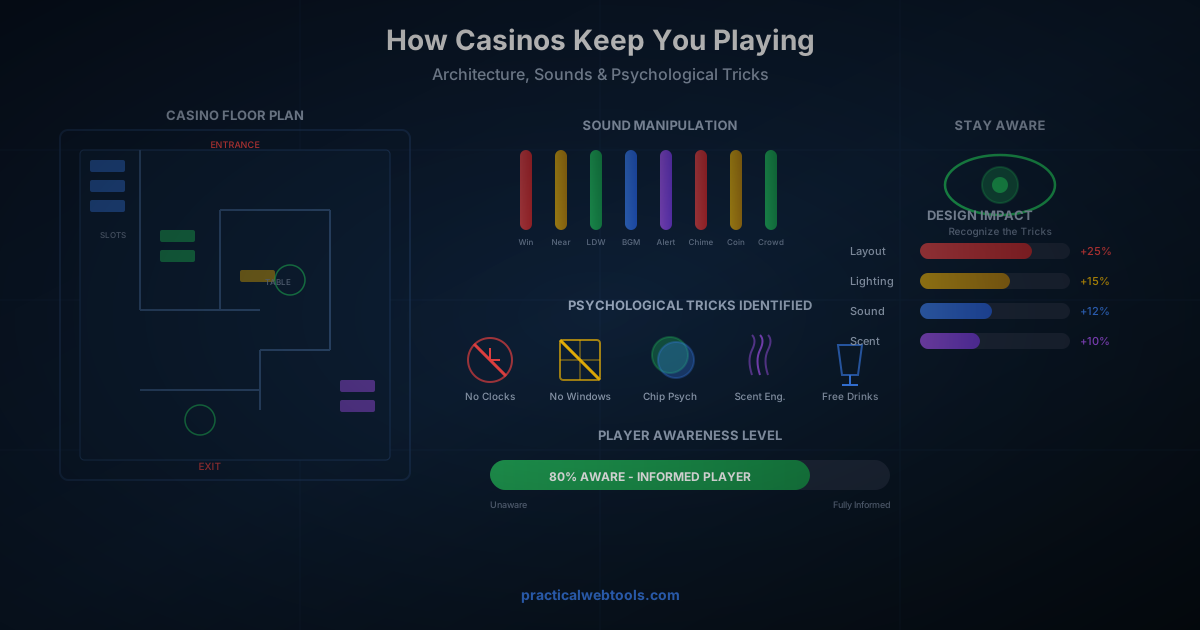
Slot machines are designed to be entertaining. The lights, sounds, near-misses, and bonus features all create engagement. There is nothing wrong with enjoying that entertainment, as long as you understand what you are paying for it. The house edge is the price of admission. Everything else, every myth about hot machines, lucky times, rigged cards, and secret strategies, is noise.
The math does not lie. The RNG does not discriminate. And the most powerful thing you can do as a slot player is understand exactly how these machines work so you can enjoy them without being fooled by folklore.
Play with your eyes open, your card inserted, and your limits set. That is the only real slot machine strategy.
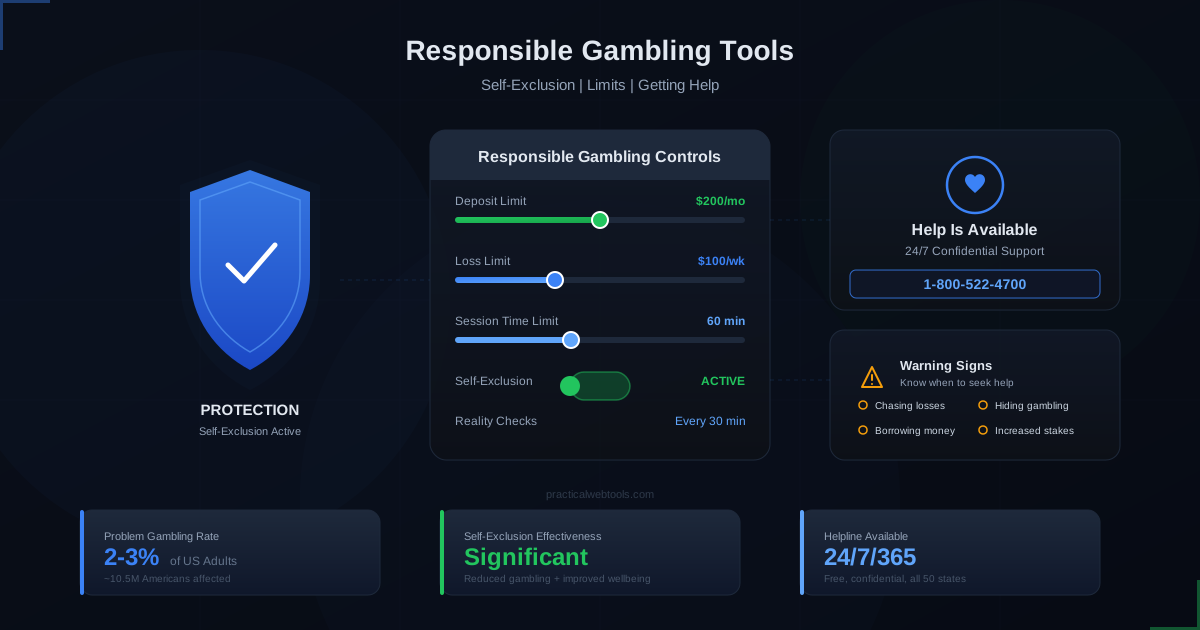
Gambling involves risk. This content is for educational and informational purposes only. Always gamble responsibly, set limits you can afford, and seek help if gambling becomes a problem. Visit the National Council on Problem Gambling or call 1-800-522-4700 for support.