MTT Poker Strategy: A Stage-by-Stage Guide to Tournament Success (2026)
Multi-table tournaments are where poker legends are made. Every player who has ever shipped a Sunday Major, won a WSOP bracelet, or turned a $5 satellite into a six-figure score did it by navigating the same gauntlet: thousands of hands across rising blind levels, shifting stack dynamics, and relentless ICM pressure that punishes a single mistake with elimination. MTTs are the purest test in poker because you cannot reload. Every chip matters, every decision compounds, and the difference between a min-cash and a final table often comes down to three or four pivotal hands played correctly across eight hours of grinding.
The problem most tournament players face is not a lack of talent--it is a lack of stage-specific strategy. They play the same way at 200 big blinds deep in Level 1 as they do with 15 big blinds on the money bubble, and that fundamental error bleeds equity in both directions. A winning MTT player understands that tournament poker is not one game; it is five or six distinct games played in sequence, each with its own optimal approach to hand selection, bet sizing, aggression frequency, and risk tolerance.
This guide breaks every stage apart, from the opening hands to the heads-up battle for first place, and gives you a concrete framework for each one. Whether you are grinding $11 online events or playing $1,000 live tournaments, these principles scale across every buy-in level.
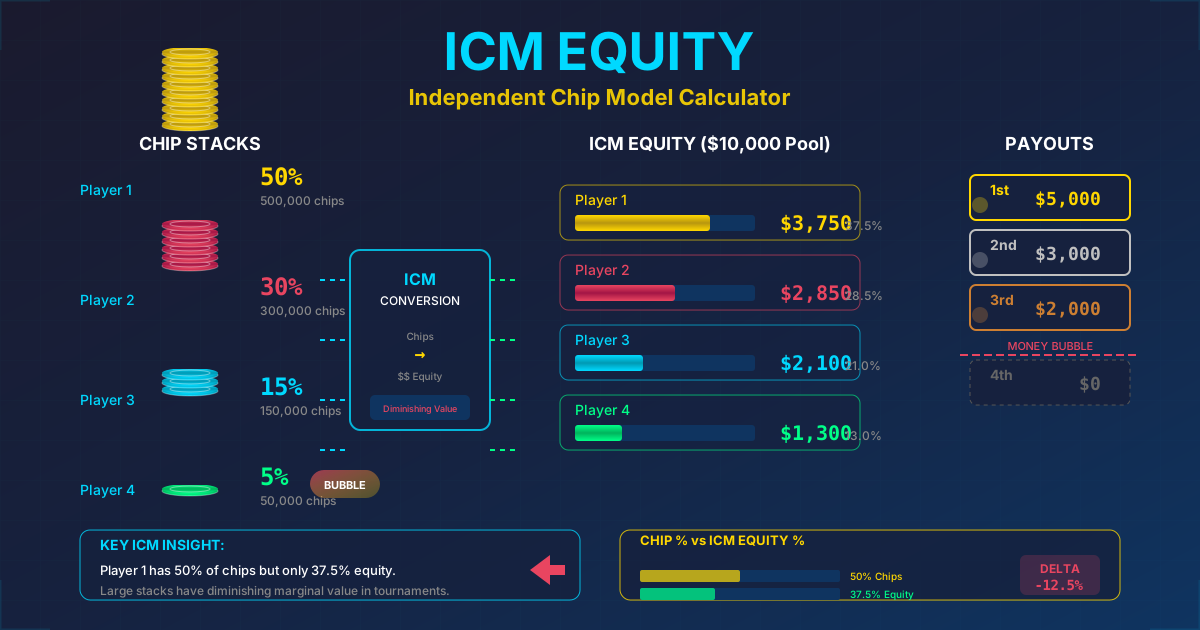
Run your tournament scenarios through our free ICM Calculator to see exactly how chip stacks convert to real dollar equity at any stage of play.
Understanding MTT Structure: Why Stage Matters
Before diving into stage-specific strategy, you need to understand why tournament poker requires fundamentally different approaches at different points. Three structural elements drive this:
- Rising blinds and antes continuously erode your stack relative to the cost of playing a hand
- Payout structures create non-linear incentives where survival near pay jumps can be worth more than accumulating chips
- Changing table dynamics shift as short stacks become desperate and big stacks gain leverage
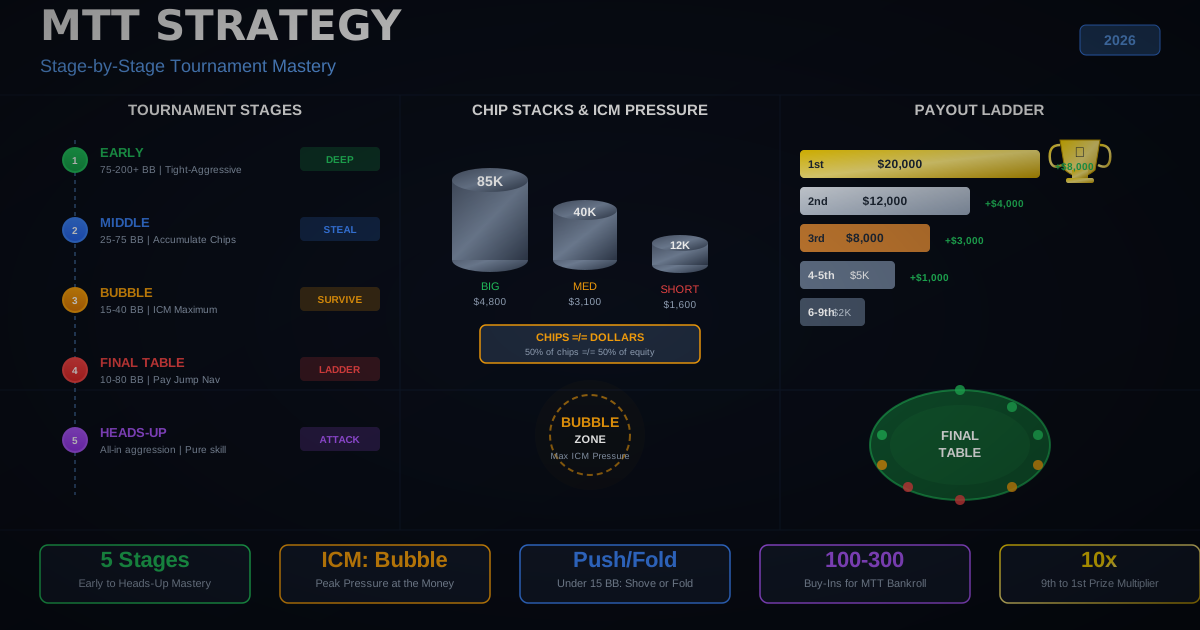
The following table outlines the key characteristics of each tournament stage:
| Tournament Stage | Typical Stack Depth | Primary Objective | Aggression Level | ICM Relevance |
|---|---|---|---|---|
| Early Stage (Levels 1-6) | 75-200+ BB | Selective accumulation | Low-Moderate | None |
| Middle Stage (Levels 7-14) | 25-75 BB | Aggressive accumulation | High | Minimal |
| Late Stage / Bubble | 15-40 BB | Survival + pressure | Situation-dependent | Maximum |
| Post-Bubble | 15-50 BB | Re-aggression | High | Moderate |
| Final Table (9-4 players) | 10-80 BB | Pay jump navigation | Calculated | Very High |
| Heads-Up | Varies | Maximum aggression | Very High | None (winner-take-all dynamic) |
Your strategic adjustments between these stages should be deliberate and pronounced. A player who shifts gears smoothly through each phase has a structural edge over opponents who play a single static style.
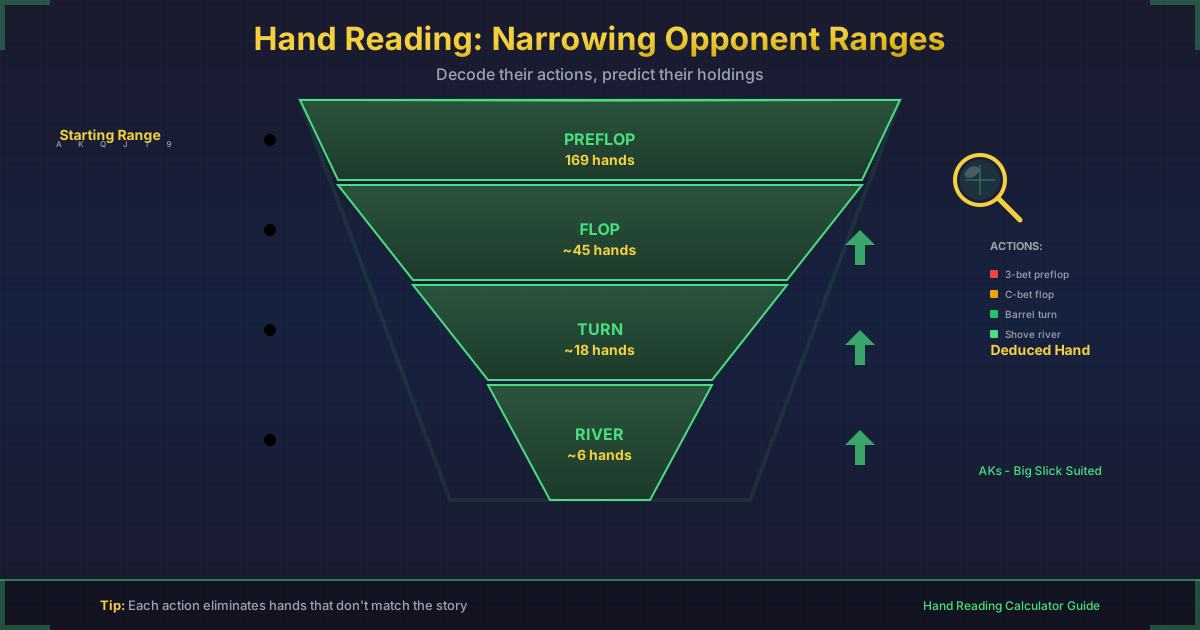
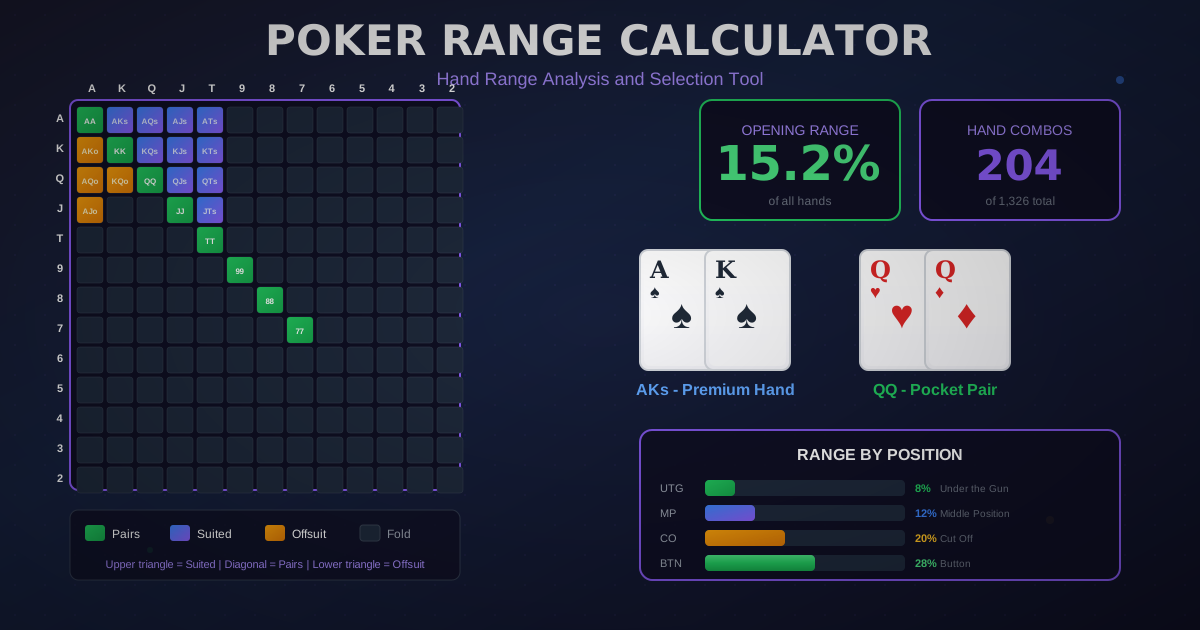
Use our Poker Hand Range Calculator to visualize how your opening ranges should change across different stack depths.
Stage 1: Early Tournament Play (75-200+ Big Blinds)
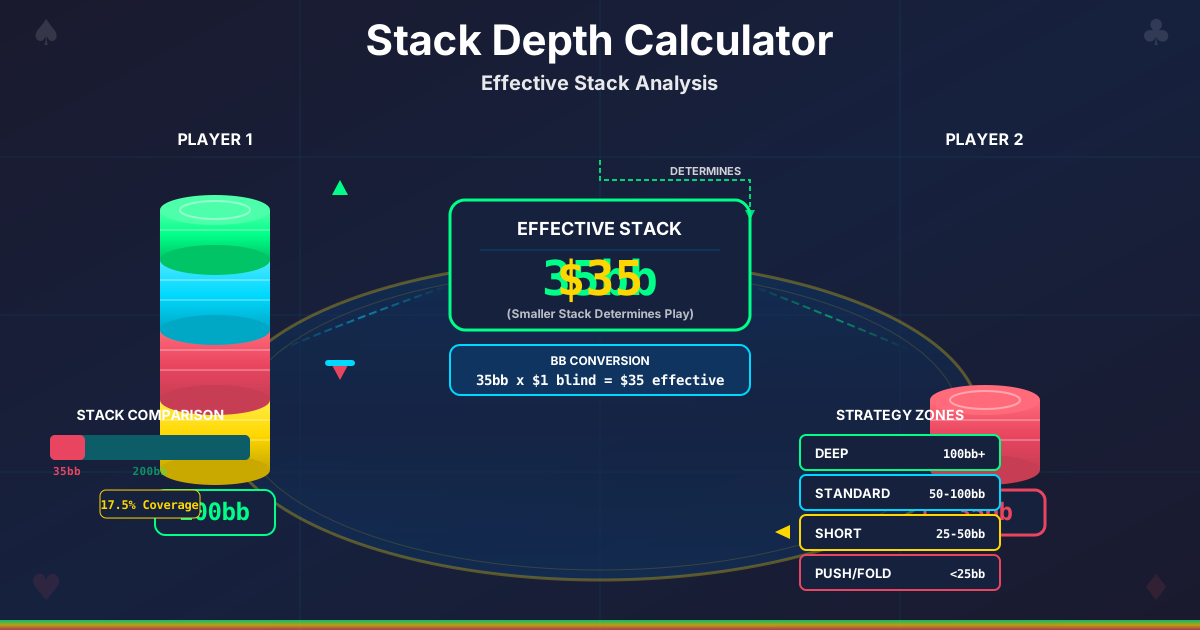
The early stage of an MTT is defined by deep stacks relative to the blinds. With 100-200 big blinds, you have room to play post-flop poker, see cheap flops with speculative hands, and make mistakes without tournament-ending consequences.
The Core Early-Stage Principle
You cannot win the tournament in the early levels, but you can certainly lose it. This is not a cliche--it is a mathematical reality. At a starting stack of 20,000 with blinds at 50/100, your stack represents less than 0.5% of the total chips in a 1,000-player field. Doubling up gives you 1% of the chips. You are still far from contention. But busting means you are done.
The correct early-stage approach is tight-aggressive with an emphasis on positional play and implied odds.
What to Do in the Early Levels
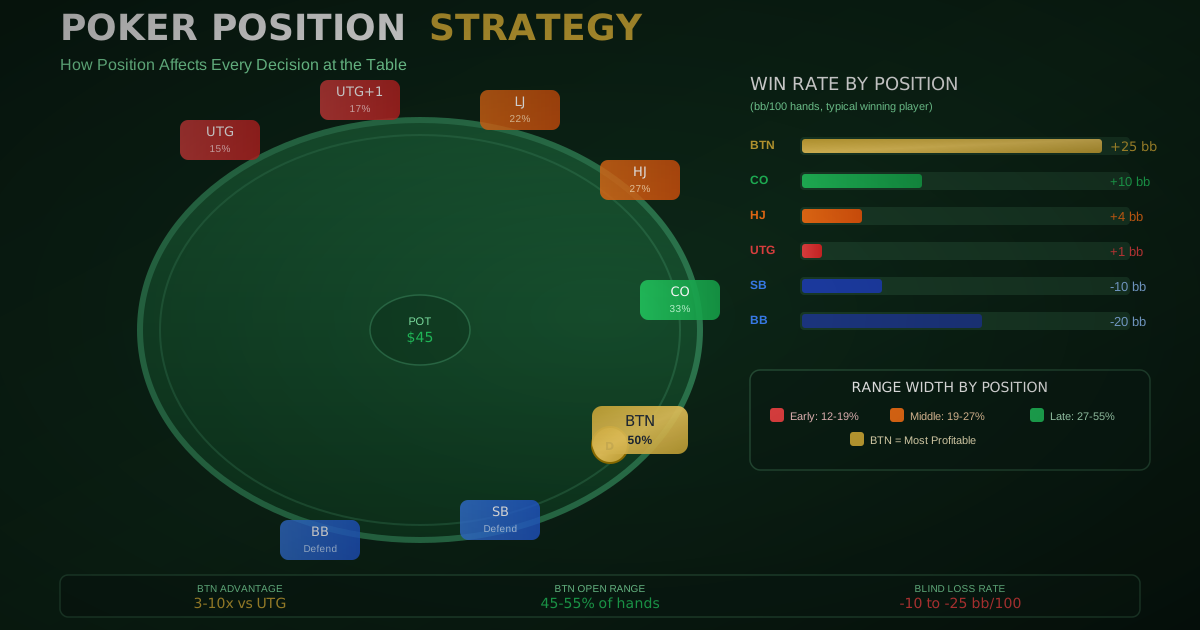
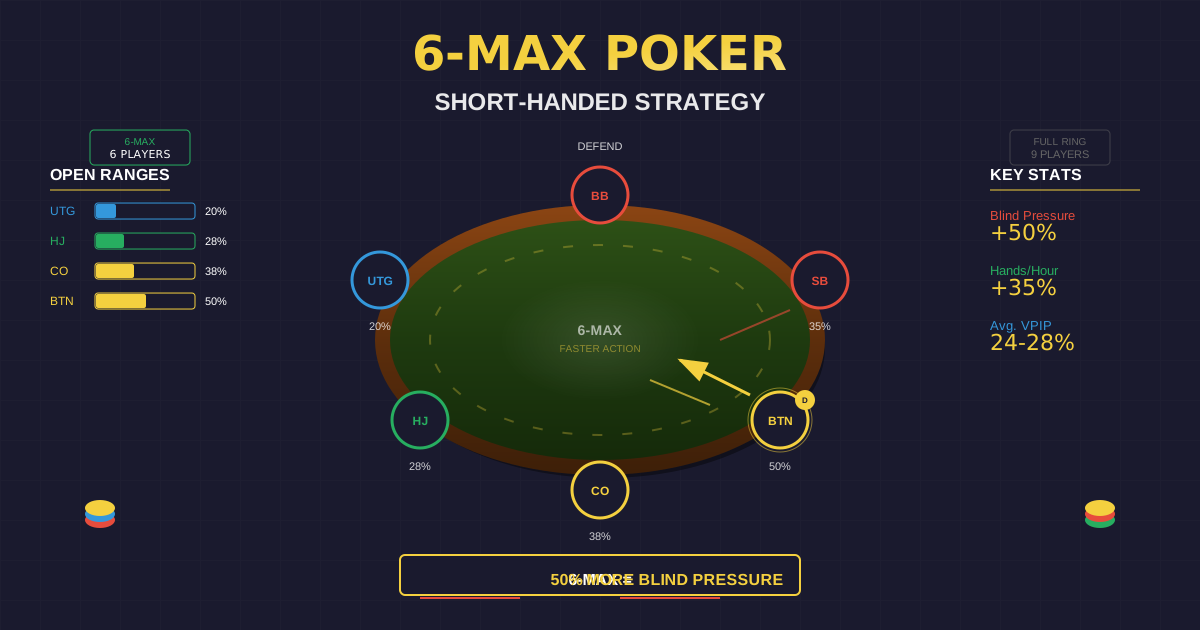
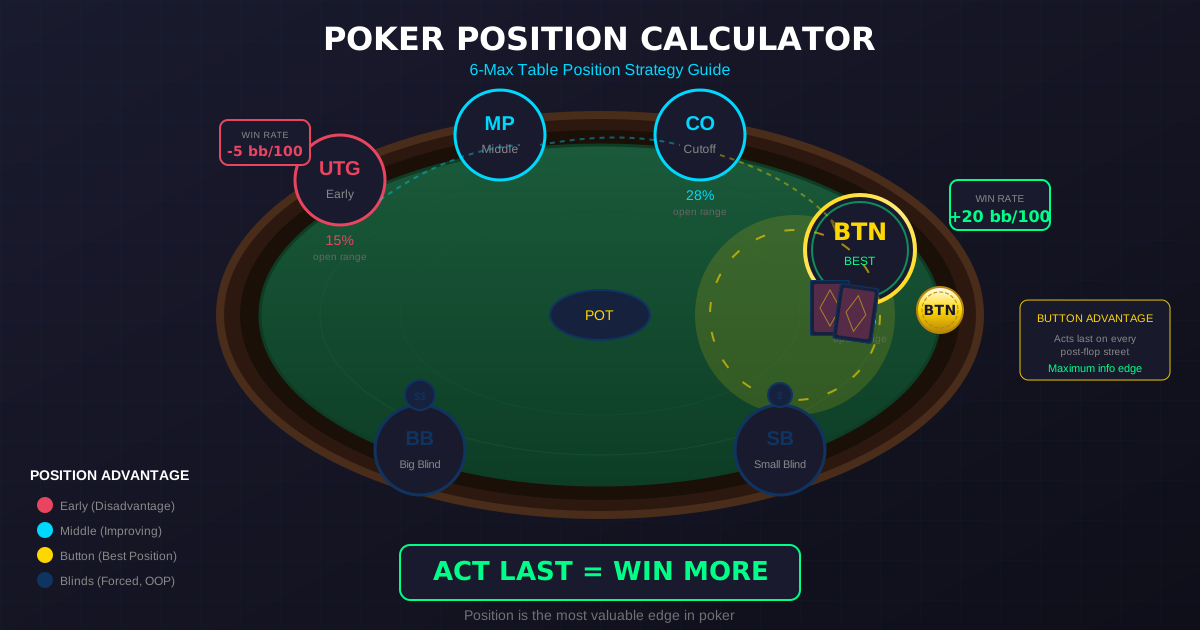
Open tight from early position. With 8 or 9 players behind you, your opening range from UTG through UTG+2 should be roughly the top 10-12% of hands: pocket pairs TT+, AQs+, AKo.
Widen progressively by position. By the cutoff and button, you can open 25-30% of hands, including suited connectors (76s+), suited aces (A2s+), and broadway combinations (KJo+, QJo+).
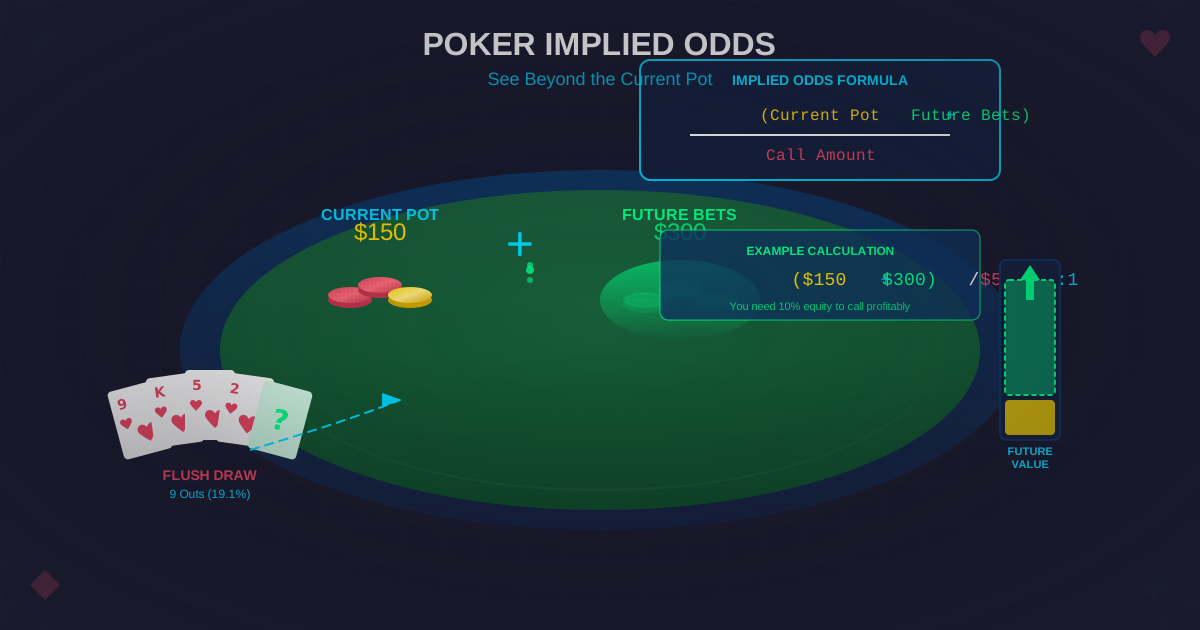
Play for implied odds with speculative hands. Deep stacks mean set-mining with small pocket pairs and playing suited connectors becomes highly profitable. If you can get in for less than 5% of your stack pre-flop with a hand like 55 or 87s, the potential to stack an opponent who overplays top pair is enormous.
Avoid marginal all-in confrontations. Folding AKo pre-flop to an early-position 4-bet in Level 1 is often correct. You are risking your entire tournament life on what is, at best, a coinflip against QQ+ and a dominated hand against AA/KK. That same situation in Level 15 with 20 big blinds is a mandatory call.
Early Stage Hand Example 1
Situation: 1,200-player online MTT, Level 2 (75/150), you have 19,500 chips (130 BB) in the Hijack.
You are dealt Jh Th. UTG+1 opens to 350, the Lojack calls. You call 350.
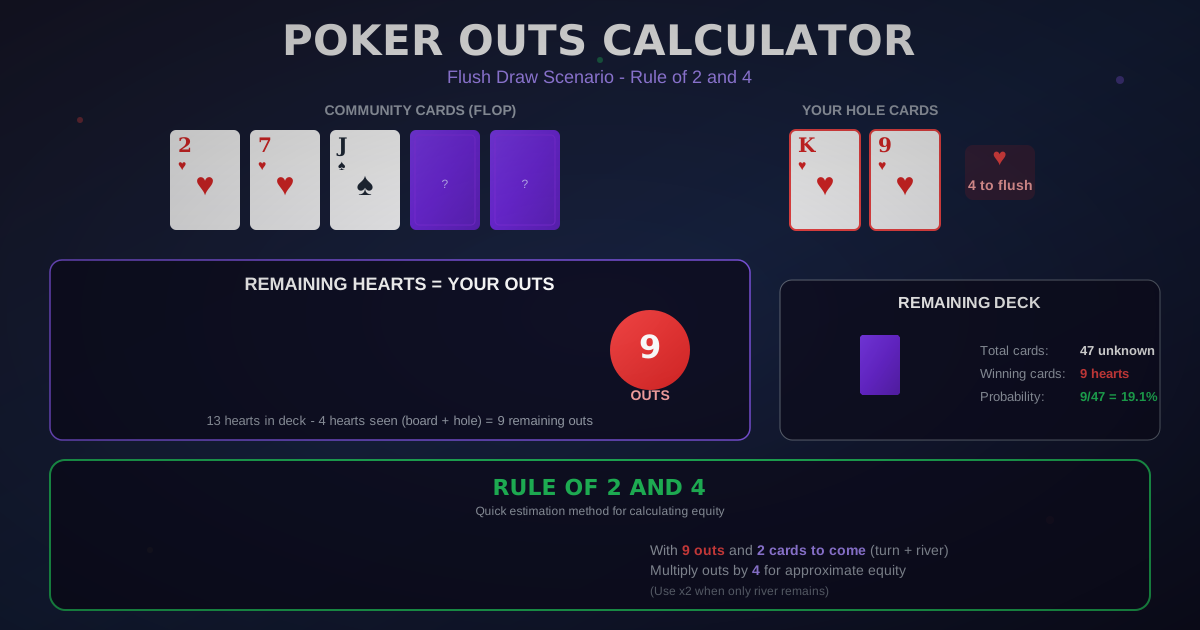
Flop: 9h 8d 3h -- giving you an open-ended straight draw plus a flush draw (15 outs).
UTG+1 bets 700 into 1,275. Lojack folds. You raise to 2,100.
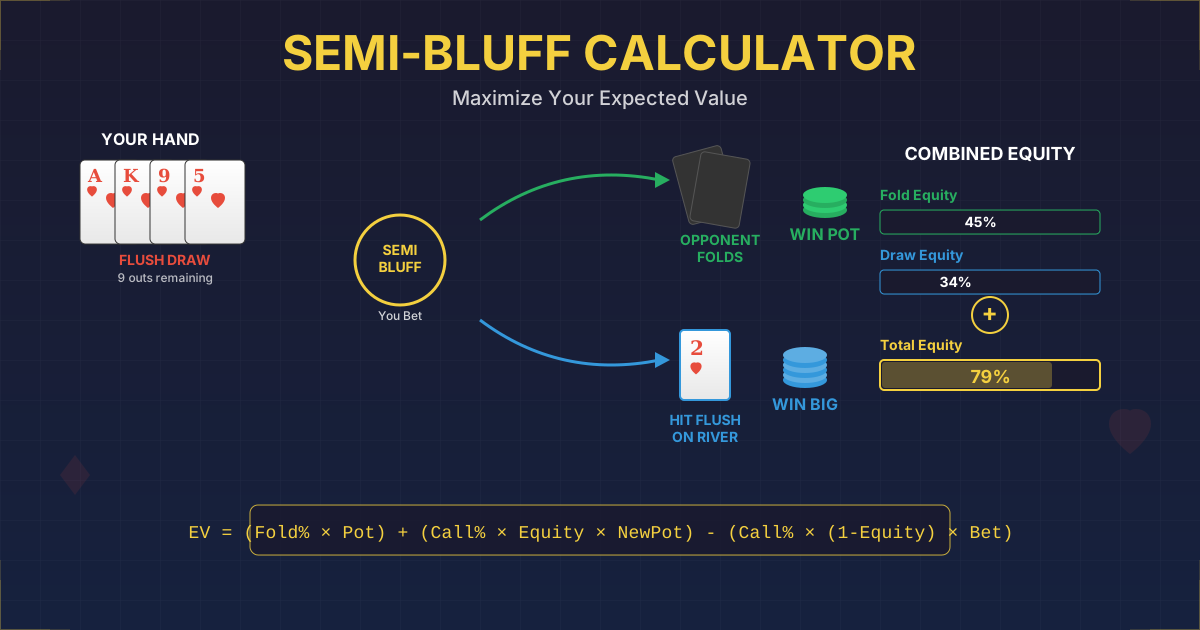
Why this is correct: With 15 outs and deep stacks, you have roughly 54% equity against a typical c-betting range. More importantly, raising lets you define the pot and potentially take it down immediately. If called, you have position and massive equity heading to the turn. This is the kind of high-implied-odds play that defines successful early-stage poker.
UTG+1 calls. Turn: 7c. You hit the straight. UTG+1 checks. You bet 3,200 into 5,475. UTG+1 calls with AhAc. River: 2s. You bet 6,500, get called, and win a pot of roughly 22,000 chips.
Result: You grew your stack to approximately 30,000 without ever risking elimination. The deep-stack structure let you extract maximum value.
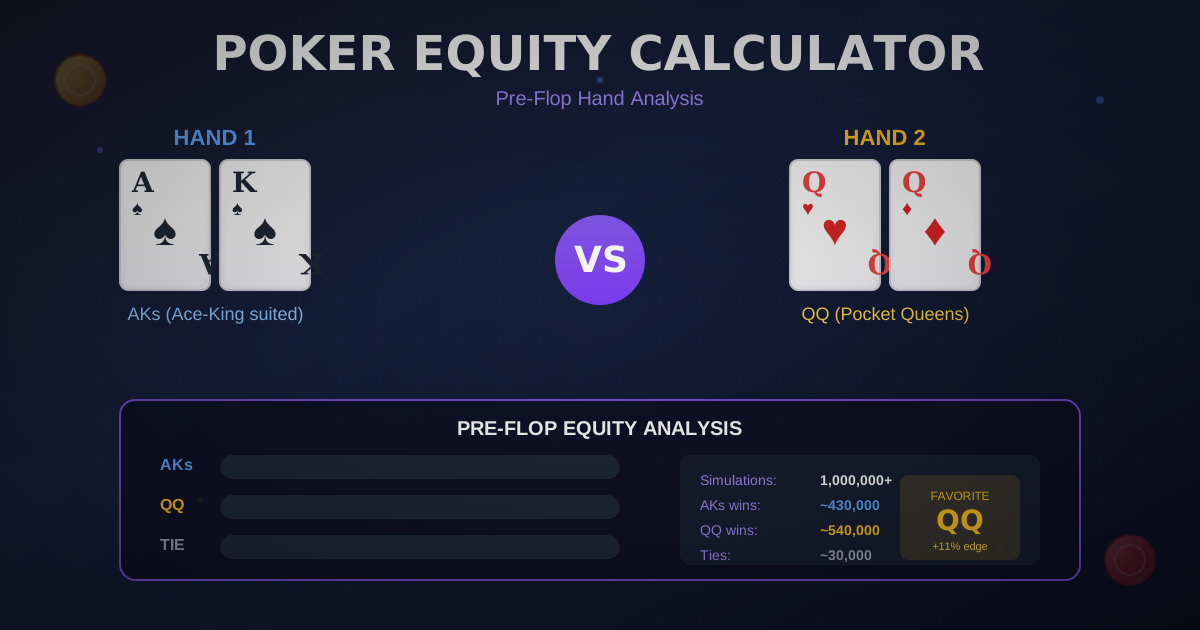
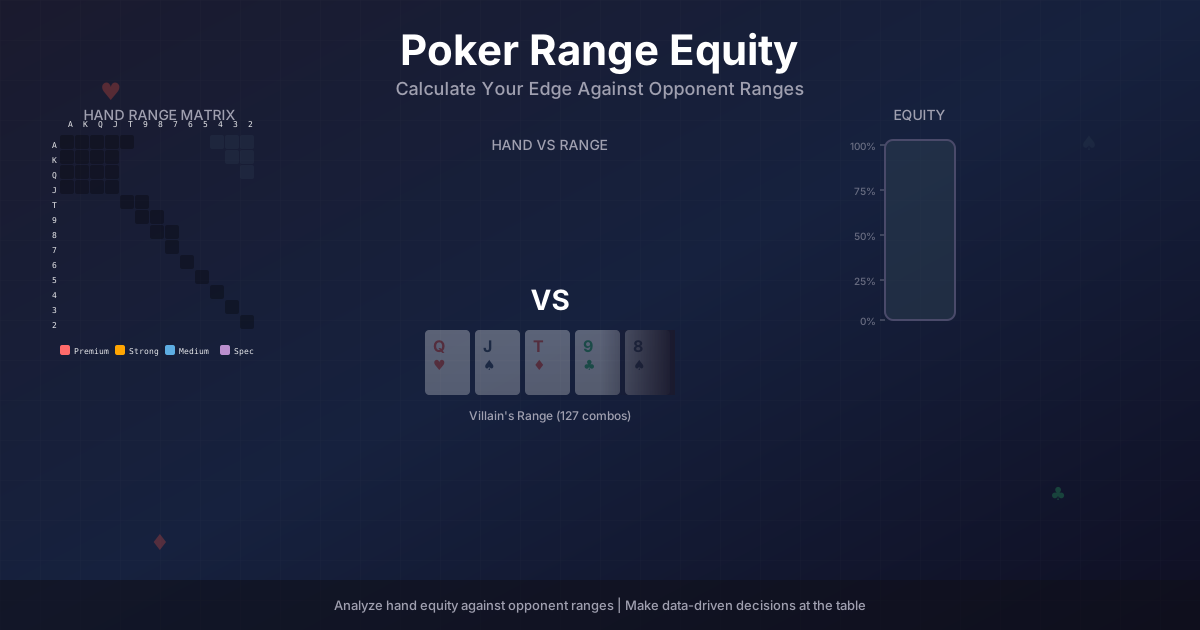
Analyze draws like this with our Poker Equity Calculator to understand your exact equity against opponent ranges on every street.
Early Stage Mistakes to Avoid
- Limping into pots. Even at deep stacks, limping invites multi-way pots that reduce your edge. Always enter with a raise or a fold.
- Overplaying one-pair hands for full stacks. Getting all-in with AA on a K-T-7-4-2 board against a player who check-raised the turn is a recipe for an early exit.
- Playing too many pots out of position. Calling opens from the blinds with marginal hands bleeds chips slowly but surely.
- Ignoring table dynamics. If your table is passive, steal more. If it is aggressive, tighten up and trap.
Stage 2: Middle Tournament Play (25-75 Big Blinds)
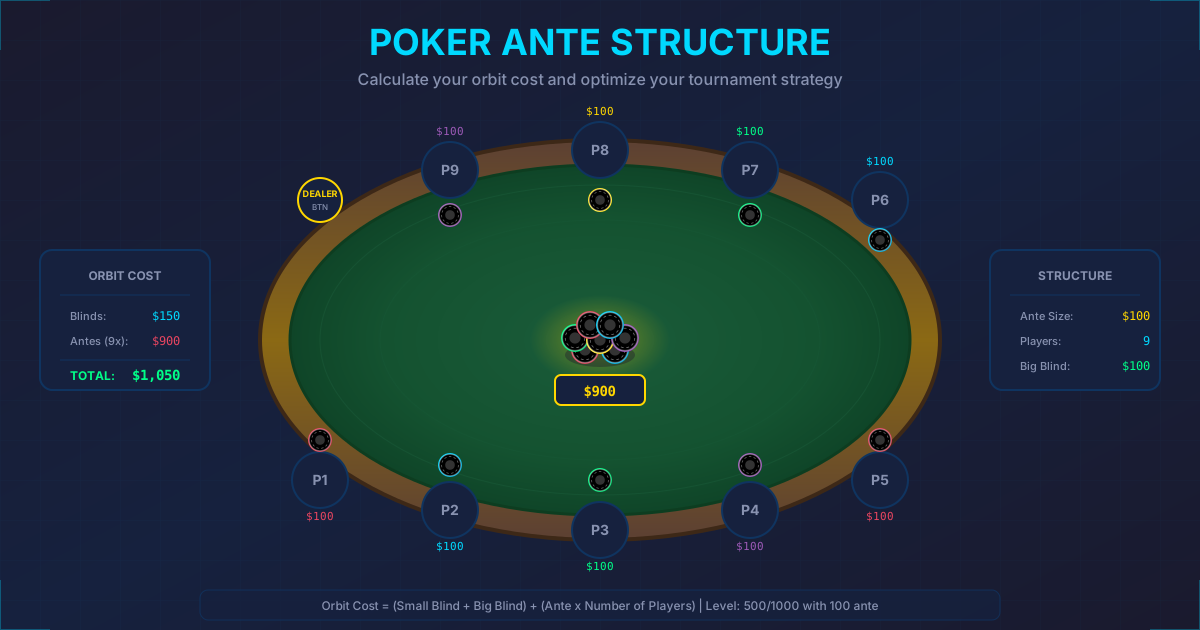
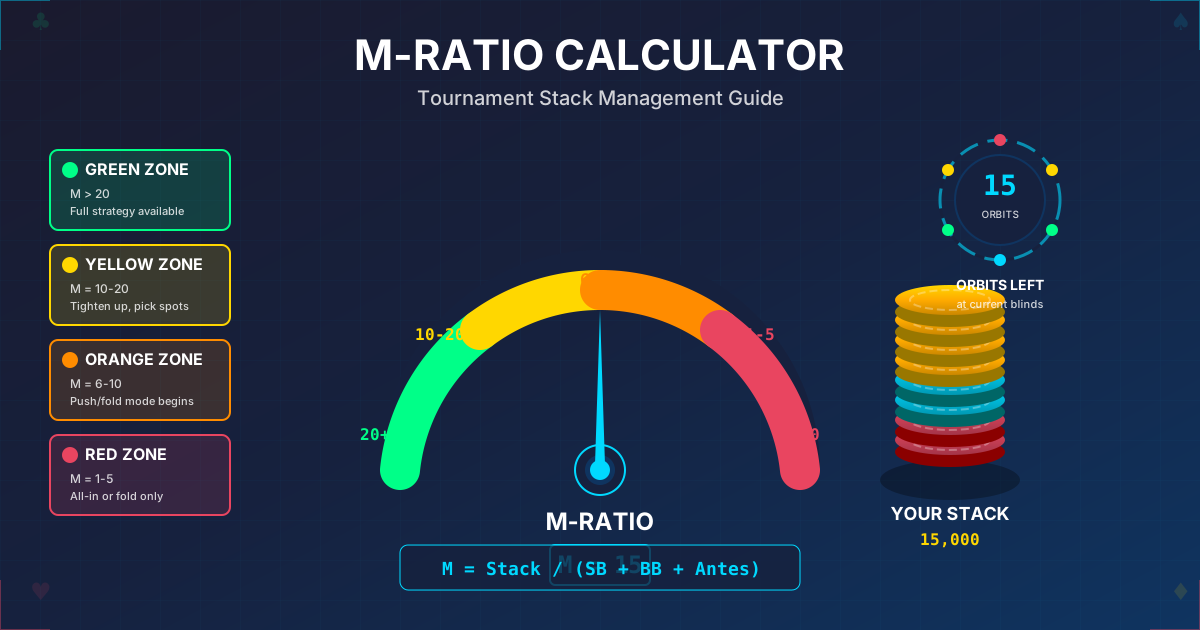
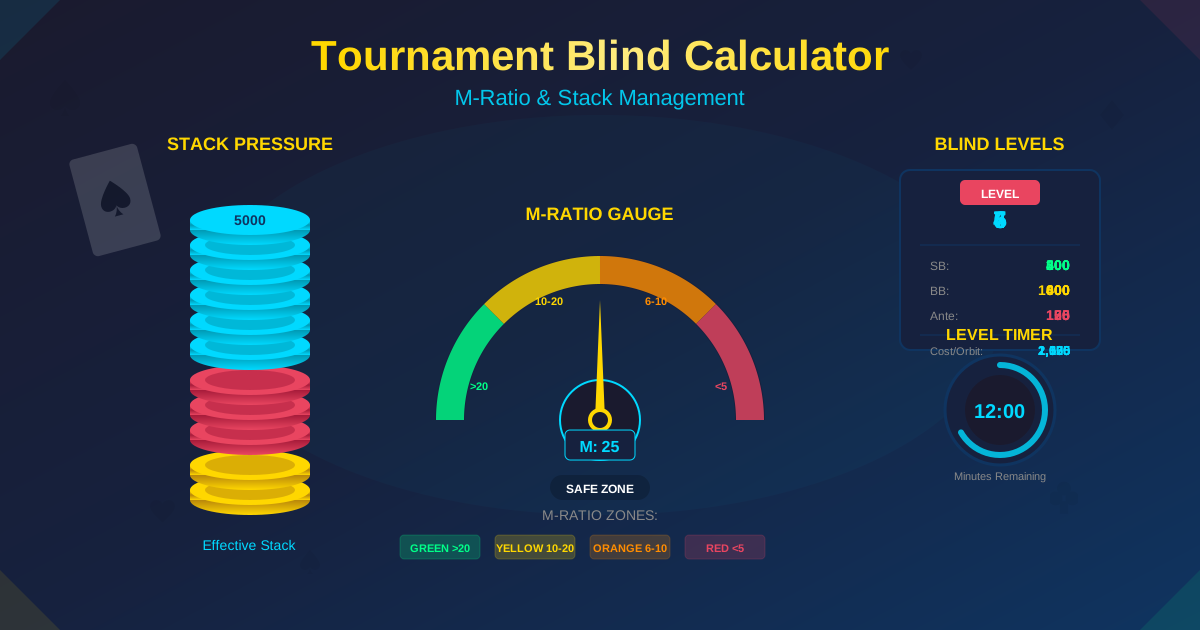
The middle stage is where tournaments are built. Blinds and antes have escalated to the point where you can no longer wait for premium hands. The antes alone cost you 2-3 big blinds per orbit, and passive play will erode your stack below the point of no return.
The Accumulation Imperative
This is the most important concept for the middle stages: you need chips to survive, and the only way to get them is to take them from other players. The middle stage is where you transition from cash-game-style play to tournament-specific aggression.
Your primary weapons are:
- Steal attempts from late position against tight blinds
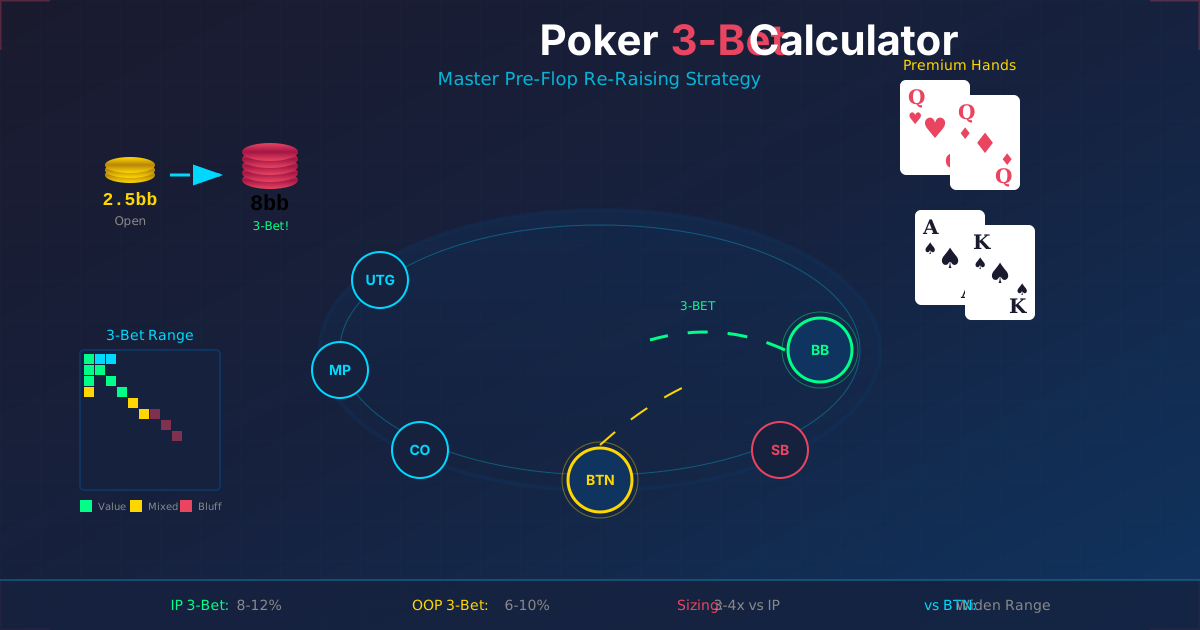
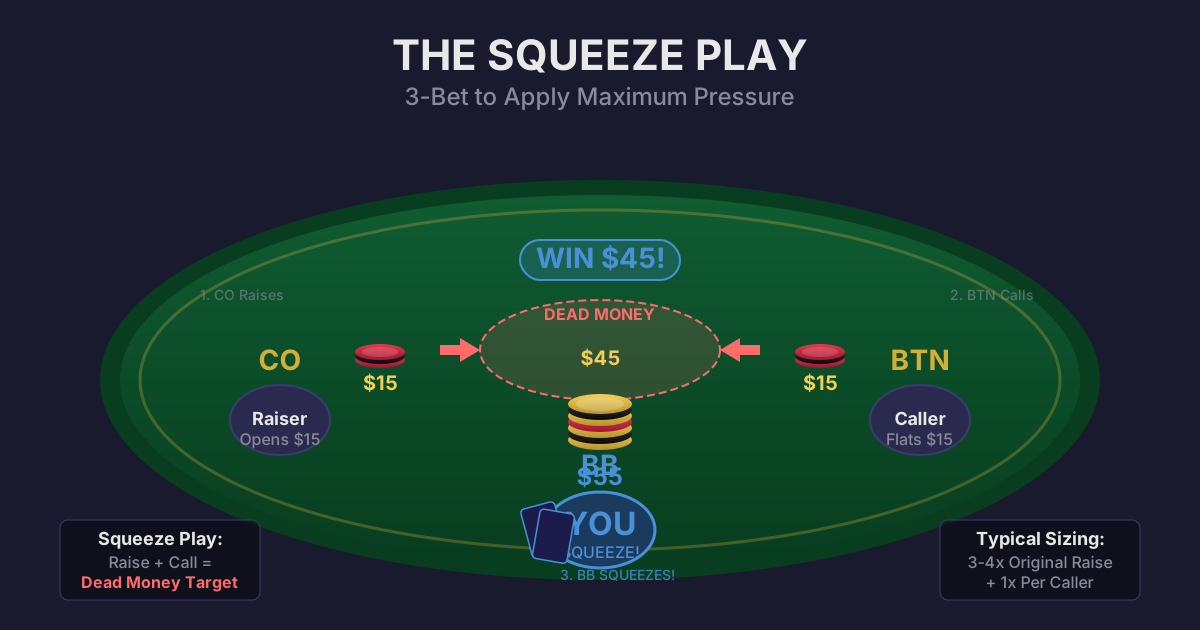
- Re-steals (3-bets) against players who are stealing too wide
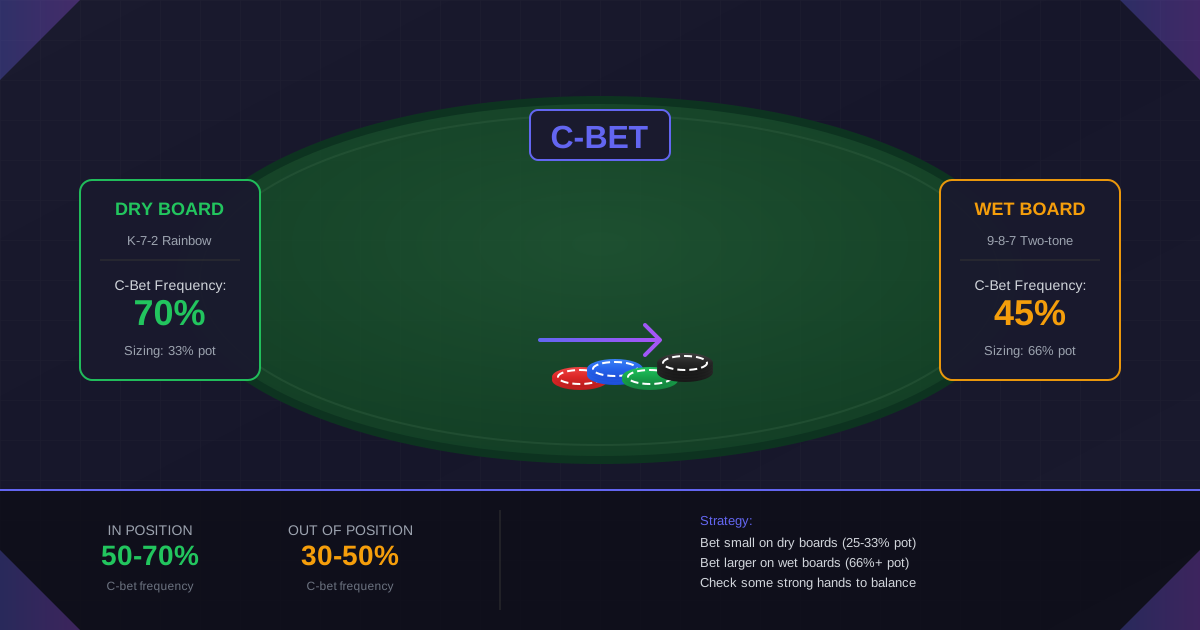
- Controlled aggression with continuation bets and semi-bluffs
Middle Stage Opening Ranges by Position
| Position | Stack: 50-75 BB | Stack: 30-50 BB | Stack: 25-30 BB |
|---|---|---|---|
| UTG (9-handed) | 10-12% (88+, ATs+, AJo+, KQs) | 8-10% (99+, ATs+, AQo+, KQs) | 7-8% (TT+, AJs+, AQo+) |
| Hijack | 18-22% (66+, A7s+, ATo+, KTs+, QTs+, J9s+) | 15-18% (77+, A9s+, ATo+, KTs+, QTs+) | 12-15% (88+, A9s+, AJo+, KQs) |
| Cutoff | 25-30% (55+, A2s+, A9o+, K9s+, KTo+, Q9s+, J9s+, T9s, 98s) | 22-28% (55+, A4s+, ATo+, K9s+, KTo+, Q9s+, J9s+) | 18-22% (66+, A7s+, ATo+, KTs+, QTs+) |
| Button | 35-45% (22+, A2s+, A5o+, K6s+, K9o+, Q8s+, QTo+, J8s+, T8s+, 97s+, 87s, 76s) | 30-40% (33+, A2s+, A7o+, K8s+, KTo+, Q9s+, QTo+, J9s+, T8s+) | 25-32% (44+, A2s+, A9o+, K9s+, KTo+, Q9s+, J9s+) |
| Small Blind | 25-35% (vs passive BB) or 15-20% (vs aggressive BB) | 22-30% | 18-25% |
The Art of the Re-Steal
One of the most profitable plays in the middle stages is the 3-bet shove (re-steal) against late-position openers. Here is when it works best:
- Your stack: 20-30 big blinds (enough to threaten your opponent but not so much that they can call profitably with a wide range)
- Opponent's opening range: Wide (they are stealing from the cutoff or button)
- Your hand: Any ace, any pocket pair, suited broadways, or suited connectors that have good equity if called
Middle Stage Hand Example 2
Situation: $109 online MTT, 450 of 2,000 players remain, Level 12 (500/1,000/125 ante), you have 34,000 chips (34 BB) in the Big Blind.
The Button (55,000 chips, known aggressive player) opens to 2,200. The Small Blind folds. You look down at Ac 9c.
Action: You 3-bet shove all-in for 34,000.
Why this is correct: The Button is opening a very wide range from the Button--likely 40%+ of hands. Against that range, A9s has roughly 55% equity. More importantly, the fold equity is enormous. Your shove represents 62% of the opener's stack. They need a strong hand to call: roughly top 10-15% of their opening range. That means they fold 60-75% of the time, and when they fold, you pick up the 2,200 open plus the 1,625 in blinds and antes--a risk-free gain of 3,825 chips (nearly 4 big blinds).
The Button tanks and folds KTo. You add 3,825 to your stack without showdown.
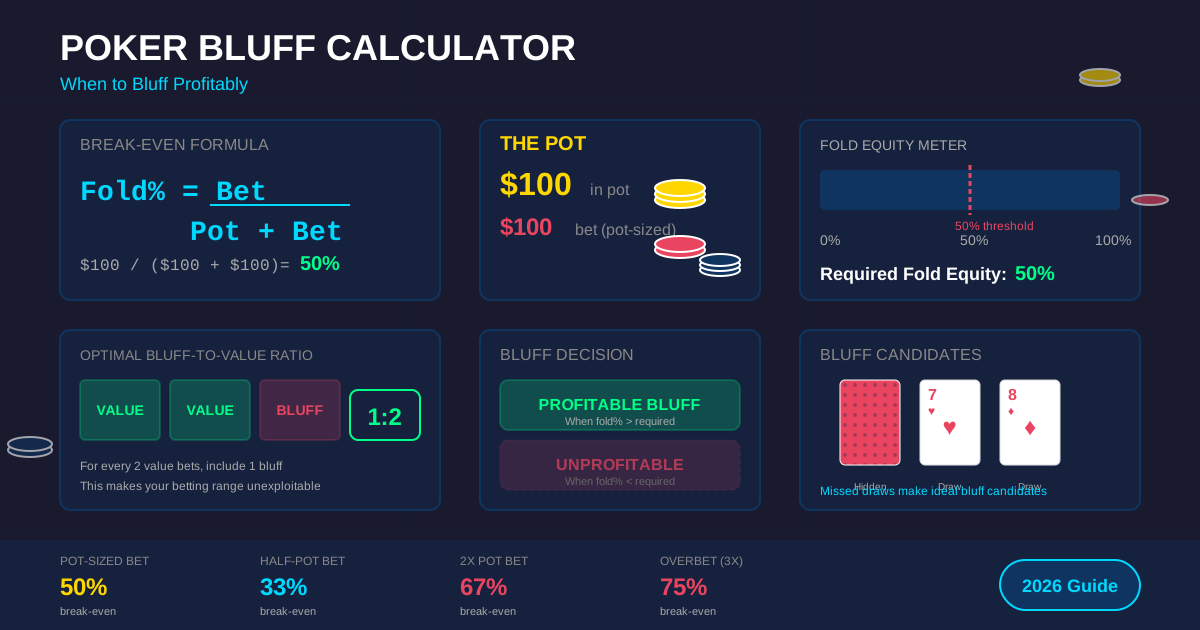
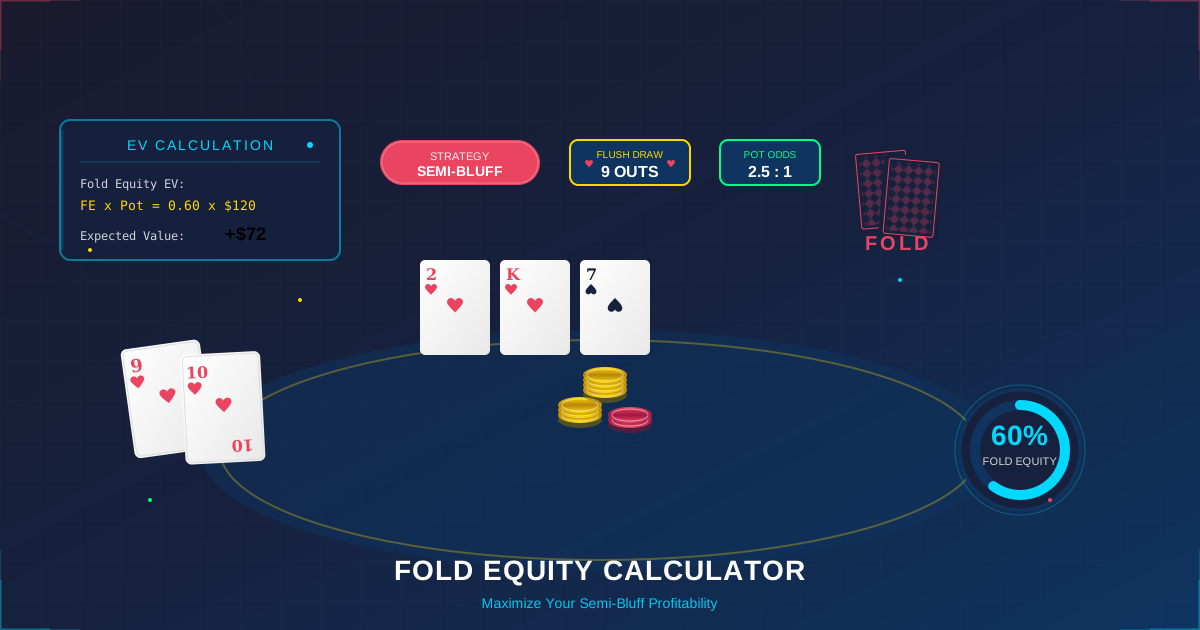
Calculate your fold equity in re-steal spots with our Poker Fold Equity Calculator.
Middle Stage Hand Example 3
Situation: Same tournament, Level 14 (800/1,600/200 ante), you have 52,000 chips (32.5 BB) in the Cutoff. You open Kd Qd to 3,600. The Big Blind (22,000 chips, 13.75 BB) calls.
Flop: Kh 7d 4s. Big Blind checks. You bet 3,200 into 9,800.
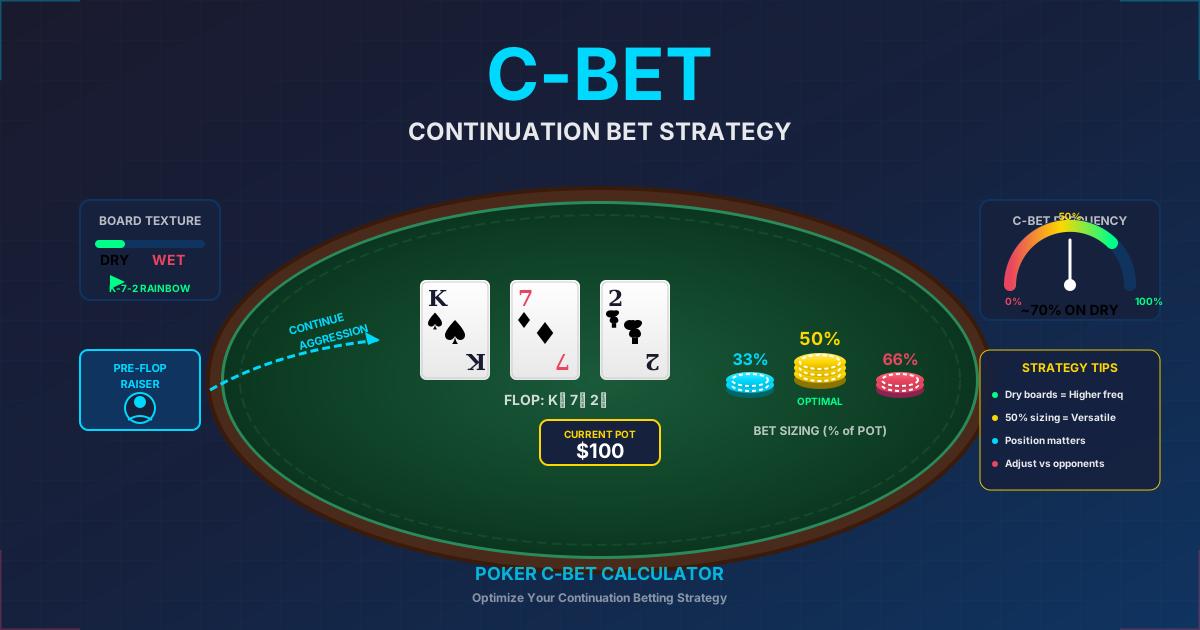
Why this sizing: Against a short-stacked Big Blind defender, a small c-bet of roughly one-third pot accomplishes everything you need. It extracts value from worse hands that connect with the flop, denies equity to draws cheaply, and keeps the pot manageable so you are not pot-committed against a check-raise shove.
Big Blind calls. Turn: 2c. Big Blind shoves for 15,200 into 16,200.
Decision: You have top pair, second kicker. The Big Blind's range for check-calling then shoving includes K-x (where you are ahead of most), 77 and 44 (where you are crushed), and combo draws like 65s (unlikely on this board). Given the pot odds (31,400 to call 15,200, needing roughly 33% equity), you call.
Big Blind shows K8o. River: Js. You win a pot of 46,400 and climb to 67,000 chips (42 BB heading into the bubble).
Stage 3: Bubble Play and ICM Pressure
The bubble is the most strategically complex phase of any tournament. It is the point where the next elimination determines whether the remaining players all cash or one more goes home empty-handed. ICM pressure reaches its absolute peak here, and understanding how to exploit that pressure--or survive it--is worth more per hand than any other stage.
How ICM Changes Everything at the Bubble
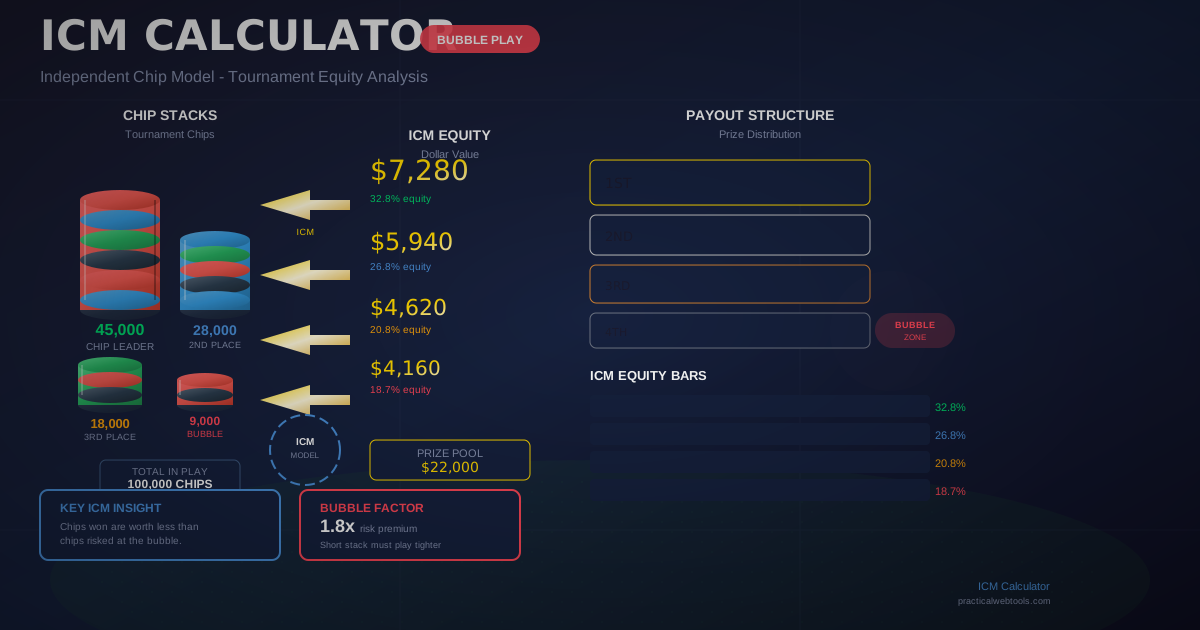
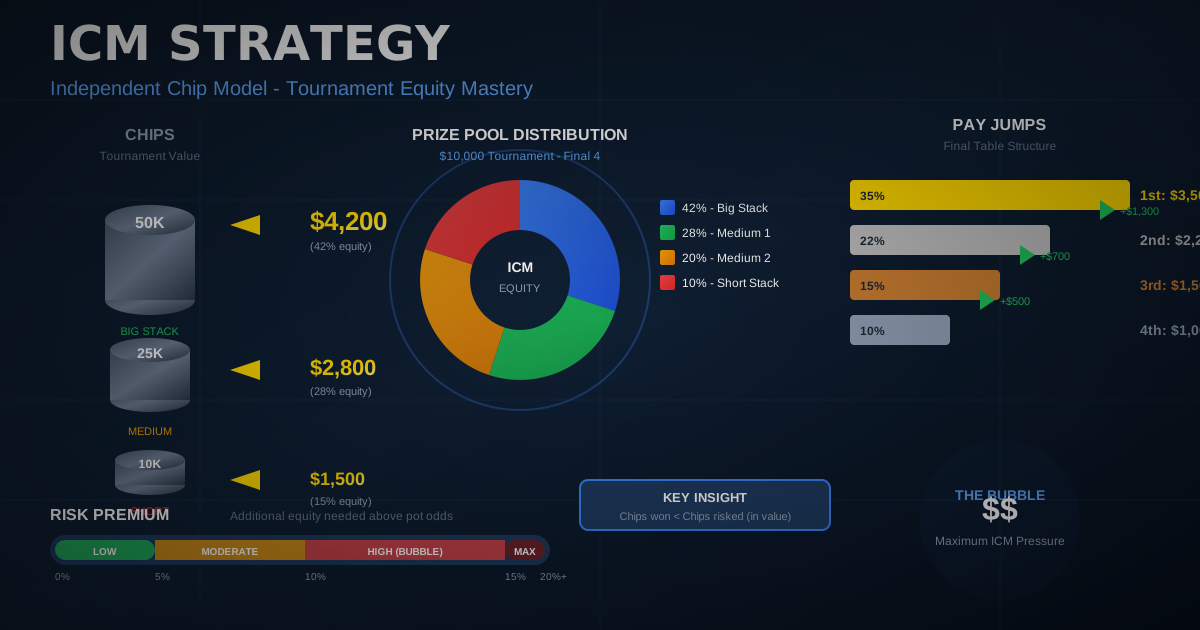
In a cash game, every chip is worth exactly its face value. In a tournament approaching the money, chips have non-linear value: the chips you stand to lose are worth more than the chips you stand to gain. This is the core ICM principle, and it creates situations where folding pocket Kings pre-flop can be mathematically correct.
Consider this payout structure for a $100 buy-in MTT with 500 entries:
| Position | Payout | Pay Jump |
|---|---|---|
| 1st | $8,500 | -- |
| 2nd | $5,200 | $3,300 |
| 3rd | $3,600 | $1,600 |
| 4th | $2,600 | $1,000 |
| 5th | $1,900 | $700 |
| 6th-10th | $1,000-$1,400 | $200-$400 |
| 11th-20th | $500-$800 | $100-$200 |
| 21st-50th | $200-$400 | $50-$100 |
| 51st (bubble boy) | $0 | -$100 (buy-in lost) |
The jump from 51st to 50th is not just $200 in prize money--it is $300 in equity swing ($200 gained plus $100 buy-in preserved). That $300 swing means every hand played near the bubble carries enormous hidden costs.
Model these exact payout structures with our ICM Calculator to see the real-dollar impact of your bubble decisions.
Stack-Size Strategy on the Bubble
Your optimal bubble strategy depends almost entirely on your stack size relative to the field:
| Your Stack | Bubble Strategy | Risk Tolerance | Typical Plays |
|---|---|---|---|
| Top 10% (big stack) | Maximum aggression | High | Open wide, attack medium stacks, force folds |
| 30th-70th percentile (medium stack) | Extreme caution | Very Low | Only play premium hands, avoid confrontation |
| Bottom 20% (short stack) | Controlled aggression | Moderate | Push/fold with wider range, exploit medium stack fear |
| Shortest stack at table | Desperate shove mode | Highest | Push any playable hand, especially vs. medium stacks |
The key insight is the medium stack paradox: medium stacks have the most to lose and the least to gain from confrontation on the bubble. They are not short enough to be desperate, but they are not big enough to absorb a loss. This makes them the most exploitable players at the table.
Bubble Hand Example 4
Situation: $215 online MTT, 52 players remain and 50 get paid. You are the chip leader at your table with 180,000 chips (45 BB). Blinds are 2,000/4,000/500 ante.
The player in the Hijack (45,000 chips, 11.25 BB, a medium stack that would cash comfortably if they survived) opens to 9,000. Everyone folds to you in the Big Blind.
You look down at 8d 7d.
Action: You 3-bet to 24,000.
Why this works: This is not about your cards. This is about ICM leverage. The Hijack has 45,000 chips. If they call your 3-bet, they are committing over half their stack with a wide opening range on the direct bubble. Calling and losing means they bust in 52nd place with nothing. Folding costs them 9,000 chips but preserves a near-certain cash worth $200+.
The math is brutal for the medium stack. Even with a hand like AQo, calling this 3-bet and facing a potential all-in on the flop is a losing play under ICM because the risk of busting on the bubble outweighs the potential chip gain.
The Hijack folds AJo. You gain 15,500 chips (the open plus blinds and antes) without risking a single showdown.
This is big-stack bubble abuse, and it is one of the highest-EV plays in tournament poker.
Bubble Survival Tips for Medium and Short Stacks
- As a medium stack: Fold everything except AA, KK, QQ, and AKs unless you have very specific reads. The cash is worth more than a marginal chip gain.
- As a short stack: Push wider than normal, but target medium stacks who cannot call you. Avoid shoving into the chip leader unless you have a premium hand.
- Watch for the "bubble nit": Some players tighten to an absurd degree on the bubble. If you identify one, raise their blinds every single orbit.
- Never open-limp on the bubble. Either shove or fold if you are under 20 BB. Open-raising and then folding to a 3-bet is lighting money on fire.
Determine your exact push/fold ranges on the bubble with our Push/Fold Calculator.
Stage 4: Post-Bubble and Approaching the Final Table
The moment the bubble bursts, the tournament dynamics shift dramatically. Players who were folding everything suddenly loosen up, short stacks who survived start shoving, and the overall aggression level spikes. This transition period is one of the most profitable phases if you recognize what is happening.
The Post-Bubble Explosion
Within the first 5-10 hands after the bubble bursts, expect:
- Short stacks to bust rapidly. Players who barely cashed will shove with any two cards, get called, and exit. This is fine--let them go. Each elimination moves you up the pay ladder.
- Medium stacks to loosen. The pressure is off. Players who were folding 88 on the bubble will now call 3-bets with it.
- Big stacks to maintain pressure. Smart big stacks continue their aggression because the next few pay jumps still carry significant value.
Adjusting Your Ranges Post-Bubble
If you survived the bubble as a short or medium stack, this is your window to rebuild. The dynamics favor aggression:
- Re-open your stealing ranges. You can go back to opening the cutoff and button with 25-35% of hands.
- 3-bet lighter. Opponents who just unclenched from bubble fear are calling 3-bets wider than they should--but they are also more likely to overplay mediocre hands post-flop.
- Target the newly loose players. Some players go on a post-bubble bender, playing too many hands with too much aggression. Let them hang themselves by trapping with strong holdings.
Approaching the Final Table
As the field narrows to 15-12 players (two tables), ICM pressure begins climbing again. The pay jumps from 10th to 9th (making the final table) are often significant, and players who recognize this can exploit the tightening dynamic.
Post-Bubble Hand Example 5
Situation: $109 MTT, 38 players remain (50 paid, final table is 9). You have 95,000 chips (24 BB) at blinds 2,000/4,000/500 in the Small Blind.
The Button (200,000 chips, 50 BB) opens to 8,800. You have As Ks.
Action: You 3-bet shove for 95,000.
Why shoving is better than flatting or small 3-betting: At 24 BB, a small 3-bet to 24,000 commits 25% of your stack pre-flop with a hand that plays well all-in but poorly if you 3-bet/fold. Flatting out of position lets the big-stack Button barrel you off your hand on unfavorable boards. Shoving maximizes fold equity (the Button folds a significant portion of their opening range to a 24 BB shove) and guarantees you realize your full equity with one of the best hands in poker.
The Button calls with JhJc. Board runs out: Kd 9c 4h 2s 7d. You hit your King and double to 192,500 chips (48 BB), putting you in strong position for the final table.
Evaluate these pre-flop all-in matchups with our Poker Equity Calculator.
Stage 5: Final Table Strategy
Making a final table is an achievement. But the difference in prize money between 9th place and 1st place is typically 8-12x, which means the strategic decisions at the final table have the highest dollar value of any hands you play in the entire tournament.
Final Table Dynamics
Final tables play differently from the rest of the tournament because:
- Pay jumps are enormous. Every elimination means more money for everyone who survives.
- ICM pressure varies wildly by stack size. The shortest stack is under pressure to act; the biggest stack holds leverage over everyone.
- Table dynamics are hyper-specific. You have extensive reads on your opponents from hours of play.
- Emotional pressure is real. Many players have never been in this situation before and make fear-based mistakes.
Final Table Strategy by Stack Position
| Stack Position | Primary Strategy | Key Adjustments |
|---|---|---|
| Chip Leader | Apply relentless pressure, especially vs. medium stacks | Avoid big pots vs. other big stacks; target short/medium stacks |
| 2nd-3rd in chips | Aggressive but avoid the chip leader | 3-bet medium stacks; attack short stacks; let the chip leader do the dirty work |
| Middle of the pack | Tightest play of the tournament | Only play premium hands against large stacks; push against short stacks when folded to |
| Short stack | Push/fold | Identify the tightest medium stacks and shove into them; avoid the chip leader |
Pay Jump Awareness
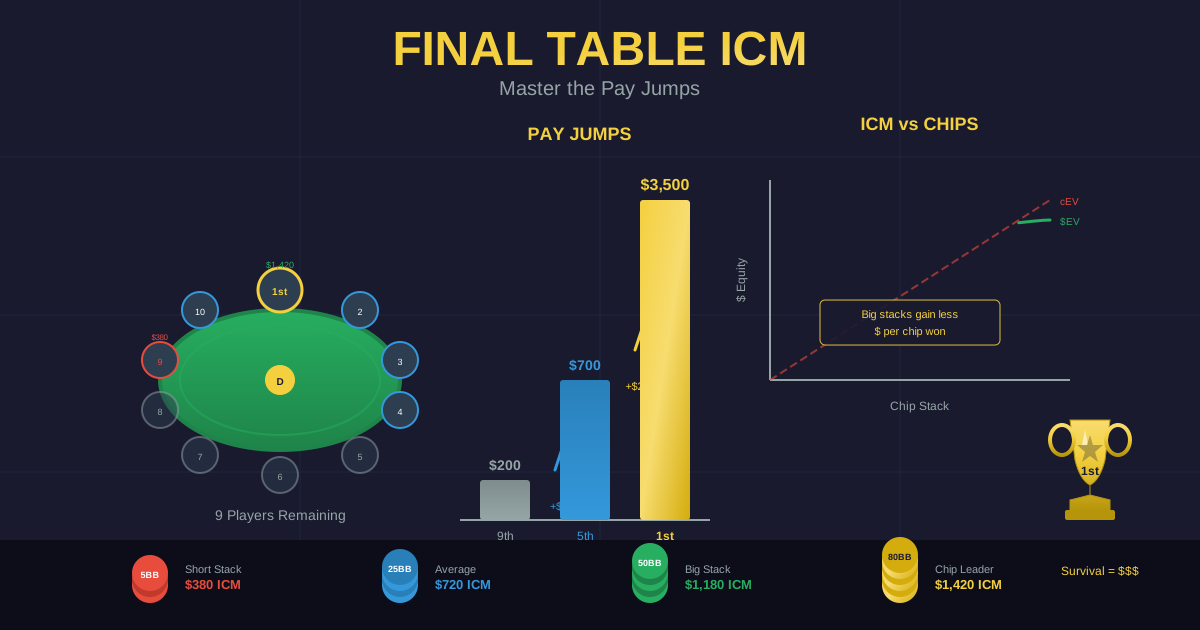
The single most valuable skill at a final table is pay jump awareness--constantly knowing the dollar difference between your current position and the next elimination. Here is an example of how pay jumps compress at a typical final table:
| Players Remaining | Your Prize If Eliminated Now | Prize for Outlasting Next Bustout | Pay Jump Value |
|---|---|---|---|
| 9 | $1,400 | $1,800 | $400 |
| 8 | $1,800 | $2,400 | $600 |
| 7 | $2,400 | $3,200 | $800 |
| 6 | $3,200 | $4,200 | $1,000 |
| 5 | $4,200 | $5,800 | $1,600 |
| 4 | $5,800 | $8,000 | $2,200 |
| 3 | $8,000 | $12,000 | $4,000 |
| 2 | $12,000 | $20,000 | $8,000 |
Notice how the pay jumps accelerate as the table shrinks. The jump from 3rd to 2nd ($4,000) is ten times the jump from 9th to 8th ($400). This means your willingness to gamble should increase as the table gets shorter--assuming you have the chips to absorb a loss. A player with a big stack at 4-handed should be playing many more pots than the same player at 9-handed because every elimination is now worth thousands of dollars.
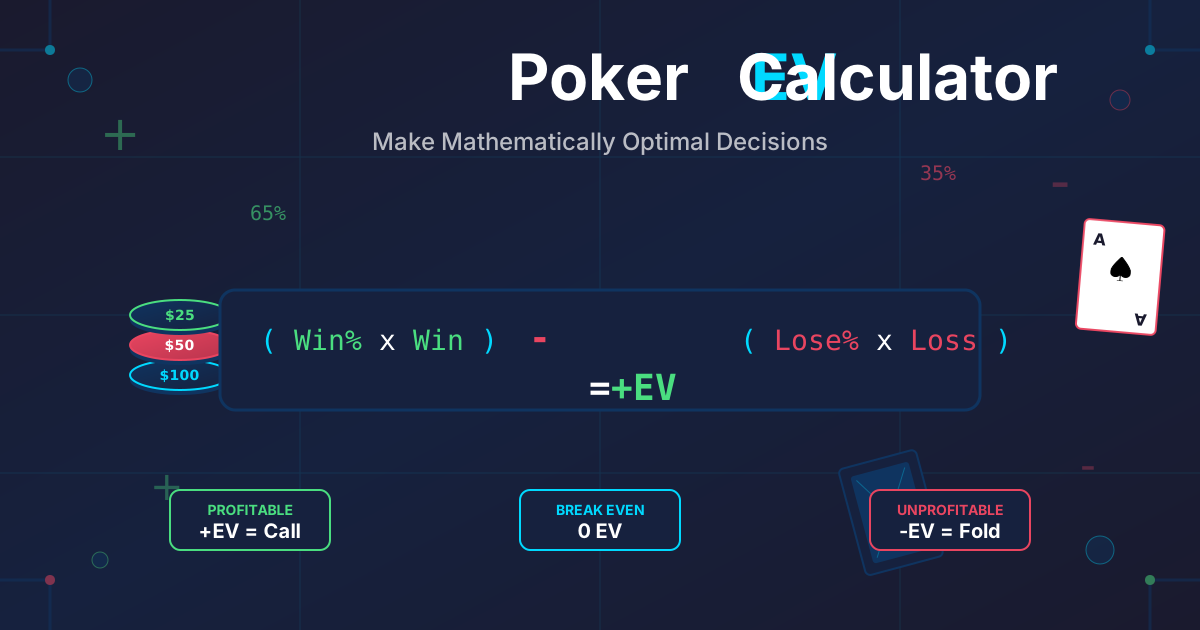
Use our Poker EV Calculator to determine whether a specific final-table decision has positive expected value after accounting for pay jumps.
Final Table Hand Example 6 (ICM Decision)
Situation: 6 players remain at the final table. Payouts are $4,200 (6th) through $20,000 (1st). You have 280,000 chips (28 BB) in the Cutoff. Blinds are 5,000/10,000/1,250.
Stacks:
- Seat 1 (UTG): 650,000 (65 BB) -- chip leader
- Seat 2 (HJ): 120,000 (12 BB)
- Seat 3 (CO): 280,000 (28 BB) -- YOU
- Seat 4 (BTN): 310,000 (31 BB)
- Seat 5 (SB): 95,000 (9.5 BB)
- Seat 6 (BB): 195,000 (19.5 BB)
You are dealt Ah Qh. UTG folds. The Hijack (12 BB) shoves all-in for 120,000. Action is on you.
Analysis: In a cash game, calling with AQs against a 12 BB shove range is trivially profitable. You have roughly 55-60% equity against a reasonable shoving range. But ICM changes everything.
If you call and lose, you drop to 160,000 chips (16 BB) and become a short stack at a 5-handed final table where the pay jump from 6th to 5th is $1,000. If you call and win, you go to 400,000 (40 BB)--strong but not dominant.
The presence of Seat 5 (9.5 BB) is critical. If you fold and that player busts next, you move from $4,200 to $5,800 in equity without risking anything. The expected ICM gain from letting the shorter stack bust is substantial.
ICM-adjusted decision: This is a borderline spot. GTO solvers with ICM factored in show this is a fold or a very marginal call depending on the exact payout structure and opponent's shoving range. If the Hijack is shoving tight (top 20%), you should fold. If they are shoving very wide (top 40%+), calling becomes correct even under ICM.
In practice, most recreational players should fold AQs here. The ICM cost of calling and losing is disproportionately high compared to the chip gain of calling and winning.
Stage 6: Heads-Up Play
When the final table collapses to two players, the game transforms completely. ICM effectively disappears because all the remaining prize money is distributed between two people, and the only way to get more of it is to win more chips. This makes heads-up play the most aggressive, widest-ranged phase of the entire tournament.
Heads-Up Fundamentals
- Open almost everything from the Button/Small Blind. You should be raising 80-90% of your hands when you have the button. Folding button is surrendering equity.
- Defend aggressively from the Big Blind. Call or 3-bet 60-70% of hands facing a min-raise. Folding too much lets your opponent print chips.
- Aggression wins. The player who bets and raises more frequently gains control. Passive heads-up play is almost always a losing strategy.
- Adjust to your opponent rapidly. If they fold too much to 3-bets, 3-bet relentlessly. If they call too wide, tighten your value range and reduce bluffs. Heads-up is the most exploitative phase of the tournament.
Stack-Depth Considerations Heads-Up
| Stack Depth | Strategic Approach |
|---|---|
| 50+ BB deep | Full post-flop game; 3-betting, 4-betting, multi-street bluffs |
| 25-50 BB | Simplified pre-flop game; more shoving/calling ranges |
| 15-25 BB | Push/fold becomes primary weapon; limited post-flop play |
| Under 15 BB | Pure push/fold; consult charts for optimal ranges |
Heads-Up Hand Example 7
Situation: Heads-up for the title. You have 880,000 chips (44 BB) on the Button. Villain has 770,000 (38.5 BB). Blinds are 10,000/20,000/2,500.
You are dealt 9c 8c on the Button. You raise to 45,000. Villain calls.
Flop: Tc 7c 2d. You have an open-ended straight draw plus a flush draw (15 outs). Villain checks. You bet 35,000 into 95,000.
Why this bet size: A roughly one-third pot bet with a monster draw serves two purposes. It builds the pot for when you hit, and it gives you a cheap price to see the turn if called. If raised, you can call or shove profitably depending on stack depth.
Villain calls. Turn: 6h. You hit the straight. Villain checks. You bet 90,000 into 165,000. Villain raises to 230,000. You shove all-in. Villain calls with Td 9d (top pair with a gutshot). River: 3s. You win the tournament.
ICM Fundamentals: When and How to Adjust
The Independent Chip Model is the mathematical backbone of tournament strategy. Understanding its core principles lets you make better decisions at every stage from the bubble through the final table.
The Core ICM Principle
In tournaments, doubling your chip stack does not double your equity. If you have $500 in equity and double your chips, your equity might increase to $750 or $800--not $1,000. Conversely, losing all your chips means losing 100% of your equity. This asymmetry is why risk-taking in tournaments must be compensated with additional expected value beyond what you would need in a cash game.
ICM Pressure Examples
The following table illustrates how ICM pressure (measured as risk premium) varies across different tournament situations:
| Situation | Risk Premium | What This Means |
|---|---|---|
| Early tournament, far from money | 0-1% | Play almost like a cash game |
| Approaching the bubble, big stack | 2-5% | Mild adjustment; can still gamble somewhat |
| Approaching the bubble, medium stack | 8-15% | Significant tightening; fold marginal spots |
| Directly on the bubble, medium stack | 12-20%+ | Extreme tightening; only play premium hands |
| Final table, chip leader | 3-8% | Can apply pressure; moderate risk premium |
| Final table, short stack | 2-5% | Low risk premium; need to shove and gamble |
| Final table, 3 players remain, medium stack | 10-18% | Very high; massive pay jumps ahead |
| Heads-up | 0% | No ICM; pure chip EV |
When to Deviate from ICM
ICM is a model, not a commandment. There are situations where deviating from strict ICM play is correct:
- Against weak opponents. If you have a massive skill edge over the remaining field, taking slightly -ICM spots to accumulate chips can increase your overall expected payout because you will outplay opponents post-flop with a bigger stack.
- When the payout structure is top-heavy. If first place pays 40%+ of the prize pool, ICM says to play more aggressively because the value of winning is disproportionately high.
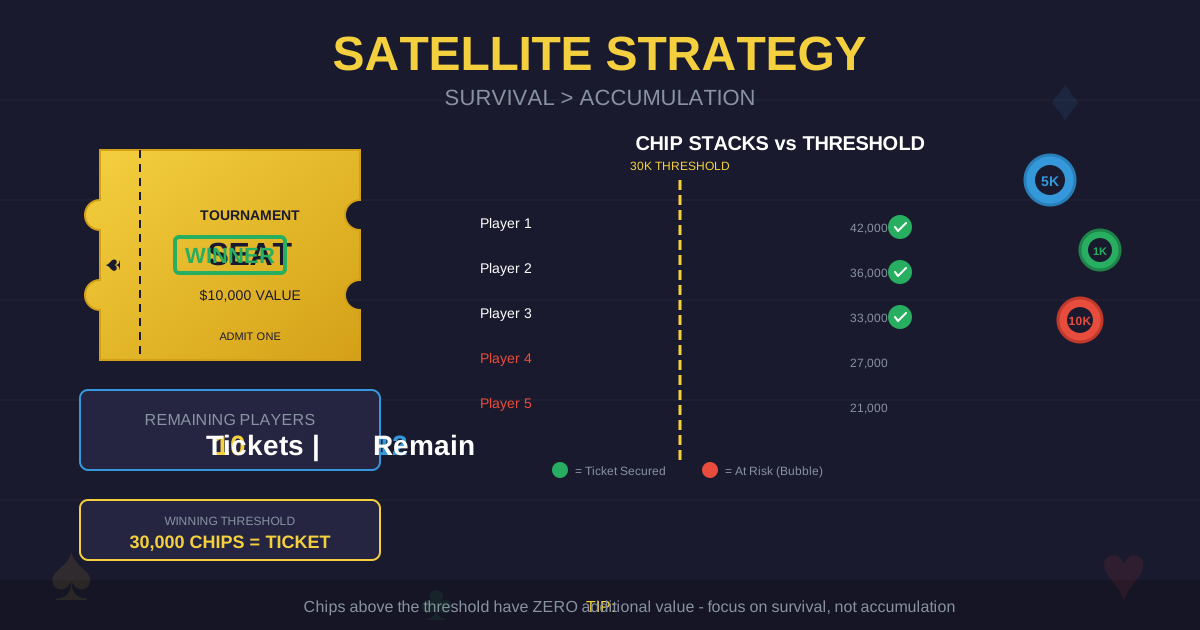
- In satellite tournaments. Satellites that pay identical prizes to all finishers create extreme ICM pressure where survival is everything and chip accumulation has zero marginal value.
Model any ICM scenario with our free ICM Calculator.
GTO vs. Exploitative Play in Tournaments
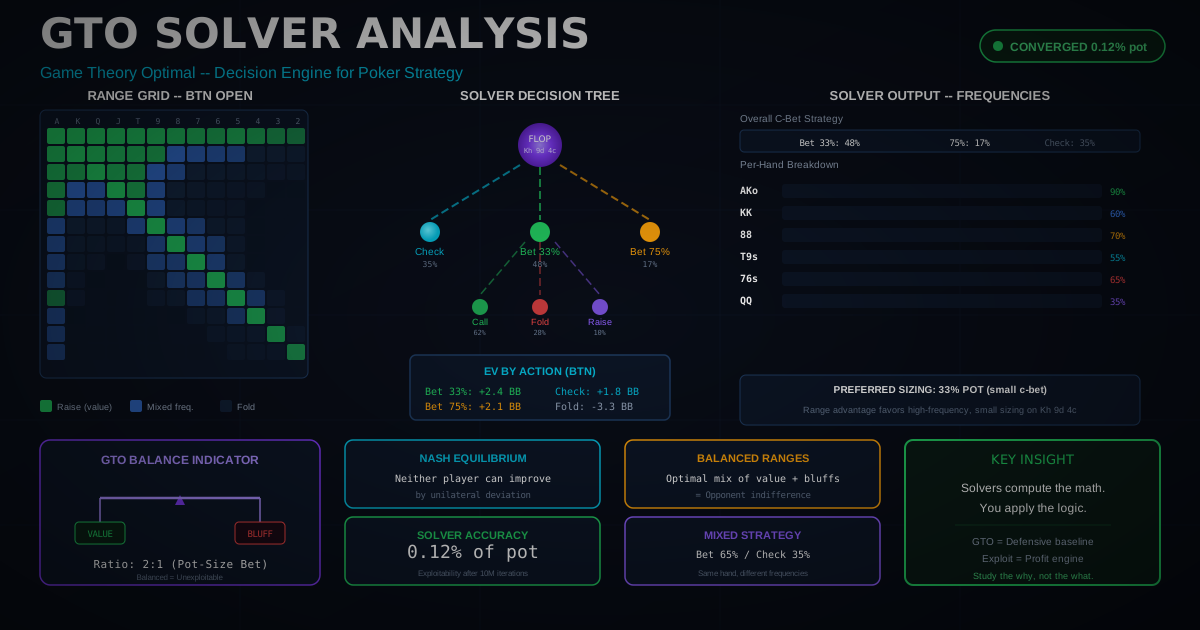
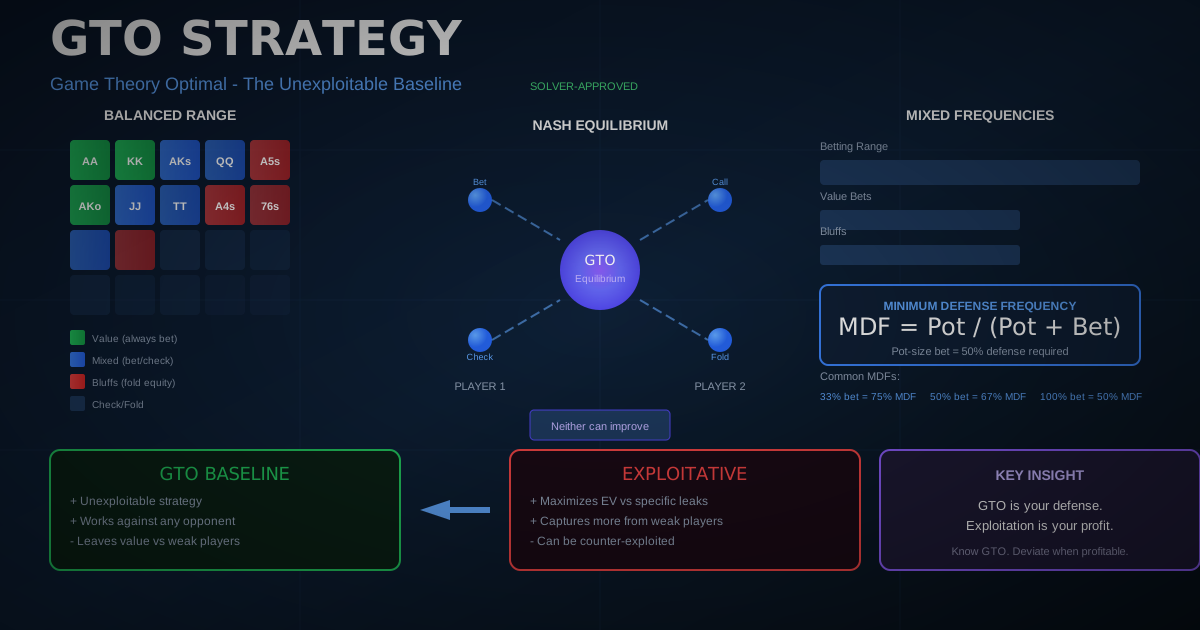
Modern tournament poker exists on a spectrum between two strategic frameworks: GTO (Game Theory Optimal) play, which cannot be exploited, and exploitative play, which maximizes profit against specific opponent tendencies.
When to Play GTO in Tournaments
- Against unknown opponents. When you have no reads, GTO provides a profitable baseline that cannot be exploited.
- At the beginning of a final table. Before you have identified opponent tendencies, balanced play prevents you from being counter-exploited.
- In large-field online events. With frequent table changes and limited reads, a GTO-grounded approach is more practical than trying to exploit players you have never seen before.
When to Play Exploitatively
- Against recreational players. If an opponent is clearly calling too wide, folding too much, or betting with an unbalanced range, deviating from GTO to exploit that tendency is higher EV.
- When you have strong reads. After hours at a final table, you know your opponents. Exploit what you have observed.
- With significant skill edges. If you are clearly the best player at the table, exploitative play widens your edge because GTO by definition gives opponents their "fair share" of EV.
The Hybrid Approach (Recommended)
The strongest MTT players use GTO as their foundation and make controlled exploitative deviations. They have a baseline strategy they can always fall back on, but they adjust button opening ranges, 3-bet frequencies, and post-flop aggression based on specific opponent tendencies.
Start from a GTO baseline and then adjust. Use our Poker Hand Range Calculator to build balanced ranges, then modify them based on table reads.
Push/Fold Strategy: Mastering Short-Stack Play
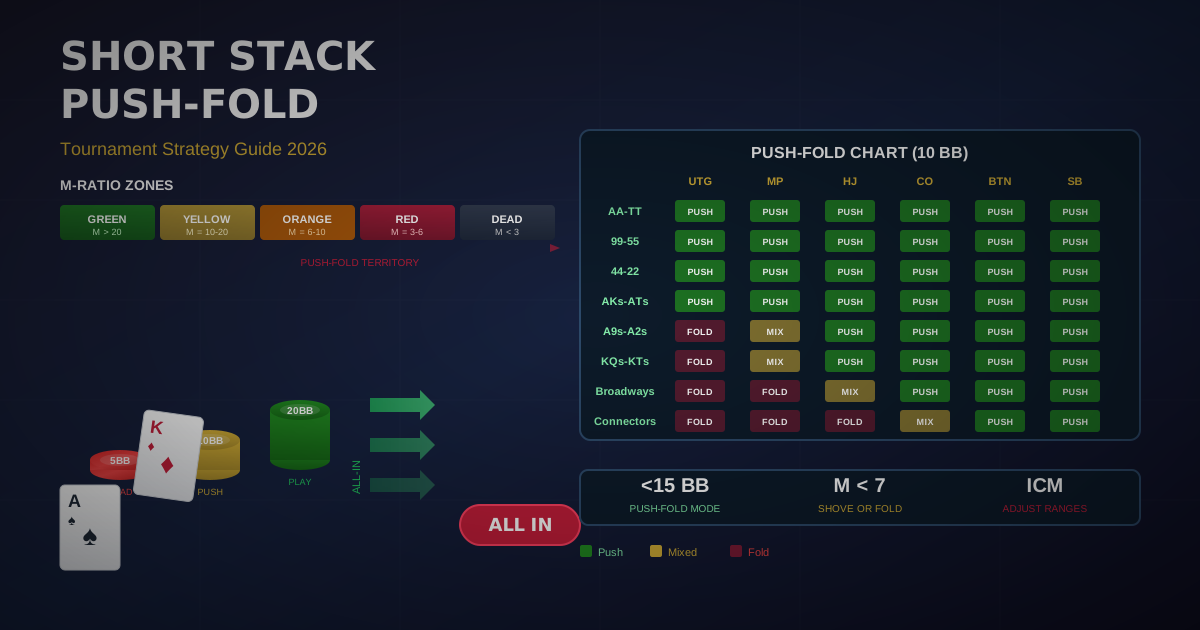
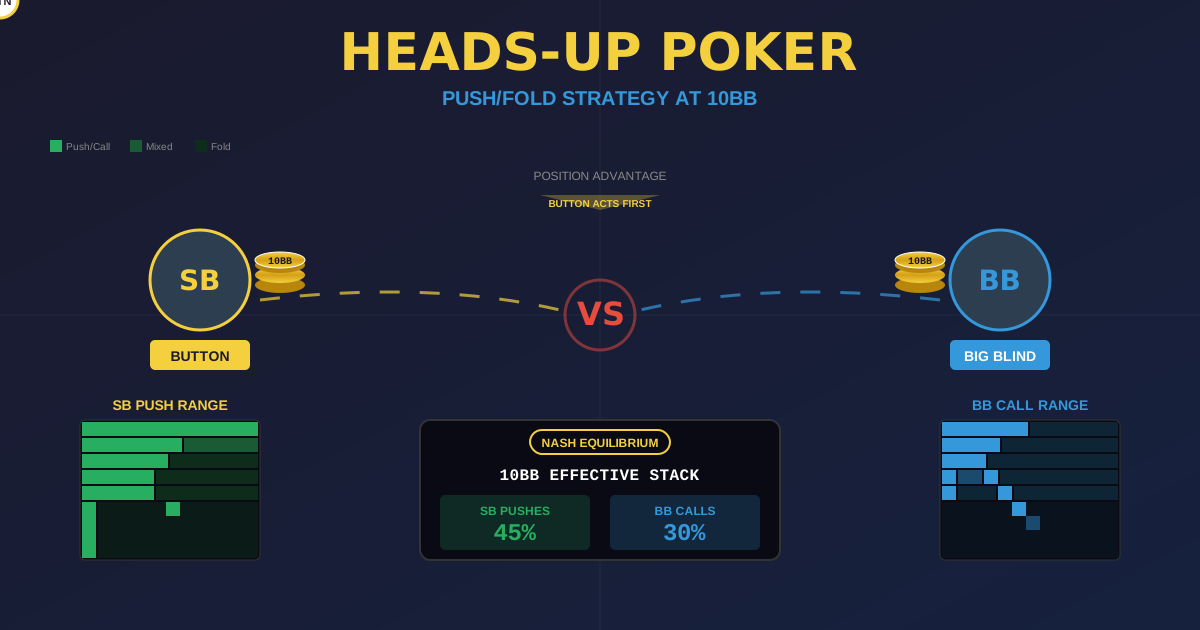
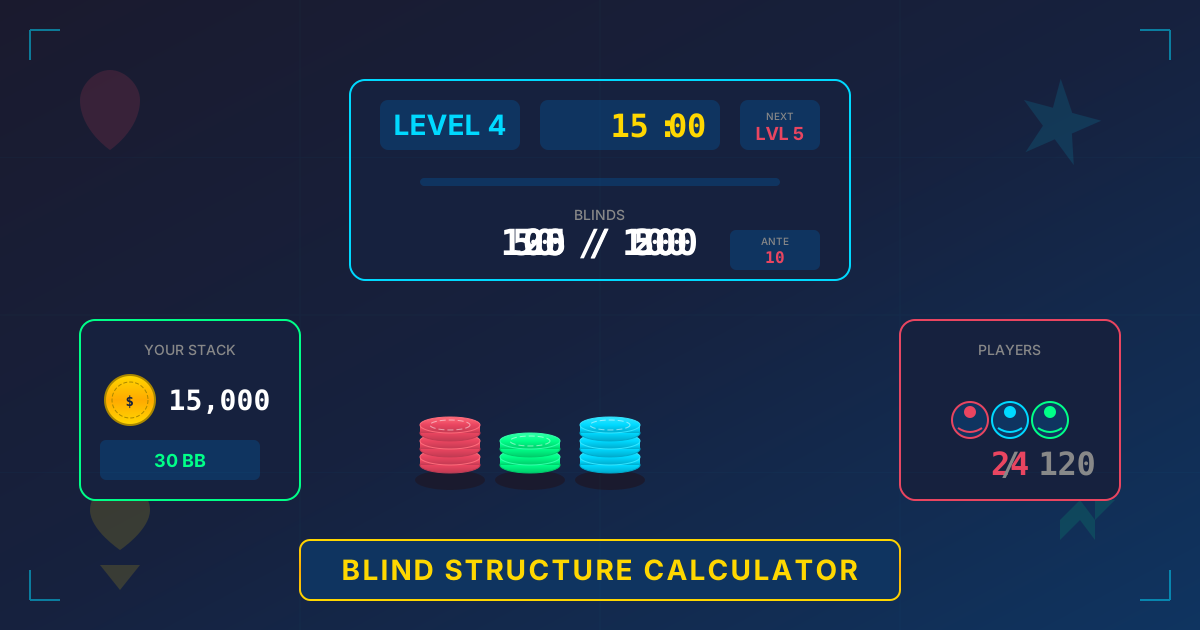
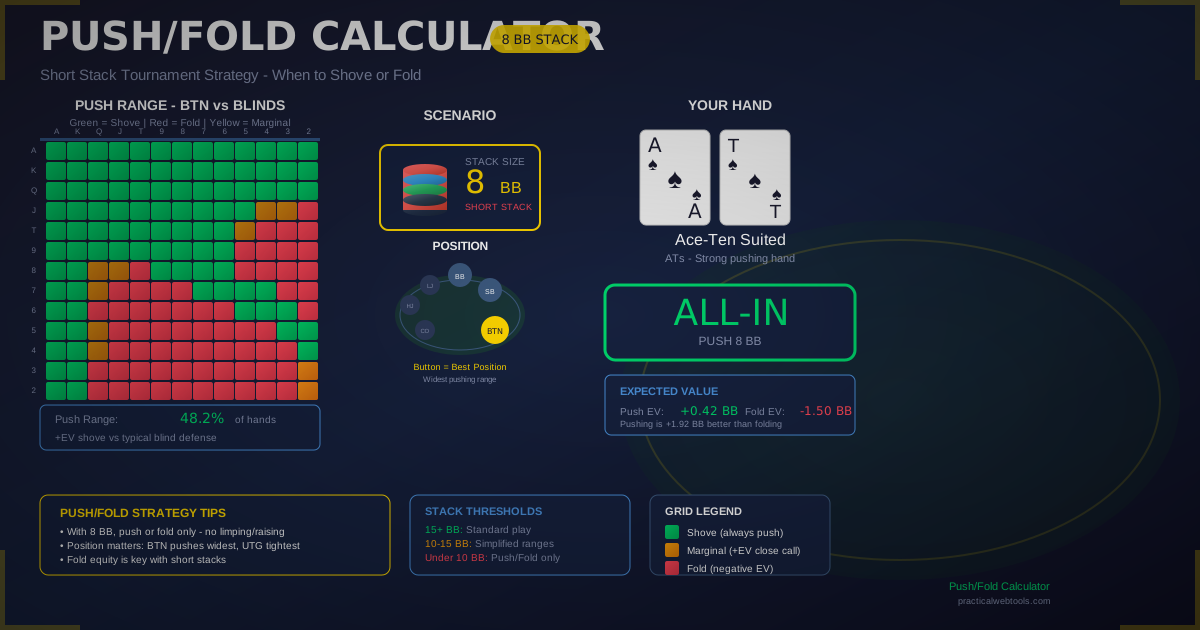
When your stack falls below 15 big blinds, standard poker strategy breaks down. Open-raising to 2.5x and then folding to a 3-bet is catastrophic because you are investing 25%+ of your stack without seeing a flop. The correct short-stack strategy is binary: push all-in or fold. There is no middle ground.
Push/Fold Ranges by Stack Size and Position
The following table provides approximate push ranges (percentage of hands to shove) based on stack size and position in a 9-handed game with antes:
| Position | 15 BB | 12 BB | 10 BB | 8 BB | 5 BB |
|---|---|---|---|---|---|
| UTG | 8% | 10% | 12% | 15% | 20% |
| UTG+1 | 9% | 11% | 13% | 16% | 22% |
| Hijack | 14% | 17% | 20% | 25% | 35% |
| Cutoff | 20% | 25% | 30% | 38% | 48% |
| Button | 30% | 38% | 45% | 52% | 60% |
| Small Blind | 35% | 42% | 50% | 58% | 70% |
These ranges widen further when antes are larger, when you are past the bubble, and when the players behind you are tight.
Push/Fold Adjustments for ICM
On the bubble, your push/fold ranges should tighten compared to the chart above. The exact adjustment depends on:
- Your ICM risk premium: Higher risk premium = tighter shoving range
- Stack sizes behind you: If a player behind you is shorter and likely to bust soon, tighten up and let them go first
- Payout proximity: The closer you are to a significant pay jump, the tighter you should shove
Get exact push/fold ranges for your specific situation with our Push/Fold Calculator.
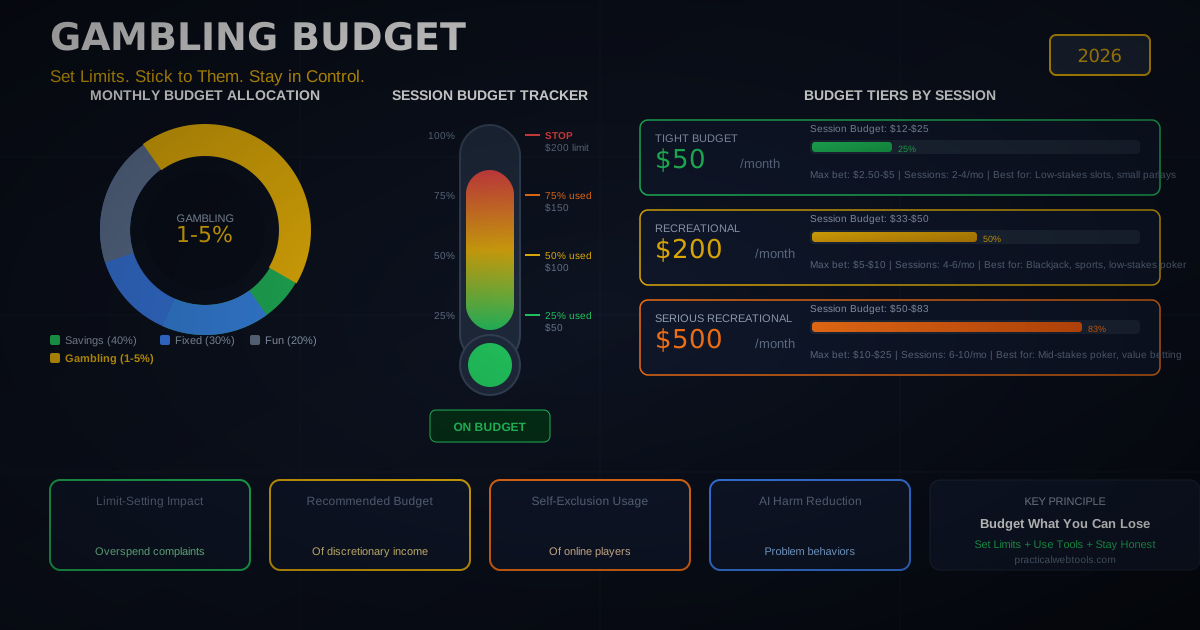
Bankroll Management for MTT Players
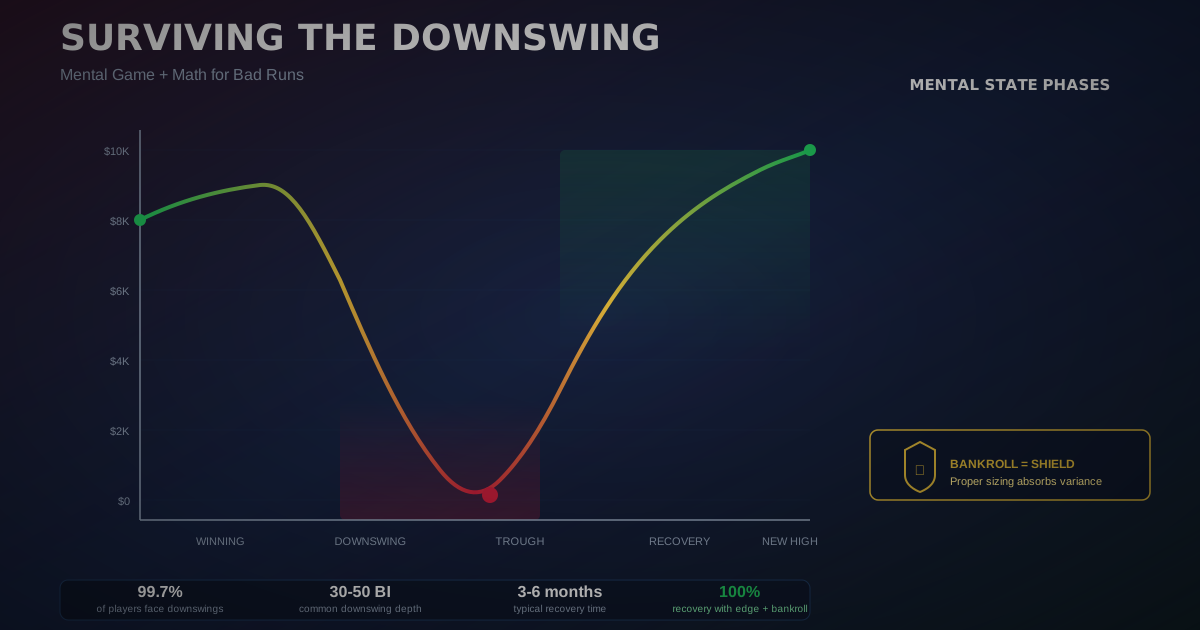
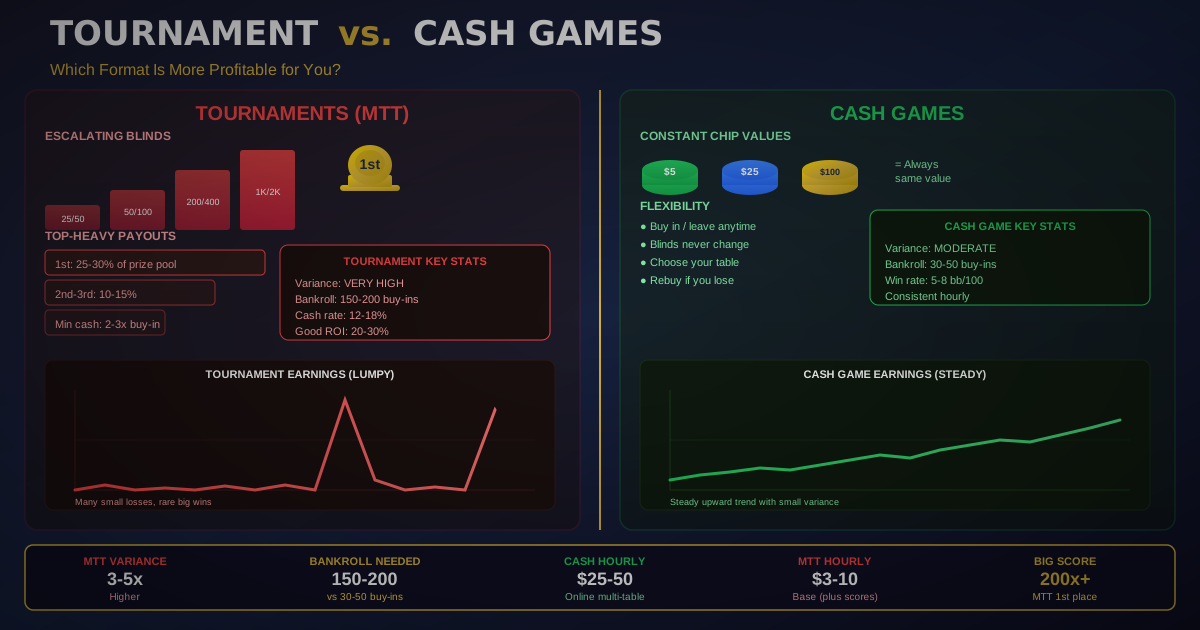
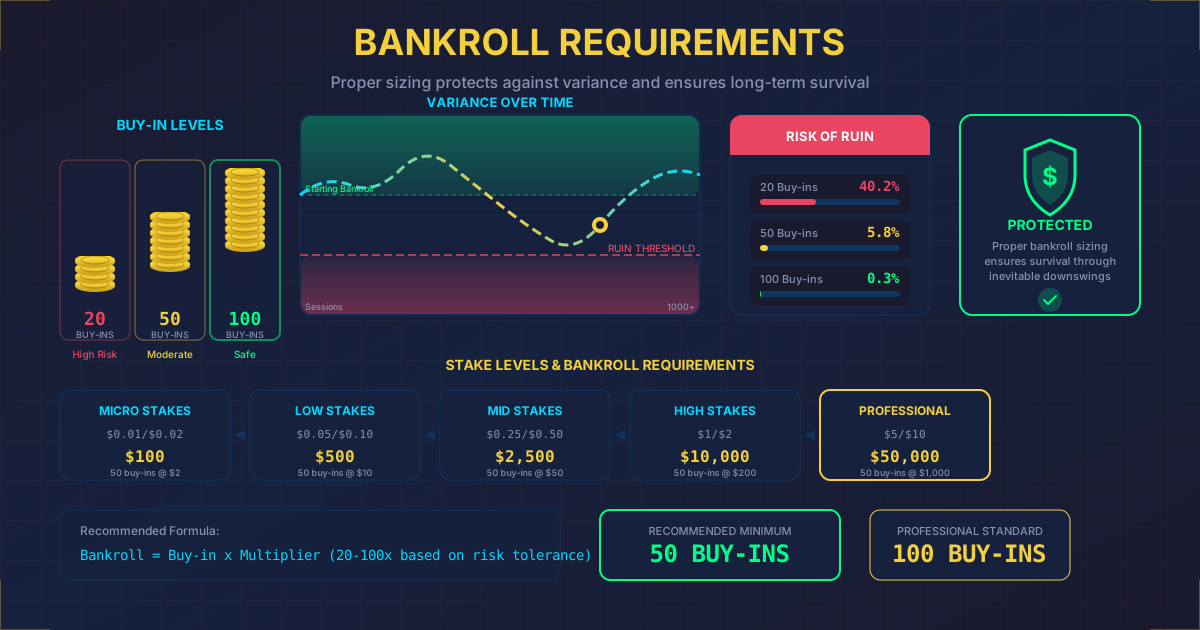
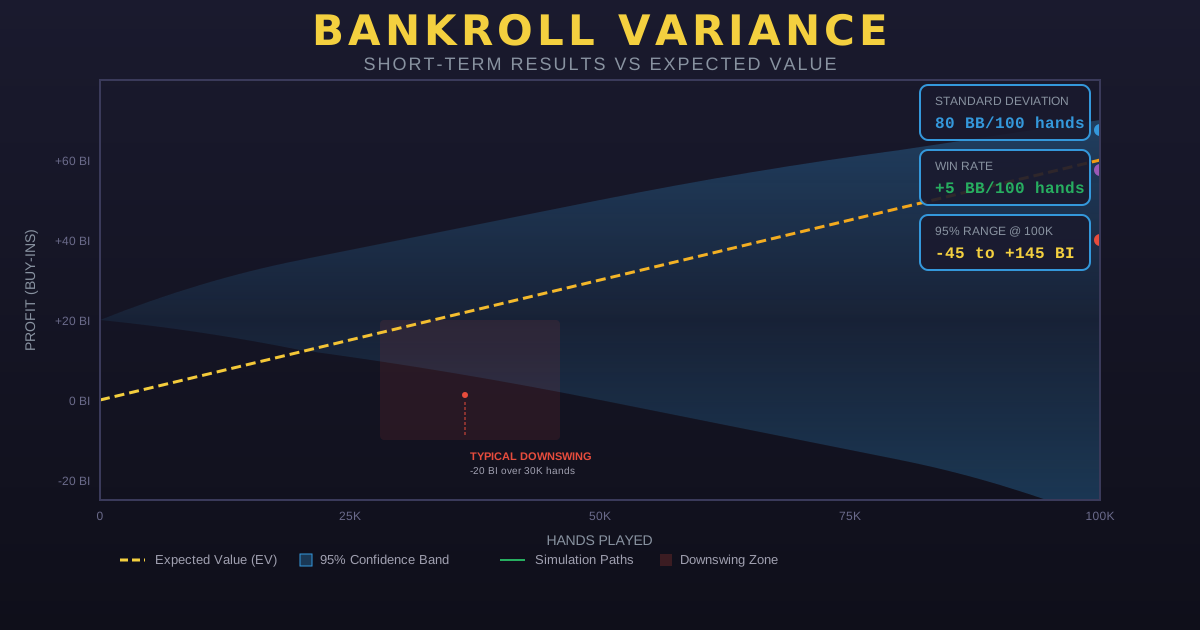
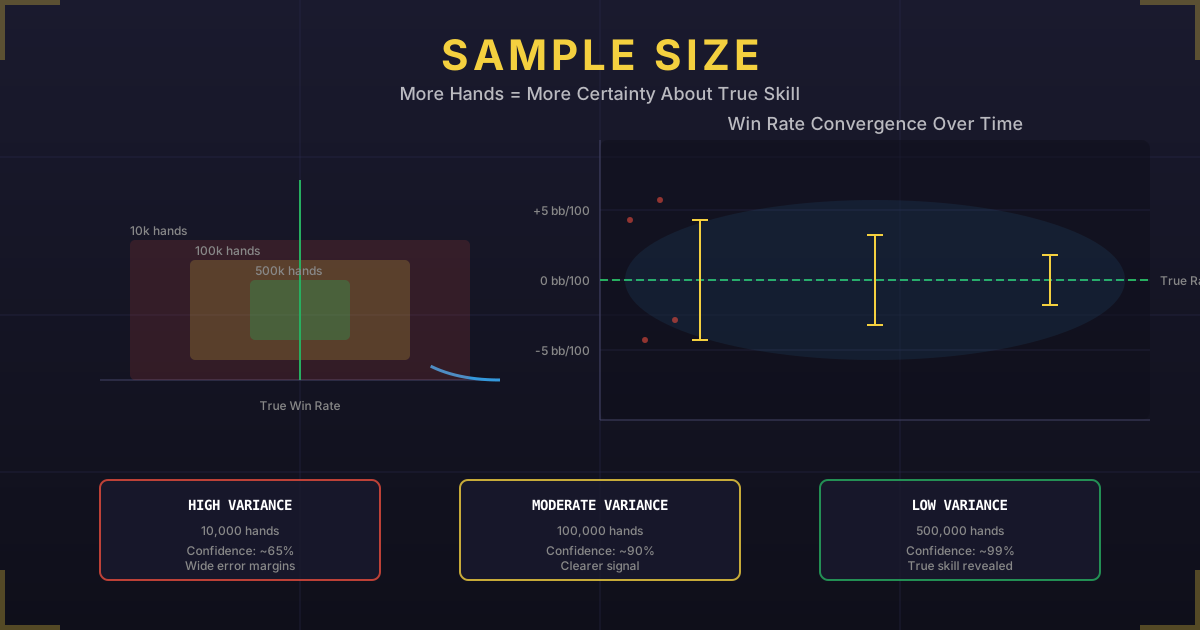
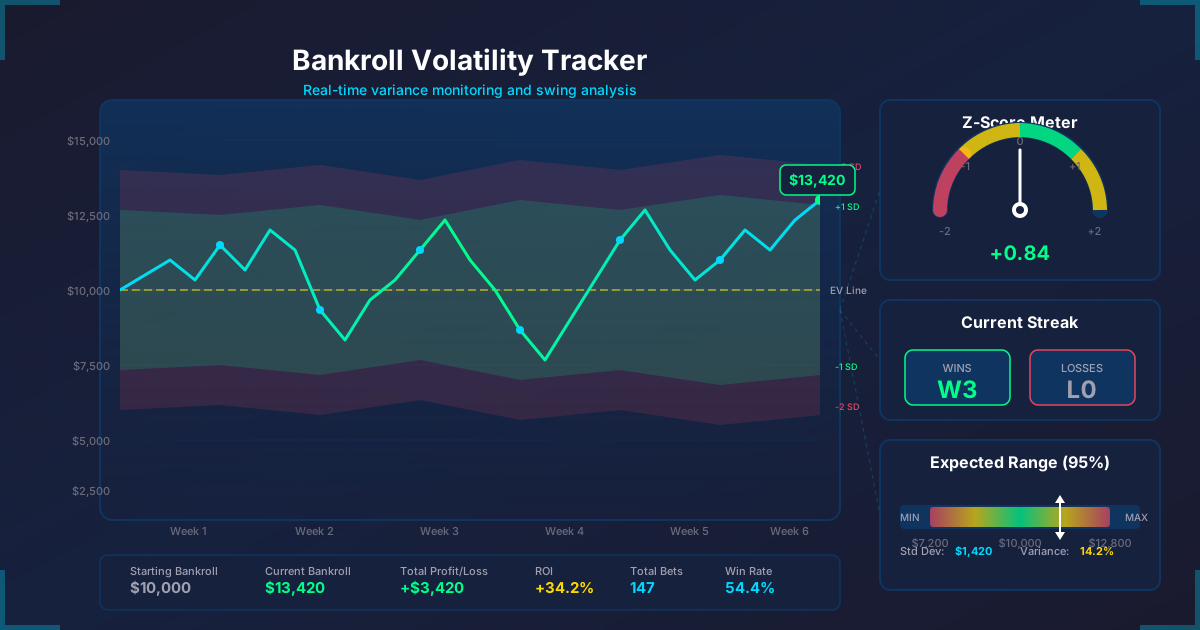
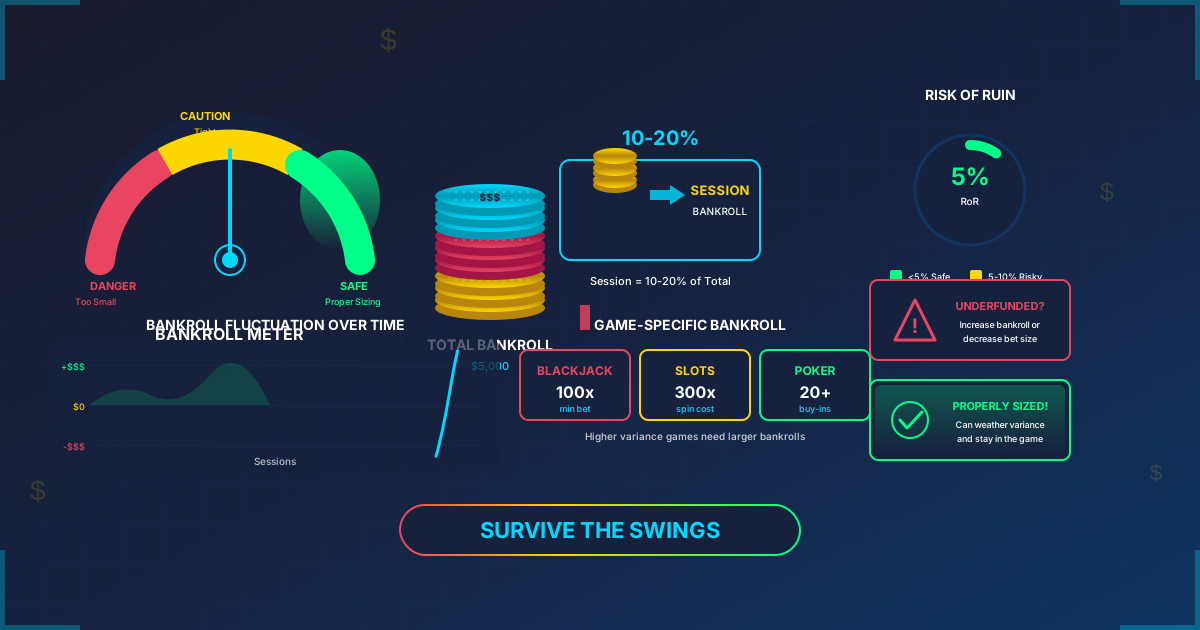
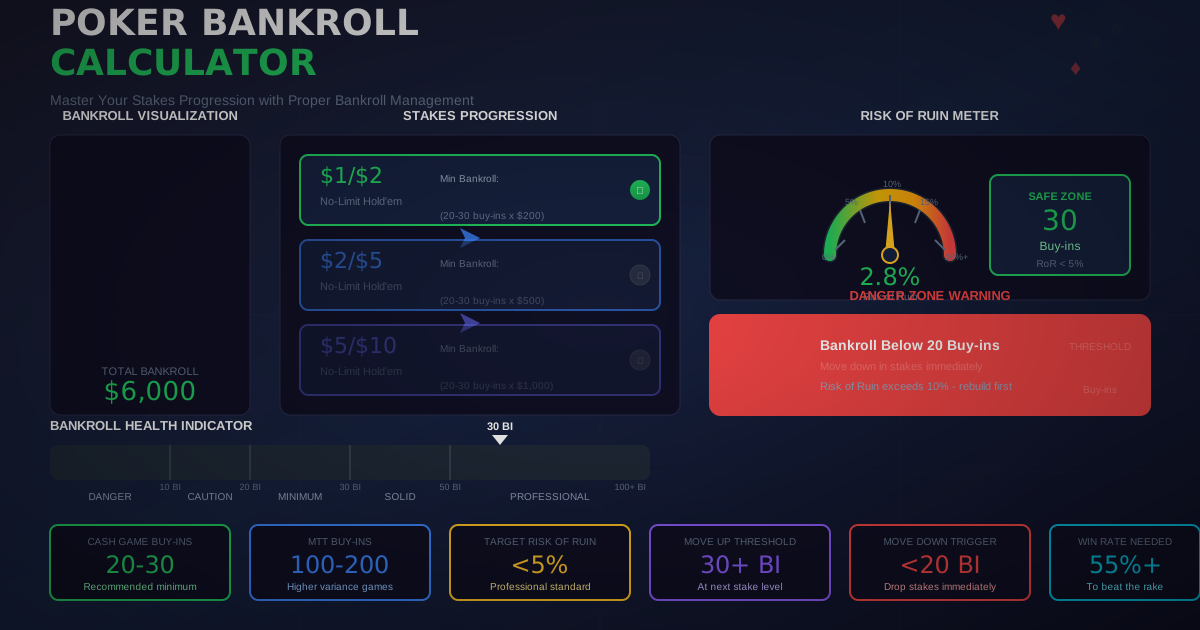
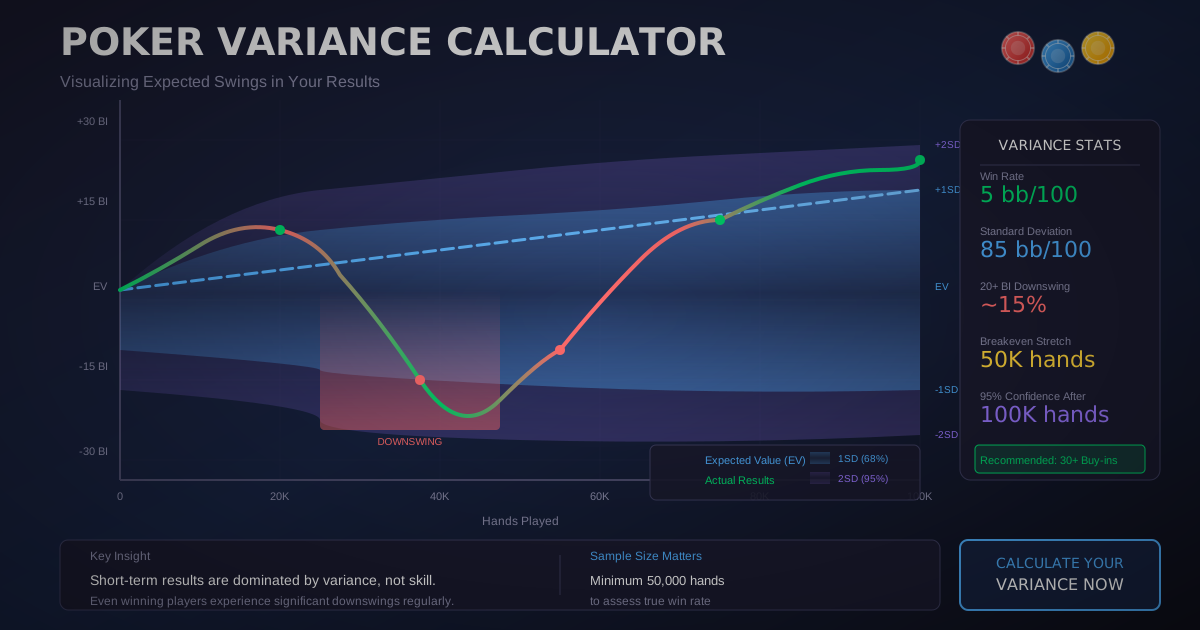
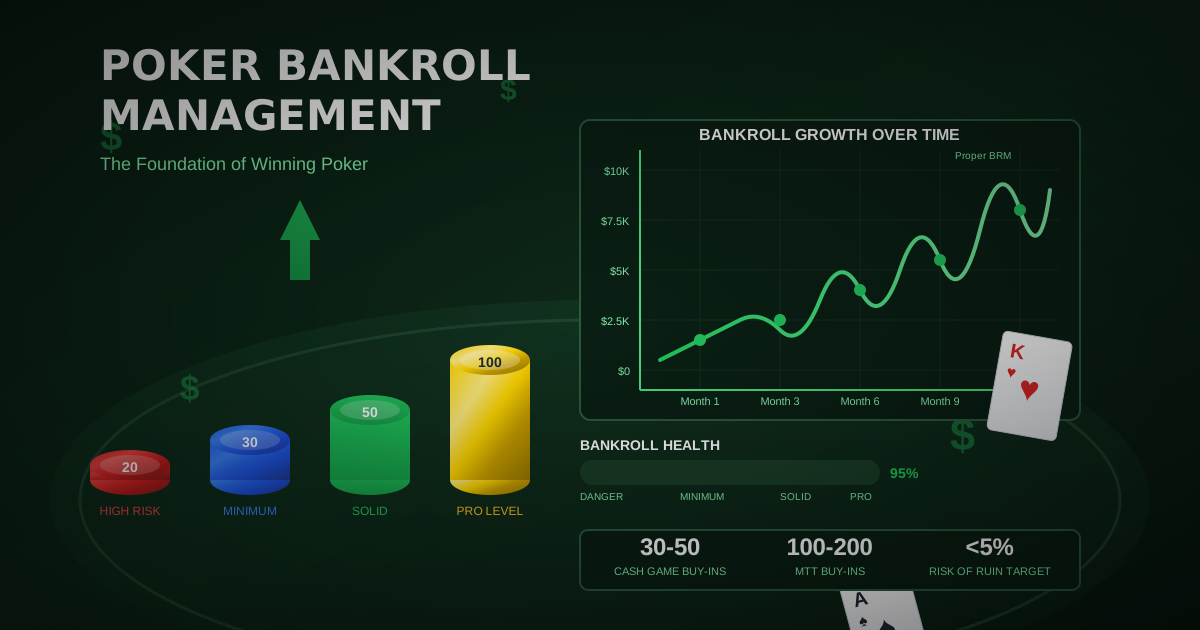
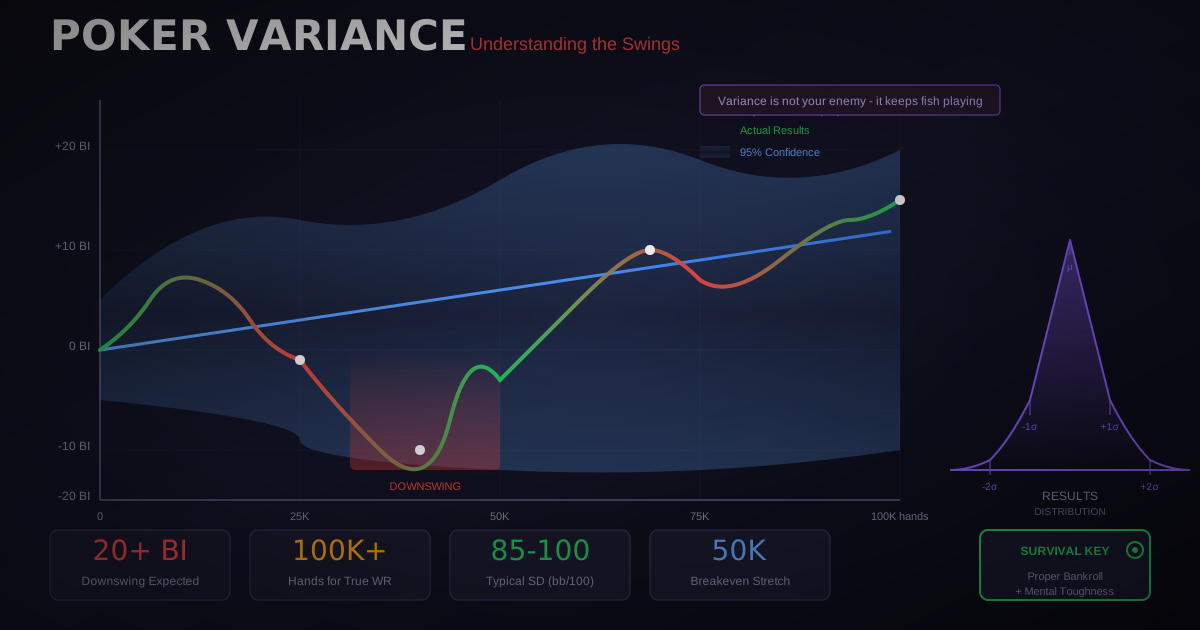
Tournament poker has the highest variance of any poker format. Winning players can and do experience 200+ buy-in downswings over thousands of events. Proper bankroll management is not optional--it is the difference between a sustainable career and going broke.
Recommended Bankroll Requirements
| Tournament Type | Field Size | Recommended Buy-Ins in Bankroll | Risk of Ruin |
|---|---|---|---|
| Single-table SNG (9 players) | 9 | 50 buy-ins | ~1% |
| Multi-table SNG (45 players) | 45 | 100 buy-ins | ~1% |
| Online MTT (small field) | 100-500 | 100-150 buy-ins | ~2% |
| Online MTT (medium field) | 500-2,000 | 150-200 buy-ins | ~2% |
| Online MTT (large field) | 2,000-10,000 | 200-300 buy-ins | ~2% |
| Live MTT (small field) | 100-500 | 80-120 buy-ins | ~2% |
| Sunday Major (5,000+ entries) | 5,000+ | 250-400 buy-ins | ~1% |
Why MTTs Require Larger Bankrolls
Three factors drive the extreme variance:
- Low cash frequencies. You cash in roughly 15-20% of MTTs. That means 80-85% of the time, you leave with nothing.
- Top-heavy payouts. Most of your profit comes from deep runs and final tables, which happen infrequently.
- Large fields. In a 5,000-player MTT, even a highly skilled player wins less than 1% of the time. The expected value comes from deep runs that occur sporadically.
Practical Bankroll Tips
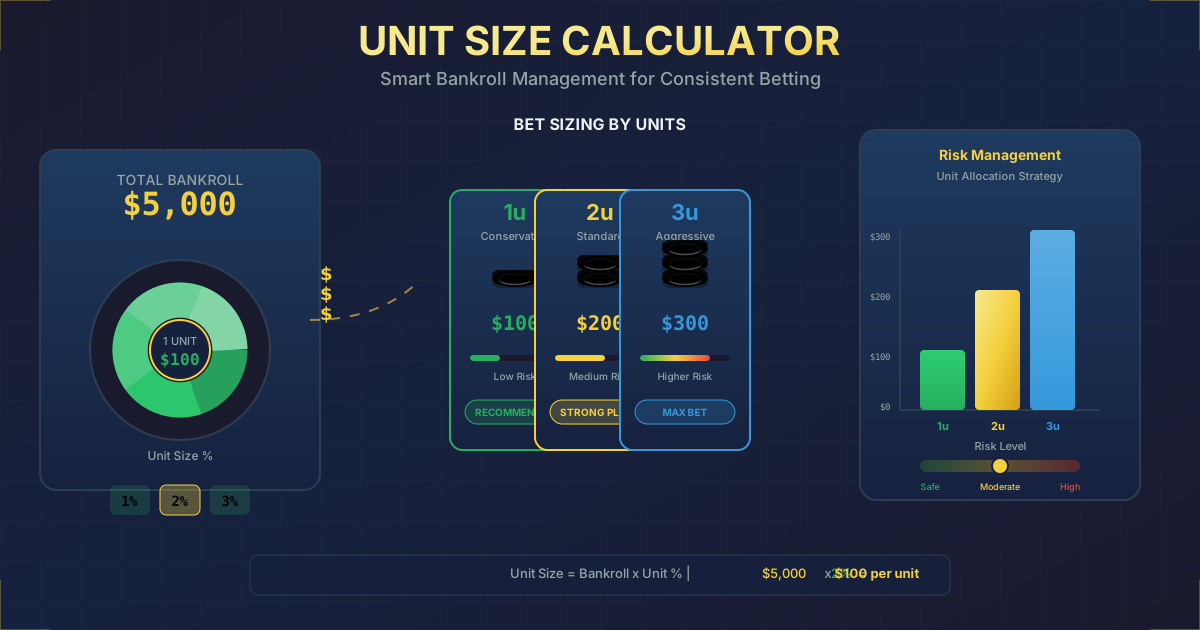
- Never invest more than 2% of your bankroll in a single event. If your bankroll is $5,000, your maximum buy-in should be $100.
- Move down stakes immediately when your bankroll shrinks. Do not try to "win it back" at the same level.
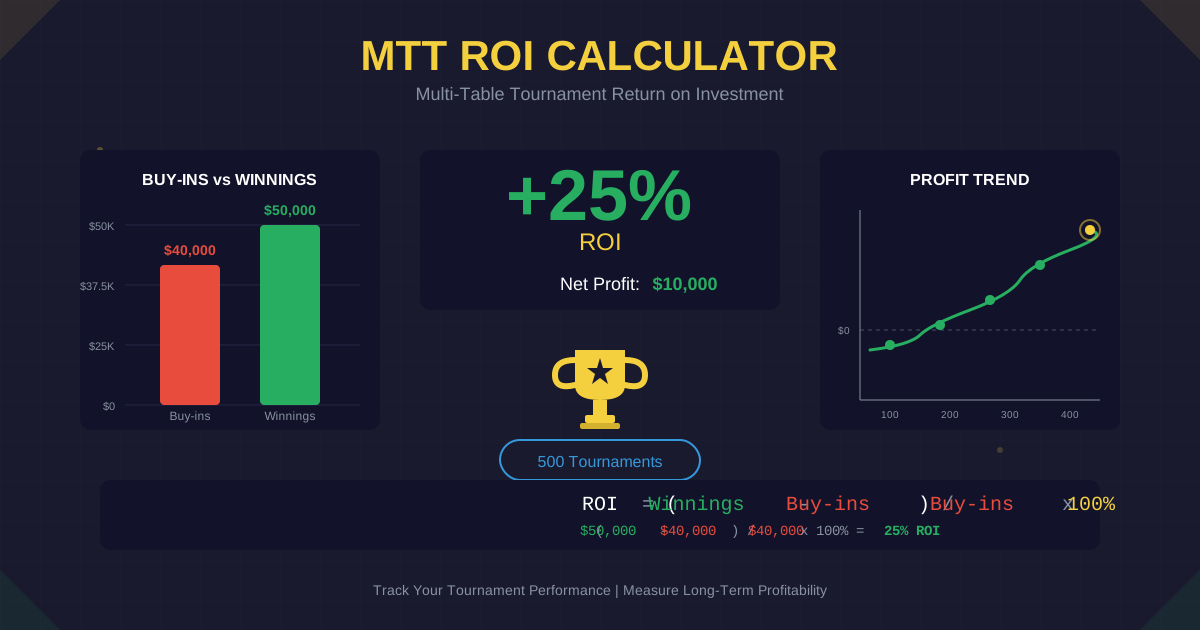
- Track your results meticulously. Use a spreadsheet or tracker to monitor your ROI, ITM percentage, and average finish position over at least 500 tournaments before drawing conclusions.
- Separate poker money from personal money. Your bankroll is a business tool, not spending money.
Calculate your exact bankroll requirements based on your win rate, field sizes, and risk tolerance with our Poker Bankroll Requirements Calculator.
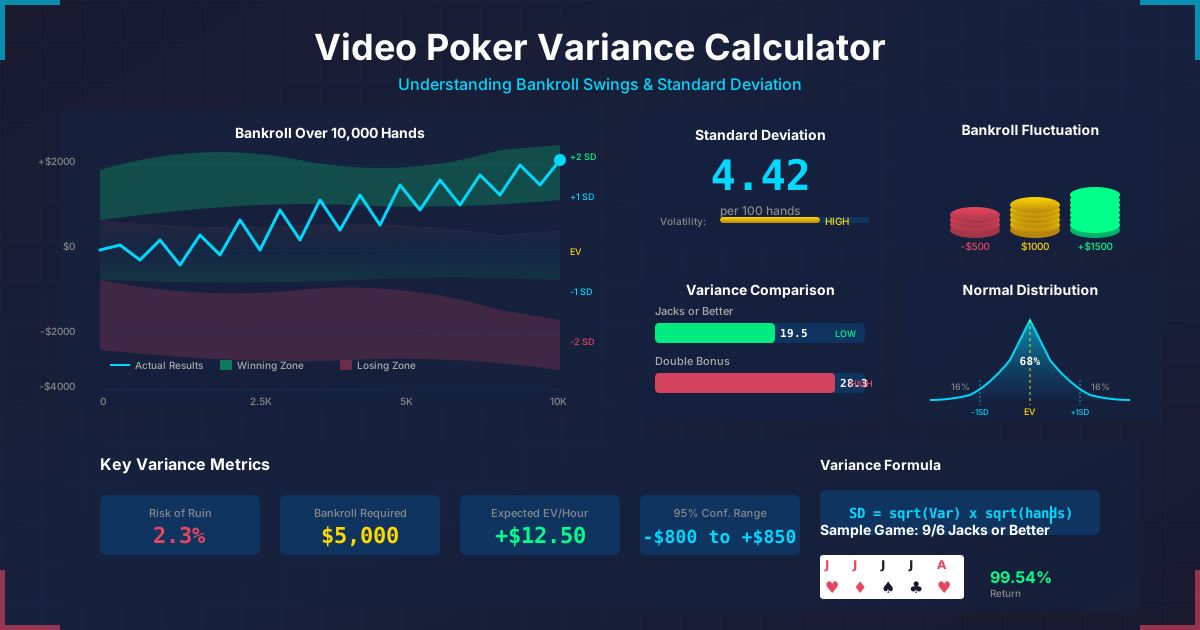
Model your expected variance across hundreds or thousands of tournaments with our Poker Variance Calculator.
Online vs. Live Tournament Differences
The fundamental strategies covered in this guide apply to both online and live MTTs, but several practical differences affect how you implement them.
Online MTT Characteristics
- Faster blind levels (typically 8-15 minutes per level vs. 30-60 minutes live)
- More hands per hour (60-80 online vs. 25-30 live)
- Larger fields (1,000-10,000+ entries are common)
- More aggressive population due to solver-trained opponents and HUD usage
- Multi-tabling allows volume that is impossible live
- Shorter average stacks because faster blinds compress play into push/fold territory sooner
Live MTT Characteristics
- Deeper stacks for longer due to slower structures
- More post-flop play with time to think through complex decisions
- Physical tells provide additional information not available online
- Weaker average opponents in most buy-in ranges
- Higher rake relative to online events
- Travel and lodging costs add to the effective buy-in
Strategic Adjustments
- Online: Lean more toward GTO because you face tougher, more balanced opponents. Study solver outputs and build systematic pre-flop charts.
- Live: Lean more toward exploitation because recreational players make larger, more predictable mistakes. Pay attention to physical tells, betting patterns, and emotional states.
- Online push/fold zones arrive faster. Be prepared to play push/fold poker at higher stack depths online because the blinds escalate more rapidly.
- Live tournaments reward patience. The slower structure gives you more time to wait for spots, so you can play tighter in the early levels without bleeding as many chips.
Common MTT Mistakes and How to Fix Them
Even experienced players make systematic errors in tournaments. Here are the most costly mistakes and their corrections:
1. Playing Too Tight in the Middle Stages
The mistake: Waiting for premium hands while blinds and antes eat your stack from 50 BB to 20 BB.
The fix: When your stack is 25-50 BB, you should be opening 20-30% of hands from the Hijack and later positions. Stealing blinds and antes is how you stay alive. If you fold your way to 15 BB, you have lost all post-flop leverage and are reduced to push/fold mode.
2. Ignoring ICM on the Bubble
The mistake: Playing the bubble like a cash game--calling all-ins with "mathematically correct" pot odds without factoring in the value of surviving to cash.
The fix: Study ICM concepts. On the bubble, the chips you risk are worth more than the chips you stand to gain. A hand that is a profitable call in a cash game can be a significant ICM mistake on the bubble.
3. Failing to Adjust to Stack Sizes
The mistake: Using the same opening size and strategy whether you have 80 BB or 20 BB.
The fix: Your entire pre-flop strategy should change as your stack shrinks. At 40+ BB, you can open to 2.2-2.5x with a wide range. At 20-30 BB, you should be mixing opens and shoves. Below 15 BB, pure push/fold.
4. Overvaluing Survival at the Final Table
The mistake: Folding into pay jumps without considering that the biggest prizes go to the winner.
The fix: While ICM demands tightening in certain spots, laddering from 7th to 6th at the expense of chip accumulation that could lead to a win is often a losing long-term strategy. The final table is about balancing survival against the need to build a stack that can win.
5. Tilting After Bad Beats
The mistake: Losing a flip or getting outdrawn and then playing recklessly for the next 10-20 hands.
The fix: Accept that variance is a fundamental part of tournament poker. You will lose 45% of your all-in flips. You will get two-outed on the river. The edge comes from playing correctly despite the outcomes. Take a breath, refocus, and play the next hand optimally.
6. Neglecting Position
The mistake: Playing the same hands from UTG as from the Button.
The fix: Position is amplified in tournaments because mistakes are not recoverable. A hand like KJo is a clear fold from UTG at a 9-handed table but a standard open from the Button. Memorize position-based opening ranges and follow them strictly.
7. Not Studying Away from the Table
The mistake: Only learning poker while playing.
The fix: Review your hand histories, study push/fold charts, run ICM scenarios in calculators, and analyze close decisions. The best tournament players spend as much time studying as they do playing.
Frequently Asked Questions
What is the best MTT poker strategy for beginners? Start with a tight-aggressive approach: play fewer hands than your opponents but play them aggressively. Focus on premium hands (top 15% from early position, top 25-30% from late position), always raise rather than limp, and learn basic push/fold strategy for when your stack drops below 15 big blinds. As you gain experience, gradually widen your ranges and add re-steals and post-flop bluffs to your game. Use our Push/Fold Calculator to master short-stack play.
How many buy-ins do I need in my bankroll for MTTs? The standard recommendation for serious MTT players is 100-200 buy-ins for online events and 80-120 buy-ins for live events. Large-field online tournaments (2,000+ entries) require the higher end of this range because variance is extreme--downswings of 100+ buy-ins are normal even for winning players. Use our Poker Bankroll Requirements Calculator to determine your specific number based on field size, ROI, and risk tolerance.
When should I switch from regular play to push/fold mode? Switch to push/fold when your stack drops below 15 big blinds. At this depth, open-raising and folding to a 3-bet wastes too large a percentage of your stack. Some players extend this threshold to 20 BB in turbo or hyper-turbo formats where blind levels increase rapidly. The key indicator is whether you can afford to open-raise and still fold comfortably--if losing a 2.5x open represents more than 15% of your stack, push/fold is likely more profitable.
How does ICM affect my tournament strategy? ICM (Independent Chip Model) changes your strategy by making risk more expensive. Near pay jumps--especially the bubble and the final table--the chips you might lose are worth more in real dollars than the chips you might gain. This means you should tighten your calling and shoving ranges compared to what a pure chip-EV calculation suggests. The effect is strongest for medium stacks on the bubble and weakest for chip leaders and very short stacks. Use our ICM Calculator to model specific scenarios.
Should I play GTO or exploitative in tournaments? Use a hybrid approach. Start with a GTO-grounded baseline so your strategy is unexploitable by default. Then make targeted exploitative adjustments when you have reliable reads on specific opponents. Against unknown players in large online fields, lean toward GTO. Against recreational players in live events, lean toward exploitation. The key is having a solid foundation that you can deviate from when opportunities arise, not choosing one approach exclusively.
What is the biggest difference between online and live MTT strategy? The biggest difference is pace. Online MTTs have faster blind levels and more hands per hour, which compresses the tournament and forces push/fold situations earlier. You need more aggressive accumulation in the middle stages online because you have less time before stacks become shallow. Live MTTs have slower structures that reward patience and post-flop play. Additionally, online fields are typically tougher (more solver-influenced players), while live fields tend to include more recreational players who make exploitable mistakes.
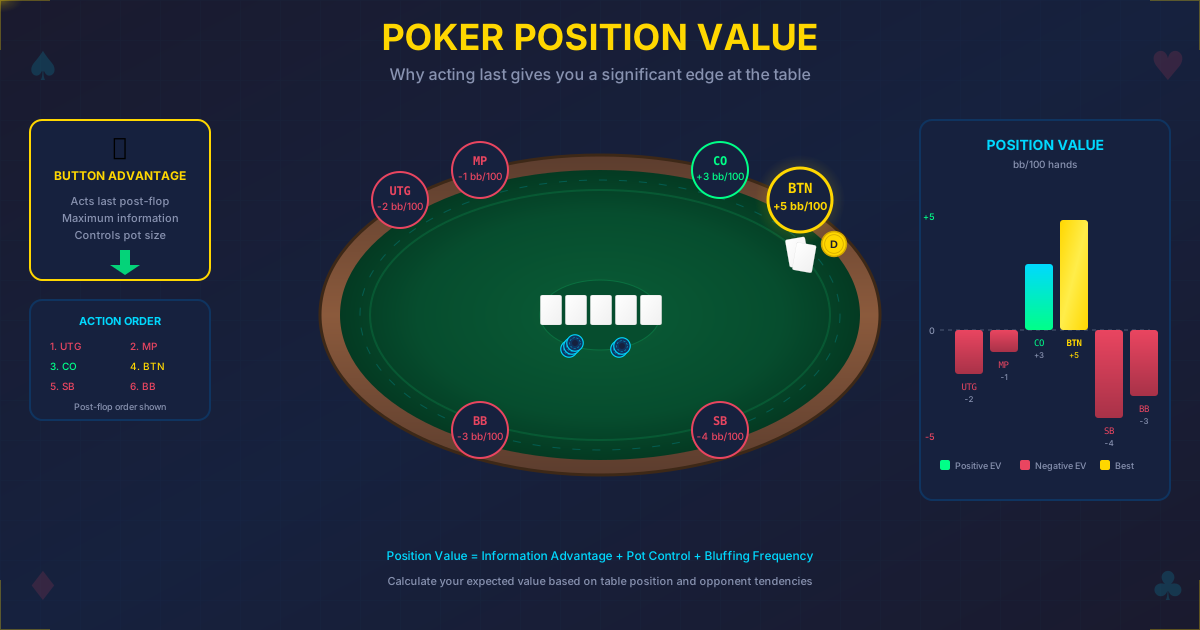
How important is table position in MTT play? Position is the single most important non-card factor in tournament poker. Acting last gives you more information, more control over pot size, and more bluffing opportunities. Across a tournament, a player who opens 25% of hands from the Button will generate significantly more profit than a player who opens 25% from UTG. Build your entire pre-flop strategy around position: tight from early, progressively wider as you move toward the Button.
What is the optimal bet sizing in different tournament stages? Optimal sizing changes with stack depth. In early stages (100+ BB), open to 2.2-2.5x and use varied post-flop sizes. In middle stages (30-60 BB), open to 2.0-2.2x to risk less when stealing. With 20-30 BB, min-raises (2x) or shoves are your two options. Below 15 BB, shove or fold--no raising. Post-flop, use 25-33% pot c-bets on dry boards and 50-75% on wet boards. At final tables, smaller bet sizes exploit ICM pressure because opponents face amplified consequences from calling.
Essential Tools for MTT Success
Build your tournament strategy with these free calculators:
- ICM Calculator -- Convert chip stacks to real dollar equity at any tournament stage
- Push/Fold Calculator -- Get exact push/fold ranges based on stack size, position, and opponent tendencies
- Poker Equity Calculator -- Calculate hand vs. hand and hand vs. range equity for pre-flop and post-flop decisions
- Poker EV Calculator -- Determine the expected value of any tournament decision
- Poker Fold Equity Calculator -- Quantify how often opponents need to fold for your bluffs and shoves to be profitable
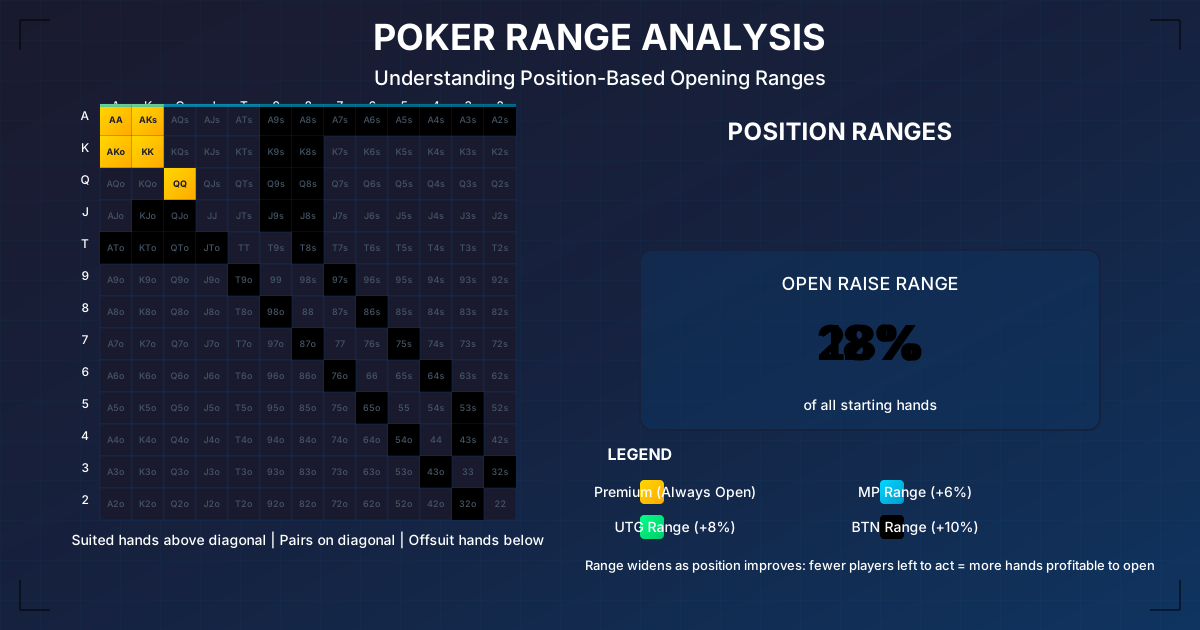
- Poker Hand Range Calculator -- Build and visualize opening, calling, and 3-betting ranges for every position
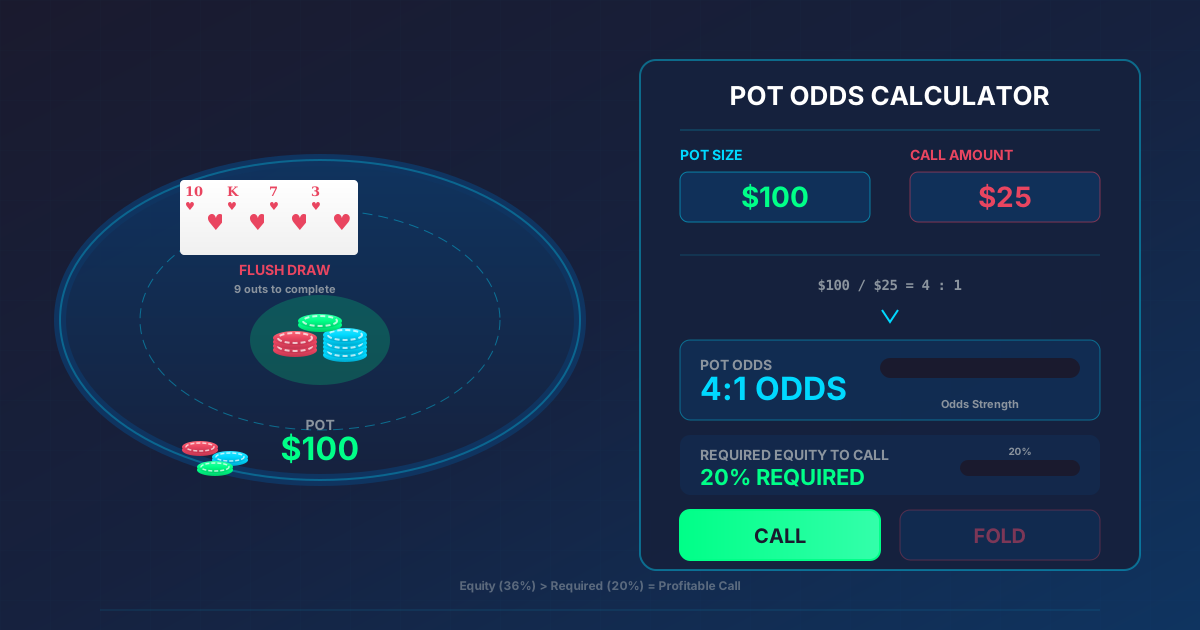
- Pot Odds Calculator -- Quickly determine whether a call is mathematically justified based on pot odds and equity
- Poker Variance Calculator -- Model your expected swings across hundreds of tournaments to set realistic expectations
- Poker Bankroll Requirements Calculator -- Calculate exactly how many buy-ins you need for your tournament schedule
Conclusion: The MTT Player's Edge
Tournament poker rewards the prepared. The player who understands early-stage patience, middle-stage aggression, bubble ICM dynamics, final-table pay jump awareness, and heads-up warfare will consistently outperform opponents who rely on instinct alone.
The key takeaways from this guide:
- Treat each stage as a distinct game with its own optimal approach to hand selection, aggression, and risk tolerance.
- Master ICM so you understand when folding strong hands is correct and when applying pressure is worth thousands in equity.
- Learn push/fold charts so your short-stack play is mathematically optimal rather than guesswork.
- Manage your bankroll with enough buy-ins to survive the inevitable downswings without going broke.
- Study away from the table using calculators, hand reviews, and strategic analysis to continuously improve.
The best tournament players in the world are not lucky--they are disciplined, prepared, and relentless in their pursuit of +EV decisions across every stage of play. You can be too.
Start refining your MTT strategy today with our free ICM Calculator and Push/Fold Calculator. Input your recent tournament situations, compare your decisions to optimal play, and identify the leaks that are costing you money.
Gambling involves risk. This content is for educational and informational purposes only. Always gamble responsibly, set limits you can afford, and seek help if gambling becomes a problem. Visit the National Council on Problem Gambling or call 1-800-522-4700 for support.