Sports Betting Bankroll Management: How Much to Bet Per Game (2026)

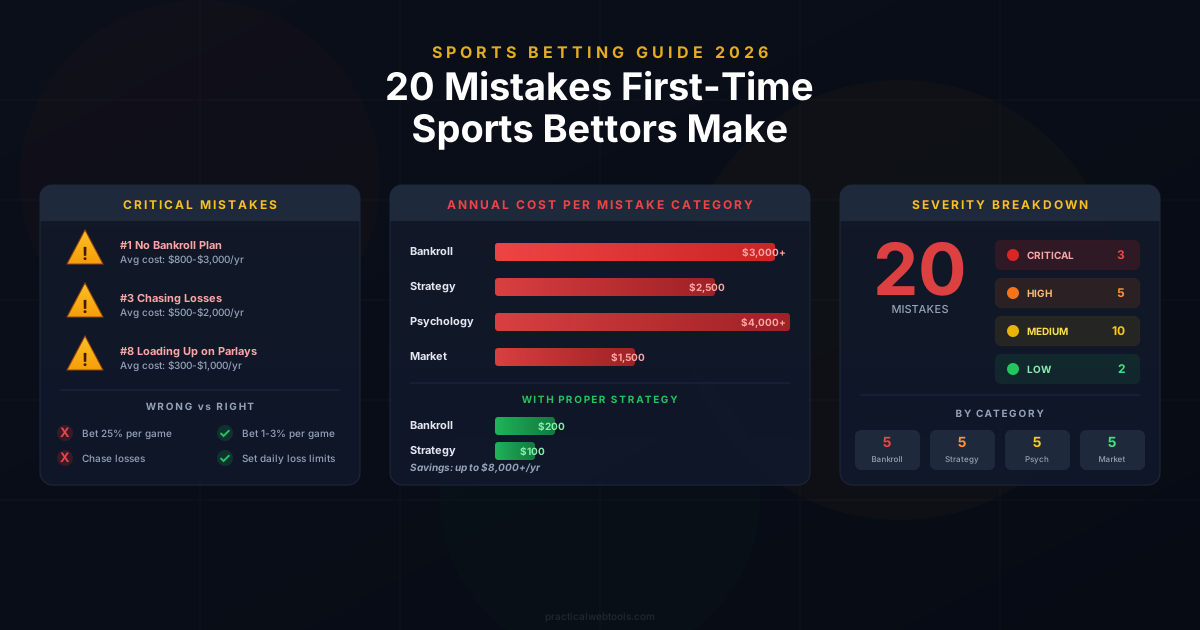
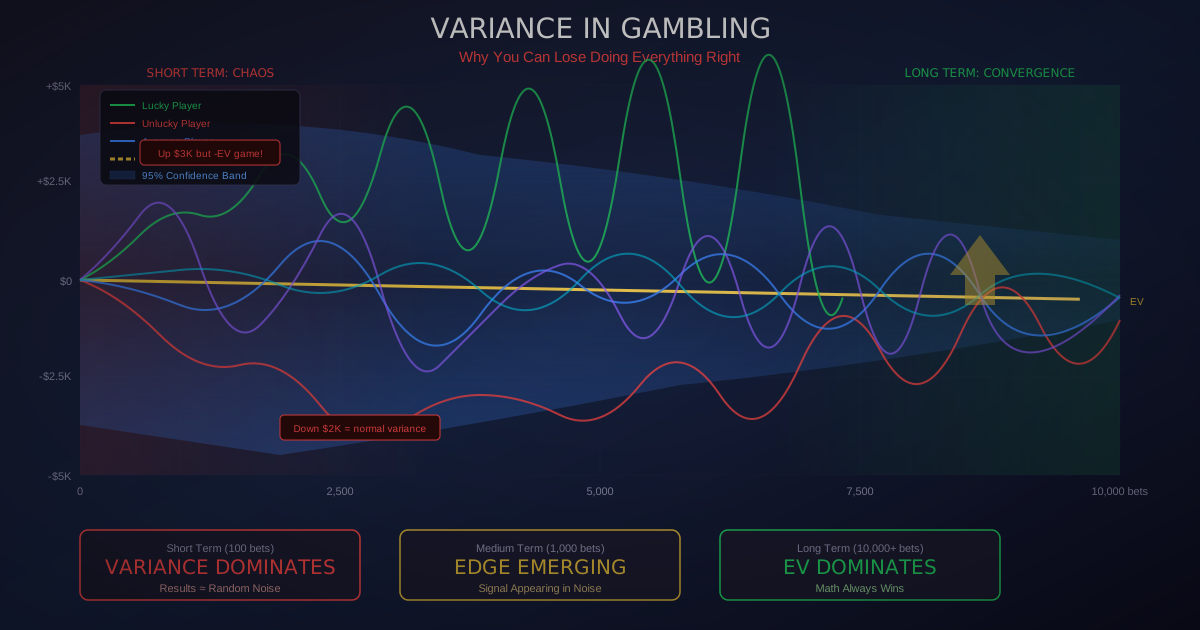
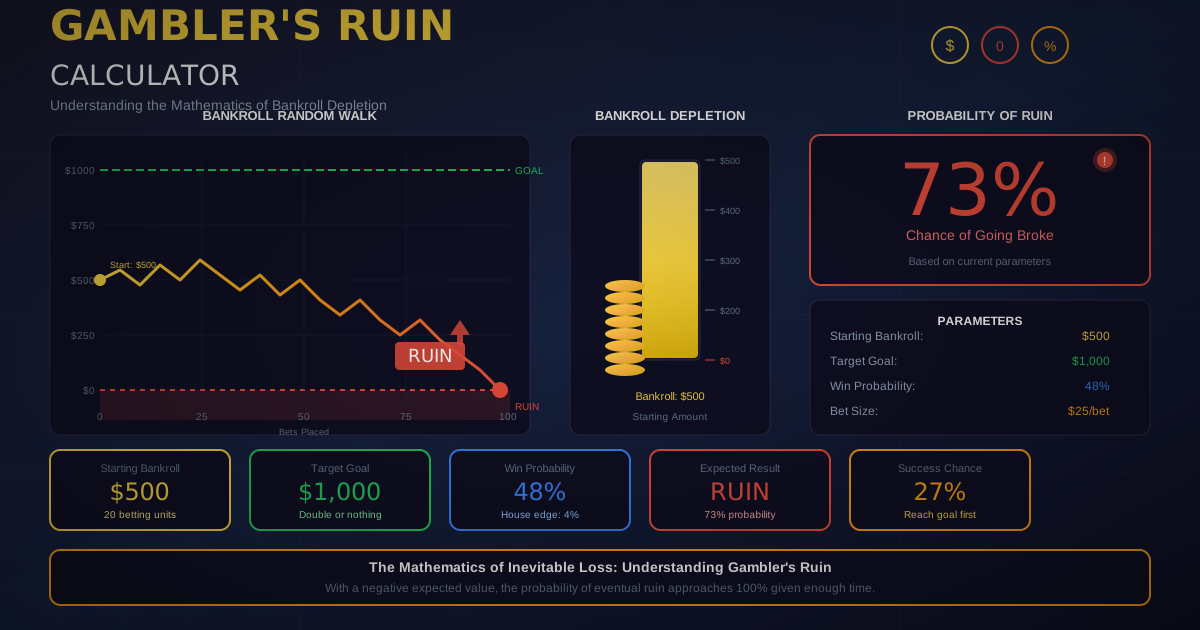
The fastest way to go broke sports betting is not picking the wrong teams. It is betting the wrong amounts. A bettor with a 55% win rate who bets 20% of their bankroll per game will go broke. A bettor with that same 55% win rate who bets 2% per game will build wealth steadily over thousands of bets. The math is unambiguous: bet sizing determines whether your edge compounds into profit or evaporates through variance.
Most sports bettors spend 95% of their time on handicapping and 5% on bankroll management. It should be closer to 50/50. Finding +EV bets is half the battle. Surviving the inevitable losing streaks long enough for your edge to manifest is the other half. This guide gives you the exact formulas, strategies, and frameworks to determine how much to bet per game, when to adjust your unit size, and how to survive the downswings that break undisciplined bettors.
Calculate your optimal bet size for any wager with our free Kelly Criterion Calculator.
Understanding Unit Sizing
What Is a Unit?
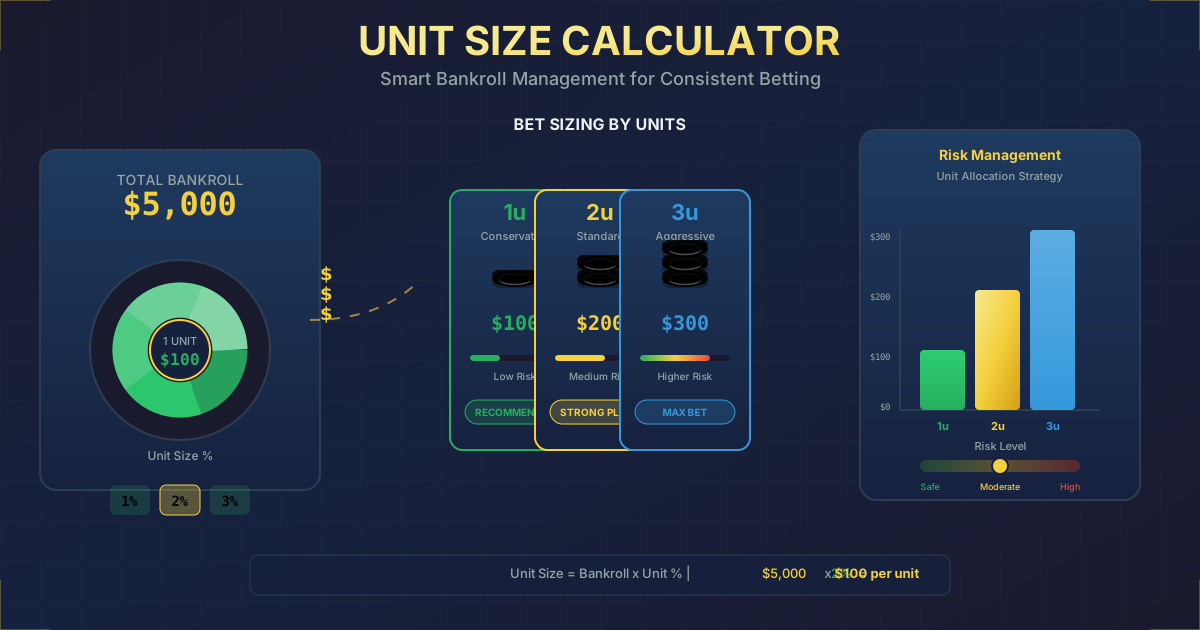
A unit is a standardized bet size expressed as a percentage of your total bankroll. Using units instead of dollar amounts keeps your bet sizing proportional to your bankroll regardless of whether you have $500 or $50,000.
Standard Unit Sizing:
| Risk Level | Unit Size | $1,000 Bankroll | $5,000 Bankroll | $10,000 Bankroll |
|---|---|---|---|---|
| Conservative | 1% | $10 | $50 | $100 |
| Standard | 2% | $20 | $100 | $200 |
| Moderate | 3% | $30 | $150 | $300 |
| Aggressive | 5% | $50 | $250 | $500 |
| Reckless | 10%+ | $100+ | $500+ | $1,000+ |
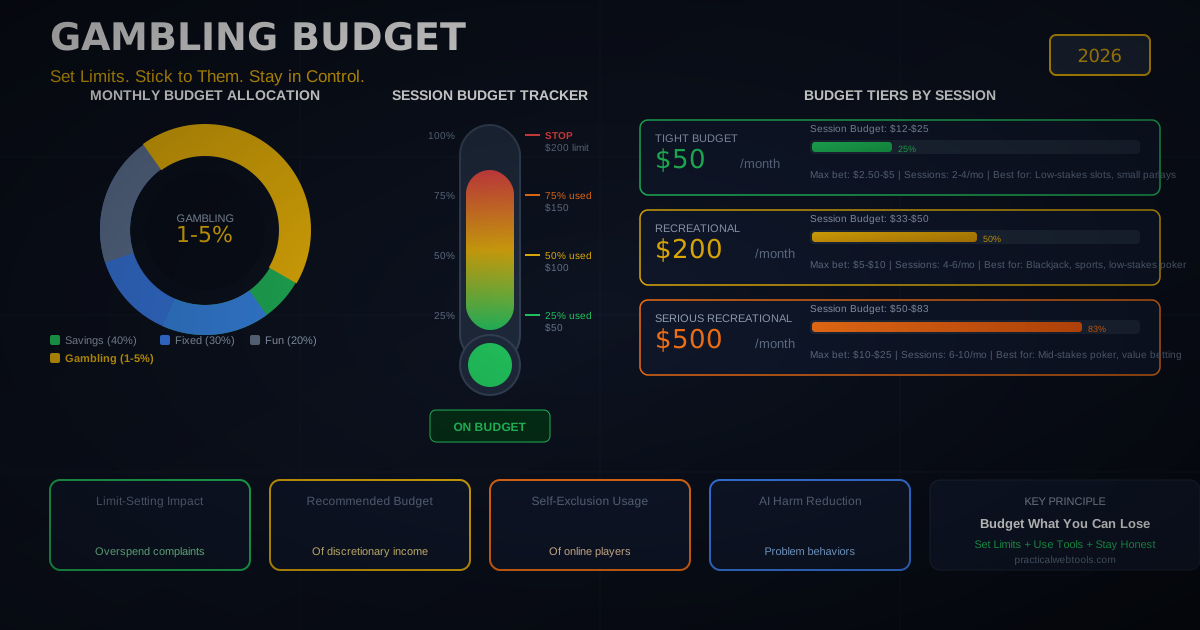
Professional recommendation: 1-2% unit size for most bettors. Even highly skilled bettors with demonstrated edges rarely exceed 3%.
Why Unit Sizing Matters
Consider two bettors, both with a 55% win rate at -110 odds:
Bettor A: 10% unit size, $5,000 bankroll
- Unit: $500
- After a 10-game losing streak (which will happen eventually): Bankroll drops to $500
- A 90% drawdown makes recovery nearly impossible
- Risk of ruin: ~35% over 1,000 bets
Bettor B: 2% unit size, $5,000 bankroll
- Unit: $100
- After a 10-game losing streak: Bankroll drops to $4,000
- A 20% drawdown is recoverable
- Risk of ruin: ~0.5% over 1,000 bets
Same edge, radically different outcomes, purely because of bet sizing.
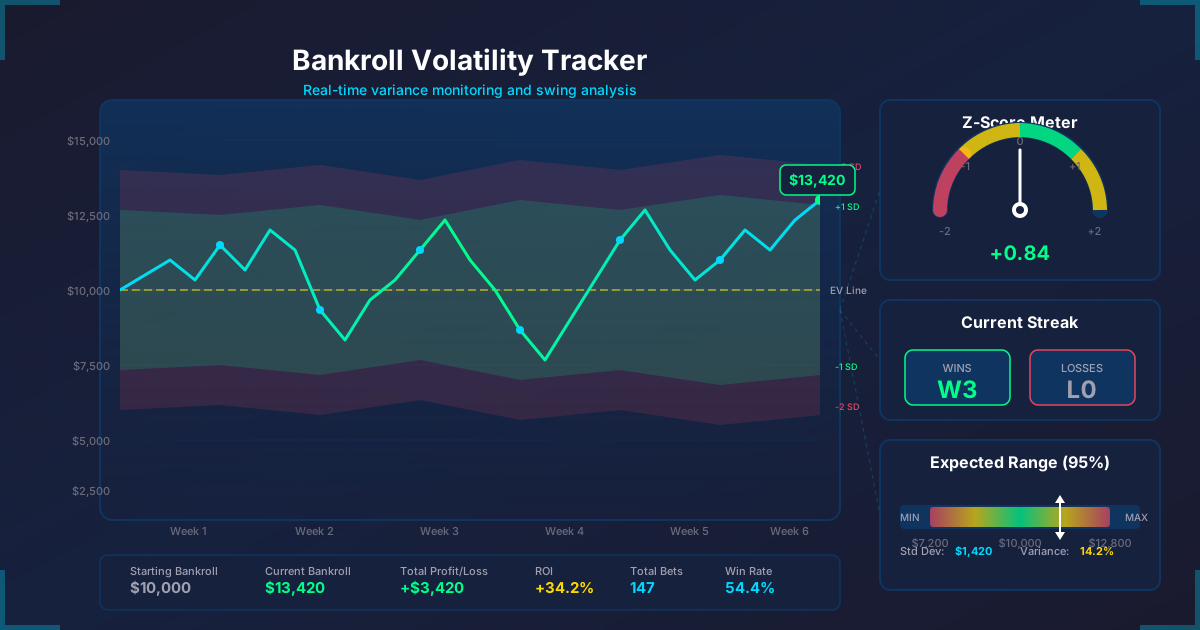
Track your bankroll variance and drawdowns with our Bankroll Volatility Tracker.
Flat Betting: The Simplest Strategy
How Flat Betting Works
Flat betting means wagering the same dollar amount on every bet, regardless of confidence level.
Rules:
- Set your unit size (1-3% of bankroll)
- Bet exactly one unit on every qualified bet
- Periodically recalculate your unit as your bankroll changes (weekly or monthly)
- Never deviate, regardless of results
Flat Betting Example
Starting bankroll: $5,000 Unit size: 2% = $100 Win rate: 54% at -110 odds
Over 500 bets:
- 270 wins x $90.91 profit = $24,545.70
- 230 losses x $100 cost = $23,000
- Net profit: +$1,545.70
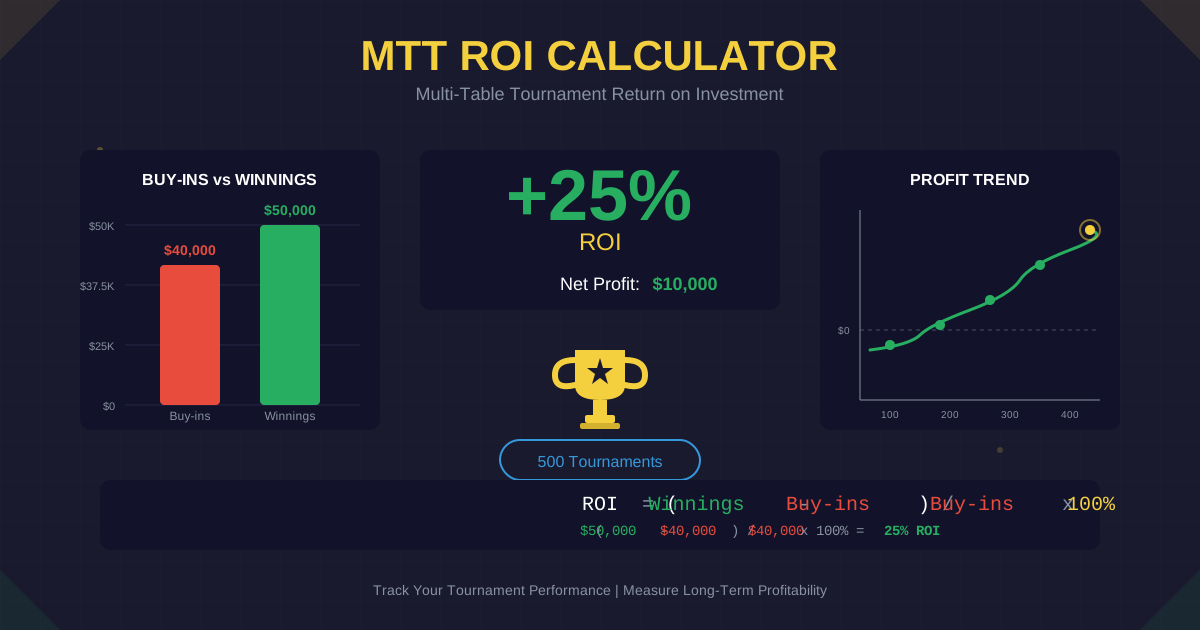
- ROI: 3.1%
Advantages of Flat Betting
- Simplicity: No complex calculations needed
- Emotional control: Removes the temptation to chase or over-bet
- Consistency: Predictable bankroll trajectory
- Error-proof: Cannot accidentally over-expose on a single bet
Disadvantages of Flat Betting
- Suboptimal growth: Does not capitalize on higher-edge bets
- Does not adjust for edge size: A 10% edge bet gets the same stake as a 2% edge bet
- Slower compounding: Fixed-size bets do not grow with the bankroll
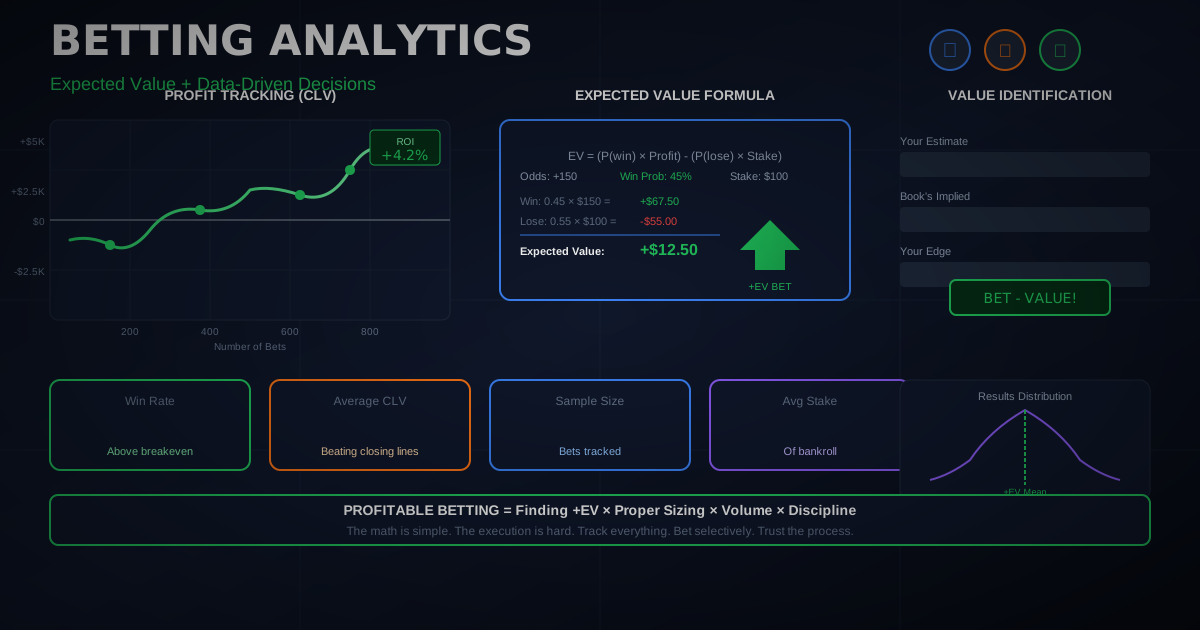
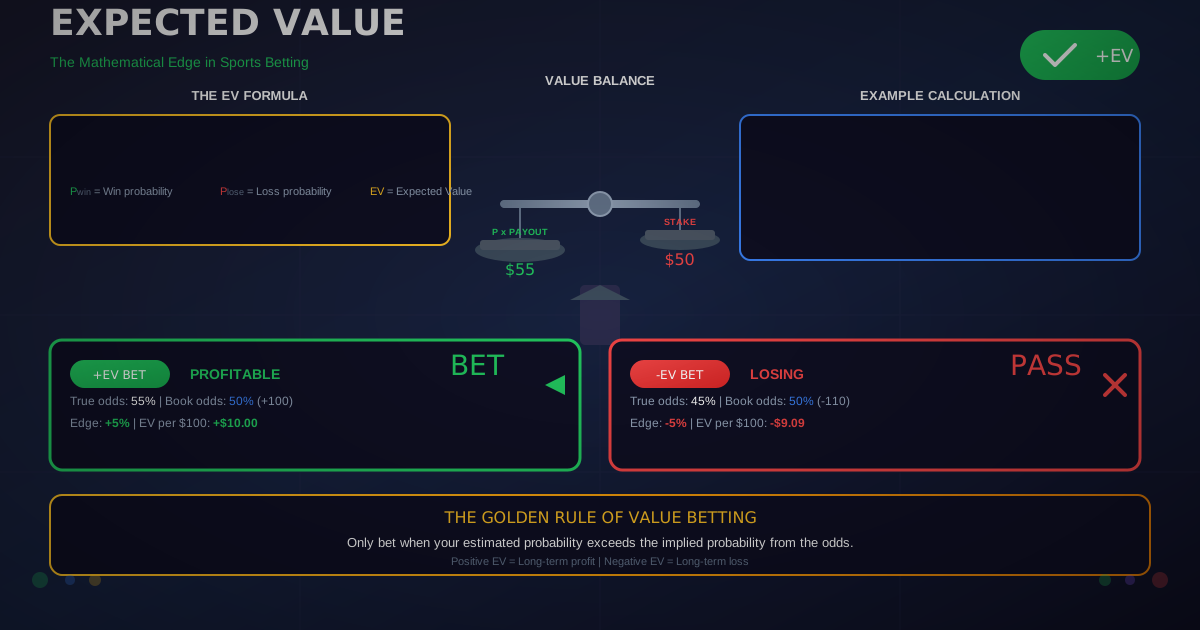
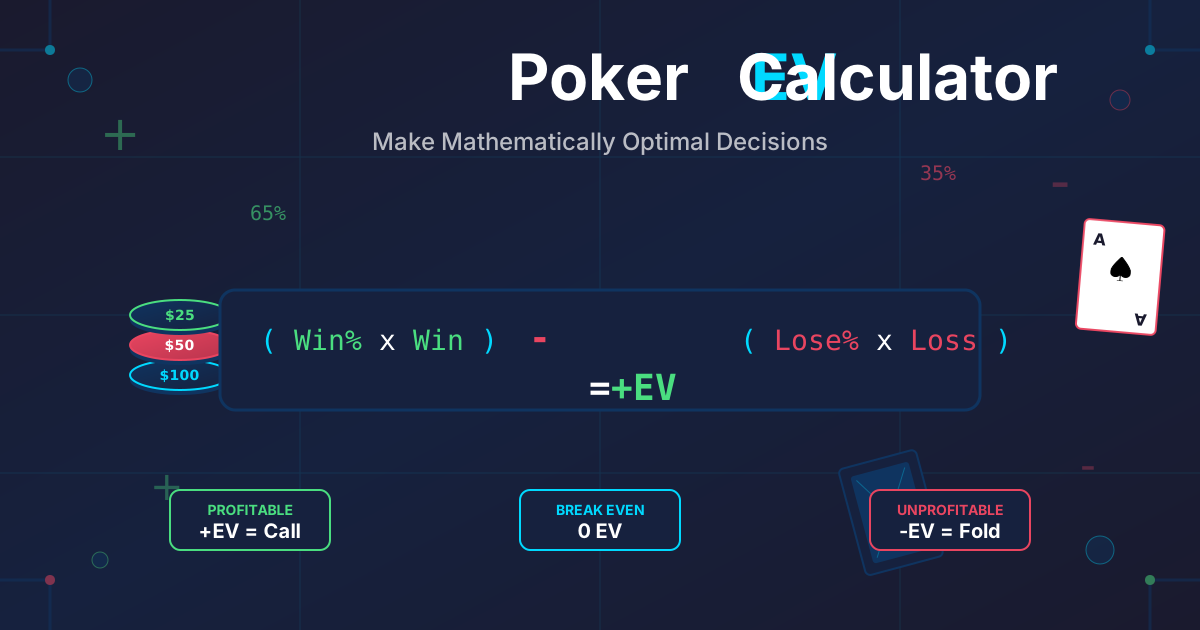
Calculate the expected value of each bet to decide if it qualifies for your flat bet system with our Expected Value Calculator.
Kelly Criterion: The Mathematically Optimal Strategy
What Is the Kelly Criterion?
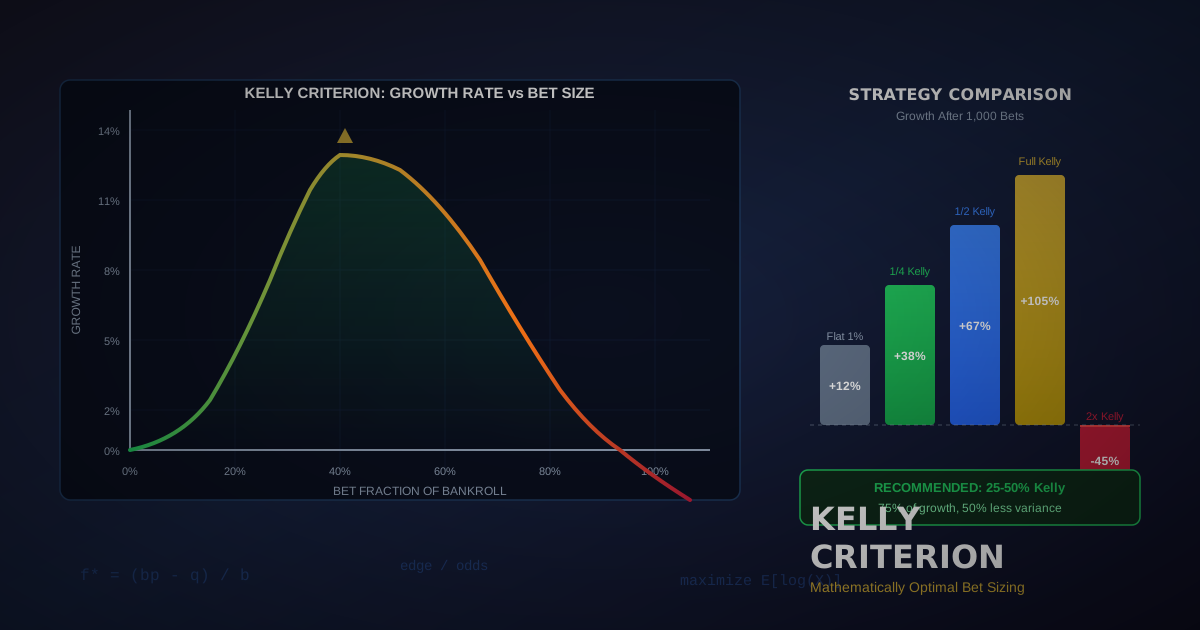
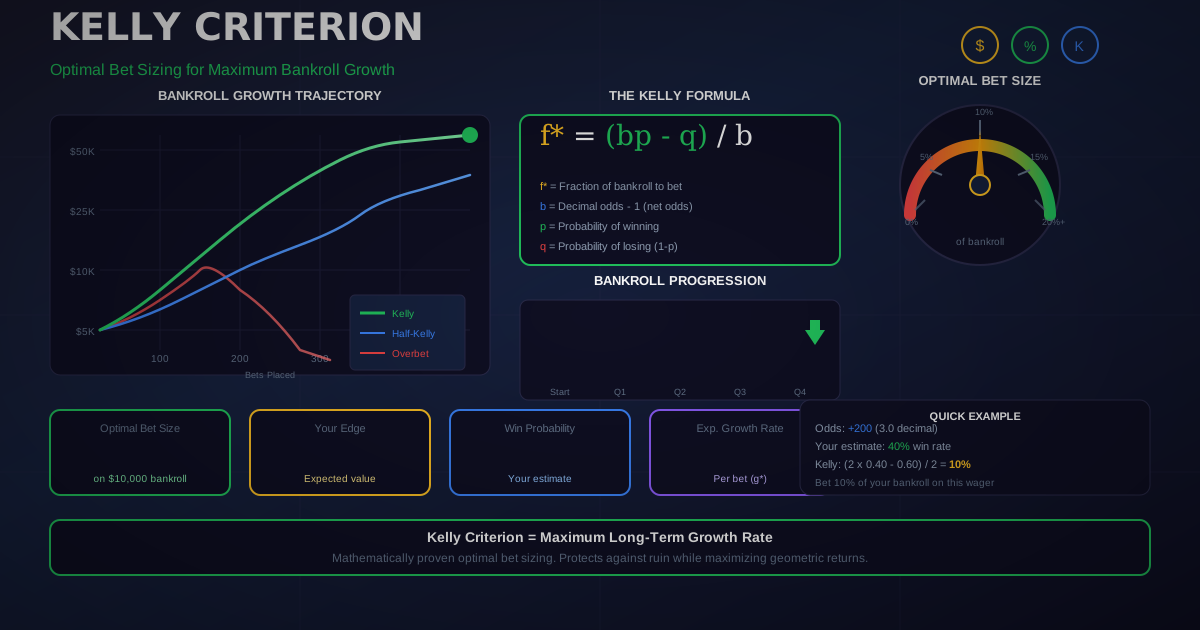
The Kelly Criterion is a formula that calculates the mathematically optimal bet size to maximize long-term bankroll growth. It was developed by John Kelly at Bell Labs in 1956 and has been used by professional gamblers, investors, and hedge fund managers ever since.
The Kelly Formula
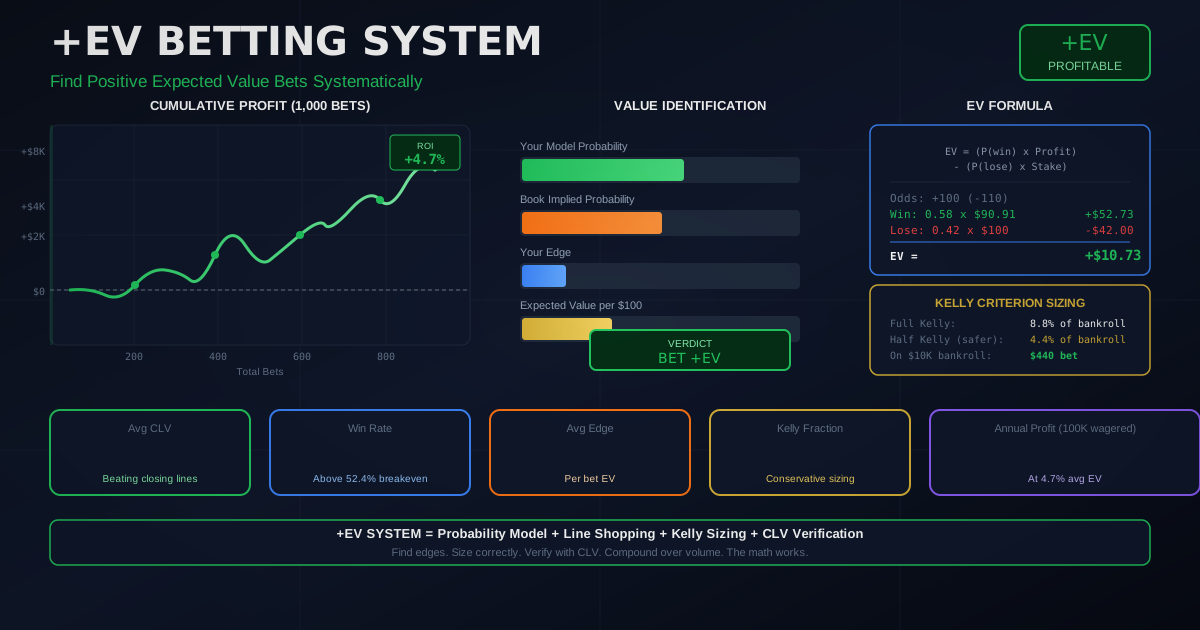
Kelly % = (bp - q) / b
Where:
- b = decimal odds - 1 (the profit multiple)
- p = probability of winning
- q = probability of losing (1 - p)
Kelly Criterion Examples
Example 1: Standard -110 Bet with 55% Edge
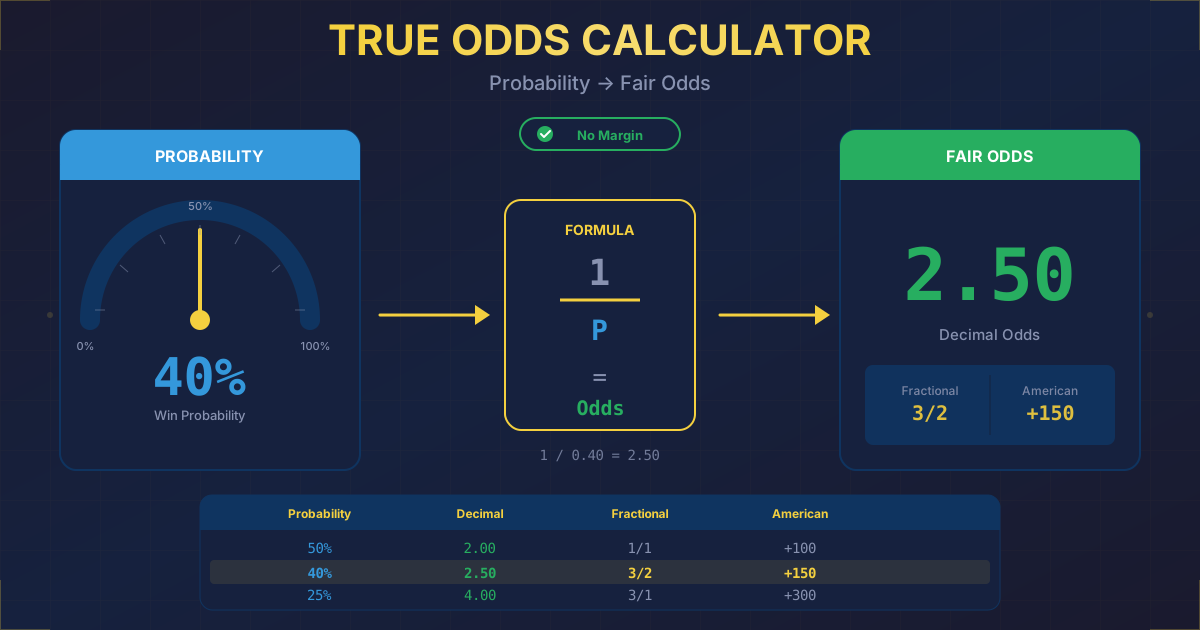
- Odds: -110 (decimal 1.909)
- b = 1.909 - 1 = 0.909
- p = 0.55
- q = 0.45
Kelly % = (0.909 x 0.55 - 0.45) / 0.909 Kelly % = (0.500 - 0.45) / 0.909 Kelly % = 0.050 / 0.909 Kelly % = 5.5% of bankroll
Example 2: Underdog at +200 with 38% Win Probability
- Odds: +200 (decimal 3.00)
- b = 3.00 - 1 = 2.00
- p = 0.38
- q = 0.62
Kelly % = (2.00 x 0.38 - 0.62) / 2.00 Kelly % = (0.76 - 0.62) / 2.00 Kelly % = 0.14 / 2.00 Kelly % = 7.0% of bankroll
Example 3: Heavy Favorite at -250 with 74% Win Probability
- Odds: -250 (decimal 1.40)
- b = 1.40 - 1 = 0.40
- p = 0.74
- q = 0.26
Kelly % = (0.40 x 0.74 - 0.26) / 0.40 Kelly % = (0.296 - 0.26) / 0.40 Kelly % = 0.036 / 0.40 Kelly % = 9.0% of bankroll
Run these calculations instantly with our Kelly Criterion Calculator.
The Problem with Full Kelly
Full Kelly is theoretically optimal but practically dangerous:
- Assumes perfect probability estimates: If your 55% estimate is actually 52%, full Kelly will overbet catastrophically
- Extreme volatility: Full Kelly bankrolls can swing 30-50% in short periods
- Requires infinite bankroll divisibility: In practice, you cannot bet 7.3% of your bankroll precisely
- No margin for error: Even a small systematic probability overestimation leads to ruin
Fractional Kelly: The Professional's Choice
Professional bettors universally use fractional Kelly, betting a fraction of the full Kelly recommendation:
| Kelly Fraction | Description | Best For |
|---|---|---|
| 1/4 Kelly | Very conservative | New bettors, uncertain edges |
| 1/3 Kelly | Conservative | Most recreational +EV bettors |
| 1/2 Kelly | Standard professional | Experienced bettors with proven records |
| 2/3 Kelly | Aggressive | Bettors with very large sample sizes |
| Full Kelly | Maximum growth | Theoretically optimal, practically dangerous |
Example: 1/2 Kelly Application
Using Example 1 above (5.5% full Kelly):
- 1/2 Kelly = 2.75% of bankroll
- On a $10,000 bankroll: $275 per bet
This sacrifices approximately 25% of theoretical growth rate for a massive reduction in variance and risk of ruin.
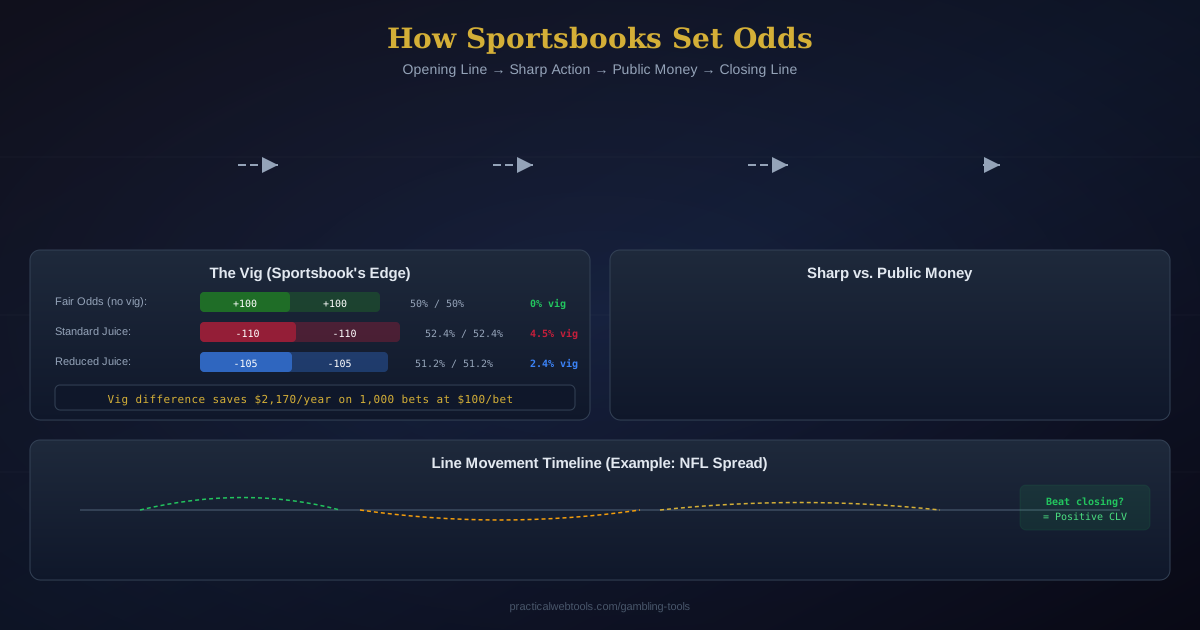
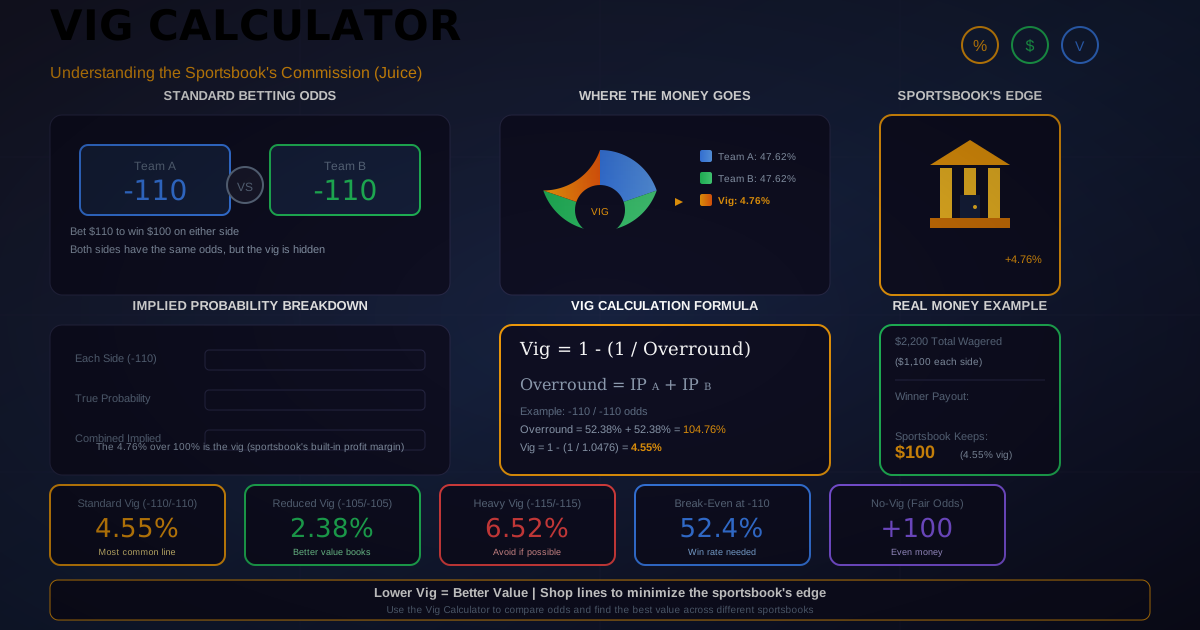
Understand how vig impacts your edge calculation with our Hold/Vig Calculator.
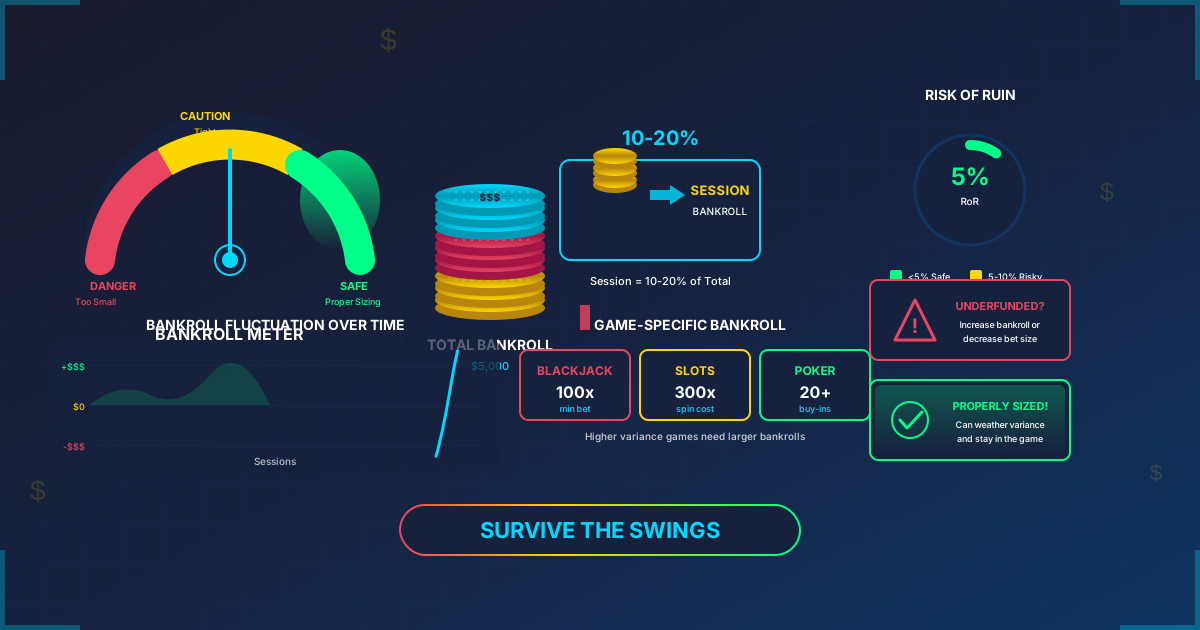
How Much Bankroll Do You Need?
Bankroll Requirements by Bet Volume
The minimum bankroll depends on how many bets you plan to make and your unit size:
| Bets Per Month | Unit Size | Minimum Bankroll (to survive variance) |
|---|---|---|
| 20-30 | 2% | 50 units ($2,500 if $50/bet) |
| 50-100 | 2% | 75 units ($3,750 if $50/bet) |
| 100-200 | 2% | 100 units ($5,000 if $50/bet) |
| 200+ | 1-2% | 150+ units ($7,500+ if $50/bet) |
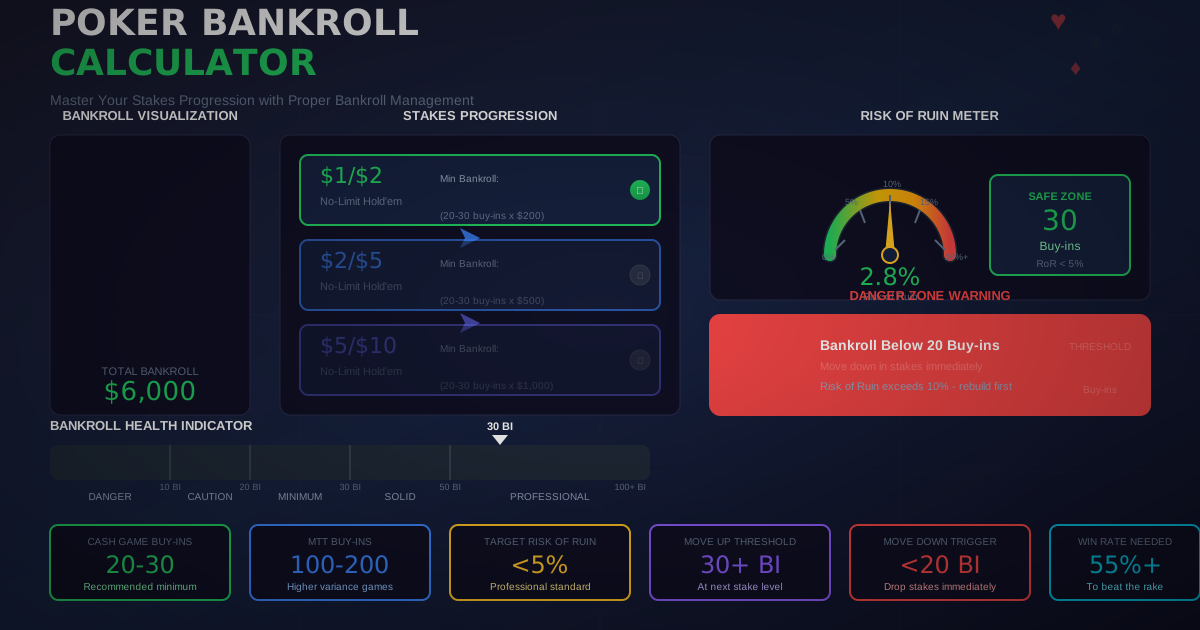
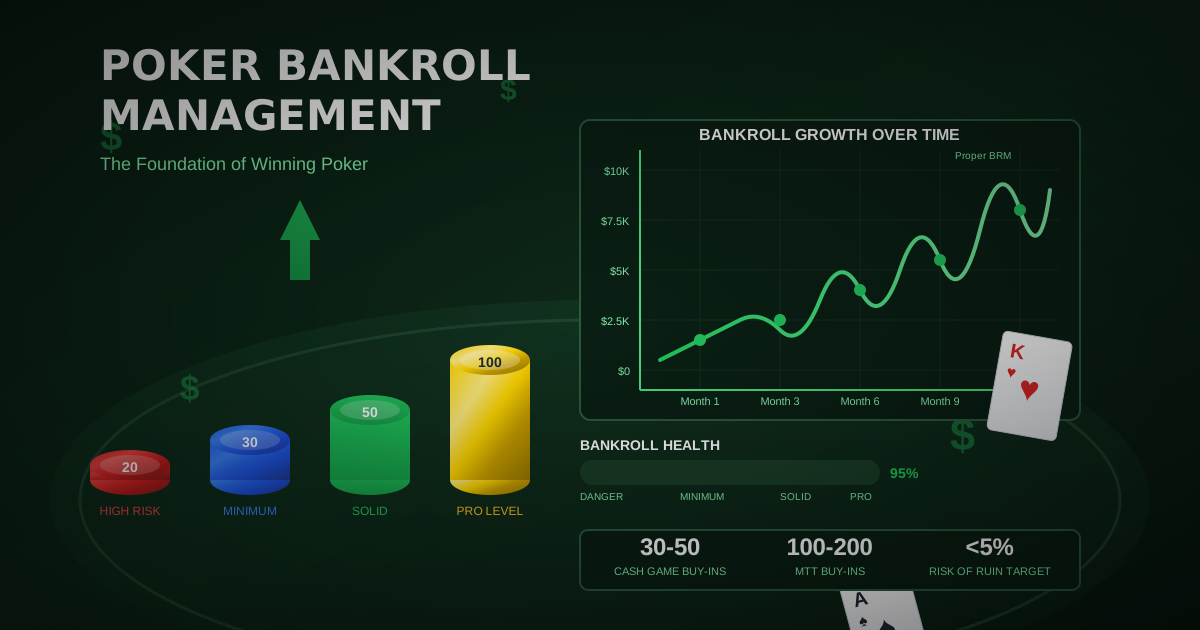
Why 50-100 Units Is the Minimum
The math behind minimum bankroll requirements comes from downswing probability:
With a 55% win rate at -110:
- Probability of a 10-bet losing streak: 0.034% (happens ~once per 3,000 bets)
- Probability of a 15-unit drawdown: ~5% over 1,000 bets
- Probability of a 25-unit drawdown: ~1% over 1,000 bets
- Probability of a 40-unit drawdown: ~0.1% over 1,000 bets
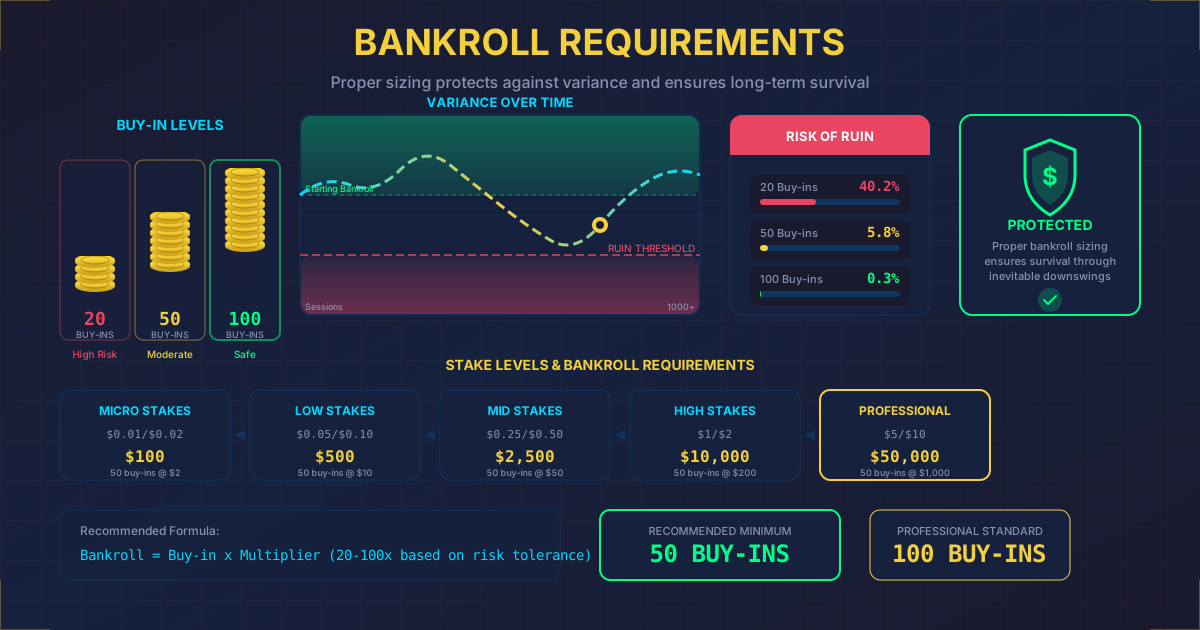
If your bankroll is only 20 units, a 15-unit drawdown wipes out 75% of your capital. With 100 units, the same drawdown is only 15%, easily survivable.
Assess your risk of ruin based on your bankroll with our Poker Risk of Ruin Calculator, which applies the same mathematics to any bankrolled pursuit.
Bankroll by Skill Level
| Bettor Profile | Win Rate | Recommended Bankroll | Reasoning |
|---|---|---|---|
| Beginner (+EV) | 52-53% | 100+ units | Thin edge, high variance |
| Intermediate | 54-55% | 75+ units | Moderate edge, manageable variance |
| Advanced | 56-58% | 50+ units | Strong edge, faster recovery |
| Professional | 58%+ | 50-100+ units | Volume compensates |
Surviving Downswings
What Downswings Look Like
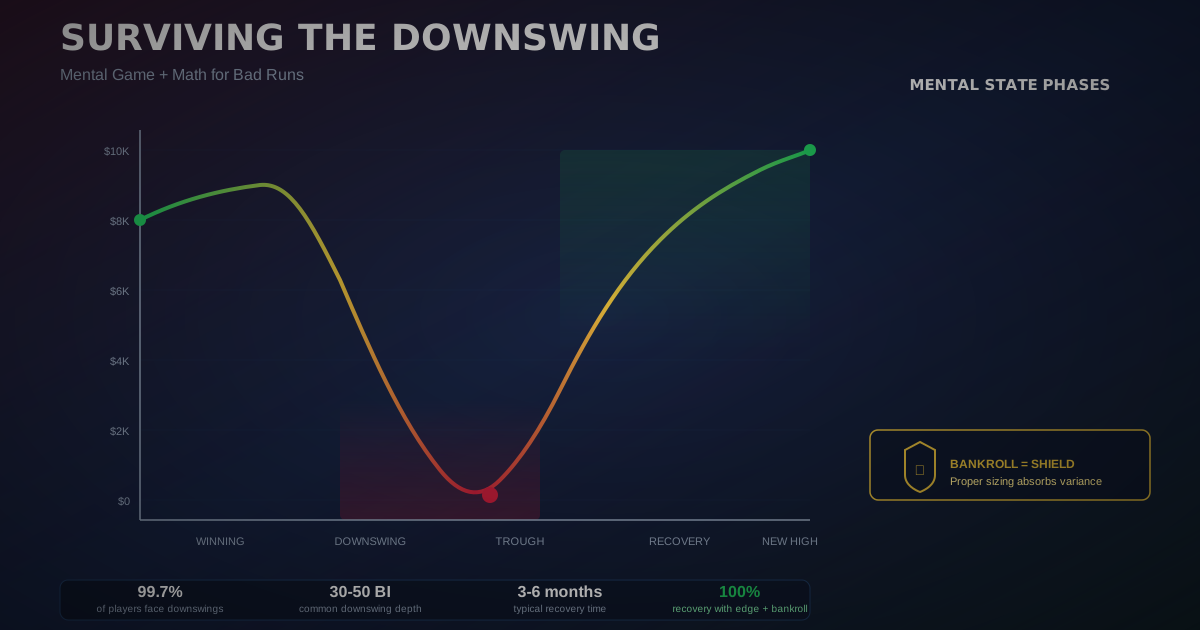
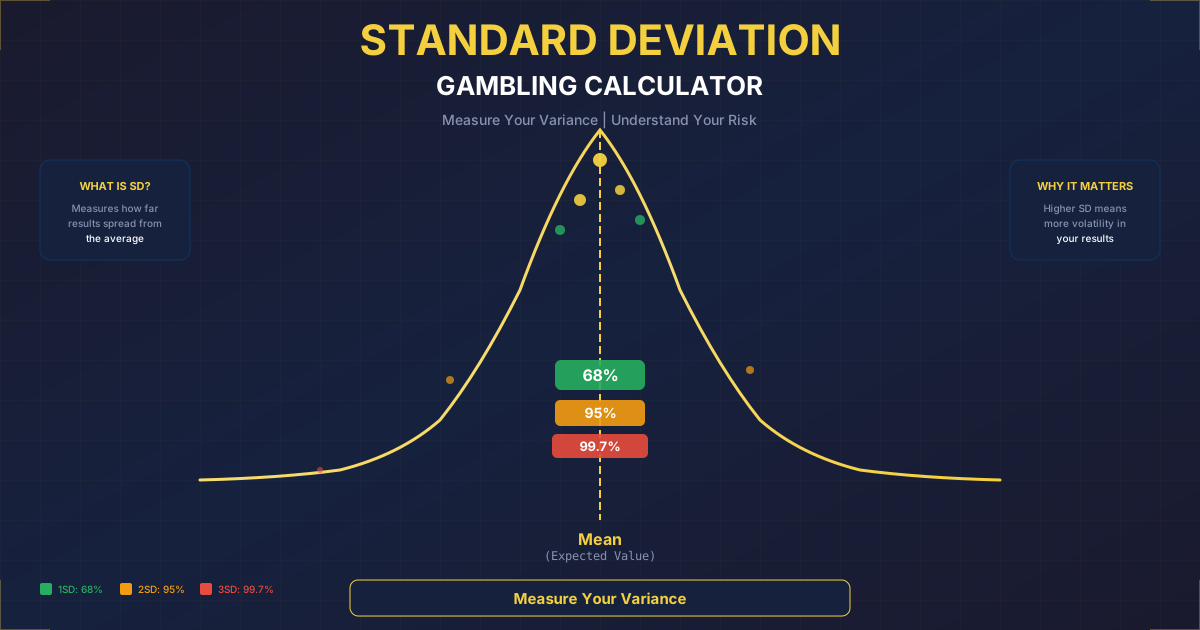
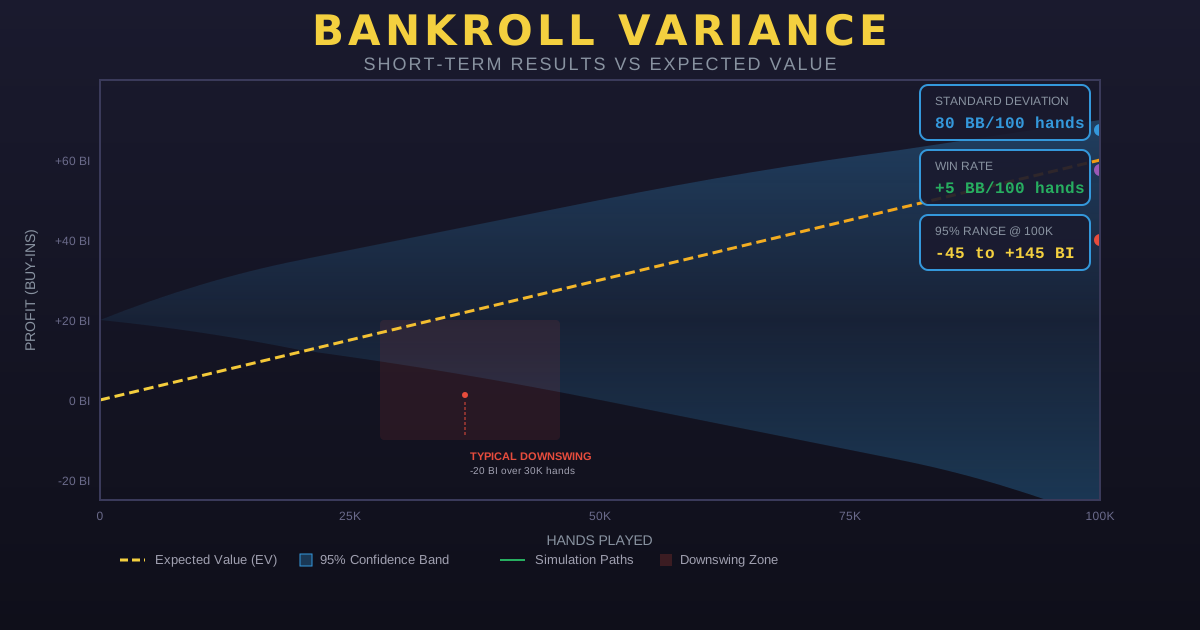
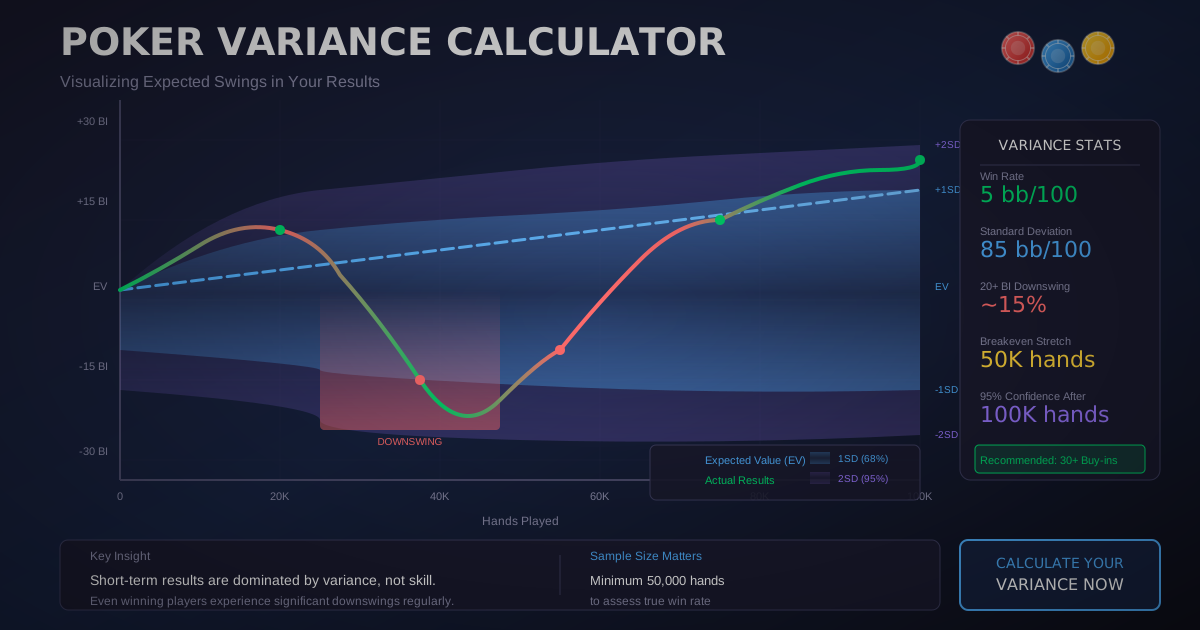
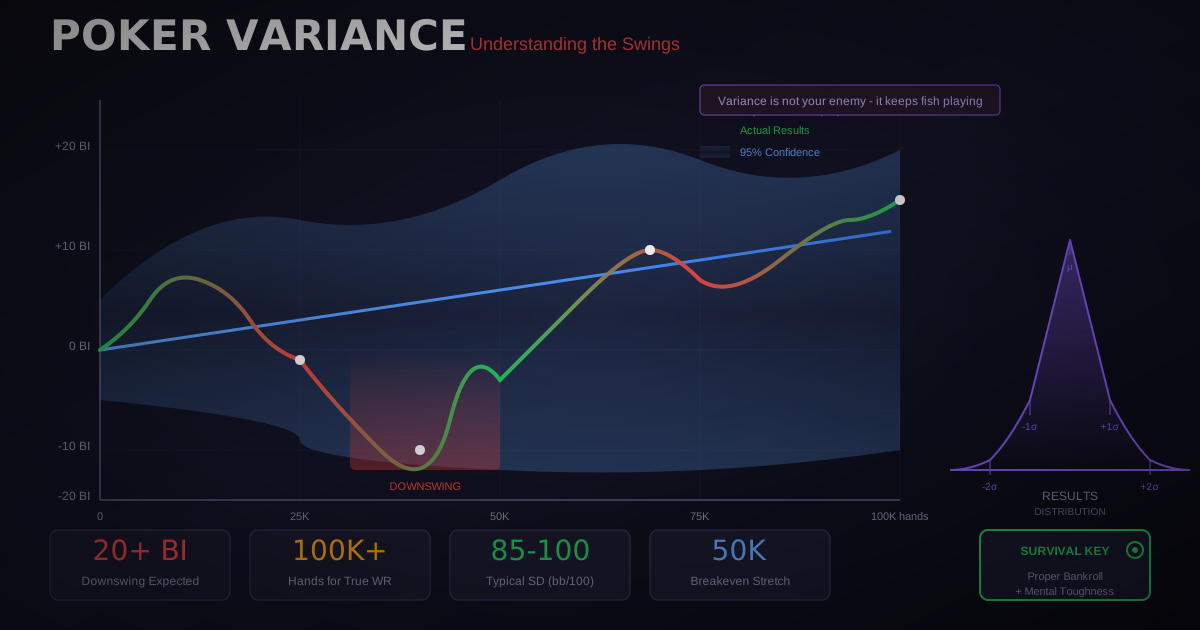
Even the best sports bettors experience significant drawdowns. Understanding the math prevents panic:
55% Win Rate Bettor, 1,000 Bets, 2% Unit Size:
| Drawdown Size | Probability | Units Lost | Impact on $10K Bankroll |
|---|---|---|---|
| 10 units | ~30% | 10 | $9,000 (-10%) |
| 20 units | ~10% | 20 | $8,000 (-20%) |
| 30 units | ~2% | 30 | $7,000 (-30%) |
| 40 units | ~0.5% | 40 | $6,000 (-40%) |
| 50 units | ~0.1% | 50 | $5,000 (-50%) |
A 20% drawdown is almost guaranteed at some point. A 30% drawdown happens to 1 in 50 bettors with a genuine edge. These are not signs of failure; they are statistical inevitabilities.
How to Handle Drawdowns
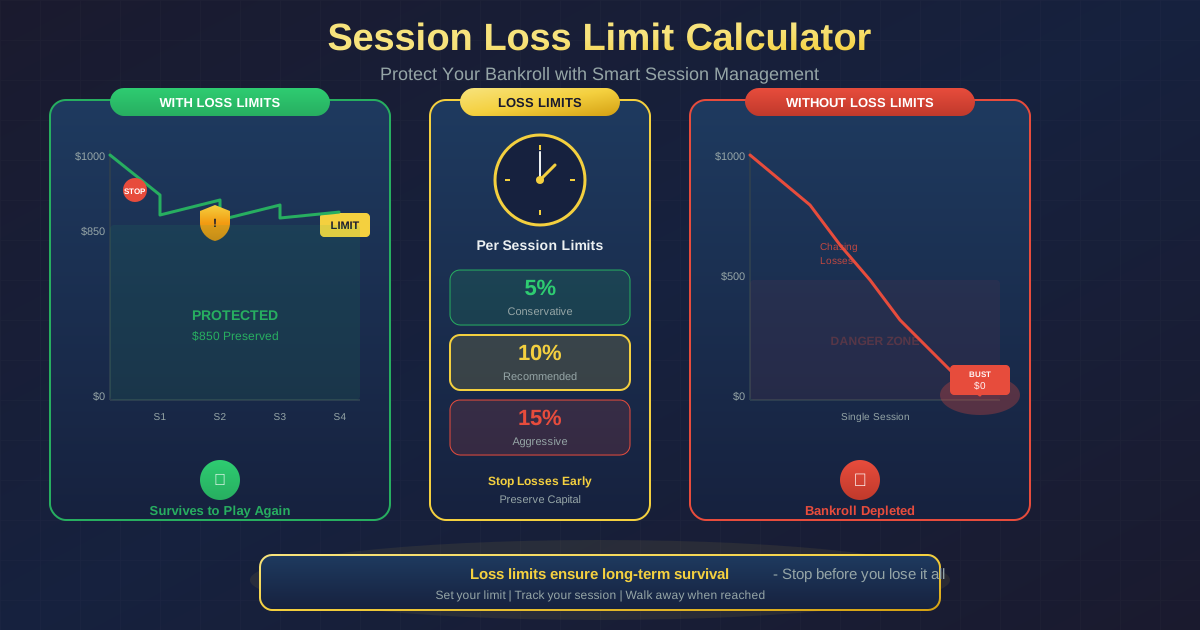
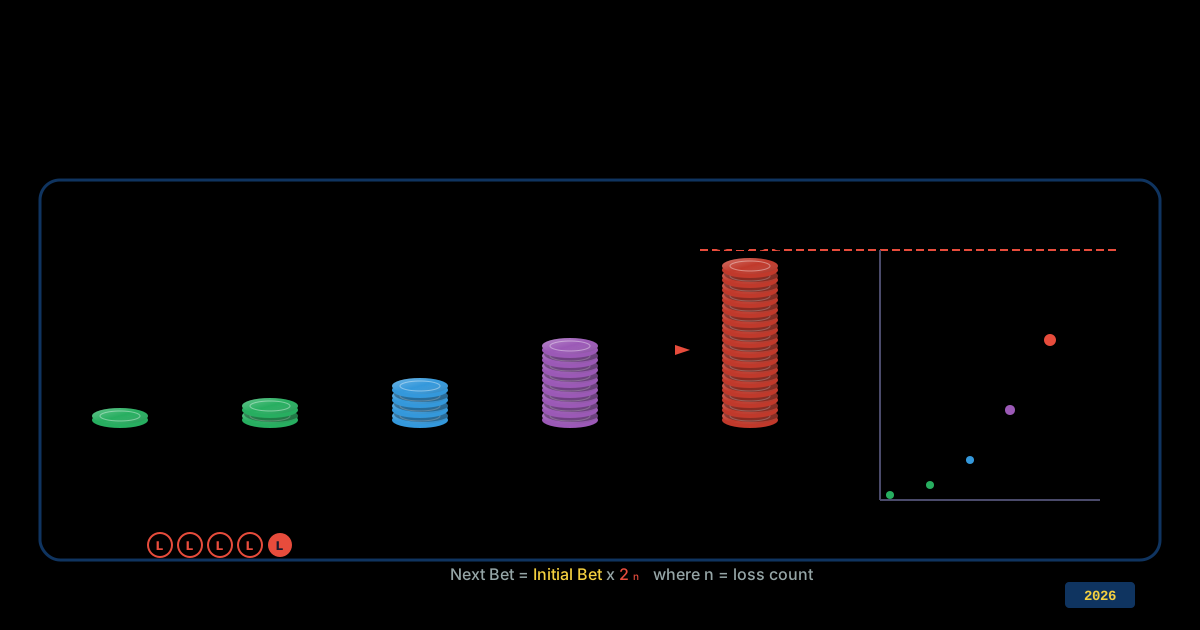
Rule 1: Do Not Increase Bet Size The worst response to a losing streak is betting more to recover faster. Maintain your unit size. If anything, decrease your unit size during drawdowns to protect remaining capital.
Rule 2: Reassess, Do Not Abandon A drawdown is the right time to review your handicapping, not to abandon your strategy. Check:
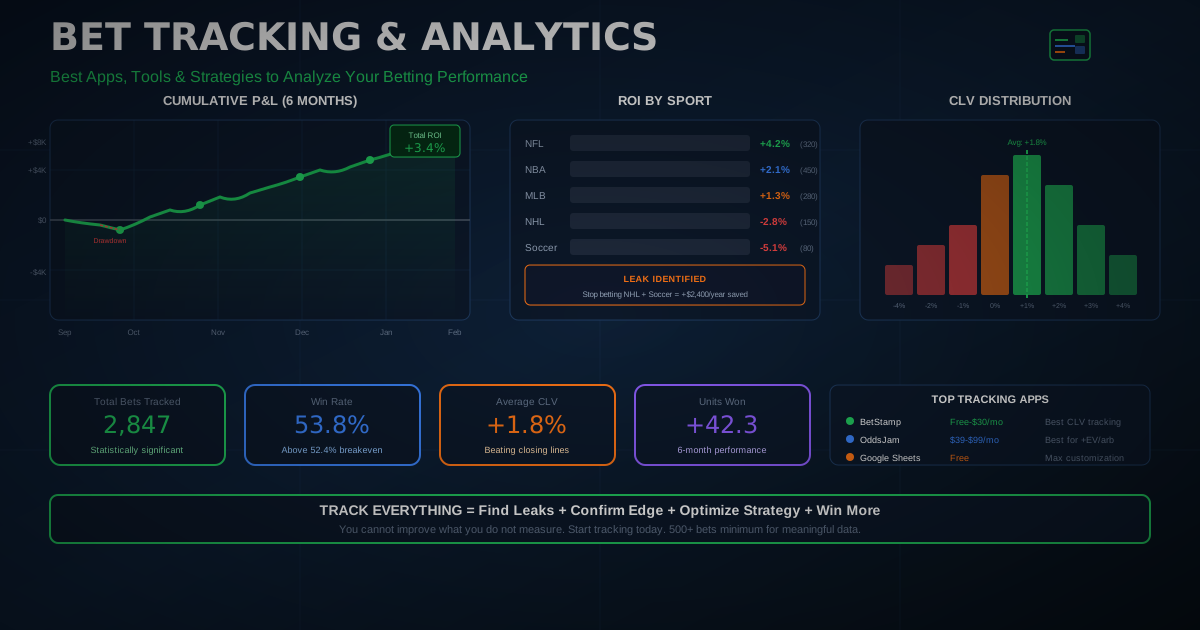
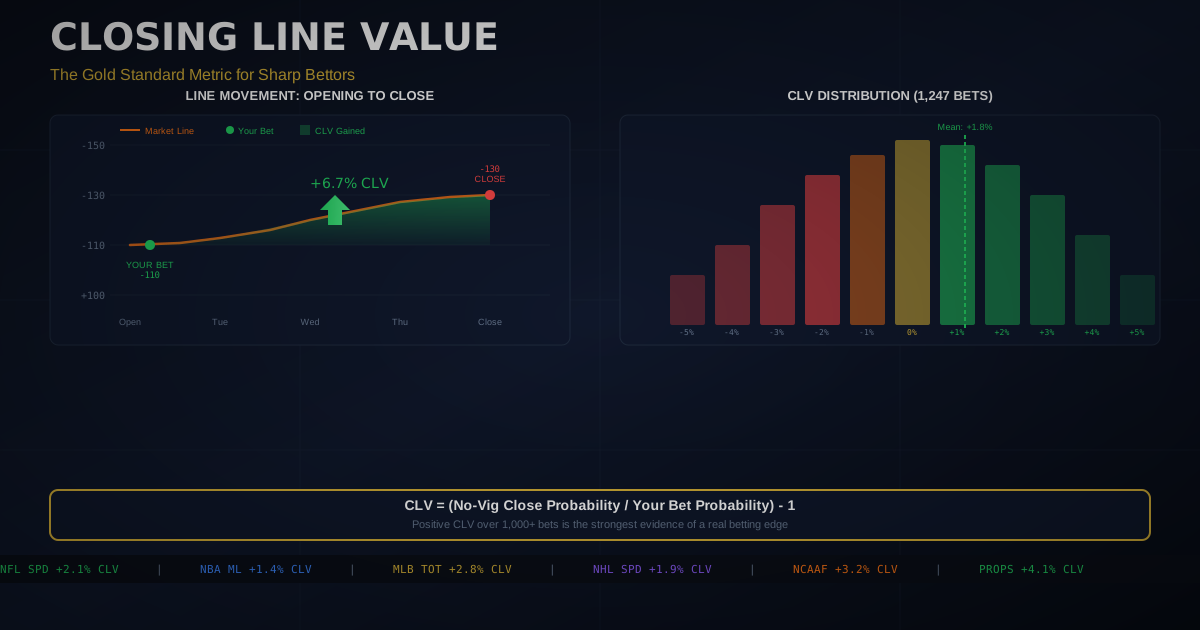
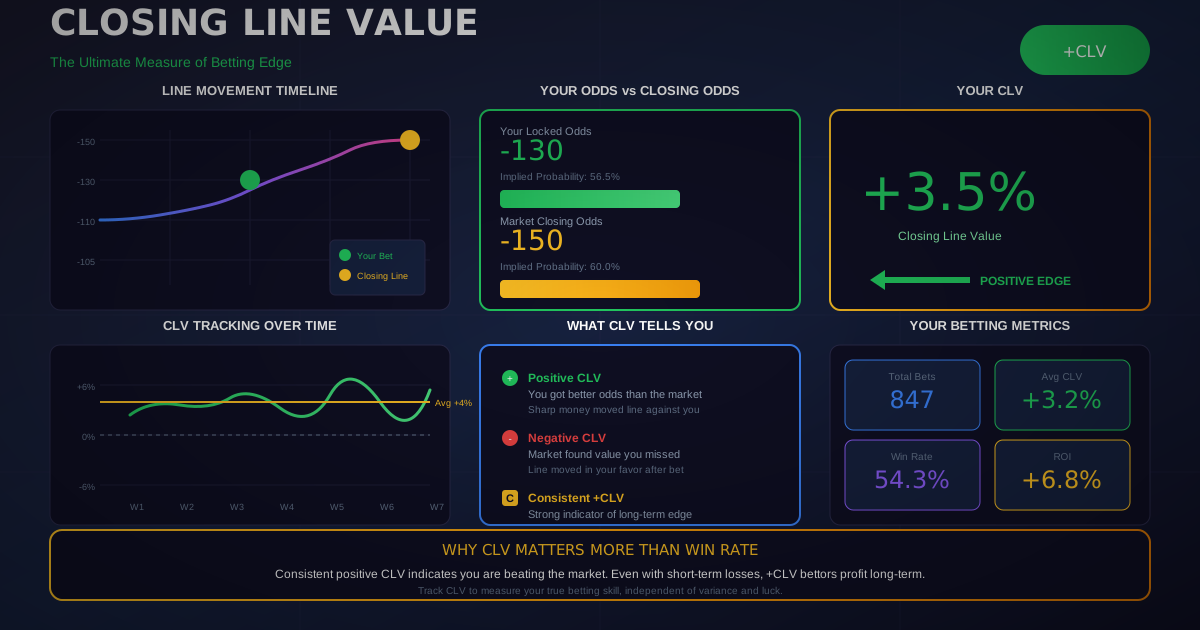
- Are you still getting positive CLV?
- Has your market or sport changed fundamentally?
- Is the drawdown within normal statistical variance?
Rule 3: Trust the Process If CLV Is Positive If your Closing Line Value is positive through the drawdown, your strategy is working. Variance has not shifted in your favor yet, but it will. Continue making the same +EV bets at the same unit size.
Rule 4: Step Down When Needed If your drawdown exceeds 30% of your bankroll:
- Reduce unit size from 2% to 1.5% or 1%
- Continue betting but with reduced exposure
- Rebuild the unit size as the bankroll recovers
Monitor your drawdowns and recovery with our Bankroll Volatility Tracker.
When to Move Up in Stakes
Criteria for Increasing Unit Size
Increase your unit size (or total bankroll allocation) only when:
- Proven edge over 500+ bets: Your CLV and ROI demonstrate a genuine, sustained edge
- Bankroll has grown significantly: Your unit as a percentage of bankroll can stay the same while the dollar amount grows naturally
- Emotional readiness: You can handle larger dollar swings without deviating from strategy
- No lifestyle pressure: Your bankroll is still money you can afford to lose entirely
The Right Way to Scale
Approach 1: Percentage-Based Scaling (Recommended) Keep your unit at 2% of bankroll. As the bankroll grows, your bet size grows automatically:
- Start: $5,000 bankroll, $100 unit
- Month 3: $5,800 bankroll, $116 unit
- Month 6: $6,500 bankroll, $130 unit
- Year 1: $8,000 bankroll, $160 unit
Approach 2: Step-Function Scaling Increase unit size at defined bankroll milestones:
| Bankroll Level | Unit Size | Dollar Amount |
|---|---|---|
| $5,000 | 2% | $100 |
| $7,500 | 2% | $150 |
| $10,000 | 2% | $200 |
| $15,000 | 2% | $300 |
| $25,000 | 2% | $500 |
When to Move Down
Reduce your unit size when:
- Your bankroll drops 25%+ from peak
- You lose confidence in your edge (CLV turns negative)
- Life circumstances change (you can afford to lose less)
- You enter a new sport or market type where your edge is unproven
Real-World Bankroll Management Scenarios
Scenario 1: The Conservative Grinder
Profile: $5,000 bankroll, 54% win rate, 100 bets/month at -110 Unit size: 1.5% ($75)
Monthly expected results:
- 54 wins x $68.18 = $3,681.82
- 46 losses x $75 = $3,450
- Monthly profit: +$231.82
- Monthly ROI: 3.1%
Annual projection: +$2,781.84 (55.6% return on bankroll)
After year 1 with reinvestment:
- Bankroll grows from $5,000 to ~$7,782
- Unit grows from $75 to ~$117
This is sustainable, boring, and profitable. Professional betting is rarely exciting.
Scenario 2: The Kelly Bettor
Profile: $10,000 bankroll, variable edges, 60 bets/month Strategy: 1/3 Kelly on every qualified bet
Sample month:
- 15 bets at 3% edge: 1/3 Kelly = 1.1% per bet ($110)
- 25 bets at 5% edge: 1/3 Kelly = 1.8% per bet ($180)
- 10 bets at 8% edge: 1/3 Kelly = 2.9% per bet ($290)
- 10 bets at 2% edge: 1/3 Kelly = 0.7% per bet ($70)
Monthly expected profit:
- (15 x $110 x 0.03) + (25 x $180 x 0.05) + (10 x $290 x 0.08) + (10 x $70 x 0.02)
- $49.50 + $225 + $232 + $14
- Monthly expected profit: +$520.50
- Monthly ROI: 4.2% (on total amount wagered)
Kelly sizing allocates more capital to higher-edge bets, improving overall returns versus flat betting.
Scenario 3: The Underfunded Beginner
Profile: $500 bankroll, unknown edge, starting out Unit size: 1% ($5)
This bankroll is too small for meaningful profit but appropriate for learning:
- Track every bet meticulously
- Focus on developing your handicapping skills
- After 300+ tracked bets, assess your edge
- Only increase bankroll once you have demonstrated +EV and positive CLV
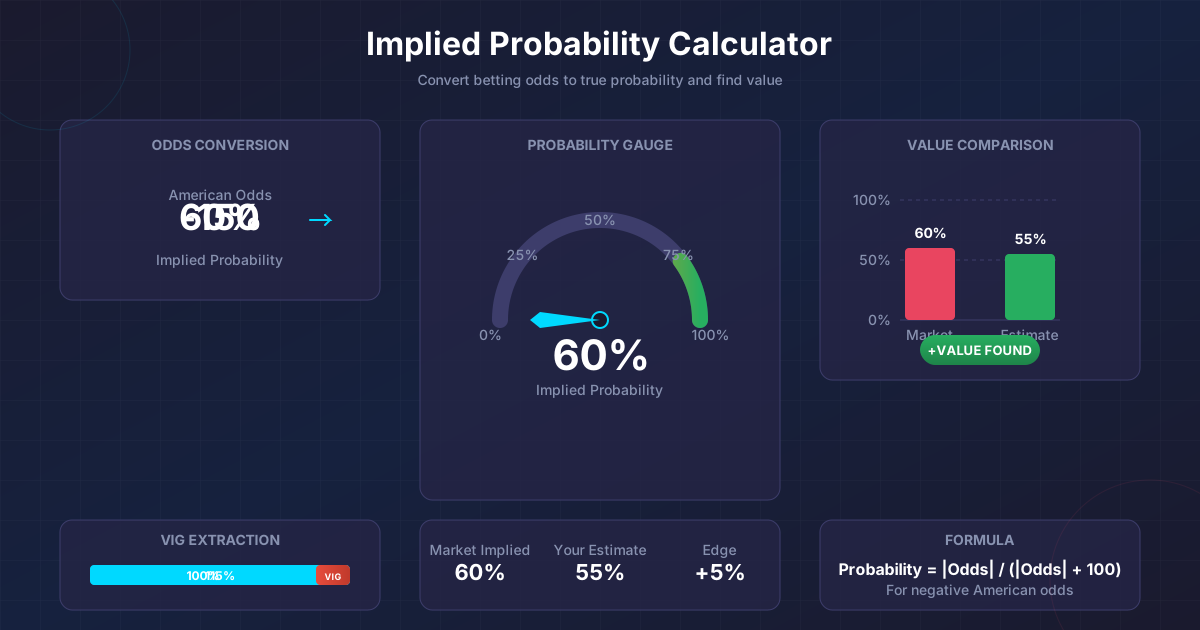
Calculate the implied probability of any line you are considering with our Implied Probability Calculator.
Scenario 4: The Downswing Survivor
Profile: $8,000 bankroll (started at $10,000), 25-unit drawdown over 3 months Original unit: 2% ($200) Adjusted unit: 1.5% ($120)
The bettor has positive CLV (+2.5%) through the drawdown. The math says:
- Expected recovery time: 150-250 bets at +2.5% CLV
- At 80 bets/month: 2-3 months to recover
- Reduced unit size protects against further drawdown
- As bankroll recovers above $9,000, gradually increase unit back to 2%
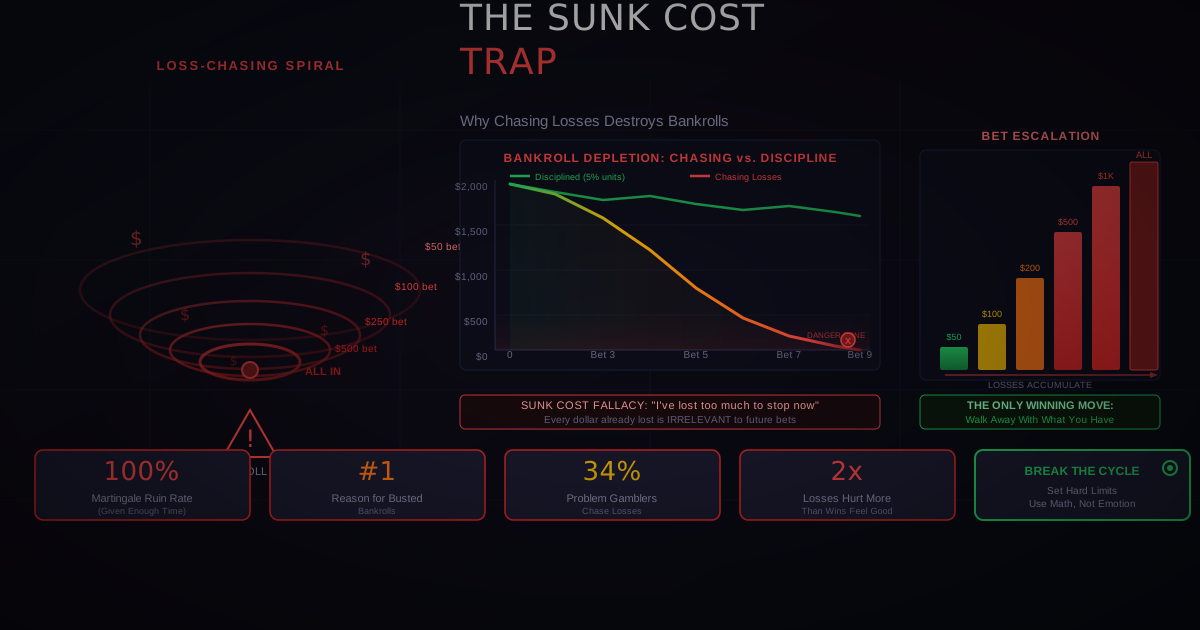
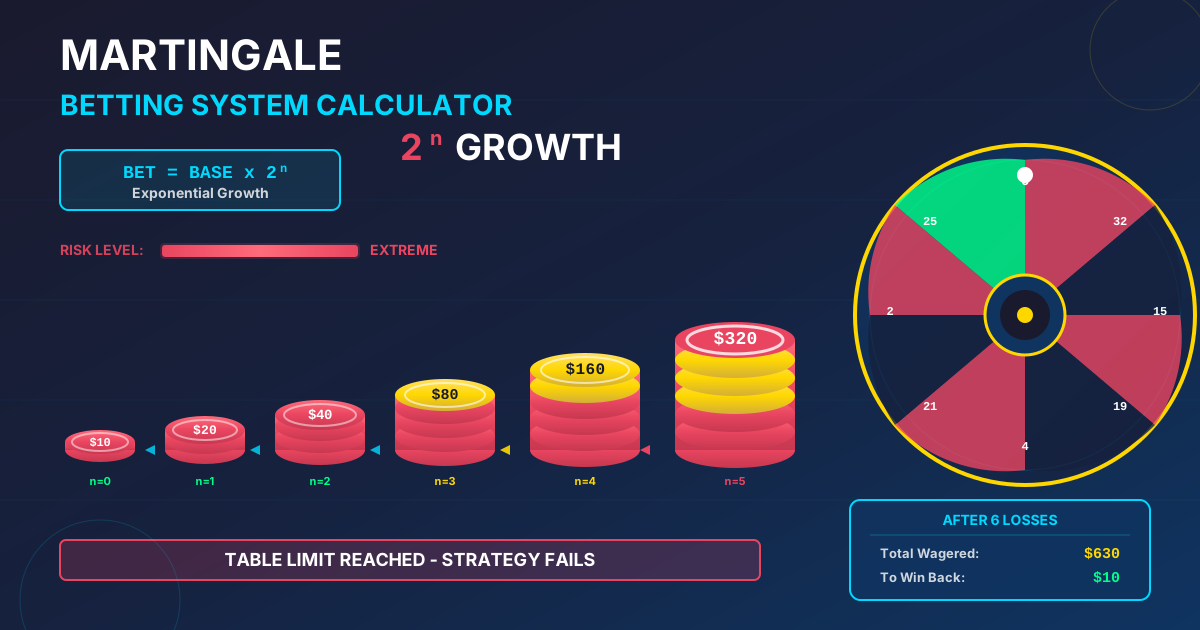
This is the disciplined approach. The undisciplined approach (doubling unit size to recover faster) leads to ruin.
Comparing Bankroll Strategies
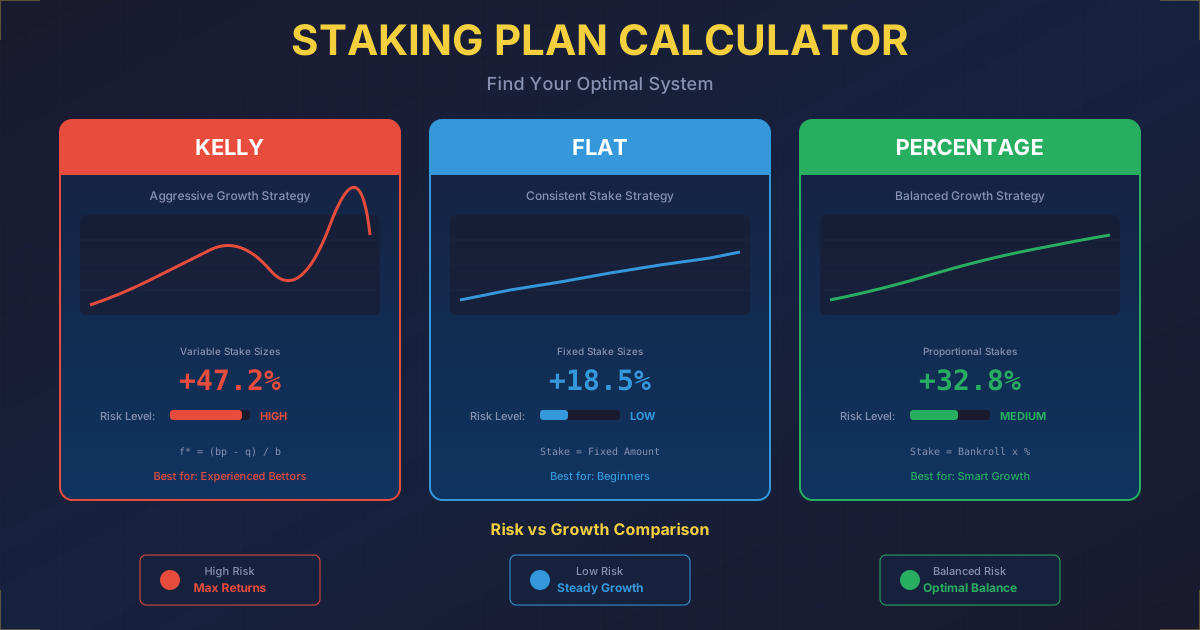
Flat Betting vs. Kelly Criterion vs. Percentage Betting
| Feature | Flat Betting | Kelly Criterion | Percentage of Bankroll |
|---|---|---|---|
| Complexity | Low | High | Medium |
| Growth rate | Moderate | Highest (theoretical) | Good |
| Variance | Moderate | High (full Kelly) | Low |
| Error tolerance | High | Low | High |
| Best for | Beginners, grinders | Experienced, data-rich | Most bettors |
| Risk of ruin | Low | Medium-High (full) | Low |
| Adapts to edge? | No | Yes | No |
| Adapts to bankroll? | No (manual) | Yes | Yes |
Recommendation by Bettor Type
Recreational with positive edge: Flat betting at 1-2% per bet. Simple, effective, low risk.
Serious with 500+ tracked bets: 1/3 Kelly with a 2% cap on any single bet. Balances growth optimization with risk management.
Professional with 2,000+ tracked bets: 1/2 Kelly with a 3% cap. Proven edge justifies more aggressive sizing, but never full Kelly.
Calculate optimal Kelly sizing with our Kelly Criterion Calculator.
Advanced Bankroll Concepts
Simultaneous Bet Exposure
When you have multiple bets pending simultaneously, your total exposure matters:
- 5 bets of 2% each = 10% of bankroll at risk simultaneously
- If all 5 lose (correlated events like all NFL Sunday games): 10% drawdown in one day
Rule: Total outstanding exposure should not exceed 10-15% of your bankroll. This may mean reducing individual bet sizes on high-volume days.
Correlated Bet Risk
Bets on the same sport, same day, or related outcomes are correlated. Three NFL bets on the same Sunday are not three independent events; weather, referee tendencies, and league-wide trends create correlation.
Mitigation:
- Limit to 3-5 bets on any single day
- Diversify across sports when possible
- Account for correlation when calculating total exposure
Stale Bankroll Calculation
If your bankroll has not changed in months despite consistent betting, your edge may be zero. Reassess:
- Are you break-even? (edge = vig, net zero)
- Is your sample size large enough?
- Have market conditions changed?
Understand how market vig impacts your bottom line with our Hold/Vig Calculator.
Reserve Bankroll
Professional bettors maintain a reserve (money not currently allocated to betting) for:
- Reloading after significant drawdowns
- Capitalizing on new opportunities (new sportsbook promotions)
- Maintaining betting volume during downswings
Recommended structure:
- Active bankroll: 60-70% of total gambling capital
- Reserve: 30-40% of total gambling capital
Cross-Sport Bankroll Allocation
If you bet multiple sports, consider separate sub-bankrolls:
| Sport | Edge Confidence | Bankroll Allocation |
|---|---|---|
| NFL (your strongest) | High | 40% |
| NBA | Moderate | 25% |
| MLB | Moderate | 20% |
| NHL | Lower | 10% |
| Other | Experimental | 5% |
This prevents poor performance in one sport from destroying your entire bankroll.
Compare your risk of ruin across different bankroll levels with our Blackjack Risk of Ruin Calculator, which uses the same mathematical framework applicable to any bankrolled gambling pursuit.
The Mathematics of Bankroll Growth
Compound Growth with Fixed Percentage
When you bet a fixed percentage of your bankroll, wins and losses compound:
Growth Formula: Bankroll_n = Bankroll_0 x (1 + r)^n
Where:
- r = average return per bet (positive if +EV)
- n = number of bets
Example:
- $5,000 starting bankroll
- +2% average return per bet (after vig)
- 1,000 bets per year
Bankroll after 1 year: $5,000 x (1.001)^1,000 = $5,000 x 2.717 = $13,585
Note: This assumes 0.1% per bet at a 2% unit size with +5% ROI. Actual results will vary significantly due to variance.
The Asymmetry of Losses
Losses hurt more than wins help:
- A 50% drawdown requires a 100% gain to recover
- A 25% drawdown requires a 33% gain to recover
- A 10% drawdown requires an 11% gain to recover
This asymmetry is why conservative bet sizing is so critical. Preventing large drawdowns is more valuable than maximizing growth during winning streaks.
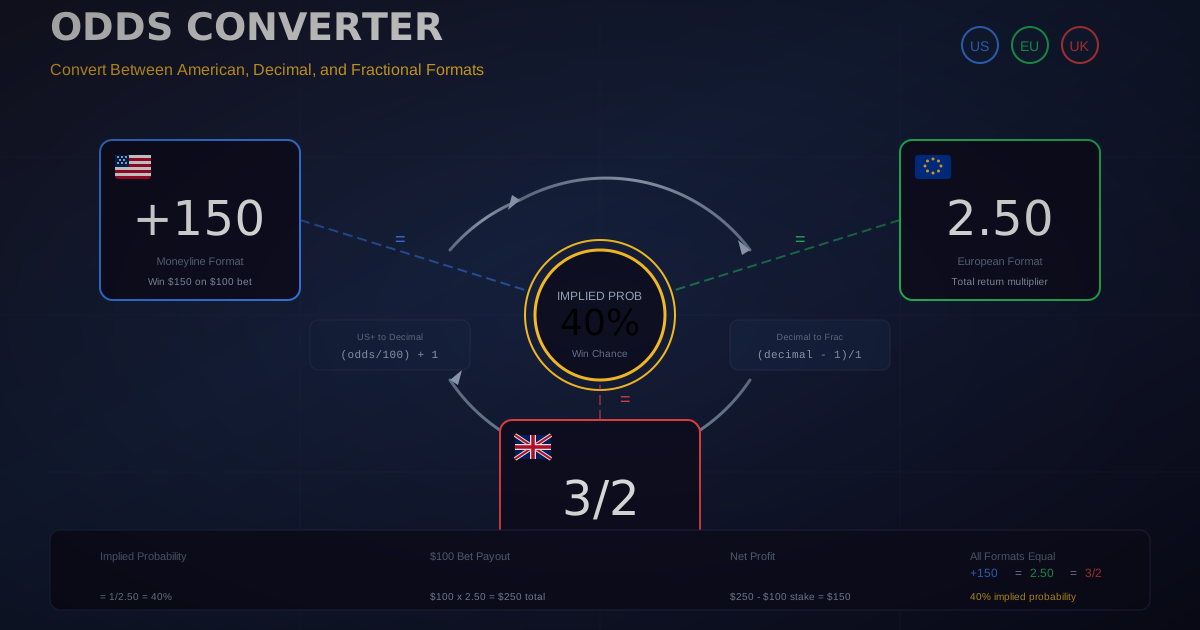
Convert any odds format to calculate your exact risk with our Odds Converter.
Frequently Asked Questions
How much should I bet per game on sports? Most professionals recommend 1-3% of your bankroll per bet. A 2% unit size is the sweet spot for most bettors: aggressive enough to generate meaningful profit, conservative enough to survive inevitable losing streaks. Use our Kelly Criterion Calculator to calculate the optimal amount based on your specific edge.
What is the Kelly Criterion in sports betting? The Kelly Criterion is a mathematical formula that calculates the optimal percentage of your bankroll to bet based on your estimated edge. The formula is: Kelly % = (bp - q) / b, where b is the decimal odds minus 1, p is your win probability, and q is your loss probability. Most professionals use fractional Kelly (1/4 to 1/2) for safety.
How big should my sports betting bankroll be? At minimum, 50 units (50x your standard bet size). For serious bettors, 100+ units is recommended. If you bet $100 per game, you should have at least $5,000-$10,000 dedicated to sports betting. Monitor your bankroll health with our Bankroll Volatility Tracker.
What is the difference between flat betting and Kelly Criterion? Flat betting means wagering the same amount on every bet regardless of edge size. The Kelly Criterion varies your bet size based on your estimated edge: larger bets when your edge is bigger, smaller bets when it is thinner. Flat betting is simpler and more error-tolerant; Kelly maximizes theoretical growth but requires accurate probability estimates.
How do I survive a losing streak in sports betting? Maintain your standard unit size (do not increase bets to chase losses). If the drawdown exceeds 25-30% of your bankroll, reduce your unit size by 25-50%. Verify your edge still exists by checking your Closing Line Value. If CLV is positive, the losing streak is variance, not a broken strategy. Use our Expected Value Calculator to verify your bets are still +EV.
Should I use a variable bet sizing system? Only if you have reliable probability estimates and a proven track record over 500+ bets. Variable sizing (like Kelly) is more profitable than flat betting in theory, but if your probability estimates are inaccurate, it amplifies your mistakes. Start with flat betting, track your results, and graduate to fractional Kelly once you have confidence in your edge estimates.
How often should I recalculate my unit size? Recalculate weekly or monthly, depending on your betting volume. With percentage-based betting, your unit adjusts automatically as your bankroll grows or shrinks. With flat betting, manually recalculate at set intervals. Use our Implied Probability Calculator to ensure your edge estimates remain accurate.
Can I use the same bankroll for multiple sports? Yes, but track performance by sport separately. Your edge may differ significantly across sports. Consider sub-allocating your bankroll if one sport consistently underperforms. Use our Poker Bankroll Requirements Calculator to understand bankroll requirements for any bankrolled gambling discipline.
Essential Bankroll Management Tools
Bet Sizing and Optimization
- Kelly Criterion Calculator: Calculate the mathematically optimal bet size for any wager
- Expected Value Calculator: Determine if a bet qualifies for your bankroll system
- Implied Probability Calculator: Convert odds to probabilities for edge estimation
Bankroll Tracking and Risk
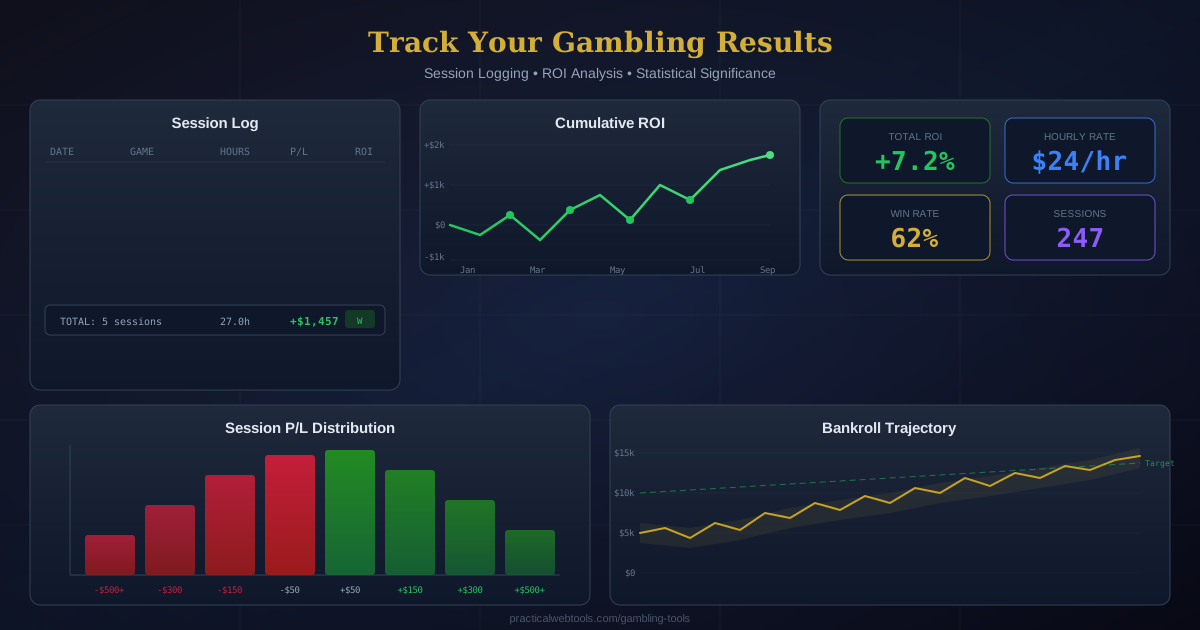
- Bankroll Volatility Tracker: Monitor bankroll swings, drawdowns, and recovery
- Poker Risk of Ruin Calculator: Calculate your probability of going broke given your edge and bankroll
- Blackjack Risk of Ruin Calculator: Apply risk-of-ruin mathematics to any bankrolled endeavor
Odds Analysis
- Odds Converter: Convert between American, decimal, and fractional odds
- Hold/Vig Calculator: Calculate the sportsbook's margin on any line
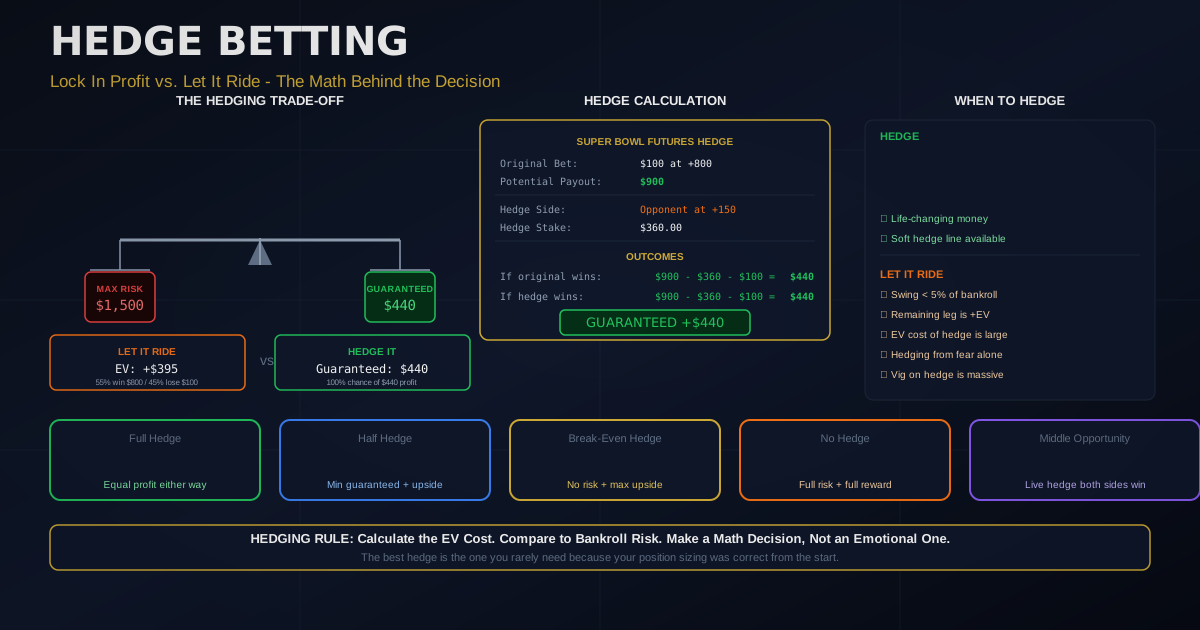
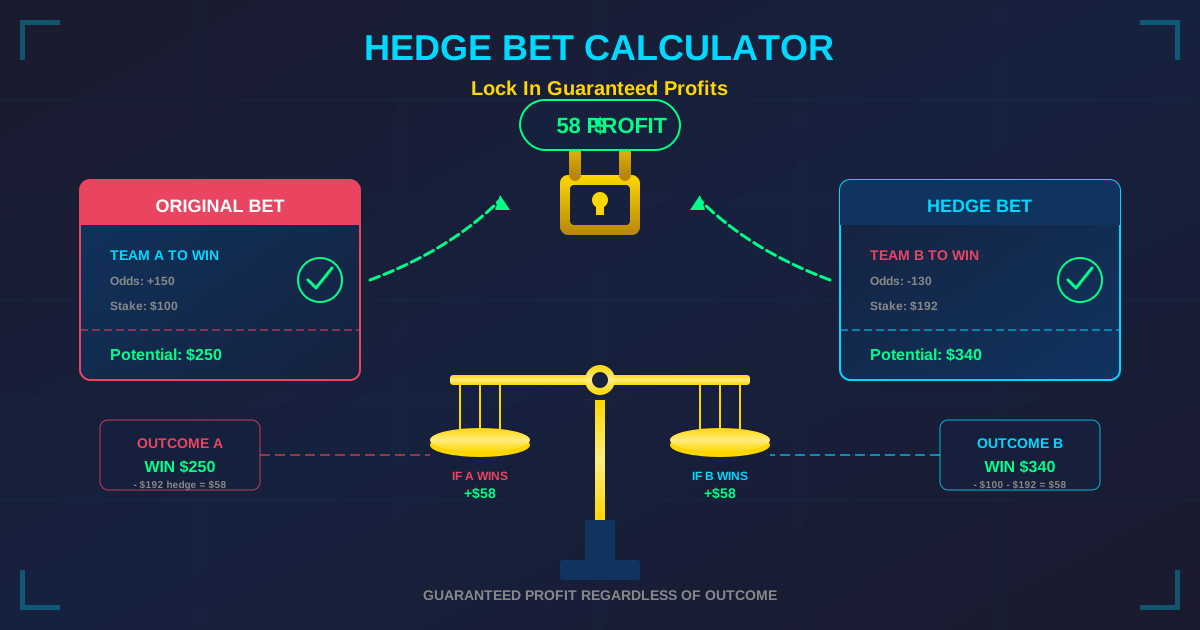
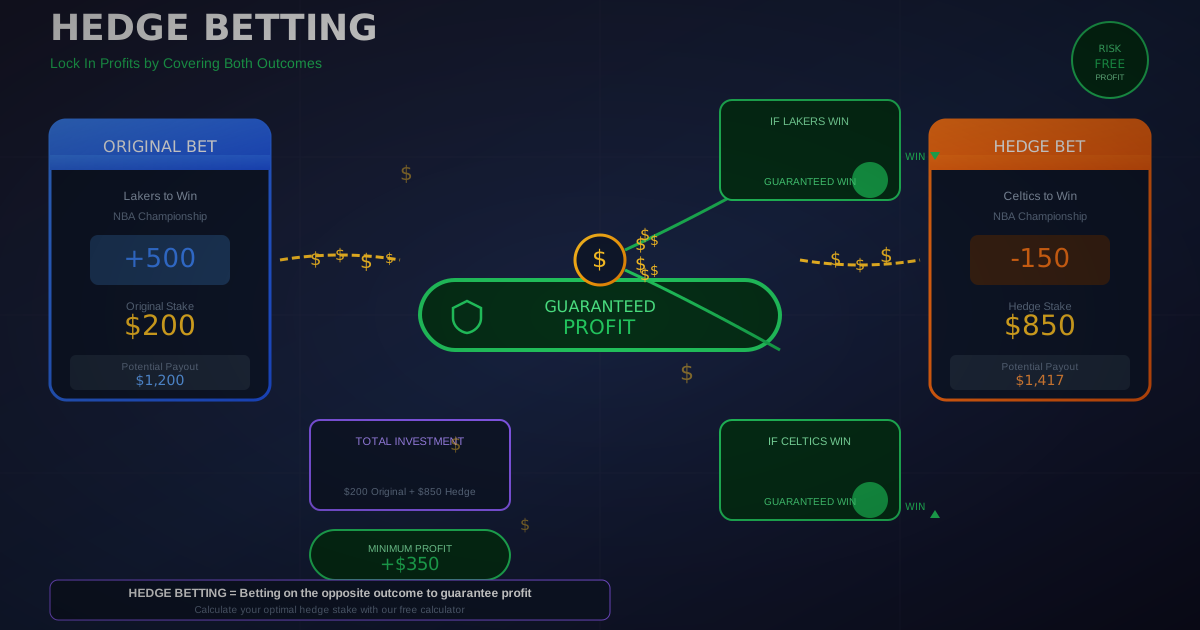
- Hedge Calculator: Calculate hedge amounts to lock in profit and manage risk
The Bottom Line
Sports betting bankroll management is not glamorous, but it is the difference between long-term profit and inevitable ruin. The formula is straightforward:
- Set your bankroll: Money you can afford to lose entirely
- Define your unit: 1-3% of bankroll per bet
- Bet consistently: Flat betting or fractional Kelly
- Track everything: Bets, results, CLV, drawdowns
- Adjust slowly: Only increase stakes with proven, sustained edge
- Survive drawdowns: Reduce sizing during bad stretches, never increase
- Compound over time: Small edges + proper sizing = significant returns
The bettors who last long enough to realize their edge are the bettors who manage their money properly. Everyone else goes broke, regardless of how well they handicap.
Start managing your bankroll with our free Kelly Criterion Calculator. Track your performance with our Bankroll Volatility Tracker. And verify your bets are +EV with our Expected Value Calculator.
Your edge means nothing if your bankroll does not survive long enough to prove it.
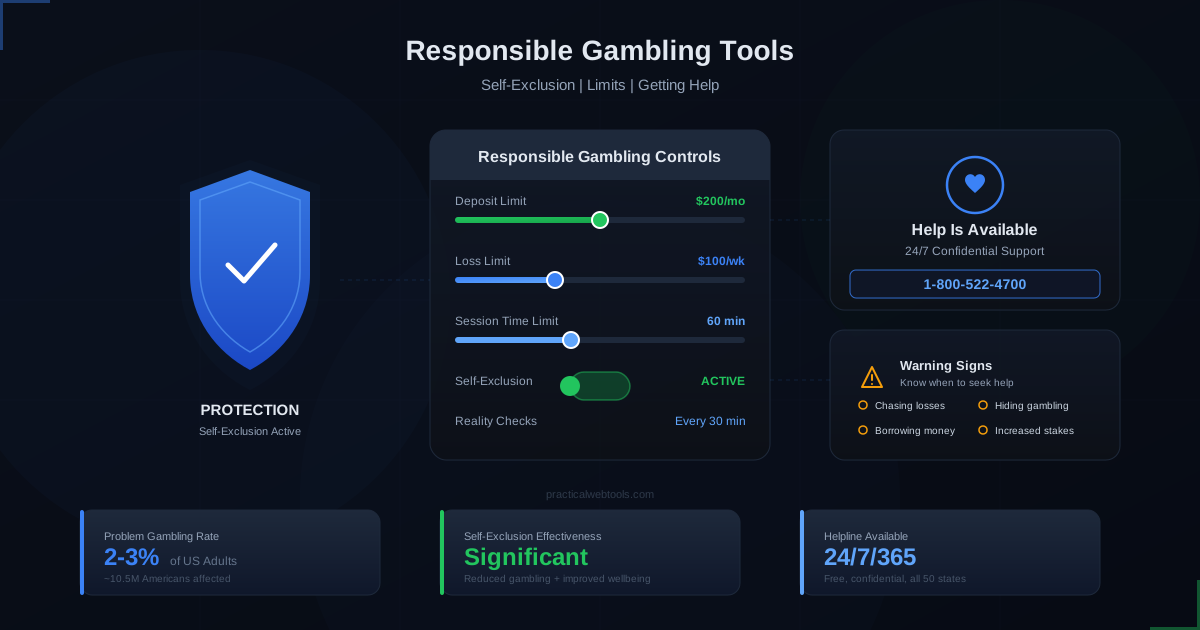
Gambling involves risk. This content is for educational and informational purposes only. Always gamble responsibly, set limits you can afford, and seek help if gambling becomes a problem. Visit the National Council on Problem Gambling or call 1-800-522-4700 for support.