Cricket Betting Strategy: A Beginner's Guide to Odds, Markets, and Formats (2026)
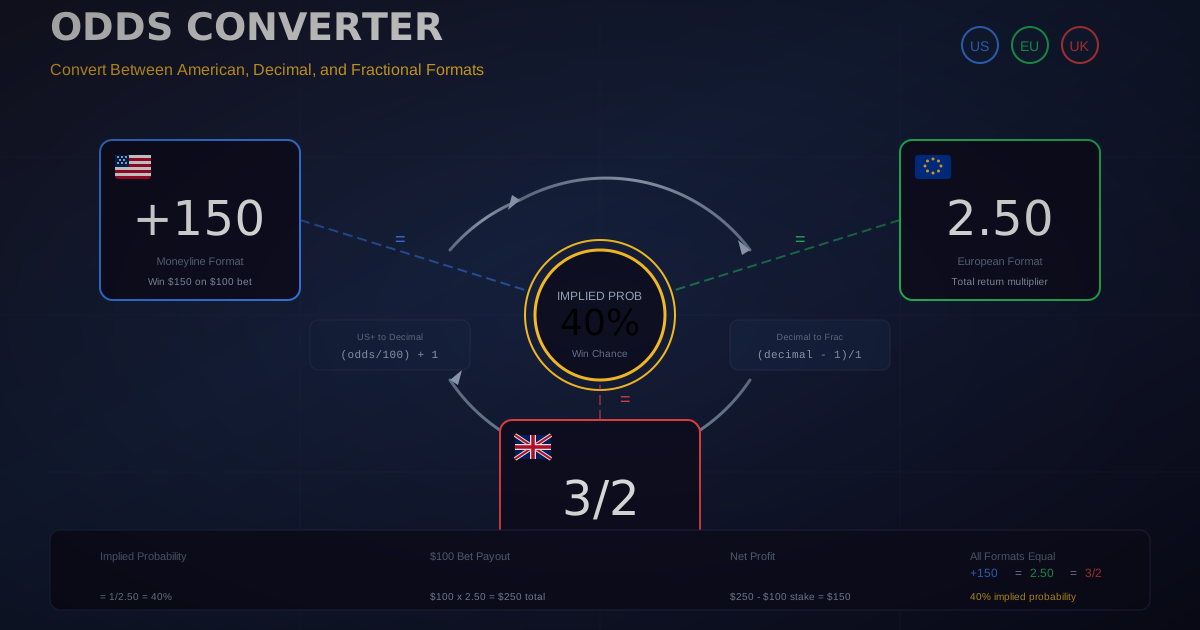
Cricket is the world's second-most popular sport by viewership with an estimated 2.5 billion fans globally, and its betting market generates over $50 billion in annual handle worldwide, making it one of the most liquid and opportunity-rich sports betting markets on the planet. Yet for bettors in Western markets, cricket remains deeply misunderstood, with most recreational bettors unfamiliar with the sport's three distinct formats, the critical role of pitch and weather conditions, and the dozens of unique betting markets available for every match. This comprehensive beginner's guide will take you from zero cricket knowledge to confident wagering across Test matches, One Day Internationals, and T20 cricket. Convert cricket odds between formats with our Odds Converter
What Are the Three Formats of Cricket and How Do They Affect Betting?
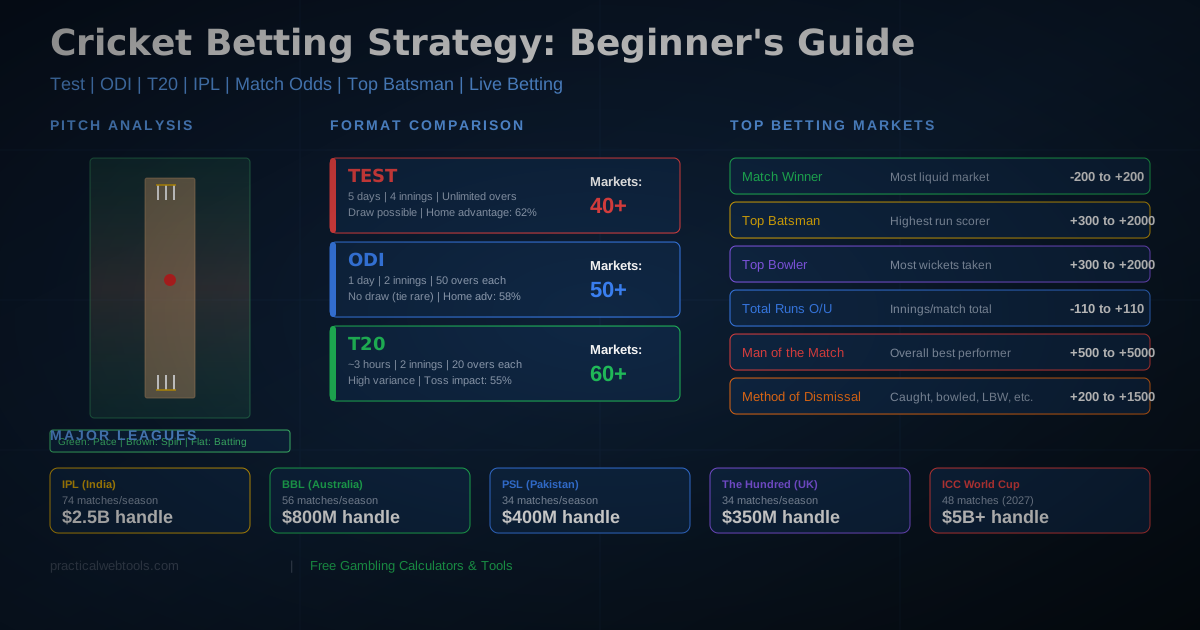
Cricket is played in three main formats -- Test (5-day), One Day International/ODI (50 overs per side), and Twenty20/T20 (20 overs per side) -- and each format produces fundamentally different betting dynamics because the match duration, scoring pace, and strategic emphasis change dramatically. Test cricket rewards patience and endurance with the possibility of a draw, ODIs balance batting and bowling over a full day, and T20s are high-scoring sprint events with the highest betting variance.
Test Cricket: The Five-Day Format
Test cricket is the oldest and most traditional format, played over a maximum of five days with each team batting twice (four innings total). A team wins by dismissing the opposition twice and scoring more total runs, or by declaring (voluntarily ending an innings) when they believe they have enough. Crucially, Test matches can end in a draw if five days are insufficient to produce a result, which creates a three-way betting market (Team A win, Team B win, Draw).
| Test Cricket Characteristic | Detail | Betting Impact |
|---|---|---|
| Duration | Up to 5 days (30 hours of play) | Conditions change dramatically over 5 days |
| Innings | 4 (each team bats twice) | Multiple momentum swings possible |
| Overs per innings | Unlimited | Rewards patience and defensive skill |
| Draw possibility | Yes (~25% of Tests) | Three-way market (win/win/draw) |
| Home advantage | 62% win rate | Strongest home advantage in sport |
| Pitch deterioration | Significant over 5 days | Day 4-5 favors spin bowlers heavily |
| Weather impact | Rain causes lost time (draw more likely) | Weather forecasts are critical for draw odds |
One Day International (ODI) Format
ODIs feature 50 overs (300 balls) per side, completed in a single day. The batting team aims to score as many runs as possible in their 50 overs, and the second team chases that target. ODIs very rarely end in a tie (scores level), with most matches producing a decisive winner. This creates a cleaner two-way betting market than Test cricket.
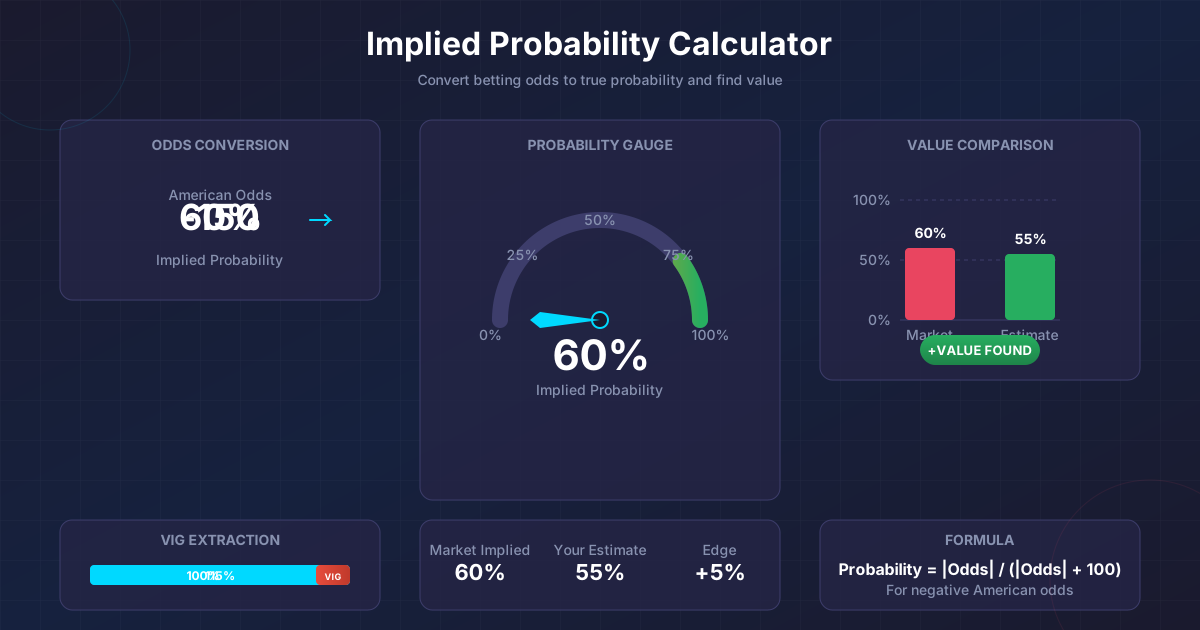
Use our Implied Probability Calculator to convert cricket ODI match odds into win probabilities for both teams.
T20 Cricket: The Fastest Format
T20 (Twenty20) cricket is the shortest international format, with just 20 overs (120 balls) per side. Matches last approximately 3 hours, scores are high (average T20I first innings score is around 155-170), and the game's inherent variability makes it the most exciting and volatile format for betting. T20 is where the majority of cricket betting action occurs globally, driven by franchise leagues like the IPL, BBL, PSL, and The Hundred.
| Format | Duration | Avg First Innings Score | Favorite Win Rate | Toss Impact | Betting Volume Share |
|---|---|---|---|---|---|
| Test | 5 days | 350-400 runs | 55-60% (excl. draw) | Medium (20-25%) | 15% |
| ODI | 1 day | 260-290 runs | 58-62% | Medium (22-28%) | 25% |
| T20 | 3 hours | 155-170 runs | 55-60% | High (28-35%) | 60% |
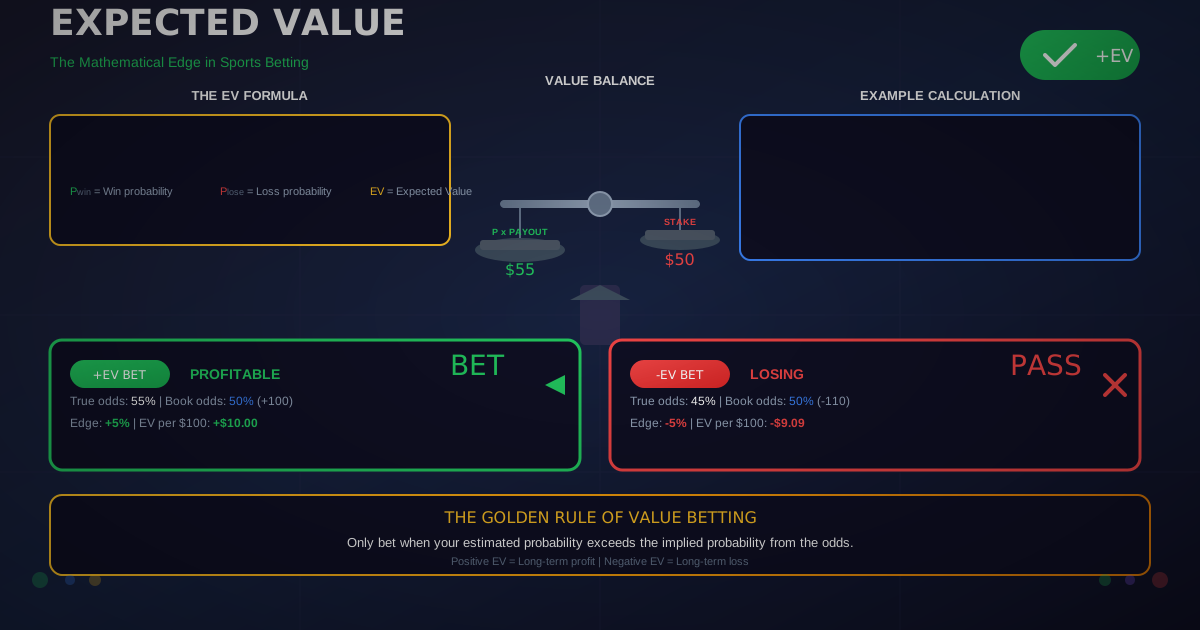
Use our Expected Value Calculator to determine whether match winner odds offer positive expected value based on format-specific home advantage and toss impact data.
How Do You Read and Understand Cricket Betting Odds?
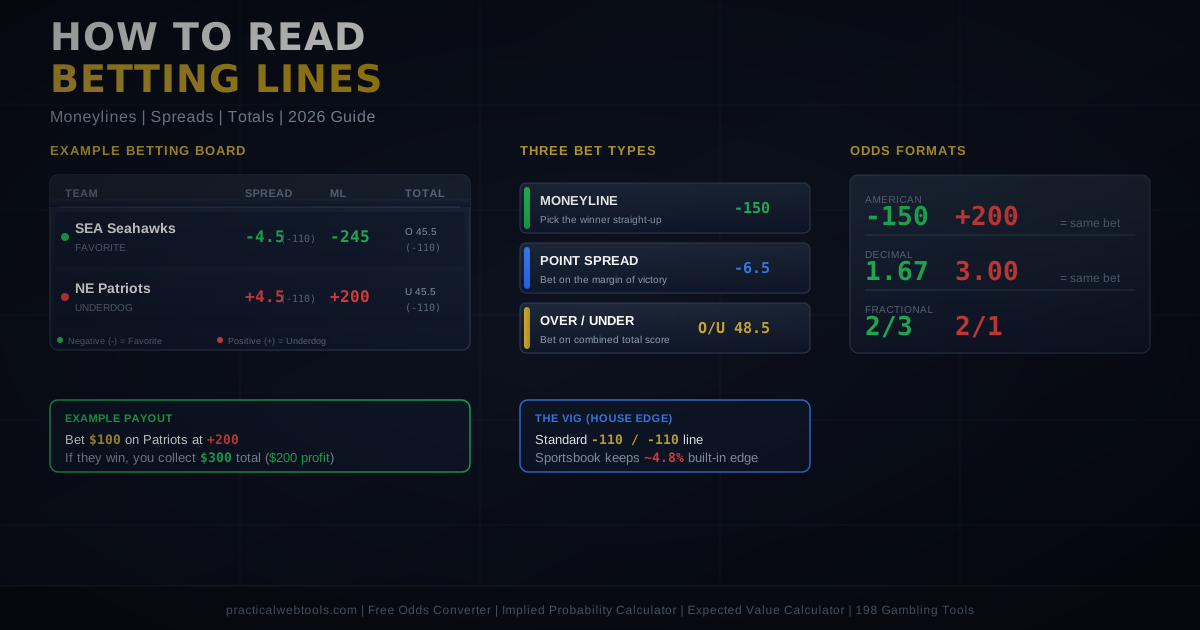
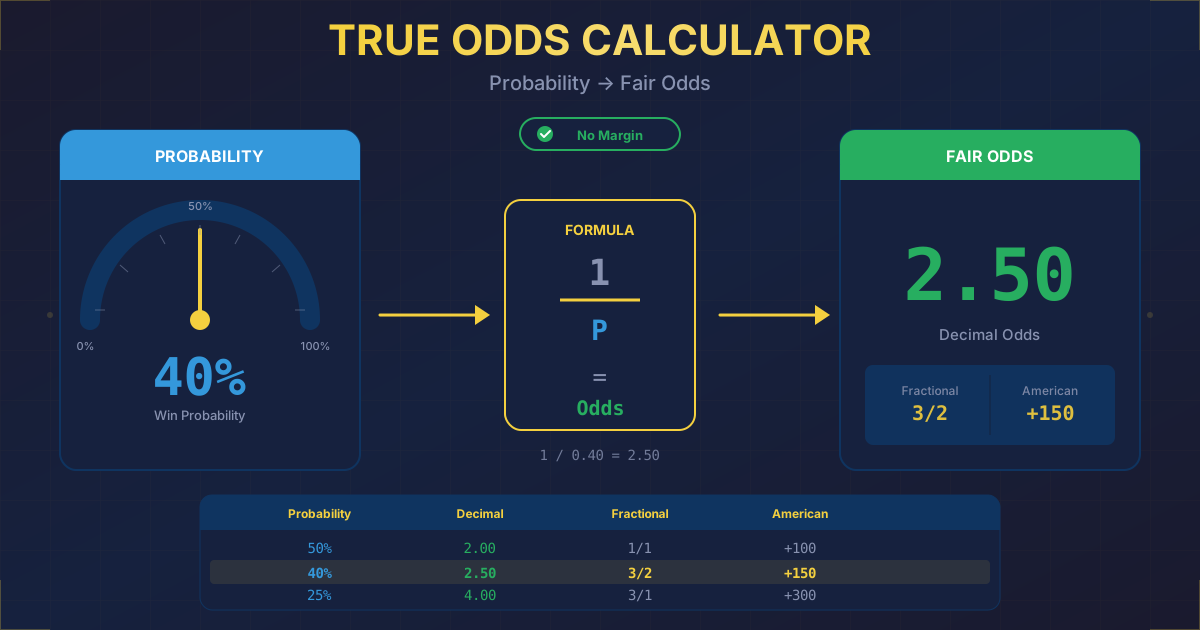
Cricket betting odds work identically to any other sport, with sportsbooks displaying the probability of each outcome as a price in American, decimal, or fractional format, though cricket's global nature means you will frequently encounter decimal odds (dominant in Europe, Australia, and Asia) and fractional odds (common in UK markets) alongside American odds at US sportsbooks. Understanding how to convert between formats is essential for comparing lines across international sportsbooks.
Odds Conversion Table for Common Cricket Lines
| Match Scenario | American Odds | Decimal Odds | Fractional Odds | Implied Probability |
|---|---|---|---|---|
| Strong favorite (home, Test) | -250 | 1.40 | 2/5 | 71.4% |
| Moderate favorite (ODI) | -150 | 1.67 | 2/3 | 60.0% |
| Slight favorite (T20) | -120 | 1.83 | 5/6 | 54.5% |
| Coinflip match | +100 | 2.00 | 1/1 | 50.0% |
| Slight underdog | +130 | 2.30 | 13/10 | 43.5% |
| Moderate underdog | +200 | 3.00 | 2/1 | 33.3% |
| Heavy underdog (Test away) | +400 | 5.00 | 4/1 | 20.0% |
| Draw (Test) | +250 | 3.50 | 5/2 | 28.6% |
Understanding the Three-Way Market (Test)
In Test cricket, the three-way market includes Team A Win, Team B Win, and Draw. The draw is a viable outcome in roughly 25% of Test matches (higher in England and New Zealand where rain is frequent, lower in Australia and India where pitches produce results). The draw is the most misunderstood outcome in cricket betting and frequently offers value because casual bettors underestimate its probability.
Use our Odds Converter to convert between American, decimal, and fractional odds when comparing cricket lines across UK, Australian, and US sportsbooks.
Betting Exchange Markets (Betfair)
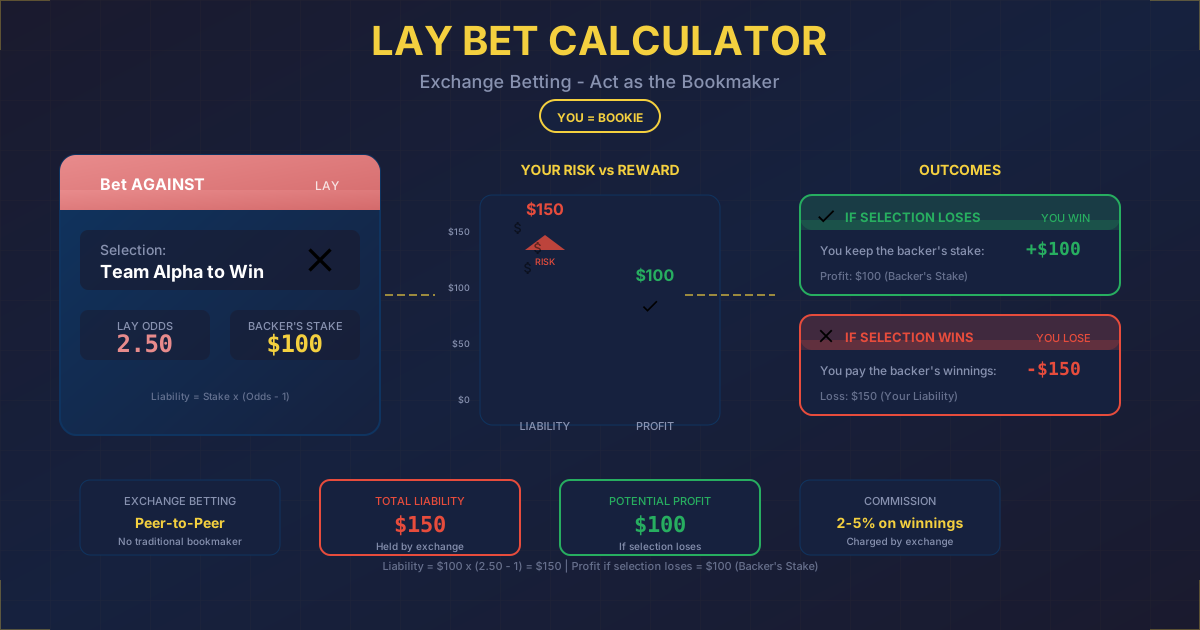
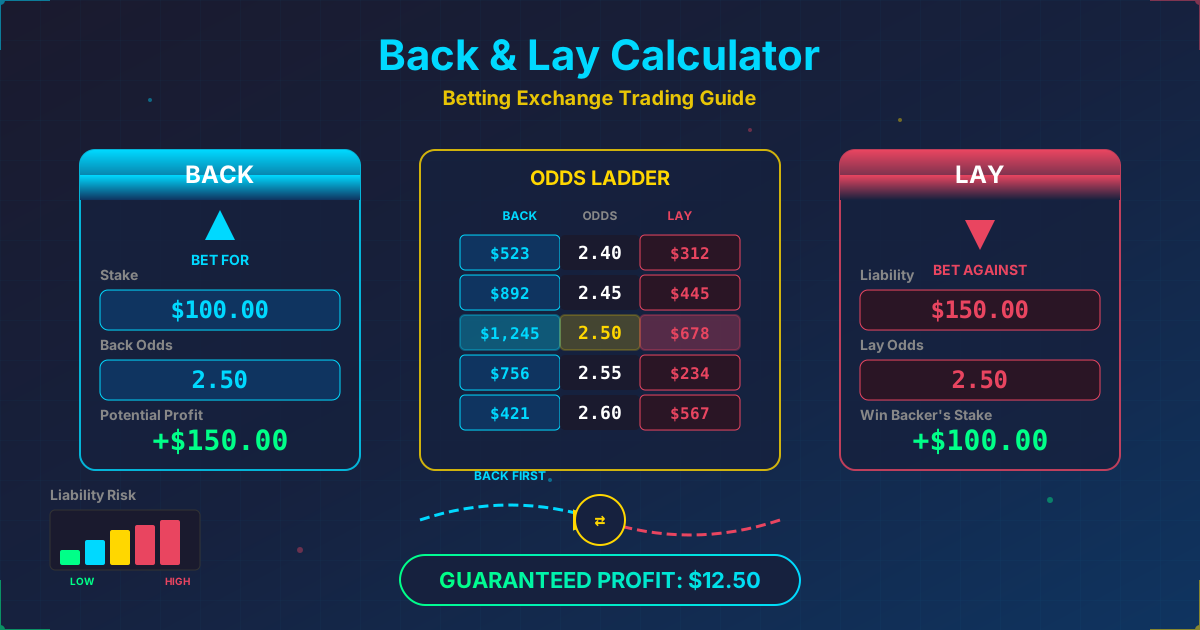
Cricket is one of the most actively traded sports on betting exchanges like Betfair, where you can both back (bet for) and lay (bet against) any outcome. Exchange cricket markets are extremely liquid during live play, particularly for IPL and international T20 matches, with millions traded per match. Exchange trading offers better odds than traditional sportsbooks because there is no built-in bookmaker margin -- only a small commission on winning bets.
Use our Back/Lay Calculator to calculate your liability when laying a cricket outcome on a betting exchange.
How Does the Toss Impact Cricket Betting?
The toss is one of cricket's most unique betting variables, with the captain who wins the toss choosing whether to bat or bowl first, and this decision has a statistically significant impact on match outcomes that varies by format, venue, and weather conditions. In T20 cricket, the team batting second (chasing) wins approximately 53-55% of matches because they know their exact target, while in Test cricket, the toss winner's advantage depends heavily on pitch conditions and expected weather.
Toss Impact by Format and Venue
| Format | Toss Winner Advantage | Batting First Win % | Chasing Win % | Toss Strategy Trend |
|---|---|---|---|---|
| Test (Overall) | 55% win rate | 36% | 39% (excl. draw) | Choose based on pitch/weather |
| Test (Subcontinent) | 60% win rate | 42% (bat first) | 33% | Bat first, pitch deteriorates |
| Test (England) | 52% win rate | 30% | 35% | Bowl first in overcast conditions |
| ODI (Overall) | 53% win rate | 47% | 53% | Chase preferred under lights |
| T20I (Overall) | 55% win rate | 45% | 55% | Chase preferred (known target) |
| IPL (Overall) | 56% win rate | 44% | 56% | Chase strongly preferred |
| BBL (Overall) | 54% win rate | 46% | 54% | Chase slightly preferred |
When to Bet Before vs. After the Toss
The toss occurs 30 minutes before the match starts, and odds shift significantly based on the result. Sharp bettors who have a strong opinion on the match outcome can gain value by betting before the toss if they believe the toss impact is overstated for a particular match, or they can wait until after the toss to incorporate this information.
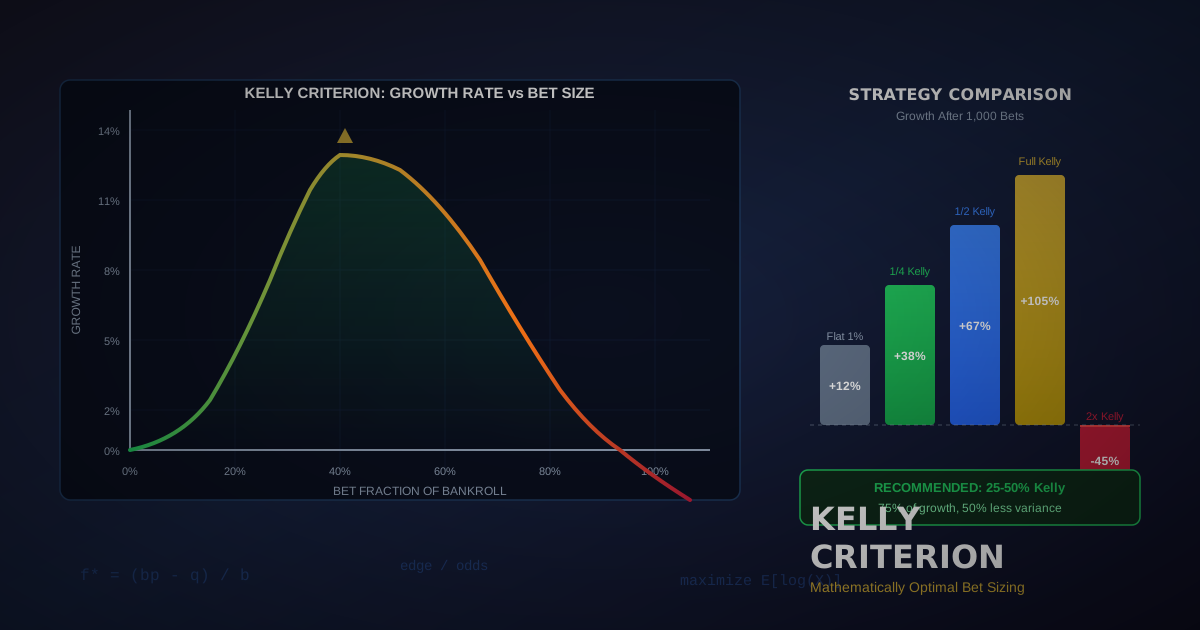
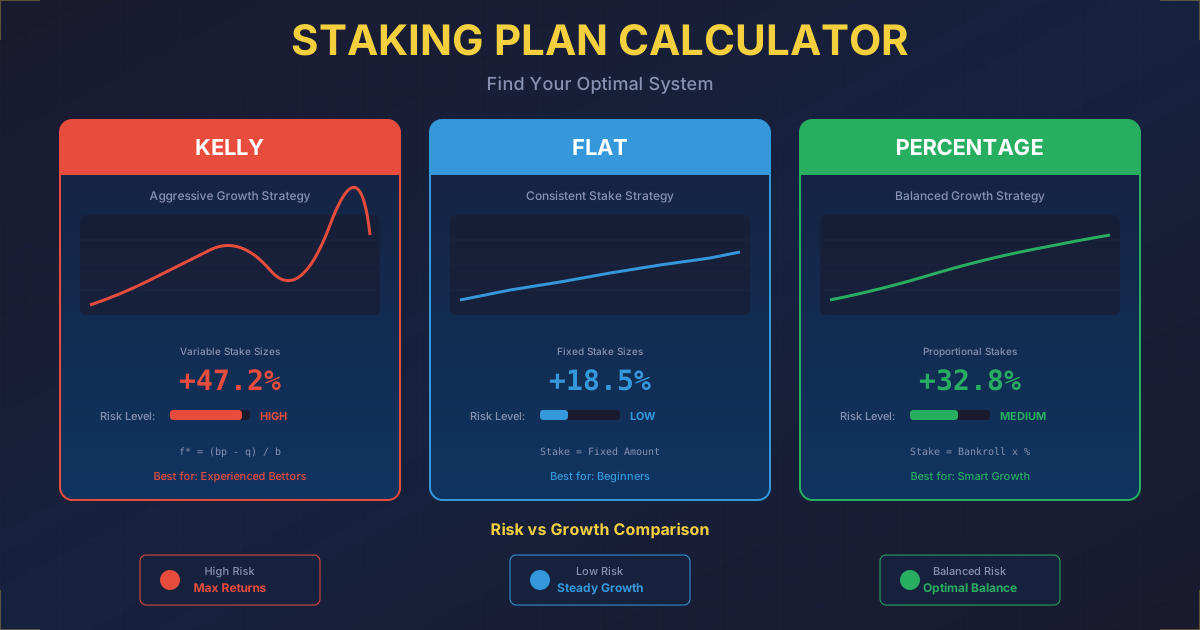
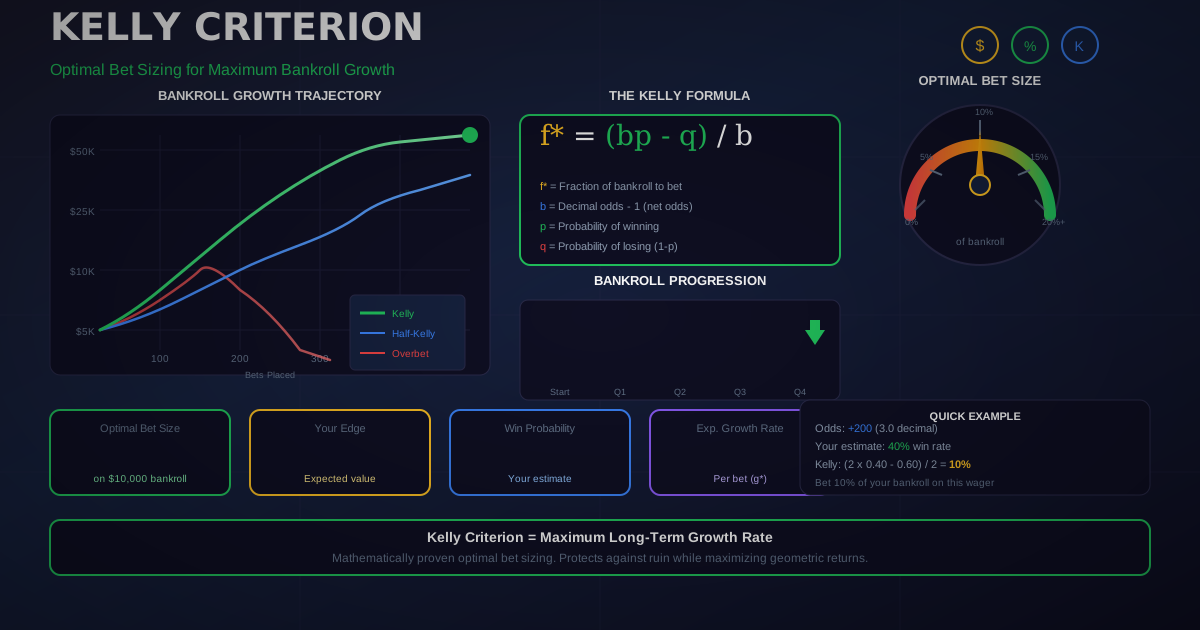
Use our Kelly Criterion Calculator to determine your optimal bet size on cricket matches after factoring in toss impact.
Dew Factor in Day-Night Matches
In day-night ODI and T20 matches (particularly in the subcontinent), dew forms on the outfield during the second innings, making the ball slippery and difficult for bowlers to grip. This systematically advantages the team batting second. The dew factor is one of the most reliable betting edges in cricket because it consistently affects outcomes but is underweighted by casual bettors.
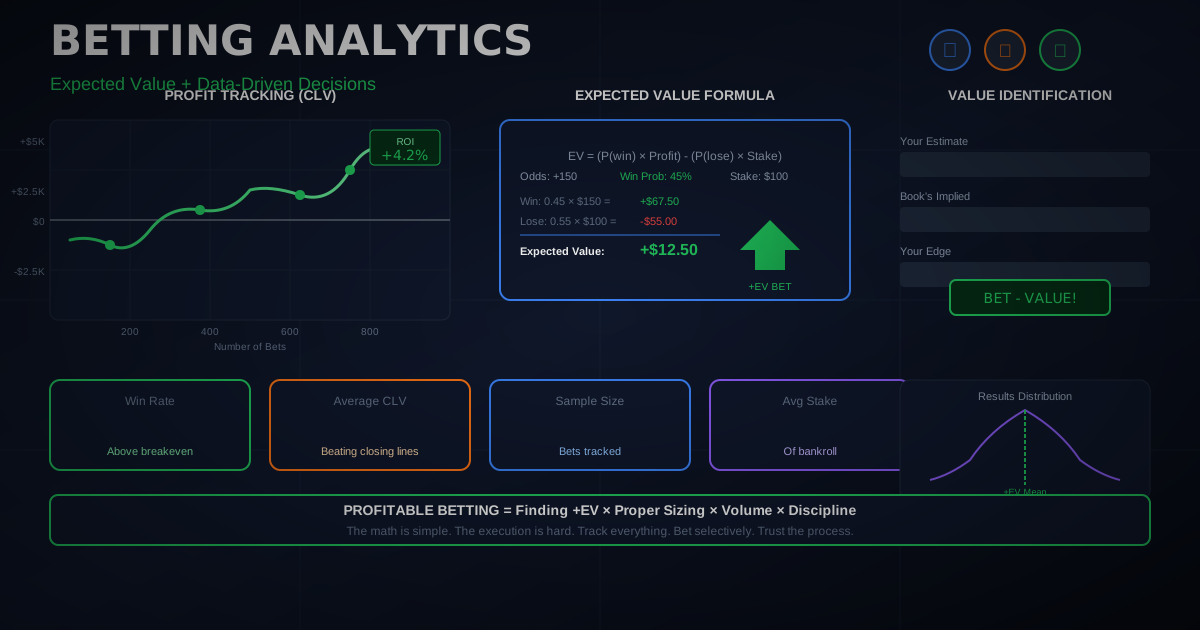
Use our Expected Value Calculator to model how the dew factor shifts win probabilities in day-night cricket matches.
What Are the Key Cricket Betting Markets Beginners Should Know?
The key cricket betting markets for beginners are match winner (the core market), top batsman and top bowler (individual performance markets), total runs over/under (innings and match totals), method of dismissal, man of the match, and session/over-based live betting markets. Beginners should start with match winner and total runs before progressing to more complex markets.
Match Winner
The match winner market is cricket's equivalent of the moneyline in other sports. In ODIs and T20s, it is a straightforward two-way market. In Tests, it is a three-way market including the draw. Match winner odds are set based on team strength, home advantage, conditions, and recent form.
| Market | Format Availability | Typical Odds Range | Complexity | Beginner Friendly |
|---|---|---|---|---|
| Match Winner | All formats | -300 to +400 | Low | Yes |
| Top Batsman (Match) | ODI, T20 | +300 to +2500 | Medium | Yes |
| Top Bowler (Match) | ODI, T20 | +300 to +2000 | Medium | Yes |
| Innings Runs O/U | All formats | -110 to +110 | Medium | Yes |
| Total Match Runs O/U | ODI, T20 | -110 to +110 | Medium | Yes |
| Total Sixes O/U | T20 | -110 to +110 | Medium | Yes |
| Man of the Match | All formats | +500 to +5000 | High | After experience |
| Method of Dismissal | All formats | +200 to +1500 | High | After experience |
| Fall of 1st Wicket O/U | All formats | Varies | Medium-High | After experience |
| Highest Opening Partnership | T20 | -110 to +110 | Medium | After experience |
Top Batsman and Top Bowler
Top batsman (the player who scores the most runs) and top bowler (the player who takes the most wickets) are popular individual performance markets. These bets add excitement even if you are uncertain about the match winner. Key considerations include the player's batting or bowling position (opening batsmen have more opportunity to score), recent form, and conditions.
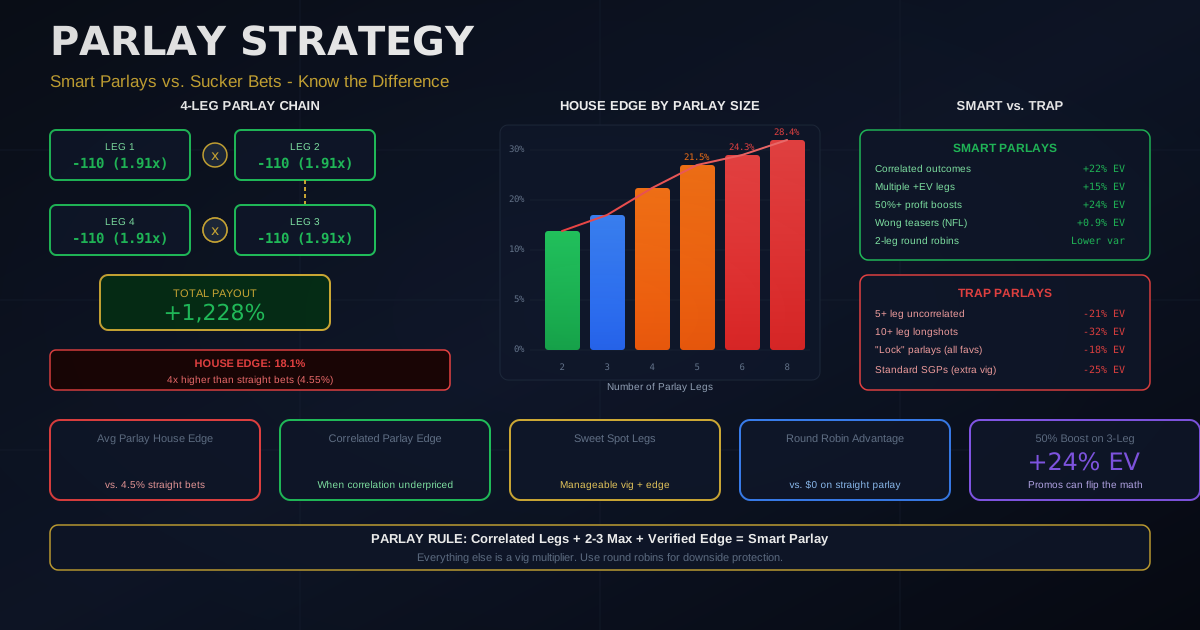
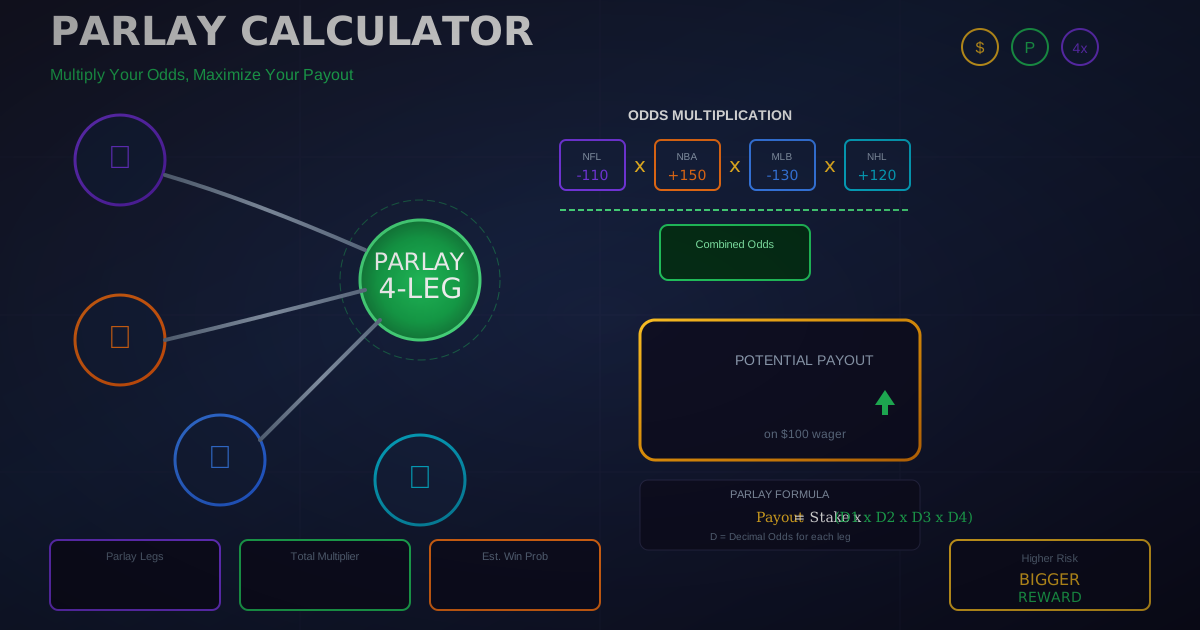
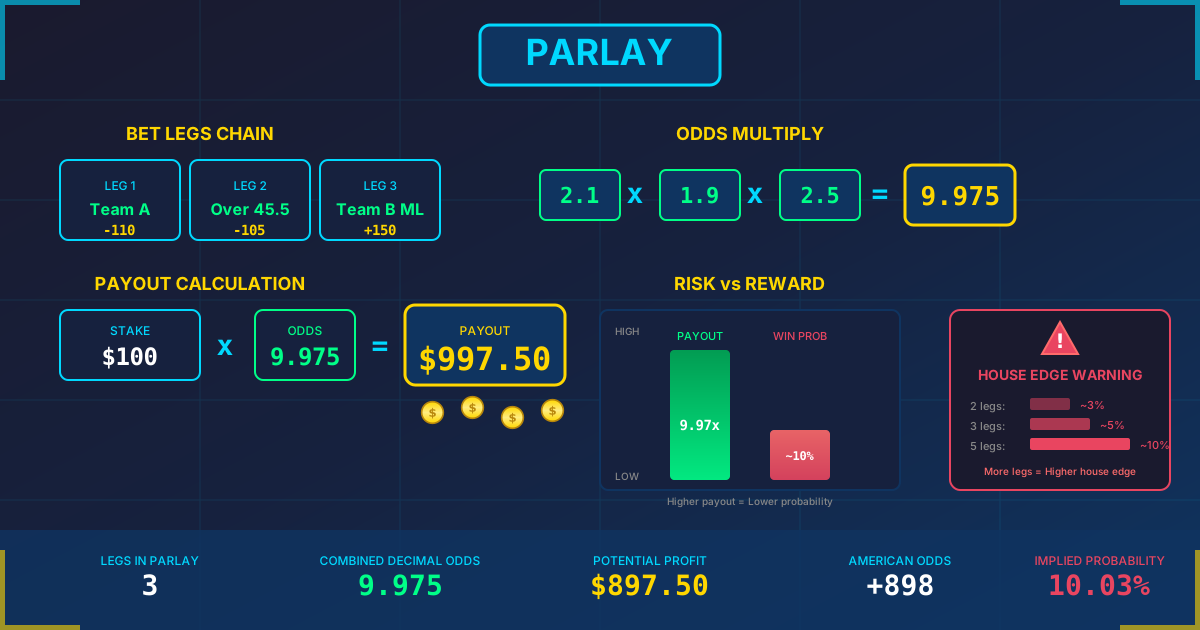
Use our Parlay Calculator to combine a match winner bet with a top batsman pick for a higher-payout parlay.
Innings Runs Over/Under
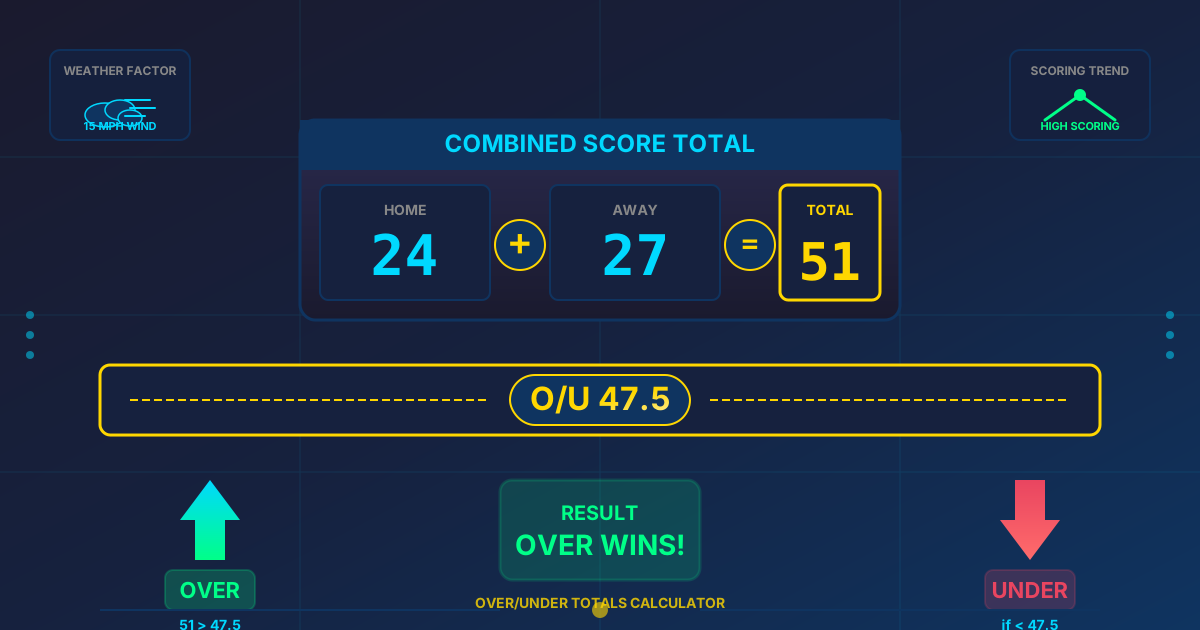
The innings runs over/under allows you to bet on whether a team's score will exceed a set line. For T20 innings, this might be set at 165.5 runs; for ODI innings, it might be 275.5 runs. The key factors are batting lineup strength, pitch conditions, bowling attack quality, and weather.
Use our Implied Probability Calculator to check whether the innings runs over/under odds reflect the true probability based on venue scoring history.
How Do Pitch and Weather Conditions Affect Cricket Betting?
Pitch and weather conditions are arguably the most important external factors in cricket betting, more impactful than in almost any other sport, because the playing surface (pitch) directly determines whether batsmen or bowlers are favored, and weather affects not only the pitch but also swing bowling, outfield speed, and the possibility of rain delays or match abandonment. Expert pitch analysis separates profitable cricket bettors from recreational ones.
Pitch Types and Their Betting Implications
| Pitch Type | Appearance | Favors | Scoring Rate | Best Bet Approach | Common Venues |
|---|---|---|---|---|---|
| Green/Grassy | Green tint, visible grass | Fast bowlers | Low (200-250 ODI) | Bowling team, unders | England, NZ, SA |
| Dry/Dusty | Brown, cracked surface | Spin bowlers | Low-Medium | Team with better spinners | India, Sri Lanka |
| Flat/Batting | Light brown, hard | Batsmen | High (300+ ODI) | Overs, top batsman bets | Australia, flat India |
| Slow/Low | Dull, worn | Defensive batting | Low | Unders, experienced batsmen | Caribbean, Bangladesh |
| Day 1 Fresh | Uniform, firm | Balanced | Medium-High | Toss winner, bat first | All Test venues |
| Day 4-5 Worn | Cracked, dry patches | Spin bowlers | Low | Team batting first (Tests) | Subcontinent |
Weather Impact: Overcast Conditions
Overcast (cloudy) skies in cricket are not just about rain risk -- they actively help fast bowlers by promoting swing (lateral movement of the ball through the air). In England, Australia, and South Africa, overcast conditions can transform a flat batting pitch into a bowler-friendly surface. Bettors should check both the weather forecast and the cloud cover predictions for match day.
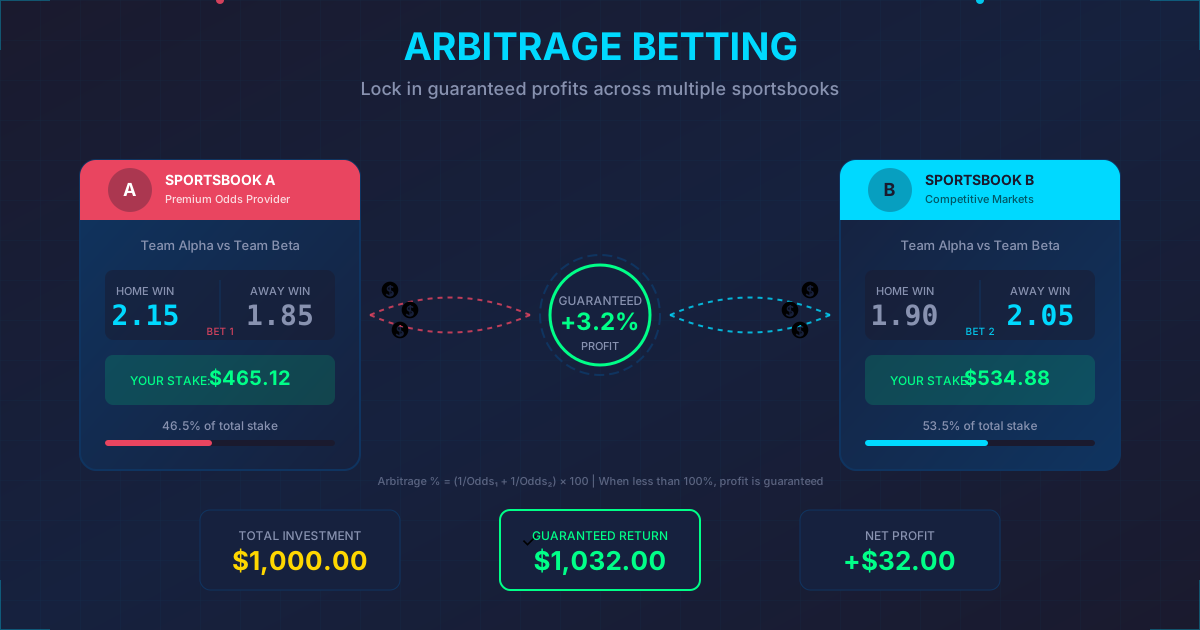
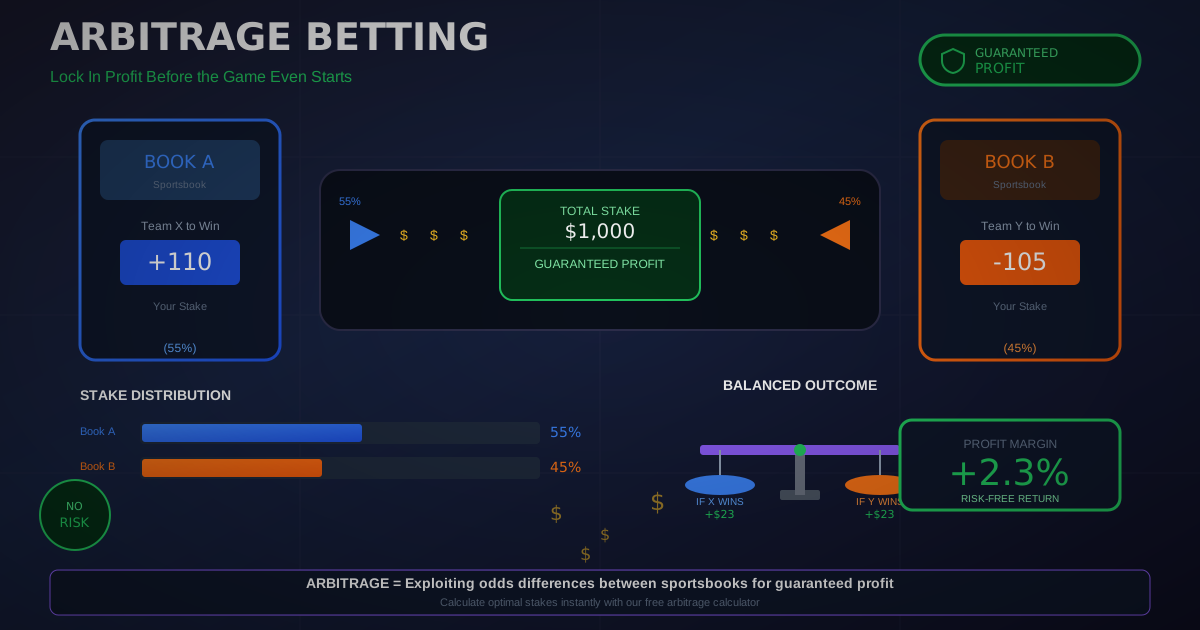
Use our Arbitrage Calculator to find pricing differences between sportsbooks when weather forecasts change close to a cricket match's start time.
Rain and Duckworth-Lewis-Stern (DLS)
In limited-overs cricket, rain interruptions trigger the Duckworth-Lewis-Stern (DLS) method for adjusting targets. DLS is a mathematical formula that recalculates the chasing team's target based on resources (overs and wickets) remaining. Understanding DLS is important for live betting because a rain delay can dramatically change the required run rate and therefore the win probabilities.
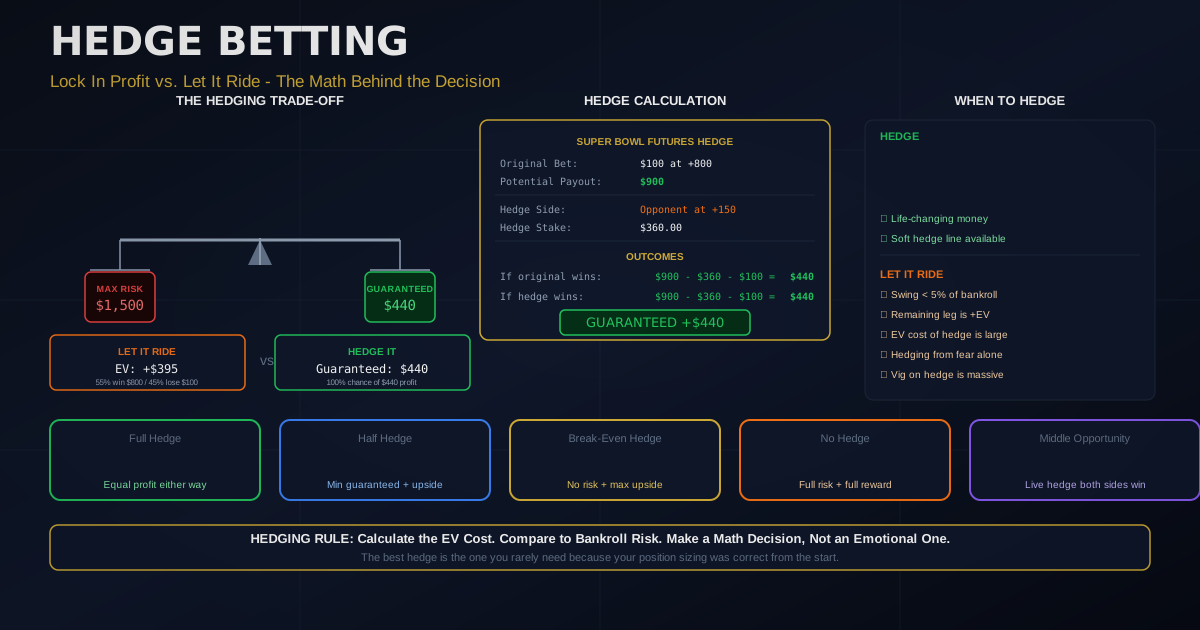
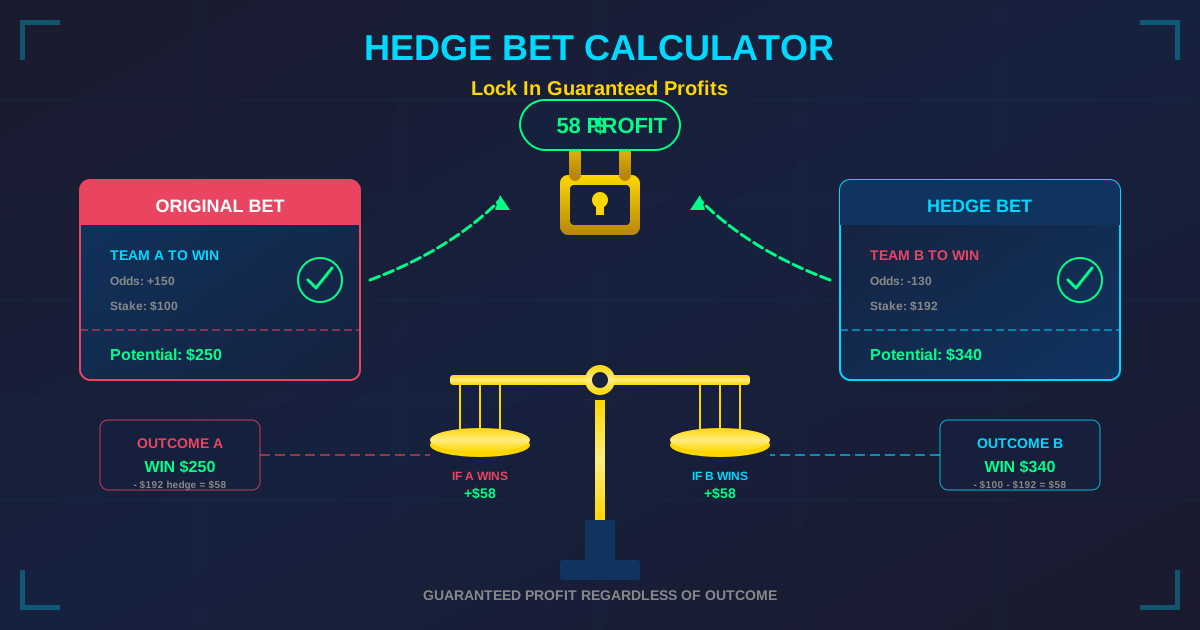
Use our Hedge Calculator to protect a pre-match bet when rain threatens to reduce a cricket match and invoke DLS adjustments.
What Strategies Work Best for Betting on T20 Cricket Leagues?
T20 franchise leagues (IPL, BBL, PSL, The Hundred, CPL) offer the most consistent betting opportunities in cricket due to their high match volume, compressed schedules, and the inherent scoring volatility that creates exploitable market inefficiencies. The optimal T20 league betting strategy combines pitch analysis, team form over the last 5-8 matches, batting lineup depth, death bowling quality, and venue-specific scoring data.
IPL Betting Strategy
The Indian Premier League (IPL) is the world's richest and most-watched cricket league, featuring the best players from around the globe competing for eight franchises across Indian venues. IPL matches are played in the evening under lights, with dew becoming a significant factor in the second innings.
| IPL Betting Factor | Importance | How to Analyze |
|---|---|---|
| Venue Scoring Data | Very High | Average first innings score by venue |
| Toss and Chase Advantage | Very High | IPL chasing team wins ~56% |
| Team Form (Last 5 matches) | High | Recent wins, NRR, consistency |
| Player Availability | High | International call-ups, injuries |
| Death Bowling Quality | High | Economy rate in overs 16-20 |
| Batting Depth | Medium-High | Runs scored by positions 5-8 |
| Head-to-Head Record | Medium | Season-specific more than historical |
| Dew Factor | Medium-High | Especially in Mumbai, Delhi |
BBL and PSL Strategies
The Big Bash League (BBL) in Australia and the Pakistan Super League (PSL) offer different strategic considerations. BBL pitches in Australia tend to be faster and higher-scoring, while PSL pitches in Pakistan can be slower and spin-friendly. BBL matches are played during the Australian summer (December-February), and daytime heat can affect player fatigue and pitch behavior.
Use our Expected Value Calculator to model whether T20 league match odds offer positive expected value after accounting for venue-specific data.
Identifying Value in T20 League Betting
The highest-value opportunities in T20 leagues tend to occur when:
- A strong team has a 2-3 match losing streak (public overreacts, odds lengthen excessively)
- A key player returns from injury or international duty (not yet fully priced in)
- Venue conditions strongly favor one team's bowling style (spin-heavy vs. pace-heavy)
- A team is mathematically eliminated from playoffs but playing freely (undervalued)
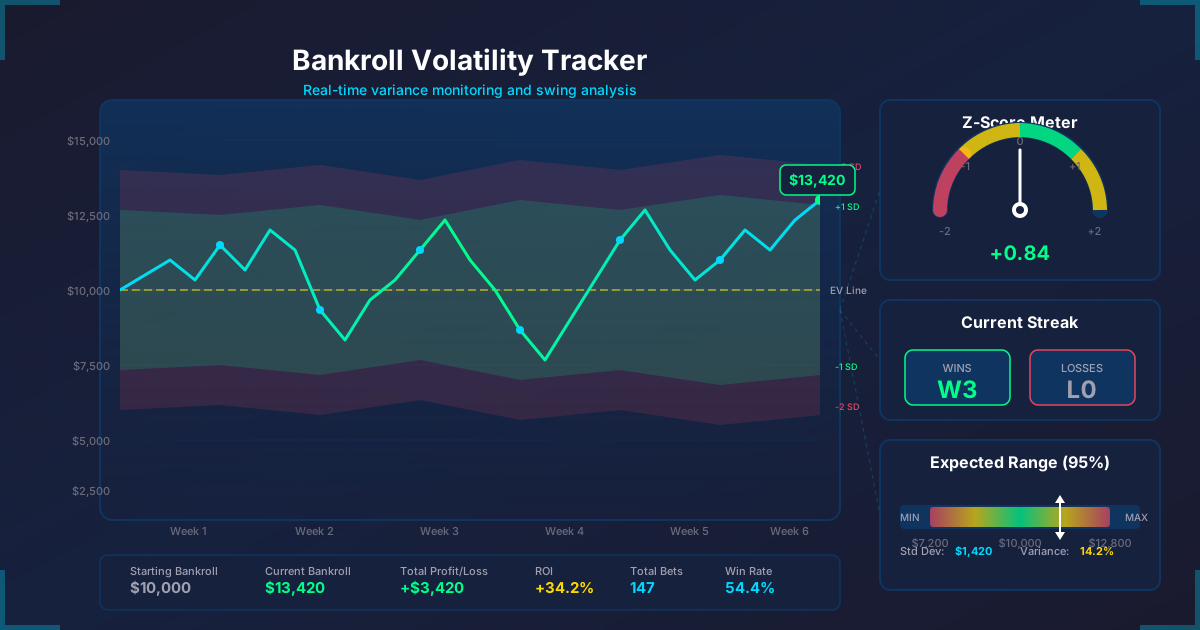
Use our Bankroll Volatility Tracker to manage your bankroll across the 60-74 match IPL season with its concentrated daily schedule.
How Does Home Advantage Work in Cricket Betting?
Home advantage in cricket is the most pronounced of any major international sport, with home teams winning approximately 60-65% of Test matches (excluding draws) and 55-60% of limited-overs internationals, driven by familiar pitch conditions, crowd support, climate acclimatization, and the ability of home curators to prepare pitches that suit the home team's bowling strengths. India's home Test record of roughly 75% wins over the past decade is the most extreme example.
Home Advantage by Country (Test Cricket)
| Country | Home Win Rate (Last 10 Years) | Home Draw Rate | Key Home Advantage Factor |
|---|---|---|---|
| India | 75-80% | 10-12% | Spin-friendly pitches, 3 quality spinners |
| Australia | 68-72% | 8-10% | Pace-friendly pitches, hostile conditions |
| England | 55-60% | 20-25% | Swing bowling, unpredictable weather |
| South Africa | 60-65% | 12-15% | Pace and bounce, altitude at Johannesburg |
| New Zealand | 55-60% | 18-22% | Swing conditions, green pitches |
| Pakistan | 58-63% | 15-18% | Spin-friendly, slow pitches |
| Sri Lanka | 62-67% | 12-15% | Extreme spin, humid conditions |
| West Indies | 45-50% | 20-25% | Declining advantage, slow pitches |
| Bangladesh | 55-60% | 15-20% | Spin tracks, hot humid conditions |
Why Home Advantage Is So Strong in Cricket
Unlike most sports where home advantage is primarily about crowd noise and travel, cricket's home advantage is structural. Home cricket boards control pitch preparation, and curators prepare surfaces that suit the home team's strengths. India prepares spin-friendly pitches because they have the world's best spin bowlers. Australia prepares fast, bouncy pitches because they have the best pace bowlers. Visiting teams must adapt to unfamiliar conditions with limited preparation time.
Use our Implied Probability Calculator to check whether away team odds adequately reflect the extreme home advantage in cricket, particularly in Test matches in the subcontinent.
Touring Team Acclimatization
The length of a touring team's preparation period significantly affects their chances. Teams that arrive weeks early for practice matches and acclimatization perform better than teams with minimal warm-up time. Historically, England's Ashes tours to Australia have been more competitive when they schedule extensive warm-up matches.
Use our Kelly Criterion Calculator to adjust your bet sizing based on the touring team's preparation level and acclimatization period.
How Should You Approach Live Betting in Cricket?
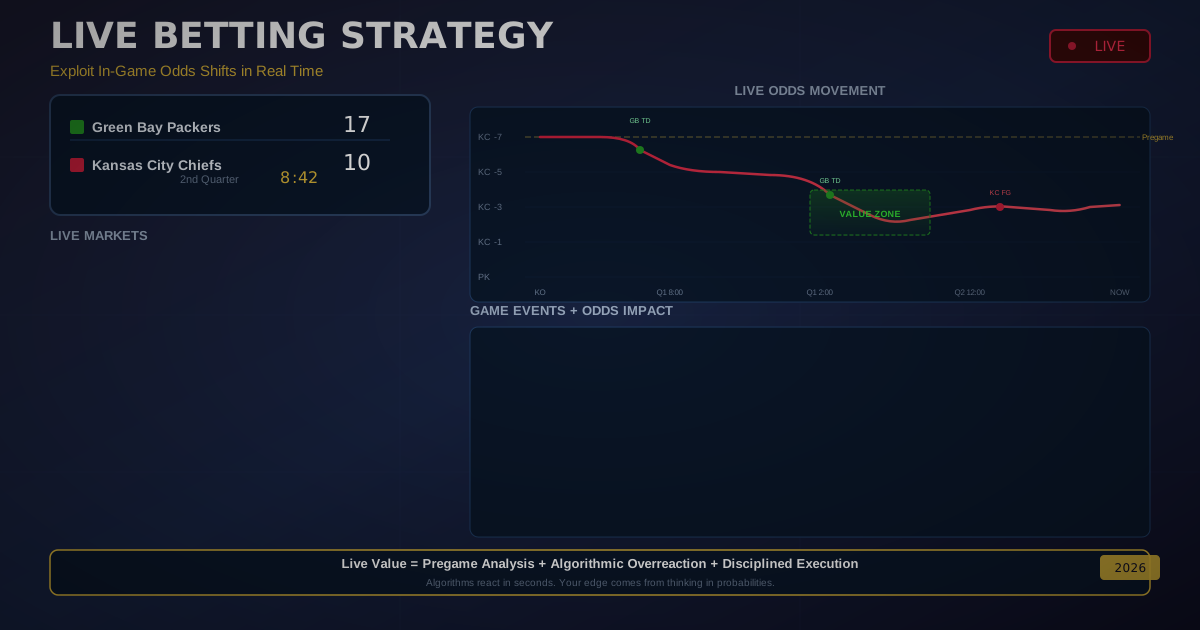
Live (in-play) betting in cricket is exceptionally rewarding because the sport's long duration (3 hours for T20, full day for ODI, 5 days for Test) provides numerous natural betting windows, and key events like wickets, boundaries, rain delays, and session breaks create predictable odds movements that prepared bettors can exploit. Cricket is arguably the best live betting sport in the world due to the constant flow of calculable probabilities.
Key Live Betting Moments in T20 Cricket
| Match Phase | Overs | Live Betting Opportunity | What to Watch For |
|---|---|---|---|
| Powerplay (1-6) | 1-6 | Runs scored vs. expected; early wickets | Batting aggression, pitch behavior |
| Middle Overs (7-15) | 7-15 | Run rate acceleration or stall | Spin bowling effectiveness, partnerships |
| Death Overs (16-20) | 16-20 | Final total projection | Death bowling quality, hitting power |
| Innings Break | Between innings | Adjusted chase probabilities | Score vs. venue average, conditions |
| Chase Powerplay | 1-6 (2nd) | Early momentum in chase | Required rate vs. actual rate |
| Chase Middle | 7-15 (2nd) | Run rate vs. required rate gap | Key wickets, partnership building |
| Chase Death | 16-20 (2nd) | Match outcome crystallizing | Remaining required rate, batting depth |
Wicket Impact on Live Odds
Each wicket in cricket dramatically shifts the live odds because it removes a batsman and brings a potentially weaker replacement to the crease. The first 3 wickets have the most impact because they typically involve the top-order batsmen who score the majority of runs. In T20 cricket, losing a wicket in the death overs is particularly damaging because the new batsman needs time to adjust.
Use our Hedge Calculator to lock in profits during cricket live betting when a crucial wicket falls and odds swing in your favor.
Session Betting in Test Cricket
Test cricket's structured sessions (morning, afternoon, evening) create natural betting intervals. Session betting markets include runs scored in the session, wickets taken in the session, and which team will be ahead at the end of the session. Morning sessions in Test cricket tend to favor bowlers (fresher pitch, cooler conditions), while afternoon sessions favor batsmen (pitch dries out, ball softens).
Use our Arbitrage Calculator to find pricing discrepancies between sportsbooks on cricket live markets during session breaks.
What Statistics Should You Use to Handicap Cricket Matches?
The most valuable statistics for cricket handicapping are batting average and strike rate (adjusted by format and conditions), bowling average and economy rate, venue-specific scoring data, head-to-head team records at specific venues, recent form (last 5-10 matches), and toss-adjusted win rates. The key insight for beginners is that cricket statistics must always be interpreted in the context of format, conditions, and opposition quality.
Key Batting Statistics
| Statistic | What It Measures | Elite Benchmark (T20) | Elite Benchmark (ODI) | Elite Benchmark (Test) |
|---|---|---|---|---|
| Batting Average | Runs per dismissal | 35+ | 45+ | 50+ |
| Strike Rate | Runs per 100 balls | 140+ | 95+ | 55+ |
| Boundary % | Runs from 4s and 6s | 55%+ | 45%+ | 35%+ |
| Average vs. Spin | Performance against spin | Format-dependent | Format-dependent | Critical in subcontinent |
| Average vs. Pace | Performance against pace | Format-dependent | Format-dependent | Critical in SENA countries |
| Phase-Specific SR | Strike rate in powerplay/middle/death | Varies by role | Varies by role | N/A |
Key Bowling Statistics
| Statistic | What It Measures | Elite Benchmark (T20) | Elite Benchmark (ODI) | Elite Benchmark (Test) |
|---|---|---|---|---|
| Bowling Average | Runs conceded per wicket | <22 | <28 | <25 |
| Economy Rate | Runs conceded per over | <7.5 | <5.0 | <3.0 |
| Strike Rate | Balls per wicket | <18 | <32 | <55 |
| Dot Ball % | Percentage of no-run deliveries | 40%+ | 50%+ | 60%+ |
| Death Economy | Economy in overs 16-20 (T20) | <9.0 | N/A | N/A |
| Powerplay Wickets | Wickets in overs 1-6 | Track per bowler | Track per bowler | N/A |
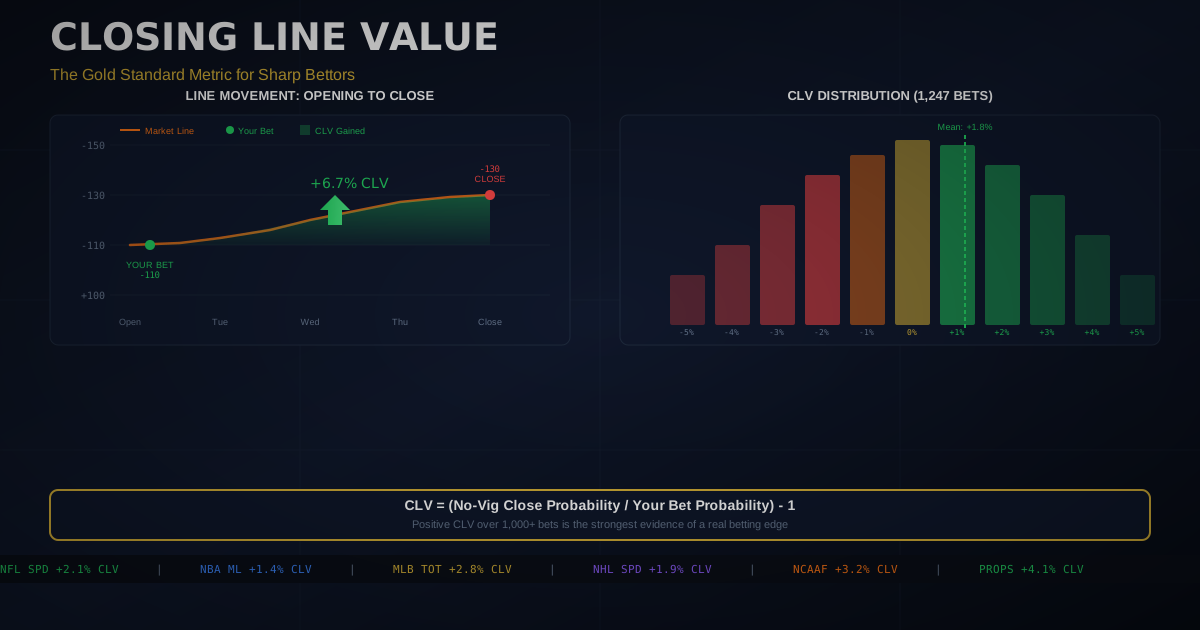
Use our Closing Line Value Tracker to measure whether your cricket betting analysis consistently produces bets that beat the closing line.
Venue-Specific Data
Every cricket ground has a scoring profile based on its pitch type, outfield size, altitude, and typical weather. Wankhede Stadium in Mumbai produces higher scores than Chepauk in Chennai due to smaller boundaries and flatter pitches. Bettors should build a venue scoring database that tracks average first innings scores, chase success rates, and format-specific data.
Use our Sure Bet Calculator to find guaranteed profit opportunities when sportsbooks disagree on venue-adjusted cricket odds.
How Do You Build a Profitable Cricket Betting System for Beginners?
Building a profitable cricket betting system as a beginner requires choosing one format to specialize in (T20 is recommended due to high match volume and data availability), developing a checklist-based handicapping approach that covers the key variables (toss, pitch, form, conditions), comparing your assessment against sportsbook odds to identify value, and tracking every bet to measure and improve your accuracy over time.
Step-by-Step System for Beginners
- Choose your format: Start with T20 league cricket (IPL, BBL) for the highest match volume
- Learn the key variables: Toss impact, venue scoring data, team form (last 5), key player availability
- Build a pre-match checklist: Score each variable and produce a probability estimate for each team
- Compare against odds: Only bet when your probability exceeds the implied probability by 5%+
- Start with match winner bets: Simplest market, most data available for analysis
- Track everything: Record every bet with reasoning, odds, stake, and result
- Review monthly: Identify which variables your model gets right and wrong
| System Phase | Time Investment | Skill Development | Expected Timeline |
|---|---|---|---|
| Learning the sport | 5-10 hours | Understanding formats, rules | Week 1-2 |
| Studying variables | 3-5 hours/week | Pitch reading, toss impact | Week 3-6 |
| Building a model | 2-4 hours/week | Probability estimation | Month 2-3 |
| Active betting | 1-2 hours/match | Handicapping, line comparison | Month 3+ |
| System refinement | 3-5 hours/month | Model accuracy improvement | Ongoing |
Bankroll Management for Cricket
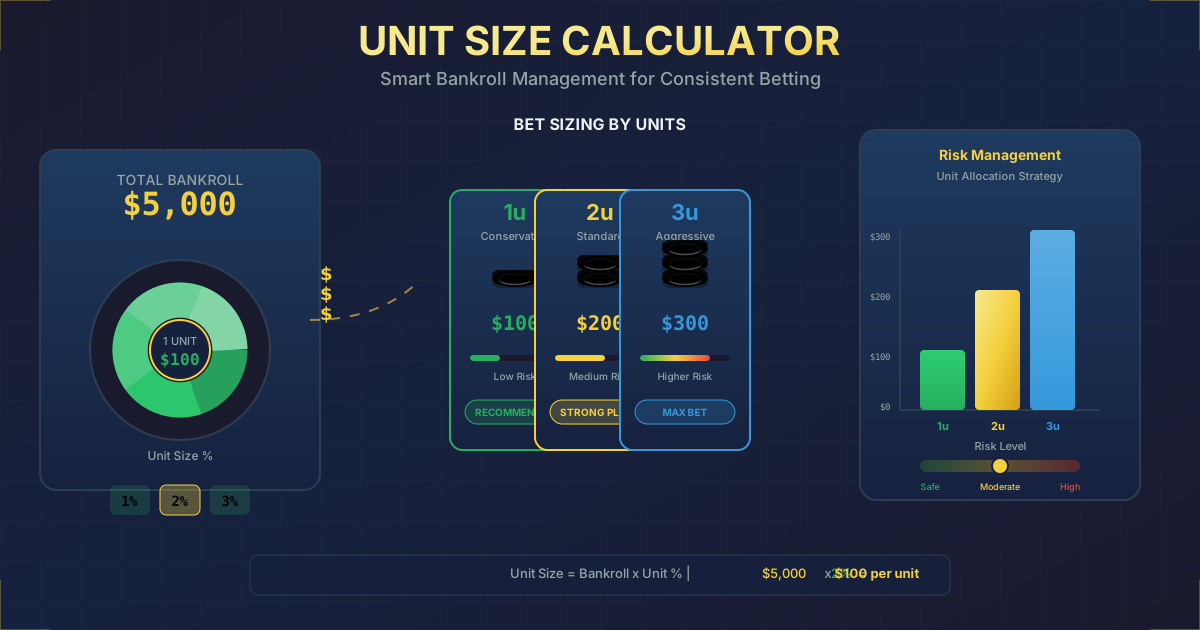
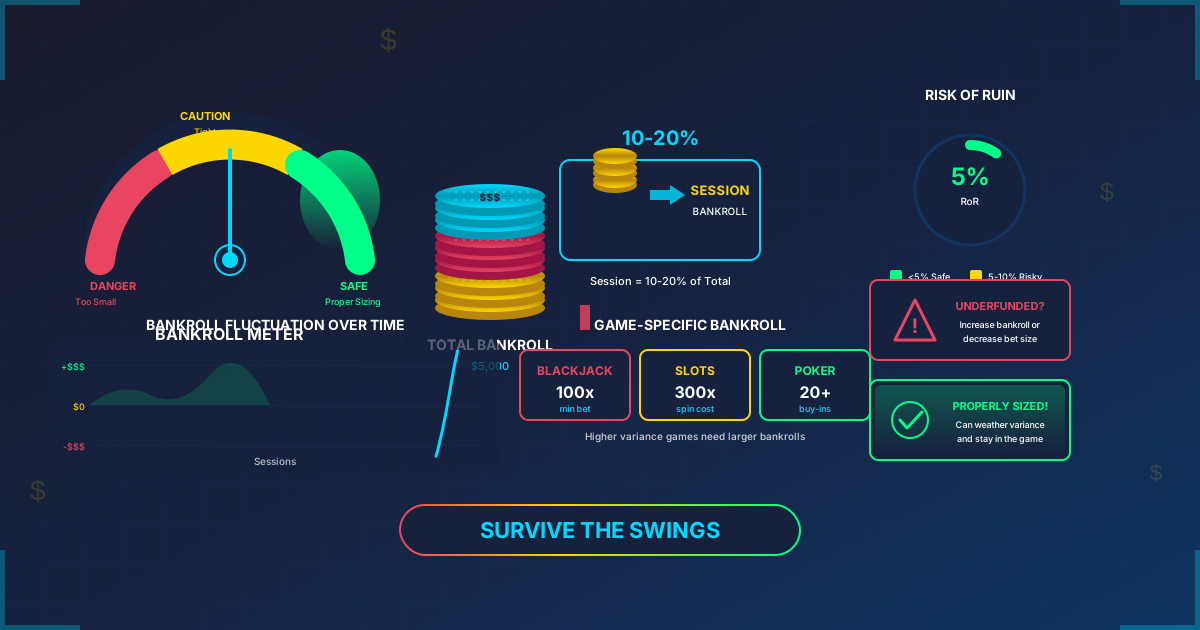
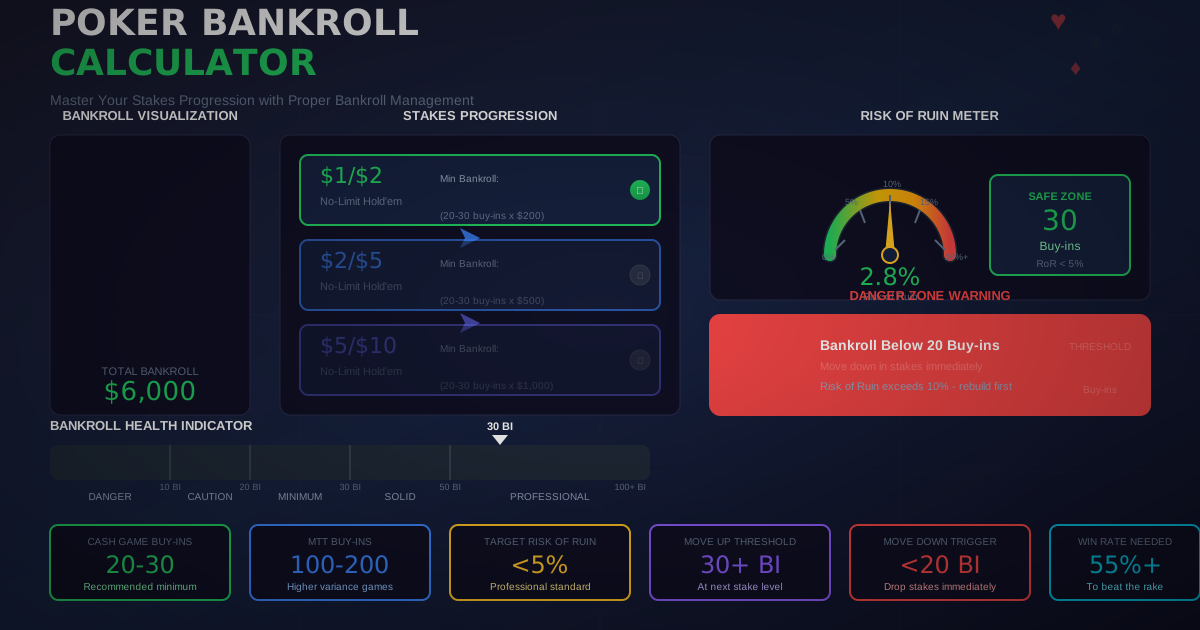
Cricket's irregular schedule (international matches are sporadic, leagues are concentrated) requires flexible bankroll management. During the IPL (60+ matches over 7 weeks), you might bet daily. During international breaks, you might go weeks without a bet. Set your unit size at 1-2% of your total cricket bankroll and adjust only based on edge quality, not match frequency.
Use our Bankroll Volatility Tracker to monitor your cricket betting bankroll health across the season's varying match density.
Common Beginner Mistakes
| Mistake | Why It Happens | How to Avoid |
|---|---|---|
| Betting before the toss | Ignoring a key variable | Wait for toss result in T20/ODI |
| Ignoring pitch conditions | Lack of knowledge | Study venue scoring data |
| Overvaluing star players | Name recognition bias | Focus on team depth and bowling units |
| Betting every match | Action bias | Only bet when you have an edge |
| Ignoring dew factor | Western unfamiliarity | Research day/night match dynamics |
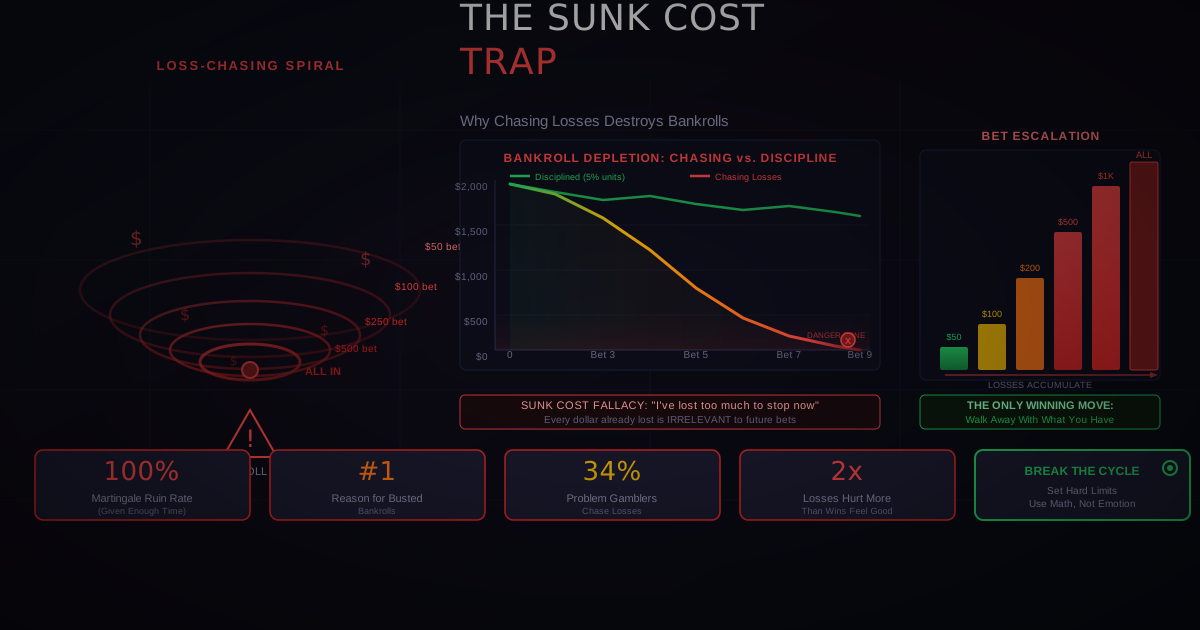
| Chasing losses after a collapse | Emotional tilt | Pre-set unit sizes, daily limits |
Use our Matched Betting Calculator to extract risk-free value from cricket-specific sportsbook promotions as you build your bankroll.
What Are the Best Strategies for Betting on International Cricket?
International cricket betting strategies differ from league cricket because the stakes are higher (players are more motivated), home advantage is more extreme, series-level momentum plays a role, and the three-way Test match market creates unique value opportunities around the draw price. The most profitable international cricket bettors specialize in either Test match series or bilateral ODI/T20 series, developing deep expertise in specific touring matchups.
Series Betting Strategy
International cricket is typically played in multi-match series (2-5 Tests, 3-5 ODIs, 3-5 T20Is). Series winner betting offers value because the market overreacts to the first match result. If Team A wins the first Test of a 5-match series, the series winner odds shift disproportionately toward Team A, even though the remaining four matches are essentially a separate contest with the conditions potentially favoring Team B.
| Series Length | First Match Impact | Series Recovery Rate | Best Bet Timing |
|---|---|---|---|
| 2-Test Series | Very High (>70% series decided) | Low (~30% comeback) | Before series / after 1st Test loss |
| 3-Test Series | High (60% decided after 1st Test) | Medium (~40% comeback) | After 1st Test if value on trailing team |
| 5-Test Series | Moderate (45% decided early) | High (~55% comeback) | Multiple entry points throughout |
| 3-ODI Series | High (65% decided after 1st ODI) | Medium (~35% comeback) | Selective, after match 1 or 2 |
| 5-T20 Series | Moderate (50% decided early) | High (~50% comeback) | Multiple entry points |
Targeting the Test Match Draw
The draw is the most consistently underpriced outcome in Test cricket betting. Draws occur in approximately 25% of Test matches globally, but the rate varies dramatically by venue (40%+ in England vs. 10-15% in Australia). When rain is forecast for 2+ days of a Test match, the draw probability can exceed 50%, yet the market often fails to fully price this in.
Use our Expected Value Calculator to calculate whether the Test match draw price offers positive expected value based on weather forecasts and venue-specific draw rates.
Player Performance Markets in Internationals
International cricket player markets (top batsman, top bowler, man of the match) offer better value than in league cricket because the smaller squads (11 players vs. franchise squads of 20+) reduce the number of possible outcomes, and star players perform more consistently in high-stakes international matches.
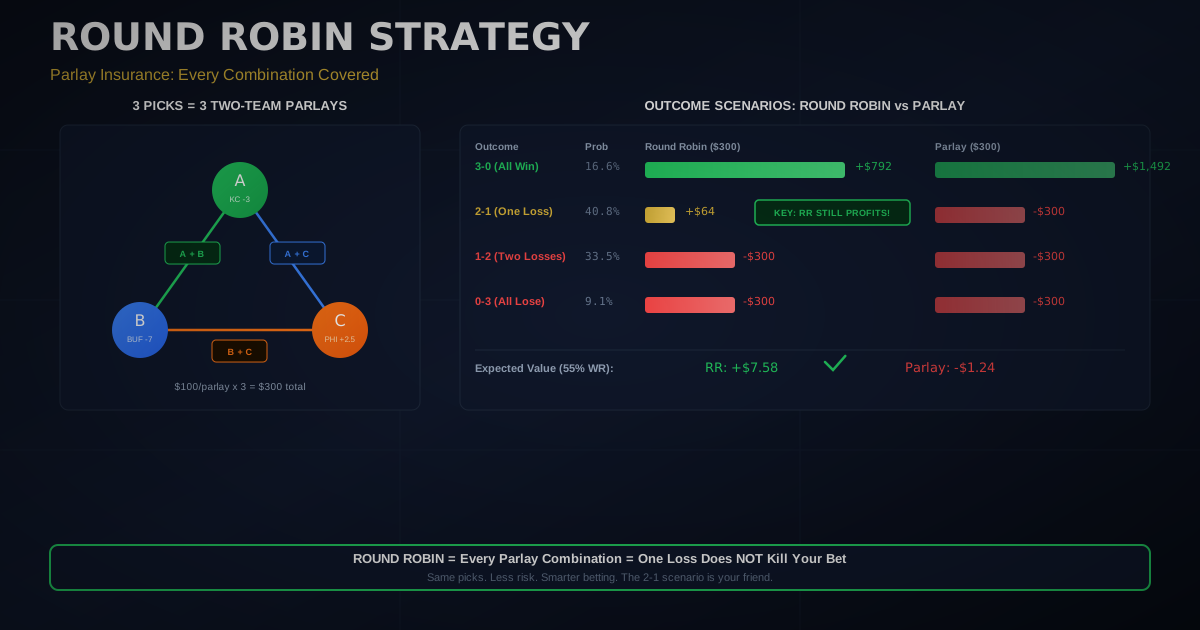
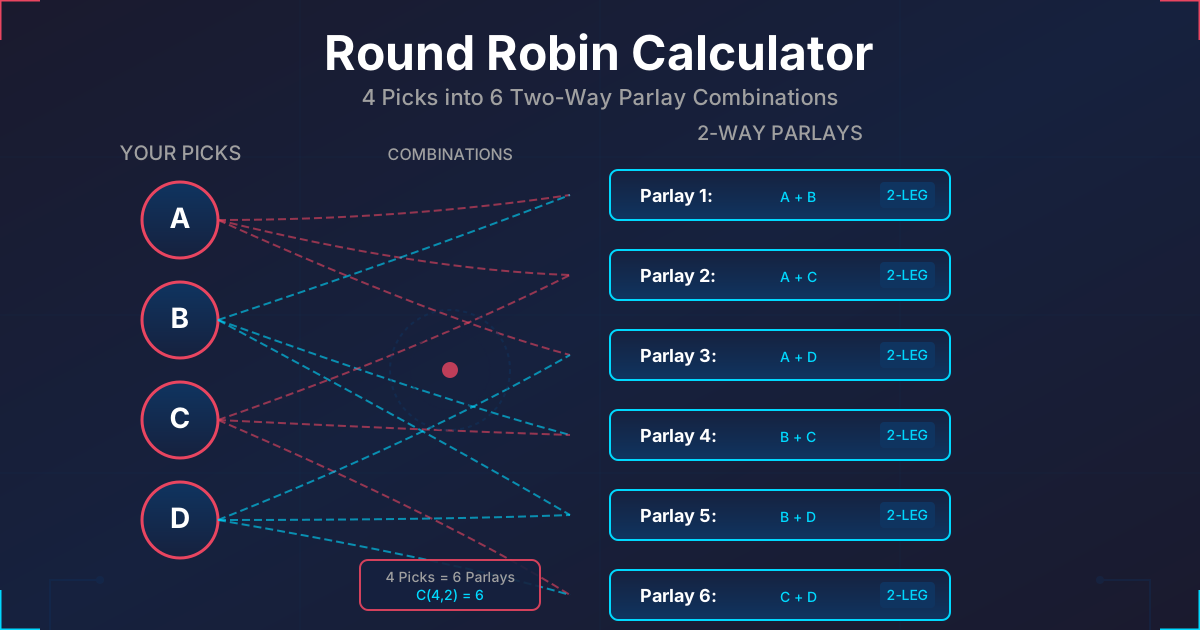
Use our Round Robin Calculator to build round robin bets across multiple player performance markets within a single cricket match.
How Do You Use Betting Tools to Improve Your Cricket Wagering?
Betting tools improve cricket wagering by automating calculations that would otherwise be error-prone or time-consuming, including odds conversion across formats used by global sportsbooks, expected value determination for each bet, optimal stake sizing based on your assessed edge, and long-term performance tracking to identify your analytical strengths and weaknesses. The combination of cricket knowledge and mathematical tools is what separates profitable bettors from recreational ones.
Essential Tools for Cricket Bettors
| Tool | Cricket Application | When to Use |
|---|---|---|
| Odds Converter | Compare lines across UK, Australian, Indian, and US sportsbooks | Every bet |
| Implied Probability Calculator | Convert cricket odds to win % for model comparison | Every bet |
| Expected Value Calculator | Determine if a cricket bet is mathematically profitable | Every bet |
| Kelly Criterion Calculator | Size cricket bets optimally based on edge assessment | Every bet |
| Hedge Calculator | Lock in profits during live cricket betting | During matches |
| Arbitrage Calculator | Find risk-free opportunities across cricket sportsbooks | Pre-match |
| Bankroll Volatility Tracker | Manage bankroll across cricket season's varying schedule | Weekly |
| Closing Line Value Tracker | Measure long-term cricket betting skill | Monthly review |
| Parlay Calculator | Combine cricket bets for higher payouts | When combining markets |
| Back/Lay Calculator | Calculate exchange betting liability | Betfair cricket trading |
Use our Free Bet Calculator (Stake Not Returned) to maximize the value of sign-up bonuses at cricket-focused sportsbooks.
Building a Cricket Betting Spreadsheet
A simple tracking spreadsheet should include: date, match, format, venue, market, selection, odds at time of bet, closing odds, stake, result, and profit/loss. After 50+ bets, analyze your performance by format (are you better at T20 or Test betting?), by market type (are your match winner bets more profitable than your top batsman bets?), and by league (do you have an edge in the IPL but not the BBL?).
Use our Closing Line Value Tracker to track whether your cricket bets consistently beat the closing line -- the most reliable indicator of long-term profitability.
Combining Multiple Tools
The most effective cricket betting workflow chains tools together. Start by converting odds across sportsbooks using the Odds Converter, then calculate implied probabilities, run expected value analysis on your picks, use Kelly Criterion for stake sizing, and track results over time. This systematic approach eliminates the emotional, gut-feel betting that causes most recreational bettors to lose.
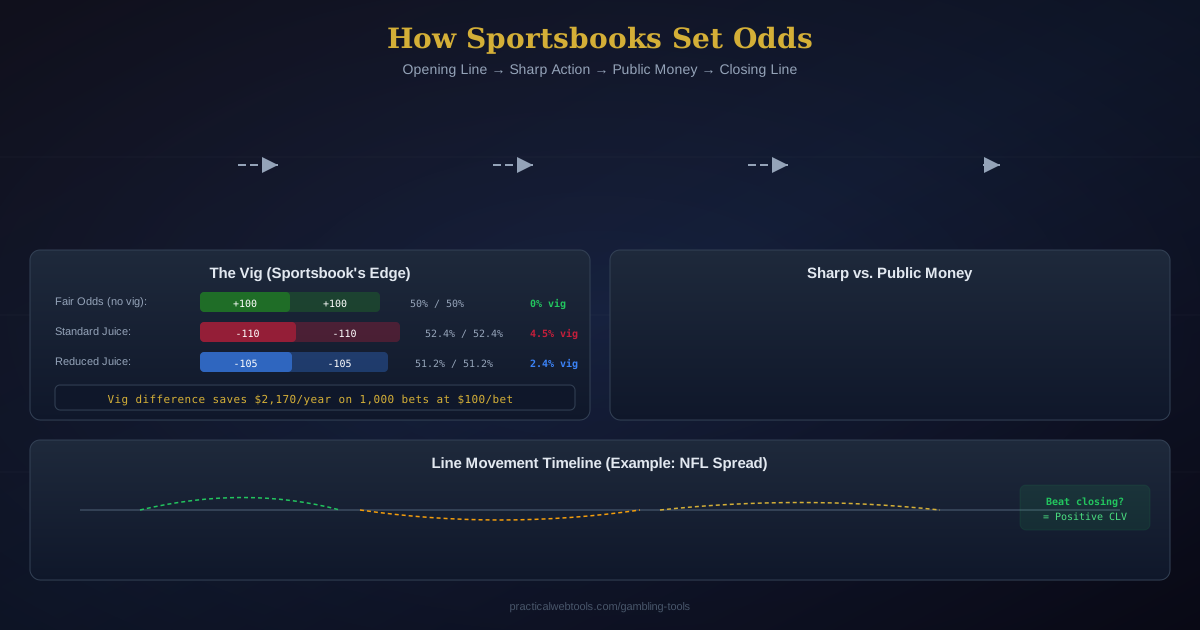
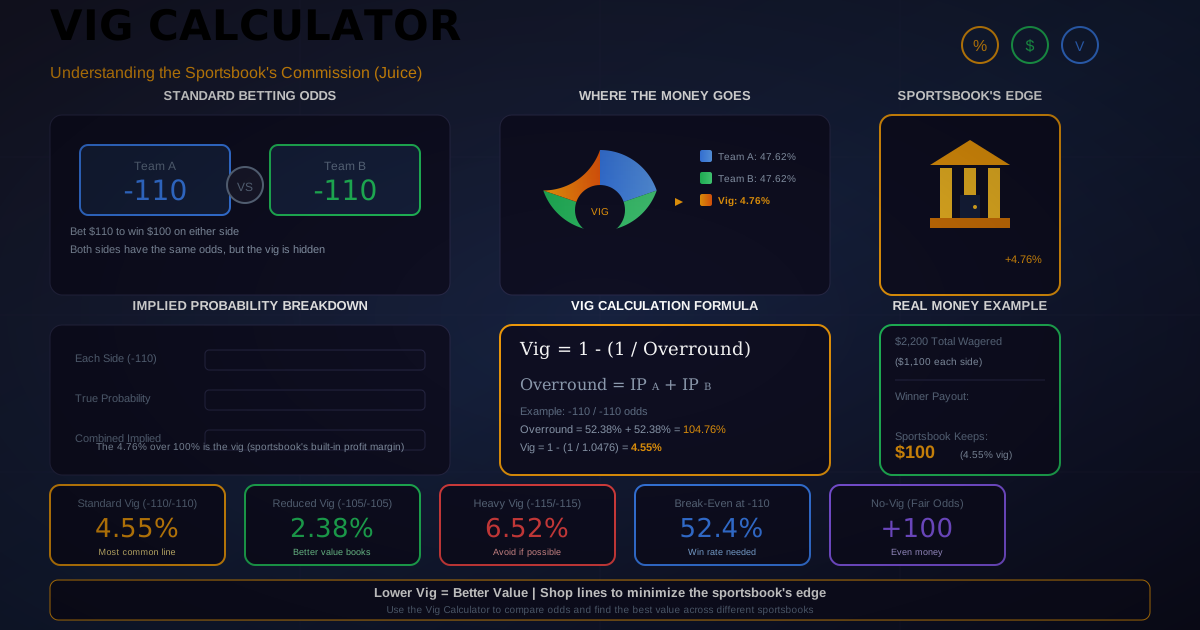
Use our Hold/Vig Calculator to identify which sportsbook charges the lowest margin on cricket match winner markets.
Frequently Asked Questions
How do you bet on cricket for beginners? Start by learning the basic rules of T20 cricket (the shortest and most accessible format), then focus on match winner bets for IPL or BBL matches where data and analysis are readily available. Before each match, check the venue's average first innings score, the toss result, and each team's recent form over their last 5 matches. Set a modest bankroll (an amount you can afford to lose), bet 1-2% per match, and track your results. Use our Odds Converter to understand the odds at your sportsbook.
What is the most important factor in cricket betting? Pitch conditions and venue scoring data are the single most important factors in cricket betting, followed closely by the toss result in T20 and ODI matches. A batting-friendly pitch at a high-scoring venue favors the team with stronger batting depth, while a bowling-friendly pitch at a low-scoring venue favors the team with superior bowling attack. Understanding the pitch is the foundation of all profitable cricket analysis.
How does the DLS method affect cricket betting? The Duckworth-Lewis-Stern (DLS) method recalculates the chasing team's target when rain reduces the number of overs available. If a team batting first scores 180/4 in 20 overs and rain reduces the second innings to 15 overs, DLS sets a new target (perhaps 145 in 15 overs) that reflects the lost resources. For bettors, DLS creates live betting opportunities because the adjusted target may favor one team more than the other.
Is the IPL the best cricket league for betting? The IPL is the most liquid cricket betting market with the deepest market offerings (60+ markets per match), the most available data, and the highest concentration of global talent. However, this also means the market is more efficient (harder to find value) than smaller leagues. The BBL, PSL, and CPL may offer softer lines because less analytical attention is directed toward these leagues.
What does the toss mean for cricket betting? The toss determines which team bats first and which bowls first. In T20 and ODI cricket, the team batting second (chasing) has a statistical advantage because they know their exact target. In Test cricket, the toss allows the winning captain to choose whether to bat on a fresh pitch (advantageous) or bowl while conditions favor pace bowlers. The toss result typically shifts cricket odds by 3-8% depending on the venue and format.
Can you live bet on cricket matches? Yes, cricket is one of the best live betting sports in the world. The ball-by-ball nature of the game creates constant probability shifts, and key events (wickets, boundaries, rain delays) produce significant odds movements. Most sportsbooks offer live match winner, innings runs, next dismissal method, and session-based markets. Exchange platforms like Betfair offer the deepest live cricket markets with real-time odds updates.
How do you bet on Test cricket differently from T20? Test cricket betting requires fundamentally different analysis from T20 because: (1) the draw is a viable outcome that must be priced, (2) pitch conditions deteriorate over 5 days, favoring spin bowlers later, (3) weather interruptions can make draws more likely, (4) batting first on a fresh pitch is usually advantageous, and (5) series-level momentum and fatigue affect results. T20 betting focuses more on current form, toss result, and scoring rates.
What is the best time to place a cricket bet? For T20 and ODI matches, the best time is immediately after the toss when you can incorporate the toss result into your analysis. Many sharp bettors place their bets in the 30-minute window between the toss and the first ball. For Test matches, betting after seeing the first session provides valuable information about pitch behavior without sacrificing too much of the available odds.
Related Gambling Tools
- Odds Converter: Convert cricket odds between American, decimal, and fractional formats used by UK, Australian, and Indian sportsbooks.
- Expected Value Calculator: Calculate whether a cricket bet offers positive expected value based on your pitch and conditions analysis.
- Kelly Criterion Calculator: Determine optimal bet sizing for each cricket wager based on your edge assessment and bankroll.
- Implied Probability Calculator: Convert cricket odds into implied win probabilities for comparison against your handicapping models.
- Parlay Calculator: Compute payouts for multi-match or multi-market cricket parlays.
- Hedge Calculator: Calculate hedge amounts during live cricket betting when wickets fall and odds swing.
- Arbitrage Calculator: Find risk-free opportunities across cricket sportsbooks worldwide.
- Bankroll Volatility Tracker: Monitor your cricket betting bankroll across leagues and international seasons.
- Back/Lay Calculator: Calculate exchange betting liability for Betfair cricket trading.
- Hold/Vig Calculator: Identify which sportsbook offers the lowest margin on cricket markets.
- Sure Bet Calculator: Find guaranteed profit opportunities by comparing cricket odds across sportsbooks.
- Closing Line Value Tracker: Track your cricket betting skill over time by measuring closing line value.
- Matched Betting Calculator: Extract guaranteed value from cricket-specific sportsbook promotions and sign-up offers.
- Round Robin Calculator: Build round robin combinations across multiple cricket player performance markets.
Cricket betting offers one of the largest and most liquid sports wagering markets in the world, yet it remains underexploited by bettors in Western markets who have not taken the time to understand the sport's unique dynamics. The keys to profitable cricket betting are understanding how format, pitch, weather, and toss interact to shape match outcomes; specializing in one format or league before expanding; and maintaining the discipline to bet only when your analysis identifies genuine value. Start with T20 league cricket to learn the fundamentals, build your analytical toolkit, and let the data guide your decisions. Begin your cricket betting journey with our free calculator suite
Gambling involves risk and should be approached as entertainment, not as a source of income. Always bet within your means, set strict bankroll limits, and never chase losses. If you or someone you know has a gambling problem, contact the National Council on Problem Gambling at 1-800-522-4700 or visit ncpgambling.org. Must be 21+ to gamble in most US jurisdictions. Please play responsibly.