How to Read Poker Hands: A Beginner's Guide to Hand Reading and Range Analysis (2026)
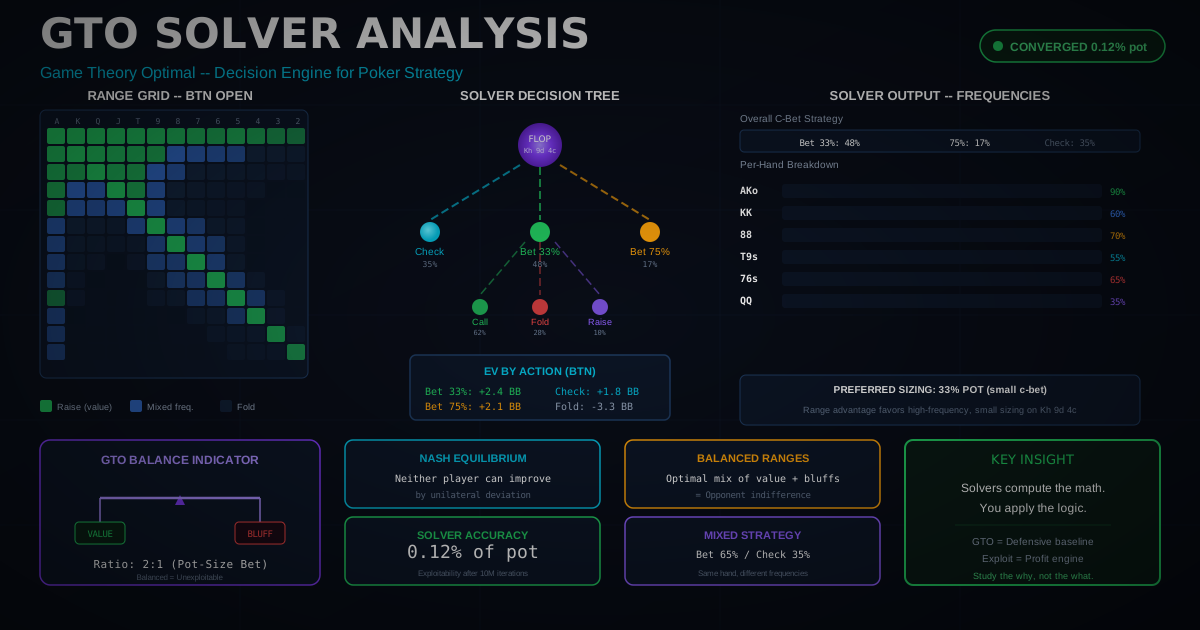
Hand reading is the most important skill in poker, and almost every beginner approaches it wrong. Novice players try to put their opponent on a specific hand—"I think they have ace-king"—while professionals think in ranges, considering the entire collection of hands an opponent could hold given their actions. The difference between these two approaches is the difference between guessing and deducing.
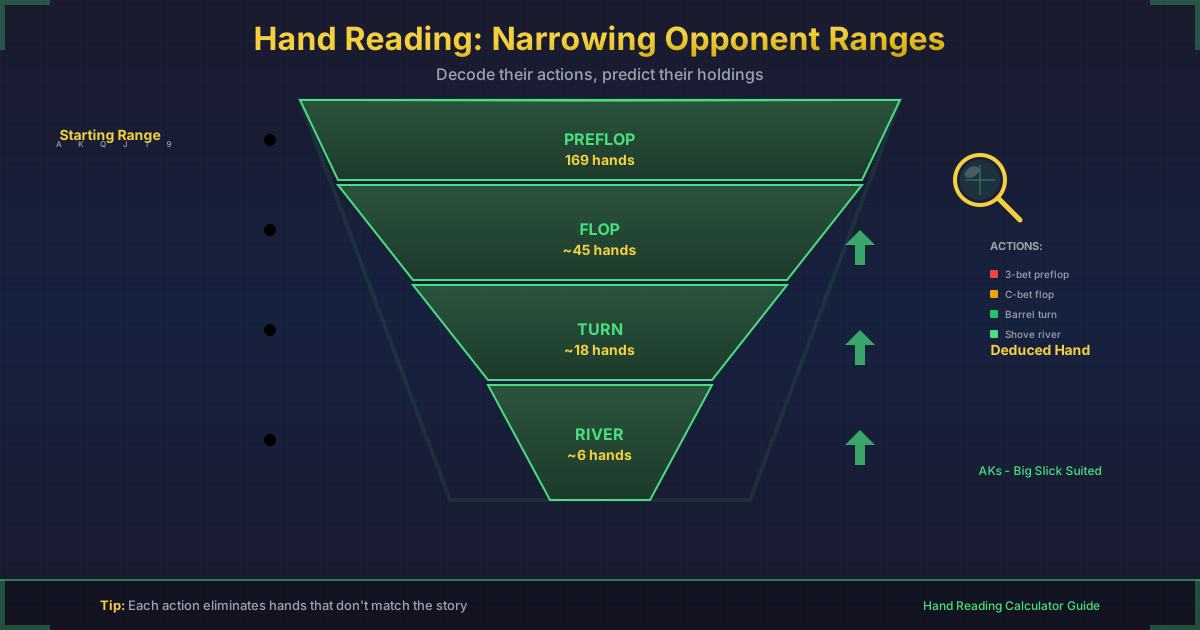
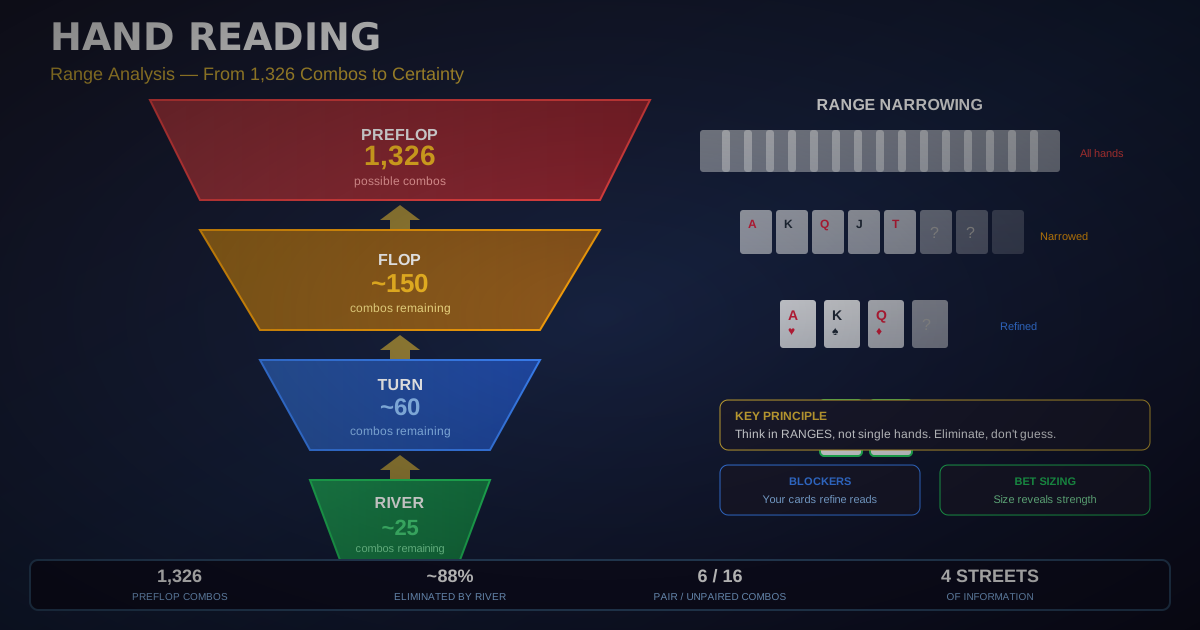
Range-based hand reading is a systematic process of elimination. You start with every hand your opponent could have in a given spot, then narrow that range based on their preflop action, flop action, turn action, and river action. By the time you reach a decision point, the range of hands they could hold is significantly smaller than where it started. This makes your decisions far more accurate and profitable.
A player who reads hands well can fold top pair when they are beaten, call with bottom pair when they are ahead, and bluff at exactly the right moment. These are the skills that separate winning players from losing ones, and they all flow from disciplined range analysis.
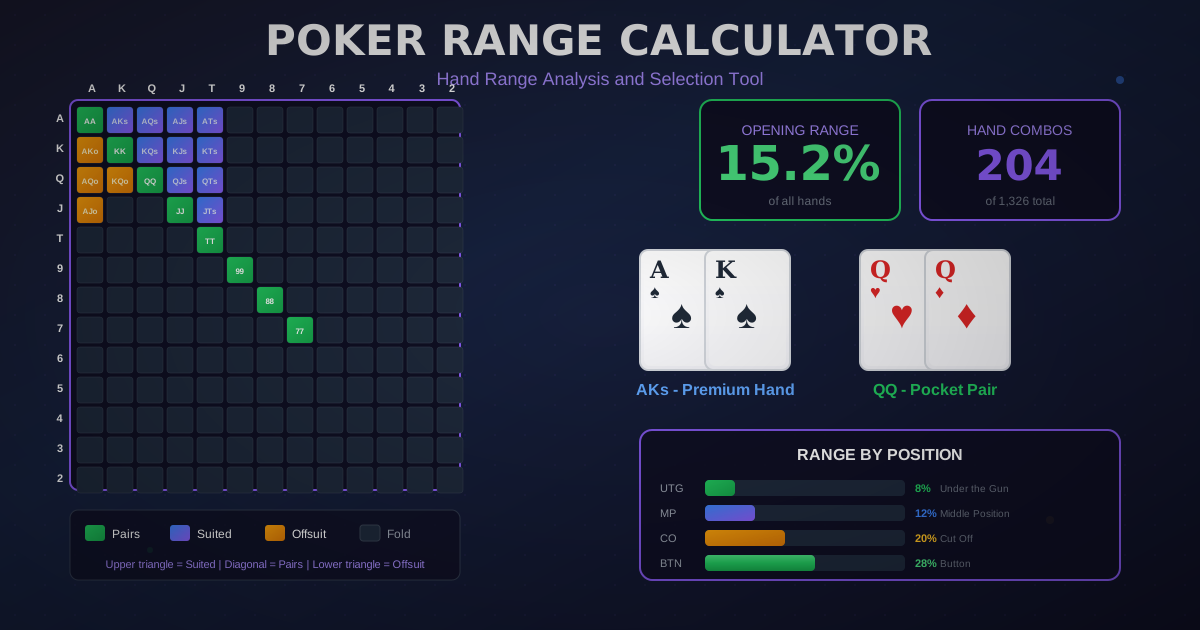
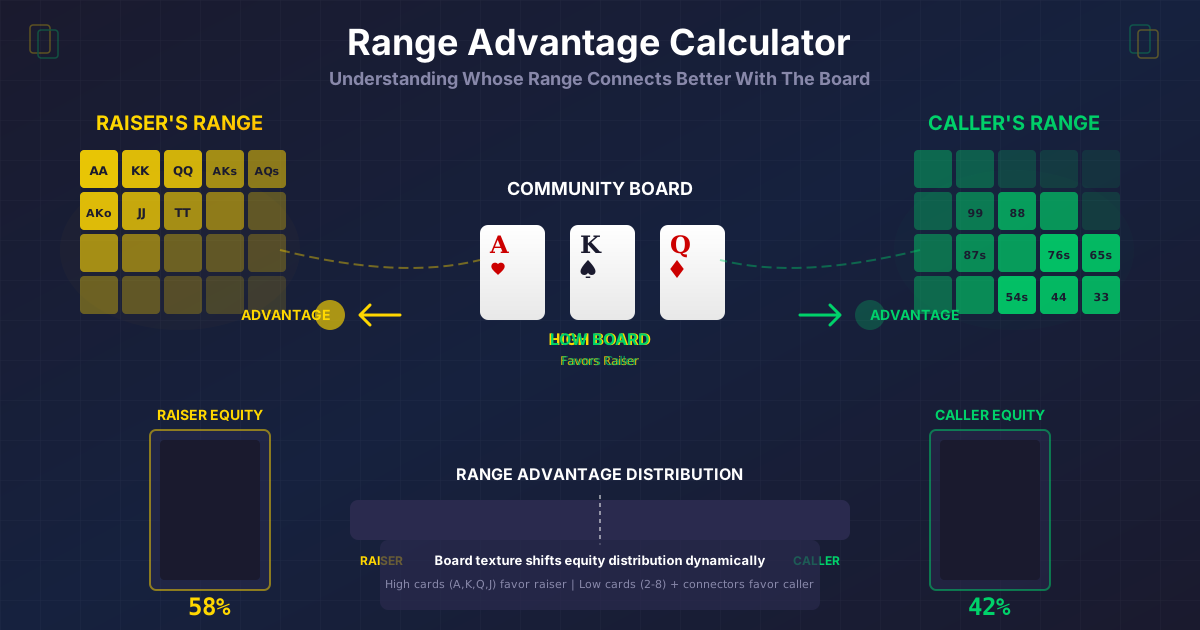
Build and analyze opponent hand ranges with our free Poker Hand Range Calculator.
Range-Based Thinking vs. Single-Hand Reading
Why "Putting Them on a Hand" Is Wrong
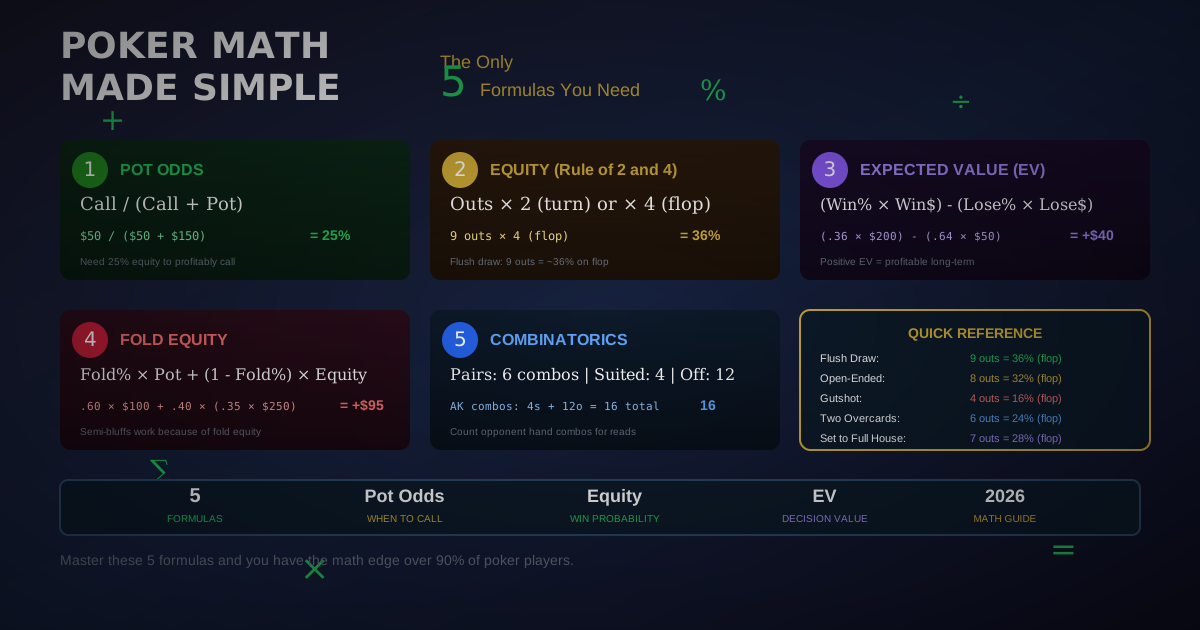
When you say "I think my opponent has AK," you are assigning one of 16 possible AK combinations (12 offsuit + 4 suited) from a pool of 1,326 possible starting hands. This is both statistically unlikely and analytically useless.
Problems with single-hand reading:
- You are almost always wrong about the exact hand
- If you are wrong, your entire decision-making framework collapses
- You ignore the wide range of hands that would take the same actions
- You make binary (call/fold) decisions instead of nuanced frequency-based decisions
What Range-Based Thinking Looks Like
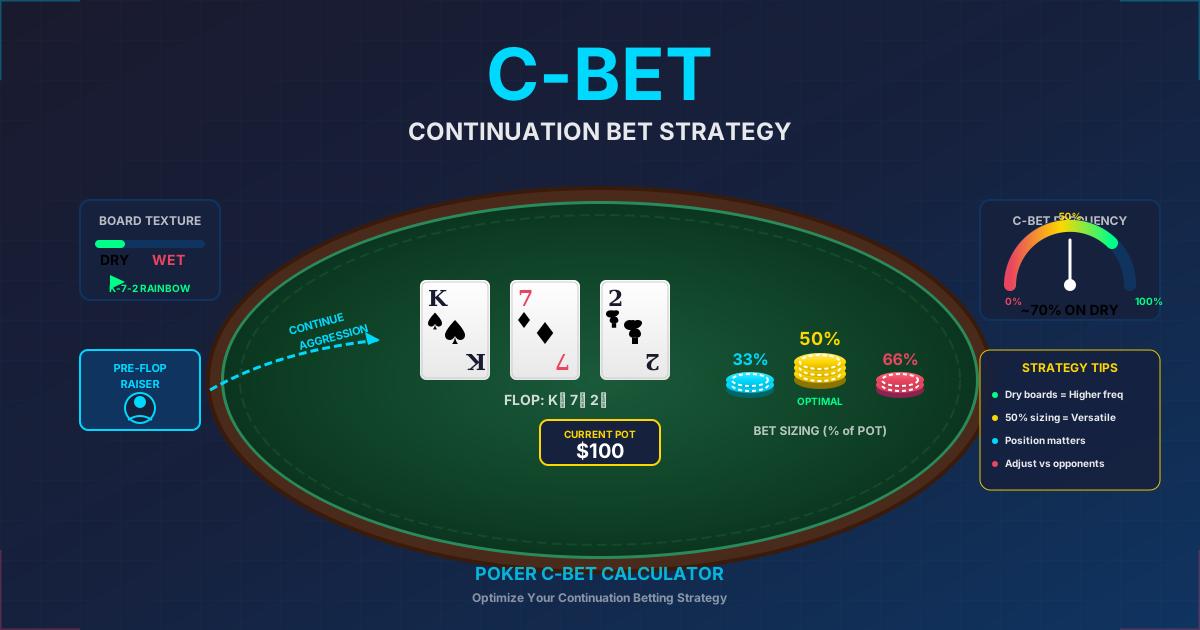
Instead of "they have AK," range-based thinking says: "Given a UTG open and a c-bet on a K-7-2 rainbow board, their range includes: AA-TT (18 combos), AK (16), AQ (16), KQs (4), KJs (4), and some occasional AJs-ATs (8). That is roughly 66 combos, of which about 42 contain a king or better. Their range is strong, but about 36% of it missed this board entirely."
This analysis tells you exactly how often you are ahead, behind, or need to bluff—information you cannot get from a single-hand guess.
Count the exact number of hand combinations in any range with our Poker Combos Calculator.
Step 1: Assign a Preflop Range
Hand reading begins before the flop. Your opponent's preflop action narrows their range from all 1,326 possible hands to a much smaller subset.
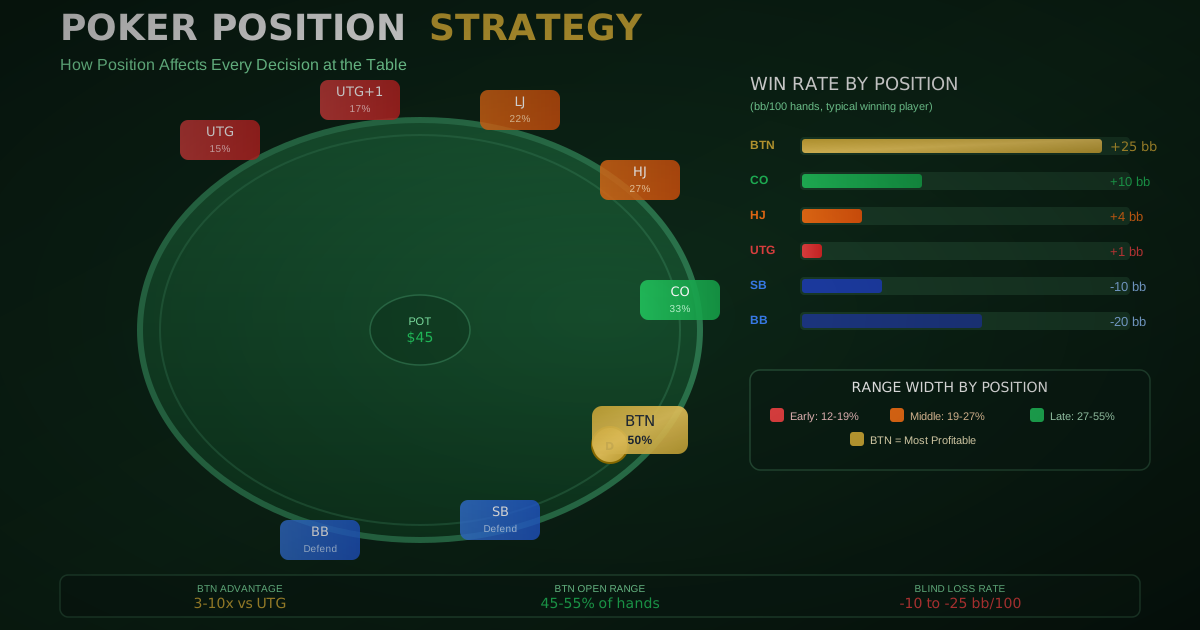
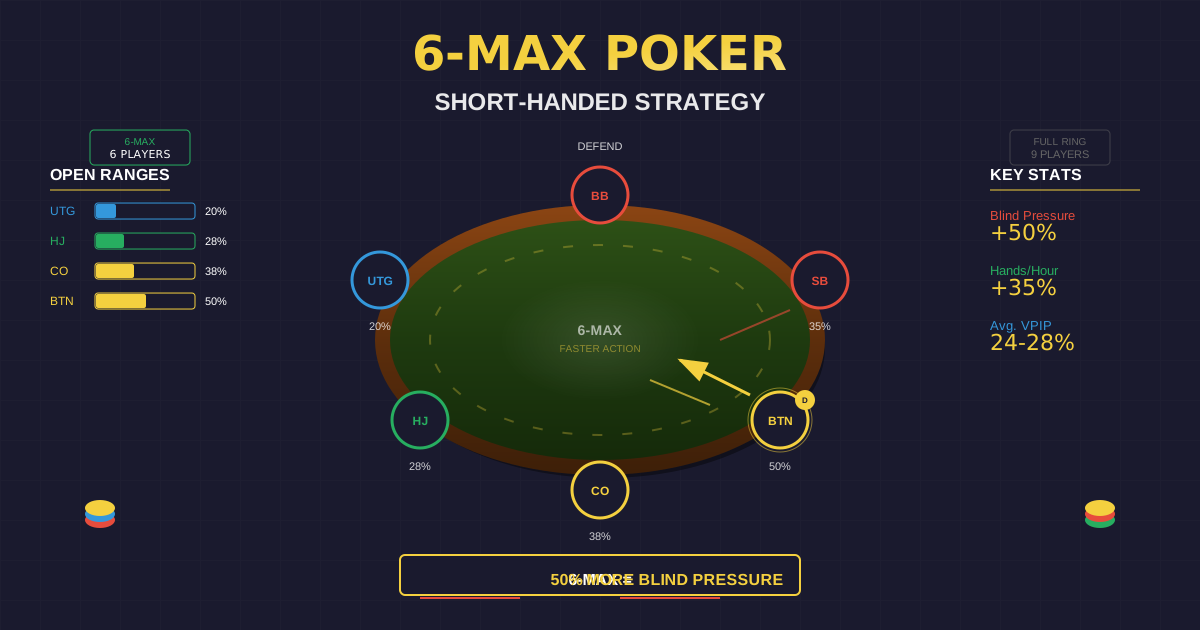
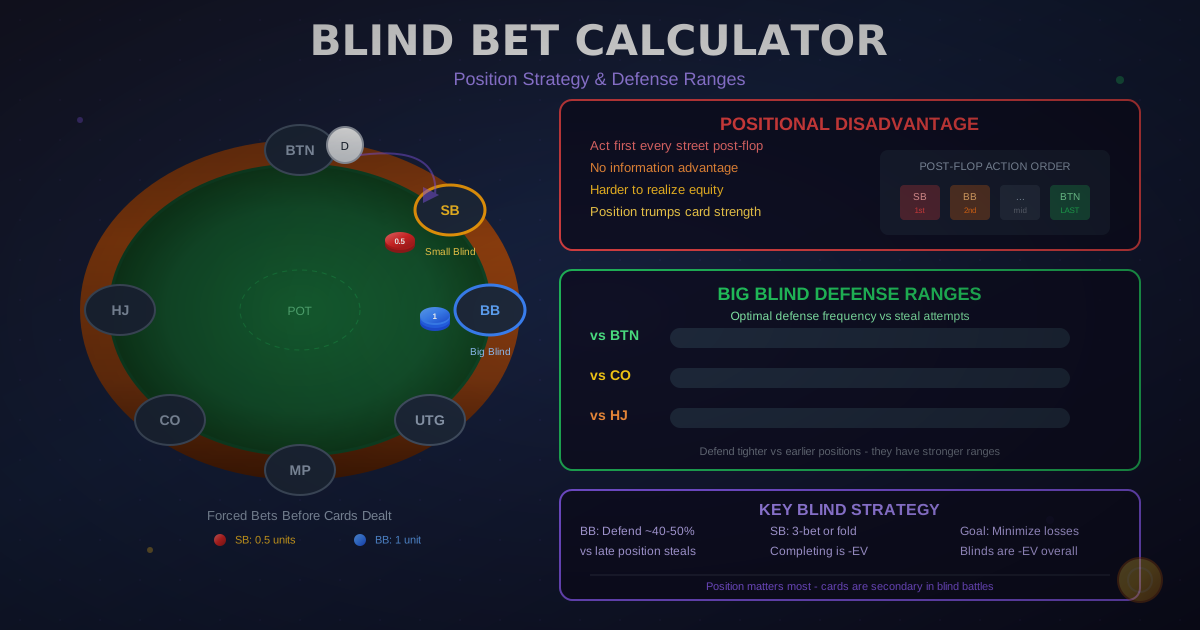
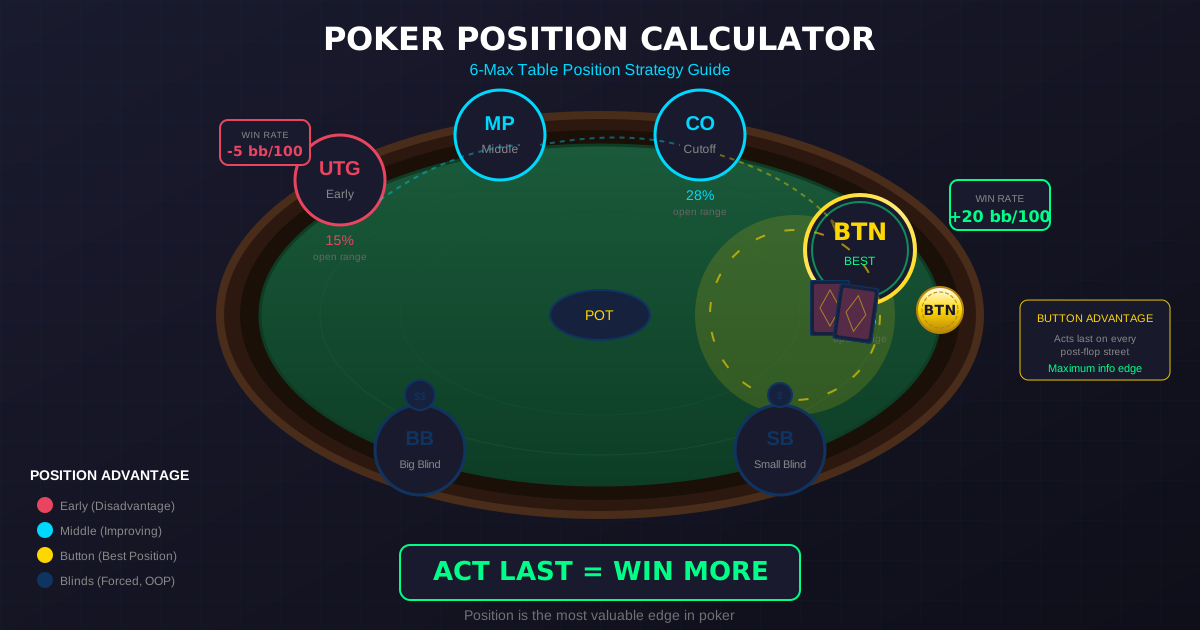
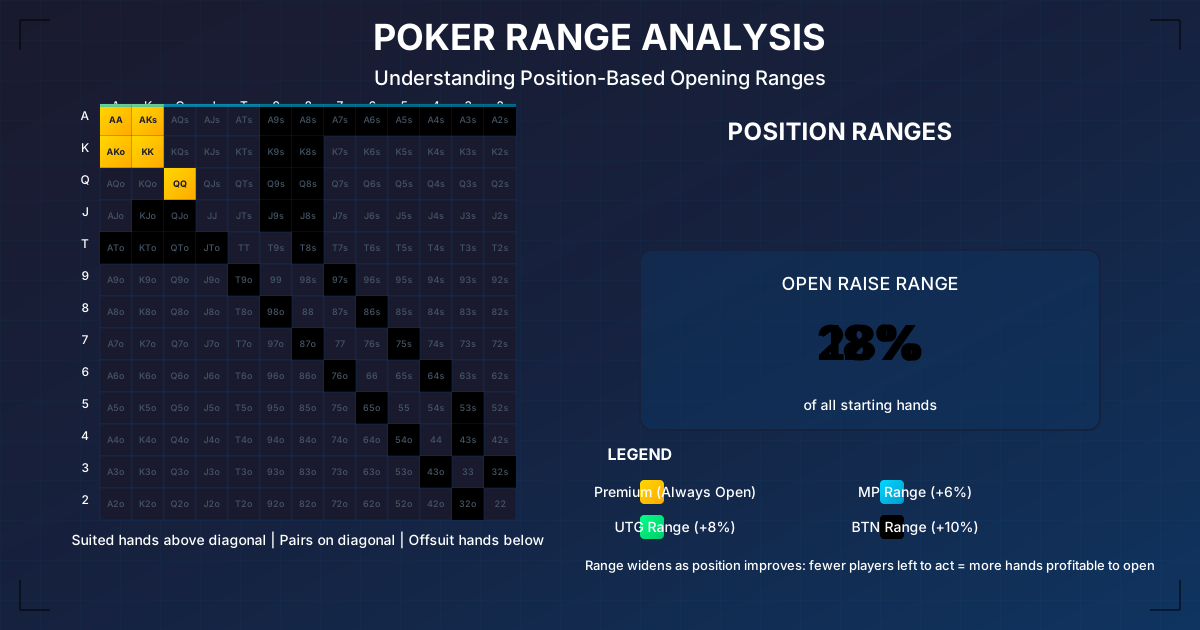
Opening Ranges by Position
| Position | Approximate Open Range | Number of Combos |
|---|---|---|
| UTG | 12-15% | 159-199 |
| HJ | 17-20% | 225-265 |
| CO | 25-28% | 331-371 |
| BTN | 40-45% | 530-596 |
| SB | 35-40% | 464-530 |
How Actions Narrow the Preflop Range
Open-Raise from UTG: This eliminates roughly 85% of hands. Your opponent has a strong range: pairs, suited broadways, premium offsuit hands.
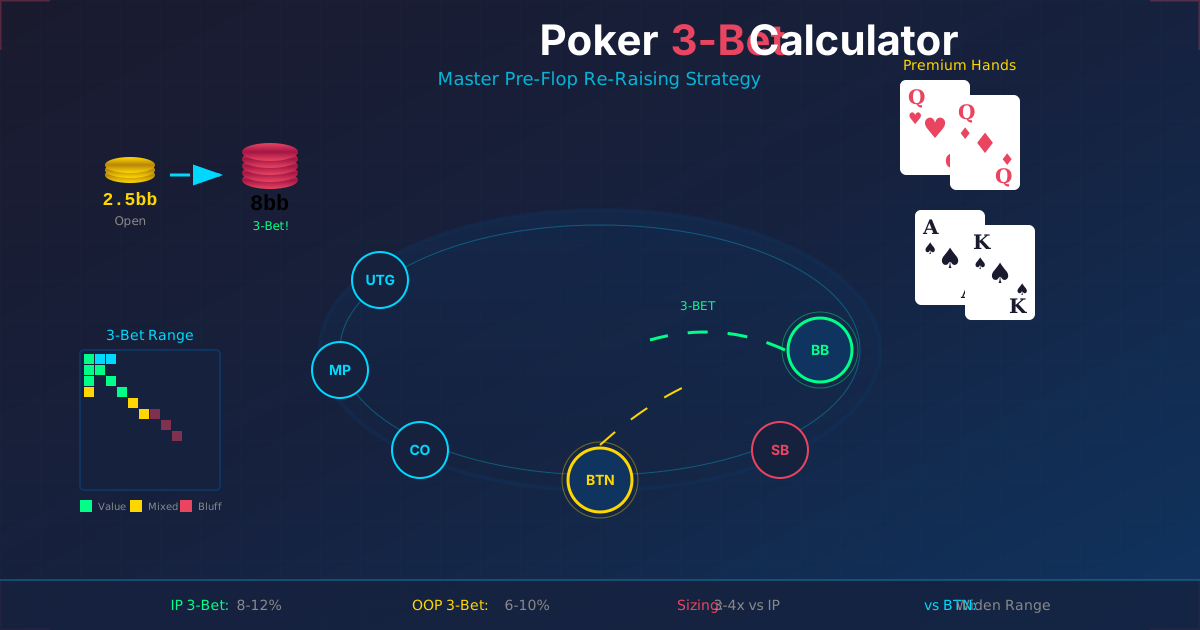
3-Bet from the Cutoff: This narrows even further. A typical 3-bet range is 7-10% of hands: QQ+, AKs, AKo for value, plus bluffs like A5s-A2s, KQs, and some suited connectors.
4-Bet from any position: This is extremely narrow—typically AA, KK, QQ, AKs (maybe AKo). Roughly 2-3% of hands.
Cold Call of a 3-Bet: This range is interesting—it is usually capped (no AA/KK because those would 4-bet) and includes hands with good equity: JJ-99, AQs, AQo, KQs, suited connectors.
The key principle: each action eliminates a large portion of possible hands, making the remaining range progressively narrower and more defined.
Analyze how preflop actions affect your opponent's range with our Poker Hand Range Calculator.
Step 2: Narrow the Range on the Flop
The flop is where hand reading becomes powerful. Your opponent's flop action, combined with the board texture, dramatically narrows their range.
Board Texture Categories
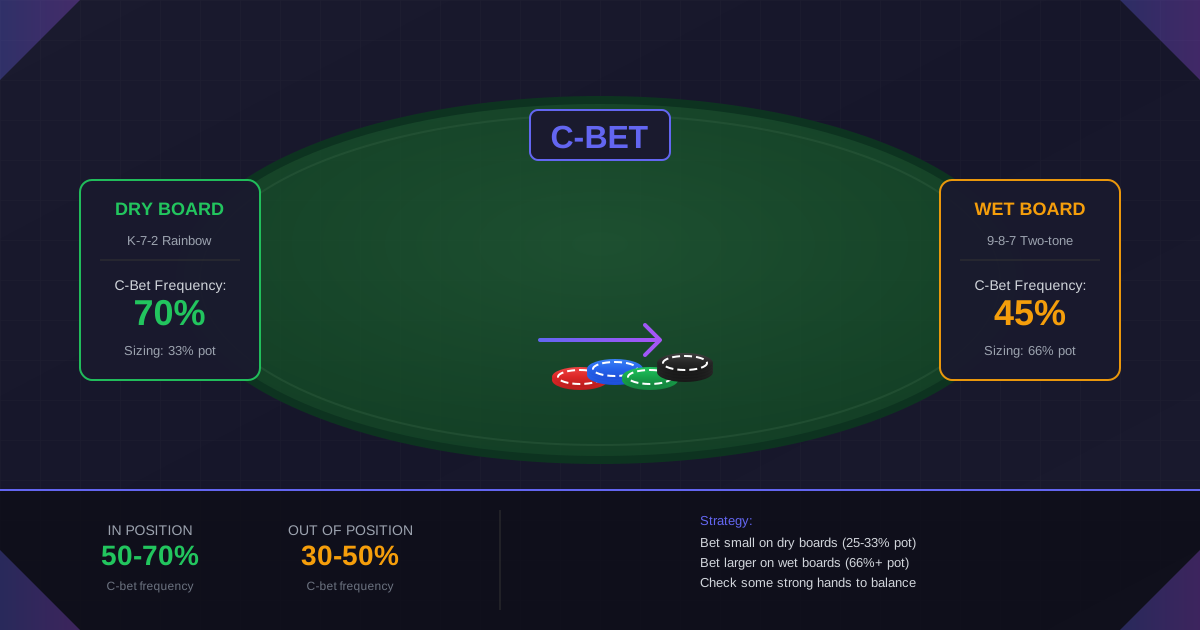
Dry Boards (Low Connectivity): Examples: K-7-2 rainbow, A-8-3 rainbow, Q-4-2 rainbow
On dry boards:
- Strong hands bet for value (top pair+)
- Drawing hands are limited (gutshots only, no flushes)
- Ranges polarize less (more medium-strength hands)
- Checking ranges are wider
Wet Boards (High Connectivity): Examples: J-T-8 two-tone, 9-8-7 monotone, Q-J-9 with flush draw
On wet boards:
- Ranges polarize more (strong bets to protect, weak checks)
- Many draws exist (flushes, straights, combo draws)
- C-bet frequency decreases (harder to bluff wet boards)
- Betting range is stronger on average
Dynamic Boards (Mixed): Examples: K-T-4 with flush draw, A-J-7 two-tone
Dynamic boards have some draws but are not fully connected. Betting ranges include value hands and semi-bluffs.
How Flop Actions Narrow the Range
Opponent C-Bets (Continuation Bet):
When the preflop raiser bets on the flop, their range typically includes:
- Strong made hands (top pair+, sets, two pair)
- Draws (flush draws, straight draws, gutshots)
- Air (hands that missed but are bluffing as a continuation of preflop aggression)
The proportion depends on board texture and bet sizing:
| Board Type | Value % | Draws % | Air % |
|---|---|---|---|
| Dry (K72r) | 35-40% | 10-15% | 45-55% |
| Wet (JT8tt) | 40-50% | 30-40% | 10-20% |
| Dynamic (KT4tt) | 35-45% | 25-30% | 25-35% |
Opponent Checks:
When the preflop raiser checks the flop, they typically have:
- Medium-strength hands (second pair, weak top pair)
- Missed hands giving up (AK on a 7-5-3 board)
- Trapping hands (some sets, two pair, occasionally AA)
- Draws they do not want to c-bet (weak gutshots)
Opponent Check-Raises:
A check-raise on the flop is very polarized:
- Strong value (sets, two pair, top pair with strong kicker)
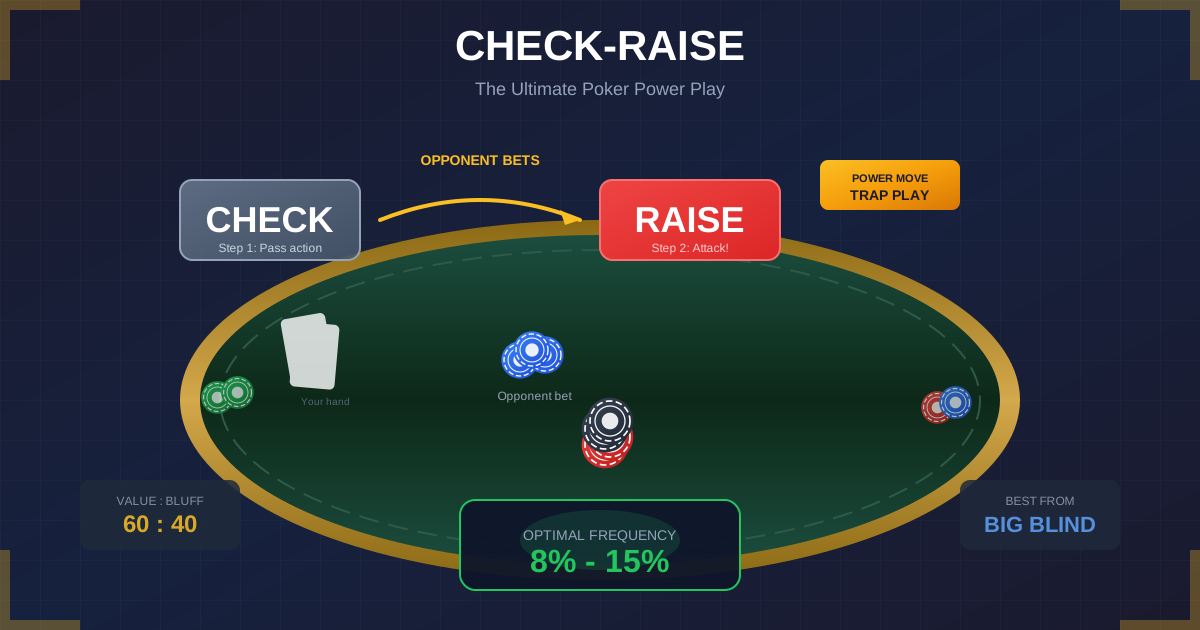
- Semi-bluffs (flush draws, combo draws, strong straight draws)
- Very few medium-strength hands
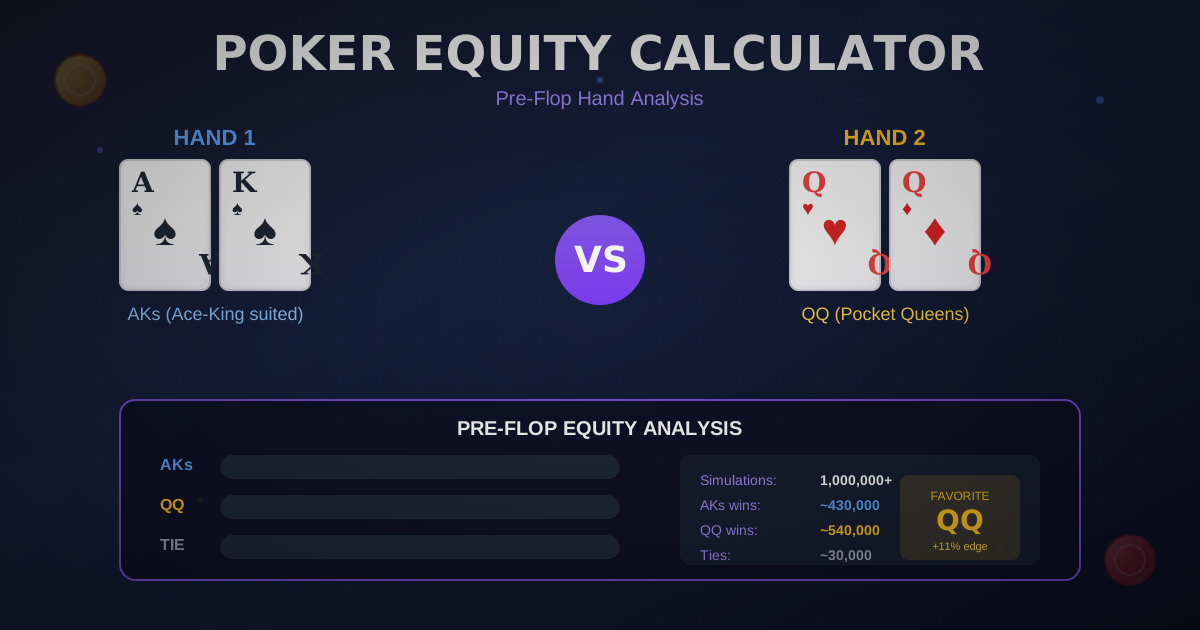
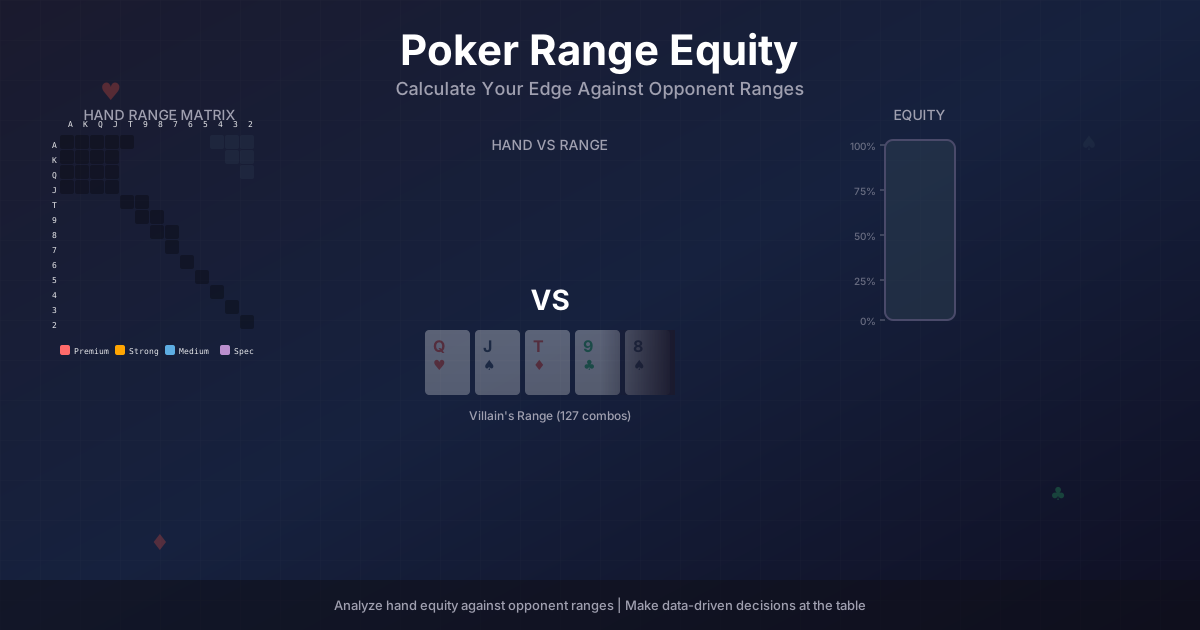
Evaluate your equity against your opponent's narrowed range with our Poker Equity Calculator.
Step 3: Narrow Further on the Turn
The turn is where ranges become truly defined. The second round of action eliminates large portions of the remaining range.
Turn Card Impact
The turn card itself narrows ranges by:
-
Completing draws: If a flush completes, hands with flush draws either bet (they hit) or check/fold (they missed). The flush draw portion of their range gets resolved.
-
Creating new draws: A turn card that adds straight or flush possibilities introduces new draws into the picture.
-
Bricking out: If the turn is a blank (does not change the board significantly), ranges remain similar to the flop but action reveals more.
Turn Actions and Range Narrowing
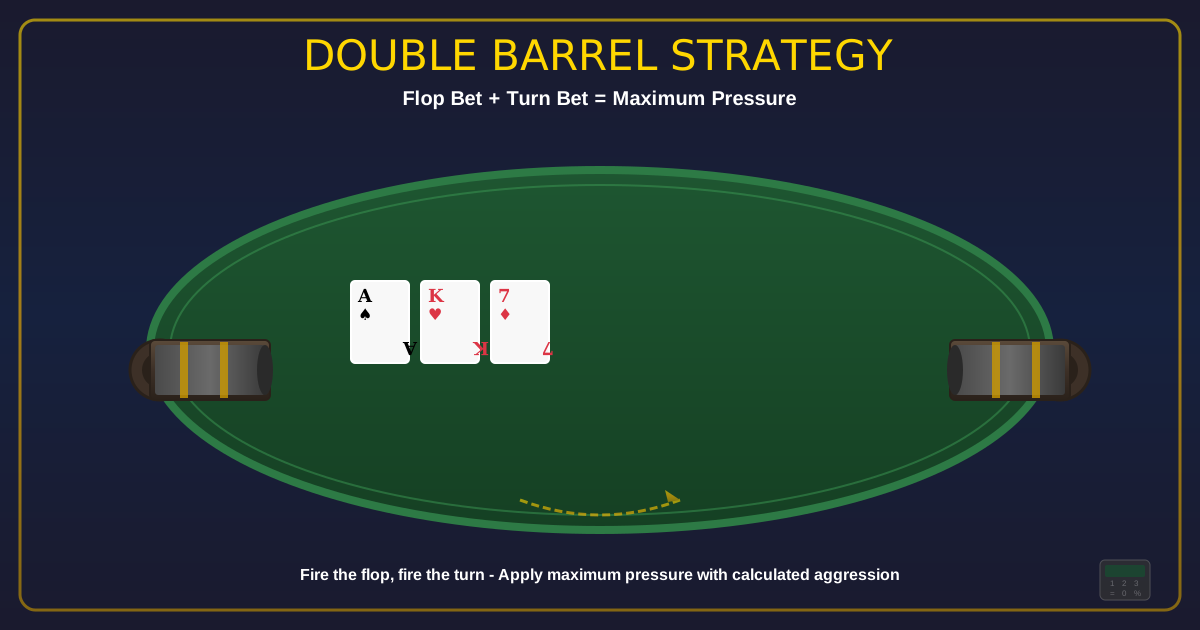
Double Barrel (Bet Flop, Bet Turn):
An opponent who bets both flop and turn has a stronger range than one who only bet the flop:
- Value range: Top pair with good kicker+, two pair, sets
- Bluff range: Strong draws (flush draws, open-ended straight draws)
- Eliminated: Most air and weak draws have given up
Example Analysis: Opponent opens UTG, c-bets a K-7-2 rainbow flop, and bets again on a 5 turn.
Remaining range estimate:
- KK (3 combos), 77 (3), 22 (3) = 9 sets
- AK (12), KQ (12), KJ (8) = 32 top pair combos
- AA (6), QQ (6), JJ (6) = 18 overpair combos
- Some continued bluffs: AQ (8), AJ (6) = 14 bluffs
- Total: ~73 combos, of which ~81% have top pair or better
This is an extremely strong range. If you hold something like T-T, you are behind roughly 80% of this range.
Check Turn After Betting Flop:
This is very revealing. The opponent typically has:
- Medium-strength hands trying to get to showdown (weak top pair, second pair)
- Missed draws that gave up
- Occasional slowplayed monsters (trapping)
This pattern eliminates most strong and most weak hands—the remaining range is heavily weighted toward medium strength.
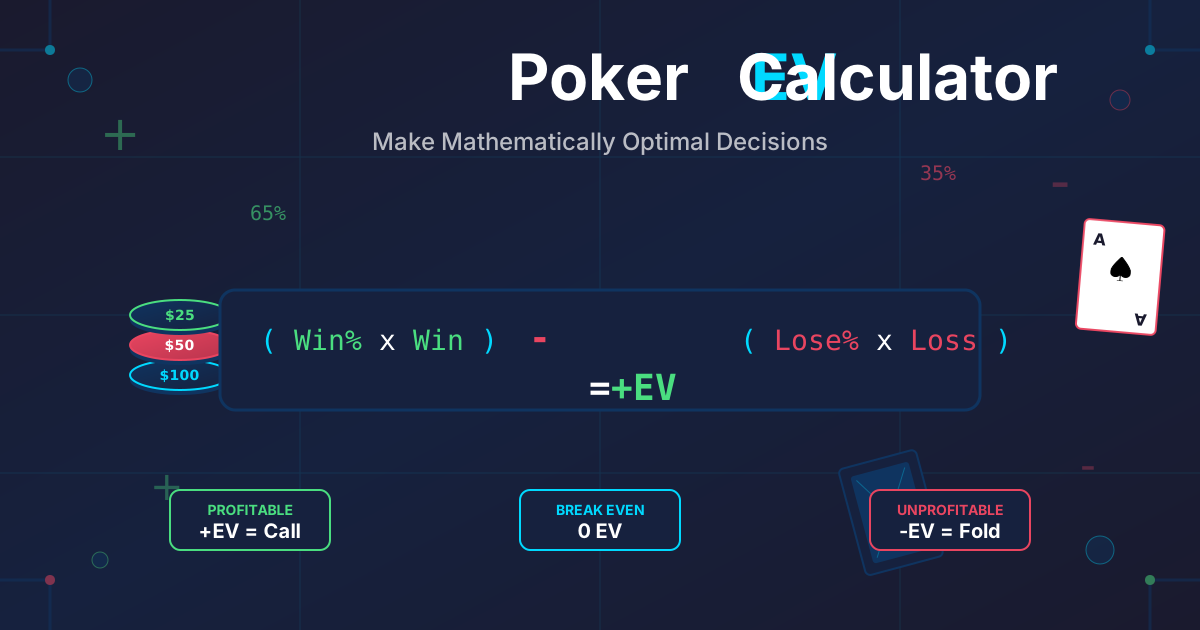
Use our Poker EV Calculator to determine the most profitable action against a narrowed turn range.
Step 4: River Range Analysis
By the river, ranges should be very narrow. The opponent has taken 3-4 actions (preflop raise, flop bet/check, turn bet/check, river bet/check), and each action has eliminated a significant portion of their range.
River Betting Ranges Are Polarized
On the river, opponents typically bet with a polarized range:
- Strong value: Hands that beat most of your calling range
- Bluffs: Hands that cannot win at showdown otherwise
Medium-strength hands usually check on the river because:
- Betting might only get called by better hands
- Checking allows them to bluff-catch if you bet
River Hand Reading Example
Full Hand Example (Detailed):
$1/$2 No-Limit, 100bb effective stacks.
Preflop: Villain opens to $6 from the CO. You call on the BTN with Jh Th.
Villain's range: ~27% of hands (CO open range) = ~358 combos
Flop ($15): Qs 9d 4h. Villain bets $10 (2/3 pot).
What does this bet tell us?
- Villain likely c-bets with: QQ-TT (13), AQ-KQ (28), Q9s-Q8s (6), 99 (3), 44 (3), A9s (2), strong draws, and some air
- Villain checks: JJ-22 without a Q, missed AK/AJ, weak draws
- Estimated c-bet range: ~55% of starting range = ~197 combos
You call. You have a gutshot (K makes a straight) plus two overcards and a backdoor flush draw.
Turn ($35): 8c. Villain bets $25 (71% pot).
What does the turn bet tell us?
- The 8 changes nothing for most value hands
- Villain continues betting with: Strong Qx (AQ, KQ ~24 combos), sets (QQ, 99, 44 ~9 combos), two pair (Q9 ~6 combos), overpairs (AA, KK ~12 combos), JT straight draw (8 combos), T7s/J8s draws
- Villain checks: Weak Qx (QJ, QT some of the time), missed broadways, given-up bluffs
- Estimated turn bet range: ~65% of flop betting range = ~128 combos
You call. You now have an open-ended straight draw (K or 7 makes the straight).
River ($85): Kd. Villain bets $55 (65% pot).
What does the river bet tell us?
- The K completes your straight but also hits some of villain's value range
- Villain's value bets: AQ (12), KQ (now two pair, 12), KK (3), AA (6), sets (9), JTs (also made a straight, 4), total value: ~46 combos
- Villain's potential bluffs: JT without a straight? No—you hold JT. AJ (4), AT (4), some random bluffs = ~12 combos
- Your straight beats everything except the rare JTs (but you hold JT, making it nearly impossible)
Decision: You have a straight. Villain's range when betting is heavily value-weighted (~46 value combos vs. ~12 bluffs). But you beat all the value hands except JTs, which you block. This is a clear raise for value.
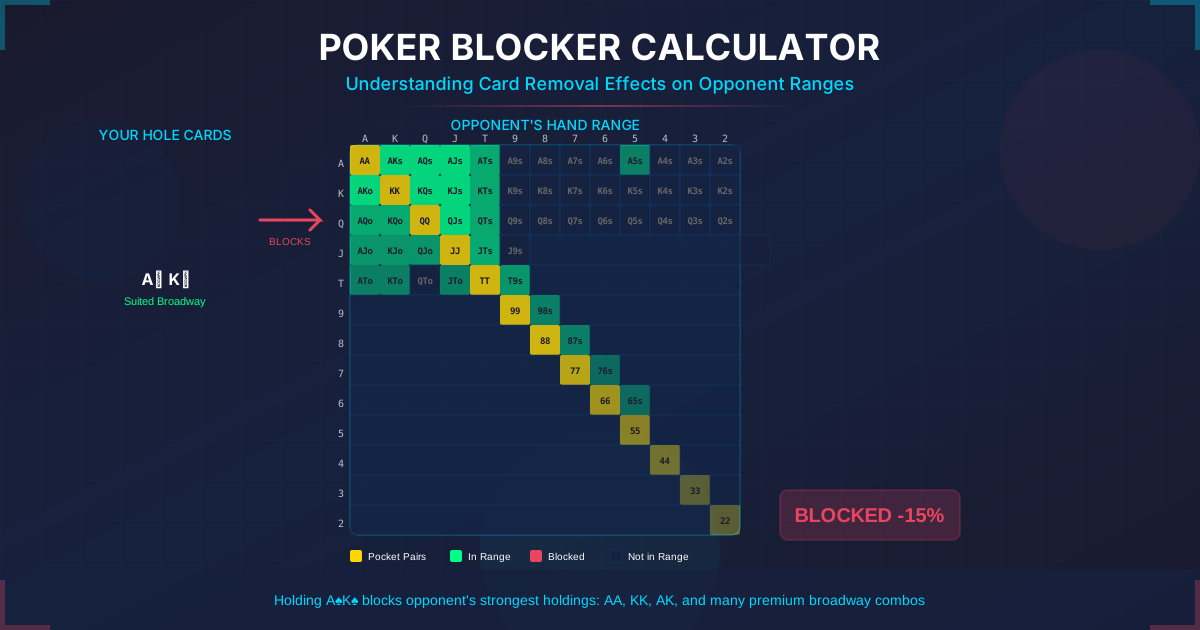
Analyze blocker effects on hand reading with our Poker Blocker Calculator.
Using Bet Sizing as a Tell
One of the most powerful hand reading tools is bet sizing analysis. Different bet sizes often correlate with different range compositions.
Common Sizing Tells
| Bet Size | Typical Meaning | Range Composition |
|---|---|---|
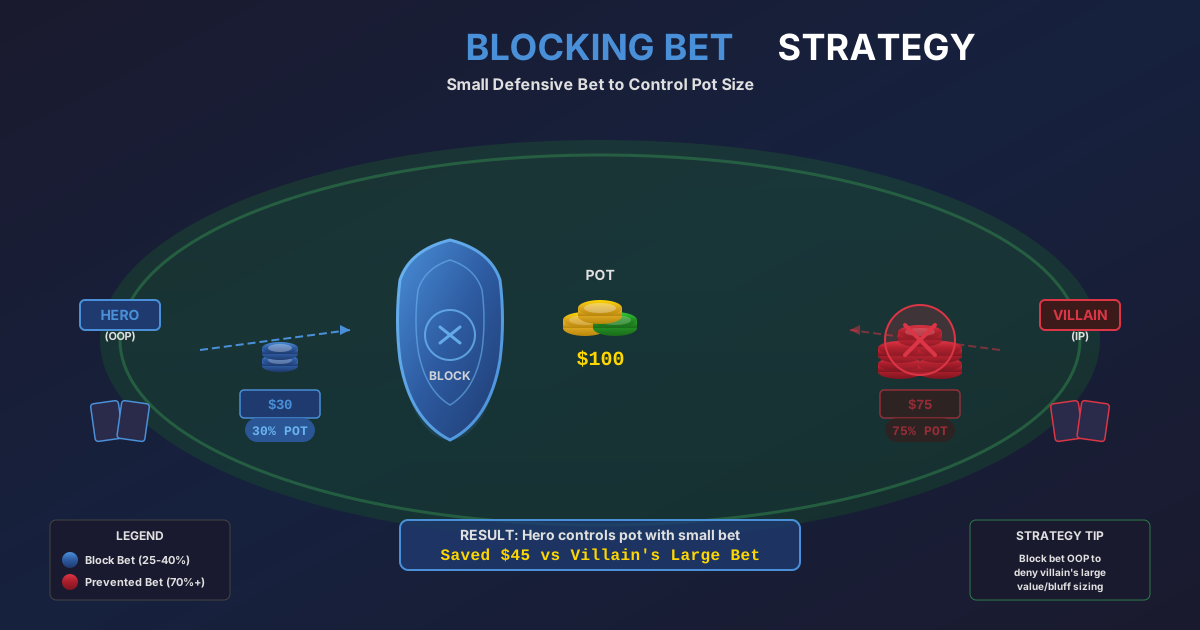
| 25-33% pot | Thin value or blocking bet | Weak-medium strength, wants cheap showdown |
| 50% pot | Standard bet | Balanced range or standard value |
| 67-75% pot | Strong bet | Polarized—strong value or bluffs |
| 100% pot | Very strong or bluff | Highly polarized—nutted or air |
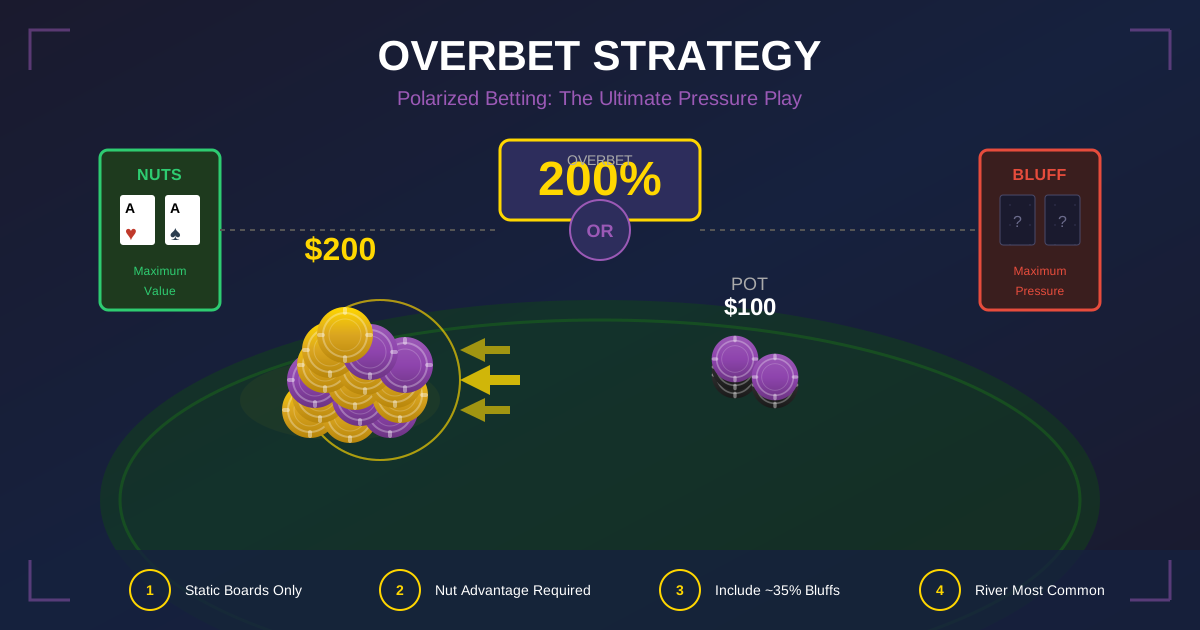
| 150%+ pot (overbet) | Extremely polarized | Either the nuts or nothing |
How to Exploit Sizing Tells
Small Bets (25-33% pot):
- These often indicate medium-strength hands
- Raising can extract value from their capped range
- Calling keeps in their bluffs and weak value
Large Bets (75-100%+ pot):
- These indicate a polarized range
- You need stronger hands to call (pot odds require more equity)
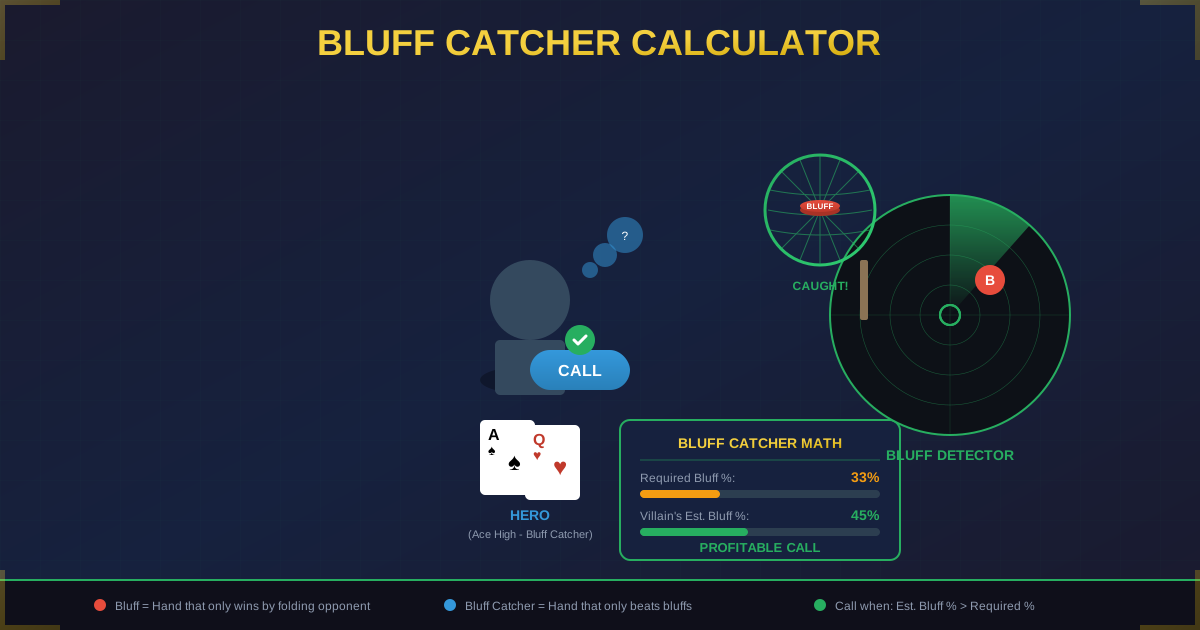
- Bluff-catching becomes the key decision
Bet sizing tells are most reliable against recreational players who unconsciously size their bets based on hand strength. Experienced players deliberately mix sizings to prevent reads.
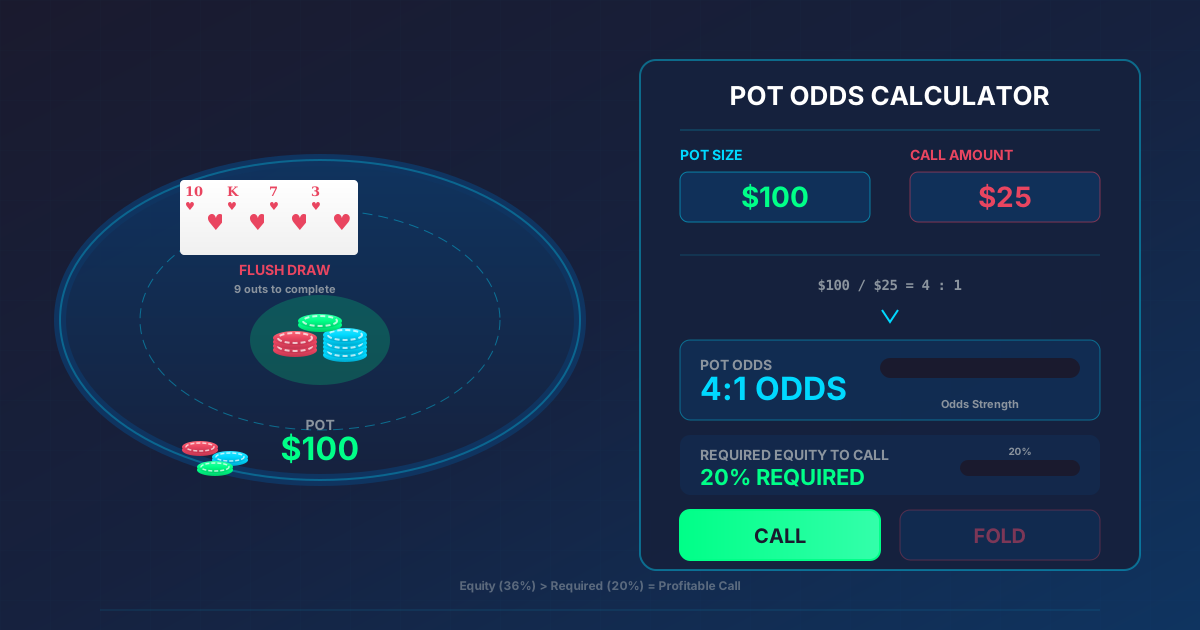
Calculate the pot odds implications of different bet sizes with our Pot Odds Calculator.
Blocker Effects on Hand Reading
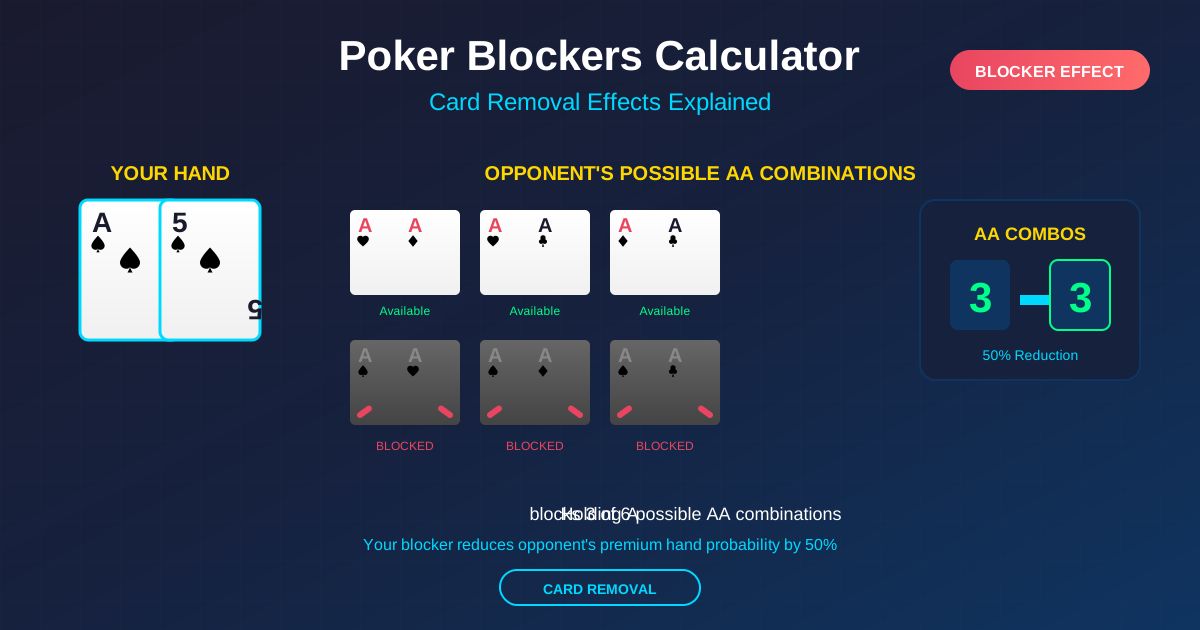
Blockers are cards in your hand that reduce the probability of your opponent holding certain hands. They are a crucial component of advanced hand reading.
How Blockers Work
If you hold the Ah, there are only 3 remaining combinations of AA (instead of 6), and only 3 remaining combos of AK suited with hearts (instead of 4 AKs combos total). Your ace "blocks" your opponent from holding those hands.
Key Blocker Concepts
Nut Blockers (Your Hand Blocks Opponent's Strong Hands):
- Holding Ah on a board with three hearts blocks the nut flush
- Holding As Ks on a K-T-5-J board blocks top set and broadway straights
- These make bluffing more profitable because opponent is less likely to have a strong hand
Anti-Blockers (Your Hand Blocks Opponent's Folding Hands):
- Holding 7c 6c on a board of Kh Qh 4c blocks nothing your opponent would fold
- This means their folding range is unchanged—they will fold the same amount
- Anti-blockers are neutral to slightly good for bluffing
Unblocking Opponent's Calling Range:
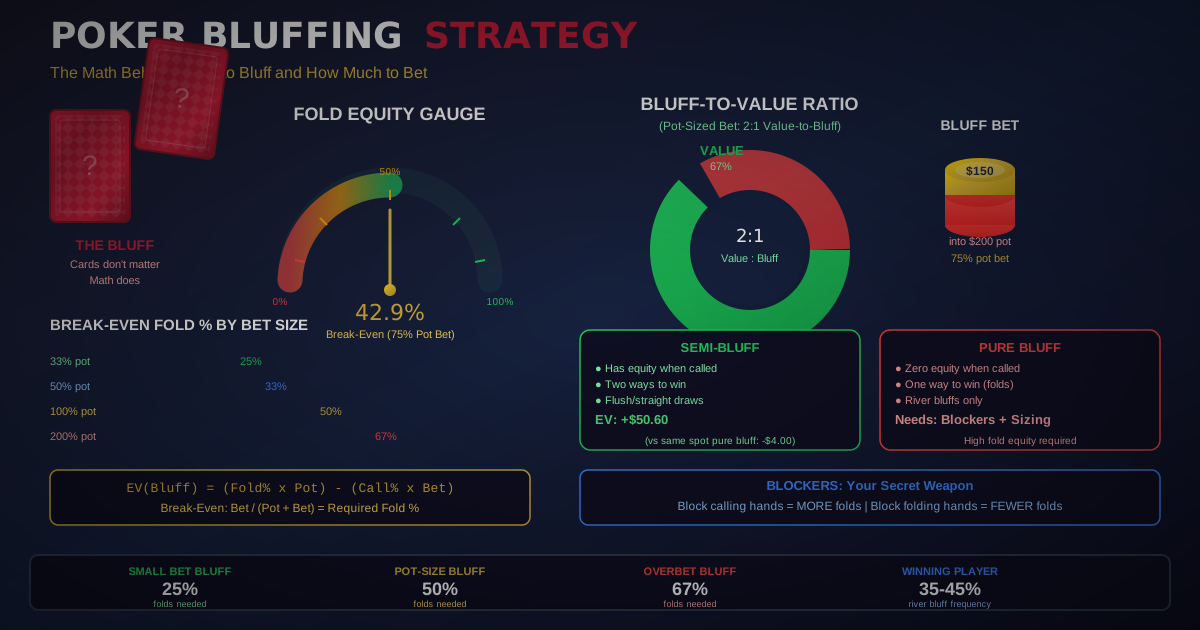
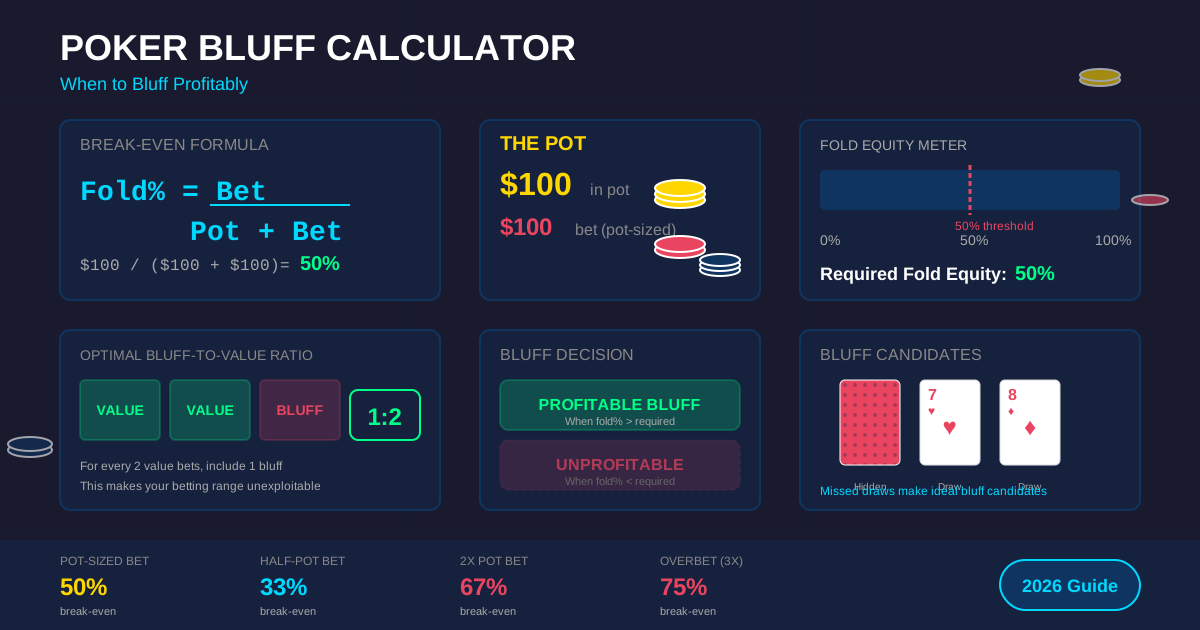
- When bluffing, you WANT your opponent to have hands they will fold
- Holding cards that block their folding range is bad for bluffing
- Holding cards that block their calling/raising range is good for bluffing
Blocker Example
Board: Ah Kh Ts 7d 3h (flush completes on river). You hold Qh 8c.
Your blocker analysis:
- You hold the Qh, which blocks some flush combos (QhXh)
- You do NOT hold any top pair, two pair, or set blockers
- Opponent's strong calling range: flushes, sets, two pair, AK
- Your Qh removes 4 flush combos from opponent's range
Decision impact: Because you block some flushes, there are fewer strong hands in opponent's range, making a river bluff slightly more profitable. However, you do not block AK or sets, so their value calling range is intact. The blocker effect is moderate—look for additional reasons to bluff (or not).
Evaluate blockers in any situation with our Poker Blocker Calculator.
Board Texture Analysis for Hand Reading
Monotone Boards (Three Cards of One Suit)
Example: Jh 8h 4h
On monotone boards:
- Many opponents slow down without the nut flush draw
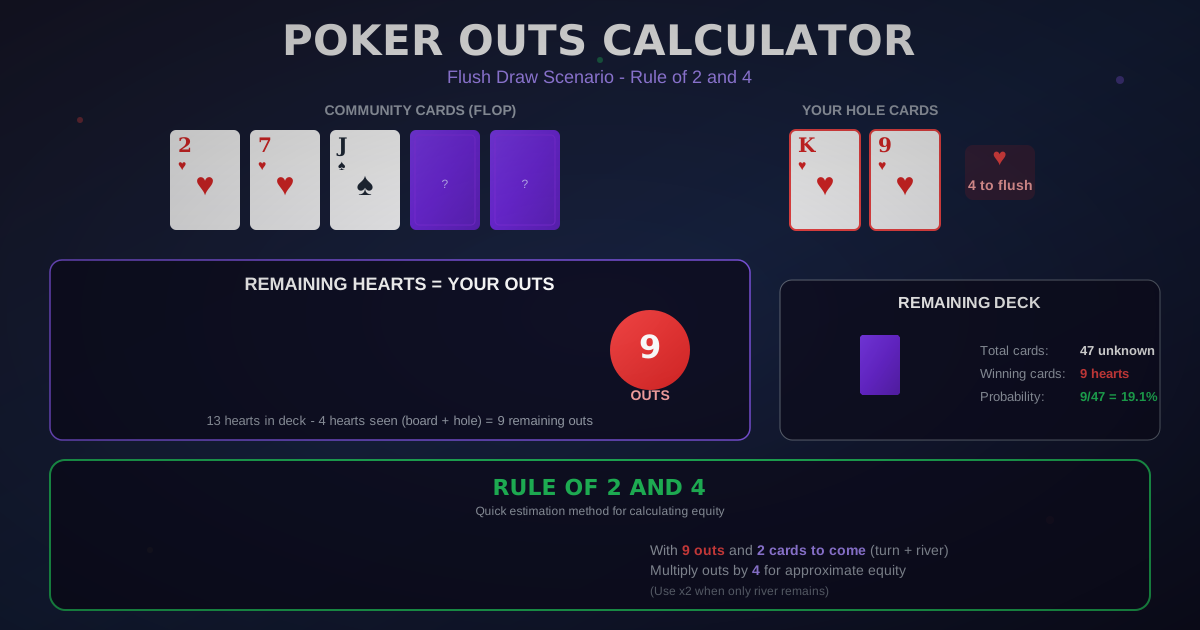
- Flush draws become the dominant draw (9-13 outs depending on holding)
- Hands without a heart are significantly weakened
- Betting ranges are narrower and more defined
Range narrowing effect: Immediately eliminates all non-heart holdings from the strong portion of opponent's range.
Paired Boards
Example: K-K-7 or 8-8-3
On paired boards:
- Full houses and quads exist but are rare
- Kx hands on K-K-7 have trips, which is very strong
- C-bet frequencies increase (fewer connected hands in opponent's range)
- Bluffing is more effective (opponent rarely has a piece)
Connected Boards
Example: T-9-8 or J-T-9
On connected boards:
- Straight draws dominate the landscape
- Many hands have pieces (pair + draw, two pair, made straights)
- Ranges are wide and interconnected
- Hand reading is more complex (more possible holdings)
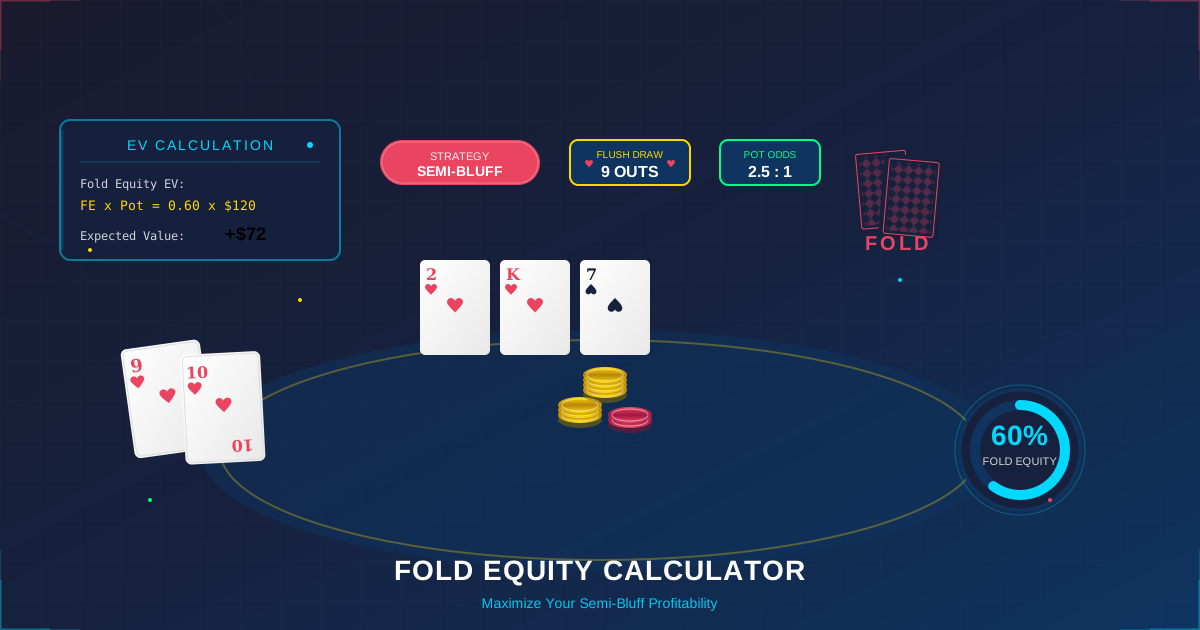
Determine fold equity based on board texture with our Poker Fold Equity Calculator.
Practice Methods for Hand Reading
Method 1: The Equity Drill
After every session, pick 5 hands where you faced a difficult decision. Work through the hand reading process:
- Assign a preflop range based on opponent's position and action
- Narrow on the flop based on their action and the board
- Narrow on the turn
- Narrow on the river
- Count the combos of value hands vs. bluffs
- Determine if your decision was correct against that range
Method 2: Range Grid Practice
Use the Poker Hand Range Calculator to:
- Select an opponent's preflop range
- Pick a random flop from a deck
- Decide which hands in the range would: bet, check-call, check-fold, check-raise
- Assign percentages to each action for each hand
- Verify with solver outputs or training tools
Method 3: Live Hand Reading
During a session, practice reading hands in real time—even in hands you are not involved in:
- Watch an opponent's preflop action and assign a range
- When the flop comes, predict what they will do based on their range vs. the board
- Track whether your predictions are correct
- After the hand, compare their showdown to your range estimate
Method 4: Combo Counting
Practice counting combos quickly:
- Pocket pairs: 6 combos (AA has 6 ways: AsAh, AsAd, AsAc, AhAd, AhAc, AdAc)
- Unpaired hands: 16 combos (AKo has 12, AKs has 4)
- Board card reduction: If an ace is on the board, AA goes from 6 to 3 combos, AK goes from 16 to 12
Master combo counting with our Poker Combos Calculator.
Common Hand Reading Mistakes
Mistake 1: Anchoring to the First Read
Many players assign a hand early and stick with it even when subsequent action contradicts that read. Stay flexible—update your range assessment on every street.
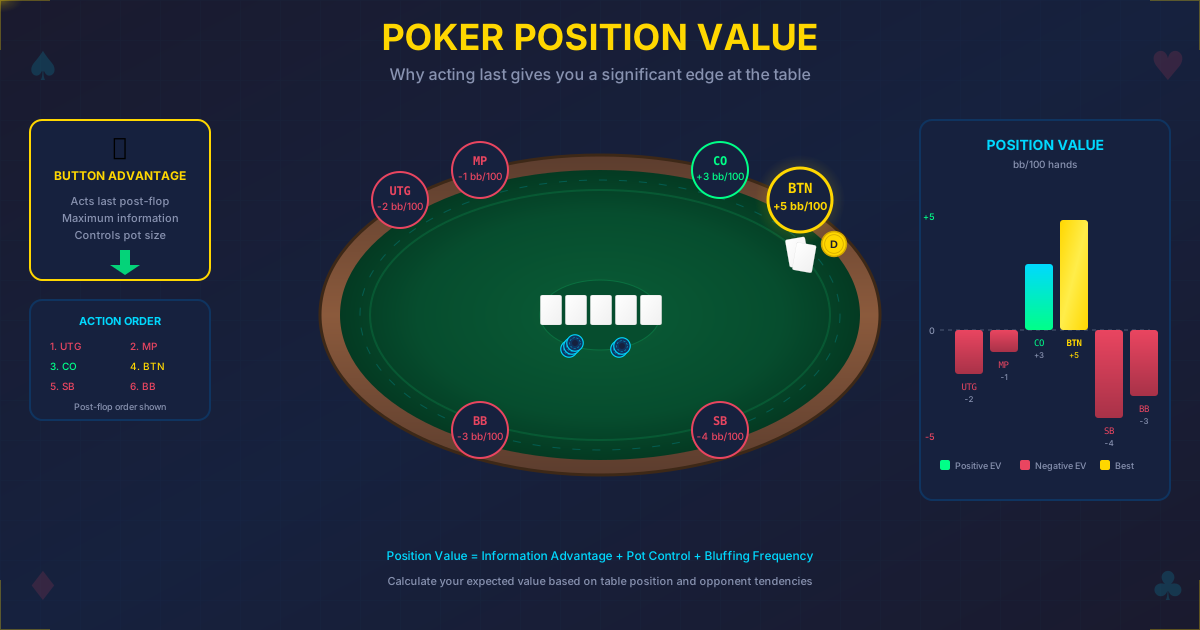
Mistake 2: Ignoring Position in Range Construction
A bet from UTG means something entirely different than the same bet from the button. Always factor position into your range assignments.
Mistake 3: Forgetting About Draws
On wet boards, a large portion of an opponent's betting range consists of draws, not made hands. Failing to include draws in your range assessment leads to overfolding.
Mistake 4: Not Using Blocker Information
Your own hand provides critical information. If you hold pocket aces, your opponent is much less likely to have aces. Use your own cards to refine their range.
Mistake 5: Overweighting Live Tells
Physical tells (shaking hands, chip glancing, etc.) are unreliable compared to betting pattern analysis. Use tells as supplementary information, never primary.
Mistake 6: Ignoring Player Type
A tight player's raising range is drastically different from a loose player's. Adjust your baseline ranges based on opponent tendencies:
| Player Type | Typical Open Range | 3-Bet Range | Bluff Frequency |
|---|---|---|---|
| Nit | 8-12% | 2-3% | Very Low |
| TAG (Tight-Aggressive) | 15-22% | 5-8% | Balanced |
| LAG (Loose-Aggressive) | 25-35% | 8-14% | High |
| Fish (Loose-Passive) | 40-60% | 2-4% | Very Low |
| Maniac | 50%+ | 15%+ | Extremely High |
Use our Poker 3-Bet Calculator to understand how different player types construct their 3-bet ranges.
Real-World Hand Reading Examples
Example 1: Reading a Tight Player
Situation: $1/$2 live. Known tight player (opens ~12% from UTG) raises to $8 UTG. You call on the BTN with 9s 8s. Heads-up.
Preflop range: AA-77, AKs-ATs, KQs-KTs, QJs, AKo-AJo, KQo (~12% = ~159 combos)
Flop ($19): Ts 7d 2c. Villain bets $12.
Narrowing: Villain c-bets on this dry board with most of their range. But let's split it:
- Hands that bet: TT (3), AT (9), KTs (3), QTs (2), JTs (3), AA-JJ (24), AK (12), KQ (8) = ~64 combos
- Hands that check: 99-77 (9), AQ-AJ some (6) = ~15 combos
- C-bet percentage: ~80%
You call with your gutshot (6 makes a straight) plus a backdoor flush draw.
Turn ($43): 6h. Villain bets $30.
Narrowing: You hit your straight. Villain's turn betting range:
- Continuing value: TT (3), AA-JJ (24), ATs (6), KTs (3), some AK (6) = ~42 combos
- Giving up: KQ (8), some AK (6), QTs (2) = ~16 combos
- Villain's range when betting is strong—they have an overpair or top pair ~85% of the time.
You raise to $90 for value (you have the second-nut straight). Villain calls.
River ($223): 3c. Villain checks.
Narrowing: Villain called a turn raise—this eliminates weak hands and most bluffs. Their range is now: AA-JJ (24), TT (3), ATs (6). They check because they are scared of your raise but cannot fold an overpair.
You bet $120 for value. Villain calls with AA. Your hand reading was perfect—you extracted maximum value because you knew their range was overpair-heavy.
Example 2: Reading a Bluff
Situation: $2/$5 online. Regular player opens to $12 from the BTN. You defend BB with Ac Tc. Heads-up.
Preflop range: ~42% BTN opening range = ~557 combos (very wide)
Flop ($25): Kd 7s 3h. You check. Villain bets $8 (1/3 pot).
Narrowing: Small c-bet on a dry board. This sizing is used frequently and includes nearly all of villain's range (~85%). The range is not narrowed much yet.
You call. ATo has an overcard (ace) plus backdoor straight possibilities.
Turn ($41): 2d. You check. Villain bets $28 (68% pot).
Narrowing: The 2d is a blank. Villain bets larger on the turn. Now their range narrows:
- Value: Kx (AK ~12, KQ ~12, KJ ~12, KT ~8, K9s ~3, K8s ~3 = ~50 combos), 77 (3), 33 (3), AA (3) = ~59 value combos
- Bluffs/semi-bluffs: Flush draws with Xd (many combos), gutshots, some air = ~30 bluff combos
- Approximate bluff percentage: ~34%
You call.
River ($97): 4s. You check. Villain bets $75 (77% pot).
Narrowing: No draw completed. The flush draw missed. Villain's river betting range:
- Value: Same as turn minus weakest Kx = ~50 combos
- Bluffs: Missed draws, air that continued = ~18-22 combos
- Bluff percentage: ~28-30%
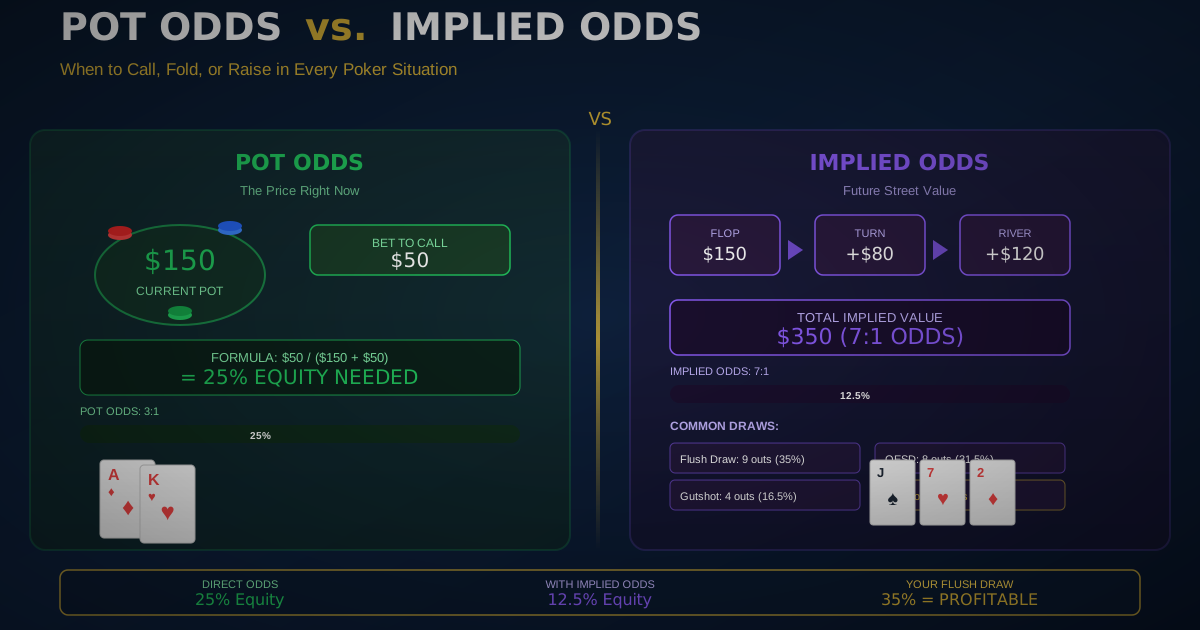
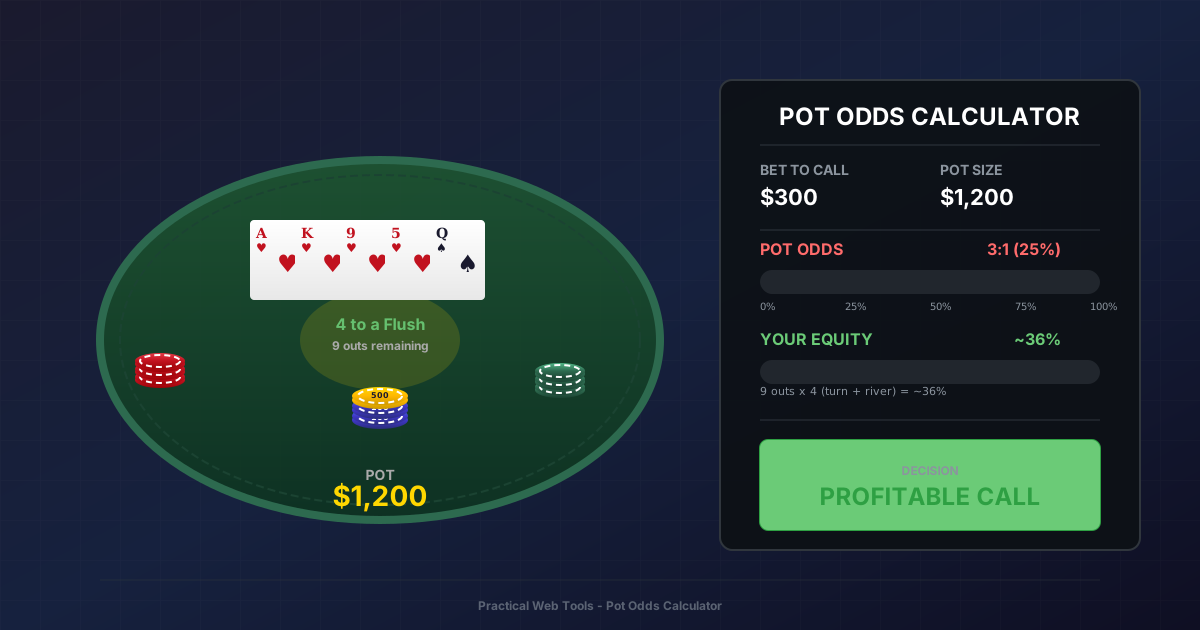
Pot odds: $75 / ($97 + $75 + $75) = 30.4%
Decision: You need 30.4% equity to call. If villain bluffs ~30% of the time, you are essentially break-even. Factor in that your AT has an ace (which blocks AK, the strongest part of villain's value range, reducing it by ~12 combos), and the call becomes slightly profitable. Thin call.
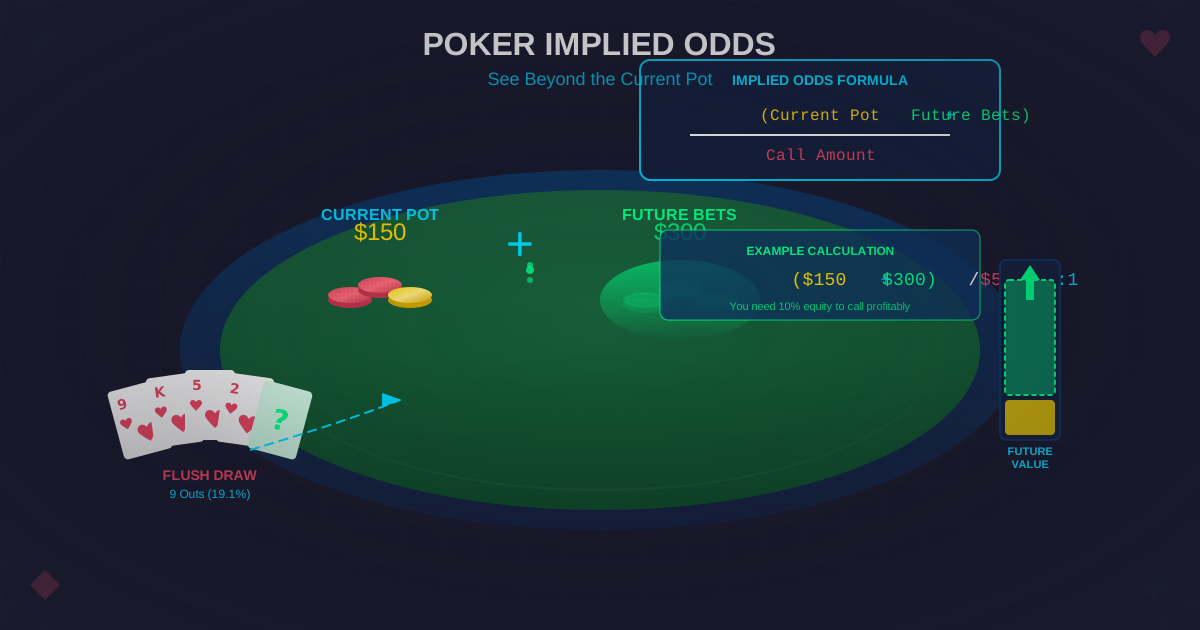
Evaluate your implied odds for calling in these spots with our Implied Odds Calculator.
Example 3: Spotting a Capped Range
Situation: $1/$3 live. Opponent cold-calls a UTG raise from the HJ. You call on the BTN. Three-way.
Preflop range (HJ cold call): This range is CAPPED. Why? Because the HJ would 3-bet their strongest hands (QQ+, AK). Their calling range includes: JJ-55 (~42 combos), AQs (4), AJs-ATs (8), KQs (4), suited connectors (T9s-54s ~28 combos) = ~86 combos.
Key insight: This opponent almost certainly does NOT have AA, KK, QQ, or AK. Their range has a ceiling (JJ at best).
Flop ($24): Ac 8d 5c. UTG checks. HJ bets $18.
Narrowing: Without AA/AK, the HJ is betting with: A-high suited (AQs, AJs, ATs = ~12 combos), 88 (3), 55 (3), flush draws (6), occasional bluffs.
This is a strong bet from a capped range. They likely have an ace or a set. But you know they CANNOT have AA or AK, which makes your AQ or better very strong against their range.
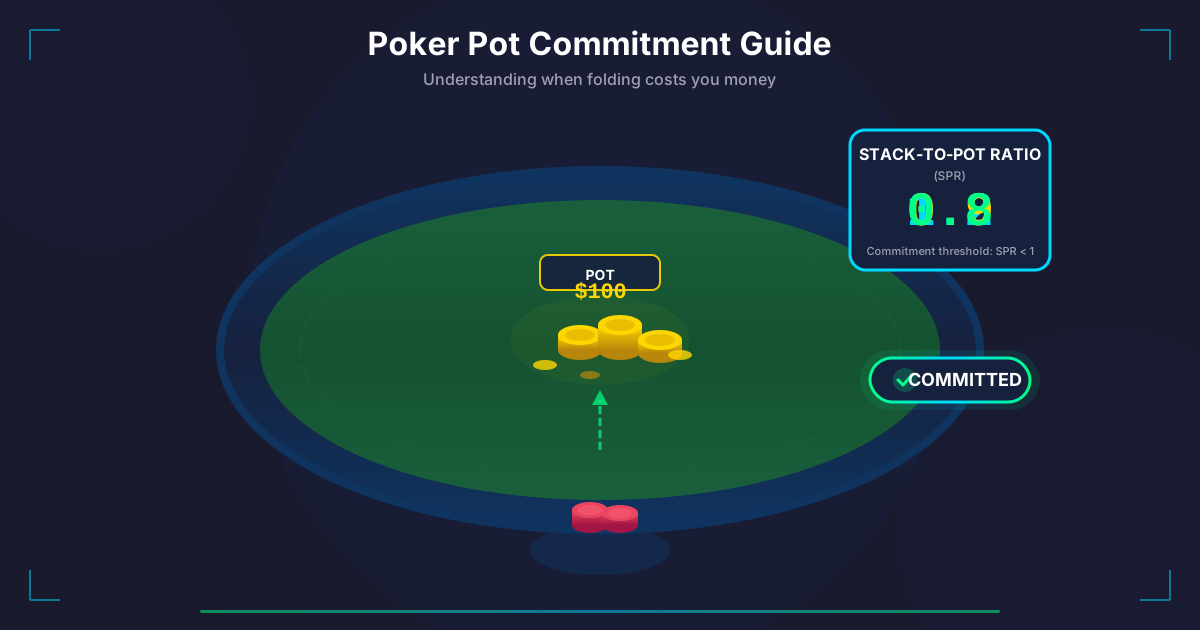
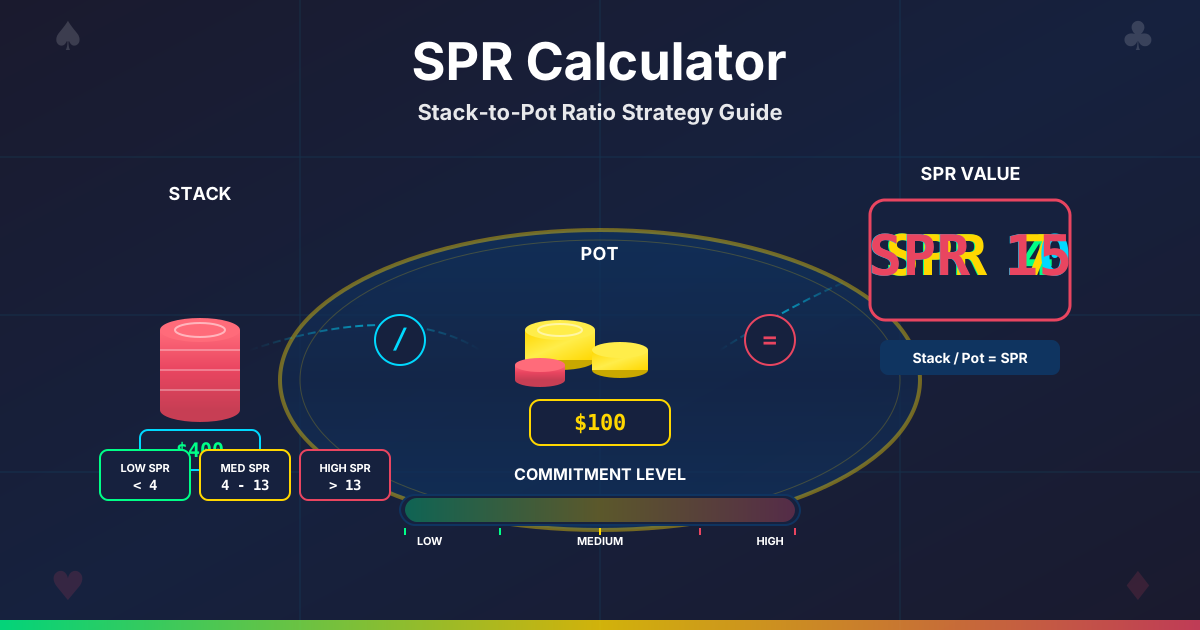
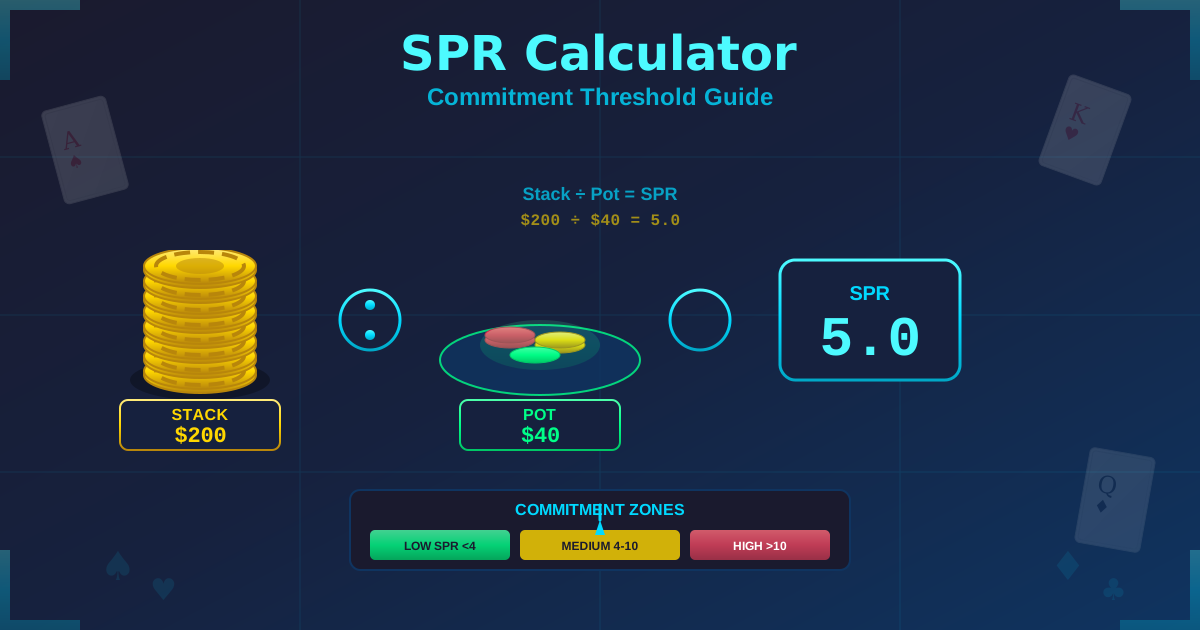
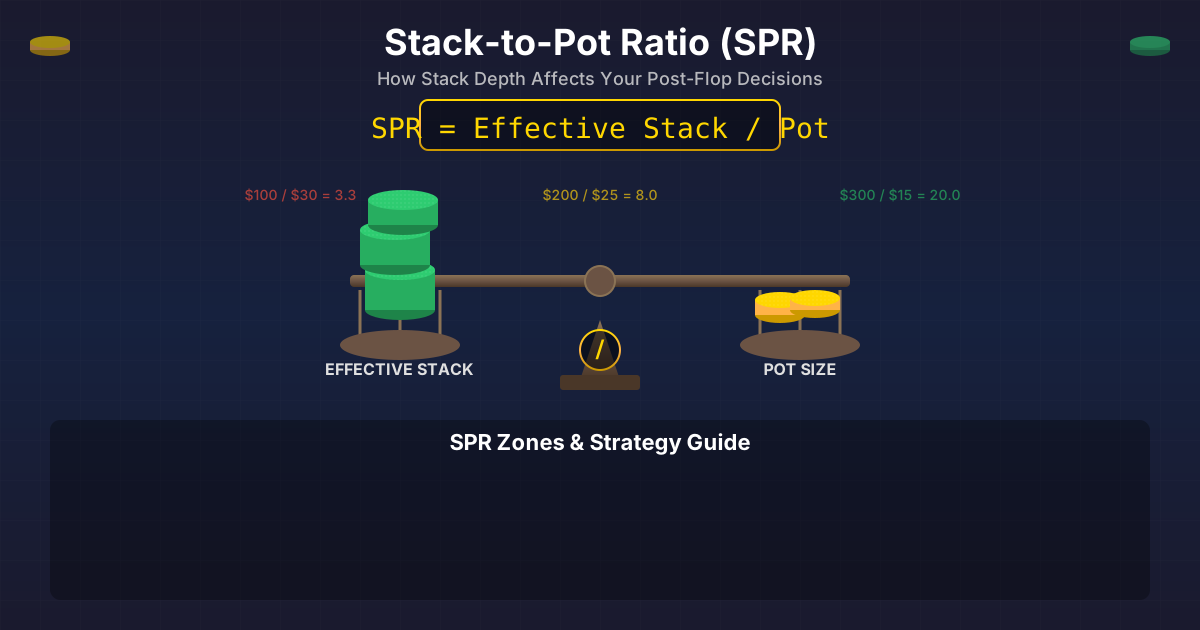
Use our Poker SPR Calculator to plan your stack-off strategy against capped ranges.
Frequently Asked Questions
What is hand reading in poker? Hand reading is the process of deducing what hands your opponent is likely holding based on their actions throughout a hand. Modern hand reading uses range-based analysis rather than guessing a single hand. You assign a range preflop and narrow it on each street based on betting patterns, sizing, and board texture. Use our Poker Hand Range Calculator to practice range construction.
How do I start learning hand reading? Begin by memorizing standard opening ranges for each position. Then practice assigning ranges to opponents based on their preflop actions. On each subsequent street, ask: "What hands would take this action?" and "What hands would NOT take this action?" Eliminate the hands that would not act this way, and the remaining hands are your opponent's range.
What are blockers and why do they matter for hand reading? Blockers are cards in your hand that reduce the number of combinations your opponent can hold. If you hold the ace of hearts, your opponent cannot have AA with hearts, AK with a heart ace, or any suited hand that needs the Ah. Blockers help refine your range estimates and determine bluffing profitability. Use our Poker Blocker Calculator for detailed blocker analysis.
How does board texture affect hand reading? Board texture determines which hands in your opponent's range connect and which miss. Dry boards (K-7-2 rainbow) limit connections, making ranges easier to narrow. Wet boards (J-T-8 two-tone) create many draws and connections, making ranges broader and hand reading more complex.
How many hands should I assign to my opponent's range? A typical preflop opening range is 150-550 combos depending on position. After flop action, this narrows to 50-150 combos. After the turn, 30-80 combos. By the river, you should be working with 20-50 combos. Use our Poker Combos Calculator to count exact combinations.
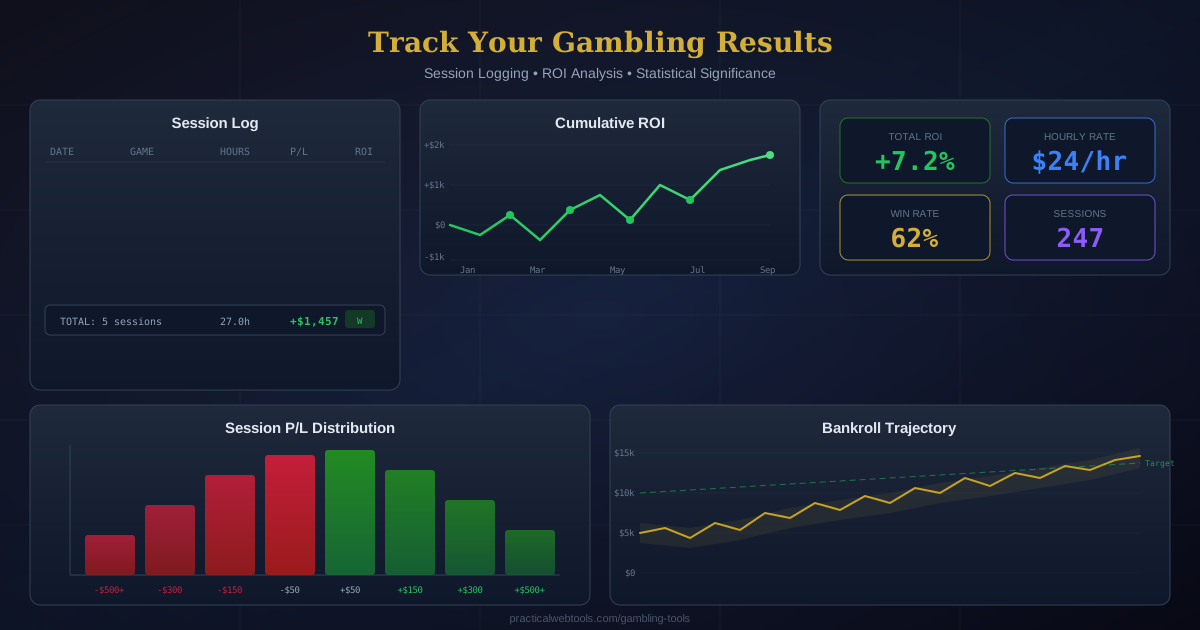
Can I read hands in online poker without physical tells? Absolutely. Betting patterns, timing, and sizing are far more reliable than physical tells. Online players actually develop better hand reading skills because they focus exclusively on actions rather than physical behavior. Track opponent tendencies with our Poker Session Tracker.
What is a capped range? A capped range is one that does not include the very strongest hands. For example, if a player cold-calls a raise instead of 3-betting, their range is capped—they probably do not have AA, KK, or AK, because they would have 3-bet those hands. Recognizing capped ranges is a powerful hand reading skill. Evaluate with our Poker Equity Calculator.
How long does it take to become good at hand reading? Most players need 6-12 months of dedicated practice to develop strong hand reading skills. The key is consistent study: review hands after sessions, practice range construction, and gradually incorporate blocker analysis. Speed improves with repetition, and eventually the process becomes semi-automatic.
Related Tools for Hand Reading and Range Analysis
- Poker Hand Range Calculator — Build and analyze opponent hand ranges
- Poker Blocker Calculator — Evaluate how your cards affect opponent's possible holdings
- Poker Equity Calculator — Calculate hand vs. range equity
- Poker Combos Calculator — Count exact hand combinations
- Poker Fold Equity Calculator — Determine fold equity against narrowed ranges
- Poker EV Calculator — Calculate EV of decisions against ranges
- Pot Odds Calculator — Combine pot odds with range analysis
- Implied Odds Calculator — Factor future street extraction into decisions
- Poker 3-Bet Calculator — Understand 3-bet ranges for hand reading
- Poker SPR Calculator — Plan decisions against capped and uncapped ranges
Conclusion: Read Ranges, Not Hands
Hand reading is the skill that separates good poker players from great ones. Every other skill—pot odds, position, bluffing, value betting—depends on accurate hand reading to execute properly. You cannot know whether to call, fold, or raise if you do not know what your opponent likely holds.
Your path to better hand reading:
- Always think in ranges, never single hands. Assign a range of possible holdings and narrow systematically.
- Start preflop. Their position and action determine the starting range.
- Narrow on every street. Each bet, check, raise, or call eliminates hands from their range.
- Use bet sizing as information. Small bets mean different things than large bets.
- Incorporate blockers. Your own cards tell you about what your opponent cannot have.
- Practice consistently. Review 5 hands per session using the range narrowing process.
Build your hand reading skills today. Start with our Poker Hand Range Calculator to practice range construction, use our Poker Blocker Calculator to understand blocker effects, and verify your reads with our Poker Equity Calculator to see how your hand performs against narrowed ranges.
The information is always there. You just need to learn how to read it.
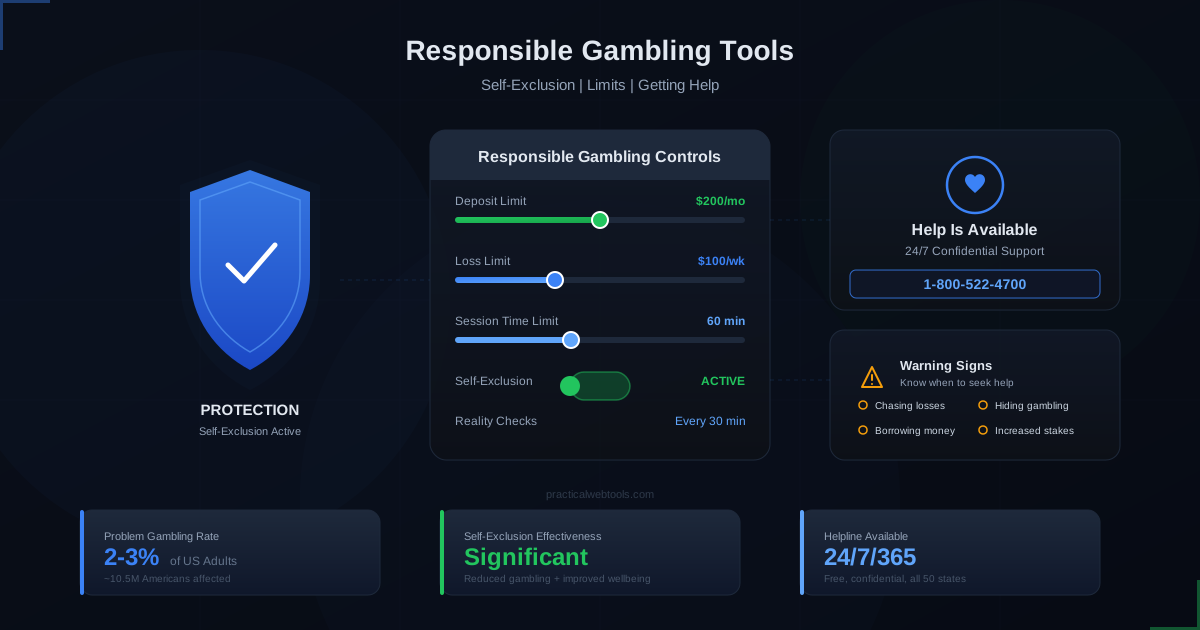
Gambling involves risk. This content is for educational and informational purposes only. Always gamble responsibly, set limits you can afford, and seek help if gambling becomes a problem. Visit the National Council on Problem Gambling or call 1-800-522-4700 for support.