Single Bets vs. Parlays: The Math Behind Which Strategy Wins Long-Term (2026)
Every sports bettor eventually faces the same fork in the road: do you grind out profits one straight bet at a time, or do you swing for the fences with parlays that promise 10-to-1 payouts on a single ticket? The debate has raged across Reddit threads, Discord servers, and sportsbook comment sections for years. Recreational bettors swear their "locks of the week" belong in a parlay. Professional bettors almost universally bet singles. And sportsbooks? They spend millions promoting parlays for a reason that has nothing to do with your profitability.
This is not an opinion piece. This is a head-to-head mathematical breakdown of single bets versus parlays across every metric that matters: expected value, variance, bankroll survival, long-term profit accumulation, and risk-adjusted return. We will simulate 10,000 bets under both strategies, compare identical picks structured as singles versus parlays, and identify the precise conditions under which each approach is mathematically justified.
The numbers tell a clear story. But the full picture has more nuance than either side of the debate typically admits.
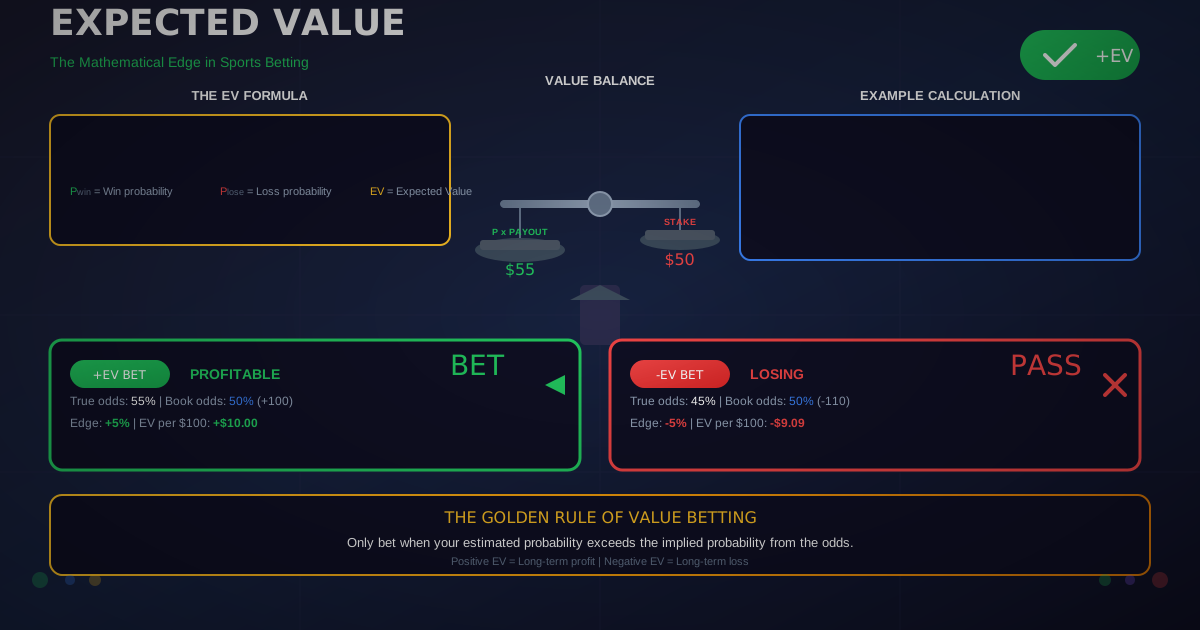
Run any singles-vs-parlay comparison with real numbers using our Parlay Calculator and Expected Value Calculator.
The Fundamental Math: How the House Edge Differs
Before comparing strategies, you need to understand exactly how the house edge operates differently on single bets versus parlays. This is the foundation everything else builds on.
Single Bet House Edge
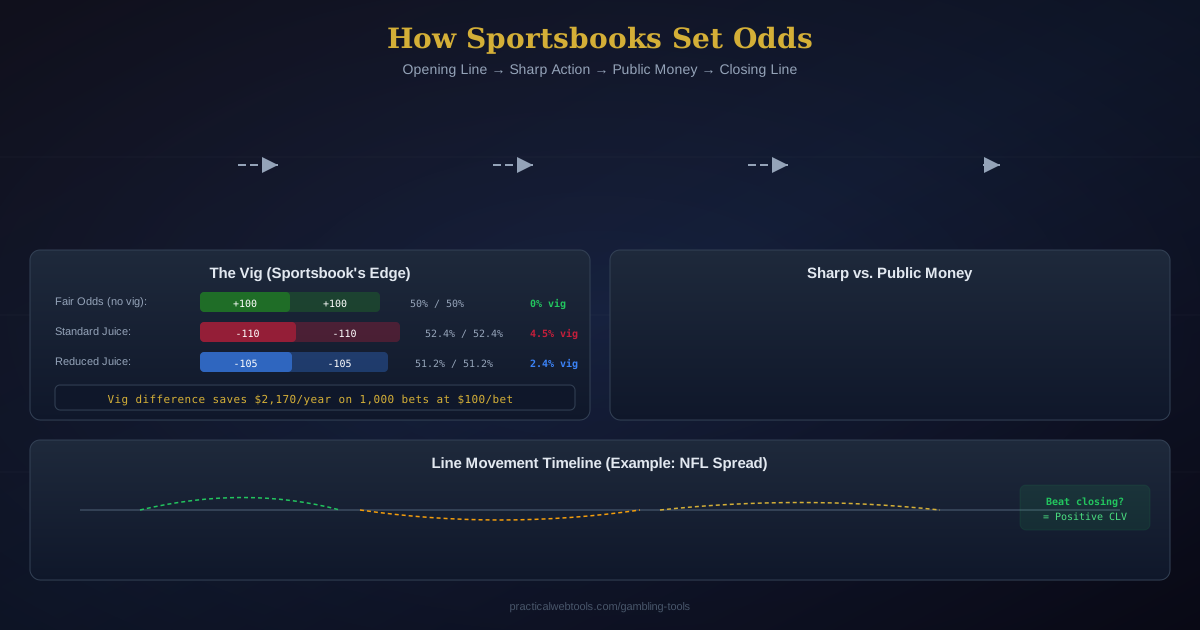
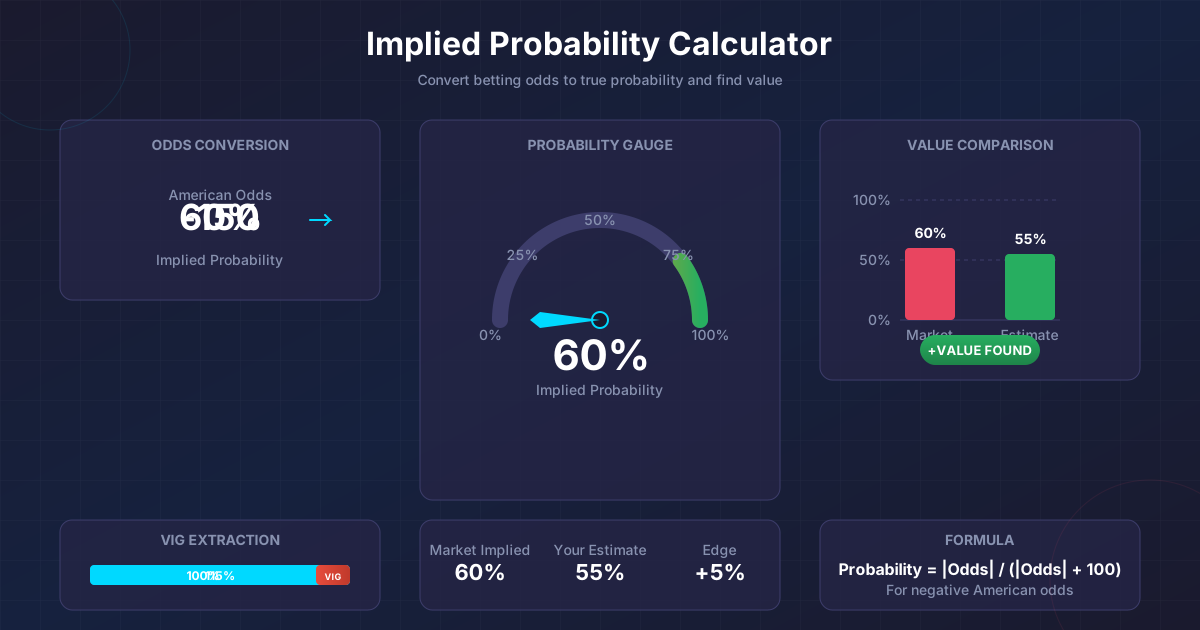
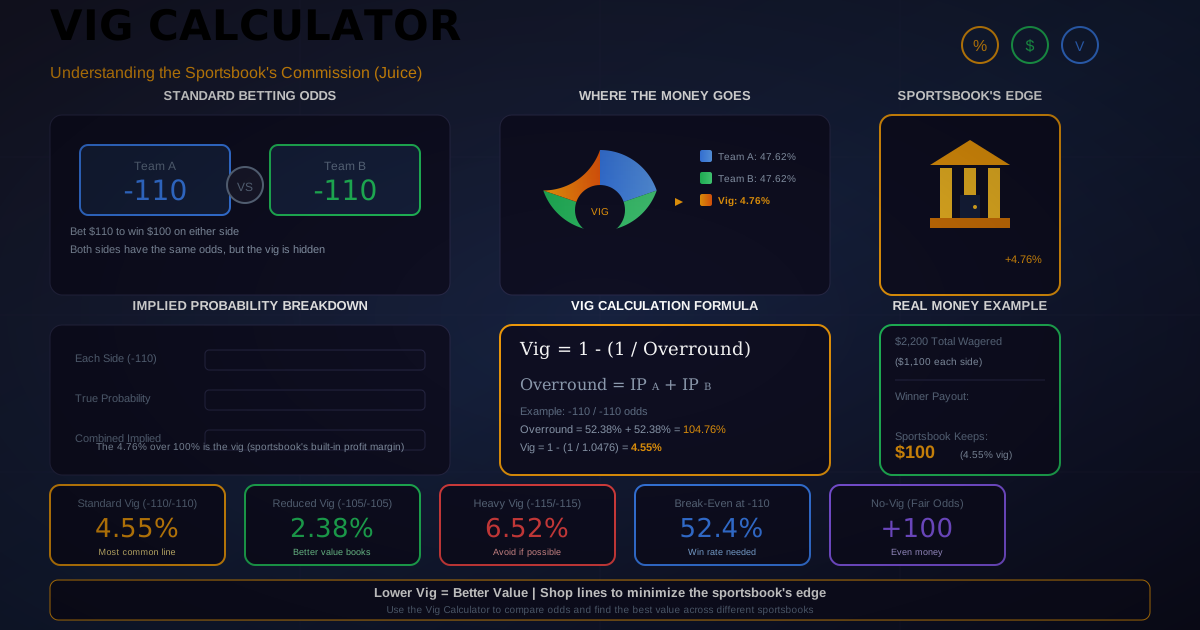
A standard -110 bet requires you to risk $110 to win $100. The implied probability is 52.38%, but a fair coin flip is 50%. That gap is the vig.
House edge on a single -110 bet:
- Implied probability: 110 / (110 + 100) = 52.38%
- True probability (fair market): 50%
- House edge: 52.38% - 50% = 4.55% per bet
For every $100 you wager at -110 on a true 50/50 proposition, the sportsbook expects to keep $4.55. That is a known, fixed, manageable cost.
Parlay House Edge: The Compounding Problem
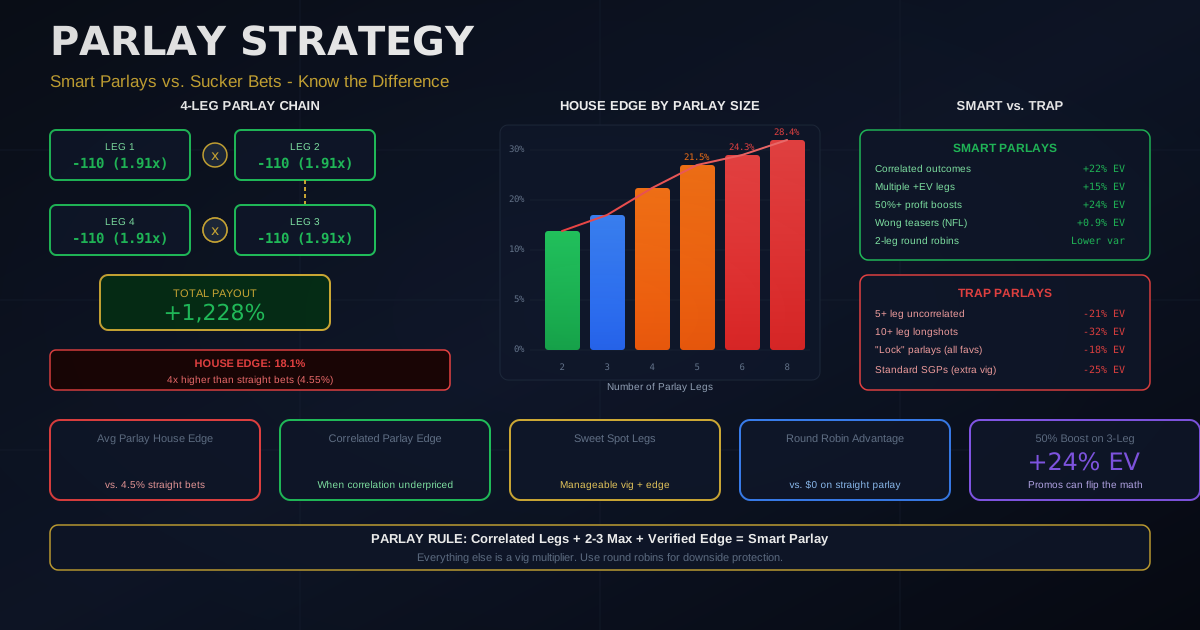
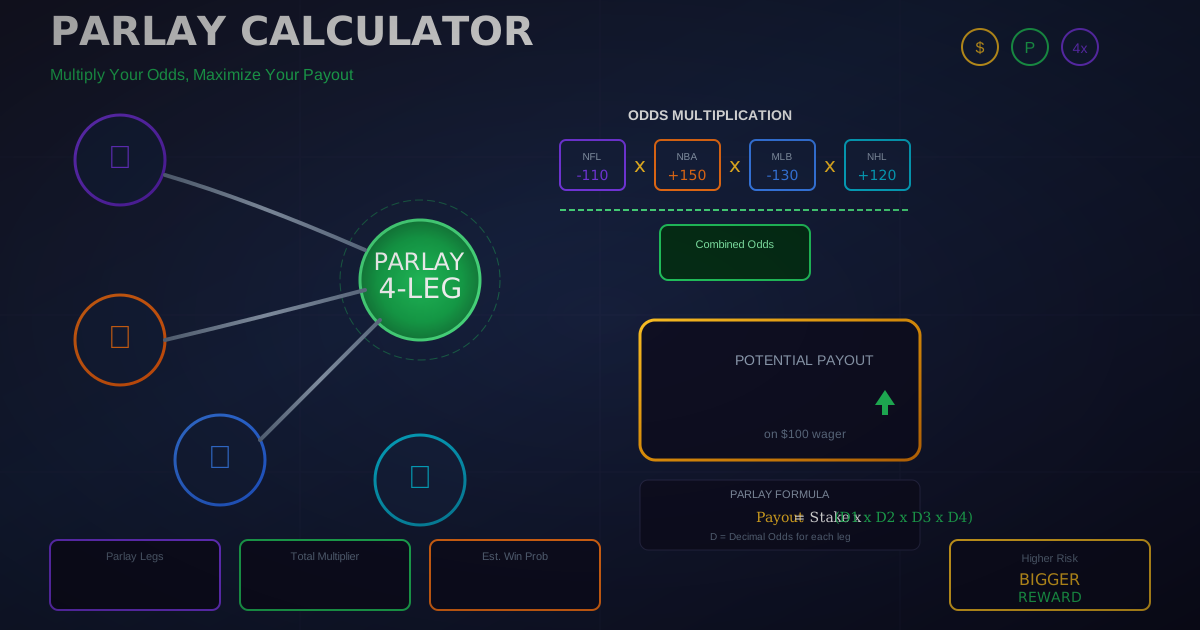
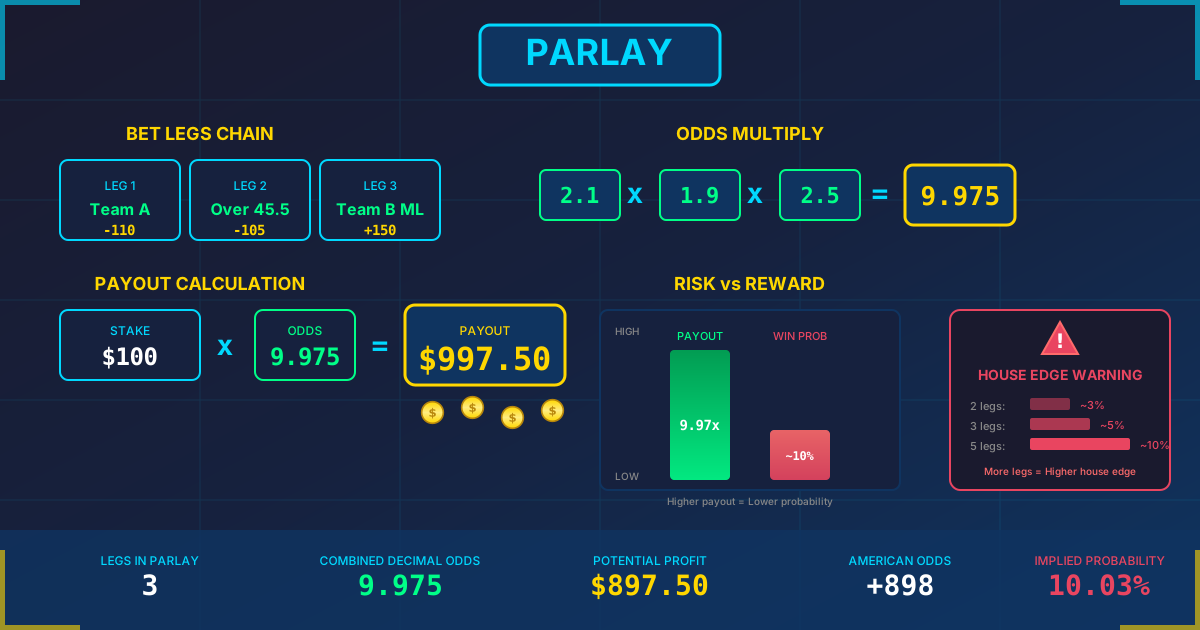
When you parlay two -110 bets, you are not simply doubling the house edge. You are multiplying it. Each leg introduces its own vig, and those vigs compound across the entire ticket.
Two-leg parlay at -110 each:
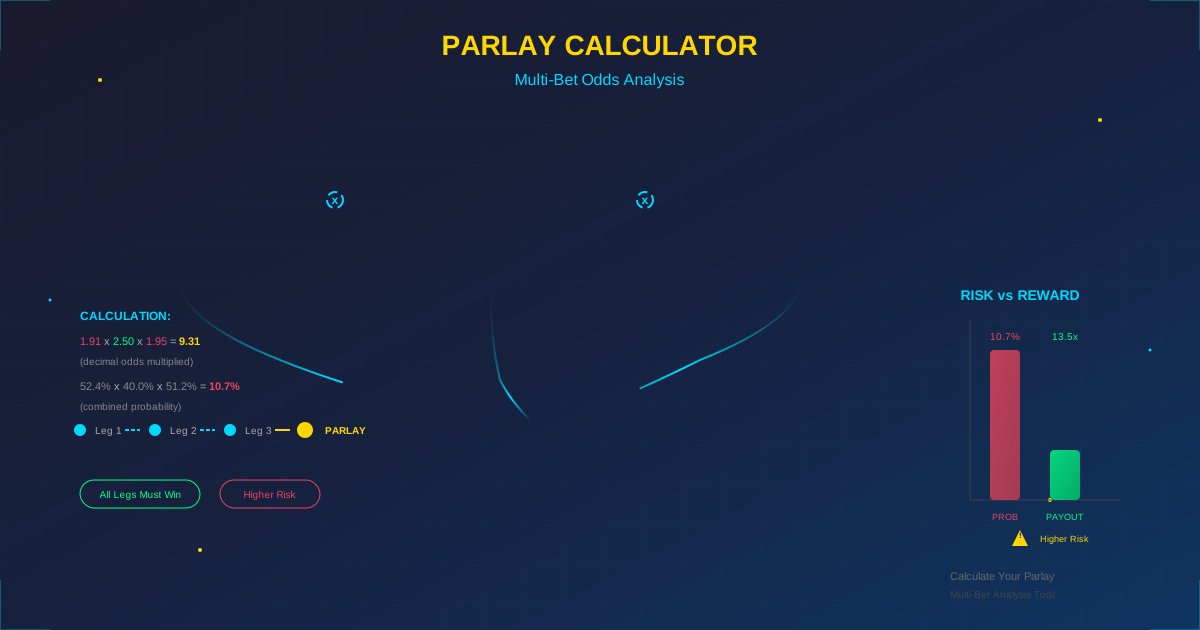
- Sportsbook parlay payout: 1.909 x 1.909 = 3.645 (or +264)
- True fair odds for two independent 50/50 events: 2.0 x 2.0 = 4.0 (or +300)
- House edge: 1 - (3.645 / 4.0) = 8.88%
The house edge nearly doubled from 4.55% to 8.88% simply by combining two bets. And it gets worse with every additional leg.
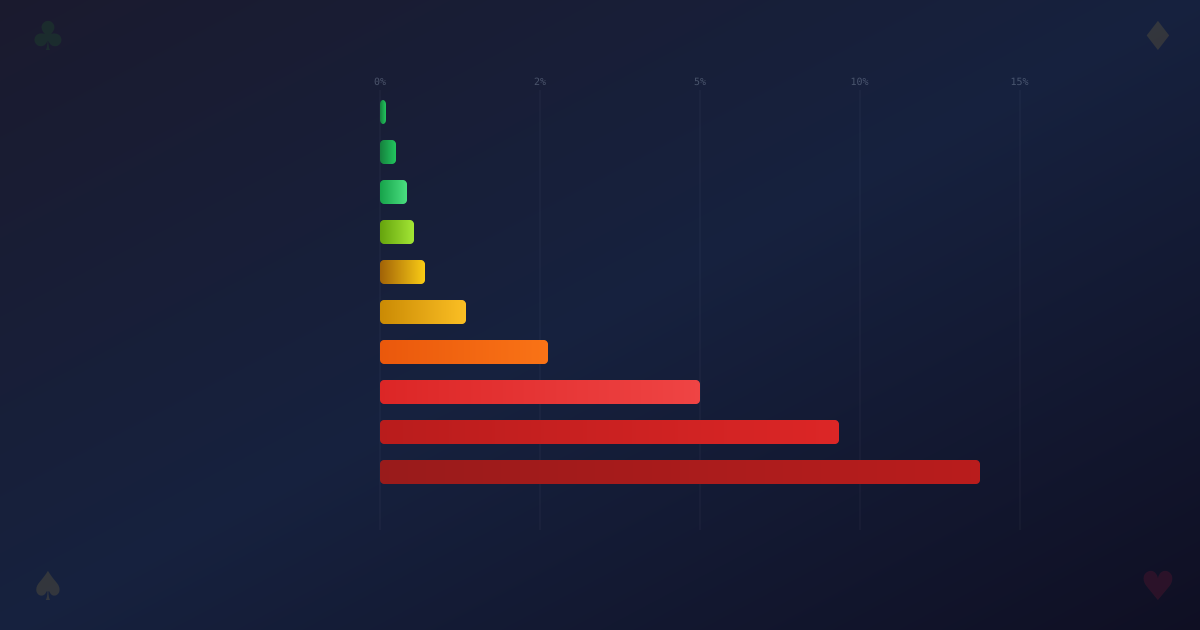
House Edge by Number of Parlay Legs
| Parlay Legs | Sportsbook Payout (at -110) | True Fair Odds | Effective House Edge | Edge vs. Singles |
|---|---|---|---|---|
| 1 (single) | 1.909:1 | 2.0:1 | 4.55% | Baseline |
| 2-leg | 3.645:1 | 4.0:1 | 8.88% | 1.95x higher |
| 3-leg | 6.961:1 | 8.0:1 | 13.0% | 2.86x higher |
| 4-leg | 13.29:1 | 16.0:1 | 16.9% | 3.72x higher |
| 5-leg | 25.37:1 | 32.0:1 | 20.7% | 4.55x higher |
| 6-leg | 48.43:1 | 64.0:1 | 24.3% | 5.34x higher |
| 8-leg | 176.6:1 | 256.0:1 | 31.0% | 6.81x higher |
| 10-leg | 643.6:1 | 1024.0:1 | 37.1% | 8.15x higher |
The pattern is unmistakable. A 4-leg parlay costs you nearly four times what a single bet costs. A 10-leg parlay costs you over eight times as much per dollar wagered. This is not a marginal difference. It is a structural disadvantage that compounds with every leg you add.
Verify the hold on any odds combination with our Hold/Vig Calculator.
Why the Edge Compounds (Not Just Adds)
The math behind compounding vig is straightforward but often misunderstood. Each -110 leg has a decimal odd of 1.909 instead of the fair 2.0. The ratio 1.909/2.0 = 0.9545, meaning each leg retains 95.45% of fair value. Multiply that retention across legs:
- 2 legs: 0.9545^2 = 91.1% retention (8.9% house edge)
- 4 legs: 0.9545^4 = 83.1% retention (16.9% house edge)
- 6 legs: 0.9545^6 = 75.7% retention (24.3% house edge)
- 10 legs: 0.9545^10 = 62.9% retention (37.1% house edge)
Every leg you add multiplies the sportsbook's advantage. This is the single most important concept in the singles-versus-parlays debate.
Side-by-Side: 5 Real-World Comparisons
Theory is useful, but concrete examples make the difference visceral. Here are five scenarios comparing identical picks structured as single bets versus parlays.
Example 1: Two NFL Favorites
You like the Chiefs -3.5 (-110) and the Bills -7 (-110) for Sunday.
As two single bets ($100 each, $200 total risked):
| Outcome | Singles Result | Net Profit/Loss |
|---|---|---|
| Both win | +$90.91 + $90.91 | +$181.82 |
| Chiefs win, Bills lose | +$90.91 - $100 | -$9.09 |
| Chiefs lose, Bills win | -$100 + $90.91 | -$9.09 |
| Both lose | -$100 - $100 | -$200.00 |
As a 2-leg parlay ($200 risked):
| Outcome | Parlay Result | Net Profit/Loss |
|---|---|---|
| Both win | $200 x 2.645 = $529 | +$529.00 |
| Chiefs win, Bills lose | Lose | -$200.00 |
| Chiefs lose, Bills win | Lose | -$200.00 |
| Both lose | Lose | -$200.00 |
Expected value comparison (assuming 50% true probability per leg):
- Singles EV: (0.25 x $181.82) + (0.25 x -$9.09) + (0.25 x -$9.09) + (0.25 x -$200) = -$9.09
- Parlay EV: (0.25 x $529) - (0.75 x $200) = $132.25 - $150 = -$17.75
The singles bettor expects to lose $9.09. The parlay bettor expects to lose $17.75. Same picks, same total risk, but the parlay costs an extra $8.66 in expected value.
Example 2: Three NBA Totals
You are betting Over 215.5, Over 222, and Under 210.5, each at -110. You have $150 to deploy.
As three singles ($50 each):
- Expected loss per bet: $50 x 0.0455 = $2.27
- Total expected loss: -$6.82
As a 3-leg parlay ($150):
- Parlay payout: 6.961:1, so a win returns $150 x 6.961 = $1,044.15
- Win probability: 0.50^3 = 12.5%
- EV: (0.125 x $894.15) - (0.875 x $150) = $111.77 - $131.25 = -$19.48
The parlay costs $12.66 more in expected value. Over a full NBA season of weekly 3-leg parlays (roughly 26 weeks), that is an additional $329 in expected losses compared to betting the same picks as singles.
Example 3: The 55% Sharp Bettor
A skilled bettor hits at a 55% rate on -110 lines. They have four picks this week.
As four singles ($100 each, $400 total):
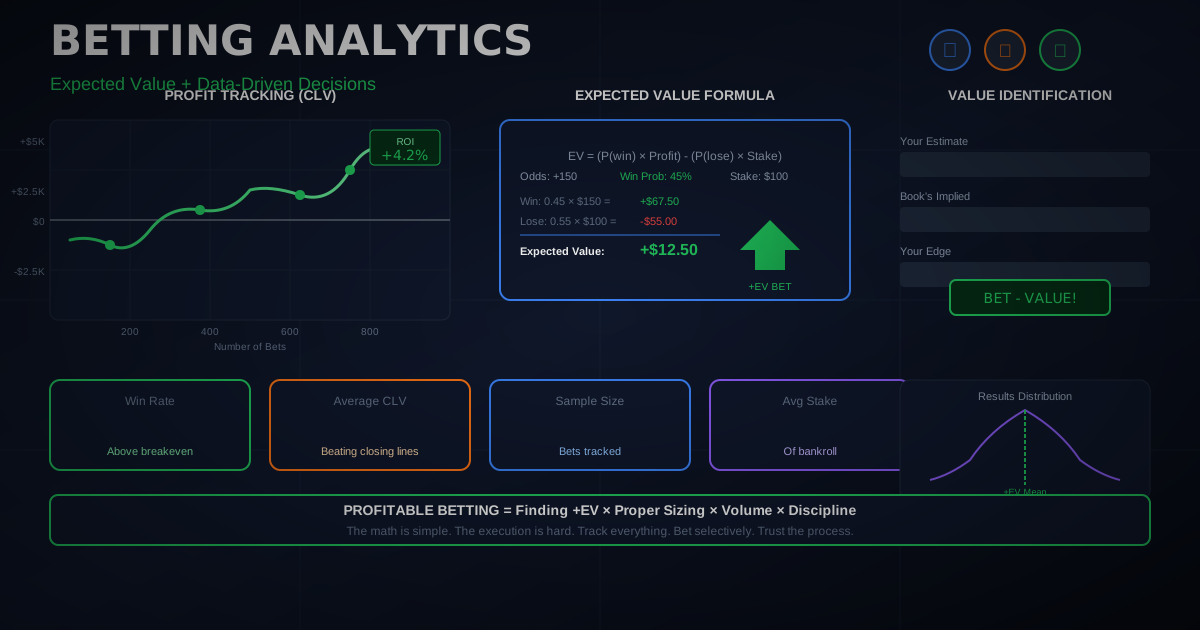
- EV per bet: (0.55 x $90.91) - (0.45 x $100) = $50 - $45 = +$5.00
- Total EV: +$20.00
- Win probability for positive day (2+ wins): 75.9%
As a 4-leg parlay ($400):
- Win probability: 0.55^4 = 9.15%
- Payout: $400 x 13.29 = $5,316
- EV: (0.0915 x $4,916) - (0.9085 x $400) = $449.81 - $363.40 = +$86.41
Wait. The parlay EV is higher? Yes, but look at the risk profile. The singles bettor has a 75.9% chance of having a winning or break-even day. The parlay bettor loses 100% of their stake 90.85% of the time. We will explore why this matters enormously in the variance section below.
Calculate your true edge on any bet with our Expected Value Calculator.
Example 4: Weekend Warrior ($25 Budget)
A casual bettor has $25 for the weekend. They like two games.
As two singles ($12.50 each):
- Best case (both win): +$11.36 + $11.36 = +$22.73
- Split (1-1): +$11.36 - $12.50 = -$1.14
- Worst case (both lose): -$25.00
- EV: -$1.14
As a 2-leg parlay ($25):
- Win: $25 x 2.645 = $66.13, profit = +$41.13
- Lose (any loss): -$25.00
- EV: -$2.22
The parlay costs an extra $1.08 in EV on a $25 bet. It does not sound like much, but annualized over 52 weekends, that is $56 in additional expected losses. On a $25-per-week budget, that represents more than two full weeks of bankroll burned unnecessarily.
Example 5: The 5-Leg Saturday Slate
Five college football picks, each at -110, all structured around a $500 total budget.
As five singles ($100 each):
- Expected 2.5 wins, 2.5 losses at 50%
- EV per bet: -$4.55
- Total EV: -$22.73
As a 5-leg parlay ($500):
- Win probability: 0.50^5 = 3.125%
- Payout: $500 x 25.37 = $12,685
- EV: (0.03125 x $12,185) - (0.96875 x $500) = $380.78 - $484.38 = -$103.59
The 5-leg parlay costs $80.86 more in expected value than betting the same picks as singles. That is a staggering 4.5x increase in the cost of placing the same opinions. The parlay bettor would need to be right on all five games 3.94% of the time just to break even, but the true probability of going 5-for-5 at 50% per game is only 3.125%.
Long-Term Simulation: 10,000 Bets Under Each Strategy
Individual examples show the per-bet cost. Simulations show what happens to your bankroll over months and years. Let us model three bettor profiles across 10,000 total bet decisions.
Simulation Parameters
- Starting bankroll: $10,000
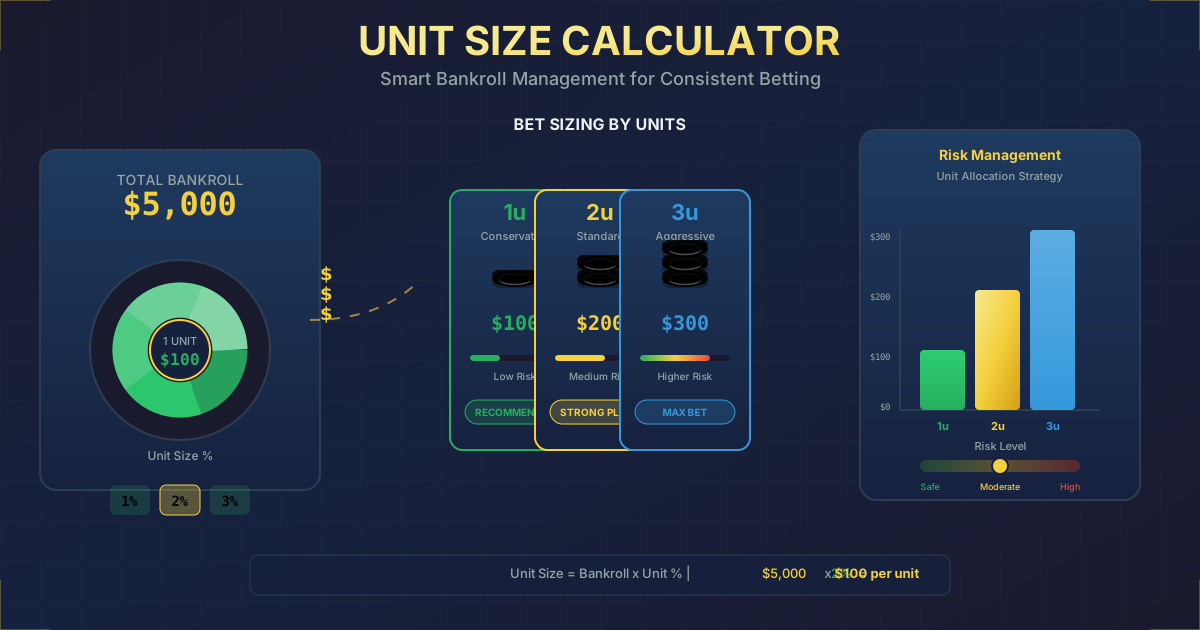
- Bet size: 2% of starting bankroll ($200) per decision point
- Singles bettor: $200 per single bet, one at a time
- 2-leg parlay bettor: $200 per 2-leg parlay (5,000 parlays from 10,000 picks)
- 4-leg parlay bettor: $200 per 4-leg parlay (2,500 parlays from 10,000 picks)
- All bets at -110
- Three skill levels: 50% (break-even), 53% (slight edge), 55% (sharp)
Simulation Results: 50% Win Rate (No Edge)
| Metric | Singles | 2-Leg Parlays | 4-Leg Parlays |
|---|---|---|---|
| Total wagered | $2,000,000 | $1,000,000 | $500,000 |
| Number of bets placed | 10,000 | 5,000 | 2,500 |
| Expected wins | 5,000 | 1,250 | 156 |
| Expected profit/loss | -$90,909 | -$88,750 | -$84,688 |
| ROI on amount wagered | -4.55% | -8.88% | -16.94% |
| Probability of being profitable | ~0.3% | ~0.1% | ~0.01% |
| Median ending bankroll | ~$9,050 | ~$8,400 | ~$6,200 |
| Bankroll ruin probability (50% drawdown) | ~2% | ~12% | ~48% |
At a 50% win rate, the total dollar losses look somewhat similar because the parlay bettors wager fewer total dollars. But the ROI tells the real story: parlays destroy 2-4x more of every dollar you put at risk. And the ruin probabilities are dramatically different. A 4-leg parlay bettor at 50% has nearly a coin-flip chance of losing half their bankroll.
Simulation Results: 53% Win Rate (Slight Edge)
| Metric | Singles | 2-Leg Parlays | 4-Leg Parlays |
|---|---|---|---|
| Expected profit/loss | +$10,909 | -$16,250 | -$45,625 |
| ROI | +0.55% | -1.63% | -9.13% |
| Probability of profit | ~62% | ~42% | ~18% |
| Median ending bankroll | ~$10,400 | ~$9,200 | ~$7,100 |
| Bankroll ruin probability (50%) | ~0.5% | ~8% | ~38% |
This is the critical insight. A bettor with a genuine 53% edge is profitable betting singles but loses money betting parlays. The parlay vig overwhelms the small edge. You need a significantly higher hit rate to overcome the compounded house advantage on parlays.
Simulation Results: 55% Win Rate (Sharp Bettor)
| Metric | Singles | 2-Leg Parlays | 4-Leg Parlays |
|---|---|---|---|
| Expected profit/loss | +$100,000 | +$51,250 | +$9,063 |
| ROI | +5.0% | +5.13% | +1.81% |
| Probability of profit | ~95% | ~78% | ~52% |
| Median ending bankroll | ~$19,500 | ~$15,800 | ~$10,900 |
| Bankroll ruin probability (50%) | <0.1% | ~3% | ~22% |
Even a sharp 55% bettor earns dramatically less from 4-leg parlays than singles, and faces a 22% chance of a devastating drawdown. The 2-leg parlay ROI percentage looks comparable to singles, but the total dollar profit is half because fewer total dollars are wagered. And the probability of actually realizing that profit drops from 95% to 78%.
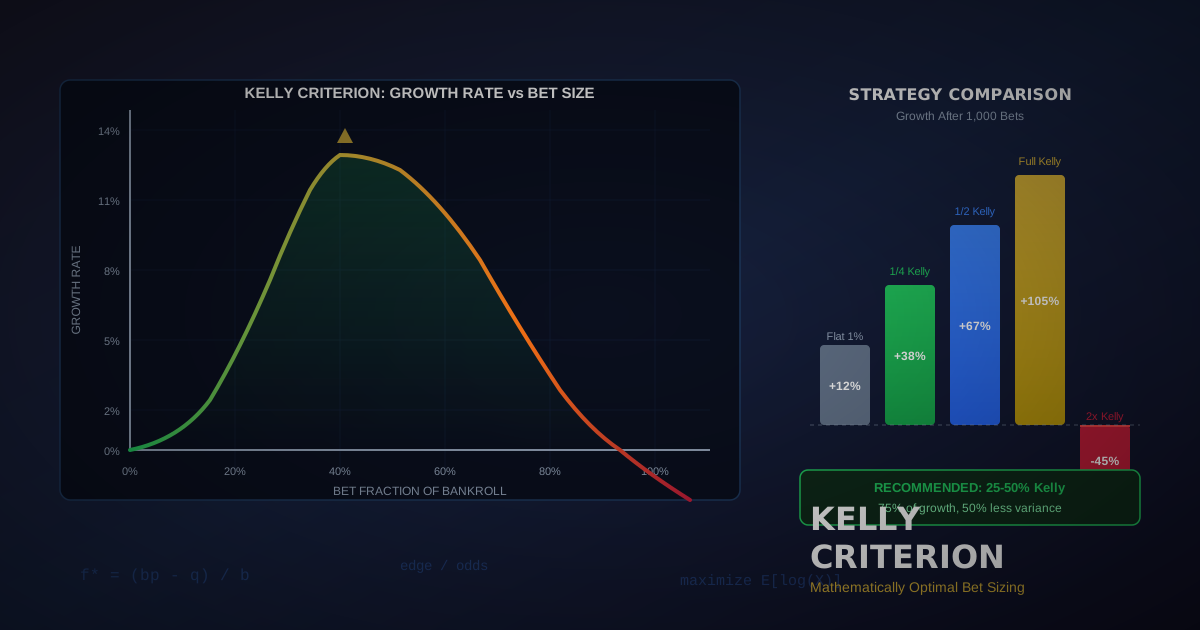
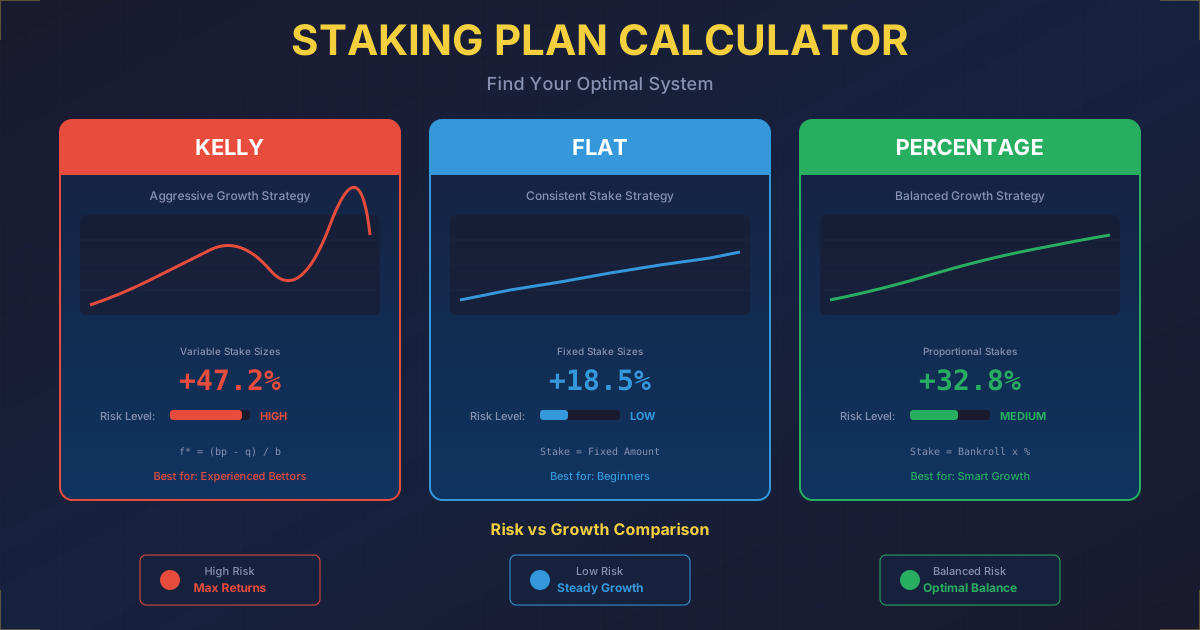
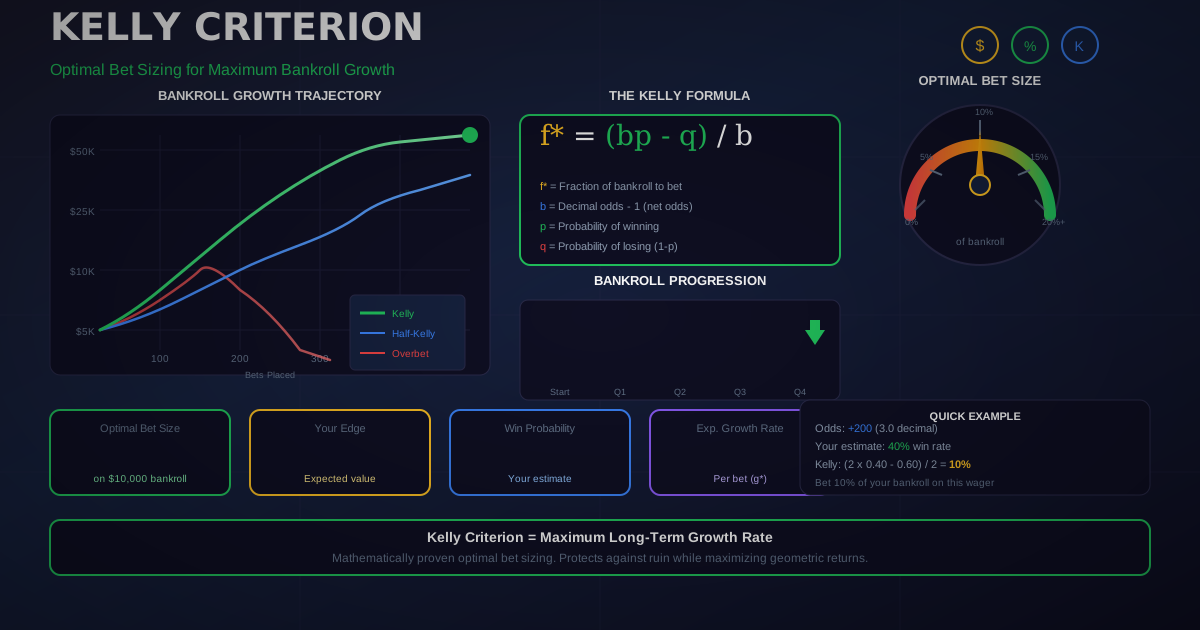
Size your bets optimally for your edge with our Kelly Criterion Calculator.
Variance and Bankroll Impact: The Hidden Cost of Parlays
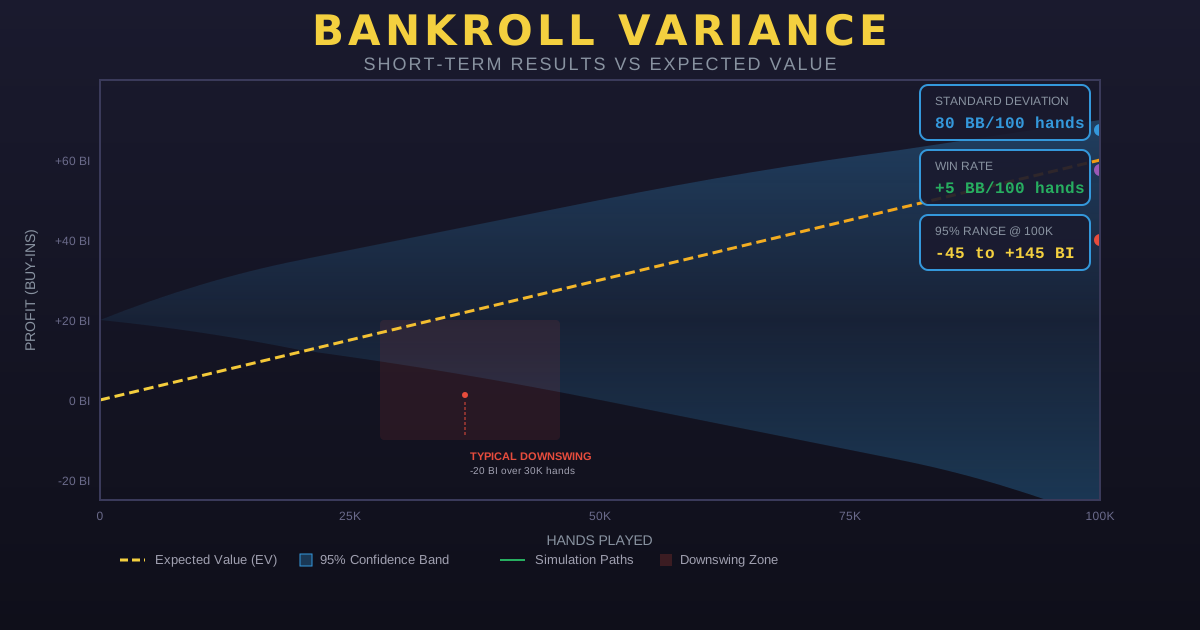
Expected value tells you what happens on average over infinity. Variance tells you what your actual experience will feel like. This is where parlays truly reveal their cost.
Understanding Variance in Betting
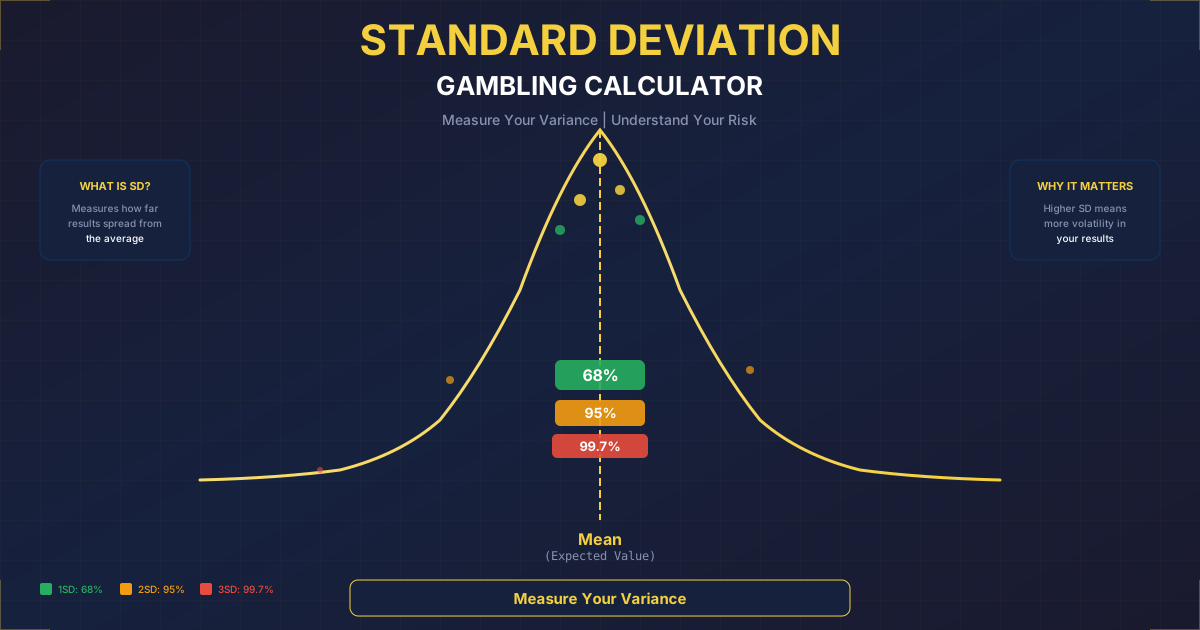
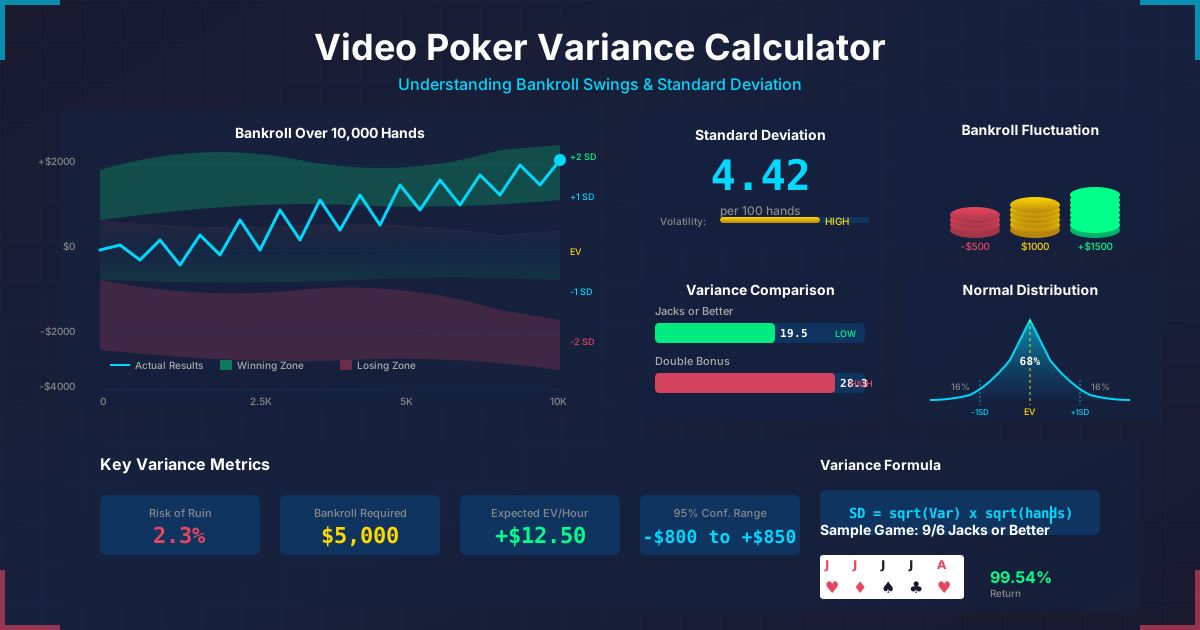
Variance measures how widely your actual results deviate from the expected value. Higher variance means wilder swings, longer losing streaks, and more gut-wrenching drawdowns, even when you have an edge.
Standard deviation per $100 bet:
- Single bet at -110: ~$99.77
- 2-leg parlay at -110: ~$165.42
- 4-leg parlay at -110: ~$335.18
- 6-leg parlay at -110: ~$648.71
The standard deviation of a 4-leg parlay is more than 3x that of a single bet. This means your results will swing 3x more violently, your losing streaks will feel 3x longer, and your drawdowns will be 3x deeper.
Drawdown Probability Comparison
After 200 bet decisions (roughly one quarter of a year for an active bettor), what are the chances of experiencing a painful drawdown? Assume a 53% hit rate and $200 per decision.
| Drawdown Level | Singles Bettor | 2-Leg Parlay Bettor | 4-Leg Parlay Bettor |
|---|---|---|---|
| -10% of bankroll | 18% | 34% | 62% |
| -20% of bankroll | 3% | 14% | 41% |
| -30% of bankroll | 0.3% | 5% | 26% |
| -50% of bankroll | <0.01% | 0.5% | 11% |
A 4-leg parlay bettor with a legitimate 53% edge still has an 11% chance of losing half their bankroll in just one quarter. The same bettor using singles has virtually zero chance of that outcome. This is not a theoretical concern. It is the reason professional bettors overwhelmingly avoid parlays even when they have a significant edge.
The Psychological Toll
Variance does not just affect your bankroll. It affects your decision-making. Behavioral research shows that extended losing streaks cause bettors to:
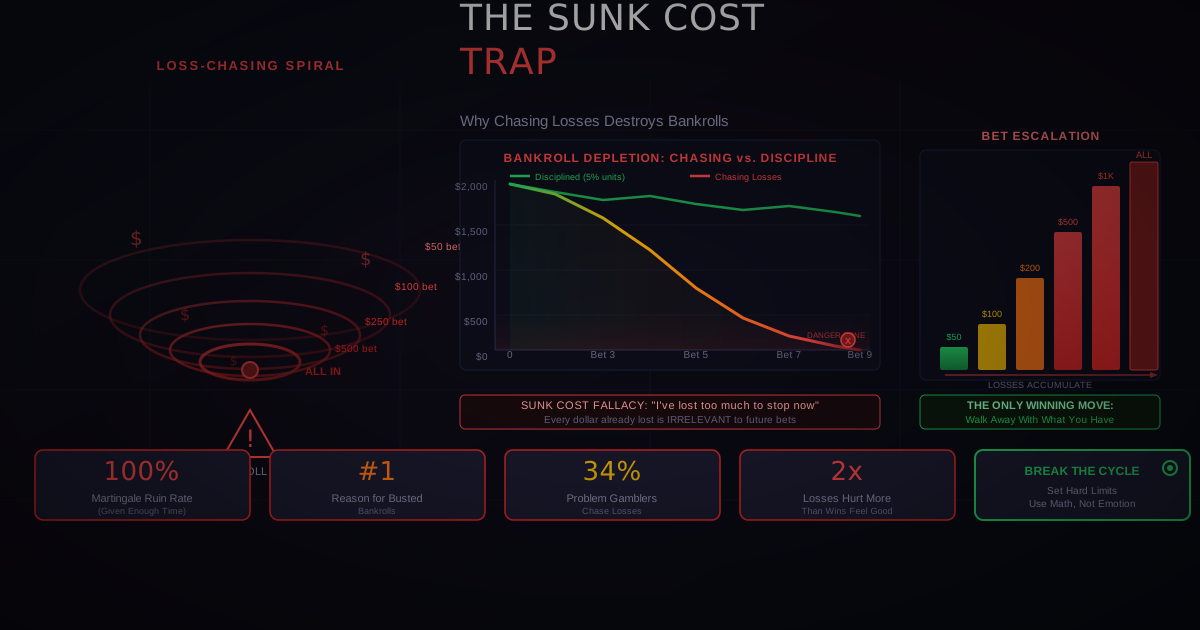
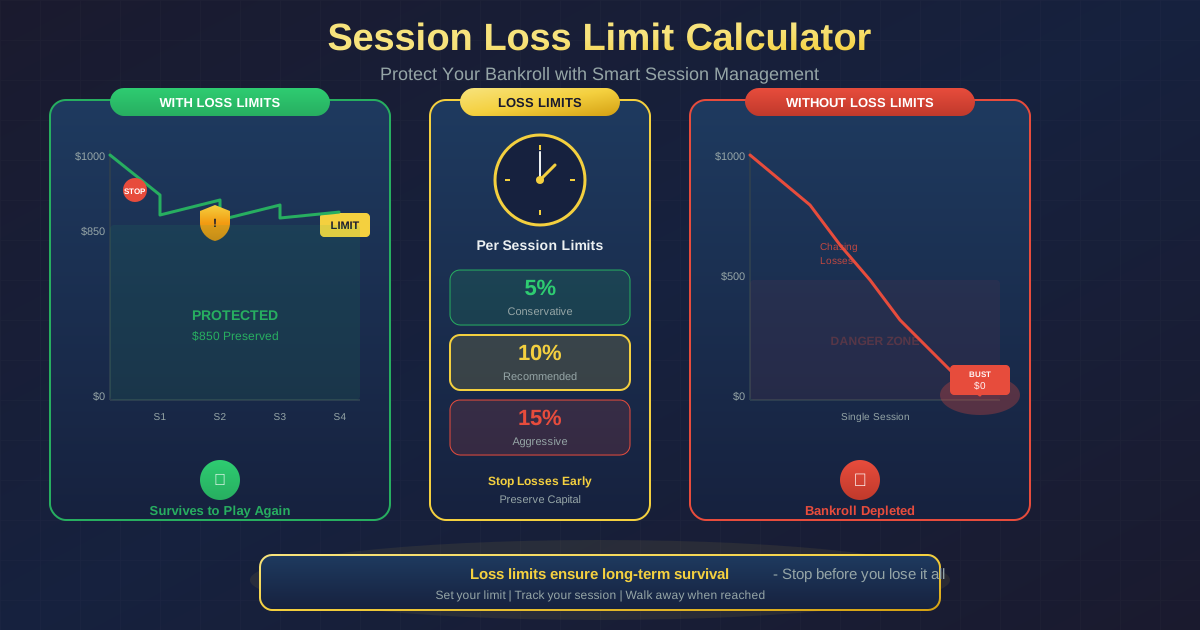
- Chase losses by increasing bet sizes
- Abandon winning strategies prematurely
- Switch to higher-variance bet types (ironically, more parlays)
- Tilt-bet on games they have not properly analyzed
Singles keep variance manageable, which keeps your decision-making clean. This second-order effect is arguably as important as the direct mathematical cost.
When Singles Always Win: The Default Position
For the vast majority of bettors in the vast majority of situations, single bets are the superior strategy. Here is when singles are the unambiguously correct choice.
You Have a Small Edge (50-54% Win Rate)
If your win rate is between 50% and 54%, the parlay vig will almost certainly overwhelm your edge. At a 53% hit rate, you are profitable on singles (+0.55% ROI) but unprofitable on 2-leg parlays (-1.63% ROI). The math is unforgiving: you need to be significantly better than break-even for parlays to even reach the starting line.
You Value Bankroll Stability
If you are managing a defined bankroll and cannot afford large drawdowns, singles are the only responsible choice. The drawdown probabilities shown above make this clear. A 4-leg parlay strategy has 20x the risk of a catastrophic drawdown compared to singles.
You Are Betting Without Verified +EV
If you are not rigorously tracking your bets, calculating true probabilities, and confirming positive expected value on each pick, parlays are a guaranteed way to lose money faster. The compounded vig means your margin for error shrinks with every leg.
You Are a Recreational Bettor With a Fixed Budget
If you allocate $100 per week for sports betting, singles give you 10 to 20 separate betting experiences (at $5-$10 per bet) with steady engagement. A single 4-leg parlay gives you one brief moment of hope followed by a 93.75% chance of losing everything. The entertainment value per dollar is dramatically lower with parlays.
You Want to Build a Track Record
Professional bettors build their records on singles because the sample size is larger, the variance is lower, and the results are more statistically meaningful. If you are trying to prove (to yourself or others) that you can beat the market, singles provide that proof 10x faster than parlays.
Convert odds to implied probabilities to assess your true edge with our Implied Probability Calculator.
When Parlays Can Be Justified: The Exceptions
Despite everything above, there are specific situations where parlays are mathematically defensible. These exceptions are real, but they are narrow and require discipline.
Exception 1: Correlated Outcomes
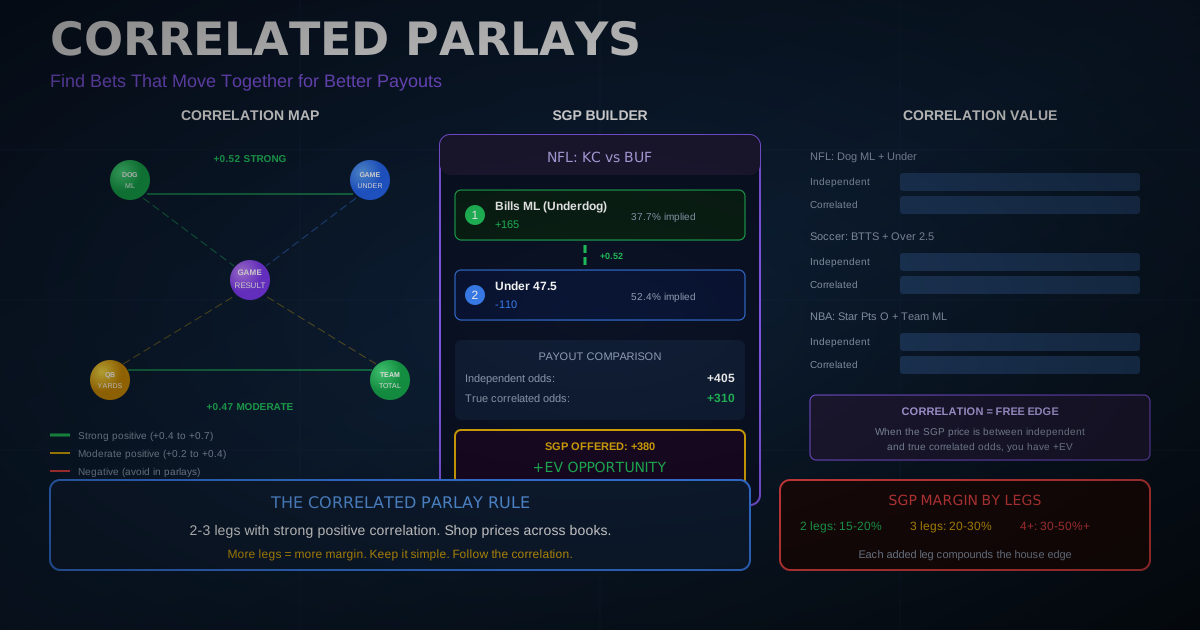
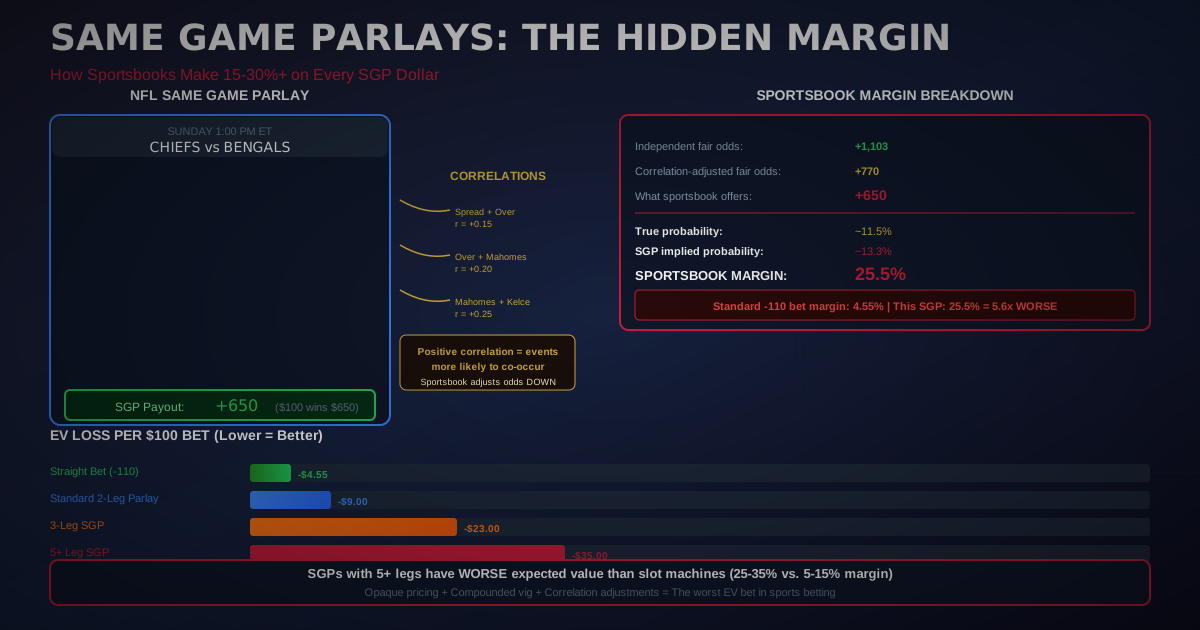
When two outcomes are positively correlated (one happening increases the likelihood of the other), the standard parlay calculation underprices the true joint probability. The sportsbook calculates the parlay as if the events are independent, but they are not.
Example: Chiefs moneyline (-160) AND game Over 49.5 (-110).
- Book-implied joint probability (independent): 61.5% x 52.4% = 32.2%
- True correlated joint probability (estimated): 37-39%
- If the book pays based on 32.2% but the true probability is 38%, the parlay has a +18% edge
This edge exists only because of the parlay structure. You cannot access it with singles. However, sportsbooks have become increasingly sophisticated at pricing correlation into same-game parlays, so these edges are harder to find than they were even two years ago.
Exception 2: All Legs Are Individually +EV
If every leg of your parlay has positive expected value, the compounding works in your favor instead of against you. This is the mirror image of the compounding vig problem.
Three legs, each at +3% EV (55% true probability at -110):
- Single bet total EV: 3 x ($100 x 0.03) = +$9.00 on $300 wagered
- Parlay EV: (0.55^3 x $696.10) - (0.8339 x $100) = $115.79 - $83.39 = +$32.40 on $100 wagered
The parlay produces $32.40 in EV on $100 risked, while three singles produce $9.00 on $300 risked. The parlay is more EV-efficient per dollar. But it loses 83.4% of the time, so you need deep bankroll reserves and many repetitions to realize this advantage.
Exception 3: Promotional Boosts That Overcome the Vig
Sportsbook promotions can shift specific parlays from -EV to +EV. A 50% profit boost on a 3-leg parlay, for example, often overcomes the compounded vig entirely.
3-leg parlay at -110 with 50% profit boost:
- Standard payout: 6.961:1
- Boosted payout: (5.961 x 1.50) + 1 = 9.942:1
- True win probability: 12.5%
- EV: (0.125 x $894.15) - (0.875 x $100) = $111.77 - $87.50 = +$24.27
These promotional parlays are genuinely +EV and represent one of the few situations where recreational bettors should actively parlay. But they are limited by sportsbook terms and maximum bet sizes.
Exception 4: Bankroll-Constrained Leverage
A bettor with a very small bankroll ($200-$500) who has identified multiple +EV opportunities may not have enough capital to bet each one as a properly sized single. In this case, a small parlay acts as leverage, allowing you to access the compounded edge with less capital at risk.
This is a legitimate but narrow use case. It only applies when every leg is +EV and the bankroll genuinely cannot support proper single-bet sizing.
Evaluate parlay payouts and break-even probabilities with our Parlay Calculator.
The Hybrid Approach: A Framework for Rational Bettors
The smartest bettors do not rigidly commit to singles-only or parlays-only. They use a framework that deploys the right structure for each situation.
The 80/15/5 Allocation
A data-driven hybrid approach allocates your betting volume roughly as follows:
| Bet Type | Allocation | When to Use |
|---|---|---|
| Single bets | 80% of bets | All standard plays, any game where you have an identified edge |
| 2-leg parlays | 15% of bets | Only when both legs are +EV, or when a correlated opportunity exists |
| 3+ leg parlays | 5% of bets | Only for promotional boosts, high-confidence correlated plays, or round robins |
Sizing Adjustments
Because parlay variance is higher, you should reduce your stake proportionally:
| Bet Type | Recommended Stake (% of Bankroll) | Rationale |
|---|---|---|
| Single bet | 1-3% | Standard Kelly-influenced sizing |
| 2-leg parlay | 0.5-1.5% | ~2x variance requires ~half the stake |
| 3-leg parlay | 0.3-0.75% | ~3x variance requires ~one-third the stake |
| 4-leg parlay | 0.15-0.5% | ~4x variance requires ~one-quarter the stake |
| 5+ leg parlay | 0.1-0.25% | Only with promotional overlay |
When you adjust for proper sizing, the total dollars risked on parlays drops significantly, which is exactly the point. Parlays should be a small, strategic component, not the core of your approach.
Optimize bet sizing with our Kelly Criterion Calculator.
Same Bankroll, Different Strategies: A 1-Year Comparison
Let us follow three hypothetical bettors through a full year, each starting with $10,000 and a verified 54% hit rate on -110 sides. They make 500 pick decisions per year (roughly 10 per week during football and basketball seasons).
Bettor A: Singles Only
- 500 single bets at $200 each (2% of bankroll)
- Total wagered: $100,000
- Expected wins: 270 (54%)
- Expected losses: 230
- Gross winnings: 270 x $181.82 = $49,091
- Gross losses: 230 x $200 = $46,000
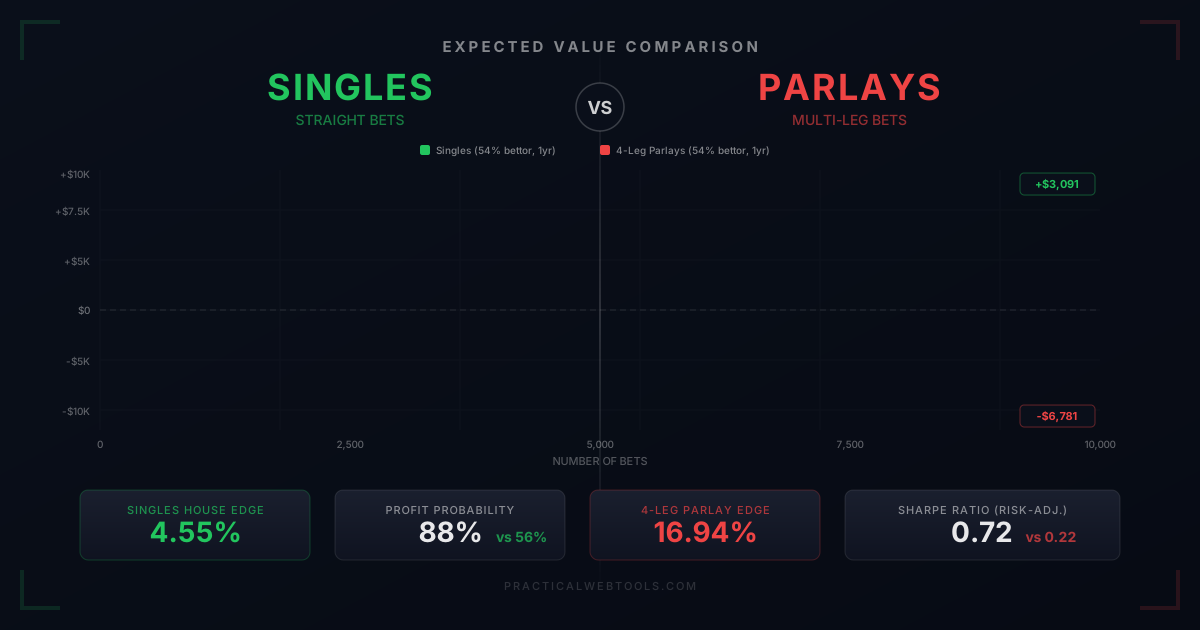
- Net profit: +$3,091
- ROI: +3.09%
- Ending bankroll (expected): ~$13,091
- Probability of a profitable year: ~88%
- Worst-case scenario (5th percentile): ~$8,200
Bettor B: 2-Leg Parlays Only
- 250 two-leg parlays from 500 picks at $200 each
- Total wagered: $50,000
- Expected winning parlays: 250 x (0.54^2) = 72.9
- Payout per win: $200 x 2.645 = $529
- Gross winnings: 72.9 x $529 = $38,564
- Gross losses: 177.1 x $200 = $35,420
- Net profit: +$3,144
- ROI: +6.29%
- Ending bankroll (expected): ~$13,144
- Probability of a profitable year: ~71%
- Worst-case scenario (5th percentile): ~$5,600
Bettor C: 4-Leg Parlays Only
- 125 four-leg parlays from 500 picks at $200 each
- Total wagered: $25,000
- Expected winning parlays: 125 x (0.54^4) = 10.6
- Payout per win: $200 x 13.29 = $2,658
- Gross winnings: 10.6 x $2,658 = $28,175
- Gross losses: 114.4 x $200 = $22,880
- Net profit: +$5,295
- ROI: +21.18%
- Ending bankroll (expected): ~$15,295
- Probability of a profitable year: ~56%
- Worst-case scenario (5th percentile): ~$2,800
The Crucial Interpretation
At first glance, Bettor C's $5,295 profit looks best. But look at the full picture:
| Metric | Bettor A (Singles) | Bettor B (2-Leg) | Bettor C (4-Leg) |
|---|---|---|---|
| Expected profit | $3,091 | $3,144 | $5,295 |
| Probability of profit | 88% | 71% | 56% |
| 5th percentile outcome | $8,200 | $5,600 | $2,800 |
| Chance of 50%+ drawdown | <0.1% | 3.2% | 18.5% |
| Sharpe ratio (risk-adjusted) | 0.72 | 0.41 | 0.22 |
The Sharpe ratio, which measures return per unit of risk, tells the real story. Singles provide 3.3x better risk-adjusted returns than 4-leg parlays. Bettor C's higher expected profit comes at the cost of a 56% chance of not being profitable at all and an 18.5% chance of losing more than half their bankroll.
In any professional context, whether it is hedge funds, poker, or sports betting, risk-adjusted return is the metric that matters. And on that metric, singles dominate.
Real 1-Year Comparison Scenarios
Let us look at what actually happens in realistic year-long scenarios, not just averages.
Scenario 1: The Good Year (57% Hit Rate)
Your picks go well. You hit 57% on the season.
| Strategy | Result |
|---|---|
| 500 singles at $200 | +$10,636 profit (106.4% bankroll growth) |
| 250 two-leg parlays at $200 | +$12,130 profit (121.3% growth) |
| 125 four-leg parlays at $200 | +$18,440 profit (184.4% growth) |
In a good year, parlays amplify your gains. The 4-leg parlay bettor nearly triples their bankroll. This is the seductive scenario that keeps bettors coming back to parlays.
Scenario 2: The Average Year (53% Hit Rate)
A typical year for a competent bettor.
| Strategy | Result |
|---|---|
| 500 singles at $200 | +$545 profit (5.5% growth) |
| 250 two-leg parlays at $200 | -$2,145 loss (21.5% decline) |
| 125 four-leg parlays at $200 | -$6,781 loss (67.8% decline) |
At 53%, the singles bettor ekes out a small profit. The 2-leg parlay bettor loses money. The 4-leg parlay bettor loses two-thirds of their bankroll. This is the reality most parlay bettors will face: a slightly above-average year that would be profitable with singles but is devastating with parlays.
Scenario 3: The Bad Year (49% Hit Rate)
Even good bettors have down years.
| Strategy | Result |
|---|---|
| 500 singles at $200 | -$8,182 loss (81.8% decline) |
| 250 two-leg parlays at $200 | -$12,620 loss (bankroll exhausted) |
| 125 four-leg parlays at $200 | -$17,950 loss (bankroll exhausted multiple times over) |
In a bad year, singles hurt. Parlays are catastrophic. The 4-leg parlay bettor's theoretical loss exceeds their entire starting bankroll, meaning they would have gone bust long before the year ended.
The Key Takeaway Across Scenarios
Singles outperform parlays in average and bad years. Parlays only outperform in good years, and those good years need to be significantly above average. The asymmetry is unfavorable: the extra gains in good years do not compensate for the extra losses in average and bad years when you account for the frequency of each scenario.
Compare hedge opportunities on live parlays with our Hedge Calculator.
The Verdict: Singles Win, With Nuance
The data overwhelmingly favors single bets for the vast majority of sports bettors. Here is the verdict, broken down by bettor profile.
For Recreational Bettors (50-52% Win Rate)
Bet singles. Full stop. At break-even or slightly losing win rates, parlays multiply your losses with no offsetting benefit. Every parlay you place costs you 2-8x more per dollar than a single bet. If your goal is entertainment, singles give you more action, more engagement, and smaller losses.
For Developing Bettors (52-54% Win Rate)
Bet singles with rare 2-leg exceptions. Your edge is too slim to survive parlay compounding on anything larger than a 2-leg. Focus on improving your hit rate. Once you have a verified track record of 54%+ over 1,000+ bets, you can begin exploring selective 2-leg parlays on +EV opportunities.
For Sharp Bettors (55%+ Win Rate)
Bet singles as your core strategy, with strategic parlays for specific situations. Your edge can survive 2-leg parlay compounding and even generate higher EV-per-dollar on small parlays. Use the 80/15/5 framework: 80% singles, 15% two-leg parlays (when both legs are +EV or correlated), 5% promotional or correlated 3-leg parlays.
For Everyone
Never bet 5+ leg parlays as a regular strategy. The house edge exceeds 20% and the variance makes bankroll management nearly impossible. The only exception is promotional boosts large enough to overcome the vig, and even those should be sized at 0.1-0.25% of bankroll.
| Win Rate | Best Strategy | Parlay Role |
|---|---|---|
| Below 52% | Singles only | None (parlays accelerate losses) |
| 52-54% | 95% singles | Rare 2-leg on correlated plays |
| 54-56% | 80% singles | 2-leg +EV parlays, promotional plays |
| 56%+ | 70-80% singles | Strategic 2-3 leg parlays with edge |
Frequently Asked Questions
Are parlays always a bad bet? No. Parlays are a bad bet in most situations because the house edge compounds with each leg, rising from 4.55% on singles to 8.88% on 2-leg parlays, 16.9% on 4-leg parlays, and beyond 20% on 5+ legs. However, correlated parlays, all-+EV-leg parlays, and promotional boosts can create genuine positive expected value. The key distinction is that parlays are bad by default and require specific conditions to become good, while singles are good by default for any bettor with an edge.
Why do sportsbooks promote parlays so heavily? Revenue data tells the story clearly. State gambling commission reports consistently show sportsbooks hold 18-25% on parlays versus 4-5% on straight bets. In Illinois in 2023, the hold on parlays was 18.2% compared to 4.9% on straight bets. In New Jersey in September 2024, the parlay hold reached 24.2%. Sportsbooks earn 4-5x more profit per dollar wagered on parlays than singles, which is why they invest heavily in parlay promotions, same-game parlay features, and parlay boost offers.
Can a winning bettor make more money with parlays than singles? In terms of expected value per dollar risked, yes, a sharp bettor can achieve higher ROI percentages on 2-3 leg parlays when all legs have positive expected value. However, the total dollar profit is typically lower because proper bankroll management requires smaller parlay stakes due to higher variance. More importantly, the probability of actually realizing that profit drops significantly. A 55% bettor has a 95% chance of a profitable year with singles but only 78% with 2-leg parlays and 56% with 4-leg parlays.
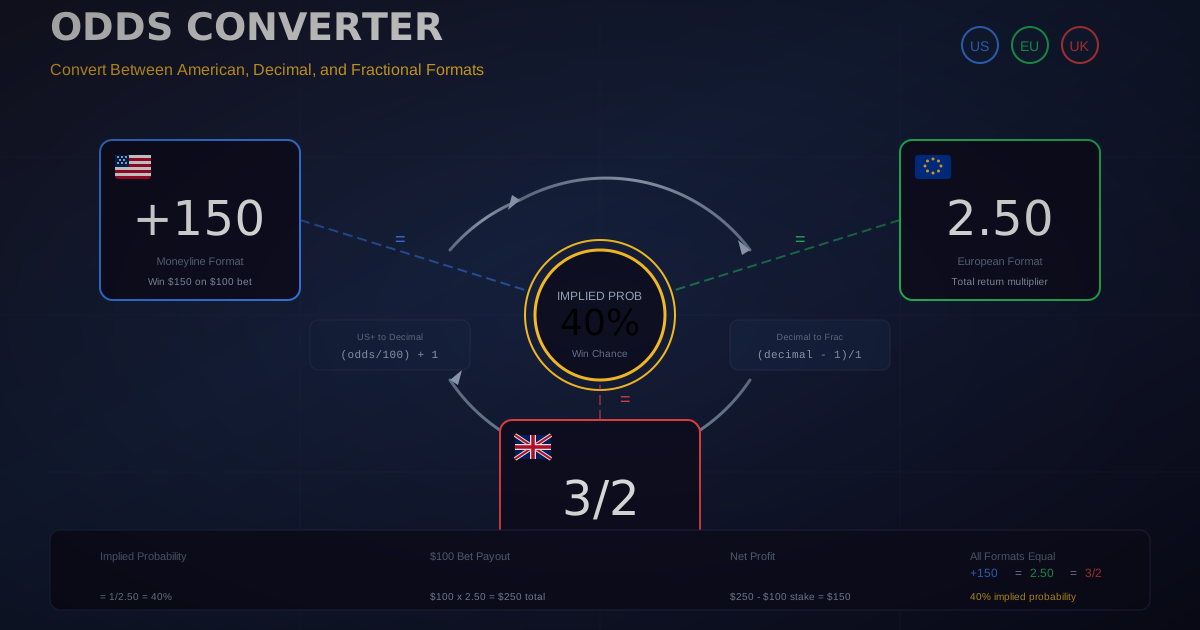
What is the break-even win rate for parlays versus singles? For singles at -110, you need a 52.38% win rate to break even. For 2-leg parlays at -110, each leg needs a 52.38% win rate, giving a break-even parlay hit rate of 27.44% (0.5238^2). For 4-leg parlays, the break-even hit rate is 7.53% (0.5238^4). While these look proportional, the practical difficulty of maintaining these rates is vastly different. Going 52.38% on individual games is achievable for skilled bettors. Consistently hitting 4-leg parlays at 7.53% requires maintaining that same edge across four simultaneous selections, with zero room for a single weak leg. Use our Odds Converter to check implied probabilities on any line.
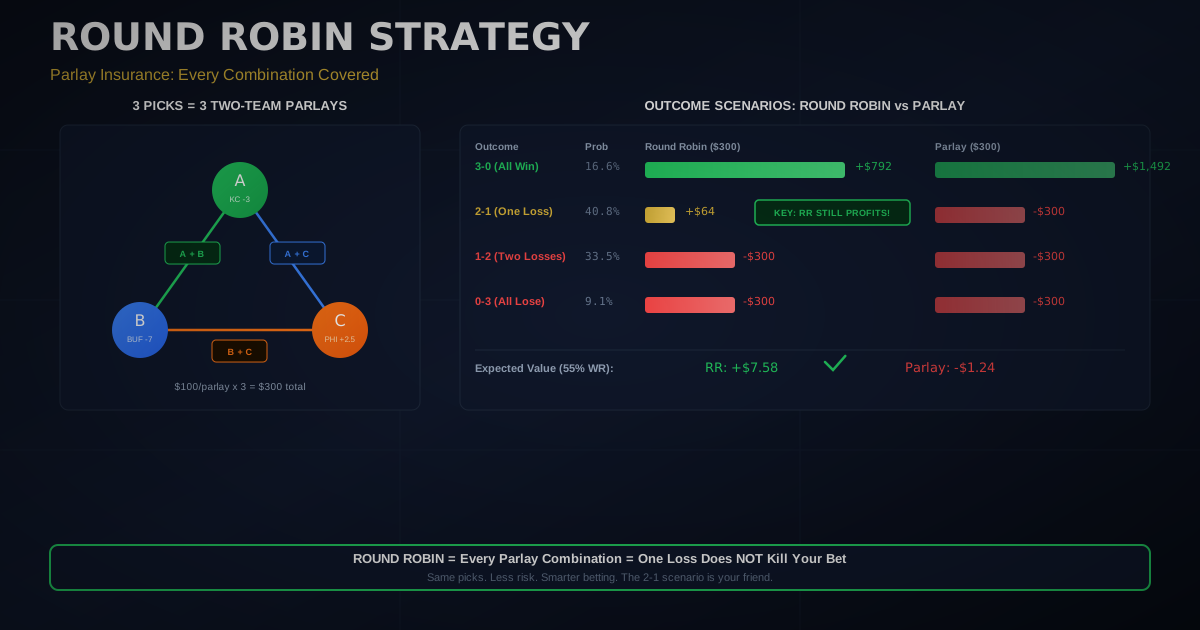
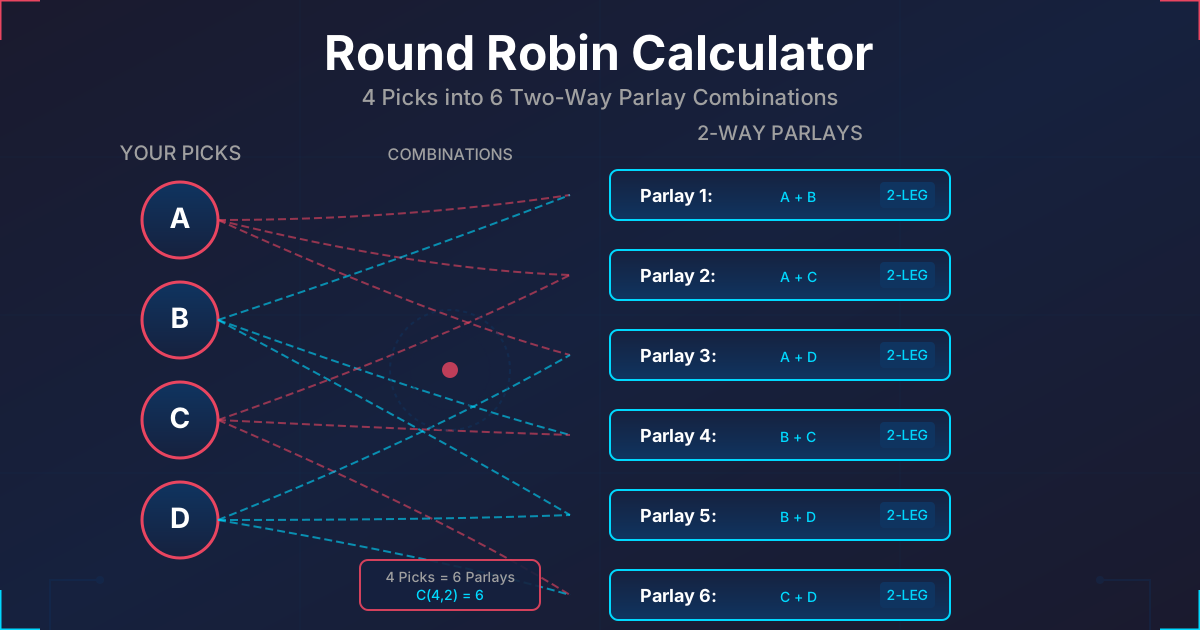
Is there a middle ground between singles and parlays? Yes. Round robins break a set of selections into multiple smaller parlays, reducing the all-or-nothing risk of a straight parlay. For example, four picks can be structured as six 2-leg parlays, meaning a 3-of-4 result still profits instead of paying zero on a straight 4-leg parlay. The 80/15/5 allocation model described in this article (80% singles, 15% 2-leg parlays, 5% promotional or correlated 3-leg parlays) is another effective middle ground. Explore round robin structures with our Round Robin Calculator.
How do same-game parlays fit into this analysis? Same-game parlays (SGPs) are a special case because they inherently involve correlated outcomes. A quarterback throwing for 300+ yards and his team winning are not independent events. When the sportsbook underprices that correlation, the SGP can be +EV. However, sportsbooks add extra vig to SGPs specifically to account for correlation, and they have become increasingly sophisticated at pricing it correctly. Treat SGPs the same way you treat any parlay: calculate the true joint probability, compare it to the implied probability from the payout, and only bet when the EV is positive.
What about round robins as a parlay alternative? Round robins offer a meaningful improvement over straight parlays by spreading risk across combinations. With four picks at -110, a straight 4-leg parlay has a 93.75% chance of losing. A round robin of 2-leg parlays from those same four picks gives you six separate bets, and going 3-of-4 still generates profit. The trade-off is lower maximum payout. Round robins are best for bettors who want some parlay exposure without the catastrophic downside of needing every leg to hit.
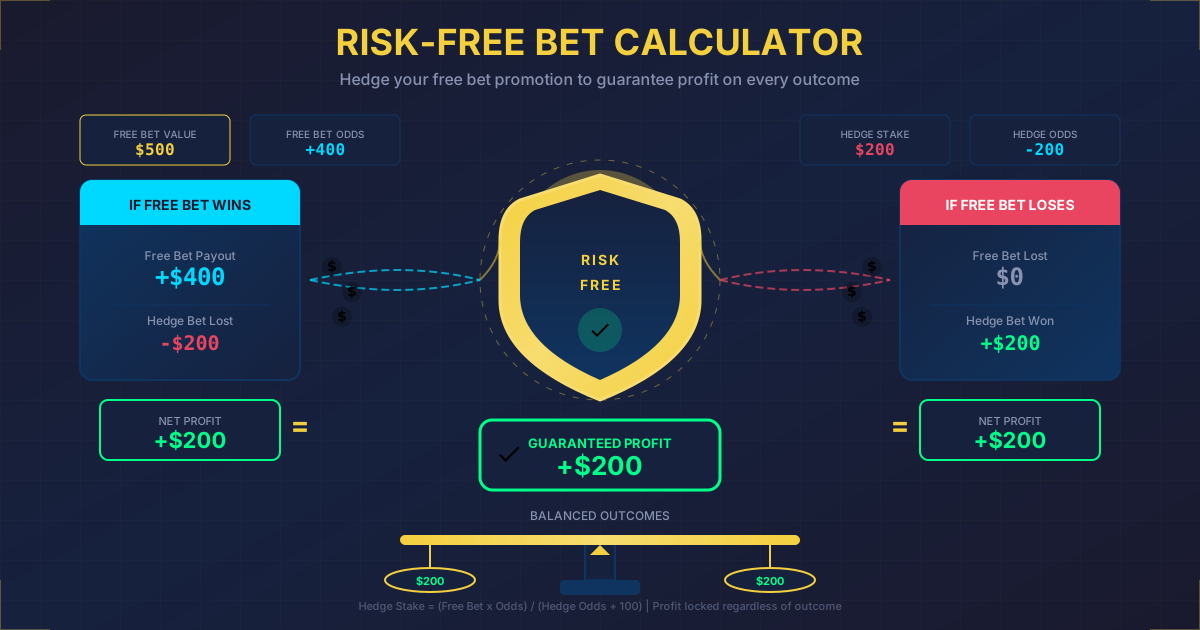
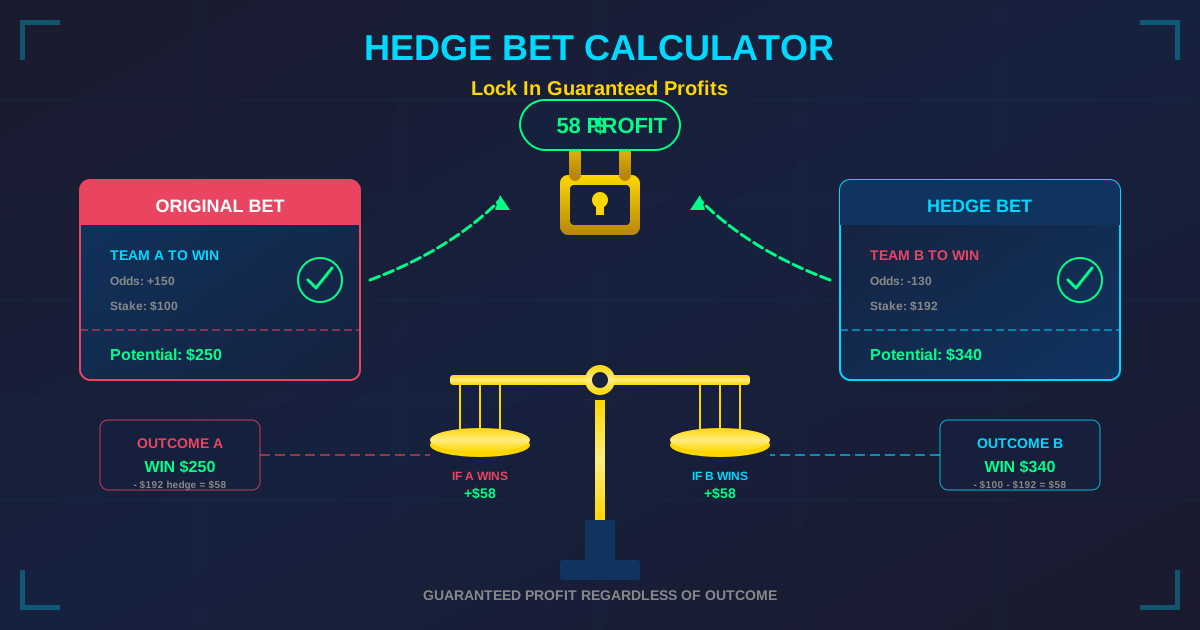
Should I ever hedge a parlay that has one leg remaining? It depends on the size of the guaranteed profit versus the expected value of the final leg. If the remaining leg is +EV, letting it ride maximizes your long-term expectation. If the guaranteed profit from hedging would represent a significant return and you have a concrete use for that money, hedging is rational. There is no universal answer because it depends on your utility function, bankroll size, and the specific odds involved. Our Hedge Calculator can calculate the exact hedge amount for any scenario.
Essential Tools for Comparing Strategies
Make data-driven decisions between singles and parlays with these calculators:
- Parlay Calculator: Calculate exact parlay payouts, implied probability, and breakeven rates for any leg combination to compare against singles
- Expected Value Calculator: Determine whether individual bets or parlays are +EV based on your probability estimates
- Kelly Criterion Calculator: Find the optimal bet size for singles and parlays based on your edge and bankroll
- Odds Converter: Convert between American, decimal, and fractional odds to standardize your analysis
- Implied Probability Calculator: Convert any odds to implied probability for head-to-head comparison
- Hold/Vig Calculator: Measure the sportsbook's total edge on any market or parlay combination
- Round Robin Calculator: Build round robin alternatives to straight parlays and compare payouts
- Hedge Calculator: Calculate precise hedge amounts when locking in profit on a live parlay
Conclusion
The singles-versus-parlays debate has a clear mathematical answer for most bettors: single bets provide better expected value, lower variance, higher probability of long-term profitability, and superior risk-adjusted returns. The house edge on a single -110 bet is 4.55%. On a 4-leg parlay, it is 16.9%. On a 10-leg parlay, it is 37.1%. No amount of conviction in your picks changes this structural disadvantage.
But the debate has nuance. Correlated parlays, all-+EV-leg combinations, and promotional boosts create real exceptions. Sharp bettors who understand the math can selectively incorporate small parlays into a singles-dominant approach and come out ahead. The key word is "selectively." Parlays should be the exception, not the rule, and every parlay you place should have a specific mathematical justification, not just a gut feeling that your four picks are "locks."
Use the calculators linked throughout this article to run your own numbers. Compare the EV of your picks as singles versus parlays. Track your results over hundreds of bets. The data will confirm what the math already shows: singles win the long game.
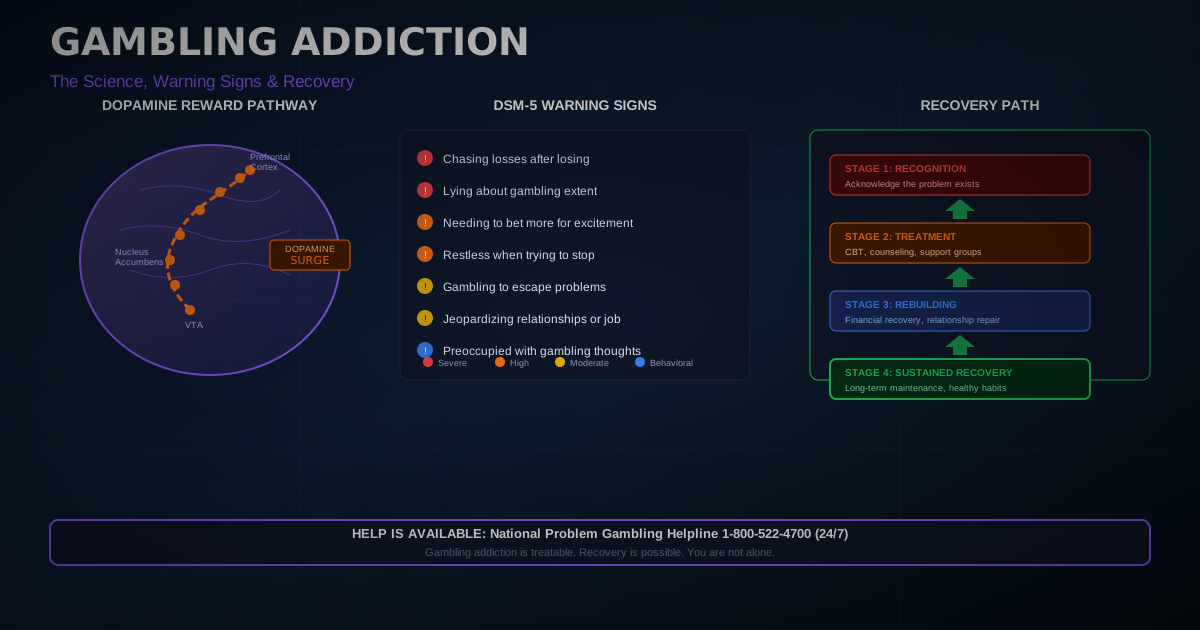
Gambling involves risk. This content is for educational and informational purposes only. Always gamble responsibly, set limits you can afford, and seek help if gambling becomes a problem. Visit the National Council on Problem Gambling or call 1-800-522-4700 for support.