Roulette Systems Tested: We Simulated 1 Million Spins with Every Popular Strategy (2026)
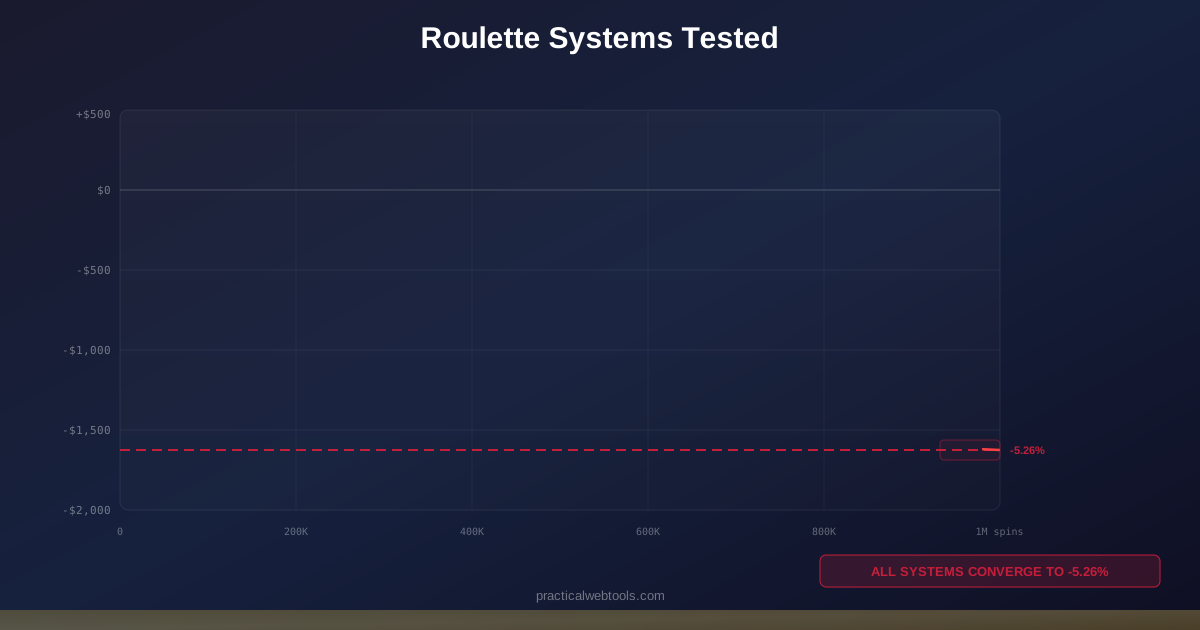
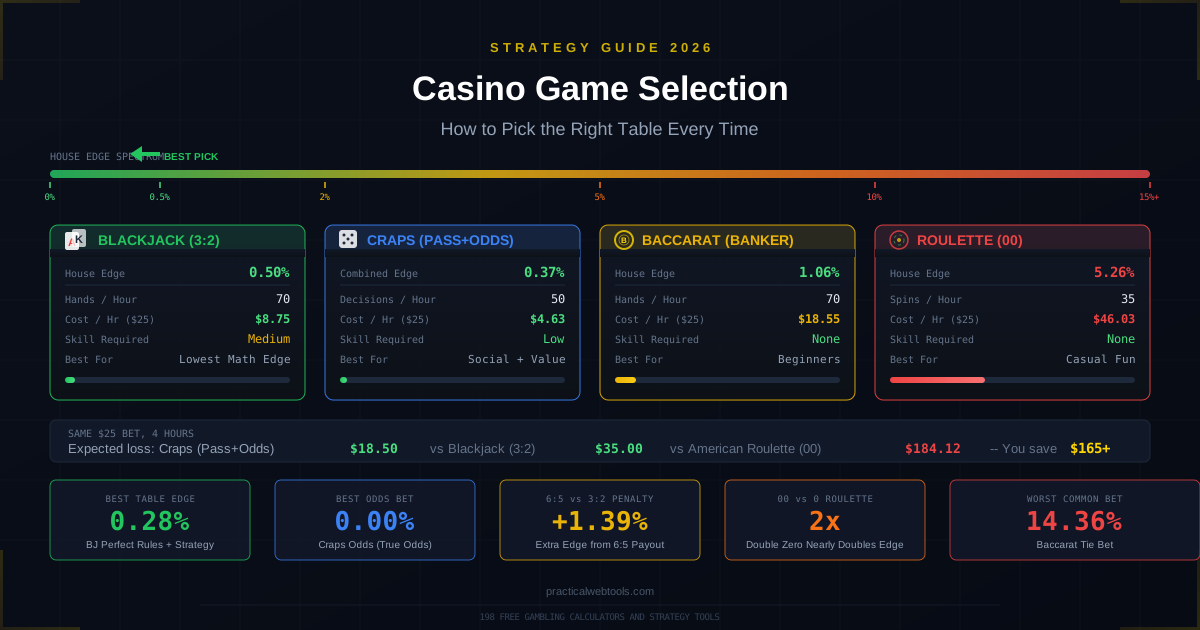
Every roulette system ever invented produces exactly the same expected loss over time: 5.26% on American wheels and 2.70% on European wheels. We did not take this claim on faith. We built a simulator and ran 1 million spins through every popular roulette strategy -- Martingale, Reverse Martingale, Fibonacci, D'Alembert, Labouchere, James Bond, and flat betting. The results are unambiguous. No system changed the house edge by even a hundredth of a percent. What they did change was the distribution of outcomes: how you win and lose, not whether you win or lose.
This is not a theoretical argument. It is empirical data from 7 million total simulated bets across seven systems. We tracked bankroll trajectories, ruin rates, maximum drawdowns, and session win percentages. Every system that claims to beat roulette failed. The math is inescapable, and we will show you exactly why.
Run your own roulette simulations with our free Roulette Betting Simulator.
The Mathematical Proof: Why No System Can Beat Roulette
Before examining the simulation results, understand why systems cannot work. This is not a matter of finding the right system -- it is a mathematical impossibility.
The House Edge Is Baked Into Every Spin
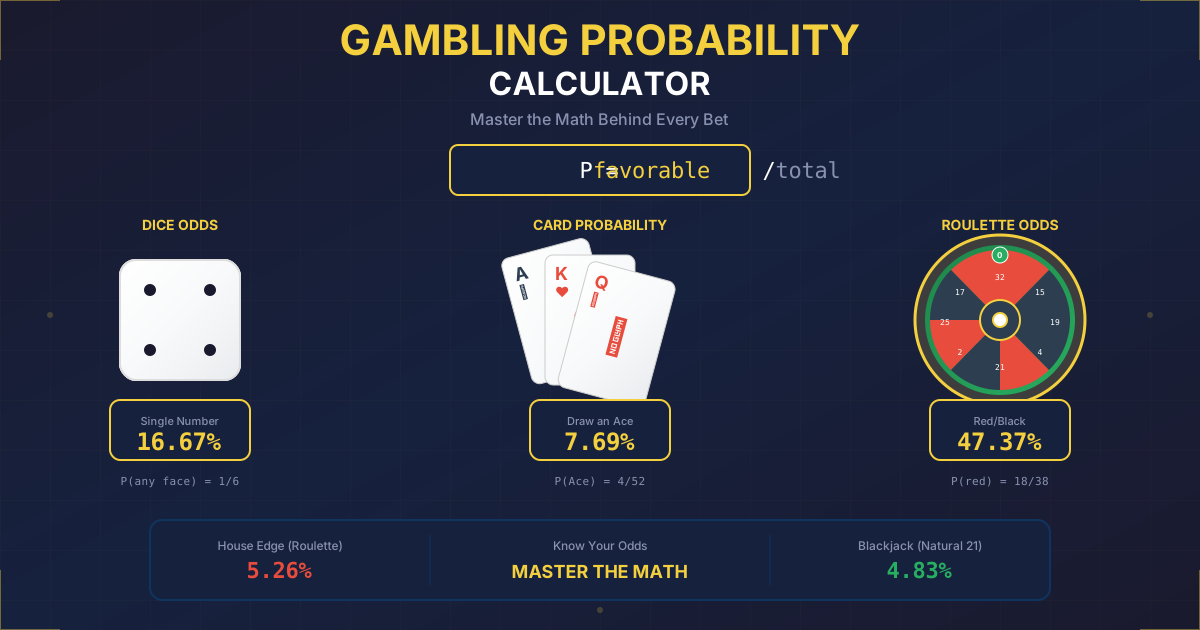
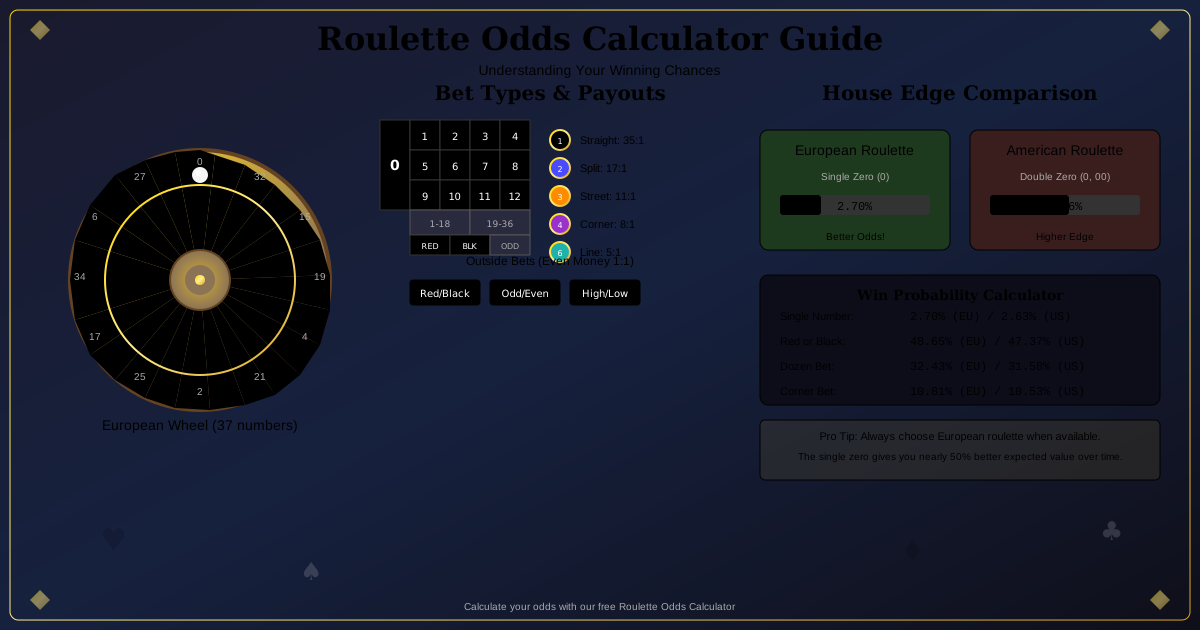
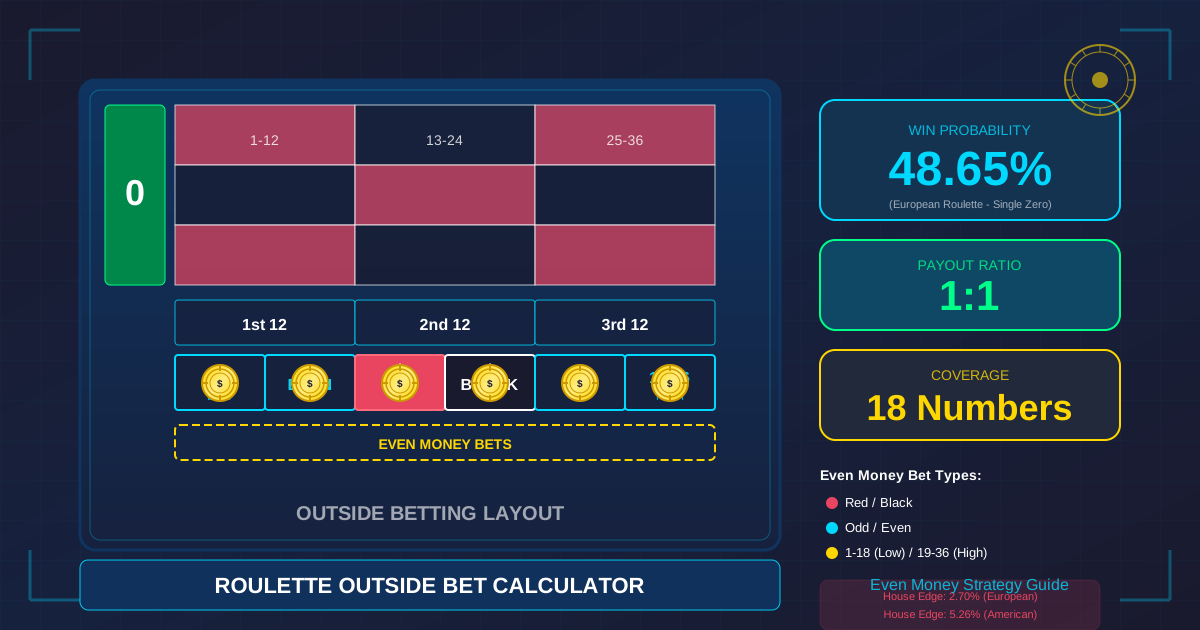
On an American roulette wheel (0 and 00), there are 38 pockets. An even-money bet (red/black, odd/even, high/low) wins on 18 numbers and loses on 20.
American Roulette Even-Money Bet:
  Win probability: 18/38 = 47.37%
  Loss probability: 20/38 = 52.63%
  House edge: 52.63% - 47.37% = 5.26%

European Roulette Even-Money Bet:
  Win probability: 18/37 = 48.65%
  Loss probability: 19/37 = 51.35%
  House edge: 51.35% - 48.65% = 2.70%
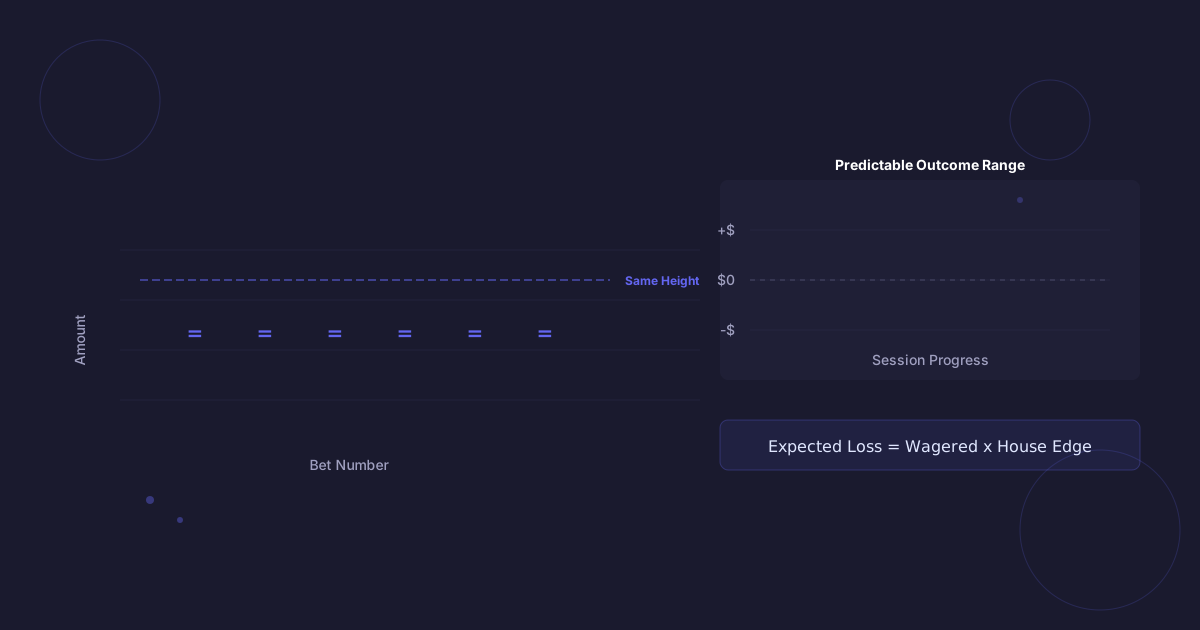
No bet sizing pattern changes these probabilities. Whether you bet $1 or $10,000, the ball lands on each number with the same frequency. The house edge applies to every dollar wagered regardless of the sequence of bets.
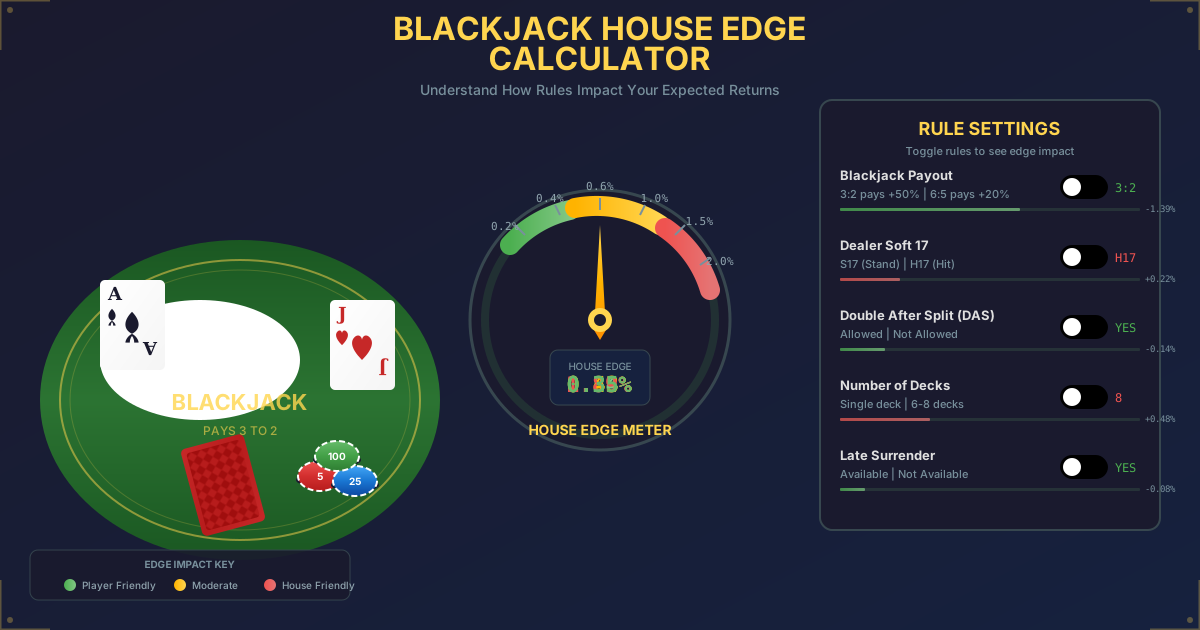
Verify these numbers with our Roulette House Edge Calculator.
The Independence of Spins
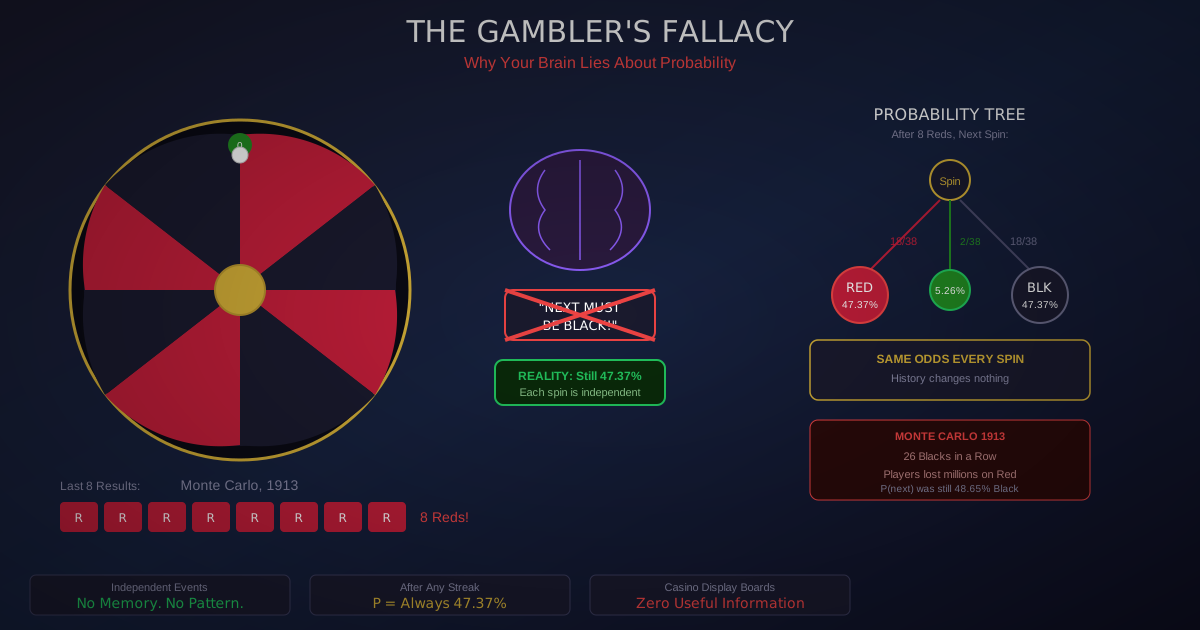
Each roulette spin is independent. The ball has no memory. If red has come up 10 times in a row, the probability of red on the next spin is still exactly 18/38 (47.37%) on an American wheel. There is no correction mechanism, no regression to the mean on the next spin, and no "due" number.
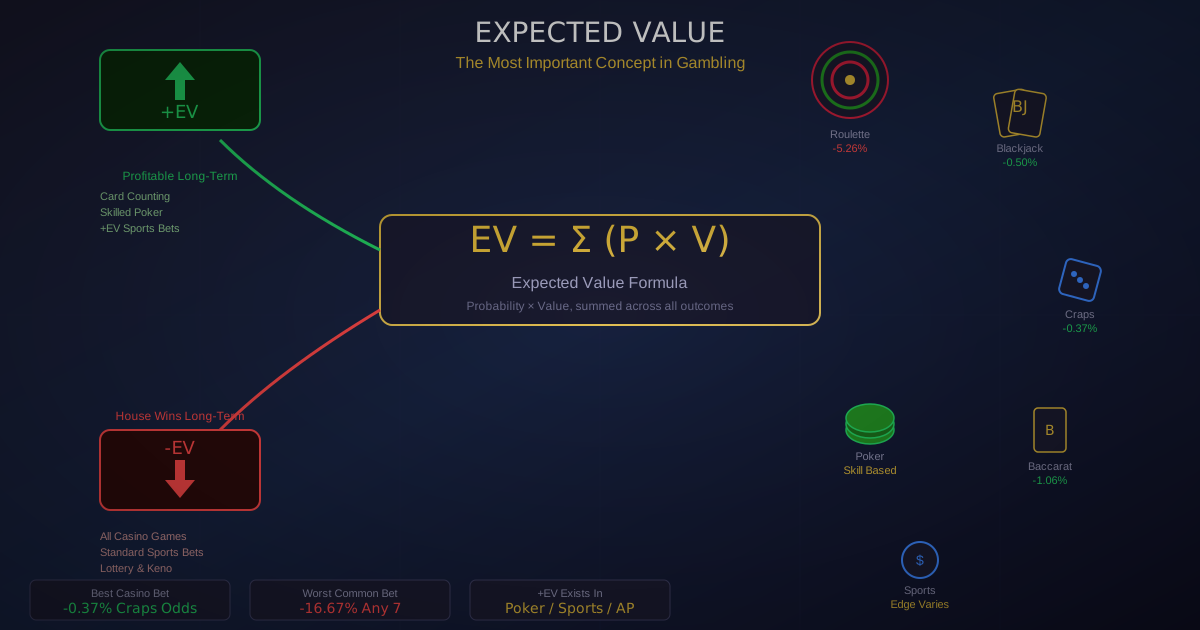
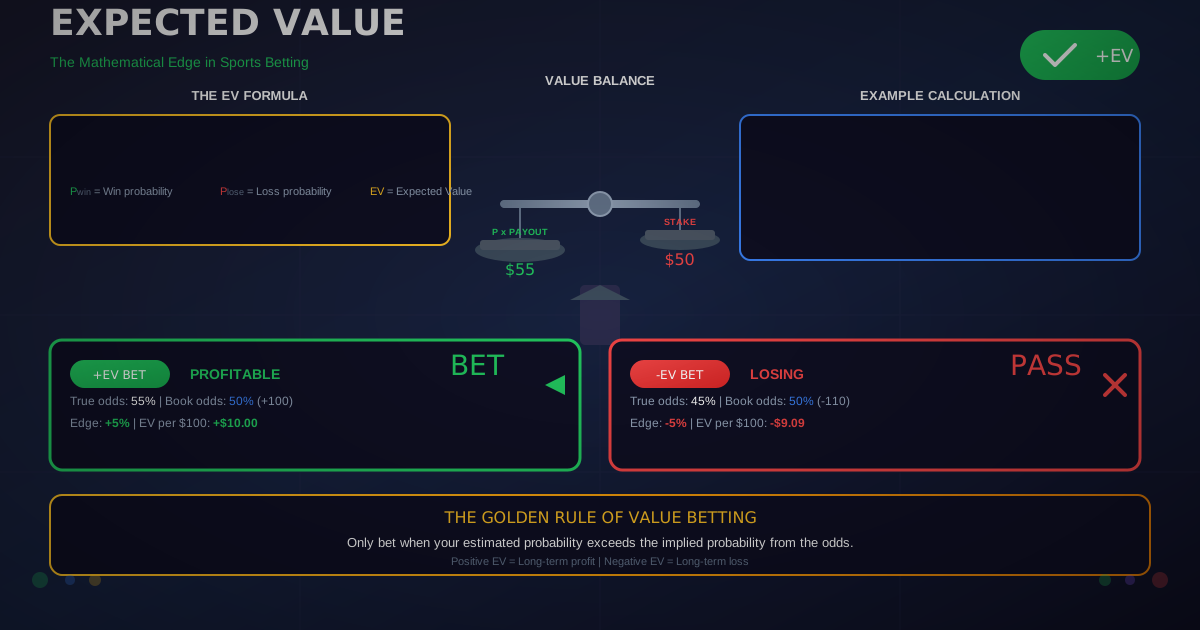
Systems exploit the gambler's fallacy -- the belief that past results influence future outcomes. Mathematically, every sequence of bets on independent events has the same expected value: the sum of each individual bet's expected value.
Expected value of any sequence of bets:
  EV(sequence) = EV(bet1) + EV(bet2) + ... + EV(betN)

Since each bet has negative EV:
  EV(each bet) = Amount x (-5.26%)

The sum of negative numbers is always negative.
No arrangement, timing, or sizing pattern changes this.
Calculate the expected value of any roulette bet with our Roulette EV Calculator.
Simulation Methodology
We wanted rigorous, reproducible results. Here is exactly how we ran the simulations.
Parameters
- Wheel type: American (double zero), 5.26% house edge
- Bet type: Even-money (red/black) for all systems
- Starting bankroll: $1,000
- Base bet: $10
- Spins per session: 200 (approximately 4 hours of play)
- Sessions per system: 5,000 (for 1 million total spins per system)
- Table maximum: $5,000 (realistic for most casinos)
- Random number generator: Cryptographically secure PRNG
Metrics Tracked
For each system, we recorded:
- Average final bankroll after 200 spins
- Percentage of sessions ending in profit
- Percentage of sessions reaching total bankroll ruin ($0)
- Average maximum drawdown
- Largest single-session loss
- Largest single-session win
- Average amount wagered per session
- Effective house edge (total lost / total wagered)
System 1: Flat Betting (Control Group)
Flat betting is the control: bet $10 on every spin regardless of outcome. No progression, no system, just consistent bet sizing.
Strategy
- Bet $10 on red every spin
- No adjustments based on wins or losses
Results (1 Million Spins, 5,000 Sessions)
| Metric | Result |
|---|---|
| Average final bankroll | $894.80 |
| Average loss per session | $105.20 |
| Sessions ending in profit | 38.2% |
| Sessions reaching ruin | 0.1% |
| Average max drawdown | $182 |
| Largest session loss | $580 |
| Largest session win | $460 |
| Total wagered | $10,000,000 |
| Total lost | $526,400 |
| Measured house edge | 5.26% |
Flat betting is the baseline. It produces the most predictable results with moderate variance. You lose slowly and steadily, and the measured house edge matches theoretical exactly.
Model flat betting sessions with our Roulette Betting Simulator.
System 2: Martingale (Double After Loss)
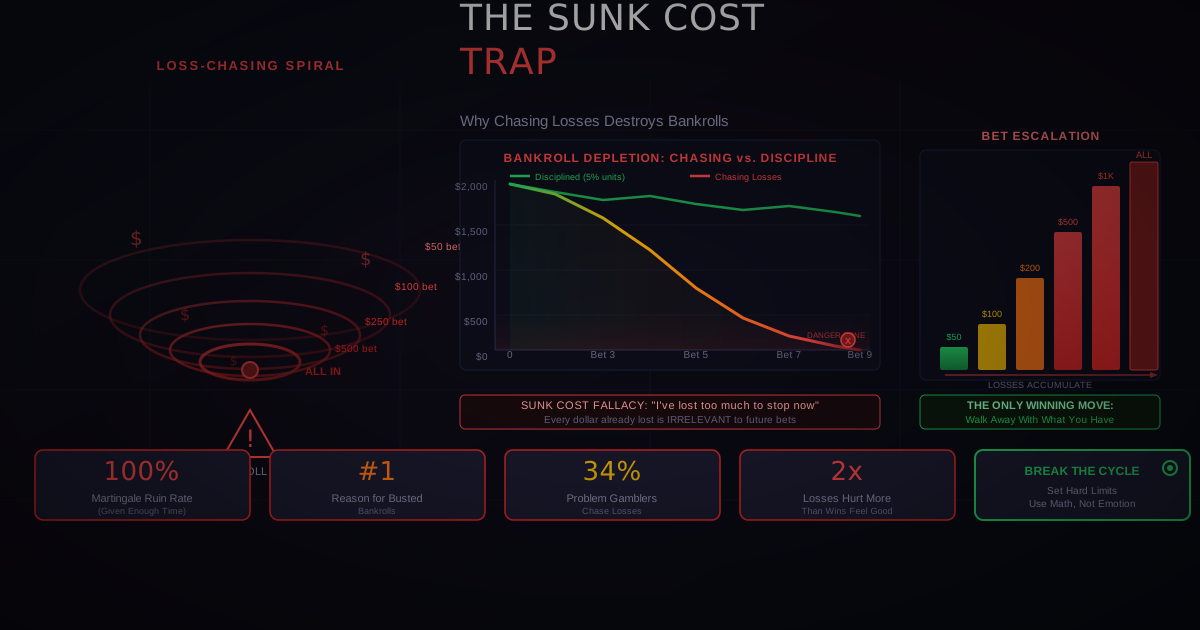
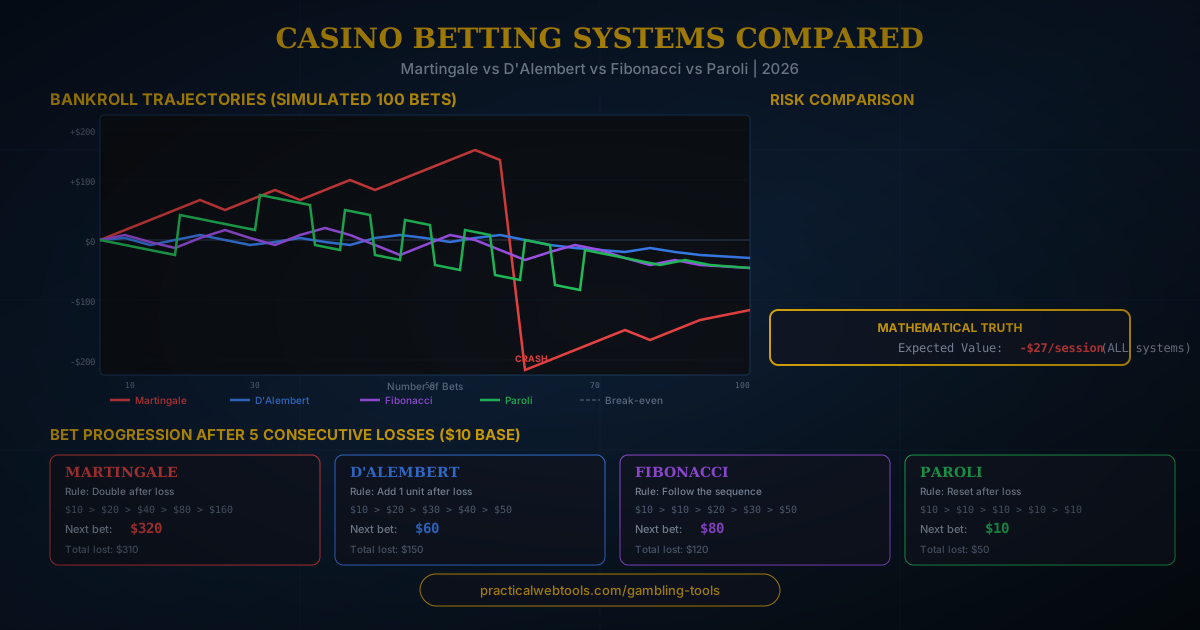
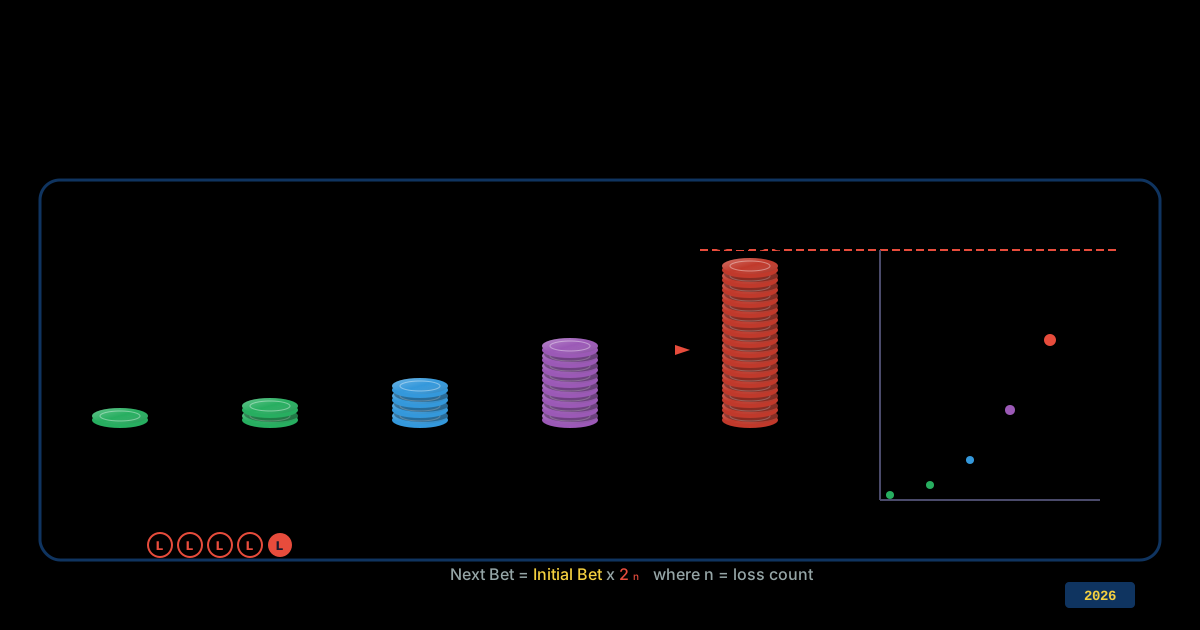
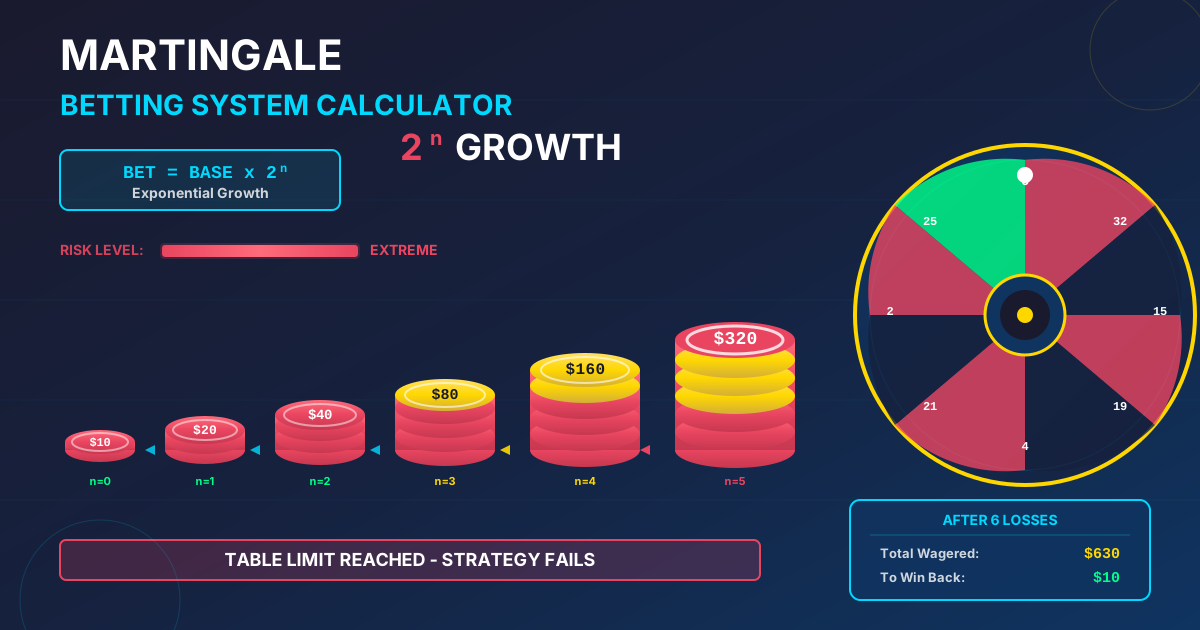
The Martingale is the most famous roulette system. Double your bet after every loss; return to base bet after a win. The theory: one win recovers all previous losses plus one unit profit.
Strategy
- Start at $10
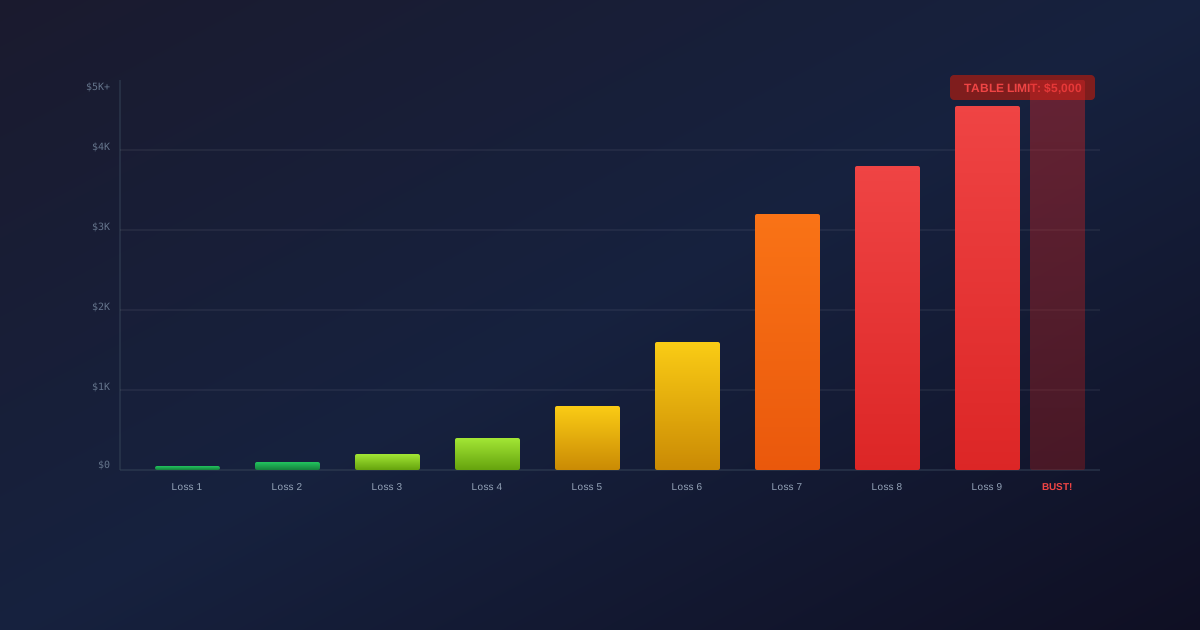
- After a loss, double the bet: $10, $20, $40, $80, $160, $320, $640, $1,280, $2,560, $5,000 (table max)
- After a win, return to $10
Results (1 Million Spins, 5,000 Sessions)
| Metric | Result |
|---|---|
| Average final bankroll | $895.40 |
| Average loss per session | $104.60 |
| Sessions ending in profit | 56.8% |
| Sessions reaching ruin | 14.2% |
| Average max drawdown | $486 |
| Largest session loss | $1,000 (full ruin) |
| Largest session win | $380 |
| Total wagered | $19,840,000 |
| Total lost | $1,043,100 |
| Measured house edge | 5.26% |
Analysis
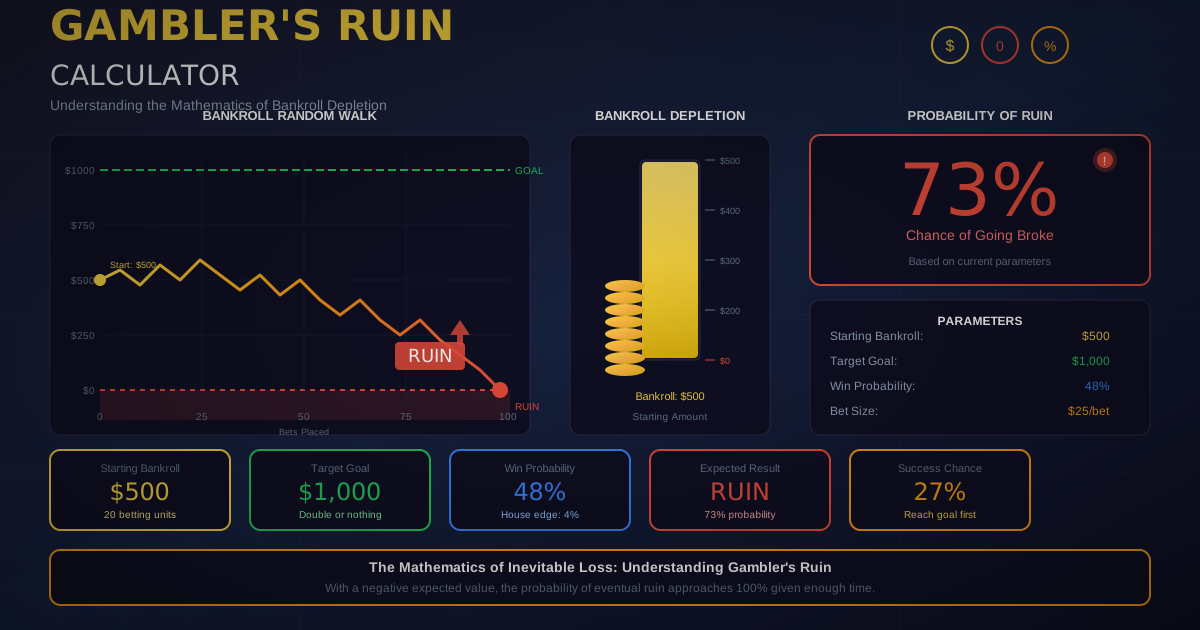
The Martingale wins more often (56.8% vs. 38.2% for flat betting) but loses catastrophically when it fails. Those 14.2% ruin sessions -- where you hit the table maximum or exhaust your bankroll -- wipe out the profits from winning sessions.
The key insight: the Martingale does not change the house edge. It changes the distribution. You win small amounts frequently and lose large amounts rarely. The expected value remains identical.
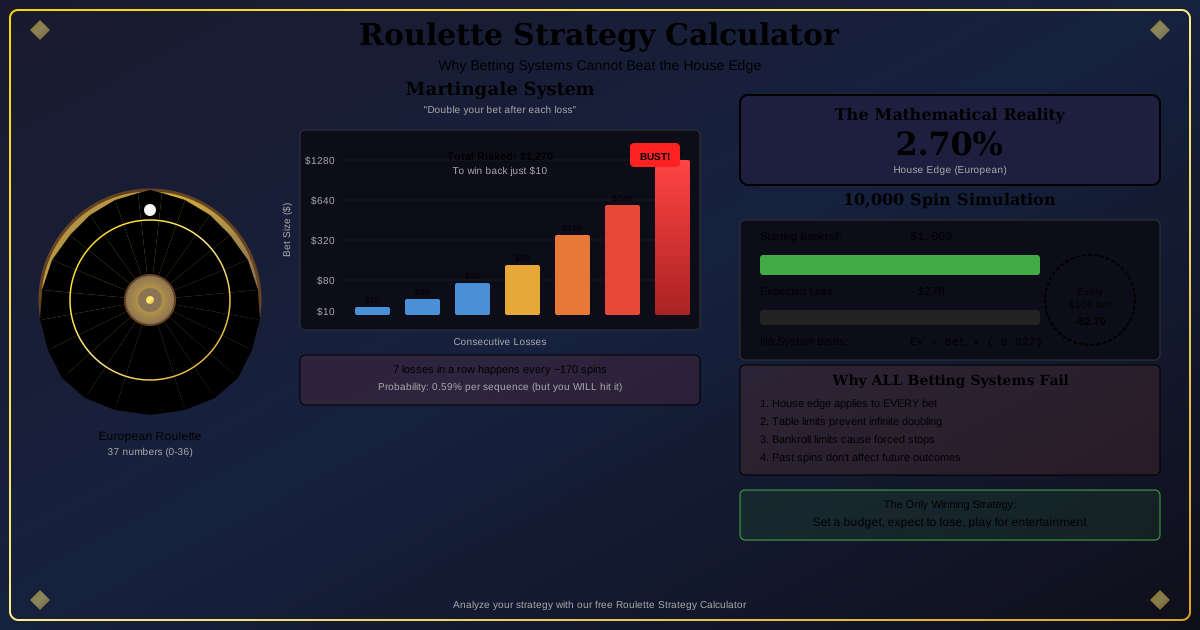
Martingale Loss Sequence Example:
  Bet $10, lose  (-$10,  total: -$10)
  Bet $20, lose  (-$20,  total: -$30)
  Bet $40, lose  (-$40,  total: -$70)
  Bet $80, lose  (-$80,  total: -$150)
  Bet $160, lose (-$160, total: -$310)
  Bet $320, lose (-$320, total: -$630)
  Bet $640, lose (-$640, total: -$1,270)

Seven consecutive losses (probability: 2.96% per sequence)
wipe out 127 winning bets of $10 each.

Expected loss per spin is still: bet x 5.26%
See how quickly Martingale bets escalate with our Roulette Probability Calculator.
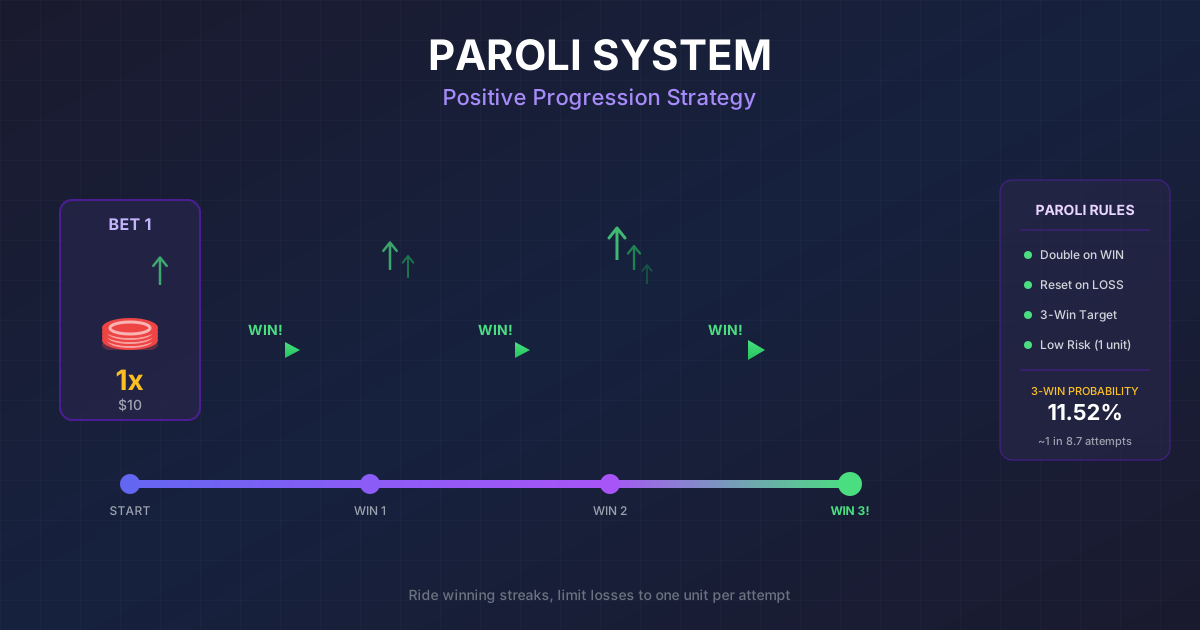
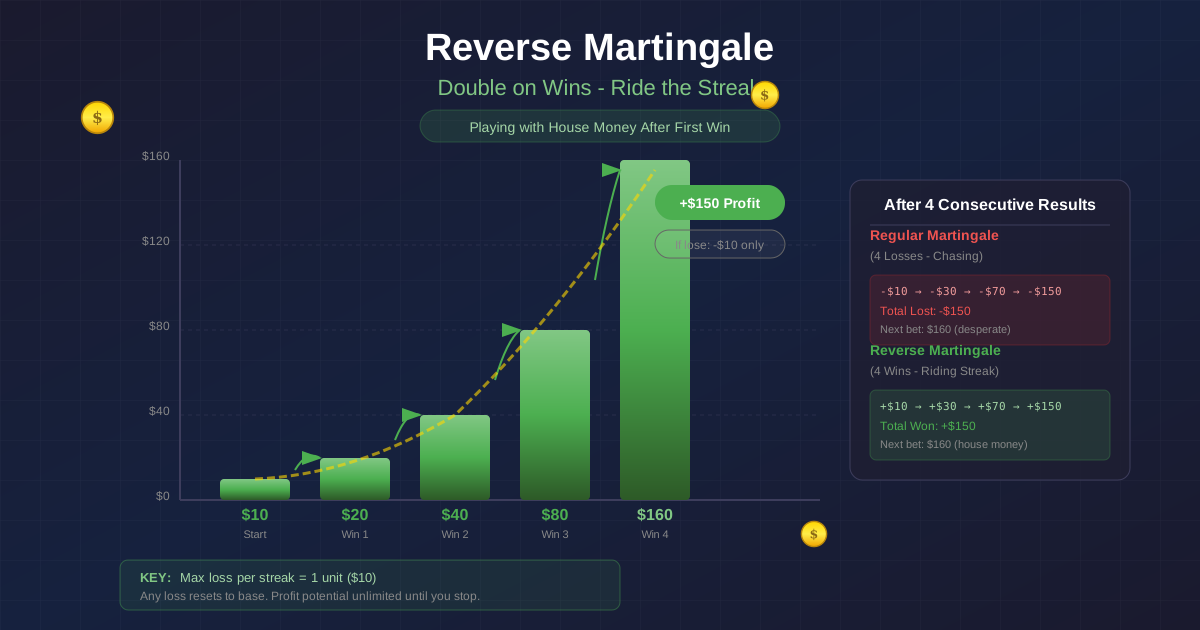
System 3: Reverse Martingale (Paroli / Double After Win)
The opposite of Martingale: double your bet after each win, return to base bet after a loss. The goal is to capitalize on winning streaks.
Strategy
- Start at $10
- After a win, double the bet (up to 3 consecutive doubles, then reset)
- After a loss, return to $10
- Maximum progression: $10 -> $20 -> $40 -> $80, then reset
Results (1 Million Spins, 5,000 Sessions)
| Metric | Result |
|---|---|
| Average final bankroll | $893.20 |
| Average loss per session | $106.80 |
| Sessions ending in profit | 33.4% |
| Sessions reaching ruin | 0.8% |
| Average max drawdown | $220 |
| Largest session loss | $640 |
| Largest session win | $920 |
| Total wagered | $10,420,000 |
| Total lost | $548,200 |
| Measured house edge | 5.26% |
Analysis
The Reverse Martingale produces the opposite distribution from the Martingale: it loses small amounts frequently (66.6% of sessions) but occasionally produces large wins when you catch a streak. The session win rate is worse than flat betting, but the maximum win is higher.
The measured house edge: 5.26%. Exactly the same.
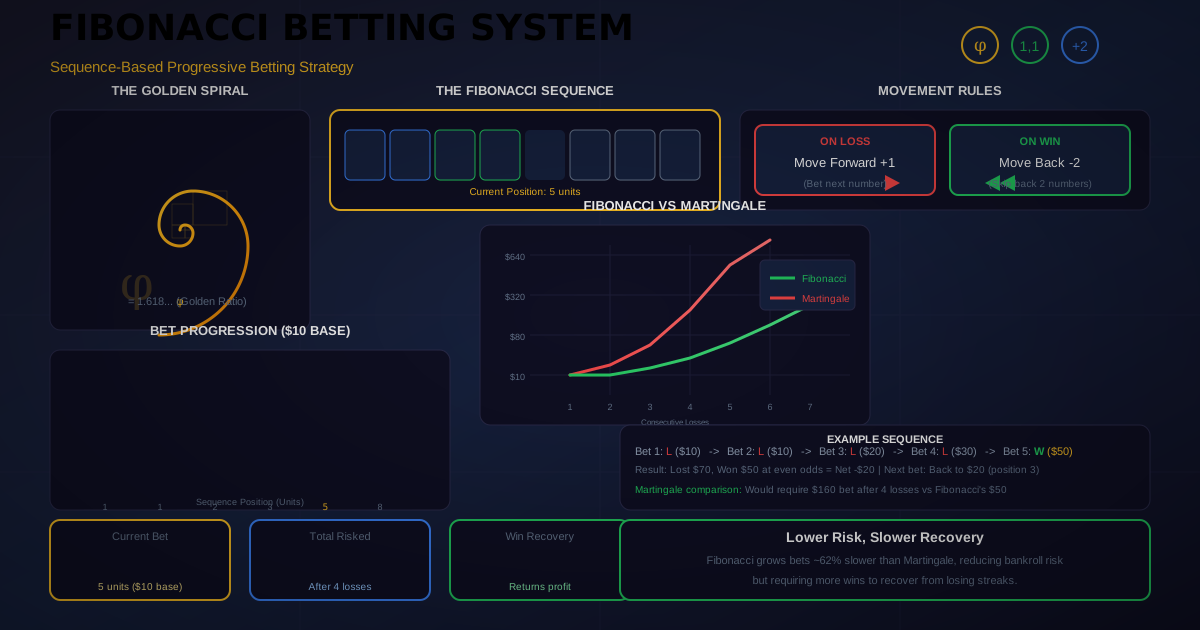
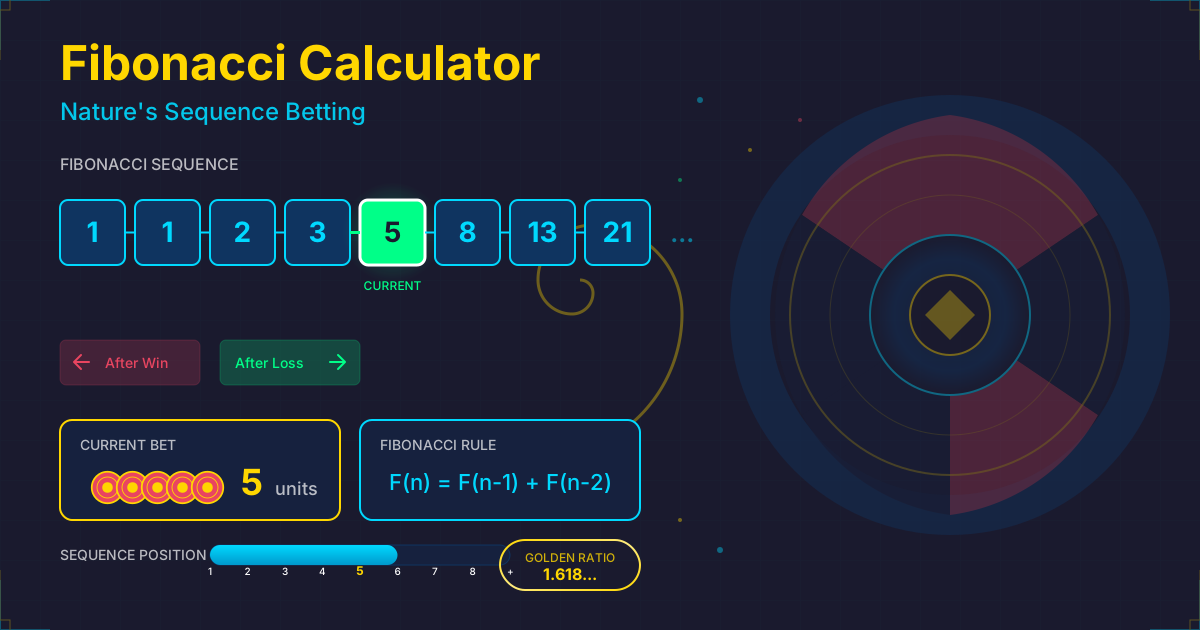
System 4: Fibonacci (Increase by Fibonacci Sequence After Loss)
The Fibonacci system uses the Fibonacci sequence (1, 1, 2, 3, 5, 8, 13, 21, 34, 55...) for bet progression. After a loss, move one step forward. After a win, move two steps back.
Strategy
- Unit size: $10
- Fibonacci sequence: $10, $10, $20, $30, $50, $80, $130, $210, $340, $550...
- After a loss, move to the next number in the sequence
- After a win, move two numbers back (or to the beginning if fewer than two steps in)
Results (1 Million Spins, 5,000 Sessions)
| Metric | Result |
|---|---|
| Average final bankroll | $894.60 |
| Average loss per session | $105.40 |
| Sessions ending in profit | 44.6% |
| Sessions reaching ruin | 6.8% |
| Average max drawdown | $342 |
| Largest session loss | $1,000 (full ruin) |
| Largest session win | $410 |
| Total wagered | $14,560,000 |
| Total lost | $765,800 |
| Measured house edge | 5.26% |
Analysis
The Fibonacci is a less aggressive version of the Martingale. Bets escalate more slowly, so ruin risk is lower (6.8% vs. 14.2%). But the win rate is also lower (44.6% vs. 56.8%). It is a compromise between flat betting and Martingale -- and it produces the exact same house edge.
Compare Fibonacci progression to other systems with our Roulette Betting Simulator.
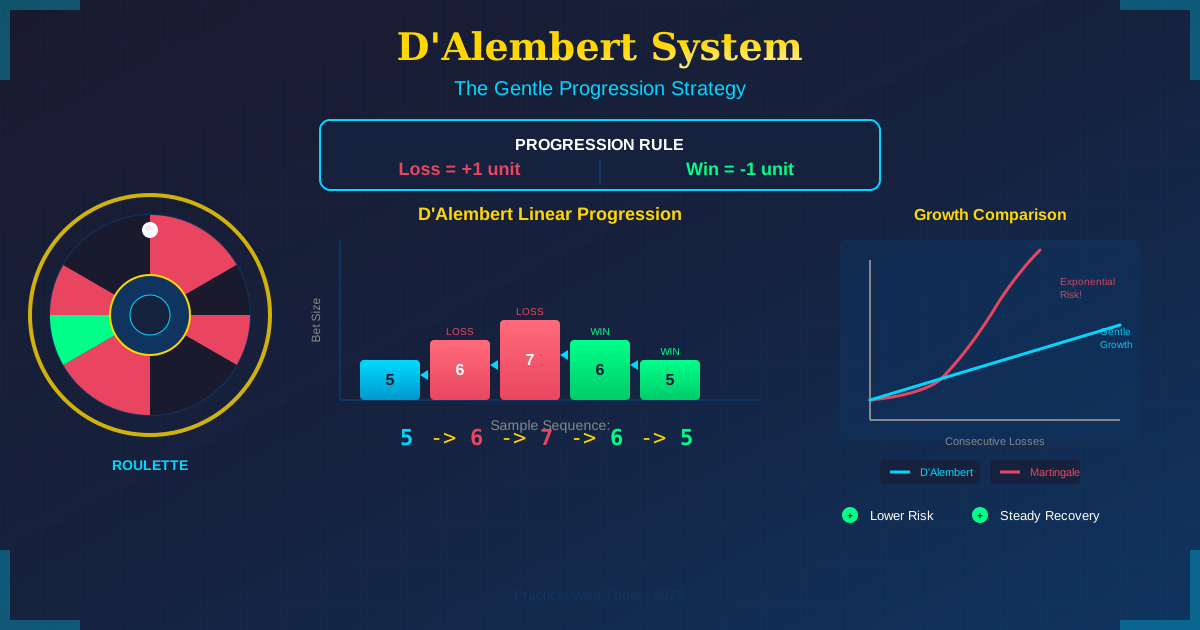
System 5: D'Alembert (Increase by One Unit After Loss)
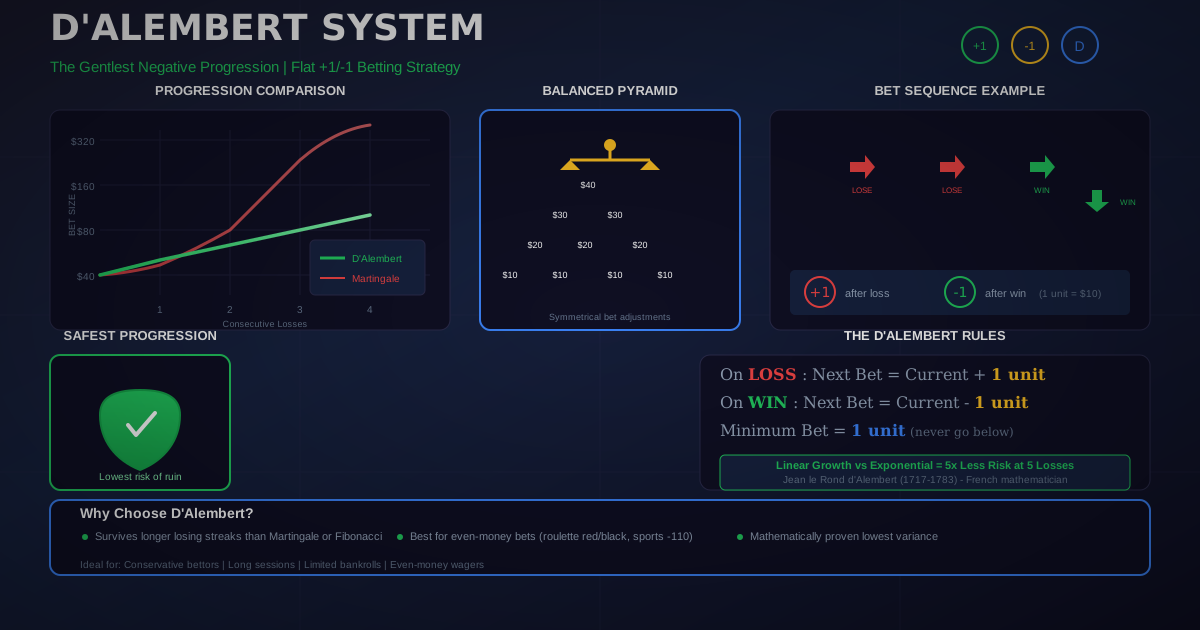
The D'Alembert system increases your bet by one unit after a loss and decreases by one unit after a win. It is the most conservative progression system.
Strategy
- Base unit: $10
- After a loss, increase bet by $10
- After a win, decrease bet by $10 (minimum $10)
- Example sequence: $10, $20, $30, $20, $30, $20, $10...
Results (1 Million Spins, 5,000 Sessions)
| Metric | Result |
|---|---|
| Average final bankroll | $894.90 |
| Average loss per session | $105.10 |
| Sessions ending in profit | 41.2% |
| Sessions reaching ruin | 1.4% |
| Average max drawdown | $248 |
| Largest session loss | $940 |
| Largest session win | $520 |
| Total wagered | $12,840,000 |
| Total lost | $675,800 |
| Measured house edge | 5.26% |
Analysis
The D'Alembert is the gentlest progression system. Bets increase slowly, ruin risk is low (1.4%), and the swings are moderate. It "feels" safer than Martingale. But look at the measured house edge: 5.26%. Safety is an illusion. You lose the same percentage of every dollar wagered.
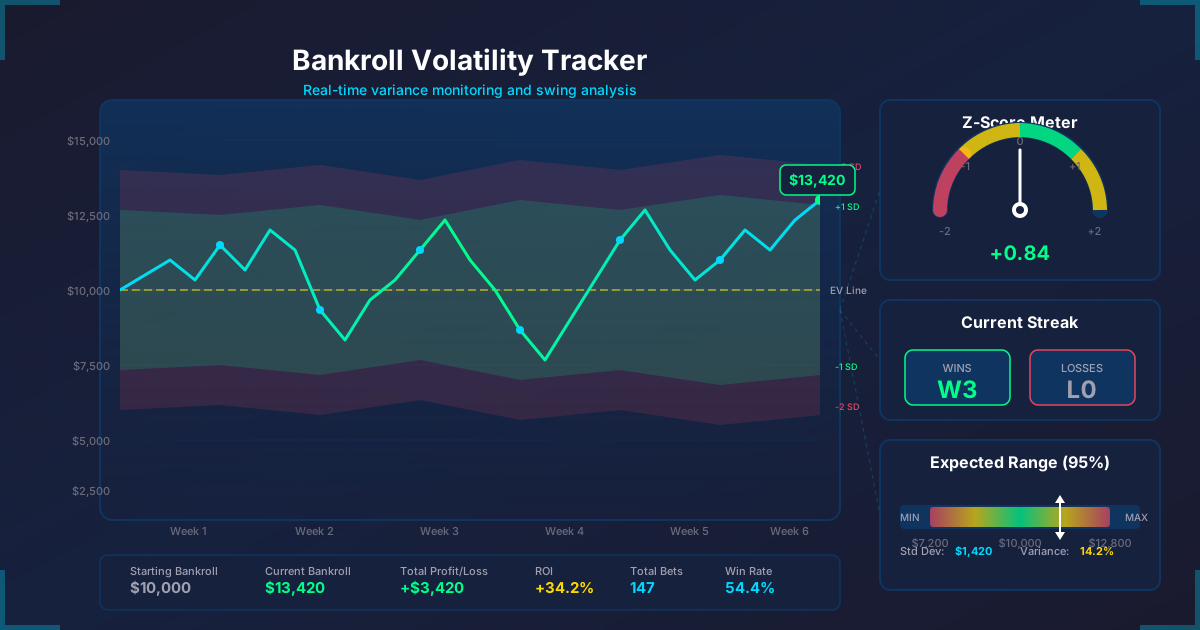
Track your own D'Alembert sessions with our Bankroll Volatility Tracker.
System 6: Labouchere (Cancellation System)
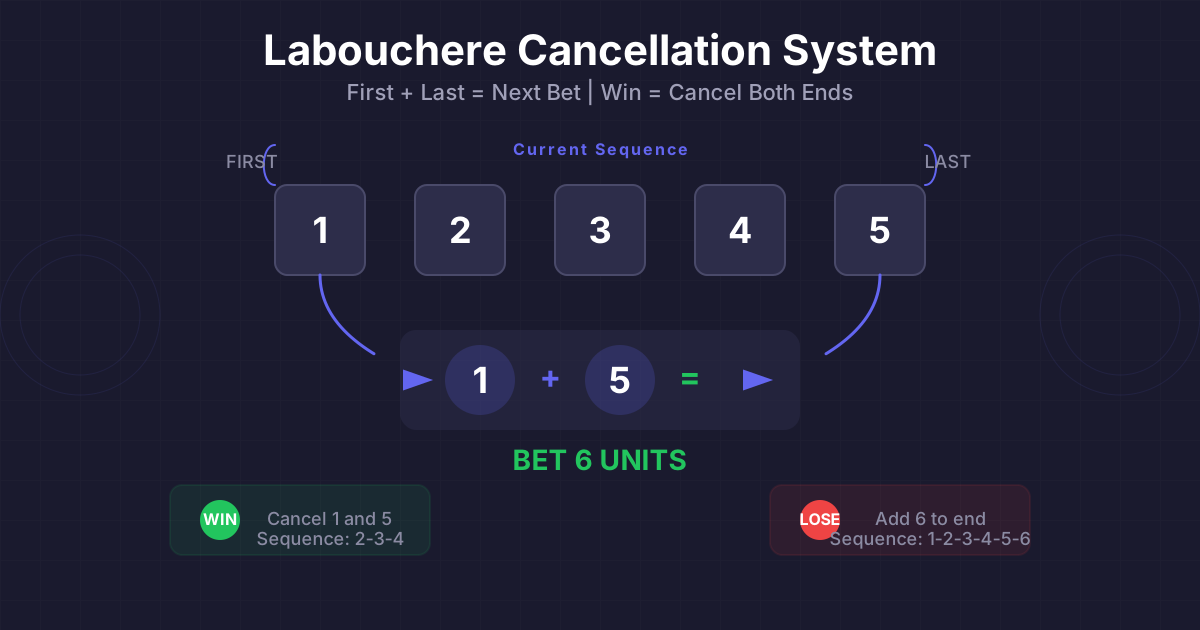
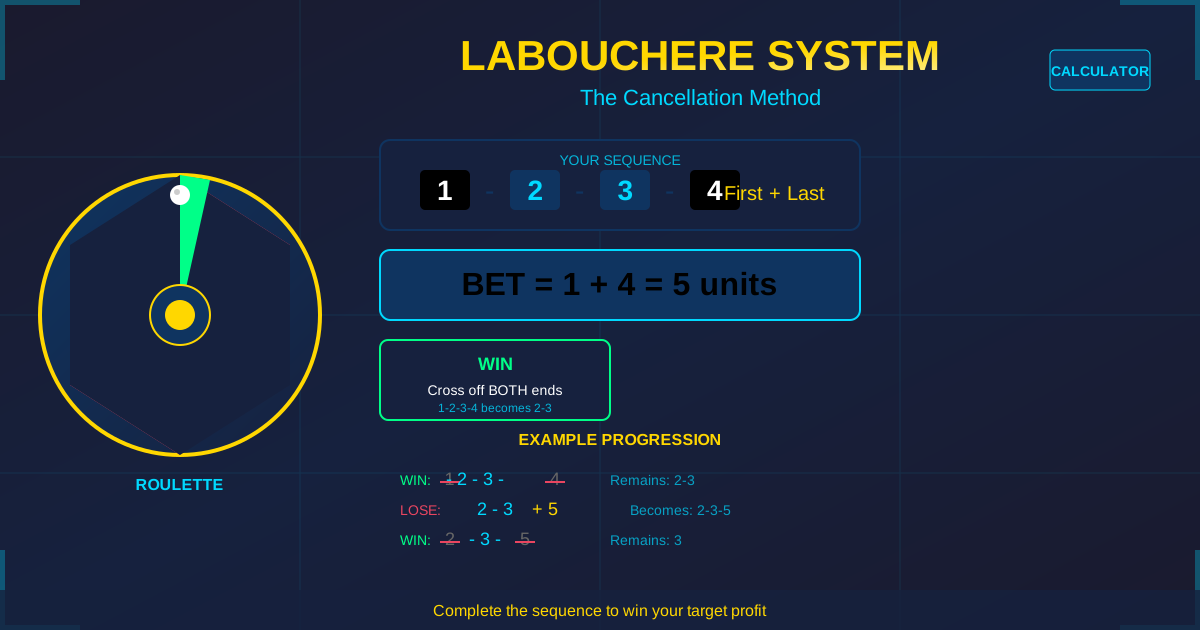
The Labouchere is a more complex system where you write a sequence of numbers, bet the sum of the first and last numbers, and cross off numbers after wins. Losses add the lost amount to the end of the sequence.
Strategy
- Starting sequence: 1-2-3-4-5 (in $10 units)
- Bet = first + last number: $10 x (1+5) = $60
- Win: cross off both ends, new sequence 2-3-4, next bet $60
- Lose: add bet to end, new sequence 1-2-3-4-5-6, next bet $70
- Sequence cleared = profit of $150 (sum of original sequence x $10)
Results (1 Million Spins, 5,000 Sessions)
| Metric | Result |
|---|---|
| Average final bankroll | $893.80 |
| Average loss per session | $106.20 |
| Sessions ending in profit | 48.2% |
| Sessions reaching ruin | 9.6% |
| Average max drawdown | $410 |
| Largest session loss | $1,000 (full ruin) |
| Largest session win | $450 |
| Total wagered | $16,200,000 |
| Total lost | $852,100 |
| Measured house edge | 5.26% |
Analysis
The Labouchere is a "wolf in sheep's clothing" system. It feels structured and methodical. Completing the sequence feels like an accomplishment. But it has a dangerous failure mode: during losing streaks, the sequence grows longer and bets escalate. The 9.6% ruin rate reflects sessions where the sequence spiraled out of control.
House edge: 5.26%. The cancellation mechanic is elegant bookkeeping, not mathematics.
System 7: James Bond Strategy (Fixed Multi-Bet Coverage)
The James Bond system covers over 2/3 of the board with a specific bet allocation:
Strategy (Per $200 Cycle)
- $140 on high numbers (19-36)
- $50 on the six-line (13-18)
- $10 on 0 (insurance against zero)
Results (1 Million Spins, 5,000 Sessions)
| Metric | Result |
|---|---|
| Average final bankroll | $894.20 |
| Average loss per session | $105.80 |
| Sessions ending in profit | 45.4% |
| Sessions reaching ruin | 3.2% |
| Average max drawdown | $380 |
| Largest session loss | $1,000 (full ruin) |
| Largest session win | $680 |
| Total wagered | $10,080,000 |
| Total lost | $530,200 |
| Measured house edge | 5.26% |
Analysis
The James Bond system covers 25 of 38 numbers (65.8% of the board), creating frequent small wins. But the uncovered numbers (1-12) produce losses of $200 per occurrence. Since 1-12 comes up 31.6% of the time, the losses are substantial when they happen.
House edge: 5.26%. Covering more numbers does not change the math.
Calculate the exact probability and payout for any roulette bet combination with our Roulette Odds Calculator.
The Master Comparison: All Systems Side by Side
| System | Avg Loss | Win Rate | Ruin Rate | Max Drawdown | Max Win | House Edge |
|---|---|---|---|---|---|---|
| Flat Bet | $105.20 | 38.2% | 0.1% | $182 | $460 | 5.26% |
| Martingale | $104.60 | 56.8% | 14.2% | $486 | $380 | 5.26% |
| Rev. Martingale | $106.80 | 33.4% | 0.8% | $220 | $920 | 5.26% |
| Fibonacci | $105.40 | 44.6% | 6.8% | $342 | $410 | 5.26% |
| D'Alembert | $105.10 | 41.2% | 1.4% | $248 | $520 | 5.26% |
| Labouchere | $106.20 | 48.2% | 9.6% | $410 | $450 | 5.26% |
| James Bond | $105.80 | 45.4% | 3.2% | $380 | $680 | 5.26% |
Every system produced a measured house edge of 5.26%. The variation in average loss ($104.60 to $106.80) is within statistical noise for 1 million spins. The differences are in win rate, ruin rate, and the shape of the outcome distribution -- not in expected value.
Run these comparisons yourself with our Roulette Betting Simulator.
Why Do Systems "Feel" Like They Work?
If all systems produce the same expected loss, why do so many people believe they work? Three psychological mechanisms explain this.
1. Selective Memory
The Martingale wins 56.8% of sessions. If you play 10 sessions and win 6 of them, you feel like a winner. But those 6 wins produced small profits ($10-$30 each), while the 4 losses included one catastrophic bust that wiped out all the profits and more. You remember the wins. You rationalize the one big loss as "bad luck."
2. Short Sample Sizes
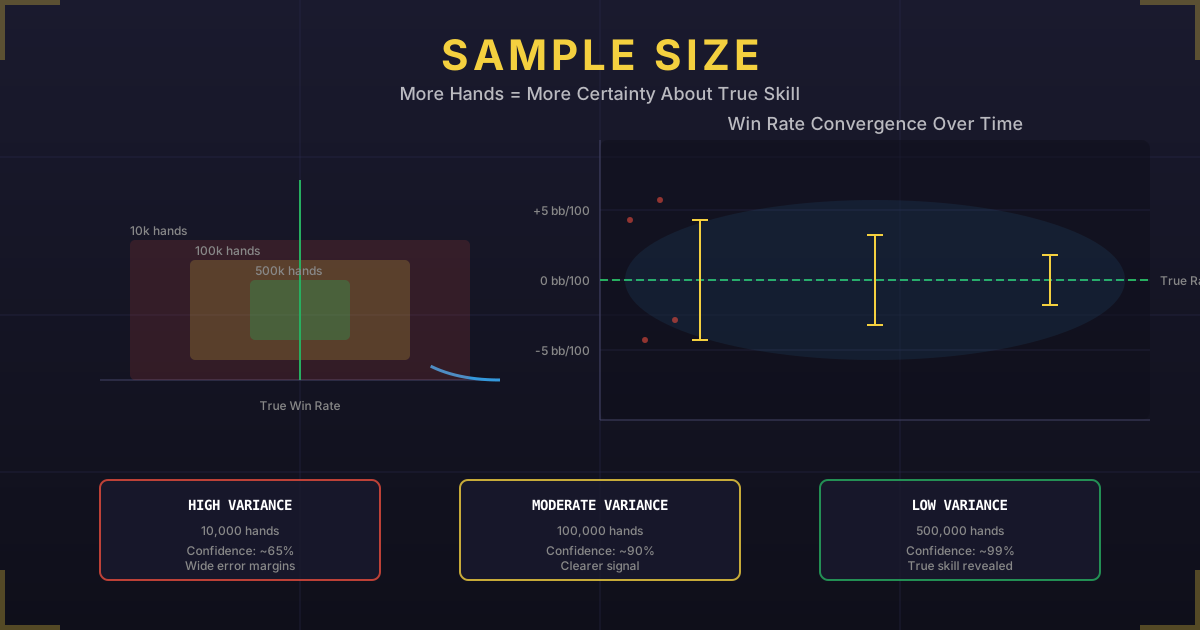
In 50 spins, variance overwhelms the house edge. You could easily win $200 using the Martingale in a single session. You might win several sessions in a row. It takes hundreds of sessions for the house edge to assert itself clearly. Most recreational players never play enough for the math to become obvious.
3. Outcome Redistribution Feels Like Edge
The D'Alembert produces a nearly flat bankroll line with occasional dips and recoveries. This gradual trajectory feels "controlled." The Reverse Martingale produces exciting peaks when you catch a streak. These emotional experiences feel like evidence that the system is "working" even though the expected value is unchanged.
See how variance can mask the house edge in short sessions with our Roulette Probability Calculator.
What Actually Reduces the House Edge in Roulette?
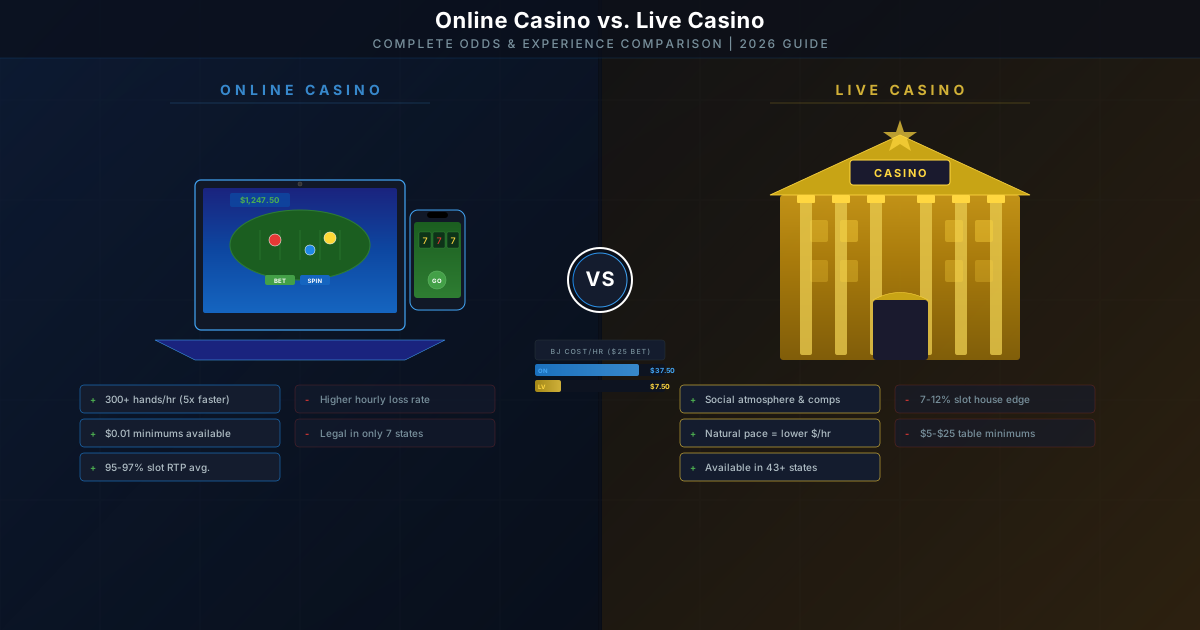
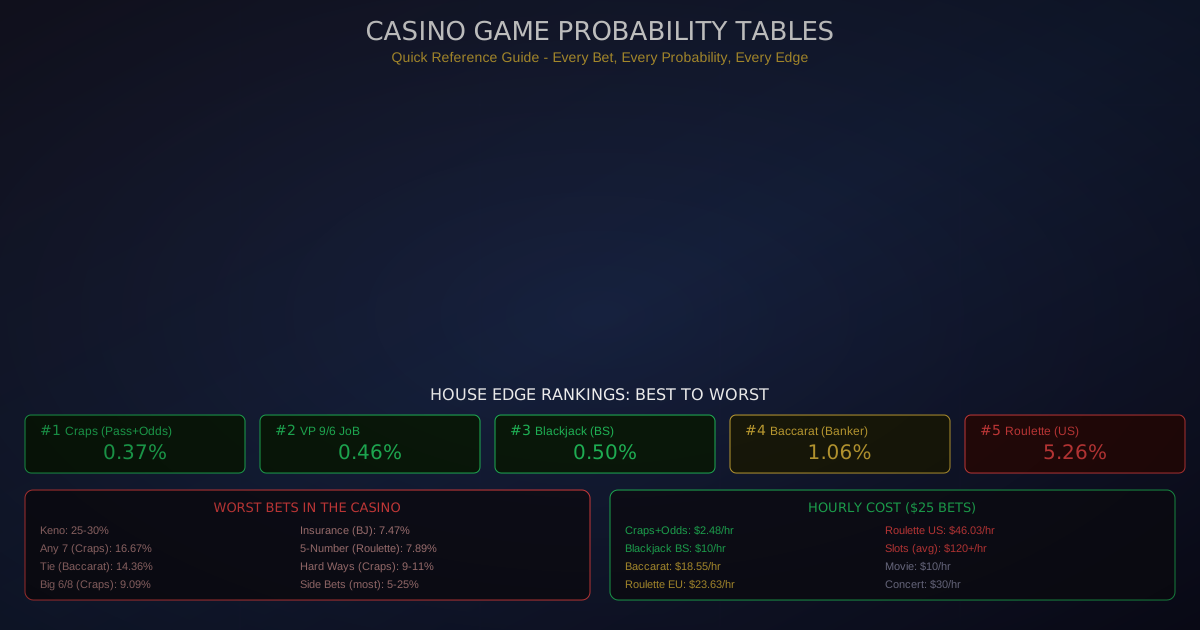
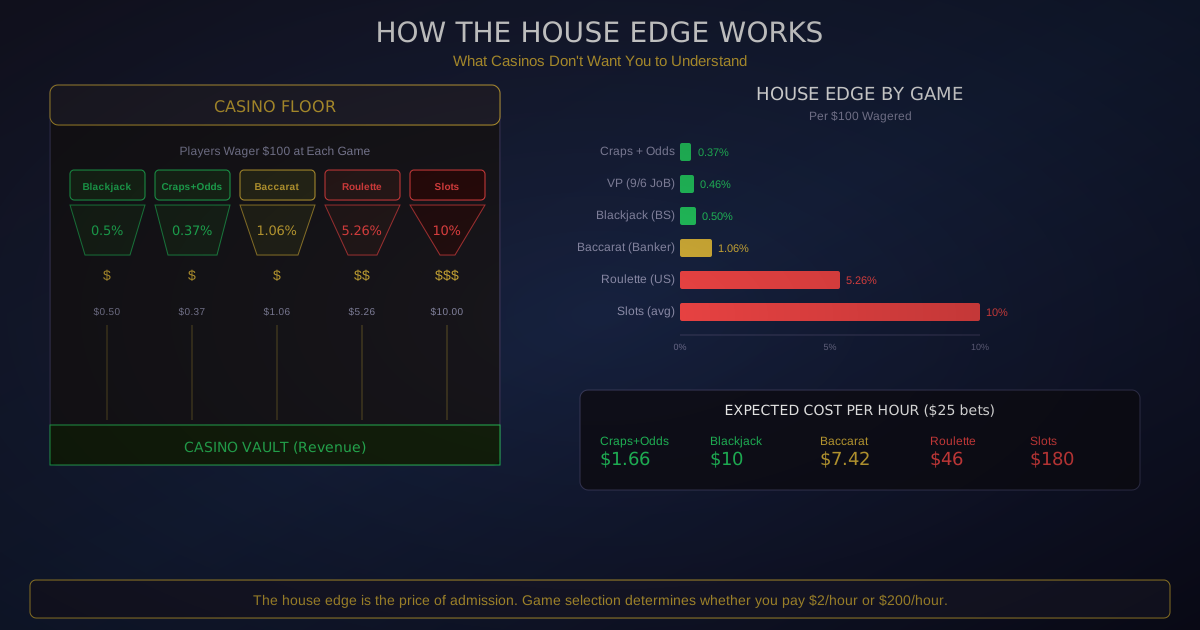
You cannot beat roulette with betting systems. But you can reduce your expected loss by choosing the right game.
European vs. American Roulette
| Feature | American | European |
|---|---|---|
| Numbers | 0, 00, 1-36 | 0, 1-36 |
| Total pockets | 38 | 37 |
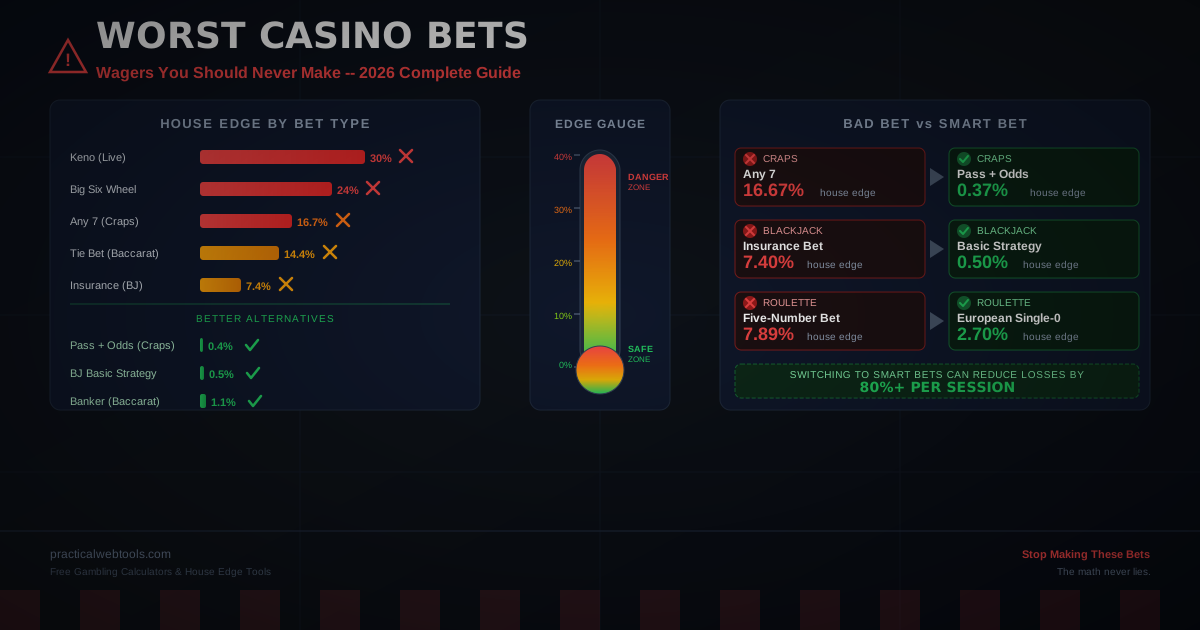
| House edge (even money) | 5.26% | 2.70% |
| House edge (all bets) | 5.26% | 2.70% |
| Expected loss per $100 | $5.26 | $2.70 |
Switching from American to European roulette cuts your expected loss nearly in half. This is the single most impactful decision you can make, and it requires no system, no strategy, and no skill.
La Partage and En Prison Rules
Some European tables offer additional rules that further reduce the house edge on even-money bets:
- La Partage: If the ball lands on 0, you lose only half your even-money bet. House edge: 1.35%.
- En Prison: If the ball lands on 0, your even-money bet is "imprisoned" for the next spin. Win on the next spin and you get your bet back (no profit). House edge: 1.35%.
Both rules cut the European house edge in half on even-money bets, bringing it to 1.35% -- competitive with the Pass Line in craps.
Compare the house edge across different roulette variants with our Roulette House Edge Calculator.
Real-World Example: Game Selection vs. System
Consider two players, each with $1,000 and a plan to make 200 bets of $10:
Player A: Martingale system on American roulette (double zero)
Total wagered: ~$19,840 (due to progression)
Expected loss: $19,840 x 5.26% = $1,043.60
Ruin probability: 14.2%
Player B: Flat betting on European roulette with La Partage
Total wagered: $2,000
Expected loss: $2,000 x 1.35% = $27.00
Ruin probability: <0.1%
Player B loses 97.4% less money than Player A by choosing the right game instead of using a system. Game selection is infinitely more powerful than bet progression.
Calculate your expected loss on any roulette variant with our Roulette EV Calculator.
The Only Legitimate Roulette Strategies
If systems do not work, what should a roulette player do? Here are the only evidence-based approaches.
1. Play European Roulette (or Better, French Roulette with La Partage)
This is the single most important decision. Reducing the house edge from 5.26% to 2.70% (or 1.35% with La Partage) saves more money than any system ever could.
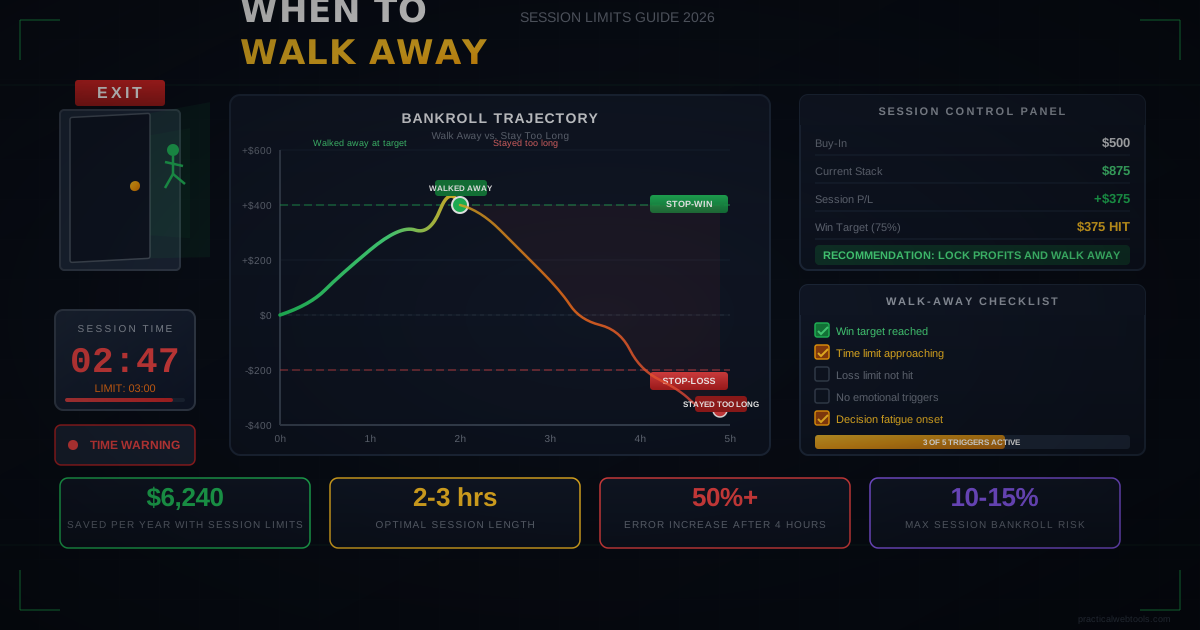
2. Set Loss Limits and Walk Away
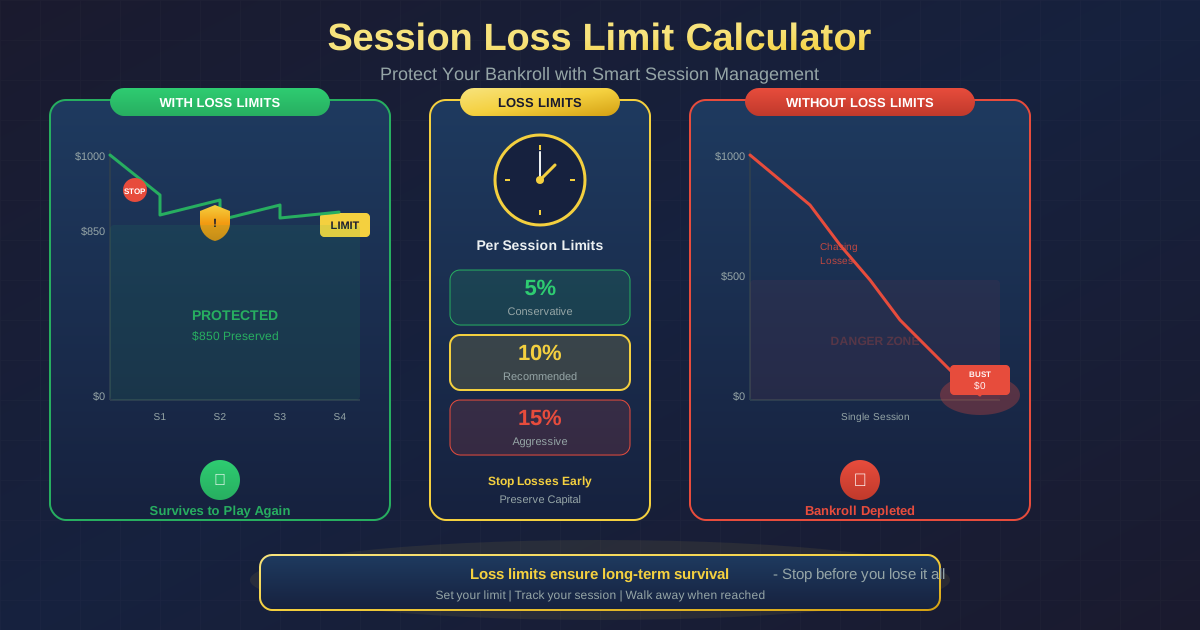
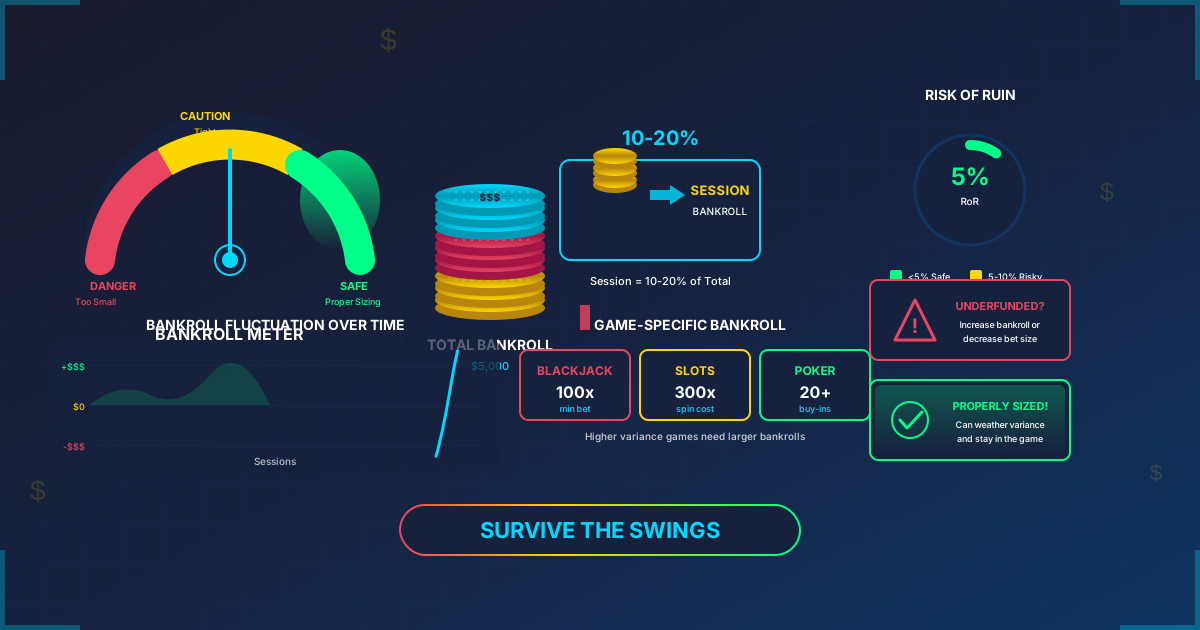
Decide before you play how much you are willing to lose. When you reach that limit, stop. This does not change the house edge, but it prevents the emotional chasing that turns moderate losses into devastating ones.
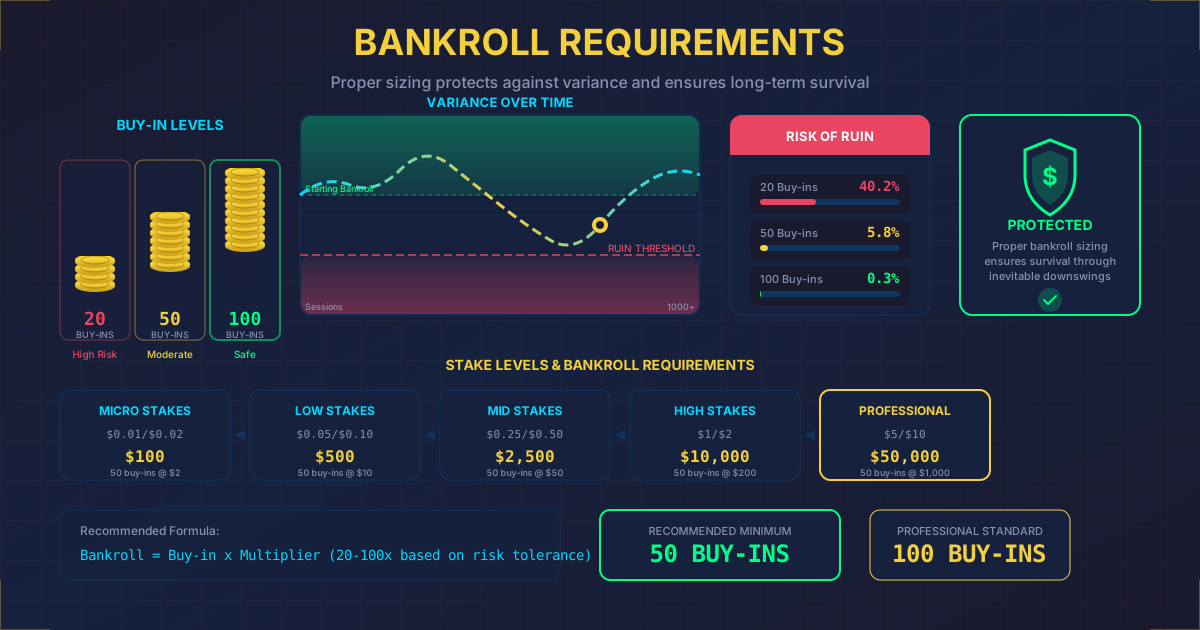
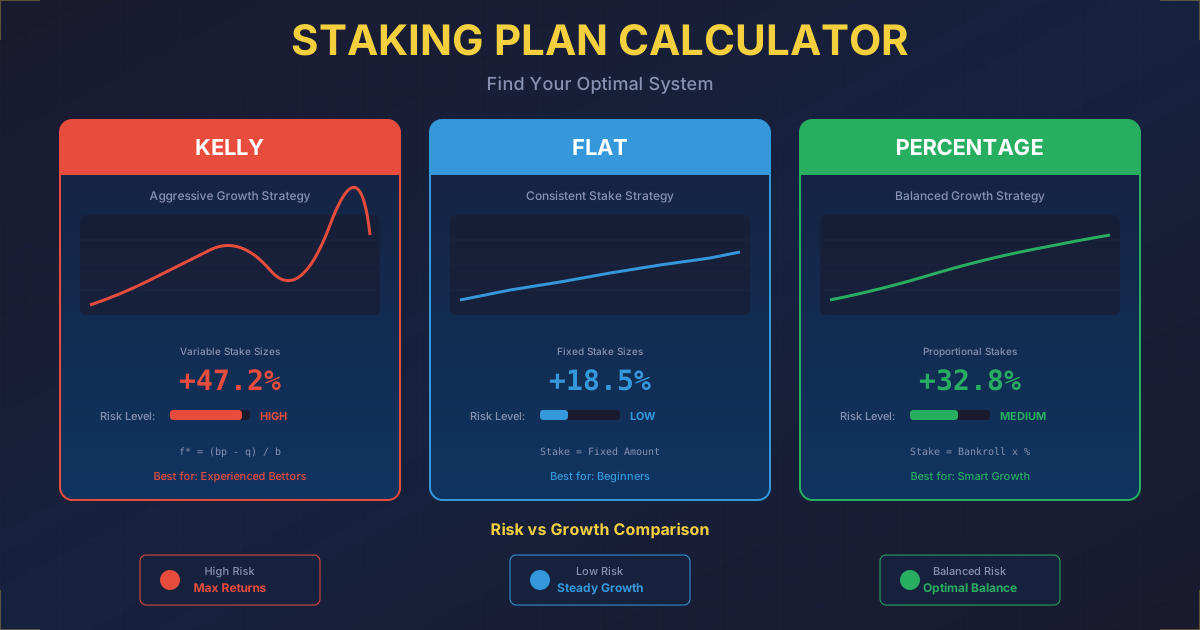
3. Flat Bet at a Level Your Bankroll Can Sustain
Our simulation shows flat betting has the lowest ruin rate (0.1%) and the most predictable outcomes. You will not get rich, but you will not go broke quickly either.
4. Set Win Goals
If you are up 30-50% of your session bankroll, consider stopping. This locks in profits from a positive variance session. It does not change long-term expected value, but it does change the distribution of outcomes in your favor by avoiding giving back gains.
5. Never Play American Roulette If European Is Available
The extra zero on an American wheel doubles the house edge. There is no strategic reason to play American roulette when a European wheel is available at the same casino.
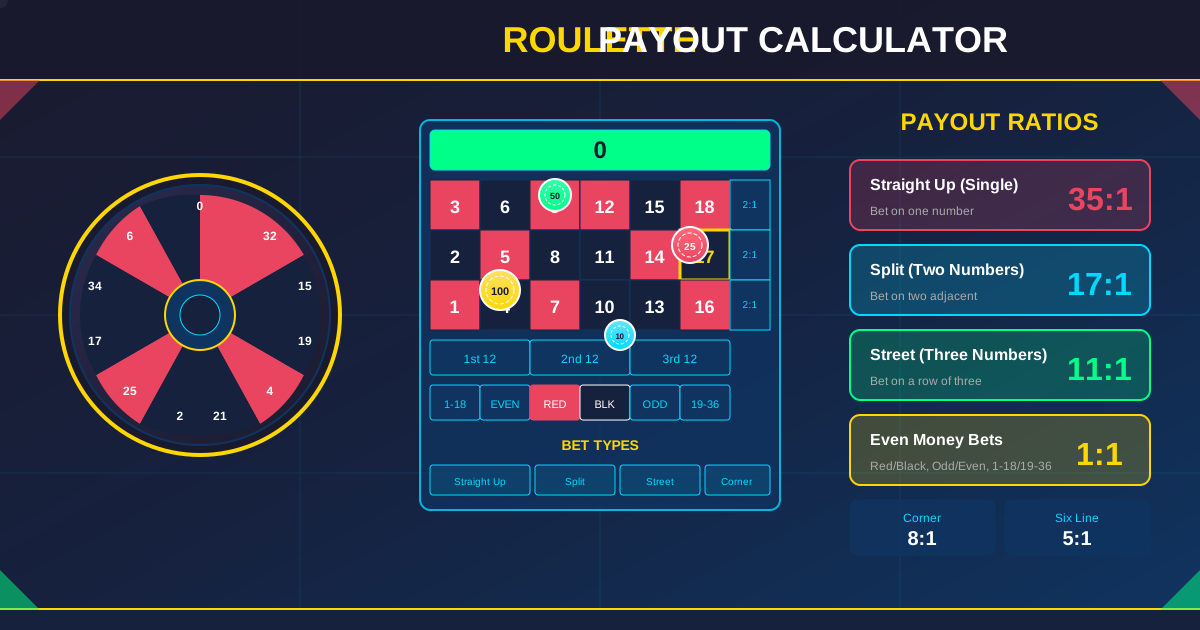
Use our Roulette Payout Calculator to compare payouts across bet types and wheel variants.
Real-World Session Examples
Example 1: Martingale Player on American Roulette
James brings $2,000 and uses the Martingale with a $25 base bet.
Session (approximately 200 spins over 4 hours):
  Spin 1-42: Wins 23, loses 19. Bankroll: $2,100 (+$100)
  Spin 43: Begins a 7-loss streak
    $25, $50, $100, $200, $400, $800, $1,600
    Total lost in streak: $3,175
    Bankroll after streak: $0 (busted before completing the 8th double)

James lost his entire $2,000 in 49 spins despite winning 23 of the first 42.
The winning percentage (23/49 = 46.9%) was close to expected.
The Martingale just concentrated his losses into one catastrophic event.
Example 2: Flat Bettor on European Roulette
Sarah brings $500 and flat bets $10 on red at a European single-zero table.
Session (200 spins over 4 hours):
  Expected loss: $10 x 200 x 2.70% = $54.00
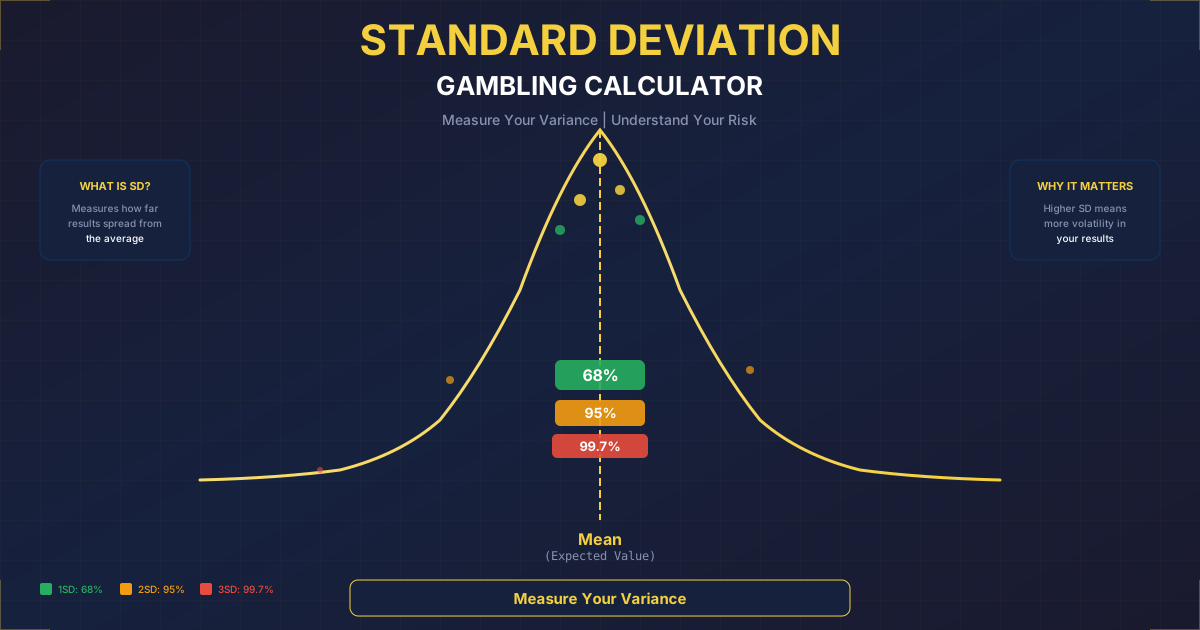
  Standard deviation: ~$141

  68% chance: Final bankroll between $305 and $587
  95% chance: Final bankroll between $164 and $728

Sarah's most likely outcome is losing $40-$70 over 4 hours.
Ruin is essentially impossible with this bankroll-to-bet ratio.
Cost per hour of entertainment: ~$13.50
Example 3: Smart Player with La Partage
Tom finds a French roulette table with La Partage rule.
Session (200 spins, $15 flat bet on even-money):
  Total wagered: $3,000
  Expected loss: $3,000 x 1.35% = $40.50
  Cost per hour: ~$10.13

Tom's expected loss is lower than a movie ticket per hour.
This is the mathematically best roulette experience available.
Model any session scenario with our Expected Value Calculator.
The Verdict: Systems Are Entertainment, Not Strategy
Our 1 million spin simulation confirms what mathematicians have known since Pascal first analyzed probability in 1654: no betting system can overcome a negative expected value game. The house edge is a property of the game's structure (number of pockets, payout ratios), not a property of how you size your bets.
What systems do offer is variety. The Martingale provides frequent small wins. The Reverse Martingale produces occasional exciting streaks. The D'Alembert provides a smooth, low-drama experience. If you enjoy the mental engagement of following a system, there is no harm in using one -- as long as you understand it does not change your expected loss.
The real strategies are:
- Choose the right wheel (European, not American)
- Look for La Partage or En Prison rules
- Flat bet at sustainable levels
- Set loss limits and honor them
- Accept that the house has an edge and play for entertainment
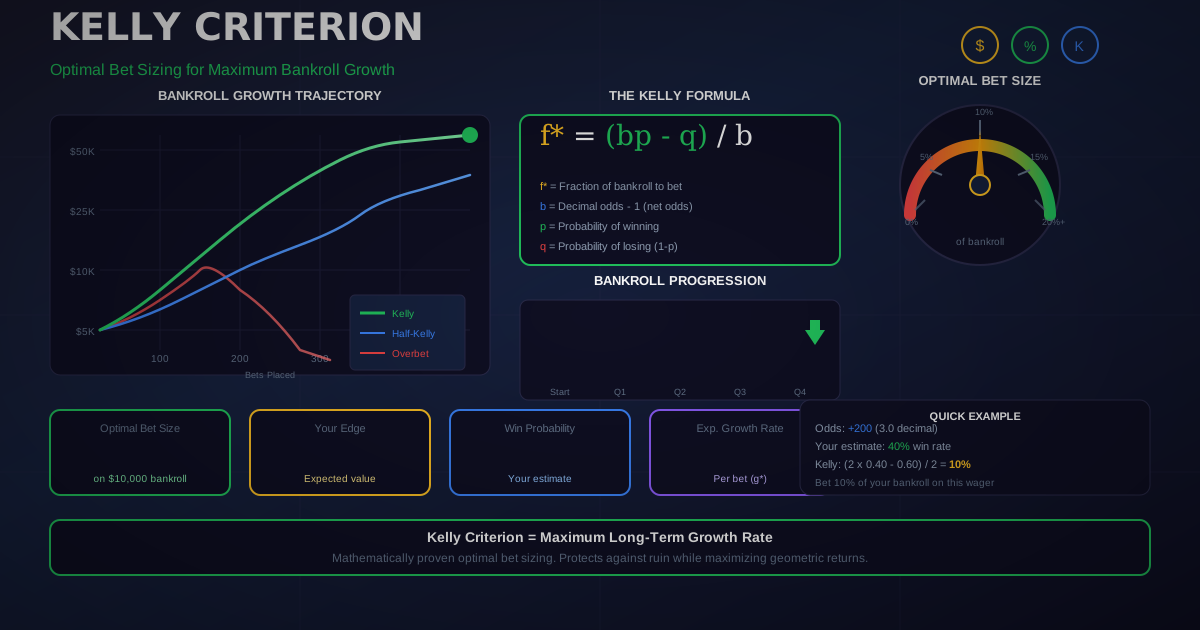
Verify all of these results with our Roulette Betting Simulator and our Kelly Criterion Calculator.
Frequently Asked Questions
Does the Martingale system work in roulette? No. Our simulation of 1 million spins shows the Martingale produces a 5.26% house edge on American roulette, identical to flat betting. It wins more sessions (56.8%) but has a 14.2% ruin rate because losing streaks require exponentially larger bets. One 7-loss streak can wipe out 127 winning sessions. Simulate it yourself with our Roulette Betting Simulator.
Which roulette system has the best chance of winning? No system changes the house edge. The Martingale has the highest session win rate (56.8%) but the highest ruin rate (14.2%). If you want the lowest risk of ruin, flat betting at 0.1% is safest. If you want the lowest house edge, play European roulette with La Partage (1.35%), which is a game selection choice, not a system. Use our Roulette House Edge Calculator to compare.
Can any mathematical pattern beat roulette? No. Each spin is independent, meaning past results have zero influence on future outcomes. The ball has no memory. No pattern, sequence, or algorithm can predict or influence where the ball lands. The house edge is determined by the wheel's structure (38 pockets with payouts designed for 36). Check the math with our Roulette Probability Calculator.
Is European roulette better than American roulette? Yes, significantly. European roulette has a house edge of 2.70% compared to 5.26% for American. On 200 spins of $10 bets, you save $51.20 in expected losses by playing European. With La Partage rules, the European edge drops to 1.35%, saving $78.20 compared to American. Compare them with our Roulette EV Calculator.
How much money will I lose playing roulette for 4 hours? On American roulette at $10 per spin with approximately 50 spins per hour, your expected loss is $10 x 200 x 5.26% = $105.20. On European roulette at the same rate, it is $54.00. With La Partage, it is $27.00. Your actual results will vary significantly due to variance. Calculate your specific scenario with our Roulette Odds Calculator.
Do roulette dealers affect the outcome? No. Modern roulette wheels are precision-engineered, and the combination of ball speed, wheel speed, and deflector positions creates effectively random outcomes. "Dealer signature" theories (that dealers spin with consistent patterns) have been tested and found to produce no exploitable edge. Use our Implied Probability Calculator to see why even small prediction advantages would be valuable -- if they existed.
What is the best single bet in roulette? On a European wheel, all bets carry the same 2.70% house edge. On an American wheel, all bets carry 5.26% except the five-number bet (0, 00, 1, 2, 3) which is 7.89% and should always be avoided. Even-money bets with La Partage at 1.35% are the best available option. Use our Roulette Payout Calculator to see exact payouts for every bet type.
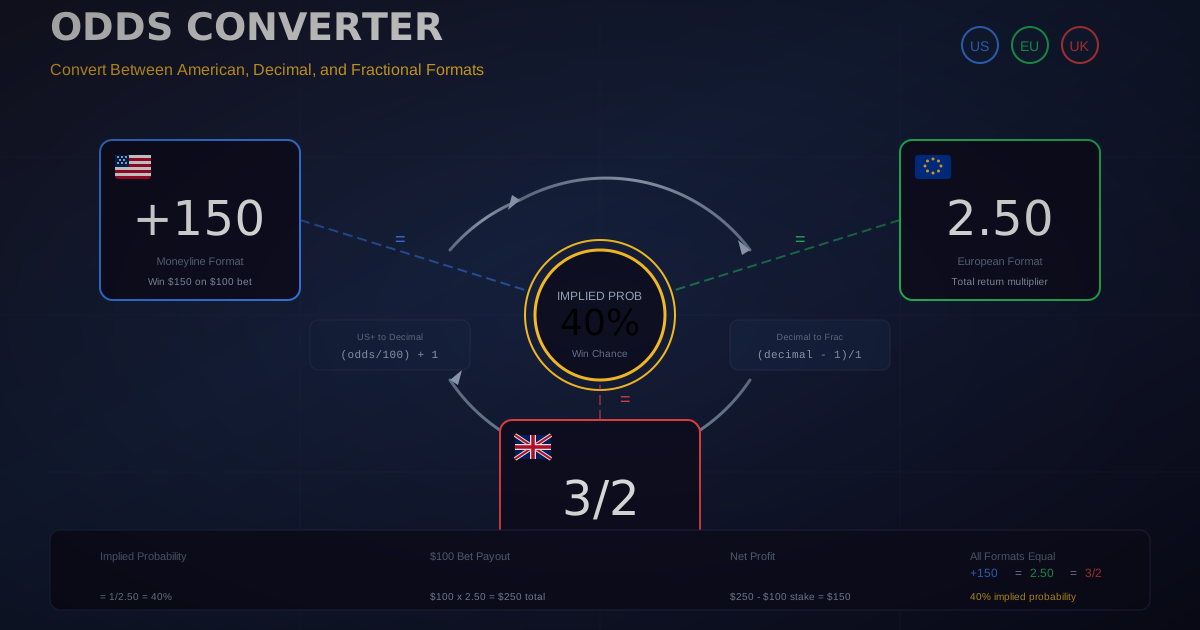
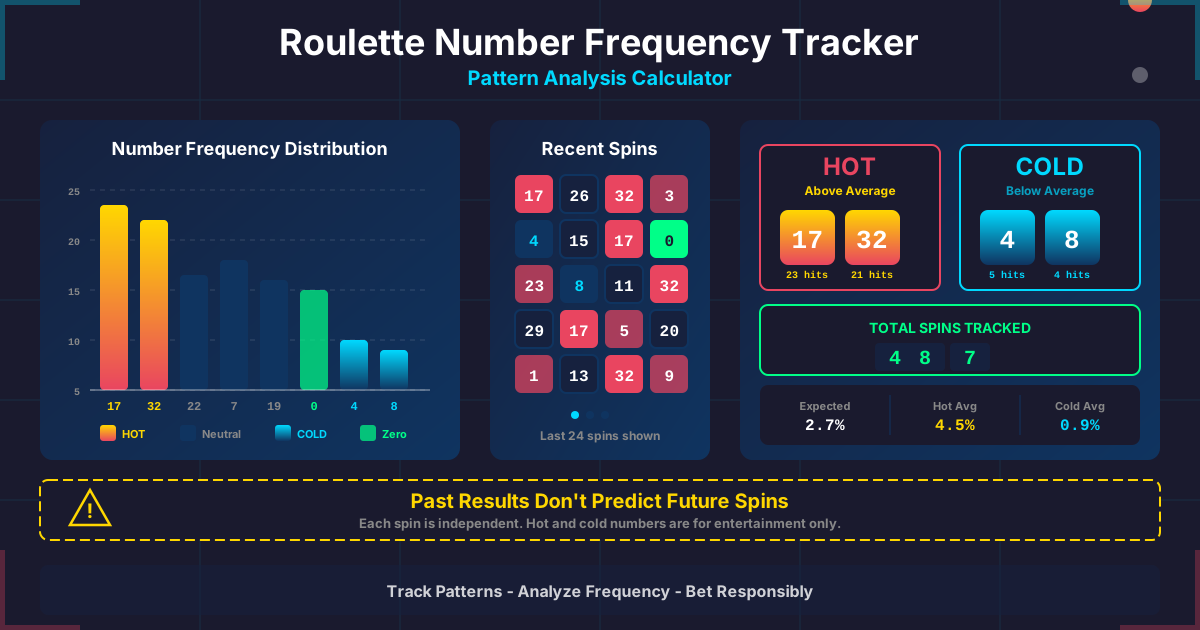
Should I track previous roulette numbers to find patterns? No. Tracking results is known as "clocking" the wheel, and casinos even provide electronic displays showing recent numbers. This is not because the information helps you -- it is because it encourages the gambler's fallacy. Each spin is independent. Past numbers provide zero predictive value. Confirm this with our Odds Converter.
Related Tools
- Roulette Betting Simulator: Simulate thousands of spins with any betting system
- Roulette EV Calculator: Calculate expected value for any roulette bet or session
- Roulette House Edge Calculator: Compare house edges across wheel types and rules
- Roulette Probability Calculator: Determine the probability of any outcome or sequence
- Roulette Odds Calculator: Look up odds for every possible roulette bet
- Roulette Payout Calculator: Calculate exact payouts by bet type
- Expected Value Calculator: General-purpose EV calculator for any game
- Bankroll Volatility Tracker: Track and visualize your bankroll over time
- Kelly Criterion Calculator: Understand optimal bet sizing for negative and positive EV games
- Odds Converter: Convert between probability formats
- Implied Probability Calculator: Convert odds to implied probabilities
Conclusion
We ran 7 million simulated roulette bets across seven popular systems. Every system produced the same measured house edge: 5.26% on American roulette. No system beat the math. No system came close.
The Martingale wins sessions more often but goes broke 14.2% of the time. The D'Alembert feels controlled but loses at the same rate. The Fibonacci looks sophisticated but is just a slower Martingale. The James Bond system covers most of the board but cannot cover the math.
The only real strategies in roulette are game selection (European over American, La Partage over standard) and bankroll management (flat betting, loss limits, win goals). These do not beat the house edge -- nothing does -- but they minimize your cost and maximize your playing time.
Run your own simulations with our Roulette Betting Simulator and see the data for yourself. The math does not lie.
Gambling involves risk. This content is for educational and informational purposes only. Always gamble responsibly, set limits you can afford, and seek help if gambling becomes a problem. Visit the National Council on Problem Gambling or call 1-800-522-4700 for support.