Poker Bluffing Strategy: The Math Behind When to Bluff and How Much to Bet (2026)
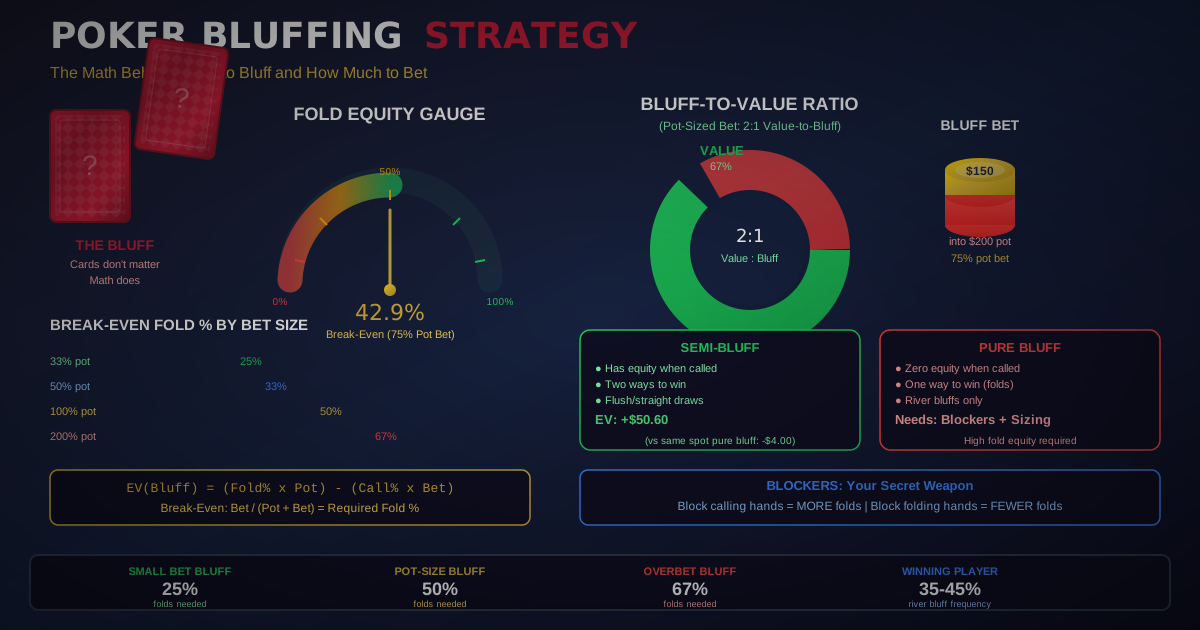
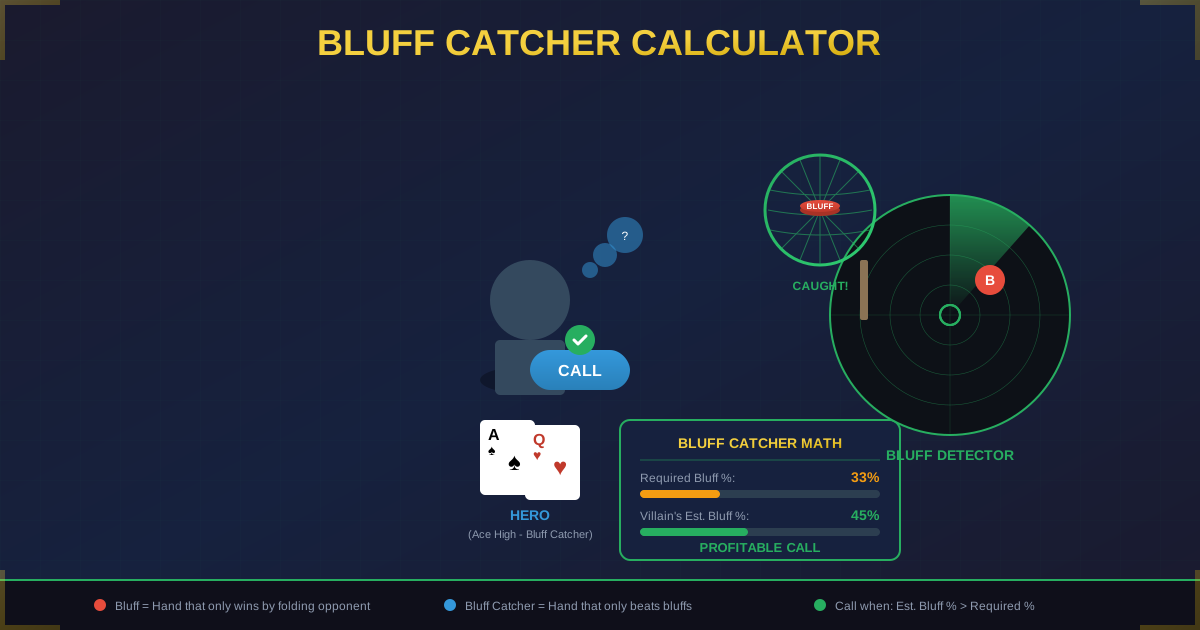
Bluffing in poker is not about courage, timing, or reading tells—it is about math. Every profitable bluff reduces to a single equation: does the fold equity multiplied by the pot size exceed the cost of the bluff when your opponent calls? If yes, the bluff is profitable regardless of what cards you hold. If no, you are lighting money on fire.
The biggest mistake recreational players make with bluffing is doing it randomly or emotionally. They bluff when they "feel like" the opponent is weak, or they never bluff because they are afraid of getting caught. Both approaches are wrong. Optimal bluffing frequency is determined by your bet size, and choosing the right hands to bluff with is determined by blockers, equity, and position. When you understand this math, bluffing transforms from a gamble into a calculated, profitable weapon.
Data from high-stakes online play shows that winning players bluff approximately 35-45% of the time on the river in single-raised pots, and their bluffs generate an average profit of 0.3-0.5 big blinds per bluff attempt. That adds up to 5-10 big blinds per 100 hands—the difference between a mediocre winner and a crusher.
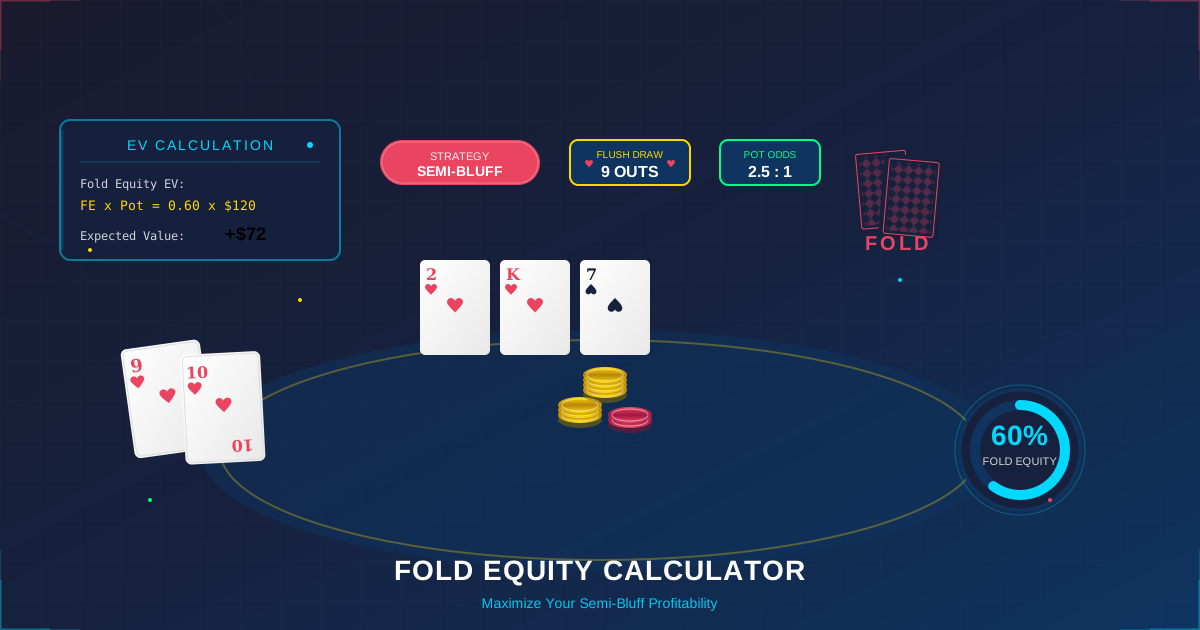
Calculate your fold equity for any bluff with our free Poker Fold Equity Calculator.
The Math of Bluffing: Fold Equity
The Fold Equity Formula
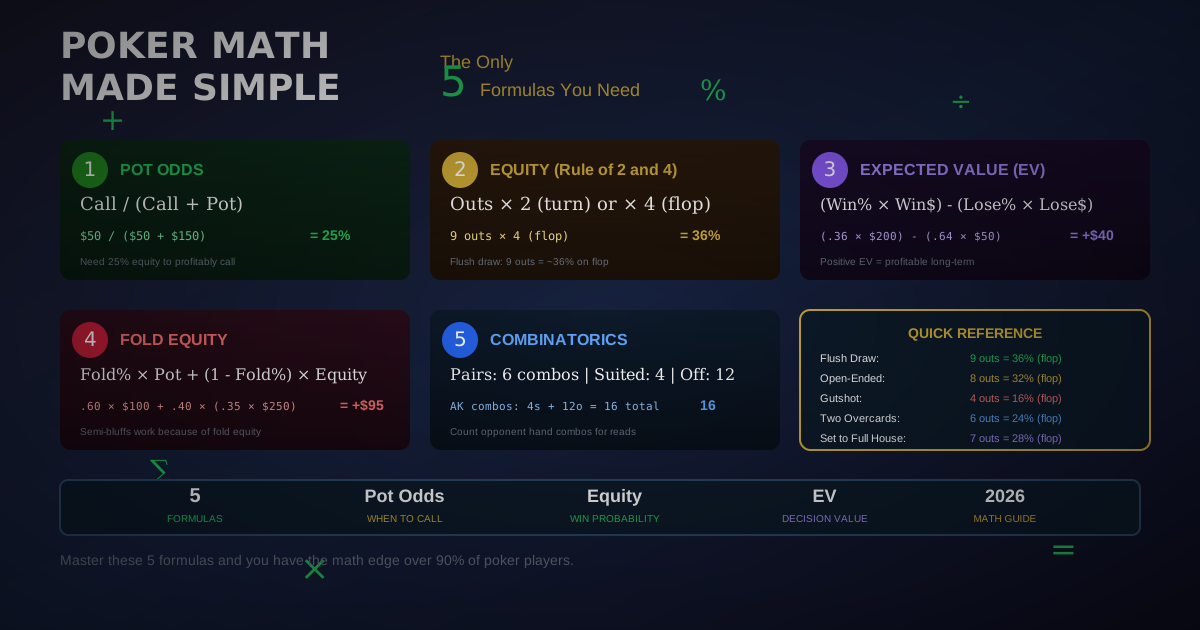
Fold equity is the expected value you gain when your opponent folds to your bet:
Fold Equity = Opponent's Fold Frequency x Pot Size at Time of Bet
Full Bluff EV Calculation:
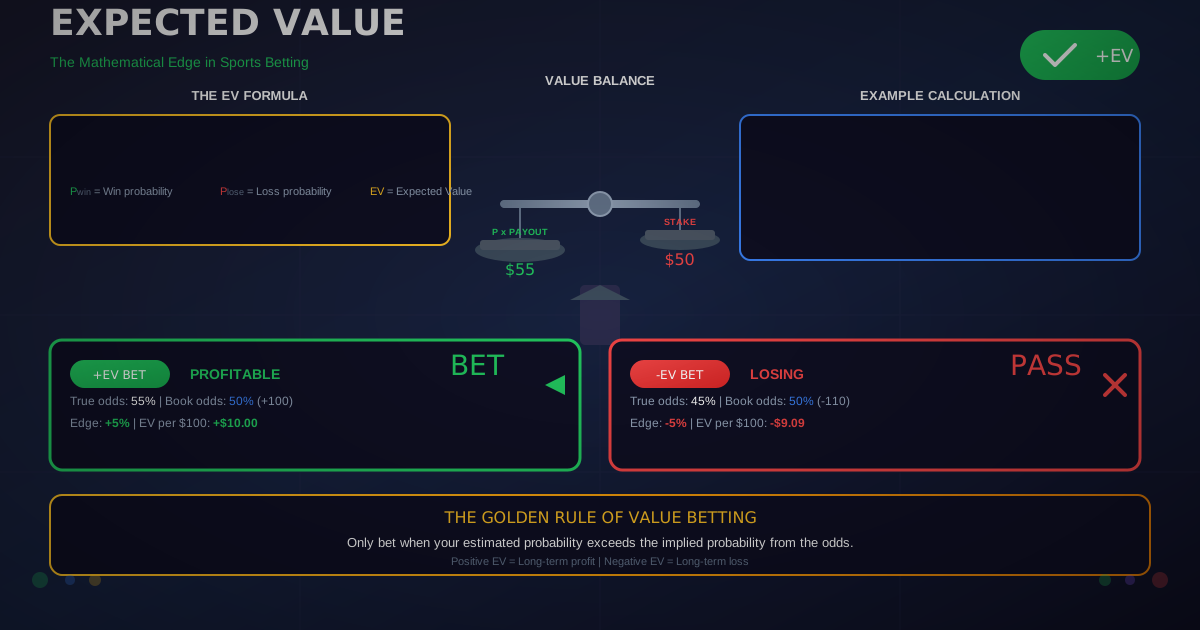
EV(Bluff) = (Fold% x Pot) - (Call% x Bet Size) + (Call% x Equity x (Pot + Bet Size))
For a pure bluff (zero equity when called):
EV(Pure Bluff) = (Fold% x Pot) - (Call% x Bet Size)
Break-Even Bluff Frequency
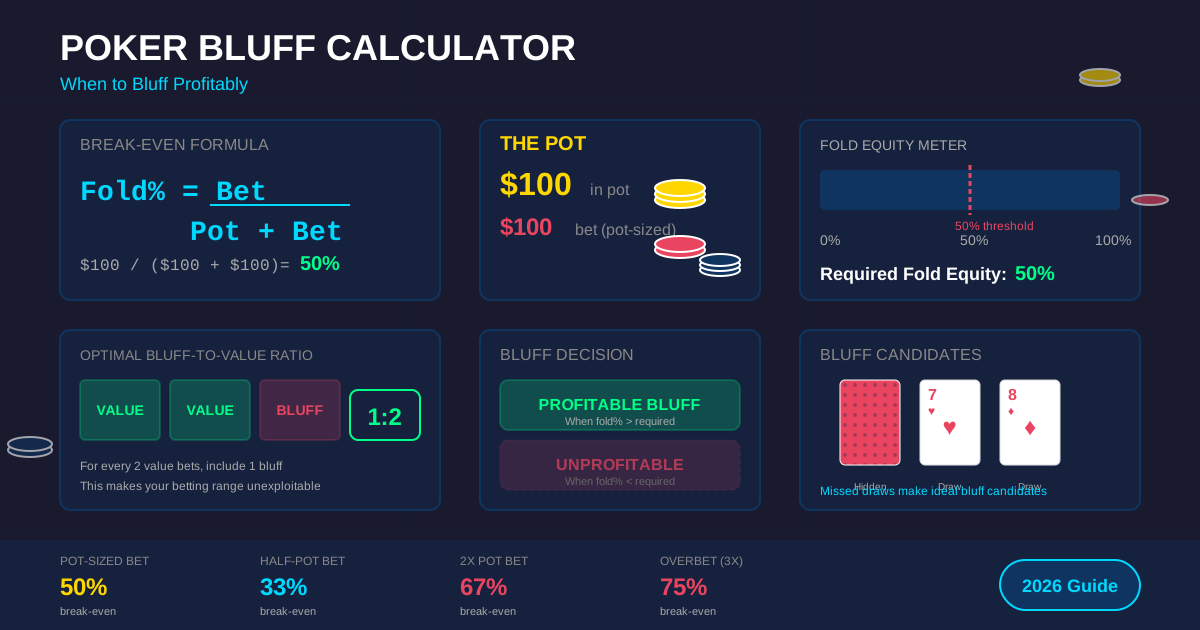
For your bluff to break even, you need your opponent to fold enough to compensate for the times you get called and lose. The break-even fold percentage depends on your bet size relative to the pot:
Break-Even Fold % = Bet Size / (Pot + Bet Size)
Break-Even Fold Percentages by Bet Size
| Bet Size (% of Pot) | Break-Even Fold % Needed | Example: $100 Pot |
|---|---|---|
| 25% ($25 into $100) | 20.0% | Need folds 1 in 5 times |
| 33% ($33 into $100) | 25.0% | Need folds 1 in 4 times |
| 50% ($50 into $100) | 33.3% | Need folds 1 in 3 times |
| 67% ($67 into $100) | 40.0% | Need folds 2 in 5 times |
| 75% ($75 into $100) | 42.9% | Need folds 3 in 7 times |
| 100% ($100 into $100) | 50.0% | Need folds 1 in 2 times |
| 150% ($150 into $100) | 60.0% | Need folds 3 in 5 times |
| 200% ($200 into $100) | 66.7% | Need folds 2 in 3 times |
Key insight: Smaller bluffs need to work less often. A 1/3-pot bluff only needs to succeed 25% of the time to be profitable. This is why small bluffs are frequently used in modern poker—they are incredibly efficient.
Use our Poker Fold Equity Calculator to determine exact fold equity requirements for any bet size.
Real Example: River Bluff EV Calculation
Situation: $2/$5 cash game. The pot is $200 on the river. You have a missed draw (zero equity if called). You consider bluffing $150 (75% pot).
Break-even fold rate: $150 / ($200 + $150) = 42.9%
Scenario 1: Opponent folds 50% of the time.
EV = (0.50 x $200) - (0.50 x $150)
EV = $100 - $75 = +$25 per bluff attempt
Scenario 2: Opponent folds 35% of the time.
EV = (0.35 x $200) - (0.65 x $150)
EV = $70 - $97.50 = -$27.50 per bluff attempt
The same bluff can be profitable or unprofitable depending entirely on your opponent's fold frequency. Knowing (or accurately estimating) how often your opponent folds is the single most important variable in bluffing decisions.
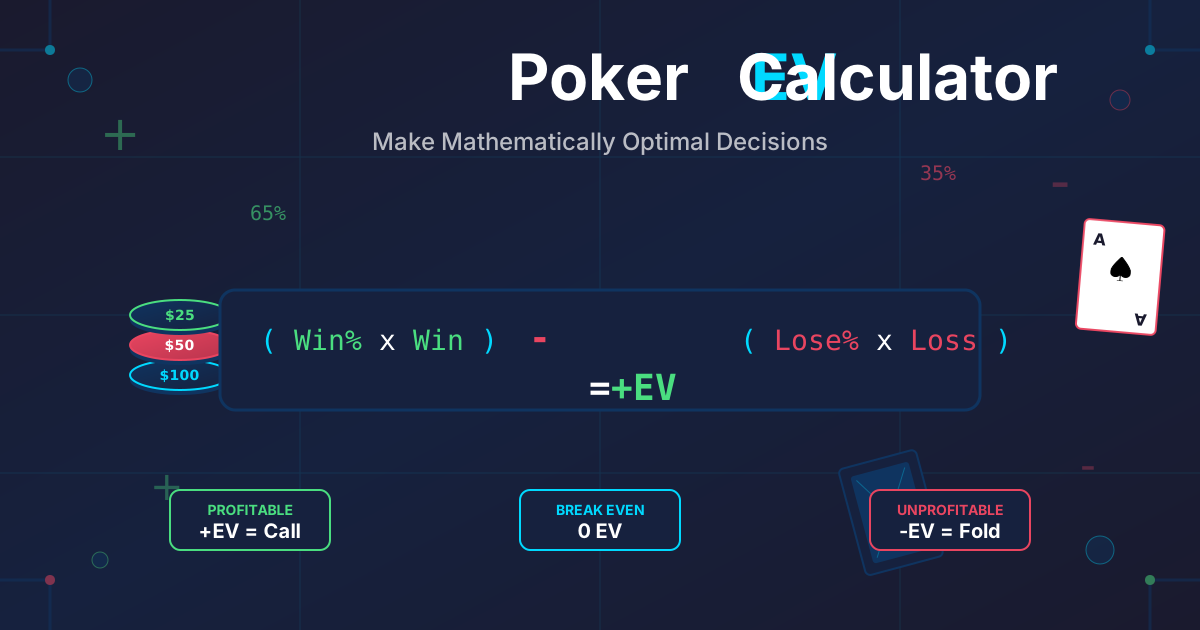
Calculate the EV of any bluff with our Poker EV Calculator.
Optimal Bluff-to-Value Ratio by Bet Size
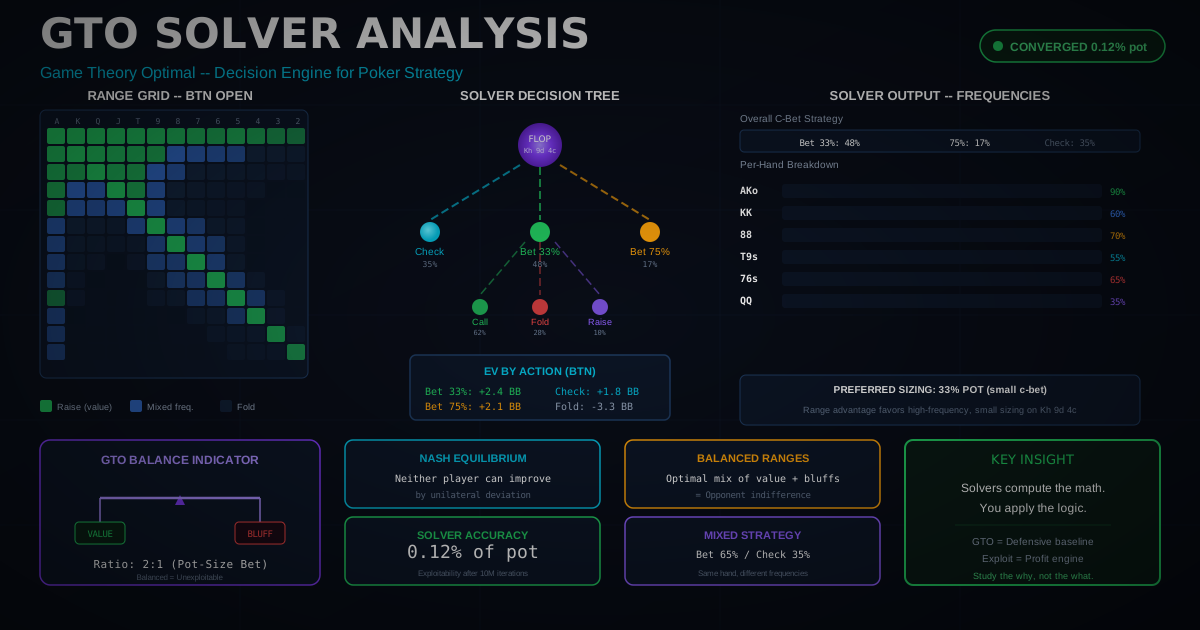
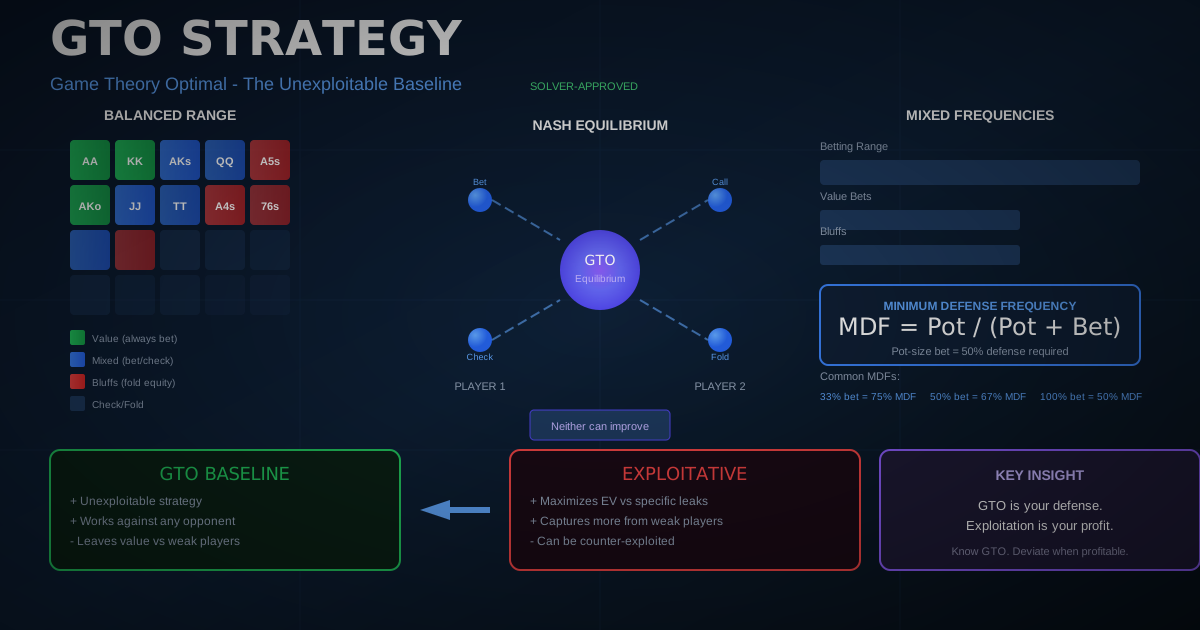
Game Theory Optimal (GTO) poker provides a framework for the correct ratio of bluffs to value bets at each bet size. This ratio ensures your opponent cannot exploit you by always calling or always folding.
The GTO Bluff Ratio
The optimal bluff frequency is derived from the pot odds your bet offers your opponent:
Optimal Bluff % of Total Bets = Opponent's Pot Odds %
When you bet a certain size, your opponent gets specific pot odds. To make your opponent indifferent between calling and folding, your bluff frequency should match those pot odds.
Bluff-to-Value Ratios by Bet Size
| Bet Size | Opponent's Pot Odds | Optimal Value:Bluff Ratio | Bluffs as % of Bets |
|---|---|---|---|
| 33% pot | 20% | 4:1 | 20% |
| 50% pot | 25% | 3:1 | 25% |
| 67% pot | 29% | ~2.5:1 | 29% |
| 75% pot | 30% | ~2.3:1 | 30% |
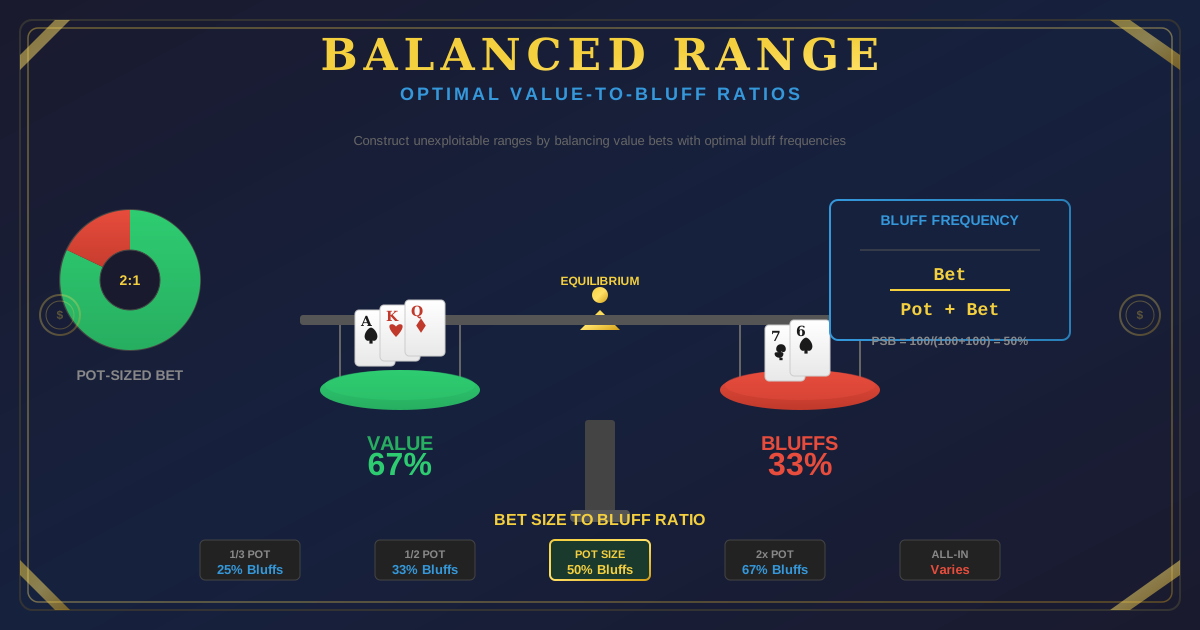
| 100% pot | 33% | 2:1 | 33% |
| 150% pot | 38% | ~1.7:1 | 38% |
| 200% pot | 40% | 1.5:1 | 40% |
What This Means in Practice
If you bet pot ($100 into $100):
- Your betting range should be approximately 67% value and 33% bluffs
- For every 2 value bets, you should have 1 bluff
- If you have 20 value combos, you need approximately 10 bluff combos
If you bet 1/3 pot ($33 into $100):
- Your betting range should be approximately 80% value and 20% bluffs
- For every 4 value bets, you should have 1 bluff
- If you have 20 value combos, you need approximately 5 bluff combos
If you overbet 2x pot ($200 into $100):
- Your betting range should be approximately 60% value and 40% bluffs
- For every 1.5 value bets, you should have 1 bluff
- If you have 15 value combos, you need approximately 10 bluff combos
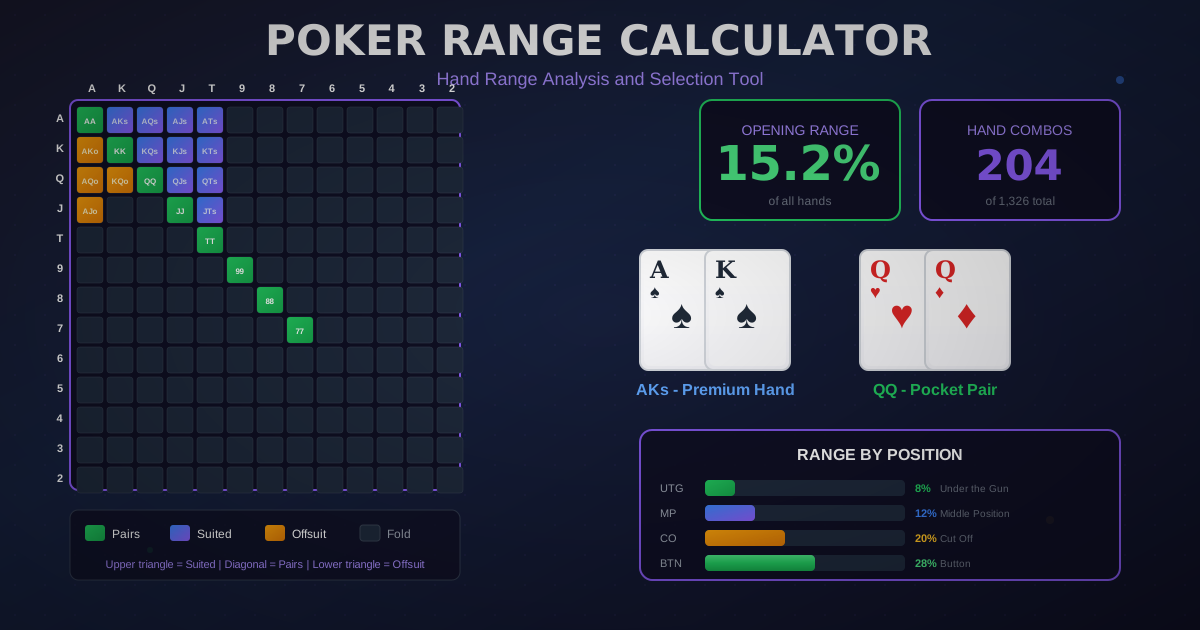
Analyze your range construction and bluff combos with our Poker Combos Calculator.
Semi-Bluffs vs. Pure Bluffs
What Is a Semi-Bluff?
A semi-bluff is a bet made with a hand that is currently behind but has significant equity to improve to the best hand. Common semi-bluffs include:
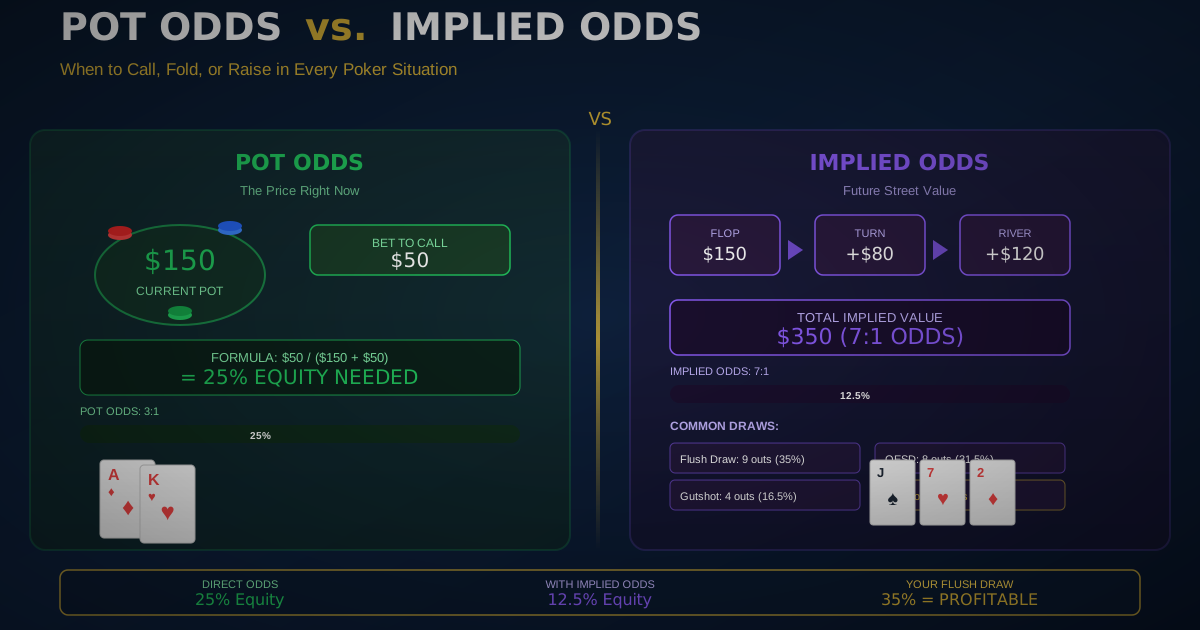
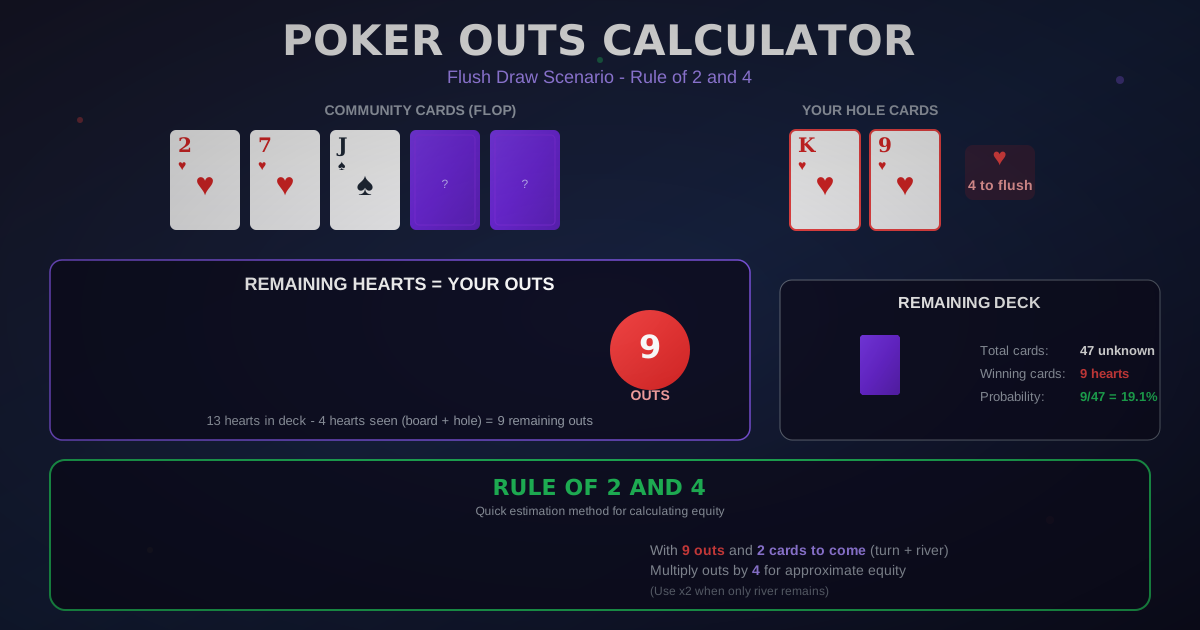
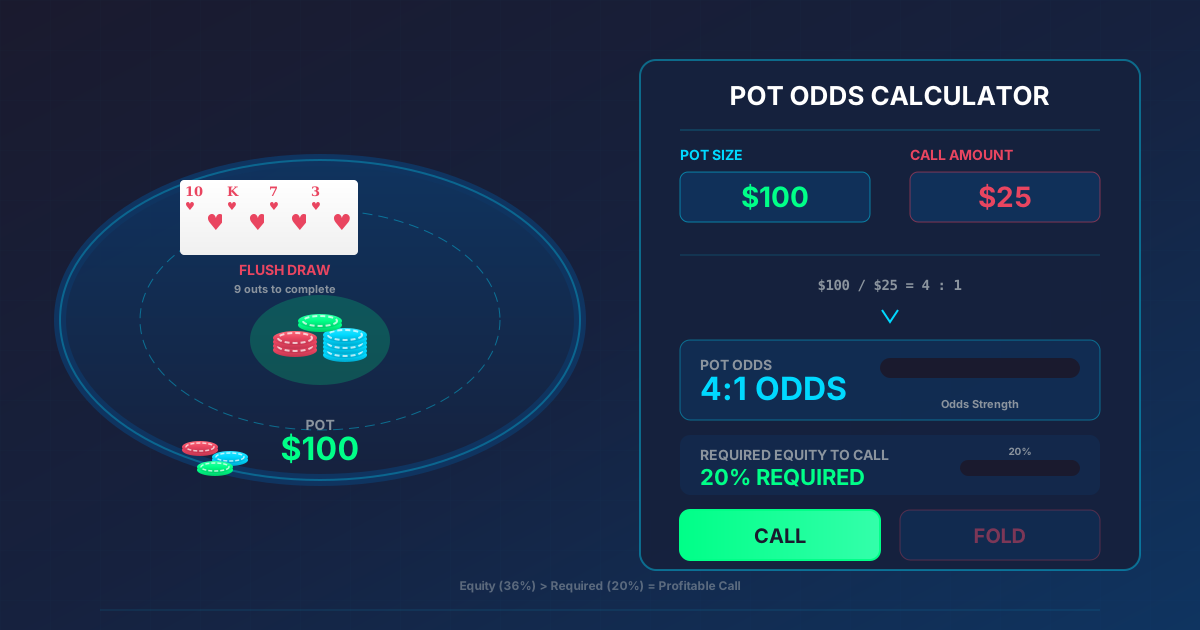
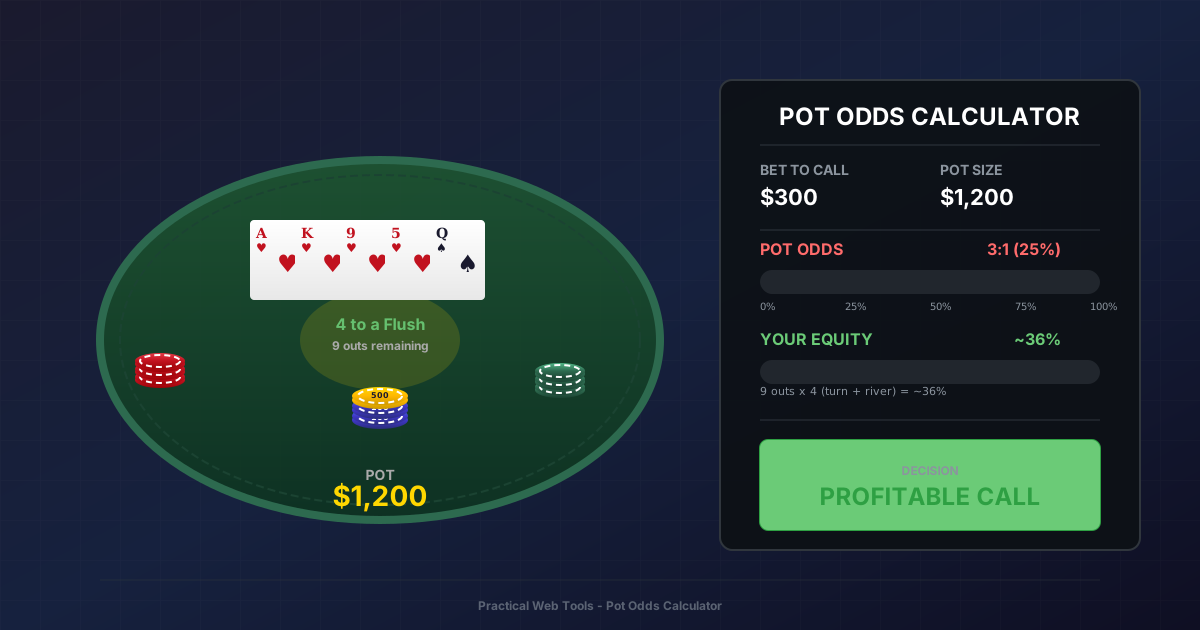
- Flush draws (9 outs, ~35% equity flop to river)
- Open-ended straight draws (8 outs, ~31.5%)
- Combo draws (12+ outs, ~45%+)
- Gutshot straight draws (4 outs, ~16.5%)
- Overcards with backdoor draws (~6-8 outs)
Why Semi-Bluffs Are Superior to Pure Bluffs
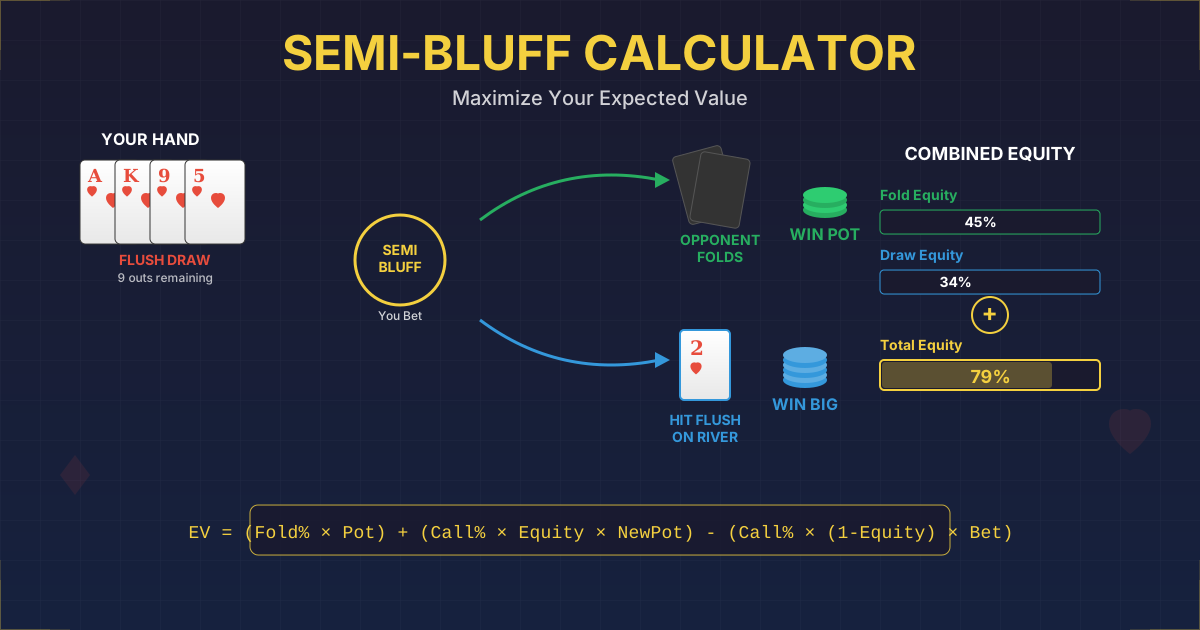
Semi-bluffs have two ways to win:
Semi-Bluff EV = (Fold% x Pot) + (Call% x Equity x (Pot + Bet)) - (Call% x (1-Equity) x Bet)
Example: Semi-Bluff with Flush Draw on the Flop
Pot: $80. You bet $60 with a flush draw (35% equity through the river). Opponent calls 60% of the time.
EV = (0.40 x $80) + (0.60 x 0.35 x ($80 + $60 + $60)) - (0.60 x 0.65 x $60)
EV = $32 + (0.21 x $200) - (0.39 x $60)
EV = $32 + $42 - $23.40
EV = +$50.60
Compare this to a pure bluff (0% equity when called):
EV = (0.40 x $80) - (0.60 x $60)
EV = $32 - $36
EV = -$4.00
The semi-bluff is worth +$50.60 while the pure bluff is -$4.00 in the same spot. The draw equity transforms an unprofitable pure bluff into a very profitable semi-bluff.
Calculate your equity when called with our Poker Equity Calculator.
When to Pure Bluff
Pure bluffs (zero equity when called) are appropriate when:
- Fold equity is very high. Your opponent's range is weak and they will fold frequently.
- It is the river. No more cards to come, so equity is irrelevant—you either have the best hand or you do not.
- You are blocking strong hands. Your cards reduce the probability of your opponent holding a calling hand.
- You have the right bet size. Smaller bets need to work less often, making pure bluffs more viable.
When to Semi-Bluff
Semi-bluffs are appropriate when:
- You have significant equity. At least 8-10 outs (17-21% on one card).
- You have cards to come. Semi-bluffs on the flop and turn are more powerful than on the river.
- Your draw is to the nuts. Nut draws give you the option to stack opponents when you hit.
- Your opponent's range includes hands that will fold. If they are calling with everything, the "bluff" component is gone (but the equity component remains).
Evaluate your hand equity for semi-bluff decisions with our Poker Equity Calculator.
Choosing the Right Hands to Bluff With
Not all hands are equal bluff candidates. The best bluffs share specific characteristics that maximize your EV.
The Ideal Bluff Candidate Has:
- Strong blocker effects. Your hand blocks your opponent's strong holdings.
- Low showdown value. You have little chance of winning without bluffing.
- Some equity (if not on the river). Backdoor draws or gutshots provide insurance.
- Removal of calling combos. Your cards remove hands your opponent would call with.
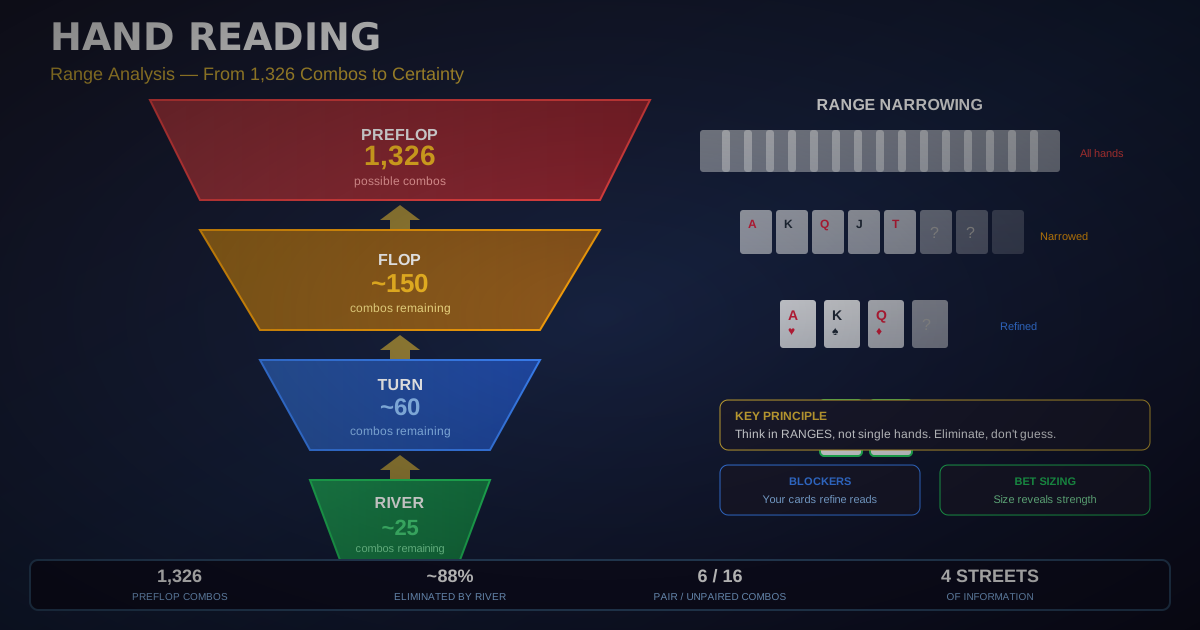
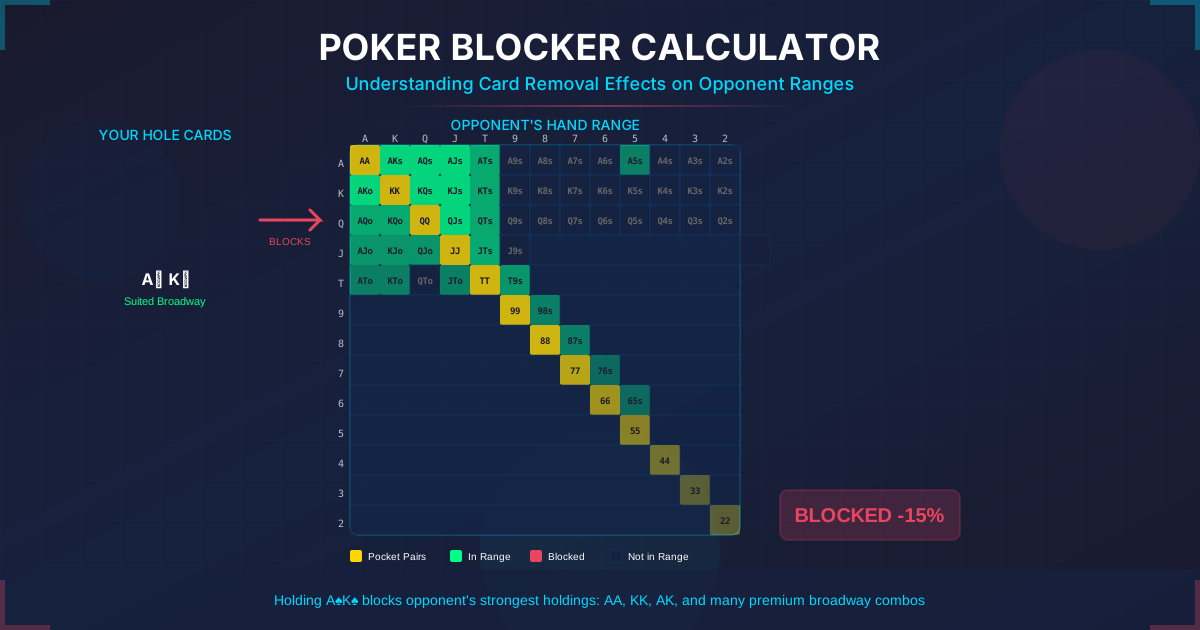
Blocker Effects on Bluffing
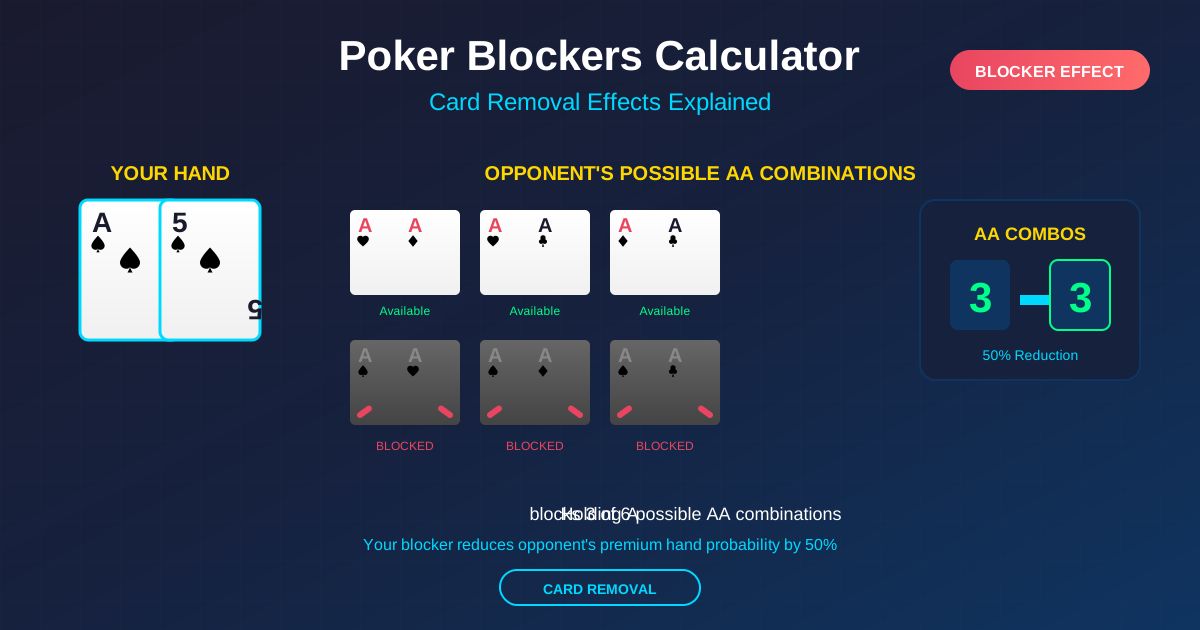
Blockers are the most important factor in choosing bluff hands. Here is how they work:
Blocking Strong Hands (Good for Bluffing):
- Holding an ace on a board with an ace blocks opponent's top pair (AK, AQ, AJ)
- Holding a king on a K-high board blocks top pair
- Holding a spade on a board with three spades blocks flush combos
Blocking Weak/Folding Hands (Bad for Bluffing):
- Holding mid cards on a high-card board blocks hands that would fold anyway
- Holding suited cards that block opponent's draws means they are more likely to have made hands
Blocker Examples
Good Bluff Candidate: You hold Ah 5c on a river board of Kd Qd 8c 3d 2h.
Why this is a good bluff:
- You hold the Ad? No, you hold Ah. But on this board with three diamonds, the key is whether you block the nut flush. You do not hold a diamond, but you hold an ace which blocks AK and AQ—two of your opponent's strongest calling hands.
- Your 5-high cannot win at showdown—no showdown value.
- By blocking AK (4 combos reduced) and AQ (4 combos reduced), you remove 8 combos of hands your opponent would call with.
Bad Bluff Candidate: You hold 7d 6d on the same board.
Why this is a bad bluff:
- You hold two diamonds, which BLOCKS your opponent's diamond draws. This means their range is MORE weighted toward made hands (pairs, two pairs, sets) that will call.
- Your 7d blocks hands like 7d Xd flush combos that your opponent would have folded anyway.
- You are removing hands from their folding range, not their calling range.
Analyze blocker effects on your bluffing candidates with our Poker Blocker Calculator.
Board Texture and Bluffing Opportunities
Boards That Favor Bluffing
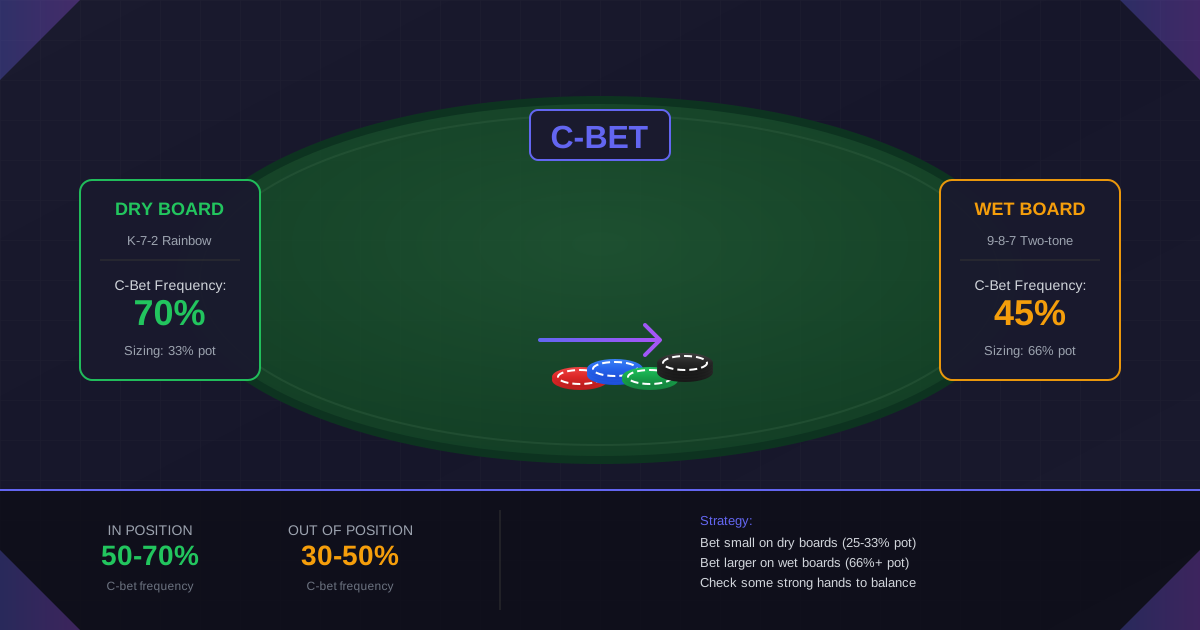
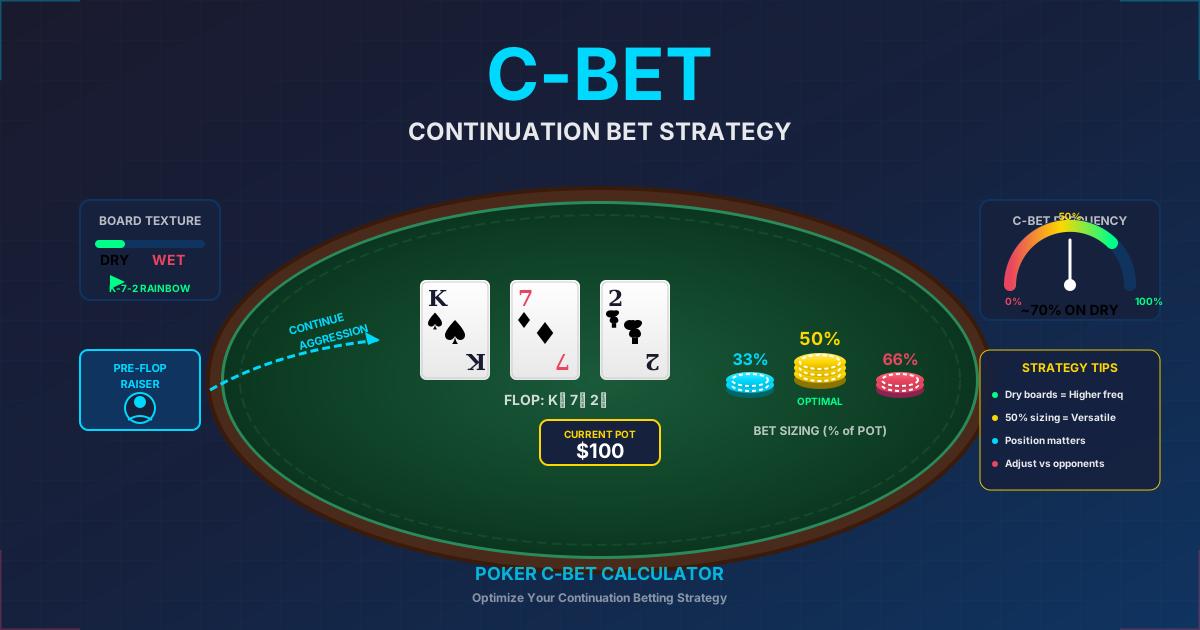
1. Dry, Disconnected Boards (A-7-2 Rainbow)
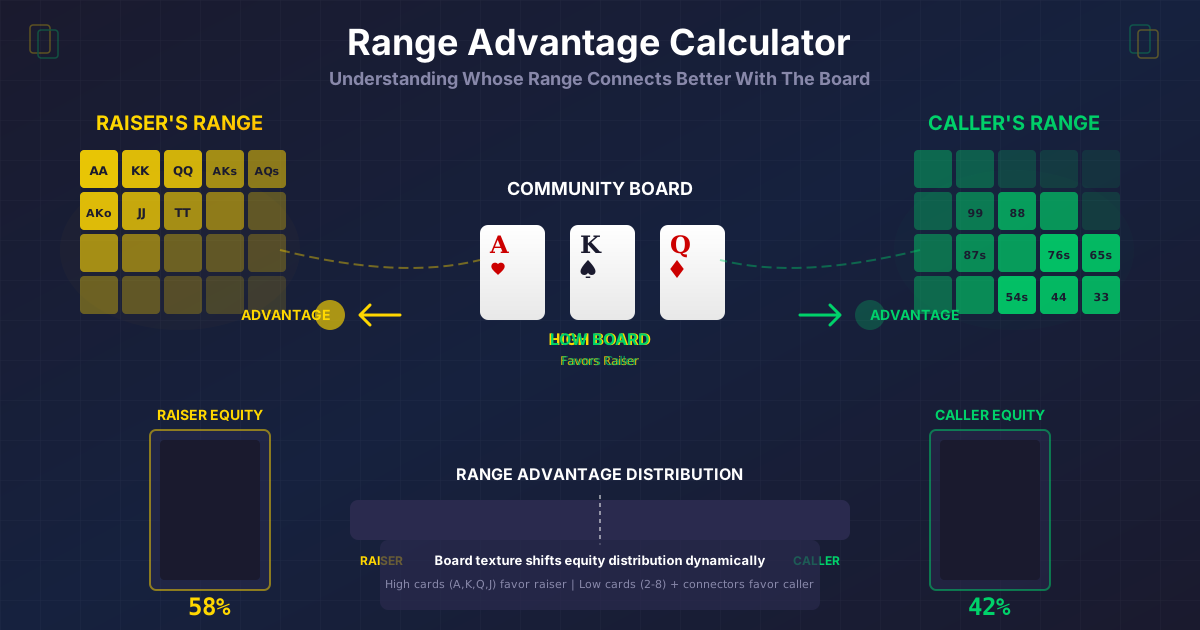
Why: These boards favor the preflop raiser's range heavily. As the preflop raiser, you can credibly represent hands like AA, AK, AQ, and 77. Your opponent (the caller) has fewer strong combos on this board, making bluffs effective.
C-bet bluff frequency: 60-70% on dry boards.
2. High Card Boards That Hit Your Range
When the board has cards that are more likely in your range than your opponent's, you can bluff more. An A-K-J board heavily favors the preflop raiser's range over the caller's range.
3. Scare Card Turn/River Cards
When an ace, king, or another scare card hits the turn or river, it can be an excellent bluffing opportunity because:
- It is more likely in your range (you might have opened with AX)
- It may have improved your hand (in your opponent's mind)
- It reduces the hands your opponent can comfortably call with
Boards That Disfavor Bluffing
1. Wet, Connected Boards (9-8-7 Two-Tone)
Why: These boards connect with many calling ranges. Your opponent likely has pairs, draws, combo draws, or made hands. Bluff c-betting these boards is unprofitable—opponents have too many hands they cannot fold.
C-bet bluff frequency: 20-30% on wet boards.
2. Low, Paired Boards (3-3-7)
Why: While this seems like a good bluffing board, opponents with overcards (which is most of their range) have decent equity and are less likely to fold because they know you rarely have a 3.
3. Boards With Completed Draws
When the flush or straight completes, opponents who had draws either hit or missed. Those who missed fold regardless of whether you bet. Those who hit call easily. Bluffing becomes less effective because the proportion of hands that fold is lower.
Determine the optimal bet size and frequency based on board texture with our Poker Hand Range Calculator.
Bet Sizing for Bluffs
Principle: Bluff the Same Size as Value Bets
The most important bluffing principle is consistency: your bluffs and value bets should use the same sizing in the same spots. If you always bet small when bluffing and large when value betting, observant opponents will exploit you instantly.
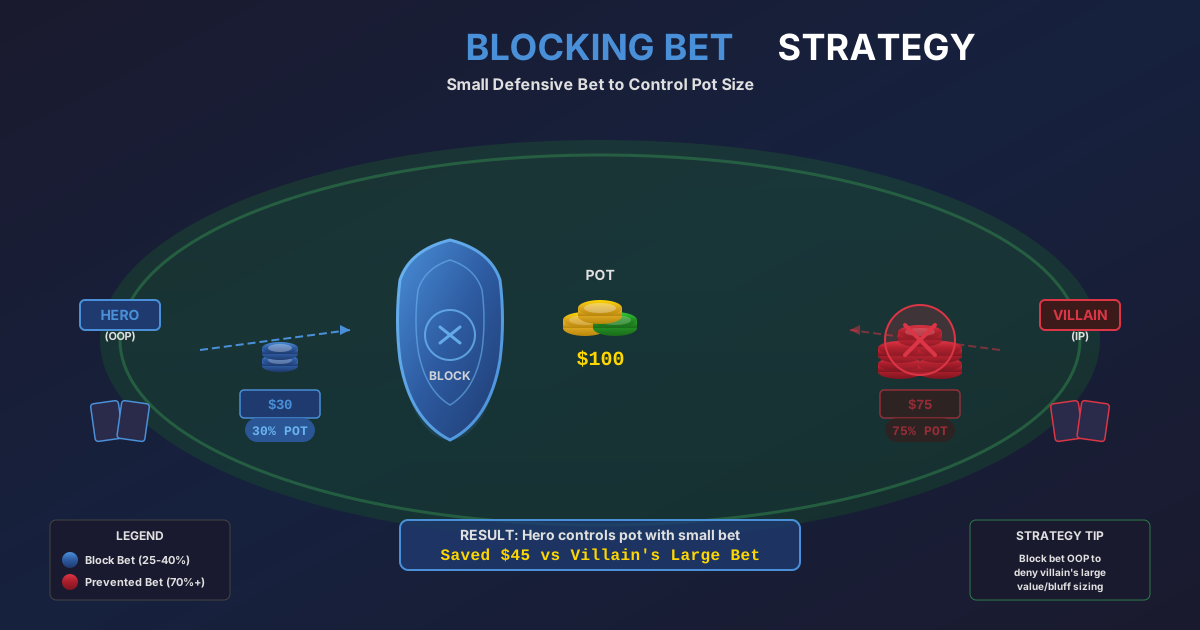
Small Bluffs vs. Large Bluffs
Small Bluffs (25-40% pot):
Advantages:
- Need to work less often (20-29% fold rate)
- Risk less money per bluff
- Can bluff more frequently (more bluffs in your range)
- Create a high bluffing frequency that is hard to exploit
Disadvantages:
- May not generate enough fold equity against strong hands
- Give opponents excellent pot odds to call with marginal hands
Large Bluffs (75-150% pot):
Advantages:
- Generate more fold equity per bluff
- Force opponents to make difficult decisions
- Can move opponents off medium-strength hands
Disadvantages:
- Need to work more often (43-60% fold rate)
- Risk more money per attempt
- Require fewer bluffs in your range (narrower margin for error)
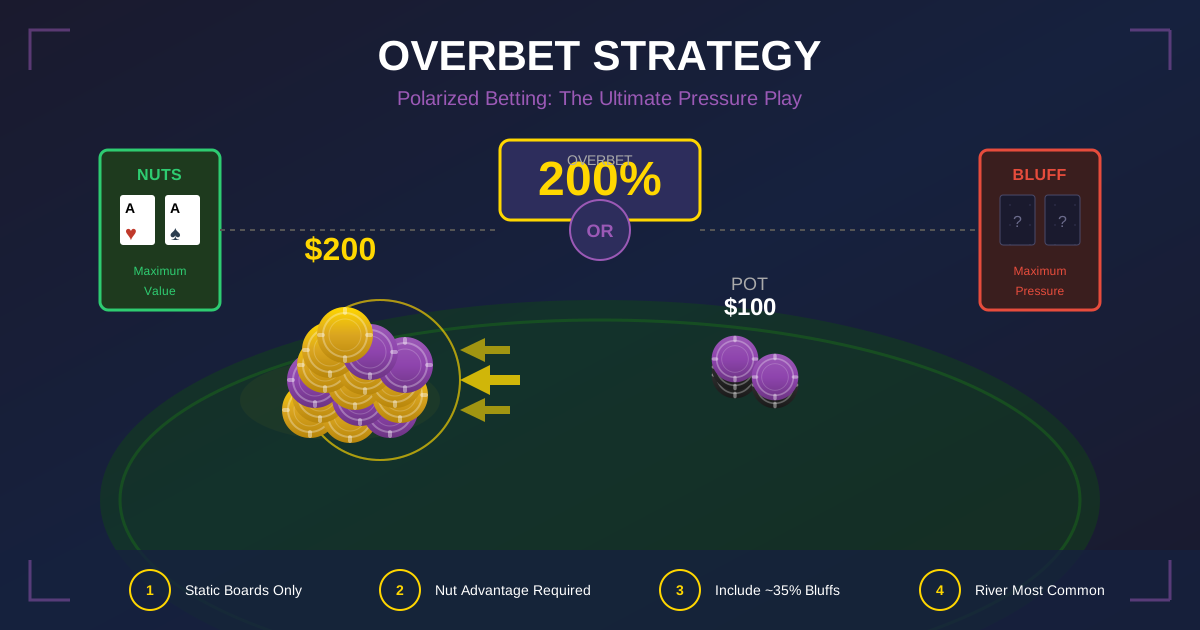
Overbetting as a Bluff
Overbets (betting more than the pot) are a powerful bluffing tool because:
- They require high fold rates (60%+ for 1.5x pot), but they generate those fold rates because the bet size is intimidating
- They polarize your range to nutted hands and air—no medium-strength hands
- They exploit opponents who have capped ranges (no super-strong hands because they would have raised earlier)
Example: Board: As Ks 8d 4c 2h. You fire 1.5x pot ($300 into $200) on the river. Opponent's range is capped (no sets, no two pair, no flushes—they would have raised earlier). Their range is mostly one pair hands (AQ, AJ, KQ). An overbet forces them to fold one pair, which they should be doing over 60% of the time.
Calculate the EV of different bluff sizes with our Poker EV Calculator.
Street-by-Street Bluffing Strategy
Flop Bluffs (C-Bet Bluffs)
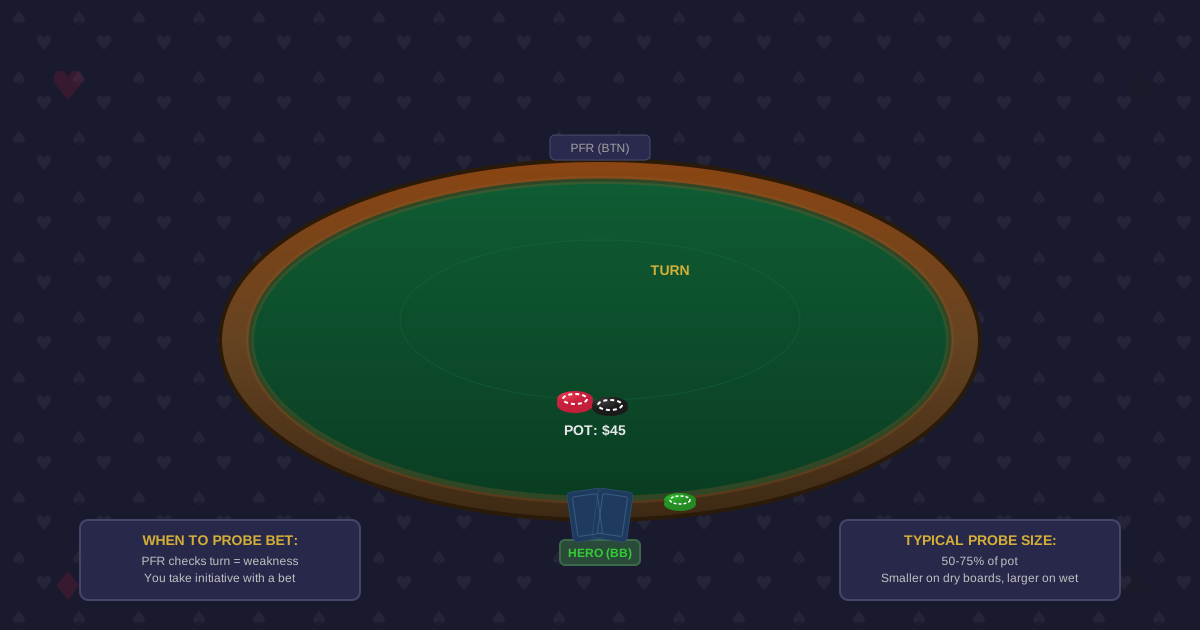
The flop c-bet is the most common bluff in poker. As the preflop raiser, you bet the flop to represent continued strength, even when you missed.
C-Bet Bluff Guidelines:
| Board Texture | Recommended C-Bet Frequency | Sizing |
|---|---|---|
| Dry (A72r, K83r) | 65-75% | 25-33% pot |
| Semi-Dry (KT4r) | 50-60% | 33-50% pot |
| Wet (JT8tt) | 25-35% | 50-67% pot |
| Monotone (Qh8h3h) | 20-30% | 50-67% pot |
Hands to c-bet bluff with:
- Overcards with backdoor draws (AQ on 8-7-4 with backdoor flush)
- Gutshots (JT on K-9-4)
- Backdoor flush draws plus overcards
- Complete air when the board texture favors your range
Turn Bluffs (Barrels)
Turn barrels are stronger statements than flop c-bets. Continuing the bluff on the turn indicates a stronger range, so your bluff selection must be tighter.
Turn Barrel Bluff Candidates:
- Draws that picked up equity (gutshot became OESD, backdoor became flush draw)
- Overcards on scare card turns (ace or king hits)
- Hands with blockers to calling hands
- Combo draws that may as well push for fold equity
Turn barrel frequency: 35-50% of flop betting range (value and bluffs combined)
River Bluffs (The Final Decision)
River bluffs are pure—there is no equity cushion. You either win by making your opponent fold, or you lose the bet amount.
River Bluff Requirements:
- Your hand has zero or near-zero showdown value
- You block your opponent's strong calling hands
- You do not block your opponent's folding range
- Your story makes sense (your betting line is consistent with a value hand)
- Your bet size creates the right break-even fold frequency
River bluff frequency: 25-40% of your river betting range should be bluffs (depending on bet size)
Analyze your hand's blocker effects for river bluffs with our Poker Blocker Calculator.
Real-World Bluffing Examples
Example 1: The Profitable C-Bet Bluff ($1/$2 Live)
Situation: You open to $8 from the CO with Jd 9c. BB calls. Pot: $17.
Flop: Ah 7c 3d. BB checks.
Analysis:
- This is a dry, ace-high board that heavily favors your opening range
- BB's calling range includes many hands that missed: KQ, KJ, QJ, suited connectors, small pairs
- You have zero equity (J-high) but strong fold equity
- C-bet $6 (35% pot). Break-even fold %: 26%
- BB folds approximately 55-65% of their range on this board
EV: (0.60 x $17) - (0.40 x $6) = $10.20 - $2.40 = +$7.80 per attempt
This small c-bet bluff generates nearly $8 in profit every time you make it.
Example 2: The Semi-Bluff Raise ($2/$5 Online)
Situation: Villain opens to $12 from the BTN. You call from the BB with 8c 7c. Pot: $25.
Flop: 9c 5c 2d. You check. Villain bets $15.
Your hand: Flush draw (9 outs) + gutshot to the 6 (3 additional outs) = 12 outs, ~45% equity through the river.
Option 1: Call
- Safe, see the turn for $15
- EV: Positive due to equity and implied odds
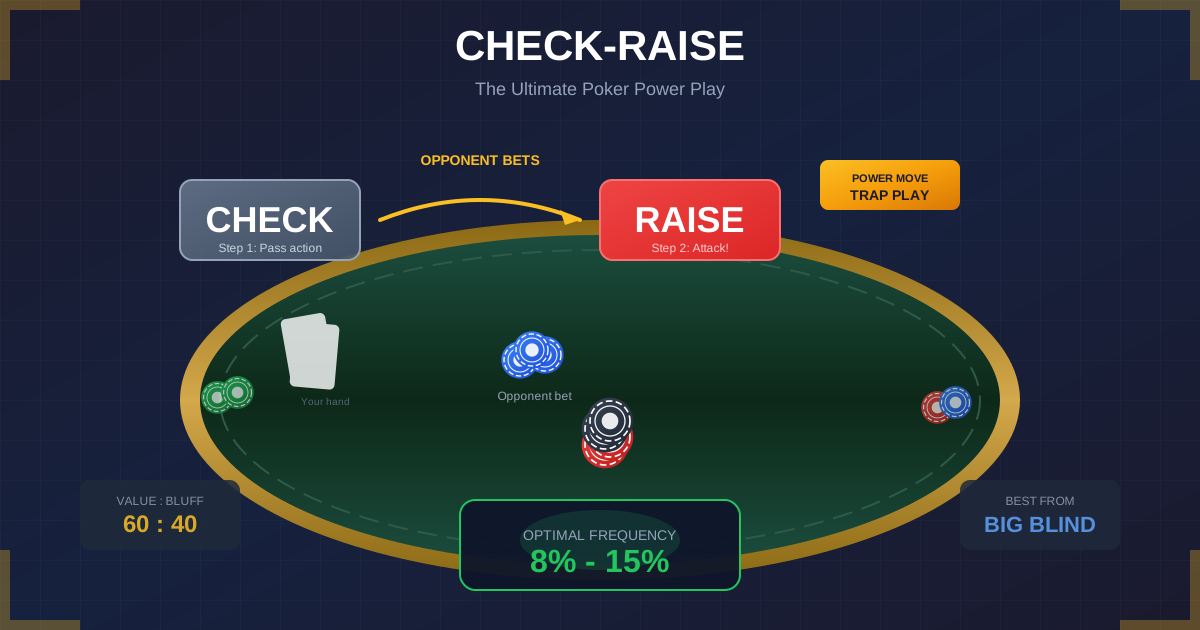
Option 2: Check-Raise to $50
- Adds fold equity to already-strong equity
- Villain folds estimated 35% of their c-betting range
- When called, you have ~45% equity in a $100 pot
EV(Raise) = (0.35 x $40) + (0.65 x 0.45 x $100) - (0.65 x 0.55 x $50)
EV(Raise) = $14 + $29.25 - $17.88 = +$25.37
EV(Call) = (0.45 x ($25 + $15 + $15)) - (0.55 x $15) + implied odds
EV(Call) ≈ $24.75 - $8.25 + ~$10 implied = +$26.50
Both are profitable, but the semi-bluff raise and the call are nearly equal in EV. The raise has higher variance but builds a larger pot for when you hit.
Determine your fold equity for check-raise bluffs with our Poker Fold Equity Calculator.
Example 3: The River Overbet Bluff ($5/$10 Live)
Situation: You open to $30 from the CO with Kd Qc. BB calls. Pot: $65.
Flop: Ts 8s 3h. BB checks. You bet $22 (1/3 pot) with overcards. BB calls. Pot: $109.
Turn: 2c. BB checks. You bet $75 (69% pot) continuing the story. BB calls. Pot: $259.
River: 4d. BB checks. You have K-high—no showdown value.
Analysis of BB's range: Having called two barrels, BB's range is weighted toward:
- Top pair (T8s, T9s, AT, KT = some combos were folded)
- Second pair (88, 99 = most raised flop)
- Medium strength hands: Ts Xs (flush draw that missed), 9x pairs
- The missed flush draws (Xs Xs) are giving up on the river
BB's range is capped—no monsters (sets and two pair would have raised earlier). Their range is mostly one pair hands.
Decision: Bet $400 (1.5x pot overbet).
Break-even fold rate: $400 / ($259 + $400) = 60.7%
Expected fold rate against capped one-pair range: 60-70%. Opponents struggle to call with single pair against overbets, especially when the board offers no draws that bricked.
EV: (0.65 x $259) - (0.35 x $400) = $168.35 - $140 = +$28.35
The river overbet bluff generates +$28.35 in EV because opponent's range is capped and cannot withstand the sizing pressure.
Example 4: The Failed Bluff (What NOT To Do) ($1/$3 Live)
Situation: You hold 6d 5d in the big blind. Three-way pot. Pot: $30.
Flop: Kh Qh 9c. You check. MP bets $20. BTN calls. You call with a gutshot (any J gives a straight).
Turn: 3c. You check. MP bets $50. BTN calls.
River: 2h. Flush completes. You decide to "represent" the flush by betting $120 into the $170 pot.
Why this bluff fails:
- You have no credibility—you checked and called twice, then suddenly bet the river. This line does not represent a flush.
- Two opponents are in the hand—you need BOTH to fold. Fold equity drops exponentially with multiple opponents.
- You are not blocking flush hands—you hold diamonds, not hearts.
- The BTN may have called the turn with a flush draw and now holds a flush.
- Break-even fold rate: 41.4%. Getting both opponents to fold 41%+ of the time is unrealistic.
Lesson: Bluffs must tell a consistent story. Your betting line must make sense for the hand you are representing. Multi-way bluffs are rarely profitable.
Example 5: Blocker-Based River Bluff ($2/$5 Online)
Situation: You hold As 4s on a river board of Kd Qh 8s 5c 3s. You have been the preflop raiser and checked back the turn after c-betting the flop.
Your hand: A-high with no pair. Zero showdown value against any opponent who calls.
Blocker analysis:
- You hold the As, which blocks AK and AQ—two of the strongest hands in opponent's calling range
- You block AK: reduces combos from 12 to 9
- You block AQ: reduces combos from 12 to 9
- You do NOT block KQ, KJ, QJ, or any pairs—these are hands that may fold
Opponent's range after check-calling flop, checking turn and river: Weak Kx, Qx pairs, 88, some draws that gave up.
Decision: Bet $85 into the $120 pot (71% pot).
Break-even fold %: 41.5%
Expected fold %: With your ace blocker removing AK and AQ from their range, their remaining range is weaker (Kx with weak kicker, Qx hands). These weaker holdings fold approximately 45-50% of the time.
EV: (0.47 x $120) - (0.53 x $85) = $56.40 - $45.05 = +$11.35
The blocker turns a break-even bluff into a profitable one by removing the hands that would call.
Evaluate blocker effects with our Poker Blocker Calculator.
Example 6: The Multi-Street Bluff Plan ($2/$5 Live)
Situation: You hold Ac 5c in the HJ. You open to $15. BB calls. Pot: $32.
Your plan: If you miss the flop, you have a planned bluffing line: bet flop, barrel turn on favorable cards, give up on unfavorable cards.
Flop: Kh 9d 4s. BB checks. You c-bet $11 (1/3 pot) with ace-high and a backdoor club draw.
Bluff rationale: K-high board favors your range. Small bet needs only 25% folds to break even.
BB calls. Pot: $54.
Turn: Ac. You hit a pair of aces plus backdoor flush draw. This card is a scare card for BB—it could mean you have AK, AQ, or AA. You bet $38 (70% pot).
What changed: Your hand improved from pure bluff to a value bet/semi-bluff. You now have showdown value plus a flush draw. The bluff plan evolved into a value bet based on the turn card.
BB folds. You win $54 without showdown.
Key lesson: Plan your bluffs across multiple streets, but stay flexible. The turn card changed your hand from a bluff to a value bet, which is the ideal outcome.
Construct your betting ranges and identify bluff candidates with our Poker Hand Range Calculator.
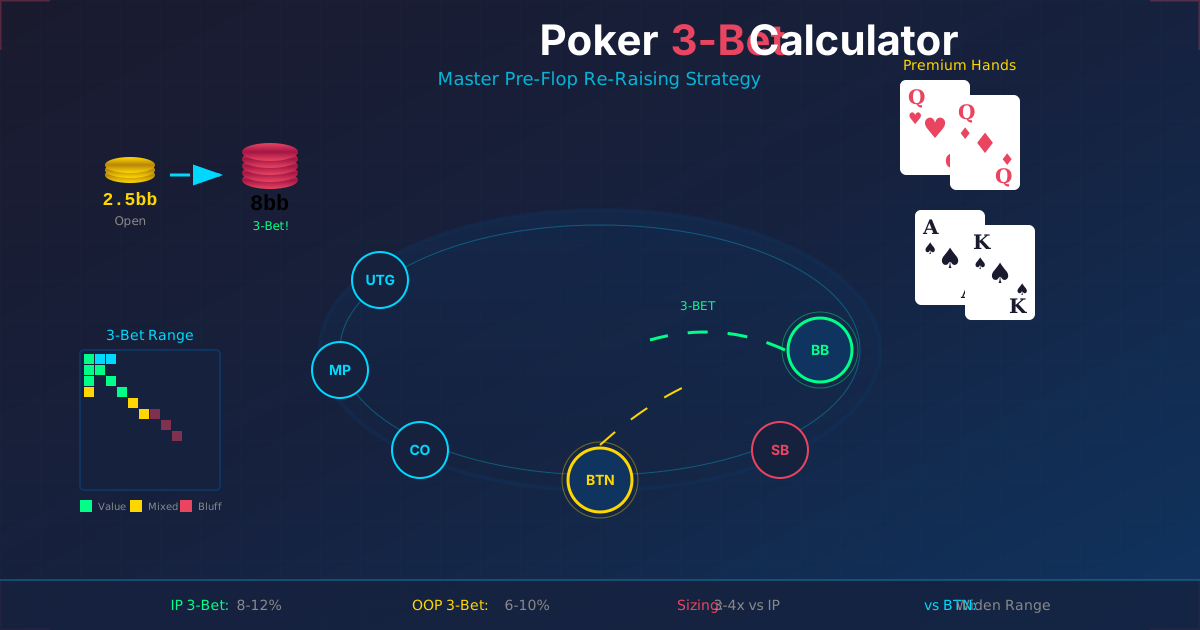
The 3-Bet Bluff
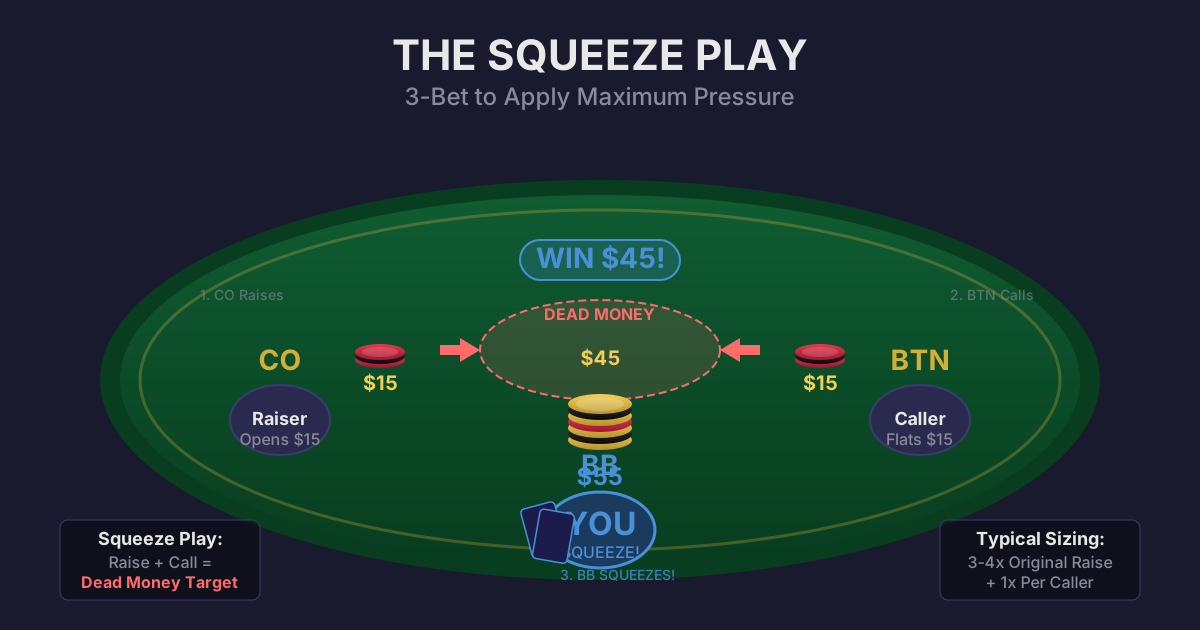
Pre-flop 3-bet bluffs are a critical component of modern poker strategy.
Why 3-Bet Bluffing Works
- Small sizings are efficient. A 3-bet to 3x the open with a bluff risks $15-$18 to win $8-$10. You only need 55-65% folds.
- Fold equity is high. Most players only continue against 3-bets with the top 10-15% of their range.
- You win the pot immediately. No postflop play required—instant profit when it works.
- It balances your 3-bet range. Pure value 3-bets become predictable. Adding bluffs makes your 3-bets unexploitable.
Best 3-Bet Bluff Candidates
| Hand Type | Why It Works | Example |
|---|---|---|
| Suited aces (A2s-A5s) | Blocks AA/AK, has equity when called | A4s |
| Suited connectors | Good equity when called, hard to dominate | 76s, 87s |
| Suited one-gappers | Similar to suited connectors | T8s, 97s |
| Low pocket pairs (22-55) | Set mining equity when called | 33, 44 |
Hands to AVOID 3-bet bluffing with:
- Offsuit broadways (KJo, QTo): Too easily dominated when called
- Suited hands that block opponent's folding range
- Hands with no equity when called (like T3o)
Optimize your 3-bet bluffing ranges with our Poker 3-Bet Calculator.
SPR and Bluffing
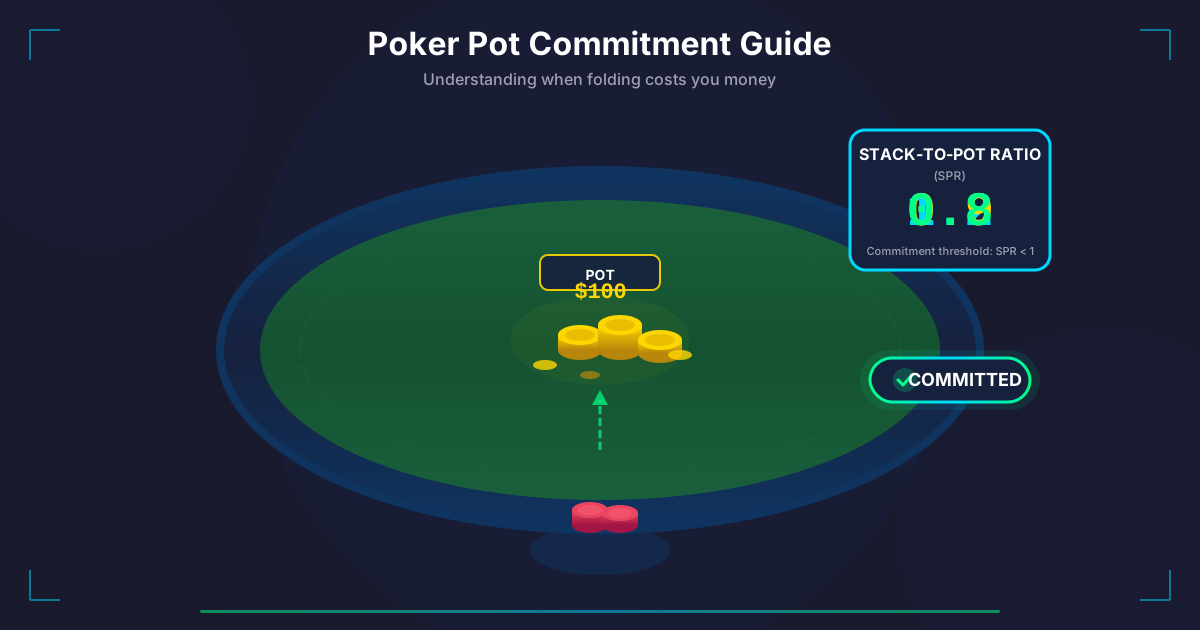
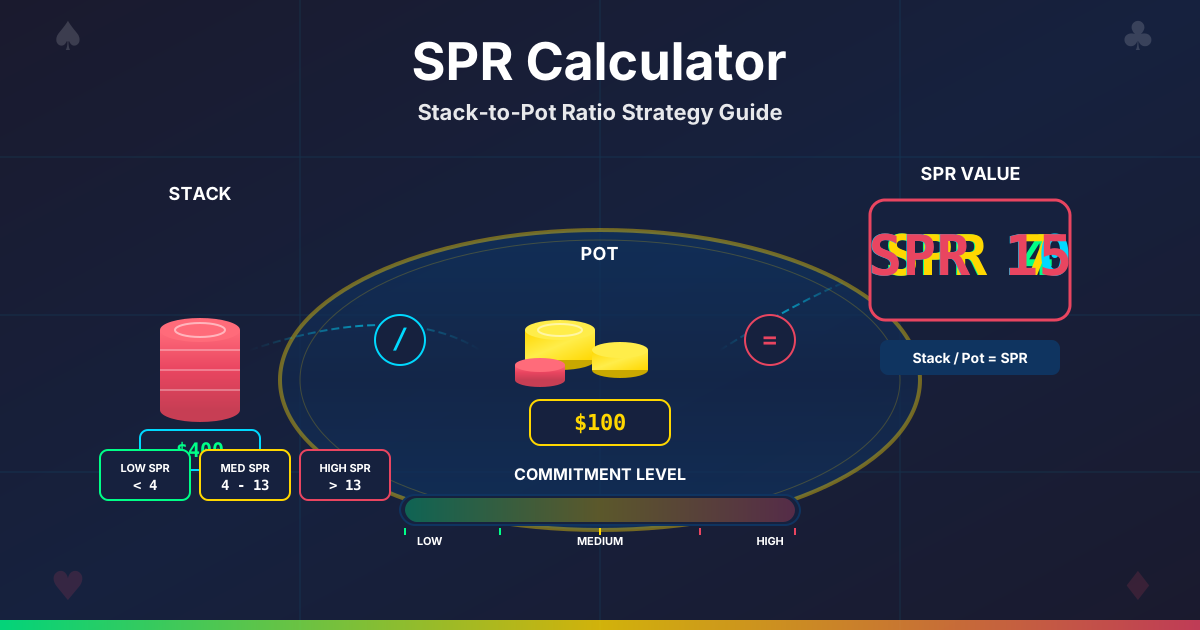
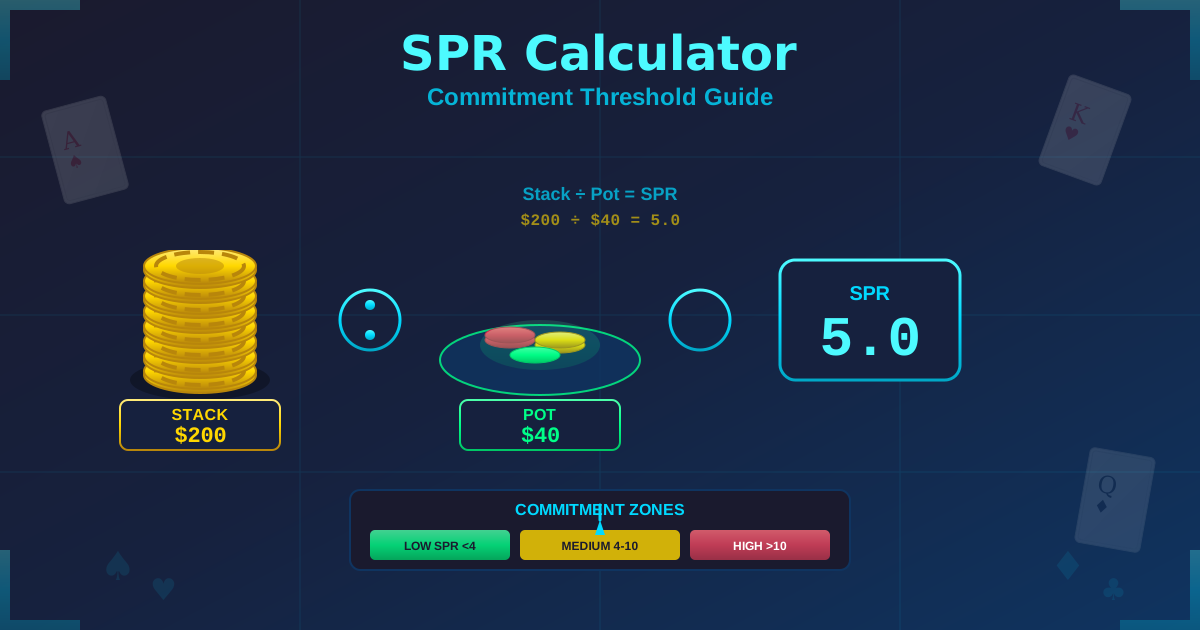
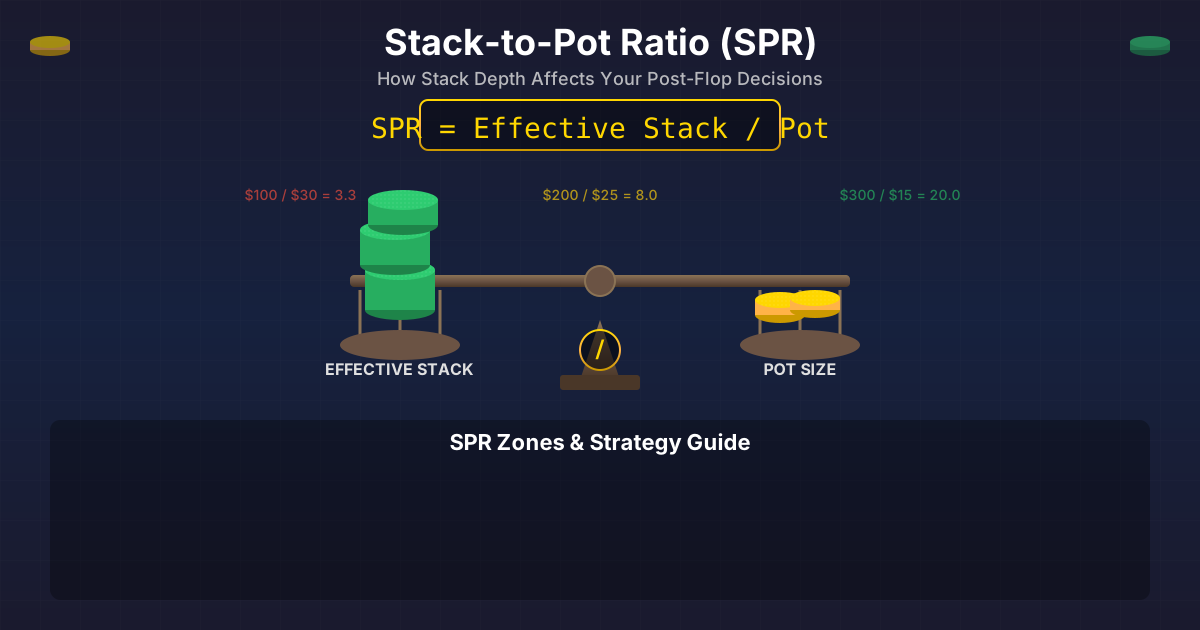
Stack-to-Pot Ratio (SPR) directly affects bluffing profitability.
Low SPR (Below 3)
- Bluffing is generally ineffective—opponents are pot-committed
- Focus on value betting, not bluffing
- Shove-or-fold dynamics dominate
Medium SPR (3-8)
- One or two barrel bluffs can be effective
- Bluff sizing matters more—smaller bets may not generate enough fold equity
- Board texture determines bluff frequency
High SPR (8+)
- Multi-street bluffs become more profitable
- Small, frequent bluffs are extremely efficient
- Opponents have more to lose, increasing fold equity
- Position becomes even more important for bluffing
Calculate your SPR for any hand with our Poker SPR Calculator.
Common Bluffing Mistakes
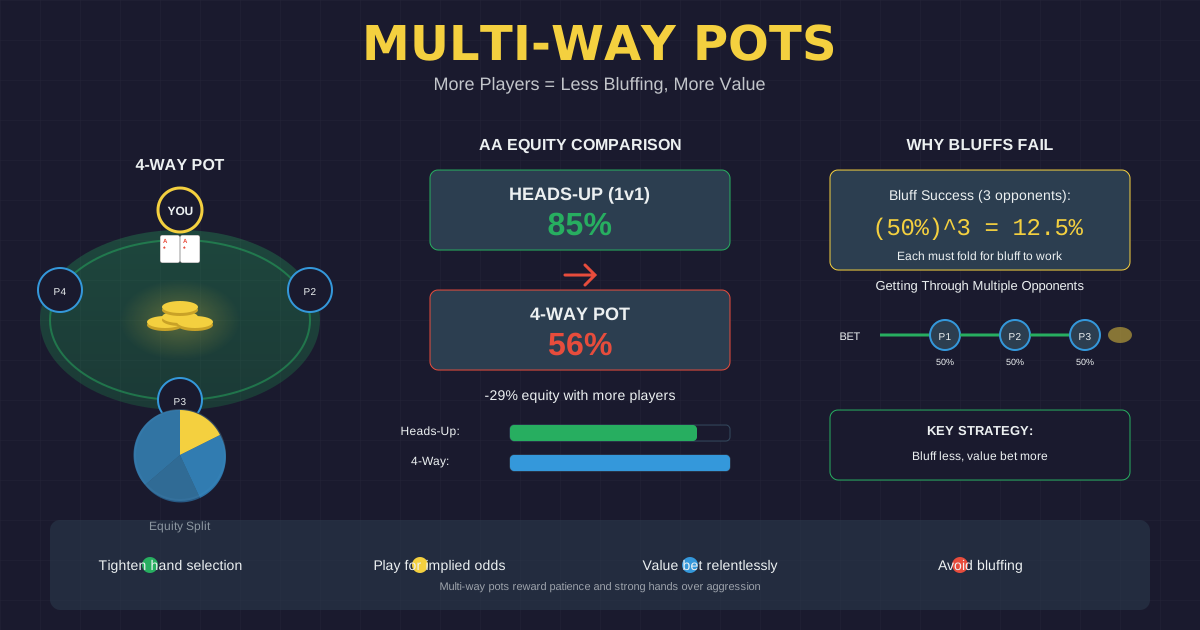
Mistake 1: Bluffing Into Multiple Opponents
Fold equity decreases exponentially with each additional opponent. If each opponent folds 60% of the time:
- 1 opponent: 60% fold probability
- 2 opponents: 36% fold probability (0.60 x 0.60)
- 3 opponents: 21.6% fold probability (0.60 x 0.60 x 0.60)
Rule: Avoid bluffing into more than one opponent unless you have an extremely strong read or blocker advantage.
Mistake 2: Bluffing Calling Stations
If your opponent never folds, your fold equity is zero, and every bluff is -EV. Against calling stations, focus exclusively on value betting with strong hands.
Mistake 3: Inconsistent Bluff Stories
Your betting line must make logical sense for the hand you are representing. If you check the flop, call the turn, and suddenly bet big on the river, you are not credibly representing a strong hand.
Mistake 4: Ignoring Blockers
Bluffing with hands that block your opponent's folding range (not their calling range) is a fundamental error. Choose bluff hands that block strong hands, not weak ones.
Mistake 5: Bluffing Too Often or Not Enough
Either extreme is exploitable:
- Too many bluffs: Opponents call you down with wider ranges
- Too few bluffs: Opponents fold everything except the nuts when you bet
The solution: follow the GTO bluff-to-value ratios by bet size.
Check your overall bluff frequency against optimal ranges using our Poker Combos Calculator.
Frequently Asked Questions
How often should I bluff in poker? Your bluffing frequency should match your bet size according to GTO ratios. When betting pot, approximately 33% of your bets should be bluffs. When betting half-pot, approximately 25% should be bluffs. Overall, winning players bluff approximately 35-45% of the time on the river. Use our Poker Fold Equity Calculator to ensure your bluffs are profitable.
What is fold equity and why does it matter for bluffing? Fold equity is the value you gain when your opponent folds to your bet. It equals the opponent's fold probability multiplied by the pot size. Fold equity makes bluffing profitable—without it, you are just throwing money away. The higher the fold equity, the more profitable the bluff. Calculate it with our Poker Fold Equity Calculator.
When is the worst time to bluff in poker? The worst times to bluff are: into multiple opponents (fold equity drops exponentially), against calling stations (zero fold equity), when your betting line makes no logical sense, when you are blocking your opponent's folding range (not their calling range), and when the SPR is very low (opponents are committed). Evaluate your bluffing spots with our Poker EV Calculator.
What is the difference between a semi-bluff and a pure bluff? A semi-bluff is a bet with a hand that currently loses at showdown but has outs to improve (like a flush draw). A pure bluff has zero equity when called. Semi-bluffs are generally more profitable because they have two ways to win: opponent folds or you improve. Use our Poker Equity Calculator to determine your semi-bluff equity.
How do blockers affect bluffing decisions? Blockers are cards you hold that reduce the probability of your opponent holding specific hands. Good bluffing blockers reduce your opponent's strong calling hands (like holding the Ah to block AK and AQ). Bad blockers reduce opponent's folding range. Always prefer bluff hands that block calling combos. Analyze with our Poker Blocker Calculator.
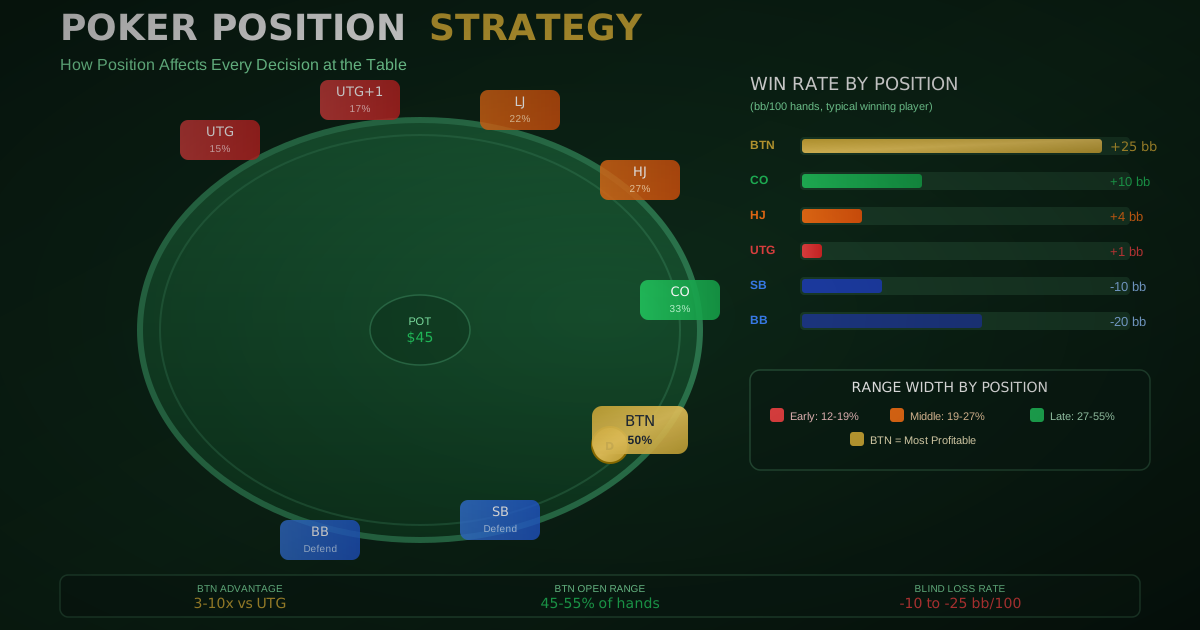
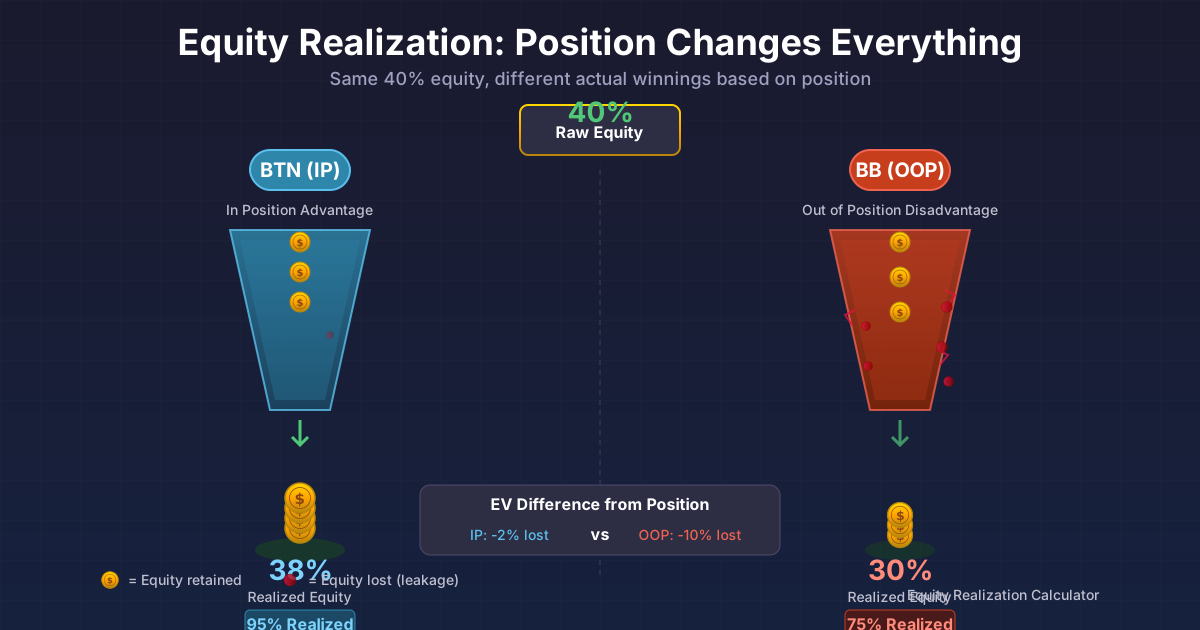
Should I bluff more or less in position? Bluff more in position. Being in position gives you the informational advantage of seeing your opponent act first. When they check, it reveals weakness—an ideal time to bluff. Out of position, bluffs are riskier because your opponent acts after you and can exploit your bluffs more effectively. Use our Poker Hand Range Calculator to build position-adjusted bluffing ranges.
How do I know if my bluff bet size is correct? Your bluff size should match your value bet size in the same spot. The smaller the bet, the less often it needs to work. A 1/3-pot bluff only needs folds 25% of the time; a pot-sized bluff needs folds 50% of the time. Choose the size that best represents the value hands you are pretending to have. Evaluate sizing with our Poker EV Calculator.
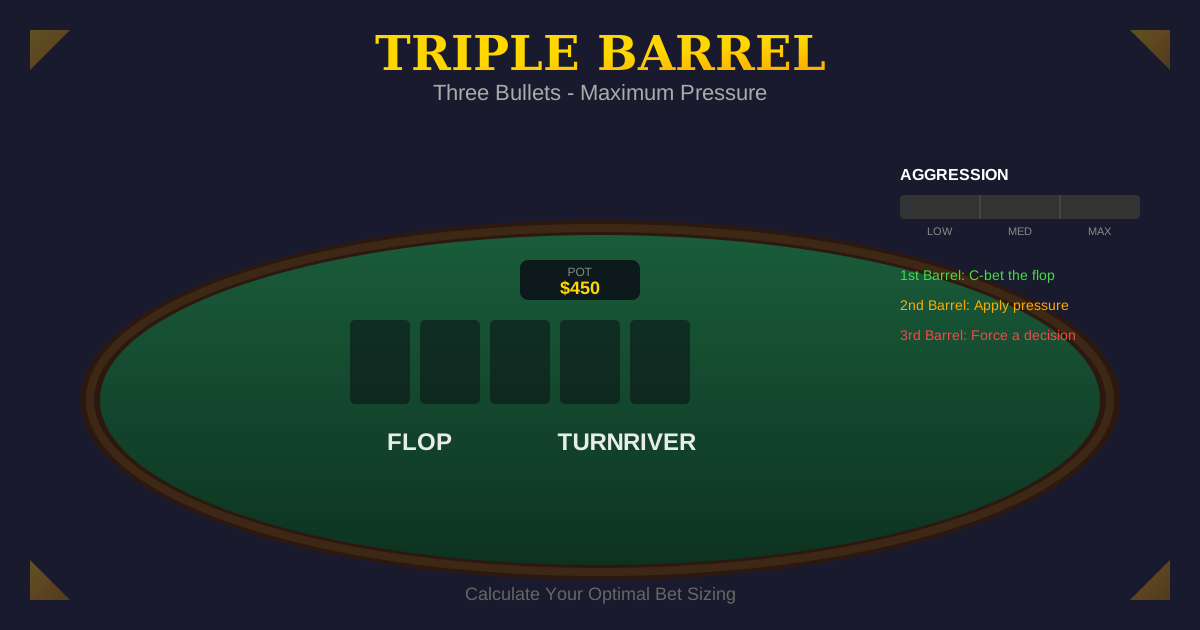
Is it profitable to bluff on every street? Multi-street bluffs (triple barrels) can be highly profitable but require planning and specific conditions: your story must be consistent across all streets, you should have blockers to strong hands, and your opponent's range must weaken on each street. Triple barrels are rare in practice—most players barrel the flop and turn, then give up when they miss. Use our Pot Odds Calculator to understand the pricing implications of multi-barrel bluffs.
Related Tools for Poker Bluffing Strategy
- Poker Fold Equity Calculator — Calculate exact fold equity for any bluff
- Poker Blocker Calculator — Evaluate how your cards affect opponent calling frequency
- Poker EV Calculator — Determine expected value of bluffs vs. checks
- Poker Equity Calculator — Calculate semi-bluff equity when called
- Poker Hand Range Calculator — Build bluffing ranges by position
- Poker Combos Calculator — Count bluff and value combos for ratio analysis
- Pot Odds Calculator — Understand the odds you are offering opponents
- Poker SPR Calculator — Determine if stack depth supports bluffing
- Poker 3-Bet Calculator — Optimize preflop 3-bet bluffing frequencies
- Implied Odds Calculator — Factor future value into semi-bluff decisions
Conclusion: Bluff with Math, Not Ego
Profitable bluffing is a mathematical exercise, not a psychological one. Every bluff decision can be reduced to: does the fold equity exceed the cost? If yes, bluff. If no, do not. It really is that simple once you understand the framework.
Your bluffing action plan:
- Learn the break-even fold percentages by bet size. A 1/3-pot bluff needs 25% folds. A pot-sized bluff needs 50%. Memorize these.
- Follow GTO bluff-to-value ratios. Use the table in this guide to calibrate your bluffing frequency for each bet size.
- Choose bluffs based on blockers, not feelings. The best bluffs block opponent calling hands and have low showdown value.
- Prefer semi-bluffs over pure bluffs. Two ways to win is always better than one.
- Tell a consistent story. Your betting line across all streets must represent a believable value hand.
- Never bluff calling stations or multiple opponents. Zero fold equity means zero bluff EV.
Start bluffing profitably today. Use our Poker Fold Equity Calculator to find spots where your bluffs are mathematically correct, our Poker Blocker Calculator to identify the best bluff candidates, and our Poker EV Calculator to verify the expected value of every bluffing decision you make.
The math does not lie. Make it work for you.
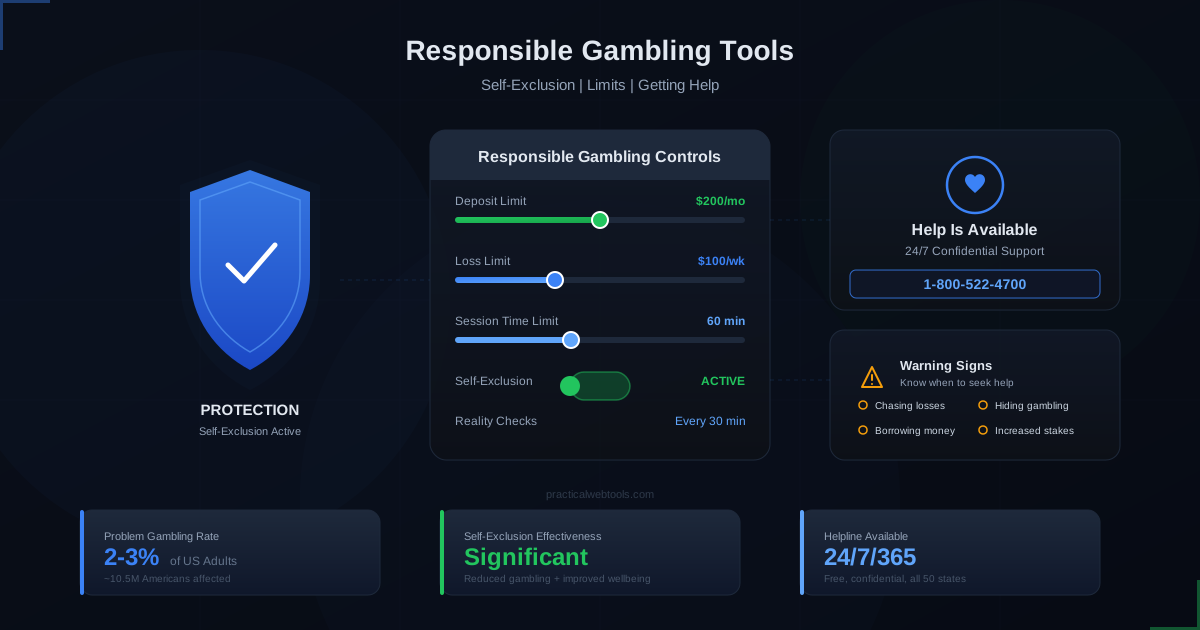
Gambling involves risk. This content is for educational and informational purposes only. Always gamble responsibly, set limits you can afford, and seek help if gambling becomes a problem. Visit the National Council on Problem Gambling or call 1-800-522-4700 for support.