MLB Betting Strategy: Moneylines, Run Lines, and Totals Explained (2026)

Baseball is the sharpest sport on the board. While football bettors fight over a 17-game sample size and basketball handicappers chase pace-adjusted ratings across an 82-game sprint, MLB gives you 162 games per team, 2,430 total regular-season games, and a sport where a single variable -- the starting pitcher -- drives the entire betting line. No other major sport produces this volume of data, this degree of daily matchup variance, or this many exploitable edges for disciplined bettors.
Professional sports bettors have known this for decades. The earliest legal sports betting syndicates in Las Vegas cut their teeth on baseball. The reason is simple: MLB markets are the most modeled, the most liquid on a per-game basis across the full season, and the most generous to underdogs of any major American sport. The vig on baseball moneylines is lower than point spread juice in football or basketball. The daily schedule -- with 15 games running simultaneously -- creates information asymmetry that sportsbooks cannot always price perfectly. And the sheer volume of games means that a small, consistent edge compounds into serious profit by October.
This guide breaks down every core MLB bet type -- moneylines, run lines, and totals -- with the data, strategy, and real-world examples you need to bet baseball profitably in 2026.
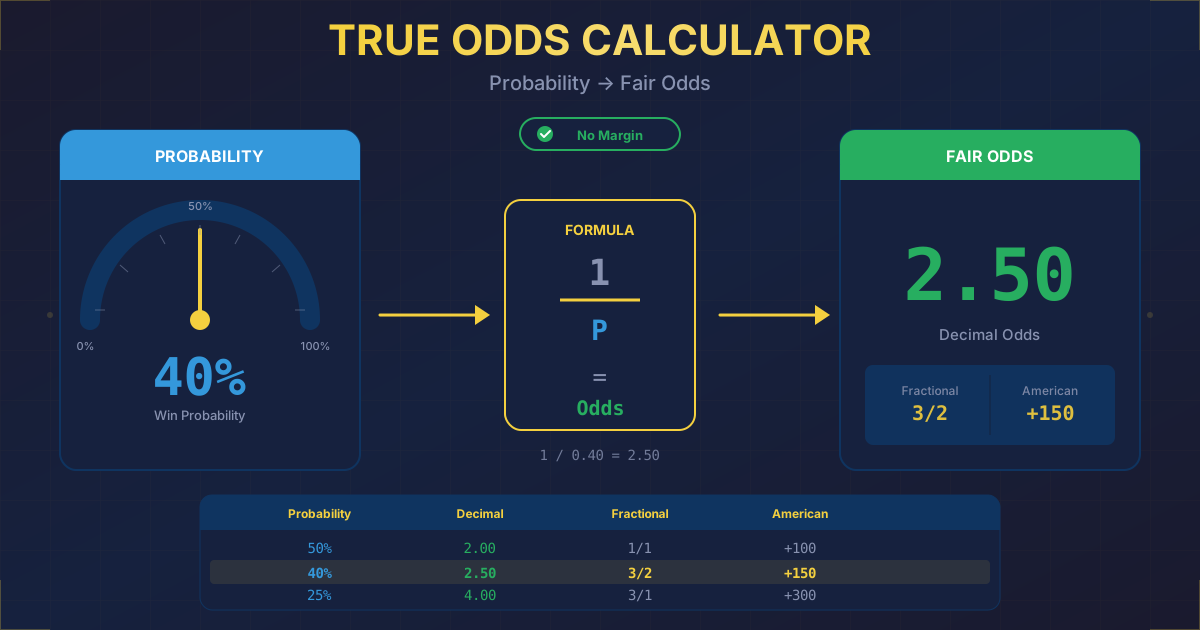
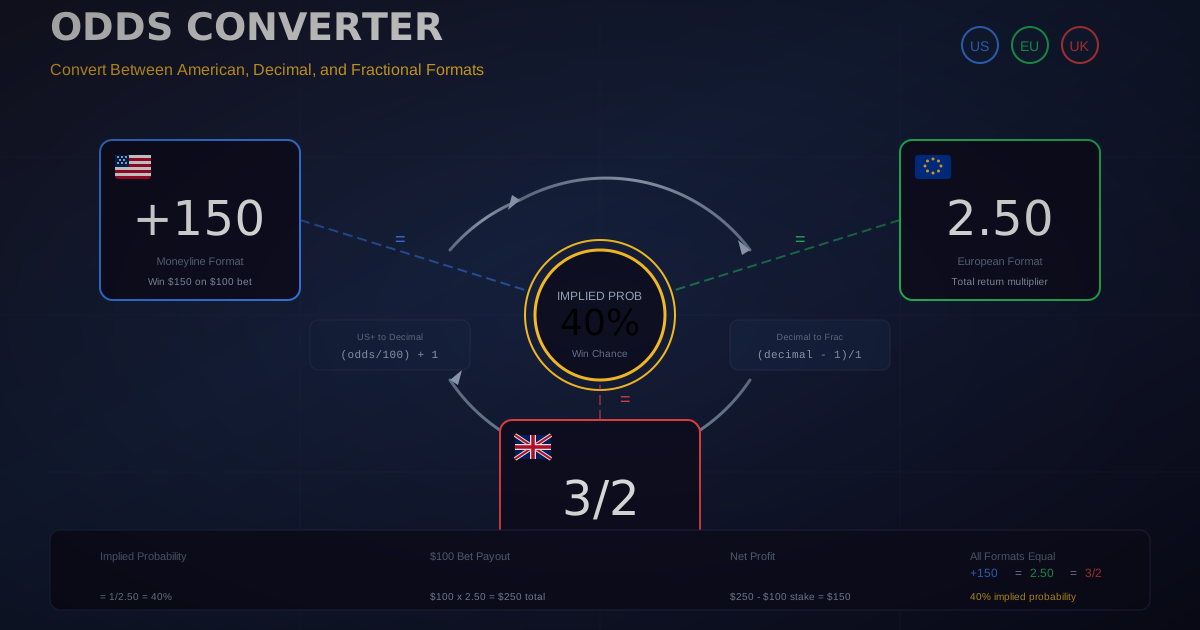
Convert any odds format and calculate implied probabilities with our free Odds Converter.
Why MLB Betting Is Different From Every Other Sport
Before diving into specific bet types, you need to understand why baseball operates by different rules than football, basketball, or hockey in the betting market.
No Point Spread Dominance
In the NFL and NBA, point spreads are the primary market. Sportsbooks set a number, and bettors pick sides against the spread at standardized -110 juice on each side.
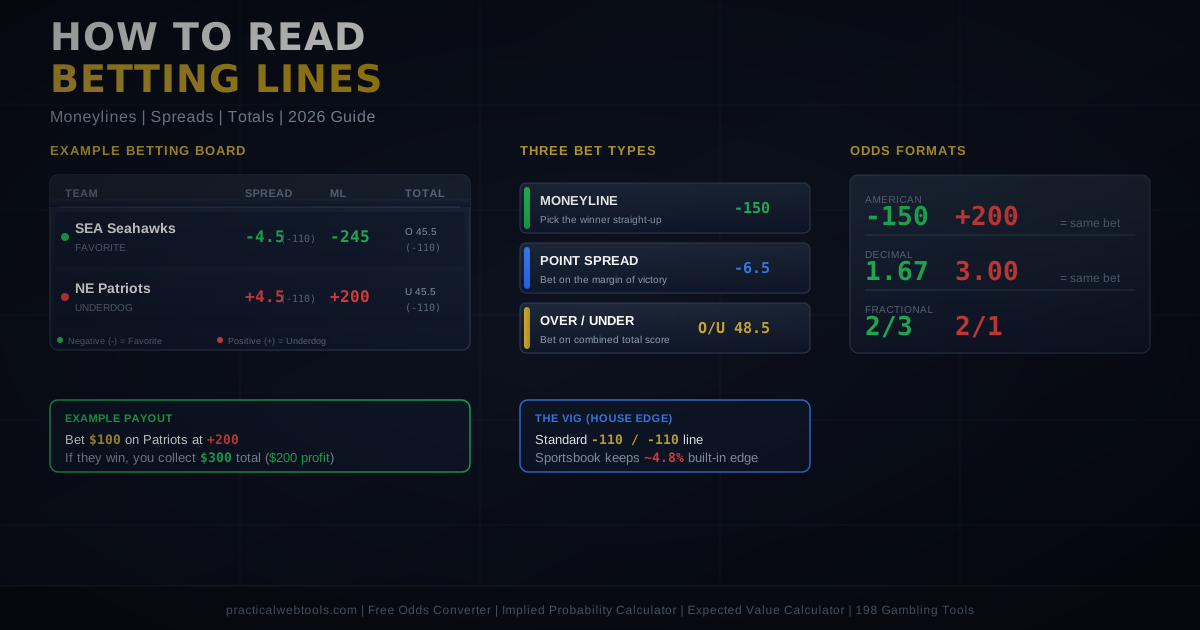
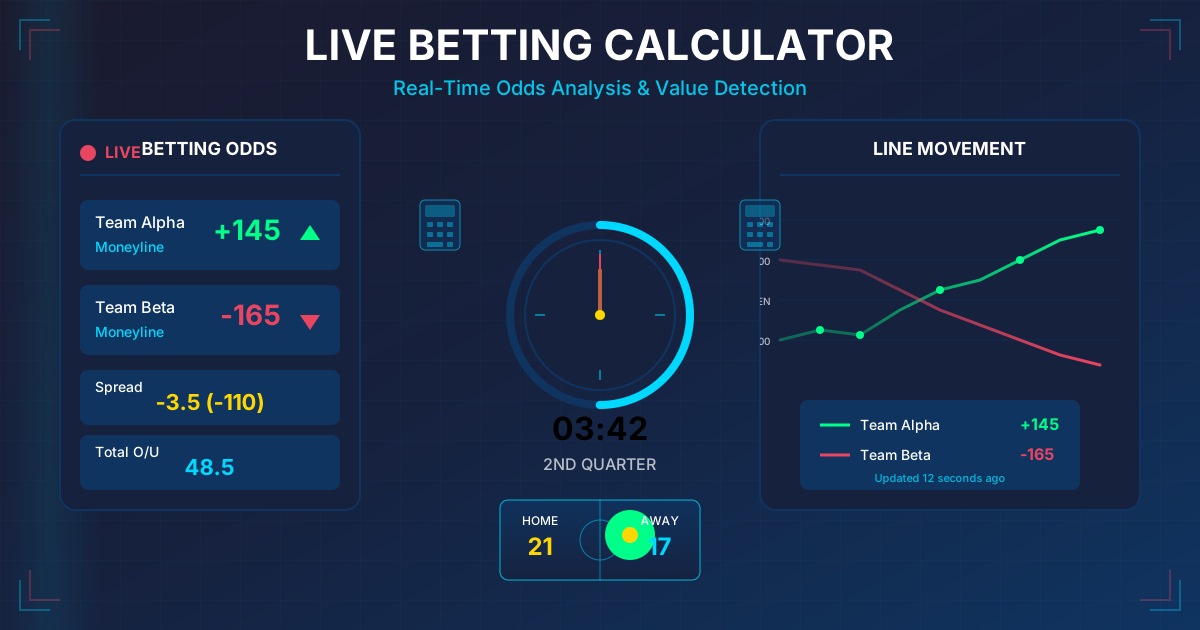
Baseball does not work this way. The moneyline is the primary market. Instead of adjusting the margin of victory, sportsbooks adjust the price. A heavy favorite might be -180, meaning you risk $180 to win $100. The underdog sits at +155, meaning a $100 bet wins $155. This price-based system creates a fundamentally different value landscape:
| Feature | NFL/NBA Spread Betting | MLB Moneyline Betting |
|---|---|---|
| Primary market | Point spread at -110/-110 | Moneyline at variable prices |
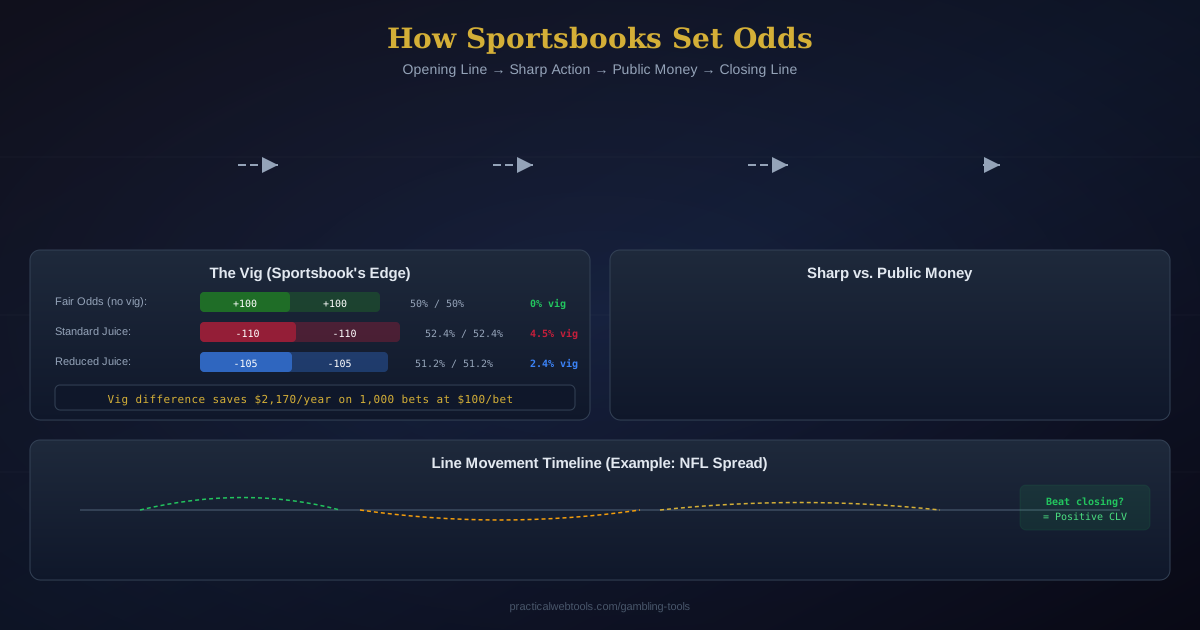
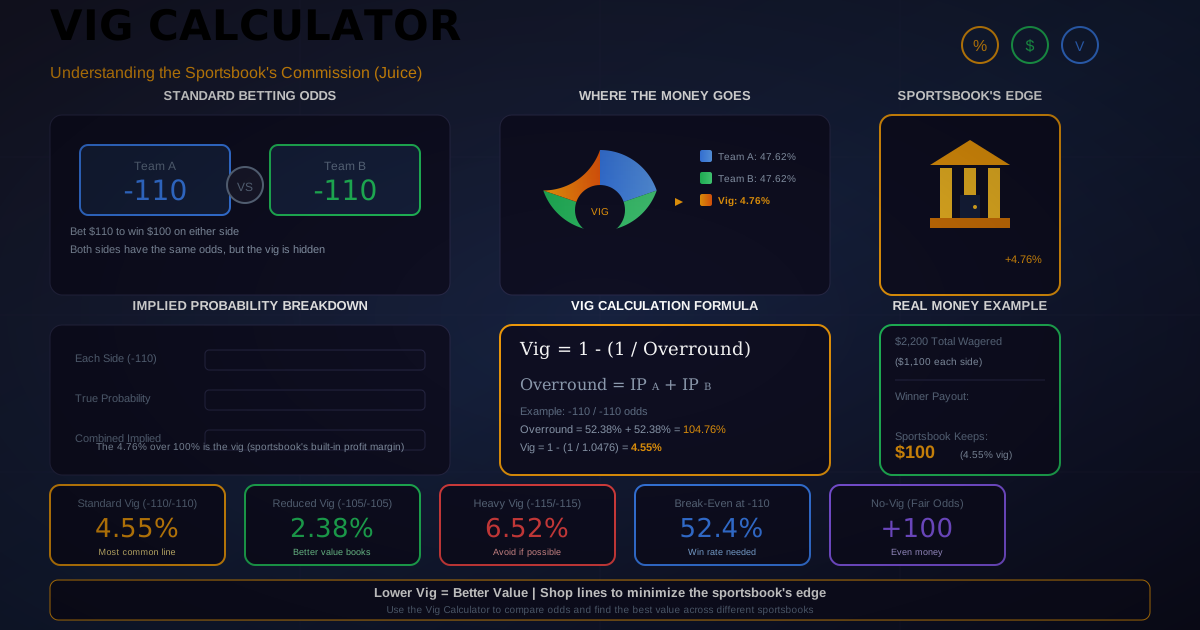
| Standard vig | 4.55% (both sides at -110) | 2.5-4.5% (varies by matchup) |
| Underdog edge | Covers the spread ~50% | Wins outright 40-48% at plus money |
| Sample size | 17-82 games per team | 162 games per team |
| Key variable | Full roster performance | Starting pitcher (55%+ of line) |
| Public bias | Heavy on favorites/overs | Heavy on favorites, less on totals |
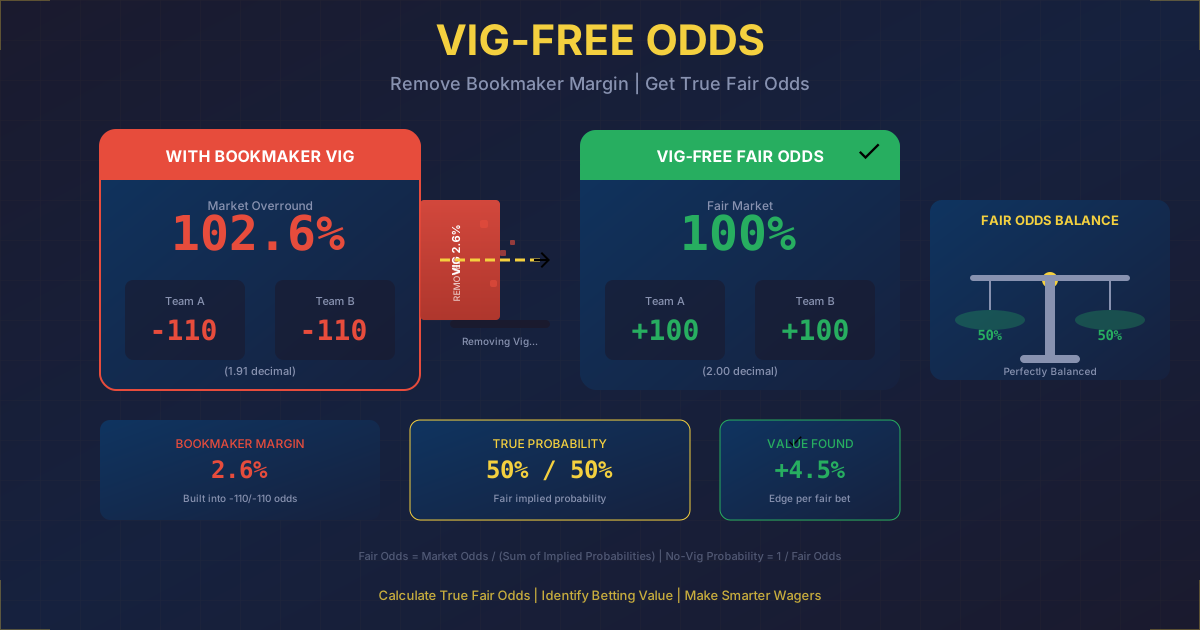
The lower vig alone makes MLB more bettor-friendly. At standard -110/-110 NFL juice, the sportsbook takes roughly 4.55% off the top. In MLB, moneyline vig frequently runs between 2.5% and 3.5% on non-marquee games. That 1-2% difference in hold compounded across hundreds of bets is meaningful.
Calculate the exact vig in any betting line with our Hold/Vig Calculator.
The 162-Game Advantage
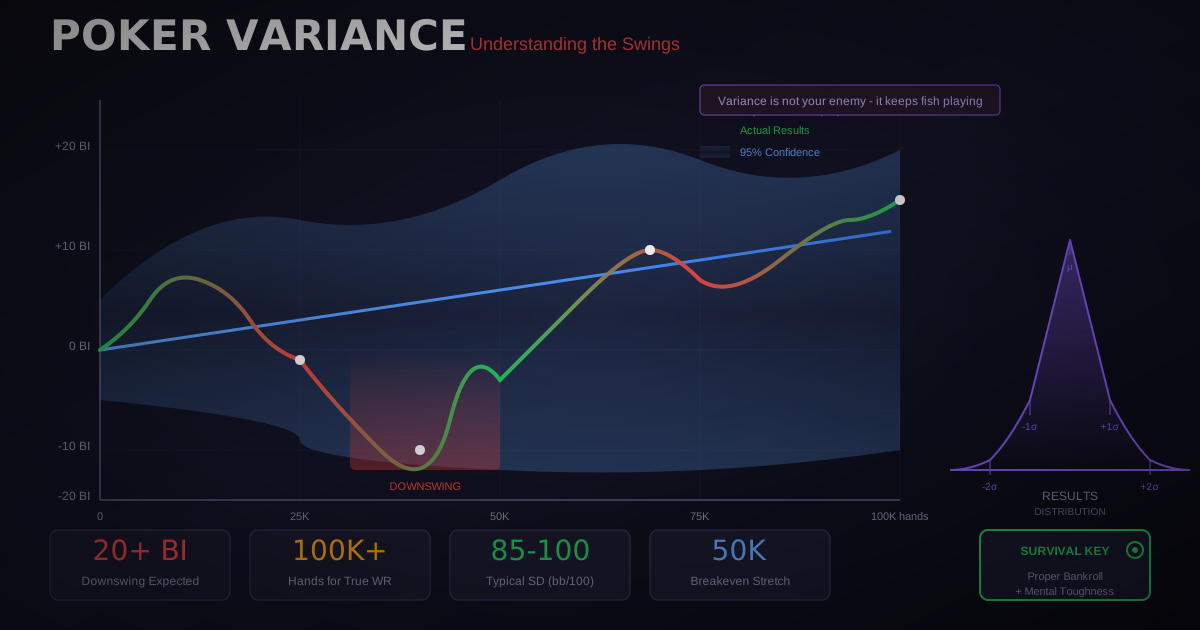
Volume is the bettor's best friend. A 17-game NFL season means that a 3% edge might not manifest in a single season due to variance. In MLB, that same 3% edge across 500+ bets has an extremely high probability of producing profit.
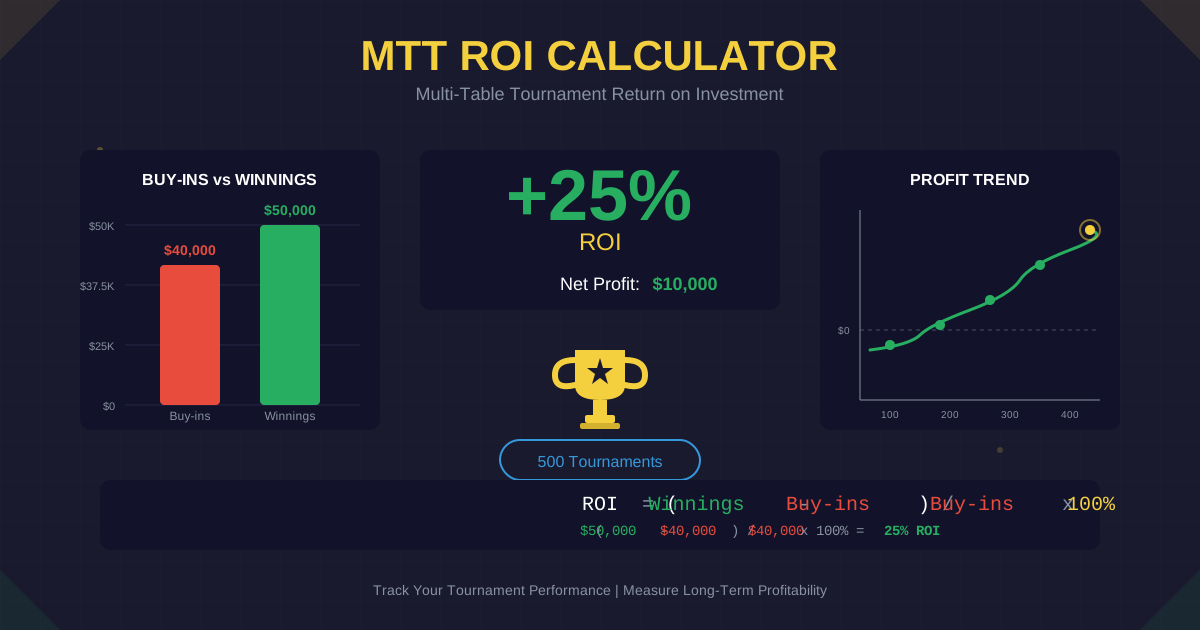
Consider the math: a bettor with a 54% win rate on -110 bets expects a 3.4% ROI. Over 500 bets at $100 per wager, that is $1,700 in expected profit. In the NFL, the same bettor might place 100 bets all season -- meaning that $340 expected profit with enormous variance. In MLB, the sample smooths the variance.
Starting Pitchers Drive Everything
No single player in any team sport influences the outcome of a game more than a starting pitcher in baseball. An ace like Gerrit Cole, Corbin Burnes, or Tarik Skubal can single-handedly swing a game line by 40-60 cents compared to a back-of-the-rotation arm.
| Pitcher Tier | Typical ERA Range | Moneyline Impact | Example (2025 Season) |
|---|---|---|---|
| Ace (Top 15 MLB) | 2.50-3.20 | -160 to -200 vs. avg team | Tarik Skubal (2.39 ERA, Tigers) |
| Above Average | 3.20-3.80 | -130 to -155 vs. avg team | Logan Webb (3.15 ERA, Giants) |
| League Average | 3.80-4.40 | -110 to -125 vs. avg team | Mid-rotation starters |
| Below Average | 4.40-5.00 | Pick 'em to slight dog | 5th starters, spot starters |
| Replacement Level | 5.00+ | +110 to +150 vs. avg team | Call-ups, openers, bullpen days |
This pitcher-driven market means that the betting line can shift dramatically based on a single injury report or lineup card. When a team scratches its ace and replaces him with a AAA call-up, the line might move from -150 to +110 -- a 260-cent swing on a single variable. No other sport produces moves like this on single-player news.
Moneyline Strategy: Where Sharp Bettors Make Their Living
The moneyline is the simplest bet in baseball: pick the team that wins the game. No spread, no margin of victory -- just the winner. But simplicity does not mean ease. Profitable moneyline betting requires understanding price, value, and the asymmetry between what the public pays and what sharp money exploits.
The Case for MLB Underdogs
MLB underdogs win approximately 43-44% of all games. That might sound like a losing proposition, but the price makes all the difference. If a +140 underdog wins 43% of the time, here is the math:
- 100 bets at $100 each = $10,000 wagered
- 43 wins at +140 = $6,020 returned in profit
- 57 losses = $5,700 lost
- Net profit: +$320 (3.2% ROI)
That 43% win rate at +140 is a profitable proposition. The public, however, gravitates toward favorites. Recreational bettors think in terms of "who will win?" rather than "what is the correct price?" This creates a systematic mispricing where underdogs offer better value per dollar wagered.
Calculate the expected value of any moneyline bet with our Expected Value Calculator.
Underdog Profitability by Price Range
Not all underdogs are created equal. Historical data shows a clear pattern in where value concentrates:
| Price Range | Approx. Win Rate | Break-Even Win Rate | Historical ROI | Edge Assessment |
|---|---|---|---|---|
| +100 to +120 | 46-48% | 50%/45.5% | +1.5 to +3.0% | Slight edge, high volume |
| +121 to +150 | 41-44% | 45.2%-40.0% | +2.0 to +4.5% | Best value zone for sharps |
| +151 to +180 | 36-39% | 39.7%-35.7% | +0.5 to +3.0% | Moderate value, selective |
| +181 to +220 | 31-34% | 35.6%-31.3% | -1.0 to +1.5% | Thin margins, context-dependent |
| +221 and above | 25-29% | 31.2% or lower | -2.0 to -5.0% | Generally poor value, avoid |
The sweet spot for underdog moneylines historically lands in the +121 to +150 range. These are teams the public dismisses as inferior -- a .470 win-rate team facing a .540 win-rate team, for example -- but who win often enough at plus money to produce consistent returns.
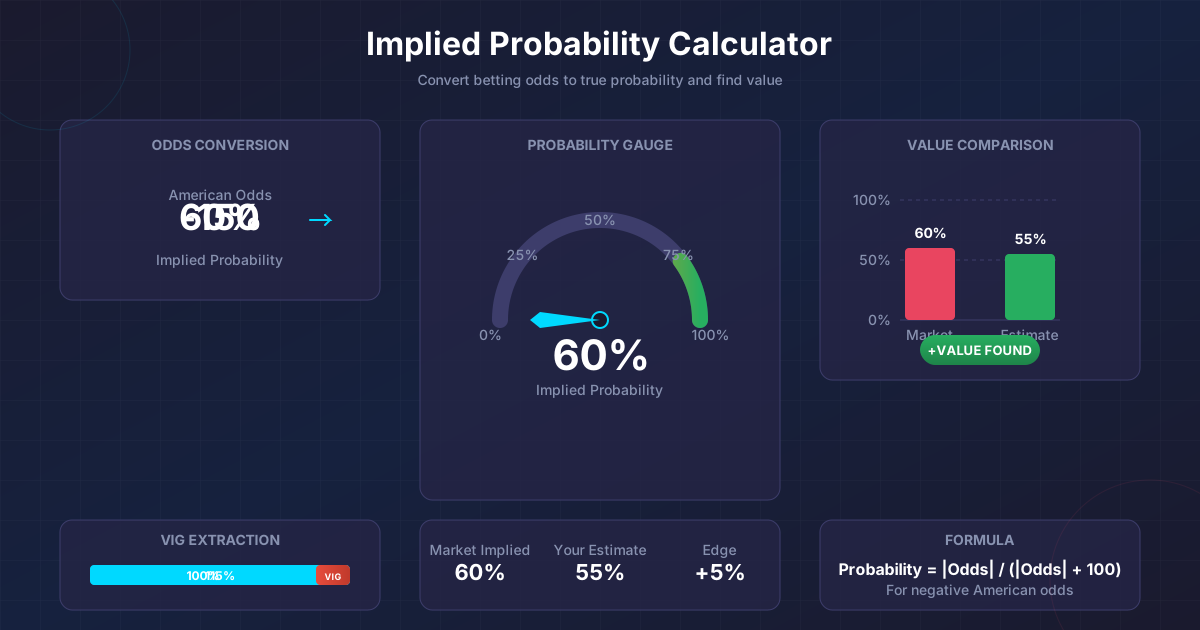
Check the implied probability behind any moneyline with our Implied Probability Calculator.
Real-World Moneyline Example
Scenario: Baltimore Orioles (+135) at Houston Astros (-155), June 2026
Houston starts Framber Valdez (3.45 ERA) against Baltimore's Grayson Rodriguez (3.80 ERA). The Astros are at home, and the public is backing them heavily.
Your analysis:
- Valdez vs. Rodriguez is not an ace-vs-scrub mismatch -- it is two quality starters
- Baltimore's lineup ranks top-5 in wRC+ against left-handed pitching
- Valdez has a 4.10 ERA in his last 6 starts, suggesting regression
- The implied probability on Houston at -155 is 60.8%
- Your model puts Houston's true win probability at 55%
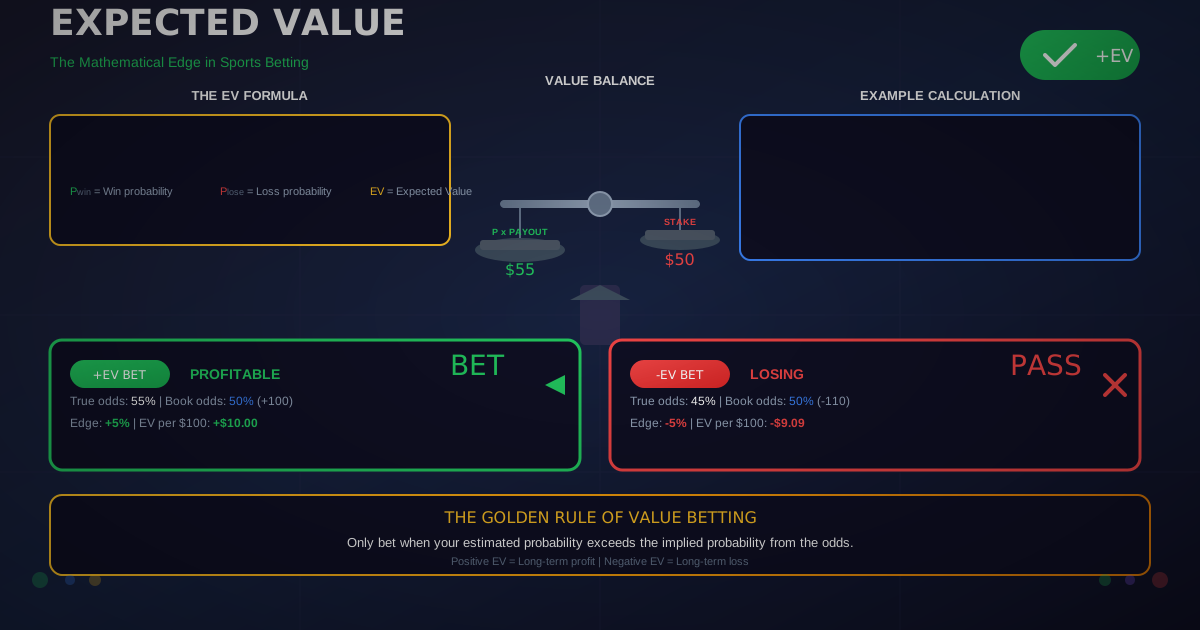
EV Calculation:
- Bet: $100 on Baltimore +135
- If Baltimore true probability = 45%
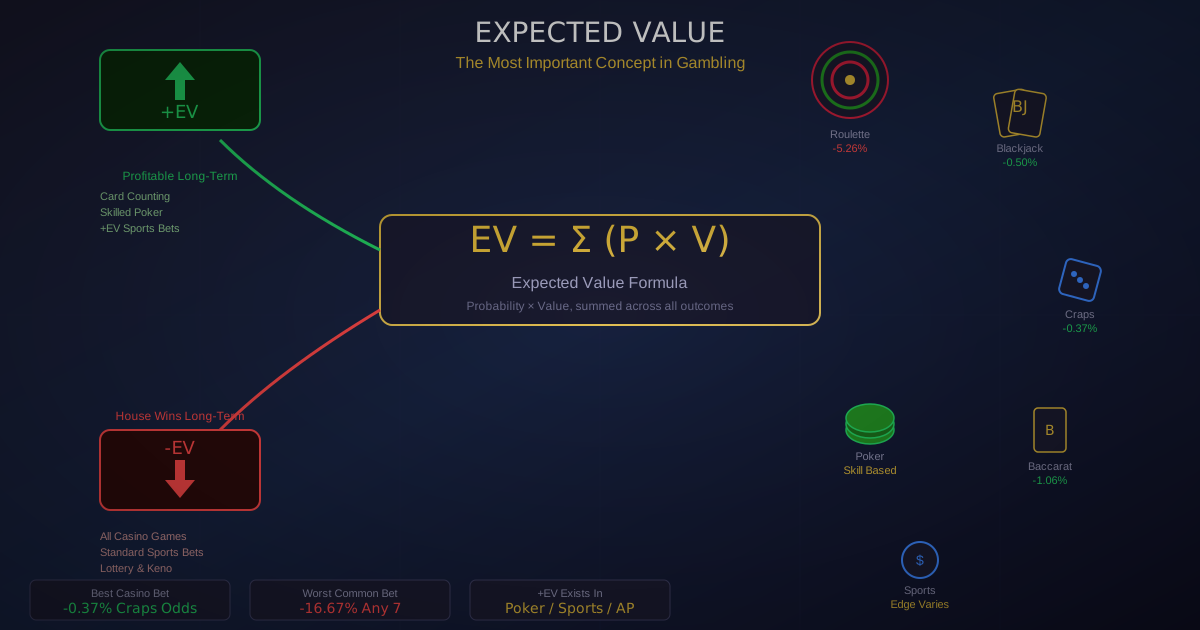
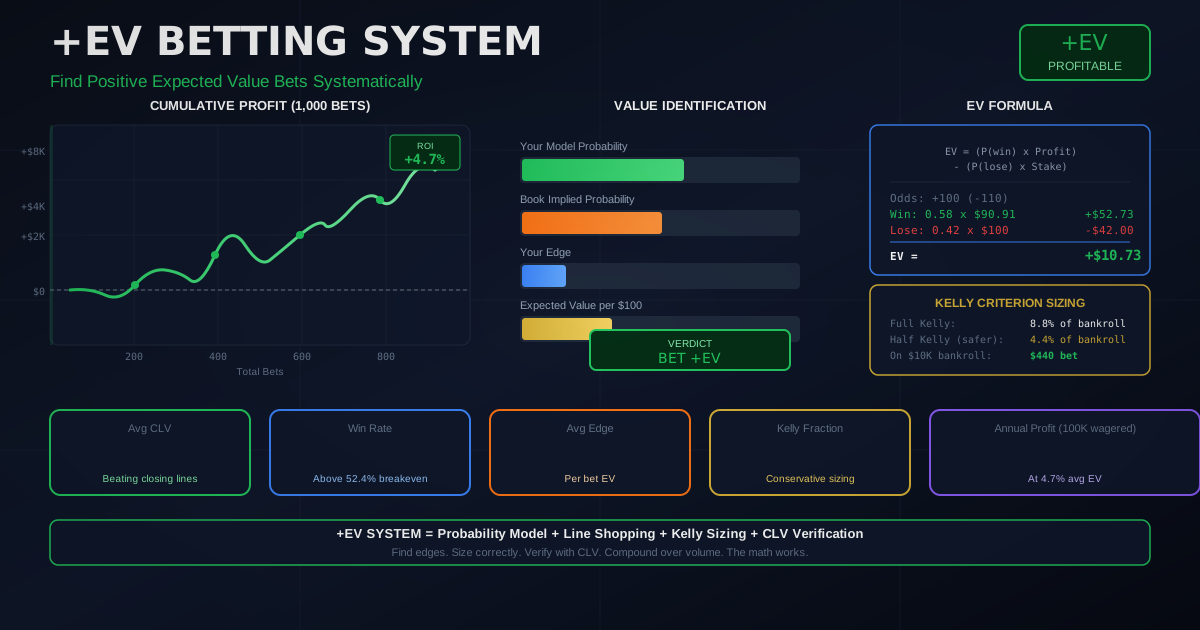
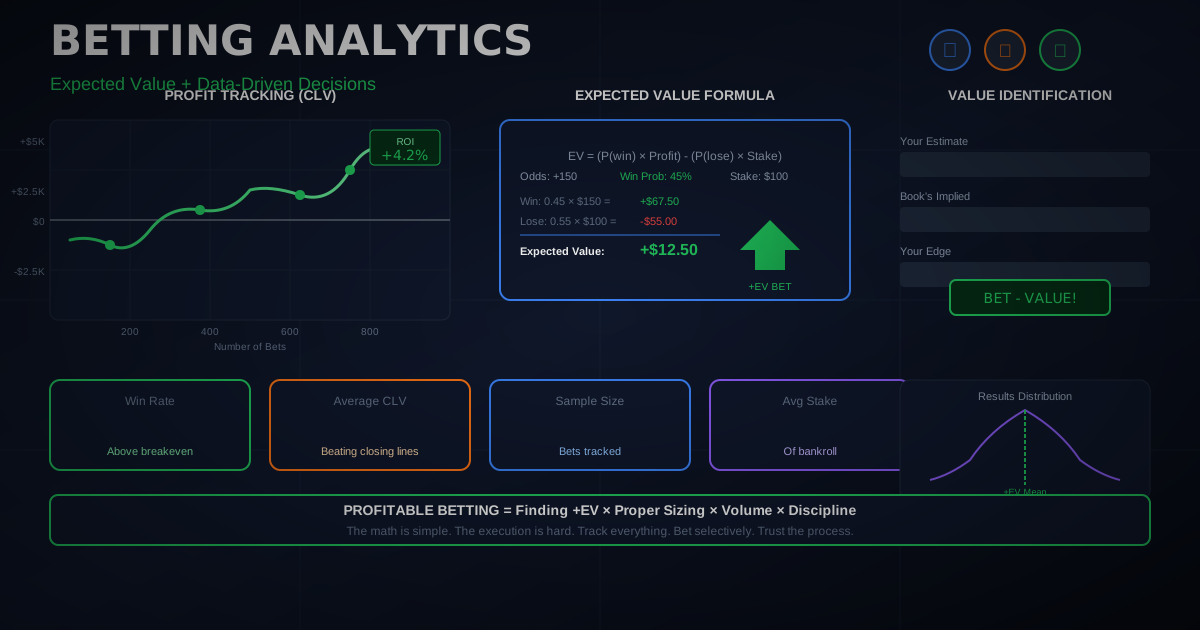
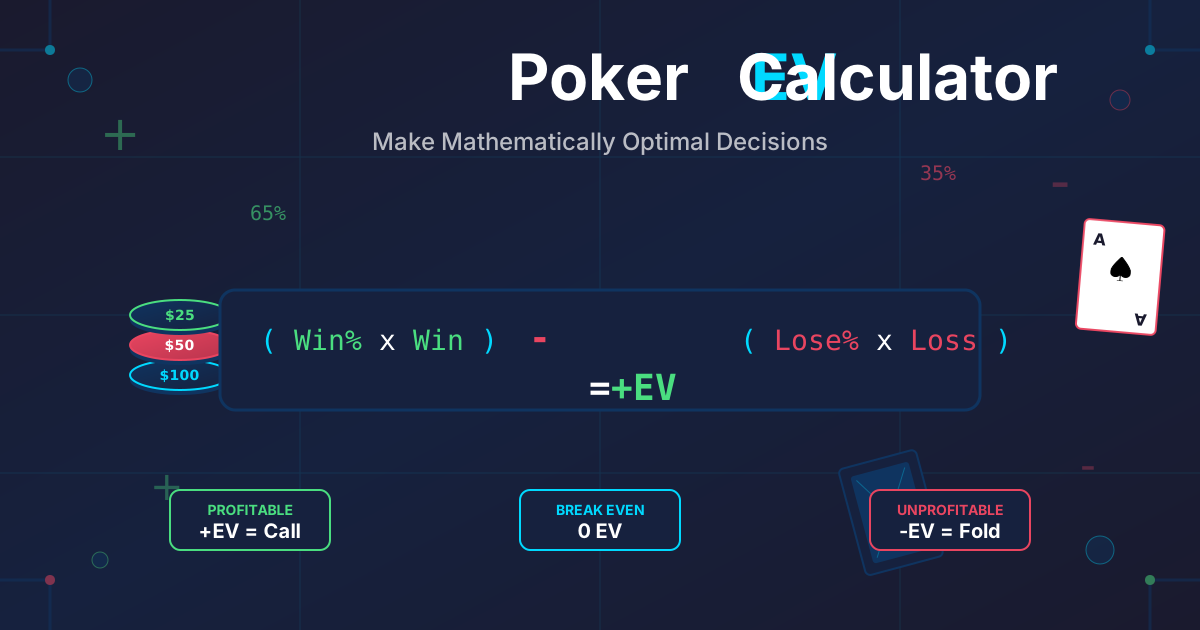
- EV = (0.45 x $135) - (0.55 x $100) = $60.75 - $55.00 = +$5.75 per $100 wagered
This is a +5.75% EV bet. Over a full season of identifying similar spots, this edge compounds into meaningful profit.
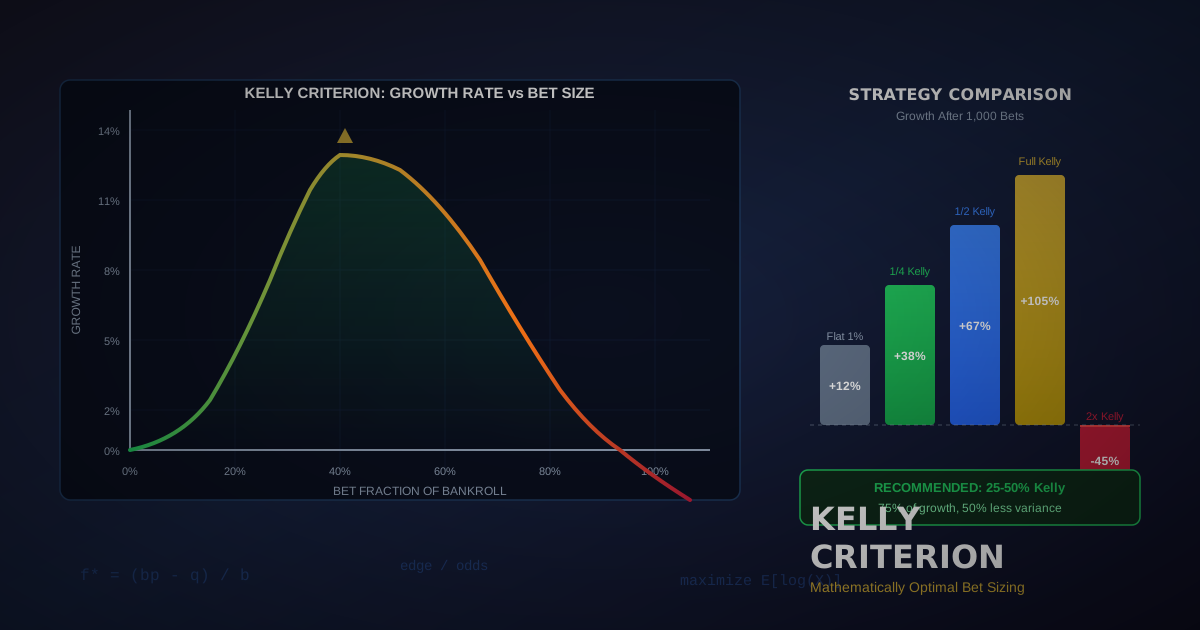
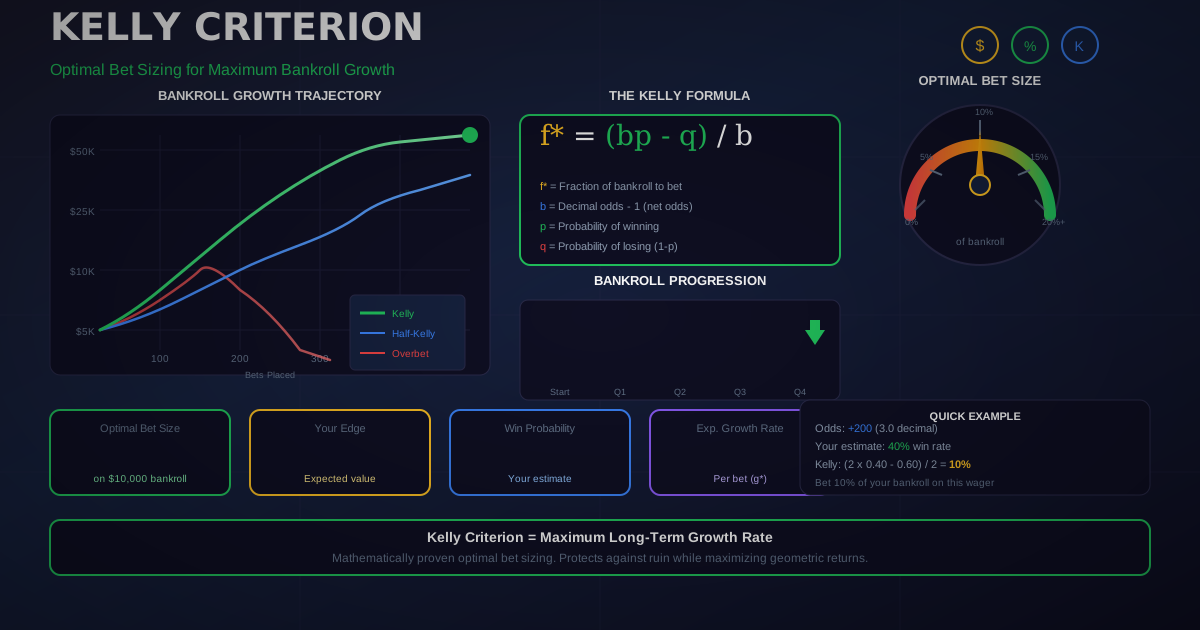
Size your bets optimally using the Kelly Criterion Calculator.
When to Lay the Juice on Favorites
Not every sharp bet is an underdog play. Sometimes the favorite is underpriced, especially in these scenarios:
-
Elite ace on the mound with inflated totals: When a game total is set at 6.5 or lower but the favorite is only -140, the market may be underpricing the ace's dominance.
-
Bullpen mismatch after strong starters: If the favorite has the best bullpen in baseball (e.g., 2025 Cleveland Guardians with Emmanuel Clase) and the underdog's pen is depleted from a doubleheader, the -130 favorite might be +EV.
-
Divisional familiarity edge: Teams that crush a specific divisional rival historically. The 2025 Atlanta Braves went 14-5 against the Miami Marlins. When the matchup has a structural advantage beyond the day's pitching, moderate favorites can offer value.
Run Line Strategy: When the 1.5-Run Spread Makes Sense
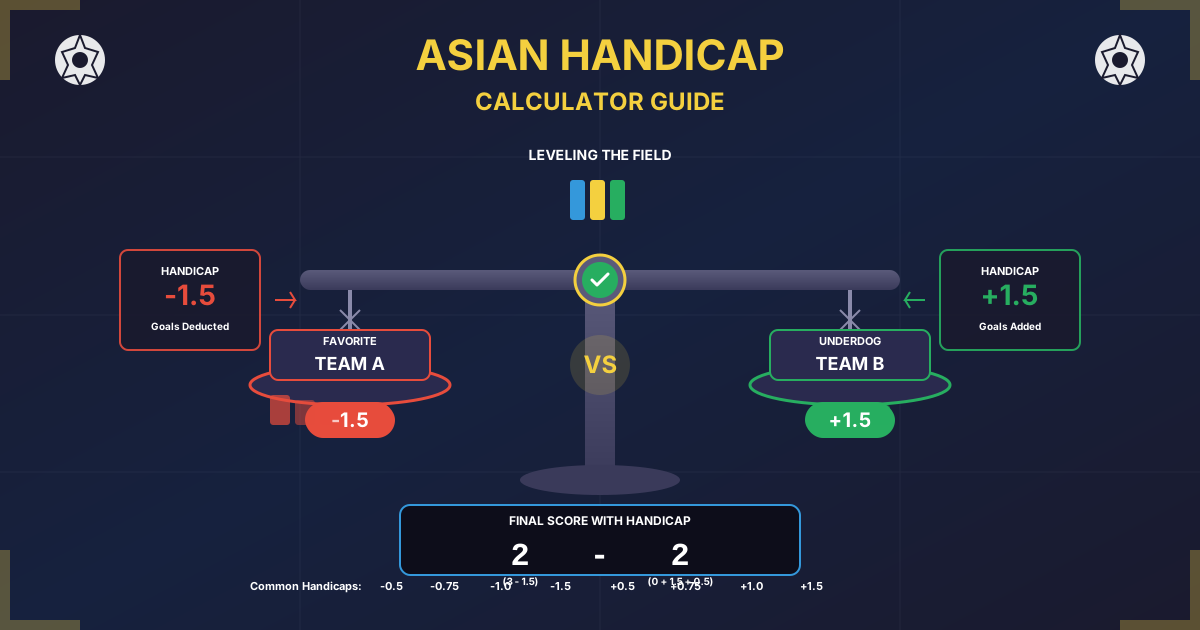
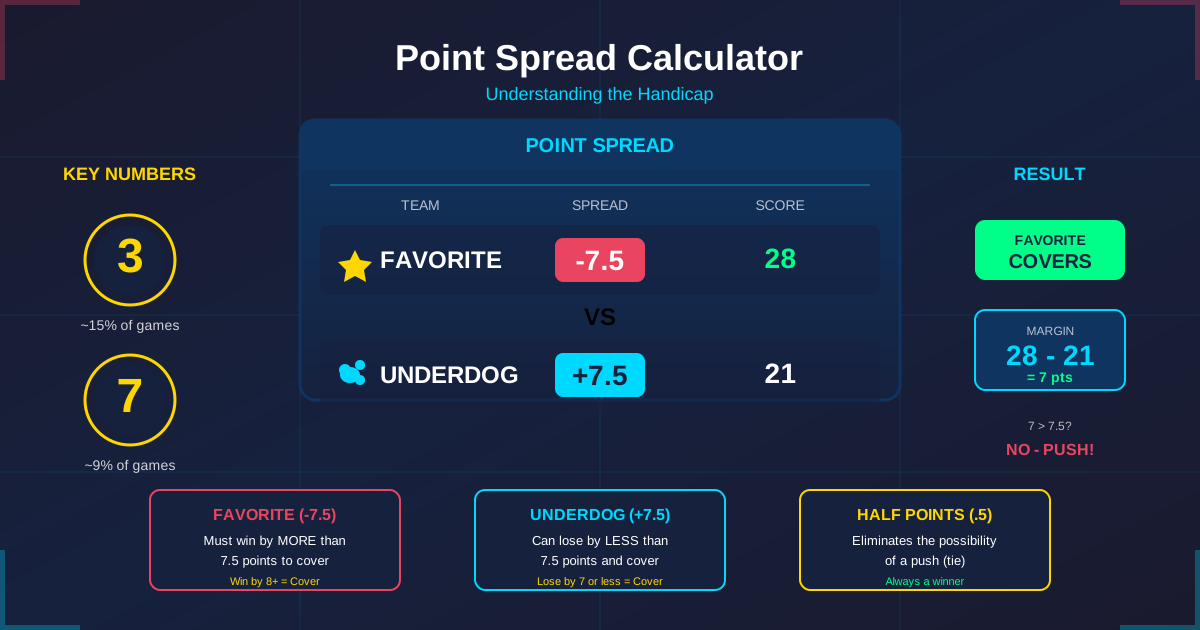
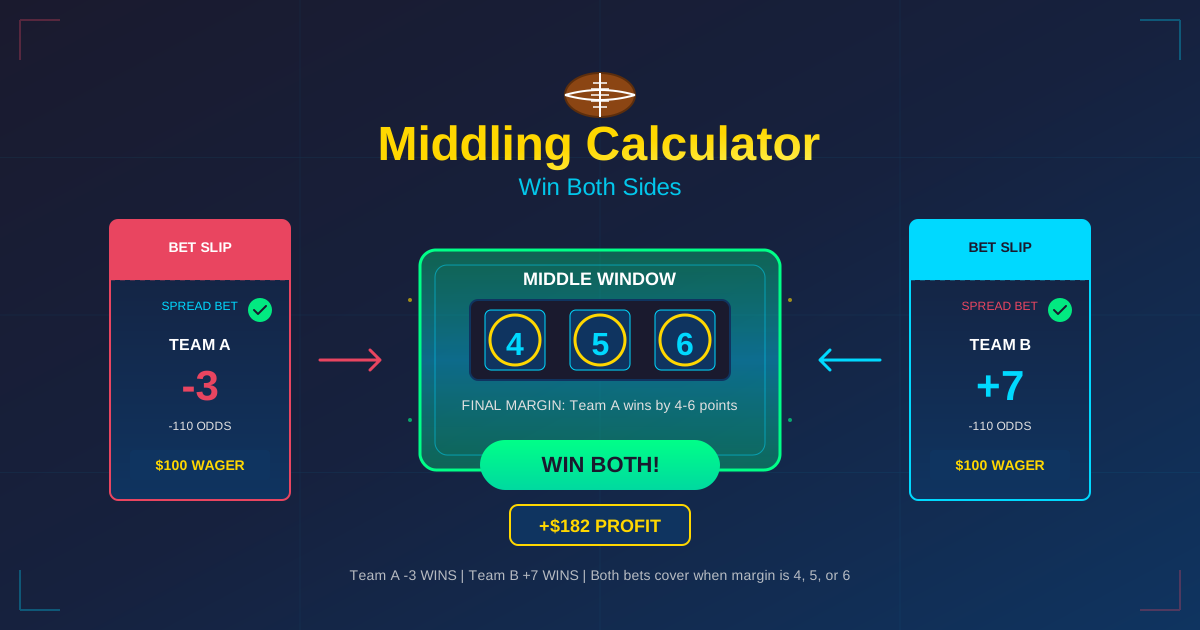
The run line is baseball's version of the point spread, set at a fixed 1.5 runs. The favorite must win by 2 or more runs to cover the -1.5 run line. The underdog covers the +1.5 run line by winning outright or losing by exactly 1 run.
Understanding Run Line Pricing
Because the run line is fixed at 1.5 (unlike NFL/NBA spreads that move), the pricing adjusts instead:
| Moneyline | Run Line -1.5 | Run Line +1.5 |
|---|---|---|
| -130 favorite | -1.5 (+130) | +1.5 (-155) |
| -150 favorite | -1.5 (+115) | +1.5 (-140) |
| -180 favorite | -1.5 (-105) | +1.5 (-115) |
| -200 favorite | -1.5 (-120) | +1.5 (+100) |
| -250 favorite | -1.5 (-145) | +1.5 (+120) |
The critical data point: approximately 28-30% of all MLB games are decided by exactly 1 run. This single statistic shapes the entire run line market. That 28-30% represents games where the favorite wins by 1 (run line loses) or the underdog loses by 1 (run line wins).
When to Bet Favorite -1.5 (Run Line)
The favorite run line offers plus-money or reduced juice compared to the moneyline. This makes it attractive when:
1. Elite pitching matchup with a dominant lineup: If the Yankees are -180 on the moneyline with Gerrit Cole pitching against a team in the bottom-5 in runs scored, taking NYY -1.5 at -105 gives you a $200 payout on a $105 risk instead of risking $180 for $100 on the moneyline. You sacrifice 1-run wins but gain price efficiency.
2. Large run-differential teams: Teams that win big or lose close. The 2025 Los Angeles Dodgers had a +185 run differential and won by 2+ runs in roughly 58% of their victories. For teams with this profile, the -1.5 run line captures most of their wins at dramatically better prices than the moneyline.
3. Bullpen day opponents: When the opposing team announces a bullpen game or an opener, the probability of a multi-run victory increases substantially. A dominant team facing a bullpen-by-committee opponent should cover -1.5 at higher rates than average.
When to Bet Underdog +1.5 (Run Line)
The +1.5 underdog run line means you win if your team wins outright OR loses by exactly 1 run. The win rate for the +1.5 underdog is typically 57-60% across the league, but you are laying significant juice (often -140 to -170) for that privilege.
Best spots for +1.5 underdogs:
- Good-pitching, weak-offense underdogs: A team that starts a quality arm but cannot score runs. They keep games close but often lose 2-1 or 3-2.
- Divisional rivalry games: Teams that know each other well tend to play closer games. The +1.5 run line covers more frequently in divisional matchups.
- Afternoon getaway games: Both teams manage their bullpens more aggressively, leading to tighter games.
Moneyline vs. Run Line: A Decision Framework
| Scenario | Bet Moneyline | Bet Run Line -1.5 | Bet Run Line +1.5 |
|---|---|---|---|
| Small favorite (-120 to -140) | Best option -- 1-run wins matter | Rarely -- price not favorable enough | Opponent side if underdog has edge |
| Medium favorite (-150 to -180) | Only if you have strong conviction | Good value -- significant price savings | When underdog keeps games close |
| Large favorite (-190 to -250) | Avoid -- too much juice | Strong play -- captures most wins cheaper | Strong play -- high cover rate at lower juice |
| Massive favorite (-260+) | Never -- terrible risk/reward | Best available option for favorite side | Excellent value on underdog side |
Real-World Run Line Example:
New York Yankees (-210) vs. Colorado Rockies (+175), Coors Field, July 2026
The moneyline on the Yankees requires risking $210 to win $100. The run line on NYY -1.5 is priced at -125, requiring $125 to win $100.
If you believe the Yankees win this game 65% of the time and win by 2+ runs 50% of the time:
- Moneyline EV: (0.65 x $100) - (0.35 x $210) = $65 - $73.50 = -$8.50 (negative EV)
- Run Line EV: (0.50 x $100) - (0.50 x $125) = $50 - $62.50 = -$12.50 (worse)
In this example, neither bet has positive EV at these prices. The correct play is to pass. Value betting means having the discipline to skip bad spots, no matter how "obvious" the winner seems.
Totals Strategy: Over/Under Betting in MLB
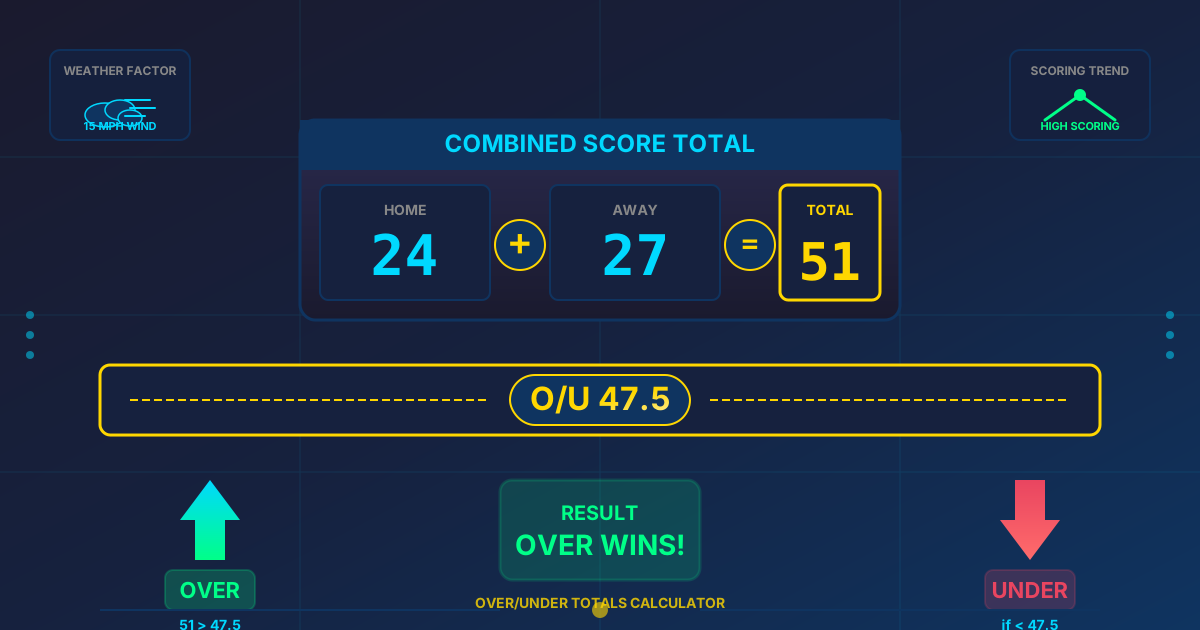
Totals betting -- picking whether the combined runs scored will go over or under a set number -- is where many sharp bettors believe the most exploitable edges exist in baseball. The reason: totals are influenced by a wider array of variables than sides (moneyline/run line), and sportsbooks have more difficulty pricing all of them correctly.
Key Variables That Drive MLB Totals
1. Starting Pitching Matchup
The single largest factor. Two aces facing each other (sub-3.00 ERA) typically sets a total at 7 or lower. Two below-average starters (ERA 4.50+) pushes totals toward 9 or higher.
| Matchup Type | Typical Total Range | Over Rate (Historical) | Under Rate (Historical) |
|---|---|---|---|
| Ace vs. Ace | 6.5-7.0 | 44-47% | 53-56% |
| Ace vs. Average | 7.0-7.5 | 47-50% | 50-53% |
| Average vs. Average | 8.0-8.5 | 49-51% | 49-51% |
| Below Avg vs. Below Avg | 8.5-9.5 | 51-54% | 46-49% |
| Bullpen Day vs. Any | 9.0-10.5 | 52-57% | 43-48% |
2. Ballpark Factors
Not all stadiums are created equal. The physical dimensions, altitude, and design of a ballpark dramatically impact run scoring:
- Coors Field (Colorado): The most extreme hitter's park in baseball. At 5,280 feet altitude, the thin air reduces air resistance, causing fly balls to travel 5-10% farther. Totals regularly open at 11-12.5.
- Great American Ball Park (Cincinnati): A notorious home run park with short fences and wind off the Ohio River that carries balls to right field.
- Oracle Park (San Francisco): A classic pitcher's park. Cold, foggy conditions and deep outfield dimensions suppress scoring.
- T-Mobile Park (Seattle): Marine air holds fly balls down. Consistently among the lowest park factors in MLB.
3. Weather Conditions
Weather is the single most underpriced variable in MLB totals betting. Research shows:
| Weather Factor | Impact on Scoring | Betting Angle |
|---|---|---|
| Wind blowing out (10+ mph) | +1.0 to +2.5 runs per game | Lean over, especially at Wrigley |
| Wind blowing in (10+ mph) | -0.5 to -1.5 runs per game | Lean under |
| Temperature above 85F | +0.3 to +0.8 runs per game | Slight over lean |
| Temperature below 50F | -0.3 to -0.5 runs per game | Slight under lean |
| Rain delay / wet conditions | Suppresses offense, shorter games | Under lean, game might not go 9 |
| High humidity (dewpoint 70+) | Ball carries farther, +0.2 to +0.5 runs | Marginal over lean |
An extra 5 mph of wind blowing out adds nearly 19 feet to a fly ball's travel distance. At Wrigley Field, where the wind conditions are famously variable, a game with 15 mph wind blowing out versus 15 mph blowing in can swing the "true" total by 3-4 runs. Sportsbooks adjust for wind, but they often underreact to extreme conditions.
4. Umpire Strike Zones
Home plate umpires have measurable tendencies. Some umpires consistently call wider strike zones (favoring pitchers, leading to fewer runs), while others squeeze the zone (favoring hitters). Sharp bettors track umpire tendencies and adjust totals projections by 0.2-0.5 runs based on the assignment.
Real-World Totals Example
Chicago Cubs vs. Cincinnati Reds, Great American Ball Park, August 2026
- Total: 9.0 (Over -110 / Under -110)
- Cubs start a 4.65 ERA pitcher; Reds start a 4.80 ERA pitcher
- Temperature: 92 degrees at first pitch
- Wind: 12 mph blowing out to left field
- Umpire: Known hitter-friendly zone (career runs/game 0.4 above average)
Your analysis adjusts the true total:
- Base total from pitching matchup: 9.2
- Ballpark factor (GABP is hitter-friendly): +0.3 = 9.5
- Temperature adjustment: +0.4 = 9.9
- Wind adjustment: +1.2 = 11.1
- Umpire adjustment: +0.4 = 11.5
Your model projects a true total of 11.5 against a market total of 9.0. The over at -110 is a strong play -- you are getting 2.5 runs of value.
Calculate the expected value of this totals bet with our Expected Value Calculator.
First 5 Innings (F5) Betting: The Sharp Bettor's Edge
First 5 innings (F5) bets settle at the end of the fifth inning. Whatever the score is at that point determines the result. What happens in the bullpen-dominated final 4 innings is irrelevant.
Why F5 Bets Are Strategically Superior
1. Isolates starting pitching: Since starting pitchers almost always throw at least 5 innings (unless they implode early), F5 bets are a direct bet on the starting pitching matchup. You eliminate the randomness of bullpen performance, pinch-hitting decisions, and late-game managerial strategy.
2. Removes the most volatile innings: The 6th through 9th innings, when tired starters give way to middle relievers and the leverage shifts, are the most unpredictable part of a baseball game. F5 bets bypass this entirely.
3. Better pricing on aces: When an ace is pitching, the full-game moneyline is juiced to account for 9 innings of value. But the ace usually only pitches 6-7 innings. The F5 line captures the highest-value portion of the ace's outing at a lower price.
F5 vs. Full-Game Comparison
| Metric | First 5 Innings (F5) | Full Game (FG) |
|---|---|---|
| Key variable | Starting pitchers only | Starters + bullpen + bench |
| Predictability | Higher -- fewer variables | Lower -- more randomness |
| Typical vig | Slightly higher (less liquid) | Standard vig |
| Ace leverage | Maximum -- captures best innings | Diluted by bullpen innings |
| Comeback potential | Minimal -- 5 innings only | Full 9 innings of variance |
| Best for | Pitcher matchup bets, unders | Bullpen edges, live betting |
When to Use F5 Bets
- Strong ace vs. weak lineup: Back the ace's team F5 when you love the pitching matchup but distrust their bullpen.
- Two aces, low total: F5 unders in elite pitching duels. If both starters have sub-3.00 ERAs, the first 5 innings will likely be 0-1 or 1-0.
- Avoiding a bad bullpen: Your handicapping loves Team A's starter but their bullpen ranks 25th in ERA. Take Team A on the F5 line and sidestep the late-inning blowup risk.
Real-World F5 Example:
Atlanta Braves vs. Philadelphia Phillies, May 2026
- Braves start Chris Sale (2.85 ERA) vs. Phillies' Zack Wheeler (3.10 ERA)
- Full game: Braves +110 / Phillies -130
- F5 line: Braves +105 / Phillies -125
- F5 Total: 3.5 (Over -105 / Under -115)
You believe Sale dominates the Phillies lineup through 5 innings based on:
- Sale's 2.40 ERA in first 5 innings this season
- Phillies offense ranks 18th in wRC+ through the first time through the batting order
- Sale has faced Philadelphia 3 times, holding them to 2 runs through 5 in each start
The F5 Under 3.5 at -115 is a strong play. Two elite starters in a low-scoring park with historical data supporting the under through 5 innings.
Pitcher-Specific Betting Angles
Because starting pitchers dominate MLB betting lines, developing pitcher-specific angles is one of the most profitable approaches in baseball wagering.
Tracking Pitcher Trends That Matter
Not all pitcher statistics are equally predictive. Here is what the data shows about which metrics forecast future performance:
Highly Predictive (Use These):
- xFIP (Expected Fielding Independent Pitching): Normalizes home run rates. A pitcher with a 3.20 xFIP and 4.00 ERA is likely to improve.
- SIERA (Skill-Interactive ERA): The most predictive ERA estimator available. Incorporates ground ball rates, strikeout rates, and walk rates.
- K-BB% (Strikeout rate minus walk rate): The best single-number pitcher quality metric. 15%+ is elite; 10%+ is above average.
- Swinging strike rate: Directly measures a pitcher's ability to miss bats. 12%+ is elite.
Moderately Predictive:
- ERA: Influenced by defense, luck, and sequencing. Use as context, not primary input.
- WHIP: Useful but does not differentiate between types of baserunners.
- Opponent batting average: Sample-dependent and influenced by BABIP luck.
Poorly Predictive (Avoid Overweighting):
- Win-loss record: Almost entirely team-dependent, tells you little about pitcher quality.
- Recent "hot streak" or "cold streak": 3-5 start samples are noisy and unreliable for projection.
- "Big game" performance: Not a repeatable skill; small sample noise.
The Pitcher Fade: Betting Against Overvalued Arms
One of the sharpest angles in baseball is fading pitchers whose ERA significantly outperforms their underlying metrics:
Example: Fading an Overperforming Starter
A pitcher has a 2.80 ERA through 15 starts, but his underlying numbers suggest regression:
- xFIP: 4.15 (projecting nearly 1.5 runs worse than actual ERA)
- BABIP: .248 (league average is .295 -- significant luck)
- LOB%: 82% (league average is 72% -- stranding runners at unsustainable rate)
- HR/FB: 6.5% (league average is 11-12% -- home run luck will regress)
This pitcher's line might be set based on his 2.80 ERA, making his team a -155 favorite. But his "true" talent level supports a -120 to -130 line. The underdog opposing him offers +EV.
Lefty/Righty Splits and Platoon Advantages
Starting pitcher handedness creates measurable matchup edges:
- Left-handed pitchers vs. right-heavy lineups: If a team's top 5 hitters are all right-handed, a crafty lefty with a strong slider can neutralize their power.
- Right-handed pitchers vs. left-heavy lineups: Less dramatic, but still relevant when a sinker/slider pitcher faces a lineup stacked with left-handed pull hitters.
Track team wRC+ splits by pitcher handedness. Some teams have 20-30+ point wRC+ differentials between facing LHP and RHP, creating exploitable matchup edges.
Bullpen and Late-Game Betting Edges
While starting pitchers set the line, bullpens decide the margins. Understanding bullpen dynamics creates edges in full-game bets, live betting, and late-game totals.
Tracking Bullpen Fatigue
Bullpen fatigue is one of the most reliable and underpriced factors in baseball betting. Here is what to track:
Red Flags for Bullpen Fatigue:
- 12+ bullpen innings in the previous 3 games: The entire relief corps is gassed.
- Closer/setup man pitched 3 consecutive days: That arm is likely unavailable or significantly degraded.
- Back-to-back extra-inning games: The entire bullpen has been used. Expect a AAA-level relief crew.
- Velocity drops: If a reliever's fastball drops 1-2 mph from his average, fatigue is real and performance declines follow.
Profitable Strategy: When a team's bullpen has thrown 15+ innings over the previous 3 games, bet the opposing team's moneyline if the game is close through 5 innings. Fatigued bullpens allow more baserunners, more walks, and more late-game scoring -- exactly the conditions that flip close games.
Closer and High-Leverage Reliever Impact
Elite closers and setup men suppress late-inning scoring by 1-2 runs per 9 innings compared to the average reliever. When these arms are unavailable:
- Bet overs in the late innings (live): If both closers are unavailable, the 7th-9th innings become significantly higher scoring.
- Fade the favorite whose closer is down: A team priced as a -160 favorite might only deserve -130 without their closer. The vig on the underdog becomes a value play.
Example: Exploiting a Depleted Bullpen
The Cleveland Guardians are -145 favorites against the Minnesota Twins. Cleveland's ace threw 7 strong innings yesterday, but their bullpen situation is dire:
- Emmanuel Clase (closer) pitched the last 3 days -- unavailable
- Setup man pitched 2 of the last 3 days -- limited
- Middle relievers combined for 5.2 innings yesterday in a 13-inning game
Meanwhile, Minnesota's bullpen is fully rested after two blowout losses where starters ate 7+ innings each.
The line should be closer to -120 or even pick 'em. Minnesota +125 is a value play driven entirely by bullpen dynamics that the market has not fully priced in.
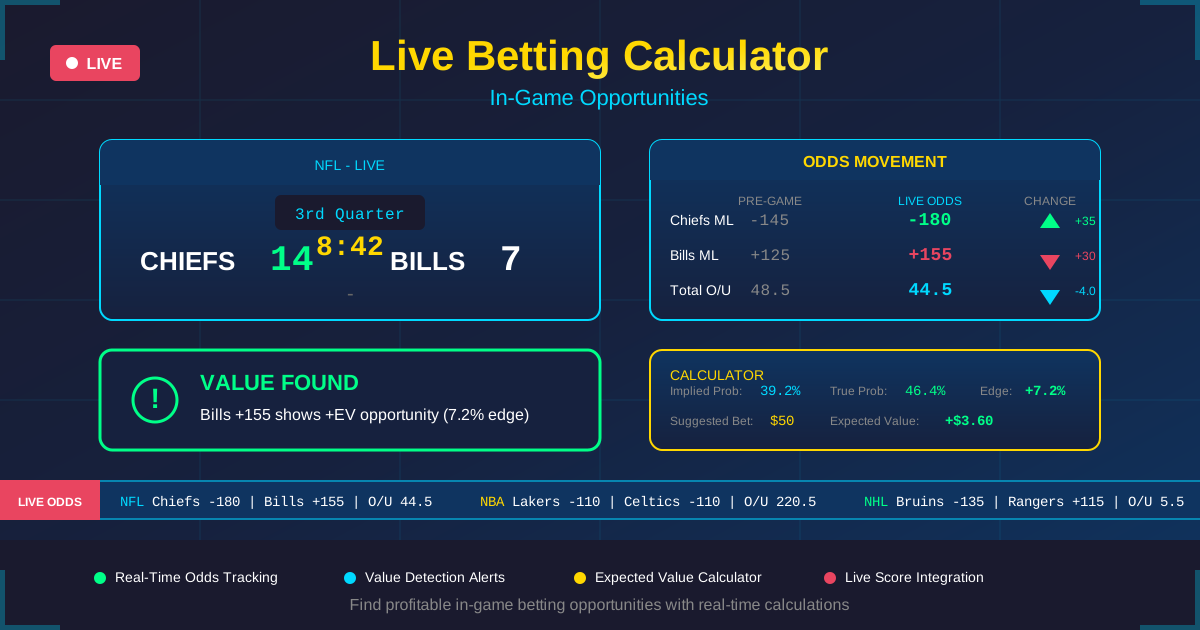
Live Betting in Baseball: The Growing Edge
Live (in-play) betting in MLB has exploded in volume, and it offers some of the most profitable opportunities in all of sports betting. Here is why:
Why Live MLB Betting Offers Value
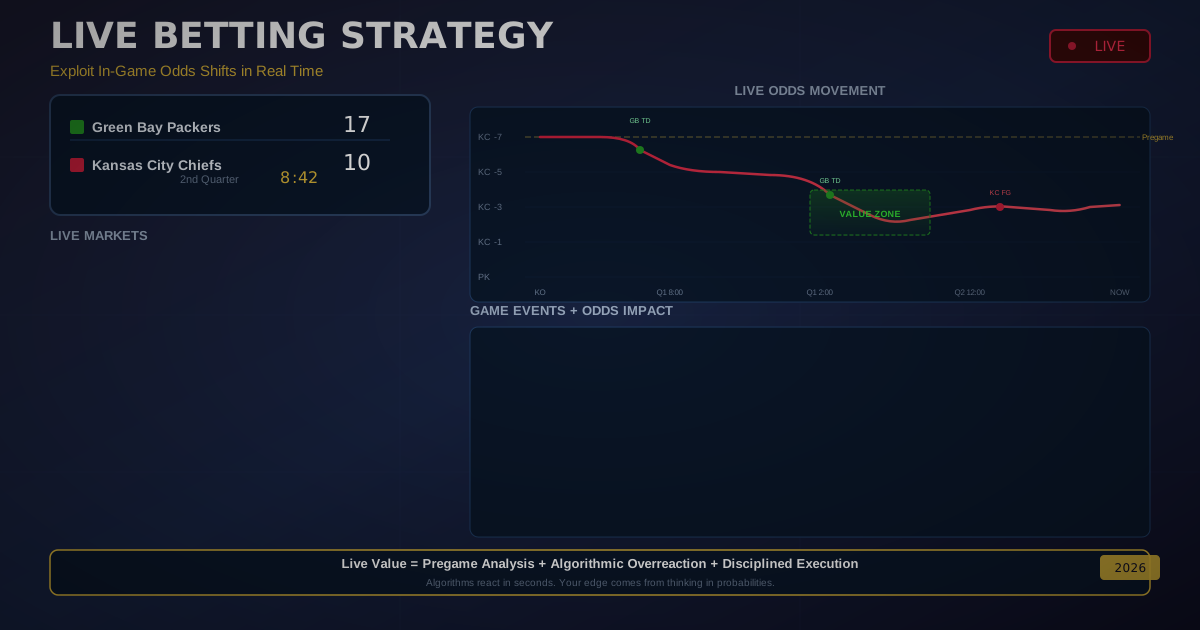
1. Overreaction to early scoring: If the home team falls behind 2-0 in the 1st inning, live odds often overreact. A -150 pre-game favorite might shift to +120 live after giving up 2 early runs. But a 2-run deficit in the 1st inning with 8 innings remaining is not nearly as damaging as the market implies. If the fundamentals (starting pitching, lineup quality, bullpen depth) still favor the home team, the live line offers value.
2. Pitcher performance assessment: After watching 2-3 innings, you have real-time data on how a pitcher looks. Velocity, command, pitch mix, and swing-and-miss rates are all visible. If the favored team's ace is cruising with 6 strikeouts through 3 innings but the game is tied 0-0, the live moneyline price may not fully reflect his dominance.
3. Weather changes mid-game: Wind shifts, especially at Wrigley Field and other open-air stadiums, can change the run-scoring environment mid-game. If the wind shifts from blowing in to blowing out during the 4th inning, the live total might not adjust fast enough.
Live Betting Strategies
- Back the better team after early deficits: A 2-0 or 3-0 deficit in the first 3 innings for a strong team with an elite starter still on the mound is often overpriced live.
- Bet the over after a scoreless first 3 innings: If both pitchers are due for regression (high xFIP, declining velocity), the over might be underpriced live after a quiet start.
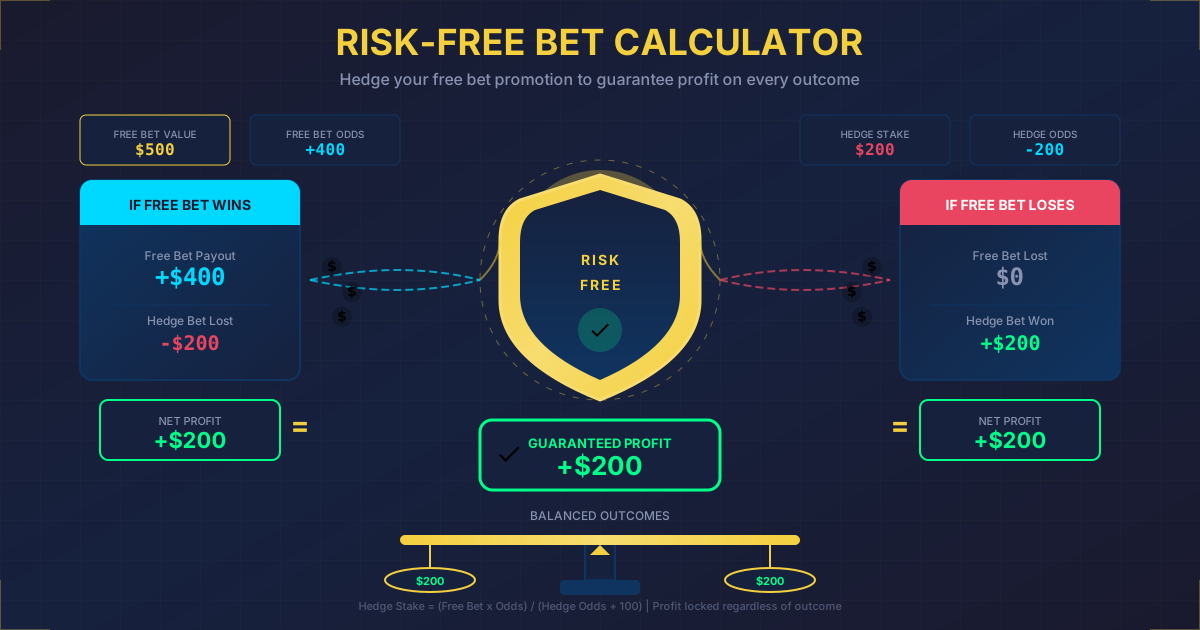
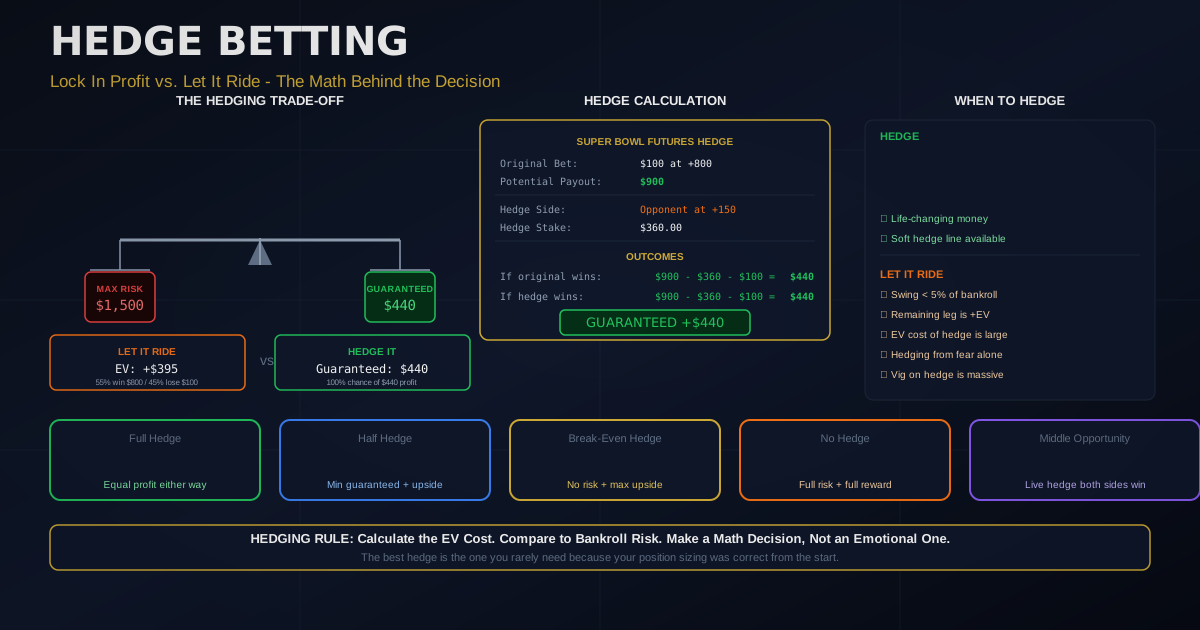
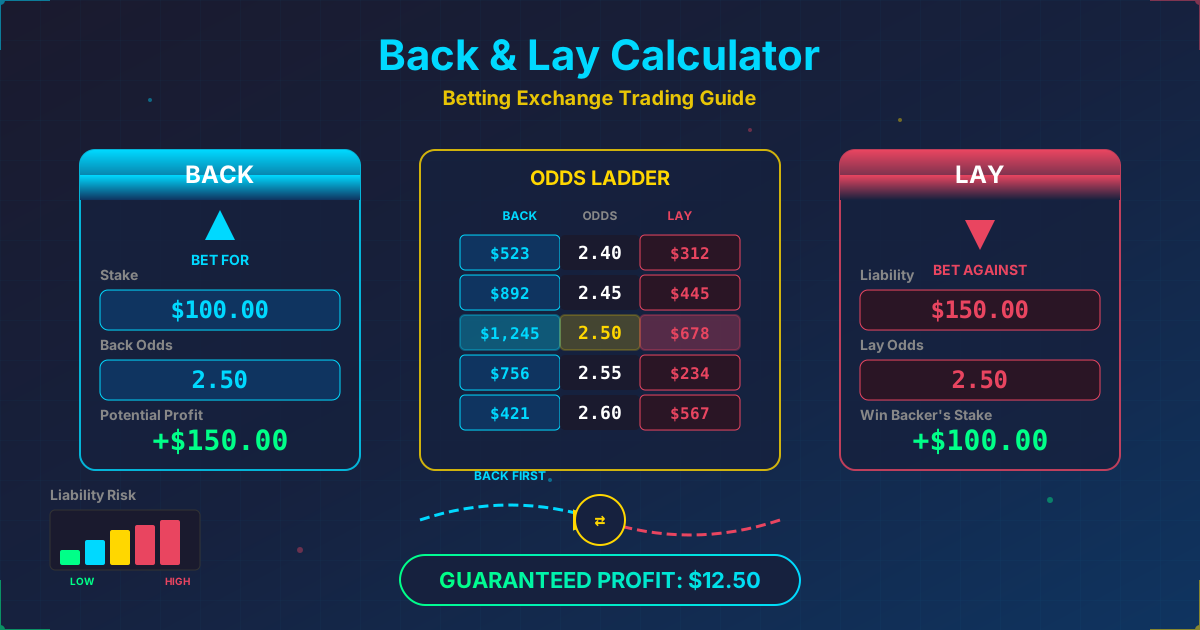
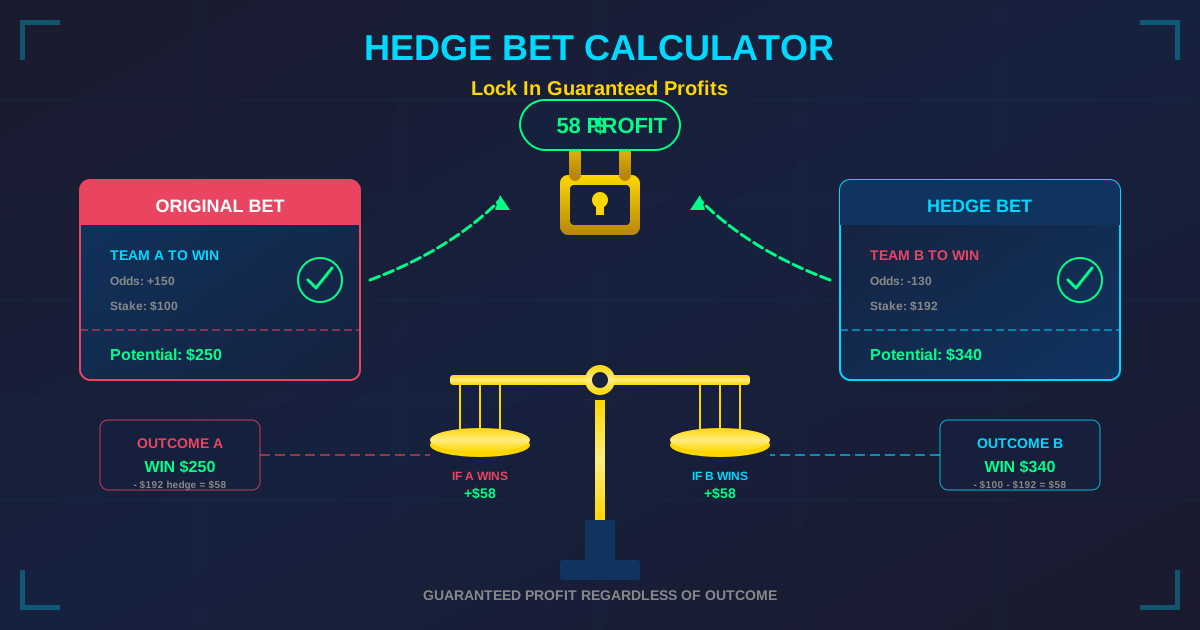
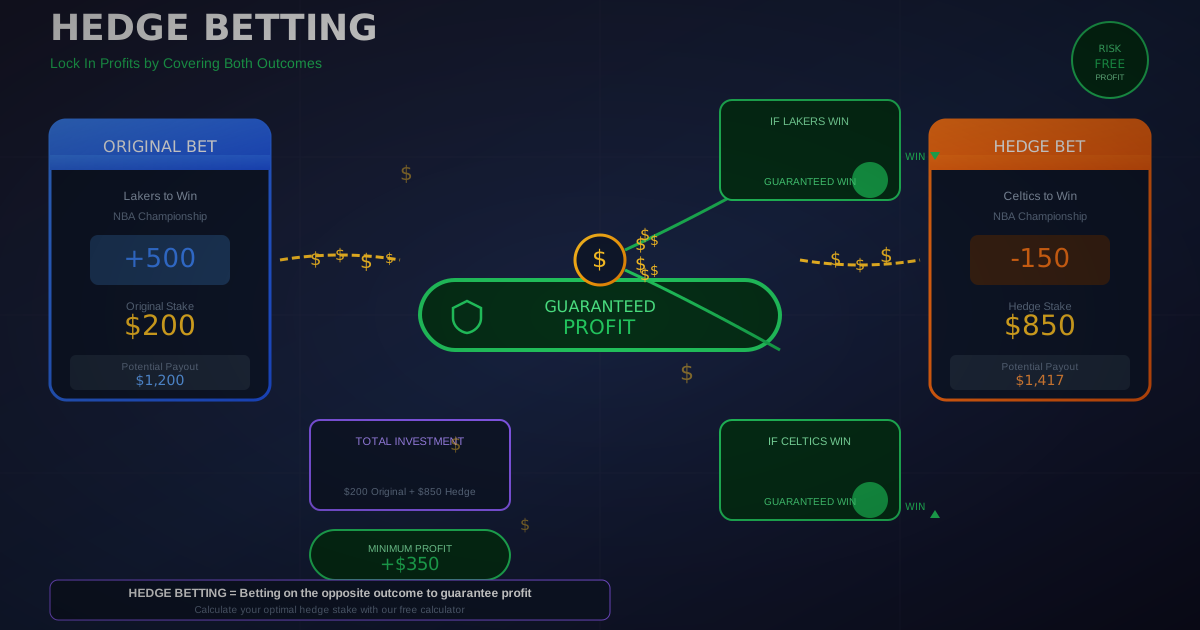
- Hedge pre-game bets in favorable spots: If your pre-game moneyline bet is winning 4-1 in the 7th, a small live bet on the opponent can lock in profit. Use our Hedge Calculator to find the optimal hedge amount.
Season-Long Trends and Angles
Successful MLB bettors track trends that persist across the 6-month season. These are not "systems" based on small samples -- they are structural advantages rooted in how baseball works.
April and September Edges
April:
- Starting pitchers are still building arm strength. Early-season starters throw fewer pitches and exit earlier, giving more innings to bullpens.
- Batting averages are suppressed in cold weather (especially in northern stadiums). Lean under on totals in April games at Wrigley, Fenway, Yankee Stadium, and other northern parks.
- Underdogs in the +100 to +150 range have historically produced positive ROI in April, as the public overreacts to pre-season projections and prior-year records.
September:
- Roster fatigue becomes a factor. Teams outside the playoff race rest key players and call up minor leaguers.
- Contending teams push their aces to pitch on short rest or extend deeper into games, creating potential fatigue-related regression.
- Eliminated teams become dangerous underdogs. With nothing to lose, young call-ups play aggressively and sometimes overperform.
Day Games After Night Games
This classic betting angle remains relevant: teams that play a day game immediately following a night game (especially in different cities) perform below their baseline. The fatigue, travel, and reduced preparation time create a measurable handicap.
Profitable approach: Bet against the road team in day-after-night situations, especially when they traveled overnight and face a rested home starter.
Interleague and Cross-Country Travel
Teams traveling across multiple time zones show measurable performance drops in the first game of a road series. A West Coast team playing a 1:00 PM ET start in the Eastern time zone (which feels like 10:00 AM to their body clock) faces a real physiological disadvantage.
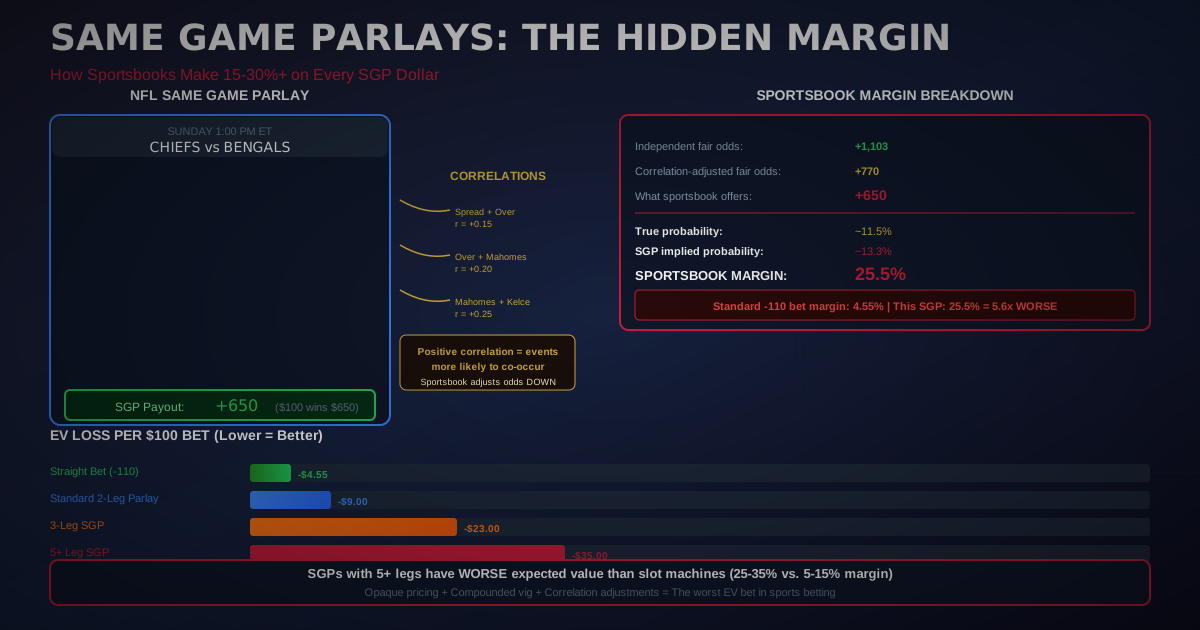
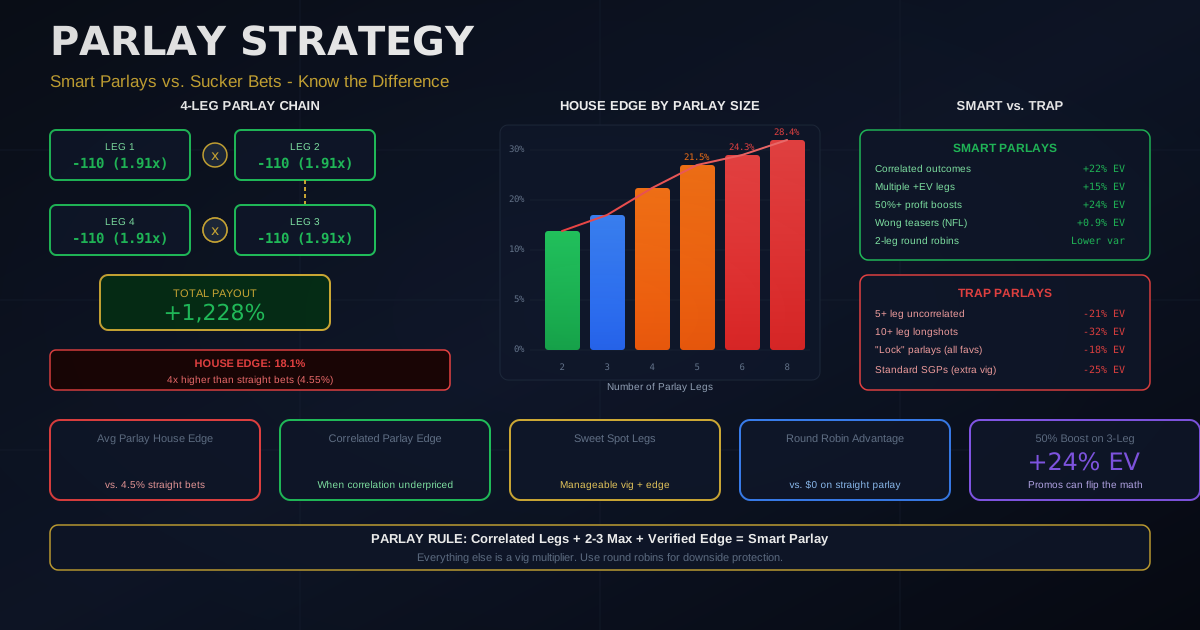
Parlay Strategies for MLB
While single-game bets are the foundation of sharp MLB betting, strategic parlays can amplify edges. The key is parlaying only +EV legs -- not random picks.
Effective MLB parlay approaches:
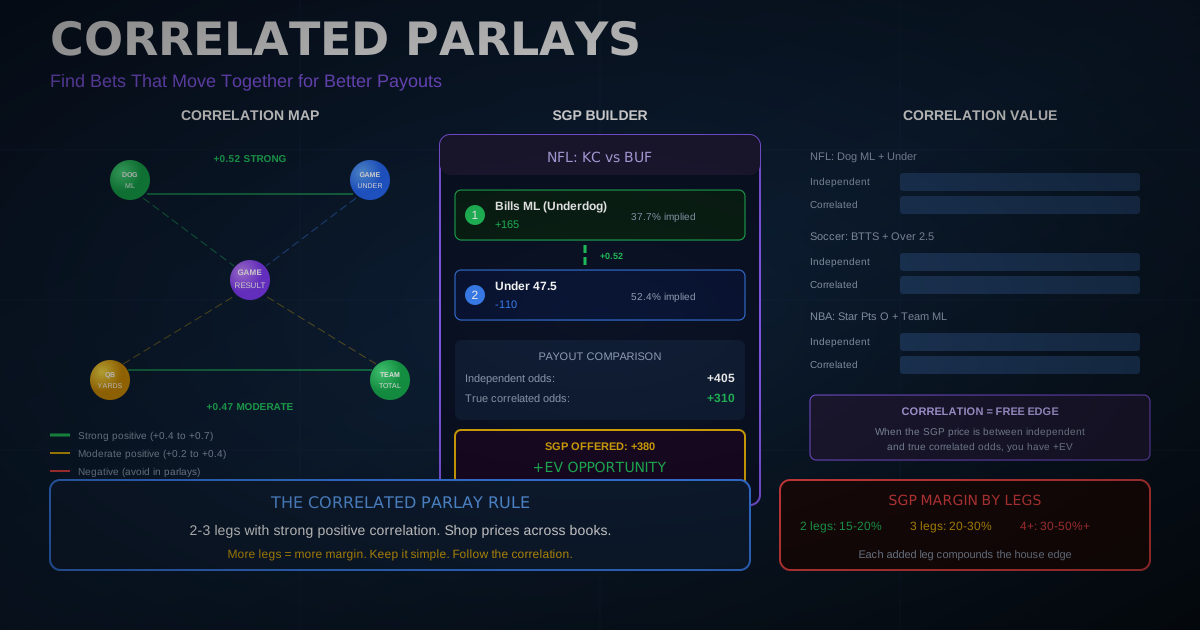
- Correlated parlays: Pairing a team's moneyline with the game under total. If you expect a dominant pitching performance, both legs benefit from the same outcome.
- F5 + full game combinations: If your ace starts, parlay the F5 moneyline with the full-game under.
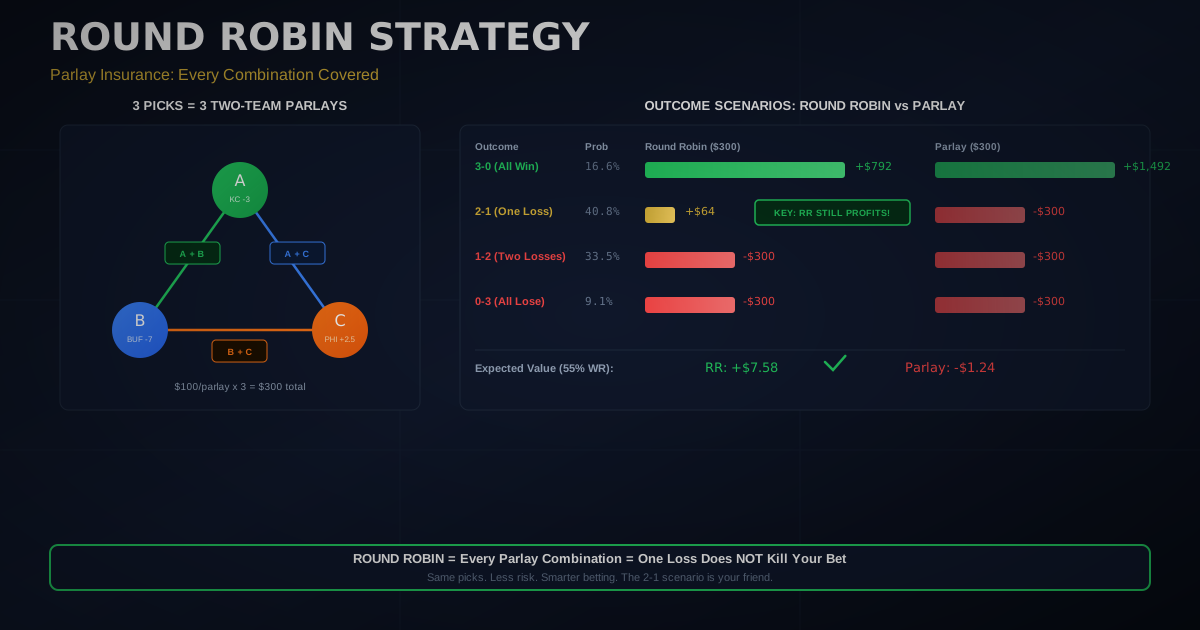
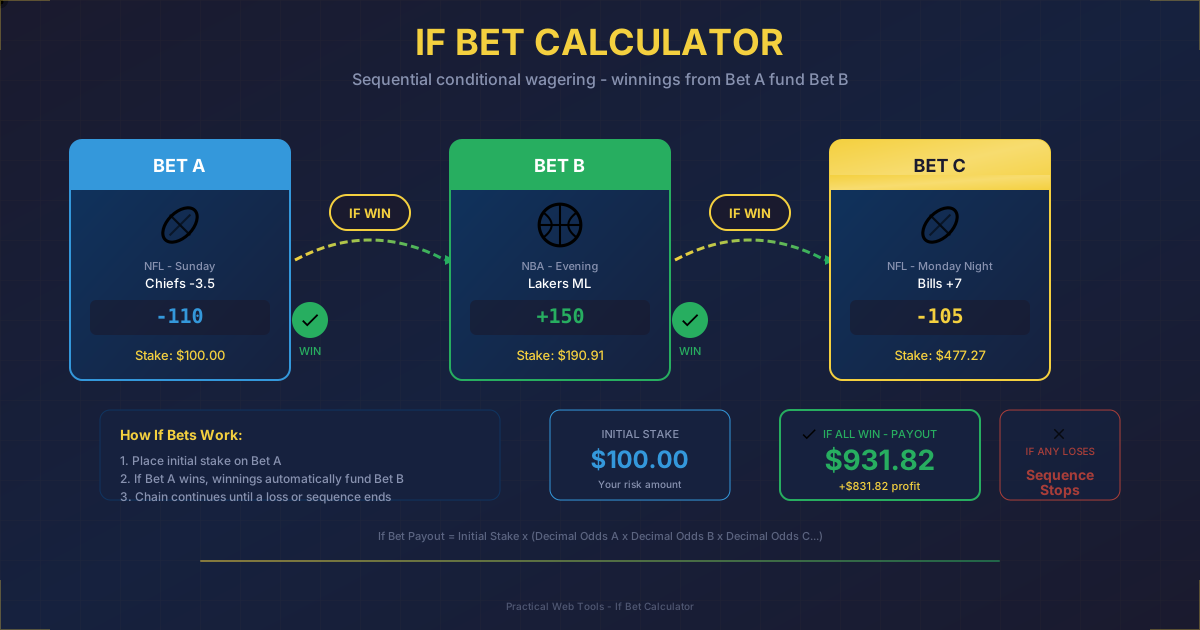
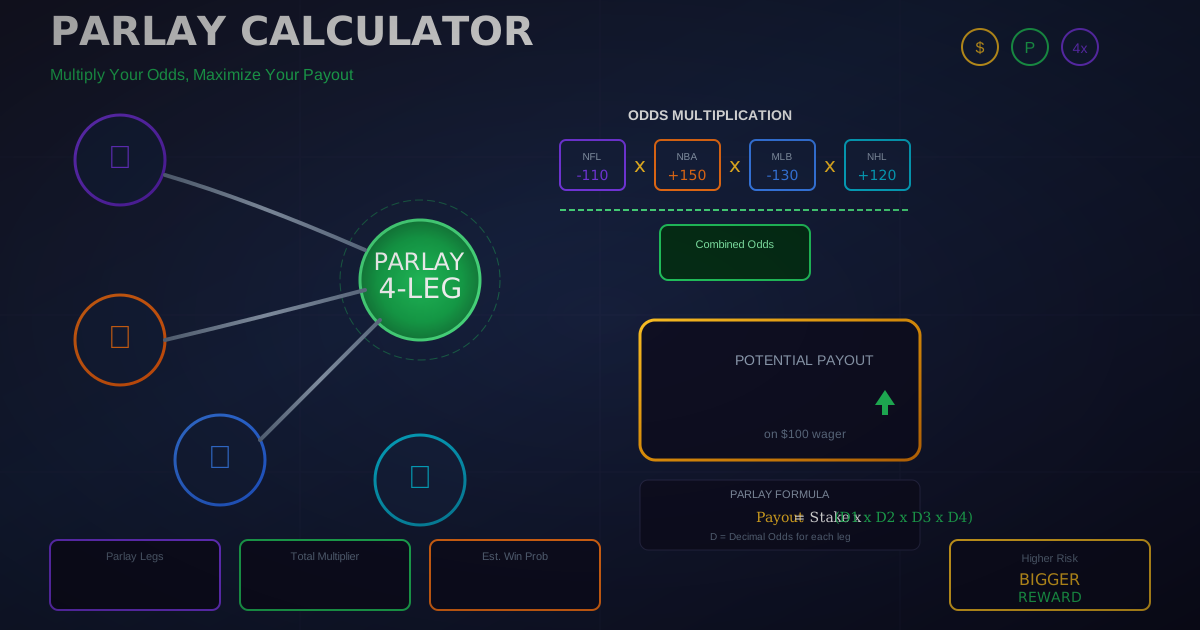
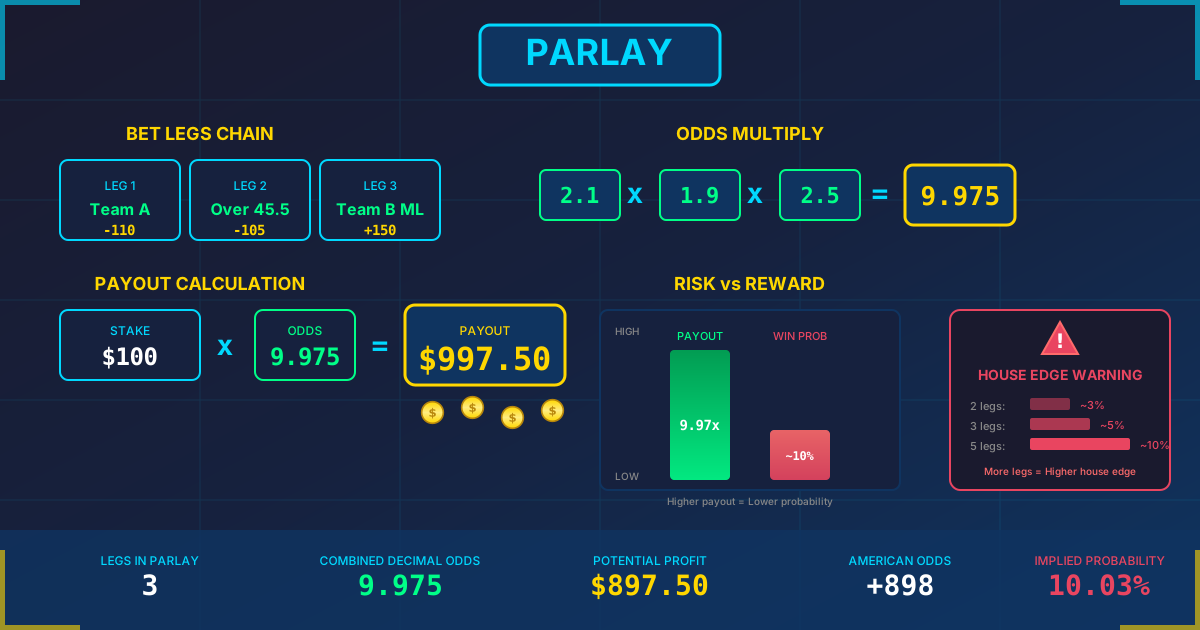
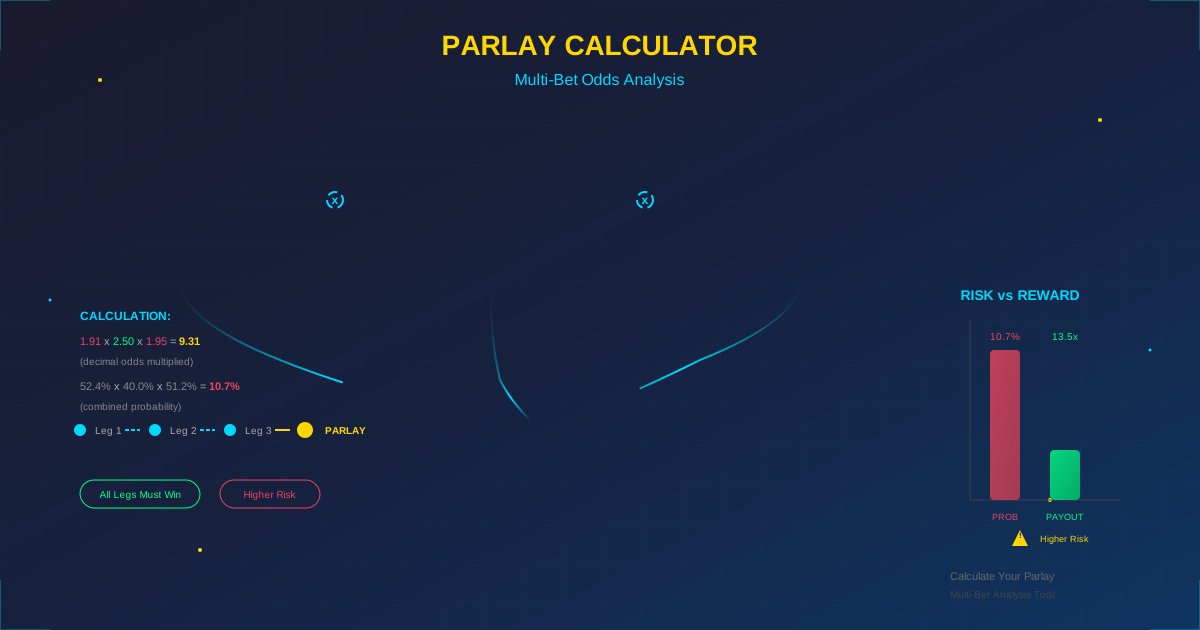
- Two-leg underdogs: Parlaying two +130 underdogs you model as +EV creates a roughly +360 payout. Two correct +EV assessments compounded.
Calculate parlay payouts and probabilities with our Parlay Calculator.
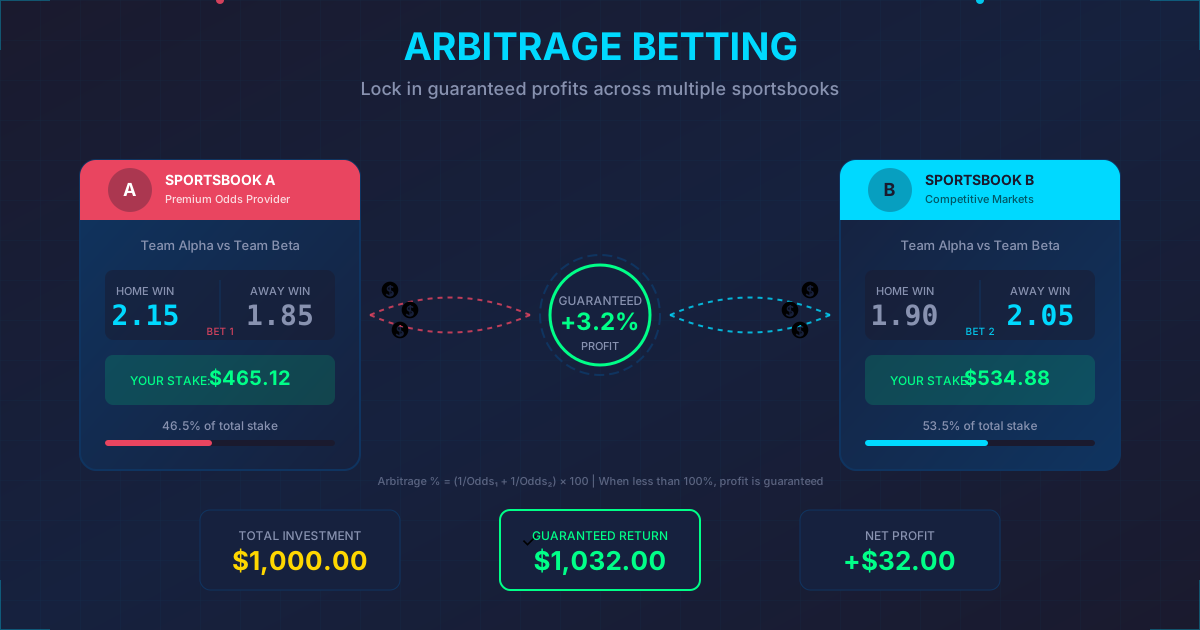
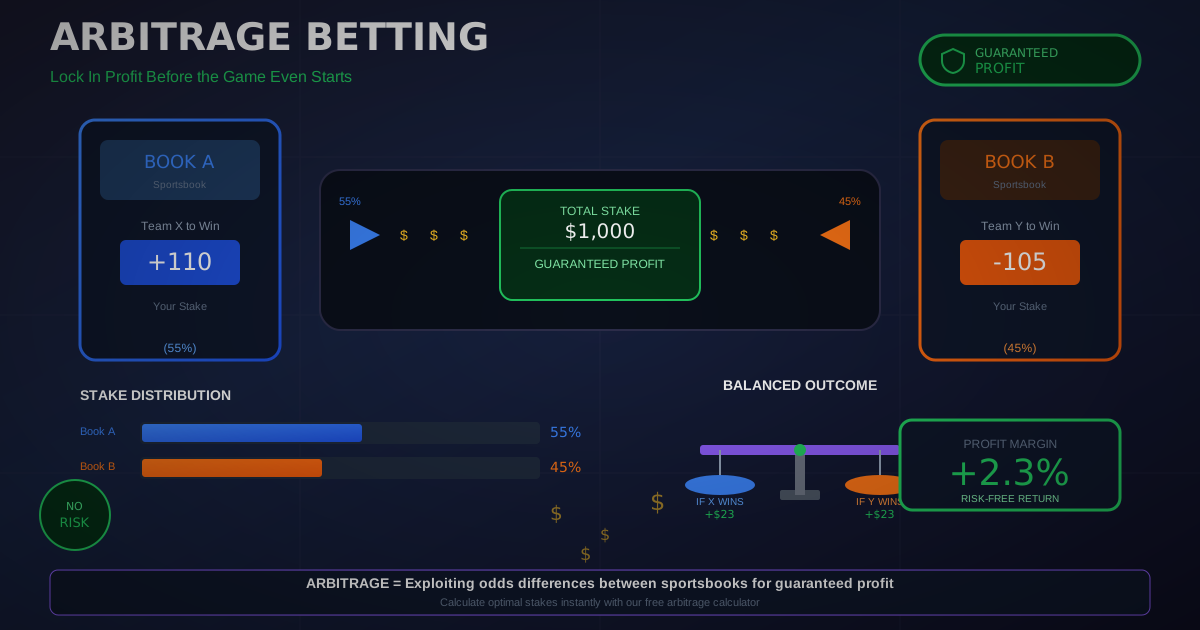
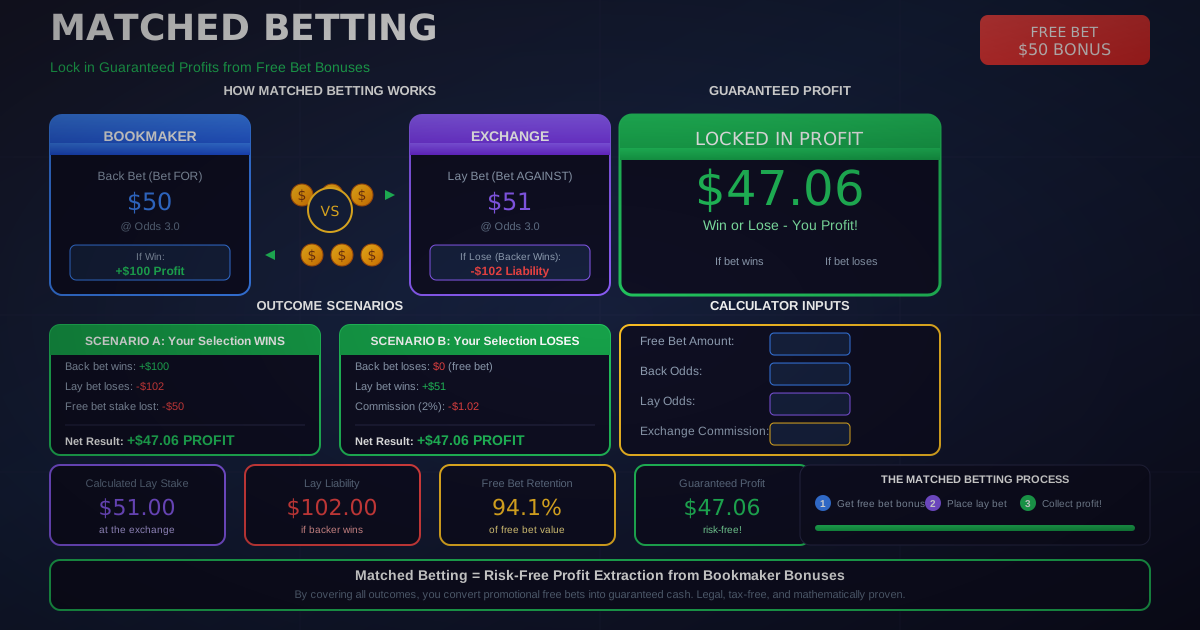
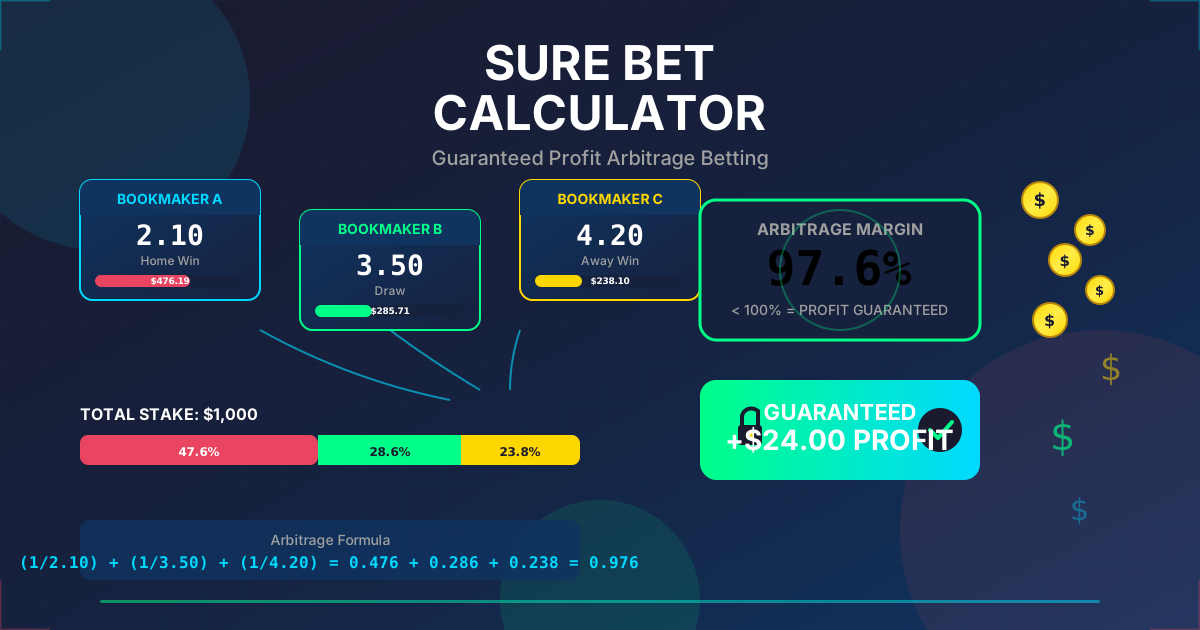
Identify risk-free parlay opportunities with our Arbitrage Calculator.
Building Your MLB Betting Process
Profitable MLB betting requires a systematic daily process. Here is a framework used by successful bettors:
Daily Workflow
- Check probable pitchers (MLB.com confirms starters each morning)
- Review bullpen usage from the previous 3 days (Rotowire, FanGraphs)
- Check weather forecasts for each ballpark (wind speed, direction, temperature)
- Run your model comparing true probabilities to opening lines
- Identify +EV spots where your projection differs from the market by 2%+
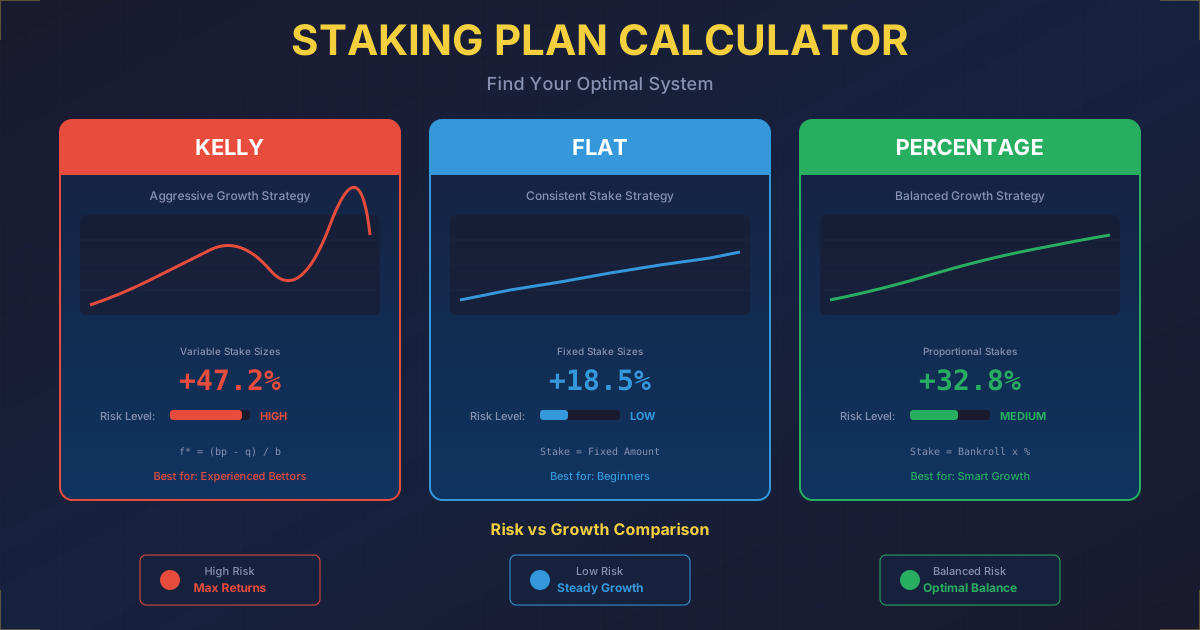
- Size bets using Kelly Criterion or fractional Kelly based on edge size
- Place bets early on stale opening lines, or wait for line movement if your model suggests the line will move further in your favor
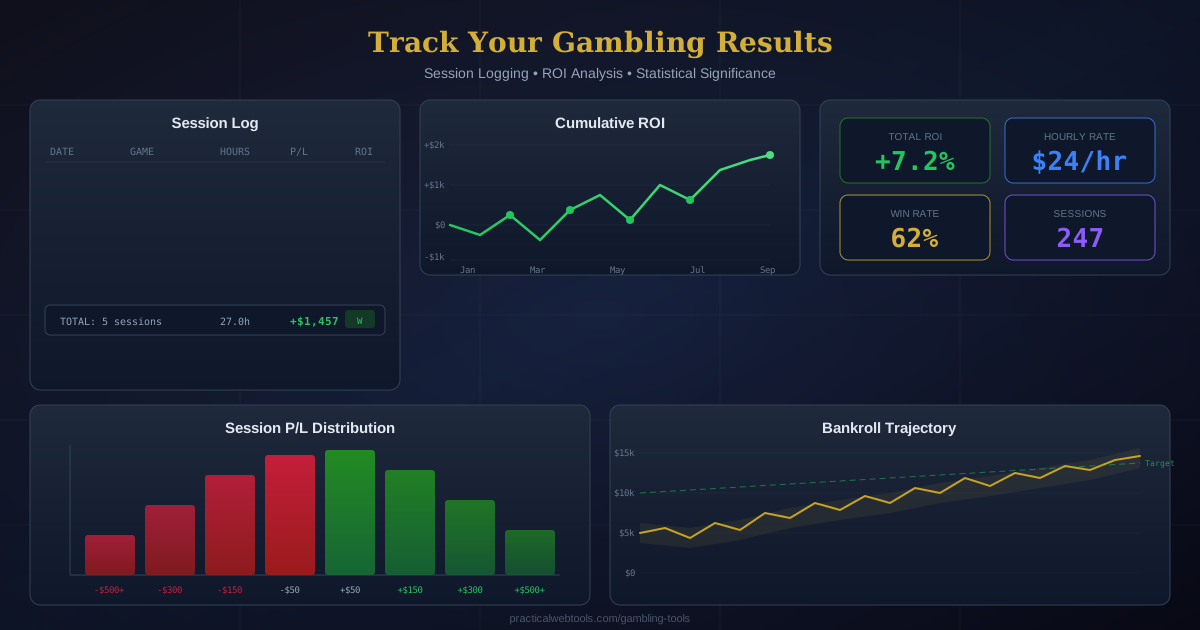
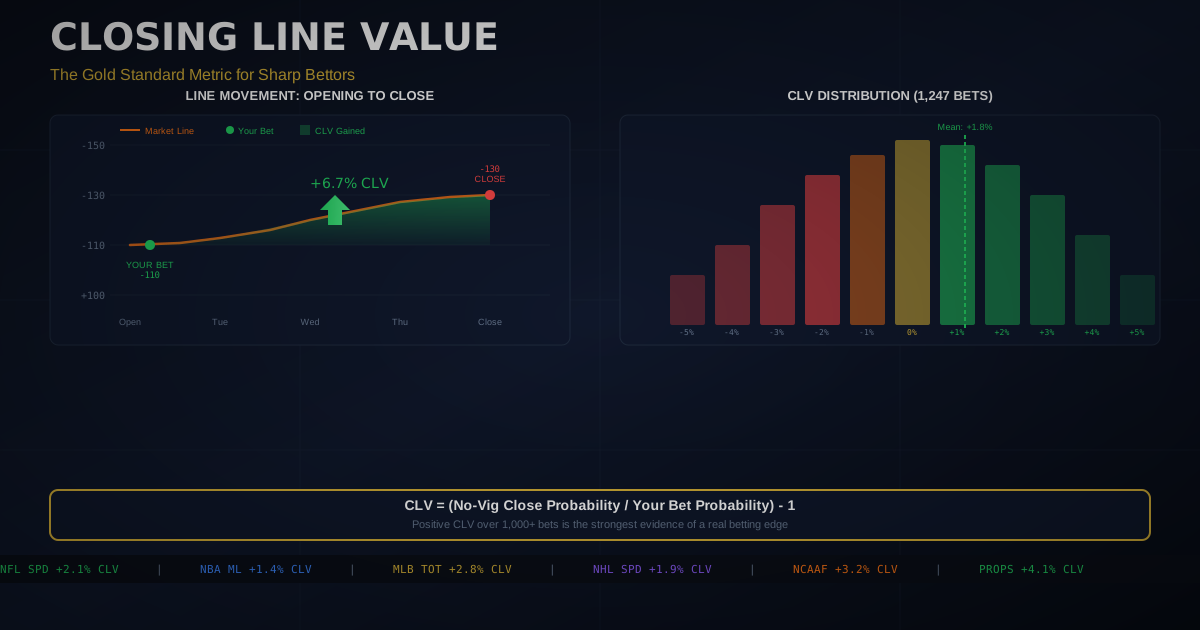
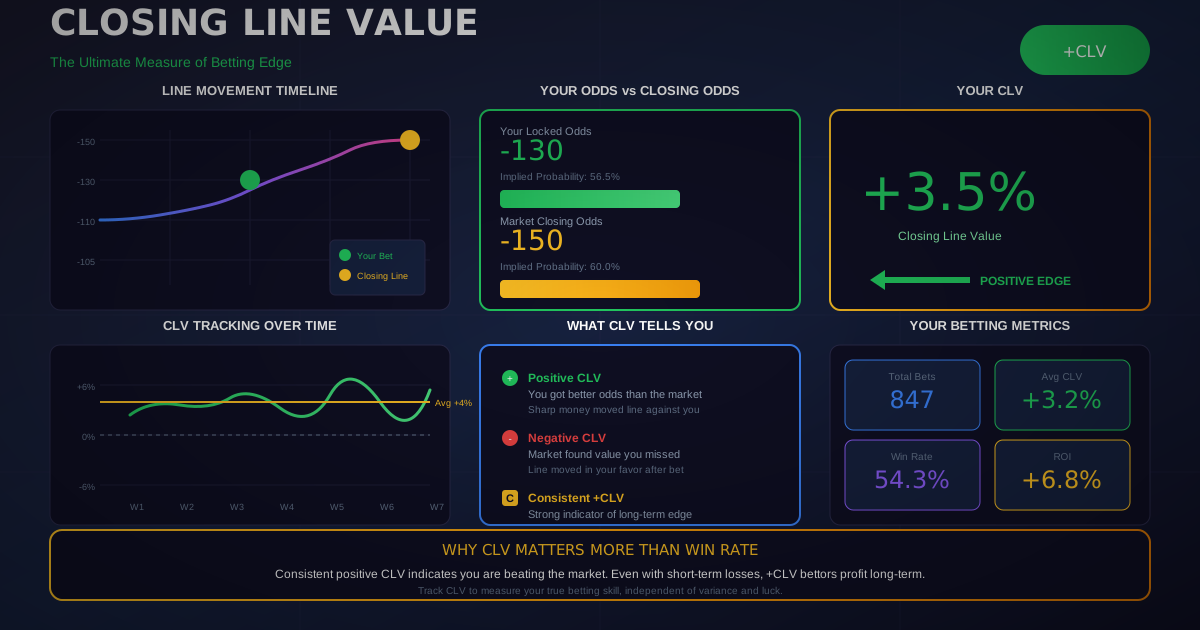
- Track results including opening odds, closing odds, CLV, and outcome
Track your closing line value with our CLV Tracker.
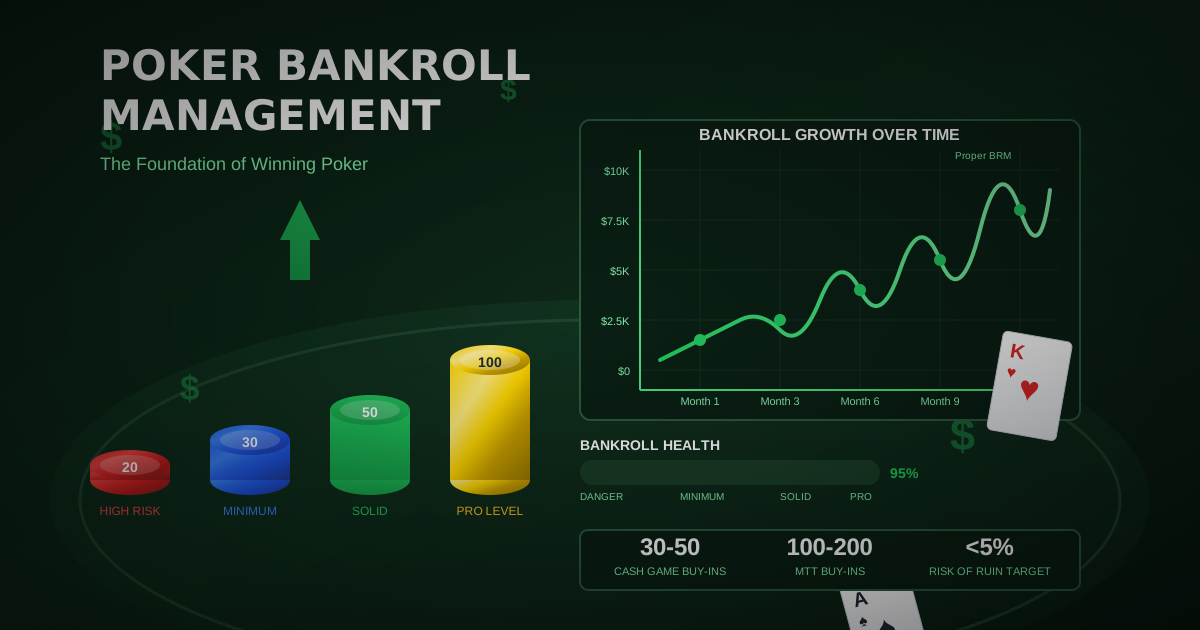
Bankroll Management for a 162-Game Season
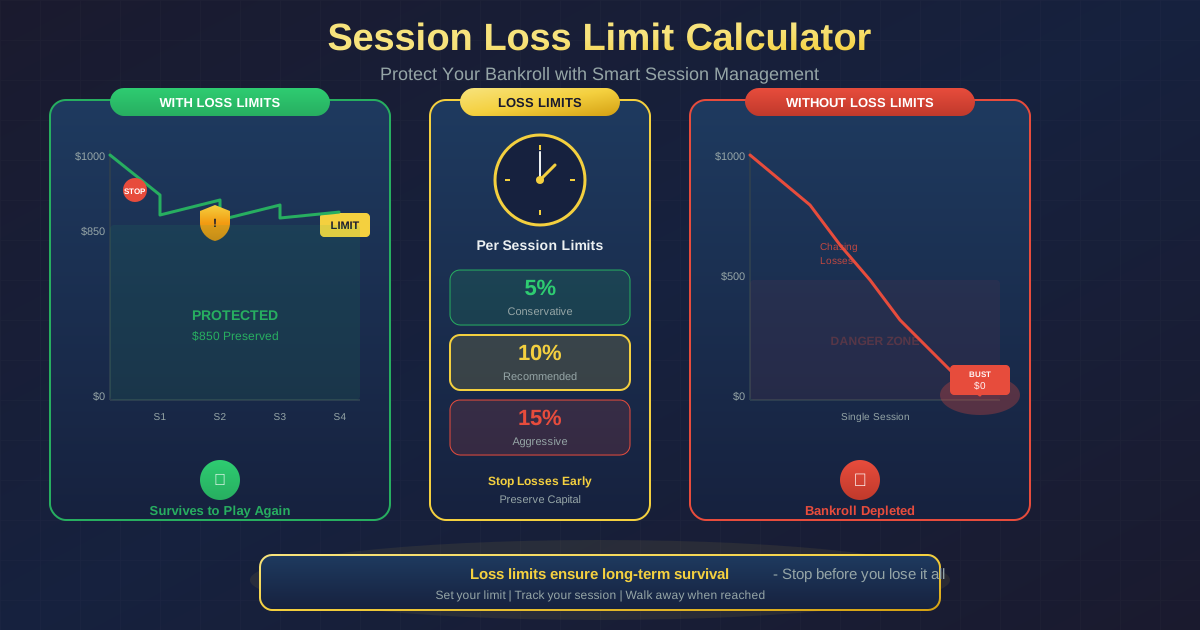
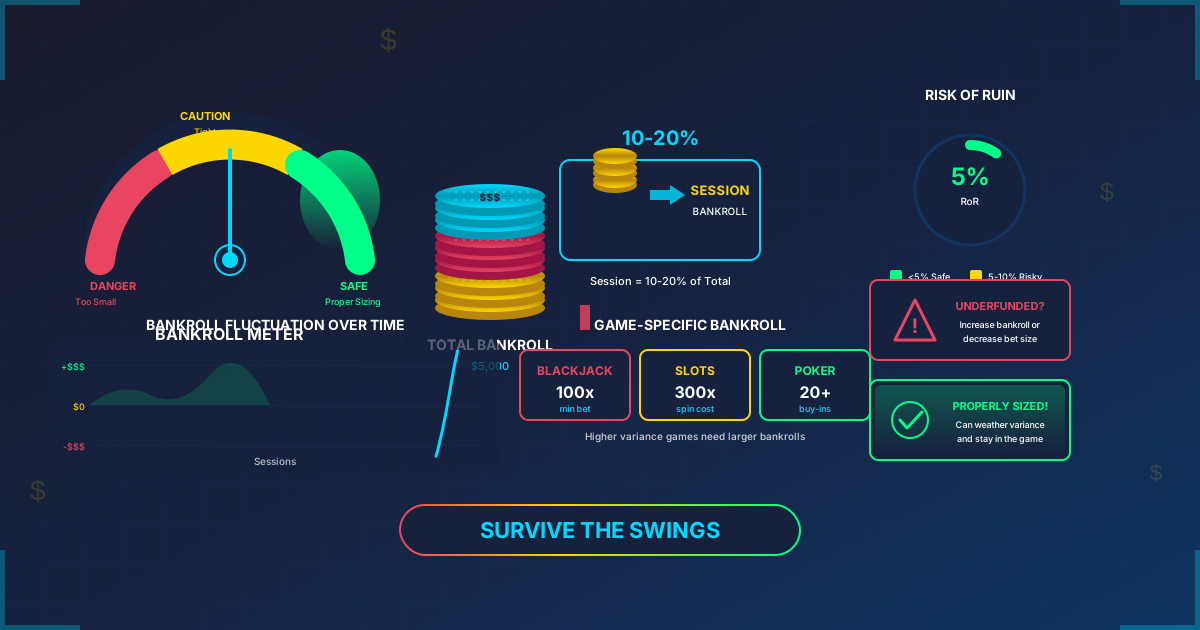
MLB's long season demands disciplined bankroll management. Recommended guidelines:
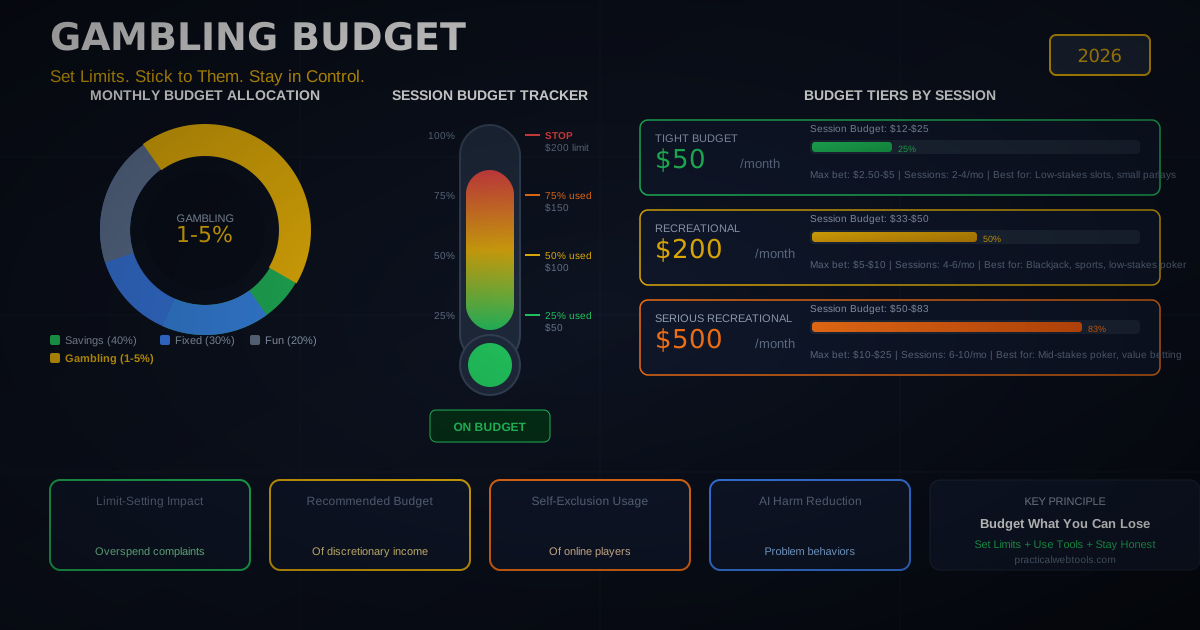
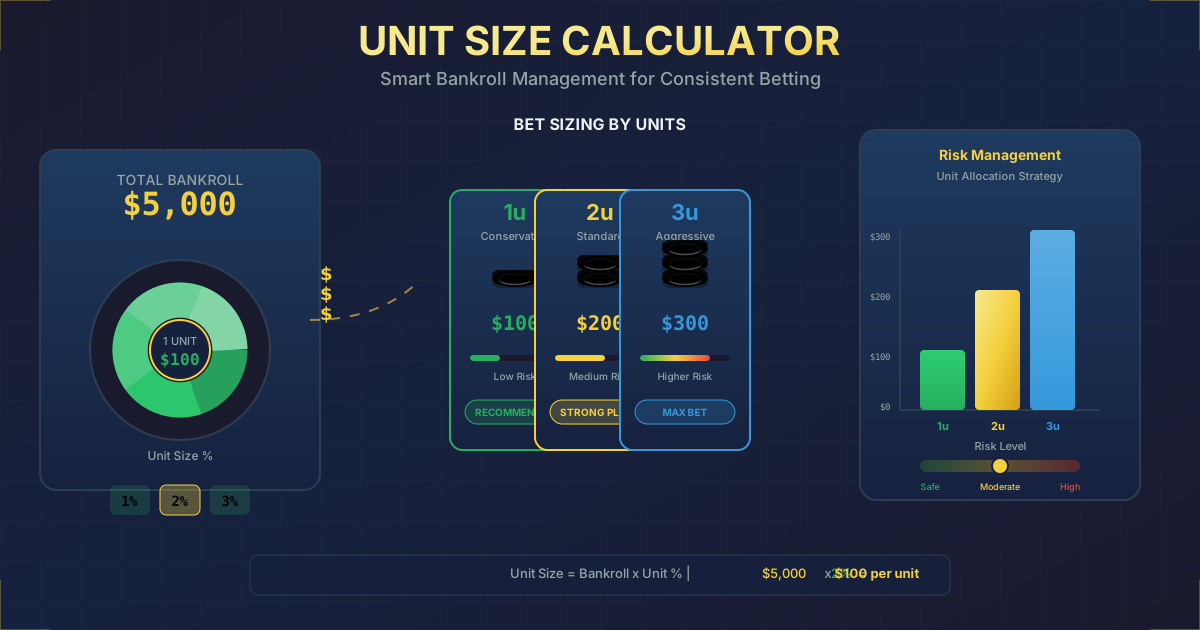
- Unit size: 1-2% of total bankroll per standard bet
- Max exposure per day: 5-8% of bankroll (across all bets)
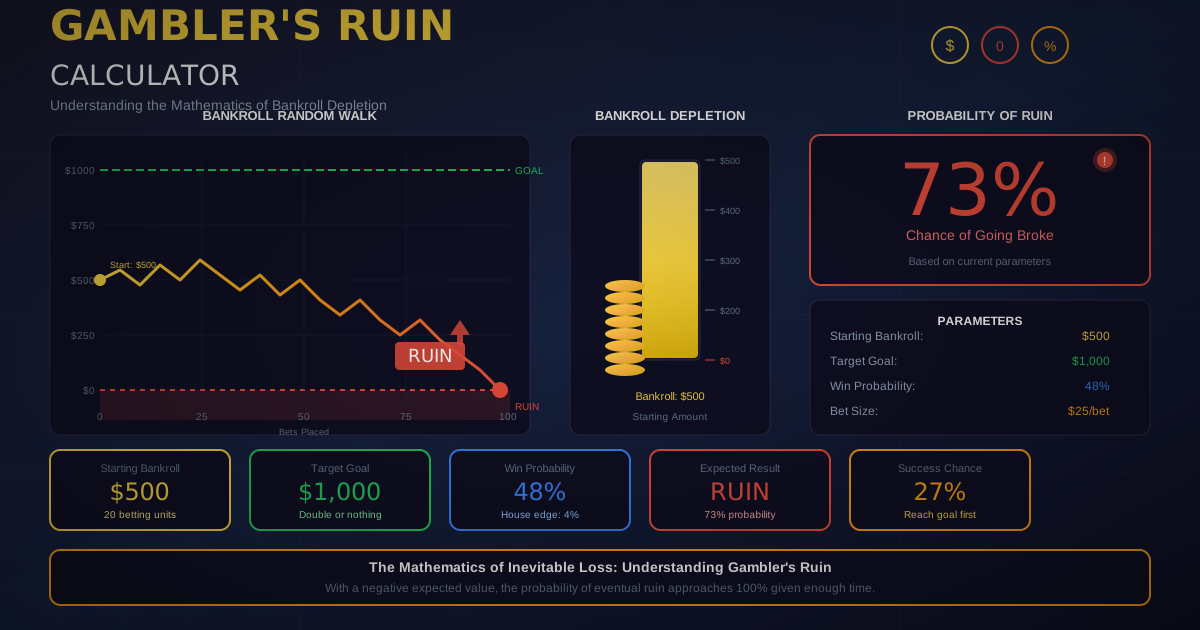
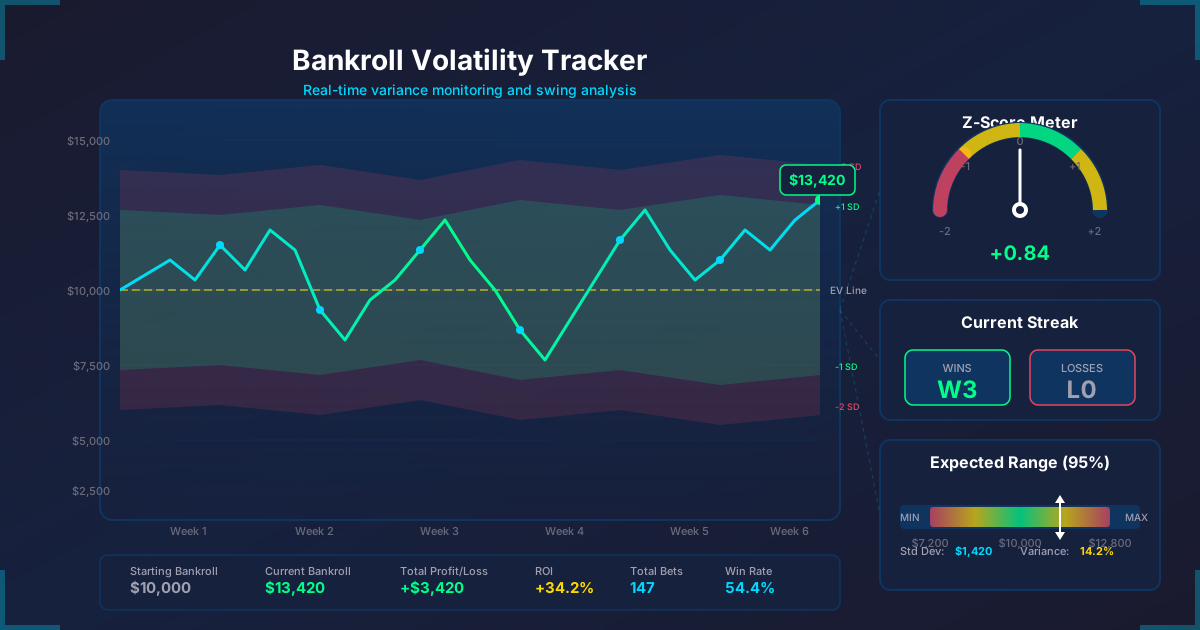
- Season bankroll: Have enough to withstand a 30-unit downswing (it will happen)
- Bet volume: Quality over quantity -- 1-4 bets per day is typical for sharps
- Record keeping: Log every bet with odds, CLV, and edge estimate
Determine optimal bet sizing with our Kelly Criterion Calculator.
Frequently Asked Questions
What is the most profitable MLB bet type? Moneyline underdogs in the +121 to +150 price range have historically shown the best risk-adjusted returns for sharp bettors. These are not heavy underdogs but rather competitive teams getting plus-money odds due to a slight pitching matchup disadvantage or public bias toward the favorite. Totals (over/unders) are also considered highly exploitable due to the number of underpriced variables like weather and ballpark factors.
Is run line betting better than moneyline betting in MLB? It depends on the price. For heavy favorites (-180 and above), the run line typically offers better value because you avoid paying extreme juice while still capturing most wins. For moderate favorites (-130 to -160), the moneyline is usually preferable because approximately 28-30% of MLB games are decided by exactly 1 run, and those 1-run wins are valuable on the moneyline but lost on the run line. The right choice is always situational.
How much does the starting pitcher affect MLB betting lines? Starting pitchers account for roughly 55-65% of the moneyline pricing in an MLB game. An elite ace (sub-3.00 ERA) can move a line by 40-60 cents compared to a replacement-level starter. This makes MLB unique among major American sports -- no single player in the NFL, NBA, or NHL influences the line as dramatically as an MLB starting pitcher.
What is F5 betting and why do sharps prefer it? F5 (first 5 innings) betting settles at the score after the fifth inning. Sharp bettors favor F5 bets because they isolate the starting pitching matchup and remove bullpen variance. If your edge comes from handicapping starting pitchers, F5 bets give you the purest expression of that analysis without the noise of middle relievers, pinch hitters, and managerial decisions in the late innings.
How does weather affect MLB totals betting? Weather is one of the most impactful and frequently underpriced variables in baseball totals. Wind blowing out at 10+ mph can add 1.0 to 2.5 runs to a game's scoring expectation. Temperature above 85 degrees adds 0.3 to 0.8 runs. Wind blowing in suppresses scoring by 0.5 to 1.5 runs. An extra 5 mph of outward wind adds approximately 19 feet to a fly ball's travel distance, turning warning-track outs into home runs.
Should I bet every MLB game or be selective? Be selective. Professional bettors typically place 1-4 bets per day out of 15 available games. The goal is not volume for volume's sake but identifying the highest-EV spots where your model disagrees with the market by a meaningful margin (typically 2%+ EV after vig). Betting every game guarantees you are placing many negative-EV wagers that erode your edge.
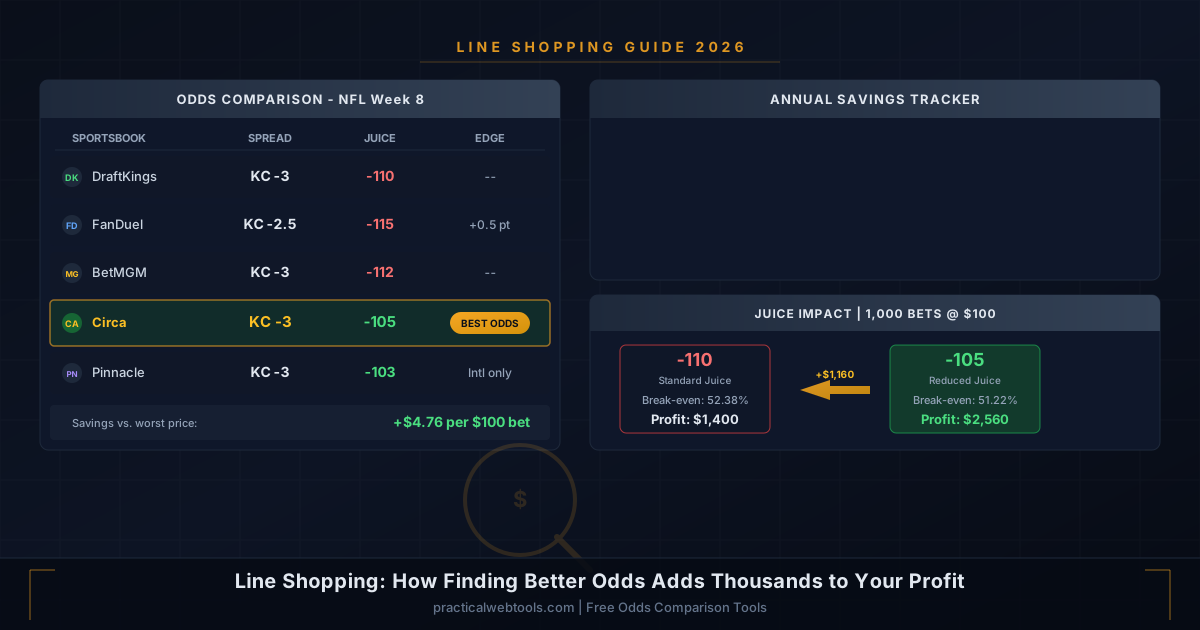
How important is line shopping in MLB betting? Extremely important. Because MLB uses moneyline pricing rather than fixed spreads, the price difference between sportsbooks on the same game can be 10-20 cents. Getting +140 instead of +130 on an underdog increases your long-term return significantly. Across 500 bets per season, consistent line shopping can add 1-2% to your overall ROI, which is the difference between a losing and winning season for many bettors.
What bankroll size do I need for a full MLB betting season? Most professional bettors recommend a bankroll that can sustain 30-50 losing units without being wiped out. If your standard bet is $100 (1 unit), a $5,000 bankroll (50 units) provides adequate cushion for the inevitable losing streaks during a 162-game season. Use the Kelly Criterion Calculator to size bets as a percentage of your current bankroll to avoid overbetting.
Essential Tools for MLB Bettors
Make smarter, data-driven baseball bets with these free tools:
- Odds Converter: Instantly convert between American, decimal, and fractional odds for any MLB line.
- Expected Value Calculator: Calculate the EV of any moneyline, run line, or totals bet to identify +EV plays.
- Kelly Criterion Calculator: Determine optimal bet sizing based on your estimated edge and bankroll.
- Implied Probability Calculator: Convert any odds into their implied win probability to compare against your model.
- Hold/Vig Calculator: See exactly how much juice the sportsbook is charging on any line.
- Parlay Calculator: Calculate parlay payouts and combined probabilities for multi-leg MLB bets.
- Hedge Calculator: Find the optimal hedge amount to lock in profit on live bets or futures.
- Arbitrage Calculator: Identify and calculate risk-free arbitrage opportunities across sportsbooks.
- CLV Tracker: Track your closing line value over time to measure your true betting edge.
Conclusion
MLB betting rewards the prepared, the disciplined, and the patient. The sport's 162-game season provides the sample size that variance demands. Its pitcher-driven lines create daily matchup edges that do not exist in other sports. Its moneyline-based market offers lower vig and better underdog value than any spread-based system.
The strategies in this guide -- from identifying underdog value in the +121 to +150 sweet spot, to exploiting weather-driven totals edges, to isolating starting pitcher matchups through F5 bets, to tracking bullpen fatigue for late-game advantages -- are the same approaches used by professional betting syndicates that have profited from baseball for decades.
Start with a process: check pitchers, check weather, check bullpens, run your numbers, identify value, size your bets, and track your results. Do this consistently for a full season, and the math will work in your favor.
Gambling involves risk. This content is for educational and informational purposes only. Always gamble responsibly, set limits you can afford, and seek help if gambling becomes a problem. Visit the National Council on Problem Gambling or call 1-800-522-4700 for support.