Craps Strategy for Beginners: The Only Bets You Should Ever Make (2026)
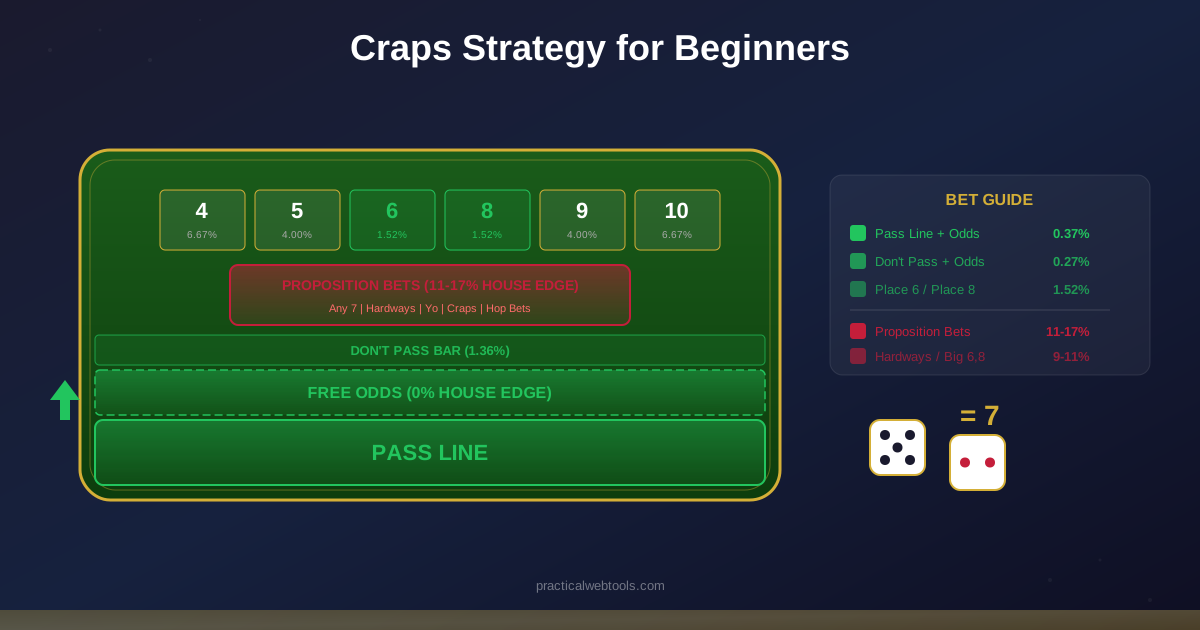
Craps is the loudest, most intimidating game in the casino, and it is also the one hiding the best bet in the entire building. The Odds bet in craps pays true odds with zero house edge, something no other standard casino wager can claim. Yet most beginners walk up to the table, get overwhelmed by 40+ possible bets, and end up throwing money at proposition bets that carry house edges of 10% to 16.67%. This guide strips away the complexity and shows you exactly which bets to make, which to avoid, and how to structure your sessions for maximum playing time on minimum risk.
How Craps Actually Works: The Basics You Need
Before talking strategy, you need to understand the core mechanics. Craps revolves around the "shooter" rolling two dice. The game proceeds in rounds with two phases:
The Come-Out Roll
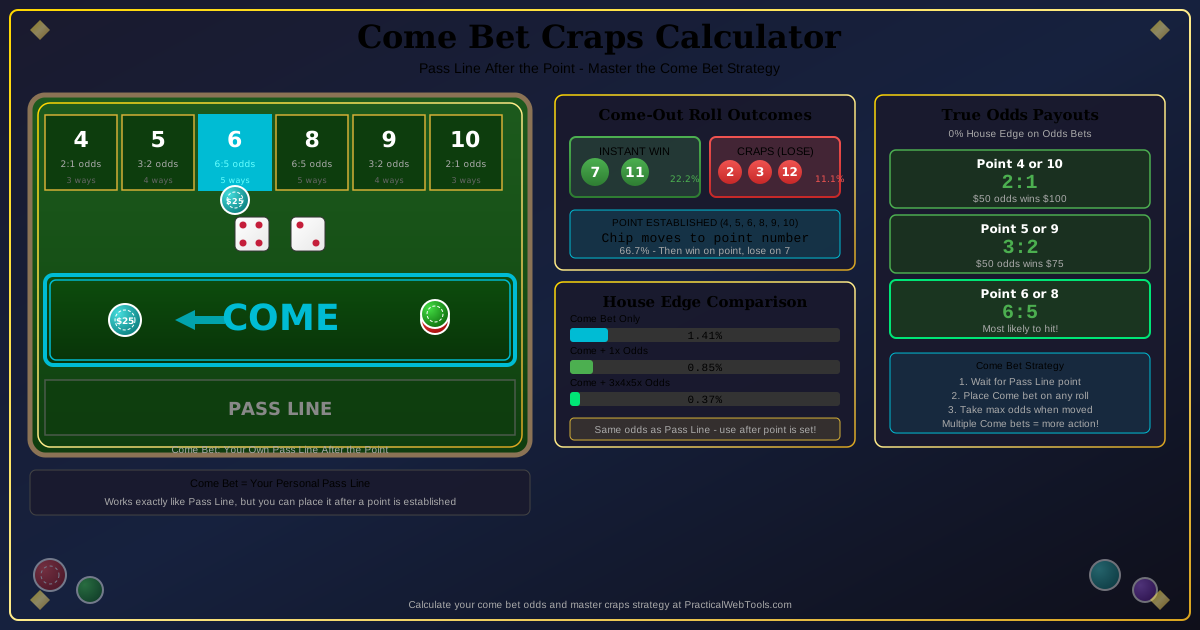
The first roll of a new round is the come-out roll. Three things can happen:
- Roll a 7 or 11: Pass Line bets win immediately (called a "natural")
- Roll a 2, 3, or 12: Pass Line bets lose immediately (called "craps")
- Roll any other number (4, 5, 6, 8, 9, 10): That number becomes the "point"
The Point Phase
Once a point is established, the shooter keeps rolling until:
- The point number is rolled again: Pass Line bets win
- A 7 is rolled: Pass Line bets lose (called "sevening out")
That is the entire foundation of craps. Everything else, every proposition bet, every hardway, every field bet, is a side show built on top of this simple structure. And most of those side bets exist for one reason: to extract more money from players who do not understand the math.
The Pass Line Bet: Your Foundation
The Pass Line bet is where every craps beginner should start. It is one of the best bets in any casino game.
How It Works
- Place your bet on the Pass Line before the come-out roll
- Win on 7 or 11 on the come-out (probability: 8/36 = 22.22%)
- Lose on 2, 3, or 12 on the come-out (probability: 4/36 = 11.11%)
- Any other number establishes a point, and you need that number rolled again before a 7
The Math
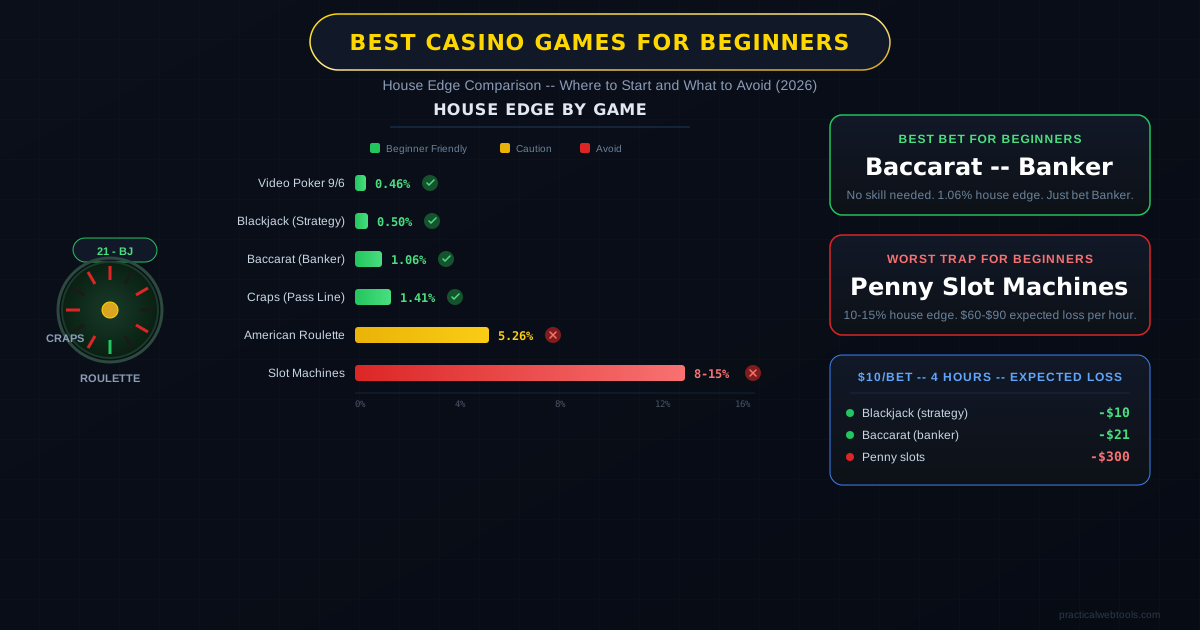
Pass Line House Edge: 1.41%

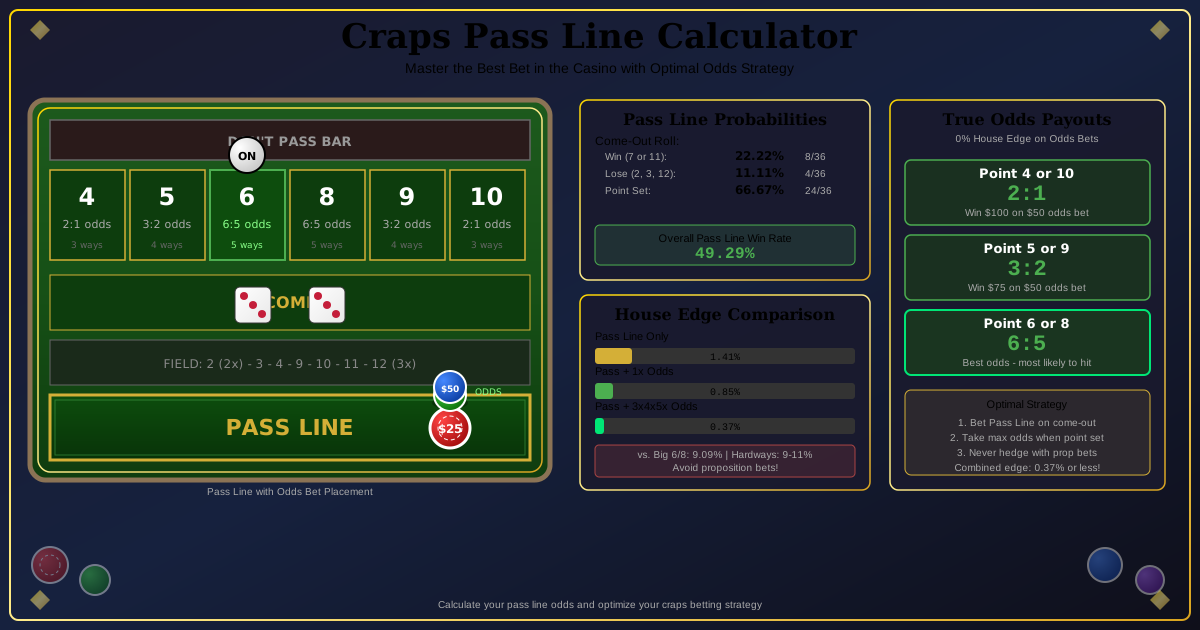
Come-out roll probabilities:
  Win (7 or 11): 8/36 = 22.22%
  Lose (2, 3, 12): 4/36 = 11.11%
  Point established: 24/36 = 66.67%

Point resolution probabilities:
  Point 4 or 10: 3 ways to make vs. 6 ways to roll 7 = 33.33% win
  Point 5 or 9: 4 ways to make vs. 6 ways to roll 7 = 40.00% win
  Point 6 or 8: 5 ways to make vs. 6 ways to roll 7 = 45.45% win

Overall Pass Line win probability: 49.29%
Overall Pass Line lose probability: 50.71%

House edge = 50.71% - 49.29% = 1.41%
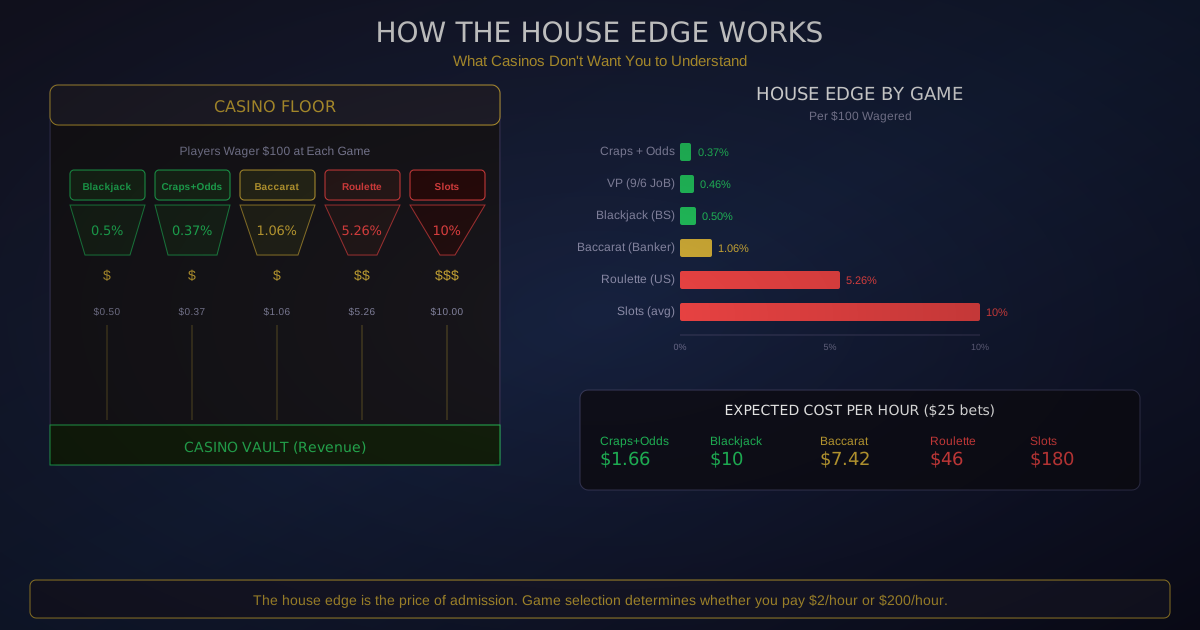
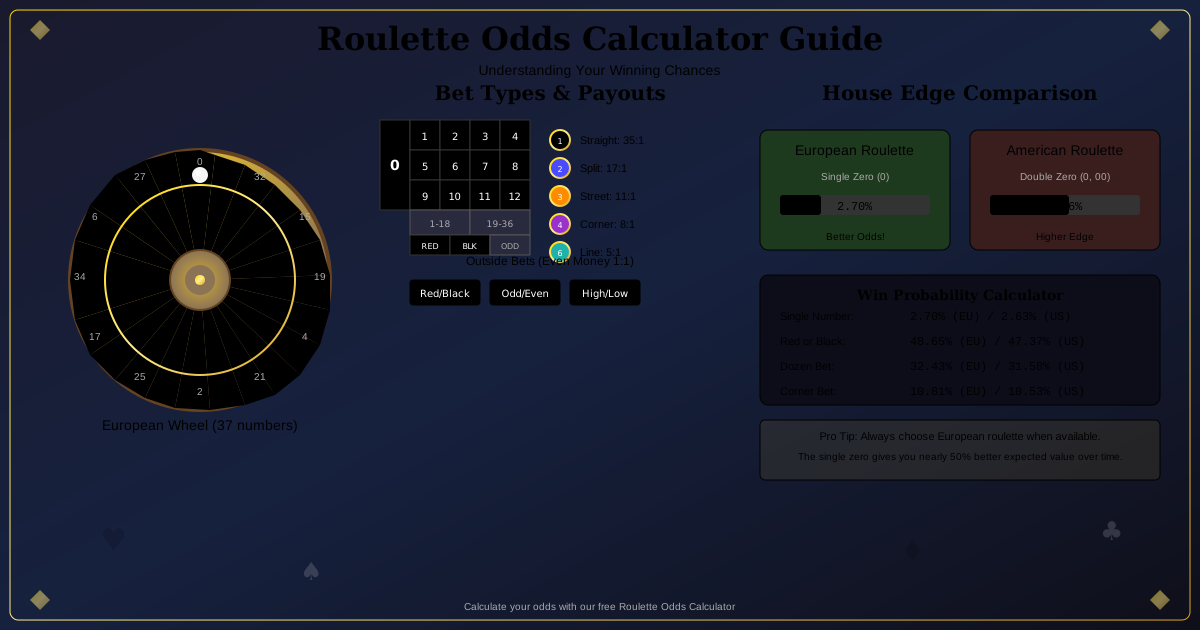
At 1.41%, the Pass Line is already better than almost every bet in roulette (5.26% American, 2.70% European), most slot machines (2-15%), and many blackjack side bets (2-10%+). But we can do much better.
Real-World Example: Pass Line Only
You bet $10 on the Pass Line for 200 rolls (about 3-4 hours of play). The expected loss calculation:
Expected Loss = Bet Size x Number of Bets x House Edge
Expected Loss = $10 x 200 x 0.0141 = $28.20
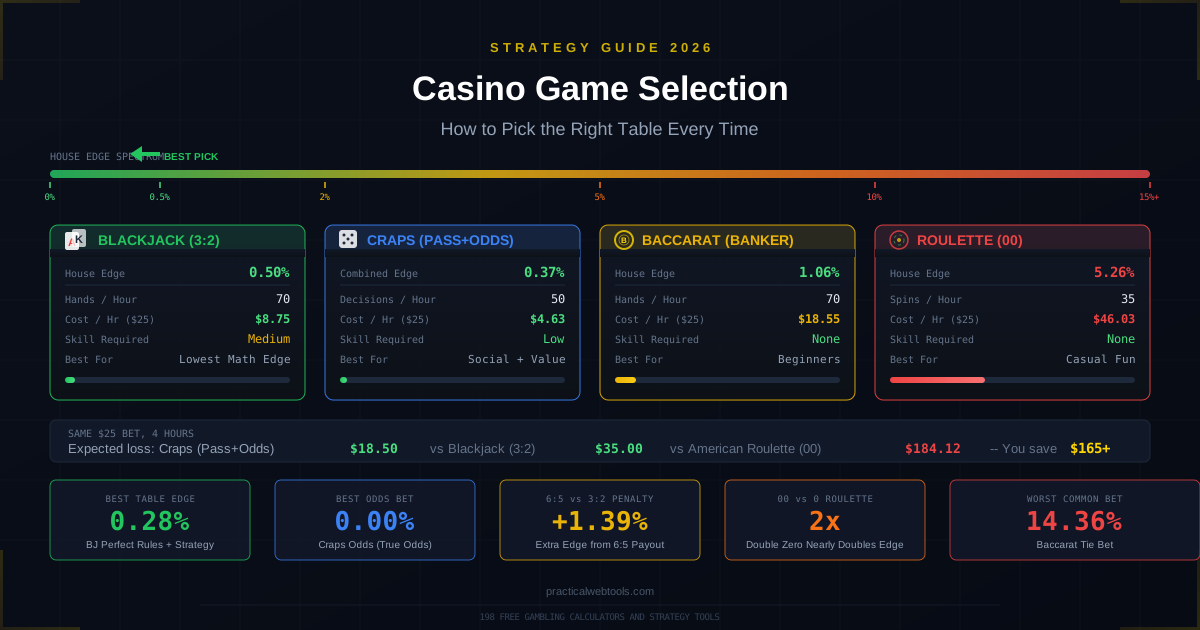
That is $28.20 in expected losses over roughly 4 hours of entertainment. Compare that to $105.20 for American roulette at the same bet size and pace ($10 x 200 x 0.0526), and you start to see why craps deserves your attention.
The Don't Pass Bet: The Slightly Better Alternative
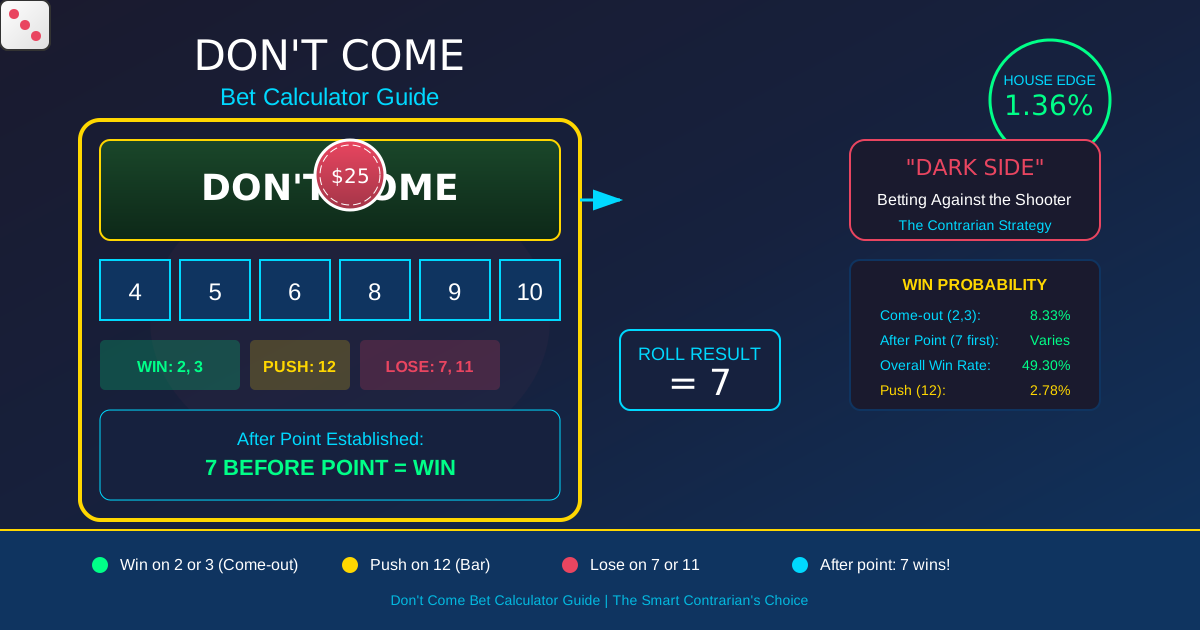
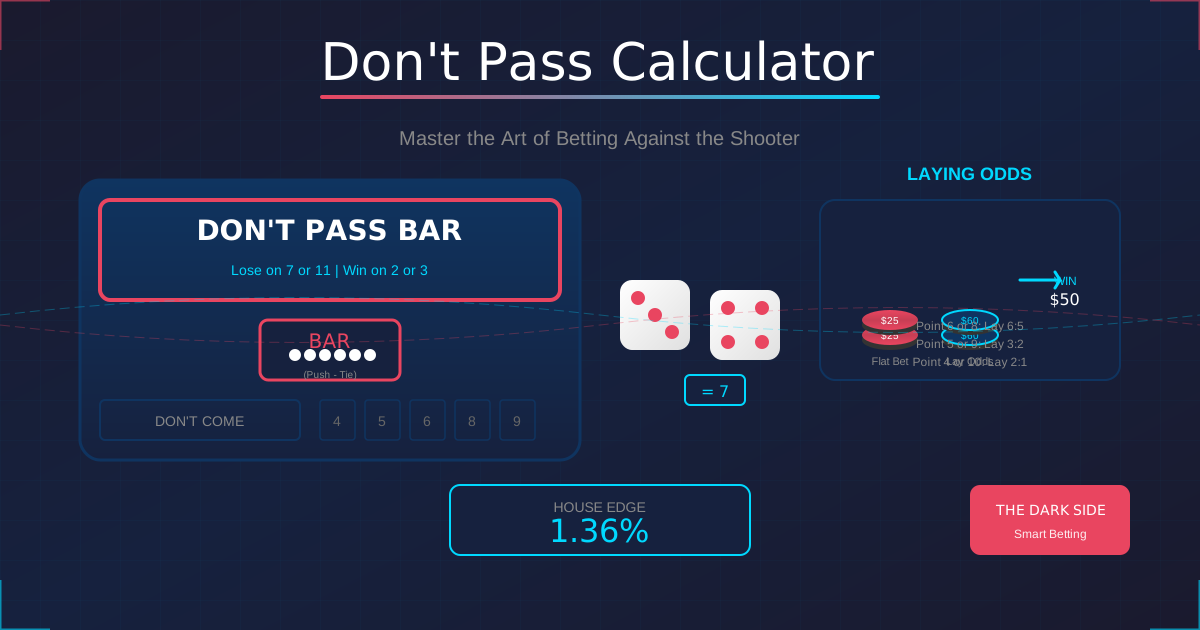
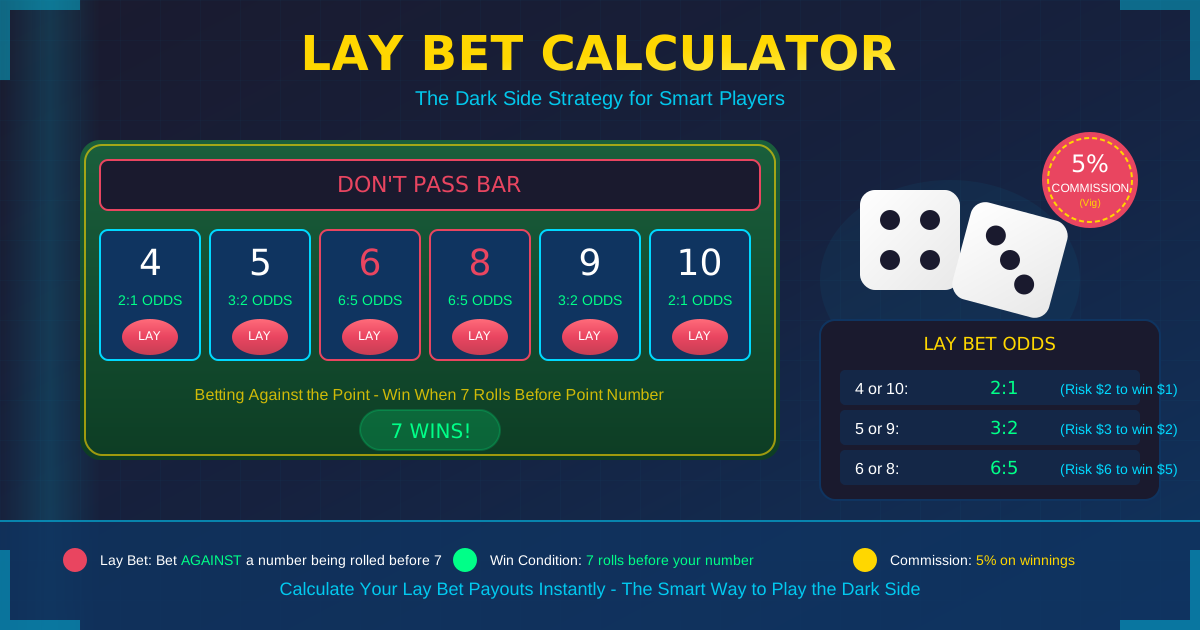
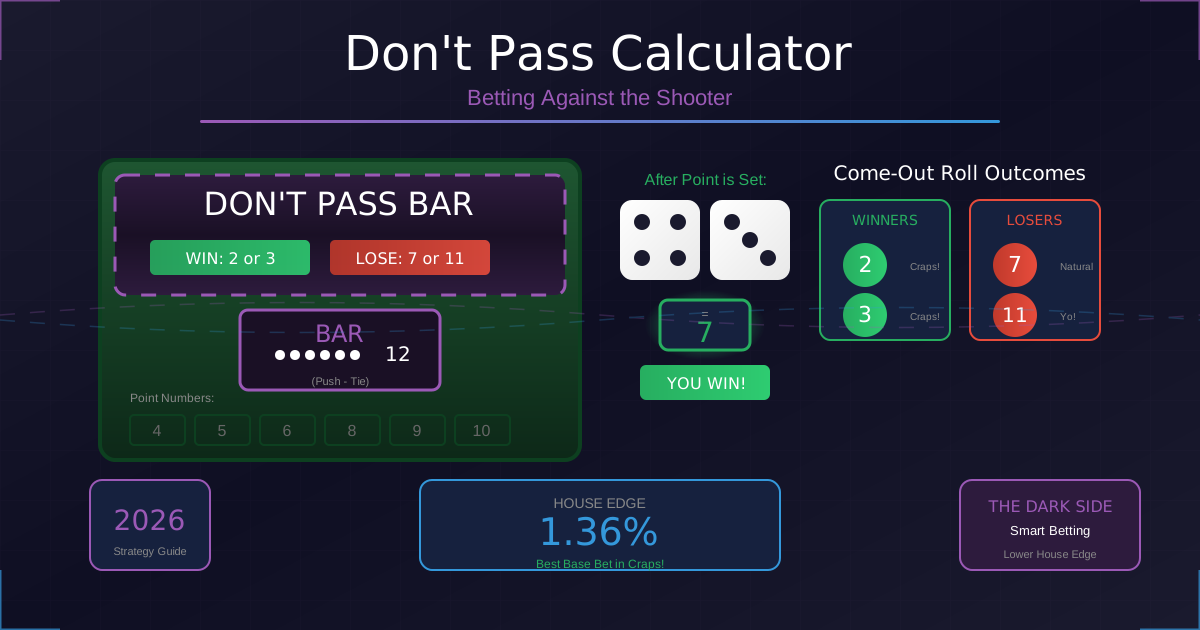
The Don't Pass bet is the mathematical mirror of the Pass Line, and it carries a slightly lower house edge of 1.36%.
How It Works
- Place your bet on the Don't Pass bar before the come-out roll
- Win on 2 or 3 on the come-out (probability: 3/36 = 8.33%)
- Push (tie) on 12 on the come-out (this is the "bar" that creates the house edge)
- Lose on 7 or 11 on the come-out (probability: 8/36 = 22.22%)
- If a point is established, you win if 7 comes before the point
Why It Is Slightly Better
Don't Pass House Edge: 1.36%

The bar on 12 is the key difference. Without it, Don't Pass
would have a player edge. The bar makes the 12 a push instead
of a win, giving the house its 1.36% margin.

Come-out probabilities for Don't Pass:
  Win (2 or 3): 3/36 = 8.33%
  Push (12): 1/36 = 2.78%
  Lose (7 or 11): 8/36 = 22.22%
  Point established: 24/36 = 66.67%

Once a point is established, the Don't Pass bettor has the
advantage because 7 is more likely than any individual point number.
The Social Cost
Here is the trade-off: Don't Pass bettors are betting against the shooter. When the table is cheering a hot roll, you are the person winning when everyone else loses. Some players find this uncomfortable. Some tables have hostile social dynamics around "wrong-side" bettors.
Mathematically, the 0.05% difference between Pass (1.41%) and Don't Pass (1.36%) is negligible. Over 1,000 $10 bets, that is a $5 difference in expected losses ($141 vs. $136). Play whichever feels comfortable.
The Odds Bet: The Best Bet in the Casino
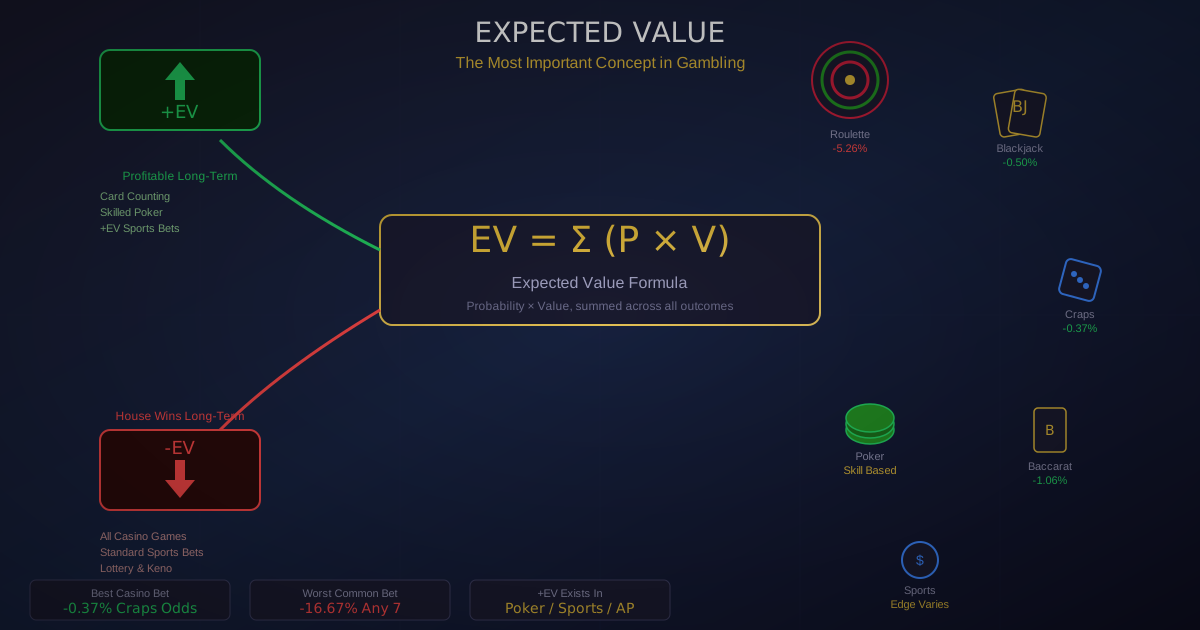
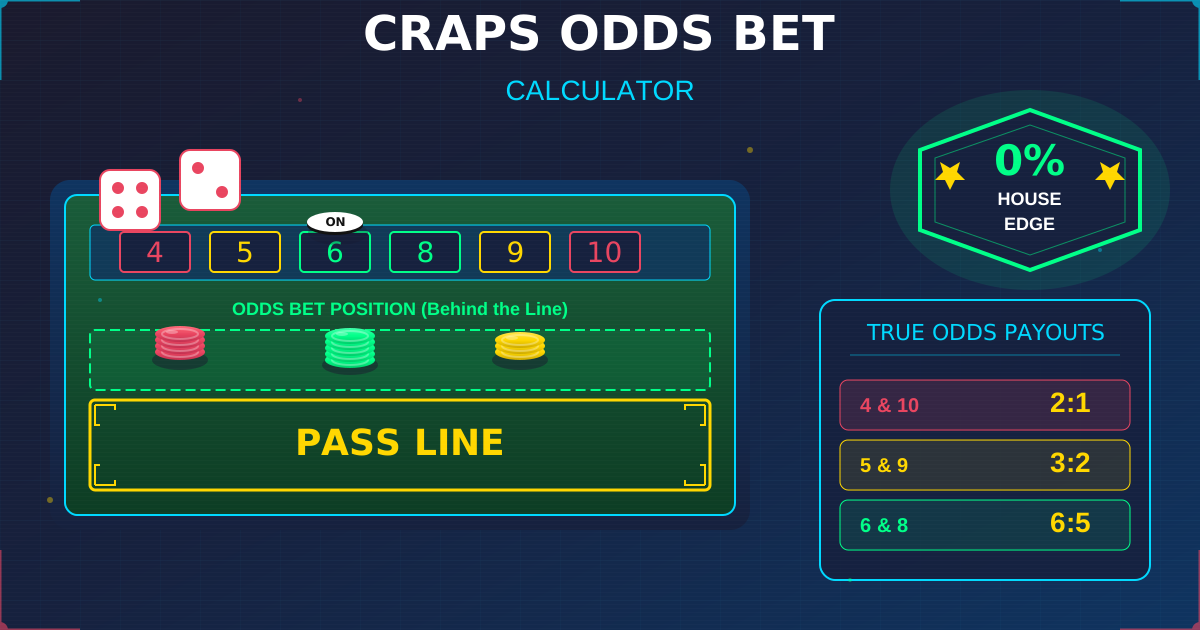
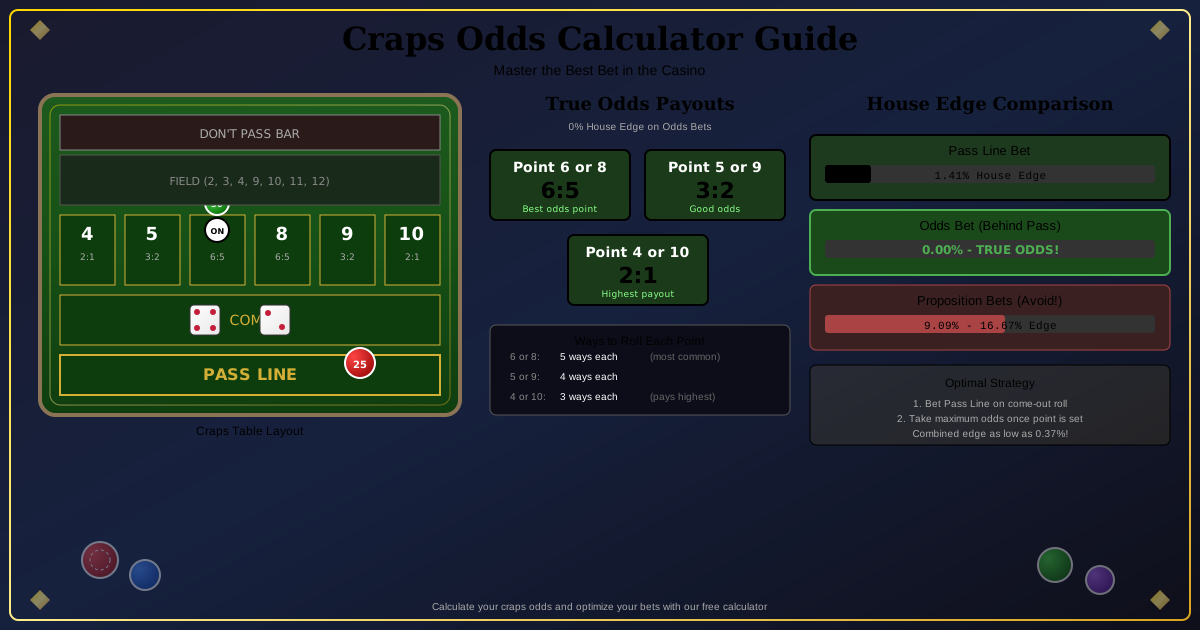
This is where craps becomes extraordinary. The Odds bet is the only standard bet in any casino that pays at true mathematical odds with zero house edge.
How It Works
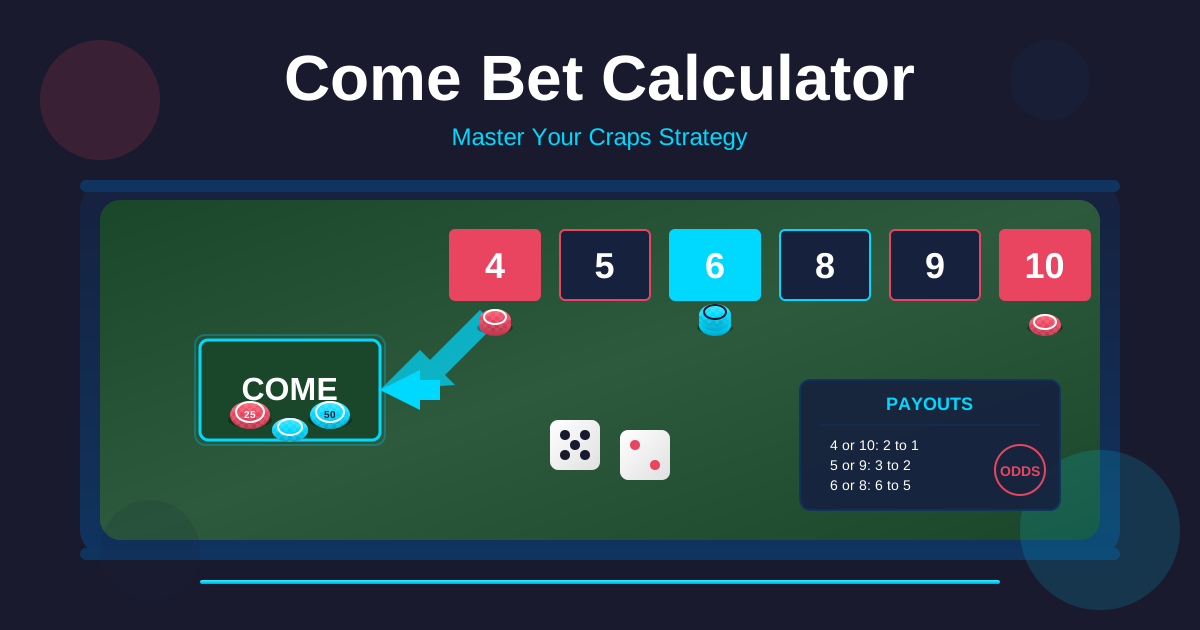
After a point is established, you can place an additional "Odds" bet behind your Pass Line (or Don't Pass) bet. This bet pays at true odds:
| Point | True Odds (Pass) | Payout | Ways to Win | Ways to Lose |
|---|---|---|---|---|
| 4 or 10 | 2:1 | $20 on $10 bet | 3 | 6 |
| 5 or 9 | 3:2 | $15 on $10 bet | 4 | 6 |
| 6 or 8 | 6:5 | $12 on $10 bet | 5 | 6 |
Why It Has Zero House Edge
Odds Bet Expected Value:

Point is 6:
  Probability of winning: 5/11 = 45.45%
  Probability of losing: 6/11 = 54.55%
  Payout: 6:5 (you get $12 for every $10 wagered)

  EV = (5/11 x $12) + (6/11 x -$10)
  EV = $5.4545 + (-$5.4545)
  EV = $0.00

The house edge is exactly zero. The casino makes no money
on this bet. They offer it because it keeps you at the table
making Pass Line bets where they do have an edge.
Combined House Edge: Pass Line + Odds
The more you bet on Odds relative to your Pass Line bet, the lower your combined house edge becomes:
| Odds Multiple | Pass Line | Odds Bet | Combined House Edge |
|---|---|---|---|
| 0x (no odds) | $10 | $0 | 1.41% |
| 1x | $10 | $10 | 0.85% |
| 2x | $10 | $20 | 0.61% |
| 3x-4x-5x | $10 | $30-$50 | 0.37% |
| 5x | $10 | $50 | 0.33% |
| 10x | $10 | $100 | 0.18% |
| 20x | $10 | $200 | 0.10% |
| 100x | $10 | $1,000 | 0.02% |
At 3x-4x-5x Odds (the most common offering), your combined house edge drops to 0.37%. That is lower than any standard blackjack game and approaches card-counting territory without any of the skill, risk of being backed off, or mental effort.
Real-World Example: Pass Line + 3x-4x-5x Odds
You play $10 Pass Line with maximum 3x-4x-5x Odds for 200 decisions:
Average total action per decision:
  Pass Line: $10
  Average Odds bet: ~$40 (varies by point)
  Total average bet: ~$50

But the house edge only applies to the $10 Pass Line portion:

Expected Loss = $10 x 200 x 0.0141 = $28.20

Your total action is $50 x 200 = $10,000, but your expected
loss is only $28.20. That's an effective house edge of 0.28%
on total money wagered.
Compare this to putting $50 on each spin of American roulette:
Roulette expected loss: $50 x 200 x 0.0526 = $526.00
Craps expected loss (Pass + Odds): $28.20

You save $497.80 in expected losses by choosing craps.
Every Craps Bet Ranked by House Edge
Here is every bet available on a standard craps table, ranked from best to worst. Use this as your definitive reference.
Tier 1: The Only Bets You Should Make
| Bet | House Edge | Verdict |
|---|---|---|
| Odds (behind Pass/Don't Pass) | 0.00% | Best bet in the casino |
| Don't Pass / Don't Come | 1.36% | Excellent |
| Pass Line / Come | 1.41% | Excellent |
Tier 2: Acceptable If You Understand the Cost
| Bet | House Edge | Verdict |
|---|---|---|
| Place 6 or Place 8 | 1.52% | Decent, almost as good as Pass Line |
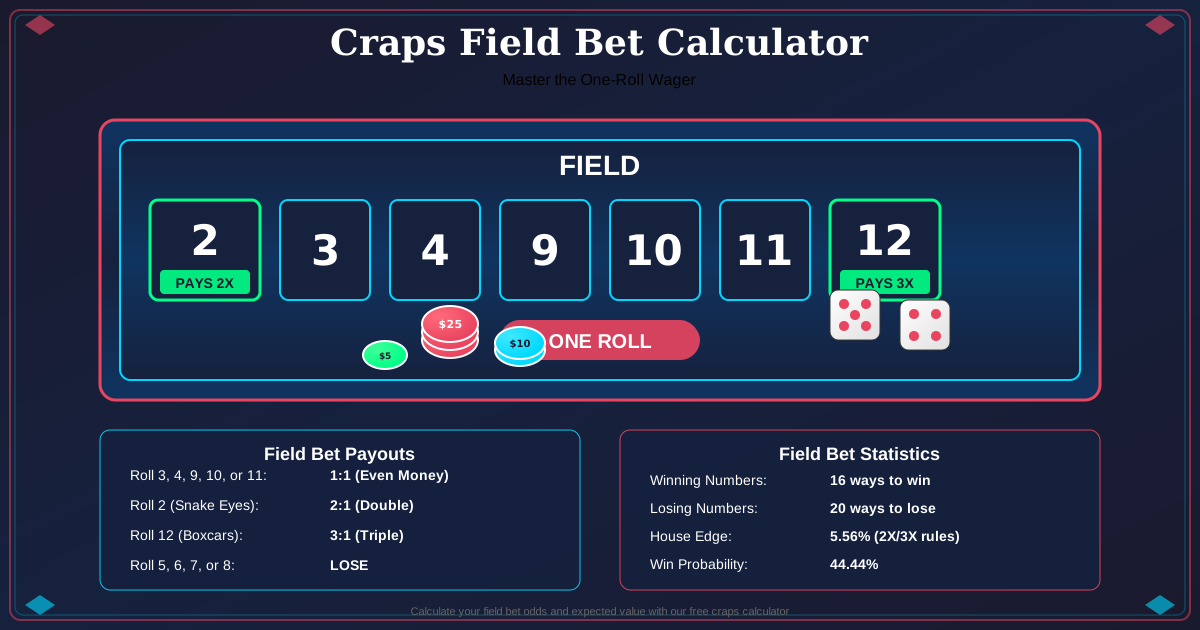
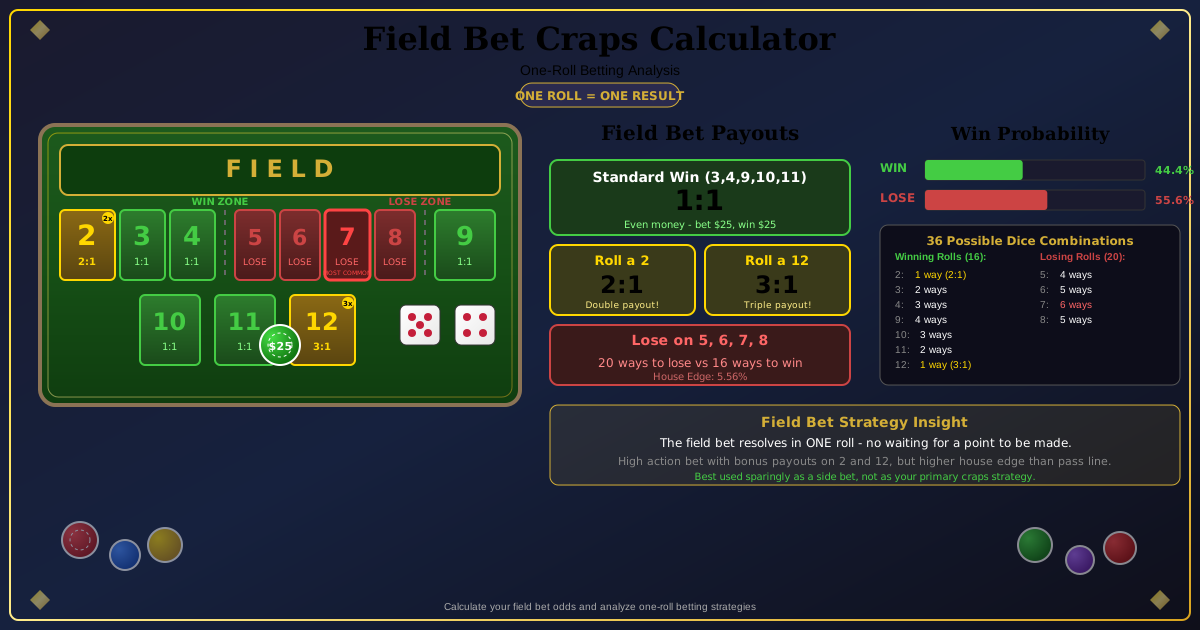
| Field (triple on 12) | 2.78% | Acceptable with 3x on 12 |
| Don't Place 6 or 8 (Lay) | 1.82% | Decent |
Tier 3: Bad Bets You Should Avoid
| Bet | House Edge | Verdict |
|---|---|---|
| Place 5 or Place 9 | 4.00% | Bad |
| Field (double on 2 and 12) | 5.56% | Bad |
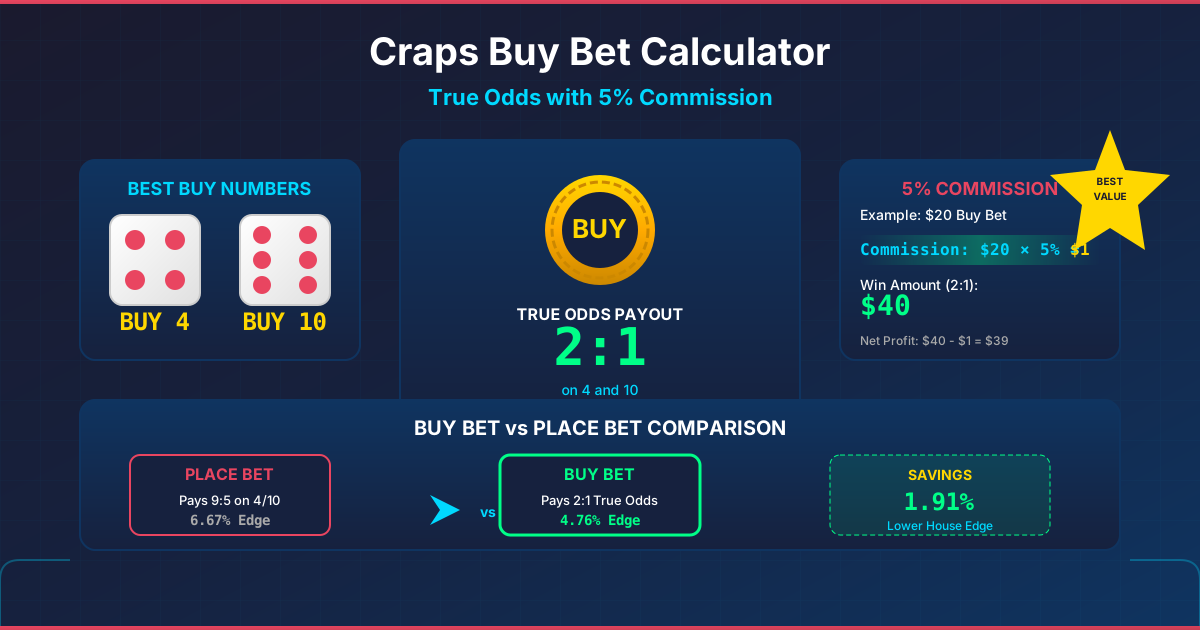
| Place 4 or Place 10 | 6.67% | Bad |
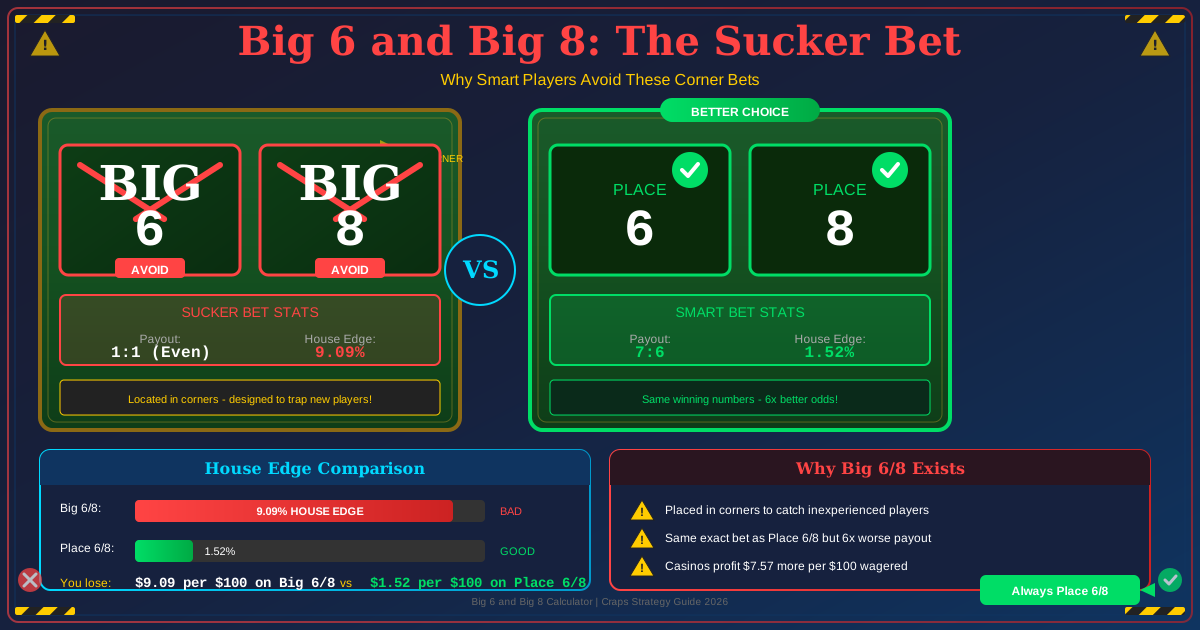
| Big 6 / Big 8 | 9.09% | Terrible (same as Place 6/8 but worse payout) |
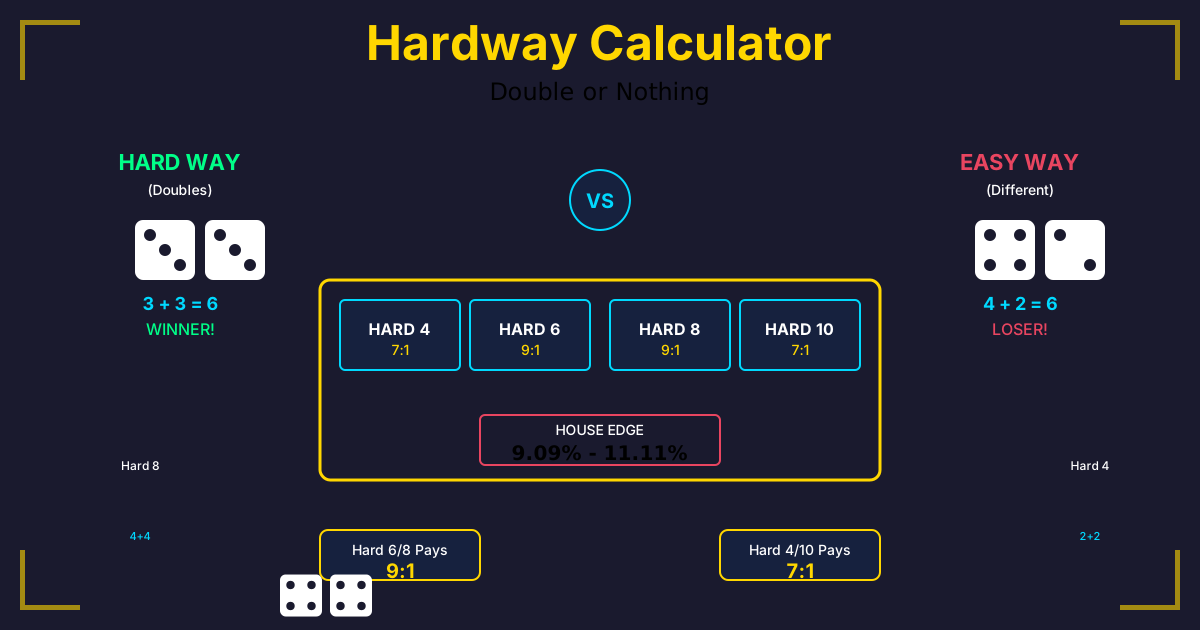
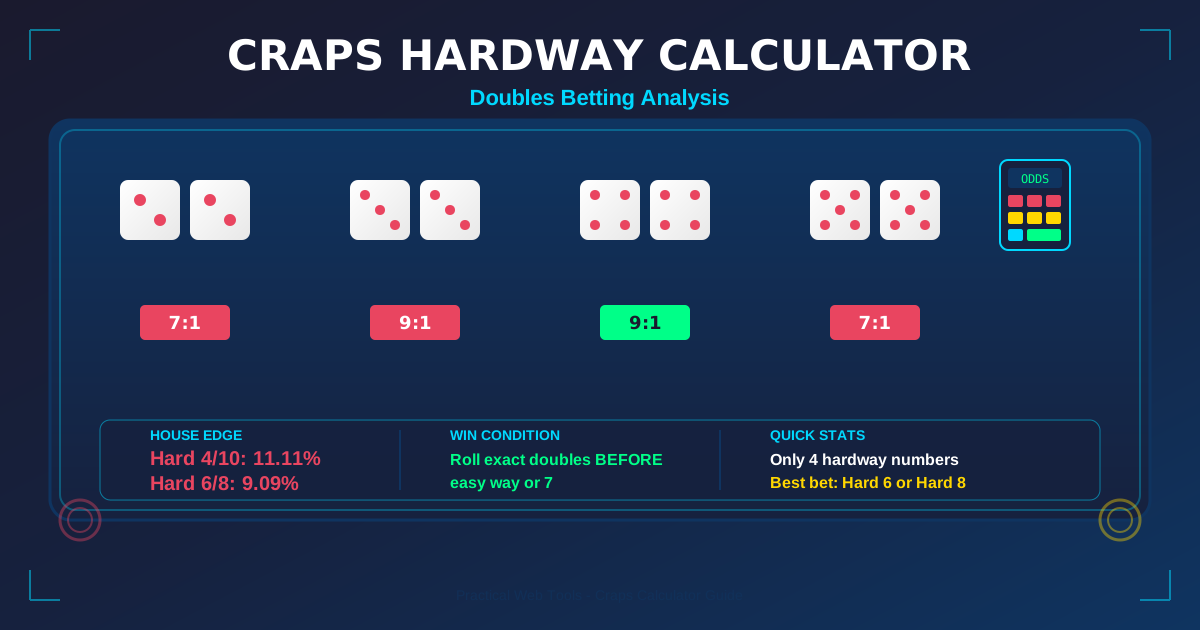
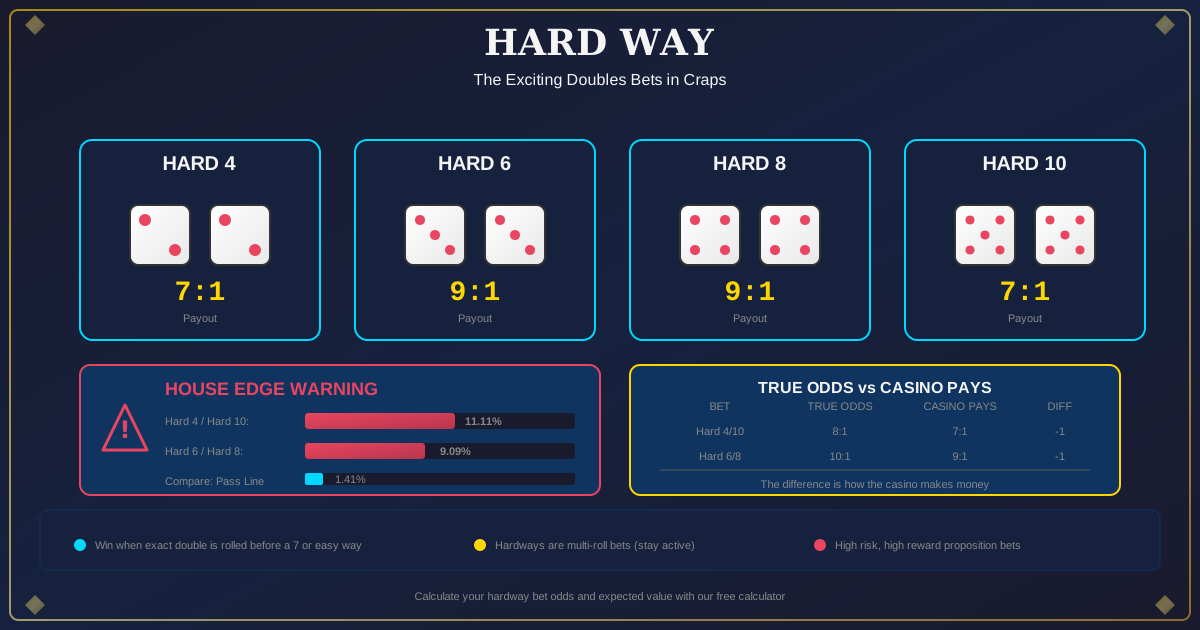
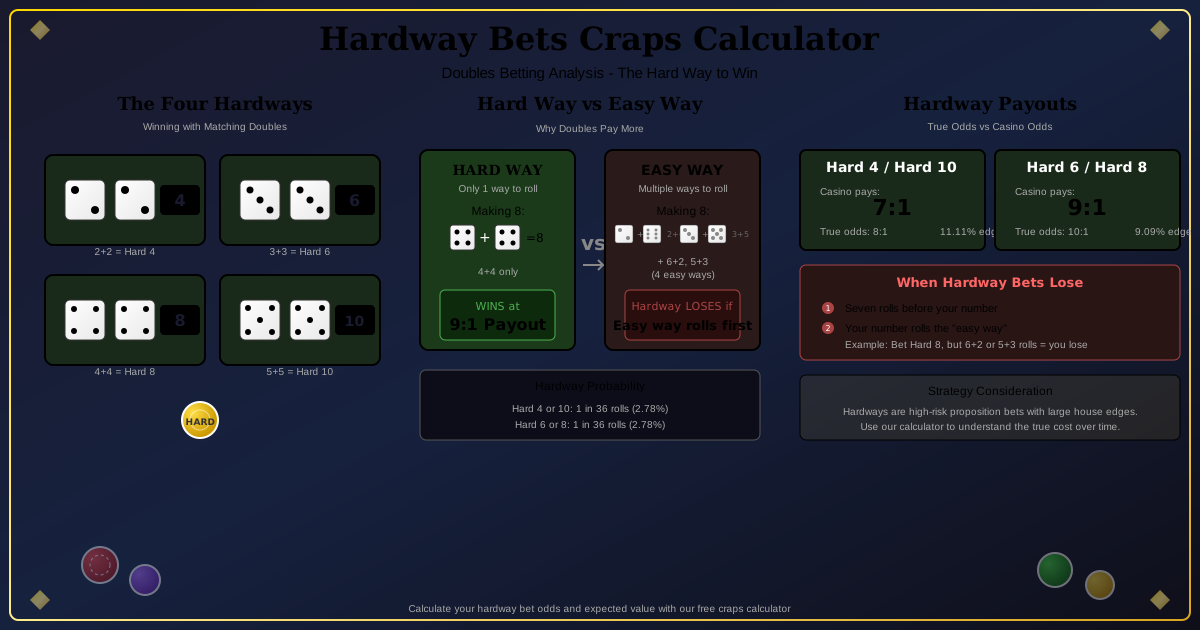
| Hard 6 / Hard 8 | 9.09% | Terrible |
| Hard 4 / Hard 10 | 11.11% | Terrible |
Tier 4: The Worst Bets in the Casino
| Bet | House Edge | Verdict |
|---|---|---|
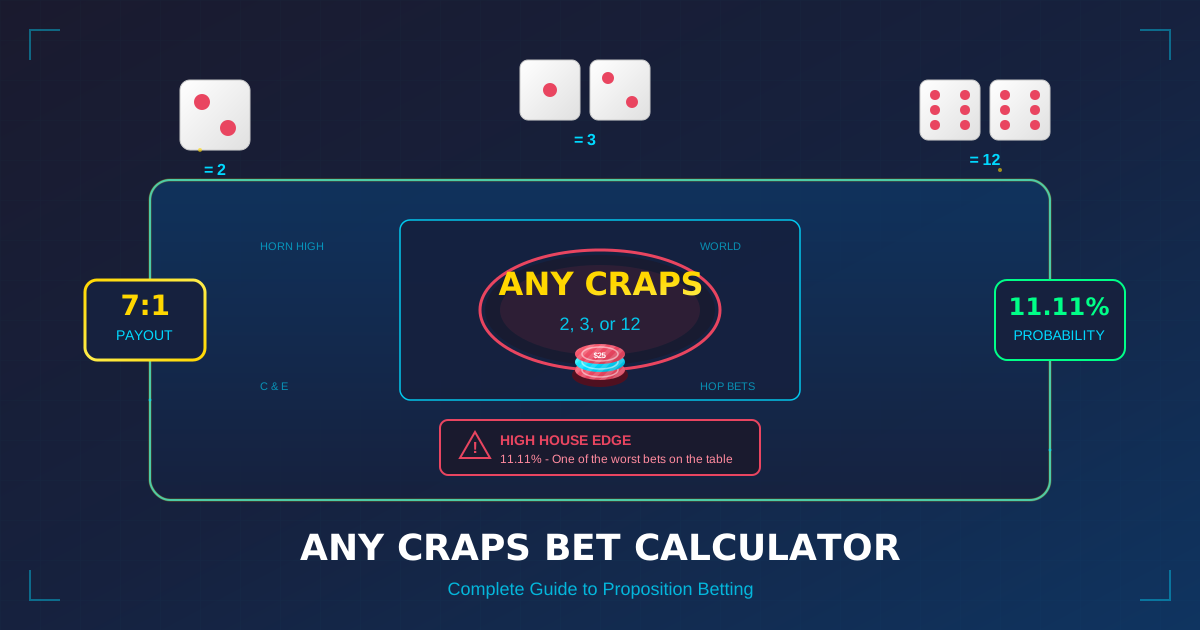
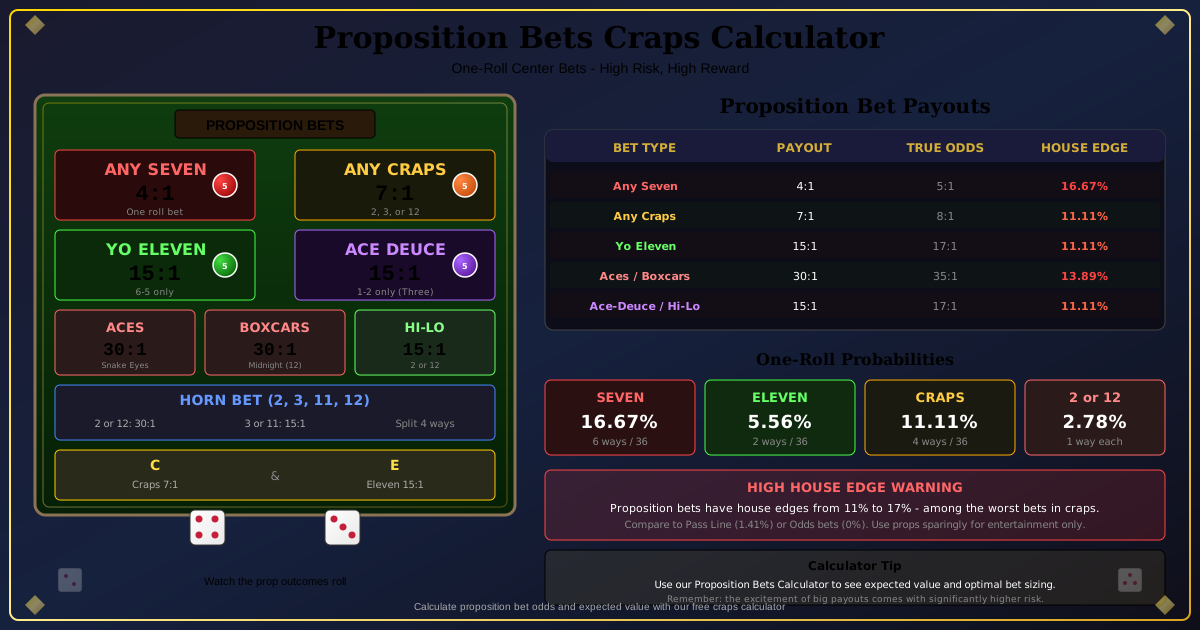
| Any Craps | 11.11% | Do not play |
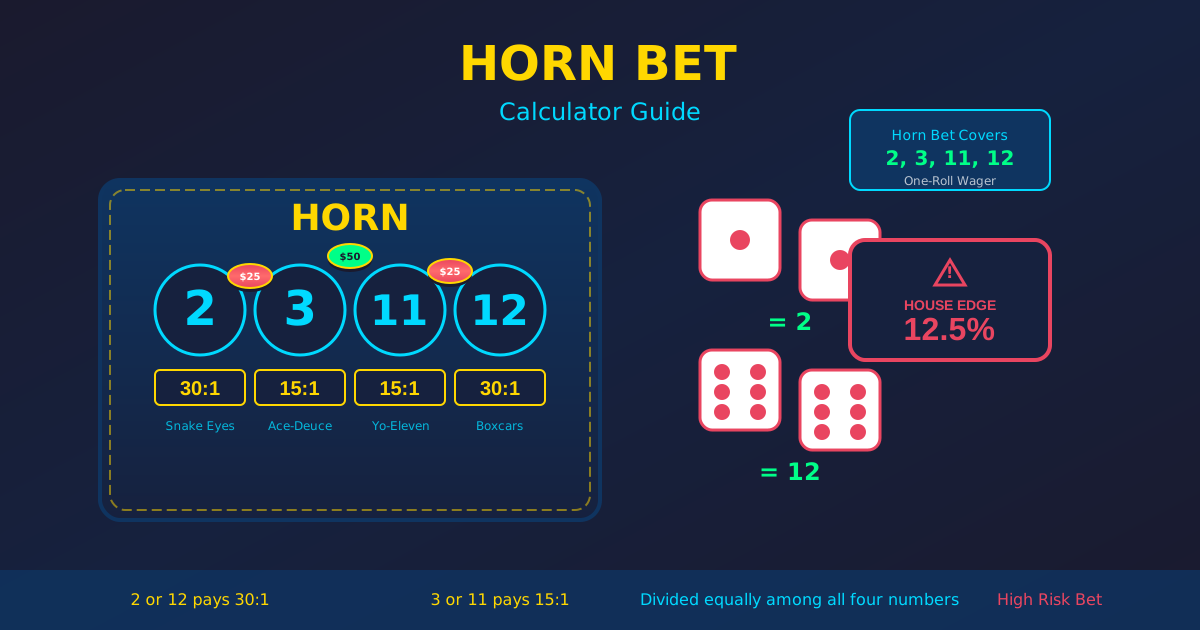
| Craps 3 (Ace-Deuce) | 11.11% | Do not play |
| Yo (11) | 11.11% | Do not play |
| Craps 2 (Snake Eyes) | 13.89% | Do not play |
| Craps 12 (Boxcars) | 13.89% | Do not play |
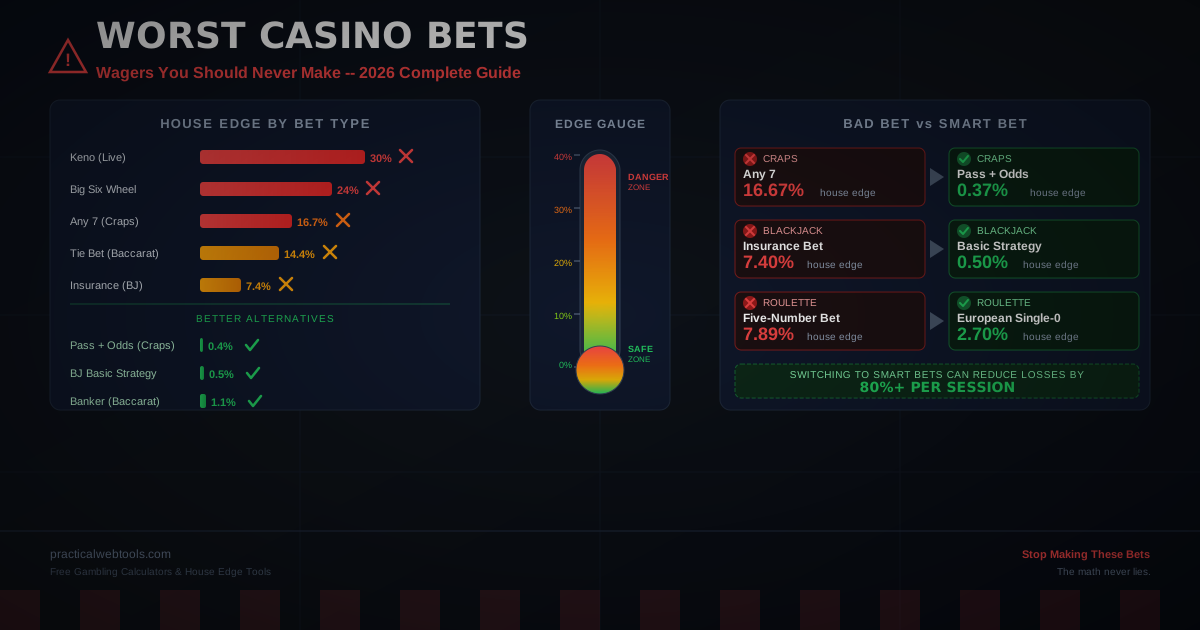
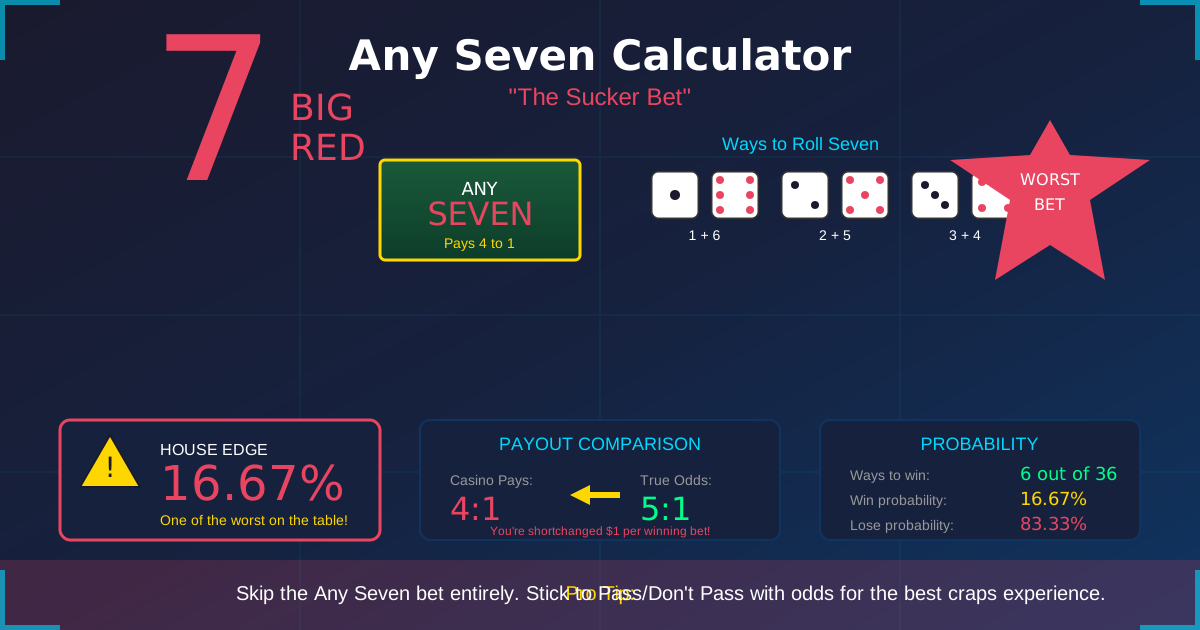
| Any 7 | 16.67% | Worst bet on the table |
| Hop Bets (hard) | 13.89% | Do not play |
| Hop Bets (easy) | 11.11% | Do not play |
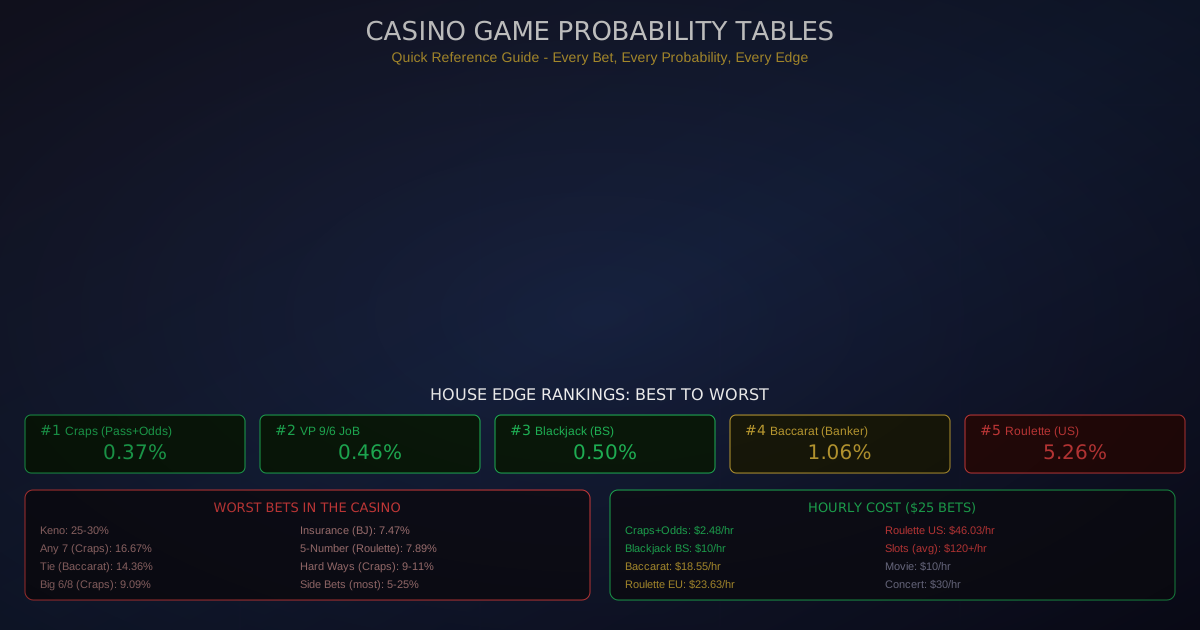
The difference between the best and worst bets on a craps table is staggering. A Pass Line + Odds player faces a combined edge under 0.4%. An "Any 7" player faces 16.67%. That is a 40x difference in house advantage on the same table.
The Optimal Beginner Craps Strategy
Here is the complete strategy that minimizes the house edge while keeping things simple.
Step 1: Set Your Session Bankroll
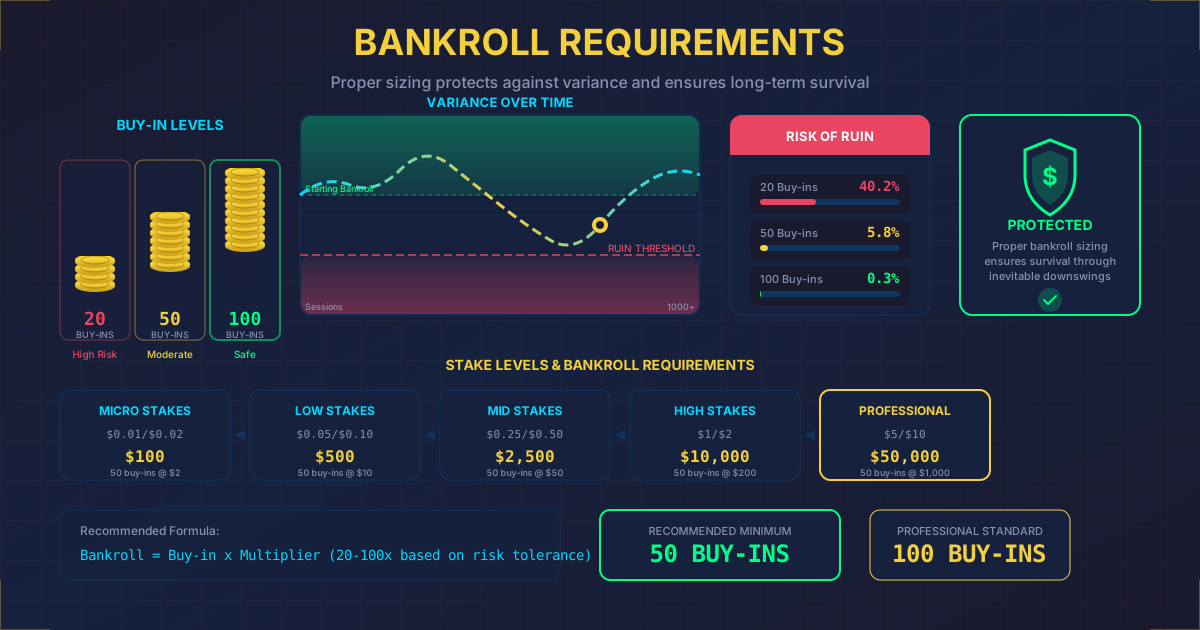
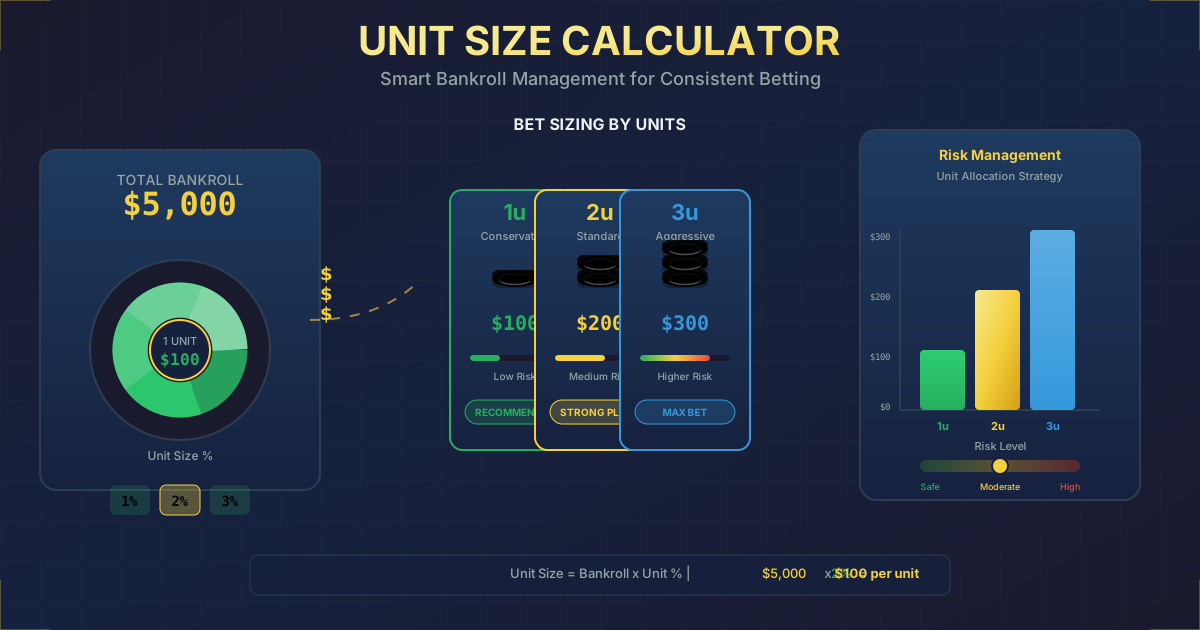
Bring 30-50 times your base bet. For a $10 Pass Line game with 3x-4x-5x Odds, you need:
Minimum bankroll calculation:
  Pass Line bet: $10
  Maximum Odds on 4/10: $30 (3x)
  Maximum Odds on 5/9: $40 (4x)
  Maximum Odds on 6/8: $50 (5x)
  Maximum total bet: $60

  Conservative bankroll: 50 x $10 = $500
  (This covers the base bet cycle, not max odds every time)

  Aggressive bankroll: 30 x $60 = $1,800
  (This supports max odds every roll)

  Recommended: $500-$800 for a $10 table with selective odds
Step 2: Make Only Pass Line or Don't Pass Bets
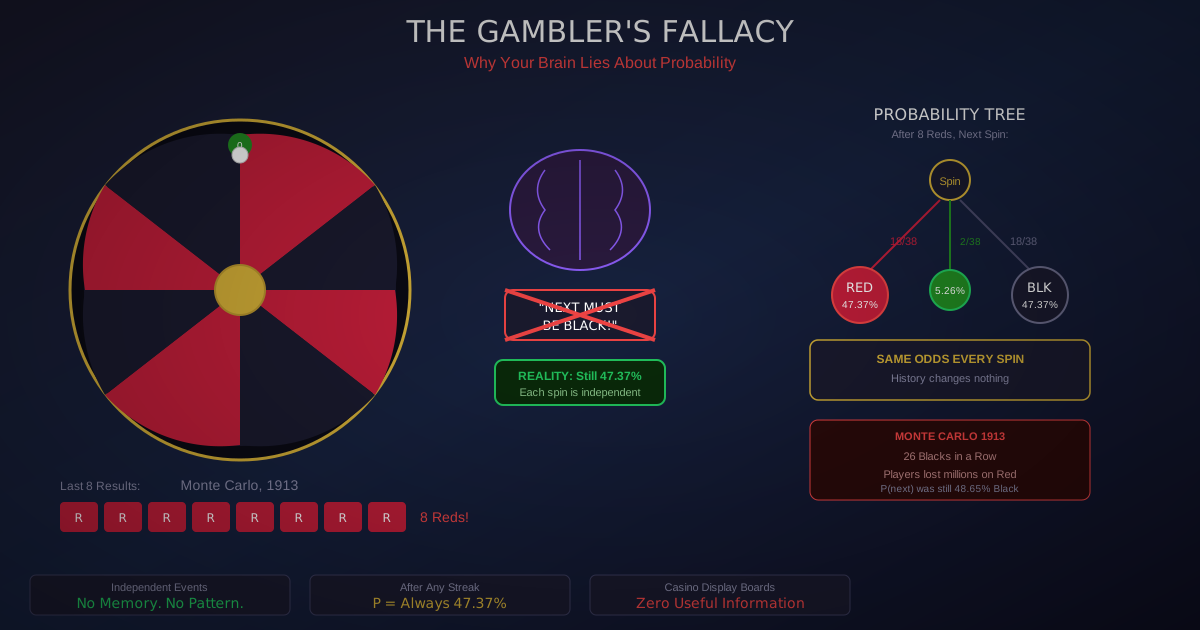
Pick one and stick with it for the session. Do not switch back and forth based on gut feelings or "streaks." The math does not change based on recent history. Dice have no memory.
Step 3: Always Take Maximum Odds
Every dollar you move from other bets to the Odds bet reduces the house edge. If you have a choice between placing $25 on the Pass Line with no Odds or $10 on the Pass Line with $15 in Odds, the second option is always mathematically superior.
Option A: $25 Pass Line, no Odds
  House edge: 1.41%
  Expected loss per bet: $0.3525

Option B: $10 Pass Line, $15 Odds (1.5x)
  House edge on Pass Line: $10 x 1.41% = $0.141
  House edge on Odds: $15 x 0% = $0.00
  Total expected loss per bet: $0.141
  Effective house edge: $0.141 / $25 = 0.56%
Option B saves you $0.2115 per decision. Over 200 decisions, that is $42.30 in reduced expected losses.
Step 4: Avoid Everything Else
No proposition bets. No hardways. No field bets. No hop bets. No "Big 6" or "Big 8." Every dollar you put on these bets has a higher expected cost than your Pass Line + Odds combination.
The only exception is Place 6 or Place 8 at 1.52%, which is acceptable if you want more action. But the Odds bet at 0% is always preferable.
Real-World Craps Session Examples
Example 1: The Smart Beginner ($500 Bankroll)
Sarah brings $500 to a $10 minimum craps table offering 3x-4x-5x Odds.
Strategy: $10 Pass Line + 2x Odds ($20) on every point.
Session: 4 hours, approximately 180 decisions
Total Pass Line action: $10 x 180 = $1,800
Total Odds action: ~$20 x 120 (only when point established) = $2,400
Total action: $4,200

Expected loss: $10 x 180 x 0.0141 = $25.38
Cost per hour of entertainment: $6.35

Actual result: Lost $85 (well within normal variance)
Sarah's $500 bankroll lasted the full session with plenty of cushion. Her expected loss was about the cost of a movie ticket per hour.
Example 2: The Prop Bet Player ($500 Bankroll)
Mike brings $500 to the same table but cannot resist the excitement.
Strategy: $10 Pass Line, no Odds, plus $5 on Hard 8, $5 on Yo, and $5 on Any Craps "for the boys."
Session: 4 hours, approximately 180 decisions
Pass Line: $10 x 180 x 0.0141 = $25.38
Hard 8: $5 x 180 x 0.0909 = $81.81
Yo: $5 x 180 x 0.1111 = $99.99
Any Craps: $5 x 180 x 0.1111 = $99.99

Total expected loss: $307.17
Cost per hour: $76.79
Mike's expected losses are 12x higher than Sarah's despite starting with the same bankroll. His $500 is likely gone in under 2 hours.
Example 3: The Don't Pass Player ($1,000 Bankroll)
Tom plays Don't Pass with 5x Odds at a $15 table.
Strategy: $15 Don't Pass + $75 Lay Odds on every point.
Session: 3 hours, approximately 150 decisions
Don't Pass action: $15 x 150 = $2,250
Odds action: ~$75 x 100 = $7,500

Expected loss: $15 x 150 x 0.0136 = $30.60
Effective house edge on total action: 0.31%
Cost per hour: $10.20
Tom's hourly cost is remarkably low for a player putting $90 at risk per decision. The Odds bet dilutes the house edge to near zero.
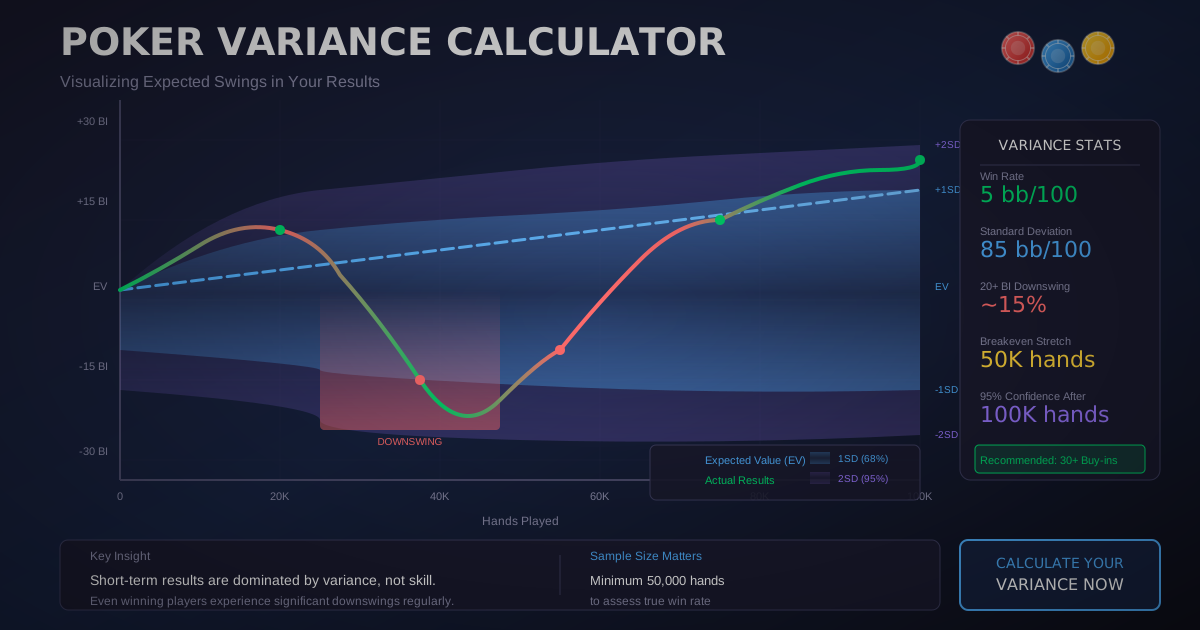
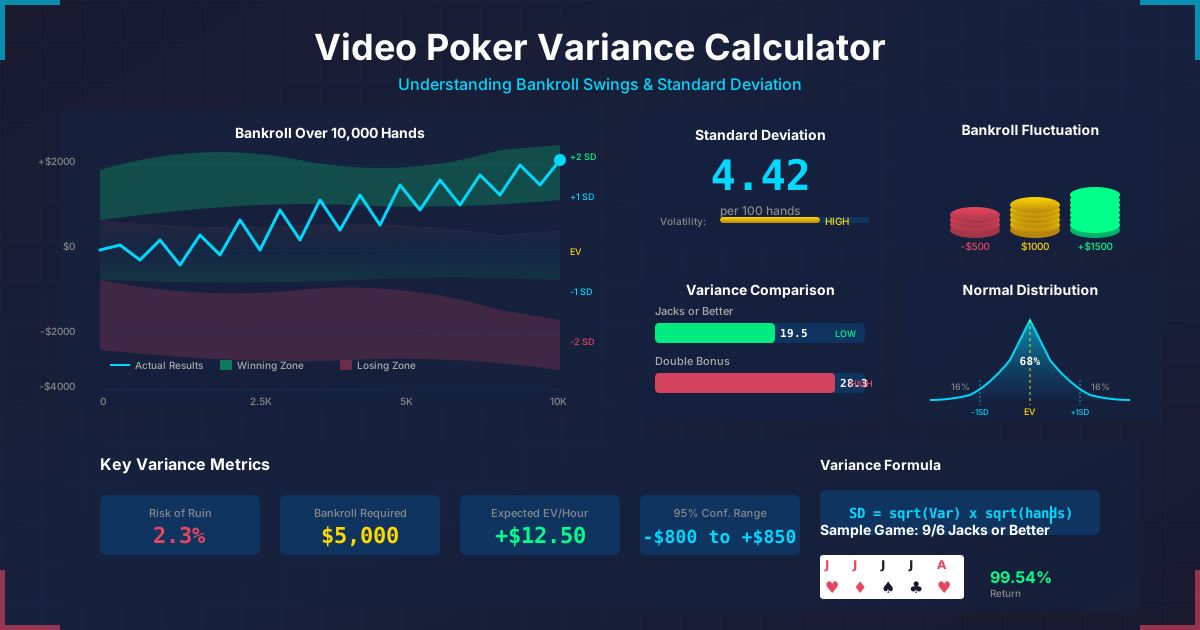
Example 4: Understanding Variance
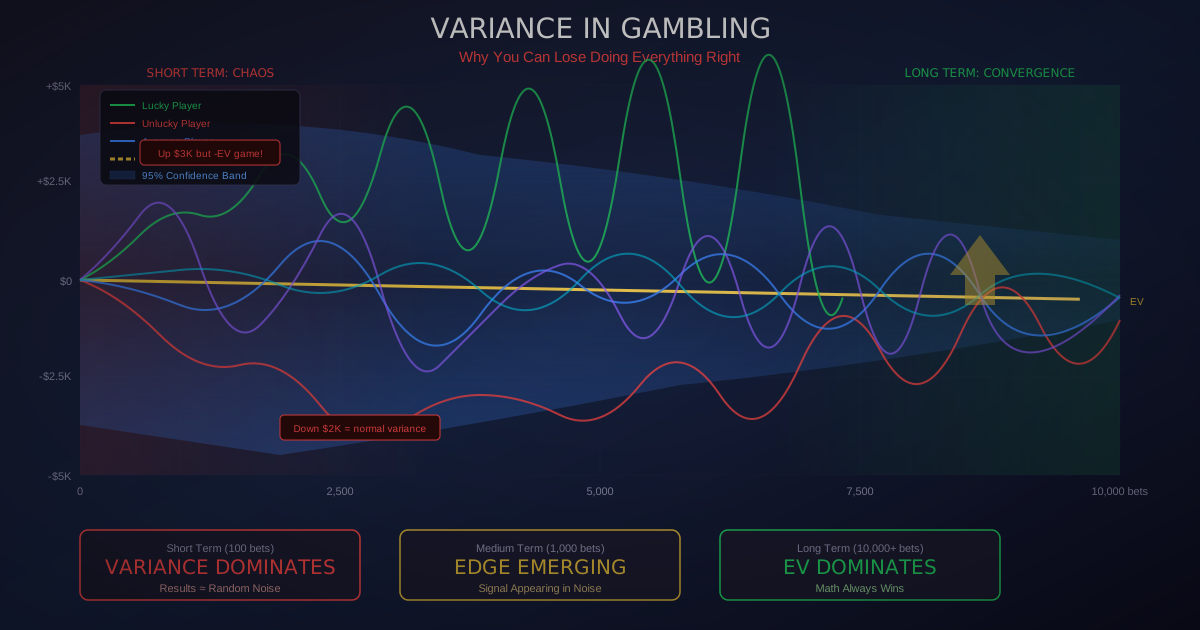
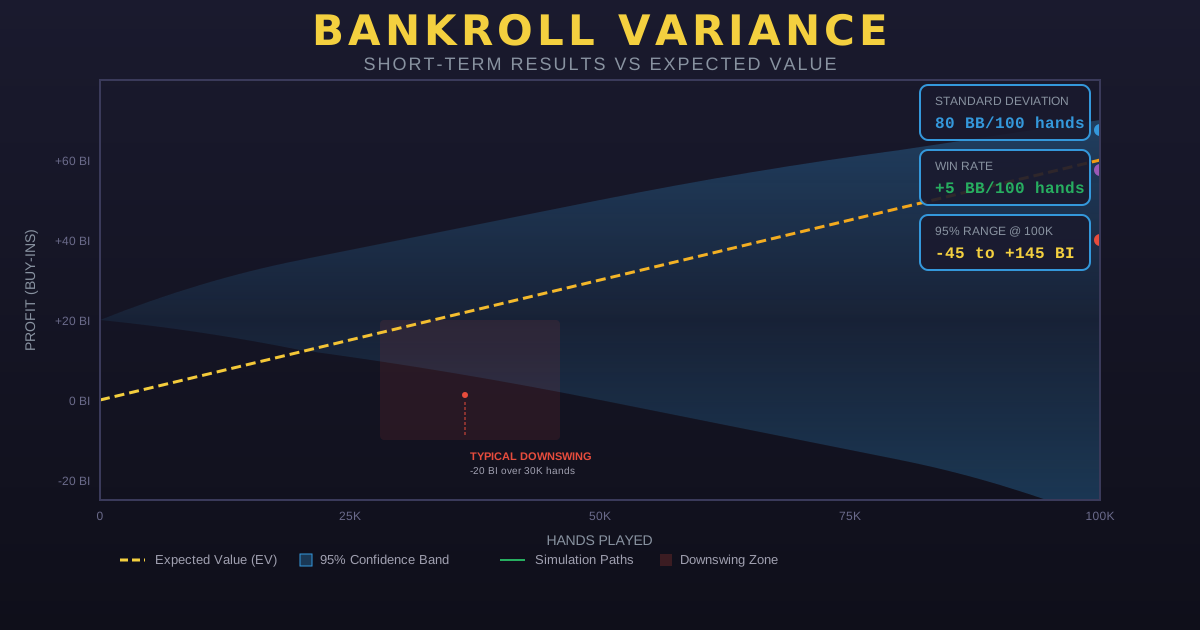
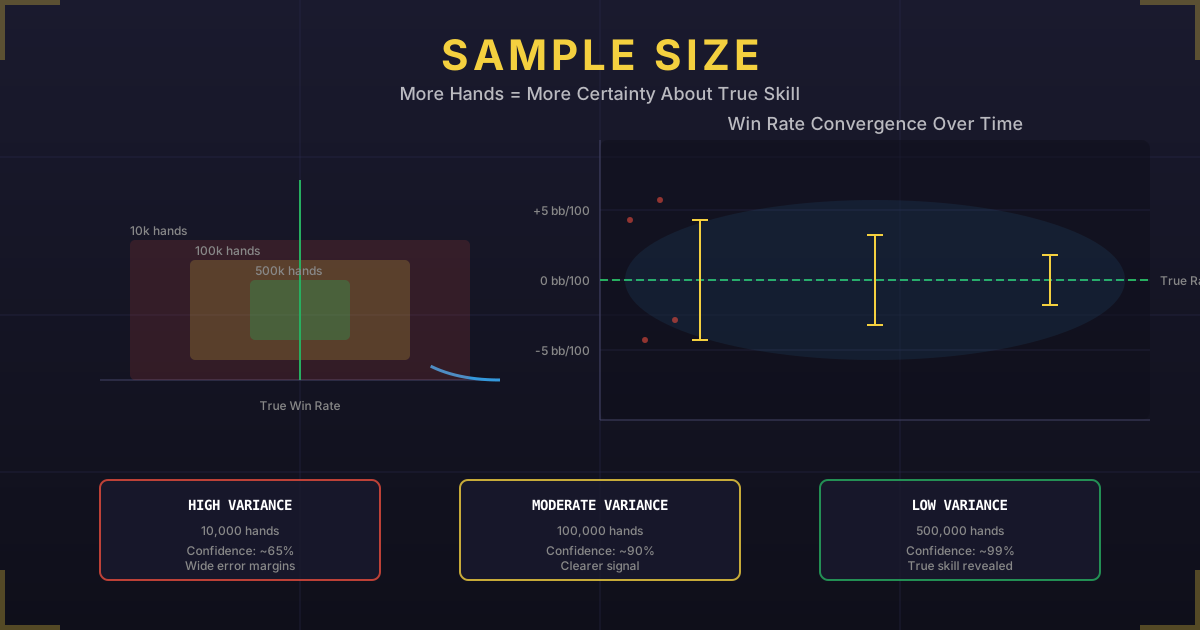
Even with perfect strategy, short-term results vary wildly. Here is what to expect with Pass Line + 2x Odds ($10 base):
Over 200 decisions:
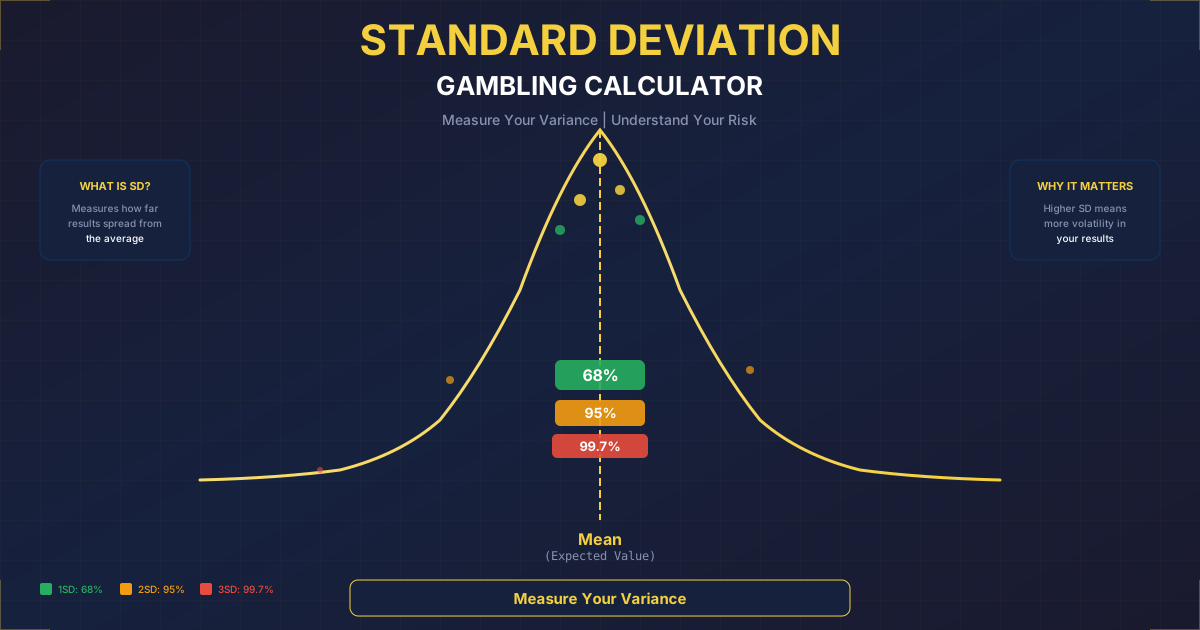
  Expected loss: -$28.20
  Standard deviation: ~$310

  68% of sessions: -$338 to +$282
  95% of sessions: -$648 to +$592
  99.7% of sessions: -$958 to +$902

You could lose $648 or win $592 and both outcomes are
perfectly normal. The small house edge only becomes
apparent over thousands of decisions.
Why Proposition Bets Are a Trap
The center of the craps table is filled with colorful, high-payout bets that the stickman actively promotes. "Hard eight pays 9 to 1!" "Yo pays 15 to 1!" These bets exist for one reason: they have the highest house edges on the table.
The Seduction of Big Payouts
Proposition bets pay well when they hit. A $5 bet on "Any 7" pays $20. A $1 Hop bet on double-3 pays $30. These payouts trigger dopamine responses that make the bets feel profitable.
But the math tells a different story:
"Any 7" Analysis:
  Probability of 7: 6/36 = 16.67%
  Probability of not-7: 30/36 = 83.33%
  Payout: 4 to 1 (should be 5 to 1 for fair odds)

  EV = (0.1667 x $4) + (0.8333 x -$1)
  EV = $0.6667 - $0.8333
  EV = -$0.1667 per dollar bet
  House edge: 16.67%
For every $100 you bet on "Any 7," you expect to lose $16.67. For every $100 on the Pass Line, you lose $1.41. The proposition bet costs you nearly 12 times as much.
The Stickman Is Not Your Friend
Dealers earn tips, and proposition bets are the most commonly tipped bets. The stickman's job includes promoting these bets. "Hard ways for the boys" is not friendly advice; it is a sales pitch for the worst bets on the table. Tip your dealers if you want to, but tip them with Pass Line bets, not with proposition bets that have 10%+ house edges.
Place Bets: The Only Acceptable Middle Ground
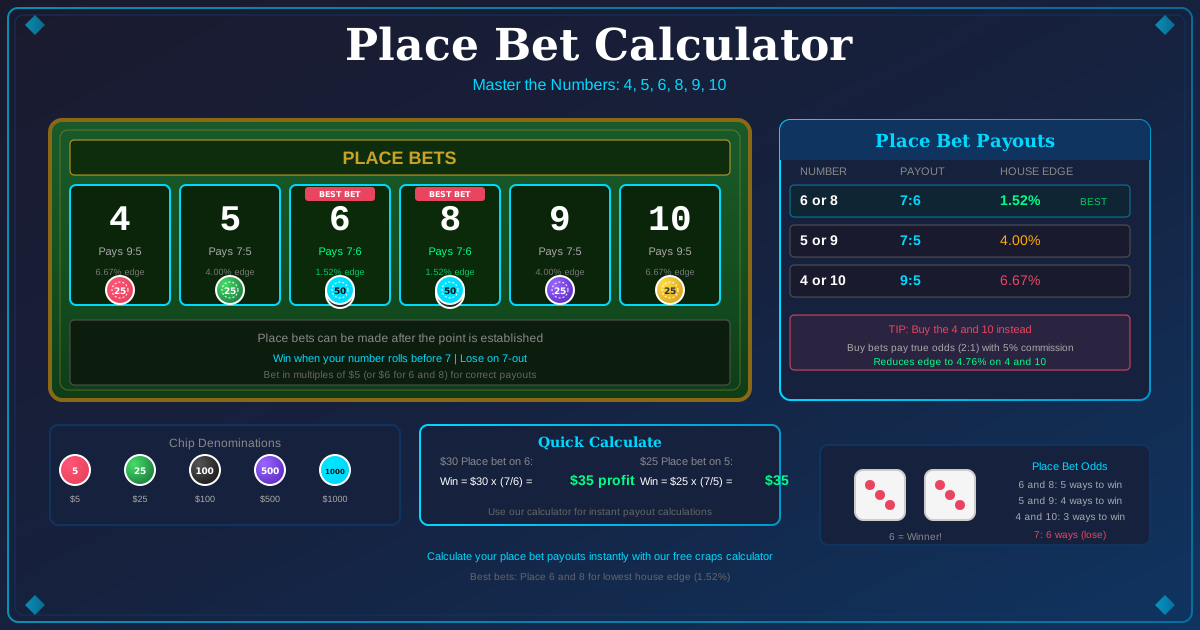
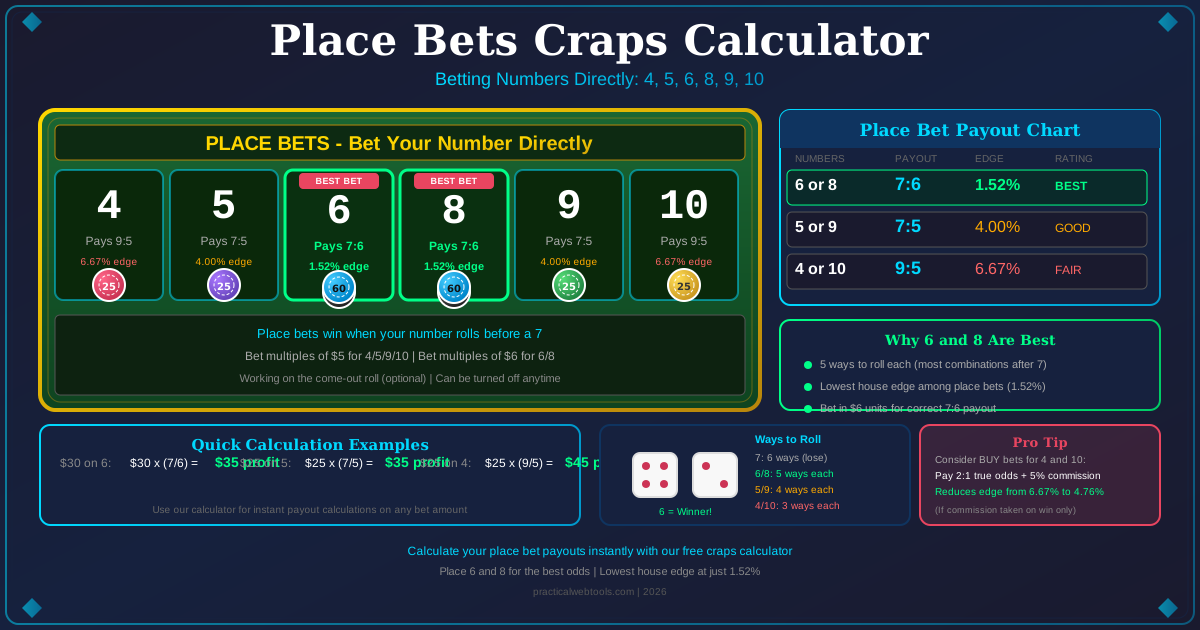
If you want more numbers working for you beyond the Pass Line, Place bets on 6 and 8 are the only reasonable expansion. With a house edge of 1.52%, they are nearly as good as the Pass Line.
Place 6 Analysis:
  Ways to roll 6: 5 (1-5, 2-4, 3-3, 4-2, 5-1)
  Ways to roll 7: 6 (1-6, 2-5, 3-4, 4-3, 5-2, 6-1)
  True odds: 6 to 5
  Casino payout: 7 to 6
  House edge: 1.52%

Place 6 must be bet in multiples of $6 to receive the 7:6 payout.
A $6 Place 6 bet pays $7 when it wins.
Important: Place 4, Place 5, Place 9, and Place 10 all carry higher house edges (4.00% to 6.67%). Only Place 6 and Place 8 belong in a smart strategy.
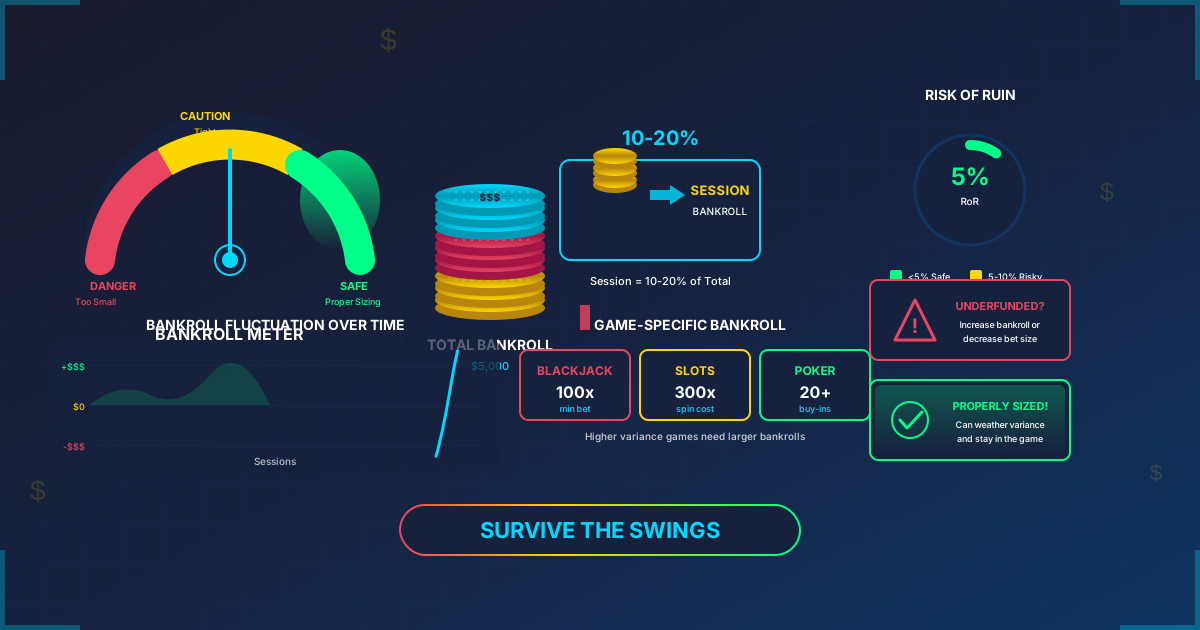
Craps Bankroll Management
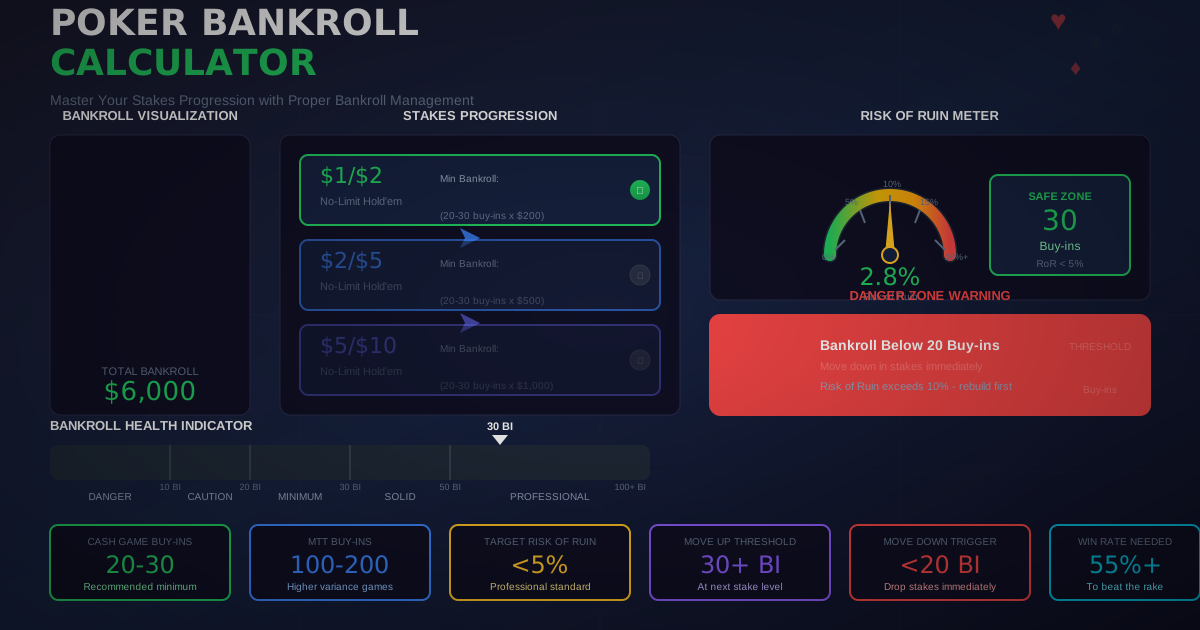
Session Bankroll Guidelines
| Base Bet | Conservative (50x) | Moderate (30x) | Minimum (20x) |
|---|---|---|---|
| $5 | $250 | $150 | $100 |
| $10 | $500 | $300 | $200 |
| $15 | $750 | $450 | $300 |
| $25 | $1,250 | $750 | $500 |
These calculations assume Pass Line + 2x Odds. If you are taking full 3x-4x-5x Odds, double the conservative figure.
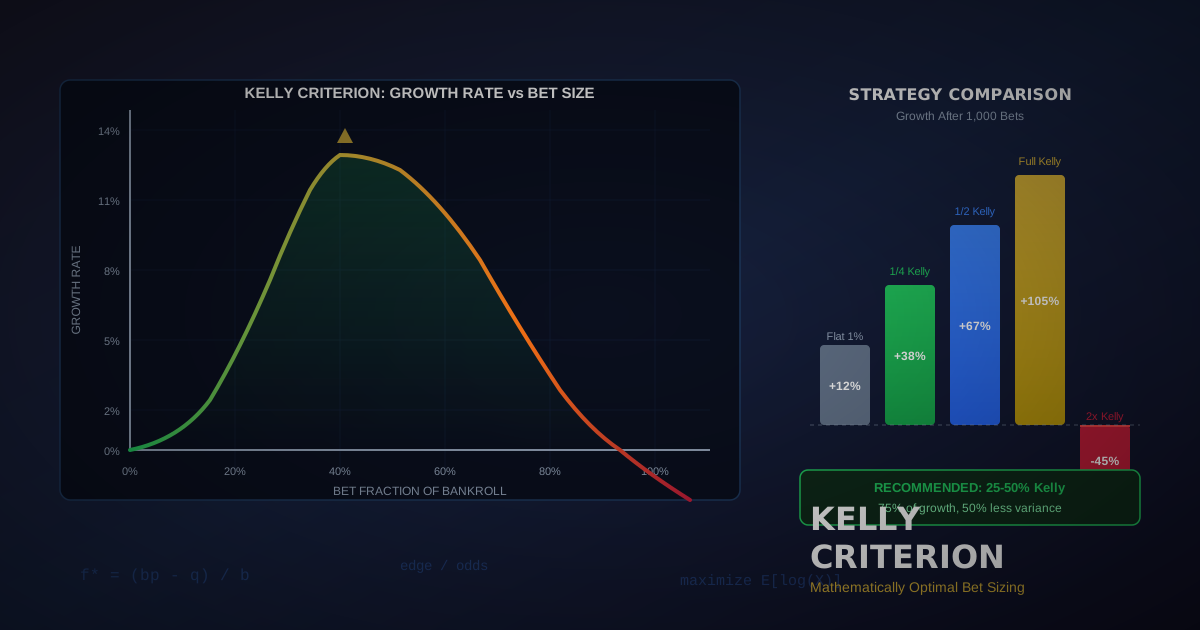
The Kelly Criterion for Craps
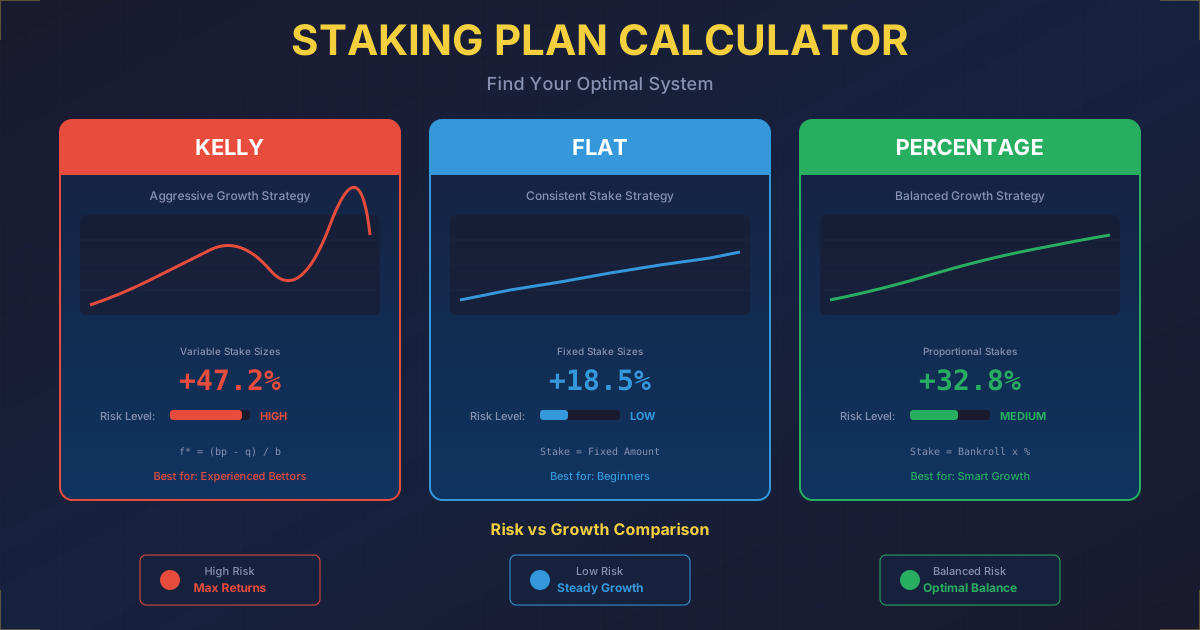
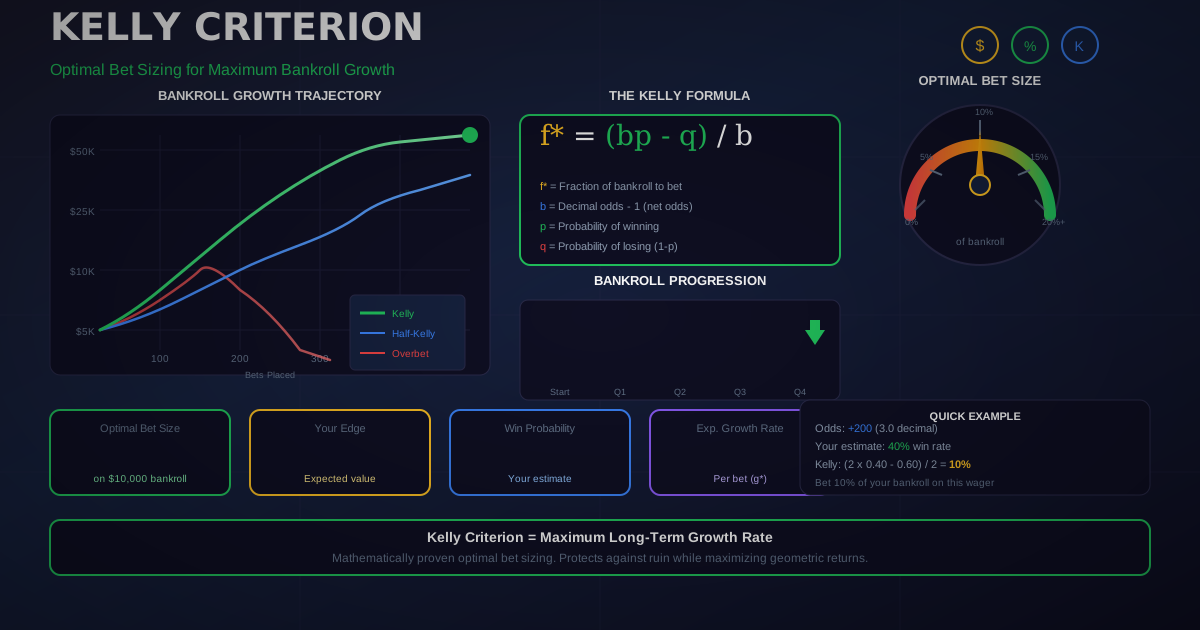
The Kelly Criterion does not apply directly to craps because you do not have a positive expected value (the house always has the edge). However, it provides a useful framework for understanding bet sizing relative to bankroll:
Since EV is negative, Kelly says the optimal bet is $0.
This confirms what we already know: the "optimal" play is
not to play at all.

But if you are playing for entertainment, the framework
suggests never risking more than 2-5% of your session
bankroll on any single decision. For a $500 session
bankroll, that means $10-$25 base bets.
Win/Loss Limits
Set limits before you start:
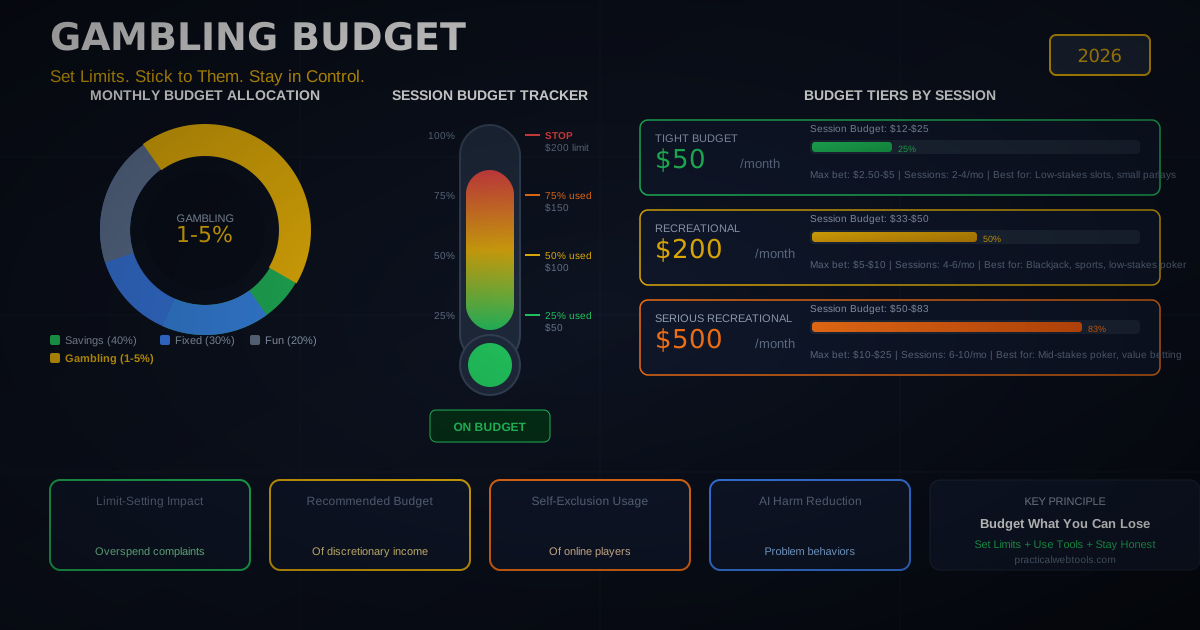
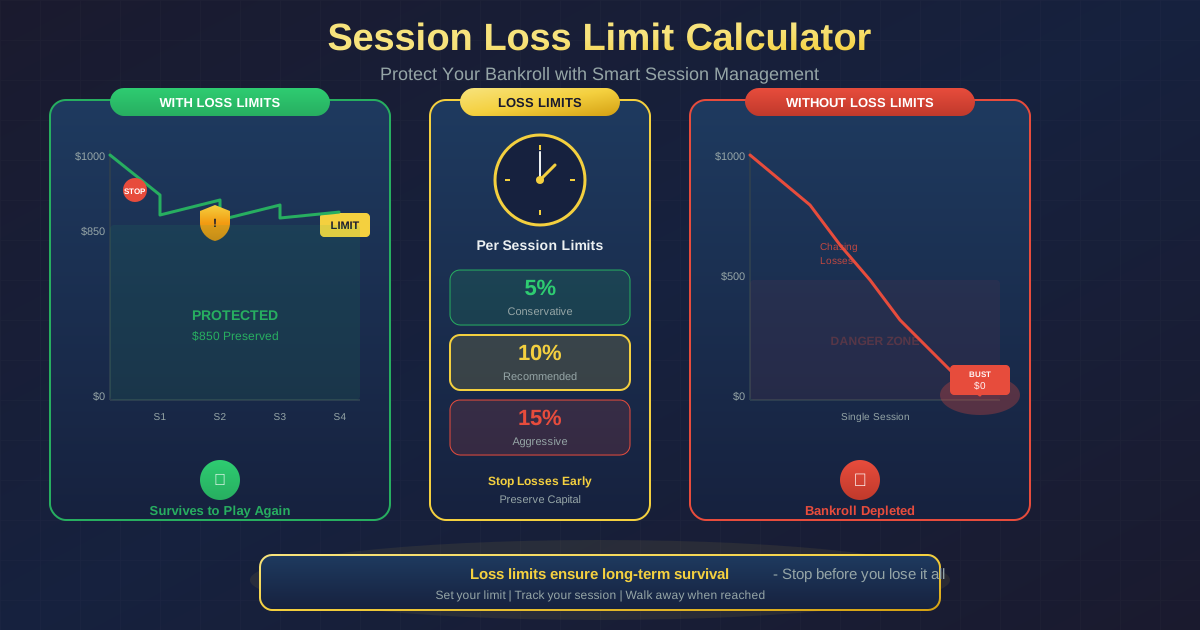
- Loss limit: 40-60% of session bankroll. If you brought $500, stop at $200-$300 in losses.
- Win goal: 30-50% of session bankroll. If you are up $150-$250, consider locking up profit.
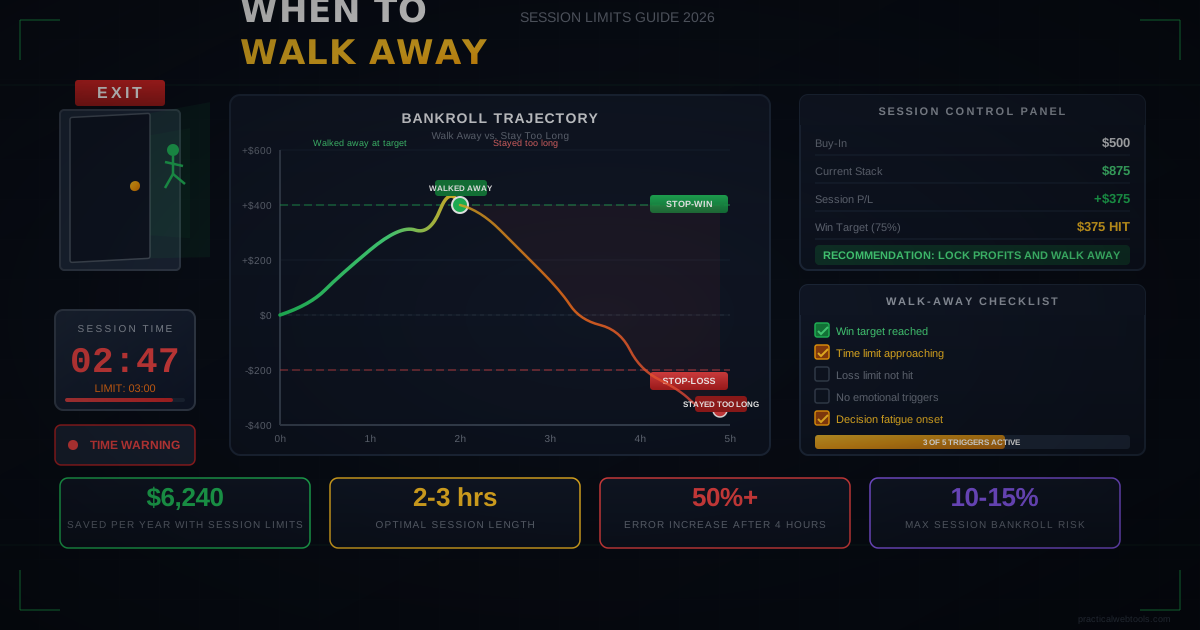
- Time limit: 2-4 hours maximum. Fatigue leads to bad decisions like chasing losses with proposition bets.
Understanding Dice Probabilities
Every craps strategy is built on the 36 possible outcomes when rolling two dice. Memorize these distributions:
| Total | Ways to Roll | Probability | Odds Against |
|---|---|---|---|
| 2 | 1 | 2.78% | 35:1 |
| 3 | 2 | 5.56% | 17:1 |
| 4 | 3 | 8.33% | 11:1 |
| 5 | 4 | 11.11% | 8:1 |
| 6 | 5 | 13.89% | 6.2:1 |
| 7 | 6 | 16.67% | 5:1 |
| 8 | 5 | 13.89% | 6.2:1 |
| 9 | 4 | 11.11% | 8:1 |
| 10 | 3 | 8.33% | 11:1 |
| 11 | 2 | 5.56% | 17:1 |
| 12 | 1 | 2.78% | 35:1 |
The 7 is the most likely outcome, appearing 16.67% of the time. This is why the Pass Line bettor has the edge on the come-out roll (7 and 11 both win), and why the casino has the edge once a point is established (7 is more likely than any single point number).
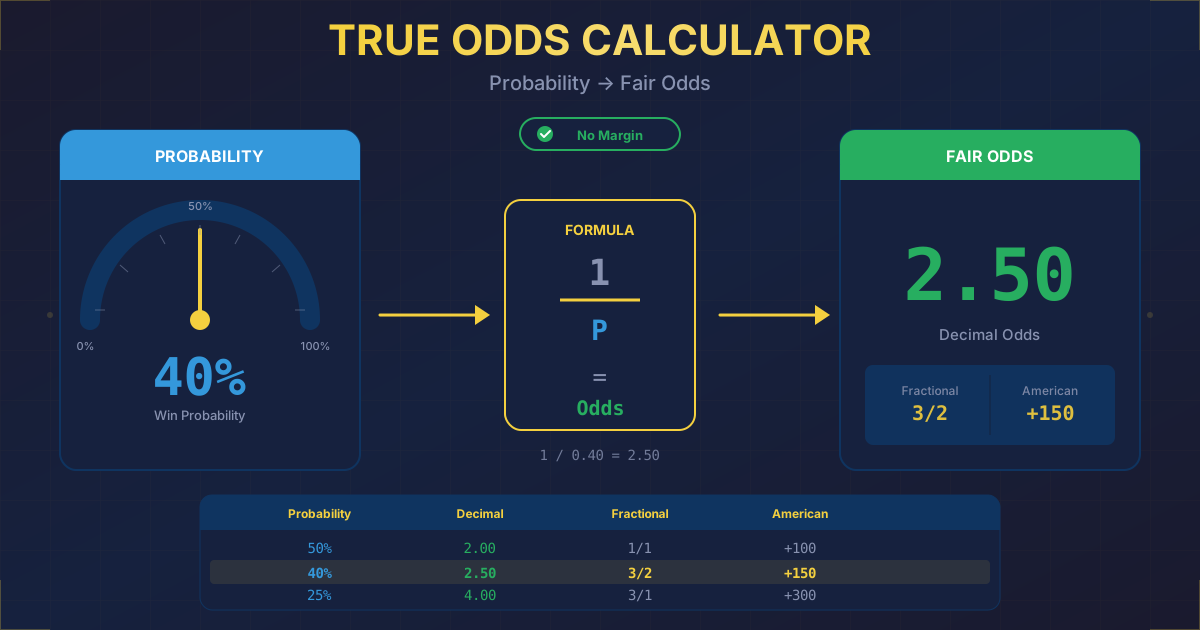
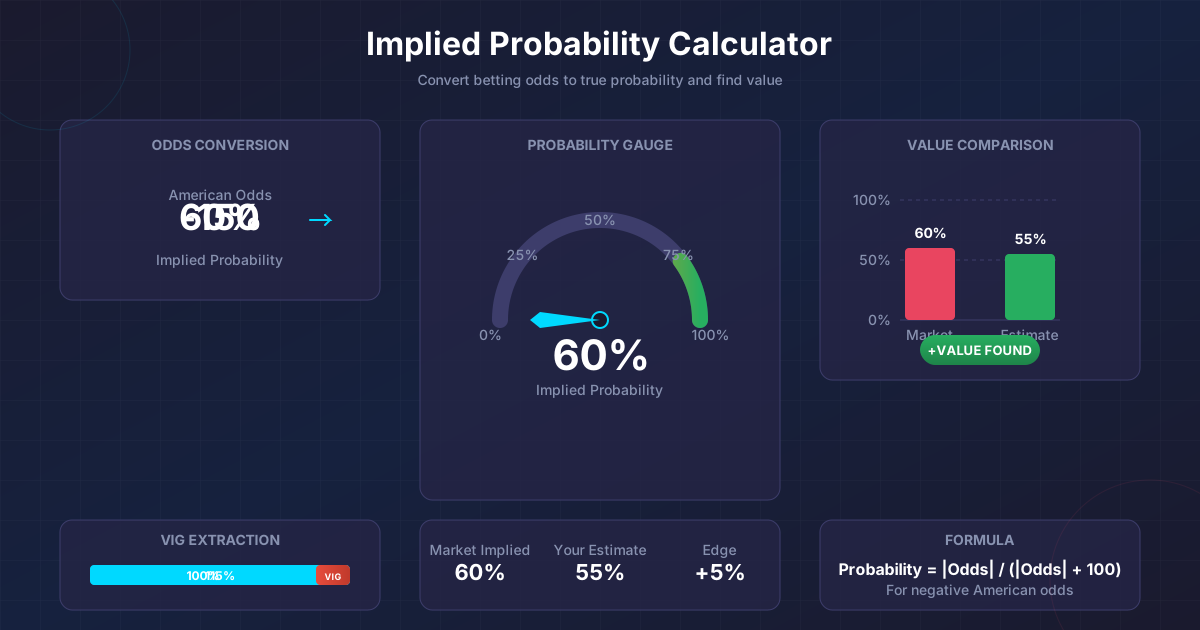
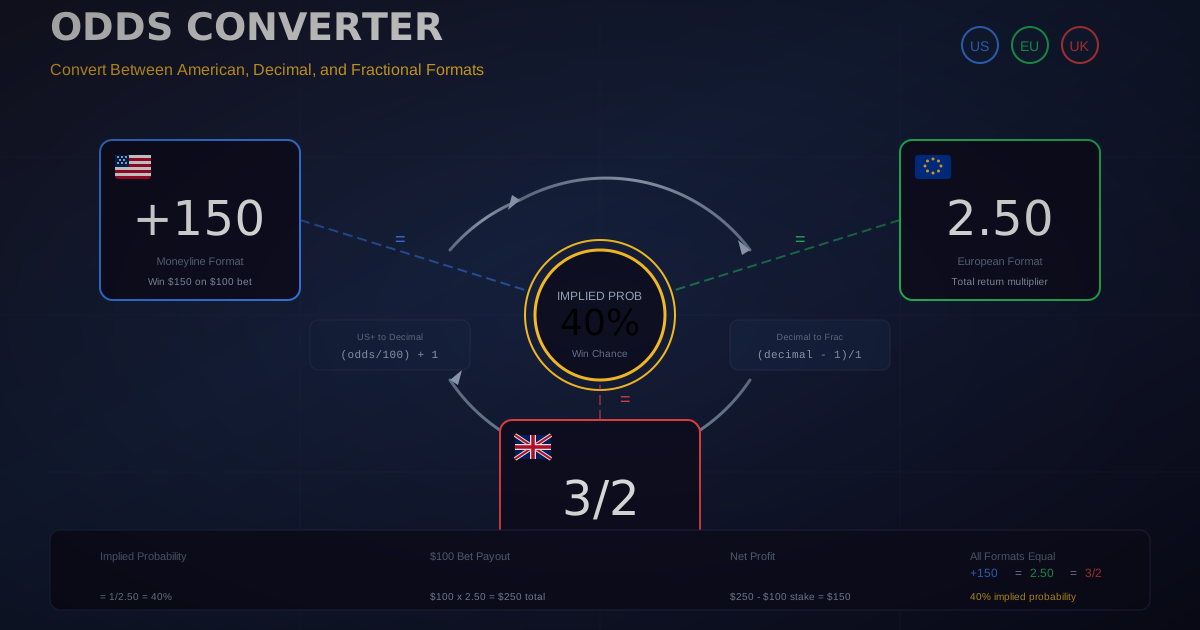
Implied Probability Calculator
Craps Myths That Cost You Money
Myth 1: "Dice Setting" or "Dice Control" Works
Some players believe they can physically throw the dice in a controlled manner to influence outcomes. Scientific testing has consistently shown this has no measurable effect. The dice bounce off the back wall's diamond-studded rubber surface, creating chaotic and truly random outcomes.
If dice control worked, casinos would ban it. They do not, because it does not work.
Myth 2: The Table Is "Hot" or "Cold"
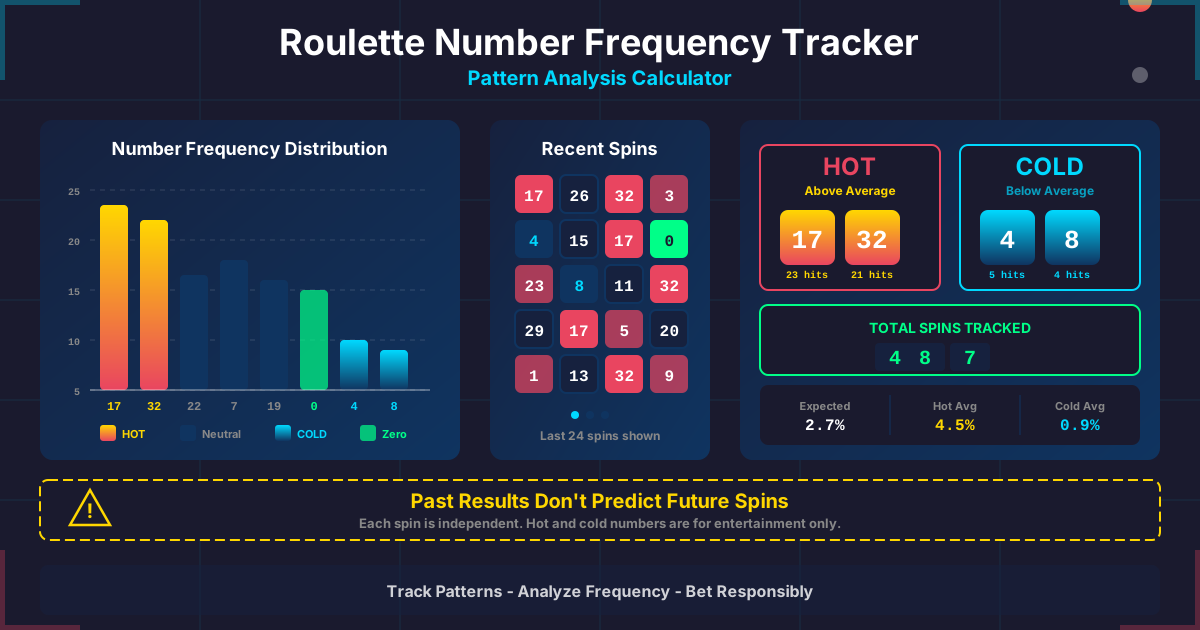
Dice have no memory. A shooter who has rolled 20 numbers without a 7 is no more or less likely to roll a 7 on the next throw. Every roll is an independent event with the same 36-outcome probability distribution.
Adjusting your bets based on perceived streaks is the gambler's fallacy, and it increases your losses by causing larger bets during what feels like a "hot" streak.
Myth 3: Certain Numbers Are "Due"
If 6 has not come up in 15 rolls, it is not "due." The probability of rolling a 6 on the next roll is still exactly 5/36 (13.89%), the same as every other roll. The law of large numbers guarantees convergence to expected probabilities over thousands of rolls, not correction on the next individual roll.
Myth 4: Betting Systems Beat the House Edge
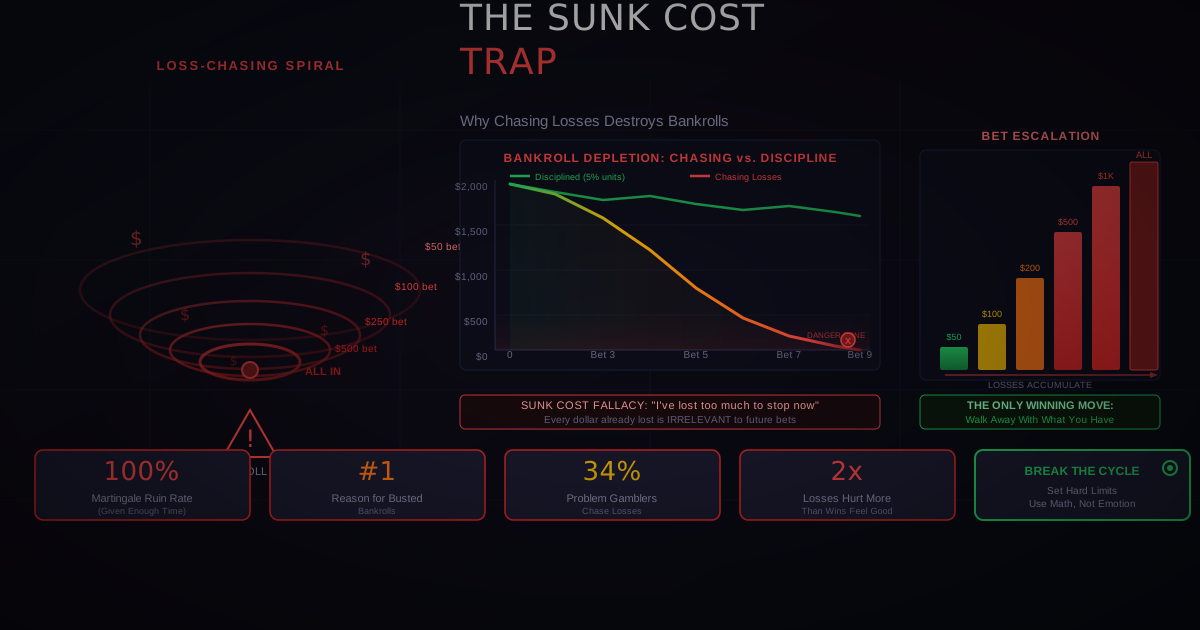
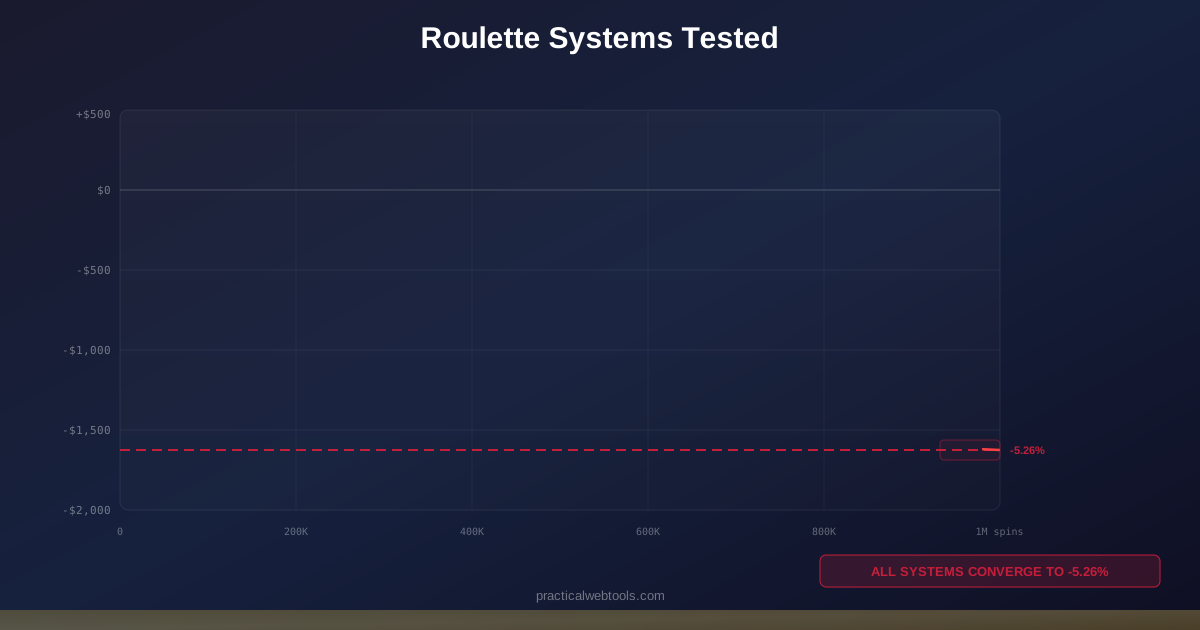
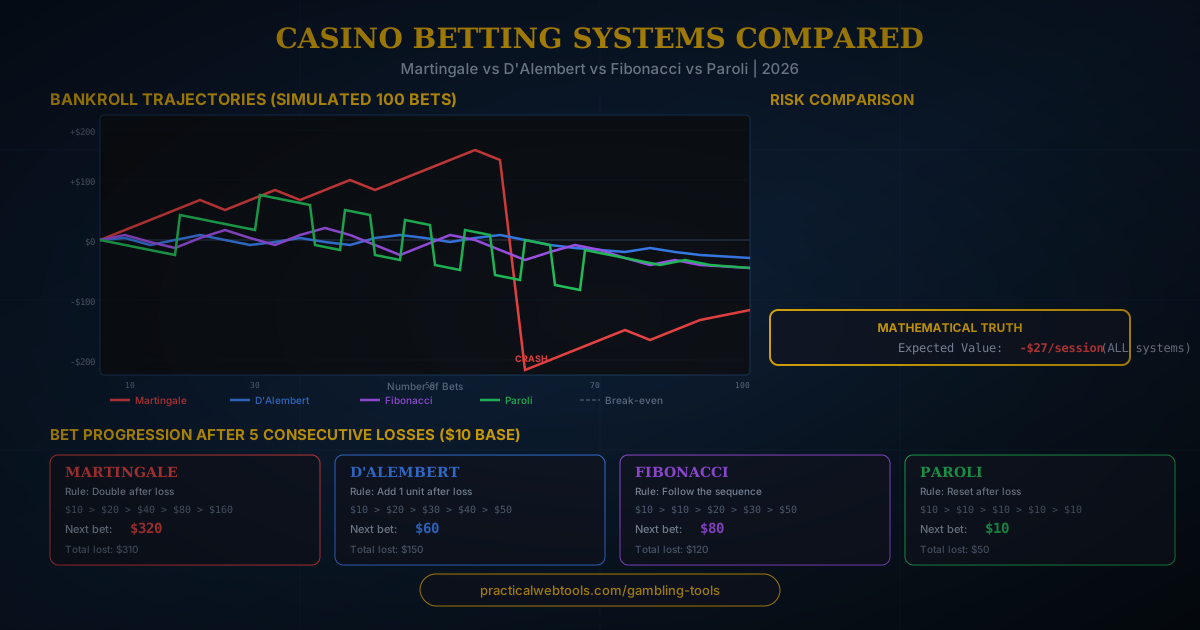
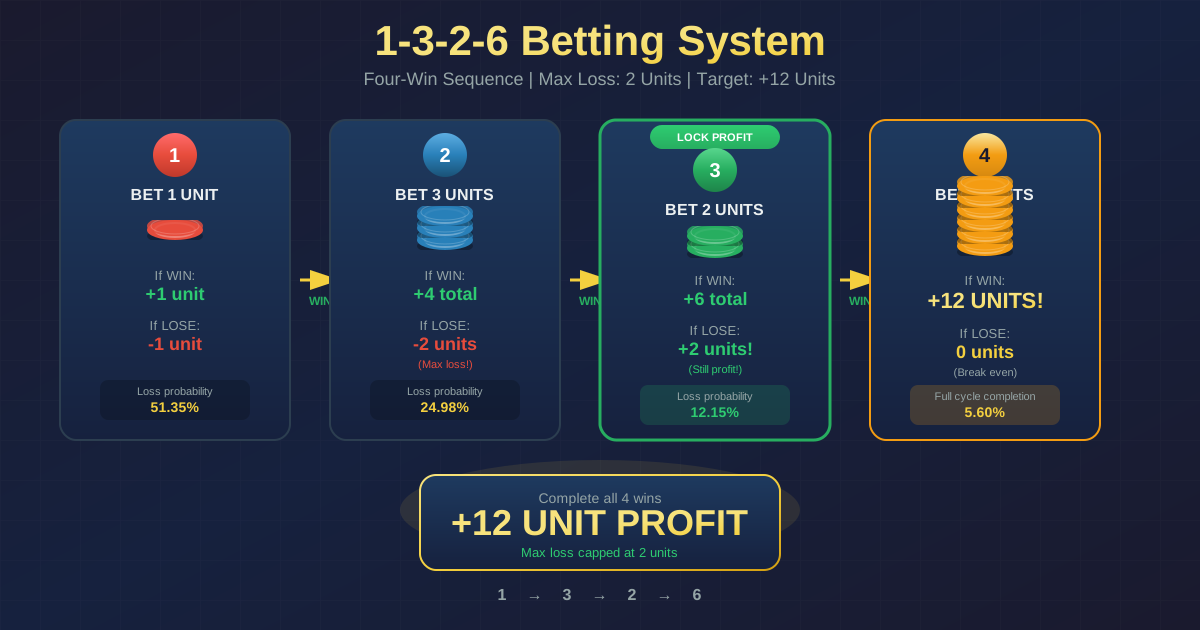
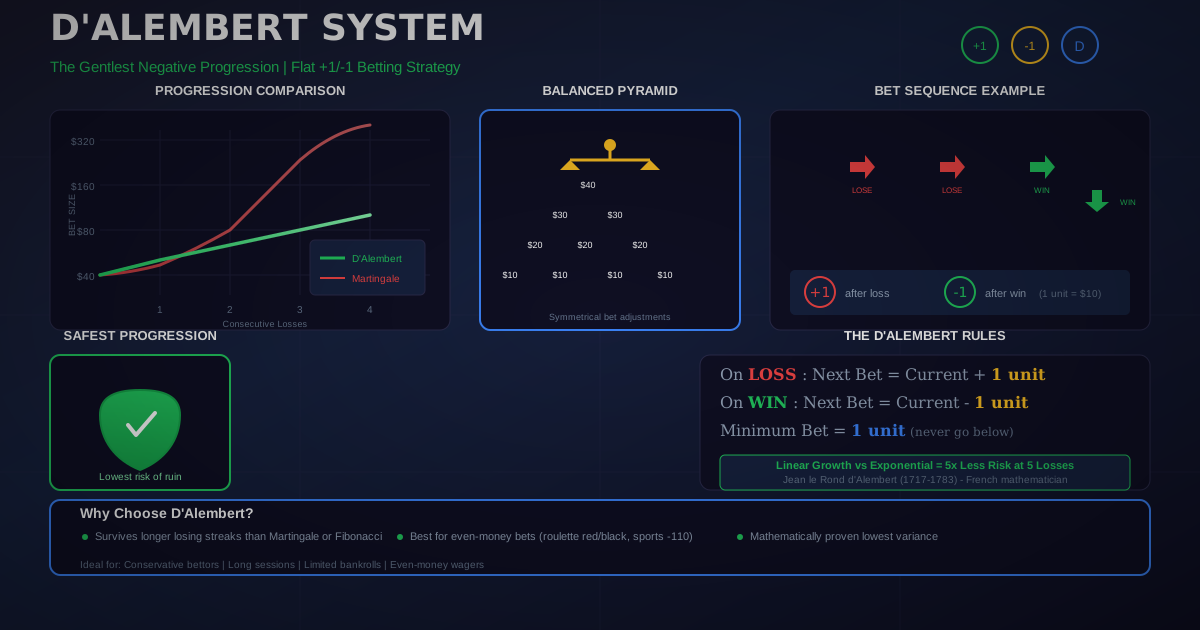
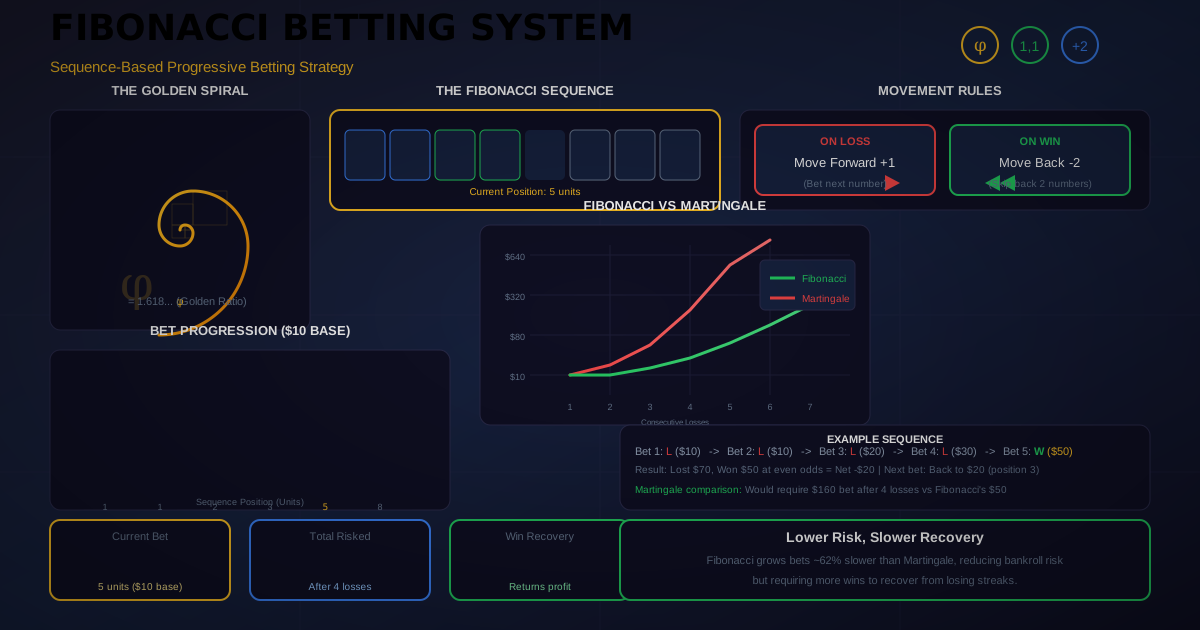
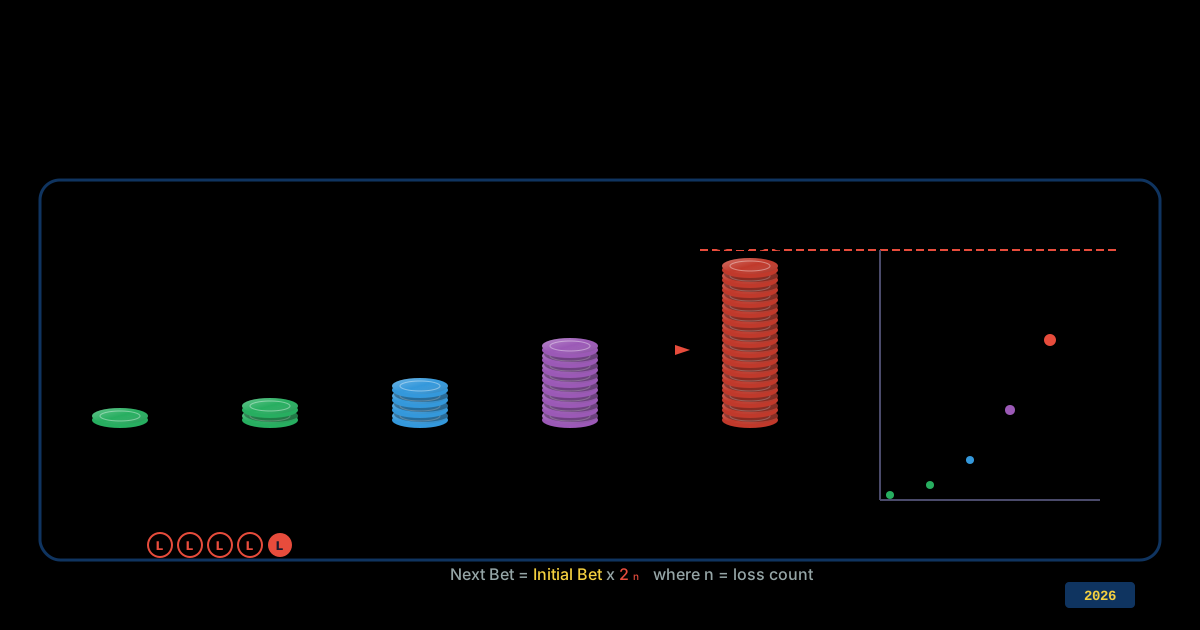
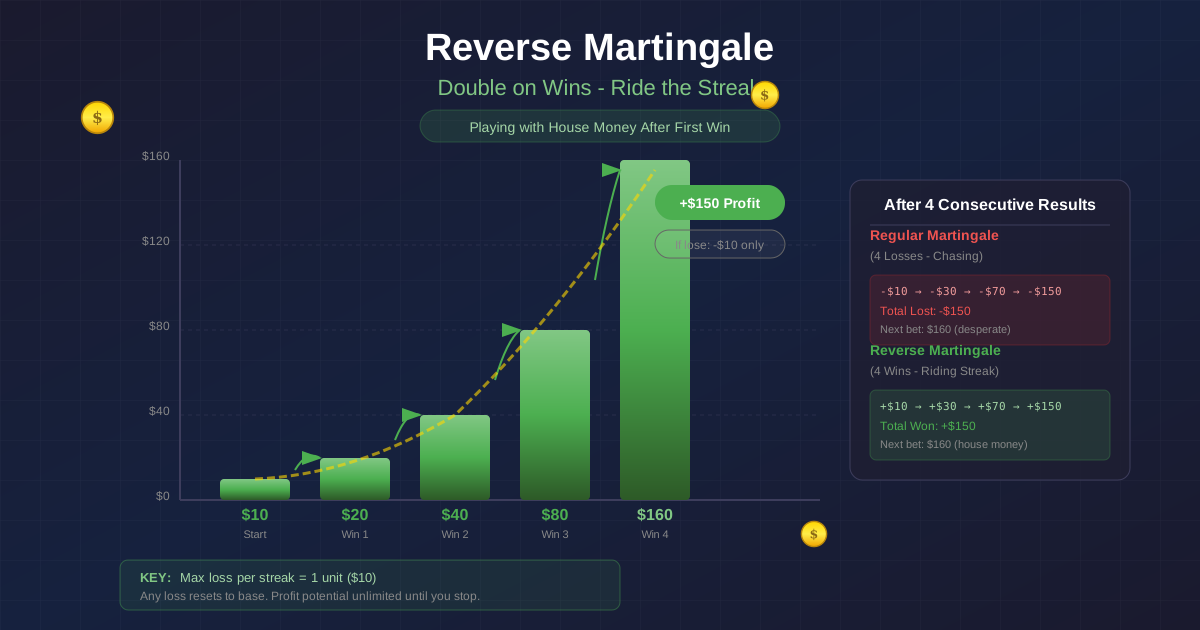
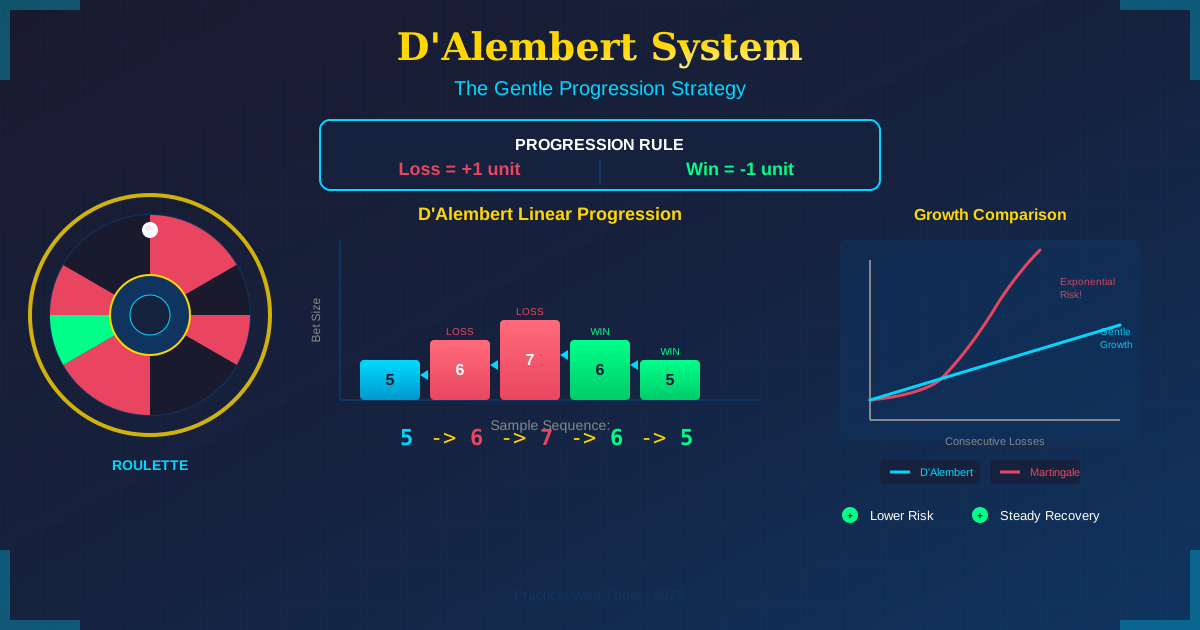
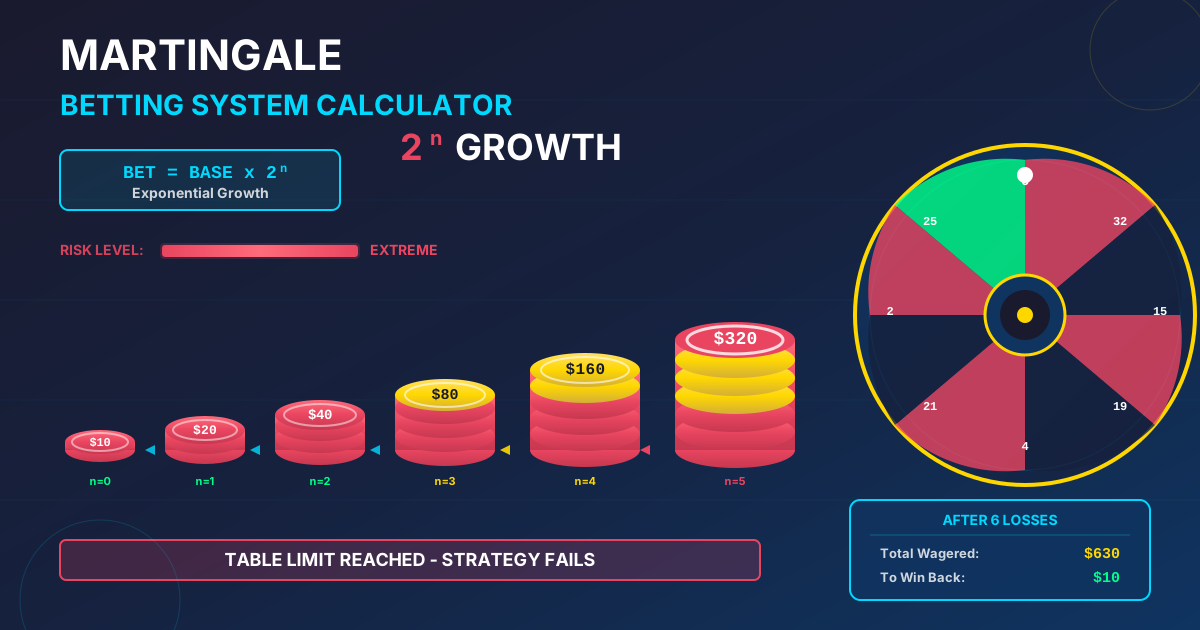
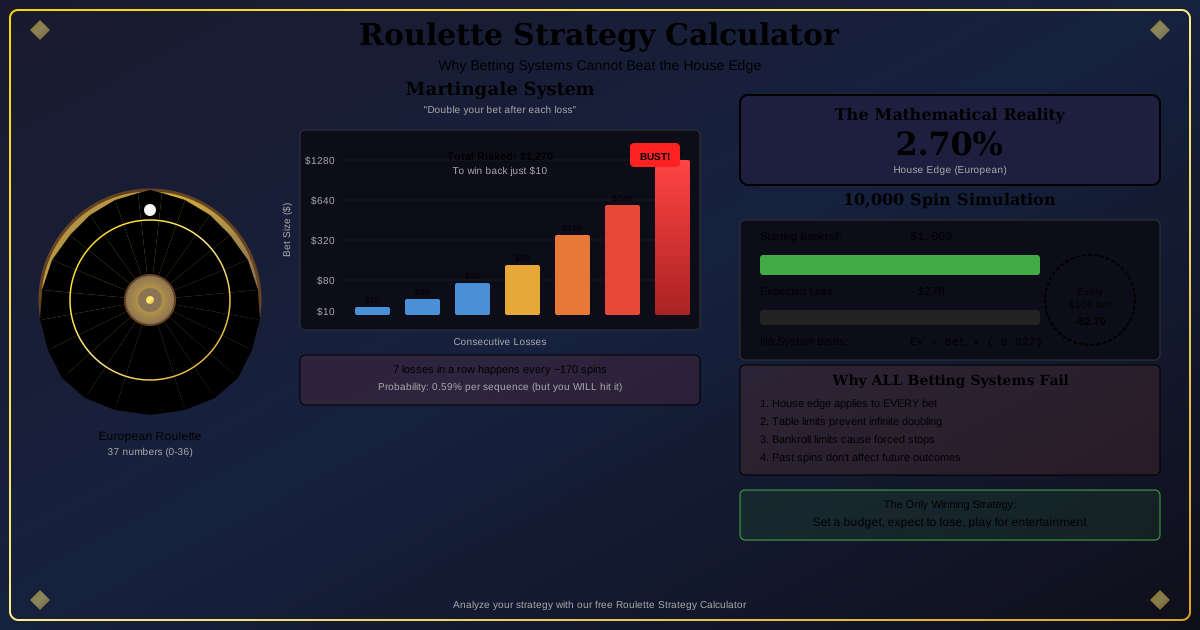
Martingale, Paroli, D'Alembert, and every other betting system produce the same expected loss over time. You cannot overcome a mathematical house edge with bet sizing patterns. Systems change the distribution of outcomes (more small wins, fewer but larger losses) without changing the expected value.
Frequently Asked Questions
What is the single best bet in craps? The Odds bet behind the Pass Line or Don't Pass bet has a 0% house edge, making it the best standard bet in any casino. You must first make a Pass Line or Don't Pass bet to be eligible. Use our Odds Bet Calculator to see exact payouts for any point number.
Is Don't Pass better than Pass Line? Don't Pass has a slightly lower house edge (1.36% vs. 1.41%), saving you approximately $0.50 per 100 $10 bets. The difference is negligible. Choose based on comfort level since Don't Pass means betting against the shooter, which can feel socially awkward. Use the Don't Pass Calculator to compare expected losses.
How much money should I bring to a craps table? Bring 30-50 times your base bet for a session. For a $10 table with Odds, $300-$500 is appropriate. If you plan to take maximum 3x-4x-5x Odds, bring $800-$1,000. Use our Craps Bankroll Calculator to calculate the exact amount based on your betting style and risk tolerance.
Why do casinos offer the Odds bet if it has no house edge? Because the Odds bet keeps you at the table making Pass Line bets where the casino does have an edge. The Odds bet also increases your total money at risk, which increases variance and can lead to faster bankroll depletion despite the zero house edge. Casinos profit from the Pass Line portion of your total action.
What is the worst bet in craps? "Any 7" carries a 16.67% house edge, the worst on the table. For every $100 wagered, you can expect to lose $16.67. Compare that to $1.41 on the Pass Line. Run the numbers yourself with our Craps House Edge Calculator.
Should I ever bet the Field? Only if the casino pays triple on 12 (and double on 2), which reduces the house edge to 2.78%. With standard double payouts on both 2 and 12, the house edge is 5.56%, which is poor. Use the Field Bet Calculator to compare field bet variants.
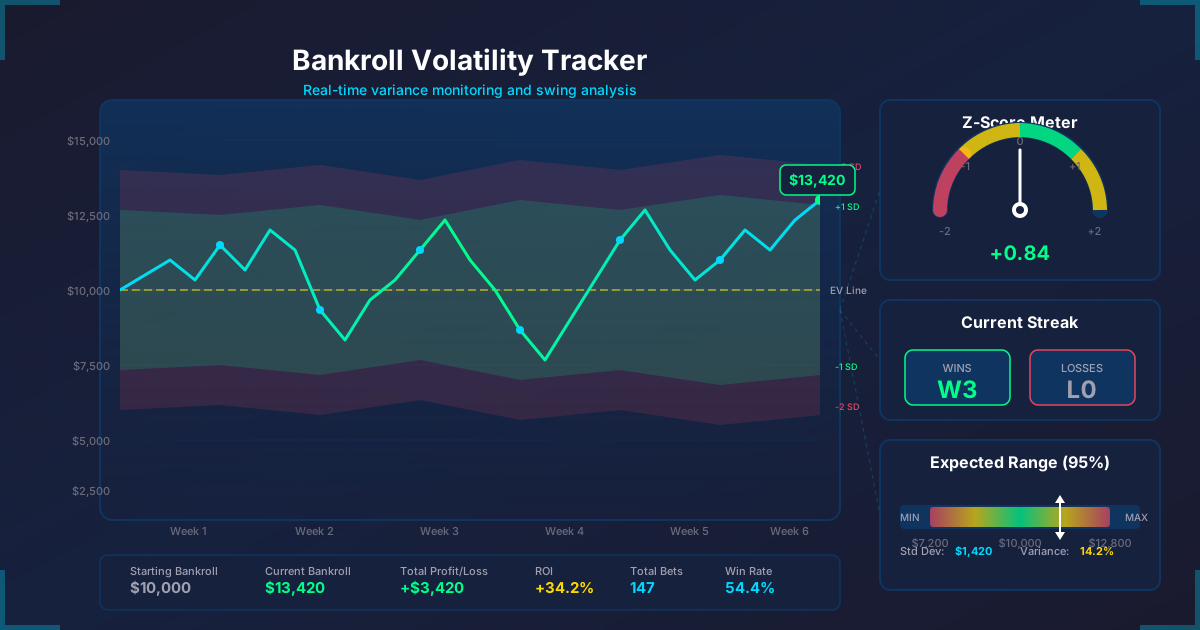
How long will my bankroll last at craps? With $500 and a $10 Pass Line + 2x Odds strategy, expect 3-5 hours of play in most sessions. Your expected loss rate is approximately $7 per hour. However, variance is high, and you could bust in 1 hour or play for 8+ hours. Our Bankroll Volatility Tracker helps model session length.
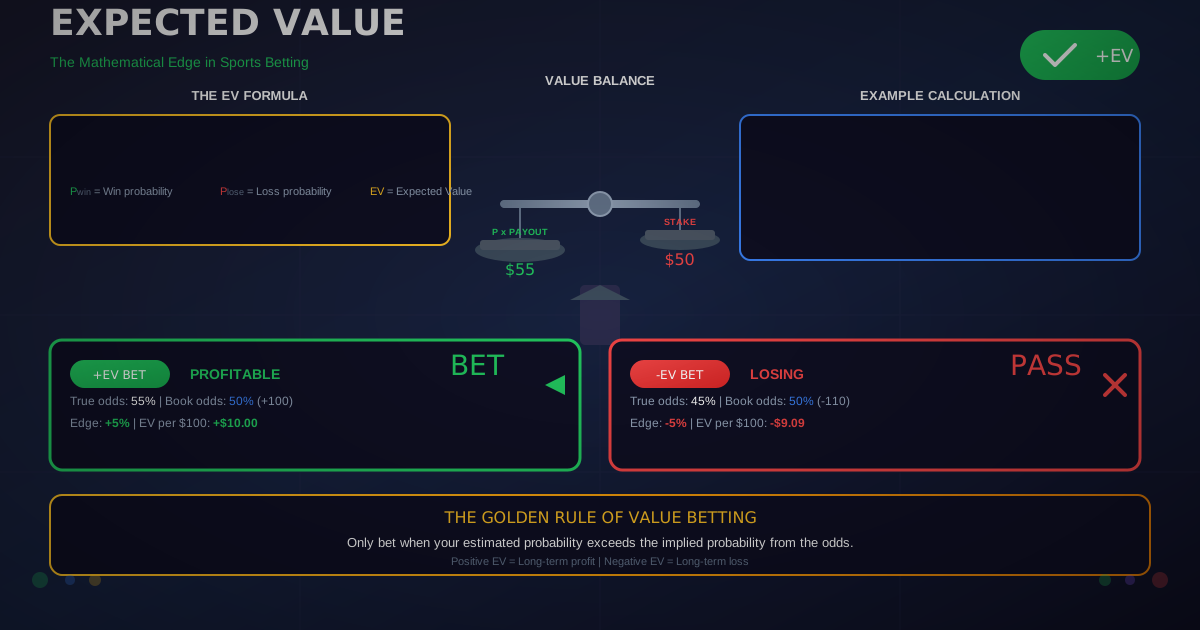
Can any betting system beat craps? No. Every betting system produces the same expected loss percentage. Systems like Martingale change the distribution of wins and losses but cannot overcome the mathematical house edge. The only way to reduce expected losses in craps is to stick to low-edge bets (Pass/Don't Pass + Odds) and avoid high-edge bets. Use our Expected Value Calculator to verify this for any bet.
Related Tools
- Craps Pass Line Calculator - Calculate Pass Line probabilities and expected value
- Craps Odds Bet Calculator - Compute true odds payouts for every point
- Craps House Edge Calculator - Compare house edges across all craps bets
- Craps Payout Calculator - Calculate payouts for any craps wager
- Craps Don't Pass Calculator - Analyze Don't Pass and Don't Come strategies
- Craps Expected Loss Calculator - Project losses over any session length
- Craps Variance Calculator - Understand the role of variance in craps results
- Craps Field Bet Calculator - Evaluate Field bet house edge and payouts
- Craps Place Bet Calculator - Compare Place bet house edges across all numbers
- Craps Bankroll Calculator - Determine the right bankroll for your style of play
- Expected Value Calculator - General purpose EV calculator for any wager
- Kelly Criterion Calculator - Optimal bet sizing framework
- Bankroll Volatility Tracker - Track and model bankroll fluctuations
- Hold/Vig Calculator - Calculate the true cost of the house edge
- Odds Converter - Convert between odds formats
Conclusion
Craps strategy for beginners is remarkably simple once you strip away the noise. Make Pass Line or Don't Pass bets. Take maximum Odds. Ignore everything else on the table. That three-step approach gives you a combined house edge under 0.4%, making craps one of the best games in the casino for informed players.
The elaborate betting layout with its dozens of options exists to distract you from this simplicity. Proposition bets, hardways, and field bets all carry house edges 3x to 40x higher than the Pass Line + Odds combination. Every dollar you divert from Odds to these bets increases your expected losses.
Use our Craps House Edge Calculator to verify every number in this guide. Run the math yourself. Then walk up to the craps table with confidence, make the smart bets, and enjoy the most exciting game in the casino while paying the lowest price for it.
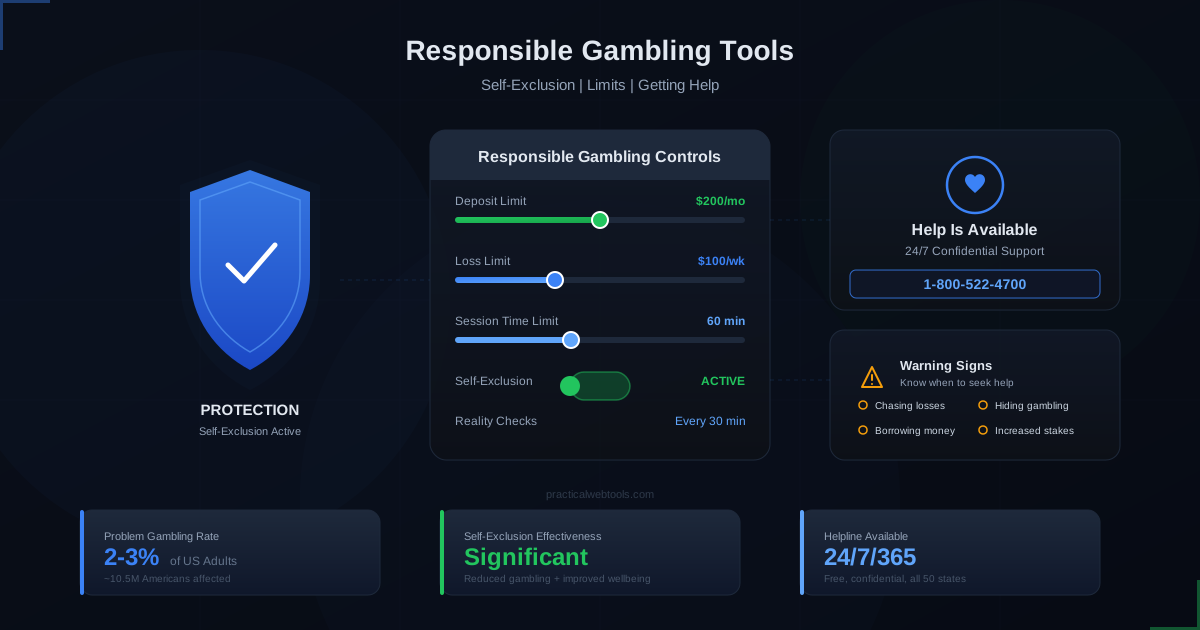
Gambling involves risk. This content is for educational and informational purposes only. Always gamble responsibly, set limits you can afford, and seek help if gambling becomes a problem. Visit the National Council on Problem Gambling or call 1-800-522-4700 for support.