How Casinos Are Designed to Keep You Playing: Architecture, Sounds, and Psychological Tricks (2026)
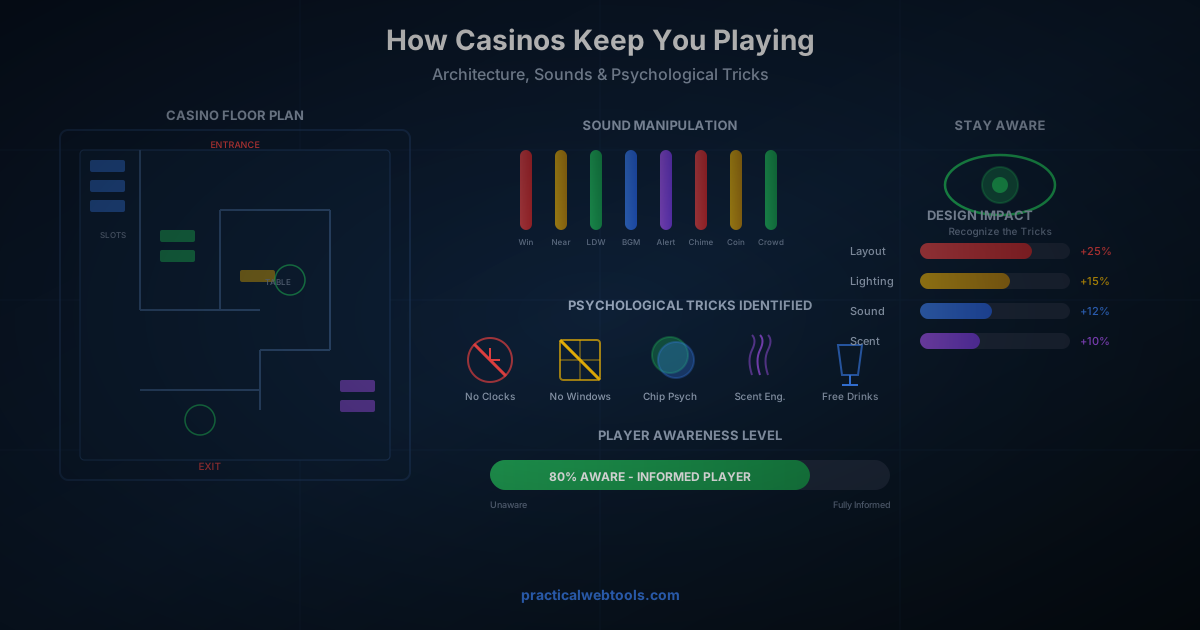
The average casino visitor stays 30% longer than they originally planned. That is not an accident. Casinos spend millions of dollars engineering every detail of their environment, from the carpet patterns under your feet to the exact pitch of slot machine jingles, all designed to keep you playing, spending, and losing track of time. A 2024 study published in the Journal of Gambling Studies found that environmental design factors alone account for an estimated 20-25% increase in per-visit gambling expenditure.
This guide is a consumer protection resource. By understanding exactly how casinos manipulate your behavior through architecture, sound, lighting, and psychology, you can recognize these tricks in real time and make informed decisions about when to walk away. Knowledge is your best defense against an environment specifically engineered to separate you from your money.
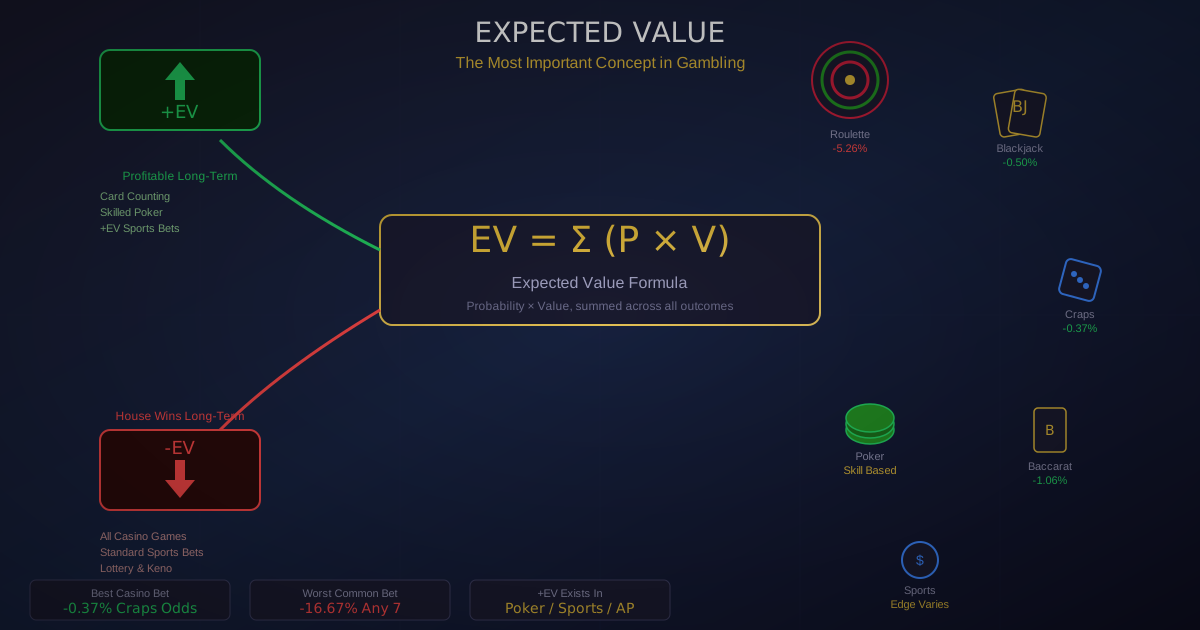
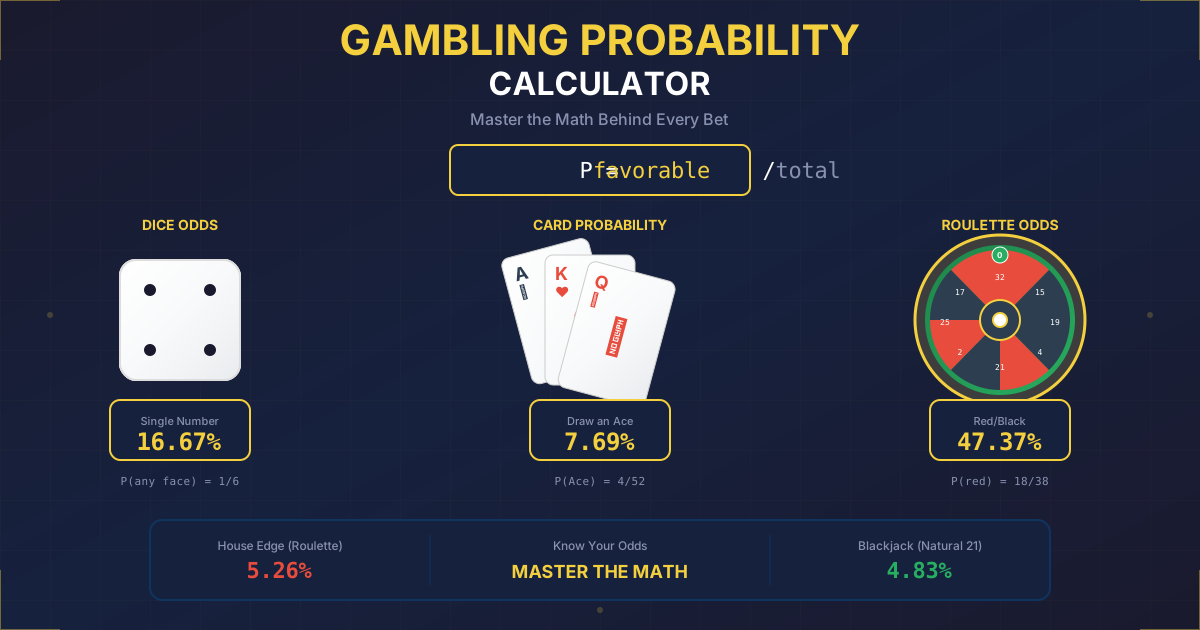
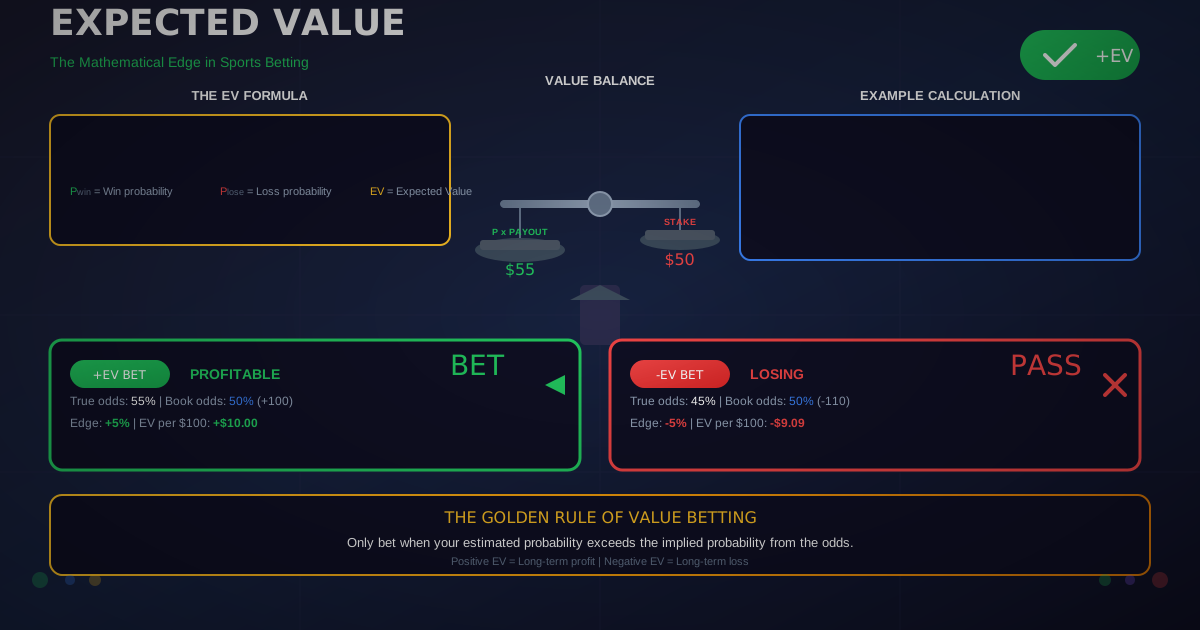
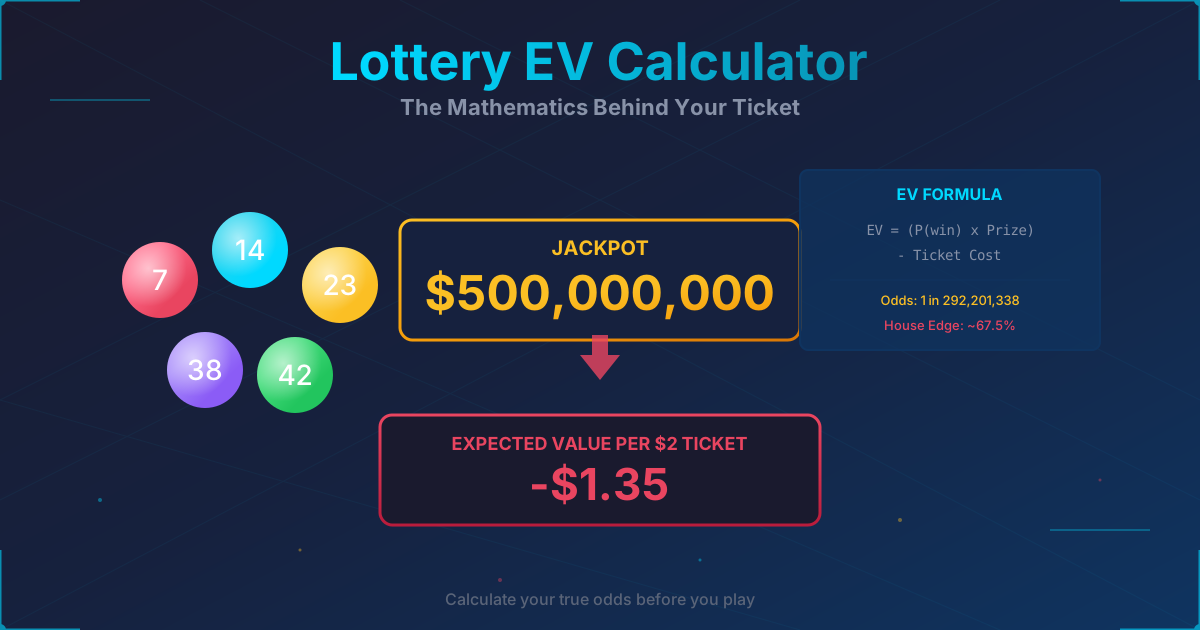
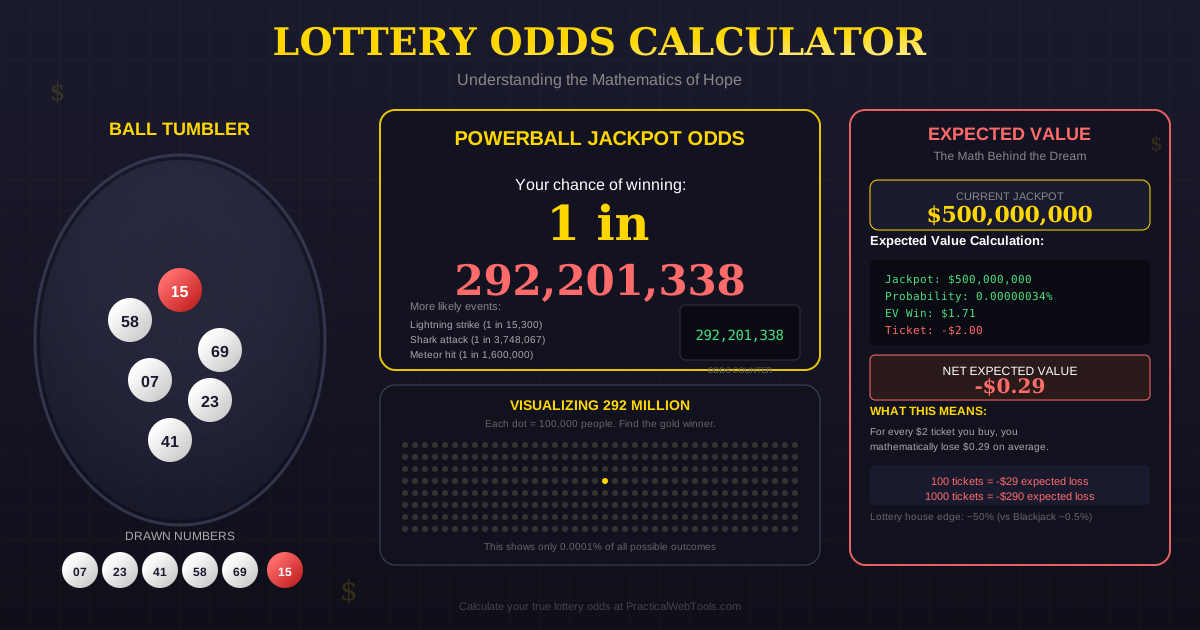
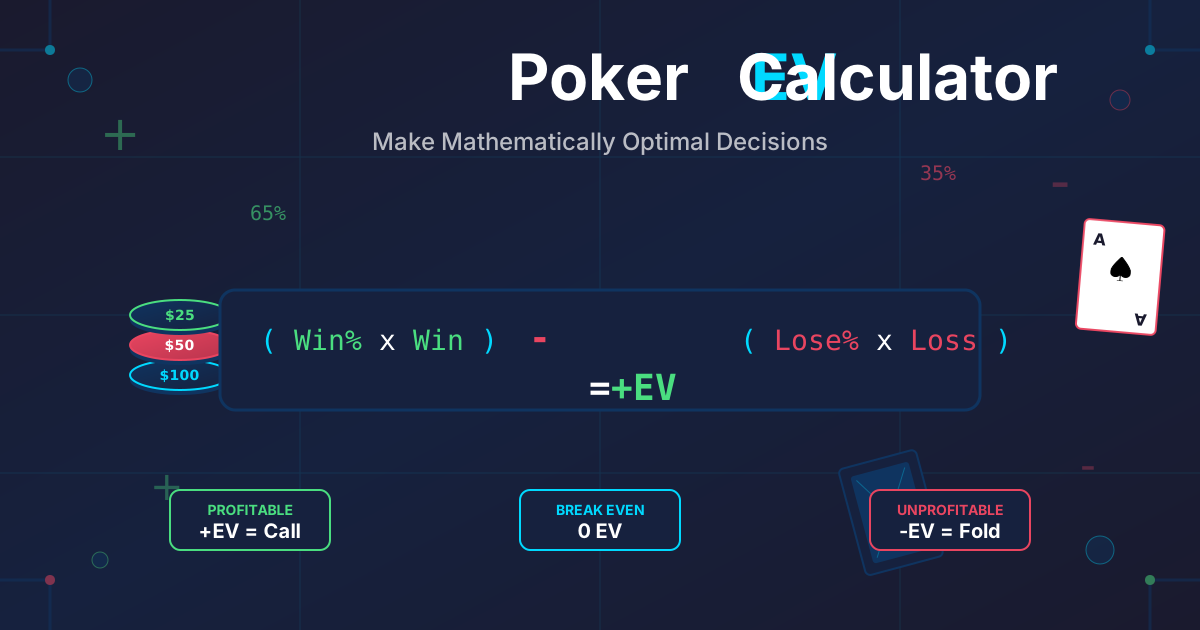
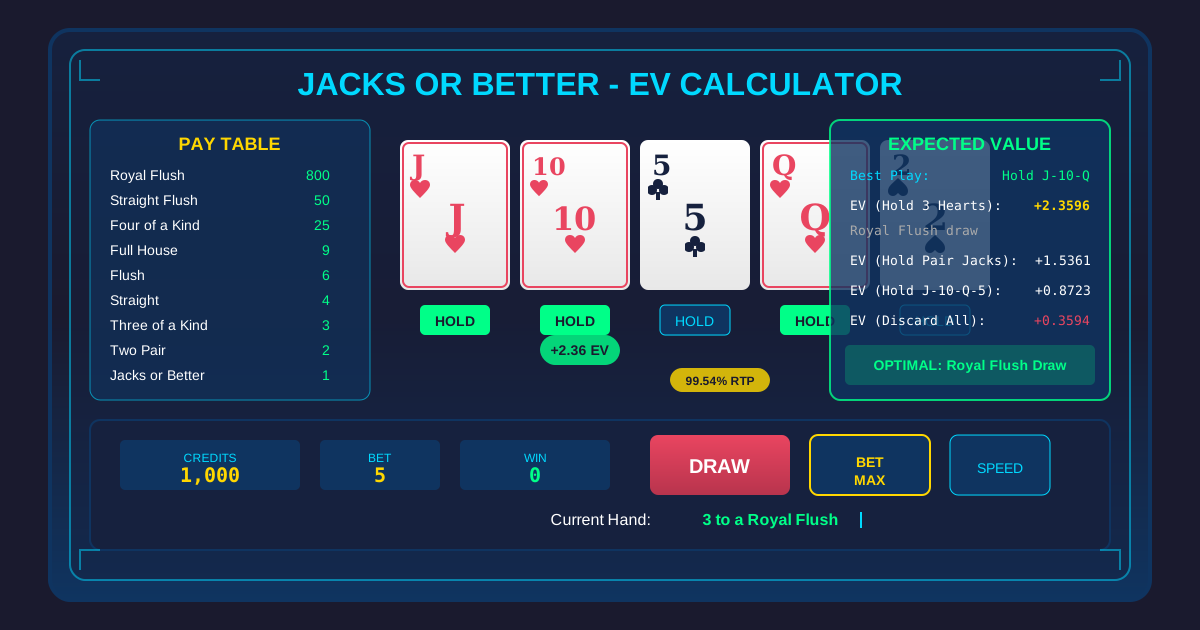
Before your next casino visit, understand the true mathematical cost of every game with our free Expected Value Calculator.
Why Do Casinos Spend So Much on Interior Design?
Casinos invest heavily in interior design because the physical environment directly influences how long guests stay and how much they wager. The return on investment for casino design is extraordinary: a well-designed casino floor can increase gaming revenue by 15-30% compared to a poorly laid out space.
The Business Case for Casino Architecture
Casino design is not about aesthetics. It is about behavioral engineering. Every design choice is tested, measured, and optimized for one metric: time on device (or time at table). The longer you play, the more the house edge grinds away at your bankroll.
| Design Investment | Estimated Revenue Impact | Primary Mechanism |
|---|---|---|
| Floor layout optimization | +15-25% gaming revenue | Increased time navigating, more exposure to games |
| Lighting engineering | +10-15% slot revenue | Reduced fatigue, altered time perception |
| Sound design system | +8-12% slot play duration | Emotional arousal, near-miss reinforcement |
| Scent diffusion | +5-10% time on floor | Mood elevation, stress reduction |
| Carpet and ceiling design | +5-8% dwell time | Subconscious comfort, reduced desire to leave |
| Temperature control | +3-7% session length | Physical comfort optimization |
Two Competing Casino Design Philosophies
Casino design has historically been dominated by two competing schools of thought:
Bill Friedman's Maze Layout (Traditional): Friedman, a former gambling addict turned casino consultant, advocated for labyrinthine floor plans with low ceilings, no visible exits, and slot machines positioned as pathway obstacles. His 2000 book Stripes of the Tiger outlined 13 design principles all aimed at trapping players on the gaming floor.
Roger Thomas's Playground Design (Modern): Thomas, who redesigned the Bellagio and Wynn properties, argued that players gamble more in beautiful, open spaces with high ceilings, natural light, and luxurious finishes. His approach treats the casino as a destination rather than a trap.
Research from the University of British Columbia found that the playground design actually generates more revenue per square foot, because comfortable players stay voluntarily rather than feeling trapped and anxious. However, most casinos today use a hybrid approach, combining elements of both philosophies.
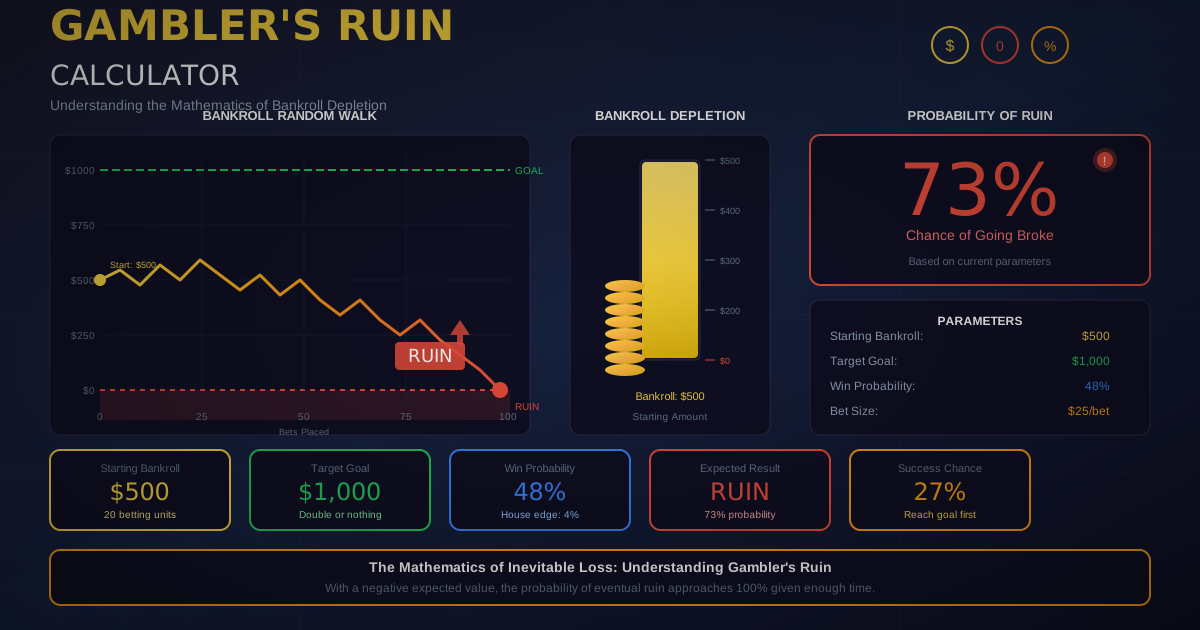
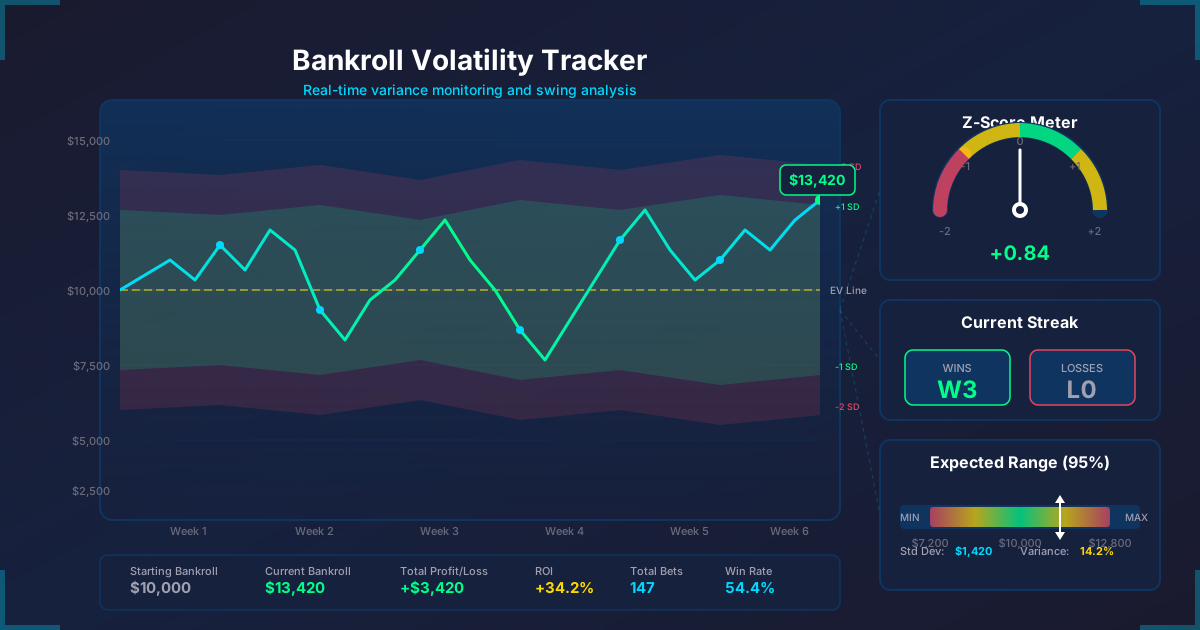
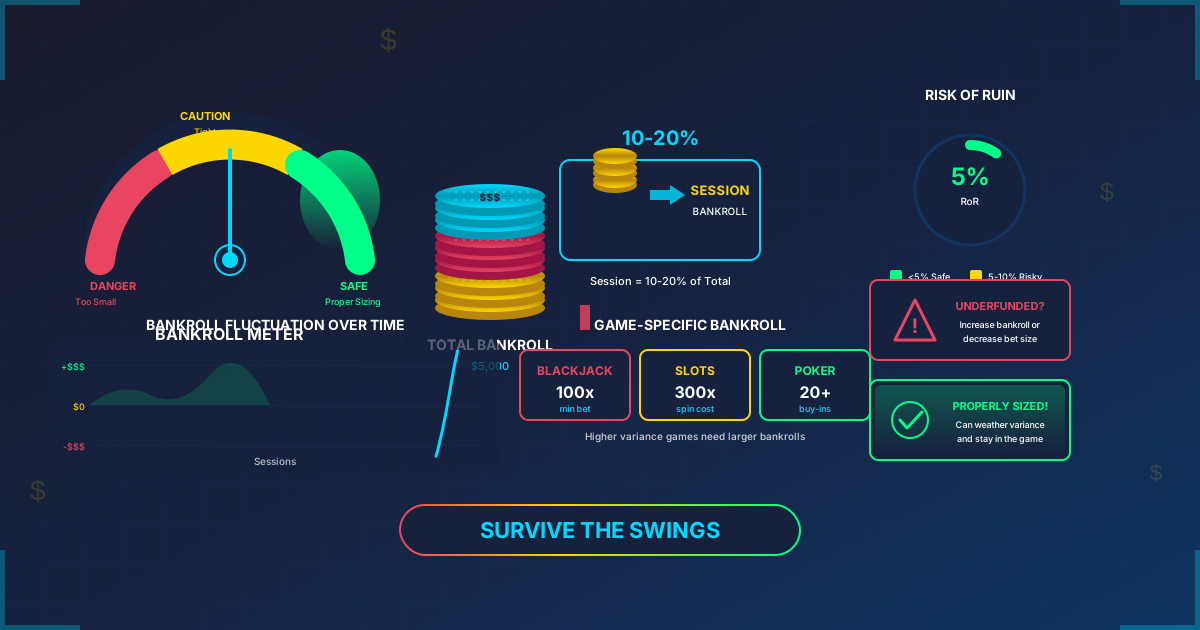
Calculate how the house edge compounds over extended play sessions using our Bankroll Volatility Tracker.
How Does Casino Floor Layout Manipulate Your Movement?
Casino floor layouts are deliberately designed to eliminate straight pathways and force you past the maximum number of gaming machines and tables. The goal is to make the shortest distance between any two points as long as possible while feeling natural.
The Maze Principle
Walk into any major casino and try to walk in a straight line from the entrance to the restrooms. You cannot do it. Slot machines, table games, and decorative barriers create winding paths that expose you to hundreds of gambling opportunities during a simple bathroom trip.
| Layout Element | Purpose | How It Affects You |
|---|---|---|
| Curved walkways | Eliminate direct sightlines to exits | You cannot see how far you are from the door |
| Slot bank clusters | Create micro-environments | Each cluster feels like a separate, intimate space |
| Table game islands | Central placement as visual anchors | Draws you toward active play and social energy |
| Restaurant placement (deep interior) | Force traversal of gaming floor | You must walk past games to eat |
| Restroom placement (interior) | Same as restaurants | Basic needs require gaming floor exposure |
| Registration desk (far from entrance) | Extended initial exposure | Your first experience is walking through active gaming |
Strategic Game Placement
Casinos do not place games randomly. High-payback machines are placed in high-visibility areas to create the impression of frequent winning. Tight machines (lower payback) are placed in captive areas where players are less likely to leave, such as near the sports book or buffet line.
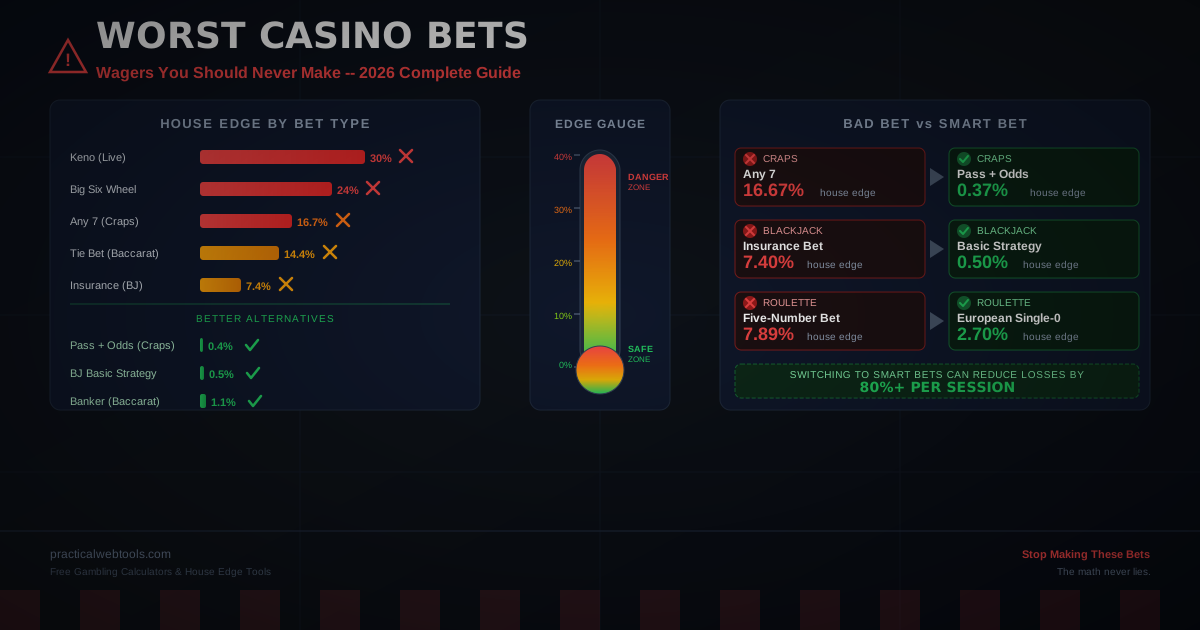
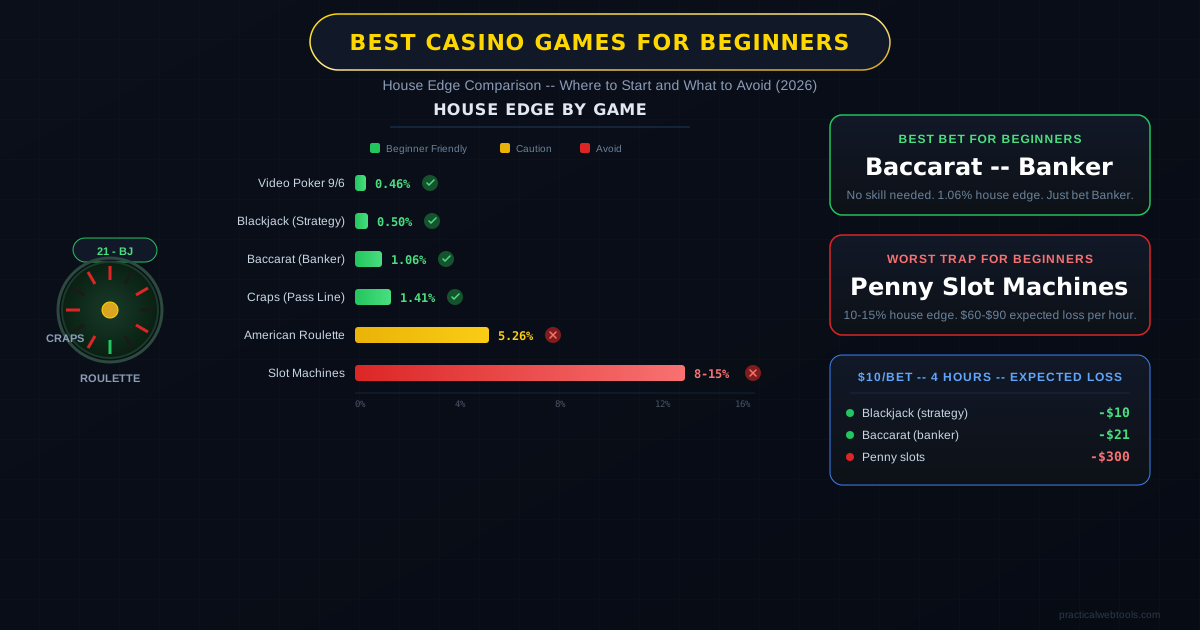
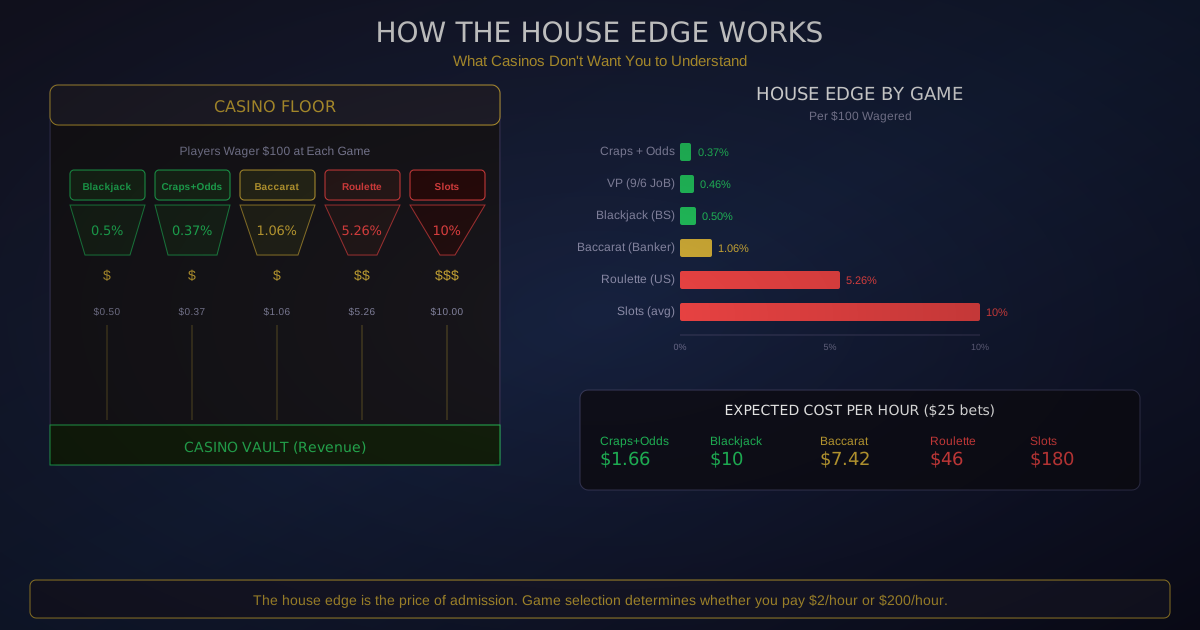
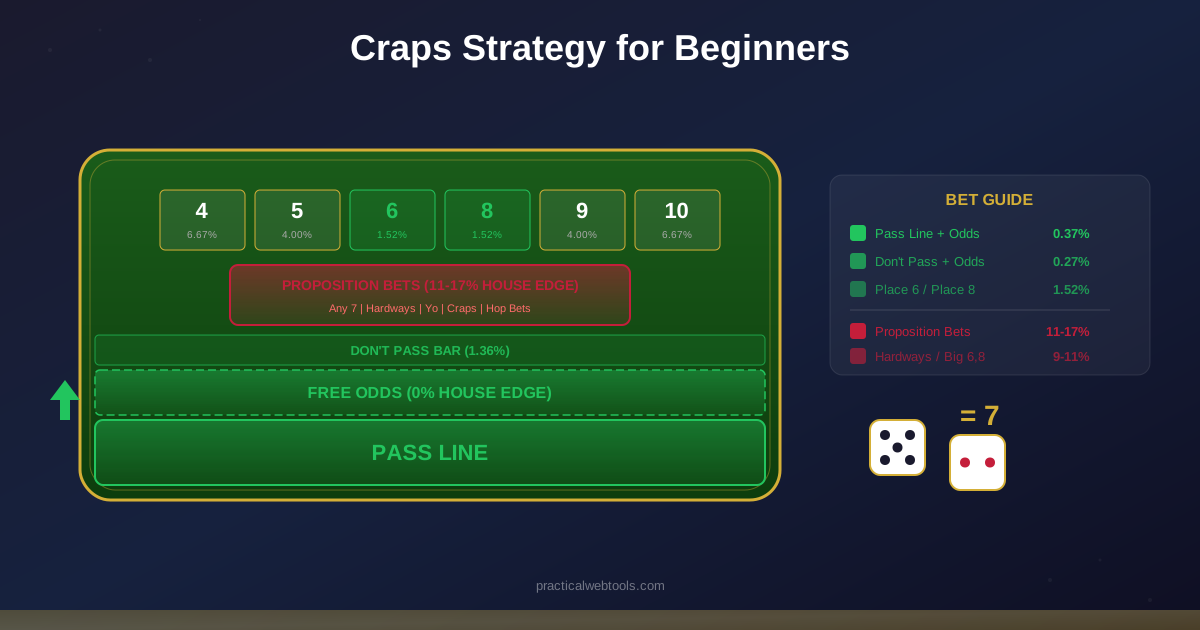
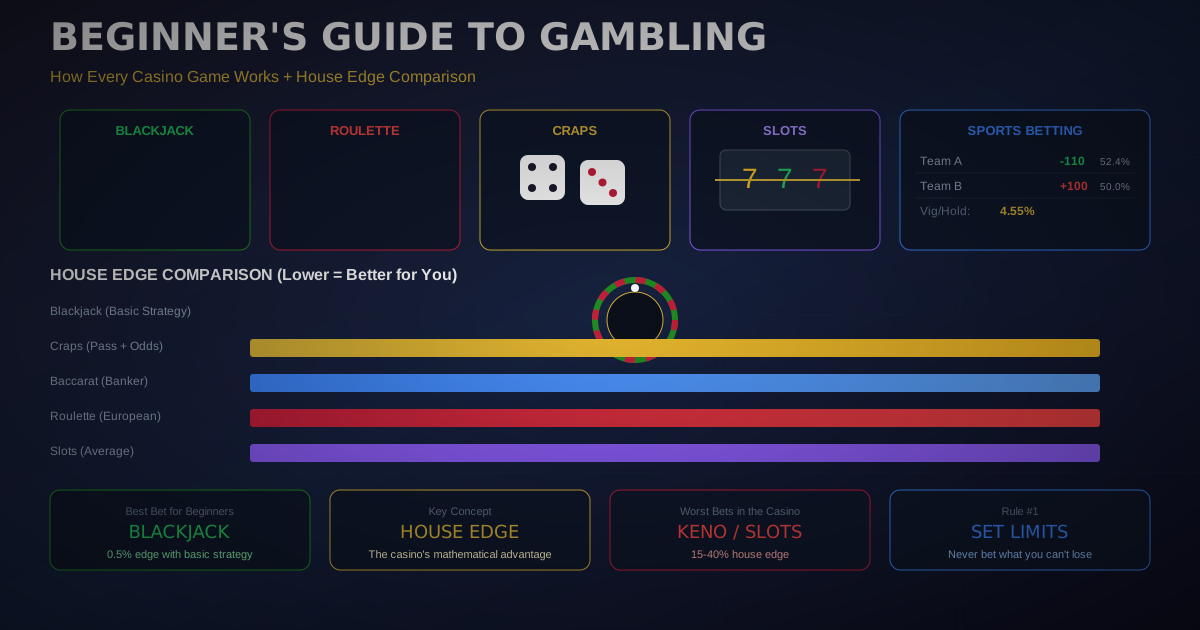
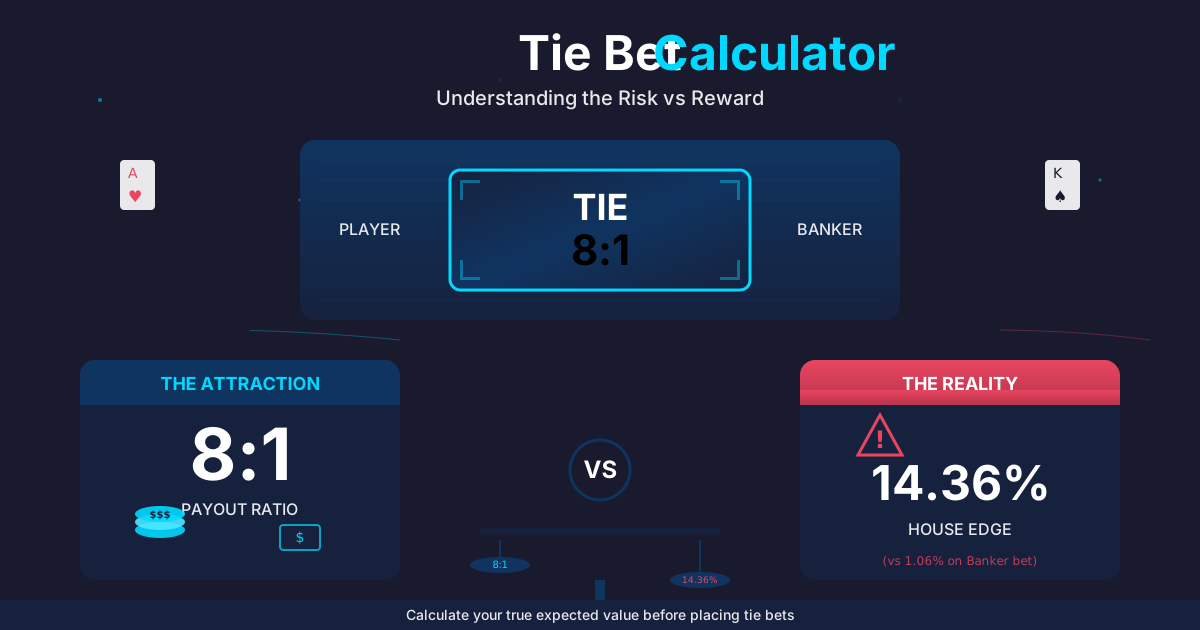
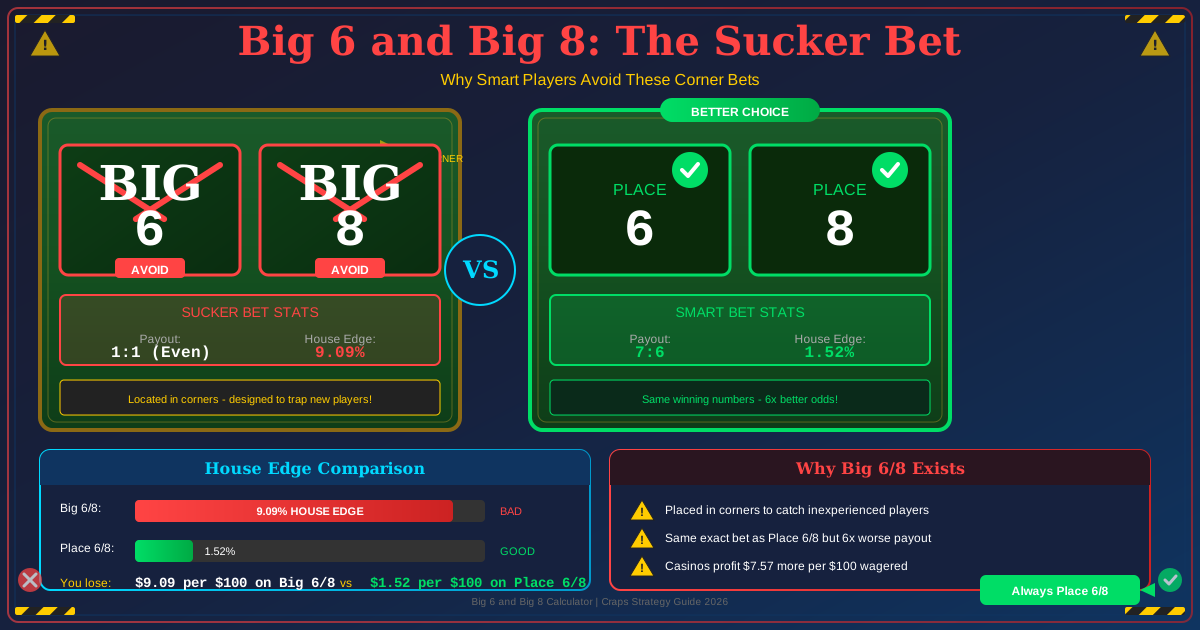
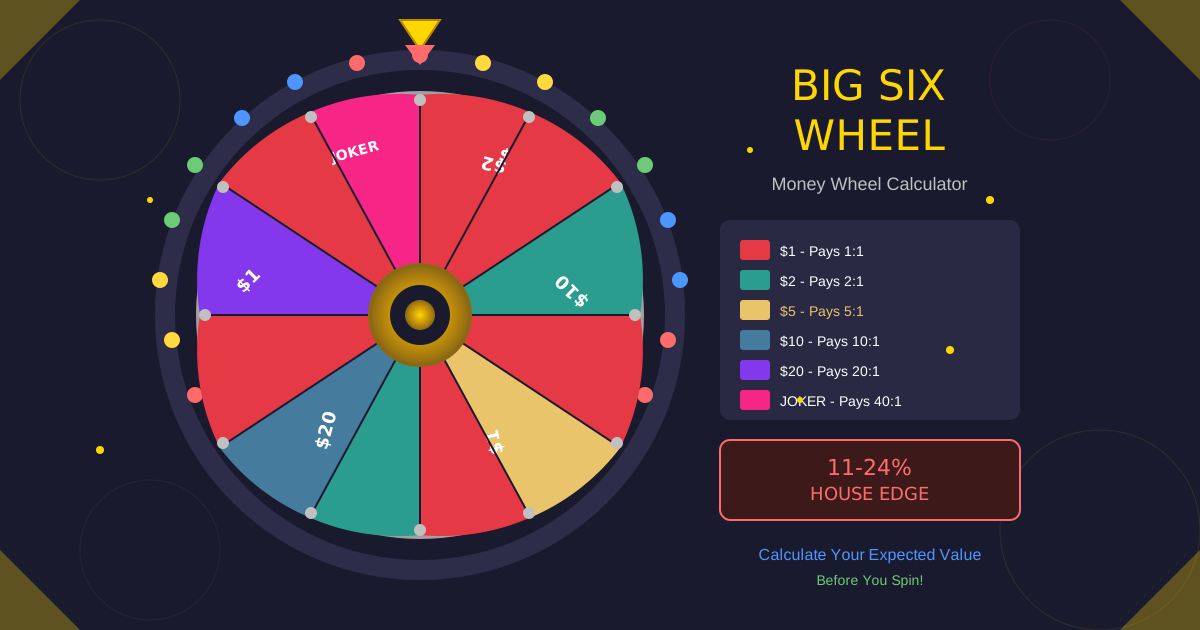
The highest house edge games, such as the Big Six wheel (house edge 11-24%) and novelty games, are positioned near entrances where foot traffic is highest and impulse decisions are most likely.
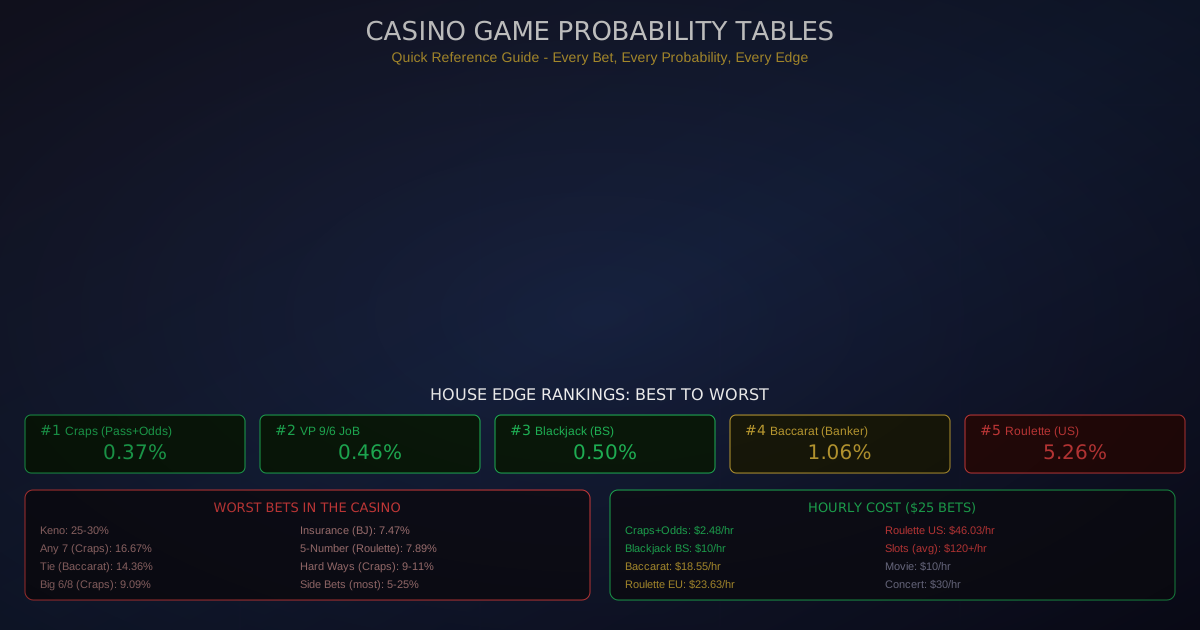
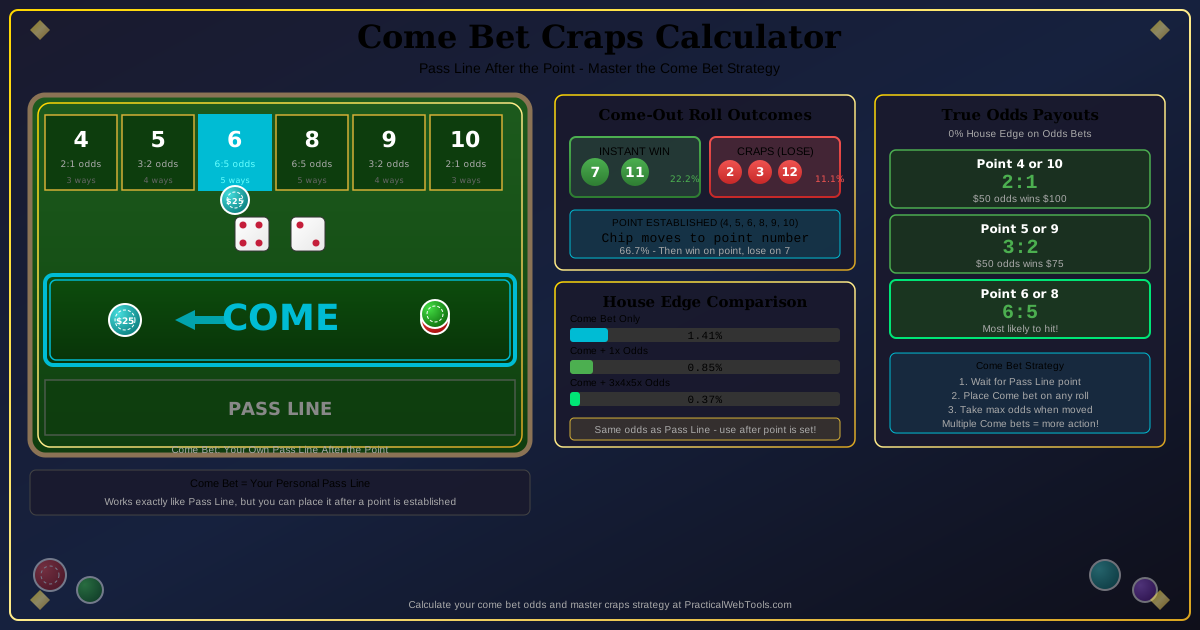
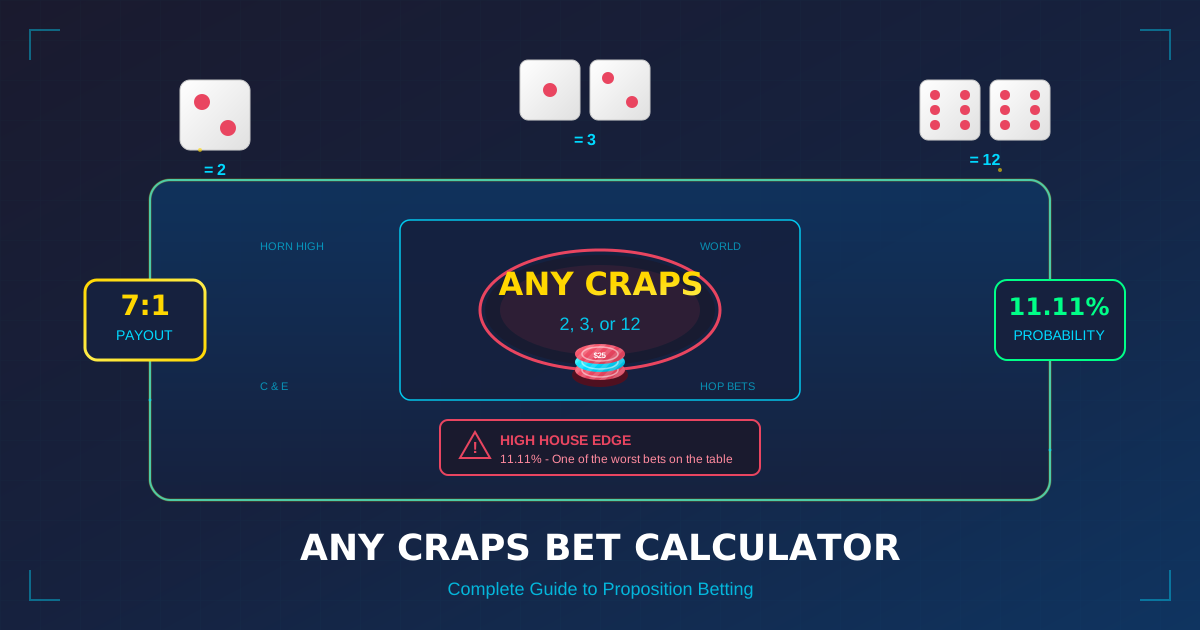
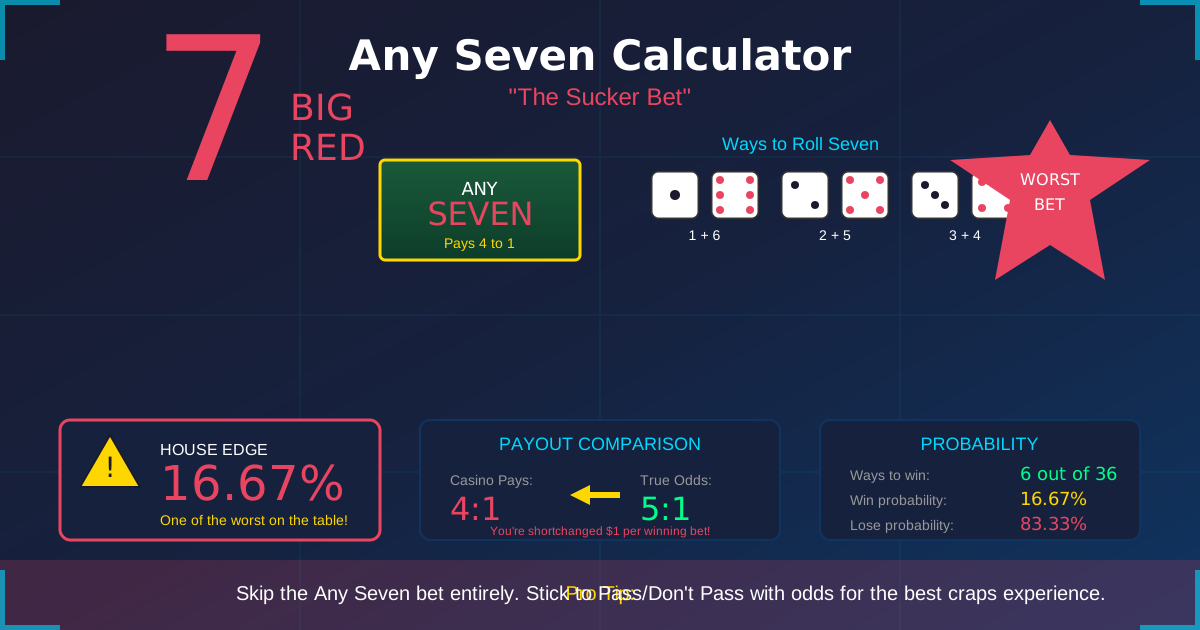
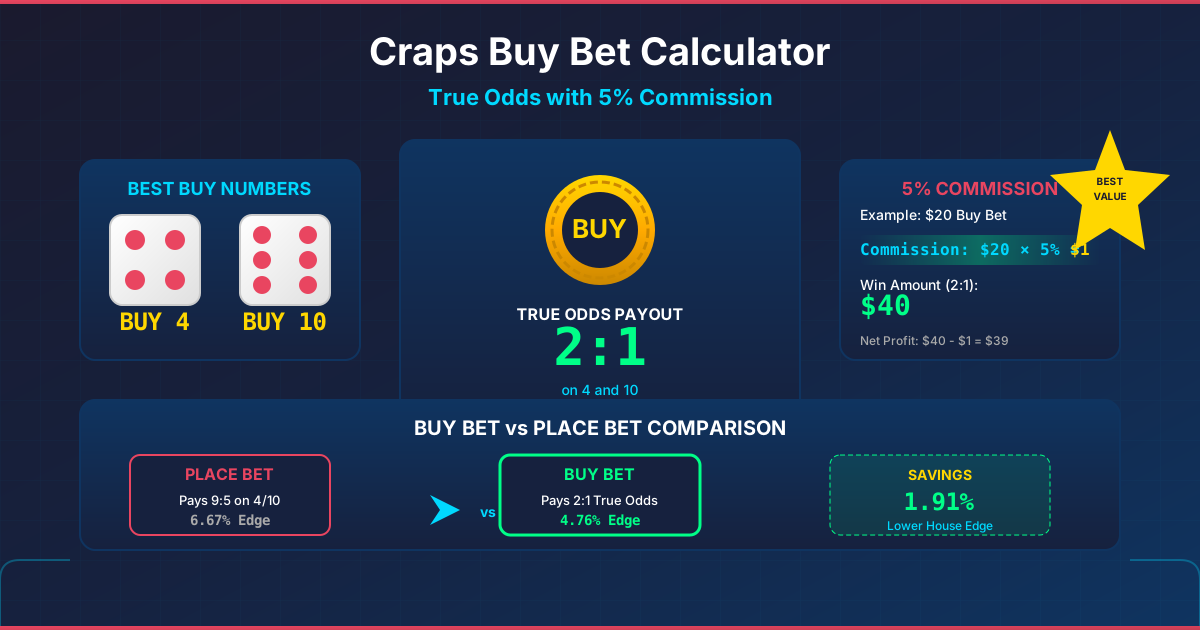
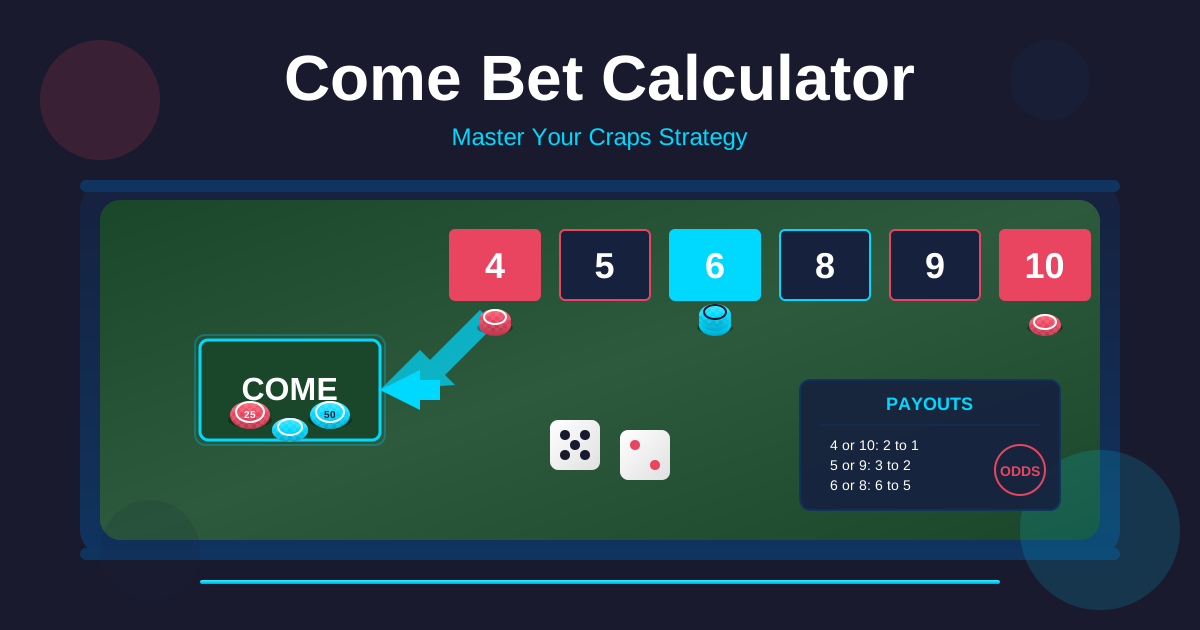
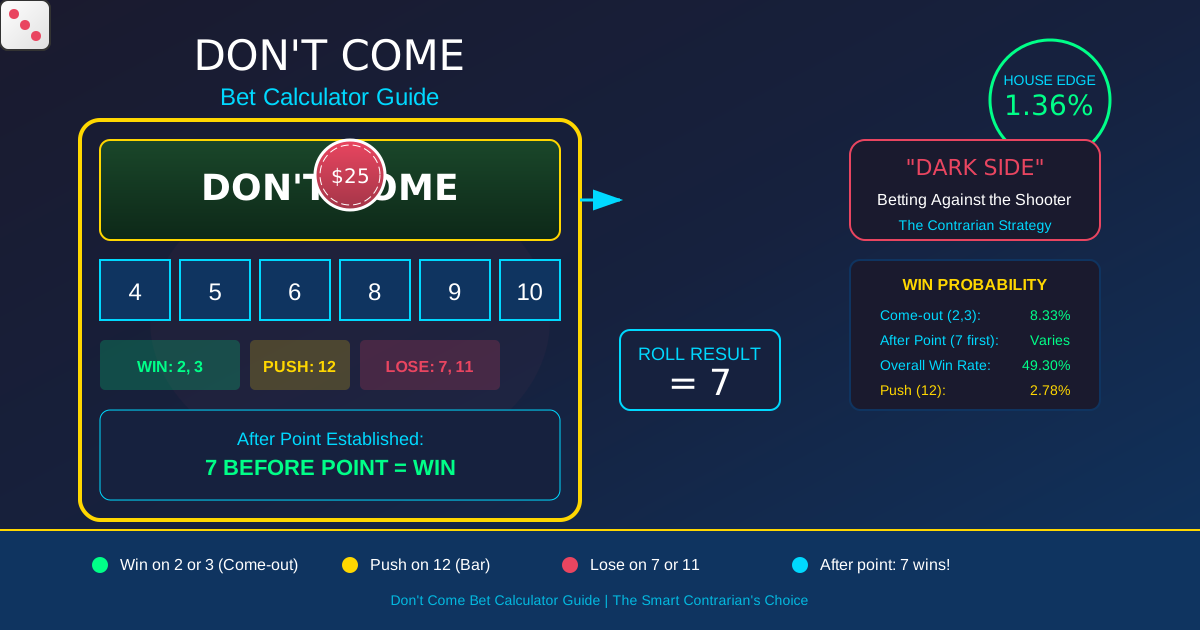
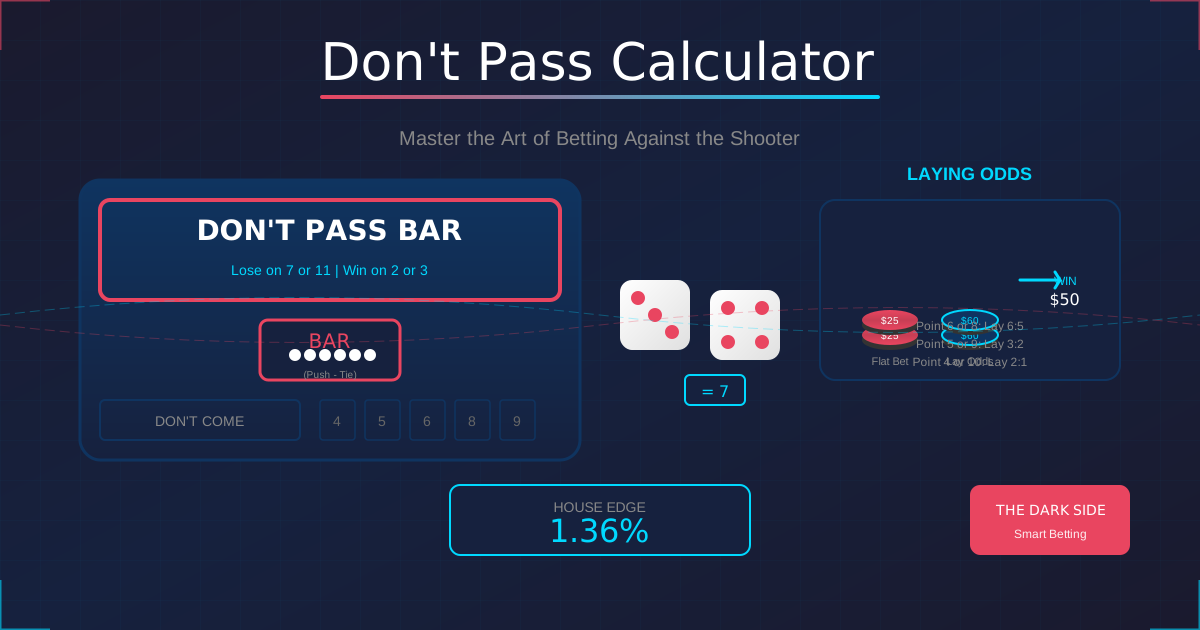
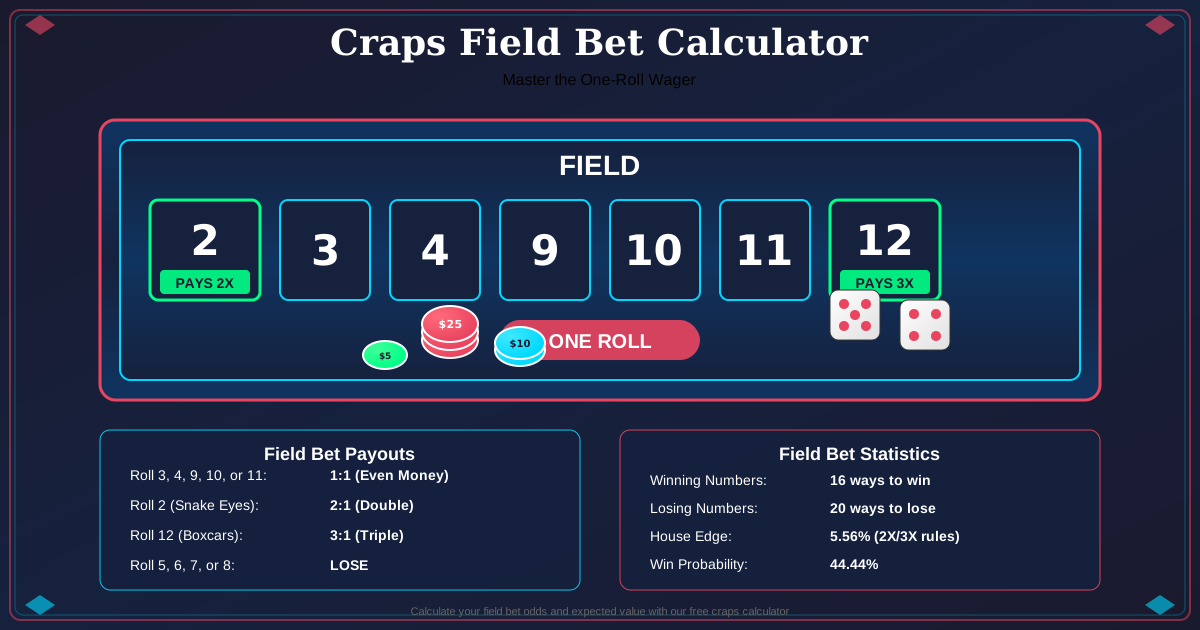
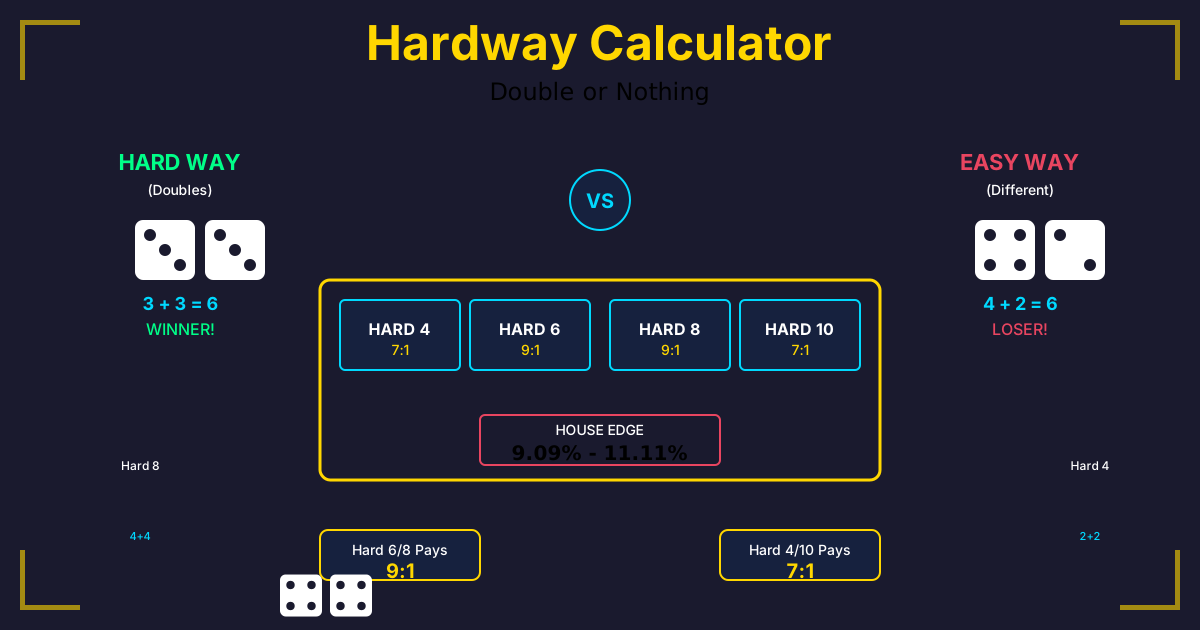
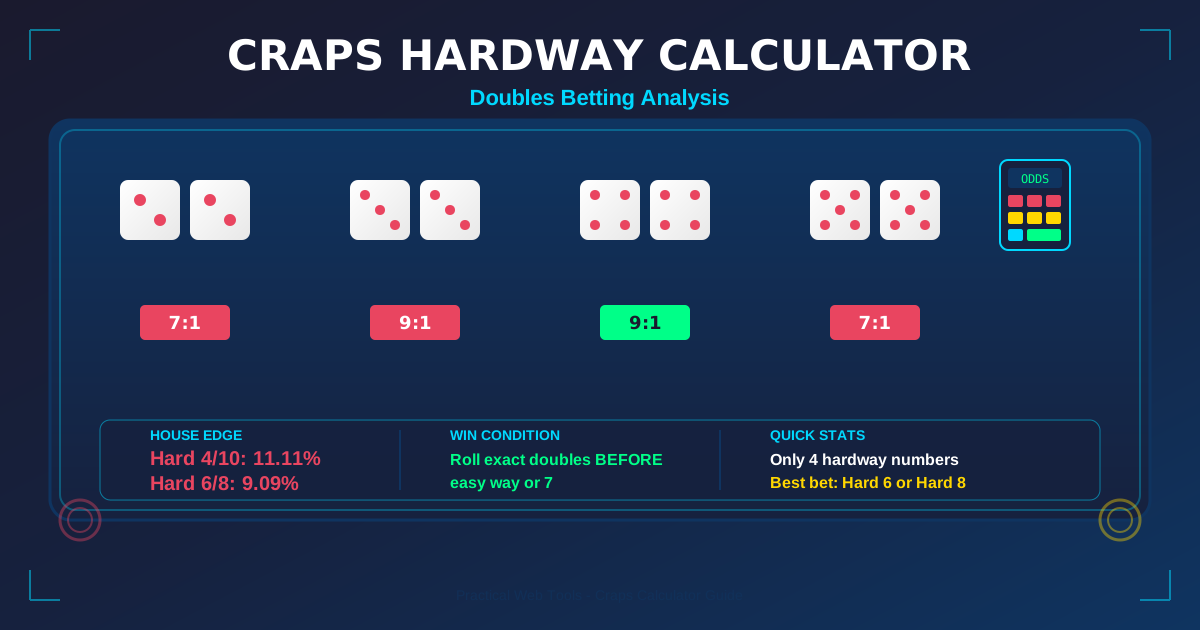
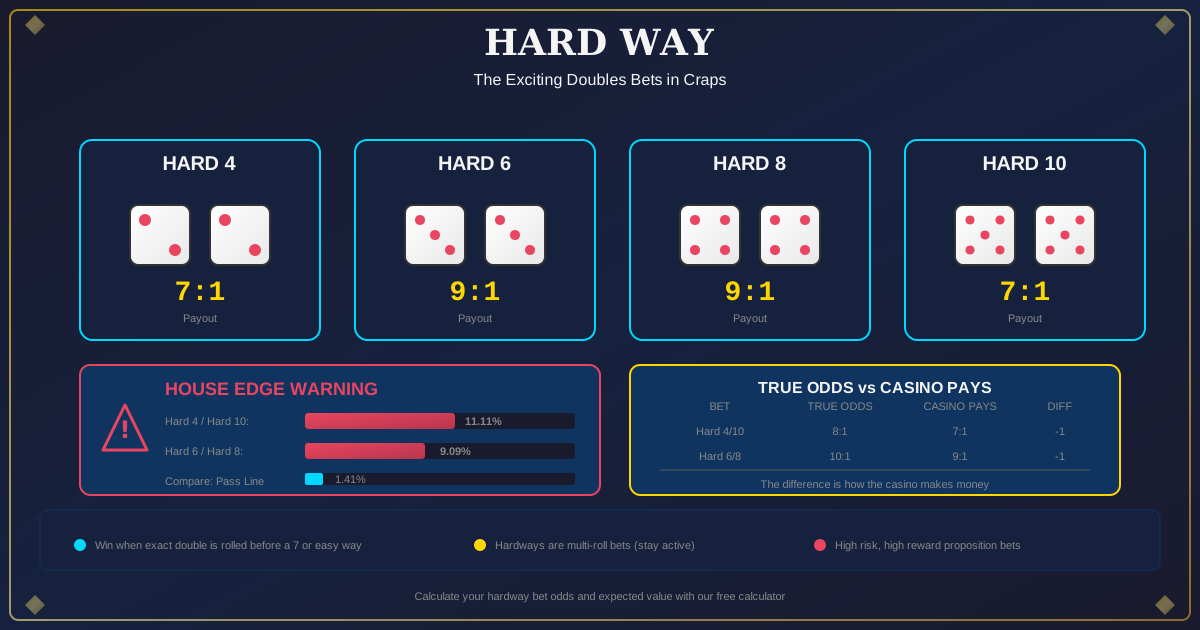
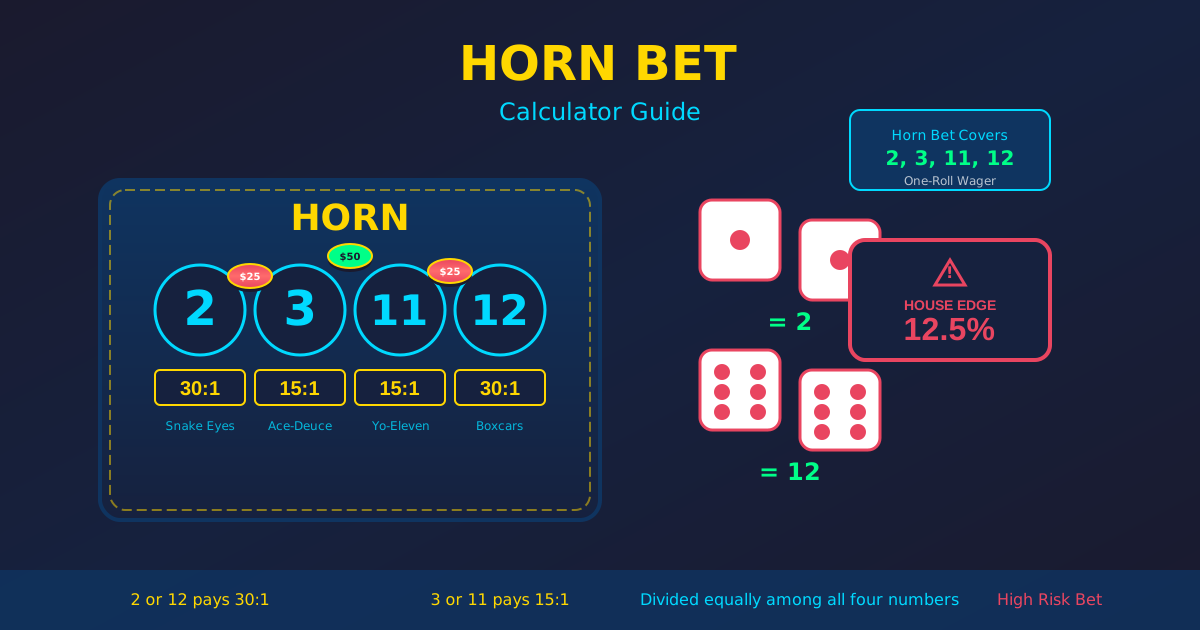
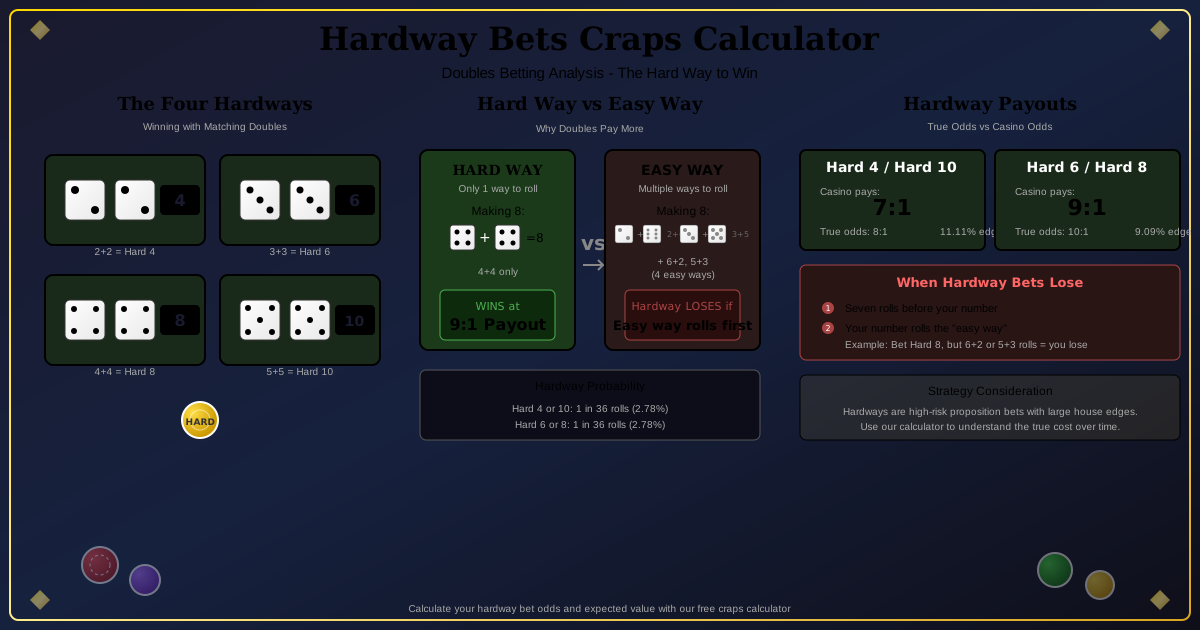
Compare the house edge of every game you will encounter on the casino floor with our Roulette House Edge Calculator and Craps House Edge Calculator.
Near-Miss Placement Strategy
Casinos also use "near-miss" placement, positioning higher-denomination machines adjacent to lower-denomination areas. A player who has been betting $0.25 per spin and sees someone at a neighboring $5 machine hit a modest jackpot experiences social proof that bigger bets lead to bigger wins, even though the math says otherwise.
What Role Does Lighting Play in Casino Psychology?
Casino lighting is engineered to eliminate your awareness of time passing and to reduce visual fatigue so you can play longer without feeling tired. The lighting in a casino at 3:00 AM is virtually identical to the lighting at 3:00 PM, by design.
How Casino Lighting Differs from Normal Environments
Natural environments have dynamic lighting that shifts throughout the day. Your circadian rhythm uses these shifts as cues for wakefulness, hunger, and fatigue. Casinos deliberately eliminate these cues.
| Lighting Characteristic | Normal Environment | Casino Environment | Psychological Effect |
|---|---|---|---|
| Color temperature | Shifts from warm (morning) to cool (midday) to warm (evening) | Constant warm-neutral (3000-3500K) | Eliminates time-of-day cues |
| Brightness variation | Bright during day, dim at night | Constant moderate brightness | Removes fatigue triggers |
| Natural light | Windows, skylights | Absent or heavily filtered | No sunrise/sunset awareness |
| Overhead vs. accent | Primarily overhead | Primarily accent and uplighting | Reduces shadows, creates energy |
| Task lighting | High contrast for reading | Low contrast, even distribution | Reduces eye strain during extended play |
The Psychology of Warm Lighting
Casinos favor warm lighting (2700K-3500K color temperature) because warm light triggers associations with comfort, intimacy, and relaxation. Cool, blue-white lighting (5000K+) is associated with offices and alertness, which would remind players that they are spending money rather than being entertained.
Slot machine screens, however, use high-brightness, high-contrast displays that cut through the ambient warmth. This makes the machines the brightest objects in your visual field, constantly drawing your attention even when you are walking past.
The LED Revolution in Casino Manipulation
Modern LED systems allow casinos to make real-time lighting adjustments based on floor activity. During slow periods, lighting may subtly brighten to energize the space. During peak hours, lighting may warm slightly to encourage lingering. These shifts happen gradually enough that players never consciously notice the change.
Understand the true cost of extended sessions in any lighting condition with our Expected Value Calculator.
How Do Casinos Use Sound to Keep You Playing?
Sound design is one of the most powerful and least understood manipulation tools in the casino arsenal. Every beep, jingle, and musical phrase you hear on a casino floor has been carefully engineered to influence your emotional state and gambling behavior.
The Science of Slot Machine Sounds
Slot machines are the most acoustically engineered devices in the casino. Research from the University of Waterloo has demonstrated that slot machine sounds directly affect player arousal, risk-taking, and perception of winning.
Key findings from the research:
| Sound Element | Psychological Effect | Revenue Impact |
|---|---|---|
| Win jingles (ascending tones) | Dopamine release, excitement | Players bet faster after hearing wins |
| Near-miss sounds (partial win tones) | Frustration + motivation to continue | 30% increase in next-bet speed |
| Losses disguised as wins (LDWs) | Players misinterpret losses as wins | Up to 25% of "wins" are actually net losses |
| Ambient machine sounds | Creates perception of active, winning environment | Players associate the floor with success |
| Silence during losses | Reduces negative emotional impact | Players undercount their losses |
| Celebratory sounds from nearby machines | Social proof of winning | Encourages continued play |
Losses Disguised as Wins (LDWs)
This is perhaps the most insidious sound trick in modern gambling. A "loss disguised as a win" occurs when a multi-line slot machine pays out less than your total bet, but still triggers celebratory sounds and animations.
For example, you bet $2.50 across 25 lines. You "win" on 3 lines for a total of $1.25. The machine plays a triumphant jingle and flashes winning animations, but you just lost $1.25. Research shows that players' physiological arousal (skin conductance, heart rate) responds to LDWs identically to actual wins.
Background Music Tempo
Casino background music is typically maintained between 60-90 beats per minute (BPM), which corresponds to the resting human heart rate. Music at this tempo has been shown to:
- Reduce stress and anxiety (you feel comfortable staying)
- Lower perceived time passage (your four-hour session feels like two)
- Increase risk tolerance (calm players make bolder bets)
When casinos want to increase table turnover (during peak hours), the tempo may subtly increase to 100-120 BPM, which creates unconscious urgency.
Calculate your true win/loss rate regardless of what the sounds tell you using our Hold/Vig Calculator.
Why Do Casinos Have No Clocks or Windows?
The absence of clocks and windows is the most widely known casino design trick, and it works precisely because even people who know about it still fall victim to it. Casinos remove external time cues to create a timeless environment where the only rhythm is the rhythm of play.
The Time Distortion Effect
Without clocks, windows, or natural light transitions, your brain loses its primary mechanisms for estimating elapsed time. Studies on time perception in windowless environments show:
| Time Spent (Actual) | Time Estimated by Participants | Underestimation |
|---|---|---|
| 1 hour | 42 minutes | 30% |
| 2 hours | 1 hour 15 minutes | 37% |
| 4 hours | 2 hours 20 minutes | 42% |
| 6 hours | 3 hours 10 minutes | 47% |
| 8 hours | 4 hours | 50% |
The longer you stay, the worse your time estimation becomes. This is because time perception relies on novel events as markers. In a casino, the repetitive cycle of bet-outcome-bet creates a monotonous rhythm that compresses perceived time.
Why Knowing About the Trick Does Not Help
Cognitive biases operate below conscious awareness. Even if you intellectually know there are no clocks, your brain still processes the environment the same way. The only effective countermeasure is setting external alarms on your phone before entering the casino.
Modern Alternatives to Clocklessness
Some newer casinos, particularly those following the "playground" design philosophy, have introduced windows and even skylights. However, these windows typically face interior courtyards, pools, or other casino-controlled environments rather than the outside world. The "natural light" is still curated.
Set your session limits in advance using our Bankroll Volatility Tracker and use phone alarms to enforce them.
How Does Chip Psychology Affect Your Spending?
Casino chips are not just convenient tokens for gameplay. They are a deliberate psychological tool designed to disconnect you from the emotional weight of spending real money. This is called the "denomination effect" or "token effect."
Why Chips Make You Spend More
Research consistently demonstrates that people spend more freely with tokens, chips, or digital credits than with cash. A 2023 study in Psychological Science found that casino players wagered 25-40% more per hand when using chips compared to equivalent cash games.
| Payment Method | Average Bet Size (Relative) | Loss Awareness | Emotional Pain of Losing |
|---|---|---|---|
| Cash | 1.0x (baseline) | High | High |
| Casino chips | 1.25-1.40x | Moderate | Reduced |
| Digital credits (online) | 1.35-1.50x | Low | Significantly reduced |
| Prepaid casino cards | 1.40-1.55x | Very low | Minimal |
| Complimentary chips (free play) | 1.60-2.0x | Negligible | Almost none |
The Color-Coded Denomination System
Casino chip colors follow a standardized system designed for quick identification, but the color psychology also plays a role:
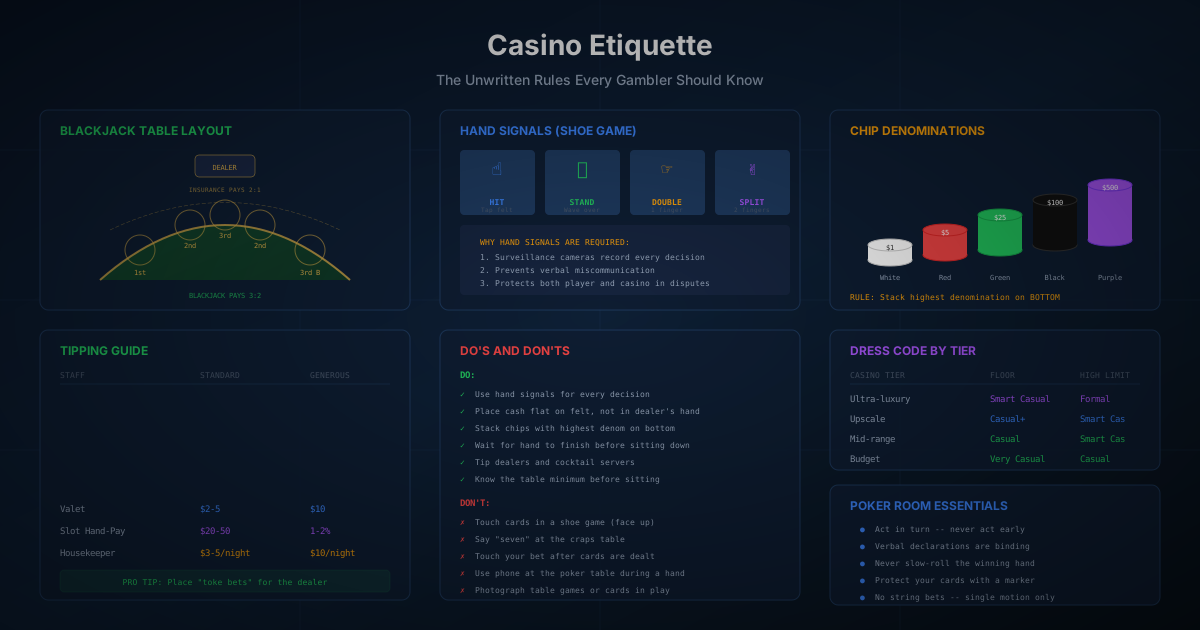
| Chip Color | Standard Denomination | Psychological Association |
|---|---|---|
| White | $1 | Insignificant, disposable |
| Red | $5 | Warm, exciting, action-oriented |
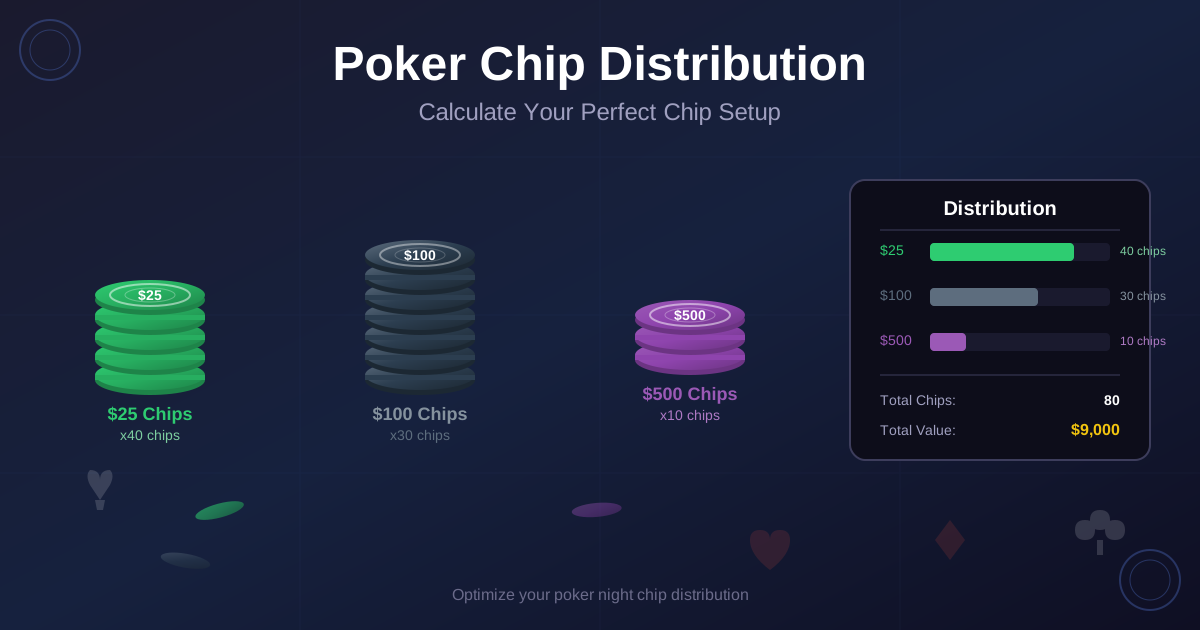
| Green | $25 | Growth, prosperity, positive |
| Black | $100 | Sophisticated, powerful, prestigious |
| Purple | $500 | Luxury, exclusivity |
| Orange/Yellow | $1,000 | High energy, special status |
Notice how the color associations become more positive as denominations increase. No chip color is associated with danger, loss, or warning.
The Conversion Friction Trap
Casinos make buying chips fast and effortless (cash goes in, chips come out instantly). But cashing out is deliberately slower and more cumbersome. You must find the cashier cage, often located in an inconvenient spot, wait in line, and walk past active gaming on your way there. Each step creates an opportunity for you to reconsider and keep playing.
Track your actual spending versus perceived spending with our Kelly Criterion Calculator to maintain proper bankroll discipline.
What Psychological Tricks Do Online Casinos Use?
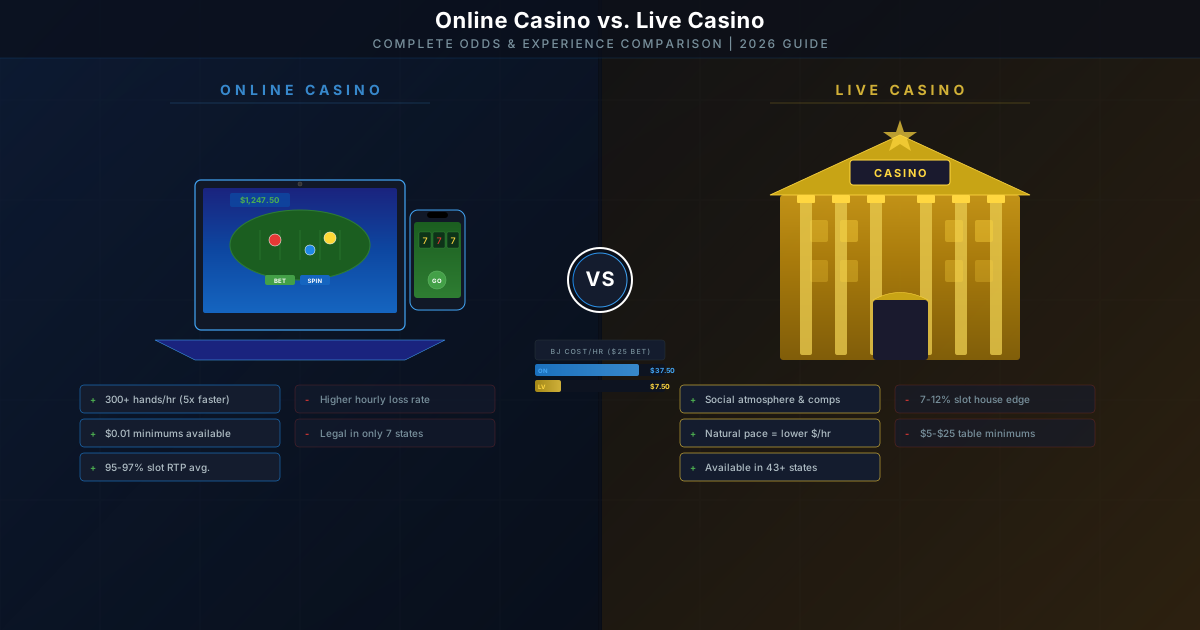
Online casinos have adapted and in many cases amplified the psychological manipulation techniques pioneered by physical casinos. Without the constraint of physical architecture, online platforms can deploy data-driven personalization at a scale no brick-and-mortar casino can match.
The Digital Manipulation Toolkit
| Online Casino Trick | Physical Casino Equivalent | How It Works |
|---|---|---|
| Autoplay features | No equivalent (more aggressive) | Removes decision points, increases speed |
| Push notifications | Casino host phone calls | "Your free spins expire in 2 hours!" |
| Loss-streak bonuses | Comp drinks/meals after losses | Algorithmically timed to prevent walkaway |
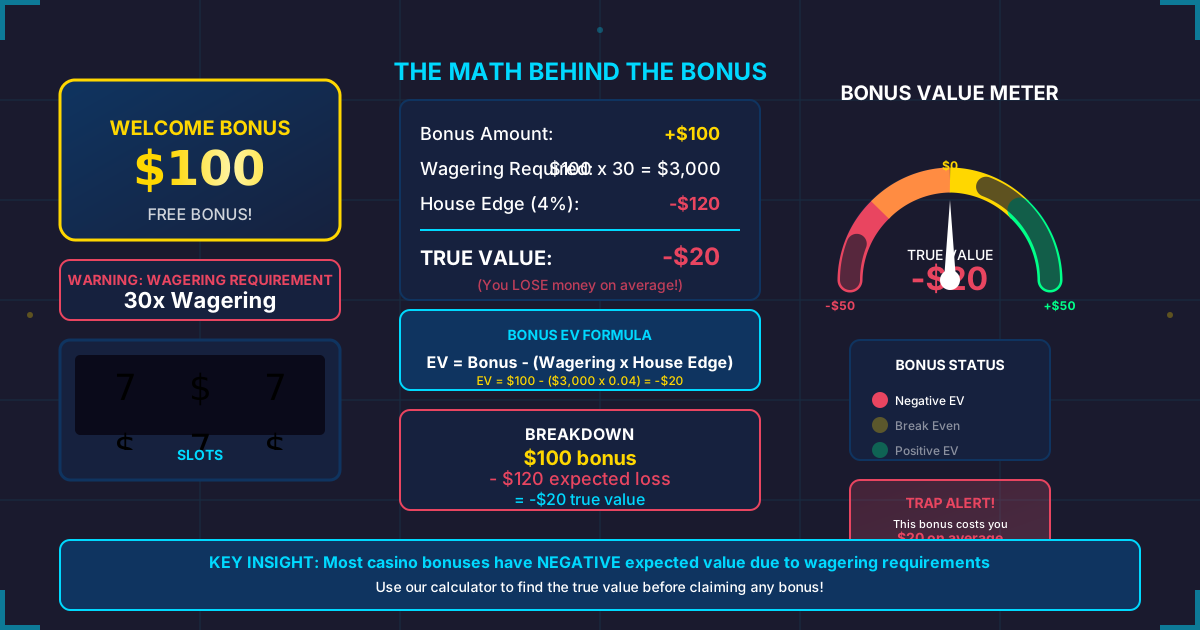
| Deposit match offers | No equivalent | Creates "free money" illusion |
| Session time buried in menus | No clocks or windows | Must actively seek out play duration |
| Animated win celebrations | Slot machine jingles | Multi-sensory reward for any positive outcome |
| Cashout reversal periods | Walking past games to reach cashier | 24-72 hour withdrawal windows to encourage replay |
| Personalized game recommendations | Strategic game placement | AI selects games matching your loss tolerance |
The Cashout Reversal Problem
One of the most controversial online casino features is the "pending withdrawal" or "cashout reversal" period. When you request a withdrawal, many sites hold the funds for 24-72 hours before processing. During this period, you can cancel the withdrawal and continue playing. Research shows that 10-20% of players reverse at least one withdrawal per month.
Dark Pattern UX Design
Online casinos frequently employ dark patterns, user interface designs that trick or coerce users into actions they did not intend:
- Asymmetric button design: The "Keep Playing" button is large, colorful, and prominent. The "Withdraw" button is small, gray, and sometimes requires additional clicks.
- Default autoplay: Some platforms enable autoplay by default, requiring users to opt out.
- Loss framing: Losses are displayed as small, static numbers. Wins trigger full-screen animations.
- Session time hiding: Your total play duration is buried in account settings rather than displayed prominently.
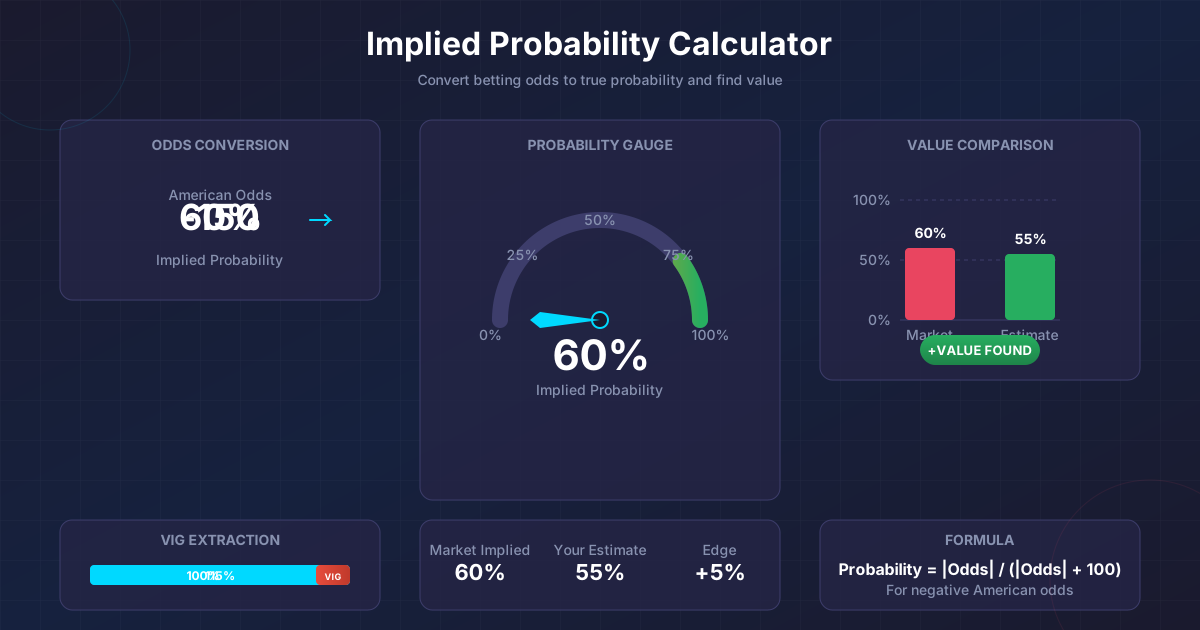
Verify the true odds behind any online game's marketing claims using our Implied Probability Calculator.
How Do Free Drinks and Comps Influence Gambling Behavior?
Complimentary drinks, meals, hotel rooms, and show tickets are not gifts. They are calculated investments designed to keep you gambling longer and betting more. The casino's comp budget is built into the house edge you are already paying.
The True Cost of "Free" Drinks
The average alcoholic drink on the casino floor costs the house $2-4 to produce and serve. But alcohol impairs judgment, reduces risk aversion, and increases bet size. Studies show that intoxicated gamblers:
| Behavior | Sober Gambler | After 2 Drinks | After 4+ Drinks |
|---|---|---|---|
| Average bet increase | Baseline | +15-20% | +30-50% |
| Deviation from basic strategy | 5-10% of hands | 15-25% of hands | 40-60% of hands |
| Time to quit after hitting loss limit | Immediate | 15-30 min delay | Often continues playing |
| Likelihood of visiting ATM | 10% | 25% | 45% |
| Tipping (reducing bankroll) | Standard | Generous | Excessive |
A single "free" drink that costs the casino $3 can generate $50-200 in additional revenue through impaired decision-making.
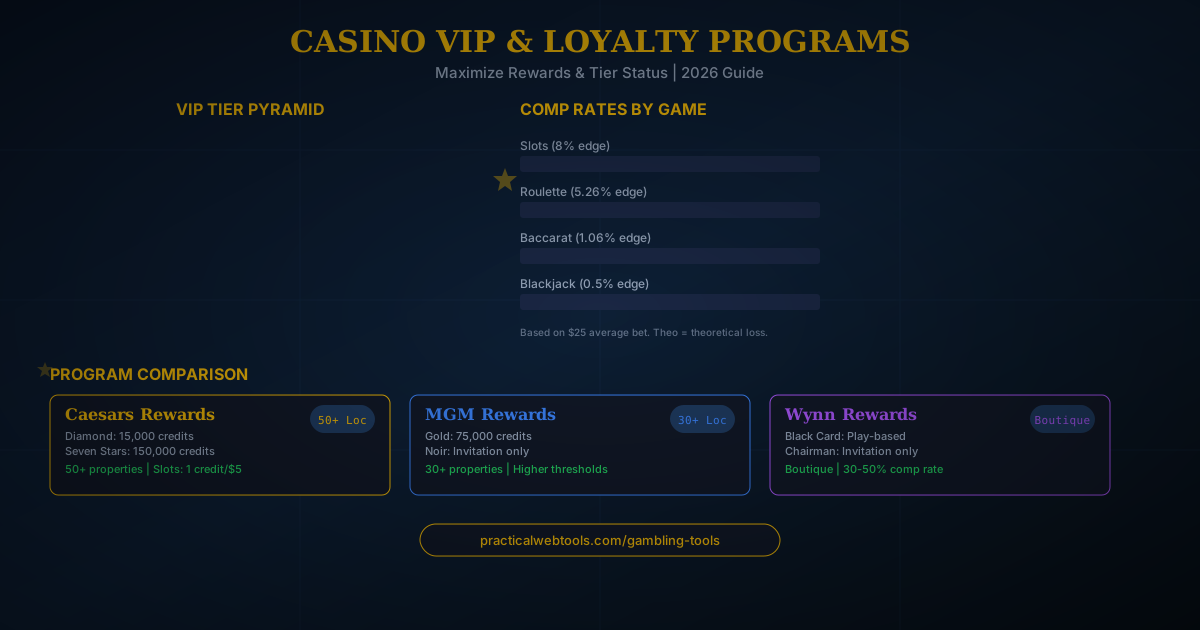
The Comp System as a Loyalty Trap
Casino loyalty programs (players clubs, rewards cards) are designed to make you feel invested in the casino. The psychology works on several levels:
- Sunk cost fallacy: "I've already earned 5,000 points. I should keep playing to reach the next tier."
- Status motivation: Tier levels (Silver, Gold, Platinum, Diamond) trigger status-seeking behavior.
- Reciprocity bias: "They gave me a free room. I should play at their tables."
- Loss aversion in reverse: "If I stop playing, I'll lose my Platinum status."
Calculating the True Value of Comps
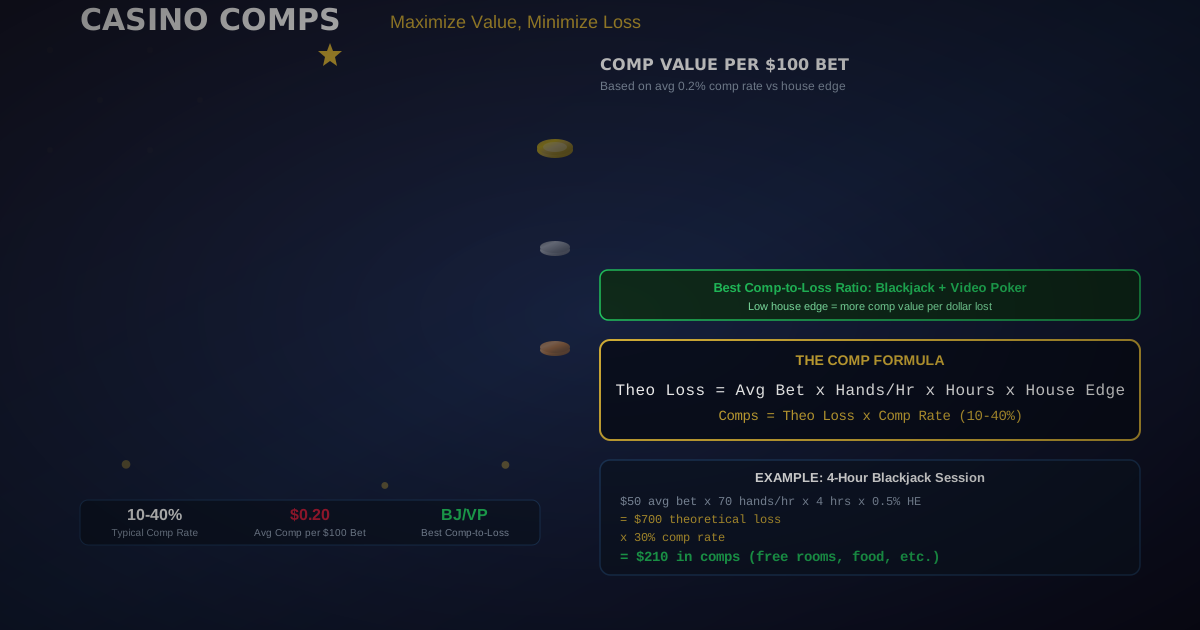
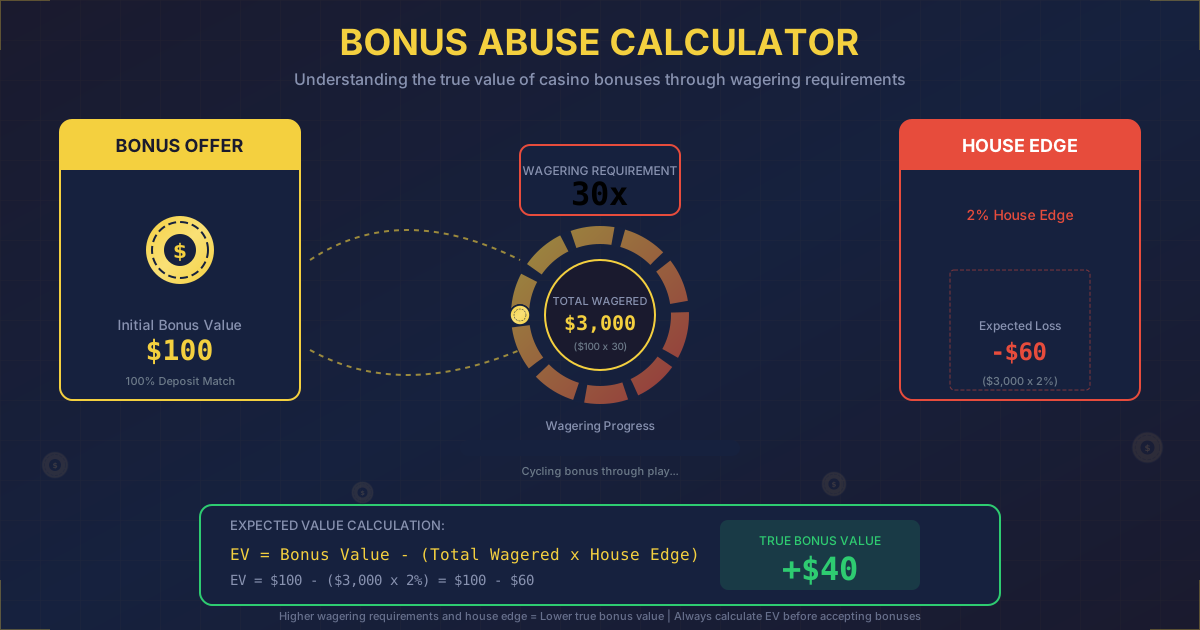
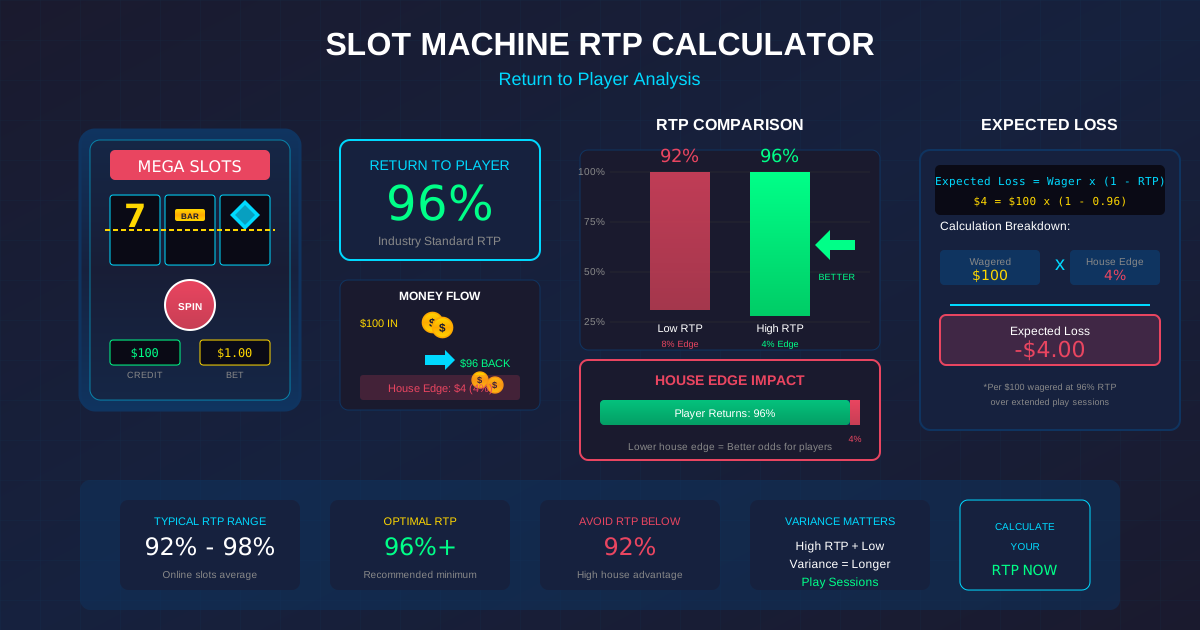
Most casino loyalty programs return 0.1-0.3% of total wagered in comps. That means you must wager $10,000 to earn $10-30 in comps, while losing $50-500 to the house edge depending on the game.
| Comp Value | Amount Wagered Required | Expected Loss at 2% House Edge | Net Cost to You |
|---|---|---|---|
| $10 buffet | $5,000-$10,000 | $100-$200 | -$90 to -$190 |
| $50 show ticket | $25,000-$50,000 | $500-$1,000 | -$450 to -$950 |
| $150 hotel room | $75,000-$150,000 | $1,500-$3,000 | -$1,350 to -$2,850 |
| $500 flight credit | $250,000-$500,000 | $5,000-$10,000 | -$4,500 to -$9,500 |
Every comp is a net loss for the player. The casino knows this. The comp exists to make the loss feel like a reward.
Calculate the real mathematical cost of your play using our Expected Value Calculator.
How Does Scent Engineering Affect Casino Behavior?
Casinos pump specially formulated scents through their ventilation systems to influence mood, arousal, and gambling behavior. This is not a conspiracy theory; it is a documented, patented practice that major casino resorts openly employ.
The Science of Casino Scents
Research by Dr. Alan Hirsch of the Smell and Taste Treatment and Research Foundation found that a pleasant ambient odor increased slot machine revenue by 45.11% in the scented area compared to an unscented control area. A follow-up study found that the effect persisted even when players were told the area was scented.
| Scent Category | Common Casino Application | Intended Effect |
|---|---|---|
| Citrus (lemon, grapefruit) | Morning/daytime floor areas | Energizing, increases alertness and wager speed |
| Vanilla/warm spice | Evening/VIP areas | Relaxation, comfort, extended session length |
| Fresh/green (eucalyptus) | Sports book areas | Perceived cleanliness, clear-headedness |
| Floral (jasmine, rose) | High-limit rooms | Luxury association, status reinforcement |
| Oceanic/aquatic | Pool-adjacent gaming | Vacation mindset, reduced financial concern |
Signature Scents as Brand Anchors
Many major casino properties have proprietary signature scents:
The Bellagio uses a custom blend of Northern White Cedar that becomes a powerful memory anchor. When you smell something similar in daily life, your brain automatically recalls the excitement, possibility, and dopamine hits of your casino visit, not the money you lost. This is classical conditioning applied to scent memory.
How to Counter Scent Manipulation
- Recognize that pleasant smells in a casino are engineered, not accidental
- If you notice a particularly pleasant or energizing scent, treat it as a signal to check your time and bankroll
- Take regular breaks outside the casino to reset your olfactory baseline
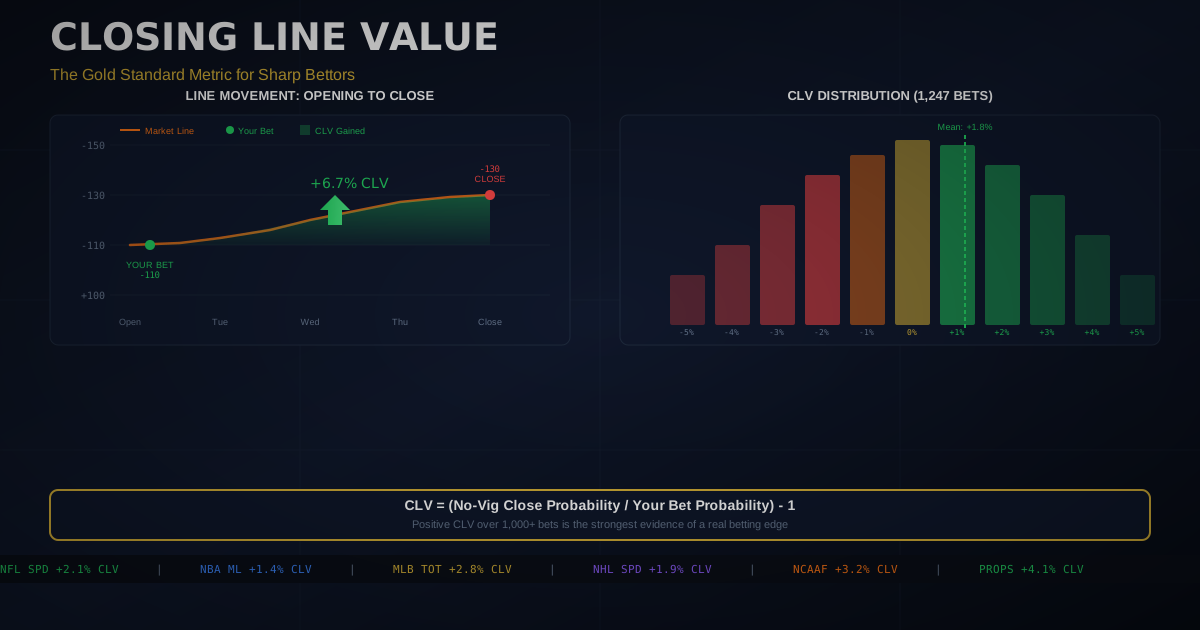
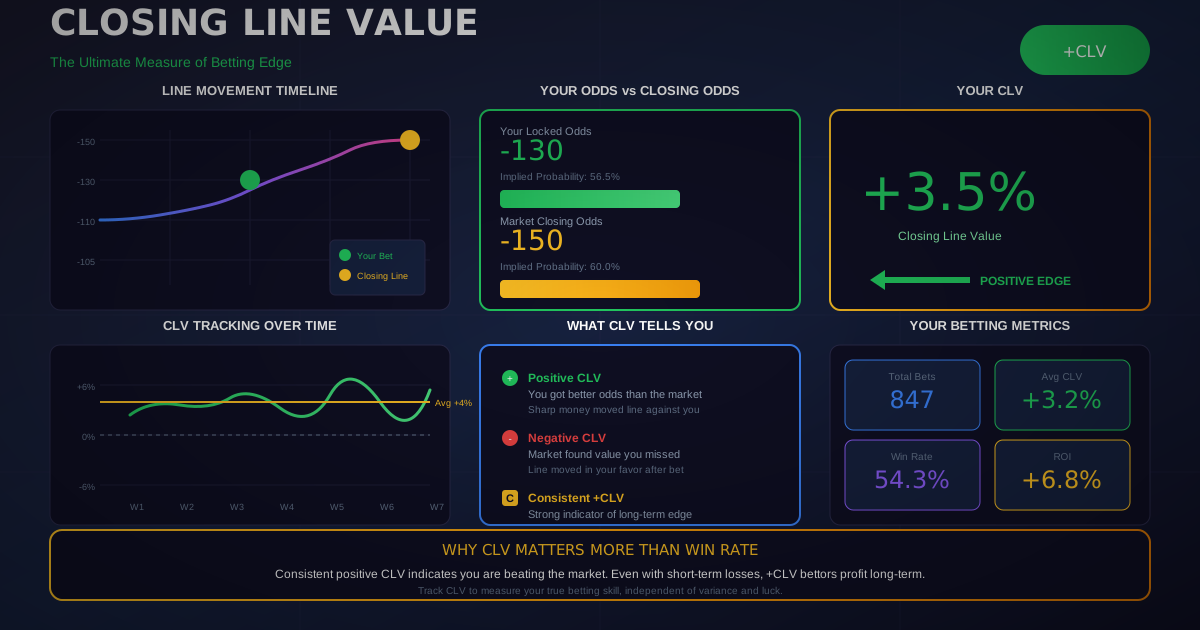
Track your session results objectively with our CLV Tracker so emotions and environment do not cloud your judgment.
How Do Near Misses and Variable Rewards Hook Your Brain?
The near-miss effect is the single most powerful psychological hook in gambling. When you almost win, your brain responds almost identically to actually winning, creating a powerful drive to try again. This is not a design flaw; it is an engineered feature.
The Neuroscience of Near Misses
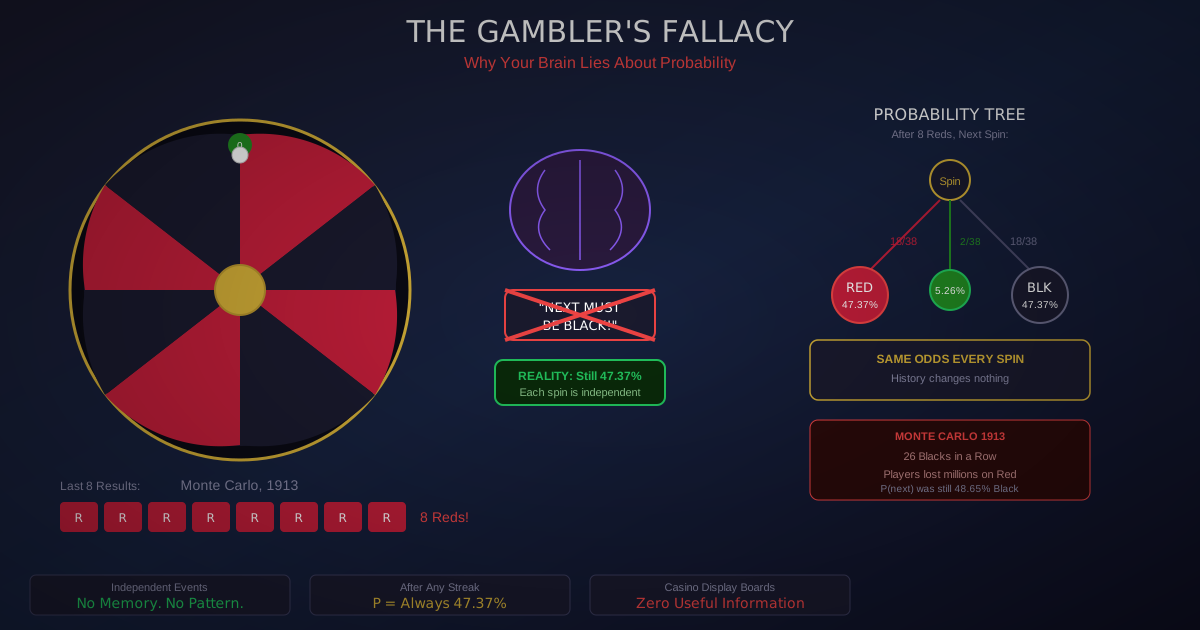
Functional MRI studies show that near misses activate the same reward pathways (ventral striatum, dopaminergic system) as actual wins. Your brain interprets a near miss not as a loss, but as evidence that a win is imminent, even though each spin or hand is statistically independent.
| Outcome Type | Brain Reward Response | Motivational Effect | Actual Financial Result |
|---|---|---|---|
| Win | Strong dopamine release | Positive reinforcement to continue | Positive (you won money) |
| Near miss | Moderate-strong dopamine release | Strong motivation to try again | Negative (you lost your bet) |
| Clean loss | Minimal dopamine release | Mild negative, may prompt quitting | Negative (you lost your bet) |
| Loss disguised as win | Moderate dopamine release | Positive reinforcement | Negative (net loss despite "win" sounds) |
Variable Ratio Reinforcement
Slot machines and most casino games use what psychologists call a "variable ratio reinforcement schedule," the same mechanism that makes social media, email checking, and mobile games addictive. You are rewarded at unpredictable intervals, which creates the strongest possible behavioral conditioning.
This is the same principle that B.F. Skinner discovered with laboratory pigeons in the 1950s. The pigeons that received food pellets at random intervals pressed the lever most obsessively, far more than pigeons rewarded on a fixed schedule. Casino games are operant conditioning chambers for humans.
Modern Slot Machine Near-Miss Engineering
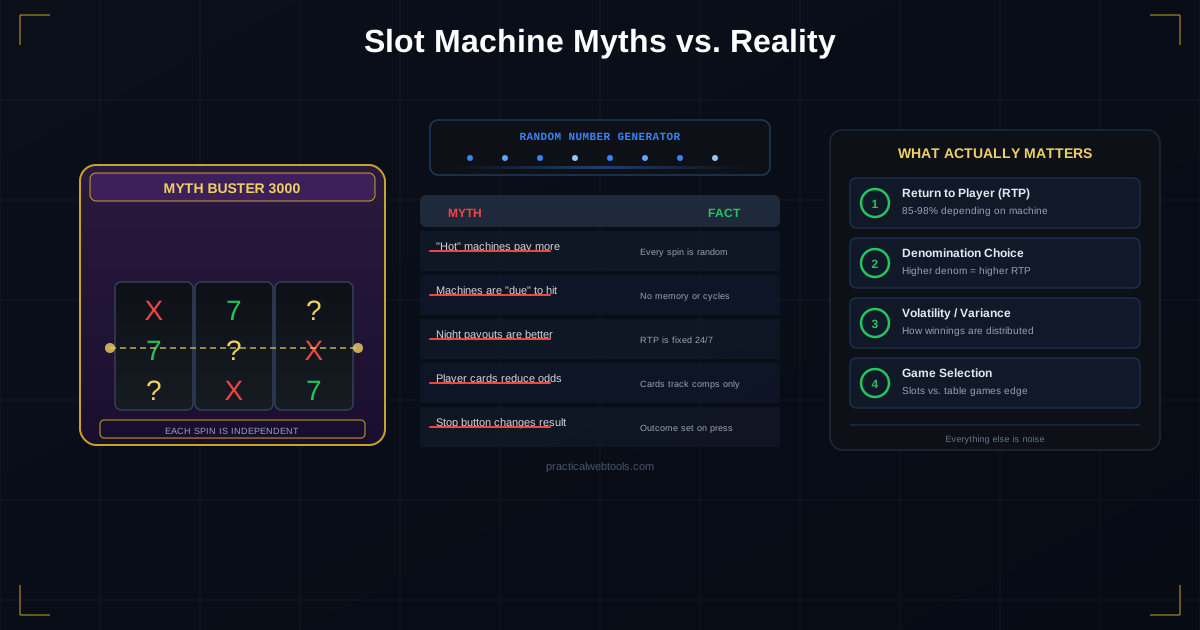
Modern slot machines use random number generators (RNGs) that determine outcomes the instant you press the spin button. The reel animations you see are purely theatrical. However, regulators in many jurisdictions allow "virtual reel mapping" that adjusts the visible reel positions to show near misses more frequently than pure randomness would produce.
A machine might be programmed so that the jackpot symbol appears one position above or below the payline 30% more often than other symbols, even though it never actually lands on the payline more than the RNG dictates. You see the jackpot symbol tantalizingly close, but the outcome was already determined.
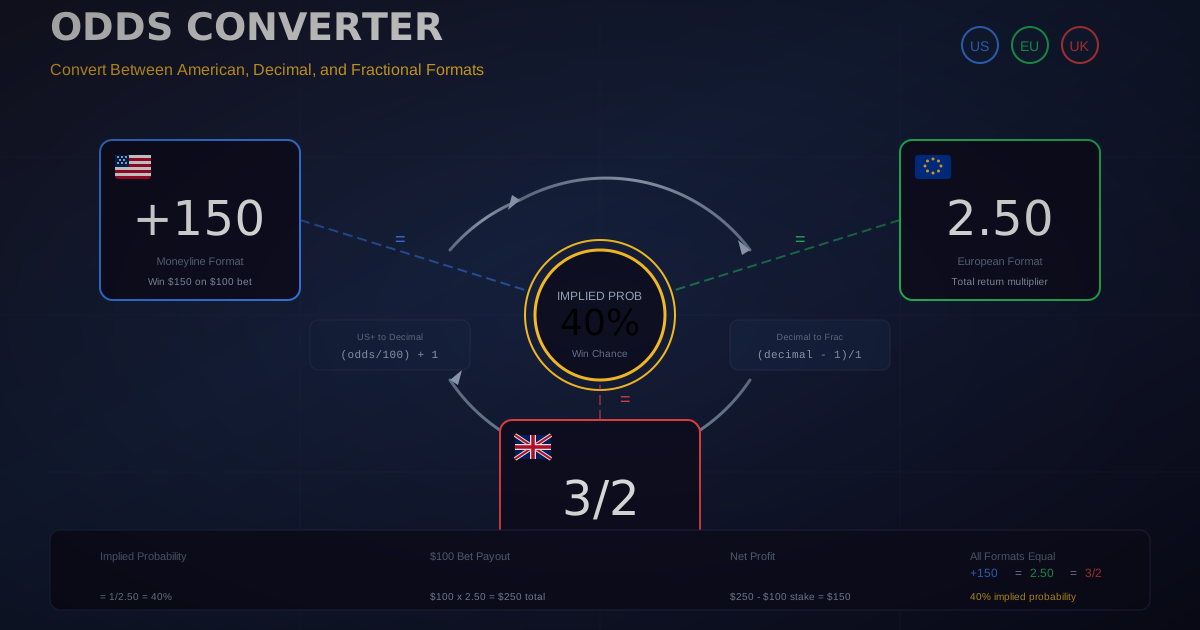
Understand the true probability behind every outcome with our Implied Probability Calculator and Odds Converter.
How Do Casinos Use Social Pressure and Group Dynamics?
Casinos are social environments by design. The presence of other players, dealers, and spectators creates powerful social dynamics that influence your gambling behavior in ways that solitary online play does not.
The Social Facilitation Effect
Research shows that people take more risks when observed by others. In a casino setting, this manifests in several ways:
- Table game peer pressure: Players who make conservative decisions (standing on 12 versus a dealer's 3 in blackjack) may receive disapproving reactions from other players, even when the conservative play is mathematically correct.
- Celebration contagion: When someone at your table wins big, your brain releases dopamine vicariously, encouraging you to increase your bets.
- Loss normalization: Seeing other players lose and continue playing normalizes the behavior and reduces your own impulse to quit after a loss.
Dealer Interaction as Engagement Tool
Casino dealers are trained to be friendly, engaging, and subtly encouraging. Their role goes beyond dealing cards:
| Dealer Behavior | Surface Purpose | Psychological Effect |
|---|---|---|
| Remembering your name | Customer service | Creates personal connection, harder to leave |
| Congratulating wins enthusiastically | Being friendly | Amplifies positive emotions, reinforces play |
| Subtle sympathy after losses | Empathy | Reduces negative emotion, prevents quitting |
| Casual conversation during play | Entertainment | Distraction from loss tracking |
| Suggesting new games/bets | Being helpful | Steers toward higher house edge options |
| Speed control | Game management | Faster dealing = more hands = more house edge revenue |
The VIP Room Social Trap
High-limit rooms create an exclusive social environment where the status of being a "high roller" becomes its own reward. Players in VIP rooms report feeling pressure to maintain their betting level to retain their status and access, even when their bankroll cannot support it.
Calculate optimal bet sizing to resist social pressure with our Kelly Criterion Calculator.
What Casino Manipulation Tactics Exist Beyond the Gaming Floor?
Casino manipulation extends beyond the gaming floor into hotel rooms, restaurants, entertainment venues, and even parking structures. The entire property is designed as an integrated system to maximize gaming revenue.
Hotel Room Design
Casino hotel rooms are designed to be comfortable enough for sleeping but not so comfortable that you want to spend time in them. Common tactics include:
- Limited in-room entertainment: Fewer TV channels, no streaming services, no gaming consoles
- Checkout time manipulation: Late checkout policies encourage one more morning session
- Mini-bar pricing: Overpriced room beverages push you to the floor for "free" drinks
- Room key as casino card: Your room key doubles as your loyalty card, creating constant awareness of your player status
Restaurant and Entertainment Scheduling
Casino restaurants and shows are scheduled to create natural breaks that return you to the gaming floor:
| Venue Feature | Design Intent |
|---|---|
| Restaurant locations deep in casino | Maximum floor traversal |
| Show times ending at 10-11 PM | Peak gambling hours ahead |
| Buffet queues through slot areas | Idle waiting near machines |
| Bar locations adjacent to gaming | Seamless transition from drinking to gambling |
| Late-night food options | Eliminates reason to leave for late meals |
Parking and Exit Design
Parking structures and exits are designed to make leaving inconvenient:
- Parking elevators and walkways route through the casino floor
- Exit signage is minimal and non-prominent
- Valet service creates a retrieval delay that may prompt "one more spin"
- Some properties place the taxi/rideshare pickup area through the casino
Plan your entire visit budget including meals and entertainment using our Bankroll Volatility Tracker.
How Can You Protect Yourself Against Casino Manipulation?
Now that you understand the tactics, here are concrete, evidence-based strategies to protect yourself. The goal is not to avoid casinos entirely (unless that is your choice) but to make informed decisions and maintain control over your experience.
Your Pre-Visit Protection Checklist
Before entering any casino, complete this checklist:
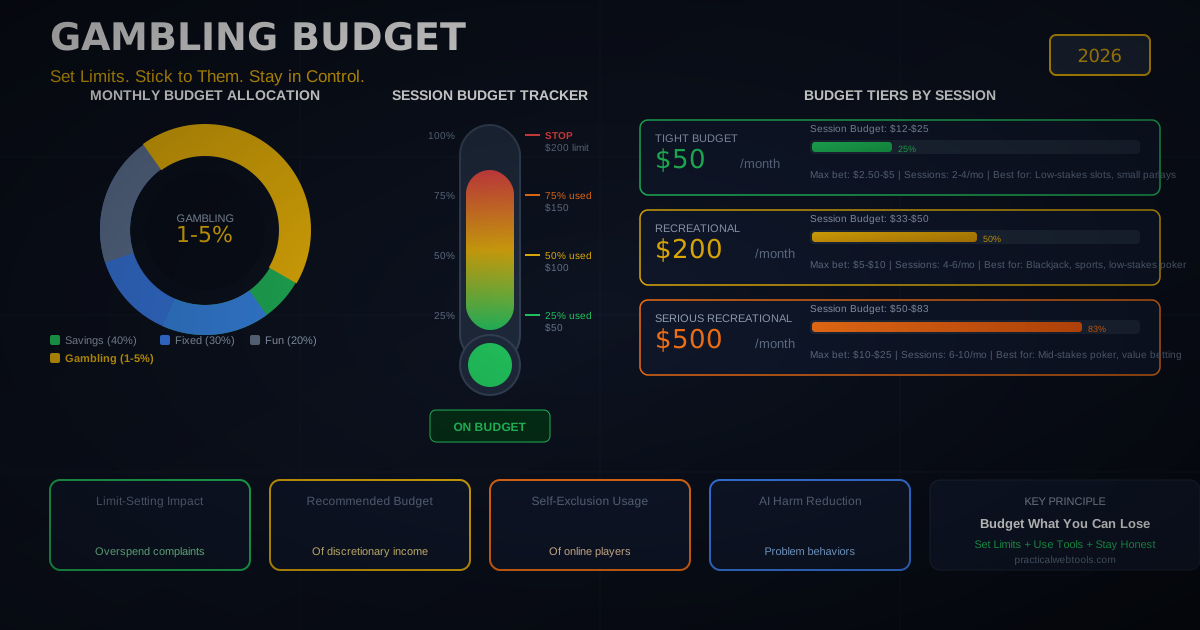
- Set a hard budget and bring only that amount in cash. Leave credit and debit cards in your hotel room safe or car.
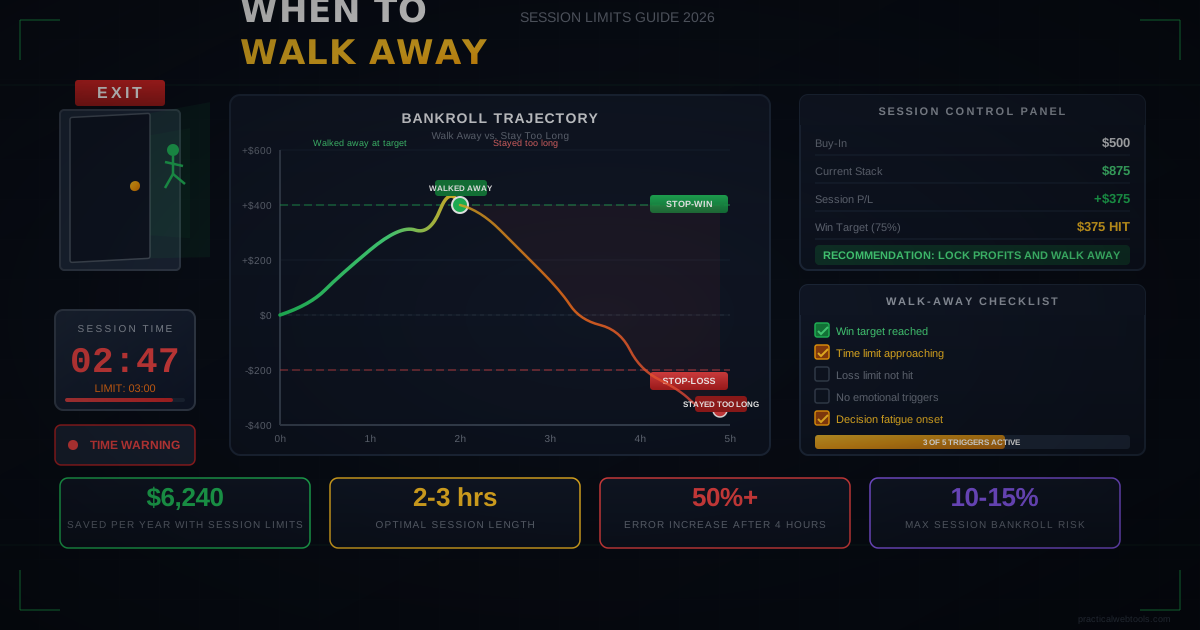
- Set a time limit and program phone alarms at 30-minute intervals. When the alarm sounds, check your remaining bankroll.
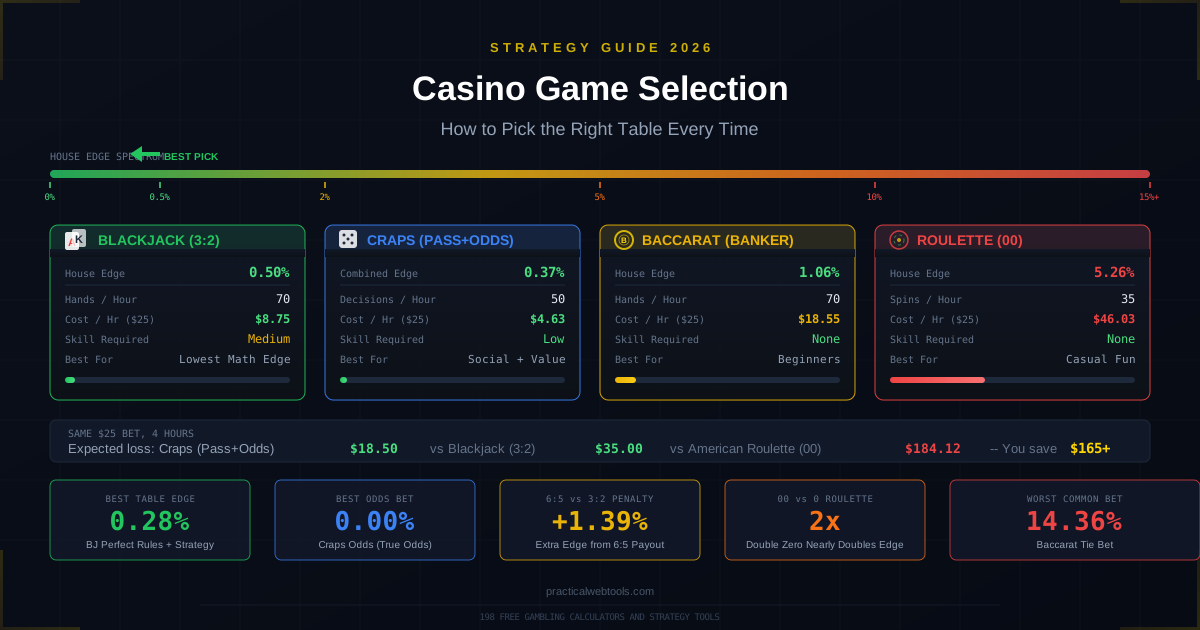
- Decide your games in advance. Choose games with the lowest house edge and stick to them.
- Eat before you go. Hunger makes you impulsive and more susceptible to "free" food offers.
- Limit alcohol to zero or one drink. Alcohol is the casino's most effective tool against your judgment.
- Bring a watch or keep your phone visible. Actively check the time every 15-20 minutes.
- Tell a companion your limits. Social accountability is one of the most effective self-control tools.
The "Session Envelope" Method
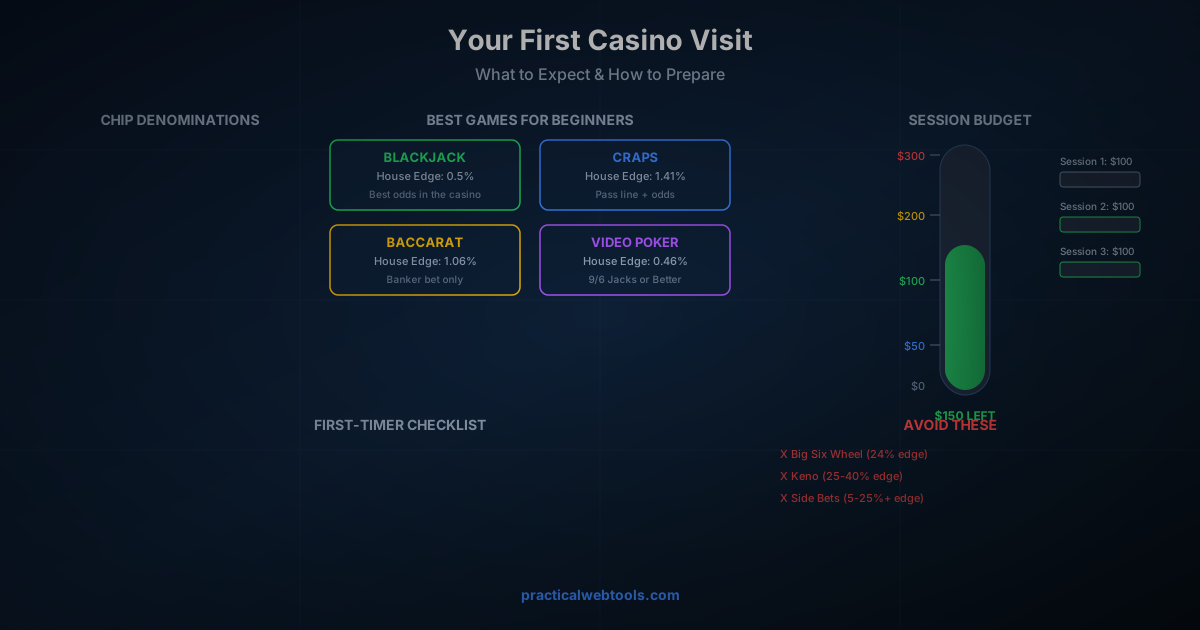
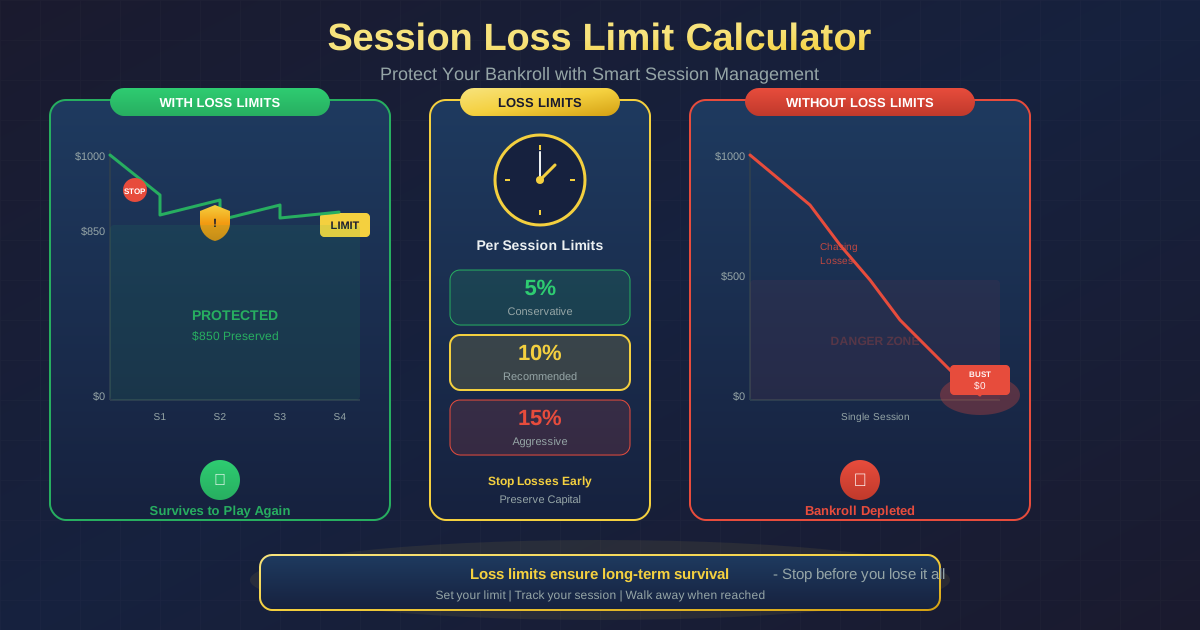
Divide your budget into session envelopes. If your total budget is $300 and you plan three sessions, put $100 in each envelope. When an envelope is empty, that session is over. If you win, put the original $100 back in the envelope and pocket the winnings. Never dip into another session's envelope.
Online Casino Protection Strategies
| Self-Protection Action | How to Implement |
|---|---|
| Set deposit limits | Use the site's responsible gambling tools (legally required in regulated markets) |
| Disable autoplay | Always spin manually to maintain decision awareness |
| Use session time reminders | Enable reality check pop-ups if available |
| Block cashout reversals | Some sites allow you to make withdrawals irreversible |
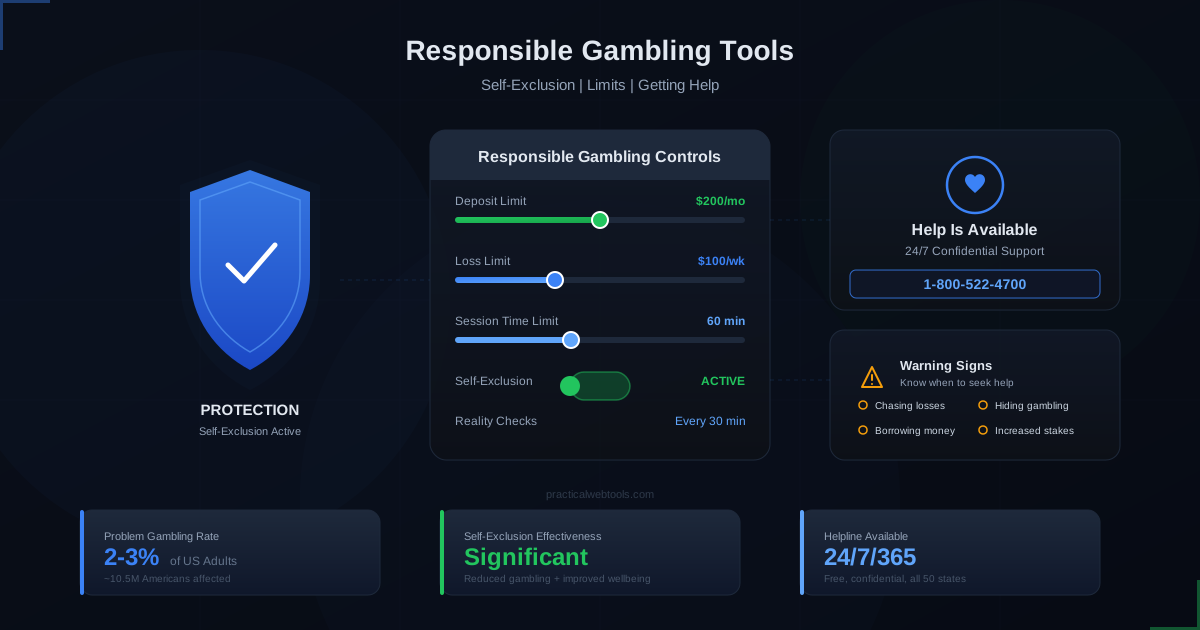
| Self-exclude during vulnerable periods | Register for self-exclusion if you feel at risk |
| Track all sessions externally | Use a spreadsheet, not the casino's history (which is designed to obscure losses) |
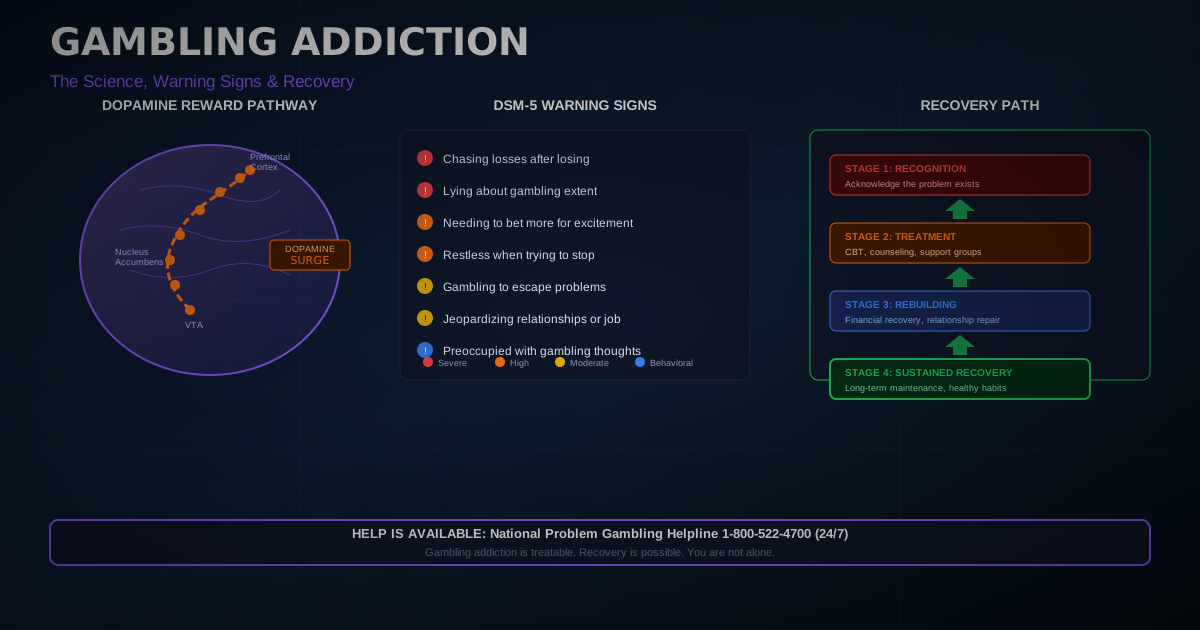
Recognizing Problem Gambling Warning Signs
If you experience any of the following, it may be time to seek help:
- Gambling with money you cannot afford to lose
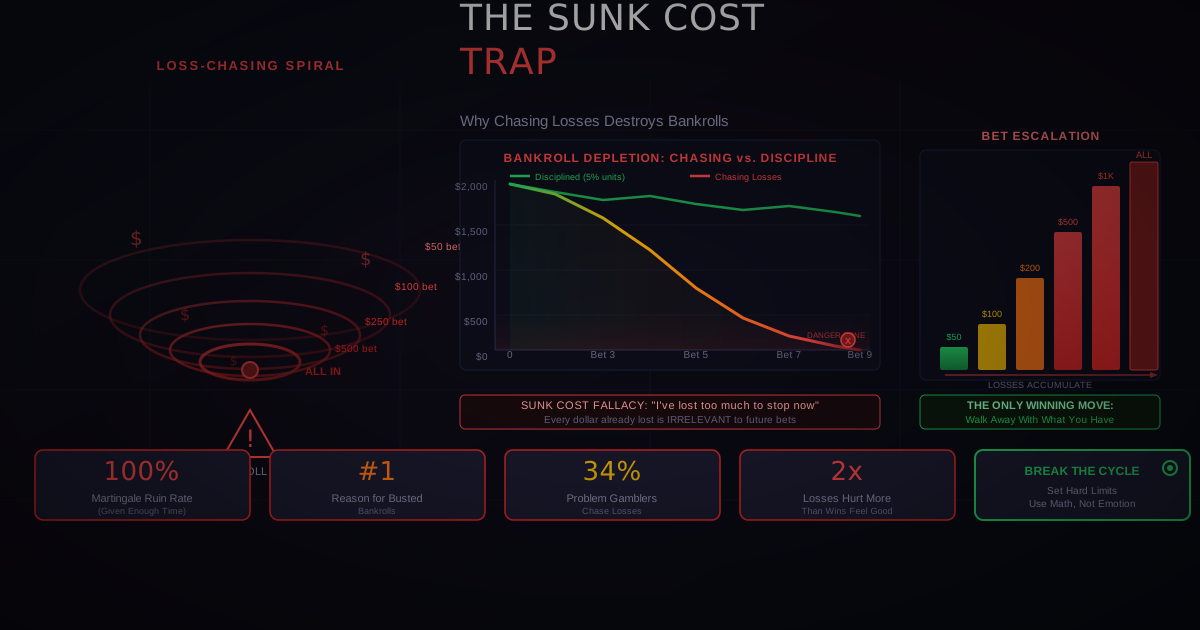
- Chasing losses (increasing bets to recover previous losses)
- Lying to family or friends about gambling activity
- Borrowing money to gamble
- Feeling restless or irritable when trying to stop
- Gambling to escape stress, anxiety, or depression
- Neglecting work, relationships, or health due to gambling
- Needing to bet more to achieve the same excitement
Use our Expected Value Calculator to understand the mathematical reality of your gambling before emotion takes over.
How Are Casino Design Regulations Evolving in 2026?
Regulatory awareness of casino design manipulation is increasing. Several jurisdictions have begun implementing or proposing rules that address the most aggressive design tactics.
Current and Proposed Regulations
| Jurisdiction | Regulation | Status (2026) |
|---|---|---|
| United Kingdom | Mandatory session time displays on all machines | Enacted |
| Australia (Victoria) | $5 maximum bet on electronic gaming machines | Enacted |
| Australia (NSW) | Cashless gaming with mandatory pre-commitment limits | Phased implementation |
| European Union | Dark pattern restrictions in online gambling UX | Proposed directive |
| Nevada | Enhanced responsible gambling signage requirements | Enacted |
| New Jersey | Mandatory reality check pop-ups for online gaming | Enacted |
| Ontario | Advertising restrictions near schools and youth venues | Enacted |
| Sweden | Deposit limits and mandatory breaks for online play | Enacted |
The Future of Casino Design Regulation
The trend is toward greater transparency and player protection. Emerging regulatory areas include:
- Mandatory display of house edge on all gaming machines
- Standardized loss tracking that shows players their net results in real dollars
- Restrictions on LDWs (losses disguised as wins) in slot machine sound design
- Cooling-off periods between sessions mandated by law
- AI monitoring for signs of problem gambling behavior with mandatory intervention
Industry Self-Regulation
Some casino operators are proactively implementing responsible design features, partly due to genuine corporate responsibility and partly due to regulatory pressure. The American Gaming Association's Responsible Gambling Code of Conduct now includes design guidelines, though compliance is voluntary.
Stay informed and make mathematically sound decisions with our complete suite of Gambling Tools.
Frequently Asked Questions
Are casinos legally allowed to manipulate players through design? Yes, in most jurisdictions. Casino design manipulation is not considered fraud because it does not alter the stated odds of any game. The environmental design influences behavior, but the player still makes voluntary decisions to wager. However, regulations are tightening, particularly around electronic gaming machines and online platforms where design manipulation is most aggressive. The UK Gambling Commission and several Australian states have been the most active in addressing design-based manipulation.
Do all casinos use these psychological tricks? Virtually all commercial casinos use some combination of these design tactics. The specific techniques vary by property, but the core principles of time distortion, sensory manipulation, and behavioral engineering are industry standard. Even tribal casinos and smaller regional properties employ professional casino design consultants who implement these strategies. The scale and sophistication increase with the size and budget of the property.
Can I beat the casino by knowing about these tricks? Knowing about design tricks helps you maintain control over your time and spending, but it does not change the mathematical house edge. Even a player who is fully aware of every manipulation tactic will still lose to the house edge over time if they play negative expectation games. The value of this knowledge is not in winning more but in losing less by making conscious decisions about when to play, how much to bet, and when to walk away.
Why are slot machines louder than table games? Slot machines use sound as a primary psychological tool because the player interacts with a machine rather than a human. Table games use dealer interaction and social dynamics as their primary engagement mechanisms. Slot machines must compensate for the lack of human connection by creating an immersive audio-visual experience. Additionally, slot machine sounds serve as advertising to other players on the floor, creating ambient "winning" sounds that encourage others to play.
Are online casinos more manipulative than physical casinos? In many ways, yes. Online casinos can deploy algorithmic personalization, track every click and pause, and customize the experience in real time based on your behavioral profile. They can adjust bonus offers, game recommendations, and UI elements specifically for your psychology. Physical casinos must design for the average player, while online casinos can manipulate each player individually. However, online casinos are also easier to regulate because every interaction is logged digitally.
How do I know if a casino is using scent manipulation? If you notice a consistent, pleasant, non-food-related scent that seems to permeate the entire gaming floor, it is almost certainly being pumped through the HVAC system. Major properties like the Bellagio, Wynn, Venetian, and Borgata all use proprietary scents. You can confirm by stepping outside and then re-entering; the scent contrast will be obvious. If the casino floor smells noticeably better than the hotel hallways or exterior, scent engineering is in play.
What is the most effective way to resist casino manipulation? The most effective single strategy is setting a hard time limit with phone alarms and a hard budget in cash. Remove all other payment methods from your person. When either limit is reached, leave immediately regardless of whether you are winning or losing. This simple approach neutralizes time distortion, chip psychology, alcohol impairment, and most other manipulation tactics simultaneously.
Do casino loyalty programs ever benefit the player? Casino loyalty programs return approximately 0.1-0.3% of total wagered, while the house edge takes 0.5-15%+ depending on the game. The math is always in the casino's favor. However, if you are going to gamble anyway, using a loyalty card is better than not using one, because you capture the small rebate on losses you would incur regardless. The danger is when the loyalty program motivates you to gamble more or longer than you otherwise would.
Related Tools
- Odds Converter: Convert between American, decimal, fractional, and implied probability formats instantly.
- Expected Value Calculator: Calculate the mathematical expectation of any wager to understand your true cost of play.
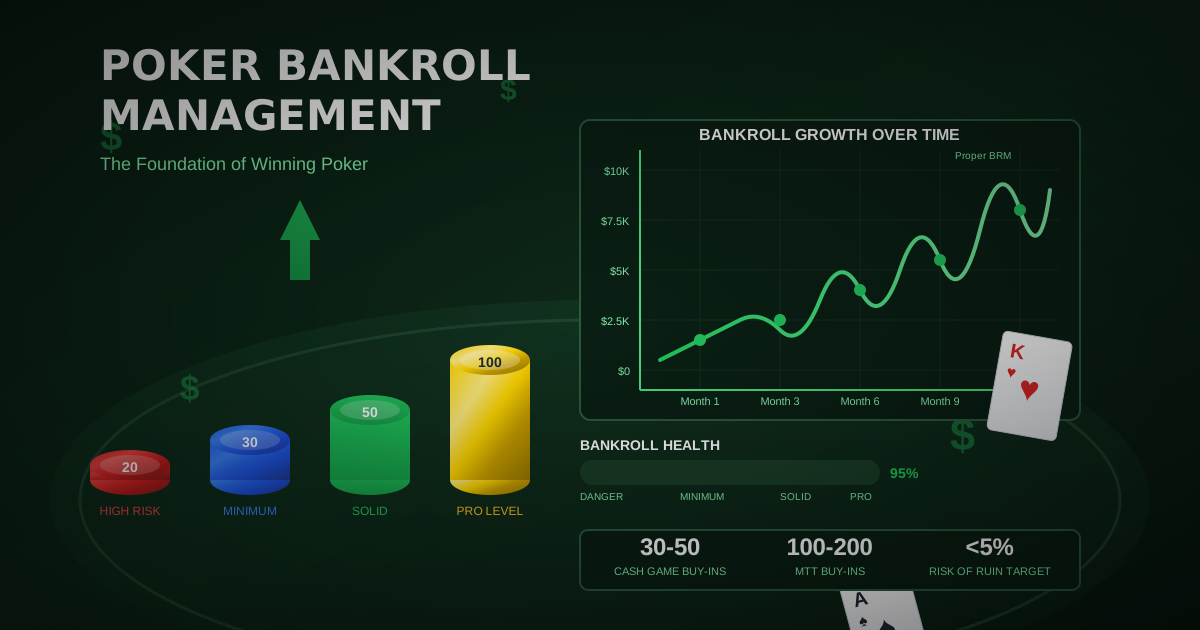
- Bankroll Volatility Tracker: Model your bankroll's expected swings and set session limits based on your risk tolerance.
- Kelly Criterion Calculator: Determine mathematically optimal bet sizing to protect your bankroll.
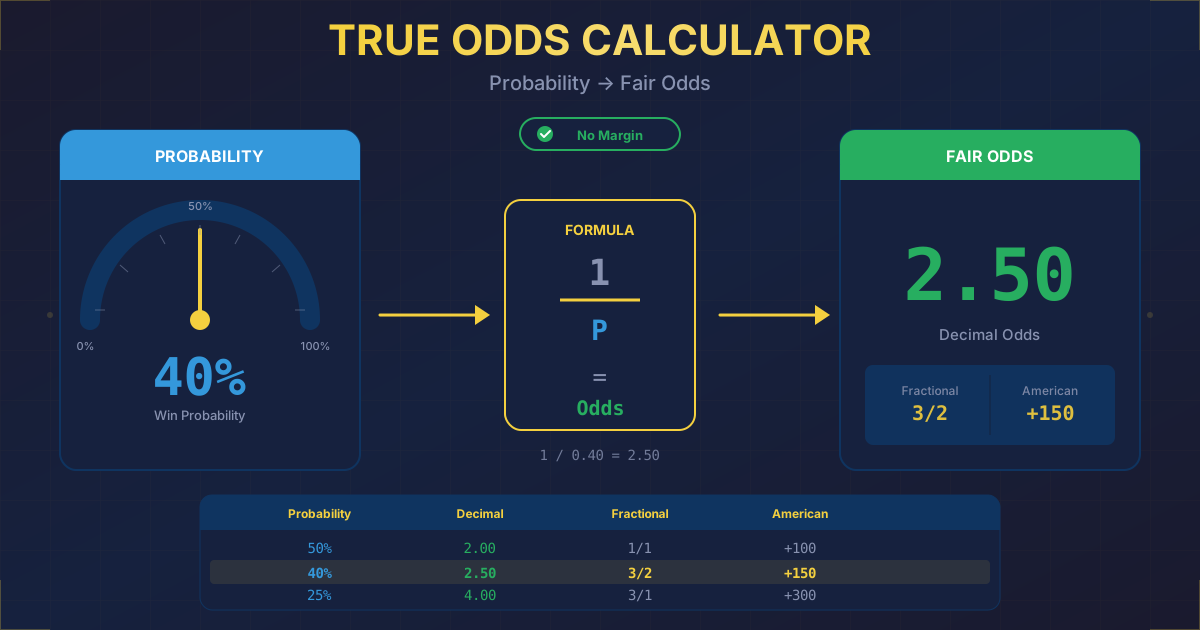
- Implied Probability Calculator: Convert any odds format into true probability to see through marketing hype.
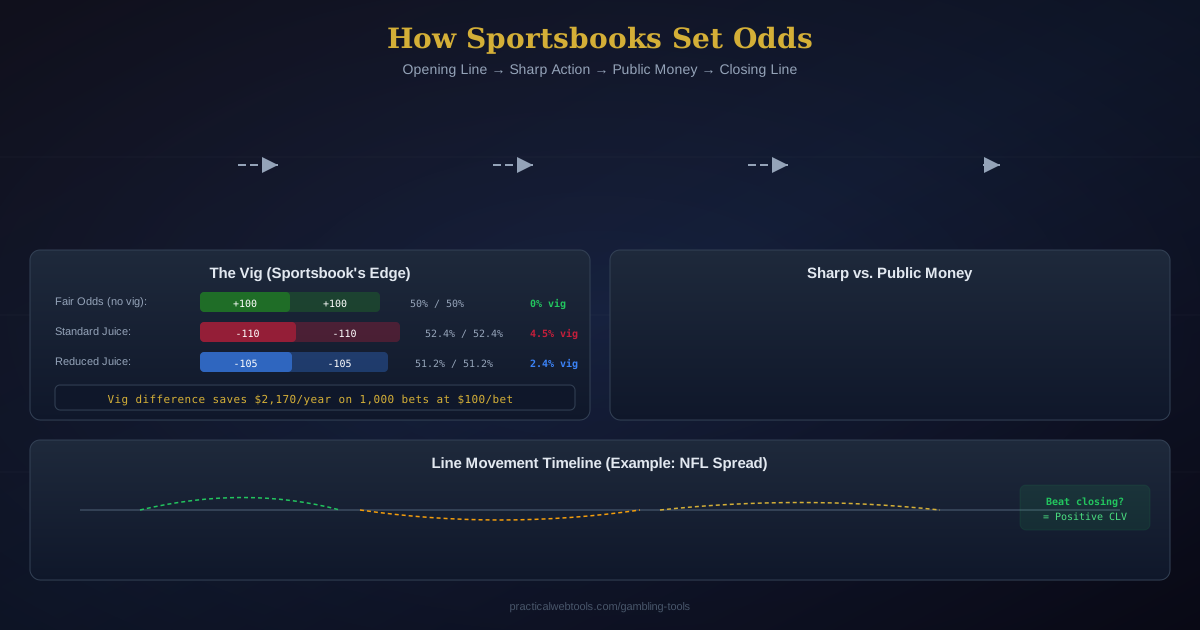
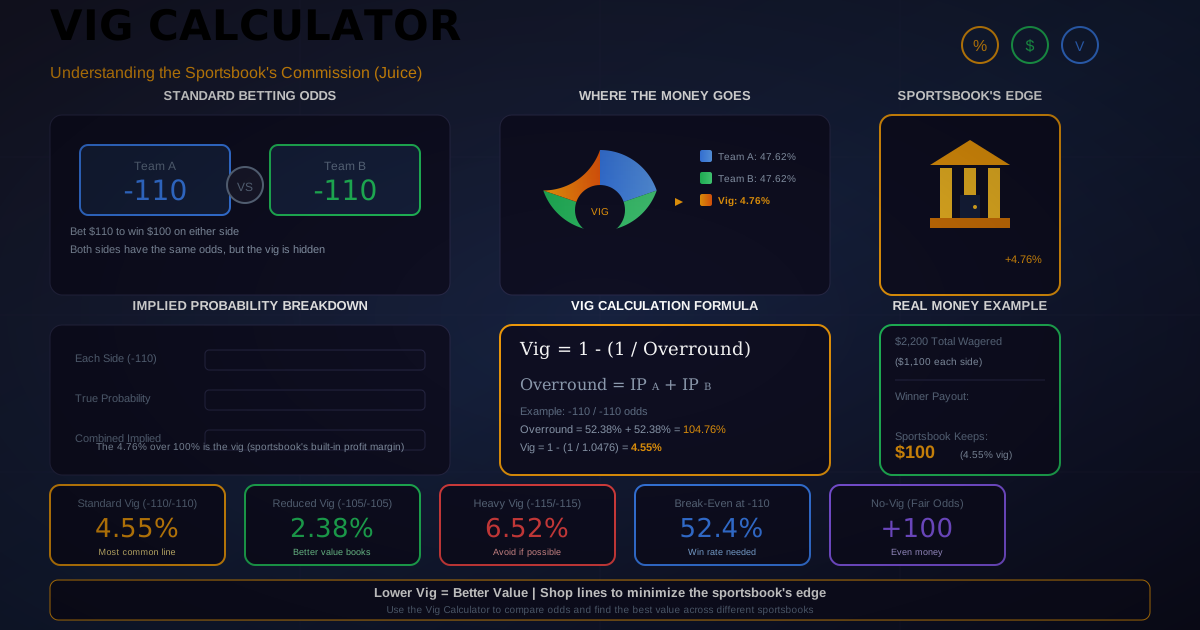
- Hold/Vig Calculator: Calculate the sportsbook's built-in margin on any betting line.
- Blackjack House Edge Calculator: See the exact house edge for any set of blackjack rules.
- Roulette House Edge Calculator: Compare house edges across European, American, and French roulette variants.
- Craps House Edge Calculator: Analyze every craps bet from pass line to proposition bets.
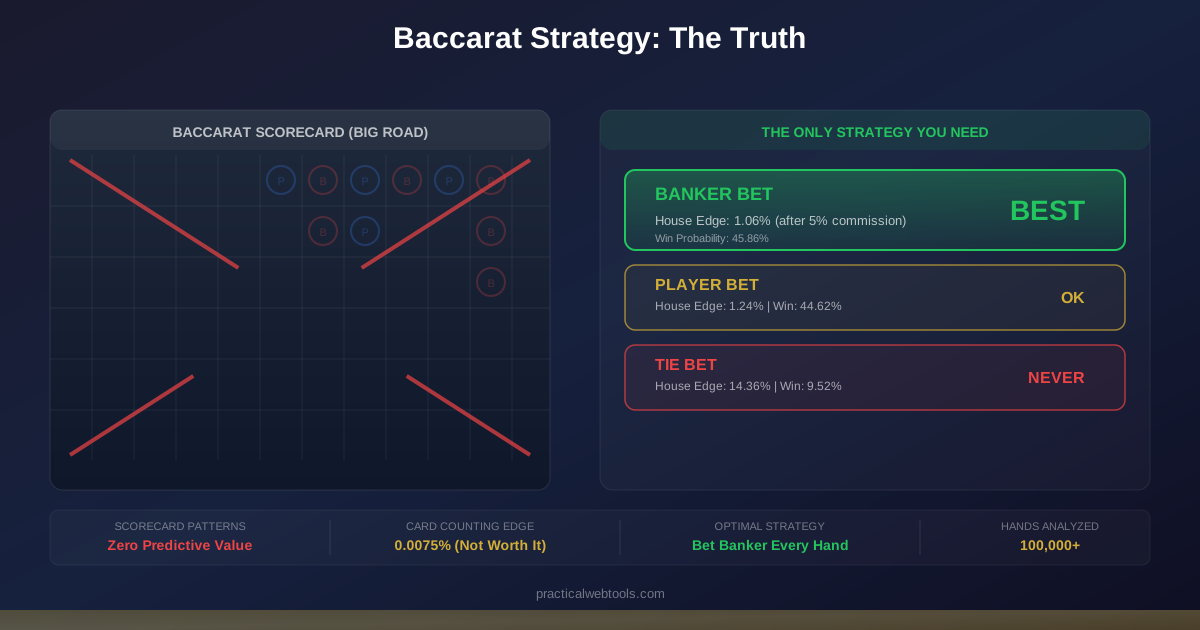
- Baccarat House Edge Calculator: Compare banker, player, and tie bet house edges with commission variations.
- Blackjack Basic Strategy Calculator: Get the mathematically optimal play for every hand combination.
- CLV Tracker: Track your closing line value over time to measure decision quality objectively.
Understanding casino design psychology is not about paranoia. It is about informed consent. When you walk into a casino knowing exactly how the environment is engineered to influence your behavior, you can enjoy the entertainment on your own terms, with your eyes open and your limits firm.
Explore all of our free gambling calculators and tools at Practical Web Tools to make every gambling decision a mathematically informed one.
Gambling involves risk and should be approached as entertainment, not as a source of income. Always bet within your means, set strict bankroll limits, and never chase losses. If you or someone you know has a gambling problem, contact the National Council on Problem Gambling at 1-800-522-4700 or visit ncpgambling.org. Must be 21+ to gamble in most US jurisdictions. Please play responsibly.