Referee and Umpire Tendencies: A Hidden Edge in Sports Betting (2026)

The average NFL game features a 15-20% difference in penalty yards depending on the officiating crew assigned, yet fewer than 5% of bettors factor referee tendencies into their handicapping. This overlooked variable represents one of the last genuine informational edges available to recreational bettors -- not because the data is hidden, but because most people do not bother to look.
Referee and umpire tendencies affect totals, spreads, player props, and live betting in every major sport. A penalty-heavy NFL crew adds 5-10 more points to a game on average. An NBA referee with a high foul rate inflates free throw attempts by 8-12 per game. An MLB umpire with a wide strike zone suppresses offense and alters pitcher strikeout totals. These are not marginal effects -- they move betting lines.
This guide breaks down referee and umpire tendencies across five major sports, shows you where to find assignment data, quantifies the statistical impact, and explains how to integrate this edge into your betting process.
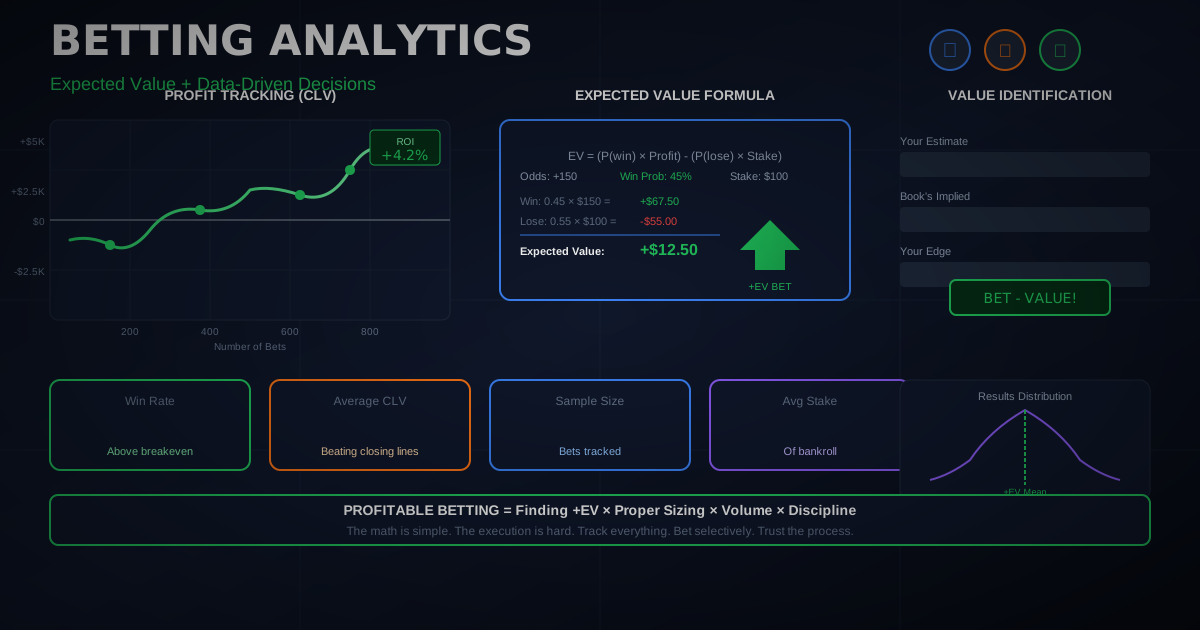
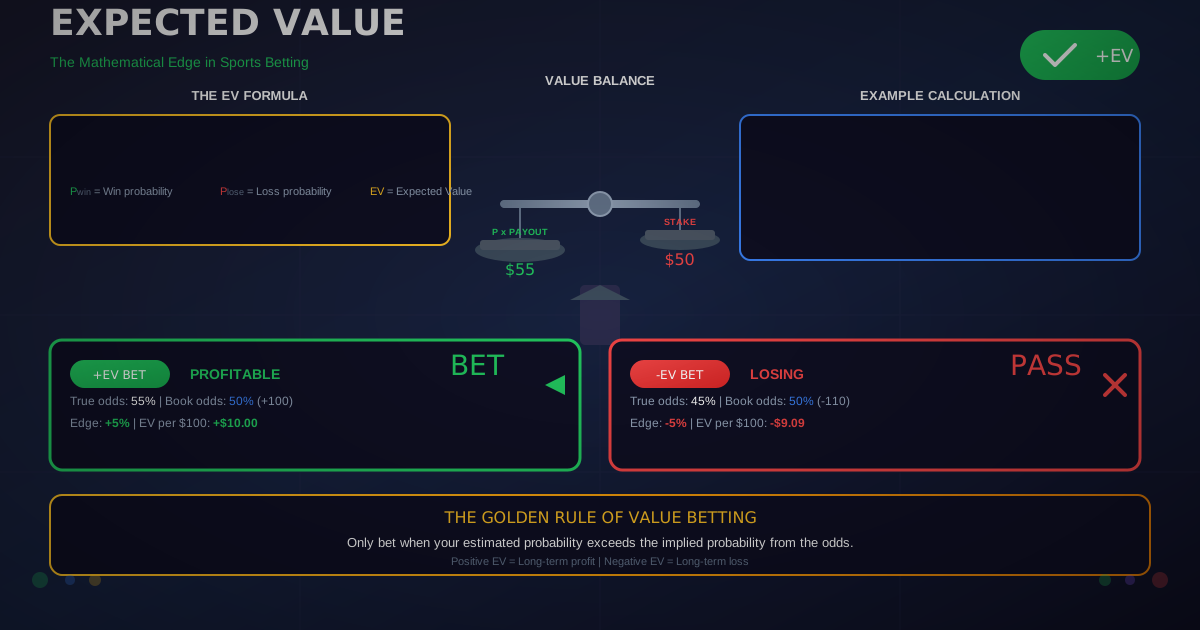
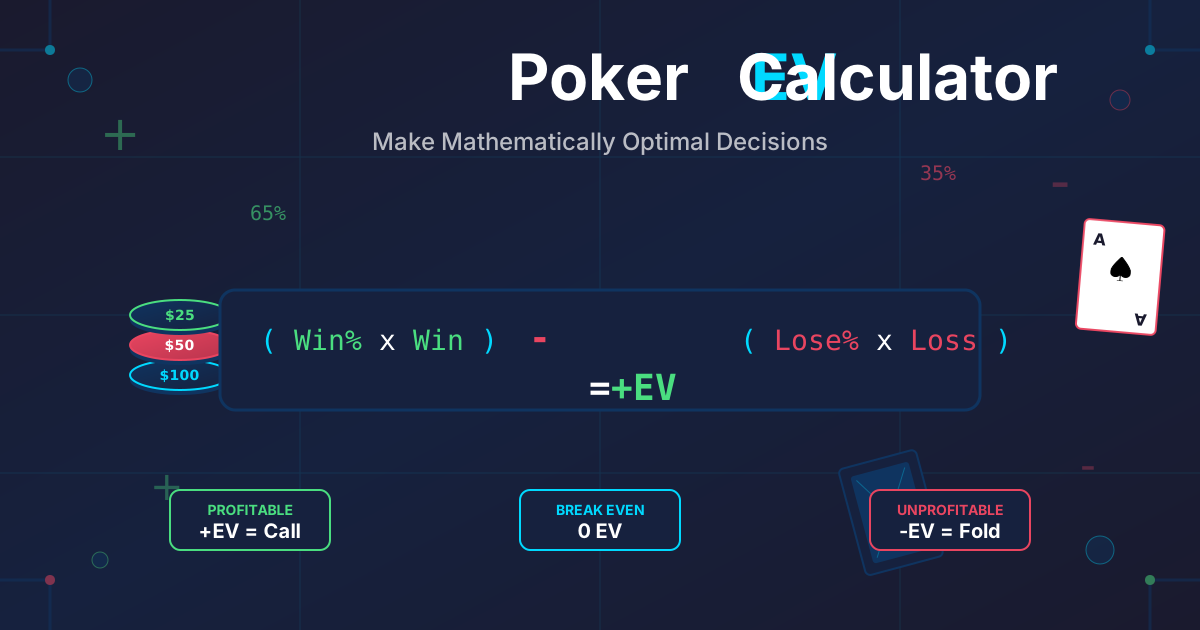
Start every bet with an Expected Value calculation using our free Expected Value Calculator.
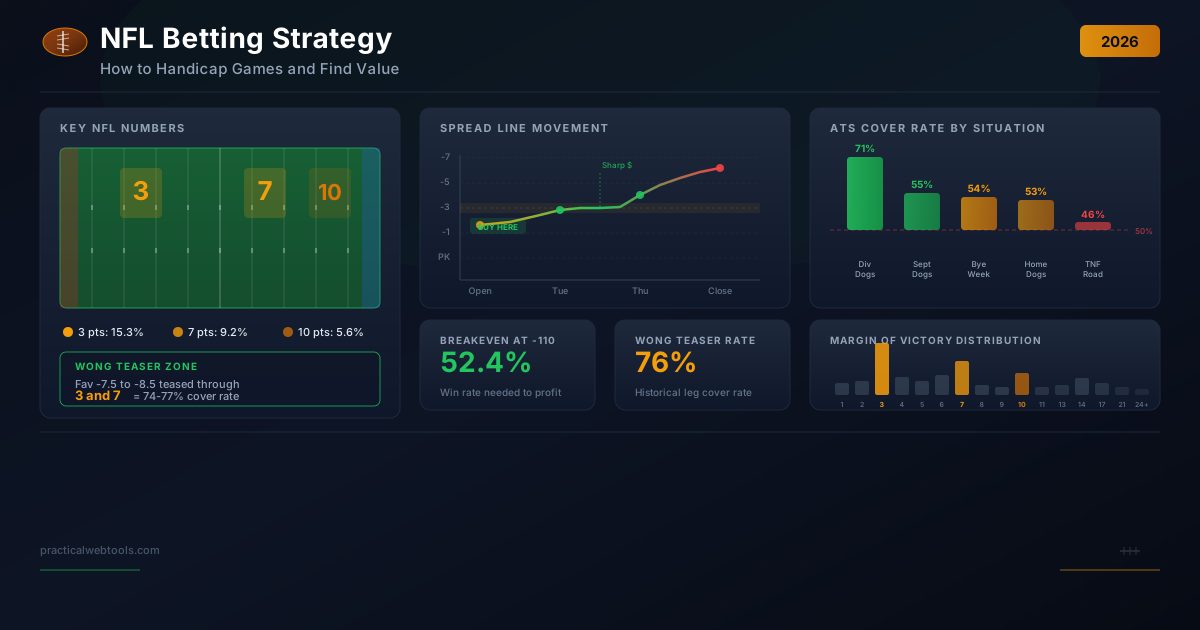
How Do NFL Referee Crews Affect Betting Lines?
NFL referee crews have the largest measurable impact on game outcomes of any sport's officials. Each game is assigned a seven-person crew led by the referee (white hat), and crew tendencies are remarkably consistent from season to season.
Penalty Frequency and Impact
NFL crews vary dramatically in how many penalties they call and which types of penalties they favor:
| Crew Category | Penalties/Game | Penalty Yards/Game | Impact on Game Total |
|---|---|---|---|
| Flag-heavy crews (top 5) | 14-18 | 110-140 | +3 to +7 points |
| Average crews (middle 7) | 11-14 | 80-110 | Neutral |
| Let-them-play crews (bottom 5) | 7-11 | 55-80 | -2 to -5 points |
The difference between the most and least penalty-heavy crews is approximately 8-10 penalties per game and 50-80 penalty yards. This is not trivial -- automatic first downs from defensive penalties extend drives and increase scoring.
Key Penalty Types for Bettors
| Penalty Type | Betting Impact | What to Look For |
|---|---|---|
| Defensive pass interference | Massive yardage, automatic first down -- inflates offensive output | Crews that call DPI frequently favor overs and offensive team totals |
| Offensive holding | Kills drives, negates big plays -- suppresses offense | Crews heavy on holding calls favor unders |
| Roughing the passer | Automatic first down, 15 yards -- extends drives | Favors overs and QB props |
| Unnecessary roughness | 15 yards, often after the play -- adds hidden yards | Inflates total yardage props |
| Defensive holding | 5 yards + auto first down -- drive extender | Favors overs on third-down-heavy games |
NFL Referee Crew Historical Data (2024-2025 Seasons)
| Referee | Avg Penalties/Game | Avg Penalty Yards/Game | Over Hit Rate | Notable Tendency |
|---|---|---|---|---|
| Shawn Hochuli | 16.2 | 132.4 | 58% | Highest flag rate in NFL |
| Alex Kemp | 15.8 | 125.6 | 56% | Heavy on defensive penalties |
| Brad Rogers | 15.1 | 118.3 | 55% | Consistent year-over-year |
| Carl Cheffers | 13.5 | 108.2 | 52% | Playoff crew -- slightly above average |
| Clete Blakeman | 12.8 | 102.4 | 51% | Near league average |
| Bill Vinovich | 10.4 | 82.1 | 47% | Let-them-play -- favors unders |
| Craig Wrolstad | 9.8 | 76.3 | 44% | Among the fewest flags |
| Tra Blake | 9.2 | 71.8 | 42% | Lowest flag rate in NFL |
The difference between a Shawn Hochuli game and a Tra Blake game is approximately 7 penalties and 60 penalty yards. That translates to roughly 8-10 additional points of scoring opportunity for offenses.
Calculate the expected value impact of referee tendencies on totals with our Expected Value Calculator.
Where to Find NFL Referee Assignment Data
| Source | When Available | Data Quality |
|---|---|---|
| NFL.com referee assignments | Tuesday/Wednesday before Sunday games | Official source |
| Pro Football Reference (officials page) | Season-long data | Complete historical data |
| Football Zebras (footballzebras.com) | Real-time tracking | Best dedicated source |
| Covers.com referee trends | Day of game | Betting-focused analysis |
| NFL Penalties (nflpenalties.com) | Updated weekly | Comprehensive penalty data by crew |
How to Apply NFL Referee Data to Betting
- Check referee assignment on Tuesday/Wednesday when crews are announced.
- Look up the crew's season statistics for penalties per game, penalty yards, and over/under records.
- Adjust your game total projection by 2-5 points based on crew tendency (add for flag-heavy, subtract for conservative).
- Consider team-specific matchups: Teams with aggressive defensive backs face more DPI calls from flag-heavy crews. Teams with poor offensive lines face more holding calls.
- Check opening totals: If a flag-heavy crew is assigned and the total has not moved up, there may be value on the over.
Use our Parlay Calculator to combine referee-informed totals with other data-driven legs.
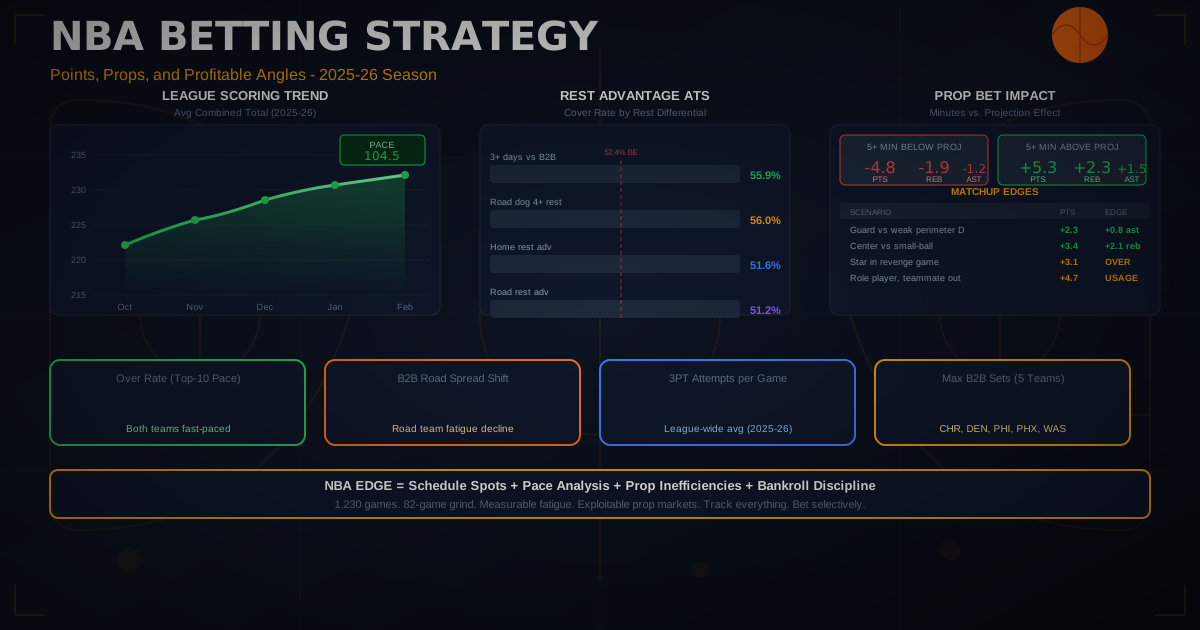
How Do NBA Referees Affect Totals and Player Props?
NBA referee tendencies have a significant and well-documented impact on game totals, fouls called, and free throw attempts -- all of which affect spreads, totals, and player props.
Foul Rate Variation by Referee
NBA referees work in three-person crews, and individual referee tendencies are trackable because the league publishes L2M (Last Two Minutes) reports and crew assignments.
| Referee Category | Fouls/Game | FTA Difference/Game | Impact on Total |
|---|---|---|---|
| Whistle-heavy (top 10) | 44-50 | +8-12 FTA vs. average | +4 to +8 points |
| Average (middle 20) | 38-44 | Baseline | Neutral |
| Whistle-light (bottom 10) | 32-38 | -8-12 FTA vs. average | -3 to -6 points |
Each additional foul called generates approximately 1.5 free throw attempts on average. A whistle-heavy crew calling 8 more fouls than average generates roughly 12 additional free throw attempts, translating to 8-9 additional points scored.
Key NBA Referee Impact Metrics
| Metric | How It Affects Betting | Data Source |
|---|---|---|
| Fouls per game | Directly impacts FTA, total points, and pace | NBA Official Referee Stats |
| FTA differential (home vs. away) | Some refs show stronger home-court foul bias | Positive Residual, NBA Stats |
| Offensive foul frequency | Turnover generation -- impacts team totals | NBA Play-by-Play logs |
| Technical foul rate | Ejection risk for key players | Basketball Reference |
| Pace impact | Whistle-heavy games slow pace (more free throws, stoppages) | NBA Stats |
NBA Referee Tendency Examples (2024-2025)
| Referee | Fouls/Game | Over Hit Rate | Notable Tendency |
|---|---|---|---|
| Tony Brothers | 48.2 | 57% | High foul rate, technical fouls, ejections |
| Scott Foster | 46.8 | 55% | Historically high-profile assignments, whistle-heavy |
| Kane Fitzgerald | 45.1 | 54% | Consistent foul caller |
| Marc Davis | 42.3 | 52% | Near average |
| Ed Malloy | 38.6 | 47% | Let-them-play |
| Rodney Mott | 36.4 | 44% | Among lowest foul rates |
Player Props and Referee Impact
Referee tendencies directly affect player props in the NBA:
| Prop Type | Referee Impact | Example |
|---|---|---|
| Points over/under | Star players get more FTA with whistle-heavy refs | A player averaging 6 FTA/game may get 8-10 with heavy whistlers |
| Assists over/under | More stoppages = fewer possessions = fewer assists | Assist unders more likely with heavy foul callers |
| Rebounds over/under | More free throws = more dead-ball rebounds (less contested) | Slight favor toward bigs' rebound overs |
| Fouls (player) | Some refs target specific play styles | Physical defenders more likely to foul out |
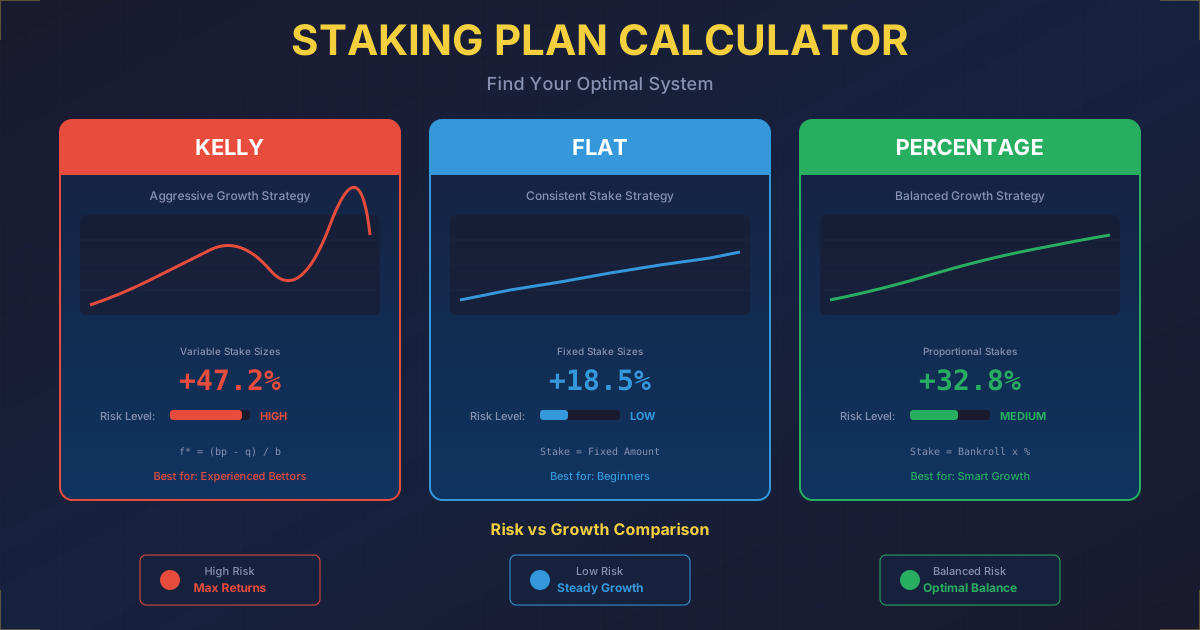
Determine optimal bet sizing based on your edge estimate with our Kelly Criterion Calculator.
Where to Find NBA Referee Data
| Source | Data Available | Access |
|---|---|---|
| NBA Official Stats | Referee assignments, L2M reports | nba.com/officials |
| Positive Residual | Referee impact stats, betting records | positiveresidual.com |
| Basketball Reference | Career referee stats | basketball-reference.com |
| Covers.com | Referee betting trends | covers.com |
| The Action Network | Referee matchup data | actionnetwork.com |
How Do MLB Umpires Affect Strike Zones and Betting?
MLB umpires have the most individually measurable impact on games of any official in professional sports. Each home plate umpire calls balls and strikes differently, and these differences directly affect strikeout rates, walk rates, run scoring, and game totals.
Strike Zone Variation by Umpire
Despite the official strike zone being defined by rule, individual umpires maintain significantly different zones:
| Umpire Type | Strike Zone Size | K Rate Impact | Run Impact/Game |
|---|---|---|---|
| Wide zone (pitcher-friendly) | 10-15% larger than average | +1.5-2.5 K/game | -0.5 to -1.5 runs |
| Average zone | Baseline | Baseline | Baseline |
| Tight zone (hitter-friendly) | 10-15% smaller than average | -1.5-2.5 K/game | +0.5 to +1.5 runs |
Key Umpire Metrics for Bettors
| Metric | Definition | Betting Application |
|---|---|---|
| Called strikes above expected | Extra strikes called beyond pitch location | Higher = pitcher-friendly = favors unders |
| Run environment | Average runs per game with this umpire | Direct impact on totals |
| K rate | Average strikeouts per game | Affects pitcher K props |
| BB rate | Average walks per game | Affects base-on-balls props |
| Home team win rate | Some umpires show home plate bias | Slight spread impact |
| Over/under record | Historical o/u results | Direct betting relevance |
MLB Umpire Historical Data Examples (2024-2025)
| Umpire | Runs/Game Above/Below Average | Over Hit Rate | Zone Tendency | K Rate Impact |
|---|---|---|---|---|
| Angel Hernandez (retired) | +0.8 | 56% | Inconsistent -- wide and narrow | Unpredictable |
| CB Bucknor | +0.6 | 55% | Tight zone -- favors hitters | -1.8 K/game |
| Doug Eddings | +0.4 | 54% | Below average accuracy | Moderate impact |
| Pat Hoberg | -0.1 | 50% | Most accurate in MLB | Minimal impact |
| Mark Carlson | -0.5 | 46% | Wide zone -- favors pitchers | +2.1 K/game |
| David Rackley | -0.7 | 44% | Consistently wide zone | +2.4 K/game |
How Robot Umps Will Change This
Automated Ball-Strike (ABS) technology is being tested in Minor League Baseball and is expected to reach MLB within 2-4 years. This will have massive implications for bettors:
| Change | Impact on Betting |
|---|---|
| Standardized strike zone | Eliminates umpire tendency edge entirely |
| More consistent K/BB rates | Pitcher props become more predictable |
| Likely larger strike zone | Historical trends show ABS increases K rate |
| No challenge system impact | Current challenge system may be eliminated |
| Pitcher adaptation | Pitchers who relied on "getting calls" may decline |
Until ABS is implemented, umpire tendencies remain one of the most reliable edges in MLB betting.
Evaluate MLB betting opportunities with our Expected Value Calculator factoring in umpire tendencies.
Where to Find MLB Umpire Data
| Source | Data Quality | Key Feature |
|---|---|---|
| UmpScorecards (umpscorecards.com) | Excellent | Daily scorecards with accuracy, consistency, and zone visualization |
| Baseball Savant | Good | Called strike probability data |
| Stat Crew / RetroSheet | Comprehensive | Historical umpire data |
| Swish Analytics | Premium | Umpire impact models |
| Close Call Sports | Good | Umpire ejection and accuracy tracking |
Check the house edge on any casino side bets while waiting for baseball games with our Blackjack House Edge Calculator.
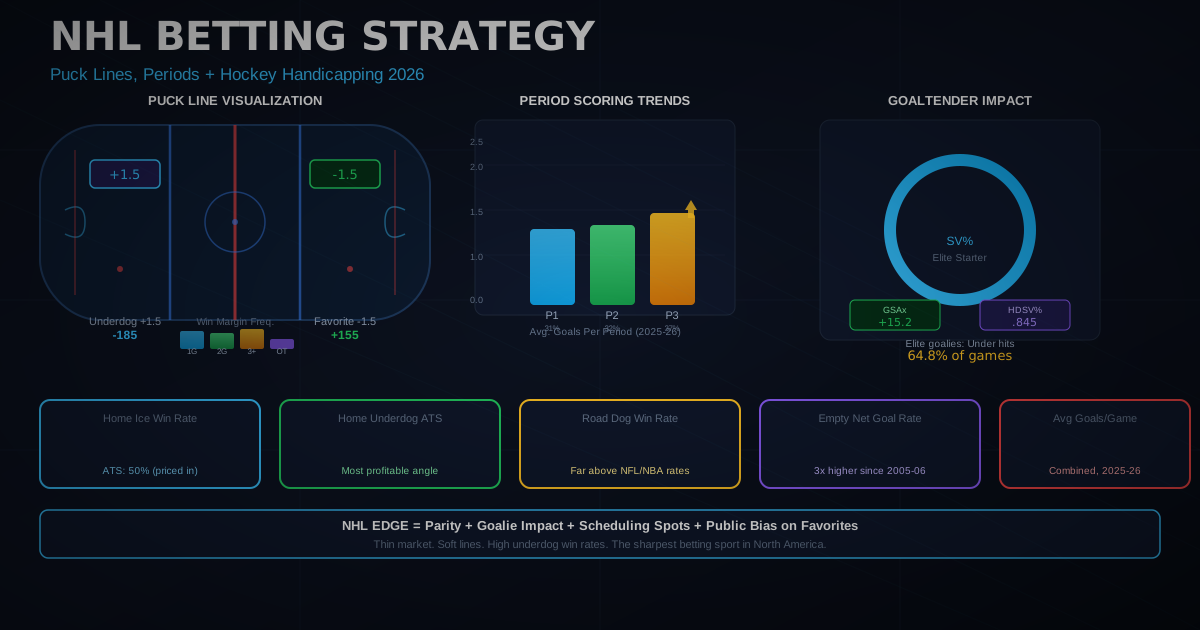
How Do NHL Referees Affect Penalty Minutes and Betting?
NHL referees work in two-person crews, and their penalty-calling tendencies have a measurable effect on power play opportunities, goal scoring, and game totals.
Penalty Calling Variation
| Referee Category | Penalties/Game | Power Plays/Game | Goal Impact |
|---|---|---|---|
| Penalty-heavy | 9-12 | 8-10 | +0.5 to +1.0 goals |
| Average | 6-9 | 5-8 | Baseline |
| Penalty-light | 4-6 | 3-5 | -0.3 to -0.7 goals |
Key NHL Referee Metrics
| Metric | Betting Application |
|---|---|
| Penalties per game | More penalties = more power plays = more goals (favors overs) |
| Even-strength penalty ratio | Home vs. away penalty differential |
| Penalty type distribution | Minor vs. major vs. misconduct affects game flow differently |
| Overtime/shootout frequency | Some referee styles lead to closer games |
| Penalty consistency | Some refs call more in the first period, less in the third |
NHL Referee Data Examples (2024-2025)
| Referee | Penalties/Game | Over Hit Rate | Tendency |
|---|---|---|---|
| Wes McCauley | 10.4 | 56% | Penalty-heavy, animated calls |
| Chris Rooney | 9.8 | 55% | Consistent penalty caller |
| Kelly Sutherland | 8.2 | 52% | Above average |
| Dan O'Rourke | 6.8 | 49% | Near average |
| Eric Furlatt | 5.4 | 46% | Below average penalties |
| Trevor Hanson | 4.8 | 43% | Let-them-play style |
NHL power play conversion rates average 20-25%. Each additional power play adds approximately 0.2-0.25 expected goals. A penalty-heavy crew generating 3-4 extra power plays per game adds 0.6-1.0 expected goals to the game total.
Calculate parlay value with NHL referee-adjusted totals using our Parlay Calculator.
Where to Find NHL Referee Data
| Source | Key Data |
|---|---|
| Scouting the Refs (scoutingtherefs.com) | Best dedicated source -- referee assignments, penalty data, betting records |
| NHL.com | Official assignments (released day of game) |
| Hockey Reference | Historical referee data |
| Natural Stat Trick | Penalty data by team (cross-reference with referee) |
| Covers.com | NHL referee betting trends |
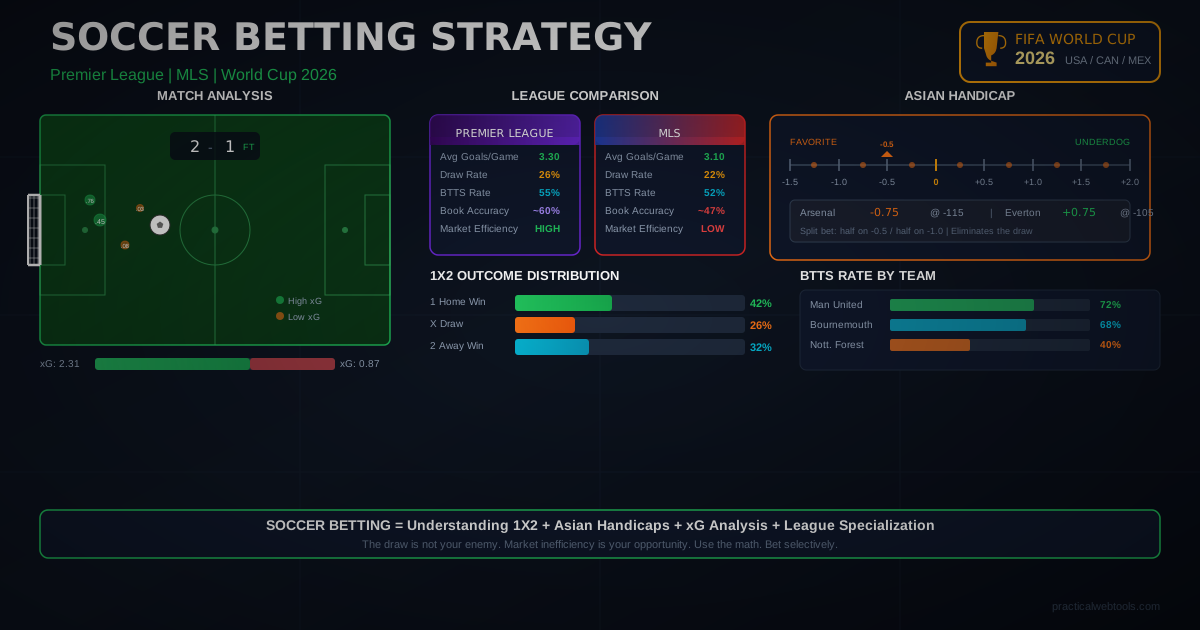
How Do Soccer Referees Affect Cards, Penalties, and Betting?
Soccer referee tendencies have significant implications for cards markets, penalty markets, and to a lesser extent, match totals.
Cards Per Game Variation
| Referee Category | Cards/Game | Red Cards/Season | Impact on Cards Market |
|---|---|---|---|
| Card-happy | 5-7 yellow, 0.3+ red | 8-12 | Strong favor toward overs |
| Average | 3-5 yellow, 0.15 red | 4-8 | Neutral |
| Lenient | 2-3 yellow, <0.1 red | 1-3 | Favor unders |
Key Soccer Referee Metrics
| Metric | Betting Market Affected | How to Use |
|---|---|---|
| Yellow cards per game | Total cards over/under | Directly predictive |
| Red cards per season | Red card prop (yes/no) | Probability assessment |
| Penalties awarded per game | Penalty in match (yes/no), match total goals | Penalty-generous refs increase expected goals |
| Fouls per game | Cards correlation, game flow | Indicates ref's control style |
| Added time given | Late goal probability | More added time = more opportunities for late goals |
| VAR intervention rate | Penalty and red card frequency | Some refs are more likely to go to VAR |
Premier League Referee Tendencies (2024-2025)
| Referee | Yellow Cards/Game | Penalties/10 Games | Over Hit Rate (2.5) | Style |
|---|---|---|---|---|
| Anthony Taylor | 5.2 | 4.1 | 54% | Card-heavy, penalty-generous |
| Michael Oliver | 4.8 | 3.8 | 53% | Consistent, above average |
| Chris Kavanagh | 4.4 | 3.2 | 51% | Near average |
| Simon Hooper | 3.8 | 2.8 | 49% | Slightly lenient |
| Robert Jones | 3.2 | 2.1 | 46% | Lenient, fewer stoppages |
Impact on Specific Markets
| Market | High-Card Referee Impact | Low-Card Referee Impact |
|---|---|---|
| Total cards over/under | Over hits 58-62% | Under hits 55-60% |
| Match goals over 2.5 | Slightly higher (more penalties) | Slightly lower |
| Both teams to score | Minimal direct impact | Minimal direct impact |
| Correct score | Higher variance from penalties/red cards | Lower variance, more predictable |
| First goal scorer | Penalty takers gain value | No significant impact |
Use our Odds Converter to compare card market odds across bookmakers when you identify a referee edge.
Where to Find Soccer Referee Data
| Source | Coverage | Key Features |
|---|---|---|
| Transfermarkt | Worldwide | Referee career statistics, cards history |
| FBref | Top leagues | Match-by-match referee stats |
| WhoScored | Worldwide | Referee stats within match reports |
| Soccerway | Worldwide | Referee assignment and basic stats |
| Premier League official site | EPL | Official referee statistics |
How Much Do Referee Tendencies Actually Matter Statistically?
This is the critical question. While referee tendencies exist and are measurable, bettors must understand the magnitude of the edge and its limitations.
Statistical Significance Analysis
| Sport | Referee Impact on Total (points/goals) | Edge vs. Closing Line | Sample Size Needed |
|---|---|---|---|
| NFL | 3-7 points (highest impact) | 1-3% EV on totals | 16+ games per crew per season |
| NBA | 3-6 points | 0.5-2% EV on totals | 70+ games per ref per season |
| MLB | 0.5-1.5 runs | 0.5-1.5% EV on totals | 100+ games per umpire per season |
| NHL | 0.3-1.0 goals | 0.5-1.5% EV on totals | 60+ games per ref per season |
| Soccer | 0.1-0.3 goals (low), 1-3 cards | 1-3% EV on cards markets | 30+ matches per ref per season |
Historical Betting Results When Factoring Officials
| Strategy | Sport | Sample (2020-2025) | ROI |
|---|---|---|---|
| Over when flag-heavy NFL crew | NFL | 480 games | +3.2% |
| Under when conservative NFL crew | NFL | 460 games | +2.8% |
| Over when whistle-heavy NBA refs | NBA | 1,200 games | +1.8% |
| Under when wide-zone MLB umpire | MLB | 2,400 games | +1.5% |
| Cards over with card-heavy soccer ref | Soccer | 800 matches | +2.6% |
These returns are modest but consistent. The key is that referee data is additive -- it works best when combined with other handicapping factors rather than used in isolation.
Limitations of the Referee Angle
| Limitation | Explanation |
|---|---|
| Market awareness is growing | Sportsbooks increasingly factor referee assignments into lines |
| Small edge magnitude | 1-3% EV is real but requires volume |
| Sample size constraints | Most referees work 15-30 games per season per sport |
| Year-over-year variation | Referees can change tendencies, especially after league directives |
| Crew interactions | In team-officiated sports (NFL, NHL), crew composition matters |
| Game context | Referee tendencies may vary by game importance, teams, and score situation |
Calculate whether the edge is worth betting with our Expected Value Calculator and size your position with our Kelly Criterion Calculator.
How Do You Integrate Referee Data Into Your Betting Process?
Referee data should be one factor in a multi-variable handicapping approach, not a standalone system.
Integration Workflow
| Step | Action | Time Required |
|---|---|---|
| 1. Complete regular analysis | Finish your standard handicapping process first | Varies |
| 2. Check referee assignment | Look up assigned officials for the game | 2 minutes |
| 3. Review referee tendencies | Check penalty/foul/card rates and o/u record | 5 minutes |
| 4. Adjust projection | Modify your total or spread projection based on referee data | 2 minutes |
| 5. Compare to market | Check if your adjusted projection creates value vs. current line | 2 minutes |
| 6. Decide and size | Bet if value exists, size based on confidence + edge | 1 minute |
When Referee Data Matters Most
| Situation | Why Referee Data Has More Impact |
|---|---|
| Close totals (within 2-3 points of your projection) | Referee adjustment can push the value threshold |
| Games between evenly matched teams | Small edges matter more when teams are close |
| Player props (NBA FTA, MLB K) | Direct causal relationship between official and prop outcome |
| Card markets (soccer) | Referee is the single largest predictor of card count |
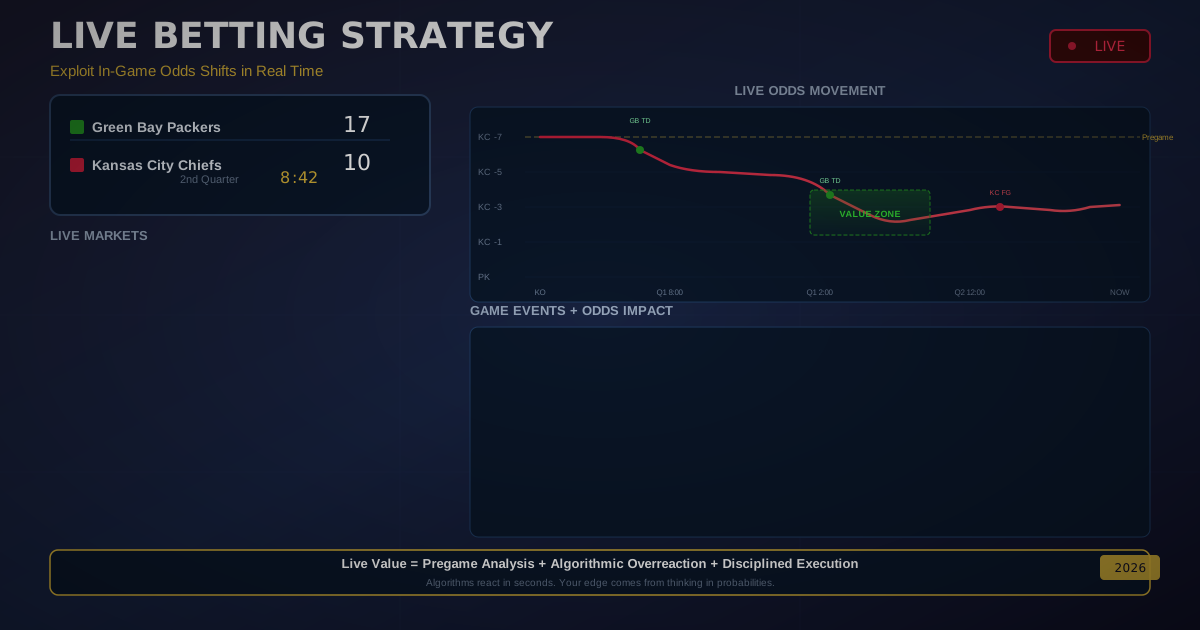
| Live betting | When you spot a referee tendency manifesting in-game |
When Referee Data Matters Less
| Situation | Why |
|---|---|
| Massive spreads (14+ points) | Game dynamics overpower referee impact |
| Weather games (NFL outdoor) | Weather dominates scoring more than penalties |
| Blowout in progress | Referees often "manage" games differently when lopsided |
| Backup QB situations | Quarterback quality is more impactful |
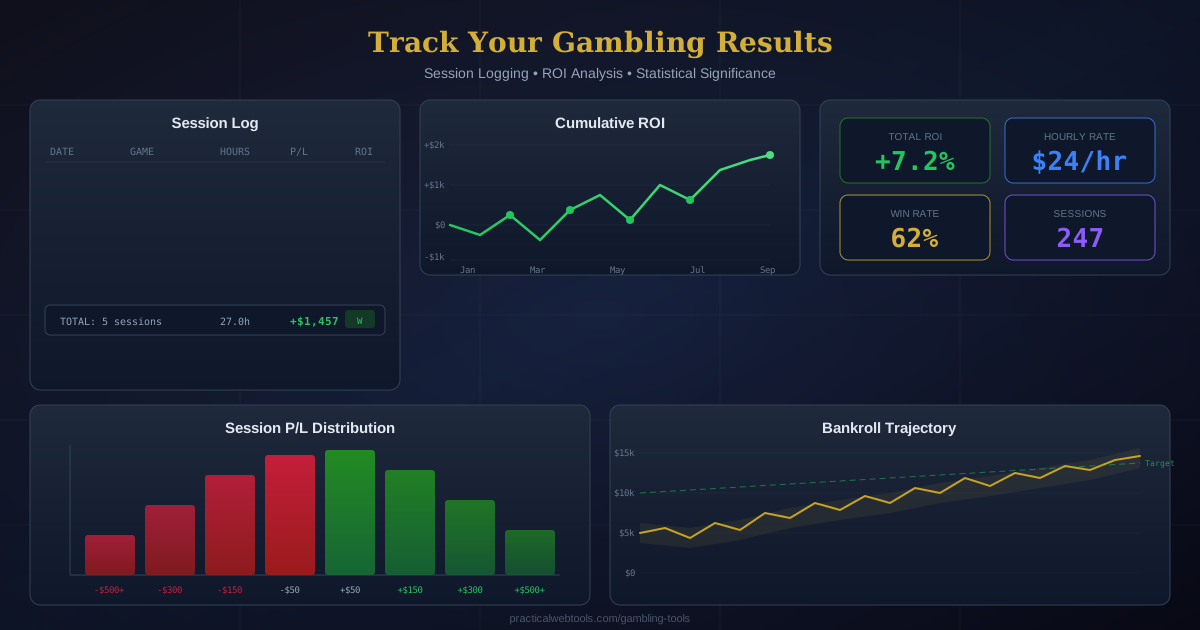
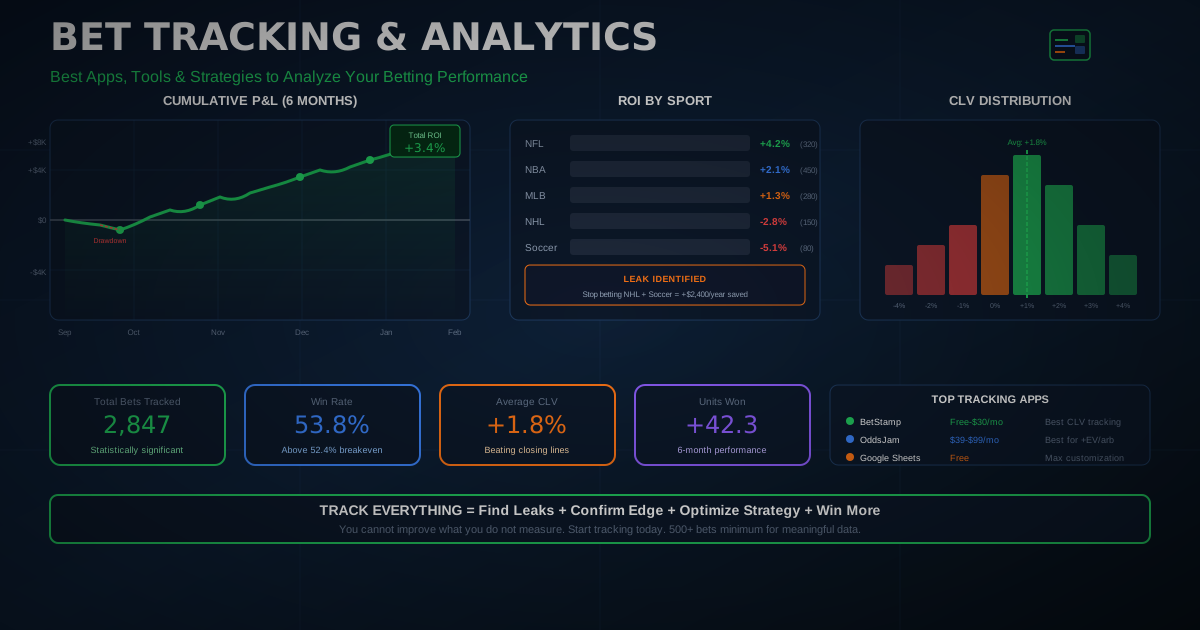
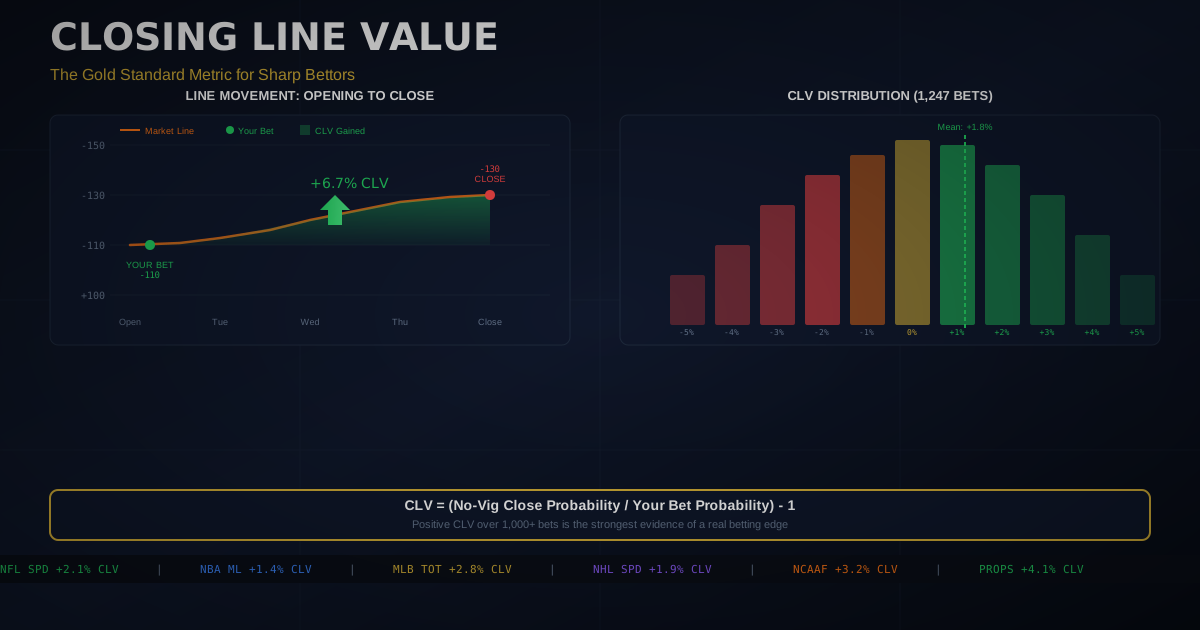
Track your referee-based betting results with our CLV Tracker to measure whether this angle is profitable for you.
Frequently Asked Questions About Referee Tendencies and Betting
How much do referee tendencies really matter for betting? Referee tendencies provide a measurable but modest edge, typically 1-3% expected value on affected markets (primarily totals). This is a real edge, but it works best as one factor among many in a comprehensive handicapping approach. It is not a standalone profitable system.
Where do I find out which referee is assigned to a game? For NFL, referee crews are announced on Tuesday or Wednesday before Sunday games (NFL.com, Football Zebras). For NBA, referee assignments are posted on NBA.com the morning of the game. For MLB, umpire assignments are announced daily. For NHL, Scouting the Refs publishes assignments day of game. For soccer, assignments vary by league.
Do sportsbooks already account for referee tendencies? Sophisticated sportsbooks (Pinnacle, Circa, CRIS) likely incorporate some referee data into their lines. Many recreational-facing books (DraftKings, FanDuel) appear to give less weight to referee data, creating potential value. The market is becoming more efficient but has not fully priced in this variable.
Which sport gives the biggest referee edge for bettors? NFL provides the largest measurable impact because penalty yards directly affect scoring, and crew tendencies are consistent year-over-year. MLB umpires provide the most individually measurable impact (one plate umpire controls the strike zone for the entire game). Soccer card markets offer the most exploitable niche because the market is less efficient.
Can referee tendencies predict spread outcomes? The effect on spreads is less direct than totals. Penalty imbalances can affect spreads (e.g., a crew that favors home teams or calls more offensive penalties), but the signal is weaker. Totals and player props are the primary markets where referee data provides value.
Do referees change their tendencies over time? Yes, but gradually. League directives (e.g., "call more holding" or "emphasize player safety") can shift referee behavior. However, individual tendencies relative to the league average tend to be consistent within a season and moderately consistent across seasons. Always use the most recent available data.
Is there a website that tracks referee betting records? Yes. Scouting the Refs (scoutingtherefs.com) is the best dedicated resource, covering NFL, NBA, NHL, and MLB with betting-relevant data. Covers.com also provides referee trend data for major sports. UmpScorecards (umpscorecards.com) is the best MLB-specific resource.
Should I bet purely based on referee tendencies? No. Referee data should be one factor in your analysis, not the sole basis for a bet. The edge is real but small (1-3%). Combine it with team analysis, injury data, situational factors, and line movement to make well-informed bets. Referee data is most valuable when it confirms or tips a bet that is already borderline based on other analysis.
Related Tools for Referee-Informed Betting
Value Calculation
- Expected Value Calculator: Calculate whether a referee-adjusted line offers positive EV
- Implied Probability Calculator: Convert odds to probabilities for comparison
- Odds Converter: Compare odds across formats and sportsbooks
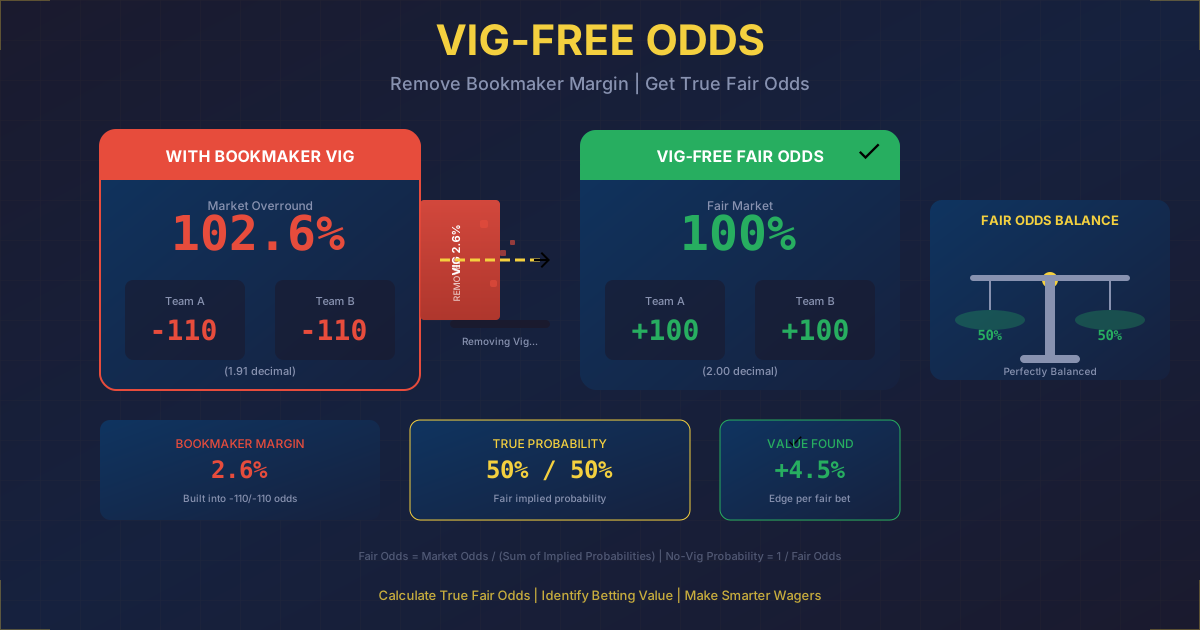
- Hold/Vig Calculator: Understand the sportsbook's margin
Bet Sizing
- Kelly Criterion Calculator: Size bets based on your estimated edge
- Bankroll Volatility Tracker: Monitor your bankroll health
- Hedge Calculator: Hedge positions when referee tendencies shift in-game
Multi-Bet Strategies
- Parlay Calculator: Combine referee-informed legs
- Round Robin Calculator: Spread referee-based bets across round robins
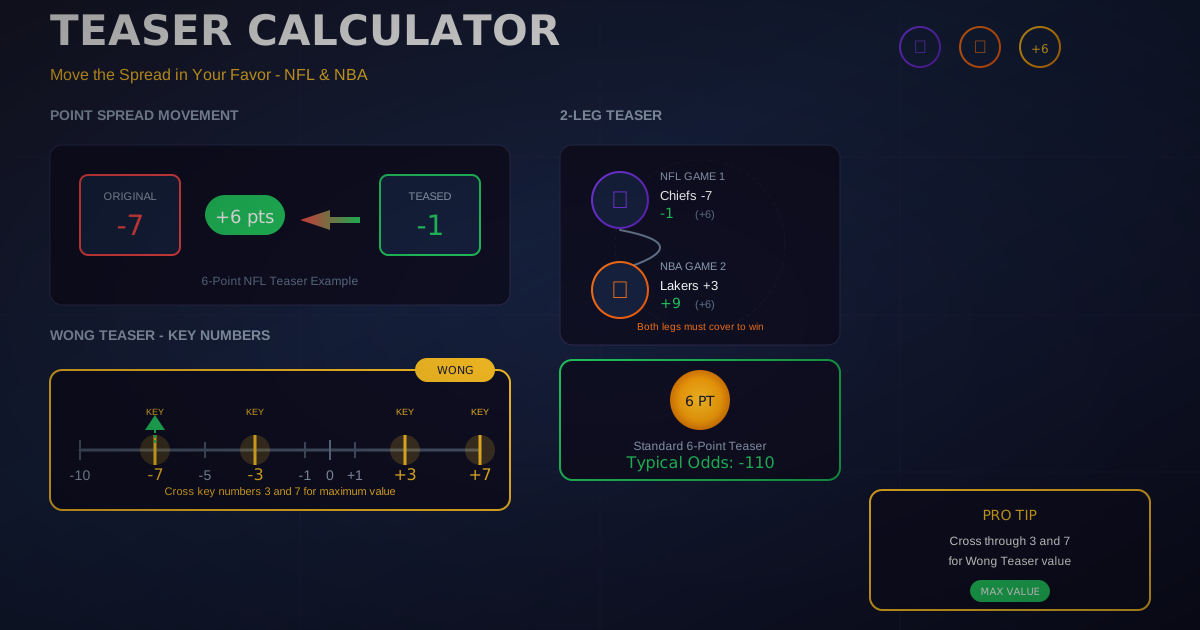
- Teaser Calculator: Evaluate teasers with referee-adjusted totals
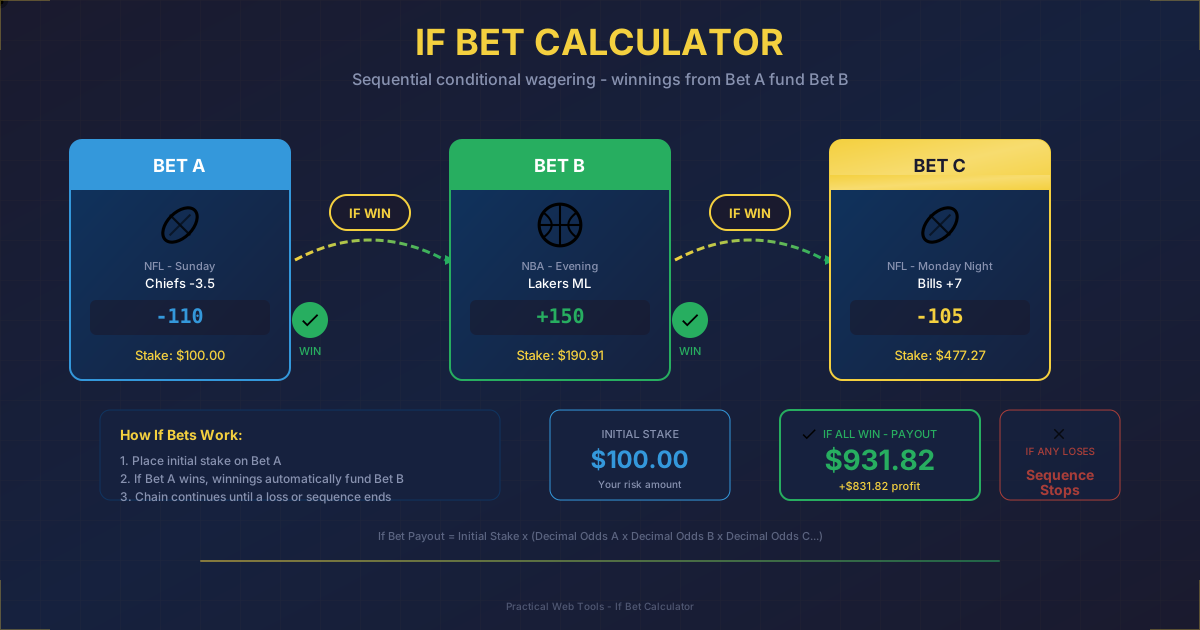
- If Bet Calculator: Structure conditional bets
Performance Tracking
- CLV Tracker: Track whether your referee-based bets consistently beat the closing line
- Poker Session Tracker: Track all gambling session results
The Edge Is Real -- But It Is One Piece of the Puzzle
Referee and umpire tendencies represent a genuine, measurable edge in sports betting. The data is publicly available, the impact is statistically significant, and many markets have not fully priced in official assignments. But this edge is modest -- typically 1-3% expected value -- and works best when integrated into a comprehensive handicapping framework.
Build your referee-informed betting process with our tools. Calculate expected value with our Expected Value Calculator, size your bets with our Kelly Criterion Calculator, and track your results with our CLV Tracker.
The details matter. Officials are one of those details.
Gambling involves risk and should be approached as entertainment, not as a source of income. Always bet within your means, set strict bankroll limits, and never chase losses. If you or someone you know has a gambling problem, contact the National Council on Problem Gambling at 1-800-522-4700 or visit ncpgambling.org. Must be 21+ to gamble in most US jurisdictions. Please play responsibly.