Public Betting Percentages: How to Use Consensus Data to Find Value (2026)

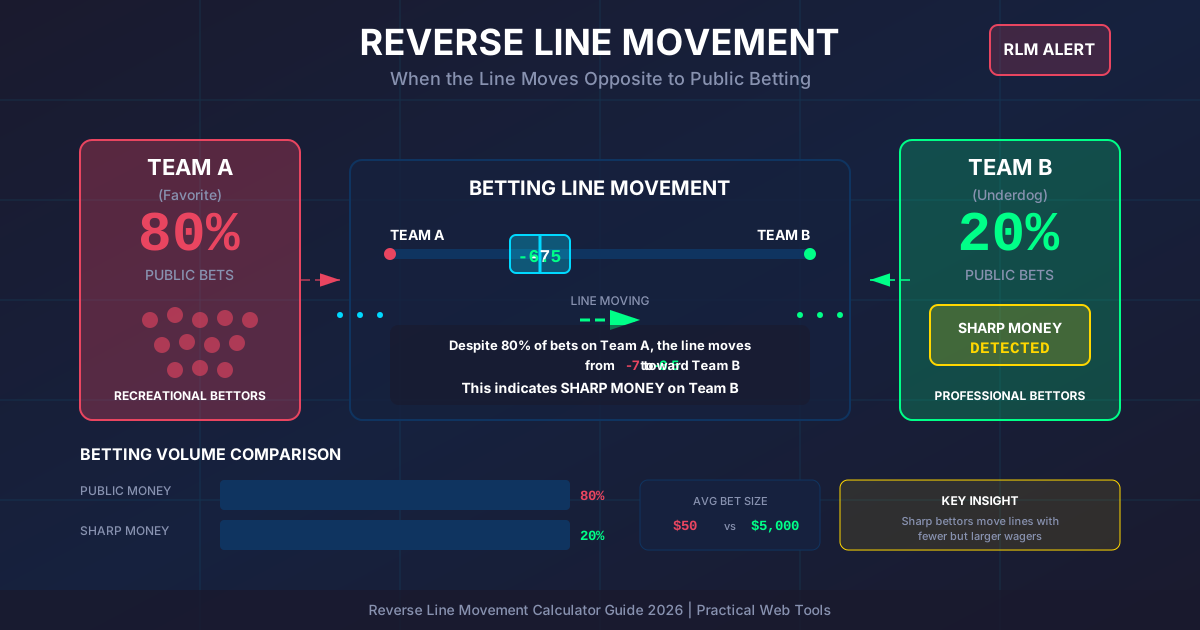
When 80% of the public bets on one side of a game, yet the line moves against them, something important is happening. That divergence between public money and line movement is one of the most reliable signals in sports betting -- it means sharp money is pushing the line the other direction. Understanding public betting percentages and how to interpret them is a core skill for any serious sports bettor.
Public betting data reveals where the majority of recreational bettors are placing their money, and more importantly, where they are not. Since sportsbooks are profitable because the public loses over time, knowing where the public is concentrated gives you a roadmap for potential value on the other side.
This guide covers what betting percentages actually show, how to read bet splits vs. dollar splits, when "fade the public" works and when it does not, reverse line movement, sharp money indicators, and how to integrate consensus data with other handicapping methods.
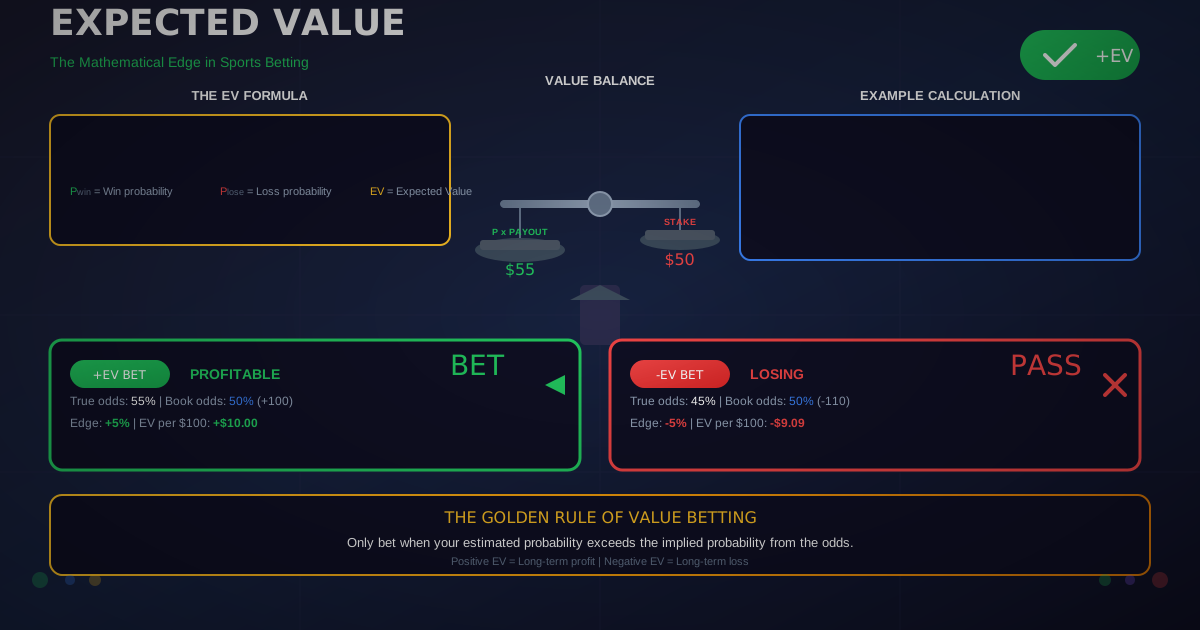
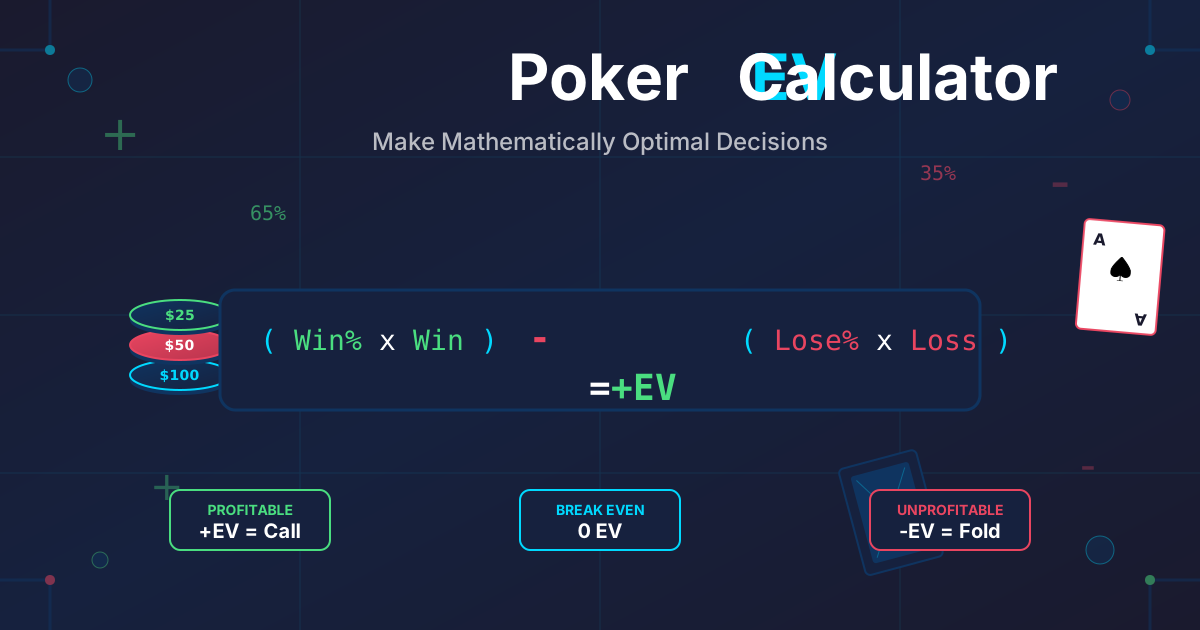
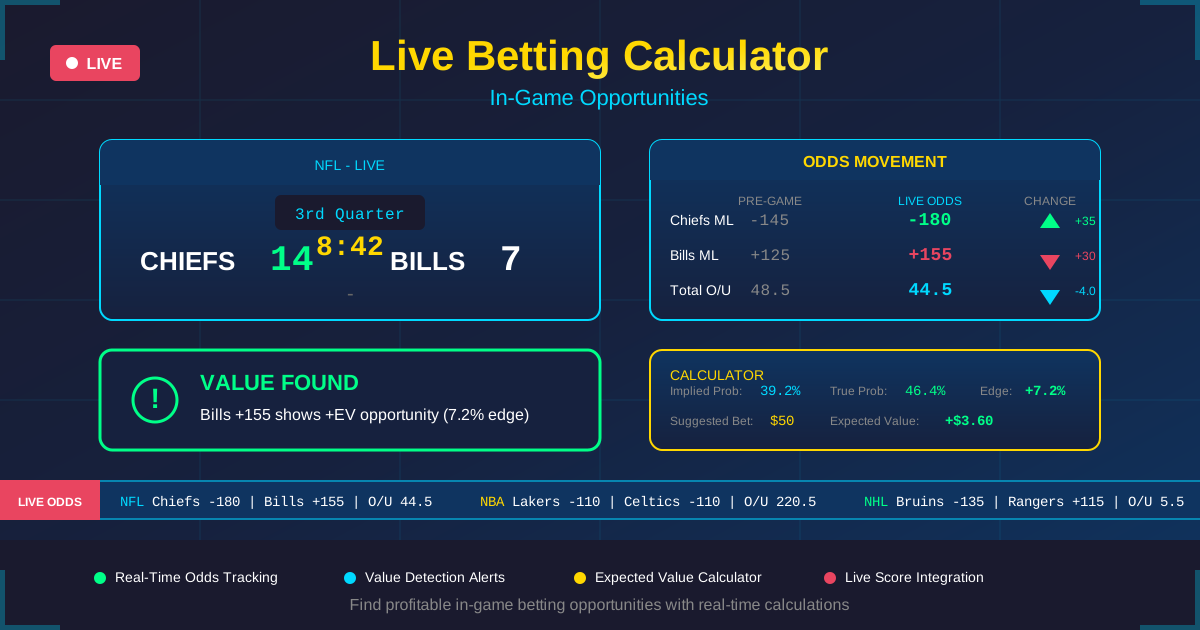
Calculate the expected value of any bet -- including contrarian plays -- with our free Expected Value Calculator.
What Do Public Betting Percentages Actually Show?
Public betting percentages show the distribution of bets or dollars wagered on each side of a betting market. They are reported as a percentage split -- for example, "75% of bets are on the Chiefs -3" -- and are collected from a sample of sportsbooks that share their betting activity data.
Bet Percentage vs. Dollar Percentage
This distinction is critical and is the foundation of all sharp money analysis.
| Metric | What It Measures | What It Reveals |
|---|---|---|
| Bet % (ticket count) | Percentage of individual bets on each side | Where the public is (many small bets) |
| Dollar % (money) | Percentage of total dollars wagered on each side | Where sharp money is (fewer, larger bets) |
| The split | When bet % and dollar % diverge | When sharp money disagrees with the public |
Example:
- Game: Patriots -3 vs. Jets +3
- Bet %: 78% Patriots, 22% Jets
- Dollar %: 45% Patriots, 55% Jets
What this tells you: 78% of bettors (mostly recreational) are on the Patriots. But 55% of the total dollars are on the Jets. This means a smaller number of bettors are placing much larger bets on the Jets. Large bets typically come from sharp/professional bettors. This bet vs. money divergence is a sharp money signal.
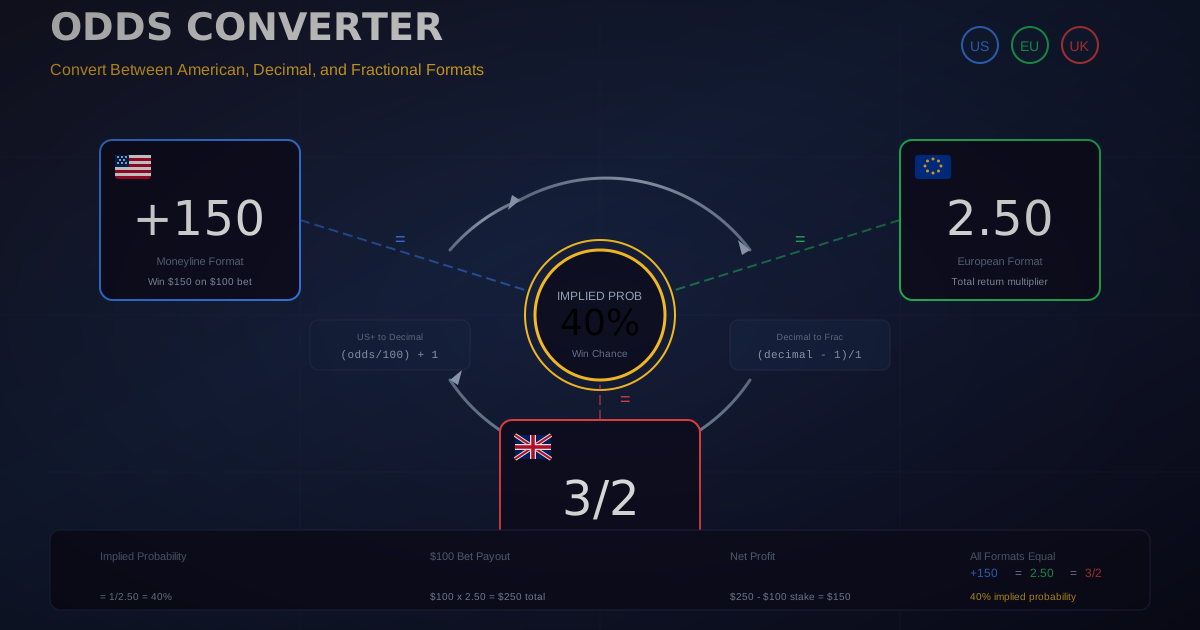
Convert the odds on both sides with our Odds Converter to see the exact implied probabilities.
Where Does Public Betting Data Come From?
Public betting data is collected from sportsbooks that voluntarily share their handle (money wagered) and ticket count data with aggregator platforms. Not all sportsbooks share data, so the percentages are estimates based on a sample.
| Data Source | Sportsbooks Sampled | Data Quality | Free Access |
|---|---|---|---|
| The Action Network | DraftKings, BetMGM, and others | High -- multiple large US books | Yes (basic splits), Premium (full data) |
| Covers.com | Multiple offshore and US books | Good -- long track record | Yes |
| VegasInsider | Las Vegas books + online | Good -- Vegas-focused data | Yes |
| Pregame.com | Multiple sources | Good | Yes (limited) |
| BetQL | Proprietary aggregation | Good | Premium only |
Important caveat: No single source captures all betting activity. Offshore books, betting exchanges, and private books are not included. The data represents a meaningful sample but not the entire market.
How Do You Read Betting Splits Correctly?
Reading betting splits requires understanding that the numbers represent a sample, not a census, and that the relationship between bet percentage and money percentage is what matters most.
Interpreting Common Split Scenarios
| Bet % | Dollar % | Line Movement | Interpretation |
|---|---|---|---|
| 80% Side A | 80% Side A | Line moves toward Side A | Public and sharp money agree -- no contrarian value |
| 80% Side A | 80% Side A | Line stays flat | Books comfortable with liability -- balanced action from limits |
| 80% Side A | 50% Side A | Line moves toward Side B | Sharp money on Side B -- classic "fade the public" spot |
| 80% Side A | 50% Side A | Line stays flat | Mixed signals -- sharps may be on Side B but not aggressively |
| 60% Side A | 40% Side A | Line moves toward Side B | Strong sharp action on Side B despite moderate public |
| 50/50 | 50/50 | No movement | Perfectly balanced market -- no signal |
The Key Thresholds
| Public Bet % | Classification | Betting Implication |
|---|---|---|
| <55% | Split market | No clear public side; limited contrarian value |
| 55-65% | Moderate public lean | Some potential for contrarian value if other signals align |
| 65-75% | Heavy public lean | Contrarian value worth investigating |
| 75-85% | Extreme public concentration | Strong contrarian signal if line moves against public |
| 85%+ | Overwhelming public consensus | Rare; can be a trap (sometimes public is right on obvious mismatches) |
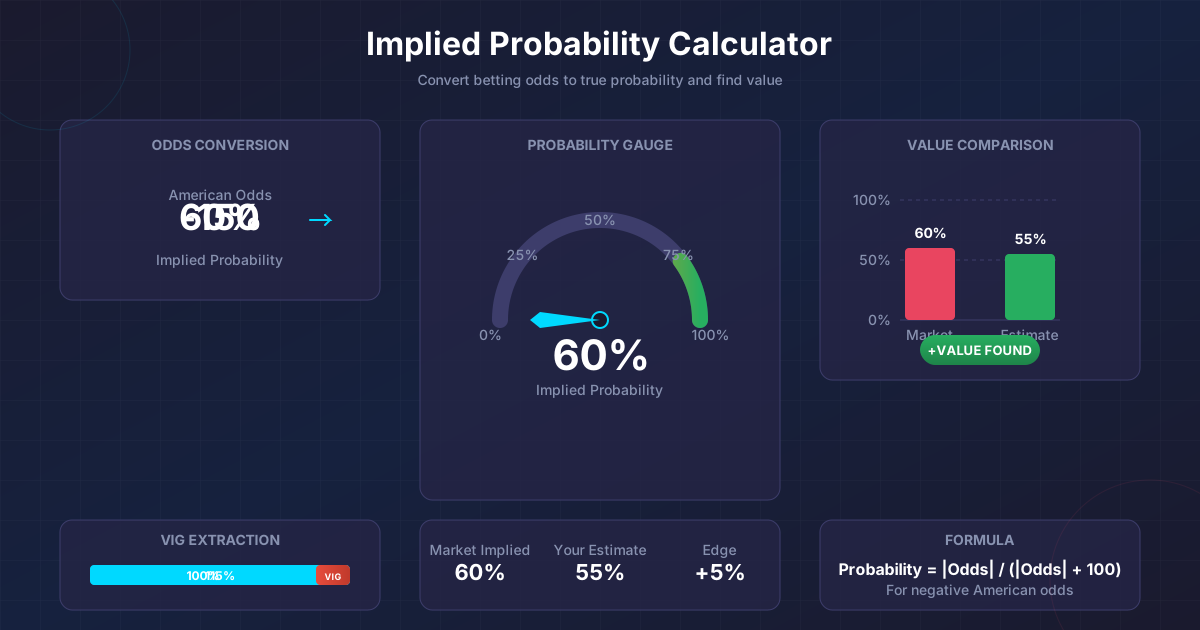
Calculate the implied probability at both the opening and closing line with our Implied Probability Calculator.
Does "Fade the Public" Actually Work?
"Fade the public" (betting against the majority) is one of the oldest sports betting strategies. The logic is simple: since the public loses over time, betting against them should be profitable. But the reality is more nuanced.
Historical Performance of Contrarian Betting
| Sport | Threshold | Contrarian Side ATS Record | ROI | Sample (2015-2025) |
|---|---|---|---|---|
| NFL Sides | 70%+ public on one side | 52.8% | +2.1% | 2,400 games |
| NFL Totals | 70%+ public on over | Under 52.4% | +1.6% | 1,800 games |
| NBA Sides | 70%+ public on one side | 52.1% | +1.2% | 8,200 games |
| NBA Totals | 70%+ public on over | Under 51.8% | +0.8% | 6,400 games |
| MLB Sides | 70%+ public on one side | 51.5% | +1.8% (underdogs at better odds) | 12,000 games |
| NHL Sides | 65%+ public on one side | 51.9% | +1.4% | 5,600 games |
| College Football | 75%+ public on one side | 53.2% | +2.6% | 3,200 games |
Key findings:
- Contrarian betting has shown a modest positive return across all major sports
- NFL and college football show the strongest contrarian effect
- The edge is small (1-3% ROI) and requires volume
- The threshold matters -- higher public percentages correlate with better contrarian returns
- Blindly fading the public is marginally profitable but not a standalone system
When Fading the Public Works Best
| Condition | Why It Works | Example |
|---|---|---|
| Public on big favorite + line moves toward underdog | Sharps are on the underdog despite public consensus | Chiefs -7, 80% public, line drops to -6.5 |
| Prime-time games with heavy public action | Casual bettors inflate one side on nationally televised games | Monday Night Football overs |
| Rivalry games | Public overvalues name recognition and narrative | Alabama vs. random SEC opponent |
| Teams on winning streaks | Public overweights recent results (recency bias) | Team on 5-game win streak as heavy public favorite |
| Large market teams | Casual fans bet their favorite teams | Yankees, Lakers, Cowboys as public favorites |
When Fading the Public Does NOT Work
| Condition | Why It Fails | Example |
|---|---|---|
| Public on massive favorite with clear talent gap | Sometimes the public is right -- talent gaps are real | Prime Mahomes vs. a 3-win team |
| Sharp money agrees with public | When bet % and dollar % both favor the same side | 80% bet and 80% money on the same team |
| Small sample early in the season | Insufficient data for reliable public percentages | Week 1-2 of NFL season |
| Low-profile games with minimal public interest | When "public" bets are actually just sharp accounts | Weekday MiLB or lower-league soccer |
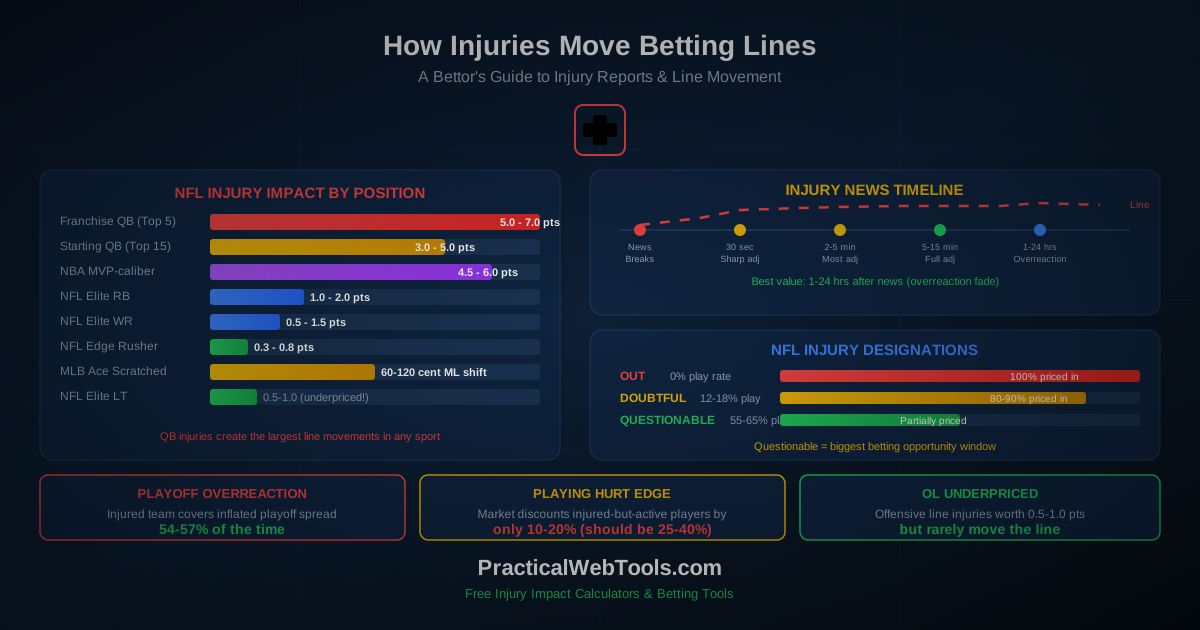
| Weather or injury-driven line movement | Line moving for fundamental reasons, not sharp/public split | Star QB ruled out, line moves appropriately |
Use our Expected Value Calculator to determine if a contrarian bet actually offers positive expected value, not just contrarian sentiment.
What Is Reverse Line Movement and Why Does It Matter?
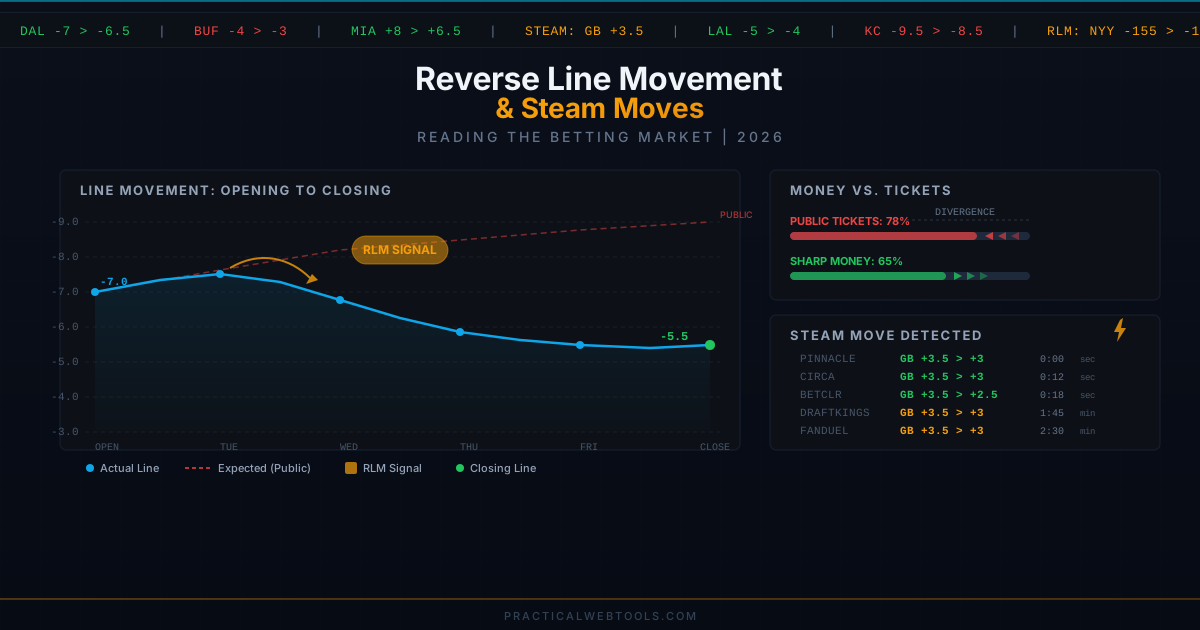
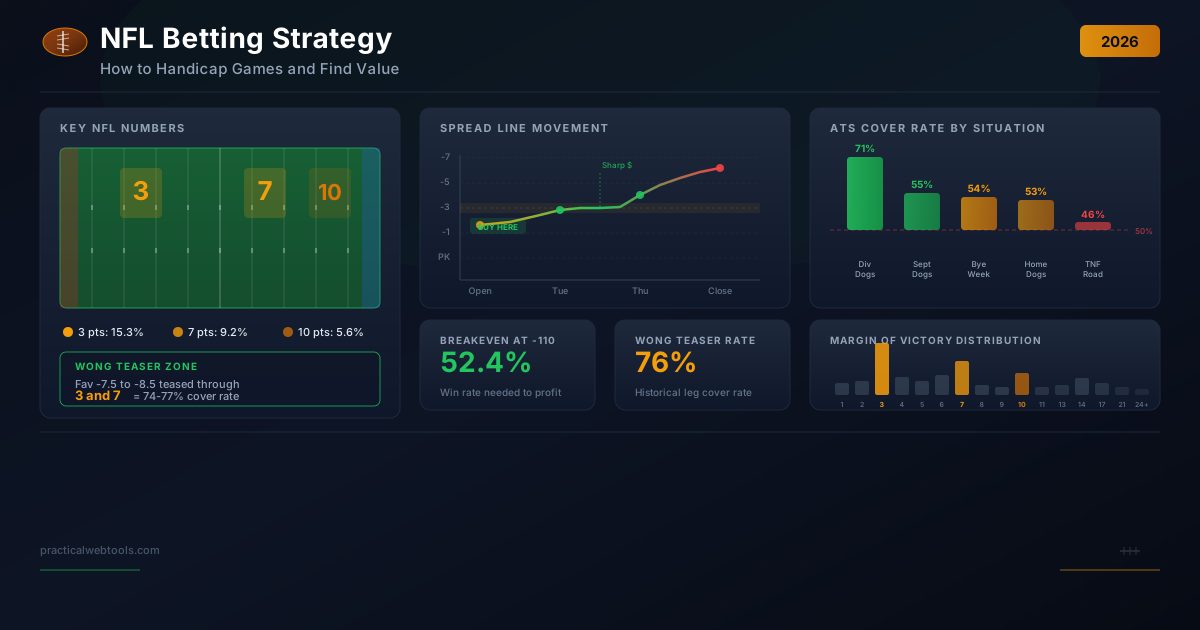
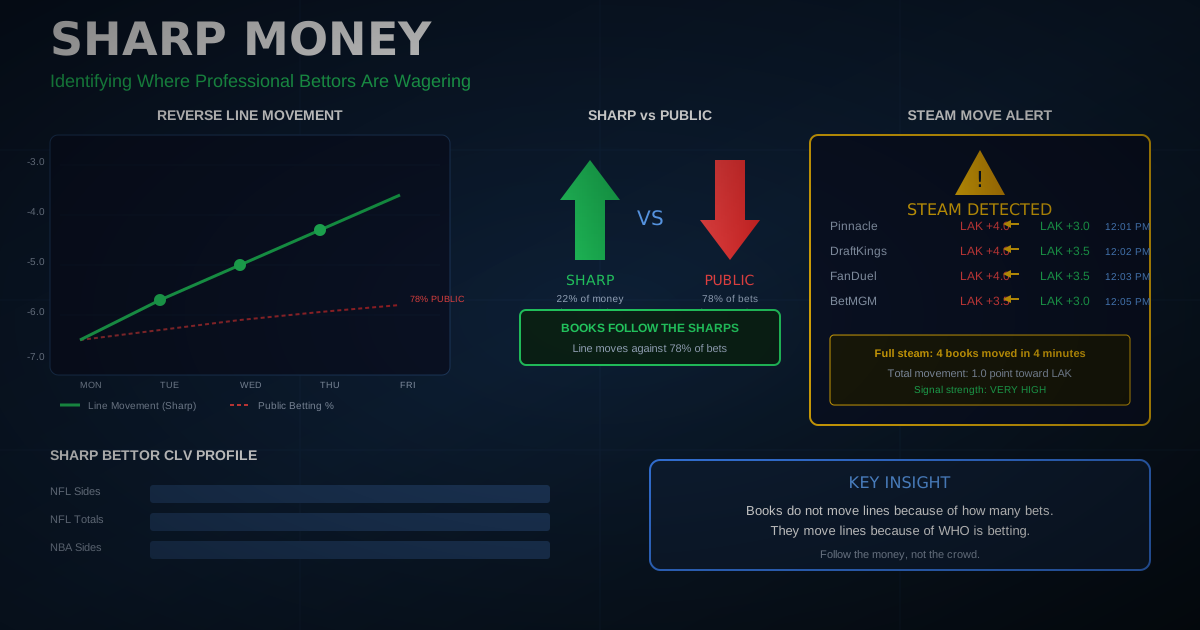
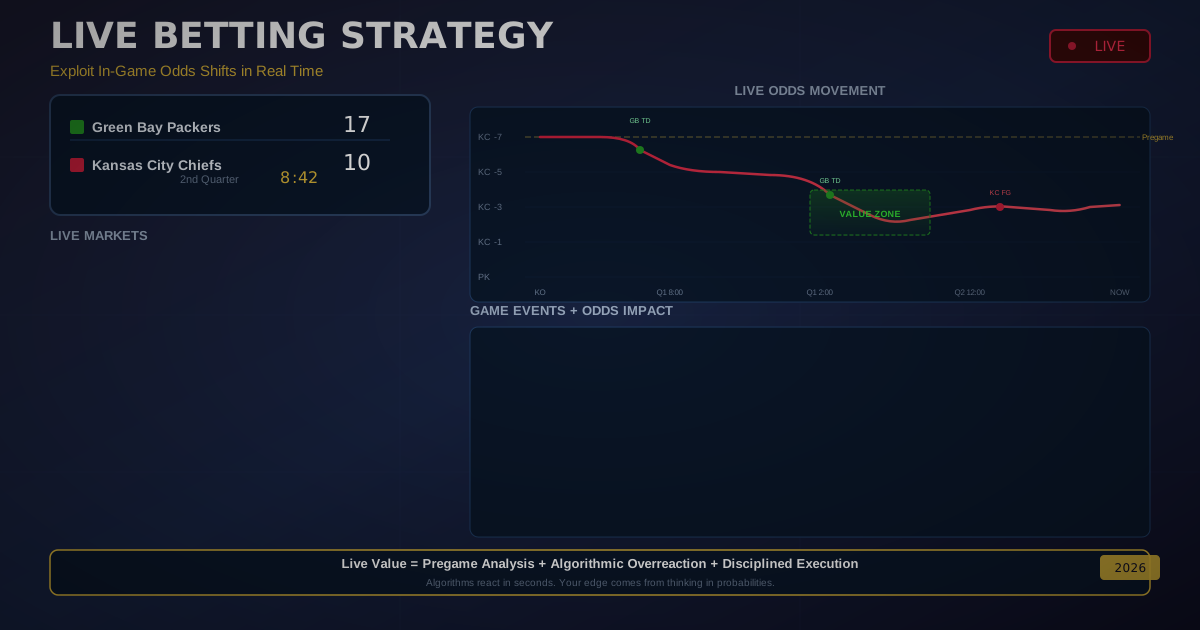
Reverse line movement (RLM) is the most important concept in public betting analysis. It occurs when the line moves in the opposite direction from where the majority of bets are placed.
How Reverse Line Movement Works
Normal line movement: 80% of bets on Team A causes the line to move toward Team A (e.g., from -3 to -3.5).
Reverse line movement: 80% of bets on Team A, but the line moves toward Team B (e.g., from -3 to -2.5).
Why does this happen? The sportsbook is receiving far more individual bets on Team A, but the dollar volume on Team B is greater because sharp bettors are placing large wagers on Team B. The sportsbook moves the line to balance its liability based on dollar exposure, not ticket count.
RLM Decision Framework
| Scenario | Bet % | Line Direction | RLM? | Action |
|---|---|---|---|---|
| A | 75% Team A | Line moves to Team A | No | Normal movement -- no signal |
| B | 75% Team A | Line stays flat | Mild | Possible sharp interest on Team B, monitor |
| C | 75% Team A | Line moves to Team B | Yes | Strong sharp signal on Team B |
| D | 75% Team A | Line moves significantly to Team B (1+ points) | Strong RLM | Very strong sharp signal -- high conviction |
RLM Historical Performance
| Sport | RLM Games Identified | Contrarian (RLM side) ATS | ROI |
|---|---|---|---|
| NFL | 340/season avg | 54.2% | +4.1% |
| NBA | 820/season avg | 53.1% | +2.8% |
| MLB | 1,100/season avg | 52.8% | +3.2% |
| NHL | 480/season avg | 52.5% | +2.2% |
RLM-identified bets consistently outperform both blind contrarian betting and random selection. The reason is clear: RLM identifies specific games where sharp money is concentrated on one side, rather than broadly fading the public.
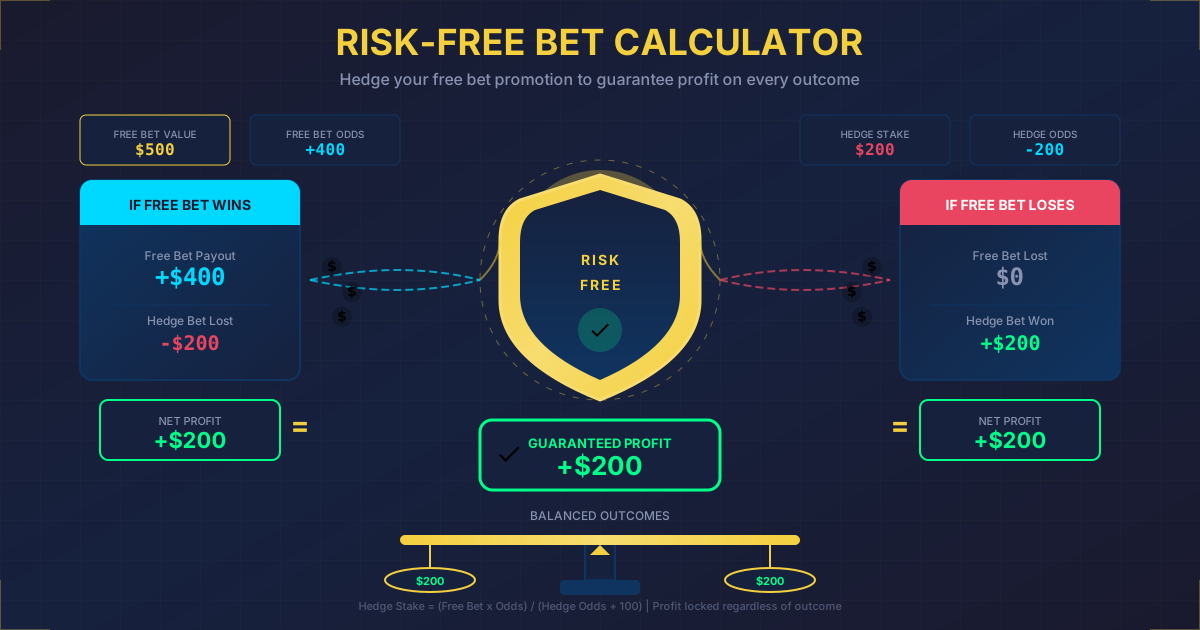
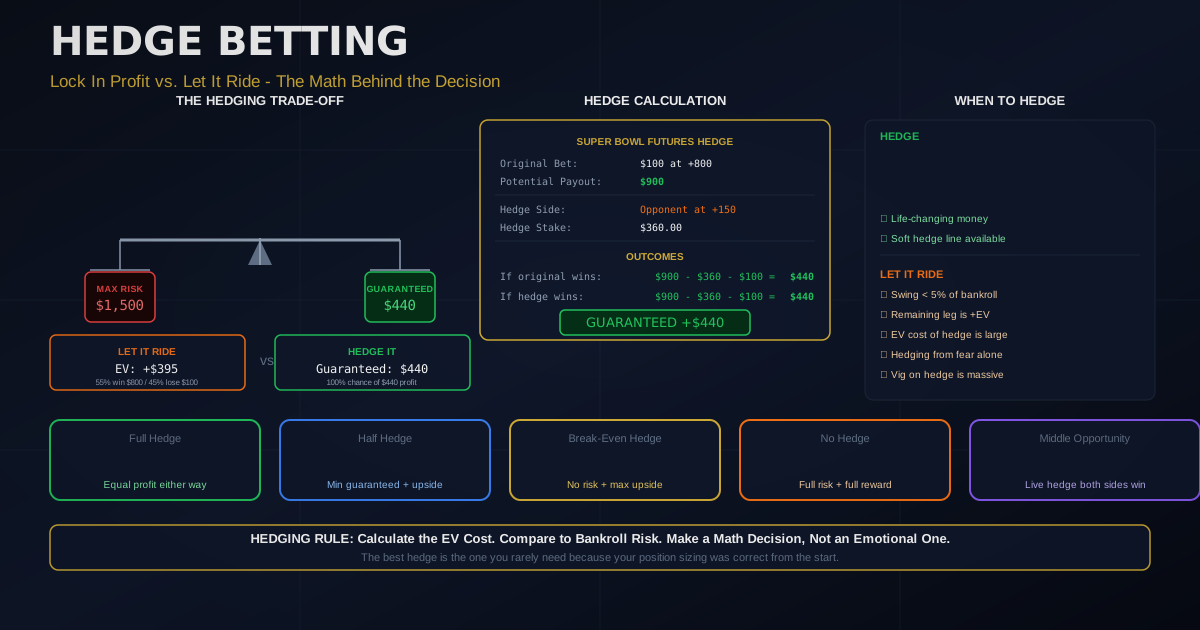
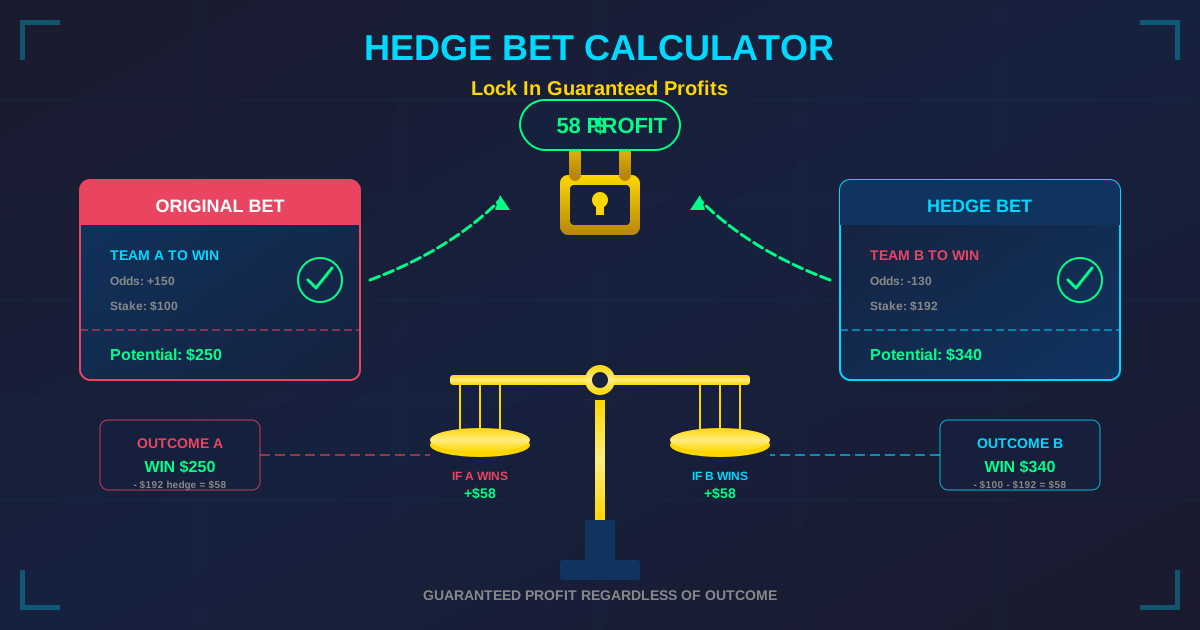
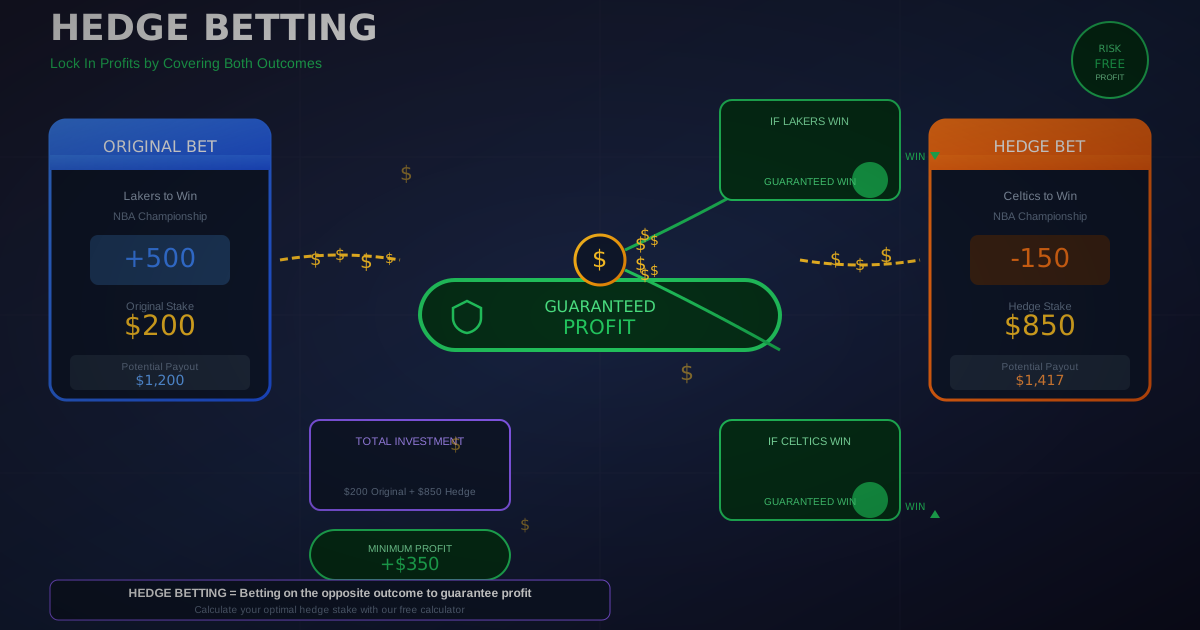
Calculate exact profit scenarios with our Hedge Calculator when an RLM bet moves to profitable territory.
How to Spot Reverse Line Movement
| Step | Action | Tool |
|---|---|---|
| 1 | Note the opening line when it is first released | VegasInsider, Covers |
| 2 | Check public betting percentages | Action Network, Covers |
| 3 | Compare current line to opening line | Any odds tracker |
| 4 | If line has moved opposite to the public majority, RLM is occurring | Your analysis |
| 5 | Verify with dollar percentage if available | Action Network (premium) |
| 6 | Combine with your own analysis before betting | Multiple sources |
How Do You Distinguish Sharp Money from Public Money?
The distinction between sharp and public money is the foundation of profitable consensus-based betting. Sharps and recreational bettors behave differently, and understanding these behavioral differences helps you identify which side of a bet is being driven by informed money.
Sharp vs. Public Bettor Characteristics
| Characteristic | Sharp Bettors | Public Bettors |
|---|---|---|
| Bet size | Large ($5,000-$100,000+) | Small ($10-$500) |
| Timing | Bet early (when lines first open) | Bet late (day of game, at game time) |
| Side preference | Underdogs, contrarian, value-based | Favorites, popular teams, overs |
| Bet type | Straight bets (sides, totals) | Parlays, teasers, same-game parlays |
| Market impact | Move lines (sportsbooks adjust) | Absorbed by sportsbook (no line movement) |
| Volume | Selective (2-5 bets/day) | High volume (10+ bets/day) |
| Reaction to line movement | Bet into favorable moves, wait for bad lines | Chase steam, bet worse numbers |
Identifying Sharp Action in Real-Time
| Signal | What It Means | Reliability |
|---|---|---|
| Early line movement (within first hour) | Sharp bettors typically bet first | High |
| Reverse line movement | Large bets on minority side | High |
| Line movement at off-peak hours | Sharps bet when markets open, not during primetime | Moderate-High |
| Steam move (rapid line change across books) | Coordinated sharp action triggers cascading moves | High |
| Line moves on no news | Not injury or weather -- it is money | High |
| Bet/money split divergence | Small ticket count driving majority of dollars | High |
Steam Moves Explained
A steam move is a rapid, significant line movement that cascades across multiple sportsbooks within minutes. It is the strongest indicator of sharp action.
How steam moves work:
- A sharp bettor or syndicate places a large bet at one sportsbook
- That book moves its line to reduce exposure
- Middlemen (runners, line watchers) spot the move and bet the original line at other books
- Those books also move their lines
- Within 5-15 minutes, every major sportsbook has adjusted
| Steam Move Characteristic | Description |
|---|---|
| Speed | 5-15 minutes across the market |
| Magnitude | 0.5-2 points on spread, 5-15 cents on moneyline |
| Origin | Usually starts at sharp books (Pinnacle, Circa, CRIS) |
| Direction | Can go either way -- not always against public |
| Timing | Any time, but common when lines first open and day of game |
Compare the odds before and after a steam move with our Odds Converter and calculate the value differential with our Implied Probability Calculator.
What Are Sport-by-Sport Public Betting Tendencies?
Each sport has distinct public betting patterns that experienced bettors exploit.
NFL Public Betting Tendencies
| Tendency | Details | Contrarian Approach |
|---|---|---|
| Favorites | Public bets favorites 65-70% of the time | Look for underdog value, especially +3 to +7 |
| Overs | Public bets overs 55-60% of the time | Under has been profitable when public % exceeds 65% |
| Home teams | Public slight bias toward home teams | Road teams offer value as contrarian plays |
| Prime time | Heaviest public action on TNF/SNF/MNF | Contrarian plays most valuable in prime time |
| Big names | Public overvalues QB brand names | Fade overhyped QBs when market overreacts |
| Revenge games | Public loves "revenge" narratives | Revenge factor is statistically meaningless |
NBA Public Betting Tendencies
| Tendency | Details | Contrarian Approach |
|---|---|---|
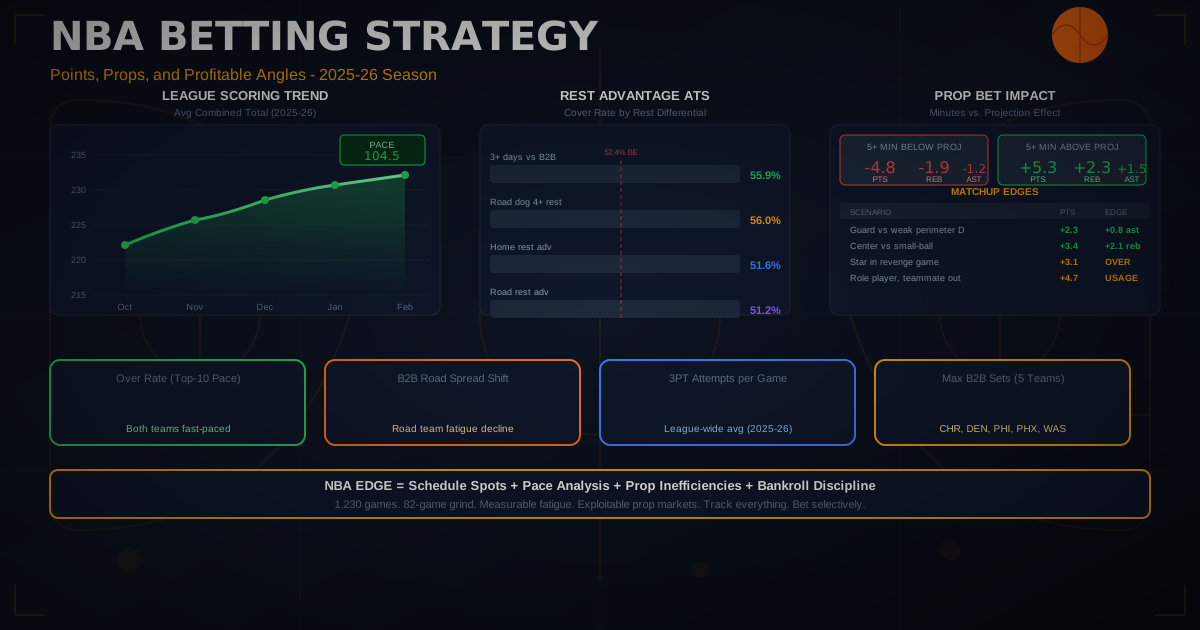
| Heavy favorites (-8 or more) | Public loves large favorites | Big underdogs cover at elevated rates |
| Overs | Public consistently bets overs | Under has marginal edge at 60%+ public |
| Back-to-back fade | Public fades teams on second night of back-to-back | Over-adjustment creates value on B2B teams |
| Star player bias | Public overweights star player impact | Team depth often matters more |
| Nationally televised | Higher public handle on ESPN/TNT games | Contrarian value increases |
MLB Public Betting Tendencies
| Tendency | Details | Contrarian Approach |
|---|---|---|
| Big favorites (-180+) | Public bets heavily on large favorites | Underdogs are profitable at extreme prices |
| Named pitchers | Public overvalues famous pitchers | Reverse line movement against aces can be strong |
| Run lines | Public takes favorites on run line (-1.5) | Underdog +1.5 offers consistent value |
| Totals | Public leans slightly to overs | Marginal under value at extreme public % |
| Hot/cold teams | Public chases winning/losing streaks | Mean reversion creates contrarian value |
NHL Public Betting Tendencies
| Tendency | Details | Contrarian Approach |
|---|---|---|
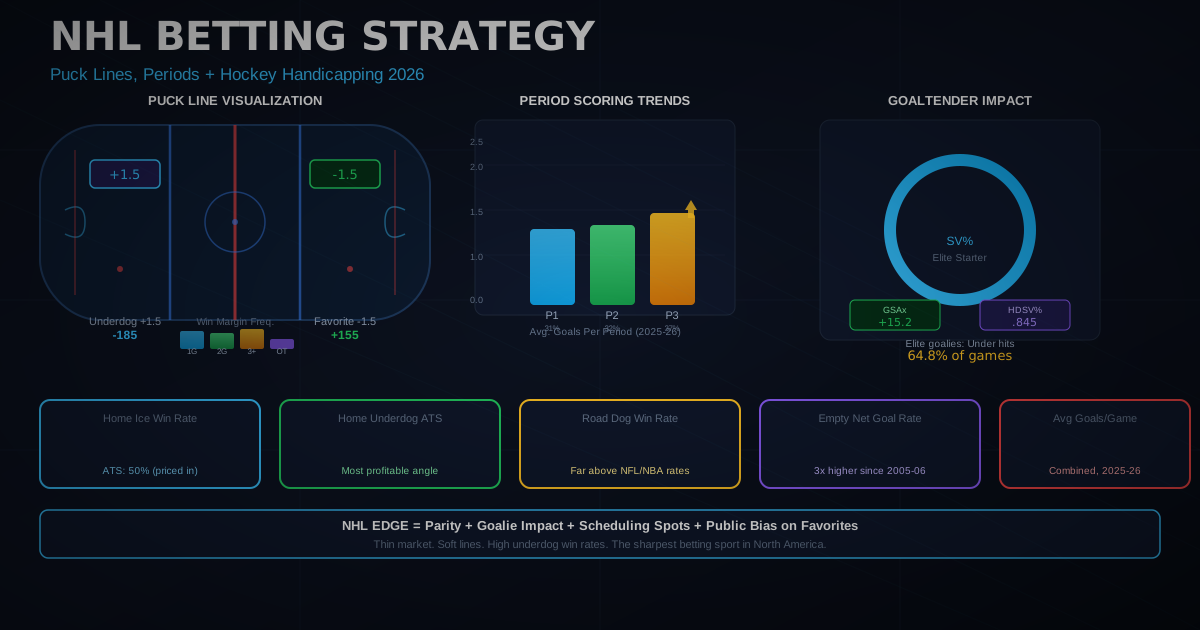
| Favorites | Public bets favorites but NHL parity is extreme | Road underdogs (+120 to +180) offer value |
| Totals | More balanced than other sports | Less contrarian edge on NHL totals |
| Playoff intensity | Public overvalues regular season records in playoffs | Playoff experience and goaltending undervalued |
| Home ice | Public overestimates home ice advantage | Road teams cover more than expected |
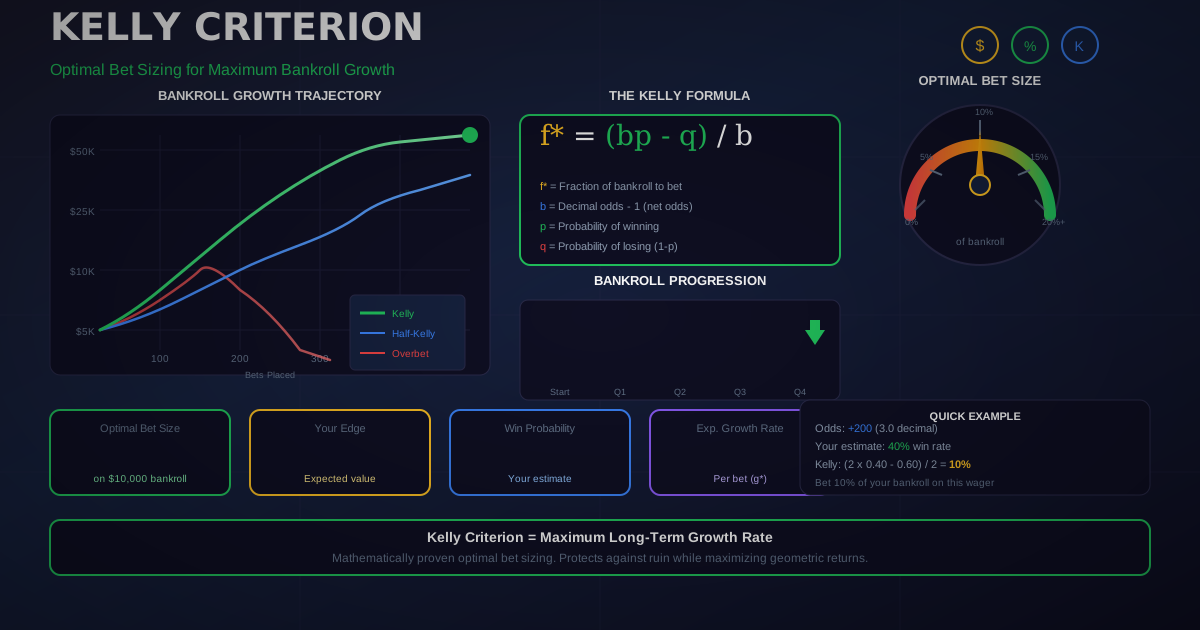
Size your contrarian bets appropriately with our Kelly Criterion Calculator.
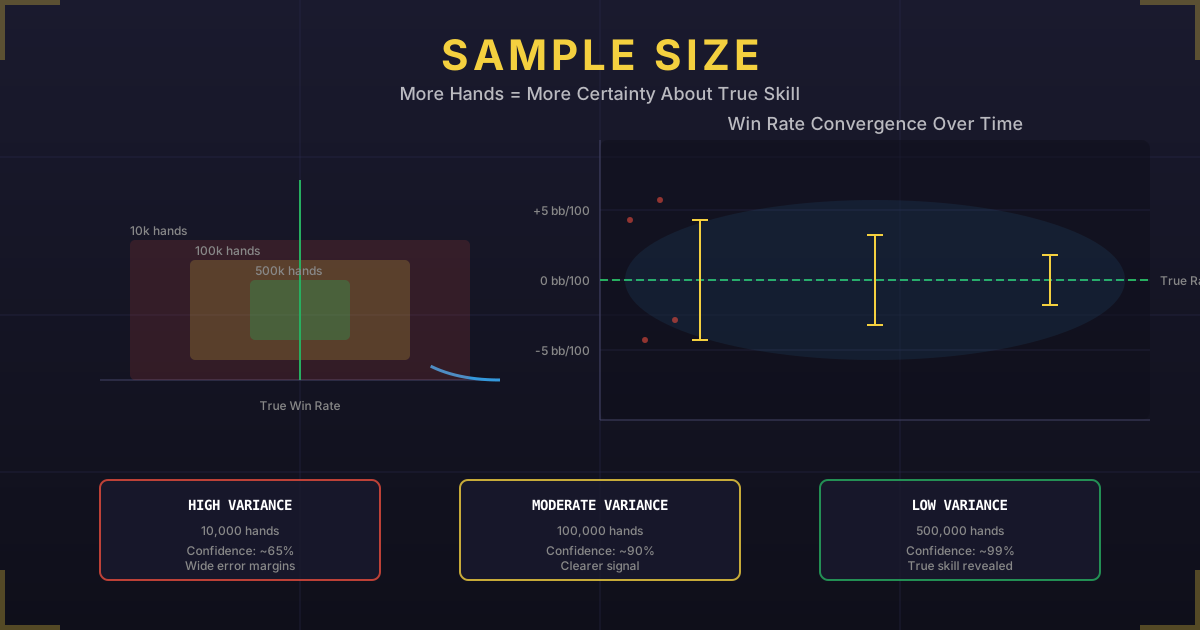
What Sample Size Do You Need for Betting Percentage Data?
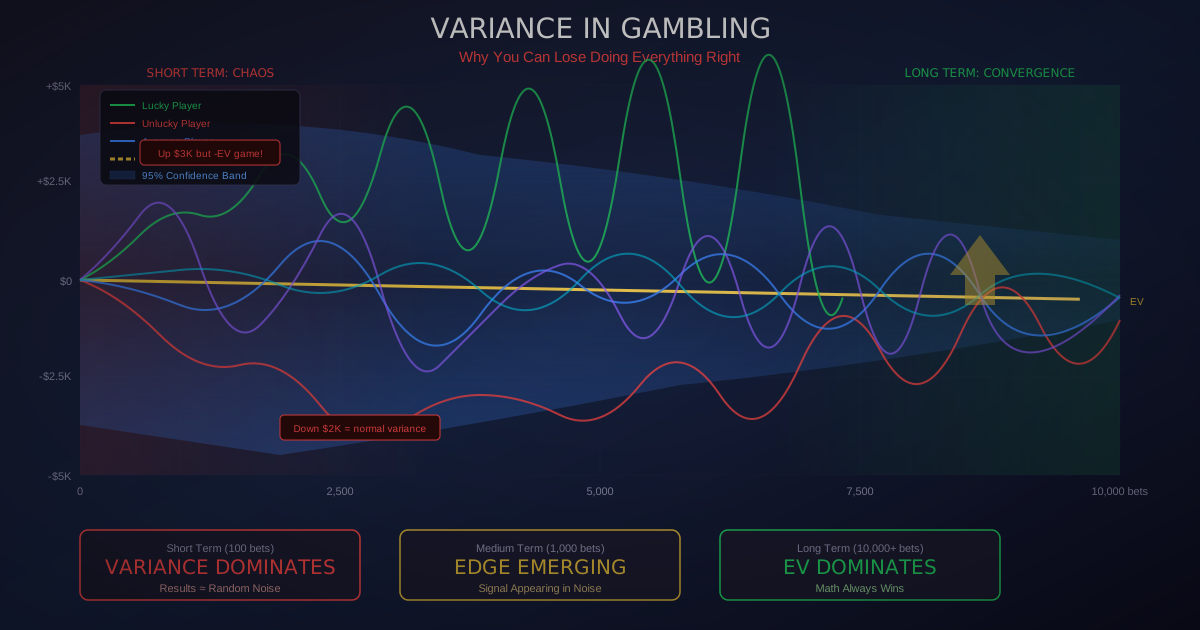
Sample size is critical when using public betting data. Too few games and the signal is noise; too many and the data may include structural market changes.
Minimum Sample Sizes by Application
| Application | Minimum Sample | Why |
|---|---|---|
| Season-long contrarian strategy | 500+ games | Need volume to overcome variance |
| Single sport, single season | 200+ games | Sufficient for basic trends |
| Sharp money identification | 100+ games with RLM | RLM signal is stronger, needs less volume |
| Team-specific public patterns | 50+ games per team | Team-specific patterns need more data |
| Ref/umpire + public combo | 30+ games meeting both criteria | Combo angles require larger base |
| Live betting public data | 50+ opportunities | In-game markets are more volatile |
Data Reliability Considerations
| Factor | Impact on Reliability | Mitigation |
|---|---|---|
| Data source quality | Different sources report different numbers | Cross-reference multiple sources |
| Market structure changes | Legalization has changed the betting landscape | Use post-2018 data primarily (PASPA repeal) |
| Seasonal variation | Public behavior changes (more action during NFL season, less during summer) | Compare like-to-like seasons |
| Line movement timing | Lines move throughout the week -- timing of snapshot matters | Use closing percentages when available |
| Anonymous sharp bets | Some large bets come from syndicates using many small accounts | Dollar percentage may not fully capture sharp action |
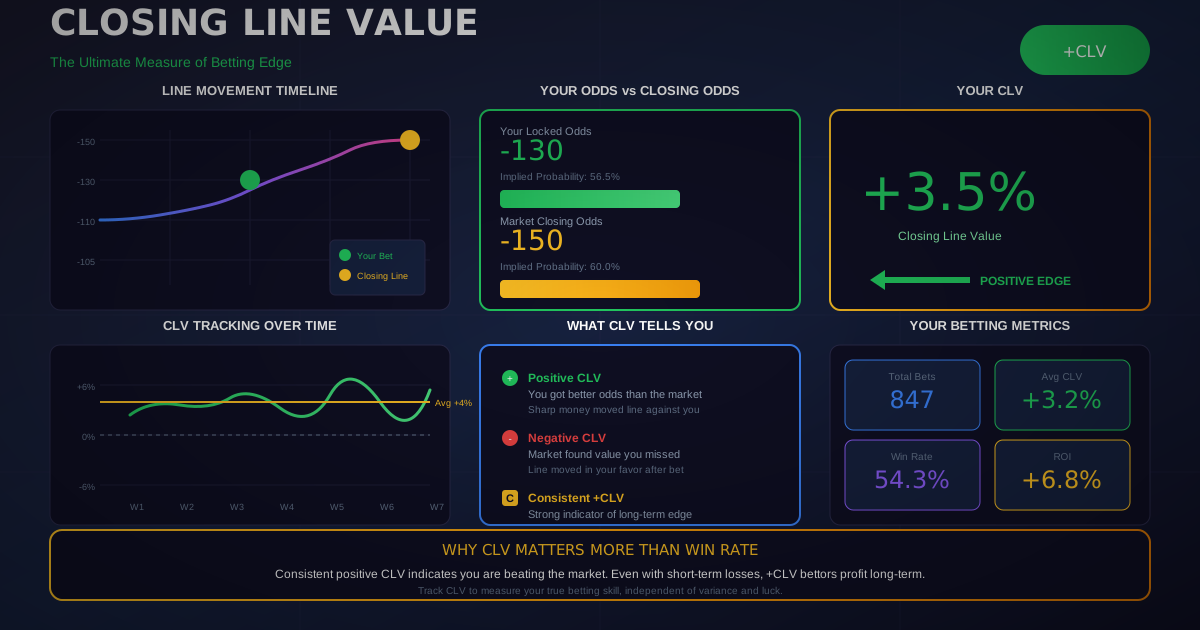
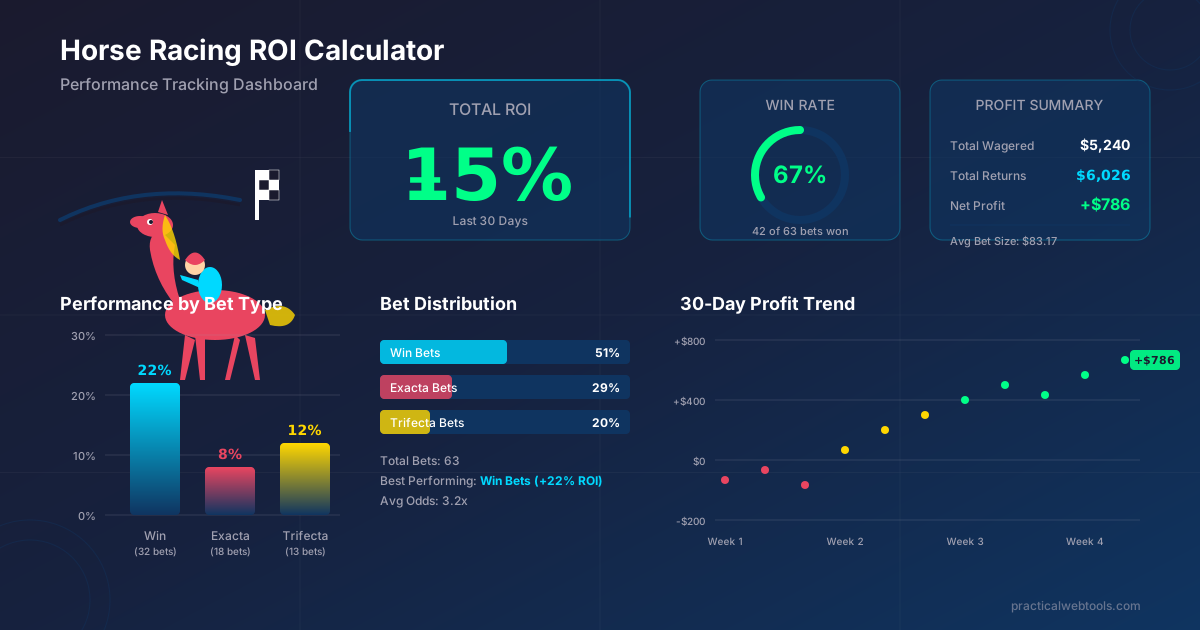
Track your own results against public betting data with our CLV Tracker.
How Do You Combine Public Data with Other Handicapping Methods?
Public betting data is most powerful when combined with independent analysis. Using it as a tiebreaker or confirmation, rather than a primary signal, produces the best results.
Integration Framework
| Your Analysis Says | Public Data Says | Combined Decision |
|---|---|---|
| Lean Team A | 75%+ public on Team A, no RLM | Reduce confidence -- you may be falling into public bias |
| Lean Team A | 75%+ public on Team B, RLM toward Team A | Increase confidence -- you agree with sharp money |
| Lean Team A | 75%+ public on Team A, RLM toward Team B | Reevaluate -- sharp money disagrees with you |
| Lean Team A | 50/50 split, no RLM | Neutral -- proceed with your analysis unchanged |
| No lean | Strong RLM toward Team B | Consider Team B -- RLM provides a tiebreaker |
| No lean | 80% public on Team A, no RLM | Slight lean Team B -- but not enough alone to bet |
A Complete Handicapping Workflow
| Step | Method | Weight |
|---|---|---|
| 1. Power ratings | Your model's rating for each team | 30% |
| 2. Situational factors | Rest, travel, injuries, weather | 20% |
| 3. Line analysis | Opening line, current line, movement | 15% |
| 4. Public betting data | Bet %, dollar %, RLM | 15% |
| 5. Referee/umpire | Official tendencies | 10% |
| 6. Historical trends | ATS in similar situations | 10% |
This weighting is a starting framework. Adjust based on your experience and results tracking.
Run your final probability estimate through our Expected Value Calculator to see if the bet offers positive EV.
What Are Common Mistakes When Using Public Betting Data?
Misinterpreting public betting data is common and can lead to losing bets.
Critical Mistakes to Avoid
| Mistake | Why It Is Wrong | Correct Approach |
|---|---|---|
| Treating all "public" sides equally | 55% public is very different from 85% public | Use higher thresholds (70%+) for meaningful contrarian signals |
| Ignoring dollar percentage | Ticket count alone does not show where smart money is | Always check money % alongside bet % |
| Fading the public on every game | Blind contrarian betting is marginally profitable at best | Only fade when other signals (RLM, sharp money) align |
| Using a single data source | Each source samples different books | Cross-reference Action Network, Covers, and VegasInsider |
| Assuming public data is real-time | Most free data has a delay | Timing of data snapshot matters -- use most current available |
| Equating public wrong = sharp right | Sometimes both sides are wrong, and the line is efficient | Sharp money is not always right; it is just right more often |
| Overweighting contrarian plays | Public data is one input, not the entire analysis | Combine with fundamental analysis, not replace it |
| Ignoring the closing number | Opening public % may differ from closing public % | Closing percentages are more reliable for analysis |
The "Wiseguy" Trap
Some bettors fall into the trap of thinking that any bet against the public is smart. This is the "wiseguy" fallacy -- assuming that being contrarian is sufficient for profitability.
Reality: Contrarian betting provides 1-3% edge in isolation. That is real but modest. The sharps who profit from public betting data also have:
- Sophisticated power rating models
- Access to early lines and best available odds
- High bet volume across hundreds of games
- Emotional discipline to bet objectively
Public data is a tool, not a strategy.
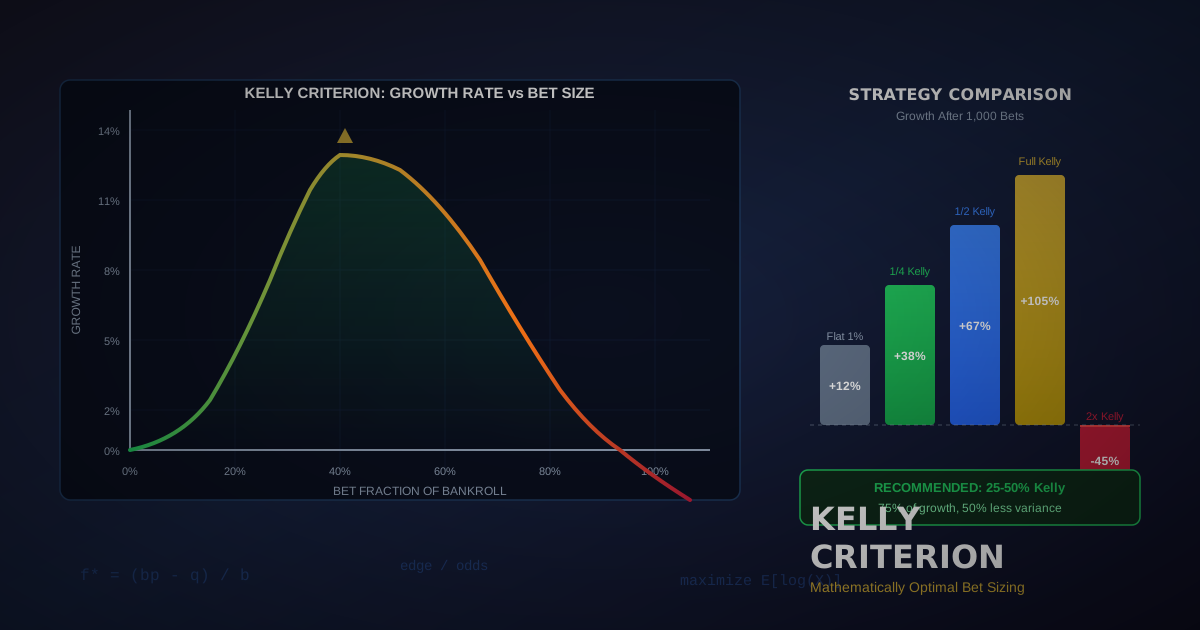
Calculate whether your edge justifies a bet with our Kelly Criterion Calculator. If the Kelly percentage is below 1%, the edge may not justify the variance risk.
How Do Sportsbooks Use Public Betting Data?
Understanding the sportsbook's perspective helps you interpret line movement and public data more effectively.
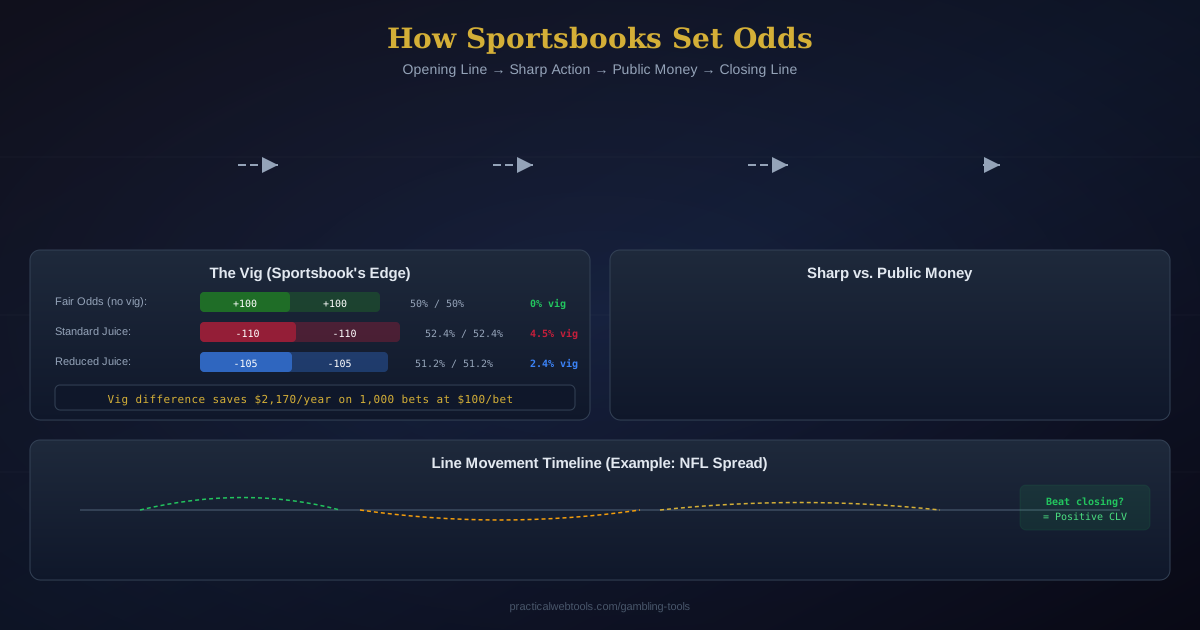
How Books Set and Move Lines
| Stage | What Happens | Implication for Bettors |
|---|---|---|
| Opening line | Market-maker books (Pinnacle, Circa) post opening number based on models | First line is the book's best estimate -- beating it requires genuine edge |
| Early sharp action | Professional bettors bet the opening line aggressively | Lines move 0.5-2 points in first 24 hours |
| Public money flows | Recreational bettors add volume, usually on favorites/overs | Line may move with public or stay flat |
| Adjustment period | Books balance liability based on total dollars, not ticket count | RLM occurs when sharp money outweighs public money |
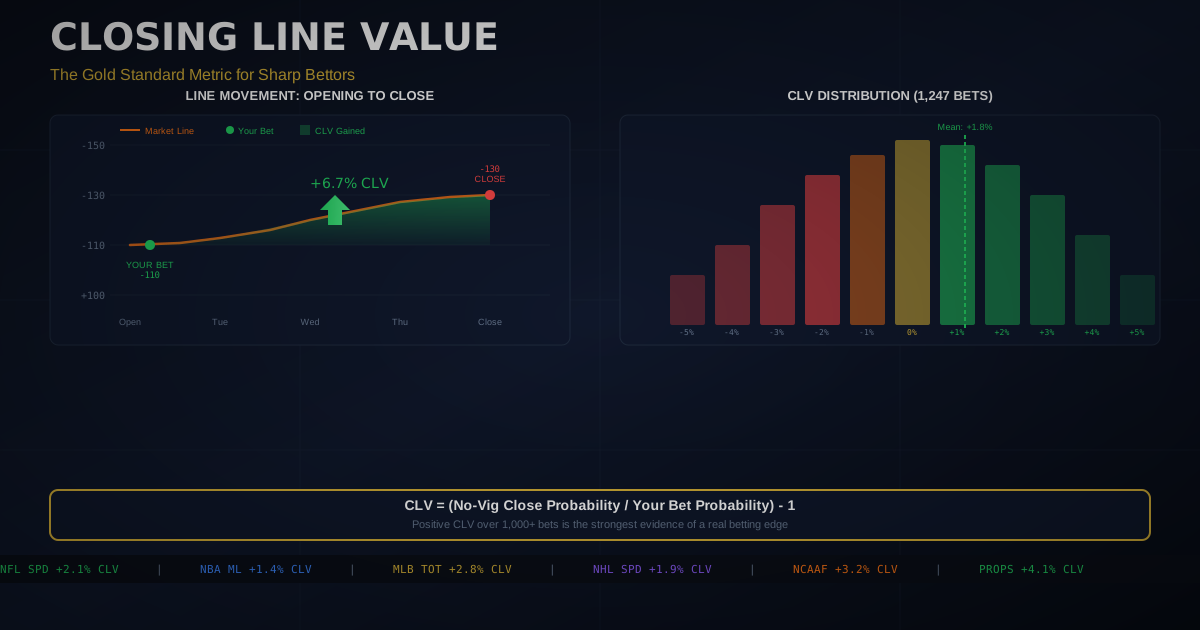
| Closing line | Final number before game -- most efficient | CLV measures your bets vs. this number |
The Myth of "Sportsbooks Need to Balance Action"
A common misconception is that sportsbooks always try to get 50/50 action on both sides. In reality:
- Sharp books (Pinnacle, Circa) are willing to take one-sided action because they trust their line. They profit from the vig on efficient lines.
- Recreational books (DraftKings, FanDuel) are more likely to shade lines toward the public side, accepting a less efficient line to encourage action on the less popular side.
- When books shade lines, they create value on the public side. If DraftKings moves a line to Patriots -4 (from -3) to attract Jets money, the Patriots at -4 may actually be value if -3 was the true number.
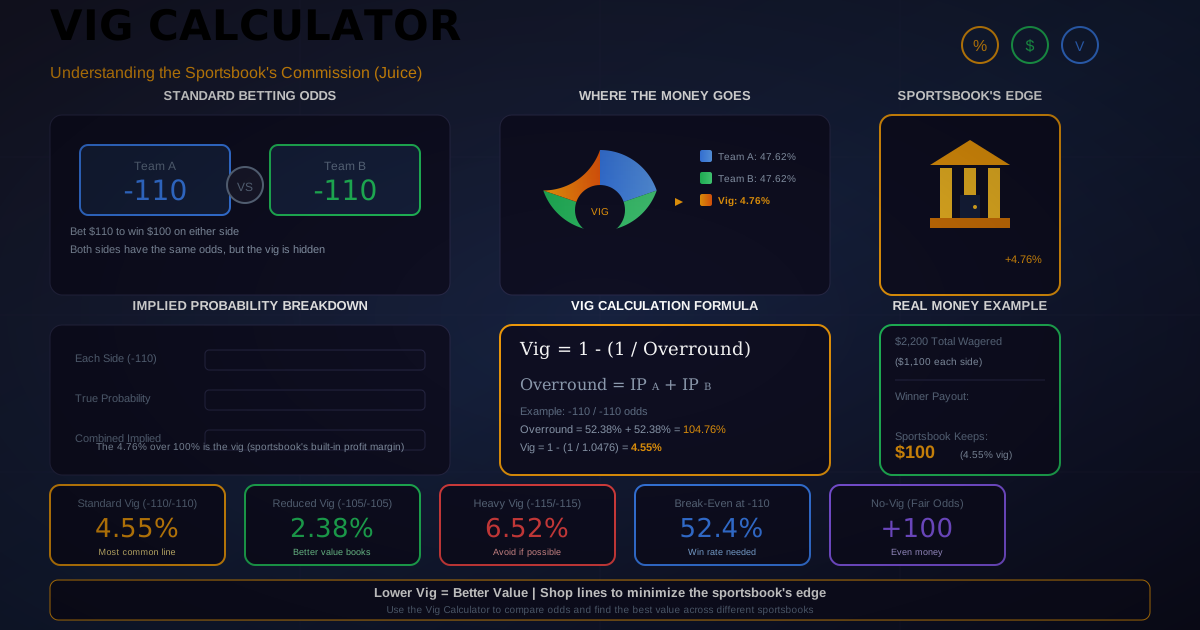
Check the vig on both sides of any line with our Hold/Vig Calculator.
Frequently Asked Questions About Public Betting Percentages
What are public betting percentages? Public betting percentages show the distribution of bets (ticket count) and/or dollars wagered on each side of a betting market. They are collected from sportsbooks that share data with aggregator platforms like The Action Network, Covers, and VegasInsider. They indicate where the majority of bettors are placing their money.
Where can I find free public betting data? The best free sources are Covers.com (public betting percentages for all major sports), VegasInsider.com (consensus data and line movement), and The Action Network free tier (basic splits and line movement). For more detailed bet vs. money splits, Action Network's premium tier is the most comprehensive source.
Is betting against the public profitable? Marginally, yes. Historical data shows that betting against the public (when 70%+ of bets are on one side) produces 1-3% ROI across major sports. However, this is not a strong standalone strategy. It works best when combined with reverse line movement signals and independent handicapping analysis.
What is reverse line movement? Reverse line movement (RLM) occurs when the line moves in the opposite direction from where the majority of public bets are placed. For example, if 80% of bets are on Team A but the line moves in favor of Team B, sharp money is likely driving the movement toward Team B. RLM is one of the strongest signals of sharp action.
What is the difference between bet percentage and money percentage? Bet percentage shows what percentage of individual wagers (tickets) are on each side. Money percentage shows what percentage of total dollars wagered are on each side. When these diverge -- for example, 80% of tickets on Team A but only 45% of dollars -- it indicates that a smaller number of large bets (typically from sharp bettors) are on the opposite side.
How much should I weight public betting data in my handicapping? Public betting data should represent approximately 10-20% of your overall handicapping process. It is most useful as a confirming or conflicting signal alongside your power ratings, situational analysis, and line analysis. Overweighting public data is a common mistake -- use it as one tool among many.
What sports have the strongest contrarian betting edge? NFL and college football show the strongest contrarian edges, likely because they attract the highest percentage of recreational bettors (especially on nationally televised games and popular teams). MLB has a strong contrarian edge on heavy favorites. NBA and NHL show smaller but still positive contrarian effects.
Can sportsbooks see public betting data? Sportsbooks have access to their own real-time betting data (every bet placed, exact dollar amounts, bettor identities). They know exactly who is sharp and who is recreational. The public data you see on aggregator sites is an approximation of what the sportsbooks know in full detail. Books use this information to set and move their lines.
Related Tools for Consensus-Based Betting
Value Identification
- Expected Value Calculator: Calculate whether a contrarian bet offers positive EV
- Implied Probability Calculator: Convert odds to probabilities for comparison
- Odds Converter: Compare odds across sportsbooks and formats
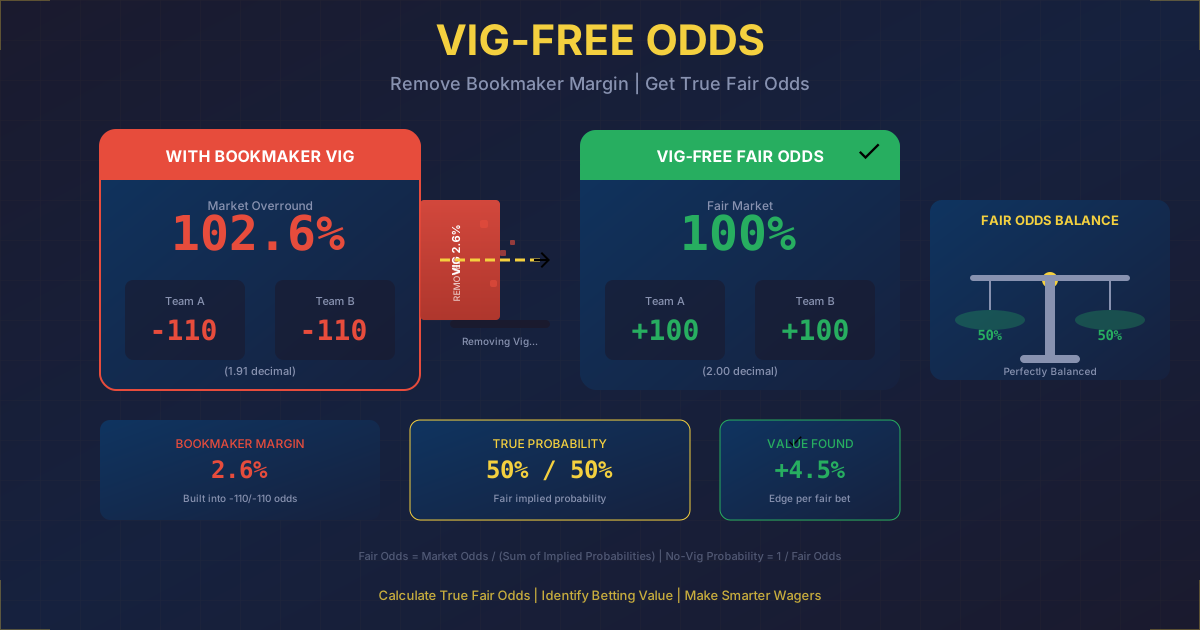
- Hold/Vig Calculator: Understand the sportsbook's margin on each line
Risk Management
- Kelly Criterion Calculator: Size contrarian bets based on estimated edge
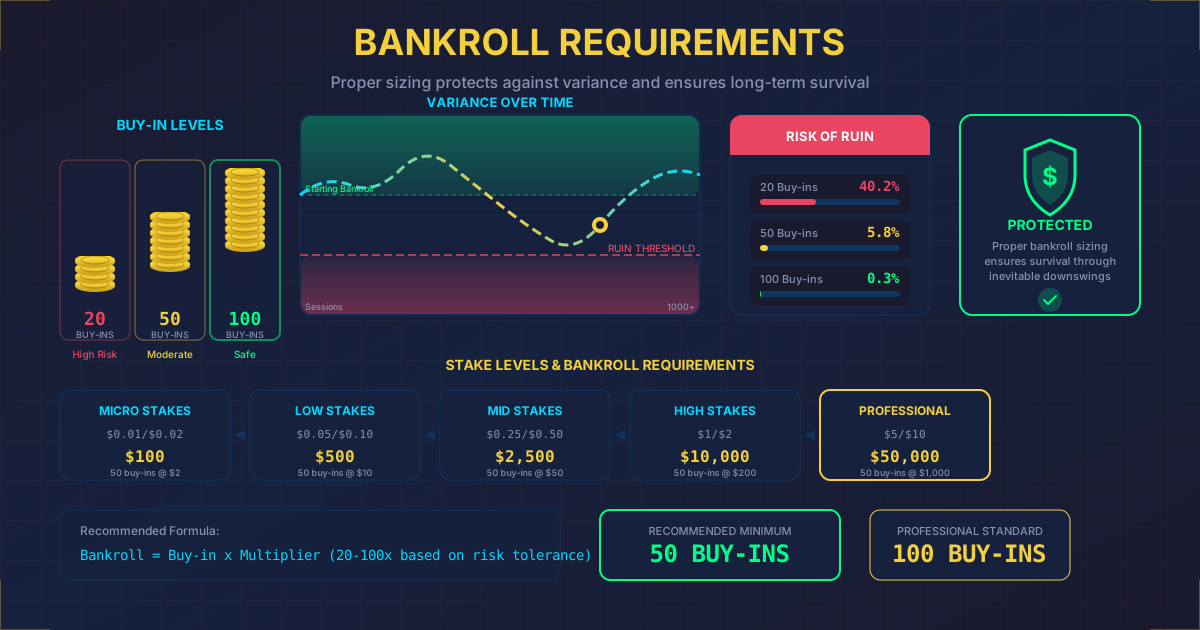
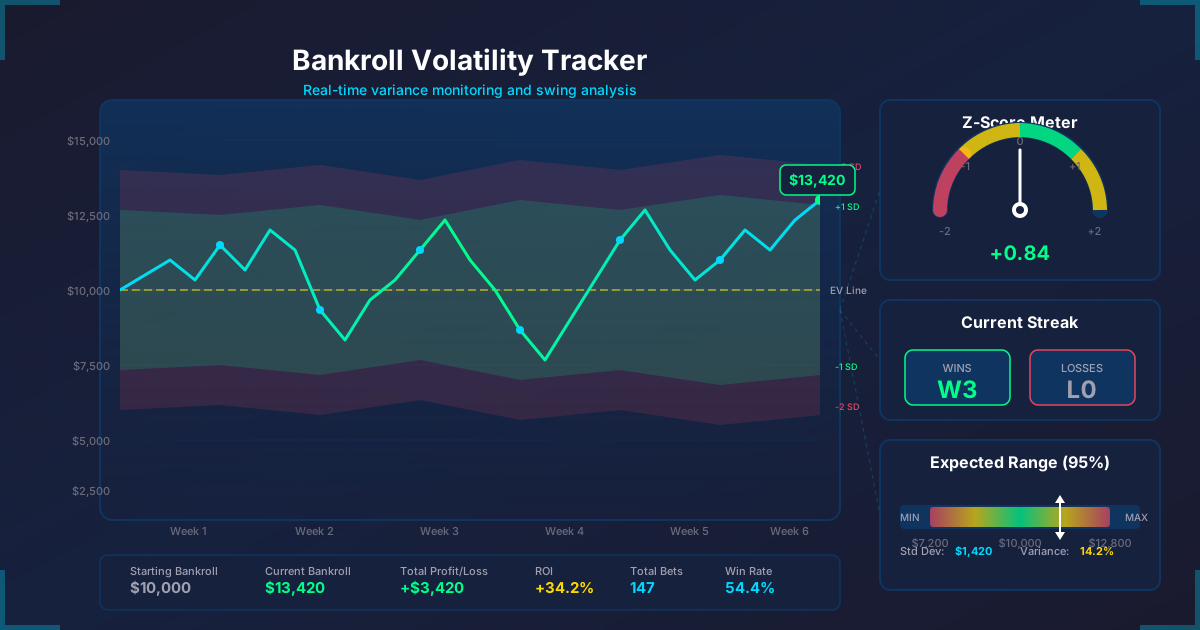
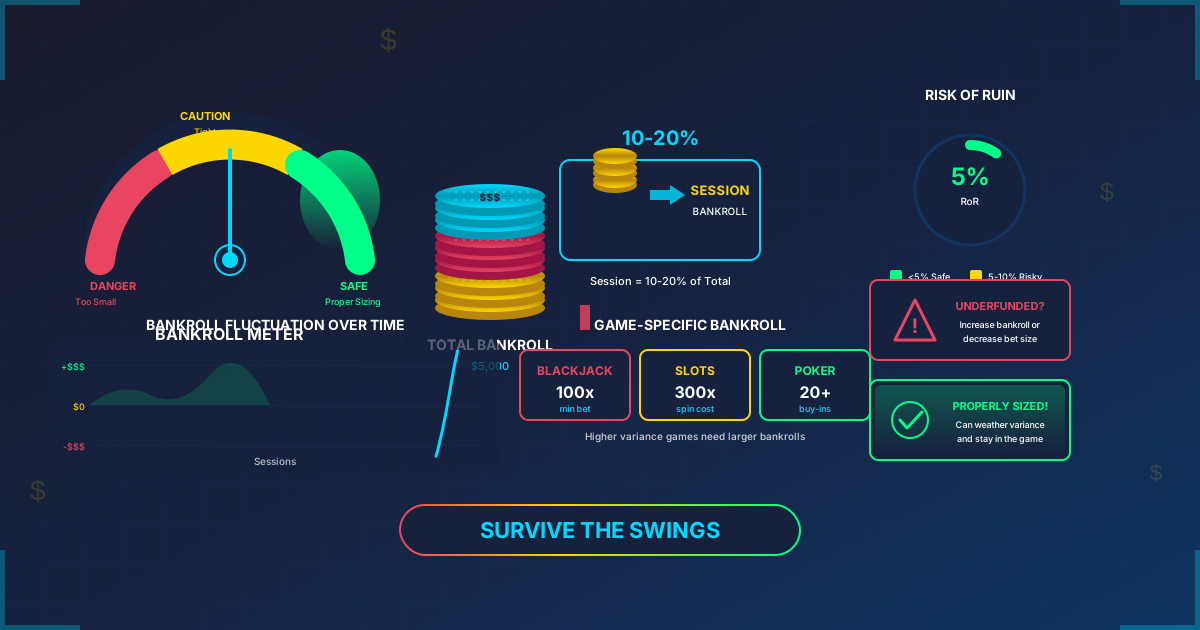
- Bankroll Volatility Tracker: Monitor bankroll health with contrarian variance
- Hedge Calculator: Hedge positions when line moves favorably after your bet
Multi-Bet Strategies
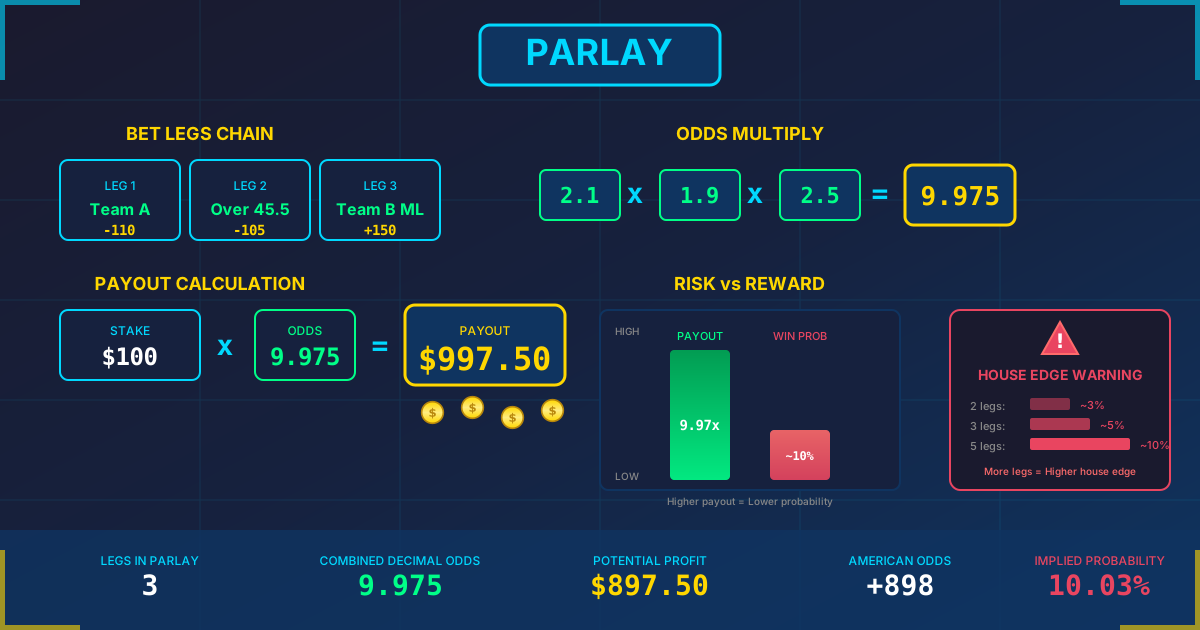
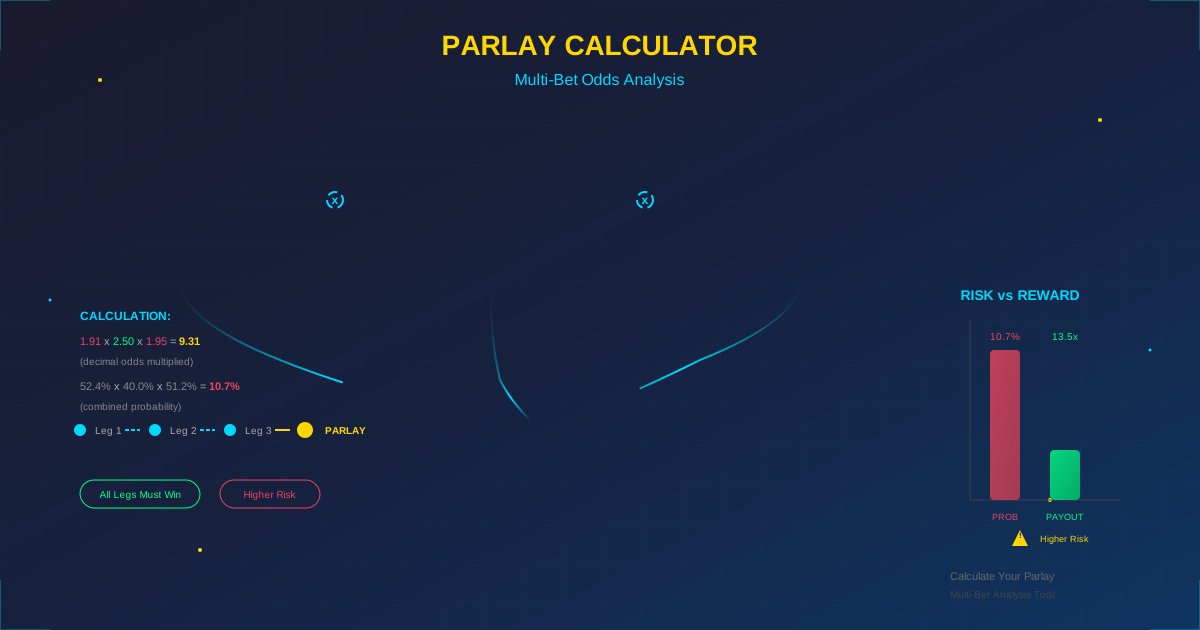
- Parlay Calculator: Combine contrarian plays in parlays
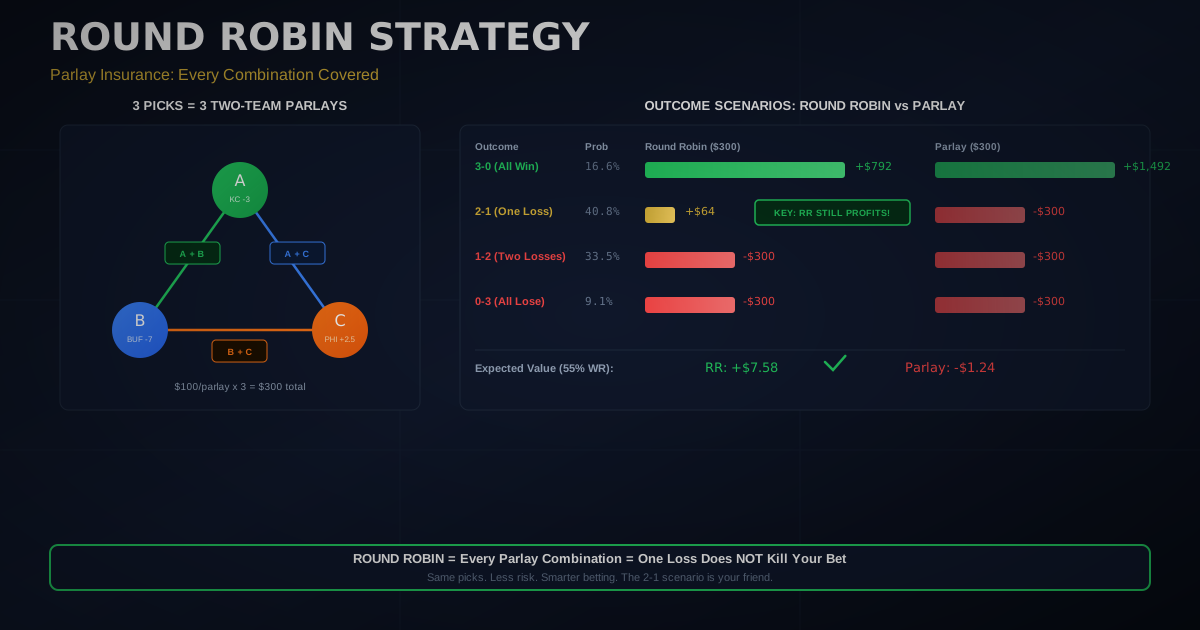
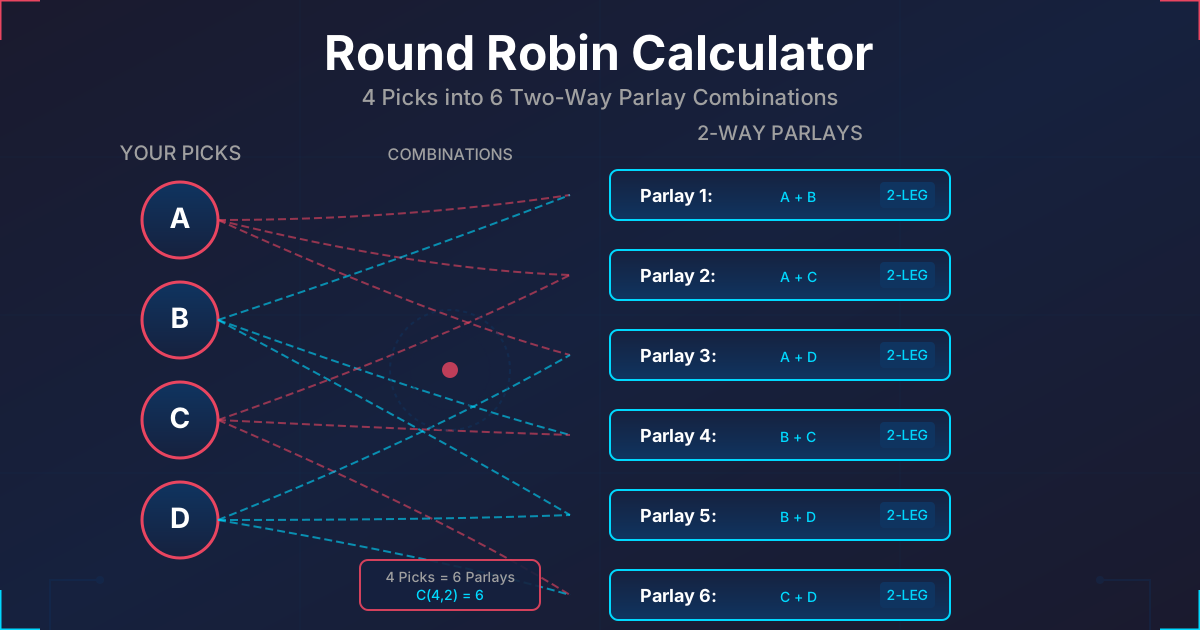
- Round Robin Calculator: Structure round robins with multiple contrarian legs
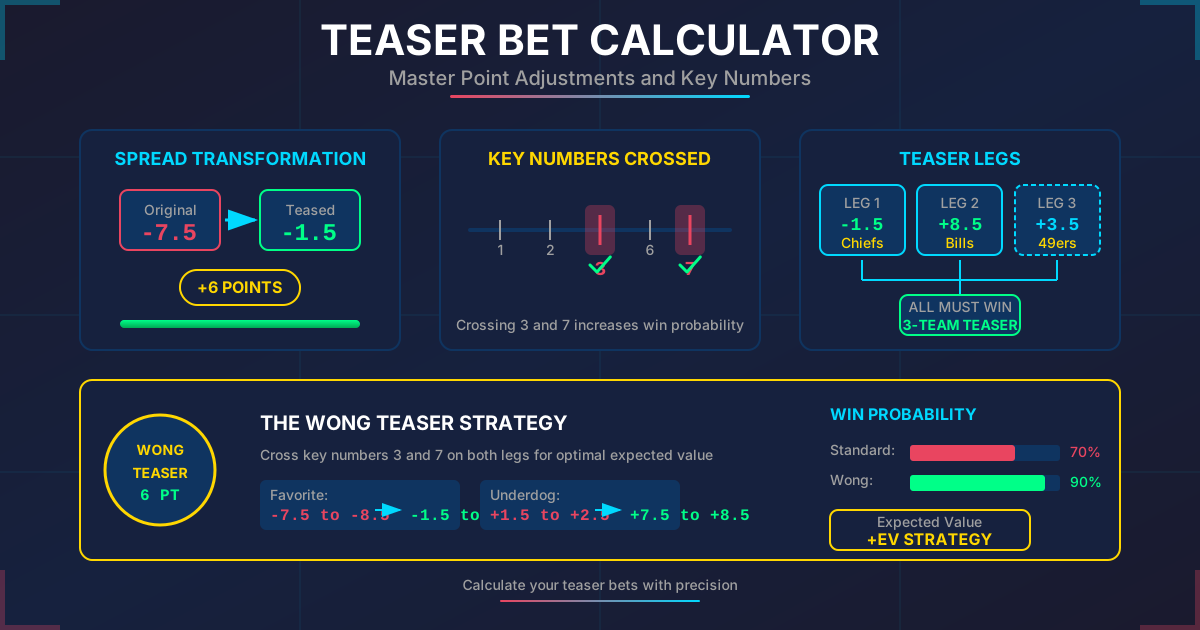
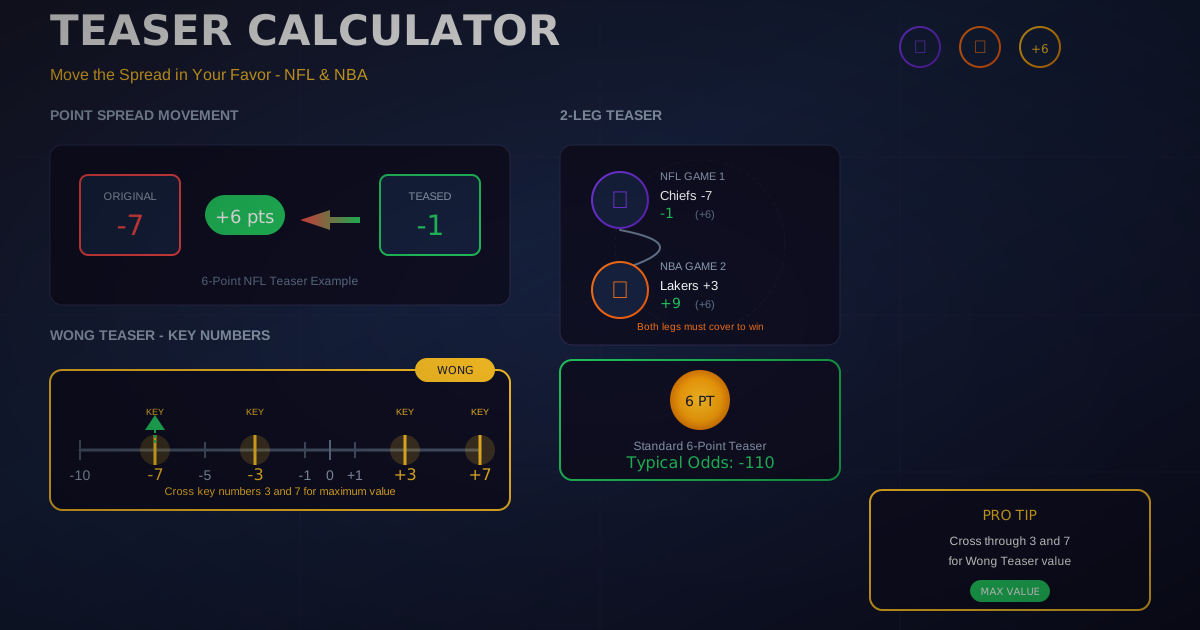
- Teaser Calculator: Evaluate teasers using contrarian totals and sides
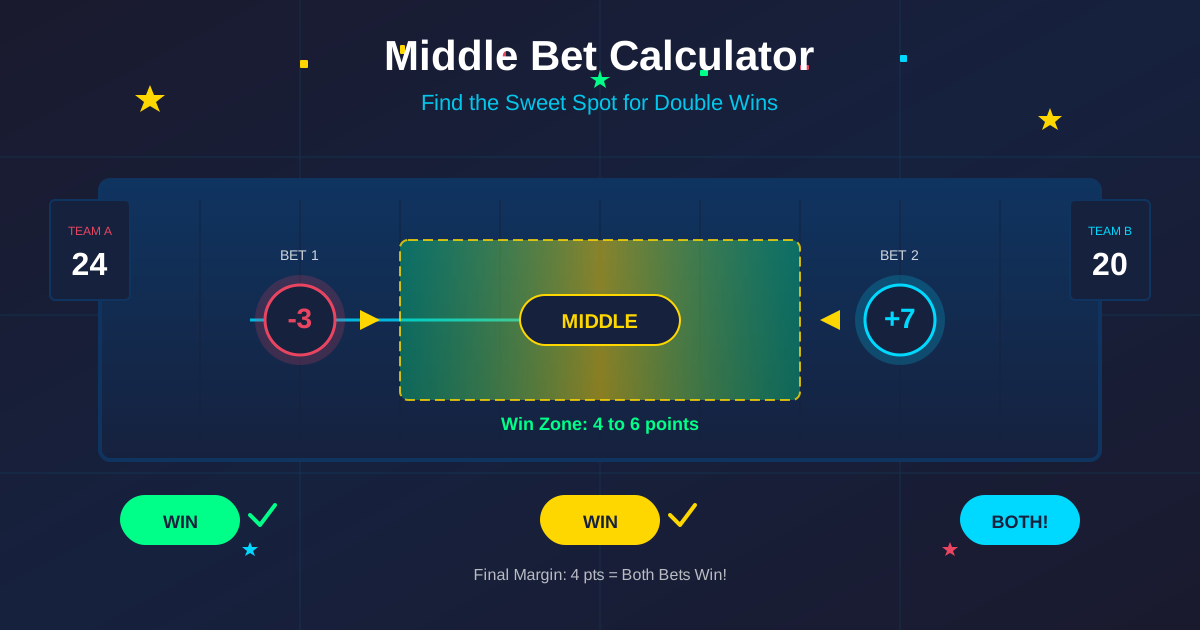
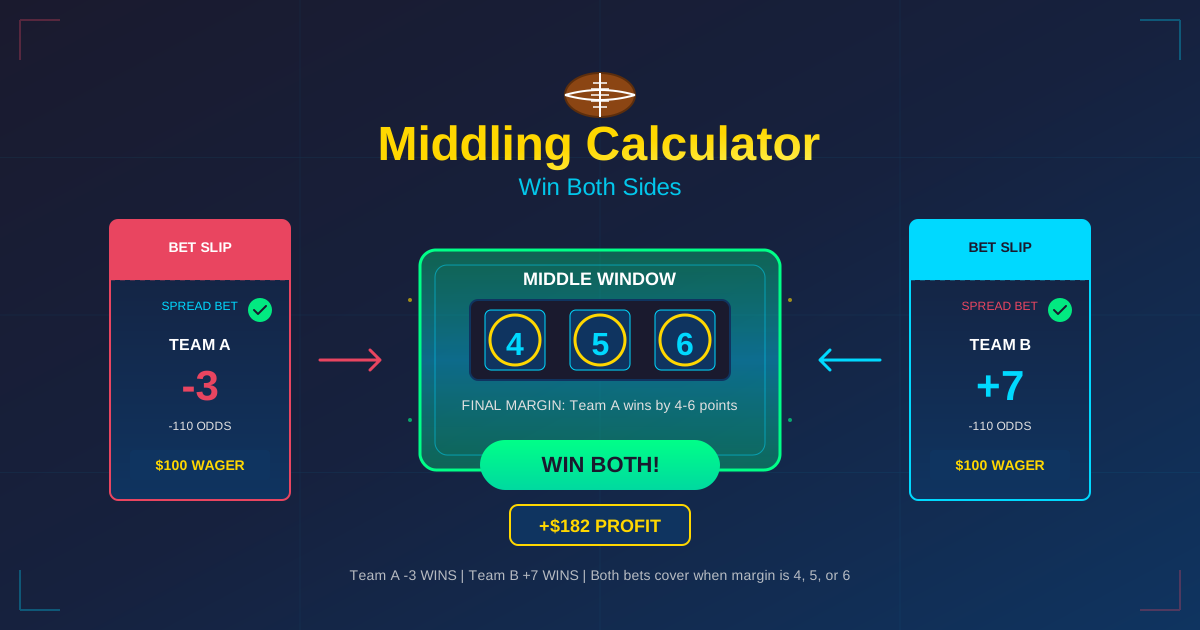
- Middle Bet Calculator: Find middling opportunities when lines move after your bet
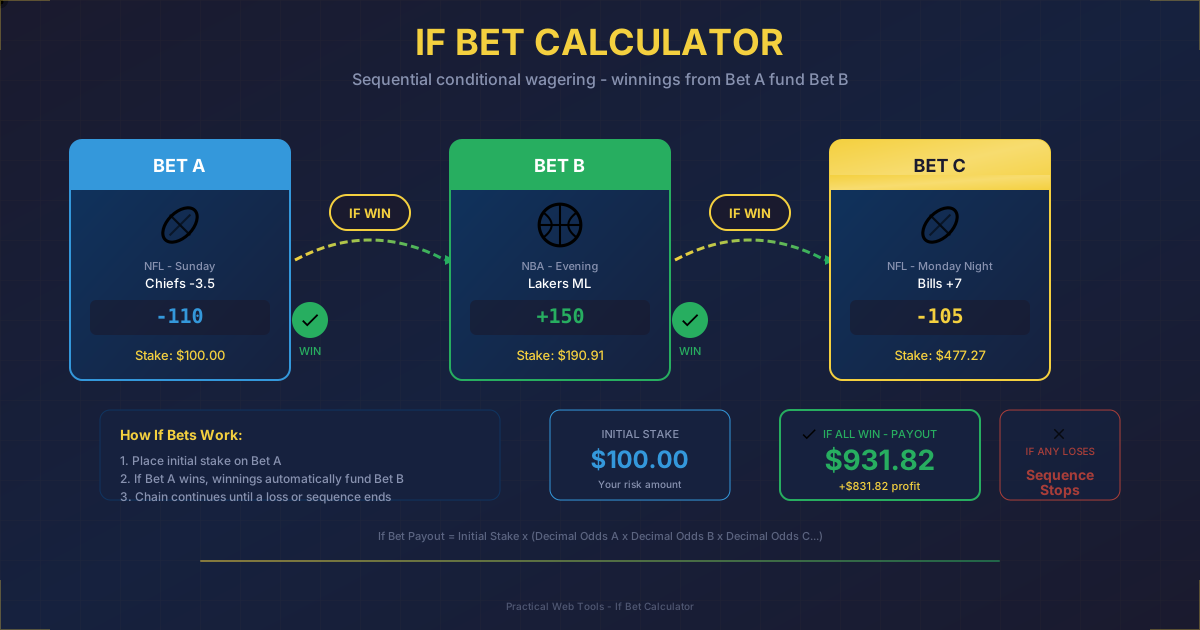
- If Bet Calculator: Structure conditional contrarian wagers
Arbitrage and Value
- Arbitrage Calculator: Find risk-free opportunities when sharp money creates line discrepancies
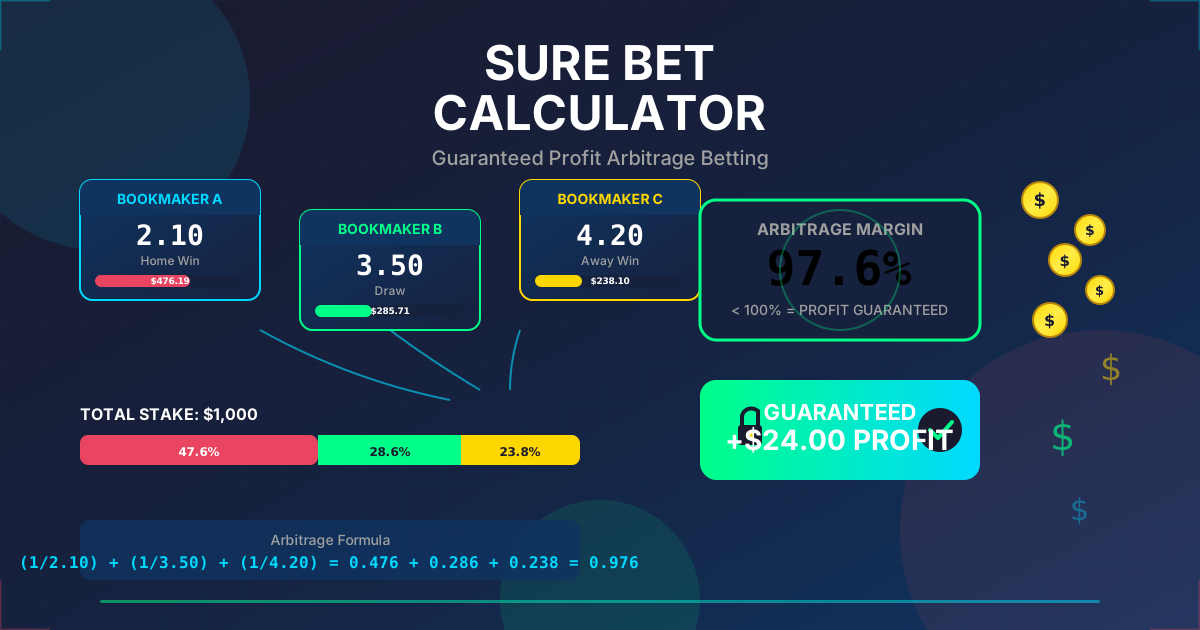
- Sure Bet Calculator: Calculate guaranteed profit scenarios
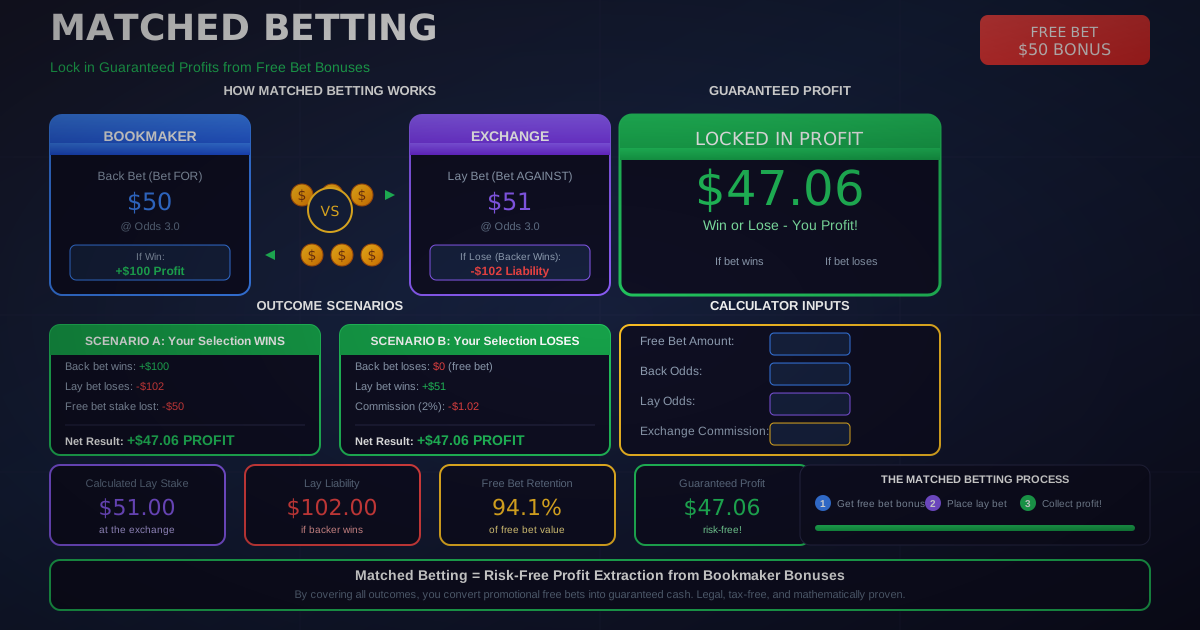
- Matched Betting Calculator: Extract value from sportsbook promotions
Performance Tracking
- CLV Tracker: Track your closing line value -- the ultimate measure of betting skill
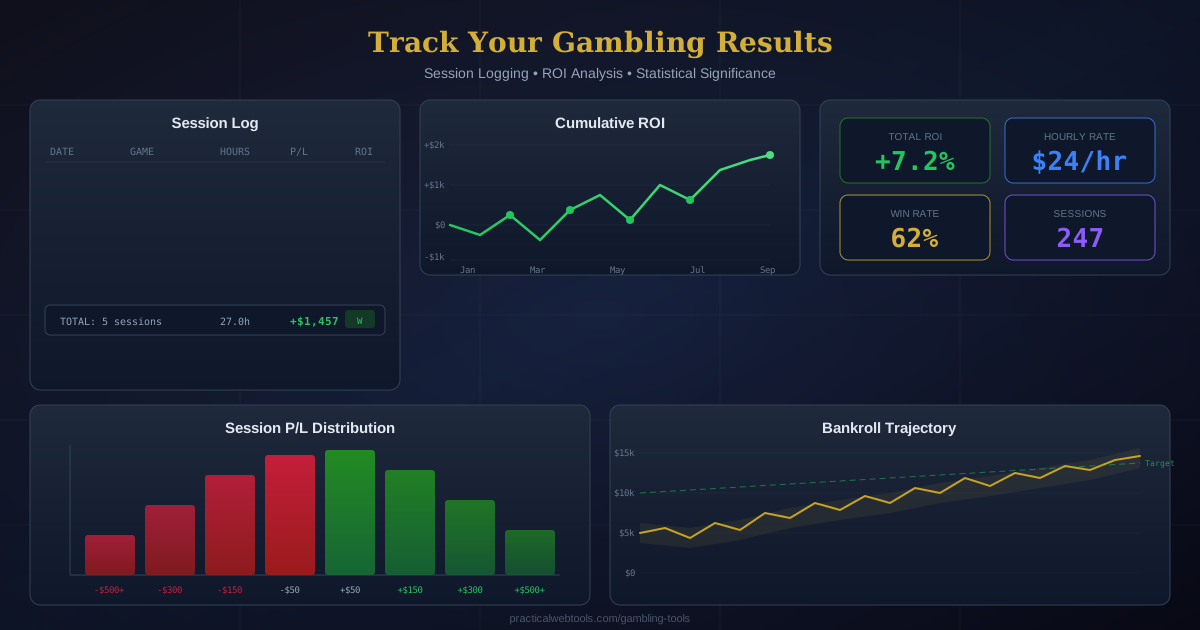
- Poker Session Tracker: Log all gambling performance
The Market Tells You Where the Value Is -- If You Listen
Public betting percentages are a window into market dynamics. They do not tell you who will win a game, but they tell you where the money is, where the sharp action is, and where the market may be inefficient. That information, combined with disciplined analysis and proper bet sizing, creates a sustainable edge.
The core principle is simple: when the public is overwhelmingly on one side and the line moves against them, informed money is on the other side. That informed money is not always right, but it is right often enough to be profitable over a large sample.
Start using public data in your betting process today. Calculate expected value with our Expected Value Calculator, size your bets with our Kelly Criterion Calculator, convert odds with our Odds Converter, and track your results with our CLV Tracker.
Follow the smart money. Trust the math. Bet with discipline.
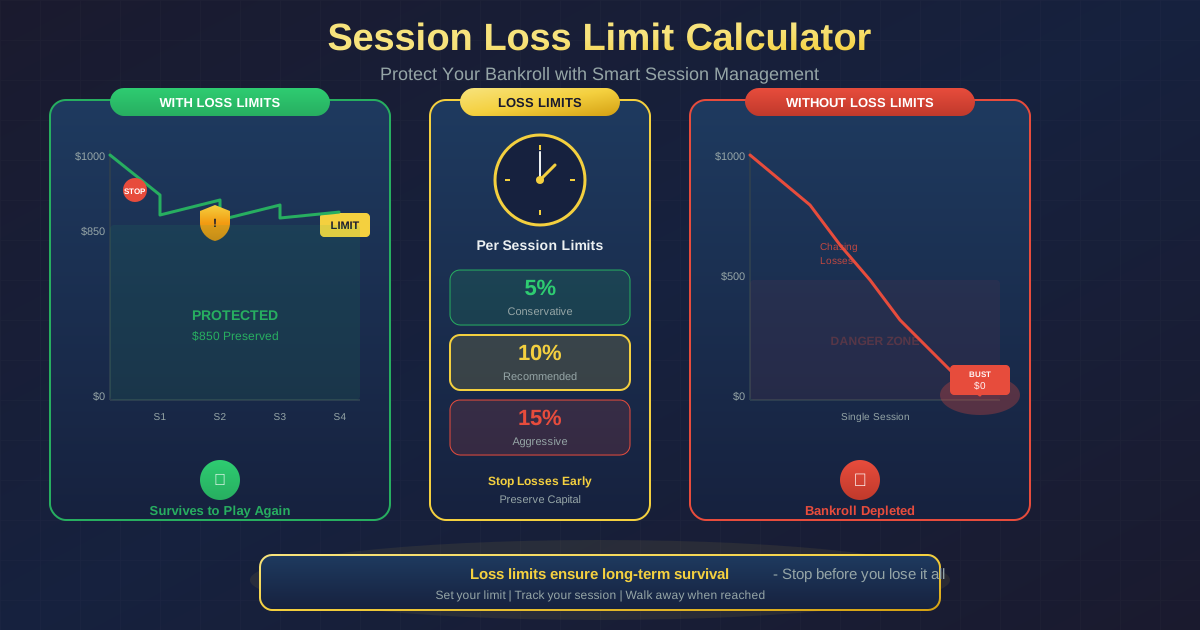
Gambling involves risk and should be approached as entertainment, not as a source of income. Always bet within your means, set strict bankroll limits, and never chase losses. If you or someone you know has a gambling problem, contact the National Council on Problem Gambling at 1-800-522-4700 or visit ncpgambling.org. Must be 21+ to gamble in most US jurisdictions. Please play responsibly.