Soccer Betting Strategy: How to Bet on Premier League, MLS, and World Cup (2026)
The 2026 FIFA World Cup is months away, and it will shatter every sports betting record in history. For the first time, the biggest tournament in global sport will be played across the United States, Canada, and Mexico -- 48 teams, 104 matches, and a fully regulated American sports betting market ready to absorb billions in handle. The global sports betting market, already valued at over $112 billion in 2025 and projected to surpass $325 billion by 2035, is about to receive its single greatest catalyst.
Soccer (football, for everyone outside North America) is the most bet-on sport on the planet. It accounts for roughly 35% of all global sports wagering, dwarfing the NFL, NBA, and every other league combined on a worldwide scale. Yet for many American bettors, soccer markets remain unfamiliar territory. The three-way moneyline is confusing. Asian handicaps sound exotic. "Both Teams to Score" does not exist in football or basketball.
This guide bridges that gap. Whether you are a seasoned bettor adding soccer to your portfolio or a complete newcomer preparing for the World Cup, you will learn every major bet type, league-specific strategies for the Premier League and MLS, advanced metrics like Expected Goals (xG), and the mathematical framework to find genuine value in football betting markets.
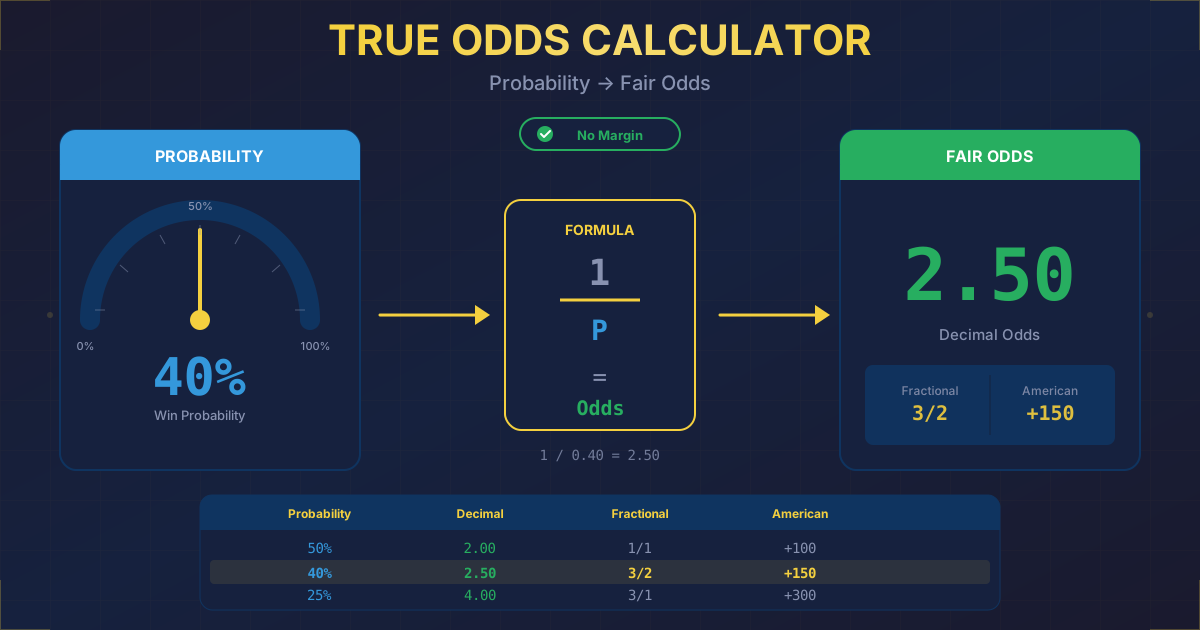
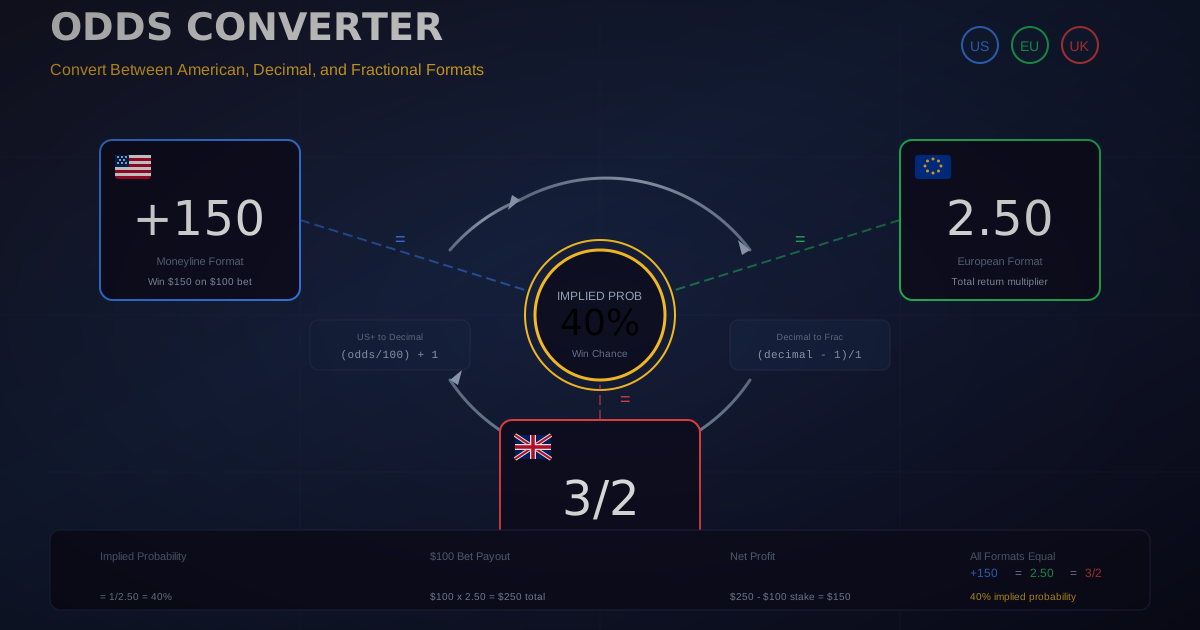
Convert any odds format -- American, decimal, fractional -- with our free Odds Converter.
Understanding Soccer Bet Types: The Complete Breakdown
Soccer offers more betting markets per match than almost any other sport. A typical Premier League fixture can have 200+ markets available. Understanding the core bet types is the foundation for everything else.
1X2 (Three-Way Moneyline)
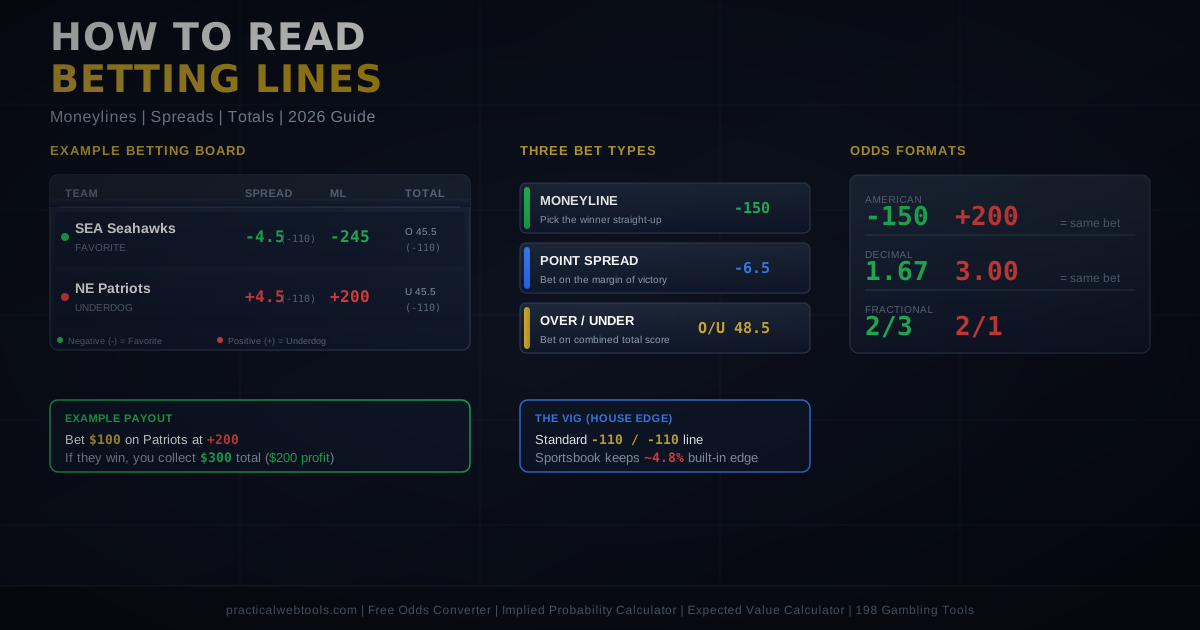
The 1X2 market is soccer's signature bet and the one that confuses American bettors most. Unlike the NFL or NBA moneyline, there are three possible outcomes:
- 1 = Home team wins
- X = Draw
- 2 = Away team wins
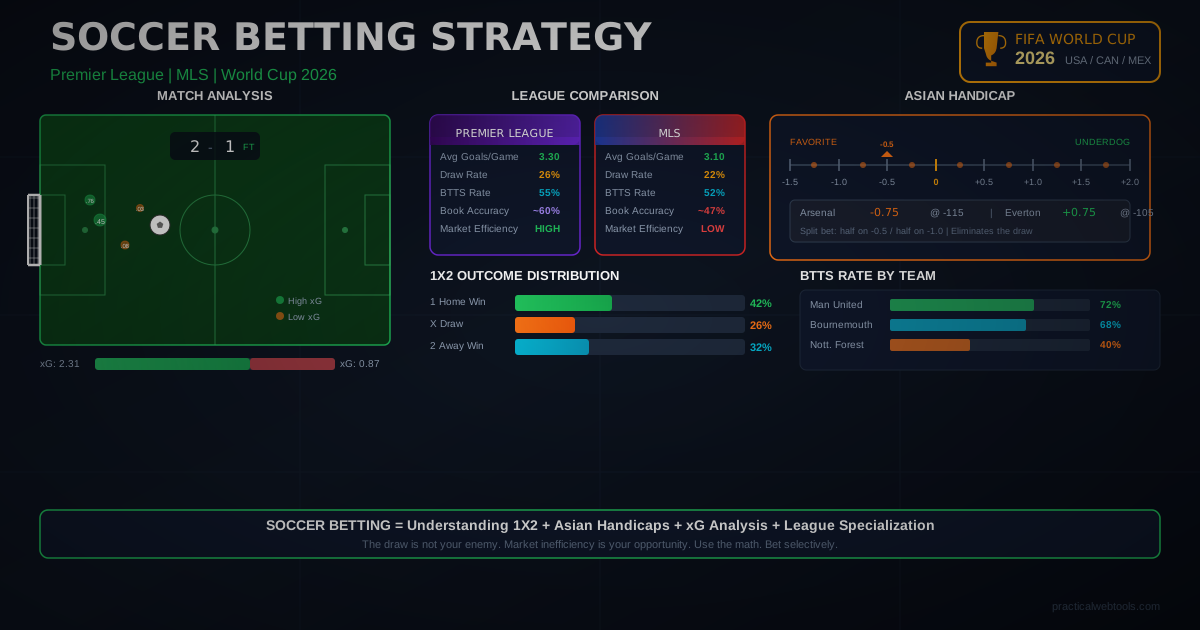
The draw is a live outcome in soccer, not a rarity. In the 2025/2026 Premier League season, approximately 26% of all matches have ended in draws. That means roughly one in four bets on either team to win outright loses to the draw, even when the bettor correctly identified the stronger side.
Example: Manchester City is at home against Wolverhampton. The 1X2 odds are:
- Manchester City (1): -250 (American) / 1.40 (Decimal)
- Draw (X): +340 / 4.40
- Wolverhampton (2): +700 / 8.00
If you bet $100 on Manchester City at -250 and the match ends 1-1, you lose your entire $100. The draw killed you.
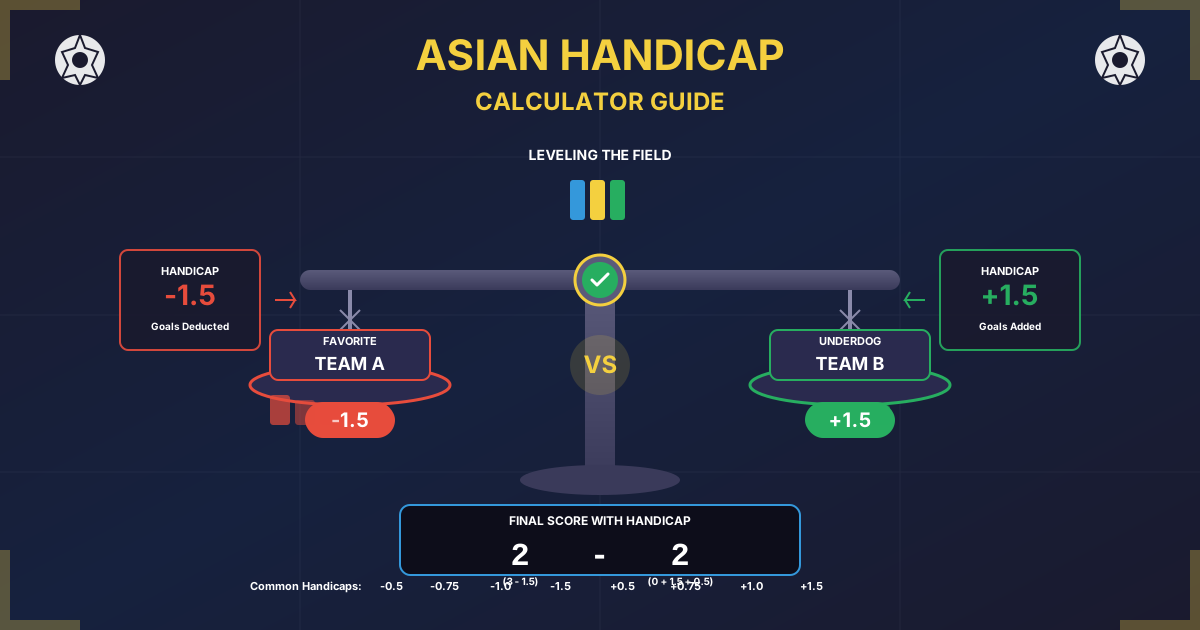
Asian Handicap
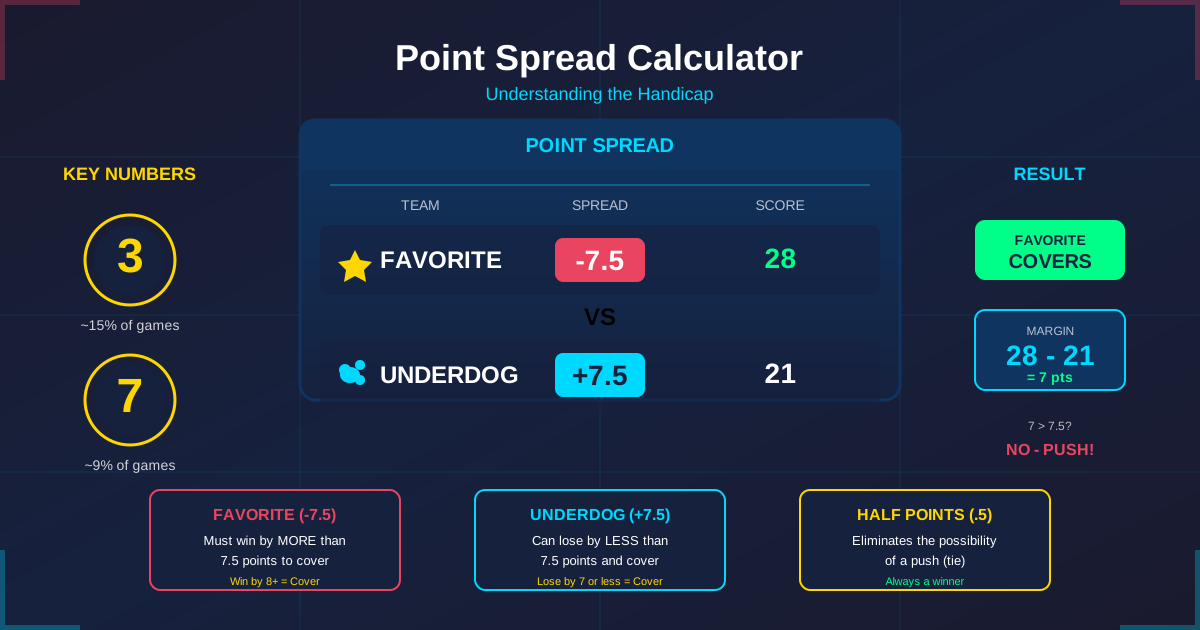
Asian handicap betting was invented specifically to eliminate the draw and create a two-outcome market, similar to NFL/NBA spreads. It uses quarter-goal increments (0.25, 0.5, 0.75, 1.0, 1.25, etc.) rather than the standard half-point increments in American sports.
| Asian Handicap | How It Works | If Favorite Wins by 1 | If Draw |
|---|---|---|---|
| 0.0 (Pick'em) | Bet refunded on draw | You win | Bet refunded (push) |
| -0.25 | Split bet: half on 0, half on -0.5 | You win full | Lose half, push half |
| -0.5 | Favorite must win by 1+ | You win | You lose |
| -0.75 | Split bet: half on -0.5, half on -1.0 | Win half, push half | You lose |
| -1.0 | Favorite must win by 2+ | Bet refunded (push) | You lose |
| -1.25 | Split bet: half on -1.0, half on -1.5 | Lose half, push half | You lose |
| -1.5 | Favorite must win by 2+ | You lose | You lose |
Why Asian handicap matters: It reduces your outcomes from three to two (or a push), lowers the sportsbook's hold, and generally offers better value than 1X2 markets because the vig is spread across fewer outcomes.
Example: Arsenal -0.75 at -115 vs. Everton +0.75 at -105. You bet $100 on Arsenal -0.75. Arsenal wins 1-0. Your bet is split: $50 on Arsenal -0.5 (wins) and $50 on Arsenal -1.0 (push, refunded). You profit approximately $21.74 on the winning half and get $50 back from the push. Net result: +$21.74 instead of the full $43.48 you would have made with Arsenal -0.5.
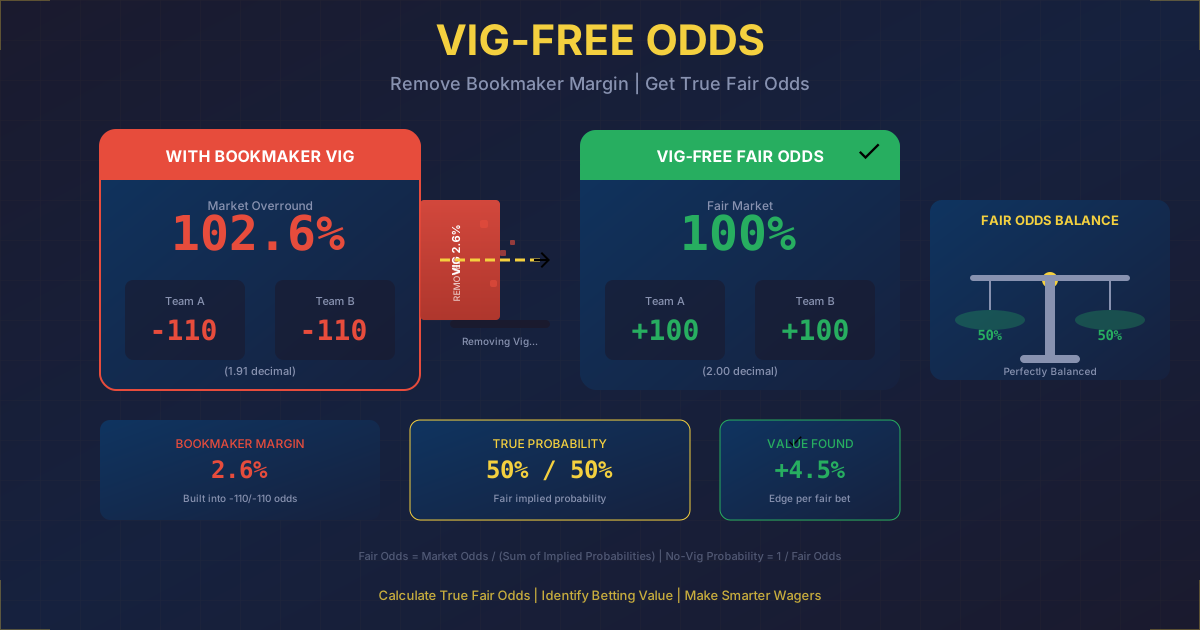
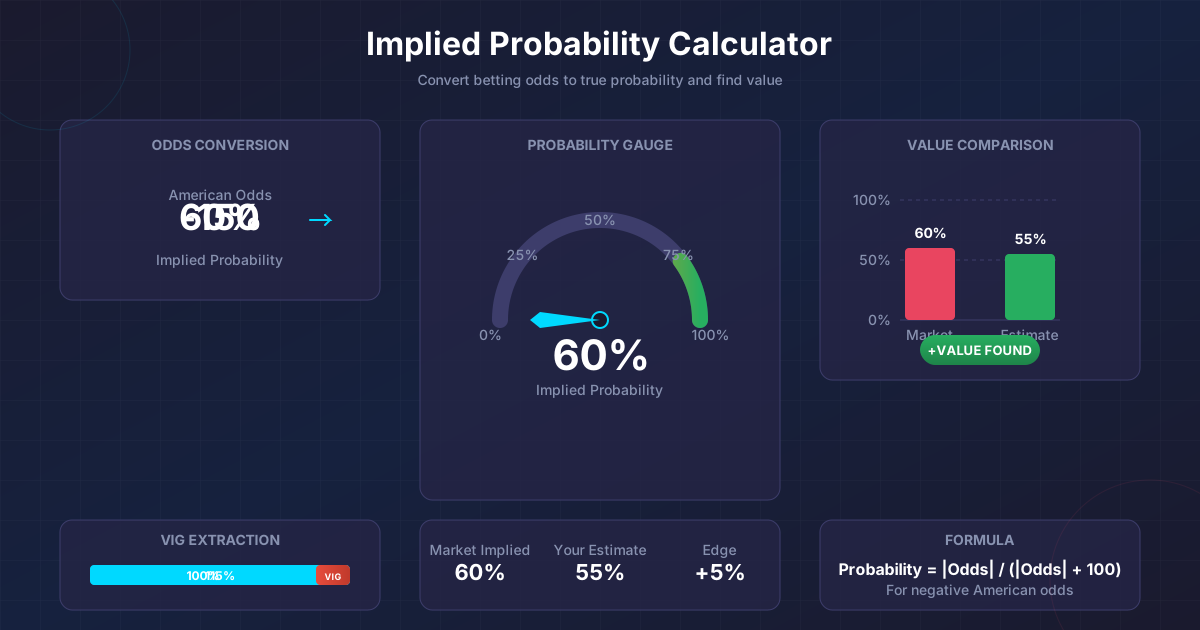
Calculate implied probability from any odds format with our Implied Probability Calculator.
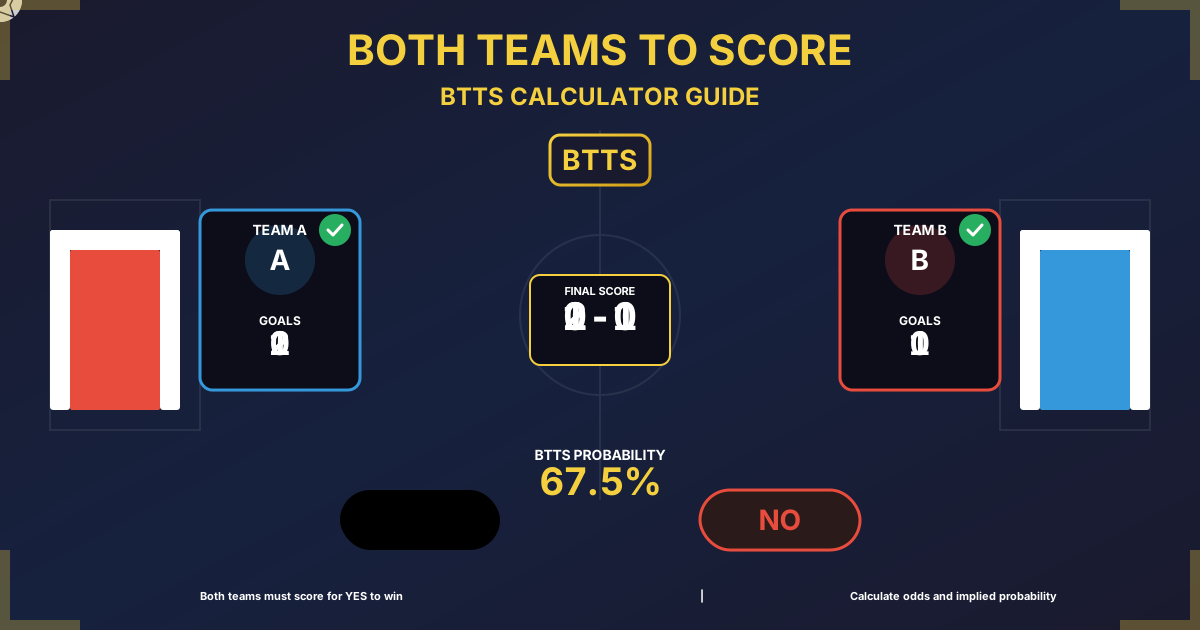
Both Teams to Score (BTTS)
BTTS is a simple yes/no bet on whether both teams will score at least one goal in the match. It is one of the most popular soccer betting markets globally.
In the 2025/2026 Premier League season, both teams have scored in approximately 55% of all matches. However, the rate varies dramatically by team:
| Team | BTTS Rate (2025/26 EPL) | Profile |
|---|---|---|
| Manchester United | ~72% | High-scoring, leaky defense |
| AFC Bournemouth | ~68% | Attacking style, concede freely |
| Brighton | ~68% | Possession-heavy, open games |
| League Average | ~55% | Baseline |
| Nottingham Forest | ~40% | Defensive, low-scoring games |
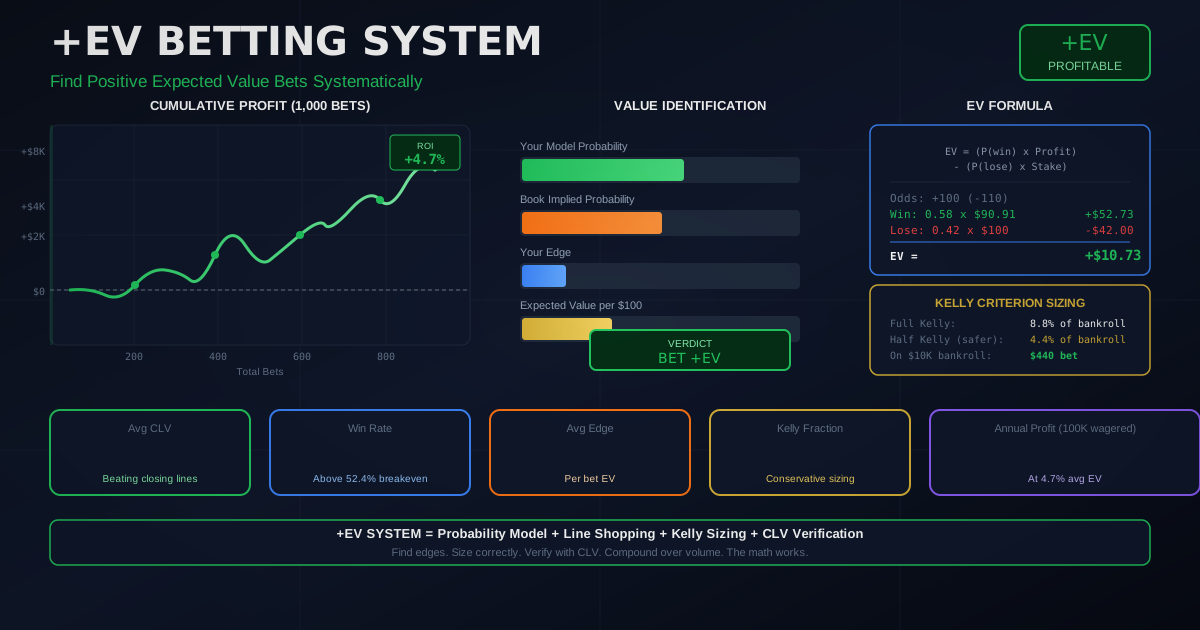
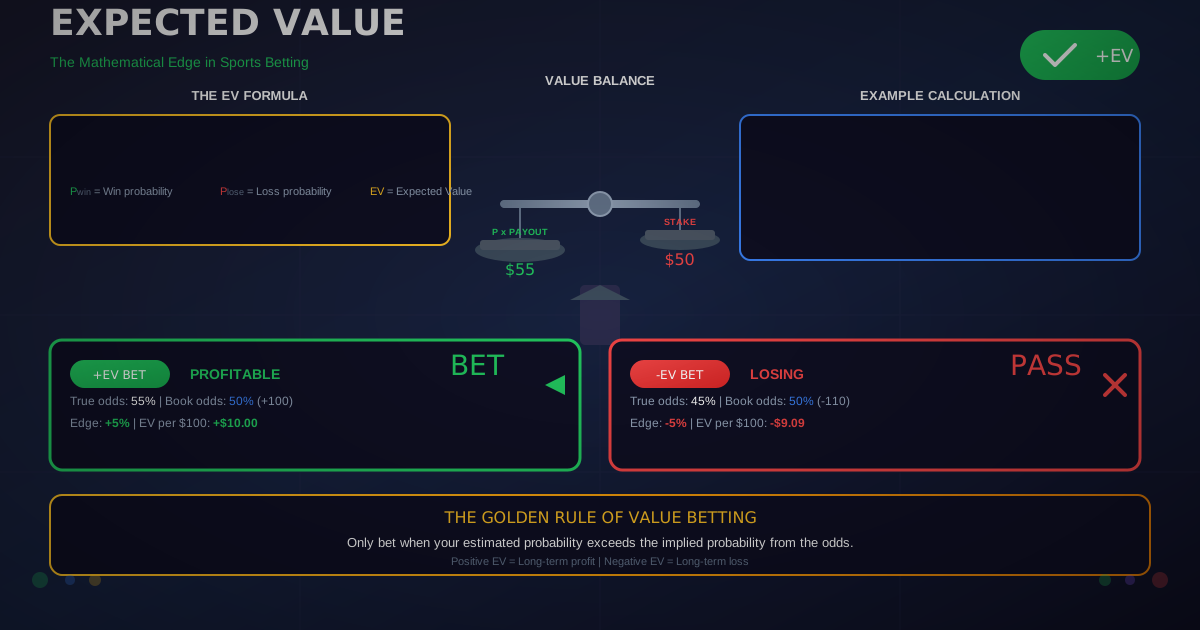
Example: Manchester United hosts Brighton. Both teams have BTTS rates near 70%. The BTTS Yes odds are -140. The implied probability at -140 is 58.3%, but the data suggests a ~70% true probability based on both teams' tendencies. This represents significant positive expected value.
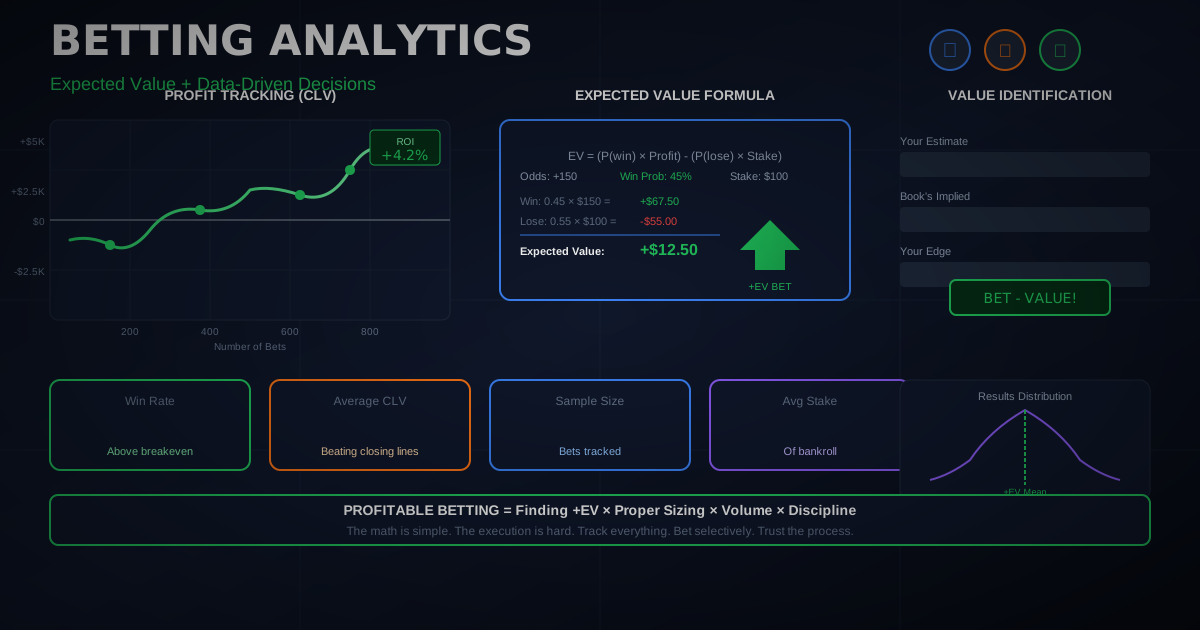
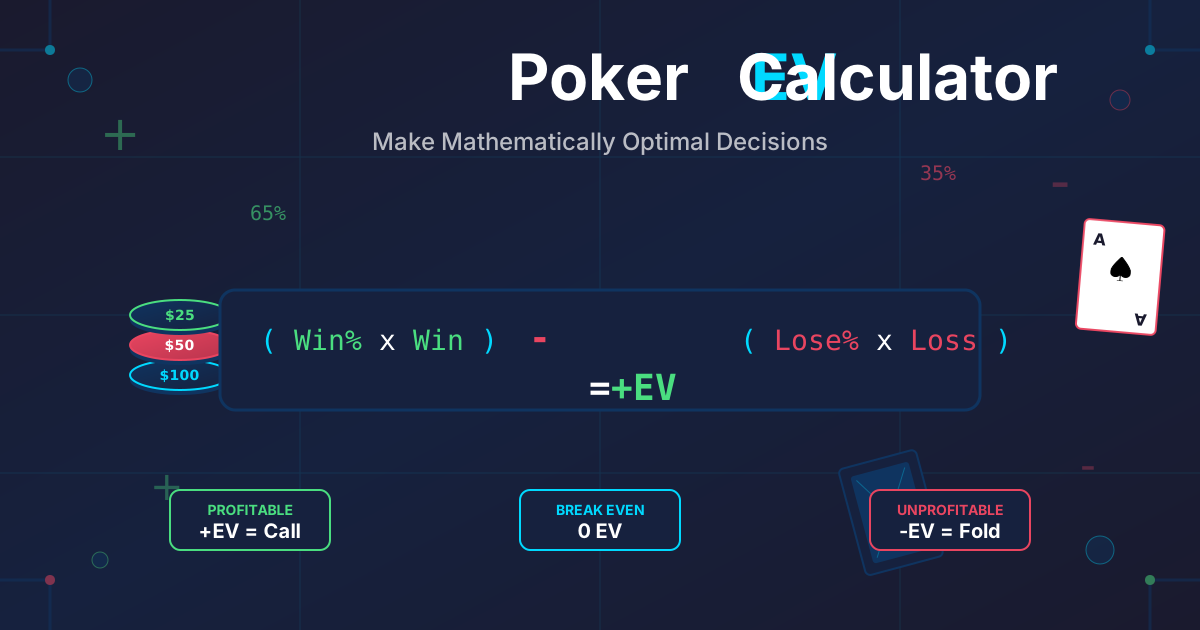
Calculate the expected value of any soccer bet with our Expected Value Calculator.
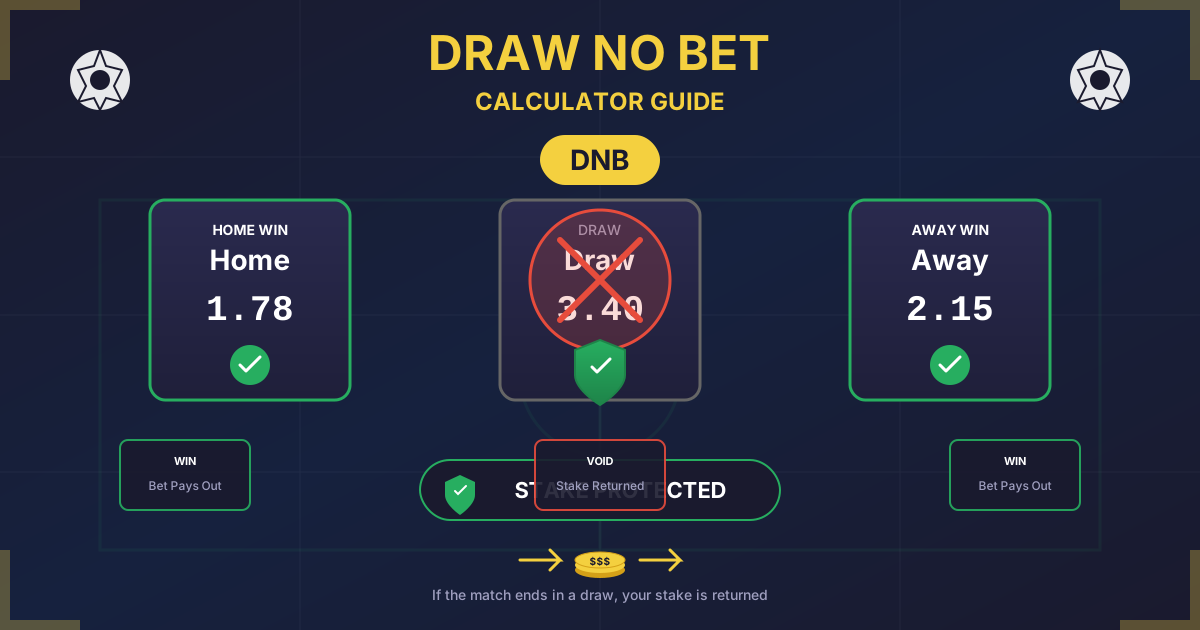
Draw No Bet (DNB)
Draw No Bet is the simplest way to eliminate the draw from a standard moneyline. You pick a team to win; if the match draws, your stake is refunded. It functions identically to a 0.0 Asian handicap.
DNB is particularly valuable when betting on slight favorites in matches where a draw is likely. The odds are lower than the 1X2 moneyline for the same team (because you are removing downside risk), but you eliminate the ~26% chance of losing to a draw.
Example: Liverpool at -110 (1X2) can become Liverpool DNB at -165. You sacrifice potential profit for insurance against the draw.
Over/Under Goals (Totals)
Soccer totals work like any other sport, but the standard line is 2.5 goals rather than the higher totals seen in basketball or football. In the 2025/26 Premier League, the average goals per game is 3.30, with approximately 60% of matches going Over 2.5 goals.
| Goals Line | What It Means | Typical Premier League Frequency |
|---|---|---|
| Over 0.5 | At least 1 goal scored | ~92% |
| Over 1.5 | At least 2 goals scored | ~78% |
| Over 2.5 | At least 3 goals scored | ~60% |
| Over 3.5 | At least 4 goals scored | ~38% |
| Over 4.5 | At least 5 goals scored | ~20% |
Asian goal lines (0.75, 1.25, 1.75, 2.25, 2.75, etc.) exist as well, using the same split-bet mechanic as Asian handicaps.
Correct Score
Correct score bets require predicting the exact final score. They are high-risk, high-reward, and generally carry significant house edges. The most common results in the Premier League are 1-0, 2-1, 1-1, and 2-0 -- each occurring roughly 10-12% of the time.
Double Chance
Double chance covers two of the three 1X2 outcomes in a single bet:
- 1X = Home win or draw
- X2 = Away win or draw
- 12 = Home win or away win (no draw)
The odds are lower because you are covering two outcomes, but the probability of winning is significantly higher.
Premier League Betting Strategy
The English Premier League is the most-watched, most-bet-on domestic soccer league in the world. Its markets are sharp, heavily juiced, and closely tracked by professional syndicates. Finding value requires precision.
Why the Premier League Is Hard to Beat
Premier League markets are among the most efficient in all of sports betting. Bookmakers invest heavily in modeling EPL outcomes, and the volume of bets ensures that lines move quickly toward true probabilities. The Opta Supercomputer and comparable models use Expected Goals, shot quality data, and decades of historical performance to set probabilities that are extremely difficult to beat consistently.
Key Premier League characteristics:
- Average goals per game: 3.30 (2025/26 season)
- Draw rate: ~26%
- BTTS rate: ~55%
- Home win rate: ~42%
- Away win rate: ~32%
- The Big Six (Arsenal, Manchester City, Liverpool, Chelsea, Tottenham, Manchester United) win ~75% of matches against bottom-half teams
Where Value Exists in the Premier League
Despite market efficiency, edges do appear in specific situations:
1. Newly Promoted Teams Early in the Season
Bookmakers and the public tend to underrate newly promoted teams in August and September. Promoted clubs with strong Championship campaigns (like the current season's newcomers Leeds United and Sunderland) often outperform early expectations because:
- They carry momentum from promotion
- Opponents underestimate them
- Their players perform with "new car energy" before fatigue and quality gap set in
2. Fixture Congestion and Squad Rotation
Teams competing in the Champions League, Europa League, and FA Cup play 50-60+ matches per season. When a top side plays a midweek Champions League knockout match and then faces a mid-table team on Saturday, the favorite's odds rarely adjust enough for the fatigue, rotation, and distraction factors.
Example: Liverpool plays Real Madrid in the Champions League on Wednesday, then hosts Bournemouth on Saturday. Liverpool is -200 for the Saturday match. Their manager rotates 4-5 starters. The true probability is closer to -150 once you account for rotation, fatigue, and Bournemouth's high BTTS rate. The +EV play may be Bournemouth +0.75 or BTTS Yes.
3. Weather and Pitch Conditions in Winter
From November through February, the English winter creates heavy pitches, gusty winds, and freezing temperatures. These conditions flatten the quality gap between top and bottom teams. Underdogs perform better, draws increase, and Under 2.5 goals hits more frequently in poor conditions.
4. End-of-Season Motivation Gaps
In April and May, teams with nothing to play for (safe from relegation, out of European contention) frequently underperform against teams fighting for survival or a European spot. Relegation-threatened teams playing at home are undervalued in this context.
Determine the sportsbook's edge on any Premier League match with our Hold/Vig Calculator.
MLS Betting Strategy: Exploiting the Least Efficient Major League
Major League Soccer is the opposite of the Premier League when it comes to market efficiency. Research has shown that bookmakers correctly predict MLS results only about 47% of the time, a full 13 percentage points lower than their Premier League accuracy. This inefficiency creates opportunity for informed bettors.
Why MLS Is So Unpredictable
| Factor | Premier League | MLS |
|---|---|---|
| Bookmaker Prediction Accuracy | ~60% | ~47% |
| Roster Stability | High (long contracts) | Low (salary cap trades, drafts) |
| Travel Factor | Minimal (England is small) | Massive (coast-to-coast flights) |
| Surface Consistency | All natural grass | Mix of grass and turf |
| Designated Players (DPs) | N/A | 3 max, huge quality gap |
| Season Structure | Aug-May, continuous | Feb-Oct, international breaks |
| Referee Consistency | VAR-assisted, experienced | Developing, younger officials |
MLS Betting Edges
1. Home-Field Advantage Is Overstated in Lines
MLS bookmakers tend to overvalue home-field advantage. While home teams do win more often, the lines often overcorrect. Profitable bettors have found value consistently betting road underdogs in MLS, particularly when the traveling team has had a full week of rest.
2. Altitude and Travel
Colorado Rapids play at 5,280 feet. Teams flying from sea-level cities like Miami, Los Angeles, or New York to Denver face a legitimate physiological disadvantage. Conversely, Colorado is underpriced as a home favorite and overpriced as a road underdog at sea level.
Example: Inter Miami flies to Colorado on a Thursday night and plays Saturday. Inter Miami is -130 on the road. The altitude, travel fatigue, and Colorado's home record suggest the true line should be closer to even money. Colorado +130 or Draw No Bet at +105 carries positive expected value.
3. MLS Teams in Concacaf Champions Cup
MLS teams competing in the Concacaf Champions Cup face the same fixture congestion issues as European clubs -- but with significantly thinner rosters. When an MLS club plays a midweek Champions Cup match in Central America and flies back for a weekend league game, bet against them.
4. End of Regular Season Decision Day
MLS Decision Day (the final matchday of the regular season) features every team playing simultaneously. Teams already eliminated or locked into their playoff position often rest starters. Teams on the bubble play with desperation. The motivation disparities are enormous and frequently underpriced.
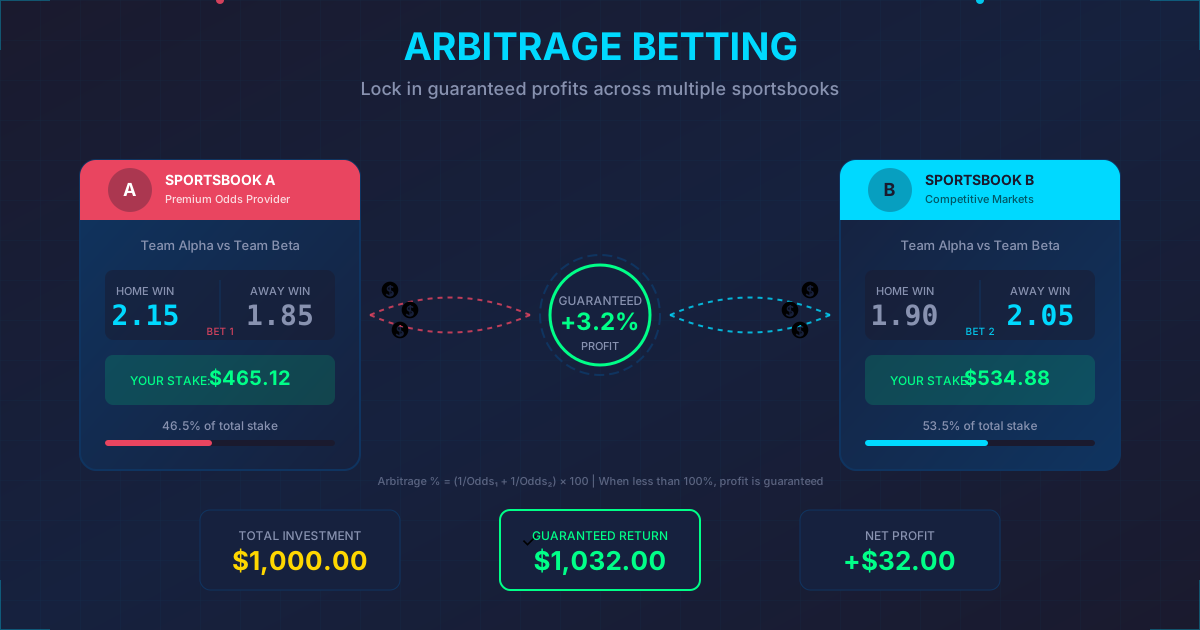
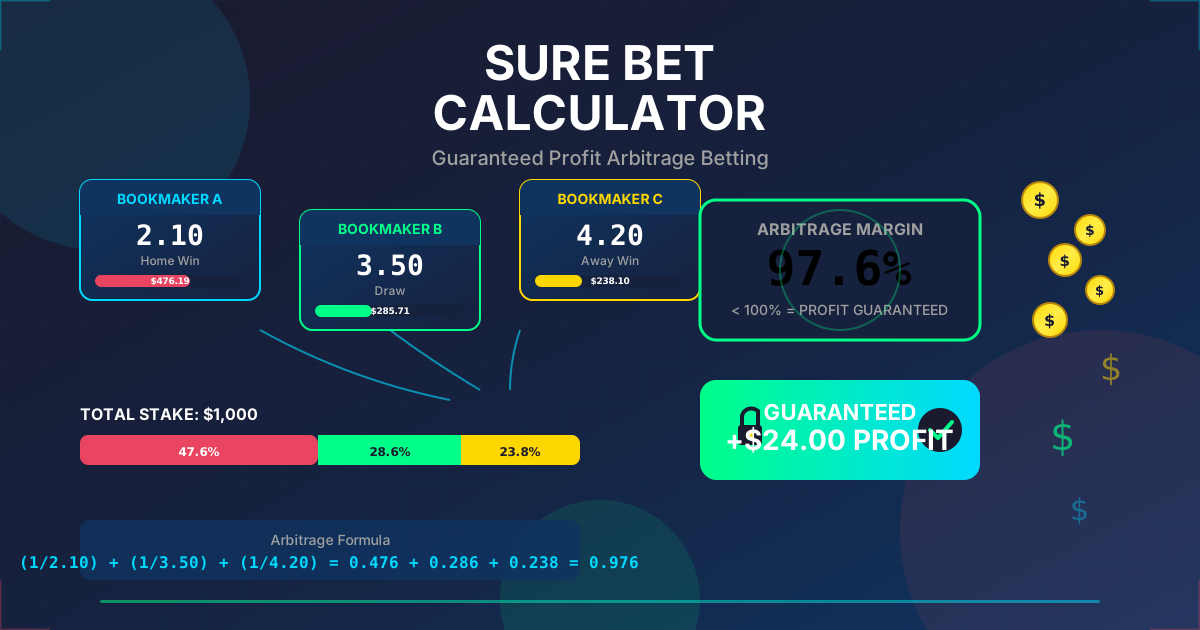
Find arbitrage opportunities across MLS betting markets with our Arbitrage Calculator.
World Cup 2026 Betting Preview: The Biggest Soccer Betting Event Ever
The 2026 FIFA World Cup will be a watershed moment for soccer betting in North America. Here is everything you need to know to prepare.
Tournament Format Changes
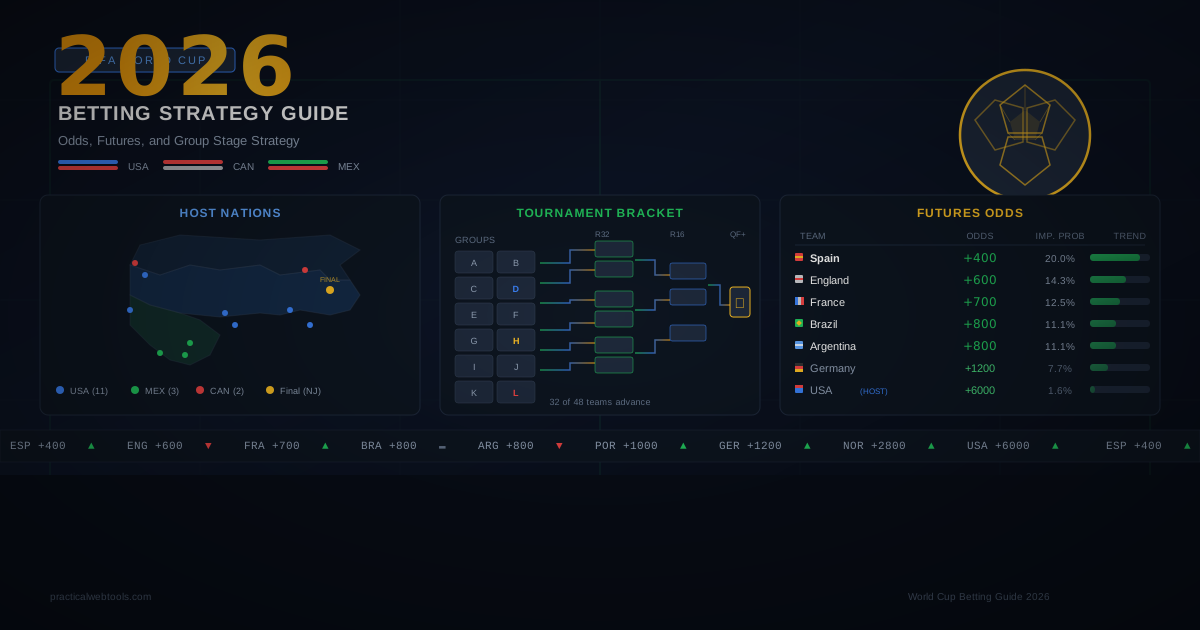
The 2026 World Cup expands from 32 teams to 48, with 104 total matches (up from 64 in 2022). The group stage features 12 groups of 4 teams, with the top two from each group plus the eight best third-place finishers advancing to a 32-team knockout round.
| 2022 World Cup (Qatar) | 2026 World Cup (USA/CAN/MEX) |
|---|---|
| 32 teams | 48 teams |
| 64 matches | 104 matches |
| 8 groups of 4 | 12 groups of 4 |
| Top 2 advance | Top 2 + best 3rd-place advance |
| 29 days | ~39 days |
| Single country | 3 countries, 16 venues |
| Limited US betting market | Full US regulated market |
Early Futures Odds (as of Early 2026)
Spain is the betting favorite to win the 2026 World Cup. Here is a snapshot of the top contenders:
| Team | Approximate Odds | Implied Probability |
|---|---|---|
| Spain | +450 | ~18% |
| France | +550 | ~15% |
| England | +600 | ~14% |
| Argentina | +650 | ~13% |
| Brazil | +700 | ~12.5% |
| Germany | +1000 | ~9% |
| USA (host) | +5000 | ~2% |
The United States saw its odds shorten from +6600 to +5000 following a favorable group draw. Expect massive public money on the USA in every market -- and sportsbooks to adjust lines accordingly, potentially creating value on the other side.
World Cup Group Stage Betting Angles
1. Third-Place Qualification Changes Everything
With the eight best third-place finishers also advancing, the group stage dynamics shift dramatically. Teams that lose their first match are not eliminated; they still have a viable path. This creates more competitive matches throughout the group stage and fewer "dead rubber" final group games compared to previous formats.
Betting implication: First-match underdogs become more attractive. A team that loses game one is not deflated -- they can still advance with one win and a draw.
2. Home-Nation Bias
The USA, Canada, and Mexico will all play group matches in their home countries. Historical data shows host nations outperform their pre-tournament odds. The crowd factor, familiar conditions, no travel fatigue, and psychological lift of playing at home all contribute.
Betting implication: Be cautious fading host nations early, but recognize that public money will inflate their lines. The value may be in "qualifying to advance" markets (e.g., USA to advance from group: -300) rather than outright winner futures.
3. Time Zone Advantage for North American Teams
European and South American teams will deal with significant jet lag, unfamiliar climates (matches in Houston, Dallas, and Mexico City in June/July mean extreme heat), and long domestic travel between venues. Teams based in the Americas (USA, Mexico, Canada, Argentina, Brazil, Colombia) have an inherent advantage.
4. Expanded Tournament Means More Data
With 104 matches, there will be massive opportunities for in-play and post-round-one betting. After each team plays one match, you will have real data to work with rather than relying solely on pre-tournament models.
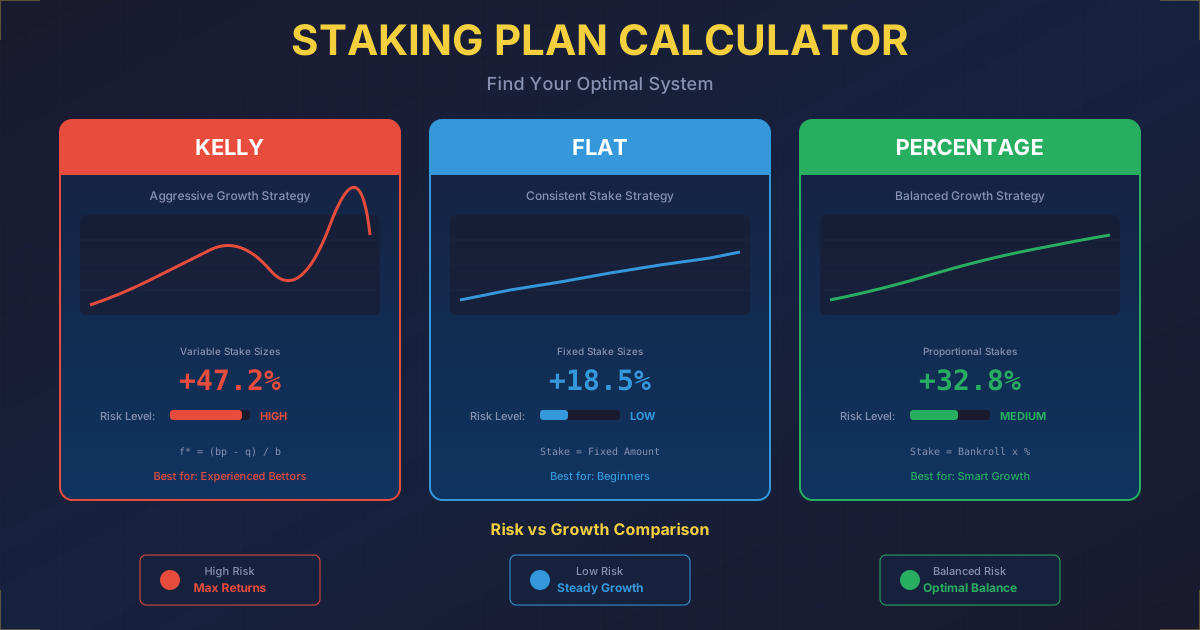
Calculate optimal World Cup bet sizing with our Kelly Criterion Calculator.
Expected Goals (xG) and Advanced Metrics for Soccer Betting
Expected Goals (xG) has transformed how professional bettors evaluate soccer matches. It is the single most important advanced metric for finding value in football betting markets.
What Is xG?
Expected Goals assigns a probability to every shot based on historical data. Each shot receives a value between 0 and 1 representing the likelihood it results in a goal:
- Penalty kick: ~0.76 xG
- One-on-one with goalkeeper from 8 yards: ~0.45 xG
- Header from a corner kick: ~0.06 xG
- Long-range shot from 30 yards: ~0.03 xG
A team's total xG for a match represents the number of goals they "should have" scored based on the quality and location of their chances.
How to Use xG for Betting
1. Identify Overperformers and Underperformers
Compare a team's actual goals scored vs. their xG over 10+ matches. Teams significantly outperforming their xG (scoring more goals than expected) are due for regression. Teams underperforming their xG (creating great chances but not finishing) are due for positive regression.
Example: Through 25 Premier League matches, Liverpool has scored 52 goals from an xG of 48.5. They are slightly outperforming (+3.5 goals). Meanwhile, Aston Villa has scored 28 goals from an xG of 34.2. Villa is significantly underperforming (-6.2 goals). The market still prices Villa based on actual results, not underlying quality. Villa's upcoming matches may offer value.
2. Compare xG to Betting Lines
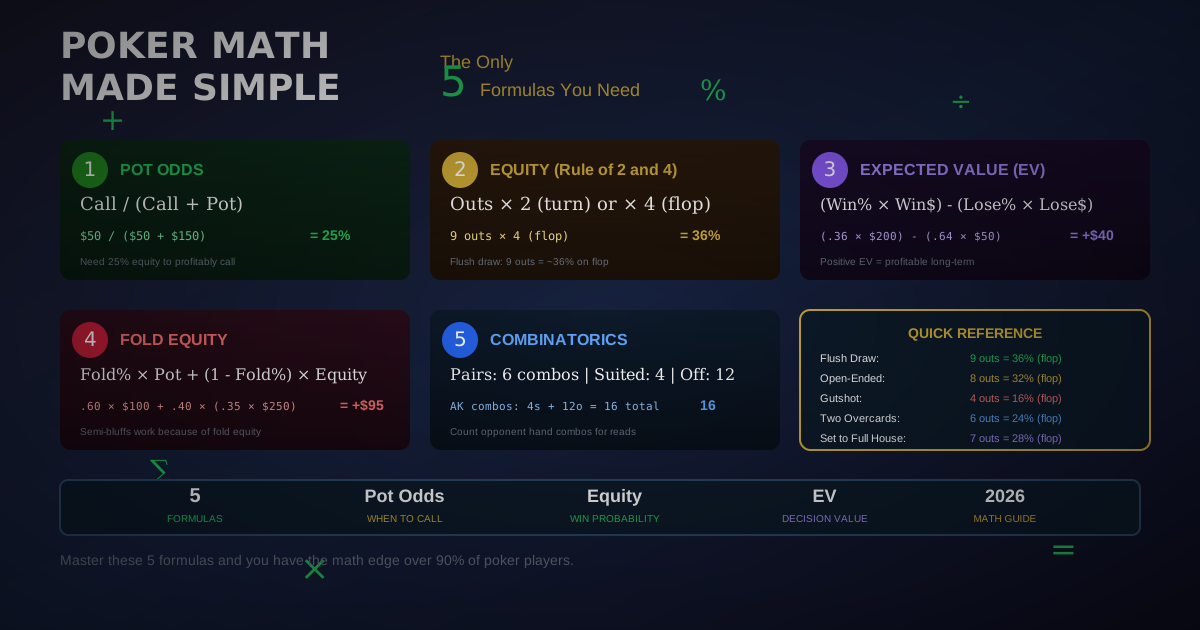
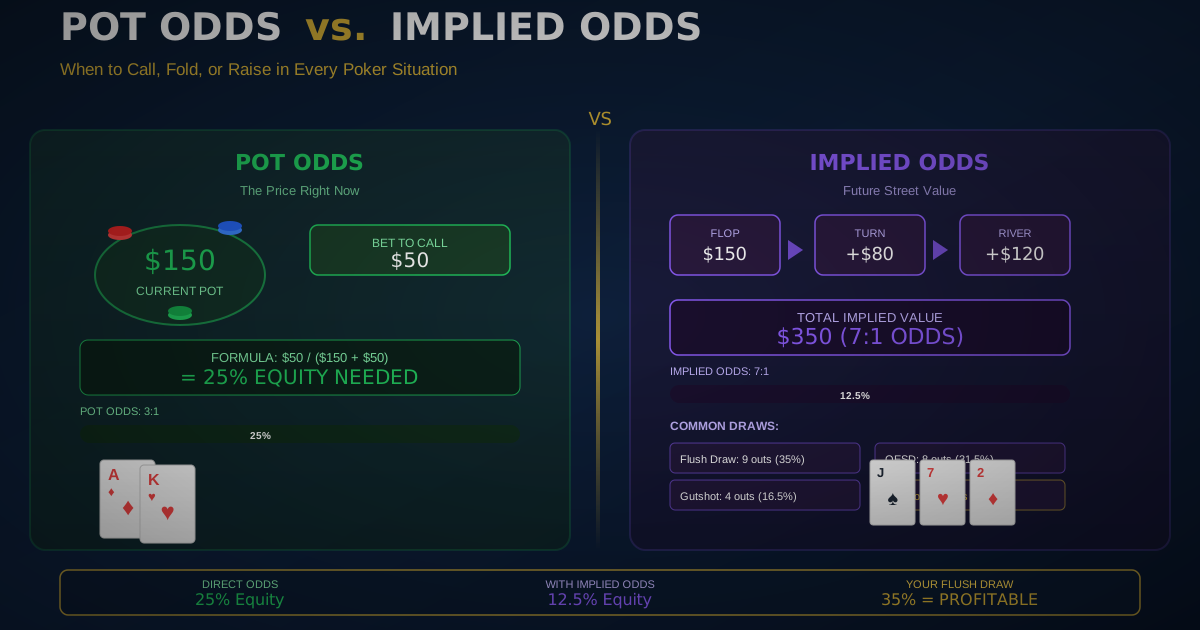
If your xG model projects a match at 1.4 xG vs. 1.1 xG (total 2.5 xG), and the Over 2.5 goals line is priced at -120 (implied 54.5%), you can assess whether the true probability of 3+ goals warrants that price. Since xG represents an average expectation, the actual distribution of goals follows a Poisson distribution, which can be used to calculate precise probabilities for each scoreline.
3. xG Difference (xGD) as a Long-Term Predictor
A team's xG difference (xG For minus xG Against) is a better predictor of future performance than actual goal difference. Teams with strong xGD but mediocre actual results are likely to improve, and vice versa.
Other Advanced Metrics for Soccer Betting
| Metric | What It Measures | Betting Application |
|---|---|---|
| xG (Expected Goals) | Shot quality created | Over/under totals, match result |
| xGA (Expected Goals Against) | Shot quality conceded | BTTS markets, defensive strength |
| xGD (xG Difference) | Net chance quality | Long-term futures, handicap markets |
| PPDA (Passes Per Defensive Action) | Pressing intensity | Identify high-tempo vs. low-block teams |
| xA (Expected Assists) | Chance creation quality | Assist and goalscorer props |
| Progressive Passes | Forward passing volume | Possession dominance bets |
Evaluate the true probability of any soccer bet with our Implied Probability Calculator.
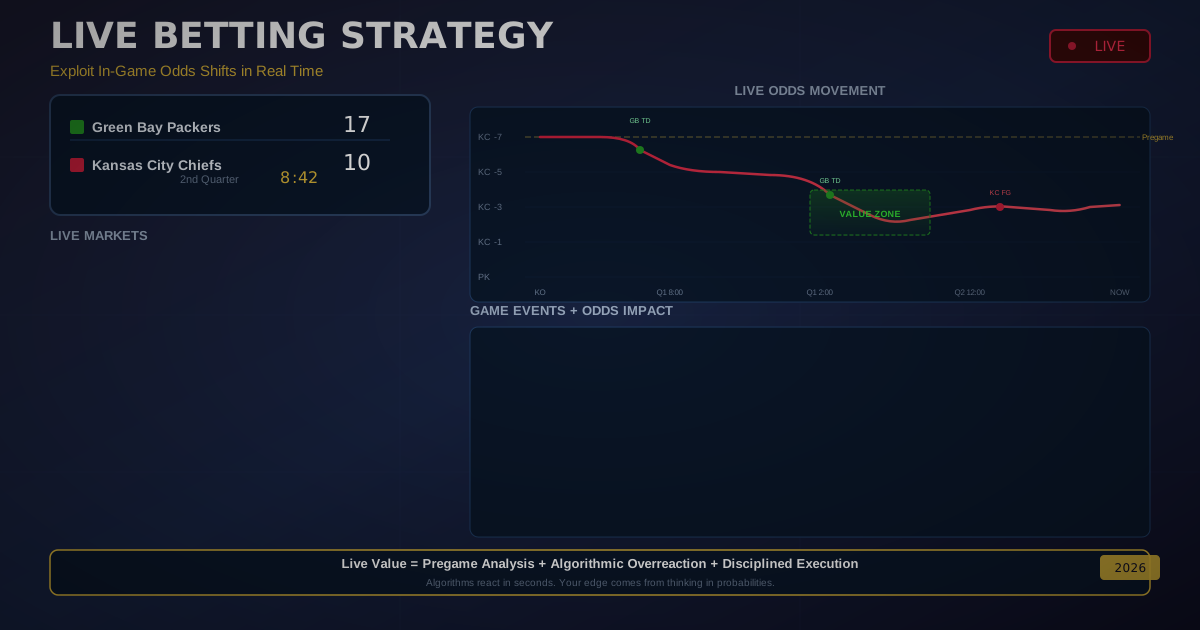
Live In-Play Soccer Betting Strategy
In-play betting accounts for a significant share of all soccer wagering globally. The 90-minute match duration, combined with frequent momentum shifts and relatively low scoring, makes soccer ideal for live betting.
Why In-Play Soccer Betting Offers More Value
Pre-match models cannot account for everything. Once the match begins, you can observe:
- Which team is dominating possession and territory
- Whether a key player is injured, ineffective, or playing out of position
- Tactical adjustments by managers
- Weather changes during the match
- Referee tendencies (how many fouls, cards, advantage calls)
This real-time information gives observant bettors an edge over pre-match models that cannot adjust fast enough.
Key In-Play Soccer Betting Strategies
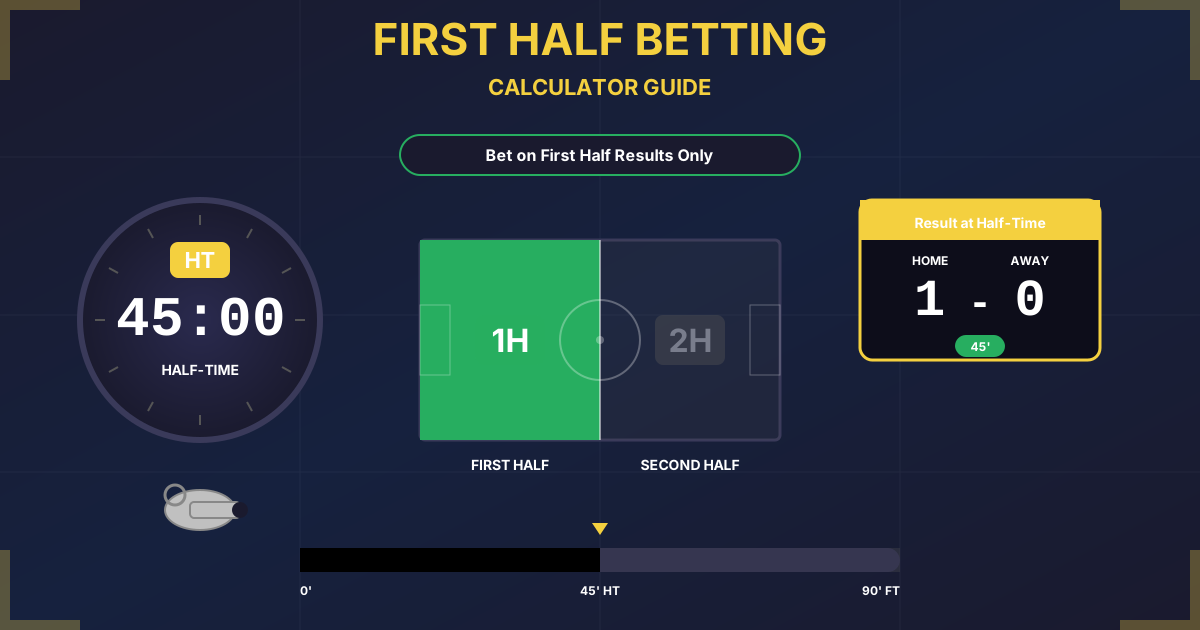
1. The 0-0 at Halftime Play
When a match is 0-0 at halftime but one team has dominated xG (say 1.2 xG vs. 0.1 xG for the opponent), the live odds for that dominant team to win often drop dramatically. However, the underlying quality of chances suggests they are very likely to score eventually. The Over 1.5 goals line or the dominant team to win at enhanced odds can offer strong value.
Example: Arsenal is hosting Crystal Palace. At halftime it is 0-0, but Arsenal has 1.4 xG and Palace has 0.1 xG. The pre-match line had Arsenal at -220; the live line has drifted to -150. Arsenal has been creating high-quality chances. Backing Arsenal at -150 or Over 1.5 goals at +110 represents value if the underlying xG data supports continued dominance.
2. Fading the Early Goal
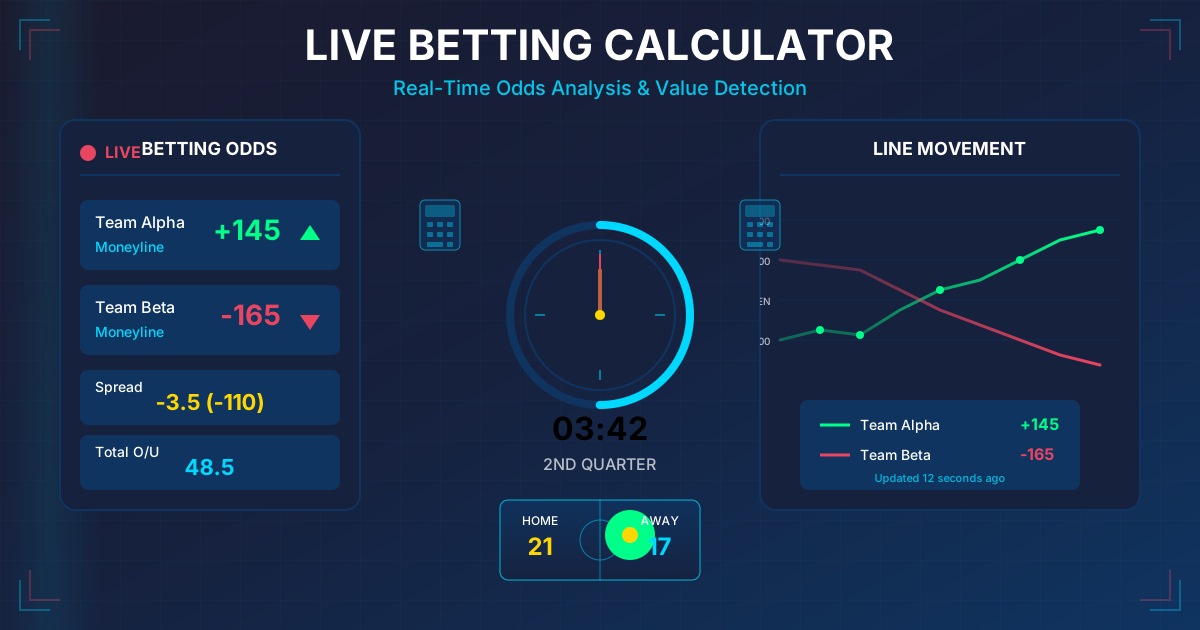
When an underdog scores early (first 15 minutes), the in-play market overreacts. The favorite's live odds spike to reflect the deficit, but in a 90-minute match, one early goal is easily overcome. If the favorite was -200 pre-match and the underdog scores in the 8th minute, the favorite might move to +140 live. If you believe the pre-match assessment was correct, backing the favorite at +140 represents significant value -- they now have 80+ minutes to equalize and win.
3. Late-Match Draw Insurance
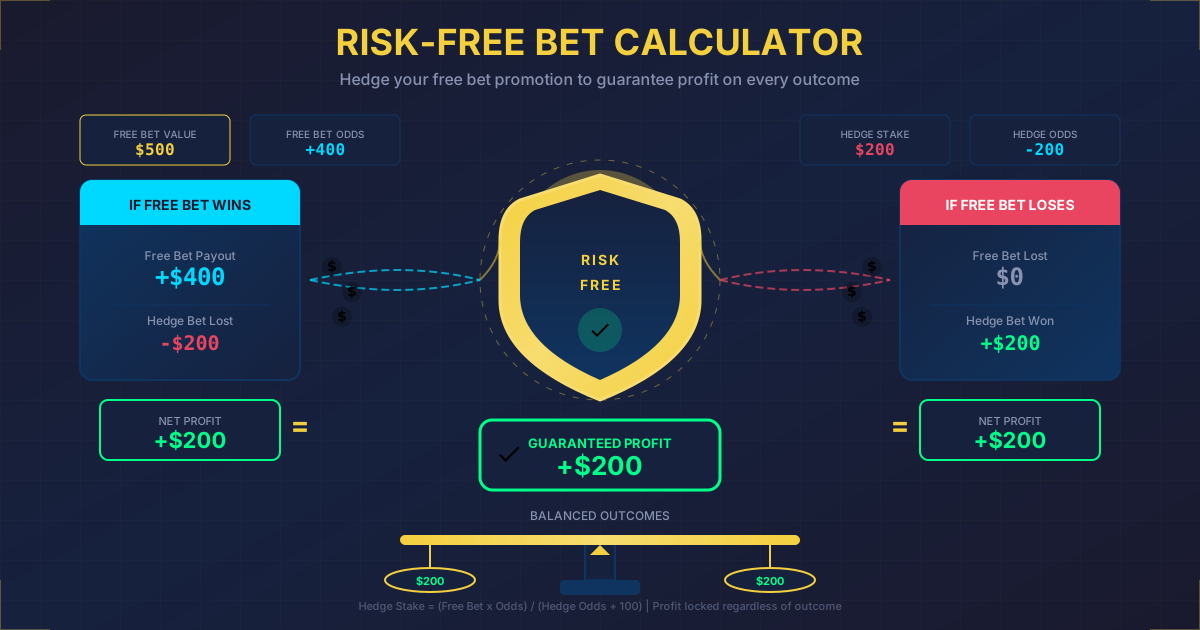
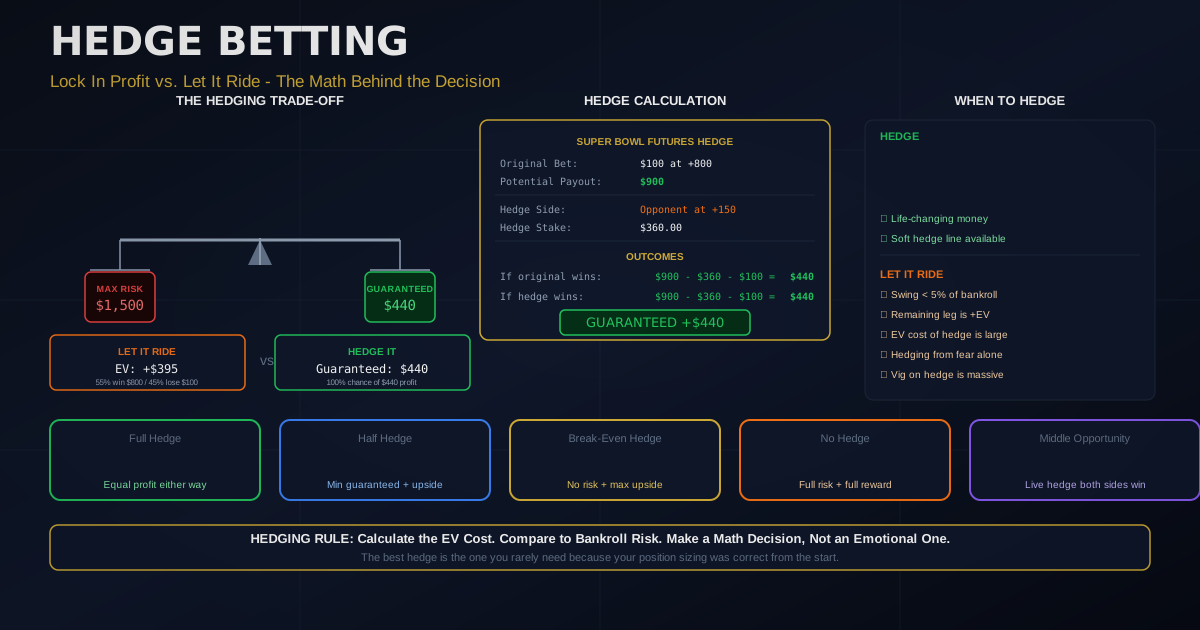
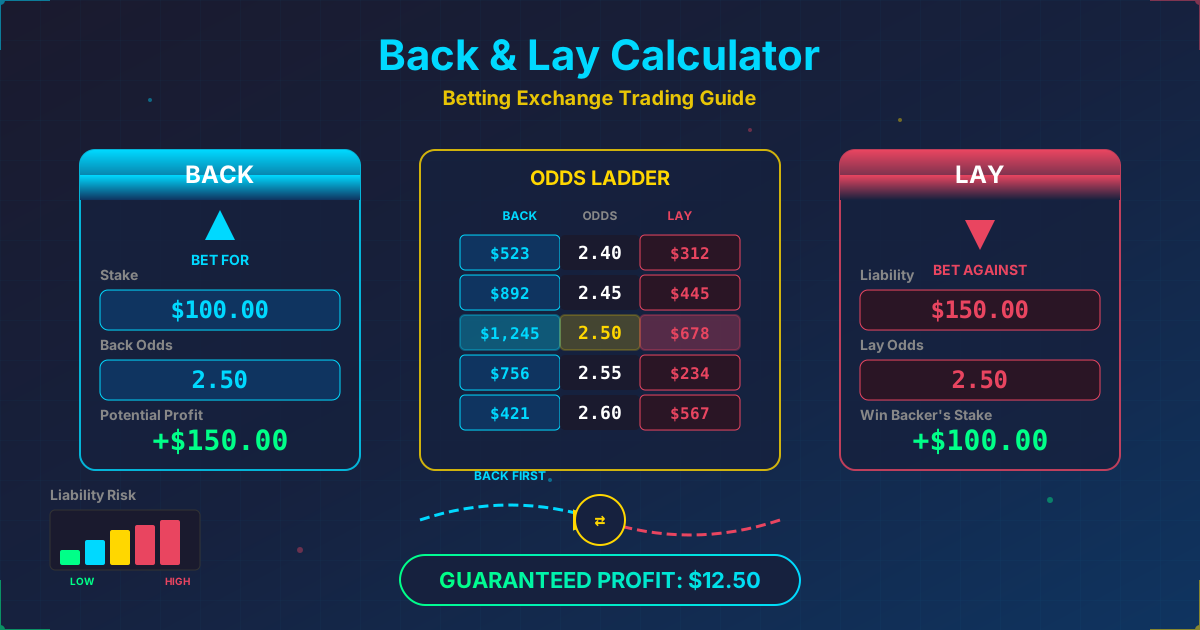
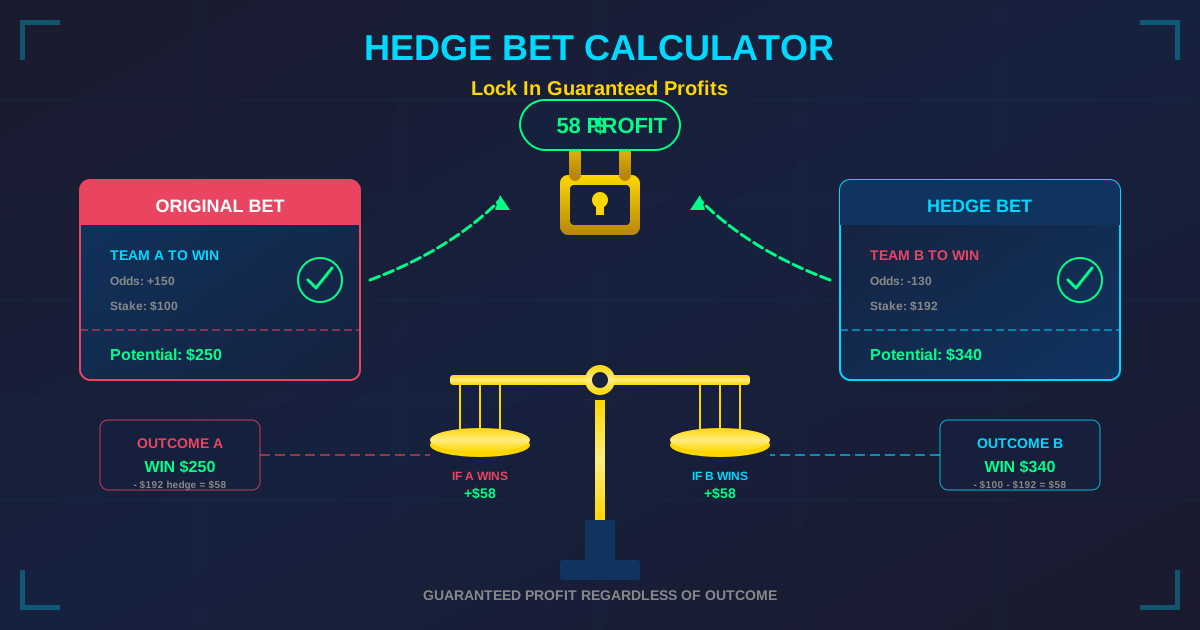
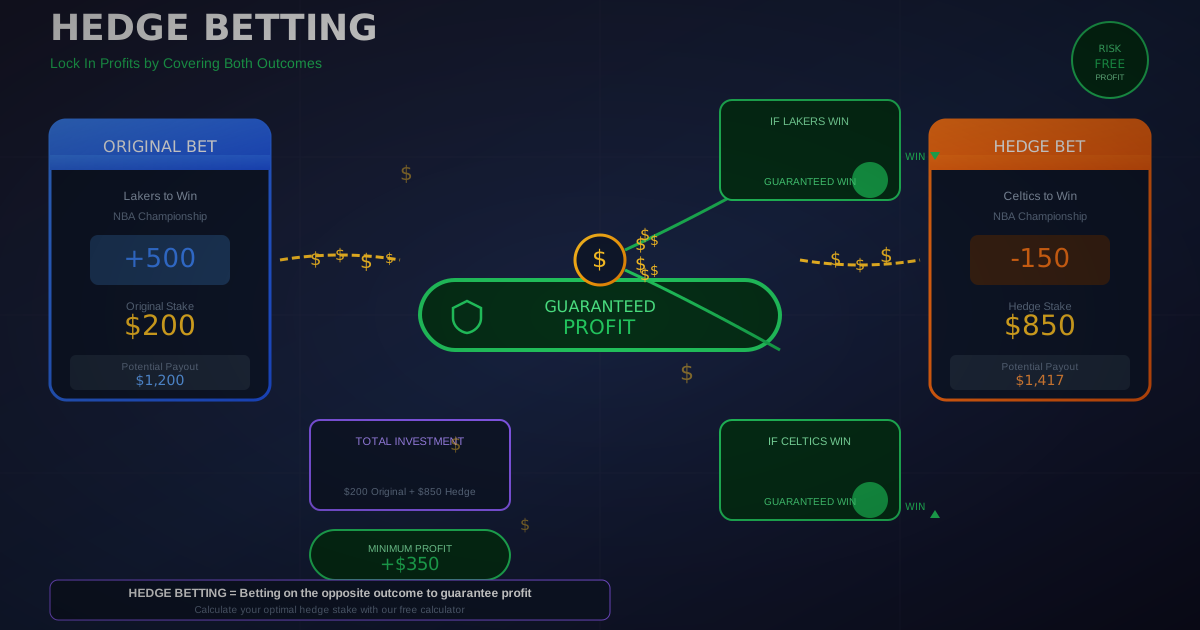
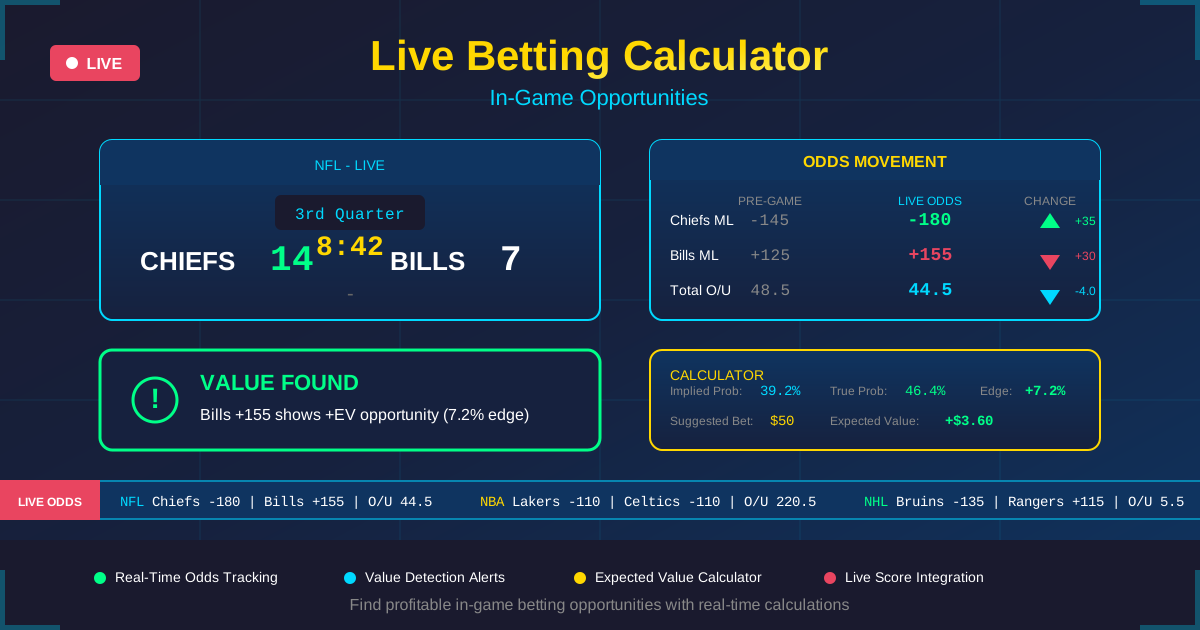
If you backed a team pre-match at, say, -160, and they lead 1-0 at the 70th minute, you can hedge with a draw or opponent bet in-play to lock in profit. The draw odds at 1-0 in the 70th minute might be +350, offering a cheap hedge.
Lock in profits on live soccer bets with our Hedge Calculator.
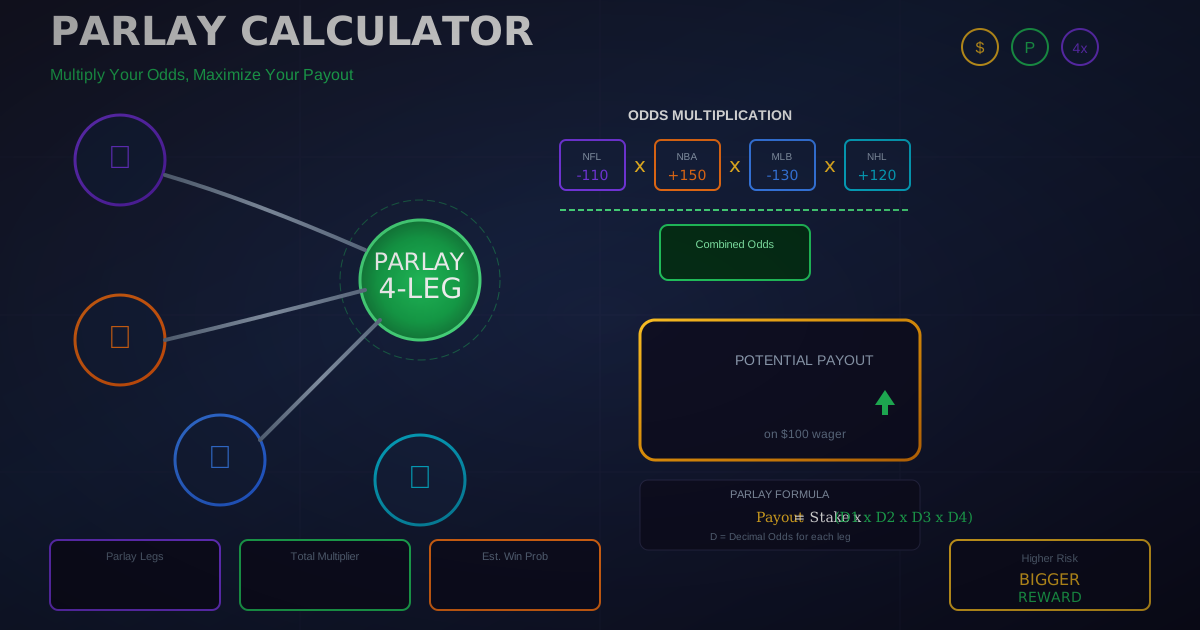
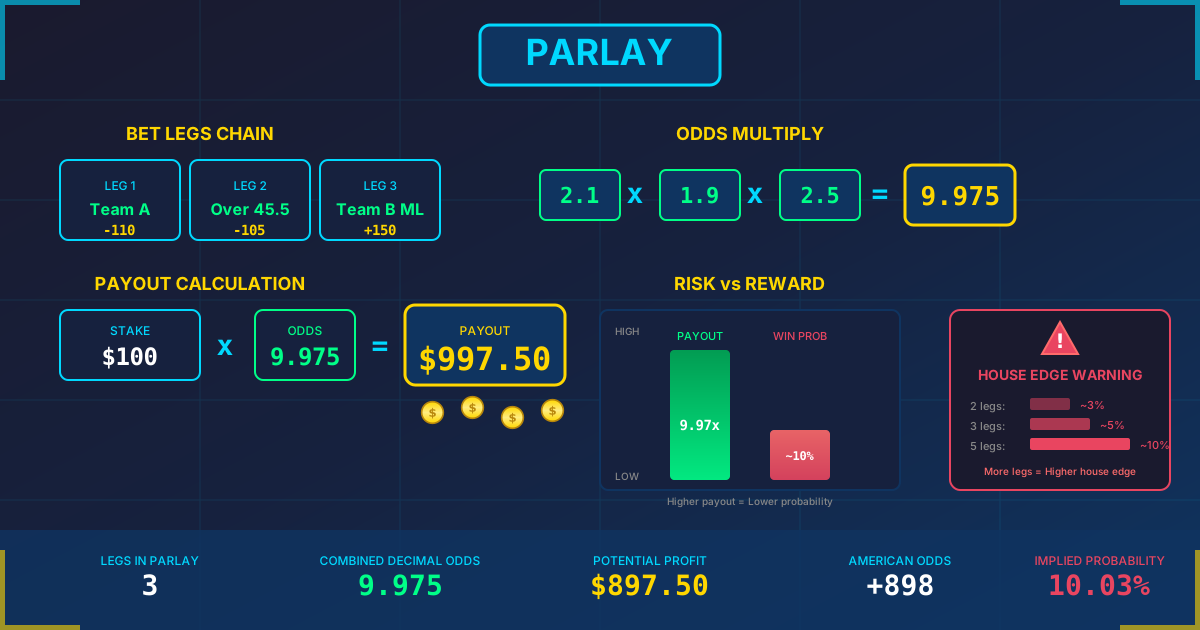
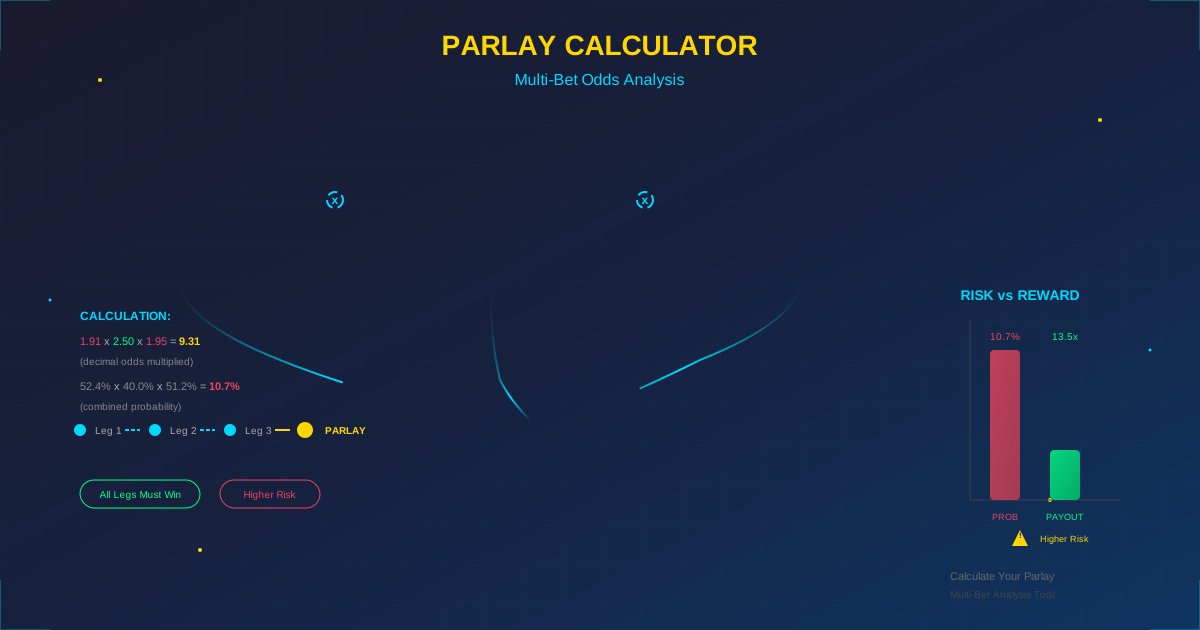
Soccer Parlays and Accumulators
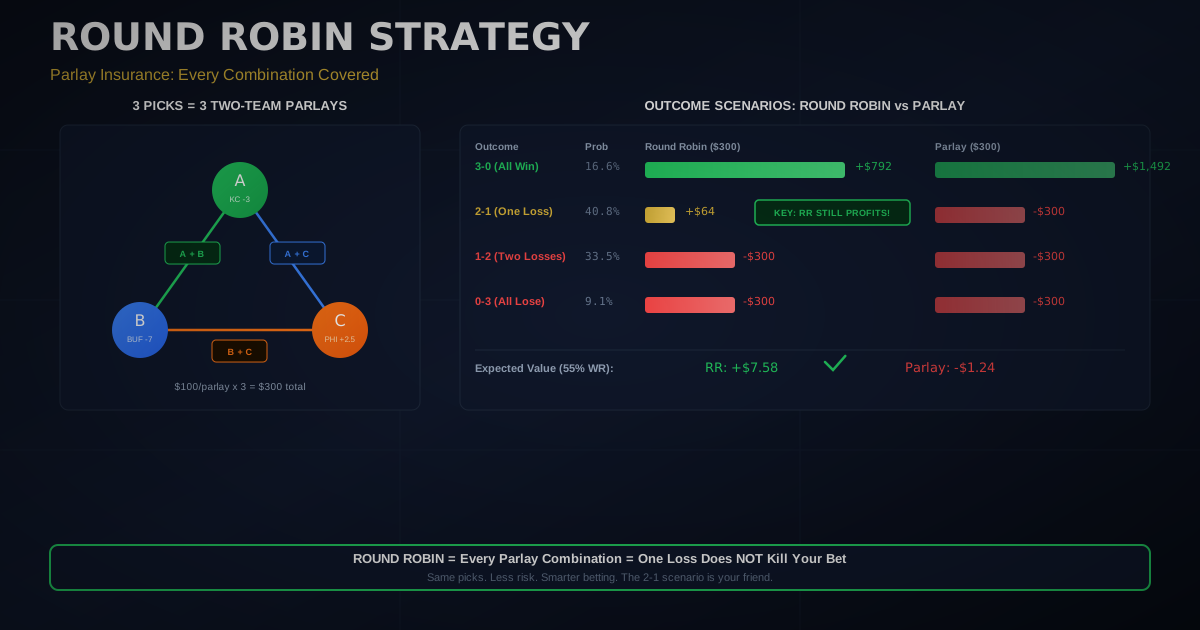
Soccer "accumulators" (accas) are the most popular bet type in European betting culture. An accumulator is simply a parlay -- multiple selections that all must win for the bet to pay out.
Why Soccer Parlays Are Popular (and Dangerous)
Soccer's lower-scoring nature means individual match odds are relatively short. A -200 favorite does not offer much profit on a $10 bet ($5 return). Parlaying four -200 favorites turns that into a much more attractive payout -- but the probability drops significantly.
| Number of Legs (All -200 Favorites) | Implied Win Probability | Approximate Payout ($10 Bet) |
|---|---|---|
| 1 leg | 66.7% | $15 ($5 profit) |
| 2 legs | 44.4% | $22.50 |
| 3 legs | 29.6% | $33.75 |
| 4 legs | 19.8% | $50.63 |
| 5 legs | 13.2% | $75.94 |
| 6 legs | 8.8% | $113.91 |
The appeal is obvious -- turning $10 into $113. But the true probability of hitting a 6-leg parlay is under 9%, and the sportsbook's vig compounds with each leg. The hold on a 6-leg parlay can exceed 30%.
Smarter Approaches to Soccer Parlays
1. Correlated Parlays
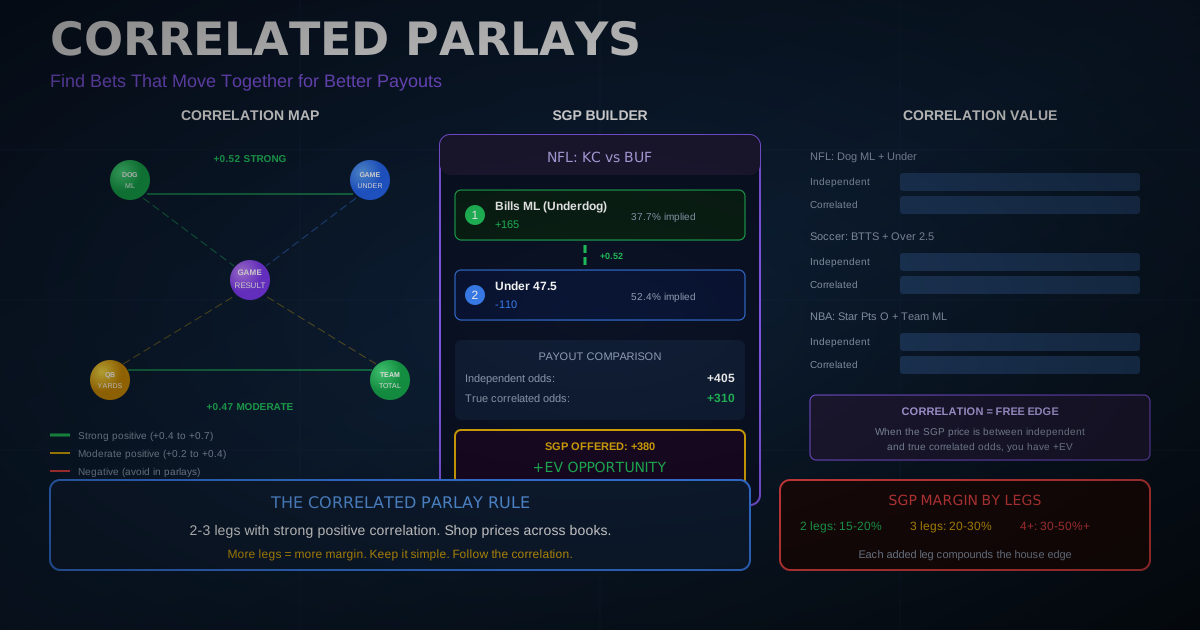
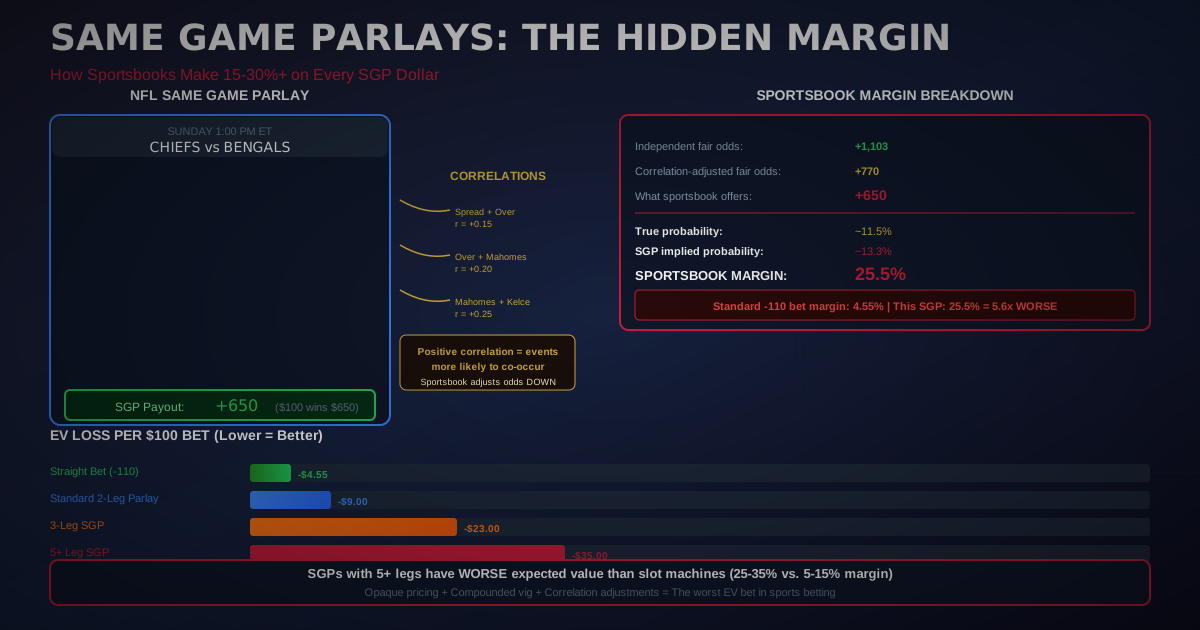
Some sportsbooks allow you to combine correlated outcomes within the same match. For example: Over 2.5 goals + BTTS Yes. These outcomes are positively correlated -- if the game goes over 2.5 goals, it is very likely both teams scored. The parlay offers a higher payout than either leg alone, but the true probability is higher than the parlay odds suggest (because the events are not independent).
2. Small Parlays with Asian Handicaps
Instead of parlaying 1X2 moneylines (where the draw kills you), parlay Asian handicaps. A 3-leg parlay of favorites at -0.5 Asian handicap eliminates the draw from each leg. Your hit rate improves, and the odds are fairer because Asian handicap markets carry lower vig.
3. Same-Game Parlays for Value
Combining team to win + under X goals can offer value in matches featuring a defensive-minded favorite. For example, Arsenal to win + Under 3.5 goals in a match against a relegation candidate. Arsenal wins many matches 1-0 or 2-0, which satisfies both legs.
Calculate parlay odds and payouts instantly with our Parlay Calculator.
Common Soccer Betting Mistakes
1. Ignoring the Draw
The single biggest mistake American bettors make in soccer is ignoring the draw. In the NFL, ties are astronomically rare. In soccer, draws happen in roughly 25-27% of matches across major leagues. If you are betting 1X2 moneylines and only considering "will team A or team B win," you are ignoring an outcome that occurs one-quarter of the time.
Solution: Use Asian handicap or Draw No Bet markets to eliminate the draw. Or incorporate the draw into your betting strategy -- backing draws at +250 to +350 in specific matchups (two evenly matched defensive teams, for instance) can be highly profitable.
2. Parlaying Too Many Legs
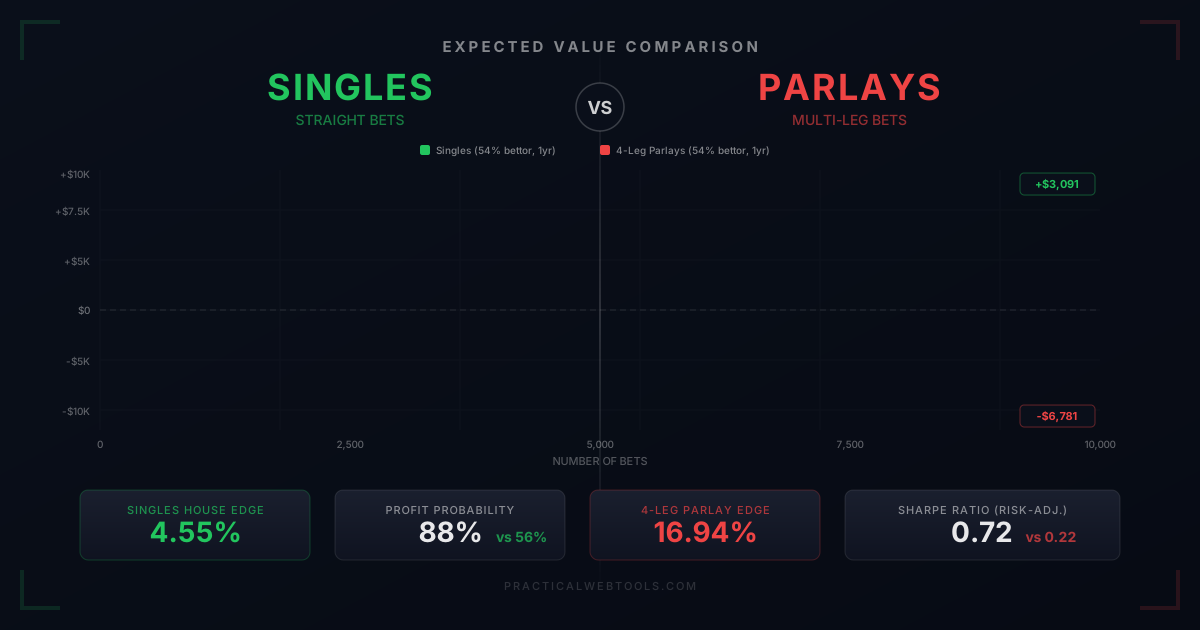
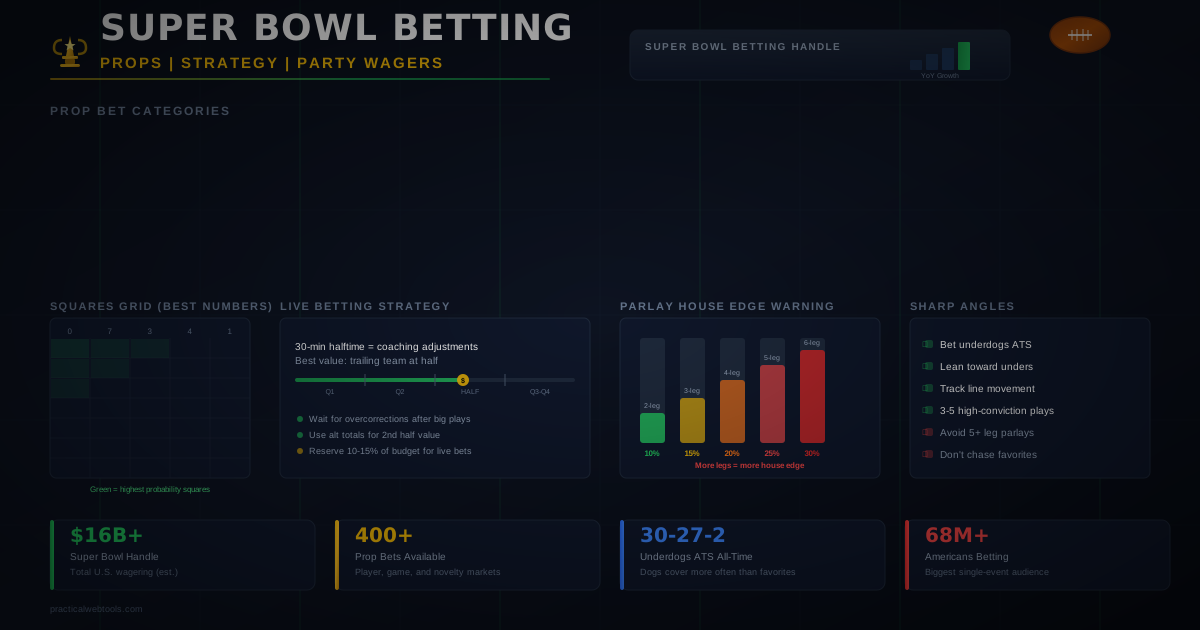
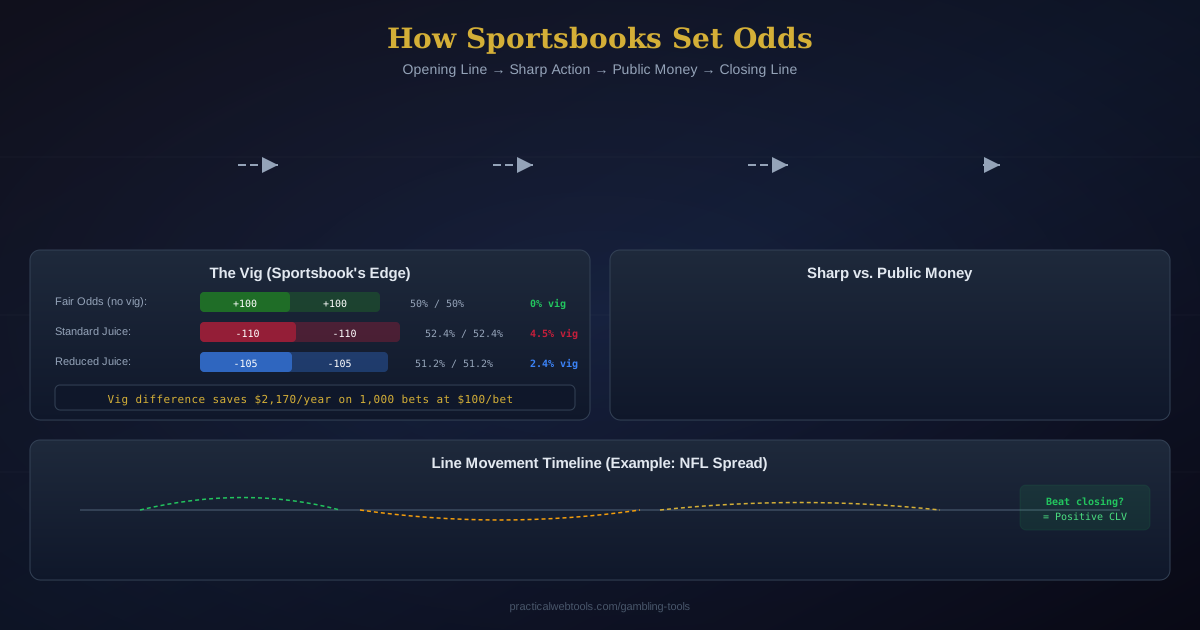
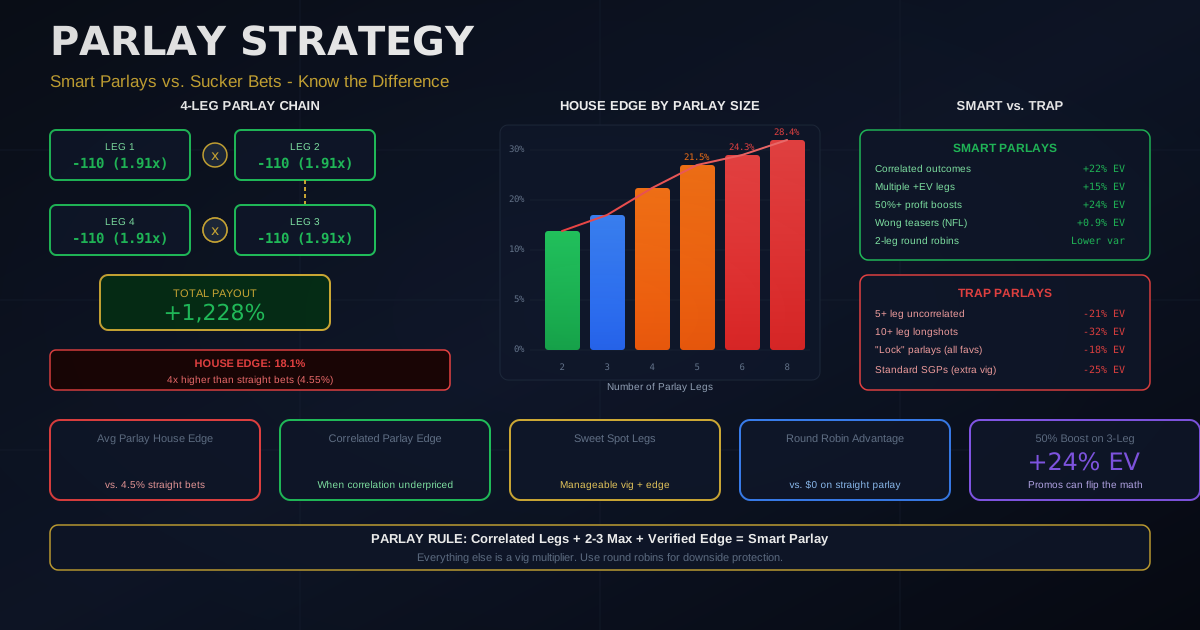
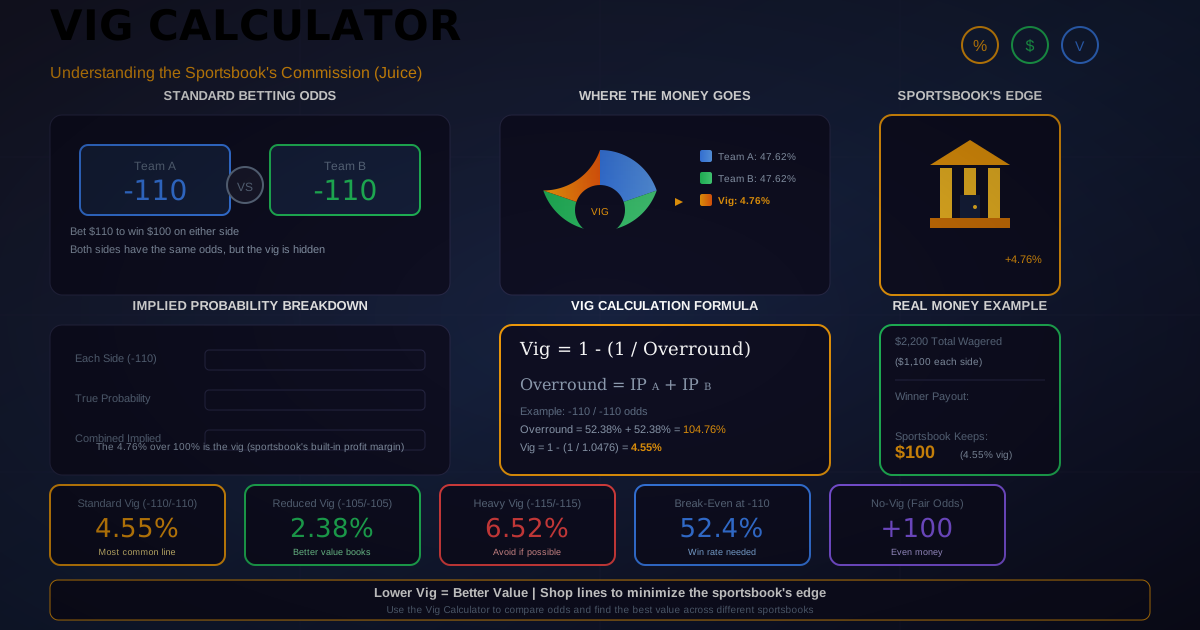
Every leg you add to a parlay compounds the sportsbook's edge. A single bet at -110 carries about 4.5% vig. A 5-leg parlay at -110 per leg compounds that vig to over 20%. The more legs, the worse your expected value.
Solution: Keep parlays to 2-3 legs maximum. Or accept that large parlays are entertainment bets with negative expected value and size them accordingly (small stakes).
3. Overvaluing Big Names
Real Madrid, Manchester City, and Barcelona attract massive public betting volume regardless of matchup, form, or circumstance. This public bias inflates their lines, making them poor value in many situations. A -300 favorite needs to win 75% of the time to break even -- even elite clubs do not win 75% of every match they play.
Solution: Assess each match independently. Do not assume brand-name clubs are always worth betting.
4. Not Adjusting for Squad Rotation
Top clubs rotate their starting lineups significantly during congested fixture periods. A "full strength" Liverpool and a "rotated" Liverpool with five changes are fundamentally different teams. The market often does not adjust quickly enough for confirmed lineup changes, which are typically announced 60-75 minutes before kickoff.
Solution: Wait for confirmed lineups before placing bets on matches involving clubs competing in multiple competitions.
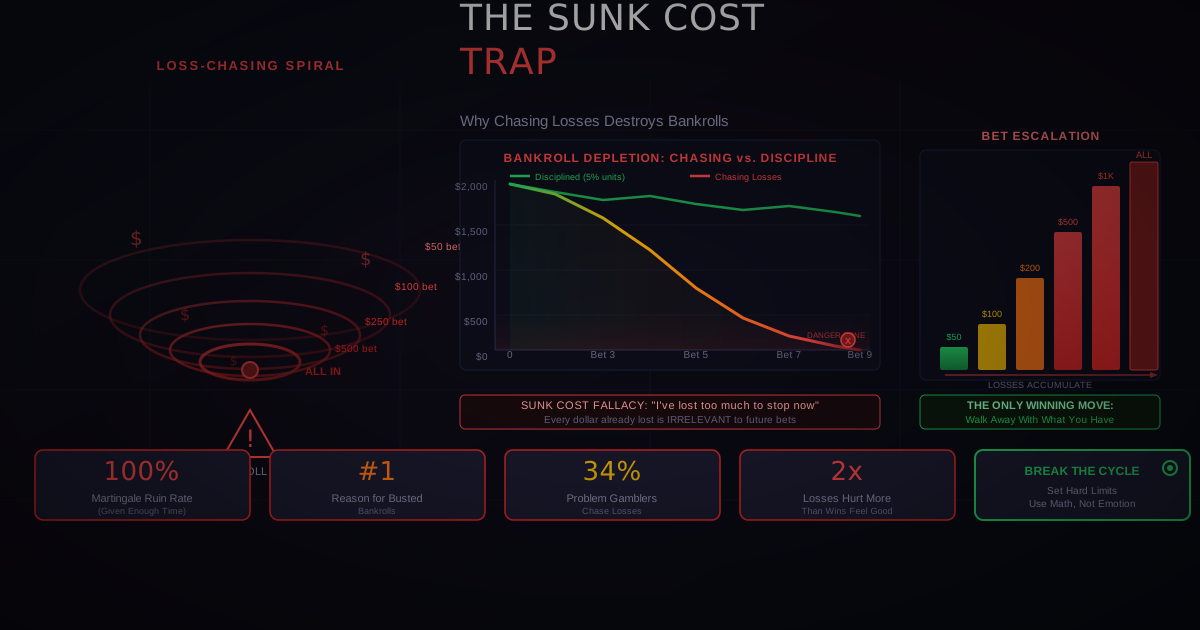
5. Chasing Losses with Accumulators
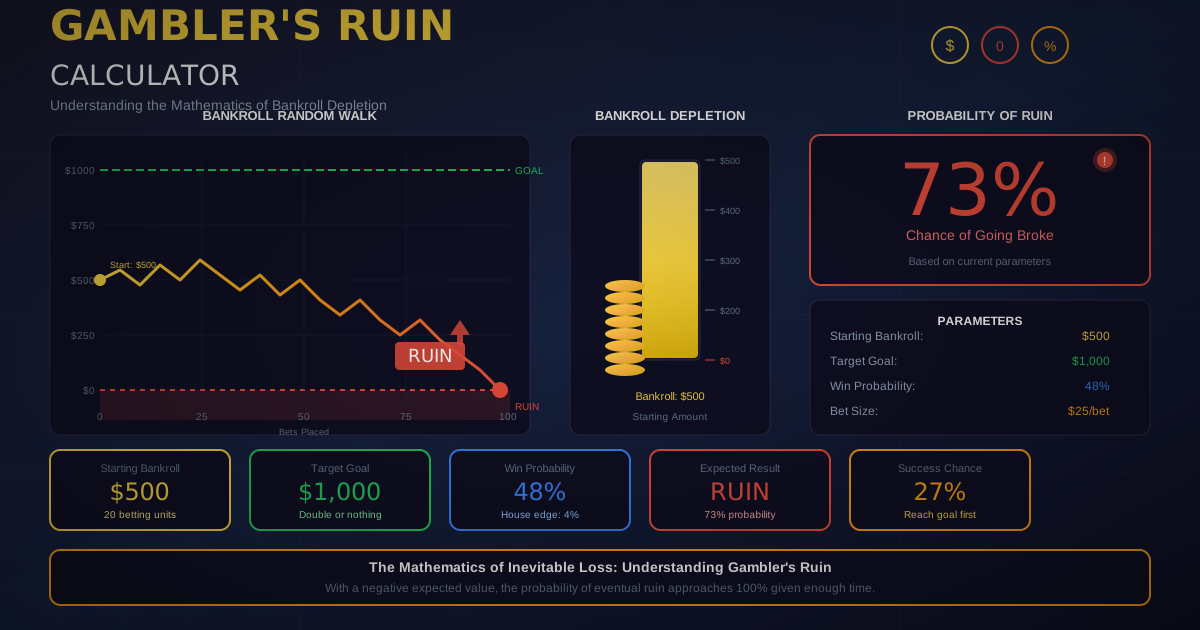
After a losing day, the temptation to place a high-odds accumulator to "win it all back" is powerful. This is the fastest way to blow through a bankroll. Long-shot parlays are the sportsbook's highest-margin product.
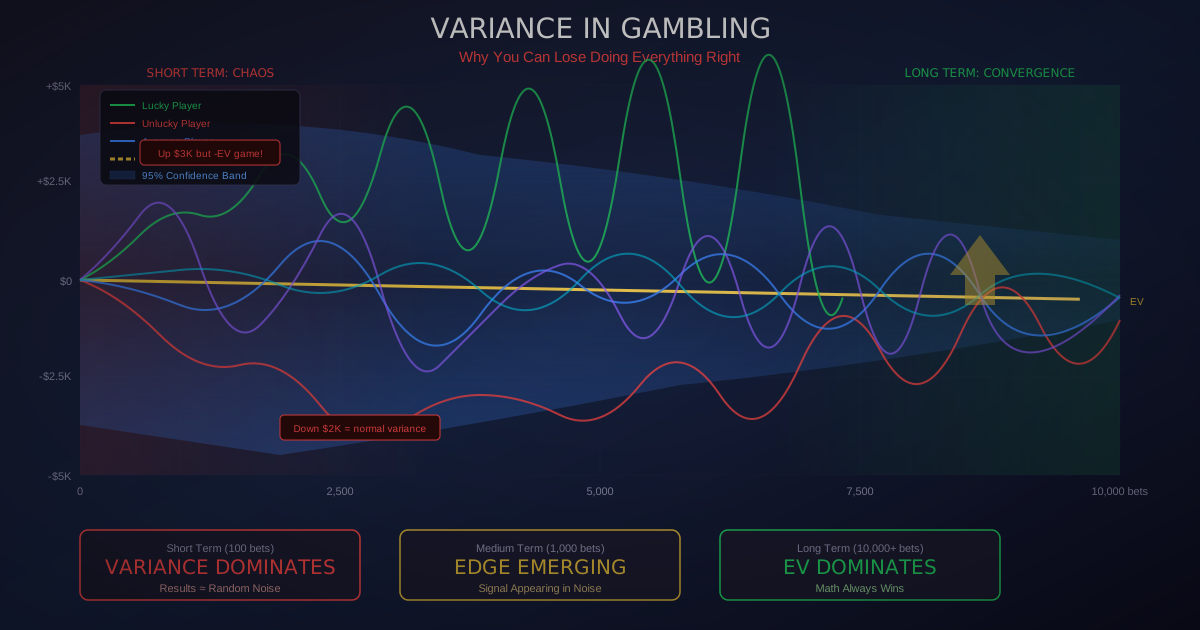
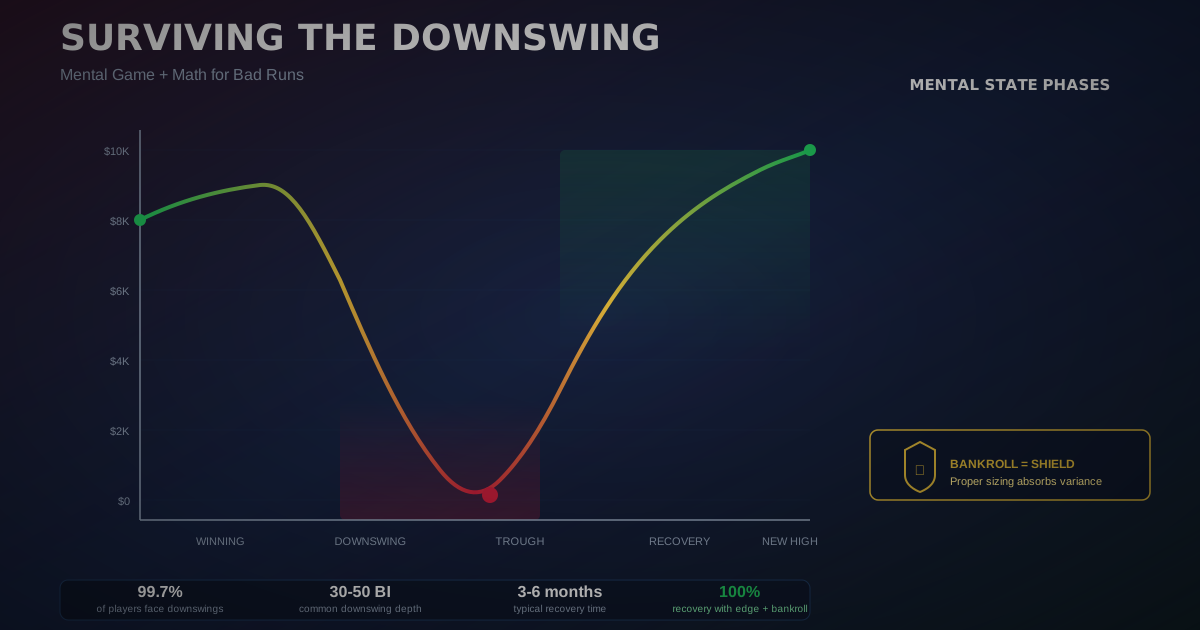
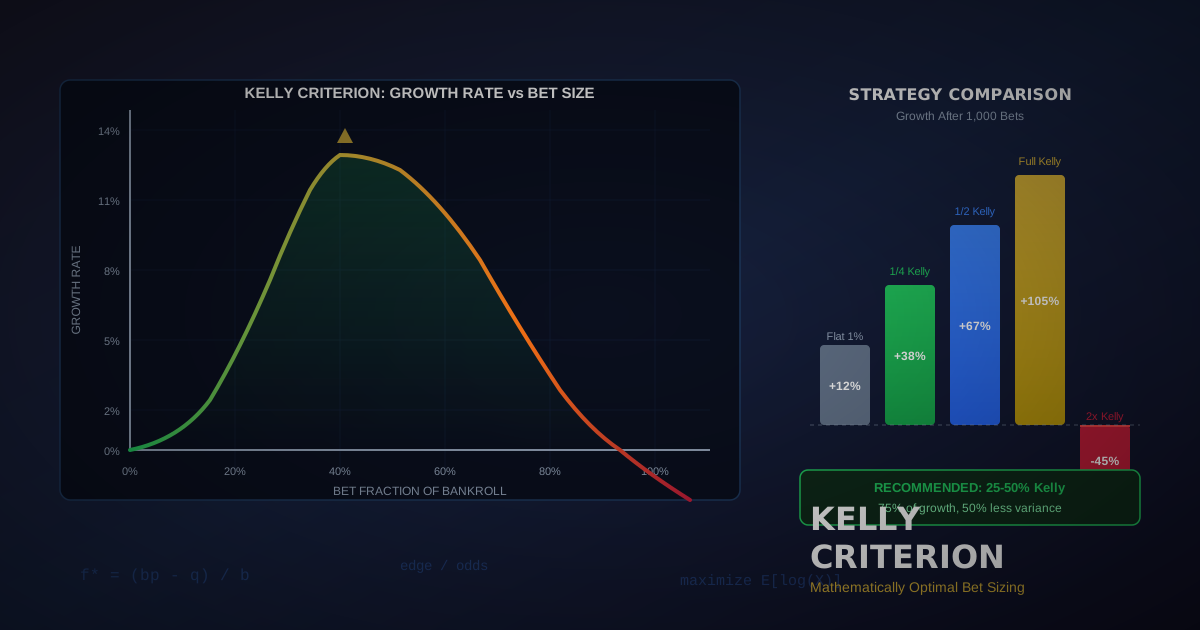
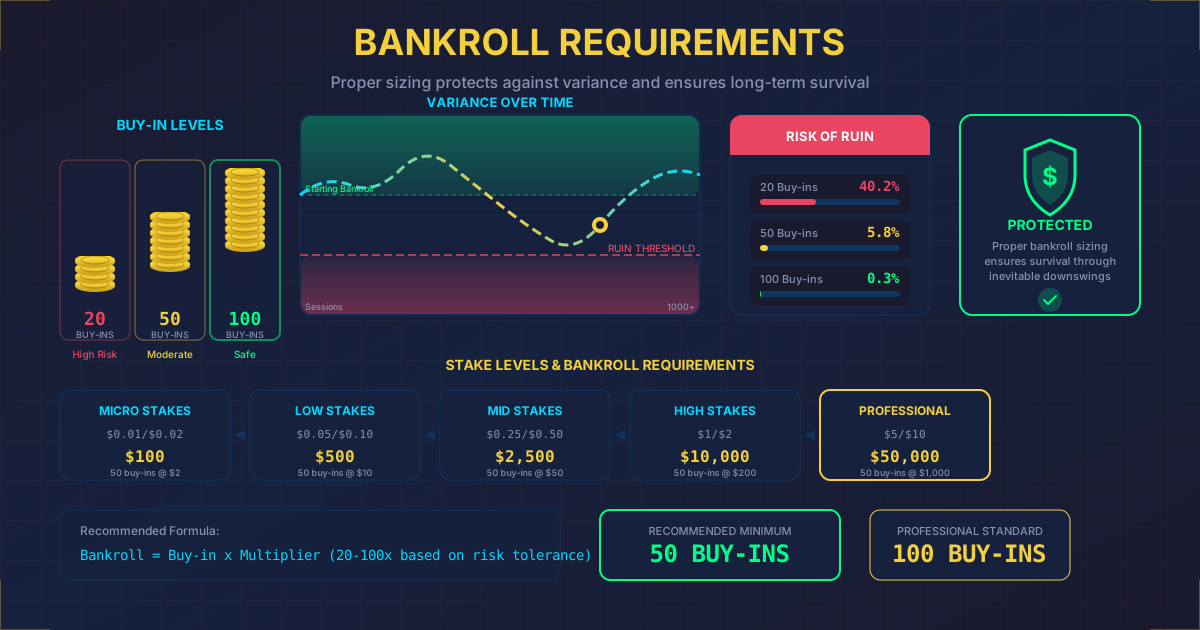
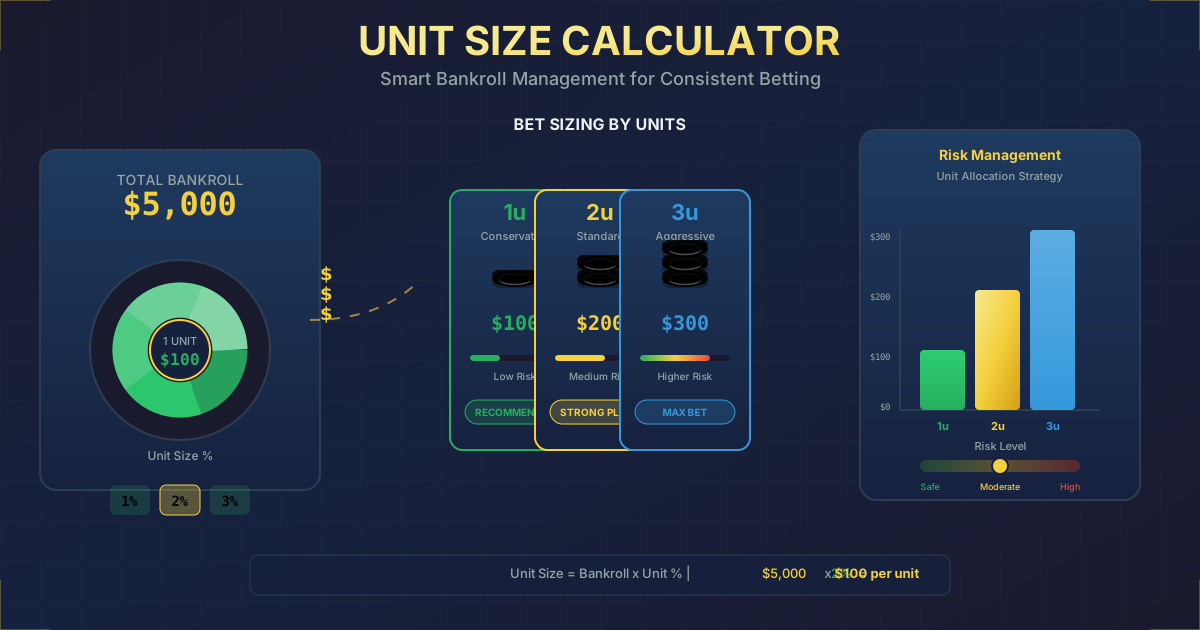
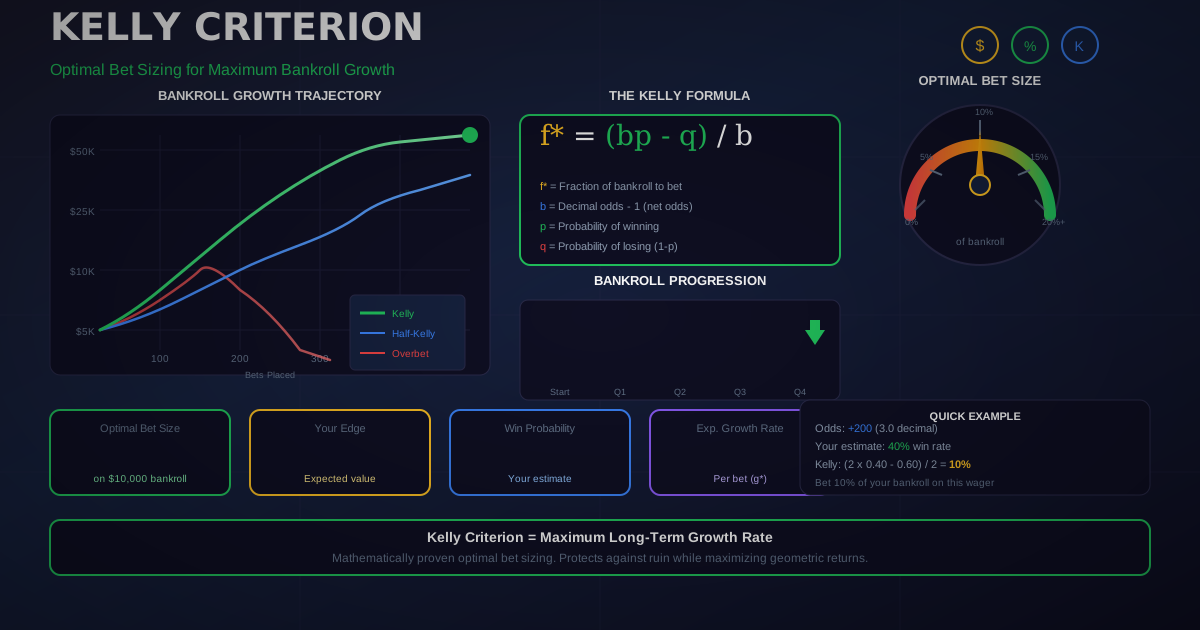
Solution: Maintain flat staking or Kelly Criterion-based bet sizing regardless of recent results. Variance is normal. One losing day does not require a recovery strategy -- it requires patience.
6. Betting Without Understanding League Context
Each soccer league has unique characteristics. Serie A (Italy) is defensive and tactical with lower scoring. The Bundesliga (Germany) is high-scoring and open. Ligue 1 (France) is dominated by one super-club (PSG). You cannot apply Premier League assumptions to other leagues.
Solution: Specialize in one or two leagues rather than spreading yourself across every competition. Deep knowledge of team dynamics, managerial tactics, and player availability in a single league is worth more than shallow knowledge of ten leagues.
Size every soccer bet optimally with our Kelly Criterion Calculator.
Frequently Asked Questions
What is the best soccer bet type for beginners?
Asian handicap -0.5 or Draw No Bet are the best starting points for beginners transitioning from American sports. Both eliminate the draw, creating a familiar two-outcome scenario. Asian handicap -0.5 is functionally identical to a two-way moneyline -- your team must win for the bet to pay. It is priced with lower vig than the 1X2 market and removes the most confusing element of soccer betting.
How is soccer betting different from NFL or NBA betting?
The biggest difference is the draw. In soccer, draws occur in roughly 25-27% of matches, meaning the 1X2 moneyline has three outcomes instead of two. Soccer also uses Asian handicaps (quarter-goal increments) rather than standard point spreads, offers unique markets like BTTS (Both Teams to Score) and correct score, and has lower scoring that makes individual goals more impactful. The lower scoring also means live betting dynamics are different -- a single goal dramatically shifts in-play odds.
What is xG and why does it matter for betting?
Expected Goals (xG) is a statistical model that assigns a probability (0 to 1) to every shot based on its location, angle, and type. A team's total xG represents the number of goals they "should have" scored based on chance quality. For betting, xG helps identify teams that are overperforming (scoring more than expected, likely to regress) or underperforming (creating better chances than results show, likely to improve). Comparing xG to actual results and betting lines reveals value opportunities.
Should I bet on the USA to win the 2026 World Cup?
The United States at +5000 (roughly 2% implied probability) is a long-shot futures bet. Host nations historically outperform pre-tournament odds, and the USA will benefit from home crowds, no travel fatigue, and familiar conditions. However, +5000 likely still reflects a fair assessment of their chances against European and South American powerhouses. If you believe the true probability is higher than 2% (say 3-4%), there is marginal value. A small futures bet for entertainment is reasonable, but do not overweight it in your portfolio.
How much vig do sportsbooks charge on soccer bets?
Vig varies by market and competition. Mainstream 1X2 markets on the Premier League typically carry 5-8% hold. Asian handicap markets carry 2-4% hold, making them more bettor-friendly. Prop markets (correct score, first goalscorer, number of corners) carry 10-20%+ hold. Less popular leagues and lower-tier competitions carry higher vig across all markets. Use a Hold/Vig Calculator to determine the exact hold on any market before placing a bet.
What is the best league to bet on for value?
MLS offers the most inefficient markets among major leagues, with bookmakers correctly predicting results only about 47% of the time (vs. ~60% in the Premier League). However, inefficiency cuts both ways -- it is harder to model MLS outcomes, and variance is higher. For a balance of data availability and market beatable-ness, lower-profile European leagues (Eredivisie, Belgian Pro League, Portuguese Liga) often provide softer lines with sufficient data to build models.
Are soccer parlays (accumulators) worth it?
Single bets have better expected value than parlays because the sportsbook's vig compounds with each leg. A 5-leg parlay at standard juice can carry 20%+ combined hold. However, small-stakes accumulators are a legitimate entertainment product, and correlated same-game parlays (e.g., team to win + under 3.5 goals) can offer positive expected value when the correlation is not fully priced by the sportsbook. If you parlay, keep it to 2-3 legs and use Asian handicaps rather than 1X2 moneylines.
When should I bet on soccer matches -- before kickoff or live?
Both have advantages. Pre-match betting allows you to shop lines across books and exploit early soft openers. Live betting allows you to watch team form, confirmed lineups, and in-game dynamics before risking money. The strongest approach is a hybrid: take pre-match bets when you identify value in early lines, then add in-play positions when the match unfolds in a way that creates additional value. Many professionals place 50%+ of their soccer bets in-play.
Essential Tools for Soccer Betting
Successful soccer betting requires the right calculators and tools. Here are the essential resources:
Odds and Probability Tools
- Odds Converter: Convert between American, decimal, and fractional odds instantly -- essential when comparing lines across international sportsbooks
- Implied Probability Calculator: Convert any odds format to true probability percentage
- Hold/Vig Calculator: Calculate the sportsbook's edge on any market
Value and Sizing Tools
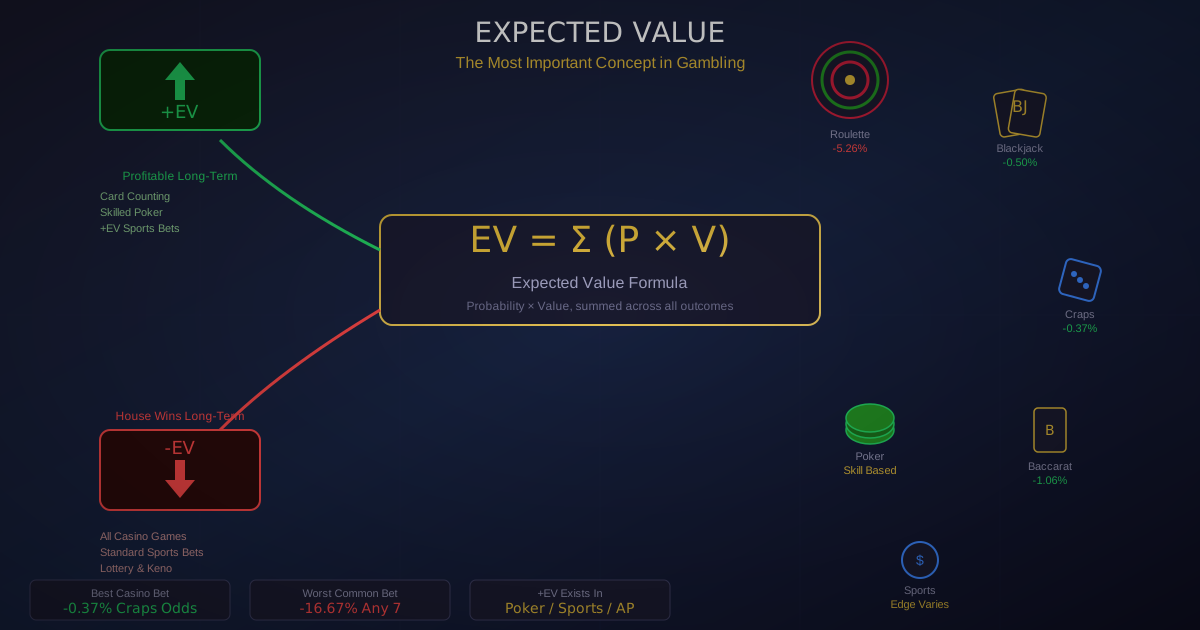
- Expected Value Calculator: Calculate the EV of any bet to determine if it is +EV or -EV
- Kelly Criterion Calculator: Determine optimal bet sizing based on your estimated edge
- Hedge Calculator: Calculate exact hedge amounts for live betting and futures
Multi-Bet Tools
- Parlay Calculator: Calculate accumulator odds and payouts for any number of legs
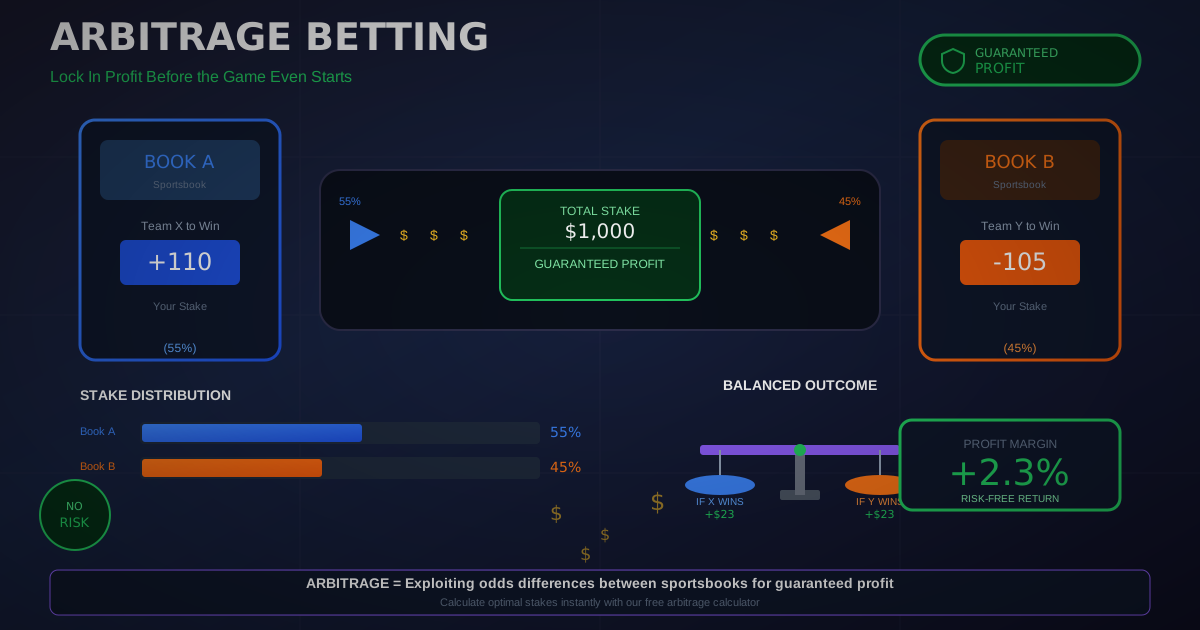
- Arbitrage Calculator: Identify and calculate risk-free arbitrage opportunities across sportsbooks
Conclusion
The 2026 World Cup represents a once-in-a-generation opportunity for soccer bettors. The expanded 48-team, 104-match format hosted across North America means unprecedented betting volume, market liquidity, and -- for informed bettors -- potential value.
But you do not need to wait for the World Cup. The Premier League, MLS, and dozens of other leagues offer year-round soccer betting markets with identifiable edges. The keys are consistent across every competition: understand the bet types unique to soccer (Asian handicap, BTTS, Draw No Bet), use advanced metrics like xG to evaluate true probabilities, specialize in leagues where you can develop deep knowledge, and always compare your estimated probability against the implied probability in the odds.
Soccer rewards patient, analytical bettors who respect the mathematics. The draw is not an enemy -- it is an opportunity. Market inefficiencies in MLS and lesser-known leagues are real. And the tools to convert knowledge into profitable decisions are free and available right now.
Start analyzing soccer betting markets with our free Expected Value Calculator, convert any odds with our Odds Converter, and size your bets optimally with our Kelly Criterion Calculator.
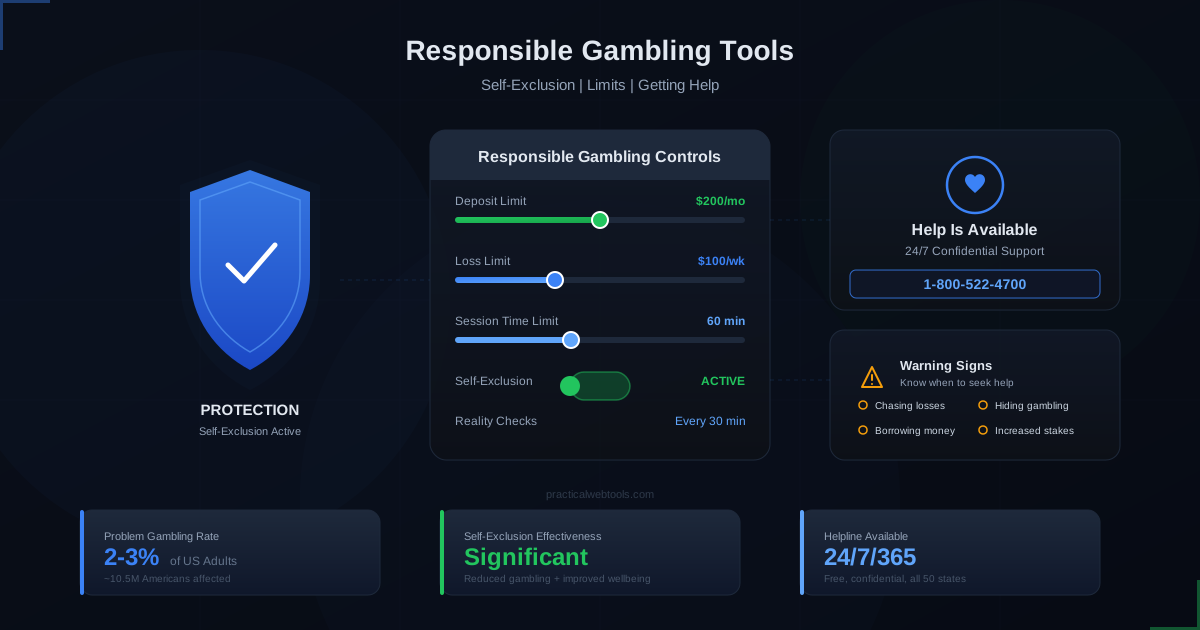
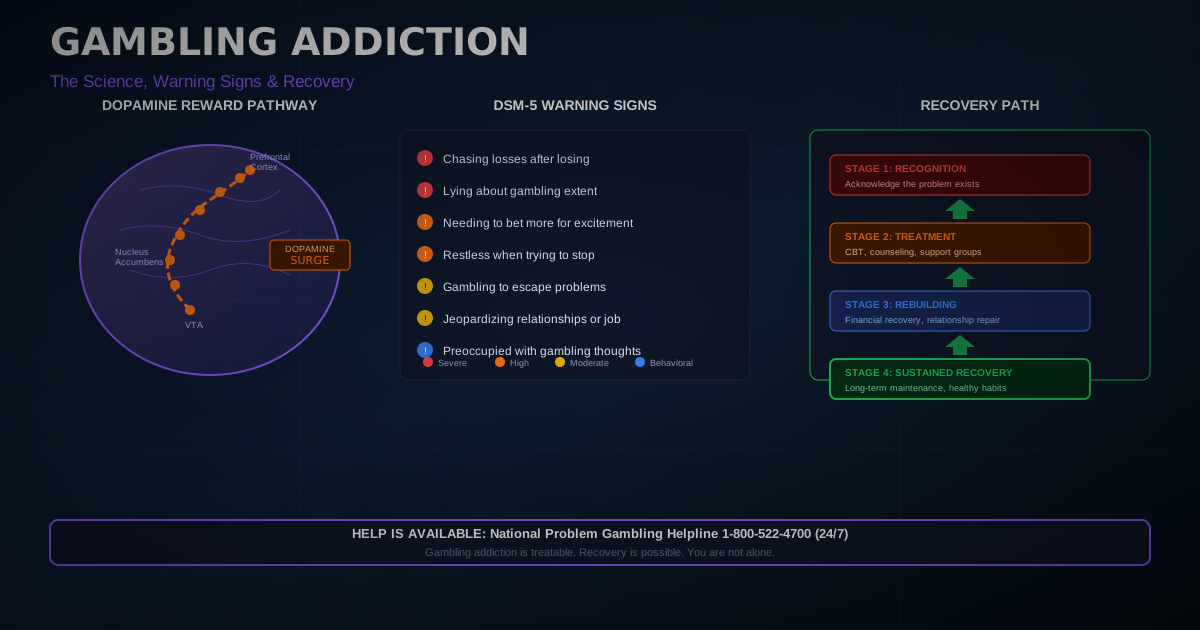
Gambling involves risk. This content is for educational and informational purposes only. Always gamble responsibly, set limits you can afford, and seek help if gambling becomes a problem. Visit the National Council on Problem Gambling or call 1-800-522-4700 for support.