UFC and MMA Betting: How to Analyze Fights and Find Value (2026)
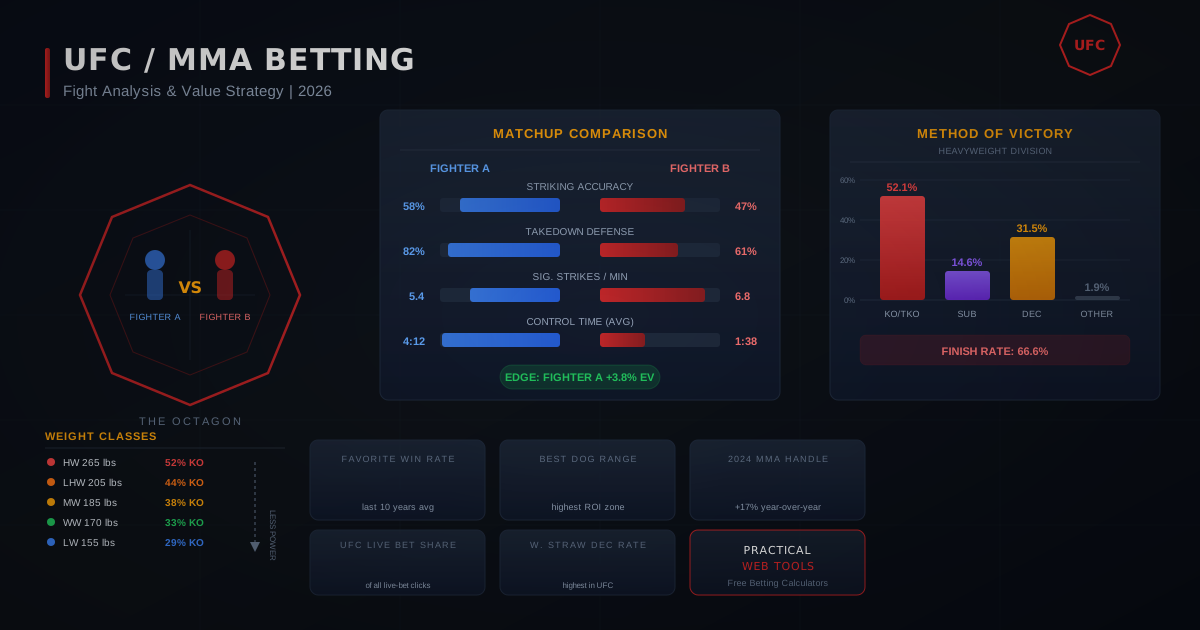
MMA is one of the most profitable sports to bet on -- if you know what you are looking at. Unlike team sports where 15 players dilute any single variable, a UFC fight is two individuals locked in a cage where one bad stylistic matchup, one weight cut gone wrong, or one moment of overconfidence from a -500 favorite can flip the entire outcome. The betting market knows this. Sportsbooks have thinner margins on MMA than on NFL spreads, and the public consistently misprices fights because casual bettors bet names instead of matchups.
The numbers back this up. MMA betting handle hit $10.3 billion in 2024, a 17% jump year-over-year, and UFC events now drive 11% of all live-bet clicks on fight nights at major books like DraftKings and FanDuel. The growth is explosive because bettors are waking up to what sharps have known for years: with only two combatants and dozens of quantifiable variables -- striking accuracy, takedown defense, cardio output, cage cutting ability -- MMA offers an information edge that simply does not exist in most team sports.
But that edge cuts both ways. Betting favorites blindly in UFC will grind your bankroll down just as fast as tailing underdogs without doing your homework. Over the last decade, favorites have won roughly 65-72% of UFC fights depending on the year, but that win rate does not cover the juice on heavy chalk. The real money is in understanding when the line is wrong, not just who will win.
This guide breaks down everything you need to handicap UFC fights like a sharp: the stats that matter, the weight class patterns that create edges, the prop markets where books are laziest, and the discipline required to build a profitable MMA betting portfolio.
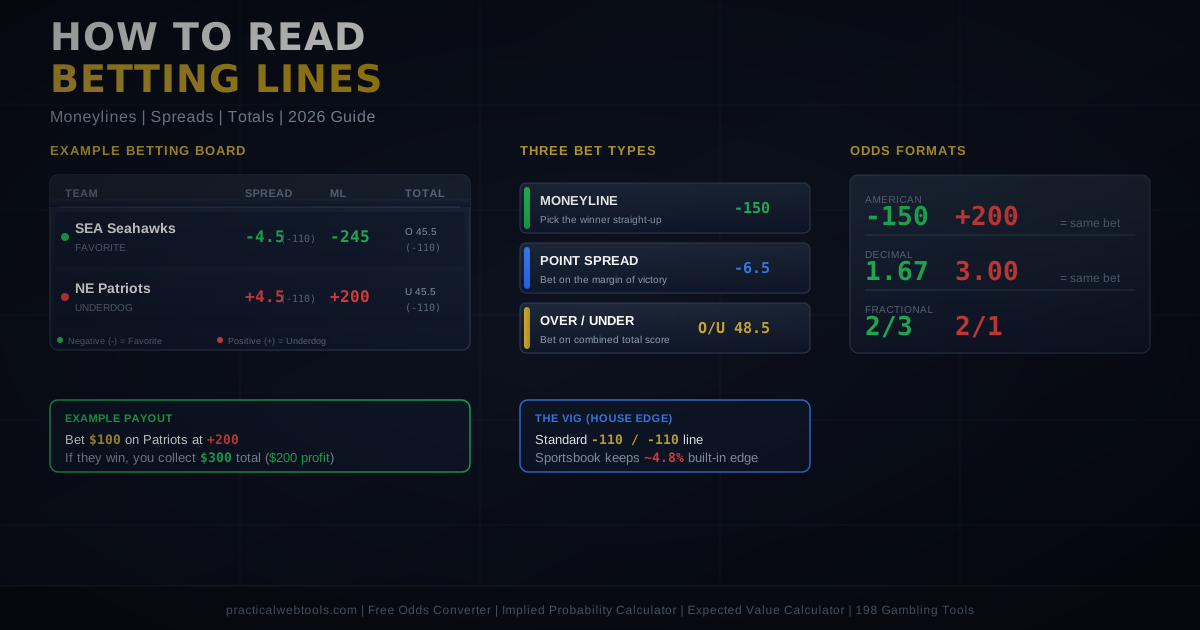
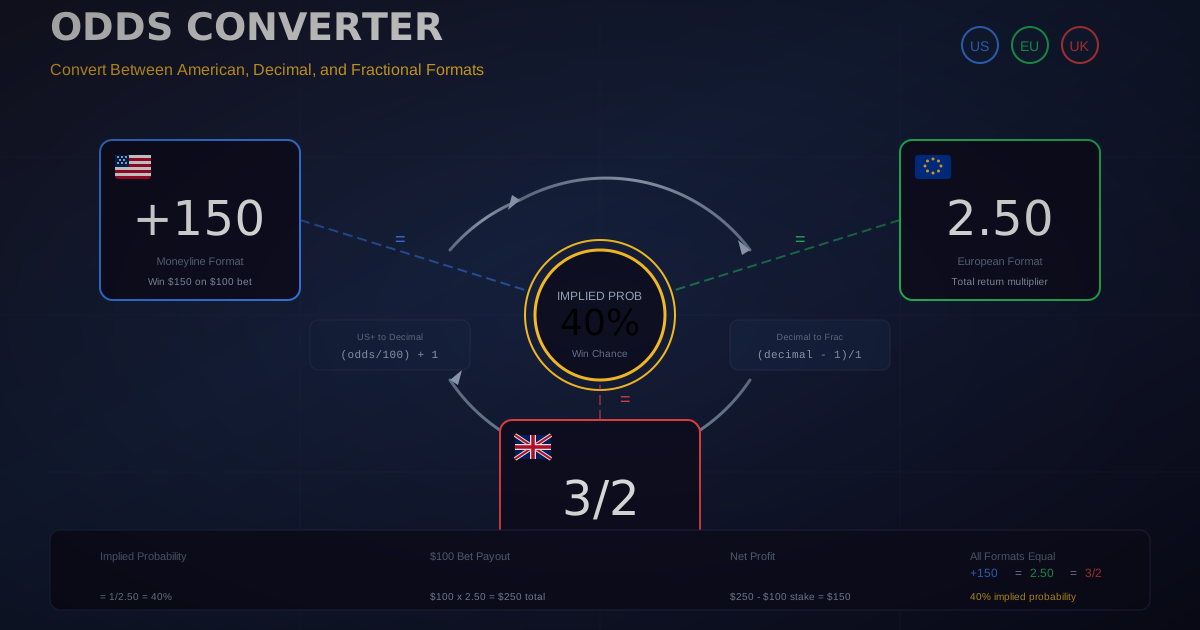
Convert any odds format and calculate your true edge with our free Odds Converter.
Why MMA Betting Is Fundamentally Different
Before diving into strategy, you need to understand why MMA betting requires a completely different approach than NFL, NBA, or MLB wagering.
It Is an Individual Sport
In the NFL, one player having a bad day rarely swings a game by 20 points. In MMA, one fighter having a bad night means a loss. Period. There are no teammates to compensate, no bench depth, no relief pitchers. This makes individual fighter analysis paramount and team-sport handicapping models almost useless.
This individuality creates volatility that the betting market struggles to price. A fighter dealing with an undisclosed knee injury, a rough weight cut, or personal problems outside the cage can completely underperform their statistical profile. The bettor who digs into camp reports, weigh-in footage, and social media activity gains an information edge that simply does not exist when betting on the Kansas City Chiefs.
Fewer Data Points Mean Less Efficient Lines
Most UFC fighters compete 2-3 times per year. Some fight once. Compare that to an NBA player with 82 regular-season games generating thousands of data points. With fewer fights, sportsbooks have less data to set accurate lines, and the models they use carry wider confidence intervals.
This is precisely where human analysis beats algorithmic pricing. A sharp MMA bettor who watched every second of a fighter's last three bouts, studied their training camp footage, and understands the specific stylistic implications of a matchup has information that no model built on 8-12 career fights can fully capture.
Styles Make Fights
This is the oldest cliché in combat sports, and it is the most important principle in MMA handicapping. A dominant wrestler with poor striking defense might be a -300 favorite against a well-rounded opponent but a coin flip against an elite anti-wrestler with knockout power. The betting line often fails to account for specific stylistic interactions.
Consider how Islam Makhachev's wrestling-dominant style neutralizes strikers but can be challenged by fighters with elite takedown defense and volume boxing. The same fighter can look like a -800 lock in one matchup and a vulnerable -150 favorite in the next -- and the market does not always adjust fast enough.
How to Handicap UFC Fights: The Stats That Matter
Effective MMA handicapping requires analyzing several quantifiable metrics and understanding how they interact in a specific matchup. Here are the numbers that sharp bettors prioritize.
Key MMA Handicapping Statistics
| Statistic | What It Measures | Why It Matters for Betting | Elite Benchmark |
|---|---|---|---|
| SLpM (Sig. Strikes Landed/Min) | Offensive striking volume | Higher SLpM fighters control pace and score rounds | 6.0+ |
| Striking Accuracy (%) | Percentage of strikes that land | Efficient strikers finish fights and win decisions | 55%+ |
| Striking Defense (%) | Percentage of strikes avoided | Fighters above 65% defense absorb less damage | 65%+ |
| Takedown Accuracy (%) | Successful takedown percentage | Wrestlers above 50% can dictate where the fight takes place | 50%+ |
| Takedown Defense (%) | Percentage of takedowns stuffed | Above 80% indicates a fighter who is extremely hard to take down | 80%+ |
| Control Time (min/fight) | Average time controlling opponent | High control time wins rounds on scorecards | 4:00+ |
| Strikes Absorbed per Minute | Damage intake rate | Fighters absorbing 4+ SApM per minute are vulnerable to finishes | Below 3.0 |
| Knockdown Rate | Knockdowns landed per 15 min | Indicates fight-ending power | 0.5+ |
How to Use These Stats in Matchup Analysis
Raw stats without context are dangerous. A fighter with 7.0 SLpM against cans on the regional circuit is not the same as 7.0 SLpM against top-15 competition. Always weight stats by opponent quality.
Here is a practical framework:
Step 1: Identify each fighter's primary path to victory. Is Fighter A a pressure wrestler who needs takedowns? Is Fighter B a counter-striker who needs distance?
Step 2: Check the critical matchup stats. If Fighter A needs takedowns, look at Fighter B's takedown defense. If Fighter B needs to keep it standing, look at Fighter A's striking defense and ring-cutting ability.
Step 3: Analyze recent form over career averages. A fighter's last 3-4 performances are more predictive than career totals. A 35-year-old with career stats inflated by early wins against regional competition is not the same fighter today.
Step 4: Factor in intangibles. Camp changes, injury history, weight cuts, layoff duration, and elevation (Denver events affect cardio). These are the edges that statistical models miss.
Example: When Belal Muhammad fought Leon Edwards for the welterweight title, the market had Edwards as a -175 favorite based on his striking pedigree. But sharp bettors who analyzed the matchup saw that Muhammad's relentless wrestling pace (3.6 takedowns per 15 minutes) combined with Edwards' declining takedown defense in recent bouts created a much closer fight than the line suggested. Bettors who grabbed Muhammad at +155 had significant value.
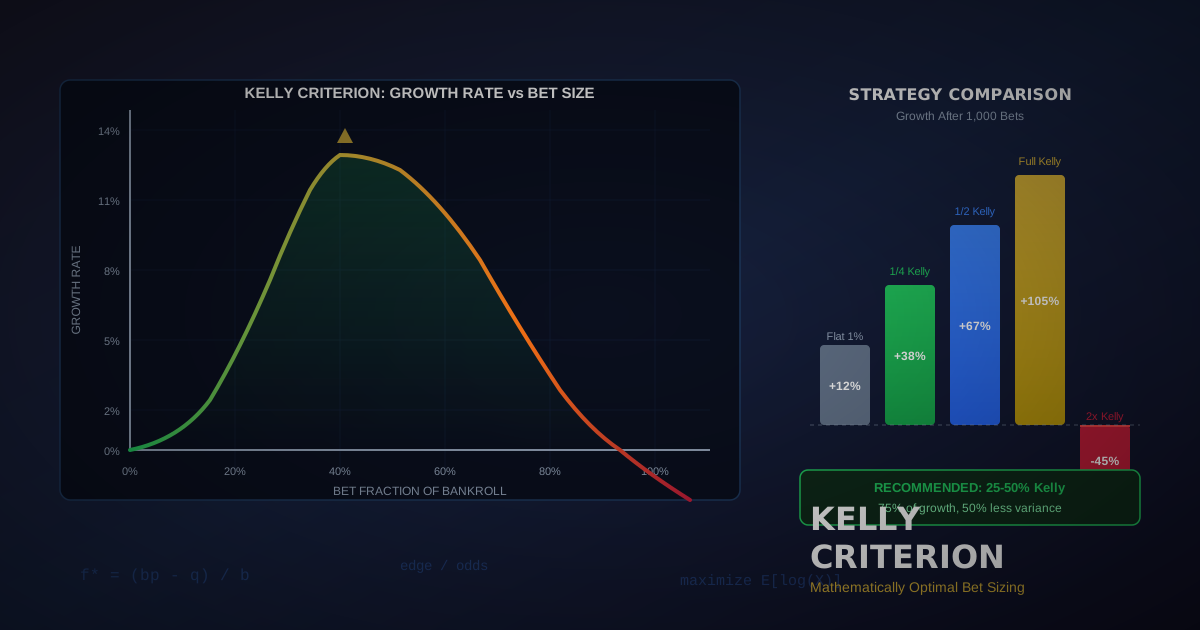
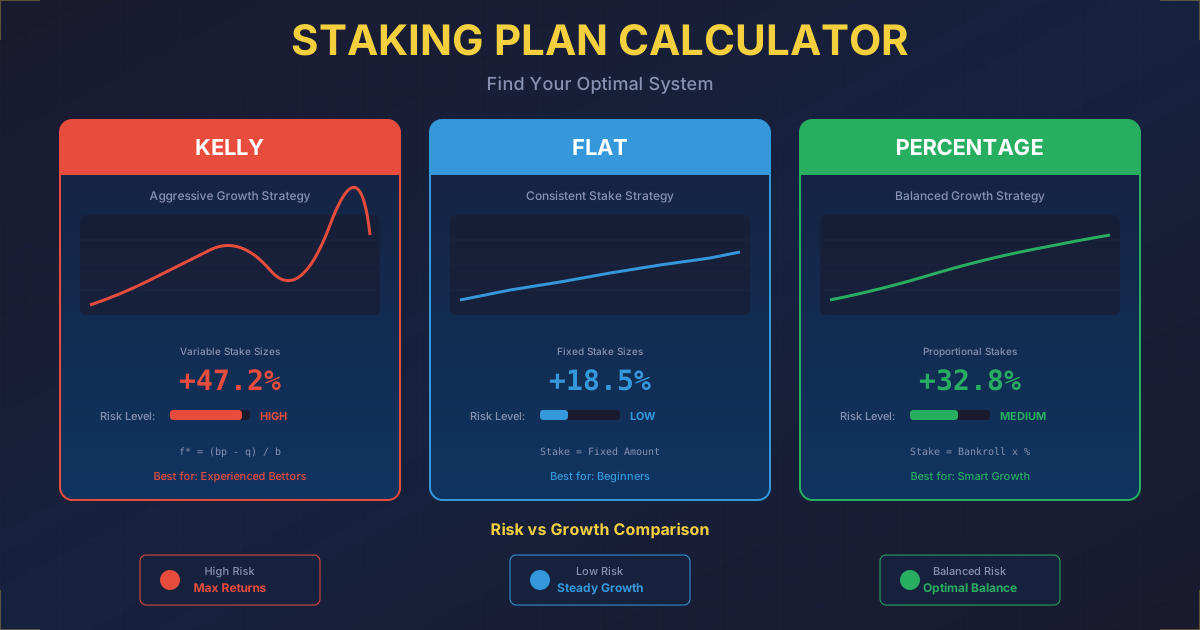
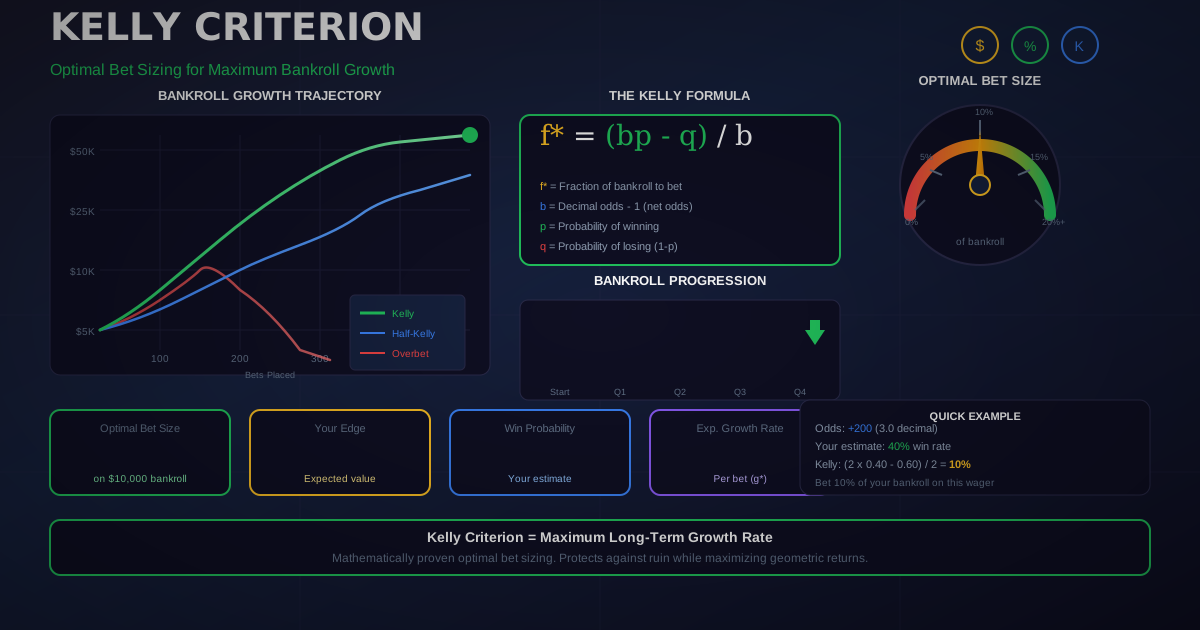
Calculate your optimal bet size based on your edge with our Kelly Criterion Calculator.
Moneyline Strategy: When to Bet Favorites and When to Back Dogs
The moneyline is the bread and butter of UFC betting. Unlike spread betting in football or basketball, you are simply picking the winner. But the pricing of that moneyline creates distinct strategic considerations.
The Favorite Trap
Here is the uncomfortable truth about betting UFC favorites: the vig on heavy chalk destroys your ROI even when you win.
A -300 favorite has an implied probability of 75%. If that fighter actually wins 75% of the time, you break exactly even before the vig. To profit long-term betting -300 favorites, the fighter needs to win at a rate significantly higher than 75%, and that bar is extremely difficult to clear consistently.
| Odds Range | Implied Probability | Required Win Rate to Profit | Historical UFC Win Rate | Avg. ROI |
|---|---|---|---|---|
| -100 to -150 | 50-60% | 52-60% | ~62% | +3.1% |
| -151 to -250 | 60-71% | 62-72% | ~68% | -1.4% |
| -251 to -400 | 71-80% | 73-81% | ~76% | -3.8% |
| -401 to -600 | 80-86% | 82-87% | ~83% | -5.2% |
| -601 or higher | 86%+ | 88%+ | ~90% | -6.7% |
The sweet spot for favorite betting is the -100 to -150 range, where the public underestimates slight favorites and the vig is manageable. Once you get past -250, you are in negative expected value territory historically.
Example: When Sean O'Malley defended his bantamweight title as a -250 favorite, a $250 bet returned only $100 profit on a win. But when Merab Dvalishvili upset him, the bettors who identified Dvalishvili's relentless wrestling as a stylistic nightmare for O'Malley cashed at +200, turning $100 into $300. The risk-reward on the favorite side simply did not justify the price.
The Underdog Edge
The most profitable long-term UFC betting strategy is selective underdog betting in the +100 to +250 range. Historical data shows that slight to moderate underdogs outperform their implied probability more consistently than any other odds range in MMA.
Why underdogs hit more often in MMA than other sports:
- One-punch knockout power. An underdog in the NBA cannot hit a half-court shot to win the game, but an MMA underdog can land one clean shot and end the fight in a second.
- Stylistic mismatches the market underweights. The public bets names. A ranked wrestler fighting an unranked fighter with elite takedown defense and power might be priced as a -400 favorite when the stylistic matchup is much closer to even.
- Weight cuts and camp disruptions. Information that leaks slowly. A fighter who had a brutal weight cut might be physically compromised, but the line barely moves because casual bettors do not track weigh-in footage.
- Recency bias. A fighter coming off a highlight-reel knockout gets inflated lines in their next fight, even when the opponent presents a completely different and more dangerous stylistic matchup.
Example: At UFC 303, Carlos Prates entered his welterweight bout as a +160 underdog against a ranked opponent. Bettors who studied Prates' vicious Muay Thai and the opponent's habit of standing in the pocket saw clear value. A $100 bet at +160 returned $260 when Prates delivered a devastating finish.
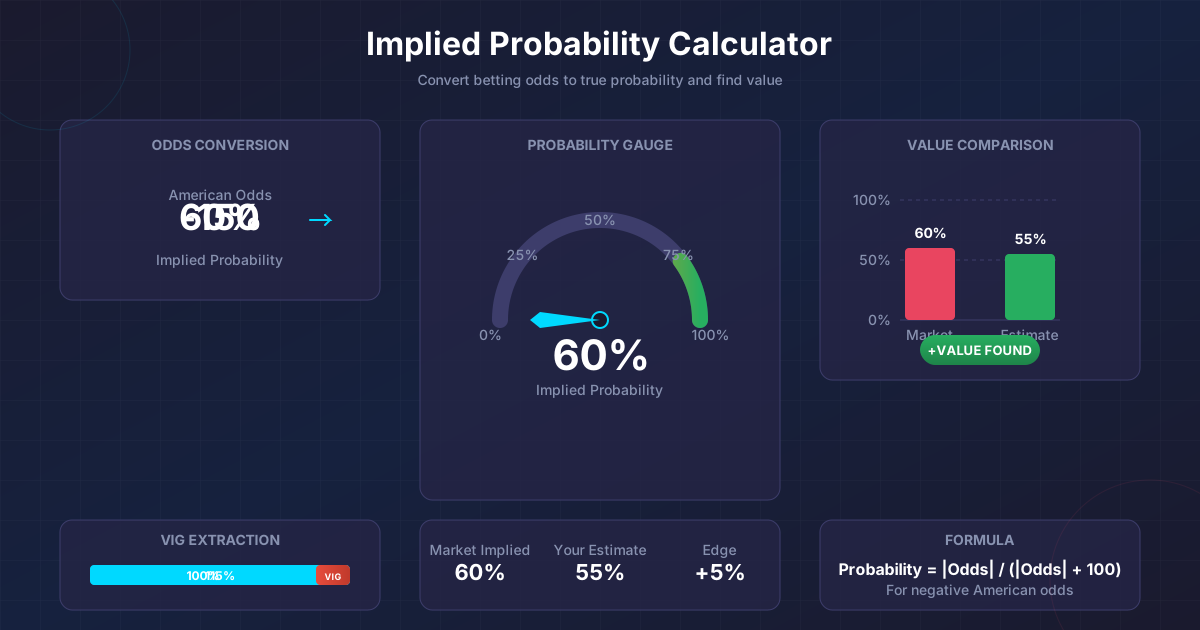
Calculate the implied probability behind any UFC odds line with our Implied Probability Calculator.
Method of Victory Betting: Where the Real Edges Live
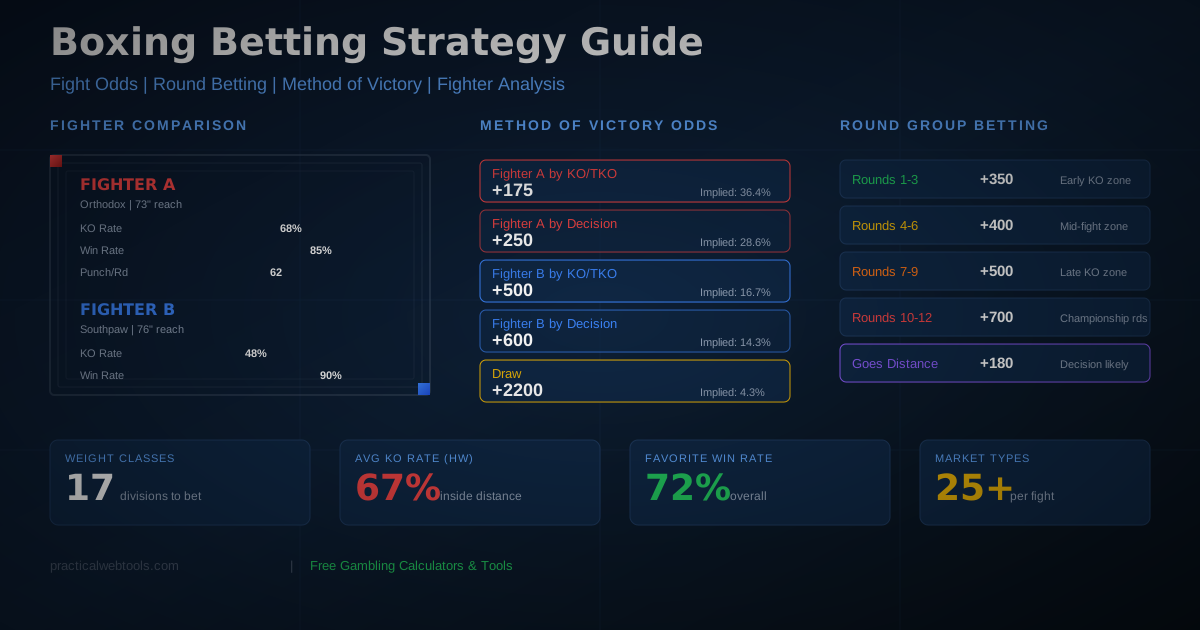
Method of victory (MOV) is where sharp MMA bettors make their money. Sportsbooks dedicate less modeling resources to MOV lines than moneylines, creating wider inefficiencies that informed bettors can exploit.
Method of Victory Frequency by Weight Class
| Weight Class | KO/TKO Rate | Submission Rate | Decision Rate | Total Finish Rate |
|---|---|---|---|---|
| Heavyweight (265 lbs) | 52.1% | 14.6% | 31.5% | 66.6% |
| Light Heavyweight (205 lbs) | 43.7% | 17.3% | 36.9% | 61.0% |
| Middleweight (185 lbs) | 37.5% | 21.7% | 39.3% | 59.2% |
| Welterweight (170 lbs) | 33.3% | 18.7% | 46.7% | 52.0% |
| Lightweight (155 lbs) | 29.3% | 21.7% | 48.0% | 51.0% |
| Featherweight (145 lbs) | 30.8% | 20.1% | 47.6% | 50.9% |
| Bantamweight (135 lbs) | 27.4% | 22.3% | 49.1% | 49.7% |
| Flyweight (125 lbs) | 20.5% | 24.8% | 53.2% | 45.3% |
| W. Strawweight (115 lbs) | 13.3% | 19.4% | 66.7% | 32.8% |
| W. Flyweight (125 lbs) | 16.5% | 19.9% | 63.5% | 36.5% |
| W. Bantamweight (135 lbs) | 23.5% | 16.1% | 59.7% | 39.5% |
How to Exploit MOV Markets
KO/TKO overbetting at lightweight and below. Casual bettors love knockout props because they are exciting. But at 155 lbs and below, KO/TKO finishes happen in fewer than 30% of fights. When the market prices a lightweight KO/TKO at +150 but the base rate for that weight class is 29%, the implied probability of 40% is far too high. That is a clear fade.
Submission value at middleweight and welterweight. Submissions account for 18-22% of finishes at these weights, but the betting public consistently underestimates grapplers because casual fans gravitate toward strikers. When a high-level BJJ practitioner faces a striker with poor submission defense, the "Win by Submission" line often offers +300 or better -- well above fair value.
Decision props in women's divisions. Women's strawweight fights go to decision 66.7% of the time. When the market prices "Goes the Distance: Yes" at -130 in a women's strawweight bout between two non-finishers, you are getting a bet that should be -200 at fair odds.
Example: When Charles Oliveira, one of the most prolific submission artists in UFC history, faced a striker with documented grappling vulnerabilities, books offered "Oliveira by Submission" at +350. Given Oliveira's 16 UFC submission wins and the opponent's 45% takedown defense, sharp bettors calculated the true probability closer to 30-35%, making the +350 line (implied 22%) a significant overlay. A $50 bet would return $225.
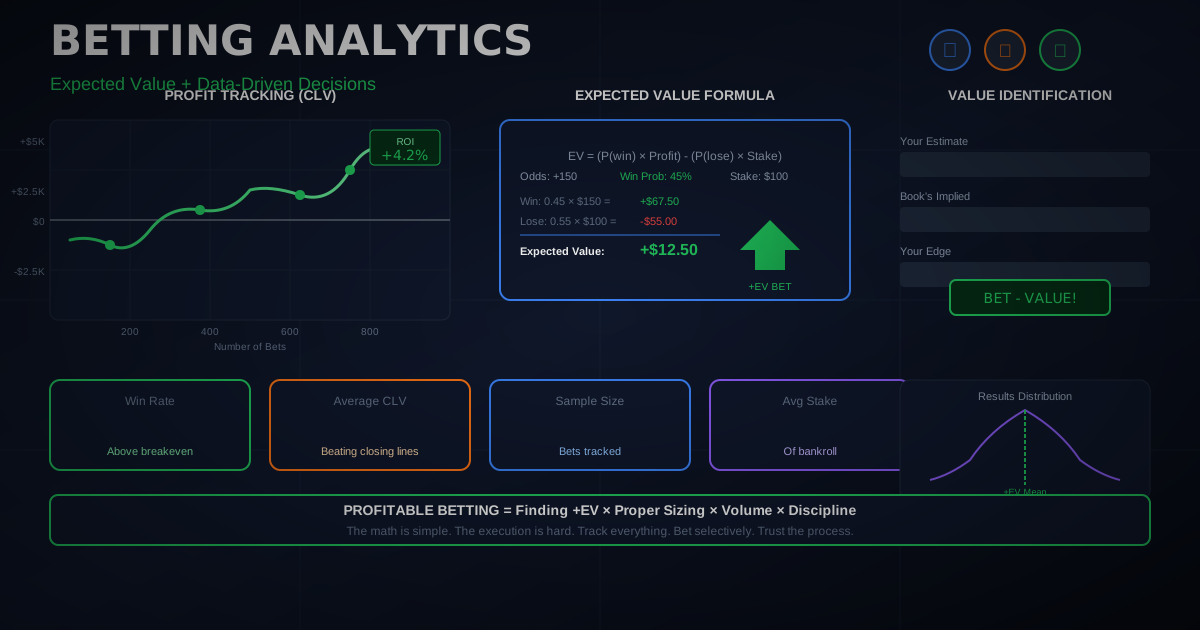
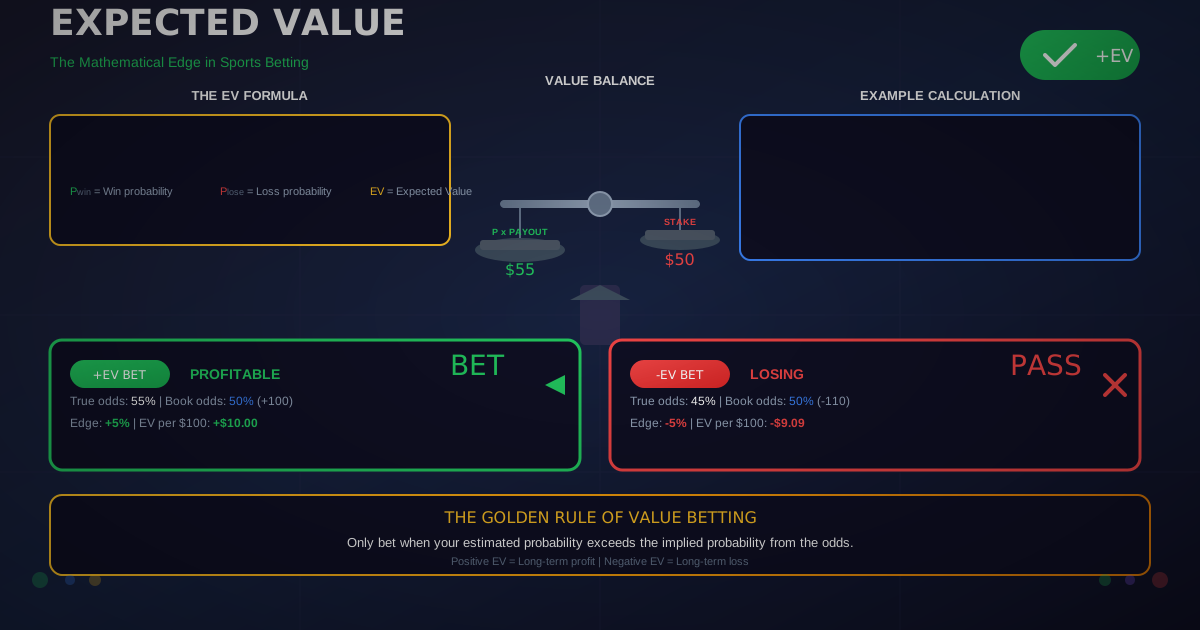
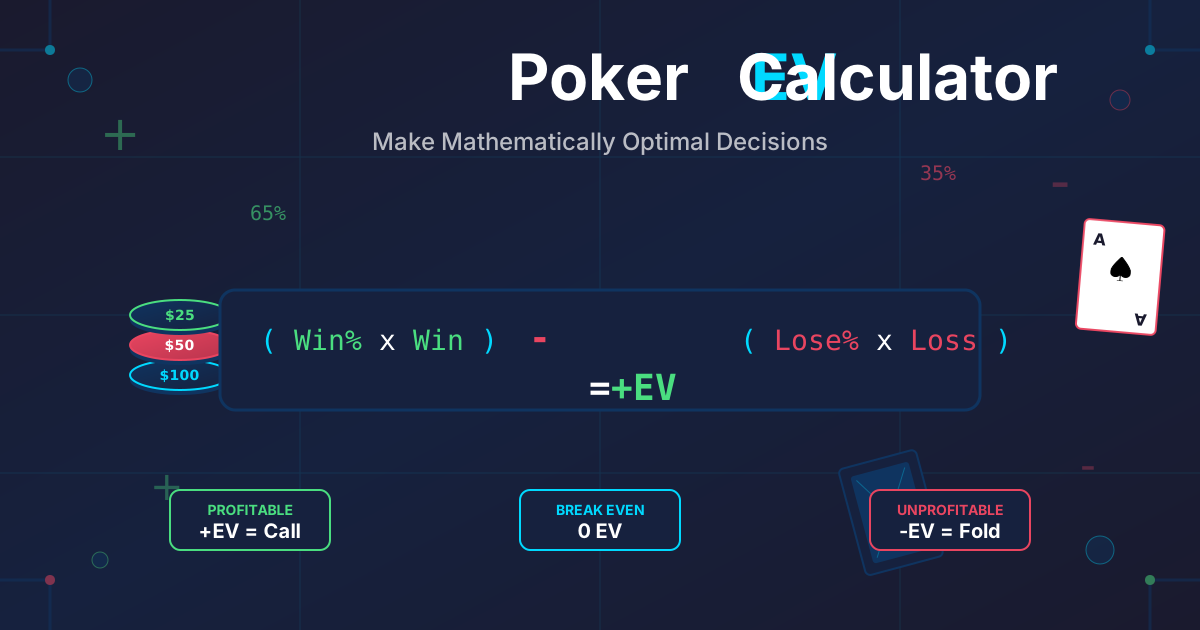
Determine whether any bet offers positive expected value with our Expected Value Calculator.
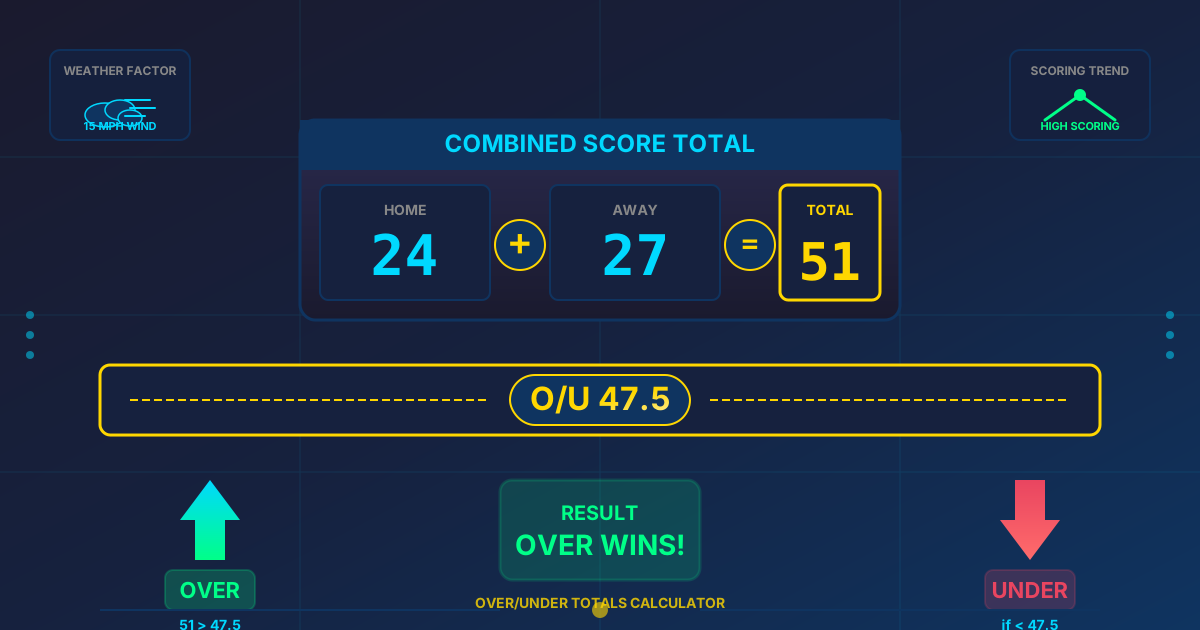
Round Betting and Over/Under Totals
Round-specific betting and over/under totals are the prop markets where casual bettors rarely venture, and that lack of market efficiency creates edges for those who do their homework.
How Round Totals Work
For a standard 3-round UFC fight, the total is typically set at 1.5 or 2.5 rounds. For 5-round championship and main event fights, the total is usually set at 2.5, 3.5, or 4.5 rounds.
The halfway point of a round is the 2:30 mark. So "Over 1.5 rounds" means the fight must reach 2:30 of Round 2 for the over to cash.
Round Total Strategy by Fight Type
3-round fights: The most common total is Over/Under 1.5 rounds. The under hits when a fight ends by finish in the first round or first half of the second. Historically, about 25-30% of UFC fights end in Round 1, making the Under 1.5 a volatile but occasionally valuable bet when two aggressive finishers meet.
5-round fights: Over/Under 2.5 is the standard line. Championship fights go the distance about 40-45% of the time, but this varies dramatically by division. Heavyweight title fights finish inside the distance far more often than lightweight title fights.
Finding Value in Round Props
Round betting pays 8-to-1 or better. Picking the exact round a fight ends in is difficult, but when you identify a likely finish, the payoff justifies a small allocation. The key is identifying the round window where a finish is most likely based on fighter tendencies.
Consider these factors:
- Pace fighters vs. fast starters: A fighter like Derrick Lewis typically loads up early and fades late. If he does not finish in Rounds 1-2, his opponent often takes over. Betting Lewis finishes in Round 1 or Round 2 offers better value than a generic moneyline.
- Cardio mismatches: When a fighter with poor cardio faces a pressure fighter with an iron gas tank, later-round finishes become more likely. The Round 3 or Round 4 finish for the better-conditioned fighter can offer +600 or better.
- Grappler vs. striker patterns: Grapplers often need a round to close distance and establish clinch control. Submission finishes in Round 2 or Round 3 are statistically more common than Round 1 subs in most matchups.
Example: At a recent UFC Fight Night, a heavyweight matchup between two heavy-handed fighters had the Over/Under set at 1.5 rounds with the Over at -155 and the Under at +130. Both fighters had 60%+ first-round finish rates in their recent bouts. Sharp bettors took the Under at +130, and the fight ended with a knockout at 3:42 of Round 1, paying $230 on a $100 bet.
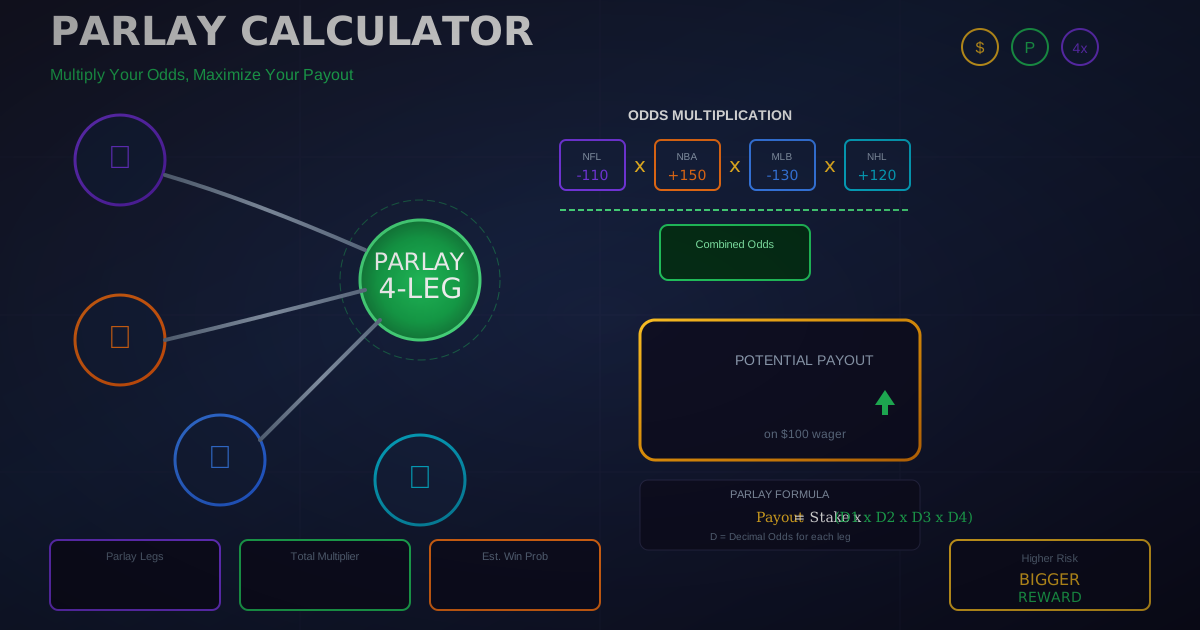
Build multi-leg fight night parlays and see your potential payouts with our Parlay Calculator.
Weight Class Differences: Division-by-Division Betting Edges
Not all UFC weight classes bet the same way. The physical differences between a 125-pound flyweight and a 265-pound heavyweight create distinct betting patterns that sharp bettors exploit.
Heavyweight (265 lbs): Knockout Territory
Heavyweight is the most volatile division in MMA betting. With a 52.1% KO/TKO rate, more than half of all heavyweight fights end with someone getting dropped. This creates two key edges:
- Under totals are more profitable. The average heavyweight bout lasts significantly shorter than lighter weight classes -- roughly 4.5 minutes less than a women's strawweight fight.
- Underdogs are more dangerous. One punch from any heavyweight can end a fight. This means -400 and -500 favorites in heavyweight carry significantly more upset risk than the same lines in lighter divisions.
The data is stark: heavy favorites (-300 or worse) in the heavyweight division have a significantly lower cover rate than heavy favorites at lightweight or below. If you are going to lay heavy chalk, do it in the lighter divisions where skill differential is harder to overcome with one swing.
Lightweight (155 lbs): The Decision Division
Lightweight is the deepest, most talent-dense division in the UFC, and it goes to decision 48% of the time. This has critical betting implications:
- Over totals hit more frequently. The combination of elite cardio, strong chins, and well-rounded skillsets means finishes are harder to come by.
- Favorites cover at a higher rate. When the skill gap is real at lightweight, the better fighter usually wins because there are fewer lucky punches at 155 lbs than 265 lbs.
- Decision props offer consistent value. When two elite lightweights meet and neither is a prolific finisher, "Goes the Distance: Yes" is frequently underpriced.
Flyweight (125 lbs): Speed and Volume
Flyweight is the most technical division in the UFC. Fights go to decision 53.2% of the time, and the submission rate (24.8%) is the highest of any men's division. Key edges:
- Submission props are underpriced. The public thinks small fighters cannot finish fights, but flyweight has the highest sub rate in men's MMA. When a flyweight grappler faces a striker, the sub prop often offers +400 or better.
- Over totals are the play. With only a 20.5% KO/TKO rate, first-round knockouts are rare at flyweight. The under is almost never the right bet unless two specific fighters with finish power are matched up.
Division Betting Edge Summary
| Division | Best Bet Type | Reasoning | Avg. Edge |
|---|---|---|---|
| Heavyweight | Under totals, Underdog MLs | 52% KO rate, high volatility | +4.2% |
| Light Heavyweight | KO/TKO props | 43.7% KO rate, power fighters | +3.1% |
| Middleweight | MOV markets | Balanced finish distribution | +2.8% |
| Welterweight | Decision props | 46.7% decision rate, deep talent | +2.5% |
| Lightweight | Over totals, Favorite MLs | 48% decision rate, skill gaps hold | +3.5% |
| Flyweight | Submission props, Overs | 24.8% sub rate, low KO rate | +3.0% |
| W. Strawweight | Decision/Distance props | 66.7% decision rate | +4.0% |
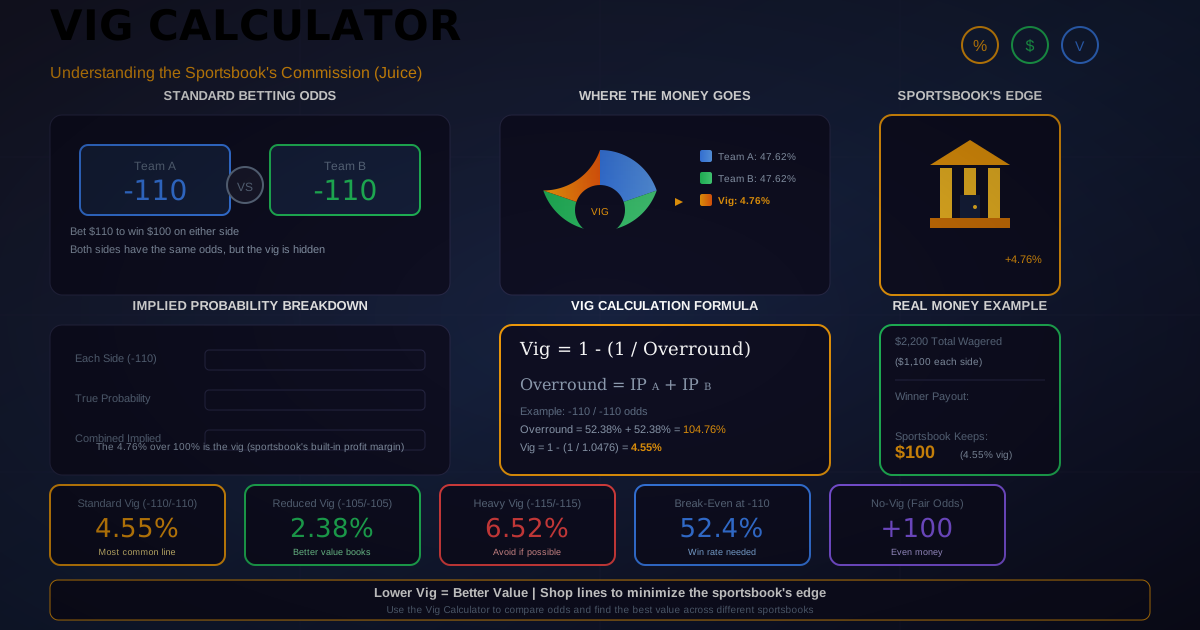
Calculate the sportsbook's hold and true odds on any fight line with our Hold/Vig Calculator.
Card Position Analysis: Prelims vs. Main Card
Where a fight sits on the card affects both the fight dynamics and the betting market efficiency.
Prelim Fights: Where Sharps Hunt
Prelim fights (early prelims and televised prelims) feature less-known fighters with smaller sample sizes. This is where sportsbooks set the weakest lines because:
- Less public betting volume. With fewer casual bettors driving the line, prelim odds are more often set by the book's opening model rather than market action. These models struggle with fighters who have 5-8 career fights.
- Less media coverage. The lack of mainstream analysis means that bettors who watch every prelim fighter's regional tape have a genuine information edge.
- Higher variance, but also higher value. Prelim underdogs hit at a rate that is meaningfully higher than their implied odds suggest, partly because the public does not bet prelims heavily enough to correct the line.
Main Event and Co-Main Fights: Tighter Lines
Main events and co-main events attract the most public money and media analysis, making these the most efficiently priced fights on any card. Sharp bettors approach main events differently:
- The line is usually accurate. When a main event features two household names, the sportsbook has enormous amounts of data and the public betting volume corrects any early mispricing.
- Value exists in props, not moneylines. Even when the main event moneyline is efficiently priced, the method of victory and round props can still be soft because casual bettors focus on the winner rather than the method.
- Live betting is where main event edges appear. More on this below.
Card Position Edge Data
Research from MMA odds tracking sites indicates that underdogs perform best relative to their odds on main cards, while favorites overperform most significantly on early preliminary fights. The variance is small -- about 1.5% -- but over hundreds of bets, a 1.5% edge compounds significantly.
For the sharpest bettors: focus your pre-fight underdog bets on main card fights where public money inflates favorites, and your favorite bets on early prelims where lesser-known but genuinely superior fighters are underbet by the public.
Live Betting in MMA: The Fastest-Moving Market in Sports
UFC live betting is where experienced MMA bettors make some of their biggest plays. The odds swing dramatically between rounds, and the speed of live MMA markets creates opportunities that do not exist in slower sports.
Why Live MMA Betting Offers Edge
- Momentum shifts are overpriced. If a favorite loses Round 1, their live odds crater. But in a 3-round fight, losing one round does not mean losing the fight. Bettors who understand fight dynamics can buy low on a favorite who lost Round 1 but has a clear path to winning Rounds 2 and 3.
- Grappler recoveries. When a wrestler gets outstruck in Round 1, the live line often treats them as if they have lost the fight. But a wrestler who was feeling out the striking in Round 1 may shoot for takedowns in Round 2 and completely dominate.
- Cardio tells. By Round 2, you can see who is breathing hard, whose movement has slowed, and who is fading. This real-time information is more valuable than any pre-fight statistic.
- Cut and injury assessment. A fighter who gets cut badly may have their live odds drop -200 points, but experienced bettors know that most cuts do not actually impair performance. The market overreacts to blood.
Live Betting Strategy
The Round 1 Fade: Wait for the favorite to lose Round 1 (or look bad winning it), then bet the live moneyline at a discount. In 5-round championship fights, this strategy is particularly effective because there are 4 rounds remaining for the favorite to adjust.
The Cardio Bet: If Fighter A is visibly gassing in Round 2 of a 3-round fight, bet the live moneyline on Fighter B. Cardio is the single most reliable predictor of late-round outcomes, and the market does not always adjust fast enough.
The Grappler Bounce-Back: When a strong wrestler loses a standing Round 1, their live odds often drop to plus money. If you believe they will adjust and start wrestling in Round 2, the live line offers significant value compared to the pre-fight price.
Example: When a title challenger lost Round 1 of a 5-round championship fight after getting caught with a clean combination, the live odds on the challenger swung from -130 to +180. Bettors who recognized that the challenger was the better conditioned fighter and had four rounds to implement their wrestling gameplan jumped on the +180 live line. The challenger dominated Rounds 2-5 for a unanimous decision. A $100 live bet returned $280.
Women's MMA Betting: The Most Overlooked Market
Women's MMA is the most underanalyzed segment of UFC betting, and that lack of attention from both the public and sportsbook models creates consistent value.
Why Women's MMA Offers Edges
Less public betting volume. Women's fights, particularly on prelims, attract a fraction of the betting handle that men's main card fights generate. Less volume means less price correction and softer lines.
Decision-heavy outcomes. Women's strawweight goes to decision 66.7% of the time, women's flyweight 63.5%, and women's bantamweight 59.7%. The public consistently underbets the "Goes the Distance" prop in women's fights because they expect the same finish rates as men's divisions.
Predictable totals. With KO/TKO rates of 13-23% across women's divisions, the over on round totals is one of the most reliable bets in all of UFC betting. In 2024, the over in Women's Bantamweight hit at over a 90% rate during certain stretches.
Women's Division Betting Framework
| Division | Decision Rate | Best Play | Typical Edge |
|---|---|---|---|
| W. Strawweight (115 lbs) | 66.7% | Over totals, Distance Yes | +4.0% |
| W. Flyweight (125 lbs) | 63.5% | Underdog MLs, Sub props | +3.8% |
| W. Bantamweight (135 lbs) | 59.7% | Over totals | +3.2% |
The dominant champion effect. Women's divisions historically have dominant champions (Valentina Shevchenko at flyweight, Amanda Nunes at bantamweight/featherweight) who were priced at -800 to -2100 for title defenses. When these champions eventually lost, the payouts were enormous. Watching for signs of decline in dominant women's champions -- and being willing to take a shot on a live underdog at +500 or better -- is a low-frequency but high-impact strategy.
Example: When Valentina Shevchenko defended her flyweight title as a -1100 favorite, betting $1,100 to win $100 was mathematically questionable even though she dominated. Eventually, Shevchenko lost the belt, and bettors who had been taking small shots on her opponents at +700 and above finally cashed a massive payday.
Building a UFC Betting Portfolio: Bankroll and Process
Profitable MMA betting is not about hitting one big parlay. It is about building a disciplined process that generates positive expected value over hundreds of bets.
Bankroll Management for MMA
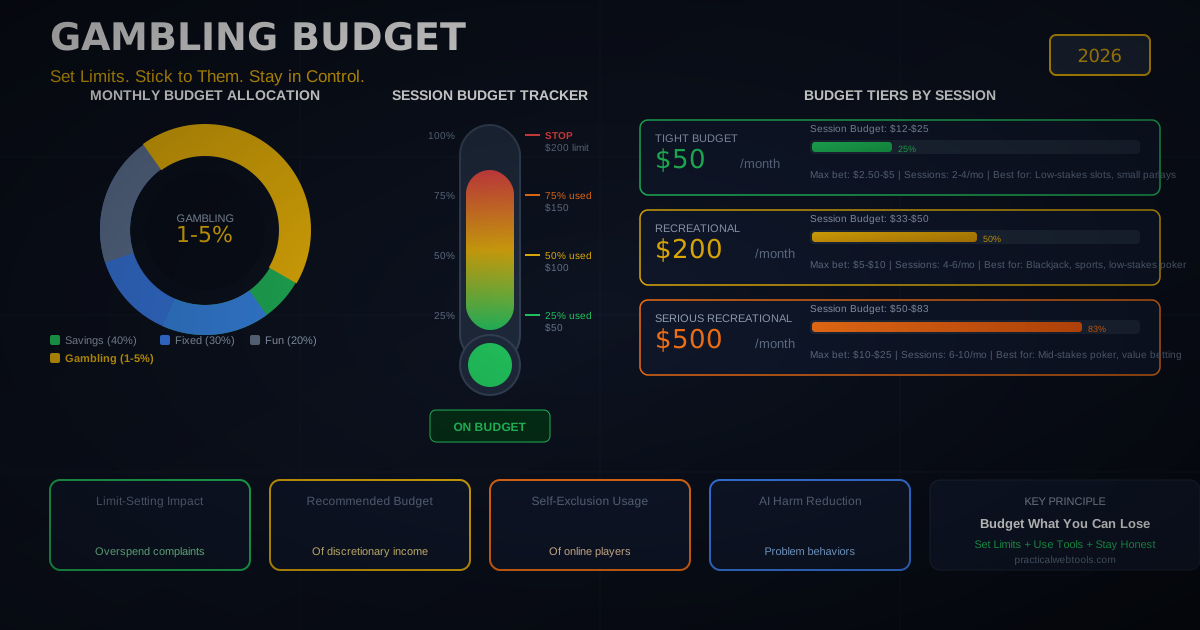
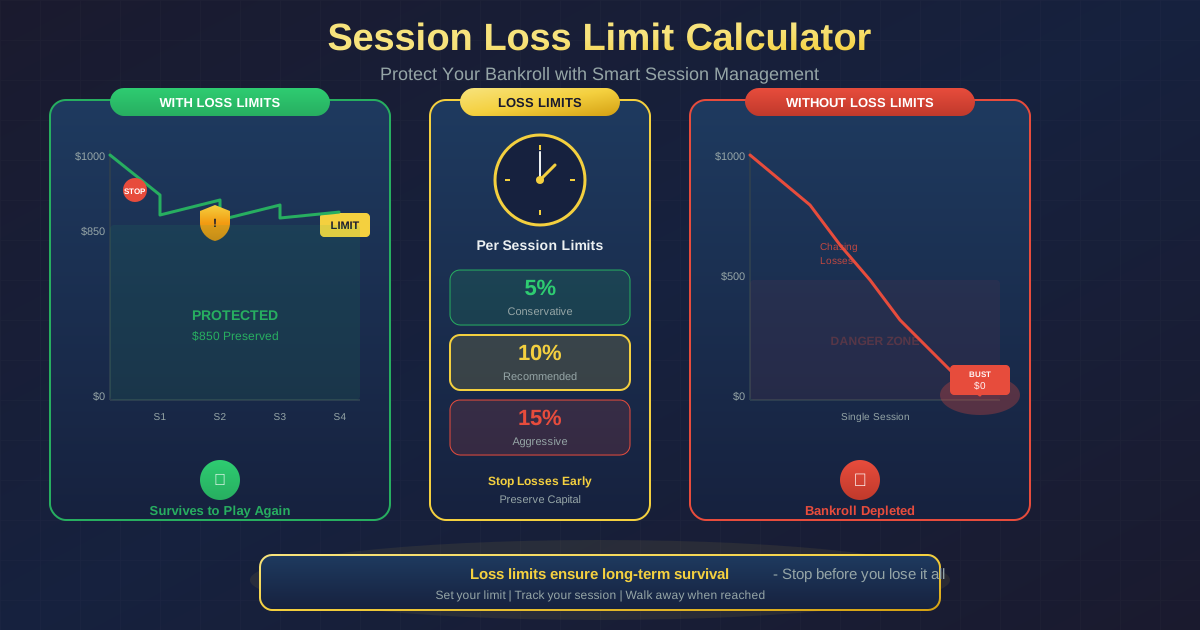
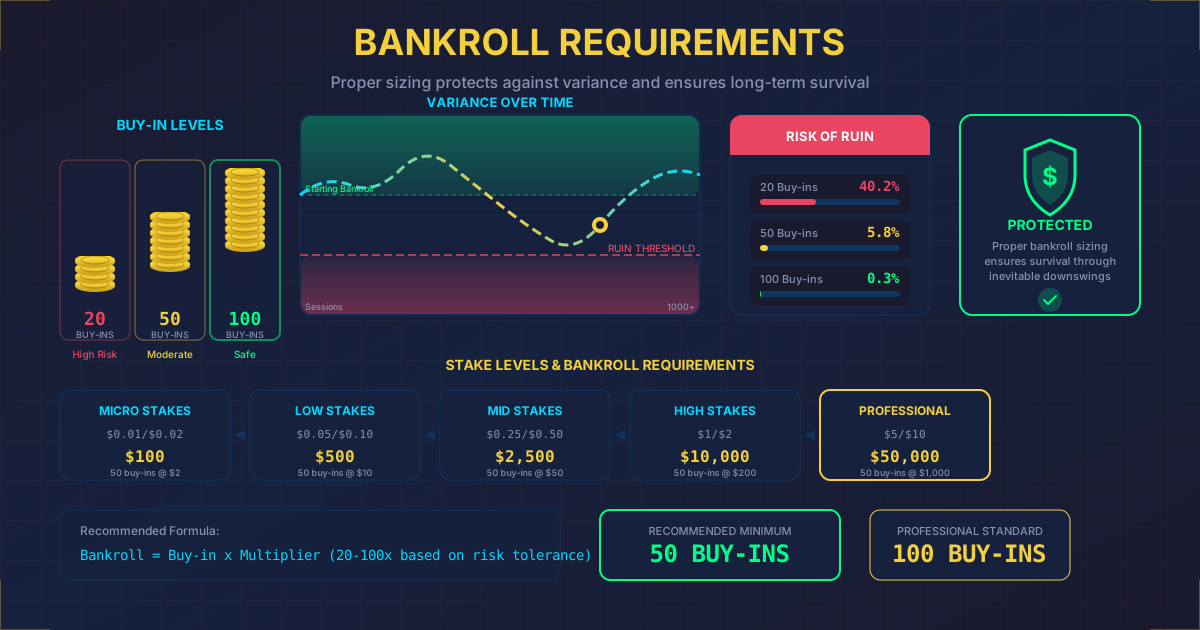
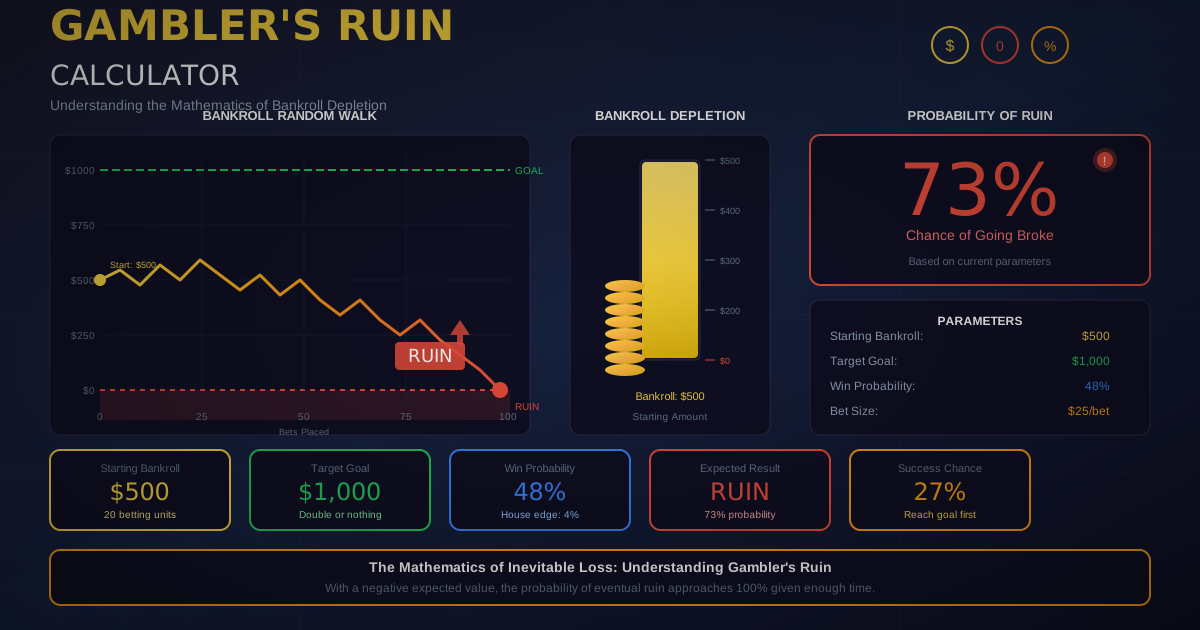
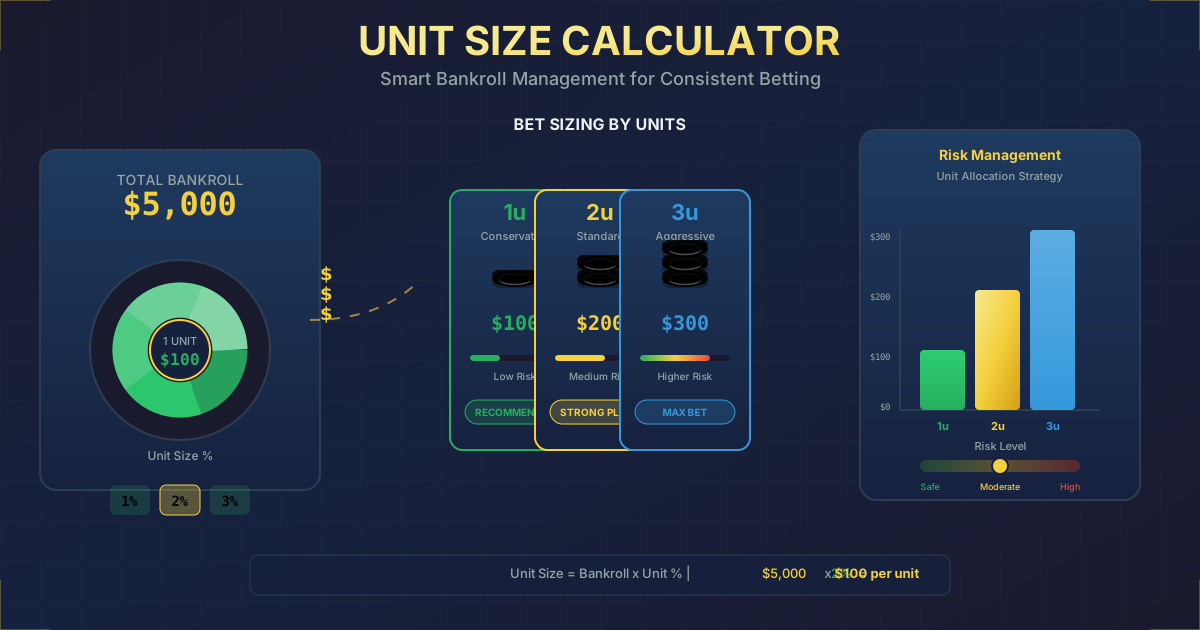
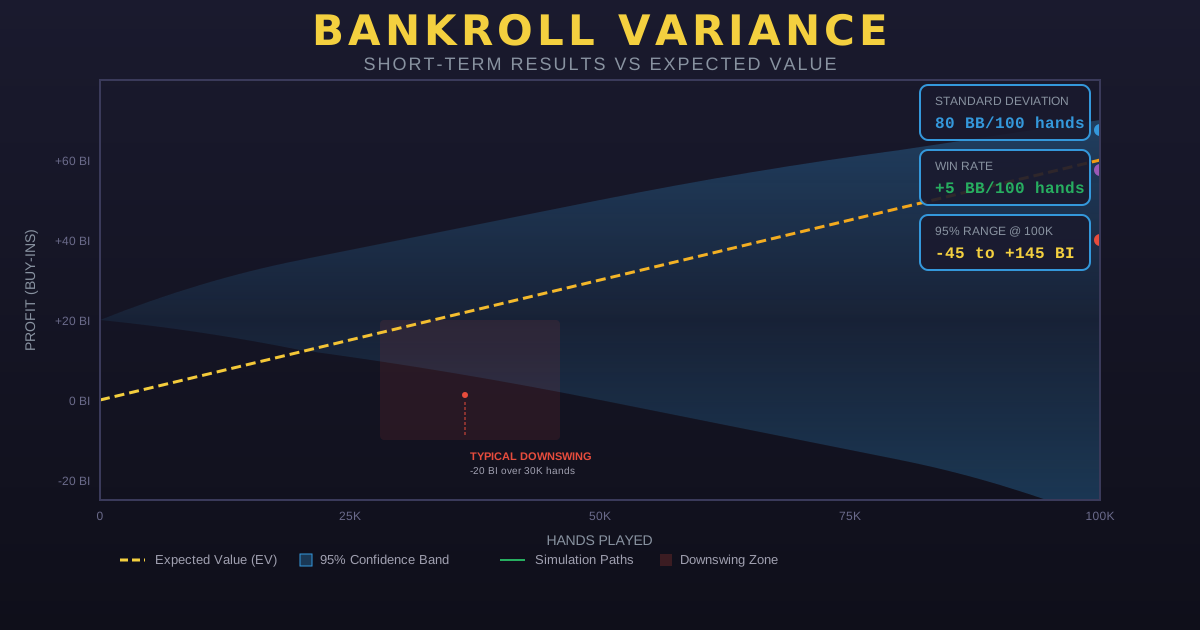
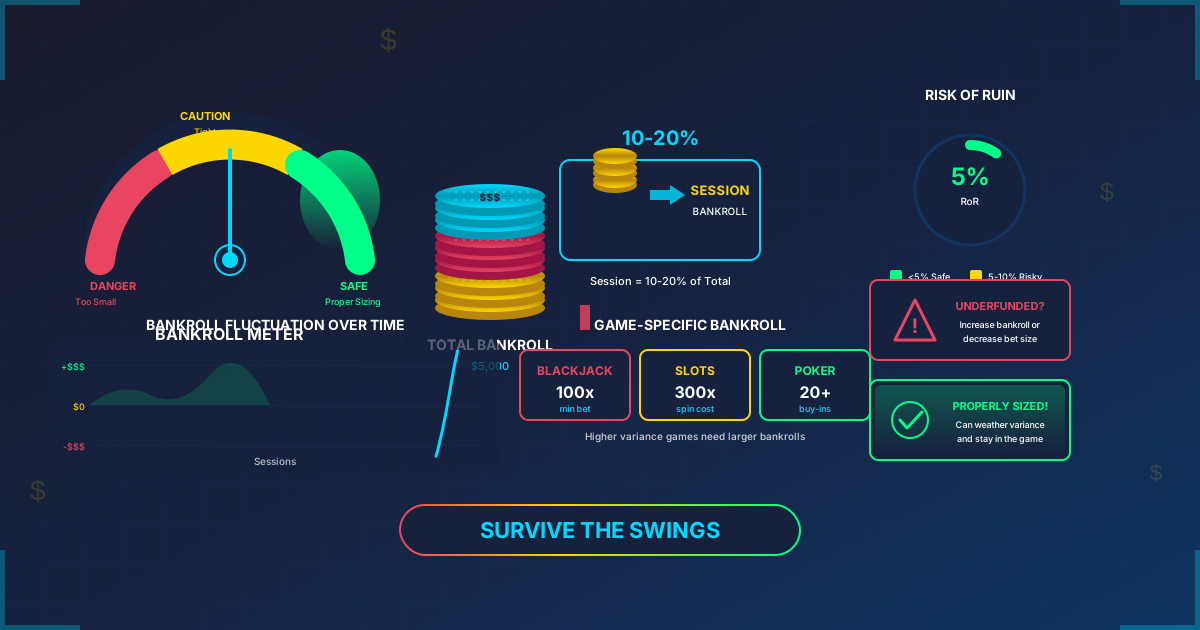
The 1-3% rule. Never risk more than 1-3% of your total bankroll on a single UFC bet. MMA is inherently volatile -- even the best analysis gets beaten by a lucky punch. Proper bankroll management ensures that a bad night does not end your betting career.
| Confidence Level | Bet Size (% of Bankroll) | Example ($5,000 Bankroll) |
|---|---|---|
| Low (slight lean) | 0.5-1.0% | $25-$50 |
| Medium (solid edge) | 1.0-2.0% | $50-$100 |
| High (strong conviction) | 2.0-3.0% | $100-$150 |
| Max play (rare, clear mispricing) | 3.0-5.0% | $150-$250 |
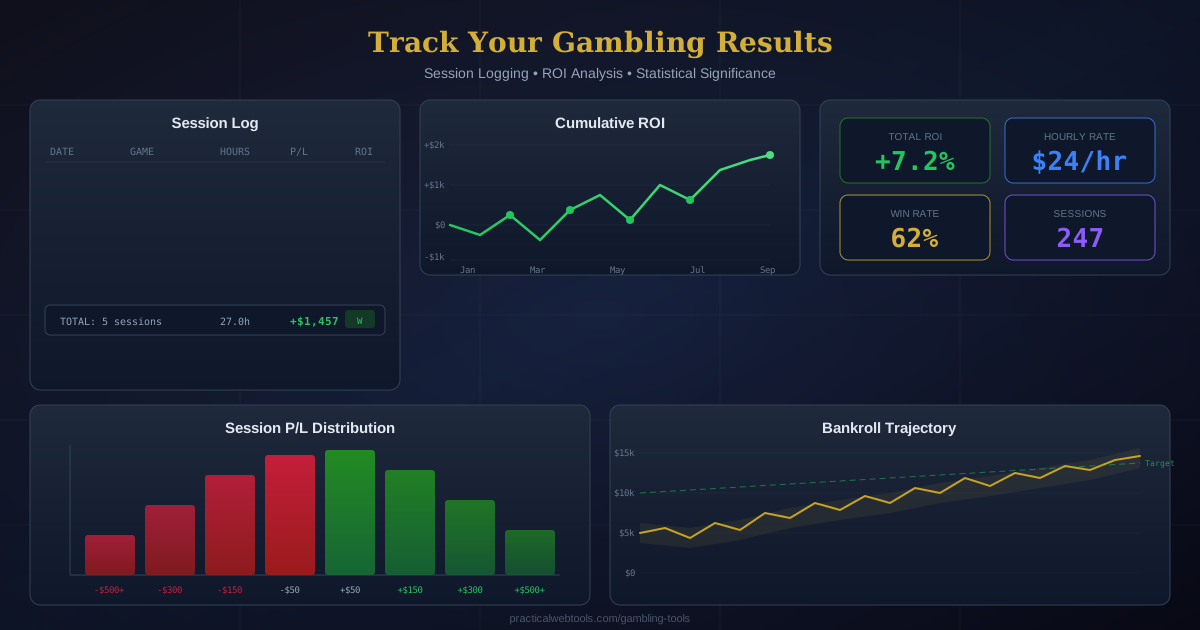
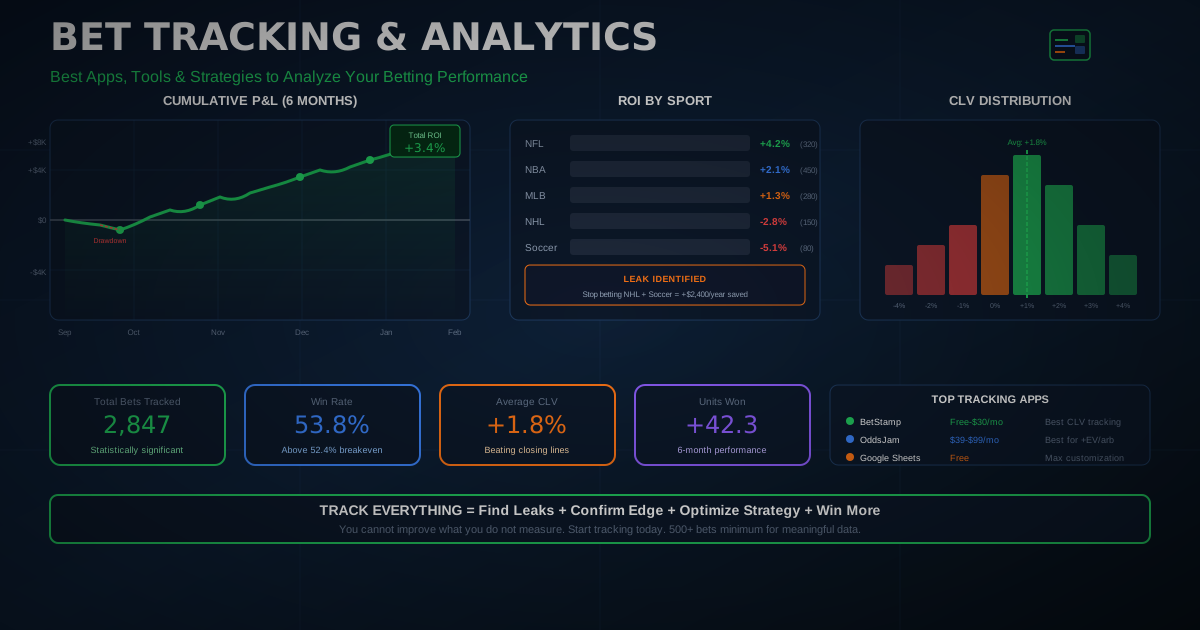
Track every bet. Record the fight, your analysis, the odds you got, the result, and your profit/loss. Over 100+ bets, patterns emerge: maybe you crush underdog moneylines but lose money on round props. Data-driven self-analysis is how you refine your edge.
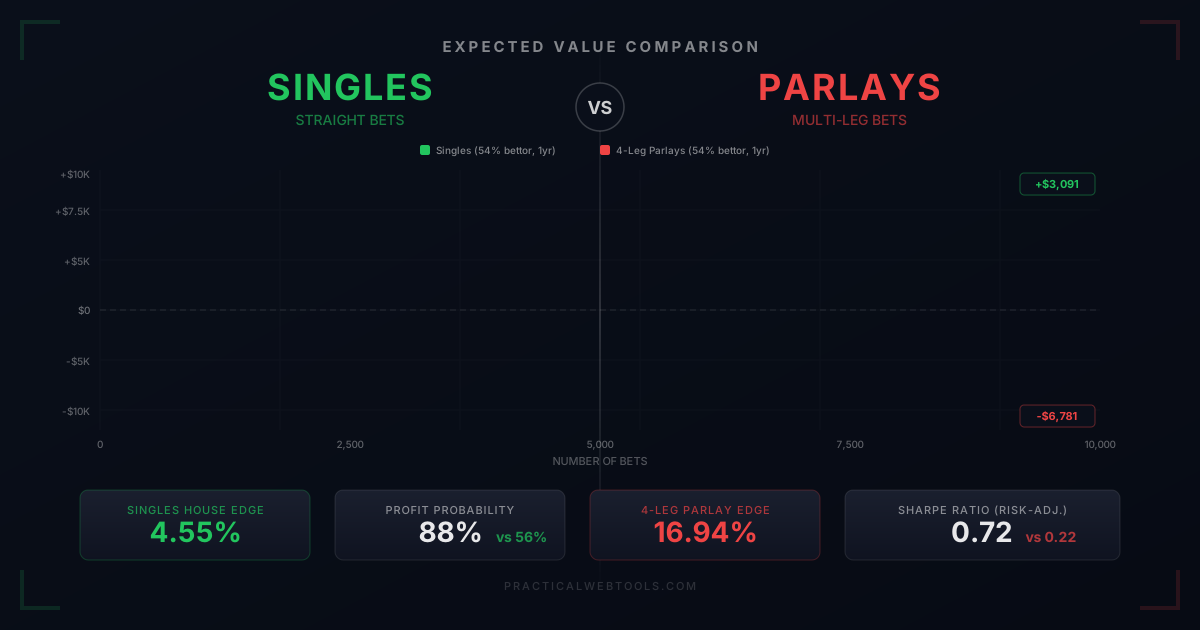
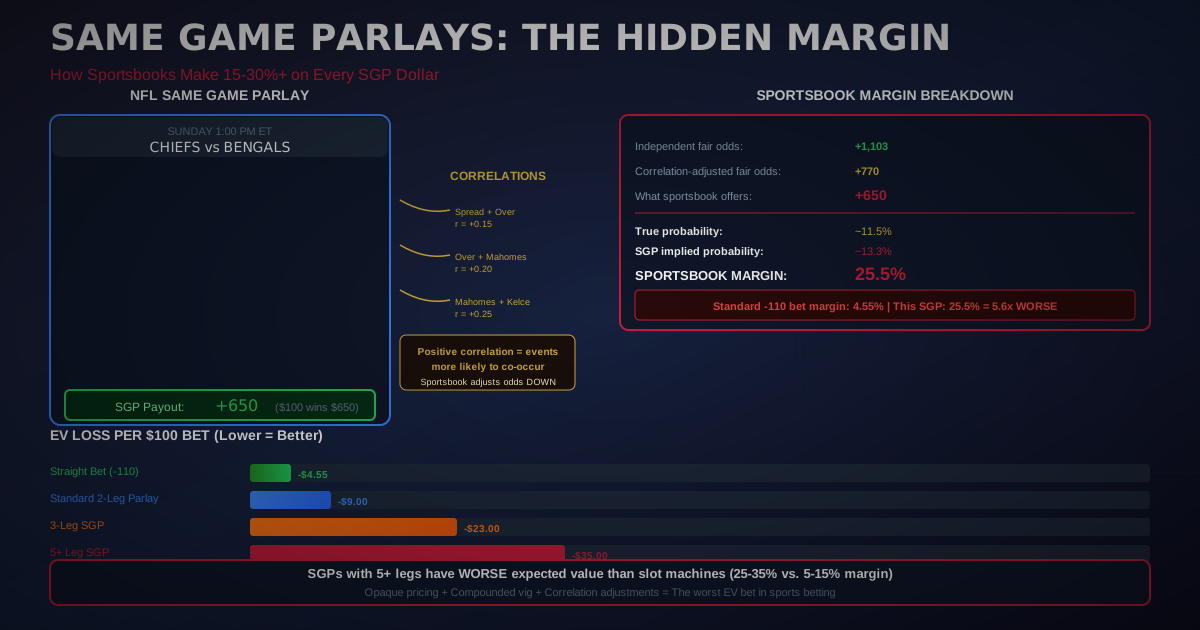
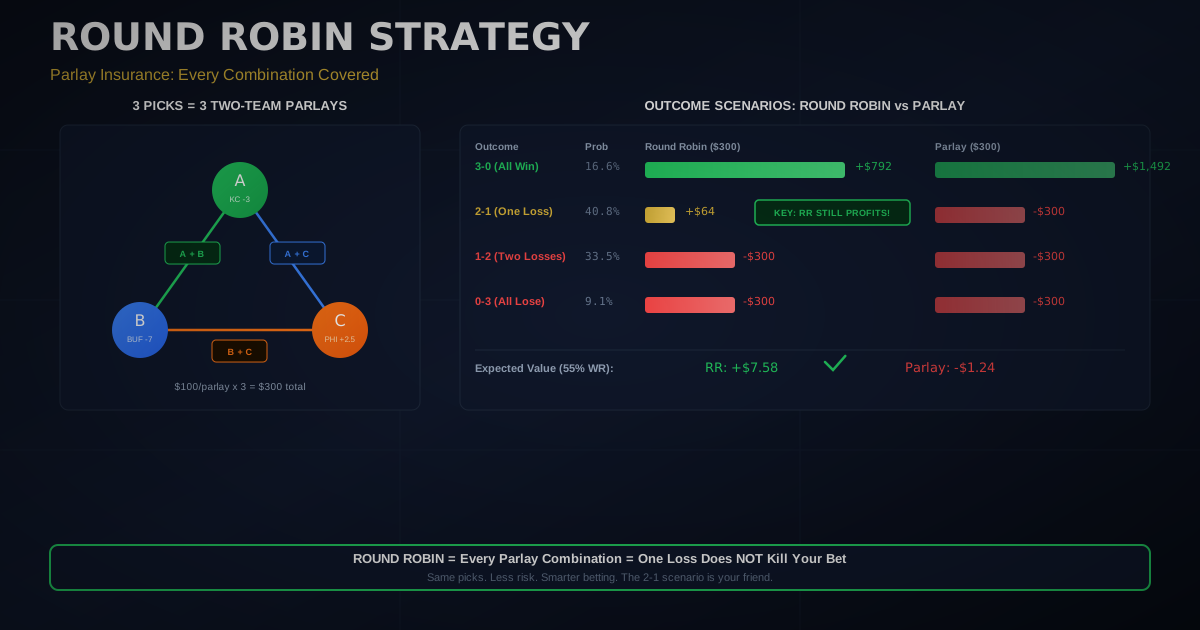
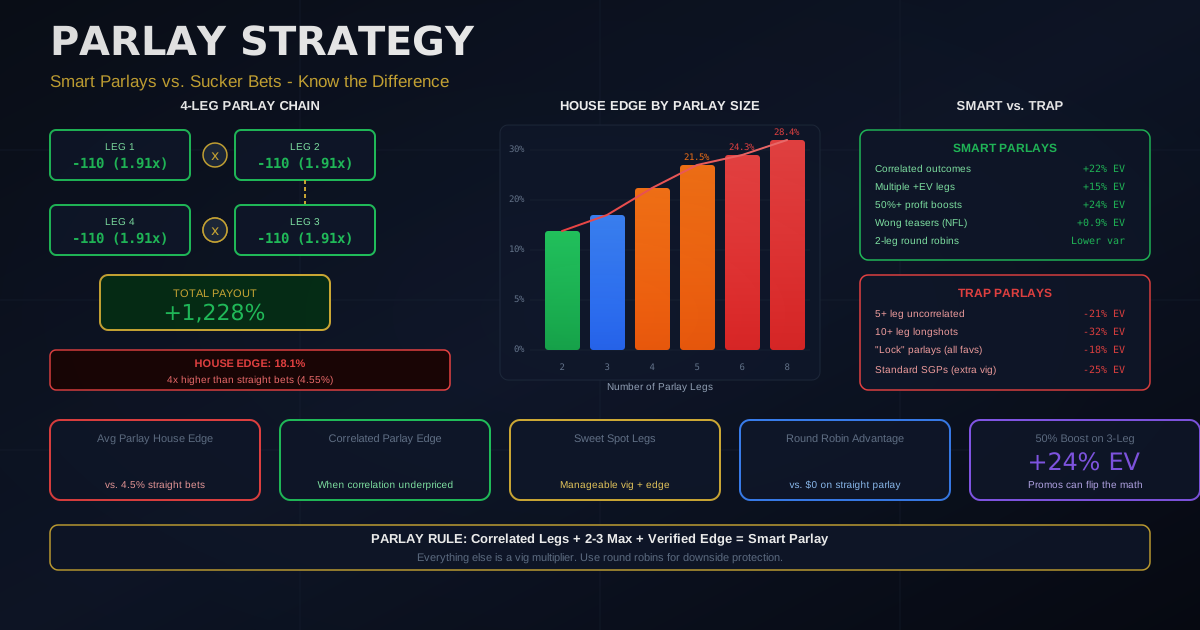
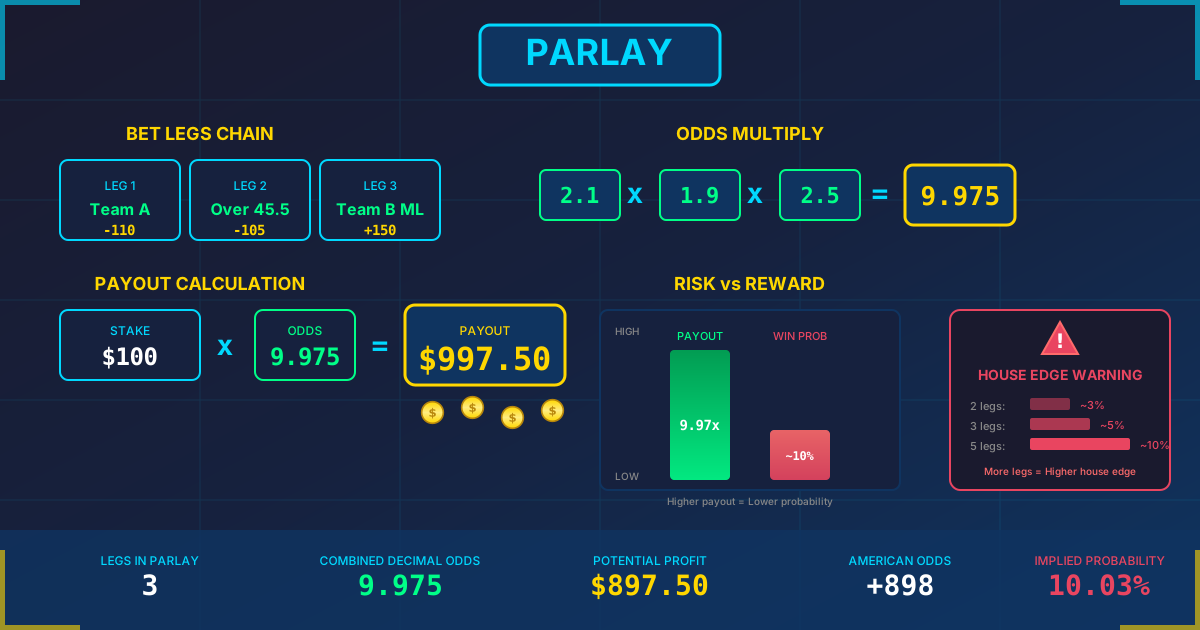
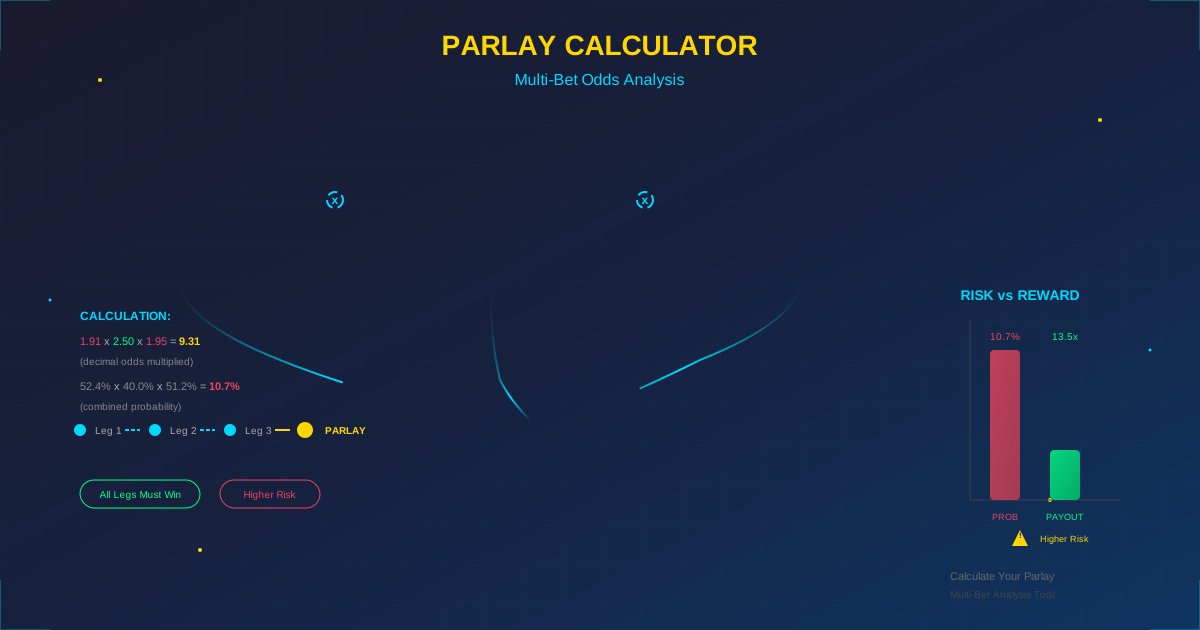
Avoid fight-night parlays. The public loves parlaying 4-5 favorites on a UFC card. This is one of the most negative EV bets in sports betting. Each leg of a parlay multiplies the vig, and in a sport where 30-35% of fights are won by underdogs, a 5-leg favorite parlay has a less than 15% chance of hitting even if every favorite is correctly identified.
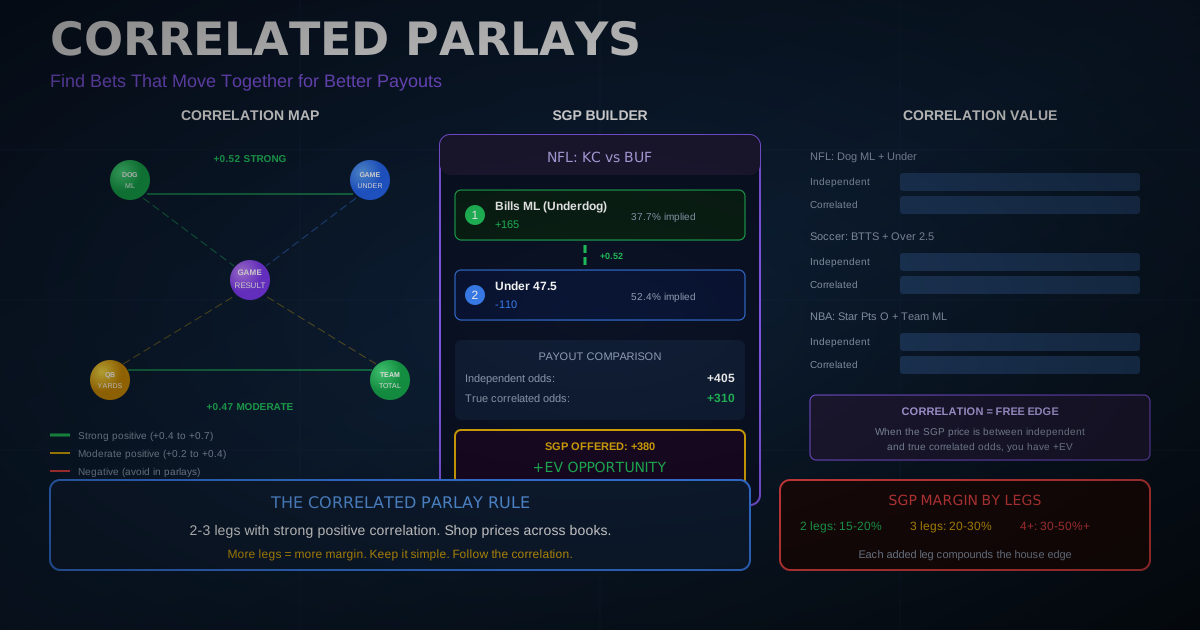
If you do parlay, use correlated props. A Fighter A moneyline + Under 2.5 rounds parlay makes sense if you believe Fighter A finishes early. These legs are positively correlated, which is mathematically superior to parlaying unrelated fights.
Determine mathematically optimal bet sizing with our Kelly Criterion Calculator.
UFC Betting Calendar: When to Bet
The UFC runs events nearly every weekend, but not all events offer equal betting value.
Pay-Per-View (PPV) cards: The tightest lines because of massive public betting volume. Focus on props and live betting rather than moneylines for PPV main events.
Fight Night cards: Better line value, especially on prelim fights. This is where the weekly grind of UFC betting happens.
Short-notice replacements: When a fighter pulls out and a replacement steps in on 2-3 weeks' notice, the sportsbook scrambles to set a line. These fights often have the softest lines of the year because neither the book nor the public has time to fully analyze the matchup.
International cards: Events in Abu Dhabi, London, or Perth often feature regional fighters that American sportsbooks know less about. If you follow international MMA scenes, these cards offer genuine information edges.
Common MMA Betting Mistakes to Avoid
Betting the name, not the matchup. Conor McGregor's name alone moves the line 50-100 points toward the favorite side regardless of the opponent. Name recognition inflates lines beyond fair value.
Ignoring weight cuts. A fighter who looked dominant at 145 lbs may be a shell of themselves cutting to 135 lbs. Weight cut history is one of the most underappreciated factors in MMA handicapping.
Overvaluing knockout power. A fighter with 90% career finishes against regional opponents does not maintain that rate against UFC-caliber competition. Context matters more than raw percentages.
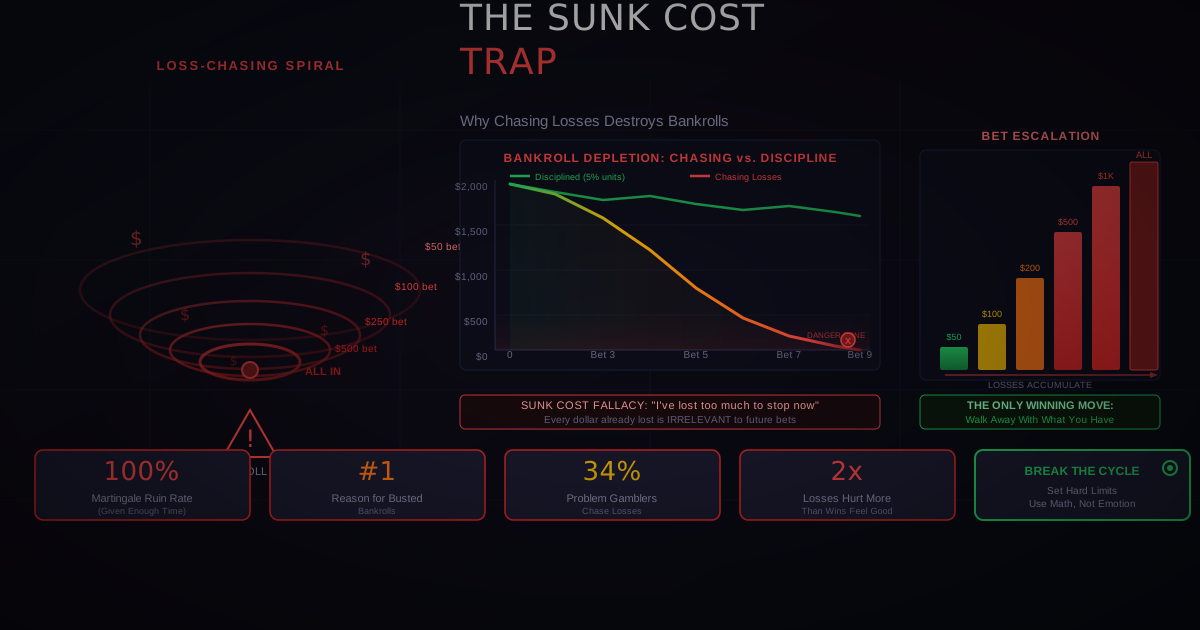
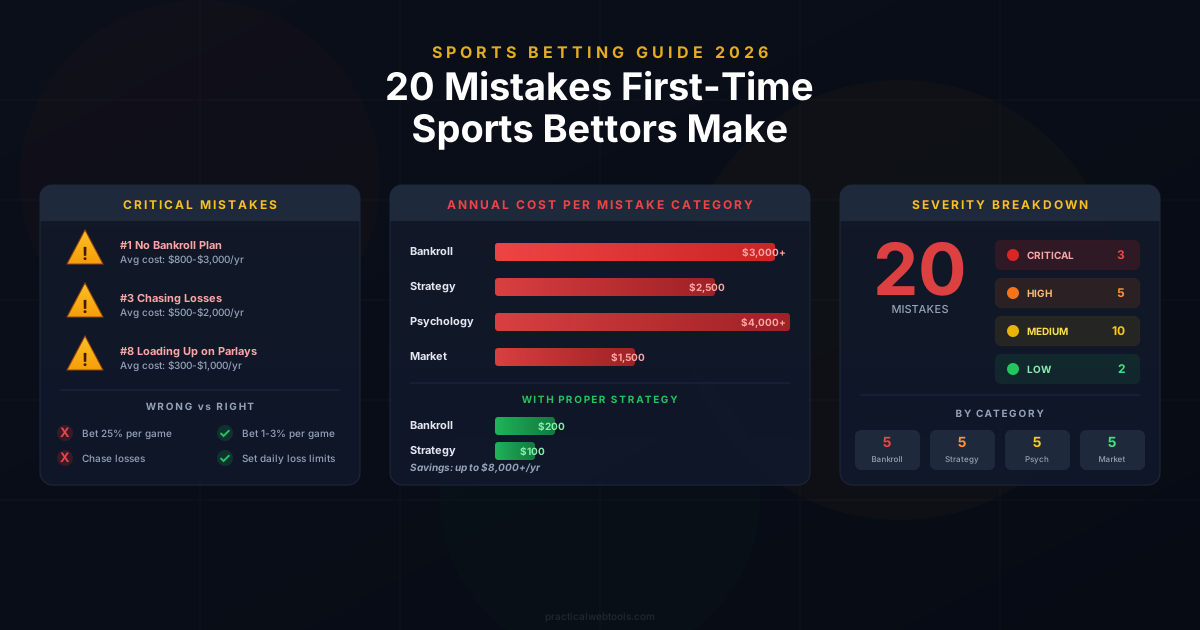
Chasing losses on the next fight. UFC cards have 12-14 fights. Losing your first three bets and doubling down on the fourth is the fastest way to blow a bankroll. Stick to your pre-fight analysis and bet sizing regardless of how the night is going.
Fading aging fighters too early (or too late). There is a window where aging fighters still win but the line overreacts to their perceived decline. There is also a window where the public keeps betting aging stars long after their skills have eroded. Timing this correctly is one of the hardest -- and most profitable -- skills in MMA betting.
Frequently Asked Questions
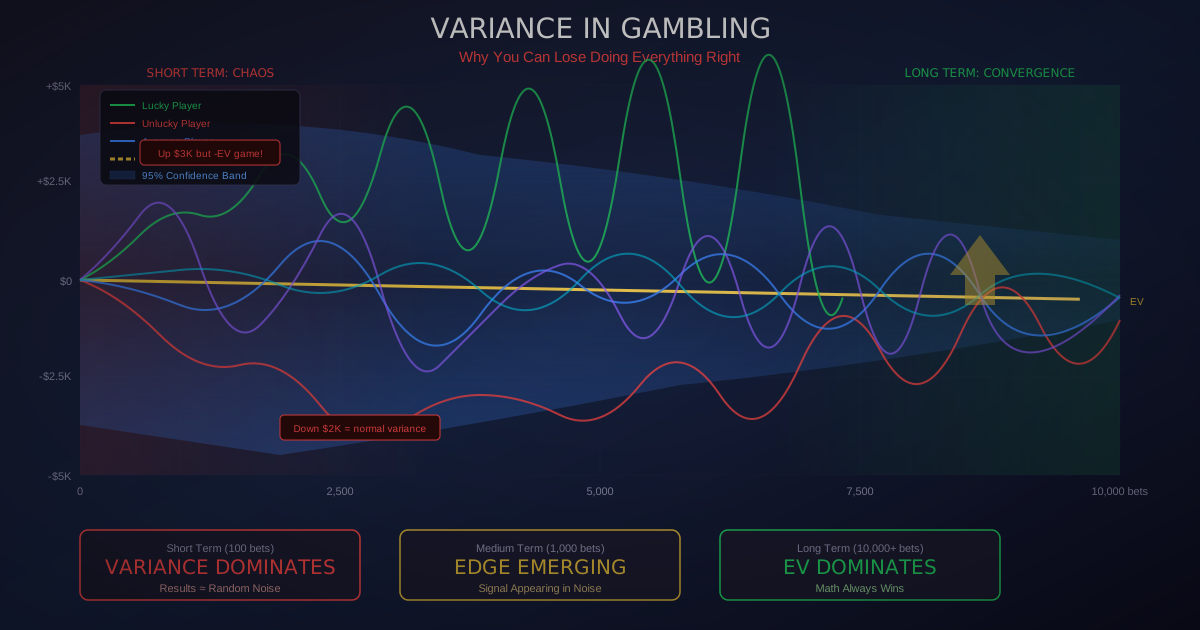
Is MMA betting more profitable than betting other sports? MMA offers sharper bettors a larger edge than most major sports because of thinner sportsbook margins, fewer data points for oddsmakers to model, and the inherent volatility of individual combat. However, the variance is also higher. You can be right on your analysis and still lose because one punch changed everything. The key is volume -- betting enough fights with positive expected value that the math works in your favor over hundreds of bets.
What percentage of UFC favorites win? Over the last decade, UFC favorites have won approximately 65-72% of fights depending on the year, with 2024 seeing favorites win roughly 72% of bouts. However, this win rate does not automatically make betting favorites profitable because the vig on heavy chalk erodes your returns. Favorites in the -100 to -150 range have historically been the most profitable, while favorites of -400 or worse have been negative EV.
What is the best UFC bet type for beginners? Start with moneyline bets on slight favorites (-100 to -200) where you have done genuine matchup analysis. Avoid parlays, round props, and heavy favorites until you have tracked at least 50 bets and understand your own strengths and weaknesses as a handicapper. Method of victory bets are the next step once you are comfortable reading fighter statistics and understanding stylistic implications.
How important is takedown defense in UFC betting? Takedown defense is one of the most underrated statistics in MMA handicapping. Fighters with takedown defense above 80% are extremely difficult to wrestle, and when the market prices a wrestler as a heavy favorite against a fighter with elite takedown defense, the line is often inflated. Research shows that takedown defense percentage is one of the strongest single-stat predictors of upset outcomes in the UFC.
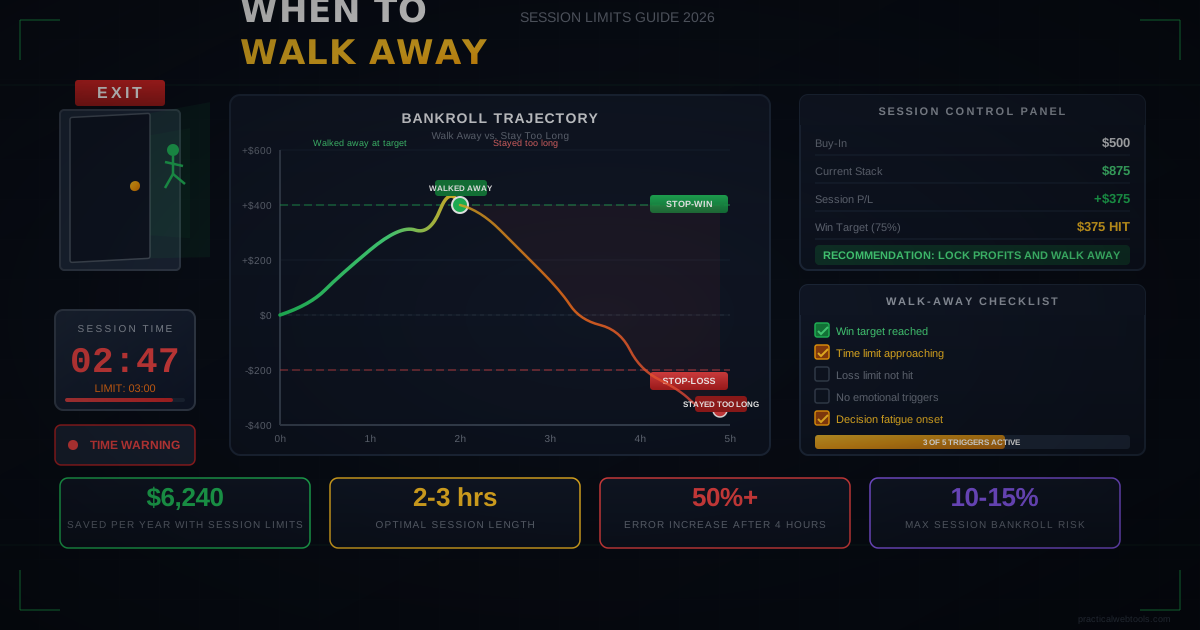
Should I bet on every UFC card? No. Selective betting is far more profitable than volume betting. Some UFC cards feature deep lineups with multiple inefficiently priced fights, while others are loaded with accurately priced main card matchups and unknown prelim fighters you cannot handicap. The discipline to skip a card entirely when you do not have an edge is one of the defining traits of profitable MMA bettors.
How do weight cuts affect UFC betting? Weight cuts are one of the most impactful and underpriced variables in MMA betting. A fighter who struggled to make weight (missing weight or looking visibly drained at weigh-ins) is statistically more likely to gas early and underperform. Meanwhile, fighters who move up in weight class and no longer cut aggressively often perform better than the market expects because they are physically healthier on fight night.
What is the best way to bet on UFC title fights? Title fights are 5-round affairs, which changes the calculus significantly. Favorites with better cardio and wrestling are more likely to pull away in championship rounds (Rounds 4-5). Live betting title fights after Round 1 or Round 2 often provides better value than pre-fight moneylines because the market overreacts to early-round action in what is ultimately a 25-minute contest.
Can I make a living betting on MMA? A small number of professional bettors profit consistently from MMA, but it requires treating it as a full-time job: watching every fight, tracking camp reports, building statistical models, managing bankroll with mathematical precision, and maintaining emotional discipline through inevitable losing streaks. Most recreational bettors should aim for a sustainable side income rather than a full-time career.
Essential Tools for UFC Bettors
Profitable MMA betting requires more than fight knowledge -- it requires mathematical precision. These free tools help you calculate edges, size bets, and evaluate odds across every UFC fight:
- Odds Converter -- Convert between American, decimal, and fractional odds instantly. Essential when comparing lines across multiple sportsbooks.
- Implied Probability Calculator -- See the true probability behind any UFC odds line and compare it to your own assessment.
- Expected Value Calculator -- Determine whether a specific UFC bet has positive or negative expected value based on your estimated win probability.
- Kelly Criterion Calculator -- Calculate the mathematically optimal bet size based on your edge and bankroll.
- Parlay Calculator -- Build multi-fight parlays and calculate potential payouts for UFC card combinations.
- Hold/Vig Calculator -- See how much the sportsbook is charging in vig on any UFC fight line, so you can find the books with the sharpest odds.
Conclusion
UFC and MMA betting rewards preparation, discipline, and a deep understanding of combat sports in a way that few other betting markets can match. The individual nature of the sport, the importance of stylistic matchups, and the relative inefficiency of the betting market all create genuine opportunities for bettors who are willing to do the work.
The fundamentals are straightforward: analyze matchups rather than betting names, understand how weight class dynamics affect fight outcomes, exploit method of victory and prop markets where books are laziest, manage your bankroll with mathematical discipline, and never stop tracking and refining your process.
MMA betting is not a get-rich-quick scheme. It is a skill that improves with every fight you watch, every bet you track, and every statistical pattern you identify. The fighters in the cage train for months to prepare for a single night. The bettors who profit consistently do the same.
Gambling involves risk. This content is for educational and informational purposes only. Always gamble responsibly, set limits you can afford, and seek help if gambling becomes a problem. Visit the National Council on Problem Gambling or call 1-800-522-4700 for support.