Gambling Taxes Explained: How to Report Winnings and Deduct Losses in 2026
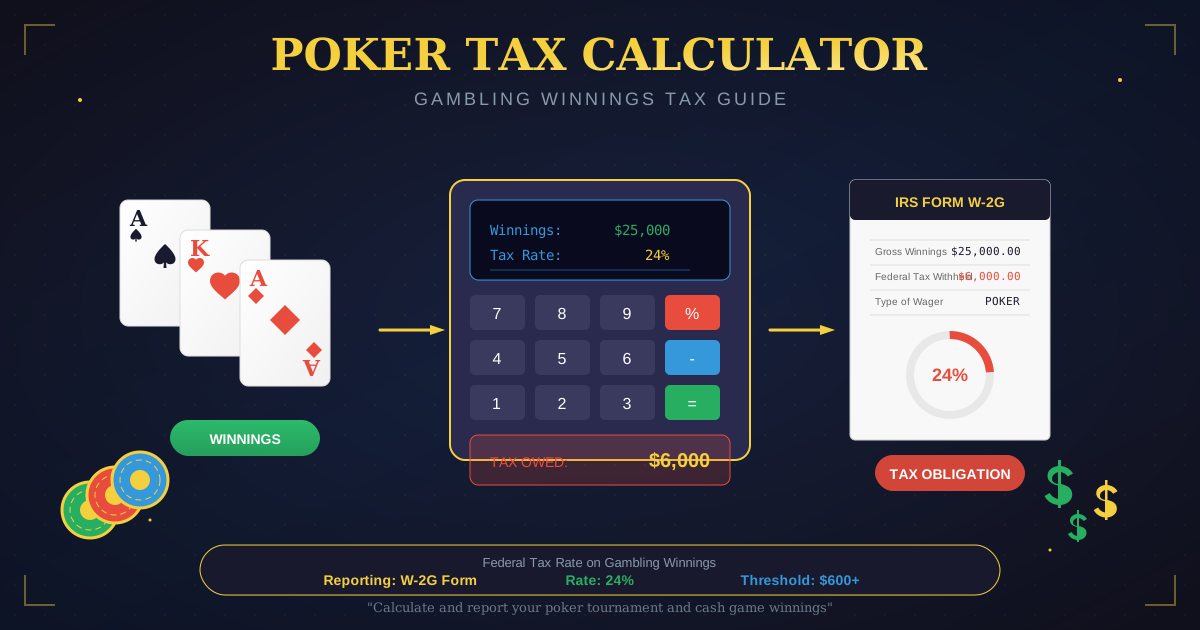
The IRS requires you to report all gambling winnings as income -- every single dollar, whether you receive a W-2G or not. In 2026, the federal tax rate on gambling winnings ranges from 10% to 37% depending on your total income, and mandatory withholding of 24% kicks in at specific thresholds by game type. A $5,000 poker tournament win triggers automatic withholding of $1,200. A $12,000 slot jackpot means $2,880 withheld before you see a penny. And if you do not report that $800 sports betting win because no W-2G was issued, the IRS can match it against the sportsbook's records and hit you with penalties.
The good news is that gambling losses are deductible -- but only if you itemize deductions, and only up to the amount of your winnings. The great news for serious players is that the "session method" for poker and table games can dramatically reduce your taxable gambling income by netting wins and losses within a single session.
This guide covers everything you need to know about gambling taxes in 2026: federal rules, W-2G thresholds, loss deductions, the session method, state tax implications, professional gambler status, and the record-keeping practices that protect you during an audit.
Calculate your after-tax gambling winnings instantly with our free Lottery After-Tax Calculator.
Federal Gambling Tax Rules in 2026
All Gambling Winnings Are Taxable
Under Internal Revenue Code Section 61, all income from whatever source derived is taxable, including gambling winnings. This means:
- Slot machine jackpots
- Poker tournament prizes
- Sports betting wins
- Lottery and sweepstakes prizes
- Horse racing payouts
- Blackjack and table game winnings
- Daily fantasy sports winnings
- Bingo and keno prizes
- Raffle and prize winnings
The IRS does not care whether you received a W-2G form. If you won money gambling, it is taxable income. Period.
Federal Tax Rates on Gambling Winnings
Gambling winnings are taxed as ordinary income at your marginal tax rate. For the 2026 tax year:
| Taxable Income (Single) | Taxable Income (Married Filing Jointly) | Federal Tax Rate |
|---|---|---|
| $0 - $11,925 | $0 - $23,850 | 10% |
| $11,926 - $48,475 | $23,851 - $96,950 | 12% |
| $48,476 - $103,350 | $96,951 - $206,700 | 22% |
| $103,351 - $197,300 | $206,701 - $394,600 | 24% |
| $197,301 - $250,525 | $394,601 - $501,050 | 32% |
| $250,526 - $626,350 | $501,051 - $751,600 | 35% |
| Over $626,350 | Over $751,600 | 37% |
A recreational gambler earning $75,000 from their day job who wins $10,000 in gambling would have that $10,000 taxed at 22% (their marginal rate), resulting in $2,200 in additional federal tax.
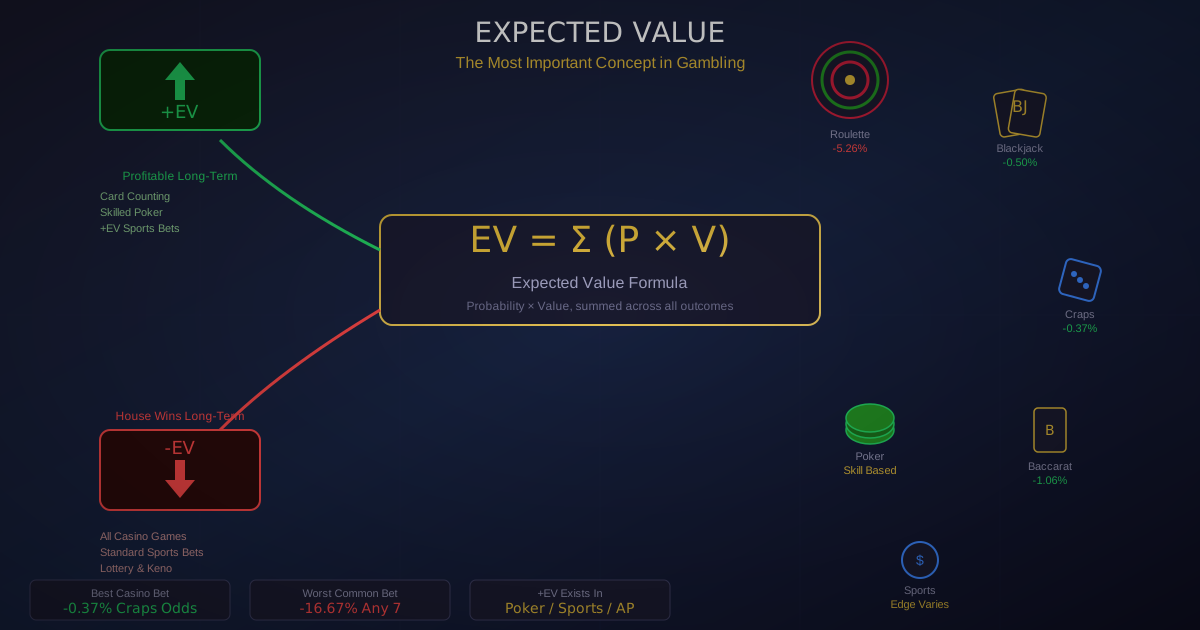
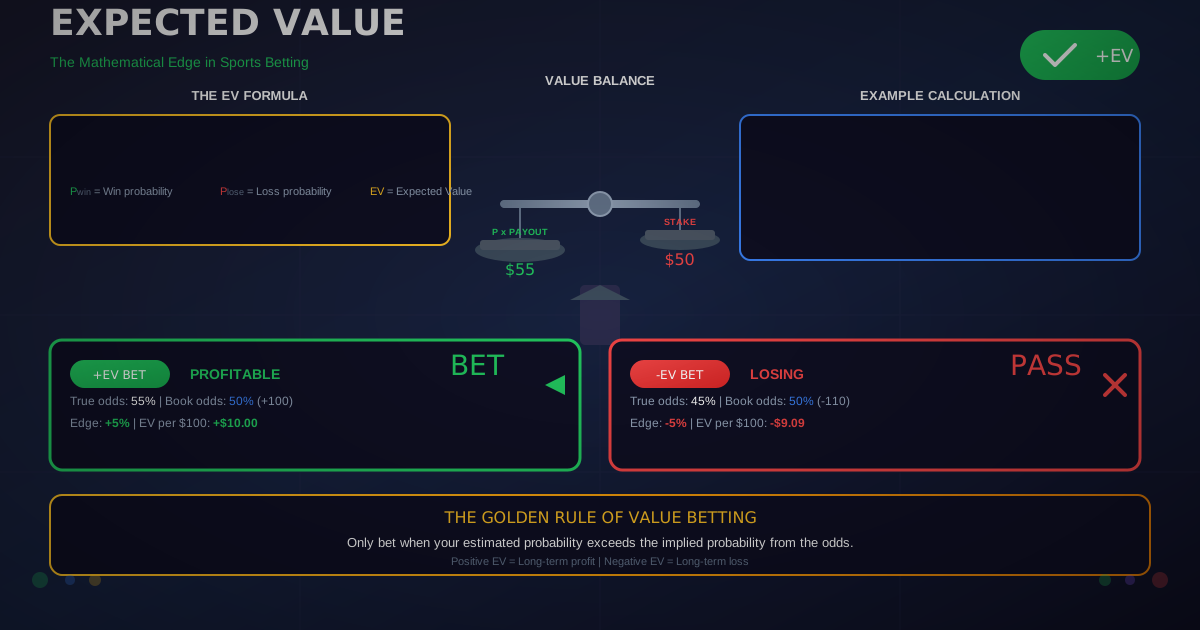
Use our Expected Value Calculator to understand the pre-tax expected value of different bets, then factor in taxes to see the real bottom line.
W-2G Reporting Thresholds by Game Type
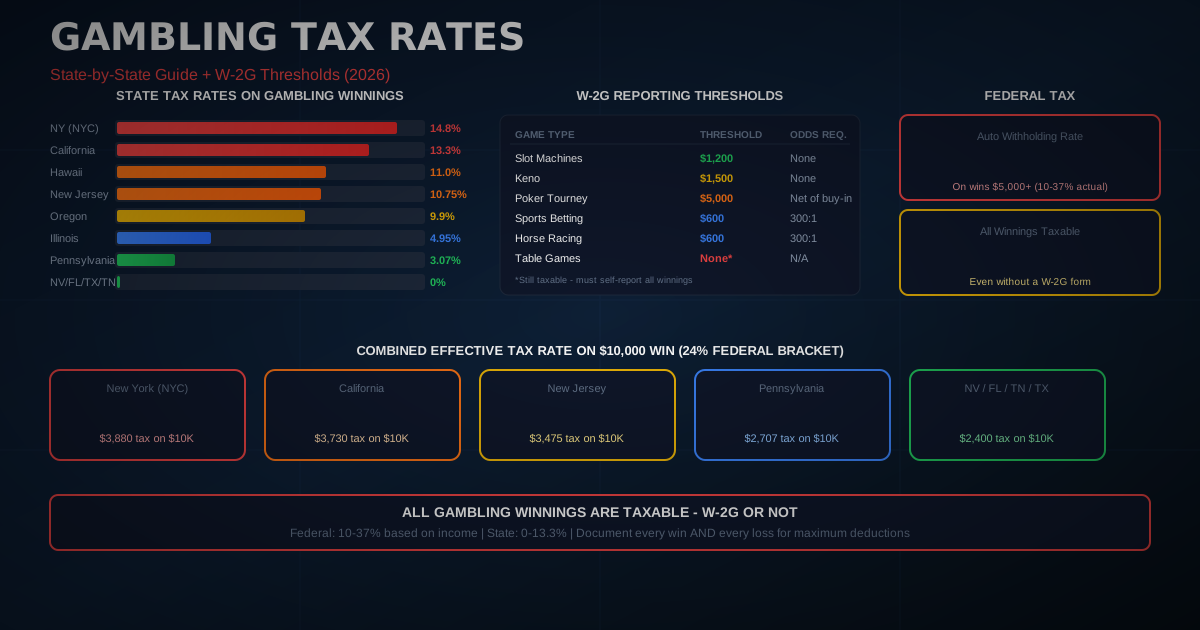
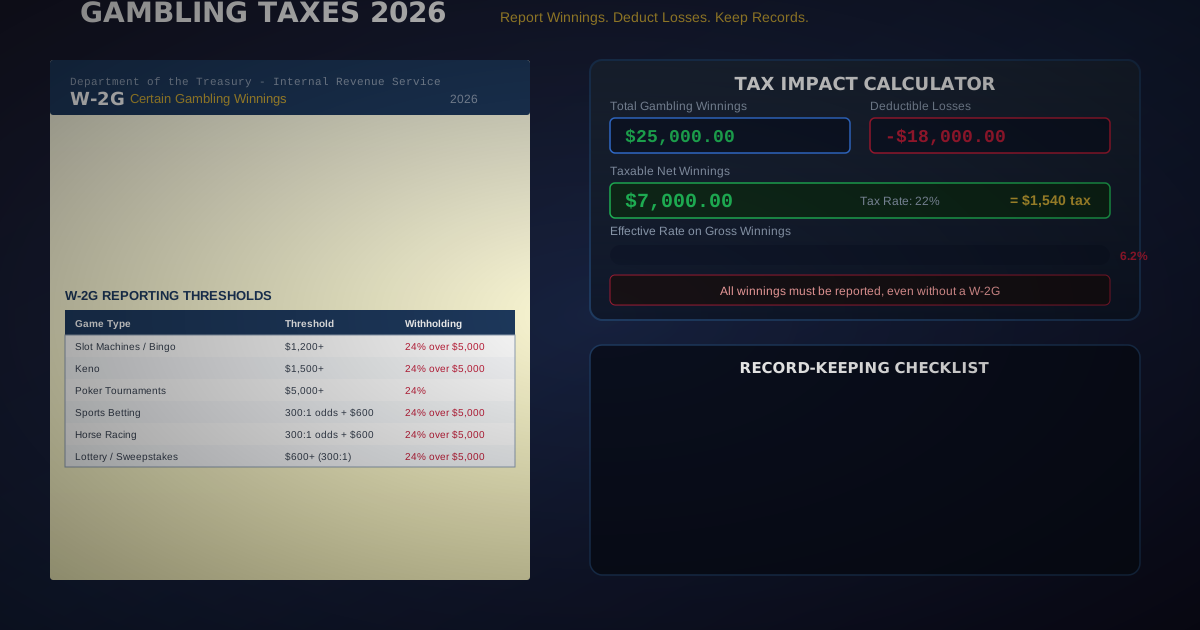
A W-2G form ("Certain Gambling Winnings") is filed by the payer (casino, sportsbook, lottery commission) when your winnings exceed specific thresholds. These thresholds vary by game type:
W-2G Threshold Table
| Game Type | W-2G Issued When | Mandatory 24% Withholding |
|---|---|---|
| Slot machines | Winnings of $1,200 or more | Only if winnings exceed $5,000 |
| Bingo | Winnings of $1,200 or more | Only if winnings exceed $5,000 |
| Keno | Winnings of $1,500 or more | Only if winnings exceed $5,000 |
| Poker tournaments | Winnings of $5,000 or more (net of buy-in) | Yes, 24% withheld |
| Sports betting | Winnings of $600+ AND at least 300:1 odds | Only if winnings exceed $5,000 |
| Horse racing | Winnings of $600+ AND at least 300:1 odds | Only if winnings exceed $5,000 |
| Lottery / sweepstakes | Winnings of $600+ AND at least 300:1 odds | Yes if over $5,000 |
| Table games (blackjack, craps, roulette) | Generally no W-2G | Cash transaction reports over $10,000 |
Important W-2G Notes
Table games are a special case. Casinos generally do not issue W-2G forms for table game winnings (blackjack, craps, roulette, baccarat) because there is no reliable way to track buy-in versus cash-out for each session. However, this does not mean the winnings are not taxable -- you are still legally required to report them.
Sports betting has changed dramatically. With the expansion of legal sports betting to most states, sportsbooks now report significant wins to the IRS. Your sportsbook account tracks every bet, and the IRS can request this data. Do not assume that because you did not receive a W-2G, your sports betting winnings are invisible.
The $600/300:1 rule explained. For sports betting and horse racing, a W-2G is issued when winnings are both $600 or more AND at 300:1 odds or greater. A $10 bet that pays $3,000 triggers a W-2G. A $100 bet that pays $600 does not (because the odds are only 6:1).
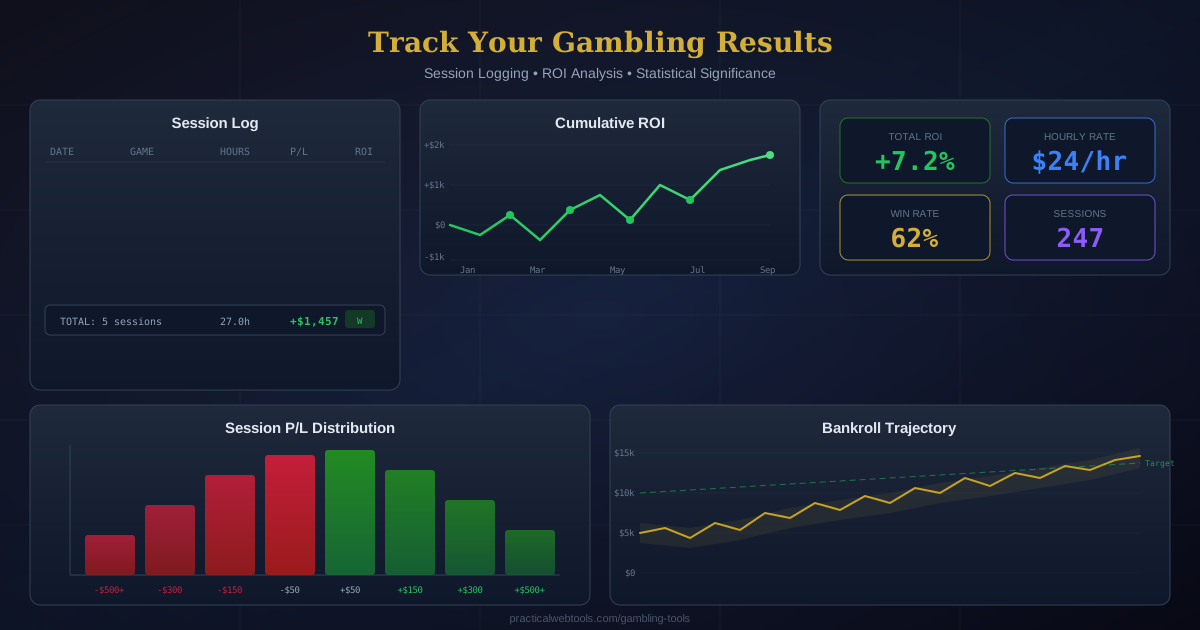
Track all your gambling results carefully with the Poker Session Tracker, which works for any gambling activity, not just poker.
How to Deduct Gambling Losses
The Basic Rule
You can deduct gambling losses, but only:
- Up to the amount of your gambling winnings (you cannot create a net loss)
- Only if you itemize deductions on Schedule A (not the standard deduction)
- With adequate documentation to substantiate the losses
How the Deduction Works in Practice
Example 1: Net winner
- Total gambling winnings: $25,000
- Total gambling losses: $18,000
- Taxable gambling income: $25,000 (reported on Line 8b of Form 1040)
- Gambling loss deduction: $18,000 (reported on Schedule A, Line 16)
- Net taxable amount: $7,000
Example 2: Net loser
- Total gambling winnings: $5,000
- Total gambling losses: $12,000
- Taxable gambling income: $5,000
- Gambling loss deduction: $5,000 (capped at winnings)
- Net taxable amount: $0
- The remaining $7,000 in losses is NOT deductible
This asymmetry is painful for recreational gamblers who have a losing year. You report all winnings but can only deduct losses up to that amount. The $7,000 excess loss in Example 2 simply disappears.
Calculate the tax impact of lottery and large jackpot wins with our Lottery After-Tax Calculator and compare lump sum versus annuity options with the Annuity vs. Lump Sum Calculator.
The Standard Deduction Problem
In 2026, the standard deduction is approximately $15,700 for single filers and $31,400 for married filing jointly. If your itemized deductions (including gambling losses) do not exceed the standard deduction, you get no benefit from deducting gambling losses.
This means a single filer with $10,000 in gambling winnings and $10,000 in gambling losses who takes the standard deduction pays tax on the full $10,000 in winnings. The losses are irrelevant because itemizing does not exceed the standard deduction.
Strategy: If you have significant gambling activity, tally your potential itemized deductions early in the year. If you are close to the standard deduction threshold, consider timing discretionary deductions (charitable contributions, medical expenses) to bunch them into the same year as gambling activity.
The Session Method for Poker and Table Games
The "session method" is an IRS-accepted approach for calculating gambling winnings and losses for table games and poker. Instead of tracking every individual bet, you calculate your net win or loss for each gambling session.
How the Session Method Works
- A "session" is a continuous period of play at one type of game at one establishment
- At the end of each session, calculate your net result (cash-out minus buy-in)
- Net winning sessions are reported as gambling winnings
- Net losing sessions are reported as gambling losses
Session Method Example
Over a year, a poker player has these session results:
| Session | Buy-In | Cash-Out | Net Result |
|---|---|---|---|
| Session 1 | $500 | $1,200 | +$700 |
| Session 2 | $500 | $300 | -$200 |
| Session 3 | $500 | $800 | +$300 |
| Session 4 | $500 | $100 | -$400 |
| Session 5 | $500 | $1,500 | +$1,000 |
| Session 6 | $500 | $200 | -$300 |
| Totals | $3,000 | $4,100 | +$1,100 |
Without session method: You would need to track every individual pot won and lost. Impractical and unreasonable.
With session method:
- Total winning sessions: $700 + $300 + $1,000 = $2,000 (reported as winnings)
- Total losing sessions: $200 + $400 + $300 = $900 (reported as losses)
- Net taxable: $2,000 - $900 = $1,100
The session method is particularly valuable because it nets wins and losses within a session automatically. If you buy in for $500, run up to $2,000, then finish at $800, the session result is +$300 -- not $1,500 in winnings and $1,200 in losses.
Track your sessions meticulously with the Poker Session Tracker, which records buy-ins, cash-outs, dates, locations, and game types for tax-ready records.
Sports Betting Tax Reporting
Sports betting taxes have become increasingly important as legal sports betting has expanded across the United States. Here are the key rules:
Individual Bet vs. Net Position
The IRS requires you to report each winning bet separately (not your net position across all bets). However, in practice, many tax professionals recommend the session approach for sports betting as well -- grouping bets by day or event.
Sportsbook 1099 vs. W-2G
Most sportsbooks issue 1099-MISC forms (or 1099-K for payment processors) for net winnings above $600 in a calendar year. This is separate from the W-2G, which is only triggered by specific high-odds wins.
| Form | When Issued | What It Reports |
|---|---|---|
| W-2G | Individual wins of $600+ at 300:1+ odds | Specific winning wager amount |
| 1099-MISC | Net winnings of $600+ per year | Total net winnings for the year |
| 1099-K | Varies by payment processor | Total payments received |
Free Bets and Bonus Taxation
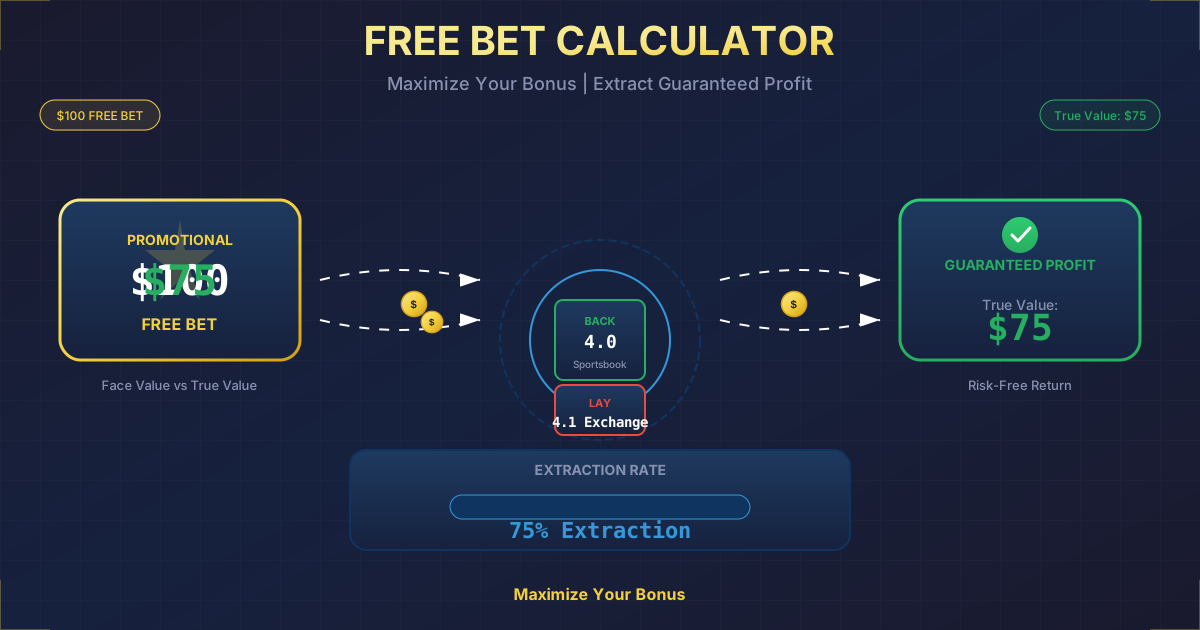
Free bets and bonuses from sportsbooks are taxable when they result in winnings. If you receive a $500 free bet and win $450 (net after the free bet), the $450 is taxable income. The "free" part is effectively a promotional incentive, not a tax-free gift.
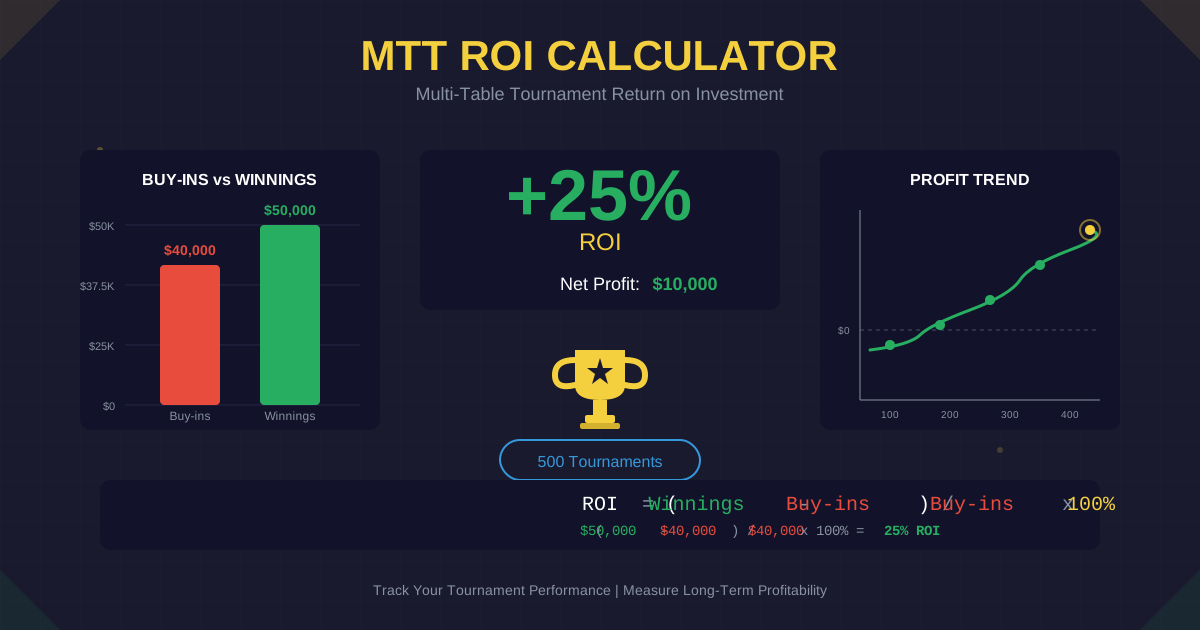
Monitor your overall sports betting profitability with the Poker ROI Calculator (which works for any betting activity) and track your hourly rate with the Poker Hourly Rate Calculator.
Lottery and Large Jackpot Taxation
Lottery winnings receive special treatment due to their size and the availability of annuity payments.
Federal Withholding on Lottery Prizes
- Prizes over $5,000: 24% mandatory federal withholding
- Prizes over $600: Must be reported on W-2G
- Additional tax owed at filing if your marginal rate exceeds 24%
Lump Sum vs. Annuity Tax Implications
| Factor | Lump Sum | Annuity (30-year) |
|---|---|---|
| Immediate tax hit | Massive (up to 37% + state) | Spread over 30 years |
| Tax bracket impact | Likely maximum bracket | May stay in lower brackets |
| Investment control | Full control immediately | Fixed payments |
| Total tax paid | Potentially higher | Potentially lower |
| Inflation impact | Not affected | Payments lose purchasing power |
A $10 million lottery win illustrates the difference:
- Lump sum (approximately $6 million): Federal tax of approximately $2.1 million (at 37% on most of it), leaving approximately $3.9 million
- Annuity ($333,333/year for 30 years): Federal tax of approximately $80,000/year (at 24-32% marginal rate), leaving approximately $253,000/year -- totaling approximately $7.6 million over 30 years
Compare your specific lump sum vs. annuity options with our Annuity vs. Lump Sum Calculator and see your exact after-tax amount with the Lottery After-Tax Calculator.
For lottery pools, the tax implications become even more complex. Use the Lottery Pool Calculator to understand how winnings split among pool members and the tax impact on each member.
State Gambling Taxes
In addition to federal taxes, most states tax gambling winnings. State tax treatment varies significantly:
States With No Income Tax (No Gambling Tax)
- Alaska
- Florida
- Nevada
- New Hampshire (no tax on gambling winnings)
- South Dakota
- Tennessee (no tax on gambling winnings)
- Texas
- Washington
- Wyoming
States With Notable Gambling Tax Rules
| State | Tax Rate on Gambling | Notable Rules |
|---|---|---|
| California | Up to 13.3% | No deduction for gambling losses on state return |
| New York | Up to 10.9% | Plus NYC tax up to 3.876% |
| New Jersey | Up to 10.75% | Casino winnings over $10,000 at 8% |
| Pennsylvania | 3.07% flat rate | Sports betting winnings fully taxable |
| Illinois | 4.95% flat rate | No gambling loss deduction on state return |
| Michigan | 4.25% flat rate | Allows gambling loss deduction |
| Connecticut | Up to 6.99% | Tribal casino winnings may have special treatment |
Critical note: Some states do not allow you to deduct gambling losses on your state return even though the federal government does. This means a net-even gambler (who won and lost the same amount) might owe state taxes on their gross winnings with no offsetting loss deduction.
Check your state's specific rules and use the Lottery After-Tax Calculator which factors in state taxes for major wins.
Professional Gambler Status
Under the tax code, you can qualify as a "professional gambler" if gambling is your primary source of income and you engage in it with regularity, continuity, and the intent to earn a profit. The key case is Commissioner v. Groetzinger (1987), which established the standard.
Benefits of Professional Gambler Status
| Factor | Recreational Gambler | Professional Gambler |
|---|---|---|
| Winnings reported on | Line 8b (Other Income) | Schedule C (Business Income) |
| Losses deductible on | Schedule A (Itemized) | Schedule C (Business Expense) |
| Loss limitation | Capped at winnings | Capped at winnings (still) |
| Standard deduction | Cannot also deduct losses | Can take standard deduction AND deduct losses |
| Business expenses | Not deductible | Deductible (travel, software, coaching, etc.) |
| Self-employment tax | Not applicable | Applicable (15.3% on net earnings) |
| Health insurance deduction | Not on Schedule C | Potentially deductible on Schedule C |
The Self-Employment Tax Trap
Professional gambler status triggers self-employment tax (Social Security + Medicare) of 15.3% on net gambling earnings up to $168,600 and 2.9% above that. For a professional poker player earning $80,000 net, that is an additional $12,240 in SE tax that a recreational player would not owe.
However, the ability to deduct business expenses (travel, software subscriptions, coaching, tournament entry fees, hotel costs near casinos, computer equipment) can more than offset this cost for serious players.
Calculate your self-employment tax implications using the principles covered in our financial tools, and track your bankroll and hourly rate with the Poker Session Tracker and Poker Hourly Rate Calculator.
How to Establish Professional Status
The IRS considers several factors (no single factor is determinative):
- Time devoted: Do you spend significant time gambling? (20+ hours/week strongly supports professional status)
- Income dependence: Is gambling your primary income source?
- Regularity: Do you gamble consistently throughout the year?
- Profit intent: Do you study, track results, and work to improve?
- Business-like conduct: Do you keep records, set schedules, and manage your bankroll like a business?
- History of profits: Have you shown a profit in most years? (Not required but helpful)
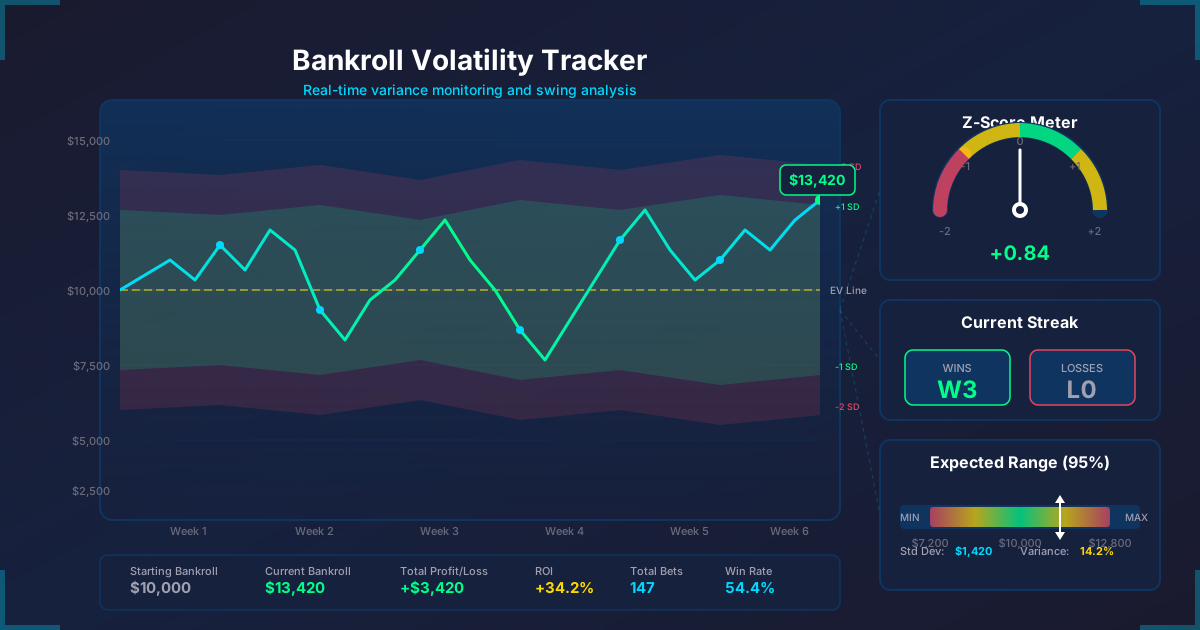
Use the Bankroll Volatility Tracker and Poker Session Tracker to demonstrate the business-like conduct the IRS looks for.
Record-Keeping Requirements
The IRS requires contemporaneous records of gambling activity. "Contemporaneous" means recorded at or near the time of the activity -- not reconstructed at tax time.
What to Record for Every Gambling Session
- Date and time of the gambling session
- Name and location of the establishment (or website)
- Type of game played (slots, poker, blackjack, sports bet, etc.)
- Amount wagered (buy-in for sessions, individual bet amounts for sports)
- Amount won or lost (cash-out for sessions, individual results for sports)
- Names of others present (for live poker and table games, if applicable)
- Machine or table number (for slots and table games)
Records by Game Type
| Game Type | Minimum Records |
|---|---|
| Poker (cash game) | Date, location, game type/stakes, buy-in, cash-out, hours played |
| Poker (tournament) | Date, location, tournament name, buy-in, finish position, prize amount |
| Sports betting | Date, sport, teams/event, wager amount, odds, result, net win/loss |
| Slots | Date, casino, machine number, buy-in, cash-out |
| Table games | Date, casino, game type, table number, buy-in, cash-out |
| Horse racing | Date, track, race number, wager type/amount, result |
| Lottery | Date, ticket purchase location, ticket cost, prize amount |
Supporting Documentation
In addition to your gambling log, retain:
- W-2G forms and any other tax documents from casinos and sportsbooks
- Receipts for tournament entries, sports bets, and lottery tickets
- Bank and credit card statements showing gambling transactions
- Casino loyalty program records (they track your play in detail)
- Sportsbook account records (download annually before account closures)
- Photos of winning tickets before cashing them
The Poker Session Tracker automates much of this record-keeping for poker and can be adapted for other gambling types.
Real-World Tax Examples
Example 1: The Recreational Weekend Poker Player
Tom plays $1/$2 live poker on weekends at a local casino. His 2026 results:
- 48 sessions played
- Total winning sessions: $8,400
- Total losing sessions: $5,200
- Net annual result: +$3,200
- W-2Gs received: None (table games)
- Day job income: $85,000
Tom's tax situation:
- Reports $8,400 as Other Income on Line 8b
- Standard deduction ($15,700) exceeds his itemized deductions ($5,200 gambling losses + $6,000 state/local taxes = $11,200)
- Tom takes the standard deduction and pays tax on the full $8,400
- At 22% marginal rate: $1,848 in additional federal tax
- Net after-tax poker income: $3,200 - $1,848 = $1,352
If Tom had enough other itemized deductions to exceed the standard deduction, he could deduct the $5,200 in losses and pay tax on only $3,200, saving $1,144 in taxes.
Example 2: The Sports Bettor With Multiple Sportsbooks
Jessica bets on NFL and NBA across three sportsbook apps. Her 2026 results:
| Sportsbook | Deposits | Withdrawals | Net |
|---|---|---|---|
| FanDuel | $5,000 | $7,200 | +$2,200 |
| DraftKings | $3,000 | $1,800 | -$1,200 |
| BetMGM | $2,000 | $3,500 | +$1,500 |
| Total | $10,000 | $12,500 | +$2,500 |
1099s received: FanDuel reports $2,200 net winnings; BetMGM reports $1,500 net winnings.
Jessica should report $3,700 in total winnings (sum of winning sportsbooks) and deduct $1,200 in losses (the losing sportsbook) if she itemizes. Net taxable: $2,500.
However, if Jessica tracks individual bets, she can use the session method to potentially reduce gross winnings reported and increase deductible losses.
Example 3: The Tournament Poker Professional
Mike is a full-time tournament poker player filing as a professional gambler. His 2026 results:
- Tournament buy-ins: $85,000
- Tournament cashes: $142,000
- Cash game results: +$15,000
- Gross gambling income: $157,000
- Gross gambling losses: $85,000
- Net gambling income: $72,000
Business expenses:
- Travel (flights, hotels, rental cars): $18,000
- Software subscriptions (solvers, tracking): $1,200
- Coaching: $3,000
- Home office (for online study): $2,400
- Health insurance: $6,000
- Total business expenses: $30,600
Schedule C:
- Gross income: $157,000
- Gambling losses: $85,000
- Business expenses: $30,600
- Net Schedule C income: $41,400
- Self-employment tax: $6,342 (15.3% of $41,400)
- Federal income tax at approximately 22%: $9,108
- Total federal tax: $15,450
Without professional status, Mike would report $157,000 in income, deduct $85,000 on Schedule A, lose the $30,600 in business expenses entirely, and pay significantly more in taxes.
Use the Poker ROI Calculator and Poker Hourly Rate Calculator to track the profitability metrics that support professional gambler status.
Example 4: The Lottery Winner
Sarah wins a $2 million state lottery prize. She chooses the lump sum of $1.2 million.
Federal tax:
- 24% mandatory withholding at payout: $288,000
- Actual tax owed at 35-37% marginal rate: approximately $408,000
- Additional tax owed at filing: approximately $120,000
State tax (assuming 5% state):
- State withholding: $60,000
- Total withheld: $348,000
- Take-home at payout: $852,000
- Additional federal tax at filing: $120,000
- Final after-tax amount: approximately $732,000 (36.6% of the $2M headline prize, 61% of the lump sum)
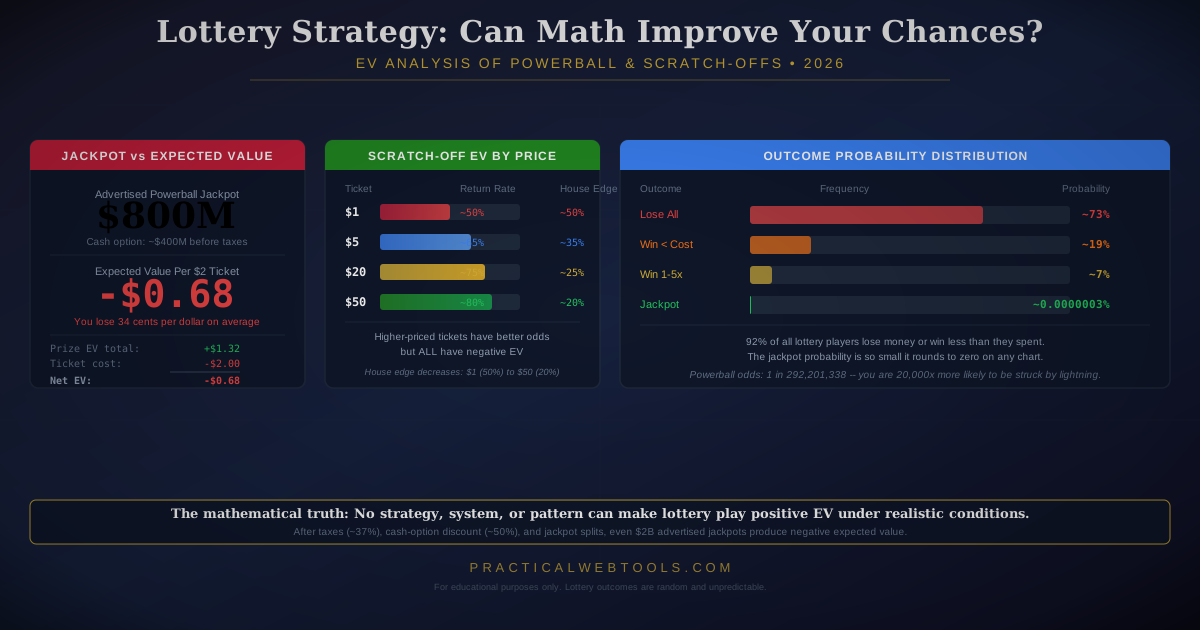
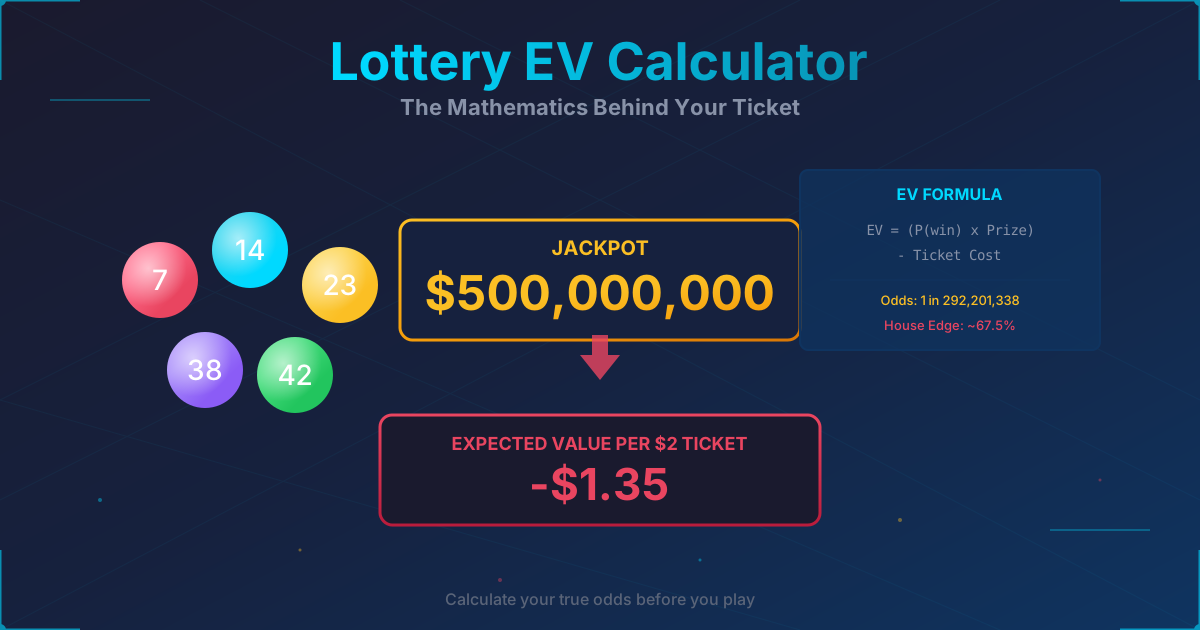
Calculate your exact lottery after-tax amount with our Lottery After-Tax Calculator and see the Lottery EV Calculator to understand the expected value of lottery tickets before purchase.
Example 5: The Horse Racing Handicapper
Carlos is a serious horse racing handicapper who bets $50-$200 per race at the track. His 2026 results:
- Total wagered: $42,000
- Total returned: $45,500
- Net profit: $3,500
- W-2Gs received: 3 tickets totaling $4,800 (all at 300:1+ odds)
Carlos must report the full W-2G amount of $4,800 plus any other winning bets. His deductible losses include all losing wagers. Using detailed records, Carlos reports $45,500 in total gambling winnings and $42,000 in total losses.
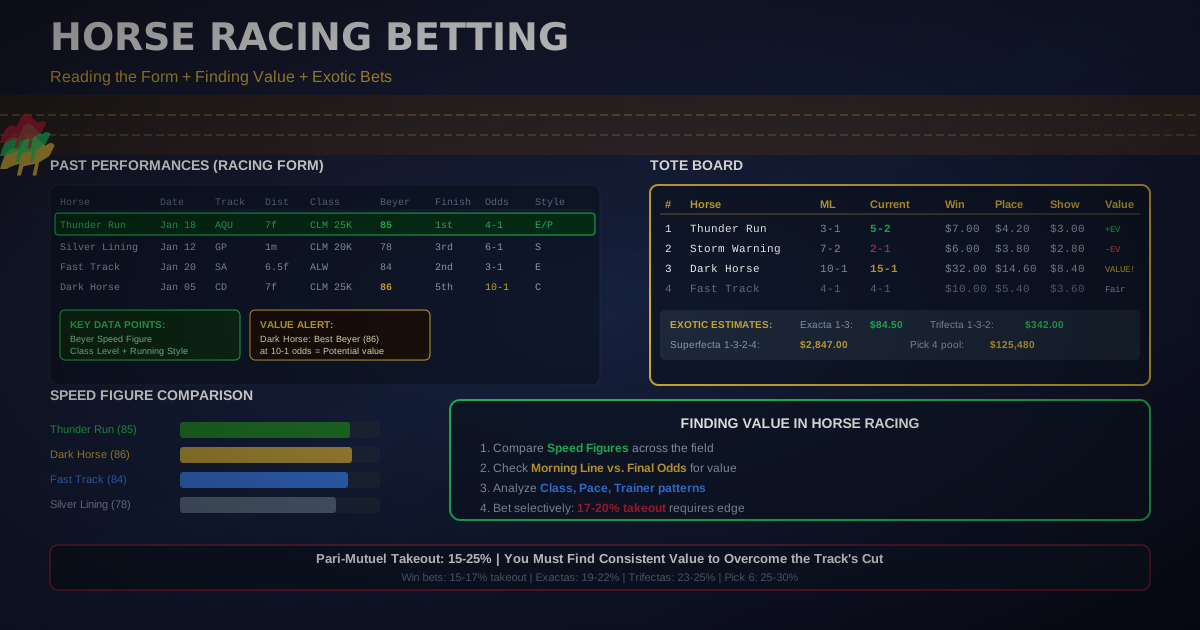
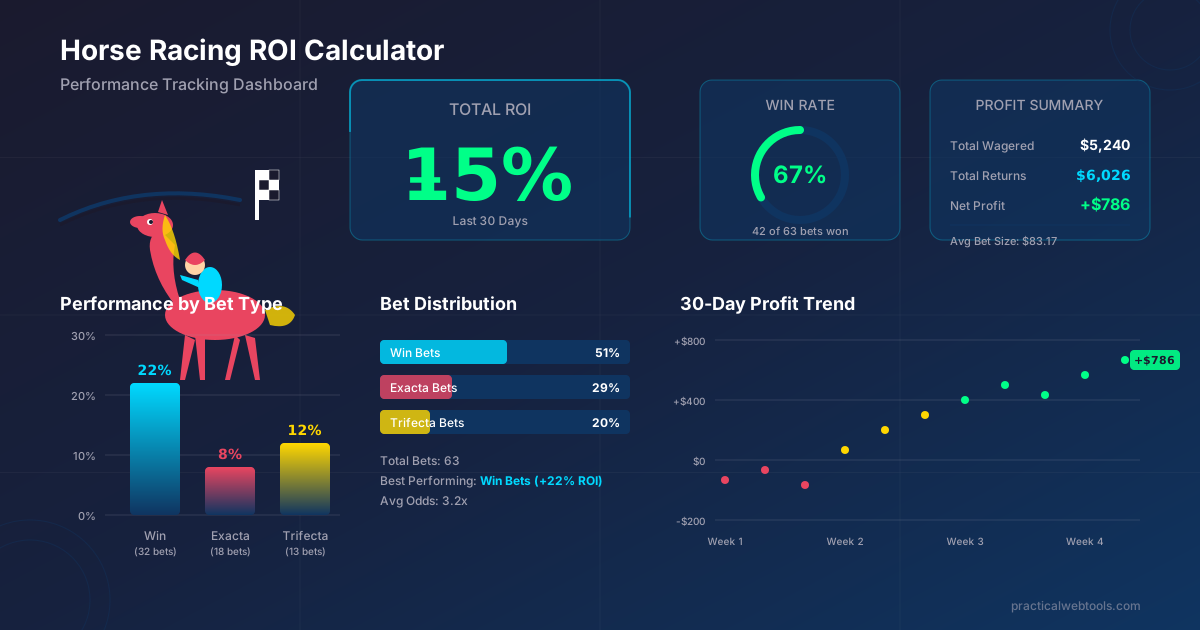
Track horse racing ROI with the Horse Racing ROI Calculator to maintain the documentation needed for accurate tax reporting.
Tax-Saving Strategies for Gamblers
1. Keep Impeccable Records
The single most impactful tax strategy is thorough record-keeping. Without records, you cannot substantiate losses, and the IRS can assess tax on your entire gross winnings with no loss offset. Use the Poker Session Tracker and back it up with bank statements and casino records.
2. Consider Itemizing in High-Win Years
If you typically take the standard deduction, a year with significant gambling wins might push your itemized deductions (with gambling losses) above the standard deduction threshold. Run the numbers both ways.
3. Track Cost Basis for Sports Bets and Tournament Entries
Your "cost basis" (the amount wagered) reduces the reportable winning. A $1,000 tournament buy-in that results in a $5,000 cash means only $4,000 in net winnings for W-2G purposes (though the full $5,000 is often reported on the W-2G, requiring you to deduct the $1,000 buy-in separately).
4. Maximize Casino Loyalty Records
Casino loyalty programs track your play meticulously. Request an annual win/loss statement from every casino where you gamble. This serves as supporting documentation for your gambling log. Understand the mathematics behind these programs with the Blackjack House Edge Calculator and other house edge tools.
5. Consider a Tax Professional
If your annual gambling activity exceeds $10,000 in either direction (wins or losses), a tax professional familiar with gambling taxation can save you significant money. The cost of a specialist CPA ($500-$1,500 per year) is often recovered many times over in legitimate tax savings.
6. Track Losses from All Sources
Gambling losses from all types of gambling count toward your deduction. Losing lottery tickets, losing sports bets, and losing casino sessions all count. Many gamblers forget to track small losses that add up over a year.
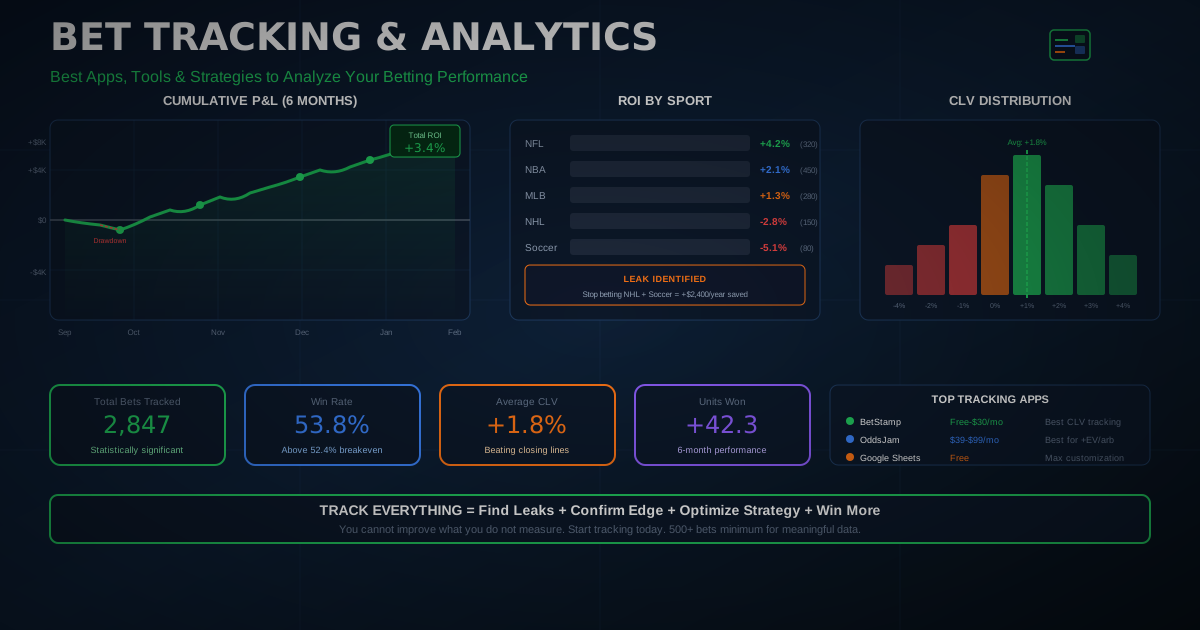
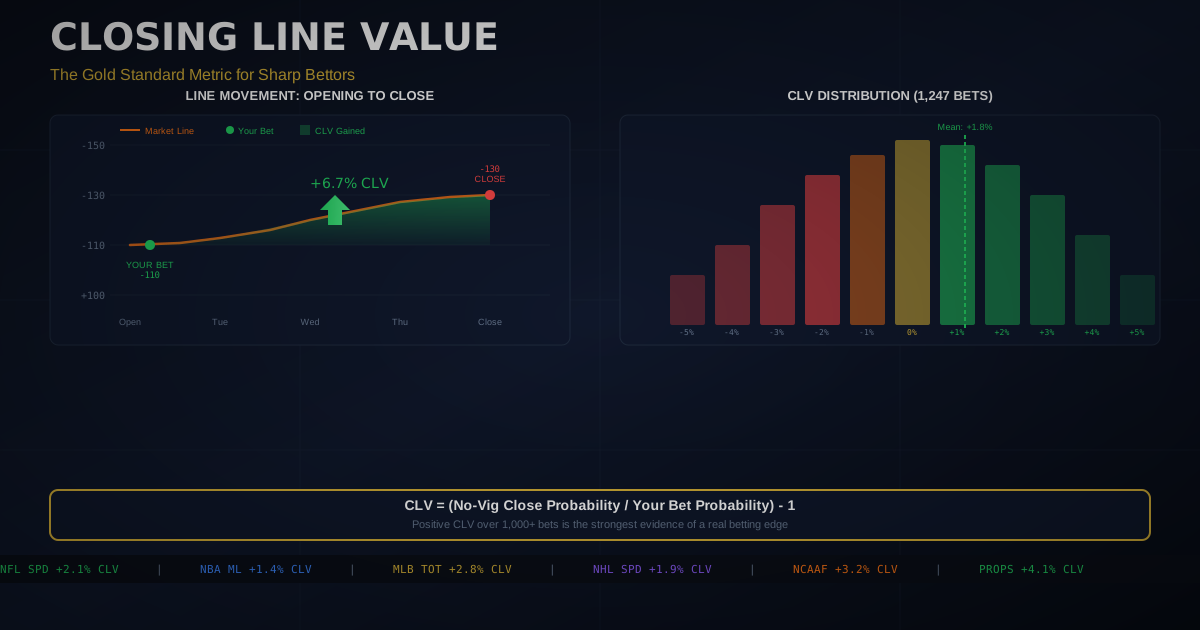
Use the CLV Tracker to monitor your closing line value in sports betting, which provides additional documentation of the analytical approach behind your betting activity.
Gambling Tax FAQ
Do I have to report gambling winnings if I did not receive a W-2G?
Yes, absolutely. The absence of a W-2G does not mean your winnings are not taxable. All gambling winnings must be reported regardless of whether any tax document was issued. The most common unreported winnings include table game sessions, small sports betting wins, and informal poker games.
Can I deduct gambling losses that exceed my winnings?
No. Gambling losses are deductible only up to the amount of your gambling winnings. If you won $3,000 and lost $8,000, you can deduct $3,000 in losses (reducing your taxable gambling income to zero), but the remaining $5,000 in losses cannot be deducted against other income.
Are poker tournament buy-ins deductible?
For recreational gamblers, tournament buy-ins are part of your gambling losses and deductible (up to winnings) on Schedule A. For professional gamblers, they are business expenses on Schedule C. In both cases, the buy-in for a winning tournament is typically netted against the prize before W-2G reporting.
How are online sports betting winnings taxed?
Exactly the same as in-person gambling. Your online sportsbook tracks all activity and reports it to the IRS. Many sportsbooks issue 1099 forms for net winnings above $600. All winnings are taxable regardless of reporting thresholds.
What if I live in a state with no income tax?
You still owe federal income tax on gambling winnings. Living in a no-income-tax state saves you the state tax component, which can be 5-13% depending on the state you would otherwise owe to. Some states also tax gambling winnings of non-residents who gamble within their borders.
Can I offset gambling winnings with stock market losses?
No. Gambling losses can only offset gambling winnings. Stock market losses are capital losses that offset capital gains (and up to $3,000 of ordinary income). These are separate categories and cannot be cross-applied.
Are free bets and casino comps taxable?
Free bets that result in winnings are taxable (the winning amount is income). Casino comps (free rooms, meals, shows) are generally considered promotional gifts and are not taxable to the recipient under most circumstances, though there is a gray area for very large comps. Consult a tax professional for significant comp packages.
How long should I keep gambling records?
Keep gambling records for at least three years from the date you file the return (the standard IRS audit window). If you report income of more than 25% less than you should have, the window extends to six years. Many tax professionals recommend keeping records for seven years to be safe.
Related Tools for Gambling Tax Management
Accurate tax reporting requires thorough tracking and calculation. These tools help manage the financial side of gambling:
- Lottery After-Tax Calculator - Calculate after-tax amounts for lottery wins
- Annuity vs. Lump Sum Calculator - Compare payout options for large prizes
- Poker Session Tracker - Track sessions for tax-ready records
- Expected Value Calculator - Understand pre-tax EV of different bets
- Lottery Pool Calculator - Calculate tax splits for lottery pool wins
- Poker ROI Calculator - Track tournament profitability for tax reporting
- Poker Hourly Rate Calculator - Document hourly earnings for professional status
- Lottery EV Calculator - Evaluate lottery ticket expected values
- Lottery Odds Calculator - Understand winning probabilities
- Bankroll Volatility Tracker - Monitor bankroll for annual tax planning
- Hold/Vig Calculator - Understand the cost of vig in tax calculations
- Horse Racing ROI Calculator - Track horse racing results for tax reporting
- CLV Tracker - Document analytical betting approach
- Poker Bankroll Requirements Calculator - Plan bankroll for tax-efficient play
- Blackjack Session Bankroll Calculator - Plan sessions for record-keeping
Conclusion
Gambling taxes are more complex than most people realize, and the consequences of getting them wrong range from unexpected tax bills to IRS penalties and interest. The most important principles are straightforward:
- Report all winnings -- not just those on W-2G forms
- Deduct losses only if you itemize -- and only up to the amount of your winnings
- Use the session method for poker and table games to simplify reporting and potentially reduce taxable income
- Keep detailed, contemporaneous records of every gambling session -- dates, locations, amounts, and results
- Consider professional gambler status if gambling is your primary activity -- the business expense deductions can be valuable
- Plan for state taxes -- some states do not allow loss deductions, increasing your effective tax rate on gambling
The tax code treats gambling winnings as ordinary income, which means every dollar you win is taxed at your marginal rate. Proper record-keeping and strategic use of deductions can significantly reduce your tax burden, but only if you do the work of tracking your activity throughout the year.
Start tracking your gambling results for tax purposes today with our Poker Session Tracker, and calculate your after-tax winnings on big scores with the Lottery After-Tax Calculator.
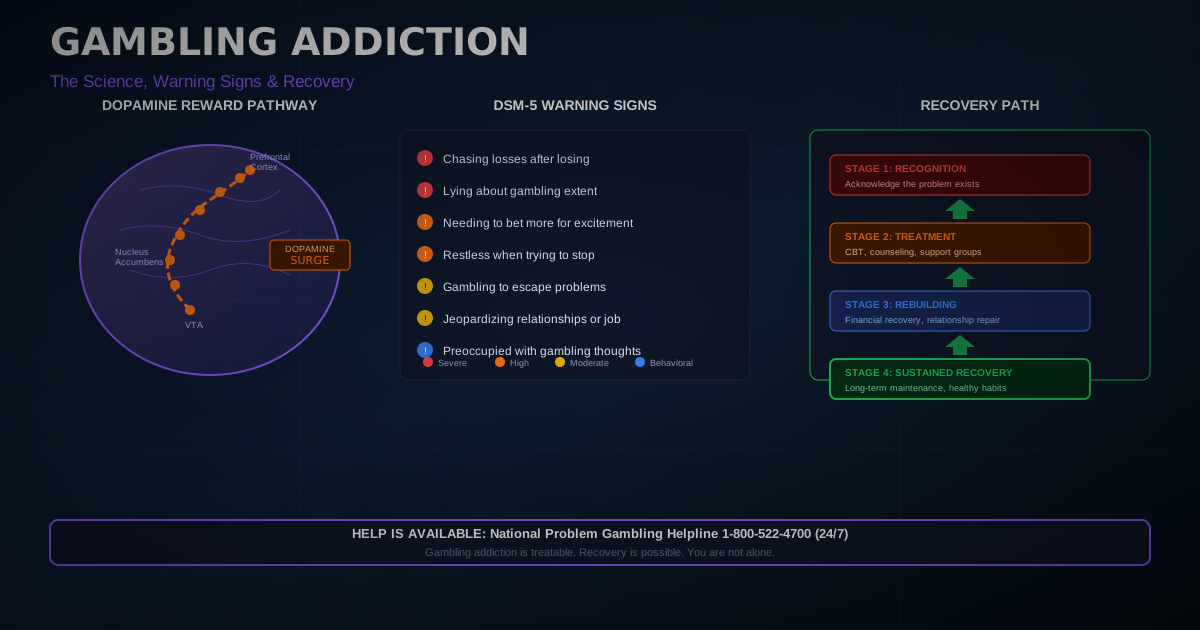
Gambling involves risk. This content is for educational and informational purposes only. Always gamble responsibly, set limits you can afford, and seek help if gambling becomes a problem. Visit the National Council on Problem Gambling or call 1-800-522-4700 for support.