Power Ratings in Sports Betting: How to Build and Use Your Own Rankings (2026)

The average NFL closing line at a sportsbook is accurate to within 2.5 points of the actual game margin. That means to find consistent value, your power ratings need to be more accurate than one of the most efficient markets in the world. It sounds impossible, but thousands of professional bettors prove it is not -- because the market is not always right, and the edges do not need to be large.
Power ratings are numerical strength assessments assigned to every team in a league, designed to generate a predicted point spread for any possible matchup. If your power rating for the Kansas City Chiefs is 28.5 and the Buffalo Bills are 25.0, your predicted spread for a neutral-site game is Chiefs -3.5. When the sportsbook posts that game at Chiefs -1.5, you have identified a potential value bet.
Building power ratings is the backbone of sports betting handicapping. According to a 2024 survey of profitable sports bettors, 73% reported using some form of self-generated power ratings or models as their primary handicapping method. The other 27% relied on CLV-chasing, steam following, or other market-based approaches.
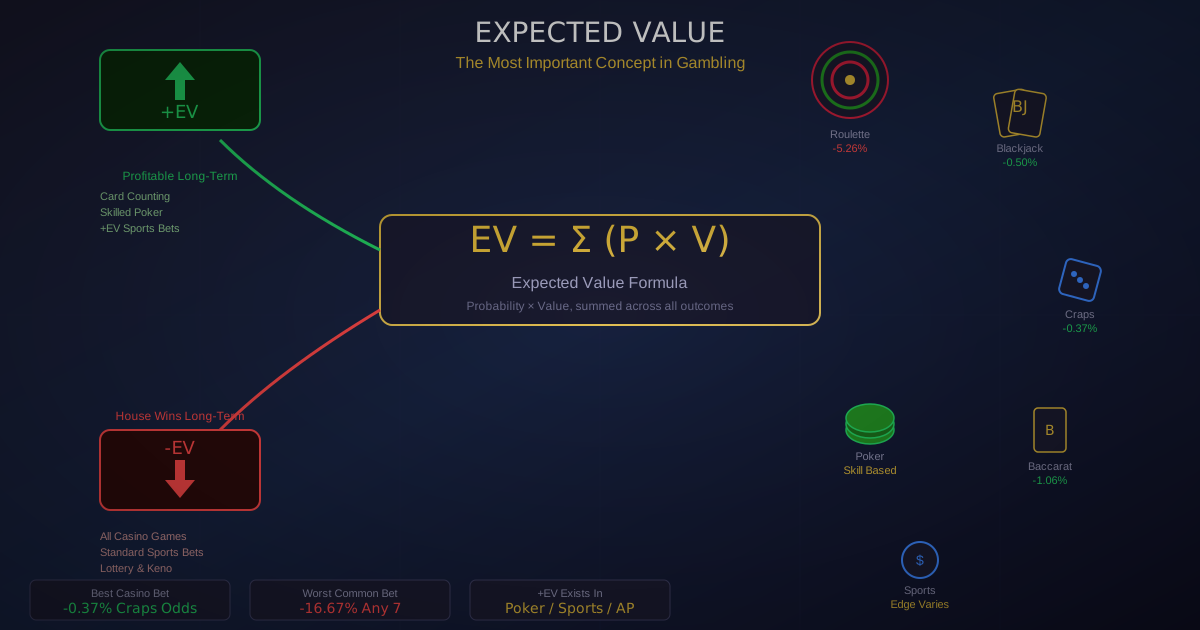
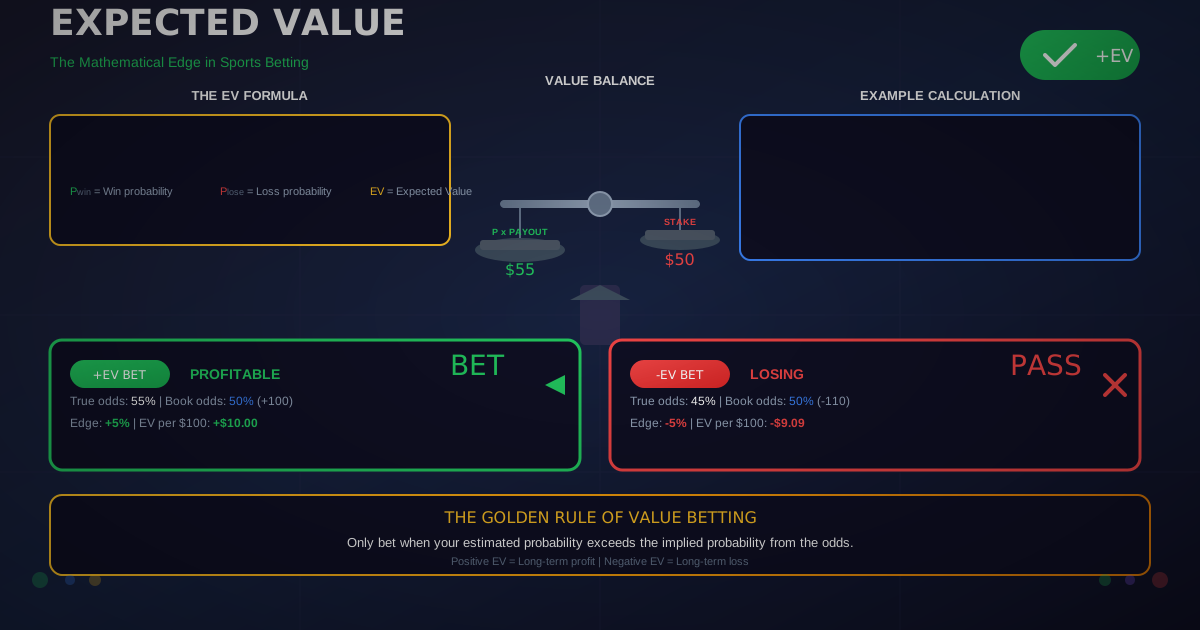
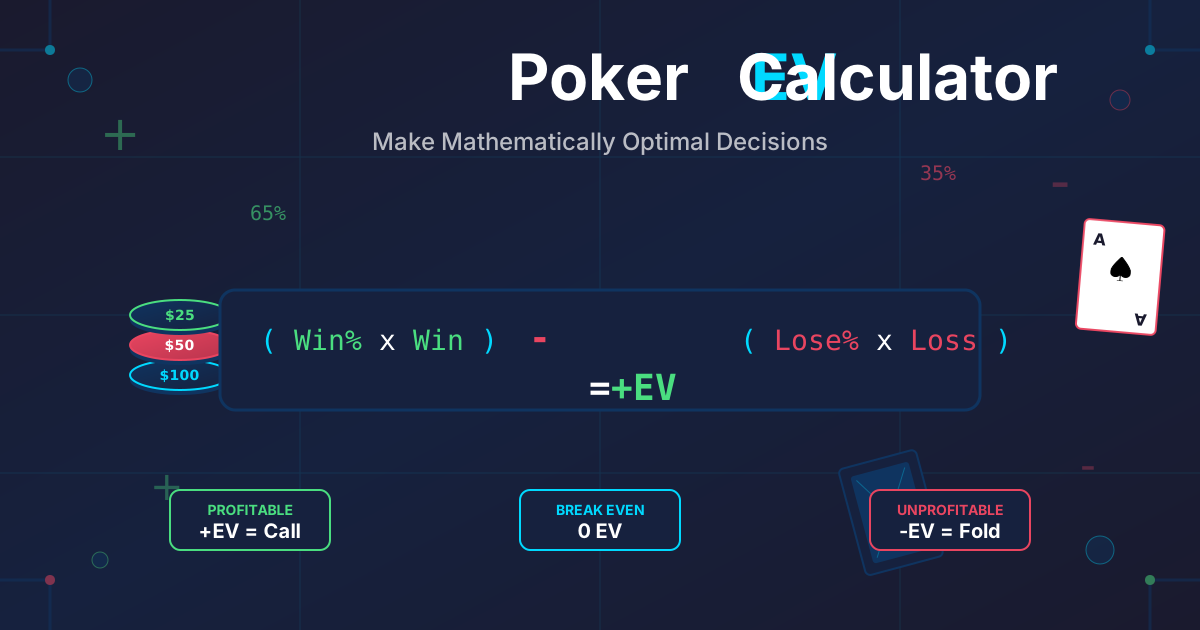
Calculate the expected value of any line discrepancy with our free Expected Value Calculator.
What Are Power Ratings in Sports Betting?
Power ratings are numerical values assigned to each team in a sport that represent the team's overall strength relative to other teams. When two teams' power ratings are compared, the difference produces a predicted point spread for their matchup.
The concept is straightforward: if Team A has a rating of 30.0 and Team B has a rating of 24.0, the predicted margin on a neutral field is 6.0 points in favor of Team A. After adjusting for home-field advantage (typically 2.5-3 points in the NFL), a home game for Team A would project to a margin of approximately 8.5-9.0 points.
Why Power Ratings Work
Power ratings work because they force you to make explicit, quantifiable assessments about each team's strength. Instead of vague feelings like "I think the Packers are pretty good this year," you are forced to assign a specific number. That number can then be:
- Compared directly to the market to identify discrepancies
- Tested historically to see if your ratings would have been profitable
- Adjusted systematically based on new information
- Applied consistently across every game, eliminating emotional bias
| Rating Approach | Subjective (Gut Feel) | Power Ratings (Systematic) |
|---|---|---|
| Consistency | Varies by mood and bias | Same framework every game |
| Testability | Cannot backtest feelings | Can backtest against historical lines |
| Adjustment | Ad hoc, emotional | Formula-driven, measurable |
| Coverage | Only games you follow closely | Every game in the league |
| Market comparison | "I think the line is off" | "My rating says the line is off by 2.3 points" |
| Improvement | Hard to identify weaknesses | Data reveals which adjustments improve accuracy |
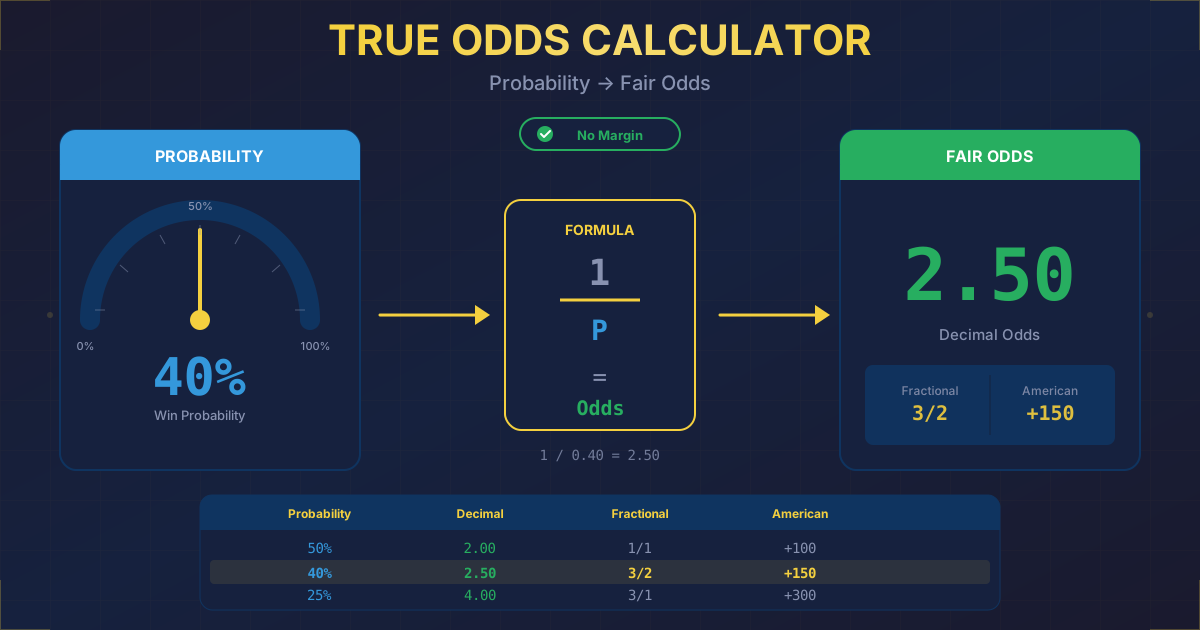
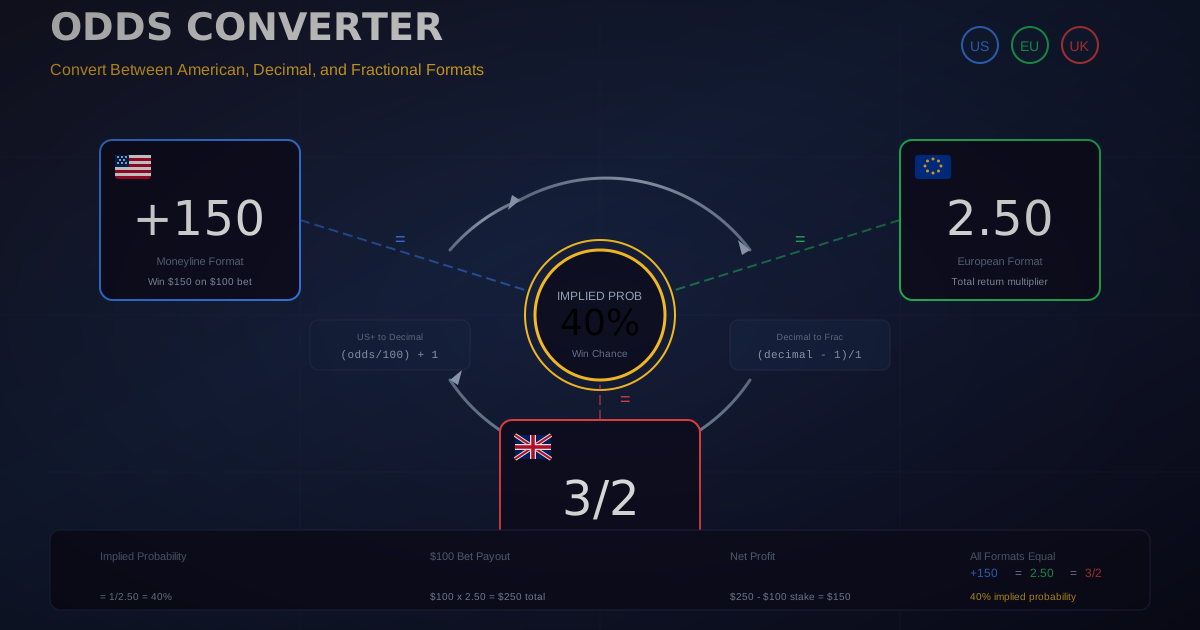
Convert your predicted probability to odds format with our Odds Converter.
How Do You Build Basic Power Ratings From Scratch?
The process of building power ratings starts simple and becomes more sophisticated over time. The fundamental approach uses margin of victory, adjusted for opponent strength, location, and recency.
Step 1: Collect Raw Margin of Victory Data
The starting point for any power rating system is game results. For each team, collect:
- The point margin of every game (positive for wins, negative for losses)
- Whether the game was home, away, or neutral site
- The opponent for each game
- The date of each game
For the 2025 NFL season, you would collect all 272 regular-season games and their results.
Step 2: Calculate Simple Average Margin
The most basic power rating is simply each team's average point margin per game:
| Team | Record | Total Point Margin | Games | Simple Rating |
|---|---|---|---|---|
| Team A | 12-5 | +142 | 17 | +8.35 |
| Team B | 11-6 | +87 | 17 | +5.12 |
| Team C | 9-8 | +14 | 17 | +0.82 |
| Team D | 8-9 | -28 | 17 | -1.65 |
| Team E | 5-12 | -104 | 17 | -6.12 |
| Team F | 3-14 | -178 | 17 | -10.47 |
This simple rating is a starting point, but it has major flaws: it does not account for strength of schedule, home-field advantage, or the diminishing value of blowout wins.
Step 3: Adjust for Home-Field Advantage
Home-field advantage (HFA) must be removed to create a neutral-site comparison. In the modern NFL (2020-2025), HFA has averaged approximately 1.5-2.5 points, down from the historical average of 3.0 points.
Adjustment formula:
- Home wins/losses: Subtract HFA from margin (e.g., won by 10 at home becomes +7.5 after removing 2.5 HFA)
- Away wins/losses: Add HFA to margin (e.g., lost by 3 on the road becomes -0.5 after adding 2.5 HFA)
| Game | Raw Margin | Location | HFA Adjustment | Adjusted Margin |
|---|---|---|---|---|
| Week 1 | +14 | Home | -2.5 | +11.5 |
| Week 2 | -7 | Away | +2.5 | -4.5 |
| Week 3 | +3 | Away | +2.5 | +5.5 |
| Week 4 | +21 | Home | -2.5 | +18.5 |
| Week 5 | -10 | Away | +2.5 | -7.5 |
Step 4: Cap Blowout Margins
Blowout victories introduce noise into your ratings because the margin in garbage time does not reflect the true quality gap between teams. Most power rating systems cap the margin of victory at a certain threshold.
| Sport | Recommended Margin Cap | Reasoning |
|---|---|---|
| NFL | 14-21 points | Beyond 2-3 touchdowns, margin is mostly garbage time |
| NBA | 15-20 points | Bench players in blowouts skew margin |
| College Football | 21-28 points | Talent gaps make larger margins meaningful |
| College Basketball | 15-20 points | Similar to NBA reasoning |
| MLB | 5-7 runs | Run differential beyond a certain point is noise |
| NHL | 3-4 goals | Goal differential caps remove empty-net/pulling effects |
For the NFL, a common approach is to cap margins at 14 points. A 42-7 blowout counts the same as a 21-7 win in your ratings.
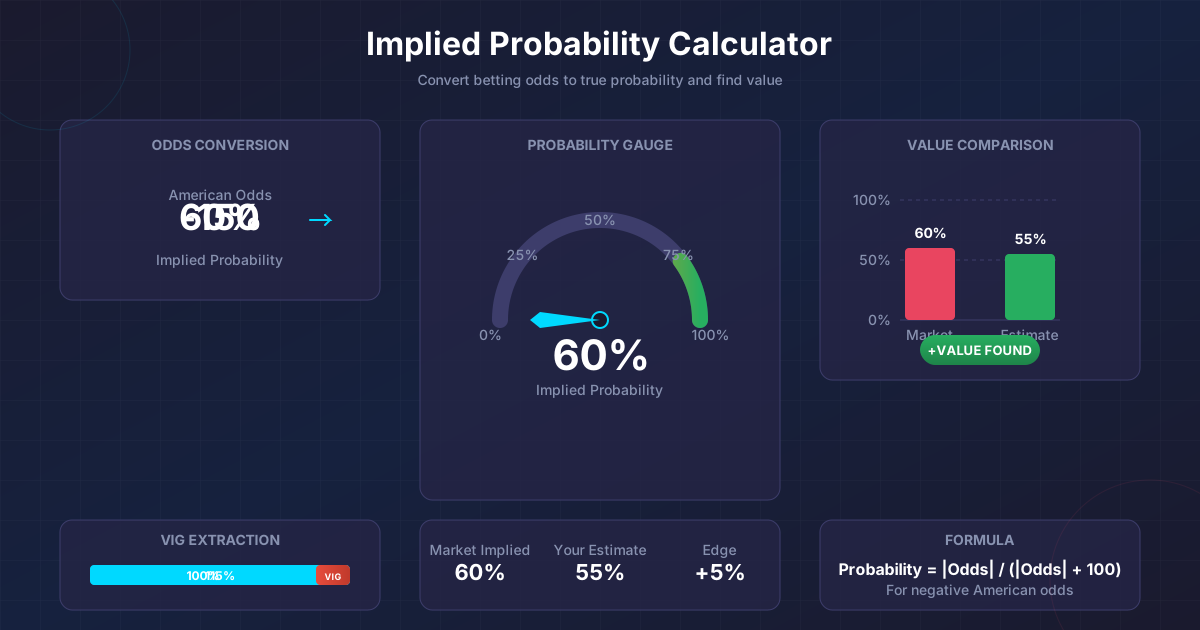
Calculate the implied probability of any spread generated by your ratings with our Implied Probability Calculator.
Step 5: Apply Opponent Adjustments (Iterative Method)
The most critical step in building accurate power ratings is adjusting for strength of schedule. A team that beats five strong opponents by 7 points each is much better than a team that beats five weak opponents by 7 points each.
The iterative method works as follows:
- Start with simple average margin ratings for all teams
- For each team, adjust each game's margin based on the opponent's current rating
- Recalculate all team ratings with the adjusted margins
- Repeat steps 2-3 until the ratings converge (typically 10-20 iterations)
Example iteration:
| Team | Simple Rating | Opponent Avg Rating | Schedule Adjusted Rating |
|---|---|---|---|
| Team A | +8.35 | +2.10 (strong schedule) | +10.45 |
| Team B | +5.12 | -1.50 (weak schedule) | +3.62 |
| Team C | +0.82 | +0.50 (average schedule) | +1.32 |
| Team D | -1.65 | +3.20 (very strong schedule) | +1.55 |
| Team E | -6.12 | -2.30 (weak schedule) | -8.42 |
Notice how Team D, which had a losing record and a negative simple rating, actually moves positive after adjusting for their extremely difficult schedule. This is the power of opponent-adjusted ratings.
Step 6: Add Recency Weighting
More recent games should carry more weight than early-season games because teams improve, decline, suffer injuries, and make adjustments throughout the season. A common approach is exponential decay weighting:
| Weeks Ago | Weight (Example) | Reasoning |
|---|---|---|
| Most recent week | 1.00 | Maximum weight |
| 2 weeks ago | 0.95 | Near-maximum |
| 4 weeks ago | 0.85 | Still highly relevant |
| 6 weeks ago | 0.72 | Moderate relevance |
| 8 weeks ago | 0.58 | Decreasing relevance |
| 10 weeks ago | 0.45 | Low weight |
| 12+ weeks ago | 0.30-0.35 | Minimal weight (preseason adjustments) |
The exact decay rate is a parameter you can tune by backtesting. A faster decay (more weight on recent games) captures team changes quickly but is more susceptible to small-sample noise. A slower decay is more stable but slower to react to genuine team improvement or decline.
How Do You Generate Point Spreads From Power Ratings?
Once you have power ratings for every team, generating a predicted point spread for any matchup is straightforward.
The Spread Formula
Predicted Spread = (Home Team Rating - Away Team Rating) + Home Field Advantage
| Component | Value | Source |
|---|---|---|
| Home Team Rating | 25.3 | Your power ratings |
| Away Team Rating | 21.8 | Your power ratings |
| Rating Difference | +3.5 | Home team favored by 3.5 on neutral |
| Home Field Advantage | +2.5 | Historical HFA for this venue/sport |
| Predicted Spread | Home -6.0 | Your line |
If the sportsbook has this game at Home -3.5, your ratings suggest the home team is undervalued by 2.5 points, a significant discrepancy that warrants investigation.
Home Field Advantage by Sport
| Sport | Average HFA (2020-2025) | Range | Notes |
|---|---|---|---|
| NFL | 1.5-2.5 points | 1.0-3.5 | Declining trend, varies by stadium |
| NBA | 2.0-3.0 points | 1.5-4.0 | Altitude matters (Denver +4.0) |
| College Football | 2.5-4.0 points | 1.5-6.0 | Varies enormously by venue |
| College Basketball | 3.0-4.5 points | 2.0-7.0 | Small gyms amplify HFA |
| MLB | 0.2-0.4 runs | 0.1-0.5 | Minimal HFA in baseball |
| NHL | 0.15-0.25 goals | 0.1-0.3 | Minimal, last change advantage |
| Soccer (top leagues) | 0.3-0.5 goals | 0.2-0.7 | Declining with VAR and neutral venues |
Adjusting HFA for Specific Factors
A flat HFA number is a starting point, but sophisticated systems adjust for:
- Venue-specific HFA: Denver's altitude, Seattle's noise, college venues with 100,000+ fans
- Travel distance: Cross-country travel in the NFL adds 0.5-1.0 points to HFA
- Time zone changes: West-to-East travel for early games has a measurable negative effect
- Rest differential: A team on a short week at home has amplified HFA; a rested road team reduces the effect
- Weather: Dome teams traveling to cold-weather outdoor venues face additional disadvantage
- Divisional familiarity: HFA is typically reduced in divisional games where teams know each other well
Calculate the expected value of your spread prediction against the market line with our Expected Value Calculator.
How Do You Compare Your Ratings to Market Lines?
The purpose of power ratings is to identify discrepancies between your assessment and the market's assessment. These discrepancies, if your ratings are accurate, represent betting value.
Finding Value: The Rating-Market Comparison
For each game, compare your predicted spread to the sportsbook's posted line:
| Game | Your Predicted Spread | Market Line | Discrepancy | Action |
|---|---|---|---|---|
| Game 1 | Home -6.5 | Home -3.5 | +3.0 (Home undervalued) | Bet Home |
| Game 2 | Home -2.0 | Home -4.5 | -2.5 (Away undervalued) | Bet Away |
| Game 3 | Home -7.0 | Home -7.0 | 0.0 (Agreement) | No bet |
| Game 4 | Home -1.5 | Home -2.0 | -0.5 (Slight away lean) | No bet (below threshold) |
| Game 5 | Home +3.0 | Home +1.0 | +2.0 (Home underdog undervalued) | Bet Home |
Setting a Betting Threshold
Not every discrepancy is worth betting. You need a threshold that balances bet volume against edge quality:
| Threshold | Typical Bet Volume (NFL Sunday) | Edge Quality | Annual ROI Estimate |
|---|---|---|---|
| 0.5 points | 8-12 games/week | Low average edge | 1-3% ROI |
| 1.0 points | 5-8 games/week | Moderate edge | 3-5% ROI |
| 1.5 points | 3-5 games/week | Good edge per bet | 5-7% ROI |
| 2.0 points | 1-3 games/week | Strong edge per bet | 7-10% ROI |
| 3.0+ points | 0-2 games/week | Very strong edge | 10%+ ROI (rare) |
Most successful power rating bettors use a threshold of 1.0-2.0 points. Below 1.0, the vig eats too much of your edge. Above 3.0, you rarely find enough bets to generate meaningful volume.
Size your bets based on the magnitude of the discrepancy with our Kelly Criterion Calculator.
What Are Power Rating Systems by Sport?
Each sport has unique characteristics that require different approaches to power ratings. The fundamental methodology (margin-based, opponent-adjusted, recency-weighted) applies everywhere, but the specific inputs and adjustments vary significantly.
NFL Power Ratings
The NFL is the most popular sport for power ratings because of the point-spread-dominated market and weekly schedule that allows time for analysis.
Key NFL Rating Inputs:
| Input | Weight (Example) | Why It Matters |
|---|---|---|
| Adjusted point margin | 35-40% | Core performance measure |
| Yards per play differential | 15-20% | Process measure, less result-dependent |
| Turnover-adjusted margin | 10-15% | Removes some luck (turnovers regress) |
| Red zone efficiency | 5-10% | Scoring efficiency in high-leverage situations |
| Third-down conversion rate | 5-10% | Drive sustainability |
| Strength of schedule | Built into iterative adjustment | Context for all results |
| Recency weighting | Applied to all inputs | Captures team trajectory |
NFL-Specific Adjustments:
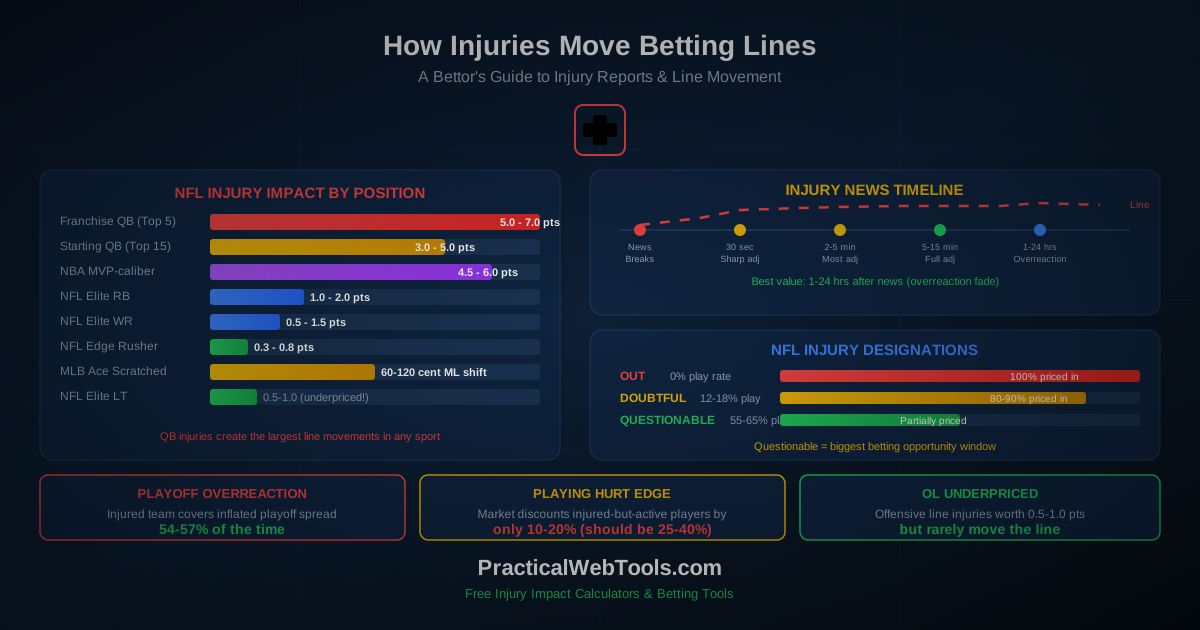
- Quarterback changes: A backup QB entering reduces a team's rating by 3-8 points depending on the starter's quality
- Bye weeks: Teams coming off a bye historically perform 1-1.5 points better than expected
- Divisional games: Margins tend to be closer; some systems reduce the HFA for divisional matchups
- Weather: Wind and precipitation reduce totals and favor running teams
- Playoff implications: Late-season games with eliminated teams may require rating adjustments
NBA Power Ratings
NBA ratings require more frequent updates due to the daily schedule and are more sensitive to player availability.
Key NBA Rating Inputs:
| Input | Weight (Example) | Why It Matters |
|---|---|---|
| Net rating (points per 100 possessions) | 40-50% | Pace-adjusted performance |
| Offensive rating | 20-25% | Scoring efficiency independent of pace |
| Defensive rating | 20-25% | Defensive efficiency independent of pace |
| Recent form (last 10 games) | High recency weight | NBA teams change rapidly |
| Rest/schedule situation | Significant adjustment | Back-to-backs, 4 games in 5 nights |
NBA-Specific Adjustments:
- Star player absence: Missing a top-10 player can swing a rating by 5-10 points
- Back-to-back games: The second game of a back-to-back typically costs 2-4 points
- Travel fatigue: 4 games in 5 nights or significant travel degrades performance
- Altitude: Denver's home-court advantage is amplified by altitude (worth an extra 1-2 points)
College Football Power Ratings
College football offers the most opportunity for power ratings because the market is less efficient and there are more games to analyze.
College Football Rating Challenges:
| Challenge | Impact | Solution |
|---|---|---|
| 130+ FBS teams | Cannot watch every team | Rely more on statistical inputs |
| Huge talent gaps | Margin caps even more important | Cap at 21-28 points |
| Small sample size | Only 12-15 games per team | Weight preseason priors more heavily |
| Coaching changes | Disrupt year-to-year continuity | Reset ratings for coaching changes |
| Transfer portal | Roster turnover unprecedented | Incorporate recruiting/transfer data |
| FCS opponents | Meaningless data from cupcake games | Exclude or heavily discount FCS results |
Calculate the expected value of any college football spread prediction with our Expected Value Calculator.
Soccer Power Ratings
Soccer ratings are unique because the sport's low-scoring nature requires different statistical approaches.
Key Soccer Rating Inputs:
| Input | Weight | Why It Matters |
|---|---|---|
| Expected goals (xG) | 40-50% | Shot quality measure, less noisy than actual goals |
| Actual goal margin | 20-25% | Still matters, but high variance |
| Shot differential | 10-15% | Volume of chances created/conceded |
| Possession-adjusted metrics | 5-10% | Context for xG and shot data |
| Form (last 5-6 matches) | Applied as recency weight | Captures squad changes and form |
Soccer's low-scoring nature means actual results have extremely high variance. A team that deserved to win 2-0 based on expected goals can easily lose 0-1 on a single counter-attack. This is why xG-based ratings are strongly preferred over simple result-based ratings for soccer.
How Do Simple Models Compare to Complex Models?
One of the most common questions from aspiring handicappers is whether they need a sophisticated machine learning model or whether a simple rating system can compete. The answer may surprise you.
Model Complexity Comparison
| Model Type | Complexity | Data Required | Time to Build | Accuracy vs Market |
|---|---|---|---|---|
| Simple margin-based | Low | Game scores only | 1-2 days | -2 to -3 points vs closing |
| Margin + SOS adjusted | Medium-low | Game scores + schedule | 3-5 days | -1.5 to -2.5 points vs closing |
| Multi-factor weighted | Medium | Scores + stats + schedule | 1-2 weeks | -1.0 to -2.0 points vs closing |
| Advanced statistical model | High | Play-by-play data, injuries, weather | 1-3 months | -0.5 to -1.5 points vs closing |
| Machine learning ensemble | Very high | Massive datasets, computing resources | 3-6 months | -0.3 to -1.0 points vs closing |
| Sharp sportsbook line | N/A (market) | All available information | N/A | Benchmark (0.0 by definition) |
The key insight: each step up in complexity yields diminishing returns. Going from a simple margin-based system to a multi-factor weighted system might improve your accuracy by 1-1.5 points. Going from multi-factor to machine learning might only improve by 0.5-1.0 points, while requiring 10 times the effort.
The Case for Starting Simple
A simple, well-executed power rating system has several advantages over a complex model:
- Transparency: You understand every component and can identify what needs improvement
- Speed: You can update ratings in minutes, not hours
- Robustness: Simple models are less likely to overfit historical data
- Complementary: A simple model combined with situational handicapping (injuries, weather, motivation) can match or beat a pure statistical model
- Foundation: Understanding simple ratings teaches you the fundamentals before adding complexity
Compare your model's predicted probability to the sportsbook's implied probability with our Implied Probability Calculator.
How Do You Backtest Your Power Ratings?
Backtesting is the process of applying your power rating methodology to historical data to see how it would have performed. This is essential for validating your system before risking real money.
Backtesting Methodology
| Step | Action | Purpose |
|---|---|---|
| 1 | Define your rating formula | Document every input, weight, and adjustment |
| 2 | Collect historical data (3-5 seasons minimum) | Sufficient sample size for meaningful results |
| 3 | Build ratings using only data available at the time | Avoid look-ahead bias |
| 4 | Generate predicted spreads for each game | Apply your rating formula |
| 5 | Compare predictions to actual closing lines | Measure accuracy |
| 6 | Simulate betting with a threshold | Calculate hypothetical ROI |
| 7 | Test robustness across seasons | Ensure consistency, not just one hot streak |
Interpreting Backtest Results
| Metric | Good Result | Concerning Result |
|---|---|---|
| Mean Absolute Error (MAE) | Below 10.0 points (NFL) | Above 12.0 points |
| Correlation with closing line | Above 0.80 | Below 0.70 |
| ATS record at 1.5-point threshold | 54%+ over 500+ bets | Below 52% |
| Year-over-year consistency | Profitable in 4+ of 5 seasons | Profitable in only 2-3 of 5 seasons |
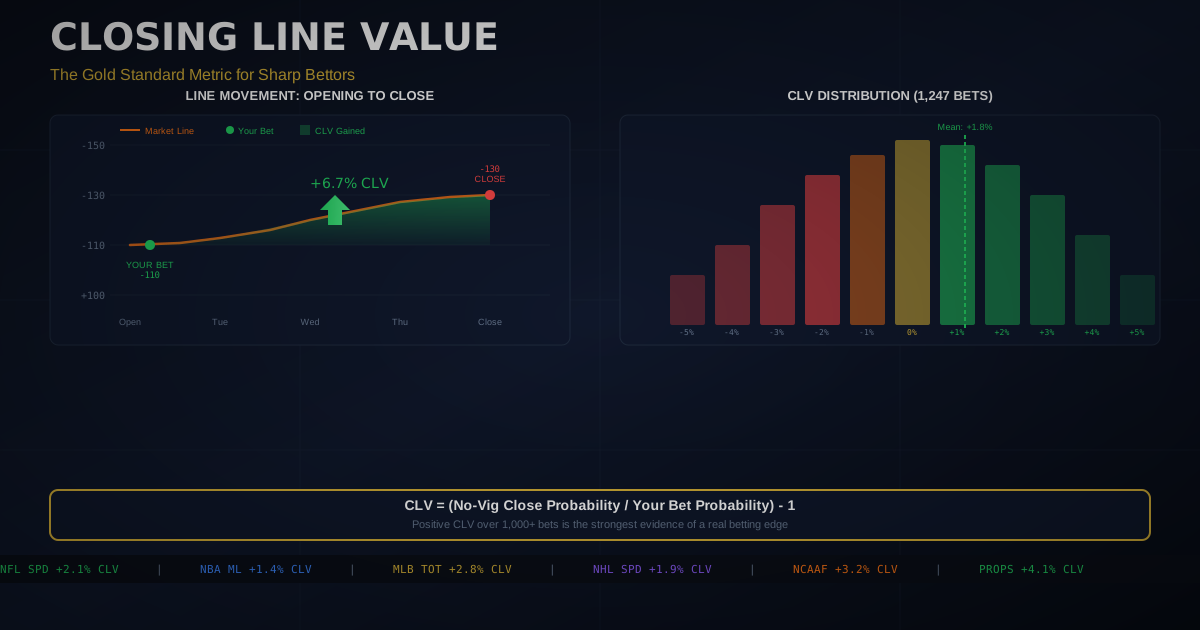
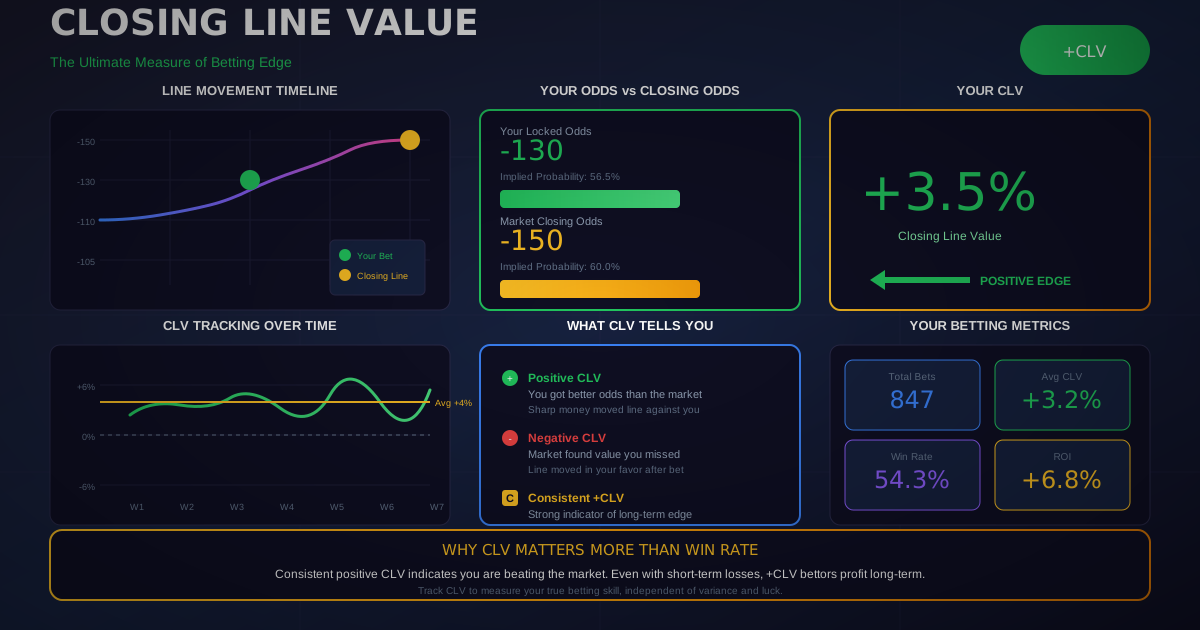
| Average CLV at entry | Positive (+0.5 or better) | Negative |
| ROI at optimal threshold | 3%+ over 500+ bets | Below 2% |
Common Backtesting Mistakes
- Look-ahead bias: Using information that was not available at the time of the bet (e.g., using final season stats to rate teams mid-season)
- Overfitting: Adding complexity until the model fits historical data perfectly but fails on new data
- Survivorship bias: Only testing against games where you would have found a bet, ignoring the full universe of games
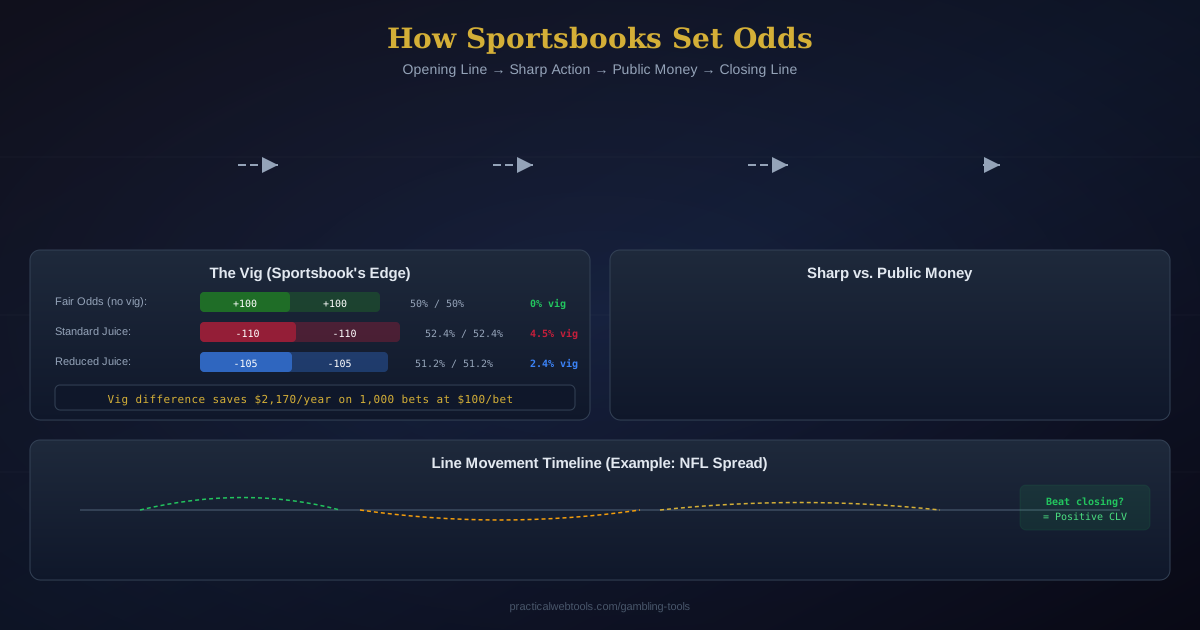
- Ignoring transaction costs: Not accounting for the vig, which turns marginal edges into losses
- Short sample: Testing on one season and declaring success. Need 3-5 seasons minimum
- Parameter mining: Testing hundreds of parameter combinations until one works, then assuming it will continue working
Calculate whether your backtested edge is large enough to overcome the vig with our Hold/Vig Calculator.
How Does Regression to the Mean Affect Power Ratings?
Regression to the mean is one of the most important concepts in sports analytics and directly impacts how you should build and interpret power ratings. It refers to the tendency of extreme performances to move back toward the average over time.
What Regresses and What Persists
| Metric | Regression Speed | Implication for Ratings |
|---|---|---|
| Turnover margin | Very fast (mostly luck) | Discount turnover-driven margins |
| Fumble recovery rate | Very fast (nearly random) | Ignore fumble recovery luck |
| Field goal percentage | Moderate | Adjust but do not ignore |
| Red zone TD rate | Moderate-fast | Partially discount |
| Third-down conversion rate | Moderate | Include but expect regression |
| Yards per play | Slow (skill-driven) | Reliable rating input |
| Completion percentage | Moderate | Partially skill, partially luck |
| Sack rate (offense) | Moderate-slow | Mostly QB-dependent |
| Points per game | Moderate | Composite of skill and luck |
| Defensive efficiency (yards/play) | Slow | Very reliable rating input |
How to Apply Regression in Your Ratings
The practical application is to weight metrics based on how much they regress:
-
High-regression metrics (turnovers, fumble recoveries, field goal %): Give these low or zero weight in your ratings. A team that leads the league in turnover margin is probably lucky, not skilled.
-
Moderate-regression metrics (third-down rate, red zone efficiency): Include these but temper their influence. If a team has a 60% red zone TD rate (league average is ~56%), adjust your expectation closer to 57-58%, not the full 60%.
-
Low-regression metrics (yards per play, defensive efficiency): These are your most reliable inputs and should carry the most weight.
Example: Turnover Regression
| Team | Season Turnover Margin | Rating Adjustment Without Regression | Rating Adjustment With Regression |
|---|---|---|---|
| Team A | +15 (best in NFL) | +4.0 to +5.0 points | +1.0 to +1.5 points |
| Team B | +5 (above average) | +1.5 to +2.0 points | +0.5 to +0.7 points |
| Team C | -5 (below average) | -1.5 to -2.0 points | -0.5 to -0.7 points |
| Team D | -15 (worst in NFL) | -4.0 to -5.0 points | -1.0 to -1.5 points |
Without regression, your ratings overvalue teams that were lucky with turnovers and undervalue teams that were unlucky. With proper regression, your ratings reflect the likely future performance rather than the past luck.
How Do You Handle Preseason Ratings?
Preseason ratings are necessary because you have no current-season data when the year begins. However, they are also the most uncertain component of any power rating system. Getting the preseason right gives you an edge in the first 4-6 weeks when many systems struggle.
Preseason Rating Sources
| Source | Weight (Example) | Reliability |
|---|---|---|
| Previous season's final ratings | 40-50% | Good starting point, but rosters change |
| Offseason roster changes | 15-20% | Quantifying player additions/losses |
| Coaching changes | 5-10% | New coaches create uncertainty |
| Draft capital added | 5-10% | Rookies rarely impact immediately (except QB) |
| Preseason market lines (win totals) | 20-25% | Market consensus is informative |
| Returning production % | 10-15% | Especially important in college |
The Prior-to-Data Transition
The trickiest part of maintaining power ratings is the transition from preseason priors to current-season data. If you trust your preseason ratings too much, you miss teams that have genuinely improved or declined. If you shift too quickly, one or two games can swing your ratings wildly.
Recommended weighting schedule for NFL:
| Week | Preseason Prior Weight | Current Season Weight | Rationale |
|---|---|---|---|
| Week 1 | 85-90% | 10-15% | One game is nearly meaningless |
| Week 3 | 65-75% | 25-35% | Patterns begin to emerge |
| Week 5 | 45-55% | 45-55% | Equal weight, enough data |
| Week 8 | 25-35% | 65-75% | Season data dominant |
| Week 12+ | 10-15% | 85-90% | Preseason almost fully phased out |
Handling the Uncertainty of Early Weeks
In weeks 1-4, your ratings are heavily influenced by your preseason assessment. This creates both risk and opportunity:
- Risk: If your preseason rating for a team is significantly wrong, you will make bad bets for several weeks before the data corrects your error
- Opportunity: The betting market also struggles in early weeks. If your preseason ratings are better than the market's, the first 4-6 weeks offer the most exploitable inefficiency of the entire season
Calculate how much edge you need to overcome early-season uncertainty with our Expected Value Calculator.
Example Walk-Through: Building NFL Power Ratings From Scratch
Let us build a simplified NFL power rating system step by step, using a hypothetical set of season data. This walk-through demonstrates the complete process.
Starting Data (Example -- Simplified 6-Team Division After 6 Games)
| Team | Record | PF | PA | Margin | Home Games | HFA Adj Margin |
|---|---|---|---|---|---|---|
| Eagles | 5-1 | 168 | 102 | +66 | 3H, 3A | +11.0 → +8.5 (adj) |
| Cowboys | 4-2 | 144 | 120 | +24 | 3H, 3A | +4.0 → +1.5 (adj) |
| Commanders | 3-3 | 126 | 132 | -6 | 4H, 2A | -1.0 → -3.5 (adj) |
| Giants | 2-4 | 108 | 138 | -30 | 2H, 4A | -5.0 → -2.5 (adj) |
HFA adjustment uses 2.5 points per home game impact
Step 1: Calculate Simple Ratings (per game)
| Team | Adjusted Margin | Games | Simple Rating |
|---|---|---|---|
| Eagles | +51.0 | 6 | +8.50 |
| Cowboys | +9.0 | 6 | +1.50 |
| Commanders | -21.0 | 6 | -3.50 |
| Giants | -15.0 | 6 | -2.50 |
Step 2: Apply Margin Cap (14 points per game)
After capping each individual game margin at 14:
| Team | Uncapped Rating | Capped Rating | Impact |
|---|---|---|---|
| Eagles | +8.50 | +7.20 | -1.30 (had a blowout win capped) |
| Cowboys | +1.50 | +1.50 | 0.00 (no games exceeded cap) |
| Commanders | -3.50 | -3.17 | +0.33 (blowout loss capped) |
| Giants | -2.50 | -2.33 | +0.17 (blowout loss capped) |
Step 3: Opponent Adjustment (First Iteration)
For each team, adjust their margin based on opponent strength:
| Team | Capped Rating | Avg Opponent Rating | SOS Adjustment | Adjusted Rating |
|---|---|---|---|---|
| Eagles | +7.20 | -1.45 (played weaker opponents) | -0.73 | +6.47 |
| Cowboys | +1.50 | +0.85 (played stronger opponents) | +0.43 | +1.93 |
| Commanders | -3.17 | +2.15 (played stronger opponents) | +1.08 | -2.09 |
| Giants | -2.33 | +1.65 (played stronger opponents) | +0.83 | -1.50 |
After several iterations, these ratings converge to stable values.
Step 4: Apply Recency Weighting
| Team | Full-Season Rating | Last 3 Games Rating | Weighted Rating (60/40) | Trend |
|---|---|---|---|---|
| Eagles | +6.47 | +9.20 | +7.56 | Improving |
| Cowboys | +1.93 | -1.40 | +0.60 | Declining |
| Commanders | -2.09 | +1.30 | -0.73 | Improving |
| Giants | -1.50 | -4.80 | -2.82 | Declining |
Step 5: Generate Predicted Spreads
For next week's matchup: Eagles at Cowboys
Predicted spread = (Cowboys Rating - Eagles Rating) + HFA for Cowboys = (+0.60) - (+7.56) + 2.5 = -4.46
Your predicted spread: Cowboys +4.5 (Eagles favored by 4.5 points)
If the market has Eagles -7, you see the Cowboys as undervalued by 2.5 points -- a potential bet on the Cowboys +7.
Calculate the Kelly-optimal bet size for this 2.5-point edge with our Kelly Criterion Calculator.
What Are Weekly Adjustment Formulas?
After each week of games, you need a systematic way to update your power ratings. The key is to balance new information (what just happened) with existing beliefs (your prior rating).
The Bayesian Update Approach
New Rating = (Prior Rating x Prior Weight) + (Performance-Based Rating x Data Weight)
For a mid-season update (e.g., after Week 8 in the NFL):
| Component | Example | Weight |
|---|---|---|
| Prior rating entering the week | +5.50 | 85% |
| This week's adjusted performance | +12.00 (big win vs good team) | 15% |
| Updated rating | +6.48 |
The 15% weight on a single game means that even a dominant performance only moves your rating by about 1 point. This prevents overreaction to individual results while still incorporating new information.
Automatic Adjustment Triggers
Certain events should trigger additional adjustments beyond the standard weekly update:
| Event | Adjustment | Duration |
|---|---|---|
| Starting QB injury | -3 to -8 points (varies by QB quality) | Until return |
| Star player out 2+ weeks | -1 to -3 points | Until return |
| Coaching firing mid-season | -1 to +1 points (uncertainty) | 2-3 weeks |
| Bye week coming | +1.0 to +1.5 for the post-bye game | One week |
| Short week (Thursday game) | -0.5 to -1.0 for road team | One week |
| Weather (wind 20+ mph, snow) | Reduce total by 3-5 points | Game-specific |
| Playoff elimination | -1 to -3 points (motivation) | Rest of season |
| Playoff clinch | -0.5 to -1.5 (may rest starters) | Final 1-2 weeks |
Evaluate the vig impact on any predicted spread with our Hold/Vig Calculator.
Frequently Asked Questions About Power Ratings
How long does it take to build accurate power ratings?
A basic power rating system can be built in a weekend using spreadsheet software and publicly available game results. The initial version will not be market-beating, but it provides a framework you can improve over multiple seasons. Most successful power rating bettors report that it took 2-3 full seasons of building, testing, and refining before their ratings became consistently profitable.
Should I buy someone else's power ratings instead of building my own?
Buying power ratings from a handicapper can be a starting point, but it has limitations. You do not understand the methodology, you cannot adjust for factors the seller may not account for, and the seller's edge may already be priced into the market if widely distributed. Building your own ratings forces you to think critically about team quality and develops handicapping skills that compound over time.
What is the best software for building power ratings?
Excel or Google Sheets is sufficient for simple to moderately complex systems. For advanced systems requiring iterative calculations, backtesting, and large datasets, Python (with pandas and numpy libraries) or R are the most popular choices among professional bettors. Some handicappers use specialized sports analytics platforms like Massey Ratings or Sagarin as references.
Do power ratings work for player props and game props?
Standard power ratings are designed for game-level predictions (point spreads and totals). However, the principles can be adapted to create player-level power ratings for prop betting. For example, you could rate quarterbacks on passing yards per game, adjusted for opponent defensive strength, to predict passing prop lines.
How do I account for injuries in my power ratings?
The best approach is to maintain separate ratings adjustments for key player absences. For the NFL, this typically means having an estimated "impact value" for each starting quarterback and other key players (top pass rusher, top cornerback, top offensive lineman). When a player is ruled out, you apply their estimated impact to the team's base rating.
Can power ratings predict totals as well as sides?
Yes, but it requires a separate set of ratings. You need offensive ratings (points scored, adjusted for opponent defensive strength) and defensive ratings (points allowed, adjusted for opponent offensive strength). The predicted total is the sum of Team A's offensive rating against Team B's defense and Team B's offensive rating against Team A's defense, adjusted for pace.
How many games do I need before my current-season ratings are reliable?
In the NFL, most analysts consider ratings to become more reliable than preseason priors around weeks 5-6. In the NBA, after 15-20 games. In college football, the small sample size (12-15 games per season) means preseason priors remain important throughout the season, especially for teams with fewer national TV appearances.
What is the best margin cap for NFL power ratings?
Research suggests that capping margins between 14 and 21 points produces the most predictive ratings for the NFL. A 14-point cap is more aggressive and treats all multi-score wins as equivalent. A 21-point cap preserves more information about dominant performances. Backtesting your specific system will reveal which cap works best for your methodology.
Related Tools for Power Rating Bettors
Core Analysis Tools
- Expected Value Calculator: Calculate the EV when your rating disagrees with the market
- Implied Probability Calculator: Convert market lines to probabilities for comparison
- Odds Converter: Convert between American, decimal, and fractional odds
- Hold/Vig Calculator: Understand the vig you need to overcome
Bet Sizing Tools
- Kelly Criterion Calculator: Optimal bet sizing based on your edge
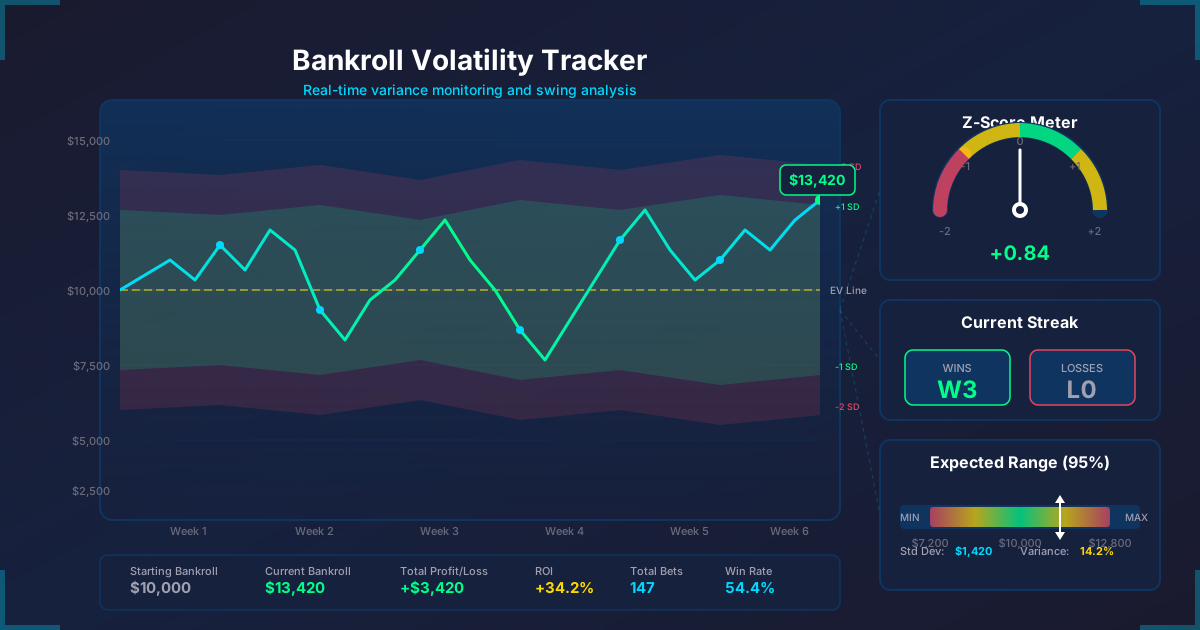
- Bankroll Volatility Tracker: Model variance from your betting volume
- CLV Tracker: Measure whether your ratings beat the closing line
Specialized Tools
- Parlay Calculator: Combine multiple power rating picks
- Teaser Calculator: Evaluate teaser value from your ratings
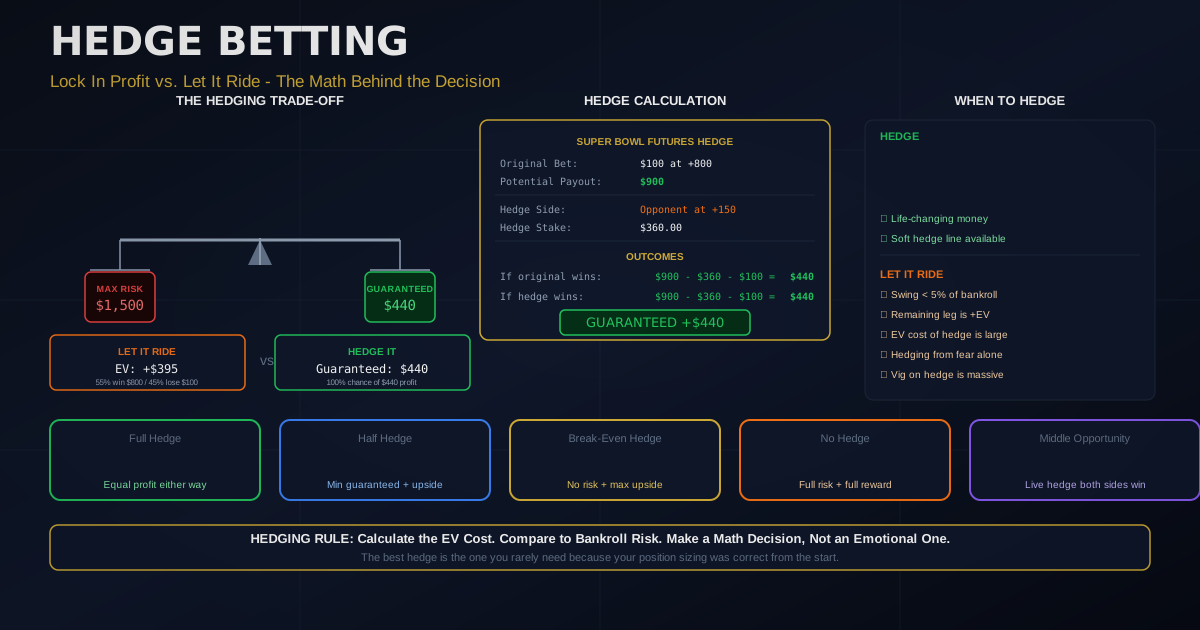
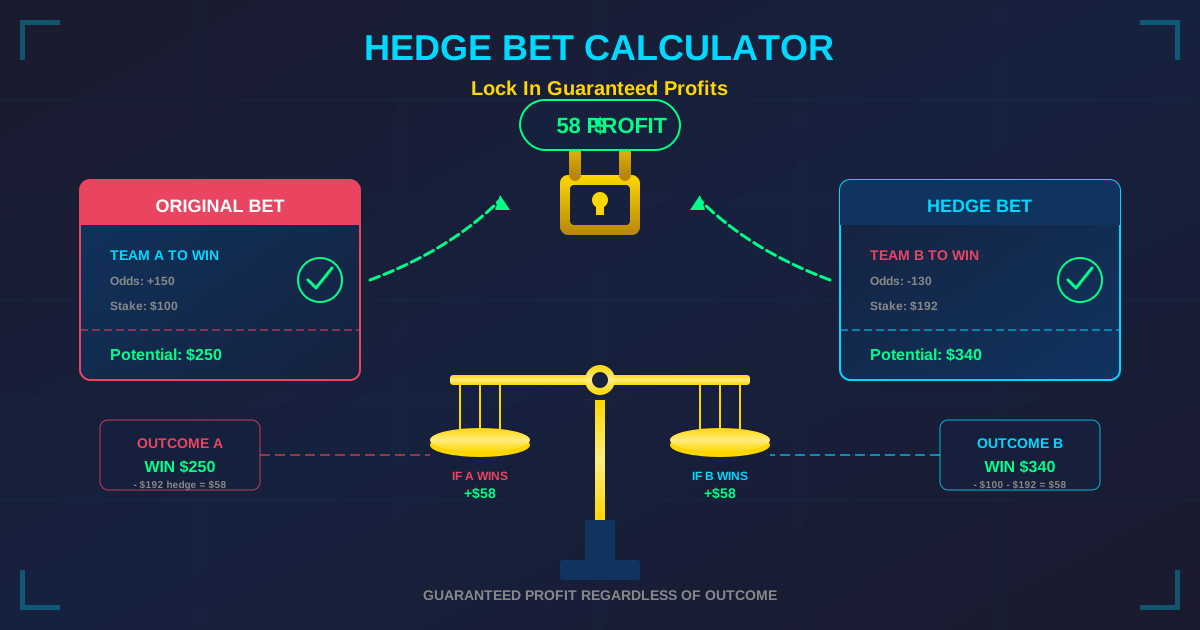
- Hedge Calculator: Lock in profit when your rating hits
- Arbitrage Calculator: Find opportunities when your rating reveals mispricing
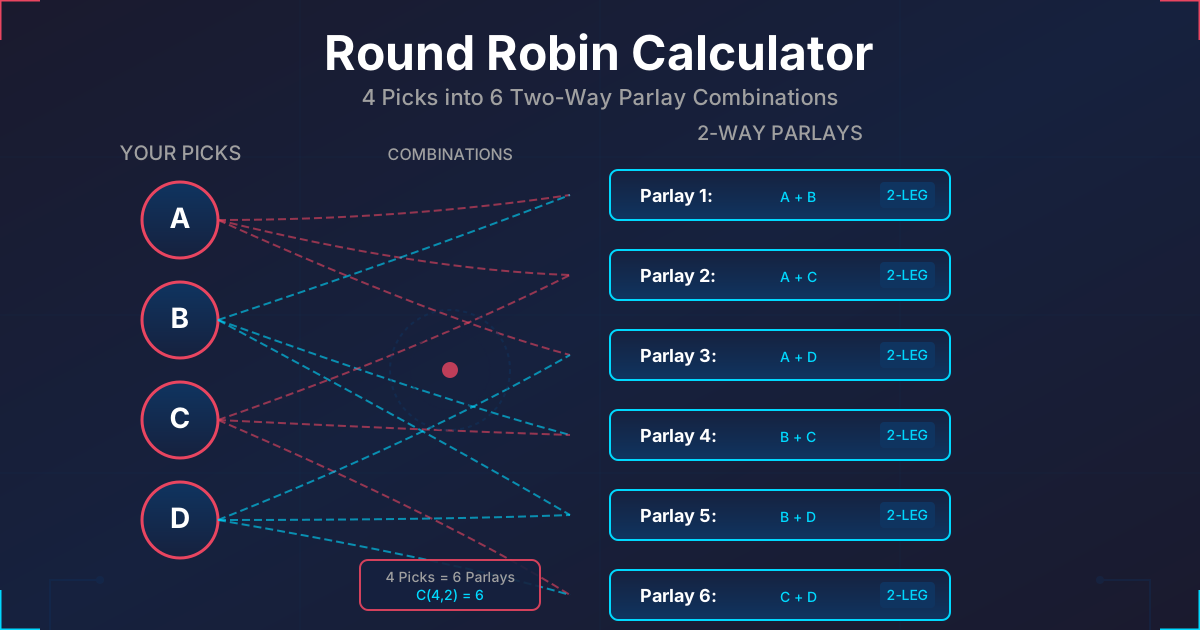
- Round Robin Calculator: Build round robins from your best-rated games
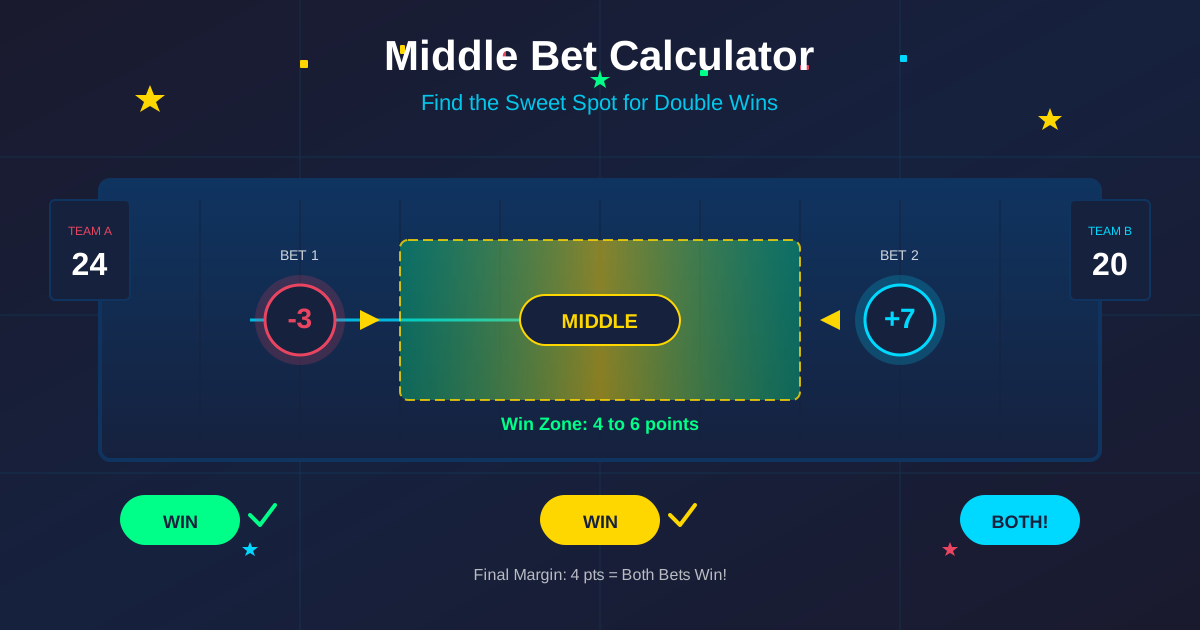
- Middle Bet Calculator: Identify middle opportunities from rating-line gaps
Building Your Edge With Power Ratings
Power ratings are not a magic bullet, but they are the closest thing sports betting has to a structured, testable, improvable system. Every professional bettor started somewhere -- usually with a simple spreadsheet and a willingness to learn from their mistakes.
The market is tough to beat. Sportsbooks have teams of quants, massive data sets, and years of experience. But they also have to set lines on hundreds of games per week, and they cannot be perfect on all of them. Your power ratings give you a framework to identify the games where the market is most likely wrong.
Start simple. Build a basic margin-based system. Track your results against closing lines. Identify what works and what does not. Add complexity only when you have a specific reason to believe it will improve your accuracy. And above all, be patient -- the edge in sports betting is small, and it takes hundreds of bets to manifest.
Begin your power rating journey with our free Expected Value Calculator. Compare your lines to the market with our Implied Probability Calculator. And optimize your bet sizing with our Kelly Criterion Calculator.
Your edge is in the numbers. Build them.
Gambling involves risk and should be approached as entertainment, not as a source of income. Always bet within your means, set strict bankroll limits, and never chase losses. If you or someone you know has a gambling problem, contact the National Council on Problem Gambling at 1-800-522-4700 or visit ncpgambling.org. Must be 21+ to gamble in most US jurisdictions. Please play responsibly.