Gambling Scams and Fraud: How to Protect Yourself When Betting Online (2026)

Online gambling fraud costs bettors an estimated $2.6 billion annually worldwide, and the number of scam gambling sites has tripled since 2020. From fake casino platforms that steal deposits to tipster services selling fabricated records, the online betting ecosystem is riddled with fraud. Knowing how to identify these scams is not optional -- it is essential for every bettor who wagers online.
This guide covers every major gambling scam category in 2026, teaches you how to verify site legitimacy, and gives you a concrete checklist to protect your money and personal data.
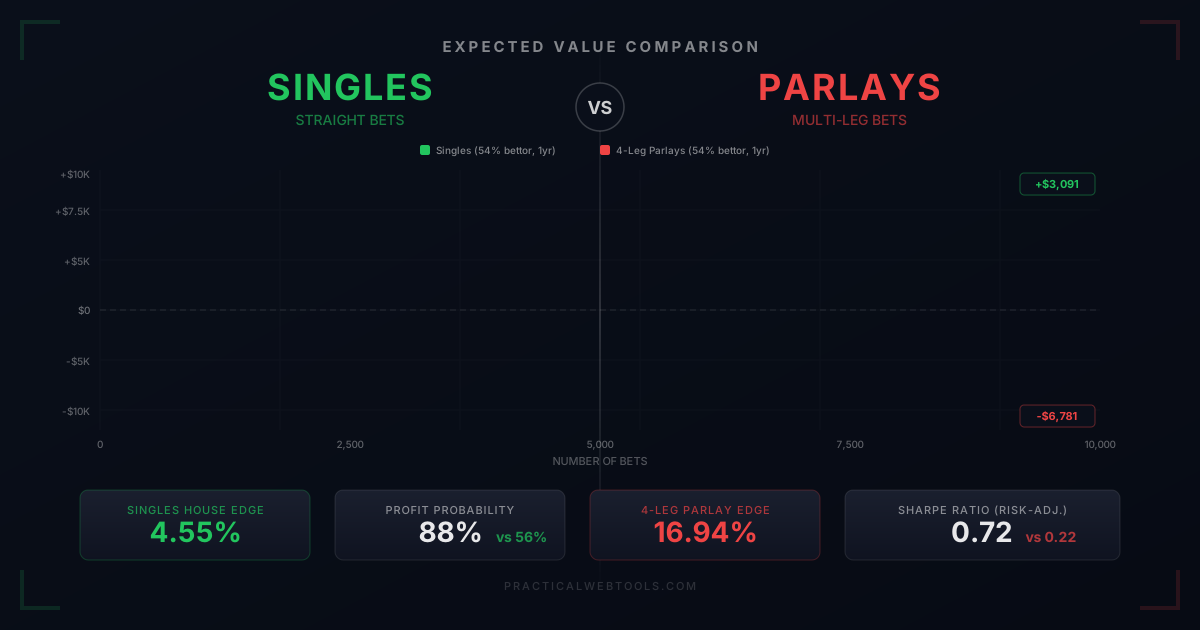
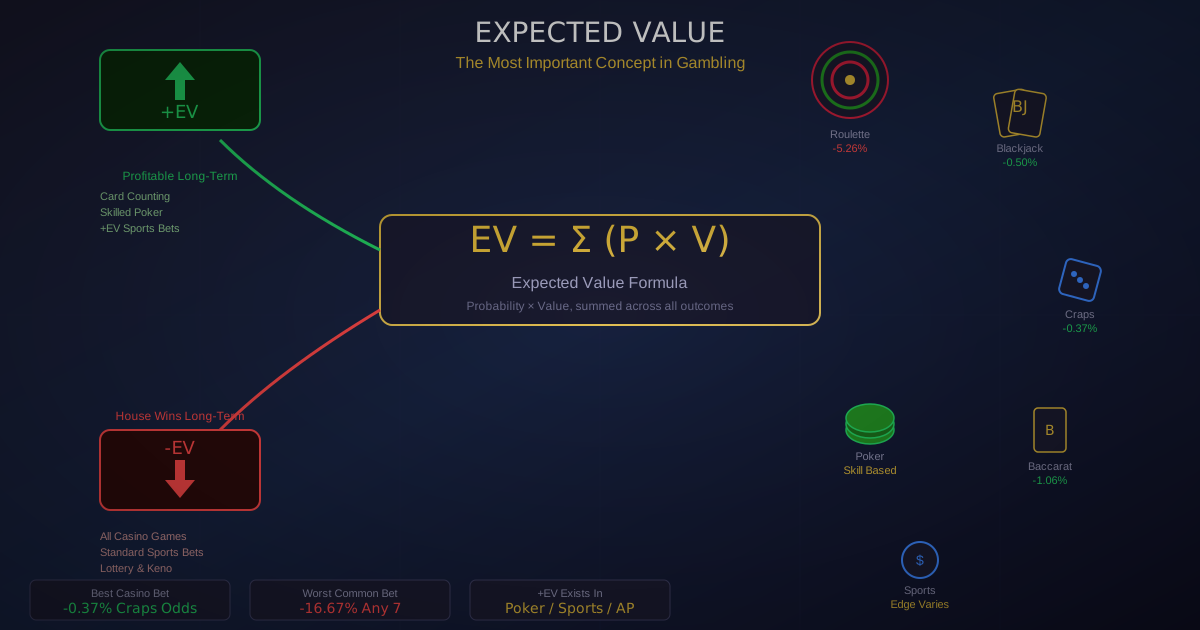
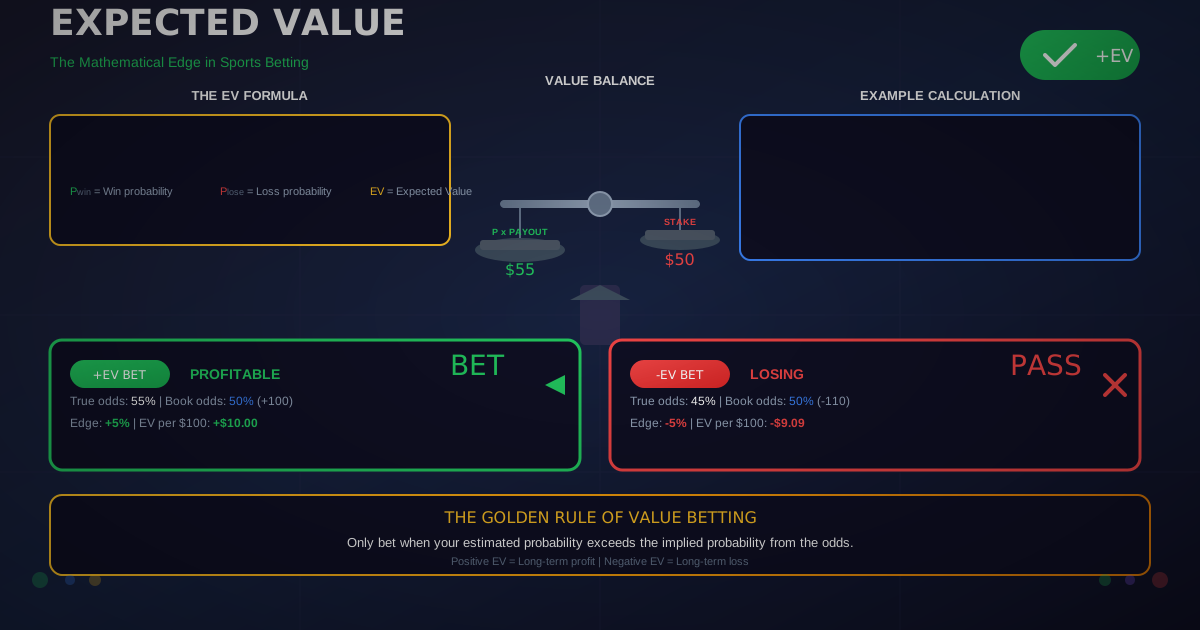
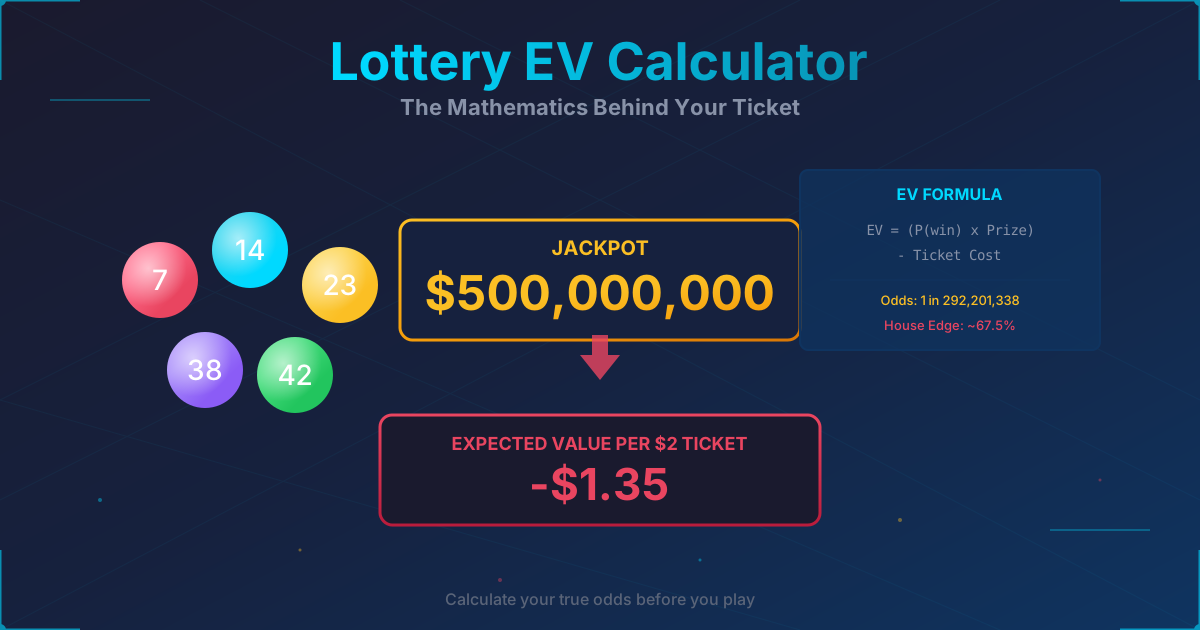
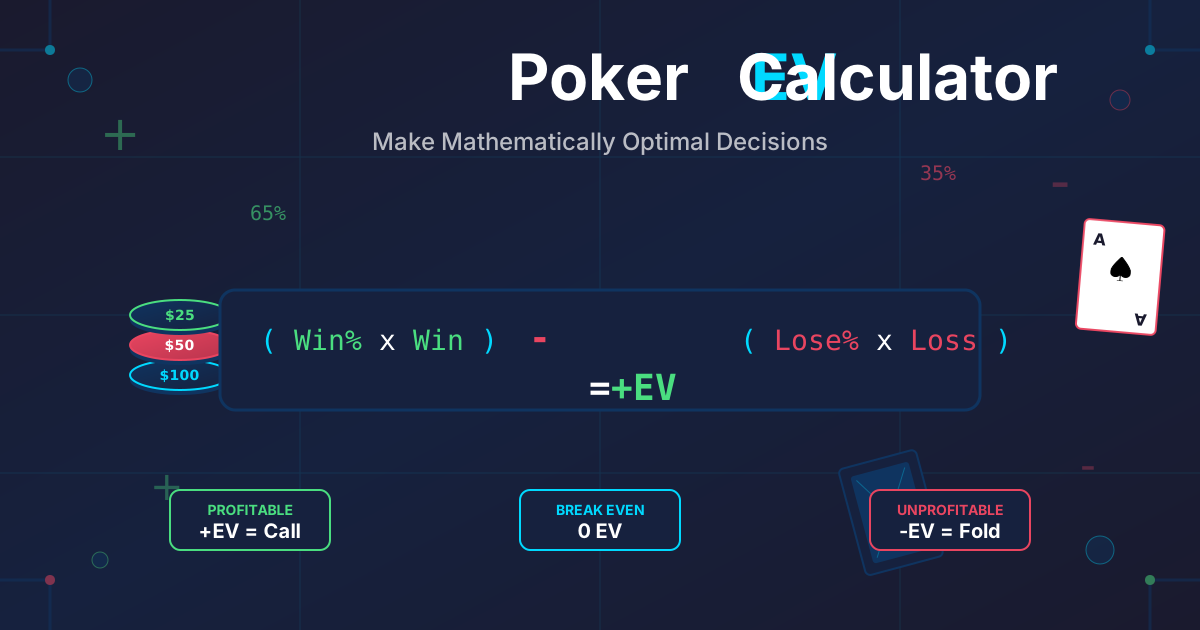
Verify the math behind any bet before you place it with our free Expected Value Calculator.
What Are the Most Common Online Gambling Scams in 2026?
Online gambling scams fall into several distinct categories, each targeting bettors at different stages of their wagering activity. The most common types are fake casino sites, rigged games, phishing attacks, tipster scams, bonus abuse traps, and identity theft operations.
Fake Casino and Sportsbook Sites
Fake gambling sites are the most damaging scam in online betting. These sites mimic legitimate operators with professional-looking designs, copied logos, and fabricated licensing badges. They operate by accepting deposits, allowing small initial wins to build trust, then refusing withdrawals when a player tries to cash out.
| Red Flag | What It Looks Like | Legitimate Alternative |
|---|---|---|
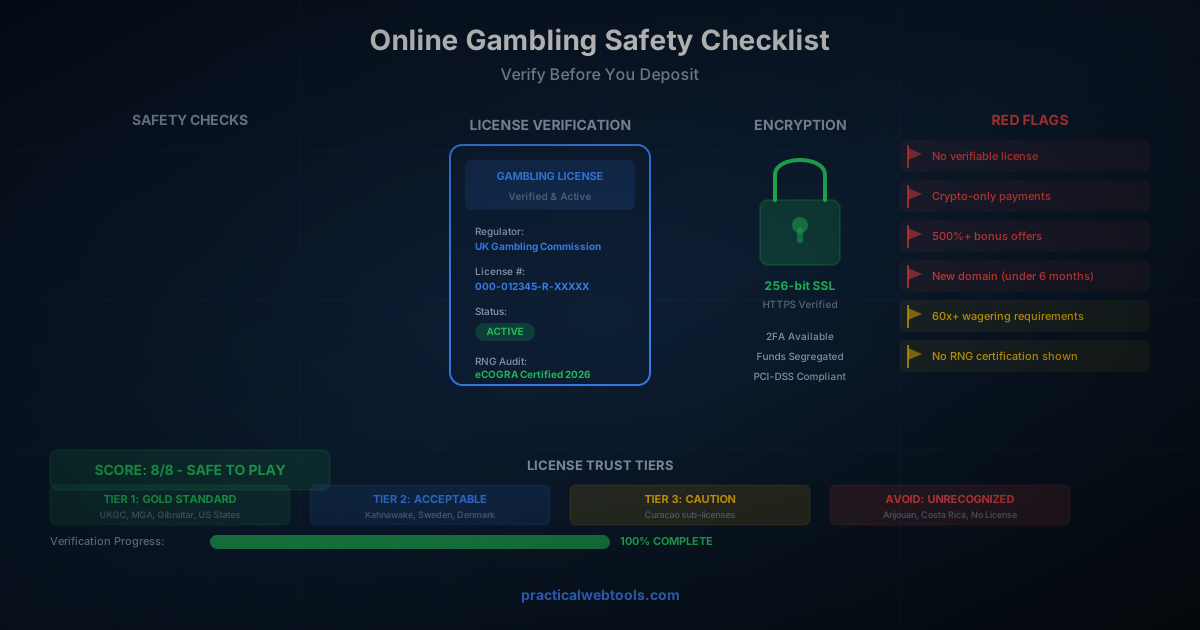
| No verifiable license | "Licensed in Costa Rica" with no license number | UKGC, MGA, or US state commission license with searchable number |
| No deposit limits | No responsible gambling tools visible | Self-exclusion, deposit limits, and loss limits available |
| Copied website design | Nearly identical to a known brand with a slightly different URL | Unique branding, original content, established domain history |
| No live support | Only email contact, slow or no responses | 24/7 live chat with trained support agents |
| Unrealistic bonuses | "500% deposit match" or "No wagering requirements on $10,000 bonus" | Reasonable offers (100-200% match, 20-40x wagering) |
| Poor game selection | Only a handful of games from unknown providers | Hundreds of games from NetEnt, Microgaming, Evolution, Pragmatic Play |
In 2025 alone, regulators identified over 4,000 unlicensed gambling sites targeting US and UK bettors. Many of these sites existed for only 3-6 months before shutting down and relaunching under a new domain.
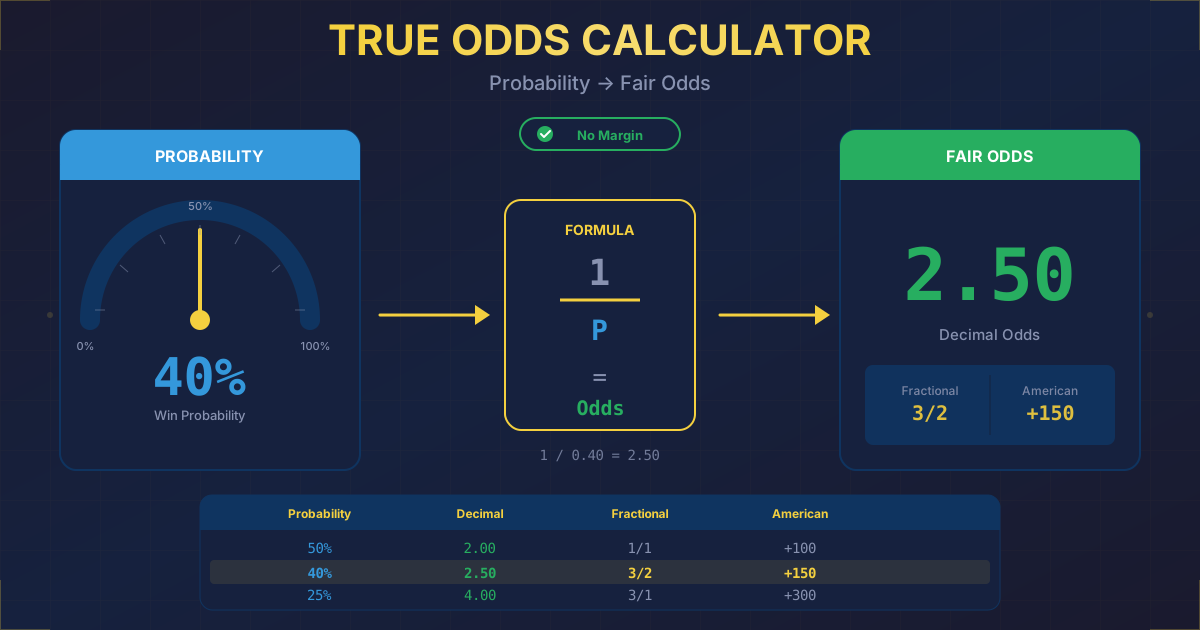
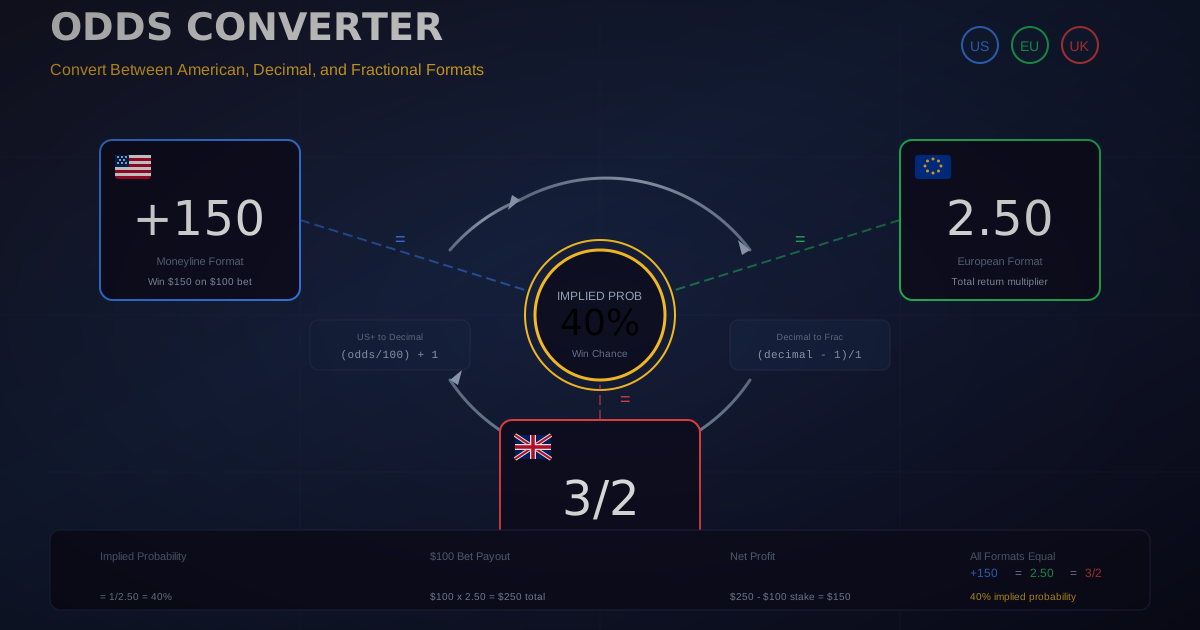
Use our Odds Converter to verify that the odds displayed on any site match expected market rates.
Rigged Games on Unlicensed Platforms
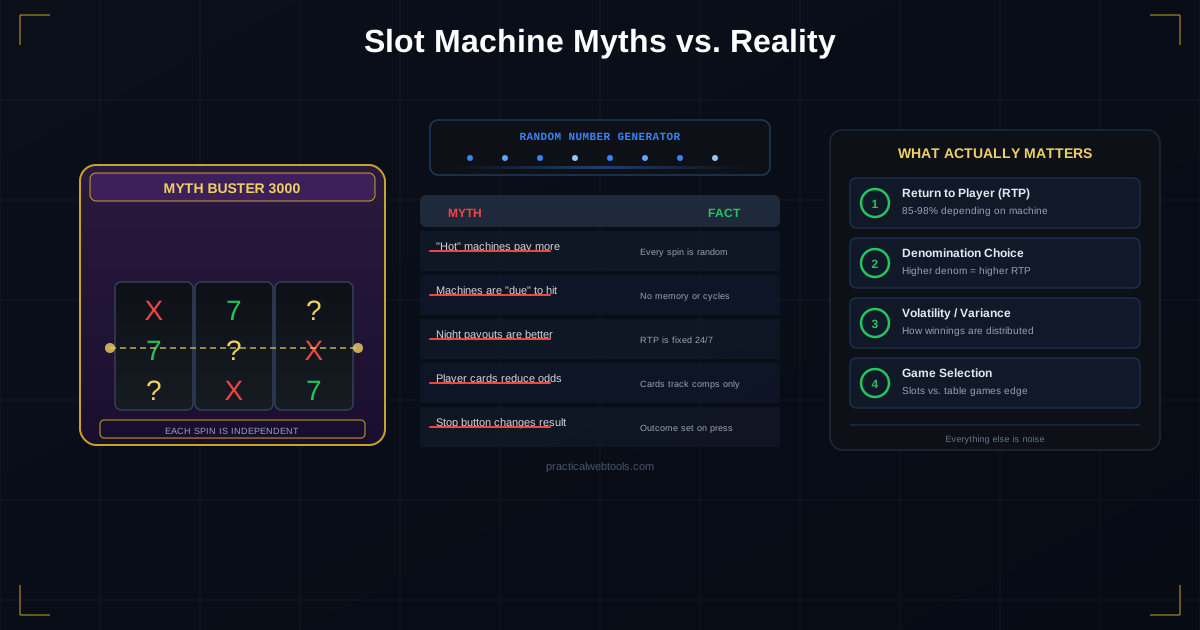
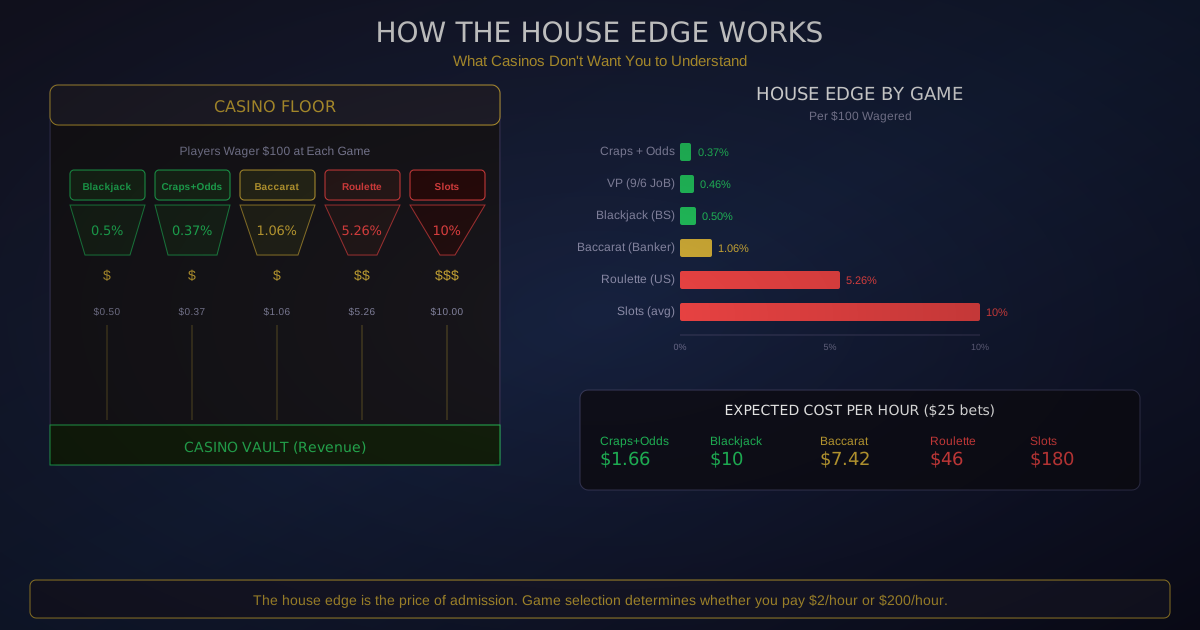
Legitimate online casinos use Random Number Generators (RNGs) certified by independent testing agencies like eCOGRA, iTech Labs, or GLI. Unlicensed sites have no obligation to use fair software, and many actively rig their games to increase the house edge far beyond advertised rates.
Signs of rigged games include:
- Unusually long losing streaks that deviate from expected probability
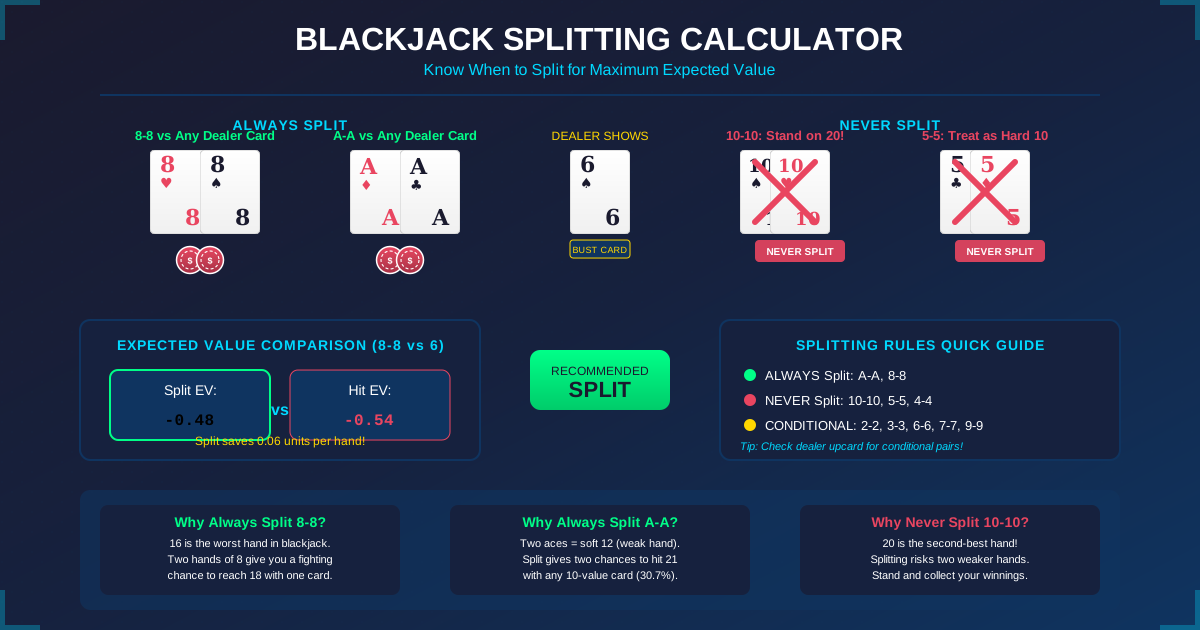
- Blackjack dealers hitting unlikely hands repeatedly
- Slot machines that never hit bonus features despite thousands of spins
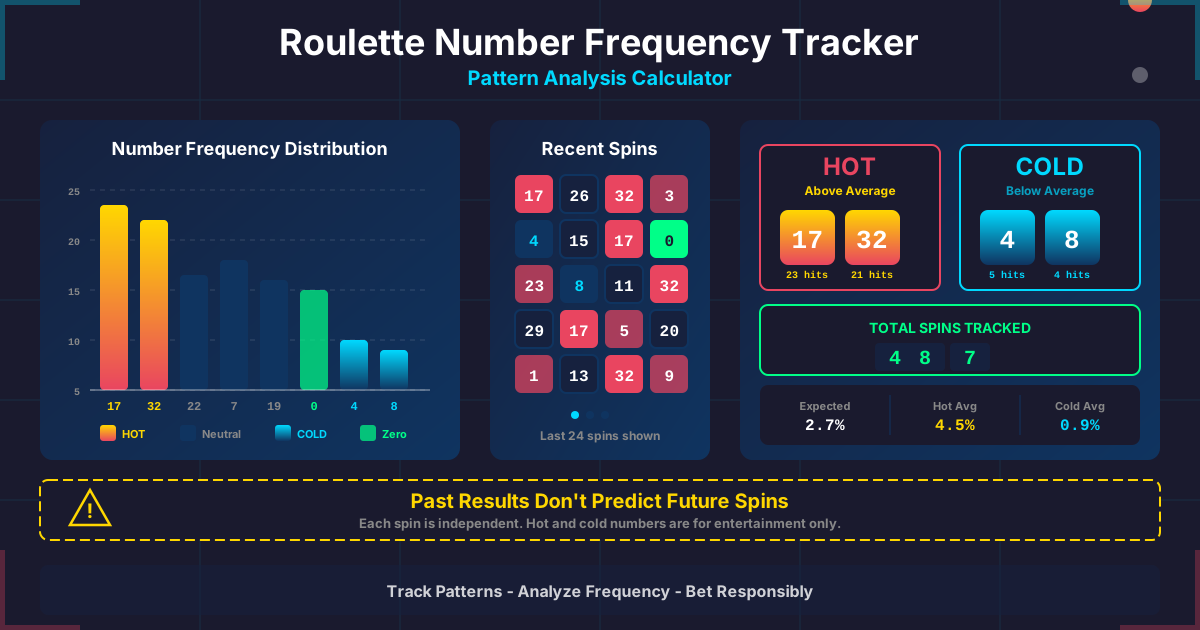
- Roulette wheels with suspicious number distributions over large samples
- Poker rooms where certain accounts consistently win against the odds
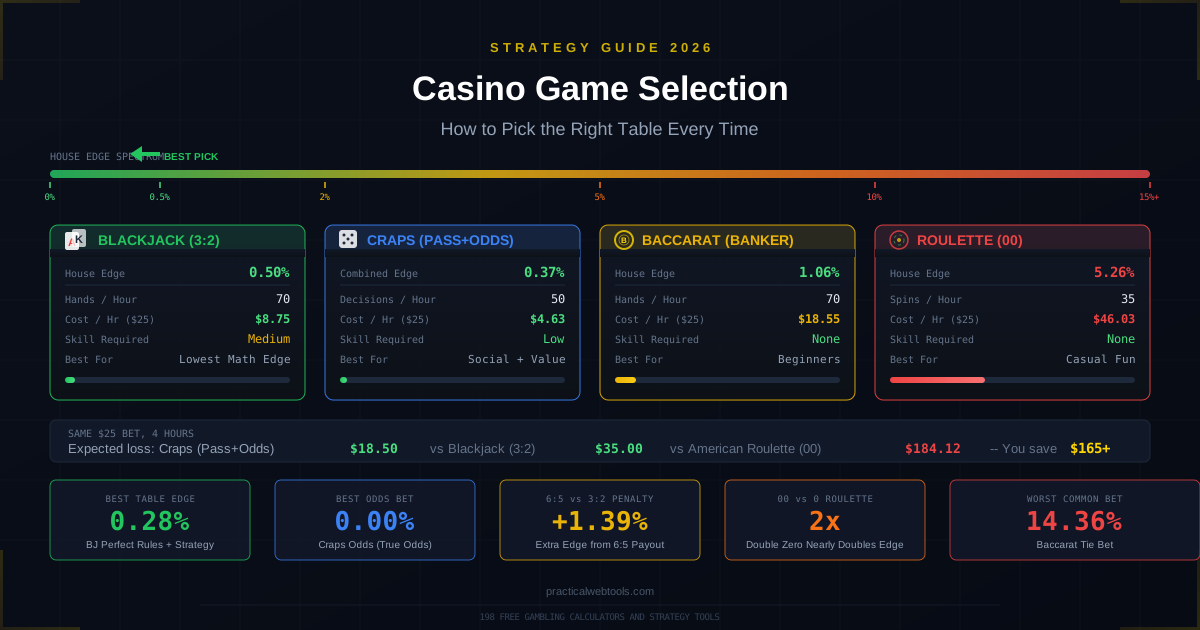
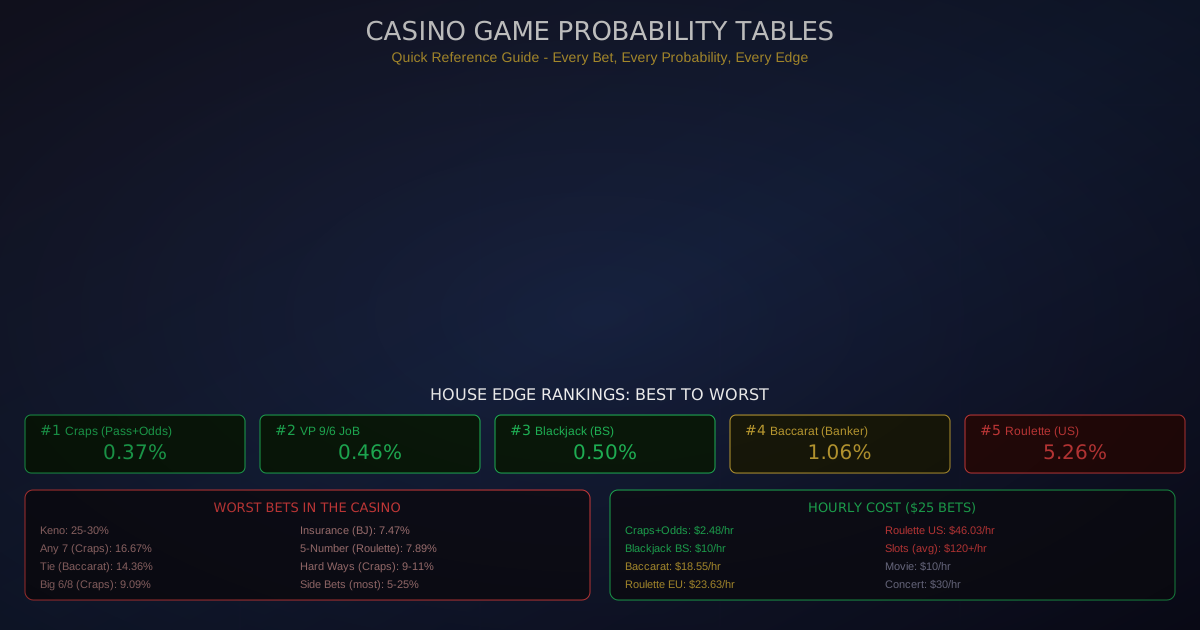
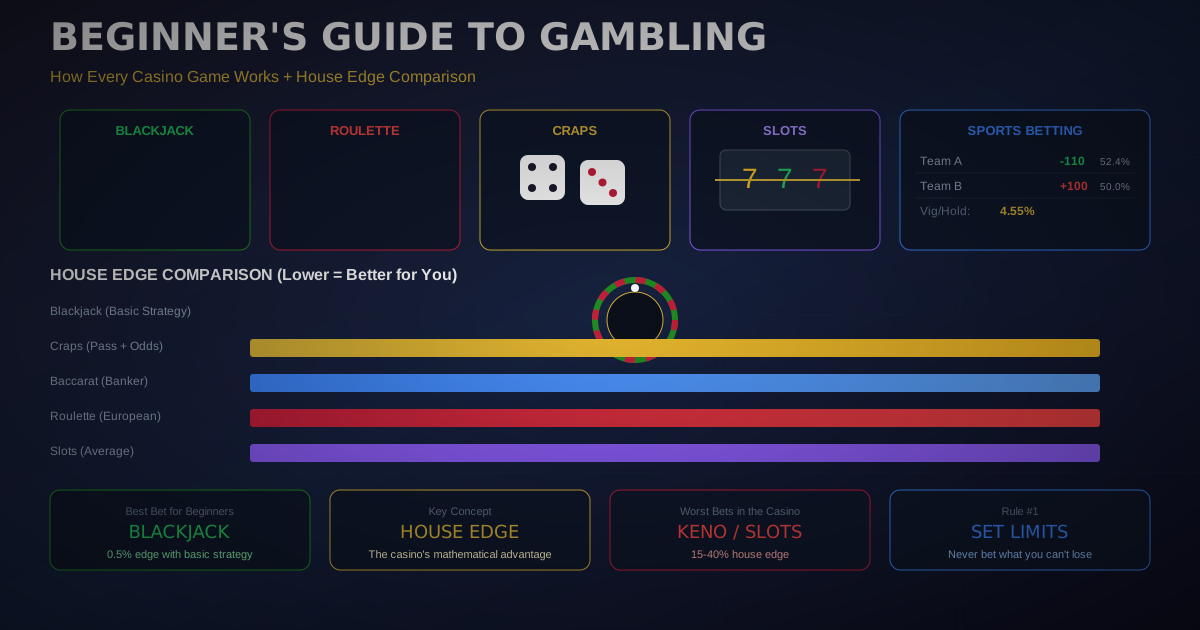
| Game | Fair House Edge | Suspicious House Edge (Rigged) |
|---|---|---|
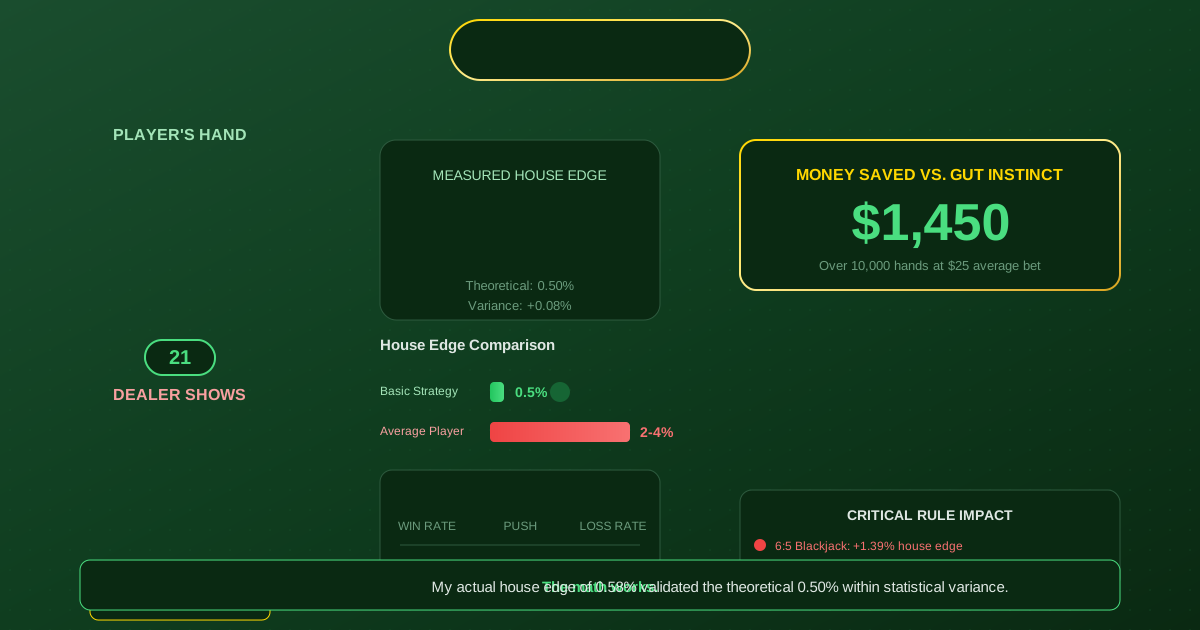
| Blackjack (basic strategy) | 0.5-1.0% | 3-8%+ |
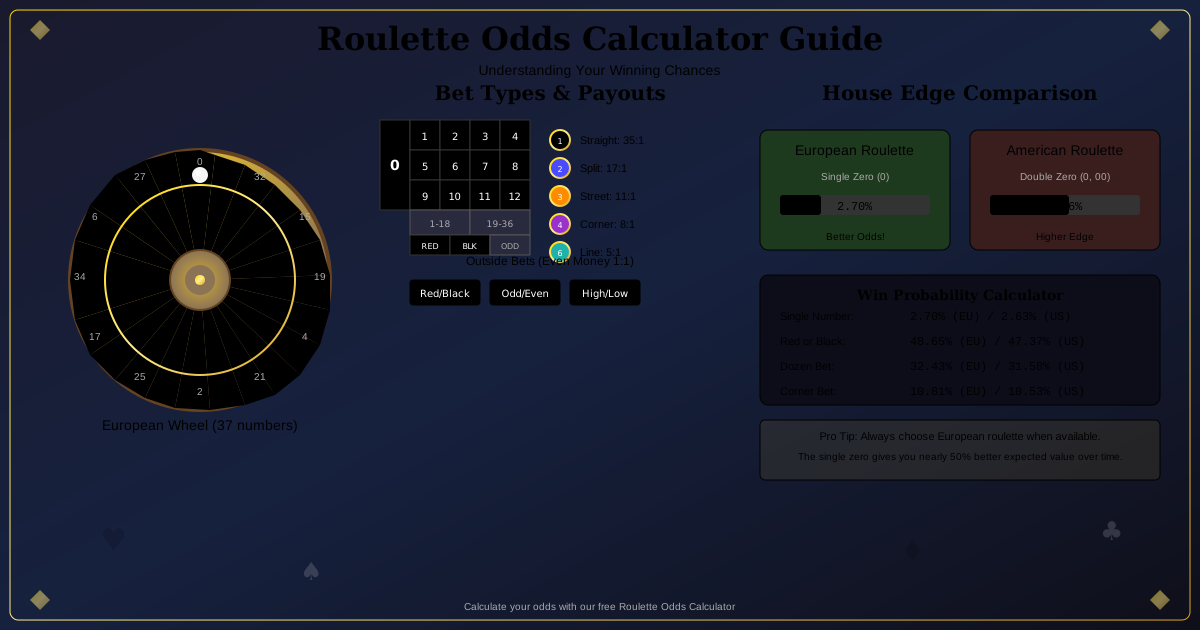
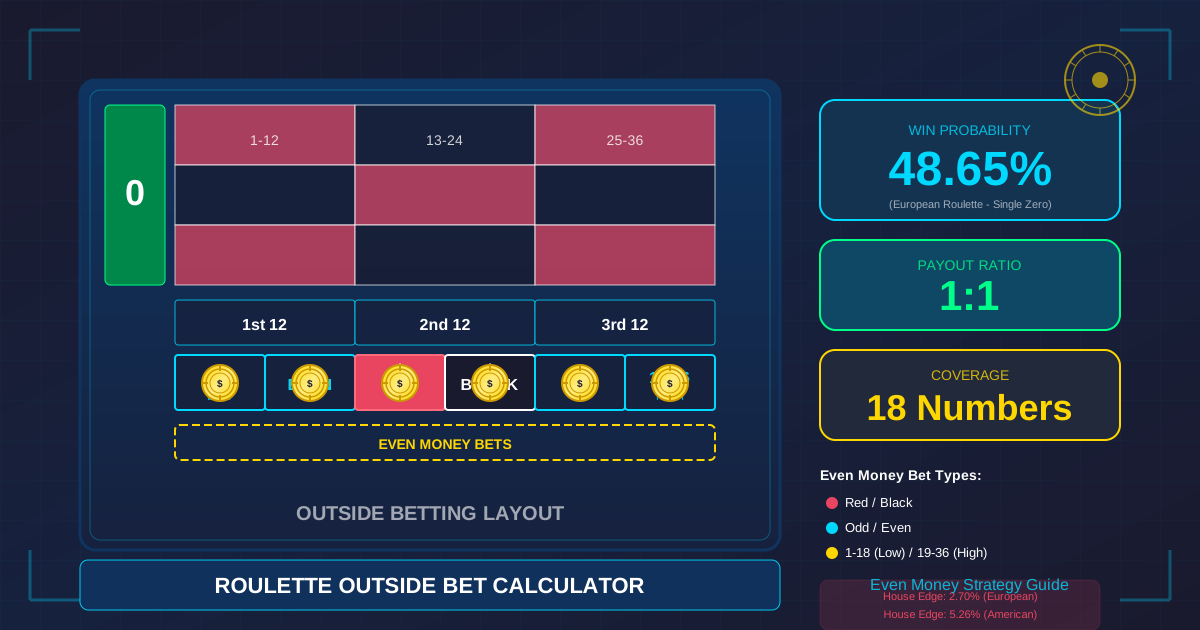
| Roulette (European) | 2.7% | 5-15%+ |
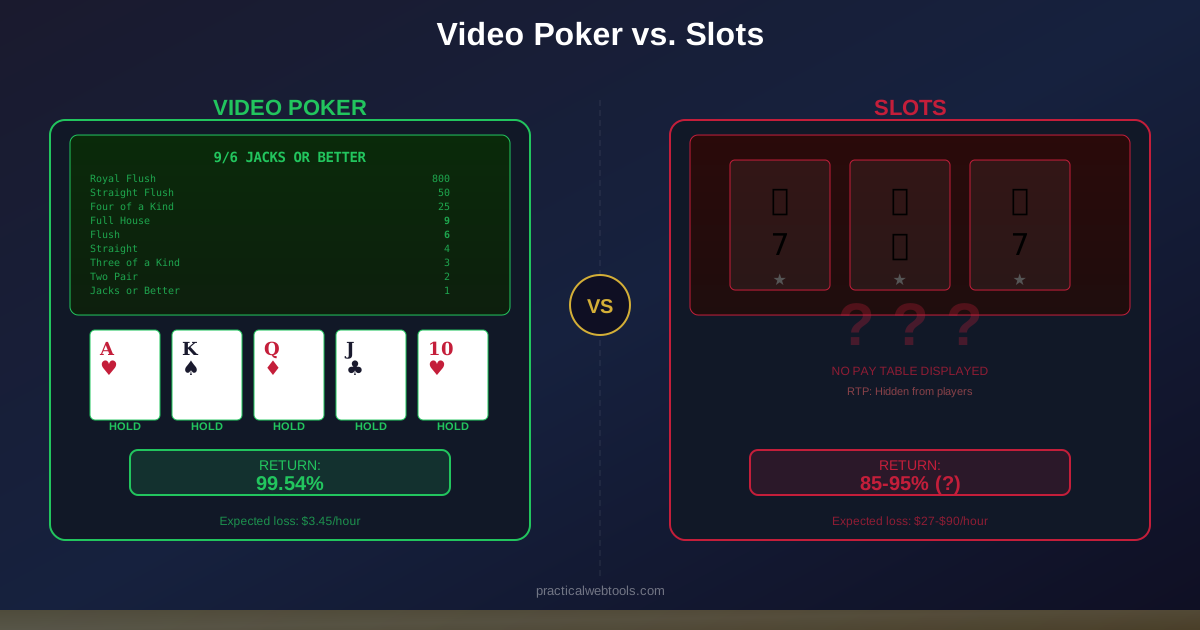
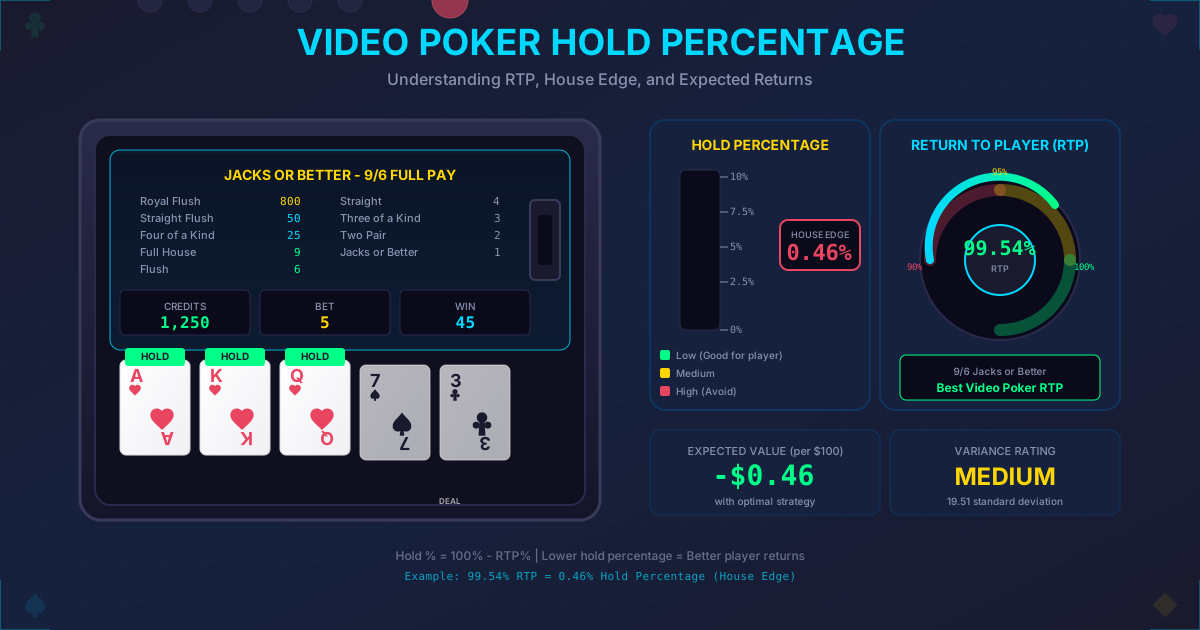
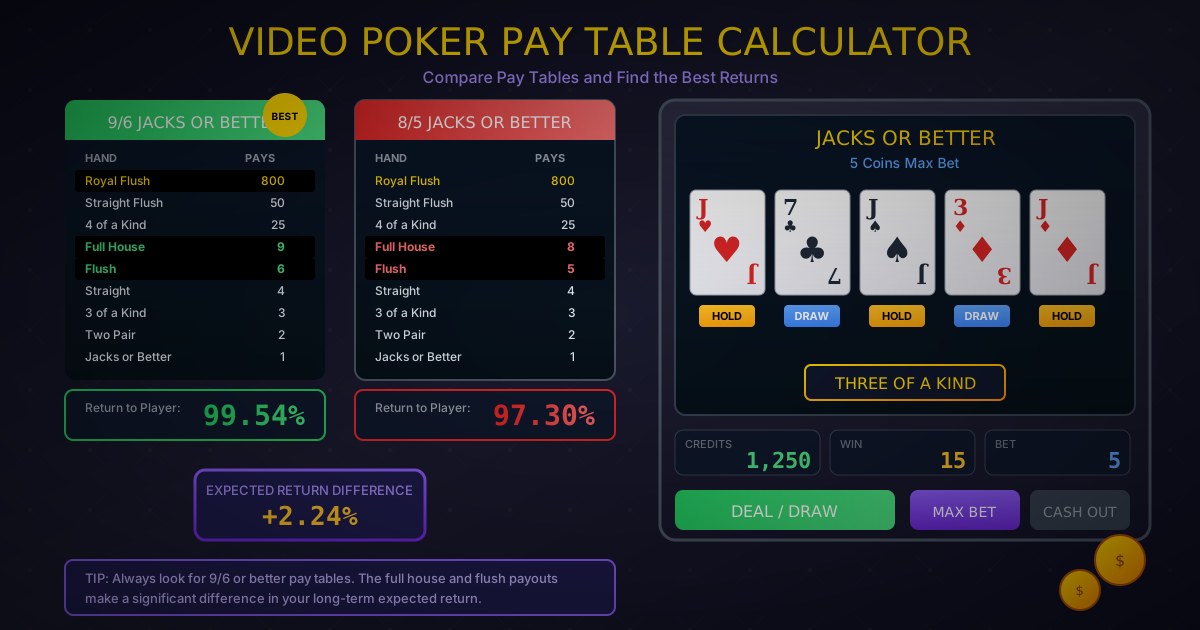
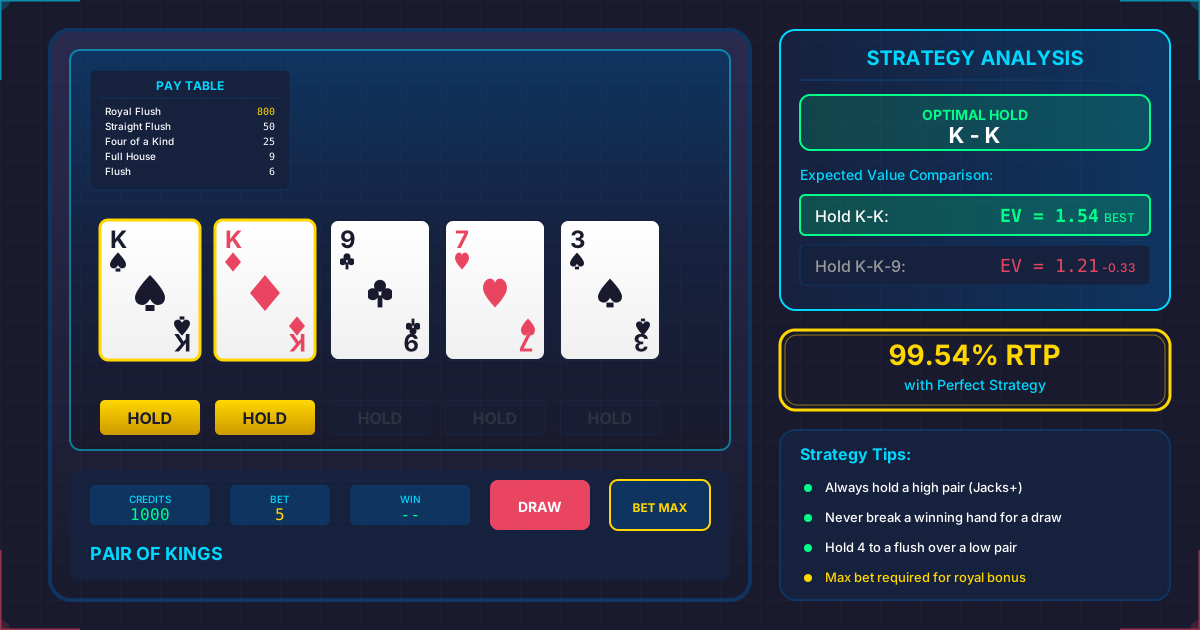
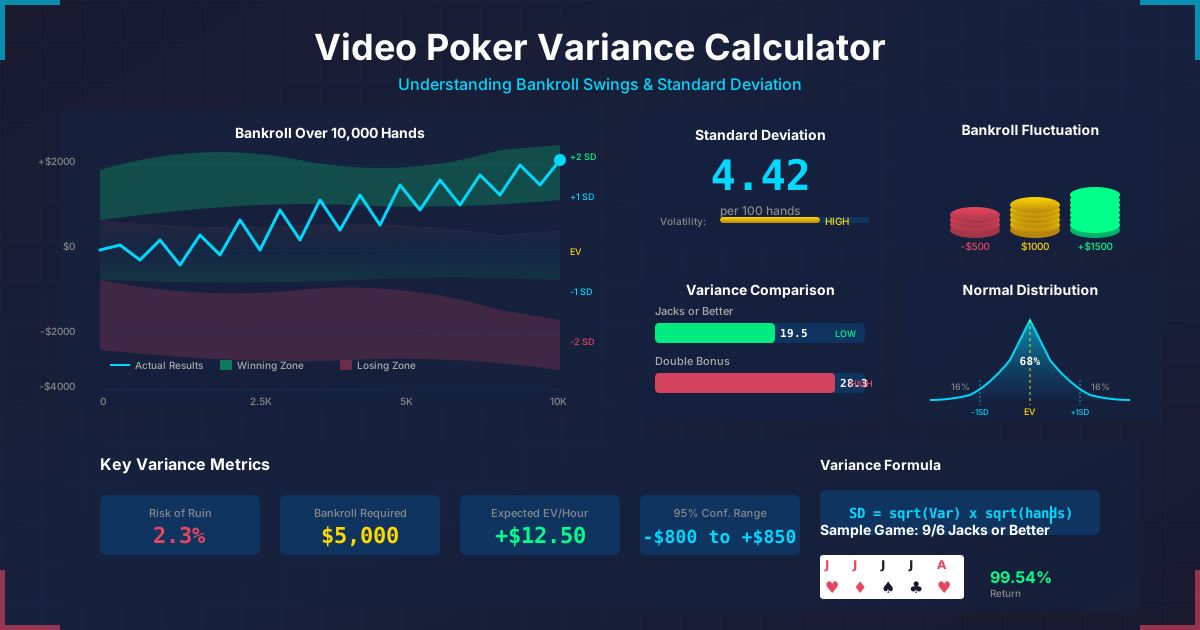
| Video Poker (9/6 Jacks or Better) | 0.46% | 3-10%+ |
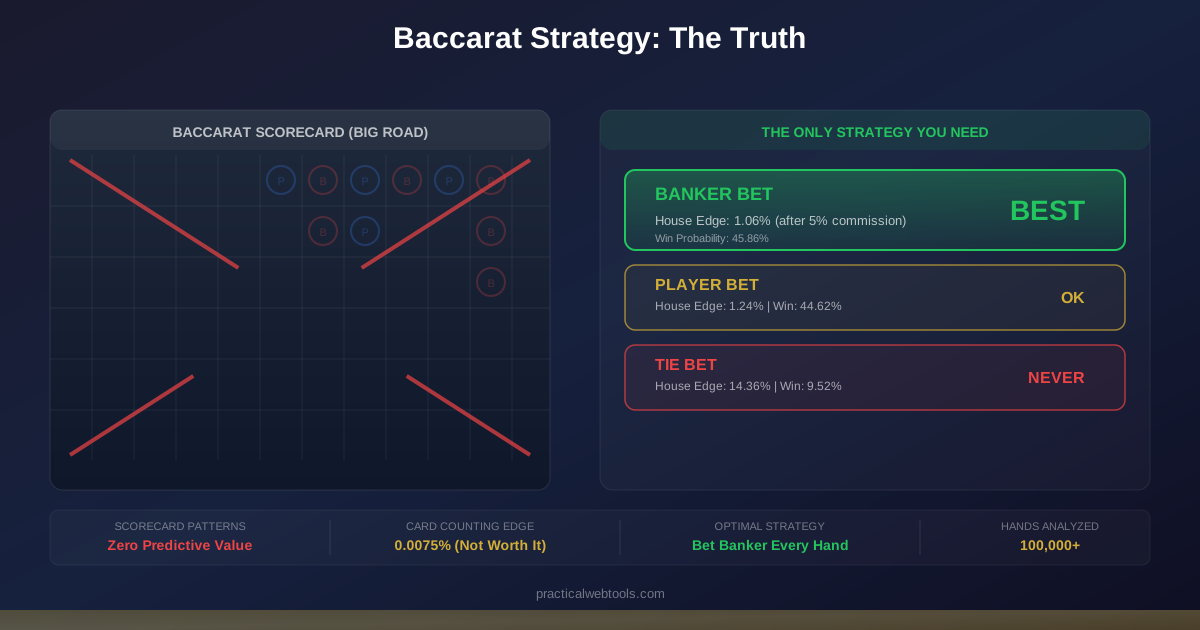
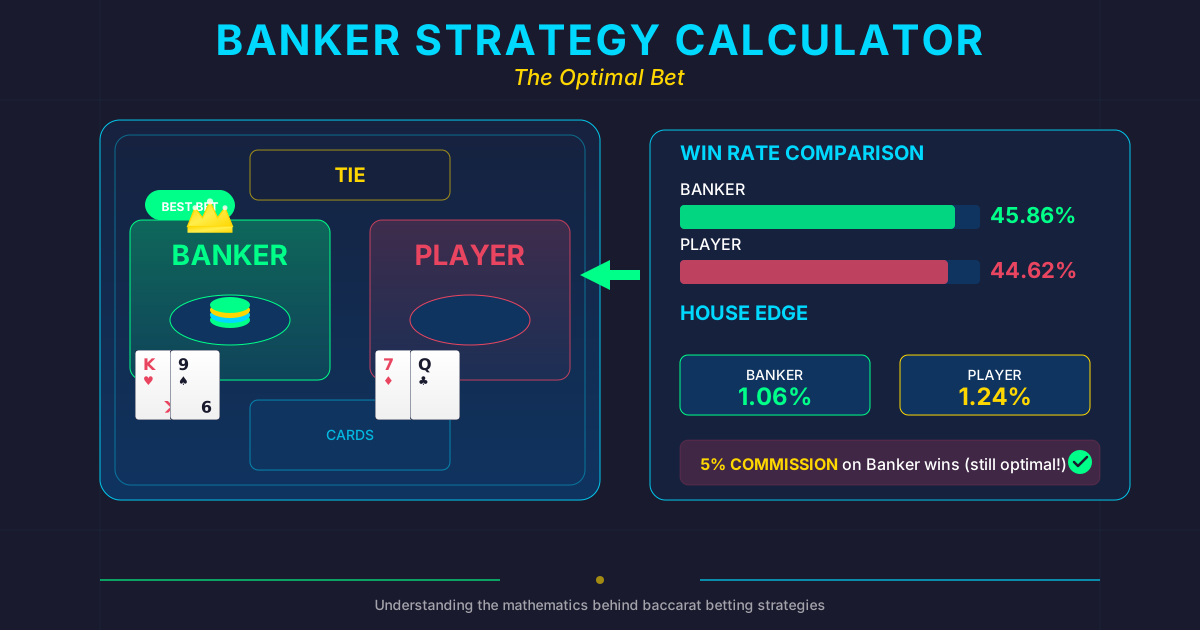
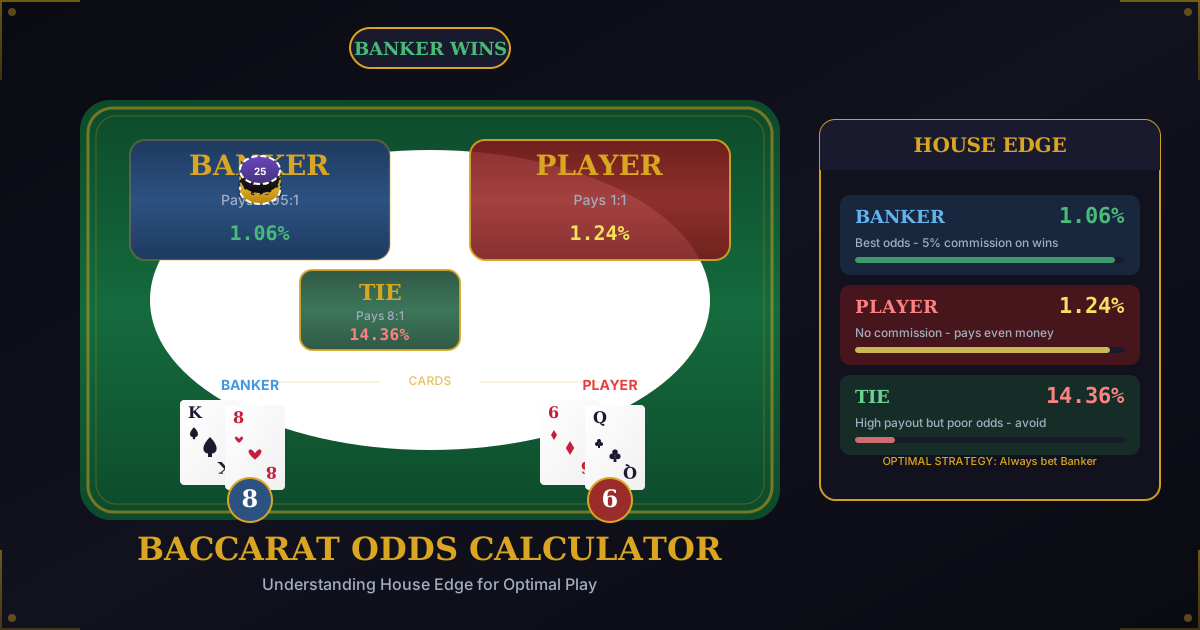
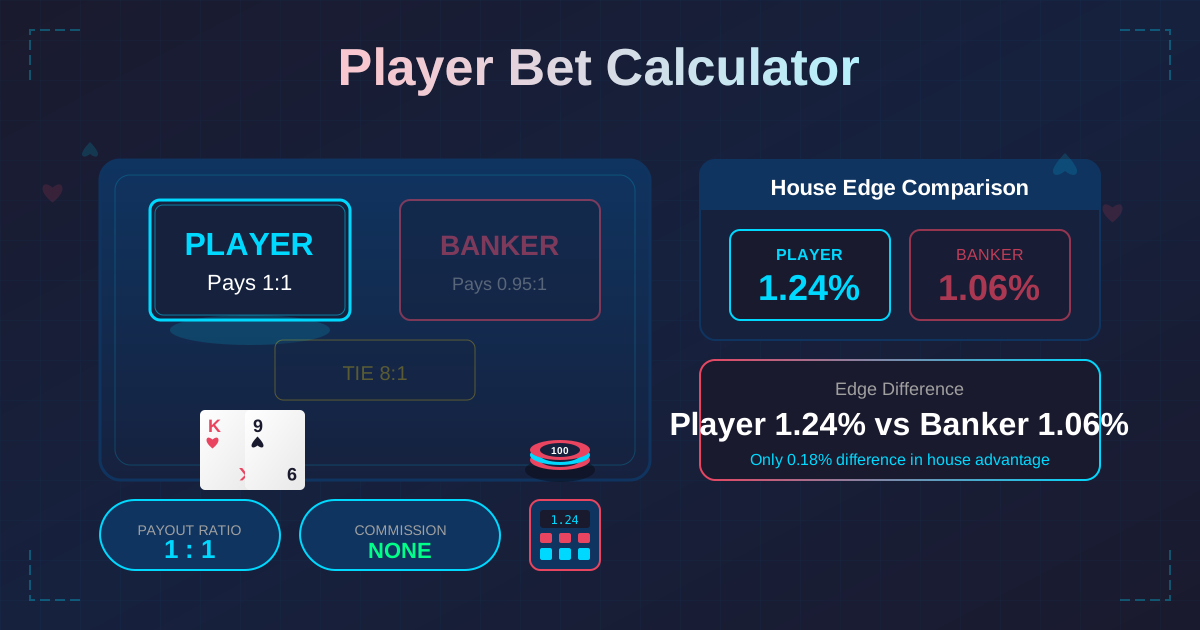
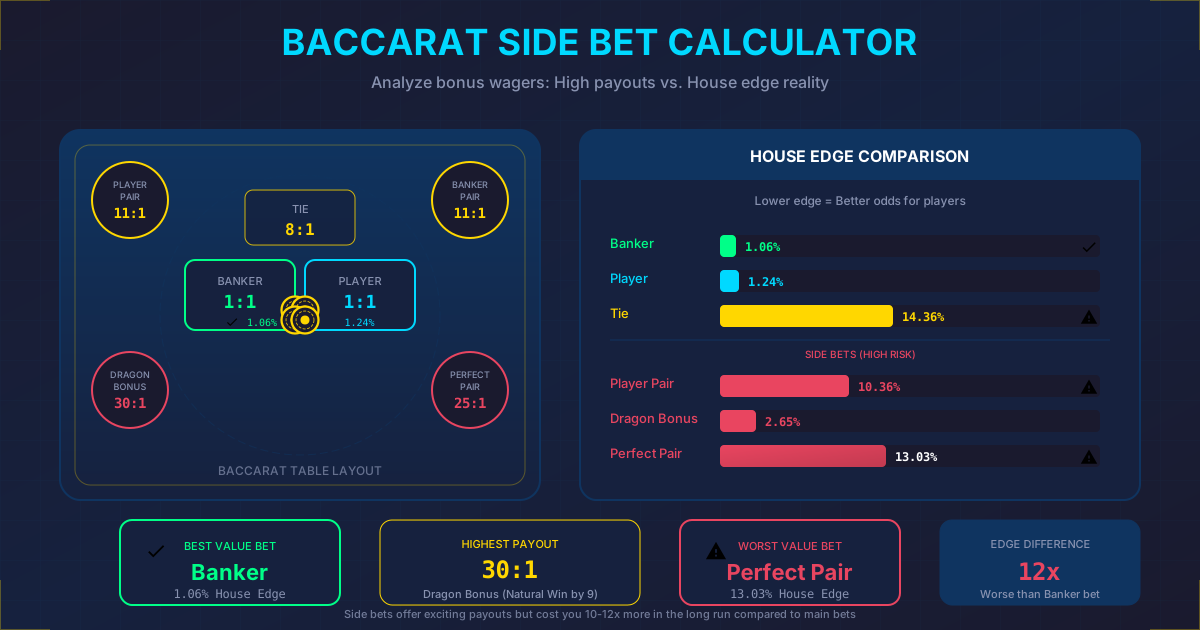
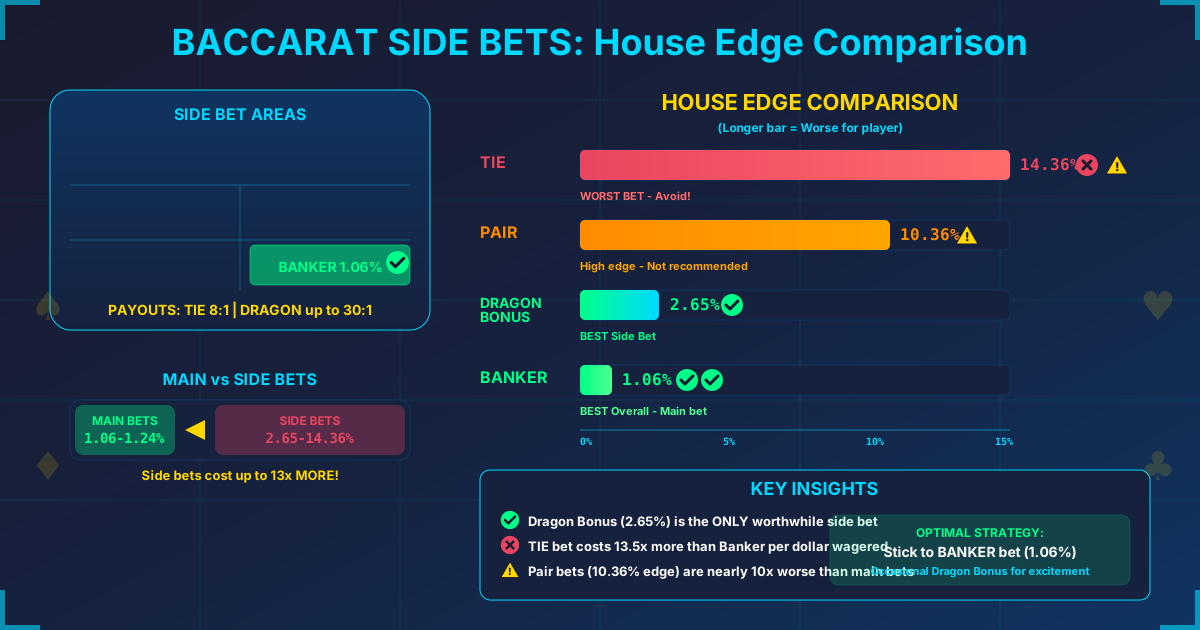
| Baccarat (Banker) | 1.06% | 4-12%+ |
| Slots (licensed) | 2-8% | 15-40%+ |
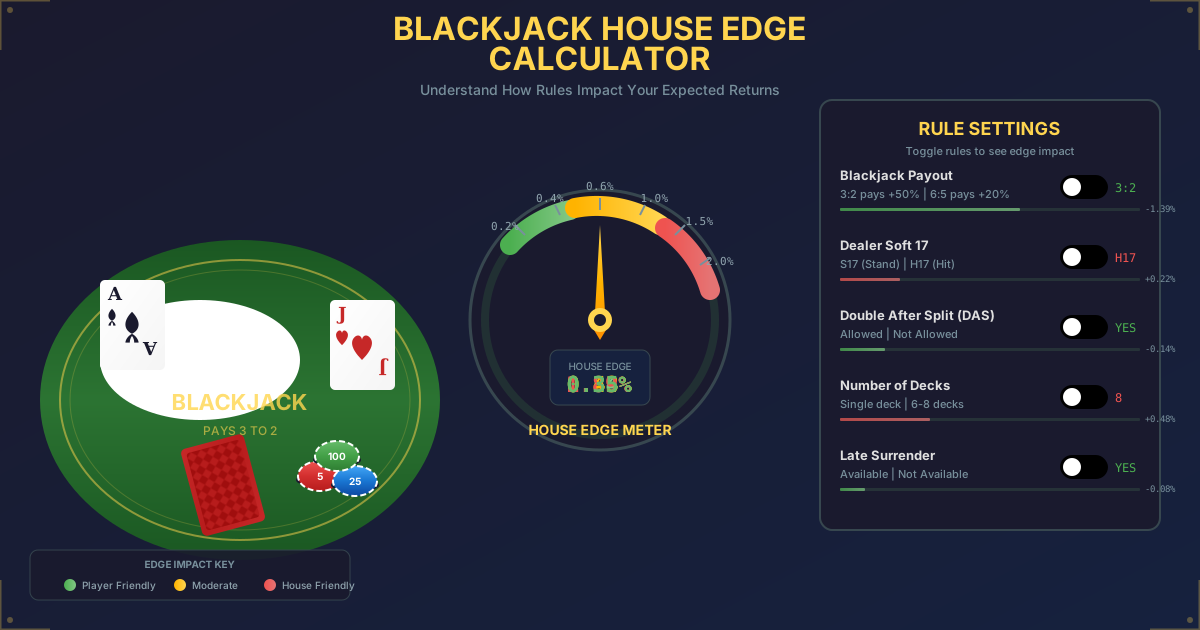
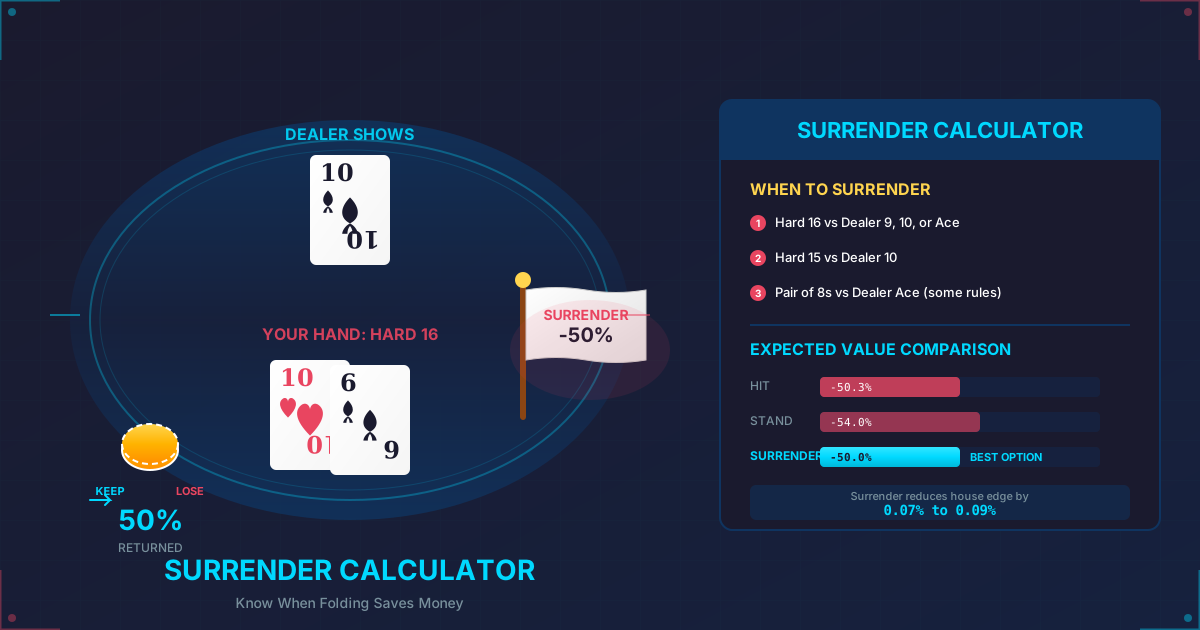
Check true house edge values with our Blackjack House Edge Calculator and Roulette House Edge Calculator.
Phishing Attacks Targeting Bettors
Phishing scams in gambling take several forms:
- Fake withdrawal emails: "Your withdrawal of $5,000 is pending. Click here to verify your identity." These emails redirect to cloned login pages that steal credentials.
- Account verification scams: Messages claiming your account will be locked unless you "verify" by entering payment details on a fake page.
- Bonus notification phishing: "You have a $500 free bet waiting! Click to claim." Links lead to malware or credential-harvesting sites.
- SMS phishing (smishing): Text messages with urgent account alerts containing malicious links.
Legitimate sportsbooks and casinos will never ask you to enter your password through an email link. Always navigate directly to the site by typing the URL in your browser.
How Do Tipster and Tout Service Scams Work?
Tipster scams are among the most profitable frauds in sports betting because they exploit the desire for easy money. Scam tipsters fabricate winning records, use selective reporting, and employ mathematical tricks to appear legitimate.
Fabricated Track Records
The most common tipster scam involves creating fake historical records. Techniques include:
- Screenshot manipulation: Editing bet slips in image software to show winning bets that never happened
- After-the-fact posting: Posting "picks" after games have already finished on platforms that do not timestamp entries
- Selective record keeping: Only counting wins while ignoring losses, or using different unit sizes for winning and losing bets
- Multiple accounts strategy: Running 10+ accounts with different picks. Whichever account has the best record after a month gets promoted. The losing accounts get deleted.
| Scam Tactic | How to Spot It | Verification Method |
|---|---|---|
| Fabricated screenshots | No third-party verification, images look edited | Demand live bet slip verification through services like BetStamp or Action Network |
| Post-game picks | No timestamps, picks posted in private groups | Require timestamped picks on public platforms before events start |
| Selective reporting | Record only shows big wins, no unit tracking | Ask for complete bet history including every loss |
| Manufactured consensus | "95% of our subscribers are profitable" | Request independently audited subscriber performance data |
| Trial period bait | Free winning picks for 1-2 weeks, then paid service underperforms | Track free picks for at least 3 months before paying |
The Math of Tipster Fraud
Consider a tipster running the "multiple account" scam:
- Start with 1,024 subscribers
- Send half a "Team A" pick, half a "Team B" pick
- After 10 rounds of binary picks, 1 subscriber has seen 10 consecutive "correct" picks
- That subscriber is now a true believer who will pay premium rates
This is the "binary scam" and it costs the scammer almost nothing to execute. The subscriber who saw 10 straight wins has no idea that 1,023 other people saw losing picks.
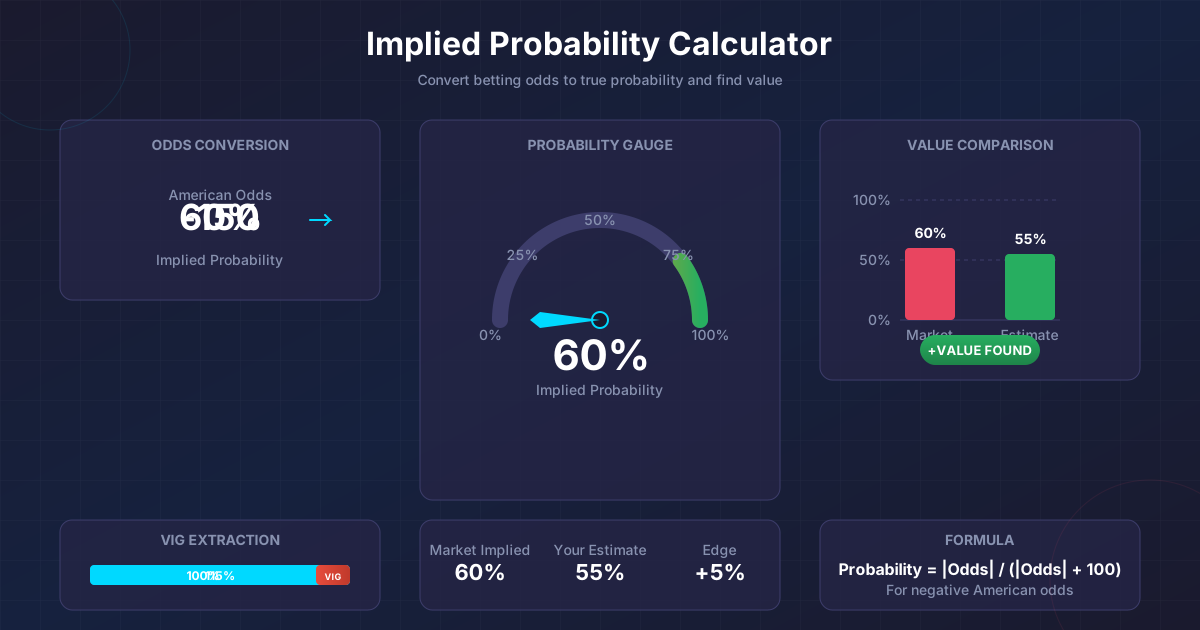
Calculate the actual probability of any tipster's record with our Implied Probability Calculator.
What a Legitimate Tipster Service Looks Like
Genuine betting analysts share these characteristics:
- Transparent, third-party verified records (Betstamp, BetQL, Pikkit)
- Complete bet history including every loss
- Consistent unit sizing and documented methodology
- Realistic claims (55-60% win rate on sides, not 70%+)
- Clear explanation of their edge and the sports/leagues they cover
- Refund policy or trial period with verifiable results
No legitimate tipster claims 70%+ long-term win rates on spreads or totals. A 56% win rate against the spread at -110 is genuinely elite. Anyone claiming significantly higher over a large sample is almost certainly fabricating results.
How Can You Verify if a Gambling Site Is Legitimate?
Verifying a gambling site requires checking multiple indicators. No single check is sufficient -- you need to confirm licensing, software fairness, payment security, and operational history.
Checking Regulatory Licenses
The first and most important step is verifying the site holds a valid license from a recognized gambling authority.
| Licensing Authority | Jurisdiction | Verification URL | Reputation |
|---|---|---|---|
| UK Gambling Commission (UKGC) | United Kingdom | gamblingcommission.gov.uk | Gold standard |
| Malta Gaming Authority (MGA) | Malta/EU | mga.org.mt | Highly respected |
| New Jersey DGE | New Jersey, USA | nj.gov/oag/ge | Top US regulator |
| Pennsylvania PGCB | Pennsylvania, USA | gamingcontrolboard.pa.gov | Strong US regulator |
| Michigan MGCB | Michigan, USA | michigan.gov/mgcb | Established US regulator |
| Ontario iGO | Ontario, Canada | igamingontario.ca | Leading Canadian regulator |
| Curacao eGaming | Curacao | curacao-egaming.com | Lower tier -- minimal oversight |
| Kahnawake Gaming Commission | Canada | gamingcommission.ca | Moderate reputation |
How to verify: Find the license number on the site (usually in the footer), then search for it directly on the regulator's website. Scam sites often display fake license badges that link nowhere or lead to cloned regulator pages.
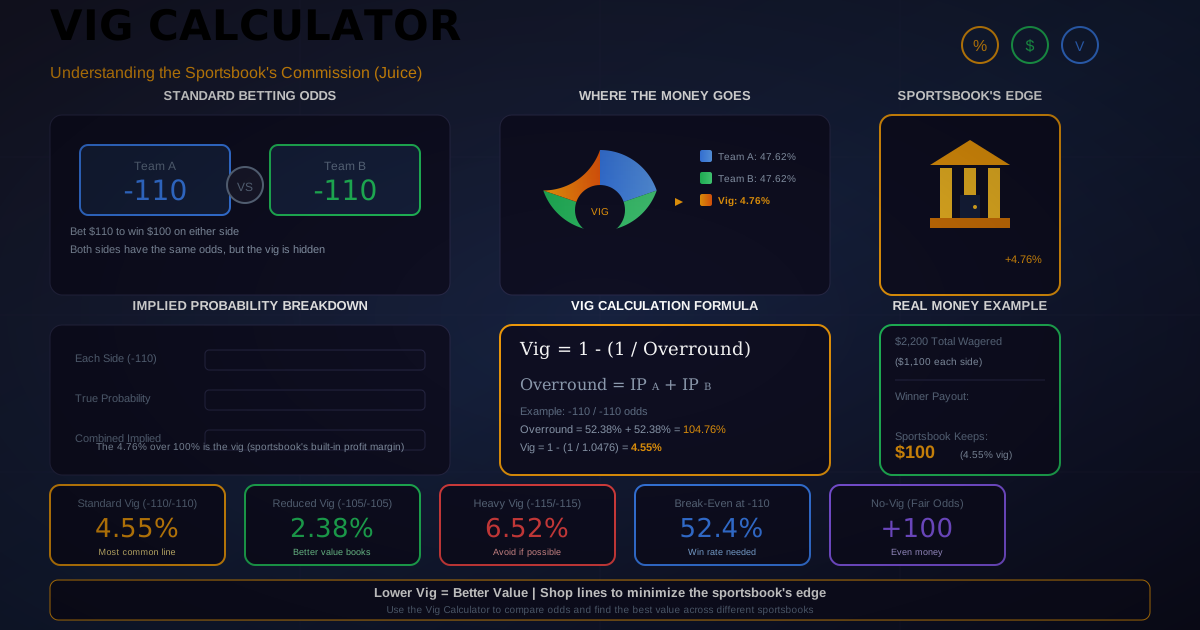
Use our Hold/Vig Calculator to compare a site's offered odds against known market vig rates.
Verifying RNG Certification
Random Number Generator certification ensures that game outcomes are genuinely random. Look for certification from:
- eCOGRA -- Independently tests and certifies online casino games
- iTech Labs -- Global testing laboratory for gaming systems
- GLI (Gaming Laboratories International) -- Tests and certifies gaming technology worldwide
- BMM Testlabs -- International compliance testing for the gaming industry
Certified sites will display testing agency logos and often provide links to published payout reports. If a site cannot demonstrate RNG certification, treat every game on it as potentially rigged.
Reading Reviews Effectively
Online reviews are useful but require critical evaluation:
- Affiliate bias: Many gambling review sites earn commissions from the casinos they review. A 5-star review on a site that earns $200 per referred player is inherently suspect.
- Fake reviews: Scam casinos pay for positive reviews on forums and review sites.
- Outdated reviews: A site that was legitimate in 2023 may have changed ownership or deteriorated.
Better review sources:
- Regulated market forums (TwoPlusTwo, Reddit r/sportsbook, Reddit r/onlinegambling)
- Licensed operator databases from regulatory bodies
- Independent complaint databases (AskGamblers, Casino Guru, ThePogg)
- News coverage in legitimate gambling industry publications (iGB, EGR, Gambling Insider)
What Are Bonus Abuse Scams That Target Bettors?
Bonus abuse scams work in two directions -- some target the sportsbooks, and some target the bettors themselves. Understanding both is critical.
Scams That Target Bettors Through Bonuses
These are the scams bettors fall victim to:
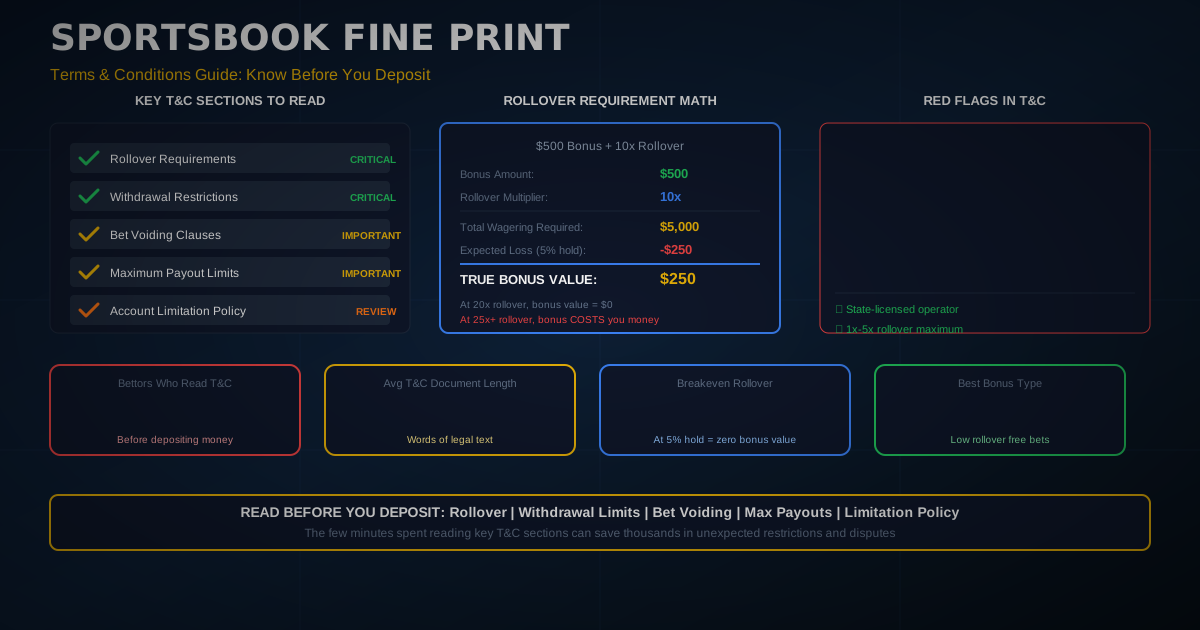
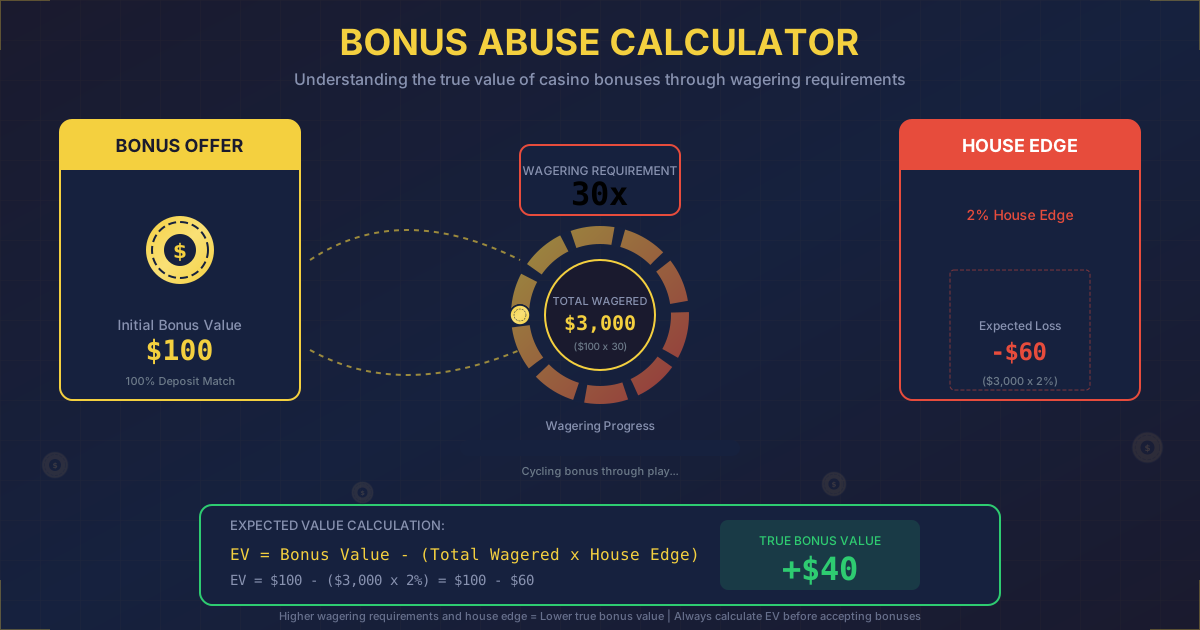
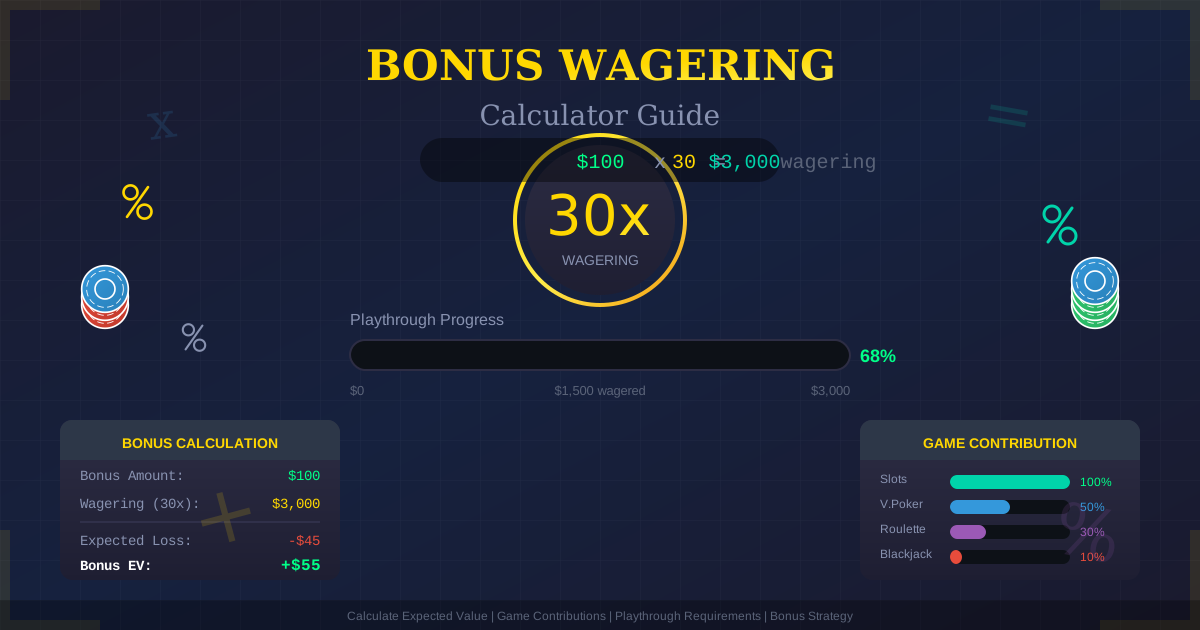
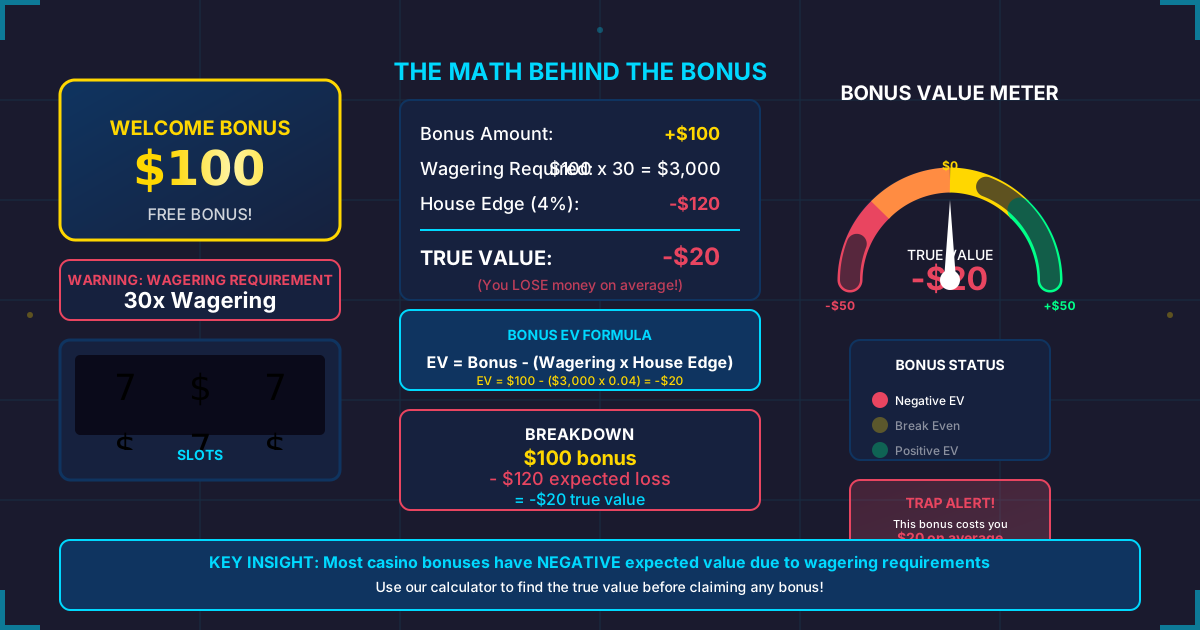
- Impossible wagering requirements: A $100 bonus with 80x wagering requires $8,000 in bets before withdrawal. With a 3% house edge, you expect to lose $240 -- more than twice the bonus value.
- Hidden terms that void winnings: Some scam sites bury clauses that allow them to void all winnings if any obscure term is violated.
- Maximum withdrawal caps: A bonus might let you win, but limits cashouts to $100 regardless of balance.
- Game restriction traps: The bonus is "valid on all games" but wagering only counts on slots with the highest house edge. Table games contribute 0-10%.
| Bonus Type | Fair Terms | Scam Terms |
|---|---|---|
| Deposit Match | 1x-10x wagering, 30-day expiry | 60-100x wagering, 7-day expiry |
| Free Bet | Stake not returned, no max win cap | $50 max win, expires in 24 hours |
| No Deposit Bonus | 20-40x wagering, $100 max withdrawal | 80x+ wagering, $20 max withdrawal |
| Cashback | Real money returned on losses, low/no wagering | "Bonus balance" with 40x wagering on cashback |
Calculate the true expected value of any bonus with our Expected Value Calculator.
How Matched Betting Works Legitimately
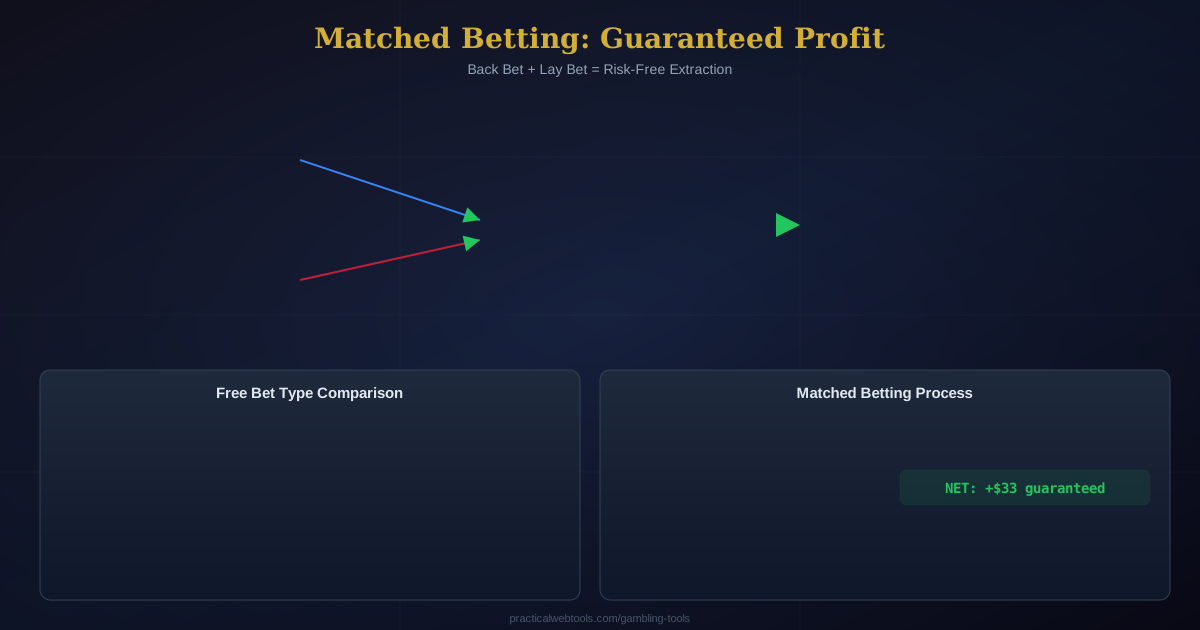
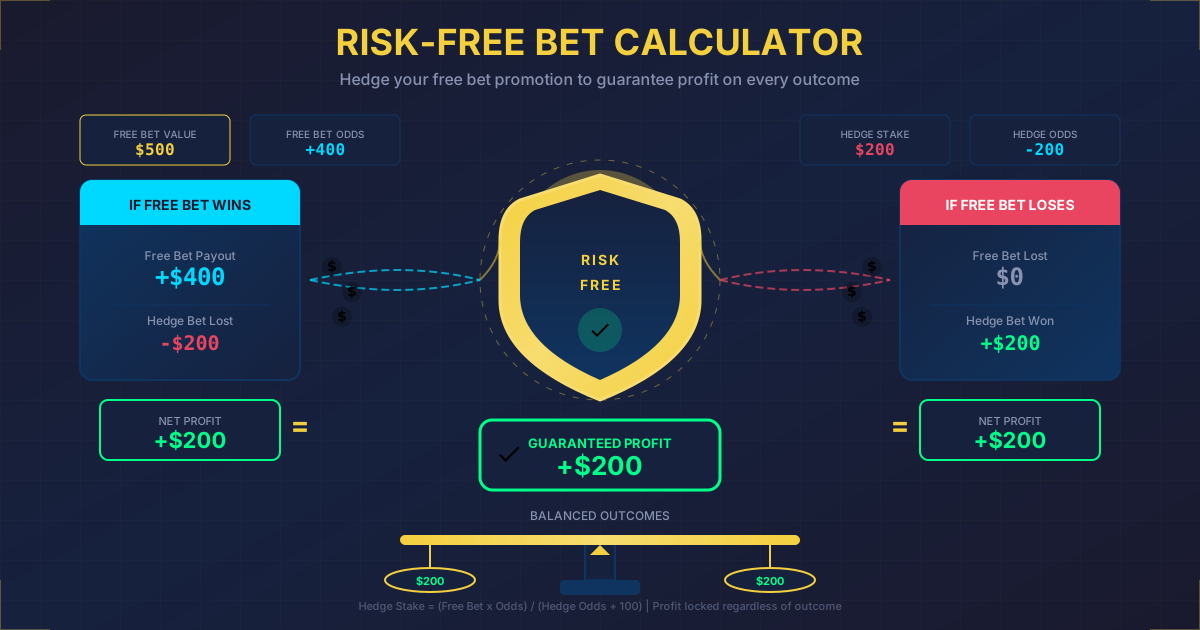
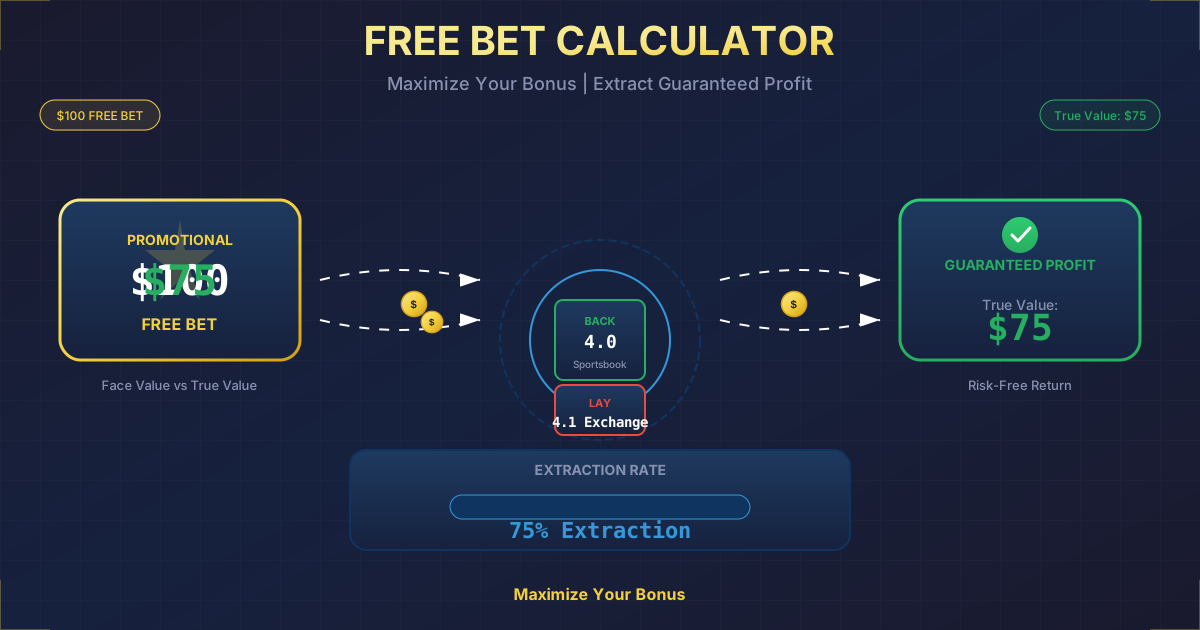
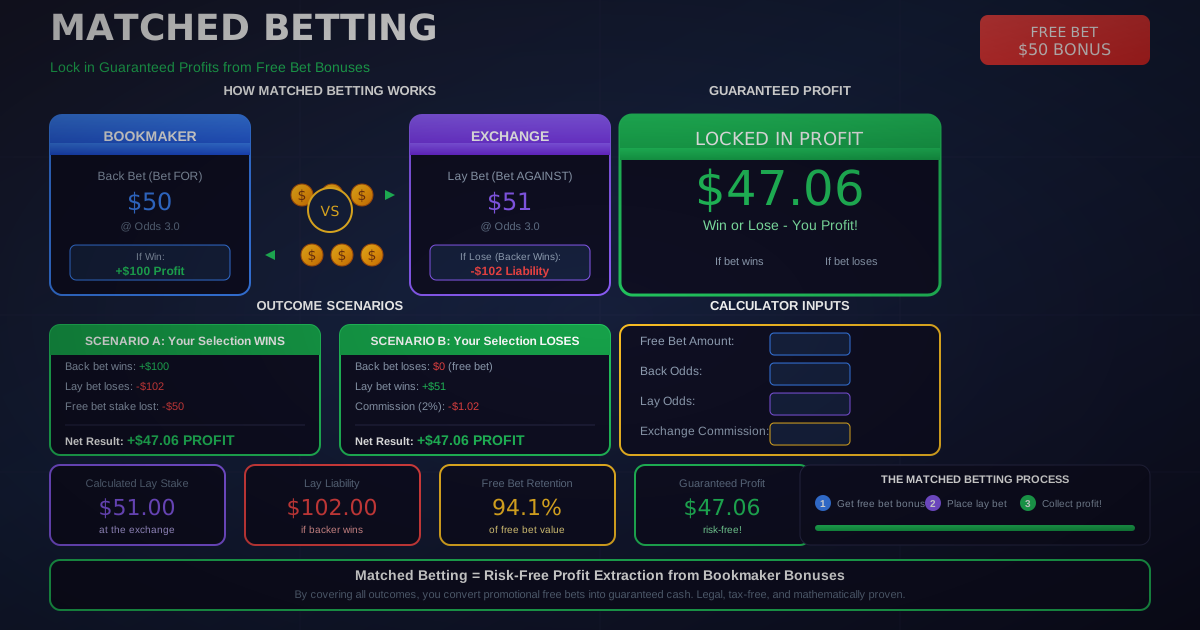
Matched betting is a legitimate strategy that extracts value from bonuses using opposing bets. It is legal in most jurisdictions but requires careful execution.
The basic concept:
- Place a qualifying bet at a bookmaker offering a free bet bonus
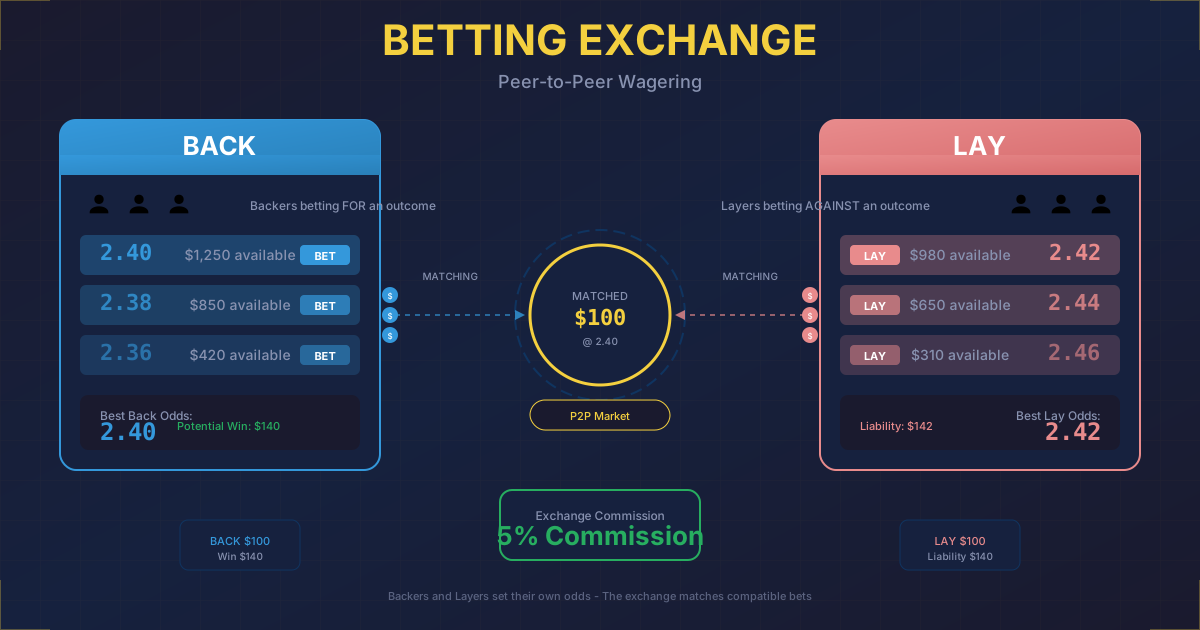
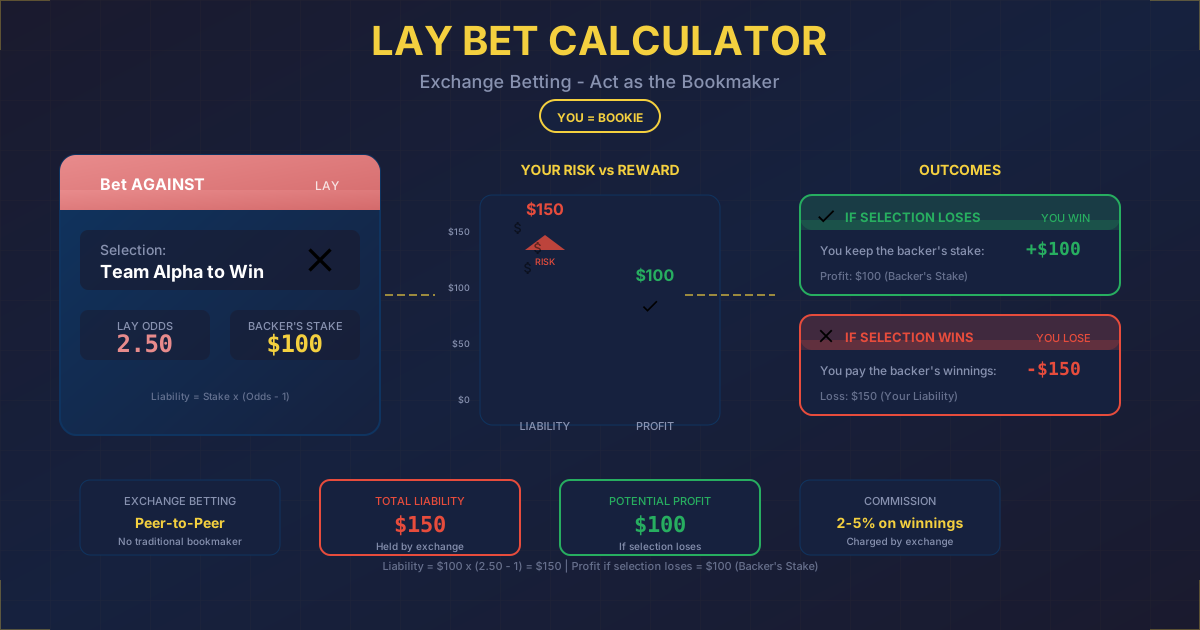
- Place an opposing bet at a betting exchange (or another bookmaker)
- Complete the qualifying requirement at minimal cost
- Use the free bet, again laying it off at the exchange
- Pocket the difference regardless of outcome
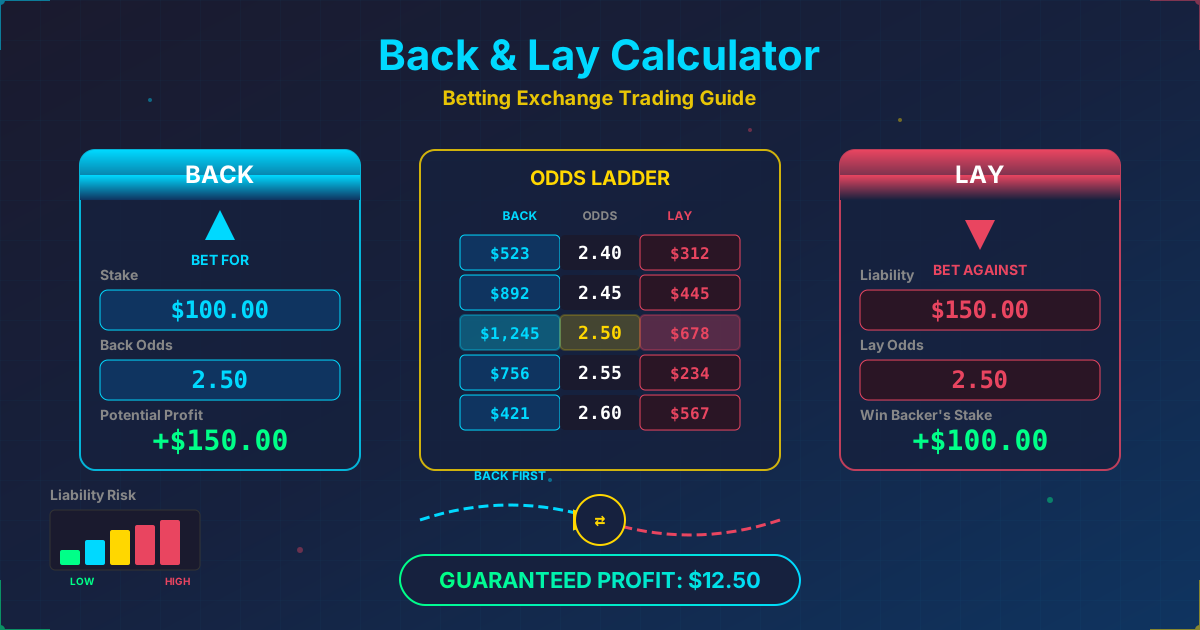
Calculate matched betting profits with our Matched Betting Calculator and Back/Lay Calculator.
How Does Identity Theft Happen Through Gambling Sites?
Unregulated gambling sites collect extensive personal information during registration and verification -- full name, address, date of birth, government ID, and payment details. When these sites are operated by criminals, that data is sold, used for identity theft, or leveraged for further fraud.
Information at Risk
| Data Collected | Legitimate Use | Criminal Use |
|---|---|---|
| Full name + DOB | Age/identity verification | Identity theft, credit applications |
| Government ID scan | KYC compliance | Document forgery, synthetic identity fraud |
| Credit card details | Deposit processing | Unauthorized charges, card cloning |
| Email + password | Account security | Credential stuffing on other sites |
| Home address | Regulatory requirement | Physical mail fraud, stalking |
| Phone number | 2FA, account recovery | SIM swapping, social engineering |
Protecting Your Identity
Follow these practices to minimize identity theft risk:
- Only register at licensed, regulated sites -- They are required to protect your data under law.
- Use unique passwords for every gambling account -- Password managers like Bitwarden or 1Password make this simple.
- Enable two-factor authentication (2FA) on every account that supports it.
- Use e-wallets (PayPal, Skrill, Neteller) rather than direct bank cards when possible -- this adds a layer between the gambling site and your bank.
- Monitor your credit reports regularly through AnnualCreditReport.com or credit monitoring services.
- Never send ID documents via email -- Only upload them through the site's secure verification portal.
What Are the Risks of Using VPNs with Gambling Sites?
VPN use with gambling sites creates legal and practical risks that many bettors underestimate. While VPNs are legal tools for privacy, using them to circumvent geo-restrictions on gambling sites violates terms of service and potentially local law.
Legal Risks
- Terms of Service violations: Every licensed gambling site prohibits VPN use to access services from restricted jurisdictions. Violations result in account closure and confiscation of all funds.
- Regulatory violations: Gambling from a jurisdiction where you are not authorized can violate both your local laws and the laws of the jurisdiction where the site is licensed.
- Tax complications: Gambling winnings are taxable in most jurisdictions. Using a VPN to gamble on a foreign site creates complex tax reporting obligations.
Practical Risks
| Risk | Impact | Likelihood |
|---|---|---|
| Withdrawal denial | Site detects VPN, refuses to pay winnings | High -- sites use advanced VPN detection |
| Account permanent ban | Lose access to account and remaining balance | High -- zero tolerance at most licensed sites |
| No regulatory recourse | Cannot file complaints if site is in another jurisdiction | Certain -- regulators only protect local residents |
| Payment issues | Banking fraud flags from cross-border transactions | Moderate -- depends on payment method |
| Data exposure | VPN provider may log your gambling activity | Varies by VPN provider |
The bottom line: if you cannot legally access a gambling site from your location, do not use a VPN to circumvent the restriction. The risks vastly outweigh any perceived benefit.
How Do Social Media Gambling Scams Operate?
Social media has become the primary distribution channel for gambling fraud in 2026. Platforms like Instagram, TikTok, X (Twitter), Telegram, and Discord are filled with scam gambling promotions.
Common Social Media Gambling Scams
Fake influencer picks: Accounts with purchased followers post "winning" picks with fabricated results. They promote scam sportsbooks or sell subscription tips services.
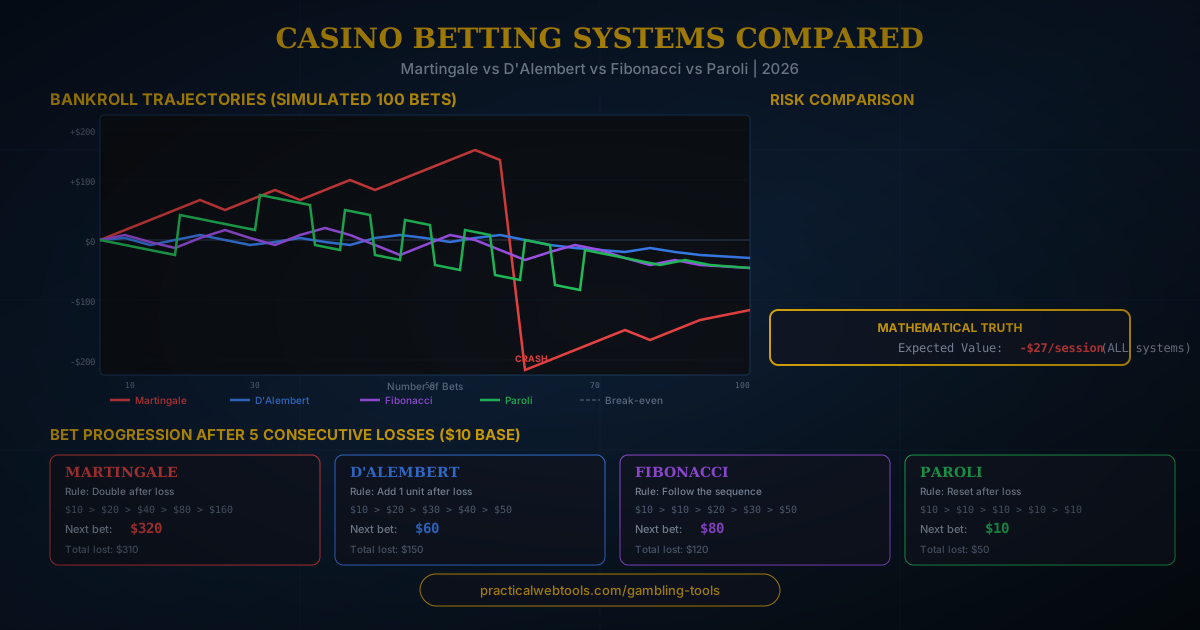
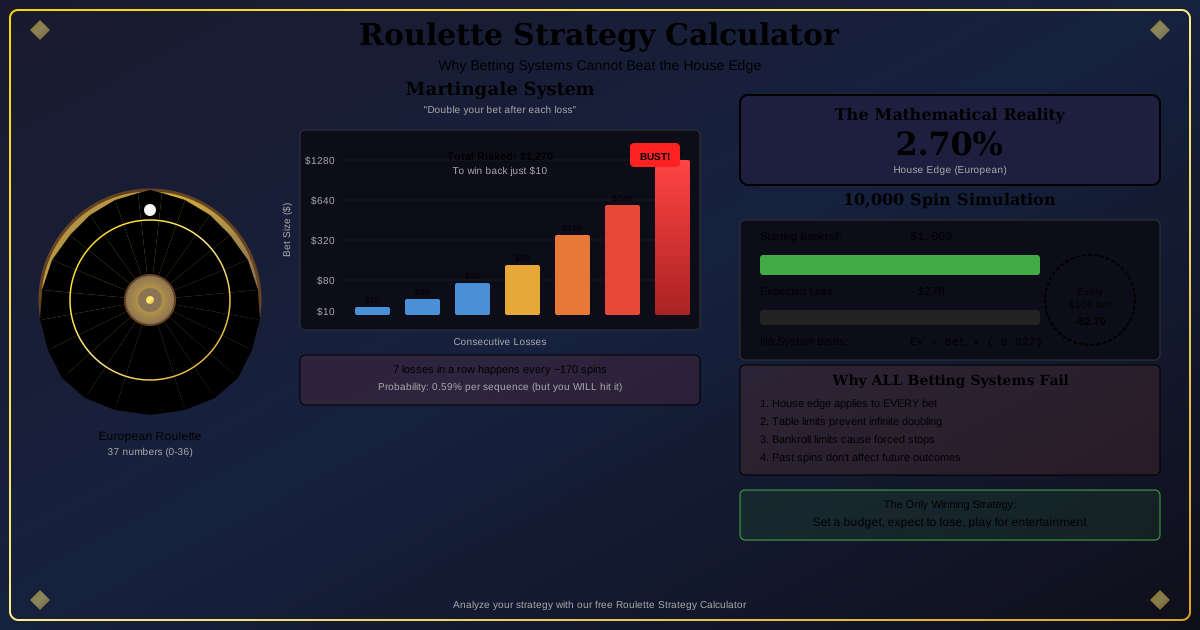
Guaranteed win systems: Posts and videos claiming to have discovered a "guaranteed" betting system that beats the house. These systems are mathematically impossible but prey on people who do not understand probability.
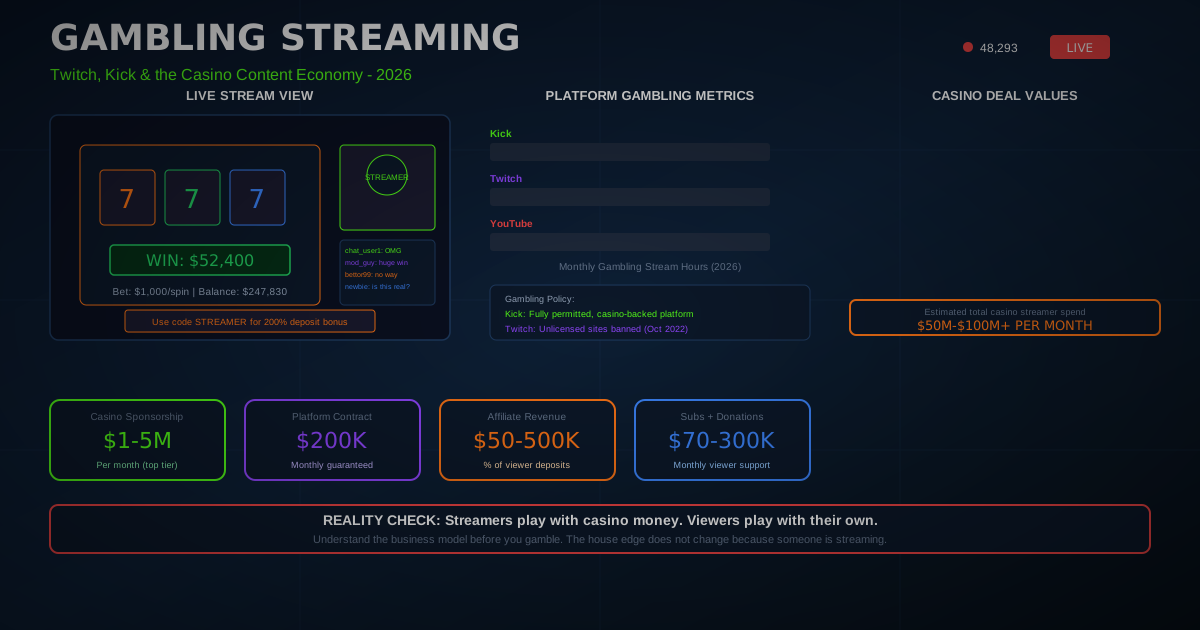
Casino stream manipulation: Streamers who play at casinos they own or are paid by, showing huge wins on rigged games to encourage deposits from viewers.
Telegram/Discord signal groups: Private groups claiming to share insider information or sure bets. They charge membership fees and provide worthless or fabricated picks.
Fake giveaways: "Deposit $100 at this casino and we'll match it with $500 free" -- the casino is unlicensed and will never process a withdrawal.
| Platform | Common Scam Type | Monthly Victim Estimate |
|---|---|---|
| Fake tipster accounts, lifestyle gambling promotions | 50,000+ | |
| Telegram | Private betting groups, fake signals | 100,000+ |
| TikTok | "Guaranteed win" system videos | 200,000+ |
| X (Twitter) | Fake picks accounts, scam sportsbook promotions | 75,000+ |
| Discord | Private betting servers, rigged casino promotions | 40,000+ |
| YouTube | Casino stream manipulation, fake system tutorials | 150,000+ |
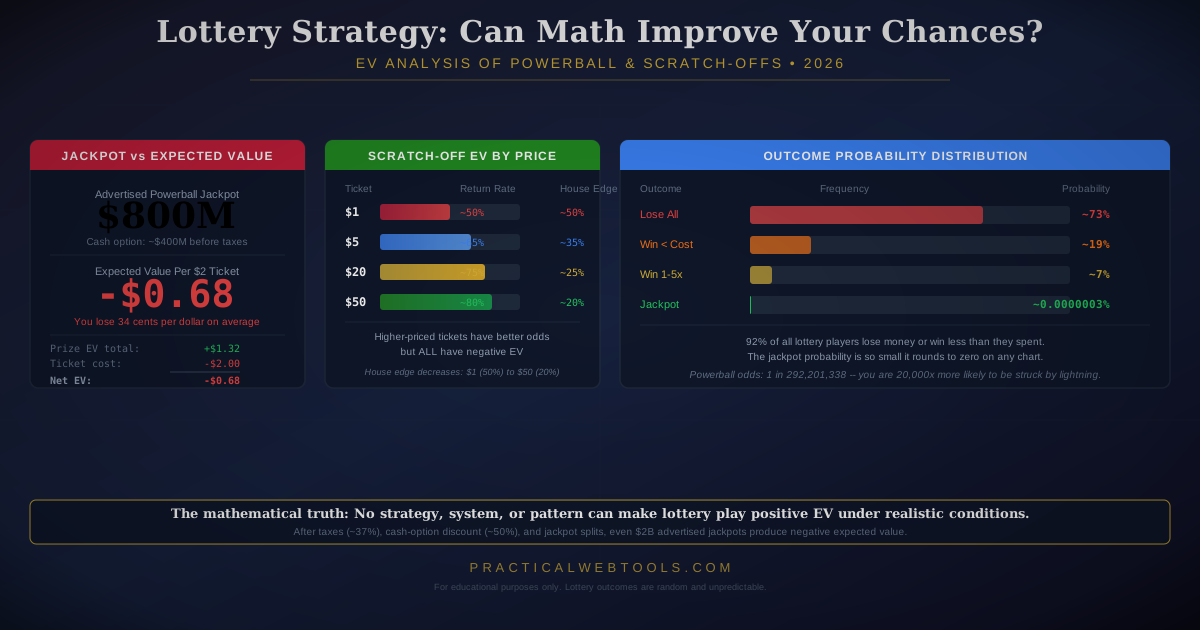
Run the numbers on any "guaranteed system" with our Expected Value Calculator. If the expected value is negative, no system can make it positive.
How Should You Handle Secure Payments When Gambling Online?
Payment security is critical when gambling online. The payment method you choose determines your level of protection if something goes wrong.
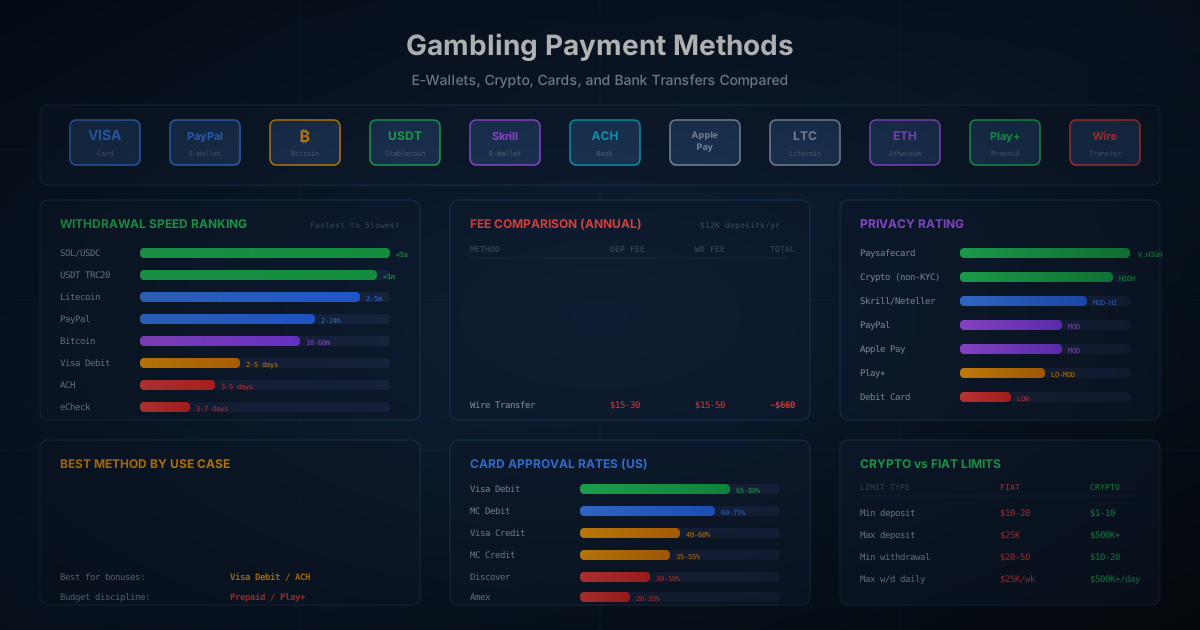
Payment Method Risk Comparison
| Payment Method | Fraud Protection | Chargeback Ability | Privacy Level | Speed |
|---|---|---|---|---|
| Credit Card (Visa/MC) | High -- bank fraud protection | Yes, 60-120 days | Low -- site sees card details | Instant deposit, 1-5 days withdrawal |
| Debit Card | Moderate -- limited fraud protection | Limited | Low | Instant deposit, 1-5 days withdrawal |
| PayPal | High -- buyer protection | Yes, through PayPal disputes | Medium -- site does not see card | Instant deposit, hours withdrawal |
| Skrill/Neteller | Moderate | Limited dispute process | Medium | Instant both directions |
| Bank Transfer | Low -- difficult to reverse | Very difficult | Low | 1-3 days both directions |
| Cryptocurrency | None -- irreversible | No | High | Minutes both directions |
| Prepaid Cards | None -- once spent, gone | No | High | Instant deposit only |
Best Practices for Payment Security
- Use credit cards or e-wallets for maximum fraud protection.
- Set deposit limits at the sportsbook and with your bank.
- Never store payment details on gambling sites you rarely use.
- Check bank statements regularly for unauthorized charges.
- Use virtual card numbers (offered by some banks and services like Privacy.com) for gambling deposits.
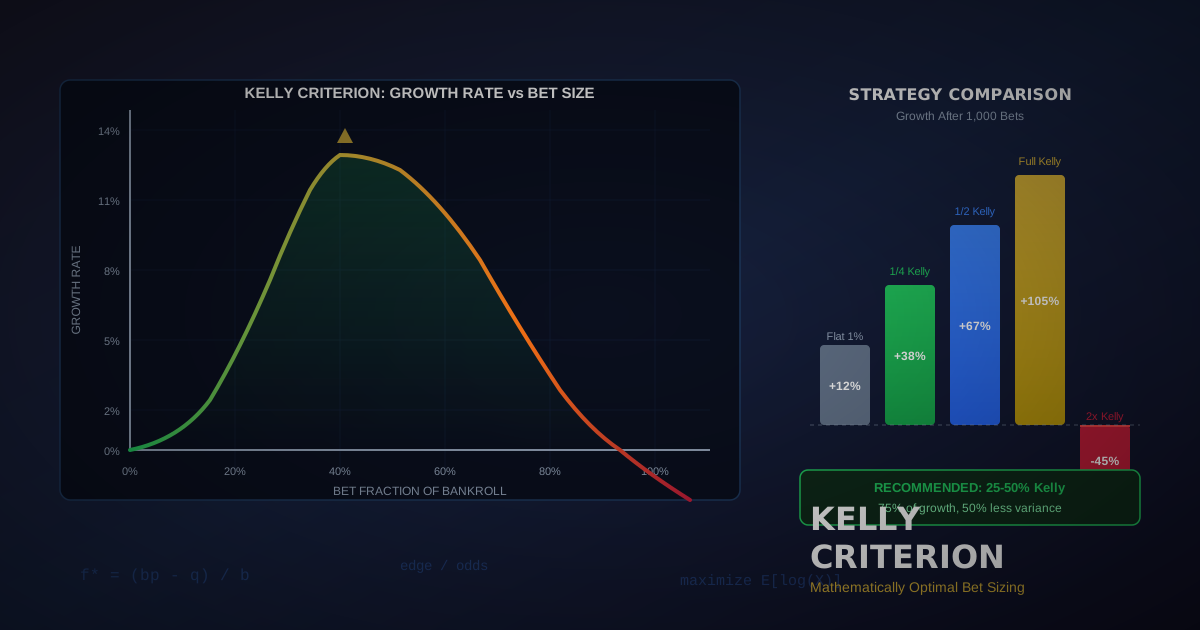
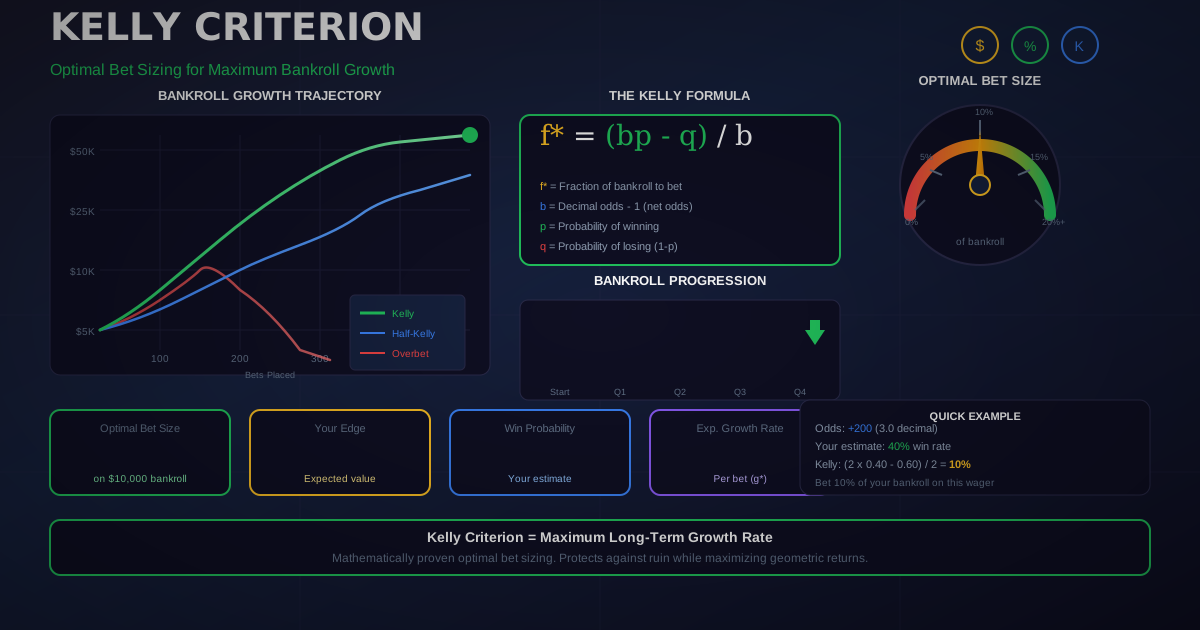
Calculate your optimal bankroll allocation with our Kelly Criterion Calculator.
What Are the Warning Signs of a Rigged Online Casino?
Identifying a rigged casino requires attention to both quantitative and qualitative signals. No single indicator is definitive, but multiple warning signs together strongly suggest fraud.
Quantitative Red Flags
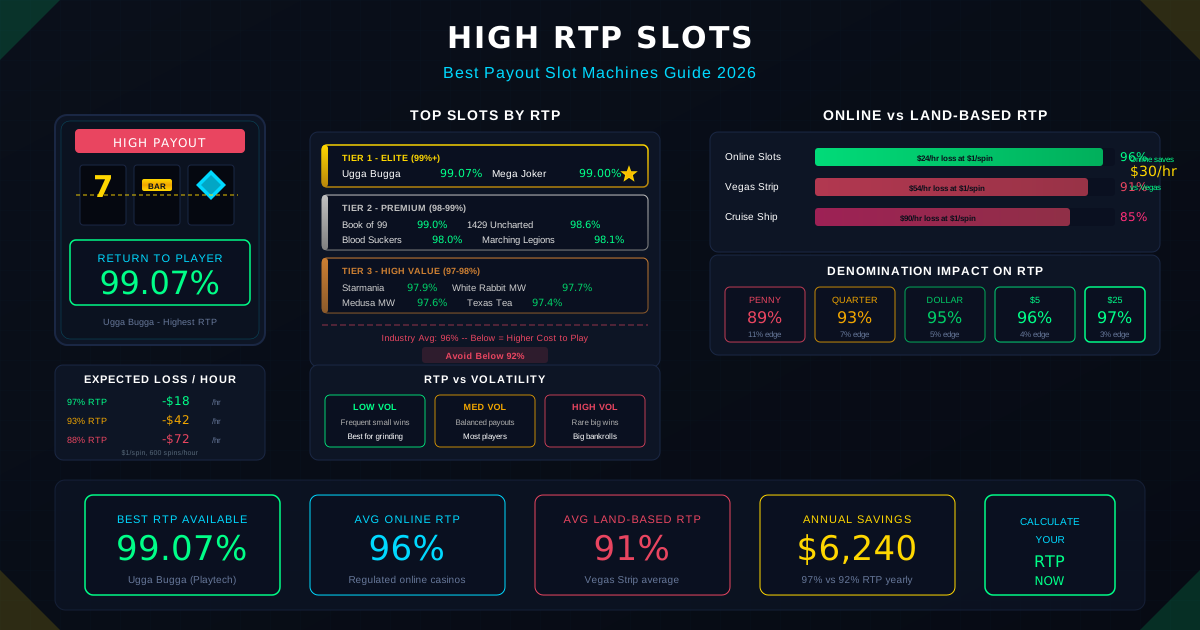
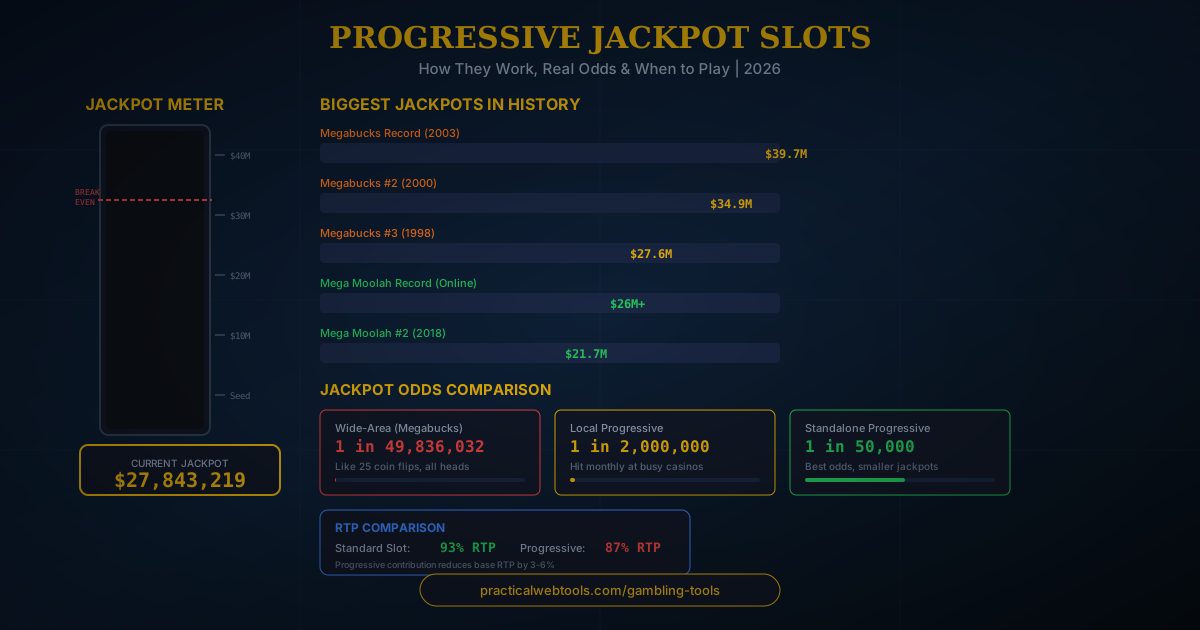
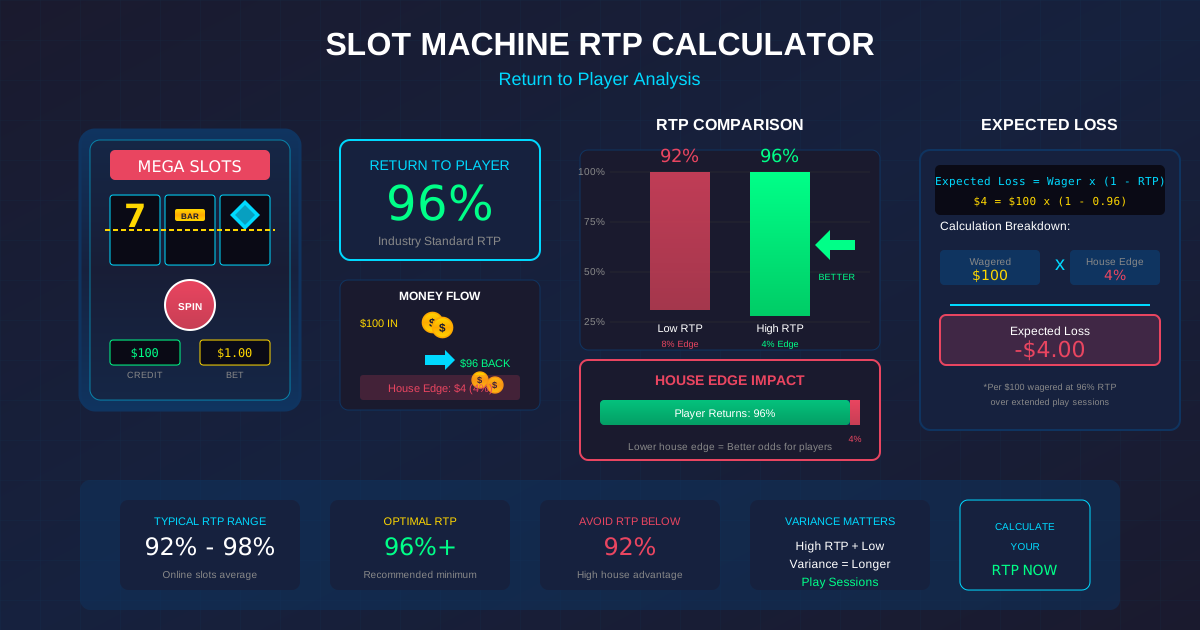
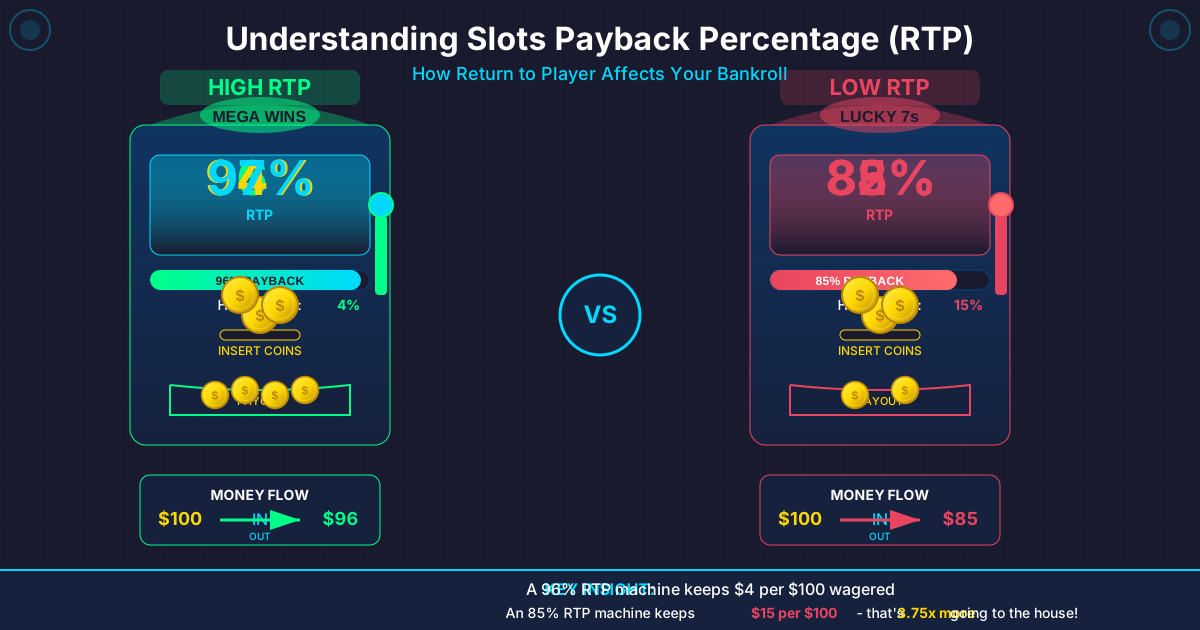
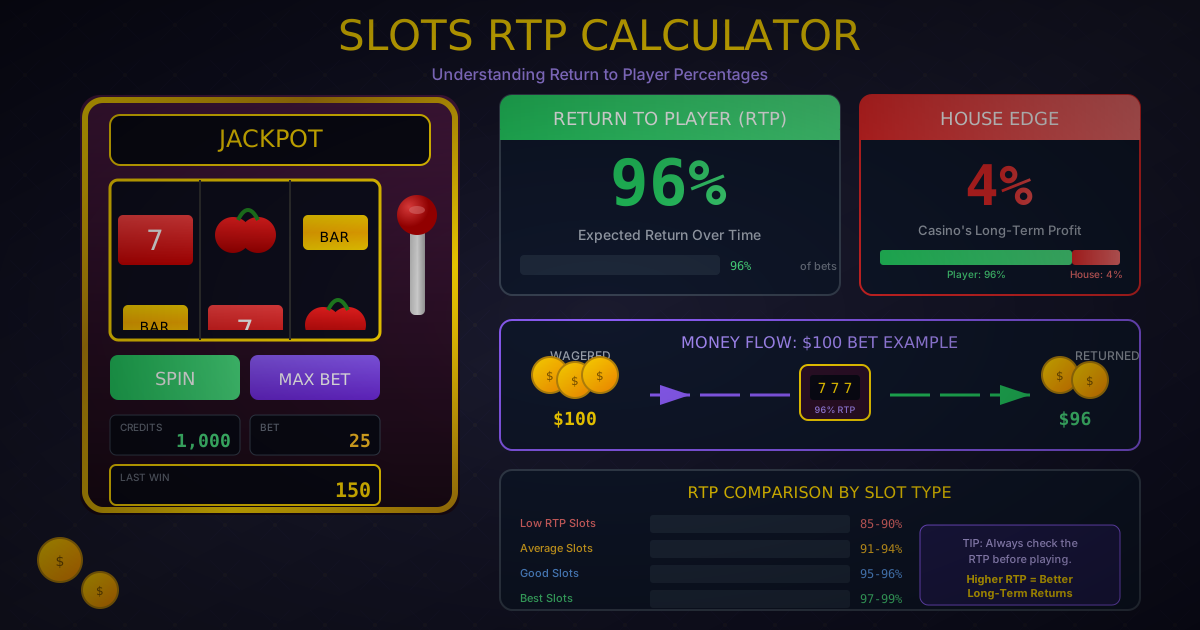
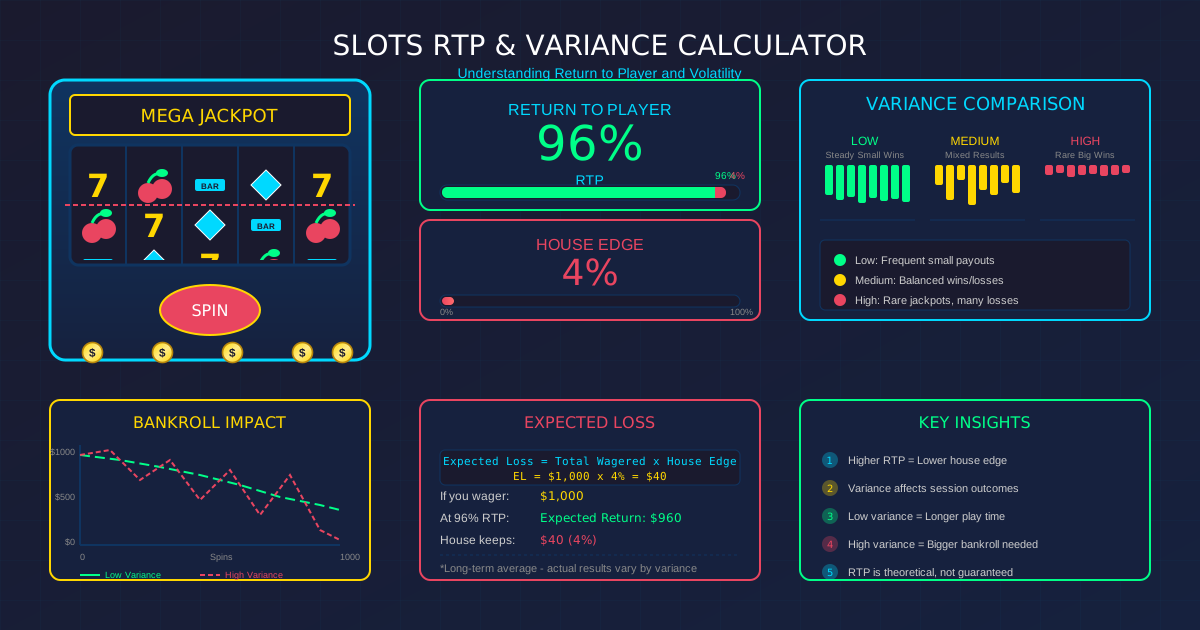
- Payout rates significantly below industry standards -- Licensed slots typically pay 92-98% (RTP). If your results consistently suggest an RTP below 85% over thousands of spins, the games may be rigged.
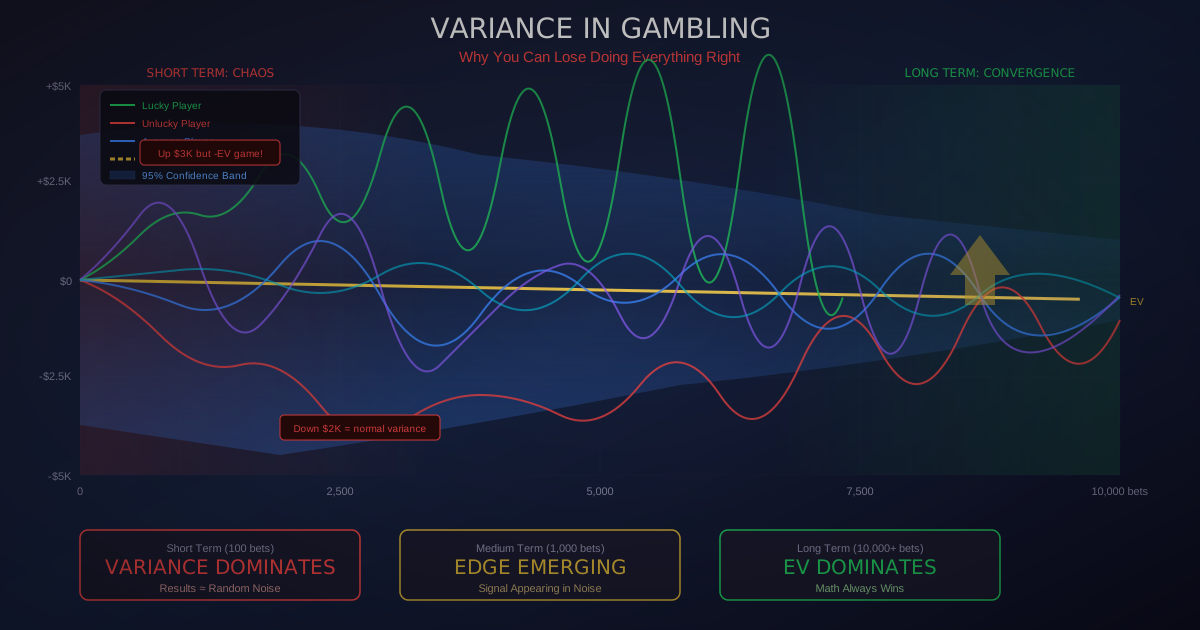
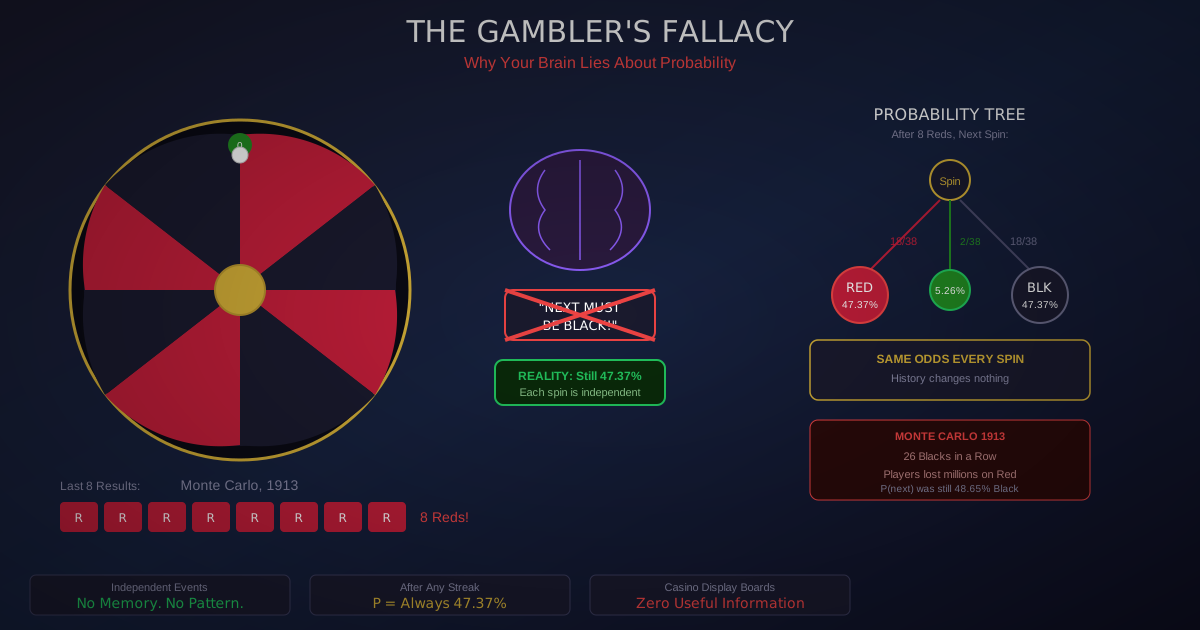
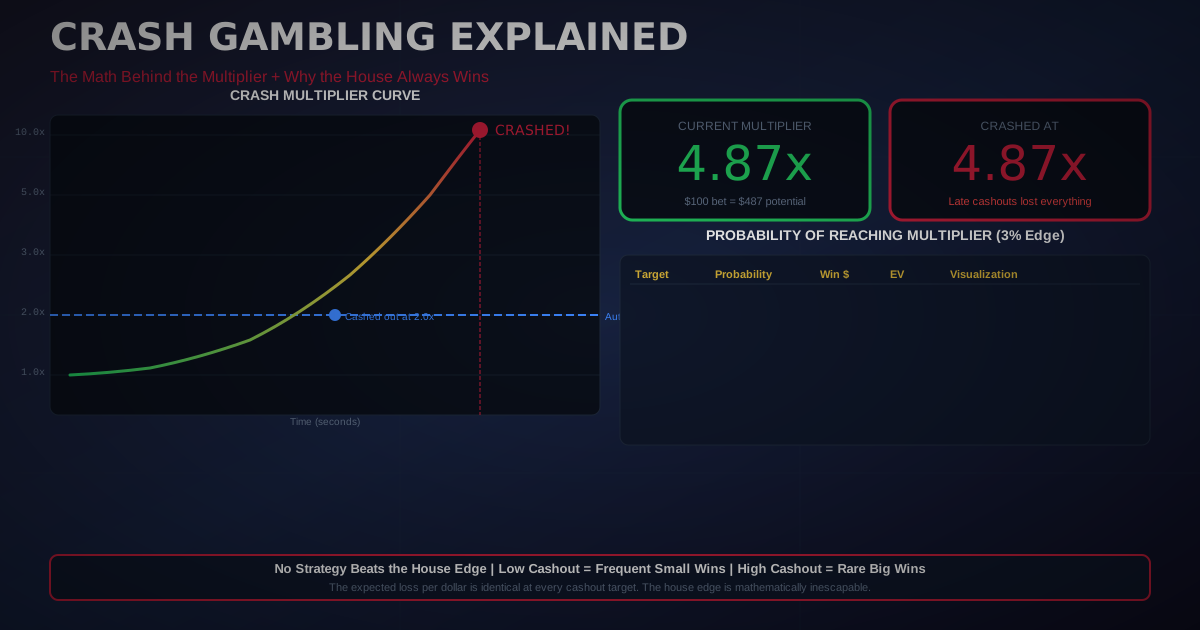
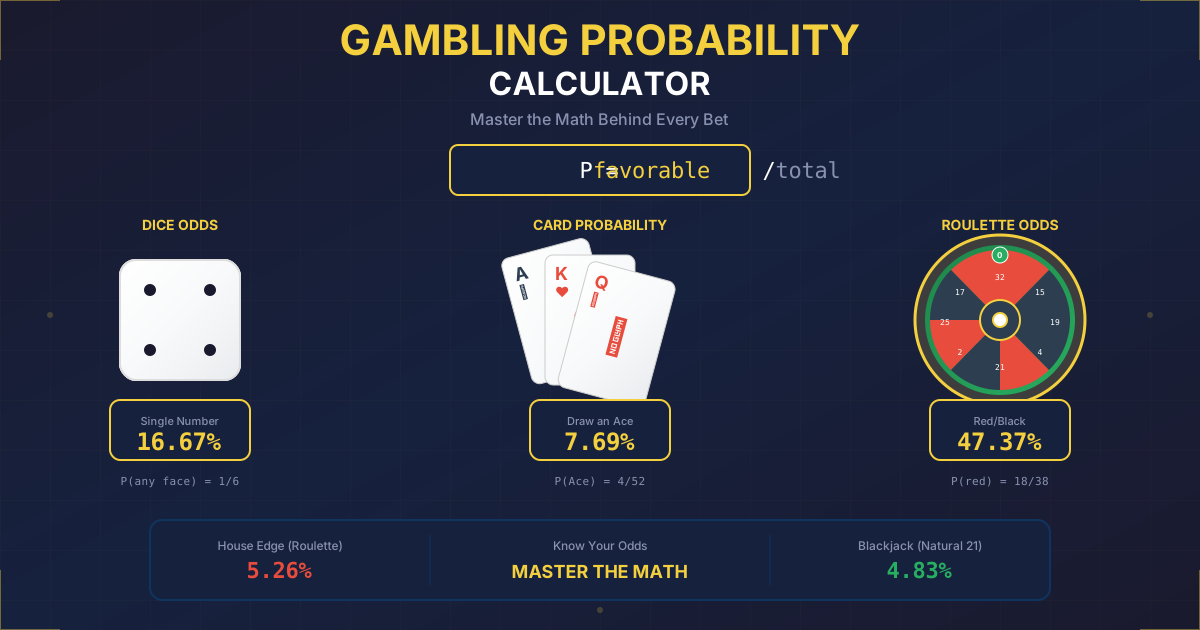
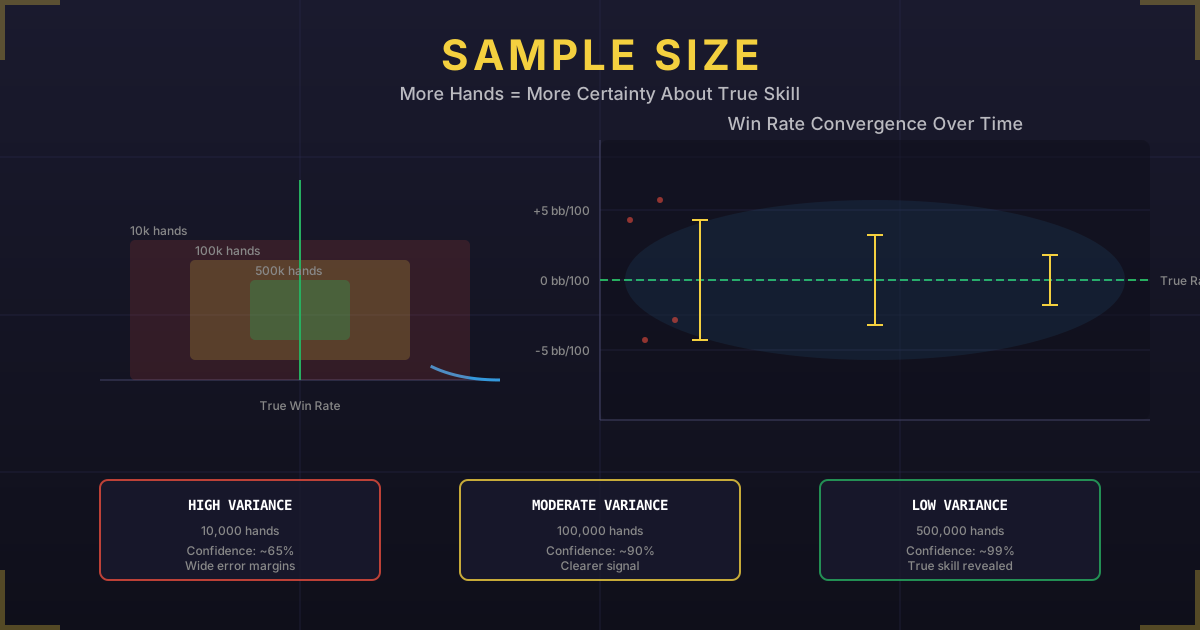
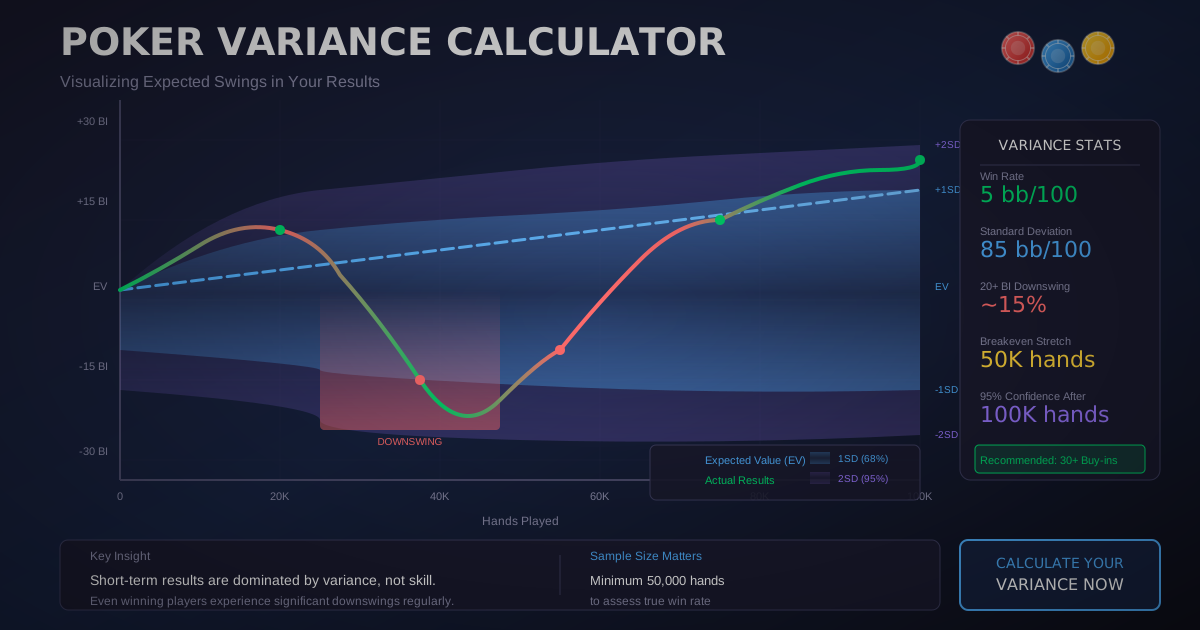
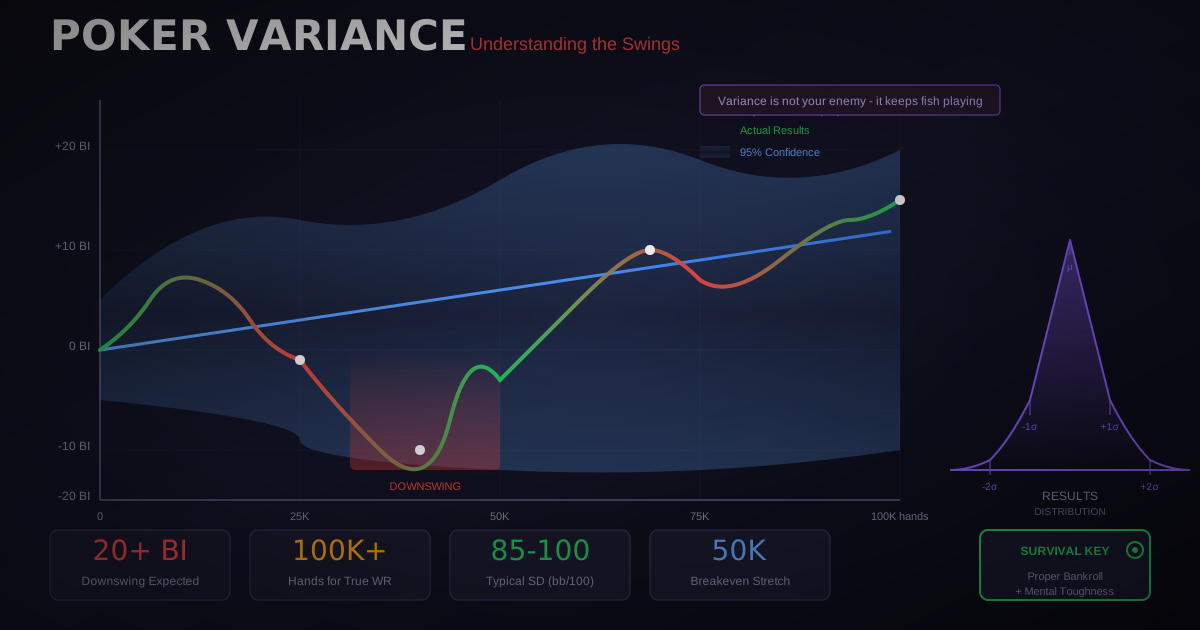
- Abnormal losing streaks -- While variance exists in all gambling, losing 20+ sessions in a row on a game with a 48% win rate is statistically suspicious (probability: approximately 0.0001%).
- Consistent near-misses -- Slot machines that constantly show "almost jackpot" combinations may be using manipulated near-miss algorithms.
Qualitative Red Flags
| Warning Sign | What It Means | Action to Take |
|---|---|---|
| Withdrawal delays exceeding 2 weeks | Site may be insolvent or fraudulent | Contact regulator, stop depositing |
| Changing terms after winning | Site altered bonus terms retroactively | Screenshot everything, file complaint |
| Support becomes unresponsive | Site does not intend to pay | Escalate to regulator immediately |
| Required re-verification for withdrawals | Stalling tactic to delay/deny payment | Comply but set a deadline, then escalate |
| Only accepting crypto deposits | Limits your recourse if scammed | Avoid unless site is well-established and licensed |
| No visible RNG certification | Games may not be fair | Do not play -- find a certified site |
Compare the house edge of any game against expected values using our Roulette House Edge Calculator and Blackjack House Edge Calculator.
How Do You Report Gambling Fraud?
If you have been scammed by a gambling site, reporting it promptly increases your chances of recovering funds and prevents others from falling victim.
Step-by-Step Reporting Process
- Document everything: Screenshots of bets, transactions, communications, and terms and conditions.
- Contact the site's support in writing (email) with a formal complaint. Set a deadline (14 days) for resolution.
- File with the licensing regulator:
- UKGC: gamblingcommission.gov.uk/public-and-players/report-a-complaint
- MGA: mga.org.mt/support/raising-a-dispute
- US state commissions: Contact the relevant state gaming board
- Contact your payment provider to initiate a chargeback or dispute.
- File a police report if identity theft or significant financial loss occurred.
- Report to consumer protection agencies:
- FTC: reportfraud.ftc.gov
- IC3 (FBI Internet Crime): ic3.gov
- Action Fraud (UK): actionfraud.police.uk
Chargeback Success Rates by Payment Method
| Payment Method | Chargeback Success Rate | Average Resolution Time |
|---|---|---|
| Credit Card | 60-80% | 30-90 days |
| PayPal | 50-70% | 14-30 days |
| Debit Card | 30-50% | 30-60 days |
| Bank Transfer | 10-20% | 60-180 days |
| Cryptocurrency | <1% | N/A -- generally unrecoverable |
How Can You Build a Secure Online Betting Setup?
Creating a secure betting environment requires both technical measures and behavioral discipline.
Technical Security Checklist
- Dedicated email address: Use a separate email for all gambling accounts, not your primary email.
- Password manager: Generate unique 16+ character passwords for every site.
- Two-factor authentication: Enable on every account. Use an authenticator app (Google Authenticator, Authy), not SMS.
- Secure browser: Use a privacy-focused browser or at minimum ensure your browser is updated.
- Ad blocker: Block malicious ads that may redirect to scam sites.
- Bookmark legitimate sites: Always access gambling sites through bookmarks, never through search results or email links (which can be spoofed).
Behavioral Security Practices
| Practice | Why It Matters |
|---|---|
| Never click gambling links in emails | Phishing prevention |
| Verify URLs before logging in | Prevents credential theft on cloned sites |
| Check SSL certificate (https + padlock) | Ensures encrypted connection |
| Do not share account credentials | Prevents unauthorized access and violates ToS |
| Log out after sessions | Prevents session hijacking on shared devices |
| Review login history | Detects unauthorized access early |
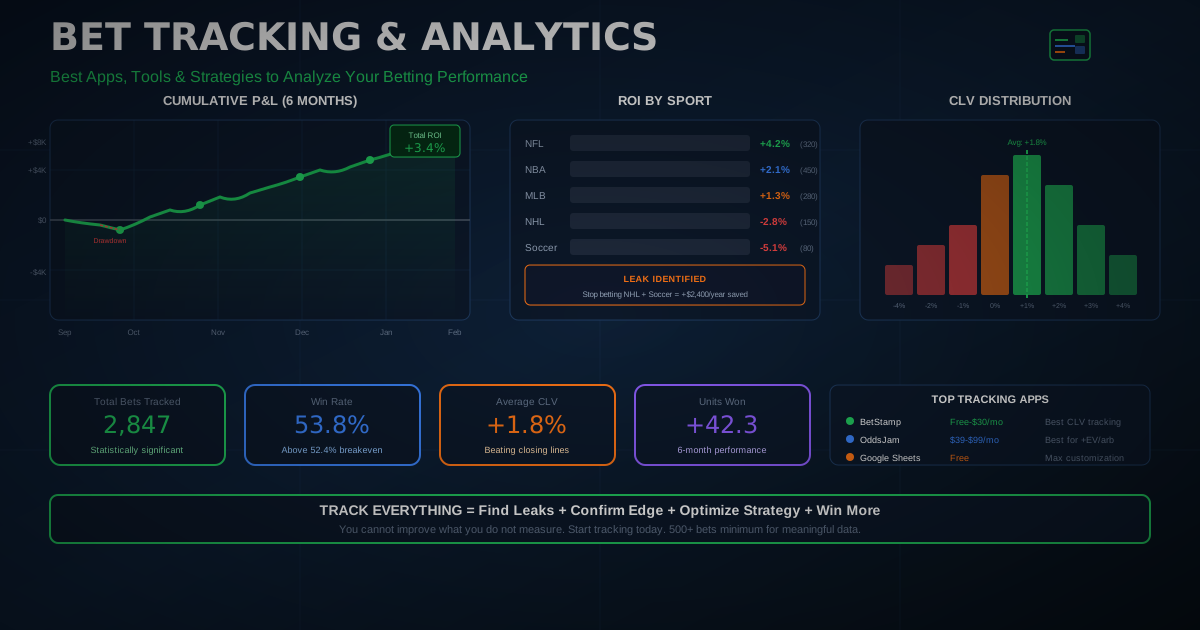
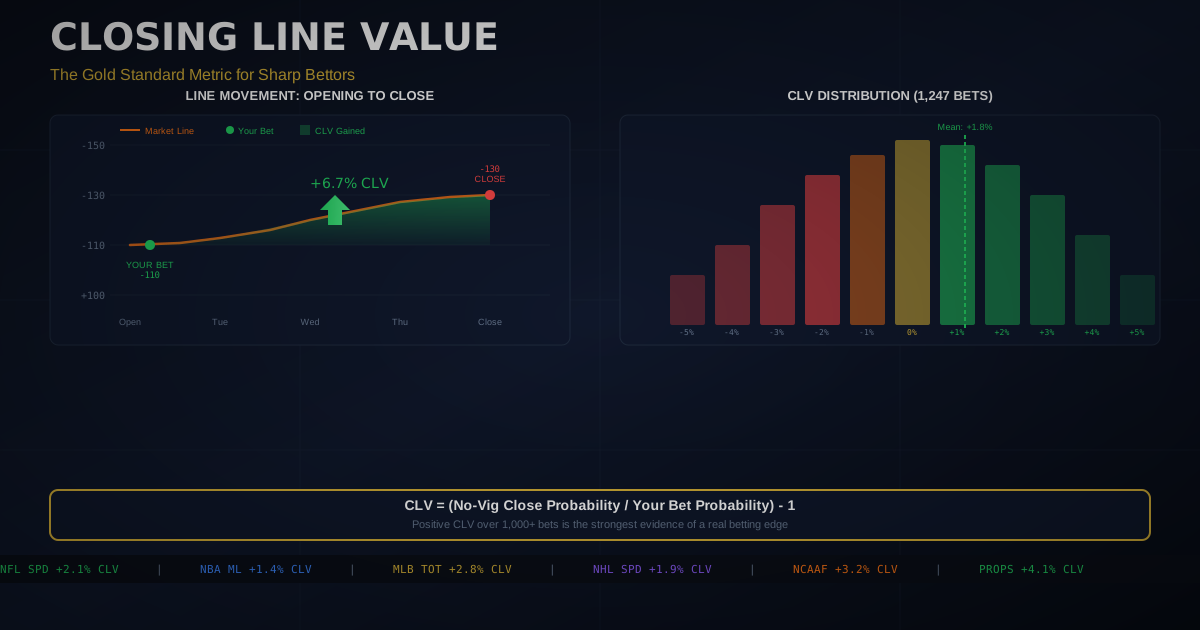
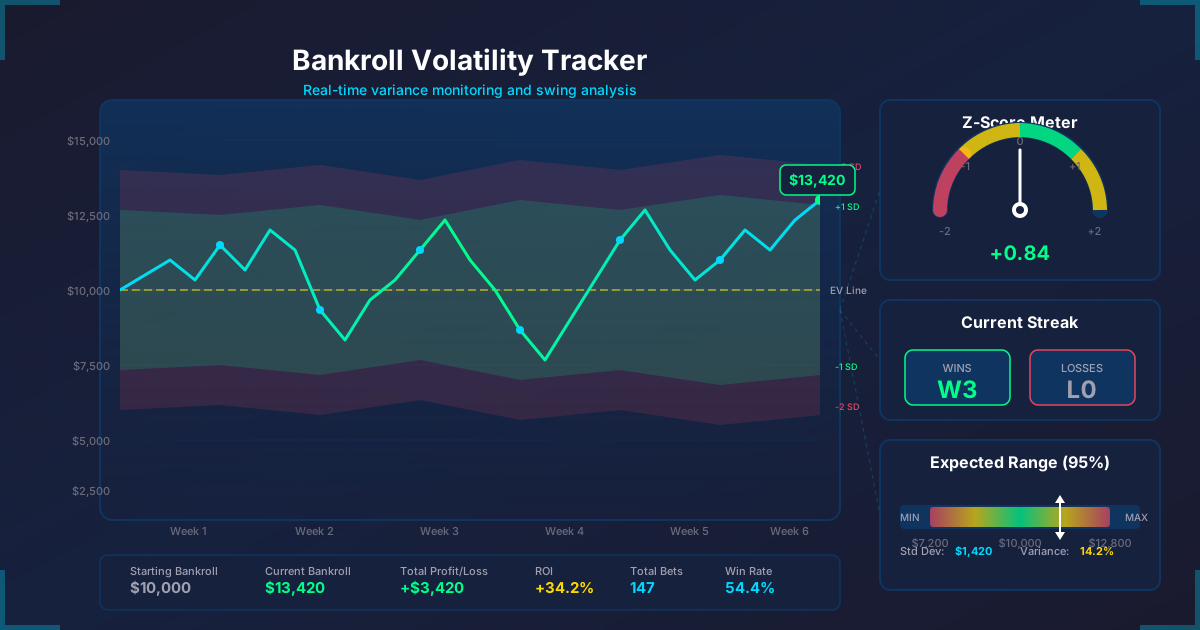
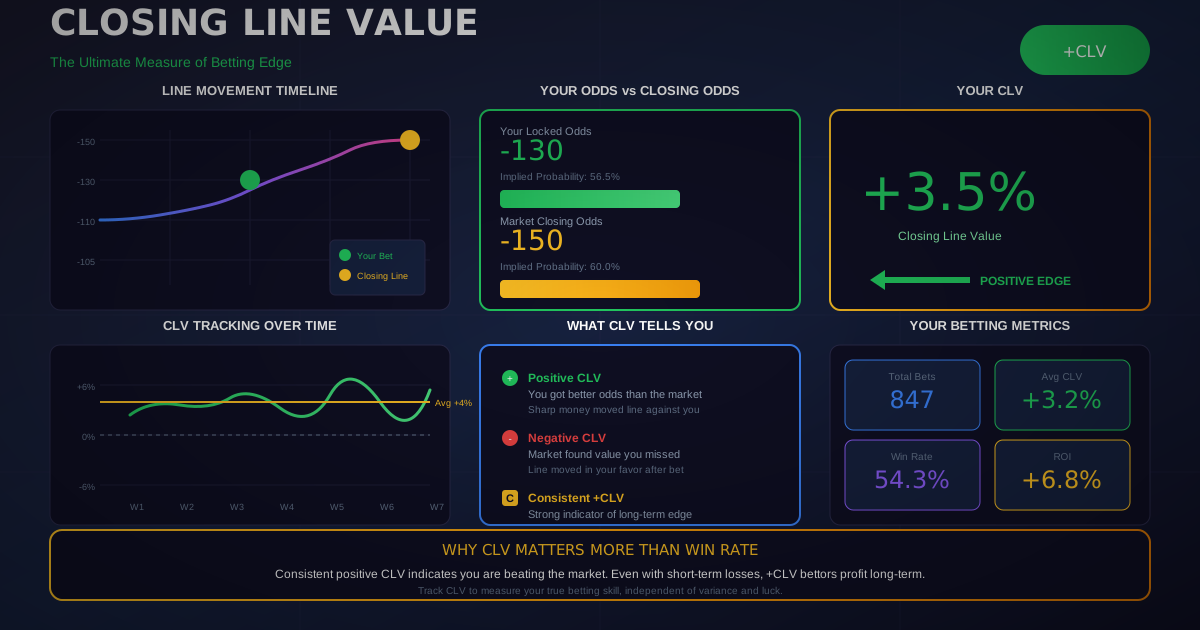
Track your betting performance securely with our CLV Tracker and Bankroll Volatility Tracker.
What Should You Know About Gambling Scams Involving Crypto?
Cryptocurrency gambling scams have exploded alongside the growth of crypto casinos. The irreversible nature of blockchain transactions makes crypto particularly attractive to scammers.
Common Crypto Gambling Scams
- Fake crypto casinos: Sites that accept Bitcoin or Ethereum deposits but have no intention of processing withdrawals.
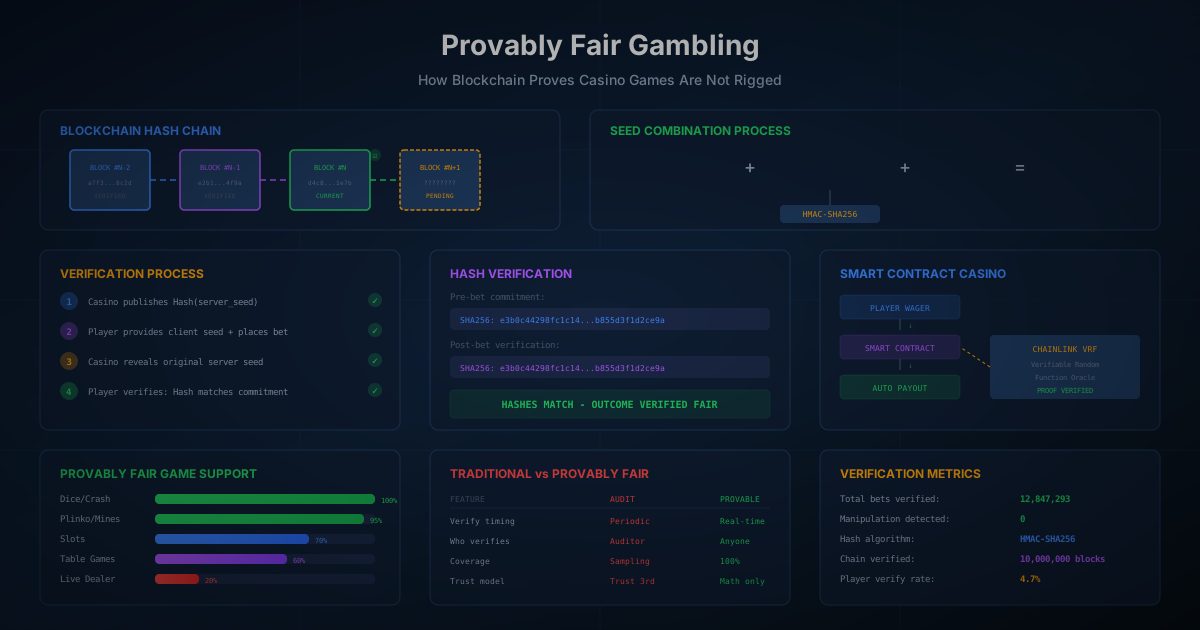
- Smart contract manipulation: Provably fair games that are not actually fair because the smart contract contains hidden functions the house can exploit.
- Rug pulls: Crypto gambling tokens or platforms that collect funds and then disappear.
- Fake yield/staking: "Stake your crypto at our casino and earn 50% APY" -- these are ponzi schemes disguised as gambling platforms.
| Scam Type | Average Loss Per Victim | Recovery Likelihood |
|---|---|---|
| Fake crypto casino | $2,000-$10,000 | <5% |
| Smart contract rug pull | $5,000-$50,000 | <1% |
| Fake gambling token | $1,000-$20,000 | <2% |
| Staking/yield scam | $3,000-$100,000 | <3% |
Protecting Yourself in Crypto Gambling
- Verify smart contracts on block explorers before depositing.
- Start with minimum deposits to test withdrawal functionality.
- Research the platform's history -- check blockchain analytics for fund flows.
- Never invest in gambling tokens from unknown platforms.
- Use established, licensed crypto casinos (Stake.com, BC.Game, etc. -- where legal).
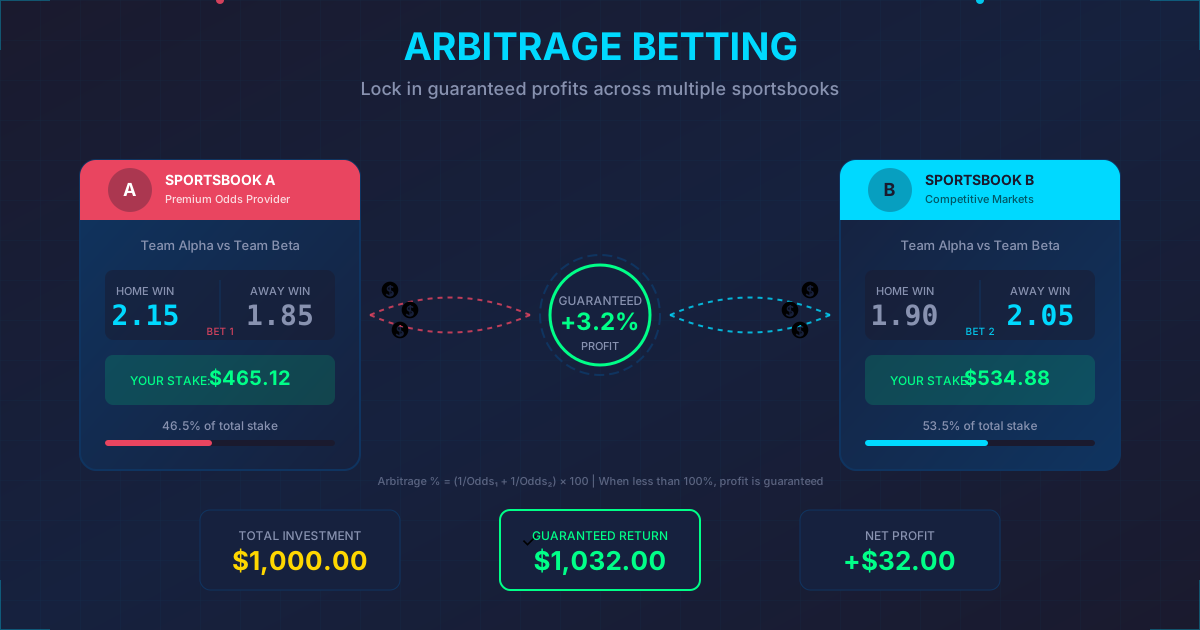
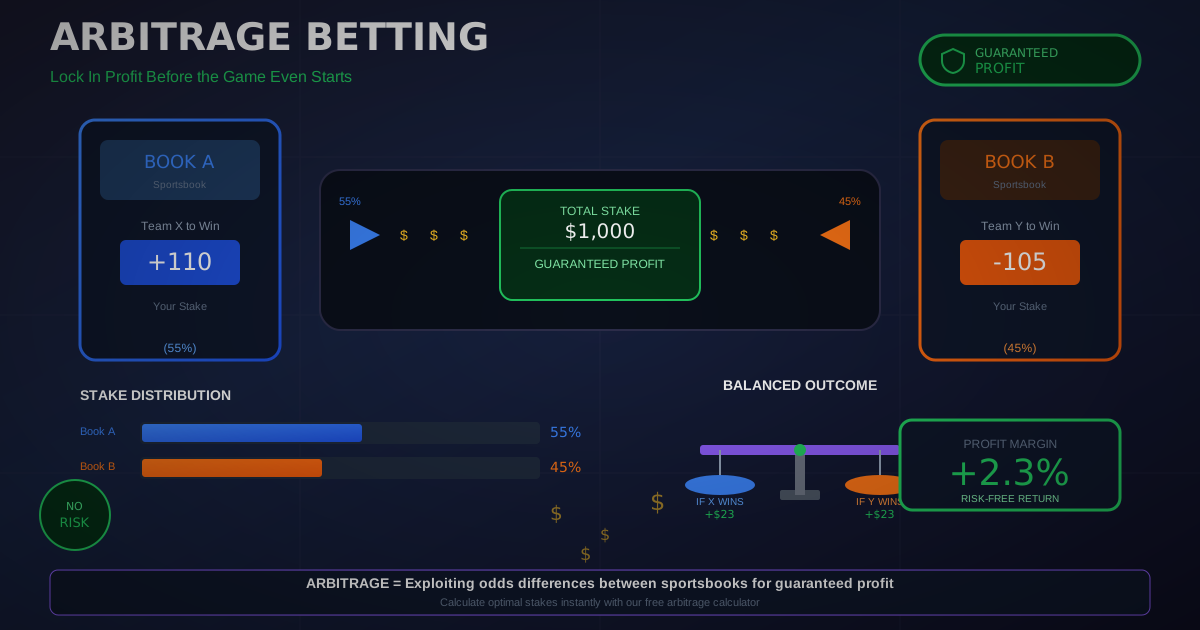
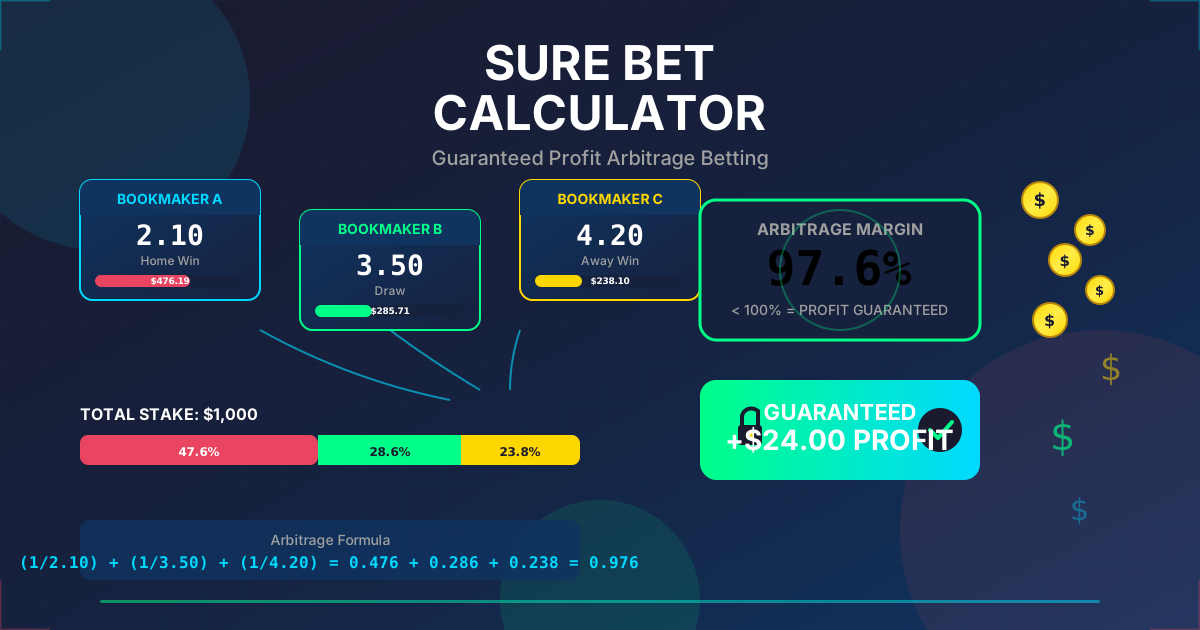
Calculate arbitrage opportunities across different platforms with our Arbitrage Calculator and Sure Bet Calculator.
How Do Gambling Regulators Protect You?
Understanding what regulators do (and do not do) helps you set realistic expectations for protection when gambling online.
What Regulators Provide
| Protection | UKGC | MGA | US State Commissions |
|---|---|---|---|
| License verification database | Yes | Yes | Yes |
| Complaint resolution process | Yes | Yes | Yes |
| Financial segregation requirements | Yes -- player funds must be protected | Yes | Varies by state |
| Responsible gambling mandates | Yes -- extensive requirements | Yes | Yes |
| Regular site audits | Yes | Yes | Yes |
| Advertising standards enforcement | Yes -- strict rules | Yes | Yes |
| Self-exclusion programs | Yes (GamStop) | Yes | Yes (state-specific) |
What Regulators Cannot Do
- They cannot guarantee you will win or receive fair outcomes beyond RNG certification.
- They cannot recover funds from unlicensed operators outside their jurisdiction.
- They cannot prevent you from gambling at unlicensed sites (only licensed ones fall under their authority).
- Response times vary -- some complaints take months to resolve.
Understand the mathematical edge on any bet with our Hold/Vig Calculator.
Frequently Asked Questions About Gambling Scams
How can I tell if an online casino is legitimate? Check for a valid license from a recognized authority (UKGC, MGA, US state commissions), verify the license number on the regulator's website, confirm RNG certification from eCOGRA or iTech Labs, read reviews on independent complaint databases, and test customer support responsiveness before depositing significant funds.
What should I do if a gambling site refuses to pay my withdrawal? Document everything with screenshots, contact customer support in writing with a formal complaint, file a dispute with the site's licensing regulator, initiate a chargeback with your payment provider, and report the site to consumer protection agencies like the FTC or Action Fraud.
Are tipster services worth paying for? The vast majority are not. Legitimate tipsters exist but are rare. Before paying, demand third-party verified records (Betstamp, Action Network), a complete bet history including losses, and realistic claims (55-60% on sides, not 70%+). Even legitimate tipsters often underperform after accounting for subscription costs.
Is it safe to gamble with cryptocurrency? Crypto gambling carries higher risk because blockchain transactions are irreversible. Only use established, licensed crypto casinos. Never deposit large amounts without first testing small withdrawals. Avoid platforms promoting gambling tokens or impossibly high staking yields.
Can I use a VPN to access gambling sites from restricted areas? Using a VPN to circumvent geo-restrictions on gambling sites violates the site's terms of service and potentially local laws. If detected, the site will close your account and may confiscate your funds. You will also have no regulatory recourse if anything goes wrong.
How do I know if a game is rigged? Track your results over large sample sizes. Compare actual outcomes against mathematically expected outcomes. Rigged games show RTP significantly below advertised rates, abnormal losing streaks beyond statistical probability, and patterns inconsistent with random outcomes. Only play at sites with verified RNG certification.
What is the safest payment method for online gambling? Credit cards and e-wallets (PayPal) offer the best fraud protection due to chargeback rights. Avoid bank transfers and cryptocurrency for initial deposits at new sites, as these payment methods offer minimal recourse if the site turns out to be fraudulent.
How do I report a gambling scam? Report to the site's licensing regulator, file a chargeback with your payment provider, report to the FTC (US) or Action Fraud (UK), file an IC3 complaint with the FBI for internet crime, and document everything with screenshots of transactions, communications, and website terms.
Related Tools for Safe Betting
Odds and Probability Tools
- Odds Converter: Convert between American, decimal, and fractional odds to verify site accuracy
- Implied Probability Calculator: Convert odds to true probabilities
- Expected Value Calculator: Calculate the expected profit/loss on any wager
- Hold/Vig Calculator: Determine the sportsbook's edge on any line
Bankroll Protection Tools
- Kelly Criterion Calculator: Size bets mathematically to protect your bankroll
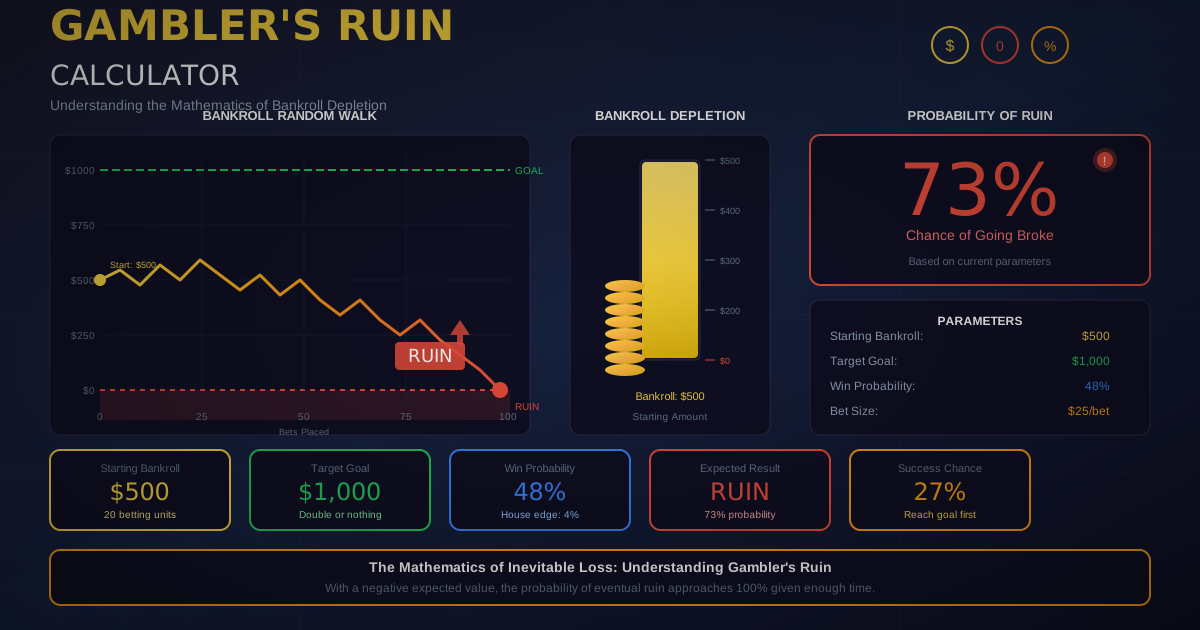
- Bankroll Volatility Tracker: Monitor bankroll swings and risk of ruin
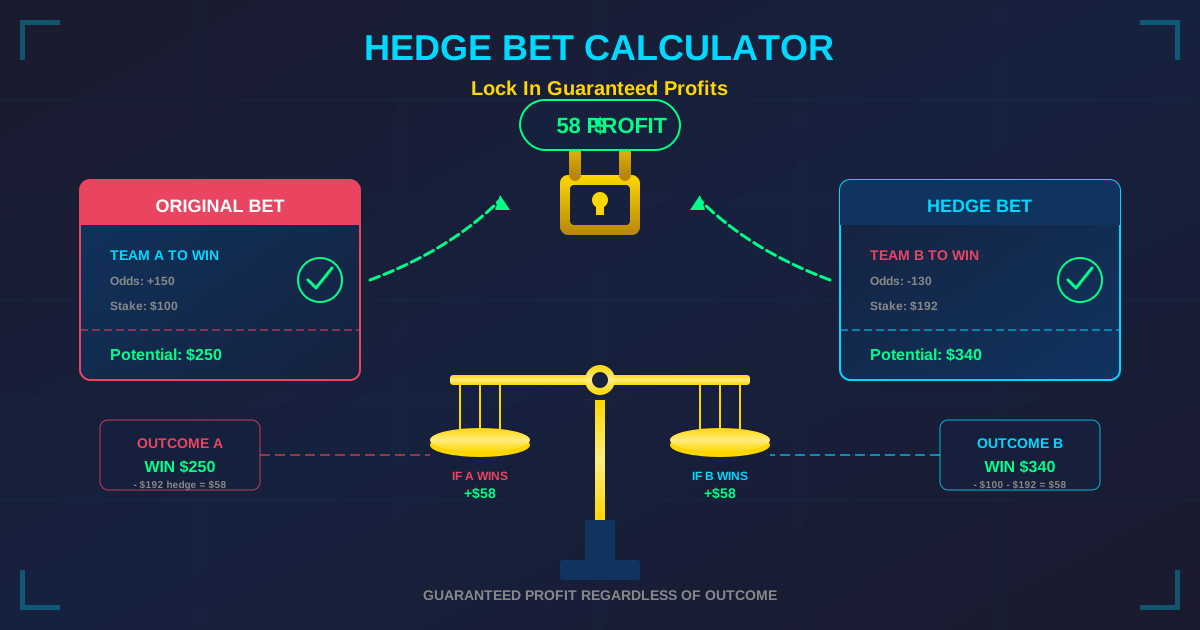
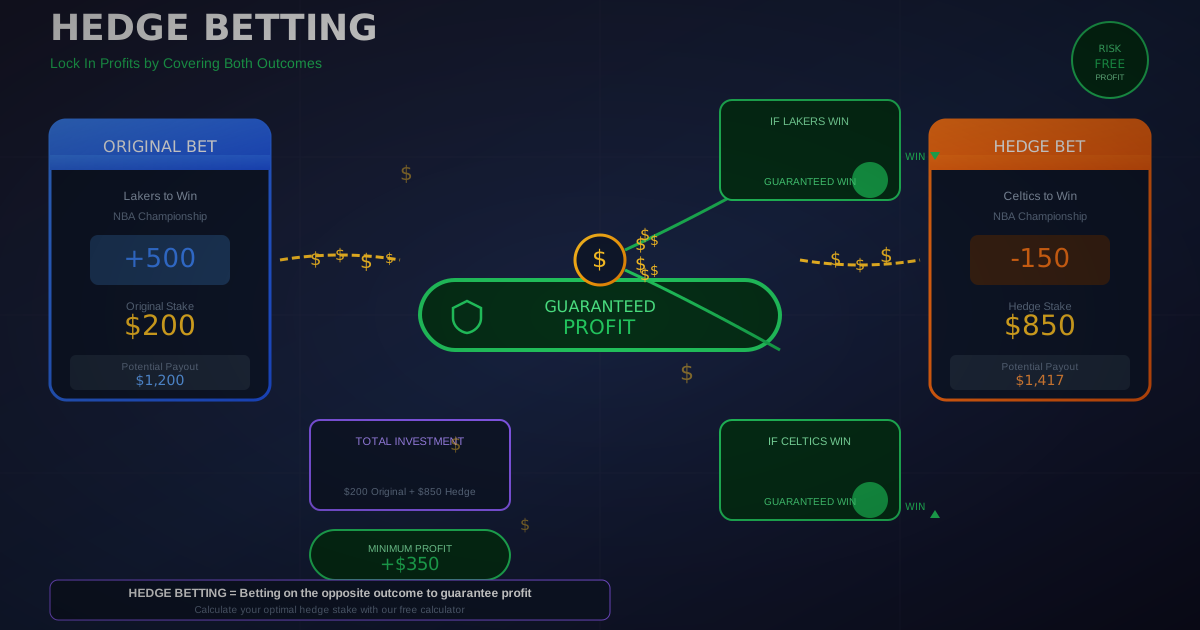
- Hedge Calculator: Lock in profits or minimize losses
Value Verification Tools
- Arbitrage Calculator: Find risk-free profit opportunities across sportsbooks
- Sure Bet Calculator: Identify guaranteed profit scenarios
- Matched Betting Calculator: Extract value from bonuses legitimately
- Back/Lay Calculator: Calculate lay stakes for matched betting
- CLV Tracker: Track your closing line value over time
House Edge Analysis Tools
- Blackjack House Edge Calculator: Calculate true blackjack house edge by rules
- Roulette House Edge Calculator: Compare house edge across roulette variants
Protecting Yourself Is Non-Negotiable
Online gambling can be entertaining and, for skilled bettors, potentially profitable. But only if you are betting at legitimate sites with fair games and secure operations. The time you invest in verification before depositing a single dollar is the most valuable wager you will ever make.
The pattern is consistent across every type of gambling scam: they exploit urgency, greed, and laziness. Scammers want you to deposit quickly, chase unrealistic returns, and skip basic verification. The antidote is patience, skepticism, and diligence.
Start protecting yourself today. Verify odds with our Odds Converter, check expected value with our Expected Value Calculator, and track your betting performance with our CLV Tracker. The best defense against scams is understanding the math behind every bet.
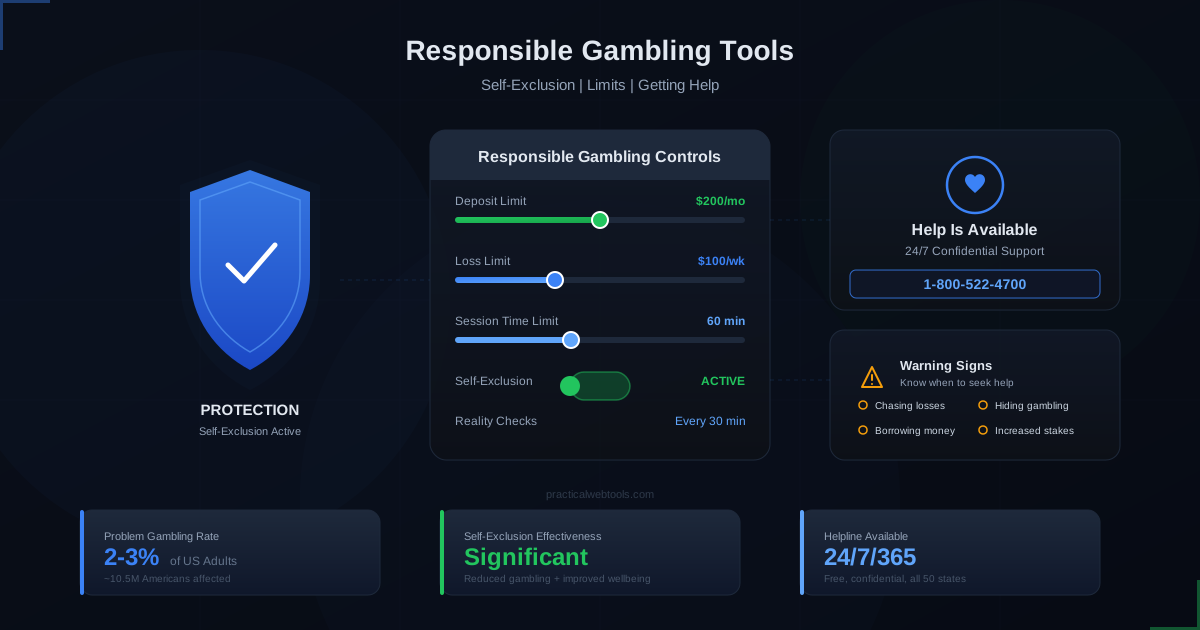
Gambling involves risk and should be approached as entertainment, not as a source of income. Always bet within your means, set strict bankroll limits, and never chase losses. If you or someone you know has a gambling problem, contact the National Council on Problem Gambling at 1-800-522-4700 or visit ncpgambling.org. Must be 21+ to gamble in most US jurisdictions. Please play responsibly.