How to Read Betting Lines: Moneylines, Spreads, and Totals Explained (2026)
One in five American adults placed a sports bet in 2025, wagering over $121 billion at legal sportsbooks. Yet most of those bettors could not explain what -110 means, how a 6.5-point spread works, or why the same game shows three completely different sets of numbers on a betting board. If you have ever stared at a sportsbook screen and felt like you were reading a foreign language, you are not alone -- and you are about to fix that.
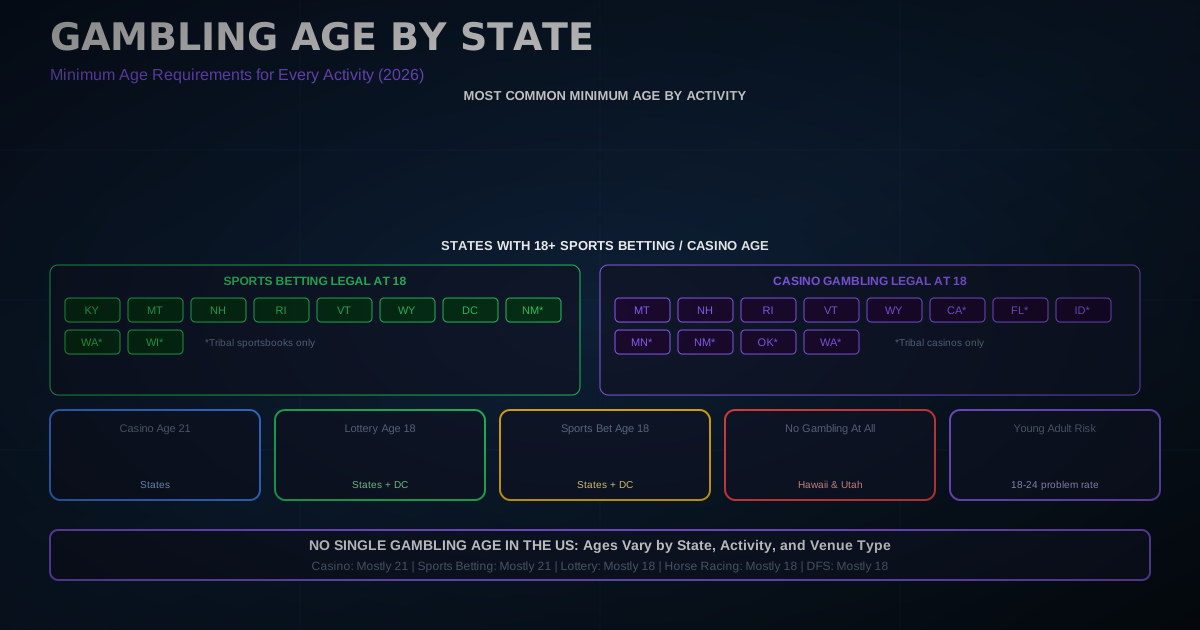
Sports betting is now legal in 38 states plus Washington, D.C., with Missouri launching in December 2025. The industry generates nearly $19 billion in annual revenue and is growing at roughly 11% per year. Whether you are watching the Super Bowl, following the NBA playoffs, or tracking your favorite MLB team, understanding betting lines is the entry ticket to making informed wagers instead of blind guesses.
This guide breaks down every type of betting line you will encounter -- moneylines, point spreads, and totals -- using real games, specific dollar amounts, and plain English. By the end, you will be able to walk up to any sportsbook (physical or digital), read the board, and know exactly what every number means.
Convert any odds format instantly with our Odds Converter.
What Are Betting Lines?
A betting line is a set of numbers published by a sportsbook that defines the terms of a wager. Every line tells you three things:
- Who is favored and who is the underdog (or if the matchup is considered even)
- How much you stand to win or lose on a given bet
- What the sportsbook believes will happen in the game (the expected margin and total score)
Sportsbooks employ teams of oddsmakers -- statisticians who analyze data, model outcomes, and set opening lines. Those lines then shift based on how the public bets, injuries, weather, and other factors.
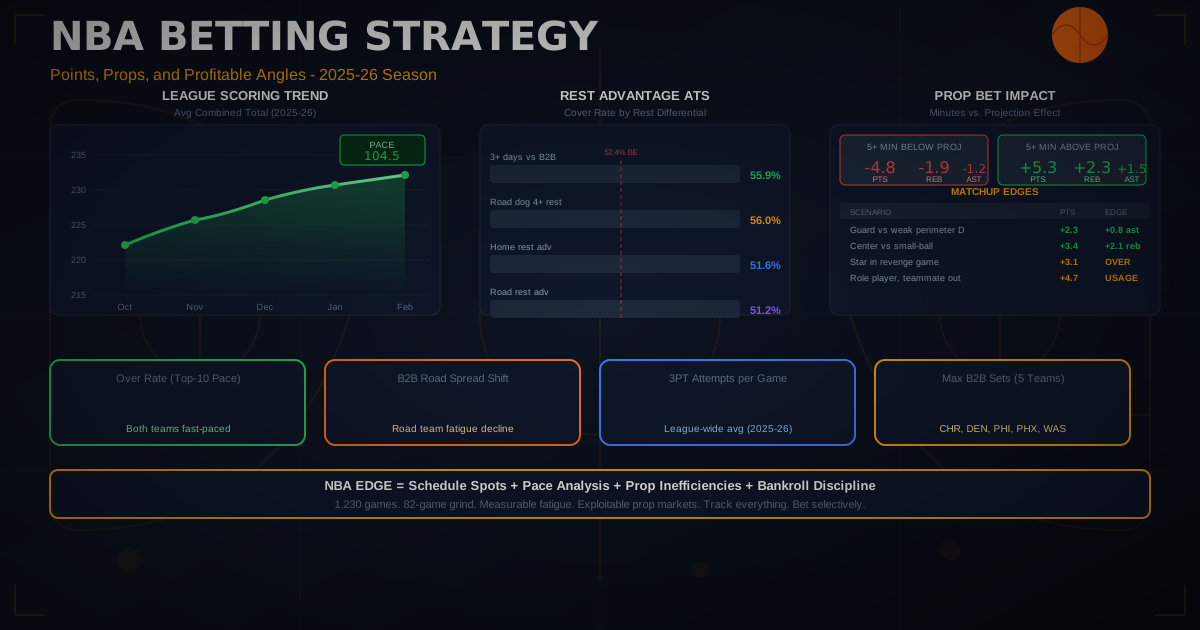
Here is what a typical betting board looks like for an NBA game:
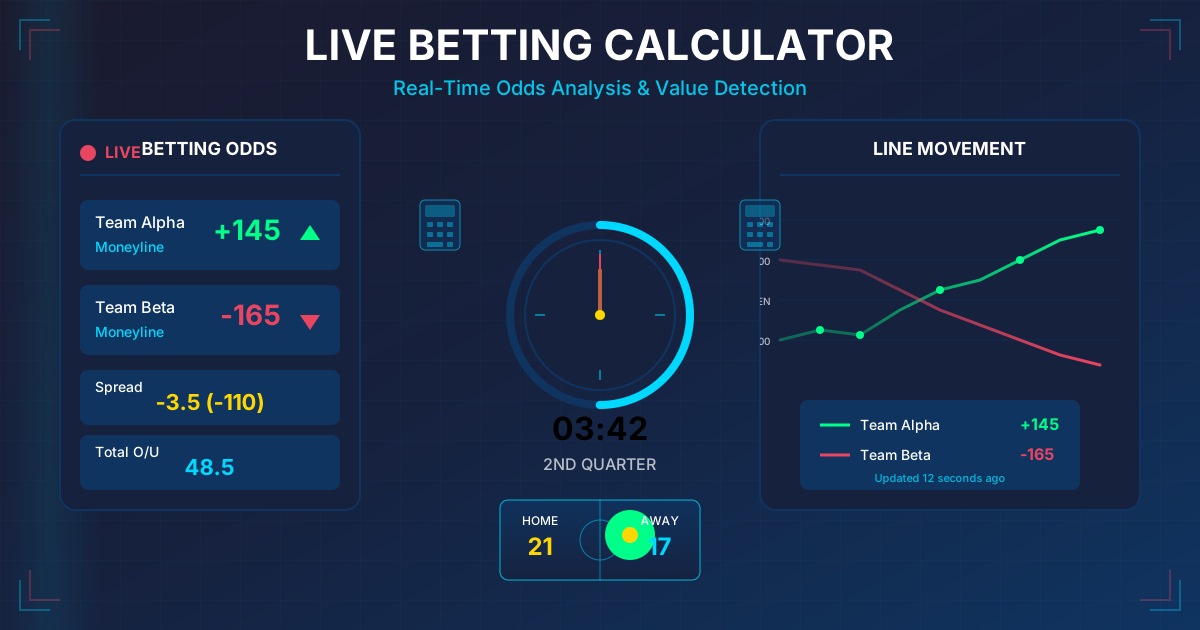
| Team | Spread | Moneyline | Total |
|---|---|---|---|
| Boston Celtics | -5.5 (-110) | -220 | O 210.5 (-110) |
| New York Knicks | +5.5 (-110) | +180 | U 210.5 (-110) |
That single row contains three separate bets you can make. We are going to break down each one.
The Moneyline: Picking a Winner
The moneyline is the simplest bet in sports: pick which team wins. No margin, no score total -- just the winner. The catch is that not every team pays the same amount, because not every team has the same chance of winning.
How Moneyline Numbers Work
Moneyline odds use positive (+) and negative (-) numbers:
- Negative numbers (-) indicate the favorite. The number tells you how much you must bet to win $100.
- Positive numbers (+) indicate the underdog. The number tells you how much you win on a $100 bet.
Real Example: Super Bowl 60 (February 2026)
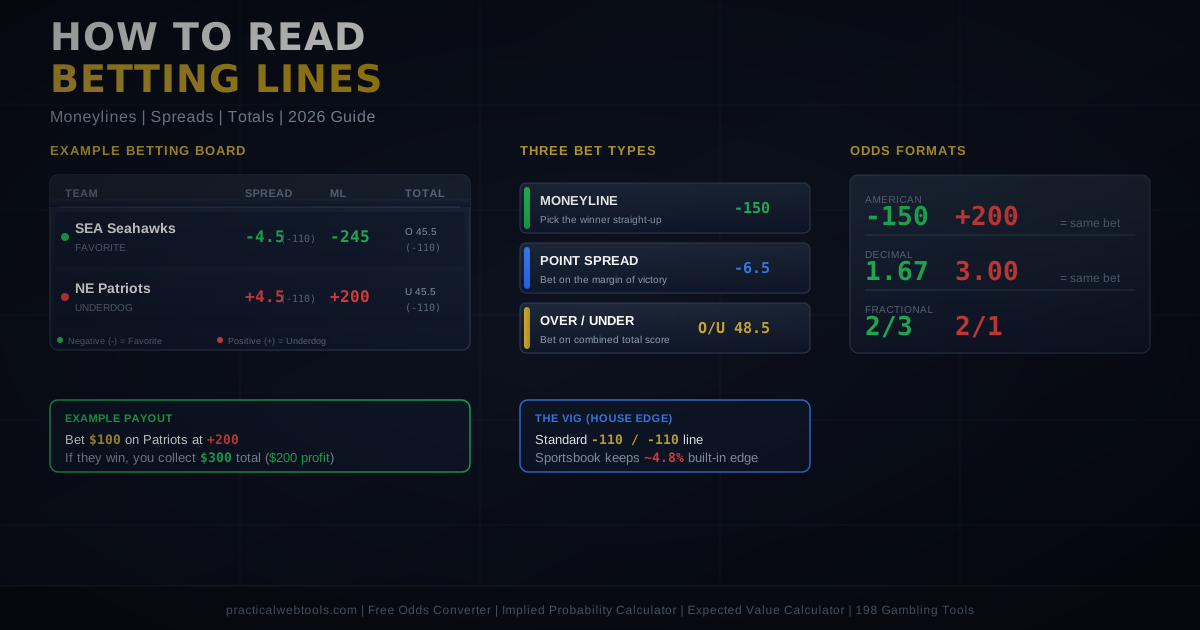
The Seattle Seahawks faced the New England Patriots in Super Bowl 60. Here is how the moneyline looked:
| Team | Moneyline | What It Means |
|---|---|---|
| Seattle Seahawks | -245 | Bet $245 to win $100 profit |
| New England Patriots | +200 | Bet $100 to win $200 profit |
If you bet $100 on the Seahawks at -245: You would win $40.82 in profit (your $100 returns $140.82 total). The Seahawks were heavy favorites, so the payout is smaller.
If you bet $100 on the Patriots at +200: You would win $200 in profit (your $100 returns $300 total). As underdogs, the Patriots paid more because they were less likely to win.
The Key Insight
The bigger the negative number, the heavier the favorite. The bigger the positive number, the bigger the underdog. Here is a quick reference:
| Moneyline | Implied Win Probability | Bet $100 to Win | Considered |
|---|---|---|---|
| -500 | 83.3% | $20 | Heavy favorite |
| -300 | 75.0% | $33.33 | Strong favorite |
| -200 | 66.7% | $50 | Solid favorite |
| -150 | 60.0% | $66.67 | Moderate favorite |
| -110 | 52.4% | $90.91 | Slight favorite |
| +100 | 50.0% | $100 | Even (pick'em) |
| +110 | 47.6% | $110 | Slight underdog |
| +150 | 40.0% | $150 | Moderate underdog |
| +200 | 33.3% | $200 | Solid underdog |
| +300 | 25.0% | $300 | Big underdog |
| +500 | 16.7% | $500 | Major underdog |
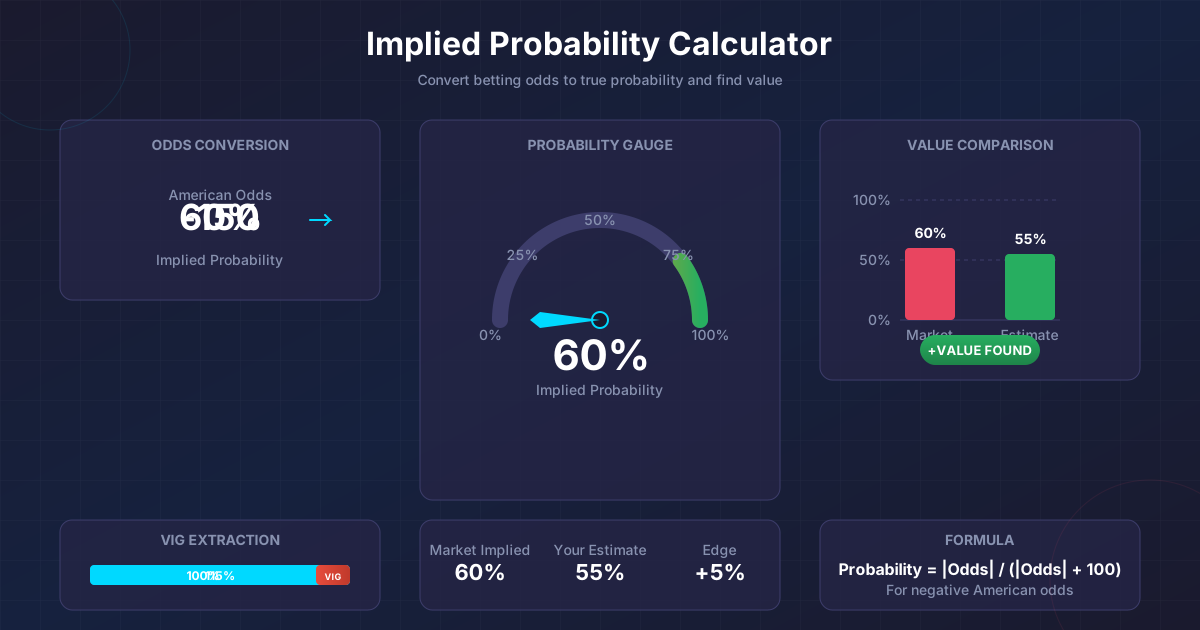
Calculate implied probability for any odds with our Implied Probability Calculator.
When to Use Moneyline Bets
Moneylines are best when:
- You have strong conviction about a winner but are unsure about the margin
- The underdog has a realistic chance of winning outright (making the plus-money payout valuable)
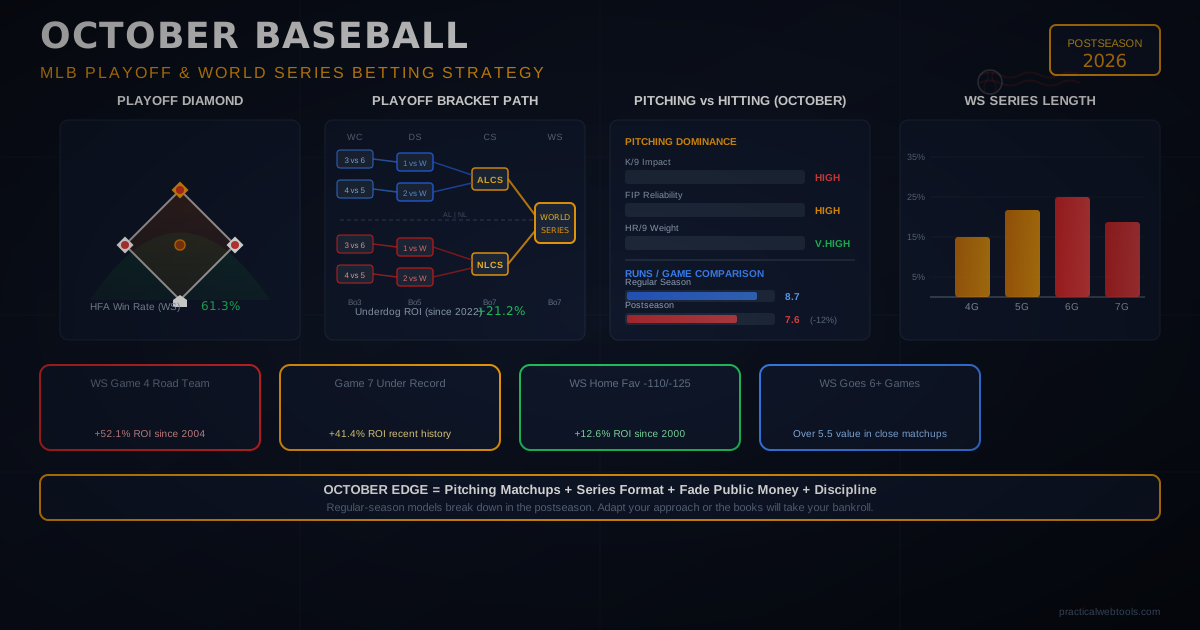
- You are betting low-scoring sports like baseball, hockey, or soccer where one goal or run decides games
Moneylines are risky when:
- You are laying heavy juice on a favorite (betting $500 to win $100 means one loss wipes out five wins)
- You do not account for the implied probability built into the price
Point Spreads: Betting on the Margin
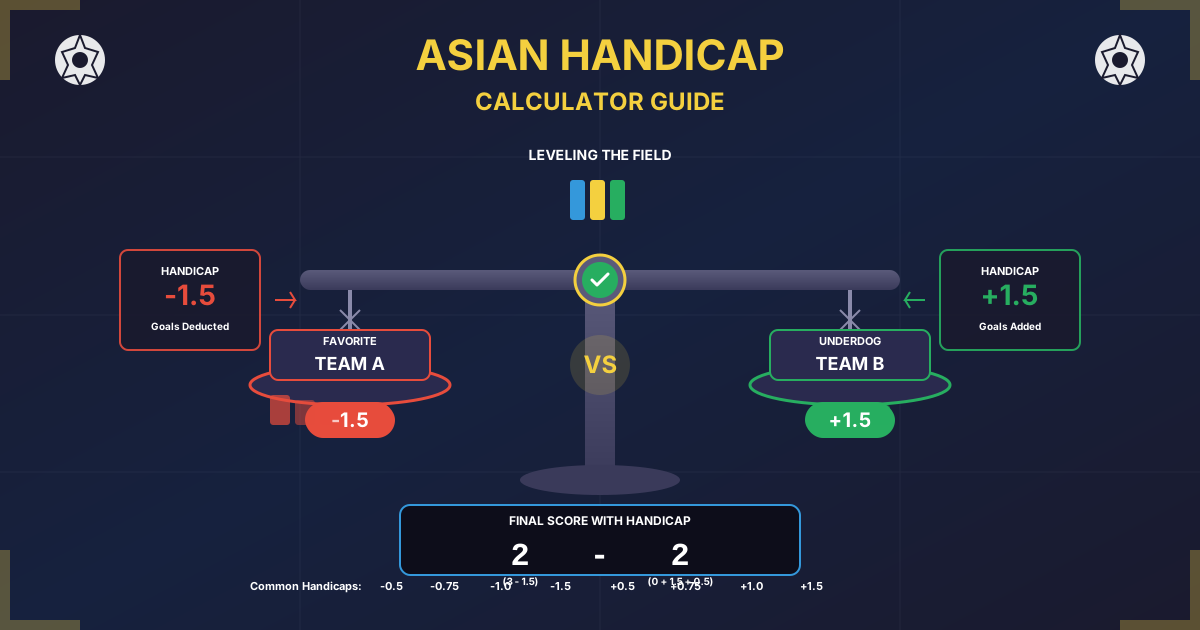
The point spread is the most popular bet type in football and basketball. Instead of simply picking a winner, you are betting on the margin of victory -- how much a team wins or loses by.
How Point Spreads Work
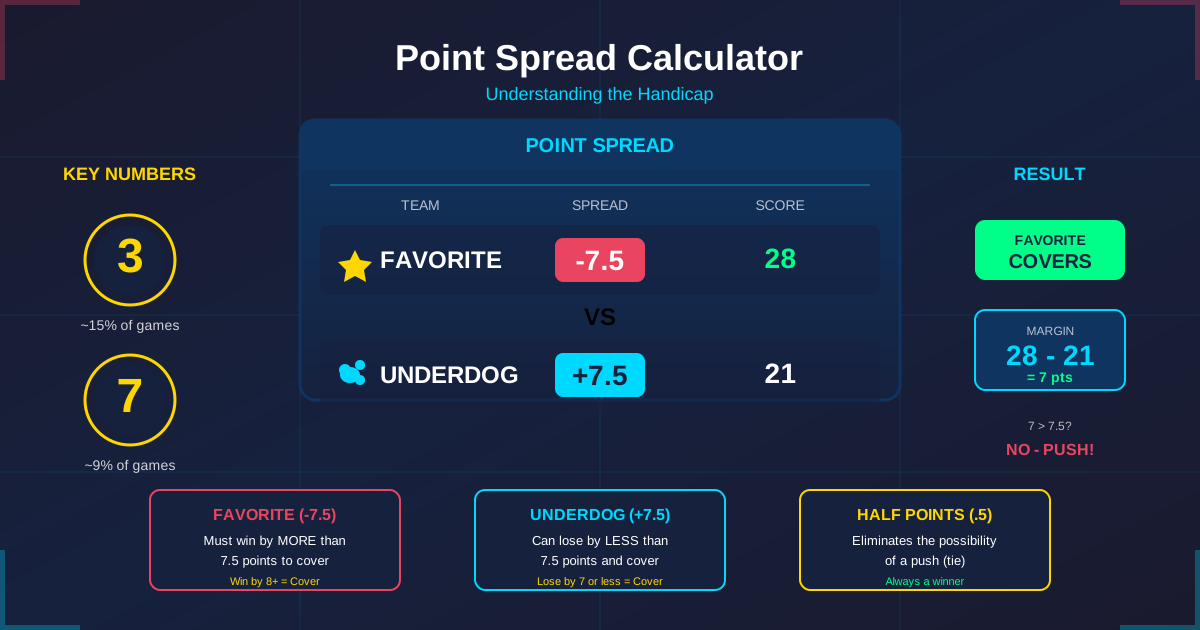
The sportsbook sets a number (the spread) that the favorite must win by for a bet on them to pay out. The underdog can lose by less than that number (or win outright) for their side to pay out.
- Favorite (-6.5): Must win by 7 or more points
- Underdog (+6.5): Must lose by 6 or fewer points (or win outright)
Real Example: NBA -- Lakers vs. Warriors (February 7, 2026)
| Team | Spread | Odds |
|---|---|---|
| Los Angeles Lakers | -2.5 | -110 |
| Golden State Warriors | +2.5 | -110 |
If you bet $110 on the Lakers -2.5: The Lakers need to win by 3 or more points. If they win 112-108, you win $100 profit. If they win 112-110 (only a 2-point margin), you lose -- they did not "cover" the spread.
If you bet $110 on the Warriors +2.5: The Warriors can lose by up to 2 points and your bet still wins. If the final score is Lakers 112, Warriors 111, you win $100 because the Warriors only lost by 1, which is within the 2.5-point spread.
The Half-Point ("Hook")
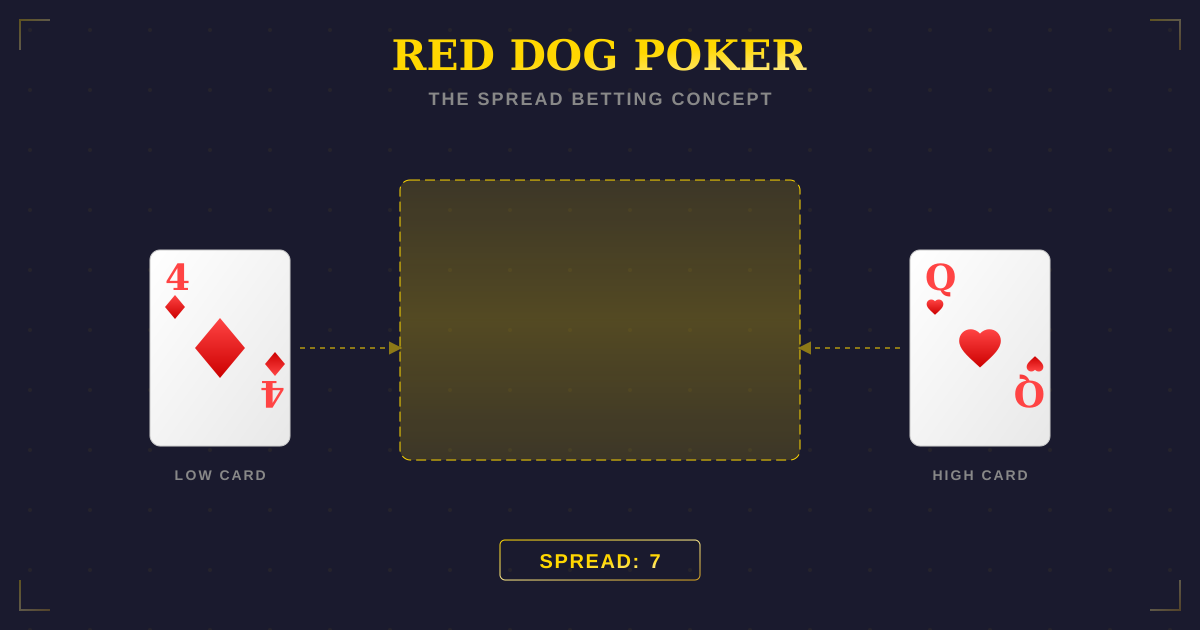
Notice the ".5" in those spreads? That is called the hook, and it exists to prevent a push (a tie against the spread). With a spread of -2.5, there is always a winner -- you cannot win by exactly 2.5 points.
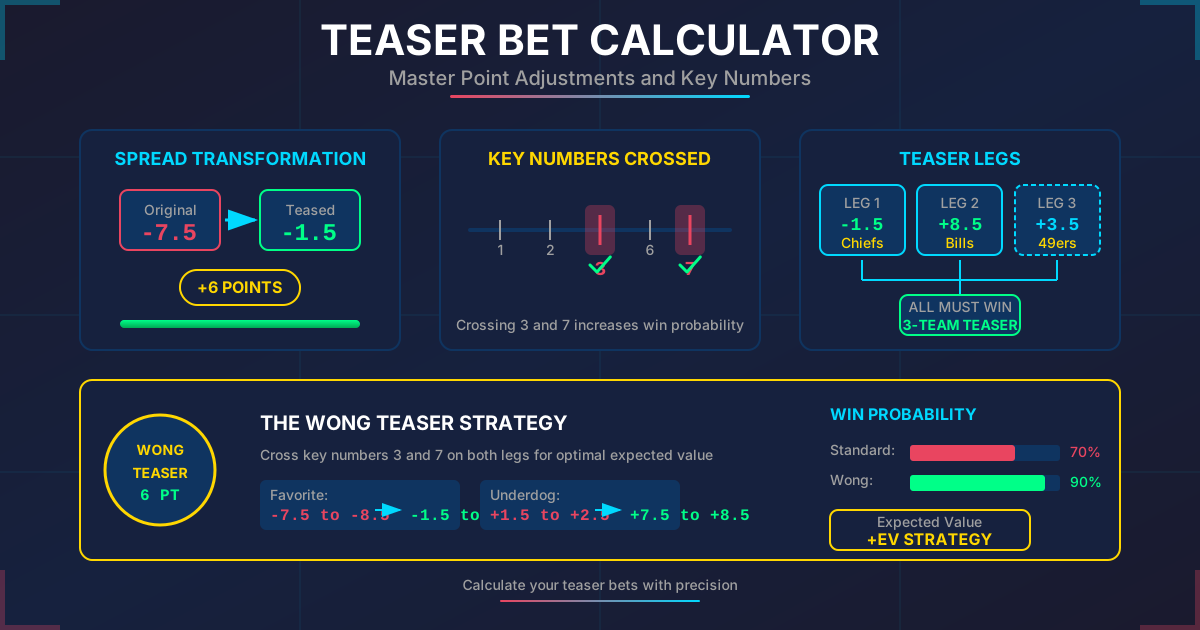
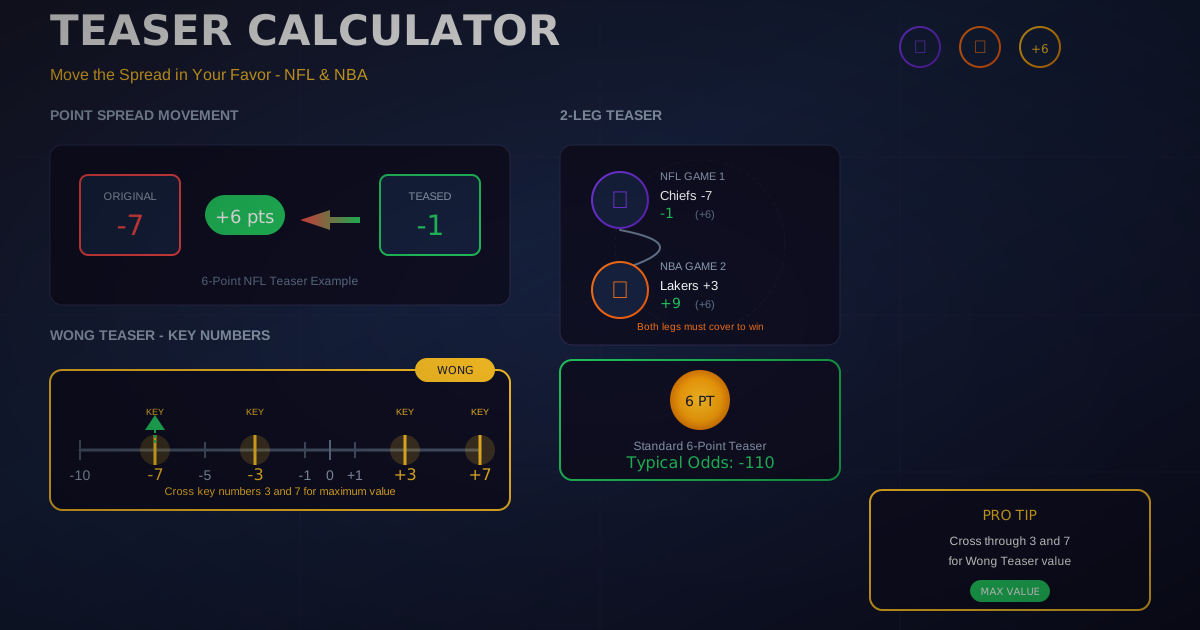
When spreads land on whole numbers (like -3 or -7 in football), a push is possible. If the Chiefs are -3 and win by exactly 3, your bet is refunded.
| Spread | Favorite Must Win By | Push Possible? |
|---|---|---|
| -3 | 3+ points | Yes (at exactly 3) |
| -3.5 | 4+ points | No |
| -7 | 7+ points | Yes (at exactly 7) |
| -7.5 | 8+ points | No |
| -14 | 14+ points | Yes (at exactly 14) |
| -14.5 | 15+ points | No |
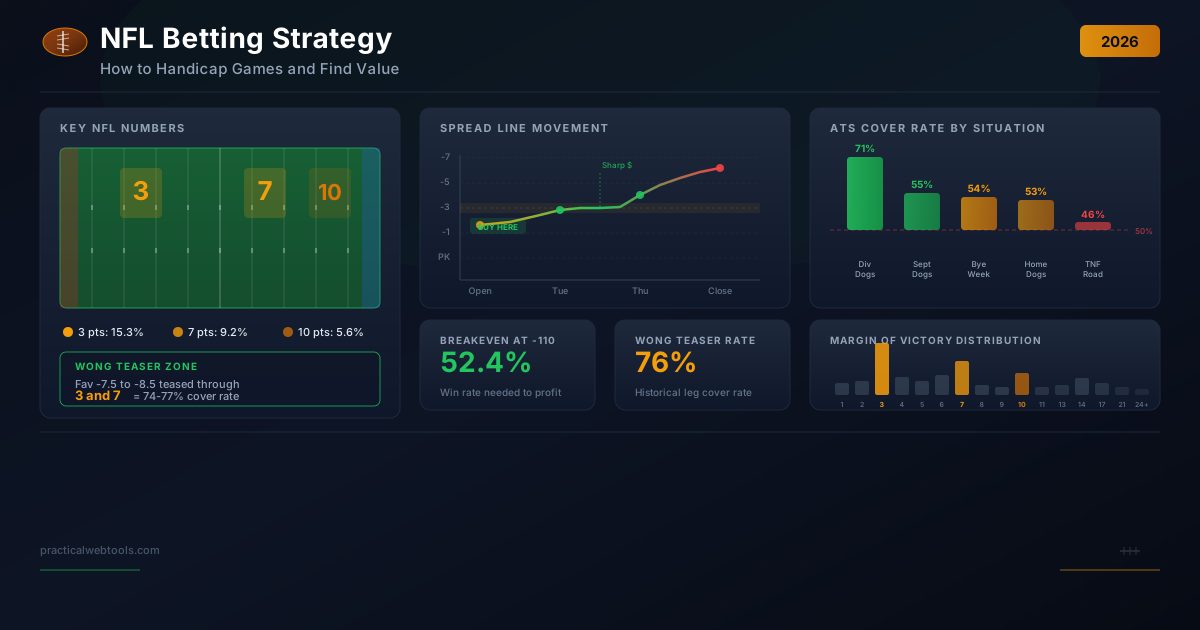
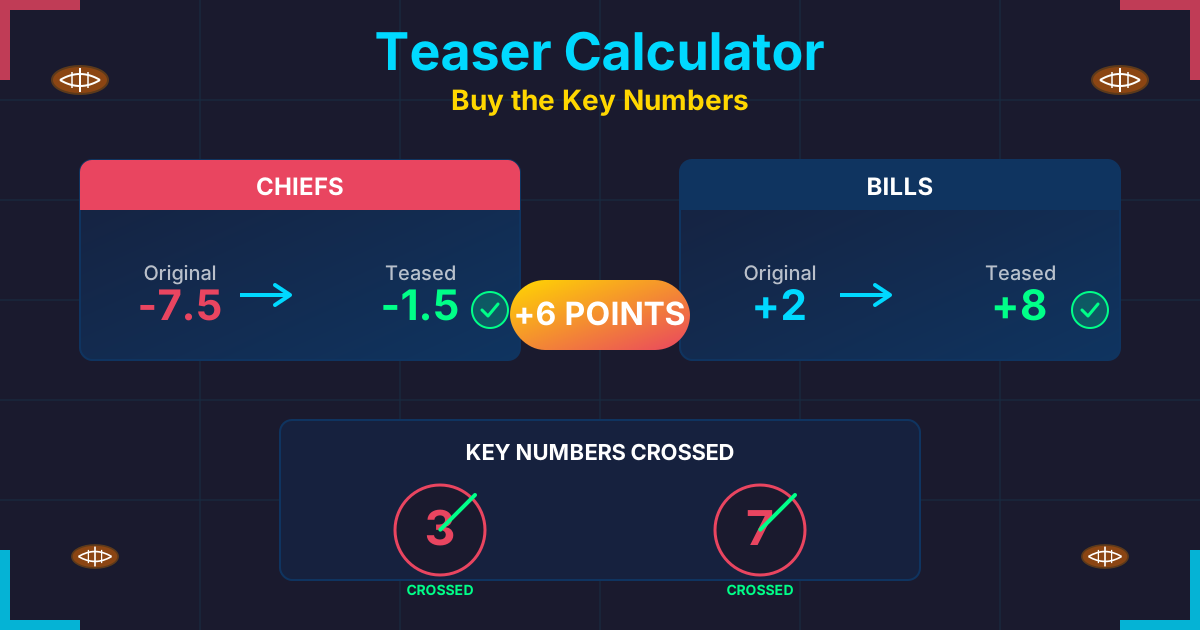
Key Football Spread Numbers
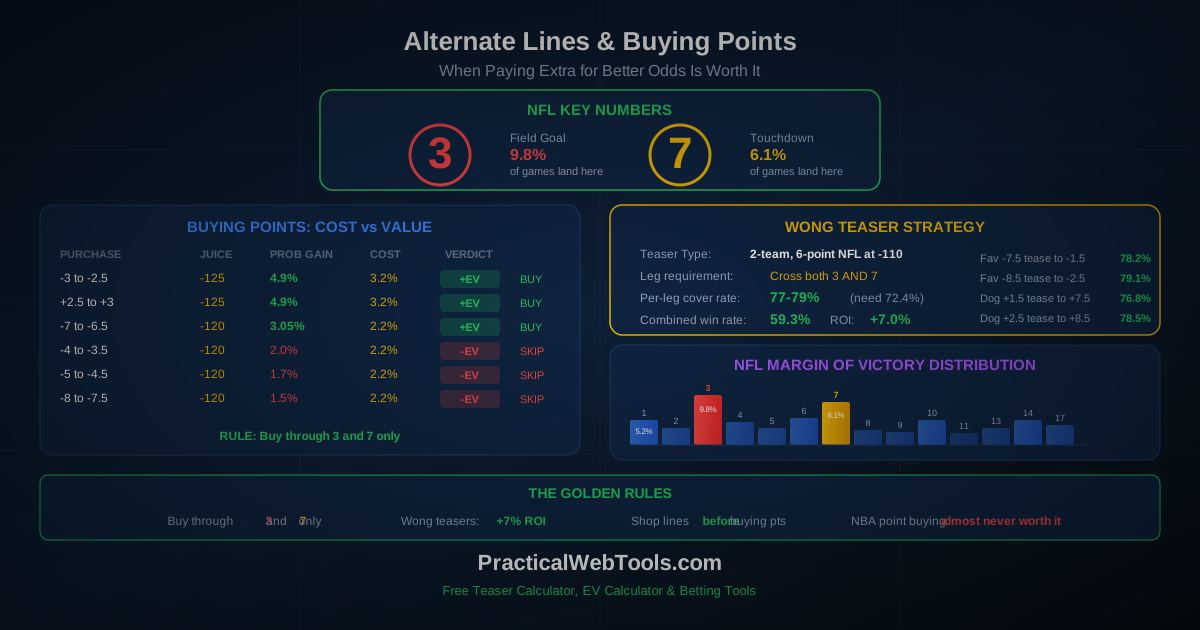
In NFL betting, certain numbers carry extra weight because they correspond to common scoring margins:
| Number | Why It Matters |
|---|---|
| 3 | Field goal margin -- the most common NFL margin of victory |
| 7 | Touchdown margin -- the second most common margin |
| 6 | Touchdown without extra point |
| 10 | Touchdown + field goal |
| 14 | Two touchdowns |
Sportsbooks know bettors are sensitive to these numbers. The difference between -2.5 and -3 in the NFL is significant, and you will often see the odds (juice) change rather than the spread itself to account for this.
Real Example: NFL -- Covering vs. Not Covering
Imagine the Kansas City Chiefs are listed at -6.5 against the Denver Broncos, with odds at -110 on both sides.
Scenario A: Chiefs win 27-17 (10-point margin). You bet $50 on the Chiefs -6.5. You win. The Chiefs covered the spread because they won by more than 6.5 points. Your profit: $45.45.
Scenario B: Chiefs win 24-20 (4-point margin). You bet $50 on the Chiefs -6.5. You lose. The Chiefs won the game, but they did not cover because a 4-point margin is less than 6.5. Your loss: $50.
Scenario C: Same game, you bet $50 on the Broncos +6.5. The Chiefs win 24-20. You win. The Broncos "covered" because they lost by only 4, which is fewer than 6.5. Your profit: $45.45.
This is what makes spread betting interesting -- the underdog does not need to win. They just need to keep it close.
Totals (Over/Under): Betting on Combined Score
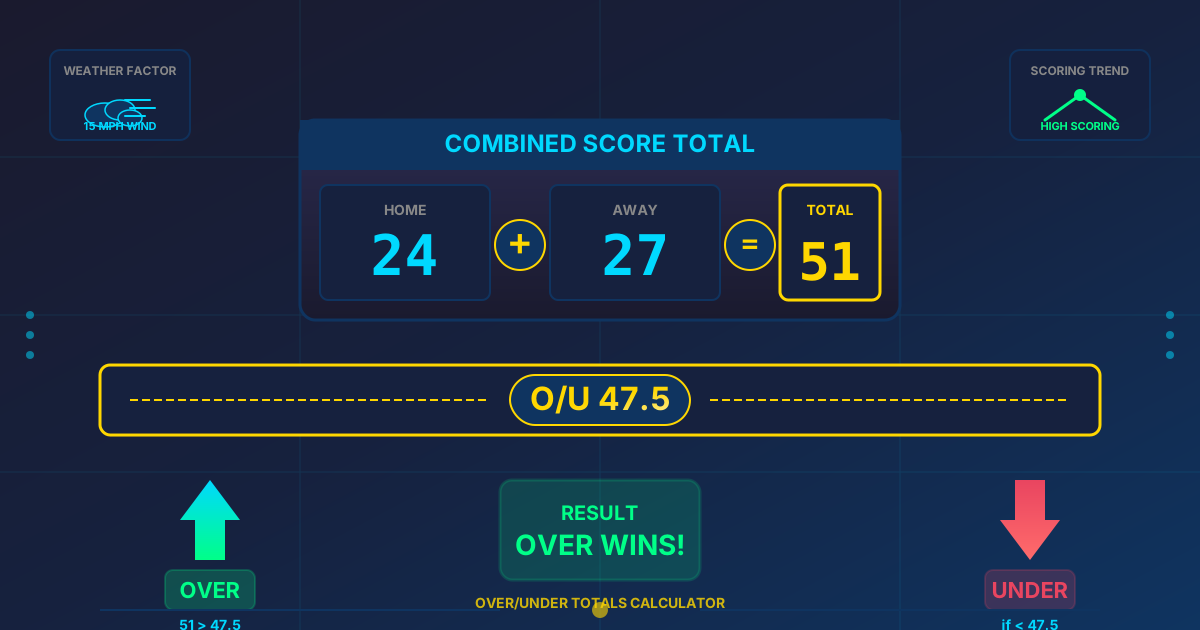
A totals bet -- commonly called the over/under -- ignores who wins entirely. You are betting on the combined final score of both teams.
How Over/Under Works
The sportsbook sets a projected total. You bet whether the actual combined score will be higher (over) or lower (under) than that number.
Real Example: NBA -- Celtics vs. Knicks (February 8, 2026)
| Bet Type | Line | Odds |
|---|---|---|
| Over | 210.5 | -110 |
| Under | 210.5 | -110 |
If you bet $100 on the Over 210.5: You need the combined score of both teams to be 211 or higher. If the Celtics win 108-105 (total: 213), you win $90.91 profit.
If you bet $100 on the Under 210.5: You need the combined score to stay at 210 or below. If the final is 98-102 (total: 200), you win $90.91 profit.
Notice you do not care who wins. In the over example, the Celtics could win 130-85 or the Knicks could win 106-105 -- either way, the over cashes because the total exceeds 210.5.
Factors That Affect Totals
Understanding what moves totals helps you spot value:
| Factor | Effect on Total | Example |
|---|---|---|
| Pace of play | Higher pace = higher total | Up-tempo NBA teams push totals above 230 |
| Defensive matchups | Elite defense = lower total | Two top-10 defenses might see a total below 200 |
| Weather (outdoor sports) | Wind/rain = lower total | NFL games in heavy wind often go under |
| Injuries | Star player out = varies | Losing a top scorer lowers total; losing a key defender raises it |
| Altitude | Thinner air = higher total | Colorado Rockies games in Denver consistently see higher MLB totals |
| Overtime rules | OT counts for total bets | An NFL game going to OT often pushes totals over |
Real Example: MLB Totals
Baseball totals work the same way but with much smaller numbers:
| Game | Total | Over Odds | Under Odds |
|---|---|---|---|
| Yankees vs. Red Sox | 9.5 | -115 | -105 |
| Dodgers vs. Padres | 7.5 | -110 | -110 |
If you bet $250 on the Yankees/Red Sox Over 9.5 at -115: You need 10 or more total runs. If the final score is Yankees 6, Red Sox 5 (11 total runs), you win $217.39 profit.
If you bet $250 on the Dodgers/Padres Under 7.5 at -110: You need 7 or fewer total runs. If the final is Dodgers 3, Padres 2 (5 total runs), you win $227.27 profit.
Evaluate the sportsbook's edge on any line with our Hold/Vig Calculator.
Understanding Odds Formats: American, Decimal, and Fractional
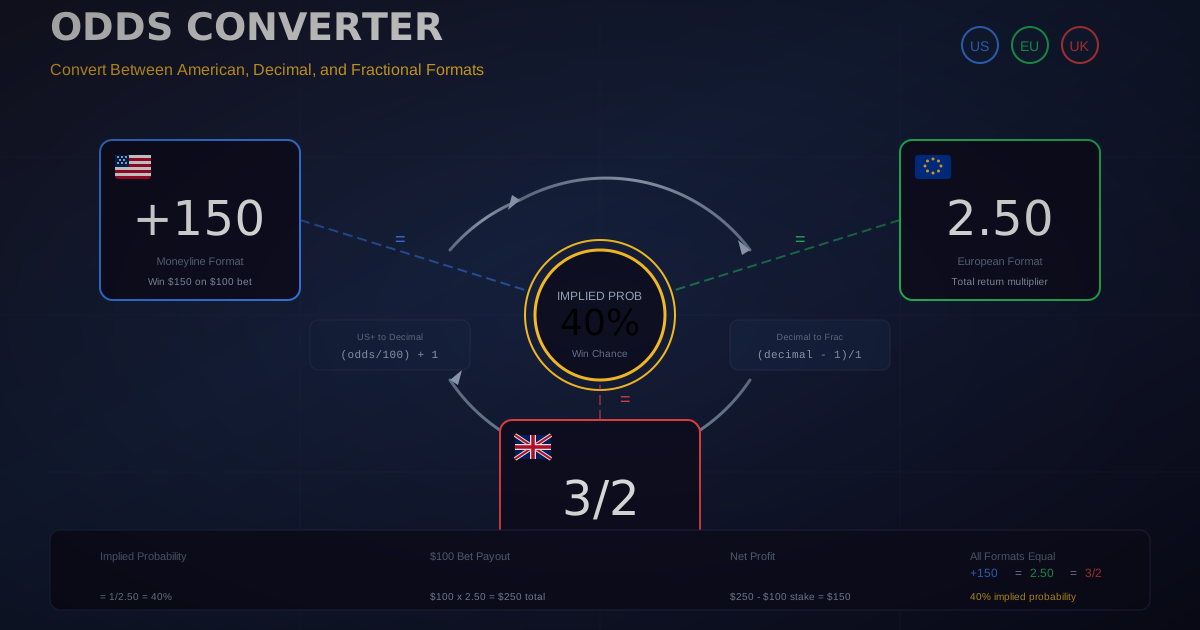
The same bet can be expressed in three different formats depending on where you are in the world. American odds dominate in the U.S., decimal odds are standard in Europe and Australia, and fractional odds are traditional in the U.K.
American Odds (Moneyline Format)
American odds revolve around $100 as the base unit:
- -150 means bet $150 to win $100 (plus your stake back)
- +150 means bet $100 to win $150 (plus your stake back)
Decimal Odds
Decimal odds show your total return per $1 wagered, including your stake:
- 1.67 means for every $1 bet, you get $1.67 back (profit of $0.67)
- 2.50 means for every $1 bet, you get $2.50 back (profit of $1.50)
To calculate your total payout: Stake x Decimal Odds = Total Return
$100 x 2.50 = $250 total return ($150 profit + $100 stake)
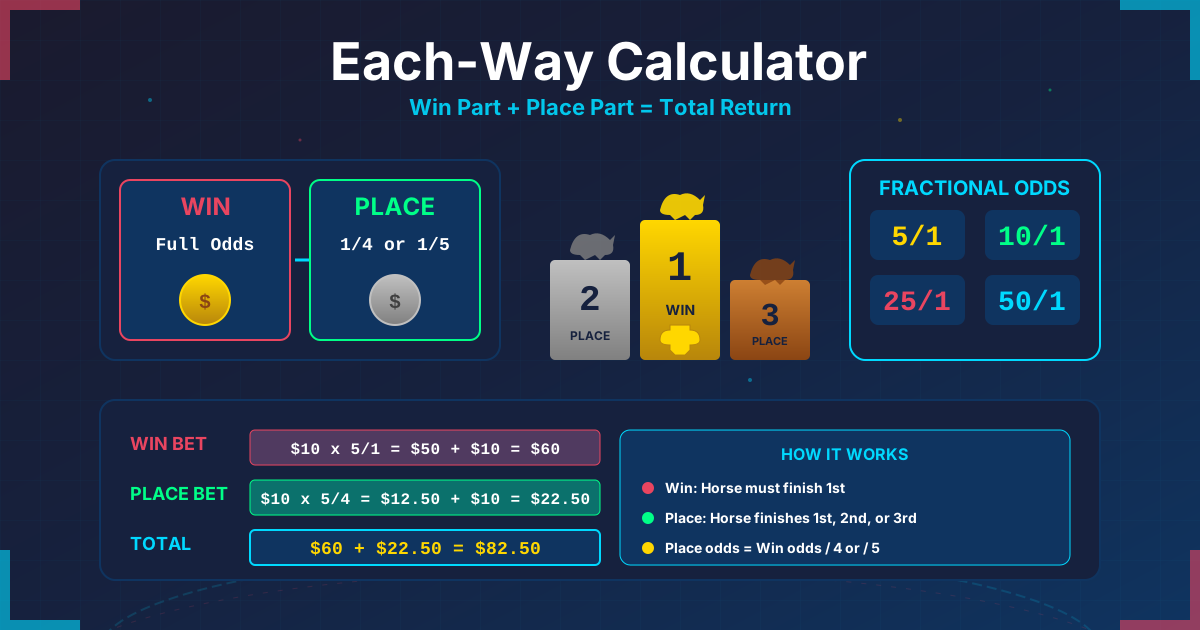
Fractional Odds
Fractional odds show profit relative to stake:
- 3/2 means you win $3 for every $2 wagered
- 1/4 means you win $1 for every $4 wagered
Master Conversion Table
This table shows how the same odds look across all three formats:
| American | Decimal | Fractional | Implied Probability | $100 Bet Profit |
|---|---|---|---|---|
| -500 | 1.20 | 1/5 | 83.3% | $20.00 |
| -400 | 1.25 | 1/4 | 80.0% | $25.00 |
| -300 | 1.33 | 1/3 | 75.0% | $33.33 |
| -250 | 1.40 | 2/5 | 71.4% | $40.00 |
| -200 | 1.50 | 1/2 | 66.7% | $50.00 |
| -150 | 1.67 | 2/3 | 60.0% | $66.67 |
| -130 | 1.77 | 10/13 | 56.5% | $76.92 |
| -110 | 1.91 | 10/11 | 52.4% | $90.91 |
| +100 | 2.00 | 1/1 (Evens) | 50.0% | $100.00 |
| +110 | 2.10 | 11/10 | 47.6% | $110.00 |
| +130 | 2.30 | 13/10 | 43.5% | $130.00 |
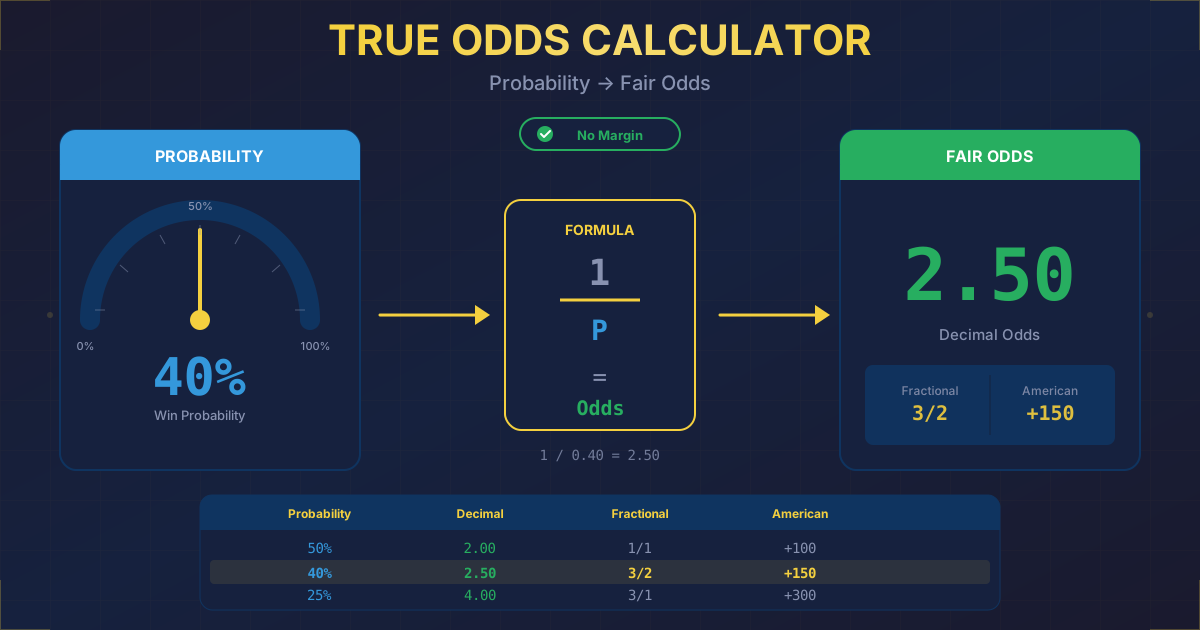
| +150 | 2.50 | 3/2 | 40.0% | $150.00 |
| +200 | 3.00 | 2/1 | 33.3% | $200.00 |
| +250 | 3.50 | 5/2 | 28.6% | $250.00 |
| +300 | 4.00 | 3/1 | 25.0% | $300.00 |
| +500 | 6.00 | 5/1 | 16.7% | $500.00 |
| +1000 | 11.00 | 10/1 | 9.1% | $1,000.00 |
The Conversion Formulas
If you want to do it yourself:
American to Decimal:
- Negative odds: Decimal = (100 / |American|) + 1
- Positive odds: Decimal = (American / 100) + 1
Decimal to American:
- If Decimal >= 2.00: American = (Decimal - 1) x 100
- If Decimal < 2.00: American = -100 / (Decimal - 1)
American to Implied Probability:
- Negative odds: Probability = |Odds| / (|Odds| + 100)
- Positive odds: Probability = 100 / (Odds + 100)
Skip the math entirely. Use our Odds Converter to translate between any format in seconds.
The Vig (Vigorish): The Sportsbook's Built-In Edge
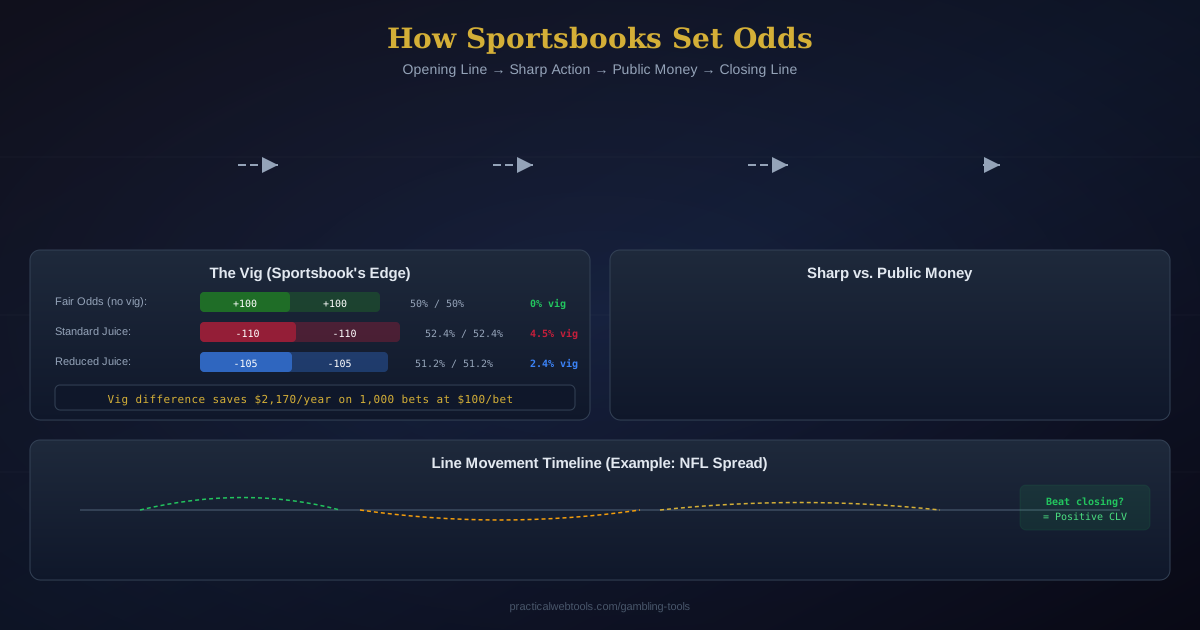
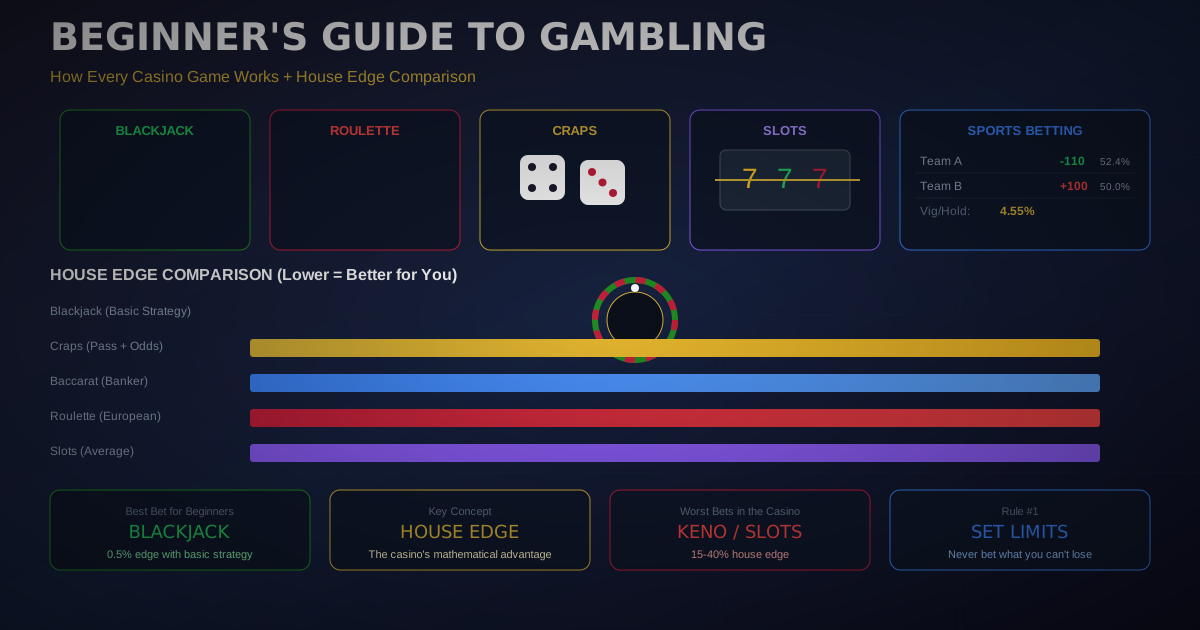
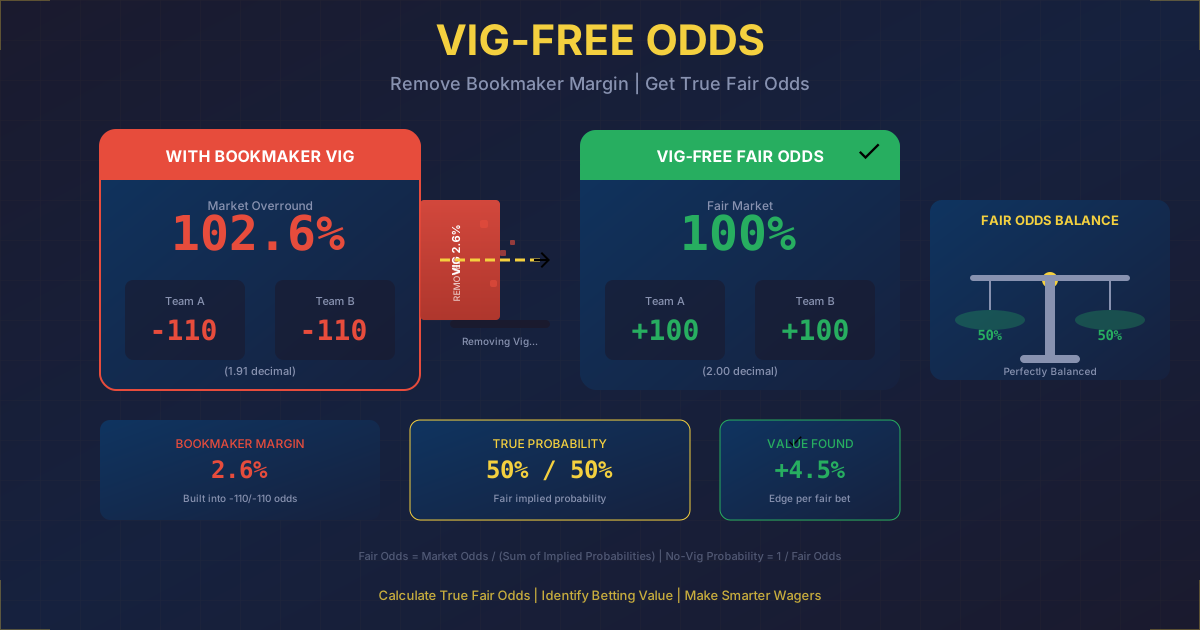
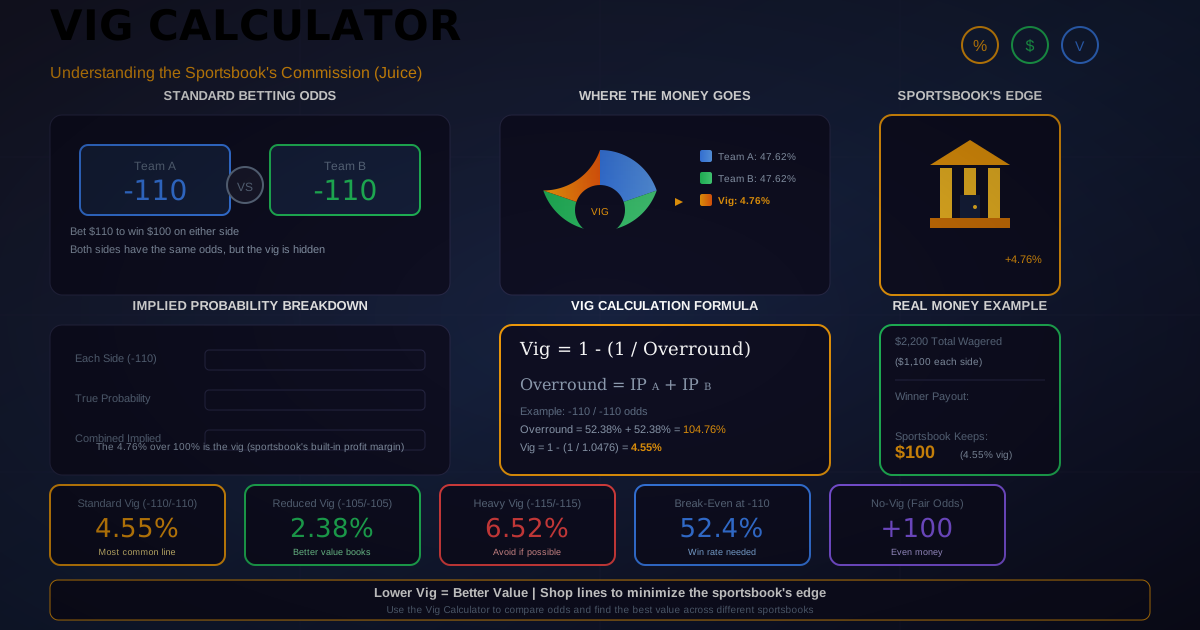
If you have been paying attention, you may have noticed something: a typical line shows -110 on both sides of a spread or total. If both sides imply roughly 52.4% probability, that adds up to 104.8% -- more than 100%. The extra 4.8% is the vig (also called vigorish, juice, or the hold).
The vig is how sportsbooks guarantee profit regardless of the outcome. Here is how it works:
How the Vig Costs You Money
Suppose two bettors each wager $110 on opposite sides of a point spread at -110:
| Bettor | Bet | Outcome | Result |
|---|---|---|---|
| Bettor A | $110 on Team A -5.5 | Team A wins by 8 | Wins $100 |
| Bettor B | $110 on Team B +5.5 | Team B loses by 8 | Loses $110 |
The sportsbook collected $220 total ($110 from each bettor). It paid out $210 to the winner ($110 stake + $100 profit). The sportsbook keeps $10 -- that is the vig.
Comparing Vig Across Sportsbooks
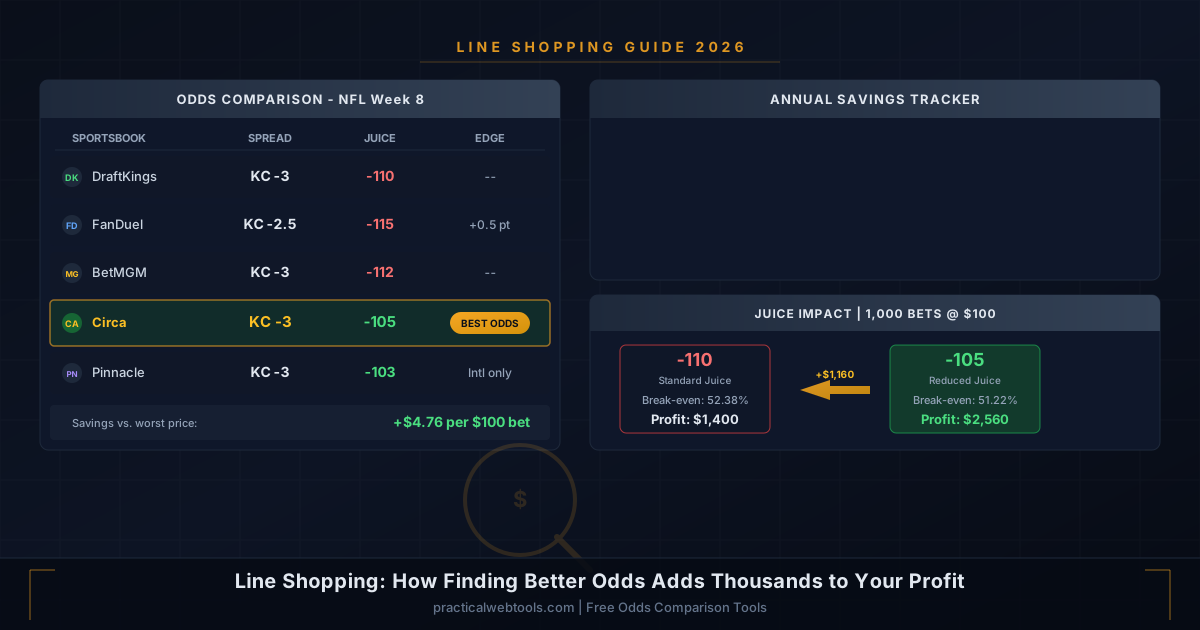
Not all sportsbooks charge the same vig. Shopping for better lines is one of the easiest ways to improve your bottom line:
| Sportsbook Line | Implied Probability | Vig |
|---|---|---|
| -110 / -110 | 52.4% + 52.4% = 104.8% | 4.8% |
| -108 / -112 | 51.9% + 52.8% = 104.7% | 4.7% |
| -105 / -105 | 51.2% + 51.2% = 102.4% | 2.4% |
| +100 / -105 | 50.0% + 51.2% = 101.2% | 1.2% |
The lower the vig, the less the sportsbook takes from each bet, and the easier it is for you to profit over time. This is why professional bettors maintain accounts at multiple sportsbooks -- a practice called line shopping.
See exactly how much vig you are paying with our Hold/Vig Calculator.
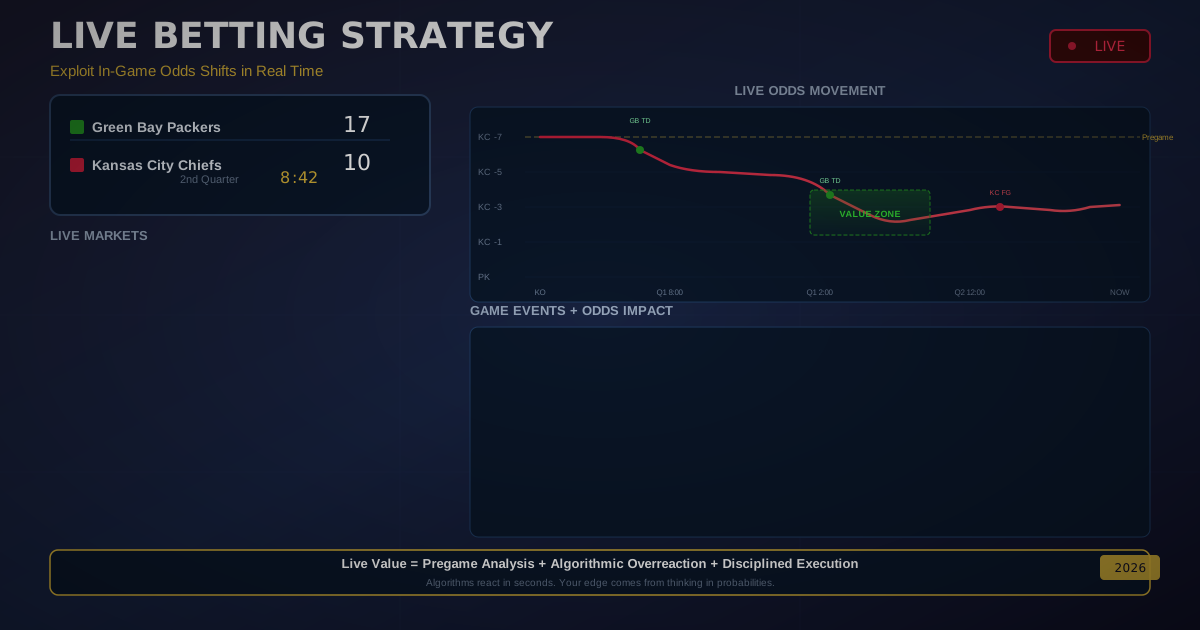
Reading Line Movement: Why Lines Change
Betting lines are not static. They move from the moment they open until the game starts. Understanding why lines move gives you an edge.
What Causes Lines to Move
| Cause | How It Works | Example |
|---|---|---|
| Betting volume | Heavy action on one side forces the book to adjust | 80% of bets on the Celtics pushes the spread from -4 to -5.5 |
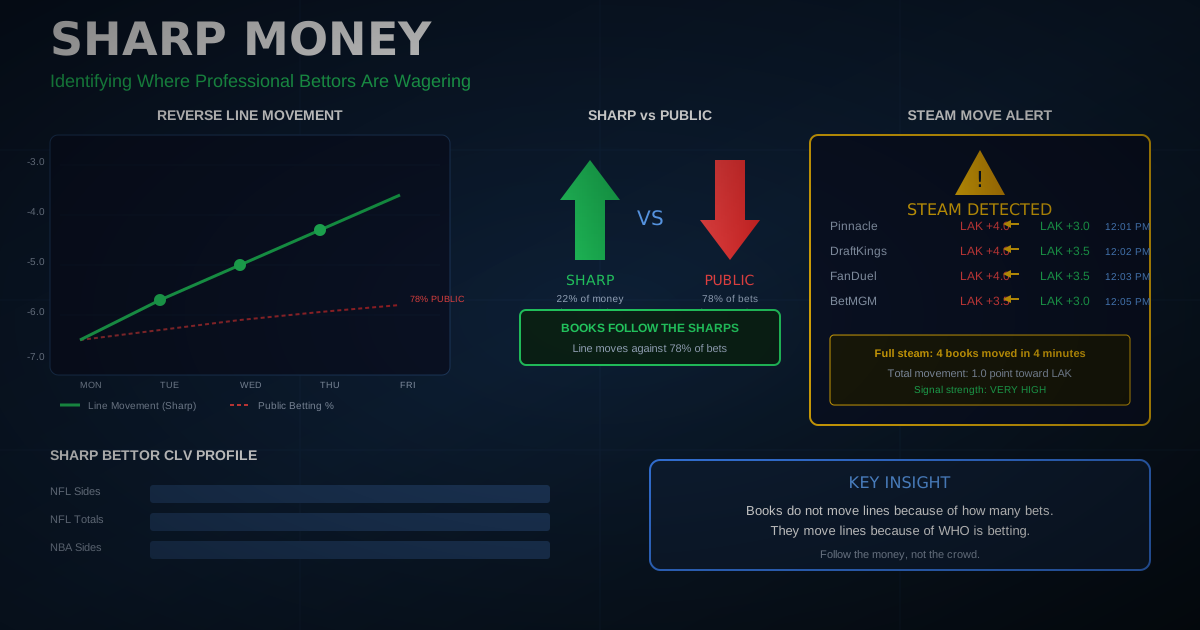
| Sharp money | Professional bettors placing large wagers | A syndicate bets $50,000 on the underdog, moving the spread instantly |
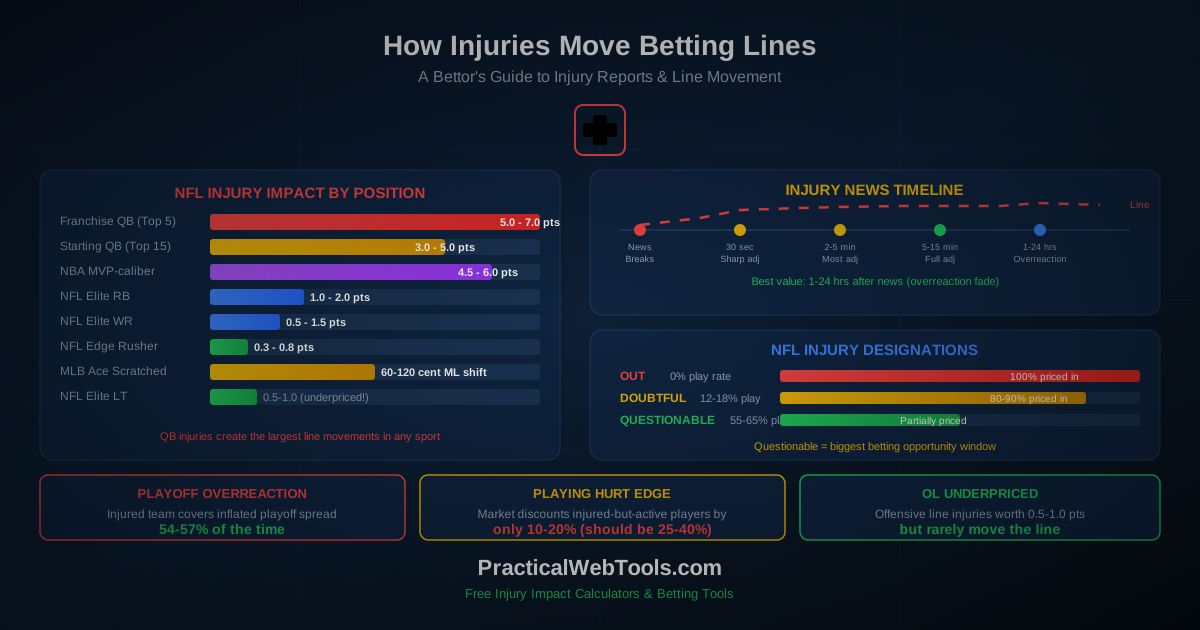
| Injury news | Key player ruled out changes expected outcome | Star QB listed as "out" moves the spread 3+ points |
| Weather | Outdoor game conditions change scoring expectations | Heavy wind forecast in Chicago drops an NFL total from 47 to 42 |
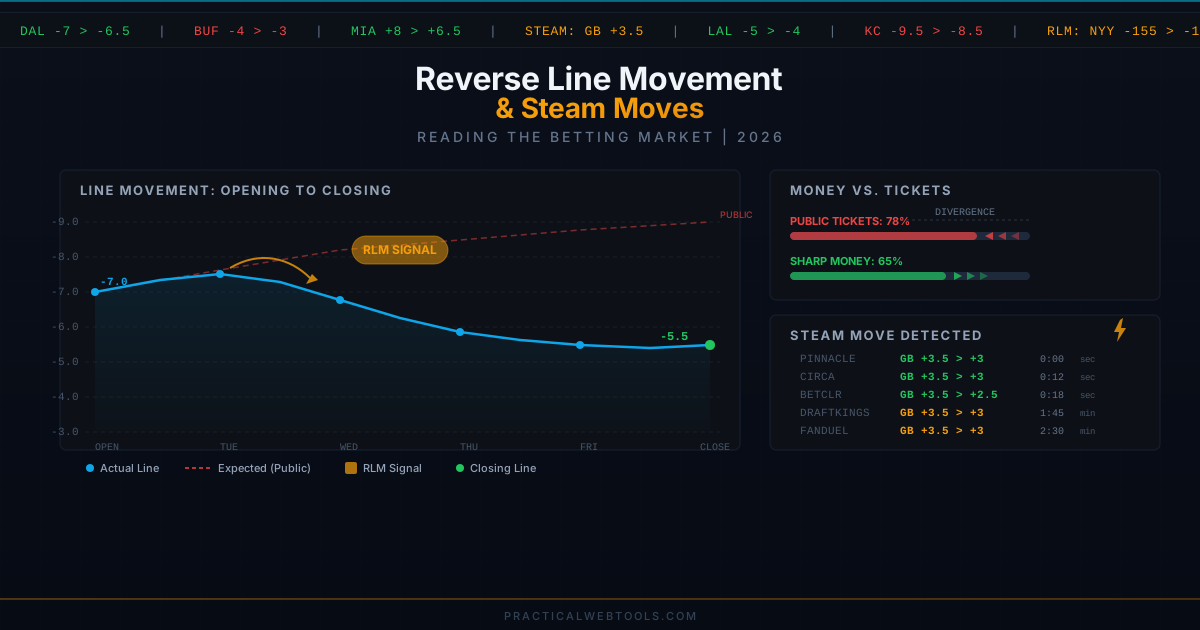
| Steam moves | Coordinated betting across multiple books | Line moves at DraftKings, FanDuel, and BetMGM within seconds of each other |
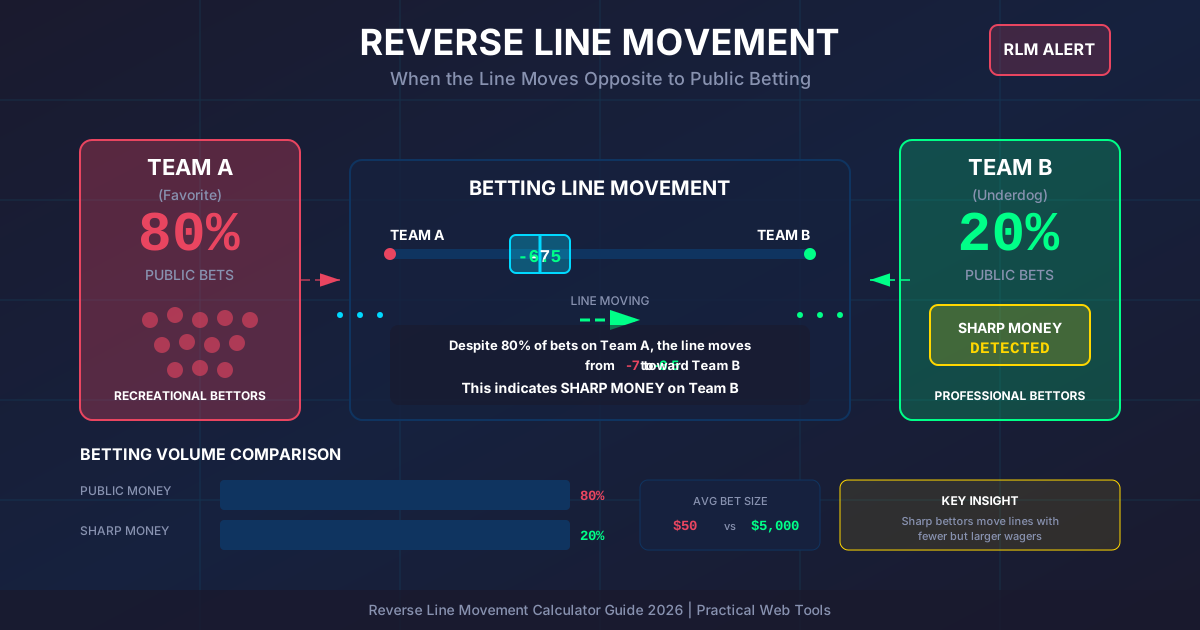
Reverse Line Movement
One of the most telling signals in line movement is reverse line movement -- when the line moves in the opposite direction from where the majority of bets are placed. This typically indicates sharp (professional) money on the less-popular side.
Example: 75% of public bets are on the Lakers -3, but the line moves from Lakers -3 to Lakers -2.5. The book is adjusting toward the Knicks despite the public betting the Lakers. This suggests sharp bettors placed significant money on the Knicks +3, enough for the sportsbook to move the line despite the volume being on the other side.
Opening vs. Closing Lines
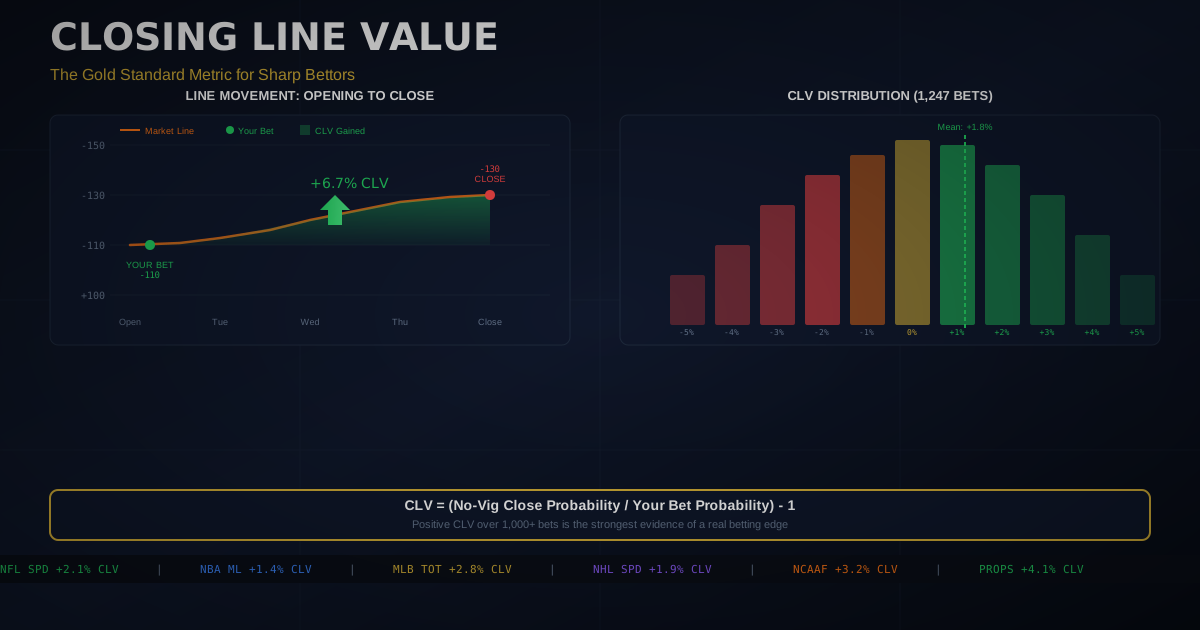
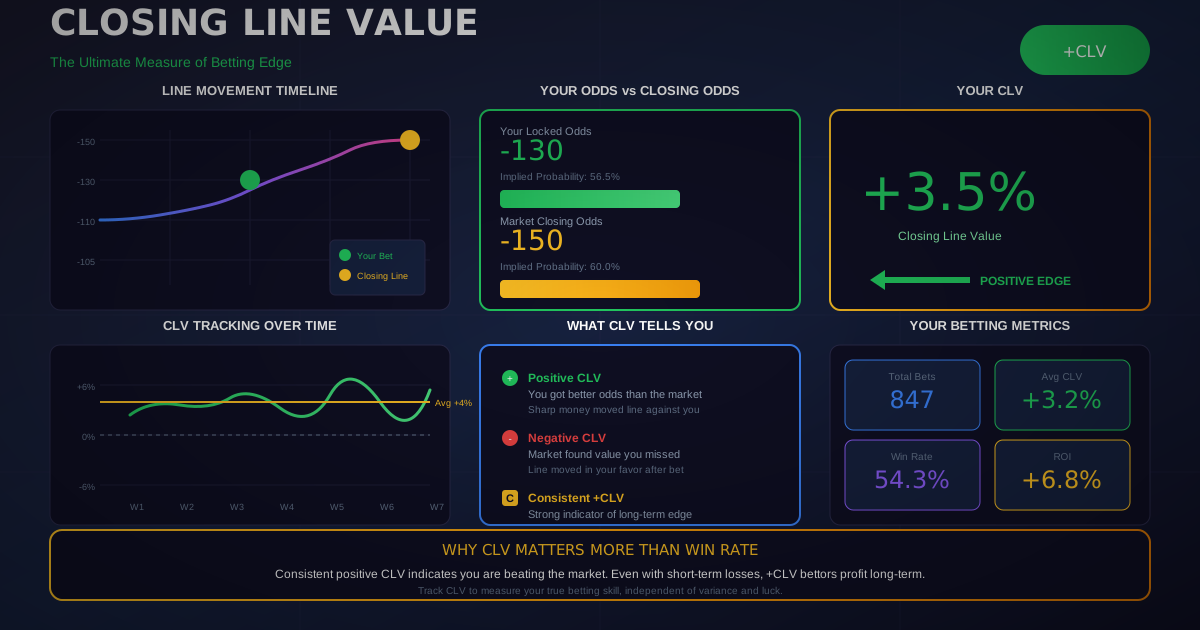
The opening line is the first number posted. The closing line is the final number at game time. The closing line is generally considered the most efficient because it reflects all available information and the sharpest money.
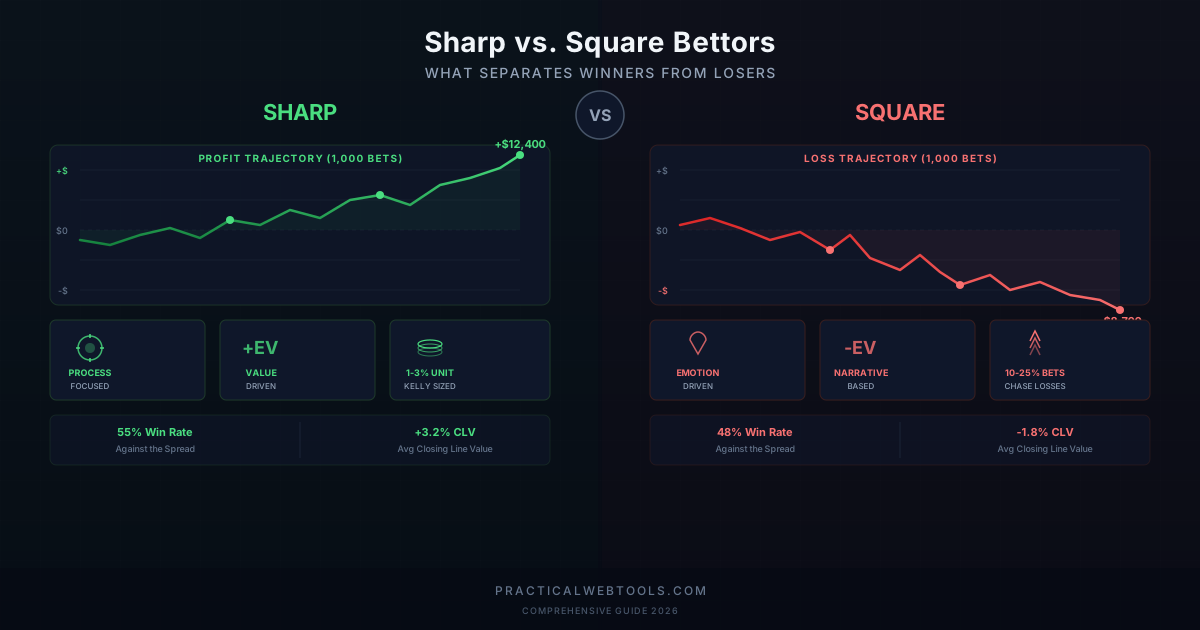
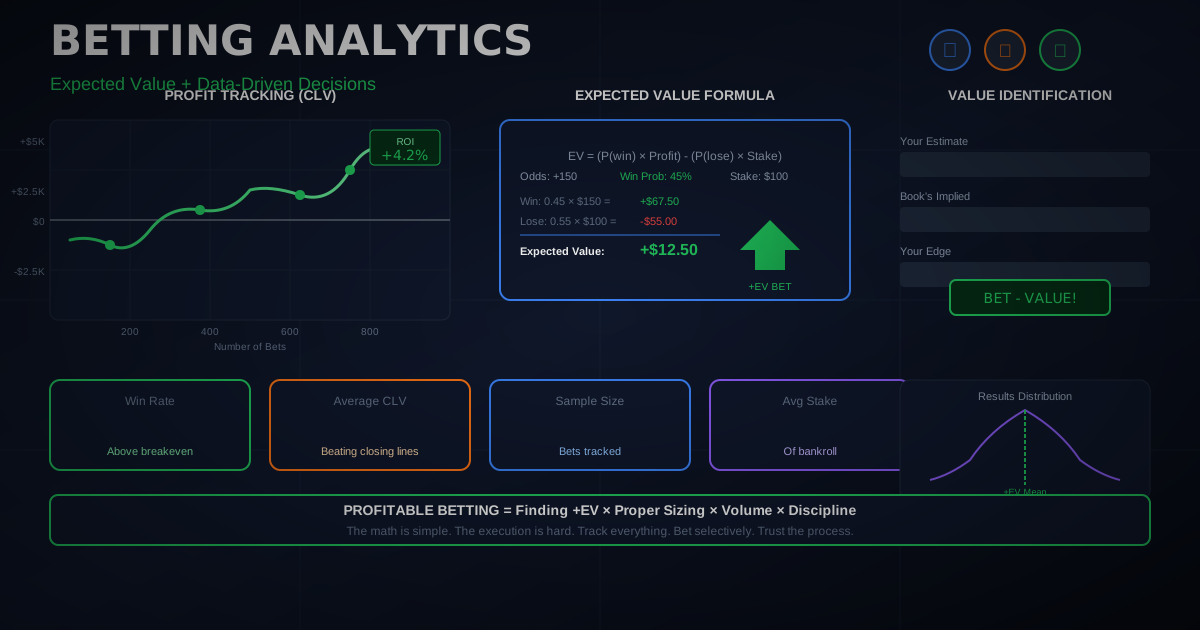
Professional bettors track whether they consistently beat the closing line -- a metric called Closing Line Value (CLV). If you bet the Celtics -4 and the line closes at -5.5, you got 1.5 points of CLV. Over thousands of bets, consistently getting CLV is the strongest predictor of long-term profit.
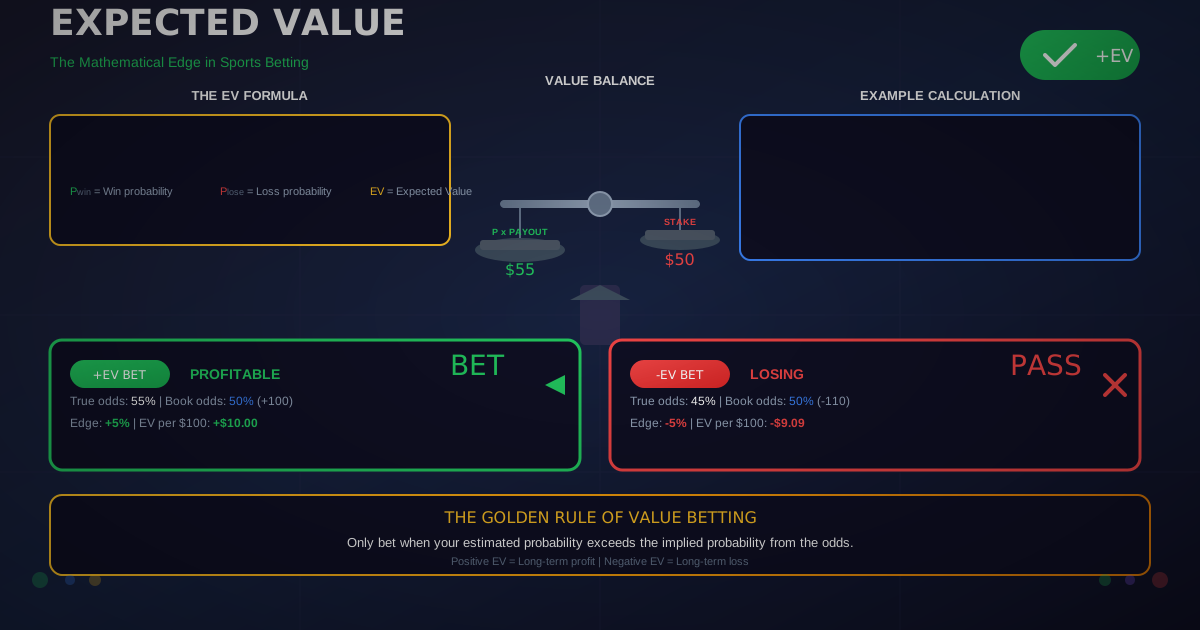
Measure your expected profit on any wager with our Expected Value Calculator.
Putting It All Together: Reading a Full Board
Here is a complete betting board for an NFL game. Let us walk through every number:
| Spread | Moneyline | Total | |
|---|---|---|---|
| Kansas City Chiefs | -6.5 (-110) | -280 | O 48.5 (-110) |
| Denver Broncos | +6.5 (-110) | +230 | U 48.5 (-110) |
What Each Number Means
Spread: Chiefs -6.5 (-110)
- The Chiefs are favored by 6.5 points
- They must win by 7+ for a spread bet on them to win
- -110 means you bet $110 to win $100
Moneyline: Chiefs -280 / Broncos +230
- A $280 bet on the Chiefs straight-up wins $100 if they win by any margin
- A $100 bet on the Broncos wins $230 if the Broncos win outright
- The Chiefs have roughly 73.7% implied probability; the Broncos roughly 30.3%
Total: 48.5 (-110)
- The sportsbook projects 48-49 combined points
- Over bettors need 49+ combined points
- Under bettors need 48 or fewer combined points
- Both sides pay -110
Your Six Possible Bets on This Game
| Bet | You Need | $100 Bet Wins |
|---|---|---|
| Chiefs -6.5 | Chiefs win by 7+ | $90.91 |
| Broncos +6.5 | Broncos lose by 6 or fewer (or win) | $90.91 |
| Chiefs ML (-280) | Chiefs win by any margin | $35.71 |
| Broncos ML (+230) | Broncos win | $230.00 |
| Over 48.5 | 49+ combined points | $90.91 |
| Under 48.5 | 48 or fewer combined points | $90.91 |
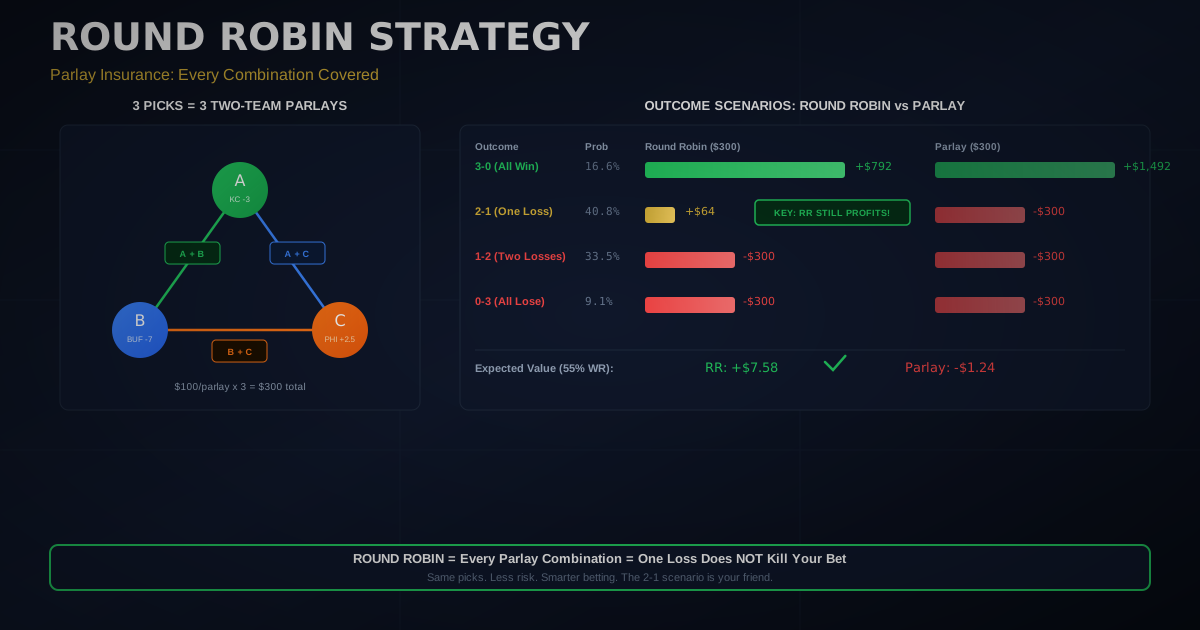
Parlays: Combining Multiple Bets
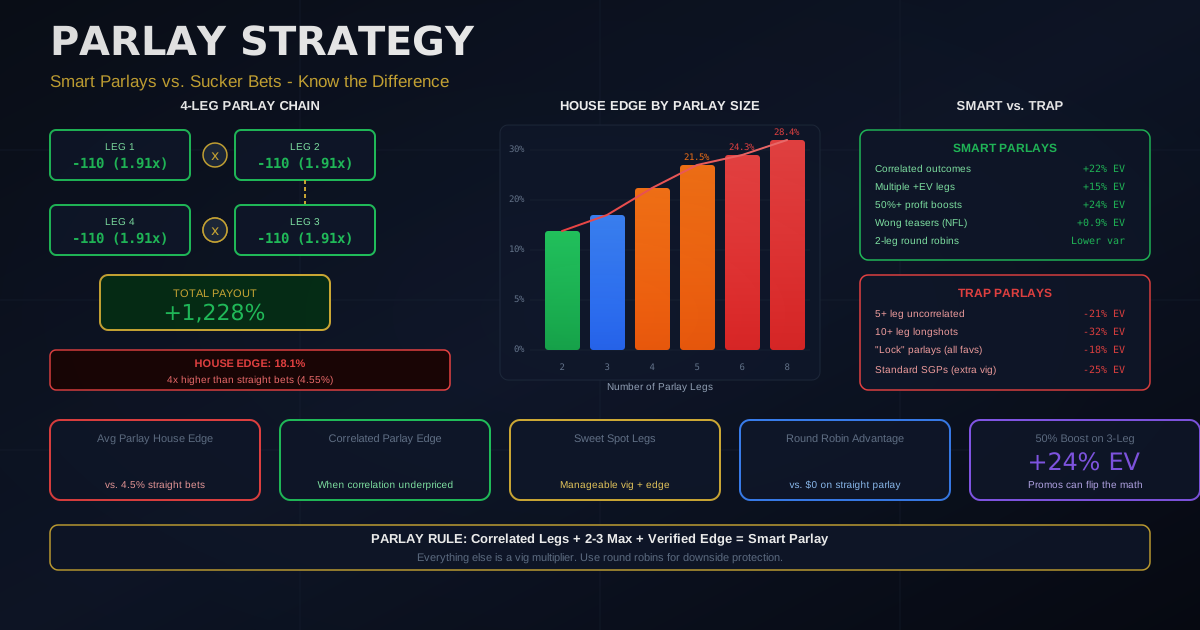
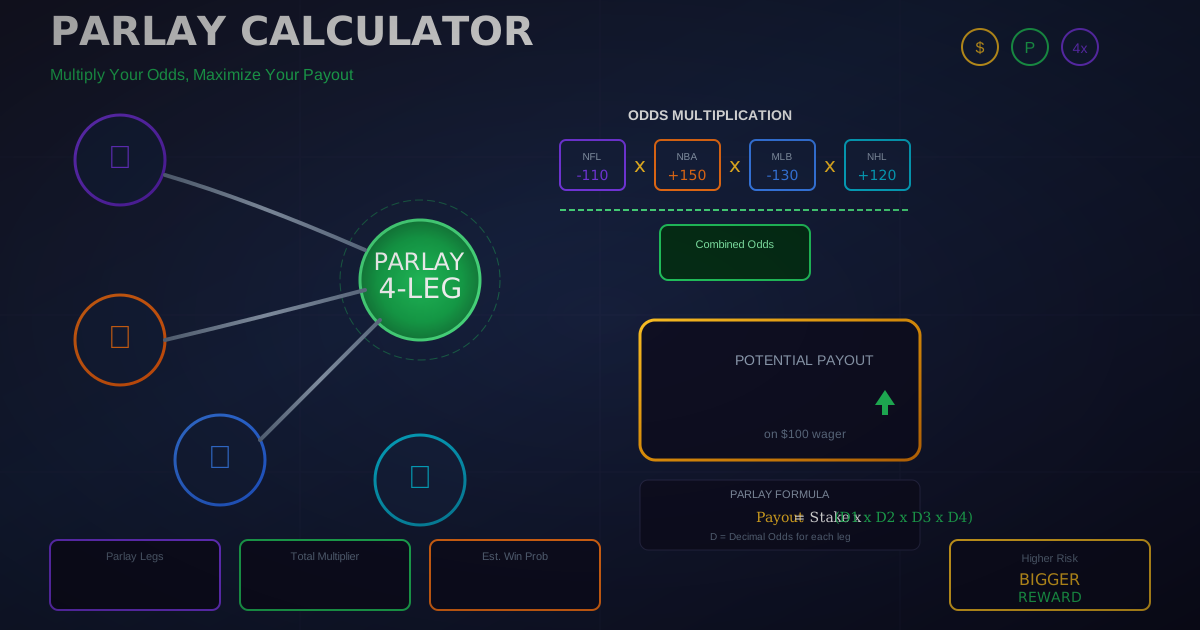
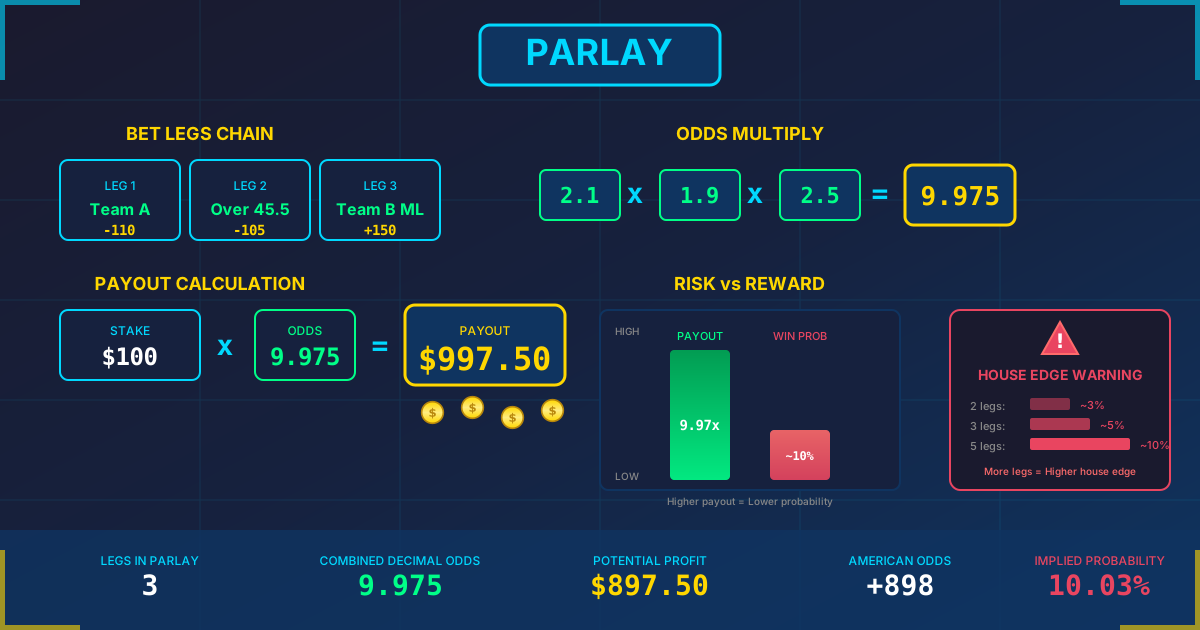
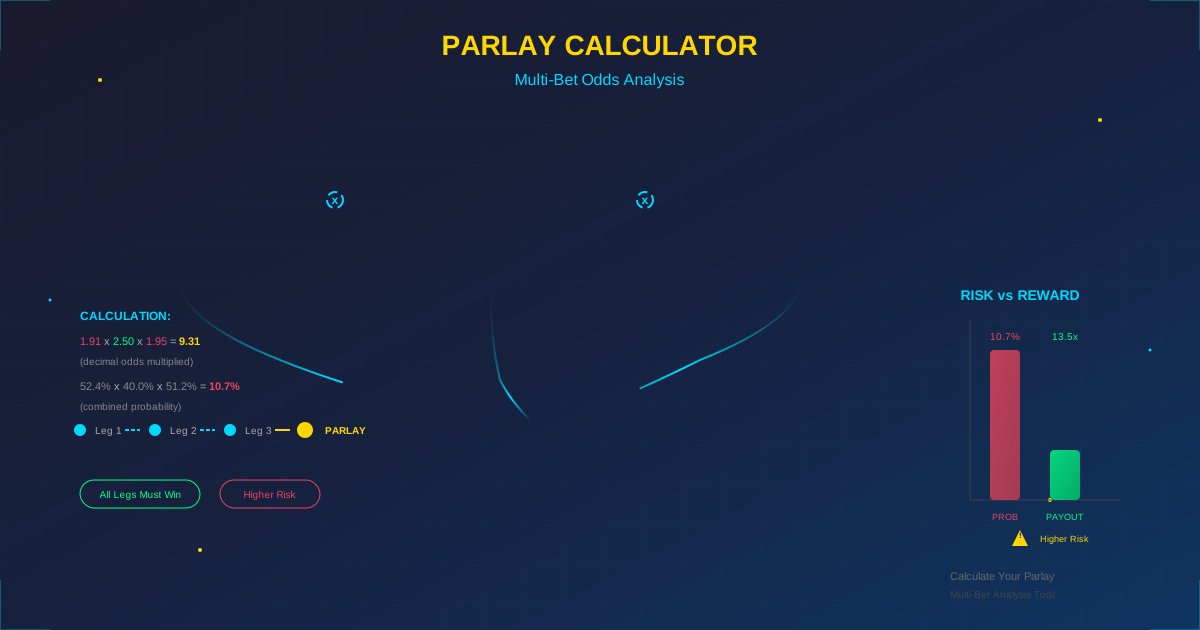
A parlay combines two or more individual bets into a single wager. All selections must win for the parlay to pay out, but the potential payout is significantly higher than betting each leg individually.
How Parlays Work
The odds of each individual bet multiply together. Here is an example:
2-Leg Parlay:
- Leg 1: Celtics -5.5 (-110)
- Leg 2: Over 210.5 (-110)
A $50 parlay on these two bets at standard -110 odds pays approximately $131.82 -- a profit of $81.82. Betting them individually at $50 each would require risking $100 total for a maximum profit of $90.91 (if both win).
The catch: if either leg loses, the entire parlay loses.
Parlay Payout Table
| Number of Legs (all at -110) | Approximate Payout on $100 | True Probability (50/50 bets) |
|---|---|---|
| 2 | $264 | 25.0% |
| 3 | $596 | 12.5% |
| 4 | $1,229 | 6.25% |
| 5 | $2,436 | 3.13% |
| 6 | $4,742 | 1.56% |
| 8 | $17,615 | 0.39% |
| 10 | $64,270 | 0.10% |
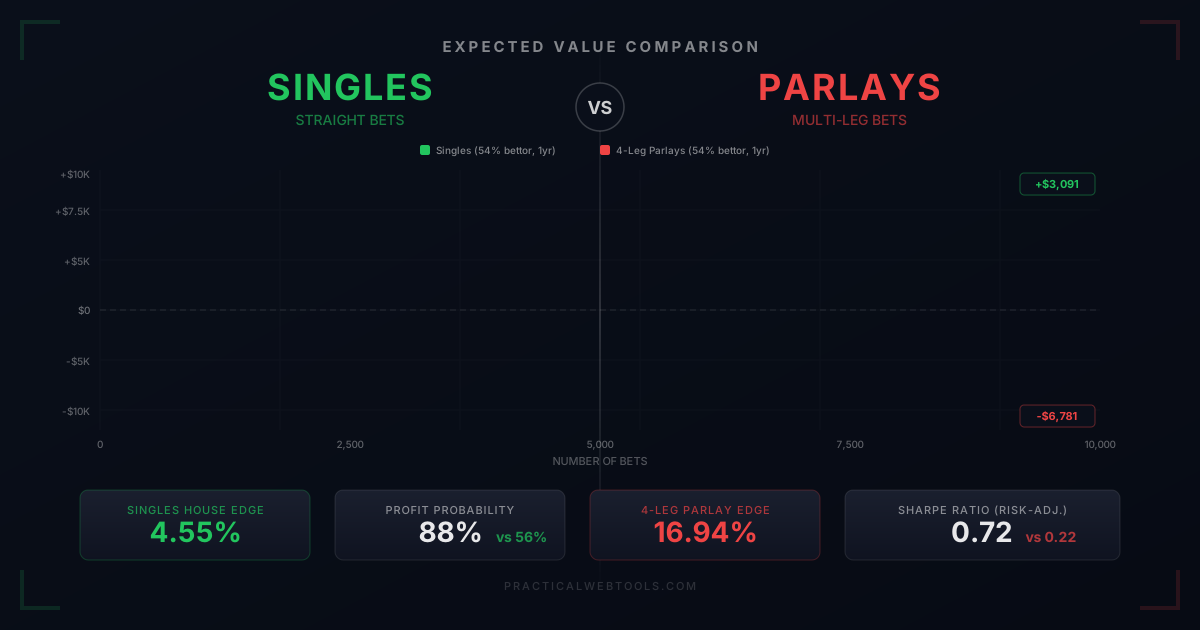
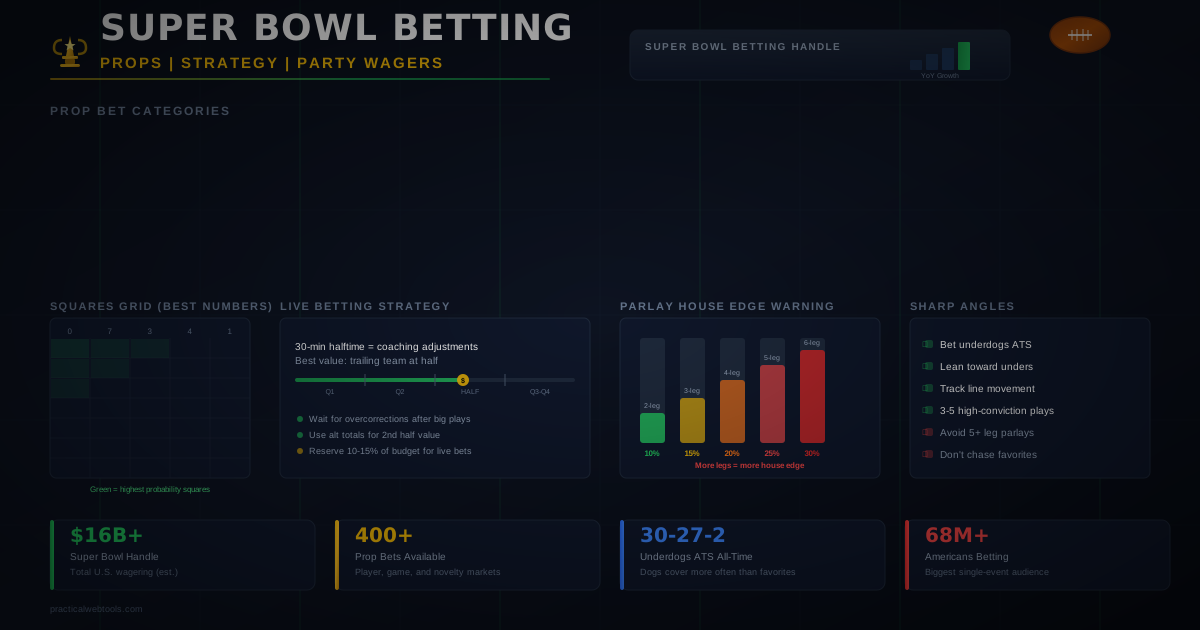
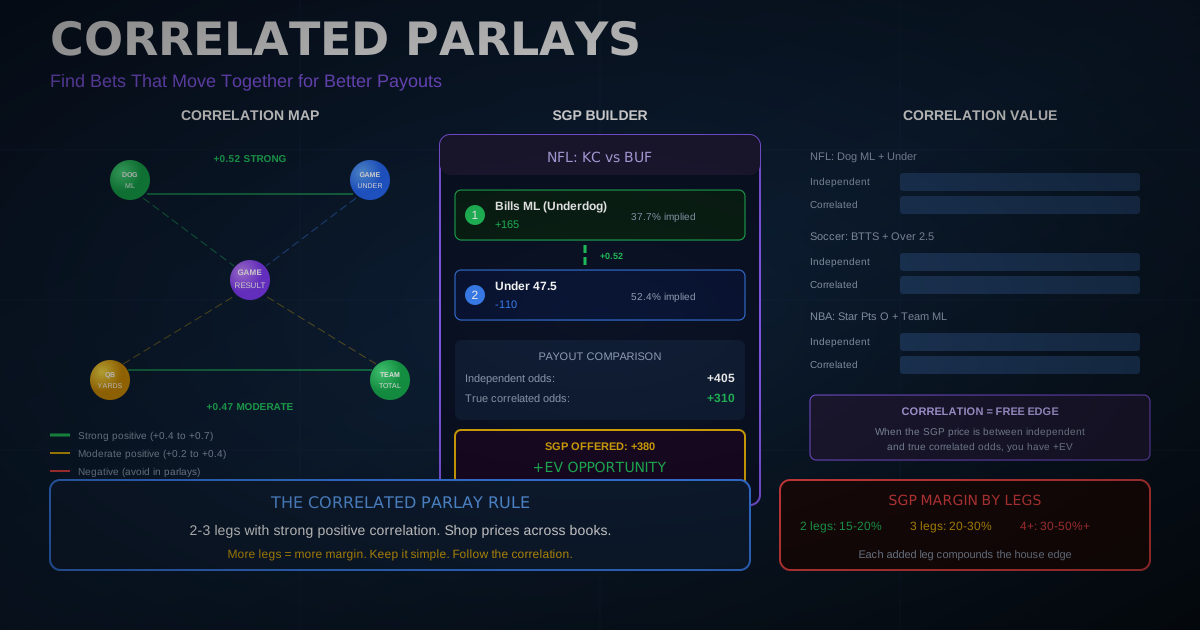
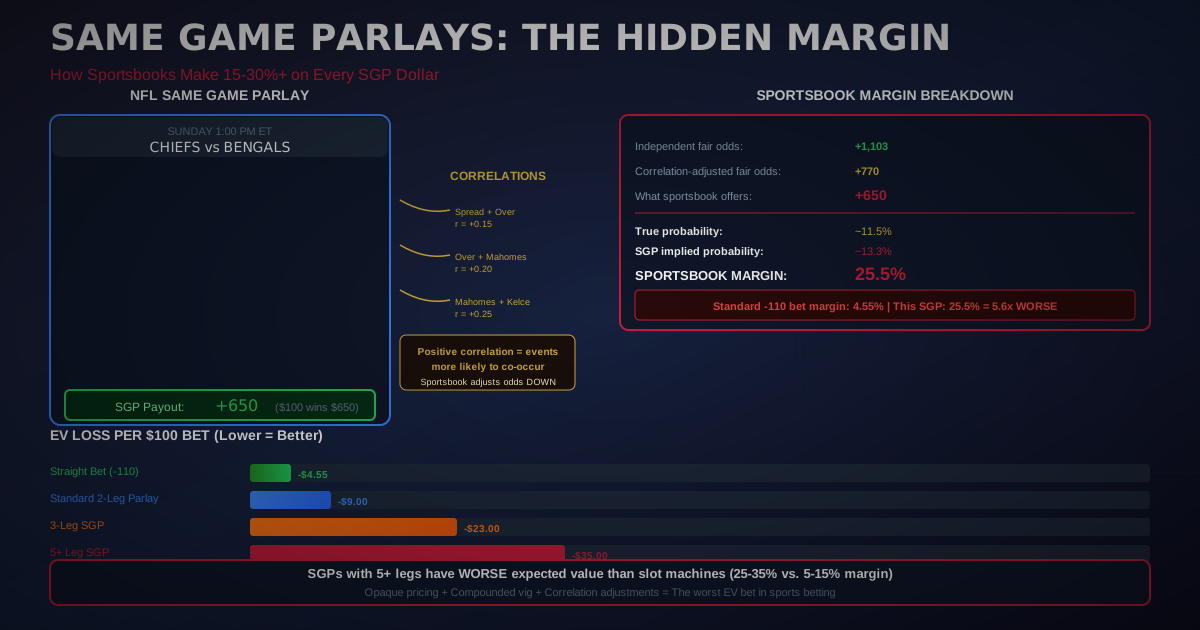
Parlays are popular because of the big payouts, but the sportsbook holds a larger edge on parlays than on straight bets. The more legs you add, the worse your expected value becomes. About 27% of legal wagers in major U.S. markets are parlays -- and sportsbooks love them because the hold percentage on parlays is significantly higher than on straight bets.
Calculate parlay odds and payouts with our Parlay Calculator.
Where Beginners Should Start
If you are brand new to betting, here is a practical roadmap:
Step 1: Start with Moneylines
Pick a sport you know well. Start by simply betting on who you think will win. Moneylines are the easiest to understand -- you do not need to worry about margins or combined scores. Stick to moderate favorites and underdogs (between -200 and +200) to avoid terrible risk/reward ratios.
Step 2: Graduate to Spreads
Once you are comfortable with moneylines, start looking at point spreads. Ask yourself: will this team win by X points? Spreads force you to think more critically about the margin, which is where you start developing real handicapping skill.
Step 3: Add Totals
Totals are a great bet type for beginners because they remove team bias. You are not rooting for either side -- you are analyzing whether the game will be high-scoring or low-scoring. This is often easier to assess than picking a winner.
Step 4: Learn Bankroll Management
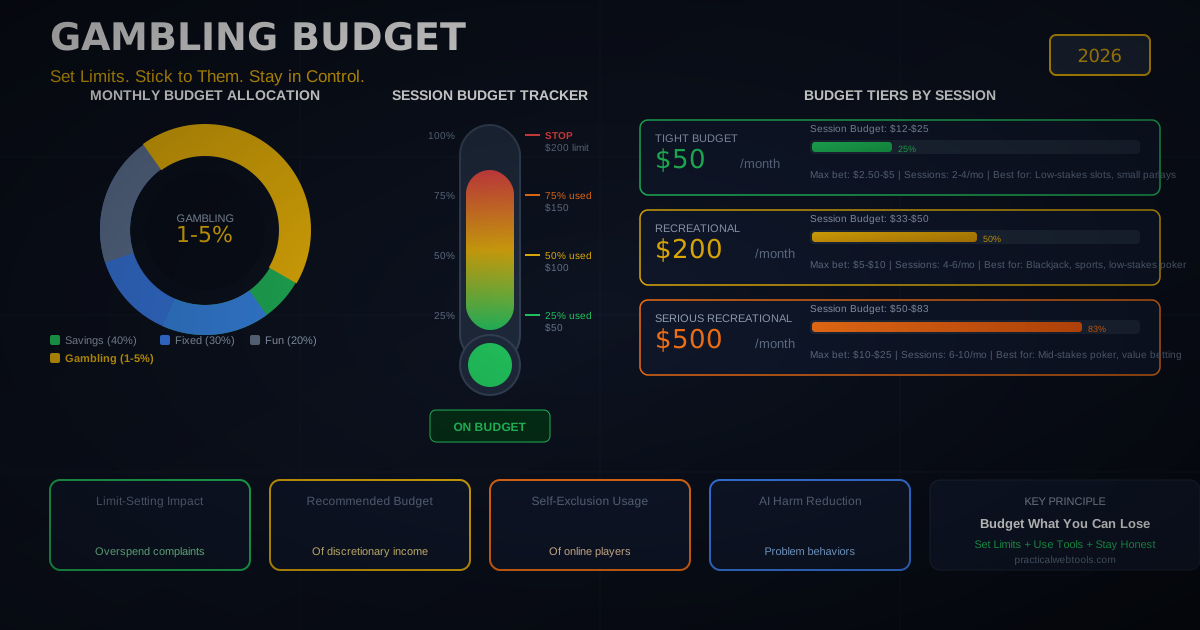
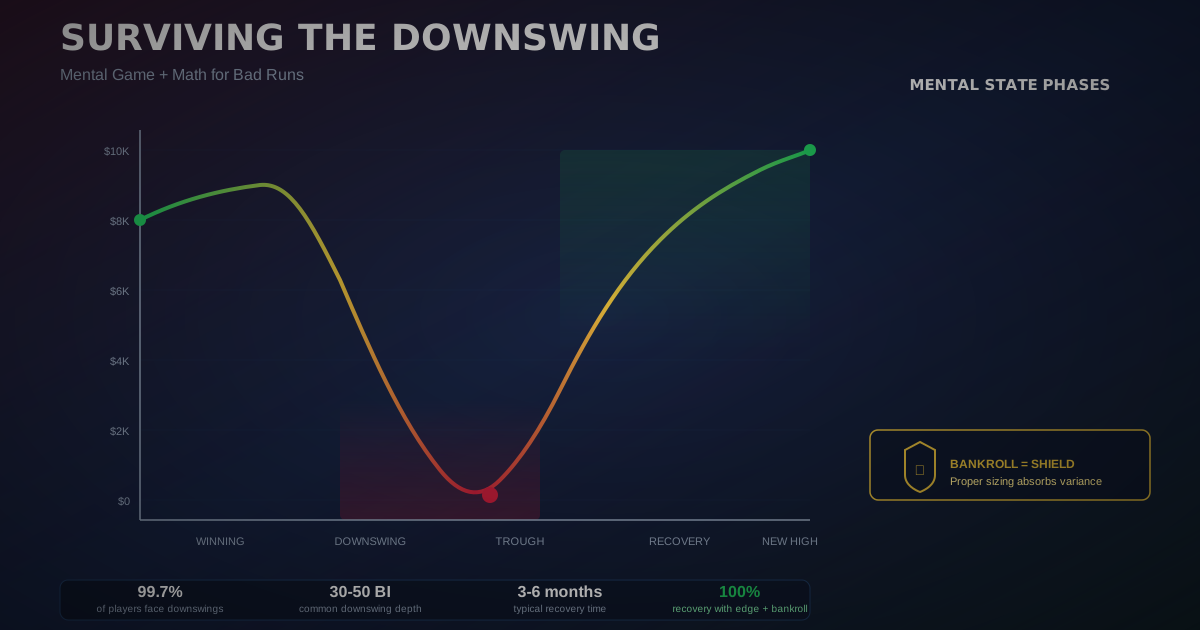
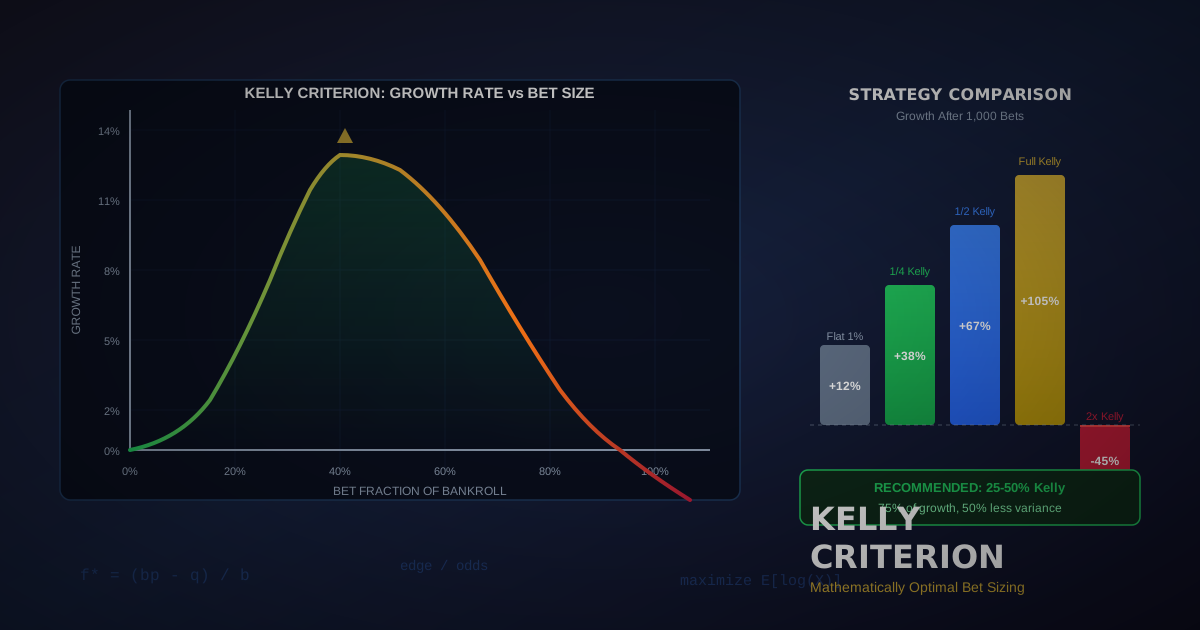
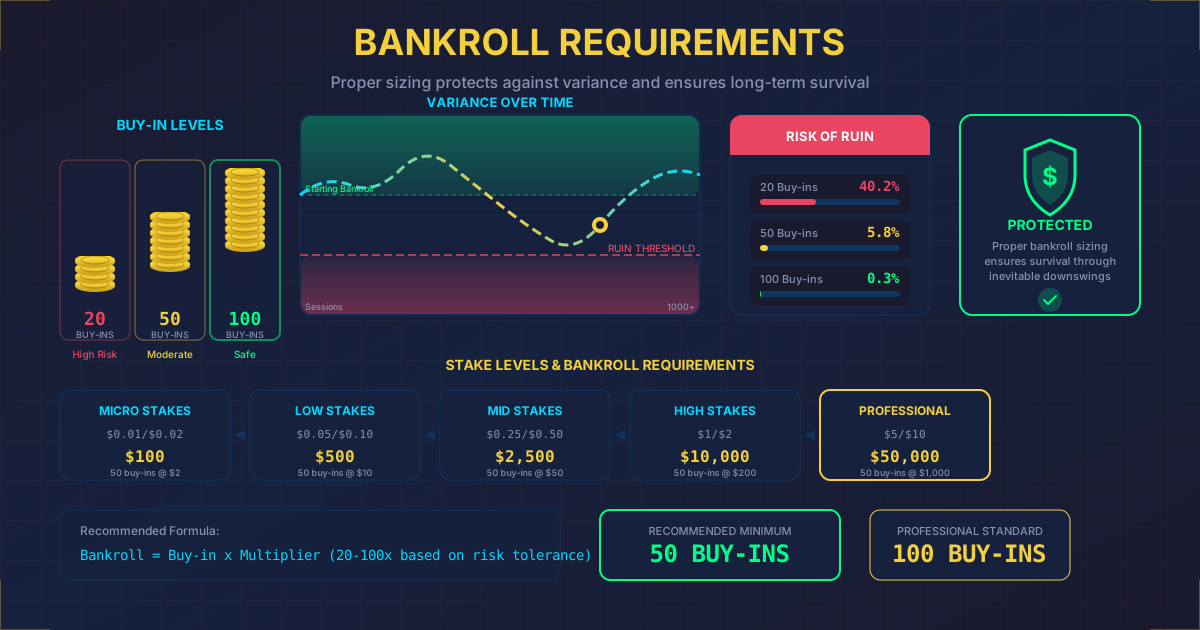
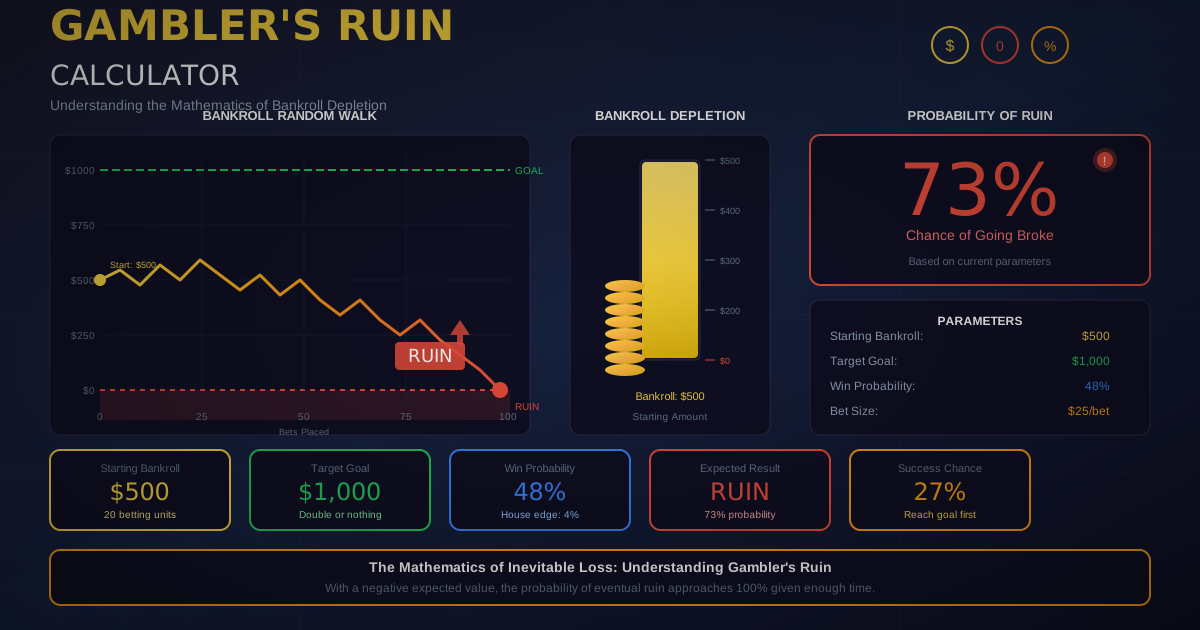
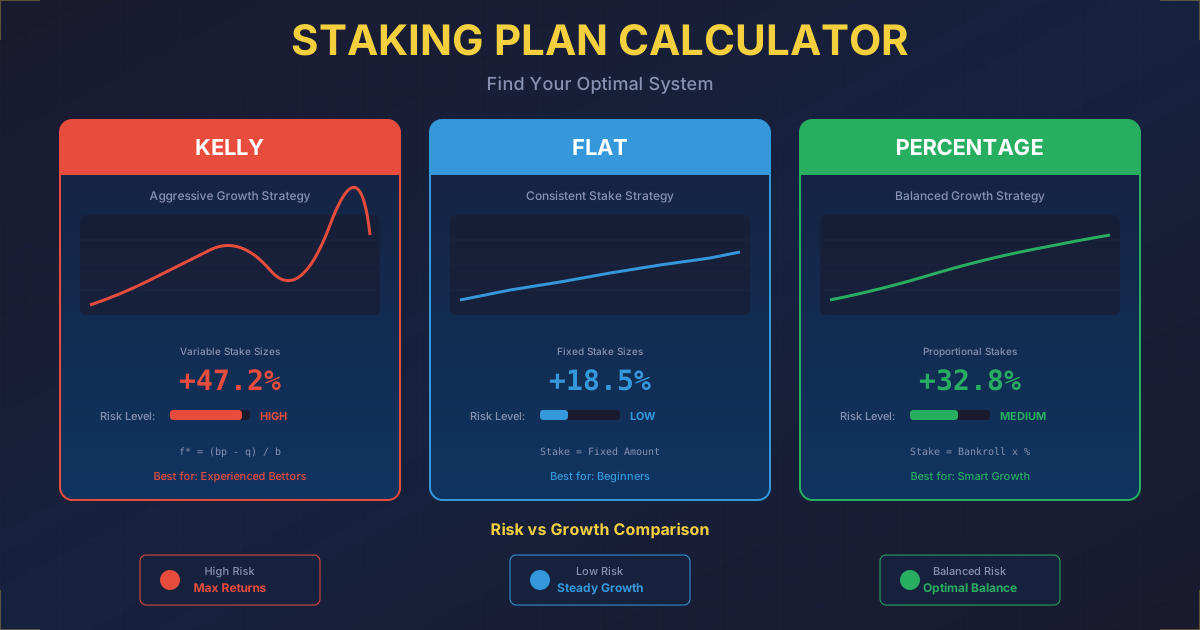
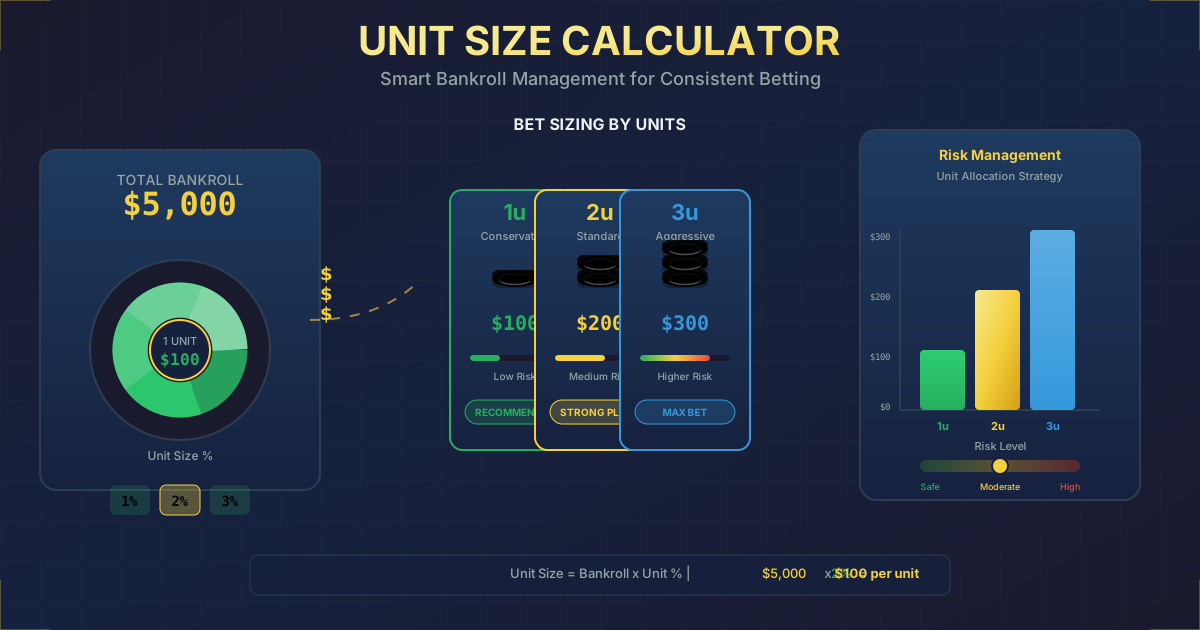
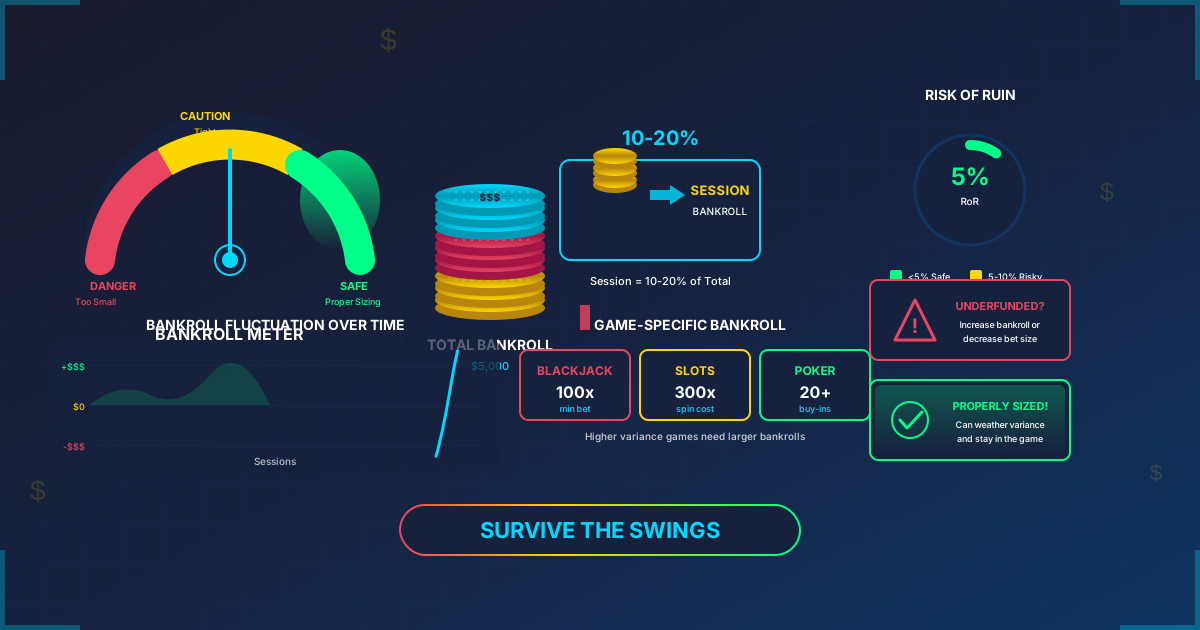
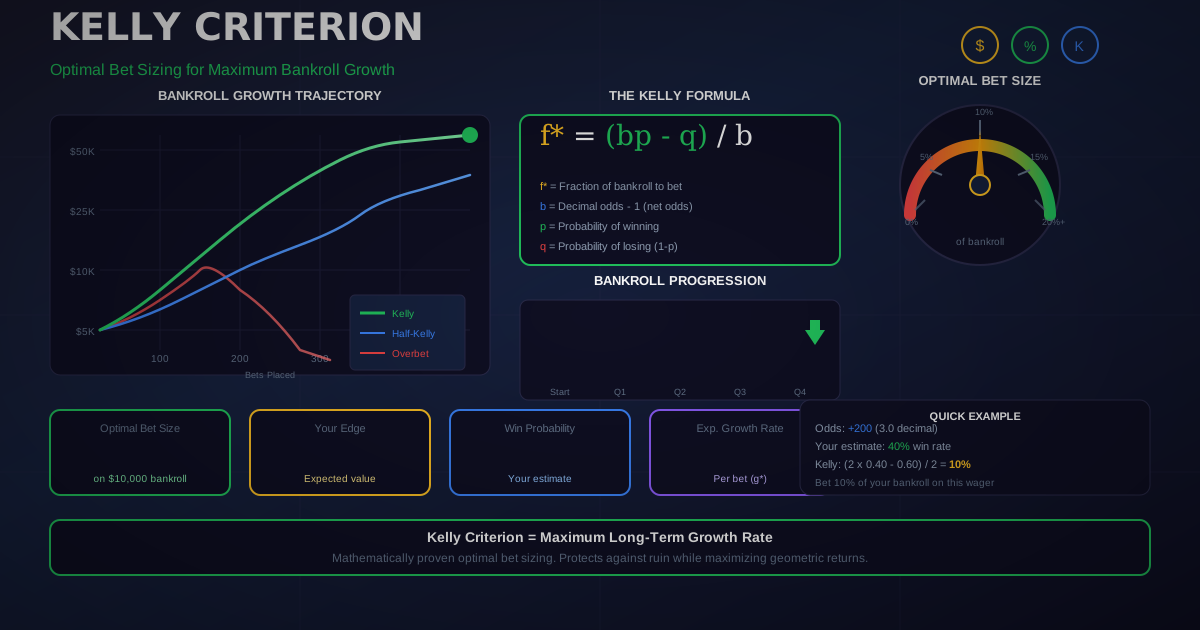
This is where most bettors fail. Professional bettors rarely risk more than 1-3% of their total bankroll on a single bet. The Kelly Criterion Calculator can help you determine optimal bet sizing based on your perceived edge, but most beginners should start even more conservatively -- 1% per bet.
Step 5: Shop Lines
Open accounts at multiple legal sportsbooks. The difference between -110 and -105 may seem trivial, but over hundreds of bets, it adds up dramatically. Getting an extra half-point on a spread can be the difference between a losing season and a profitable one.
Bankroll Management Quick Reference
| Bankroll | 1% Bet (Conservative) | 2% Bet (Moderate) | 3% Bet (Aggressive) |
|---|---|---|---|
| $500 | $5 | $10 | $15 |
| $1,000 | $10 | $20 | $30 |
| $2,500 | $25 | $50 | $75 |
| $5,000 | $50 | $100 | $150 |
| $10,000 | $100 | $200 | $300 |
Optimize your bet sizing with our Kelly Criterion Calculator.
Common Beginner Mistakes to Avoid
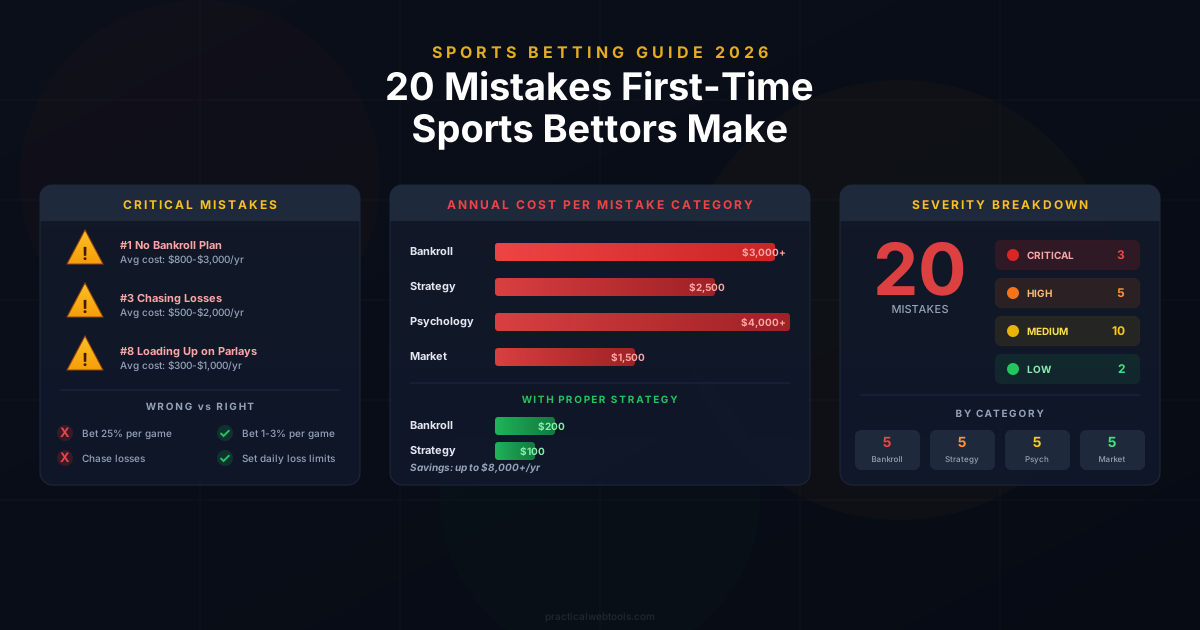
Before you place your first bet, learn from the mistakes that trip up nearly every new bettor:
1. Betting favorites on the moneyline without checking the implied probability. Laying -350 on a team means they need to win 77.8% of the time for you to break even. Most beginners just see "this team will win" without considering whether the price is right.
2. Ignoring the hook. The difference between +3 and +3.5 in NFL betting is enormous. That half-point eliminates the most common margin of victory. Always consider what you are giving up or getting on key numbers.
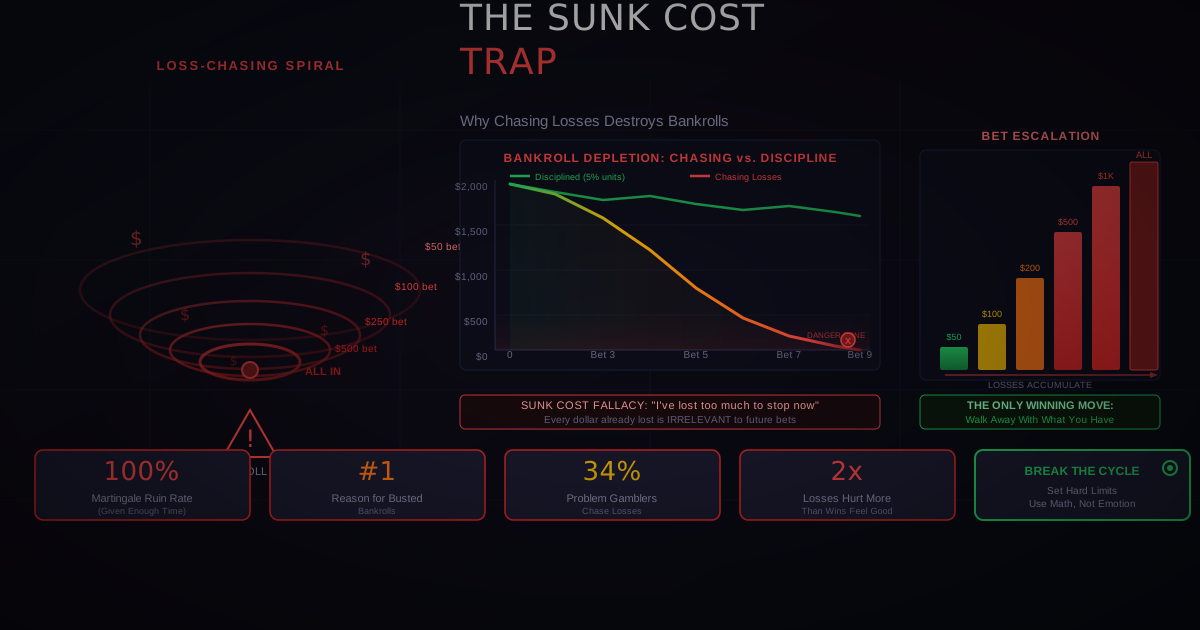
3. Chasing losses with parlays. After a bad day, the temptation is to throw a few long-shot parlays hoping to get even. This is the fastest way to blow through a bankroll. Sportsbooks design parlays to be attractive for exactly this reason.
4. Not understanding overtime rules. Most sports bets include overtime in the final score. If you bet Under 48.5 in an NFL game and it goes to overtime, those extra points count. Know the rules before you bet.
5. Betting with your heart instead of your head. Your favorite team is not always the right bet. Fandom creates bias, and sportsbooks know it. Lines on popular teams (Cowboys, Lakers, Yankees) are often shaded toward the public side, meaning you frequently get worse value betting on them.
6. Ignoring line movement. A line that moves from -3 to -4.5 before you bet it means you are getting a worse number than was available hours earlier. Timing matters.
Frequently Asked Questions
What does -110 mean in betting?
-110 is the standard vig (vigorish) on most point spread and totals bets. It means you must risk $110 to win $100 in profit. If you win, you get back $210 (your $110 stake + $100 profit). If you lose, you lose your $110 stake. The extra $10 beyond a fair-odds bet is the sportsbook's commission for accepting the wager.
What is the difference between a moneyline bet and a point spread bet?
A moneyline bet is simply picking which team wins -- the margin does not matter. A point spread bet adds a handicap: the favorite must win by more than the spread, and the underdog can lose by less than the spread (or win outright). For example, if the Celtics are -6.5 on the spread, they need to win by 7+ for a spread bet to cash. On the moneyline, they just need to win by any score.
Can you lose a bet even if your team wins the game?
Yes, on a point spread bet. If you bet on the Chiefs at -7.5 and they win 24-21 (a 3-point margin), your bet loses because they did not cover the 7.5-point spread. This is one of the most common sources of frustration for new bettors.
What happens if the score lands exactly on the spread number?
This is called a push. Your bet is refunded -- you do not win or lose. Pushes only happen with whole-number spreads (like -3 or -7). Half-point spreads (like -3.5 or -7.5) eliminate the possibility of a push entirely, which is one reason sportsbooks use them.
What is better for beginners: American odds, decimal odds, or fractional odds?
American odds are standard at U.S. sportsbooks, so you should be comfortable reading them. However, many bettors find decimal odds easier to calculate payouts with because you simply multiply your stake by the decimal number. For example, 2.50 x $100 = $250 total return. Use our Odds Converter to switch between formats.
How do you calculate the payout on a bet?
For American odds: if the odds are positive, your profit on a $100 bet equals the odds number (e.g., +200 = $200 profit). If the odds are negative, divide 100 by the absolute value of the odds and multiply by your stake. For -150: 100/150 = 0.6667, so a $100 bet wins $66.67. For decimal odds: Stake x Odds = Total Return. $100 x 2.50 = $250 total ($150 profit).
Should beginners bet parlays?
Parlays should be treated as entertainment, not strategy. The sportsbook's edge increases with every leg you add. A 4-leg parlay at -110 per leg has a built-in house edge roughly double that of a straight bet. If you enjoy parlays, keep them small (2-3 legs) and use a tiny fraction of your bankroll. Never rely on parlays as your primary betting approach.
What does "sharp money" mean?
Sharp money refers to wagers placed by professional or highly informed bettors. When sportsbooks detect sharp action -- usually large bets or bets from accounts flagged as sharp -- they often move their lines quickly in response. Following line moves caused by sharp money (rather than public volume) is one way recreational bettors can improve their decision-making.
Essential Betting Tools for Beginners
Having the right calculators at your fingertips makes a real difference. Here are the tools you should bookmark:
-
Odds Converter: Instantly convert between American, decimal, and fractional odds. Essential when comparing lines across international sportsbooks or following tipsters who use different formats.
-
Implied Probability Calculator: Turn any odds into a win probability percentage. This is the single most important calculation in sports betting -- you need to compare the sportsbook's implied probability against your own estimated probability.
-
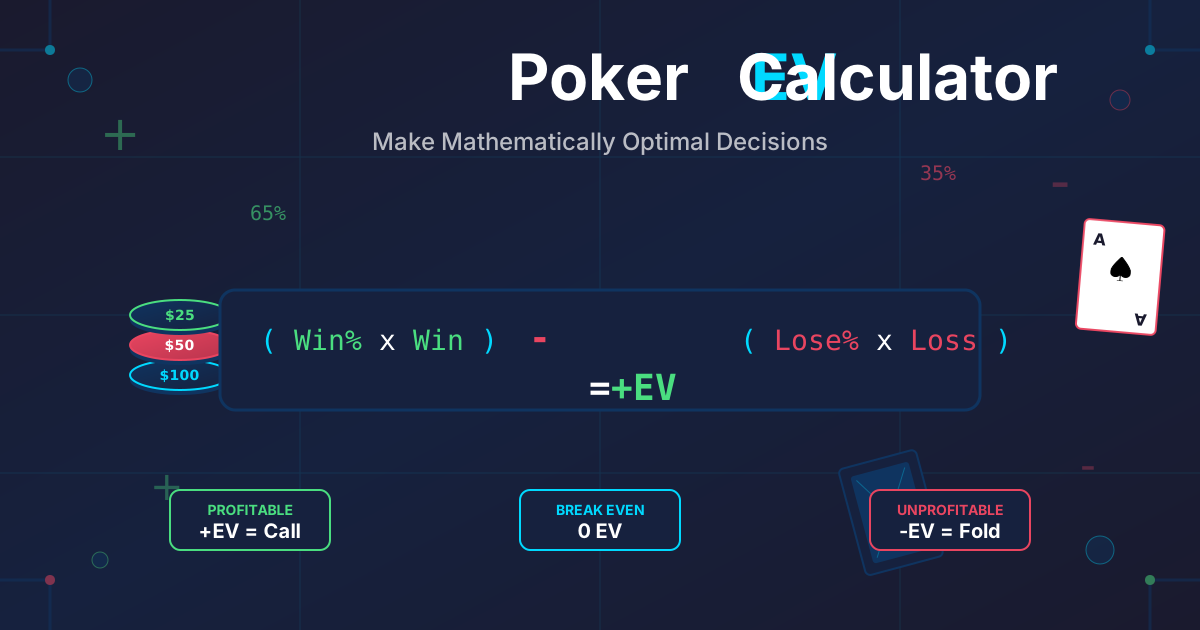
Expected Value Calculator: Determine whether a bet has positive or negative expected value. Plug in the odds and your estimated probability to see if the bet is mathematically profitable long-term.
-
Hold/Vig Calculator: See exactly how much edge the sportsbook is taking on any given market. Lower vig means better prices for you.
-
Parlay Calculator: Calculate combined odds and potential payouts for multi-leg parlays. Know exactly what you stand to win before you commit.
-
Kelly Criterion Calculator: Determine the mathematically optimal bet size based on your bankroll and perceived edge. Most professionals use fractional Kelly (25-50% of the full Kelly suggestion) for safety.
-
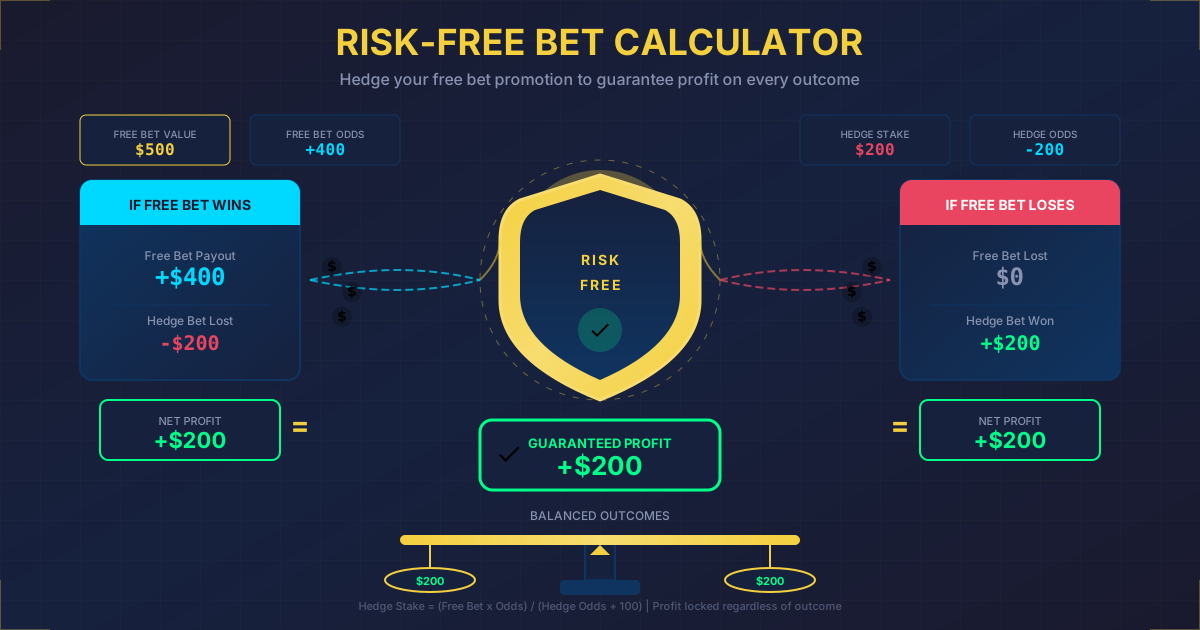
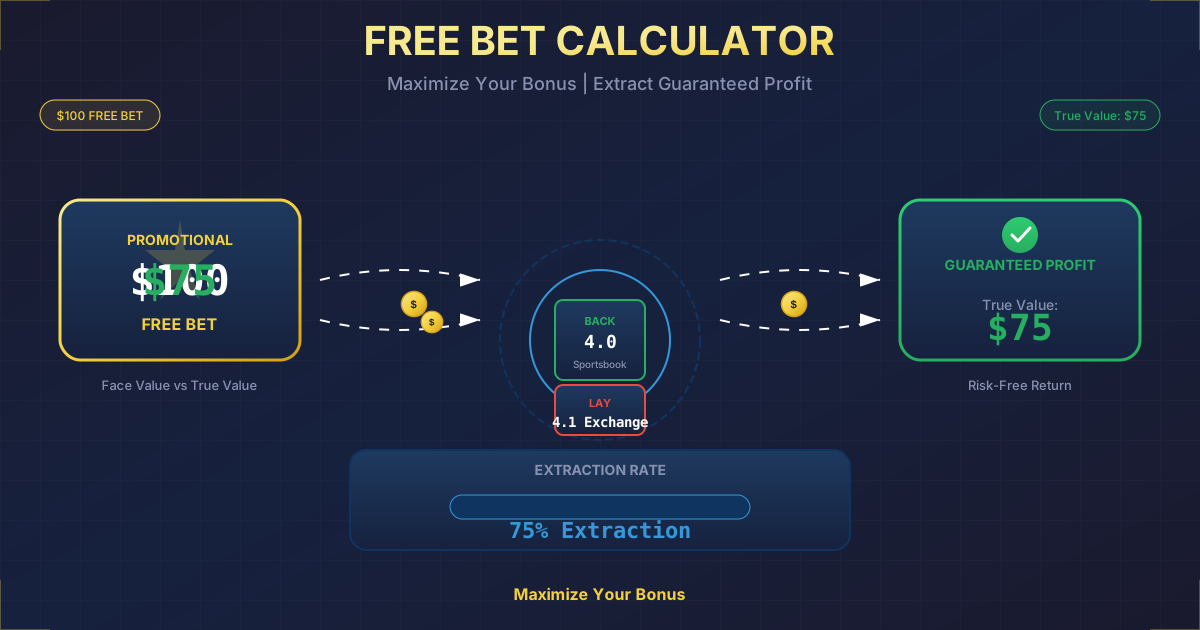
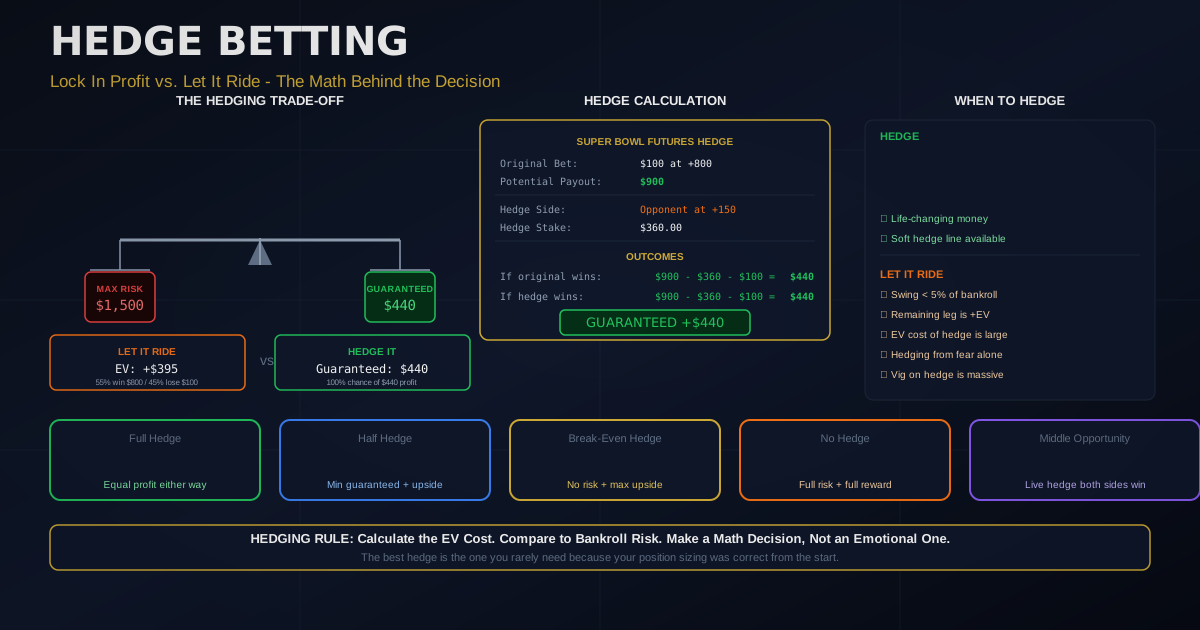
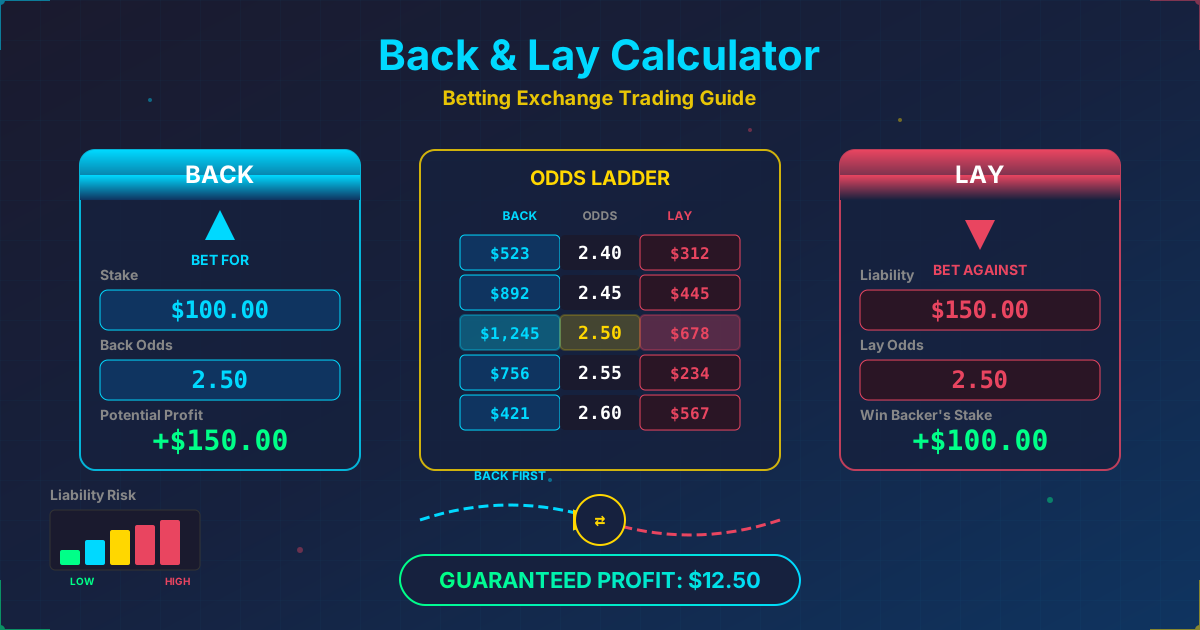
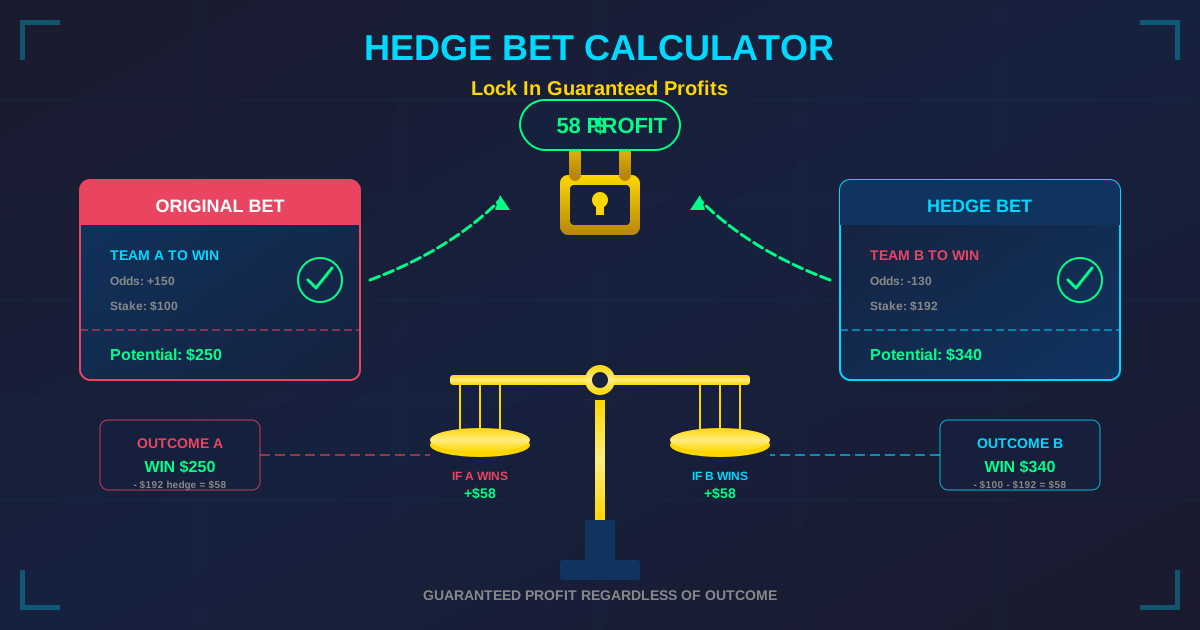
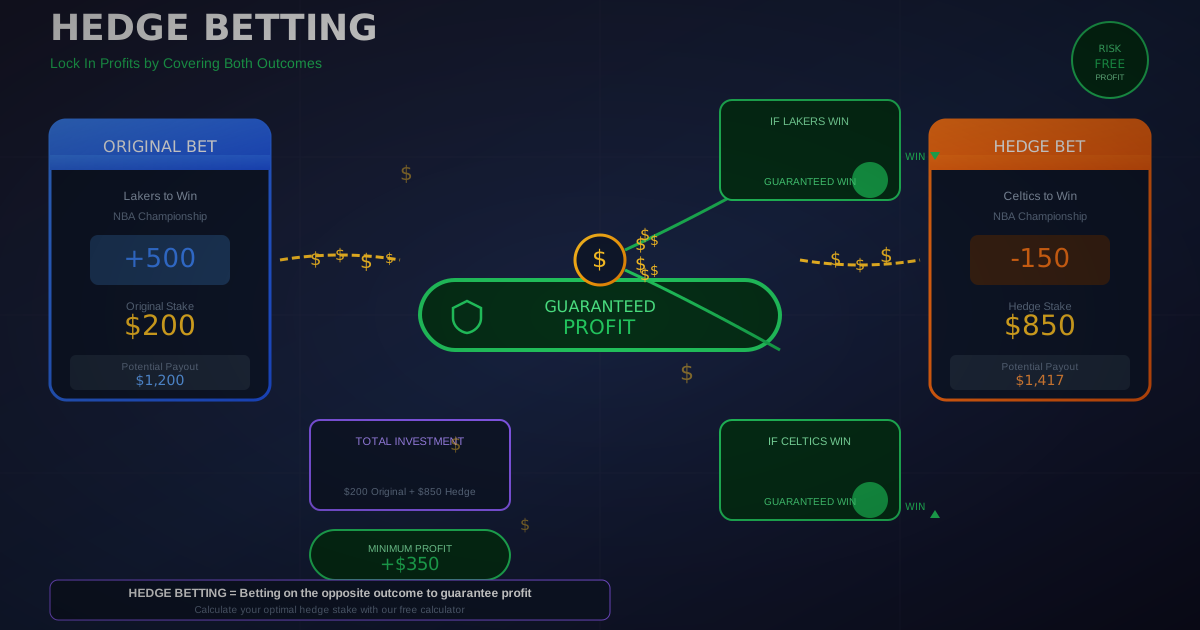
Hedge Calculator: Calculate how much to bet on the opposite side to guarantee a profit or minimize a loss. Useful when you have a live bet or futures ticket that has gained value.
Conclusion
Reading betting lines is not complicated once you understand the framework. Moneylines tell you who is favored and what the payout is. Point spreads set a margin of victory the favorite needs to exceed. Totals let you bet on the combined score without caring who wins. And all three can be expressed in American, decimal, or fractional odds depending on where you are betting.
The numbers on a sportsbook board are not random -- they are precise expressions of probability, value, and risk. Every minus sign, every half-point, every shift from -110 to -115 tells you something about how the sportsbook and the betting public view a game.
Now that you can read those numbers, the real work begins: developing your own analysis, comparing your estimates against the market, and finding spots where the price is wrong. That is where sports betting transforms from a coin flip into a skill game.
Start putting your knowledge into practice with our free Odds Converter, check any line's implied probability with our Implied Probability Calculator, and size your bets wisely with our Kelly Criterion Calculator.
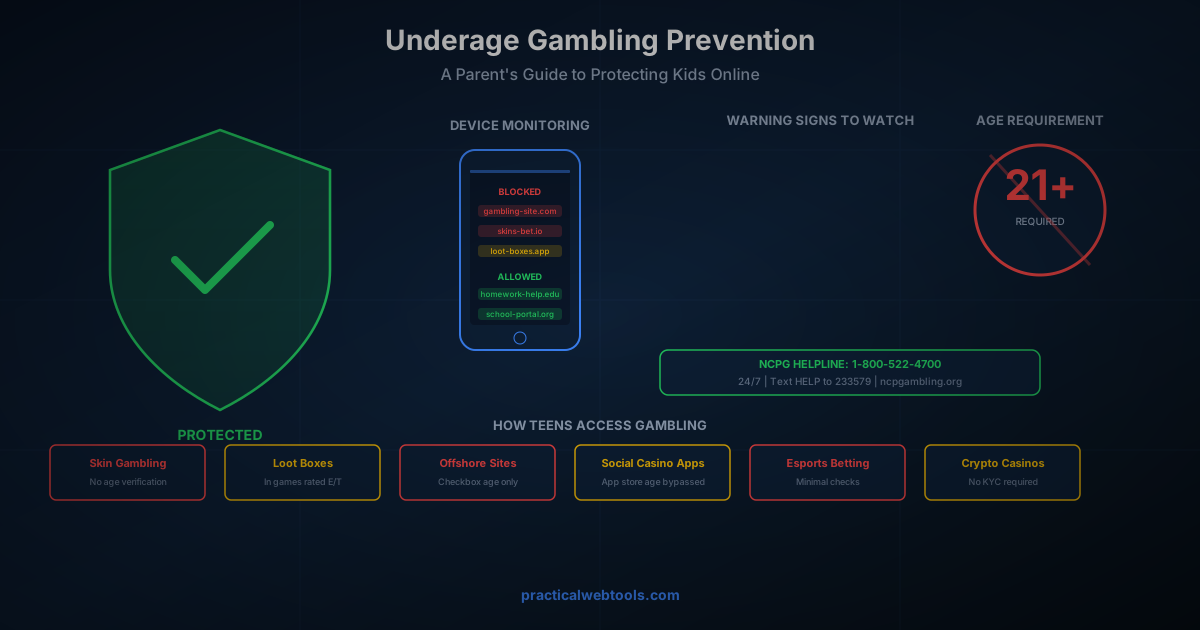
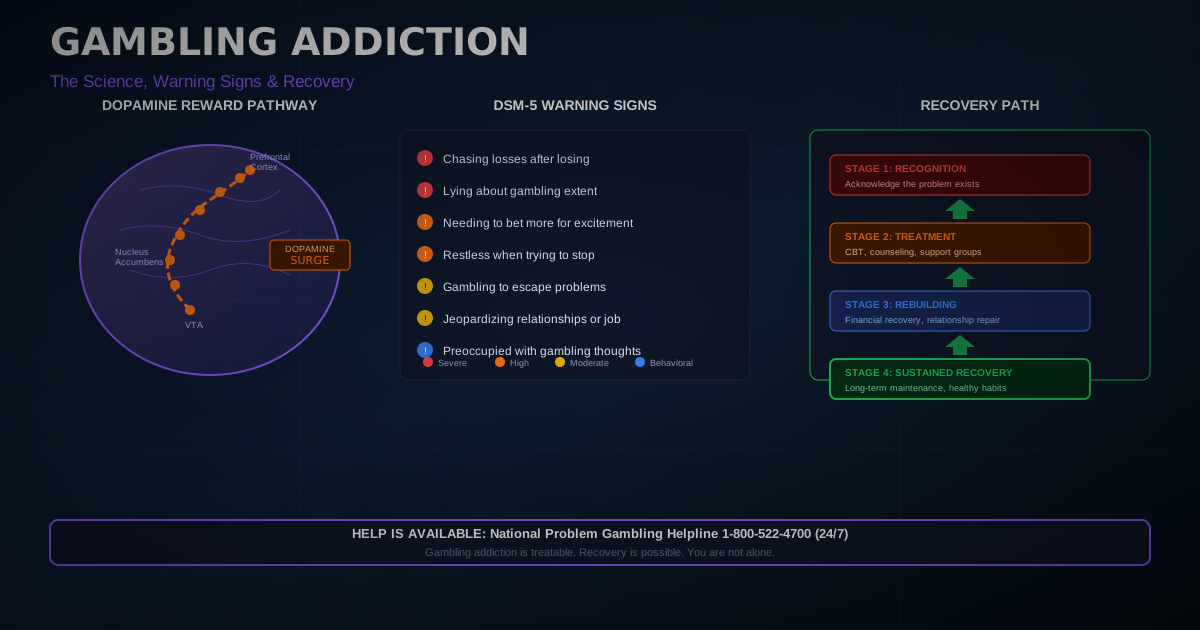
Gambling involves risk. This content is for educational and informational purposes only. Always gamble responsibly, set limits you can afford, and seek help if gambling becomes a problem. Visit the National Council on Problem Gambling or call 1-800-522-4700 for support.