Best Casino Games for Beginners: Where to Start and What to Avoid (2026)
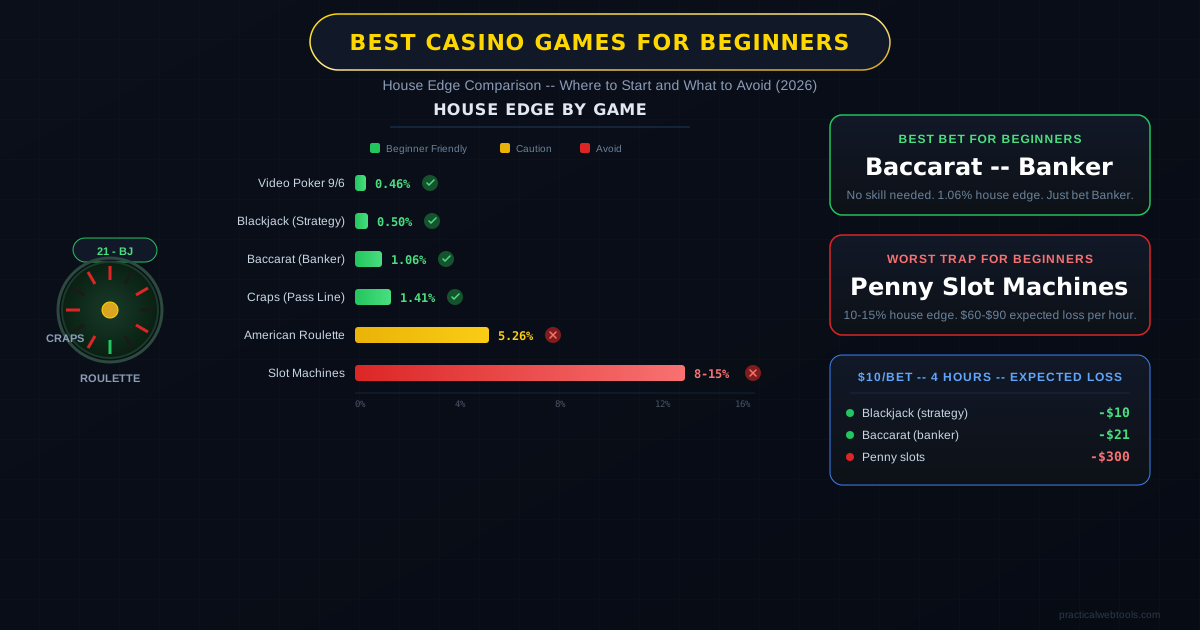
Most casino beginners lose money faster than they need to because they pick the wrong games. The difference between a smart first game and a bad one is not small. A beginner playing blackjack with basic strategy faces a house edge of 0.5%. That same person sitting down at a penny slot machine faces a house edge of 10-15%. Over four hours of play at $10 per round, that is the difference between an expected loss of $12 and an expected loss of $360. Same bankroll. Same time. Wildly different outcomes.
The casino industry generated over $71 billion in commercial gaming revenue through the first eleven months of 2025 alone. Slot machines account for more than 70% of that income. That should tell you something: the games casinos push hardest are the ones that take your money fastest.
This guide breaks down every major casino game by its house edge, complexity, pace of play, and suitability for beginners. You will know exactly which games to sit down at, which bets to make, and which flashy options to walk past entirely.
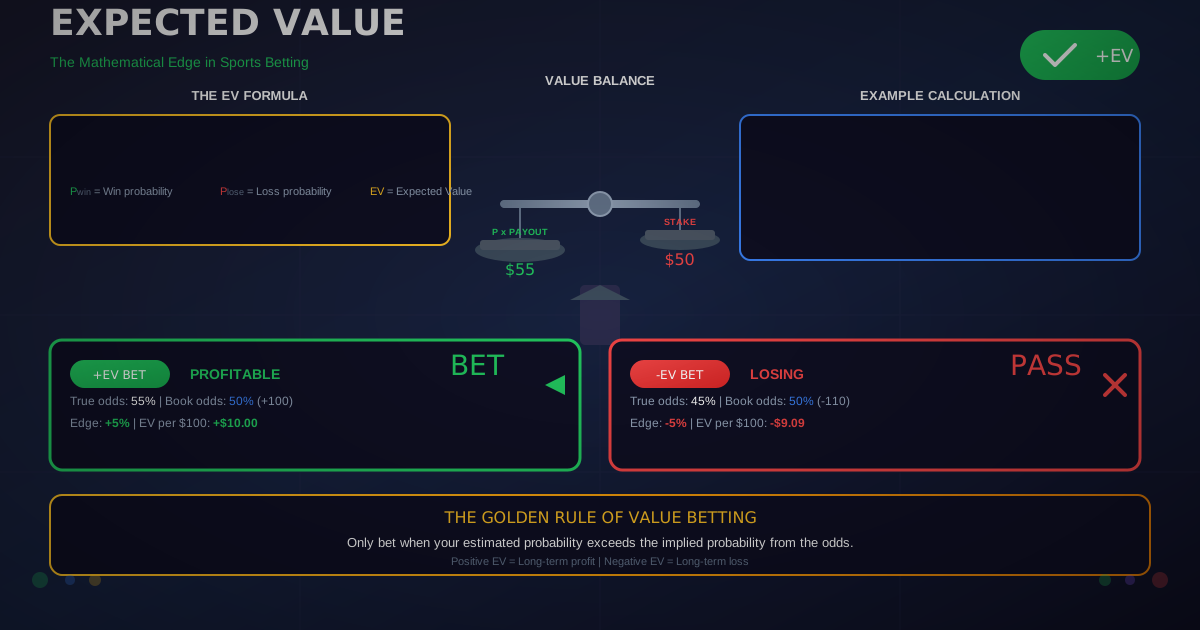
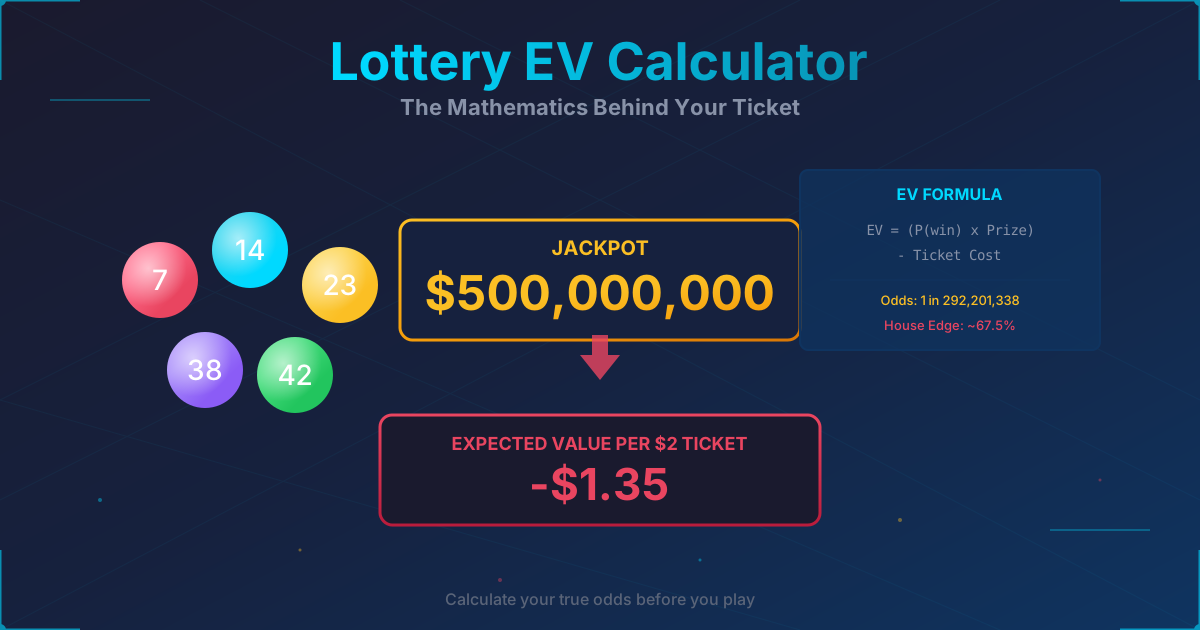
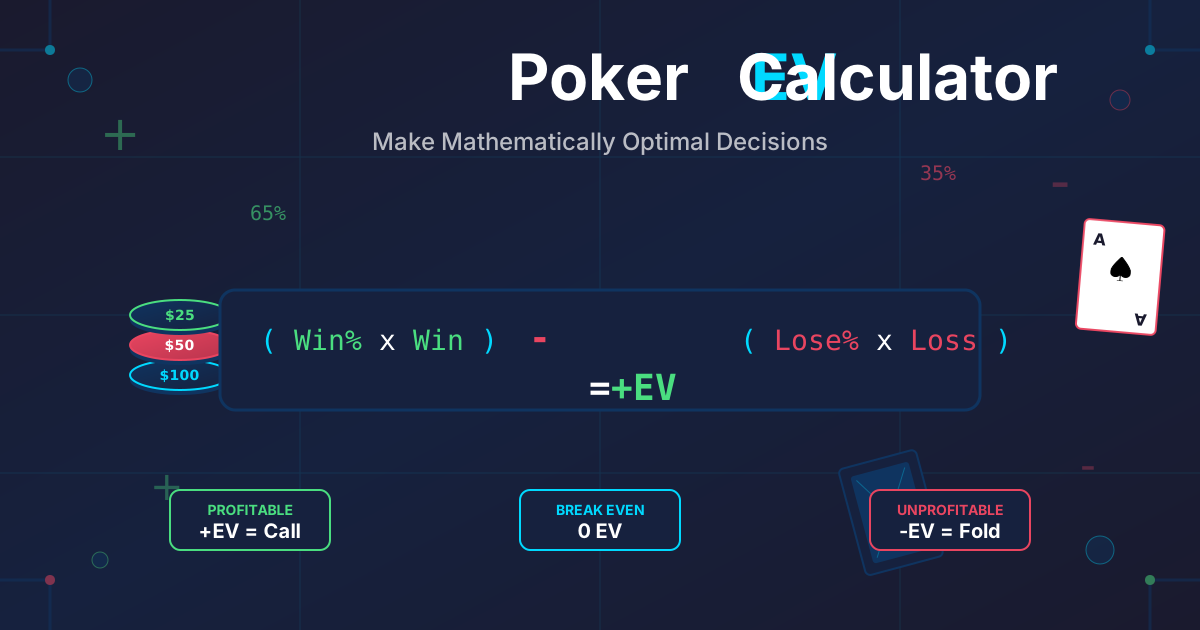
Before you step into a casino or log into an online platform, run the numbers yourself with our Expected Value Calculator to see exactly what any game or bet will cost you over time.
What Is the House Edge and Why Should Beginners Care?
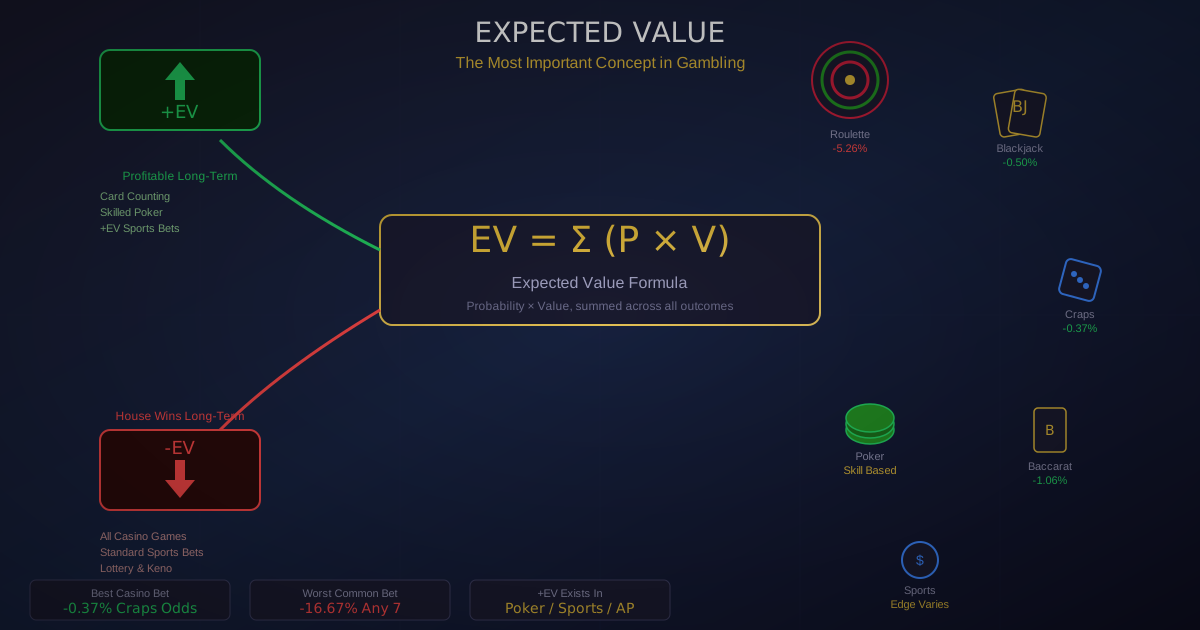
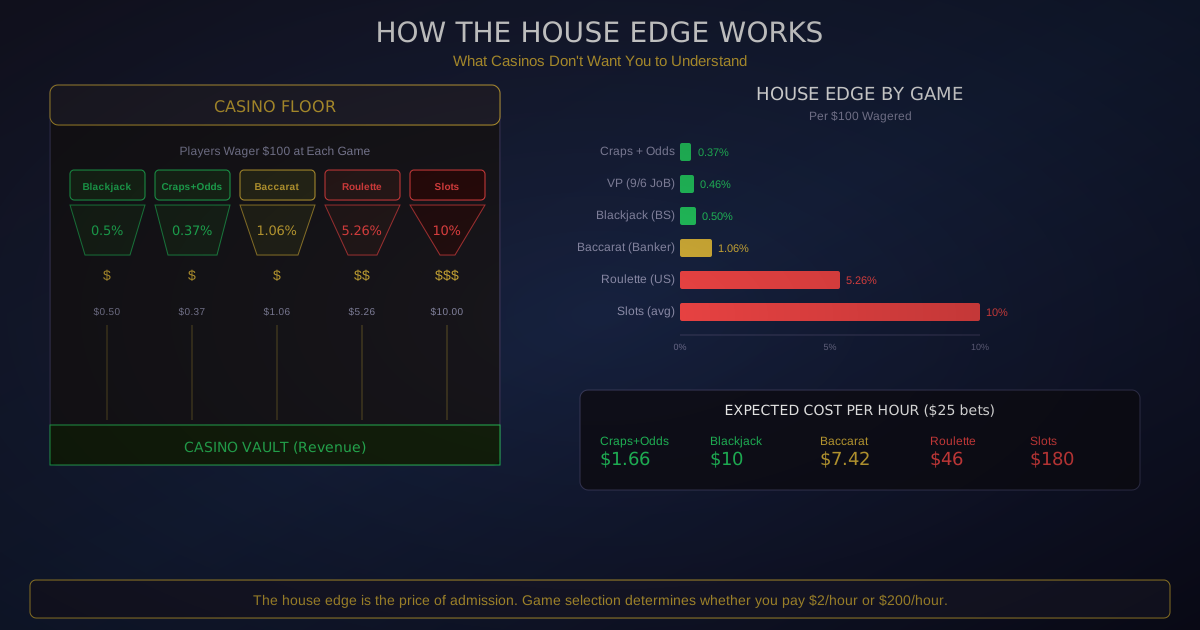
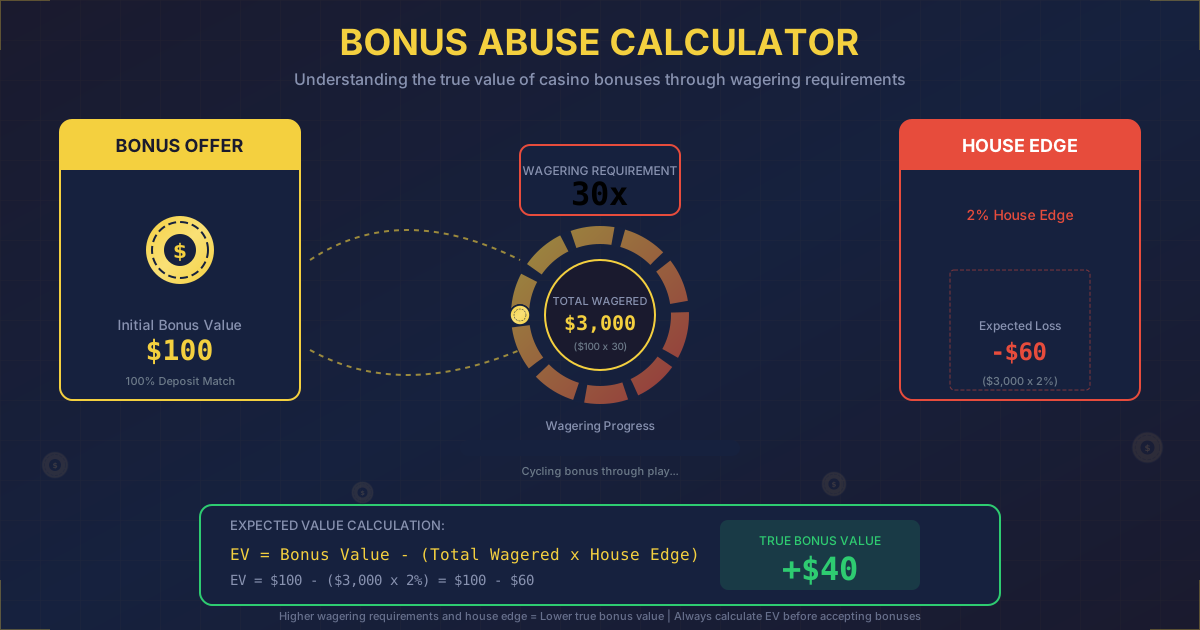
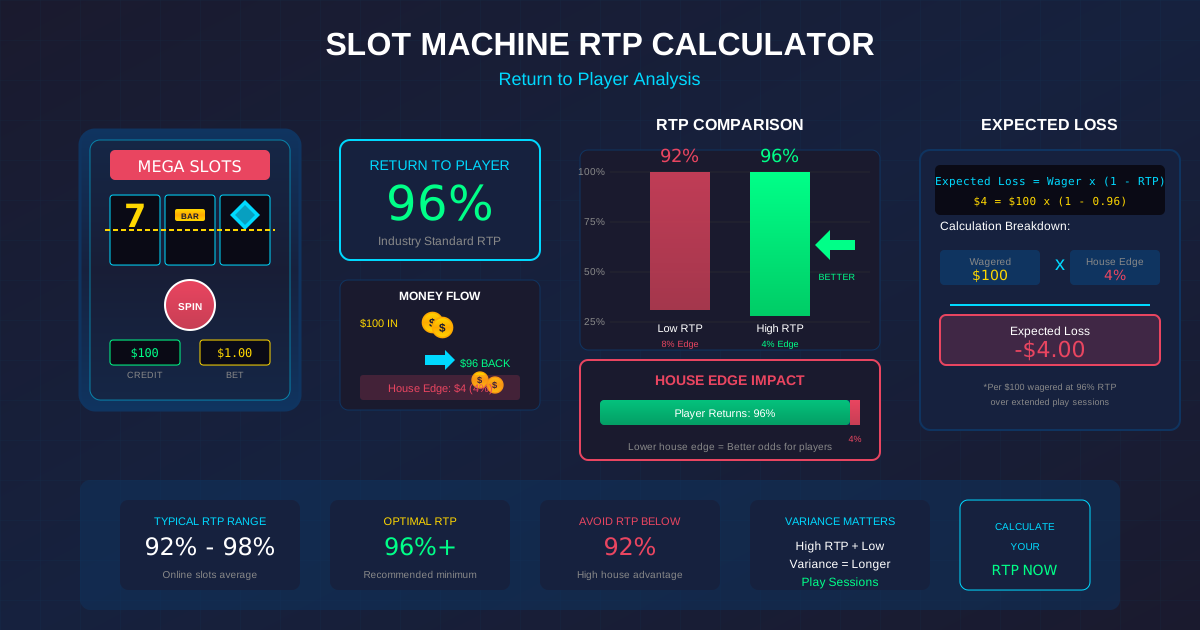
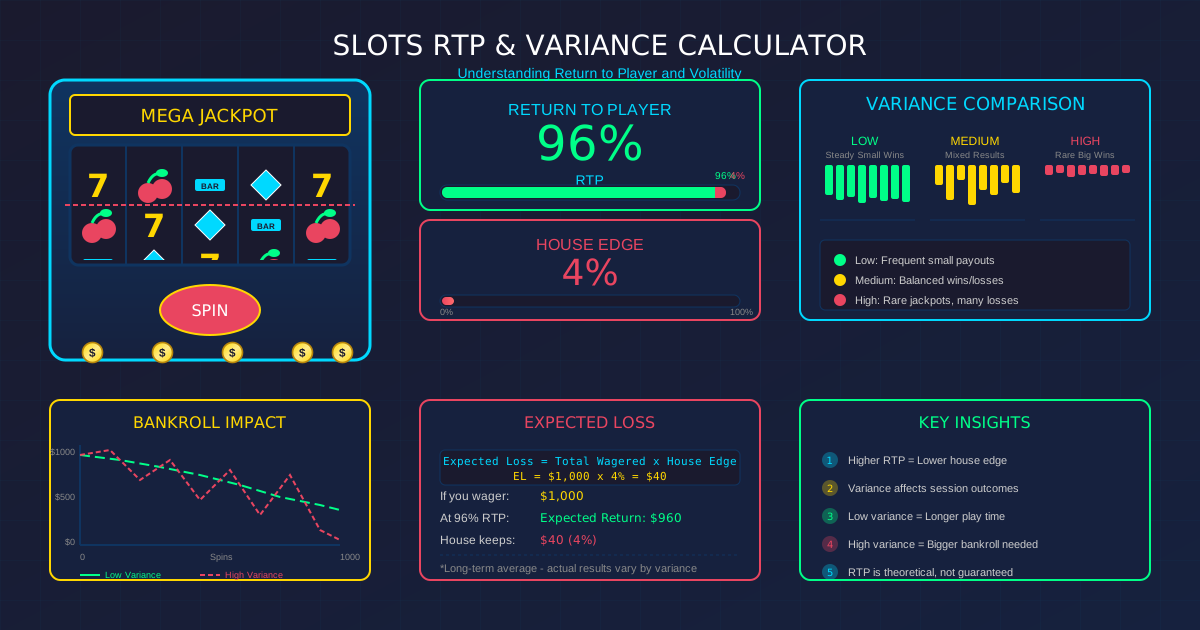
The house edge is the mathematical advantage the casino holds over you on every bet. It is expressed as a percentage of each wager that the casino expects to keep over the long run. A house edge of 2% means that for every $100 you bet, the casino expects to keep $2 and return $98 on average.
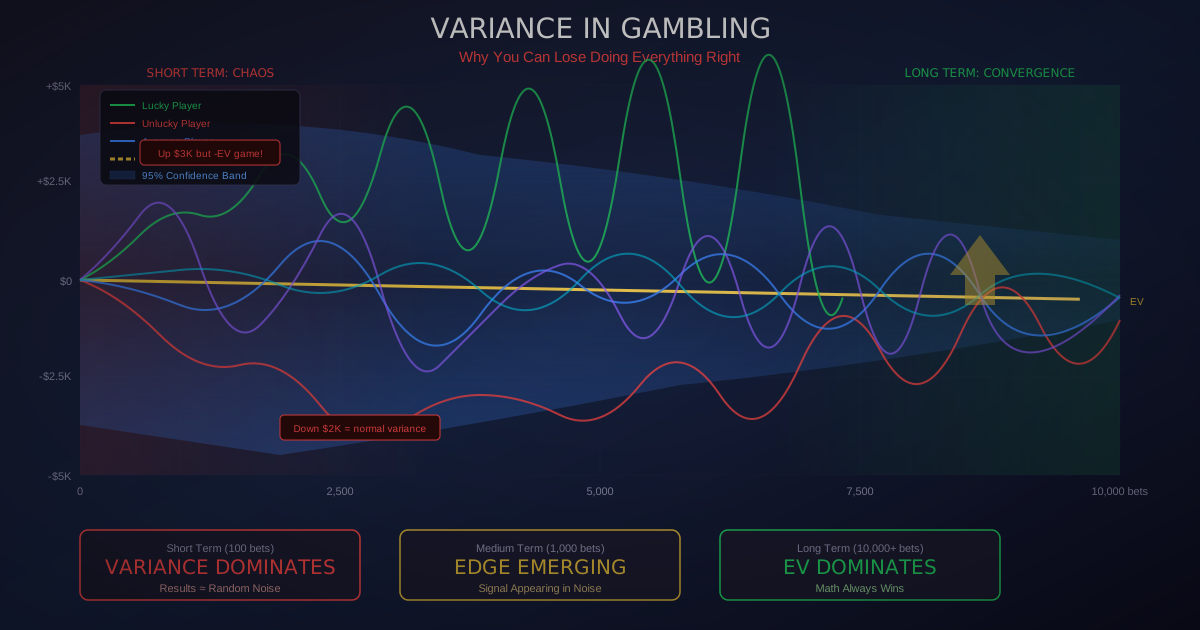
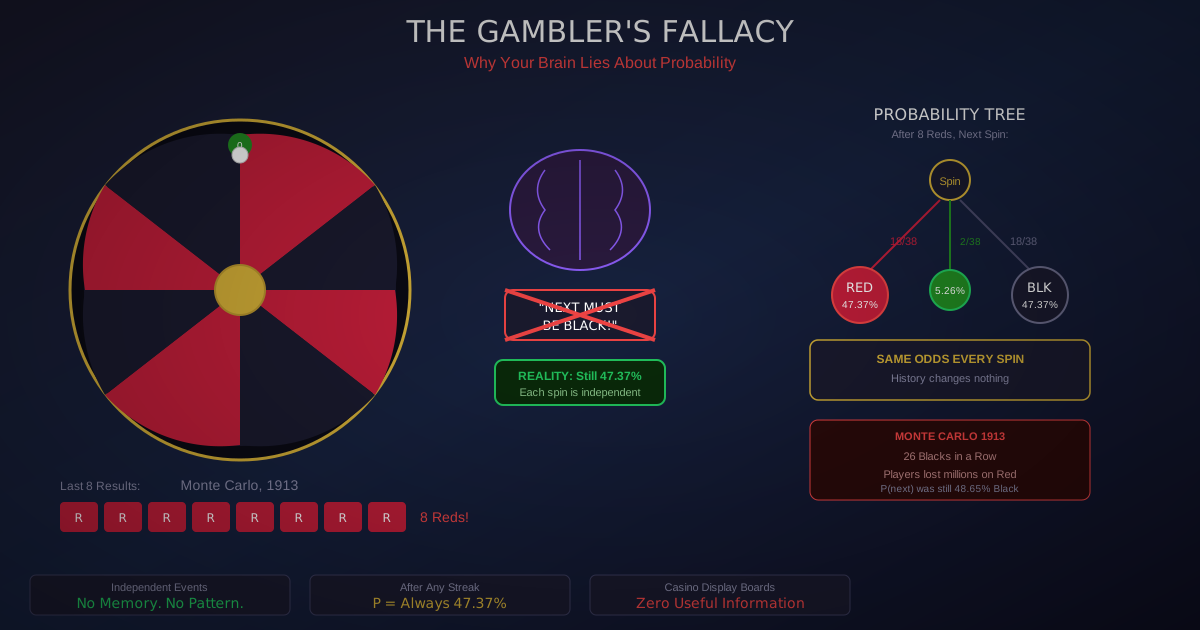
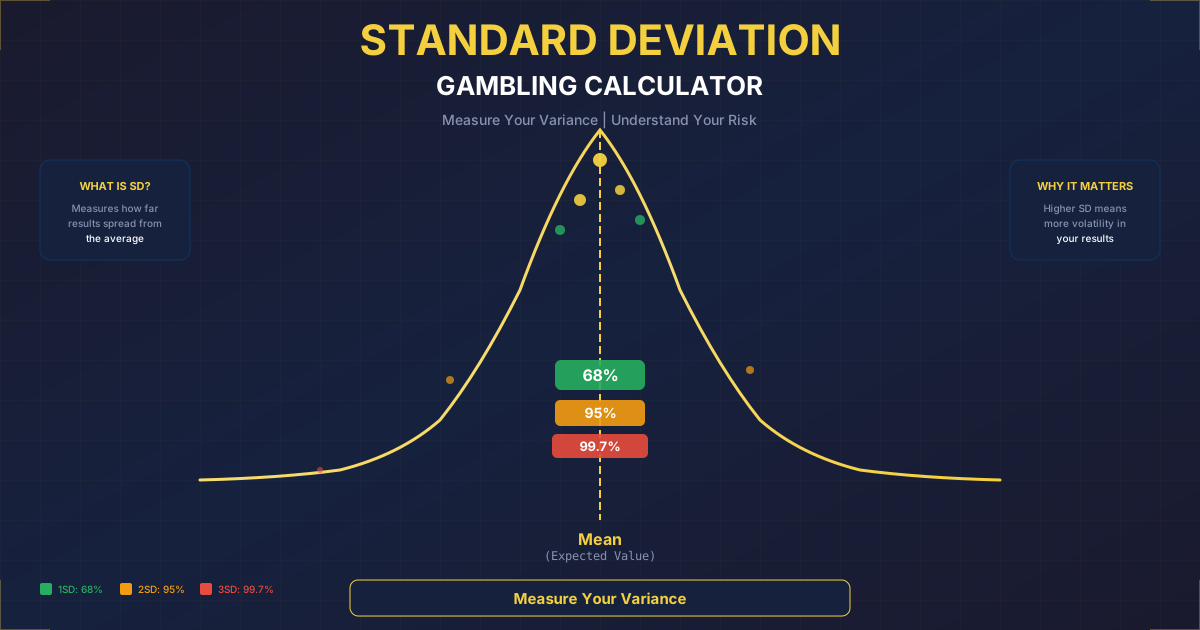
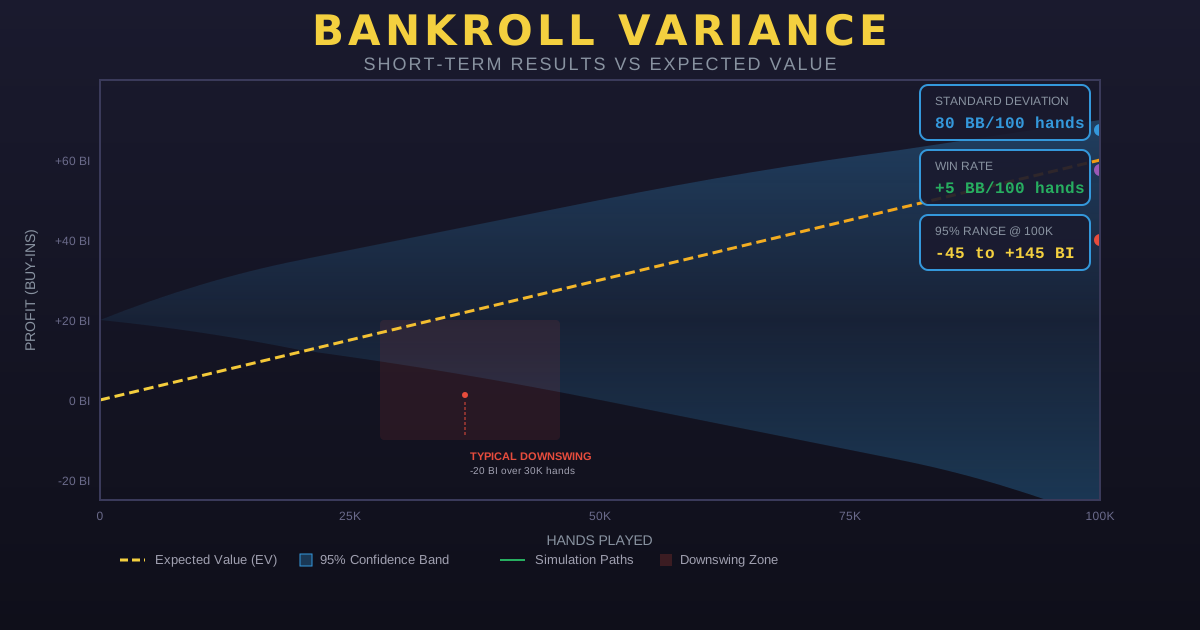
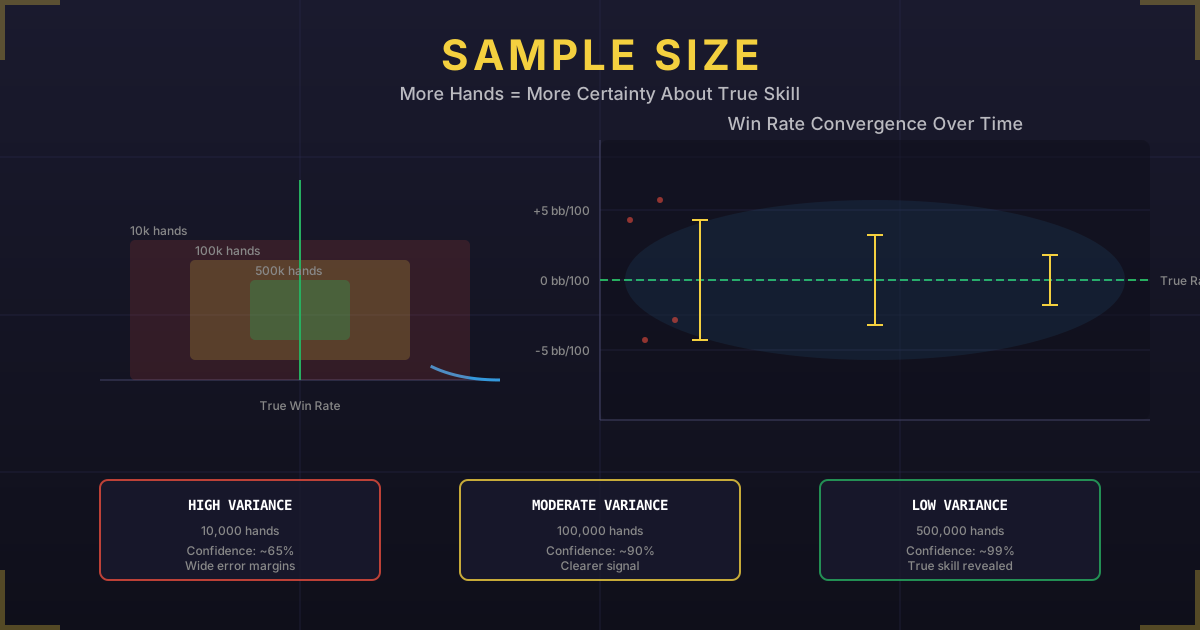
This does not mean you lose exactly 2% every session. Short-term results vary wildly due to variance. You might win big in one session and lose everything in another. But over hundreds or thousands of bets, the math converges toward the house edge. The casino is not gambling. You are.
Here is why the house edge matters more than anything else for beginners:
| House Edge | What It Means | $10/Bet Over 4 Hours (~200 bets) |
|---|---|---|
| 0.5% | Best possible (blackjack with strategy) | -$10 expected loss |
| 1.06% | Very good (baccarat banker bet) | -$21.20 expected loss |
| 1.41% | Good (craps pass line) | -$28.20 expected loss |
| 2.70% | Moderate (European roulette) | -$54.00 expected loss |
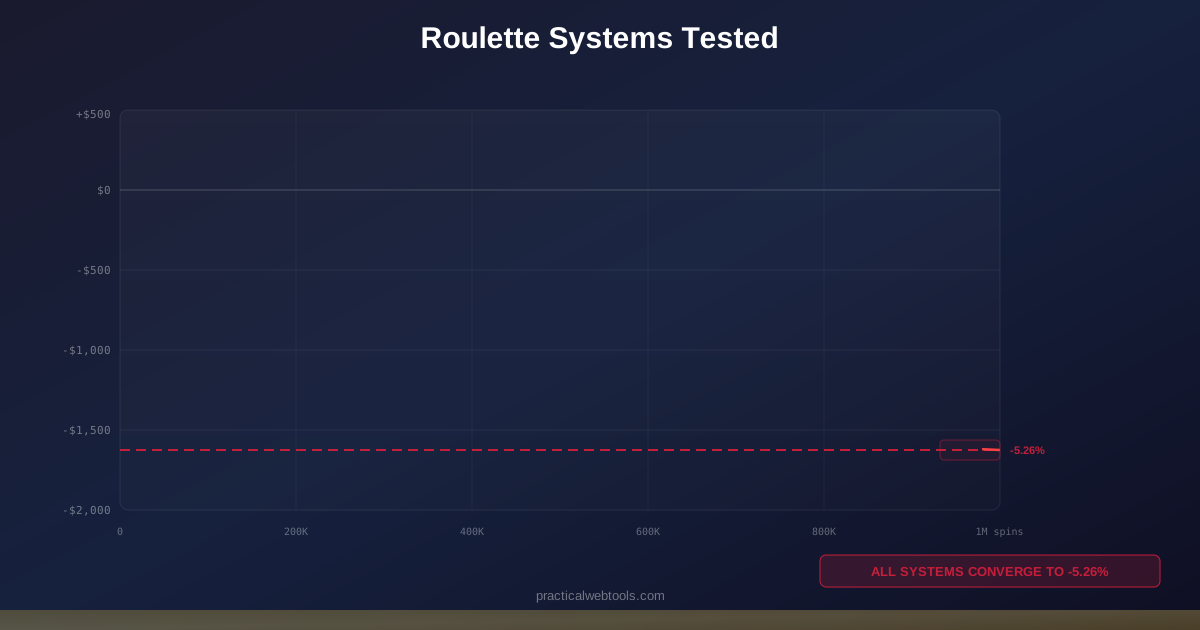
| 5.26% | Poor (American roulette) | -$105.20 expected loss |
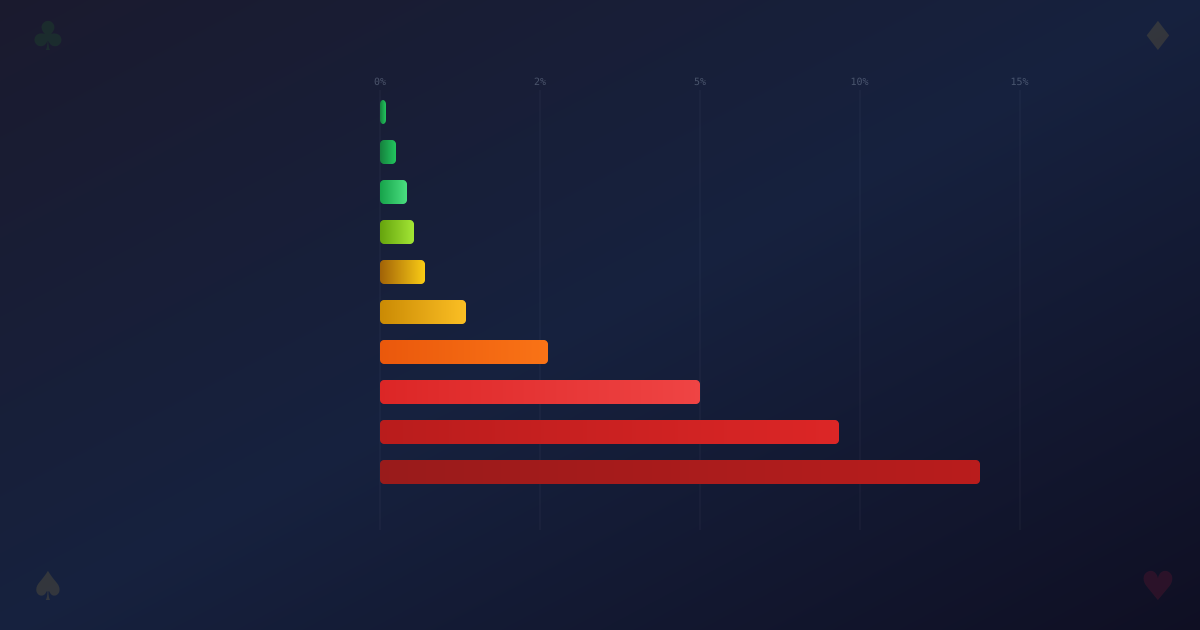
| 10-15% | Terrible (most slot machines) | -$200 to $300 expected loss |
The first column is math. The last column is your money. A beginner who understands this table will make fundamentally different choices than one who does not.
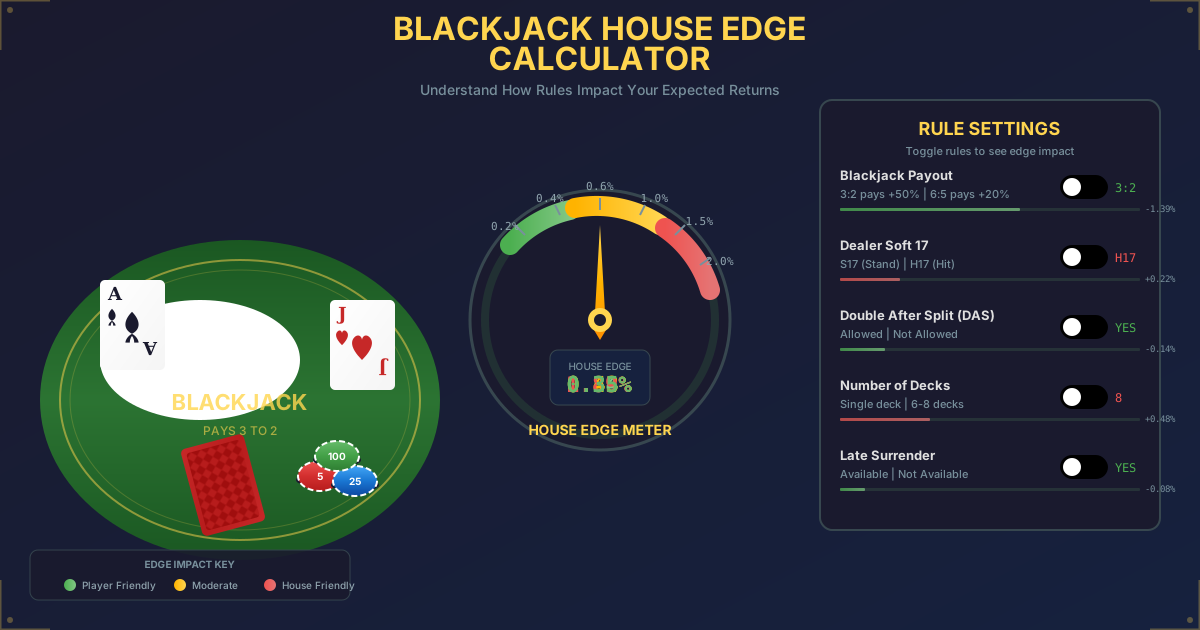
Use our Blackjack House Edge Calculator or Roulette House Edge Calculator to see exactly how rule variations at specific casinos change these numbers.
The 5 Best Casino Games for Beginners (Ranked by House Edge)
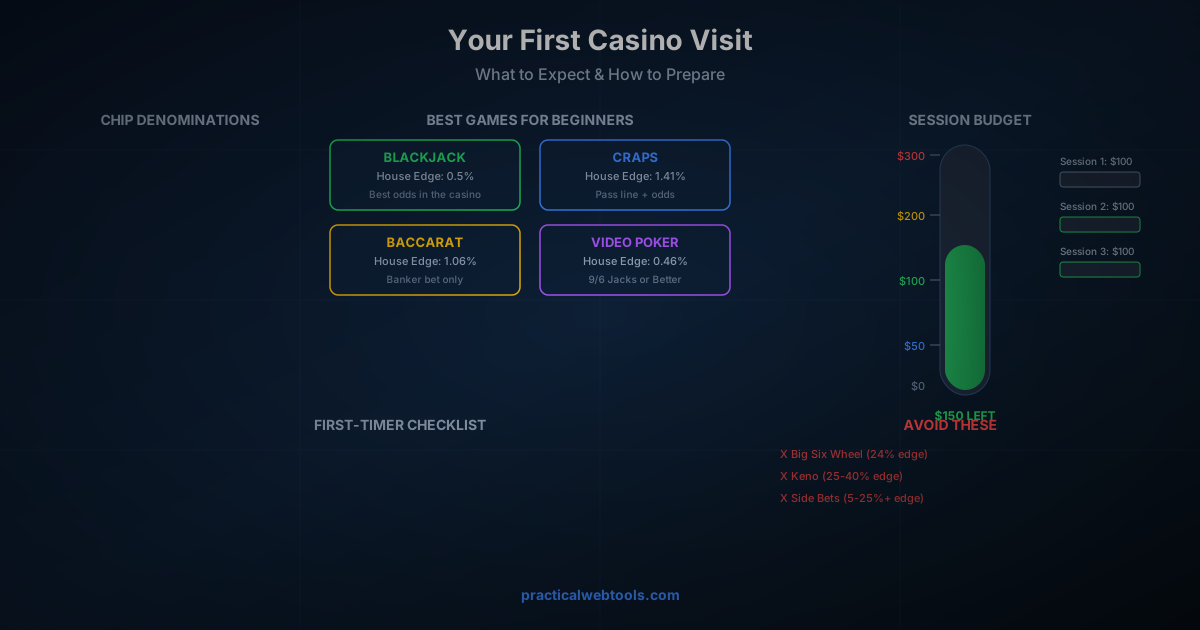
1. Blackjack -- House Edge: 0.5% with Basic Strategy
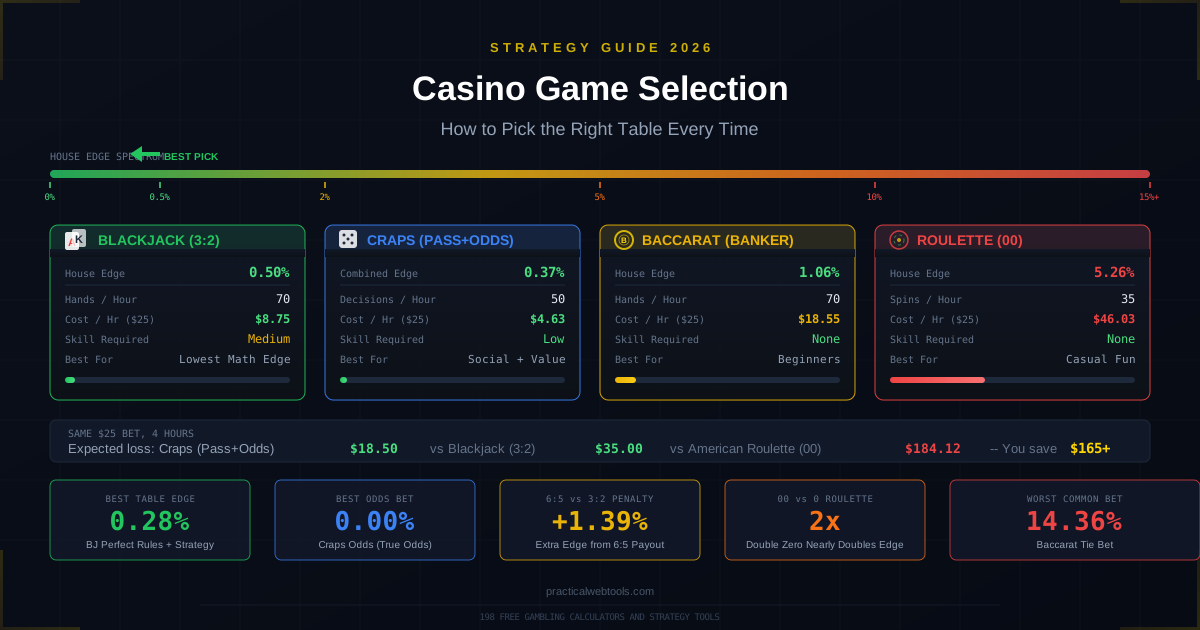
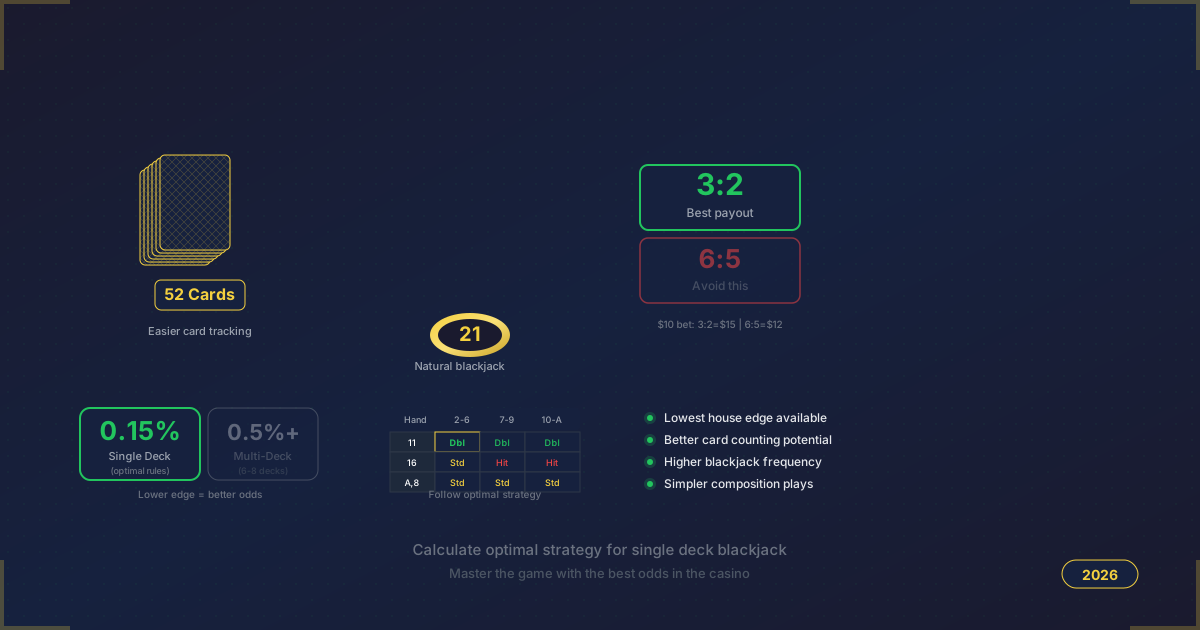
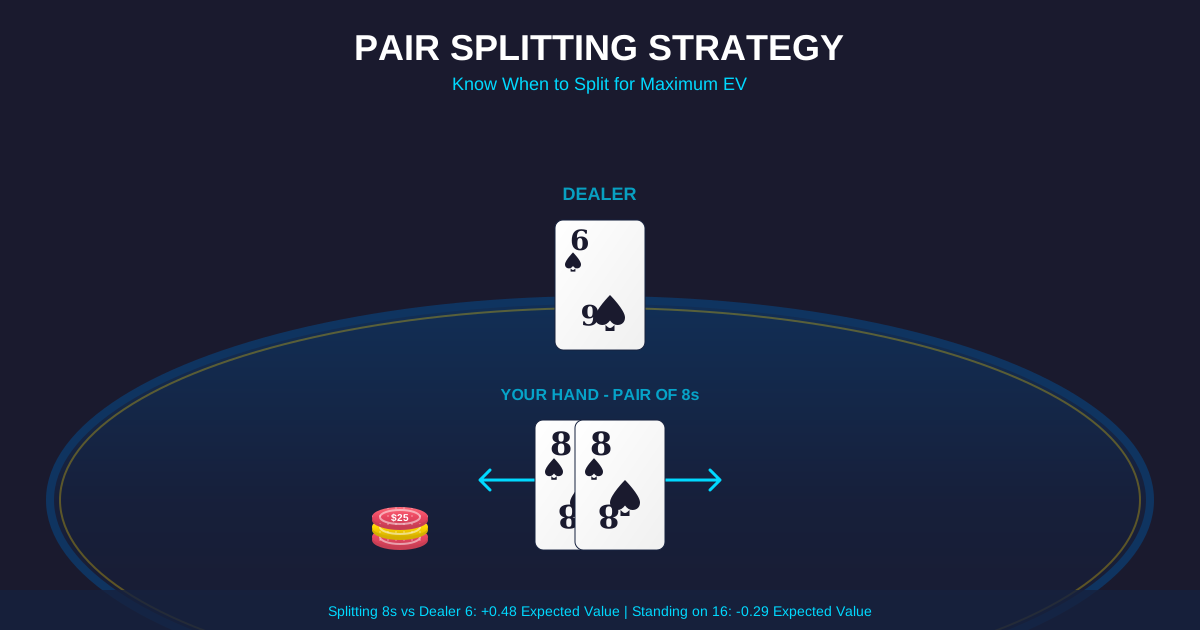
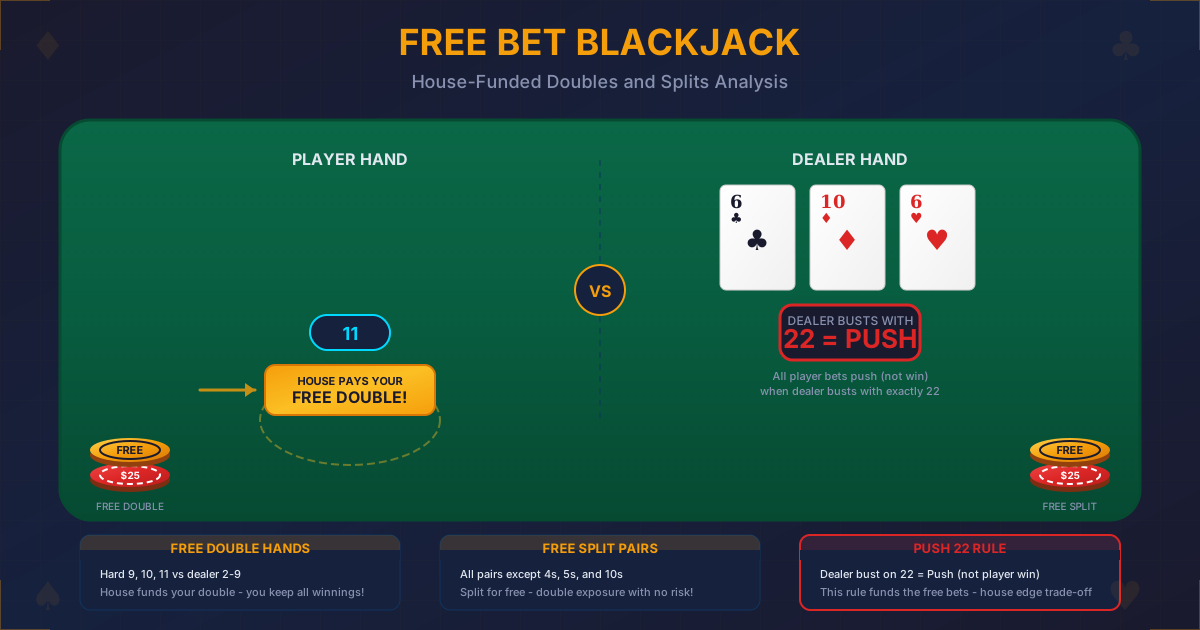
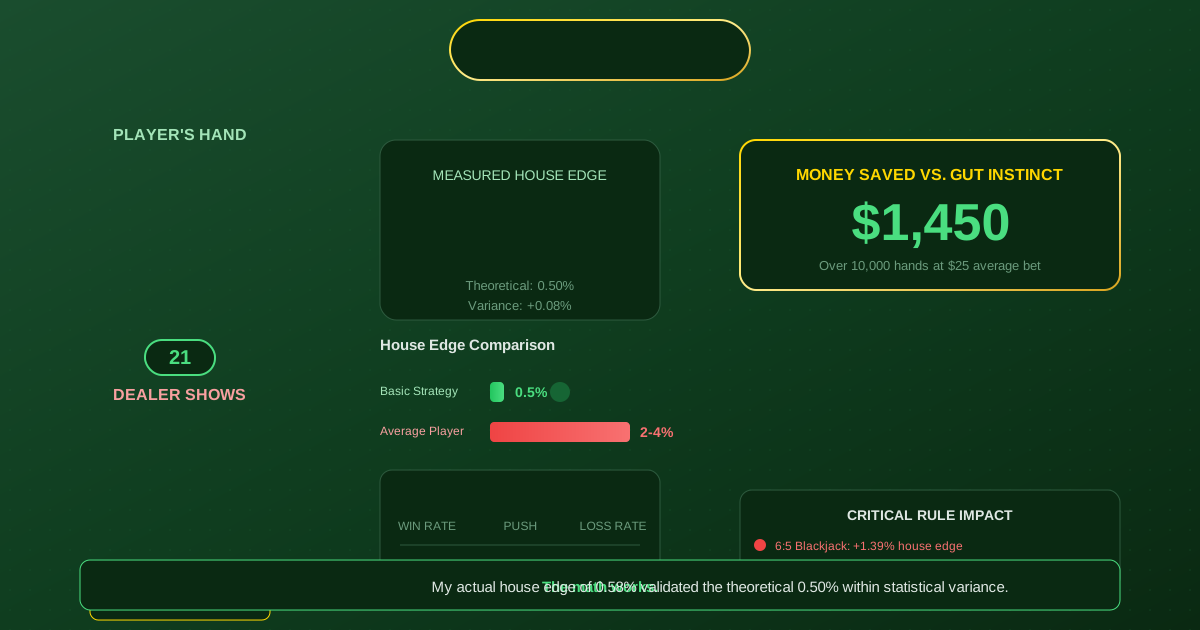
Blackjack is the single best game a beginner can learn. With perfect basic strategy, the house edge drops to approximately 0.5% under standard rules (six-deck shoe, dealer stands on soft 17, double after split allowed, 3:2 blackjack payouts). No other widely available table game comes close.
Why it is great for beginners:
- You make decisions that directly affect your outcome
- Basic strategy is a fixed set of rules you can memorize or reference on a card
- Most casinos allow you to use a strategy card at the table
- The pace is moderate, giving you time to think
- Minimum bets start at $5-$15 at most casinos
Real-world example: Sarah brings $300 to a Las Vegas blackjack table. She plays $10 per hand using perfect basic strategy for four hours, averaging 70 hands per hour. Her total action is $2,800. At a 0.5% house edge, her expected loss is just $14. She will likely end the session somewhere between up $150 and down $150, with the most probable outcome being a small loss. Compare that to four hours of slots where she could easily lose $150-$400.
The critical warning: Not all blackjack games are equal. Avoid 6:5 blackjack tables at all costs. The 6:5 payout instead of the standard 3:2 increases the house edge by roughly 1.39%, turning a 0.5% game into a 1.9% game. That single rule change triples the house advantage. If you see "Blackjack Pays 6 to 5" on the felt, walk away.
| Blackjack Rule Variation | Impact on House Edge |
|---|---|
| 3:2 payout (standard) | Baseline |
| 6:5 payout | +1.39% (avoid) |
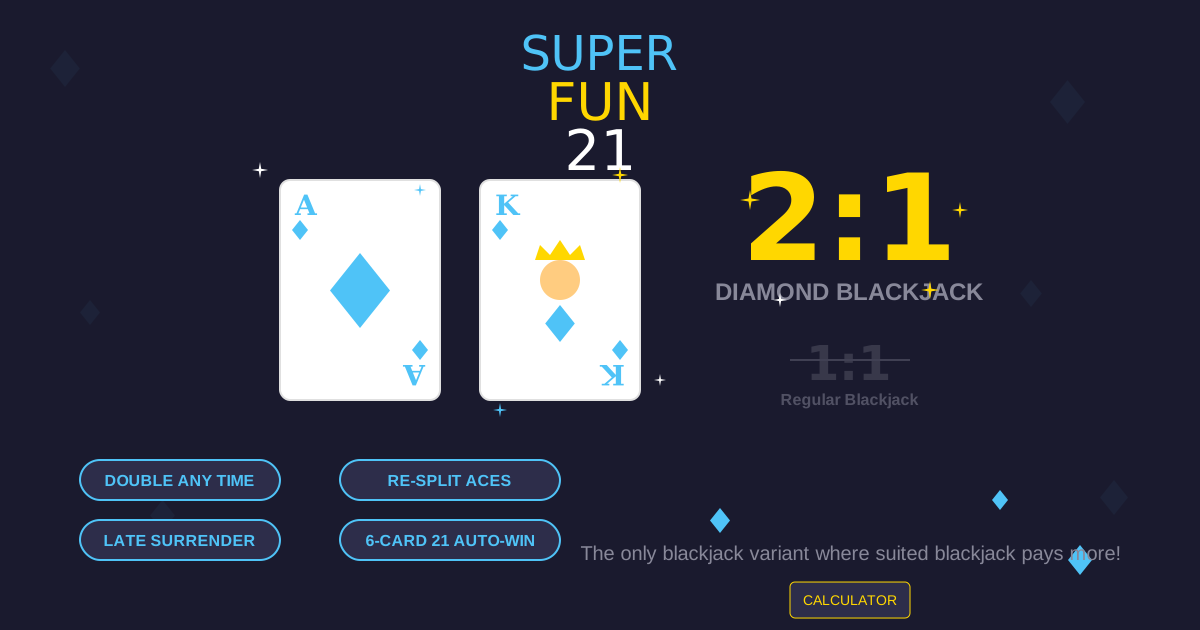
| Dealer hits soft 17 | +0.22% |
| No double after split | +0.14% |
| Single deck vs. 6-deck | -0.48% (single is better) |
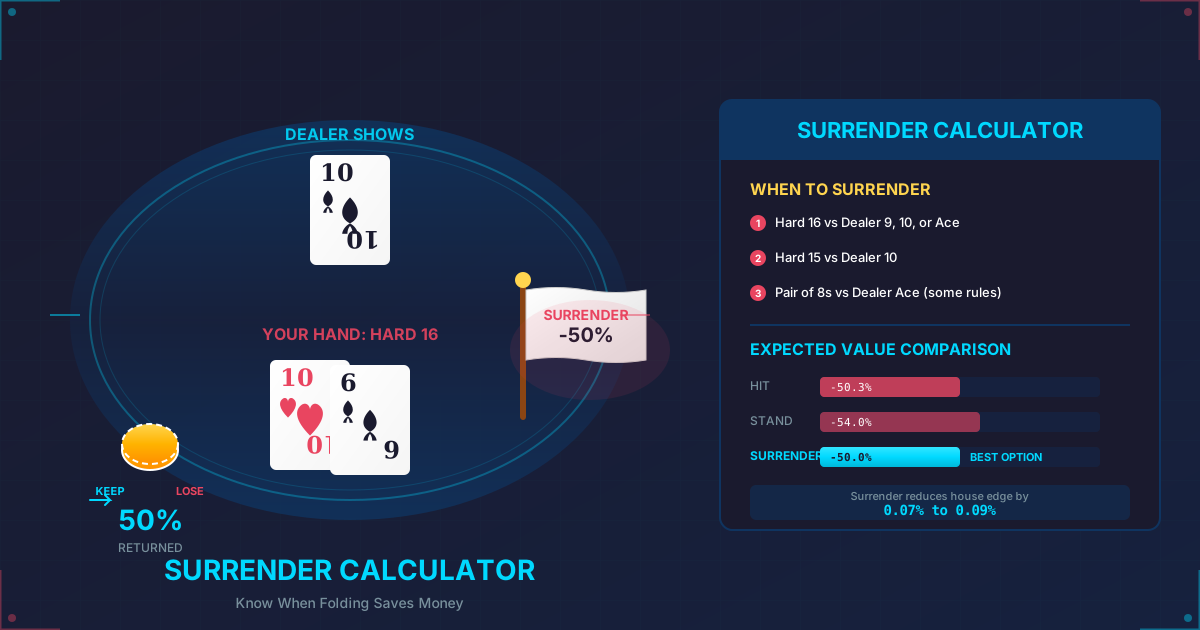
| Surrender allowed | -0.08% |
| Re-splitting aces allowed | -0.06% |
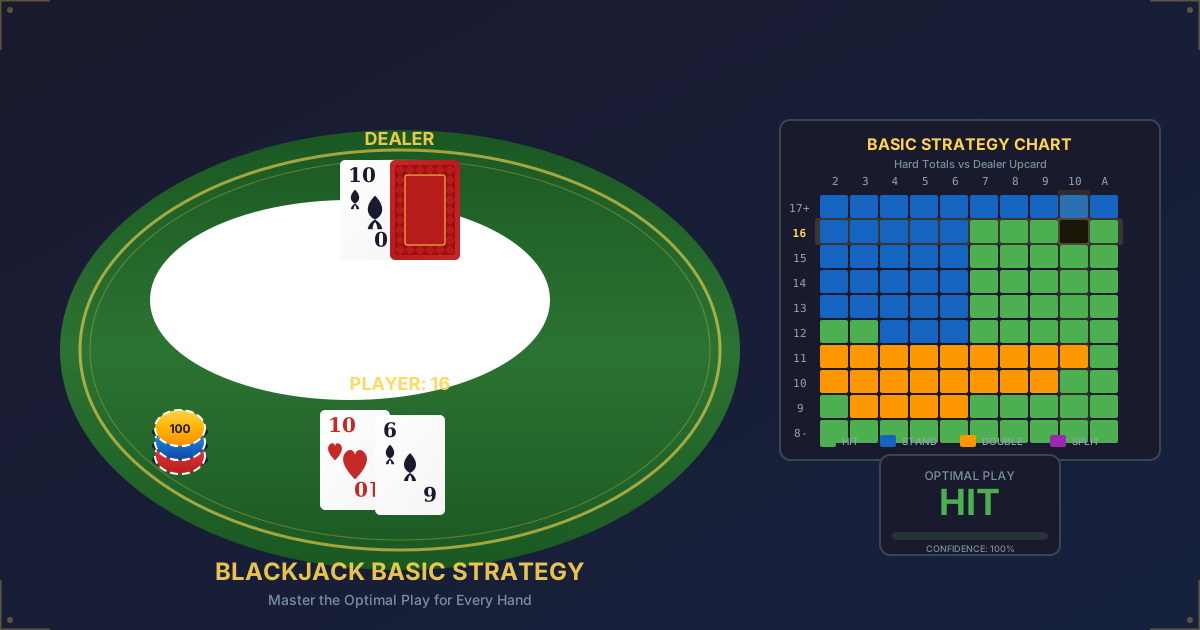
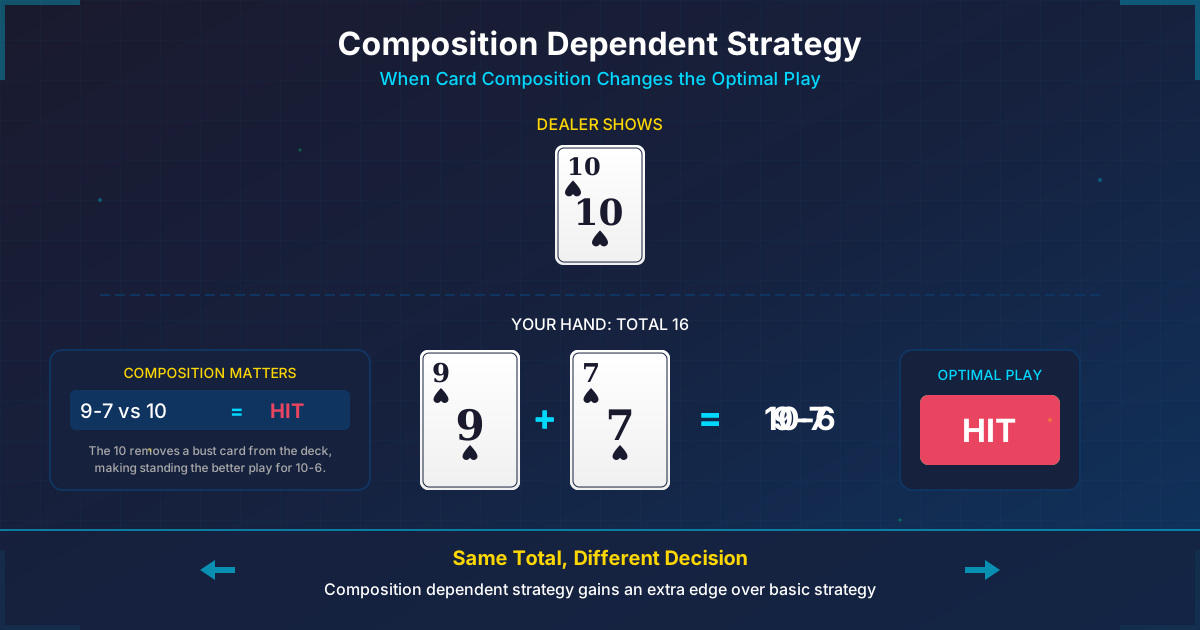
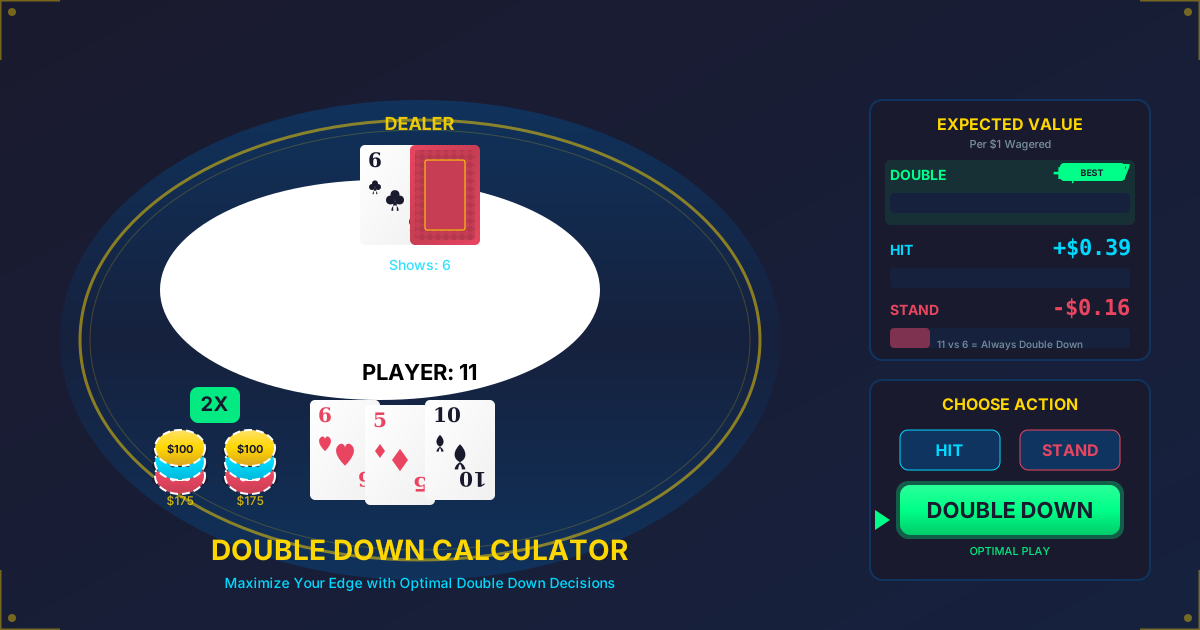
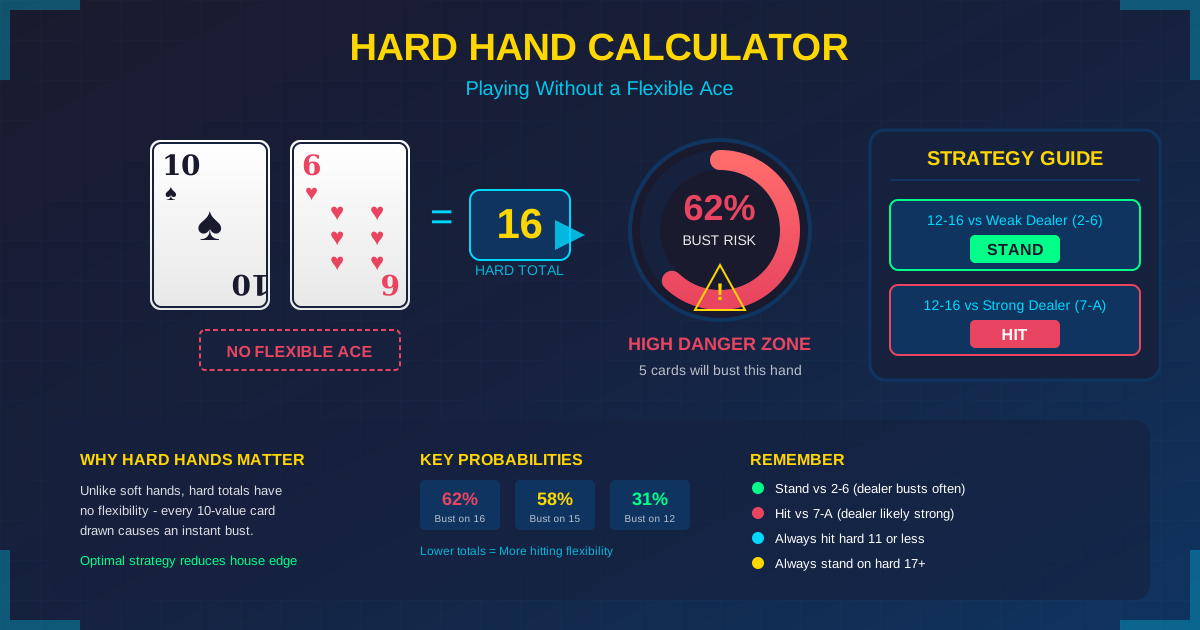
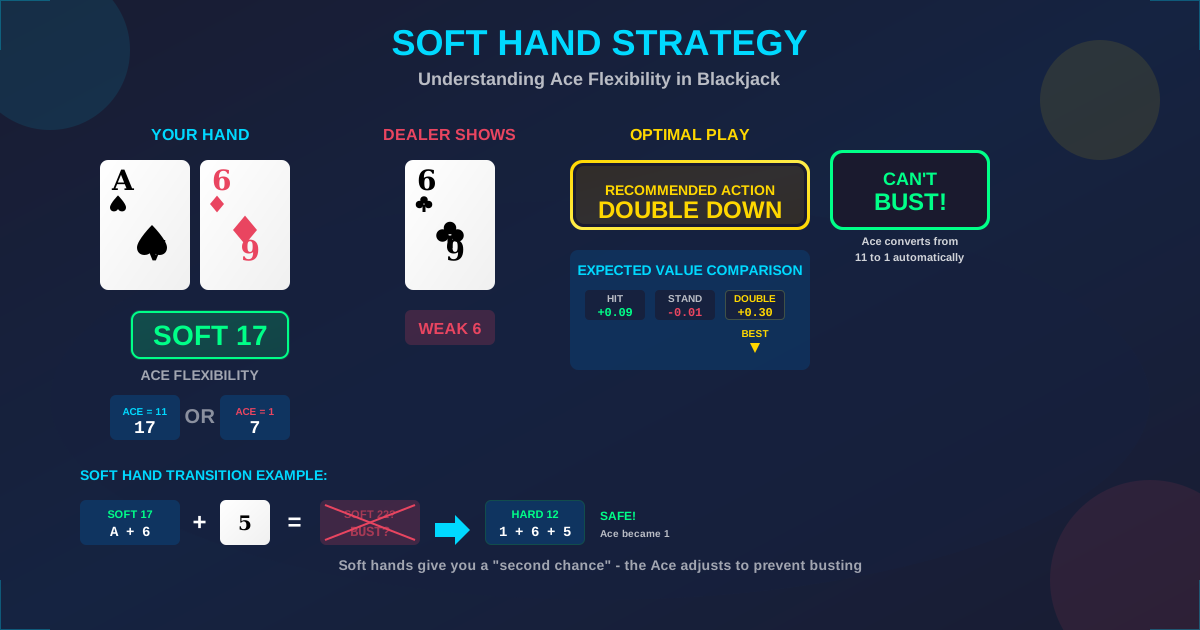
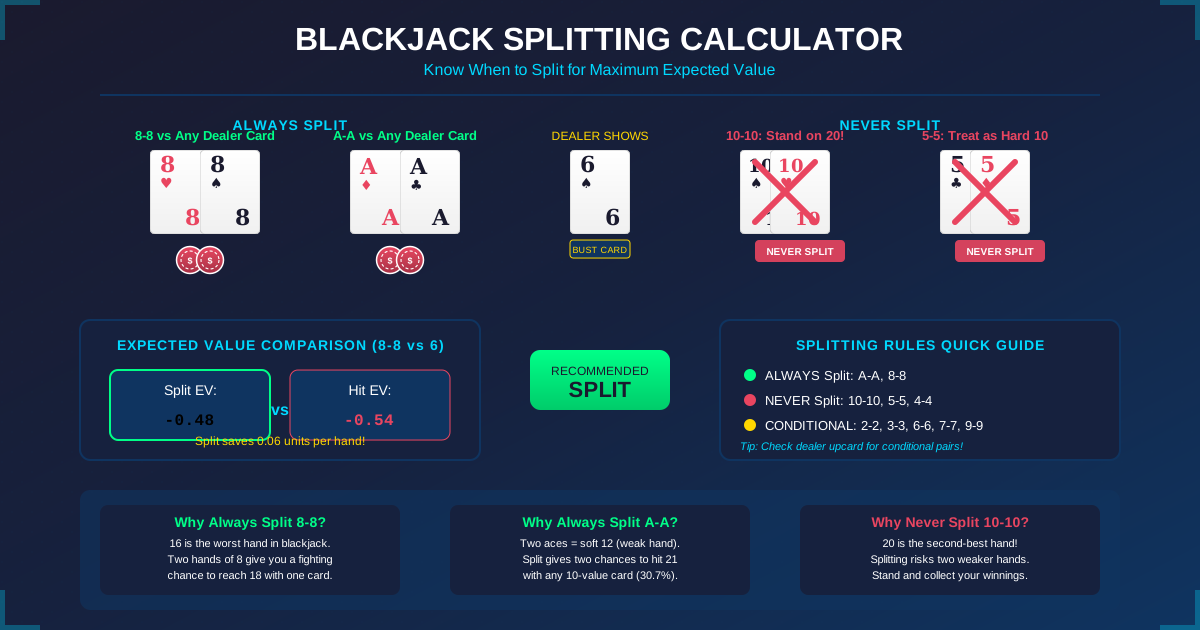
Use our Blackjack Basic Strategy Tool to learn the correct play for every possible hand combination. Memorize it, print it out, or pull it up on your phone. The strategy is not intuitive -- hitting a 16 against a dealer's 10 feels wrong, but the math demands it.
2. Baccarat -- House Edge: 1.06% (Banker Bet)
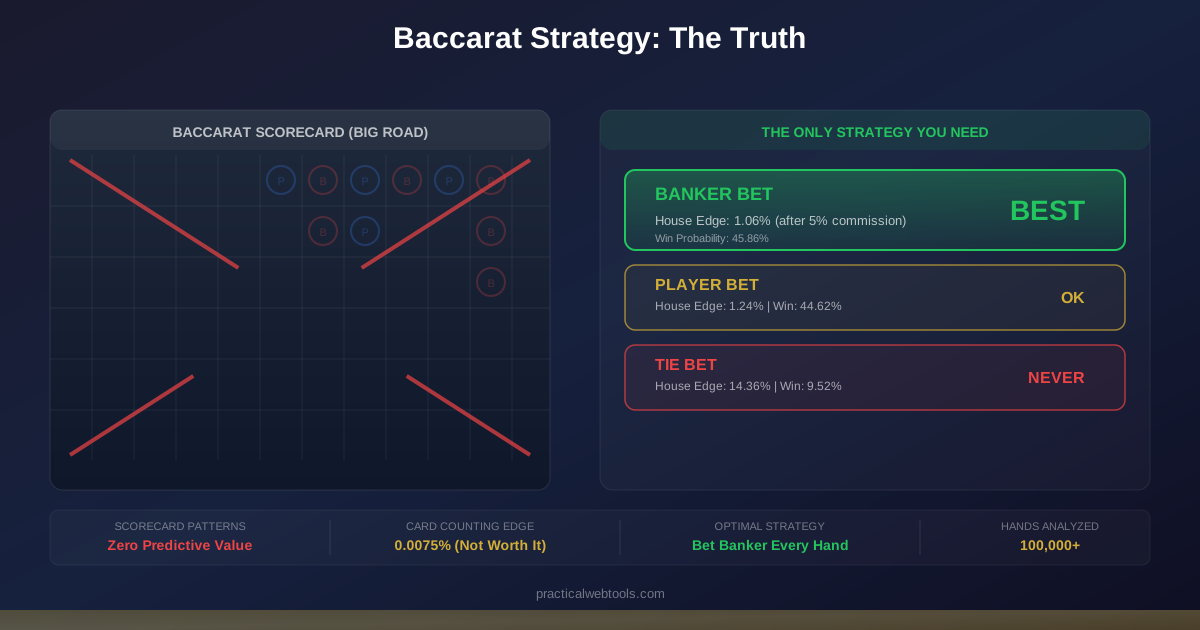
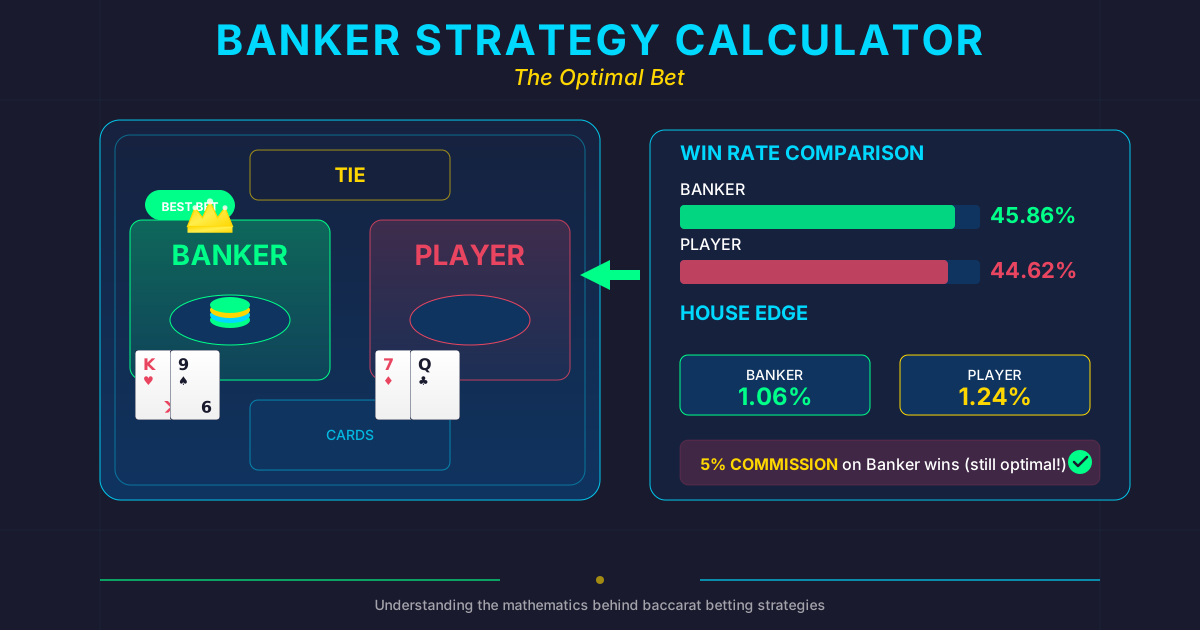
Baccarat is the easiest table game in the casino. You make exactly one decision: bet on Banker, Player, or Tie. That is it. The dealer handles everything else according to fixed rules. There is no strategy to learn, no decisions to agonize over, and the house edge on the Banker bet is a razor-thin 1.06%.
Why it is great for beginners:
- Simplest rules of any table game
- No skill or strategy required (the optimal play is always Banker)
- Low house edge without needing to study anything
- Elegant, low-stress atmosphere
- Online versions move at whatever pace you choose
Real-world example: Marcus has never played a table game before and feels intimidated by blackjack's decision-making. He sits at a baccarat table with $200 and bets $10 per hand on Banker for two hours (roughly 160 hands at a typical pace). His total action is $1,600. At a 1.06% house edge, his expected loss is about $17. He gets two hours of entertainment for less than the cost of a movie ticket and popcorn.
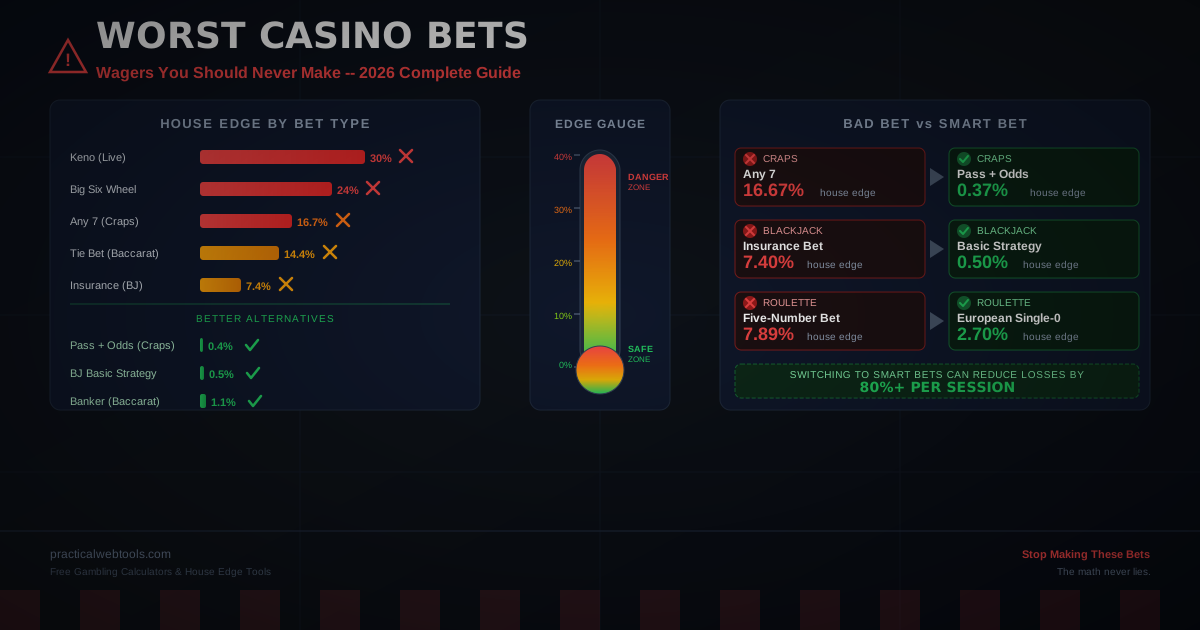
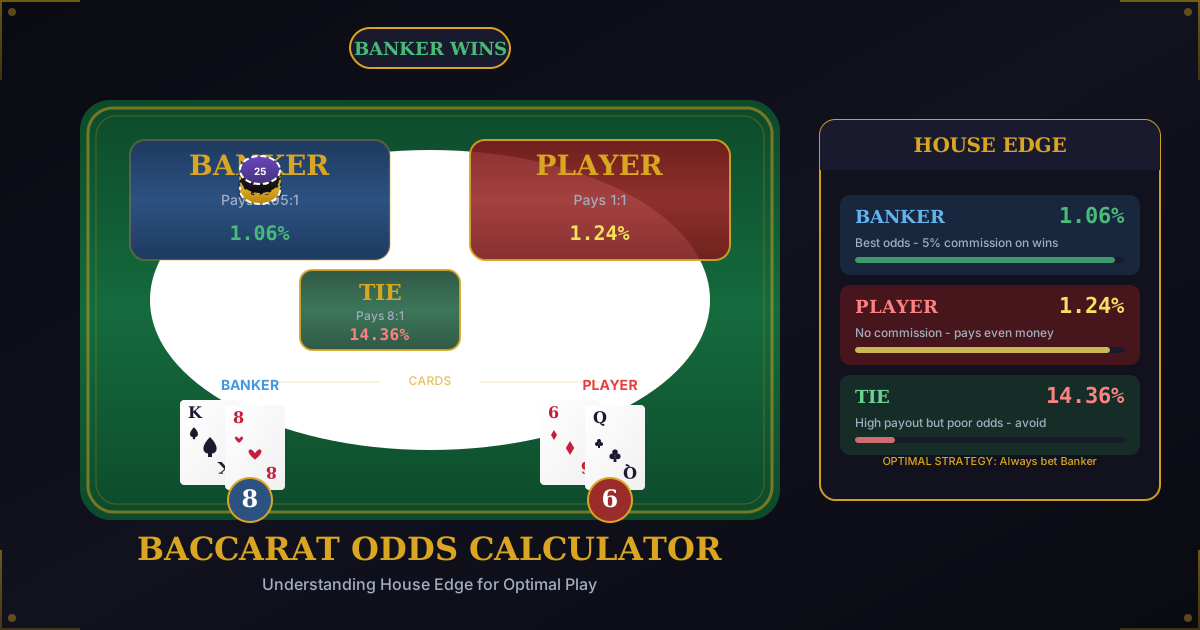
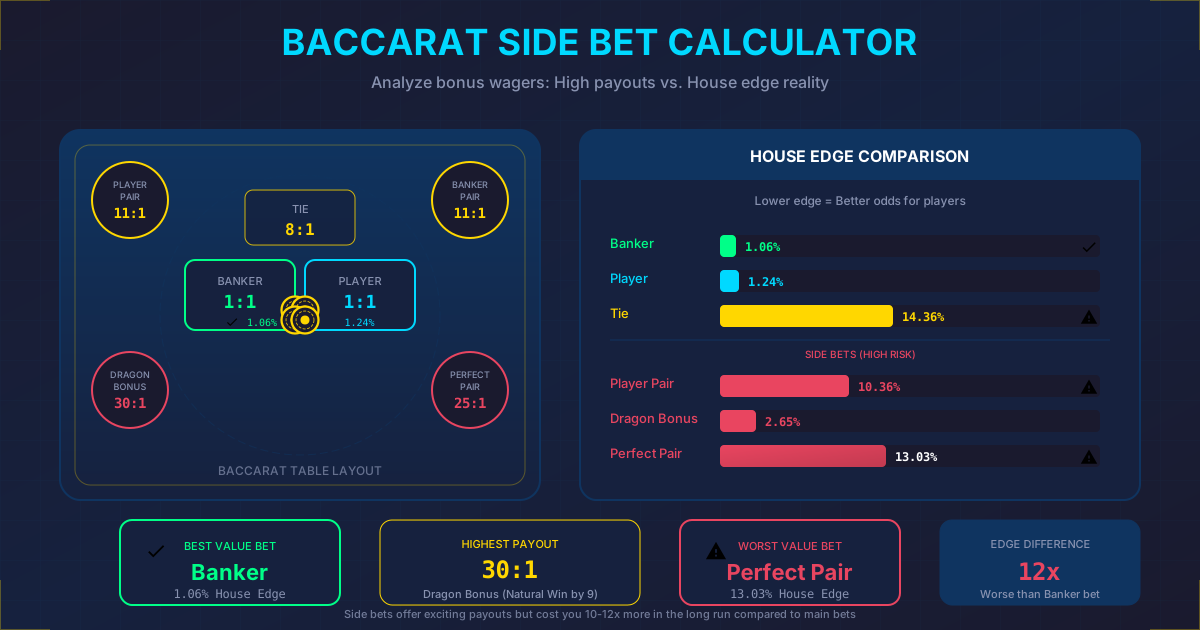
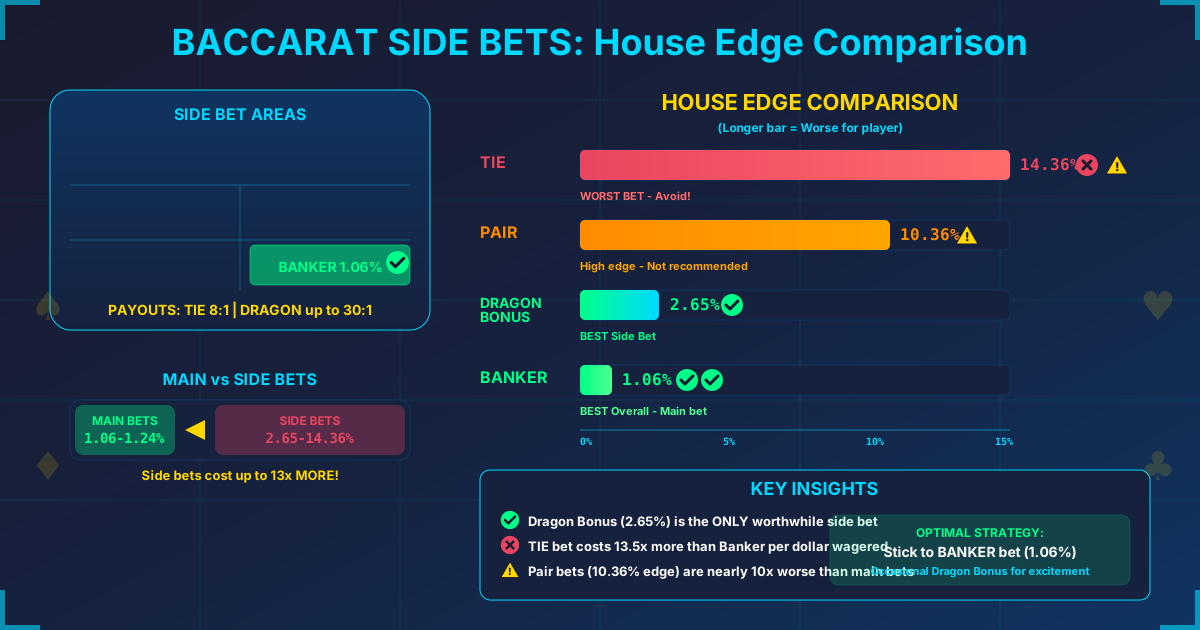
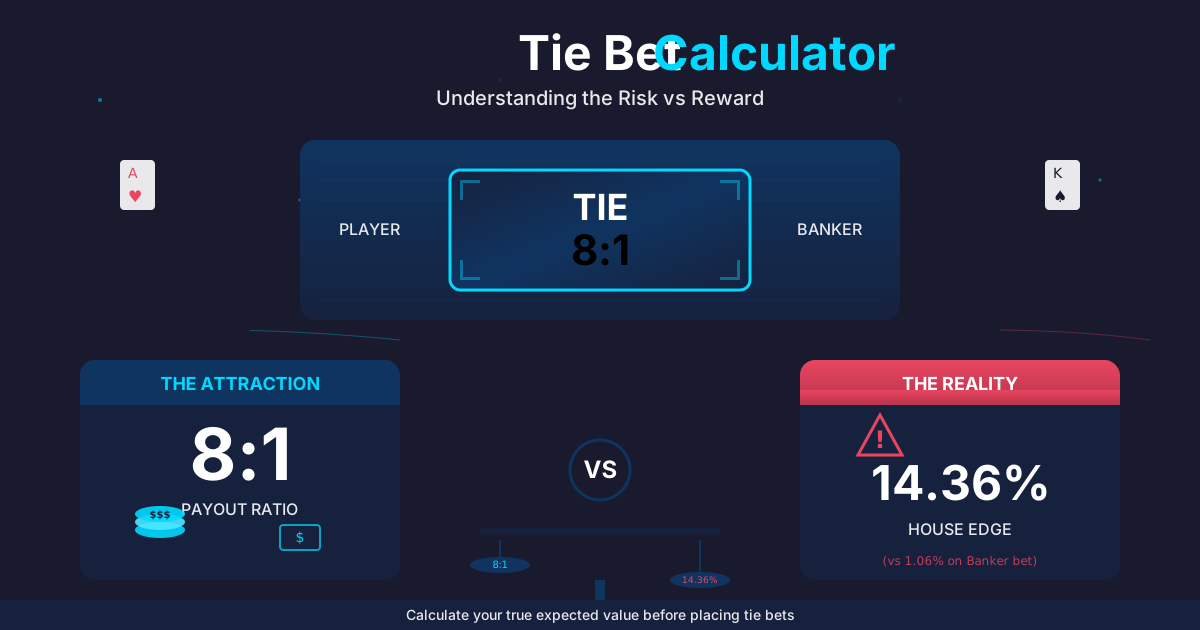
The one bet to absolutely avoid: Never bet on Tie. The Tie bet in baccarat carries a house edge of 14.36%. That is worse than most slot machines. The payout looks attractive at 8:1 or 9:1, but the actual probability of a tie is only about 9.5%. The math is brutal.
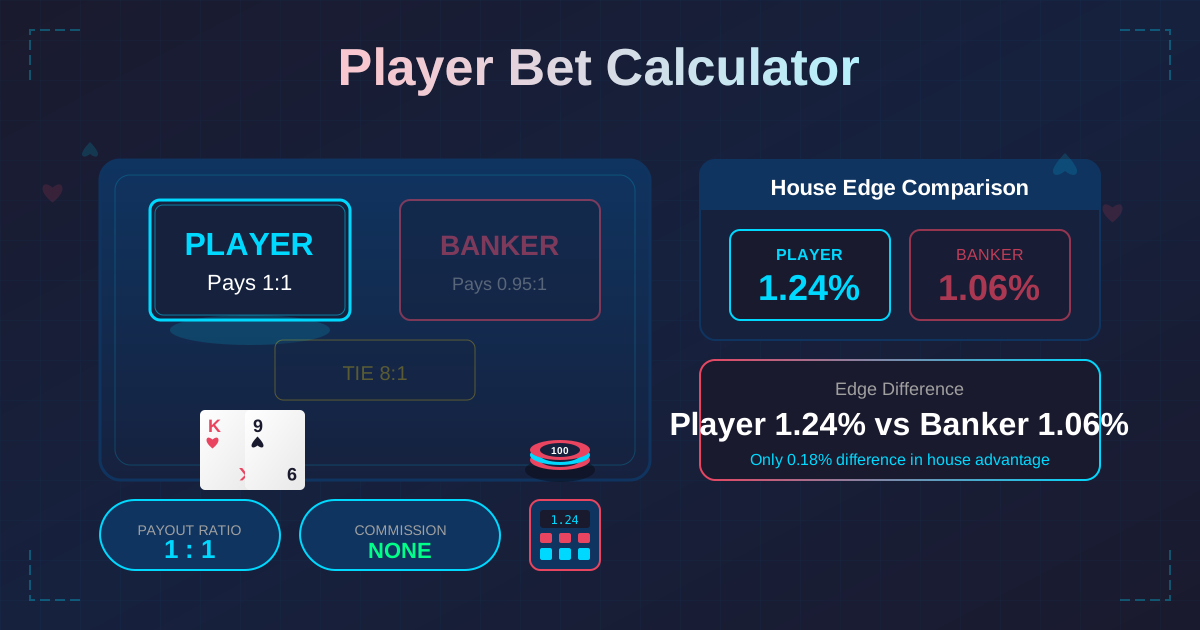
| Baccarat Bet | House Edge | Verdict |
|---|---|---|
| Banker | 1.06% | Best bet in the game |
| Player | 1.24% | Perfectly fine |
| Tie | 14.36% | Never bet this |
| Banker Pair / Player Pair | 10.36% | Avoid |
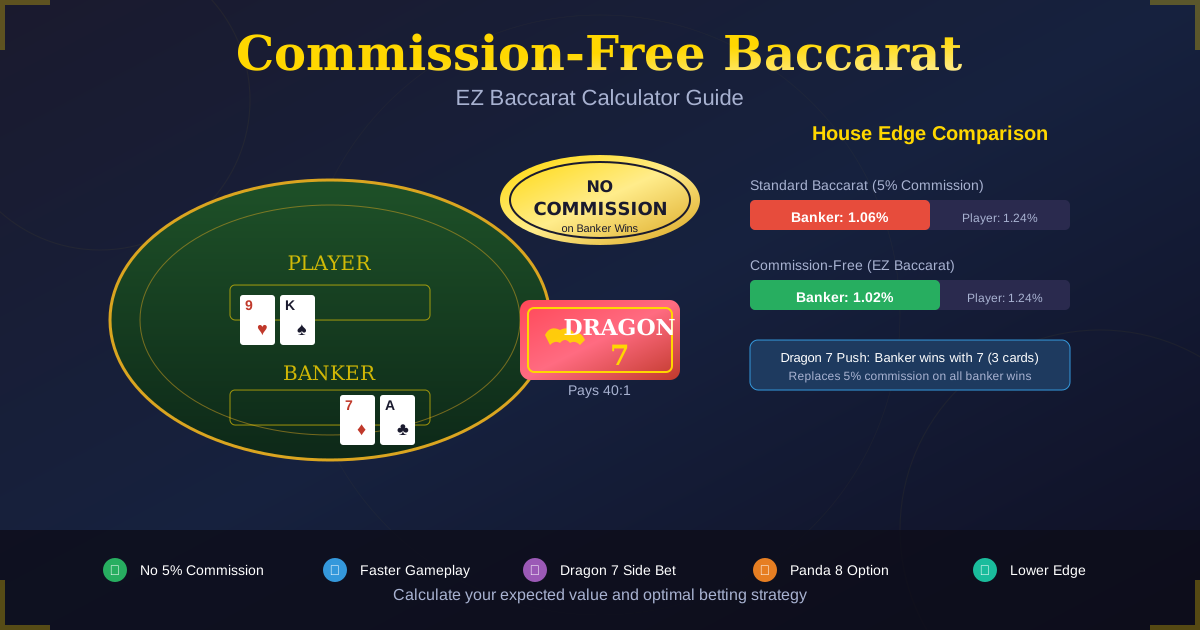
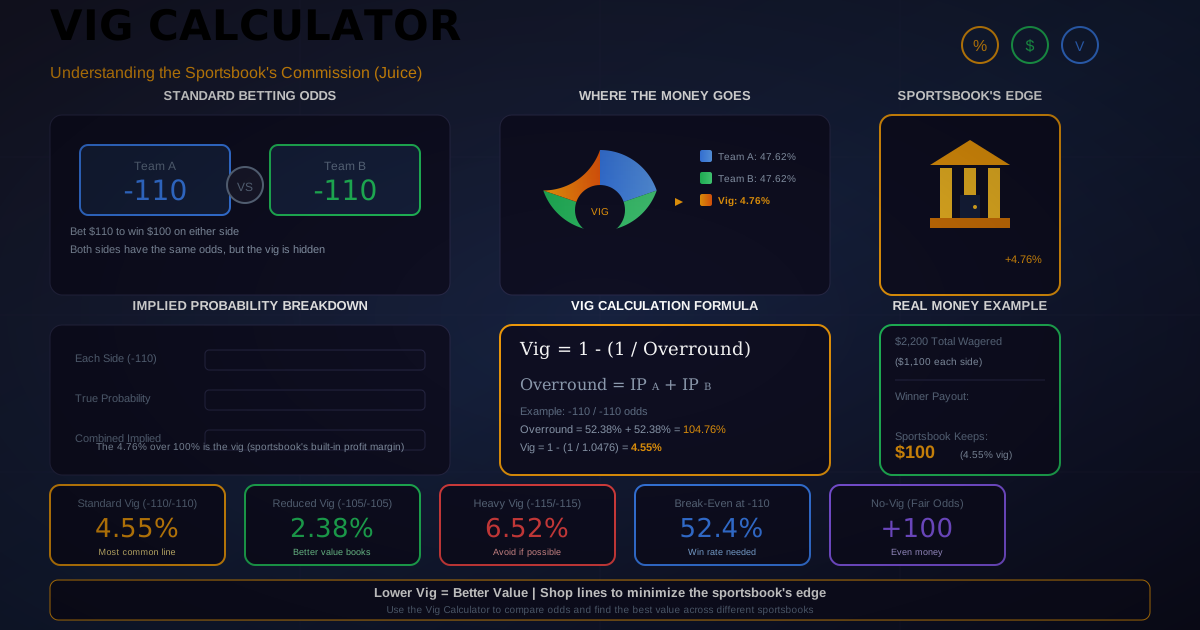
Note that casinos charge a 5% commission on winning Banker bets, which is already factored into the 1.06% house edge. Some casinos offer "no commission" baccarat, but they compensate with rule changes (like paying only half on Banker wins of 6) that actually make the house edge slightly worse.
Run specific scenarios through our Baccarat Odds Calculator and Baccarat House Edge Calculator to see how different rule variations affect your expected results.
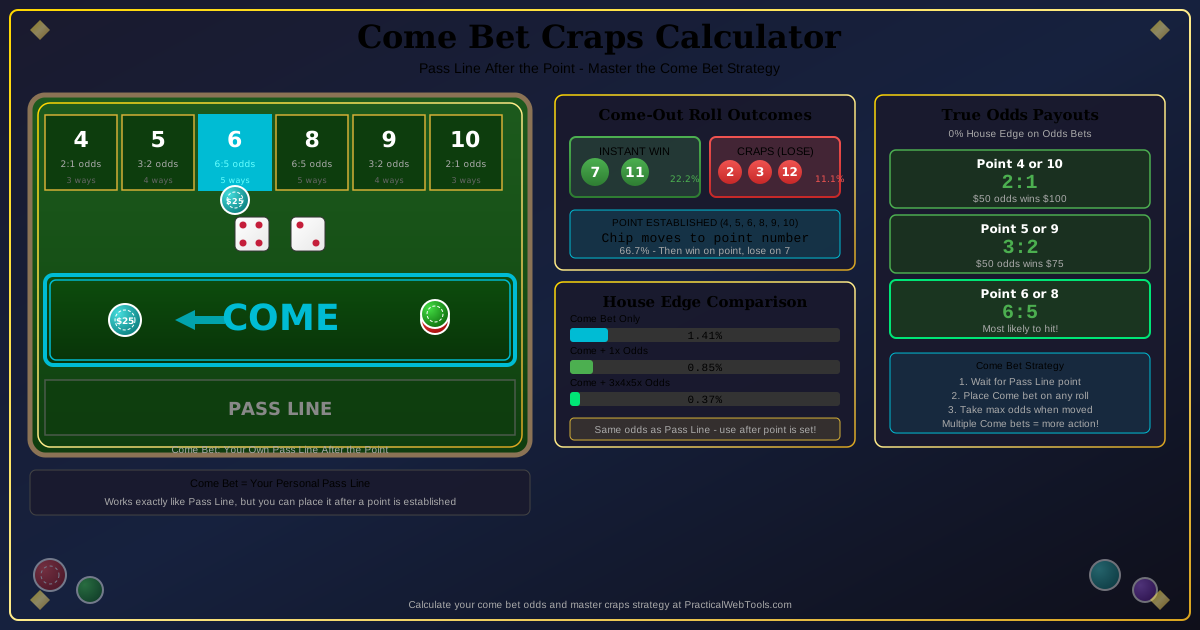
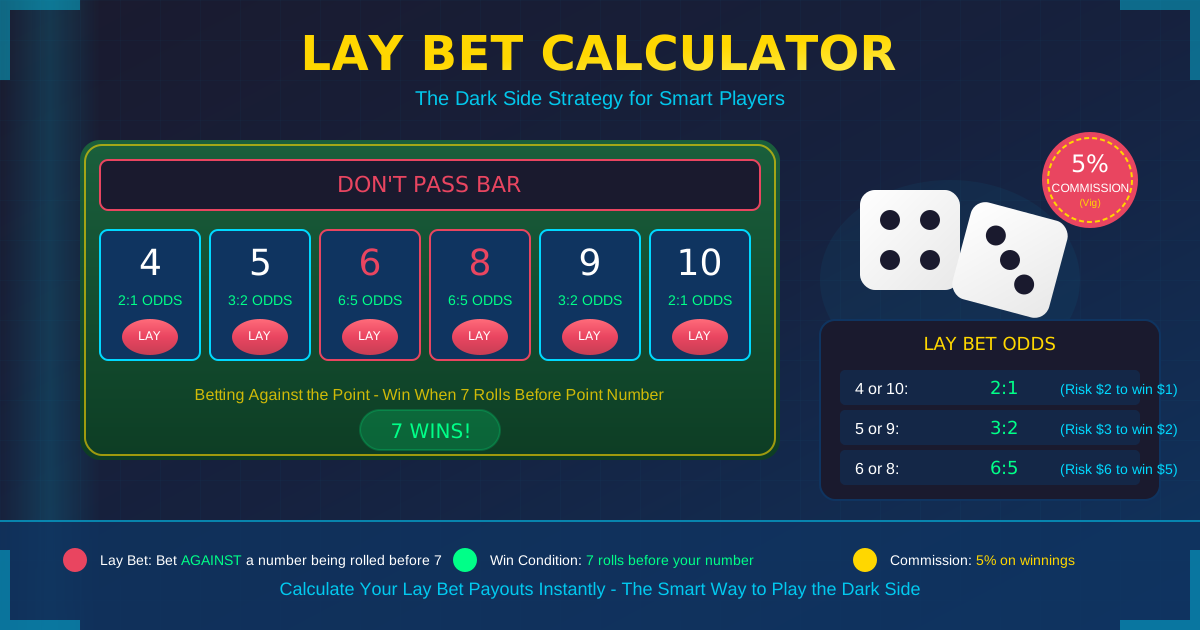
3. Craps -- House Edge: 1.41% (Pass Line) Down to 0.37% with Odds
Craps has a reputation for being confusing, and the table layout reinforces that impression. Dozens of betting areas, a crowd of shouting players, and chips flying in every direction. But here is the secret: you only need to know two bets, and those two bets give you some of the best odds in the entire casino.
The only two bets a beginner needs:
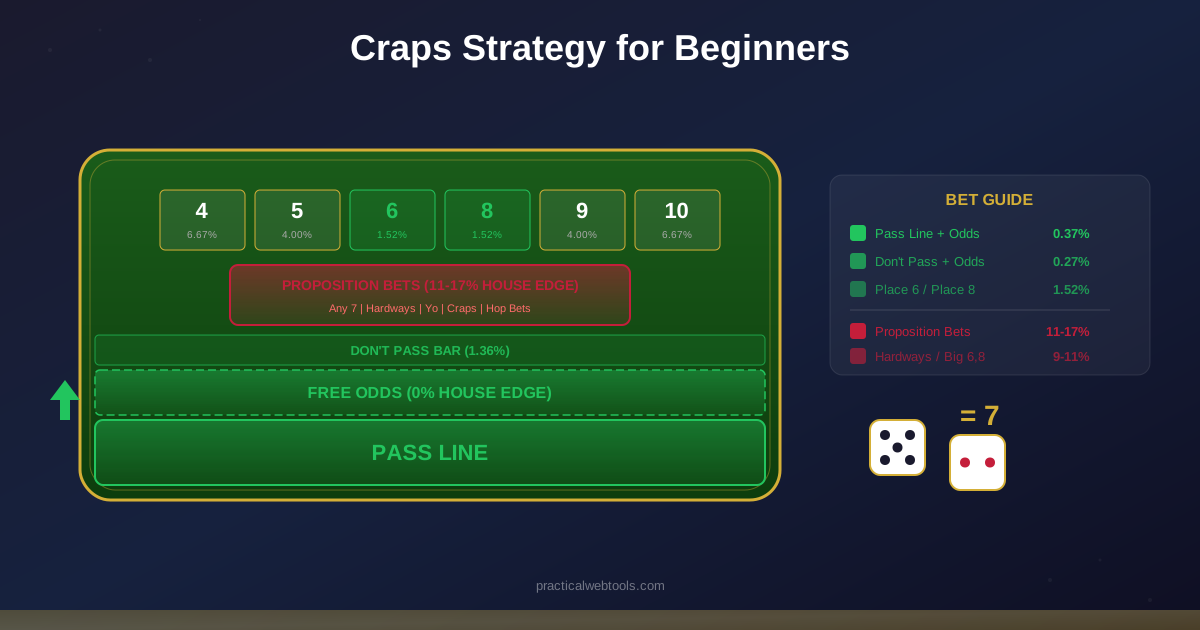
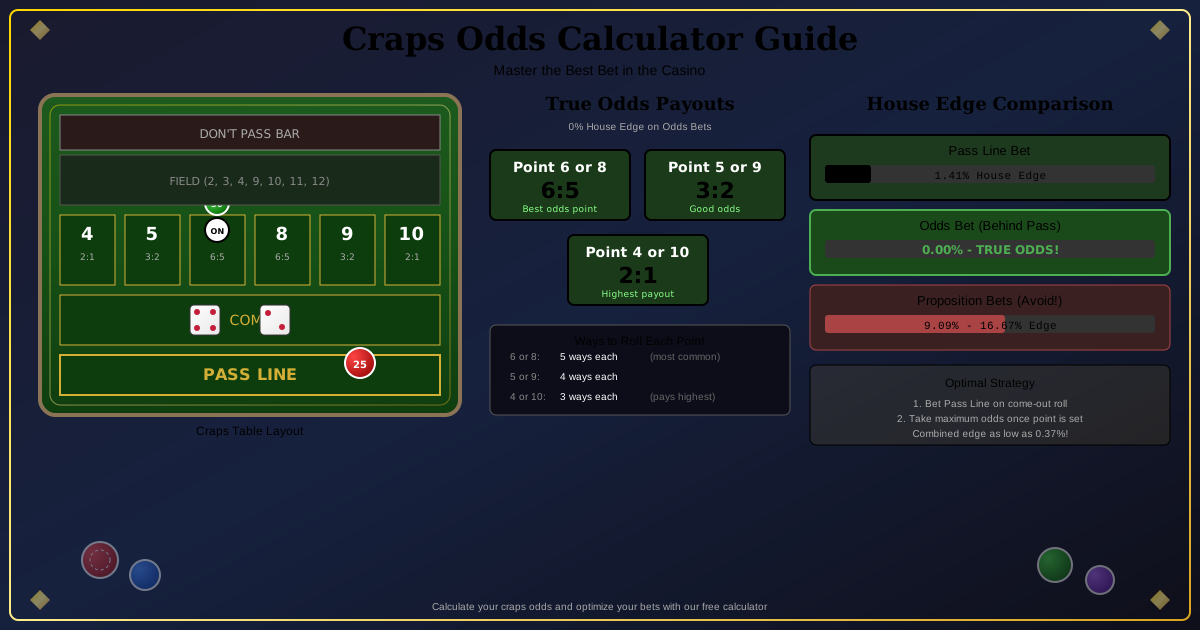
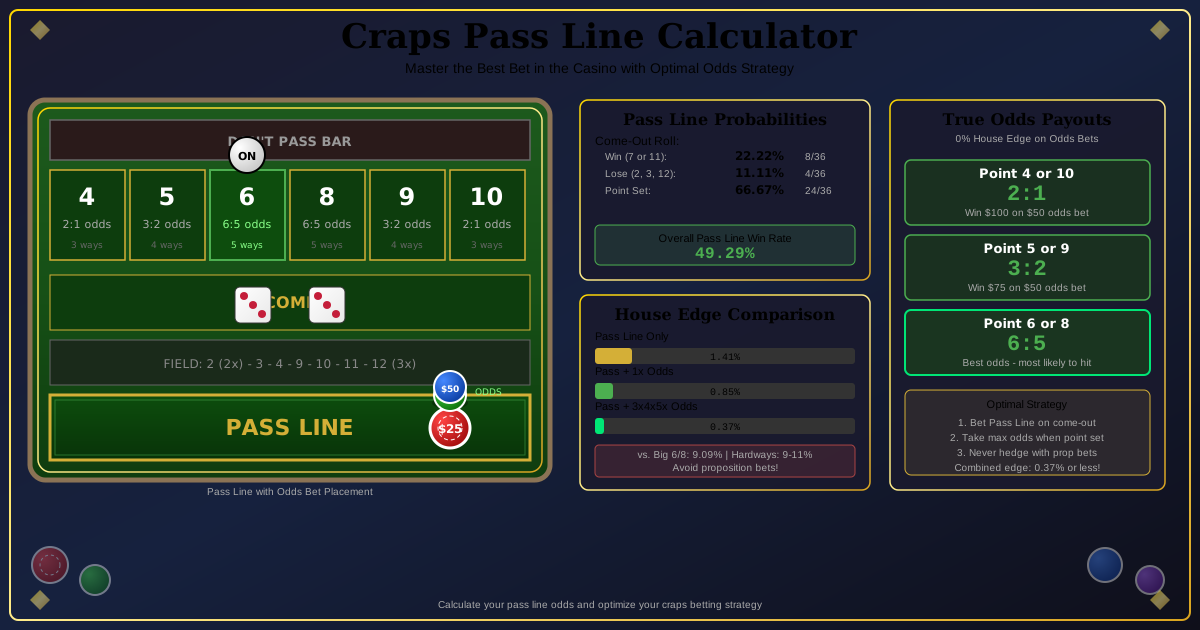
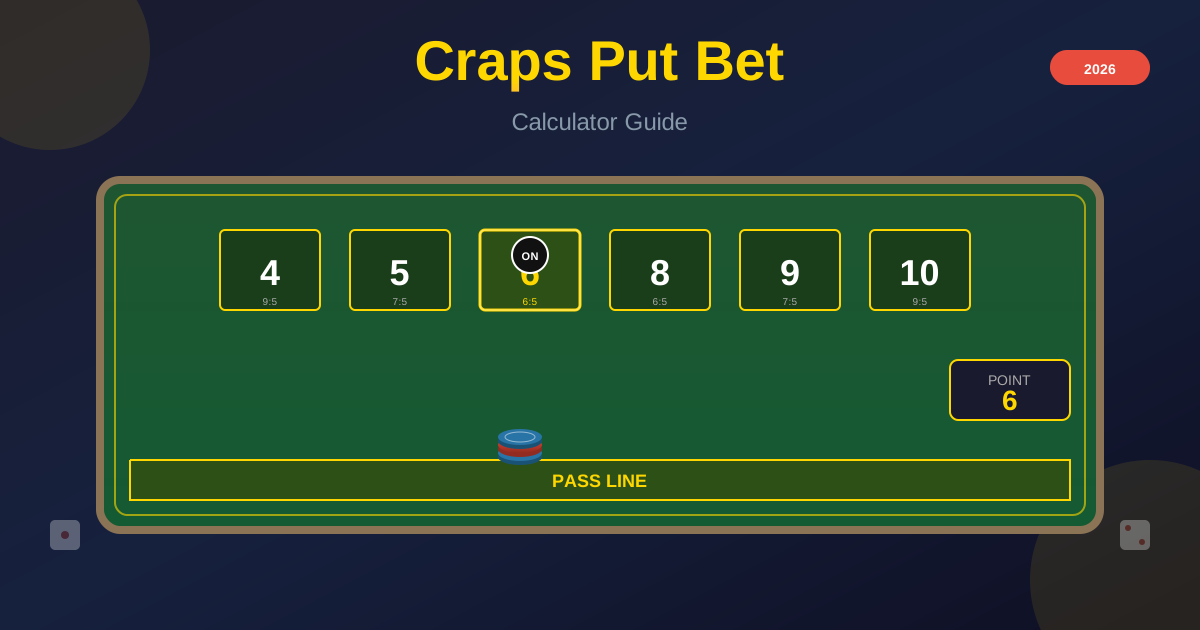
- Pass Line bet -- House edge of 1.41%. Place this before the come-out roll. Simple, straightforward, and you are betting with the shooter.
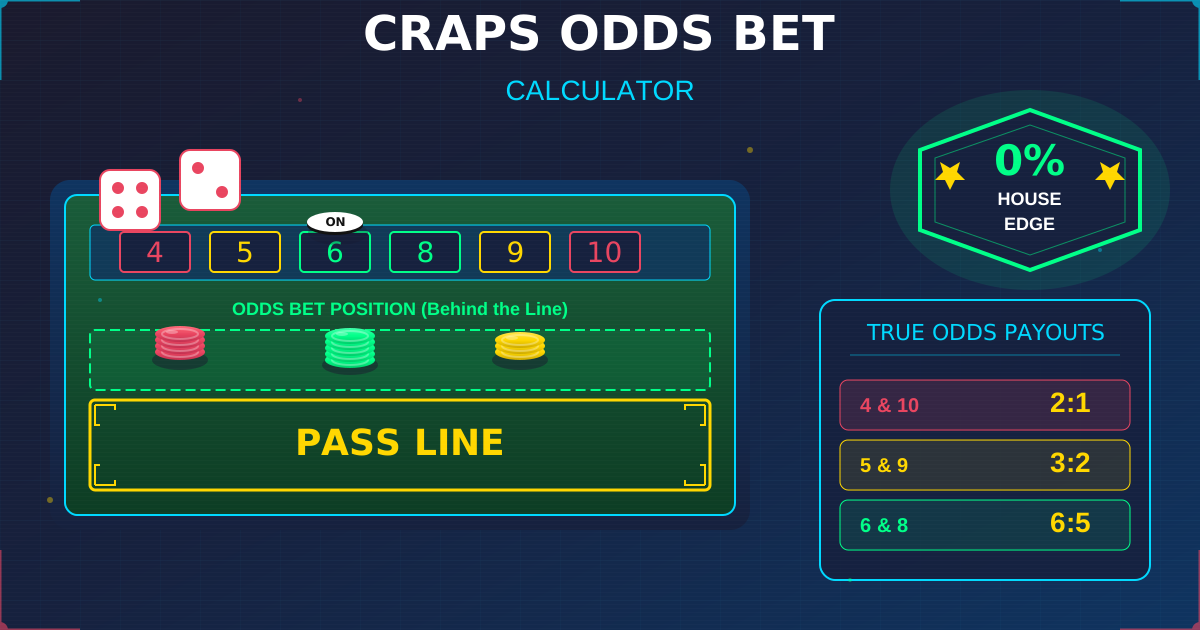
- Free Odds bet -- House edge of exactly 0%. This is the only bet in a casino with zero house advantage. After a point is established, you place an additional bet behind your Pass Line bet. The casino pays true odds on this wager, meaning they take no cut whatsoever.
Why it is great for beginners:
- Only two bets to learn (Pass Line + Odds)
- Combined house edge as low as 0.37% with 3-4-5x odds
- Social, exciting atmosphere
- You can start with just the Pass Line and add Odds later as you get comfortable
- Moderate pace of play
Real-world example: David puts $500 into a craps session. He bets $10 on the Pass Line each round and takes full 3-4-5x Odds whenever a point is established. Over three hours of play, his average bet size with Odds is around $40, and he makes roughly 100 decisions. His total action is approximately $4,000. With a combined house edge of 0.37%, his expected loss is just $14.80 for three hours of entertainment. That is less than a single cocktail in many casinos.
What to avoid at the craps table:
| Craps Bet | House Edge | Beginner Recommendation |
|---|---|---|
| Pass Line | 1.41% | Yes -- core bet |
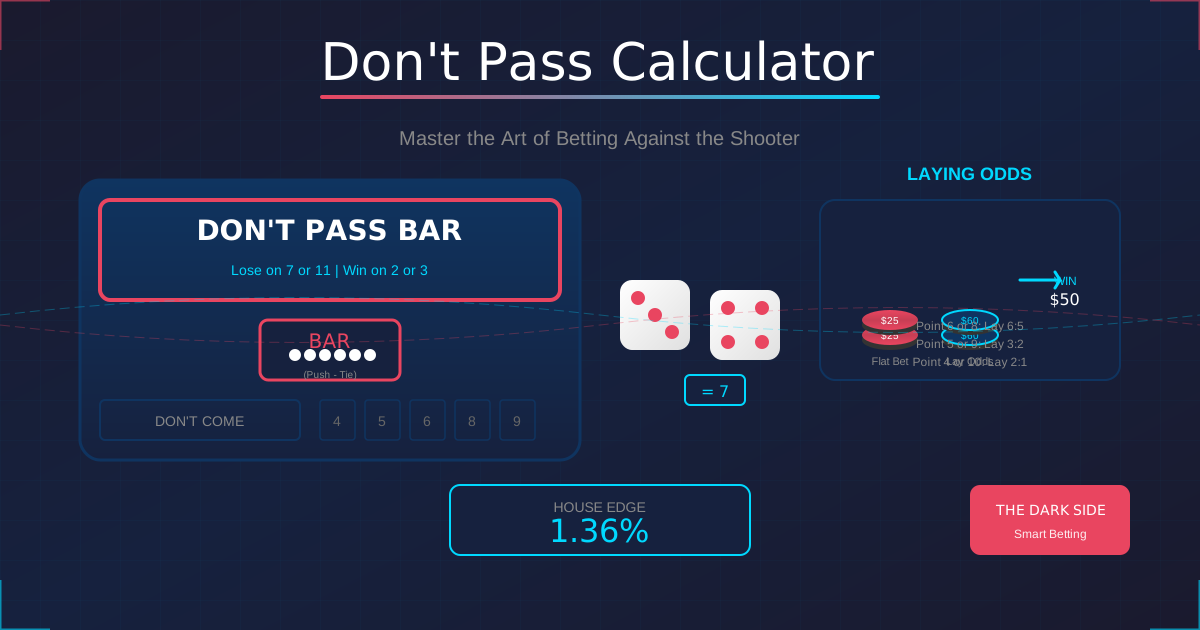
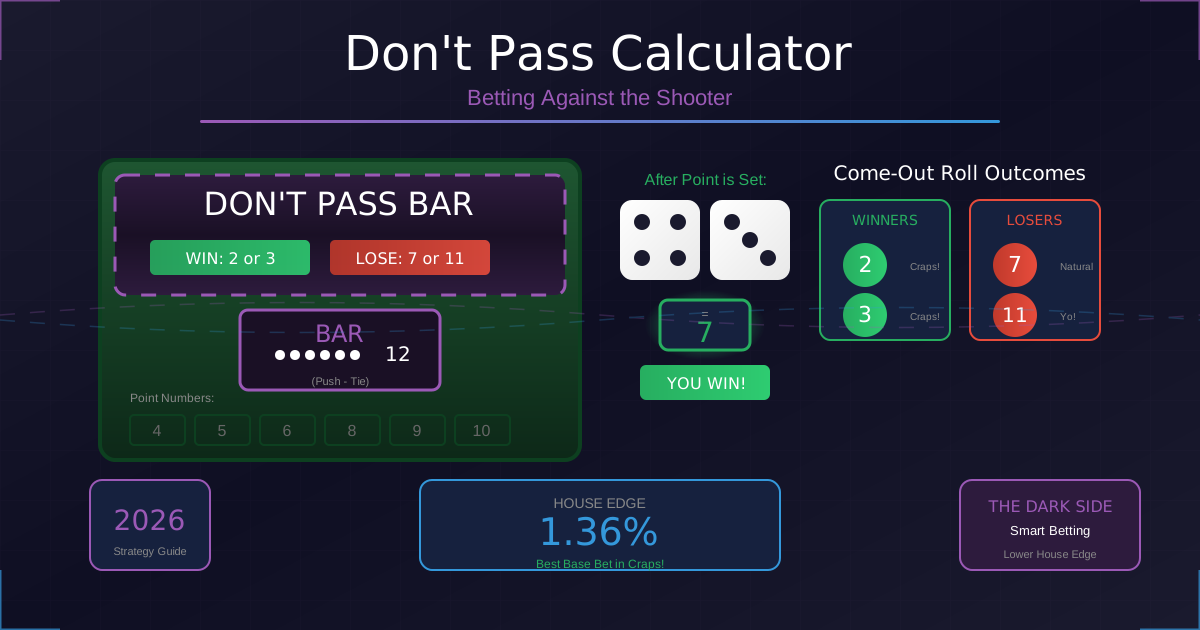
| Don't Pass | 1.36% | Yes -- slightly better odds |
| Free Odds (behind Pass/Don't Pass) | 0.00% | Always take maximum |
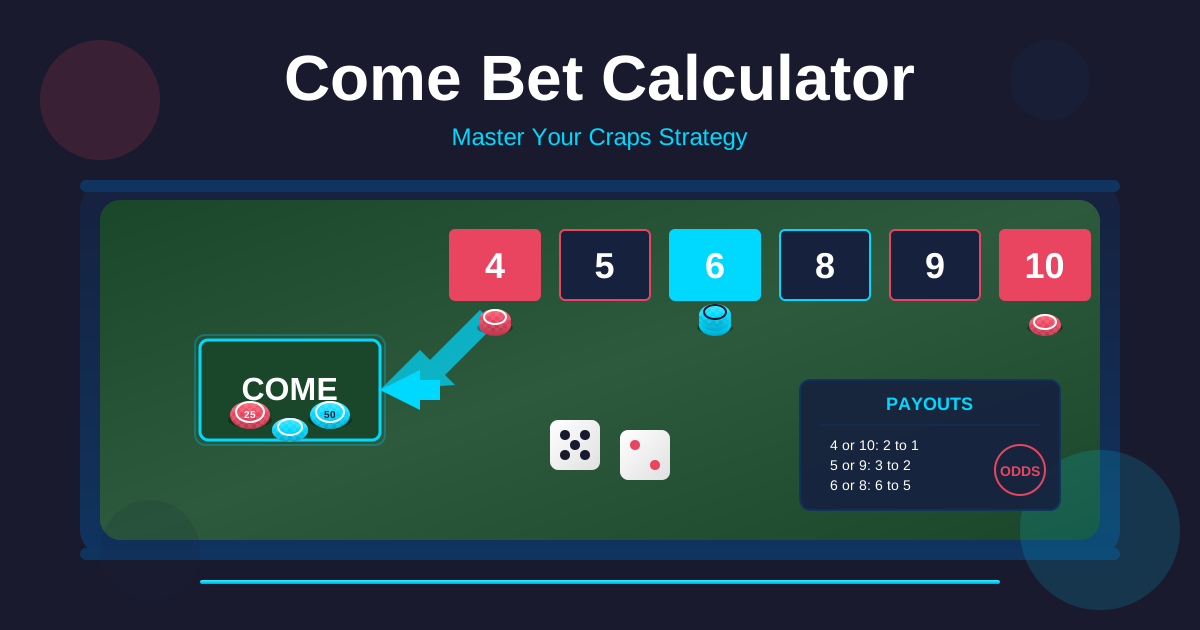
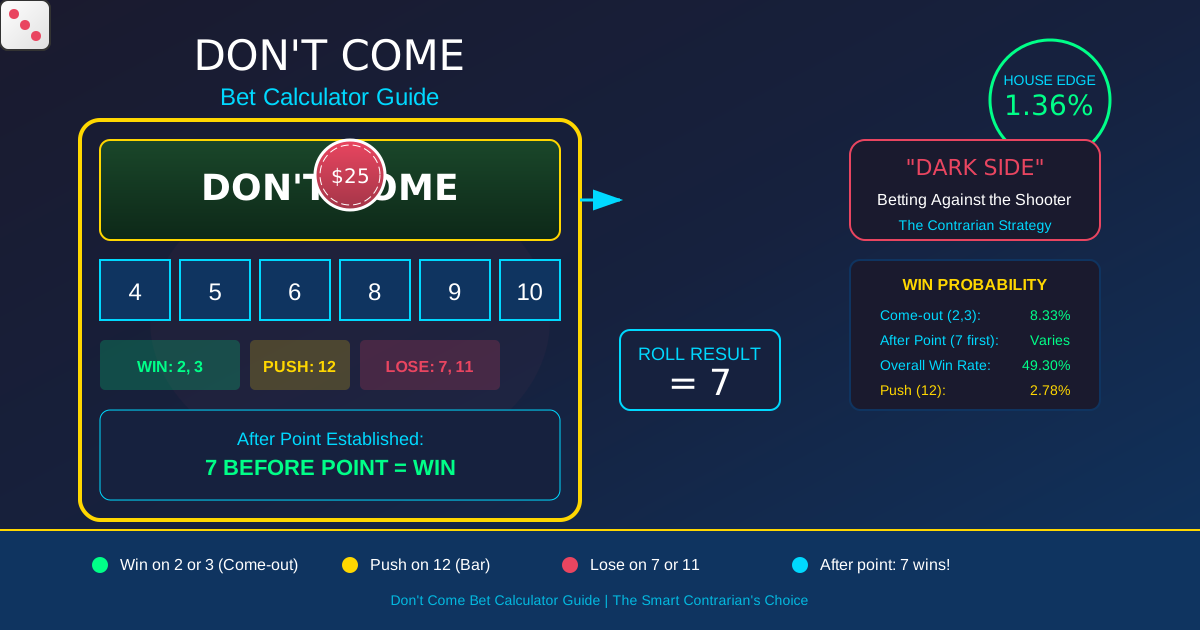
| Come / Don't Come | 1.41% / 1.36% | Good once comfortable |
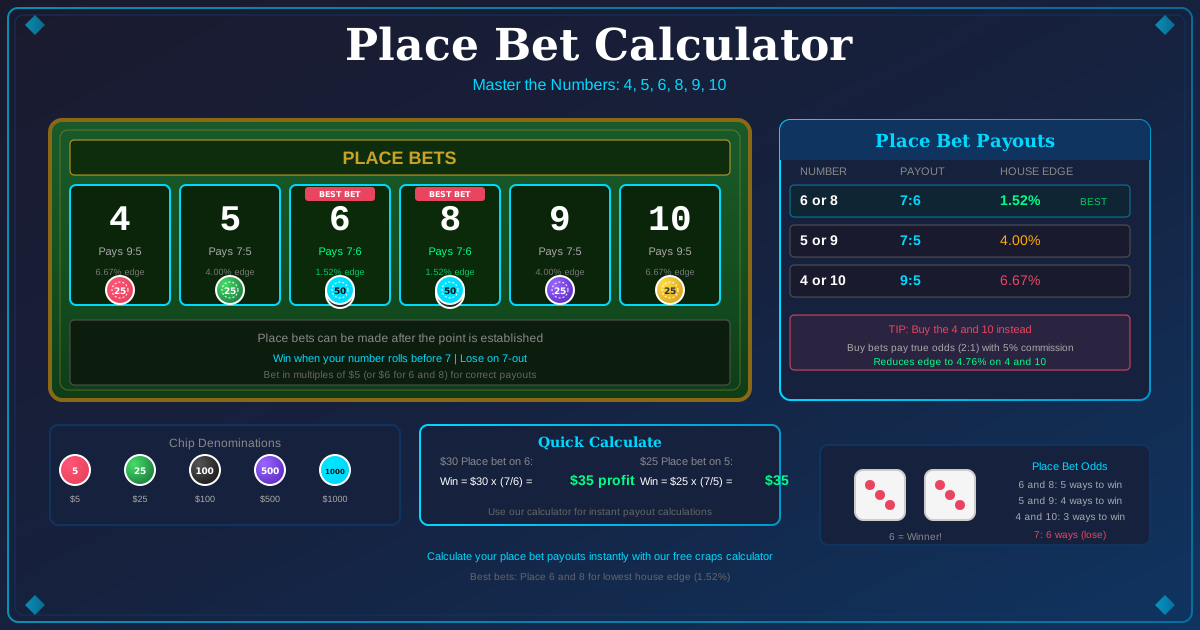
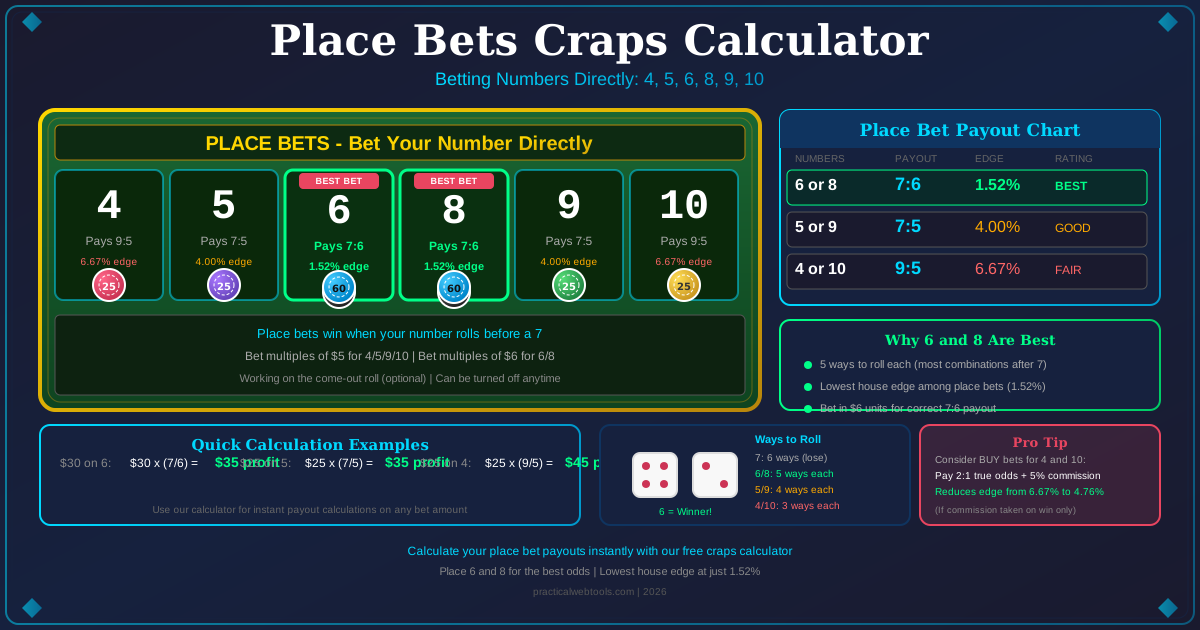
| Place 6 or Place 8 | 1.52% | Acceptable |
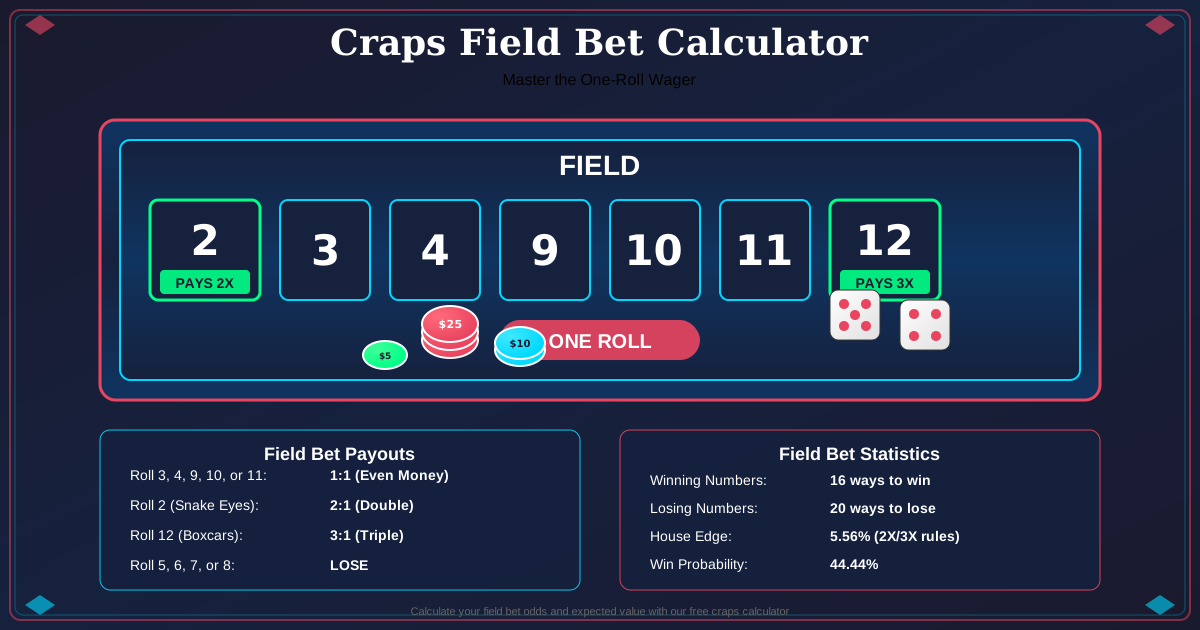
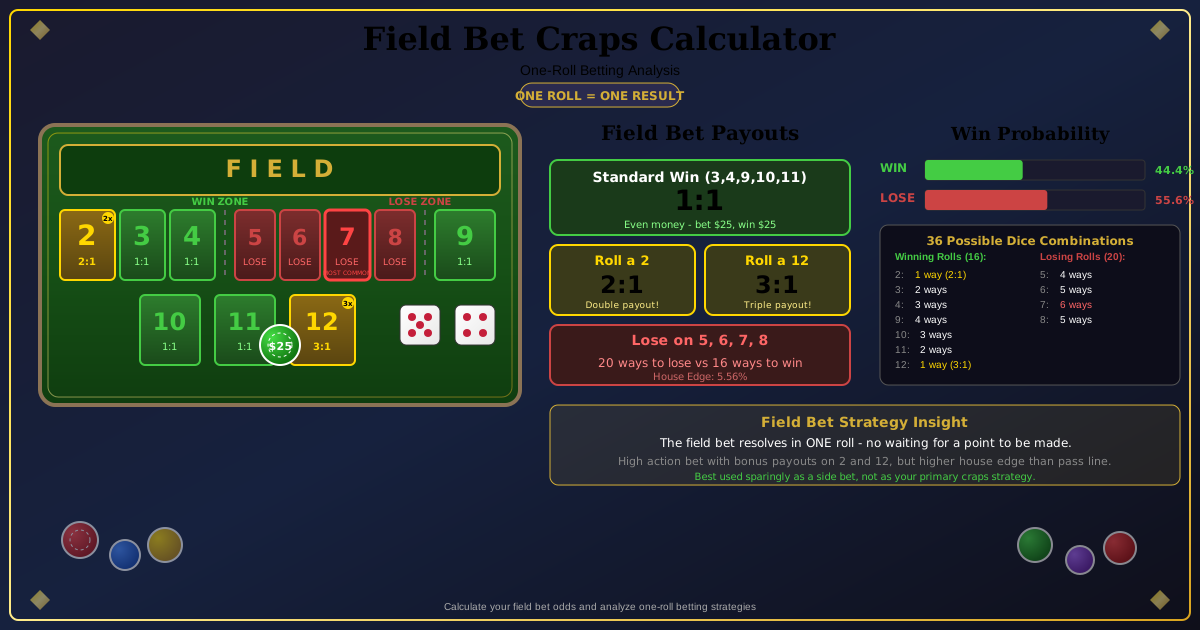
| Field bet | 2.78% - 5.56% | Avoid |
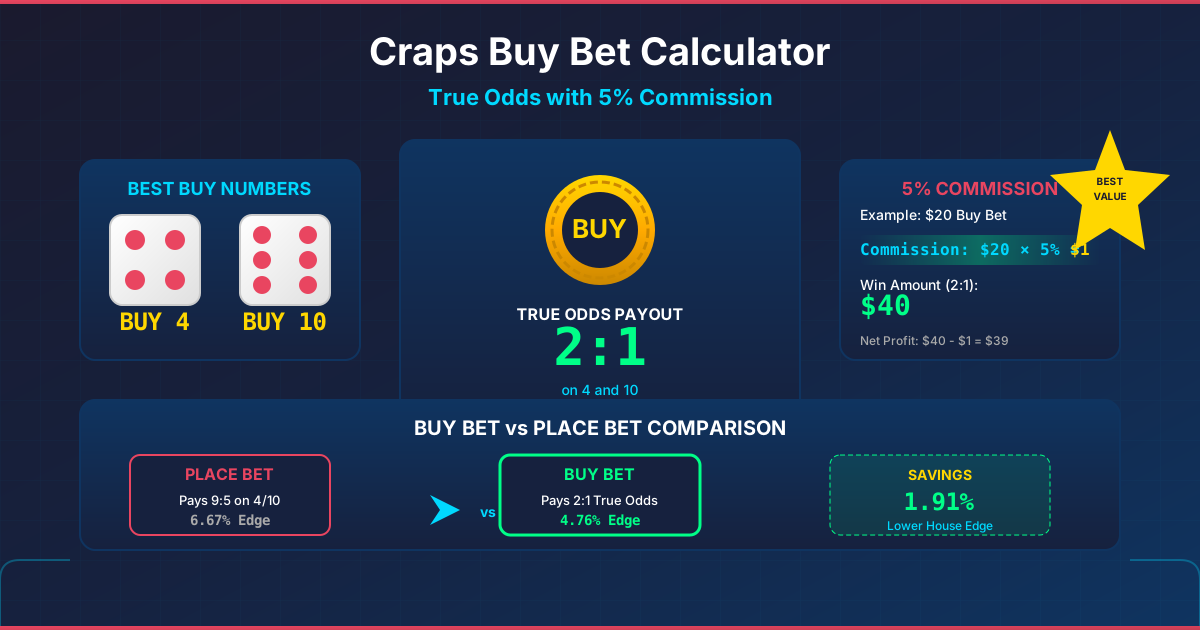
| Place 4 or Place 10 | 6.67% | Avoid |
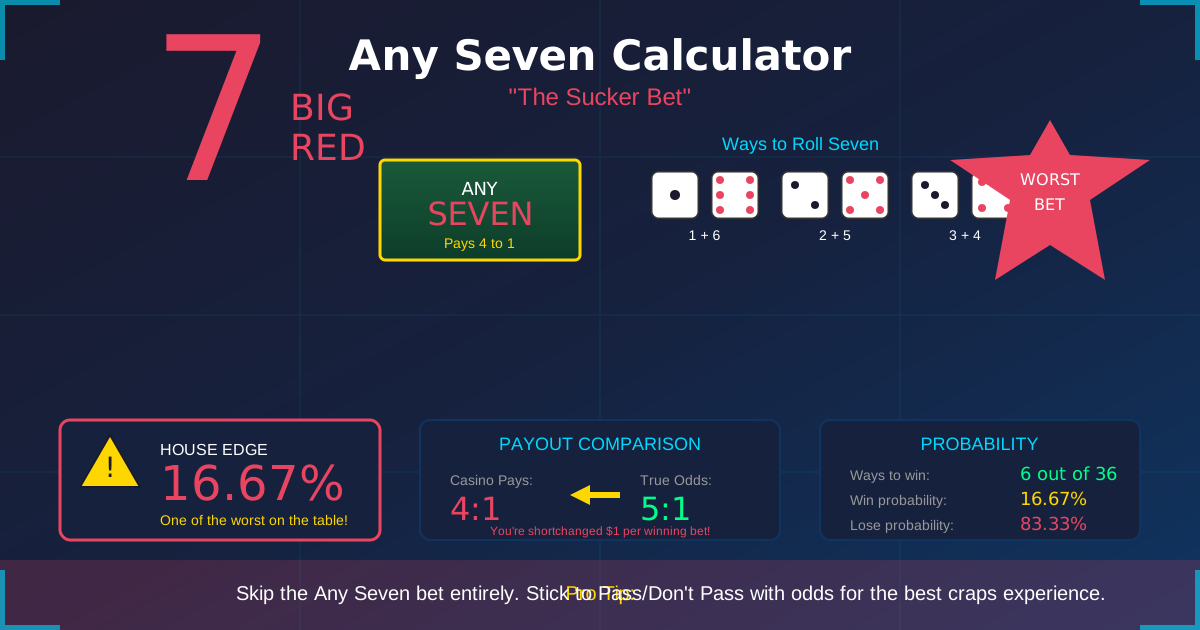
| Any 7 | 16.67% | Never |
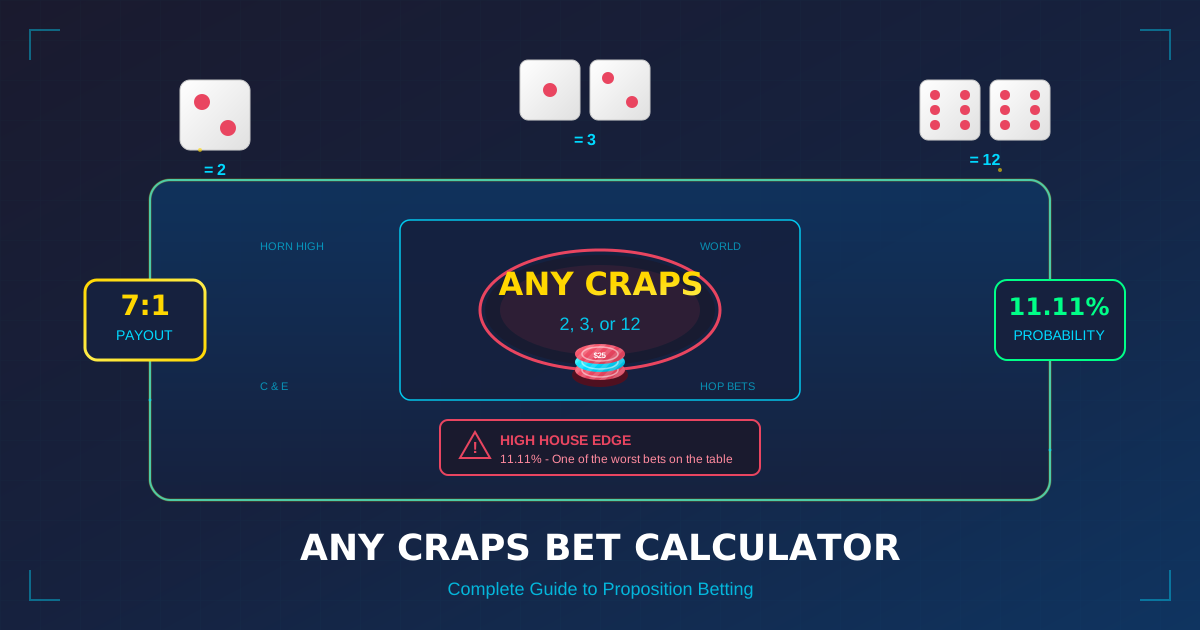
| Any Craps | 11.11% | Never |
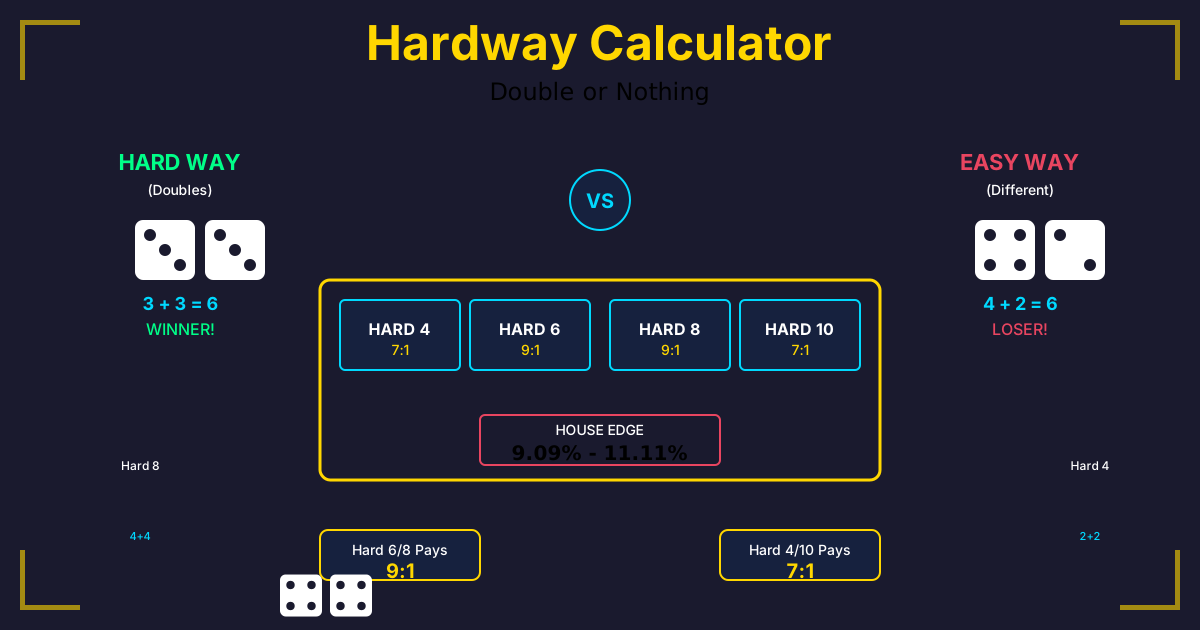
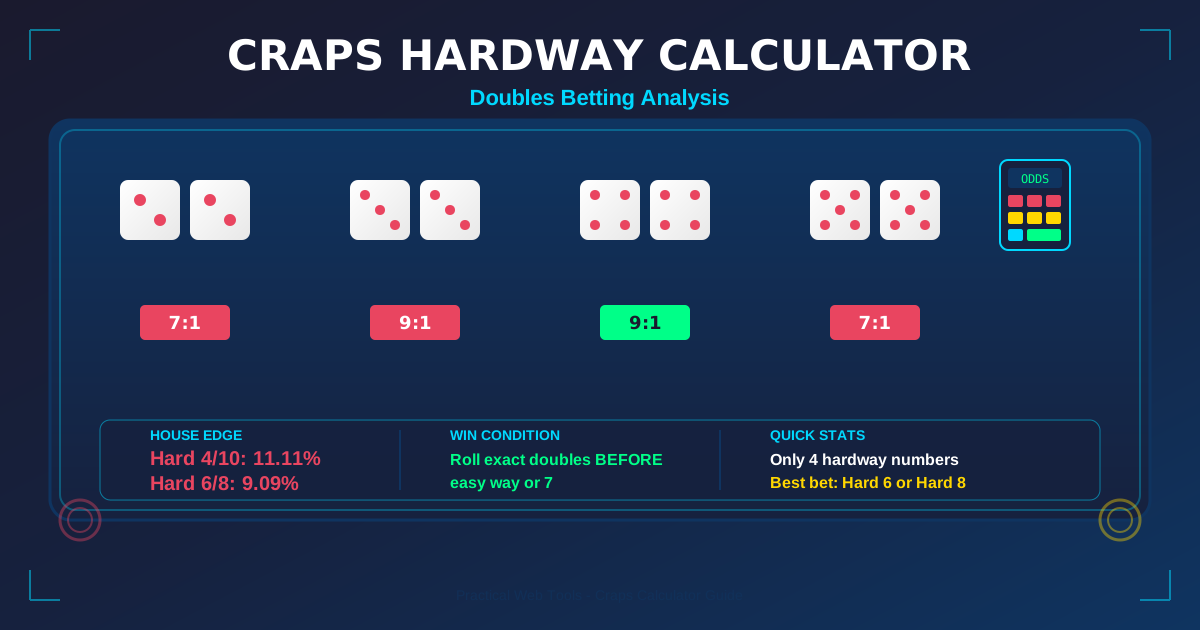
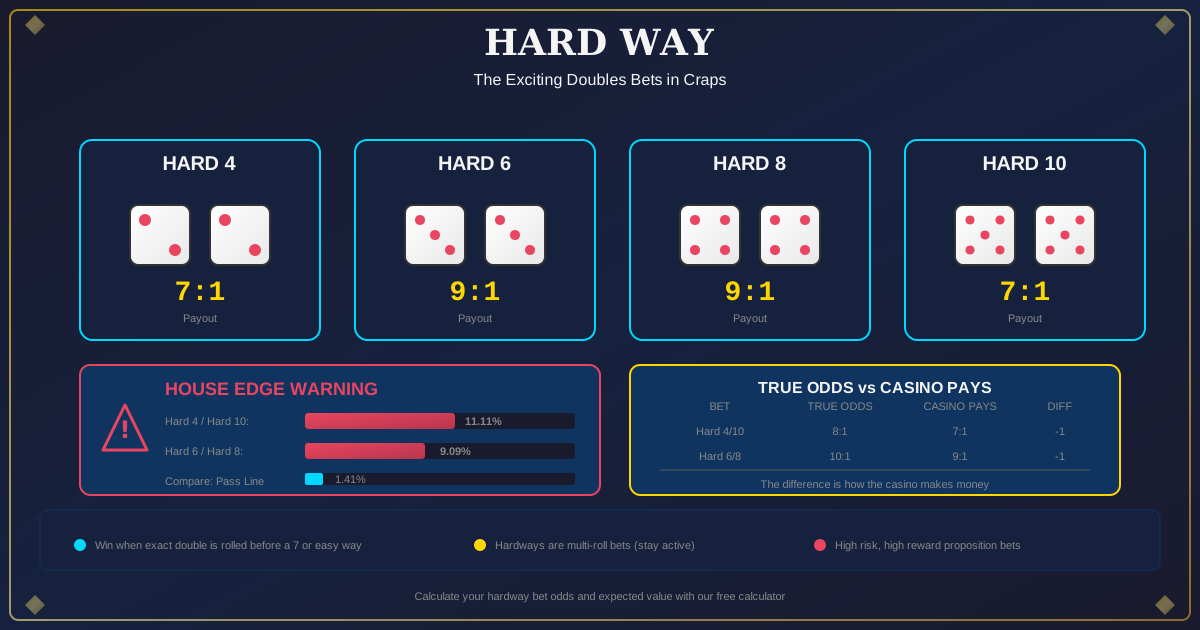
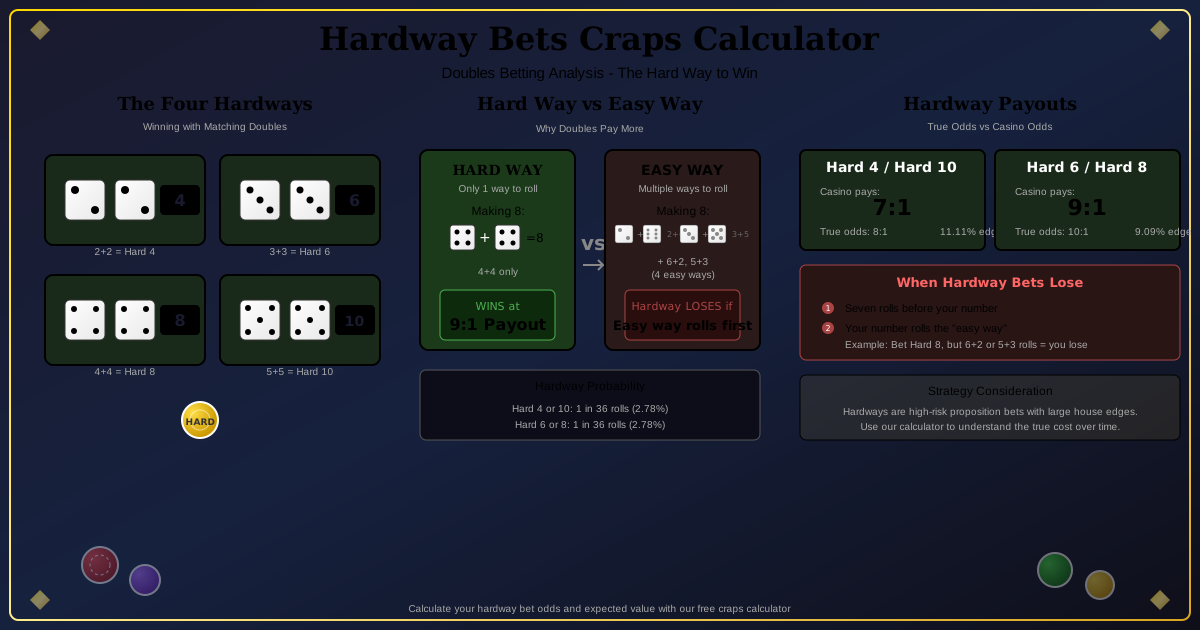
| Hard 4 / Hard 10 | 11.11% | Never |
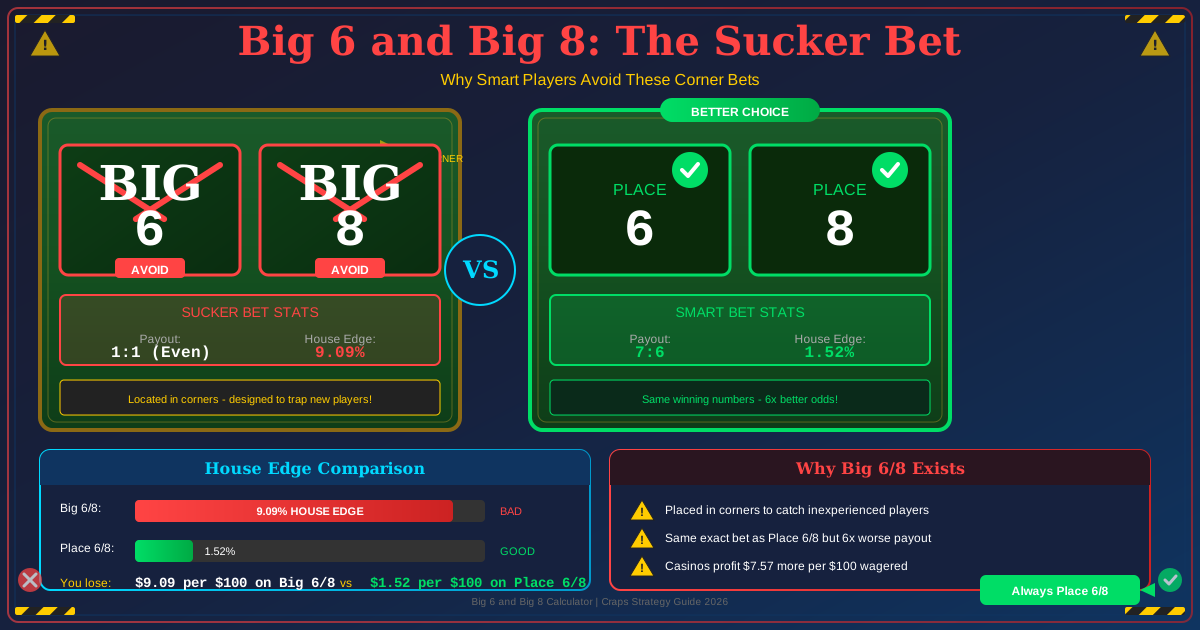
| Big 6 / Big 8 | 9.09% | Never |
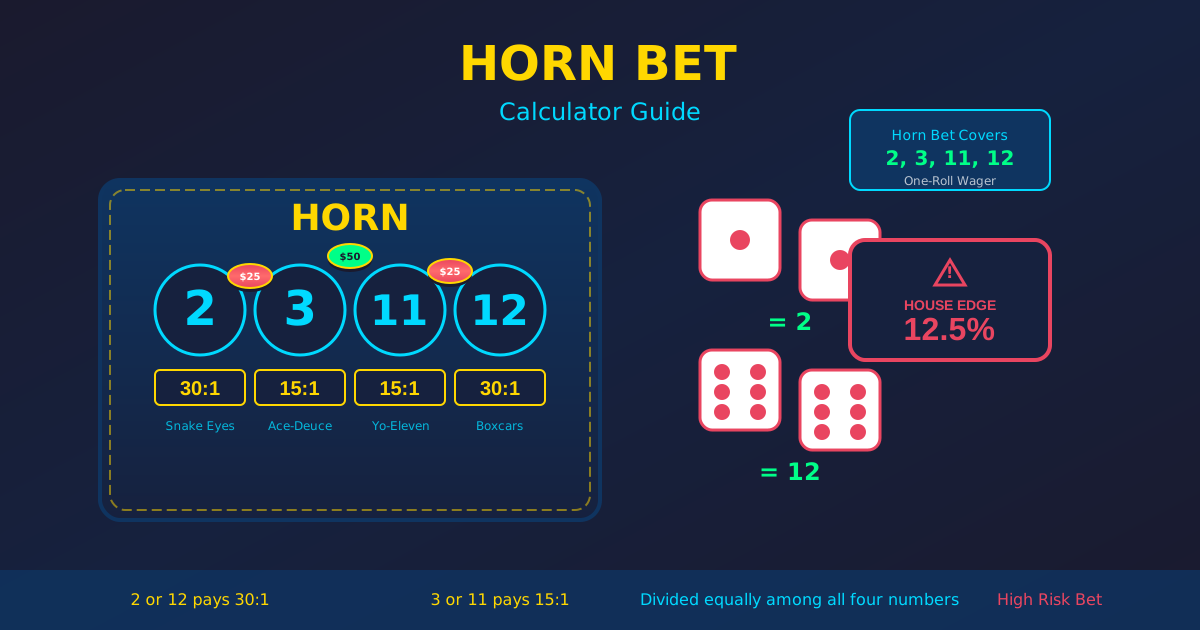
| Hop bets | 11.11% - 16.67% | Never |
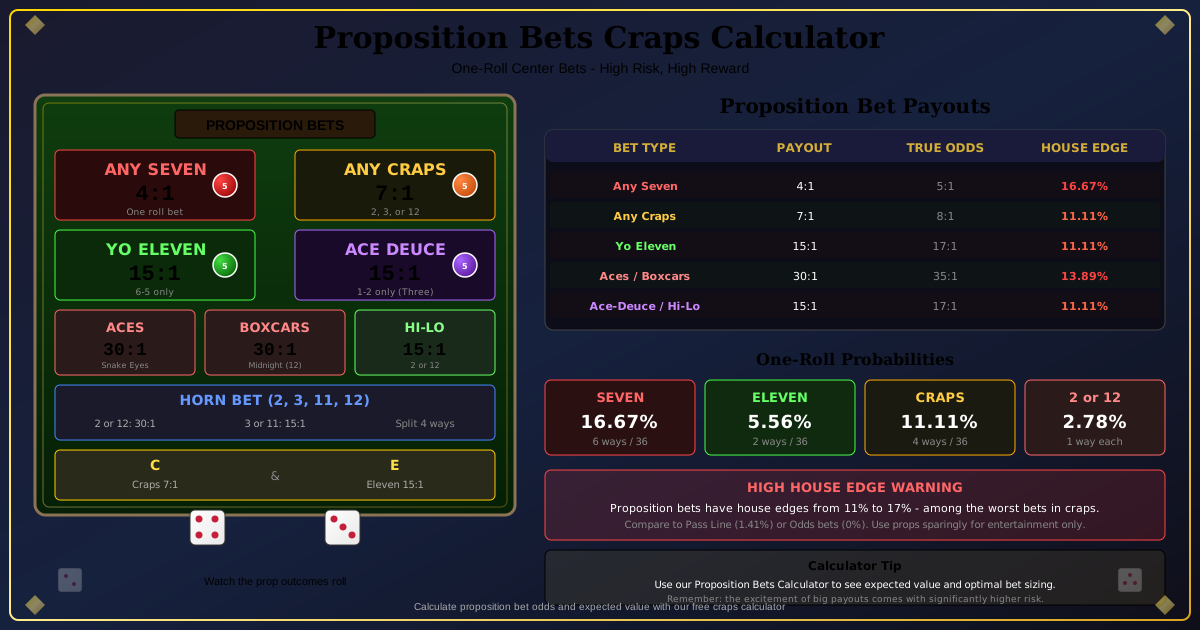
The center of the craps table is a graveyard for bankrolls. Every proposition bet in the center carries a double-digit house edge. The stickman will call out these bets enthusiastically because the casino loves them. Ignore every single one.
Calculate your expected outcomes for specific craps strategies with our Craps Odds Calculator and Craps House Edge Calculator.
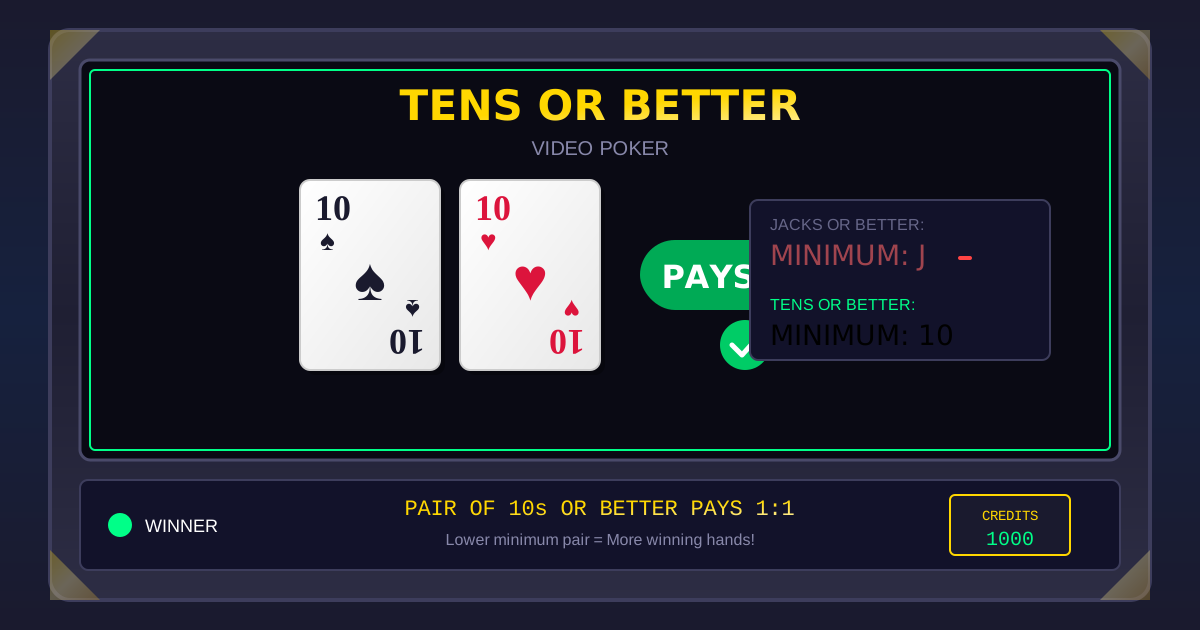
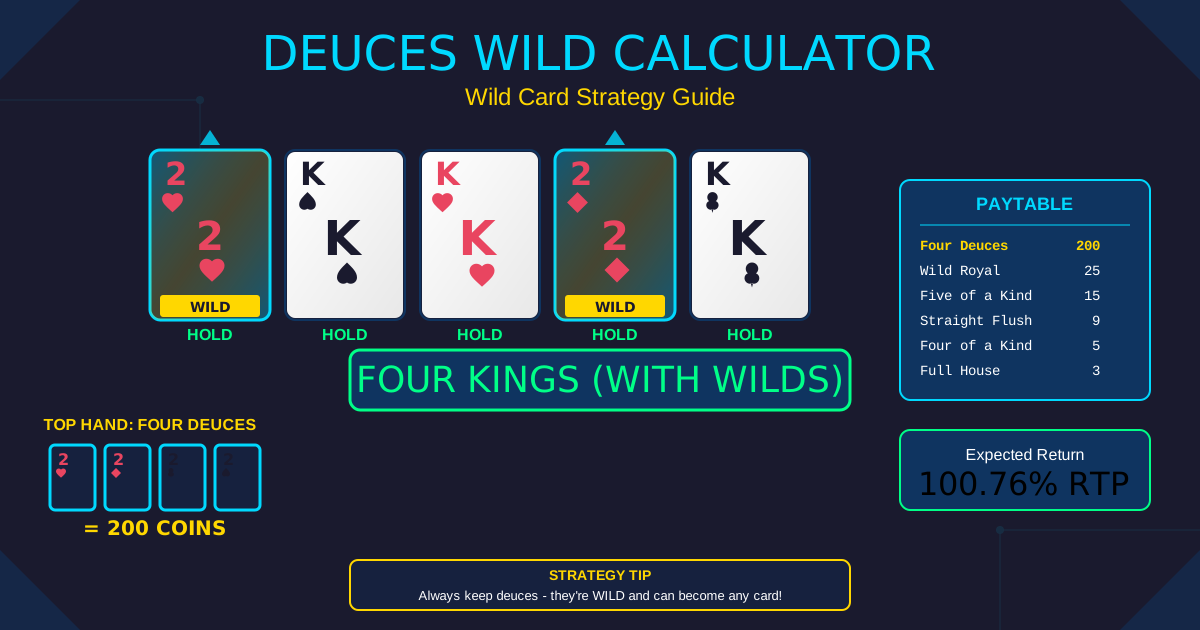
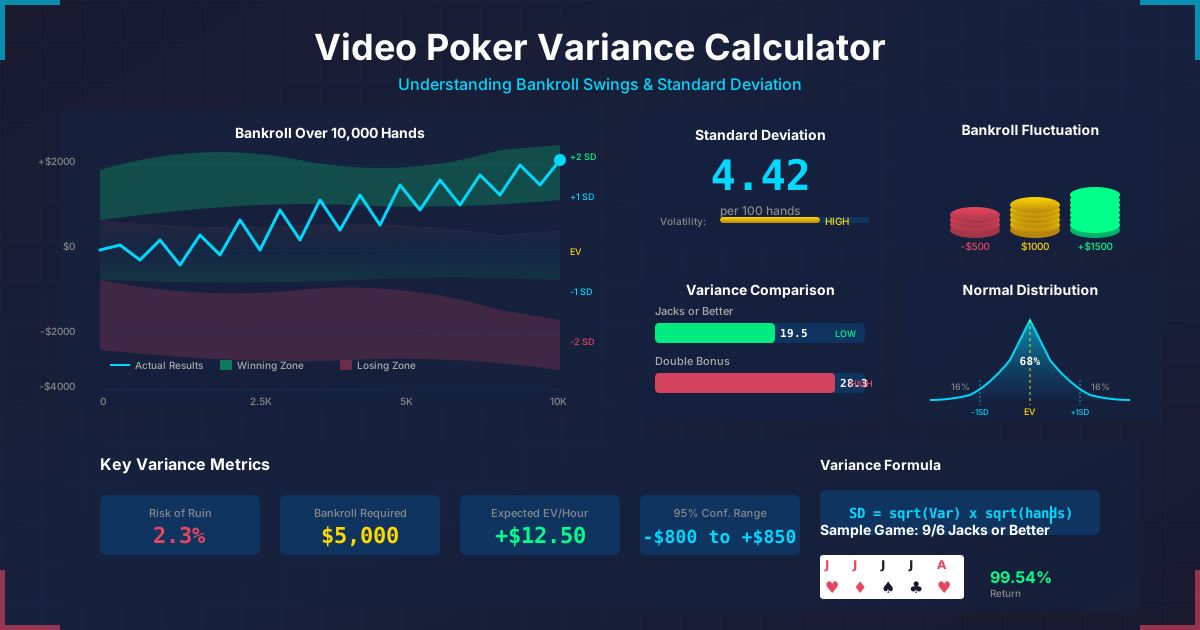
4. Video Poker (Jacks or Better 9/6) -- House Edge: 0.46%
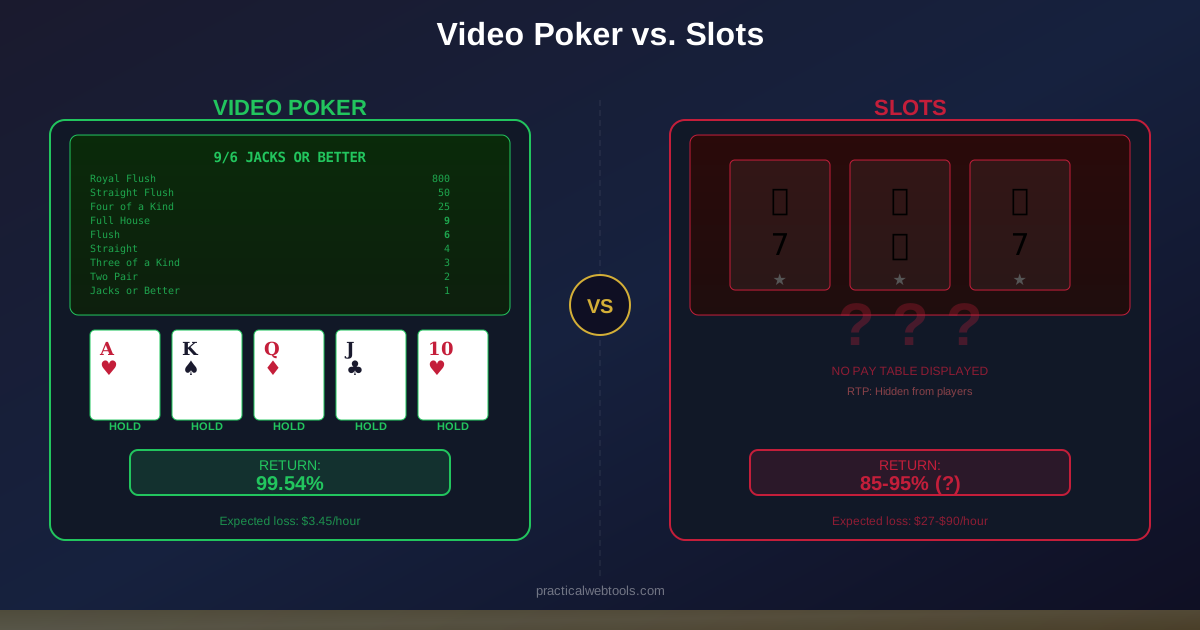
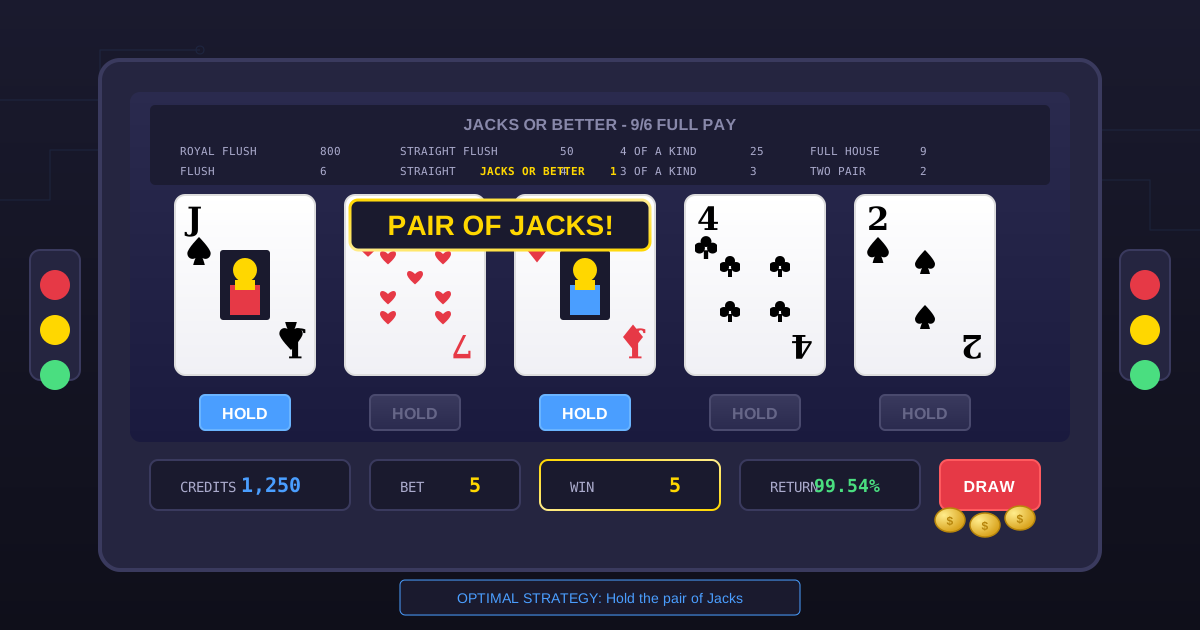
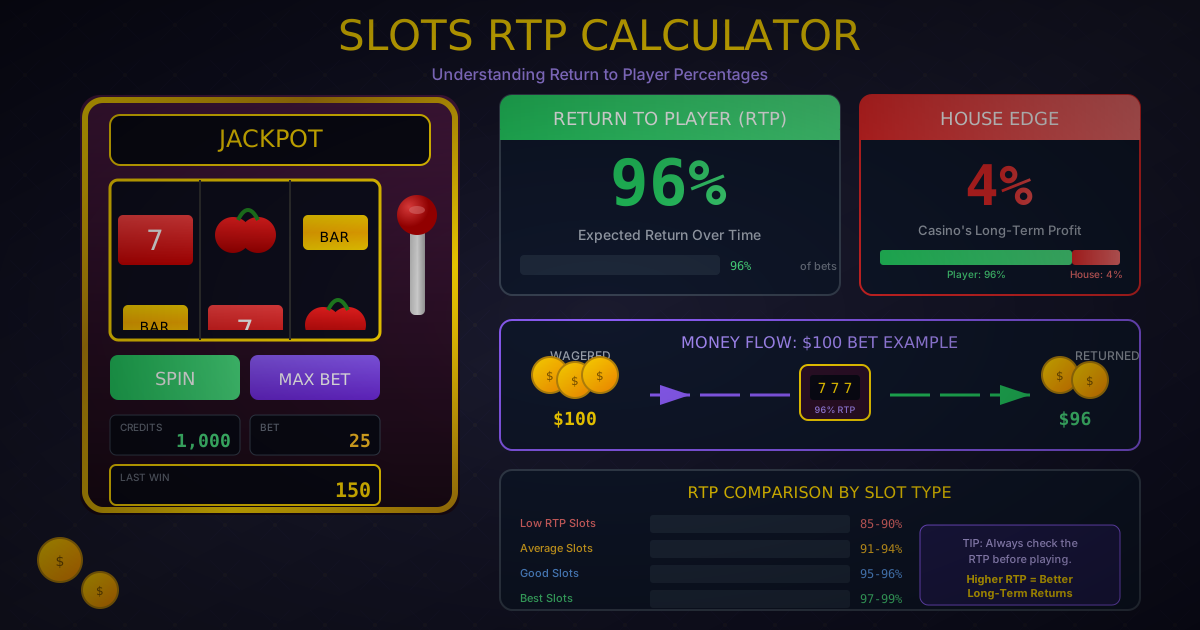
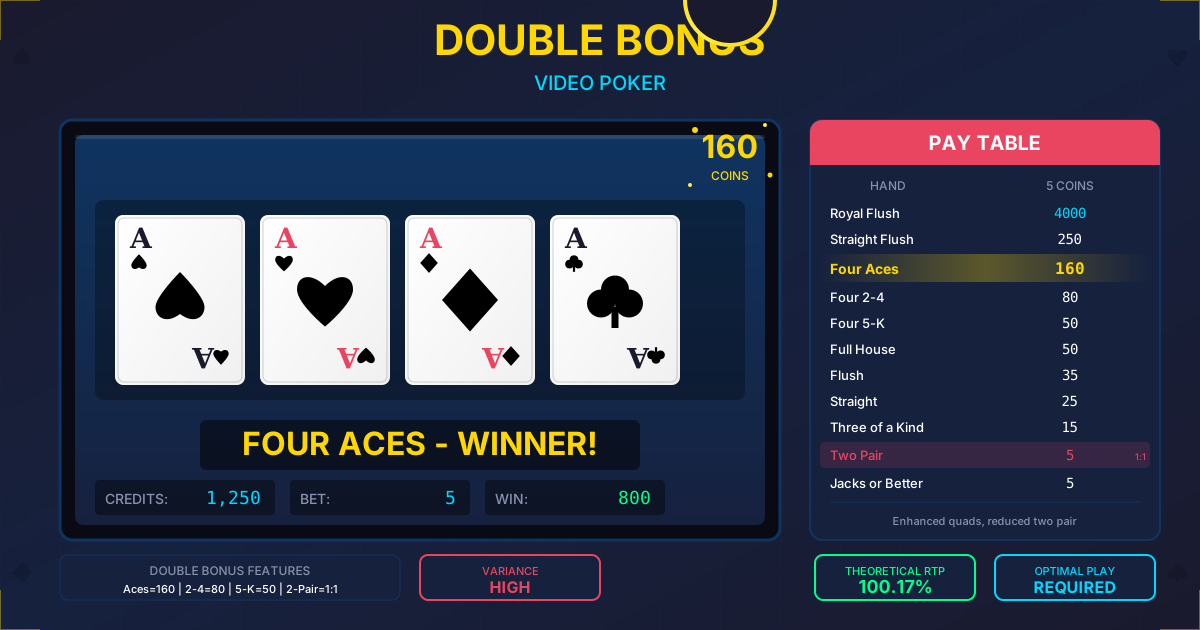
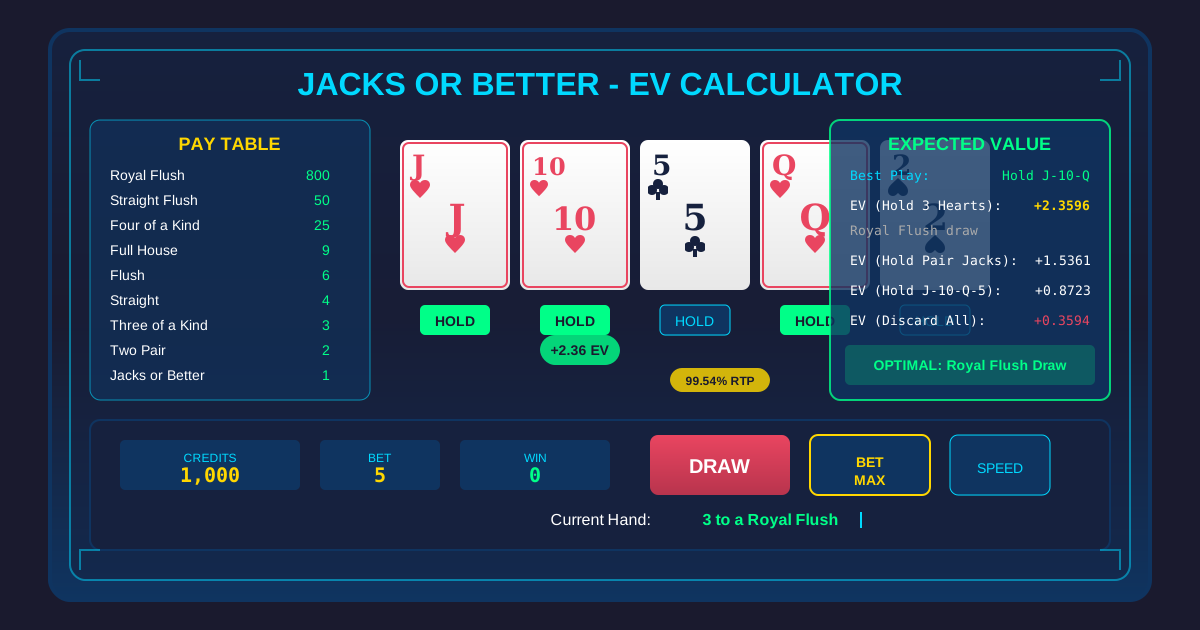
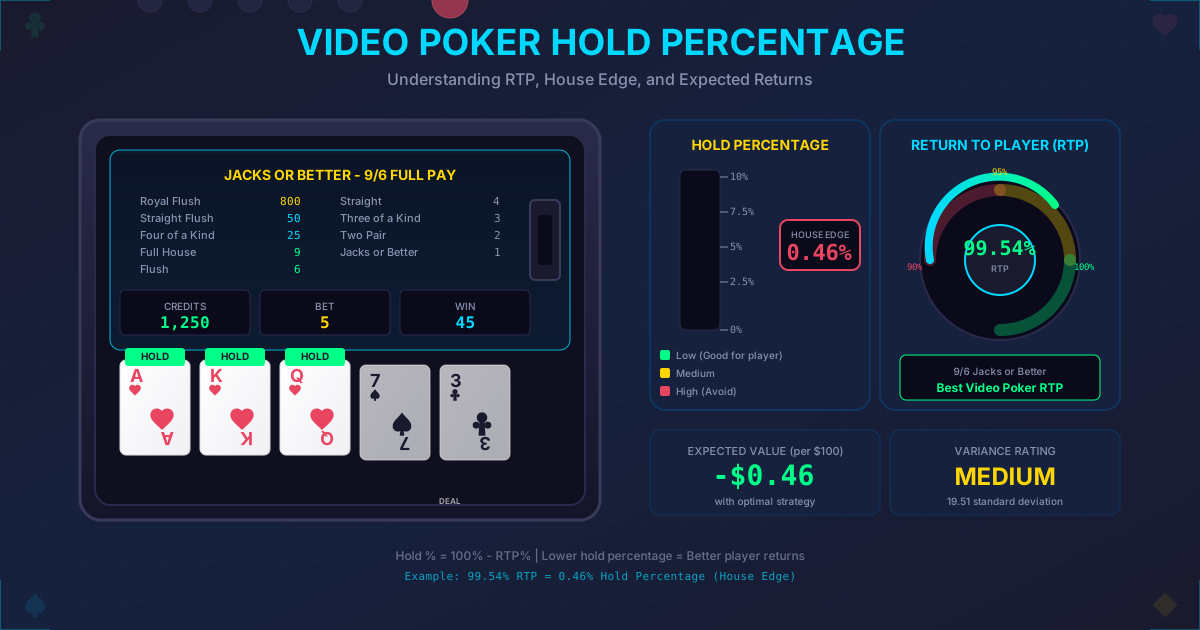
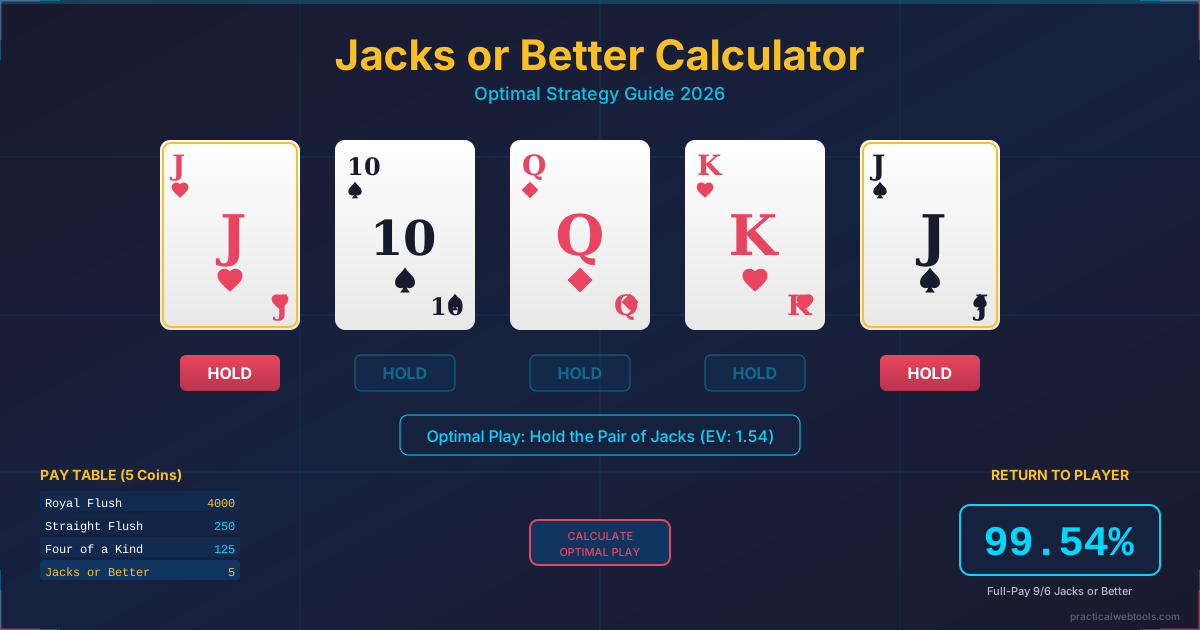
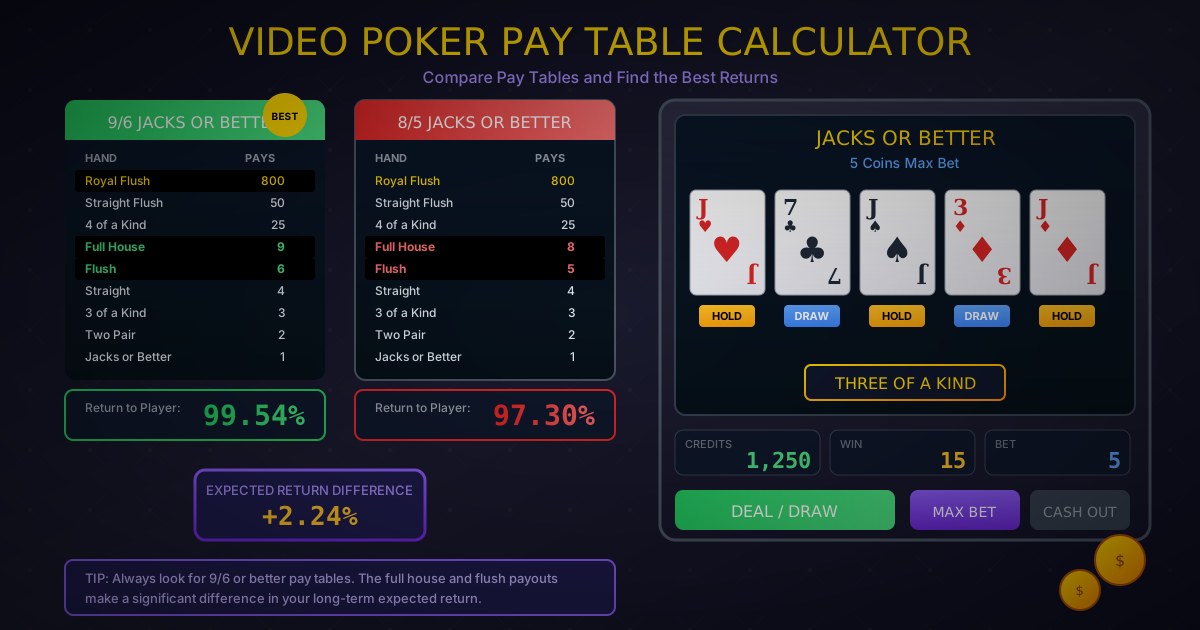
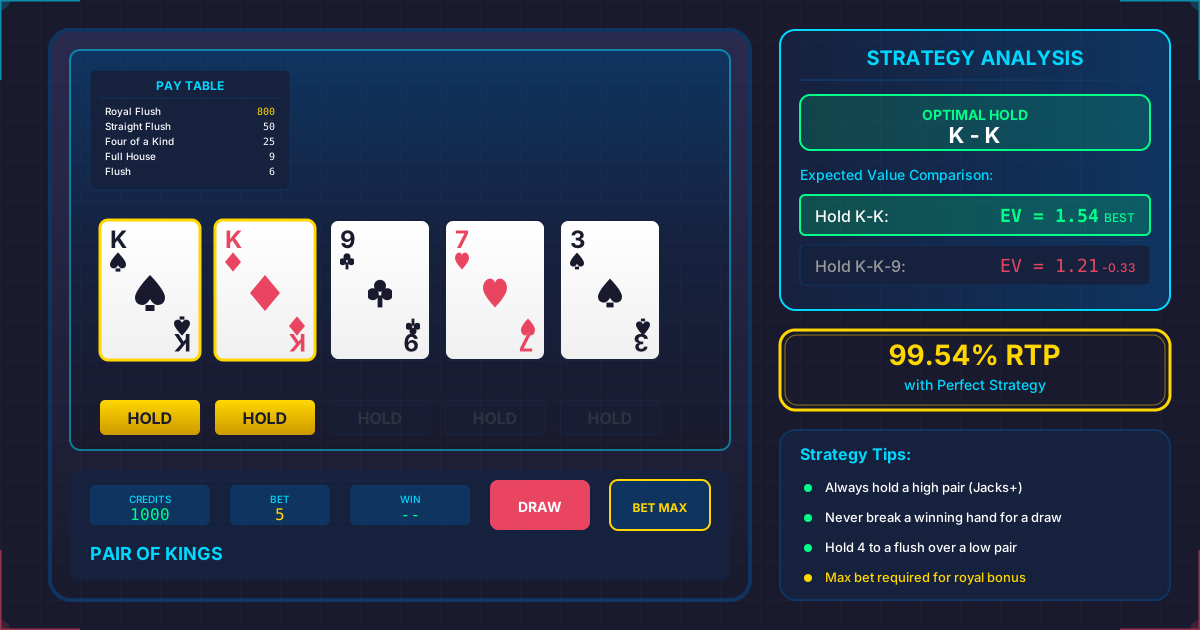
Video poker is the best-kept secret in the casino. A full-pay 9/6 Jacks or Better machine has a return-to-player (RTP) of 99.54%, which translates to a house edge of just 0.46%. That is actually better than blackjack. The catch is that you need to play with optimal strategy, and full-pay machines are becoming harder to find.
Why it is great for beginners:
- Play at your own pace with no pressure from dealers or other players
- No social anxiety -- it is just you and the machine
- Strategy cards are available and easy to reference
- Low minimum bets (often $1.25 for max coins on a quarter machine)
- Best possible RTP of any machine-based game
What makes a "full-pay" 9/6 machine: The 9/6 designation means the machine pays 9 coins for a full house and 6 coins for a flush (per coin wagered). Many casinos have downgraded to 8/5 or even 7/5 pay tables, which dramatically increases the house edge. Always check the pay table before playing.
| Jacks or Better Pay Table | House Edge | RTP |
|---|---|---|
| 9/6 (full pay) | 0.46% | 99.54% |
| 9/5 | 1.55% | 98.45% |
| 8/6 | 1.53% | 98.47% |
| 8/5 | 2.70% | 97.30% |
| 7/5 | 3.85% | 96.15% |
| 6/5 | 5.00% | 95.00% |
Real-world example: Lisa finds a 9/6 Jacks or Better machine at a downtown Las Vegas casino. She plays $1.25 per hand (5 quarters, max coins -- always play max coins to qualify for the enhanced royal flush payout). She plays 400 hands per hour for two hours. Her total action is $1,000. At a 0.46% house edge, her expected loss is $4.60 for two hours of play. If she were playing a 6/5 machine down the row instead, her expected loss jumps to $50 -- more than ten times worse.
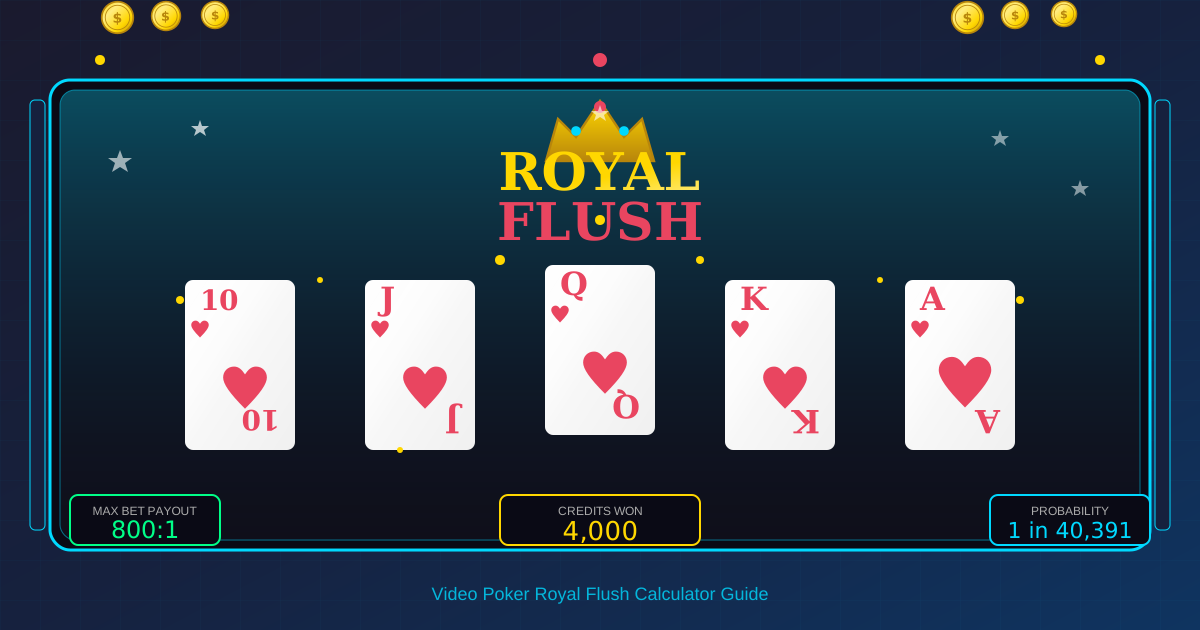
Critical tip: Always bet maximum coins (usually 5). The royal flush payout jumps from 250-for-1 to 800-for-1 at max coins on most machines. Playing fewer than max coins raises the effective house edge by roughly 1.5%.
Analyze your video poker strategy and expected returns with our Video Poker Odds Calculator and Video Poker EV Calculator.
5. European Roulette -- House Edge: 2.70%
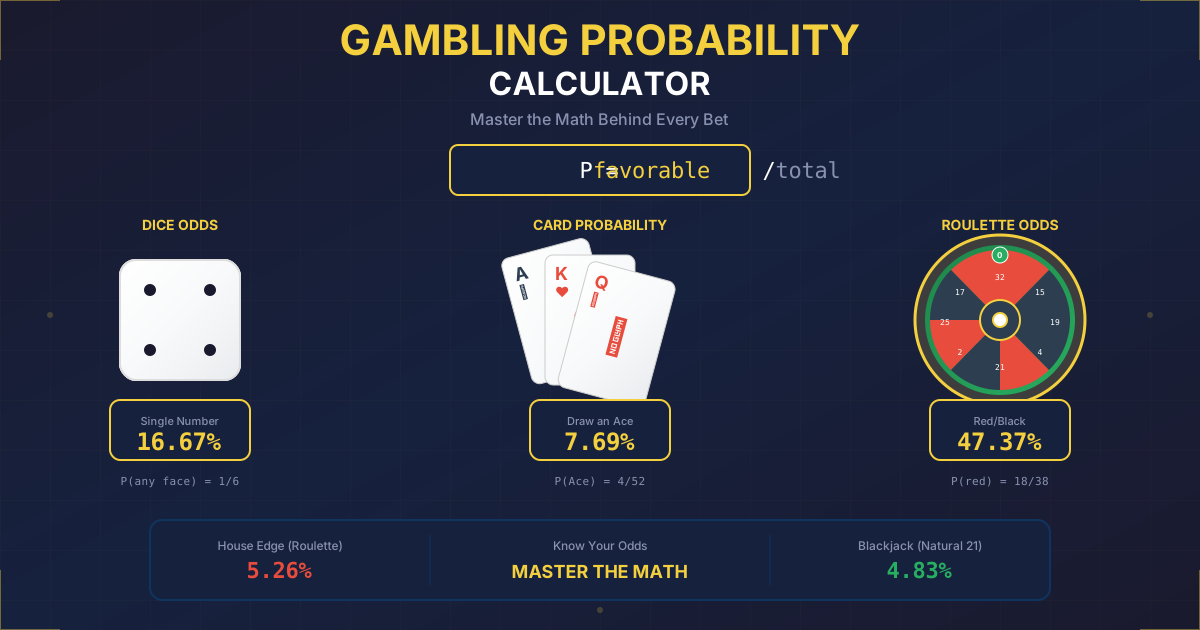
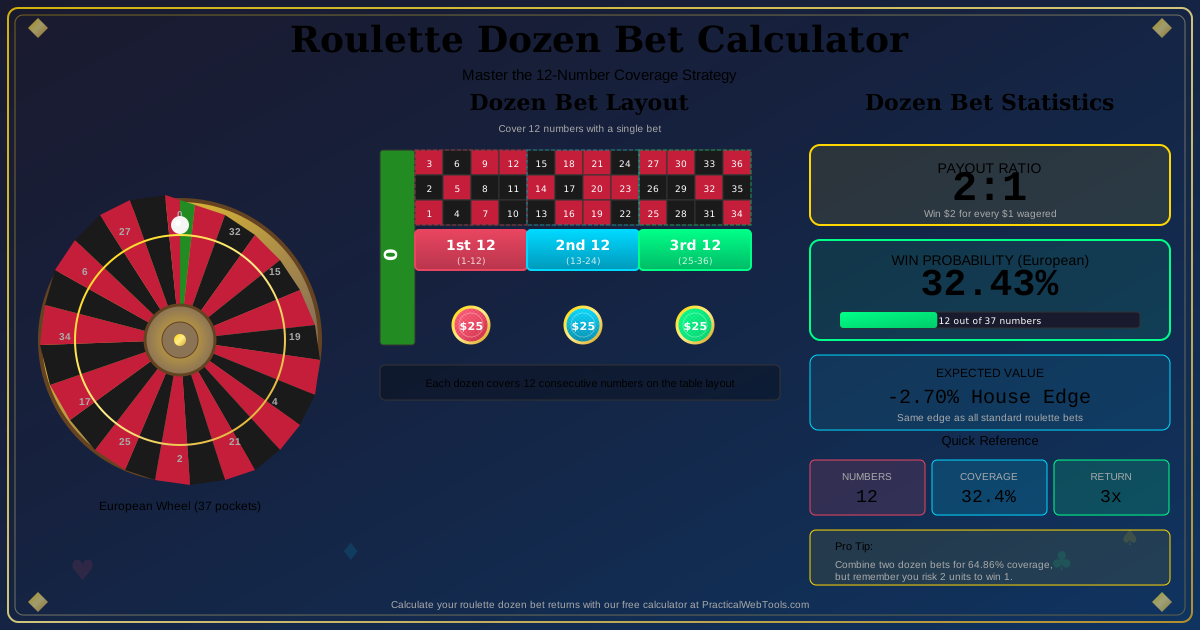
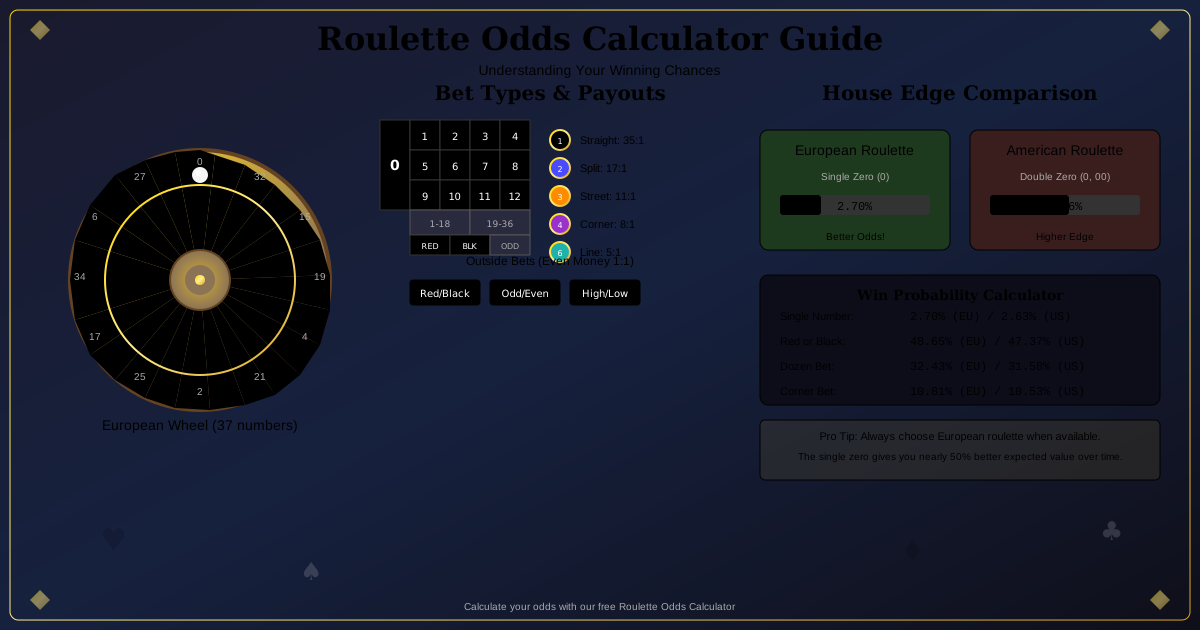
Roulette is the most iconic casino game, and European roulette offers reasonable odds for beginners who want a simple, purely luck-based experience. The single-zero wheel gives a house edge of 2.70% on nearly every bet, which is exactly half the 5.26% house edge of American roulette's double-zero wheel.
Why it is great for beginners:
- No strategy to learn whatsoever
- Every bet (except one) has the same house edge
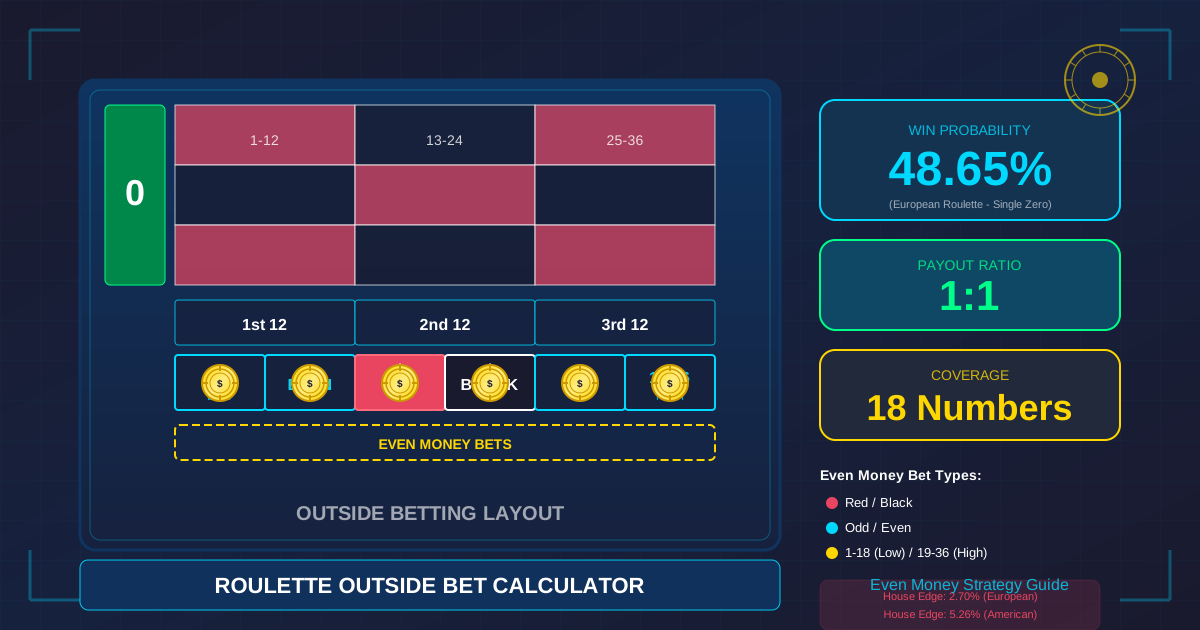
- Even-money bets (red/black, odd/even, high/low) win close to half the time
- Easy to set win/loss limits and walk away
- Exciting, elegant atmosphere
Real-world example: James plays European roulette online, betting $5 on red each spin. Over 200 spins (about three hours at a relaxed pace), his total action is $1,000. At 2.70%, his expected loss is $27. If he mistakenly plays American roulette instead, that expected loss nearly doubles to $52.60.
| Roulette Version | Zeros | House Edge | Expected Loss per $1,000 Wagered |
|---|---|---|---|
| European (single zero) | 1 | 2.70% | $27.00 |
| French (with La Partage) | 1 | 1.35% | $13.50 |
| American (double zero) | 2 | 5.26% | $52.60 |
| Triple-zero roulette | 3 | 7.69% | $76.90 |
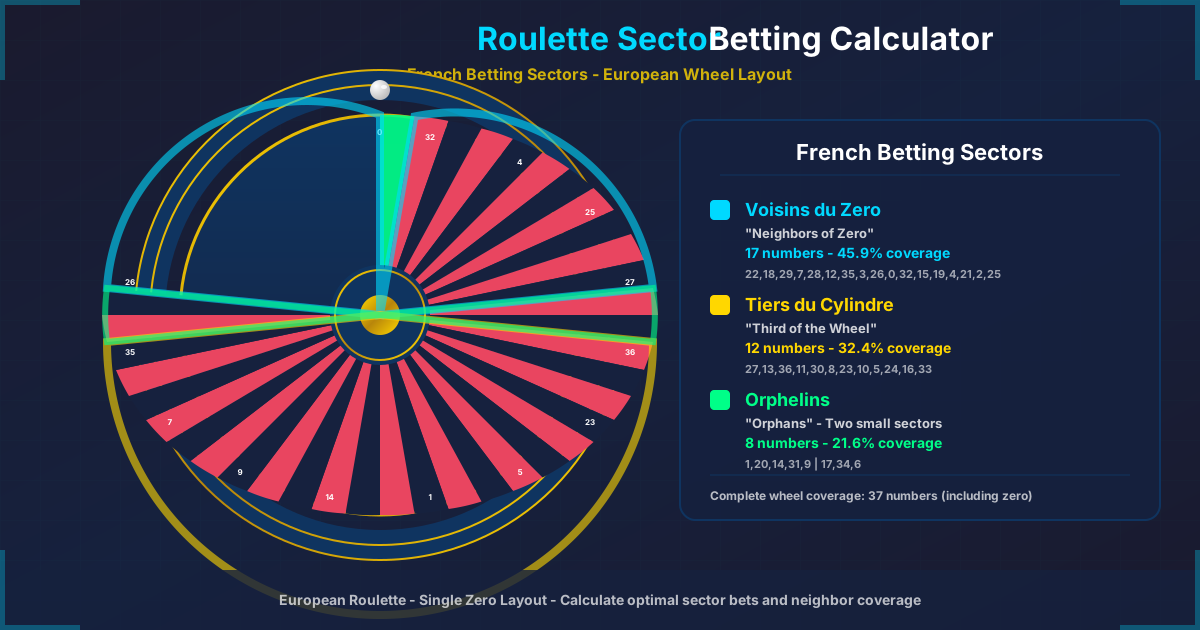
The French roulette bonus: If you can find French roulette with the "La Partage" or "En Prison" rule, even-money bets (red/black, odd/even, high/low) get a reduced house edge of just 1.35%. When the ball lands on zero, you either get half your bet back (La Partage) or your bet is "imprisoned" for the next spin (En Prison). This makes it one of the best bets available in any casino.
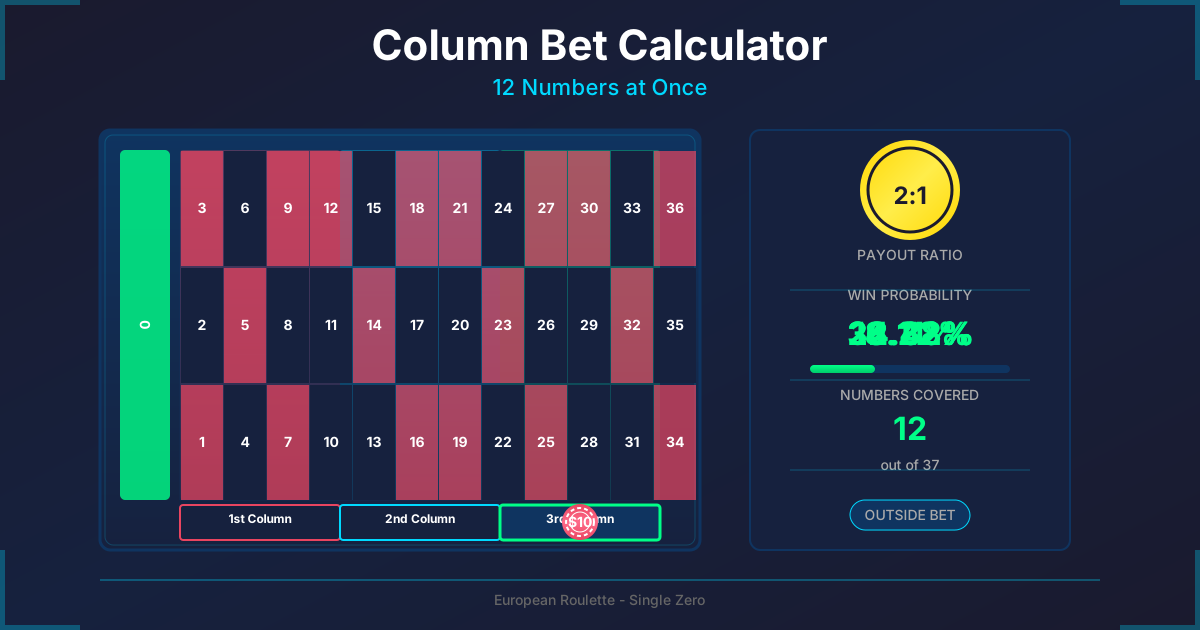
Check the exact probabilities of any roulette bet with our Roulette Odds Calculator and see how different wheel types affect your expected returns using the Roulette House Edge Calculator.
The Complete House Edge Comparison: All Major Casino Games
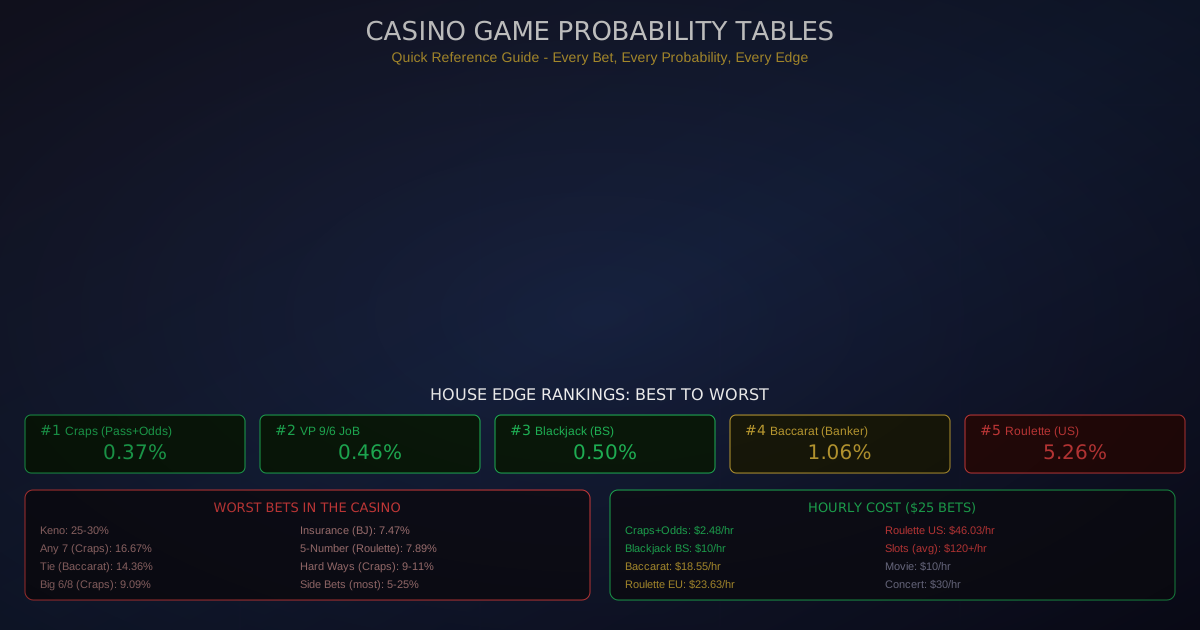
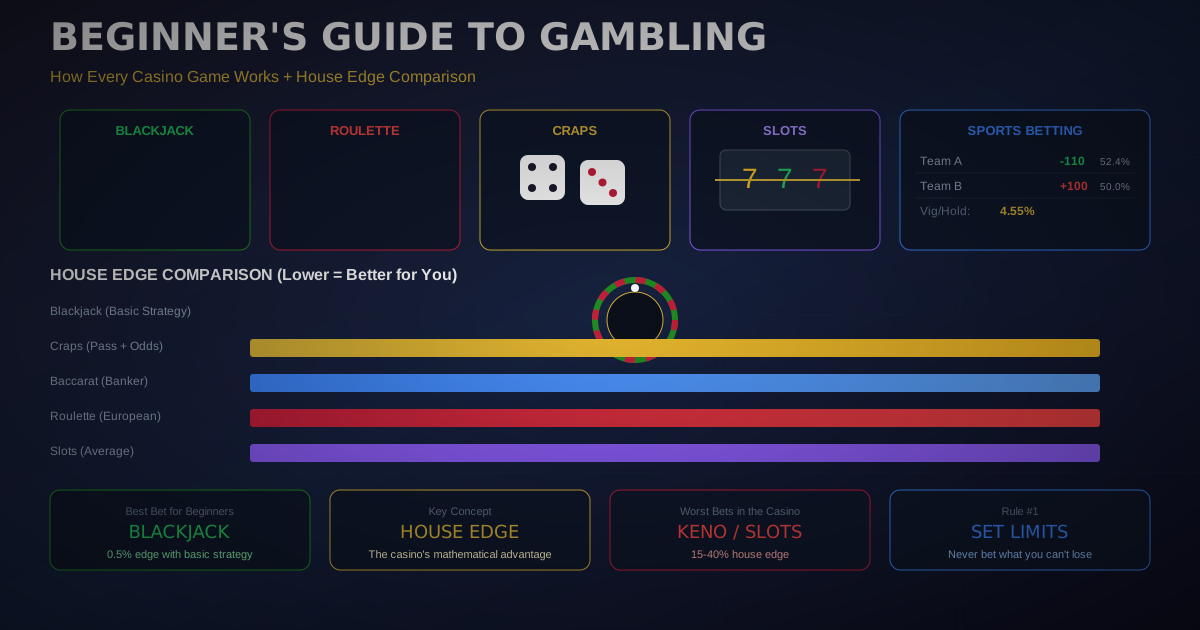
Here is every major casino game ranked by house edge, from best to worst for the player. This is the single most important table in this guide.
| Game | Best Available House Edge | Skill Required | Beginner Friendly? |
|---|---|---|---|
| Video Poker (9/6 JoB) | 0.46% | High (strategy cards help) | Yes, with study |
| Blackjack (basic strategy) | 0.50% | Moderate (memorize strategy) | Yes, with practice |
| Craps (Pass + max Odds) | 0.37% | Low (just two bets) | Yes |
| Baccarat (Banker bet) | 1.06% | None | Excellent |
| Craps (Pass Line only) | 1.41% | None | Yes |
| French Roulette (La Partage) | 1.35% | None | Excellent |
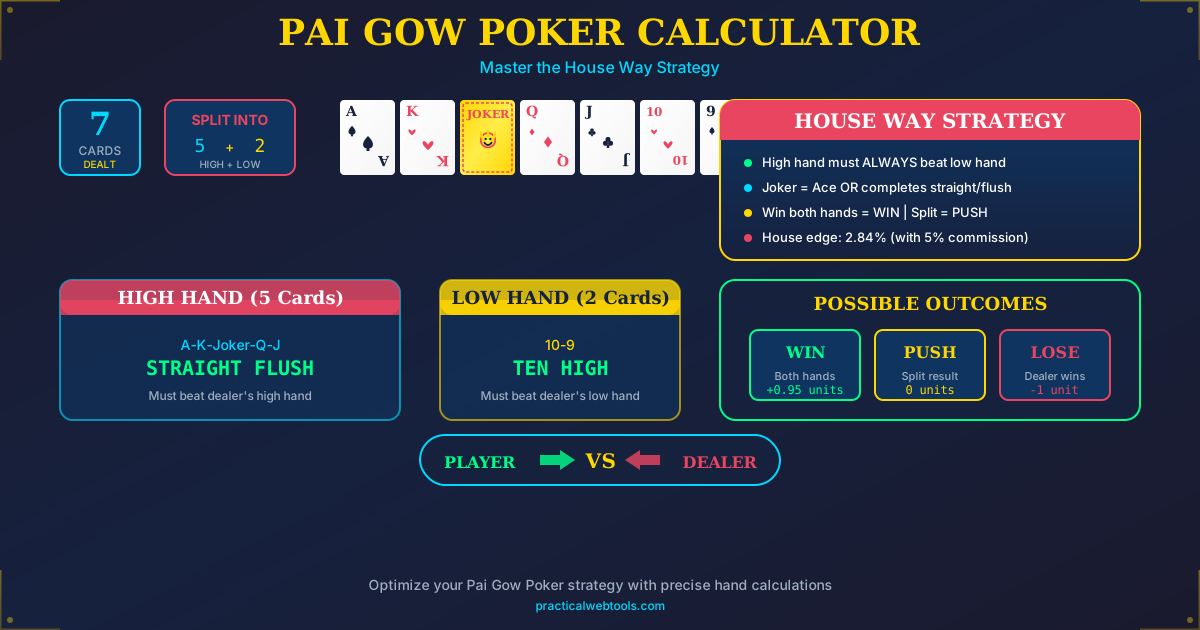
| Pai Gow Poker | 1.50% | Low-Moderate | Yes |
| European Roulette | 2.70% | None | Yes |
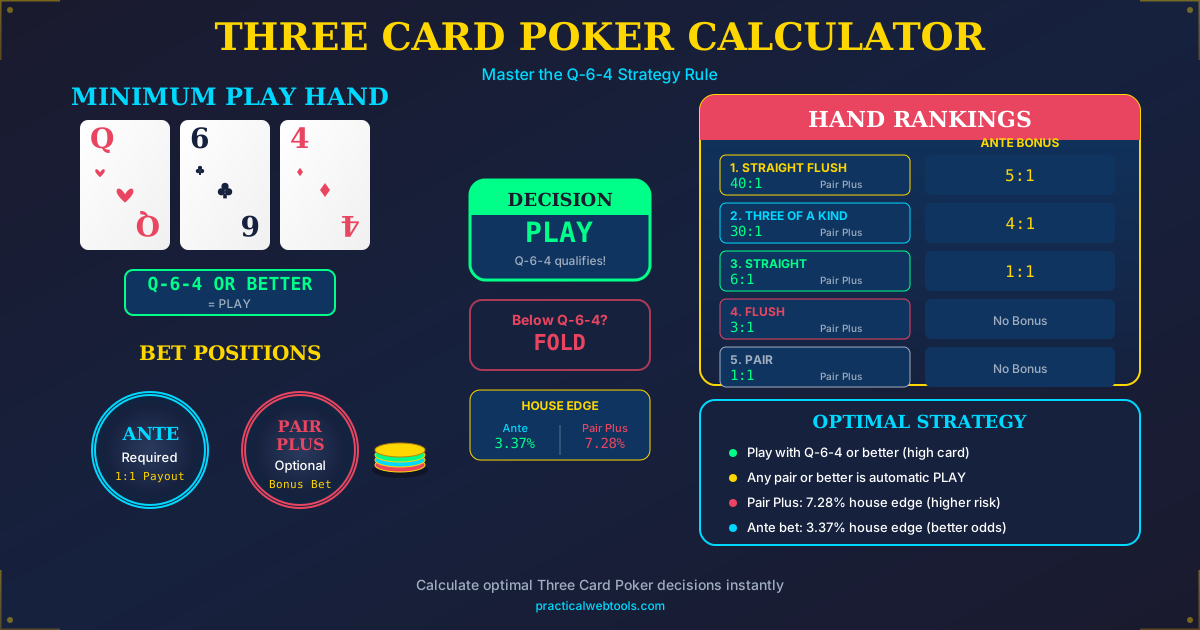
| Three Card Poker (ante) | 3.37% | Low | Moderate |
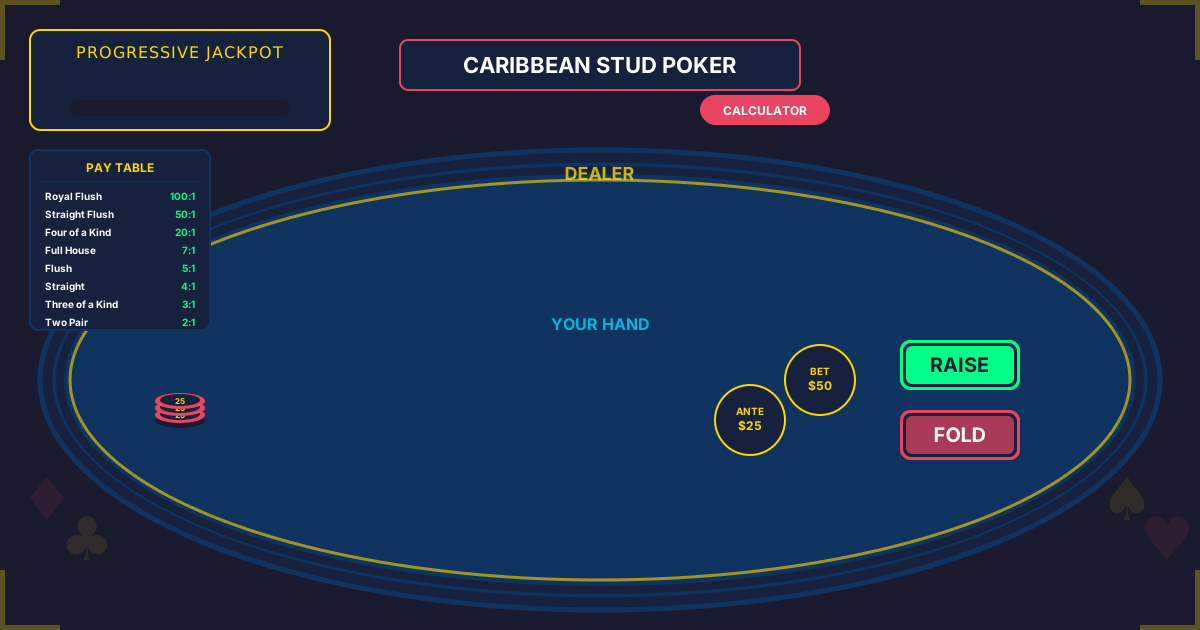
| Caribbean Stud | 5.22% | Low | Moderate |
| American Roulette | 5.26% | None | No -- play European |
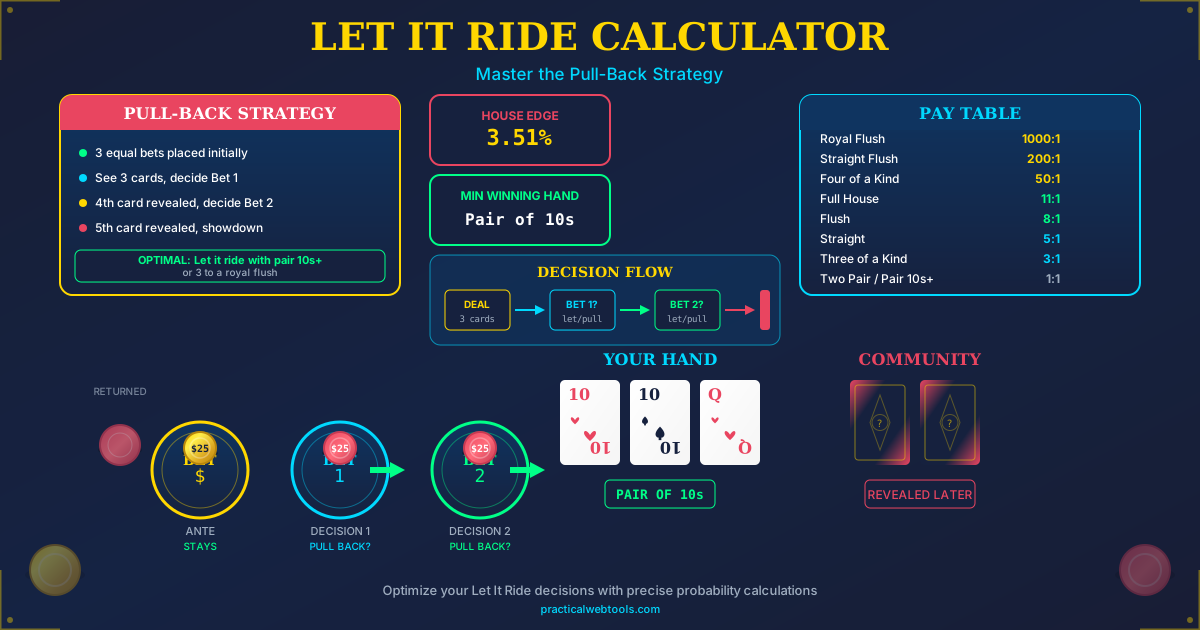
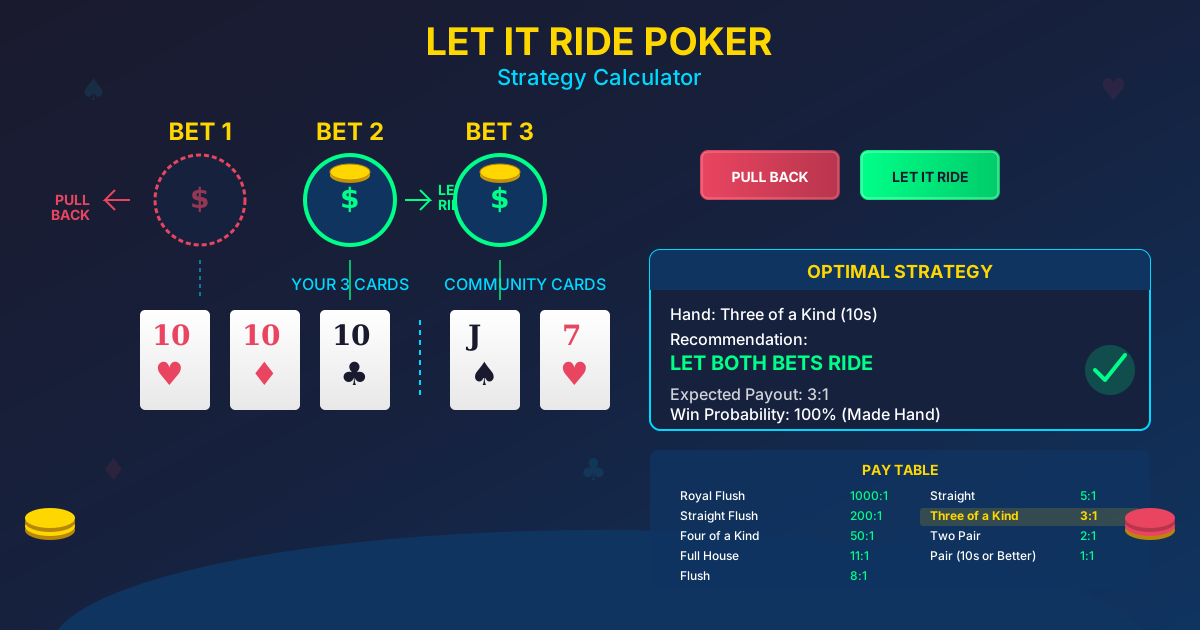
| Let It Ride | 3.51% | Low | Moderate |
| Slot Machines (average) | 5-15% | None | No |
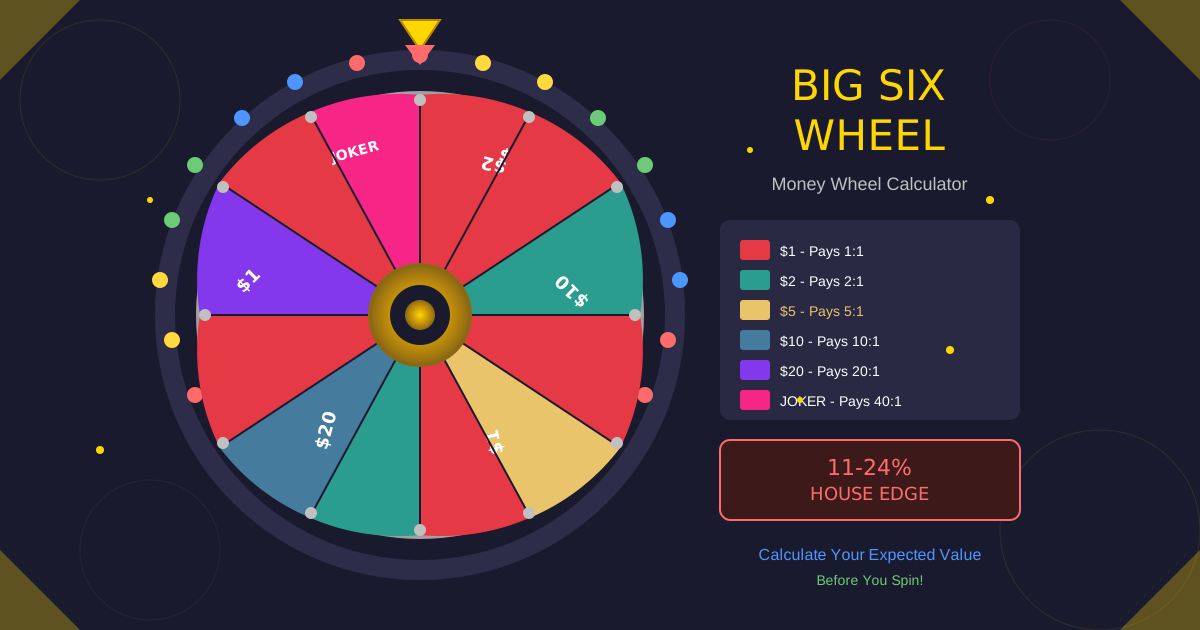
| Big Six Wheel | 11.1-24% | None | No |
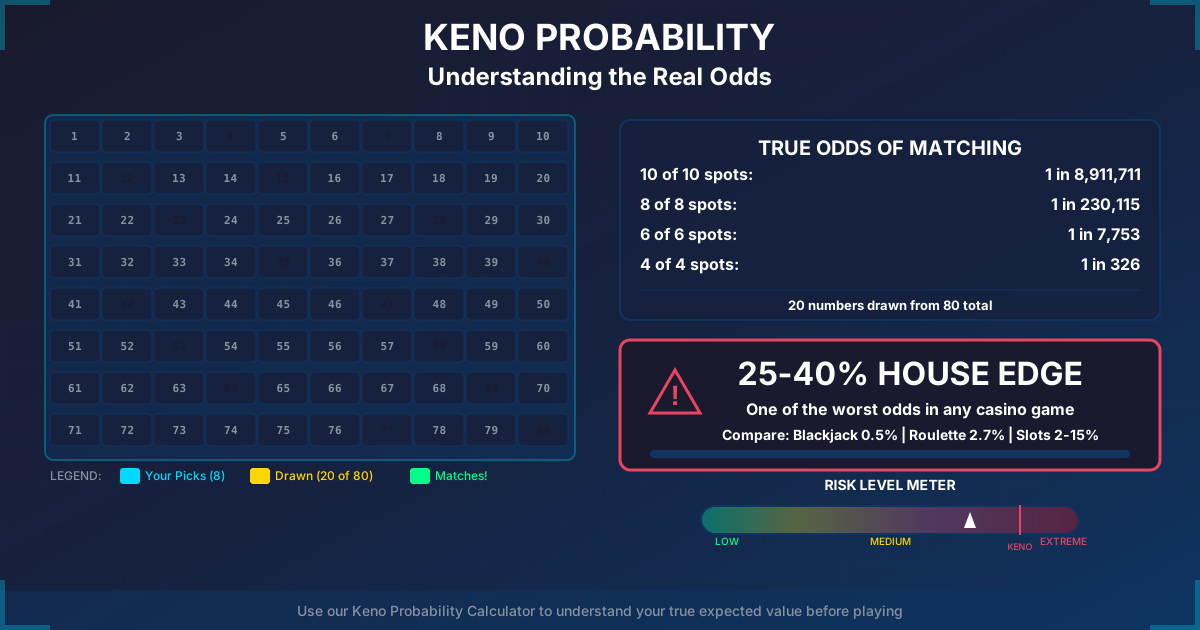
| Keno | 25-40% | None | No |
Casino Games Beginners Should Avoid
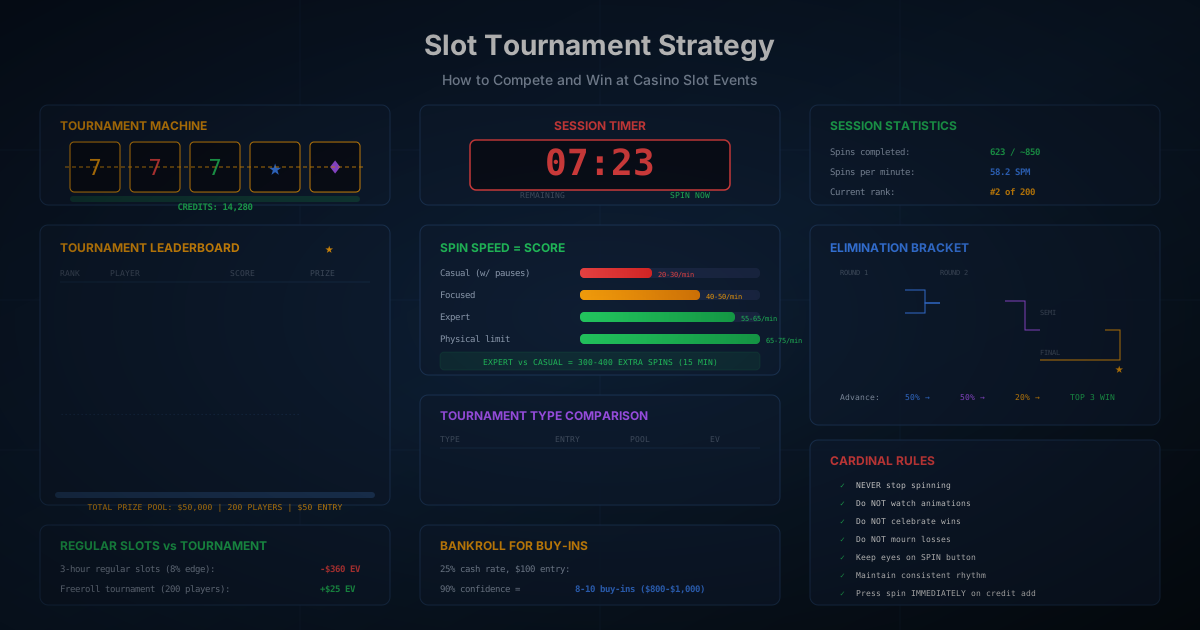
Slot Machines: The Bankroll Destroyer
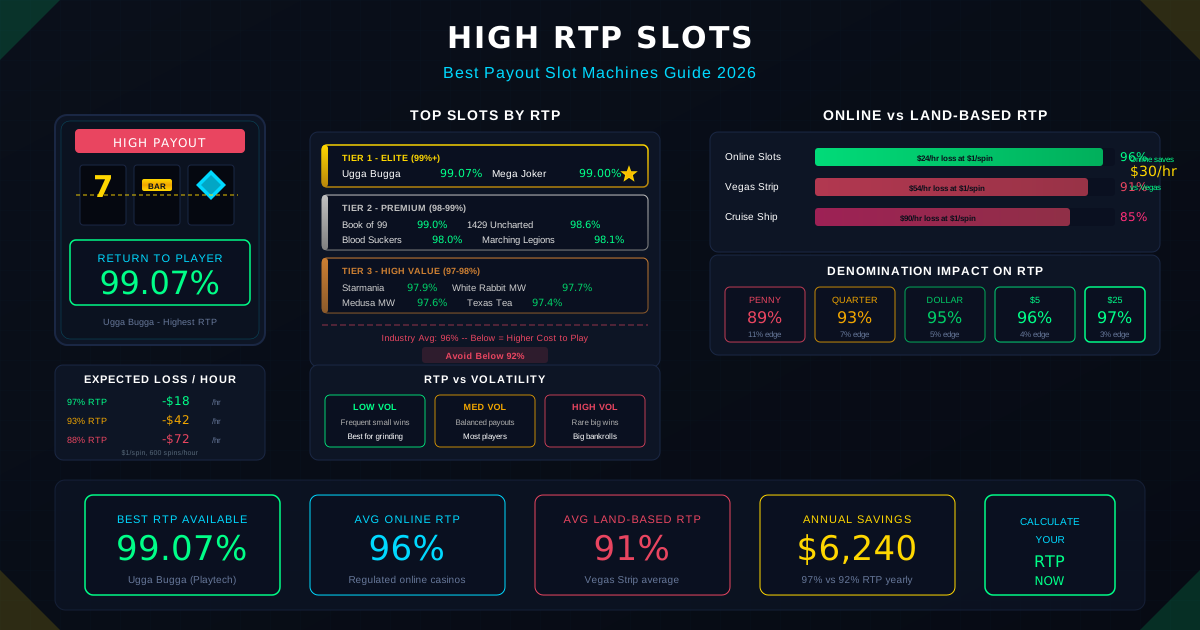
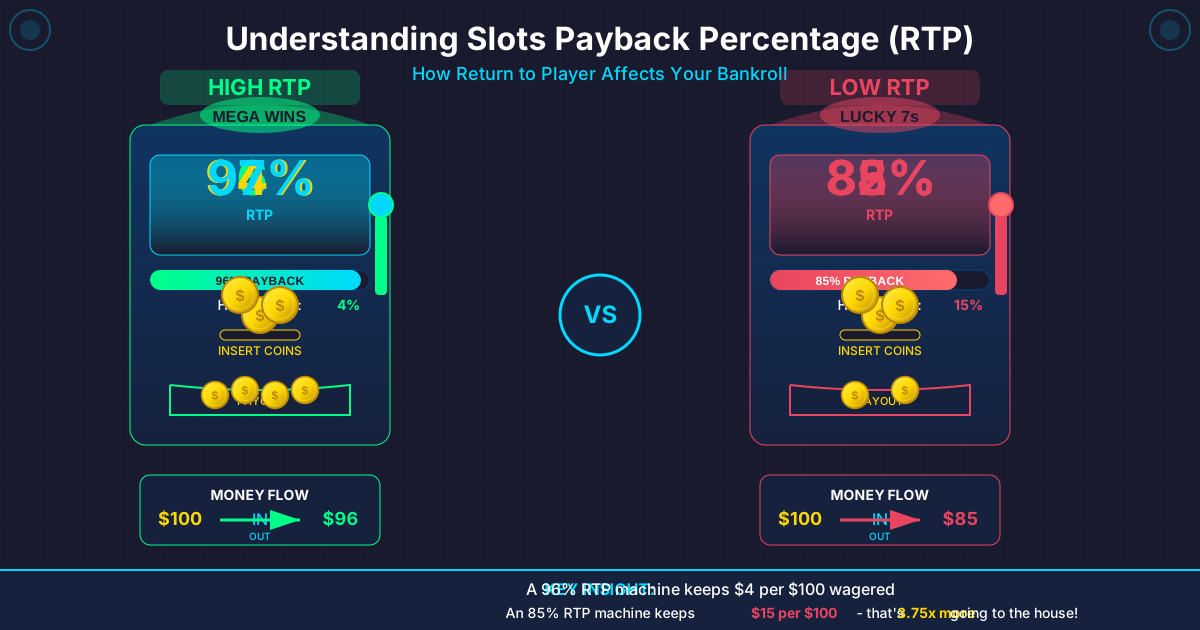
Slot machines are the most popular game in every casino, and they are by far the worst mathematical bet available. This is not a coincidence. Casinos dedicate 70-80% of their floor space to slots because these machines generate the most revenue per square foot.
The numbers are damning:
| Slot Machine Type | Typical House Edge | Expected Loss Per Hour ($1/spin, 600 spins/hr) |
|---|---|---|
| Penny slots (land-based) | 10-15% | $60 - $90 |
| Dollar slots (land-based) | 4-6% | $24 - $36 |
| Online slots (average) | 3-5% | $18 - $30 |
| Online slots (high RTP) | 1-3% | $6 - $18 |
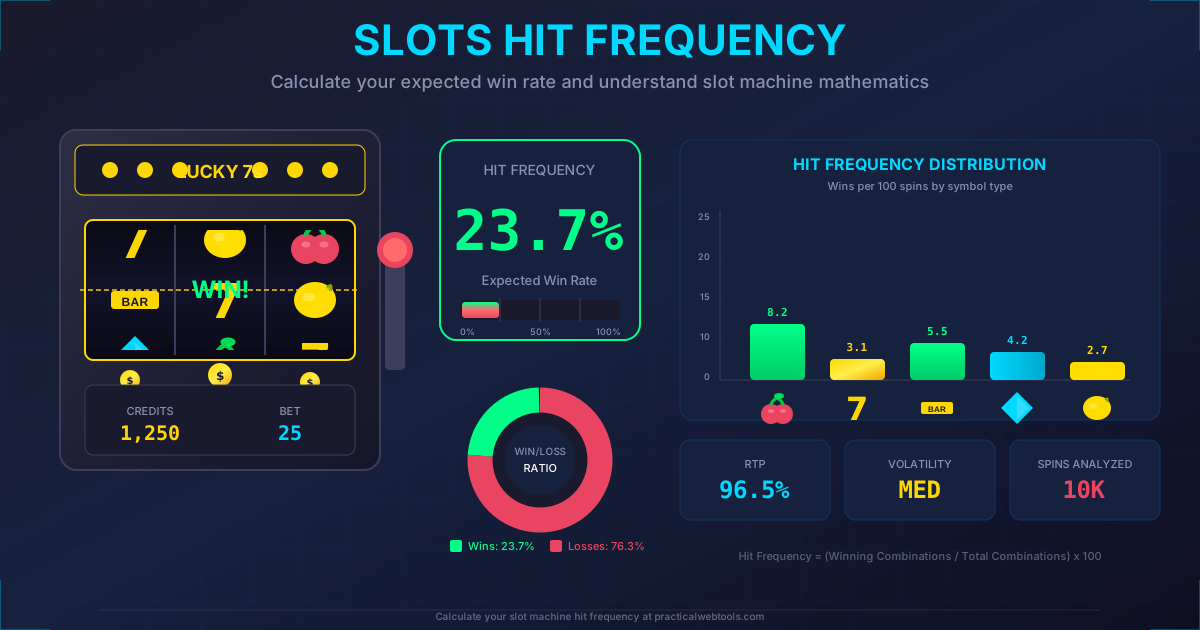
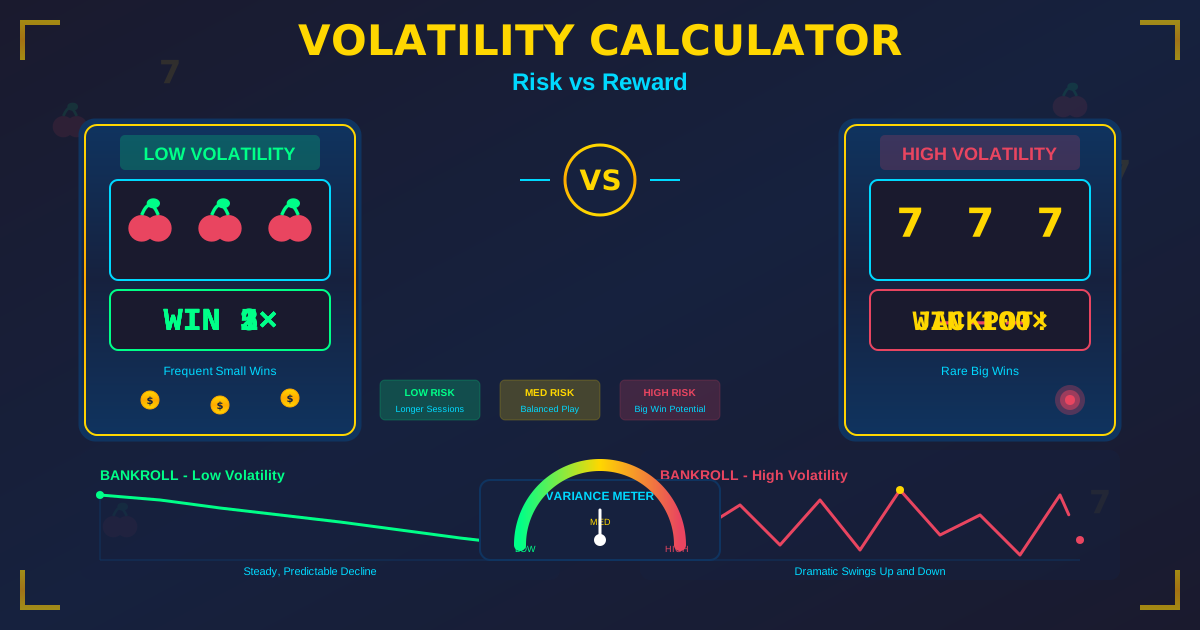
The speed is what kills you. Slot machines run at 500-700 spins per hour. Even a "small" house edge compounds incredibly fast at that pace. A penny slot player betting $1 per spin (which is common on multi-line penny machines) faces an expected loss of $60-$90 per hour. Compare that to $3-$7 per hour at a blackjack or craps table.
Real-world example: Kevin sits down at a penny slot with $200, playing 600 spins per hour at $0.80 per spin. At a 12% house edge, his expected loss is $57.60 per hour. His $200 bankroll has a statistical life expectancy of about 3.5 hours. Meanwhile, his friend Rachel is at a baccarat table with the same $200, betting $10 per hand at 80 hands per hour. Her expected loss is $8.48 per hour, giving her bankroll a statistical life expectancy of over 23 hours.
American Roulette
When European roulette exists, there is zero reason to play American roulette. The extra double-zero pocket nearly doubles the house edge from 2.70% to 5.26%. Some casinos in Las Vegas have even introduced triple-zero roulette wheels with a devastating 7.69% house edge. If you see three green slots on the wheel, leave immediately.
Keno
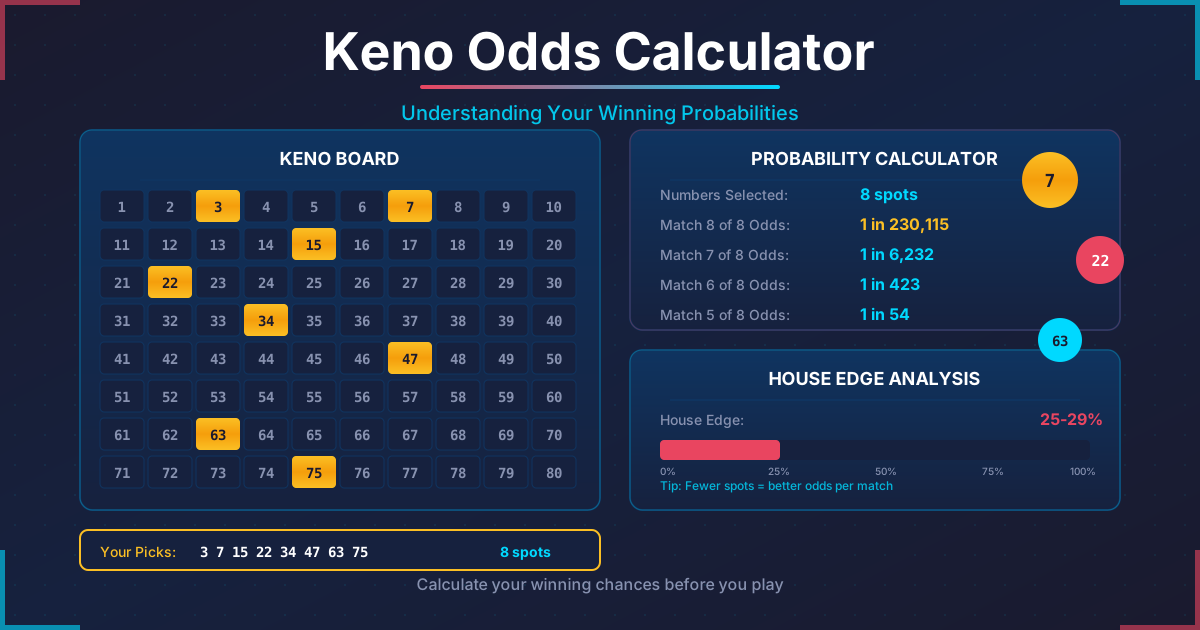
Keno carries a house edge of 25-40%, making it the worst bet in the casino by a massive margin. For context, a 30% house edge means you are expected to lose $30 out of every $100 wagered. There is no strategy, no skill, and no mathematical justification for playing keno unless you view every dollar as a pure entertainment expense with no expectation of return.
Big Six Wheel (Wheel of Fortune)
The Big Six Wheel or Money Wheel carries house edges ranging from 11.1% to 24.1% depending on the segment. The $1 segment has the "best" odds at 11.1%, while the joker/logo segments carry edges above 20%. It is designed to attract casual players with its simplicity and visibility, and the casino profits enormously from every spin.
Proposition Bets at Any Table
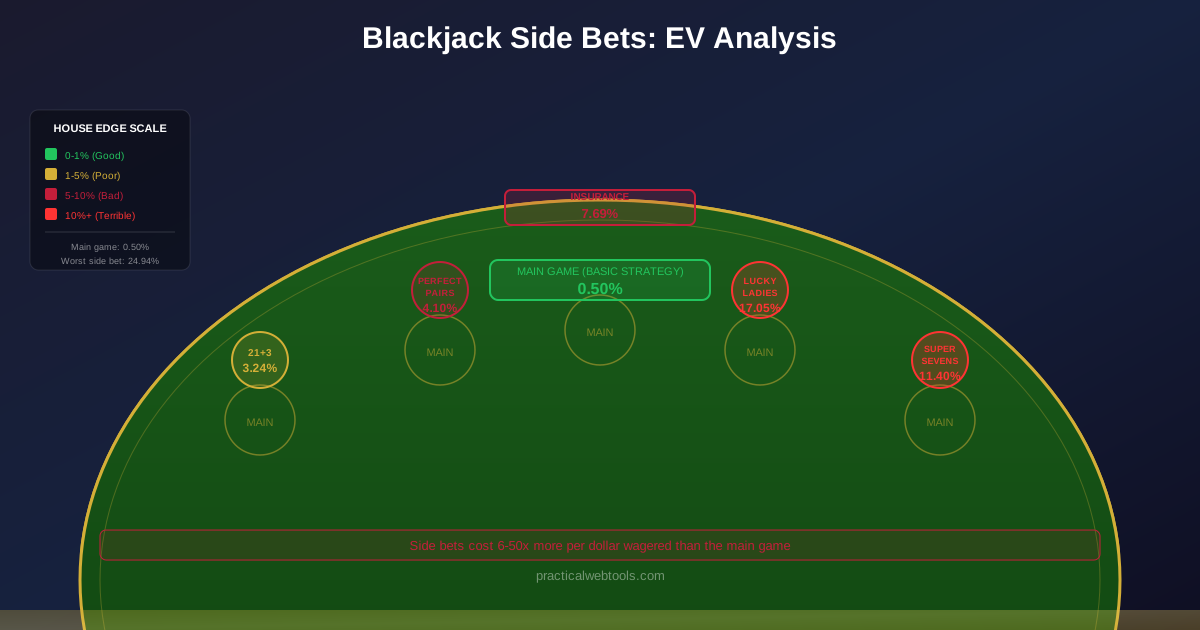
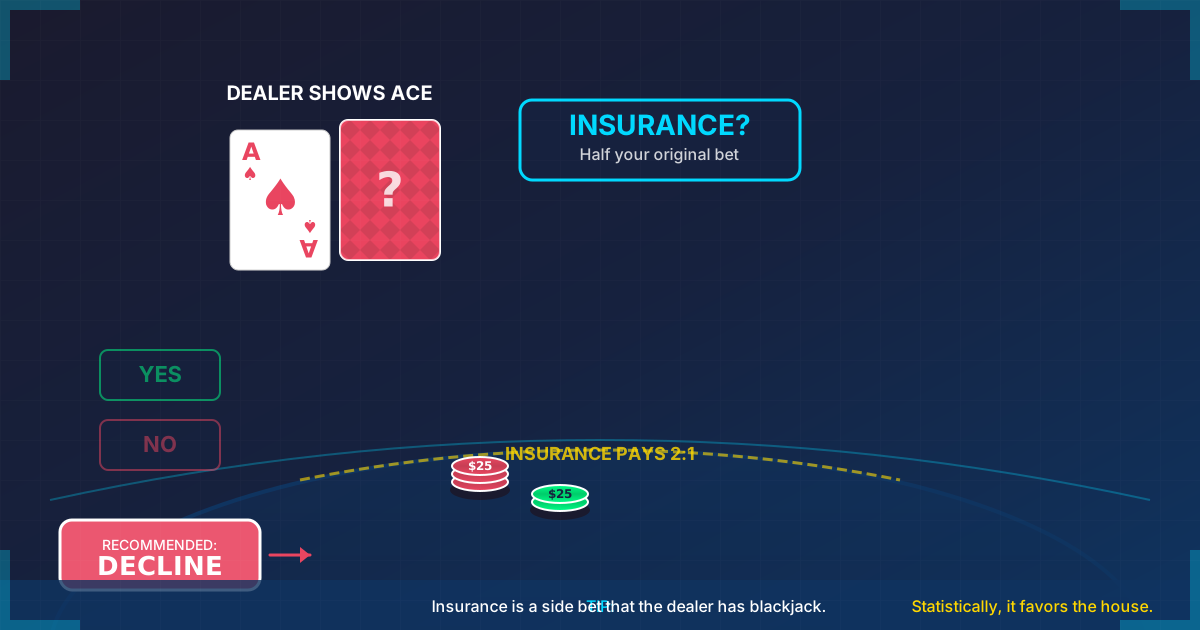
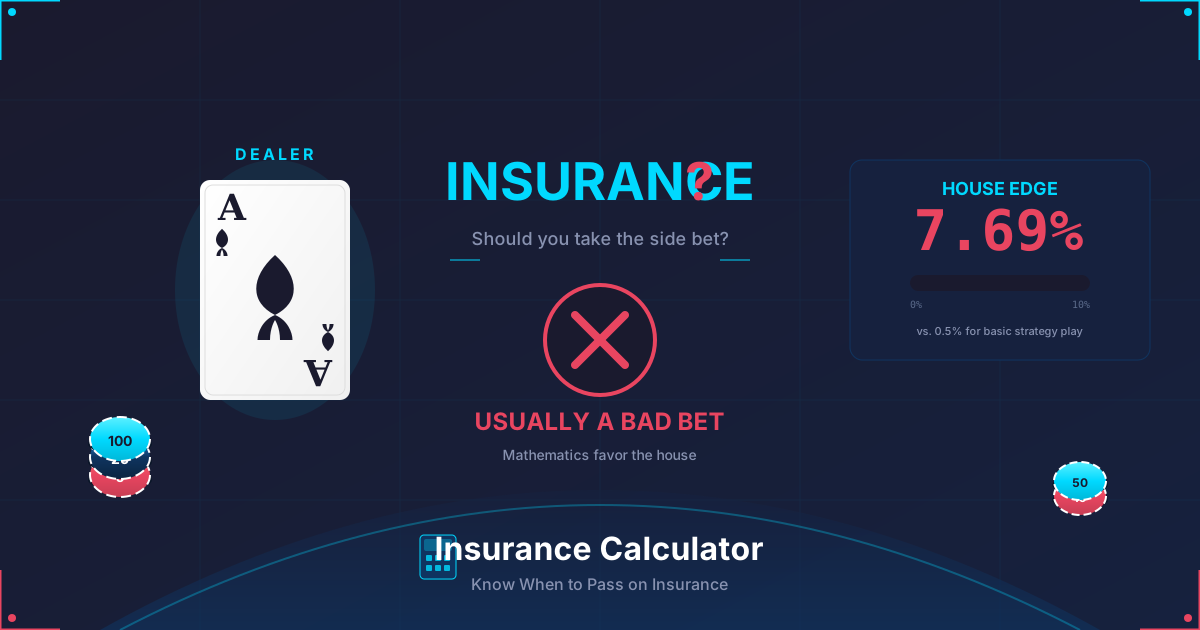
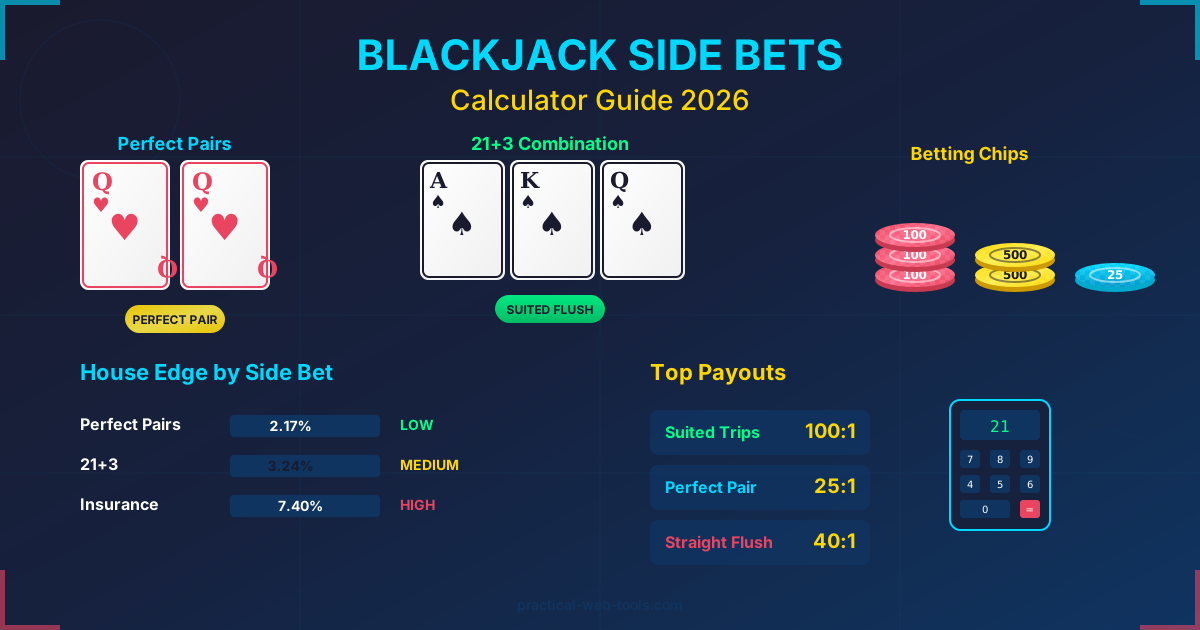
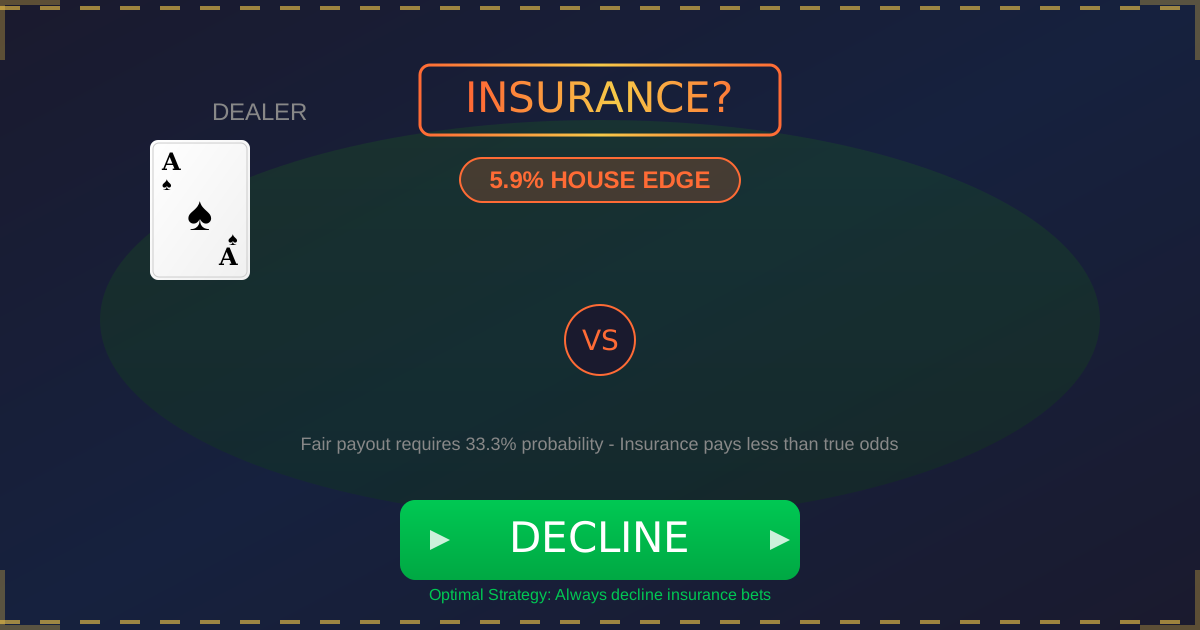
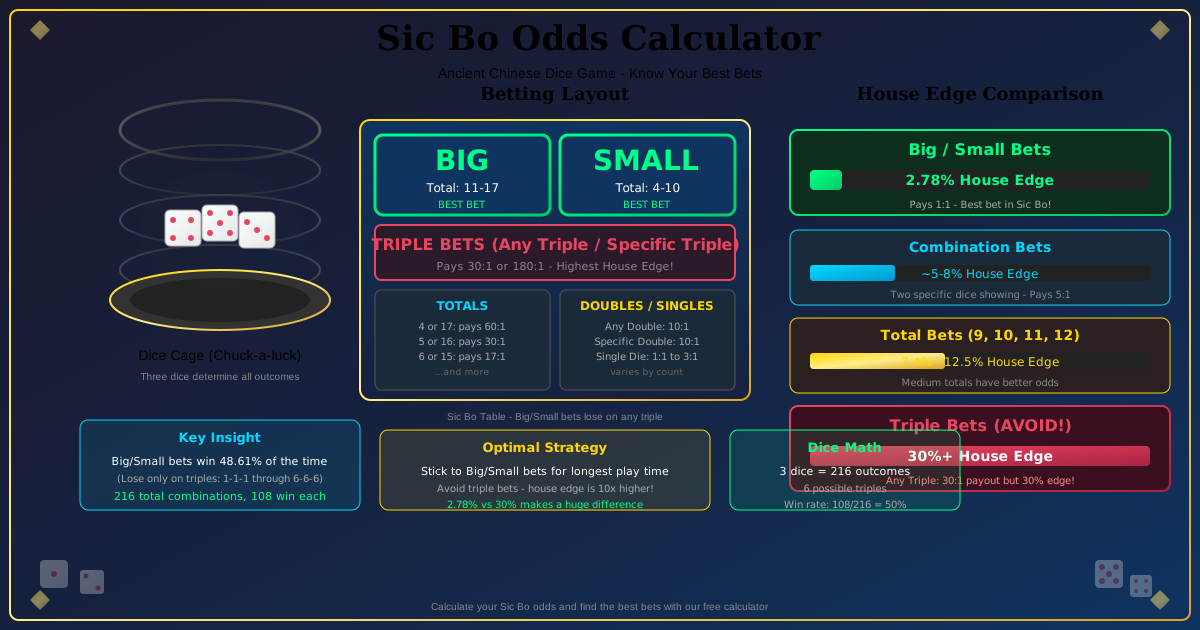
Every table game has sucker bets designed to look attractive. Insurance in blackjack (house edge 7.4%), the Tie bet in baccarat (14.36%), and center proposition bets in craps (11-17%) exist because enough uninformed players take them. Now that you know the math, you never will.
Online Casino vs. In-Person Casino: Which Is Better for Beginners?
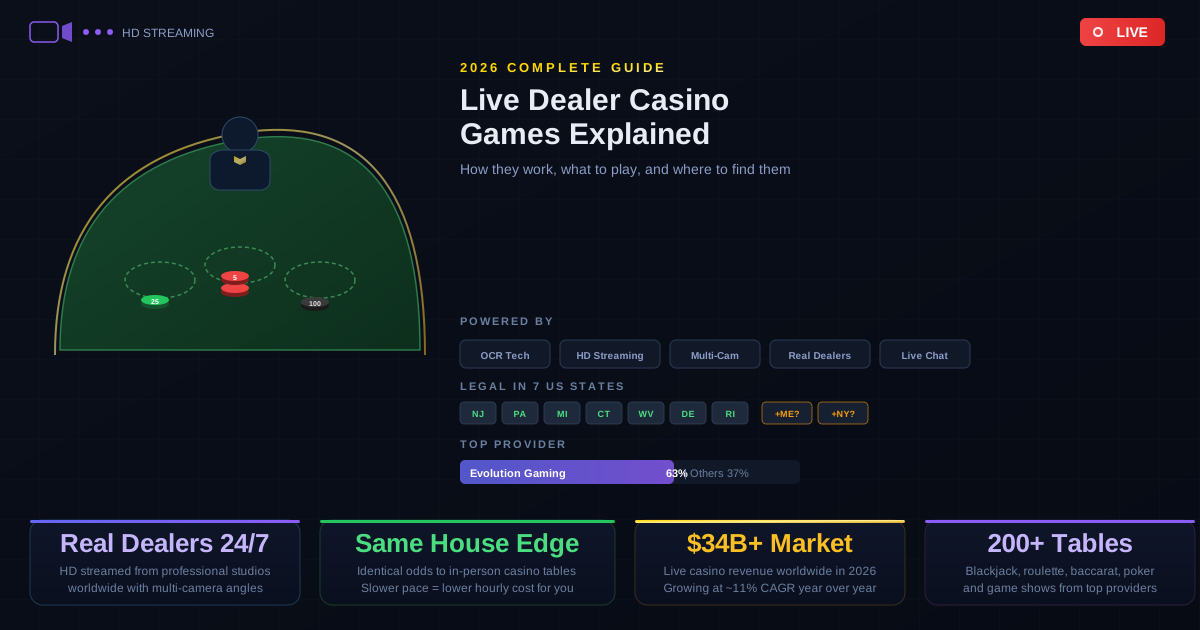
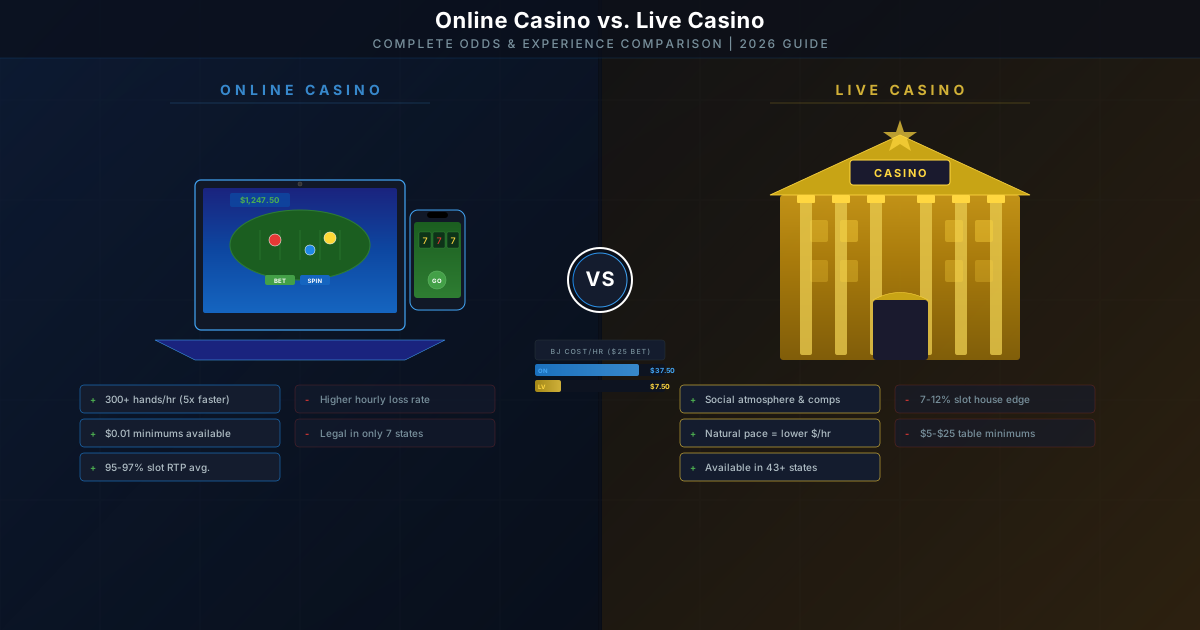
The online casino market reached approximately $21.36 billion in 2025 and continues growing at 12.2% annually. Live dealer gaming specifically is expanding at nearly 13% CAGR, driven by players who want the social experience of a real casino from their couch. For beginners, both options have distinct advantages.
Online Casino Advantages for Beginners
| Advantage | Why It Matters |
|---|---|
| Lower table minimums | Online blackjack from $0.50/hand vs. $10-$25 live |
| Play at your own pace | No pressure from dealers or other players |
| Strategy reference | Keep strategy charts on screen while playing |
| Free play modes | Practice with no money at risk |
| Better game availability | Easy to find European roulette, 9/6 video poker |
| Higher RTPs on slots | Online slots average 95-97% RTP vs. 85-92% in land-based |
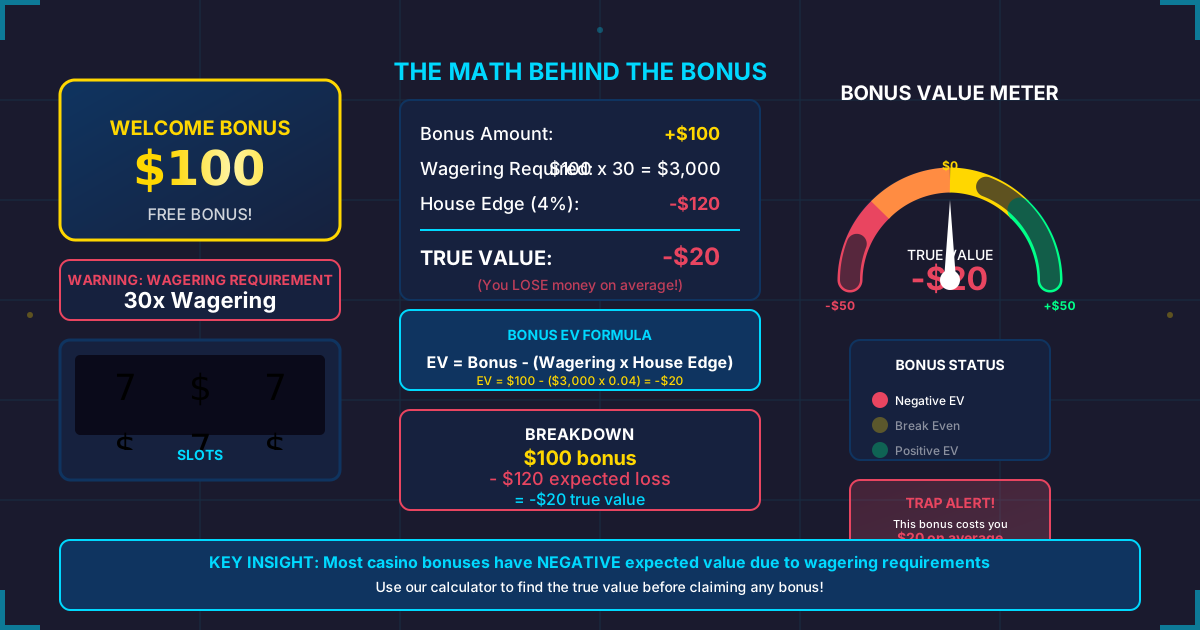
| Bonuses and promotions | Deposit matches extend your bankroll |
In-Person Casino Advantages for Beginners
| Advantage | Why It Matters |
|---|---|
| Social atmosphere | Learn from watching other players |
| Dealer assistance | Dealers will explain rules and help new players |
| Pace control | Physical chips slow down your betting |
| Tangible experience | Physical cards, chips, and dice feel different |
| Comps and rewards | Free drinks, meals, and hotel rooms |
| Live interaction | The craps table energy cannot be replicated online |
Live Dealer Games: The Best of Both Worlds
Live dealer games stream a real dealer via video to your screen. You get the convenience of online play with the authenticity of a real casino. In 2025, live dealer gaming usage increased by 52% across major platforms. For beginners, live dealer blackjack and baccarat are excellent choices because you can play at low stakes while experiencing real casino conditions.
Recommendation for absolute beginners: Start online in free-play mode to learn the rules. Move to low-stakes online play ($0.50-$2 per hand) to get comfortable with real money decisions. Then transition to a live dealer game or physical casino once you feel confident. This progression minimizes learning costs.
Bankroll Management: The First-Timer's Survival Guide
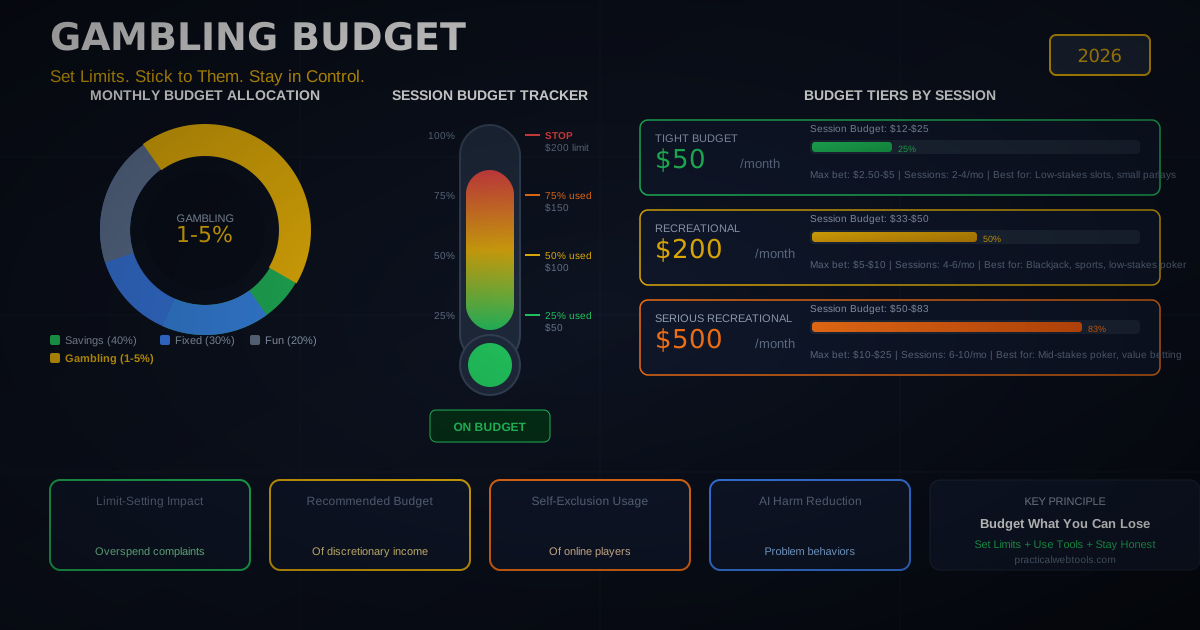
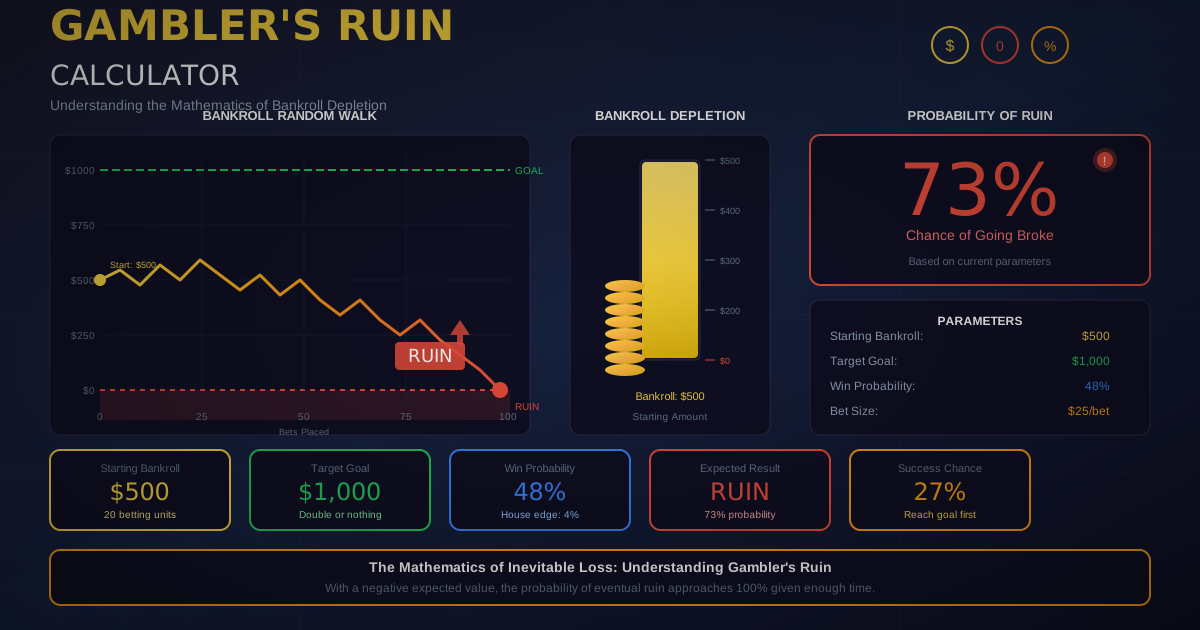
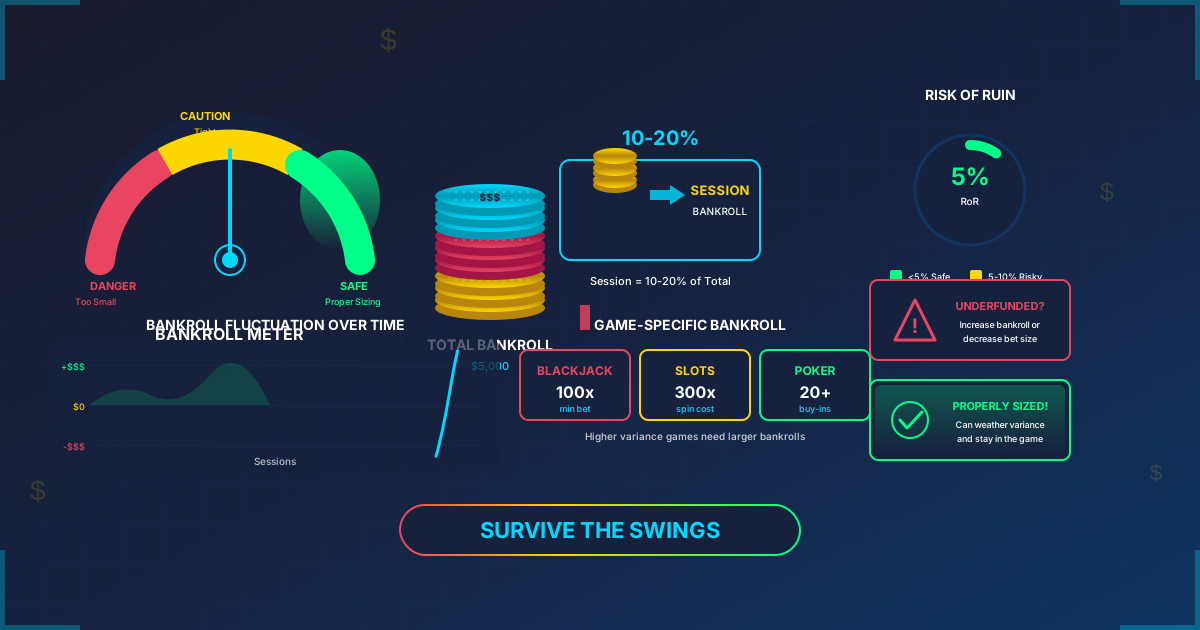
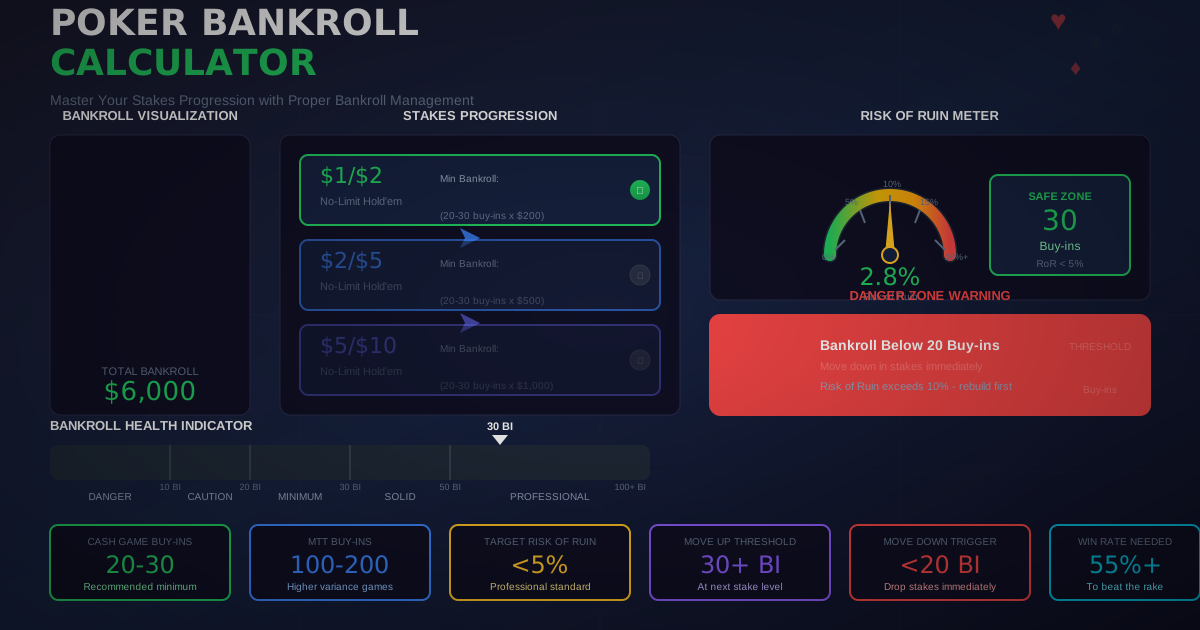
Understanding house edge is useless if you blow through your bankroll in twenty minutes. Bankroll management is what keeps you in the game long enough for the math to work in your favor (or at least against you more slowly).
The Core Rules for Beginners
Rule 1: Set a Loss Limit Before You Start
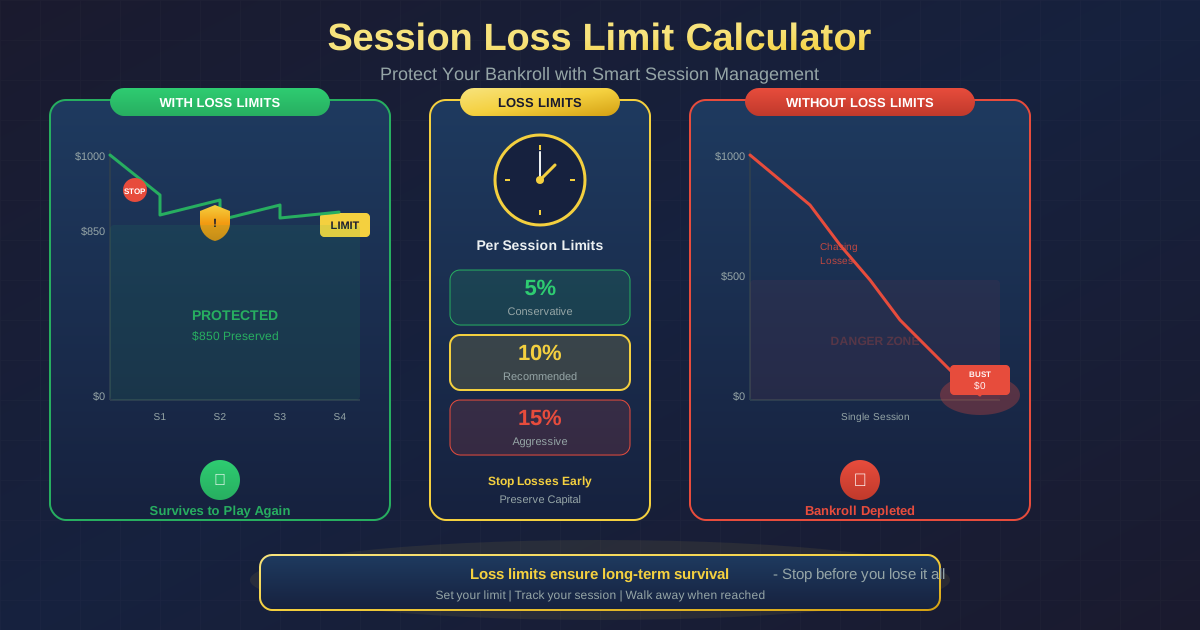
Decide the maximum amount you are willing to lose and treat it as the cost of entertainment. When it is gone, you leave. No exceptions. No trips to the ATM. If you bring $200 to the casino, that $200 is your entertainment budget. When it hits zero, your night is over.
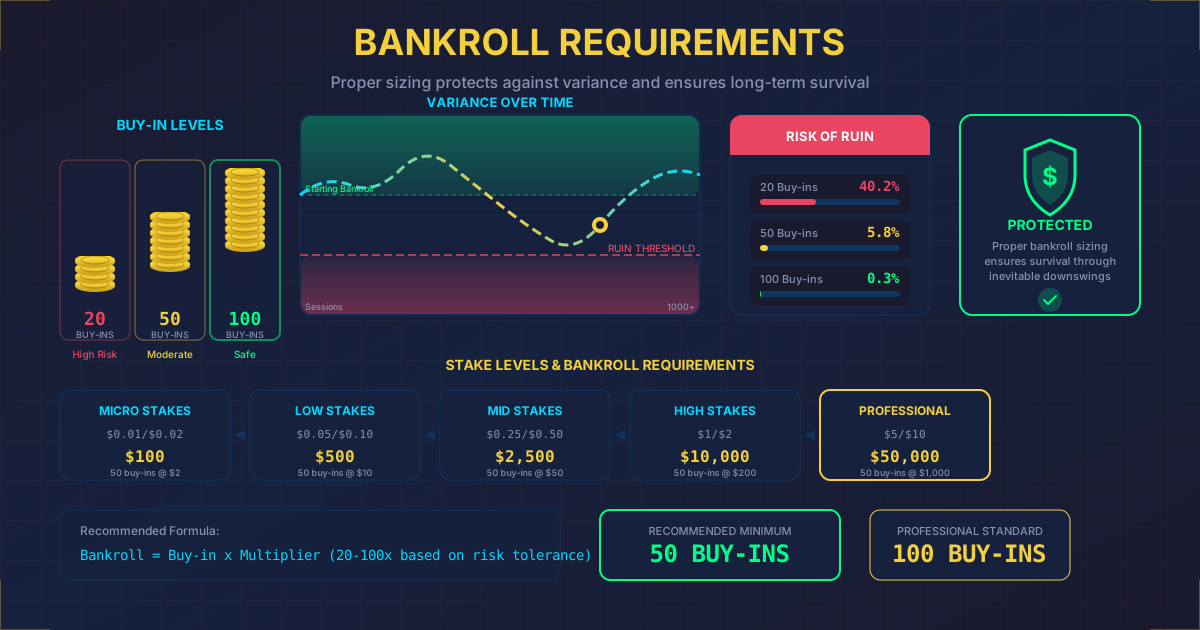
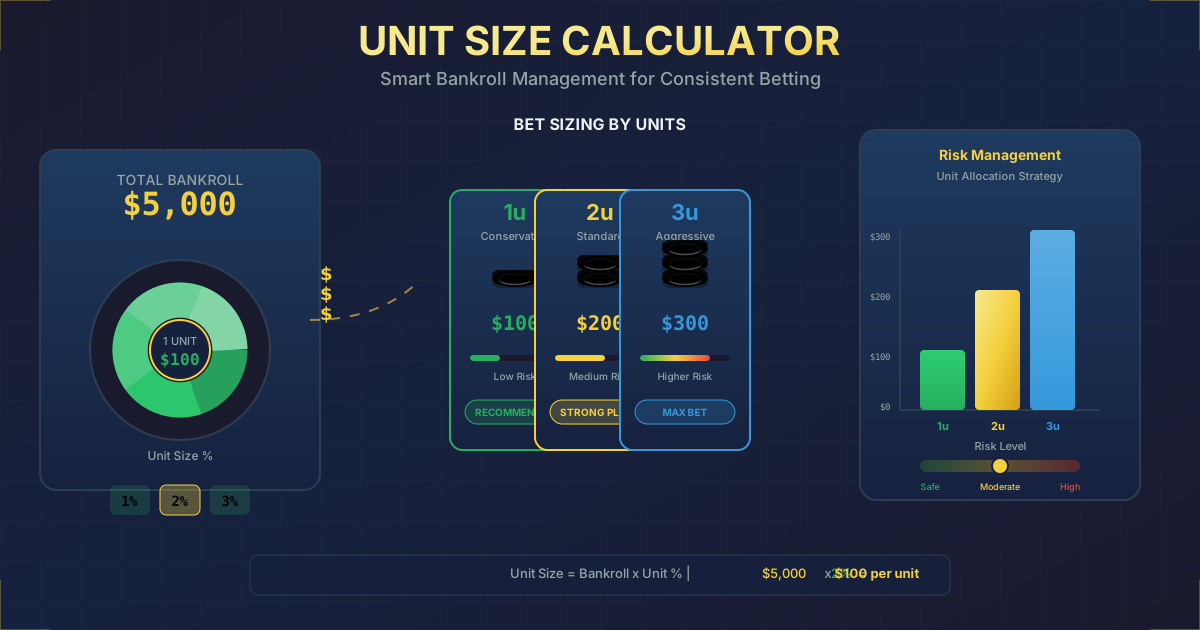
Rule 2: Your Bet Size Should Be 1-2% of Your Session Bankroll
If you bring $300 for a session, your maximum bet should be $3-$6 per hand. This gives you enough hands to absorb variance and actually enjoy yourself. Playing $25 hands with a $300 bankroll means you are 12 bad hands away from going broke, regardless of the house edge.
| Session Bankroll | Recommended Bet Size (1-2%) | Approximate Hours of Play |
|---|---|---|
| $100 | $1-$2 per hand | 3-5 hours |
| $200 | $2-$4 per hand | 3-5 hours |
| $500 | $5-$10 per hand | 3-5 hours |
| $1,000 | $10-$20 per hand | 3-5 hours |
Rule 3: Set a Win Target and Quit When You Hit It
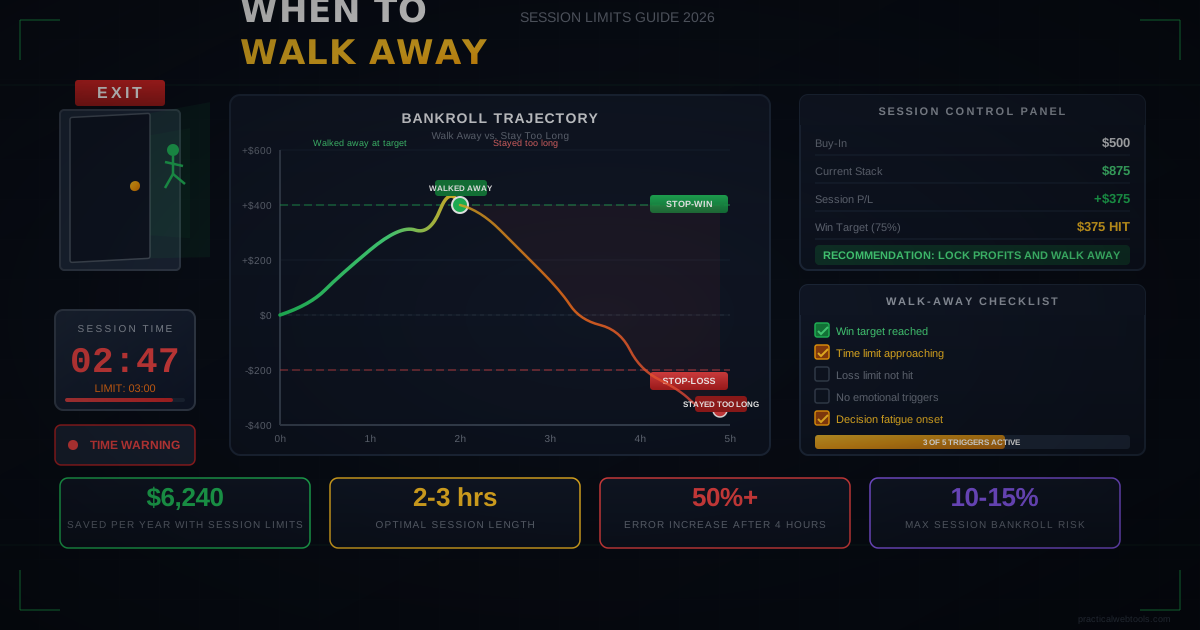
If you start with $300 and win up to $450, seriously consider pocketing $400 and playing with the remaining $50. Casino games have a negative expected value; the longer you play, the more the house edge grinds you down. Locking in profits when you are ahead is not superstition -- it is math.
Rule 4: Never Chase Losses
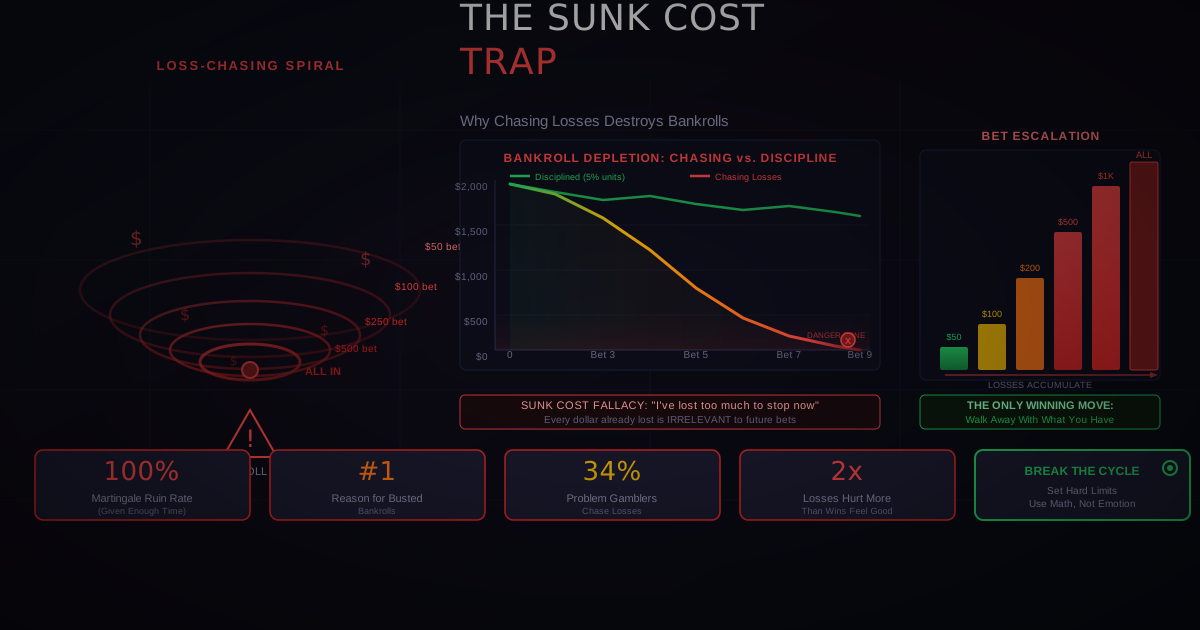
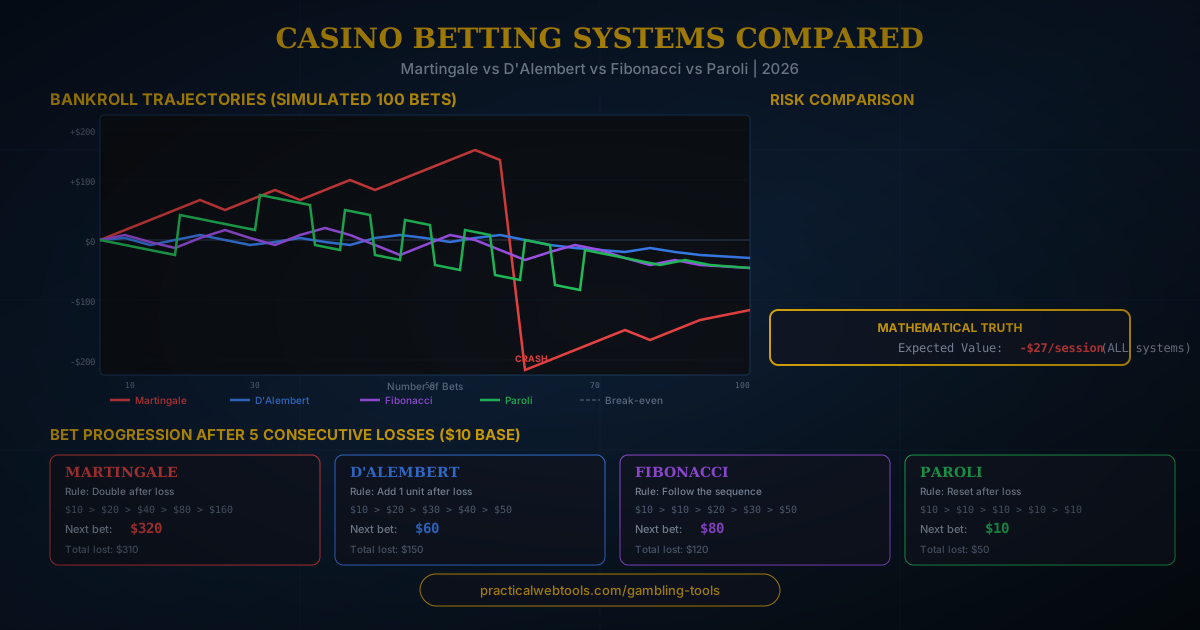
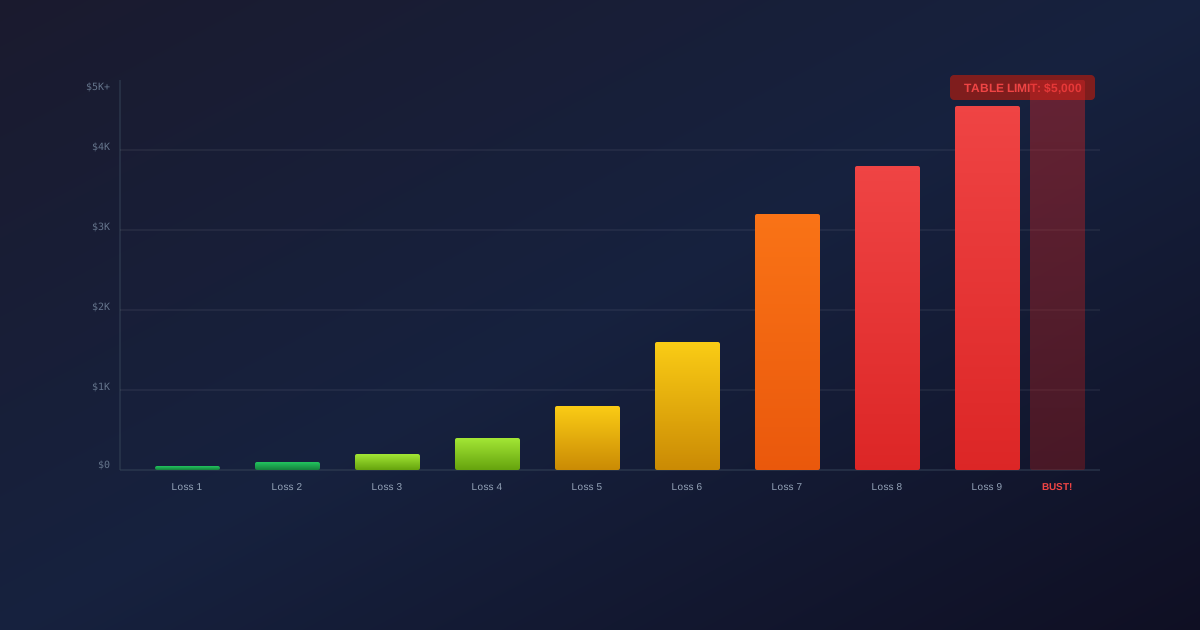
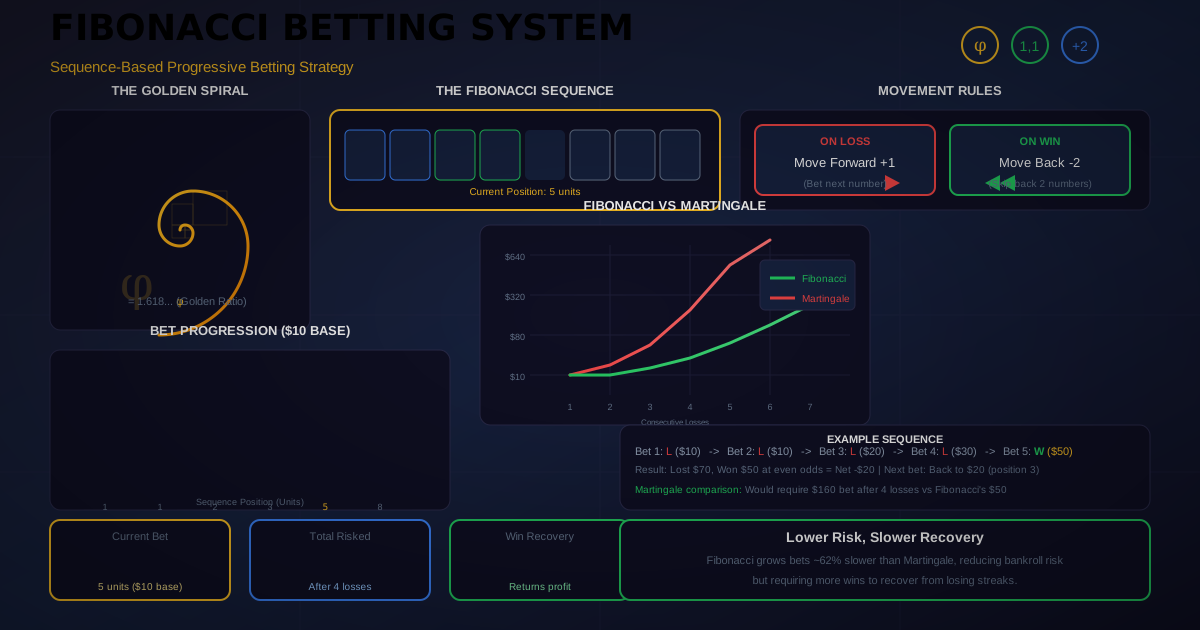
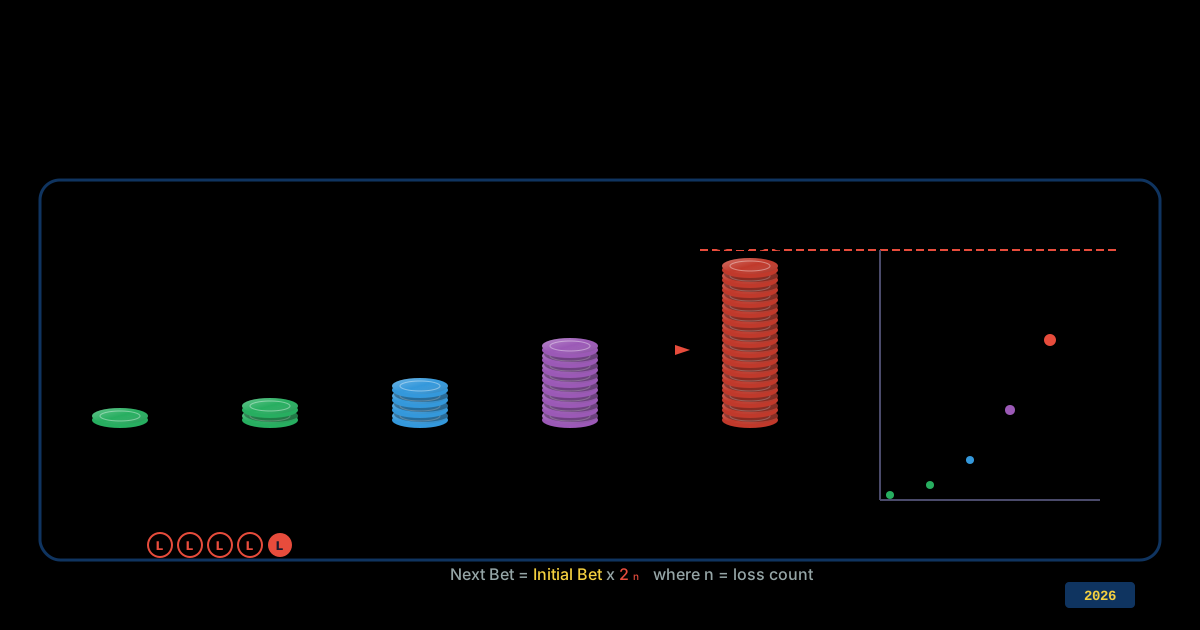
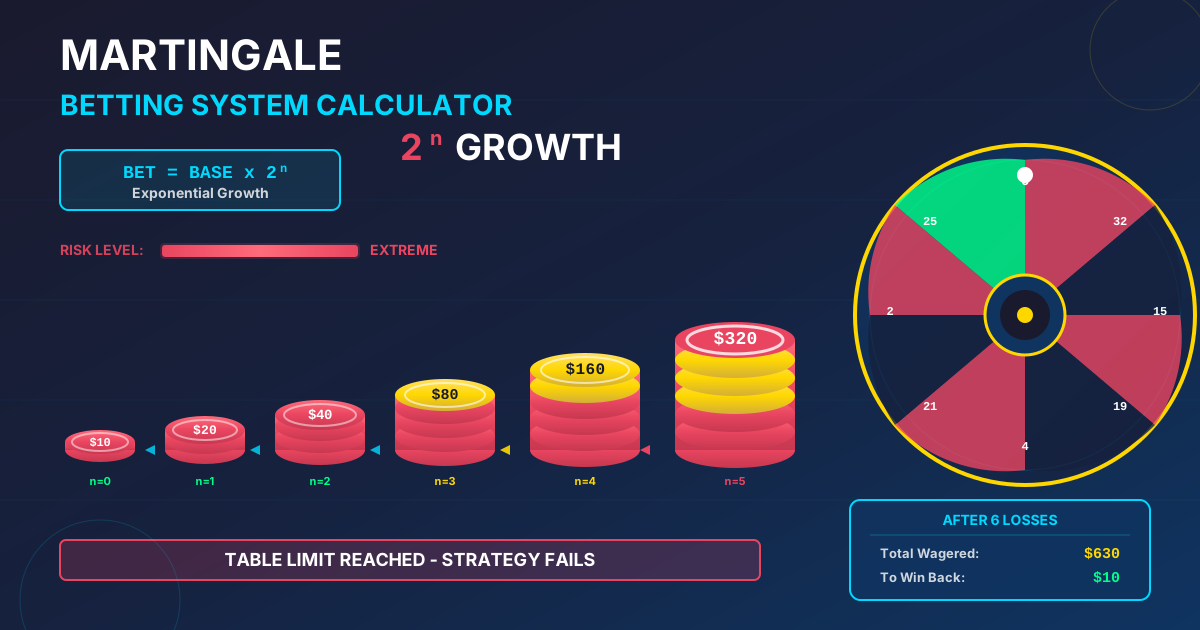
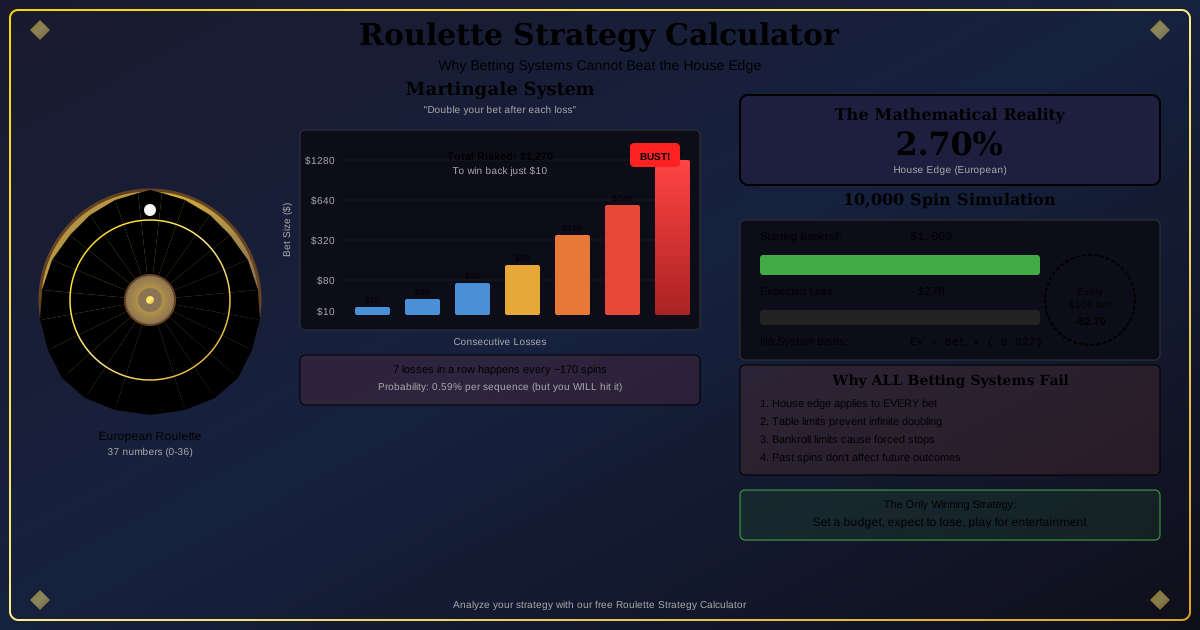
The moment you increase your bet size to "win back" what you have lost, you have shifted from entertainment to desperation. Increasing bets after losses is the single fastest way to destroy a bankroll. The house edge does not change because you are losing. Bigger bets just mean bigger losses.
Rule 5: Separate Your Gambling Money from Your Life Money
Your rent, bills, groceries, and savings are never gambling money. Full stop. If losing your entire session bankroll would cause financial stress, that bankroll is too large.
Real-world example: Tom sets aside $400 for a weekend in Atlantic City. He splits it into two $200 sessions (Saturday night and Sunday afternoon). On Saturday, he plays $5 blackjack with basic strategy. After three hours, he is up $85. He pockets $250, plays with $35 until it is gone, and walks away with a $50 profit for the session. On Sunday, he loses his $200 over four hours of craps. His weekend total: -$150, which is $50 less than his budgeted $200 loss limit. That is successful bankroll management.
Expected Loss Per Hour: The Number That Actually Matters
Forget about "winning strategies." The most honest metric for any casino game is your expected loss per hour. This combines the house edge with the pace of play and your bet size to tell you exactly what each game costs for entertainment.
| Game | House Edge | Decisions/Hour | Avg Bet | Expected Loss/Hour |
|---|---|---|---|---|
| Blackjack (basic strategy) | 0.50% | 70 | $10 | $3.50 |
| Baccarat (Banker) | 1.06% | 80 | $10 | $8.48 |
| Craps (Pass + Odds) | 0.37% | 50 | $30* | $5.55 |
| Video Poker (9/6 JoB) | 0.46% | 400 | $1.25 | $2.30 |
| European Roulette | 2.70% | 35 | $10 | $9.45 |
| American Roulette | 5.26% | 35 | $10 | $18.41 |
| Slots (penny, land-based) | 12% | 600 | $0.80 | $57.60 |
| Slots (online, avg RTP) | 4% | 600 | $0.80 | $19.20 |
| Three Card Poker | 3.37% | 50 | $10 | $16.85 |
| Keno (live) | 30% | 10 | $2 | $6.00 |
*Craps average bet includes Pass Line ($10) plus Odds ($20 average)
Video poker at $1.25 per hand with optimal strategy costs you $2.30 per hour. Land-based penny slots cost you $57.60 per hour. That is a 25:1 ratio for the same amount of time spent gambling. Choose accordingly.
Use our Expected Value Calculator to build your own scenarios based on the specific stakes and pace at your preferred casino.
A Quick Note About Pai Gow Poker
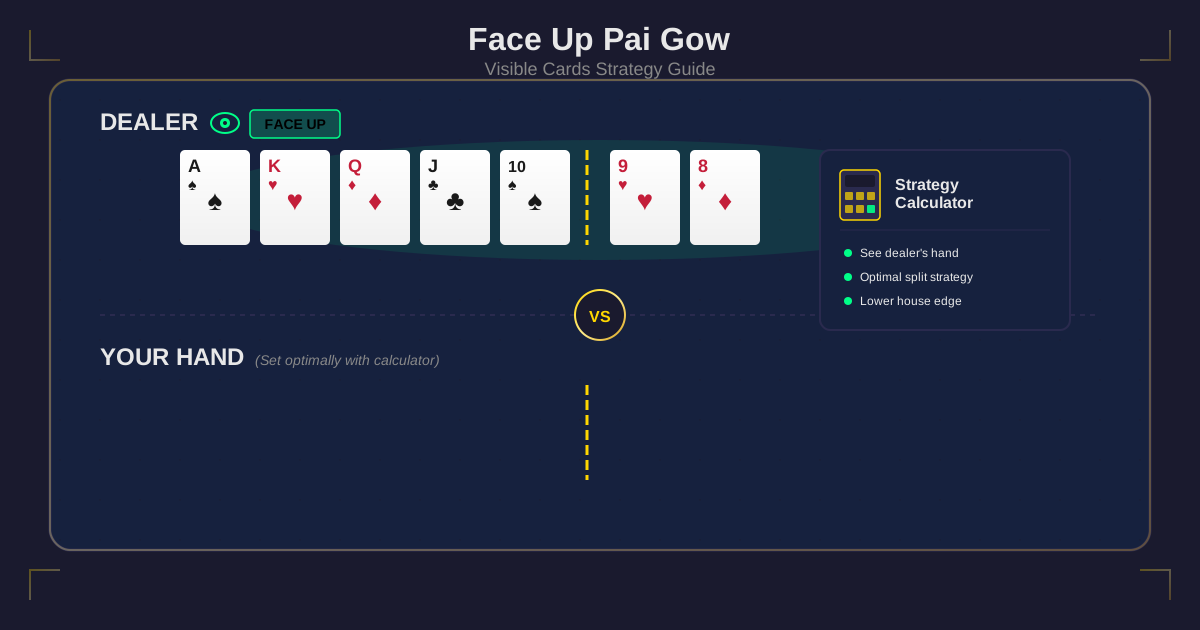
Pai Gow poker deserves a mention as one of the most beginner-friendly casino games, even though it did not make the top five list. The house edge is approximately 1.5%, and the pace of play is the slowest of any table game. Roughly 40% of hands result in a push (tie), which means your bankroll lasts significantly longer than at almost any other table.
If your primary goal is to spend time at a table, enjoy the social atmosphere, and lose money as slowly as possible, Pai Gow poker is arguably the best game in the casino. It is the equivalent of nursing a drink at a bar -- you are paying for the seat, but the cost per hour is minimal.
The downside is that the slow pace and frequent pushes can feel anticlimactic. If you want excitement and action, craps will deliver that. But for a low-stress first casino experience, Pai Gow is hard to beat.
Frequently Asked Questions
What is the easiest casino game for a complete beginner?
Baccarat is the easiest casino game for someone who has never gambled before. You make one decision (bet on Banker), and the dealer handles everything else. There is no strategy to learn, no decisions to make during play, and the house edge is just 1.06%. You can sit down with zero knowledge and play correctly within thirty seconds.
Which casino game has the lowest house edge?
Video poker (9/6 Jacks or Better) has the lowest house edge at 0.46% with optimal strategy. The craps Free Odds bet technically has a 0% house edge, but it requires a Pass Line bet first (1.41% edge), bringing the combined edge to as low as 0.37% with maximum odds. Blackjack with perfect basic strategy comes in at approximately 0.50%.
Are online casino games rigged?
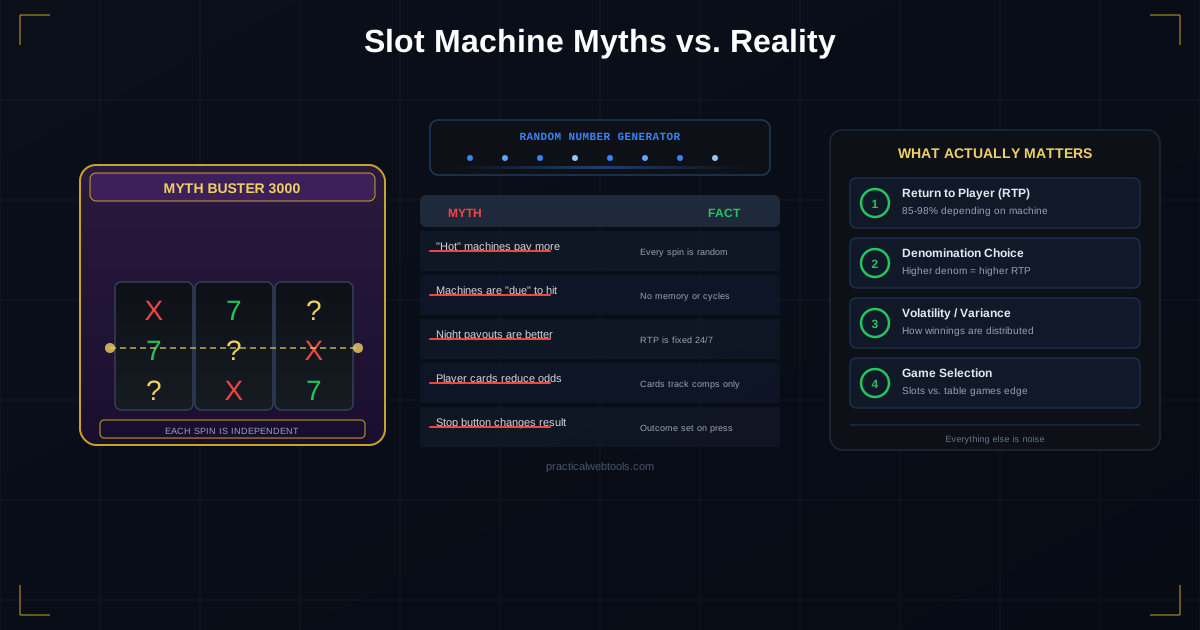
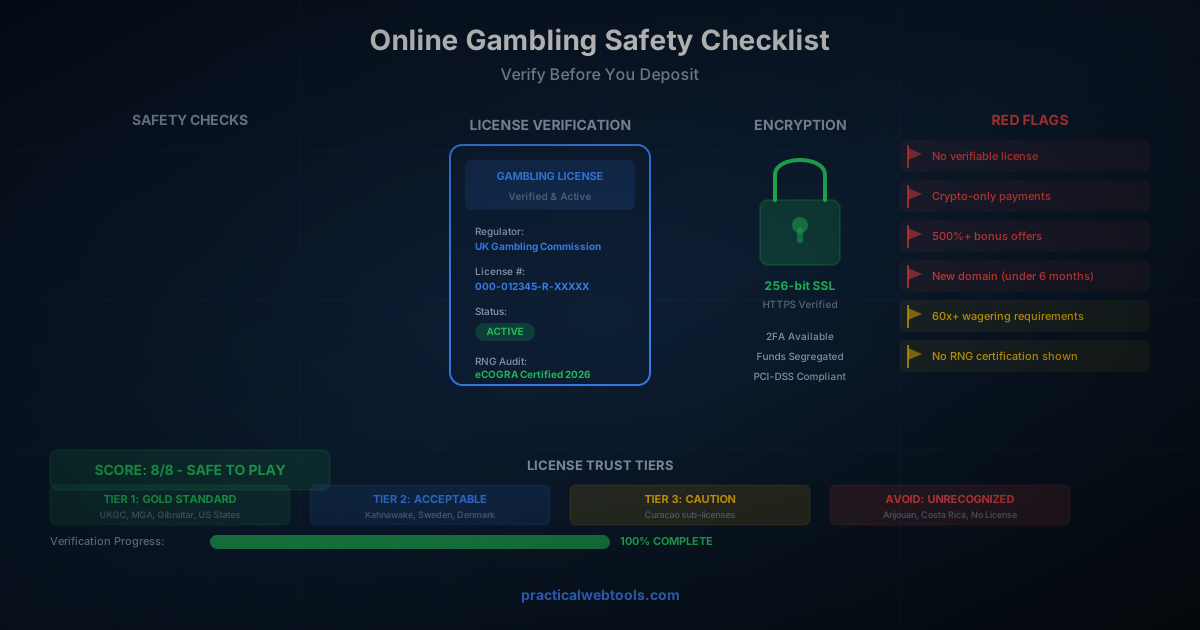
Licensed, regulated online casinos use certified random number generators (RNGs) that are audited by independent testing agencies like eCOGRA, GLI, and BMM Testlabs. The games are not rigged -- but they do not need to be. The house edge is built into the rules of every game. The casino profits mathematically without ever manipulating outcomes. Always play at licensed, regulated platforms and verify their certification.
How much money should I bring to a casino for the first time?
Bring an amount you are 100% comfortable losing entirely. For most first-timers, $100-$300 is a reasonable session bankroll. At $5-$10 per hand on a table game with a low house edge, this gives you 3-5 hours of play. Never bring money you need for rent, bills, or other obligations.
Is it better to play one long session or several short sessions?
Mathematically, session length does not change the house edge. But psychologically, shorter sessions are better for beginners. Fatigue, frustration, and alcohol all degrade decision-making. Two focused two-hour sessions are almost always better than one four-hour marathon, especially for games that require strategy decisions like blackjack and video poker.
Can you actually win at casino games long-term?
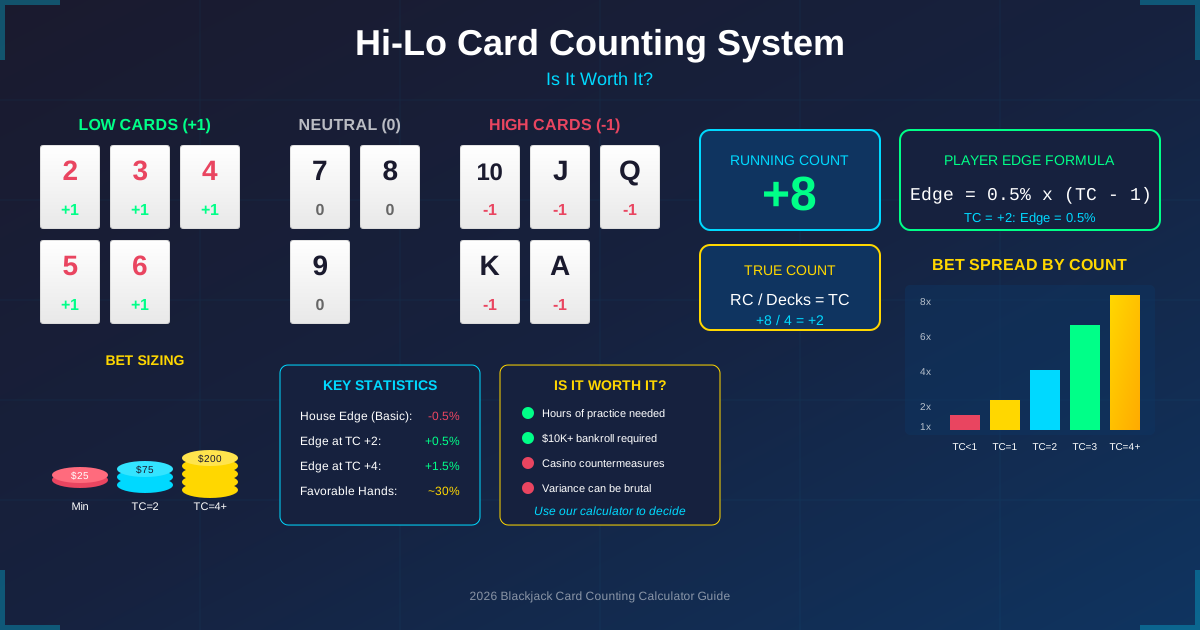
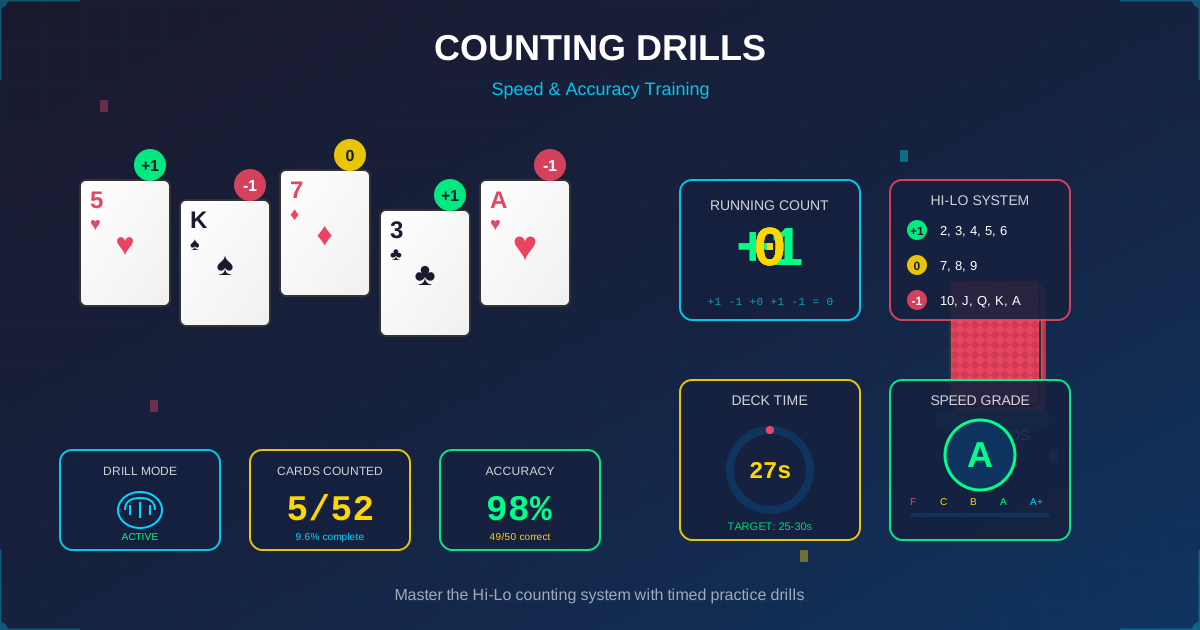
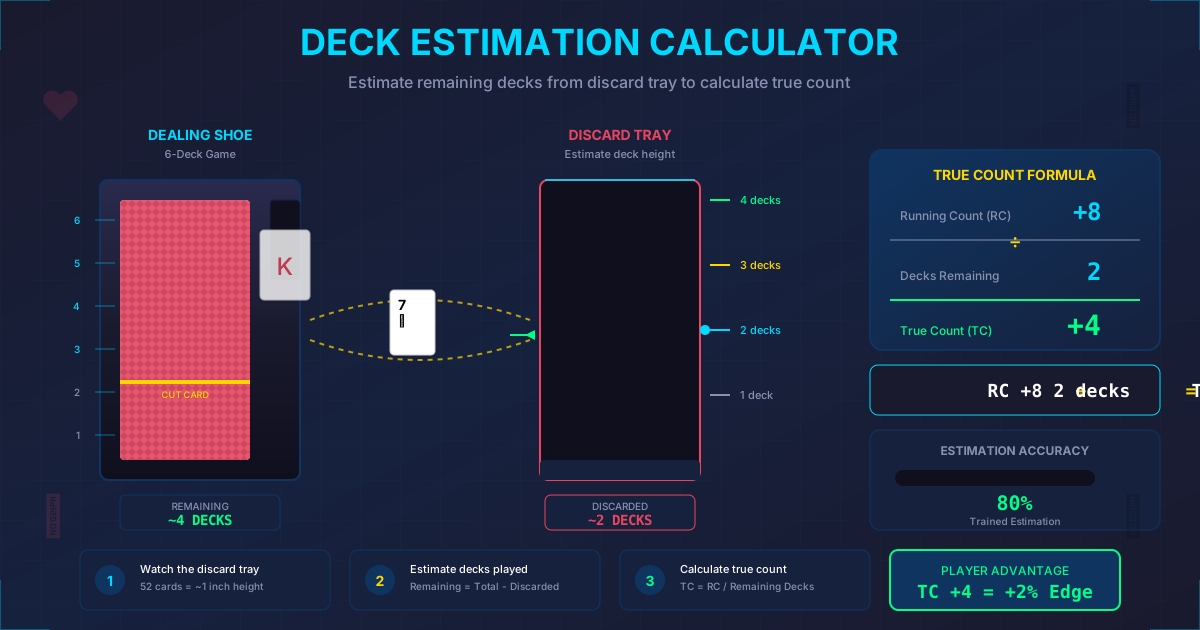
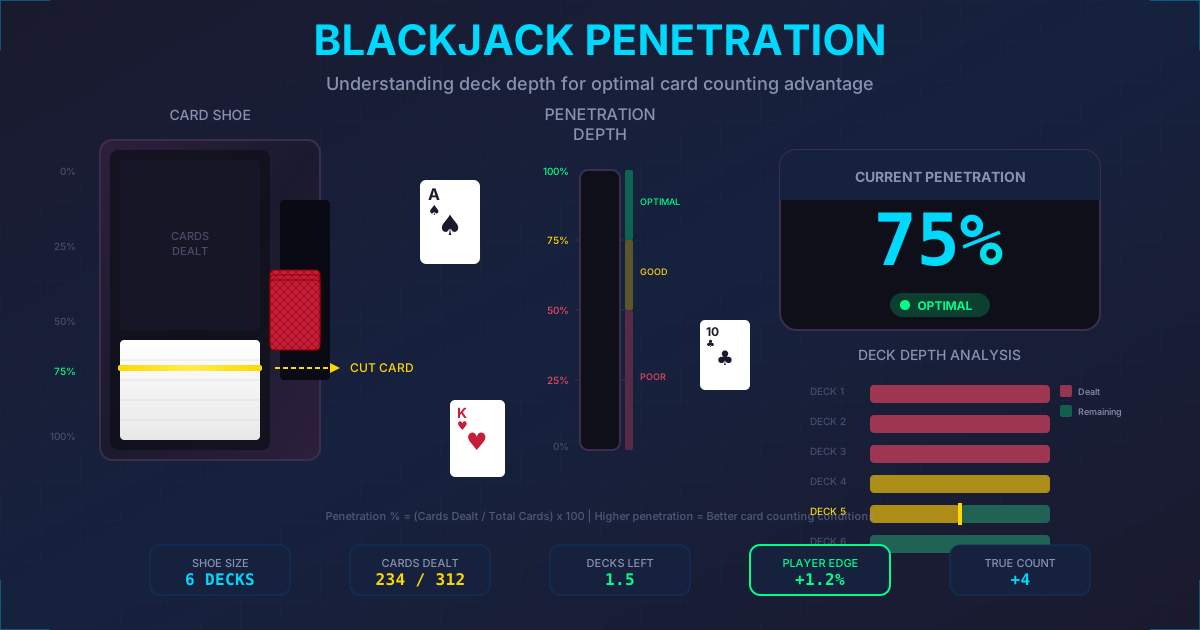
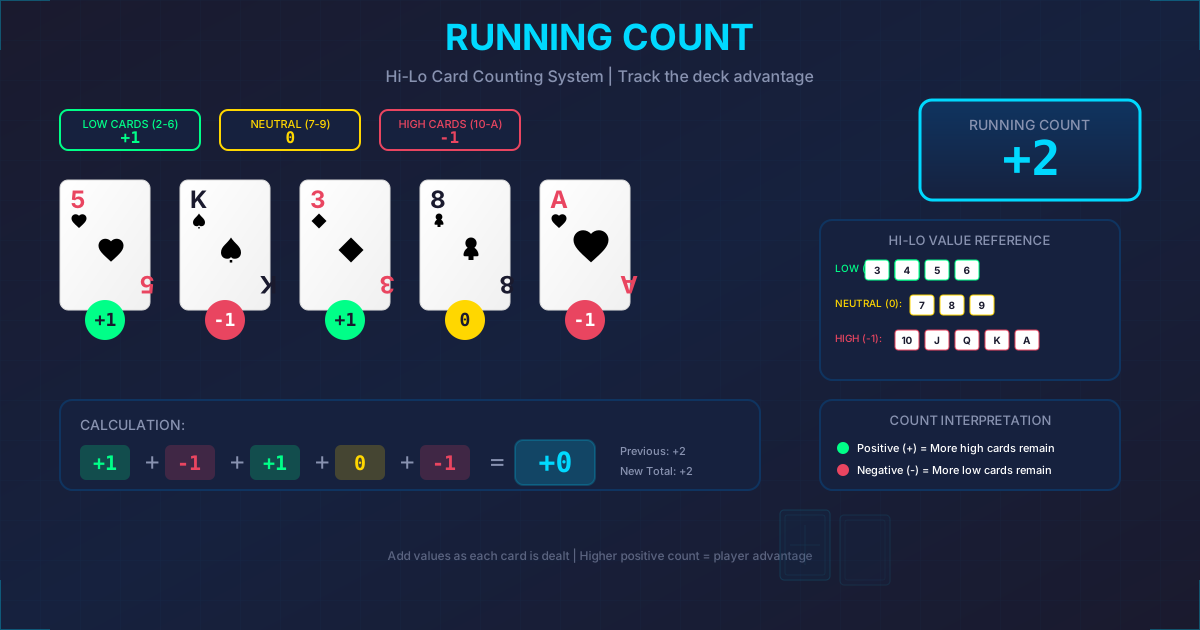
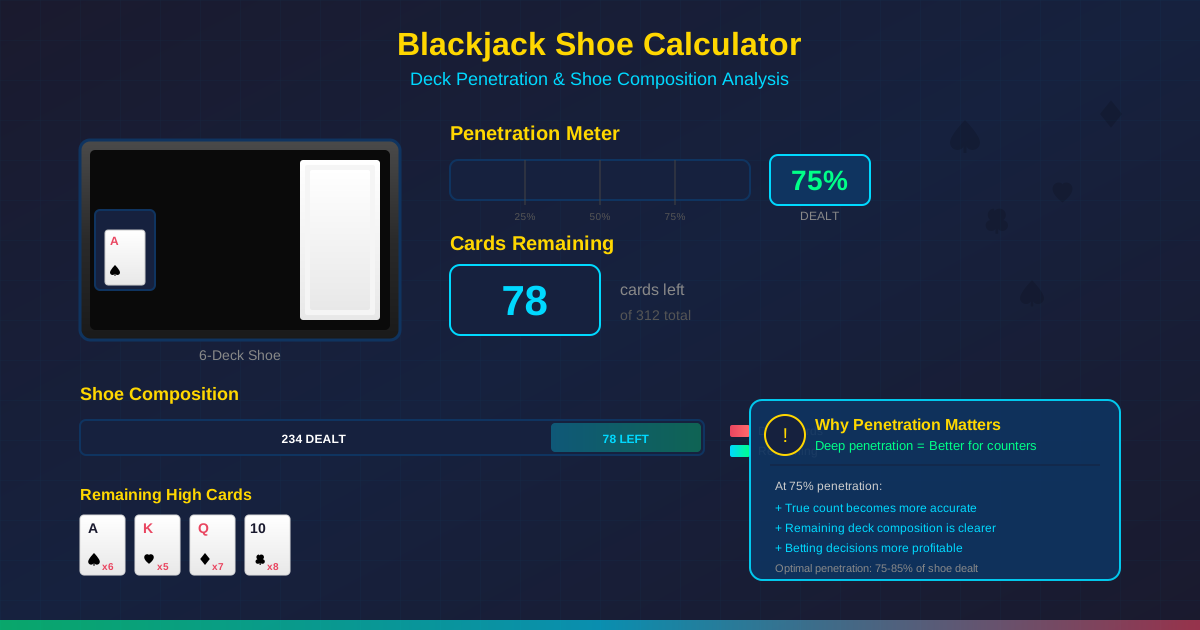
Without card counting (blackjack) or advantage play techniques (specific video poker promotions), you cannot beat the house edge over the long term. The math guarantees the casino will profit over sufficient volume. The goal for recreational players is not to "win" -- it is to minimize losses while maximizing entertainment value. Think of the house edge as the price of admission. Your job is to pay the lowest price possible.
What is the worst bet in the casino?
Keno holds the dubious distinction with house edges of 25-40%. Among table games, the Tie bet in baccarat (14.36%) and proposition bets in craps (up to 16.67%) are the worst. Among popular games, American roulette (5.26%) and most slot machines (5-15%) offer the worst odds that players regularly encounter.
Should I play at tables or machines?
Table games almost universally offer better odds than machine-based games. The five lowest house edge games in any casino are all table games (or video poker, which requires strategic play). Machines are designed for volume -- fast spins, small edges that compound quickly, and psychological hooks that encourage extended play. If you care about your money lasting, sit at a table.
Essential Tools for Beginner Casino Players
Before you gamble with real money, use these free calculators to understand exactly what you are getting into:
- Blackjack Basic Strategy -- Learn the correct play for every hand
- Blackjack House Edge Calculator -- See how table rules affect your odds
- Roulette Odds Calculator -- Check probabilities for any roulette bet
- Roulette House Edge Calculator -- Compare European, French, and American wheels
- Craps Odds Calculator -- Analyze every craps bet
- Craps House Edge Calculator -- Find the best and worst bets on the table
- Baccarat Odds Calculator -- Understand baccarat probabilities
- Baccarat House Edge Calculator -- Compare Banker, Player, and Tie bets
- Expected Value Calculator -- Calculate the long-term cost of any bet
- Video Poker Odds Calculator -- Analyze video poker hand probabilities
- Video Poker EV Calculator -- Find the best video poker machines
The Bottom Line: Start Smart, Play Smart, Stay Smart
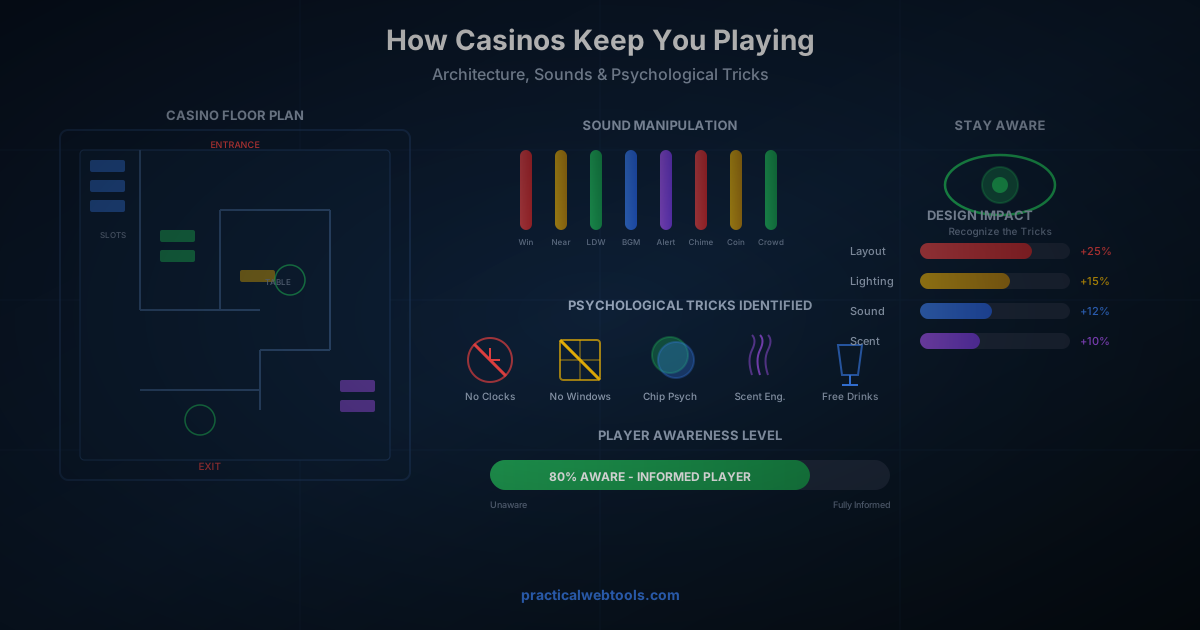
The casino industry is designed to separate you from your money. Every flashing light, free drink, windowless room, and absence of clocks serves that purpose. But the house edge is not a secret -- it is public, mathematical, and consistent. Once you understand it, you can make informed choices about where your money goes.
Here is the beginner's playbook, distilled:
- Learn blackjack basic strategy. At 0.5%, it is the best widely available bet with a skill component.
- Bet Banker at baccarat. At 1.06% with zero skill required, it is the best pure-luck bet.
- Stick to Pass Line plus Odds at craps. The 0% Odds bet is literally the only fair bet in the casino.
- Play European roulette, never American. Cutting the house edge in half is free and requires no effort.
- Find full-pay video poker machines. At 0.46%, they beat everything else -- if you study the strategy.
- Avoid slots, keno, and proposition bets. These are how the casino pays its electric bill.
- Set a loss limit and honor it. The house always wins eventually. Your job is to decide when "eventually" starts.
The best time to learn these principles is before you walk through the casino doors. The second-best time is right now.
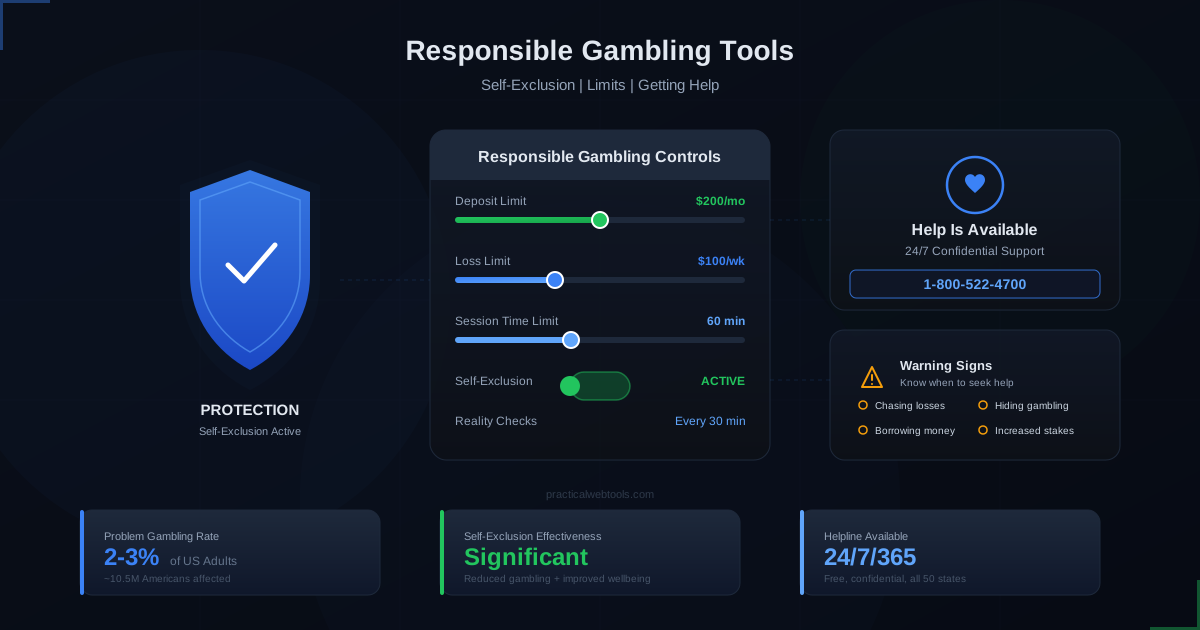
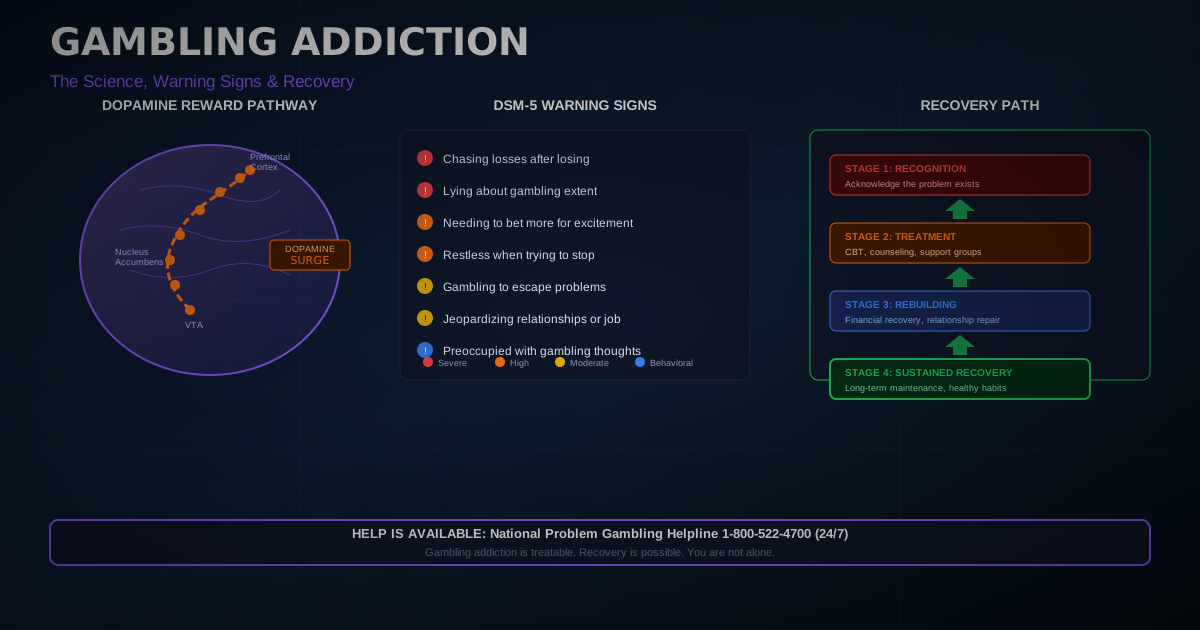
Gambling involves risk. This content is for educational and informational purposes only. Always gamble responsibly, set limits you can afford, and seek help if gambling becomes a problem. Visit the National Council on Problem Gambling or call 1-800-522-4700 for support.